Category: Politics

Political news and coverage

  • Philly Council greenlights new retirement savings program as part of year-end legislative blitz | City Council roundup

    Philly Council greenlights new retirement savings program as part of year-end legislative blitz | City Council roundup

    Philadelphians without retirement savings plans through their employers could soon have access to a plan through the city after lawmakers approved legislation Thursday to enable the novel program to move forward.

    City Council members unanimously passed legislation that creates PhillySaves, which is modeled on state-facilitated “auto-IRA” programs that allow people to invest through payroll deductions at no cost to their employers.

    Voters would have to approve the creation of an investment management board through a ballot question, which is slated to appear in the May primary election.

    The measure was part of a flurry of legislation Council considered during a marathon meeting Thursday, its last session of the year before legislators reconvene in mid-January. Lawmakers passed dozens of pieces of legislation touching on issues including housing, public health, small-business growth, and public safety.

    In addition to approving the retirement savings program, Council approved legislation to:

    Here’s a breakdown of what else happened on Thursday:

    H.O.M.E. inches forward over Parker’s objections

    City Council on Thursday approved a key piece of legislation related to Mayor Cherelle L. Parker’s Housing Opportunities Made Easy, or H.O.M.E., initiative, the latest step in the drawn-out fight over how the city should spend the proceeds from the $800 million in city bonds the administration plans to sell to support the program.
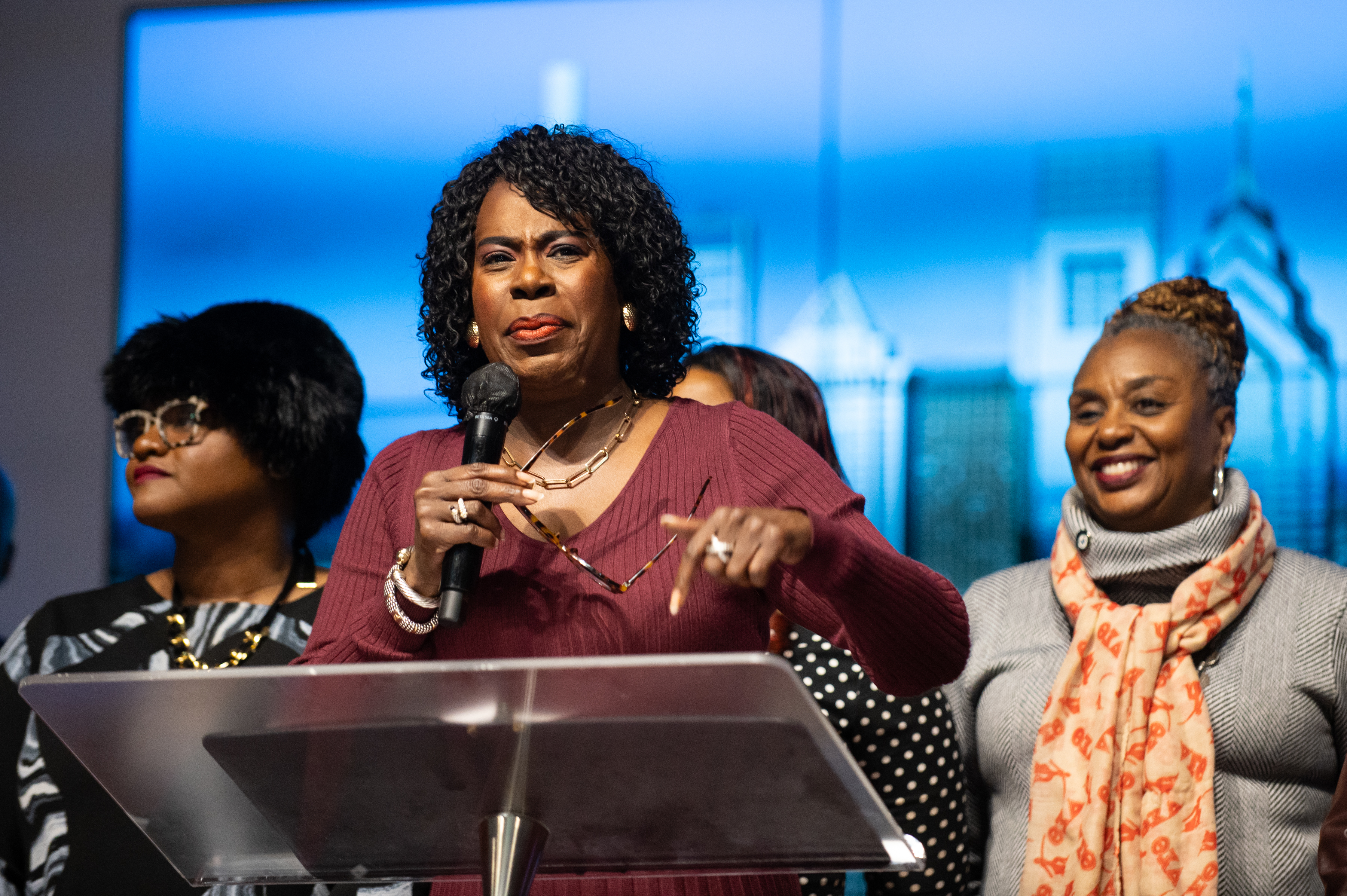
    Mayor Cherelle L. Parker speaks to the crowd at The Church of Christian Compassion in the Cobbs Creek neighborhood of West Philadelphia on Sunday, Dec. 7, 2025. Parker visited 10 churches in Philadelphia on Sunday to share details about her HOME housing plan

    The legislation — a resolution setting the first-year budget for the initiative at about $270 million — sparked a contentious showdown between lawmakers and the administration over income eligibility levels for the housing programs funded or created by H.O.M.E.

    The resolution was approved in a voice vote, with Councilmember Curtis Jones Jr. casting the lone no vote.

    Over Parker’s objections, Council successfully pushed to lower income eligibility thresholds, prioritizing poorer residents. For instance, lawmakers ensured that 90% of the bond proceeds that will be spent on the Basic Systems Repair Program will go to households making 60% of area median income, which is about $71,640 for a family of four.

    “This budget opens city housing programs to ensure that more than 200,000 low-income and working-family households have a chance to get into a program that provides housing stability and economic mobility and increases,” said Councilmember Rue Landau, who helped lead the push to lower the income thresholds. “This is a transformational investment, a win-win.”
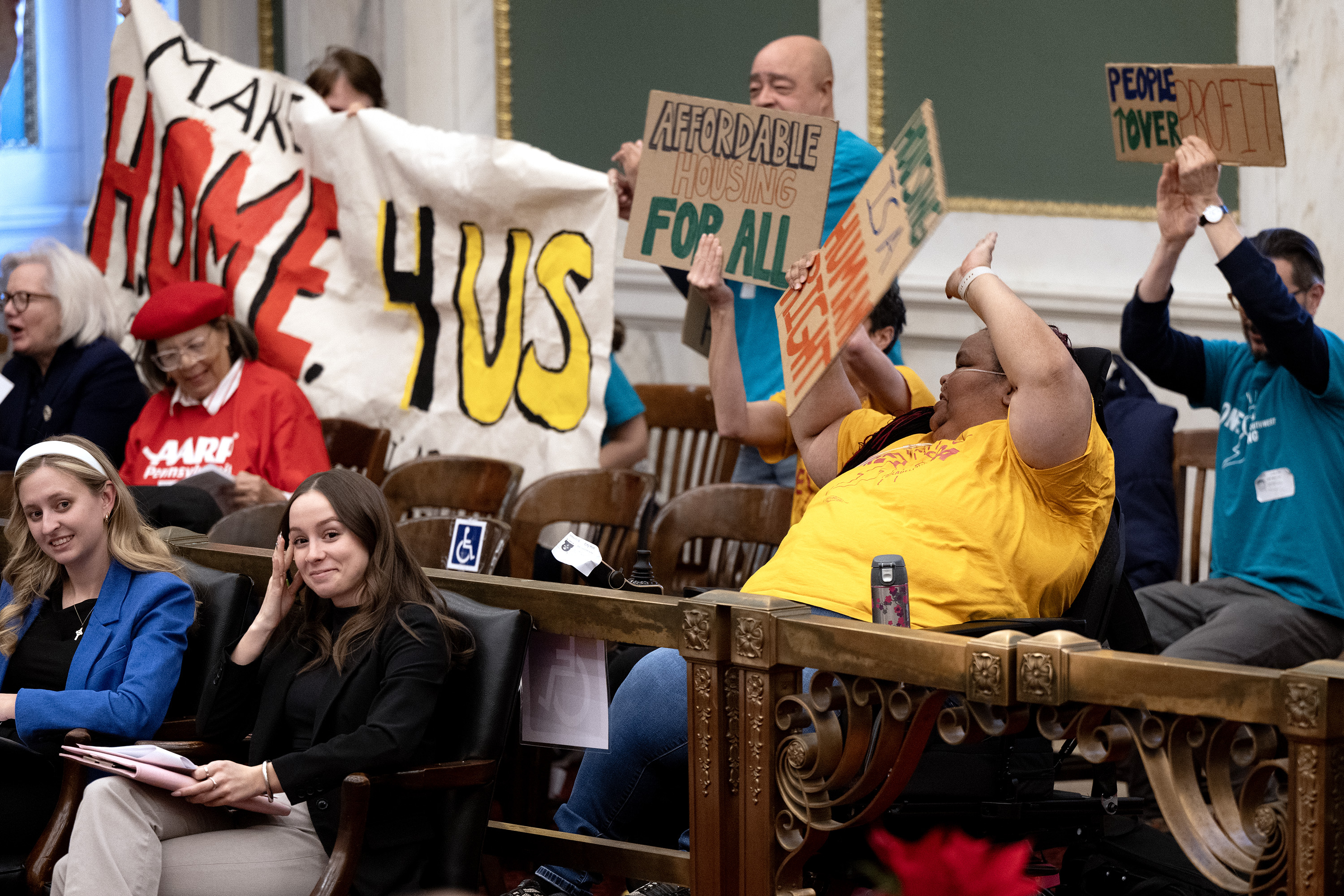
    Supporters react as City Council approves a key piece of legislation related to Mayor Cherelle L. Parker’s H.O.M.E. initiative Thursday, Dec. 11, 25 on the last day of the 2025 session.

    A separate but related piece of legislation — an ordinance authorizing the city to sell the bonds — also needs to pass before the administration can take on debt for the initiative. That proposal, which won committee approval Wednesday, is expected to come to the Council floor in January.

    In a statement Thursday, Tiffany W. Thurman, Parker’s chief of staff, thanked Council for its vote.

    “We look forward to continuing conversations with Council President Kenyatta Johnson and members of City Council in the weeks ahead, and to fulfilling Mayor Parker’s strong vision to save Philadelphia’s rowhomes,” she said.

    Council waters down a bill on training for security officers

    Council approved a bill requiring private security guards in Philadelphia to go through 12 hours of training when they are hired and an additional eight hours of training every subsequent year.

    But the final version of the bill, authored by Councilmember Isaiah Thomas, has been significantly watered down by amendments following a legislative showdown between the Service Employees International Union Local 32BJ, which championed the original version, and real estate and private security industry leaders, which said it was overly onerous and costly.

    Thomas’ original bill required security guards to receive 40 hours of training upon hiring, and it prohibited employers from conducting the training for their own workers. Instead, the instruction had to be provided by a nonprofit — potentially including a labor union. SEIU 32BJ, one of the most influential unions in the city, represents building services workers, including security guards.

    The amended version, however, allows employers to conduct the training after getting approval for their program from the Philadelphia Office of Worker Protections — a major relief for business leaders.

    The new version, which now heads to Parker’s desk, also exempts security guards for bars and restaurants from the training requirements, and pushes back the bill’s effective date from Jan. 1 to March 1.

    An inquiry into DEI contracting changes is coming next year

    City Council next year will examine Parker’s decision to end its long-standing policy of prioritizing women- and minority-owned businesses in city contracting and replace it with a system favoring “small and local” firms.

    Johnson authored a resolution allowing the Committee of the Whole, which includes all 17 members, to look at the history of minority contracting policies in the city and “the rationale, design, and anticipated effects” of Parker’s new policy. The resolution was approved in a unanimous vote, and a hearing will likely be scheduled in the first half of 2026.

    Race- and gender-conscious government policies have been targeted by conservative legal groups following a 2023 U.S. Supreme Court decision ending affirmative action in college admissions. The Inquirer revealed in November that Parker quietly ended the city’s 40-year-old contracting policy earlier this year due to the likelihood it would be challenged in court.

    The mayor has said her new “small and local” policy will accomplish many of the goals of the old system because many small Philadelphia businesses are owned by Black and brown residents and have faced roadblocks to growth.

    Attorneys hired by the city, however, had recommended a race- and gender-neutral policy of favoring “socially and economically disadvantaged” businesses, according to administration documents obtained by The Inquirer.

    Lawmakers will get the chance to weigh in on that decision next year.

    A controversial zoning change passes for University City

    Council on Thursday also approved Councilmember Jamie Gauthier’s controversial University City zoning overlay, which seeks to regulate how higher education institutions dispose of property.

    The legislation has been diluted from its original form, and it now regulates the sale of property over 5,000 square feet in University City — which would largely affect only universities themselves.
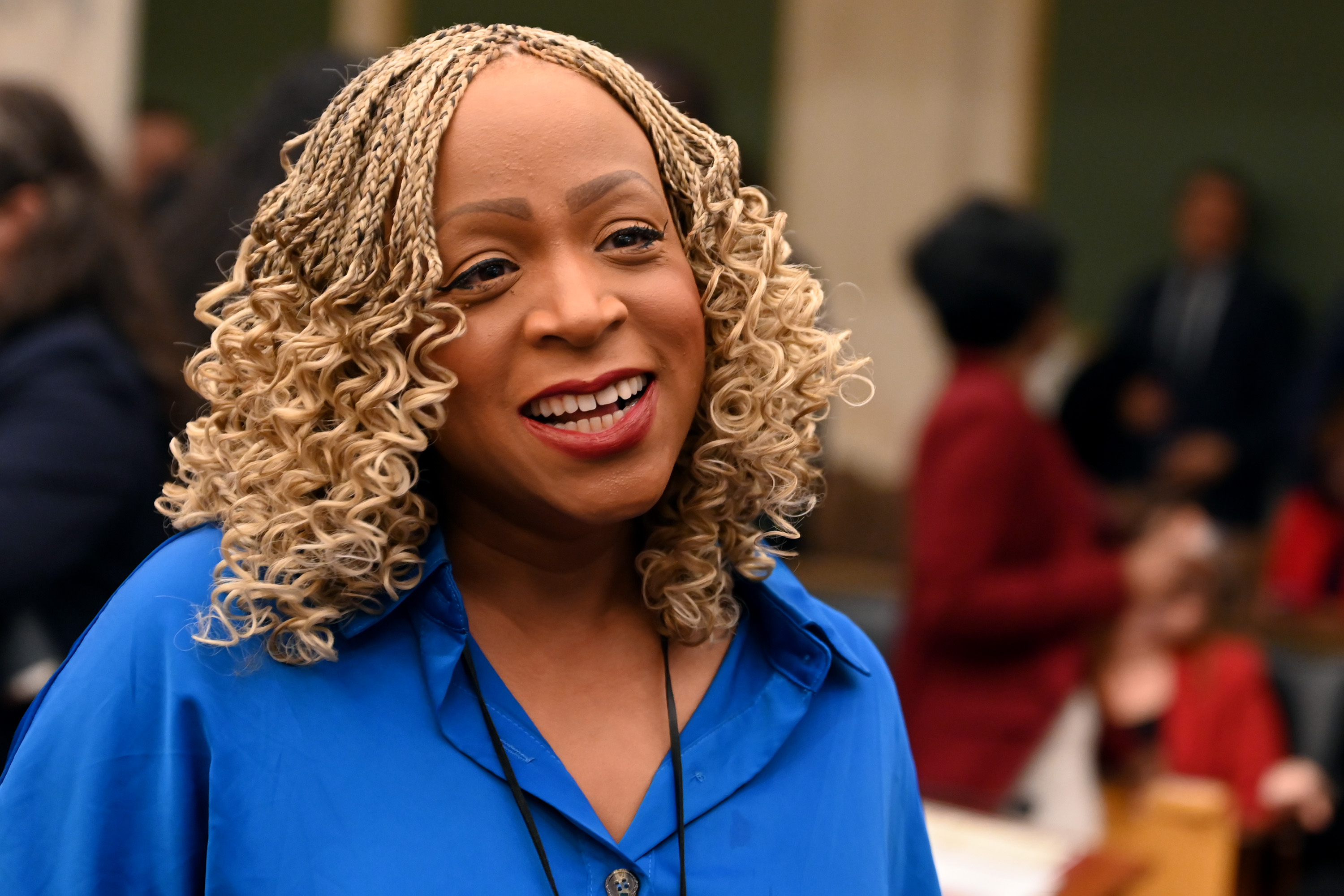
    Councilmember Jamie Gauthier in chambers as City Council meets Thursday, Dec. 11, 2025, on the last day of the 2025 session.

    Gauthier has further amended the legislation to exclude healthcare institutions. Among other things, the bill would require that property owners have building permits in hand before they are allowed to move forward on demolitions.

    A sale of land would also trigger review by the Philadelphia City Planning Commission.

    The legislation is part of Gauthier’s outraged response to St. Joseph’s University’s sale of much of its West Philadelphia campus to the Belmont Neighborhood Educational Alliance, a nonprofit that operates charter schools. The organization is led by Michael Karp, who is also one of the larger student-housing landlords in the area.

    Thomas, a Democrat who represents the city at-large, was the only member to vote against the bill. His vote was a break with the tradition of councilmanic prerogative, in which members generally approve legislation offered by Council members who represent geographic areas when the measure affects only their districts.

    Quote of the week
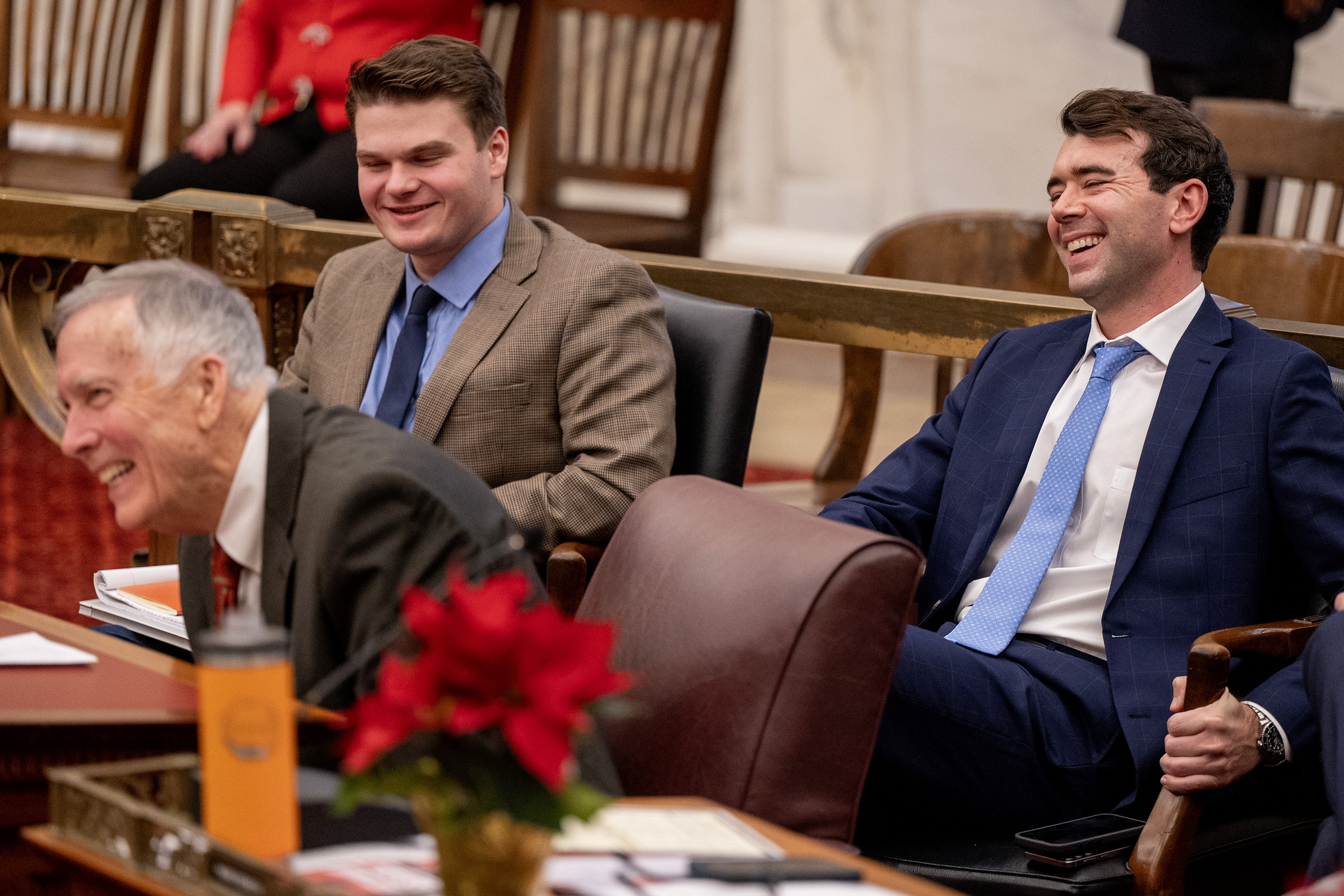
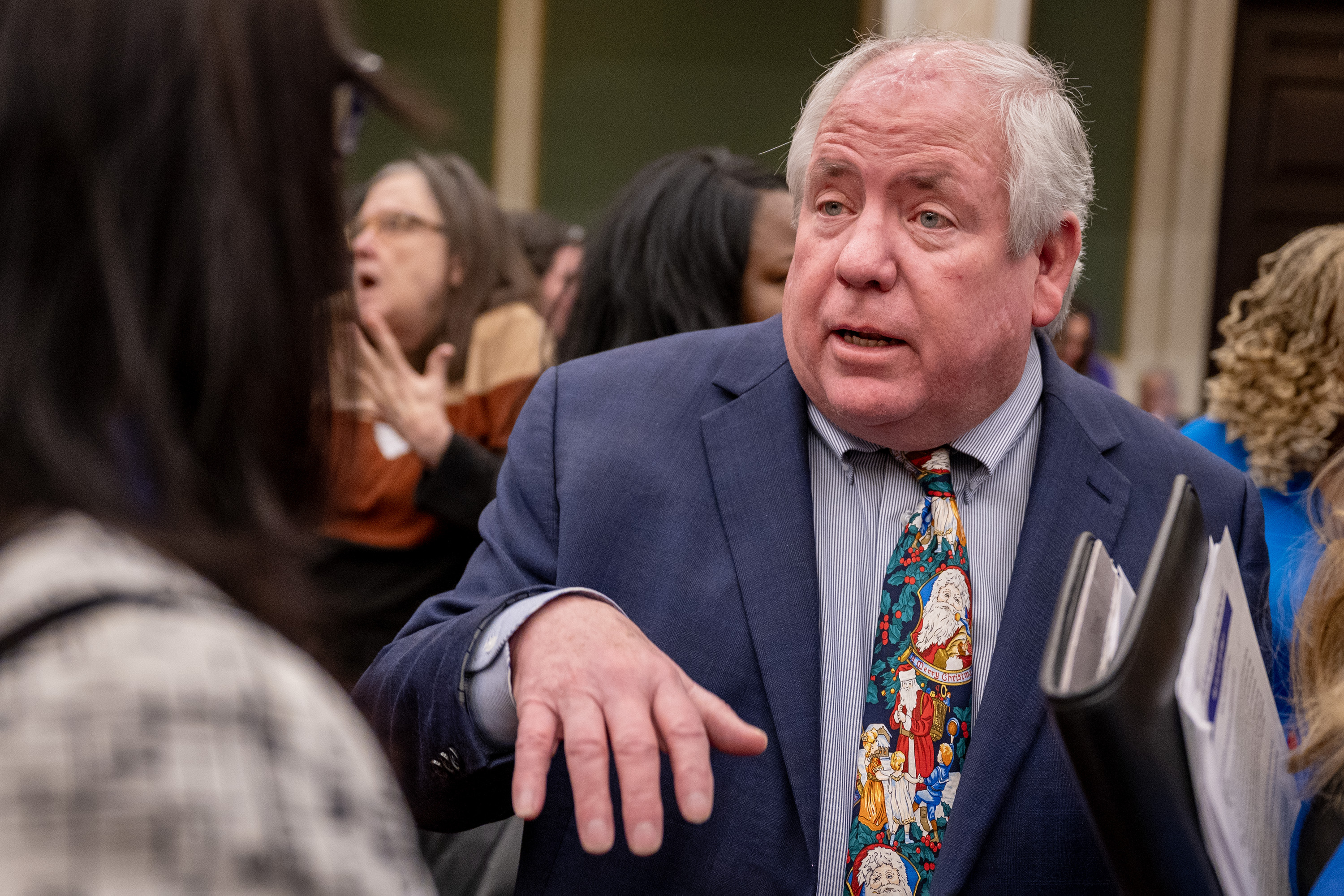
    Councilmember Brian J. O’Neill (left) uses his end-of-session speech in City Council Thursday, Dec. 11, 2025 to say goodbye to longtime legislative director Robert Yerkov (right), who is leaving for a job outside government.

    That was Councilmember Brian J. O’Neill, Council’s longest-serving member, who is typically its shortest-winded. But on Thursday, he took his time in a speech saying goodbye to longtime legislative director Robert Yerkov, whose last day as a Council staffer is next month.

    O’Neill said he was struggling to wrap up his remarks and joked that Council should limit the amount of time that its members can speak. Public commenters are generally limited to three minutes of remarks.

    To quote Shakespeare: “Brevity is the soul of wit.”
  • Justice Department again fails to re-indict New York Attorney General Letitia James, AP source says

    Justice Department again fails to re-indict New York Attorney General Letitia James, AP source says

    ALEXANDRIA, Va. — A grand jury declined for a second time in a week to re-indict New York Attorney General Letitia James on Thursday in another major blow to the Justice Department’s efforts to prosecute the president’s political opponents.

    The repeated failures amounted to a stunning rebuke of prosecutors’ bid to resurrect a criminal case President Donald Trump pressured them to bring, and hinted at a growing public leeriness of the administration’s retribution campaign.

    A grand jury rejection is an unusual circumstance in any case, but is especially stinging for a Justice Department that has been steadfast in its determination to seek revenge against Trump foes like James and former FBI Director James Comey. On separate occasions, citizens have heard the government’s evidence against James and have come away underwhelmed, unwilling to rubber-stamp what prosecutors have attempted to portray as a clear-cut criminal case.

    A judge threw out the original indictments against James and Comey in November, ruling that the prosecutor who presented to the grand jury, Lindsey Halligan, was illegally appointed U.S. attorney for the Eastern District of Virginia.

    The Justice Department asked a grand jury in Alexandria, Va., to return an indictment Thursday after a different grand jury in Norfolk last week refused to do so. The failure to secure an indictment was confirmed by a person familiar with the matter who was not authorized to publicly discuss the matter and spoke on the condition of anonymity.

    It was not immediately clear Thursday whether prosecutors would try for a third time to seek a new indictment. A lawyer for James, who has denied any wrongdoing, said the “unprecedented rejection makes even clearer that this case should never have seen the light of day.”

    “This case already has been a stain on this Department’s reputation and raises troubling questions about its integrity,” defense attorney Abbe Lowell said in a statement. “Any further attempt to revive these discredited charges would be a mockery of our system of justice.”

    James, a Democrat who infuriated Trump after his first term with a lawsuit alleging that he built his business empire on lies about his wealth, was initially charged with bank fraud and making false statements to a financial institution in connection with a home purchase in 2020.

    During the sale, she signed a standard document called a “second home rider” in which she agreed to keep the property primarily for her “personal use and enjoyment for at least one year,” unless the lender agreed otherwise. Rather than using the home as a second residence, prosecutors say James rented it out to a family of three, allowing her to obtain favorable loan terms not available for investment properties.

    Both the James and Comey cases were brought shortly after the administration installed Halligan, a former Trump lawyer with no prior prosecutorial experience, as U.S. attorney amid public calls from the president to take action against his political opponents.

    But U.S. District Judge Cameron McGowan Currie threw out the cases last month over the unconventional mechanism that the Trump administration employed to appoint Halligan. The judge dismissed them without prejudice, allowing the Justice Department to try to file the charges again.

    Halligan had been named as a replacement for Erik Siebert, a veteran prosecutor in the office and interim U.S. attorney who resigned in September amid Trump administration pressure to file charges against both Comey and James. He stepped aside after Trump told reporters he wanted Siebert “out.”

    James’ lawyers separately argued the case was a vindictive prosecution brought to punish the Trump critic who spent years investigating and suing the Republican president and won a staggering judgment in a lawsuit alleging he defrauded banks by overstating the value of his real estate holdings on financial statements. The fine was later tossed out by a higher court, but both sides are appealing.

    Comey was separately charged with lying to Congress in 2020. Another federal judge has complicated the Justice Department’s efforts to seek a new indictment against Comey, temporarily barring prosecutors from accessing computer files belonging to Daniel Richman, a close Comey friend and Columbia University law professor whom prosecutors see as a central player in any potential case against the former FBI director.

    Prosecutors moved Tuesday to quash that order, calling Richman’s request for the return of his files a “strategic tool to obstruct the investigation and potential prosecution.” They said the judge had overstepped her bounds by ordering Richman’s property returned to him and said the ruling had impeded their ability to proceed with a case against Comey.

  • Kilmar Abrego Garcia is freed from immigrant detention center in Pennsylvania after judge’s order

    Kilmar Abrego Garcia is freed from immigrant detention center in Pennsylvania after judge’s order

    Kilmar Abrego Garcia was freed from an immigration detention center in Pennsylvania on Thursday evening following a federal judge’s order earlier in the day that compelled his release, marking a significant development in a case that has served as a test of the deportation powers of President Donald Trump’s administration.

    An attorney for Abrego Garcia confirmed his client’s release, telling the Associated Press that he left the Moshannon Valley Processing Center, where he had been held since late September, just before 5 p.m. Abrego Garcia, whose case gained international attention earlier this year after he was deported to the notorious CECOT prison in his native El Salvador before being ordered returned, will return to Maryland.

    “The government still has plenty of tools in their toolbox, plenty of tricks up their sleeve,” attorney Simon Sandoval-Moshenberg said. “We’re going to be there to fight to make sure there is a fair trial.”

    Abrego Garcia’s release came after Maryland U.S. District Judge Paula Xinis found that Immigration and Customs Enforcement had detained him with no legal basis. In an order issued Thursday morning, Xinis ordered ICE to release him immediately.

    “Since Abrego Garcia’s return from wrongful detention in El Salvador, he has been re-detained, again without lawful authority,” the judge wrote. “For this reason, the Court will GRANT Abrego Garcia’s Petition for immediate release from ICE custody.”

    The Department of Homeland Security was highly critical of the release order, calling it “naked judicial activism” by a judge who was appointed by President Barack Obama, a Democrat.

    “This order lacks any valid legal basis, and we will continue to fight this tooth and nail in the courts,” said Tricia McLaughlin, the department’s assistant secretary.

    Abrego Garcia entered the United States without permission at age 16, then settled in Maryland, and later married and started a family. An immigration judge ruled in 2019 that he could be deported, but not to El Salvador, where he faced threats of gang violence. The Trump administration, which claimed Abrego Garcia was a member of the MS-13 gang, nonetheless deported him to that country in March, and his wife successfully sued to bring him back.

    His case went on to become a rallying point for those who oppose Trump’s immigration crackdown. Upon his return, he was charged with human trafficking — an allegation his lawyers called preposterous and vindictive. Abrego Garcia has pleaded not guilty in that case and filed a motion to dismiss the charges.

    Though Abrego Garcia cannot legally be deported to El Salvador, ICE has sought to deport him to several African countries, including Eswatini, Ghana, and Uganda. In her order, Xinis wrote that “none of these countries were ever viable options” and noted that Costa Rica — where Abrego Garcia indicated he would prefer to be deported should he be removed — never rescinded an offer to accept him, as officials previously alleged.

    “But Costa Rica had never wavered in its commitment to receive Abrego Garcia, just as Abrego Garcia never wavered in his commitment to resettle there,” Xinis wrote.

    A transfer to Pennsylvania

    After being held at a detention center in Virginia following his return to the United States in June, Abrego Garcia was transferred to Moshannon Valley Processing Center in Western Pennsylvania. Known as Moshannon, the facility is run by the Florida-based private prisons giant GEO Group.

    In a recent Inquirer report, current and former detainees described grim and crowded conditions at the facility, with 75 men sleeping together in a pod, sharing six toilets and three showers among them. The facility is the largest detention center in the northeastern United States, capable of holding nearly 1,900 prisoners, The Inquirer previously reported.

    ICE officials said at the time of Abrego Garcia’s transfer that his detention to Moshannon would allow his lawyers easier access to their client. Abrego Garcia’s attorneys, however, raised concerns about the conditions at the facility, saying there had been reports of “assaults, inadequate medical care, and insufficient food” there.

    In a separate immigration court action filed in August, Abrego Garcia petitioned to reopen his immigration case to seek asylum in the United States. That case remains ongoing.

    In her order releasing Abrego Garcia, Xinis wrote that federal authorities “did not just stonewall” the court: “They affirmatively misled the tribunal.” Xinis also dismissed the federal government’s arguments that the court did not have jurisdiction to rule on a final order of removal, noting that such an order had not been filed.

    “Thus, Abrego Garcia’s request for immediate release cannot touch upon the execution of a removal order if no such order exists,” she wrote.

    Staff writers Jeff Gammage and Max Marin contributed to this article, which contains information from the Associated Press.

  • Senators clash over Trump’s National Guard deployments as military leaders face questioning

    Senators clash over Trump’s National Guard deployments as military leaders face questioning

    WASHINGTON — Members of Congress clashed Thursday over President Donald Trump’s use of the National Guard in American cities, with Republicans saying the deployments were needed to fight lawlessness while Democrats called them an extraordinary abuse of military power that violated states’ rights.

    Top military officials faced questioning over the deployments for the first time at the hearing before the Senate Armed Services Committee. They were pressed by Democrats over the legality of sending in troops, which in some places were done over the objections of mayors and governors, while Trump’s Republican allies offered a robust defense of the policy.

    It was the highest level of scrutiny, outside a courtroom, of Trump’s use of the National Guard in U.S. cities since the deployments began and came a day after the president faced another legal setback over efforts to send troops to support federal law enforcement, protect federal facilities and combat crime.

    “In recent years, violent crime, rioting, drug trafficking and heinous gang activity have steadily escalated,” said Mississippi Sen. Roger Wicker, the committee chairman. The deployments, he said, are “not only appropriate, but essential.”

    Democrats argued they are illegal and contrary to historic prohibitions about military force on U.S. soil.

    Sen. Tammy Duckworth (D., Ill.) said domestic deployments traditionally have involved responding to major floods and tornadoes, not assisting immigration agents who are detaining people in aggressive raids.

    “Trump is forcing our military men and women to make a horrible choice: uphold their loyalty to the Constitution and protect peaceful protesters, or execute questionable orders from the president,” said Duckworth, a combat veteran who served in the Illinois National Guard.

    Democrats ask military officials about illegal orders

    Democrats asked military leaders about Trump’s comments about “the enemy within” America and whether service members could be asked to follow orders that violate their oath.

    Sen. Elissa Slotkin (D., Mich.) said Trump’s comments about rigged elections and his rhetoric about political opponents have created a “trust deficit” and fueled suspicions about the domestic use of the military.

    She asked Charles Young III, principal deputy general counsel at the Pentagon, whether Trump could place troops at polling places during next year’s election and whether such an order would be legal.

    The idea “sends a shiver down the spine of every American, and should whether you’re a Democrat or a Republican,” Slotkin said.

    Young said he could not answer such a question without details, calling it “a hypothetical situation.” He said the Supreme Court has ruled that the president has exclusive authority to decide whether an emergency exists that could require a National Guard response.

    Slotkin was one of six Democratic lawmakers who recorded a video calling on troops to uphold the Constitution and defy “illegal orders.” In response, Trump accused the lawmakers, all military or intelligence veterans, of sedition “punishable by DEATH.”

    Sen. Elizabeth Warren (D., Mass.) pressed Young on news reports that the administration had dismissed advice from military lawyers on deploying Guard and bombing alleged drug boats in Latin America.

    “If an attorney raises concerns about the legality of military operations, do you think the appropriate response is to tell them to shut up and get out of the way?” Warren asked Young.

    Young denied those reports, saying leadership is “very attentive” to the concerns of military lawyers.

    When asked about Trump’s statements about an “invasion within” or an “enemy within,” Air Force Gen. Gregory Guillot, commander of U.S. troops in North America, said, “I do not have any indications of an enemy within.”

    Republicans and Democrats see the deployments differently

    In one exchange, Sen. Mazie Hirono (D., Hawaii) noted how former Defense Secretary Mark Esper alleged that Trump inquired about shooting protesters during the George Floyd demonstrations. She asked whether a presidential order to shoot protesters would be lawful.

    Young said he was unaware of Trump’s previous comments and that “orders to that effect would depend on the circumstances.”

    Republicans countered that Trump was within his rights — and his duty — to send in troops.

    Republican Sen. Tim Sheehy of Montana, a former Navy SEAL officer, argued during the hearing that transnational crimes present enough of a risk to national security to justify military action, including on U.S. soil.

    Sheehy claimed there are foreign powers “actively attacking this country, using illegal immigration, using transnational crime, using drugs to do so.”

    Military leaders point to training

    During questioning, military leaders highlighted the duties that National Guard units have carried out. Troops are trained for their specific missions, they said, and are prohibited from using force unless in self-defense.

    Since the deployments began, only one civilian — in California — has been detained by National Guard personnel, Guillot said. He says the troops are trained to de-escalate tense interactions with people, but do not receive any specific training on mental health episodes.

    “They can very quickly be trained to conduct any mission that we task of them,” Guillot said.

    During the hearing, senators also offered their sympathies after two West Virginia National Guard members deployed to Washington were shot just blocks from the White House in what the city’s mayor described as a targeted attack. Spc. Sarah Beckstrom died a day after the Nov. 26 shooting, and her funeral took place Tuesday. Staff Sgt. Andrew Wolfe remains in a Washington hospital.

    Hearing follows court setback for Trump

    A federal judge in California on Wednesday ruled that the administration must stop deploying the California National Guard in Los Angeles and return control of the troops to the state. The judge put the decision on hold until Monday, and the White House said it plans to appeal.

    Trump called up more than 4,000 California National Guard troops in June following protests over immigration raids. It marked the first time in decades that a state’s National Guard was activated without a governor’s request and marked a significant escalation in the administration’s efforts to carry out its mass deportation policy.

    Trump also had announced National Guard members would be sent to Illinois, Oregon, Louisiana, and Tennessee. Other judges have blocked or limited the deployment of troops to Portland, Oregon, and Chicago, while Guard members have not yet been sent to New Orleans.

  • Senate rejects extension of healthcare subsidies as costs are set to rise for millions of Americans

    Senate rejects extension of healthcare subsidies as costs are set to rise for millions of Americans

    WASHINGTON — The Senate on Thursday rejected legislation to extend Affordable Care Act tax credits, essentially guaranteeing that millions of Americans will see a steep rise in costs at the beginning of the year.

    As Republicans and Democrats have failed to find compromise, senators voted on two partisan bills instead that they knew would fail — the Democratic bill to extend the subsidies, and a Republican alternative that would have created new health savings accounts.

    It was an unceremonious end to a monthslong effort by Democrats to prevent the COVID-19-era subsidies from expiring on Jan. 1, including a 43-day government shutdown that they forced over the issue.

    Ahead of the votes, Senate Democratic Leader Chuck Schumer of New York warned Republicans that if they did not vote to extend the tax credits, “there won’t be another chance to act,” before premiums rise for many people who buy insurance off the ACA marketplaces.

    “Let’s avert a disaster,” Schumer said. “The American people are watching.”

    Republicans and Democrats never engaged in meaningful or high-level negotiations on a solution, even after a small group of centrist Democrats struck a deal with Republicans last month to end the shutdown in exchange for a vote. Most Democratic lawmakers opposed the move as many Republicans made clear that they wanted the tax credits to expire.

    The deal raised hopes for a compromise on healthcare. But that quickly faded with a lack of any real bipartisan talks.

    “We failed,” said Alaska Sen. Lisa Murkowski, one of four Republicans who voted for the Democratic bill, after the vote. “We’ve got to do better. We can’t just say ‘happy holidays, brace for next year.’”

    A Republican alternative

    The dueling Senate votes were the latest political messaging exercise in a Congress that has operated almost entirely on partisan terms, as Republicans pushed through a massive tax and spending cuts bill this summer using budget maneuvers that eliminated the need for Democratic votes. In September, Republicans tweaked Senate rules to push past a Democratic blockade of all of Trump’s nominees.

    On healthcare, Republicans similarly negotiated among themselves, without Democrats. The health savings accounts in the GOP bill that they eventually settled on would give money directly to consumers instead of to insurance companies, an idea that has been echoed by President Donald Trump.

    Senate Majority Leader John Thune (R., S.D.) said ahead of the vote that the Democrats’ simple extension of the subsidies is “an attempt to disguise the real impact of Obamacare’s spiraling healthcare costs.”

    But Democrats immediately rejected the GOP plan, saying that the accounts wouldn’t be enough to cover costs for most consumers.

    The Senate voted 51-48 not to move forward on the Democratic bill, with four Republicans — Maine Sen. Susan Collins, Missouri Sen. Josh Hawley and Alaska Sens. Murkowski and Dan Sullivan — voting with Democrats. The legislation needed 60 votes to proceed, as did the Republican bill, which was also blocked on a 51-48 vote.

    An intractable issue

    The votes were the latest failed salvo in the debate over the Affordable Care Act, former President Barack Obama’s signature law that Democrats passed along party lines in 2010 to expand access to insurance coverage.

    Republicans have tried unsuccessfully since then to repeal or overhaul the law, arguing that healthcare is still too expensive. But they have struggled to find an alternative. In the meantime, Democrats have made the policy a central political issue in several elections, betting that the millions of people who buy healthcare on the government marketplaces want to keep their coverage.

    “When people’s monthly payments spike next year, they’ll know it was Republicans that made it happen,” Schumer said in November, while making clear that Democrats would not seek a compromise.

    Even if they view it as a political win, the failed votes are a loss for Democrats who demanded an extension of the benefits during the shutdown — and for the millions of people facing premium increases on Jan. 1.

    Maine Sen. Angus King, an independent who caucuses with Democrats, said the group tried to negotiate with Republicans after the shutdown ended. But, he said, the talks became unproductive when Republicans demanded language adding new limits for abortion coverage that were a “red line” for Democrats. He said Republicans were going to “own these increases.”

    House to try again

    Republicans have used the looming expiration of the subsidies to renew their longstanding criticisms of the ACA, also called Obamacare, and to try, once more, to agree on what should be done.

    In the House, Speaker Mike Johnson (R., La.) has promised a vote next week on some type of healthcare legislation. Republicans weighed different options in a conference meeting on Wednesday, with no apparent consensus.

    Murkowski and other Senate Republicans who want to extend the subsidies expressed hope that the House could find a way to do it. GOP leaders were considering bills that would not extend the tax credits, but some Republicans have launched longshot efforts to try to go around Johnson and force a vote.

    “Hopefully some ideas emerge” before the new year, said Republican Sen. Thom Tillis of North Carolina, who has been pushing his colleagues for a short-term extension.

    “Real Americans are paying the price for this body not working together in the way it should,” said Alabama Sen. Katie Britt, a Republican.

    Republican moderates in the House who could have competitive reelection bids next year are pushing Johnson to find a way to extend the subsidies. But more conservative members want to see the law overhauled.

    Rep. Kevin Kiley (R., Calif.) has also been pushing for a short extension.

    If they fail to act and healthcare costs go up, the approval rating for Congress “will get even lower,” Kiley said.

  • U.S. sanctions Venezuelan President Maduro’s 3 nephews as pressure campaign ratchets up

    U.S. sanctions Venezuelan President Maduro’s 3 nephews as pressure campaign ratchets up

    WASHINGTON — The U.S. imposed sanctions on three nephews of Venezuelan President Nicolás Maduro, among others, on Thursday as President Donald Trump looks to inflict further pressure on the South American nation.

    The new sanctions on Franqui Flores, Carlos Flores and Efrain Campo come a day after Trump announced that the U.S. had seized an oil tanker off the coast of Venezuela. Also included in the sanctions are Panamanian businessman Ramon Carretero, six firms and six Venezuela-flagged ships accused of transporting Venezuelan oil.

    Carretero is accused of facilitating oil shipments on behalf of the Venezuelan government, and the Treasury says he has had business dealings with the Maduro-Flores family, including partnering in several companies together.

    The Treasury’s Office of Foreign Assets Control published the list of sanctions on Thursday.

    The sanctions are meant to deny them access to any property or financial assets held in the U.S., and the penalties are intended to prevent U.S. companies and citizens from doing business with them. Banks and financial institutions that violate that restriction expose themselves to sanctions or enforcement actions.

    Treasury Secretary Scott Bessent said in a statement that “Nicolas Maduro and his criminal associates in Venezuela are flooding the United States with drugs that are poisoning the American people.”

    “Under President Trump’s leadership, Treasury is holding the regime and its circle of cronies and companies accountable for its continued crimes,” he said.

    This is not the first time Maduro’s family has been involved in a political tit-for-tat with the U.S.

    In October 2022, Venezuela freed seven imprisoned Americans in exchange for the United States releasing Flores and Campo, who had been jailed for years on narcotics convictions. The pair were arrested in Haiti in a Drug Enforcement Administration sting in 2015 and convicted the following year in New York.

    Carlos Flores had been sanctioned in July 2017 but was removed from Treasury’s list in 2022 during the Biden administration years in an effort to promote negotiations for democratic elections in Venezuela.

    The U.S.’s latest actions against Venezuela follow a series of deadly strikes the U.S. has conducted on alleged drug-smuggling boats in the Caribbean Sea and eastern Pacific Ocean, which have killed at least 87 people since early September.

    Trump has justified the attacks as a necessary escalation to stem the flow of drugs into the United States and asserted the U.S. is engaged in an “armed conflict” with drug cartels.

    Putin’s backing

    Russian President Vladimir Putin expressed “solidarity with the Venezuelan people” on Thursday amid growing tensions between Maduro and the Trump administration.

    The Kremlin said in a statement that Putin spoke with Maduro by phone and reaffirmed his support for the Venezuelan leader’s policy of “protecting national interests and sovereignty in the face of growing external pressure.”

    During testimony before Congress on Thursday, Homeland Security Secretary Kristi Noem linked the seizure of the vessel to the Trump administration’s anti-drug efforts in the region. The U.S. has built up its largest military presence in the region in decades and launched a series of deadly strikes on alleged drug-smuggling boats.

    Maduro has insisted the real purpose of the U.S. military operations is to force him from office. Venezuela’s government said the tanker seizure “constitutes a blatant theft and an act of international piracy.”

    The South American country’s government said that Putin had “categorically reaffirmed his support” for Maduro in their call.

    It said in a statement that Putin had told Maduro that direct communication between Moscow and Caracas would “remain permanently open” and Russia would continue to support Venezuela “in its struggle to assert its sovereignty, international law, and peace throughout Latin America.”

    Like his predecessor, the late President Hugo Chávez, Maduro has forged a close relationship with Russia, which has offered Venezuela help, ranging from coronavirus vaccines to the design of a cryptocurrency. In 2018, it also briefly dispatched a pair of nuclear-capable Tu-160 bombers to the airport outside Venezuela’s capital amid soaring Russia-U.S. tensions.

    Last year, two Russian naval ships docked in the Venezuelan port of La Guaira after exercises in the Atlantic Ocean that Moscow said were to “show the flag” in remote, important regions.

    In Belarus, authoritarian President Alexander Lukashenko, a Putin ally, met with the Venezuelan ambassador to Russia, Jesus Rafael Salazar Velázquez, on Thursday, for the second time in just over two weeks.

    Details of what was discussed were not revealed, but Belarus’ state news agency Belta quoted Lukashenko as saying that the diplomat was expected to discuss “certain issues” with Maduro after their first meeting on Nov. 25 and to travel to Belarus again, so that they could reach “a certain decision.”

    During the November meeting, Lukashenko extended an invitation to Maduro to visit Belarus, and said that he would try and find the time to visit Venezuela, too.

  • Hundreds are quarantined in South Carolina as measles spreads there, elsewhere

    Hundreds are quarantined in South Carolina as measles spreads there, elsewhere

    Measles outbreaks are growing along the Utah-Arizona border and in South Carolina, where hundreds are in quarantine.

    Between Friday and Tuesday, South Carolina health officials confirmed 27 new measles cases in an outbreak in and around northwestern Spartanburg County. In two months, 111 people have been sickened by the vaccine-preventable virus.

    More than 250 people, including students from nine area elementary, middle and high schools, are in quarantine — some for the second time since the outbreak began in October. Most of the state’s new cases stemmed from exposures at Way of Truth Church in Inman. Church leaders have been “very helpful,” said state epidemiologist Dr. Linda Bell.

    “We are faced with ongoing transmission that we anticipate will go on for many more weeks, at least in our state,” said Bell.

    In Arizona and Utah, an outbreak has ballooned since August. Mohave County, Arizona has logged 172 cases and the Southwest Utah Public Health Department has logged 82 cases. The border cities of Colorado City, Arizona, and Hildale, Utah, are the heaviest hit.

    Overall, Utah has confirmed 115 measles cases this year. Arizona has confirmed 176.

    Nationally, the measles case count is nearing 2,000 for a disease that has been considered eliminated in the U.S. since 2000, a result of routine childhood vaccinations.

    Last month, Canada lost that designation — which applies when there is no continuous local spread of the virus — as did the larger health region of the Americas.

    Experts say the U.S. is also at risk of losing that status. For that to happen, measles would have to spread continuously for a year. A large outbreak in Texas, New Mexico and Oklahoma that started in January sickened nearly 900 and kicked off the United States’ worst measles year in more than three decades.

    All but eight states have logged at least one measles case this year, according to the Centers for Disease Control and Prevention. The CDC has confirmed 47 outbreaks this year, compared with 16 in 2024. Three people — two of them Texas school children — have died.

    The measles, mumps and rubella vaccine is safe and provides 97% protection against the disease after two doses. Most children in the U.S. are required to get the shot to attend school. But vaccination rates have declined as more parents waive the shots or have fallen behind on recommended vaccination schedules.

  • Why these red state Republicans are resisting Trump’s efforts to expand GOP power

    Why these red state Republicans are resisting Trump’s efforts to expand GOP power

    INDIANAPOLIS — In 44 years in Indiana’s legislature, Vaneta Becker had never before had a call with the White House.

    President Donald Trump was on the line that day in October, urging her and her GOP colleagues to redraw the state’s congressional map to help Republicans in next year’s midterm elections. She told the White House she opposed the idea, and a week or so later got a voice message from an aide asking for a follow-up conversation. Becker called back to leave a message of her own.

    “I’m not going to change my position,” Becker, 76, recalled saying. “You’re wasting your time on me, so just focus on somebody else.”

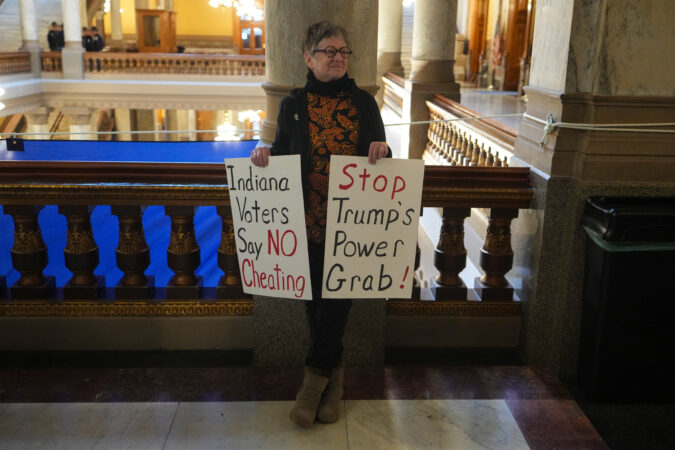
    Indiana, a state Trump won by 19 percentage points last year, is serving up an unusual amount of resistance to his plan to carve up congressional districts around the country. Since this summer, Republicans in four other states have rejiggered their maps to give their party as many as nine more seats part of a larger plan aimed at retaining power in Congress after next year’s elections.

    But in Indiana, a contingent of GOP state senators has politely but persistently said no. The GOP opponents told Trump and Gov. Mike Braun (R) they weren’t on board and last month 19 of them voted with Democrats to end a legislative session without acting on redistricting. Trump and his allies kept pressing, and the state House passed a plan last week that would likely give Republicans all nine of the state’s congressional districts, two more than they have now.

    The leader of the State Senate, Rodric Bray, agreed to bring the senators back to the state capitol to take up the issue even though he was among those who had voted to end the session. They are expecting to vote Thursday.

    Opponents include longtime Republican lawmakers like Becker who got involved in politics years before the rise of Trump and his Make America Great Again movement. Hoosiers bristle at meddling from Washington, even when it comes from allies, the opponents say.

    The state senators have been increasingly on edge in recent weeks as they endured intimidation — political and physical — and a stream of hoax police reports that seemed designed to draw large law enforcement responses to their homes.

    States draw their congressional districts after the census, and lawmakers from both parties often try to maximize their advantage. Years of litigation sometimes follow, but state lawmakers typically don’t redraw their lines in the middle of the decade unless a court orders it. Trump has rejected the usual way of doing business, demanding Republican-led states make immediate changes.

    So far, Republicans have not netted as many seats as they’d hoped because Democrats have counteracted them by adopting a new map in California and are trying to do the same in Virginia and other states. Opponents of a new GOP-friendly map in Missouri submitted more than 300,000 signatures to the state to try to block it from going into effect until a referendum on it can be held.

    But the GOP resistance in Indiana stands apart, in large part because Republicans across the country have readily acquiesced to Trump’s demands and threats on a range of issues.

    Trump may yet prevail. But the rare instance of pushback here could offer warning signs to Trump that his grip on the party may be loosening amid slides in his public approval rating. A vote against a new map in Indiana would add to his woes as Republicans fret over their ability to hold onto the House next year.

    What happens in Indiana will have effects elsewhere. If Republicans reject the map here, Trump may put more pressure on officials in other states. If they go along with the plan, Democrats in Illinois and Maryland who have resisted redistricting may feel they need now to jump into the fight.

    Time is running short because election officials, candidates and voters need to know where the lines are well ahead of next year’s primaries. But the fight over maps will continue for months. Republicans in Florida are poised to draw a new map and GOP lawmakers in Utah are trying to reverse a court decision that is expected to give Democrats one of the state’s districts.

    In Indiana, lawmakers have been debating whether to redraw the lines since August, but they didn’t see the proposed map until the House unveiled it last week. The map would break Marion County, the home to Indianapolis and the state’s largest African American population, into four districts, diluting Democratic votes. It would likely doom the reelection chances of Democratic Reps. Frank J. Mrvan and André Carson, the only Black member of Indiana’s congressional delegation.

    Trump has hosted Indiana officials at the White House. He’s dispatched Vice President JD Vance to the state twice. In October, he and his aides held their conference call with Indiana state senators to talk up redistricting. At the end of the call, the senators were told to press a number on their phone to indicate whether they supported redrawing the map, even though they were yet to see how the lines would change.

    On Wednesday night, Trump lashed out at the State Senate leader on Truth Social, calling Bray “the only person in the United States of America who is against Republicans picking up extra seats” and warning that lawmakers who oppose the changes were at risk of losing their seats.

    A White House official said earlier that Trump’s team is “not arm twisting. Just outlining the stakes and reminding them western civilization stands in the balance of their decision.”

    About 800 of Becker’s constituents in southwestern Indiana have told her they are against the plan and about 100 have told her they’re for it, she said. Sitting in her wood-paneled cubicle Tuesday in the state capitol, she slid a constituent’s letter out of its envelope.

    “Mid-decade redistricting at the request of President Trump will unnecessarily intensify the already deep partisan divisions in our country,” the man wrote. “Even bringing this topic up in the Indiana legislature will ratchet up the antagonism.”

    Voters know the push is coming from Trump, and many are not afraid to criticize him for it, even if they otherwise support the president, she said. Becker declined to say whether she’d voted for Trump but said she’s “not crazy about him,” especially after the Jan. 6, 2021, attack on the U.S. Capitol.

    Trump is not letting up on his push. Last month the president called out State Sen. Greg Goode (R) in a post on Truth Social, saying he was “very disappointed” that he opposed redistricting even though Goode had not taken a position. Later that day, Goode said, someone falsely told police he had murdered his wife and barricaded himself in his house. Police kicked in the door just after Goode got out of the shower, while his wife and son were getting Christmas decorations in the basement, and officers pointed their guns at Goode’s chest, he said.

    Goode, who serves as the state director for U.S. Sen. Todd Young (R., Ind.), said he didn’t blame Trump for the incident. He got a call from Trump the next day, which he described as polite. Trump called Goode again on Monday, as the state senator was listening to the redistricting debate in committee.

    “It was not a pressured call at all,” Goode said. “The overarching message really from day one is the importance for the Republican Party to maintain control of the United States House of Representatives.”

    Goode said he won’t decide how he’s voting until he hears the final debate among the senators. He’s voted for Trump three times and takes his opinion seriously, but also is listening closely to his constituents, who have overwhelmingly told him they oppose redistricting, he said.

    On Friday, hours after the State House passed the map, Trump named Goode and eight other state senators in a social media post as needing “encouragement to make the right decision.” The conservative group Turning Point Action has claimed it will team up with other Trump-aligned organizations to spend $10 million or more on primaries in 2026 and 2028 against GOP state senators in Indiana who vote against the map. Several Republicans, including Becker, said they’re skeptical the groups would spend so much against members of their own party.

    State Sen. Travis Holdman (R) got a call from the White House a couple of weeks ago asking if he would come to Washington to talk about redistricting, but he declined because he couldn’t miss work as a banking consultant. Adopting a new map now would be unfair, he said, and he doesn’t think the president’s team could change his mind.

    “I voted for Donald Trump in every election,” he said. “I really agree with his policies. We just disagree on this issue.”

    Republicans control the State Senate 40-10, and at least 16 of them would need to vote with Democrats to sideline the map.

    Supporters of the altered map said they want to ensure Republicans hold onto Congress and are responding to districts Democrats drew favoring their party years ago in states they control. Indiana State Sen. R. Michael Young told his colleagues on Monday that the Supreme Court had blessed letting states draw districts for partisan advantage, holding up a recent decision that upheld a new map in Texas.

    “For all those people who think they’re lawyers in Indiana, who think it’s against the law or wrong, the Supreme Court of the United States says different,” he said.

    Others have made their opposition clear, with some saying they’re pushing back on what they call bullying. State Sen. Mike Bohacek (R) grew incensed last month when Trump called Minnesota Gov. Tim Walz (D) “seriously retarded” in a social media post. Bohacek, who has a daughter with Down syndrome, said in a social media post that Trump’s “choice of words have consequences.”

    “I will be voting NO on redistricting, perhaps he can use the next 10 months to convince voters that his policies and behavior deserve a congressional majority,” Bohacek wrote in his post.

    In the State House, Rep. Ed Clere was among 12 Republicans to vote against the map. He believes Trump’s MAGA movement is starting to crack, but doesn’t think that’s what’s behind the GOP resistance to redistricting in Indiana. It stems from a sense of independence that is, he said, “part of Indiana’s DNA.”

    Becker agrees.

    “Hoosiers are very independent,” she said. “And they’re not used to Washington trying to tell us what to do.”

    GRAPHIC

  • Would Pa. coal miners really turn down a ‘beautiful, magnificent’ Manhattan penthouse, as Trump claims? We asked them.

    Would Pa. coal miners really turn down a ‘beautiful, magnificent’ Manhattan penthouse, as Trump claims? We asked them.

    President Donald Trump professed his admiration of miners Tuesday night at his Poconos rally, contending the brave workers are so enamored of their profession that Trump wouldn’t be able to convince them to swap jobs with anyone — including himself.

    “I love miners. … They wouldn’t trade jobs with me if I gave them a beautiful, magnificent penthouse in the middle of Manhattan, where I used to live — if I gave them the most beautiful penthouse — they wouldn’t take it,” Trump told the crowd at the Mount Airy Casino Resort in Mount Pocono.

    “They’d rather go 10,000 feet underground and dig. That’s what they want.”

    Can that be true?

    Trump has long extolled the virtues of “beautiful, clean coal,” as he calls it, during nearly a decade of campaigning in the Keystone State.

    President Donald Trump makes his first stop on an “economic tour,” in Mt. Pocono Pa., Tuesday, December 9, 2025 .

    But would miners really prefer to toil in the damp darkness, somewhere between the buried dead and the devil, rather than run the free world in a clean blue suit, with access to a lavish high-rise in the gorgeous sunshine they forsake eight hours a day?

    “Yes, of course,” said Edmund Neidlinger, 75, a fourth-generation coal miner who dug black Pennsylvania anthracite in Schuylkill County and its environs for 40 years. He now works as mine foreman at the Lackawanna Coal Mine Tour, a Scranton tourist attraction.

    “If I was offered any other job when I was mining, I would have turned it down,” he said. “And I wouldn’t have traded the life I led for a penthouse. No way.”

    There is, Neidlinger believes, a passion just a few special people hold toward working with a band of headlamped brothers, risking entrapment, methane explosions, black lung from dust, and cave-echoing machine noise down in an inky coal seam to perform the ninth-most-dangerous job in the world (logging is the riskiest), as the Occupational Safety and Health Administration tells it.

    “You fall in love with this job,” Neidlinger said. “Very few people can do it. Most miners feel like it’s in their blood.”

    While it’s not in his veins, Trump has made coal mining a big part of his energy policy. The industry is declining, experts say, but he has signed executive orders to expand it, and has opened up new land for mining while directing agencies to scotch regulations that “discriminate against coal production or coal-fired electricity generation,” as one presidential order reads.

    Not everyone agrees that tempting miners to abandon their coal mines would be all that difficult.

    “I’m sure the average miner would turn down a jet plane, private island, and gold-plated toilet, too!” said a sarcastic Mark Ferguson, cofounder of Woodshed: An Appalachian Joint, an online magazine dedicated to the culture of the region responsible for an immensity of U.S. coal mined over the centuries.

    Cautioning people not to romanticize the lore and lure of mining, Ferguson pointed out that “folks here literally had to go war with mining companies to be paid in real U.S. currency, not scrip that could only be used at the company store.

    “They know the value of a dollar, and sure as hell wouldn’t turn a penthouse down.”

    The thing about mining you have to understand is, for most people, it starts out as a job you have to do, said Bob Black, 68, who dug coal for half a century in Allegheny County.

    As a young man, Black wanted to be a teacher, but after his father died, Black set the dream aside and descended into the earth to work at the higher-paying job to support the family.

    “You go into the mine, blink your eyes, and you’ve been doing it for 30 years,” Black said. “By then, you can’t imagine doing anything else.”

    There were “days you hate, and days you love,” said Black, who ultimately became a mine manager. “Every ex-miner would tell you they miss fighting Mother Nature — like when the roof falls in, or when you’re dealing with water coming in,” he said. “You can’t run to Ace Hardware for help. You find solutions.”

    What you remember most, though, is the company of soot-faced guys, he said.

    “It’s like a city down there, with 250 men working, spread out over 15 miles,” Black said.

    “The camaraderie. That’s what I miss most.”

    So does Black think Trump was right? Would he have refused to trade 50 years of fellowship and labor in perpetual midnight for anything in the world?

    “Oh, no,” Black said. “I’d have taken the penthouse. For sure.”

    Staff writer Julia Terruso contributed to this article.

  • Restrictions on Kensington outreach services take effect as City Council approves a broader ban

    Restrictions on Kensington outreach services take effect as City Council approves a broader ban

    Philadelphia lawmakers voted Thursday to ban mobile outreach groups that provide medical care and support services to people in addiction across a swath of Kensington, the epicenter of the city’s drug crisis.

    The vote came just days after the city began enforcing controversial new regulations in a different part of the neighborhood, where the same providers may operate only if they have a permit to do so and park in areas designated by the city.

    Taken together, the actions spearheaded by City Council members who represent Kensington and Mayor Cherelle L. Parker’s administration amount to a major shift in how transient people who use drugs obtain medical care and basic needs like food, water, and clothing.

    Many have long relied on mobile outreach services that met them on the street. Those same providers can now park only in designated areas or serve people for limited amounts of time.

    Council members who support the legislation say residents in the neighborhood do not want people in addiction lining up for medical care or support services near their homes.

    Councilmember Mike Driscoll authored the bill banning mobile service providers entirely from his 6th District, which includes parts of the neighborhood that are northeast of the infamous open-air drug market at the intersection of Kensington and Allegheny Avenues.

    Driscoll said his bill, which passed Council 14-3 on Thursday, is not aimed at punishing providers. He said he is open to finding a location in his district where they can operate with the city’s permission.

    “I just don’t want the service providers picking where they want to go at the expense of the kids and the neighbors,” he said.

    Councilmember Michael Driscoll in chambers as City Council meets Thursday, Dec. 11, 2025, on the last day of the 2025 session.

    But advocates for people who use drugs slammed the bill, and said reducing access to care will not help people in addiction.

    “Restrictions like these will not end the opioid crisis. They will not make anyone in Kensington or District 6 safer,” said Katie Glick, a nurse who treats people in addiction and lives in the neighborhood. “These restrictions will disable and kill people.”

    In Kensington, inconsistent rules for providers

    If Parker — who has never issued a veto — signs Driscoll’s bill, it would result in a patchwork of rules for mobile service providers in Kensington, which is represented by three different Council members.

    The western side of Kensington is in the 7th District, where Councilmember Quetcy Lozada’s legislation that required the permitting system applies. Organizations that do everything from handing out water to providing medical care now face a $1,000 fine for operating without a permit.

    The city began enforcing those new rules on Dec. 1. No citations had been issued as of Wednesday, police said.

    In the southern parts of Kensington that fall in the 1st District, represented by Councilmember Mark Squilla, no legislation applies to mobile providers.

    (function() {
    var l2 = function() {
    new pym.Parent(‘kensington_districts’,
    ‘https://media.inquirer.com/storage/inquirer/projects/innovation/arcgis_iframe/kensington_districts.html’);
    };
    if (typeof(pym) === ‘undefined’) {
    var h = document.getElementsByTagName(‘head’)[0],
    s = document.createElement(‘script’);
    s.type = ‘text/javascript’;
    s.src = ‘https://pym.nprapps.org/pym.v1.min.js’;
    s.onload = l2;
    h.appendChild(s);
    } else {
    l2();
    }
    })();

    The inconsistency is the result of councilmanic prerogative, the unwritten rule that gives Council members who represent geographic areas a large amount of sway over what happens in their districts. Lawmakers largely approve legislation offered by a district Council member when it affects only that member’s district.

    Some of Council’s progressive members who represent the city at-large have bucked that practice several times on matters related to Kensington, where Parker and her allies in Council have placed an intense focus on improving quality of life.

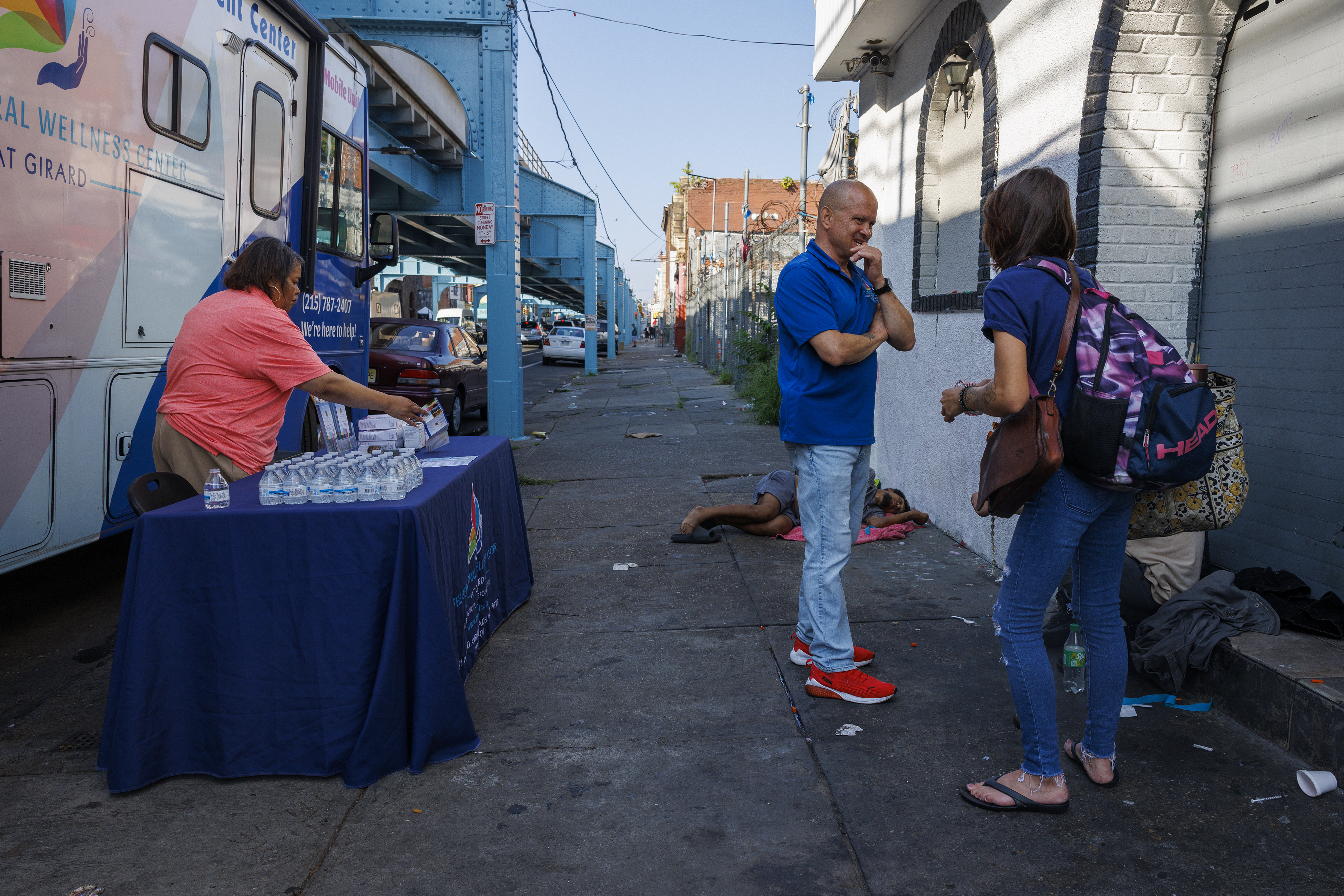
    In this 2023 file photo, the mobile home belonging to the Behavioral Wellness Center at Girard parked along Kensington Avenue. It is one of the city’s so-called mobile service providers that have faced increasing regulation from City Council.

    The progressives — who favor an approach to the crisis called harm reduction that aims to keep people alive until they are ready to enter treatment — argue that placing restrictions on mobile service providers will make it harder for them to reach vulnerable people in addiction and ultimately reduce the number of providers on the street.

    “When human beings are trying to provide help,” said Councilmember Nicolas O’Rourke, “the attitude should never be ‘how can we limit them.’”

    O’Rourke and Councilmember Kendra Brooks, both of the Working Families Party, and Democrat Rue Landau voted against Driscoll’s measure.

    But Lozada said implementing new regulations was not about restricting care.

    “We’re hoping that services continue,” she said. “People have just moved to other spaces to find a way to be able to continue to provide the services that people need.”

    And Parker administration officials said the goal is not to reduce the number of providers, but to better coordinate them and ensure safety, especially for people receiving medical services.

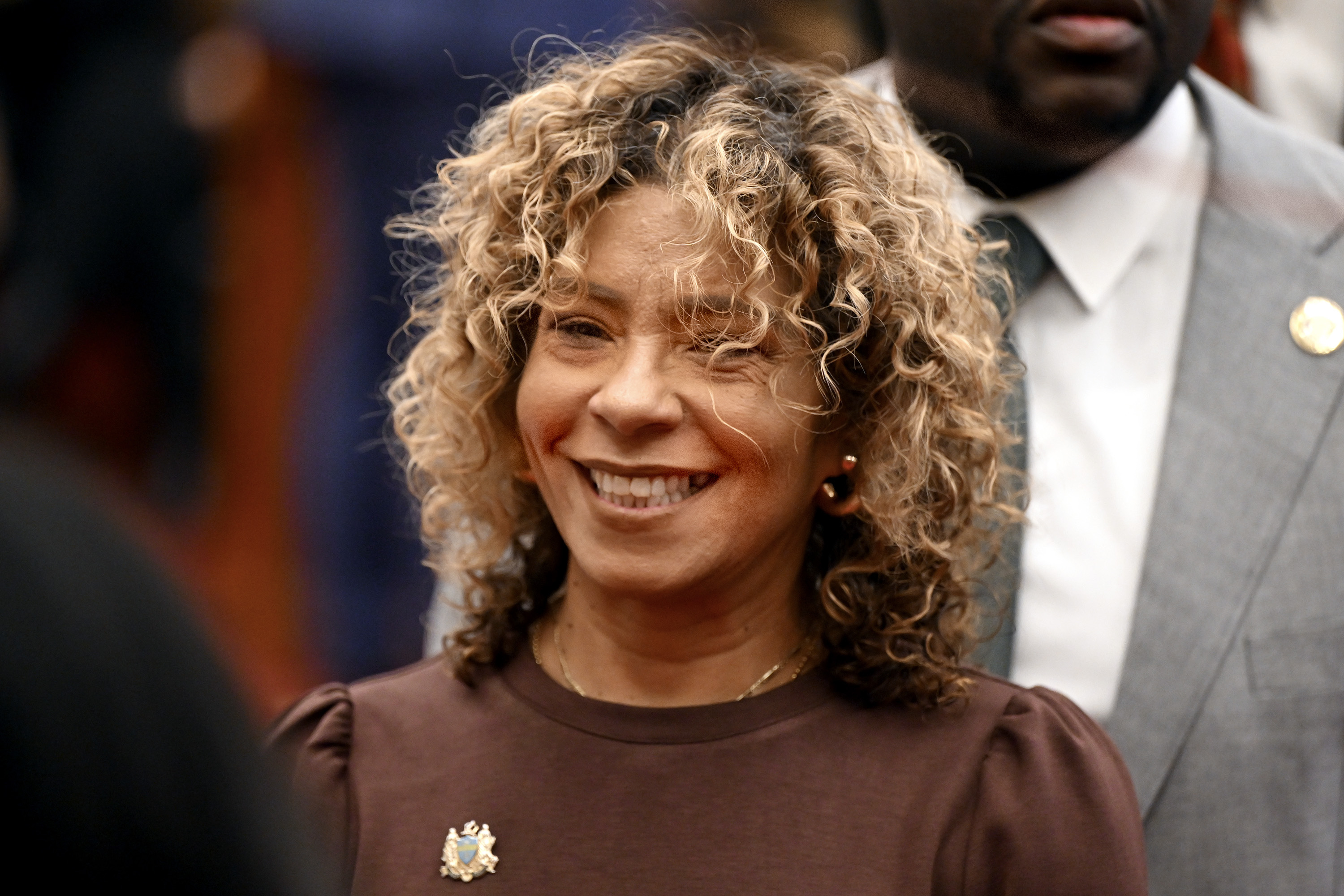
    Councilmember Quetcy Lozada in chambers as City Council meets Thursday, Dec. 11, 2025, on the last day of the 2025 session.

    Kensington has been a key issue for the Parker administration and Council members who have pushed for more law enforcement in the neighborhood, where sprawling homelessness, open drug use, and violent crime have been commonplace for years. There have been some signs of progress, including a reduction in the number of people living on the street.

    The city has tried new tactics, including opening its own recovery house and expanding police foot patrols. The local government has also at times operated its own mobile medical services and contracts with organizations that do so.

    So far, the city has issued nine permits to providers who perform mobile medical services and 40 to organizations considered “nonmedical,” like those that distribute food. Some of those organizations also operate in other neighborhoods.

    “We don’t have a problem if there’s five or 500 providers,” said Crystal Yates-Gale, deputy managing director for health and human services. “As long as they’re qualified to provide the care, and as long as we can help coordinate the care.”

    Despite the changes, city says ‘people are still coming’

    Under the new rules, nonmedical providers are prohibited from staying in one place for more than 45 minutes. Medical providers can station on a two-block stretch of Allegheny Avenue at nighttime or at a designated parking lot at 265 E. Lehigh Ave. during the day.

    That lot, which is managed by the city and addiction service provider Merakey, is connected to the city’s Wellness Support Center.

    Inside, people can access first aid, showers, and food, as well as get directed to treatment, legal aid, housing assistance, and other services.

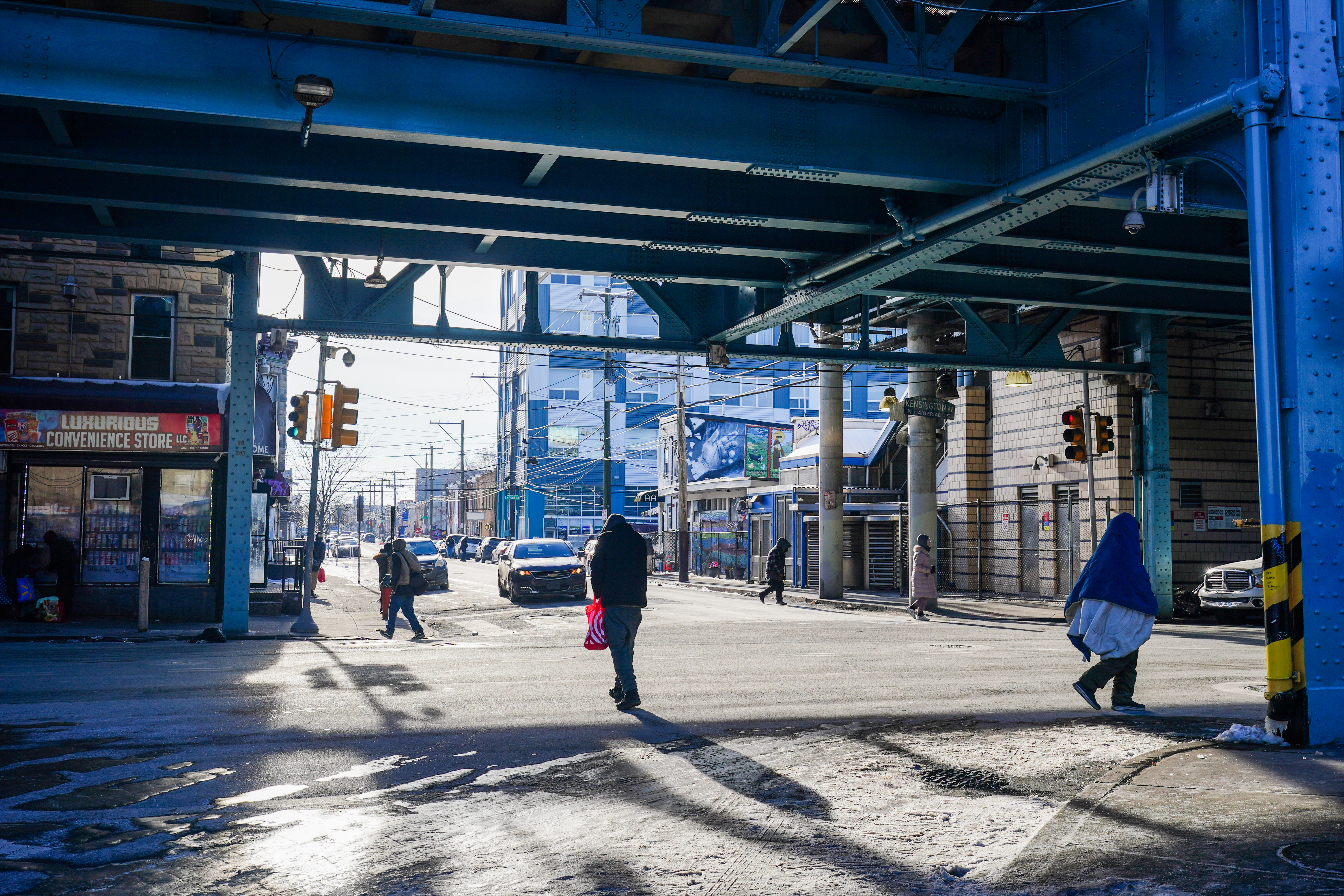
    People walk near Kensington Ave. in January 2025.

    In the parking lot, two mobile medical service providers run by Merakey and Kensington Hospital are currently stationed, according to Kurt August, executive director of the Philadelphia Office of Public Safety’s Criminal Justice Division. He said officials are looking to expand the number of providers that operate there.

    In late October, Merakey began dispensing methadone out of an RV parked in the lot. The tightly regulated opioid medication is a popular treatment for people experiencing withdrawal because it helps stave off cravings.

    Raymond Bobb, a medical director at Merakey, said he has seen promising results in just a few weeks, including starting people on methadone and getting them stable enough to transition to inpatient drug treatment. Merakey offers to transport people on the street to the RV to enroll them in medication-assisted treatment.

    “We’ve been able to take everything right to the heart of the epidemic and engage people the way you would treat your brother, or your sister, or your family,” said Bobb, who is also in recovery and became emotional when speaking about the program.

    “Our goal,” he added, “is to build people up and motivate them to want treatment for themselves.”

    August said retention has been high, despite the police presence at the support center. The officers, he said, were “handpicked” to be stationed alongside behavioral health professionals.

    “It’s not a secret that police are on site, and people are still coming,” August said.

    Still, other providers have expressed concern that requiring people to travel to the lot adds an additional barrier to care, especially for those who were used to mobile services coming to them.

    Sarah Laurel, who runs the addiction outreach program Savage Sisters and has a nonmedical permit, said she fears that providers who offered medication-assisted treatment on the street will now be less accessible.

    However, she said, some clients greeted the news of service limits with a shrug.

    “The friends we serve are so used to not being heard that when they realize that services are going away, they adjust quickly to not having things,” Laurel said. “They just say, ‘No one cares about us. They hate us anyway.’ That is how people feel seen in this city.”

    Staff writer Ellie Rushing contributed to this article.