Category: Politics

Political news and coverage

  • Philly federal court judge Emil Bove attended Trump’s Poconos rally. Now he faces an ethics complaint.

    Philly federal court judge Emil Bove attended Trump’s Poconos rally. Now he faces an ethics complaint.

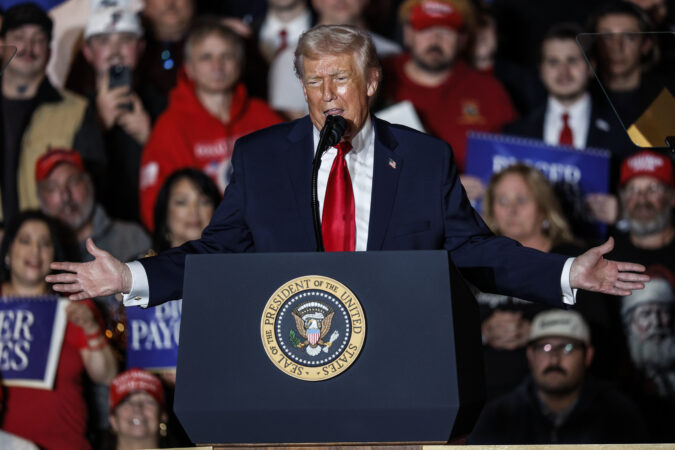
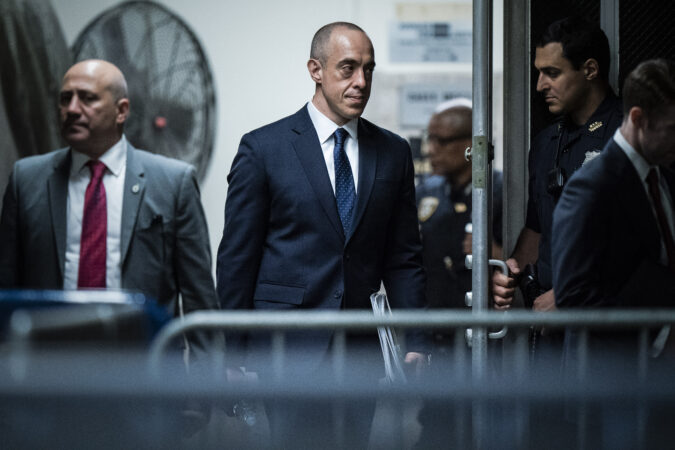
    Emil Bove, a judge in Philadelphia’s federal appeals court and a staunch defender of President Donald Trump, faces an ethics complaint over his decision to attend the president’s rally in Pennsylvania earlier this week.

    The complaint, written by Gabe Roth, who leads the advocacy group Fix the Court, was filed Wednesday with the chief judge of the U.S. Court of Appeals for the Third Circuit, based in Philadelphia. It alleges that Bove’s attendance at the campaign-style rally — which was billed as the first stop on an economic tour but went off-script with partisan attacks on immigrants and his critics — violated parts of the Code of Conduct for United States Judges.

    That code includes provisions that a judge “should avoid impropriety and the appearance of impropriety in all activities” and “should refrain from political activity,” the complaint noted.

    “I believe Judge Bove has violated multiple Canons of the Code of Conduct, should be admonished for his behavior and should be subject to any other discipline under the Judicial Conduct and Disability Act that the Chief Judge and the Judicial Council deem fit,” Roth wrote in the complaint, questioning whether Bove’s attendance hindered his impartiality as a judge.

    A spokesperson for the Third Circuit, where Bove has been serving since his contentious confirmation in July, declined to comment. White House communications director Steven Cheung wrote in a post on X that it is not unusual for a judge, like Bove, to be at a rally.

    “Stop your pearl-clutching,” Cheung wrote in response to another user. “An American citizen is at an event listening to the President of the United States speak. In your world, you’d rather give rights to illegal criminals over Americans.”

    At Tuesday’s event, Bove said that he was “just here as a citizen coming to watch the president speak,” according to a reporter from MS NOW, formerly MSNBC.

    Trump nominated Bove, who had worked as his personal criminal-defense attorney before the president chose him for a prestigious Justice Department role, in May to fill a vacant seat on the Philadelphia-based court. He was confirmed 50-49 by the U.S. Senate in July, with two Republicans voting with Democrats to oppose his appointment. The confirmation solidified Bove, whose career highlights have been defined by his loyalty to Trump, in a lifetime appointment on the bench.

    Soon after coming into office in January, Trump tapped Bove to serve a key role in his administration’s plans to revamp the Justice Department. Bove oversaw swaths of firings and resignations, threatened consequences for officials who did not comply with the Trump administration’s immigration agenda, and secured the vexed dismissal of corruption charges against New York City Mayor Eric Adams.

    He has also been the subject of whistleblower allegations. In June, a former high-ranking department lawyer accused Bove of saying U.S. officials should consider resisting court orders blocking deportations of alleged gang members.

    Bove denied these allegations during a confirmation hearing before the Senate Judiciary Committee by saying, “I did not suggest that there would be any need to consider ignoring court orders.”

    In July, new whistleblower accounts emerged from organizations representing former Justice Department employees. One alleged that an employee was concerned about Bove “actively and deliberately undermining the rule of law” when it came to court orders in an immigration case.

    Another whistleblower said they had evidence that Bove was not truthful to the Senate Judiciary Committee during his confirmation hearing.

    As to what could happen to Bove next when it comes to the misconduct complaint, the chief judge of the Third Circuit could conduct a “limited inquiry” into the allegations, according to the U.S. Courts website. Then, after considering, the chief judge would dismiss or conclude the complaint or appoint a special committee of judges to investigate.

  • Philly expands outdoor dining and cracks down on ‘reservation scalpers’ ahead of expected 2026 tourism

    Philly expands outdoor dining and cracks down on ‘reservation scalpers’ ahead of expected 2026 tourism

    Philadelphia lawmakers on Thursday approved two changes to city law that are aimed at boosting business for restaurants and the hospitality sector ahead of an expected influx of tourists visiting the city next year.

    During its final meeting of the year, City Council voted to approve legislation to expand outdoor dining in the city by easing the permitting process in a handful of commercial corridors.

    Legislators also voted to ban so-called reservation scalpers, which are third-party businesses that allow people to secure tables and then resell them without authorization from the restaurant.

    Both measures passed Council unanimously and were championed by advocates for the restaurant industry, who lobbied lawmakers to ease burdens on the tourism and hospitality industry ahead of several large-scale events in the city next year, including celebrations for America’s Semiquincentennial, when Philadelphia is expected to host a flurry of visitors.

    They both now head to the desk of Mayor Cherelle L. Parker, who has never issued a veto.

    The outdoor dining legislation, authored by Councilmember Rue Landau, a Democrat who represents the city at-large, expands the number of so-called by-right zones, where businesses can have sidewalk cafes without having to obtain a special zoning ordinance.

    Currently, by-right areas are only in Center City and a few commercial corridors in other neighborhoods. Restaurants outside those areas must undertake a sometimes lengthy process to get permission to place tables and chairs outside.

    The expanded zones, which were chosen by individual Council members who represent the city’s 10 geographic districts, include corridors in Manayunk and on parts of Washington Avenue, Passyunk Avenue, and Point Breeze Avenue in South Philadelphia.

    The legislation also includes all of the West Philadelphia-based Third District, which is represented by Jamie Gauthier, the only Council member who chose to include her entire district in the expansion.

    The cafe area on the sidewalk outside of Gleaner’s Cafe in the 9th Street Market on Thursday, July 27, 2023.

    Nicholas Ducos, who owns Mural City Cellars in Fishtown, said he has been working for more than a year to get permission to place four picnic tables outside his winery. He said he has had to jump through hoops including working with multiple agencies, spending $1,500 to hire an architect, and even having to provide paperwork to the city on a CD-ROM.

    “There are a lot of difficult things about running a business in Philadelphia,” Ducos said. “This should not be one.”

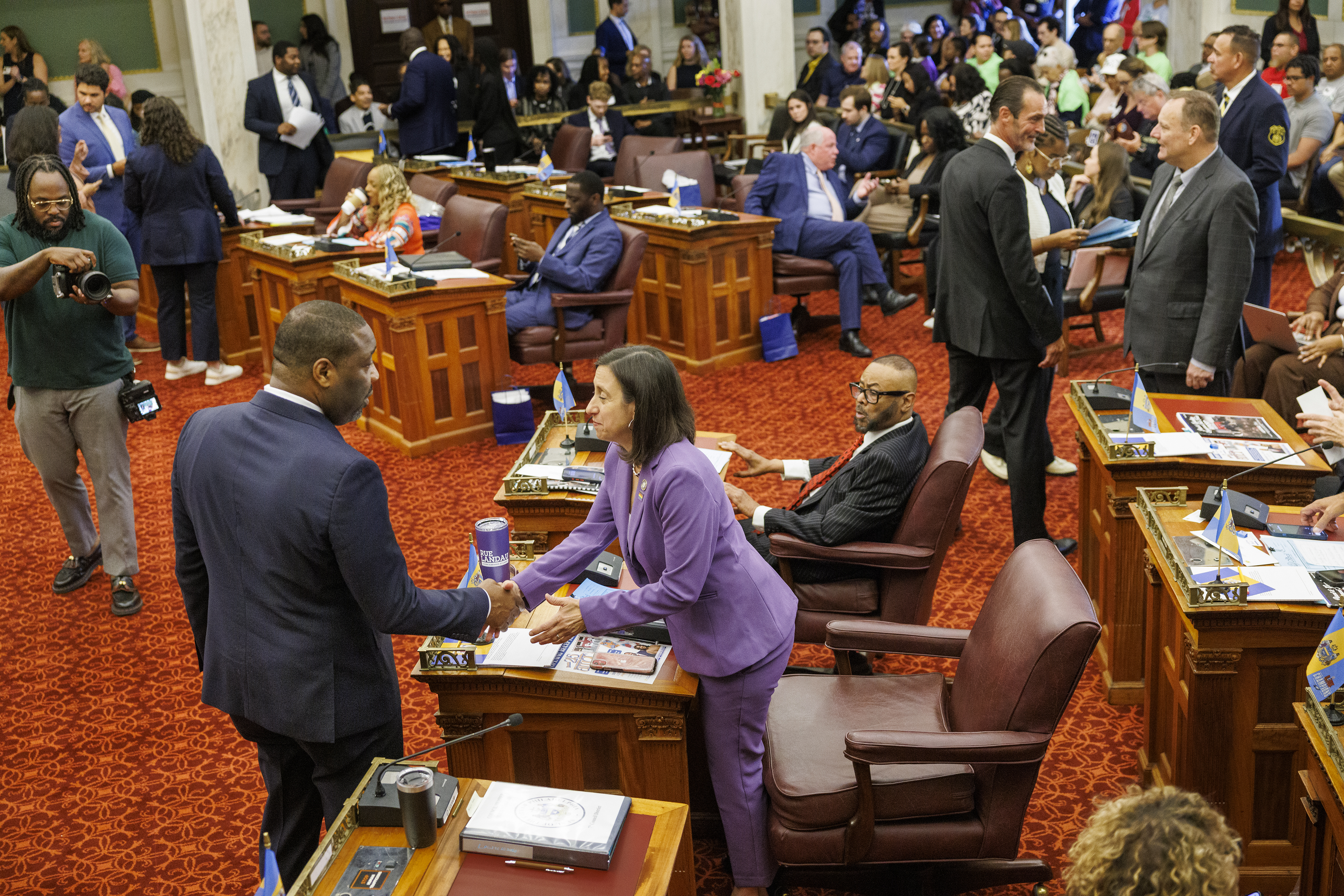
    At left is Philadelphia Council President Kenyatta Johnson greeting Rue Landau and other returning members of council on their first day of fall session, City Hall, Thursday, September 11, 2025.

    Council members also approved the reservation scalping legislation authored by Councilmember Isaiah Thomas, a Democrat who represents the city at-large. He has said the bill is modeled after a similar law in New York and is not aimed at popular apps and websites like OpenTable, Resy, and Tock that partner directly with restaurants.

    Instead, it is a crackdown on websites that don’t work with restaurants, such as AppointmentTrader.com, which provides a platform for people to sell reservations and tickets to events.

    Jonas Frey, the founder of AppointmentTrader.com, previously said the legislation needlessly targets his platform. He said his company put safeguards in place to prevent scalping, including shutting down accounts if more than half of their reservations go unsold.

    But Thomas has cast the website and similar platforms as “predatory” because restaurants can end up saddled with empty tables if the reservations do not resell.

    Zak Pyzik, senior director of public affairs at the Pennsylvania Restaurant and Lodging Association, said the legislation is an important safeguard for restaurants.

    “This bill provides clear, sensible protections that will keep restaurants in the driver’s seat,” he said, “and in control of their business and their technology services.”

  • Tennessee executes Harold Wayne Nichols by injection for killing college student in 1988

    Tennessee executes Harold Wayne Nichols by injection for killing college student in 1988

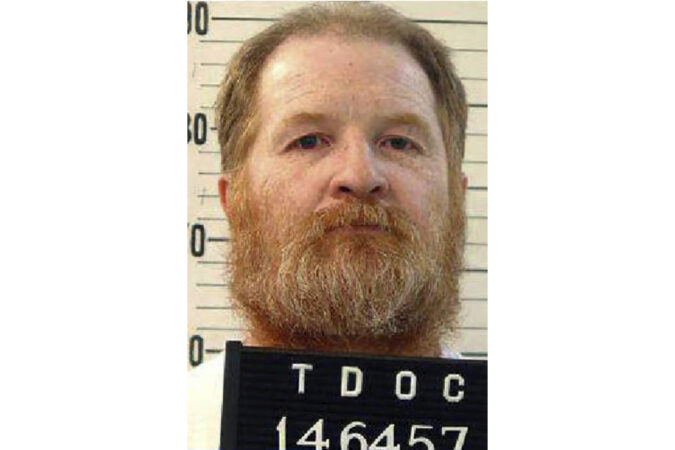
    NASHVILLE, Tenn. — Tennessee executed Harold Wayne Nichols by injection Thursday in Nashville for the 1988 rape and murder of Karen Pulley, a 20-year-old student at Chattanooga State University.

    Nichols, 64, had confessed to killing Pulley as well as raping several other women in the Chattanooga area. Although he expressed remorse at trial, he admitted he would have continued his violent behavior had he not been arrested. He was sentenced to death in 1990.

    “To the people I’ve harmed, I’m sorry,” Nichols said in his final statement. Before Nichols died, a spiritual adviser spoke to him and recited the Lord’s Prayer. They both became emotional and Nichols nodded as the adviser talked, witnesses said.

    Media witnesses reported that a sheet was pulled up to just above Nichols’ waist and he was strapped to a gurney with a long tube running to an IV insertion site on the inside of his elbow. There was a spot of blood near the injection site. At one point he took a very heavy breath and his whole torso rose. He then took a series of short, huffing breaths that witnesses said sounded like snorting or snoring. Nichols’ face turned red and he groaned. His breathing then appeared to slow, then stop, and his face became purple before he was pronounced dead, witnesses said.

    Nichols’ attorneys unsuccessfully sought to have his sentence commuted to life in prison, citing the fact that he took responsibility for his crimes and pleaded guilty. His clemency petition stated “he would be the first person to be executed for a crime he pleaded guilty to since Tennessee re-enacted the death penalty in 1978.”

    The U.S. Supreme Court declined to issue a stay of the execution on Thursday.

    In a recent interview, Pulley’s sister, Lisette Monroe, said the wait for Nichols’ execution has been “37 years of hell.” She described her sister as “gentle, sweet and innocent,” and said she hopes that after the execution she’ll be able to focus on the happy memories of Pulley instead of her murder.

    Jeff Monroe, Lisette Monroe’s husband and Pulley’s brother-in-law, said the family “was destroyed by evil” the night she was killed.

    “Taking a life is serious and we take no pleasure in it,” he said during a news conference following the execution. “However, the victims, and there were many, were carefully stalked and attacked. The crimes, and there were many, were deliberate, violent, and horrific.”

    Pulley, who was 20 when she was killed, had just finished Bible school and was attending college in Chattanooga to become a paralegal, Jeff Monroe said.

    “Karen was bubbly, happy, selfless, and looking forward to the life before her,” he said.

    Nichols has seen two previous execution dates come and go. The state earlier planned to execute him in August 2020, but Nichols was given a reprieve due to the COVID-19 pandemic. At that time, Nichols had selected to die in the electric chair — a choice allowed in Tennessee for inmates who were convicted of crimes before January 1999.

    Tennessee’s lethal injection protocol in 2020 used three different drugs in series, a process that inmates’ attorneys claimed was riddled with problems. Their concerns were shown to have merit in 2022, when Gov. Bill Lee paused executions, including a second execution date for Nichols. An independent review of the state’s lethal injection process found that none of the drugs prepared for the seven inmates executed in Tennessee since 2018 had been properly tested.

    The Tennessee Department of Correction issued a new execution protocol in last December that utilizes the single drug pentobarbital. Attorneys for several death row inmates have sued over the new rules, but a trial in that case is not scheduled until April. Nichols declined to chose an execution method this time, so his execution will be by injection by default.

    His attorney Stephen Ferrell explained in an email that “the Tennessee Department of Correction has not provided enough information about Tennessee’s lethal execution protocol for our client to make an informed decision about how the state will end his life.”

    Nichols’ attorneys on Monday won a court ruling granting access to records from two earlier executions using the new method, but the state has not yet released the records and says it will appeal. During Tennessee’s last execution in August, Byron Black said he was “hurting so bad” in his final moments. The state has offered no explanation for what might have caused the pain.

    Many states have had difficulty obtaining lethal injection drugs as anti-death penalty activists have put pressure on drug companies and other suppliers. Between the shortages and legal challenges over botched executions, some states have moved to alternative methods of execution including a firing squad in South Carolina and nitrogen gas in Alabama.

    Including Nichols, a total of 46 men have died by court-ordered execution this year in the U.S.

  • Venezuelan Nobel laureate credits Trump for pressuring Maduro with ‘decisive’ actions

    Venezuelan Nobel laureate credits Trump for pressuring Maduro with ‘decisive’ actions

    CARACAS, Venezuela — Venezuelan opposition leader María Corina Machado said Thursday that “decisive” actions by the United States, including the seizure of an oil tanker, have left the repressive government of President Nicolás Maduro at its weakest point, and she vowed to return to the country to keep fighting for democracy.

    Machado’s statements to reporters came hours after she appeared in public for the first time in 11 months, following her arrival in Norway’s capital, Oslo, where her daughter received the Nobel Peace Prize award on her behalf on Wednesday.

    The actions of President Donald Trump “have been decisive to reach where we are now, where the regime is significantly weaker,” she said. “Because before, the regime thought it had impunity …. Now they start to understand that this is serious, and that the world is watching.”

    Machado sidestepped questions on whether a U.S. military intervention is necessary to remove Maduro from power. She told reporters that she would return to Venezuela “when we believe the security conditions are right, and it won’t depend on whether or not the regime leaves.”

    Machado arrived in Oslo hours after Wednesday’s prize ceremony and made her first public appearance early Thursday, emerging from a hotel balcony and waving to an emotional crowd of supporters. She had been in hiding since Jan. 9, when she was briefly detained after joining supporters during a protest in Caracas.

    Machado left Venezuela at a critical point in the country’s protracted crisis, with the Trump administration carrying out deadly military operations in the Caribbean and threatening repeatedly to strike Venezuelan soil. The White House has said the operations, which have killed more than 80 people, are meant to stop the flow of drugs into the U.S.

    But many, including analysts, U.S. members of Congress and Maduro himself, see the operations as an effort to end his hold on power. The opposition led by Machado has only added to this perception by reigniting its promise to soon govern the country.

    On Wednesday, President Donald Trump said the U.S. had seized an oil tanker off the coast of Venezuela. On Thursday, Machado called on governments to expand their support for Venezuela’s opposition beyond words.

    “We, the Venezuelan people that have tried every single, you know, institutional mean, ask support from the democratic nations in the world to cut those resources that come from illegal activities and support repressive approaches,” she said. “And that’s why we are certainly asking the world to act. It’s not a matter of statements, as you say, it’s a matter of action.”

    Machado, 58, was awarded the Nobel Peace Prize in October after mounting the most serious peaceful challenge in years to Maduro’s authoritarian government. Her daughter, Ana Corina Sosa, accepted the prize at a ceremony in Oslo.

    Machado was received Thursday by Norwegian Prime Minister Jonas Gahr Støre, who said that his country is ready to support a democratic Venezuela in “building new and sound institutions.”

    Asked whether the Venezuelan government might have known her whereabouts since January, Machado told reporters: “I don’t think they have known where I have been, and certainly they would have done everything to stop me from coming here.”

    She declined to give details of her journey from Venezuela to Norway. But she thanked “all those men and women that risked their lives so that I could be here today” and later acknowledged that the U.S. government helped her.

    Flight tracking data show that the plane Machado arrived on flew to Oslo from Bangor, Maine.

    Machado won an opposition primary election and intended to challenge Maduro in last year’s presidential election, but the government barred her from running for office. Retired diplomat Edmundo González took her place.

    The lead-up to the election on July 28, 2024, saw widespread repression, including disqualifications, arrests and human rights violations. That increased after the country’s National Electoral Council, which is stacked with Maduro loyalists, declared the incumbent the winner.

    González sought asylum in Spain last year after a Venezuelan court issued a warrant for his arrest.

    It’s unclear how Machado and González could return to Venezuela. An opposition plan to get González back before the Jan. 10 ceremony that gave Maduro another term didn’t materialize.

    Machado, alongside the Norwegian prime minister, said that “we decided to fight until the end and Venezuela will be free.” If Maduro’s government is still in place when she returns, she added, “I will be with my people and they will not know where I am. We have ways to do that and take care of us.”

  • How a U.S. admiral decided to kill two boat strike survivors

    How a U.S. admiral decided to kill two boat strike survivors

    In the minutes after U.S. forces attacked a suspected drug smuggling boat near Trinidad, Adm. Frank M. Bradley, the commander overseeing the operation, faced a choice.

    A laser-guided bomb had killed nine of the 11 people on board, sunk the boat’s motor and capsized the vessel’s front end, according to people who have viewed or been briefed on a classified video of the operation. As smoke from the blast cleared, a live surveillance feed provided by a U.S. aircraft high overhead showed two men had survived and were attempting to flip the wreckage.

    Ahead of the Sept. 2 mission, Defense Secretary Pete Hegseth had given an order to U.S. forces to kill the passengers, sink the boat and destroy the drugs, three people familiar with the operation said. It appeared to Bradley that none of those objectives had been achieved, the admiral would later recount for lawmakers.

    The video feed showed that the two men were struggling to stay atop the flotsam, which people who’ve seen the footage described as roughly the size of a dining room table. Bradley turned to the military lawyer advising him and requested input, according to members of Congress who spoke with him privately last week and people later briefed on those conversations. Under the law of armed conflict, were the men now “shipwrecked” and therefore out of the fight, rendering them unlawful targets?

    The admiral decided that definition did not apply, these people said. Instead, what Bradley explained to lawmakers left some with the impression that there was a prevailing lack of certainty — about the existence of any drugs beneath the wreckage and whether the survivors had a means to call for help or intended to surrender — when he concluded that further action was warranted.

    He ordered a second strike, killing both men. Moments earlier, the video feed had shown them waving their arms and looking skyward, people who saw the footage said. It was unclear, they added, why they were doing so.

    The 30-plus minutes that elapsed between the first strike and the second has become the most consequential moment in Bradley’s three-decade military career — one that includes direct involvement in more than 1,000 lethal strikes governed by the law of armed conflict central to understanding the events of Sept. 2 and whether the strike survivors were lawful targets. The episode has put the admiral and his advisers under a spotlight alongside Hegseth, who has expressed support for Bradley while attempting to distance himself from the fallout.

    Bradley defended his actions when summoned to Capitol Hill last week, telling lawmakers he weighed the fate of the survivors with the understanding that the Trump administration has argued illicit drugs are weapons responsible for killing Americans, and that those who traffic them are not criminals but enemy combatants. U.S. intelligence, he said, showed that everyone on the boat was a “narco-terrorist,” consistent with the administration’s definition, which allowed for deadly force. His testimony provided lawmakers with the fullest account of the operation since the publication of a Washington Post report on Nov. 28 revealing Hegseth’s authorization ahead of the first attack to kill the entire crew and Bradley’s order of a second strike that killed the two survivors.

    Law of war experts and some lawmakers have challenged the admiral’s reasoning and cast doubt on the lawfulness of using the military to kill alleged criminals.

    The military lawyer who advised the admiral, whom The Post is not identifying because they serve in a secretive unit, explained to Bradley how the law of armed conflict defines “shipwrecked,” these people said. International law defines “shipwrecked” persons as those who “are in peril at sea” as a result of a mishap affecting their vessel “and who refrain from any act of hostility.” Combatants who are shipwrecked receive special protection because, unlike troops on land, they cannot take refuge, experts note.

    Bradley spent about eight hours meeting with more than a dozen lawmakers Dec. 4. Four people familiar with those sessions said that he affirmed having sought real-time legal advice, but that he did not say whether his military lawyer considered the survivors shipwrecked and out of the fight.

    There was dissent in the operations room over whether the survivors were viable targets after the first strike, according to two people. What the lawyer advised, though, and whether they rendered a definitive opinion remains unclear.

    A spokesperson for U.S. Special Operations Command, where Bradley is the top commander, declined to comment. The military attorney did not respond to requests for comment.

    Former military lawyers said that in such situations a commander’s top legal adviser would be expected to offer an assessment, but their role is only to advise, not to approve a strike.

    This report is based on the accounts of 10 people who either spoke directly with Bradley on Capitol Hill last week, were briefed on his conversations afterward or are otherwise familiar with the operation. Most spoke on the condition of anonymity because the matter is highly sensitive and Bradley’s communication with lawmakers occurred in classified settings.

    The chain of command

    Two Republican-led committees in Congress have opened inquiries into the Sept. 2 operation, though on Tuesday, Rep. Mike Rogers (R., Ala.), who heads the House Armed Services Committee, said that he was satisfied with the information he had received and planned to end his probe once other members of the panel are given an opportunity to see unedited video of the operation, as he has. A separate Senate inquiry continues.

    President Donald Trump appeared to support releasing video footage of the operation before abruptly backtracking this week and deferring to Hegseth on whether to do so. Hegseth has been noncommittal, saying the Pentagon is “reviewing” the footage to ensure it would not expose military secrets.

    Democrats have demanded fuller investigations and called on the administration to share more evidence with lawmakers. Sen. Mark Warner (D., Va.), the Senate Intelligence Committee’s senior Democrat, said after meeting with Hegseth and other officials Tuesday that he was seeking written documentation of the opinion rendered by Bradley’s military lawyer.

    The first strike Sept. 2 was carried out with a laser-guided GBU-69, according to people familiar with Bradley’s briefings. The munition exploded just above the crew, a setting designed to maximize the blast and the spread of shrapnel fragments. The follow-on strike was taken with a smaller AGM-176 Griffin missile, which killed the two men on impact, people familiar with the video footage said. U.S. forces then fired two additional Griffins at the wreckage to sink it.

    While Bradley made the decision to conduct the follow-on strike that killed the two survivors, Hegseth was the operation’s target engagement authority, meaning he authorized the use of force and ultimately was responsible for the strikes ordered, people familiar with the matter said.

    Hegseth has said that he watched live video of the initial attack but left for other meetings minutes later and was unaware initially that the first strike had left two men alive. It was a couple of hours, Hegseth has said, before he learned that Bradley ordered the second strike.

    Sean Parnell, a spokesman for Hegseth, said in a statement, “We are not going to second-guess a commander who did the right thing and was operating well within his legal authority.”

    Gen. Dan Caine, who as chairman of the Joint Chiefs of Staff is the military’s top officer, saw the full video of the Sept. 2 strike for the first time Dec. 4, when he joined Bradley’s meetings with lawmakers, two U.S. officials said. In a statement for this report, a spokesman for Caine said the chairman has “trust and confidence” in Bradley and military commanders “at every echelon.”

    The admiral’s defense

    The Sept. 2 operation was the first in what has become an extended campaign to target suspected drug runners in the waters around Latin America. In strikes on more than 20 boats, U.S. forces have killed nearly 90 people to date, according to public notices from the Trump administration.

    At the core of Bradley’s defense of the second strike, according to several people familiar with his conversations on Capitol Hill, was his assertion that the attack was not directed at the two survivors but at the boat wreckage and any cocaine it may have sheltered.

    The laws of war stipulate that military commanders must consider the collateral damage of a strike only if the action could pose a threat to civilians, said Geoffrey Corn, a retired Army lawyer. By labeling suspected drug smugglers as combatants in an armed conflict against Americans, as the Trump administration has done, the Defense Department can argue that the military did not need to consider the harm to survivors when striking again, Corn said.

    But many experts, Corn among them, dispute that the U.S. is in an “armed conflict” with cartel groups. Corn also noted that even if they are combatants, once shipwrecked, feasible measures must be taken to try to rescue them before attacking the target again, he said. “That to me is the most troubling aspect of the attack,” he said.

    Bradley’s contention that he was targeting the boat rather than the people, Corn said, fails to explain why the admiral deemed it necessary to launch the second strike rather than first trying to rescue the survivors.

    The admiral told lawmakers that intelligence gathered ahead of the operation indicated the boat being targeted was expected to transfer its cargo to another vessel while both were at sea. After the first strike, Bradley explained, he and his team were unable to rule out whether the men, who were shirtless, had a communications device either on their person or somewhere under the vessel’s wreckage that could have been used to call for help.

    U.S. forces did not intercept any communications from the two survivors after the first strike, Bradley told lawmakers.

    The admiral also theorized, multiple people said, that the two survivors could have drifted to shore or found a way to sail the wreckage to their intended rendezvous point. When the U.S. aircraft providing the live video feed scanned the surrounding area, it did not find another vessel coming to the boat’s aid. And the admiral conceded to some lawmakers that the survivors probably would not have been able to flip the wreckage, said one lawmaker and a U.S. official familiar with Bradley’s conversations.

    The doubts that have emerged

    Todd Huntley, a former director of the Navy’s international law office, which handles law of the sea matters, said in an interview with The Post that the legal definition for being shipwrecked does not require that people are drowning or wounded.

    “They just have to be in distress in water,” said Huntley, a former military lawyer who advised Special Operations forces.

    Huntley also said that the potential presence of a communications device should have been irrelevant. “You can’t kill somebody in the water merely because they have a radio,” he said. The prospect of a rendezvous with another vessel does not indicate an intent to engage in hostilities or prove the survivors posed a threat, he added. “That is such a far-out theory,” Huntley said.

    Trump and other Republicans have framed the administration’s counternarcotics campaign as a necessary measure to defend Americans from fentanyl, the leading cause of drug overdoses in the United States. But the Sept. 2 strike — and most of those that have followed — targeted a boat believed to be ferrying cocaine. Fentanyl smuggled into the U.S. mostly comes through border crossings.

    People familiar with Bradley’s account to lawmakers said that the cargo in this case was heading next to Suriname, a small country east of Venezuela, not the United States. As The Post and others have reported, most of the narcotics that move through the Caribbean are headed toward Europe and Western Africa rather than the U.S.

    “That further underscores that this boat was not a threat to the United States and not a lawful target,” Huntley said.

    While speaking with lawmakers, Bradley said he looked for signs the men were surrendering, such as waving a cloth or holding up their arms. The admiral noted that he saw no such gesture, and did not interpret their wave as a surrender, people familiar with his interviews said.

    To legal experts, Bradley’s assertion that he scanned for a sign of surrender reflected a foundational flaw with the Trump administration’s lethal force campaign: The laws of war weren’t written to address the behavior of criminal drug traffickers, they said.

    On Sept. 2, the 11 passengers on board the targeted boat were almost certainly unaware the Trump administration had declared “war” on them, people familiar with the operation said. It’s unclear whether the strike survivors even realized a U.S. military aircraft was responsible for the explosion that had occurred, these people familiar said, or whether they knew how to indicate surrender — or that surrender was even an option.

    In the weeks leading up to the attack, the Defense Department ran simulations that showed there was the potential for people to survive a first strike, three people familiar with the matter said. That did not appear to affect military planning for this operation. On the day of the attack, the U.S. military had no personnel or equipment on hand to rescue anyone.

  • MyPillow founder and Trump supporter Mike Lindell says he’s running for Minnesota governor in 2026

    MyPillow founder and Trump supporter Mike Lindell says he’s running for Minnesota governor in 2026

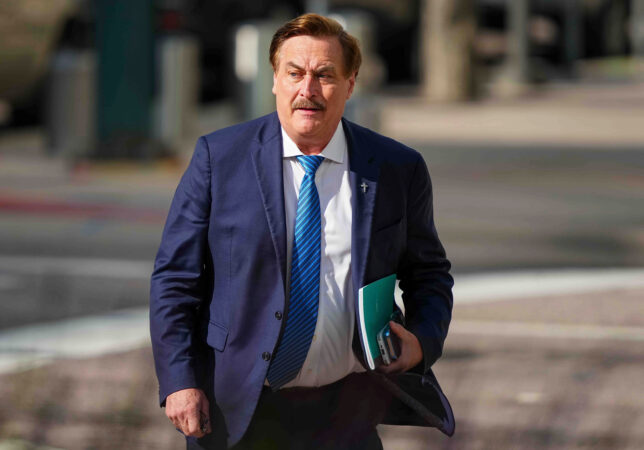
    SHAKOPEE, Minn. — Mike Lindell, the fervent supporter of President Donald Trump known to TV viewers as the “MyPillow Guy,” officially entered the race for Minnesota governor Thursday in hopes of winning the Republican nomination to challenge Democratic Gov. Tim Walz.

    “I’ll leave no town unturned in Minnesota,” Lindell told The Associated Press in an interview ahead of a news conference set for Thursday.

    He said he has a record of solving problems and personal experiences that will help businesses and fight addiction and homelessness as well as fraud in government programs. The fraud issue has particularly dogged Walz, who announced in September that he’s seeking a third term in the 2026 election.

    A TV pitchman and election denier

    Lindell, 64, founded his pillow company in Minnesota in 2009 and became its public face through infomercials that became ubiquitous on late-night television. But he and his company faced a string of legal and financial setbacks after he became a leading amplifier of Trump’s false claims that the 2020 election was stolen. He said he has overcome them.

    “Not only have I built businesses, you look at problem solution,” Lindell said in his trademark rapid-fire style. “I was able to make it through the biggest attack on a company, and a person, probably other than Donald Trump, in the history of our media … lawfare and everything.”

    While no Republican has won statewide office in Minnesota since 2006, the state’s voters have a history of making unconventional choices. They shocked the world by electing former professional wrestler Jesse Ventura as governor in 1998. And they picked a veteran TV pitchman in 1978 when they elected home improvement company owner Rudy Boschwitz as a U.S. senator.

    Lindell has frequently talked about how he overcame a crack cocaine addiction with a religious conversion in 2009 as MyPillow was getting going. His life took another turn in 2016 when he met the future president during Trump’s first campaign. He served as a warm-up speaker at dozens of Trump rallies and co-chaired Trump’s campaign in Minnesota.

    Trump’s endorsement could be the key to which of several candidates wins the GOP nomination to challenge Walz. But Lindell said he doesn’t know what Trump will do, even though they’re friends, and said his campaign isn’t contingent on the president’s support.

    His Lindell TV streaming platform was in the news in November when it became one of several conservative news outlets that became credentialed to cover the Pentagon after agreeing to a restrictive new press policy rejected by virtually all legacy media organizations.

    Lindell has weathered a series of storms

    Lindell’s outspoken support for Trump’s false claims that the 2020 election was stolen triggered a backlash as major retailers discontinued MyPillow products. By his own admission, revenue slumped and lines of credit dried up, costing him millions. Several vendors sued MyPillow over billing disputes. Fox News stopped running his commercials. Lawyers quit on him.

    Lindell has been sued twice for defamation over his claims that voting machines were manipulated to deprive Trump of a victory.

    A federal judge in Minnesota ruled in September that Lindell defamed Smartmatic with 51 false statements. But the judge deferred the question of whether Lindell acted with the “actual malice” that Smartmatic must prove to collect. Smartmatic says it’s seeking “nine-figure damages.”

    A Colorado jury in June found that Lindell defamed a former Dominion Voting Systems executive by calling him a traitor, and awarded $2.3 million in damages.

    But Lindell won a victory in July when a federal appeals court overturned a judge’s decision that affirmed a $5 million arbitration award to a software engineer who disputed data that Lindell claimed proved Chinese interference in the 2020 election. The engineer had accepted Lindell’s “Prove Mike Wrong Challenge,” which he launched as part of his 2021 “Cyber Symposium” in South Dakota, where he promised to expose election fraud.

    The campaign ahead

    Lindell said his crusade against electronic voting machines will just be part of his platform. While Minnesota uses paper ballots, it also uses electronic tabulators to count them. Lindell wants them hand-counted, even though many election officials say machine counting is more accurate.

    Some Republicans in the race include Minnesota House Speaker Lisa Demuth, of Cold Spring; Dr. Scott Jensen, a former state senator from Chaska who was the party’s 2022 candidate; State Rep. Kristin Robbins, of Maple Grove; defense lawyer and former federal prosecutor Chris Madel; and former executive Kendall Qualls.

    “These guys haven’t lived what I live,” Lindell said.

    Lindell wouldn’t commit to abiding by the Minnesota GOP endorsement and forgoing the primary if he loses it, expressing confidence that he’ll win. He also said he’ll rely on his supporters to finance his campaign because his own finances are drained. “I don’t have the money,” he acknowledged.

    But he added that ever since word got out last week that he had filed the paperwork to run, “I’ve had thousands upon thousands of people text and call, saying from all around the country … ‘Hey, I’ll donate.’”

  • Trump’s handling of the economy is at its lowest point, according to new AP-NORC polling

    Trump’s handling of the economy is at its lowest point, according to new AP-NORC polling

    WASHINGTON — President Donald Trump’s approval on the economy and immigration have fallen substantially since March, according to a new AP-NORC poll, the latest indication that two signature issues that got him elected barely a year ago could be turning into liabilities as his party begins to gear up for the 2026 midterms.

    Only 31% of U.S. adults now approve of how Trump is handling the economy, the poll from The Associated Press-NORC Center for Public Affairs Research finds. That is down from 40% in March and marks the lowest economic approval he’s registered in an AP-NORC poll in his first or second term. The Republican president also has struggled to recover from public blowback on other issues, such as his management of the federal government, and has not seen an approval bump even after congressional Democrats effectively capitulated to end a record-long government shutdown last month.

    Perhaps most worryingly for Trump, who’s become increasingly synonymous with his party, he’s slipped on issues that were major strengths. Just a few months ago, 53% of Americans approved of Trump’s handling of crime, but that’s fallen to 43% in the new poll. There’s been a similar decline on immigration, from 49% approval in March to 38% now.

    The new poll starkly illustrates how Trump has struggled to hold onto political wins since his return to office. Even border security — an issue on which his approval remains relatively high — has declined slightly in recent months.

    The good news for Trump is that his overall approval hasn’t fallen as steeply. The new poll found that 36% of Americans approve of the way he’s handling his job as president, which is down slightly from 42% in March. That signals that even if some people aren’t happy with elements of his approach, they might not be ready to say he’s doing a bad job as president. And while discontent is increasing among Republicans on certain issues, they’re largely still behind him.

    Declining approval on the economy, even among Republicans

    Republicans are more unhappy with Trump’s performance on the economy than they were in the first few months of his term. About 7 in 10 Republicans, 69%, approve of how Trump is handling the economy in the December poll, a decline from 78% in March.

    Larry Reynolds, a 74-year-old retiree and Republican voter from Wadsworth, Ohio, said he believes in Trump’s plan to impose import duties on U.S. trading partners but thinks rates have spiraled too high, creating a “vicious circle now where they aren’t really justifying the tariffs.”

    Reynolds said he also believes that inflation became a problem during the coronavirus pandemic and that the economy won’t quickly recover, regardless of what Trump does. “I don’t think it’ll be anything really soon. I think it’s just going to take time,” he said.

    Trump’s base is still largely behind him, which was not always the case for his predecessor, President Joe Biden, a Democrat. In the summer of 2022, only about half of Democrats approved of how Biden was handling the economy. Shortly before he withdrew from the 2024 presidential race two years later, that had risen to about two-thirds of Democrats.

    More broadly, though, there’s no sign that Americans think the economy has improved since Trump took over. About two-thirds of U.S. adults, 68%, continue to say the country’s economy is “poor.” That’s unchanged from the last time the question was asked in October, and it’s broadly in line with views throughout Biden’s last year in office.

    Why Trump gets higher approval on border security than immigration

    Trump’s approval ratings on immigration have declined since March, but border security remains a relatively strong issue for him. Half of U.S. adults, 50%, approve of how Trump is handling border security, which is just slightly lower than the 55% who approved in September.

    Trump’s relative strength on border security is partially driven by Democrats and independents. About one-third of independents, 36%, approve of Trump on the border, while 26% approve on immigration.

    Jim Rollins, an 82-year-old independent in Macon, Georgia, said he believes that when it comes to closing the border, Trump has done “a good job,” but he hopes the administration will rethink its mass deportation efforts.

    “Taking people out of kindergarten, and people going home for Thanksgiving, taking them off a plane. If they are criminals, sure,” said Rollins, who said he supported Trump in his first election but not since then. “But the percentages — based on the government’s own statistics — say that they’re not criminals. They just didn’t register, and maybe they sneaked across the border, and they’ve been here for 15 years.”

    President Donald Trump made his first stop on an “economic tour” in Mt. Pocono, Pa., on Tuesday, Dec. 9.

    Other polls have shown it’s more popular to increase border security than to deport immigrants, even those who are living in the country illegally. Nearly half of Americans said increasing security at the U.S.-Mexico border should be “a high priority” for the government in AP-NORC polling from September. Only about 3 in 10 said the same about deporting immigrants in the U.S. illegally.

    Shaniqwa Copeland, a 30-year-old independent and home health aide in St. Augustine, Florida, said she approves of Trump’s overall handling of the presidency but believes his immigration actions have gone too far, especially when it comes to masked federal agents leading large raids.

    “Now they’re just picking up anybody,” Copeland said. “They just like, pick up people, grabbing anybody. It’s crazy.”

    Health care and government management remain thorns for Trump

    About 3 in 10 U.S. adults approve of how Trump is handling health care, down slightly from November. The new poll was conducted in early December, as Trump and Congress struggled to find a bipartisan deal for extending the Affordable Care Act subsidies that will expire at the end of this month.

    That health care fight was also the source of the recent government shutdown. About one-third of U.S. adults, 35%, approve of how Trump is managing the federal government, down from 43% in March.

    But some Americans may see others at fault for the country’s problems, in addition to Trump. Copeland is unhappy with the country’s health care system and thinks things are getting worse but is not sure of whether to blame Trump or Biden.

    “A couple years ago, I could find a dentist and it would be easy. Now, I have a different health care provider, and it’s like so hard to find a dental (plan) with them,” she said. “And the people that do take that insurance, they have so many scheduled out far, far appointments because it’s so many people on it.”

    The AP-NORC poll of 1,146 adults was conducted Dec. 4-8 using a sample drawn from NORC’s probability-based AmeriSpeak Panel, which is designed to be representative of the U.S. population. The margin of sampling error for adults overall is plus or minus 4 percentage points.

  • Delco residents prepare for a 19% property tax hike — the second double-digit increase they face in two years

    Delco residents prepare for a 19% property tax hike — the second double-digit increase they face in two years

    For the second year in a row the Delaware County Council approved a double-digit property tax increase.

    Facing fury from residents, the all-Democratic board voted 4-1 Wednesday to approve a $340 million budget that raises the county portion of property taxes 19%.

    Last year, the council voted to increase taxes 23% as federal COVID-19 relief dollars that had filled the county’s longstanding structural deficit began to run dry. That hike took effect in January.

    The new 19% increase, which will take effect next month, will place Delaware County on stable financial footing, members of the council argued.

    “Our primary responsibility is to ensure that this county is on solid financial footing. Make no mistake, absent this increase tonight that would not be the case. We would run out of money,” said Councilmember Kevin Madden, whose term on the board runs out this year.

    The budget, Council Chair Monica Taylor said, would be the first truly balanced budget for the county in more than a decade.

    The tax increase will translate to an additional $188 annually for the county’s average assessed home value of $255,000.

    Taylor and the other council members said they didn’t take the increase lightly, but that it was a necessary step. Their Republican predecessors, they argued, went too long without substantially increasing taxes and left the county in dire straits when Democrats took control in 2020.

    Amid inflation and shrinking federal funds, they said the last two years of increases were needed. And after increasing taxes 19% in 2026, they predicted taxes could be kept level in the future.

    “If it comes down to it, next year rather than raise taxes I am going to be looking at cutting discretionary spending,” Councilmember Christine Reuther said Wednesday.

    The proposed budget increased spending by just under 6% with the majority of new spending attributed to increased costs for employee health benefits, increased court costs, employee pay, and increases to the county’s SEPTA contribution.

    “Our strategy is not just to increase revenue but to decrease expenses,” County Executive Barbara O’Malley said.

    Over the course of several meetings and hearings ahead of the vote Delaware County residents showed frustration with the increase and doubt that 2026 would be the end of the hikes. They urged council members to find ways to cut the budget or to spread the increases out over more years.

    “I own my home but I’m behind on my taxes because the taxes are so high,” resident Maureen Mitchell said in a Monday budget hearing. “Something’s gotta give for the seniors, we’re losing our homes.”

    Although Democrats inherited a deficit when they took control of the council, residents pointed out that they also made significant expenditures in recent years, including the decision to deprivatize the prison, spending more on legal fees, and launching a health department. The majority of the health department is funded by state and federal dollars.

    “Find some cuts and give taxpayers a break, then hold the line on future spending,” said Michael Straw, the chair of the Media Borough Republican Committee.

    Democrats retained control of all five seats on council in November despite GOP messaging that focused on rising tax costs.

    Cynthia Sabatini, an Upper Providence resident, asked council members to release a full list of what spending is discretionary and to spread the increase out over several years.

    “Why does it have to be done in one fell swoop?” she asked Monday.

    Councilmember Elaine Schaefer voted against the increase because she said she couldn’t justify such a steep hike during hard economic times.

    “We do need to raise the revenue but in my opinion it’s too abrupt and causes too much of a hardship to do two really significant increases in a row,” Schaefer said Wednesday.

    Delaware County is one of three of Philadelphia’s collar counties considering a tax increase this year. Montgomery County is poised to vote on a 4% tax increase next week while Bucks County is contemplating a tax increase to fill a $16 million deficit.

  • House passes defense bill to raise troop pay and overhaul weapons purchases

    House passes defense bill to raise troop pay and overhaul weapons purchases

    WASHINGTON — The House voted to pass a sweeping defense policy bill Wednesday that authorizes $900 billion in military programs, including a pay raise for troops and an overhaul of how the Department of Defense buys weapons.

    The bill’s passage comes at a time of increasing friction between the Republican-controlled Congress and President Donald Trump’s administration over the management of the military.

    The annual National Defense Authorization Act typically gained bipartisan backing, and the White House has signaled “strong support” for the must-pass legislation, saying it is in line with Trump’s national security agenda. Yet tucked into the more than-3,000-page bill are several measures that push back against the Department of Defense, including a demand for more information on boat strikes in the Caribbean and support for allies in Europe, such as Ukraine.

    Overall, the sweeping bill calls for a 3.8% pay raise for many military members as well as housing and facility improvements on military bases. It also strikes a compromise between the political parties — cutting climate and diversity efforts in line with Trump’s agenda, while also boosting congressional oversight of the Pentagon and repealing several old war authorizations. Still, hard-line conservatives said they were frustrated that the bill does not do more to cut U.S. commitments overseas.

    “We need a ready, capable and lethal fighting force because the threats to our nation, especially those from China, are more complex and challenging than at any point in the last 40 years,” said Rep. Mike Rogers, the GOP chair of the House Armed Services Committee.

    Lawmakers overseeing the military said the bill would change how the Pentagon buys weapons, with an emphasis on speed after years of delay by the defense industry. It’s also a key priority for Defense Secretary Pete Hegseth. Rep. Adam Smith, the top Democrat on the armed services panel, called the bill “the most ambitious swing at acquisition reform that we’ve taken.”

    Still, Smith lamented that the bill does not do as much as Democrats would like to rein in the Trump administration but called it “a step in the right direction towards reasserting the authority of Congress.”

    “The biggest concern I have is that the Pentagon, being run by Secretary Hegseth and by President Trump, is simply not accountable to Congress or accountable to the law,” he said.

    The legislation next heads to the Senate, where leaders are working to pass the bill before lawmakers depart Washington for a holiday break.

    Several senators on both sides of the aisle have criticized the bill for not doing enough to restrict military flights over Washington. They had pushed for reforms after a midair collision this year between an Army helicopter and a jetliner killed all 67 people aboard the two aircraft near Washington’s Ronald Reagan National Airport. The National Transportation Safety Board has also voiced opposition to that section of the bill.

    Here’s what the defense bill does as it makes its way through Congress:

    Boat strike videos and congressional oversight

    Lawmakers included a provision that would cut Hegseth’s travel budget by a quarter until the Pentagon provides Congress with unedited video of the strikes against alleged drug boats near Venezuela. Lawmakers are asserting their oversight role after a Sept. 2 strike where the U.S. military fired on two survivors who were holding on to a boat that had partially been destroyed.

    The bill also demands that Hegseth allow Congress to review the orders for the strikes.

    Reaffirm commitments to Europe, Korea

    Trump’s ongoing support for Ukraine and other allies in Eastern Europe has been under doubt over the last year, but lawmakers included several positions meant to keep up U.S. support for countering Russian aggression in the region.

    The defense bill requires the Pentagon to keep at least 76,000 troops and major equipment stationed in Europe unless NATO allies are consulted and there is a determination that such a withdrawal is in U.S. interests. Around 80,000 to 100,000 U.S. troops are usually present on European soil. It also authorizes $400 million for each of the next two years to manufacture weapons to be sent to Ukraine.

    Additionally, there is a provision to keep U.S. troops stationed in South Korea, setting the minimum requirement at 28,500.

    Cuts to climate and diversity initiatives

    The bill makes $1.6 billion in cuts to climate change-related spending, the House Armed Services Committee said. U.S. military assessments have long found that climate change is a threat to national security, with bases being pummeled by hurricanes or routinely flooded.

    The bill also would save $40 million by repealing diversity, equity and inclusion offices, programs and trainings, the committee said. The position of chief diversity officer would be cut, for example.

    Iraq War resolution repeal

    Congress is putting an official end to the war in Iraq by repealing the authorization for the 2003 invasion. Supporters in both the House and Senate say the repeal is crucial to prevent future abuses and to reinforce that Iraq is now a strategic partner of the U.S.

    The 2002 resolution has been rarely used in recent years. But the first Trump administration cited it as part of its legal justification for a 2020 U.S. drone strike that killed Iranian Gen. Qassim Suleimani.

    Lifting final Syria sanctions

    Congress would permanently remove U.S. sanctions put on Syria after the Trump administration temporarily lifted many penalties.

    Lawmakers imposed economically crippling sanctions on the country in 2019 to punish former leader Bashar Assad for human rights abuses during the nearly 14-year civil war. After Syrian President Ahmed al-Sharaa led a successful insurgency to depose Assad, he is seeking to rebuild his nation’s economy.

    Advocates of a permanent repeal have said international companies are unlikely to invest in projects needed for the country’s reconstruction as long as there is a threat of sanctions returning.

    Lack of IVF coverage

    Democrats criticized House Speaker Mike Johnson (R., La.) for stripping a provision from the bill to expand coverage of in vitro fertilization for active duty personnel. An earlier version covered the medical procedure, known as IVF, which helps people facing infertility have children.

  • Foreigners allowed to travel to the U.S. without a visa could soon face new social media screening

    Foreigners allowed to travel to the U.S. without a visa could soon face new social media screening

    WASHINGTON — Foreigners who are allowed to come to the United States without a visa could soon be required to submit information about their social media, email accounts and extensive family history to the Department of Homeland Security before being approved for travel.

    The notice published Wednesday in the Federal Register said Customs and Border Protection is proposing collecting five years’ worth of social media information from travelers from select countries who do not have to get visas to come to the U.S. The Trump administration has been stepping up monitoring of international travelers and immigrants.

    The announcement refers to travelers from more than three dozen countries who take part in the Visa Waiver Program and submit their information to the Electronic System for Travel Authorization (ESTA), which automatically screens them and then approves them for travel to the U.S. Unlike visa applicants, they generally do not have to go into an embassy or consulate for an interview.

    DHS administers the program, which currently allows citizens of roughly 40 mostly European and Asian countries to travel to the U.S. for tourism or business for three months without visas.

    The announcement also said that CBP would start requesting a list of other information, including telephone numbers the person has used over the past five years or email addresses used over the past decade. Also sought would be metadata from electronically submitted photos, as well as extensive information from the applicant’s family members, including their places of birth and their telephone numbers.

    The application that people are now required to fill out to take part in ESTA asks for a more limited set of questions such as parents’ names and current email address.

    Asked at a White House event whether he was concerned the measure might affect tourism to the U.S., President Donald Trump said no.

    “We want safety, we want security, we want to make sure we’re not letting the wrong people come into our country,” Trump said.

    The public has 60 days to comment on the proposed changes before they go into effect, the notice said.

    CBP officials did not immediately respond to questions about the new rules.

    The announcement did not say what the administration was looking for in the social media accounts or why it was asking for more information.

    But the agency said it was complying with an executive order that Trump signed in January that called for more screening of people coming to the U.S. to prevent the entry of possible national security threats.

    Travelers from countries that are not part of the Visa Waiver Program system are already required to submit their social media information, a policy that dates back to the first Trump administration. The policy remained during Democratic President Joe Biden’s administration.

    But citizens from visa waiver countries were not obligated to do so.

    Since January, the Trump administration has stepped up checks of immigrants and travelers, both those trying to enter the U.S. as well as those already in the country. Officials have tightened visa rules by requiring that applicants set all of their social media accounts to public so that they can be more easily scrutinized and checked for what authorities view as potential derogatory information. Refusing to set an account to public can be considered grounds for visa denial, according to guidelines provided by the State Department.

    U.S. Citizenship and Immigration Services now considers whether an applicant for benefits, such as a green card, “endorsed, promoted, supported, or otherwise espoused” anti-American, terrorist or antisemitic views.

    The heightened interest in social media screening has drawn concern from immigration and free speech advocates about what the Trump administration is looking for and whether the measures target people critical of the administration in an infringement of free speech rights.