Category: Pennsylvania Politics

  • ‘Serious concern’: ICE agents who wear masks are driven by the threat of doxing, Pa. Sen. John Fetterman tells Fox News

    ‘Serious concern’: ICE agents who wear masks are driven by the threat of doxing, Pa. Sen. John Fetterman tells Fox News

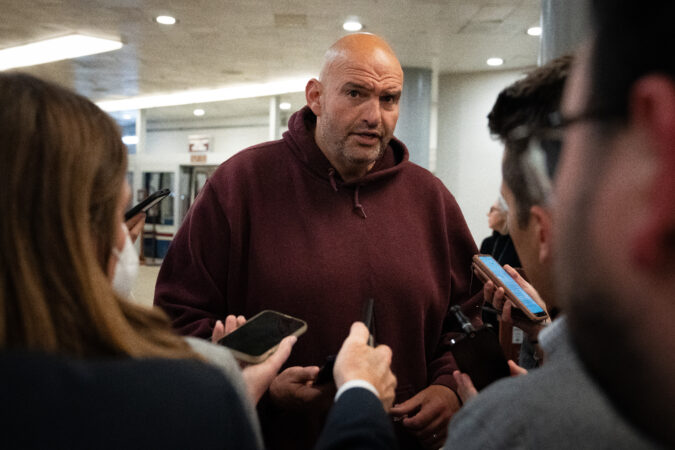
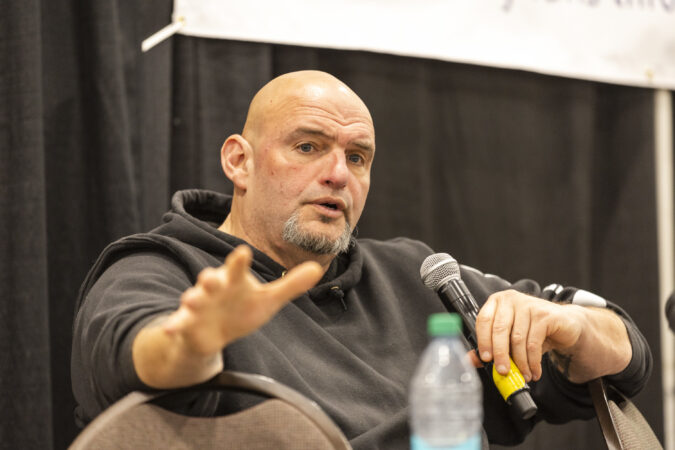
    U.S. Sen. John Fetterman (D., Pa.) on Sunday defended Immigration and Customs Enforcement (ICE) officials who wear masks to obscure their faces, arguing that doxing is a “serious concern” for agents.

    “The agents wearing masks, I think primarily that’s driven by people are going to dox those people. That’s a serious concern, too, absolutely,” Fetterman said in an interview with Jacqui Heinrich on Fox News’ The Sunday Briefing..

    A form of online vigilantism, doxing is when someone’s private or identifying information is publicized on the internet. It’s been used to identify extremists who participated in political rallies; target and threaten people perceived to have spoken ill of Charlie Kirk in the wake of his killing; or, recently in Philadelphia, misidentify the “Phillies Karen.”

    An email to Fetterman’s office seeking additional comment about the senator’s stance on masked agents was not returned Sunday afternoon.

    “They could target [ICE agents’] families and they are organizing these people to put their names out there. So don’t ever, ever dox people and target their families, too,” Fetterman said to Heinrich. (Heinrich is engaged to U.S. Rep. Brian Fitzpatrick, a Bucks County Republican.)

    Fetterman’s remarks come as congressional leaders argue over ICE funding in the wake of the shooting deaths of Alex Pretti by a Border Patrol agent and Renée Good by an ICE agent in Minneapolis. Last week, Senate Democrats attached a list of reforms to a bill funding the Department of Homeland Security, of which ICE is a part. The proposal includes banning federal agents carrying out President Donald Trump’s immigration crackdown from wearing masks, among other conditions.

    Critics have argued the wearing of masks not only reduces accountability for ICE agents, but according to the FBI, has led to an increase in incidents where criminals have impersonated ICE officers to commit crimes.

    Last Thursday, an overwhelming majority of Philadelphia’s City Council members signed on to sponsor a package of legislation that would restrict ICE operations within the city. The “ICE Out” proposals include prohibiting law enforcement officers from concealing their identities, like by wearing masks.

    At the federal level, Trump’s White House struck a deal with Senate Democrats to temporarily fund DHS, but a partial government shutdown went into effect this weekend.

    Fetterman — who called himself a “secure border Democrat” and supports efforts to “deport all criminal migrants” during the interview — has never backed a lapse in government funding since he took office in 2023.

    He was among 23 Democrats to cross the aisle to vote for the compromise bill late Friday.

  • The cost of housing in Pa. is too high. Here’s what Josh Shapiro will need to overcome to fix it.

    The cost of housing in Pa. is too high. Here’s what Josh Shapiro will need to overcome to fix it.

    Spotlight PA is an independent, nonpartisan, and nonprofit newsroom producing investigative and public-service journalism that holds power to account and drives positive change in Pennsylvania. Sign up for our free newsletters.

    HARRISBURG — Rents are soaring, homelessness is rising, and homeownership is out of reach for many families in Pennsylvania. As the state grapples with a serious housing shortage and affordability dominates the national political conversation, Gov. Josh Shapiro is preparing to release a long-awaited plan to tackle the crisis.

    The plan, first announced in late 2024, will draw on months of outreach to advocates, developers, and local officials. Supporters hope it will offer a clear path forward and build momentum around proposals that can win support in Pennsylvania’s politically divided legislature. But significant obstacles stand in the way.

    “The housing crisis has risen to the level such that none of the four caucuses can ignore it,” said Deanna Dyer, director of policy at Regional Housing Legal Services, a nonprofit law firm.

    The housing shortage is a nationwide problem, but Pennsylvania has been particularly slow to build new units. The shortfall leaves families squeezed by rising costs, pushes recent graduates to take jobs in other states, and makes it harder for companies to expand.

    Other states are passing laws to loosen local zoning restrictions and encourage new development — despite often fierce opposition from groups representing local governments.

    Similar efforts in Harrisburg have not yet gained traction, although more lawmakers are exploring solutions, said State Rep. Lindsay Powell, a Democrat representing Pittsburgh who cochairs the House Housing Caucus.

    “Pennsylvania has an opportunity to really push itself forward here.”

    Falling behind

    Underlying Pennsylvania’s housing crunch is the law of supply and demand.

    Between 2017 and 2023, the number of households in Pennsylvania grew by 5%, according to a recent report from Pew Charitable Trusts, a think tank. Over the same period, local governments issued only enough building permits to increase the state’s housing stock by 3.4%.

    That left Pennsylvania ranked 44th out of 50 states on the rate of housing built.

    “The most important driver of affordability is whether there are enough homes for everyone,” said Alex Horowitz, Pew’s director of housing policy.

    High demand for existing units, combined with a lack of new supply, gives landlords more leverage to raise rents and drives up house prices, Horowitz said.

    “The shortage is what is causing housing to get so expensive right now.”

    The problem is not spread evenly across the state. Costs have risen the most in areas with growing populations that have not added enough housing, including the Philadelphia suburbs, Northeastern Pennsylvania, and cities like Harrisburg, York, and Lancaster.

    To keep up with the demand, state officials estimate, Pennsylvania needs to build 450,000 units by 2035 — a 70% increase in new construction.

    In September 2024, Shapiro signed an executive order directing the Pennsylvania Department of Community and Economic Development to create a statewide plan to increase the supply of housing, and to review the effectiveness of existing programs. The executive order also requires the Pennsylvania Department of Human Services to conduct a separate review of policies to address homelessness.

    “We don’t have enough housing, the cost of housing is going up, and the housing we do have is getting older and is in need of more repairs,” Shapiro said, announcing the plan.

    Since then, DCED has received feedback from almost 2,500 people and organizations, and held 15 listening sessions across the state, a spokesperson said.

    A draft was due to be submitted to the governor’s office in September, according to the executive order, but the details have not yet been made public.

    Zoning headaches

    In roundtables and written feedback, state officials heard about problems small and sweeping. One issue came up repeatedly, according to interviews with participants and a review of hundreds of pages of written recommendations obtained through the state Right-to-Know law: To build more housing, Pennsylvania needs to change local zoning rules that stifle new construction.

    There are a number of ways the state could approach this. Many municipalities reserve most of their land zoned residential for single-family homes. Pennsylvania could allow apartment buildings on land currently zoned for commercial use, or near public transit, or legalize accessory dwelling units, like backyard cottages and granny flats.

    Changes like these would require revising the municipal planning code, the state law that gives local governments authority over land-use decisions.

    These changes would also make it easier to address rising demand for smaller units, as the average household size falls and more people live alone.

    Any attempt to change zoning laws, however, will likely face strong opposition from groups representing Pennsylvania’s municipalities. They argue that local governments know their communities best and should retain control over decisions about land use. They also say the focus on zoning overlooks other factors contributing to the housing shortage, like the rising cost of construction materials and supply-chain disruptions.

    Municipal zoning laws are “often scapegoated” as the culprit for a lack of affordable housing, Logan Stover, director of policy and legislative affairs at the Pennsylvania State Association of Boroughs, told Spotlight PA in a statement.

    In October, a senior Shapiro staffer working on the housing plan told a local group in Lancaster the plan would focus on “incentives rather than mandates,” with a points-based system to give communities that adopt pro-housing policies priority for state funding. Communities with policies that restrict new development could be disqualified, he said.

    At least six states — including California, Massachusetts, and New York — have already created incentive programs, which vary in design and enforcement mechanisms.

    These efforts have not proven as effective as broader statewide zoning changes, said Horowitz, the Pew researcher.

    “States that tried that early on didn’t see the supply response,” he said.

    The state plan will also likely focus on how to simplify and speed up local permitting processes, which can delay construction with time-consuming paperwork and unpredictable outcomes. Streamlining state permitting has already been a major focus for Shapiro.

    Focus on preservation

    Pennsylvania doesn’t just need to build more housing — it also needs to help people stay in their current homes, state officials heard.

    Groups that provide free legal services to low-income residents say there has been a dramatic increase in the number of people seeking help with evictions, foreclosures, and similar problems. In 2024, legal aid providers said, housing made up a third of all their cases — the single largest category.

    They also urged state officials to keep pushing to seal eviction records in some cases, which Shapiro has said he supports but would require changing state law.

    Another common thread was the need for a permanent source of funding to help low-income homeowners with repair costs. The state has some of the oldest housing stock in the U.S.; more than 60% of houses were built before 1970.

    Investing in home repairs is broadly popular but has proven politically challenging.

    In 2022, the state legislature agreed to spend $125 million in federal pandemic aid to create a new home repair program.

    Demand was overwhelming: Some counties were able to take applications only for a few days and thousands of homeowners ended up on wait lists. The program was widely praised for its flexibility, which allowed administrators to help homeowners who would not have been able to get help from other programs, although some counties ran into administrative difficulties.

    The program was created with bipartisan support, but efforts to continue it with state funding in 2023 and 2024 were unsuccessful. Last year, Shapiro proposed $50 million for a new, rebranded repair program, but the money didn’t make it into the final budget deal.

    Looking ahead

    Although Shapiro could make some changes through executive action, many of the suggested policy goals would require legislation.

    Housing has proven to be an issue that can cut through political divides in Harrisburg, where Democrats control the state House and the governor’s mansion while Republicans hold a majority in the state Senate.

    In recent years, lawmakers have agreed to a series of funding increases for a grant program to build and repair affordable housing. They also supported Shapiro’s proposal for a major expansion of a program that gives older and disabled residents a partial refund on their rent and property tax payments. The changes, which took effect in 2024, made more Pennsylvanians eligible and boosted the value of the rebates.

    Between July 2024 and June 2025, more than 25 states passed legislation aimed at increasing the supply of housing, according to an analysis by the Mercatus Center, a libertarian think tank. Pennsylvania was not one of them, although lawmakers in both chambers have unsuccessfully introduced bills to loosen zoning requirements.

    More recently, lawmakers from both parties have circulated proposals that echo some of the recommendations floated during the outreach for Shapiro’s housing plan. Republicans who control the state Senate say addressing the housing shortage will be a “key focus” for their caucus this year.

    State Sen. Joe Picozzi (R., Philadelphia), chair of his chamber’s Urban Affairs and Housing Committee, plans to introduce legislation that would offer grants to local governments that work with developers to build housing near centers of employment. “To qualify, communities must show they are committed to smart housing policies — like updating zoning, faster permitting processes, or preparing development-ready land,” according to a legislative memo.

    Picozzi and other Republican senators also want to extend property tax abatements for new development and create a “pre-vetting” system for housing plans to simplify local approvals.

    This year represents a real opportunity to make progress on the housing shortage, said State Rep. Jared Solomon, a Democrat representing Northeast Philadelphi,a who has sponsored several pieces of legislation aimed at adding more housing.

    “We’re all seeing the same thing in our neighborhoods — we all know we have to be proactive about it,” Solomon said.

    BEFORE YOU GO… If you learned something from this article, pay it forward and contribute to Spotlight PA at spotlightpa.org/donate. Spotlight PA is funded by foundations and readers like you who are committed to accountability journalism that gets results.
  • John Fetterman has voted to fund the government. Here’s how other local senators have voted.

    John Fetterman has voted to fund the government. Here’s how other local senators have voted.

    The U.S. Senate passed a bill late Friday to fund the federal government, but a short-term shutdown still went into effect Saturday.

    Senate Democratic leadership struck a deal earlier this week with President Donald Trump to separate Department of Homeland Security funding from the budget for other federal agencies after a national backlash to the ongoing ICE operation in Minnesota.

    The agreement with the White House emerged late Thursday after every Democrat, including Sen. John Fetterman of Pennsylvania, and several Republicans voted down the original package.

    Fetterman was among 23 Democrats to cross the aisle to vote for the compromise bill. With their support, the bill passed 71-29, despite five GOP defections.

    Here’s how the senators from the Philadelphia area voted:

    • Sen. John Fetterman (D., Pa.): Yes.
    • Sen. Dave McCormick (R., Pa.): Yes.
    • Sen. Andy Kim (D., N.J.): No.
    • Sen. Cory Booker (D., N.J.): No.
    • Sen. Chris Coons (D., Del.): Yes.
    • Sen. Lisa Blunt Rochester: (D., Del.): No.

    Even with the Senate passage, a partial government shutdown took effect Saturday because the bill still needs to pass the House, which is not expected to take up the legislation until Monday.

    It’s the second shutdown to begin since October when the federal government entered a 43-day shutdown, the longest in its history.

    Democrats took issue with funding in the earlier bill for DHS, the department that oversees the two agencies involved in fatal shootings of civilians this month in Minnesota.

    The Senate worked late Friday as some Republicans objected to the deal. McCormick, the lone Republican senator in the region, voted for the measure as expected.

    “I’m just not in favor of shutting down the government or stopping funding the government, and that’s the position that I’ve had through the last shutdown,” McCormick said Tuesday.

    The affected departments include the Departments of Defense, State, Transportation, Education, Labor, Treasury, Health and Human Services, and Housing and Urban Development, in addition to DHS.

    The deal struck with the White House would provide two weeks of funding for DHS, but funds the rest of the departments through September.

    Democrats on Thursday halted the original package that would have provided long-term funding for DHS, which oversees ICE and the Border Patrol.

    Fetterman had called for the DHS funding to be separated from the other departments as a compromise, which is ultimately what happened.

    The DHS funding dispute came after the national furor over the killings of Renee Good, a poet and mother, and Alex Pretti, a nurse who worked at a VA hospital, both of whom protested the ongoing operation in Minnesota and were fatally shot by federal agents.

    Democrats pushed for provisions to curb ICE’s immigration enforcement operations in order to fund DHS. Their demands include increased training for ICE agents, requiring warrants for immigration arrests and for agents to identify themselves, and for the Border Patrol to stay on the border instead of helping ICE elsewhere.

    Lawmakers from both parties have called on DHS Secretary Kristi Noem to resign or be fired, including all of the local Democrats.

    McCormick, a Trump ally who has been vocally supportive of ICE, called for an investigation into the fatal shooting of Pretti.

    This article contains reporting from the Associated Press and staff writer Fallon Roth.

  • Thousands of SNAP recipients throughout Pa. are starting to lose their benefits

    Thousands of SNAP recipients throughout Pa. are starting to lose their benefits

    More than 4 million SNAP recipients nationwide — including 1 million children — began losing benefits throughout January as new rules included in the Trump administration’s so-called “One Big, Beautiful Bill Act” started kicking in.

    In Pennsylvania, around 144,000 of the nearly 2 million people on SNAP are being affected, or will soon be, according to state Department of Human Services figures. Some will lose all benefits, while others will have their benefits substantially reduced based on the law, which was signed by President Donald Trump on July 4.

    Around 45,000 Philadelphia residents are being affected, more than any other county in the state, DHS figures show.

    Throughout the region, the number of people affected include around 3,300 in Bucks County, 1,000 in Chester County, 5,700 in Delaware County, and 2,300 in Montgomery County, DHS figures show.

    “This is all happening right now, with a huge impact on the state,” said Lydia Gottesfeld, a SNAP expert at Community Legal Services, which provides legal help to low-income individuals in Philadelphia.

    More people are expected to lose benefits throughout the year, according to Katie Bergh, senior policy analyst at the left-leaning Center on Budget and Policy Priorities.

    Driving the SNAP reductions are a complex set of changes.

    Until Trump’s spending plan rewrote the rules, groups of low-income people in states including Pennsylvania were exempt from a long-standing requirement that childless adults without disabilities and under the age of 54 work 20 hours per week in order to be eligible for SNAP benefits, which are typically $6 a per person, per day.

    The work stipulation had been waived for decades because of high levels of poverty and hunger, as well as diminished job opportunities in Philadelphia and elsewhere in the Commonwealth.

    Under the new policy, childless, able-bodied adults can only be exempt from the work requirements in areas with at least 10% unemployment. In November, Philadelphia’s unemployment rate was 4.8% and other areas in the region saw similar or lower rates.

    “An unemployment rate of 10% is a catastrophic threshold not normally reached in Pennsylvania,” Bergh said.

    Beginning in March, more people will begin to lose benefits, according to the Food Research and Action Council (FRAC) in Washington, D.C., the largest anti-hunger lobby in the nation.

    The One Big Beautiful Bill Act also expanded the age range for people who are required to work at least 20 hours to obtain benefits. Prior to the law, anyone who reached age 55 could access SNAP benefits without a work requirement. Now, however, a person must work the required hours until they’re 64 before they’re free of the requirement.

    Previously, adults with children 18 and under were exempt from the work requirement. Now, only adults with children under 14 are exempt.

    And yet another group of people will begin to lose benefits, according to the Food Research and Action Council (FRAC) in Washington, D.C., the largest anti-hunger lobby in the nation.

    That group includes veterans, people experiencing homelessness, and young people aging out of foster care, who will all become subject to the 20-hour work requirement they had previously been exempted from, according to FRAC.

    Because so many changes are occurring at once, it’s hard to keep track of how individuals are faring, Gottesfeld of CLS said.

    “We’re still trying to see who the people are who are losing benefits,” she said. “We don’t have a good summary of the changes just yet.”

  • As Josh Shapiro calls for ICE to leave Minneapolis, his GOP challenger Stacy Garrity wants Minnesotans — and Pennsylvanians — to cooperate with agents

    As Josh Shapiro calls for ICE to leave Minneapolis, his GOP challenger Stacy Garrity wants Minnesotans — and Pennsylvanians — to cooperate with agents

    As Gov. Josh Shapiro makes the case on national television for ICE to leave Minneapolis, his Republican challenger Stacy Garrity has a different view: Minnesotans should cooperate.

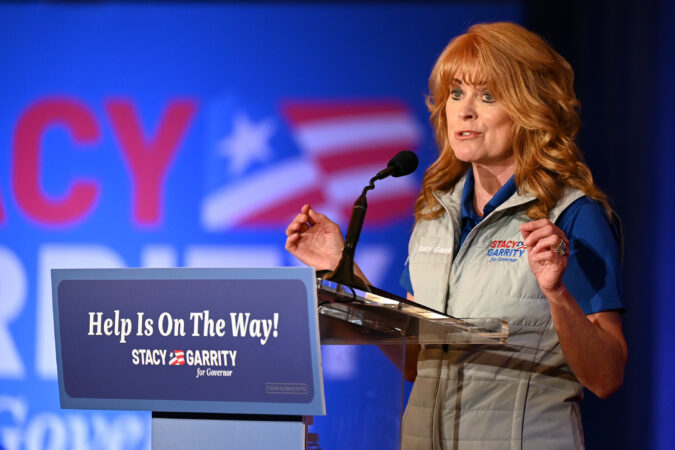
    Garrity, the state treasurer and GOP-endorsed candidate, said “it’s best to cooperate” with U.S. Immigration and Customs Enforcement, in an interview Thursday night at the National Constitution Center following an appearance on a conservative podcast.

    The retired U.S. Army colonel also praised Tom Homan, President Donald Trump’s border czar assigned to take over the Minneapolis operation, as “spot on” in his recent remarks calling for a de-escalation of the conflict between residents and federal officials, and that residents should comply.

    “He said it best: Cooperate and take down the rhetoric,” Garrity said, noting her time as U.S. Army military police officer gives her a “different perspective.”

    Garrity’s comments came days after she received an endorsement from Trump in the Pennsylvania governor’s race. The president on Tuesday evening called Garrity a “true America First Patriot, who has been with me from the beginning.”

    Shapiro, meanwhile, has become more outspoken about ICE’s operations in Minnesota over the last few days while on a national media blitz for his new memoir released this week, Where We Keep the Light. The former Pennsylvania attorney general, known as a careful and deliberate communicator, has now repeatedly called for ICE and the Border Patrol to leave Minneapolis, arguing that the operations are “outside the bounds of law” and “must be terminated.”

    Pennsylvania does not have a sanctuary policy restricting cooperation with ICE by state law enforcement, but several jurisdictions in the state do have such policies, including Philadelphia.

    Garrity was in Philadelphia on Thursday for a live taping of the conservative podcast Ruthless. The event was hosted by Americans for Prosperity, a national libertarian advocacy organization. She largely talked about what led her to politics in 2020 after a long career in the military and private sector, as well as her work as the state’s treasurer.

    When asked whether she was concerned by the shooting of Alex Pretti, an intensive-care nurse at a Veterans Affairs hospital in Minnesota, Garrity said she had not seen the videos of Border Patrol agents fatally shooting Pretti and that she “always waits for the investigation” before forming an opinion. Pretti’s death marked the second killing of a U.S. citizen by federal agents in Minneapolis this month, leading to mass protests and public outrage.

    “The investigation will come out, and then any corrective action that needs to be taken, or we’ll see what the results are,” she said. “I’m going to withhold any judgment until the investigation.”

    In the case of Pretti’s death, Trump said the U.S. Department of Homeland Security is leading the investigation, and he is “going to be watching over it.” Minnesota officials have called for an independent investigation and have protested as federal officials have blocked local authorities from investigating.

    Earlier this week, Shapiro said his staff has been preparing for the chance that Trump sends a surge of ICE agents to a Pennsylvania city like Philadelphia or Pittsburgh.

    If Trump does send more ICE agents to Pennsylvania, Garrity said Pennsylvania officials should cooperate here, too.

    “It’s always good to cooperate with ICE, especially when they’re doing targeted actions,” Garrity added.

  • Pete Buttigieg endorses Bob Brooks, a firefighter running for Congress in the Lehigh Valley

    Pete Buttigieg endorses Bob Brooks, a firefighter running for Congress in the Lehigh Valley

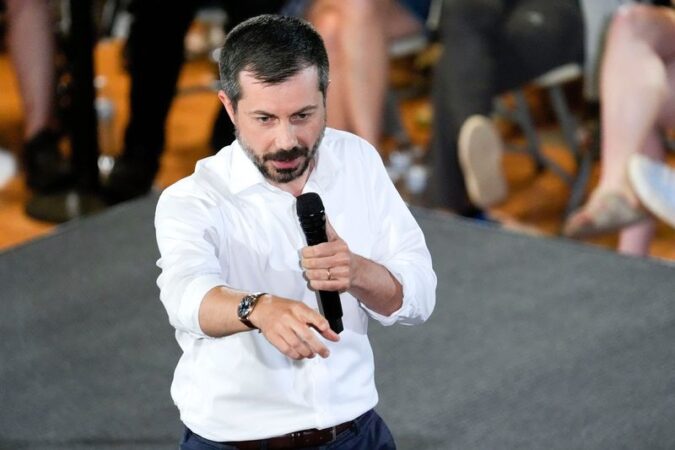
    Pete Buttigieg, former President Joe Biden’s transportation secretary and a potential presidential hopeful for 2028, has endorsed Democrat Bob Brooks, a firefighter running for Congress in the Lehigh Valley.

    Brooks, the president of the Pennsylvania Professional Fire Fighters Association, is running to represent Pennsylvania’s 7th Congressional District, which is currently held by freshman U.S. Rep. Ryan Mackenzie, a Republican. At least six other Democrats are also vying for the nomination as of this month.

    Buttigieg’s endorsement of Brooks, shared first with The Inquirer, illustrates the political importance of the Lehigh Valley, a national bellwether.

    Democrats see the 7th Congressional District as one of a limited number of flippable Republican-held seats in the 2026 midterms. It’s also notable that Buttigieg, who could once again be on the national stage in 2028, is weighing into politics in Pennsylvania, a key battleground state.

    “People are seeking leaders who understand their lives and fight for their needs,” Buttigieg said in a news release, noting Brook’s experience as a firefighter, union leader, and snowplow driver.

    “He understands the urgency of lowering costs because he’s lived it – working long hours, juggling jobs, and fighting for a paycheck that actually covers the basics,” Buttigieg added. “It’s a perspective Washington needs more of, and I’m proud to endorse him.”

    This undated photo provided by Bob Brooks for Congress in August 2025 shows Bob Brooks, president of the Pennsylvania Professional Fire Fighters Association. (Bob Brooks for Congress via AP)

    In addition to Buttigieg, Brooks has also received the backing of Gov. Josh Shapiro (another potential 2028 candidate), Lt. Gov. Austin Davis, U.S. Rep. Chris Deluzio, Sen. Bernie Sanders (I-Vt.), various unions, and other elected officials.

    Brooks said in the news release that Buttigieg’s endorsement “means a great deal.”

    “He’s focused on listening to new voices and making government work for everyday people at a time when too many feel shut out and left behind,” Brooks said. “It’s an honor to have him on board as we fight to build a Congress that looks like and works for the people it serves.”

    Mackenzie’s seat is a top target for the Democratic Congressional Campaign Committee, along with Republican U.S. Reps. Brian Fitzpatrick, of Bucks County, Scott Perry, of York County, and Rob Bresnahan of Lackawanna County.

    President Donald Trump has endorsed Mackenzie (and every other congressional Republican in Pennsylvania except Fitzpatrick) and Vice President JD Vance swung through the district in December.

    But Trump may not be the boon for Mackenzie he was two years ago.

    Trump made his biggest gains in the state in 2024 in the Lehigh Valley and Northeastern Pa., but recent interviews with voters and polling data suggests his support in the region could be dwindling heading into the midterms.

  • ‘Violence will not be tolerated’: Woman who pepper-sprayed conservative influencer on SEPTA bus charged with assault

    ‘Violence will not be tolerated’: Woman who pepper-sprayed conservative influencer on SEPTA bus charged with assault

    A former WHYY intern who pepper-sprayed a conservative influencer on a SEPTA bus was charged with simple assault and other crimes by prosecutors in the Pennsylvania Attorney General’s Office on Thursday, officials said.

    Video of the Jan. 19 incident between 22-year-old Paulina Reyes and 22-year-old Francis Scales quickly went viral on social media, garnering millions of views and spurring reactions from right-leaning influencers and Elon Musk.

    During the confrontation, Reyes — whose internship with WHYY had ended before the incident — accused Scales of being a “fascist” and a “racist” for posting content online she viewed as insulting to Muslims and people of color.

    Attorney General Dave Sunday, in announcing Thursday that his office’s mass transit prosecutor would oversee the case, said “violence will not be tolerated as a means to conduct political debate, protest, or exhibit differences.

    “This type of violence is senseless, as we have an individual facing criminal charges over political disagreement,” the attorney general said in a statement.

    In addition to simple assault, Reyes is charged with possessing an instrument of a crime, a misdemeanor. She also faces charges of harassment and disorderly conduct, which are summary offenses.

    Reyes was arraigned Thursday morning and released without having to to post bail.

    The mass transit prosecutor for Philadelphia, Michael Untermeyer, worked with SEPTA police to bring the charges, according to Sunday.

    The special prosecutor position, created in 2023 to pursue crimes committed on SEPTA, had been slow to take cases up until last year.

    It has drawn criticism from District Attorney Larry Krasner, who last year challenged the law that created the post, saying it was unconstitutional, unfairly singled out Philadelphia, and stripped his office of authority.

    A spokesperson for Krasner did not immediately return a request for comment on the special prosecutor’s decision.

    Footage of the South Philadelphia incident ricocheted across conservative media, and some influencers had accused Reyes of being an “Antifa agitator” and called for her arrest. Musk’s comments on X, suggesting Reyes had “violence issues,” generated hundreds of thousands of views alone.

    Reyes told The Inquirer in an earlier interview that she had been defending herself against Scales, who was filming her, and that resorting to pepper spray was “not something I wanted to do.”

    She said she has since received death and rape threats for her role in the confrontation. She did not return a request for comment Thursday.

    Reyes and Scales knew each other from attending the Community College of Philadelphia, where Reyes is still a student.

    Videos on Scales’ social media page, Surge Philly, show the commentator interviewing attendees at protests, asking them questions about charged topics such as immigration enforcement. He has also been a vocal critic of Krasner.

    Scales said Reyes’ pepper spray got in his face and eyes, and Sunday, the attorney general, said Reyes also punched the man. A friend who was with Scales filmed the incident. Scales, too, filmed Reyes, saying he did so for his own safety.

    Scales said in a statement that he was grateful for the attorney general’s decision to bring charges, and that he hoped that would deter others from similar actions.

    “No one has the right to physically attack another person because of different opinions,” Scales said.

  • Josh Shapiro says ‘of course’ he still likes John Fetterman

    Josh Shapiro says ‘of course’ he still likes John Fetterman

    WASHINGTON, D.C. – Gov. Josh Shapiro told national reporters Thursday that he likes U.S. Sen. John Fetterman (D., Pa.), and still talks to him — citing a meeting several months ago.

    It’s long been clear that Pennsylvania’s two top Democrats have a tense relationship, a dynamic Fetterman explained in detail in his memoir, Unfettered, released in November, writing that the two men no longer speak after they butted heads as members of the Pennsylvania Board of Pardons.

    But when Shapiro traveled to Washington to promote his own memoir, Where We Keep the Light, the governor sought to dispel that narrative.

    Speaking to a roundtable of Washington journalists hosted by the Christian Science Monitor on Thursday, Shapiro said he “of course” likes the commonwealth’s senior senator and still speaks to him.

    “We were in a meeting together a few weeks ago with (U.S. Transportation) Secretary (Sean) Duffy, working on an important issue in Pennsylvania. So we all work together, Senator McCormick as well,” Shapiro said. “We’ve got to work together for the people of Pennsylvania.”

    That meeting, however, was in November when Shapiro and Fetterman met with Duffy to discuss SEPTA — roughly a week before the release of Fetterman’s book. Mayor Cherelle L. Parker and Sen. Dave McCormick (R., Pa.) also participated in that meeting.

    A spokesman for Shapiro did not immediately respond to questions about whether they’ve spoken since.

    Though Shapiro and Fetterman’s disagreements date back to the pair’s days on the state pardons board, the senator has increasingly drawn ire from his fellow Democrats in recent months for voting with Republicans and has faced calls for a primary challenge.

    Shapiro was mum when asked whether he’d support Fetterman if he sought reelection.

    “John will decide if he wants to run for reelection. I appreciate the service,” he said.

    Fetterman claims in a chapter of his book titled “The Shapiro Affair” that Shapiro, as attorney general, had been unwilling as a member of the pardons board to recommend the commutation of two men that Fetterman strongly believed should be released.

    Fetterman, who was lieutenant governor at the time, even threatened in a private meeting to run against Shapiro for governor if he didn’t support the commutations.

    “I told him there were two tracks — that one and the one in which he ran for governor and I ran for the Senate (which was the one I preferred),“ Fetterman wrote in the memoir. ”I had no interest in friction, only in what I felt was justice.”

    Fetterman also claimed that Shapiro’s caution in these cases was about protecting his future political ambitions.

    “I believe what drove him to delay and deny applications was not the facts of a given case as much as a fear that someone whose sentence he’d commuted would go on to commit terrible violence on the outside,” Fetterman wrote.

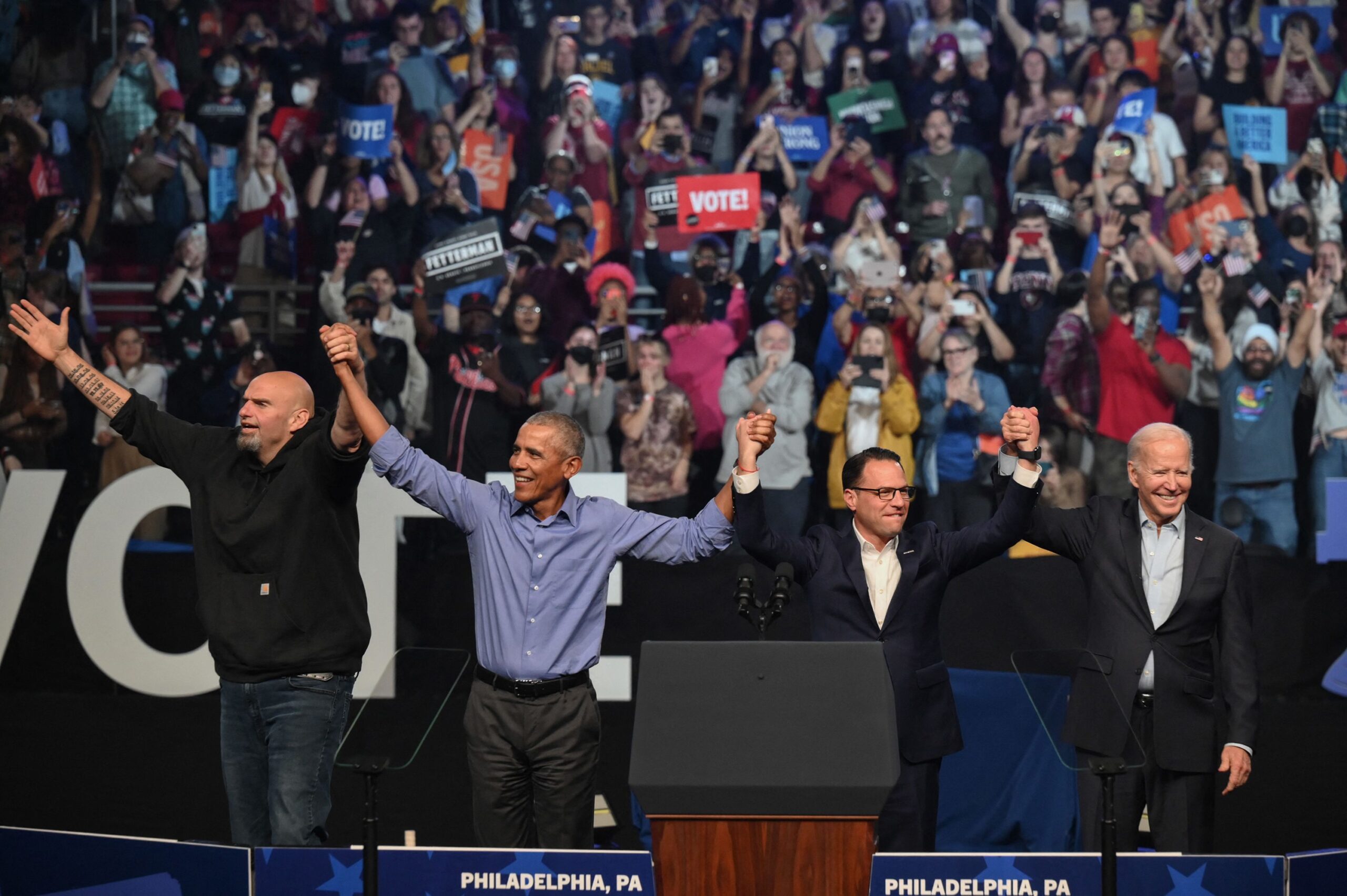
    Then-Senate candidate John Fetterman, former President Barack Obama, then-candidate for governor for Pennsylvania Josh Shapiro, and then-President Joe Biden ahead of the 2022 election.

    In his own book, Shapiro reflects on agonizing over those decisions including the concern that a commuted individual would go on to harm others. Throughout his book tour he has dodged questions about potential presidential aspirations.

    Things got so bad that then-Gov. Tom Wolf had to get involved by meeting with them privately, and Fetterman later got caught on a 2020 Zoom meeting calling Shapiro a “f— asshole,” not realizing that his microphone was still live.

    While Fetterman devoted an entire chapter of his 240-page book to Shapiro, the state’s senior U.S. senator only gets two passing mentions in Shapiro’s book.

    In one mention, Shapiro notes that he spoke with Fetterman backstage at a 2022 Erie County Democratic Committee dinner when Shapiro debuted a new speech about what “real freedom” means, just days before Fetterman had a stroke in lead up to that year’s primary election.

    Shapiro also mentions Fetterman in a chapter about the governor’s history with former President Barack Obama. Shapiro and Fetterman were both on the ballot in 2022 and cohosting a campaign rally, where Obama and former President Joe Biden came to stump for them.

    Fetterman is not mentioned in the rest of the book. Shapiro does not delve into the fellow Democrat’s threat to run against him.

  • Will there be a government shutdown this weekend? Here’s what we know.

    Will there be a government shutdown this weekend? Here’s what we know.

    New year, same you googling repeatedly, “Is a government shutdown happening?” We see you. We get it. And the answer is: “Maybe.”

    The likelihood of a partial government shutdown this weekend has ramped up following a surge in immigration enforcement and related backlash in Minnesota.

    The highly publicized presence of Immigration and Customs Enforcement and the Department of Homeland Security in Minneapolis, alongside the death of Alex Pretti, the second person federal agents have fatally shot in the state, has reinvigorated efforts among Democrats to reject a bill to fund DHS.

    “The appalling murders of Renee Good and Alex Pretti on the streets of Minneapolis must lead Republicans to join Democrats in overhauling ICE and CBP [Customs and Border Protection] to protect the public,” Senate Minority Leader Chuck Schumer said in a statement Sunday. “People should be safe from abuse by their own government.”

    Schumer (D., N.Y.) said Democrats would not support keeping the government fully open if it means funding the Department of Homeland Security. Other Democratic senators have joined in calling for Senate Republicans to collaborate on advancing five other pending bills, aside from the DHS bill, and separately retooling the DHS measure.

    In case you need a refresher, here is what you need to know about deadlines, what a partial government shutdown looks like, and more.

    What’s a government shutdown vs. a partial government shutdown?

    A full government shutdown happens when all (or most) federal agencies have not secured funding. It usually means widespread furloughs, sometimes layoffs, and any nonessential government services are put on pause.

    Meanwhile, a partial government shutdown happens when Congress has funded only certain federal agencies, leaving others in limbo. In turn, some parts of the government would close while others keep operating.

    When a partial shutdown happens, some federal agencies and operations, like Social Security and air traffic control, keep running as usual. But other federal employees are furloughed.

    In this instance, agencies at risk of expiring funding include the Departments of Defense, Health and Human Services, Labor, Education, Transportation, Housing and Urban Development, Treasury, and State; the Securities and Exchange Commission; and the federal court system, according to Reuters.

    Democrats are pushing Republicans to decouple the spending bill so disagreements over DHS don’t fuel disruptions to the other agencies. But Republicans so far say they will not break up the spending bill.

    When does government funding expire?

    Federal funding is set to expire at 12:01 a.m. Saturday. A partial shutdown would occur if Congress and President Donald Trump’s administration do not reach an agreement by then.

    Where does the DHS funding bill stand?

    The House has done its part and is in recess until February. But Senate Democrats are pushing back on approvals, citing the Trump administration’s treatment of immigrants. That leaves the Senate with only a few options to avoid a shutdown if it cannot pass the current measures.

    Most legislation in the Senate needs 60 votes to move forward. Republicans hold 53 seats, meaning they need bipartisan support to pass the existing measure, which covers about $1.3 trillion in annual government spending, including military and social service funding.

    But Democrats want new guardrails on immigration enforcement and added oversight on DHS. Some demands include requiring judicial warrants for immigration arrests, and agents to wear visible identification, Time reported.

    Several Democratic senators who broke with their party last year to keep the government open say the killings of Pretti and Good at separate protests have changed their stance.

    Sen. John Fetterman (D., Pa.), who has historically broken with the Democratic Party to avoid government shutdowns, released a lengthy statement Monday saying that he wanted to see the DHS operation in Minneapolis end but would not support a government shutdown. But on Thursday, in a surprising break, Fetterman voted against advancing the six-bill package.

    His vote, along with 54 other senators who voted “no,” meant the financial package could not move forward.

    It is also worth noting that DHS would continue to operate and receive funding under a government shutdown. That is because DHS agencies received major funding through Trump’s One Big Beautiful Bill Act last year. In turn, ICE and other parts of the agency would continue operating under a shutdown.

    Who is affected by a government shutdown?

    Hundreds of thousands of federal employees are affected, since many would be expected to work but would not receive pay until after the shutdown is lifted. Employees are typically guaranteed back pay.

    Many employees are also at risk of being furloughed and would not be allowed to work (but would also receive back pay thanks to legislation passed in 2019).

    Some of the main groups of employees that a shutdown could affect include (but are not limited to) active members of the military, federal law enforcement, federal transportation workers (like air traffic controllers and Transportation Security Administration agents, but not SEPTA workers), scientific researchers, and the IRS.

    The federal court system said it would not be able to continue full operations past Feb. 4, which could disrupt hearings and other activities, Reuters reported. Data and research activity from the Bureau of Labor Statistics and the National Institutes of Health could also go dark.

    What about tax season?

    This potential partial shutdown comes during tax season.

    If a shutdown happens, funding for the IRS could lapse, which would in turn mean tax processing — and refunds — could be disrupted.

    During last year’s shutdown in October, the IRS approved a contingency plan that let the agency continue some activities under a shutdown. But, the agency said, refunds would be delayed aside from some direct electronic returns that could be automatically processed and direct-deposited. Taxpayers were still expected to file and pay their taxes on time.

    The IRS has not yet commented on a potential shutdown. Trump previously touted larger refunds this year because of the One Big Beautiful Bill Act. Some experts say that emphasis could play a role in the agency remaining partially open.

    When would the government shut down?

    Congress and the Trump administration need to reach an agreement by midnight Friday. If they don’t, a shutdown would go into effect at 12:01 a.m. Saturday.

    What was the longest government shutdown?

    The longest government shutdown was the most recent one, which began on Oct. 1, 2025, and lasted 43 days. It broke the record for the longest shutdown on the 36th day.

    What could a government shutdown mean for Philly?

    In Philadelphia, the October shutdown led to the closing of Independence Hall and the Liberty Bell Center, to the chagrin of tourists. But that would not happen this time, because the national parks are funded by the Department of the Interior, which secured its funding through an already passed appropriations bill for the year.

    SNAP benefits would also not be affected this time.

    The Department of Transportation would close during this shutdown, but air traffic controllers would be required to work without pay. Similar to the last shutdown, this could lead to flight delays and cancellations.

    Other impacts could be in store as the shutdown’s implications become more clear.

  • Here’s who Stacy Garrity has picked for a running mate in the Pa. governor’s race against Josh Shapiro

    Here’s who Stacy Garrity has picked for a running mate in the Pa. governor’s race against Josh Shapiro

    Pennsylvania Treasurer Stacy Garrity on Thursday announced her pick for a running mate in the governor’s race, as state Republicans mount their campaign to more seriously challenge Democratic Gov. Josh Shapiro in November’s election.

    Jason Richey, a longtime Pittsburgh attorney and chair of the Allegheny County GOP, announced his campaign for lieutenant governor on Thursday morning. Garrity, the state party-endorsed candidate for governor, quickly endorsed him afterward.

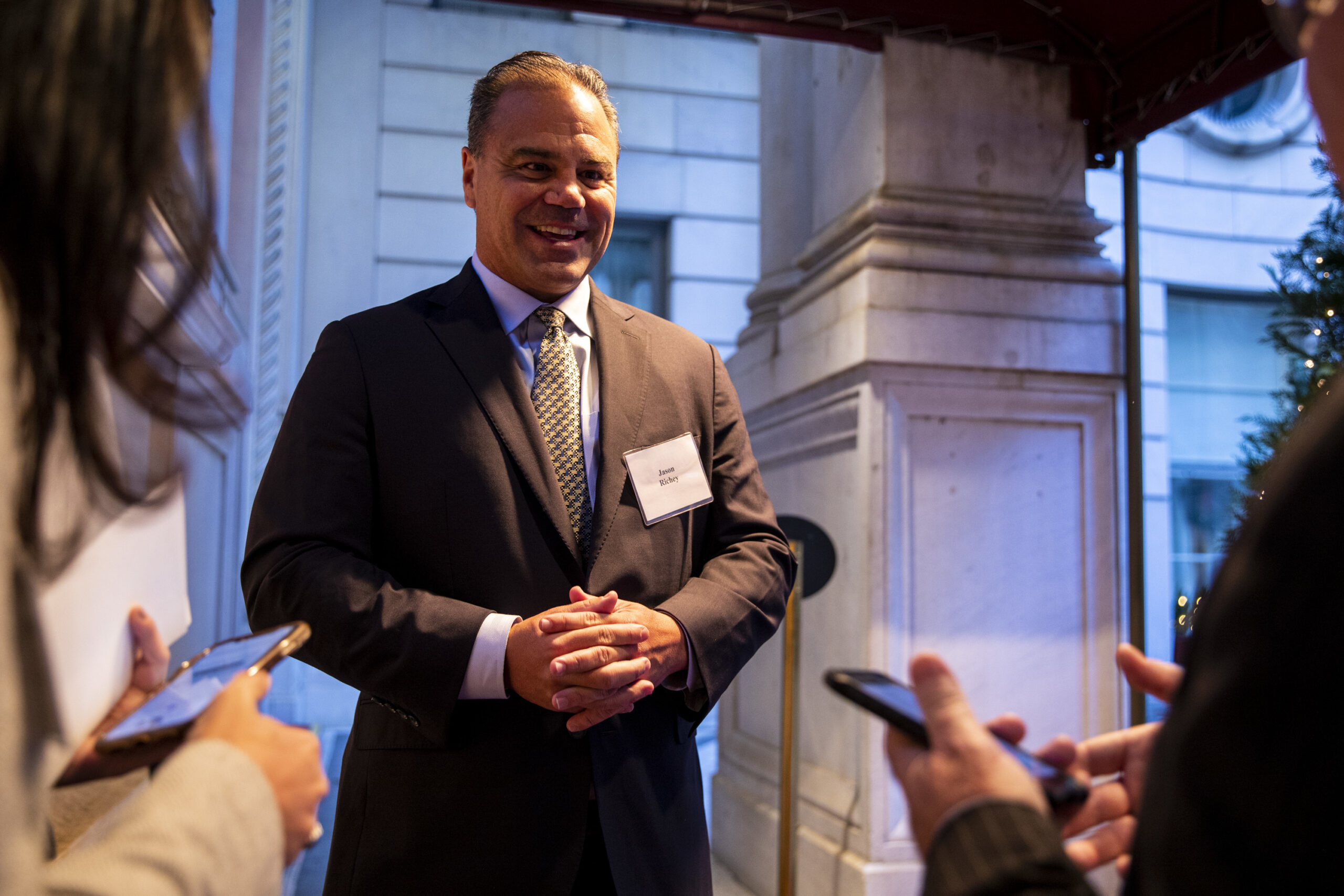
    Jason Richey, Aliquippa, Pa., Republican Candidate for Governor speaks with Inquirer Reporters at the Pennsylvania Manufacturers Association held at The Metropolitan Club in New York, N.Y., on Saturday, Dec., 4 2021.

    Garrity said Richey “rose to the top” as the best candidate to be her running mate to challenge Shapiro.

    “Jason understands the potential Pennsylvania has, but only if our Commonwealth has the right leadership,” she said in a news release, noting that he shares her concerns with Shapiro’s tenure as governor. “Jason Richey will not just be an incredible running mate on the campaign trail, but a terrific partner in governing for all the people of Pennsylvania.”

    Until Richey’s announcement, few moderate candidates had emerged to run alongside Garrity. Meanwhile, other potential candidates declined to run with her in the uphill battle election against Shapiro, a popular incumbent with a $30 million war chest and a growing national profile. Garrity announced earlier this month she had raised nearly $1.5 million in the first few months of her campaign, from August to December.

    Richey is running to be Garrity’s No. 2 among a field of several other potential lieutenant governor candidates, including State Sen. Cris Dush (R., Jefferson) and Bucks County businessman and political newcomer Brian Thomas. Other candidates who have considered a run for lieutenant governor but have yet to announce include former gubernatorial nominee State Sen. Doug Mastriano (R., Franklin) and former State Rep. Rick Saccone (R., Allegheny).

    In Pennsylvania, candidates for lieutenant governor and governor run in the primary election separately. Whoever wins the primary nomination joins on one ticket for the general election. For example, Mastriano won the primary nomination but his endorsed lieutenant governor candidate did not, leading him to run with another running mate in November. At least one of the lieutenant governor candidates — Dush — said he would run for the office in the primary election even without the party’s support.

    Shapiro is expected to again run unopposed in the Democratic primary, alongside Lt. Gov. Austin Davis, the first Black person elected to Pennsylvania’s executive branch.

    “We must turn Pennsylvania around now and I believe that Stacy Garrity is the person who can fix Pennsylvania,” Richey said in a release Thursday. “I’m excited to join Stacy on the ticket that’s going to save Pennsylvania. Stacy has demonstrated leadership, fiscal discipline, a deep commitment to serving Pennsylvanians and the ability to win statewide.”

    In an interview weeks before he decided to enter the race, Richey said he believed Garrity should pick a lieutenant governor candidate who is politically moderate and comes from Pittsburgh or Philadelphia, the state’s population centers.

    Earlier this month, Richey said a running mate who has “a little more urban understanding,” since Garrity hails from a rural part of the state, “would make a lot of sense” on the Republican ticket.

    Garrity secured the state party endorsement for governor last fall, as Republicans sought to coalesce around a gubernatorial candidate after their failures to do so in 2022 led to Mastriano’s nomination to oppose Shapiro. Mastriano went on to lose to Shapiro by nearly 15 percentage points, or 800,000 votes.

    Richey ran in 2022 for governor as part of the crowded GOP primary, but withdrew and did not appear on the ballot with the other nine candidates in the running.

    Garrity, of rural Bradford County, captured President Donald Trump’s endorsement earlier this week, in which Trump called her a “true America First Patriot, who has been with me from the beginning.” Garrity will appear in Philadelphia at the National Constitution Center on Thursday for a live taping of the political podcast RUTHLESS, alongside Fox News analyst Guy Benson.

    In addition to his duties as chair of the Allegheny County GOP, Richey is a partner at K&L Gates law firm in Pittsburgh with a focus on energy law.

    Richey, 54, lives in a suburb of Pittsburgh with his wife and has three sons.

    Staff writer Katie Bernard contributed to this article.