Category: Pennsylvania Politics

  • Would Pa. coal miners really turn down a ‘beautiful, magnificent’ Manhattan penthouse, as Trump claims? We asked them.

    Would Pa. coal miners really turn down a ‘beautiful, magnificent’ Manhattan penthouse, as Trump claims? We asked them.

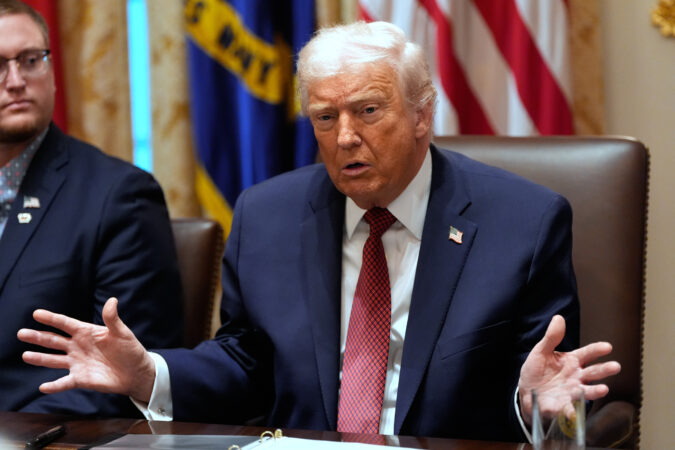
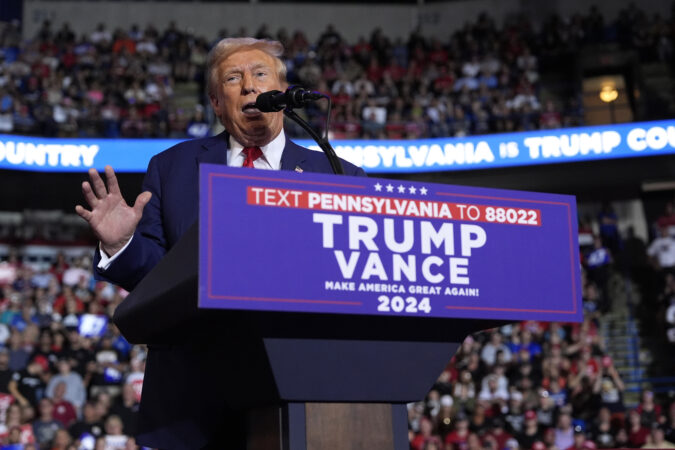
    President Donald Trump professed his admiration of miners Tuesday night at his Poconos rally, contending the brave workers are so enamored of their profession that Trump wouldn’t be able to convince them to swap jobs with anyone — including himself.

    “I love miners. … They wouldn’t trade jobs with me if I gave them a beautiful, magnificent penthouse in the middle of Manhattan, where I used to live — if I gave them the most beautiful penthouse — they wouldn’t take it,” Trump told the crowd at the Mount Airy Casino Resort in Mount Pocono.

    “They’d rather go 10,000 feet underground and dig. That’s what they want.”

    Can that be true?

    Trump has long extolled the virtues of “beautiful, clean coal,” as he calls it, during nearly a decade of campaigning in the Keystone State.
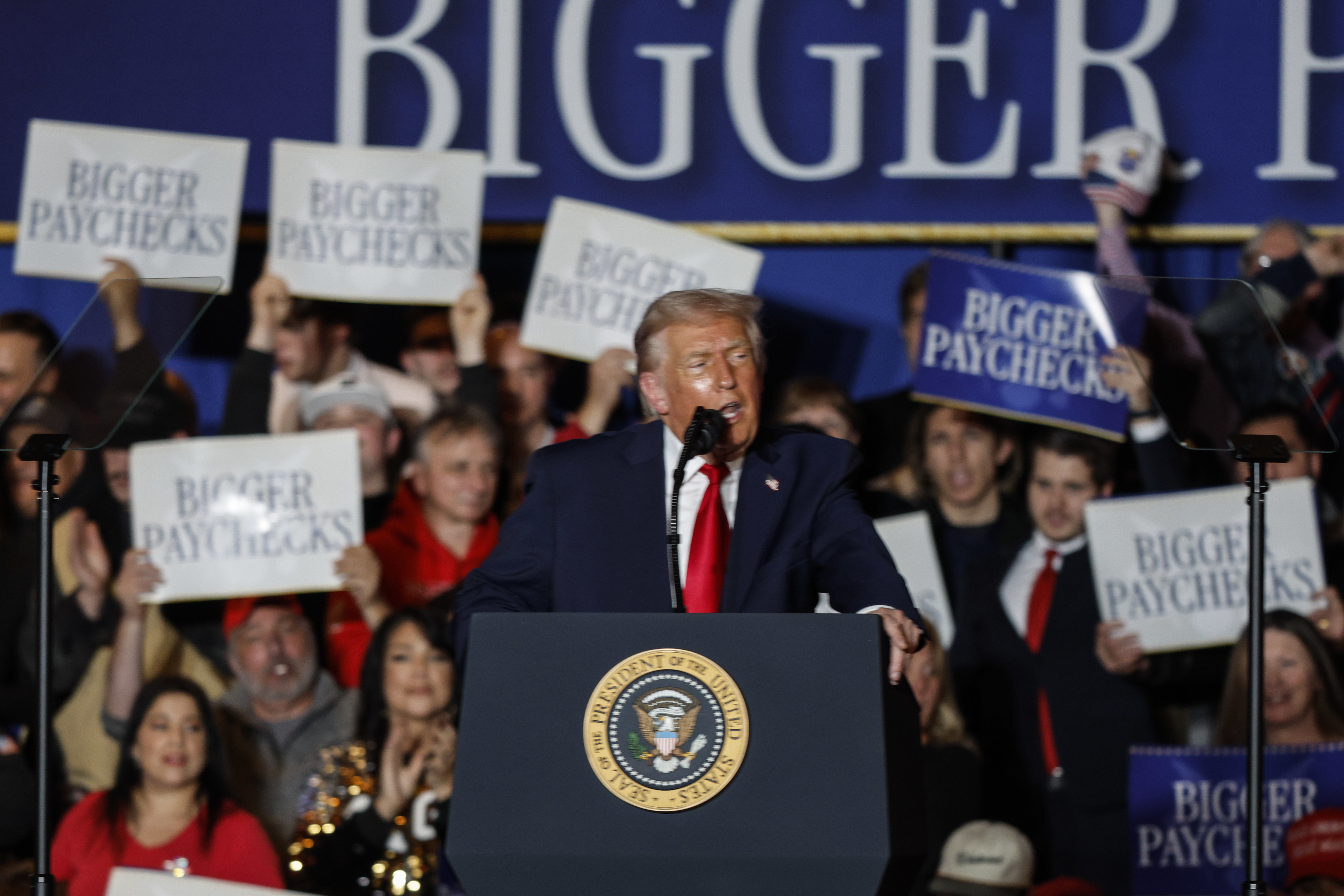
    President Donald Trump makes his first stop on an “economic tour,” in Mt. Pocono Pa., Tuesday, December 9, 2025 .

    But would miners really prefer to toil in the damp darkness, somewhere between the buried dead and the devil, rather than run the free world in a clean blue suit, with access to a lavish high-rise in the gorgeous sunshine they forsake eight hours a day?

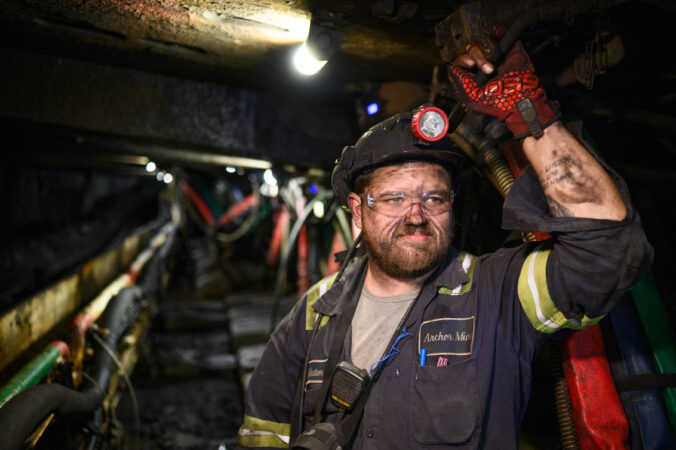
    “Yes, of course,” said Edmund Neidlinger, 75, a fourth-generation coal miner who dug black Pennsylvania anthracite in Schuylkill County and its environs for 40 years. He now works as mine foreman at the Lackawanna Coal Mine Tour, a Scranton tourist attraction.

    “If I was offered any other job when I was mining, I would have turned it down,” he said. “And I wouldn’t have traded the life I led for a penthouse. No way.”

    There is, Neidlinger believes, a passion just a few special people hold toward working with a band of headlamped brothers, risking entrapment, methane explosions, black lung from dust, and cave-echoing machine noise down in an inky coal seam to perform the ninth-most-dangerous job in the world (logging is the riskiest), as the Occupational Safety and Health Administration tells it.

    “You fall in love with this job,” Neidlinger said. “Very few people can do it. Most miners feel like it’s in their blood.”

    While it’s not in his veins, Trump has made coal mining a big part of his energy policy. The industry is declining, experts say, but he has signed executive orders to expand it, and has opened up new land for mining while directing agencies to scotch regulations that “discriminate against coal production or coal-fired electricity generation,” as one presidential order reads.

    Not everyone agrees that tempting miners to abandon their coal mines would be all that difficult.

    “I’m sure the average miner would turn down a jet plane, private island, and gold-plated toilet, too!” said a sarcastic Mark Ferguson, cofounder of Woodshed: An Appalachian Joint, an online magazine dedicated to the culture of the region responsible for an immensity of U.S. coal mined over the centuries.

    Cautioning people not to romanticize the lore and lure of mining, Ferguson pointed out that “folks here literally had to go war with mining companies to be paid in real U.S. currency, not scrip that could only be used at the company store.

    “They know the value of a dollar, and sure as hell wouldn’t turn a penthouse down.”

    The thing about mining you have to understand is, for most people, it starts out as a job you have to do, said Bob Black, 68, who dug coal for half a century in Allegheny County.

    As a young man, Black wanted to be a teacher, but after his father died, Black set the dream aside and descended into the earth to work at the higher-paying job to support the family.

    “You go into the mine, blink your eyes, and you’ve been doing it for 30 years,” Black said. “By then, you can’t imagine doing anything else.”

    There were “days you hate, and days you love,” said Black, who ultimately became a mine manager. “Every ex-miner would tell you they miss fighting Mother Nature — like when the roof falls in, or when you’re dealing with water coming in,” he said. “You can’t run to Ace Hardware for help. You find solutions.”

    What you remember most, though, is the company of soot-faced guys, he said.

    “It’s like a city down there, with 250 men working, spread out over 15 miles,” Black said.

    “The camaraderie. That’s what I miss most.”

    So does Black think Trump was right? Would he have refused to trade 50 years of fellowship and labor in perpetual midnight for anything in the world?

    “Oh, no,” Black said. “I’d have taken the penthouse. For sure.”

    Staff writer Julia Terruso contributed to this article.
  • Delco residents prepare for a 19% property tax hike — the second double-digit increase they face in two years

    Delco residents prepare for a 19% property tax hike — the second double-digit increase they face in two years

    For the second year in a row the Delaware County Council approved a double-digit property tax increase.

    Facing fury from residents, the all-Democratic board voted 4-1 Wednesday to approve a $340 million budget that raises the county portion of property taxes 19%.

    Last year, the council voted to increase taxes 23% as federal COVID-19 relief dollars that had filled the county’s longstanding structural deficit began to run dry. That hike took effect in January.

    The new 19% increase, which will take effect next month, will place Delaware County on stable financial footing, members of the council argued.

    “Our primary responsibility is to ensure that this county is on solid financial footing. Make no mistake, absent this increase tonight that would not be the case. We would run out of money,” said Councilmember Kevin Madden, whose term on the board runs out this year.

    The budget, Council Chair Monica Taylor said, would be the first truly balanced budget for the county in more than a decade.

    The tax increase will translate to an additional $188 annually for the county’s average assessed home value of $255,000.

    Taylor and the other council members said they didn’t take the increase lightly, but that it was a necessary step. Their Republican predecessors, they argued, went too long without substantially increasing taxes and left the county in dire straits when Democrats took control in 2020.

    Amid inflation and shrinking federal funds, they said the last two years of increases were needed. And after increasing taxes 19% in 2026, they predicted taxes could be kept level in the future.

    “If it comes down to it, next year rather than raise taxes I am going to be looking at cutting discretionary spending,” Councilmember Christine Reuther said Wednesday.

    The proposed budget increased spending by just under 6% with the majority of new spending attributed to increased costs for employee health benefits, increased court costs, employee pay, and increases to the county’s SEPTA contribution.

    “Our strategy is not just to increase revenue but to decrease expenses,” County Executive Barbara O’Malley said.

    Over the course of several meetings and hearings ahead of the vote Delaware County residents showed frustration with the increase and doubt that 2026 would be the end of the hikes. They urged council members to find ways to cut the budget or to spread the increases out over more years.

    “I own my home but I’m behind on my taxes because the taxes are so high,” resident Maureen Mitchell said in a Monday budget hearing. “Something’s gotta give for the seniors, we’re losing our homes.”

    Although Democrats inherited a deficit when they took control of the council, residents pointed out that they also made significant expenditures in recent years, including the decision to deprivatize the prison, spending more on legal fees, and launching a health department. The majority of the health department is funded by state and federal dollars.

    “Find some cuts and give taxpayers a break, then hold the line on future spending,” said Michael Straw, the chair of the Media Borough Republican Committee.

    Democrats retained control of all five seats on council in November despite GOP messaging that focused on rising tax costs.

    Cynthia Sabatini, an Upper Providence resident, asked council members to release a full list of what spending is discretionary and to spread the increase out over several years.

    “Why does it have to be done in one fell swoop?” she asked Monday.

    Councilmember Elaine Schaefer voted against the increase because she said she couldn’t justify such a steep hike during hard economic times.

    “We do need to raise the revenue but in my opinion it’s too abrupt and causes too much of a hardship to do two really significant increases in a row,” Schaefer said Wednesday.

    Delaware County is one of three of Philadelphia’s collar counties considering a tax increase this year. Montgomery County is poised to vote on a 4% tax increase next week while Bucks County is contemplating a tax increase to fill a $16 million deficit.

  • Pennsylvania Democrats are beginning their efforts to flip the state Senate in 2026 with this suburban Philly seat

    Pennsylvania Democrats are beginning their efforts to flip the state Senate in 2026 with this suburban Philly seat

    A Montgomery County Democratic Committee leader has set his sights on unseating a Republican state senator in the suburbs — part of a larger effort by Pennsylvania Democrats to flip the state Senate for the first time in 31 years.

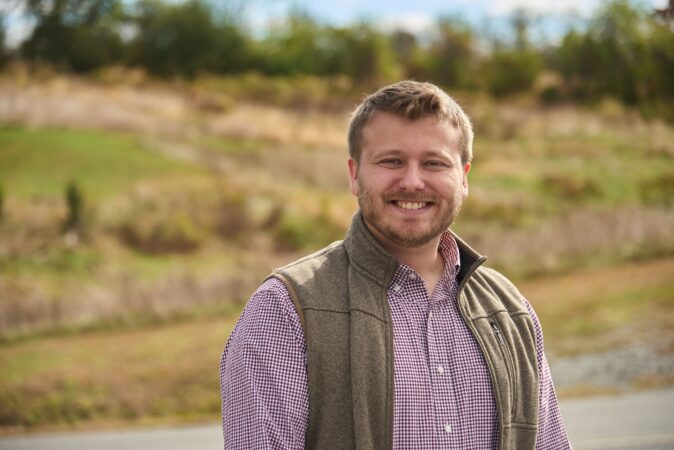
    Chris Thomas, the former executive director of the Montgomery County Democratic Committee, who left his role at the end of November to run for Senate, launched his bid on Wednesday to challenge State Sen. Tracy Pennycuick, a first-term senator representing parts of Montgomery and Berks Counties.

    Thomas, 29, is also an Upper Frederick Township volunteer firefighter and taught in a Philadelphia public school for a year prior to his jump into politics. His campaign is focused on increasing public school funding, finding a new funding stream for mass transit, and making Pennsylvania more affordable for working people.

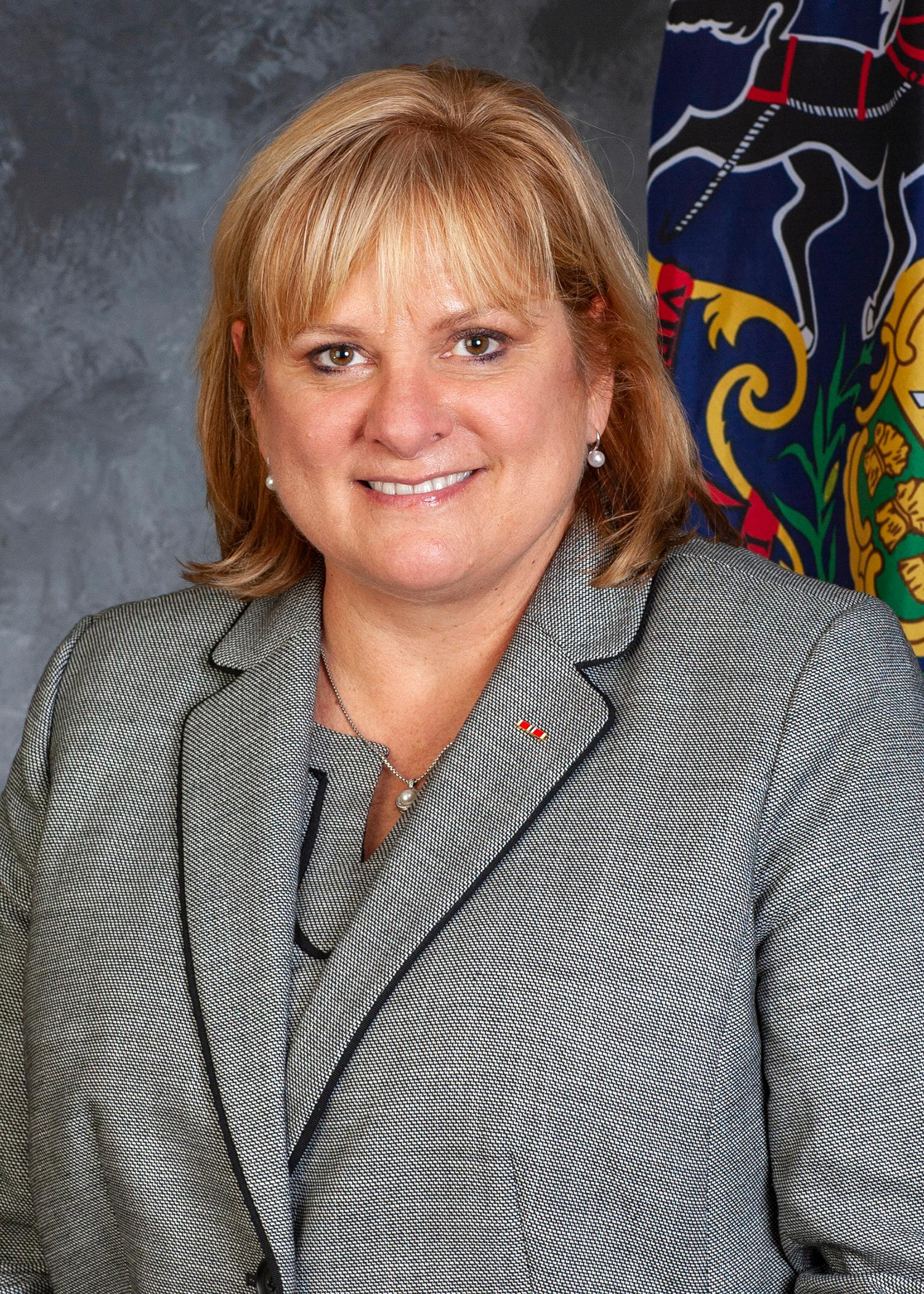
    Pa. state Rep. Tracy Pennycuick (R., Montgomery County). (Photo: Pa. House of Representatives)

    Thomas announced his campaign with dozens of endorsements from state and local elected officials, including five sitting senators from the Philadelphia suburbs. He also secured the endorsement of House Majority Leader Matt Bradford (D., Montgomery), another driving force behind the Democratic efforts to flip the state Senate in the 2026 midterm election in attempts to control all three branches of Pennsylvania’s government.

    Pennsylvania is one of few divided legislatures in the country, where Democrats hold a narrow majority in the state House, 102-101, and Republicans control the Senate, 27-23.

    Gov. Josh Shapiro, a Democrat, and House Democrats frequently butt heads with GOP Senate leaders. By flipping two seats next November, Democrats would tie the chamber 25-25 and Democratic Lt. Gov. Austin Davis would act as a tiebreaker. But Democrats are targeting four GOP-held seats, three of which are in the Philadelphia suburbs, in hopes of gaining control in the upper chamber for the first time in 31 years.

    The GOP-controlled state Senate has been a thorn in the side of Shapiro and House Democrats, as the more conservative members of the GOP Senate caucus have objected to most spending increases and rejected top Democratic priorities, like a long-term revenue source for mass transit. The state budget, passed in November, was 135 days late, requiring school districts, counties, and social service providers to take out loans or lay off staff to continue operating during the monthslong standoff.

    Mirroring national efforts to win control of congressional seats, Pennsylvania Democrats are targeting GOP-held districts that President Donald Trump won in 2024 but Shapiro carried in 2022. With Pennsylvania’s popular first-term governor and potential 2028 contender back at the top of the ticket — and a methodical, behind-the-scenes effort by Shapiro to orchestrate a decisive year for Democrats in 2026 — Democrats see it as possible this time around.

    Thomas’ first order of business if he is elected to Harrisburg and Democrats flip the chamber: electing Democratic floor leaders in the chamber.

    “No meaningful legislation moves in Harrisburg unless we fix who’s in charge, and right now Sen. Pennycuick is supporting a Senate leadership that’s failed working people,” Thomas said.

    Pennycuick said she “welcomes this campaign as an opportunity” to talk about the successes she has achieved while serving in the state Senate, such as her support for public education funding, reducing overreaching regulations, and her bipartisan proposal to create safeguards around artificial intelligence.

    Kofi Osei, a Towamencin Township supervisor and Democrat, has also announced his bid for Senate District 24, which stretches along the northwestern parts of Montgomery County and into parts of Berks County.

    The state Senate Democratic Campaign Committee does not endorse candidates in a primary election, and will support whoever wins the Democratic nomination in Pennsylvania’s May 19 primary. However, State Sen. Vincent Hughes (D., Philadelphia), who chairs the SDCC, said Thomas’ candidacy is “the right time and the right moment.”

    “I’m really excited about having a young person in there, generating young people and getting young people motivated,” Hughes added.

    The state Senate Republican Campaign Committee, meanwhile, is fundraising off Democrats’ efforts to flip the state’s upper chamber, warning voters that Democratic special interest group dollars are already pouring in.

    “State Democrats have made it clear their goal is to have a blue trifecta in Pennsylvania in 2026,” the SRCC wrote in a fundraising email Tuesday. “They know Senate Republicans are the last line of defense against Josh Shapiro and PA House Democrats far-left agenda.”

    Thomas was a public school teacher for one year at the Northeast Community Propel Academy, teaching seventh-grade math and science. He comes from a family of educators, he said, but quickly realized he needed to get more involved to improve the education system and government services to better serve these students. He made the jump to politics to try to make change.

    “I was sitting there, trying to feed my kids in the morning to make sure they had full stomachs to learn, having supplies to make sure they’re fully equipped for the day,” Thomas added. “I saw a system that wasn’t working for our students.”

    If elected, Thomas would be Pennsylvania’s youngest sitting state senator, and would join State Sen. Joe Picozzi (R., Philadelphia), 30, as part of a new generation of leaders hoping to shape the state’s future.

    “Our generation has grown up during economic crashes, school shootings, endless wars, and now we’re watching our parents and grandparents struggle to retire with dignity,” Thomas said.

  • Approximately 2.7 million state agency letters were never mailed to Pennsylvania residents last month, officials say

    Approximately 2.7 million state agency letters were never mailed to Pennsylvania residents last month, officials say

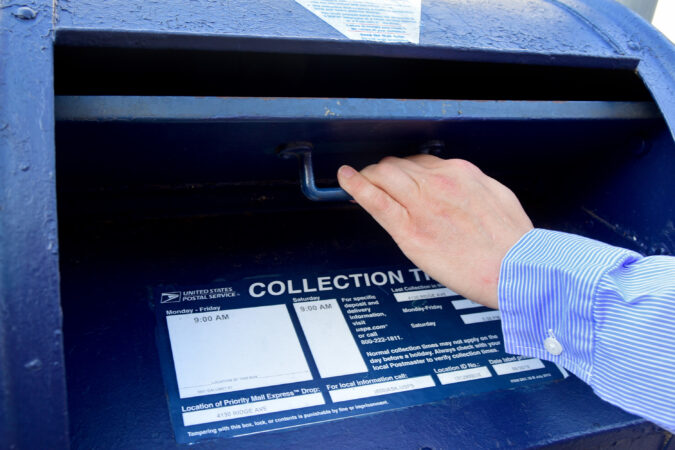
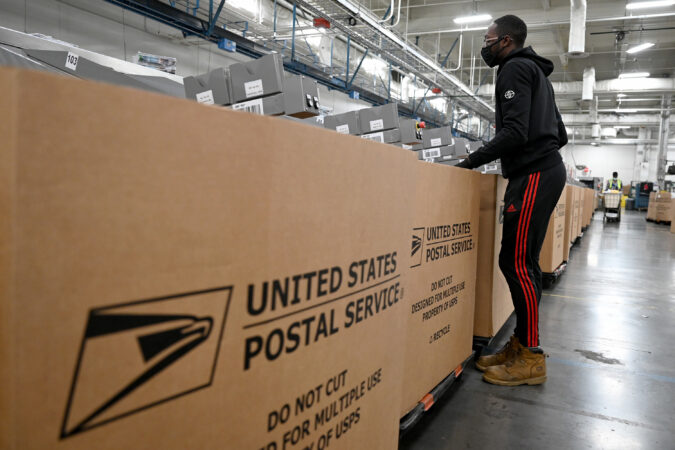
    HARRISBURG — Approximately 2.7 million pieces of state agency mail never reached Pennsylvania residents last month after a state-contracted vendor failed to send them, affecting outgoing correspondence from the state Department of Human Services and the Department of Transportation, officials said Tuesday.

    From Nov. 3 through Dec. 3, officials said, the affected state agency mail was never presorted and delivered by the vendor to the U.S. Postal Service, resulting in a backlog of millions of unsent state communications.

    Late last week, Pennsylvania state officials discovered that a month’s worth of mail had never been sent to residents by the outside vendor, Harrisburg-based Capitol Presort Services LLC. Once the issue was discovered, the state fired the vendor for failing to fulfill its contract and hired another vendor to work through the backlog.

    The state Department of Human Services, which oversees the care of the state’s most vulnerable residents and children, is still determining “the exact volume and categories of delayed mail,” said Paul Vezzetti, a spokesperson for the state Department of General Services. However, DHS was able to confirm that some services were not interrupted: residents waiting on Electronic Benefit Transfer (EBT) cards for receiving food assistance, mail sent by county assistance offices, and notices about suspended benefits during the federal government shutdown were not affected, Vezzetti added.

    PennDot driver’s license and vehicle registration renewal invitations, driver’s license camera cards, vehicle registration cards, and address update cards are all among the routine correspondences that were never sent to residents over the last month, Vezzetti said. Driver’s license suspensions were not impacted by the stalled mail. Vehicle registration and license renewal registrations are sent three months in advance, so anyone who was due to receive one at the start of November will have until February to submit it, the agency said.

    It was not clear on Tuesday which other state agencies’ mail had been impacted by the lapse in service.

    All of the recently discovered unsent state agency mail was transported to USPS on Monday by the state’s new vendor and will be promptly delivered to residents by the Postal Service, officials said. PennDot customers should receive any expected mail from the time period of Nov. 3 to Dec. 3 within the next 7-10 days, Vezzetti added.

    On Friday, the state secured a $1 million emergency contract with another mail presorting company, Pitney Bowes, to handle the multimillion-letter backlog.

    The state had contracted with Capitol Presort Services since May 1, 2021. The company filed for bankruptcy in 2022, but had continued its work for the state until last week, when the agency mail pileup was uncovered.

    It remained unclear Tuesday why it took a full month for officials to determine that 2.7 million pieces of state agency mail had not been reaching residents. It was also unclear how the issue was discovered by officials last week.

    The unsent mail may prove to be a major headache for Gov. Josh Shapiro’s administration, depending on which state communications were not delivered to residents. The backlog could include critical correspondence relating to state services, such as health benefits or food assistance, among others.

    State agencies regularly send communications by mail about an individual’s eligibility for services or benefits, renewals and appeals, and whether a person is due to appear at a hearing about that eligibility, and more.

    “Agencies across the Commonwealth continue to evaluate any potential negative effects of this mail delay and are taking proactive steps to mitigate potential impacts on Pennsylvanians,” Vezzetti added.

    A spokesperson for Gov. Josh Shapiro declined to comment.

    According to the state’s contract with Capitol Presort Services from 2021, the vendor was responsible for delivering more than 16 million pieces of state agency mail each year. Almost all of this mail was to be for the delivery of the state’s First Class and Next-Day mail, which are among the U.S. Postal Services’ fastest delivery options.

    Philip Gray, the president and owner of Capitol Presort Services, did not immediately respond to questions about his company’s bankruptcy and how the backlog of mail came about.

    Capitol Presort Services advertises itself as a way for “companies to maximize postal discounts while improving their mail delivery,” according to its website. Mail presorting allows organizations to prepare mail with the proper bar codes and trays needed for easy delivery by USPS, which USPS offers to companies at a discounted rate.

  • Trump came to a Pa. casino to promise prosperity. Gamblers here had a mixed view of the economy.

    Trump came to a Pa. casino to promise prosperity. Gamblers here had a mixed view of the economy.

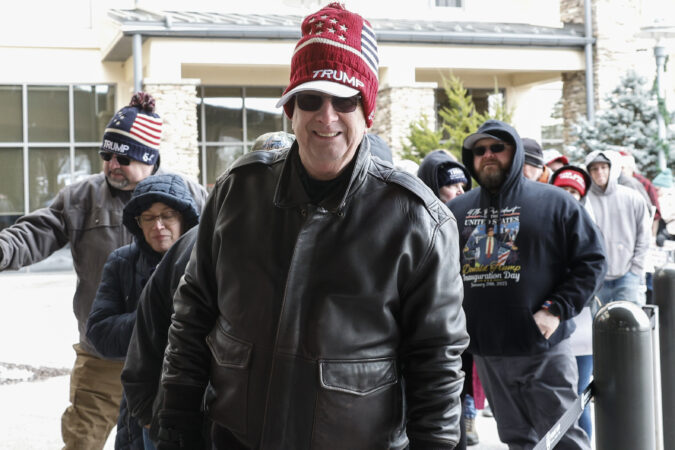
    A smattering of people pushed their luck Tuesday at the Mount Airy Casino Resort, tapping neon slot buttons, flipping dice onto felt craps tables, and wandering the rows of glowing, dinging machines.

    A floor below, President Donald Trump was set to speak in a sprawling ballroom, where event staff hung a huge blue banner: LOWER PRICES, BIGGER PAYCHECKS.

    Trump picked this casino in the Pocono Mountains to deliver the first big economic speech of his presidency as polls show Americans are feeling the pain of high prices — and many are blaming him.

    Politically, the setting made sense. This northeastern corner of the state is where Trump saw the largest swing from 2020 to 2024, and it will be a key congressional battleground next year. It’s also a region home to a large population of aging, non-college-educated voters — the core of Trump’s comeback coalition.

    But the contrast at the casino was hard to miss: the steady slot machine chimes of financial risk and uncertainty above and a president’s promises of stability and revival on the floor below.

    How’s the economy working for Rosemary Migli?

    “It could be better,” said the 73-year-old retired bartender from Tobyhanna, taking a puff of a cigarette before winning 35 cents on a spin.

    Despite a frenzy of police and Secret Service, many gamblers, focused on their own troubles or celebrations, did not realize the president was coming. An older retired couple enjoyed an afternoon together with no obligations. Nearby, a recently widowed woman said the monotony of the slots helps her cope with her loss.

    Peter Jean-Baptiste celebrated his 33rd birthday at the casino with his fiancee. The Philadelphia-based couple are saving for a wedding next year.

    “It’s tough for everyone just trying to make a living, honest people trying to make a living,” Jean-Baptiste said. “One day you feel like [Trump’s] got your back, the next day he doesn’t.”

    Jean-Baptiste, who works in property insurance, said he has also seen housing prices rise. And, as a child of Haitian immigrant parents, he is struggling with how Trump’s anti-Haitian verbal attacks and immigration crackdowns have affected his family.

    “He does a bunch of hot takes and causes division between American citizens,” Jean-Baptiste said. “When, I feel, we really all just want to get along and get by.”

    Mount Pocono is a region with mixed fortunes: Wealthy retirees have second vacation homes here, while lower-income workers are employed in warehouses and hold up the tourism industry. The area is also a hub for New York City commuters who moved here for more affordable housing.

    “We live on a fixed income. We watch what we spend,” said Julie Dietz, sitting beside her husband, Glenn, as she played a buffalo-themed slot game. The Toms River, N.J., couple gamble for a few hours every now and then. She was a paralegal and he worked evaluating industrial facilities for safety before they retired.

    “We know what our limitations are,” Dietz, 71, said. “Yes, food prices have gone up, but I’ve also seen some things come down — gas prices in our area. And the economy took so many years to get to this point.”

    Dietz, who supported Trump in the last election, thinks an economic rebound is just going to take more time.

    “He’s been in office 11 months. Eleven months. So I feel full confidence that he is going to do what he said he’s going to do. Everybody wants things immediately.”

    Kathy F., who didn’t want to give her last name talking about politics and gambling, joined her husband at the casino Tuesday, despite her misgivings about losing money at a time when prices are going up.

    “I go to Costco and everything is $5 more than it used to be. That’s a lot,” she said, bundled in a puffy black coat as her husband gambled nearby.

    “I really don’t understand politics,” said the retired New York City civil servant, who voted for then-Vice President Kamala Harris last year. “It seems like they just fight with each other nonstop when all people want is to be able to afford to live.”

    As he stretched his legs between games, Stephen Miller — “not that Stephen Miller,” he clarified — laughed off the notion of going to see Trump in person a floor below.

    “If I want to see him, all I have to do is turn on the TV. He’s on at 12, he’s on at 3, he’s on at 5, seven days a week.”

    The 75-year-old retired contractor supports Trump, though, and called the economy “half-decent.” He said food prices are high but eggs have gone down.

    “The economy is glacial, so it moves slow. Democrats are definitely locked onto the affordability. But affordability means, what? It means whatever you want it to mean.”

    Miller glanced down at a few vouchers in his hand to set off for the next set of machines.

    “I’m not winning yet, but I will be and the Donald will be,” he said. “Give it time.”

  • President Trump is traveling to Pennsylvania Tuesday. Here’s what to know.

    President Trump is traveling to Pennsylvania Tuesday. Here’s what to know.

    President Donald Trump is expected to visit Northeast Pennsylvania today, promoting his economic agenda — including affordability and gas prices.

    The trip — which the White House confirmed with The Inquirer last week — will include stops in Scranton and a rally in Mount Pocono.

    Trump is no stranger to northeast and north-central Pennsylvania. He visited the region 13 times, including stops in Wilkes-Barre Township and Scranton on his second-term campaign last year. He had a particularly strong performance in Northeast Pennsylvania last year, with some of his top gains compared to the 2020 election coming from Lackawanna and Luzerne counties.

    It’s part of an expected national tour where Trump will tout his efforts to lower inflation ahead of the 2026 midterm elections in battleground areas. Those races, including ones in northeastern and north-central Pennsylvania, will determine whether Democrats or Republicans control Congress.

    Trump’s visit Tuesday appears to be his first to Pennsylvania since attending an energy summit in Pittsburgh in July.

    Affordability — a concept Trump has rebuked in the past, calling it a “fake narrative” — remains a top issue for voters, including locals. Trump continues to claim that prices have fallen since he took office in January, despite reports of the opposite. A CNN fact-checking report from November said prices and inflation have increased. Trump’s tariff policies have contributed to those increases, according to experts.

    When and where will Trump be in Pennsylvania?

    Trump has obligations at the White House and in D.C. until at least 3:15 p.m. according to his public schedule.

    His first publicly visible scheduled appearance in Pennsylvania is at 6:10 p.m. at the Mount Airy Casino Resort in Mount Pocono. As of Tuesday morning, registration to attend the remarks were still open.

    This story will be updated. Staff reporter Fallon Roth contributed to this article.
  • Gov. Josh Shapiro’s administration just fired a vendor for failing to send state agency mail, impacting an unknown number of residents

    Gov. Josh Shapiro’s administration just fired a vendor for failing to send state agency mail, impacting an unknown number of residents

    HARRISBURG — An unknown amount of mail from Pennsylvania state agencies to residents has gone undelivered, Gov. Josh Shapiro’s administration discovered this week.

    The Pennsylvania Department of General Services said in a statement Friday that it has ended its contract with an unidentified vendor that pre-sorts state agency mail before delivering it to the U.S. Postal Service to be sent to residents around the state. The department discovered in the last 48 hours that the vendor “had been failing to deliver Commonwealth mail to constituents,” said Paul Vezzetti, a spokesperson for the department.

    The state is still determining how much and what type of mail was not delivered to Pennsylvania’s residents. It was unclear Friday why the vendor failed to send the state’s mail, where the mail was located when it was not in the state’s possession, how long the mail went unsent, and how the failure was not identified sooner.

    The unsent mail could prove to be a major headache for Shapiro’s administration, depending on the magnitude of the issue and which state communications were not delivered to residents.

    After discovering the backlog, the Department of General Services rapidly hired a new vendor to sort and deliver the unsent mail “as quickly as possible,” Vezzetti said. The unsent mail has already been transferred to the new vendor and the state estimates that it will be mailed by early next week.

    According to an emergency contract made public Friday, the state hired technology solutions company Pitney Bowes for $1 million, citing its preparedness to process and resume mail operations. If the services were not immediately restored, it “could result in missed deadlines, loss of services, delayed benefits, legal exposure, and operational disruptions for multiple agencies and constituents,” according to contract.

    The unsent mail from unspecified state agencies could include critical communications relating to state services, such as health benefits or food assistance, among other potential communications. State agencies send communications by mail about an individual’s eligibility for services or benefits, renewals and appeals, and whether a person is due to appear at a hearing about that eligibility, and more.

    Vezzetti declined on Friday to confirm which agencies were impacted by the stalled mail, or to name the vendor that had been fired.

    Pennsylvania lawmakers last month ended a 135-day-long state budget impasse that required counties, schools and social service organizations to take out loans or limit their services during the protracted budget fight.

    The state is now taking steps to “carefully assess and mitigate impacts” of the mail delay and adjust deadlines for impacted residents.

    Staff writer Ximena Conde contributed to this article.
  • Montco immigration advocates urge all towns to limit collaboration with ICE as the agency creates ‘a crisis in our neighborhoods’

    Montco immigration advocates urge all towns to limit collaboration with ICE as the agency creates ‘a crisis in our neighborhoods’

    Montgomery County immigration advocates renewed calls for more municipalities to approve policies that would limit police and local government cooperation with U.S. Immigration and Customs Enforcement as President Donald Trump’s administration ramps up enforcement.

    Advocates have been calling for welcoming policies across the county for months but advocates estimated that as of Wednesday, only six of Montgomery County’s 62 municipalities had enacted policies. Even those, they argued, were lackluster.

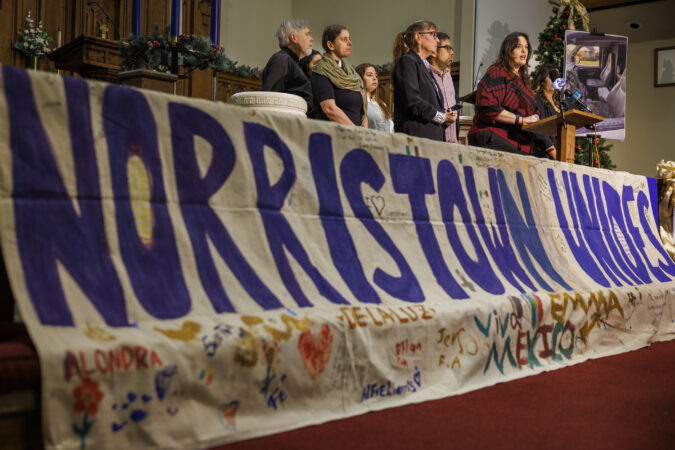
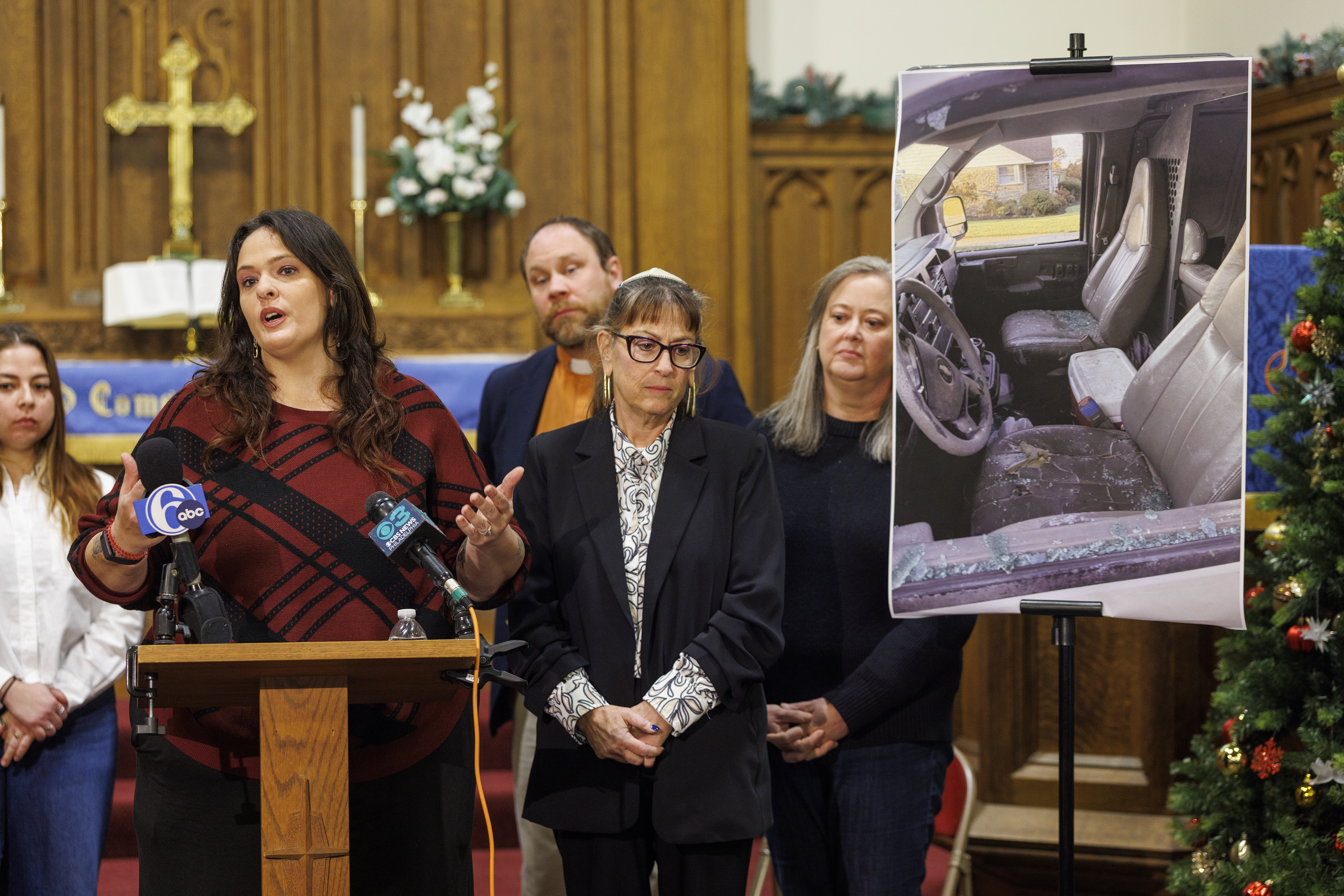
    Montco Community Watch, a grassroots group of activists who track and document ICE enforcement, said Thursday during a news conference at a West Norriton church that the need for more local governments to set their own is dire.

    “ICE has created a crisis in our neighborhoods, and we cannot afford silence, mixed signals, or leadership that only reacts once harm has already happened,” said Stephanie Vincent, a leader of Montco Community Watch.

    Ambler, Springfield, West Norriton, Abington, Norristown, and Cheltenham had approved policies, advocates said, though they are mostly internal policies that advocates say don’t do enough to protect immigrants.

    Stephanie Vincent, the leader of Montco Community Watch, speaks at a news conference about ICE activity in Montgomery County at Ascension Church in West Norriton Thursday.

    The sense of urgency was palpable Thursday as ICE dramatically expands its presence and visibility, both in the Philadelphia region and across the United States.

    Montco Community Watch has documented at least 97 detentions and 30 suspected ICE detentions in Montgomery County, and “there are likely more detentions that we have not heard about,” Vincent said.

    The group was joined Thursday by representatives for Indivisible Greater Jenkintown, a progressive advocacy group, and the Pennsylvania Immigration Coalition at Ascension Church. Advocates said that strong welcoming policies, sometimes referred to as sanctuary policies, would outline that police will not honor ICE detainer requests without a judicial warrant, that local government resources will not be spent on ICE, and that communities will feel safe to access resources without fear of federal agents.

    The policies that advocates are striving for are often referred to as sanctuary policies, and Trump has threatened to strip federal resources from local governments that do not cooperate with ICE.

    Advocates had been working since the summer to encourage municipalities across Montgomery County to approve policies limiting cooperation with ICE. The county, particularly the Norristown area, had become a hot spot for ICE enforcement in the early months of the Trump administration.

    In July, video of a raid at a West Norriton grocery store appeared to show local police assisting the federal agency; the township said federal authorities had sought assistance to retain order while they served a warrant for tax evasion.

    Super Gigante International Food Market, 1930 W. Main St., in West Norriton on July 16.

    Advocates pushed county leaders to enact a welcoming resolution, but officials consistently reiterated that they lacked any control over local police forces.

    Despite months of requests, Montgomery County has not passed a formal ordinance or resolution declaring itself a welcoming county. The county’s Democratic commissioners have cited limits to their power, concern about creating a false sense of security, and a preference for internal policy changes.

    Earlier this year, county officials approved a policy limiting communication between county employees and ICE and said they would not honor prison detainer requests without warrants.

    Advocates said Thursday that they strongly prefer limitations on local collaboration with ICE to be enshrined in ordinances rather than enacted through internal policies or statements, which can lack transparency and accountability and are not always enforceable.

    “None of [the six municipalities’ policies] are complete and the most visible problem on all of them is a lack of any accountability,” said Rabbi Elyse Wechterman, of Indivisible Greater Jenkintown.

    Julio Rodriguez, from the Pennsylvania Immigration Coalition, added that a lack of clear boundaries between local policies and federal agents creates more confusion and worry in the community.

    “It reinforces that fact the people just don’t know what’s happening,” Rodriguez said.

    Staff writer Jeff Gammage contributed to this article.

  • Donald Trump will visit Northeast Pa. on Tuesday to promote his economic agenda ahead of 2026 midterms

    Donald Trump will visit Northeast Pa. on Tuesday to promote his economic agenda ahead of 2026 midterms

    President Donald Trump will visit Northeast Pennsylvania on Tuesday to promote his economic agenda, including efforts to lower inflation, the White House confirmed to The Inquirer on Thursday.

    The trip will kick off what is expected to be a national tour of Trump touting his economic policies ahead of the 2026 midterms, when Democrats and Republicans will battle for control of Congress.

    The specific location for Trump’s visit has not yet been made public, but Northeast Pennsylvania will be a major battleground in next year’s midterms.

    Democrats believe that they can oust freshman Republican U.S. Rep. Rob Bresnahan, of Lackawanna County, threatening the GOP’s slim House majority. Democrats are also specifically targeting the districts of U.S. Reps. Brian Fitzpatrick, of Bucks County; Ryan Mackenzie, of Lehigh County; and Scott Perry, of York County.

    Trump endorsed Bresnahan and most of Pennsylvania’s GOP delegation on his social media platform, Truth Social, last month. Scranton Mayor Paige Cognetti, a Democrat, is mounting a campaign to unseat Bresnahan, who won by roughly a percentage point last election.

    Affordability — which Trump called a “fake narrative” used by Democrats — has been a top issue for voters, including during November’s blue wave when Democrats won local contests throughout Pennsylvania, in addition to the gubernatorial races in Virginia and New Jersey.

    The president has repeatedly claimed that prices have fallen since he took office in January, but a CNN fact-checking report from November said prices and inflation have increased. Many experts have pointed to Trump’s tariff policies as contributing to increased prices.

    Tuesday’s visit appears to be the president’s first to the Keystone State since attending an energy summit in Pittsburgh in July. In November 2024, Trump defeated former Vice President Kamala Harris and won the presidency with the help of battleground Pennsylvania, garnering more votes than any statewide Republican candidate in history.

    The president had a particularly strong performance in Northeast Pennsylvania. last year, making some of his top gains compared with his 2020 performance in Lackawanna and Luzerne Counties.

  • Delaware County approves a nondiscrimination ordinance protecting LGBTQ+ residents

    Delaware County approves a nondiscrimination ordinance protecting LGBTQ+ residents

    Delaware County became the third of Philadelphia’s collar counties to enact a local policy protecting LGBTQ+ residents from discrimination.

    The suburban county’s all-Democratic council voted unanimously Wednesday evening to empower a human relations commission established earlier in the year to adjudicate claims of discrimination based on sexual orientation and gender identity and expression, barring discrimination against LGBTQ+ residents among a wide list of protected classes.

    The vote comes after Chester and Montgomery Counties approved similar policies earlier this year as President Donald Trump targets the LGBTQ+ community through policy and rhetoric.

    Delaware County had been working toward the ordinance for months, introducing the policy in August before hitting pause as county council members and attorneys worked through the details.

    At least 79 local governments across Pennsylvania, including Philadelphia, have enacted nondiscrimination ordinances, according to the Pennsylvania Youth Congress, which advocates for LGBTQ+ youth.

    “Now almost an entire half of the state is now protected by a [local] human relations commission,” Kyle McIntyre, the organizer of Delco Pride, said in an interview Thursday.

    The ordinance mirrors a state policy barring discrimination and establishing a human relations commission to adjudicate complaints.

    While regulations for the state commission bar discrimination based on gender identity and sexual orientation, Delaware County’s policy goes a step further to specifically prohibit such discrimination in law.

    The ordinance provides Delaware County residents a local venue to bring complaints before taking concerns to the Pennsylvania Human Relations Commission.

    “This ordinance reflects what good local government should be,” Monica Taylor, a Democrat who chairs the county council, said Wednesday.

    Some residents, including Delaware County Controller Joanne Phillips, a council member-elect, raised concerns that the ordinance could become expensive in a county that is already looking at a potential 19% tax increase for next year.

    Phillips, a Democrat, said she supported the concept of the commission but worried it would cost more than anticipated once a board began adjudicating cases.

    County officials estimated the commission would cost the county just $3,000 annually and said adjustments could be made to the commission’s role if enforcement of the ordinance became too costly.

    Critics of the policy on Tuesday claimed, without evidence, that the ordinance would dampen free speech in the county, allowing fines against those who say offensive things.

    Charlie Alexander, a far-right activist who unsuccessfully sought the GOP nomination for the county council earlier this year, arrived in a dog costume with a rainbow blanket draped over his head. He argued the ordinance was an unconstitutional infringement on First Amendment rights.

    “Don’t infringe on our rights and you won’t be made to feel very uncomfortable in your homes and neighborhoods,” he threatened the council members.

    The ordinance, however, does not regulate private speech. It bars discrimination in housing, employment, education, healthcare, and public accommodations.

    “This is not infringing on speech. It’s really clear what practices are deemed unlawful,” council member Kevin Madden, a Democrat, said.

    Taylor said the commission, which was first approved over the summer, will be staffed with volunteers early next year and prepared to take cases by next summer.

    “This ordinance provides a fair, reliable, and community-focused way to address concerns,” she said.

    This story has been updated to clarify the name of the commission.