Category: Pennsylvania Politics

  • The political operatives who powered Mamdani’s and Fetterman’s campaigns are trying to win back House seats in Pa.

    The political operatives who powered Mamdani’s and Fetterman’s campaigns are trying to win back House seats in Pa.

    Eric Stern drove out to Erie last January and got a slice of pizza with Christina Vogel at Donato’s, the downtown shop she has owned for nine years.

    The small-business owner and political novice was interested in running for county executive against a vulnerable Republican incumbent. Stern, a longtime Democratic political operative, was part of a newly founded firm looking for candidates to help flip Republican-held seats.

    “It all started with trying to find candidates who were, frankly, better messengers for the values we had and the things we cared about,” Stern said. “She was someone who understood the urgency of this moment as a small-business owner and mom but just as critically was not part of this broken system that had Democrats losing in the past.”

    A year later, Vogel is the newly elected Democratic county executive after flipping one of the most famously swingy counties in the nation, widely seen as a presidential bellwether. And Stern’s firm, FIGHT, a national Democratic media consulting agency based in Pennsylvania, could play a critical role in elevating other Democratic challengers in 2026, when control of Congress is up for grabs.

    FIGHT is working with Scranton Mayor Paige Cognetti in Northeast Pennsylvania and firefighter Bob Brooks in the Lehigh Valley. U.S. Rep Rob Bresnahan and U.S. Rep. Ryan Mackenzie, the freshman Republicans who represent those areas, each won by about a percentage point in 2024, making them two of the most vulnerable incumbents in next year’s elections.

    This past year FIGHT’s six-person team helped Zohran Mamdani win the New York mayoral race, the buzziest contest of the cycle. The Philadelphia-based agency had a hand in the Pennsylvania Supreme Court slate’s retention, county executive wins in Lehigh and Erie, and two successful Democratic judicial campaigns in the state.

    The firm was cofounded by Rebecca Katz, a Central High graduate who lives in New York; Philadelphia ad-maker Tommy McDonald; and Julian Mulvey, an architect of Sen. Bernie Sanders’ 2016 presidential campaign.

    “New York isn’t Pennsylvania and Pennsylvania isn’t New York,” Katz said of lessons learned from Mamdani’s win, also noting primaries and generals are extremely different. “But there’s a universal desire for authentic candidates laser-focused on the affordability crisis.”

    The strategists started the firm in January 2025 after Democrats suffered across-the-board losses in 2024, a year she helped Sen. Ruben Gallego defy that trend and win an open seat in Arizona.

    Stern, a Pittsburgh native and resident, and McDonald both quit their jobs to sign on with the agency.

    Their most basic strategy is creating authentic campaigns that reflect the communities the candidates are running in, clear economic messaging, and trying different things across media platforms to win back working-class voters, Katz said.

    “We try to think about what makes an ad pop, what makes people look up from their phone, or, if they’re on their phone, what makes them stay there,” Katz said. “It can’t look like everything else on TV.”
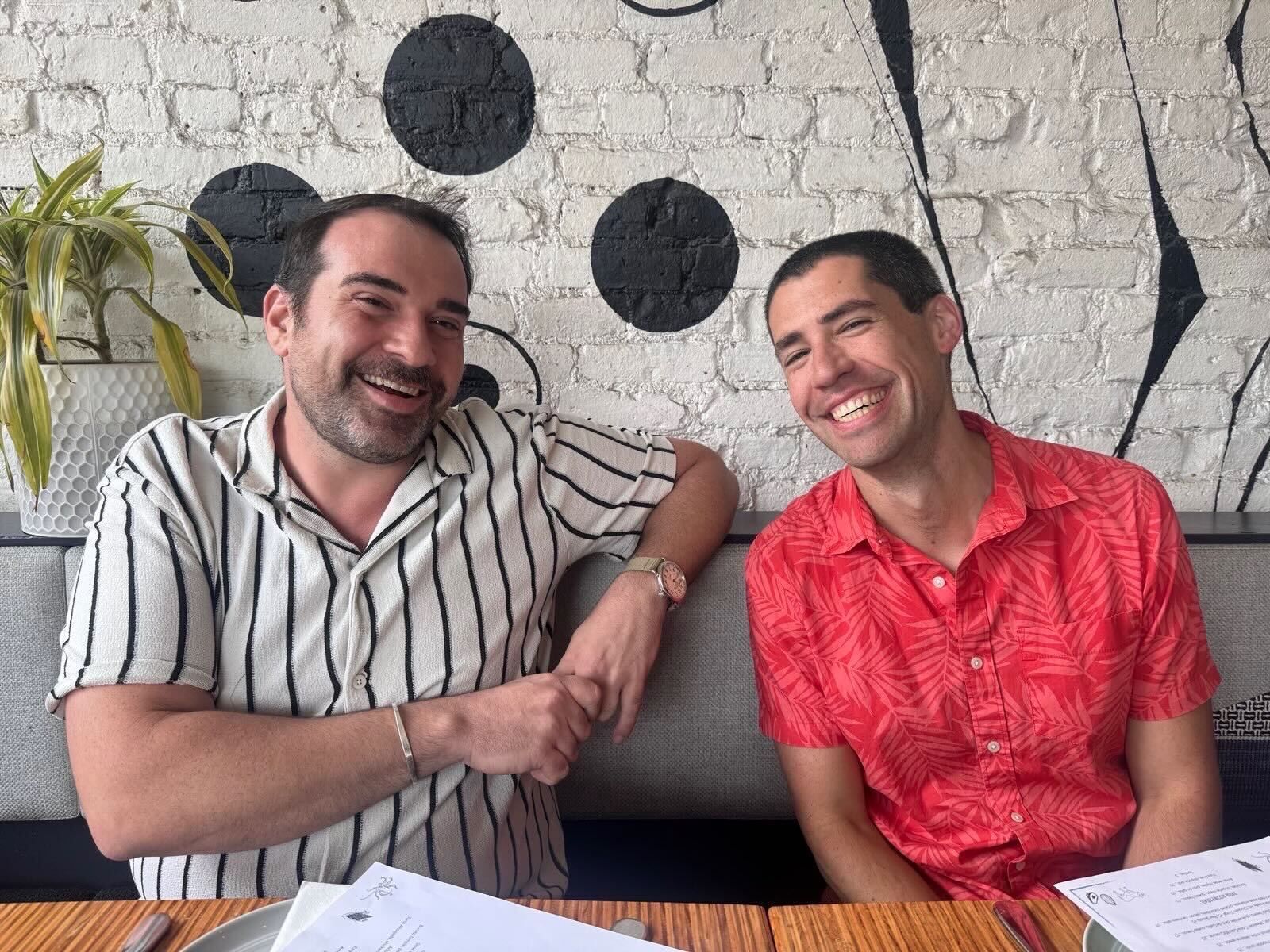
    Tommy McDonald (left), and Eric Stern (right), are longtime Democratic media consultants now with FIGHT, a Philly-based agency working on two key Congressional races in Pennsylvania in 2026.

    ‘A new road map’

    In the November election, standing out meant ads about the state Supreme Court race that featured Pennsylvanians talking directly to the camera about how they felt their rights had been protected by the three justices on the ballot, who were all first elected as Democrats. Sixteen Pennsylvania counties that Vice President Kamala Harris lost wound up voting to retain the judges in the most expensive judicial contest in state history.

    The victory provided a blueprint for Gov. Josh Shapiro and other Democrats running in Pennsylvania in 2026, said McDonald, who made the ads for the retention race.

    “These are the typical working-class voters that Democrats are bleeding,” McDonald said. “It’s Beaver County. It’s where the New York Times visits diners. It showed us there’s a new road map for how to get persuadable voters in Pennsylvania. We know where they are now.”

    Stern, Katz, and McDonald all worked on Fetterman’s 2022 campaign, a race that included the unprecedented challenge of navigating a candidate’s stroke days before the primary and running a general election campaign as he recovered.

    They wound up winning awards for the campaign, which featured bright yellow and black branding and creative trolling of Republican nominee Mehmet Oz’s New Jersey ties. McDonald had the idea to fly a banner plane along the Jersey shoreline: “HEY DR. OZ, WELCOME HOME TO NJ! ♥ JOHN,” it read.

    They called that July, which also included Jersey Shore cast member Nicole “Snooki” Polizzi making a surprise cameo, “New Jersey Summer.”

    “We all learned politics here,” McDonald said of his home state. “The idea is to try to do things differently, redefine Democratic campaigns.”

    This year, political headwinds certainly helped Democrats, but hyperlocal messaging did, too, the strategists argue.

    Stern worked with Vogel’s campaign in Erie to create ads that looked like a pizzeria’s commercials, to stand out from the cookie-cutter format.

    ”In Erie County, we know good things start with the right ingredients,” the ad says as a hand scatters toppings atop a pie.

    Another ad showed Republicans and self-proclaimed three-time Donald Trump voters on-camera saying they were supporting Vogel over the incumbent, Republican Brenton Davis. A Democrat cannot win in the county without some independent and Republican support.

    “They were all people I met on the campaign trail,” Vogel said of the ad. “We really focused on what matters most with affordability, how stretched thin people are across the U.S., and just focused relentlessly on the same message and reminding people why voting matters.”

    And in Lehigh County, a slightly bluer but still purple region, Stern worked with State Rep. Josh Siegel’s campaign for county executive. That was more of an offensive against Republican Roger MacLean, a former Allentown police chief, whom ads described as a “grifter and a disgrace,” highlighting his multiple beach houses amid an affordability crisis.

    “We came up with an ad strategy that basically determined the most important thing was to beat the crap out of this guy,” Stern said.

    “I think Democrats have pulled their punches for way too long,” he added. “There’s a difference between fighting dirty and fighting back, and we have to be in a position where we’re willing to say, ‘We’re here to fight.’”

    Siegel, 32, soon to become the youngest county executive in Pennsylvania history, credited the agency with urging him to be specific in his pitch to voters.

    “For me, the problem with the way we communicate as Democrats is part of the professional consultant class has created this art form of saying a lot and saying nothing,” he said. “I think people have a particularly adept bulls— detector and they are tired of what is just the most inoffensive, poll-tested, style-over-substance speak we’ve perfected.”

    As they look to next year, Stern thinks anti-corruption will be the key issue in the race against Bresnahan in the Northeast. Bresnahan has faced criticism for stock trading while in Congress. Cognetti, his opponent, has been the mayor since 2020, when she won on an anti-corruption platform.

    While affordability runs across races, Stern said campaigns cannot make the mistake of being too general in their messaging. “There’s no one right message that cuts across all these districts,” he said.

    “Too many folks are running the same ads or calling the same plays they would have a decade ago. We are in a different world. Things have totally changed in a million different ways.”
  • Trump admin threatened to withhold SNAP funds in Pa. and N.J.  unless recipient data is released. N.J. AG called stance ‘immoral’

    Trump admin threatened to withhold SNAP funds in Pa. and N.J. unless recipient data is released. N.J. AG called stance ‘immoral’

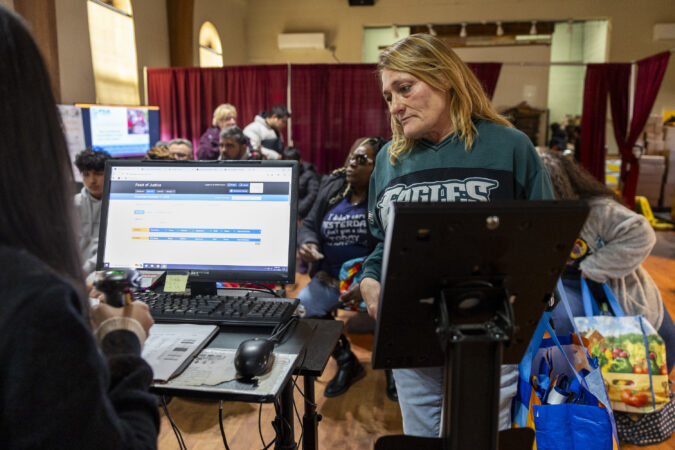
    The Trump administration’s threat to withhold money that Democratic-run states use to administer the SNAP food aid program unless officials release personal information about individual recipients puts 2 million people in Pennsylvania and more than 800,000 in New Jersey at risk of food insecurity.

    On Wednesday, New Jersey Attorney General Matthew Platkin called the administration’s stance “deeply immoral.”

    “The past few weeks have shown that the Trump administration is willing to sacrifice millions of Americans’ most basic needs in service of a political agenda,” he added.

    In a cabinet meeting Tuesday, Agriculture Secretary Brooke Rollins said that data describing Supplemental Nutrition Assistance Program recipients’ names, addresses, Social Security numbers, and immigration status are necessary to ferret out fraud, the Associated Press reported. The Department of Agriculture runs the SNAP program.

    Twenty-two states, including New Jersey, have sued the administration over its demand for personal information, which states have never shared with the federal government. Representing Pennsylvania, Gov. Josh Shapiro joined the lawsuit. A California federal court issued a preliminary injunction on Oct. 15, allowing all parties until next Monday to respond.

    The federal government splits the cost of running SNAP with states, and the Trump administration said it is not planning to take SNAP benefits from individuals, but rather to pull funds it sends to the states to run the program..

    Individuals could nonetheless see their payments disrupted, said Joel Berg, CEO of Hunger Free America, in an interview. The agency is a national nonprofit that fights hunger.

    “People in the Philadelphia region could go hungry,” he said. “Even people in rural Pennsylvania and South Jersey in counties that supported Trump who are highly dependent on these programs could be hurt.

    “This is an authoritarian intrusion of big government. It’s a way to bully Democratic states.”

    Around 500,000 of the 2 million people in Pennsylvania who receive the federal food aid are in Philadelphia.

    Neither Shapiro nor New Jersey Gov. Phil Murphy offered comments. The White House referred requests for comment to the USDA, which released a statement Wednesday evening complaining that blue states “choose to protect illegals, criminals, and bad actors over the American taxpayer.”

    The statement added that the USDA recently sent an additional request to Democratic-run states for data. However, the statement warned, “if they fail to comply, they will be provided with formal warning that USDA will pull their administrative funds.”

    Lately, the SNAP program has played a significant role in aspects of how the Trump administration governs, advocates say.

    During the shutdown, the Trump administration paused SNAP benefits in early November, and then went to the Supreme Court to fight orders by federal judges to release the funding.

    The way SNAP has been thrust into the White House’s partisan battles irks George Matysik, executive director of the Share Food Program, which provides food to hundreds of Philadelphia-area pantries. “We have a serious food affordability crisis developing and it requires a focused response, not continuous political sideshows,” he said Wednesday.

    Temple University sociologist Judith Levine agreed. “It’s extremely disturbing that because of political games, people may lose this very basic benefit needed for survival,” she said. “Being food insecure has nothing to do with infighting between political parties.”

    Loss of SNAP places an inordinate strain on the charitable food system, primarily food pantries, which in turn hurts families, said Eliza Kinsey, a professor in the department of family medicine and community health at the University of Pennsylvania’s Perelman School of Medicine.

    “There’s tons of evidence that stoppages of SNAP can disproportionately affect households with children,” she said. “Cutting SNAP could be disastrous.”

  • Gov. Josh Shapiro says Kamala Harris’ descriptions of him were ‘blatant lies’ intended to sell books

    Gov. Josh Shapiro says Kamala Harris’ descriptions of him were ‘blatant lies’ intended to sell books

    Gov. Josh Shapiro lashed out over former Vice President Kamala Harris’ portrayal of his interview to become her 2024 running mate, calling Harris’ retellings “complete and utter bulls—” intended to sell books and “cover her a—,” according to the Atlantic.

    Shapiro, Pennsylvania’s first-term Democratic governor now seen as a likely presidential contender in 2028, departed from his usual composed demeanor and rehearsed comments in a lengthy Atlantic profile, published Wednesday, when journalist Tim Alberta asked the governor about Harris’ depiction of him in her new book.

    In her book, titled 107 Days, Harris described Shapiro as “poised, polished, and personable” when he traveled to Washington to interview with Harris for a shot at becoming the Democratic vice presidential candidate during her historic campaign against Donald Trump.

    However, Harris said, she suspected Shapiro would be unhappy as second-in-command. He “peppered” her with questions, she wrote, and said he asked questions about the vice president’s residence, “from the number of bedrooms to how he might arrange to get Pennsylvania artists’ work on loan from the Smithsonian.” The account aligns with reporting from The Inquirer when Harris ultimately picked Minnesota Gov. Tim Walz over Shapiro, in part, because Shapiro was too ambitious to serve in a supporting role if chosen as her running mate.

    But Shapiro, the Atlantic reported, was taken aback by the portrayal.

    “She wrote that in her book? That’s complete and utter bull—,” Shapiro reportedly told the Atlantic when asked about Harris’ account that he had been imagining the potential art for the vice presidential residence. He added: “I can tell you that her accounts are just blatant lies.”

    The governor’s sharp-tongued frustration depicted in the Atlantic marked a rare departure for the image-conscious Shapiro, whose oratory skills have been compared to those of former President Barack Obama, and who has been known to give smiling, folksy interviews laced with oft-repeated and carefully told anecdotes.

    The wide-ranging, nearly 8,000-word profile in the Atlantic also detailed Shapiro’s loss of “some respect” for Harris during the 2024 election, including for her failure to take action regarding former President Joe Biden’s visible decline.

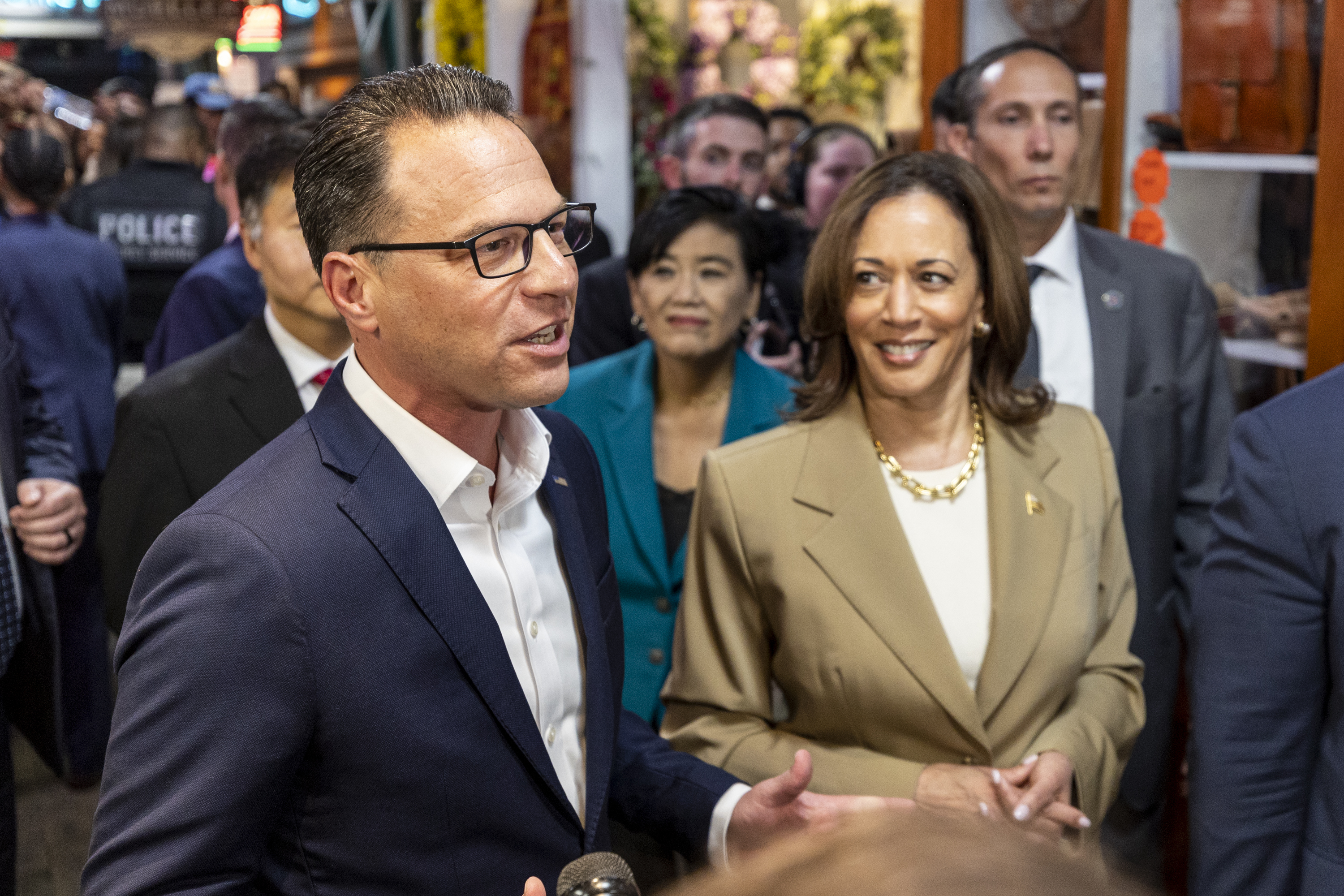
    Governor Josh Shapiro speaks with press along with Vice President Kamala Harris during their short visit to Little Thai Market at Reading Terminal Market after she spoke at the APIA Vote Presidential Town Hall at the Pennsylvania Convention Center in Philadelphia, Pa., on Saturday, July 13, 2024.

    When Shapiro was asked by the Atlantic whether he felt betrayed by Harris’ comments in her book about him, given that the two have known each other for 20 years, he said: “I mean, she’s trying to sell books and cover her a—.”

    He quickly reframed his response: “I shouldn’t say ‘cover her a—,’ I think that’s not appropriate,” he added. “She’s trying to sell books, period.”

    The Atlantic piece, titled “What Josh Shapiro Knows About Trump Voters,” presented Shapiro as a popular Democratic governor in a critical swing state that went for Trump in 2024, and as a master political operator who has carefully built a public image as a moderate willing to work across the aisle or appoint Republicans to top cabinet positions. That image was tested this year during a protracted state budget impasse that lasted 135 days, as Shapiro was unable to strike a deal between the Democratic state House and GOP-controlled state Senate for nearly five months past the state budget deadline.

    The Atlantic piece also outlined common criticisms of Shapiro throughout his two decades in Pennsylvania politics, including those from within the Democratic Party: He is too ambitious with his sights set on the presidency, and his pragmatic approach often leaves him frustrating all sides, as evidenced in his 2023 deal-then-veto with state Senate Republicans over school vouchers. It highlighted some of the top issues Shapiro will face if he chooses to run for president in 2028, including a need to take clearer stances on policy issues — a complaint often cited by Republicans and his critics. If he rises to the presidential field, Shapiro will also have to face his past handling of a sexual harassment complaint against a former top aide that Shapiro claimed he knew very little about despite the aide’s long-held reputation.

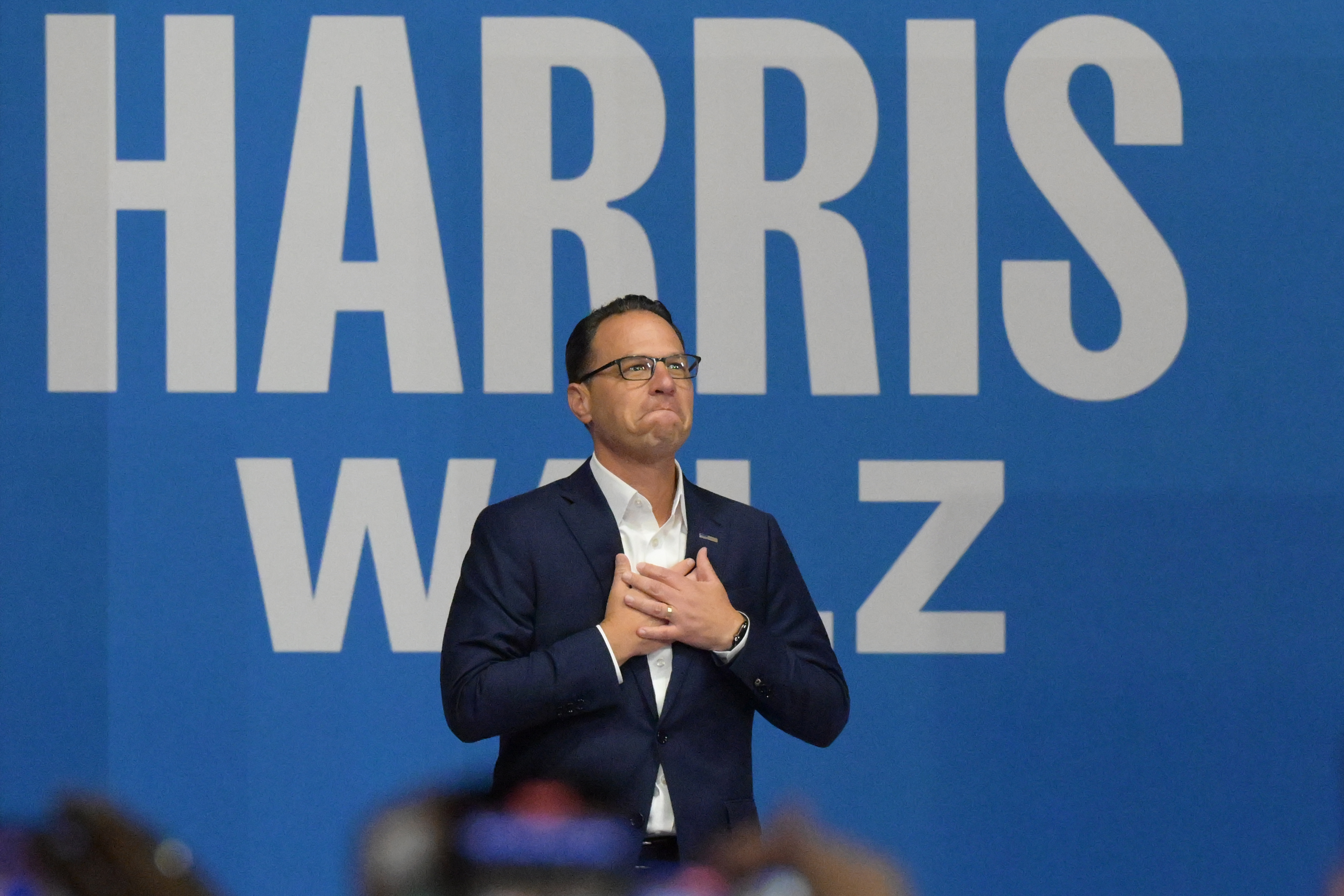
    Gov. Josh Shapiro takes the stage ahead of U.S. Vice President Kamala Harris and Gov. Tim Walz at a rally in Philadelphia’s Liacouras Center on August 6, 2024.

    “The worst-kept secret in Pennsylvania politics is that the governor is disliked — in certain cases, loathed — by some of his fellow Democrats,” the Atlantic reported. Further, Alberta noted that when an unnamed Pennsylvania lawmaker received a call from a member of Harris’ vetting operation, the member said they had never seen “so many Democrats turning on one of their own.”

    Shapiro has been featured in several other prominent national media outlets in recent weeks, including in the New Yorker, which ran a profile about his experience with political violence. He has become vocal on that issue in the months since a Harrisburg man who told police he wanted to kill Shapiro broke into the governor’s residence in April and set several fires while Shapiro and his family slept upstairs. As one of the most prominent Jewish elected officials in the nation, Shapiro has frequently said that leaders must “bring down the temperature” in their rhetoric, and has tried to refocus his own messaging on the good that state governments can do to make people’s lives easier, such as permitting reforms and infrastructure improvements.

    “The fact that people view institutions as incapable or unwilling to solve their problems is leading to hyper-frustration, which then creates anger,” Shapiro told the Atlantic. “And that anger forces people oftentimes into dark corners of the internet, where they find others who want to take advantage of their anger and try and convert that anger into acts of violence.”

  • Chester County might be the only Philly suburb not raising taxes next year

    Chester County might be the only Philly suburb not raising taxes next year

    Chester County may be the only county in Philadelphia’s suburbs that will avoid a property tax hike next year.

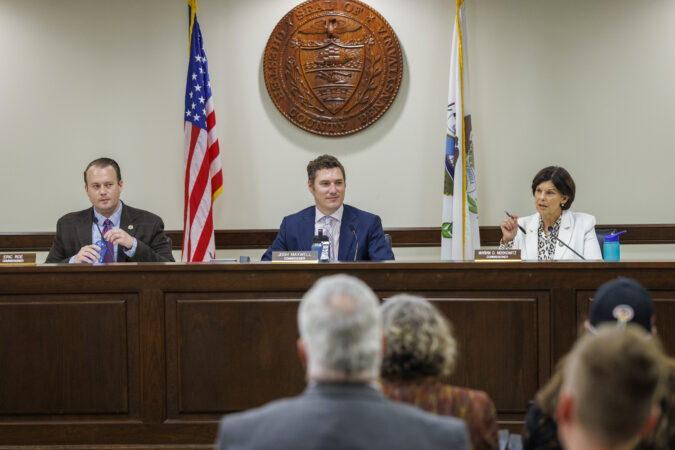
    In the proposed 2026 budget, released last month, Chester County’s commissioners projected $666.3 million in operational spending, roughly 4.7% more than the county budgeted for 2025. The budget is expected to pass the three-member board of commissioners with bipartisan support.

    Despite the increased spending and more limited state and federal resources, county officials said, they expected to avoid a tax increase next year thanks to budget cuts across nearly every department and delayed projects.

    “This budget was really difficult for us, but we did what we had to to keep it at zero,” said Chester County Commissioner Marian Moskowitz, a Democrat.

    David Byerman, the county’s CEO, described the county as being in a “defensive crouch” financially.

    “We are in a very unpredictable environment in which we have a lot of conflicting information that we’re dealing with,” Byerman said, citing federal funding uncertainty under President Donald Trump. “We were charged by our commissioners in Chester County with crafting a budget that held the line in terms of tax increases.”

    How does Chester County compare with the rest of the region?

    The decision sets Chester County apart from its peers in a year that has been marked by budget uncertainty at the state and federal levels. In recent weeks, Delaware County’s executive director proposed a 19% property tax hike to address the county’s structural deficit. Montgomery County’s commissioners are proposing a 4% increase. Bucks County’s commissioners have floated a tax increase to address a deficit in next year’s budget.

    But on the heels of a 13% property tax increase that took effect in January, Chester County’s commissioners said they were eager to keep taxes flat for residents.

    “This is a pared-down budget because we didn’t know what the federal and state government were going to do,” said Josh Maxwell, a Democrat, who chairs the county board of commissioners.

    The biggest cost increases, he said, came in the form of employee and inmate healthcare.

    How did Chester County cut its budget?

    In the first quarter of this year, Chester County officials asked each county department to reduce non-personnel spending by 5% for the 2026 budget. By and large, officials said, they responded to the call, freeing up significant funds even as overall personnel costs increased.

    “We asked them to cut back, and some of them really did,” said Eric Roe, the lone Republican on the board of commissioners. “I’m really happy with how they helped us get to this point.”

    In this year’s budget, officials said, they opted to delay projects like park maintenance and computer system upgrades that could be put off.

    “The cuts are giving us an opportunity to prioritize and rethink our discretionary spending,” Maxwell said. “They may have to go to some of the things that the federal and state government used to do that they’re getting out of the business of doing.”

    Additionally, Byerman said, the county instituted a soft hiring freeze by requiring all new hires to be approved by top-level management.

    Can Chester County avoid tax increases in future years?

    Heading into next year, Maxwell said, he is bracing for cuts to federal social service programs that will result in larger expenditures from the county to serve its neediest residents.

    For example, anticipated cuts to the U.S. Department of Housing and Urban Development’s Continuum of Care program could leave 70 more families on the streets in Chester County, Maxwell said.

    “This is a year where we’re going to look at all of our programs and make sure that we’re investing in the areas that the community wants us to,” Maxwell said.

    This suburban content is produced with support from the Leslie Miller and Richard Worley Foundation and The Lenfest Institute for Journalism. Editorial content is created independently of the project donors. Gifts to support The Inquirer’s high-impact journalism can be made at inquirer.com/donate. A list of Lenfest Institute donors can be found at lenfestinstitute.org/supporters.

  • Pete Hegseth, in a 2016 talk, cited the same military law as the lawmakers he’s now calling seditious

    Pete Hegseth, in a 2016 talk, cited the same military law as the lawmakers he’s now calling seditious

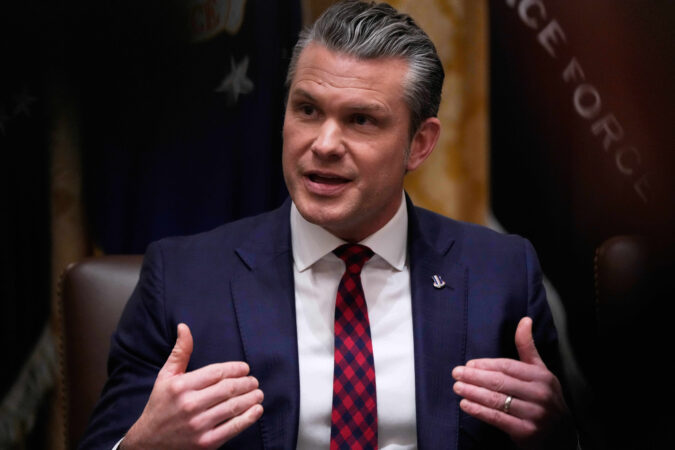
    Defense Secretary Pete Hegseth previously emphasized the same military law that the Trump administration has been calling Pennsylvania lawmakers seditious for citing.

    Hegseth noted the military rule not to obey unlawful orders during a forum in 2016, when he was a Fox News contributor, in recorded remarks CNN unearthed on Tuesday.

    Hegseth spoke at length about his views on the military — and criticism of former President Barack Obama — in a talk titled “The US Military: Winning Wars, Not Social Engineering.” The talk was shared online by the Liberty Forum of Silicon Valley and was marked as taking place on April 12, 2016. Hegseth, an Army veteran, had a book coming out that he promoted at the event.

    The moderator asked him a question from an attendee: “Can you comment on soldiers who are being held at Leavenworth Prison for being soldiers?”

    Fort Leavenworth in Kansas is home to the military’s only maximum-security correctional facility, which houses prisoners convicted of violating the Uniform Code of Military Justice.

    Hegseth argued that some prisoners at the facility did not deserve to be there but that others were facing the consequences for their unlawful actions.

    “There are some guys at Leavenworth who made really bad choices on the battlefield, and I do think there have to be consequences for abject war crimes,” he said. “If you’re doing something that is just completely unlawful and ruthless, then there is a consequence for that.”

    “That’s why the military said it won’t follow unlawful orders from their commander in chief,” he added. “There’s a standard, there’s an ethos, there’s a belief that we are above what so many things that our enemies or others would do.”

    It is the same policy that a group of six Democratic members of Congress cited in a video that enraged President Donald Trump.

    Democratic U.S. Reps. Chrissy Houlahan of Chester County and Chris Deluzio of Allegheny County, both veterans, joined a group of other veterans and former members of the intelligence community to urge members of the military and intelligence community to “refuse illegal orders” in a video they shared on social media last month.

    On his social media website, Truth Social, Trump said they were committing sedition “punishable by DEATH” and shared other posts attacking the lawmakers, including one calling for them to be hanged. Hegseth called them the “seditious six.”

    “Encouraging our warriors to ignore the orders of their Commanders undermines every aspect of ‘good order and discipline,’” Hegseth said in a social media post. “Their foolish screed sows doubt and confusion — which only puts our warriors in danger.”

    When asked for comment by CNN, spokespersons for the Pentagon and the White House further criticized the Democratic lawmakers who made the video.

    Pentagon spokesperson Kingsley Wilson also told CNN that the military “has clear procedures for handling unlawful orders” and defended Trump’s orders as legal.

    White House spokesperson Anna Kelly told CNN that Hegseth’s position has remained consistent and that his remarks were “uncontroversial.”

    Sean Timmons, a Houston-based attorney specializing in military law who served as an active-duty U.S. Army captain in the U.S. Army Judge Advocate General (JAG) program, told The Inquirer that service members can get in trouble for refusing orders and that it is largely up to commanders to determine whether orders are lawful or not. While the military rules specify not to follow obviously illegal orders, such as war crimes, they also say to presume orders are lawful.

    Houlahan expressed disappointment in her Republican colleagues for largely not defending the Democratic lawmakers, though U.S. Rep. Brian Fitzpatrick, a Bucks County Republican, said he stood by his Democratic colleagues when asked by The Inquirer.

    The fallout from the video has gone beyond rhetoric on X and Truth Social.

    The FBI wanted to question the lawmakers involved in the video, and the Department of Defense said it would investigate U.S. Sen. Mark Kelly (D., Ariz.), a former naval officer and the one veteran in the video who is still obligated to follow military laws because he served long enough to become a military retiree. The department threatened to call Kelly back to active duty for court-martial proceedings, which abide by stricter rules than civilian law.

    Hegseth also said in his 2016 talk that he believed U.S. Sen. Ted Cruz (R., Texas), Trump’s top rival for the GOP nomination that year, would be the best president at fighting wars, but that he believed Cruz and Trump would both “unleash war fighters and get the lawyers out of the way, which is really a big impediment to how we fight wars.”

    The Democratic lawmakers did not cite specific orders in their video announcement, but Trump’s involvement of the National Guard in U.S. cities and the Pentagon’s strikes in the Caribbean have drawn legal debate.

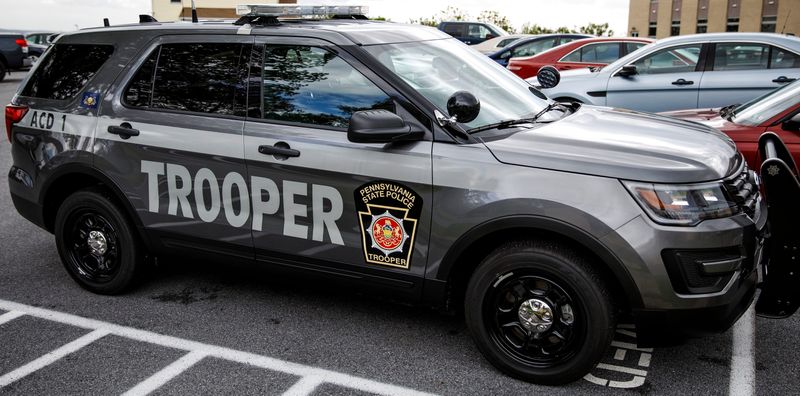
  • White state trooper who served on Shapiro’s security team sues state police, alleging racial discrimination

    White state trooper who served on Shapiro’s security team sues state police, alleging racial discrimination

    State police Cpl. Joshua Mack is suing the Pennsylvania State Police in federal court, arguing that he lost a lucrative position on the governor’s security detail because of racial discrimination.

    Mack, who is white, claims that his superiors reassigned him earlier this year and that he had heard them talk about the “need” for “more minorities” on Gov. Josh Shapiro’s security team.

    Mack had been the longest-serving member of the governor’s security detail, joining the elite squad in 2011 when Ed Rendell was in office.

    “Mack’s removal and replacement on the Governor’s Detail were motivated by race considerations and intended to satisfy [Pennsylvania State Police’s] stated goal of increasing minority representation in the Governor’s Detail,” the lawsuit reads. “As a result, Mack suffered loss of pay, loss of overtime income, diminished professional opportunities, and emotional distress.”

    Mack joined the state police in 2004 and went on to protect four governors. The lawsuit claims that he “consistently received strong performance evaluations” and that guarding the governor came with opportunities for specialized dignitary-protection training, state-owned vehicles, and far more overtime than other state troopers have.

    Pennsylvania State Police declined to comment, saying that they don’t respond to queries about personnel matters or pending litigation. Shapiro’s office declined to comment as well.

    According to the lawsuit, Mack lost the position on March 25 — although he retained his rank of corporal — and was told that it was only because of “administrative changes.” His supervisors repeatedly informed him their decision was not due to any deficiencies in his performance, the lawsuit states.

    “As a result of his removal from the Governor’s Detail, Mack was reassigned to another unit farther from his home, lost access to a state vehicle, and lost substantial overtime opportunities,” reads the lawsuit, which was filed on Nov. 25.

    “He was assigned back to patrol, which was a drastic change, as he was out of patrol work for so long and much has changed during that time,” wrote Anthony T. Bowser, who is representing Mack, in an email to The Inquirer.

    Mack alleges he was then replaced by two non-white troopers “who were substantially less qualified and lacked any dignitary-protection experience.”

    Mack is demanding a jury trial. He is alleging damages stemming from lost wages and benefits, damage to his professional reputation, and “emotional distress, humiliation, and embarrassment.”

    Bowser says that while the damages would have to be determined during litigation, the lost overtime amounts to over $50,000 annually because it is capped in Mack’s new patrol position. The lost overtime would also affect his pension.

    Mack is specifically suing the Pennsylvania State Police and his superiors Cpl. John Nicholson and Lt. Col. George Bivens. Shapiro is not mentioned by name in the suit.

    Mack first filed an administrative charge of discrimination with the Equal Employment Opportunity Commission, a necessary first step before filing in federal court.

  • Skill games avoid regulation again in Pa. as gambling lobby war intensifies

    Skill games avoid regulation again in Pa. as gambling lobby war intensifies

    Spotlight PA is an independent, nonpartisan, and nonprofit newsroom producing investigative and public-service journalism that holds power to account and drives positive change in Pennsylvania. Sign up for our free newsletters.

    HARRISBURG — This year’s state budget didn’t pull slot-like skill games out of their legal limbo in Pennsylvania, despite bipartisan consensus on the need to do so.

    But it could still happen. Democratic Gov. Josh Shapiro called the matter “unfinished business,” and legislative leaders have also indicated interest in taking up the issue again next year.

    “This building has a long history of going through gaming debates, and they are very complex and very tedious and very difficult,” state Senate Majority Leader Joe Pittman (R., Indiana) said after the budget passed on Nov. 12. “I certainly believe gaming reform is — and must be — an important policy initiative going forward.”

    Pennsylvania faces a structural deficit, which will require spending cuts or more cash in the state’s coffers. A gambling levy, alongside other sin taxes, offers a way to raise revenue without making politically unpopular increases to sales or income taxes.

    While such taxes are potentially more palatable to the broader electorate, gambling debates are complex and difficult within the Capitol due to the array of monied interests that defend their existing market share or attempt to expand it further.

    The money at stake is real. Existing taxes on revenue from slot machines and table games, whether in brick-and-mortar casinos or online, as well as levies on activities like sports betting and truck stop-based video gaming terminals, brought in $2.7 billion last fiscal year, a record high.

    What was on the table this budget cycle?

    Skill games, which have proliferated in bars and gas stations across the state, exist in a legal gray area and have been subject to years of litigation. They are untaxed and unregulated, and officially setting up laws around them would bring in more gaming cash.

    Shapiro proposed in his budget address a 52% tax on the gross revenue of skill games, estimating that it would bring in roughly $400 million. State Senate Republican leaders later backed a plan to tax skill games at a lower rate, 35% of gross revenue.

    (Politically powerful casinos pay a 55% tax on electronic games and are pushing for skill games to be taxed at a similar rate.)

    As budget talks progressed, neither of the plans went far. Lobbyists for Pace-O-Matic, a major skill games developer and distributor, wanted lawmakers to support legislation introduced by State Sen. Gene Yaw (R., Lycoming) with a 16% tax.

    In the weeks leading up to a final budget deal, Yaw and another state senator, Anthony Williams (D., Philadelphia), proposed levying a $500 monthly fee per machine, rather than a tax. They estimated such a fee would bring in about $300 million.

    Yaw, whose district is home to a skill games manufacturer, told Spotlight PA the bill was an attempt to sidestep the impasse between leaders, adding that he thinks the tax rates proposed so far would destroy the existing industry.

    Williams noted that the bill also seeks to regulate “stop-and-go” convenience stores with liquor licenses. These stores can serve as illegal gaming hubs, which is a concern among Philadelphia lawmakers.

    Both lawmakers said they hope that the legislature will finally address skill games regulations in 2026. If not his bill, Williams added, he hopes the legislature will pass another proposal.

    “I think it will be included,” Williams said of skill games. “We got a budget that’s passed, but revenue challenges are coming next year, and we’re not going to raise taxes. So this, along with other items, will be considered.”

    Adding complexity to the matter is a case before the state Supreme Court. Justices heard oral arguments about the legality of skill games in late November.

    Attorneys for the state argued that the machines’ mechanisms and functionality effectively constitute gambling, violating the state’s gaming law. “A game that looks like a slot machine, and plays like a slot machine, is a slot machine,” the state attorney general’s office wrote in its brief.

    Matthew Haverstick, Pace-O-Matic’s attorney, argued that the devices comply with decades of legal precedent and that many of the concerns raised by justices, such as the devices’ profitability, amount to policy questions.

    “Why [do skill machines] make money? Because somebody really brilliant came up with an idea that they tested. … It was held to be legal, and nobody appealed,” Haverstick said.

    It is not known when the high court will issue a ruling.

    ‘We get threatened all the time’

    Part of what makes gaming such a complex topic is simple: Money.

    Gambling is a multibillion-dollar industry in Pennsylvania with several key players. And public officials hold the keys to either helping or hurting their bottom lines.

    Pace-O-Matic alone has paid millions of dollars to employ dozens of lobbyists to influence the legislature in recent years. Casinos, legalized in the 2000s, likewise are heavily involved in the legislative process — they employ dozens of lobbyists of their own and also spend millions.

    Other, smaller players, including those involved in horse racing, sports betting, and truck-stop-only video gaming terminals, add to the complexity of the policy debate.

    Then there’s campaign fundraising. A Spotlight PA analysis of campaign finance records found that gaming interests of all stripes gave $1.7 million to top legislative leaders and the governor between Jan. 1, 2023, and Dec. 31, 2024.

    Current campaign finance reports show Pace-O-Matic has given money to a PAC that, in turn, donated to a second PAC that has attacked incumbent state Senate Republicans — something that could complicate talks going forward, particularly in the upper chamber.

    The company historically has made significant donations to legislative Republicans. But that once-friendly relationship soured earlier this year, after GOP leaders in the state Senate backed legislation that would have taxed the industry at a higher rate than it preferred.

    Around the same time, door knockers delivered fliers attacking key GOP lawmakers. State Sens. Frank Farry (R., Bucks) and Chris Gebhard (R., Lebanon) were “siding with Harrisburg insiders and lobbyists to stop small town groups like our volunteer firefighters and VFWs from being able to raise additional revenues,” the fliers, viewed by Spotlight PA, said.

    In June, Pace-O-Matic accused the state Senate’s top two GOP leaders of intimidating its lobbyists unless they dropped the company as a client. Three firms did. (A GOP spokesperson called the allegation “bizarre.”)

    A lobbyist for Pace-O-Matic told Spotlight PA at the time that it did not coordinate with the group that advanced the ad campaign attacking GOP senators.

    However, federal campaign finance records show Pace-O-Matic began giving money to Citizens Alliance, a national conservative political group, as budget talks intensified in May — $630,000 total as of Nov. 21.

    Soon after Pace-O-Matic’s first donation, Citizens Alliance contributed to an Ohio-based super PAC called Defeating Communism — the group behind the fliers. Citizens Alliance has donated $428,000 to the super PAC this year.

    Cliff Maloney, CEO of Citizens Alliance, said the organization’s aims are to make Pennsylvania into a “red wall” by running a program to “compete with Democrats’ door-knocking efforts,” and to “run a pledge program to hold both Democrats and Republicans accountable to the principles of the [Pennsylvania] and [U.S.] Constitution.”

    “Yes, partners are working to hold Senate Republicans accountable that proposed a new tax on certain small businesses,” Maloney said in a statement.

    Pennsylvania Department of State disclosures show that in October, Defeating Communism reported $225,000 for door-knocking targeting Gebhard as well as State Sen. Camera Bartolotta (R., Washington). The campaign focused on their votes on past budgets and carbon capture and sequestration, as well as skill games.

    Bartolotta told Spotlight PA that she expected taxation of skill games to still be a leading topic in state Senate Republicans’ internal discussions despite the wave of attacks.

    The skill games lobby, she said, is “just passing out garbage. And they’re acting like criminals. And I don’t know what in the world they think this is going to do to engender our support.”

    Defeating Communism did not respond to a request for comment. Mike Barley, Pace-O-Matic’s chief public affairs officer, said in a statement that the company “donates substantial amounts of funding to politicians and PACs, and we will continue to do so.”

    A growing field

    The number of moneyed gambling interests that wish to play in the Keystone State is growing.

    As Spotlight PA recently reported, the national trade group for sports betting firms launched a more than $500,000 pressure campaign to kill a closed-door budget pitch. The proposal would have raised taxes on sports betting and online casino gaming.

    That pressure helped kill the proposal for now, a source told Spotlight PA.

    Legal Sports Report, a trade news outlet, reported in November that sports bettors were creating a $10 million super PAC, citing an anonymous source who claimed that Pennsylvania has “rocketed to the top of the list of states where operators are looking to play big during next year’s midterm election.”

    While gaming was off the table in 2025, it’s unclear what the future holds.

    “We get threatened all the time by some of these interests, you know, ‘We’re going to come beat you up. We’re going to come take you out,’” state Senate President Pro Tempore Kim Ward (R., Westmoreland) said at a news conference after the budget’s passage.

    “That’s just ridiculous, and it just makes my blood pressure go up. We don’t do well being bullied. And I think a lot of these gaming interests have done nothing but try to bully us. And I don’t think we stand for that.”

    EXCLUSIVE INSIGHTS … If you liked this reporting from Stephen Caruso, subscribe to Access Harrisburg, a premium newsletter with his unique insider view on how state government works.

  • Bucks County could consider a tax increase to combat a $16.4 million deficit

    Bucks County could consider a tax increase to combat a $16.4 million deficit

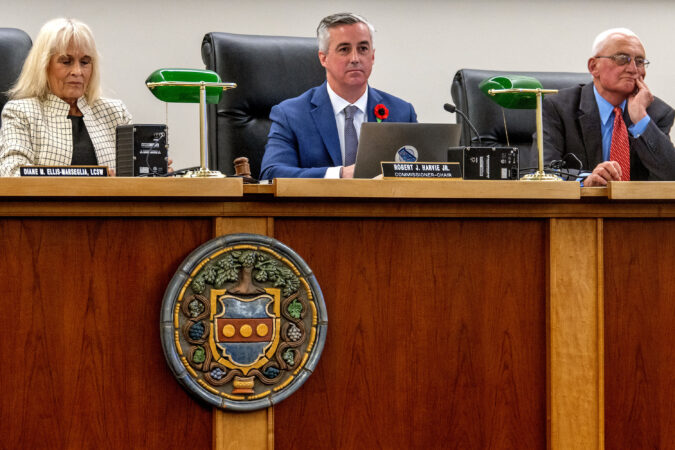
    Bucks County’s 2026 proposal for a $516 million operating budget does not include tax increases for residents, but they are not off the table as county commissioners look to combat a projected $16.4 million deficit.

    “There’s no question” that a tax increase is a possibility, Democratic Commissioner Diane Ellis-Marseglia told The Inquirer on Wednesday, noting the budget proposal is currently a “work in progress.”

    “The biggest thing that I’m going to be looking at, besides cutting and seeing what we can do, is if we were to have to increase taxes, to make it, you know, pennies, as small as we can, so that it’s not impacting people,” said Ellis-Marseglia, the board’s vice chair.

    The county’s expenses are projected to increase by 3.2% — more than $16.2 million, according to the budget proposal released Wednesday.

    The increase is driven by requests for required upgrades and replacements of public safety resources, funding for capital improvement projects, and financial support for the county’s library system and Bucks County Community College, according to a county news release.

    Revenue is projected to drop by a little more than $531,000, or roughly 0.1%, according to the proposal.

    “Bucks County residents deserve stability, fiscal security and a high level of service from their County government,” said Jeannette Weaver, the county’s chief financial officer, in the news release. “Over the next few weeks, we will continue working with our many departments and row officers to present a budget that meets those demands.”

    Counties in Pennsylvania can increase their revenue only by raising property taxes. Bucks County was the only Philadelphia collar county that did not enact a tax increase last year. Tax hikes were not outlined in Wednesday’s preliminary budget, but a lack of funding from state budget woes could make the Bucks County commissioners reconsider.

    “It will likely mean that this county will have to consider a tax increase because we need to meet the needs of” residents, Bob Harvie, who chairs the Bucks County commissioners and is running for Congress, told The Inquirer earlier this month.

    Meanwhile, Montgomery County is weighing a proposed 4% property-tax increase and Delaware County could see a 19% increase in property taxes. Chester County did not propose a tax hike for 2026.

    Counties were formulating their budget proposals as Pennsylvania was grappling with its state budget impasse and the federal government underwent its longest shutdown in history.

    “We are facing the same thing everybody is facing,” Ellis-Marseglia said. “But inflation is everywhere. Energy costs are up. Everybody’s having a tough time. So, of course, so is county government, trying to make ends meet.”

    The Bucks County Board of Commissioners will hold a public hearing on Dec. 4 at 2 p.m. for residents to ask questions and provide comments. The commissioners will vote on the final budget on Dec. 17.

  • Jean E. Corrigan, former Montgomery County manager and longtime assistant to then-State Rep. Josh Shapiro, has died at 70

    Jean E. Corrigan, former Montgomery County manager and longtime assistant to then-State Rep. Josh Shapiro, has died at 70

    Jean E. Corrigan, 70, of Roslyn, Montgomery County, retired fleet and operations manager for the Montgomery County Department of Assets and Infrastructure, onetime constituent services representative for then-State Rep. Josh Shapiro, hair salon owner and operator, disability services advocate, and award-winning volunteer, died Saturday, Nov. 22, of non-alcoholic cirrhosis of the liver at her home.

    A lifelong resident of Glenside and nearby Roslyn, Mrs. Corrigan was vice chair of the Abington-Rockledge Democratic Committee from 1995 to 2013, and served as Gov. Shapiro’s constituent service agent when he represented the 153rd Legislative District in the Pennsylvania House of Representatives from 2004 to 2012.

    “Jean was the very first volunteer on my very first campaign,” Shapiro recalled. “We knocked doors together, met our neighbors together, and, after winning, served our community together.”

    In addition to breaking down bureaucratic delays and solving all kinds of constituent problems for Shapiro, Mrs. Corrigan doggedly championed fair wages, reproductive freedom, increased funding for special education and disability services, and improved healthcare. Colleagues called her a “super volunteer” and a “campaign mom” because she helped so many candidates win elections.

    Gov. Shapiro said Mrs. Corrigan “made her neighbors’ lives better.”

    She hosted visiting campaign workers at her home for years, took charge of distributing lawn signs and sample ballots, and organized other preelection events at her dining room table. She was named the local committee’s Democrat of the Year in 2002 and earned several awards from community service organizations.

    “Through that work, I got to see just how much of herself she gave to others,” Shapiro said. “Where there was a need in the community, she worked to address it. When someone needed help, she lent a hand. She made her neighbors’ lives better, and I will forever be grateful for her life of service.”

    In 2001, Mrs. Corrigan ran unsuccessfully for Abington Township commissioner, finishing second among three candidates and losing to a long-entrenched incumbent. In a preelection profile in The Inquirer, she listed “responsible growth” as a top value and “maintain integrity of Abington Township” as a main goal.

    “Jean was passionate about serving others,” her family said in a tribute. “She believed that politics and civic activism could make a positive difference in people’s lives.”

    Mrs. Corrigan was called a “super volunteer” by colleagues and friends.

    At work, Mrs. Corrigan managed Montgomery County’s fleet of vehicles from 2015 to her retirement in 2022. She joined the county’s assets and infrastructure department in 2012 as operations manager for public property and supervised the county’s building services, construction carpenters, project collaboration, and computer-aided design.

    She studied beauty science and hair styling in high school, attended the Willow Grove Beauty Academy, and ran her own salon called Shears to You from 1993 to 2001. As a volunteer, she was one-time president of the Abington School District Special Education Parent Advisory Council, copresident of the Abington Junior High School parent-teacher organization, and chair and vice chair of several Abington Township community initiatives.

    She raised funds for school events and served on the board of the Abington YMCA. “Jean was selfless, empathetic, blunt, affectionate, caring, plainspoken, honest, and incredibly hard-working,” her family said. “There was no ego, no vanity.”

    Jean Elizabeth Fanelli was born Aug. 30, 1955, in Abington Township. She grew up with a brother, Angelo, and graduated from Abington High School in 1973. She was interested in clothing design as well as beauty culture and took classes at Temple University.

    Mrs. Corrigan stands with her husband, Peter, and son David

    After a brief marriage to Bruce Cunningham was annulled, she married Peter Corrigan — an usher at her first wedding — in 1977, and they had sons Joseph and David and a daughter, Pauline. They lived in Glenside for decades, in the same house in which she grew up, and moved to Roslyn a few years ago.

    Mrs. Corrigan enjoyed shopping trips with her daughter and baking holiday cookies. She liked to entertain and cook for everybody.

    She doted on her two granddaughters and spent memorable summers near Arrowhead Lake in the Pocono Mountains. She could talk to anybody, her family said.

    “She was a wonderful mother,” her daughter said. “I learned to have respect and manners from her.”

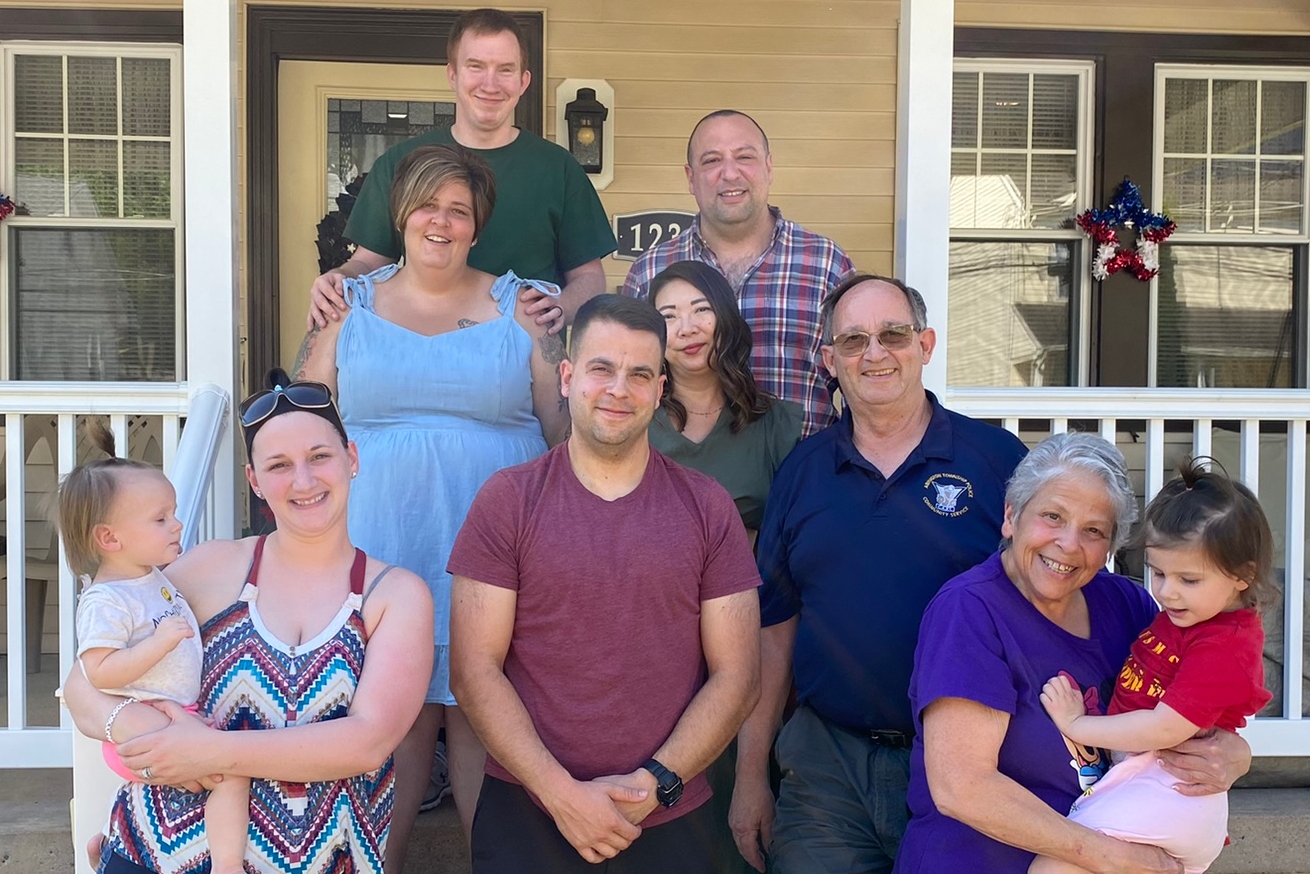
    Mrs. Corrigan (front right) enjoyed time with her family.

    Her son David said: “She taught me to be considerate and understanding of everyone I encounter, a lesson I will never forget.”

    Her son Joseph said: “She was incredibly generous with her time and resources. She could build relationships, and a theme of her life was caring for people.”

    Her husband said: “She was one of a kind.”

    In addition to her husband, children, granddaughters, and brother, Mrs. Corrigan is survived by other relatives.

    A private celebration of her life is to be held later.

    Donations in her name may be made to Hedwig House Inc., 1920 Old York Rd., Abington, Pa. 19001.

    Mrs. Corrigan’s smile could light up a room, her family said.
  • Josh Shapiro signs CROWN Act into law, prohibiting discrimination based on hair type, texture, or style

    Josh Shapiro signs CROWN Act into law, prohibiting discrimination based on hair type, texture, or style

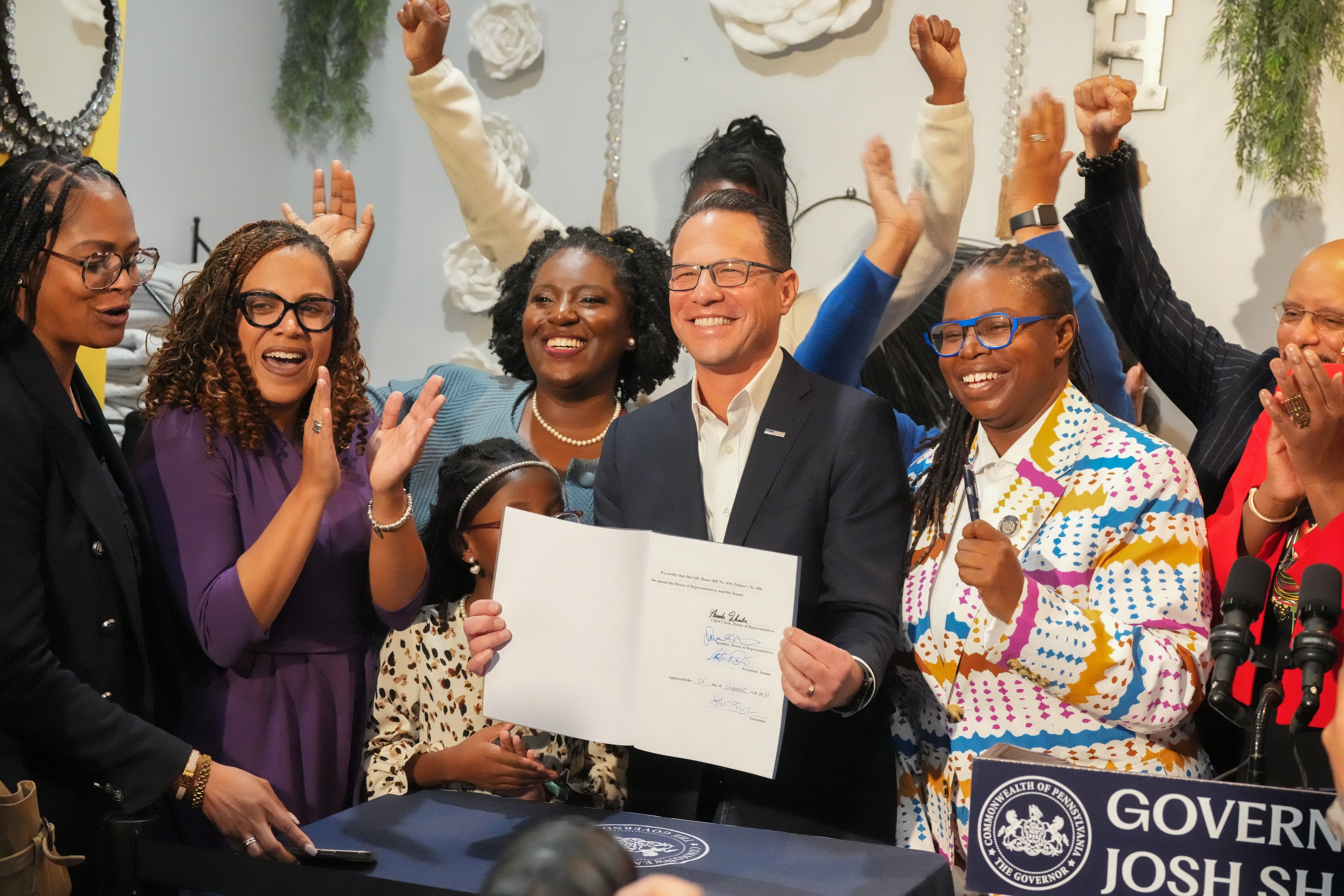
    Gov. Josh Shapiro signed the CROWN Act into law Tuesday, a landmark bill that prohibits discrimination based on a person’s hair type, texture, or style.

    The act, which stands for Create a Respectful and Open World for Natural Hair, applies to every Pennsylvanian, but is especially impactful to Black men and, particularly, women who have been discouraged from or marginalized by wearing natural or protective styles at school or in their places of work.

    At the Island Design Natural Hair Studio Tuesday, where Shapiro signed the bill into law, studio owner Lorraine Ruley said her clients have asked to change their hairstyles because of their workplace or upcoming job interviews. In one instance, Ruley said she had a client who asked to cut their locks because their workplace deemed it “unprofessional.”

    “The experience has been really heartbreaking, but I thank God for the opportunity to be here,” Ruley said. “And I just want to say natural hair rock.”

    At the West Philly salon, Shapiro was flanked by prime state sponsor of the CROWN Act, state Rep. La’Tasha D. Mayes (D., Allegheny), and prime cosponsor House Speaker Joanna McClinton (D., Phila), who were overjoyed that their years of fighting for these protections were finally paying off and supported in a bipartisan fashion. The Pennsylvania Senate passed the bill 44-3 last week after it was stuck in committee for years.

    Gov. Josh Shapiro (front center) holds up the signed CROWN Act during a news conference at Island Design Natural Hair Studio, in West Philadelphia Tuesday.

    “This is going to help people by making sure that wherever you work, or wherever you’re applying for a job, they can’t look at your hair and size you up, not based on your qualifications and all of the professional development you have and all of your education,” McClinton said. “They will not look at your hair and decide you can’t work here.”

    Shapiro said the bill is about delivering “real freedom” for Pennsylvanians to protect them against hair discrimination that may at times be subtle.

    Pennsylvania is the 28th state to pass anti-hair discrimination laws. New Jersey signed the CROWN Act into law in 2019. And both Philadelphia and Pittsburgh passed ordinances in 2020 to ban such discrimination, but this law will ensure protections for all Pennsylvanians. Incidents of discrimination can be reported to the Pennsylvania Human Relations Commission.

    For some Black women, the price of trying to conform to a prejudiced setting could come at a risk to their health. There have been some concerns in recent years that frequent use of chemical straighteners, which some women use to more permanently straighten their hair, could increase the risk of cancers of the reproductive system.

    “With an undeniable correlation between the use of chemical relaxers and the increased likelihood of developing uterine fibroids and cancer, the cost of conformity is simply too expensive,” said Adjoa B. Asamoah, a Washington, D.C.-based Temple graduate and architect of the CROWN Act, at the bill signing Tuesday.

    The CROWN Act amends the Human Relations Act to clarify the term race to include traits like hair texture and protective styles. The House bill passed in 2020 and again in 2023. It was later assigned to the Senate where it had been dormant.

    The state House passed the bill once again in March, and McClinton worked with Republican Senate president pro tempore Kim Ward to get the bill to the Senate.

    When asked about the prospects of a bill similar to the CROWN Act becoming federal law, especially under the Trump administration, which has railed against diversity, equity, and inclusion practices, Asamoah said she is hopeful that it will become the law of the land and she “will not rest” until it does. Asamoah added that the bill is crafted carefully to “withstand any judicial scrutiny.”

    Shapiro, for his part, said: “This is law. I don’t care what Donald Trump says. We make the laws here in the Commonwealth of Pennsylvania, and we will protect the Crown Act.” Those gathered clapped and interjected with affirmations.

    And it became clear at the beginning of Tuesday’s bill signing event that the salon likes it when Shapiro wades into national political discourse.

    “We talk about you being president,” Ruley said.