Category: Pennsylvania Politics

  • After big wins Tuesday, Democrats think they can oust Brian Fitzpatrick. But the Bucks Republican is resilient.

    After big wins Tuesday, Democrats think they can oust Brian Fitzpatrick. But the Bucks Republican is resilient.

    Should last week’s election results make Brian Fitzpatrick nervous?

    Bucks County Democrats think so.

    The Republican lawmaker has been like Teflon in the 1st Congressional District, which includes all of Bucks County and a sliver of Montgomery County. He persistently outperforms the rest of his party and has survived blue wave after blue wave. First elected in 2016, he has remained the last Republican representing the Philadelphia suburbs in the U.S. House.

    But Democrats pulled something off this year that they hadn’t done in recent memory. They won each countywide office by around 10 percentage points — the largest win margin in a decade — and for the first time installed a Democrat, Joe Khan, as the county’s next top prosecutor.

    Now they are looking to next year, hopeful that County Commissioner Bob Harvie, the likely Democratic nominee, succeeds where Fitzpatrick’s past challengers have failed.

    “This year was unprecedented, and sitting here a year before the midterm, you have to believe that next year is going to be unprecedented as well,” State Sen. Steve Santarsiero, who is also the county party’s chair, said Wednesday.

    Eli Cousin, a spokesperson for the Democratic Congressional Campaign Committee, predicted a “perfect storm brewing for Democrats” to beat Fitzpatrick. “He and Trump’s Republican Party are deeply underwater with Bucks County voters; he has failed to do anything to address rising costs, and we will have a political juggernaut in Gov. Josh Shapiro at the top of the ticket,” Cousin said.

    There are several reasons Democrats may be exhibiting some premature confidence: Despite a spike in turnout for an off-year election, far fewer voters turn out in such elections than do in midterms. Fitzpatrick is extremely well-known in Bucks, where his late brother served before he was elected to the seat. He has won each of his last three elections by double digits.

    Just last year, President Donald Trump narrowly won Bucks County, becoming the first Republican presidential candidate to do so since the 1980s, and Republicans overtook Democrats in voter registrations last year.

    But Tuesday was a sizable pendulum swing in the bellwether. Some of the communities, like Bensalem, that drove Trump’s victory flipped back to blue.

    The last time Democrats had won a sheriff’s race in the county was 2017, a year after Trump was elected the first time. That year, Democrats won by smaller margins, and a Republican incumbent easily won reelection as district attorney. The following year, Fitzpatrick came the closest he has yet to losing a race, but still won his seat by 3 percentage points.

    This year’s landslide, Democrats say, is a warning sign.

    “There were Democratic surges in every place that there’s a competitive congressional seat, and that should be scaring the s— out of national Republicans,” said Democratic strategist Brendan McPhilips, who managed Democratic Sen. John Fetterman’s campaign in the state and worked on both of the last Democratic presidential campaigns here.

    “The Bucks County seat has always been the toughest, but it’s certainly on the table, and there’s a lot there for Bob Harvie to harness and take advantage of.”
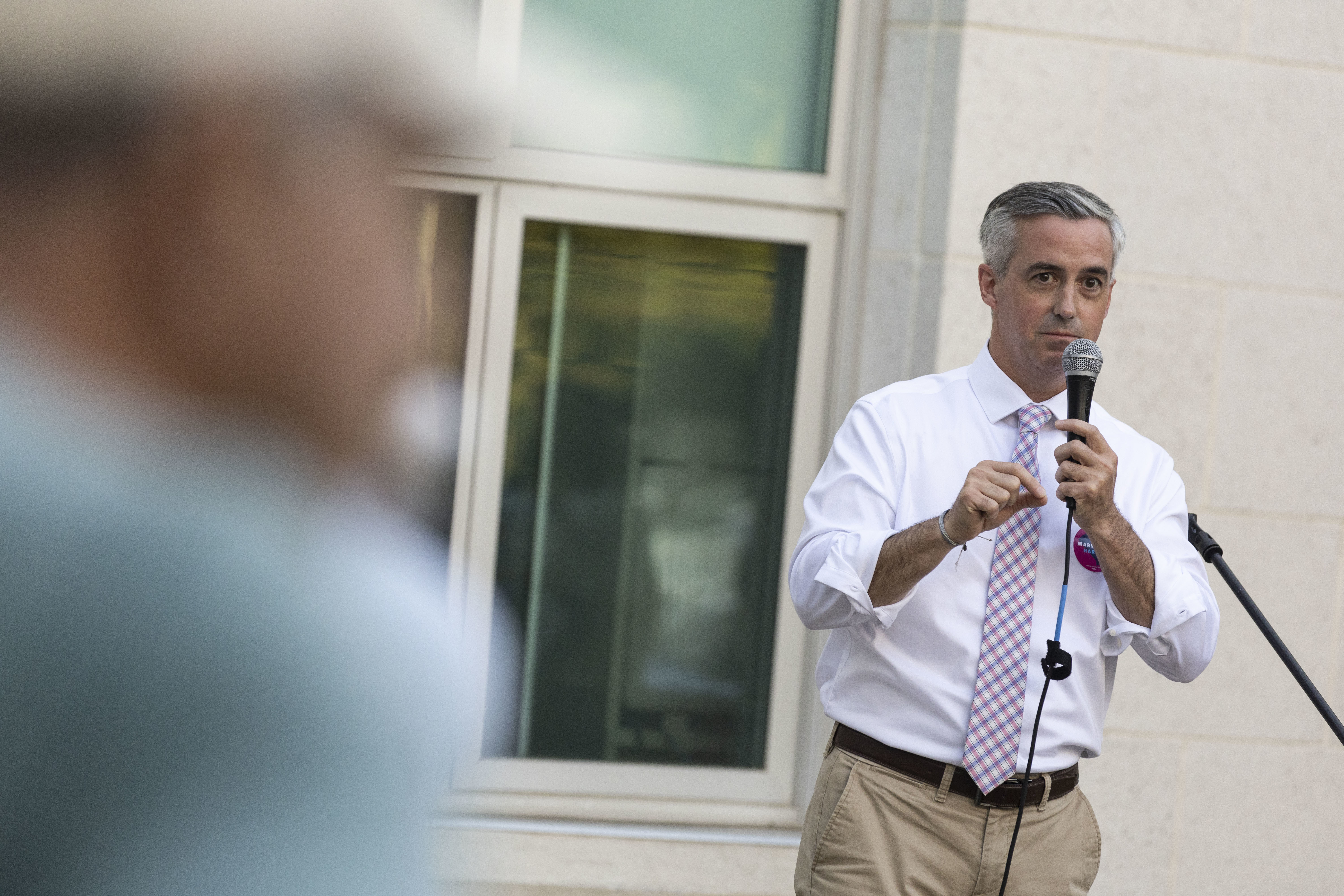
    Bucks County Democratic Commissioner Bob Harvie speaks during an Oct. 5 rally outside the Middletown Township Police Department and Administrative Offices in Langhorne.

    Harvie, a high school teacher-turned-politician, leapt on the results of the election hours after races were called, putting out a statement saying, “There is undeniable hunger for change in Bucks County.”

    “The mood of the country certainly is different,” Harvie said in an interview with The Inquirer on Thursday. “What you’re seeing is definitely a referendum.”

    Lack of GOP concern

    But Republicans don’t appear worried.

    Jim Worthington, a Trump megadonor who is deeply involved in Bucks County politics, attributes GOP losses this year to a failure in mail and in-person turnout. Fitzpatrick, he said, has a track record of running robust mail voting campaigns and separating himself from the county party apparatus.

    “He’s not vulnerable,” Worthington said. “No matter who they run against him, they’re going to have their hands full.”

    Heather Roberts, a spokesperson for Fitzpatrick’s campaign, noted that the lawmaker won his last election by 13 points with strong support from independent voters in 2024 — a year after Democrats performed well in the county in another off-year election. She dismissed the notion that Harvie would present a serious challenge, contending the commissioner “has no money and no message” for his campaign.

    Fitzpatrick is also a prolific fundraiser. He brought in $886,049 last quarter, a large amount even for an incumbent, leading Harvie, who raised $217,745.

    “Bob Harvie’s not going to win this race,” said Chris Pack, spokesperson for the Defending America PAC, which is supporting Fitzpatrick. “He has no money. He’s had two dismal fundraising quarters in a row. That’s problematic.”

    Pack noted Harvie’s own internal poll, reviewed by The Inquirer, showed 57% of voters were unsure how they felt about him.

    “An off-off-year election is not the same as a midterm election,” Pack said, adding he thinks Fitzpatrick’s ranking as the most bipartisan member of Congress will continue to serve him well in Bucks County.

    “He’s obviously had well-documented breaks on policy with the Republican caucus in D.C., so for Bob Harvie to try to say Brian Fitzpatrick is super far right, no one’s gonna buy it,” Pack said. “They haven’t bought it every single election.”

    On fundraising, Harvie said he had brought in big fundraising hauls for both of his commissioner races, and said he would have the money he needed to compete.

    Of the four GOP-held House districts Democrats are targeting next year in the state, Fitzpatrick’s seat is by far the safest. That raises the question: How much money and attention are Democrats willing to invest in Pennsylvania?

    “Who’s the most vulnerable?” asked Chris Nicholas, a GOP consultant who grew up in Bucks County. The other three — U.S. Rep. Scott Perry and freshman U.S. Reps. Rob Bresnahan, in the Northeast, and Ryan Mackenzie, in the Lehigh Valley — won by extremely narrow margins last year. “If you’re ranking the four races, you have Rob Bresnahan at the top and Fitzpatrick at the bottom,” Nicholas said.

    National Democrats seldom invest as much to try to beat Fitzpatrick as they say they will, Nicholas said. And he pointed to 2018, a huge year for Democrats, when they had a candidate in Scott Wallace who was very well-funded, albeit far less known than Harvie, and still came up short.

    Democrats see Harvie as the best shot they have had — a twice-elected commissioner, with name ID from Lower Bucks County, home to many of the district’s swing voters. And the 1st District is one of just three in the country that is held by a Republican member of Congress where Vice President Kamala Harris won last year.

    And then there’s Shapiro, who Democrats think will give a boost to candidates like Harvie as he runs for reelection next year. Shapiro won the district by 20 points in 2022.

    Following the playbook used by successful candidates this year, Democrats are likely to argue to voters that Fitzpatrick has done little to push back on Trump — while placing cost-of-living concerns at the feet of the Republican Party.

    “A lot of people are, you know, upset with where we are as a nation,” Harvie said. “They grew up expecting that if you worked hard and played by the rules, you’d be able to have all the things you needed and have a good life. And that’s not happening for them.”

    The Trump effect

    Democrats won races in Bucks County, and across the country, this year by tying their opponents to Trump — a tactic that was especially effective in ousting Republican Sheriff Fred Harran, who partnered his office with U.S. Immigration and Customs Enforcement. In recent cycles, that strategy has not worked against Fitzpatrick.

    “The big thing Democrats throw against Republicans is you’re part and parcel of Trump and MAGA, and Fitzpatrick voted against Trump,” Nicholas said.

    Over nearly 10 years in Congress, Fitzpatrick has been a rare Republican who pushes back on Trump, though often subtly. Fitzpatrick, who cochairs the bipartisan Problem Solvers Caucus, was the lone Pennsylvania Republican to confirm former President Joe Biden’s electoral victory in 2020. A former FBI agent who spent a stint stationed in Ukraine, he is among the strongest voices of support for Ukraine in Congress, consistently pushing the administration to do more to aid the country as it resists a yearslong Russian invasion.

    Fitzpatrick was also one of just two House Republicans to vote against Trump’s signature domestic policy package, which passed in July. He voted for an earlier version that passed the House by just one vote, which Democrats often bring up to claim Fitzpatrick defies his party only when it has no detrimental impact.

    “He’s good at principled stances that ultimately do nothing,” said Tim Persico, an adviser with the Harvie campaign. “That is what has allowed him to defy gravity in the previous cycles. … Now the economy is doing badly. … People feel worse about everything, and Fitzpatrick isn’t doing anything to help with that. I think it makes it harder to defy gravity.”

    Trump has endorsed every Republican running for reelection in Pennsylvania next year except Fitzpatrick. While the Bucks County lawmaker has avoided direct criticism of the president, in an appearance in Pittsburgh over the summer, Trump characterized the “no” vote on the domestic bill as a betrayal.

    Fitzpatrick has faced more conservative primary challengers in the past, but no names have surfaced so far this cycle, a sign that even the more MAGA-aligned may see him as their best chance to hold onto the purple district.

    Keeping his distance from Trump, and limiting Democrats’ opportunities to tie the two together, may remain Fitzpatrick’s best path forward.

    “Anybody who wants to align themselves with an agenda of chaos and corruption and cruelty ought to be worried,” said Khan, Bucks County’s new district attorney-elect.

    This suburban content is produced with support from the Leslie Miller and Richard Worley Foundation and The Lenfest Institute for Journalism. Editorial content is created independently of the project donors. Gifts to support The Inquirer’s high-impact journalism can be made at inquirer.com/donate. A list of Lenfest Institute donors can be found at lenfestinstitute.org/supporters.
  • Democrats sweep Delaware County Council election centered on rising property taxes

    Democrats sweep Delaware County Council election centered on rising property taxes

    Democrats swept Delaware County Council elections for the fifth consecutive election, further solidifying their dominance in the former Republican stronghold in the suburbs.

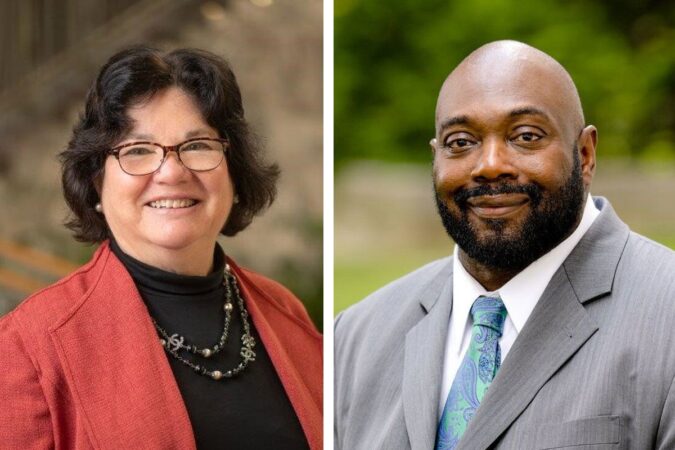
    Council member Richard Womack won a second term Tuesday, while his running mate, County Controller Joanne Phillips, was elected to her first term on the council. The Democrats overcame a Republican campaign focused on rising taxes under the council’s current leadership.

    In statements early Wednesday morning, the Democrats thanked their supporters.

    “I will continue to work hard and fight for the residents in our County. I look forward to working together with all parties to make Delaware County one of the strongest counties in the Commonwealth,” Womack said in a statement.

    With all but one precinct reporting Wednesday, Republican challengers Brian Burke and Liz Piazza each trailed Womack and Phillips by roughly 50,000 votes.

    In a statement Wednesday, Frank Agovino, the chair of the Delaware County GOP, said it appeared local issues were a “secondary concern” for Democrats this year.

    “The State wide retention initiative was uncharted waters and it feels as though Dem turnout was positively impacted. Additionally, the Unrealistic disdain for the President from the majority of Democrats was also an undeniable factor,” Agovino wrote.

    Democrats have held all five seats on the Delaware County Council since 2020, when the party took control of the county for the first time since the Civil War. Democrats flipped the county as part of a national trend of suburbs shifting left, which was accelerated during President Donald Trump’s first term in office. With Tuesday’s results, they will keep their supermajority for the next two years.

    In the years since Democrats took control in Delaware County, they say they have worked to enhance county services and repair infrastructure. That has included establishing a health department — Delaware County was the largest county in Pennsylvania without one at the onset of the COVID-19 pandemic — and de-privatizing the county prison following a series of scandals.

    Last year, the county increased property taxes 23%, citing the loss of federal pandemic relief dollars and inflation driving up salaries. Republicans made that increase the base of their campaign, telling voters that the Democrats were overspending and that more tax increases were on the way.

    Republicans wanted voters to give the GOP a voice on the board, even though the party wouldn’t have the majority, to push back on budgetary decisions and hold the Democrats accountable.

    But in the heavily Democratic county, that message was not enough to sway the independent and Democratic voters Republicans needed to win seats. Instead, voters demonstrated continued trust in the current county leadership.

    “I truly respect Richard and Joanne as members of Council and hope they will listen to the voices of our residents and help bring to light some of their concerns,” Piazza said in a statement Wednesday.

    On Election Day, Donald and Esther Newton, a Chester couple who have been married for more than 55 years, said they believed it was about time their city received more care and investment through property taxes.

    “Our infrastructure needs to be fixed, and that takes money,” Esther Newton said.

    Democrats swept all countywide races Tuesday. District Attorney Jack Stollsteimer, who was among the first Democrats to win countywide office in Delaware County, won a seat on Delaware County Court. He will have to step down from his current role to take the seat.

    Staff writer Nate File contributed to this article.

    This suburban content is produced with support from the Leslie Miller and Richard Worley Foundation and The Lenfest Institute for Journalism. Editorial content is created independently of the project donors. Gifts to support The Inquirer’s high-impact journalism can be made at inquirer.com/donate. A list of Lenfest Institute donors can be found at lenfestinstitute.org/supporters.
  • Bucks Sheriff-elect Danny Ceisler says he’ll act quickly to end controversial ICE alliance

    Bucks Sheriff-elect Danny Ceisler says he’ll act quickly to end controversial ICE alliance

    Bucks County voters on Tuesday did what protest and legal action could not, halting a controversial sheriff’s office alliance with ICE by electing a Democrat who has pledged to end the partnership.

    Sheriff-elect Danny Ceisler said Wednesday that he will issue a moratorium barring deputies’ cooperation with ICE on his first day in office. From there, he said, he will figure out how to disentangle the sheriff’s office from the agreement signed by his predecessor.

    Ceisler beat incumbent Republican Fred Harran by more than 10% of the vote in unofficial returns.

    Ceisler and a cadre of immigration activists ― who saw an ACLU-led lawsuit falter ― had portrayed the election as the last chance to kill the affiliation, after a Bucks judge ruled last month that it had been legally implemented and could proceed.

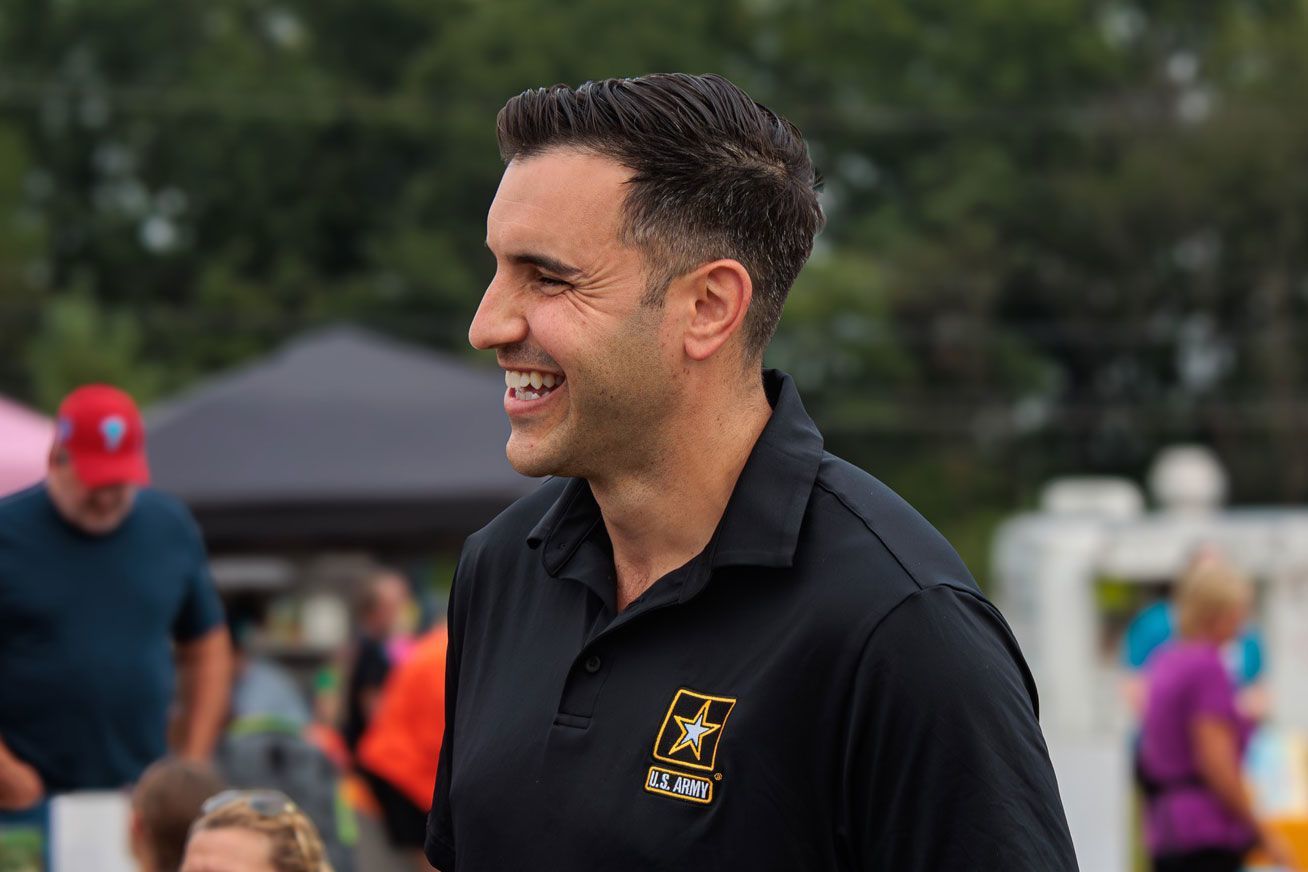
    Ceisler, an Army veteran who held a public-safety leadership post in Gov. Josh Shapiro’s administration, pledged during his campaign to “end this deportation partnership once and for all” if elected.

    Army veteran Danny Ceisler won the hotly contested Bucks County sheriff race Tuesday night.

    Harran, who led the Bensalem Police Department before being elected sheriff four years ago, said Wednesday that Ceisler will “have to answer for a person who becomes victimized by an individual that should have been deported. And he’ll have to sleep with that, and it’ll be on his head, not mine.“

    His said his plans around the program had been misrepresented.

    “Everyone knows my intentions. It was never making car stops on people who were dark-colored. My career speaks for itself in terms of my partnerships with the community.”

    He had staunchly defended his decision to assist ICE, insisting it would make residents safer and even potentially bring new funding and police equipment to the county.

    Ceisler called immigration the single biggest issue in this election.

    “My goal was to provide an alternative which was a no-nonsense, reasonable approach to public safety,” Ceisler said Wednesday, noting that it was now “my responsibility to deliver on that.”

    Officials with U.S. Immigration and Customs Enforcement declined to comment.

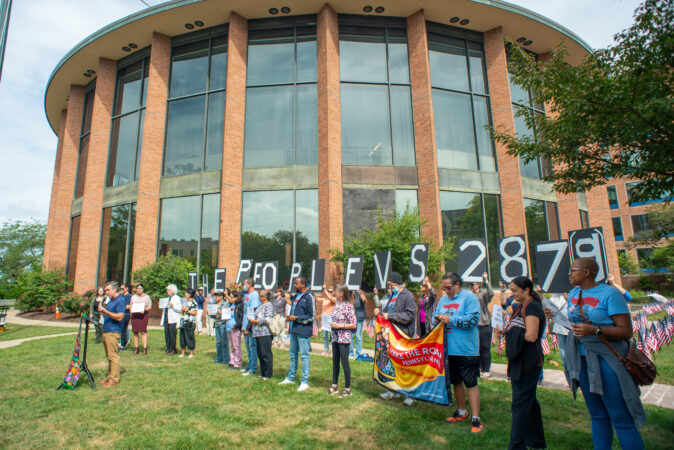
    The partnership, which recently became active after months of planning, provoked backlash, including the lawsuit, public demonstrations outside the courthouse, and a repudiation by the Democratic-led Bucks County Board of Commissioners.

    Nationally, only a few police agencies that signed on with ICE have dropped out of those agreements.

    Ceisler’s victory was part of a Democratic sweep of county positions in a critical swing county that narrowly voted to elect President Donald Trump last year.

    “I am walking on air,” said Laura Rose, a leader of Bucks County Indivisible, which supports immigrants and progressive causes. “Bucks County voters soundly rejected Sheriff Harran and his plan to turn county deputies into de facto ICE agents.”

    In the spring, Harran and ICE officials signed what is called a 287(g) agreement, named for a section of a 1996 immigration law. It enables local police to undergo ICE training, then assist the agency in identifying, arresting, and deporting immigrants.

    “Ceisler’s victory proves what we’ve always known ― 287(g) agreements don’t make us safer, they divide our community,” said Diana Robinson, co-executive director of Make the Road Pennsylvania, a plaintiff in the lawsuit.

    The agreement with ICE “put Bucks County at risk,” and the election showed that “voters reject fear-based policies,” she said Wednesday.

    Robinson and other opponents insist that turning local officers into immigration agents breaks community trust with the police and puts municipal taxpayers at risk of paying big legal settlements. ICE officials, however, say the program helps protect American communities, a force-multiplier that adds important staff strength to an agency workforce that numbers about 20,000 nationwide.

    The number of participating police agencies has soared under Trump, with ICE having signed 1,135 agreements in 40 states as of Wednesday. Seven states, including New Jersey and Delaware, bar the agreements by law or policy.

    The number of new agreements increases almost every day, and Trump has pushed hard for greater local involvement. On his first day in office he directed the Department of Homeland Security to authorize local police to “perform the functions of immigration officers” to “the maximum extent permitted by law.”

    Shortly before the government shutdown, ICE was poised to begin backing its recruitment efforts with money, announcing that it would reimburse cooperating police agencies for costs that previously had been borne by local departments and taxpayers.

    But activists focused on the difference between what Harran said he intended to do and the much broader powers conferred within the agreement with ICE.

    Harran signed up for the “Task Force Model,” the most far-reaching of the three types of 287(g) agreements. It allows local police to challenge people on the streets about their immigration status and arrest them for violations.

    Harran said his deputies would not do that. Instead, he said, they would electronically check the immigration status of people who have contact with the sheriff’s office because of alleged criminal offenses. Those found to be in the country illegally would be turned over or transported to ICE, if the federal agency desires, he said.

    This suburban content is produced with support from the Leslie Miller and Richard Worley Foundation and The Lenfest Institute for Journalism. Editorial content is created independently of the project donors. Gifts to support The Inquirer’s high-impact journalism can be made at inquirer.com/donate. A list of Lenfest Institute donors can be found at lenfestinstitute.org/supporters.
  • Downingtown elects Erica Deuso, Pennsylvania’s first openly transgender mayor

    Downingtown elects Erica Deuso, Pennsylvania’s first openly transgender mayor

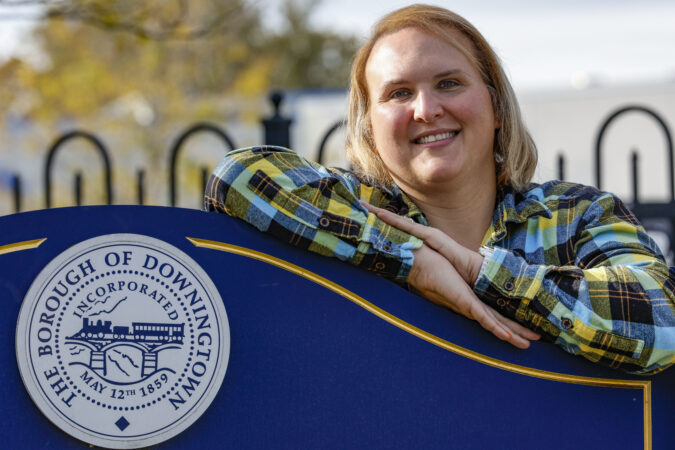
    Erica Deuso will be Pennsylvanias first openly transgender mayor. She won Tuesday’s contest to lead Downingtown after a campaign focused on bread-and-butter local issues in the face of attacks to her identity.

    The longtime Democratic advocate who works in management at a pharmaceutical company earned 64% of the vote as of Wednesday morning defeating Republican Rich Bryant who had 35% of the vote to serve as the next mayor of Downingtown, a Chester County borough of roughly 8,000 people.

    “Voters chose hope, decency, and a community where every neighbor matters,” Deuso said in a statement at 1:30 a.m. Wednesday. “I am honored to be elected as Pennsylvania’s first openly transgender mayor. I carry that responsibility with care and with purpose.”

    Deuso joins a small but growing rank of transgender officials in Pennsylvania and nationwide. There are 52 out transgender elected officials across the United States and three in Pennsylvania, all who govern at the local level , according to the Victory Institute, the research arm of the Victory Fund, which supports LGBTQ+ candidates and backed Deuso.

    While her gender identity attracted attention, and online vitriol, Deuso’s campaign didn’t dwell on it. Instead she prioritized public safety, sustainable growth and community in the historic borough now home to Victory Brewing.

    She ran with the support of the borough’s last two mayors, Democrats Phil Dague and County Commissioner Josh Maxwell.

    Bryant, a retired cybersecurity expert, argued he was better experienced for the job, which primarily leads the borough police department. But Bryant faced accusations of bigotry as Deuso posted screenshots online of her opponent making misogynistic and transphobic remarks on X, (Bryant said 90% of the posts were AI-generated, but offered no proof.)

    In a statement, Bryant congratulated Deuso and pledged to continue working to serve the community.

    “To those who voted differently, I respect your decision and share your hope for a stronger, safer, and more united Downingtown. I will continue to serve, to listen, and to advocate for responsible growth, fiscal transparency, and accountable local leadership,” he said.

    This suburban content is produced with support from the Leslie Miller and Richard Worley Foundation and The Lenfest Institute for Journalism. Editorial content is created independently of the project donors. Gifts to support The Inquirer’s high-impact journalism can be made at inquirer.com/donate. A list of Lenfest Institute donors can be found at lenfestinstitute.org/supporters.
  • Democrats sweep Bucks County law enforcement races, ousting a sheriff who sought controversial ICE partnership

    Democrats sweep Bucks County law enforcement races, ousting a sheriff who sought controversial ICE partnership

    Democrats swept two law enforcement races in Bucks County, ousting the incumbents and signaling the swing county has soured on President Donald Trump just a year after voting for him.

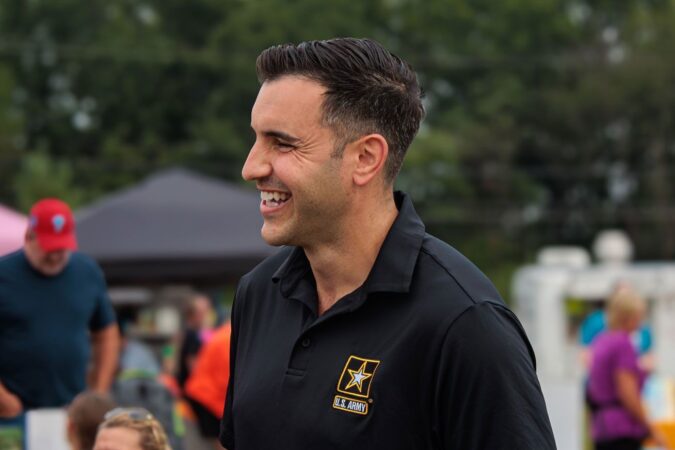
    Democrat Danny Ceisler, an Army veteran who held a public safety role in Gov. Josh Shapiro’s administration, led Republican Sheriff Fred Harran by 12 percentage points with all precincts reporting Wednesday morning. The sheriff race centered on Harran’s controversial decision to partner his agency with ICE as Trump ramps up immigration enforcement nationwide.

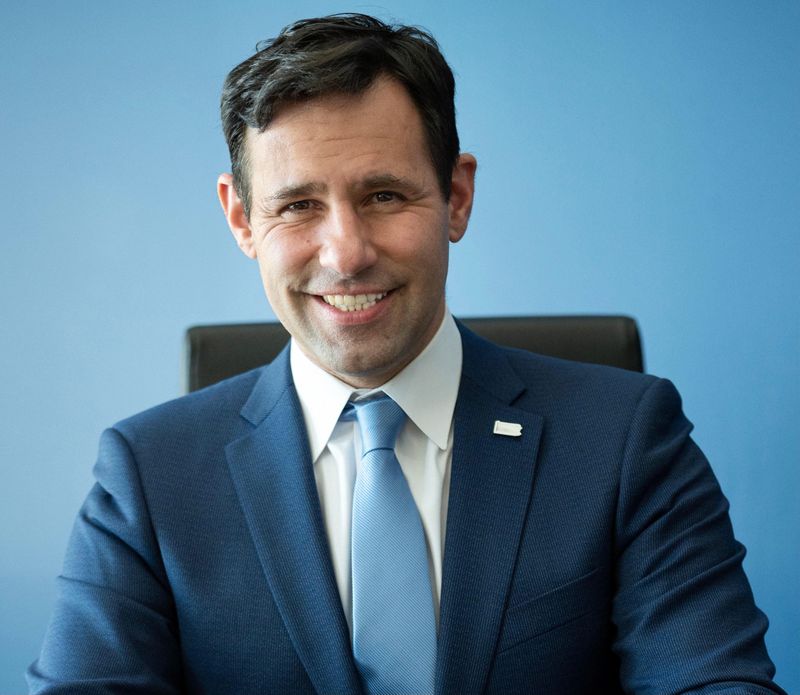
    And former Bucks County Solicitor Joe Khan led Republican District Attorney Jen Schorn by eight percentage points. Democrats believe Khan is the first member of their party to ever be elected to the office.

    Bucks County Democrats declared victory just after midnight Wednesday morning — sweeping every countywide race. The victories came in what appeared to be a blue wave election as voters rejected Republican candidates in Pennsylvania, New Jersey, and Virginia.

    “What’s going on with our federal government is not normal, and voters saw that creeping into local offices, and they overwhelmingly rejected it,” Ceisler said Wednesday. “Bucks County doesn’t let extremism come inside.”

    The hotly contested Bucks County races centered on some of the most contentious issues in national politics — Trump, crime, and immigration. Democrats sought to paint the incumbents as Trumpian ideologues, while Republicans warned voters of an influx of “Philly crime” if Democrats took office, even as the violent crime rate in the city has dropped from its pandemic peak.

    Voters opted for a change, delivering both offices to Democrats and, as result, spelling the end to a controversial partnership between the sheriff’s office and U.S. Immigration and Customs Enforcement.

    Bucks was the only county in the Philadelphia area to go for Trump last year and will be a key battleground in 2026 when Shapiro runs for reelection. Tuesday’s wins will give Democrats momentum going into the midterms.

    Democrats, Khan said, had to work to prove to voters they could be trusted with public safety. They were aided by a favorable dynamic as voters rejected Trumpism.

    “It was a campaign not about attacking somebody else but, really, making really clear that we deserve better than what we’ve got,” Khan said.

    Voters at the polls persistently expressed frustration with Trump, and a sense that anyone from his party should not be trusted in office.

    “They’re subject to his control, regardless of how they feel on issues,” said Stephanie Kraft of Doylestown. “And that affects everything, from our local courts on up to the higher courts in the state.”

    Harran attributed the GOP losses to Democratic enthusiasm for retaining three left-leaning state Supreme Court justices.

    “We woke a sleeping giant. When I say ‘we,’ I don’t mean me; I mean the Republican Party at the state level,” Harran said Wednesday.

    “I also worry for Bucks County,” he added. “We’re going to have Philadelphia policies and politics in Bucks County, and that’s extremely dangerous.”

    Democrats control the Bucks County Board of Commissioners, but Trump narrowly won Bucks last year, marking the first time the purple county had gone for a Republican in the presidential race since the 1980s. There are more registered Republicans than Democrats in Bucks County, but Democrats hoped the president’s low approval ratings, and Harran’s decision to partner with ICE, would drive angry voters to the polls in high numbers.

    Joe Khan

    The effort succeeded, indicating that Bucks voters are already disenchanted with the president they voted for just a year ago. The vote may set off alarm bells among Republicans as they prepare for next year’s election, when Republican Treasurer Stacy Garrity seeks to oust Shapiro and Republican U.S. Rep. Brian Fitzpatrick stands for reelection.

    The Democratic victory is “on everything that Trump is doing to undermine the institutions of democracy, but it’s also on Trump’s failure to really reverse inflation,” said State Sen. Steve Santarsiero, the chair of the Bucks County Democratic Party.

    Even so, for several voters, Harran’s partnership with ICE was the final straw.

    Jill Johnson worried it would result in the targeting of Latino citizens, including her half-Mexican son, who is away at college.

    “My biggest fear is that someone in a mask is going to come up and grab him because they think he’s here illegally,” Johnson said. “It’s scary. These are law-abiding people who have done nothing wrong.”

    The partnership, which recently became active after months of planning, provoked backlash, including a lawsuit, public demonstrations outside the courthouse, and a repudiation by the Democratic-led board of commissioners.

    Ceisler said Wednesday that he will issue a moratorium barring deputies’ cooperation with ICE on his first day in office. From there, he said, he will figure out how to disentangle the sheriff’s office from the agreement signed by his predecessor.

    For his part, Harran said Wednesday that Ceisler will “have to answer for a person who becomes victimized by an individual that should have been deported. And he’ll have to sleep with that, and it’ll be on his head, not mine.”

    Officials with U.S. Immigration and Customs Enforcement declined to comment.

    Harran, an outspoken Republican who endorsed Trump last year and frequently clashes with the Democratic commissioners, was elected sheriff in 2021 after more than a decade leading Bensalem’s police department.

    The Republican has expanded the role of the sheriff’s department, adding a K-9 unit and partnering with immigration officials, but faced criticism that he was failing to complete the basic duties of his job, such as executing warrants and protecting the courthouse.

    Ceisler advocated taking politics out of the office, saying he would focus on domestic violence and pledging to end the partnership with ICE. He argued his experience in the Army and in a public safety leadership post under Shapiro prepared him to serve as sheriff — though Harran argued Ceisler would be unprepared for the job, having never worked in a sheriff’s office or police department.

    “Being the sheriff isn’t on-the-job training,” Harran said at a Bristol polling place Tuesday. “You need knowledge and experience.”

    Ceisler said he had spoken to Harran after the results came in and the incumbent promised to assist with a smooth transition.

    Schorn, a veteran Bucks County prosecutor, lost in her bid for a full term after being appointed district attorney last year when her predecessor became a judge.

    She had been an assistant district attorney in the county since 1999, prosecuting some of the county’s most high-profile cases. When she became district attorney, Schorn started a task force in the county to investigate internet crimes against children.

    Khan, a former county solicitor and federal prosecutor, argued Schorn ran the office under “Trump’s blueprint” and criticized her decisions not to recuse herself when a Republican committeeperson was charged with voter fraud and not to prosecute alleged child abuse at Jamison Elementary School.

    Schorn has said she was unable to discuss the details of the Jamison Elementary School case due to rules governing prosecutors, but Khan argued her explanations were insufficient as parents sought answers.

    Meanwhile, Schorn accused her opponent, who had unsuccessfully run for Philadelphia district attorney and Pennsylvania attorney general, of playing politics when he understood the rules prosecutors were bound by.

    Schorn performed slightly better than her GOP counterparts in Bucks County on Tuesday. But, while many voters said they had no issue with Schorn’s policies, her political party was a turnoff.

    “I just feel the Democrats would be better right now; I’m down on all Republicans,” said Marybeth Vinkler, a Doylestown voter who said she had no problems with how Schorn had run the district attorney’s office. “Everything happening in D.C. is trickling down around us.”

    Schorn did not immediately comment on the results Wednesday.

    Jim Worthington, who has run pro-Trump organizations in Bucks County, said Republicans failed to turn out voters on Election Day even as data showed Democrats held a significant lead on mail voting ahead of Tuesday.

    “This is where the GOP was asleep at the wheel,” Worthington said.

    Traditionally, voters trust Republicans more with law and order. The resounding victories for Democrats defied that trend.

    “We now have an obligation to deliver and to show that Democrats can lead on the issue of safety,” Ceisler said.

    “The ball is in our hands, and we’re ready to run with it.”

    Staff writer Jeff Gammage contributed to this article.

    This suburban content is produced with support from the Leslie Miller and Richard Worley Foundation and The Lenfest Institute for Journalism. Editorial content is created independently of the project donors. Gifts to support The Inquirer’s high-impact journalism can be made at inquirer.com/donate. A list of Lenfest Institute donors can be found at lenfestinstitute.org/supporters.
  • Why there’s less controversy — and less money — in this year’s school board races in Central Bucks and elsewhere

    Why there’s less controversy — and less money — in this year’s school board races in Central Bucks and elsewhere

    Personal attacks, political division, and culture wars have defined school board races in the Philadelphia suburbs in recent years.

    But 2025 feels different.

    Even as national politics are more divided than ever — and amid a federal shutdown and state budget standoff — local school board candidates from both parties are shying away from partisanship in favor of focusing on local issues like taxes and full-day kindergarten.

    The change in posture can be attributed to several factors — Republicans who ran on culture-war issues largely lost in 2023 and, while the GOP is now tackling those priorities from the federal level, local candidates said they cannot control what President Donald Trump does. Schools are also facing pressing fiscal issues amid state and federal budget cuts.

    There are some exceptions. In Souderton, candidates on the Republican slate say they want to maintain the district’s current policies that prevent transgender girls from playing sports and prioritize “parental rights” — stances Trump has also embraced. Some Democratic candidates, meanwhile, say Trump’s education policies, including plans to dismantle the federal Department of Education, motivated them to run.

    Still, those issues are not taking center stage across the Philadelphia collar counties.

    “School districts are struggling financially,” said Brittany Crampsie, a Democratic consultant. Parents “don’t want to have a debate about DEI [diversity, equity, and inclusion] anymore, they want to make sure their kids are getting a good education.”

    Moving on from ‘culture wars’ — for the most part

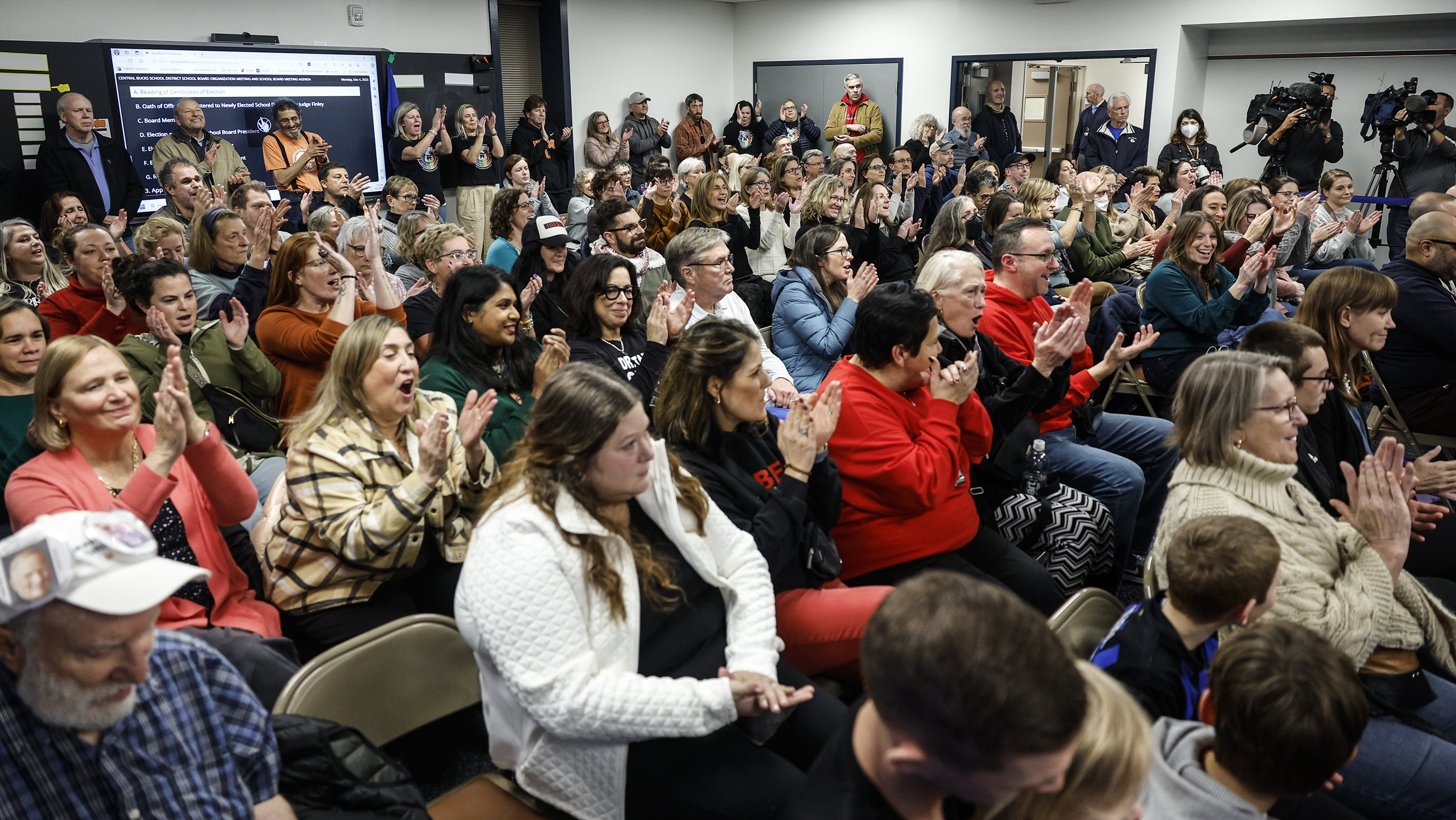
    Supporters cheer in 2023 before five new Central Bucks school members are sworn in. Democrats seized control of the board in a contentious race.

    Culture-war debates reached a fever pitch in the aftermath of COVID-19, as conservative parents voiced frustration over pandemic protocols and classroom curricula. Republicans in districts like Central Bucks won contentious races focused on those issues in 2021.

    Two years ago Central Bucks was again among the most closely watched races in the region, with spending surpassing $600,000. Democrats swept every open seat, ousting a conservative majority that had banned books and Pride flags in the district. Other suburban districts flipped to Democratic control as well.

    Now, candidates are steering clear of those hot-button topics.

    “My campaign is focused on academics, school taxes, and safety….these are the current issues of concern in Central Bucks,” Betty Santoro, a Republican, wrote in an email.

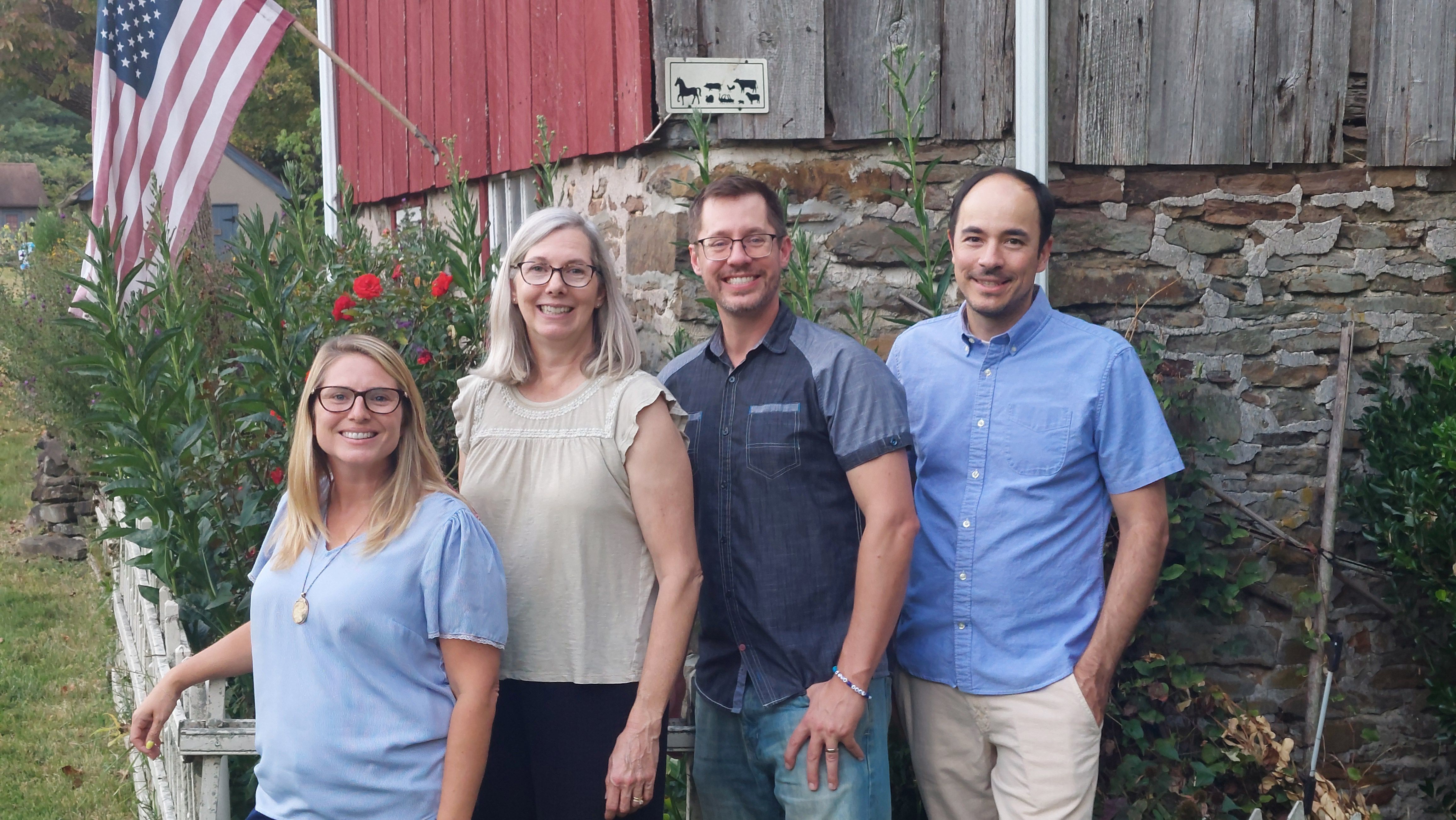
    The Democratic candidates for Central Bucks school board: Amanda O’Connor, Katrina Filiatrault, David Comalli, and Daniel Kimicata (left to right).

    Culture wars were a “distraction” from priorities for the district, said Daniel Kimicata, a Democrat running for reelection. Four of nine seats are on the ballot this year; Democrats will maintain their majority regardless of the outcome.

    Andrew Miller, a Republican running in Central Bucks, wrote in an email it’s good that things are quieter. “People are tired of the shouting and want results,” he wrote. “They want candidates who listen, not lecture and candidates who build bridges, not walls.”

    In Souderton — where Democrats say they are optimistic about their chances of gaining representation on the all-Republican board — the Republican platform also includes parental rights and student safety.

    Republican board president Stephen Nelson, who is running for reelection, said that culture-war topics are not an issue in the district, but that it would not allow transgender athletes to compete on girls sports teams should the situation arise. (The Pennsylvania Interscholastic Athletic Association this year changed its transgender athlete policy to comply with President Donald Trump’s executive order on “Keeping Men Out of Women’s Sports.”)

    “Why is that a question? It’s always been that way and we don’t quite understand why it has to be any different,” Nelson said.

    In Pennridge, where the board is Democratic-controlled, Republican candidates, in a statement, pushed back on the idea that school board races in the past centered on issues promoted by Republicans. Instead, they argued, GOP candidates were responding to Democratic-initiated policies and questioning some DEI policies and whether they were best for students.

    “Our intent was never to divide but to ensure that schools serve all students equally and that classroom priorities remain rooted in education, not ideology,” they said.

    Money, money, money

    This year, there is far less money flowing into school board races, though Central Bucks continues to attract outside fundraising.

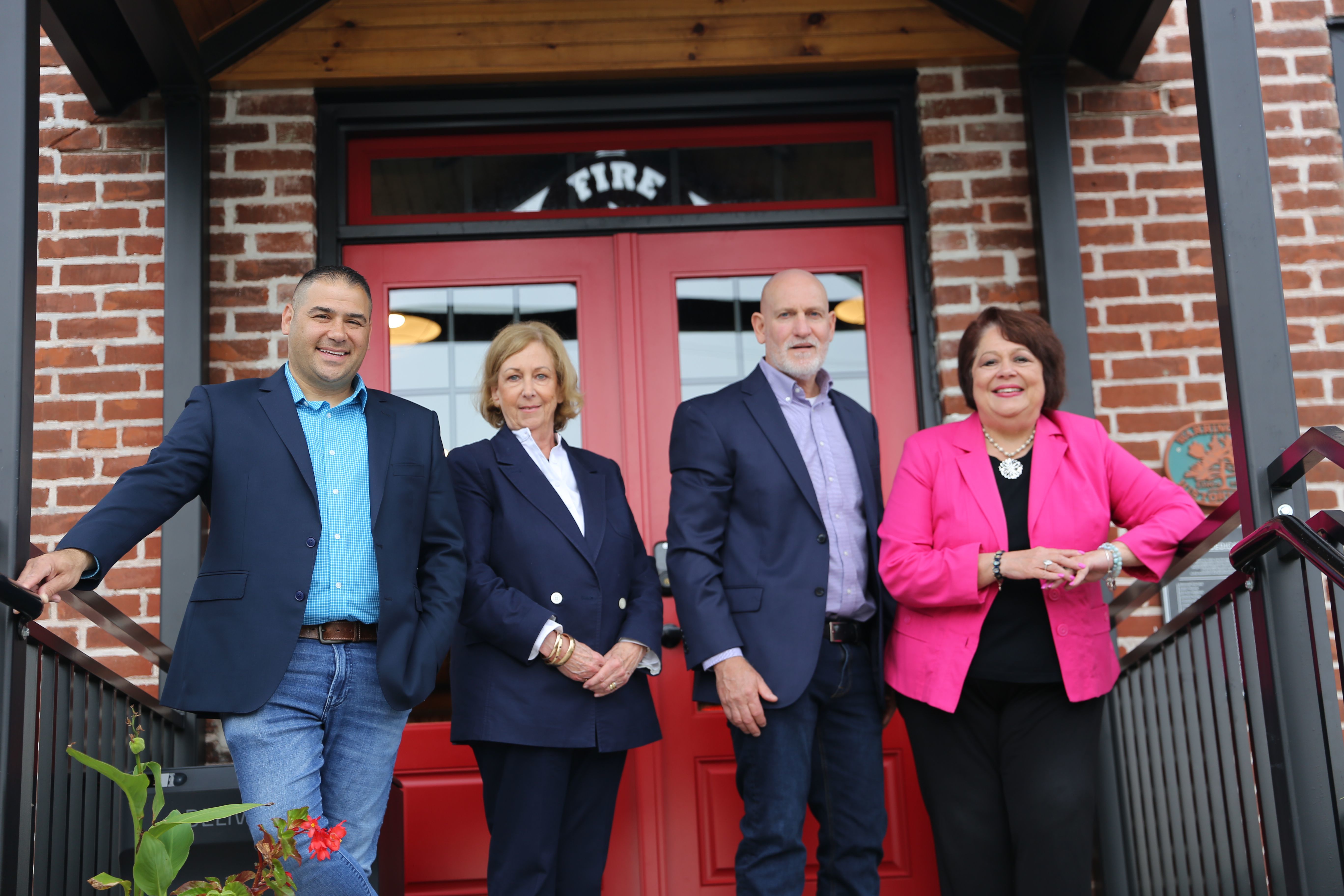
    The Republican candidates for Central Bucks school board. Andrew Miller, Sharon Beck, Roman Szewczuk, and Betty Santoro (left to right).

    The 1776 Project PAC, a group supporting Republican school board candidates that has drawn ire from Democrats, has spent more than $86,000 on mailers and text messages in Bucks County. Approximately half that has gone toward supporting Central Bucks GOP candidates, with the rest going to candidates in Centennial School District and Pennridge, according to Bucks County campaign finance reports.

    The PAC has also spent more than $20,000 supporting candidates on Republican slates in Perkiomen Valley and Lower Merion, according to Montgomery County campaign finance filings.

    Democrats are also getting support from an outside group — Red Wine and Blue, a national group of suburban women that promotes Democratic candidates. The group has spent approximately $260 in Bucks County and $104 in Montgomery County school board races, according to county filings.

    In Bucks County, other races like district attorney and sheriff have drawn money and attention that might have otherwise gone to school boards, said Guy Ciarrocchi, a GOP analyst.

    “There’s a certain amount of fatigue that’s hitting a place like Bucks,” Ciarrocchi said.

    The Trump factor

    Democrats in suburban districts said they need to maintain majorities to best address the impacts of Trump administration policies.

    “When I realized the threat that public education was under, I decided now was the time that I had to run,” said Katrina Filiatrault, a Democrat running in Central Bucks.

    Judy Lofton, a Democrat running in Perkiomen Valley, said of her slate: “Our central unifying message is that we want to protect public education, that public education is currently under attacks from a variety of different stakeholders.”

    Republicans are striking a different tone.

    “We’re not focused on anything that’s going on outside of something that we don’t control,” said Jason Saylor, a Republican running for reelection in Perkiomen Valley. “We don’t control the federal government. We don’t control what might happen with the Department of Education. We don’t control issues at the state legislature.”

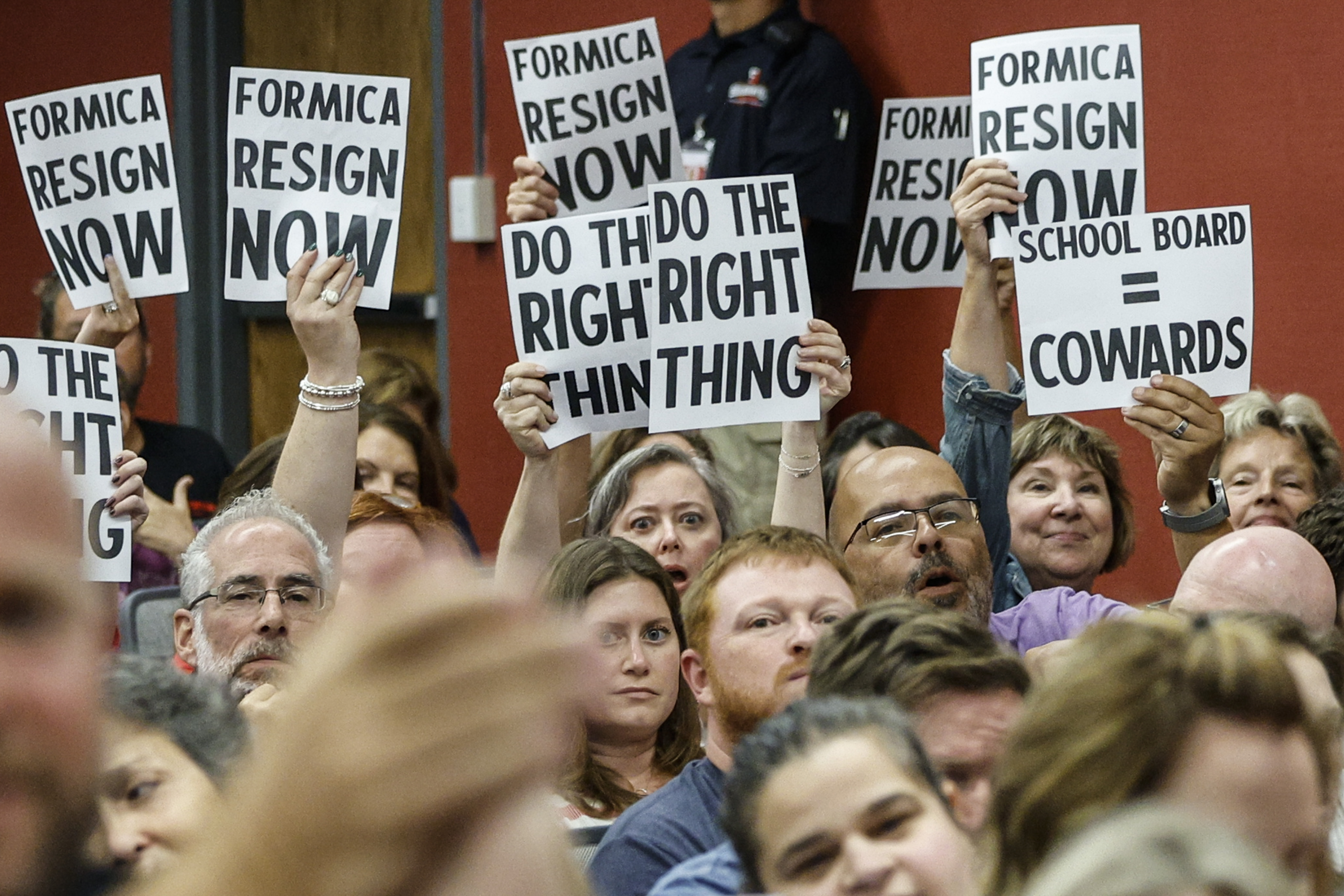
    In Souderton, controversy flared last year when Republican school board member Bill Formica made lewd comments about former Vice President Kamala Harris. He is still on the board and is not up for reelection this year.

    Residents protest at a Souderton school board meeting last year after board member Bill made a lewd social media post about then-Vice President Kamala Harris.

    “We’re talking to every voter who might be a Republican or an independent, and they’re sharing concerns at the doors about how they can’t vote for certain people anymore,” said Corinne DeGeiso, a Democrat running for the board.

    Nelson, the Republican school board president running for reelection, said Formica was protected by the First Amendment.

    His comments, Nelson said, were “rude, lewd, and unacceptable,” but there was nothing the board could do about it.

    Even in a less contentious election cycle, Chris Lilienthal, a spokesperson for the Pennsylvania State Education Association, which tends to endorse Democratic candidates, said school board elections are more important than ever this year.

    “They’re holding the line right now in this budget impasse,” he said, “and that alone should merit the attention of voters.”

    This suburban content is produced with support from the Leslie Miller and Richard Worley Foundation and The Lenfest Institute for Journalism. Editorial content is created independently of the project donors. Gifts to support The Inquirer’s high-impact journalism can be made at inquirer.com/donate. A list of Lenfest Institute donors can be found at lenfestinstitute.org/supporters.

  • Erica Deuso’s campaign to be Pa.’s first trans mayor isn’t about that. It’s ‘about the neighbors.’

    Erica Deuso’s campaign to be Pa.’s first trans mayor isn’t about that. It’s ‘about the neighbors.’

    By most measures, Erica Deuso’s campaign for mayor of Downingtown is unremarkable.

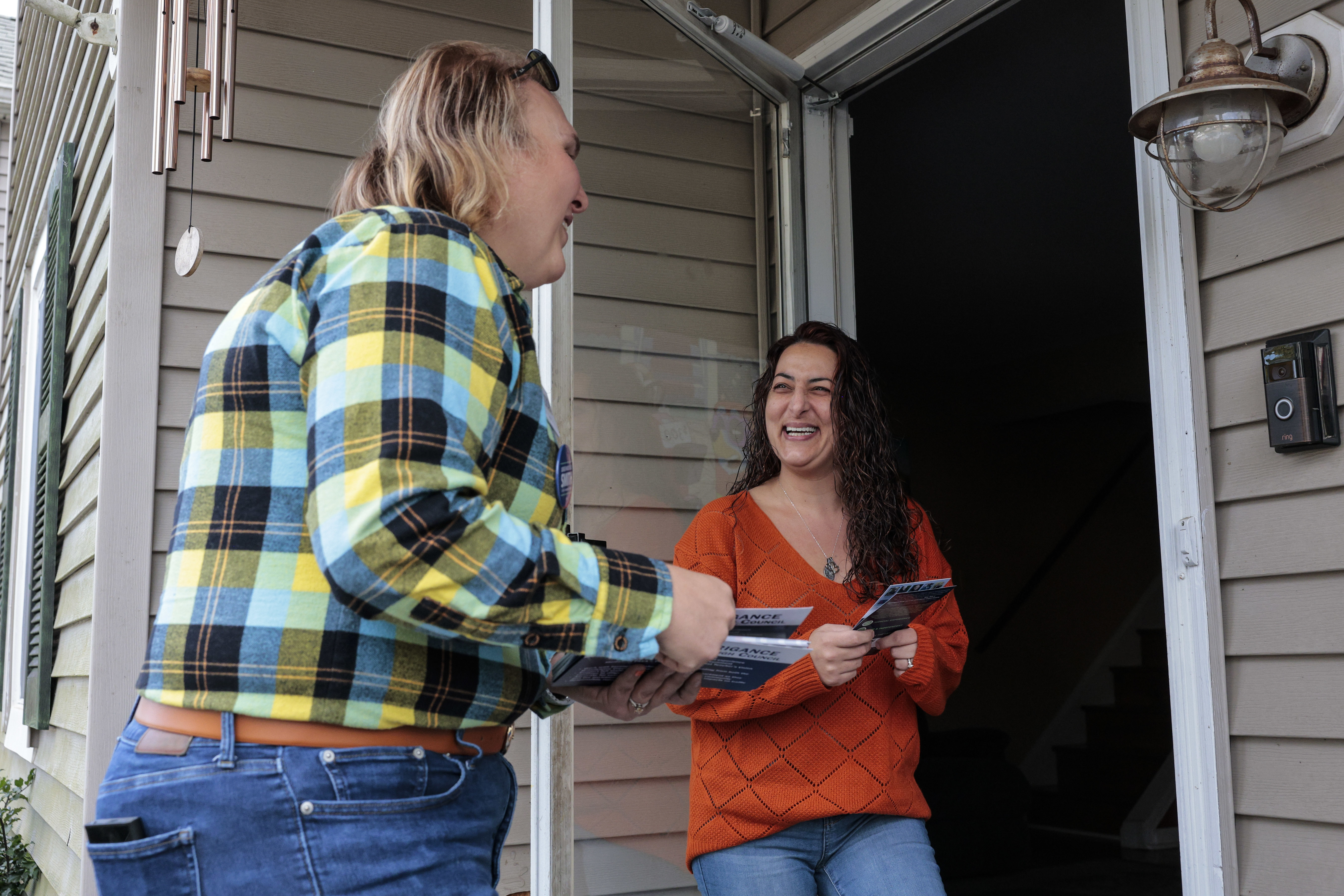
    She spends Saturday mornings greeting residents at the farmers market and her weekend days knocking on doors in the Chester County borough. Most of the time, she’s talking about traffic and community events.

    Nevertheless, the effort is groundbreaking.

    If she is elected in the Democratic-leaning borough, Deuso would be the first openly transgender person elected mayor in Pennsylvania. She would do so as President Donald Trump’s administration pursues policies that limit public life for transgender residents and as Democrats’ vocal support for the community wanes in the aftermath of the 2024 election.

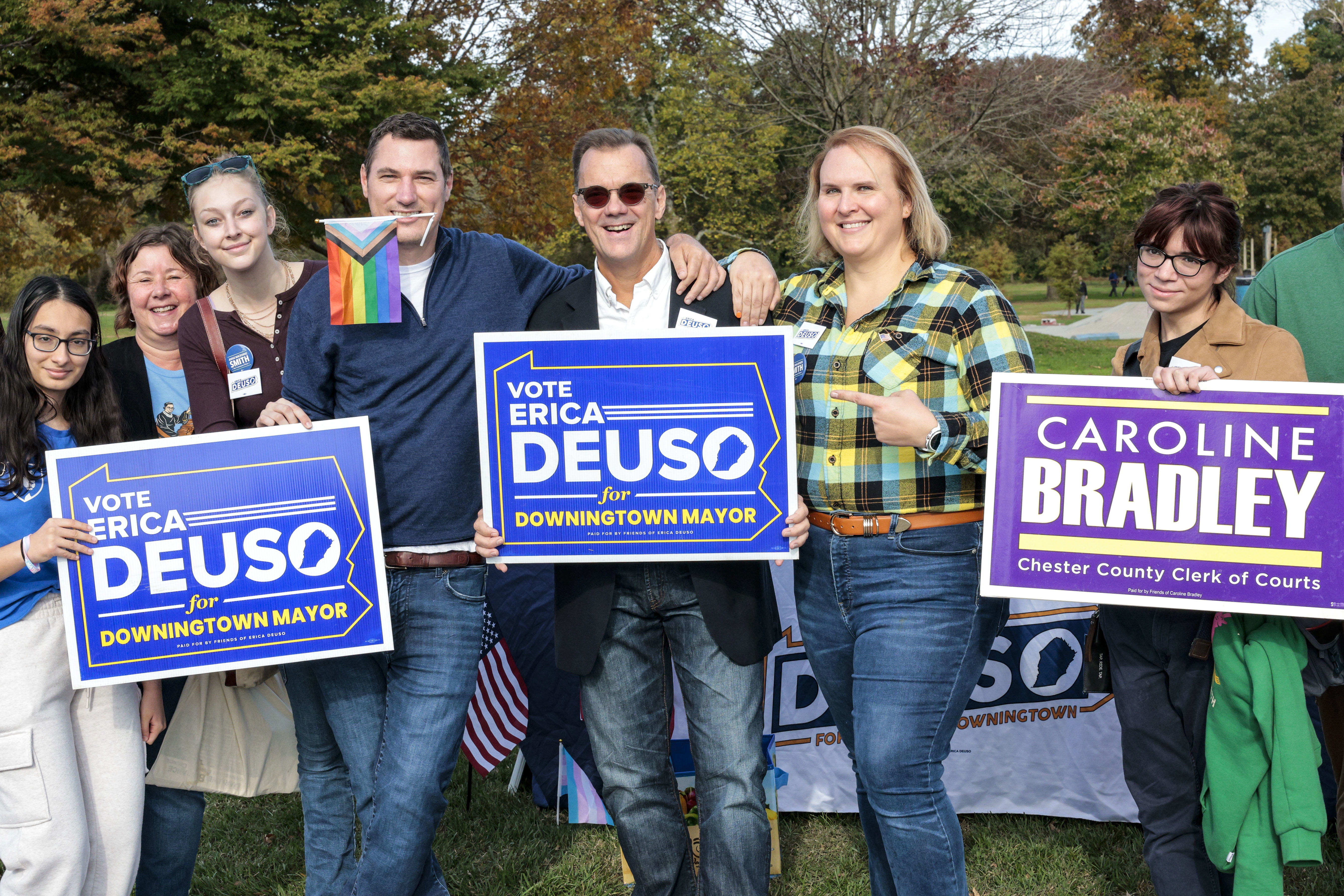
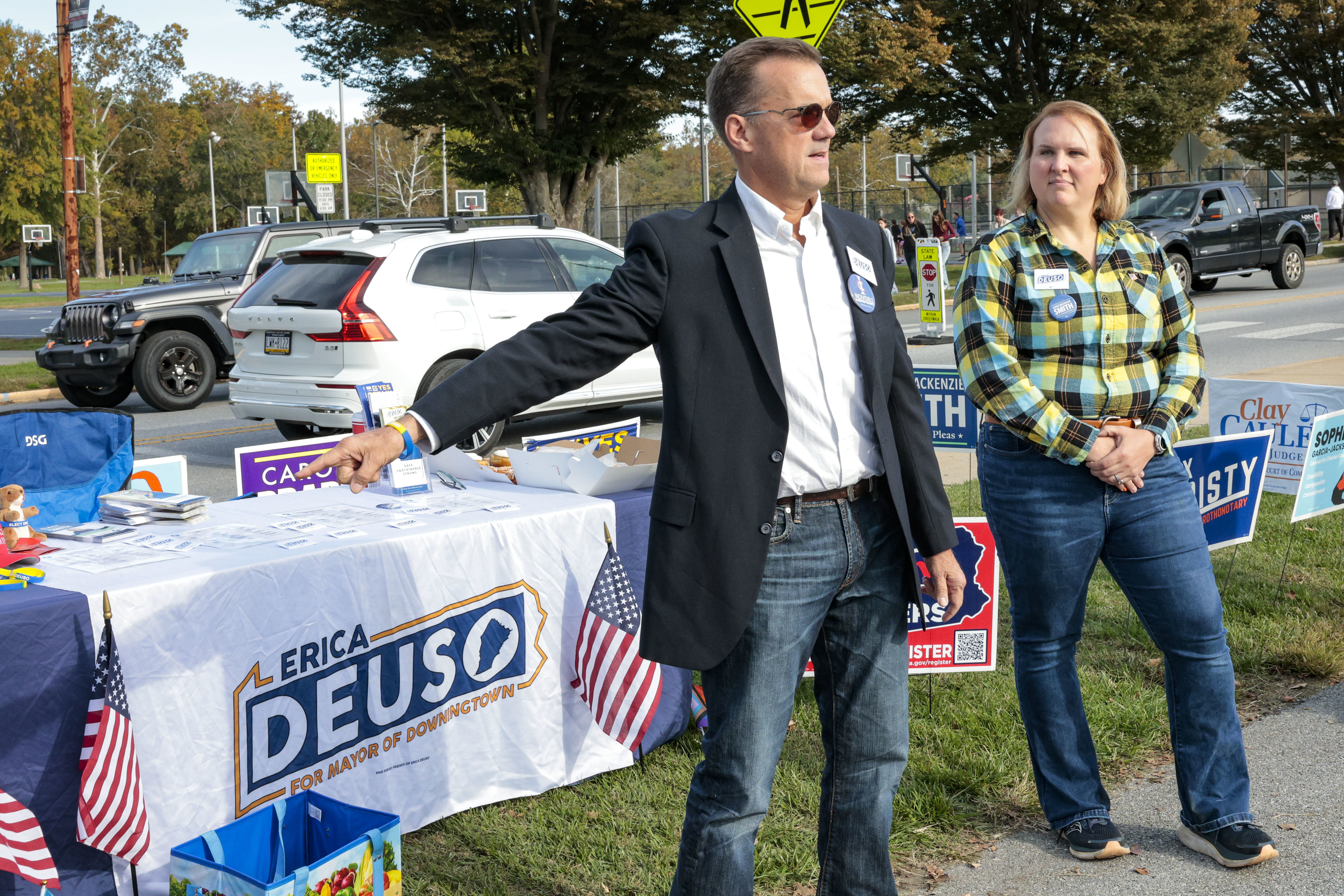
    Democratic supporters pose with current Downingtown Mayor Phil Dague, center, Chester County Commissioner Josh Maxwell, center left, and mayoral candidate Erica Deuso, center right.

    For most voters, though, those facts didn’t even register.

    Deuso, who works in management at a pharmaceutical company, has lived in Downingtown for 18 years.

    She is a committeewoman in the local Democratic Party, and board member for Emerge Pennsylvania, which trains women and LGBTQ+ people to run for office. Her platform centers on traffic control, domestic violence, community engagement, and sustainable development.

    The Downingtown mayor has relatively limited power, overseeing the police department and acting as a tiebreaking vote on borough council. Deuso has promised not to sign an agreement between Downingtown police and U.S. Immigration and Customs Enforcement and said she wants to work on enhancing mental health services for officers while expanding their reach in the community to address concerns over traffic violations and e-bikes.

    As she knocked on doors on a Saturday morning in October, Deuso’s gender identity rarely came up in her interactions with voters.

    “I’m not running on being trans, that’s not something I ever do or ever wanted to do. I wanted to make it about the neighbors,” Deuso said. “It’s the other side making it about who I am, my identity.”

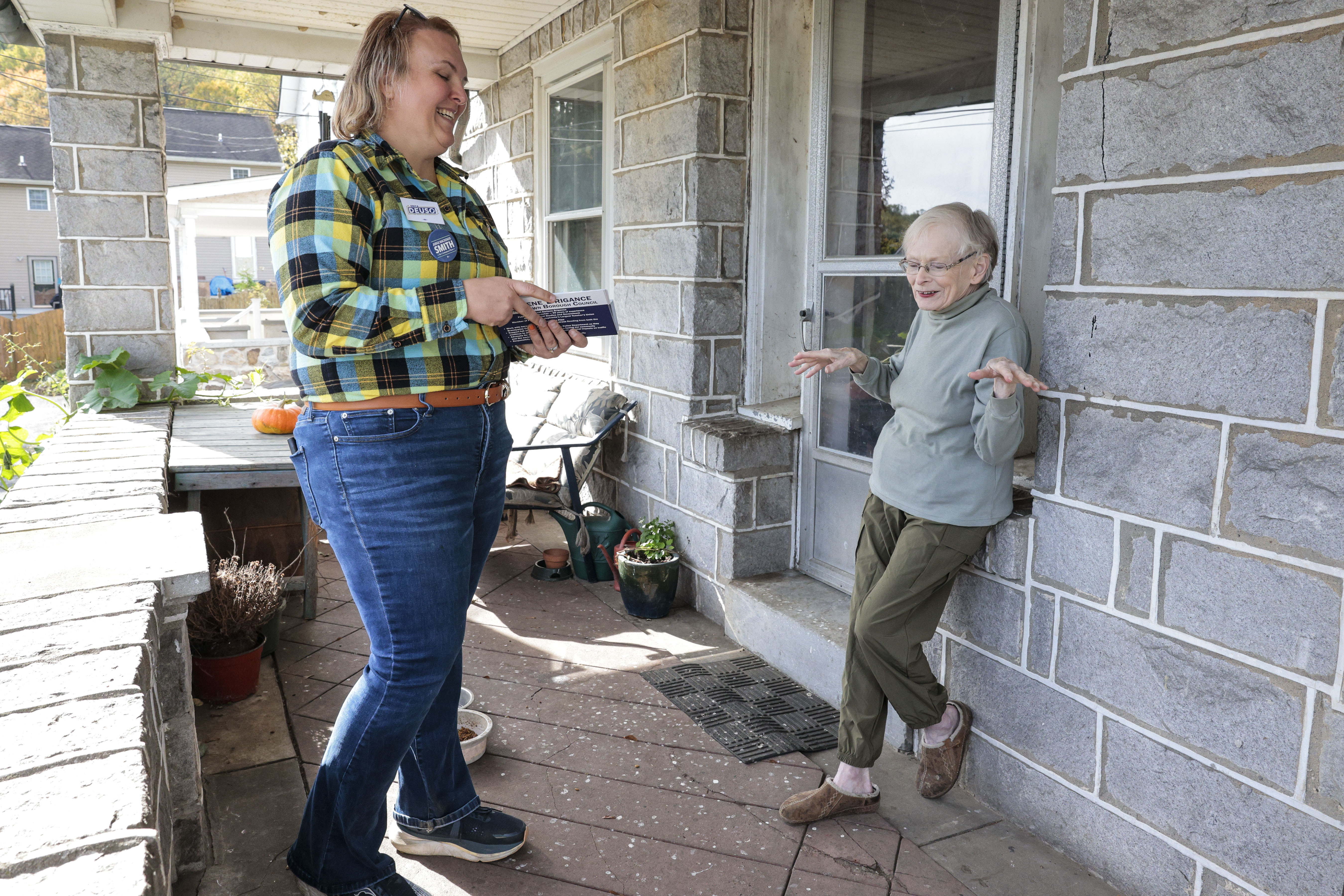
    Going door-to-door looking for votes in Downingtown in October, Erica Deuso meets Nicole Flood at her door.

    The historic nature of her campaign has likely driven attention and funds to the race. She has earned endorsements from several organizations that back LGBTQ+ and women candidates. And she’s received donations from outside the state and outside Chester County, including a $3,000 donation from Greater Than PAC, which supports progressive women.

    But a scan of comments in community Facebook pages shows her identity has also driven more vitriol.

    “There are people who refuse to use my correct name or pronouns, they’ve deadnamed me, all those sorts of things. But it’s been 16 years since I transitioned; I don’t really care,” Deuso said. But she’s mindful that LGBTQ+ youth are watching her. She engages in some of the posts, but not all of them.

    “I want to handle it with grace.”

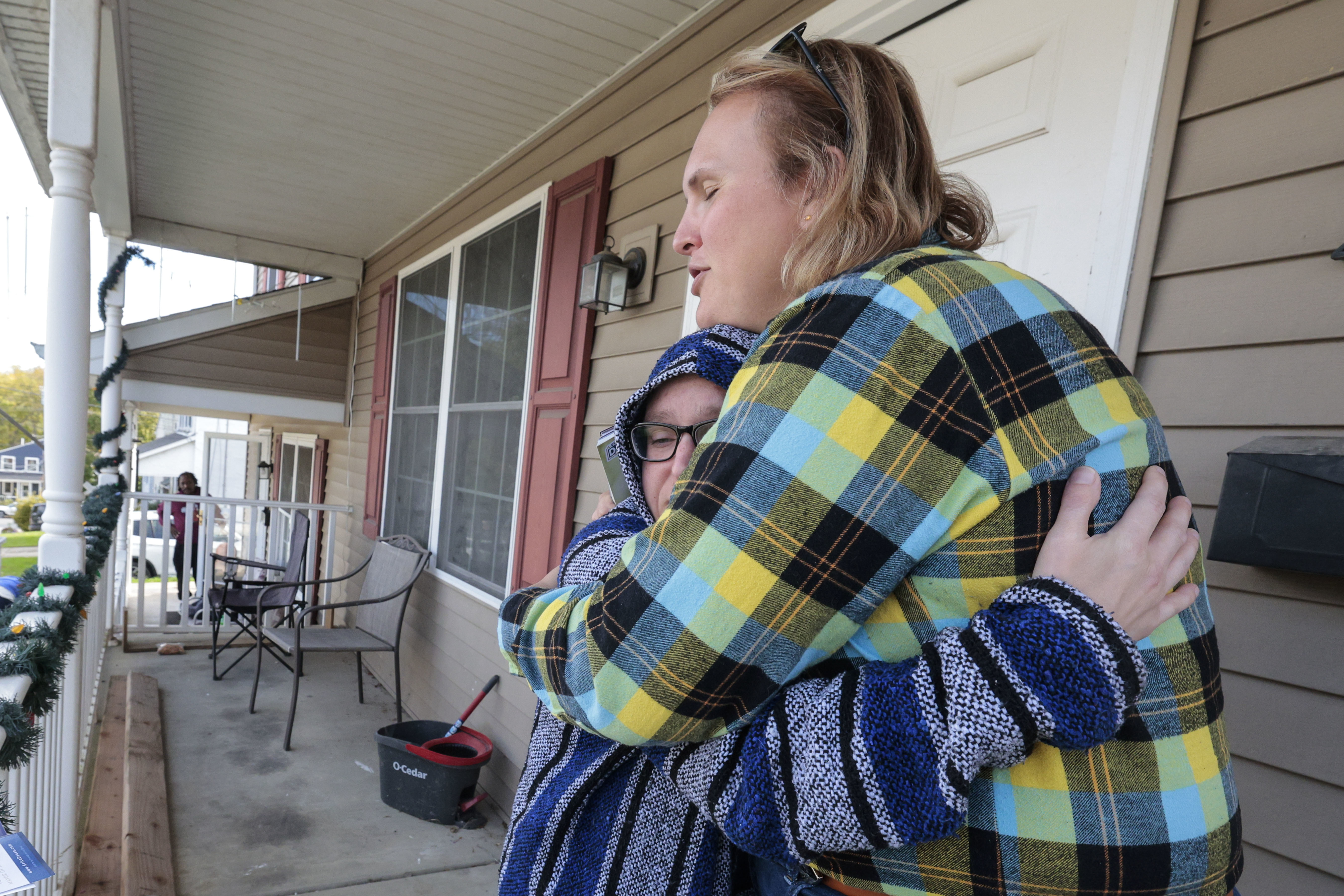
    Those efforts are already influencing at least one local teen. Nicole Bastida-Moyer, a 39-year-old voter, told Deuso her candidacy had inspired her 14-year-old daughter to volunteer to help other students with their mental health. Both she and her daughter are pansexual.

    “She deals with a lot of hate,” Bastida-Moyer said through tears about her daughter.

    “Having Erica’s voice, it means a lot,” Bastida-Moyer said.

    Nicole Bastida-Moyer gets a hug from Downingtown mayoral candidate Erica Deuso while campaigning in October.

    Impact on voters

    Deuso responds to comments on her Facebook page and other groups occasionally. She said she tends to do so only when she thinks a true conversation can come of it.

    Door-knocking in her neighborhood, Deuso encountered just one voter who appeared to be hostile to her because of her gender identity. When Deuso approached one house, a woman came to the door and glanced at the candidate and her fliers through the screen door without opening it.

    “I’m not voting for him,” the woman said. “For who?” Deuso asked as the woman turned and walked away.

    Episodes like this are relatively rare, Deuso said

    “People are generally much nicer in person than online,” said Jenn Fenn, who managed U.S. Rep. Chrissy Houlahan’s 2024 reelection campaign in a district that includes Downingtown.

    Deuso’s opponent, Republican Rich Bryant, says he doesn’t condone those who attack Deuso based on her identity.

    But Deuso has shared several screenshots on social media that appear to show Bryant insulting transgender women and making misogynistic remarks about cisgender women. At a canvass launch at the local farmers market, the township’s current mayor, Democrat Phil Dague, referenced these posts while comparing Bryant to Trump.

    Current Downingtown Mayor Phil Dague talks with supporters for Erica Deuso listening at right. Saturday October 18, 2025.

    Bryant claimed 90% of these posts are AI-generated but refused to say which posts are real and which are fake.

    “I don’t like mud-slinging misinformation,” Bryant said. “I try to stay focused on what’s good for Downingtown.”

    Rich Bryant is running as a Republican for Downingtown mayor.

    He sought to present himself as better experienced than Deuso to be mayor, contending his career in cybersecurity has prepared him for the mayor’s primary duty of overseeing the local police department.

    Alice Sullivan, an 80-year-old neighbor and donor to Deuso, had noticed some of the nastiness on social media and said she was voting for Deuso because, unlike her opponent, she wasn’t a “bigot.”

    She lamented the online attacks against Deuso as disappointing — but unsurprising. The candidate’s gender identity shouldn’t matter, insisted Sullivan, who has lived in Downingtown for decades.

    “Other people’s lives, genders, whatever is not my business,” she said.

    Josh Maxwell, a Democratic county commissioner and former Downingtown mayor who had joined Deuso to knock doors, asked if Sullivan thought others would disagree in the historically Catholic community. But the people who cared, Sullivan argued, are “not going to vote Democrat anyway.”

    “There might be some,” she said. “I don’t know very many.”

    Campaigning in the west end of Downingtown Erica Deuso greets Alice Sullivan on Oct. 18.

    As Deuso walked door to door, her conversations focused on local and community issues. She greeted every dog she saw and spoke to their owners about their safety concerns — drivers had been racing down quiet neighborhood streets — and their concerns about the community. Deuso is proposing a program to offer hotel rooms for one night to those facing domestic violence.

    She also made it clear that she would be a resource, even on issues that went beyond the mayor’s official duties. She showed one voter how she had started a youth-driven art project at a recent township festival. And pointed to a home that, just weeks prior, she’d brought a misdelivered package to on behalf of a voter.

    For weeks, Raul Hurtado, Deuso’s neighbor who immigrated from Colombia in the 1990s, has been rolling down his windows when he sees Deuso, telling her he’s voting for her.

    “She is from this town, my neighbor, and we need someone to help us,” Hurtado told The Inquirer.

    If she’s elected, Deuso told Hurtado, her goal is to be available to all residents through office hours at Borough Hall.

    “We can have a face-to-face discussion,” she said. “Not through your car window.”

    This suburban content is produced with support from the Leslie Miller and Richard Worley Foundation and The Lenfest Institute for Journalism. Editorial content is created independently of the project donors. Gifts to support The Inquirer’s high-impact journalism can be made at inquirer.com/donate. A list of Lenfest Institute donors can be found at lenfestinstitute.org/supporters.
  • Shapiro’s view that America is ready for a Jewish president hasn’t changed, Times says

    Shapiro’s view that America is ready for a Jewish president hasn’t changed, Times says

    Gov. Josh Shapiro told the New York Times in an article appearing Monday his opinion that a Jewish person could become president has not changed since he first voiced it a year ago.

    The article referenced a statement Shapiro made to the Times last year that “speaking broadly, absolutely” America could elect a Jewish president in his lifetime.

    The Monday article stated: “This month he said his view was unchanged.”

    Shapiro has never publicly confirmed he’s interested in running for president, though speculation has long followed him.

    While he has been largely untested on the national stage, Shapiro is often listed among the Democrats likely to make a run for the presidency in 2028.

    Despite that, the April arson attack, denounced by many as antisemitic, at the governor’s mansion against Shapiro and his family on Passover as they slept shook some people’s “confidence in the idea that the country was ready for leaders like Mr. Shapiro,” the Times wrote.

    In fact, Shapiro told the Times, he spoke with his family about whether holding elected office was worth the risk of political violence, which Americans believe is on the rise, according to a survey released last week by the Pew Research Center.

    Shapiro concluded: “If I leave because violence pushed us out or scared us, then those who want to perpetuate political violence win.

    “I’ve got to stay. I’ve got to show that we’re not afraid.”

    Taking that stand, however, is not getting easier.

    “It’s gotten hotter and hotter and more and more dangerous,” Michigan Gov. Gretchen Whitmer, herself the target of a kidnapping plot, told the Times.

    Cody Balmer, 38, the man accused of setting the governor’s mansion ablaze, pleaded guilty on Oct. 14 to attempted murder and related crimes. Sentenced to 25 to 50 years in prison, Balmer said he intended to attack Shapiro with a hammer that night.

    Photos released by the Pennsylvania State Police and seen on YouTube showed a soot-covered chandelier, singed walls, a blackened carpet, melted tables, burned furniture, and a damaged grand piano.

    Since the attack, Shapiro has spoken with other elected leaders and those considering running for office, offering personal guidance to those victimized by political violence, and he talked with Gov. Tim Walz of Minnesota after the former state House speaker, Melissa Hortman, and her husband were assassinated, the Times wrote.

    “Knowing that as you’re doing that work that I consider to be noble, that it comes with a risk to you and your family,” he told the Times, “that’s a tension that is a challenge to work through.”

    “It is one of the reasons why I’m so motivated to speak out against political violence,” Shapiro added. To “try and take the temperature down so that good people want to serve.”

    Regarding potential bias against religion, the governor told the Times that Americans “respect faith, even if they don’t practice it, and want to have a deep relationship with the people who represent them.”

    Being open about his Judaism has allowed him “to be able to have a deeper relationship with the people of Pennsylvania, allowed them to share their stories,” Shapiro told the Times, adding: “We’re doing that in this ultimate swing state.”

    Shapiro will release a memoir next year detailing his career and personal life, including the firebombing of the governor’s mansion and his place on the short list to be Kamala Harris’ vice presidential candidate.

    Considered a viable Democratic presence, Shapiro on Saturday stumped for New Jersey gubernatorial candidate U.S. Rep. Mikie Sherrill in the Garden State at a senior center auditorium and an African Methodist Episcopal church, targeting two groups seen as necessary for Sherrill to beat Republican Jack Ciattarelli.

    Staff writers Julia Terruso and Gillian McGoldrick contributed to this article.

  • Delco homeless shelter system to close two shelters amid Harrisburg budget impasse

    Delco homeless shelter system to close two shelters amid Harrisburg budget impasse

    Delaware County’s homeless services, already overextended and stretched to its limits, are slated to lose two shelters and a much-needed rental assistance program at the end of the month as a result of the ongoing budget impasse in Harrisburg.

    The closures, though likely temporary until state lawmakers set aside partisan disagreements to approve a budget, would mark a major blow to a system some say is on the brink of collapse in one of Pennsylvania’s most populous counties.

    Delaware County officials have attempted to stave off suspensions in critical social services for the first few months of the budget impasse by dipping into their coffers. According to officials, the county typically spends $12 million a month on homeless shelters and other services for children and youth, mental health needs, and substance use disorders.

    Now out of options to pay for these critical supports, the county has notified local service providers that they won’t be able to help them any further. Only a budget can restore funding.

    “We had hoped the impasse would be resolved much sooner and had fully funded our providers through September, but unfortunately can no longer fully fund providers without the funds from the state,” county spokesperson Mike Connolly said.

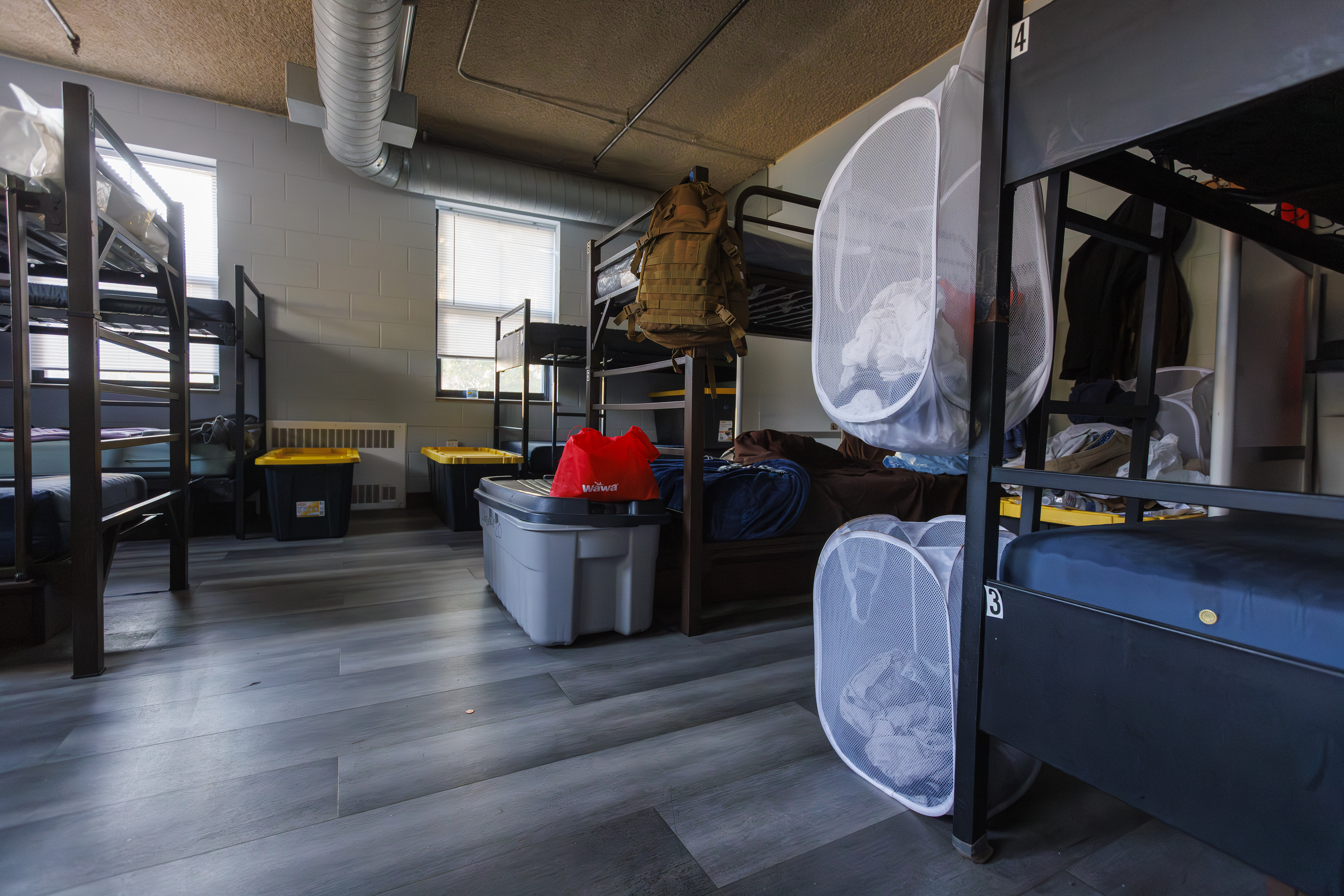
    Men’s dorm at Life Center-Eastern Delaware County in Upper Darby on Friday.

    The Community Action Agency of Delaware County, which operates three shelters and a rental assistance program, among other services, has no choice but to make cuts to its services or even close, its executive director Ed Coleman said.

    Life Center, a shelter that has room for about 50 people, has gradually cut its capacity by half. Wesley House and Family Management Center, which have a combined capacity to house more than 110 people, are slated to close by the end of the month. Plus, CAADC’s rental assistance program, which helps approximately 270 families a year, will be paused until the state budget is passed.

    Remaining homeless shelters, such as Breaking Bread in Upper Darby and the Salvation Army in Chester, have already seen a surge in people seeking assistance in recent weeks as Wesley House Shelter and Family Management Center wind down operations.

    “We’re at capacity. We have no more room,” said James Stephenson, who leads the Salvation Army’s 40-person facility.

    Mental Health Partnerships, which provides services for people with mental health conditions or substance use disorders, has been assembling a weekly working group with local shelters and county government to prepare for a winter with at least one emergency shelter, in anticipation of more shelter closures, said its president and CEO, Jeannine Lisitski. Mental Health Partnerships officials have already begun seeing more people on the streets around Delaware County as part of their street outreach there due to the diminishing number of places that people can go to stay warm in these cooling months.

    “There’s a real crisis in Delaware County brewing now,” Lisitski said.

    ‘It’s childish for people to be so politically divided’

    With no state budget in sight, public schools, counties, and service providers that help Pennsylvania’s most vulnerable have been forced to find ways to keep their doors open as they await reimbursement from the state. School districts have had to make up more than $3 billion in expected state payments, while some counties have had to lay off staff or take out major loans.

    But the issues are particularly dire in Delaware County, where the budget impasse is just the latest blow to the threadbare safety net that has only been further stretched in recent years.

    Delco had the fourth-highest eviction rate in Pennsylvania in 2022, at 11.5%, according to a study by PolicyLink and Community Legal Services of Philadelphia.

    The persistent issue pushed Delco officials and dozens of other stakeholders to convene the following year to find ways to help the more than 300 people already facing homelessness and the 100 families on wait lists for shelters in the county, as well as all those in danger of losing housing.

    But just this year, Crozer-Chester Medical Center, which was the county’s only 24-7 crisis center for mental and behavioral health, closed in May. Shelter operators, such as the Salvation Army, believe they will have to step up to help the affected population.

    St. Joseph’s Family Hope Center closed in June.

    Breaking Bread, which until recently could serve 25 people, can take in only eight after moving back to its original building, which is in need of repairs and has limited space.

    And the county’s adult and family services agency, which contracts with shelter providers, saw a loss of $1 million in funding.

    Lisitski said Mental Health Partnerships — which serves Delaware County, the other three collar counties, and Philadelphia — has already taken out a significant amount of credit to continue operating. And she has grown deeply frustrated with the state government that leaders have not been able to come together to achieve a budget deal.

    “I’m really disgusted, I have to say. I hold myself to a very high standard as a CEO and as a leader. I would not leave my post if I did not take care of every program. I would not leave for the day until I resolved everything,” she said.

    “That’s my commitment. I want the same commitment from our elected officials. And it’s childish for people to be so politically divided,” she added.

    Separately, the federal shutdown is poised to delay funds from the Low-Income Energy Assistance Program, which help about 300,000 Pennsylvanians pay their heating bills, as well as the distribution of Supplemental Nutrition Assistance Program (SNAP) benefits.

    As funds dry up, limited options for families

    At Wesley House, which can serve an average of 50 children at any given time, families like Grayson’s are scrambling to find temporary housing.

    The 52-year-old has been living in Wesley House for almost seven months after caring for his terminally ill mother drained the family’s finances and led his family of four to be evicted. He asked that his full name be withheld to protect the identity of his two young children, as not everyone knows the family became homeless this year.

    “This is people’s last resort. This is the last stop before being on the street,” Grayson said of the room with four bunk beds he shares with his family. “I feel like we’re being kicked while we’re already down.”

    With news of Wesley House’s closure, Grayson and his wife are working with social workers to get rapid rehousing so as not to disrupt their children’s lives, but it’s a race against time in between the three combined jobs the couple is working.

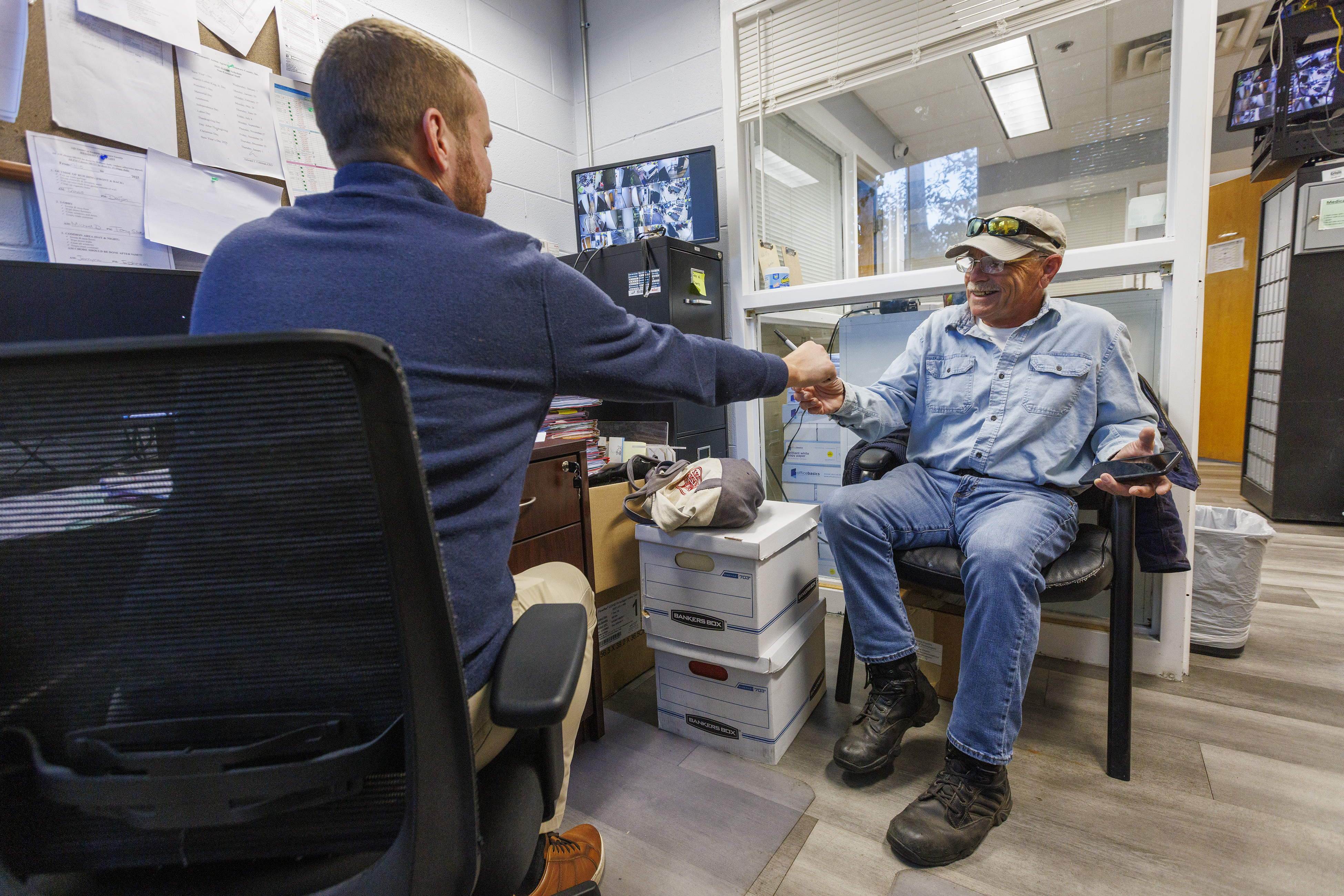
    John Weis, Life Center of Delaware County’s lead case manager (left) assists client Joseph Wallace Friday.

    For Heather Schearer, her several months living at Life Center were a necessary step up in her recovery process. She had been unhoused for about five months earlier this year, and was sleeping in her car until it got too cold. When approached, she agreed to stay at Life Center until she eventually was connected to longer-term provider Mental Health Partnerships for its rapid rehousing and peer support programs, she said.

    “[Politicians] don’t want to get their boots on the ground, take your ties off, and sit and talk,” Schearer said. “It’s the little things that matter that will get you to the next step.”

    According to Community Action, similar scenes are playing out at Family Management Center, which can serve an average of a little more than 30 children at any given time. And while the most significant service reductions in homeless services are not scheduled for another week, the impacts of cuts are already visible across Delaware County.

    Lisitski, of Mental Health Partnerships, which provides street outreach around Delaware County, said staff have already seen “a lot more people” than usual living on the street.

    When shelters close like this, it becomes a “life-and-death situation” for people who are unhoused, she added. If the people who access critical services — usually people who are homeless, have substance use disorder, or have serious mental health conditions — cannot do so, she said, it will result in their being jailed, institutionalized, or, in the worst cases, dead.

    In anticipation of the added need for housing due to the impasse, Mental Health Partnerships is working with Delaware County officials, faith-based entities, and other local groups to prepare emergency shelter space from December through April. It is also taking a line of credit to stay afloat.

    But loans are not a viable option for all service providers.

    Coleman, of Community Action, said even if the nonprofit could be approved for a line of credit, leaders have no way of knowing how much to ask for since they don’t know when a budget will be passed. Then there would be the question of interest.

    “There’s no way [shelters] can afford to pay back interest on a loan, and the interest on a loan cannot be charged to a grant, so it would just be money lost to them,” he said.

    Without a state budget, local government is the nonprofit’s last hope. Upper Darby, where Life Center is located, has awarded Life Center $120,000 in Community Development Block Grant funds, which will become available Jan. 1, according to officials there.

    It’s much-needed money, but only one thing can help Community Action’s two other shelters stay open.

    “We’re hoping that the legislators can do their job and pass a budget so the county doesn’t have to deal with some unfortunate situations,” Coleman said.

  • $1M in taxpayer money will be used to make security upgrades at Gov. Josh Shapiro’s private residence

    $1M in taxpayer money will be used to make security upgrades at Gov. Josh Shapiro’s private residence

    Spotlight PA is an independent, nonpartisan, and nonprofit newsroom producing investigative and public-service journalism that holds power to account and drives positive change in Pennsylvania. Sign up for our free newsletters.

    HARRISBURG — Taxpayers are paying for roughly $1 million in security upgrades to Gov. Josh Shapiro’s private home in Montgomery County, according to information the administration disclosed to top lawmakers about its expenditures in the aftermath of the brazen arson attack on the first family earlier this year.

    In a Friday letter to legislative leaders, administration officials said improvements include “erecting physical and visual barriers on the property, installing enhanced security technology, and other steps.” They then noted that due to safety concerns, they could not provide more details about the work being conducted at Shapiro’s private home.

    The letter, authored by Pennsylvania State Police Commissioner Christopher Paris and Department of General Services Secretary Reggie McNeill, also disclosed safety upgrades totaling $32.3 million at the governor’s official residence in Harrisburg, including $8 million to retrofit the mansion with new windows that are bullet- and shatterproof.

    The attack occurred at the 29,000-square-foot mansion this past April while the governor and his family were asleep inside.

    “The horrifying attack on the Governor, his family, and Commonwealth property, coupled with the unfortunate rise in political violence across our country, has made these updates necessary to protect the Governor and his family and ensure the continued operation of the executive branch of the Commonwealth,” Paris and McNeill wrote. “No family should have to live behind bulletproof glass or behind large walls — but the nature of the threats against elected officials today require us to take these important steps.”

    They added: “Unfortunately, the threat to a high-profile elected official like Gov. Shapiro does not end when he leaves the Governor’s Residence.”

    In a statement, Shapiro spokesperson Rosie Lapowsky said the State Police conducted a security review of the governor’s personal residence and recommended a number of improvements. Before carrying out any of those improvements, she said the administration “consulted the Ethics Commission … to ensure there is no improper private, pecuniary gain from these security improvements.”

    Last week, Harrisburg resident Cody Balmer pleaded guilty to attempted murder, aggravated arson, and other charges related to the attack in the dead of the night on April 13. That is when Balmer scaled the perimeter fence at the governor’s official residence along the banks of the Susquehanna River, broke two windows, and used crude, homemade Molotov cocktails to set fire to several rooms on the residence’s first floor.

    Shapiro, his family, and friends had celebrated Passover just hours before, and were asleep on the second floor of the residence when Balmer broke in. Balmer told authorities that he would have beaten Shapiro with a hammer he had with him if he had encountered the governor.

    The Democratic governor has said that he and his family are still struggling with the emotional toll of the attack, but stressed that he will not be deterred from continuing in public service.

    It is not clear what prompted Paris and McNeill’s letter. Earlier this week, Spotlight PA submitted a public records request for all taxpayer-funded expenditures at the governor’s private home.

    Also midweek, Republican state Sen. Jarett Coleman, who chairs the chamber’s Intergovernmental Operations Committee, fired off a letter to Paris seeking similar information about physical improvements to Shapiro’s Montgomery County home, among other items.

    Coleman told Spotlight PA on Friday that his committee will “continue to investigate” spending at the governor’s private residence “to protect taxpayers as this unprecedented project is being completed.”

    Spotlight PA last month reported that the state has spent more than $6 million to repair extensive damage from the fire at the governor’s official residence — but that the administration is shielding information about nearly a quarter of those expenses, including who was paid and exactly what the money was spent on.

    The news organization has also reported that private donors have separately contributed to a fund managed by a Harrisburg-based nonprofit to help restore the mansion. So far, neither the organization nor the administration has disclosed the donors’ identities, the amount they contributed to the fund, or provided a general description of what that money has or will be used for.

    In the letter sent to legislative leaders, the administration shed light on at least some of those questions. The officials said that to date, the state has submitted $4.5 million in expenses to one of its insurers, which in turn has so far approved $2 million in reimbursements.

    Security upgrades and improvements to the official residence, however, are not covered by the state’s insurance plans. The security improvements — recommended by a third-party review commissioned by the State Police in the wake of the attack — there include:

    • An estimated $14 million to replace the 6-foot fence that Balmer scaled with a “single material, 10-foot barrier resistant to vehicle damage or climbing.”
    • An estimated $6.3 million to install updated cameras, improve lighting, and add motion detection sensors in the residence’s yard.
    • An estimated $8 million to retrofit the residence’s existing windows with bulletproof and shatterproof glass.
    • An estimated $4 million to install a comprehensive fire suppression system in the residence, one of the largest state-owned buildings without one.

    “In addition to the visible and extensive building security enhancements outlined above, additional recommendations on things like staffing, internal systems, and other technology improvements have been implemented,” by the state, Paris and McNeill wrote. “To avoid risk of a successful security threat against the property or the Governor in the future, we cannot disclose all of those recommendations publicly.”

    The two men noted that the fire damaged multiple decorative items inside the residence, including chandeliers, china, pianos, and artwork. Most of those items, they said, do not qualify for insurance reimbursement, and their repair or replacement will be funded by private dollars.

    BEFORE YOU GO… If you learned something from this article, pay it forward and contribute to Spotlight PA at spotlightpa.org/donate. Spotlight PA is funded by foundations and readers like you who are committed to accountability journalism that gets results.