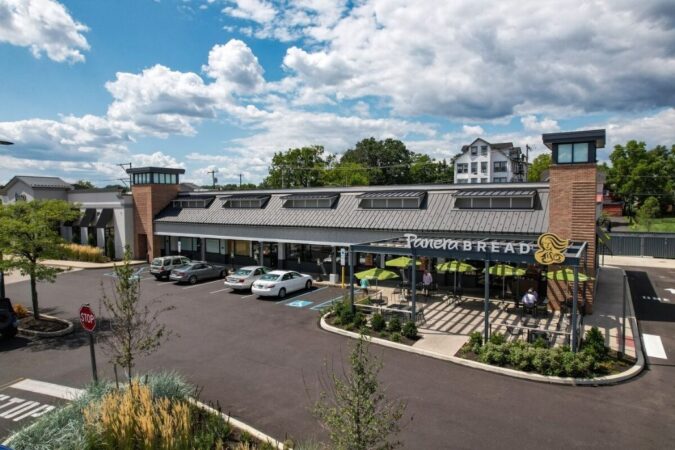
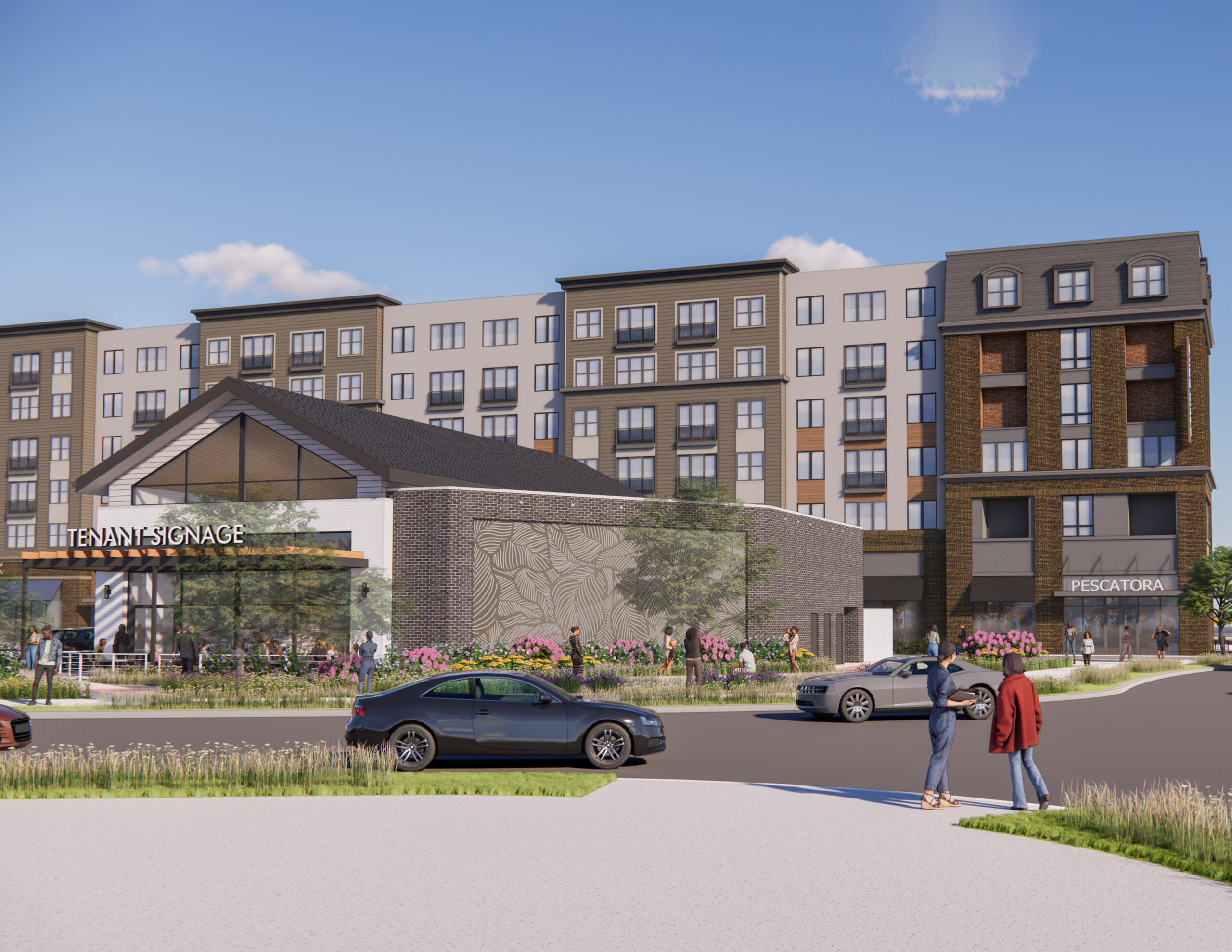
A shopping center in the shadow of Willow Grove Park Mall will soon undergo a $105-million “transformation” with new apartments and shops, says the developer behind the project.
Starting this summer, about 130,000 square feet of the Willow Grove Shopping Center will be demolished to build a mixed-used complex with 261 residential units and 35,000 square feet of new retail space, said Mark Brennan, vice president of regional development for Federal Realty Investment Trust.
It will mark the latest stage in a multiphase redevelopment of the outdoor center, which is located across the street from the mall.
A rendering of what Federal Realty Investment Trust plans to build at the Willow Grove Shopping Center.
Across the Philadelphia region, similar mixed-use complexes have increasingly been built around thriving shopping destinations, such as King of Prussia, where thousands of new apartments have risen in recent years.
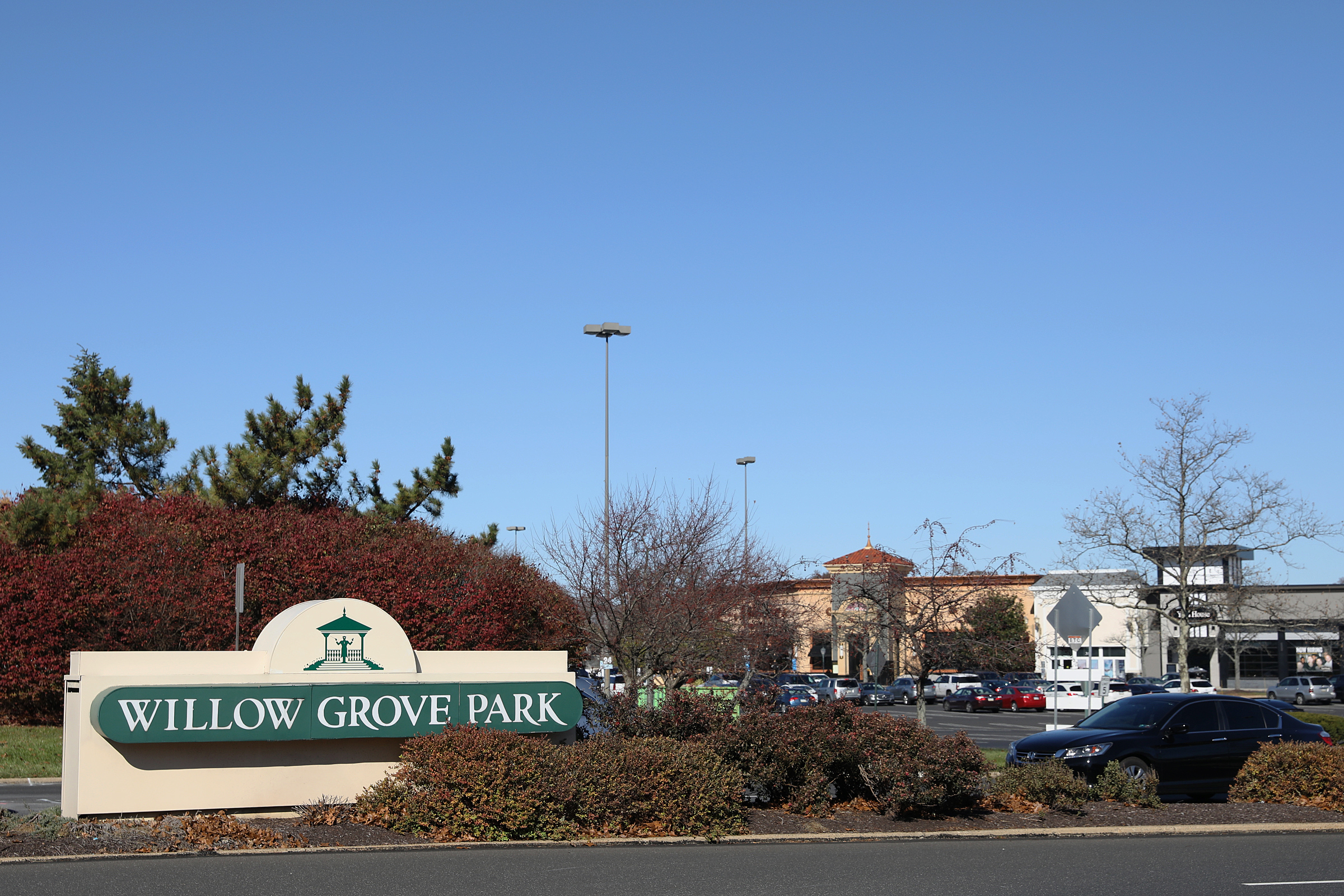
A spokesperson for PREIT, which owns Willow Grove Park Mall, did not return a request for comment. In a 2022 shareholders’ report, PREIT executives called the complex “one of our leading suburban Philadelphia assets,“ with an occupancy rate of more than 96%.
The Willow Grove Park Mall is pictured in 2019.
Across Moreland Road, Brennan is confident his shopping-center redevelopment will be met with high demand.
Since the pandemic, the Montgomery County community has “really come alive,” due in part to its proximity to the city and to suburban employment centers, said Brennan, who is based in Wynnewood. And people who are moving out of the city or looking to downsize are particularly interested in moving to mixed-use developments, he said.
The center’s proximity to SEPTA’s Willow Grove train station, and major highways, including the Pennsylvania Turnpike, will make it particularly appealing, as will its mix of “highly curated” shops, Brennan said.
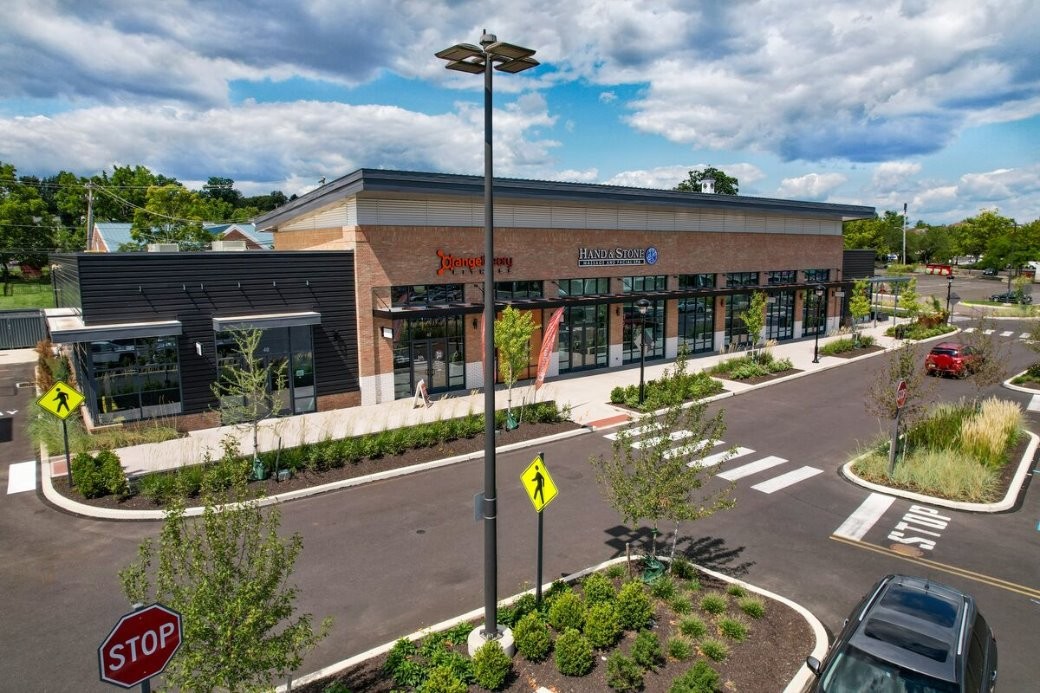
Across the street from the mall, the Willow Grove Shopping Center is set to undergo a $105-million transformation with apartments and new retail.
The center’s existing tenants, which include Marshalls and Five Below, will remain open during construction, Brennan said.
He expects the project to be complete sometime in 2028.
“These sort of multifaceted, multiphased development projects do take quite a bit of time and planning,” Brennan said. “We’re really excited to get to the next phase of this transformation.”
The Philadelphia Housing Authority embarked on a strategy last year unlike anything it has done before.
The agency is known as the largest affordable housing provider in the city. But in 2025, under the leadership of CEO Kelvin Jeremiah, it began buying struggling private-sector apartment buildings all over the city to expand the affordable housing supply.
Over the last 14 months, the Philadelphia Housing Authority (PHA) has spent $280.6 million to acquire 17 multifamily properties, totaling 1,515 units. Some have been student apartments or largely empty new buildings. But most have been full of tenants paying market-rate rents, ranging from $1,106 to $2,323.
That’s a new demographic for PHA, whose renter base often makes less than $30,000 a year.
PHA plans to fillthese buildings with Section 8 voucher holders, who often have a difficult time finding rentals in higher income areas.
“It’s part of the strategy … to give residents the broadest possible options in terms of their housing choice and one that is not limited to particular neighborhoods,” Jeremiah said.
In an innovation, the agency intends to keep renting some units in the newly acquired buildings at the market rate, using the income to support operating expenses.
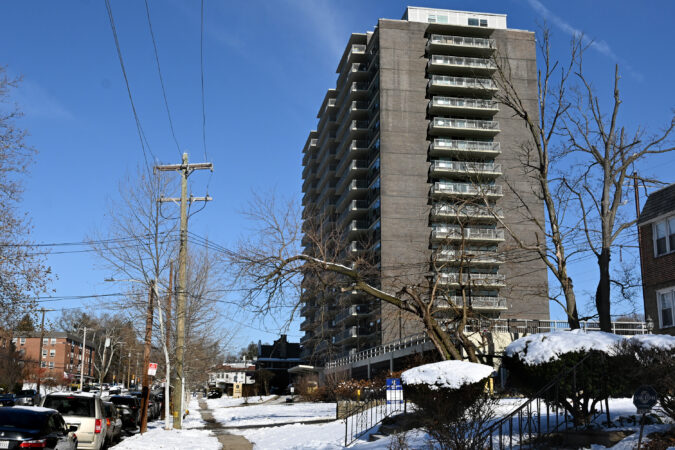
The first PHA purchase in 2025 was The Dane, a 233-unit building in Wynnefield. It now houses some tenants paying market-rate rents and others using government subsidies.
Last year, several tenants contacted The Inquirer with concerns about what they described asa rocky transition to PHA ownership. Since then, interviews with 18 tenants at The Dane have laid out challenges within PHA’s new model — and the potential difficulty of retaining renters with options elsewhere.
Eighty-six people have moved out of The Dane over the last year. That’s about half the original occupants as the building was only 75% occupied when purchased.
The overwhelming majority of tenants interviewed by The Inquirer said PHA is a better landlord than the previous owner, Cross Properties. But most have moved out or are planning to.
“The management staff that are there now are better than what we had, but they’re still pretty mediocre,” said one resident, who, like many of the tenants, asked that their name be withheld to preserve relations in the building.
“Everybody’s very polite; everybody’s very cordial, but it’s only maybe one or two maintenance people,” this multiyear resident said. “The trash pileup is very bad right now … I plan to move elsewhere.”
Jeremiah noted that most of the properties PHA acquired have not experienced the kind of turnover that The Dane has seen. The building is now almost completely occupied with both market-rate and subsidized tenants, said a PHA spokesperson.
He said some tenants moved out after the agency began collecting rent again. Many had been withholding payments to Cross, which lacked a rental license at the end of its tenure.
It’s possible that the turnover at The Dane is largely the result of a difficult property transfer from a troubled previous owner. (Cross Properties is no longer in business.) In that case, the tenant exodus may not be a predictor for PHA’s larger ambitions.
But given the skepticism PHA faces in many neighborhoods, outside observers say, the agency’s new expansion strategy faces high expectations to get everything right.
“PHA is under a tremendous amount of pressure,” said Akira Rodriguez, a professor of housing policy at the University of Pennsylvania. “There’s going to be experiences that are uneven for tenants as they navigate this new model of housing provision … [and The Dane] is a really high visibility example.”
A long troubled apartment building
In November 2024, residents of The Dane were fed up. Their hot water wasn’t working — again — in apartments where many households paid over $2,000 a month in rent.
“The owner [Cross Properties] was not the best,” said Akeesha Washington, who has lived in The Dane since 2020. “He just didn’t maintain the building. Over the years, you saw the amenities dwindle.”
Cross Properties acquired the building in 2016 when it was the Penn Wynn House and converted the rent-subsidized building into market-rate apartments.
When Washington moved in, she was impressed. The staff were kind to her in 2020 when she contracted COVID-19. They coordinated care with Washington’s mother so she had access to medication without infecting anyone.
“It was a really nice community. It’s luxury in the 19131 section, where not everyone feels like they can afford it,” said Washington, who loves the diversity of the tenants, which included university students, working-class residents, and doctors and lawyers.
“You had so many layers of people living and coexisting in this building,” Washington recalled. Rents ranged from $1,100 for a studio to $2,200 for a two-bedroom unit with two bathrooms.
But by 2024, most tenants said, building management had fallen off. Trash wasn’t picked up regularly; lawns went unmowed and snow unshoveled, and basic amenities like the parking garage door often didn’t work.
Shortly after another hot water outage, tenants got news in late 2024 that Cross Properties was out.
“When residents heard it was being acquired, we were excited because we won’t have to deal with not having hot water, especially during the holidays,” Washington said.
Akeesha Washington in the lobby of her apartment building in the Wynnefield neighborhood in December. She was living in the market-rate building before the Philadelphia Housing Authority (PHA) purchased it to expand the city’s affordable housing supply.
New management, new problems
When PHA purchased The Dane, the building had many unresolved issues, said Tonya Looney, who worked for Cross Properties as the building’s manager. And she said there was scarce planning for the details of the transfer.
“To be fair, this is something new and I understand from a real estate professional’s perspective that there’s going to be hiccups,” said Looney, who stopped working at The Dane last May, although she still manages 15 apartments for long-term corporate stays in the building.
Looney is in a legal dispute with PHA, which says she owes substantial back rent. “We do not intend to renew the leases that she has in her name,” Jeremiah said. “I do not think she is a good arbiter of the facts in this case.”
Both Jeremiah and Looney say that after the sale closed, Cross Properties shut down the operating software, cutting off tenants’ ability to pay rent online, see their rental histories, and submit maintenance requests.
“We had 200 people with no way to log in to pay their rent, no way to submit a maintenance ticket, no idea who to talk to about any issues at the building unless they came downstairs to see what’s going on,” Looney said. “Needless to say, it was chaotic.”
For much of 2025, residents had to pay with checks, which sometimes went uncashed, according to Washington and Looney.
Jeremiah says that Cross Properties’ owner asked PHA to pay to access the former tenant managementsystem, although PHA eventually figured out how to get the records.
Despite the chaotic transition, many tenants said PHA’s ownership brought improvements from previous conditions, especially after Maryland-based HH Redstone was brought in to operate The Dane in August. (That’s when online payments, for example, started working again.)
“HH Redstone is doing what they can, and I’ve re-signed my lease for one year because I am willing to see what change they can continue to make,” said another tenant who asked not to be named.
Why tenants are leaving, even with improved conditions
Other tenants say property services continue to suffer.
Trash pickup is still persistently late, several tenants said. Pest outbreaks such as bedbug, mouse, and cockroach infestations flare up, which is new in the building, according to Washington and two other tenants. The dog washing station and the dog run are often messy. The garage door continues to break down. This winter, a rash of burglaries spooked residents.
Jeremiah said PHA is addressing these concerns, and in some cases — such as the dirty dog run — residents are expected to clean up after themselves. He also noted that the agency installed 24-hour security.
“The idea that this is a new phenomenon to that building, given where it’s located, is just nonsense,” Jeremiah said of the security concerns. “We have a very robust set of layered access control systems in place [and] CCTVs.”
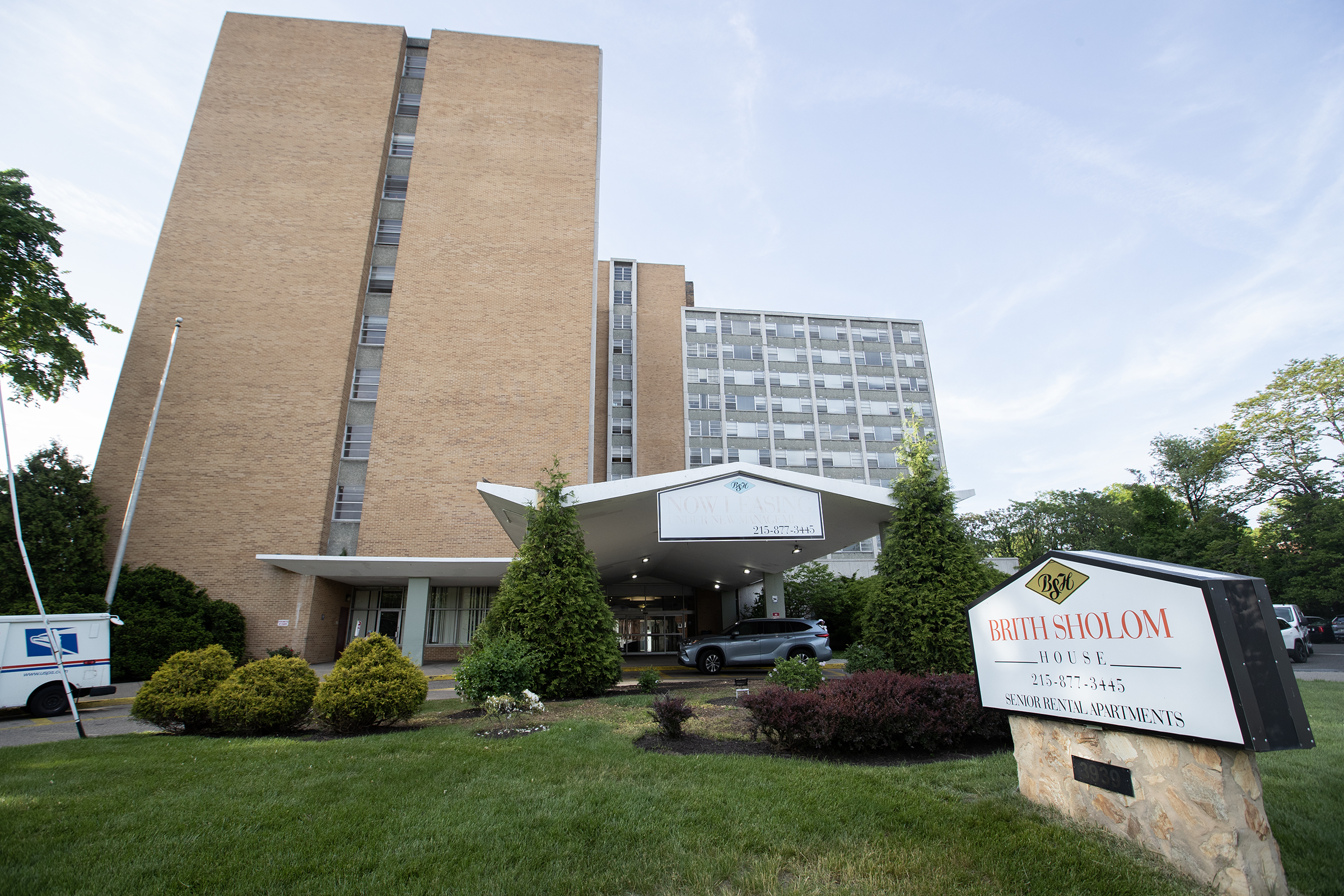
The exterior of Brith Sholom House on May 8, 2023.
When they first arrived at The Dane, some elderly residents were not getting the care they need, Washington said.
One man she ran into frequently often smelled of urine and would walk around with visibly wet pants. She said building management addressed the issues by spraying Febreze on benches the tenant used after he left an area. He has since died.
Another man screamed for help from his balcony and has since been moved out of the building.
“We are very used to all kinds of things happening here, from the students being wild to elderly being wild, but not to the level of being unable to take care of themselves,” Washington said.
Jeremiah says that PHA keeps tabs on the rehoused Brith Shalom residents — who previously were living with no oversight, although there are limits to what it can do. He encouraged tenants to report anyone who needs aid.
“We provide a robust set of social services to residents we inherited at Brith Shalom,” Jeremiah said. “PHA is not a healthcare provider. We are a housing provider, though we provide access to opportunities for residents who are interested in aging in place.”
A former Brith Shalom resident had no complaints with The Dane and praised PHA for the improvements in his life.
“I have no problem with them. I’m happy,” said Barry Brahn, who is blind and has AIDS. “They’re slow at getting things fixed, but they can only do so much and they’ll eventually get on it.”
What comes next?
Some aspects of the rocky transition from Cross Properties to PHA have eased. Since October, tenants were able to pay their rent online and submit maintenance requests. Washington says she does not see obviously distressed elderly residents any longer.
But tensions remain.
“The transition to PHA has been challenging, and their communication has been sorely lacking,” said Lanese Rogers, who has lived in The Dane for two years.“As someone who pays unsubsidized rent, they deal with us in a condescending manner.”
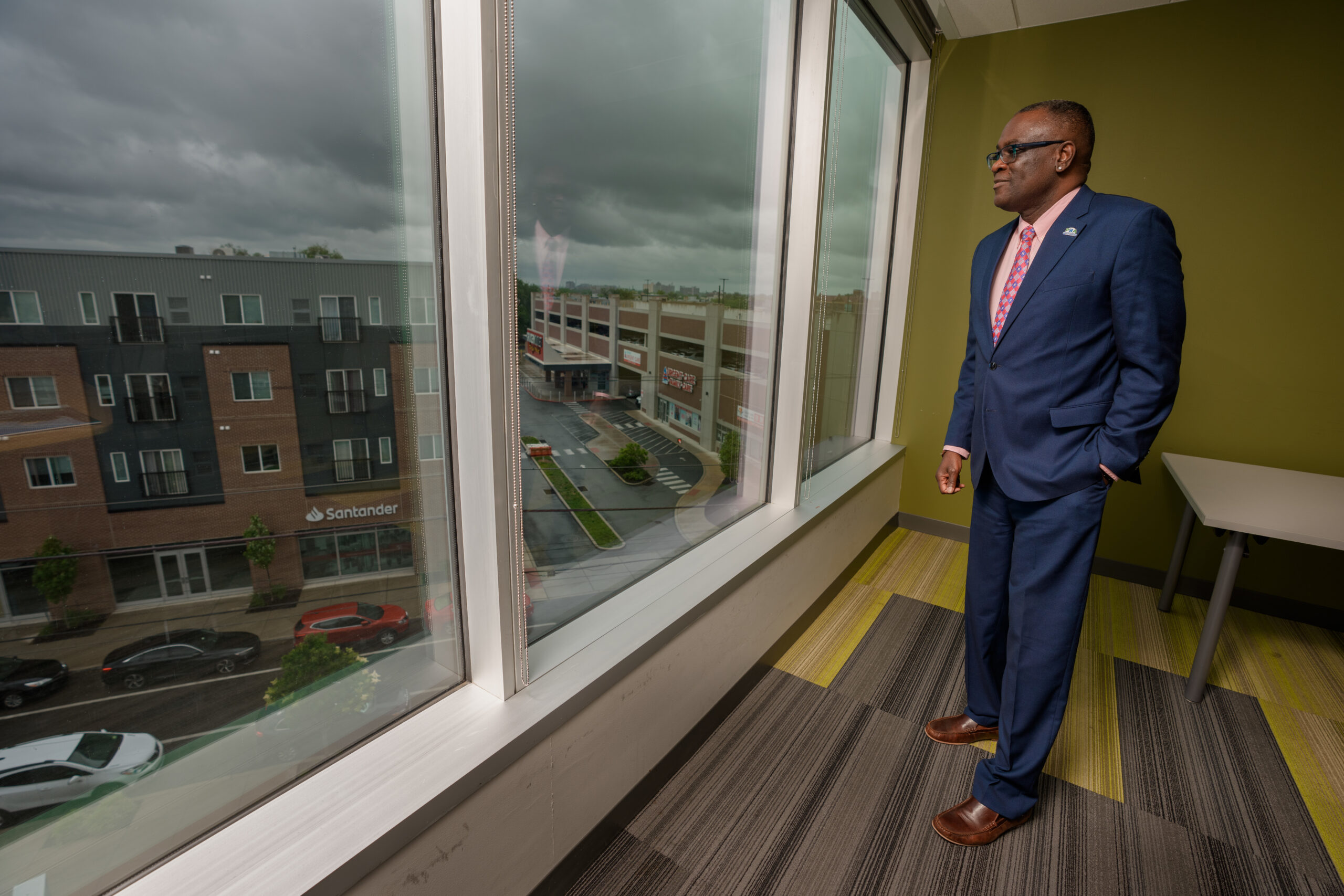
Kelvin Jeremiah, PHA president and chief executive officer, at PHA headquarters, in Philadelphia.
Jeremiah says he believes some of the pushback against PHA is due to class prejudice and bias against subsidized tenants.
“I don’t believe that there is anywhere any Philadelphian, whether or not they’re high income, middle income, low income, shouldn’t be permitted to live,” Jeremiah said.
He is committed to providing accessibility and affordability throughout the city, he said, and he hopes to retain mixed-income residency innewly acquired buildings with existing tenants.
So far at The Dane, many of the market-rate tenants are leaving.
“If I could pick up my apartment and move it to another location, I would,” Rogers said. “The building is changing, and I don’t like the direction it’s moving in.”
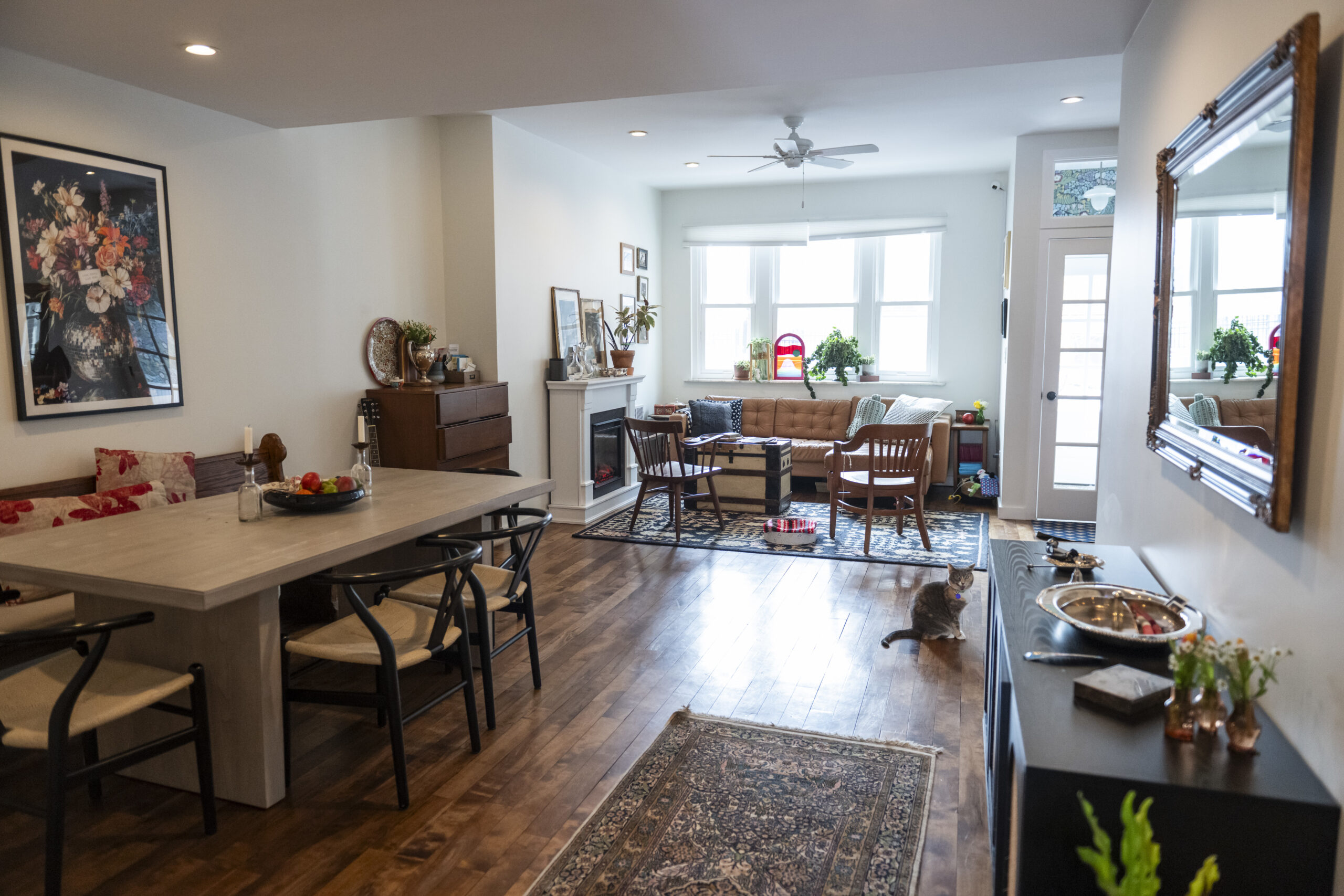
Onefamily’s list of must-haves narrowed their home search to just one property in Passyunk Square. And it wasn’t even on the market — yet.
Fast forward a few months and the couple snagged the first viewing and snatched up the century-old house. The homebuyers were able to make a down payment of $300,000 thanks to the sale of their former home.
Read on to see which traditional South Philly home feature the family rebuilt because they had to have it.
Keep scrolling for that story and more in this week’s edition:
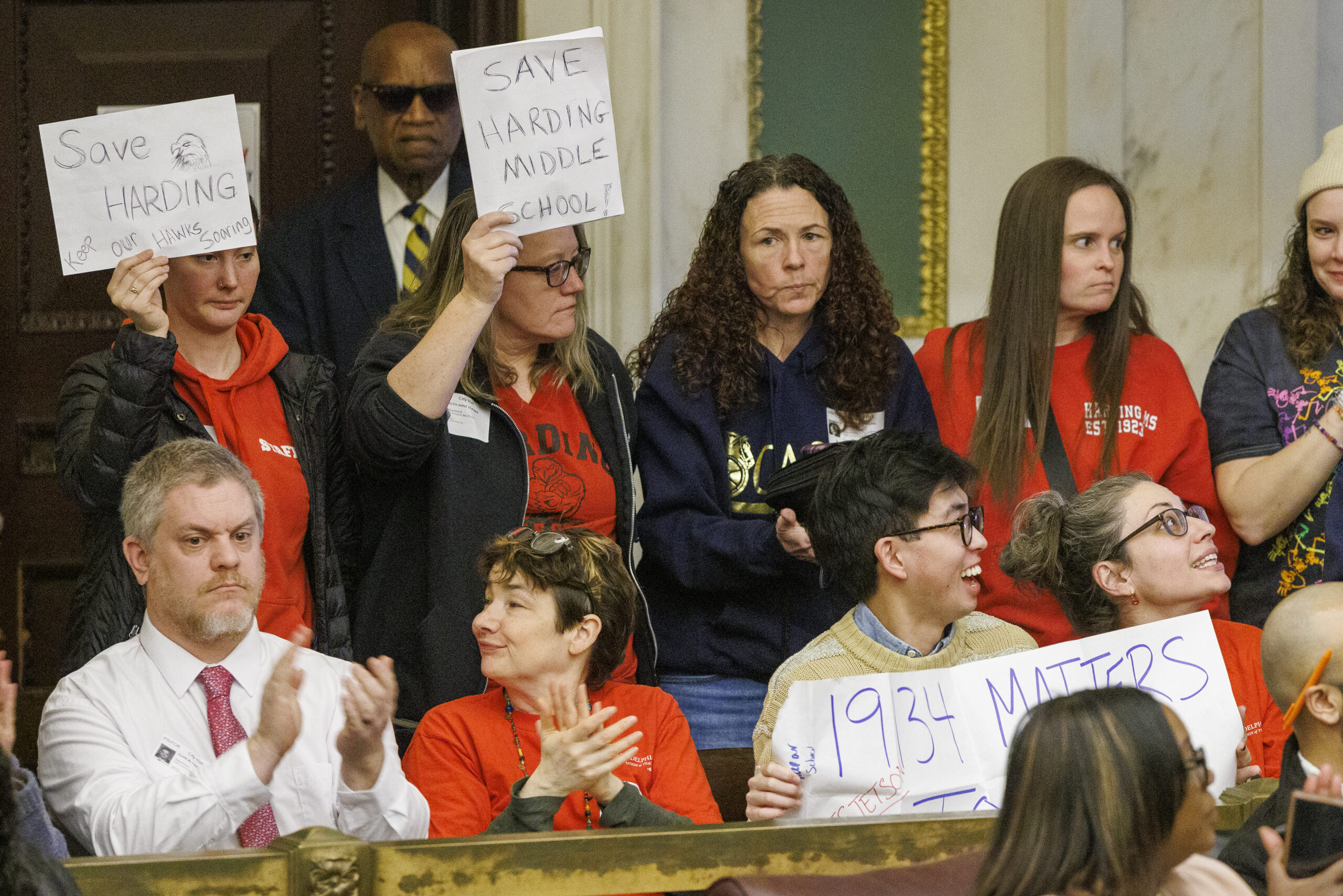
Fate of neighborhood schools: Get caught up on the Philly superintendent’s plan to close school buildings and see how people are reacting.
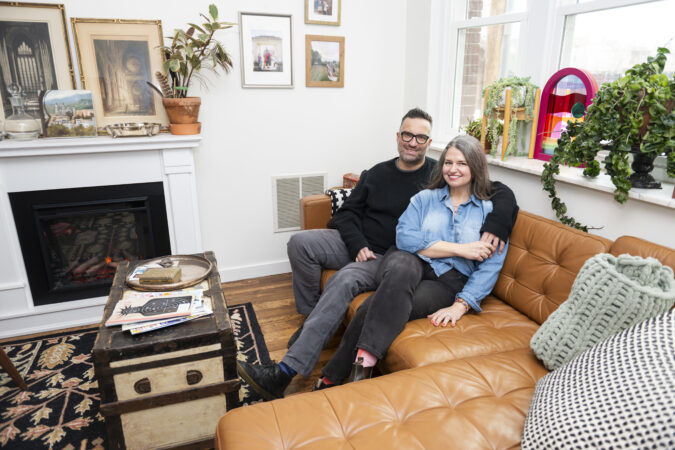
HomebuyerCatherine Wargo Roberts calls one aspect of her home renovation “a vanity project for sure.” But she doesn’t regret it.
She really wanted a traditional South Philly vestibule in the front of her home, so she rebuilt one. “Best money I ever spent,” she said.
Speaking of money, she and her husband put down what she called a “giant down payment” of $300,000 on their $725,000 home to keep the monthly mortgage payment manageable for them. That was possible because they sold their old home.
The family loved living in Passyunk Square and didn’t want to leave, but their block of both homes and businesses had gotten too busy. And they wanted more space, especially outside.
It’s common for homebuyers to pick locations based on the schools their kids would attend. And families get deeply attached to their school communities, whether residents are new or have been living in an area for generations.
That’s why it’s not surprising that a plan to close some Philly schools is getting pushback.
The School District of Philadelphia has around 300 buildings, including more than 200 schools. Many buildings are at least 75 years old and not in good condition.
Some schools have 1,000+ empty seats, and others are squeezing students in.
Lauren Braun-Strumfels and Kyle Strumfels lived in a rowhouse in Lambertville, N.J. when they started eyeing the neighboring standalone house.
They and their two kids had outgrown their home, and the couple had a vision for how to transform the other property, where maintenance had lapsed for decades.
The couple bought the house in 2017 in a “very stressful and very intense” process, Braun-Strumfels said.
Then, in the first round of renovations, the homeowners:
🛠️moved the kitchen
🛠️ bumped the back wall out to create more space
🛠️ added a Jack-and-Jill bathroom
🛠️ upgraded mechanical systems
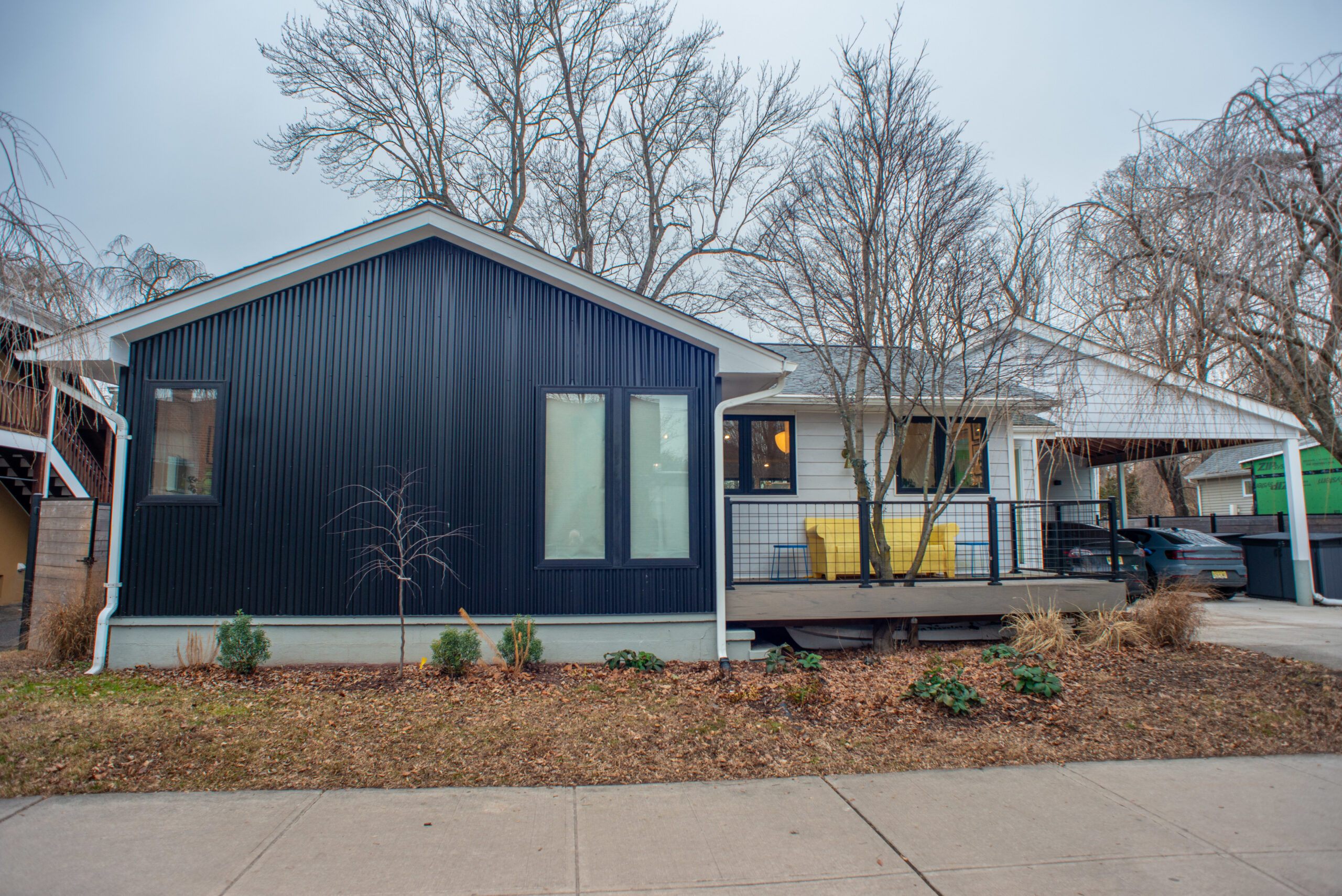
They turned the home into a California modern-inspired ranch house.
“Sometimes I wondered if people would be mad we stuck a modern house in the middle of this [Victorian-era] town, but people seem to really like it,” Strumfels said.
Shout-out to Doug S. and Jeff B. for getting that right.
Jeff said: “Wonderful place to go to beat the cold weather blues. Every now and then we just need a pick-me-up, especially since we like to garden. Every season has something new to see. Been going there since I was a kid with my parents and now we are senior citizens and still love it.”
I’ve only been to Longwood for a reporting assignment or two. But last week’s photo and Jeff’s memories are making me want to flee there for my own winter pick-me-up.
📹 On the street
A couple weeks ago, I shared the latest news in the saga of suspicious property sales near Temple University. Buyers seemed to be paying almost double the asking price for buildings that had been sitting on the market.
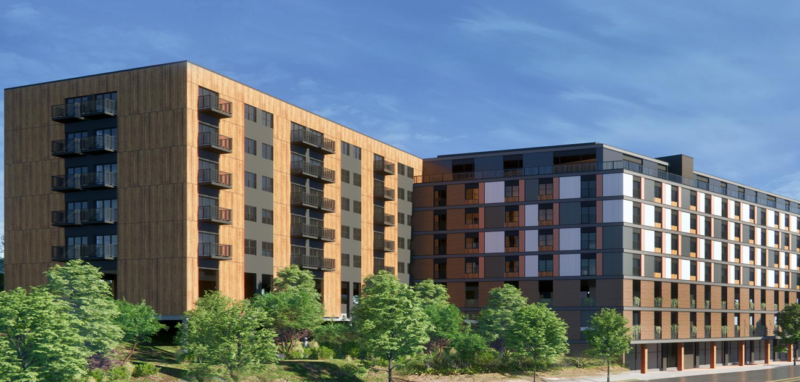
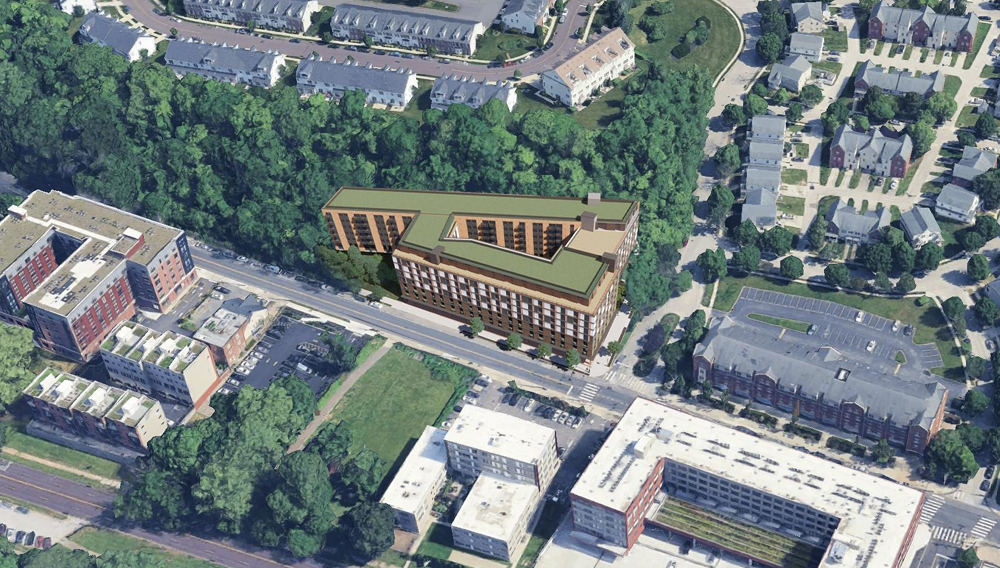
A 260-apartment development, largely composed of one-bedroom units, is the latest residential project slated for 4401 Ridge Ave. in East Falls.
The almost two-acre site has been long vacant and is now covered in trees. It is owned by the Philadelphia Housing Authority, which operated a dozen rental homes there until the late 1990s. The property is under an agreement of sale, according to the agency.
Plans for the project were posted on the Philadelphia Planning Commission’s website Tuesday, showing a six-story building from Stokes Architecture & Design.
The zoning paperwork in city records is signed by Eric Marshall, who is the principal with MGMT Residential. The company, based in Northwest Philadelphia, owns and manages hundreds of units in neighborhoods including Roxborough and Manayunk.
MGMT itself is not the developer and will not own the property, according to the project’s zoning lawyer, Richard DeMarco, although the company will manage it once construction is completed.
The development team declined to comment in advance of a neighborhood meeting Wednesday night.
The plans show that the apartment building proposed for 4401 Ridge Ave. will offer 217 parking spaces. It will also host at least 8,000 square feet of commercial space, according to the East Falls Community Council, which has been negotiating with the developers.
The neighborhood group’s zoning chair, Hilary Langer, reports progress at the discussions.
He says that many neighbor concerns center on traffic, parking, and the preponderance of smaller units — a concern he does not personally share.
“The … fact is that one-bedroom apartments are in demand and their vacancy rate is [almost] 10%, which is really the same as annual natural turnover,” Langer said in an email.
Langer said that by his calculations, 115 two-bedroom apartments have been built in his neighborhood since 2021, and a quarter of them are still vacant. But 399 one-bedroom or studios have been constructed in that time frame, and only 12.5% of them are empty.
An aerial rendering of the 260-unit apartment building proposed for 4401 Ridge Ave.
The project needs approvals from the city’s Zoning Board of Adjustment to move forward, with a hearing set for March 25. It will appear before the advisory-only Civic Design Review committee on March 3.
The last proposal for the site came in 2021 from Baltimore-based Atapco Properties. That project included 189 parking spaces for 185 apartments.
Thatformer proposal’s frontage was pushed back from Ridge Avenue, which the East Falls Community Council feared would make an already pedestrian unfriendly environment even worse.
The newer development has the apartment building fronting on the sidewalk.
“You’re not going to get walkability if you just put in plazas and parking lots,” Langer said. “This building, at the very least, it provides the chance of walkability.”
As their family grew, Lauren Braun-Strumfels and Kyle Strumfels felt the walls of their 1895 rowhouse in Lambertville, N.J., closing in on them. With two kids, the 16-foot wide, one-bathroom house left a lot to be desired.
They pined after the neighboring standalone house built in the 1970s, an abnormality for the Victorian-era town that attracts antiques lovers to Hunterdon County year-round. Even though maintenance had been deferred for decades, the house sat on an unusually roomy lot for the dense, walkable downtown. The couple, unafraid of a renovation, had a vision for what it could become.
But creating the California modern-inspired ranch house they live in today was not nearly as straightforward. First, buying the house proved challenging.
The exterior of Kyle Strumfels and Lauren Braun-Strumfels’ home in Lambertville, N.J.
“When we finally got to the table and signed the deal, [the seller’s] lawyer said, ‘I thought she was gonna go breach of contract, like, three times!’” Braun-Strumfels, 46, said. The couple felt it on their end, too, as they helped guide their neighbor through the sale. “It was very stressful and very intense.”
They closed for $290,000 in August 2017. The young family moved into the two-bedroom house on Feb. 4, 2018, the day the Eagles won the Super Bowl, recalled Strumfels, 47. Their two kids, now 12 and 9, shared one room while the couple had the other. Everything needed updating.
“With the rowhouse, there were certain things that we just wouldn’t want to do to it, historically, to preserve the character,” Braun-Strumfels said. “This house was a total blank slate. It was neither historic nor attractive, so we felt like we could really transform it.”
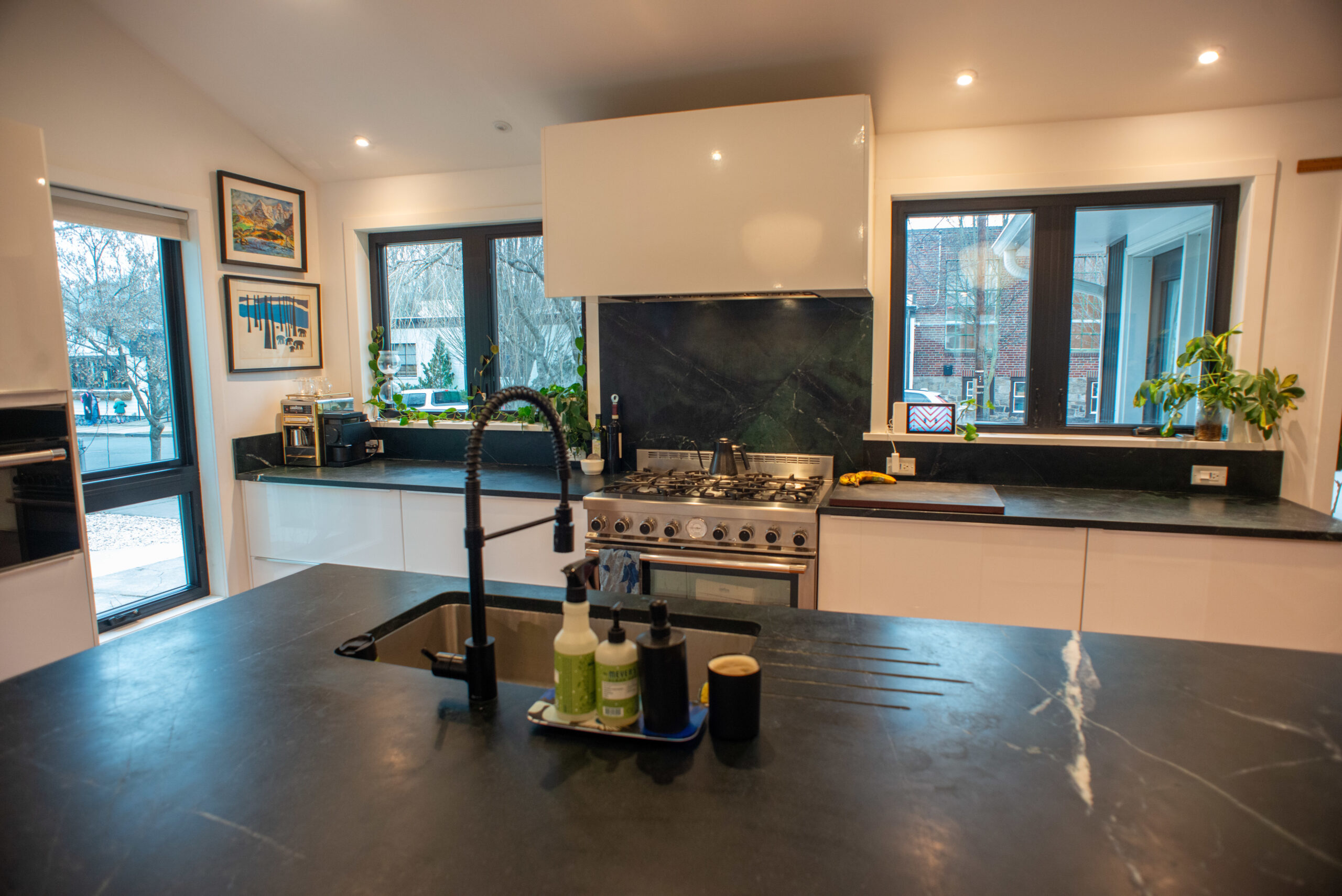
In the first of their two major renovations, they funneled $150,000 into moving the kitchen to the front of the house, bumping the back wall of the house out to add more living space, and adding a Jack-and-Jill bathroom connecting the two original bedrooms on top of less exciting but no less important mechanical upgrades. They lived that way for a few years but always knew there was more work to do.
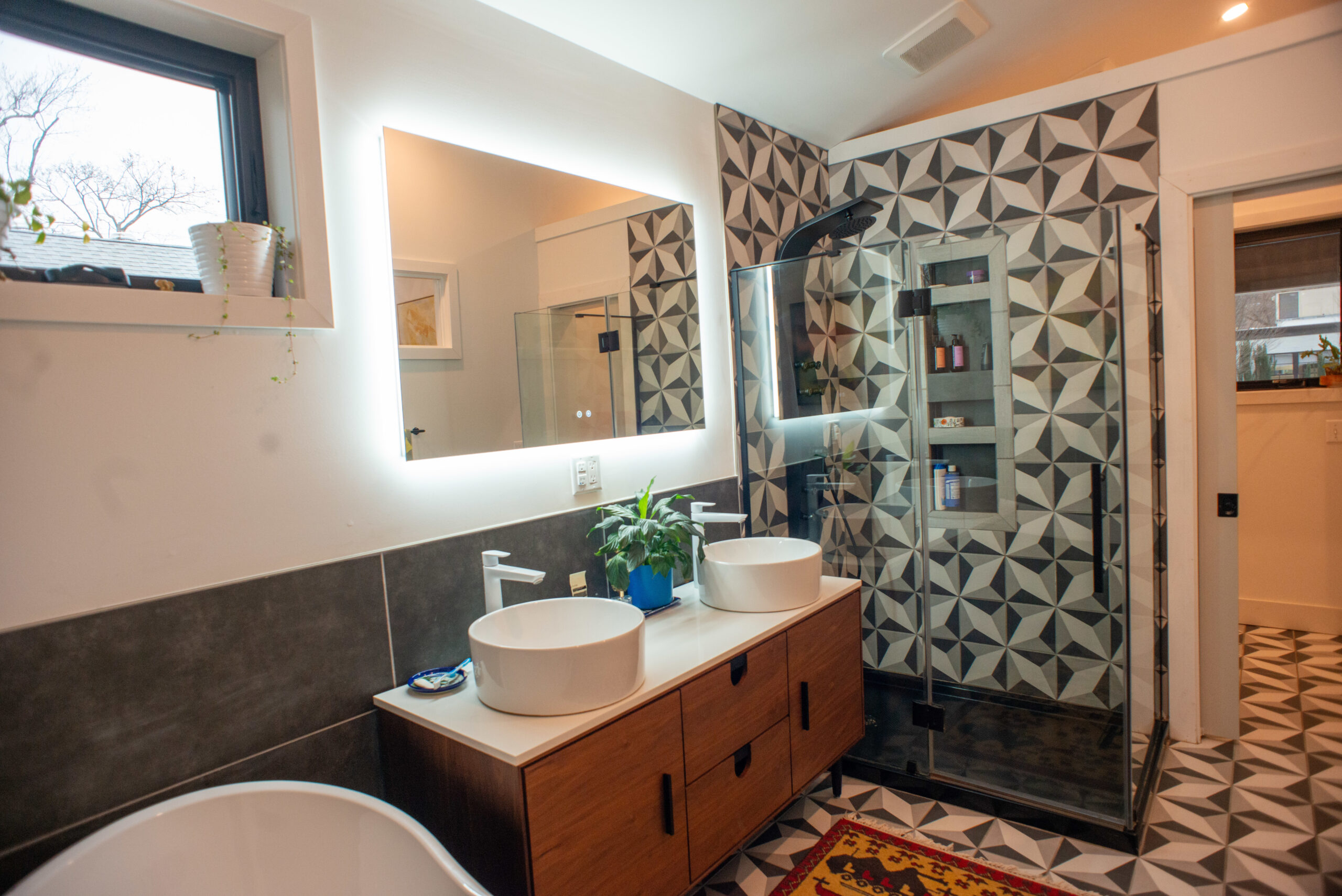
The kitchen, which was relocated in the first round of renovations.The main bathroom.
The second renovation didn’t go quite as smoothly.
The couple began pursuing a $300,000 construction loan in 2018 that didn’t close until 2020, thanks to a zoning snafu. The amount was intended to leave a nice cushion for finishing details, but by the time the loan was theirs, the pandemic had driven up lumber costs and “our whole budget got eaten by two-by-fours,” Braun-Strumfels said. Their tile budget was whittled down to about $1 per square foot in the bathrooms, meaning Braun-Strumfels had to let go of her plans for elaborate tile and countertops.
They also had to part with one architect who didn’t quite get the couple’s vision. They then hired Princeton-based architect Peter Wasem.
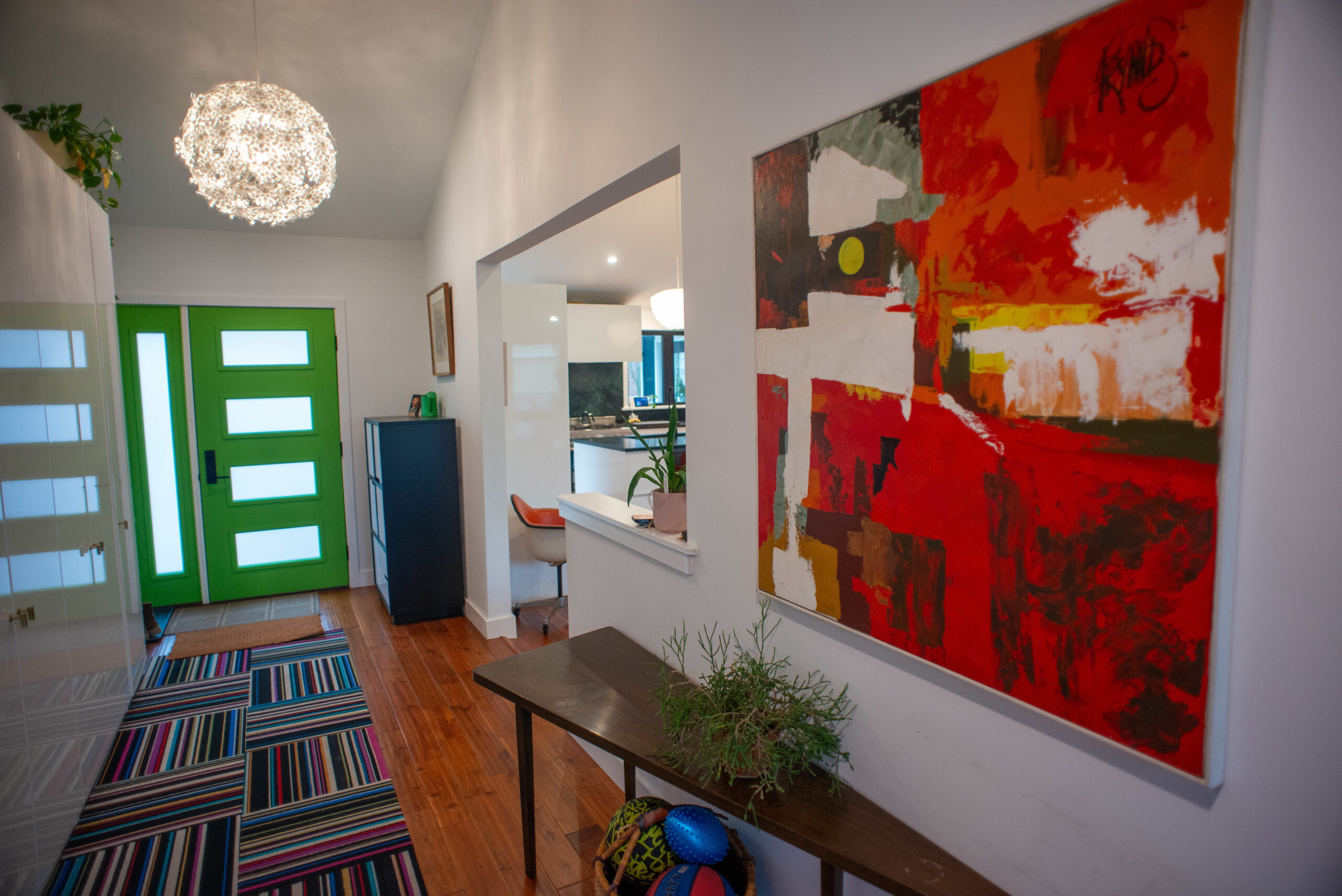
The hallway near the entrance features a large painting that contrasts with the green front door.
Ultimately the renovation added 1,000 square feet for a new entry as well as what they call an “adult wing,” with a walk-in closet that leads to an en suite bathroom. Through a stroke of smart design, the en suite’s water closet doubles as a powder room, creating a circular flow through the wing.
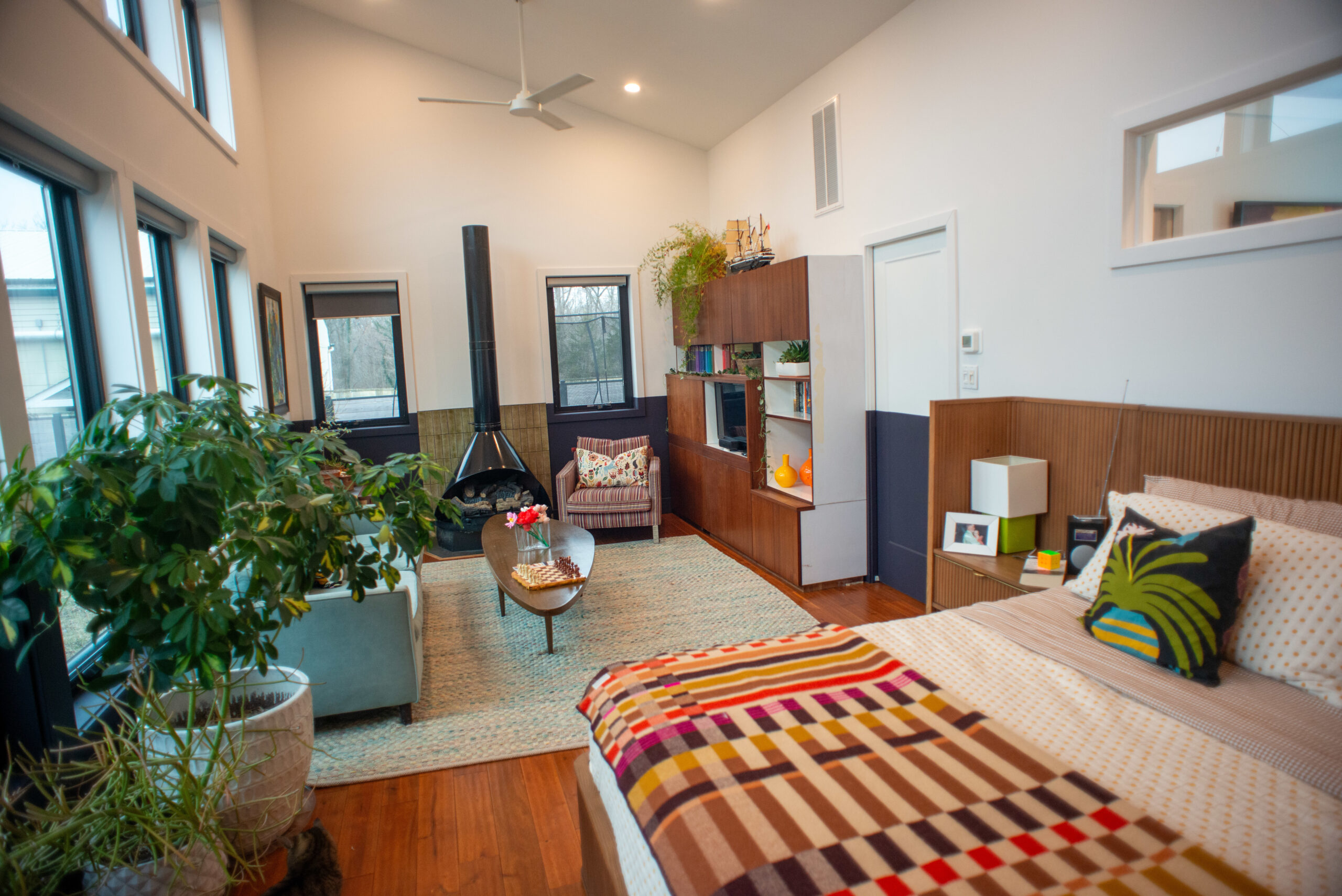
Coming from their rowhouse, which only had two exposures, it was important to Braun-Strumfels and Strumfels to take advantage of the roomy lot’s natural light. The primary bedroom is lined in windows — with a partial view of their old property. Their living room addition also has a large window overlooking the backyard.
The primary bedroom has two-story windows, high ceilings, and a living space.
The original front porch was enclosed to become a shared office for Braun-Strumfels, an associate professor of history at Cedar Crest College, and Strumfels, a senior vice president of ESG and climate at Macquarie Group. A new carport gives the house a distinctly mid-century touch.
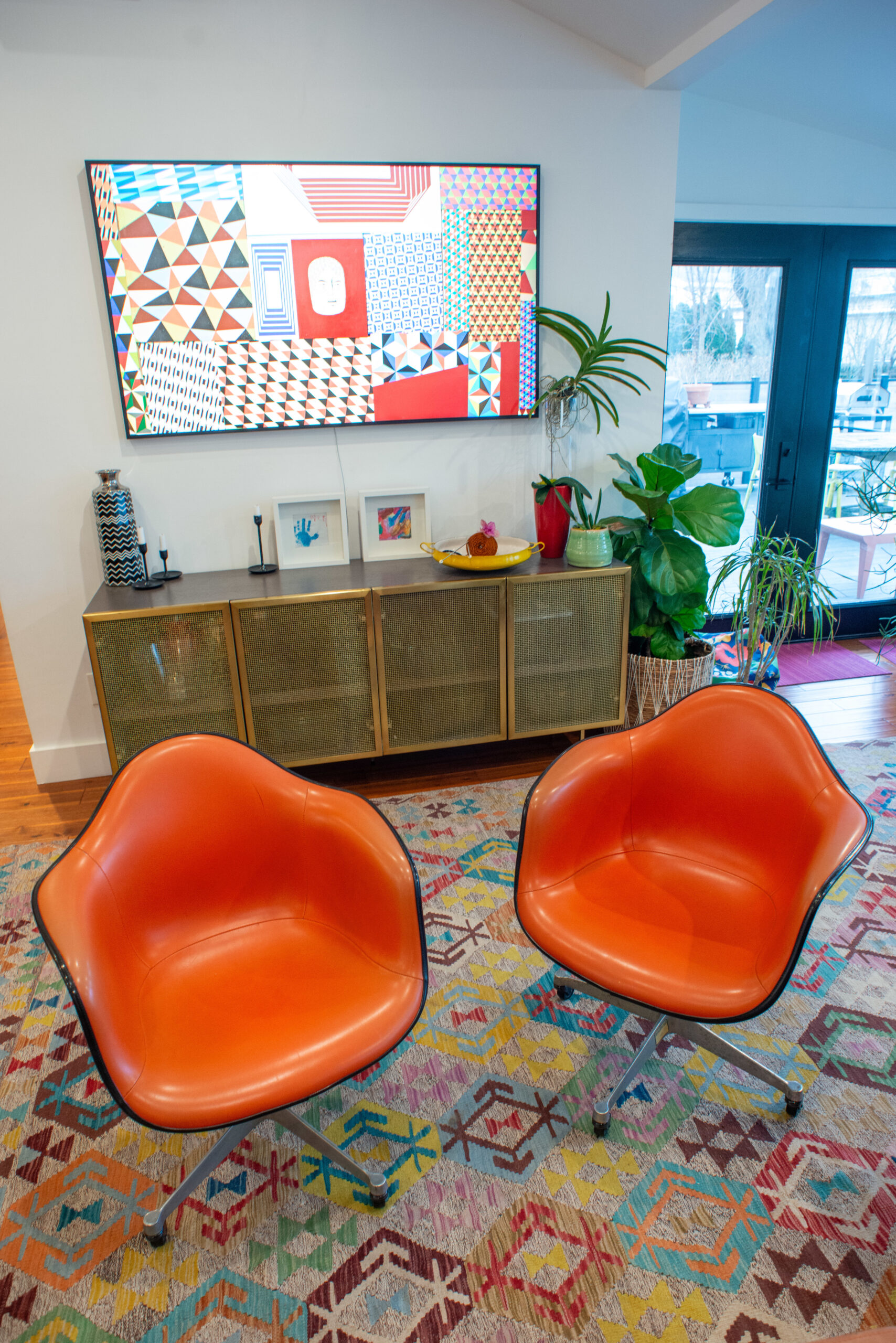
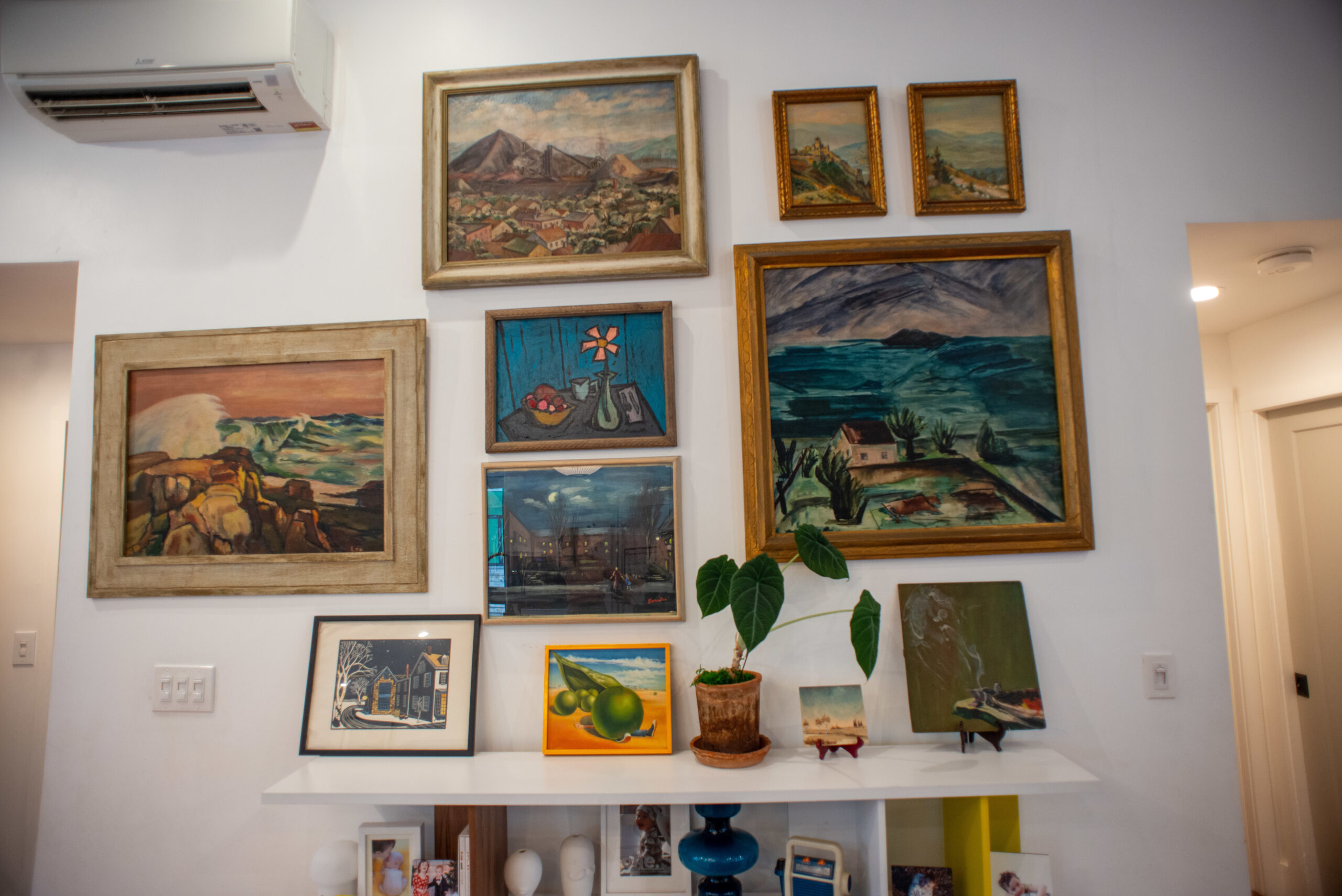
The result of the renovations is an open-concept house where the couple’s eclectic furniture, wares, and finishes can live in harmony. Their collection of mid-century furniture and wares from local joints like Rago Auctions coexists with original art, including Strumfels’ favorite piece from Philadelphia’s Material Culture. And that’s on a backdrop of modern finishes like sleek soapstone countertops and Herman Miller pendant lighting over the oversized kitchen island.
“Sometimes I wondered if people would be mad we stuck a modern house in the middle of this town, but people seem to really like it,” Strumfels said. Folks in the area can be very resistant to change, Strumfels said, but “we get a lot of nice feedback.”
Mid-century furniture and original art coexist in an eclectically decorated home.
They have no plans to move, but Braun-Strumfels said they do harbor a hope of someday returning to Philadelphia, where they lived for a year before moving to Lambertville.
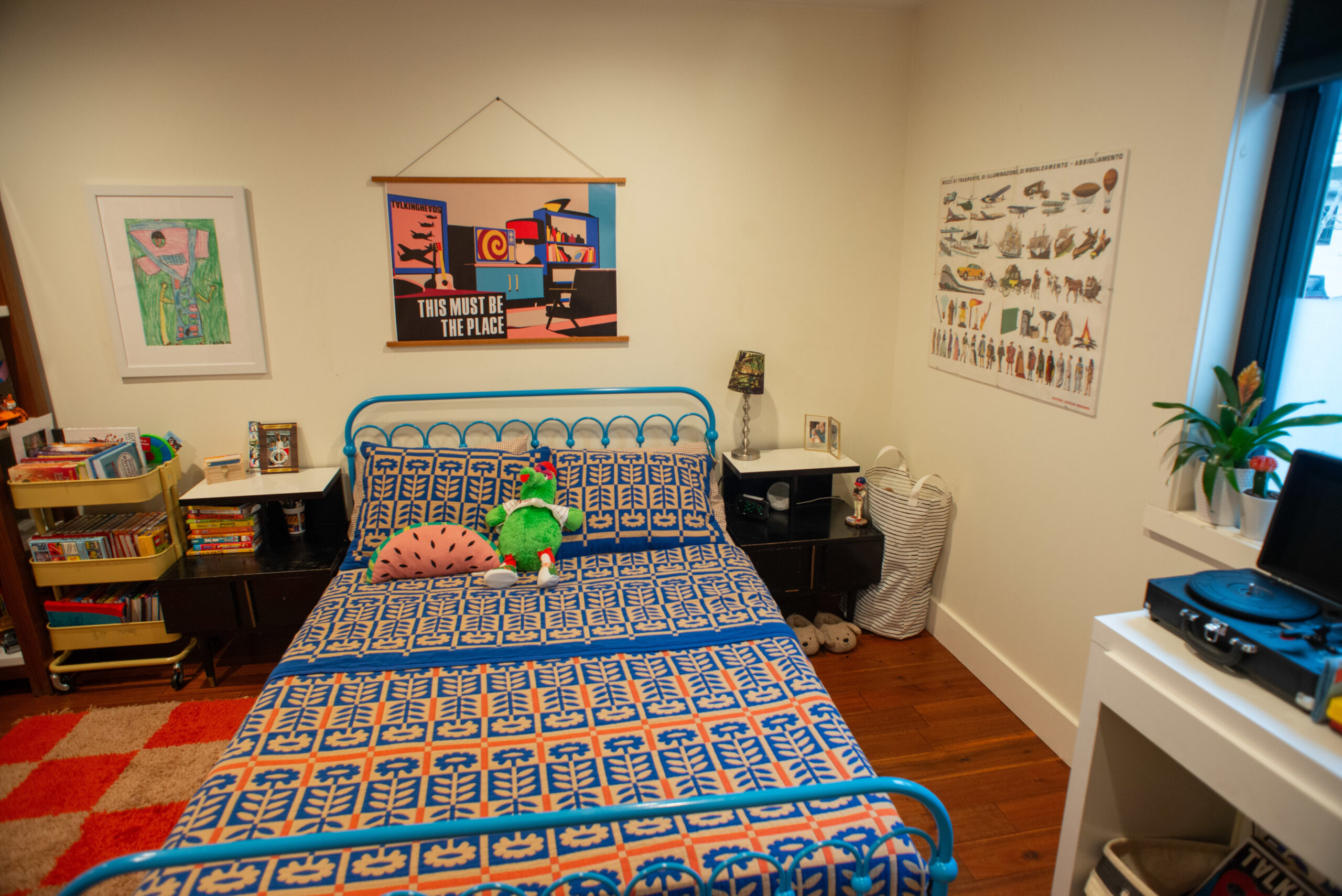
Paintings hang on the wall.One of the children’s bedrooms.
“We have our little pipe dream that we might retire eventually, get a little spot in the city, go back and forth,” she said.
But for now, they’re finally perfectly at home.
Is your house a Haven? Nominate your home by email (and send some digital photographs) at properties@inquirer.com.
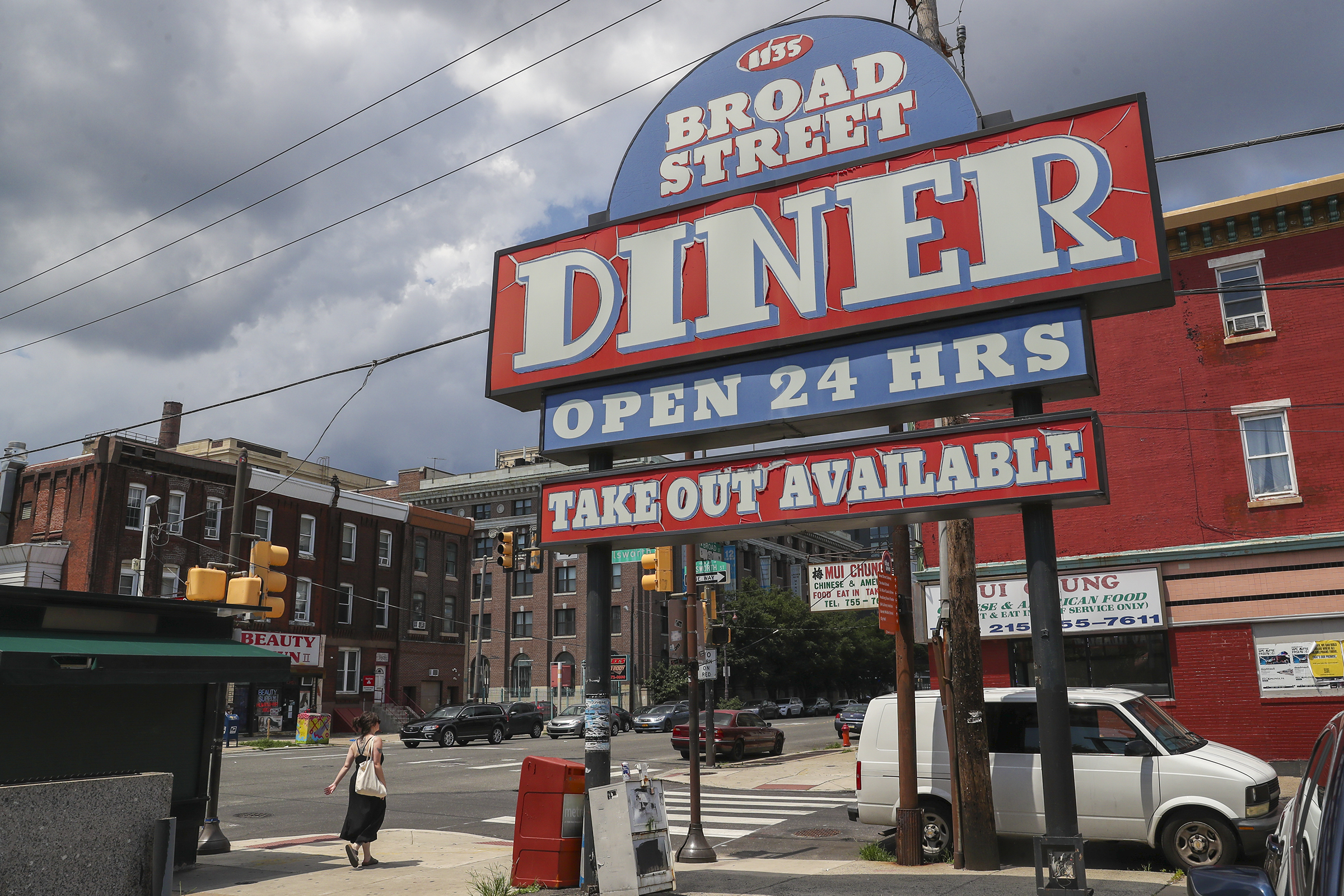
The Broad Street Diner’s days may finally be coming to an end.
Although demolition permits were issued for the building at 1135-43 S. Broad St. in 2022, it has remained in business.
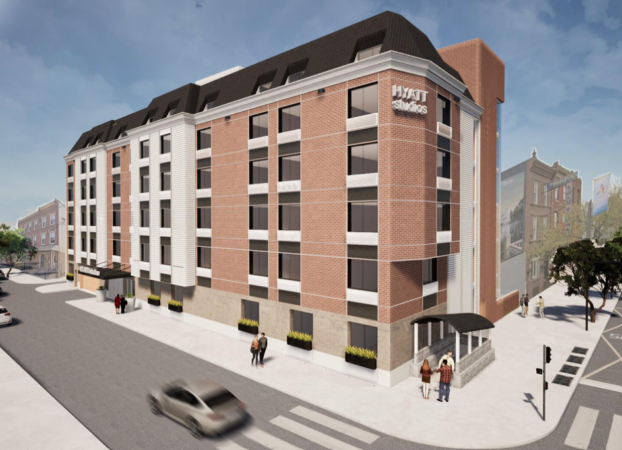
But on Tuesday, plans for a six-story Hyatt Studios hotel were posted on the Philadelphia Planning Commission’s website, indicating that the project is moving forward.
It will be subject to the advisory only Civic Design Review process on March 3.
The proposal includes 105 hotel rooms and 42 underground parking spaces. Hyatt Studios is a recently launched extended-stay brand of the larger hotel chain.
The plans are credited to Philadelphia-based architect Plato Studio,led by Plato A. Marinakos Jr. The document submitted to the planning commission was rife with errors, including mislabeled street names and neighboring developments.
The architect’s plan highlights the project’s proximity to SEPTA’s Broad Street subway line.
“The hotel will benefit from direct subway line access connecting guests to major sightseeing destinations, entertainment venues on South Broad Street near [Pattison] Avenue and Center City,” the plans say.
The Hyatt Studios hotel will require approvals to move forward from the Zoning Board of Adjustment.
A sign outside the Broad Street Diner in South Philadelphia in 2022.
Maria Petrogiannis, head of development for MR Realty Associates, which owns the property, was not immediately available for an interview.
Her father, Michael Petrogiannis, is a longtime owner of beloved eateries in the region, including the Mayfair, Melrose, and Country Club diners.
The Broad Street Diner’s demolition permits were issued at the same time as the Melrose Diner at 1501 Snyder Ave. on the West Passyunk Avenue corridor. But the Melrose was demolished in 2023, after 67 years in business at that location.
Today, its site sits vacant, hemmed in by a chain-link fence, and is a frequent subject of nuisance complaints from neighbors.
A planned apartment building for that site, which MR Realty said would include a new version of the Melrose Diner, has not materialized.
In a 2025 interview, Maria Petrogiannis said the hope was that the apartment building and replacement diner on West Passyunk would be completed by the time the hotel project came to fruition, giving workers a site to move to when the South Broad Street eatery was razed.
Editor’s note: A previous version of this story incorrectly identified Pattison Avenue.
It would be Sheetz’s first outpost in Wawa’s home county.
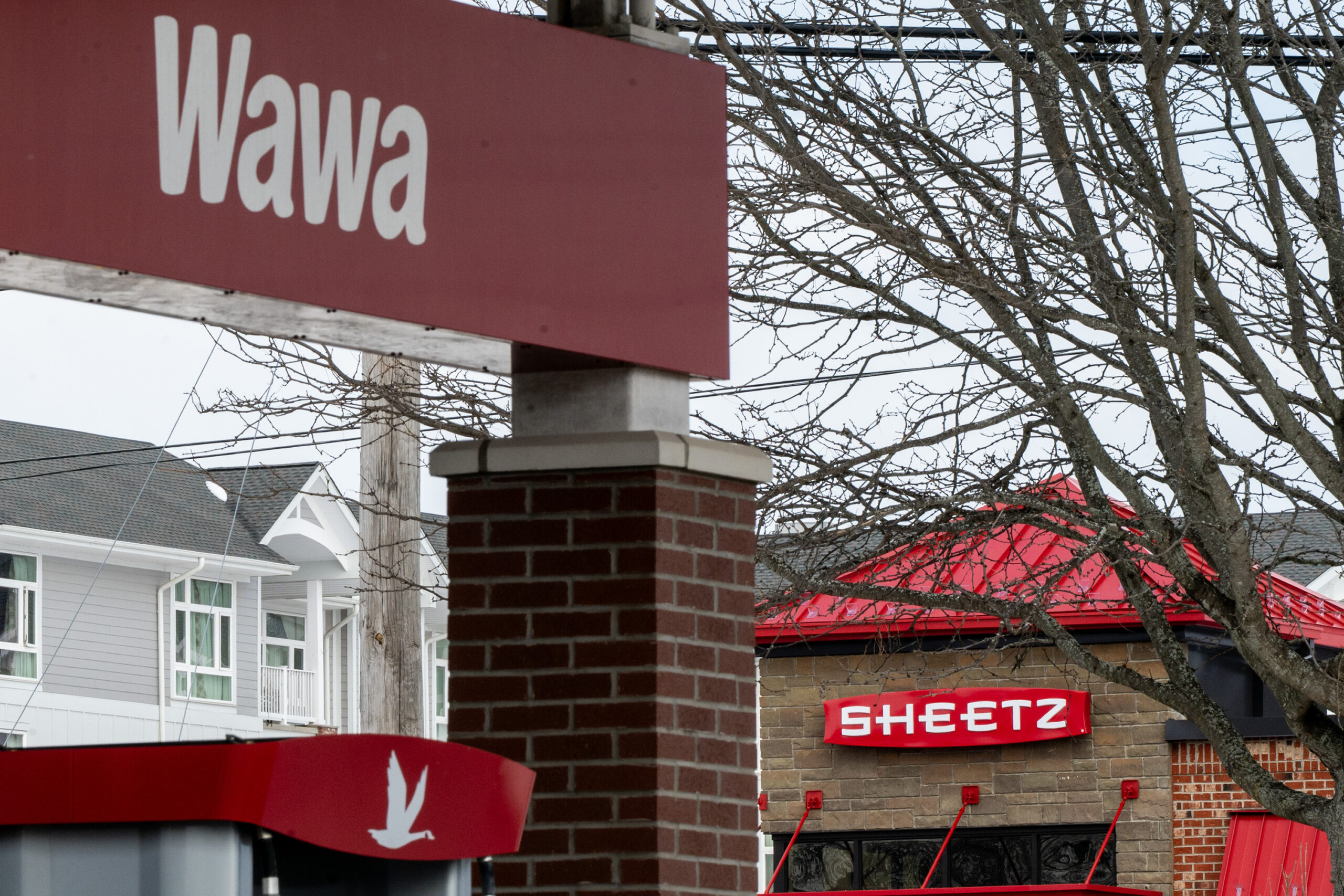
A Sheetz and Wawa now sit across the street from each other in Limerick Township, Montgomery County.
If approved, the store would be constructed about five miles down the road from Wawa’s corporate headquarters, and across the county from the site of Wawa’s first store, in Folsom.
The Sheetz would be in the Village at Painters’ Crossing shopping center near the intersection of U.S. Routes 1 and 202, according to the application. Sheetz would take over a parcel in the northeast corner of the complex that is currently occupied by a vacant former bank and a closed Carrabba’s Italian restaurant.
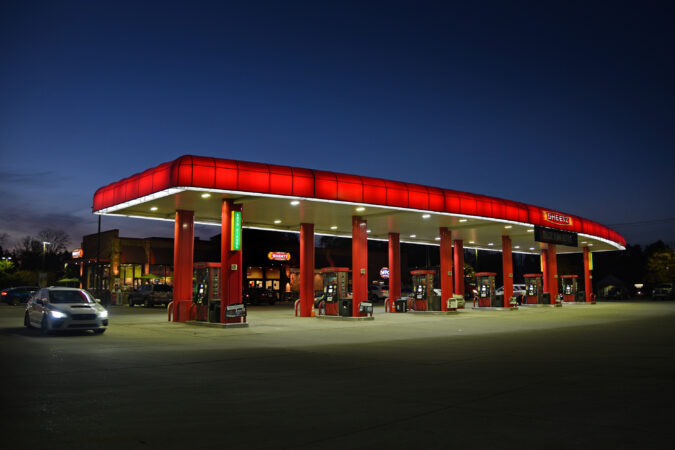
Along with Sheetz’s usual offerings of made-to-order food, grab-and-go snacks, and drinks, the outpost would include indoor and outdoor seating, two mobile-order pickup windows, and six gas pumps, according to the application. It would not include a drive-through.
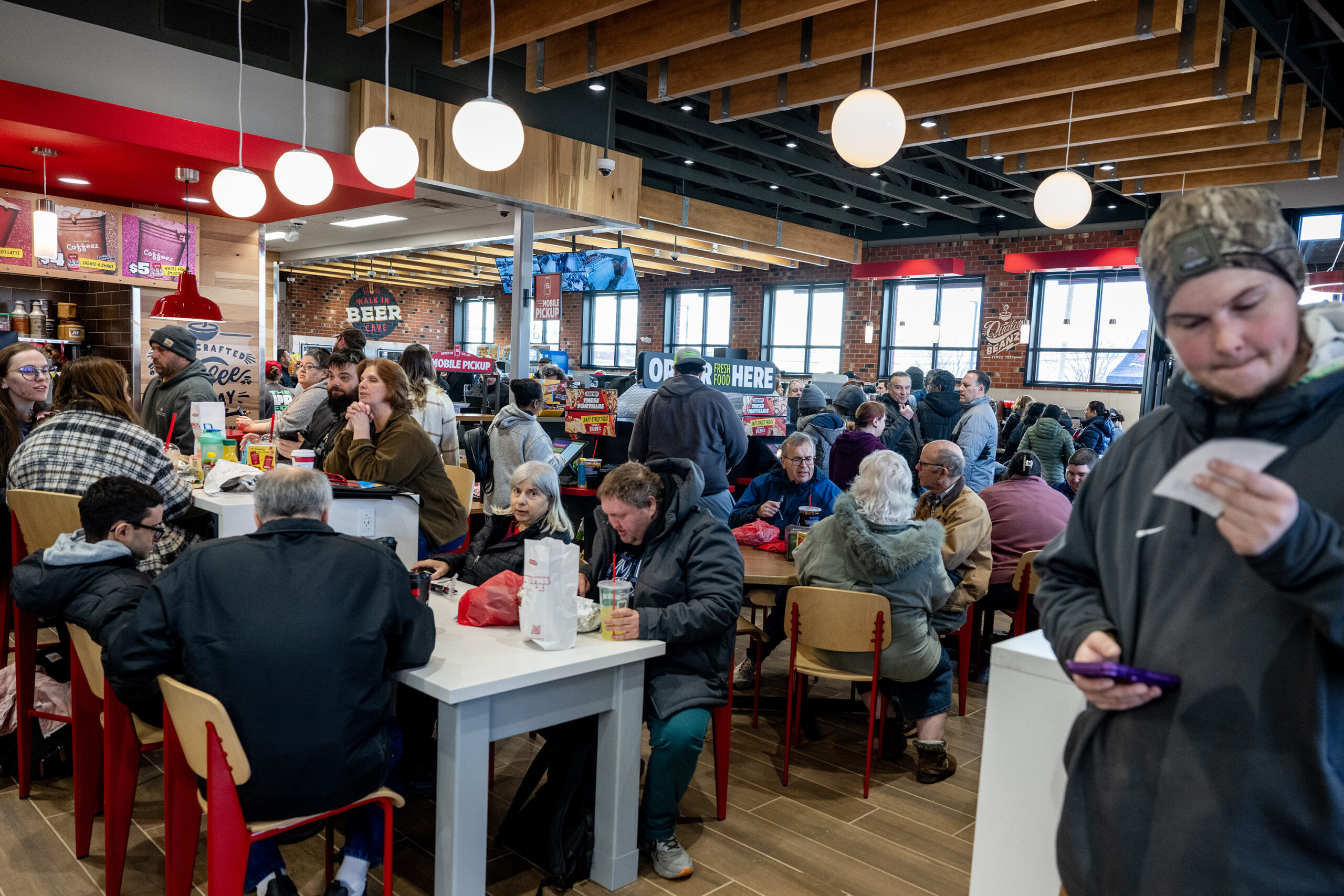
Customers crowd into the indoor dining area at the new Sheetz in Limerick Township that opened last week.
Nick Ruffner, Sheetz public affairs manager, declined to provide additional information about the proposal, saying in a statement that “it is still very early in the process.”
Zoning changes and other approvals would be required before anything is built, Chadds Ford Township solicitor Michael Maddren said. As of Tuesday, Sheetz had only submitted the sketch plan, which was discussed at a planning commission meeting earlier this month, Maddren said.
At the meeting, township officials did not express strong opinions about the sketch, Maddren said: “We need a little more detail.”
Craig Scott (left) of Wayne and Dave Swartz (right) of Collegeville had breakfast at last week’s grand opening of the first Sheetz in the Philadelphia suburbs.
If the Chadds Ford project moves forward, Sheetz could establish a foothold in three of Philly’s four collar counties: Along with its new Limerick, Montgomery County location, Sheetz also has expressed interest in building a store in Chester County.
In the fall, company officials submitted a sketch plan to Caln Township officials, proposing a location at the site of a shuttered Rite Aid on the 3800 block of Lincoln Highway in Downingtown, according to the township website.
After years of Sheetz opening stores in Western and central Pennsylvania, and Wawa expanding closer to Philly, Sheetz and Wawa’s footprints have increasingly overlapped in recent years.
A Wawa opened outside Harrisburg in 2024, marking the chain’s first central Pennsylvania location. It is down the street from a Sheetz.
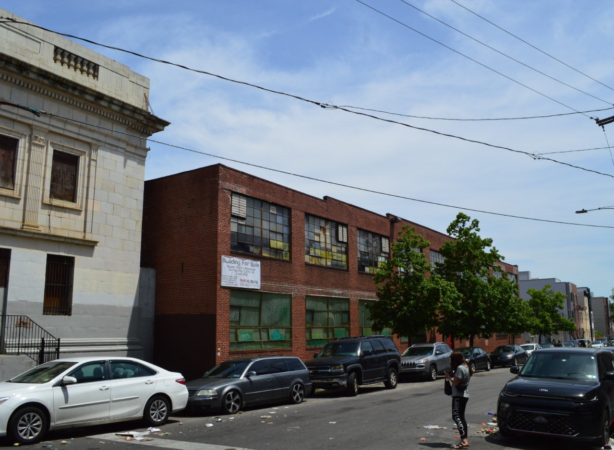
The long vacant industrial building at 1807 Huntingdon St. in East Kensington is moving toward redevelopment after seven years of setbacks.
Philadelphia-based Smith & Roller has been eyeing the faded brick structure since 2019 but struggled with funding following the COVID-19 pandemic and the loss of a lender after Silicon Valley Bank’s collapse in 2023.
But last week New Jersey-based Ellavoz Impact Capital announced that it was acquiring the building in partnership with Smith & Roller, allowing the developers to move forward with their plans near SEPTA’s Huntingdon stop on the Market-Frankford line.
Developers Tayyib Smith and Jacob Roller see the project as a catalyst for change around the elevated train station, which is haunted by the opioid crisis.
“I’ve always imagined connecting nodes of vitality and then seeing how it almost has a regenerative spring of people looking at a neighborhood differently,” Smith said.
“I can imagine that block having a different feel, a different type of lighting, a different type of walkability, more socio-economic diversity, more eyes on the corridor,” he added.
The developers plan to break ground on the project in about six months.
Smith & Roller’s neighboring development, 1801 Huntingdon, will transform a historic bank building into a banquet hall and commissary kitchen for Black-owned caterer Strother Enterprises, which has been expanding elsewhere in the city recently. That development will need approvalby the city’s Zoning Board of Adjustment and is on a longer timeline.
Over the years, the project at 1807 Huntingdon has added more housing and cut back on space for businesses.
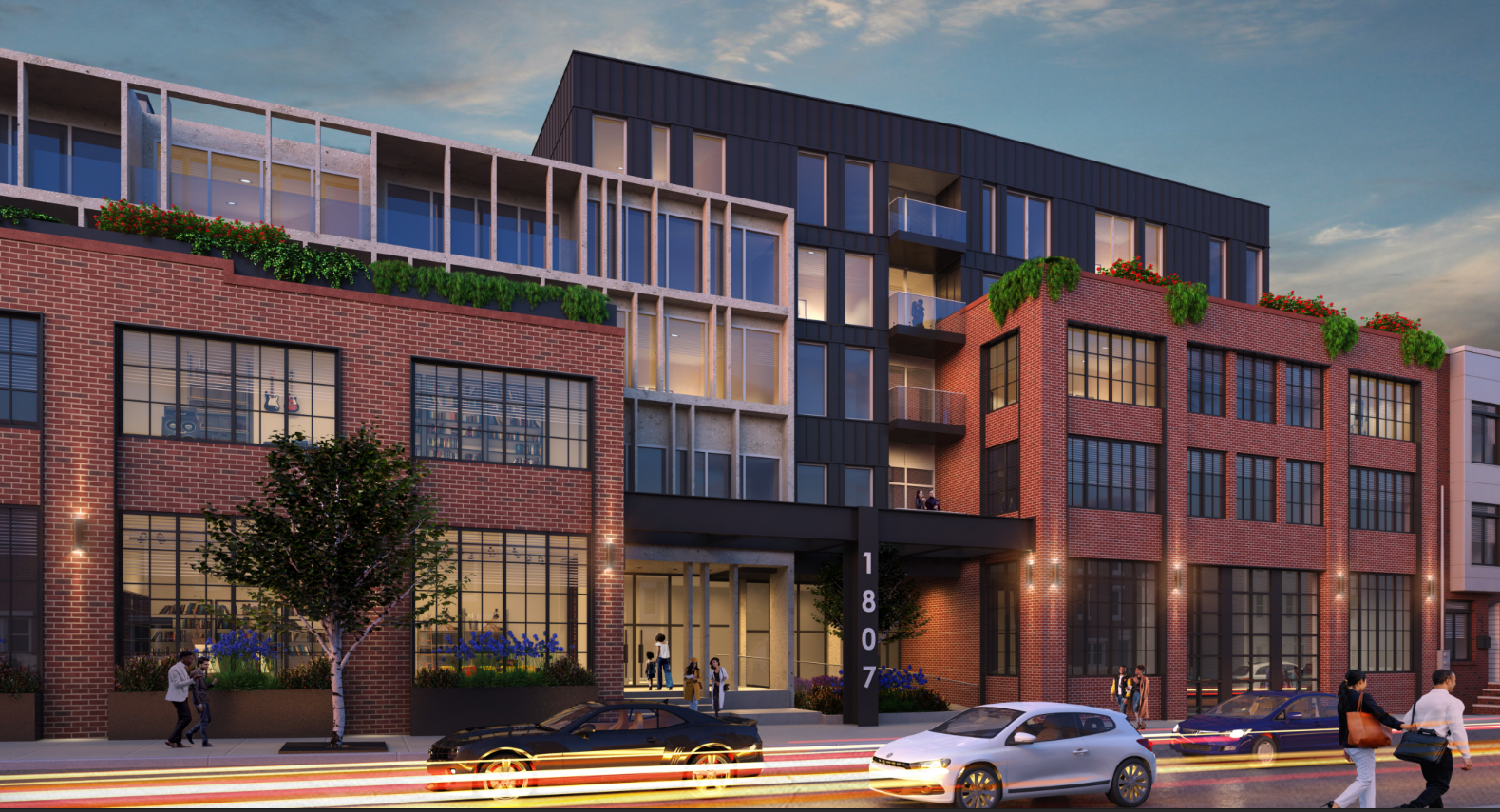
The current version of the project includes 109 residential units and 8,600 square feet of commercial space. According to Ellavoz Impact Capital’s news release, the commercial space has been preleased, but the tenant list is not public yet.
A rendering of the redeveloped factory building, as a mixed-use apartment building.
An earlier version of the project, reviewed by the city’s Civic Design Review committee in 2022, would have contained 80 apartments and 38,000 square feet of light industrial space.
That’s partly because the federal program Smith & Roller originally planned to use, New Market Tax Credits, requires that at least a fifth of a mixed-use project be devoted to commercial development.
But the project at 1807 Huntingdon has been in process for so long that this part of Kensington no longer qualifies for the federal incentive, which is meant to spur investment in struggling areas.
The project is still in a Keystone Opportunity Zone (KOZ), however, which will give state tax breaks to businesses at the 1807 and 1801 Huntingdon projects.
That policy is also meant to incentivize development in lower-income areas, but there are many examples of its application to parts of Philadelphia like the Navy Yard and University City.
“I don’t know many [KOZs] that are in neighborhoods like Kensington,” Smith said, “where there’s somebody trying to use it in the spirit and intent of how the legislation was written.”
The project will include both the redeveloped factory with additional space above it and an adjacent parking lot, which will have multiple stories of housing on top.
It will include a mix of studios, one-bedroom, and a few two-bedroom apartments, along with loft-style units that can be rented out as either short-term rentals or office space.
Sixty percent of the units will be set aside for households earning 80% of area median income, or almost $67,000 for one person.
“We don’t have a direct subsidy, like a Low Income Housing Tax Credit or anything like that,” Roller said. “In some cases, it’s not that different a number than a market rent in the neighborhood.”
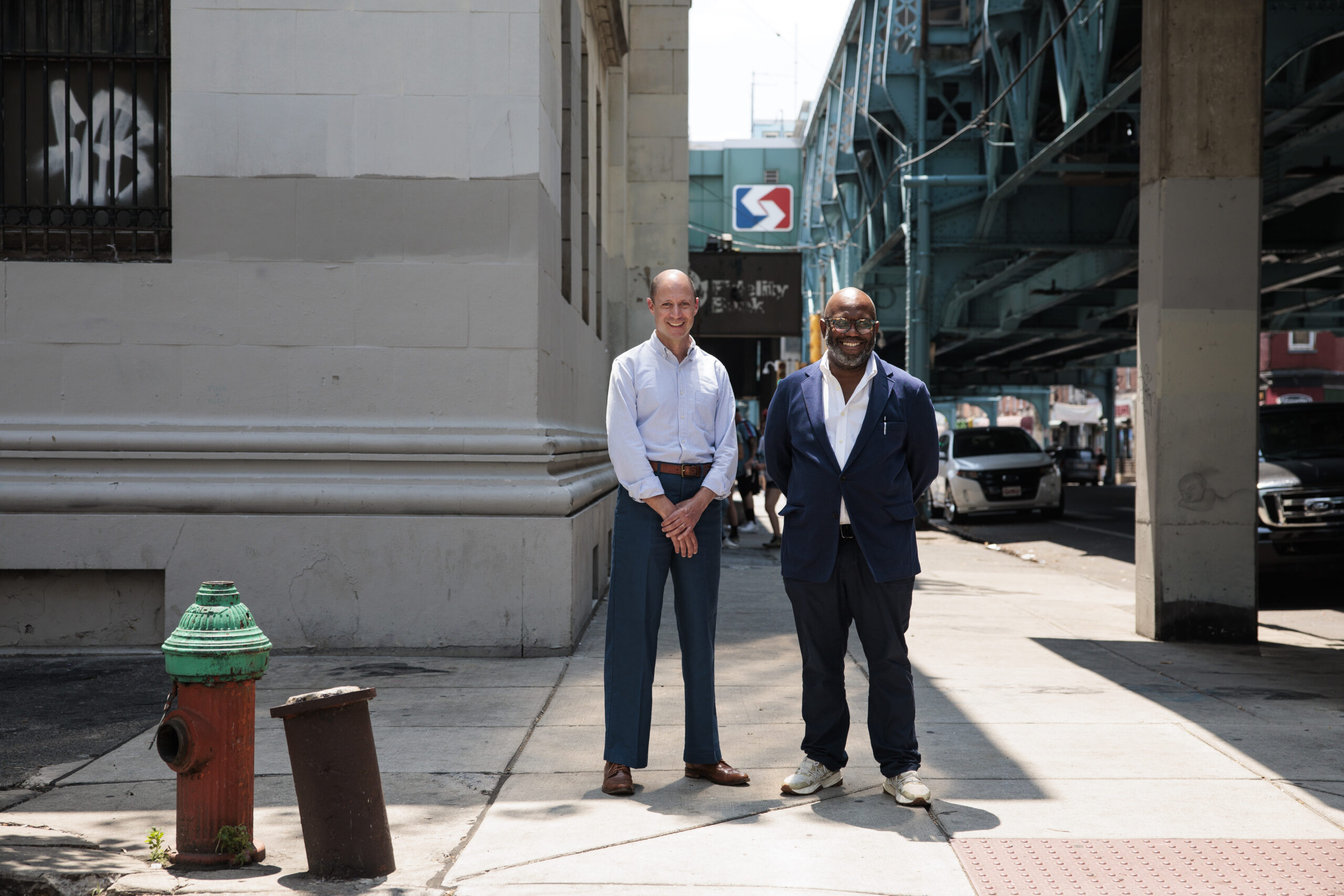
Jacob Roller (left) and Tayyib Smith last June outside the historic bank they plan to turn into a base for Black-owned businesses, which is next to the apartment project farther down Huntingdon Street.
Roller said the project is inspired in unit mix and general location by the success of Shift Capital’s mixed-use project at 3400 J St., home to Càphê Roasters. Smith & Roller was a junior partner in that project.
The Huntingdon Street project will be the firm’s largest project by unit count.
“I am extremely impressed by the work of Smith & Roller,” Jeffrey Crum, president of Ellavoz Impact Capital, said in the news release. “They have proven themselves as professional and experienced urban redevelopers who have a unique vision for revitalizing neighborhoods in partnership with local communities.”
The proposal has been presented to the East Kensington Neighbors Association several times over the years, and the community group is supportive of Smith & Roller’s proposal.
The group also sees the development project as a means to bring new life to the block, where the current dilapidated state of the buildings often attracts opioid users from nearby open-air drug markets on Kensington Avenue.
“The block has been challenged for a long time,” said John Theobald, president of the East Kensington Neighbors Association. “It’s really where a lot of the Kensington Avenue activity impacts the neighborhood, so hopefully more people living there and less vacancy will help.”
She has been staying there only for a few months, but Samantha Robinson knows why her grandparents loved their Elkins Park end-unit townhouse and the neighborhood.
“Everybody says hello,” she said. “Everybody looks out for each other.”
Her mother, Kerry Rosenthal, said her dad “really liked the wall space and the lighting. Being an end unit made it easier for my mom to grow things.”
Rosenthal said it’s possible to walk through the neighborhood and think you’re in a rural area until you hear the commuter rail train nearby .
Her parents — Beverly Green, a writing teacher, and Stephen Green, an attorney — bought the condo in the gated Breyer Woods development in 2011, expecting to renovate it so they could age in place. The Greens died in October.
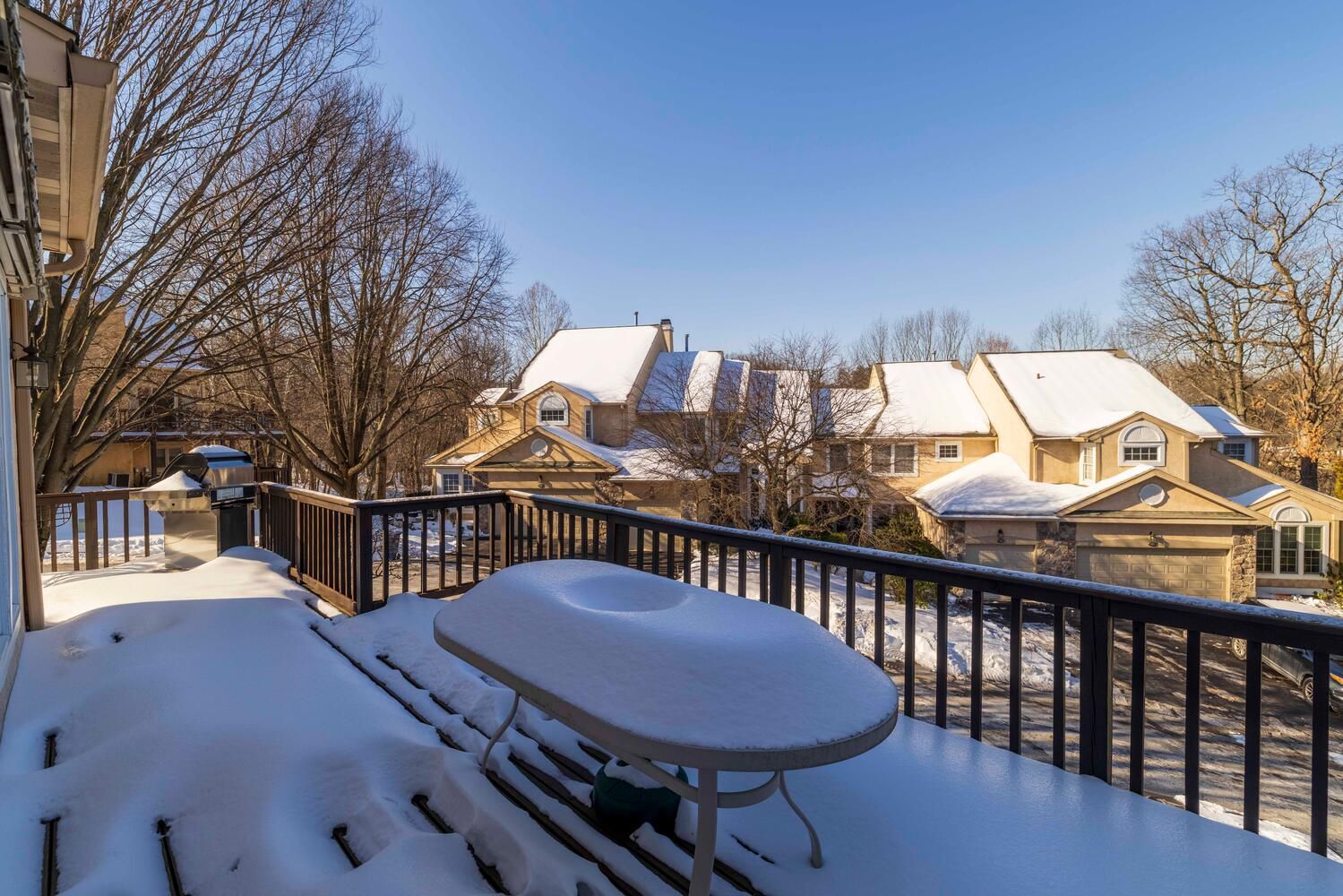
The back porch with a permanent gas grill.
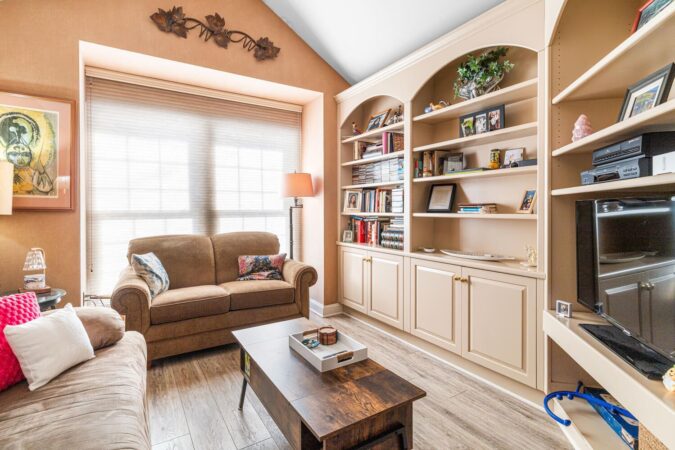
The 2,936-square-foot house, built in 1993, has three bedrooms, two full bathrooms, and two half bathrooms.
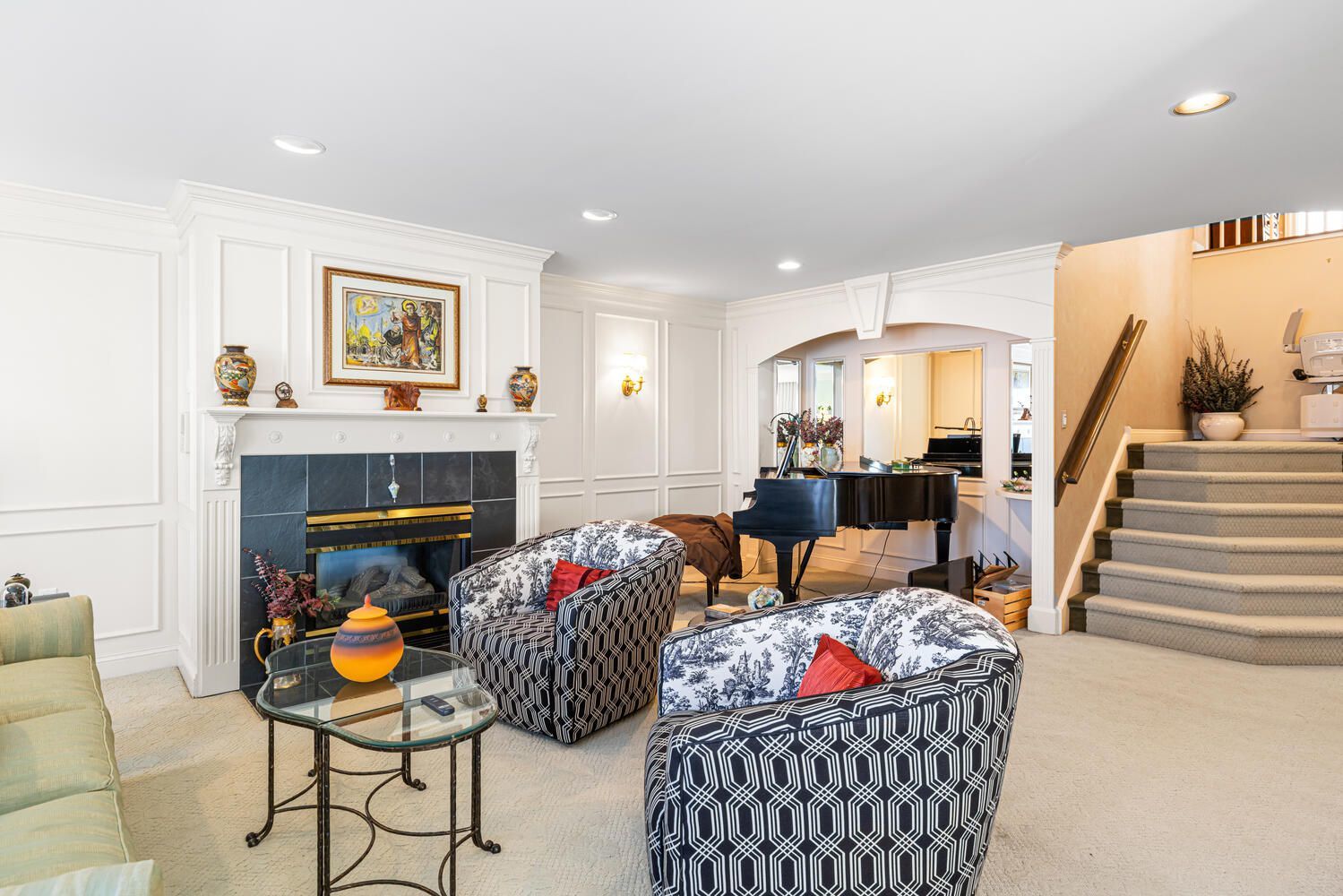
The main level has a living room with a working gas fireplace, a deck, and a dedicated home office that could serve as a fourth bedroom.
A two-car attached garage leads directly to the laundry room.
The living room has a working gas fireplace.
The upper level primary suite has vaulted ceilings and multiple closets.
The finished walk-out basement has a half bath and kitchenette and opens to a second private deck.
Community residents have access to a tennis court and can join the adjacent student center at the Elkins Park campus of Drexel University, which has a clubhouse and gym.
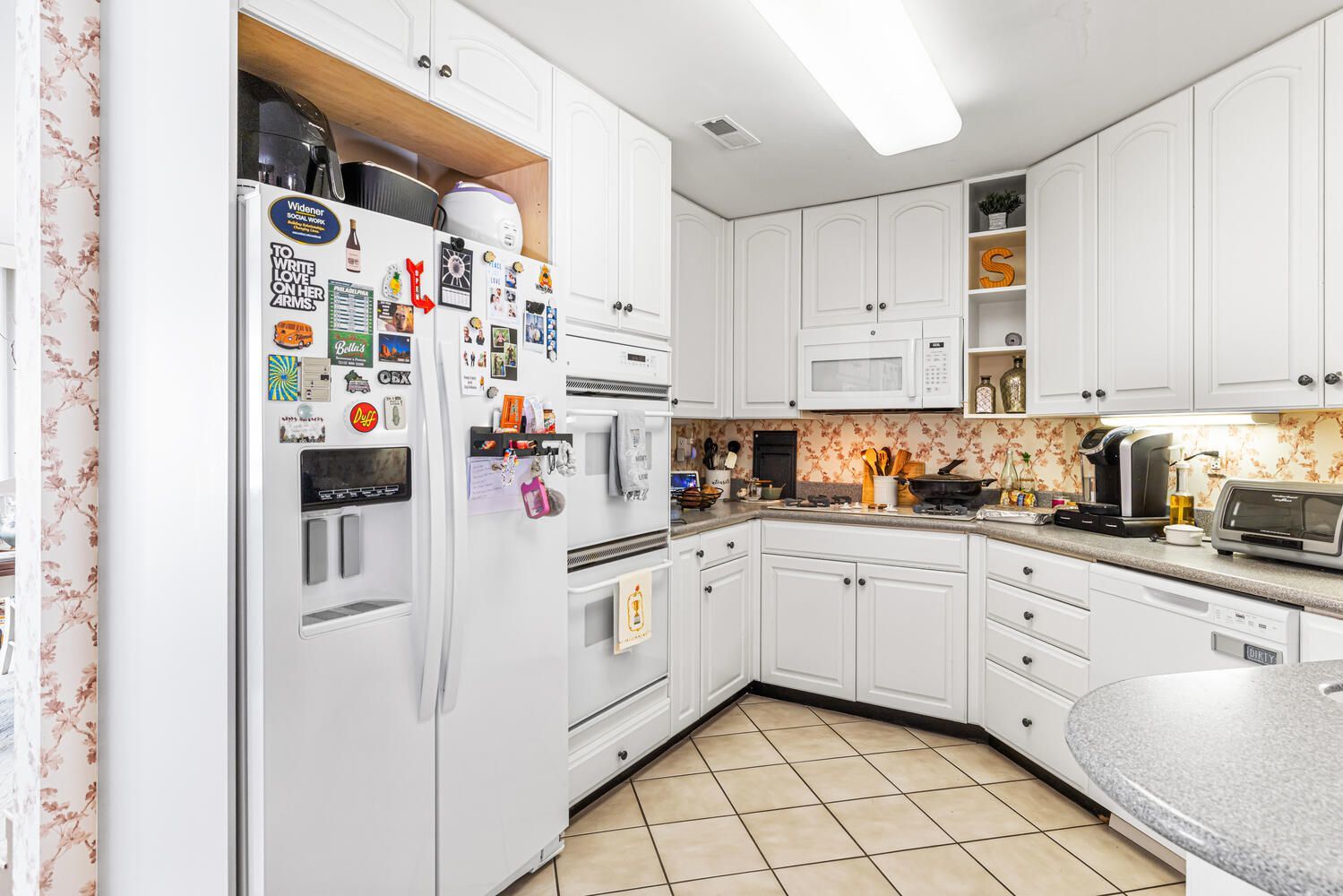
The kitchen.
The house is a short walk from the Jenkintown SEPTA station, and a supermarket is less than a half-mile away.
The house is listed by Frank Blumenthal at Keller Williams Real Estate Tri-County for $499,000.
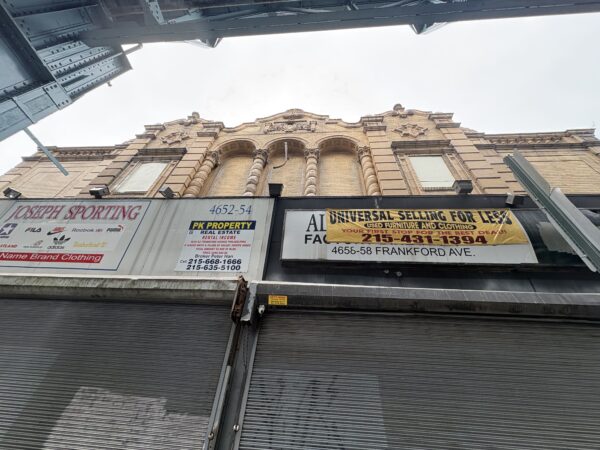
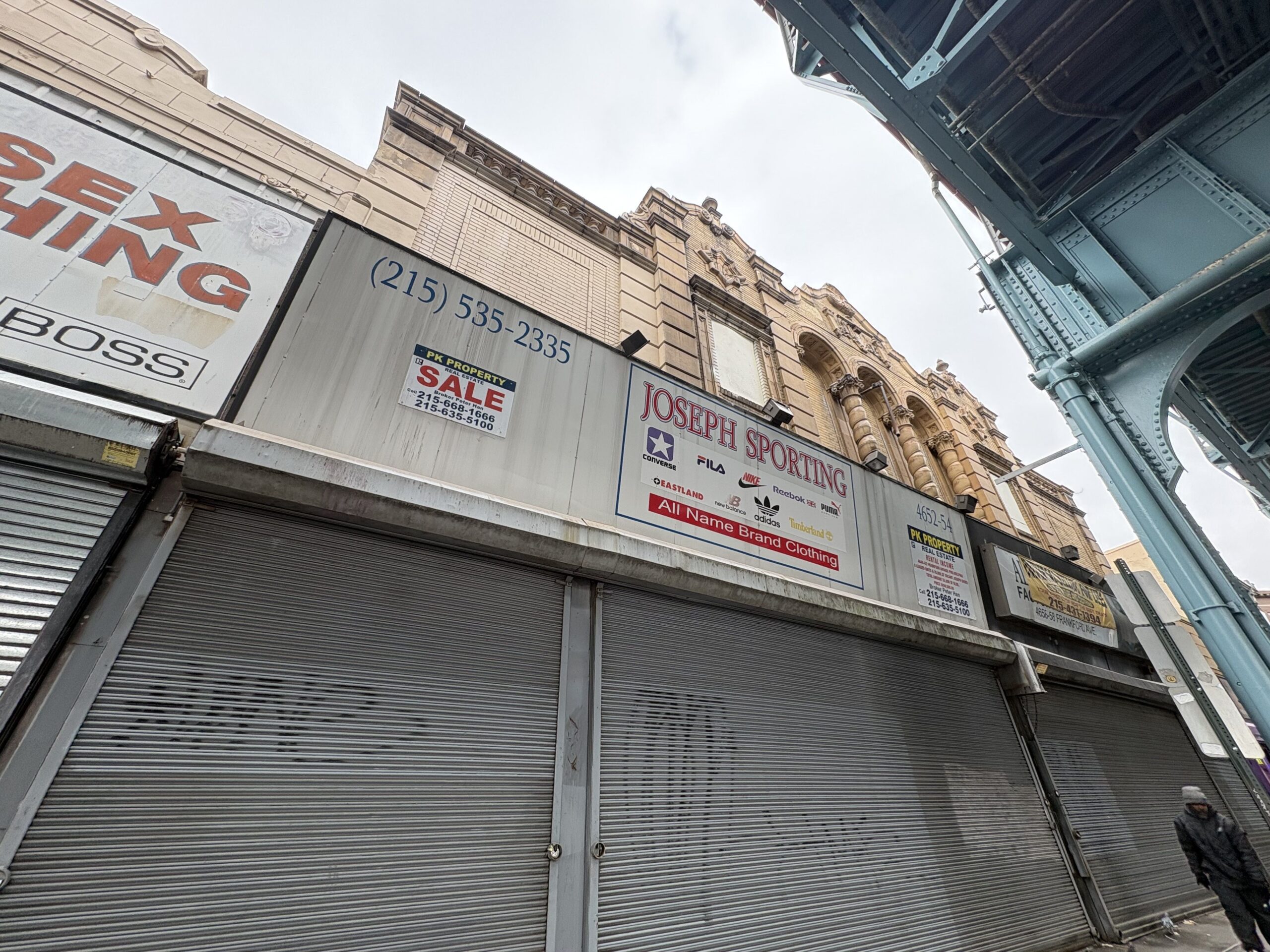
The Circle Theatre in Frankford, built in 1929 for what was once the largest movie theater chain in the country, is now officially recognized as historic.
According to the nomination, the Circle Theatre is “a significant surviving example of a neighborhood theater from a period when many were built” in the 1910s and ‘20s. The theater’s architects, Hoffman-Henon Co., “significantly shaped Philadelphia’s built environment through their commissions for theaters and Catholic institutions,” such as churches and schools.
The decorative facade of the Circle Theatre includes architectural terracotta with ornamental details and columns that have been preserved. The structure was a movie theater from the time it opened in 1929 until 1953, according to the nomination. The building, which included some commercial space, was then converted exclusively for commercial use and now includes both occupied and vacant storefronts.
“The Circle Theatre is absolutely a landmark, and there’s still people who remember coming up [Frankford Avenue] to go there,” Ellie Devyatkin, director of economic development and neighborhood planning at the Frankford CDC, said during Friday’s Historical Commission meeting.
According to the nomination, “while Philadelphia once had over 400 movie theaters, the Circle is one of relatively few survivors with significant architectural integrity.”The theater was nominated for designation by Historical Commission staff.
The Hoffman-Henon architectural firm designed the Circle Theatre for the major movie theater chain Stanley Co. of America. The firm designed theaters for the company in Philadelphia, Atlantic City, Baltimore, and smaller municipalities throughout the tri-state area. Hoffman-Henon designed four Stanley theaterson Market Street in Philadelphia that the historic nomination called “movie palaces” that were “characterized by a large seating capacity and opulent interiors.”
The Circle Theatre and the Warner Theatre, also known as the Embassy Theatre, on the Atlantic City boardwalk “included the most flamboyant interiors in the firm’s catalog,” according to the nomination. Both opened in 1929 after Warner Bros. acquired the Stanley Co.
Emily Cooperman, a member of the Historical Commission and chair of its historic designation committee, said the committee was “very enthusiastic about this nomination” and appreciated the creation of an inventory of historical theaters by commission staffer Ted Maust.
The Frankford CDC supported historic designation for the building, which is across from the community development corporation’s office. Through a Philadelphia Department of Commerce program, the organization worked with the owner of a produce market in the building to improve its facade and is working now with the owner of a salon, Devyatkin said.
The Circle Theatre building now includes both vacant and occupied storefronts.
Historic designation protects buildings from demolition but also requires permission for certain exterior changes. Building materials that preserve historic character and adhere to city guidelines can be expensive.
“Particularly in neighborhoods where rents and property values are low, these designations can be difficult… when they do not come with financial assistance,” Devyatkin said. “There are other parts of the city where you can justifiably command a higher rent or a higher sales price for doing the right type of restoration or preservation work. But without subsidy, that’s really difficult… in many neighborhoods in Philly.”
Oscar Beisert, a preservationist with the Keeping Society of Philadelphia, said he agreed and would like the city to show some “leniency, especially in areas where the economic viability is a lot lower.”
He thanked staff at the Historical Commission for nominating the Circle Theatre for inclusion on the city’s historic register.
“Frankford has a lot of great buildings,” Beisert said, “and it’s great to see one of them designated.”