According to the new survey, 38% of all Pennsylvanians support data centers being built in the Commonwealth, while 35% oppose, and 27% are neutral or have no opinion. But when asked about data centers being built in their area, residents’ opposition grows: 34% support, 42% oppose, and 24% are neutral or have no opinion about centers being built in or near their communities.
And opposition to close-to-home data center construction is among the strongest in the southeast part of Pennsylvania, second only to opposition in the northeast, a hot spot for data center construction. In Southeast Pennsylvania, 45% of respondents strongly or somewhat oppose data centers, while 54% strongly or somewhat oppose them in the northeast.
Among Pennsylvanians’ worries about data centers, 70% are concerned about the amount of water data centers use, and 71% are concerned about the amount of electricity data centers use.
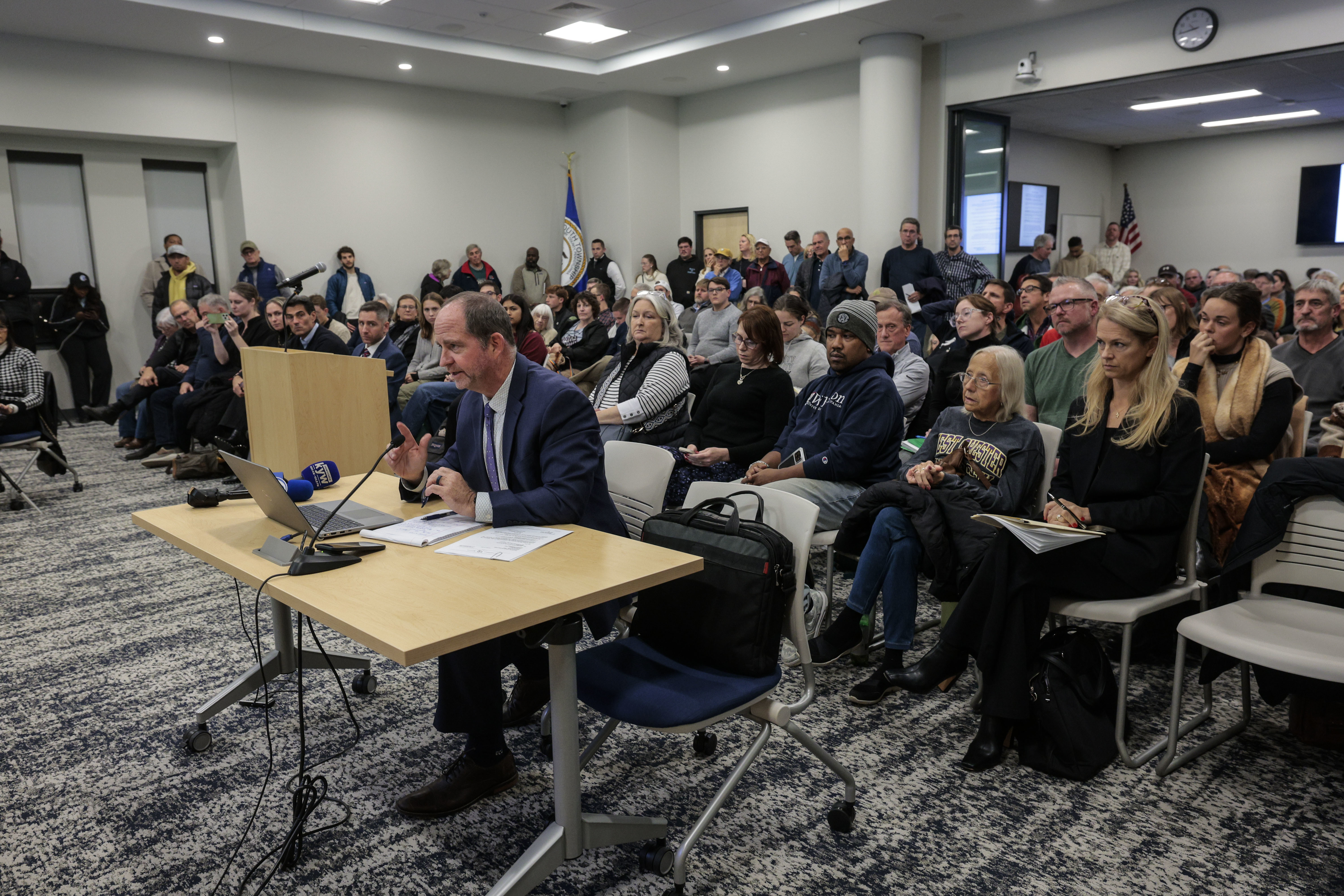
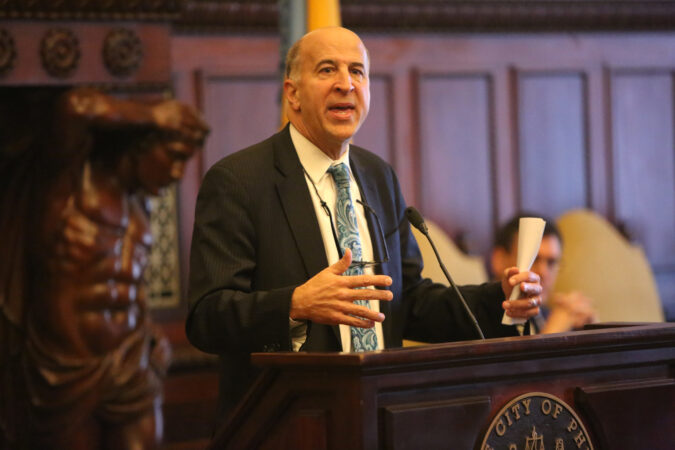
Edmund J. Campbell, attorney for developer Brian O’Neill, spoke to the Plymouth Township zoning board in November before abruptly withdrawing the application for a Conshohocken-area data center over legal issues. Residents, some of whom had rallied against the proposal, packed the room.
Seventy percent of Pennsylvanians strongly or somewhat support requiring data centers to provide their own energy generation, rather than get electricity from the grid.
When it comes to AI more broadly, just over half of Pennsylvanians told pollsters they believe AI will decrease the number of available jobs in their industry, while 16% said they think it will increase the number of jobs (29% said they thought it would have no impact).
Nearly twice as many residents think AI will have a net negative impact on the economy compared to how many think it will have a positive impact (48% said negative, 25% said positive). When respondents were asked about the environment, the results were similar (46% vs. 21%).
The survey of 2,000 Pennsylvania adults was conducted online and via text between Nov. 19 and 23.
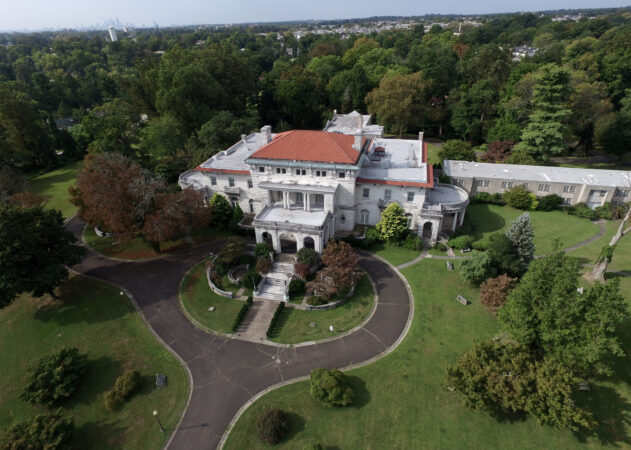
The Elkins Estate, which already hosts weddings in its main mansion, is set to add a boutique event space and a distillery in the new year.
In the fall, the Tudor-style Chelten House will open for smaller gatherings of 100 or fewer people, and include 16 guest rooms, said Jeanne Cretella, cofounder of By Landmark hospitality.
“We’re really looking forward to our next phase,” Cretella said, noting that the Chelten House “will be the perfect setting for those much more intimate events, whether it’s seminars or retreats or business meetings.”
In 2019, Jeanne and Frank Cretella’s company, By Landmark, bought the sprawling Cheltenham property for $6.5 million from the Dominican Sisters of St. Catherine de Ricci, who had used the grounds for religious retreats. At the time, the couple said they intended to spend $20 million to restore six historic buildings on the site.
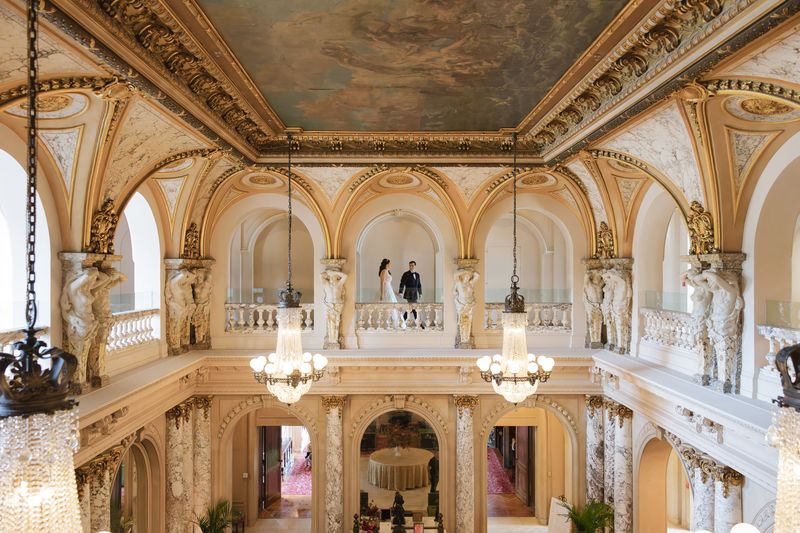
A couple walks through a room in the Elstowe Manor at Elkins Estate.
By Landmark’s final investment numbers were not available Friday, according to a spokesperson, as renovations are ongoing.
The Cretellas initially envisioned a luxury boutique hotel with more than 100 guest rooms, a spa, a restaurant, and other amenities. At one point, they even considered installing a heliport on the site.
Then the pandemic happened, Jeanne Cretella recalled Friday.
Despite the challenges of that time, “we are so proud that we were able to open up Elstowe Manor,” the estate’s 70,000-square-foot centerpiece that required extensive plumbing, electrical, heating, and ADA upgrades to be brought up to code, Cretella said.
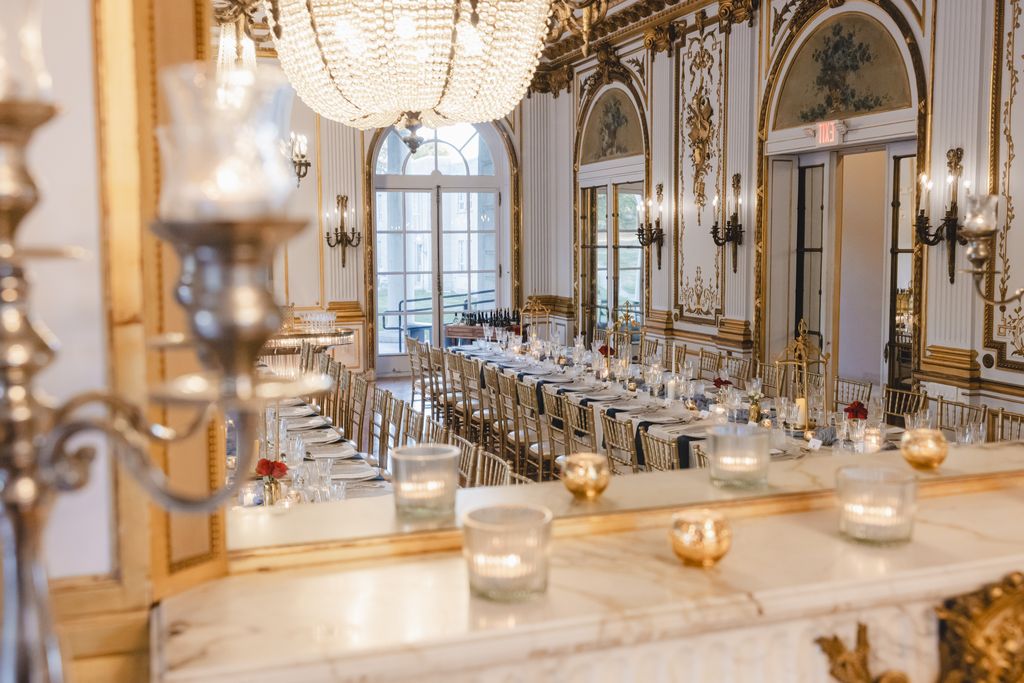
A room at the Elkins Estate’s Elstowe Manor, its main mansion, set up for a wedding reception.
“We made the decision after COVID that it would be best … to have the rooms only open to event guests,” she said.
With 50-foot frescoed ceilings and a grand ballroom with a glass skylight, Elstowe Manor can host 300-person events and includes 69 guest rooms.
More than 100 weddings and events have been held at the manor in the past two years (The venue also hosted weddings in the early 2010s when it was briefly owned by a nonprofit that went bankrupt).
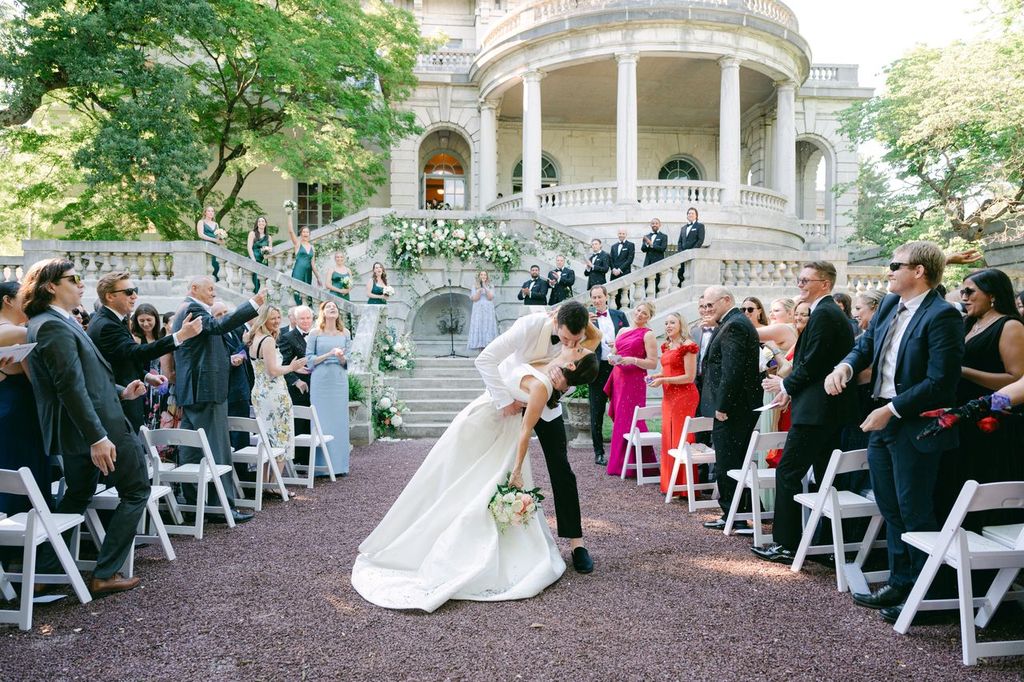
A couple kisses during their wedding ceremony outside the Elkins Estate’s Elstowe Manor.
At the estate these days, couples and their guests feel like they “are somewhere really special, and have the ability to really enjoy utilizing the estate for the whole weekend,” Cretella said.
With its more intimate setting, the Chelten House is meant to complement the Elstowe Manor, Cretella said. The home features Italian Renaissance Revival designs, with terracotta roof tiles, large arched windows, wood-paneled rooms, and marble fireplaces.
While each part of the property is set apart and has its own entrance, Cretella said she foresees the Chelten House being busy during the week (when most corporate retreats occur) and the Elstowe Manor bustling with wedding festivities on the weekends.
Some larger weddings may use both the manor and the Chelten House for their events and accommodations, she said.
Cretella said they don’t foresee adding more amenities to the property in the near future.
“The original plan to have a restaurant was definitely in conjunction with having a hotel that was open to the public,” not just event guests, she said. So “opening up a restaurant is not on the horizon.”
But, she added, “we won’t say never.”
For now, Cretella said they are focused on their events, including opportunities to welcome the public onto the historic site.
Earlier this year, the estate opened a podcast recording studio and demonstration kitchen, which Cretella said they hope local school students can use. They are also looking to bring professional actors and creators into the space.
In November, By Landmark opened the estate up for paid public tours. A tour in early January, which costs $30 a person, is already sold out.
Cretella said the estate plans to host a Valentine’s Day dinner, open to the public, with an optional overnight stay after the meal.
For the Chelten House, booking for small private events will open in the new year, Cretella said.
Based in North Jersey, By Landmark operates nearly 30 venues in Pennsylvania and New Jersey. They include the Hotel du Village and the Logan Inn in New Hope.
In the late 1800s, the Elkins Estate was built as a countryside retreat for railroad magnate William Lukens Elkins, who is credited with helping to form what would eventually become SEPTA and the Philadelphia Gas Works.
When Adam Sawyer and his wife, Marissa Tan, moved to Philadelphia in 2024 from Baltimore, they were attracted to Center City by its proximity towork and mass transit.
The couple figured if they sold their car, they could even afford to rent in one of the thousands of new, high-rise apartments that have been built across Center City over the last 10 years.
Tan had just gotten a new job with the Cooper University Hospital in Camden, and Adam needed access to 30th Street Station for work. They eventually settled on the PMC Property Group’s Riverwalk North at 23rd and Arch Streets and have been impressed by the city, its transit system, and life without a car.
Adam Sawyer and his wife, Marissa Tan, moved to Philadelphia in 2024 from Baltimore.
“One of the things I love about living in a city is that you’ll be walking down the street and there are five different events you didn’t even know about,” Sawyer said. “Festivals, farmers markets, just activity, people doing things. I love that Philadelphia has so much energy.”
In many ways Sawyer and Tan — who are both 35 — are representative of the people who have taken up residence in the new apartment buildings across Center City. Between Pine and Vine Streets, river to river, 3,500 new apartments have opened since 2023.
Center City District (CCD) set out to learn more about who is calling these apartments home, with a survey of more than two dozen buildings constructed since 2015.
Like Sawyer and Tan, the vast majority of respondents to CCD’s survey are under 45 (83%), more than half don’t own a car (55%), and close to half moved from outside the Philadelphia area (44%). Sawyer works remotely like 21% of respondents, and Tan works in healthcare like 32% of them.
window.addEventListener(“message”,function(a){if(void 0!==a.data[“datawrapper-height”]){var e=document.querySelectorAll(“iframe”);for(var t in a.data[“datawrapper-height”])for(var r,i=0;r=e[i];i++)if(r.contentWindow===a.source){var d=a.data[“datawrapper-height”][t]+”px”;r.style.height=d}}});
In a city where a fifth of all residents live in poverty, the respondents aren’t representative of the average Philadelphian in many ways. The buildings surveyed have an average rent of $2,645, well above the median of $1,387.
But the results show that there is a market for the kind of new buildings that are still being proposed. They alsohighlight that many people are attracted to the most central parts of Philadelphia because it offersmore density, walkability, and other urban characteristics that few other American cities can boast.
“People actively choose Philadelphia over other cities and metropolitan areas because we outperform them in some ways,” said Clint Randall, vice president of Economic Development with CCD, which is funded by downtown property owners and provides advocacy and services like additional security and cleaning downtown.
“The city spent so many decades shrinking,” Randall said. “When you see this entire skyline of high-rise apartment buildings emerge, it contradicts what longtime Philadelphians think they know about this place, which is that it does not grow or attract residents.”
Reversing reverse commuting
Center City District’s survey confirmed a longtime finding of the organization’s other research reports: People who live downtown are likely to work there or very close by.
In Philadelphia, reverse commuting is common, a testament to the fact that many private-sector employers have remained outside the city to avoid wage and business taxes. But among survey respondents, only 12% commuted to the suburbs for work compared to almost 40% citywide.
Over half of respondents work in either Center City or University City, and a similar proportion work in either healthcare (32%) or in the jobs more typically associated with office towers: “business, professional, or financial services” (27%). Twenty-one percent work from home.
“A lot of people are in medicine, in healthcare. I see a lot of scrubs,” said Kaz Rivera-Gorski, about her building One Cathedral Squareat 17th and Race Streets.
window.addEventListener(“message”,function(a){if(void 0!==a.data[“datawrapper-height”]){var e=document.querySelectorAll(“iframe”);for(var t in a.data[“datawrapper-height”])for(var r,i=0;r=e[i];i++)if(r.contentWindow===a.source){var d=a.data[“datawrapper-height”][t]+”px”;r.style.height=d}}});
“I would imagine there’s a good amount of people that work remotely, too,” said Rivera-Gorski, who is a management consultant who works from home. “I see people on their laptops in the shared spaces during the day.”
Seventy percentof respondents said their jobs are within walking, biking, or transit distance from their homes, while 80% of them said that owning a car was not necessary to enjoy daily life in Philadelphia.
That’s part of what attracted Sawyer and Tan, even though another part of Philadelphia’s allure was that it was closer to family in central and eastern Pennsylvania (the couple have a Zipcar membership).
“While I do drive, I really, really dislike driving,” Sawyer said. “I’ve lost people. Everybody has, to either accidents or crashes or DUIs. So we were open to selling our car and became more and more convinced it was a good idea.”
window.addEventListener(“message”,function(a){if(void 0!==a.data[“datawrapper-height”]){var e=document.querySelectorAll(“iframe”);for(var t in a.data[“datawrapper-height”])for(var r,i=0;r=e[i];i++)if(r.contentWindow===a.source){var d=a.data[“datawrapper-height”][t]+”px”;r.style.height=d}}});
Retaining out-of-towners
Randall said that he was surprised by the proportion of CCD’s respondents who reported having moved to Philadelphia from outside the region. (A recent Realtor.com report showed that Philadelphia switched from having mostly local interest in rental listings before the pandemic to mostly out-of-towners today.)
The survey also found that the majority of Center City dwellers planned to be living in Philadelphia inthree to five years, with 45% planning to continue renting and 16% hoping to buy.
“You hear about the transience of other places like D.C. or Boston, and it seems like people are here [in Philadelphia] and they intend to stay,” Randall said.
That is certainly the goal of Annika Verma, a student at Temple University who lives in the Logan Lofts in Callowhill.
“I am already calculating: Can I get an entry-level job? What salary would work for the rent in this area?” Verma said. “I would love to stay. The area seems ideal for me in terms of commuting or walking. Anything, everything is a 15-20 minute walk or bus ride away.”
Sawyer and Tan are hoping to stay in Philadelphia, too. They are currently searching Center City for a condo to buy. They may try to stay in their current Logan Square neighborhood for its proximity to the Schuylkill River Trail and 30th Street Station.
“We love it,” said Sawyer, who notes that they’ve lived in three cities in Texas, Cooperstown in New York, and Baltimore before this. “But our favorite place we’ve ever lived is here in Philadelphia.”
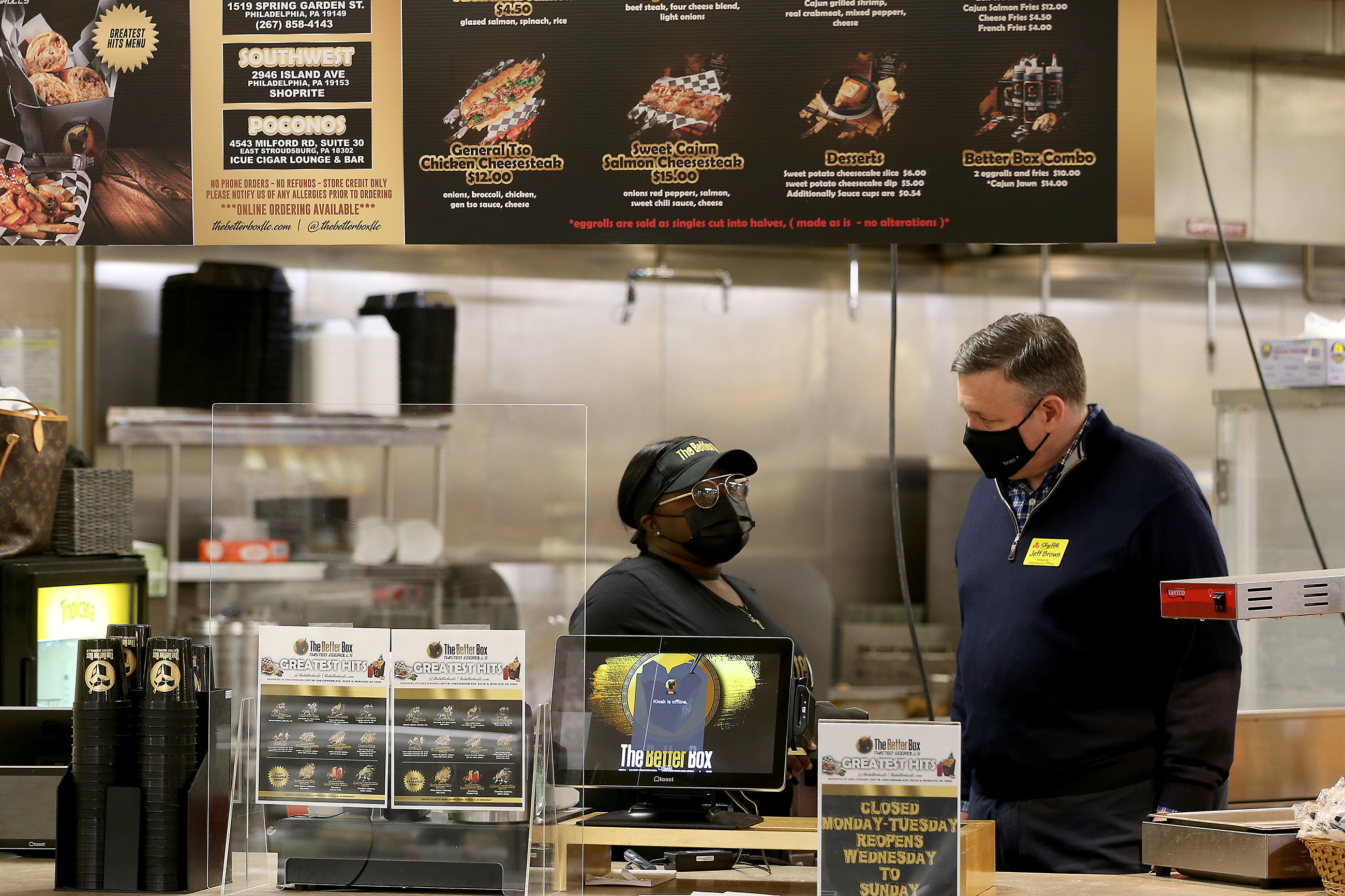
The Brown family, which operates a dozen local ShopRites, recently purchased the Shoppes at Wissinoming for $30.8 million, according to JLL real estate, which represented the seller. The nearly 98,000-square-foot complex in Northeast Philadelphia is anchored by one of Brown’s ShopRites.
“We think it’s important to own the real estate where our supermarkets are located, so we can ensure the long-term healthy food access for the local community and the overall sustainability of our stores,” Brown, executive chairman of Brown’s Super Stores, said in a statement. “We are excited to add the Shoppes at Wissinoming shopping center to our real estate properties.”
Brown said he owns the shopping centers surrounding his ShopRites in Cheltenham, Brooklawn, and Roxborough.
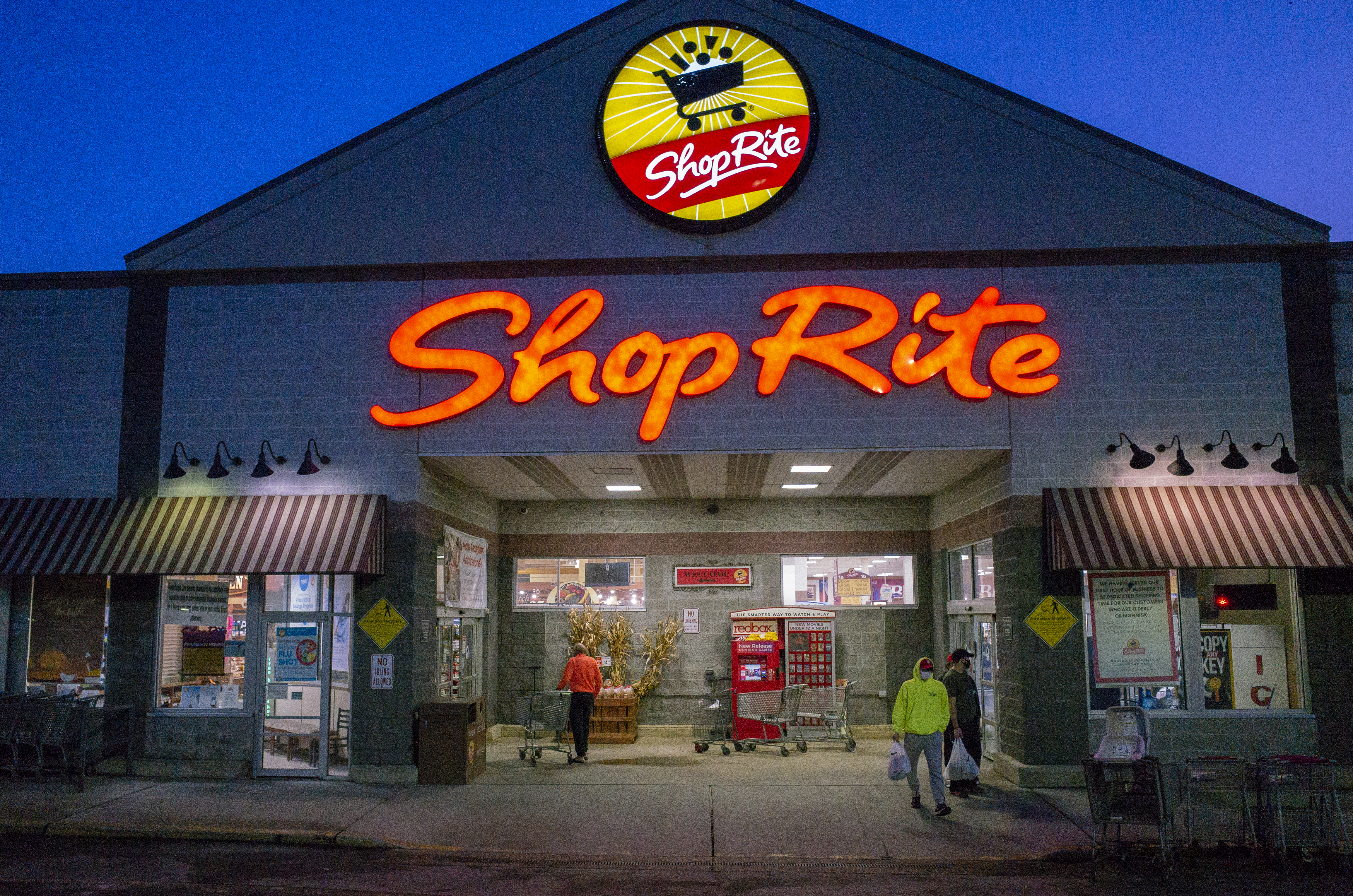
The ShopRite in Roxborough, pictured in 2020, is run by Jeff Brown and located in a complex owned by the longtime grocer.
The family also runs ShopRites in Eastwick, Nicetown, Parkside, Port Richmond, South Philadelphia, Bensalem, Fairless Hills, and Mullica Hill..
The ShopRite at the Shoppes at Wissinoming opened in 2018, and was acquired by Brown earlier this year. The grocery store anchors the center, occupying about 68,000 square feet.
The complex is 98% occupied, according to JLL. Other tenants include Wawa, Popeyes, and AT&T.
“The transaction reflects broader trends in the retail investment market, where investors continue to prioritize grocery-anchored properties with proven tenant performance,” said Jim Galbally, JLL senior managing director. “Shoppes at Wissinoming has an ideal combination of dominant grocery anchor, diverse tenant mix, and strategic location within one of Philadelphia’s most densely populated submarkets.”
Better Box owner Tamekah Bost (left) talks with ShopRite owner Jeff Brown at the Cheltenham ShopRite in 2021. Brown has brought local restaurateurs into his stores.
The Wanamaker Building was built to be an icon of modern retail, a colossal temple of middle-class consumerism in the heart of Philadelphia.
Over 100 years later, the palatial department stores of Wanamaker’s heyday are gone,and the building’s new owners are remaking it for a different age following the closure of Macy’s earlier this year.The building will offer loft-style apartments and, plans filed with the city show, a rooftop pool.
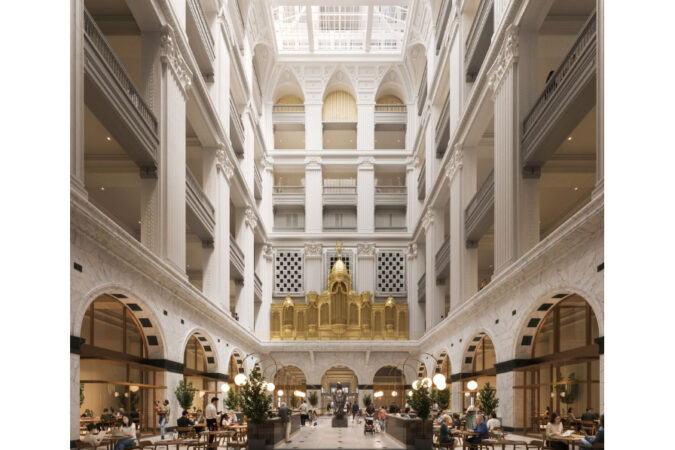
New York-based TF Cornerstone has submitted plans to the Philadelphia Historical Commission that show the changes to the retail space. Both the exterior and parts of the interior — the Grand Court and organ — are protected. The developer is seeking permission to add more entrances and retail space on the ground floor, among other changes.
TF Cornerstone and local partner Alterra Property Group plan to resurrect original aspects of the building’s design, while acknowledging the realities of retail today, which means carving out space on the street and within the building for smaller businesses.
“It’s most likely not going to be one tenant across the entire area. Retail is just different” today, said Mark Faulkner, an architect with New York-based Practice for Architecture and Urbanism (PAU), which is in charge of the design of the building’s retail section.
“We’ve been providing a lobby and an arcade that leads you to that center space but also allows for smaller retail and smaller individual stores around the ground floor and some of the upper floors,” Faulkner said. In the Grand Court itself, “we’ve been focused on a food and beverage offering.”
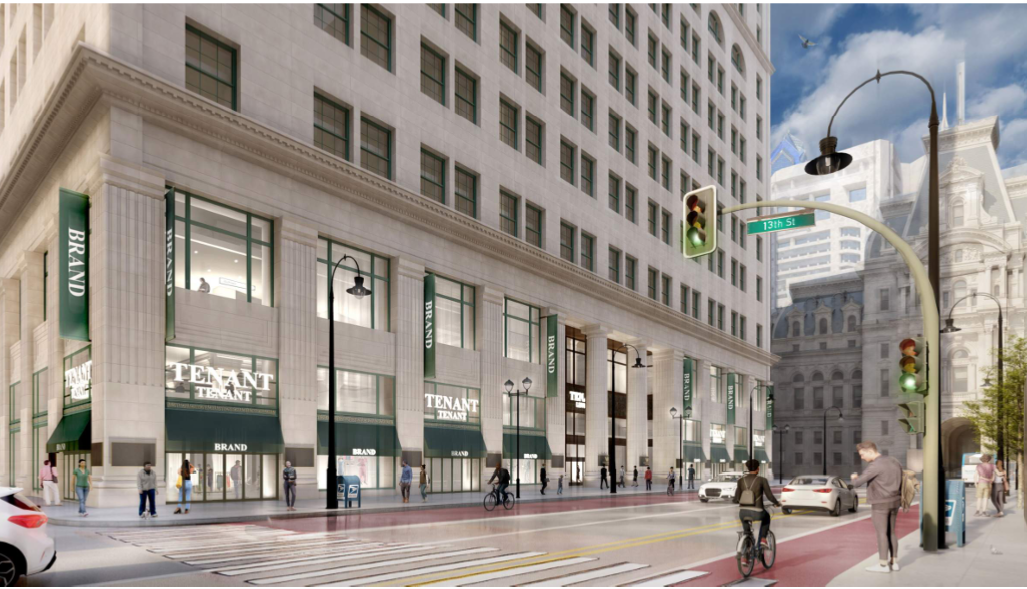
Renderings created by PAU also show two new entrances on Market Street, one on Chestnut, another on 13th and on Juniper. The proposals submitted to the city include options with multicolored or white themed signage.
The signs themselves would be made of bronze with backlit acrylic faces. The colorful sign option could match a prospective tenant’s logo.
A rendering of the Wanamaker Building with multiple new storefronts on Market Street, with white signage (another version offered multi-hued signs).
The Chestnut Street ground floor of the building has already seen some new entryways and retail spaces added, such as the Starbucks at the southeastern corner.
Inside the building, one of the biggest changes will be the removal of a steel platform that covers the huge, historic skylight and blocks the sun from warming the Grand Court, as TF Cornerstone and Alterra previously announced.
But Faulkner emphasized that only the obstructing floor, which is just a couple decades old, will be removed, not any of the building’s original touches.
The platform covering the skylight currently serves as the pre-function space for the Crystal Tea Room, which will remain open during construction. That congregation space will be relocated.
As an accompaniment to that major change, on the ground floor, the architects have also been studying the original detailing and paint schemes of the Wanamaker’s heyday to see if more of that original grandeur can be revived.
“The Grand Court is one of the most amazing parts of this project, and once people see natural light flood into that space, it will be even more amazing,” Faulkner said. The developers also will be “refreshing the finishes in the Grand Court that respond more to the original condition back from when it first opened.”
Philadelphia-based JKRP Architects is leading design of the remainder of the building, including a few floors of renovated office space, the conversion of the rest of the floors to loft-style apartments, and the rooftop.
The plans submitted to the historical commission include some aspects of JKRP’s plans, which showan 18-by-60-foot rooftop pool with a depth of four feet at the northwestern corner of the roof, near the newly operational skylight, as well as a hot tub.
TF Cornerstone plans to begin renovations in February, and the work will last years.
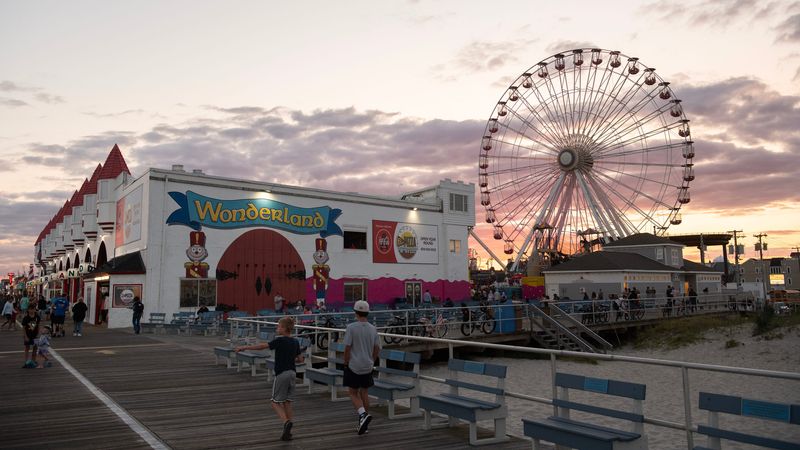
The saga of Gillian’s Wonderland Pier continues as Ocean City Council voted last night to allow the local planning board to take the next steps in the property’s future.
Councilmembers voted 4-3 to refer the 600 Boardwalk Avenue site to the Ocean City Planning Board to evaluate its possible rehabilitation.
“This is basically a first step in what could potentially be an extensive review process, if it were to continue to move forward,” said Doug Bergen, Ocean City’s public information officer.
City Council President Terry Crowley Jr. and council members Jody Levchuk, Tony Polcini, and Pete Madden voted in favor, while Keith Hartzell, Dave Winslow, and Sean Barnes voted against.
This means the council is requesting the planning board to deem the property “an area of rehabilitation,” which kick-starts a wave of inspections, public input, and planning.
In the next 45 days, Bergen said the planning board must assess the site and make a recommendation to City Council on whether the once iconic amusement park property meets the criteria for rehabilitation. If council votes to make that determination, then the site developer and owners can negotiate with City Council to devise a redevelopment plan. “With lots of further review down the road,” Bergen said.
A coalition of various business associations, from restaurants to boardwalk shops, put pressure on City Council Wednesday in a news conference. Both the presidents of the Boardwalk Merchants Association — co-owner of Surf Mall, Wes Kazmarck — and the local restaurants association — owner of Cousin’s, Bill McGinnity — were joined on Wednesday by the Philadelphian property developer Eustace Mita.
Since the nearly century-old boardwalk amusement park closed last year, plans for the site’s redevelopment have been swirling around town. Mita initially proposed a 7-story luxury hotel, the “Icona in Wonderland Resort,” but council members refused to send that proposal to the planning board in August.
A month later, Mita announced that he was considering transforming the site into townhouses, after courting offers from Phillip Norcross (brother of South Jersey power broker George E. Norcross III) and from Virginia-based NVR Inc., to redevelop the site.
Now, the site’s future will be in the hands of the planning board’s assessment, which, for some business owners, is the right call. In a video posted to Facebook earlier this week, Kazmarck urged Ocean City residents to contact their council members and ask them to vote in favor of the planning board review.
“This is about City Council being able to make a better decision on what to do with this property. Everyone’s opinion here is a valuable opinion, but I think now we’re at that point where we should bring in experts,“ Kazmarck said. ”That’s the planning board. The planning board hires experts to evaluate the site to decide if the site should be an area of rehabilitation.”
While it may feel like redevelopment plans are coming swiftly, Kazmarck reassured residents that local business owners have been discussing these next steps since last year, he said in the video.
The cap over I-95 between Walnut and Chestnut Streets, which will host the 12-acre Penn’s Landing Park, is about 30% complete.
After almost six years of engineering, design, and COVID-related delays, construction began in 2023, and now a lattice of steel beams extends over the southbound portion of I-95.
The cap project is anticipated to be completed in 2029, with the park installed the following year.
Construction of the cap itself is the work of the Pennsylvania Department of Transportation. When it is completed, the Delaware River Waterfront Corp. (DRWC) will build the park and its amenities on top.
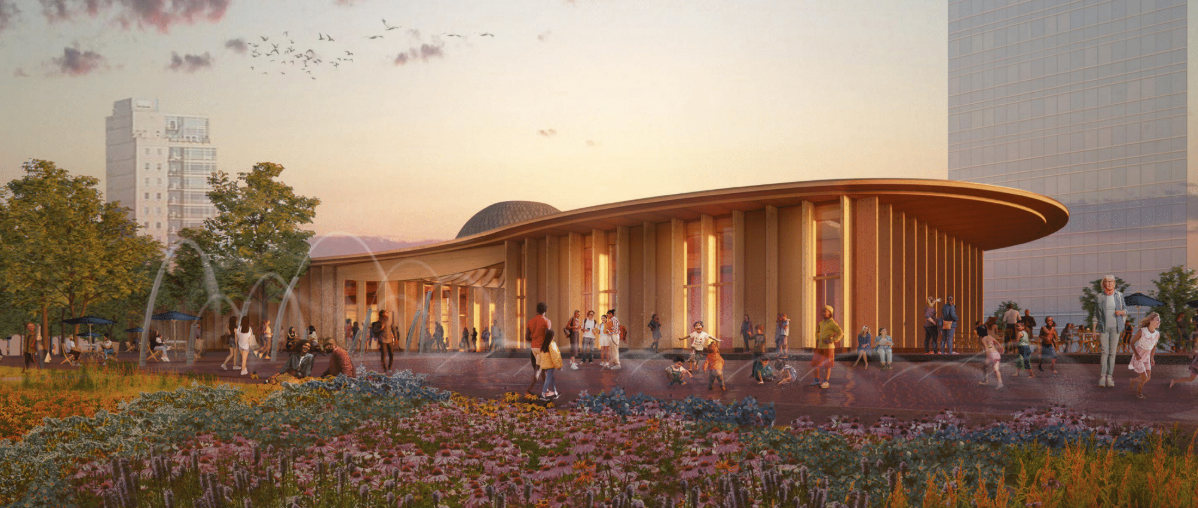
Plans call for it to include a water feature, skating rink, amphitheater, sprawling playground with custom equipment, and a mass timber building designed by architect Kieran Timberlake.
“The vast majority of the park is open green space, but there is a building we call it right now, the pavilion and cafe,” said Lizzie Woods, senior vice president of planning and development at DRWC.
A rendering of the mass timber building planned for the Penn’s Landing park.
“It’ll be a net zero carbon building … [and it evokes] the natural systems that we know and love along the waterfront and that warm and welcoming spirit that we want the whole park to have,” Woods said at a meeting of the Center City District on Thursday.
Woods said that some of the features planned for the park are influenced by Center City District’s success at Dilworth Park at City Hall, which offers a water feature in the summer and an ice skating rink in the winter.
But when the new Penn’s Landing park is completed, it will be far larger and offer more unplanned space.
“You see those beautiful gardens there, too, with little nooks for gathering and community programming,” Woods said.
“Those nooks actually came out of a lot of our community engagement process where people were looking for spaces that were not the giant amphitheater for programming, but smaller ones that community groups could use and talk with,” Woods said.
The park’s completion is still many years in the future. Next year, in addition to PennDot’s continuing progress on the cap, a new bridge will go up over South Street as part of this project.
It will be built in a parking lot this spring, and then Columbus Boulevard will be closed for one night and it will be swung into place with plans for opening it at the end of next year.
A rendering of the new South Street bridge, which is set to open a year from now.
Over the seven years of the project, PennDot has been doing most of the heavy lifting — spending a year and a half relocating utilities alone— and that will continue to be the case for the near term.
Project costs have shot up since it was originally proposed in 2017, as the first sustained bout of inflation in a generation took hold. Construction costs have soared.
Original cost estimates for Penndot’s portion of the project were $229 million, which increased to $329 million two years ago at the groundbreaking. DRWC’s portion of the project has so far gone up less, and is estimated at $130 million including $20 million for the Delaware River trail.
Planners and political leaders see the project as transformative and project that it will boost investment and valuation along the Delaware Riverfront by at least three times the cost.
“The opportunity of Penn’s Landing is really the proof of a concept that redevelopment of the waterfront, which is an old idea, can be done in such a way that puts the public and the civic resource of the waterfront at the forefront,” Woods said.
“Then that yields the opportunity for high-quality private investment rather than relying on those private areas to set the tone,” Woods said.
Editor’s note: This story has been updated to clarify the total cost of the project.
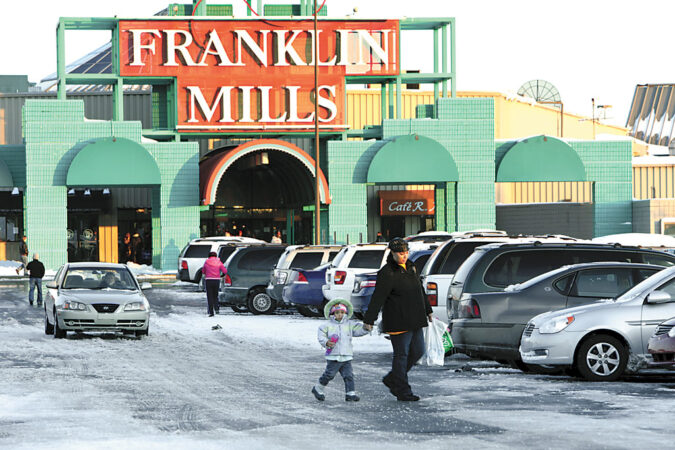
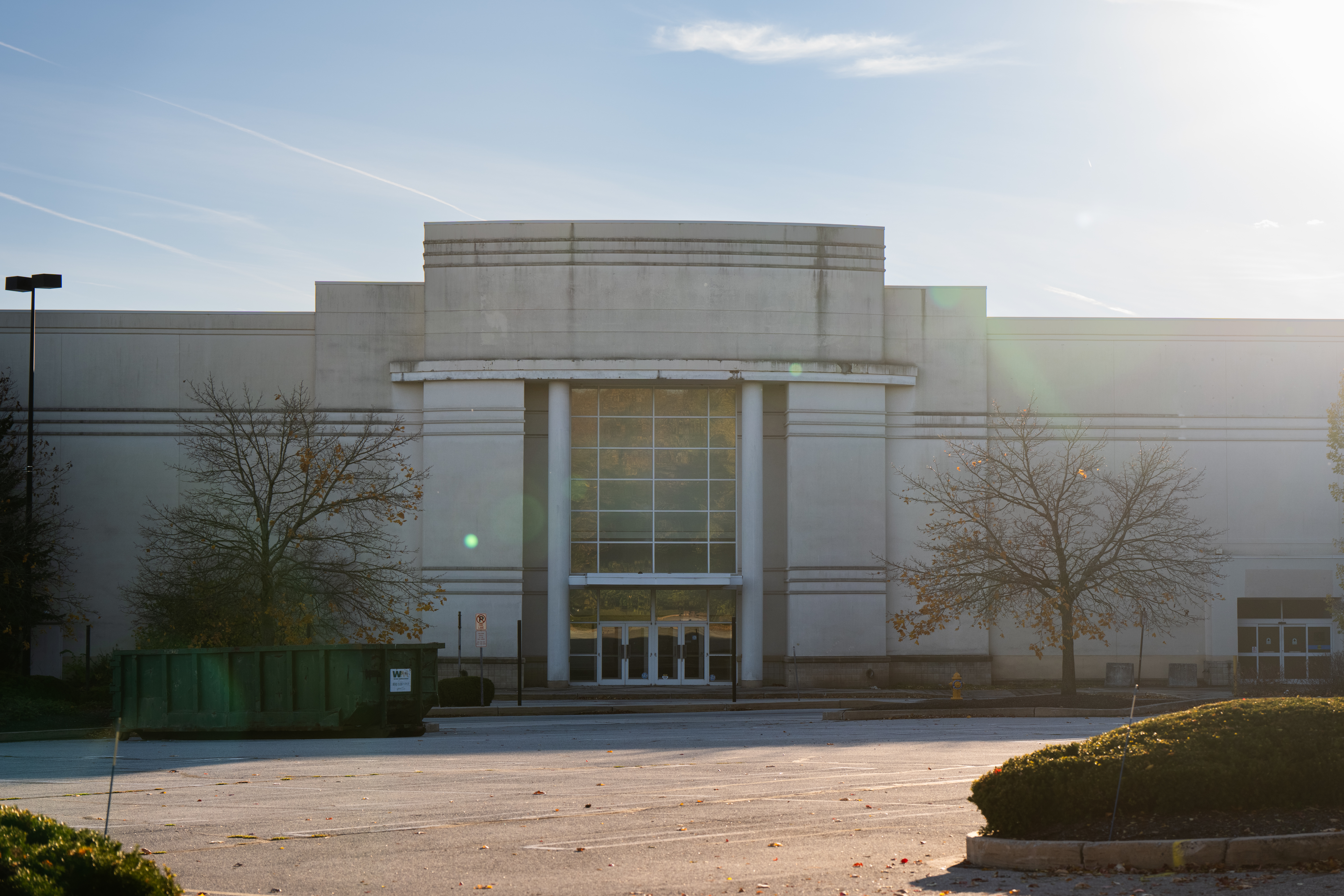
Northeast Philadelphia’s Franklin Mall — better known by its original name, Franklin Mills — is for sale after years of plummeting valuation, occupancy, and visitor numbers.
A listing on the website of real estate brokerage Jones Lang LaSalle (JLL) includes possible uses a new owner can consider, including industrial and office development. The parcels including Sam’s Club and Walmart are not included in the sale.
“Franklin Mall presents the opportunity to acquire meaningful control of more than 137 acres … in a densely populated location that may support additional densification and redevelopment,” the listing reads.
The move comes amid a wave of mall sales and redevelopments in the region, with demolition and residential construction a common fate for many struggling shopping centers.
Over 68% of Franklin Mall is occupied, which could be an incentive for continued retail operations. But sales and visitor numbers have been falling for years,and JLL reports the average existing lease lasts for only another 1.7 years.
If a new use is sought, the mile-long, one-story structure would be difficult to repurpose.
“I think it’s unlikely to be a shopping mall” again, said Jerry Roller, founder of the design firm JKRP and a longtime architect in Philadelphia. “What could it be? Obviously, residential. It might be a warehouse. It’s essentially a large vacant piece of land. It was fairly inexpensive when it was built, so it’s not hard to demolish.”
The hundred acres of land that Franklin Mills sits on at the edge of Far Northeast Philadelphia is zoned for auto-oriented commercial use.
JLL’s listing advertises the site’s suitability for industrial redevelopment.
“The property’s infill location and highway access make it a strong candidate for redevelopment into a modern industrial facility,” the listing reads. The zoning “could provide a basis for an investor to pursue the development of up to 1.4 million square feet of new warehouse space.”
The residential redevelopment opportunities for the site could be aided by a promised 20-year property tax abatement for the conversion or demolition of outmoded commercial buildings into housing, which Mayor Cherelle L. Parker’s administration promises next year following enabling legislation from Harrisburg.
But the existing zoning would not allow that, so a residential project would need to win the permission of the city’s Zoning Board of Adjustment or have the land-use rules changed legislatively by Councilmember Brian O’Neill.
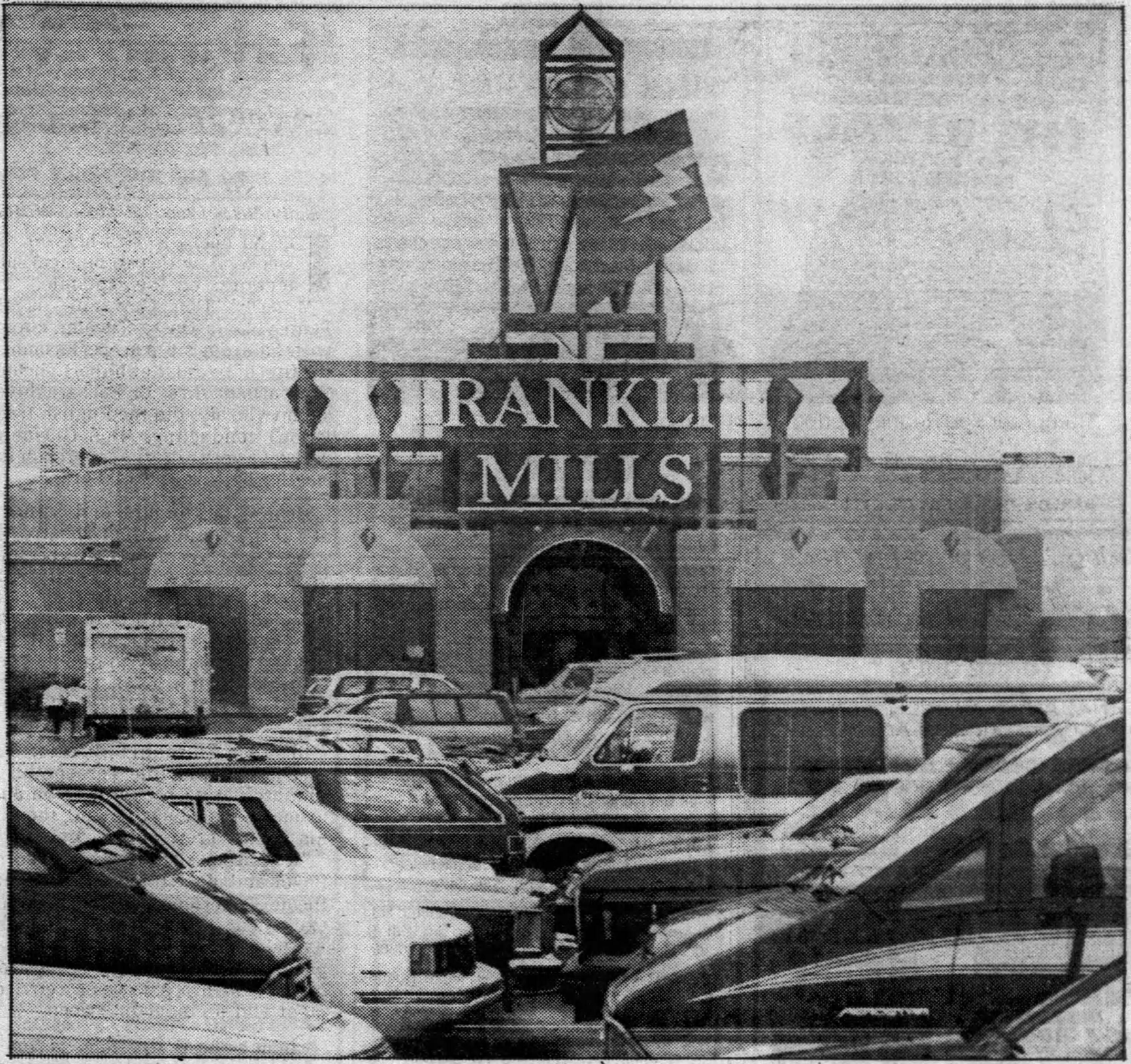
The mile-long Franklin Mills mall drew Christmas-size crowds at its opening in May of 1989.
Tribulations of a Northeast Philly icon
The 36-year-old, 1.8-million-square-foot facility at Knights and Woodhaven Roads is the second largest mall in the Philadelphia area after King of Prussia. But while its larger cousin remains a dominant retail force, Franklin Mall has been struggling for years.
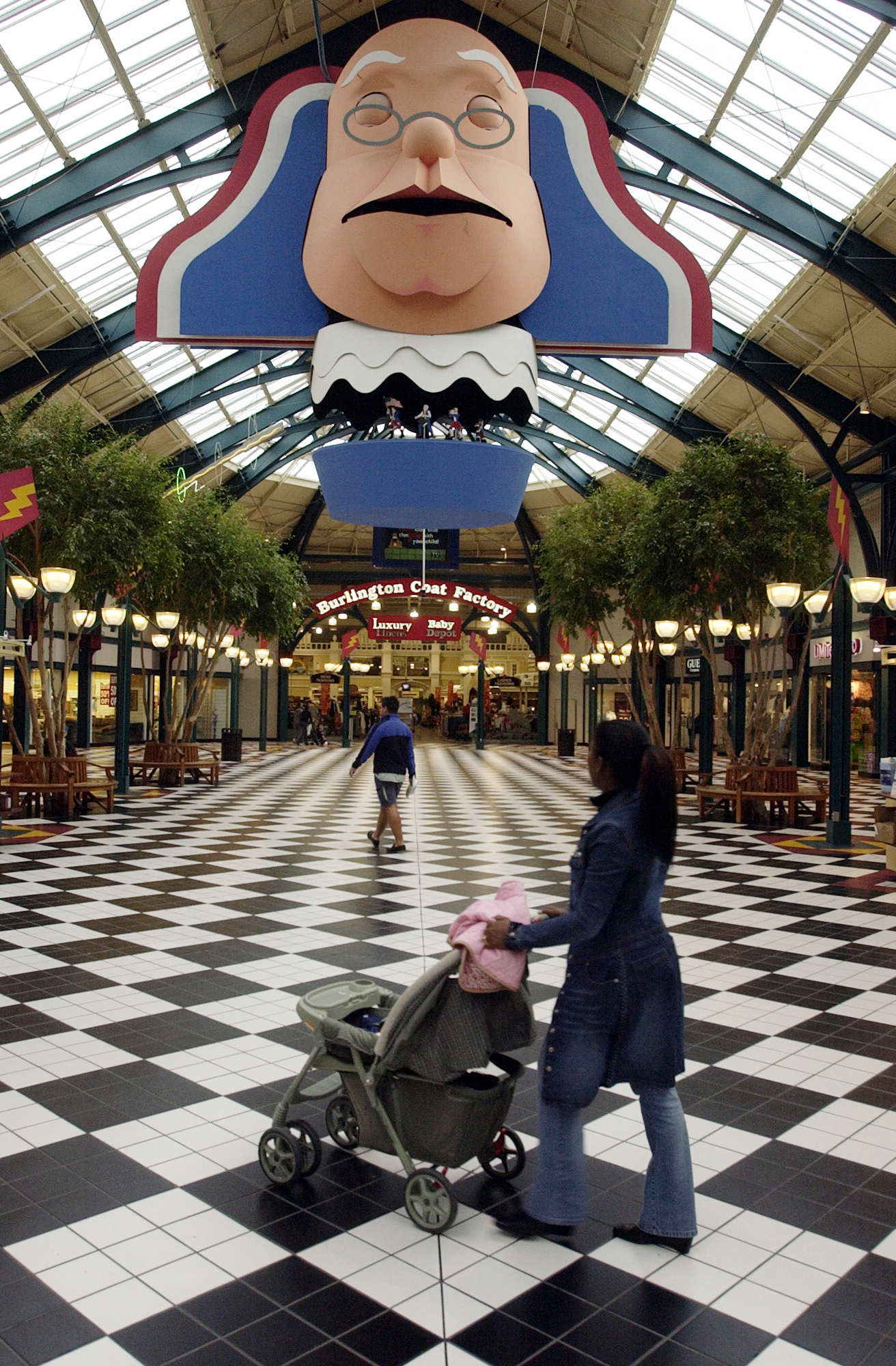
The mall opened in 1989 to great fanfare as the largest outlet mall ever, with an iconic zigzag-shaped concourse that stretched for 1.2 miles.
In 2007, in retrospect near the end of Franklin Mills’ golden era, the property and the rest of the Mills Corp. was taken over by Simon Property Group, the largest mall owner in the country. The new ownership group rehabbed the property in 2014, although there were already signs Simon was distancing itself by moving Franklin Mills (renamed Philadelphia Mills) into a different balance sheet category than its core properties.
Simon’s loan on the property had been intermittently distressed since 2012. An April 2024 report from real estate analytics firm Morningstar Credit was headlined “Legacy Philly Mall Back to Special Servicing for the Umpteenth Time.”
Shoppers stroll through the Franklin Mills mall in 2014.
The 2007 loan still had an outstanding balance of almost $250 million when it came to maturity in July 2024. Simon stepped away from the day-to-day operations at that time, with Philadelphia-based OPEX CRE Management appointed as receiver of the distressed property. The name was changed to Franklin Mall because Mills was trademarked by Simon.
Last year Franklin Mall’s appraised value was $76 million, a precipitous decline from its $201 million valuation in 2012 and $370 million in 2007. According to Morningstar Credit, a new appraisal is likely in the next month.
Full financials haven’t been publicly updated since last year, but at that time, the cash flow for the property was $9.5 million, the lowest since Simon took over in 2007. That’s down from 2019, when cash flow was $17.5 million, according to Morningstar, and from $11 million in 2022.
According to Morningstar, the latest reports from the special servicer for the property, Greystone Servicing Co., say cash flow is even lower this year and occupancy has fallen to 65.4%.
Possible reuses for Franklin Mills
Franklin Mall’s for-sale status comes as some old-school regional shopping destinationsare declining.
While some of its counterparts like King of Prussia and the Cherry Hill Mall are still thriving, there has been a wave of sales and redevelopments of area malls as the nature of retail evolves.
Some ailing malls have been purchased on the cheap, allowing their new owners to reinvest and refurbish the property in its previous mold.
“In terms of using the buildings that are there, it’s a challenge because they are generally big box retail, and they’ve got a center mall, which is completely out of fashion,” Roller said. “Could somebody, if they had the right tenants, recreate the mall? Turn it inside out, open the thing up?”
“Maybe it’s possible,” Roller said. But “I don’t see a lot of uses for the buildings that are there right now.”
The redevelopment of Exton Square Mall is in legal limbo.
When regional malls are redeveloped, more commonly, the retail options are reduced with much of the old structure demolished. Diverse new uses often take a faded shopping center’s place.
In New Jersey, the Echelon, Moorestown, and Burlington Center malls have or are going through a variety of demolition and redevelopment options. The commonality is that residential building is a part of all three plans.
At Franklin Mall, redevelopment would likely require demolition of the existing building.
“Ultimately, it may just be a piece of land” for sale, said Roller.
JLL’s listing, however, pitches the property as either redevelopment or continued mall use.
“This offering presents prospective purchasers with the opportunity to acquire a strategically positioned super regional shopping center with significant upside potential and/or redevelopment opportunity,” it reads.
JLL’s managing directors on the sale are John Plower, David Monahan, and Jim Galbally.
Historic preservation advocates are sounding the alarm about legislation from Councilmember Mark Squilla, which they argue would weaken existing protections in Philadelphia.
The bill, introduced Nov. 20, would institute changes to the city’s Historical Commission, which regulates properties on the Philadelphia Register of Historic Places and ensures that they cannot be demolished or their exteriors substantially altered.
“This is the first time the [preservation] ordinance has been proposed for amendment in decades,” said Paul Steinke, executive director of the Preservation Alliance for Greater Philadelphia. “This is a developer-driven proposal that does not reflect any of the priorities of the preservation community.”
Proponents of the bill argue that it is simply meant to give more notice and power to property owners before their buildings are considered by the Historical Commission.
“The bill does nothing to decrease the power of the Historical Commission to protect important historic resources,” said Matthew McClure, who served as co-chair of the regulatory committee of Mayor Jim Kenney’s preservation task force.
“It is a modest good government piece of legislation,” said McClure, a prominent zoning attorney with Ballard Spahr. He emphasized that he was not speaking on behalf of a client.
The bill was introduced too late in this year’s Council session to receive a hearing. Squilla says it will be considered next year.
Currently, the interest group most supportive of the bill is the development industry. But even some preservation opponents are displeased with Squilla’s effort, arguing that it does too little for homeowners.
“Everybody’s talking, and I think they all agree to move forward with continued conversations to maybe tweak the language a little bit so everybody feels comfortable with it,” Squilla said.
At least one more stakeholder meeting will be held in December.
Tensions over preservation
Squilla’s proposal comes in the midst of heightened debate around preservation in Philadelphia, where the majority of buildings were constructed before 1960.
Over the last decade, the number of historically protected properties doubled, although well below 5% of the city’s buildings are covered. Preservationists oppose what they see as a demolition-first approach to development in the United States’ only World Heritage City.
These have provoked backlash among some homeowner groups and pro-development advocacy organizations, which see these regulations as increasing housing costs.
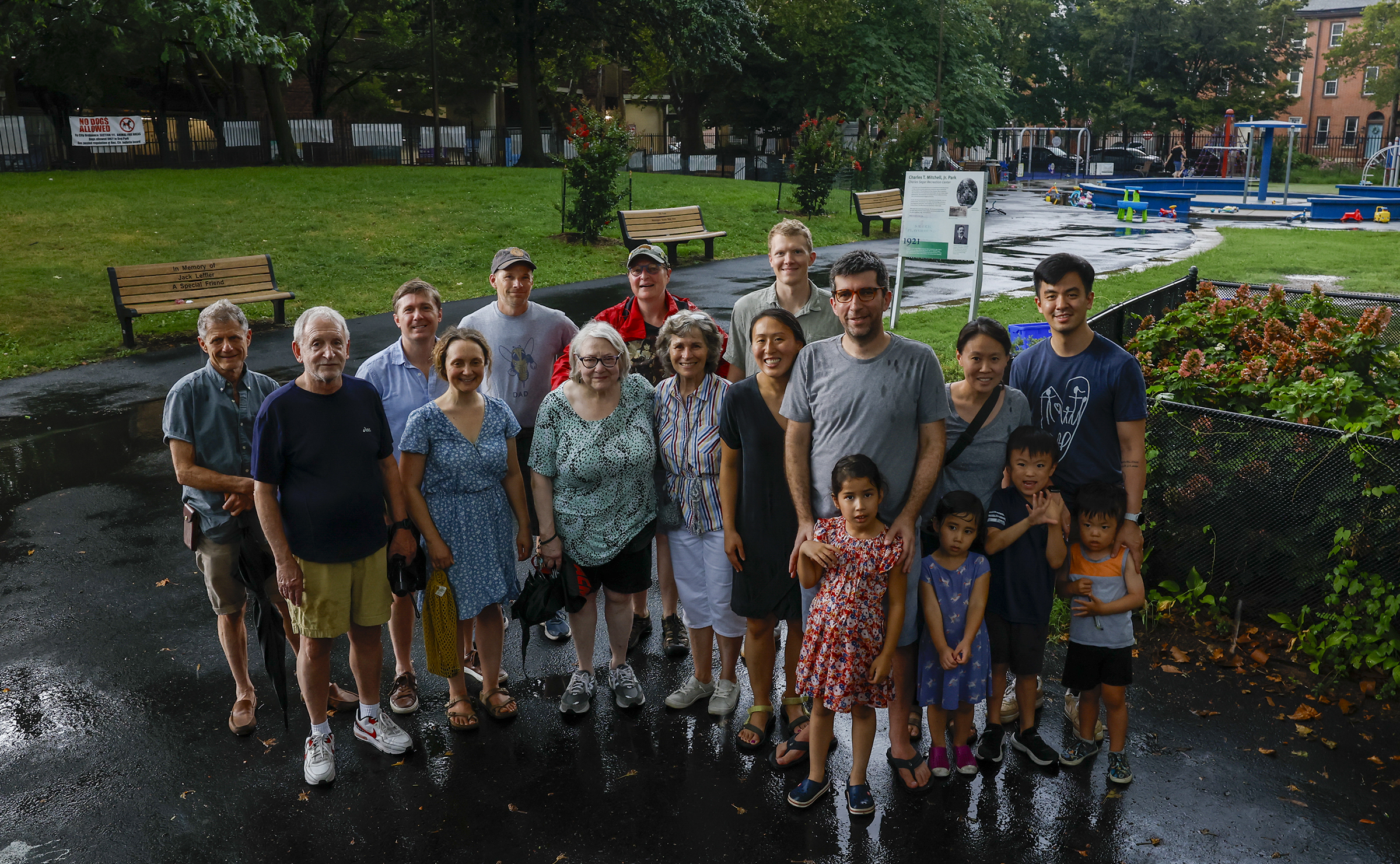
Members of the Philadelphians for Rational Preservation gathered at Seger Park in the Washington Square West neighborhood on July 27 to talk about their opposition to the Washington Square West Historic District.
Some property owners have grievances against the way the local nomination process works.
In Philadelphia, citizens are empowered to nominate buildings to the local register — giving buildings protection from demolition or exterior changes — without input from the property owner until the Historical Commission considers the case.
This practice persistently causes controversy, especially because there are few local incentives for homeowners whose properties get protected.
In some localities, preservation protections are promulgated exclusively by planners. In others, owner consent is required.
“The current historic nomination process is most often dictated by nongovernmental actors who operate without notice to property owners,” McClure said. “The administration’s bill is aimed at increasing transparency and basic fairness during the nomination process.”
Mayor Cherelle L. Parker’s administration did not respond to a request for comment.
What’s in the bill
Squilla’s bill is thick with new provisions to the local historic ordinance. A key aspect of the legislation gives property owners at least 30 days before a pending nomination of their building is considered by the commission and protections kick in.
While homeowners probably would not have time to radically alter the exterior of their house — and presumably wouldn’t demolish it — preservationists fear that developers will use the extra time to begin razing historic buildings.
“No one likes the notice provision the way it’s written; that’s freaking people out,” Steinke said. “We made clear why we think that’s a problem, and we were heard. Of course, the development community would love it to be the way it’s currently expressed in the bill.”
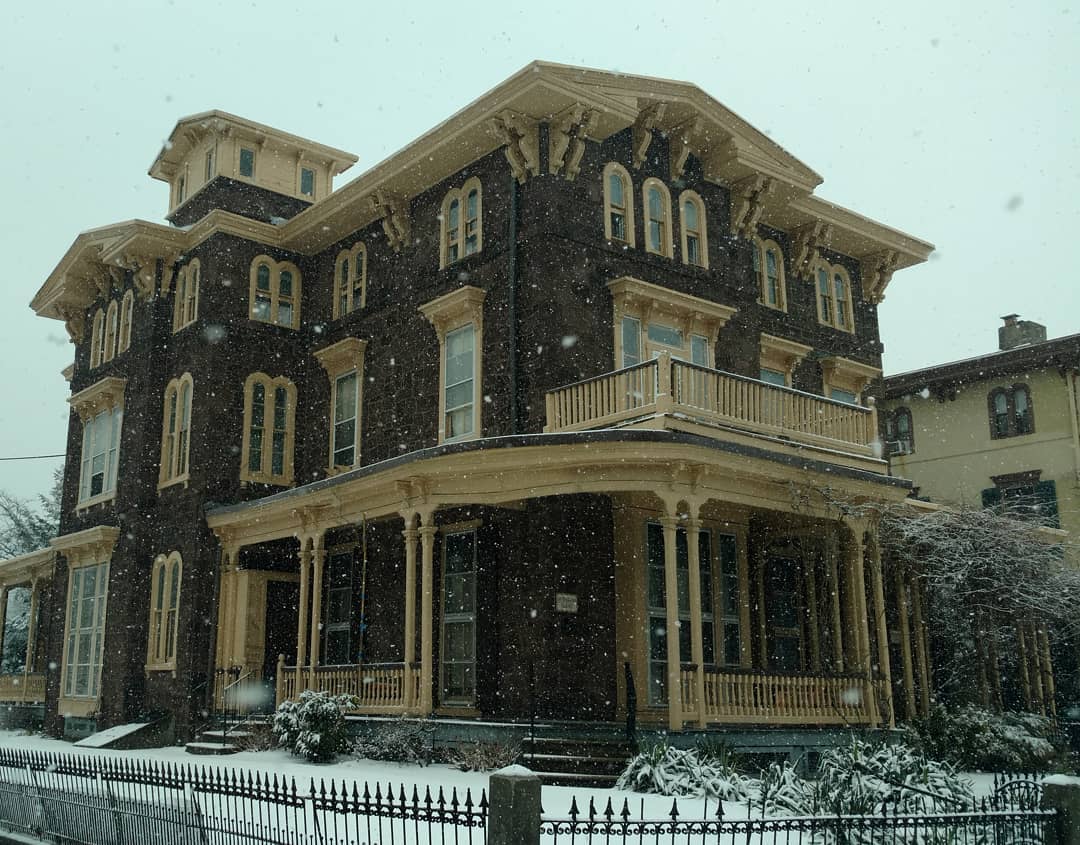
A Victorian home in the Spruce Hill historic district. Recently large new historic districts have been created to cover neighborhoods like Powelton Village, parts of Spruce Hill, and 1,441 properties in Washington Square West.
The delayed provision particularly worries preservationists in combination with a proposed requirement that the commission approve permits — including demolition or exterior design work — if “material commitments” were made to plans before the attempt to protect the historic building.
Other provisions include language to make it more difficult to protect land because it may house archaeological remains. It also limits the ability to consider a property for protection due to its relation to a landscape architect (as opposed to, say, a building designer).
Despite their animus toward existing preservation rules in the city, groups like 5th Square and Philadelphians for Rational Preservation called the legislation a sop to those who least need help.
“While this bill is a boon to developers, it doesn’t help ordinary Philadelphians,” said Jonathan Hessney of Philadelphians for Rational Preservation.
He argues that Squilla isn’t curbing historic districts that burden homeowners, “while at the same time risks allowing genuinely historic properties to be destroyed in the new 30-day race to demolish or deface it creates.”
A possible reform that some critics of the bill would like to see are flexible, tiered historic districts, where only a select group of buildings would be fully regulated. Demolition protections would still exist for many buildings, but most would not be subjected to oversight for changes like replacing a door or window.
“That was discussed as something that the preservation community would like to see that was mentioned in the original draft and then stripped out,” Steinke said.
Squilla said the pushback surprised him, given that negotiations have been held since June. He’s confident a compromise can be reached.
Beyond the Preservation Alliance — the advocacy group with the most funding and pull in City Hall — the bill has caused alarm among historic activists.
“It was a blindside to the progress that many stakeholders in the preservation community felt they were reaching with him,” said Arielle Harris, an advocate. “Squilla understands the preservation climate in the city — given that he was on the preservation task force — so this is out of left field.”
At lunchtime on a Thursday, a week before Thanksgiving, Chestnut Hill was buzzing.
Inside the newly expanded Matines Café, almost every table was full. People sipped warm drinks from large mugs and ate Parisian croissants and quiche. Bottles of prosecco sat on ice by one large table adorned with Happy Birthday balloons.
McNally’s Tavern was bustling, too, with regulars sitting at the bar and at tables inside the cozy, nearly 125-year-old establishment atop the hill. Multiple generations gathered — a son taking a father out to lunch, a mother with a baby in a stroller, and two sisters, Anne and Meg McNally, running the place.
Behind the storefronts along Germantown Avenue’s main drag, some people perused the boutiques, while others typed away on laptops in coffee shops.
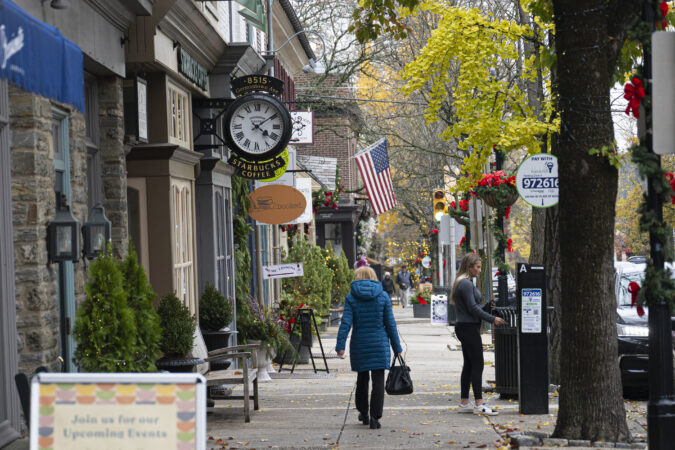
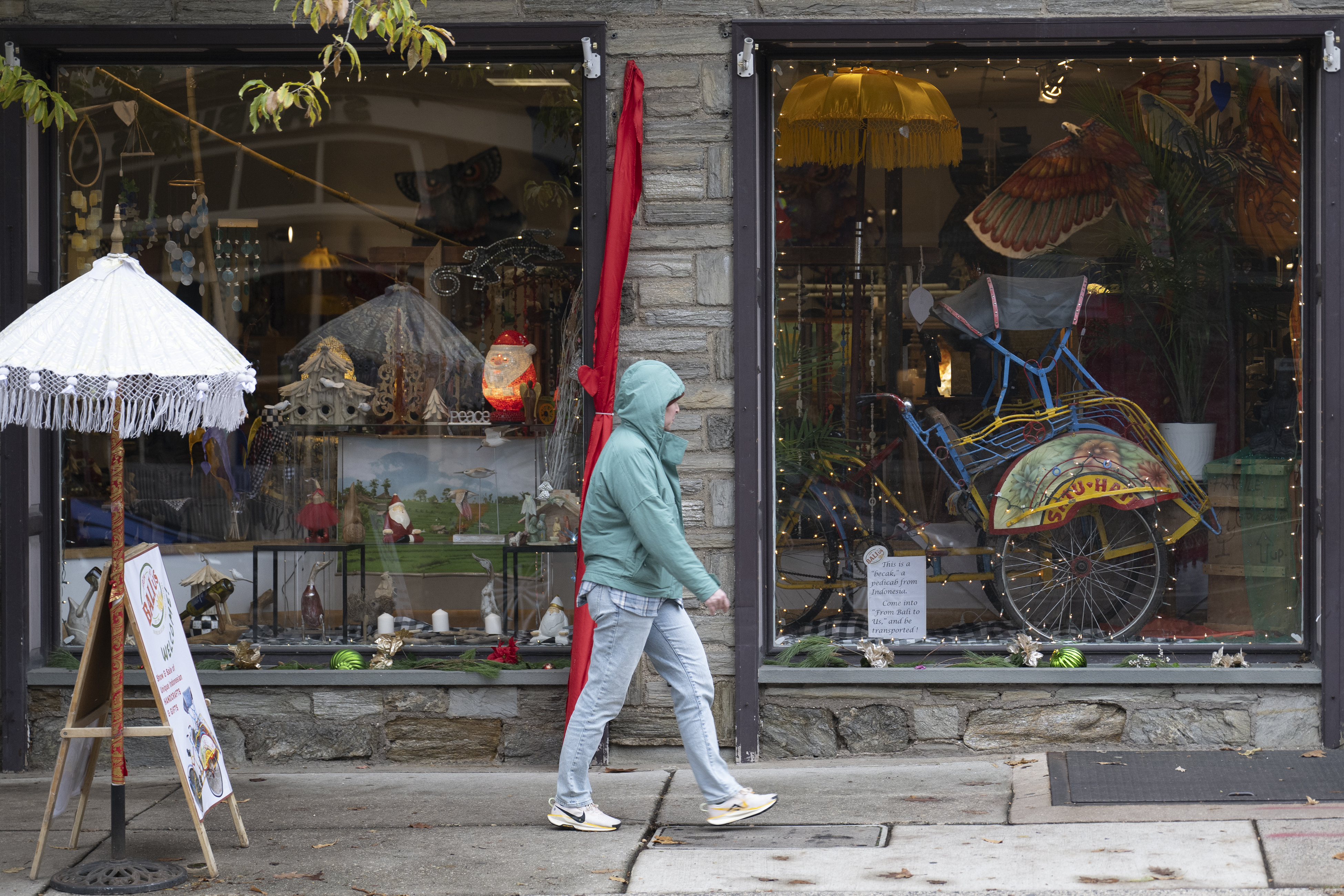
In the northwest Philadelphia neighborhood known for its wealth and postcard-picturesque aesthetic, the small-town charm of longstanding establishments — four are more than 100 years old — is now complemented by the shine of some newer shops and restaurants. Several Chestnut Hill business owners said the variety has helped both old and new spots succeed despite broader economic challenges, including inflation and tariffs, and the loss of a few restaurants.
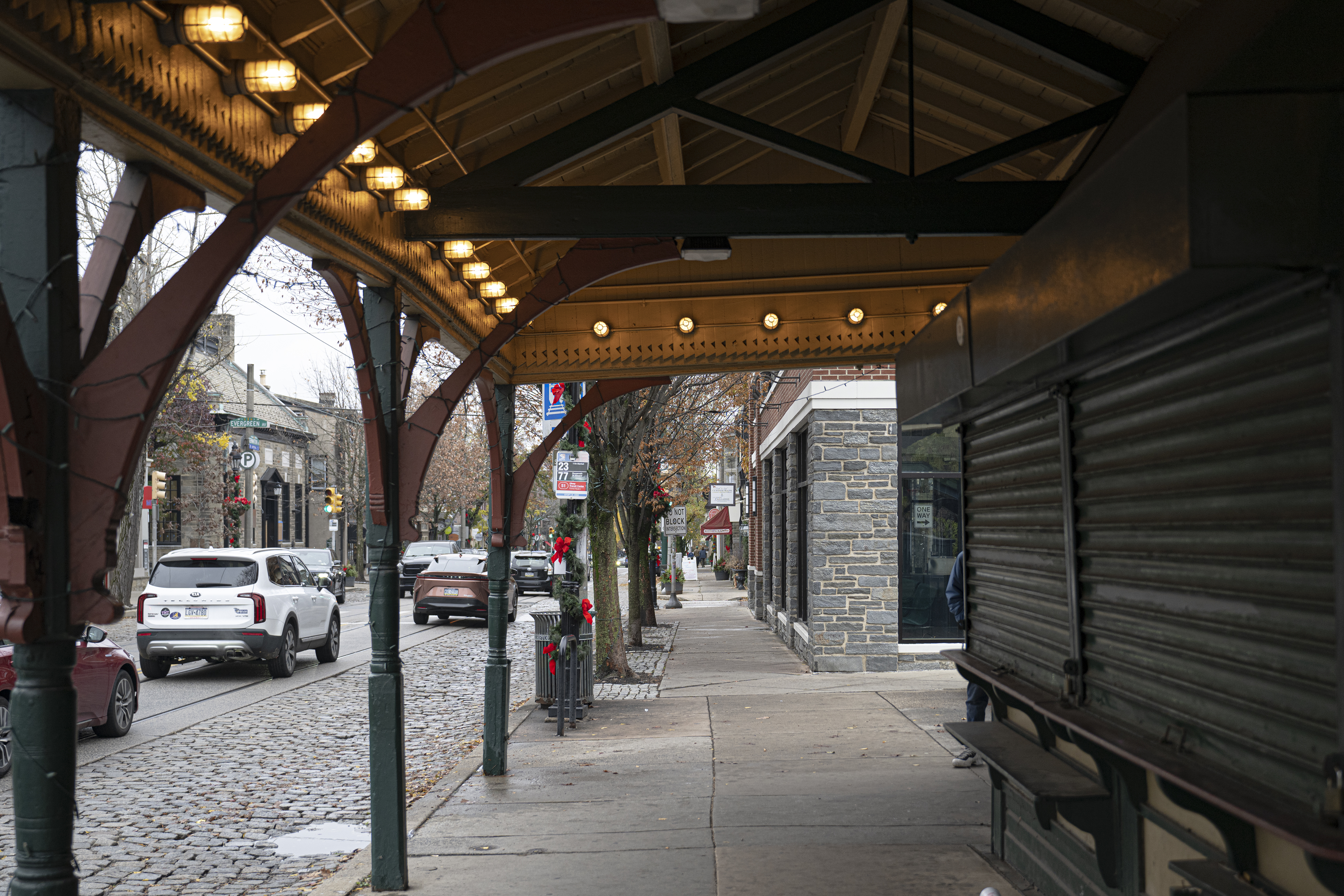
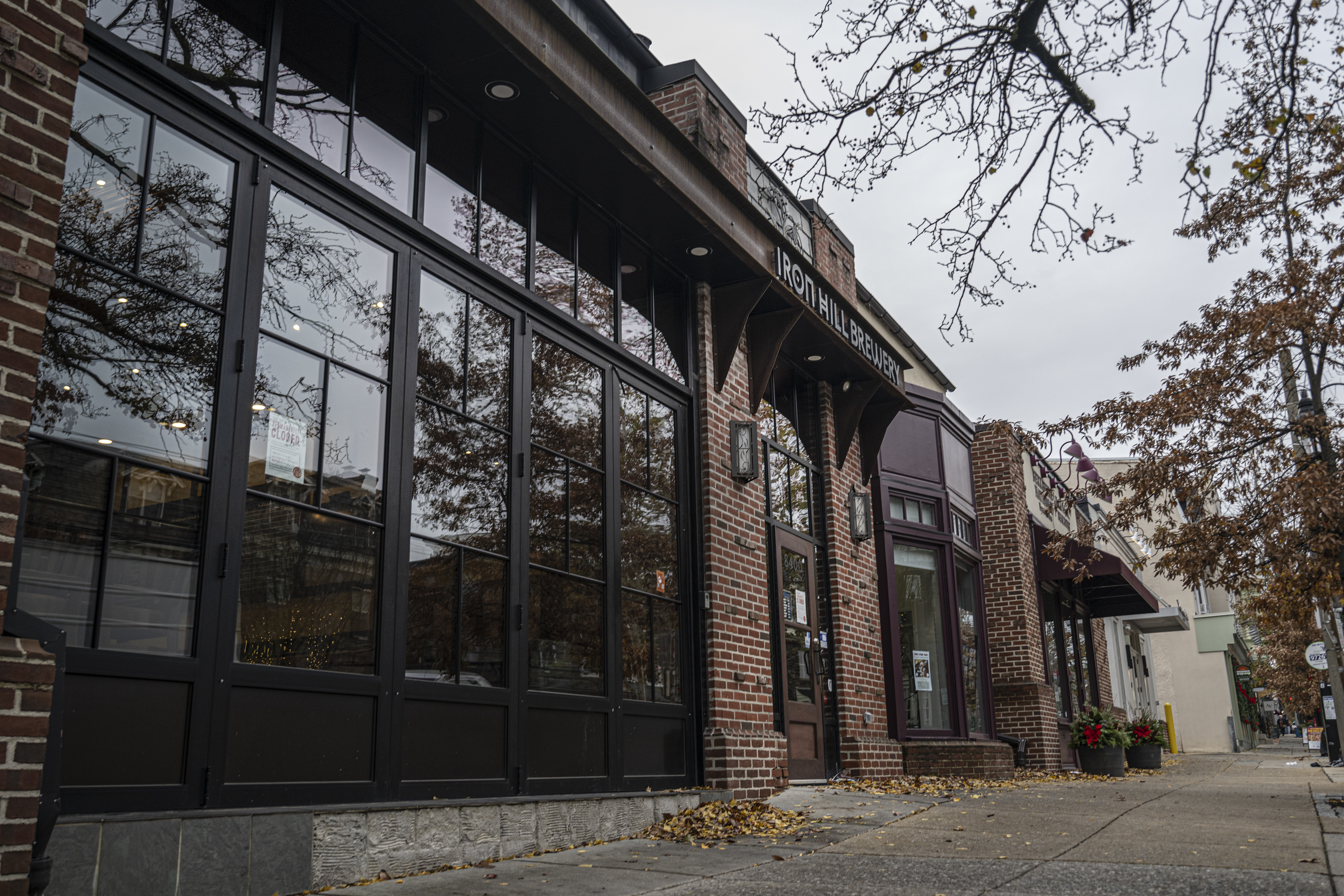
A view down Germantown Avenue from the Chestnut Hill SEPTA Regional Rail station.The closed Iron Hill Brewery is shown in downtown Chestnut Hill on Nov. 19.
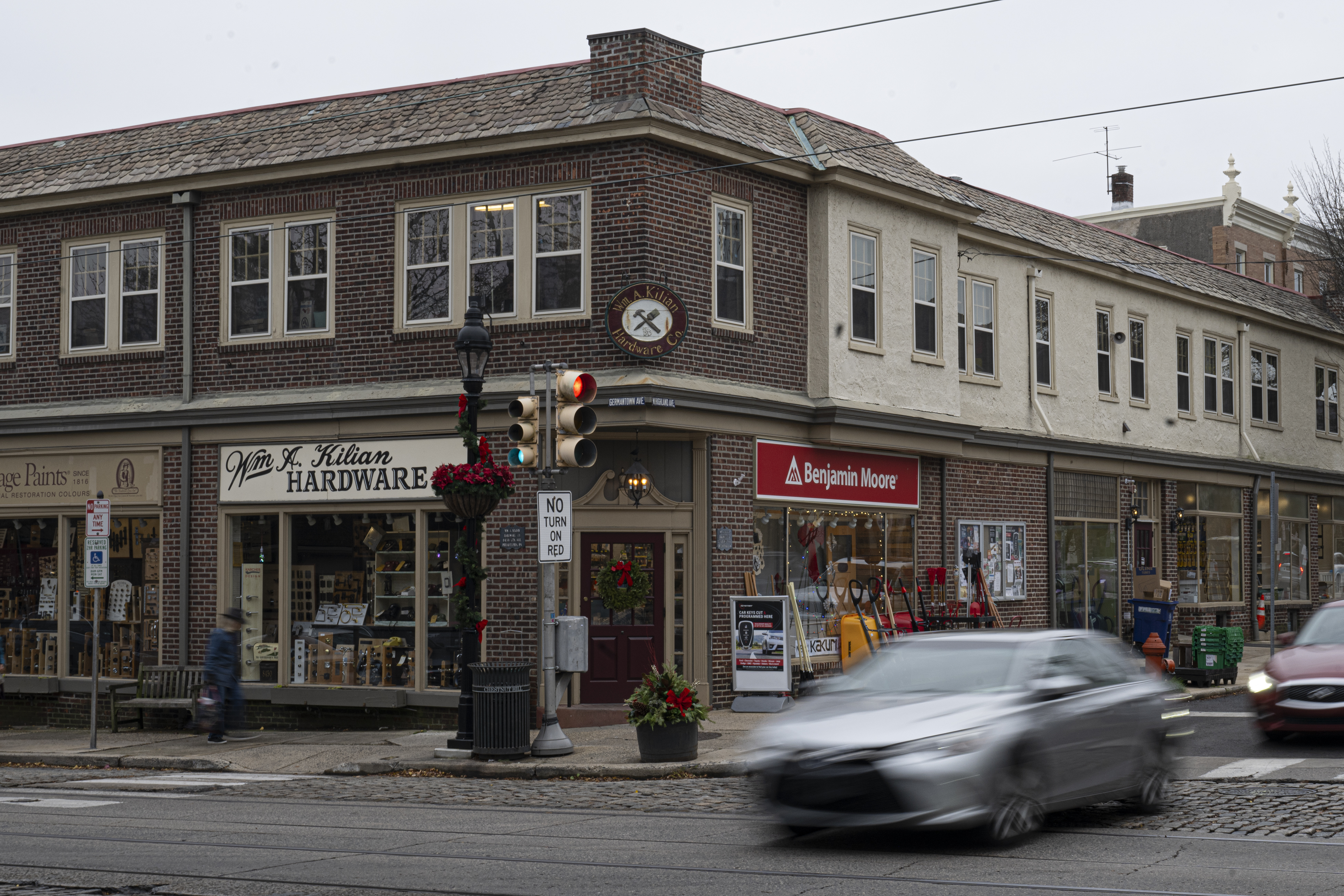
As the owner of Kilian Hardware, which has been in business for 112 years, Russell Goudy Jr. has watched the avenue change. Fifty years ago, he said it was “basically like a shopping mall,” a one-stop shop for everyday needs.
In recent years, however, the neighborhood has focused on attracting and retaining unique food and beverage businesses, “quaint, specialty shops,” and service-oriented businesses, which Goudy said offer experiences Amazon and other e-commerce platforms can’t replicate.
“If you’re not giving people an experience in today’s economy, it’s very tough to compete,” said Nicole Beltz, co-owner of Serendipity Shops, which for a decade has had an expansive store on Germantown Avenue. And providing a memorable experience is never more important than during the lucrative last few months of the year.
“When you come to Chestnut Hill over the holidays, you get what you came for,” Beltz said. “You get that charming feeling of being somewhere special for the holiday.”
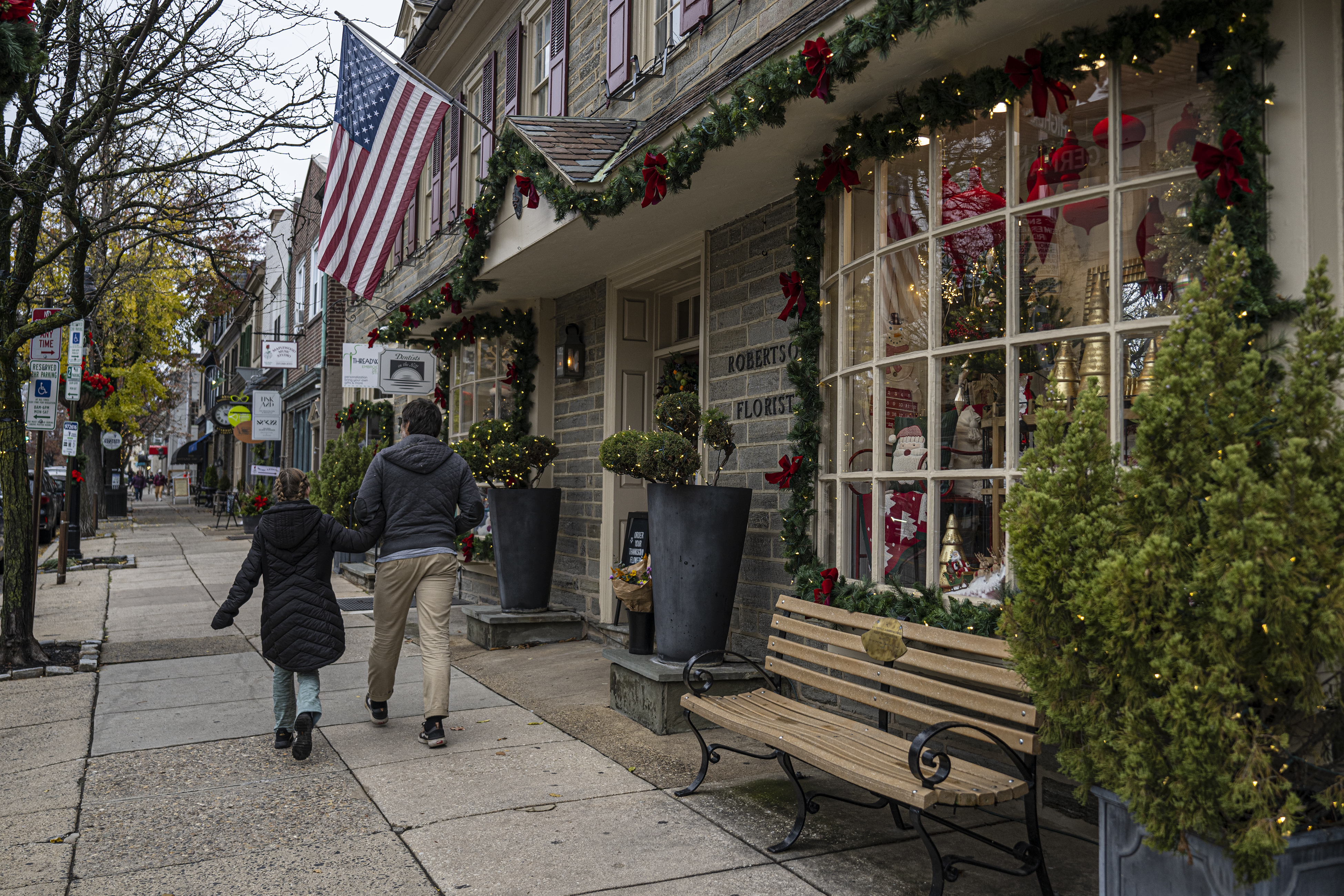
People walk by holiday decor outside Robertson’s Flowers & Events in Chestnut Hill earlier this month.
‘New vitality’ coming to the Chestnut Hill restaurant scene
During the holidays and all year long, Chestnut Hill business owners said they’re grateful that the neighborhood has held onto its charm despite recent challenges.
During the pandemic, “it definitely felt a little grim and dark,” said Ann Nevel, retail advocate for the Chestnut Hill Business District. “The impressive thing is the old-timers, the iconic businesses, and some of the newer restaurants … pretty much all were agile enough to tough it out.”
And a slew of other businesses have moved into the community since then. In the last four years, 20 retail shops, 20 service businesses, and 10 food and beverage spots opened in Chestnut Hill, Nevel said, while several existing establishments expanded.
Among them was Matines Café, which opened a small spot on Bethlehem Pike in 2022 and expanded this fall to a second, much larger location on Highland Avenue. The café serves 500 people or more on weekdays, according to its owners, and even more on weekends.
Sitting inside their original location, which is now a cozy children’s café, Paris natives Amanda and Arthur de Bruc recalled that they originally thought they’d open a café in Center City, where they lived at time. Then, they visited Chestnut Hill and fell in love, despite “a lot of empty spots” there around 2022, Amanda de Bruc said.
A colorful storefront along Germantown Avenue in Chestnut Hill.
“We liked the idea of living in the suburbs, which technically Chestnut Hill is not the suburbs, because it’s still Philly,” she said. But “we were looking for something that we were more used to, like Paris. There are so many boutiques in such a small area,” and everything is walkable.
The opening of shops and cafés like Matines became a “catalyst for this new vitality, a new, more contemporary energy that has taken hold in Chestnut Hill,” Nevel said. Soon, “we’re going to see that new vitality in the restaurant scene,” including in some long-vacant storefronts.
In 2026, former Four Seasons sommelier Damien Graef is set to open a wine bar, retail store, and fine-dining spot called Lovat Square off Germantown Avenue, Nevel said. On the avenue, a café-diner-pub concept called the Blue Warbler is under construction and also slated to open sometime next year.
Kilian Hardware in Chestnut Hill has been in business for 112 years.
In downtown Chestnut Hill, there are still a few empty spots, including those left by Campbell’s Place, a popular restaurant that closed this summer; Diamond Spa, which closed this fall; Iron Hill Brewery, which closed in September (right before the regional chain filed for bankruptcy); and Fiesta Pizza III, which closed last year.
Kismet Bagels, a popular local chain, was set to fill one of the spots this summer, but its deal fell through, co-owner Jacob Cohen said in a statement. He said they could “revisit the Chestnut Hill neighborhood” in the future.
While the future of Iron Hill will be dictated by bankruptcy proceedings — which include an auction of assets set for next month — stakeholders say conversations are ongoing about some of the other vacancies.
Steve Jeffries, who is selling the Campbell’s building for $1.5 million, said he’s gotten a lot of interest from people who want to revive the nearly 3,000-square-foot space as a neighborhood pub, but one that is “more cutting edge.” Perhaps, he said, one that is not focused on craft beer, which has decreased in popularity, especially among younger generations.
“The town is just screaming for other opportunities for nightlife and sports bars,” said Jeffries, executive vice president of Equity CRE. “There has been a connotation in the market that Chestnut Hill was kind of older, stuffy, that it wasn’t a nightlife town.”
But that’s changing, Jeffries said.
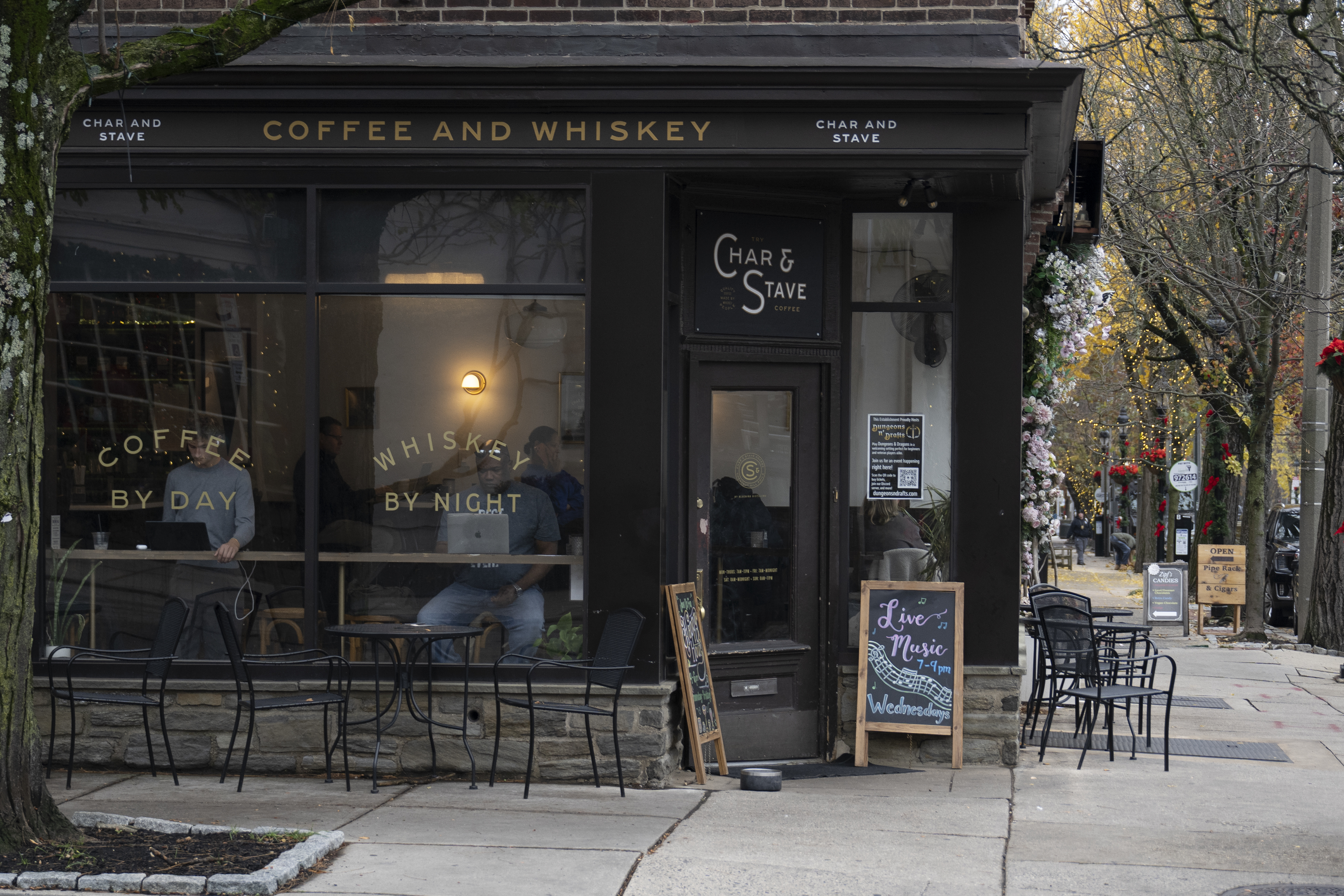
Char & Stave, an all-day coffee and cocktail bar, has done great business since moving into Chestnut Hill, its owner, Jared Adkins, said.
Just ask Jared Adkins, owner of Char & Stave, an all-day coffee and cocktail bar at the corner of Germantown and Highland Avenues.
After Nevel visited Ardmore and saw the success of Adkins’ original Char & Stave, she recruited him to open a Chestnut Hill location. It started as a holiday pop-up in 2022, then became a permanent presence the next year.Since he moved into town, Adkins said, business has been booming.
“We’re really just busy all day long,” said Adkins. The café is open until 11 p.m. during the week, midnight on the weekends, and it often brings in musicians and hosts events.
Adkins describes Char & Stave as a place where drinkers and nondrinkers alike can spend time together, and where people can get work done with coffee or a cocktail beside them: “It’s really a gathering place that fills a niche of a nice cocktail place.”
More changes to come for Chestnut Hill
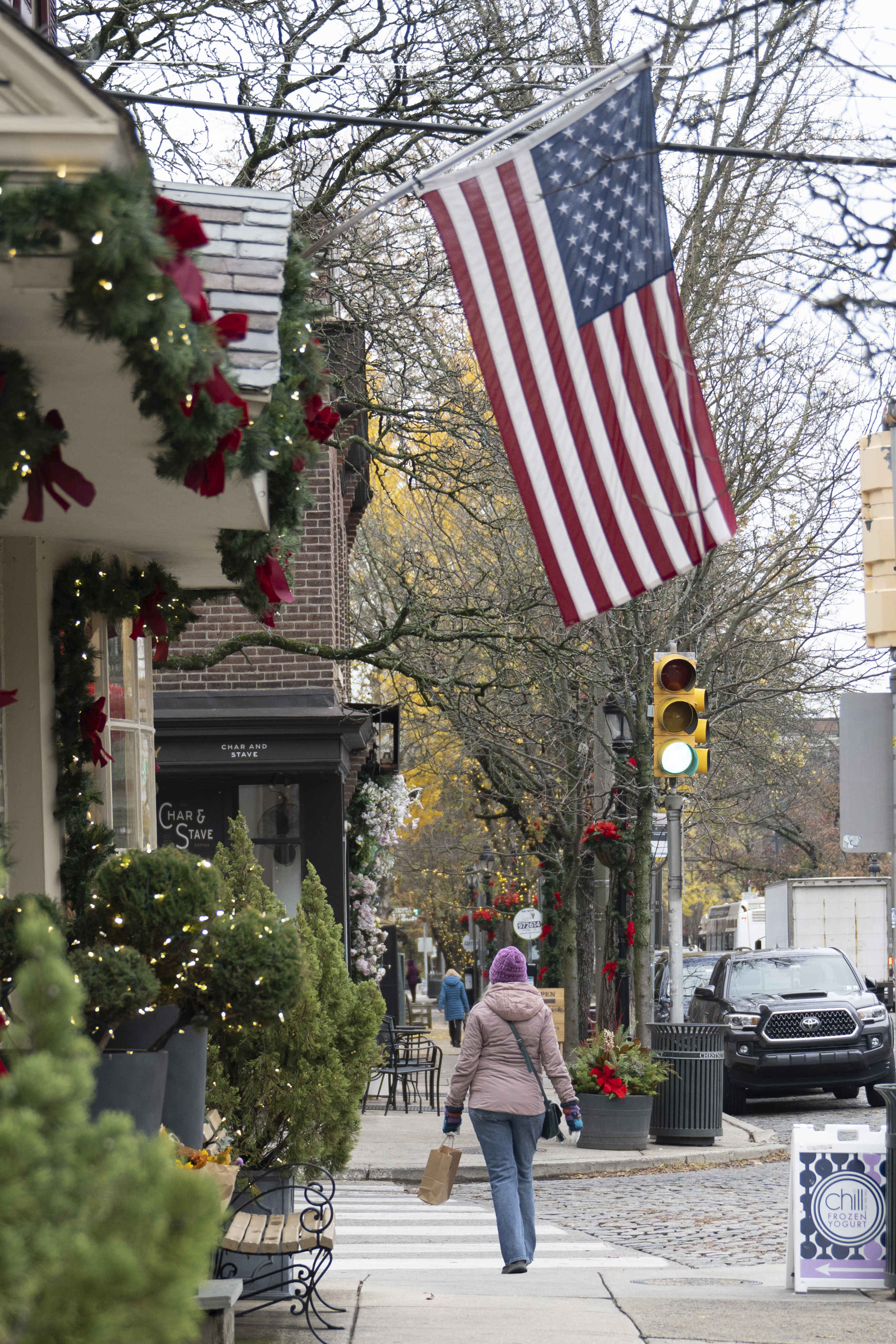
Businesses along Germantown Avenue in Chestnut Hill are decorated for the holidays.
Chestnut Hill business leaders and community members say they’re optimistic about the neighborhood’s continued evolution.
As Brien Tilley, a longtime resident and community volunteer, ate lunch inside Cosimo’s Pizza Cafe, he said the community is doing well. But, he added, “it could always do better. It’s always in transition.”
Nevel noted that restaurants require more capital to open than other businesses, so it can take awhile to fill those larger holes downtown.
“The economy is tough,” said Anne McNally, a fourth-generation owner of McNally’s, as she sat by the tavern’s front window overlooking Germantown Avenue. But in Chestnut Hill, she gets the vibe that the community “wants us to be successful.”
McNally and Goudy, of Kilian’s, both noted that their families bought their buildings decades ago. That has contributed to their longevity, both said, as has evolving with the customer base.
For the McNally family, that meant transitioning from a “bar-bar,” with no clock or phone, to a bar-restaurant that closes at 10 p.m. For Goudy, it meant soliciting online orders and walk-in business from out-of-town and even out-of-state customers whose older homes require unique hardware.
“Everything is changing,” Goudy said. “It’s important to keep changing and not to try to go back to where you were before.”