Category: Commercial Real Estate

  • A once-crumbling Point Breeze church is being preserved as a brewery and community space

    A once-crumbling Point Breeze church is being preserved as a brewery and community space

    Dane Jensen isn’t a developer by training or profession, but he loves old buildings and he’s got big plans for the church at 1800 Tasker St.

    The 138-year-old institution is a fixture in Point Breeze, but Second Nazareth Missionary Church’s shrinking congregation hadn’t been able to keep up with repairs. In 2024, as the church sought to sell, its leadership met with Jensen, who pitched them on his vision of a continuing life for the building as a communal space, if not a sacred one.

    “A lot of adaptive reuse is taking these big institutional buildings and turning them into apartments and, to me, that loses some of the intent of the space,” Jensen said. “We are trying to preserve it as something where people can still gather and feel fellowship. Even without religious intent, it can still be a place where people can connect.”

    Jensen bought the property in mid-2024 for $1.75 million, and he has begun renovations. He hopes to turn the church into a family-friendly restaurant, brewery, and event space, outfitted with an indoor playground, an idea he successfully pitched to Second Nazareth’s leadership.

    “It’s a little scary to put that word out there because some people hear brewery, and they hear bar. They hear place to get drunk,” he said. “We envision it as a community space. During the day you can go grab a cup of coffee and do some work. In the afternoon, you can meet up with friends and have lunch, and, yeah, maybe you can grab a beer.”

    Jensen isn’t imagining a traditional brewery, with giant silos and vats. He wants a place he will feel comfortable bringing his children, who are 4 and 7. That’s also why he’s been drawing up plans for play equipment inside the space.

    The church is currently zoned for single-family use, like the rowhouses that surround it. But in 2019, City Council created historic preservation incentives to make it easier to repurpose churches that are on the Philadelphia Register of Historic Places.

    That means Jensen can move forward, since the church was added to the register earlier this month. He won’t have to go to the Zoning Board of Adjustment or seek a legislative zoning change from Council President Kenyatta Johnson, who represents the area.

    However, Jensen said he still plans to meet Johnson and arrange meetings with surrounding neighborhood groups known as Registered Community Organizations (RCOs).

    “Needing to talk to your councilmember, needing to talk to your community through the RCOs, is incredibly valuable,” Jensen said. “We want to do that to make sure we’re not just coming in to extract value from the neighborhood. We really want to contribute in a real and meaningful sense. Hiring from the neighborhood feels really important.”

    Jensen is applying for a sit-down restaurant and artisan industrial use permit. Other possible uses of the building include a bakery and a coffee roastery.

    Whatever the final use, the historic church will require extensive renovation first. Currently, Jensen’s team is putting in steel reinforcements to brace the building. He plans to restore most of the stained glass, fix the leaky roof, and install fire safety and Americans with Disability Act infrastructure.

    The church dates to 1886, when it was known as the Presbyterian Church of the Evangel. That denomination was in place for almost 100 years, but as that congregation shrank, the church sought a successor.

    In 1978, the Second Nazareth Missionary Church took over the building and remained until 2024. In recent years, that congregation began facing many of the same challenges as their predecessors even as their membership was shrinking and repair costs were growing.

    Jensen said he found notes from the waning days of the Presbyterian era that showed the leaking roof was a problem back then — a challenge that decades later, Second Nazareth was facing again.
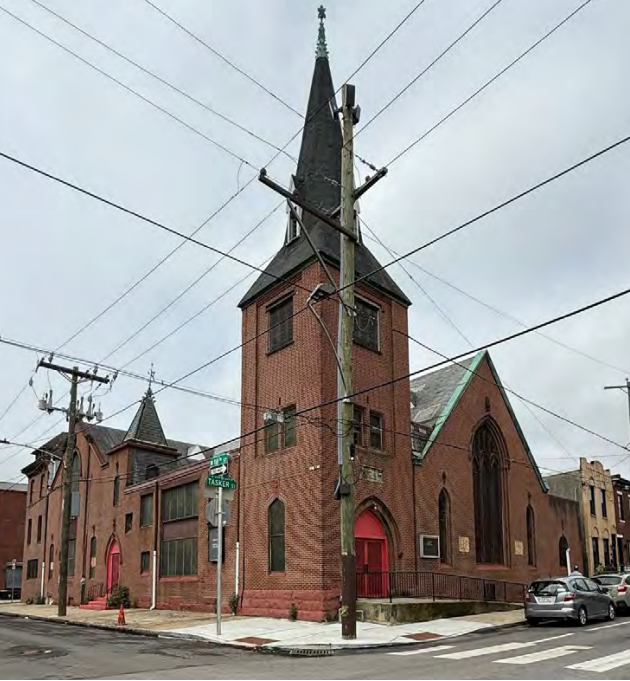
    The church as seen from the north side, in an image included in Dane Jensen’s nomination of the building to Philadelphia’s Register of Historic Places.

    When the Historical Commission accepted Jensen’s 48-page argument for the building’s importance earlier this month, that triggered the 2019 law that made it easier to find new uses for historic “special use” properties — like churches or theaters — by granting them more flexible zoning. That means no trip to the zoning board, which can add over half a year to the development process and often more if neighborhood groups or councilmembers contest the board’s ruling in court.

    The 2019 bill was drafted in response to the fate of St. Laurentius in Fishtown, which got caught up in lawsuits over a zoning board ruling. The legal battles dragged on until the church was demolished.

    “I’ve really fallen in love with the building throughout this process,” Jensen said. “I’m excited that I am in a position to try to get the building to a point that it can last another 140 years and still have people feeling togetherness in it.”

  • Plan to turn Pennhurst site into massive data center outrages neighbors

    Plan to turn Pennhurst site into massive data center outrages neighbors

    Megan Heiken recently bought a home near the former Pennhurst State School and Hospital, once a center for people with developmental disabilities that now operates as a popular haunted Halloween attraction.

    A new plan to convert Pennhurst into a massive data center has outraged and mobilized local residents, as well as people in neighboring communities in an area known for rolling hills, farms, and an overall rural character.

    Heiken launched an online petition urging her Chester County neighbors and East Vincent Township officials to “work together toward a solution that preserves the Pennhurst property, honors its history, and protects the environment and quality of life for all who live, work and visit here.”

    The petition had 1,825 signatures as of Friday.

    “I made this move to be out in an area with more space, more nature,” Heiken said. “The fact that the owner just wants to plow it over and swap in a data center is kind of alarming.”

    Her sentiments are widely shared. The board of supervisors and planning commission in East Vincent have hosted public meetings on the issue that stretched for hours as residents from Spring City to Pottstown voiced objections.

    Data centers require a large-scale way of cooling computing equipment and are often dependent on water to do that. The amount of water they use can be about the same as an average large office building, although a few require substantially more, according to a recent report from Virginia, which has become a data center hub.

    Steve Hacker, of East Vincent, told the board that his well had already gone dry, as has his neighbor’s, even before a data center has been built. He’s concerned about where the data center would get its water.

    The pushback comes as both President Donald Trump and Pennsylvania Gov. Josh Shapiro champion data center development. Trump aims to fast-track data centers and exempt them from some environmental regulations. Shapiro promotes a 10-year plan that includes cutting regulatory “red tape.”

    State legislators and local governments are scrambling to rewrite local laws as most have no local zoning to accommodate data centers or regulate them.

    window.addEventListener(“message”,function(a){if(void 0!==a.data[“datawrapper-height”]){var e=document.querySelectorAll(“iframe”);for(var t in a.data[“datawrapper-height”])for(var r,i=0;r=e[i];i++)if(r.contentWindow===a.source){var d=a.data[“datawrapper-height”][t]+”px”;r.style.height=d}}});

    1.3 million square feet

    Pennhurst‘s owner has not yet filed a formal application to develop the site, but an engineering firm has submitted a sketch of a preliminary plan to East Vincent Township to develop 125 acres for use as a data center.

    The land is owned by Pennhurst Holdings LLC, whose principal is Derek Strine.

    Strine deferred comment to a spokesperson, Kevin Feeley.

    “Pennhurst AI is aware of the concerns expressed by the residents of East Vincent Township, and we are committed to working through the Township to address them,” Feeley wrote in an email. “What we propose is a facility that would be among the first of its kind in the United States: a state-of-the-art data center project that would address environmental concerns while also providing significant economic investment, jobs, and tax rateables as well as other benefits that would directly address the needs of the community.”

    Feeley said Pennhurst AI plans to continue “working cooperatively with the Township.”

    The sketch calls for five, two-story data center buildings, a sixth building, an electrical substation, and a solar field. Together, the buildings to house data operations would total more than 1.3 million square feet.

    The plan states that a data center is an allowable use within the Pennhurst property because the land is zoned for industrial, mixed-use development. Township officials have agreed a data center would be allowed under that zoning.

    The grounds are bordered by Pennhurst Road to the west. The Schuylkill lies down a steep gorge to the east and north. The property is near the border of Spring City, which is just to the south.

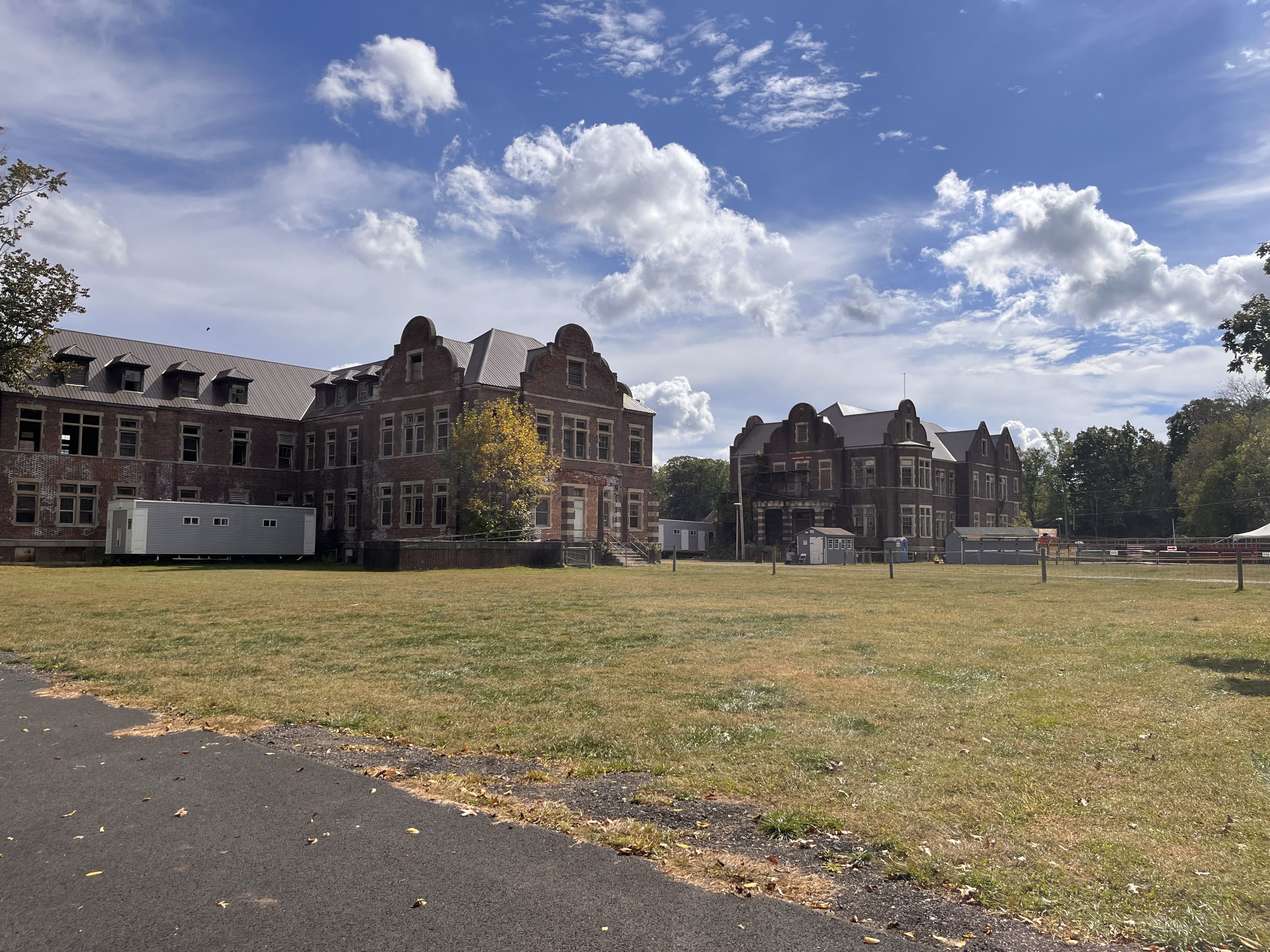
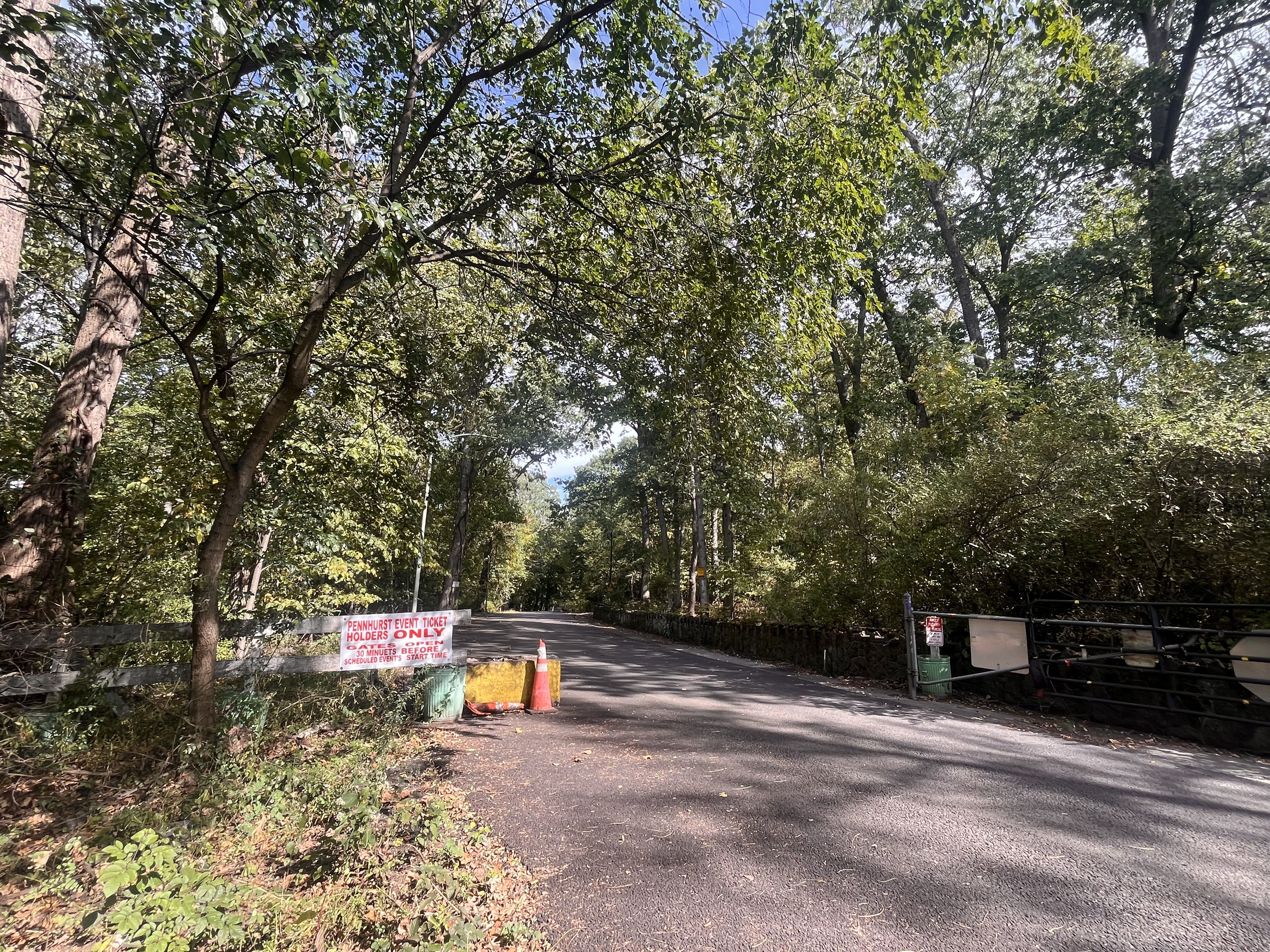
    A view of the entrance to the Halloween attraction at the former Pennhurst State School and Hospital grounds in East Vincent Township, Chester County.

    What’s Pennhurst?

    Pennhurst State School and Hospital, known today as Pennhurst Asylum for its Halloween attraction, has had a long and troubled history. It opened in 1908 to house individuals with intellectual and developmental disabilities. It became severely overcrowded by the time it closed in 1987.

    A 1968 documentary Suffer the Little Children highlighted abusive and neglectful practices, and resulted in legal actions and a landmark disability rights ruling in 1978 that declared conditions as “cruel and unusual punishment.”

    The last patient left Pennhurst in 1987, and the facility sat abandoned until it was purchased in 2008 and converted into a Halloween attraction despite protests from various advocacy groups.

    The Halloween attraction has continued and operators say it shows sensitivity toward those once housed at Pennhurst. Separately, visitors can take historical tours of the exteriors of 16 buildings and learn about people who lived and worked there. The site also has a small Pennhurst history museum.

    A view of the vacant buildings on the former Pennhurst State School and Hospital grounds in East Vincent Township, Chester County.

    Contentious meetings

    In recent months, East Vincent officials have raced to draft an ordinance that would govern data centers by limiting building heights, mandating buffers, requiring lighting, noting the amount of trees that can be cut down, and other restrictions.

    At two contentious meetings in September, residents and the board of supervisors argued about the draft ordinance’s specifics. Residents said the ordinance did not incorporate some community-suggested safeguards aimed at preserving the township’s rural character.

    Residents asked how much water the data center would consume, how much power it would need, and how much noise it would generate.

    Pennhurst’s zoning was changed in 2012 from allowing only residential development to permitting industrial and mixed-use buildings. Township Solicitor Joe Clement told residents that it is difficult for the municipality to argue that a data center would not fit within that zone.

    “If there’s a use that is covered by the zoning ordinance, we can’t stop that use,” board vice chair Mark Brancato explained at a Sept. 18 meeting.

    Officials said the draft ordinance was not specifically aimed at the Pennhurst site but was meant to broadly govern any data centers proposed in the township.

    What we’re trying to do is to come up with a set of reasonable guidelines, guardrails, and conditions in the new zoning ordinance that will … provide as much protection as we possibly can for the residents,” Brancato said. ”We are committed to protecting and preserving the rural character of the township.”

    Township meetings, some of which have lasted hours, have been marked by raised voices and emotional appeals.

    “Our whole community is kind of anxious about the thought of this new data center,” Gabrielle Gehron, of Spring City, said during one meeting. “I’m confused about whether we are or not doing something to prevent that from happening.”

    Pa. State Rep. Paul Friel, and State Sen. Katie Muth, both Democrats from East Vincent, have spoken at meetings. Muth noted that Strine received a $10 million grant and loan package from the state in 2017 to prepare the site for “a large distribution facility” and other industrial structures, new office development, and the renovation of six existing buildings for additional commercial use, amid ample open space, according to a funding request provided by the governor’s office.

    Muth fears Strine is paving a path to clear the data center for development and sell the property — after benefiting from tax dollars.

    “These are not good things to live next to,” Muth said of data centers.

    The board tabled the draft ordinance on Sept. 22 after receiving legal advice that they still had time to incorporate more residents’ concerns.

    Beyond Pennhurst

    Other municipalities in Pennsylvania face a similar issue: Most don’t have existing zoning for data centers. However, state law mandates that municipalities must provide zoning for all uses of land — just as state and federal officials are ramping up plans to embrace the centers.

    Plymouth Township is dealing with pressure as Brian J. O’Neill, a Main Line developer, wants to turn the Cleveland-Cliffs steel mill into a 2 million-square-foot data center that would span 10 existing buildings. The Plymouth Township Planning Commission voted against the project given resident backlash. The plan goes to the zoning board later this month.

    And Covington and Clifton Townships in Lackawanna County in the Poconos are also dealing with zoning issues and widespread opposition regarding a plan to build a data center on 1,000 acres.

  • Philadelphia’s hottest new neighborhood? Underneath the elevated train tracks in Fishtown and Kensington

    Philadelphia’s hottest new neighborhood? Underneath the elevated train tracks in Fishtown and Kensington

    A building boom is unfolding on Front Street in Fishtown along the Market-Frankford elevated train line.

    Walking north beneath this towering transit edifice, pedestrians are forced to zig-zag across the street to avoid construction sites spilling onto the sidewalks. The total number of apartments on Front Street between Girard and the York-Dauphin stations is set to almost double in the next year.

    “It’s pretty surreal to see it all happening at the same time,” said Henry Siebert, cofounder of Archive Development, which plans to build at 1440 N. Front St. “The amount of construction that’s ongoing, I don’t see that anywhere else in Fishtown.”

    According to the CoStar Group, a commercial real estate analytics firm, there are 441 apartment units actively under construction along this 1.1-mile stretch of the Market-Frankford Line, another 174 are proposed, and 231 have been completed since 2019. (There were 215 apartment units along the stretch prior to that year.) And that’s probably a slight undercount because it only includes projects with five units or more.

    There are new apartments popping up in the storefronts of renovated older buildings along the train line, such as the building that housed Mighty Mick’s boxing gym in the Rocky movies. When construction there is complete, it will include a commercial space of 2,600 square feet along with four apartments in the revitalized historic brick building.

    All this is happening as SEPTA ridership is dramatically lower than it was before the pandemic. In November, ridership on the Market-Frankford Line was only at 58% of February 2020 levels. Ridership at the stops in this part of Fishtown is even lower, according to data provided by SEPTA, with the York-Dauphin station only seeing 46% of 2019 ridership levels in 2023, the Berks station 52%, and the Girard station 48%.

    (function() {
    var l2 = function() {
    new pym.Parent(‘fishtown_el’,
    ‘https://media.inquirer.com/storage/inquirer/projects/innovation/arcgis_iframe/fishtown_el.html’);
    };
    if (typeof(pym) === ‘undefined’) {
    var h = document.getElementsByTagName(‘head’)[0],
    s = document.createElement(‘script’);
    s.type = ‘text/javascript’;
    s.src = ‘https://pym.nprapps.org/pym.v1.min.js’;
    s.onload = l2;
    h.appendChild(s);
    } else {
    l2();
    }
    })();

    With the rise of remote work, far fewer office workers are going into Center City for a full five-day workweek. That means that some of the upper-middle-class tenants flocking to newly built apartment buildings are riding transit less than ever.

    With fewer users, antisocial behavior on mass transit has become more common since the pandemic, especially on the Market-Frankford Line that runs above Kensington, which has long been the center of the city’s opioid epidemic.

    And yet, the transit infrastructure is attracting a level of investment unprecedented in modern memory.

    “SEPTA is experiencing a rough patch,” said Yonah Freemark, a senior researcher at the Washington-based Urban Institute, a policy think tank. “But for all the problems with drug abuse and lack of investment from the public sector, the fact that private investors want to spend huge amounts of money bringing hundreds of apartments to the neighborhood seems incredibly bullish for the future.”

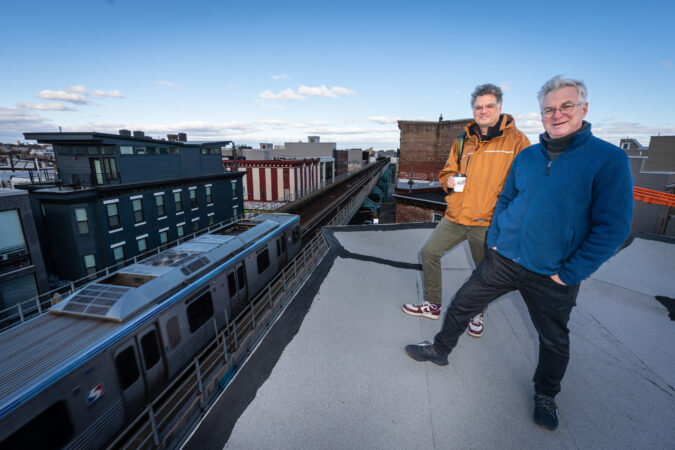
    Henry Siebert, cofounder of Archive Development, at the company’s apartment project on 1440 N. Front St.

    A ‘critical mass’ of demand

    Few neighborhoods in Philadelphia have been as transformed as Fishtown since the Great Recession.

    In 2012, political scientist Charles Murray used the neighborhood as the embodiment of all that had gone wrong for a downwardly mobile, white, working-class America. The commercial corridors on Frankford Avenue and Front Street were run-down, with many shuttered storefronts. The headquarters of the Warlocks Motorcycle Club could be found, but not a wine bar.

    Now, Fishtown is the neighborhood in Philadelphia outsiders are most likely to be able to name, partly due to a spate of national media attention. The Warlocks vacated in 2011, and Frankford Avenue is now a thriving commercial corridor home to many of the city’s finest restaurants (including a James Beard Award winner), cocktail bars, and a La Colombe that looks large enough to house a harrier jet. According to Census data, the Northern Liberties and Fishtown area now has the highest median income in the city.

    “As Northern Liberties got all the hype [in the 2000s] prices went up and people started moving into Fishtown because it was more affordable,” said Brenda Nguyen, associate director at CoStar’s Philadelphia office. Now “the Fishtown area has enough dense housing, retail, restaurants, and neighborhood amenities that there’s a critical mass of demand.”

    Throughout Fishtown’s redevelopment, many of the large vacant lots on Frankford Avenue, and elsewhere east of the Market-Frankford Line, filled in. Within a 10-minute walk of the heavy rail line there are 4,585 existing apartment rentals and 1,646 under construction. (A further 922 are proposed, although their status is unclear given the development industry’s current deep freeze.)

    “When we originally started developing in the city in 2018, I told [my partner] that we would likely never develop a property along the El,” said Siebert. But “as large-scale development opportunities became more and more scarce, developers eventually turned their attention to Front [Street].”

    Many developers had avoided the thoroughfare, partly because the looming edifice creates challenges with noise from passing trains and limits natural light. But the area became more appealing as other developable land vanished.

    It helps that the land along this stretch of the Market-Frankford Line is zoned to allow taller and denser buildings than much of the rest of Fishtown. Archive Development addressed the challenges of building next to the train line by designing a first floor with 17-foot ceilings, ensuring the residential units on the second floor were elevated above transit. They plan to install windows with special glazing to reduce noise from passing trains.

    Developers who have seen how Frankford Avenue has thrived to the east hope that they can build enough housing to create the demand for a second strong retail corridor. But they also hope to help establish attractive retail businesses that will, in turn attract more tenants. It’s the virtuous cycle that helped early developers in Fishtown such as Roland Kassis — who is also building next to the El — successfully launch businesses such as Frankford Hall and the La Colombe flagship.

    “I was talking to a broker the other day and he said that what people want is an activated street front,” said Rafi Licht, a developer with Norris Square Development, the company behind the renovated Mighty Mick’s gym building.

    “That’s what we’re aiming for here,” said Licht. “Putting in coffee shops, bars, restaurants, whatever is going to activate the street that makes it easier for people to imagine living upstairs.”

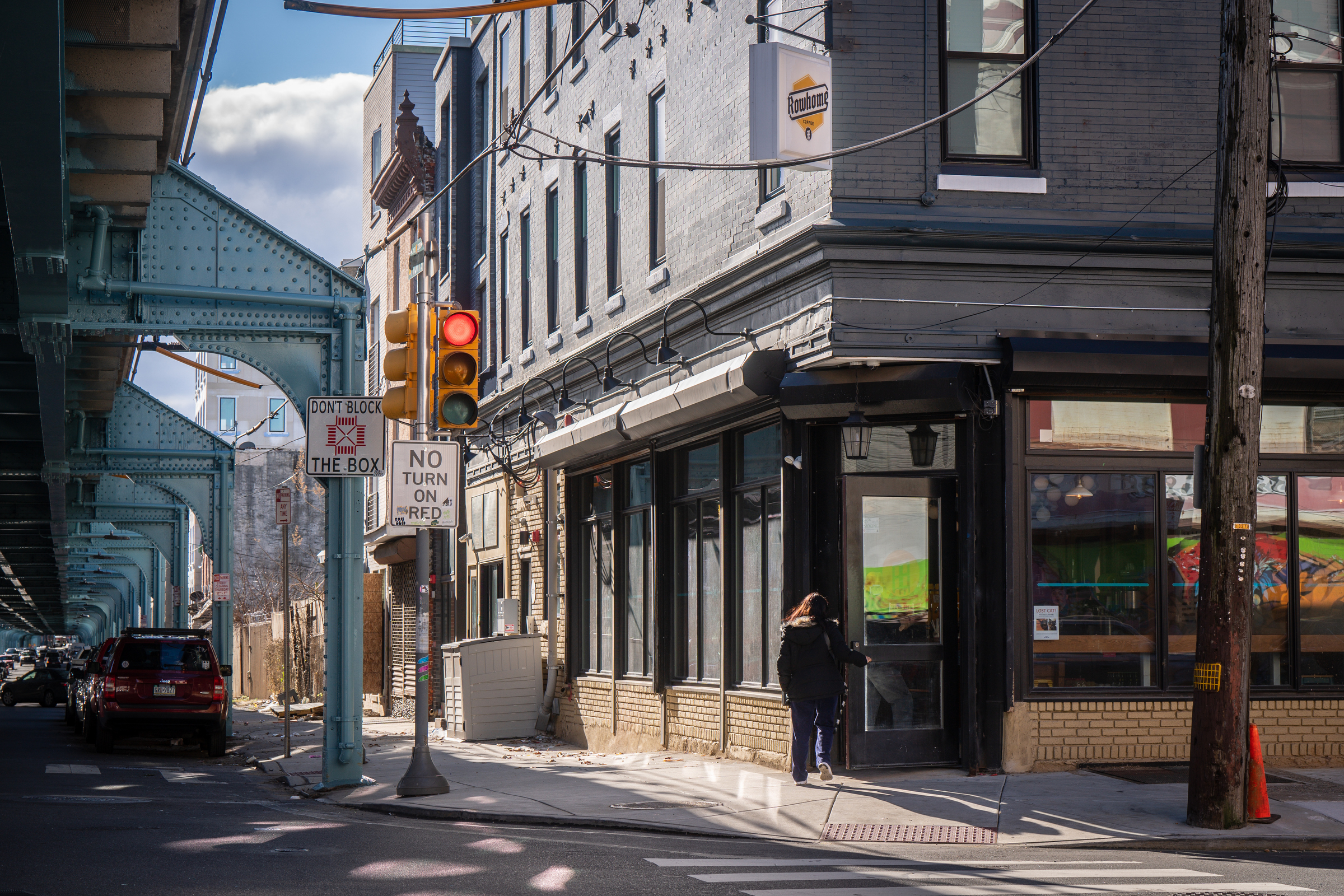
    Rowhome Coffee at 2152 N. Front St., in a recently renovated historic building.

    Norris Square Development is also working on other properties around the York-Dauphin stop. In 2022, Rowhome Coffee opened in its building at 2152 N. Front St. It drew a crowd then, and it still does.

    “When Rowhome Coffee opened during the pandemic, people were queued up for the takeout window,” said Jonathan Auerbach, a partner in Norris Square Development. “I saw young women with prams lined up and realized, wow, people have been waiting for this.”

    Will the redevelopment of Front Street aid mass transit?

    Few of the developments along the El are subsidized, meaning rents will be relatively high in comparison with housing costs in nearby working-class and lower-income neighborhoods. (The rents in the Mighty Mick’s building will be close to $2,000 for a two-bedroom or $1,600 for a one-bedroom.) Many workers who have jobs that require in-person attendance — such as retail, hospitality, or restaurant work — are less likely to be able to afford newly constructed, transit-oriented apartments.

    Even before the pandemic, most studies showed that lower-income and working-class people are far more likely to use transit, partly due to the high cost of car ownership and partly because they were more likely to live in cities with extensive transit systems.

    A 2016 Pew study and a Census study of 2019 commuter behavior also revealed that higher-income Americans were more likely to use transit than their middle-income peers, perhaps because wealthier people had started moving back to the transit-rich big cities of the Northeast.

    But post-pandemic, transit may be less of an important amenity than it once was.

    “[These] renters might not see public transit as a primary factor when they’re choosing where they want to live,” said Nguyen of CoStar. “It’s more of an added bonus.”

    Still, developers in Fishtown argue that even if white-collar workers are less likely to be going into the office five days a week, the Market-Frankford Line still offers unparalleled access to Center City and University City.

    “If you’re going to the office [at all], you still need a way to get to Center City,” said Ryan Kalili, cofounder of Archive Development. “Two days or three days a week is still enough that you’re not going to Uber. “I think [ridership] hopefully will change as the northern part of Front Street [attracts more residents].”