They’re equipped with kitchens, bathrooms, and washer/dryers, and they’re being marketed as monthslong hotel accommodations for consultants and visitors to nearby employers.
The owners, a group led by Main Line real estate lawyer David McFadden, broker John McGee, and investment partner Chiu Bai, hope the building, which they’re calling the Flats on 100, will be a model for reusing orphan buildings that stud theGreat Valley and other suburban office, industry, and retail zones.
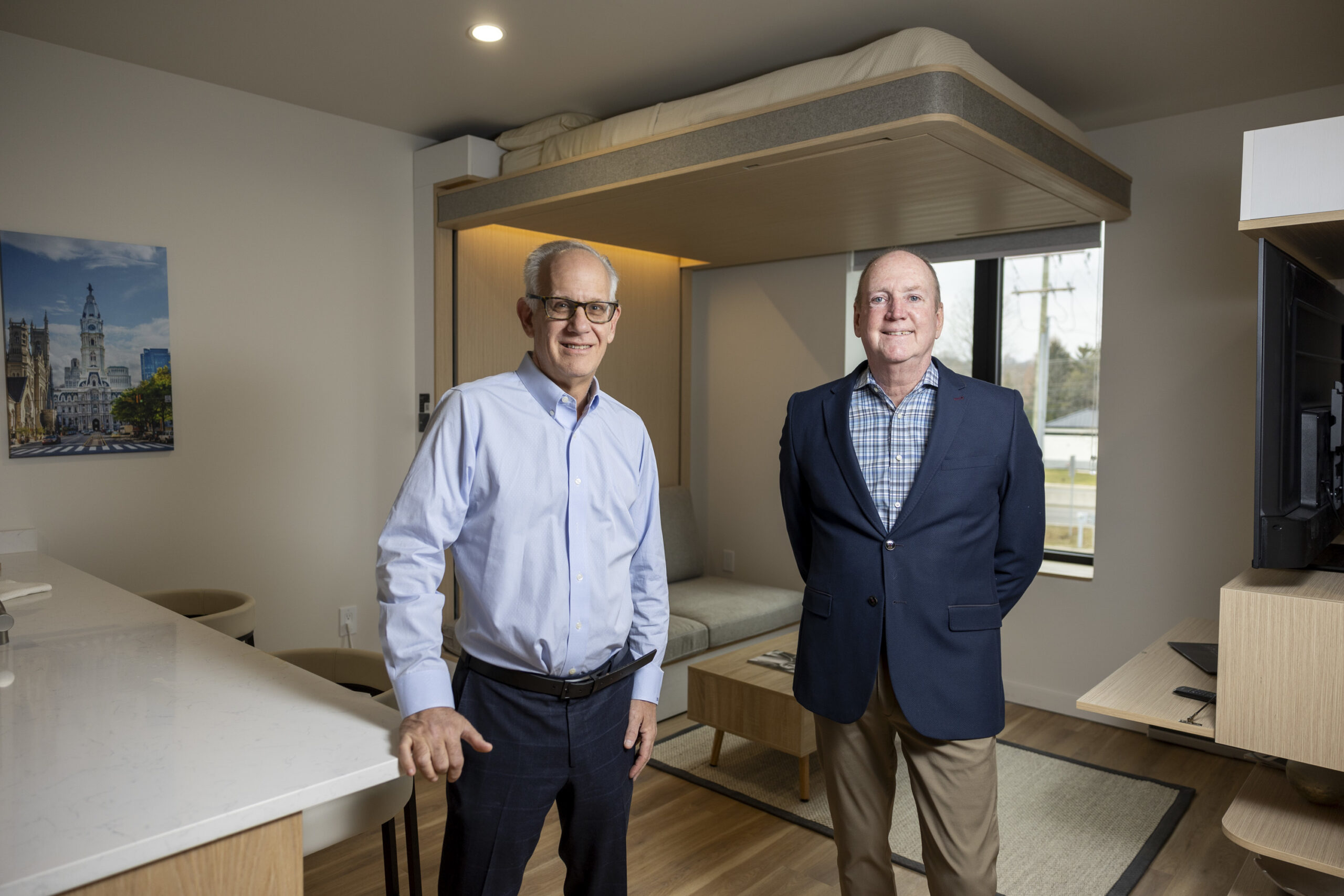
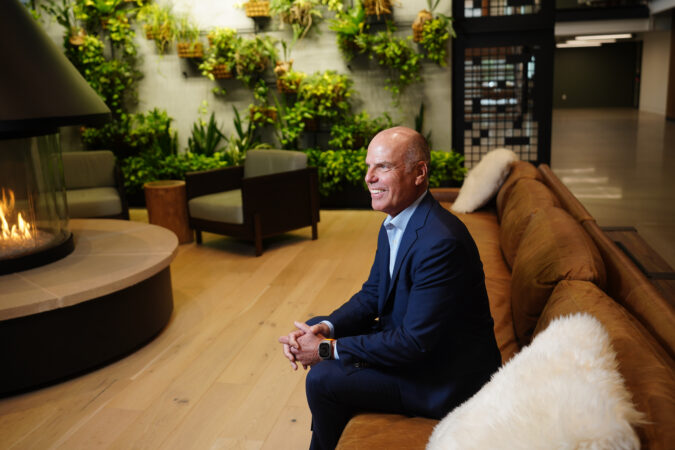
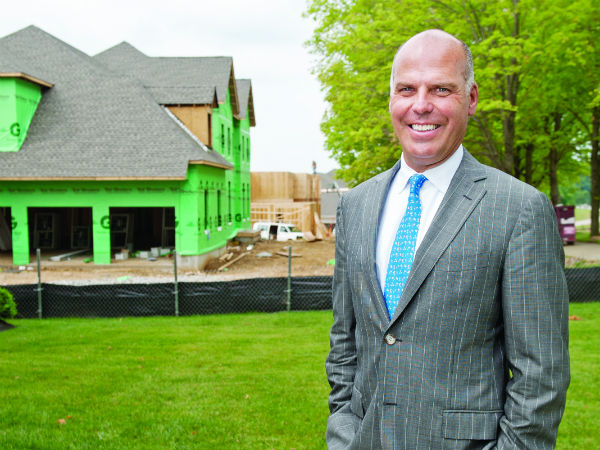
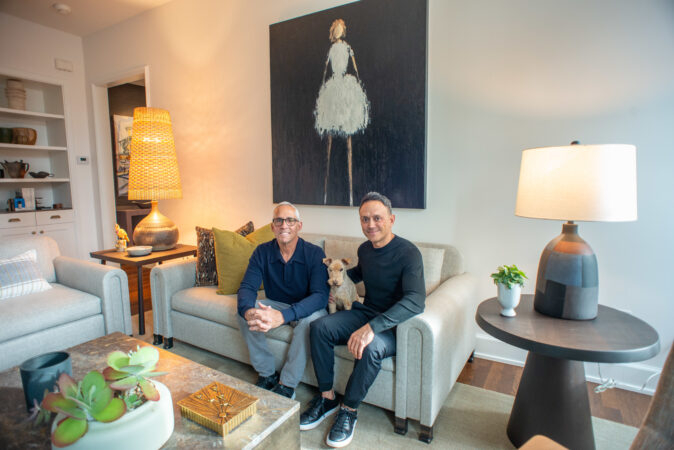
David McFadden of Chester Springs (left) and John McGee of Wayne are co-partners and owners of the Flats on 100 in Exton.
The trio picked up the 53-year-old, 30,000-square-foot building and grounds at 319 N. Pottstown Pike (State Route 100) in 2023 for $1.5 million from family-owned Kelsch Disability Services.
“Fifty bucks a [square] foot” seemed like a bargain, even though the partners didn’t have specific plans for it, McFadden said.
“Office buildings are being given away these days. What do we do with them when there’s no demand for office space?” he said. “At the right discount, developers can afford to turn them into something sustainable that people want.”
As offices, the building was broker-rated Class C, the least desirable. The partners paid cash, figuring they could borrow millions for capital improvements if they could show lenders a credible plan to turn it into something more profitable.
“We got lucky with the zoning,” McFadden said. West Whiteland’s “town center” designation allows a wide range of uses.
The partners chose what McFadden calls “hotel-apartments.” He compared it to projects built by Level Hotels & Furnished Suites, with locations in Chicago and the West Coast, and by family-owned, locally based Korman Communities’ AVE Living, with its furnished apartments at Philadelphia’s Navy Yard and other local sites.
McFadden says the model offers “a place that feels like home, with the amenities of larger buildings but a boutique feel.” The units arefully furnished, including appliances, dishes, and linens, as well as cleaning and other services as requested.
Lender Trupert Ortlieb from TruMark Financial, one of the area credit unions bulking up with business loans, arranged $5.7 million in financing for capital improvements.
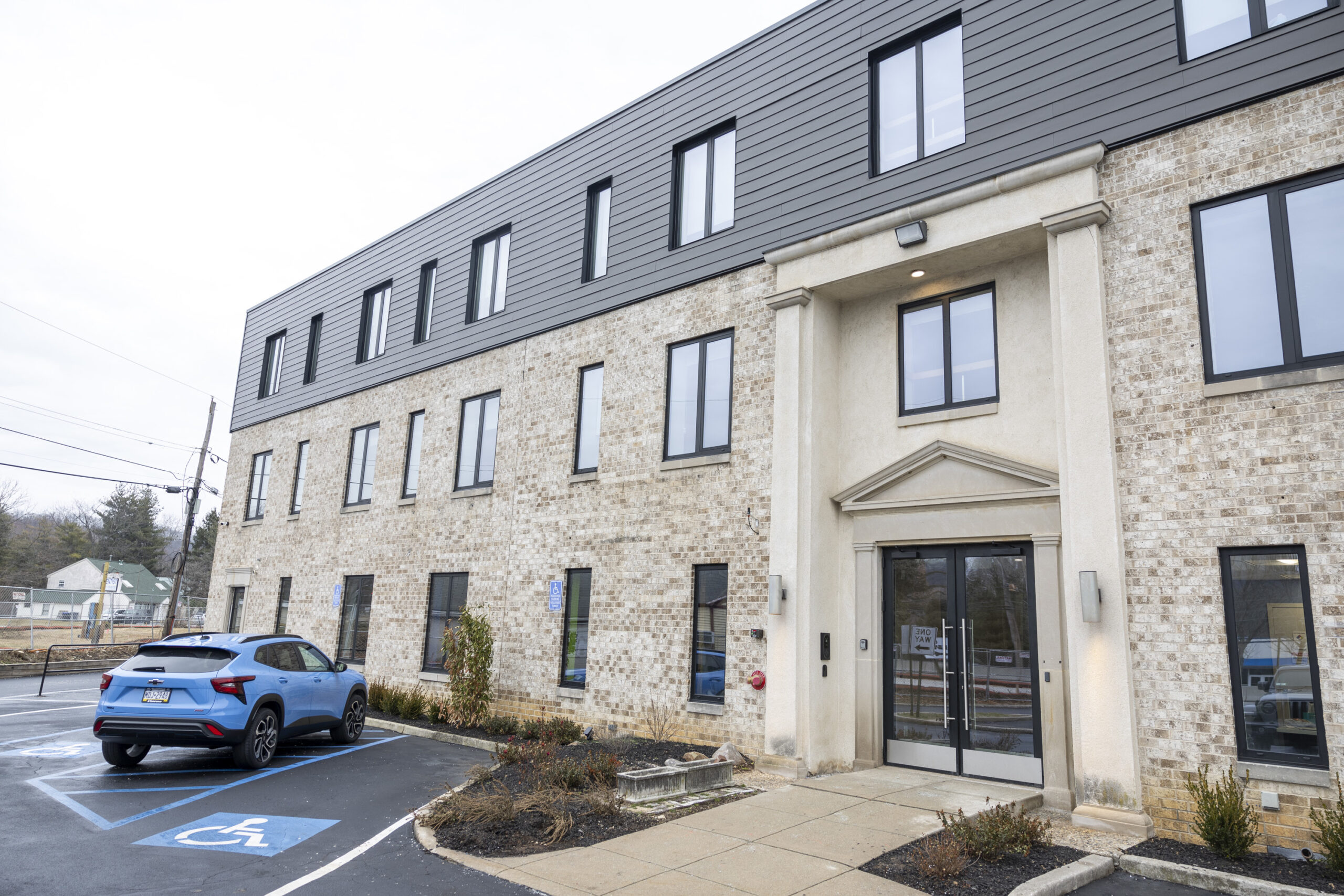
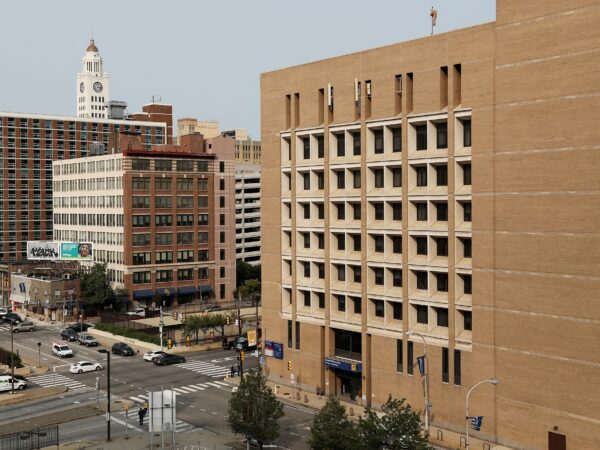
The outside of the Flats on 100 apartments, a redevelopment of a commercial building.
Contractors demolished and replaced interior walls; added sprinklers, triple-glazed windows, and insulation; and replaced heating and air-conditioning. The reclad of the interior with aluminum finished like pine was picked up by Chiu in China for $30,000 (half that for the materials, $4,000 for shipping, and $11,000 to cover tariffs).
Because the project qualifies as a hotel, it could add a liquor license without the higher cost of a tavern license. A first-floor retail space has been leased to a dentist.
The partners expect interest from nearby employers such as Vanguard Group, QVC, West Pharmaceutical Services, and Accenture.
The Fairfield shopping center, with a Giant supermarket, fast-casual restaurants, and retail stores, is within walking distance. The Exton SEPTA Regional Rail station is two miles down Pottstown Pike.
Seeking light in what had been gloomy space, the developers brought in architect Martin Kimmel from Blue Bell. He persuaded them to replace half “gun-slit” windows with 5-foot-wide glass sheets, which turned out to be more work than expected, trimming 12-inch blocks topped by 4-inch bricks.
Other amenities include a barbecue pit, an outdoor dog walk, a pet-washing room, basement fitness center, conference room, bar, pool table, and walk-on services like massage and physical therapy.
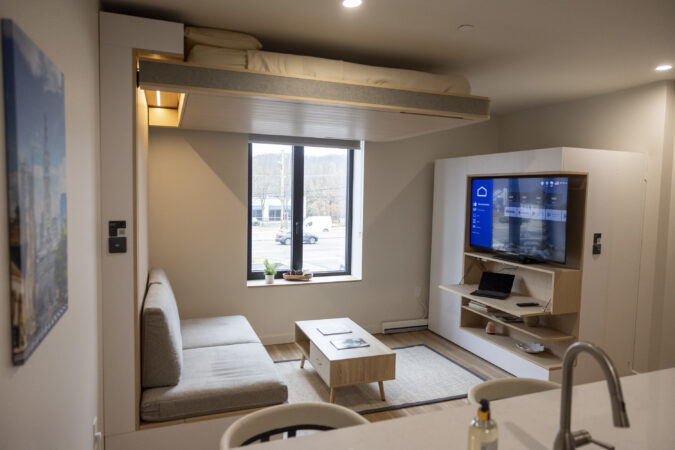
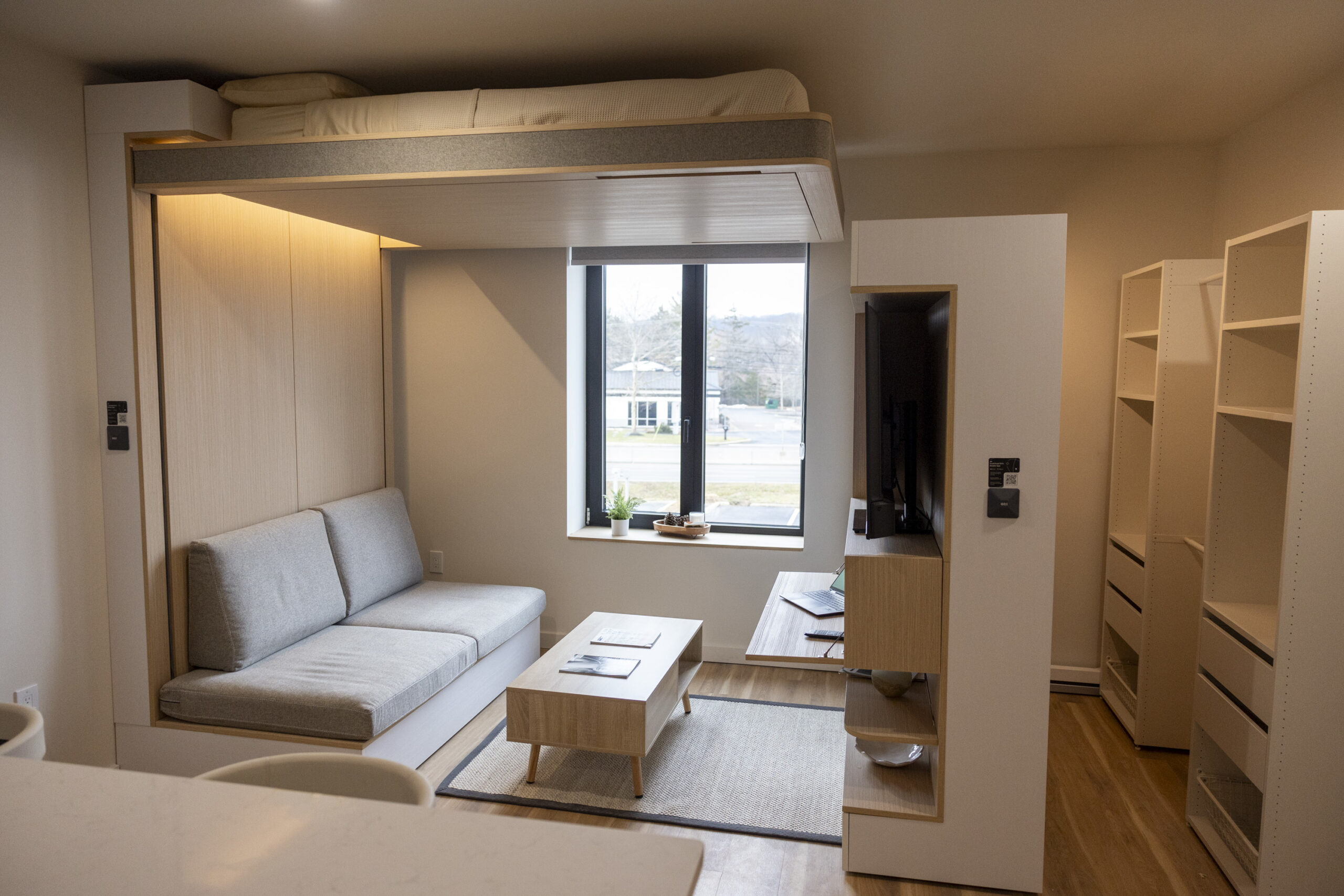
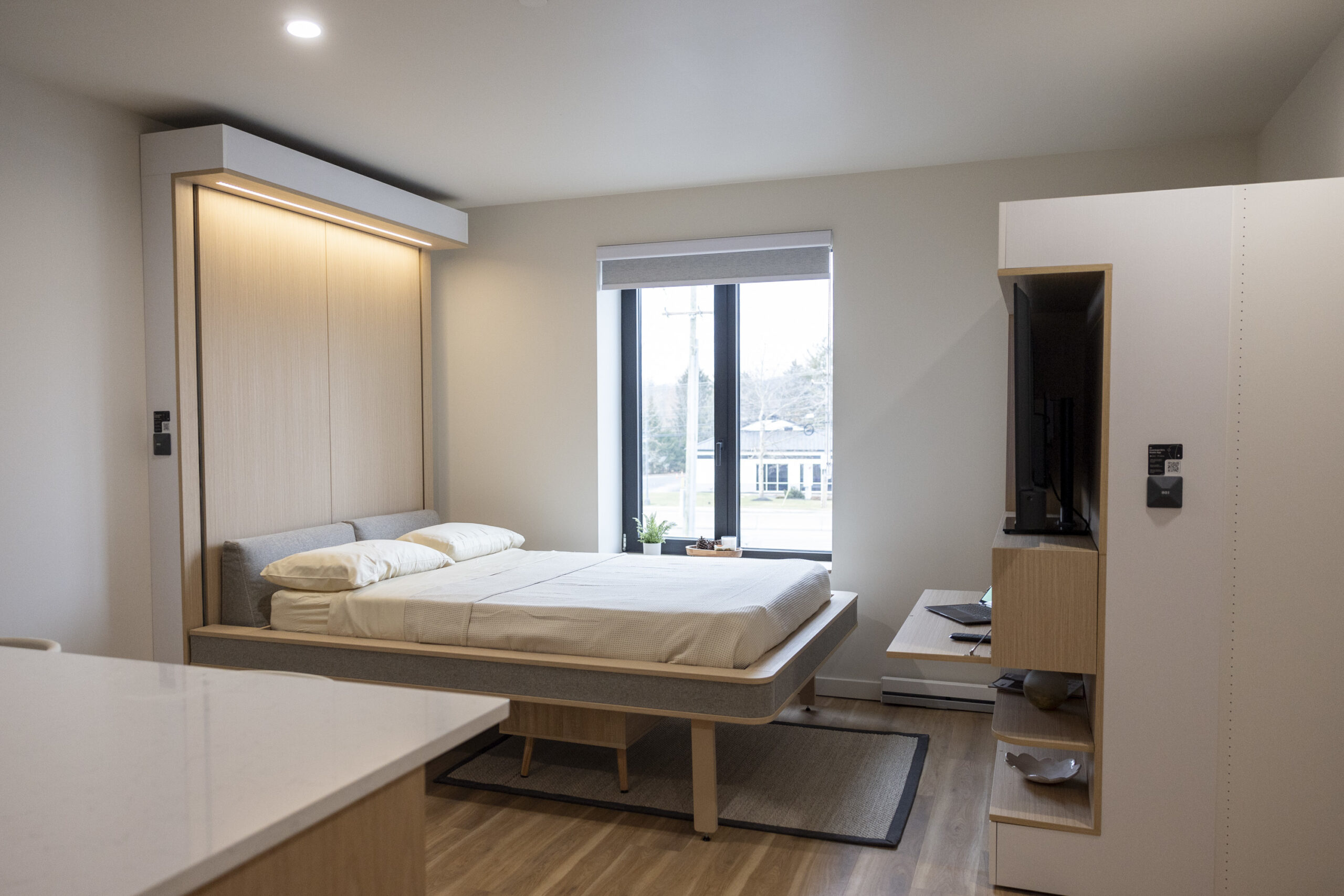
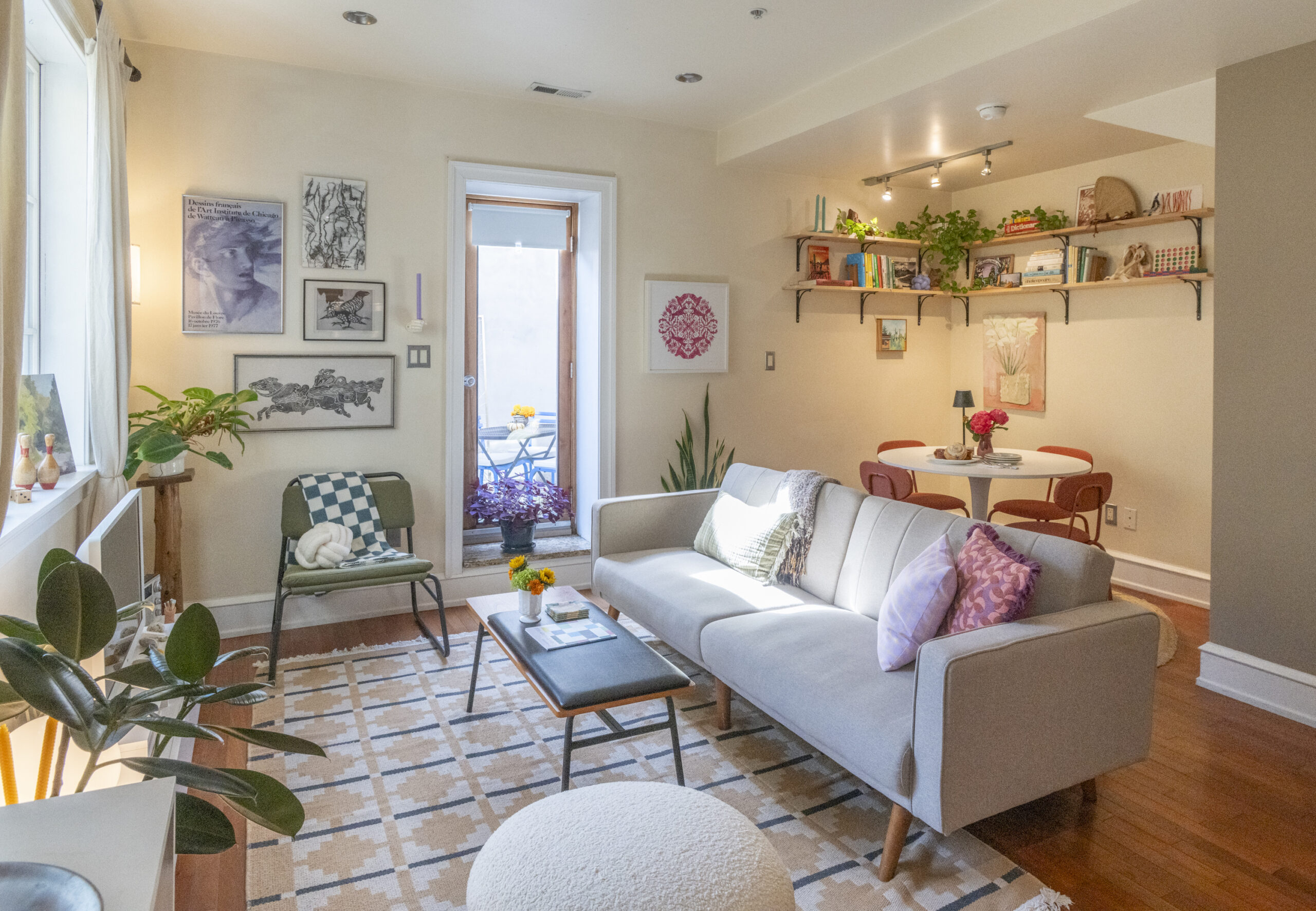
This space in the studio apartment can be used as a sitting area or a bedroom. The Ori bed lowers from the ceiling for sleeping.
Kimmel and the partners looked at New York apartment plans to see how many one-person units they could fit into the three stories. Beds could be stowed for work-at-home hours, but “we didn’t want those old fold-out Murphy beds,” McFadden said.
They bought canopy beds from Hasier Larrea’s Ori flexible-furniture-systems firm. The beds lower from the ceiling onto couch bases, plus facing rows of shelves can open as a walk-in closet. The bed controls, like the digital room locks, are remote-accessible and have manual overrides in case of power failure.
The narrow building admits more light for that suburban feel.
“Not every office building converts well to apartments,” McGee said. “This was perfect — 65 feet deep, you have a central corridor with apartments. If it were 200 feet deep, you’d have very narrow apartments with one window at the end.”
The buyers: David Snelbaker, 59, finishing technician
The house: a 1,440-square-foot townhouse in Port Richmond with three bedrooms and two baths built in 1925.
The price: listed for $275,000; purchased for $269,500
The agent: Allison Fegel, Elfant Wissahickon Realtors
Snelbaker in the kitchen of his Port Richmond home.
The ask: Snelbaker didn’t want to give up his house in Graduate Hospital. He’d spent years rehabbing and repairing it. But in 2023, on the heels of a breakup, he determined he couldn’t afford to keep it on his own. He needed to downsize, but he wanted to stay in his neighborhood. Other than that, his list was short but firm: a backyard for gardening and a rowhouse that wasn’t too narrow.
His budget was $300,000 — a number driven less by lender approval than by self-preservation. “I didn’t want to be house poor,” he said. “I have friends who are. They don’t go on vacations. They’re just kind of financially stuck.”
The search: Snelbaker needed to sell his old house before he could make an offer on a new one, which made it difficult to compete in South Philly’s hot market. “A lot of the places I wanted to jump on would just go so fast,” he said.
He expanded his search and discovered better stock in Fishtown and Port Richmond. “For the same price for something in South Philly, it was a fixer-upper,” he said. “And here, it was in good shape.” Snelbaker had already lived through years of construction in his old house and wasn’t eager to do it again. “I just didn’t want to get into another fixer-upper situation,” he said.
He checked out a few places in Fishtown but settled on Port Richmond because it was closer to his work. The prices were better, too. “It was a win-win,” Snelbaker said. The only other place he considered was a recently renovated rowhouse close to the river. “It was laid out well,” he said. “That was my second choice.”
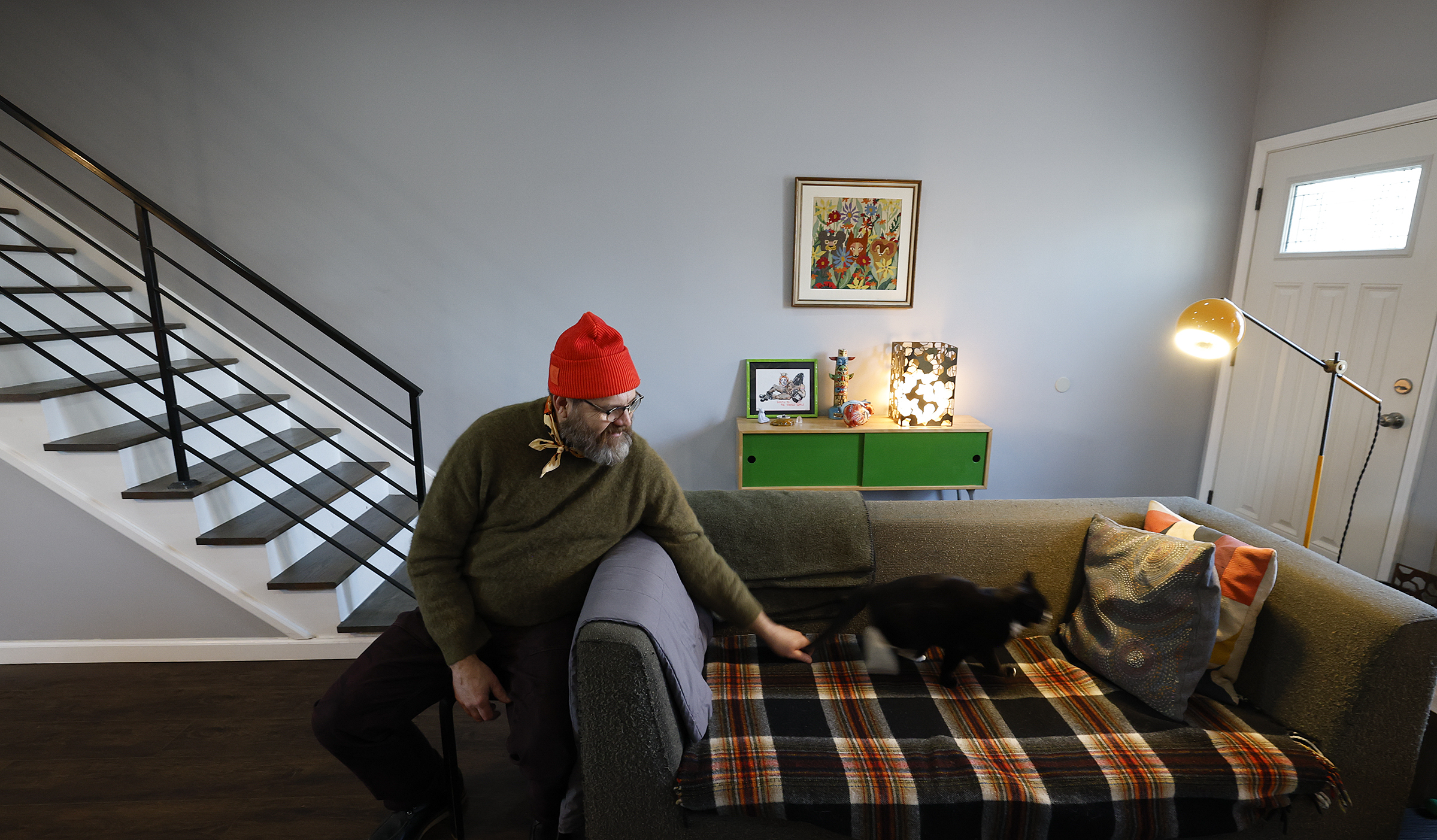
Snelbaker liked that the house was recently renovated and move-in ready.
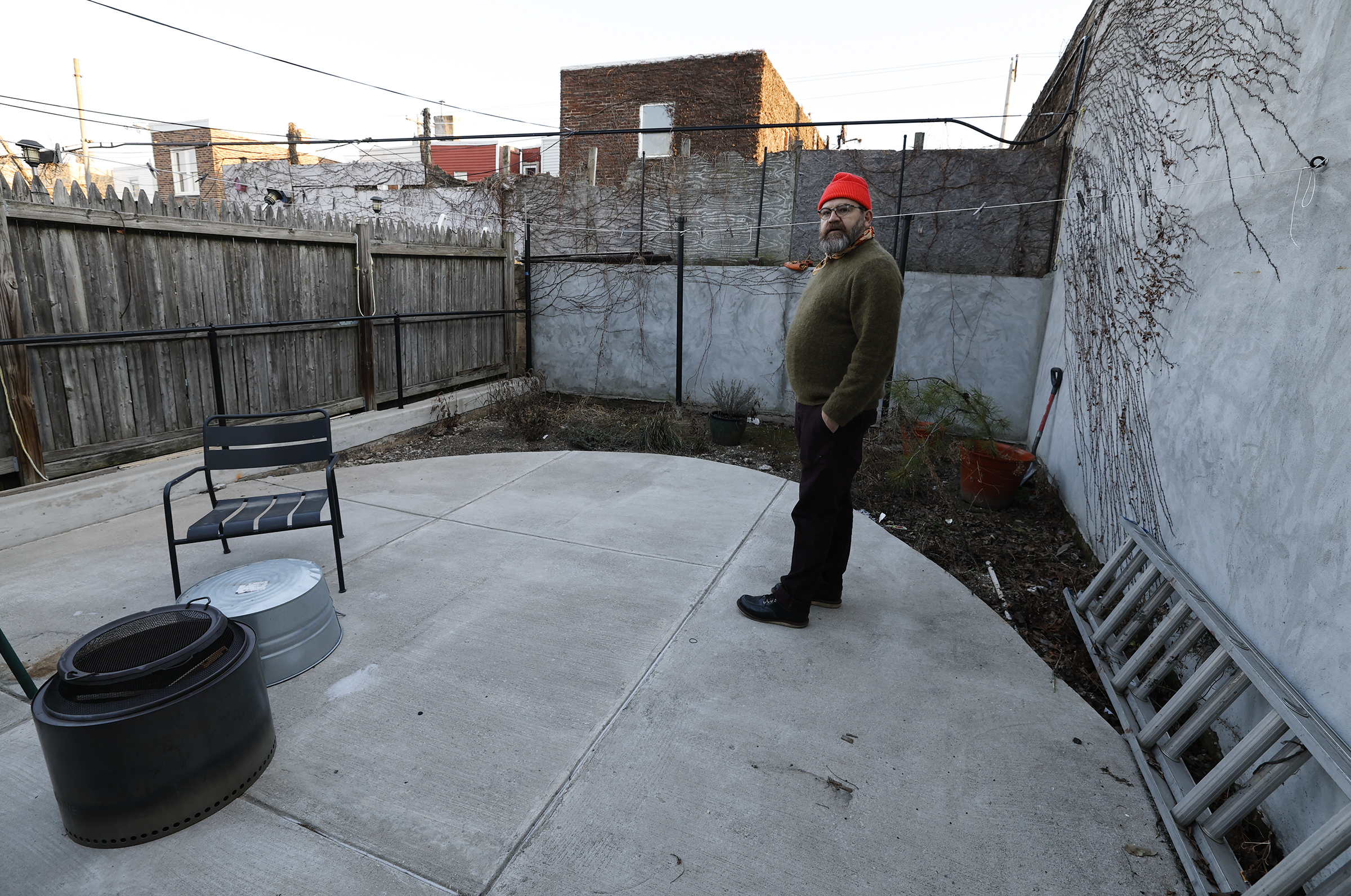
The appeal: Snelbaker knew he’d found the one when he stepped out back. “The backyard was unbelievably, unbelievably big,” he said. “It’s like 27 feet long and 18 feet wide.” Plenty of space for the major landscaping projects he wanted to do, like planting several trees and building raised beds. Even better, one side of the yard abutted a warehouse, not another rowhouse, which gave him “a level of privacy,” he said.
Inside, the house was open, newly renovated, and neutral. “It didn’t have a lot of personality,” Snelbaker said, “but it wasn’t a lot of work either.”
The deal: Snelbaker saw the house at the end of the summer, but because he needed the proceeds from his Graduate Hospital home for a down payment, he couldn’t make an offer right away. Thankfully, the Port Richmond house lingered on the market until he sold his place in October. “I was surprised it didn’t move,” Snelbaker said.
Once his old house sold, Snelbaker moved quickly. He offered $269,500 — $5,500 under the asking price — and the seller accepted without pushback. The inspection brought little drama. The sellers, who were contractors, handled minor repairs. “They did some patching on the roof and some stuff on the brick in the front,” Snelbaker said. “There was something with the dishwasher … they repaired that. That was pretty much it.”
Since moving in, Snelbaker has added personal touches like this antler lamp to give his house more personality.
The money: Snelbaker walked away with $240,000 from the sale of his previous home. He put a chunk of it into a certificate of deposit and used the remaining $180,000 for the down payment. “I put more than 20% down because I wanted to keep my monthly payment low,” he said.
Even so, timing worked against him. Interest rates climbed to 7% as he was shopping, and insurance costs jumped a few months after he moved in. His monthly payment was originally $1,300. Now it’s $1,900. He plans to refinance once interest rates drop a few percentage points, and he’s actively looking for a better rate on his home insurance.
Snelbaker removed some of the concrete in the backyard to plant trees.
The move: Snelbaker sold his old house in mid-October and officially closed on his new one on Halloween, but he wasn’t ready to move in right away. His agent did some “fancy footwork” and worked out a deal for Snelbaker to rent his old house from its new owners for a few weeks. “She negotiated a really good timeline that gave me space to pack and wrap up everything at the old house,” Snelbaker said.
Even better, he celebrated Halloween with his old neighbors. “We handed out candy, and they made me dinner. It was very sweet,” Snelbaker said. He moved into his new home the week before Thanksgiving.
Any reservations? Without an attached neighbor on one side, the house runs colder than Snelbaker expected. He contacted an energy auditor who advised him not to do anything until he insulated the roof. It’s pricey, but worth it, Snelbaker said. “It’ll definitely increase the comfort and lower my heating bills.”
Life after close: Since moving in, Snelbaker has focused on the backyard. He removed slabs of concrete to make room for trees and raised beds. “That was important for me,” he said. “I really wanted to get a garden going again like I had in my old spot.”
Haldon House is working with Yass and his wife, Janine, on redeveloping a half-dozen properties in Gladwyne with historic architecture, green spaces, and new businesses. Golsorkhi called the proposal a “community impact project” for the Yass family, which has spent over $15 million acquiring the properties.
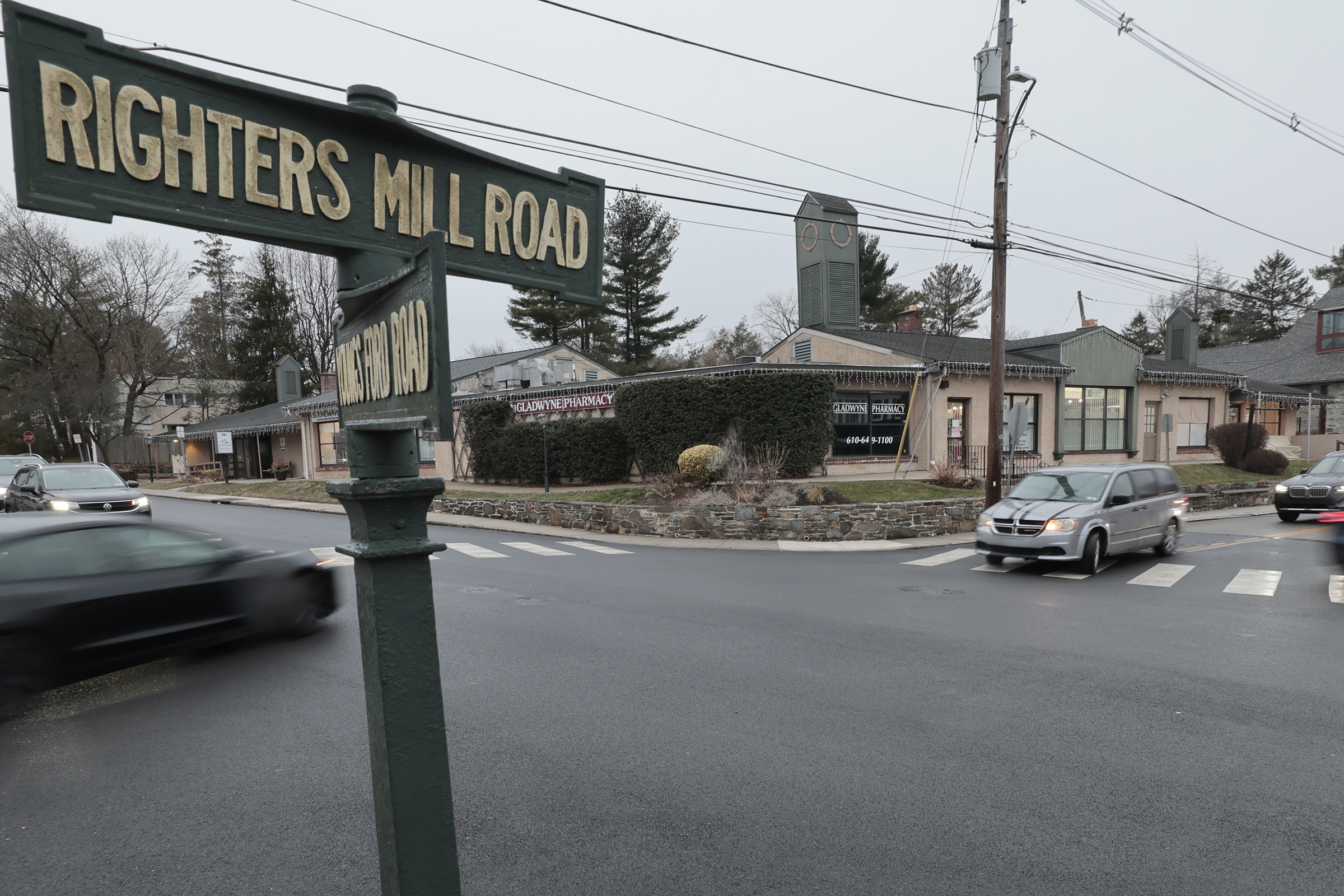
Gladwyne village has long been home to small businesses, namely OMG Hair Salon, the Gladwyne Pharmacy, the Guard House, and Gladwyne Market. OMG Salon and the Gladwyne Market shuttered last year after the developers acquired their storefronts, sending ripples, and rumors, through the Main Line community. House values for the 4,096-person village are among the highest in the state, with a recent median sales price of $2.3 million, according to Realtor.com data.
For the first time, Golsorkhi last week brought his development plans and his partnership with the Yass family to the public. He was met with both applause and skepticism from attendees. Some expressed optimism about the proposal, while others questioned why the developers would pour millions into a project with no apparent financial gain.
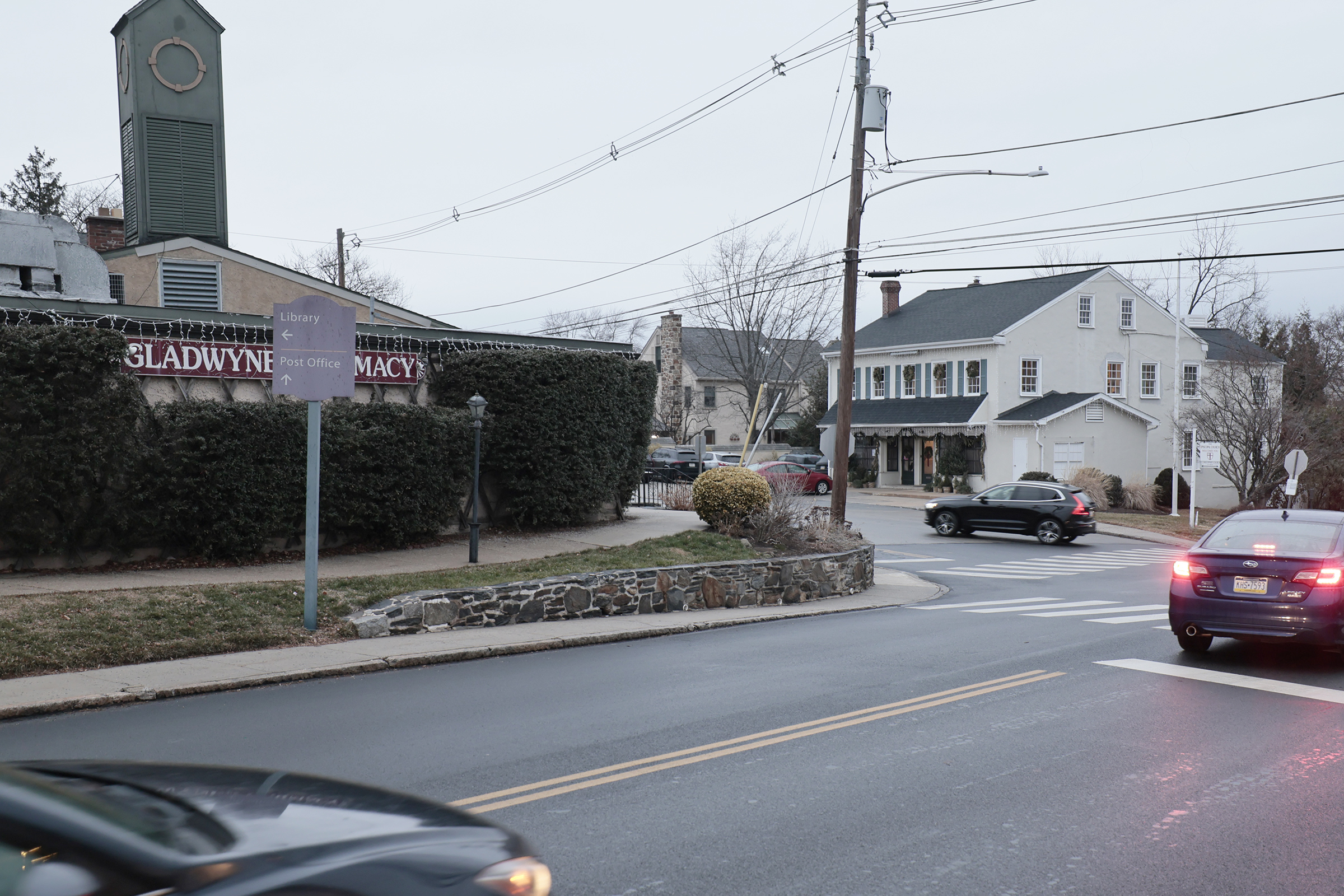
The Village Shoppes, including the Gladwyne Pharmacy, at the intersection of Youngs Ford and Righters Mill Roads in Gladwyne on Friday, Jan. 9, 2026.
Gladwyne ‘needs a revitalization’
Haldon House’s proposal, as outlined by Golsorkhi, involves retaining much of Gladwyne’s historic architecture while bringing in new retailers, opening up green space, and increasing connectivity in the village’s downtown core.
The developer plans to expand local café Homeroom and keep the Gladwyne Pharmacy while courting new businesses that “fit the character and are contextually relevant to the town.” There are no plans for residential development, national chain stores, or high-rise buildings.
“This is a place that we grew up, that we love, that we care for tremendously, that has been protected for all the right reasons, but it has also not evolved,” Golsorkhi said. “It needs a revitalization.”
Golsorkhi and his wife, Autumn Oser, the co-owner of Haldon House, are from the Gladwyne area.
Yass is a billionaire, conservative megadonor, and founder of the Bala Cynwyd-based Susquehanna International Group. The Yass family has lived in Haverford for more than 40 years.
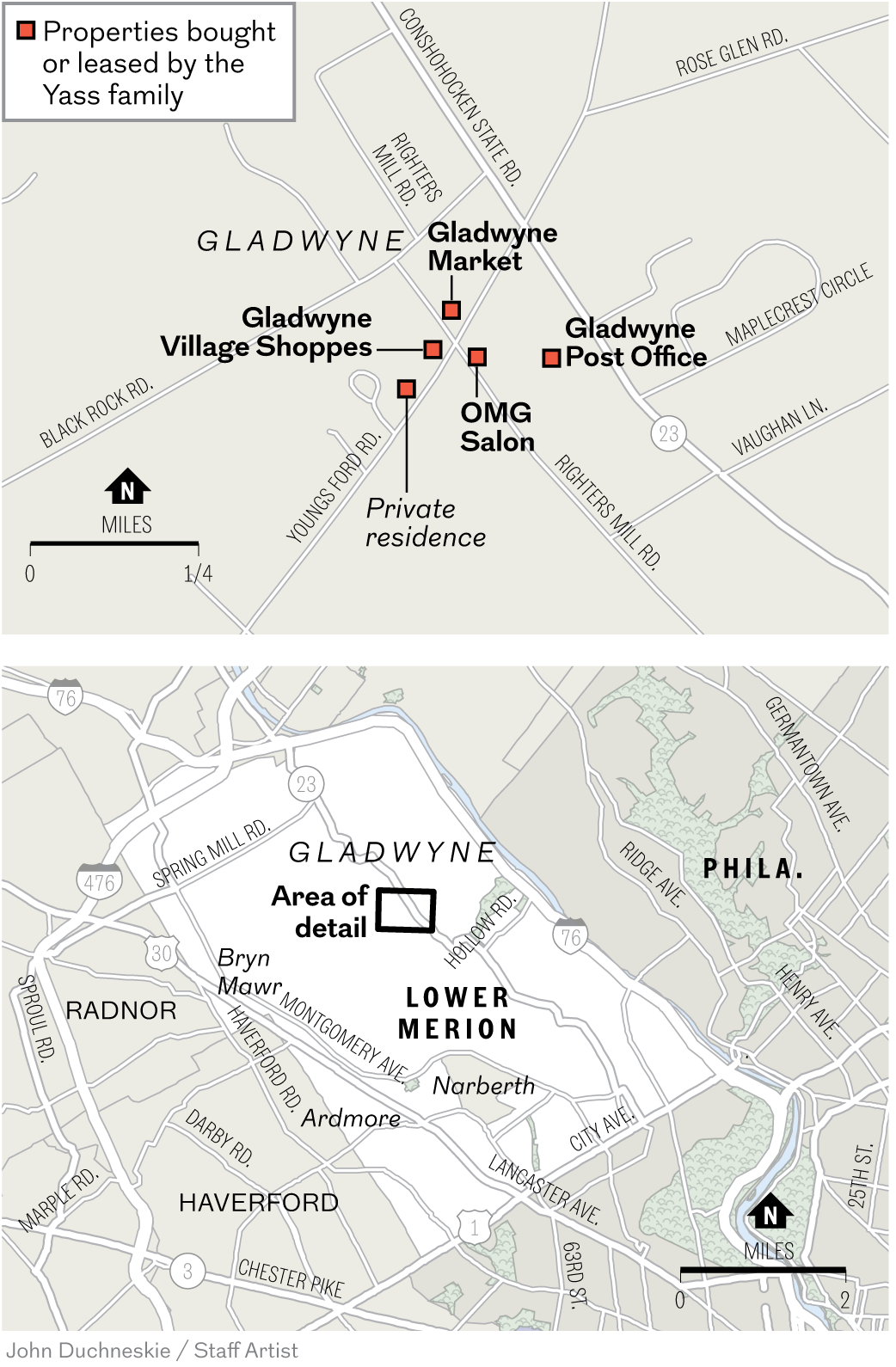
Properties in Gladwyne acquired by the Yass family as part of their proposed revitalization project.
Haldon House and the Yass family have purchased multiple properties at the intersection of Youngs Ford and Righters Mill Roads, including the former Gladwyne Market building, the Village Shoppes, a residential property on the 900 block of Youngs Ford Road, and the Gladwyne Post Office, according to Golsorkhi. They’ve also leased the former OMG Salon at 351 Righters Mill Rd.
Citing the rumors that percolated in community after the shuttering of Gladwyne Market, Golsorkhi said there’s been “a lot of justified, warranted concern.”
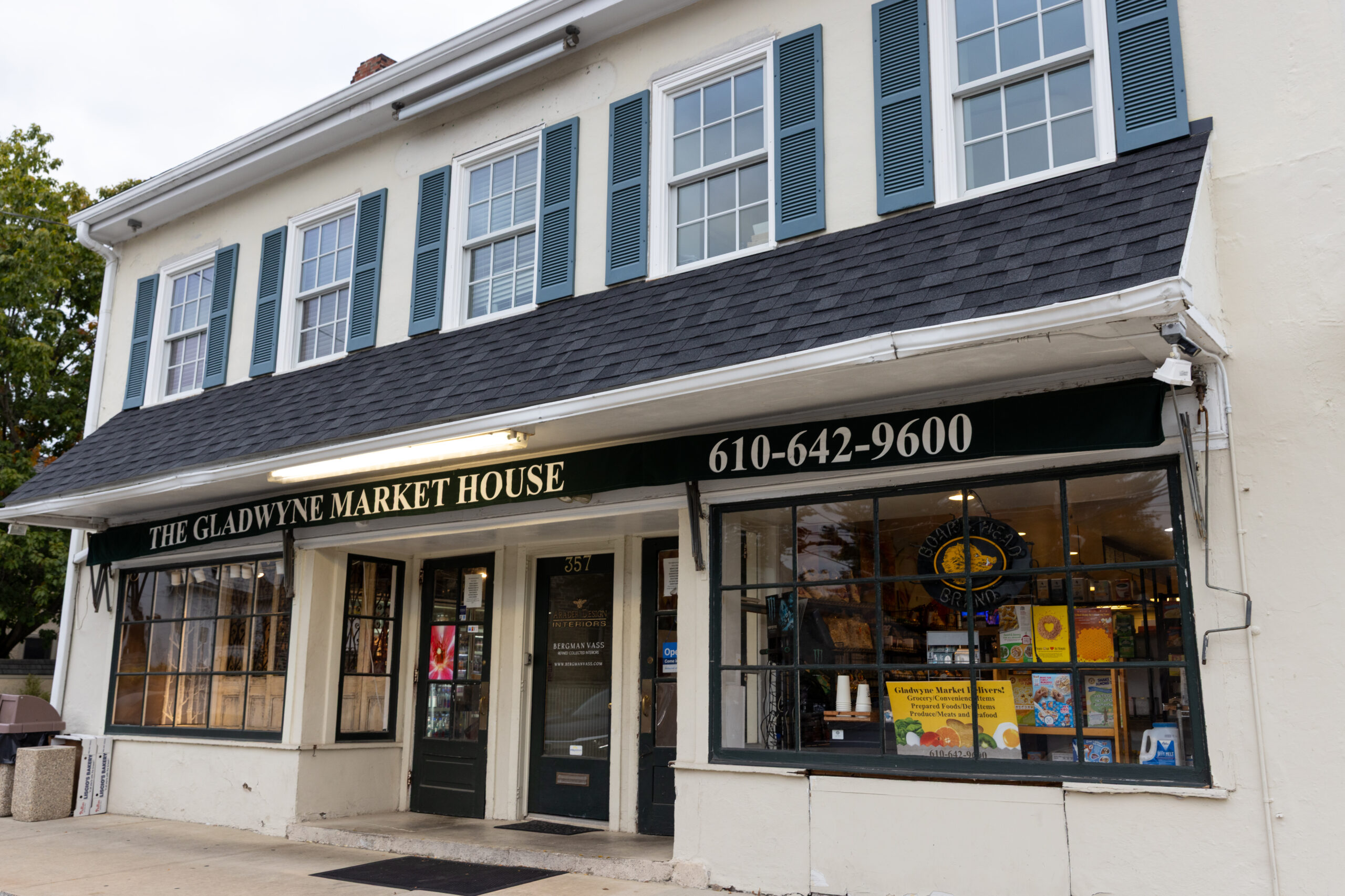
Gladwyne Market shuttered in October after its building was purchased by developers Haldon House and the Yass family.
Renderings of the proposal show the village’s core buildings retaining their late-1800s architecture, with new wraparound porches, ivy-covered stone walls, Adirondack chairs, hydrangeas, and “Gladwyne Square” branded signs.
Golsorkhi said in an email that the developers were prepared to assume the costs and it was too early to specify how long the project would take.
In addition to keeping Homeroom and the Gladwyne Pharmacy in place, the developers plan to put a “casual, but elevated and approachable” restaurant in the former Gladwyne Market site. They‘ll recruit independent retailers like bakeries, boutique fitness studios, and ice cream parlors. They also intend to expand the village’s open green space with picnic tables, open lawns, and venues for community events.
Renderings of a proposed revitalization project in Gladwyne. Design firm Haldon House is working with longtime resident Jeff Yass to redevelop the Main Line village while preserving its historic architecture, developers told residents on Jan. 8.
Golsorkhi said they would take a “forward and involved approach” with new and existing tenants, from designing storefronts to offering input on products to stock.
They have worked closely with Gladwyne Pharmacy to help “reimagine” the “design and experience,” with “no expectation of return,” Golsorkhi said, adding that the pharmacy has “built up merchandise and square footage over time that isn’t necessarily best serving the business or the community.”
“We’re doing that because we believe that the consistent experience and character of Gladwyne is really important,” he said.
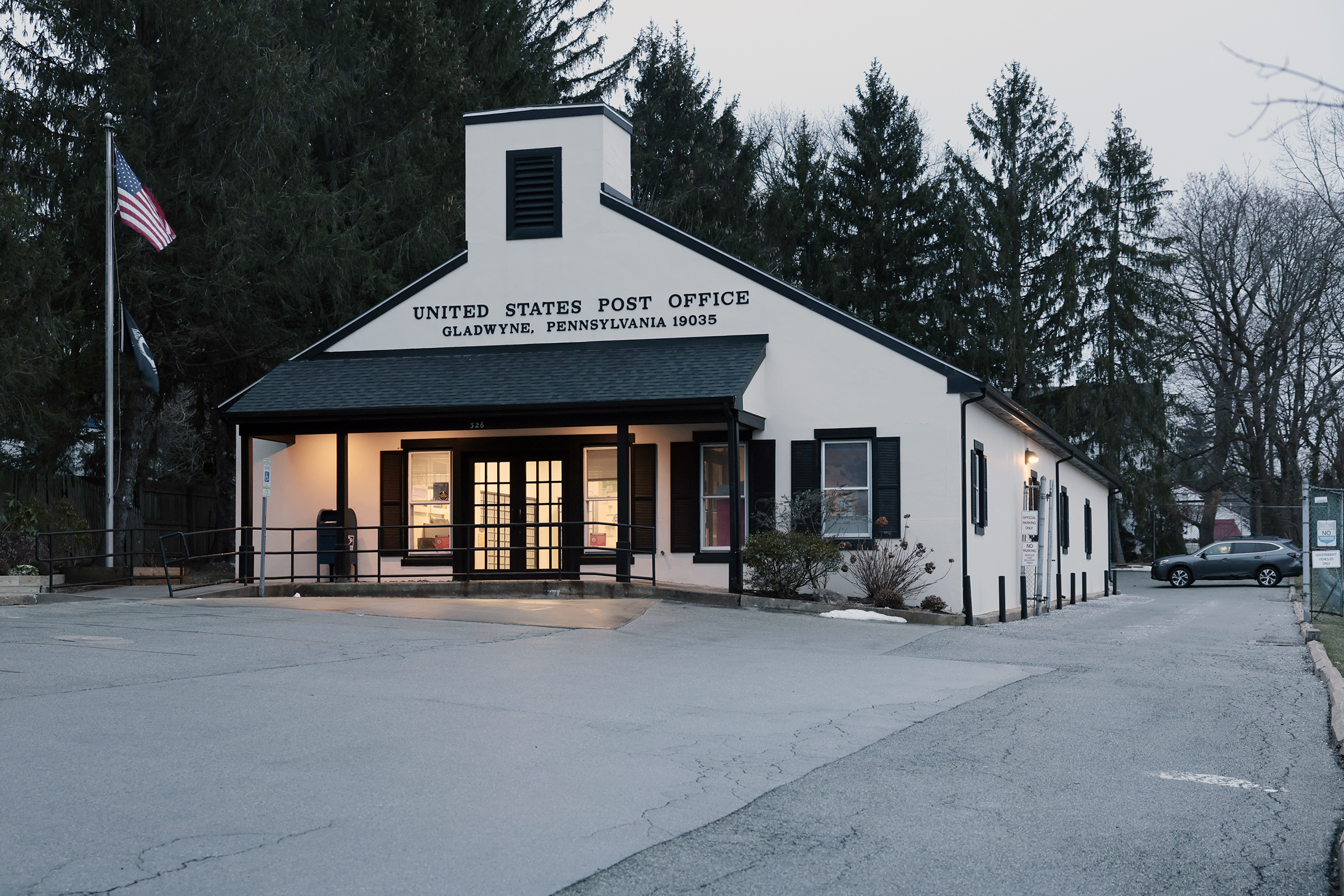
Golsorkhi told attendees at the meeting on Thursday that while they have “no particular intentions” for the recently purchased Gladwyne Post Office, it was “retiring its services” and there was potential to create a new, centralized storefront where residents could access USPS, UPS, and FedEx services.
Paul Smith, manager of public affairs and communications for the Postal Service in the Philadelphia region, said the Gladwyne post office was not retiring its services. In early 2024, Gladwyne and other local post offices moved their letter carriers to a large delivery center in Wayne, where they pick up mail and distribute it to their routes. Gladwyne’s post office is still used for retail transactions, mailing items, and for P.O. box holders.
Golsorkhi clarified in an email that he understood the post office’s changes. In case services are further reduced in the future, he said, “we want to be sure we’re ahead of it by considering what shipping hubs and/or shipping services we can bring to the village to ensure continuity of mailing services, while also augmenting USPS with other carriers.”
The Gladwyne post office at 326 Conshohocken State Road in Gladwyne on Friday, Jan. 9, 2026.
Excitement for some, skepticism for others
Haldon House and the Yass family’s recent acquisitions left some business owners feeling slighted.
OMG Salon owner Maurice Tenenbaum said the building’s owners more than doubled his rent last fall, forcing him to give up the salon space.
Pete Liccio, owner of the now-closed Gladwyne Market, said in an October interview that he had also felt pushed out.
At Thursday’s meeting, some residents said Gladwyne was ready for a revitalization, from new restaurants to more pedestrian-friendly infrastructure.
“What I’m seeing here is a center of gravity and an identity for Gladwyne that’s well-deserved and long been needed,” one attendee said.
Others expressed concern.
“I just wonder what the end game is. There’s always a price for this, having someone come in and say, ‘I’m going to make your community really, really cool and don’t worry about the money,’” another Gladwyne resident said during a question-and-answer segment.
“[This is an] investment and a philanthropic effort …,” Golsorkhi said. “I understand and I recognize that that is a challenging thing to sort of believe.”
The Village Shoppes, including the Gladwyne Pharmacy (left) and the now shuttered Gladwyne Market (right) at the intersection of Youngs Ford and Righters Mill Roads in Gladwyne on Friday, Jan. 9, 2026.
This suburban content is produced with support from the Leslie Miller and Richard Worley Foundation and The Lenfest Institute for Journalism. Editorial content is created independently of the project donors. Gifts to support The Inquirer’s high-impact journalism can be made at inquirer.com/donate. A list of Lenfest Institute donors can be found at lenfestinstitute.org/supporters.
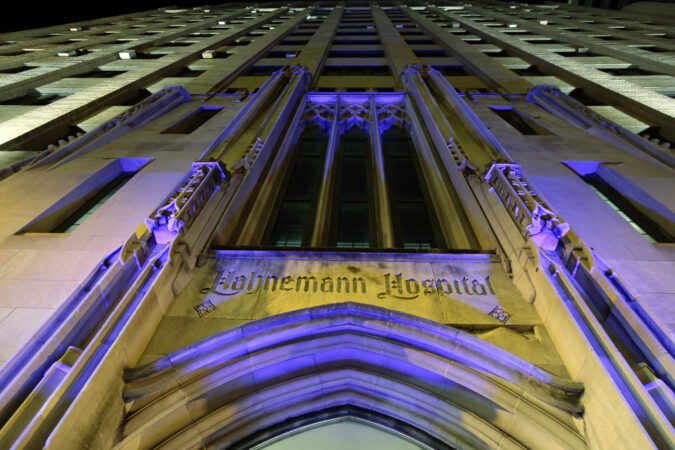
Philadelphia-based Iron Stone Real Estate Partners transferred control of two of their former Hahnemann University Hospital properties in the last two weeks.
The investment group acquired a portfolio of Hahnemann properties in 2021 and began redeveloping them into laboratory and office space.
But in recent weeks Iron Stone disposed of two of these properties.
The company donated the New College Building at 245 N. 15th St. to Drexel University on Dec. 31.
“It’s a charitable donation,” said Jason Friedland, director of operations and investments at Iron Stone. “We felt that that building was best served with Drexel owning it and using it for a long time, long-term, for their research.”
When Iron Stone acquired the New College Building five years ago, Drexel occupied the property’s medical labs and was one of the few remaining tenants in the Hahnemann campus.
Back then the university was considering moving this Center City operation to the suburbs in the short term and to University City in the long term.
“The generous gift will provide the university with flexibility as it continues to consolidate operation of its College of Medicine on its University City campus,” Drexel spokesperson Britt Faulstick said in an email statement. “Plans for the New College Building will be determined in the future.”
On Jan. 6, Iron Stone sold the Broad and Vine Parking Garage at 1416 Wood St. to the Philadelphia Parking Authority for $21.3 million.
The 850-space garage had been exclusively for Hahnemann’s use. Iron Stone renovated the vacant garage after the bankruptcy and hired Metropolis Technologies — the largest parking operator in the United States — to run it.
The acquisition is the first time the Parking Authority has purchased a garage built by someone else, said Rich Lazer, executive director of the Parking Authority.
“Most of our garages, outside of the airport, are Center City-based, so its nice to push out onto North Broad,” Lazer said. “Our garages are lower cost than private garages, so it’ll help us maintain reasonable pricing.”
The authority plans to retain Metropolis Technologies as the operator, Lazer said.
Iron Stone still owns a couple former Hahnemann properties, including the 120,000-square-foot Race Street Laboratories at 1421 Race St. and the 15,000-square-foot building at 231 N. Broad St., which is fully leased by Bayada Home Health Care Inc. with a third of the space and Dynamed Clinical Research with the rest.
Race Street Laboratories was developed to tap into the life sciences and biomedical market, which boomed during the pandemic but has slowed substantially as interest rates spiked. Currently the building has only one tenant, Sbarro Health Research Organization, with 7,500 square feet of space.
Friedland said Iron Stone plans to move its headquarters from University City’s FMC Tower to one of Race Street Lab’s unused floors.
As for the rest of the space, Iron Stone is exploring alternative uses as the life sciences market continues to struggle.
“We’re seeing where the opportunities are in commercial real estate,” Friedland said. “We have a couple things we’re exploring, but we’re not really in a rush.”
Their plans for an apartment building were complicated by a bill introduced in December by Councilmember Jeffery Young to ban housing from the former hospital site.
But on Dec. 24, in advance of City Council action on the legislation, the developer received zoning permits for a 361-unit apartment complex at 222-248 N. Broad St. Dwight Group says they are nonetheless in negotiations with Young to secure his support.
New Jersey has long coveted Petty’s Island, 300 acres in the Delaware River off Pennsauken, as a potential environmental and recreational haven with its grand views of Philadelphia.
Originally the hunting grounds of Native Americans, the island was later farmed by Quakers. Folklore claims pirate landings and an overnight stay by Ben Franklin. In more recent years, redevelopment proposals envisioned a hotel and golf course before the state’s embrace of a nature preserve.
Citgo Petroleum Corp. — the Houston-based refining arm of Venezuela’s national oil company — has owned the island for 110 years, leaving a legacy of pollution from oil storage and distribution.
Now recent international events and a court ruling on Citgo have clouded the island’s immediate future while underscoring the reach of the petroleum industry.
Formerly, it was the site of Fuel storage (center) for the Venezuelan oil company Citco.
Late last year, U.S. District Court Judge Leonard Stark in Delaware approved Amber Energy as buyer of Citgo’s Venezuelan parent company through a sale of shares to settle billions in debts, concluding a process that began in 2017. Amber Energy bid $5.9 billion in a court-organized auction.
Citgo owns a network of petroleum infrastructure that some analysts say could be worth up to $13 billion, according to the Wall Street Journal.
Venezuelan officials immediately denounced the sale as “fraudulent” and appealed the decision. Citgo is a subsidiary of Venezuela’s state-owned oil company, Petróleos de Venezuela (PDVSA).
However, on Jan. 3, the U.S. captured Venezuela President Nicolás Maduro and brought him to the U.S. to face narco-conspiracy charges. He has pleaded not guilty.
It is no longer clear whether Venezuela will continue with an appeal. President Donald Trump has said the U.S. is now running that country and is mapping out a vision for its vast crude oil reserves.
So it’s likely Amber Energy, an affiliate of activist hedge fund Elliott Management, will soon close on the arrangement to own Citgo — and presumably Petty’s Island.
Elliott Management was founded by Paul Singer. He or his firm have contributed tens of millions to political campaigns or groups, including Trump’s 2024 presidential campaign.
Amber Energy, through a spokesperson Braden Reddall, declined to comment this week. Reddall, however, noted in an email that the “transaction involving Citgo has not yet been completed.”
Citgo has long been working to eventually donate the island to the New Jersey Natural Lands Trust, which is overseen by the state Department of Environmental Protection (DEP).
The DEP declined to comment.
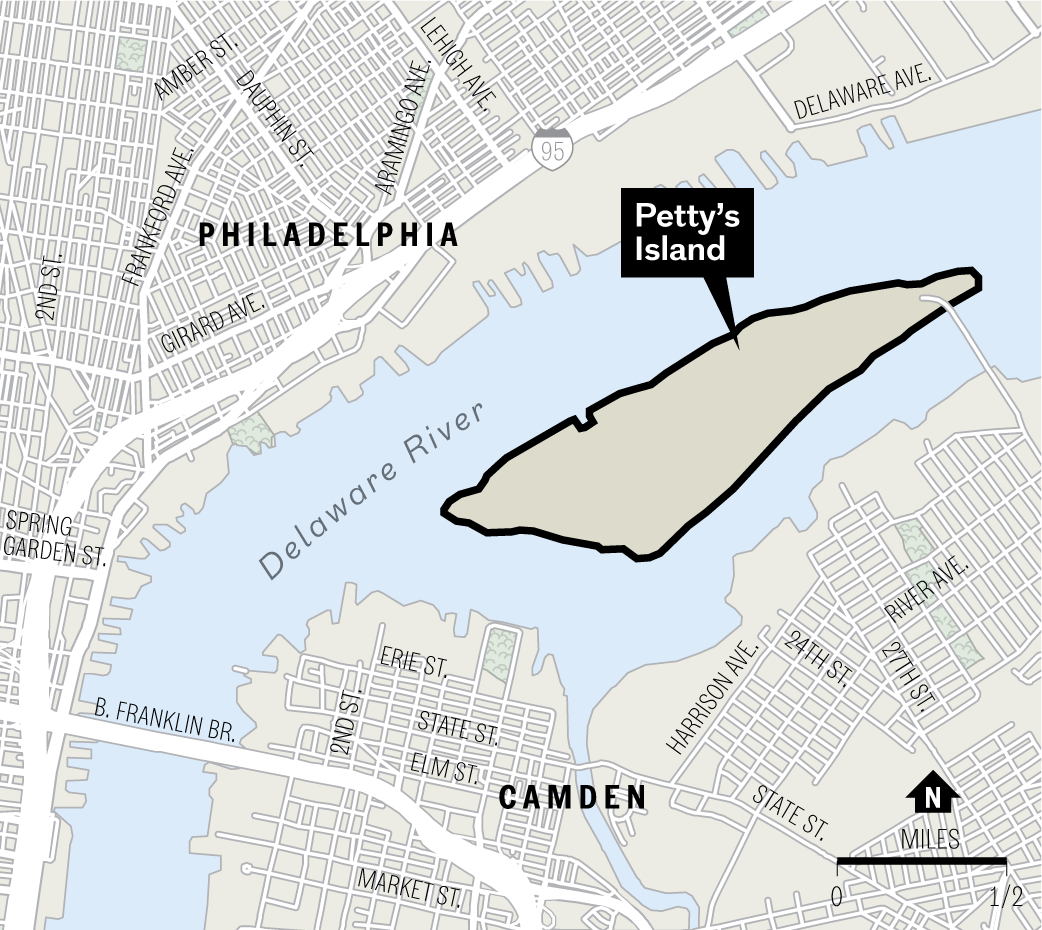
Map of Petty’s Island in the Delaware River, north of the Benjamin Franklin Bridge.
Citgo and Petty’s Island
Petty’s Island was originally inhabited by the Indigenous Lenni-Lenape people, and stories abound about its history, according to a DEP website for the trust. The island was once owned by William Penn.
In 1678, then-owner Elizabeth Kinsey, a Quaker, struck a deal to buy it from the Lenni-Lenape and allowed them to continue hunting and fishing — provided they agreed not to kill her hogs or set fire to her hayfields.
There are other tales of Blackbeard the pirate docking there and even Benjamin Franklin spending a night on the island, which was eventually named after John Petty, an 18th-century trader from Philadelphia.
The island had been used for farming, trading, and shipbuilding until Citgo, then an American company, began buying land there in 1916, continuing to do so until it owned the entire island by the 1950s. Venezuela’s PDVSA acquired ownership of Citgo in the 1980s.
In the early 2000s, the oil company sought to donate the island to New Jersey as a nature preserve, aligning with environmental efforts to conserve the land, which includes habitats for bald eagles, kestrels, and herons.
But in 2004, the state’s Natural Lands Trust rejected an offer from Citgo for a conservation easement under political pressure to develop it.
At the time, a development company in Raleigh, N.C., had planned a golf course, a hotel and conference center, and 300 homes for the island, which offers views of Philadelphia and Camden, but that proposal was abandoned.
In 2009, the Natural Lands Trust, created by the New Jersey Legislature to preserve land and protect nature, finally voted to accept the island from Citgo.
Then-Venezuelan President Hugo Chávez heralded the plans at the Summit of the Americas.
An informational sign for Petty’s Island, seen in the distance, at Cramer Hill Waterfront Park in Camden.
What is Elliott Management?
Singer, who leads Amber Energy’s parent company Elliott Management, was the seventh-largest donor in the 2024 election cycle, according to Open Secrets, a research group that tracks money in U.S. politics. That put him in a top 10 list that included Elon Musk, Timothy Melon, and Jeffrey Yass.
Singer contributed $43.2 million, with almost all going to conservative causes, including a $5 million contribution to Make America Great Again Inc., a super PAC that supports Trump. And $2 million went to the Keystone Renewal PAC to support conservative candidates in Pennsylvania.
The order for the sale of Citgo to the arm of Singer’s hedge fund was the last major legal step to wrap claims by up to 15 creditors that began in 2017 for debt defaults.
The deal is expected to close in coming months. Amber Energy plans to retain the Citgo brand.
Petty’s Island (right) as seen by drone, Friday, Jan. 9, 2026. The 292-acre land sits in the Delaware river near the border between Pennsylvania and New Jersey. It is located between the Betsy Ross and Ben Franklin bridges. Formerly it was the site of Fuel storage for the Venezuelan oil company Citco.
What’s happening on the island now?
Currently, the New Jersey Natural Lands Trust holds a conservation easement for the island that prevents any development.
The state’s goal is to turn the island into an urban nature reserve with an environmental center, according to the Center for Aquatic Sciences in Camden, which is partnering with the trust in the endeavor.
Public access to the island is permitted only as part of scheduled programs. The trust has built a main trail along the southern perimeter and added connector trails for a total of two miles. It has installed 13 exhibits and kiosks along the trails.
Transfer of the title of the island ultimately depends on Citgo, which is responsible for removing the petroleum infrastructure and cleaning up contamination.
But before Citgo can turn the title over to the trust, the DEP must certify that the land is cleaned to state standards, according to the most recent information available on the DEP website for the trust.
Last year, Citgo agreed to place $13.3 million in a trust fund to remediate “all hazardous substances, hazardous wastes, and pollutants discharged,” on the island.
If Amber Energy assumes all liabilities of Citgo, it would presumably be responsible for the cleaning and transfer of title under the conservation easement.
Reddall, the spokesperson for Amber Energy, declined to comment on the cleanup.
Toll Brothers, the luxury homebuilder based in Fort Washington, will have a new CEO this spring.
Karl K. Mistry, an executive vice president who has been with the company for 22 years, is set to be promoted to CEO effective March 30, Toll Brothers announced Wednesday. Mistry will succeed Douglas C. Yearley Jr., who will become executive chairman of the board.
Mistry joined Toll Brothers in 2004 and went on to hold leadership positions in the Houston and Washington, D.C., markets. Since 2021, Mistry has managed the company’s homebuilding operations in 15 states in the Eastern U.S.
“Karl has honed his skills in both strong markets and challenging ones. He has run numerous homebuilding divisions and has overseen our expansion into several major markets,” Yearley said in a statement. “With Karl at the helm partnering with our other seasoned leaders and operating teams, the company’s future is in excellent hands.”
Mistry is set to receive a base salary of $1 million, with annual cash bonuses of around $2.25 million, according to the company’s recent filing with the U.S. Securities and Exchange Commission.
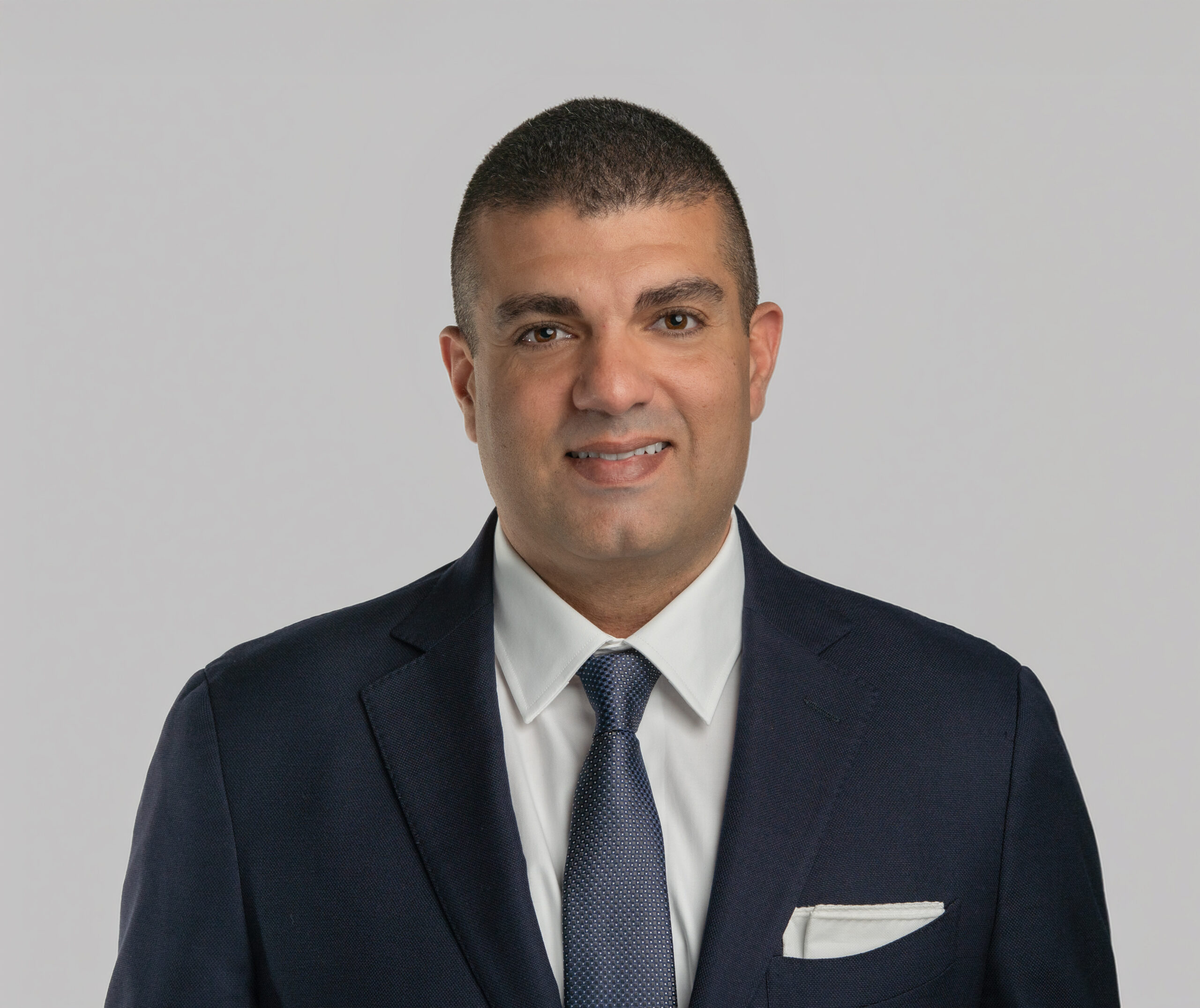
Karl K. Mistry, an executive vice president at Toll Brothers, is set to become the company’s next CEO starting March 30.
As executive board chair, Yearley’s base salary is set to remain at $1.2 million, according to the recent filing, and his total annual compensation is expected to be $6.6 million, including cash bonuses and long-term equity, starting in fiscal year 2027.
Toll Brothers was founded in 1967 by brothers Bob and Bruce Toll, who grew up in Elkins Park and were the sons of a homebuilder. Their company has since expanded, now building in more than 60 markets nationwide.
Douglas C. Yearley Jr., CEO of Toll Brothers, outside a model home in Newtown Square in this 2015 file photo.
Last year, Toll Brothers “executed well in a choppy environment” that saw “soft demand across many markets,” Yearley said in a statement accompanying the report.
During that time, Toll Brothers sold more than 11,000 homes for $960,000 on average, according to the report. The company described its customer base in a recent news release as “first-time, move-up, active-adult, and second-home buyers.”
Picture this. You’ve been with your romantic partner for years, and you’ve seen each other through all kinds of ups and downs. Your relationship seems unshakeable. Then you decide to renovate your home.
Renovations can be a source of stress for individuals and for a relationship.
As a couples therapist in Center City put it, “the list of things that can trigger people during a renovation is very long.”
The home remodeling and design platform Houzz surveyed hundreds of couples for its 2025 report on remodeling and relationships.
According to the study, couples most often fight over:
🙎🏽 staying on budget
🙎🏽 deciding on products and materials
🙎🏽 agreeing on the project’s design or scope
Don’t feel bad if a renovation strains your relationship. Even a local couple who builds homes for a living had to bring in a third party to help settle disagreements on the design of their own home.
At the end of 2024, Montgomery County had no full-time shelters, even though the number of people without homes was growing as the cost of housing increased.
Now, the county has three emergency shelters.
The county’s Democratic and Republican commissioners have led an unusually bipartisan effort to tackle homelessness. The Republican commissioner said he and his colleagues came to the job with similar goals around addressing the issue.
It’s not unusual for residents to fight against new homeless shelters and low-income housing in their backyards. The county commissioners have been getting personally involved in pushing local governments to allow more housing.
But 2026 will bring more challenges.
Keep reading to find out what’s ahead this year, where shelters have been built, and why one commissioner says that making sure residents are housed takes “political courage” from local officials.
What is it with Philly and trees growing in houses?
While I was reporting my story about dangerous vacant homes last year, I came across two families in two different neighborhoods who were living next to empty houses with trees growing in them.
And now Nate Carabello says that when he bought a rental property in Bella Vista in 2005, the rowhouse had been boarded up for 30 years and a tree was growing in the middle of it.
The house is now home for Katie Kring-Schreifels, who lives in one of its apartments.
She’s filled her space with art and things she’s found in a variety of places, including a Habitat for Humanity ReStore, eBay, and Ikea. A leather trunk in her bedroom was her great-grandmother’s. Her mom found the flock of paper bluebirds at a craft show.
📮 If you think you do, email me back. You and your memories of visiting this spot might be featured in the newsletter.
Last week’s quiz showed a photo of the “Weaver’s Knot: Sheet Bend” public artwork on the Delaware River Trail along Columbus Boulevard. The stainless steel piece is between the Cherry Street and Race Street Piers.
Shoutout to Lars W. for getting that right.
Enjoy the rest of your week.
By submitting your written, visual, and/or audio contributions, you agree to The Inquirer’s Terms of Use, including the grant of rights in Section 10.
Philadelphia Councilmember Jeffery “Jay” Young introduced a bill at the last City Council meeting of 2025 to ban residential development from the area around former Hahnemann University Hospital.
The proposal covers properties near Broad and Race Streets with owners that include Drexel University, Iron Stone Real Estate Partners, and Brandywine Realty Trust.
But only one known residential project slated for the area is covered by the bill: Dwight City Group’s proposal to redevelop the Hahnemann Hospital patient towers into hundreds of apartments.
If enacted by City Council, which returns on Jan. 22, the bill could have stopped that redevelopment.
But on Dec. 24, Dwight City Group secured a zoning permit for 222-48 N. Broad St. to builda 361-unit apartment building — far larger than the original plan — with space for commercial use on the first floor.
With that permit secured, the project could move forward regardless of whetherYoung’sbill is enacted.
Dwight City Group, however, says they are concentrating on ongoing conversations with Young.
“We are working along with Councilman Young and the community to ensure that this project meets the needs and goals of the district,” said Judah Angster, CEO of Dwight City Group.
The permits show some changes to the original plan. In interviews last year, the developer said the plan contained 288 units and that ground-floor commercial was unlikely.
Young said the proposed housing ban is about preserving jobs by allowing only commercial development at the former hospital site.
“As the city continues to look for ways to incentivize development, we need to ensure jobs and economic opportunities are at the forefront, with engagement from all stakeholders,” Young said in an email. “We look forward to working [with] all stakeholders as this legislation moves through the process.”
Young’s bill confused and outraged manyobservers as a blatant example of spot zoning, in which legislation is used to help or hurt a particular project.
But the tradition of “councilmanic prerogative” would likely guarantee its passage because other Council members are unlikely to vote against a bill that affects only one district.
Nevertheless, the housing and transit advocacy group 5th Square has begun a campaign against the legislation and issued a petition earlier this week calling for its withdrawal.
“The site on Broad and Race Street lies on top of an express subway stop and benefits from proximity to Center City jobs, shops, and cultural amenities,” the petition reads. “Since the shuttering of Hahnemann in 2019, the site currently provides little value to Philadelphians or tax dollars to the city despite its central location.”
OCEAN CITY, N.J. — Once again, the football was yanked away from would-be Ocean City boardwalk hotel developer Eustace Mita just as he was about to kick it.
Ocean City’s planning board unexpectedly deadlocked Wednesday night on a request to declare the old Wonderland Pier site “in need of rehabilitation,” dealing a significant setback to Mita’s plan to build a luxury hotel on the boardwalk property.
The vote is the second time Ocean City has thwarted Mita’s attempts to move his project forward (though, in loop-the-loop fashion, an earlier no vote by City Council was later reversed.)
Mita, who has proposed turning the property into Icona in Wonderland, called Wednesday’s vote an “incredibly serious roadblock.” He said he indeed felt a bit like Charlie Brown to the city government’s Lucy, and revived thoughts of selling the property.
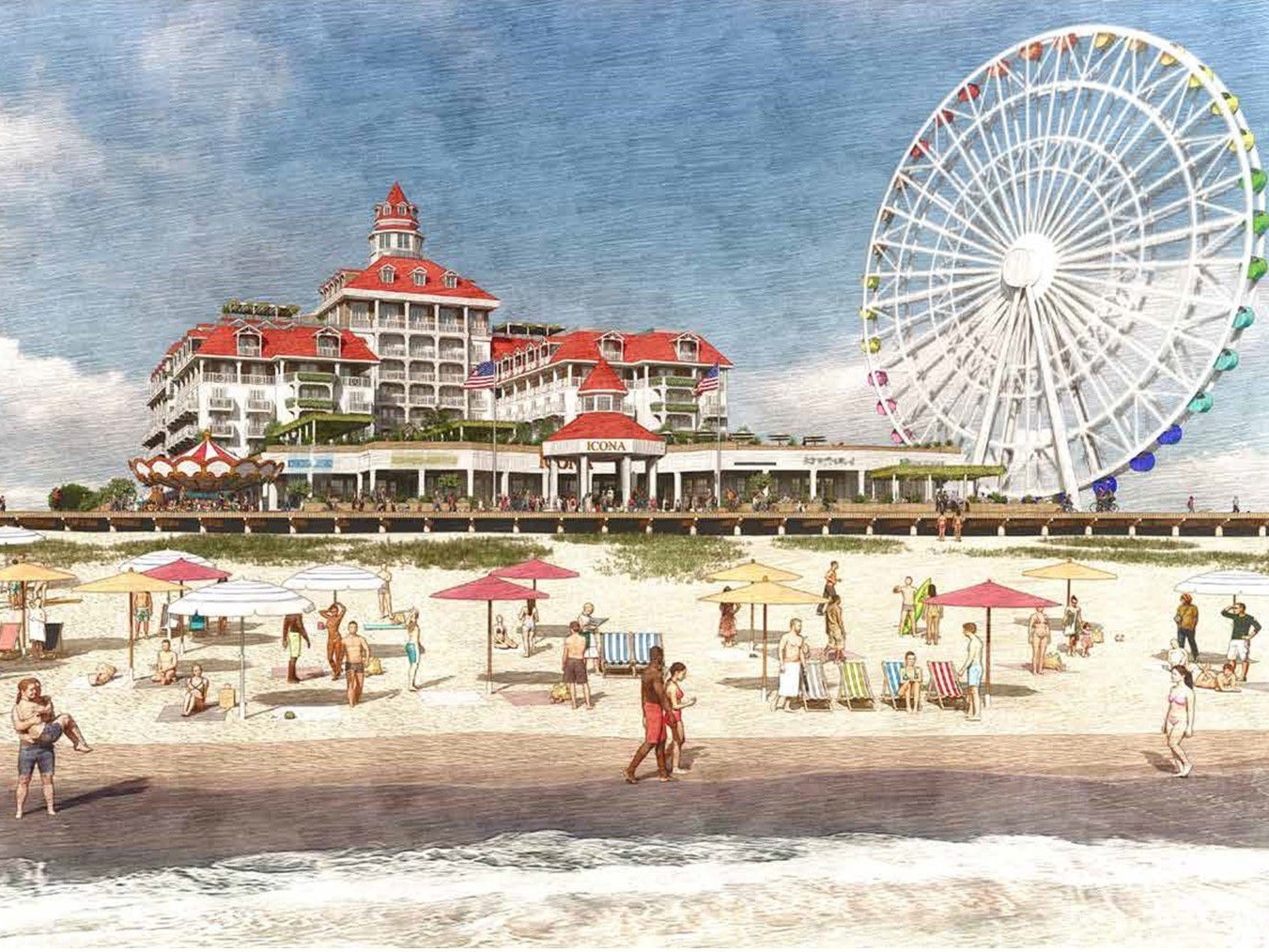
A rendering of the proposed new Icona in Wonderland Resort, to be built on the site of the old Wonderland Pier. The proposal for a 252-room resort includes saving the iconic Ferris wheel and carousel.
The board was split 4-4 with half the members agreeing that the property was significantly deteriorated and underutilized, two legal criteria needed for the designation.
But half the board, including chair John Loeper, said they did not believe the criteria had been met, and noted some businesses were open last summer at the front of the property.
The matter still will go back to City Council for a final vote on the designation, but Mita said if Council waits too long, he will unload the property.
The “in need of rehabilitation” designation has been long sought by Mita, who wants to build a $150 million luxury hotel at 600 Boardwalk.
The designation would allow site-specific zoning changes and possible tax breaks. The site is currently zoned for amusements.
After the meeting, Mita said he was shocked by the failure of the board to recommend the designation. “It’s been deteriorated for decades before I bought it,” he said. “I’m very very disappointed. This is the poster child for rehabilitation. ”
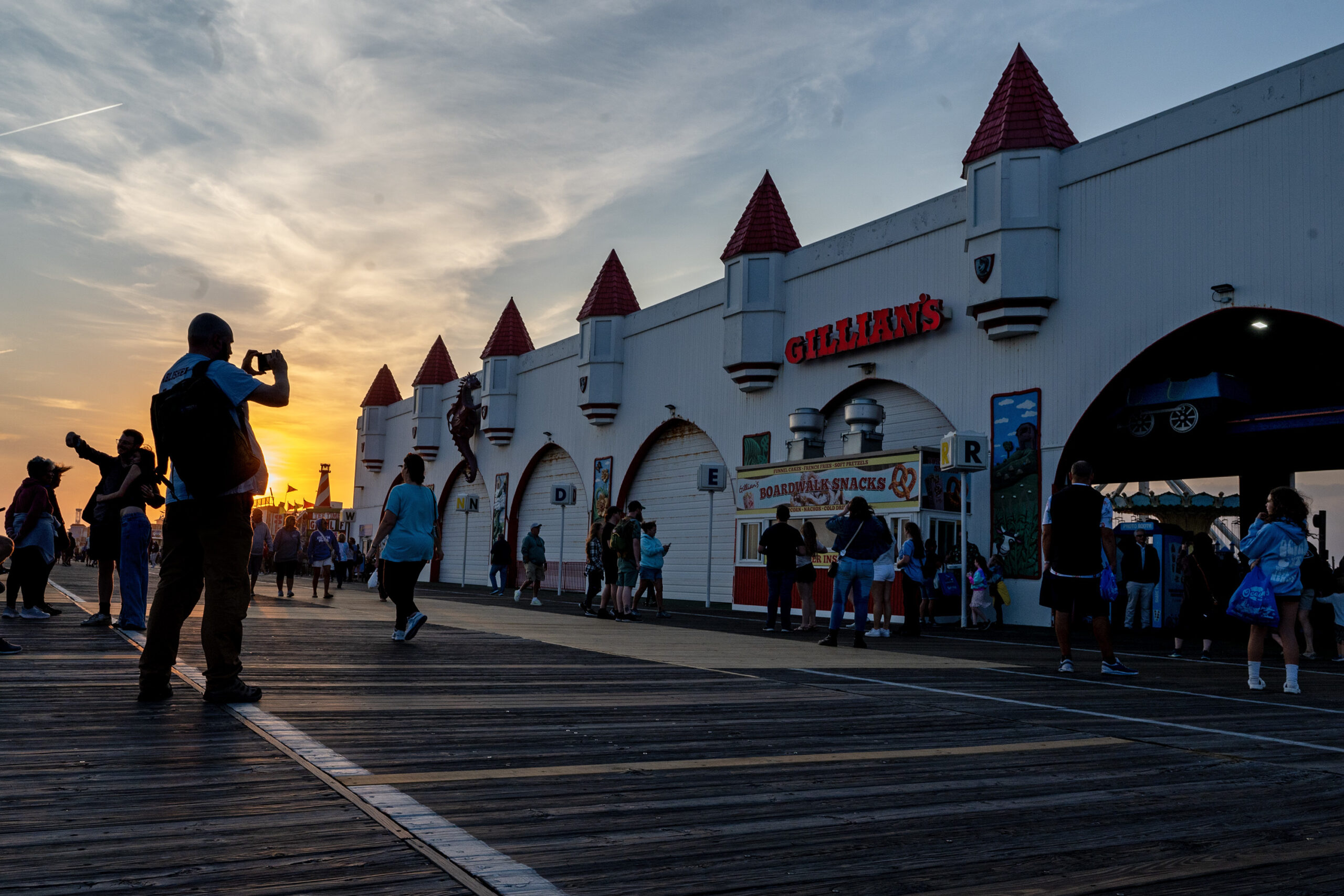
Gillian’s Wonderland Pier closed in October 2024, ending nearly a century of amusement ride ownership by the Gillian family in Ocean City. Mayor Jay Gillian had sold the property to Mita and leased it back from him, but said he could not make the enterprise profitable.
Gillian recently declared Chapter 11 personal bankruptcy, listing nearly $6 million in debt.
Wednesday’s vote brought about 150 people out to another iconic boardwalk structure, the Music Pier, on a pleasantly warm January evening.
About three dozen members of the public spoke, including Mita himself, who said the city would benefit “tenfold” from his development plans. The speakers were evenly divided in their views.
A visit from Will Morey
Will Morey came up from Wildwood to lay bare what many in Ocean City did not want to hear — reviving Wonderland Pier as an amusement park would be next to impossible.
“Starting from the ground up, it is not financially feasible,” Morey, the CEO of Morey’s Piers, told the city’s planning board. “It’s a very challenging lift.”
The board could not agree that the property met the legal criteria for the designation: that it was significantly deteriorated and showed a pattern of vacancy and underutilization.
“It’s an enormous piece of property that’s literally falling apart on the oceanfront,” said board member Dean Adams.
But Loeper, the chair, called the abandonment “self-inflicted” and said he would need more proof of the deterioration.
Engineering and other studies put the cost of repairing the carousel, Ferris wheel, and log flume at $6.5 million, and the cost of fixing the site’s concrete foundation and pilings at $3.9 million.
The matter will still go back to Ocean City’s City Council, which is also awaiting a report from a boardwalk subcommittee.
Eustace Mita arriving at the Ocean City Music Pier for a city planning board meeting on Wednesday. He was seeking a recommendation that the old Wonderland Pier site he owns be declared “in need of rehabilitation,” which he described as “Step 2” in his plan to build a luxury hotel.
‘The boardwalk is not thriving.’
Opponents asked board members to deny the “in need of rehabilitation” designation. They scoffed when Jody Arena, a construction expert who testified about the property’s deteriorated state, acknowledged that Mita was a partner in his firm, Caritas Construction.
They surmised that similar photos of deterioration could be taken of the Music Pier, where the meeting was held. One resident, Jim Tweed, said the designation would threaten “decades of restraint.”
Business owners, including the owners of Manco’s, George’s Candies, Cousin’s Restaurant, Barefoot Trading, and Ocean City Bikes, asked the board to approve the designation to avoid further closures of businesses. They described a devastating impact from the closure of Wonderland Pier.
Boardwalk property owner Mark Raab said three of his tenants had decided to close their shops. “People don’t know what’s been going on,” he told the board. “The boardwalk is not thriving. It’s going down piece by piece.”
“We are a city based on tourism,” said Cousin’s Restaurant owner Bill McGinnity. “We’d appreciate a vote of ‘yes’ tonight so that we can move forward quickly,”
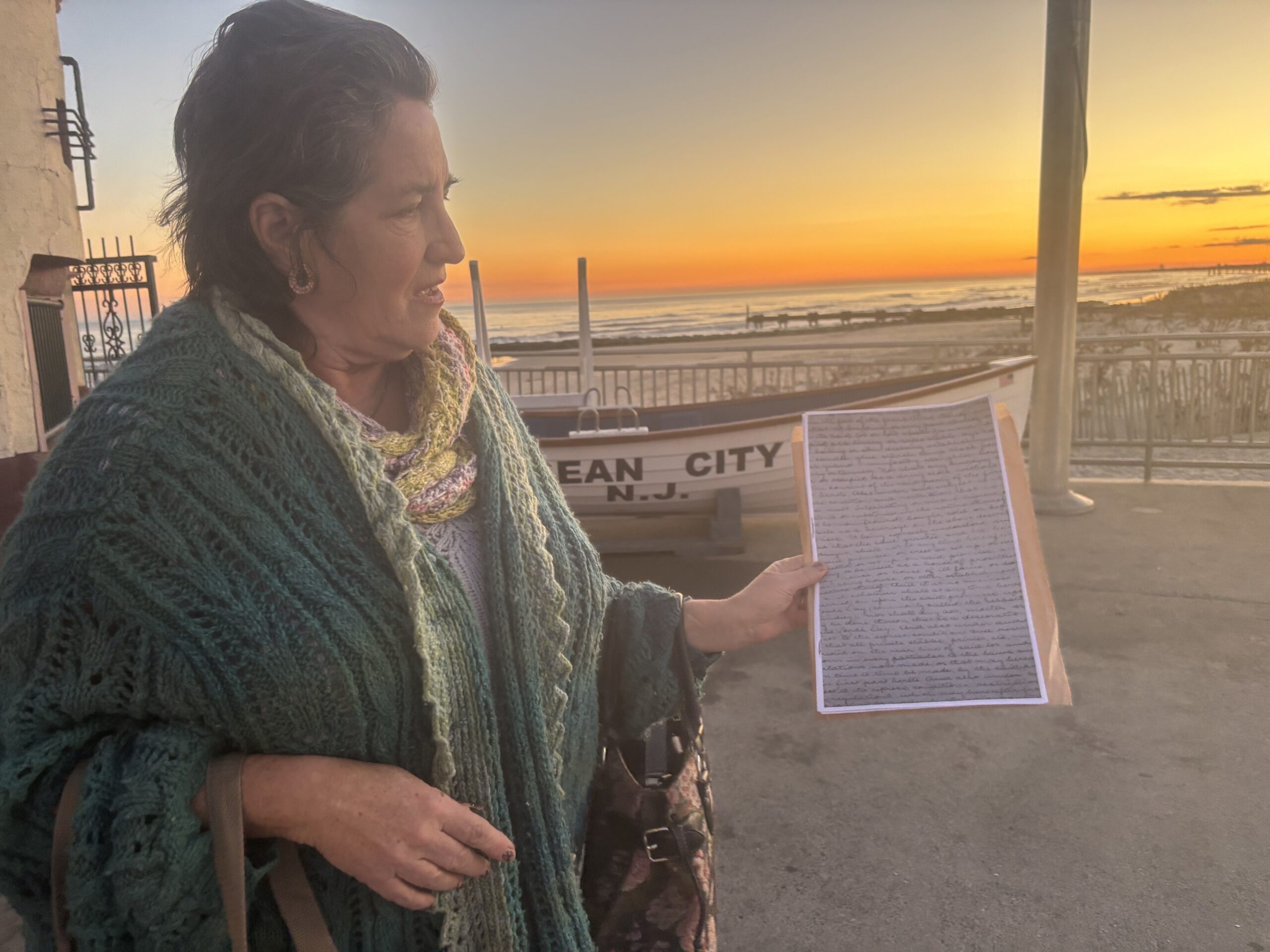
Others resisted any fast-tracking of development. Donna Saber, owner of Here Comes the Bride shop, brought along a copy of the original 1881 deed that she said sought to preserve its original intent as a place for child amusements.
“It was deeded as an amusement park,” she said.
Donna Saber, owner of Here Comes the Bride bridal shop in Ocean City, holds a copy of the original 1881 deed to the property that was the Wonderland Pier. She’s opposed to a plan to build a luxury hotel.
Marie Hayes, a full-time resident for 22 years, worried the designation would set a “dangerous precedent,” that would result in the town resembling Ocean City, Md., with high-rises along its oceanfront.
The planning board was given reports submitted by Mita back in August, when council stunned some, especially Mita, by voting not to ask the board to study the site’s future. Mita immediately said he would sell the property.
John Loeper, chair of Ocean City’s planning board, on stage at the Ocean City Music Pier. The planning board was set to vote on whether to recommend that the old Wonderland Pier site be declared in need of rehabilitation, a designation that could lead to a luxury hotel on the site.
Sean Barnes, the city councilman liaison to the planning board, questioned Wednesday whether the rides should even be considered part of the property.
“Amusement rides are not structures,” said Helen Struckmann, a resident who has opposed the hotel idea and vowed to save Wonderland Pier. She said the historic carousel was in better shape than the reports stated. “They don’t justify the need for rehabilitation designation for the property. Different amusement rides have been swapped out.”
She and others questioned why Mita had not addressed deterioration of the property since purchasing it in 2021. Mita is “now requesting a benefit from his purposeful underutilization of the property,” said resident Bob Duffy.
But Mita said he’d waived rent on the property so that Jay Gillian could try to make a go of the amusement pier. He said he’d put in $500,000 last summer to open the front portion of the property as an arcade, coffee and pizza shop, and bike shop.
Engineer Matt Mowrer told the planning board the property was “heavily deteriorated,” with “concrete spalling” — chunks of concrete breaking off from the foundation. He said corrosion from salt air would get only worse.
Board planner Randall Scheule told the board Wednesday he believed the structural deterioration of the property itself and the underutilization of the property met the standards. There was some debate as to whether the rides themselves should be included in any analysis.
The board looked at whether the site met the legal criteria needed for the designation, which will allow City Council to rezone the site for a hotel and grant tax abatements.
Will Morey, president and CEO of Wildwood’s Morey’s Piers, testifies in Ocean City at a planning board meeting to determine the future of the old Wonderland Pier.
The board did not discuss Mita’s specific hotel plans, which have included the carousel and Ferris wheel and some kiddie rides.
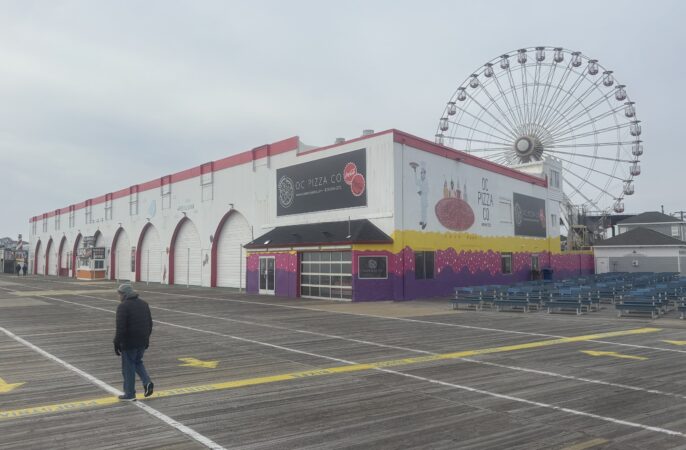
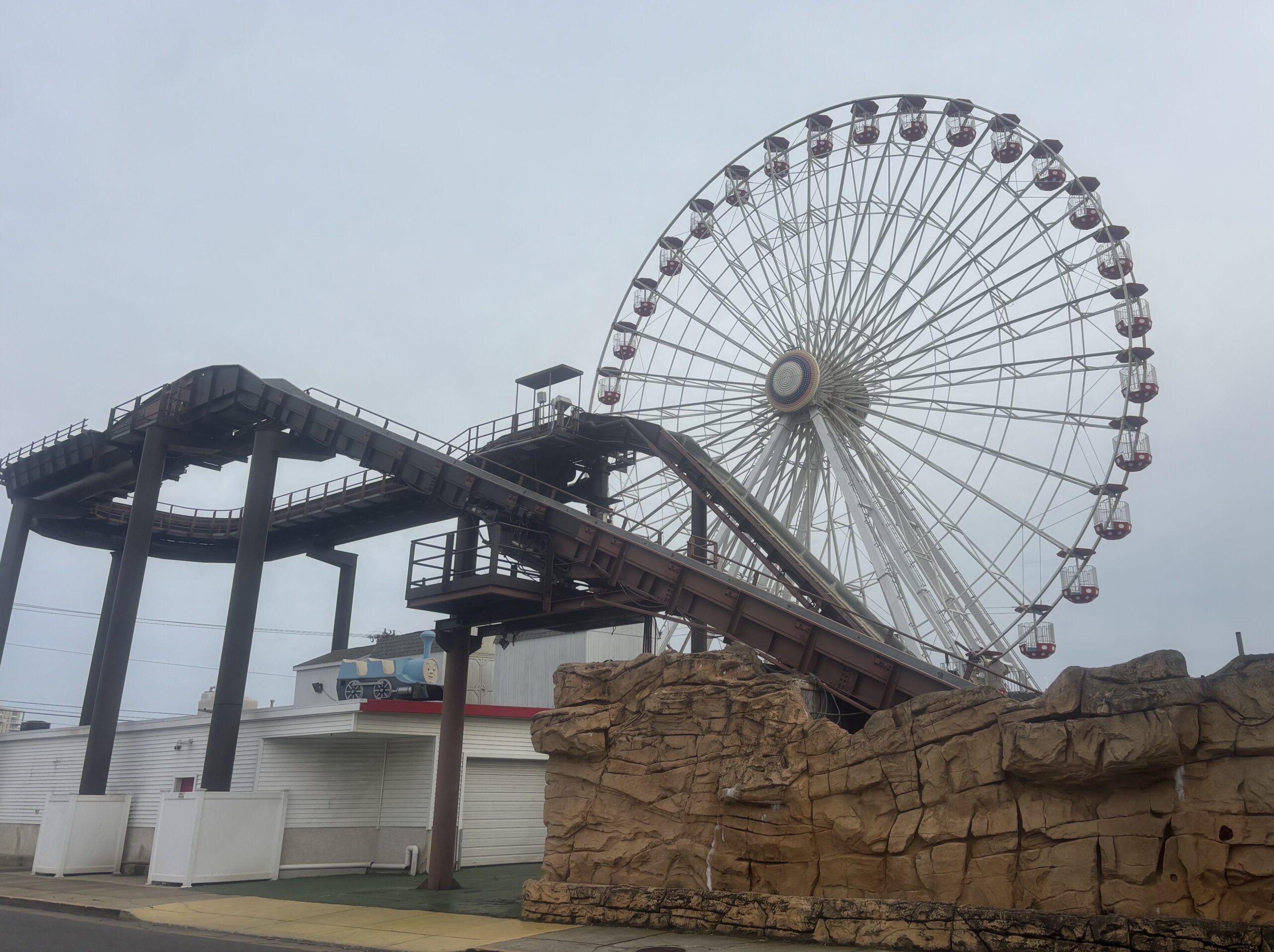
The old Wonderland Pier site on the boardwalk in Ocean City, N.J., as seen from Wayne Avenue on Jan. 6. The beloved amusement pier shut down in October 2024. A developer wants to build a luxury hotel. A report put the cost of repairing the Ferris wheel, carousel, and log flume at as much as $6.5 million.Five minutes before the 6 p.m. scheduled closing all but one of the gates are shut on the Boardwalk, on the final day for the beloved Wonderland Pier in Ocean City Sunday, Oct. 13, 2024.
Last summer, four businesses operated on the site: Ocean City Pizza Company, Dead End Bakehouse, Wonderland Pier Arcade, and OC Bikes and Rentals. Mita entertained several offers to sell, including one from the Norcross brothers, who envisioned residential development.
Planner Tiffany Morrissey told the planning board that showed the property was underutilized.
The property is assessed at $15.8 million, which translates to an estimated market value of about $29 million.
Saving the site as an amusement park has been the focus of much despair among community members and others with generations of memories at Wonderland Pier.
But the reports lay out the deterioration of the pier’s marquee attractions.
The report states that the carousel, which dates to the 1920s, would require as much as $1.5 million in repairs, including a new electrical system and repair or replacement of the telescopes, the poles that support the horses.
The Ferris wheel is also in need of substantial repair, costing as much as $2.5 million, including replacing or repairing the lights, and rebuilding the spokes and “spreader bars,” which connect the spokes and form the arc.
The Log Flume Ride, built in 1992, would need substantial repairs estimated at between $2.5 and $4 million, including rebuilding the upper troughs.
No company has stepped forward with a plan to keep the site solely an amusement park.
NEW YORK — New York City Mayor Zohran Mamdani is standing behind a newly appointed housing official as she faces backlash for years-old social media posts, including messages that called for the seizure of private property and linked homeownership to white supremacy.
Cea Weaver, a longtime tenant activist, was tapped by the Democrat last week to serve as executive director of the Mayor’s Office to Protect Tenants. The mayor has vowed to expand and empower the office to take “unprecedented” steps against negligent landlords.
The posts, which were circulated on social media in recent days by critics of Mamdani, included calls to treat private property as a “collective good” and to “impoverish the *white* middle class.” A tweet sent in 2017 described homeownership as “a weapon of white supremacy masquerading as ‘wealth building public policy.’”
Eric Adams, the city’s former mayor and a fellow Democrat, said the remarks showed “extreme privilege and total detachment from reality.”
Asked about the controversy on Wednesday, Mamdani did not address the substance of Weaver’s posts but defended her record of “standing up for tenants across the city and state.”
Weaver said in an interview with a local TV station that some of the messages were “regretful” and “not something I would say today.”
“I want to make sure that everybody has a safe and affordable place to live, whether they rent or own, and that is something I’m laser-focused on in this new role,” she added.
The discussion comes after Mamdani last month accepted the resignation of another official, Catherine Almonte Da Costa, after the Anti-Defamation League shared social media posts she made over a decade ago that featured antisemitic tropes.
While Mamdani had said he was unaware of Da Costa’s messages, Weaver’s past social media posts were known to the administration, according to a mayoral spokesperson, Dora Pekec.
Weaver previously led the Housing Justice for All coalition, which was widely credited with helping to convince state lawmakers to pass a sweeping package of tenant protections in 2019.
As leader of the city’s tenant protection office, she would play a key role in achieving one of Mamdani’s most polarizing campaign pledges: identifying negligent landlords and forcing them to negotiate the sale of their properties to the city if they are unable to pay fines for violations.
The “public stewardship” proposal has drawn consternation from landlord groups and skepticism from others in city government.
But the early days of his administration have brought signs that the new mayor is not backing off on the idea.
In a press conference immediately following his inauguration last week, Mamdani said the city would take “precedent-setting” action against the owner of a Brooklyn apartment building that owed the city money and was currently in bankruptcy proceedings.
He then announced Weaver’s appointment, drawing loud cheers from the members of a tenants union gathered in the building’s lobby.
“It is going to be challenging,” Weaver acknowledged. “New York is home to some of the most valuable real estate in the world. Everything about New York politics is about that fact.”