If you didn’t believe it before, you need to understand it now: Donald Trump never should have picked up that phone, never should have put in that call to one of his toadies, FIFA president Gianni Infantino, and never should have tried to exert his icky influence in a sport rife with corruption.
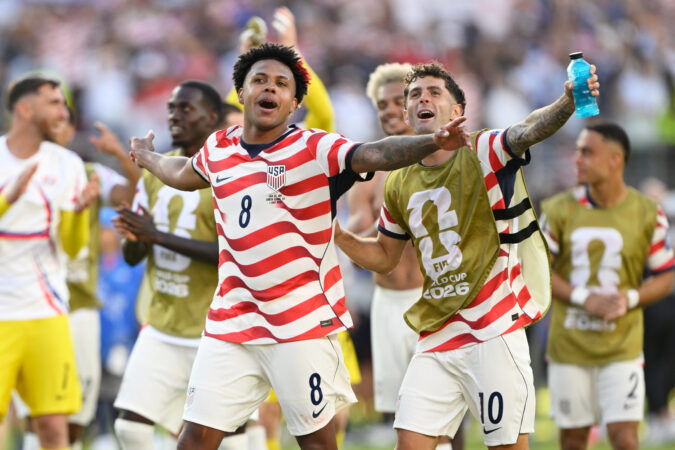
The 4-1 loss by the U.S. men’s national team to Belgium on Monday night at Lumen Field in Seattle was a fitting result. It was an embarrassing end to the World Cup for the home country. It was cosmic payback for a club that hoped to benefit from a president who wanted to strongarm Team USA into the quarterfinals and found out that sports can resist even an autocrat’s attempts to stack the deck.
Sometimes, once you show you’re willing to wallow in the mud, you can never wash the stain away. The justifications for the Trump administration’s overtures to FIFA to wipe out the one-game suspension for Folarin Balogun — and for FIFA’s acquiescence — were oh-so easy and obvious: This is FIFA.
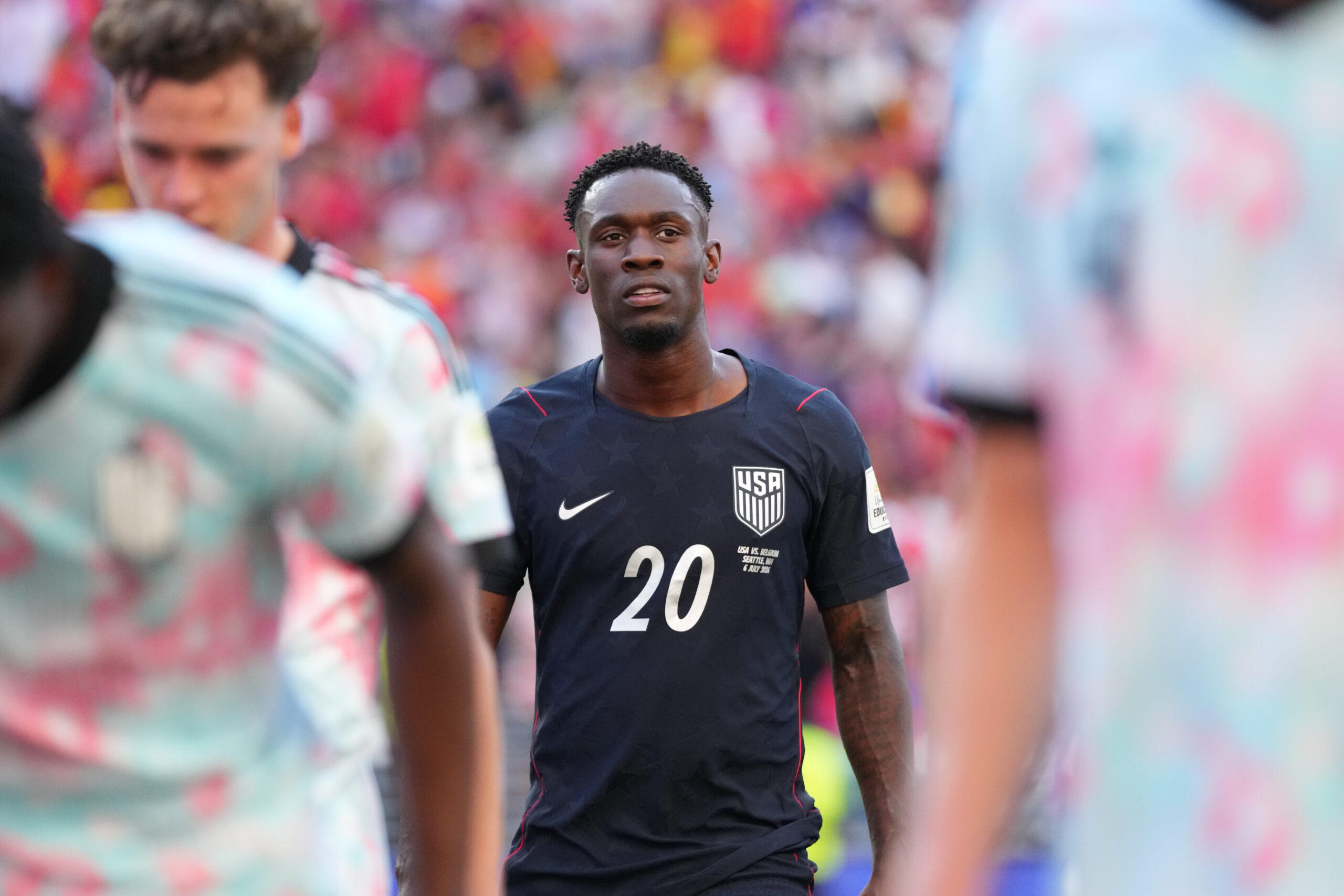
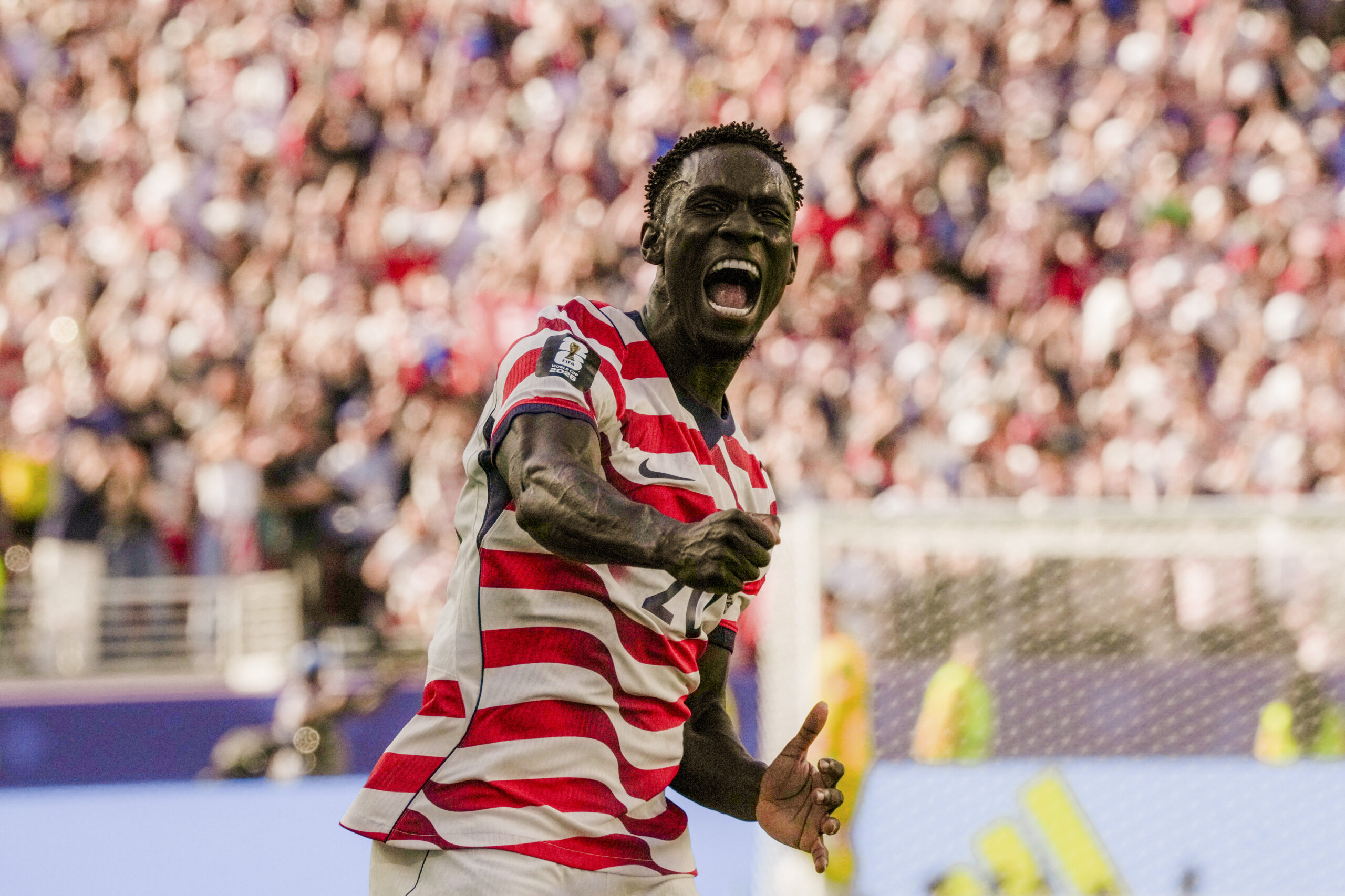
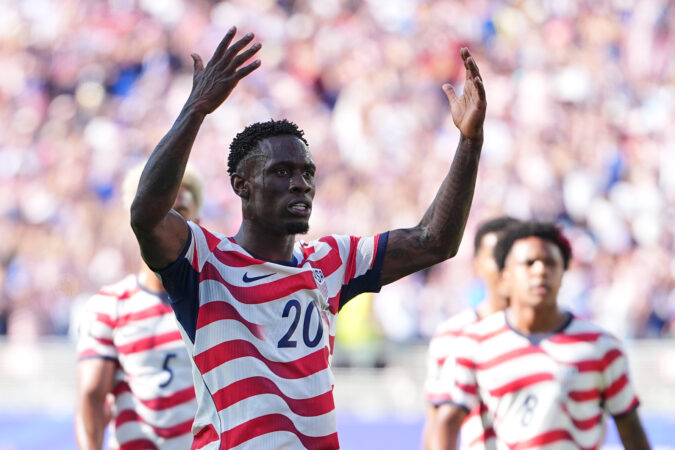
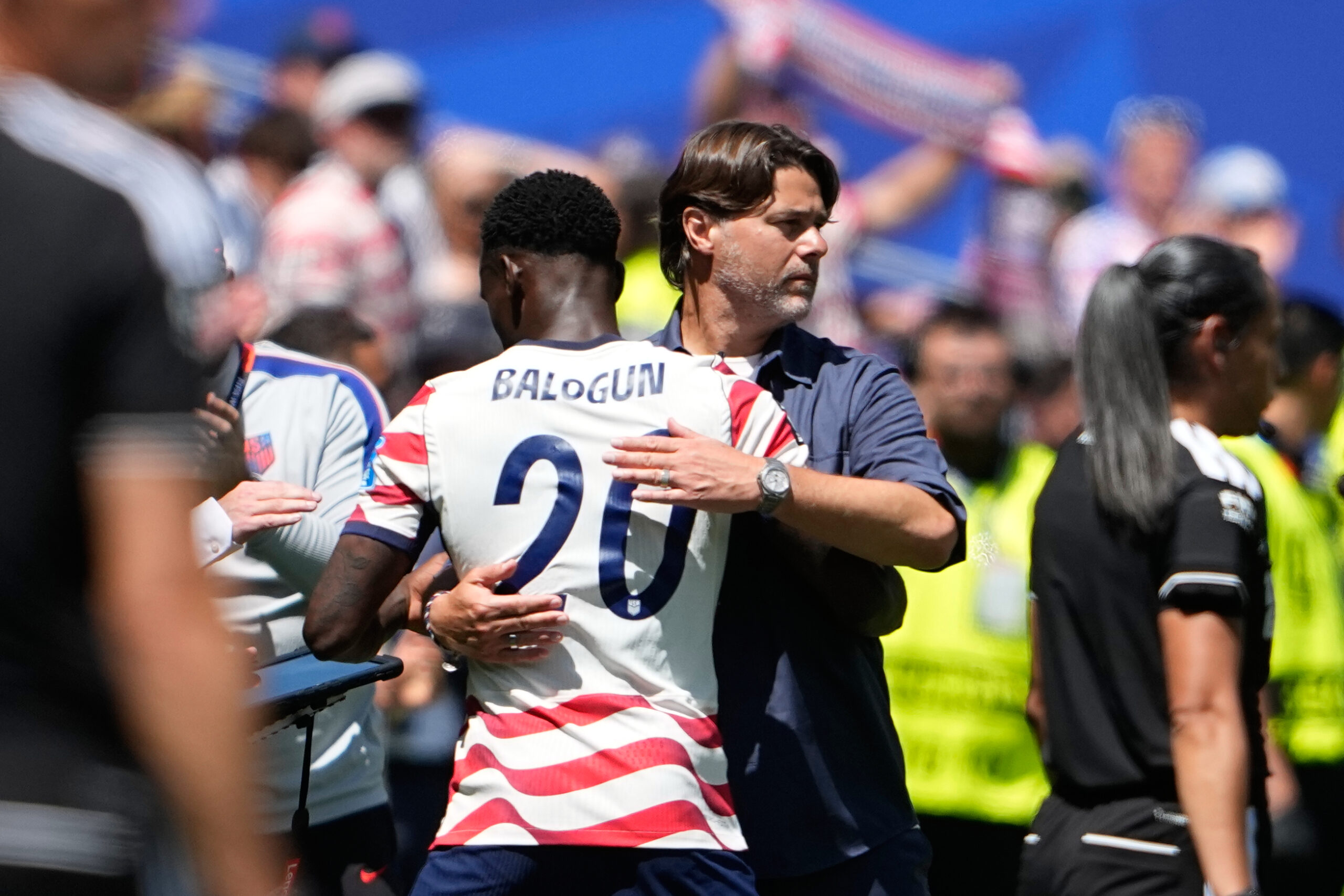
U.S. forward Folarin Balogun (20) was the center of attention against Belgium in the World Cup’s round of 16 on Monday.
This is an organization with a history of scandal and corruption so long and detailed that Robert Caro could only begin to chronicle it. This kind of back-scratching and deal-making is nothing new at soccer’s highest level. This is how things work, and everyone knows it and holds their nose against the stench, and all the complaints from Belgium and the other countries left in the World Cup were nothing but rank hypocrisy.
If another national team were in the same situation that the USMNT found itself after Balogun was hit with that questionable (at best) red card last Wednesday against Bosnia and Herzegovina, its president or prime minister would have done the same thing Trump did, right? Any means necessary in an every-country-for-itself system, right?
Wrong. The corrective to dishonor and dishonesty isn’t to do more dishonorable things. Yet that was the remedy that Trump sought and put Team USA in the position of accepting. No, Balogun never deserved a red card and the subsequent suspension. Yes, it was a terrible call. But terrible calls happen at all levels of sports, because sports — at least until the gamblers and robots take them over completely — are officiated and overseen by human beings, and errors and mistakes are part of the game.
Stuff happens, and you deal with it as best as you can, and no one gets a do-over days later just because Donald Trump says so. His actions wouldn’t have been appropriate in youth soccer — imagine a parent of a punished player pressuring a league’s commissioner to lift a suspension and the commissioner giving in — let alone in the biggest sporting event on the globe.
What’s more, Trump and those who supported or tolerated his interference in The Balogun Affair apparently never stopped to consider that he might be damaging his own national team’s chances. In that 2-0 victory over Bosnia, Balogun’s teammates not only survived the final 26-plus minutes of the match without him but also scored shorthanded to extend their lead.
They had become underdogs. They had acquired the momentum that comes with being a team that had to fight adversity and had given a strong indication that it could overcome it.
But once FIFA reversed its decision, that entire narrative — that sense that the USMNT might use Balogun’s suspension as inspiration and triumph in the face of an unjust call — disappeared. Now, the USMNT wasn’t the tough, resilient bunch that could withstand the absence of its best player. Now it was so out of its depth without Balogun that it needed the shady political boss to cut a deal in the smoke-filled room to bail it out.
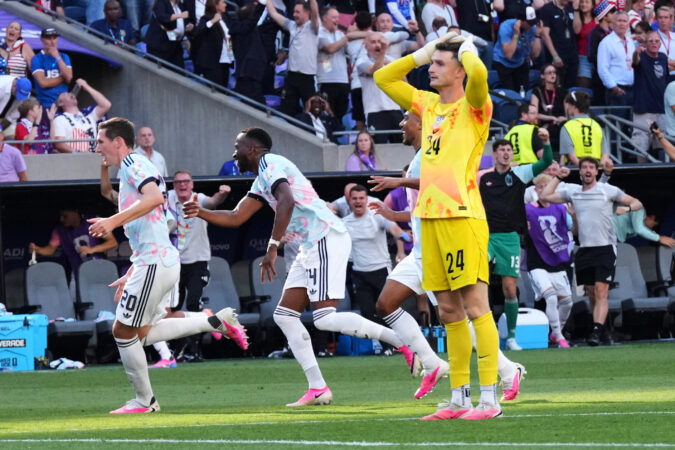
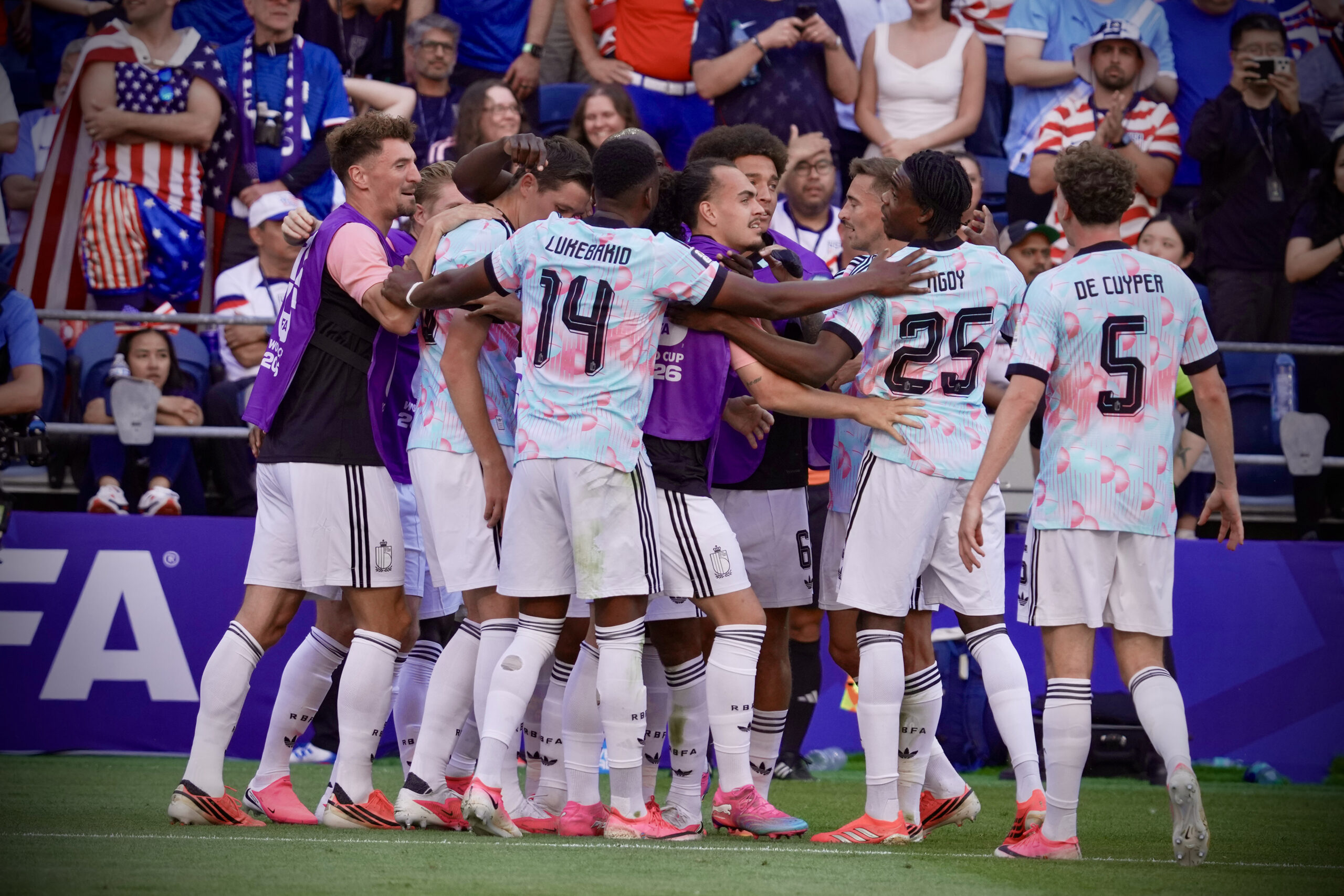
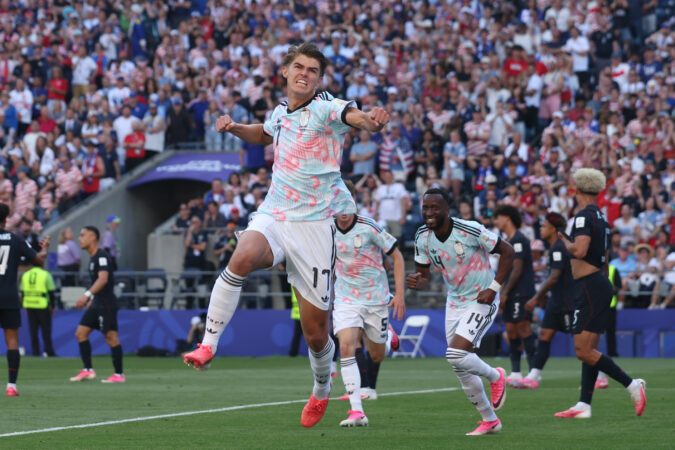
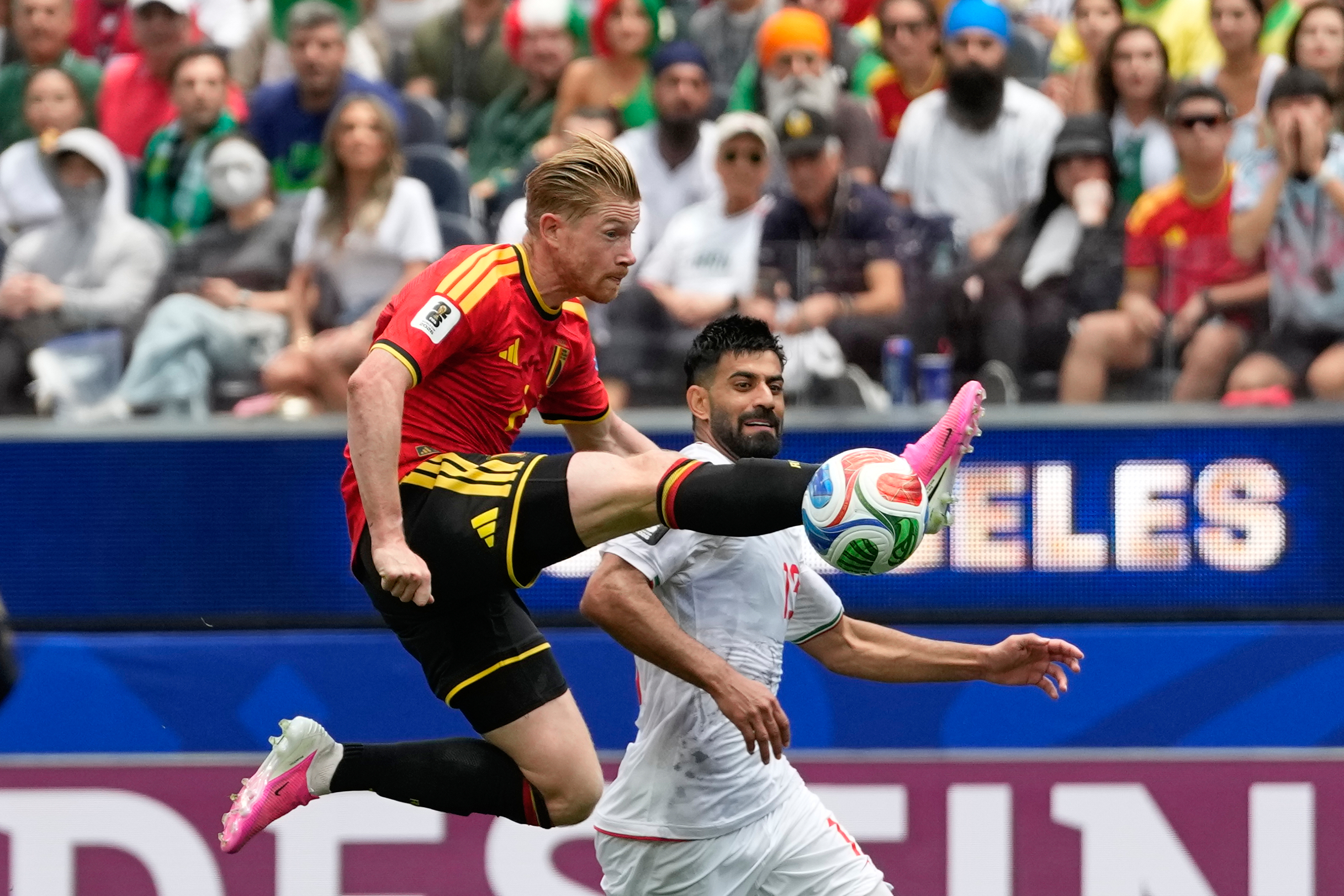
Belgium players react after their team scored one of four goals against the United States in Monday’s round-of-16 World Cup match.
Well, the Americans fit that pathetic profile Monday night. They allowed Belgium to take an early lead, then gave up the winning goal just 61 seconds after Malik Tillman tied the game at 1, then conspired to commit a crushing gaffe when goalkeeper Matt Freese played the ball outside the box, burped it up, and watched Hans Vanaken roll a shot past him for a two-goal Belgium edge.
They were outplayed, outmatched, and outclassed, their performance all the more humiliating for the strings that their president had pulled for them, for the message that he had sent about their chances.
Donald Trump told the world that these athletes needed a man willing to act like a mob boss to make things easier for them, that the USMNT wasn’t strong enough to take home victory on its own and without his help. It turned out he was right. He treated them like losers, and on Monday night, they met his expectations.
Storm clouds and a looming threat of rain did not stop fans of the U.S. men’s national team from packing FIFA World Cup watch parties across the area on Monday evening for America’s round of 16 match against Belgium in Seattle.
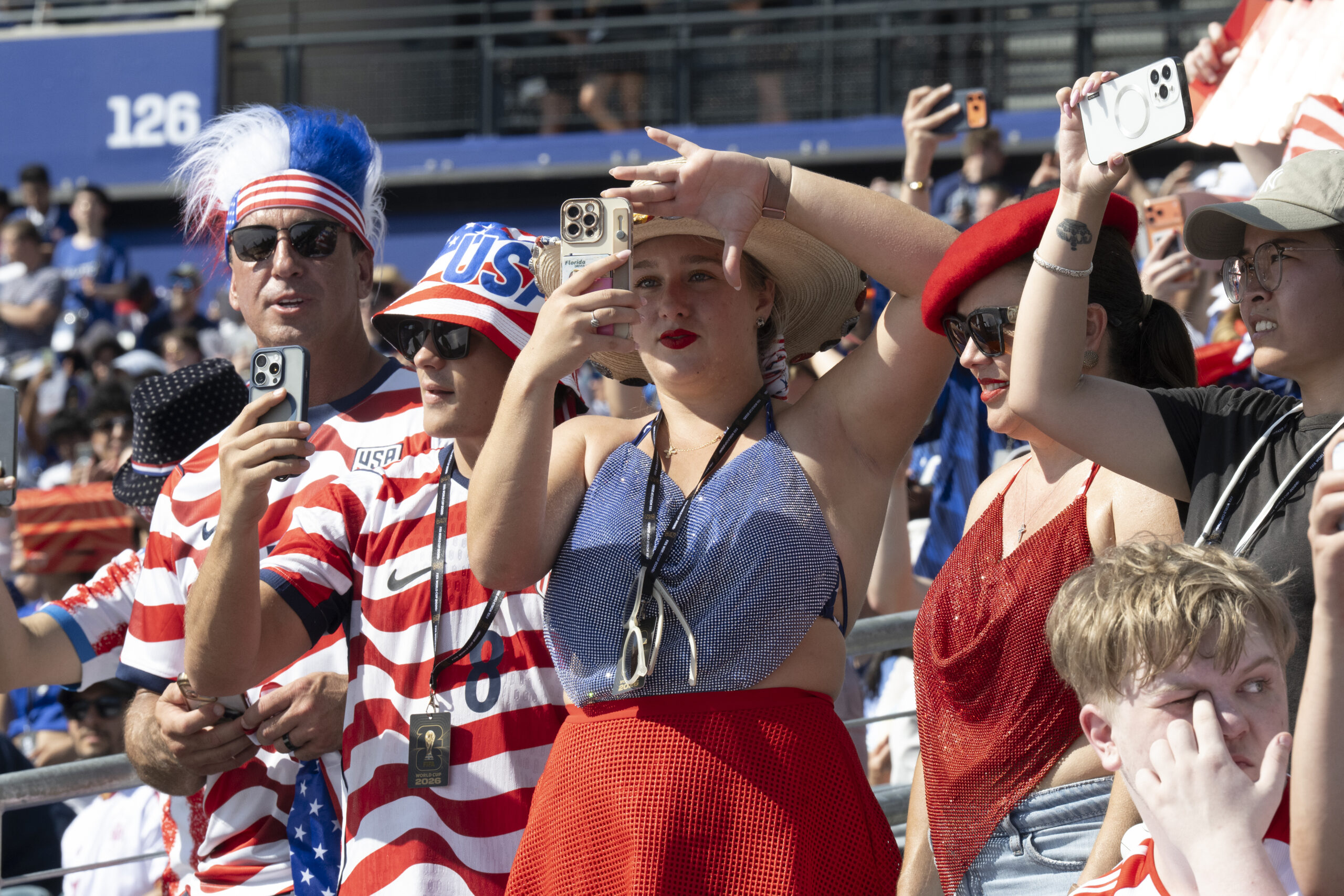
Fans clad in red, white, and blue packed the FIFA Fan Festival in Lemon Hill and Union Yards outside Subaru Park in Chester. The storms held off, but a deluge of Belgian goals led to a 4-1 loss for the U.S., disappointing much of both crowds.
The fan fest in Lemon Hill was sparsely populated after the first match of the day between Spain and Portugal, but by the time the U.S. men kicked off at 8 p.m., the crowd at the festival’s main stage stretched all the way back to the corporate activations set up in the middle of the festival.
That packed crowd was disappointed early, as forward Charles De Ketelaere gave Belgium a 1-0 lead with a strike in the ninth minute. To make matters worse for the U.S. supporters, the stage at Lemon Hill lit up red and yellow as the Belgians celebrated in Seattle.
They did red and yellow strobes at Fan Fest for Belgium’s first goal. The crowd seems less than amused
But the celebration didn’t last long, as De Ketelaere reclaimed the lead just two minutes later. It was all Belgium from there, as it added to its lead in the 57th minute, leaving both crowds in shock.
Fan Fest can’t believe what Matt Freese just did either:
Romelu Lukaku added a fourth to seal the win for Belgium in the 93rd minute, and as U.S. fans headed for the exits in Lemon Hill, a small group of Belgian supporters celebrated their country’s win at the center of the festival.
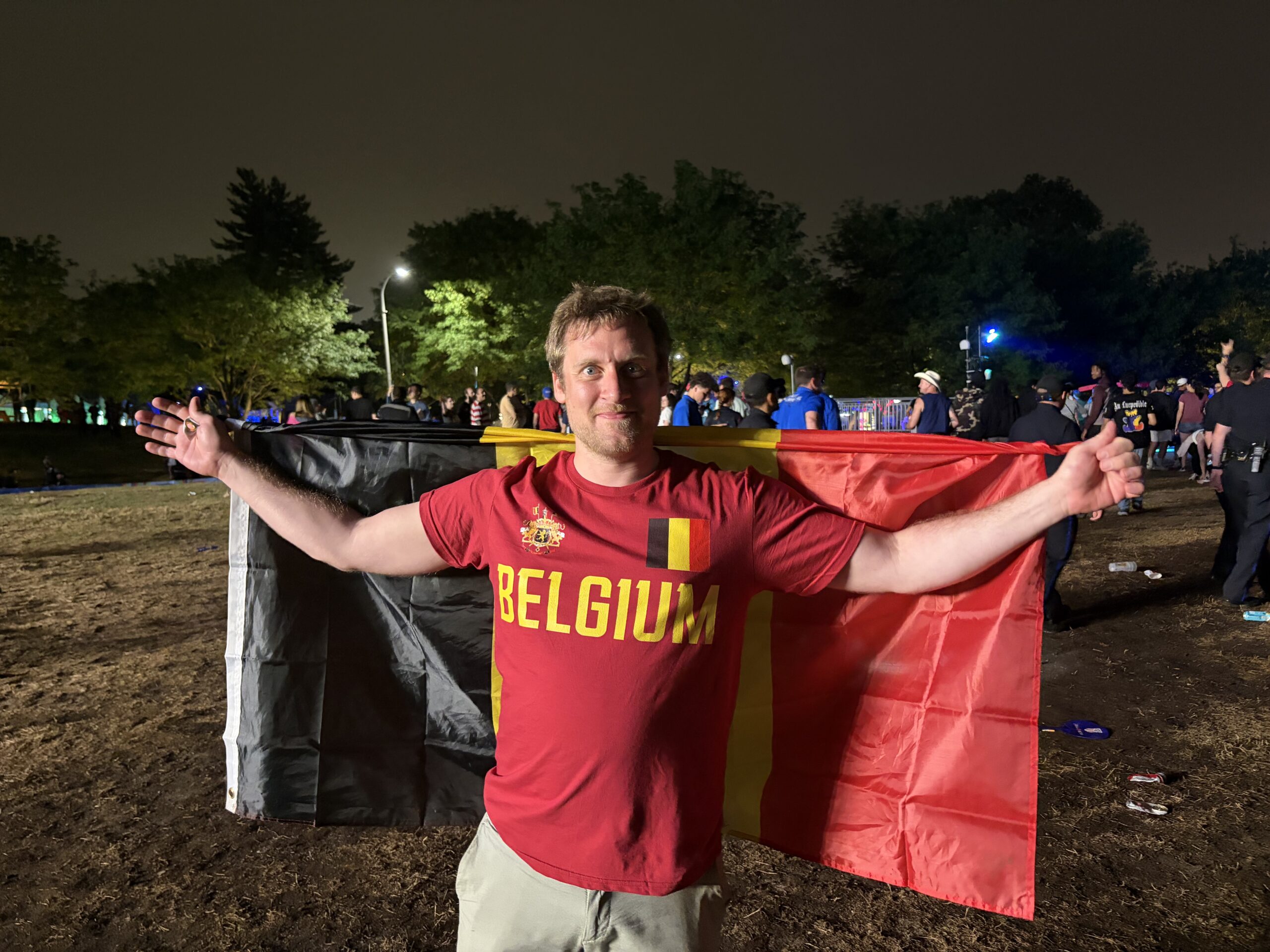
One of the few Belgians on hand for the match was Bertrand Colla, who traveled to Philadelphia from his home country to visit family and watch France’s win over Paraguay on Saturday at Philadelphia Stadium.
Bertrand Colla celebrates at FIFA Fan Festival after Belgium’s 4-1 win over the U.S.
While Belgium’s close win over Senegal in the round of 32 worried him, he had renewed confidence in his team after its 4-1 thrashing of the U.S.
“I didn’t expect it at all,” Colla said. “This game proves it all. We’re going to go there.”
U.S. fans, meanwhile, were let down after a second consecutive exit in the round of 16 by the U.S. men at the World Cup.
“It’s disappointing. They looked like they didn’t have it from the beginning,” U.S. fan J.P. Hochschwender said as he left Union Yards. “They looked slow. The defense looked a little disorganized, and, ultimately, [Belgium] just capitalized on the opportunities they got, but I had a bad feeling from the get-go.”
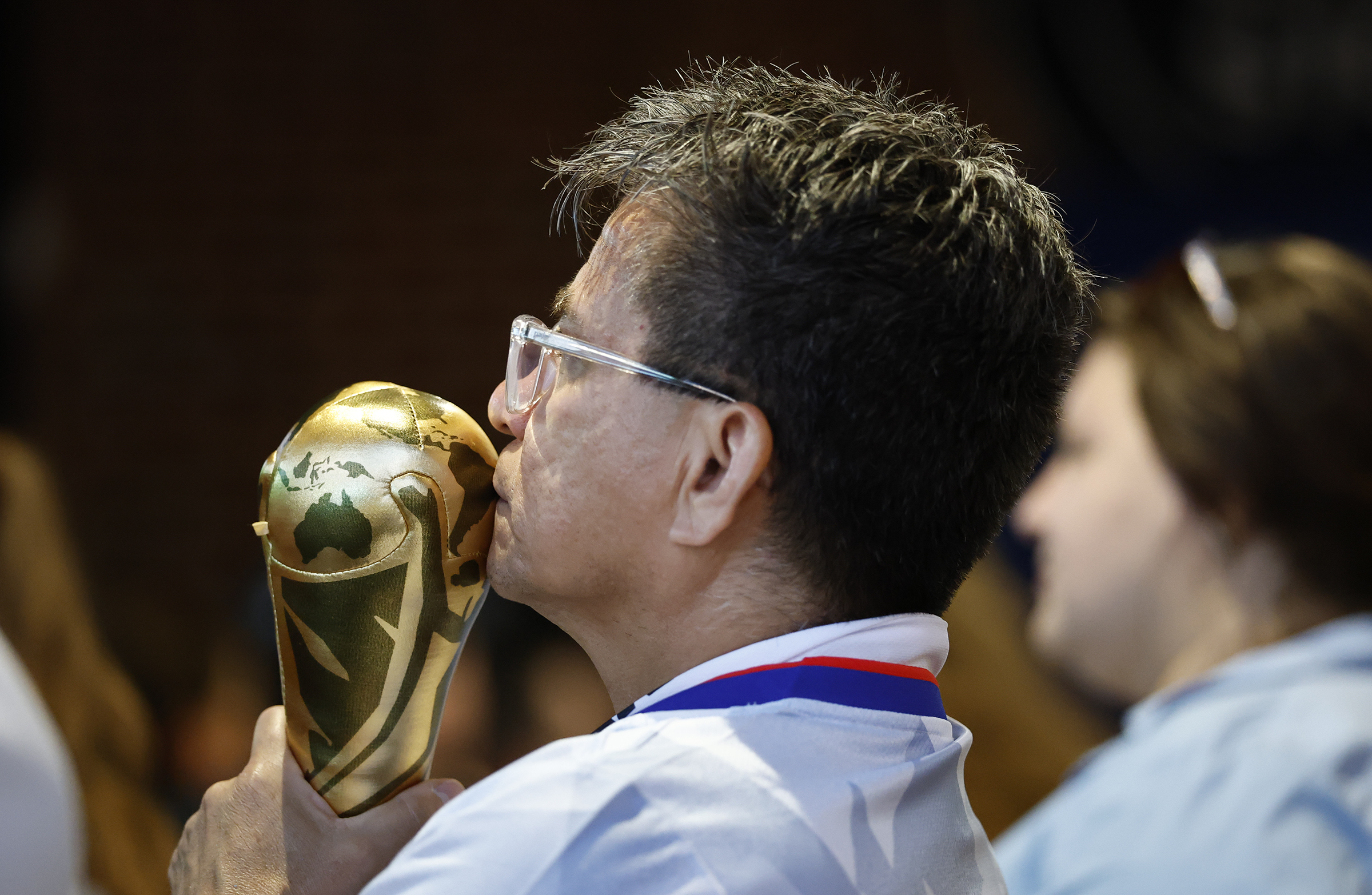
Ruben Mendoza holds a replica World Cup trophy while watching the USMNT face Belgium in a round of 16 game.
Lasting effects
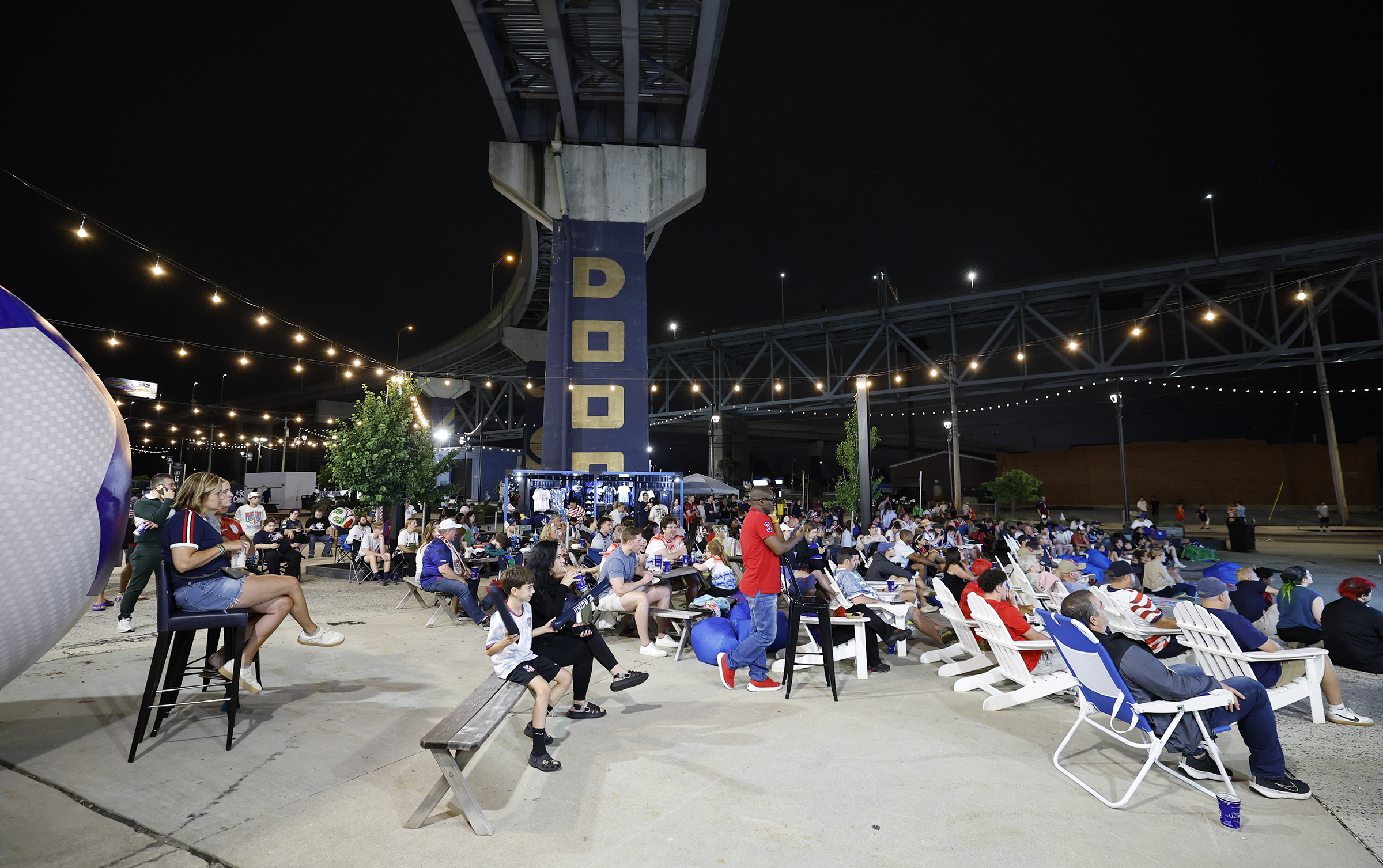
Like the FIFA Fan Festival,the Union’s watch party in Chester was free to enter. Team chief revenue officer Charlie Slonaker hopes the event and the area’s World Cup-powered soccer fever will drive more Philadelphians to their MLS team once the tournament is over.
“Soccer is the world’s game, it’s a beautiful game, and there’s no bigger event than the World Cup,” Slonaker said. “We’re excited to hopefully capture that, capture that fan excitement and enthusiasm by [having them] come down to these soccer celebrations.
“We hope they fall in love with the game, as so many of us have, and over the long term, they ultimately want to come out to Subaru Park to watch Philadelphia Union games.”
The Union looked to take advantage of the World Cup’s draw quickly after North America was awarded the tournament in 2018. Once FIFA approved MLS franchises hosting watch parties, Slonaker’s team sprung into action to gather partners for events. On Monday, that included food trucks Mister Softee, Dos Hermanos Taqueria, and Humpty’s Dumplings as well as Michelob Ultra.
Outside of watching the game — one many U.S. fans will want to forget — the area offered plenty to do for a family-heavy crowd. Before and during the game, kids played soccer scrimmages alongside a plethora of lawn games. Unlike the festivities in Lemon Hill, which drew many young adults, the Union looked to engage the next generation of soccer fans.
Slonaker is not the only one hoping the buzz around soccer is here to stay in Philadelphia. Some of the Union’s longtime fans are hoping they will have reinforcements in the stands when the team’s season resumes at the end of the month.
“You see all the international fans mixing with the local fans, and it’s heartwarming,” said Shane Wittkop, a member of Union supporters group Doopin Delinquents. “I hope we have more Union supporters out of this.”
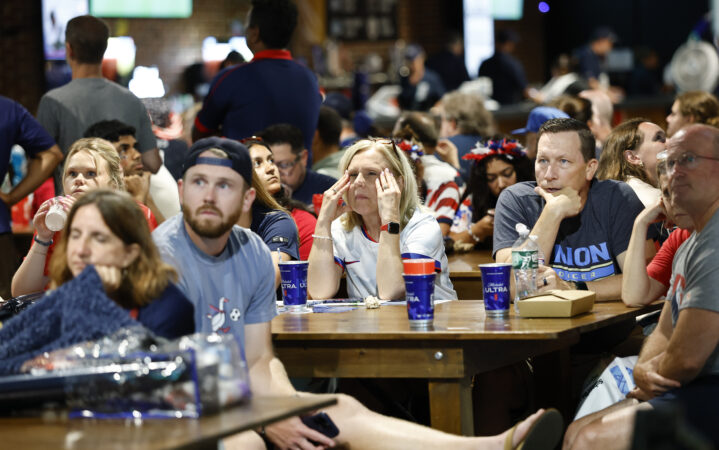
Soccer fans at Union Yards in Chester watch the USMNT face Belgium in the World Cup.
SEATTLE — The game the U.S. men’s soccer team dreamed of for so many years proved to be a nightmare.
Belgium blew the Americans off the field, 4-1, in the round of 16, as Charles de Ketelaere scored two goals and created the third. Malik Tillman scored the Americans’ game-tying goal in the first half, but it was all they could muster in a game in which they were outshot, 15-7, including 7-2 on target.
The Red Devils were on the front foot right away, with Timothy Castagne forcing Matt Freese into his biggest save of the tournament after just 45 seconds. At the other end, Belgium goalkeeper Thibaut Courtois repeatedly slowed play down when the ball came to him, drawing boos from the packed crowd in Seattle but otherwise quieting the venue.
The game plan paid off in the ninth minute. After a long passing sequence that pulled the U.S. defense apart, Alex Freeman was short with an attempted headed clearance, Weston McKennie failed to get the loose ball, and Nicolas Raskin slipped a short pass for an unmarked De Ketelare to tap in from close range.
When the midhalf hydration break arrived, Belgium had a 7-0 advantage in shots. But soon after play resumed, the Americans’ first attempt of the game went in the net in remarkable fashion.
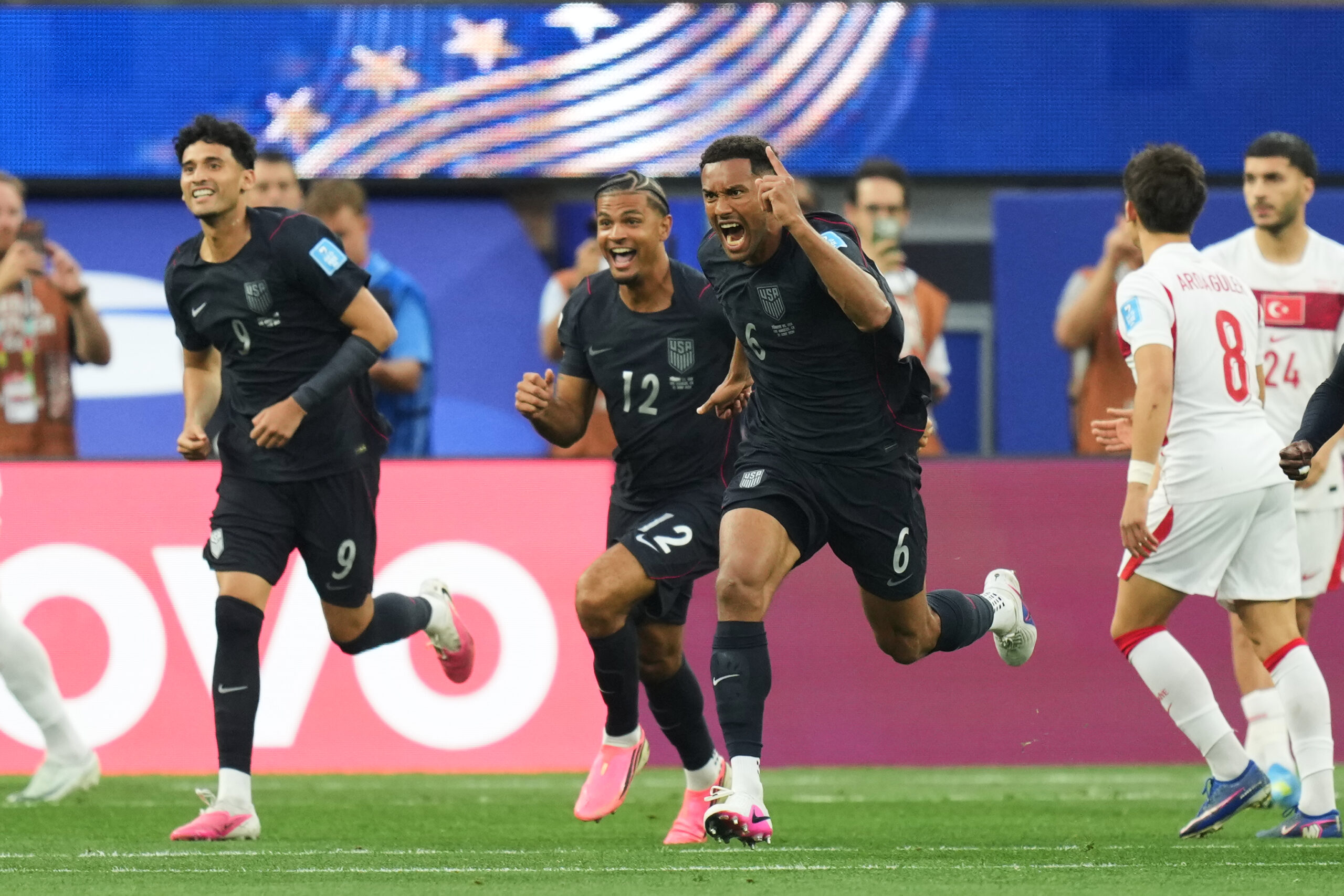
Brandon Mechele pushed over Balogun about 22 yards from goal, Tillman stepped up for the free kick, and his shot at goal deflected off the head of a leaping Hans Vanaken. The crowd of 66,925 erupted with so much joy that the stadium stands shook.
MALIK TILLMAN FORCES THE EQUALIZER FOR THE @USMNT 🇺🇸
Belgium, however, was unmoved. Not even two minutes passed before De Ketelaere put the Red Devils back in front. Leandro Trossard beat Sergiño Dest off the dribble, sent in a cross, and De Ketelaere jumped between Antonee Robinson and Tim Ream — flat-out overpowering the latter — to head the ball in.
At halftime, it was 2-1, and the shots were 11-3. Pochettino made his first substitution at halftime, pulling Dest and sending in Gio Reyna. It made the U.S. more lively, but it did nothing to stop Belgium from scoring a catastrophic third goal.
Mechele hit a simple long ball out of the back, and Freese gambled by coming far off his line to try to play it. But he failed to, De Ketelaere picked his pocket from behind, and the ball rolled to Vanaken. All he had to do was put a shot on frame, and, though Ream tried to backtrack, he couldn’t block the ball.
After that, Pochettino withdrew Christian Pulisic, who had been clattered in a challenge that went uncalled a few minutes earlier, and sent in Sebastian Berhalter.
When the Hershey native sat down on the bench, he put his head in his jersey, disconsolate. But he hadn’t been that effective when on the field.
Christian Pulisic is visibly upset on the bench after being subbed off in the second half pic.twitter.com/2a0UHTCene
Pochettino sent Ricardo Pepi in for Tyler Adams in the 72nd, but the move didn’t produce many chances. The Americans only mustered three more shots the rest of the way.
It was significant that the U.S. men won a World Cup knockout game for the first time in 24 years. But this team, with players hyped as a golden generation of talent, had aimed higher — and so had Pochettino, paid $6 million per year by U.S. Soccer’s big donors from the private equity world.
In the end, what they produced wasn’t any better than their predecessors: a round of 16 loss to a familiar foe and an exit with a whimper instead of a bang.
The U.S. men’s soccer team’s World Cup round of 32 win over Bosnia and Herzegovina broke the record for the most-watched soccer game in American broadcast history.
Fox’s English broadcast drew an audience of 26.395 million viewers, and Telemundo’s broadcast in Spanish drew 9.8 million, between TV and streaming platforms. The combined total of 36,195,000 blows away the previous record of 27,314,274 that watched the 2014 men’s World Cup final between Argentina and Germany on ABC and Univision.
That record actually has been broken twice this summer. The Mexico-Ecuador round of 32 game, played a day before U.S.-Bosnia, drew an audience of 29.33 million: 24.429 million on Fox’s platforms and 9.1 million on Telemundo’s.
Mexico’s World Cup games have also been big draws for U.S. TV viewers.
Fox’s U.S.-Bosnia audience also set a new record for the biggest audience to watch a soccer game on a single network. That mark had been the 25.632 million who watched the 2015 women’s World Cup final between the U.S. and Japan, which was a prime time kickoff, since the tournament was in Canada.
According to the data published by the networks so far, 27 games in this World Cup have drawn combined audiences of over 10 million viewers. Eleven have drawn audiences over 15 million, and seven have drawn over 20 million — including all of the U.S.’s group games, and Mexico’s group-stage contest vs. South Korea and round of 16 win over England.
The data isn’t complete, as the networks haven’t released data for all of their broadcasts. Particularly, there are gaps in the simultaneous games at the end of the group stage and the round of 32.
Editor’s note: This article was updated to reflect a statement made by FIFA president Gianni Infantino
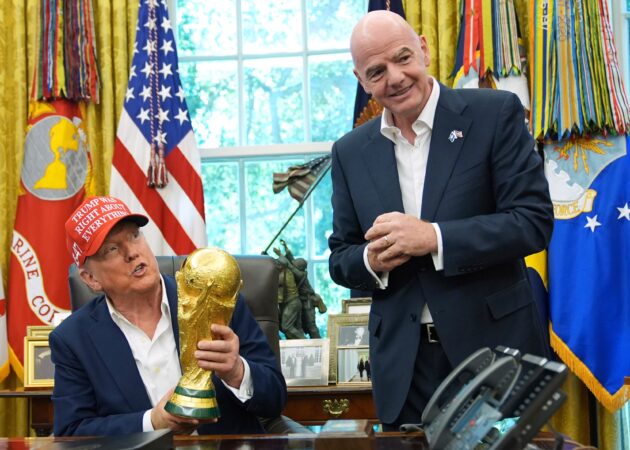
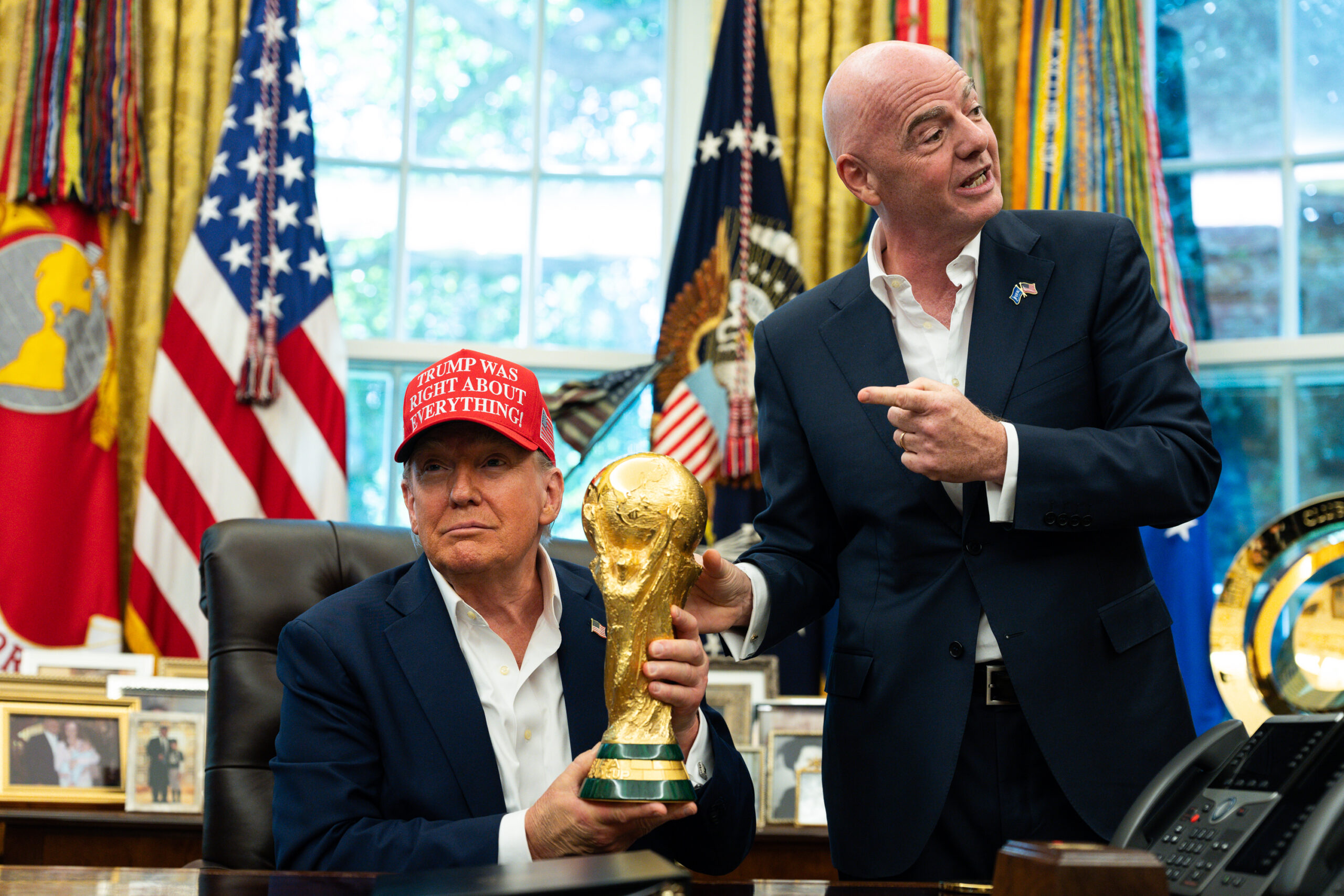
President Donald Trump on Monday took credit for getting FIFA to review a red card issued against the United States’ star forward Folarin Balogun at the World Cup but said he did not demand an outcome.
“All I did was ask for a review,” Trump said when asked about it during an unrelated Oval Office event. “I didn’t say, ‘You have to do this.’”
Trump confirmed that he called FIFA president Gianni Infantino and asked for a second look at the punishment against Balogun in the United States’ 2-0 win against Bosnia-Herzegovina last week. But he said FIFA made the final call to lift Balogun’s mandatory one-game ban for a foul tackle, allowing him to play in Monday’s round of 16 match with Belgium in Seattle.
Hours later, Infantino released a statement coming off of Trump’s remarks, which read, in part:
“Yes, I regularly discuss matters related to the FIFA World Cup with the President of the United States, and on this matter, I did receive a call from President Donald Trump, just as I receive calls from heads of state, government officials, football stakeholders, and business executives from around the world on many different issues.
“During our conversation, I explained that there was an ongoing legal process involving FIFA’s independent judicial bodies and that the case would be decided in due course by those competent bodies. That is how FIFA’s system works, and it is a principle I will always uphold. I read the decisions of the FIFA Disciplinary Committee when they are issued. Sometimes, I am surprised by them. Sometimes I agree with them, and sometimes I disagree.”
FIFA’s decision to suspend the one-game ban was celebrated by many in the United States but brought condemnation in the international sports world, where some called it an improper intrusion.
In remarks on Monday, Trump called the referee’s decision a “horrible” call. He added that it would have been a stain on the tournament if Balogun, the U.S.’s leading scorer at this year’s World Cup with three goals, was held out against Belgium and the U.S. lost. He praised FIFA for making what he described as a brilliant decision in suspending the punishment.
“I didn’t think it was a foul,” Trump said. “I thought it was two great athletes that crashed into each other and got entangled.”
The president, who said he understands sports “really well,” acknowledged that he did not initially know what a red card is or the consequences it brings. When he learned it would lead to a one-game suspension for Balogun, he said, he decided to step in. He also took issue with the use of video review to issue the red card, arguing that slowed-down reviews can make plays look aggressive.
Among those joining Trump for the Oval Office event was Republican Sen. Ted Cruz of Texas, who thanked Trump for stepping in.
“On behalf of all Americans, thank you for getting rid of that ridiculous red card,” Cruz said. “It was spectacular. There was a reason the FIFA trophy sat here for as long as it did.”
Cruz appeared to be referring to a White House event last year at which Infantino visited and brought the World Cup trophy.
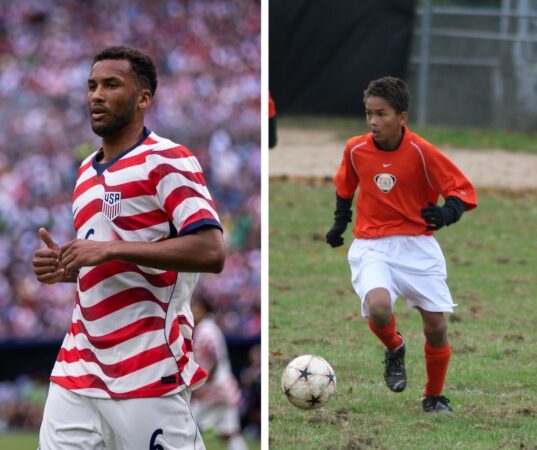
Auston Trusty plays centerback for the U.S. men’s national team, a position that doesn’t lend itself to scoring. But when he fired a goal against Turkey in the group stage finale of the World Cup, William Hall wasn’t surprised.
The University of Richmond junior was well-acquainted with Trusty’s shot. He’d seen it dozens, if not hundreds, of times, standing in the net at Chester Park in Wallingford, Pa.
It was the spring of2020. Hall was 14 years old, an incoming freshman at Strath Haven High School, and Trusty was 21, a starting defender on the Colorado Rapids. COVID-19 had, pushed back the MLS season, and Trusty was at home in his native Media, Pa.
He still needed to train, but there were few options available. So, the professional athlete decided to return to where it all began: Chester Park, home of youth soccer club Nether United, now 1776 United FC.
Trusty had played under coach John Waraksa for six seasons, two years above his age group, before going to the Philadelphia Union Academy in 2013. Hall was on Nether United’s U-15 team when the pandemic hit.
The teenager would often train with his teammates at Chester Park, and one day in late April or early May, Trusty showed up. They ran through warm-ups, then L-shape passing drills, then finishing drills, then shooting drills.
Hall was the only goaltender present, which put him in the unenviable spot of having to defend against a world-class athlete. It didn’t go well for the teenager.
Unlike players Hall’s his age, Trusty moved with a quicker pace and a harder strike. The ball would curl into the corner rather than launching straight ahead.
Auston Trusty (center) made his return to the Philly area in November as part of the U.S. men’s national team group that faced Paraguay at Subaru Park.
“He would just pound them into the net, over and over,” Hall said. “I would say if he shot 20 shots, he’d probably make 18. Maybe hit the post on one of them. And I could scrape a hand on the last one.”
Trusty continued coming back to Chester Park, training with Hall and a group of local players five or six times that spring. It was a thrill for the teenager then, but now, those moments mean even more.
The “Delco-head,” as national team goalie and Wayne, Pa. native Matt Freese calls him, has made an imprint on the sport’s biggest stage. His goal against Turkey on June 25, which came in the third minute, was the second fastest in U.S. World Cup history.
It was not only Trusty’s first international goal, but the first men’s World Cup goal scored by a player born in the Philadelphia region.
“The group chats were going crazy,” said Hall. “But I think my first thought was, ‘I played with a player who just scored in the World Cup. That is insane. I saved his shot as a young kid.’”
Others throughout the Delaware Valley soccer community felt similarly. Paul Norris, who coached Trusty as a freshman at Penncrest High School, said he became emotional just hearing his name and hometown during the roster reveal.
As was the case with Nether United, Trusty was playing far above his weight at Penncrest. Even as a 14-year-old, he was starting alongside players who were much older and bigger than he was.
Auston Trusty (center) celebrates scoring his first-ever U.S. goal in the final match of Group D for the Americans against Turkey.
“What people laugh at now is he plays professionally as a defender,” Norris said. “But at the time, he had obviously a lot of skill, and we had him as a striker. And he was our second leading goal scorer that year.”
For the last 25 years, Norris has worked both at Penncrest and at Springton Lake Middle School, where he taught Trusty physical education. He still sees that lanky kid when he’s roaming the defensive line for Team USA (even though that kid now stands at 6-foot-3, 172 pounds).
So does Waraksa. The 1776 United coach has known Trusty since he was 8 and was at his World Cup debut in Seattle against Australia on June 19. He was down the shore, in Ocean City, N.J., watching with friends and family when the Media native scored his first goal.
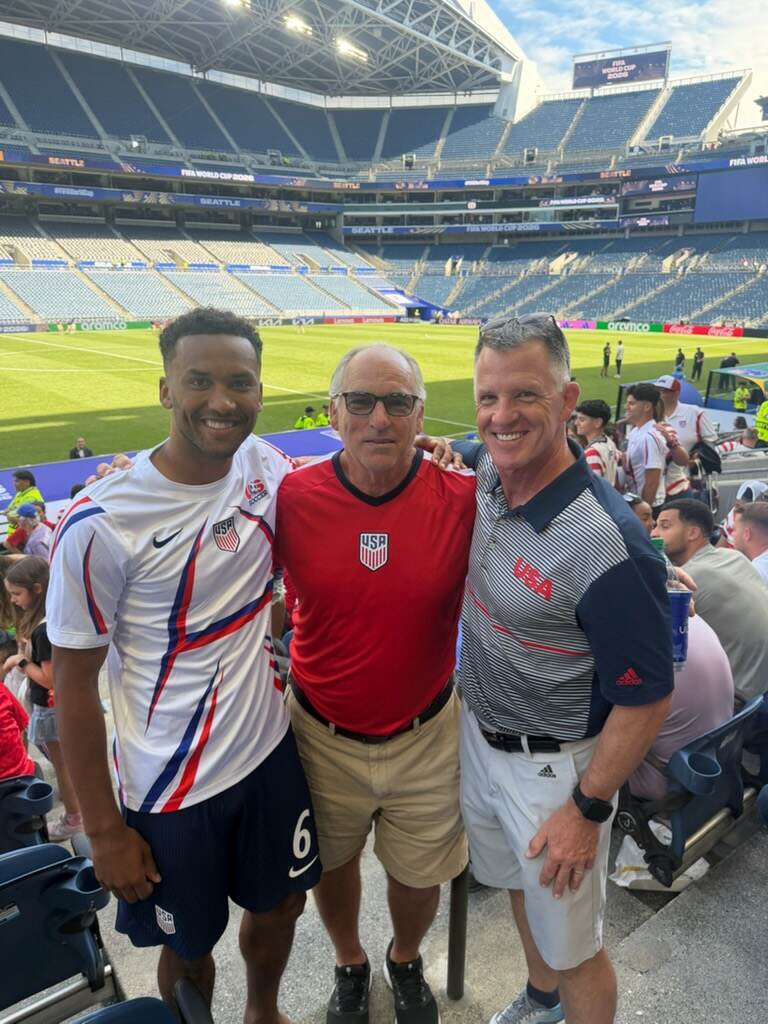
U.S. men’s soccer defender and Media native Auston Trusty (left), poses for an image with his former youth soccer coaches and his former club head coach John Waraksa (center).
It brought Waraksa back to 2013, when Trusty scored in Nether United’s state cup final against Lehigh Valley.
“Lehigh had won the last five state championships at our age group,” the coach said, “so he stepped up, even two years young, in a state cup final. I mean, who does that?”
Trusty found himself in some challenging situations with Nether United. Waraksa put him on a high back line, but even from an early age, he took to it. Once the centerback realized he could compete amid a more advanced style of play, his confidence only grew.
And as he continues to represent his country, that confidence is as high as ever. Norris is still coaching varsity soccer at Penncrest, and for the past few years, he’s shown his players clips of Trusty back when he was playing for the Philadelphia Union.
In addition to his time with Nether United, Trusty was also groomed in the Philadelphia Union’s academy and played for its first team.
A lot has happened since then. In 2022, Trusty signed with Arsenal. He returned to Europe in 2023, signing with Sheffield United, and in 2024, he penned a five-year-deal with Celtic.
But Norris now has the best Auston Trusty highlight reel of all, one that is “slightly updated” from his Union days. And with Penncrest’s preseason rapidly approaching, the coach can’t wait to show it off.
“We try to remind the kids that this was somebody who was local,” Norris said. “This was not that many years ago. These are things that somebody who was in this school, and in the seat that you may be sitting in, has done.
“You’re all capable of it. It’s just a matter of, do you want to put the work in for it?”
The storylines behind this game are numerous, and on Sunday, the biggest got heaped on with the news that Folarin Balogun, America’s top striker, had his red-card suspension pardoned and is available for selection.
When the U.S. men’s national team kicks off against Belgium on Monday, the group will look to get into the quarterfinal rounds for the first time since 2002. Standing in the way is a reinvigorated Belgian side, coming off a come-from-behind win against Senegal in the round of 32.
Folarin Balogun is back for selection to Mauricio Pochettino’s 26-man U.S. roster after his red card suspension was overturned by FIFA.
But standing firm is the return of Balogun, whose red card suspension was overturned on Sunday, with FIFA deciding to lift his one-game match ban to much shock and awe.
Rumors continue to circulate about why FIFA lifted the ban, considering U.S. Soccer was unable to initially appeal it, but American fans will take the bonus of head coach Mauricio Pochettino having his full 26-man roster to choose from against a Belgian team entering undefeated in this World Cup.
Still, Belgium’s winning ways haven’t always been the most spectacular, which gives many the idea that the U.S. has a very good chance of knocking off the Belgians, particularly on home soil, in front of what’s expected to be a raucous crowd in Seattle on Monday night (8 p.m., Fox29). It’s particularly why oddsmakers have the United States as a slight favorite, and why we gave this one some serious thought before offering our predictions.
Decisions have consequences, and not always the ones you want.
Yes, the U.S. now has its top striker available to play in the biggest game in team history. But FIFA’s shocking decision to suspend Folarin Balogun’s suspension will have also given Belgium all the motivation it needs to finally play up to its talent.
Belgium might be the most maddeningly inconsistent of all the major European national teams. The Red Devils are loaded with stars, as they showed off in routing the U.S. 5-2 in Atlanta in March; but they’re just as capable of the lifeless ties they played against Iran and Egypt in the group stage.
I thought the 5-1 rout of New Zealand in the group stage would wake them up, but then they were awful against Senegal until that late rally. Rudi Garcia might not be a great manager, but any coach should be able to fire up a team in a situation like this.
Until FIFA’s decision, much of the world was enjoying this U.S. team’s run. Now they’ll turn against the co-hosts, and not even the crowd in Seattle will be able to stop that. Nor will it be able to stop Belgium from knocking the Americans out of another World Cup.
Having Folarin Balogun back is a huge plus for the United States, but let’s keep focus on Belgium here for a bit. For all the people who suggest that this Belgium team might not be as good as advertised, it’s undeniable that this team hasn’t lost in international play since the first leg of a UEFA Nations League match against Ukraine in March 2025.
Against Senegal, despite being down 2-0 for much of the match, the Belgians came in waves with midfielder Youri Tielemans being the catalyst behind relentless runs that culminated in two goals, one of which was the game-winner in overtime. When the U.S. hosted Belgium in a tune-up match before the World Cup, it was the Americans who got tuned up behind a 5-2 defeat.
Is there a belief that the final score will be that bad again? No way. But even with Balogun, given the results Belgium amassed, it’s hard to see the road continuing for the U.S. past Monday night.
The U.S. should like its chances against Belgium a lot better after FIFA put Folarin Balogun’s one-match red card suspension on hold Sunday afternoon, making the Americans’ top striker available for Monday’s round of 16 match.
Without Balogun, who leads the U.S. with three goals in the tournament, the situation against the Belgians looked dire. With him in the lineup, the States could challenge a Belgian side ranked No. 9 in the FIFA rankings.
Belgium’s Kevin De Bruyne is one part of a three-headed Belgian monster who knows this American group all too well.
Still, it will matter which version of an inconsistent Belgian team shows up on Monday. The Belgians looked lifeless through 85 minutes of their round of 32 match against Senegal before producing two goals in the game’s final five minutes to force extra time, where they found a winner from the penalty spot.
Romelu Lukaku, Thibaut Courtois, and Kevin De Bruyne know what it takes to beat the U.S. in the knockouts, having done so in the 2014 edition of the tournament. Belgium’s aging stars will be desperate to keep their final attempt at World Cup glory alive. Will they be able to do so against a confident U.S. team buoyed by the return of their star striker? It should be close.
And for the first time in the history of the U.S. men at the World Cup, it might come down to penalties. If it gets there, I think the Belgians will have the advantage.
Prediction: Belgium 1, United States 1 (Belgium wins, 4-2, on penalties)
SEATTLE — U.S. men’s soccer team star striker Folarin Balogun will be available to play in Monday’s World Cup round-of-16 game after all.
FIFA announced just before the team’s practice on Sunday that the one-game suspension that came with Balogun’s red card against Bosnia in the round of 32 has been suspended “for a probationary period of one year.” The governing body said it invoked Article 27 of its disciplinary code, which says, “The judicial body may decide to fully or partially suspend the implementation of a disciplinary measure.”
It’s a special treatment that world soccer’s governing body has only given twice in its history.
At the 1962 World Cup, Brazilian star Garrincha had a red card overturned after lobbying from his nation’s federation and host Chile’s president — and, allegedly, a potential bribe to a referee, allowing him to play in the final.
Last November, FIFA suspended two games of a three-game ban given to Portugal’s Cristiano Ronaldo after he elbowed a Republic of Ireland player in a World Cup qualifier. That allowed him to play in two group games this summer that he otherwise would have missed.
“In line with article 27 of the FIFA Disciplinary Code, the implementation of the match suspension is suspended,” the governing body’s statement said.
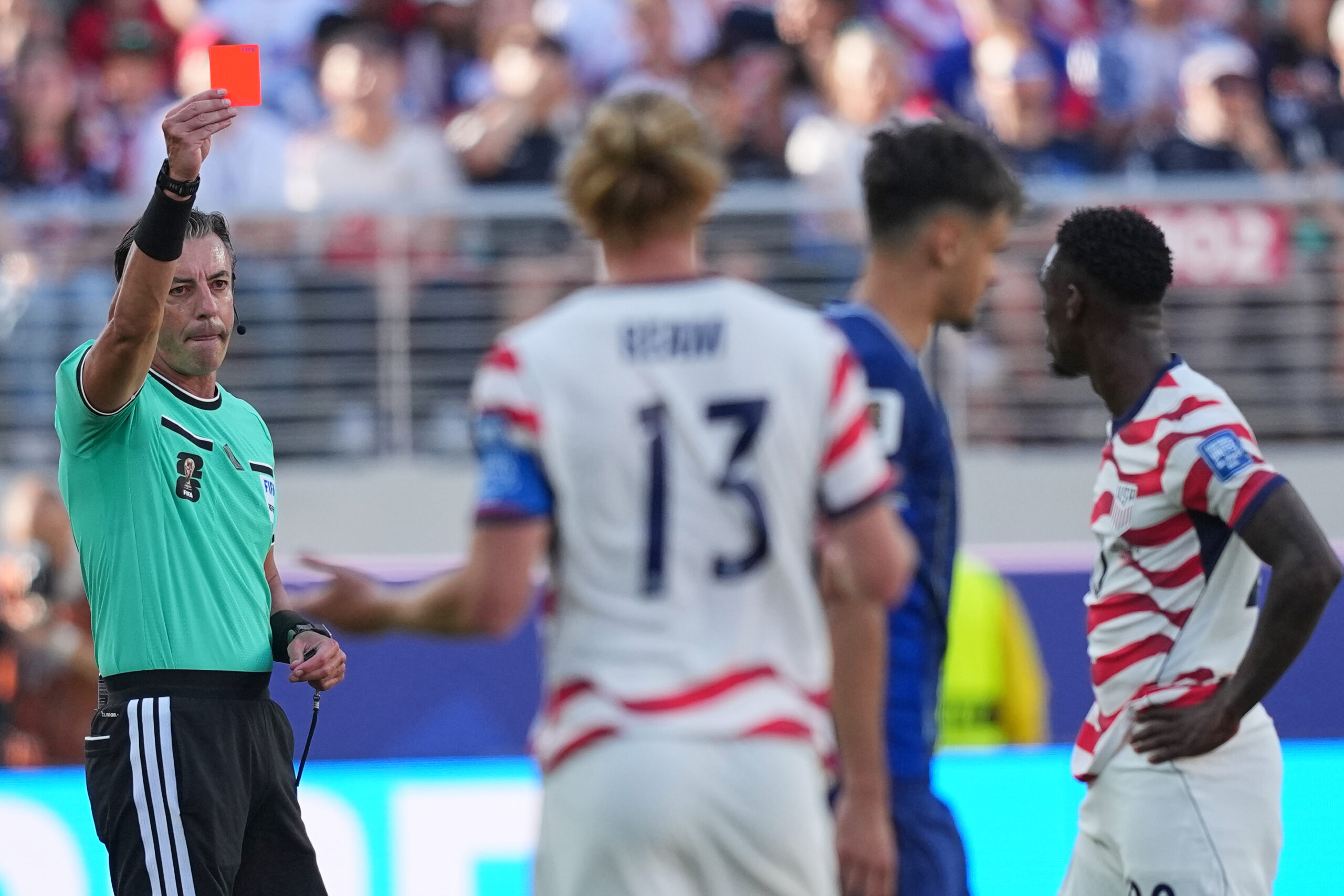
Balogun was ejected during the U.S. round-of-32 win for running the studs of his right cleat down Bosnia’s Tarik Muharemović’s right calf before catching the back of his foot.
Referee Raphael Claus didn’t call it at first, but the video review officials saw it and recommended that Claus take a second look. Once he did, the red card felt inevitable.
FIFA does not allow appeals of red cards, but the governing body can decide on its own to suspend a suspension.
Referee Raphael Claus (left) showing Folarin Balogun the red card in Wednesday’s game.
There’s some irony in the fact that when the ejection happened, FIFA was criticized for Claus’ use of a slow-motion replay that might have been against the rules of video reviews. But FIFA’s announcement made no mention of that.
“We accept the decision of the Disciplinary Committee and are pleased that Folarin Balogun is eligible to compete [Monday],” U.S. Soccer said in a statement. “Our full attention is focused on the round of 16 match against Belgium in Seattle, and we look forward to the continued support of our amazing fans.”
Confusion over the rules
Star playmaker Christian Pulisic opened a can of worms when he said, “Obviously we made that appeal, and felt like there was a good chance, because anyone can look at that and say it was super harsh.”
A U.S. Soccer spokesperson was asked if there was, in fact, an appeal or if Pulisic misspoke, given the federation’s previous statement that no appeal was possible. The response was that U.S. Soccer was “engaged in the process” with FIFA’s disciplinary committee, but no details were given.
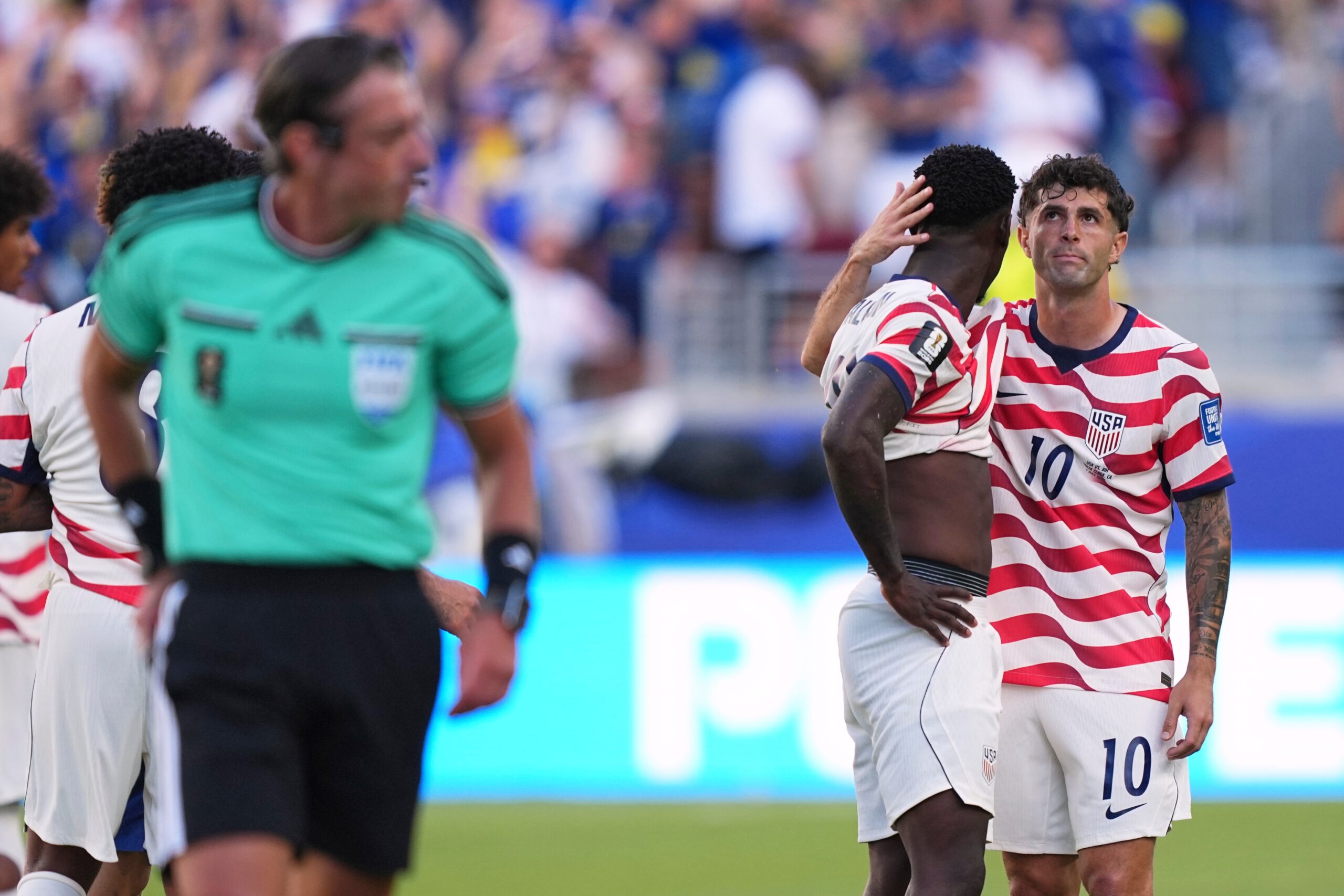
Christian Pulisic (right) consoling Folarin Balogun after the ejection.
U.S. players found out about the decision on the bus ride over to Friday morning’s practice. Balogun was not among the players who spoke when they arrived. He said on Saturday that he disagreed with the decision, but had moved on in part to be a role model for fans watching.
“We weren’t quite sure if it was true or not,” centerback Chris Richards said of the moment he heard the news. “I think everyone knows with AI and with this and that, [there] can be a few question marks. But ultimately we found out through social media, so it was cool to finally get the confirmation that it was true.”
Asked what it means that Balogun got treatment only previously accorded to Ronaldo, he said: “I don’t know what goes on behind the scenes — I don’t know if they’re comparing Flo to Cristiano Ronaldo or what’s going on. I try to focus on what goes on on the field, but clearly they saw something in the decision that they thought deserved to be overturned.”
Fellow defender Alex Freeman said, “I had no clue” that it was in the works.
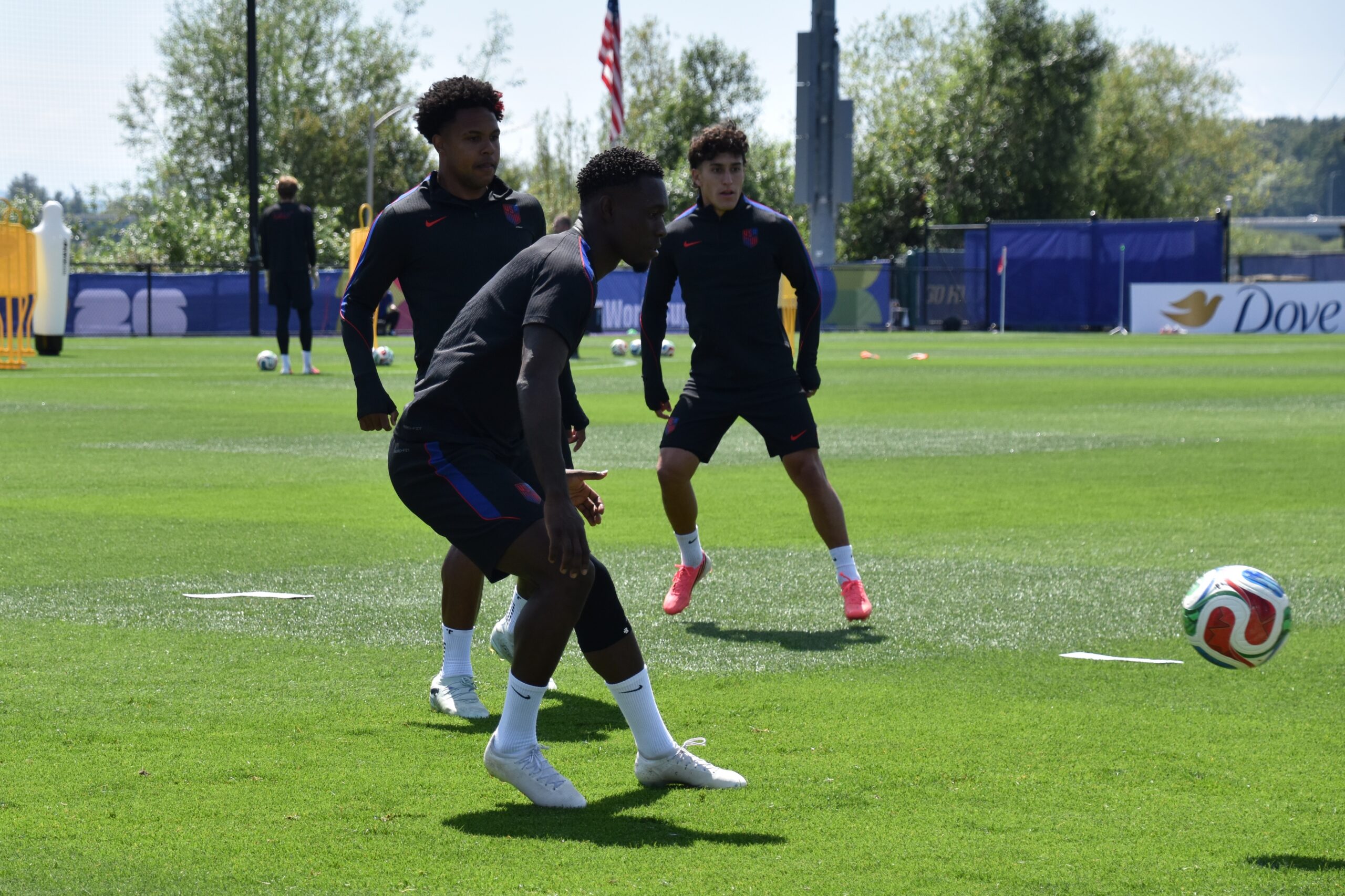
Folarin Balogun working in a drill with teammates on Friday.
“I think it’s a little strange for us,” he said. “I have no clue how it happened, but for us, we’re just happy that it happened, and happy that we’re able to go in and have a phenomenal player like Balogun to be able to go in and play.”
A statement from Belgium’s federation said it was “astonished by FIFA’s decision,” and that “in order to safeguard the legitimate rights of all participating teams and to protect the fundamental principles of fair play in our sport, both at this FIFA World Cup and at future editions of the tournament,” it was “investigating all potential options.”
But it did not say what those options could be.
Belgium manger Rudi Garcia said, “the Belgian federation isn’t just defending itself — it’s defending football in general.”
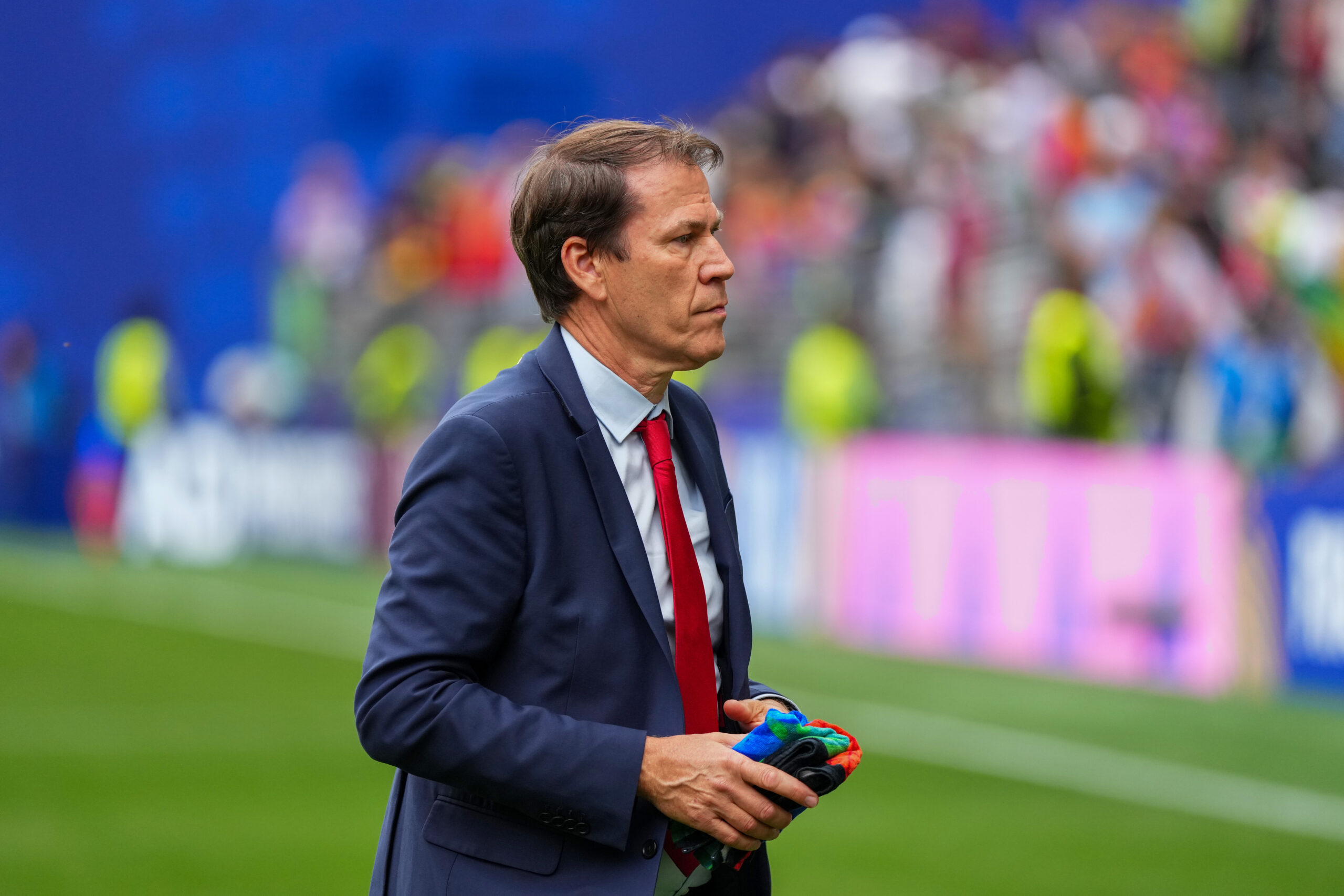
Belgium manager Rudi Garcia was even more blunt in his news conference Sunday afternoon.
“I didn’t know that at FIFA’s headquarters, July 5 is the same thing as April 1 in Europe,” referring to a calendar date that also applies in the United States. “I think you should refer to the statement by my federation … The Belgian federation isn’t just defending itself, it’s not just defending the national team. It’s defending football in general. It’s defending its integrity, defending its ethics.”
Another question on the subject drew a quick “Don’t waste your time asking about it” answer. And when Garcia was asked if he believed his star striker Romelu Lukaku would get the same treatment from FIFA, he answered: “Ah, I can’t answer that question.”
But those reactions were just the tip of the iceberg.
FIFA president Gianni Infantino (right) giving U.S. President Donald Trump the men’s World Cup trophy at the White House last year.
Trump lobbied his friend
A source with knowledge of the matter confirmed reports that President Donald Trump personally called FIFA president Gianni Infantino to lobby for Balogun’s suspension to be overturned.
A request for further comment from FIFA has not yet been returned.
Sources in Seattle said there was a point in the past few days when Trump or Vice President J.D. Vance might attend Monday’s game, with authorities in town preparing for them to visit. But it was confirmed on Friday that they are not.
U.S. manager Mauricio Pochettino said he wasn’t involved in any lobbying by U.S. Soccer, though he named CEO JT Batson as someone who was. Pochettino also said he didn’t know about Trump’s involvement until reporters told him at his news conference.
“No, we cannot mix that,” he said. “That is a decision from FIFA with the evidence that happened before, and that’s it.”
But he was, of course, very happy that the decision went his team’s way.
United States head coach Mauricio Pochettino said, “I think it’s fair, the decision, to not punish us more.”
“It’s not only because I am the coach of the U.S. men’s national team that I need to defend my side,” Pochettino said. “I think it’s 100% — or 99%, because there are always some people, 99.9% — we all agree that was an unfair red card.”
He also was not surprised that it became such a big deal.
“I come from cultures in Argentina [in] Europe where fútbol, soccer, is more than a religion. It does not surprise me that in this country, that feeling has started to grow.”
Pochettino spoke repeatedly of his respect for Garcia, whom he has known a long time. But beyond that, he said “I think it’s fair, the decision, to not punish us more. Because I think it was enough. And now focus on the game.”
Staff writer Dugan Arnett contributed to this article.
Three weeks of World Cup excitement in Philadelphia came to a close on Saturday, but not before an announced sold-out crowd of 68,324 sat through 100-plus degree temperatures to watch France move on to the quarterfinals following a 1-0 defeat of Paraguay.
When the final whistle blew, it capped Philly’s first-ever hosting of the men’s World Cup in what was just the second time it’s been played on U.S. soil. Over the course of those weeks, Philadelphia became the world’s playground as our parks were used as staging grounds for thousands of fans, bars and restaurants catered to people from all over the world, and city landmarks received global attention.
The moments the World Cup brought were innumerable, but we compiled a list of the Top 10 takeaways as the lights move away from Philadelphia Stadium and continue at FIFA’s Fan Festival at Lemon Hill, which will keep the party going as the tournament inches closer to a thrilling end at New York/New Jersey Stadium on July 19.
Party on the Orange Line
SEPTA pulled out all of the stops — literally and figuratively — getting thousands of fans to and from Philadelphia Stadium courtesy of both local and express trains on the Broad Street Line that ran frequently and, for the most part, safely and efficiently, with scores of transit police and other officials at the stations.
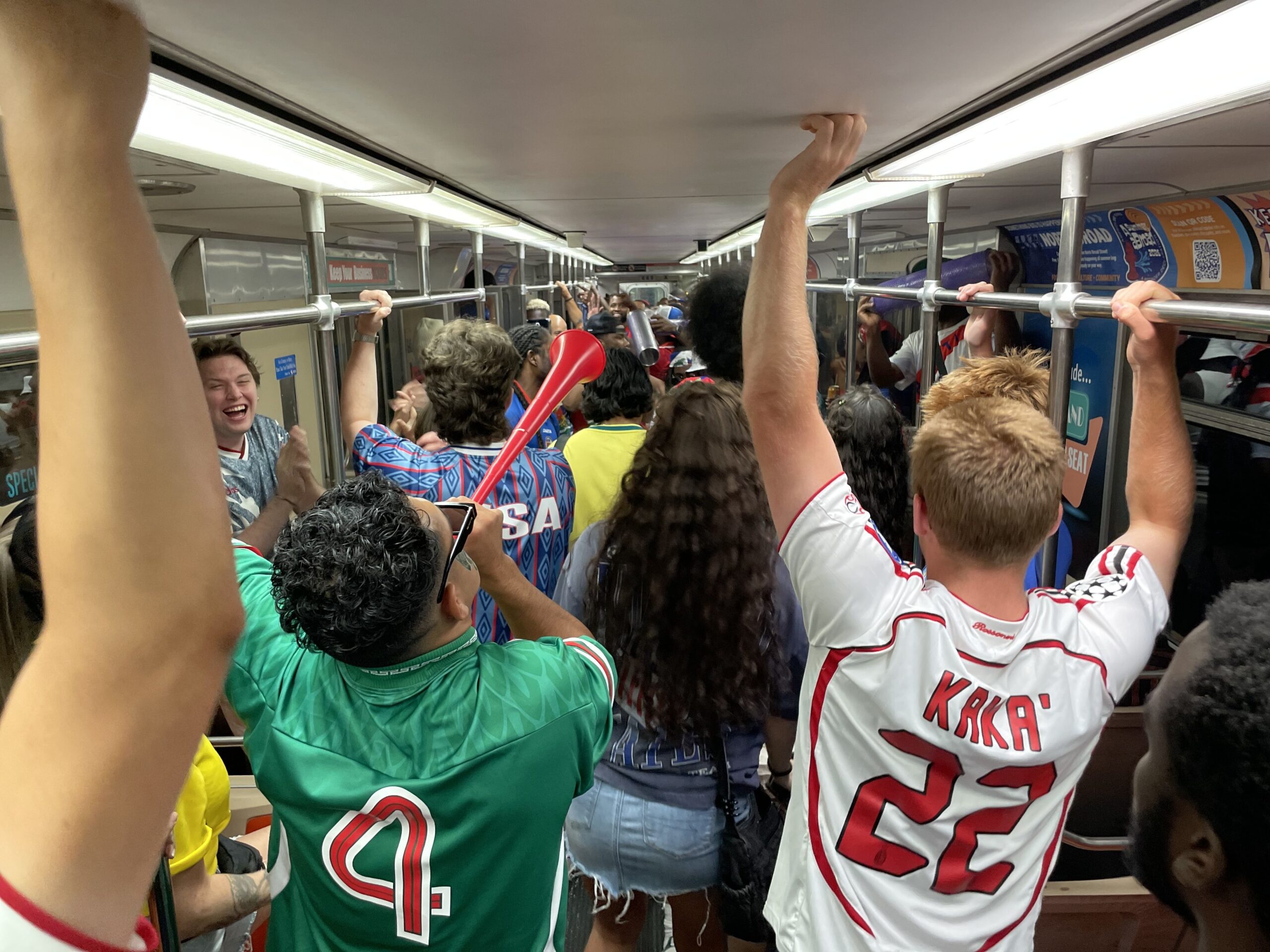
But while SEPTA deserves a job well done, the heroes are the fans who routinely brought the party on the rides to and from the stadium. For just $2.90, fans heading down were subjected to singing, drums, flag waving, and a whole lot of hugging and high-fiving, whether you wanted it or not. The pre-party might have been at FIFA’s Festival or Stateside Live!, but it was also on many of the matchday trips southbound to NRG Stadium.
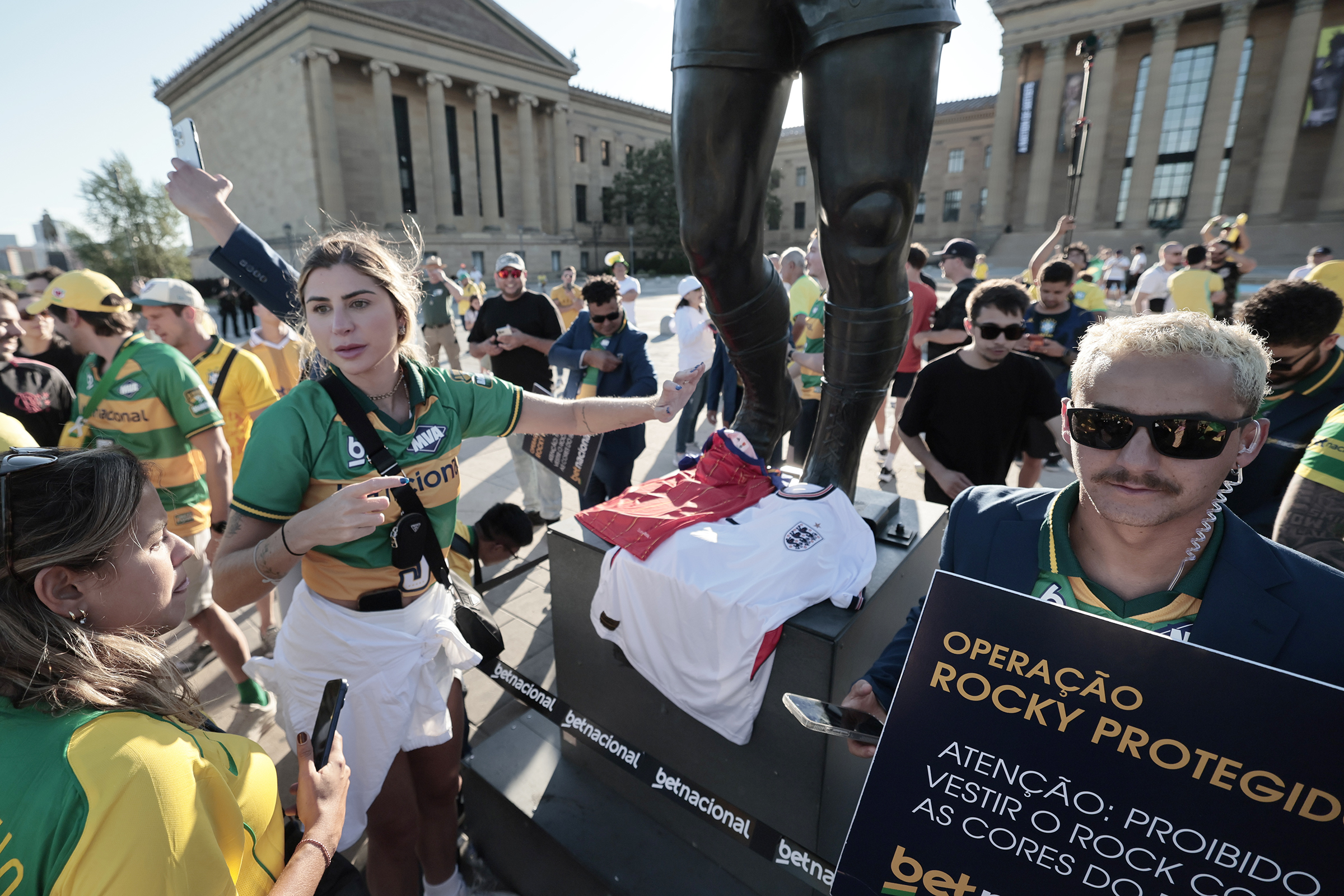
On the eve of the FIFA World Cup Group C match between Brazil and Haiti, this fan left a Spanish and English soccer jersey at Rocky’s feet on the Art Museum steps on June 18.
Rocky statue became World Cup lore
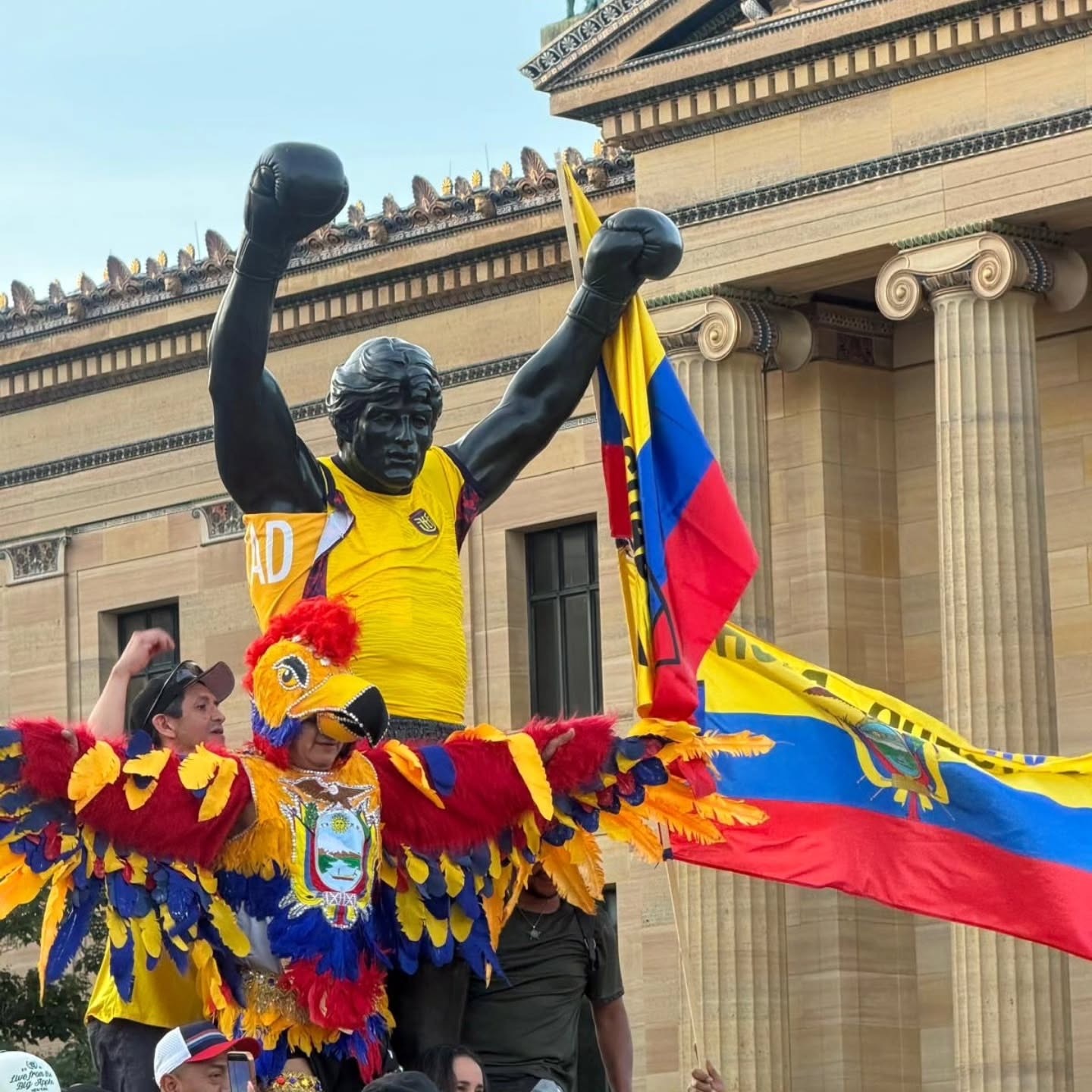
World Cup fans not only embraced Philly culture but also embraced our city’s sports culture and its superstitions. No proof of that was bigger than how nations took to the curse of placing a team jersey on the Rocky statue. Ecuador kick-started the notion, and their team lost, causing the planner of the moment to make a public apology.
The Ecuadorian team jersey on the Rocky statue was made by a fan who wanted to bring good luck to his team. That fan later issued a public apology after Ecuador’s loss.
Still, news of our city’s statue went viral and has now become a fan phenomenon, regardless of sport, worldwide.
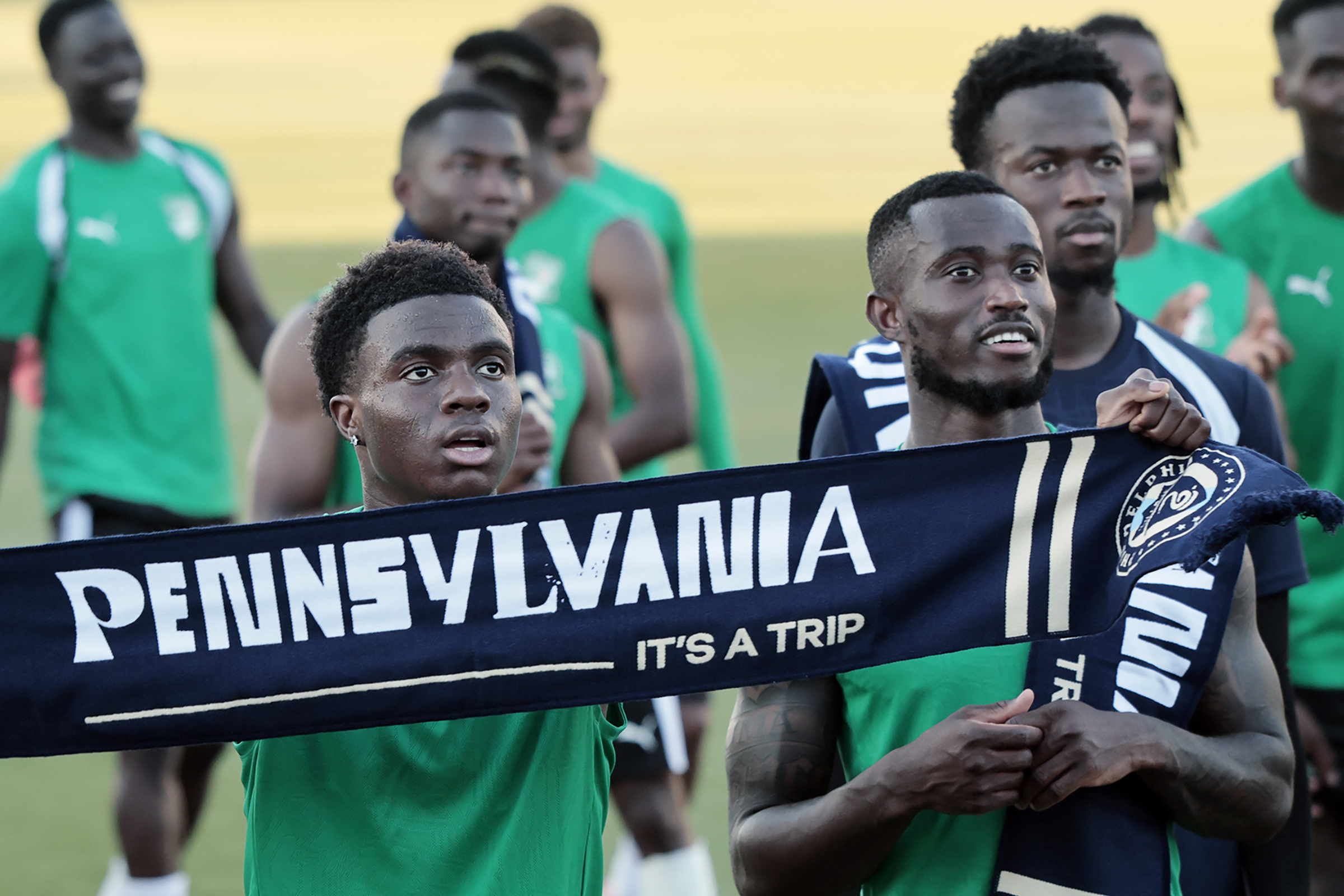
Members of the Ivory Coast national soccer team react to fans during an open practice at Subaru Park in Chester on June 12.
A second home for the Ivory Coast
The love affair of the Ivory Coast needs to be studied because for the two weeks that the team took up residence at the Hotel DuPont in Wilmington and trained at WSFS SportsPlex and Subaru Park in Chester, they became family. People cooked special meals for the team, fans were buying their signature bright orange jerseys, and they were yearning for autographs at team training sessions.
In return, Ivory Coast advanced to the knockout rounds by winning both of its matches in Philadelphia, against Ecuador and Curaçao. Always remember that the team earned its first-ever trip to the knockout stage via a path forged through the Greater Philadelphia Region.
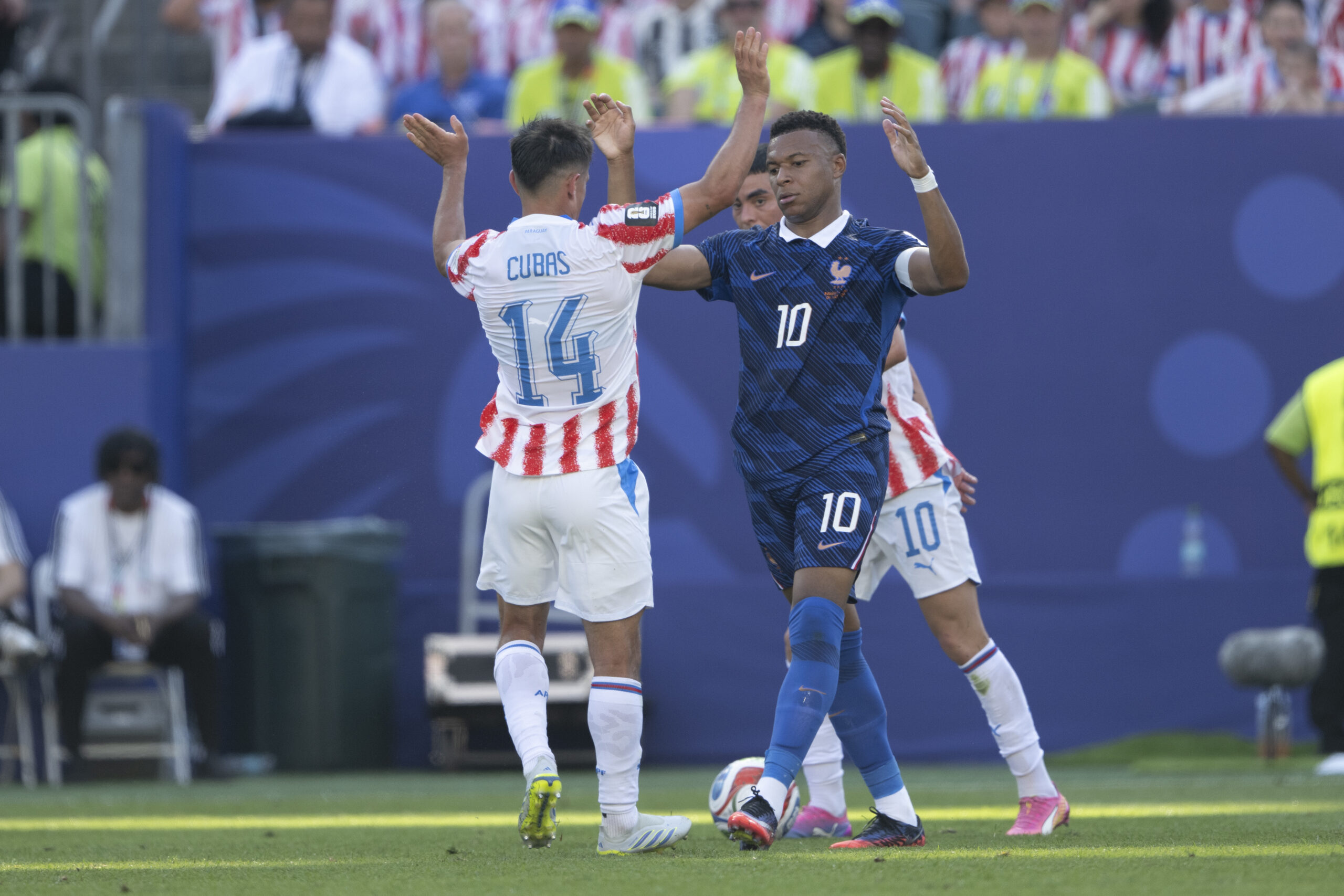
France’s Kylian Mbappé, reacts after a foul by Paraguay’s Andrés Cubas during the first half Saturday’s round-of-16 World Cup match at Philadelphia Stadium.
Red, white, and blue on July 4
It wasn’t the red, white, and blue of our nation’s colors, but it was somewhat symbolic that those were the colors of the two nations that faced off in Philly’s final game on a day that celebrated America’s independence.
On one side, there was France, a nation whose efforts in America’s independence are well-documented, which arrived with a team viewed as one of the best in the world, with arguably the world’s best striker, Kylian Mbappé.
On the other side sat Paraguay, a nation the U.S. men’s national team has beaten twice in less than a year: first in its Group D opener, then in a friendly last November at Chester’s Subaru Park.
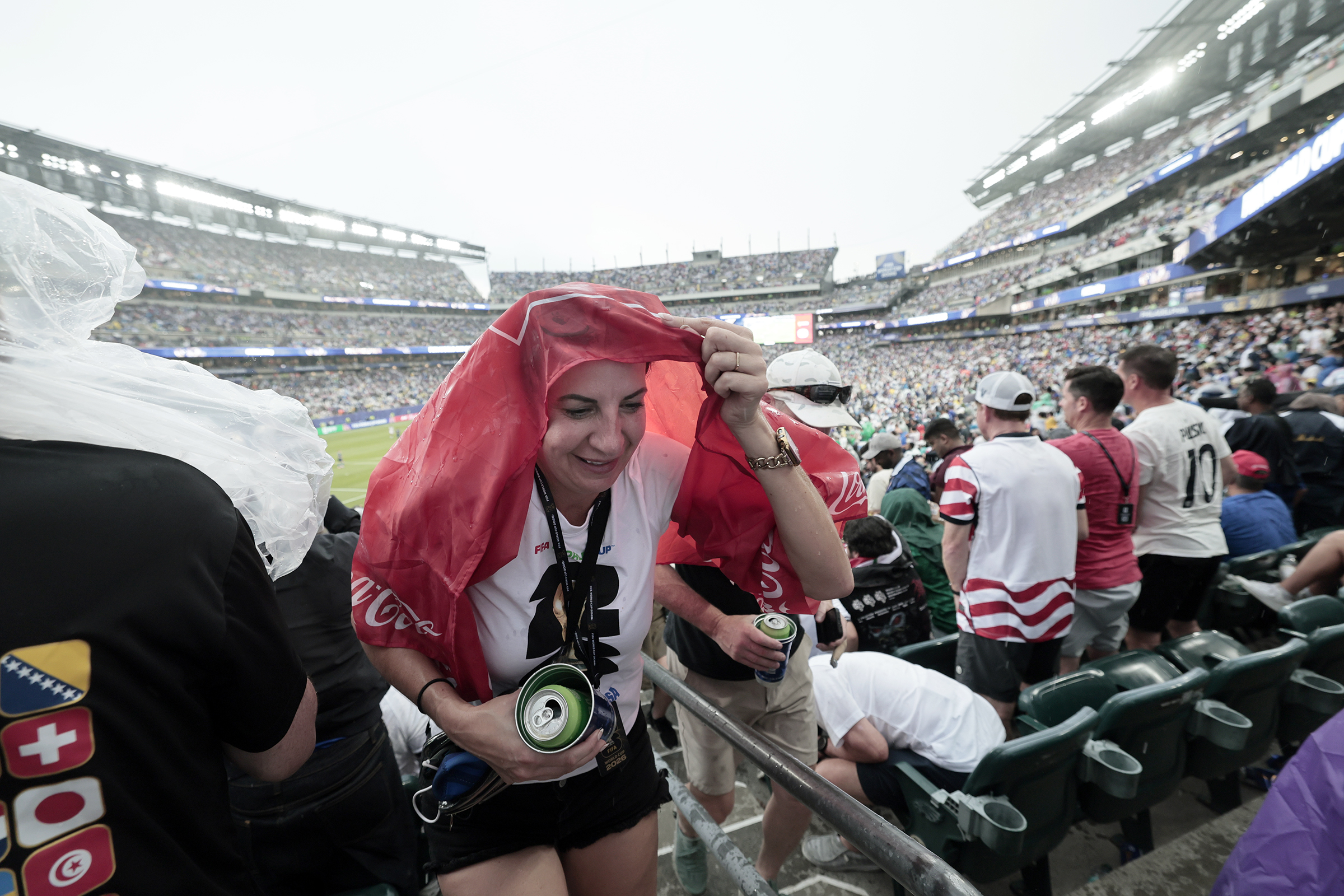
A fan heads for shelter as rain falls at Lincoln Financial Field during a World Cup match between France and Iraq on, June 22.
Singing (and shopping) in the rain
Sure, it was hot, muggy, and wet, but France’s first match in Philadelphia, against Iraq, won’t soon be forgotten. Two storms, one right after the other, soaked Philadelphia Stadium and caused a delay of more than two hours. But while some actually decided to leave, believe it or not, the fans who stayed sang, cheered, and found ways to stay cool and dry.
How? Well, how about ravaging the concourse levels for food, drink, and memorabilia, leaving many concessions out of food and drink by the time the game resumed, and the official FIFA store on the main concourse looking like it got hit by a tornado?
It’s tough to put into words how to describe all of the vibrant colors on display during the three weeks of the tournament. Fortunately, a team of Inquirer photographers not only attended every match, but also were around town capturing moments showcasing the rabid fandom and excitement the World Cup delivered.
There to help
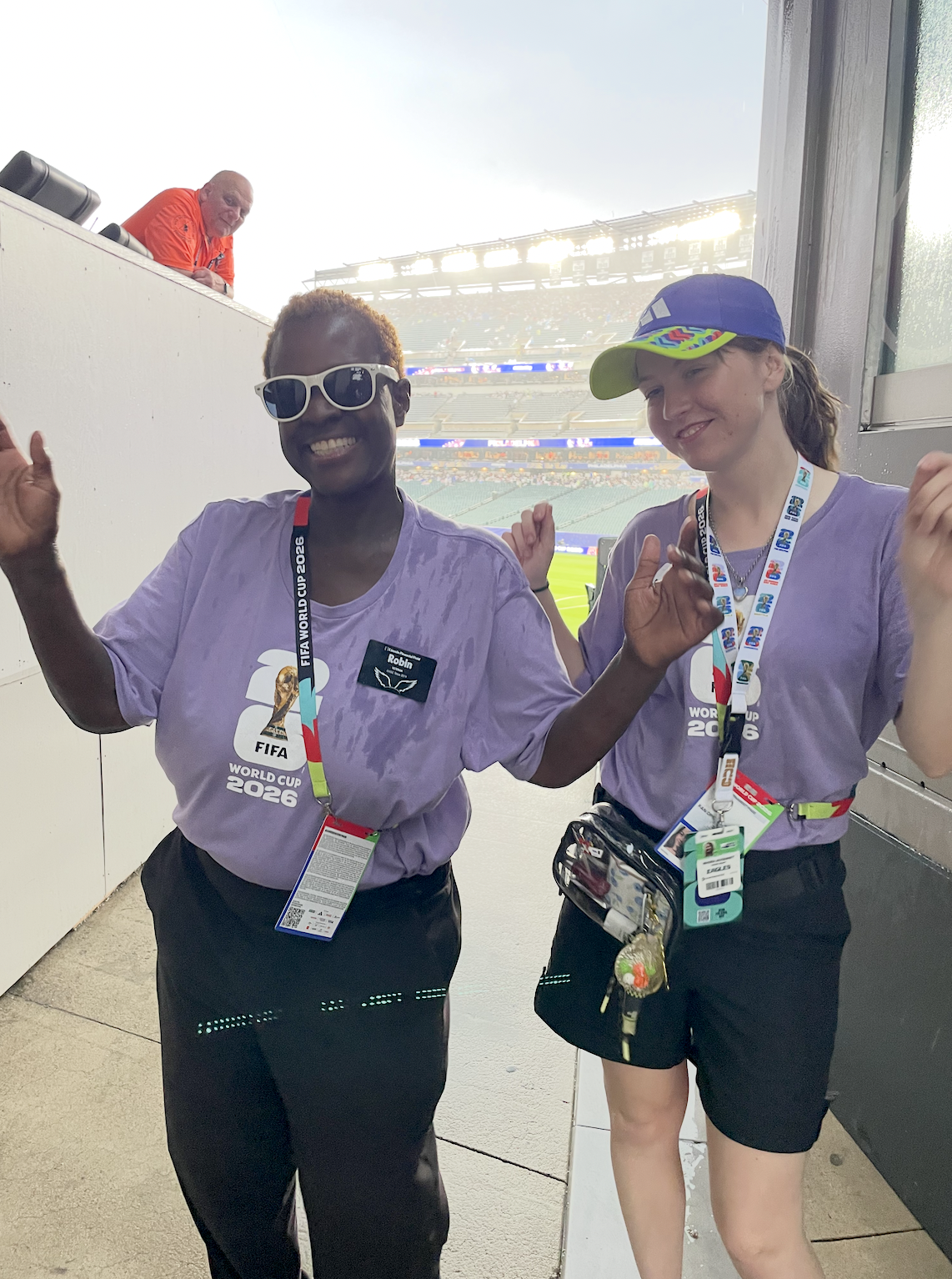
They wore neon green, light purple, and dark blue. They were comfortable being in the backdrop, but seemed ready to step up and support at a moment’s notice. In addition to the familiar faces of fan service representatives on any given Eagles gameday, the thousands of FIFA volunteers scattered both in and out of the stadium and at the FIFA Fan Festival brought a level of comfort simply by being there.
But the great part is that to many of them, it wasn’t just a job. They, too, seemed to be soaking in Philly’s moment in soccer’s sun, or dancing during the rains that fell for some of it, too.
Fan service representatives Robin “Miss Robin” Carter (left) and Maura Jacquinet were dancing in the rain during the delay for the June 22 match between France and Iraq.
And when you remember that mostly unpaid volunteers did much of the work, often through six- to eight-hour shifts, a special hat tip is due to those who helped make the event memorable for hundreds of thousands in attendance.
Fans pack the Broad Street Line ahead of the World Cup game between Brazil and Haiti on June 19.
Brazil vs. Haiti was a vibe
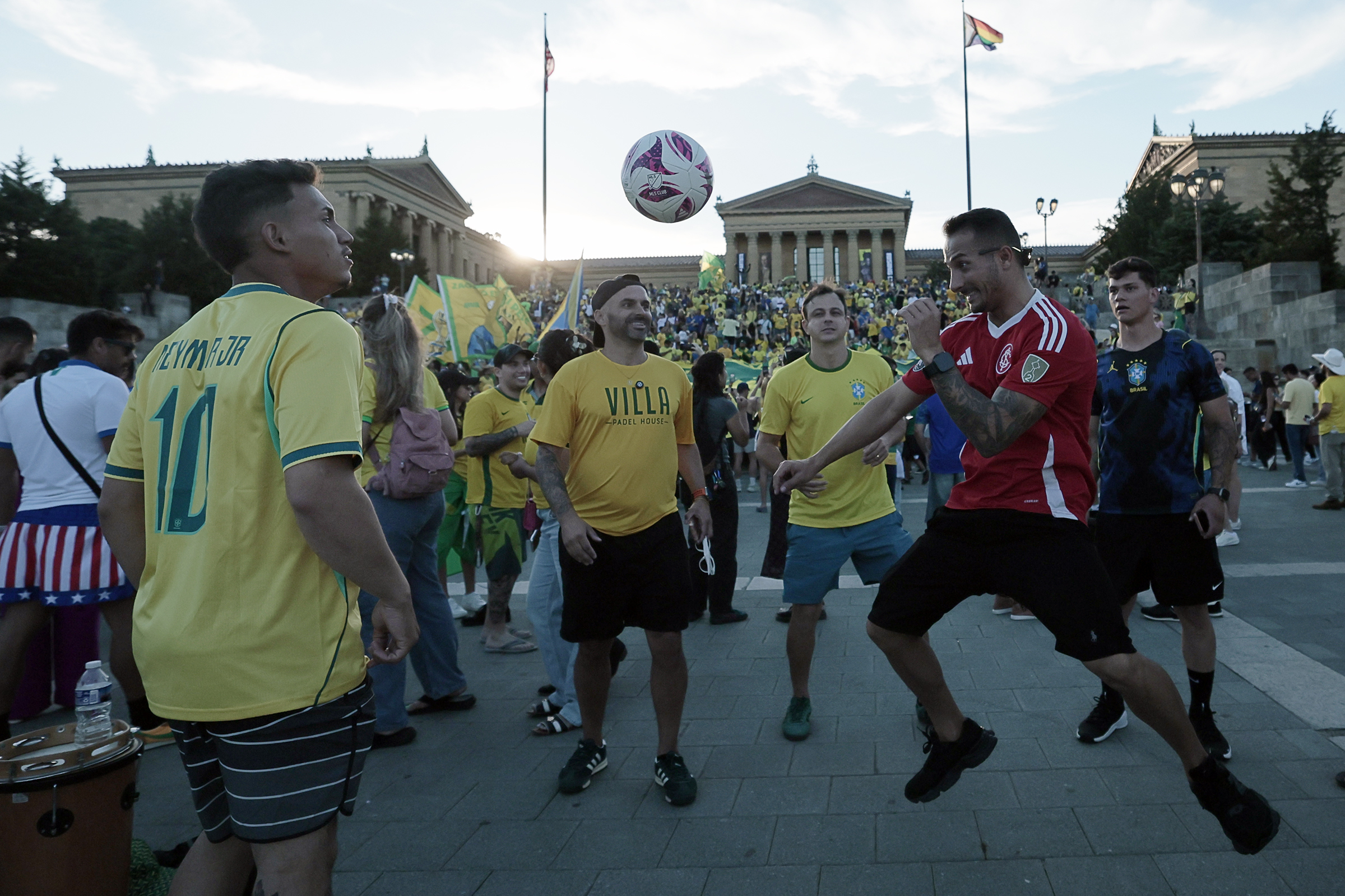
Probably the one match in Philadelphia where the game didn’t matter, the party started the night before with Brazil fans taking over bars, restaurants and the steps of the Art Museum in advance of their match against Haiti. The next day, whether it was on the train, in the parking lots, or once inside the stadium, both Brazilian and Haitian fans alike decided to make the game one big party.
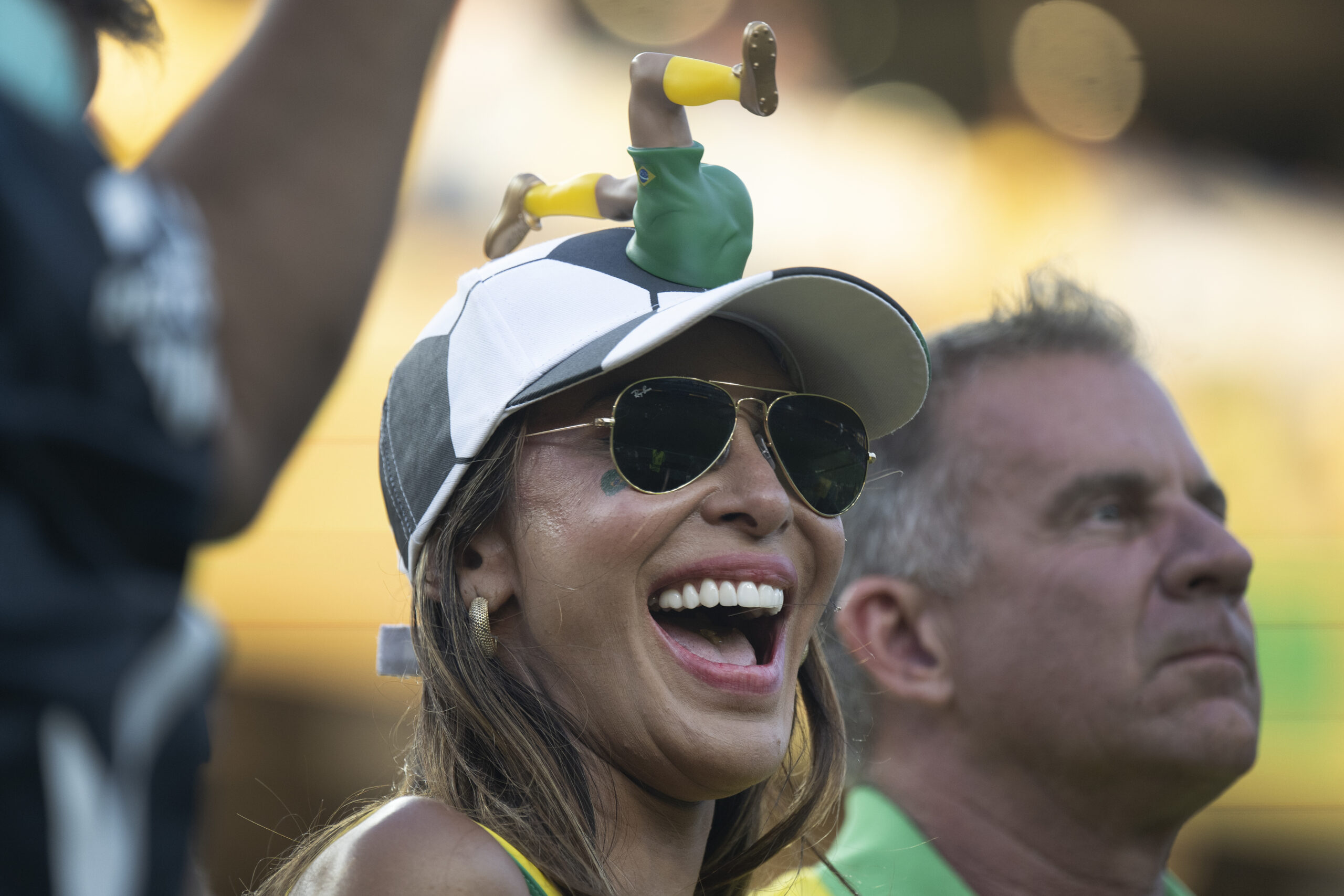
A fan looks on with delight during Brazil’s match against Haiti on June 19.
Money was no object in Philly
In what amounted to the most expensive edition of the FIFA World Cup to attend, ever, fans still found a way to pack Philadelphia Stadium. In all, five of the six matches held in Philly were announced as complete sellouts of 68,324 in attendance. Only the match between Ivory Coast and Ecuador didn’t deliver a sellout crowd, and the margin was just 50 people. The average get-in ticket for a group-stage match on secondary market sites in Philly was $703, according to Front Office Sports.
“It’s been an expensive summer,” said Susan Richman, who attended two matches in Philly with six other family members. “I think all in all we’ve spent close to $15,000 [on tickets]? But for us to say that we’ve attended the World Cup in America is something that personally, I’ll always remember.”
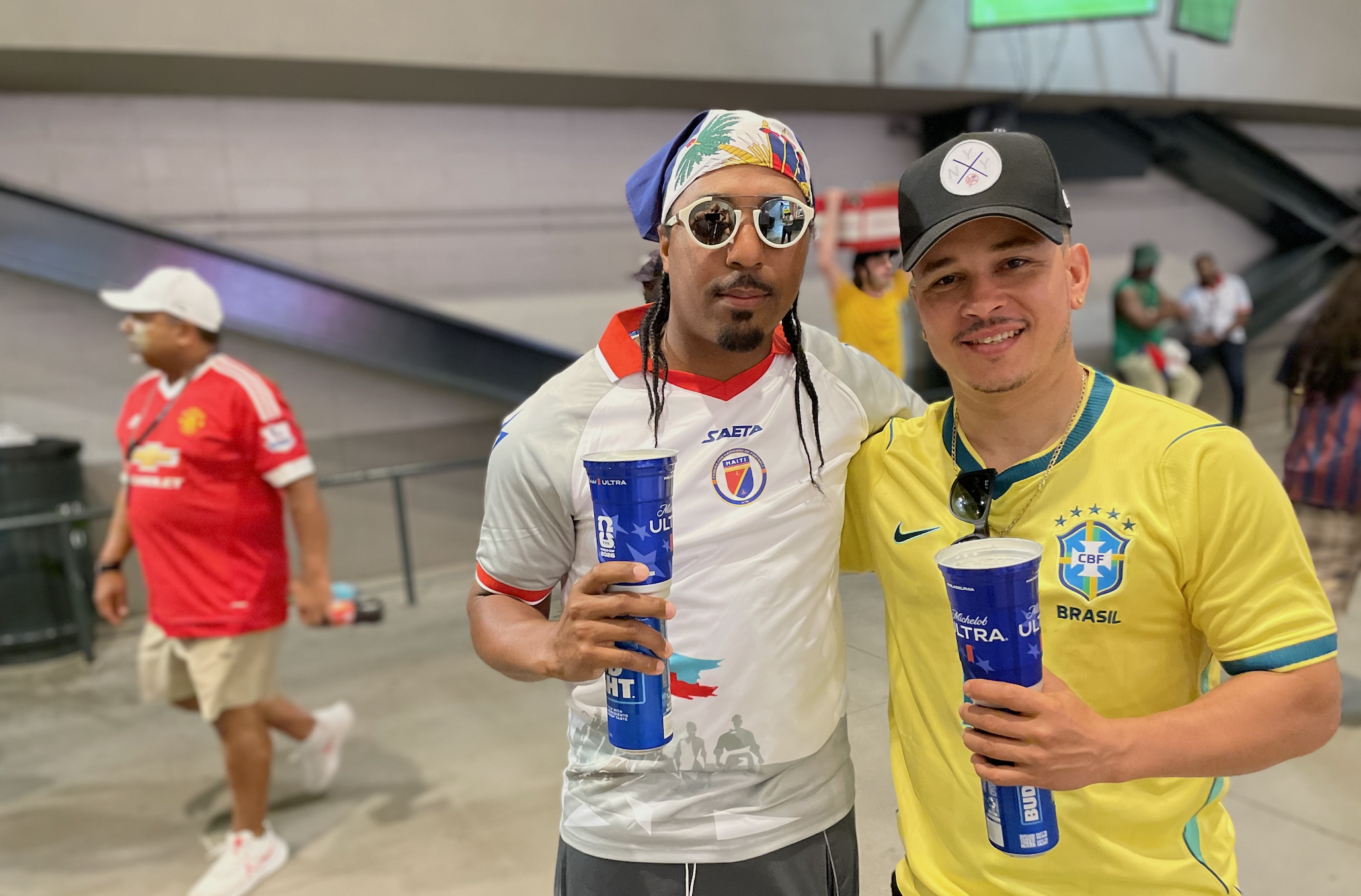
Brazil fan Maninhu and Haitian fan Greguity met at the World Cup match in Philly between Brazil and Haiti. Both said they’ve become “best friends” in the process.
Fans becoming friends
One of the things that this tournament has conveyed is that humanity isn’t gone, as much as our social media algorithms would love us to believe. The colors that have mattered throughout the World Cup have had nothing to do with the color of someone’s skin, or where they’re from. The colors that have mattered have been the ones on the jerseys that have passed through Philadelphia Stadium, ones that have allowed us to ask questions of others, to get to learn more about them, their culture, their nation’s history.
Fans play a soccer game at the base of the Art Museum steps ahead of the FIFA World Cup Group C match between Brazil and Haiti on June 18.
It’s why money was no object to be in that moment, why a bucket list was fulfilled. In the end, that commonality undoubtedly found that strangers become friends, and friends become family, using sport as a connective tissue. In the end, that just might be the greatest takeaway from the three weeks in which the world’s greatest game made a pit stop in Philadelphia.
“This is wonderful for Philadelphia and wonderful for America, welcoming everybody into this beautiful country,” Ivory Coast native-turned-Philadelphian Ahmadou Dia told The Inquirer recently. “The World Cup, the football itself, brings every country, every single person, together regardless of color. It doesn’t matter what you look like, because on the field or in that stadium, we’re family.”
Honorable mentions: The turf laid down at the bubble field at Fan Festival … The Bank of America charm bracelets everyone went wild for at Fan Festival … The VFA-11 and VFA-81 flyover at Philadelphia Stadium on July 4. … Free rides on the Broad Street Line after the game … Ghana and Paraguay fans remaining in the stadium for over an hour after their matches to soak it all in … Lines of fans outside team hotels … The rooftop terrace at Stateside Live! on any given matchday.
Soccer fans wearing red, white, and blue of all kinds braved triple-digit temperatures across Philadelphia on Saturday as the city hosted its sixth and final match of the FIFA World Cup at Philadelphia Stadium, better known as Lincoln Financial Field.
The round of 16 match between France and Paraguay added an international flair to the city’s semiquincentennial celebrations. Before the city launched its fireworks on Ben Franklin Parkway, fans stopped to watch Les Bleus beat Paraguay, 1-0, and advance to the quarterfinals.
The FIFA Fan Festival in Lemon Hill Park closed after the first match of the day between Morocco and Canada, but people across the city found ways to take in the game with other soccer fans.
Fans take in pregame festivities before the start of Saturday’s FIFA World Cup finale in Philly between France and Paraguay.
Live from Independence Hall
FOX hosted its studio show from Independence National Historical Park, using Independence Hall as its backdrop.
Broadcaster Rob Stone sat alongside former U.S. men’s national team players Landon Donovan, Alexi Lalas, and Clint Dempsey for the show, which began at 11 a.m. and ended at 3:30 p.m.
Soccer fans and historical sightseers stood on the lawn across the street from Independence Hall as the show taped, chanting “U-S-A” and an occasional “E-A-G-L-E-S.”
Lots of folks out in front of Independence Hall taking in Fox’s World Cup desk show (and seeking autographs afterward)
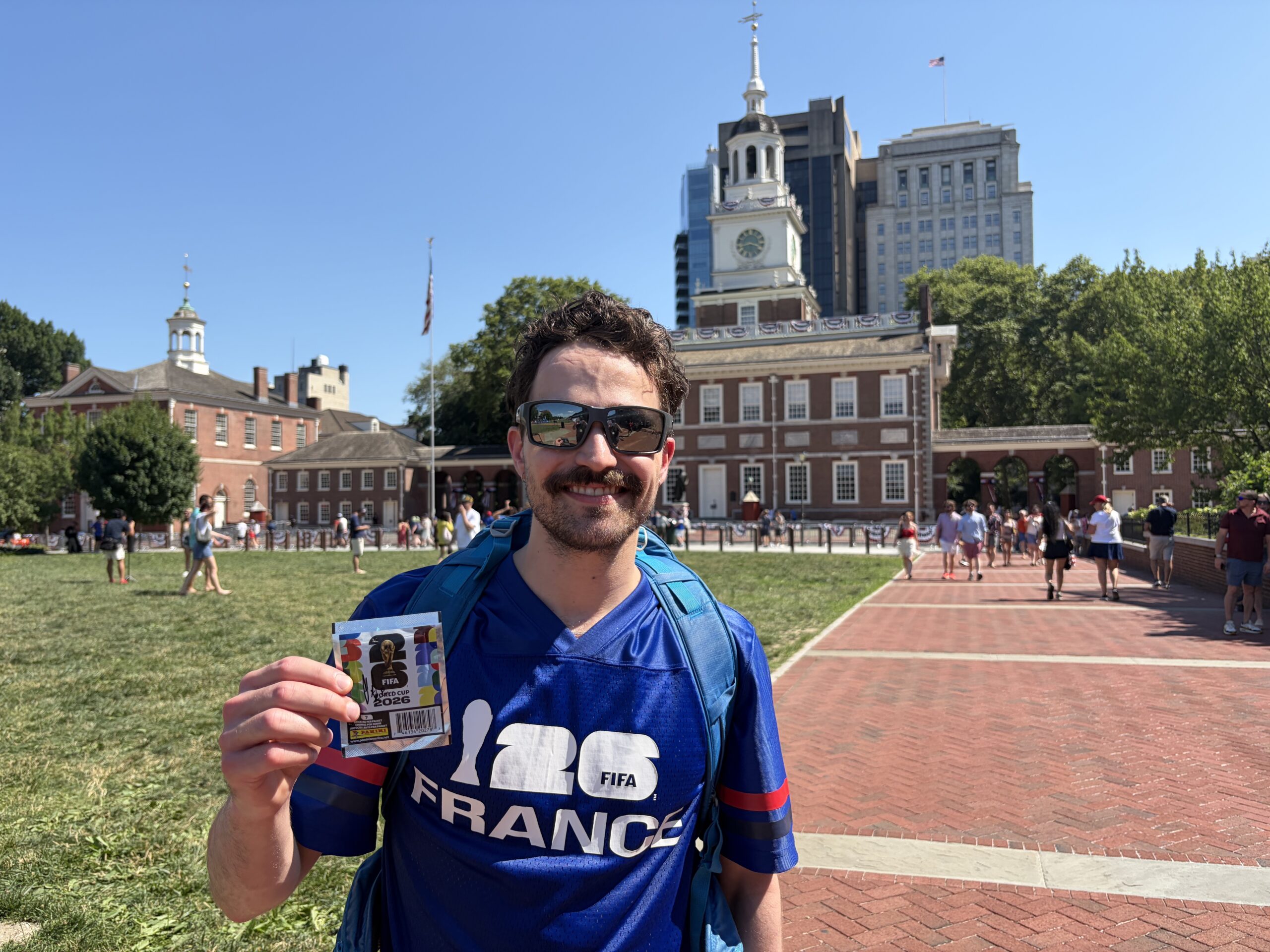
Max Goldfarb, 27, stood in the crowd in front of the show’s cameras just before it ended in the afternoon. Once the show was over, Goldfarb got Clint Dempsey to sign a pack of FIFA World Cup stickers he purchased from a nearby convenience store.
Max Goldfarb poses in front of Independence Hall with a pack of FIFA World Cup stickers signed by former U.S. men’s national team striker Clint Dempsey.
Goldfarb wore a France T-shirt he bought when he saw Les Bleus take on Senegal at MetLife Stadium on June 16, but said he was planning on watching the team’s round of 16 matchup from his Center City apartment to escape the heat.
“It’s been cool seeing all the fans around, and the energy of the fourth in the city,” Goldfarb said.
A few hundred people watched France’s victory from the 700 block of South Street, which was closed to vehicle traffic for a watch party in front of Brauhaus Schmitz.
The German pub and restaurant set up a large LED screen at the end of the block with long, wooden tables in front of it.
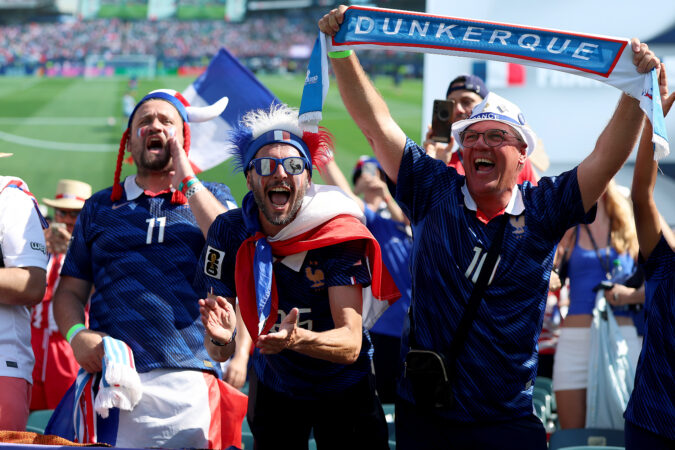
A mix of people dressed in festive American colors and French kits attempted to beat the heat with umbrellas, cooling towels and personal fans, crowding into shady spots on the street. Brauhaus Schmitz set up a misting system in front of its storefront on South Street to try and keep its customers cool.
A few hundred folks are braving the heat on the 700 block of South Street to watch France-Paraguay in front of Brauhaus Schmitz
While most of the crowd watching the match were locals, two fans had traveled quite a distance to watch France’s win.
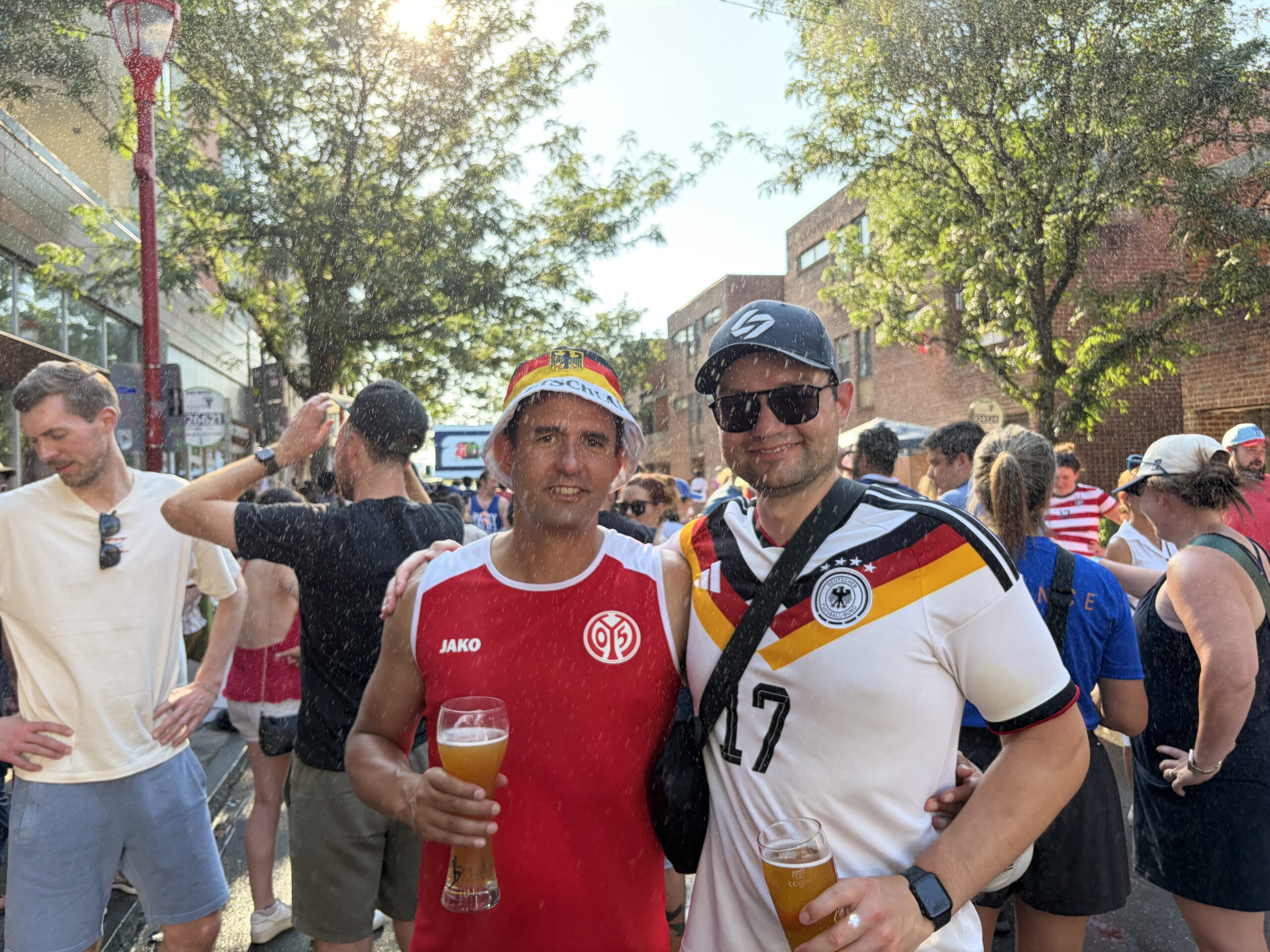
Alex Mar and Axel Pfeffer, natives of Essen, Germany, booked their plane tickets to Philadelphia, where Germany would have played its round of 16 match, before the Germans were upset by Paraguay in the round of 32 on Monday.
Mar and Pfeffer made the trip anyway, arriving to Philadelphia on Saturday. They made Brauhaus Schmitz their first stop after they learned they wouldn’t be able to see Rocky Statue due to the city’s planned Independence Day celebrations.
While they were disappointed to miss a chance to see their country play in the World Cup, the Germans plan on making the most of their trip. They intend to fly to Las Vegas after some more sightseeing in Philadelphia.
Axel Pfeffer (left) and Alex Mar (right) stand on South Street at Brauhaus Schmitz’s FIFA World Cup watch party.
Heat like Philadelphia experienced on Saturday is unusual for their home nation, but Mar and Pfeffer seemed unbothered by the temperatures.
“It’s hot, but [we] stay hydrated,” Mar said. “Get in some rooms with air-conditioning, and drink some beer.”
Fête for French Fans
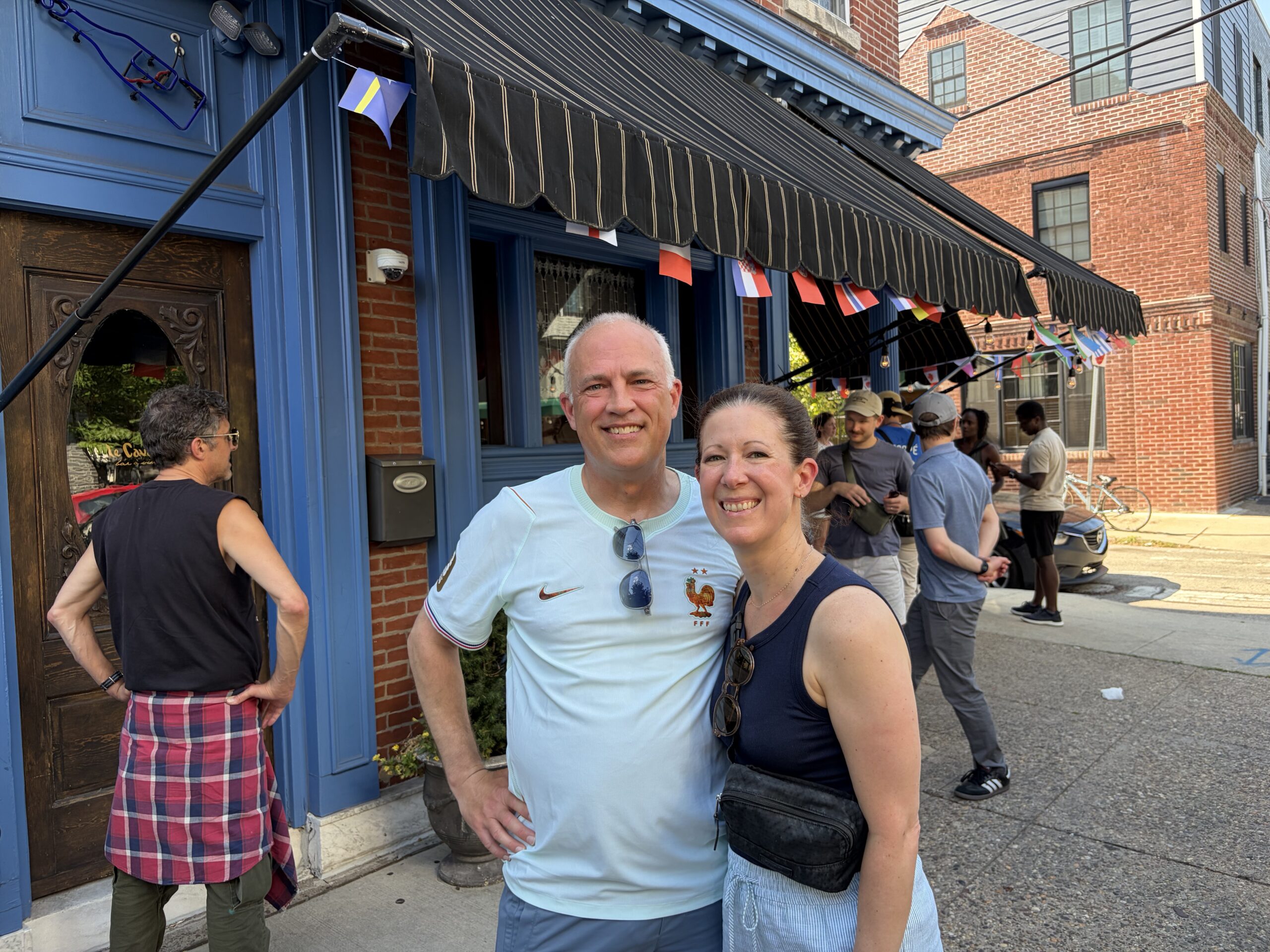
A couple blocks down from Brauhaus Schmitz, French fans packed The Good King Tavern to watch their team advance past Paraguay. As it did for France’s win over Iraq last month, the restaurant opened its upstairs wine bar, Le Caveau, to help accommodate some of the crowd.
Jeff Minors was one France fan waiting to go upstairs before the game started. The Fairmount resident said he started cheering on the French after their run to the World Cup title in 1998, led by Thierry Henry.
Despite there being closer bars to watch the match at, Minors traveled to The Good King Tavern to watch alongside other French fans.
“We just really wanted to experience the French vibe and cheer on France at a French restaurant,” Minors said.
Jeff Minors (left) and Melissa Davis (right) wait to enter The Good King Tavern ahead of France’s match against Paraguay.
While the FIFA Fan Festival has brought more traffic and parking restrictions into his neighborhood, Minors said he was not bothered by the festivals’ presence.
Through the six matches Philadelphia has hosted, Minors said he appreciated the energy the tournament has brought into the city.
“I think it’s been great for the city,” Minors said. “It’s been, I think, really eye-opening for a lot of people who are visiting, how fun Philadelphia is.”