Category: Soccer/Union

  • Weather during the World Cup in Philadelphia could be useful data for a future Eagles stadium

    Weather during the World Cup in Philadelphia could be useful data for a future Eagles stadium

    Three-quarters of the seats inside Lincoln Financial Field — er, Philadelphia Stadium — felt the blast of a late-afternoon sun before France and Paraguay kicked off their round of 16 showdown Saturday, the sixth and final World Cup game in the city.

    Those weren’t rally towels swinging; they were the giveaway fans, and even those seated on the shaded west side of the stadium used them to try to cool off. Some in the sun left them unraveled and used them as a shade.

    Philadelphia set a record Saturday, reaching 101 degrees or higher for the third consecutive day, according to the National Weather Service. The real-feel temperature on the field at kickoff was hotter than the 98 degrees FOX displayed on its television broadcast.
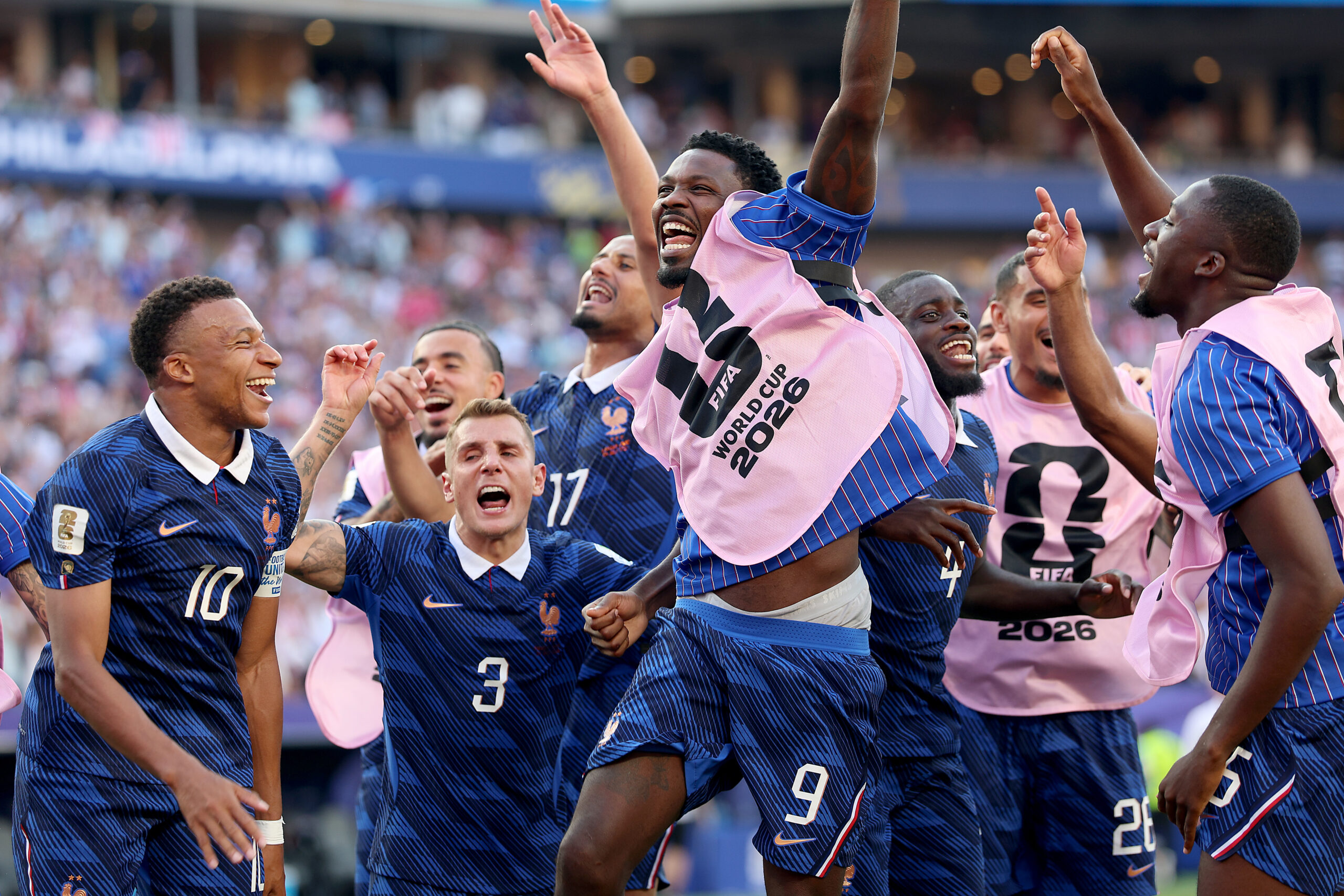
    France celebrates after its defeat of Paraguay on a sweltering final day of FIFA World Cup action at Philadelphia Stadium.

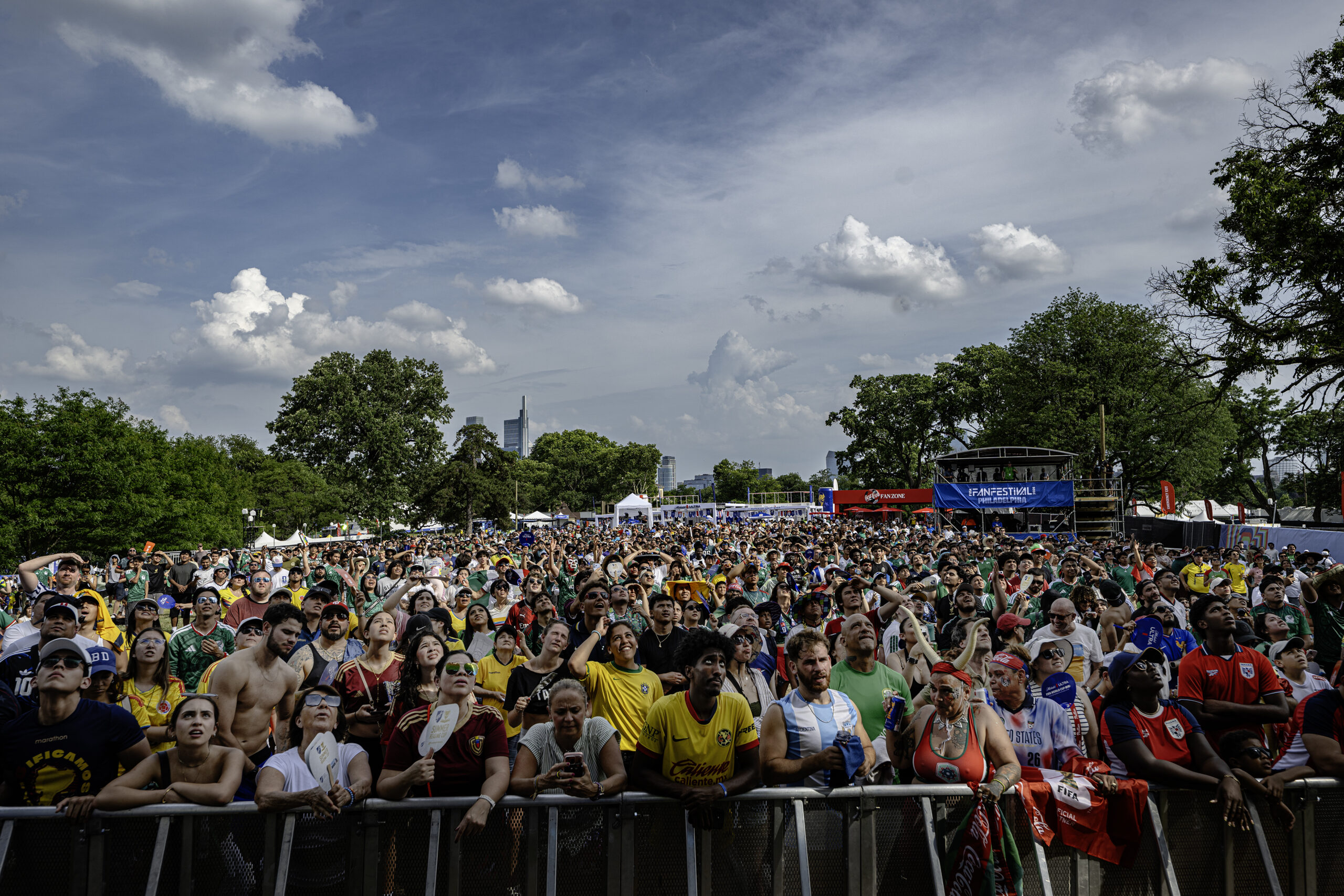
    The city shone during its three weeks in the world spotlight. Fans have packed the fan festival. The stadium has been full. But the games didn’t come and go without the weather being part of the story.

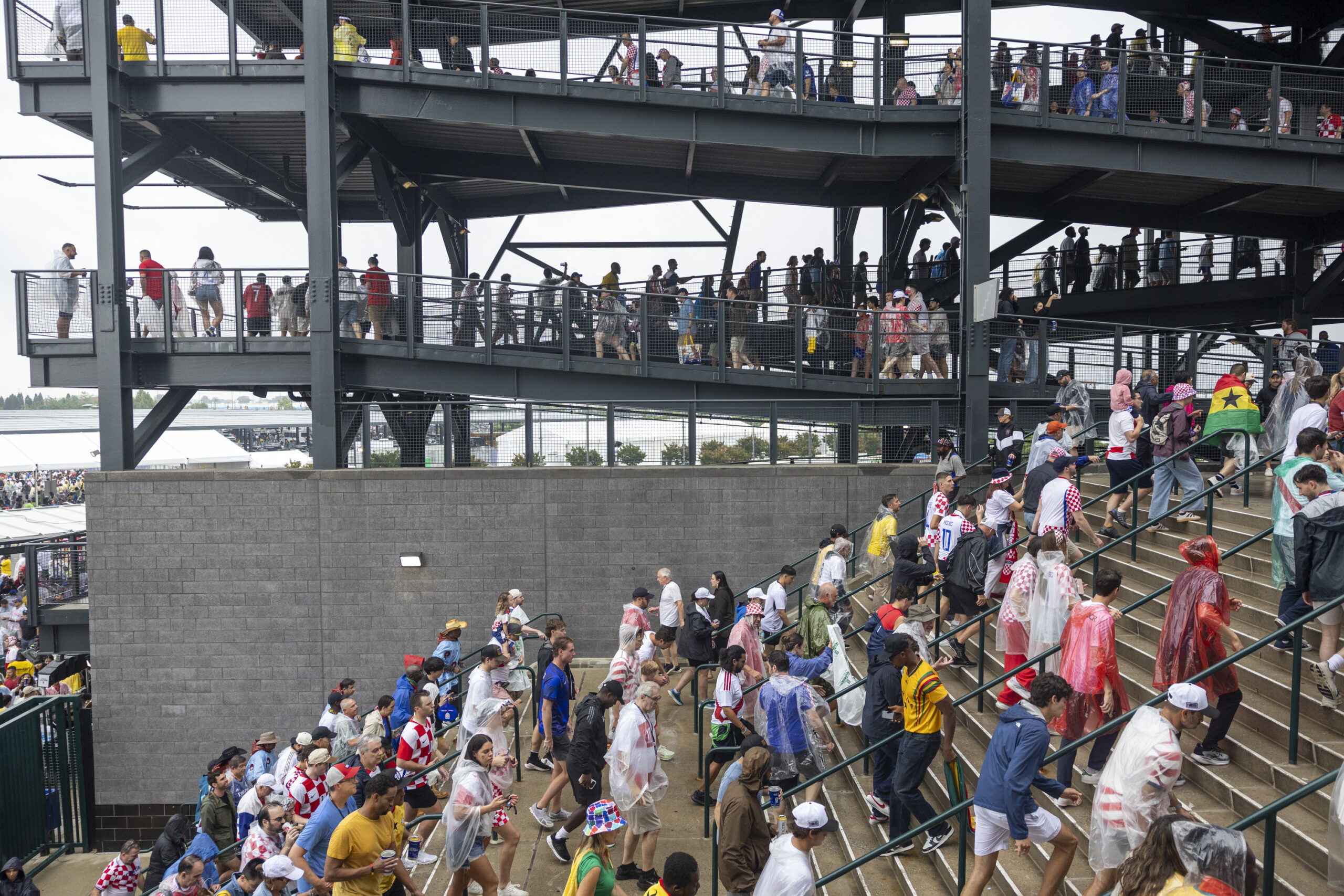
    France’s first trip to Philadelphia, a June 22 group stage game vs. Iraq, featured a lengthy delay at halftime due to lightning from a storm that produced heavy downpours. The scheduled 15-minute break lasted more than two hours. Saturday’s game was played during a record-setting heat wave and kicked off with the threat of severe thunderstorms looming later Saturday night.

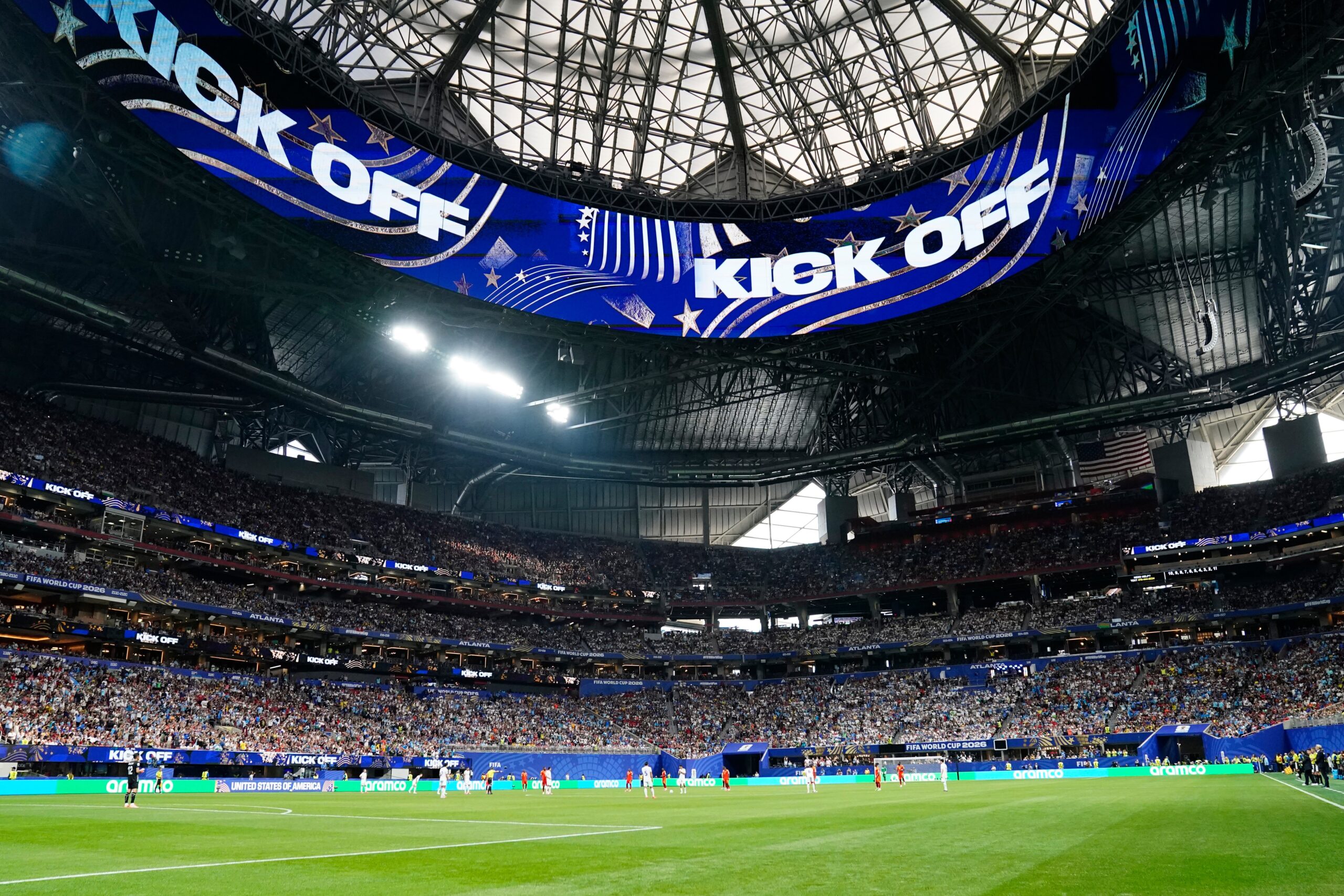
    The World Cup won’t return to the U.S. until at least 2038. If Philadelphia is among the host cities, will the next version of Philadelphia Stadium have a roof?
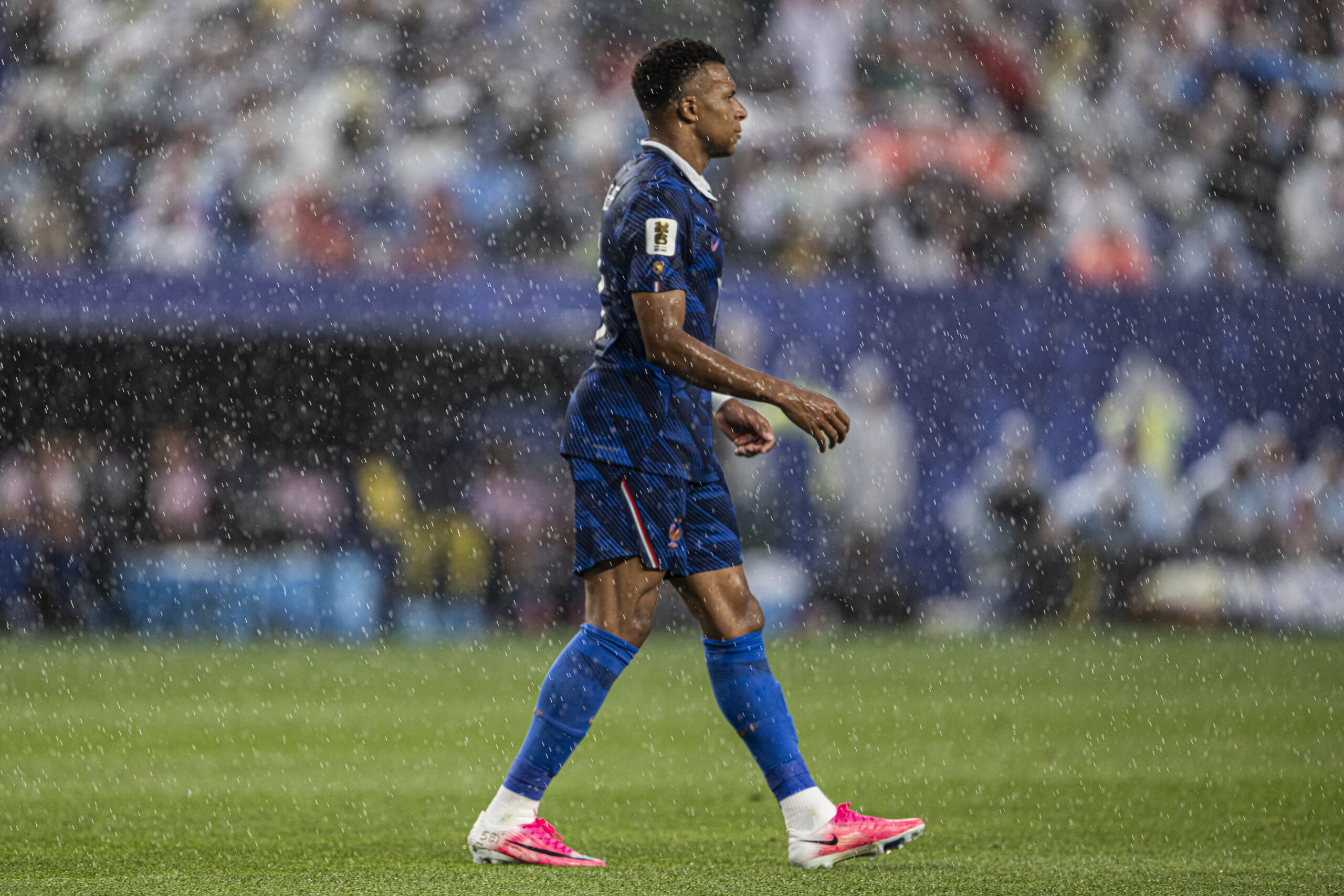
    France forward Kylian Mbappé walks off the field at the start of a two-plus hour rain delay at Philadelphia Stadium on June 22 for their game against Iraq.

    ‘I was a purist, but…’

    Mount Laurel’s Graig Weidinger, who was tailgating with a group of friends outside the stadium Saturday, knows it’s probably inevitable that the home of the Eagles one day will have the ability to shield the playing field from weather. The team’s lease expires in 2032, and Jeffrey Lurie said earlier this year that the organization is going through “exploratory research” on the idea of a new or renovated stadium.

    Many new stadiums and renovation projects in the NFL have included retractable roofs or domes. There are currently 10 NFL stadiums with roofs, and four more are on the way. The Eagles still are at least a year away from coming close to finalizing plans for their future, but data points like the weather during this World Cup could factor into decisions.

    Weidinger said he previously was against the idea of the Eagles playing under a roof. He lamented a future where LeSean McCoy doesn’t dash through the snow for 217 yards in a snowy game vs. Detroit in 2013. Or a future where Saquon Barkley isn’t running through a snow globe-like scene pushing the Eagles to the NFC championship game two seasons ago.

    “It gives you the memories,” Weidinger said. “You’re not going to have that.”

    It is not just the cold that has recently impacted Eagles games. The 2025 season opener was delayed for more than an hour in the third quarter due to a thunderstorm.

    “At first I was a purist, but now I’m giving in to the idea,” Weidinger said. “Now that the weather is so extreme each season.”
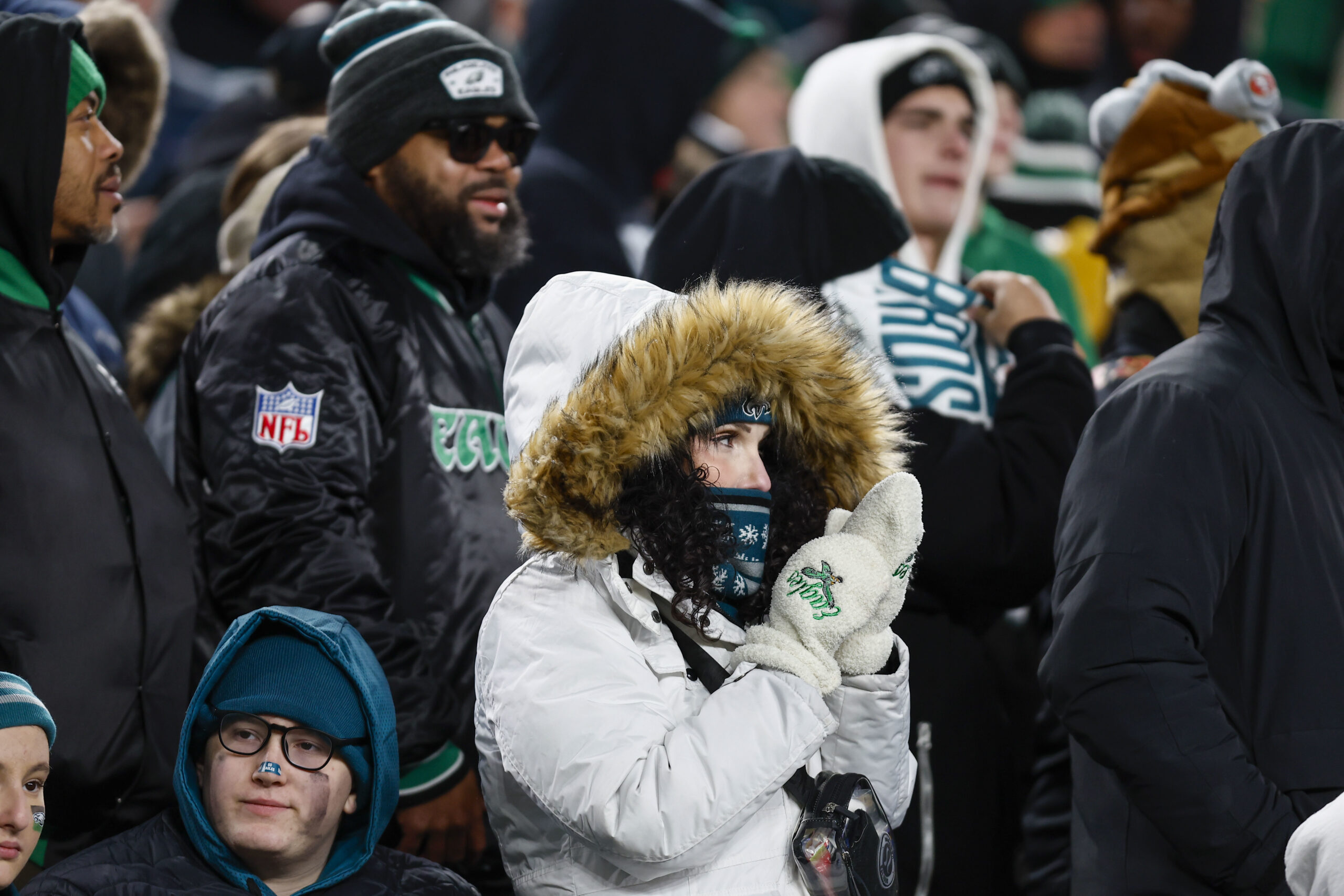
    Eagles fans have long had to resist extreme elements; the question now is whether the rise of extreme heat and cold places more pressure to consider a roofed stadium in Philly.

    There will be a faction of fans who strongly resist a roof. Football, they will say, is meant to be played outside. But the current stadium isn’t just a football stadium, and Lurie may have aspirations to make the future one capable of hosting more marquee events.

    “For the city, with what they can do, you see the college playoffs going places, the Super Bowl,” Weidinger said. “If you’ve got a roof you can do it all.”

    ‘The best of both worlds’

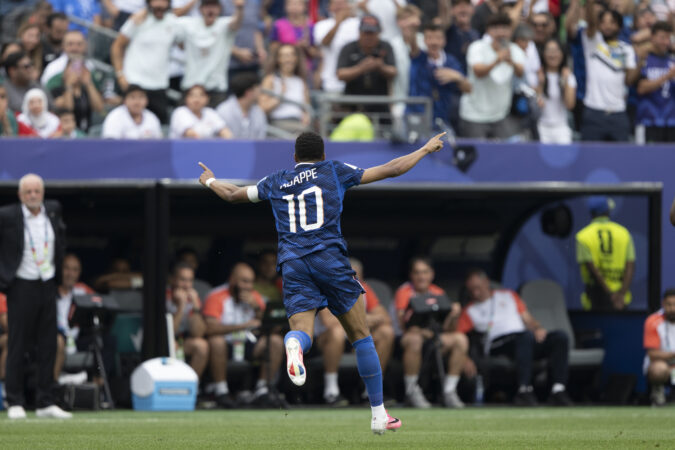
    By halftime, most of the field and more than half the seats inside the stadium were protected from the sun with shade. The real feel in the city was still 100 degrees when Kylian Mbappé scored his seventh goal of the tournament — and third in Philadelphia — on a 70th-minute penalty kick that gave France its eventual 1-0 win and a ticket to the quarterfinals.

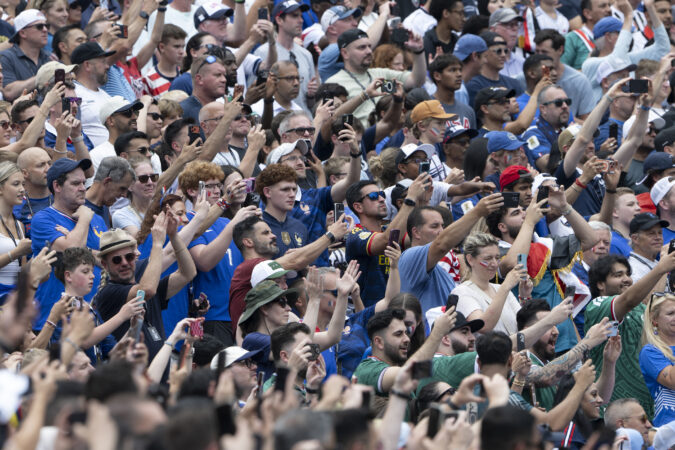
    This is the World Cup, and the announced sellout crowd of 68,324 paid a lot of money for tickets, so most of the seats in the sunny east side of the stadium were full. But there were empty seats visible on that side of the field, their owners likely watching from a shadier, cooler spot.
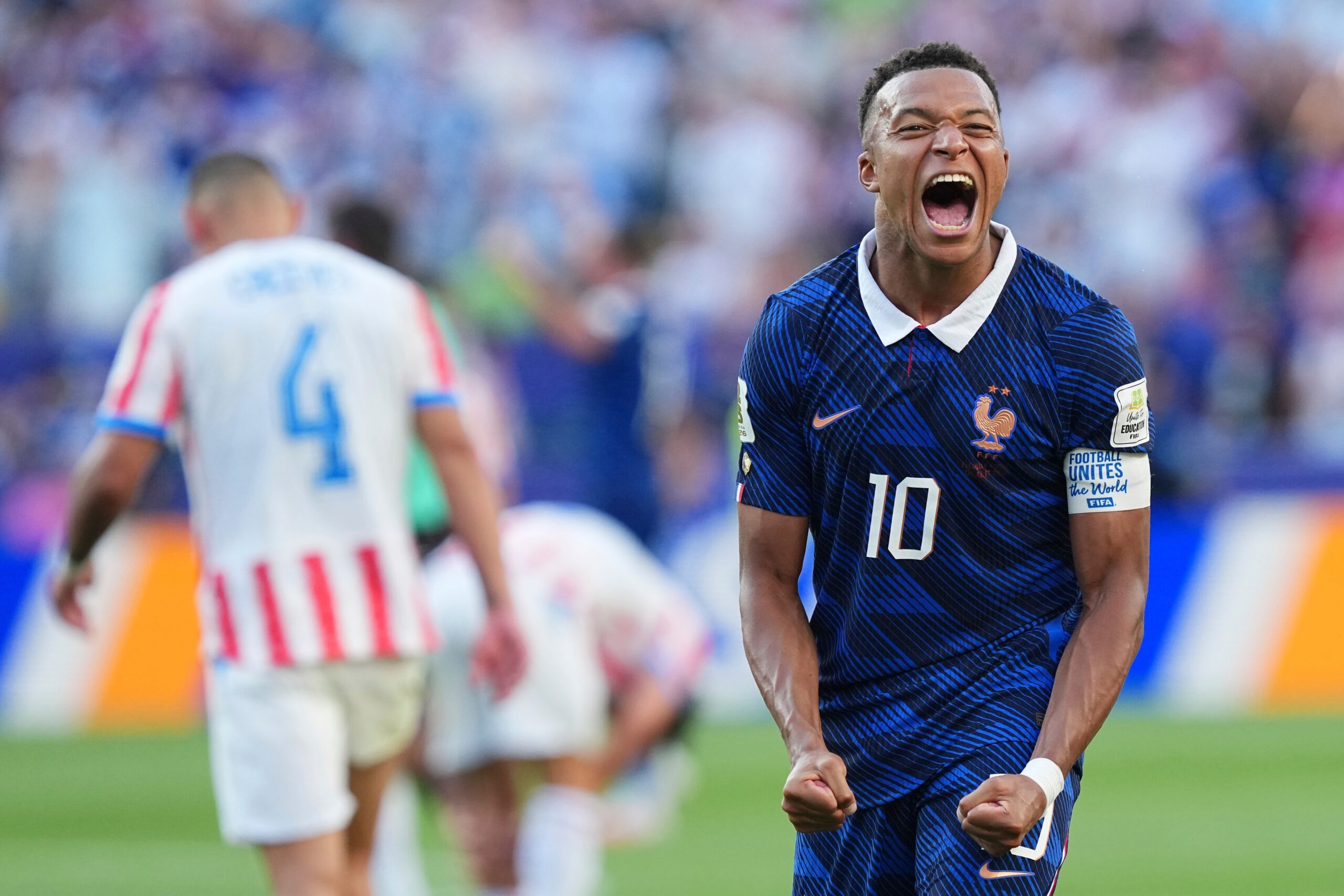
    France’s Kylian Mbappe (10) scored the gamewinner on a sweltering afternoon at Philadelphia Stadium, where temperatures approached 100 degrees.

    The fan experience, Lurie said in March at the annual league meeting, will be a priority for any future stadium or renovation.

    “We’re so focused on fan amenities,” Lurie said. “To me, that’s the No. 1 thing. Just as a boy growing up, you want to have as best a fan experience. The rest is architecture, design, and where it ends up.”

    The fan experience was on the minds of Kurt and Trish Neff as they drove to the stadium Saturday from Boothwyn.

    Did they find themselves wishing they were driving to a stadium that was air-conditioned?

    “Today, right now? Absolutely, yes,” Kurt said.

    In that vein, Kurt said he “would be more likely to come to a game sitting in some warmth during the winter for a football game. Sometimes you’re thinking about selling your tickets in January or the end of December.”

    Trish, a soccer coach, wanted to play devil’s advocate.

    “The weather is part of a coach’s strategy for the game,” she said. “Whether it’s cold or hot, you might change your game plan depending on it. But for the fans, temperature control would be better.”

    Perhaps stadium discussions can be like a healthy marriage. There’s always a chance for compromise.

    How about a retractable roof?

    “It’s the best of both worlds,” Kurt said.
  • For the USMNT, being in the World Cup on July 4 is a special honor

    For the USMNT, being in the World Cup on July 4 is a special honor

    SEATTLE — The players of the U.S. men’s World Cup squad came together from 13 states and homes in four nations abroad. The club teams they represent span 10 leagues around the world’s game.

    They are not the same, in many ways. But they are American, and that never feels more true than on the Fourth of July.

    This time, it isn’t just the nation’s Independence Day. It’s the first one since 1994 in which the U.S. men are active in a World Cup. And like that one, it happens to be on their own soil.

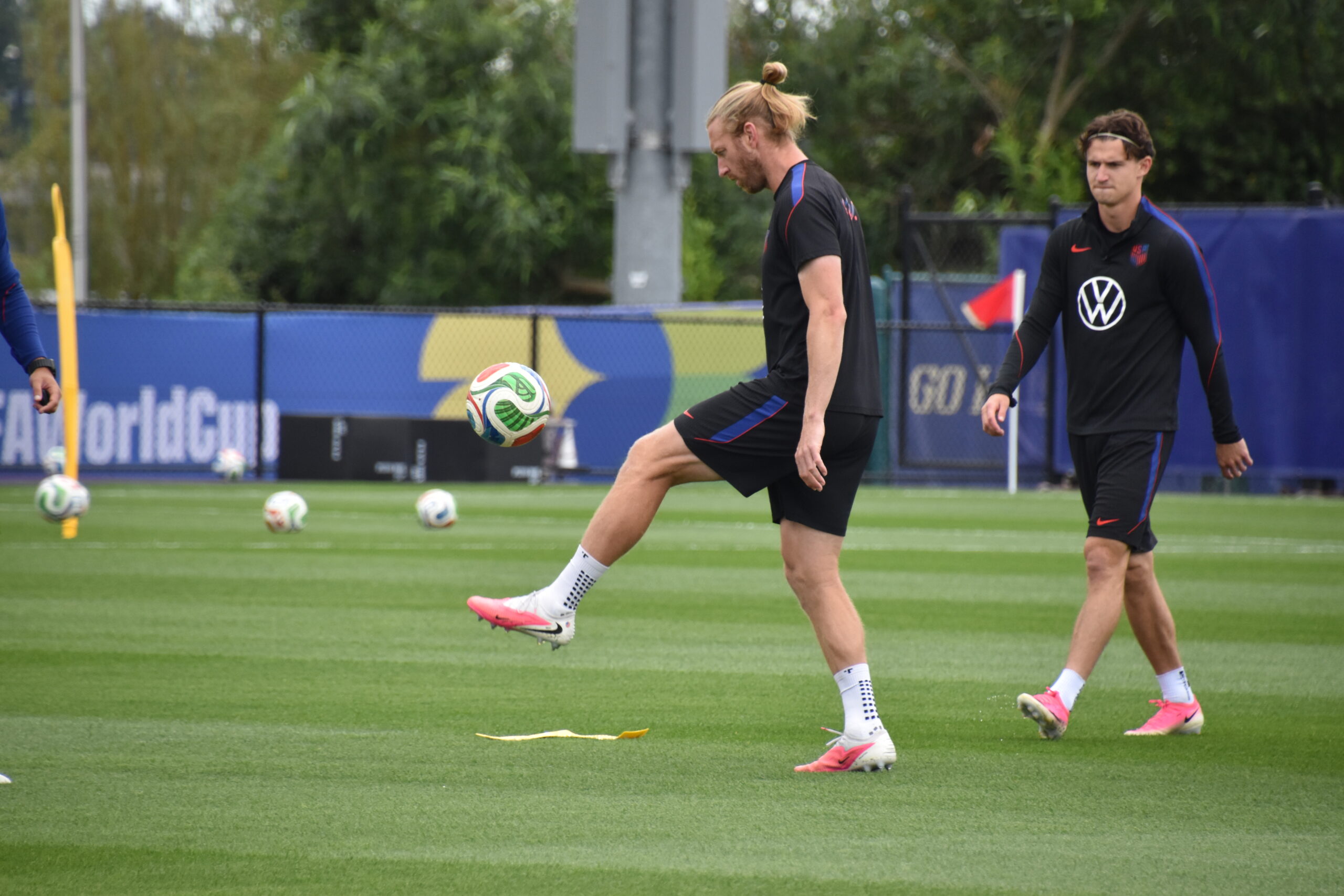
    “It is special,” centerback and team captain Tim Ream said. “It’s double-special because it’s during the World Cup, and triple-special because it’s here in the U.S.”
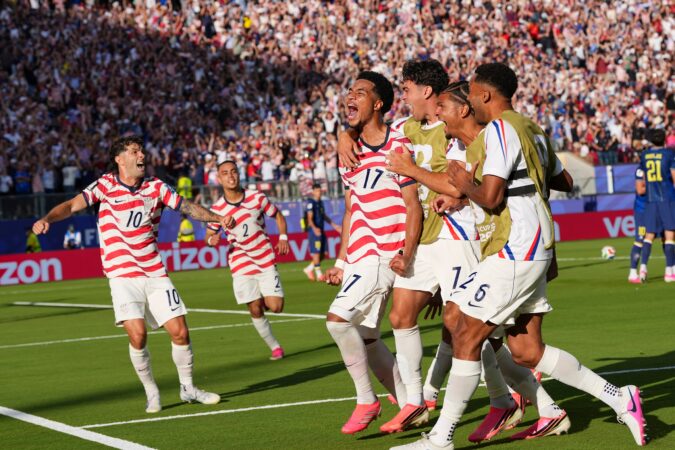
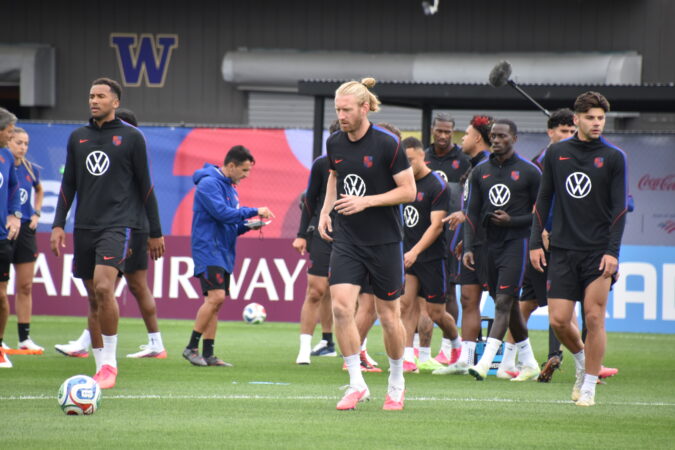
    It was a working holiday for Tim Ream (center) and the U.S. men’s soccer team.

    The St. Louis native then made a point of highlighting his belief that the team’s diversity is a strength.

    “We’ve said this: With all our different backgrounds, where we all have grown up, it’s a true representation of what America is,” he said. “It’s a melting pot of personalities, of characters, and, like I said, it’s a perfect representation of what the U.S. is and what it’s about.”
    Ream has even seen manager Mauricio Pochettino, a fiercely proud Argentina native, embrace the national spirit.

    “He’s obviously taken to the culture, and at the same time, has added his bit of culture to us as well,” Ream said, which makes Pochettino the latest of many Argentines to do that in this country. From players and coaches to broadcasters like Telemundo’s famed Andrés Cantor, the country has a long history of sharing its passion — and immigrants — with the U.S.

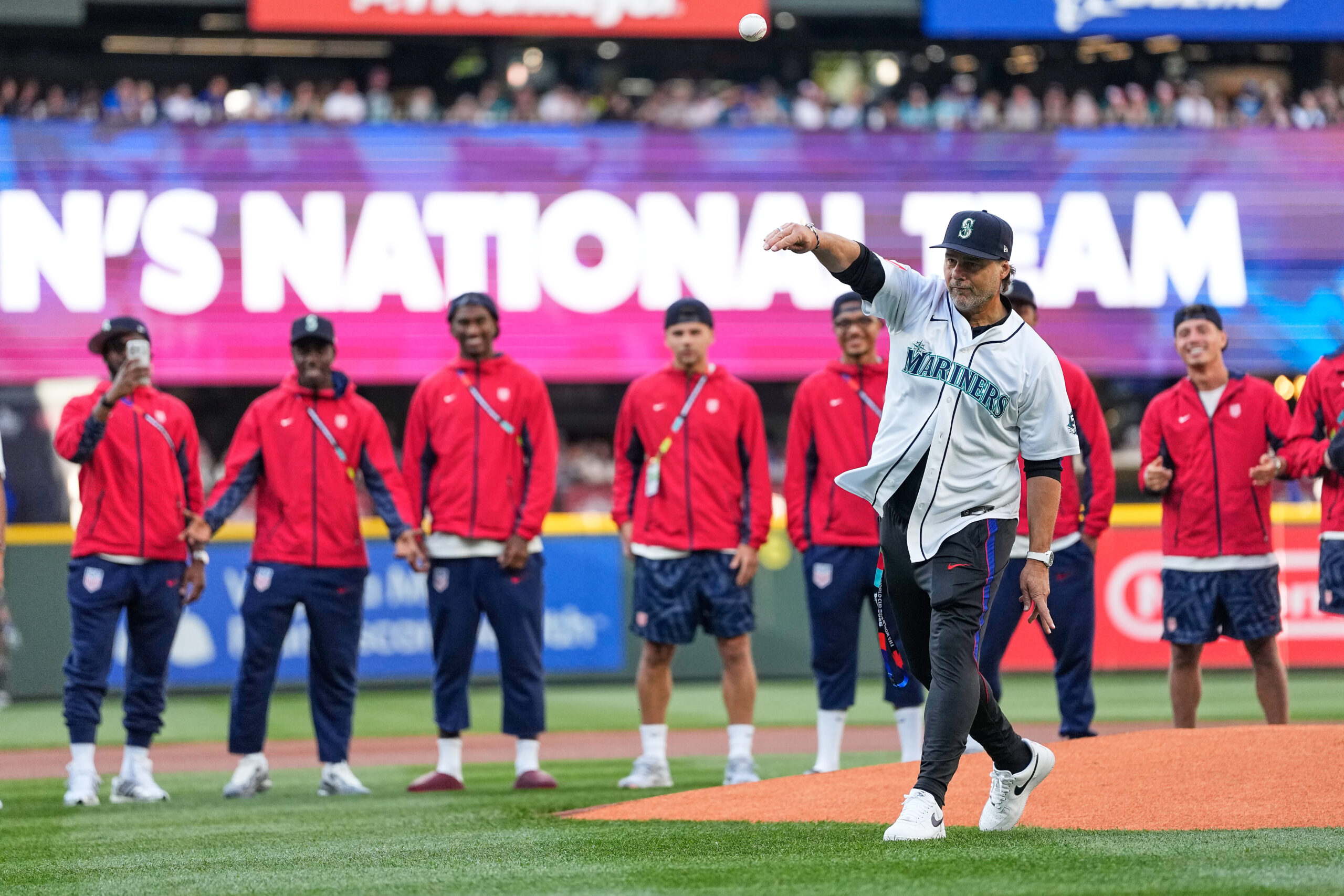
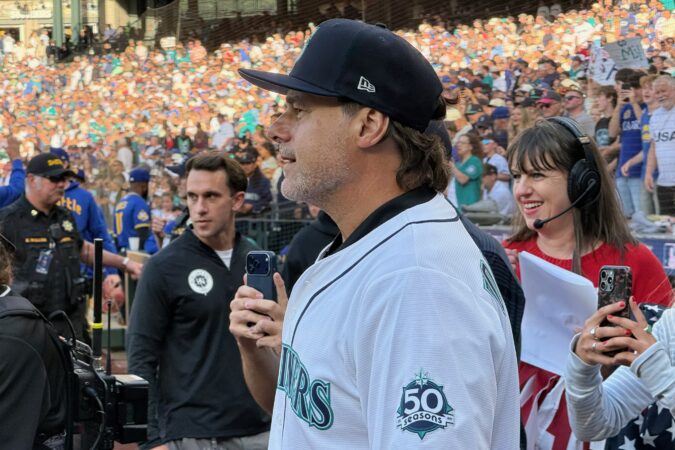
    U.S. manager Mauricio Pochettino got to sample a classic piece of American culture by throwing out the first pitch at the Seattle Mariners baseball game on Friday.

    “As he said after the first here in Seattle [the U.S.’s group stage win over Australia], he felt something with ‘Country Roads’ being played and blasted through the stadium [postgame],” Ream said. “The group is such a melting pot [with] staff, players, and, again, it’s just an incredible representation of who we are as people. But, yeah, he definitely won’t let us forget that he’s still Argentine at the end of the day.”
    The 38-year-old Ream has experienced the holiday in multiple ways, too. When he played in England from 2012 to 2024, he spent some Fourths over there instead of over here. Then he returned to MLS to join Charlotte FC, where he’s now in his third season.

    “It’s a little bit different celebrating here than over there,” he said. “A lot of people [in England] don’t actually know why we celebrate the Fourth, which is crazy to me because they were a big part of why we celebrate.”
    That line drew a round of hearty laughs, even from the English media who have been following the U.S. team during the World Cup.

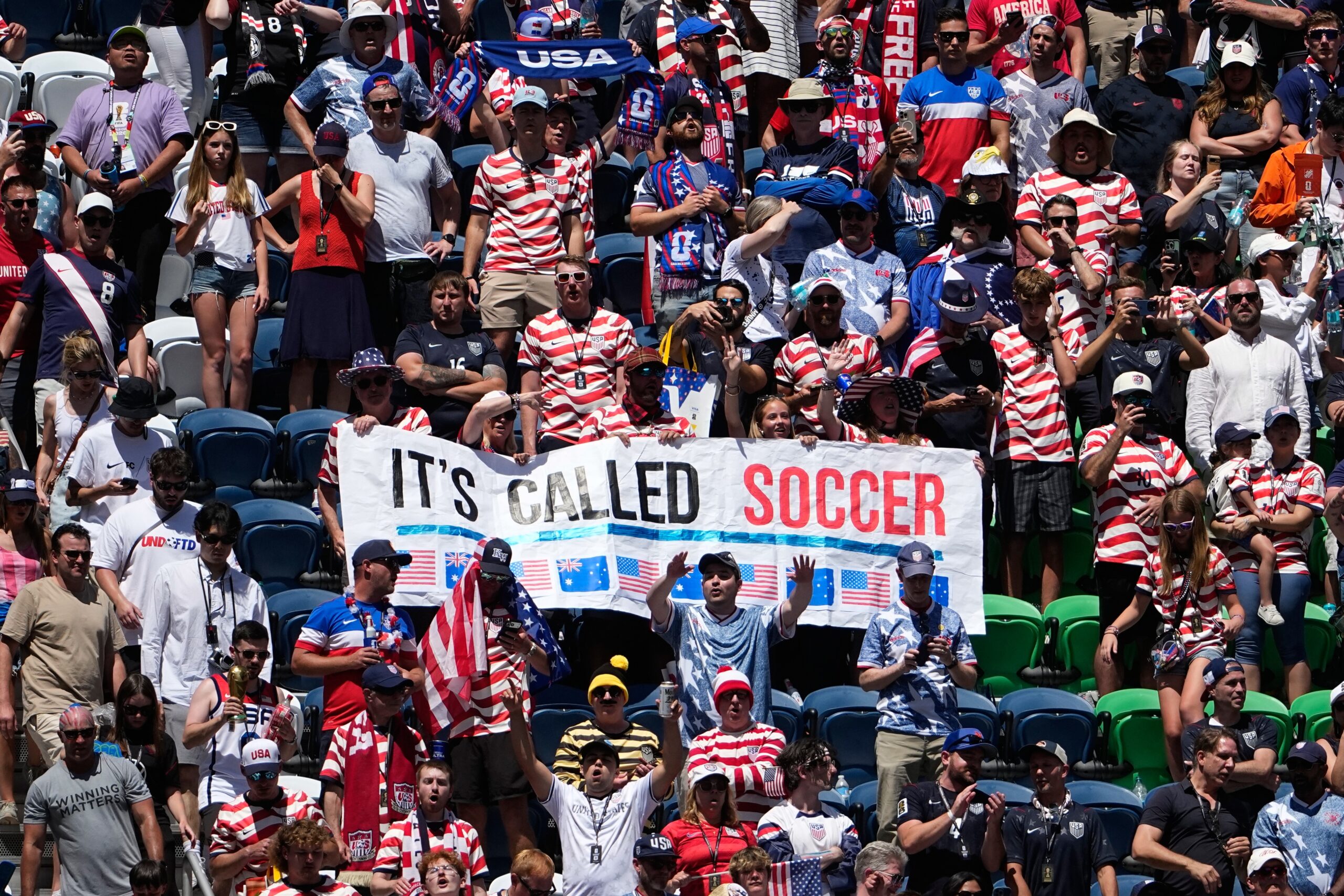
    At the U.S.-Australia group game in Seattle, some fans brought a banner that read “IT’S CALLED SOCCER” to poke fun at England.
    “The memories for me are just the typical standard: barbecue, enjoy time with family all day, fireworks in the evening, and just celebrating, obviously, what it means to have freedom, to have independence,” Ream said. “It doesn’t have to be this big, extravagant thing, but just acknowledging why we are a country, and how we became a country, and how we became independent is enough for any of us.”
    There wasn’t going to be much extravagance for the team as it worked through the holiday. But there would be time in the evening to gather with friends and family and watch Seattle’s big fireworks show from a rooftop downtown.

    Then they’ll be back at it, trying to give the nation one more festival in Monday’s round of 16 game against Belgium (8 p.m., Fox29, Telemundo).

    “We are, as we all continue to say, very aware of the impact that we’re having around the country, the impact we’re having on generations of people and fans and supporters,” Ream said. “Aware, but it’s not something that is at the forefront of our thinking at the minute. It’s more the game, and what we have to do to continue to move on.”

  • Where are tourists traveling to Philadelphia from for the World Cup?

    Where are tourists traveling to Philadelphia from for the World Cup?

    With Philadelphia’s final World Cup game Saturday, the city’s international soccer tourists, who have created generational memories for weeks here, will be heading home.

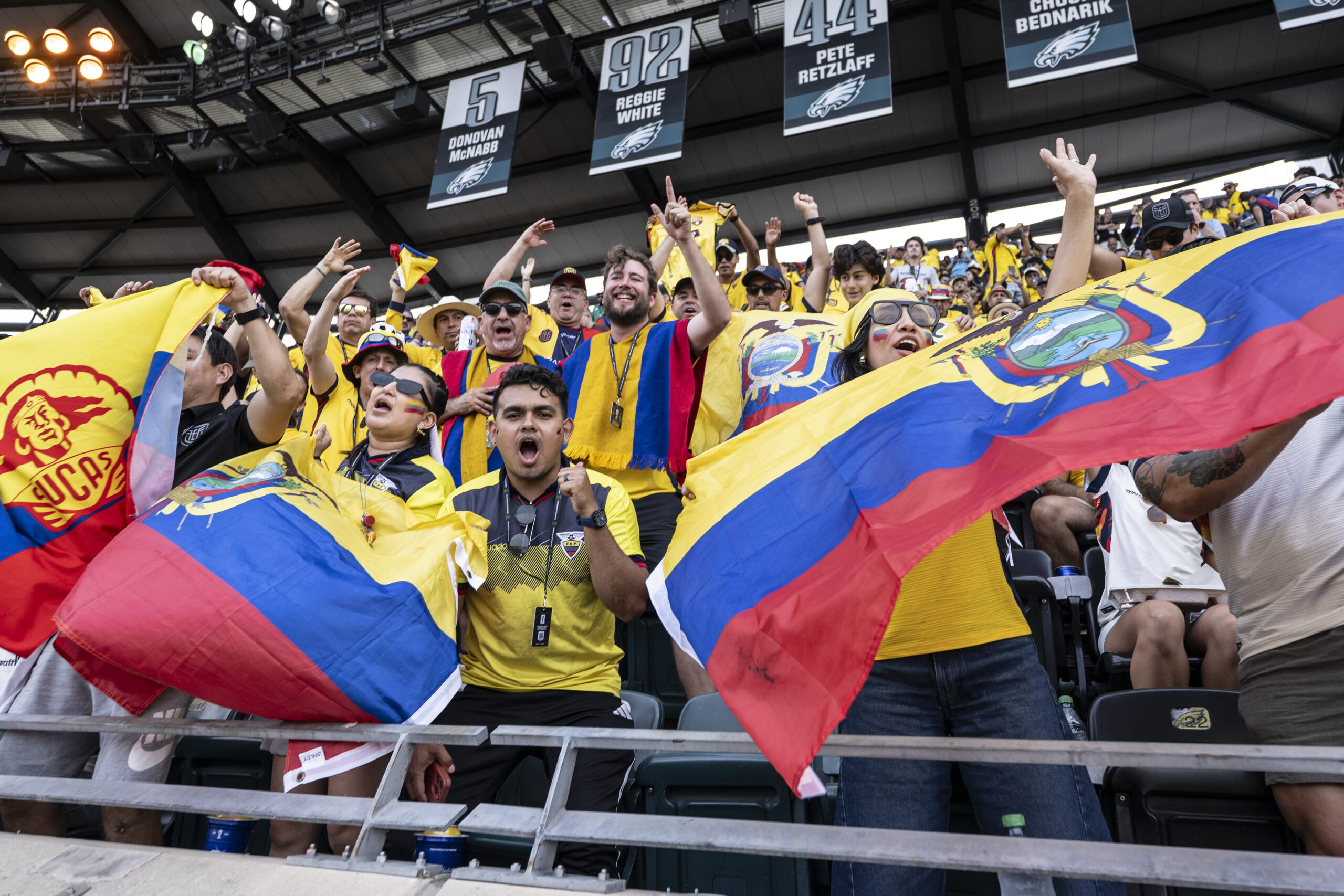
    From the sea of yellow-jerseyed Ecuadorians taking over the Rocky steps, and possibly cursing the team, to Ivorian soccer fans dancing outside the streets of Fan Festival, or the four Frenchmen who lied to their bosses to be here, global soccer fans have been thriving in Philadelphia.

    And there’s no better place in the world to celebrate fandom than in Philly, said Côte d’Ivoire-born Philadelphian Ahmadou Dia, who moved to the city a decade ago.

    “This is wonderful for Philadelphia and wonderful for America, welcoming everybody into this beautiful country,” Dia said. “The World Cup, the football itself, brings every country, every single person, together regardless of color. It doesn’t matter what you look like, because on the field or in that stadium, we’re family.”

    The World Cup is one of those global events where fans save thousands of dollars for years to make their way across the world to watch their favorite team.

    Ecuadorian native Francisca Castellanos traveled 14 hours to meet her father and other family in Quito, before heading to Philadelphia in time for the World Cup. Her father, Francisco, has attended the last 10 World Cup tournaments, including the 2022 World Cup in Qatar. When the United States was announced as a World Cup host, the Castellanoses were overjoyed.

    “A World Cup in the U.S is a lot more accessible to Ecuadorians because a lot of our population already lives in the U.S., and the currency is the same,” Castellanos said. “There is also language accessibility because people speak English here, unlike in Qatar, where communication was harder.”

    Ecuador national team fans cheer during the national anthems before the FIFA World Cup Group E match between Ecuador and Côte d’Ivoire on June 14, 2026, at Lincoln Financial Field in Philadelphia. The match marked the first FIFA World Cup game played in Philadelphia.

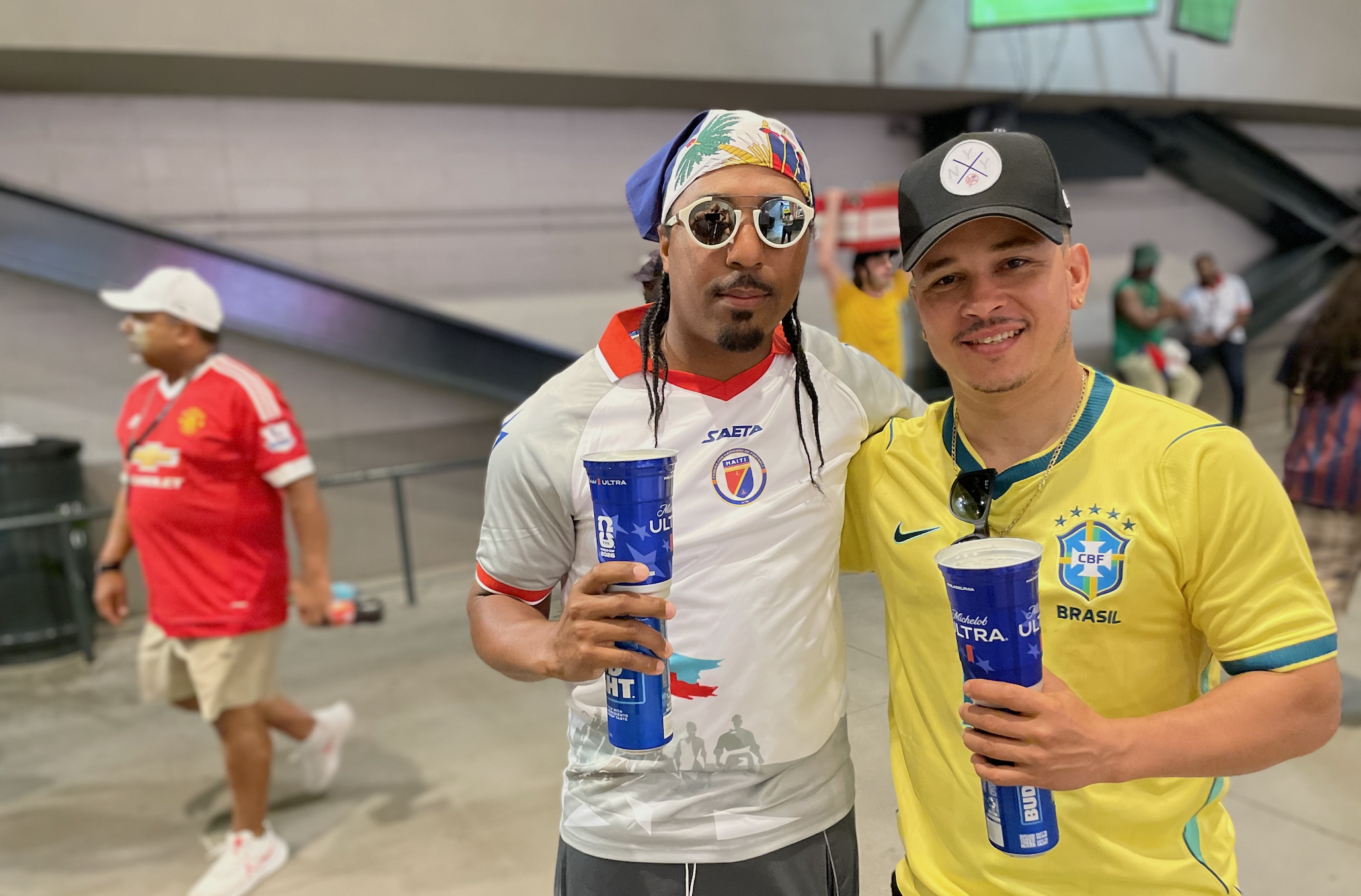
    The six matches played in Philadelphia brought tourists from Brazil, Côte d’Ivoire, Croatia, Curaçao, Ecuador, France, Ghana, Haiti, and Iraq, but where Philly’s World Cup and America’s 250th tourists are coming from spans the globe.

    Fraser McNaughton, a Scot visiting Philadelphia with family, couldn’t believe how inviting Philadelphians have been as he took photos with the Rocky statue last week.

    “Everywhere we’ve went, everyone’s been so friendly, so welcoming, helping us out when we need it,” McNaughton said. “It’s just a brilliant city.”

    “They go out of their way to say ‘Hello’ or ‘Welcome to Philly’ here,” said fellow Scot Michelle Thomson. “We’ve really loved it.”

    Here are the main takeaways, based on flight data shared by Sojern, a hospitality marketing platform that provides travel data to hotels, airlines, and tourism boards.

    (function () {window.addEventListener(‘message’, function (e) { var message = e.data; var els = document.querySelectorAll(‘iframe[src*=”‘ + message.id + ‘”]’); els.forEach(function(el) { el.style.height = message.height + ‘px’; }); }, false); })();

    Ecuadorian travelers surged this World Cup

    Ecuadorians don’t make up a sizable chunk of the international travelers coming to Philadelphia this summer. Canada, the United Kingdom, and Italy take that crown, in that order.

    However, Ecuadorian travelers, like the Castellanoses, were so pumped to experience a World Cup in person that the number of flights booked from Ecuador to Philadelphia surged by 622% compared to the year prior. Philadelphia hosted Ecuador’s first group match in the World Cup, convincing many Ecuadorians to make the 2,760-mile trip to the City of Brotherly Love.

    Danilo Carrión is a member of the group that organized the Ecuadorian event at the Rocky steps, where more than 2,000 Ecuador fans showed up to dance, sing, and accidentally jinx their team after putting Ecuador merch on Rocky.

    “It was the first game for Ecuador, so a lot of the Ecuadorians from Ecuador and the U.S. had to be here because there was a lot of expectation,” Carrión said.

    To the Ecuadorian-American who lives in New York, the influx of people was facilitated by an ease of travel between the South American country and the U.S.

    “It’s easier for us to travel to the States than to Europe or Qatar,” Carrión said. “And there are direct flights to LaGuardia and New York.”

    Ecuadorians require visas to enter Europe, Canada, and the United States. Even traveling to Mexico can involve visa procedures if they don’t have a U.S. visa first, a formality that has become more complex since Ecuador and Mexico broke international relationships in 2024, Carrión said.

    (function(){function e(){window.addEventListener(`message`,function(e){if(e.data[`datawrapper-height`]!==void 0){var t=document.querySelectorAll(`iframe`);for(var n in e.data[`datawrapper-height`])for(var r=0,i;i=t[r];r++)if(i.contentWindow===e.source){var a=e.data[`datawrapper-height`][n]+`px`;i.style.height=a}}})}e()})();

    Dutch Caribbean islands show up for Curaçao

    The small autonomous nations of Curaçao, Aruba, and Sint Maarten, all part of the Kingdom of the Netherlands, have seen a huge surge in flights this summer.

    Curaçao had the largest increase, almost 240%, despite being the smallest nation ever, with a population of 158,006 people, to qualify for the FIFA World Cup.

    “When we won tickets through the FIFA lottery for the Curaçao versus Ivory Coast in Philadelphia, we knew we had to make it happen, especially since the Curaçao match falls on my husband’s birthday,” said Vanessa Santine-Vinck, who traveled here from Curaçao with her partner and two sons.

    Travel from Sint Maarten and Aruba are also up — 193% and 117% respectively.

    Croatia and Hungary aren’t missing Philly’s World Cup

    Croatia claimed victory over Ghana at Philadelphia Stadium on June 27, and flights from the European country have jumped almost 100%.

    Neighboring Hungary has also seen a dramatic increase. There are almost 200% more flights from Hungary this summer than last summer.

    Dominican Republic shows steady growth

    Philadelphia’s Dominican community has grown in recent years, helping drive population growth in the city.

    With the World Cup in Philly this summer, travel from the Caribbean nation has increased 34%. While DR is not in the World Cup, their neighbor, Haiti, faced Brazil on June 19, losing 3-0.

    Philly’s French connection brings throngs of tourists

    This summer has brought a notable uptick in French tourism to Philadelphia, with 33% more flights. The cross-cultural connection runs deep, Parisian aesthetics have long influenced the city’s architecture.

    Throngs of Francophones across the city cheered on their national team to a 3-0 victory against Iraq on June 22.

    (function(){function e(){window.addEventListener(`message`,function(e){if(e.data[`datawrapper-height`]!==void 0){var t=document.querySelectorAll(`iframe`);for(var n in e.data[`datawrapper-height`])for(var r=0,i;i=t[r];r++)if(i.contentWindow===e.source){var a=e.data[`datawrapper-height`][n]+`px`;i.style.height=a}}})}e()})();

    France also ranks fourth in terms of total foreign travel this summer after Canada, the U.K.I, and Italy. Between the architecture, the French cuisine, and the fact that two of his family’s favorite teams, France and Côte d’Ivoire, would play in Philadelphia, traveling to the city was an easy choice for Frenchman Elias Pierson.

    He had already heard of the comparisons between the city and Paris, and as he walked through Independence Hall with his family last week, much of the architecture he saw reminded him of home.

    “We have a good relationship with the people of Philadelphia. We were just in the train station with a Philadelphian, and she explained to us where we needed to go and where the best French restaurants are,” Pierson said. “My favorite part of Philadelphia so far is City Hall and Old City because of the very beautiful buildings.”

    Now, before Pierson heads home, he said he hopes to get a coveted seat at Philly’s world-famous French bistro, Parc.

  • World Cup bracket: Philadelphia helps kick off a round of 16 that’s full of fireworks

    World Cup bracket: Philadelphia helps kick off a round of 16 that’s full of fireworks

    Though this is the first time that a World Cup’s round of 16 is the second knockout round, some of the matchups are loaded with history.

    One of them will take center stage in Philadelphia’s July 4 festivities. France and Paraguay have met twice in World Cups, and both were momentous.

    In the 1998 round of 16, La Albirroja held Les Bleus scoreless on home turf for 114 minutes until defender Laurent Blanc scored a sudden-death winner. (Soccer briefly settled games that way.)

    In the 1958 group stage, French striker Just Fontaine scored a hat trick in a 7-3 win on the way to totaling 13 goals in the tournament — still the most goals by one player in one World Cup.

    That record could fall this summer, thanks partially to another French superstar. Kylian Mbappé has six goals so far, one behind Lionel Messi’s tournament-leading seven for Argentina. Yes, the extra round helps, but both are in the all-world category. Not many people will argue if they beat Fontaine’s mark.

    Messi’s next chance to score is Tuesday, when he leads the Albiceleste into Atlanta to face Mo Salah’s Egypt.

    Philly fans won’t have to travel far (if they can get tickets) to see one of the round’s most star-studded clashes: Brazil’s Vinícius Júnior vs. Norway’s Erling Haaland on Sunday in New Jersey’s Meadowlands.

    Strangely, the five-time World Cup champion Seleçao have never beaten the Vikings in three friendlies and one World Cup meeting. Norway pulled off a 2-1 upset in the 1998 group stage.

    Monday’s Portugal-Spain showdown in suburban Dallas will have the most rivalry spice. The next-door neighbors have met 41 times dating back to 1921, but just twice in World Cups: the 2010 round of 16 and the 2018 group stage. We’ll see if this round of 16 game sends Spain on the same path it followed in 2010 to its first World Cup title.

    Finally, we come to the games that will matter most in our part of the world. All three cohosts are still alive, but they all face big tests.

    Canada goes first on Saturday, facing Morocco in Houston. The Atlas Lions made the 2022 semifinals and are looking sharp again this summer.

    Then comes an all-time Sunday night on this continent’s most famous soccer stage. Mexico, fresh off its first knockout win since the last World Cup it hosted in 1986, hosts England at the Estadio Azteca.

    While there’s no question that the Three Lions have the better talent, they’ve never played at anything like Mexico City’s 7,220-foot altitude. Will that plus a deafening home crowd propel El Tri to a famous win?

    Finally, there’s the world’s version of Monday Night Football in Seattle. The U.S. men play the biggest game in program history when they face Belgium, trying to win two knockout games in one World Cup for the first time. It’s the game so many people have dreamed of for years, and now it’s finally here.

    World Cup round of 16 schedule

    All games are televised on Fox29 in English and Telemundo 62 in Spanish. All times listed are local to Philadelphia.

    Saturday

    1 p.m.: Canada vs. Morocco in Houston

    5 p.m.: Paraguay vs. France in Philadelphia

    Sunday

    4 p.m.: Brazil vs. Norway in East Rutherford, N.J.

    8 p.m.: Mexico vs. England in Mexico City

    Monday

    3 p.m.: Portugal vs. Spain in Arlington, Texas

    8 p.m.: United States vs. Belgium in Seattle

    Tuesday

    Noon: Argentina vs. Egypt in Atlanta

    4 p.m.: Switzerland vs. Colombia in Vancouver, British Columbia

    Quarterfinals

    July 9

    4 p.m.: Paraguay or France vs. Canada or Morocco in Foxborough, Mass.

    July 10

    3 p.m.: Portugal or Spain vs. United States or Belgium in Inglewood, Calif.

    July 11

    5 p.m.: Brazil or Norway vs. Mexico or England in Miami Gardens, Fla.

    9 p.m.: Argentina or Egypt vs. Colombia or Ghana in Atlanta

    UPDATE THIS CAPTION BEFORE FILING

    Semifinals and beyond

    July 14

    3 p.m.: Paraguay, France, Canada, or Netherlands vs. Portugal, Spain, United States, or Belgium in Arlington, Texas

    July 15

    3 p.m.: Brazil, Norway, Mexico, or England vs. Argentina, Egypt, Colombia, or Ghana in Atlanta

    July 18

    5 p.m.: Third-place game in Miami Gardens, Fla.

    July 19

    3 p.m.: Final in East Rutherford, N.J.

  • Baseball and soccer cross paths as Seattle welcomes the USMNT back in the World Cup

    Baseball and soccer cross paths as Seattle welcomes the USMNT back in the World Cup

    SEATTLE — America’s national pastime crossed paths with the world’s favorite game on Friday evening when the Seattle Mariners hosted the U.S. men’s soccer team at their game against the Toronto Blue Jays.

    It was a rousing welcome back to town for the Americans, who beat Australia in the group stage here and will play the biggest game in team history against Belgium in the round of 16 on Monday (8 p.m., Fox29, Telemundo 62).

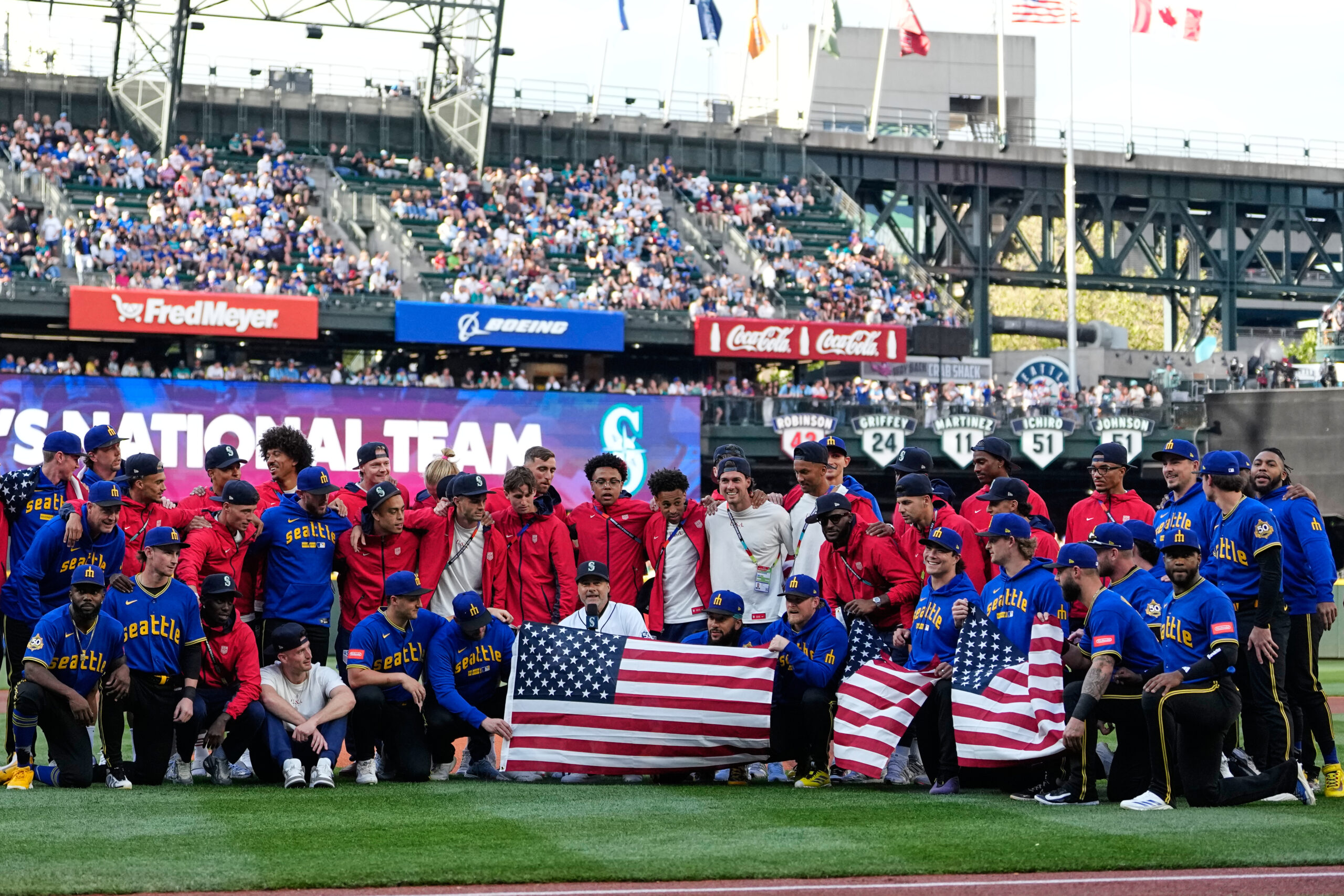
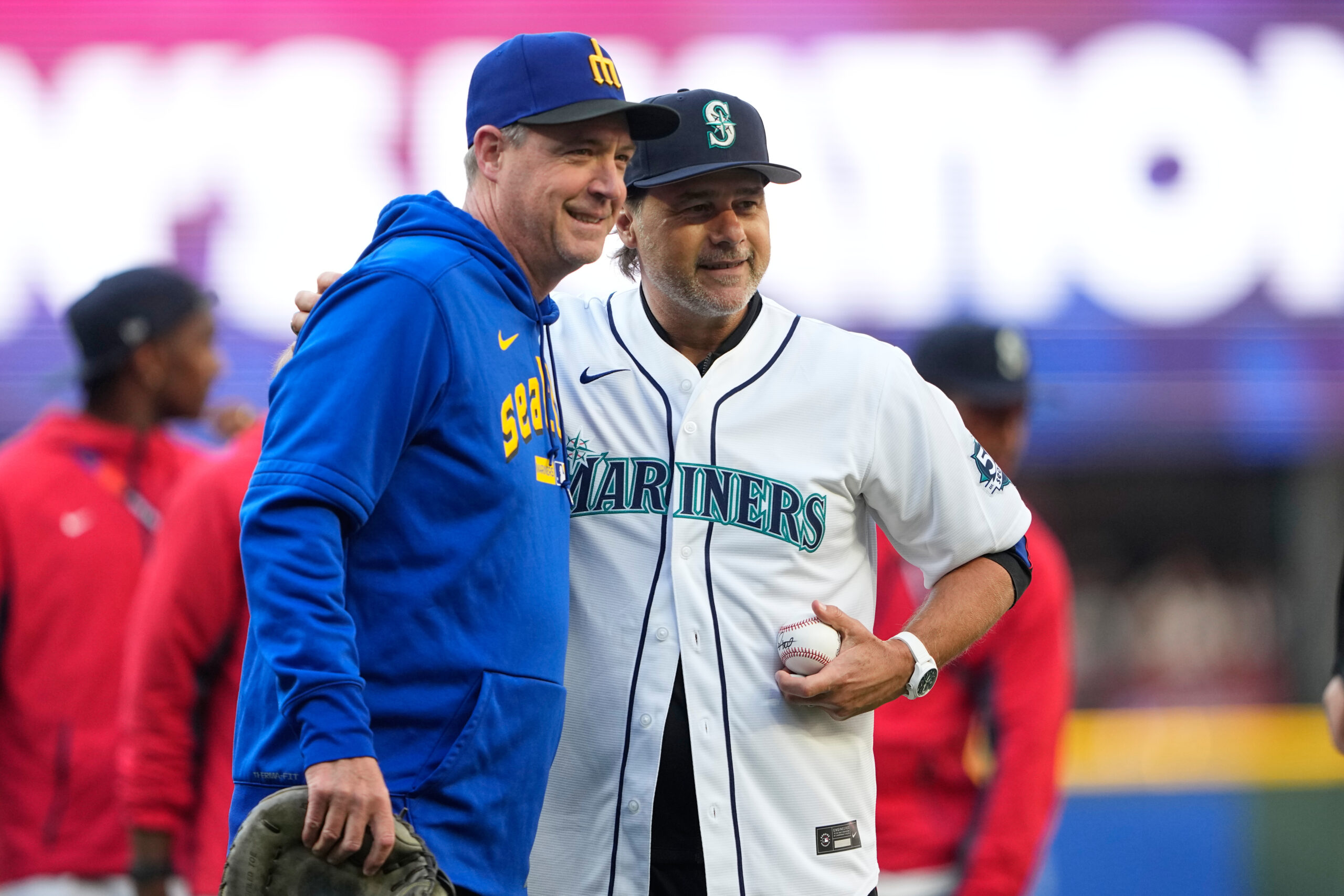
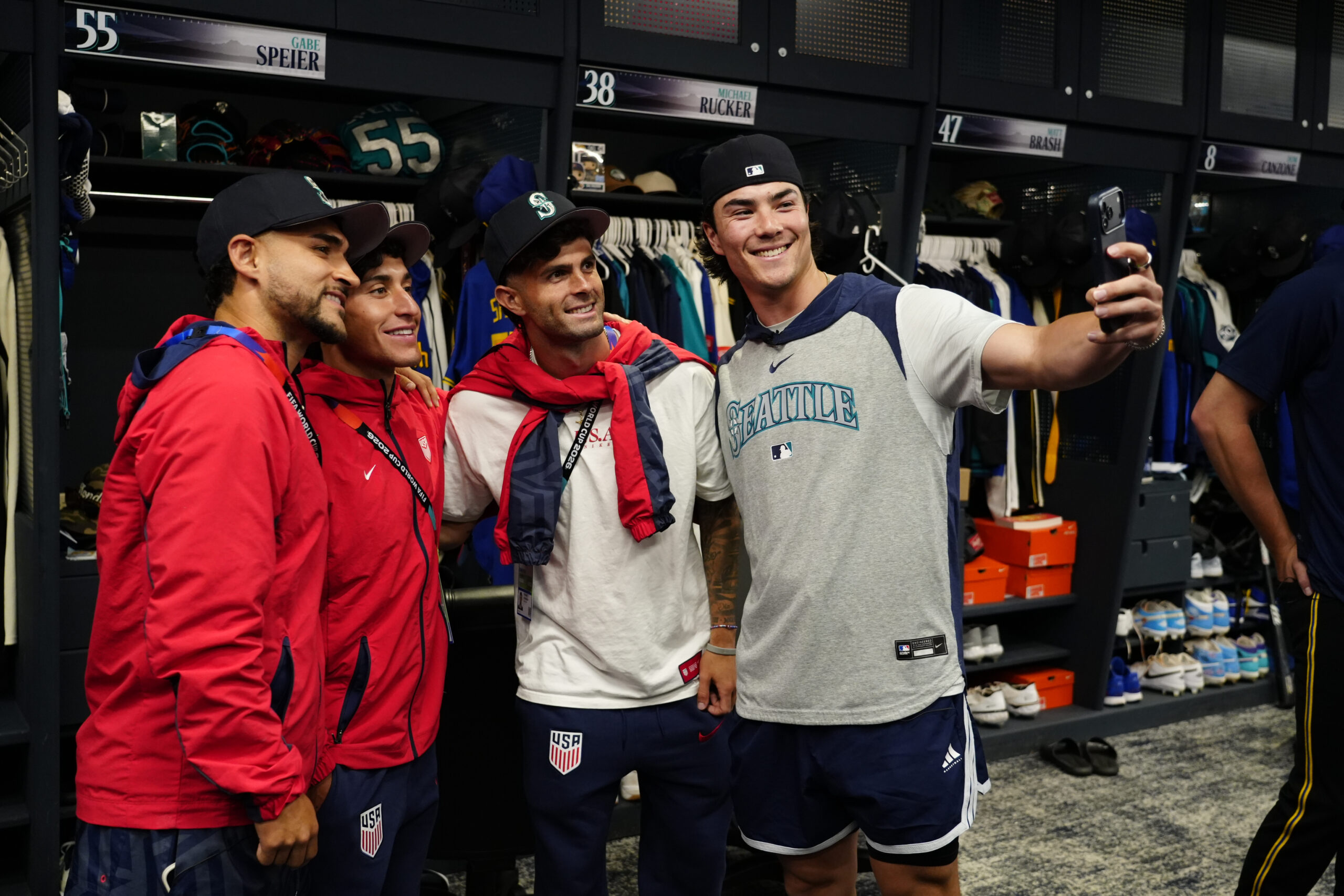
    The U.S. squad met the Mariners in their clubhouse before the game, and were introduced to a cheering crowd one-by-one on a red carpet. Manager Mauricio Pochettino then stepped to the foot of the mound and threw the ceremonial first pitch.

    Mauricio Pochettino throws a fine first pitch for a soccer manager who might not ever have picked up a baseball before this morning:

    #USMNT

    [image or embed]

    — Jonathan Tannenwald (@jtannenwald.bsky.social) July 3, 2026 at 7:18 PM

    For an Argentina native who barely had any baseball experience before now, his throw to Mariners manager Dan Wilson was impressively clean.

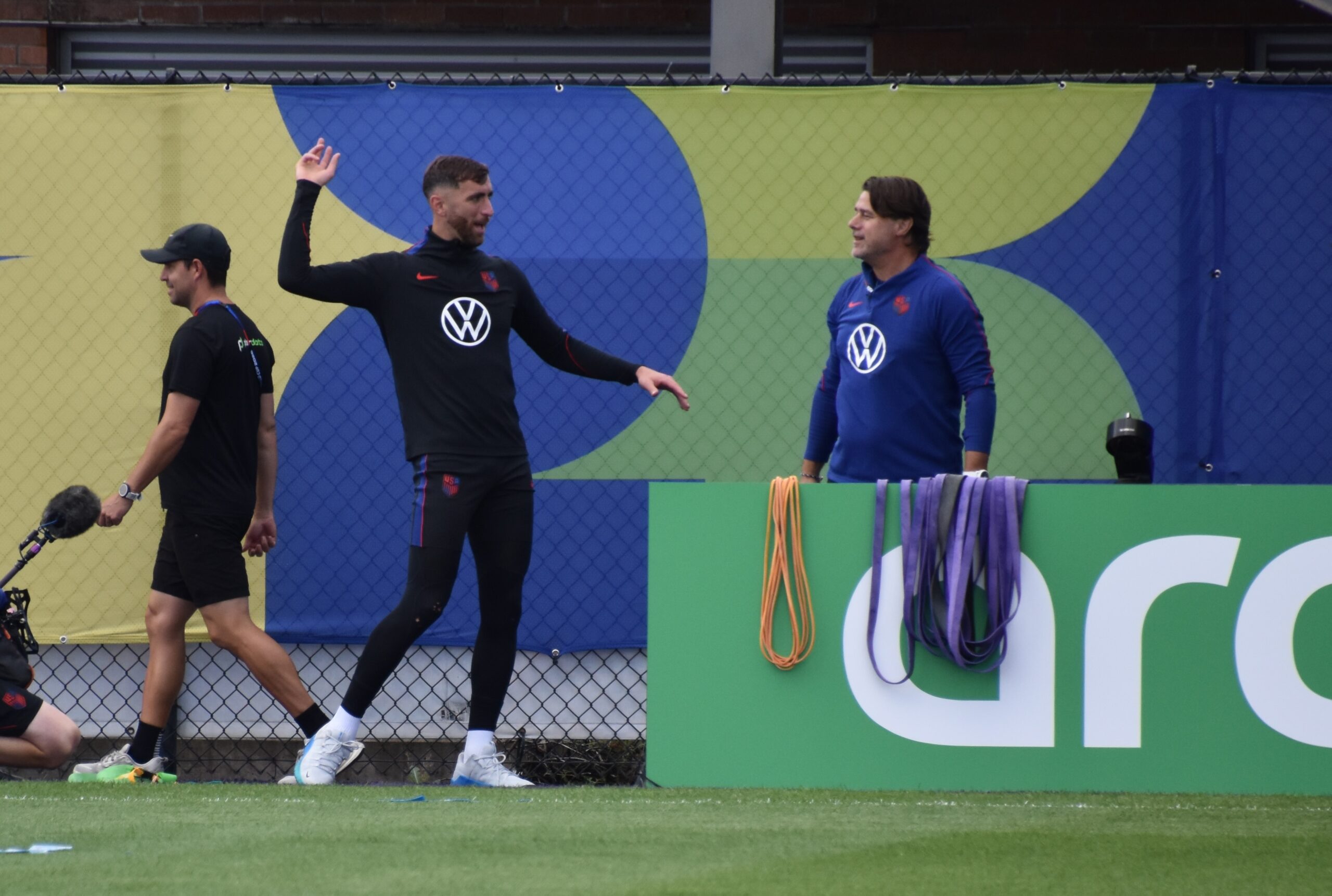
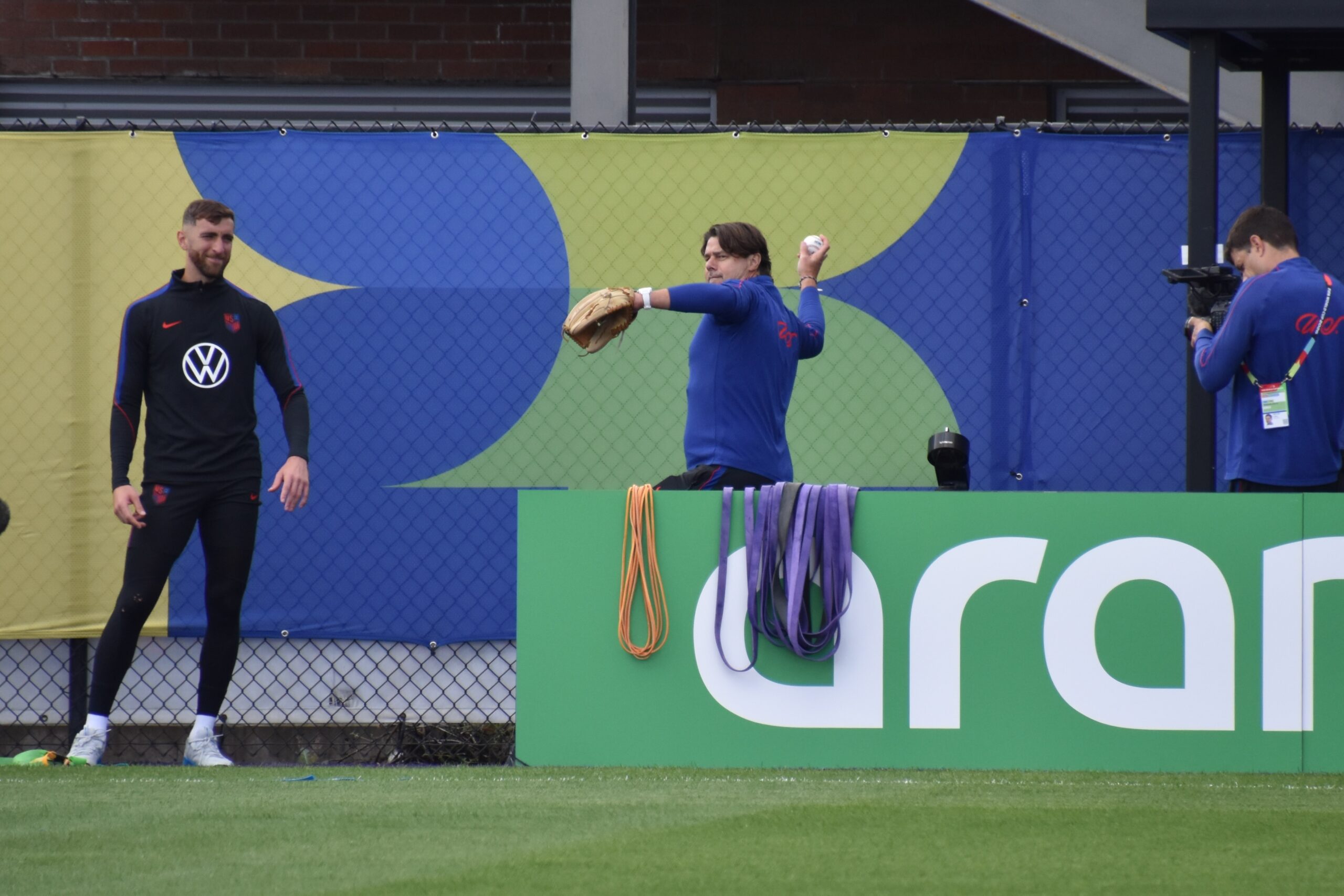
    Pochettino practiced some in the morning, before his team got to work on the University of Washington’s soccer field across town. The Huskies’ baseball team lent balls and gloves, and U.S. backup goalkeeper Matt Turner — who played shortstop at St. Joseph Regional High School in north Jersey — gave his boss some tips on throwing form.

    Matt Turner (left) giving Mauricio Pochettino advice on how to throw a baseball at Friday morning’s U.S. practice.

    “It’s amazing to be here again and feel your support,” Pochettino told the crowd. “The city is amazing. It’s a baseball city. It’s a soccer city. Thank you so much — thank you to the 12th man.”

    That bonus reference to Seahawks football fans was one of a few cultural crossovers in a city with big stadiums are a block from each other at the southern edge of downtown.

    The U.S. men’s soccer team and the Mariners got together on the field for a photo after the ceremonial first pitch.

    Between the Mariners and Jays’ pregame warmups, John Fogerty’s classic baseball anthem “Centerfield” played on the T-Mobile Park public address system while extra time of the Argentina-Cape Verde game was shown on the big screen, including the moment Argentina took a lead. A gaggle of fans with field access gasped as they watched the goal.

    A few minutes later, the World Cup’s official song, “Dai Dai” by Shakira and Burna Boy, was the DJ’s pick for the playlist. And not long after that, the fans gasped again when Cape Verde tied the score a second time, then once more when Argentina scored a late winner.

    “To have the USA team here earlier [in the tournament] and now to have them back, I think is pretty cool,” Wilson said. “And a chance to meet some of these guys, and [have] the fans give them a chance to show their appreciation for the job that they’ve done. Obviously, this is a global event that has been followed all over the world, and it’s exciting. It brings people together.”

    Mariners manager Dan Wilson (left) with Mauricio Pochettino.

    That appreciation certainly arrived. Though the Blue Jays always bring lots of fans for their visits here thanks to a big fan base in nearby Vancouver, there were big cheers as the U.S. players were introduced individually. Cristian Roldan drew the biggest, as the Seattle Sounders stalwart was saved for last. He brought the Mariners’ trident out with him and said a few words as the U.S. and Mariners squads gathered for a group photo.

    “Thank you, Seattle — thank you for the love and support,” Roldan said. “Let’s go win a World Cup! Go USA; go Mariners!”

    Cristian Roldan brings out the Mariners’ trident:

    #USMNT

    [image or embed]

    — Jonathan Tannenwald (@jtannenwald.bsky.social) July 3, 2026 at 7:07 PM

    As everyone left the field, John Denver’s “Country Roads” played, the U.S. team’s song of choice for the tournament.

    The Mariners’ active roster is as global as any in baseball, with players from six countries. Center field Julio Rodríguez, a Dominican Republic native, has befriended French World Cup winner and soon-to-be Orlando City playmaker Antoine Griezmann. (Rodríguez wasn’t around to talk about that on Friday because he’s sidelined with a concussion.)

    “We have players from all over, and many of them played soccer as kids,” Wilson said. “I think that’s what the beauty of the event of the World Cup is: It affects so many people. Yeah, these guys are watching the games, and you always know when a team scores because you hear it down the hall. So it’s pretty fun.”

    Mariners pitcher Bryan Woo (right) took a selfie in the locker room with (from left) Cristian Roldan, Alejandro Zendejas, and Christian Pulisic
  • Folarin Balogun has already moved on from his red card, and backs the USMNT to do the same

    Folarin Balogun has already moved on from his red card, and backs the USMNT to do the same

    SEATTLE — Folarin Balogun still isn’t happy about the red card he was given in Wednesday’s U.S. World Cup win, but he isn’t lingering on it.

    “I feel calm right now, I feel OK,” the striker said at Friday’s practice, his first time speaking with the media since the ejection. “We’re going to go out to practice, and always, being on the practice fields just helps me to take my mind off things. So, yeah, for me, you know, it’s another day.”

    FIFA’s rules don’t allow appeals of red cards, and the nature of the incident meant an appeal very likely would not have won despite Balogun’s lack of intent. At least there won’t be any additional suspension, which U.S. Soccer and FIFA confirmed Friday.

    “If you played the game, you would understand, there’s scenarios that you simply can’t avoid, and it has to be taken into context when it’s being reviewed,” Balogun said. “I felt it wasn’t on this occasion. I think, as you all saw, there’s nowhere else to put your leg — it’s going to be unavoidable.”

    He acknowledged the wide range of opinions out there, and concluded that “a yellow card would have been fair. It’s something that’s happened, so we have to move forward, and I have to accept it, but the most important thing is just to focus on the bigger picture, which is Belgium.”

    Balogun also admitted he had “a roller coaster” of emotions in the wake of the incident, but he returned to the goal of staying calm in a heated moment.

    “I’ve been upset, I’ve been happy — it’s been surreal, to be honest,” he said of a game where he also scored the opening goal. “But for me, I think it was just important to stay calm. I never want to react out of anger and out of emotion. There’s still lots of people we’re inspiring, little kids, boys and girls who are watching, and we have to show them the correct way to handle things, even when you think it’s unjust.”

    After the final whistle Wednesday, Balogun returned to the field to shake hands with Brazilian referee Raphael Claus. That was a nice gesture of sportsmanship, and one Balogun said he tries to make after every game he plays.

    Flo Balogun on the field with his USMNT teammates after the match and shook the hands of all referees. Didn’t linger or seem to protest.

    [image or embed]

    — Tom Bogert (@tombogert.bsky.social) July 1, 2026 at 7:08 PM

    “Even though you can feel like something unjust has happened to you, it’s not an excuse to be disrespectful, or to not do the right thing,” he said. “The most important thing for me is to give the correct example to people watching. I’m aware that the World Cup might be the first time a lot of American viewers are tuning in, so it’s important just to show people, whether things happen to you good or bad, just to continue to be yourself.”

    For now, he will be the team’s biggest fan, hoping that Ricardo Pepi or Haji Wright can step in and help the Americans topple Belgium in Monday’s round of 16 contest — the biggest game in U.S. men’s soccer history (8 p.m., Fox29, Telemundo 62).

    “Just to support the boys, support the team,” Balogun said. “I love seeing how engaged the country is in our journey, and what we’re doing. So I think my role is just to continue to support everybody, to keep morale high.”

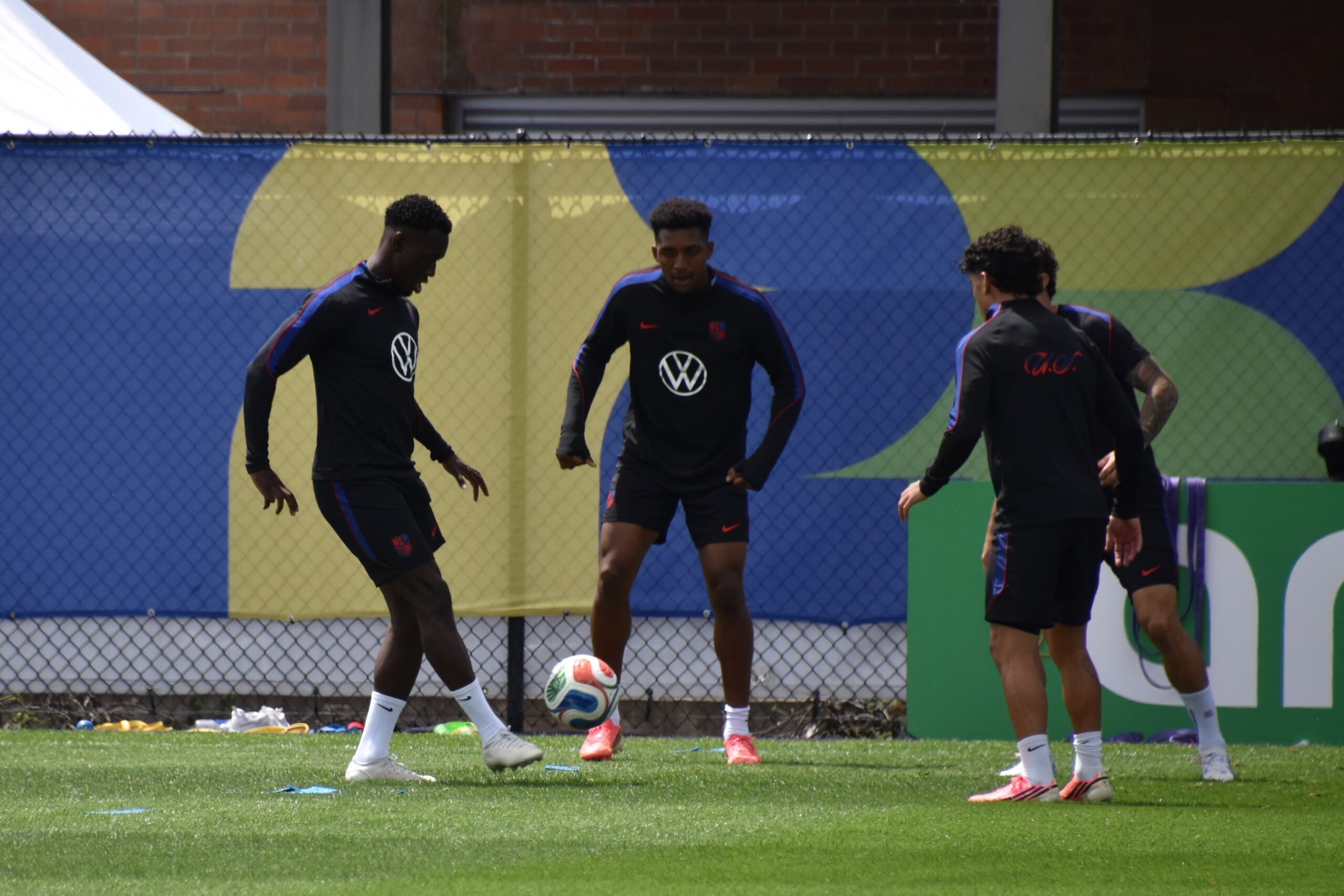
    Folarin Balogun (left) working out at Friday’s U.S. practice.

    A baseball diversion

    The U.S. team was to be honored at Friday night’s Seattle Mariners game, with manager Mauricio Pochettino throwing out the first pitch.

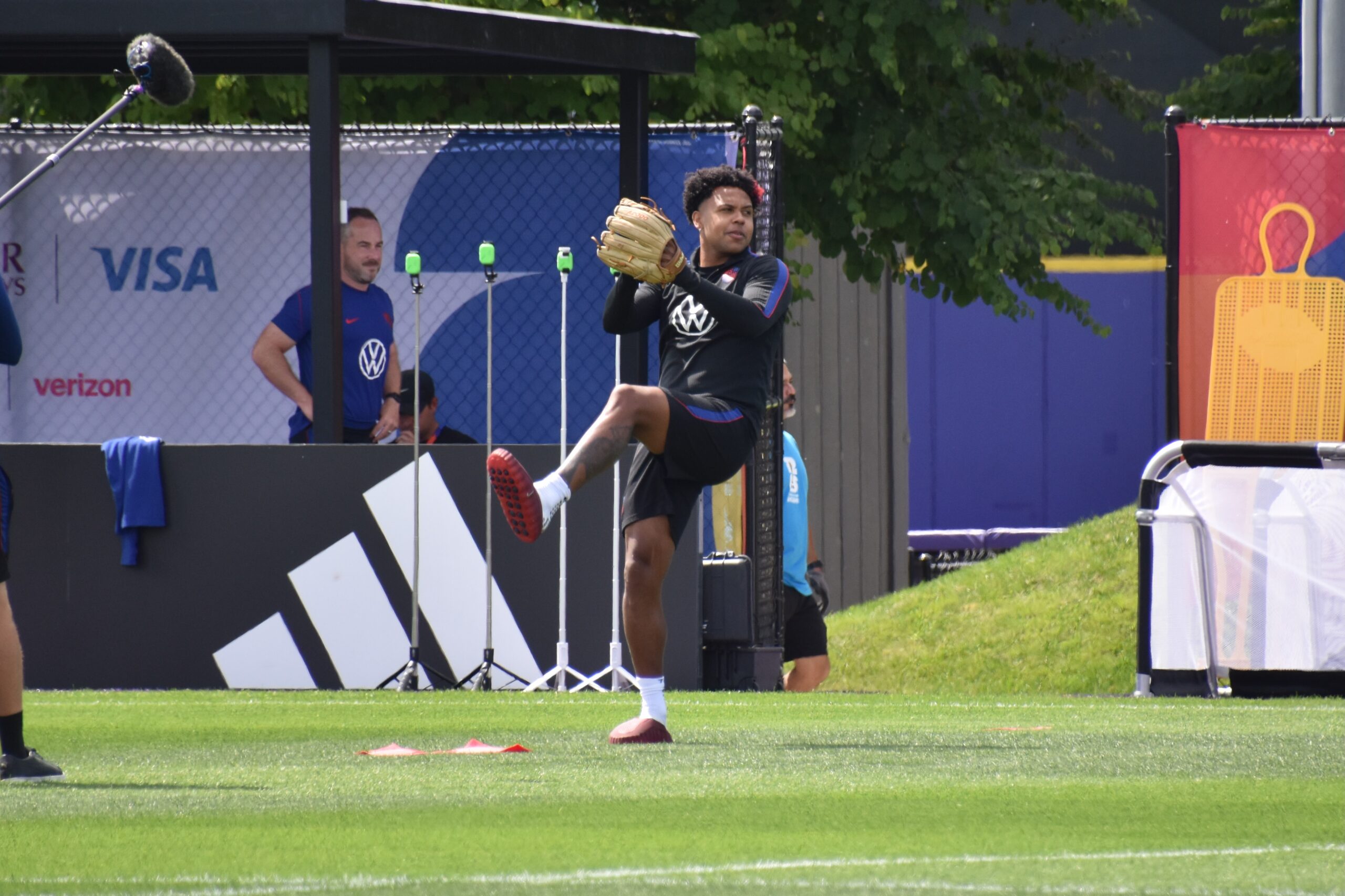
    With that in mind, one of the first warmup exercises at U.S. practice was a round of long toss among some of the players. Tim Ream, Matt Turner, Weston McKennie, and Alejandro Zendejas passed around balls and gloves provided by the University of Washington’s baseball program, whose stadium is next door to the soccer field where the Americans trained.

    Texas natives McKennie and Zendejas hammed it up a bit for the cameras, the former doing his best Nolan Ryan impression with windups and throws to the latter. Zendejas tried his luck at a catcher-style crouch for a while, then thought better of it and took the rest on one knee.

    Pochettino also got some practice in Friday morning, with Turner offering some tips on technique.

    Mauricio Pochettino (center) practices throwing a baseball during the United States men’s national soccer team’s practice at the University of Washington.

    Balogun was born in New York but grew up in London, so he likely knows more about cricket than America’s bat-and-ball sport. But he certainly relished the invitation to take in this country’s pastime, and the chance for a little fun in a serious week.

    “I think that sort of stuff can only happen in America,” he said. ” I’m very, very proud — this is a very unique experience for me, being in the World Cup in your home nation. And yeah, I think you’re seeing, we’ve been able to be so focused, but at the same time have so many things we can do to distract ourselves, and to take our mind off the high-pressure environment.”

    Weston McKennie winds up to throw a pitch.
  • The Big Picture: World Cup mayhem, fireworks at the Bank, and the best Philly sports photos of the week

    The Big Picture: World Cup mayhem, fireworks at the Bank, and the best Philly sports photos of the week

    Each Friday, Inquirer photo editors pick the best sports images from the last seven days. This week, we look at the Pennsylvania showdown between the Phillies and the Pirates that for much of the series was a display of the Fightins’ dominance — until it wasn’t.

    The women’s basketball championship at inaugural Invitational Clash at Drexel University had no shortage of fireworks, literally, and we take a look at the penultimate game of the World Cup in Philly, the Group L clash between Croatia and Ghana.

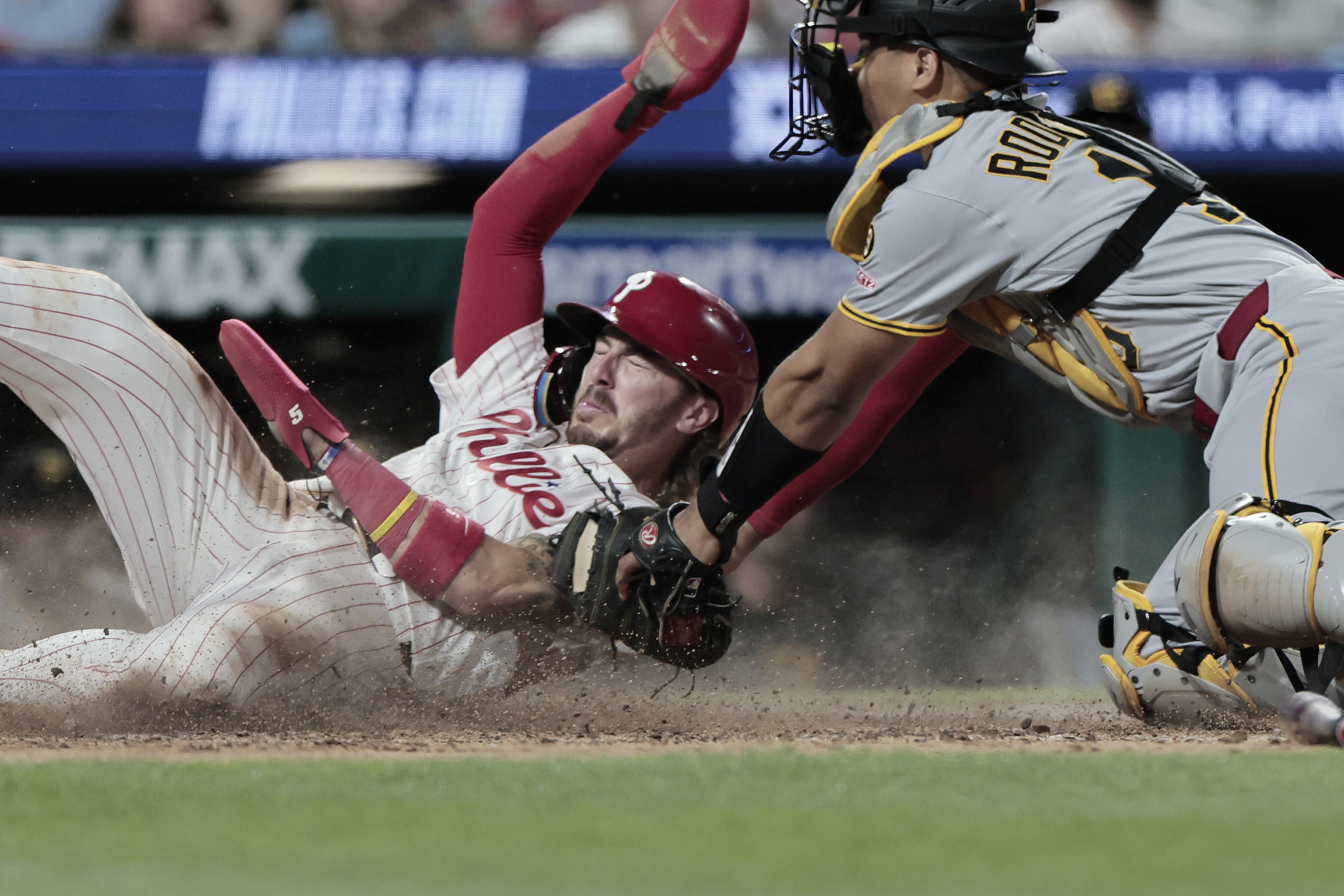
    Bryson Stott (left) scores ahead of the tag by Pirates catcher Endy Rodríguez in the eighth inning of the Phillies-Pirates game on Tuesday.
    Kyle Backhus pitches in the fifth inning of the Phillies’ game vs. the Pirates on Wednesday.
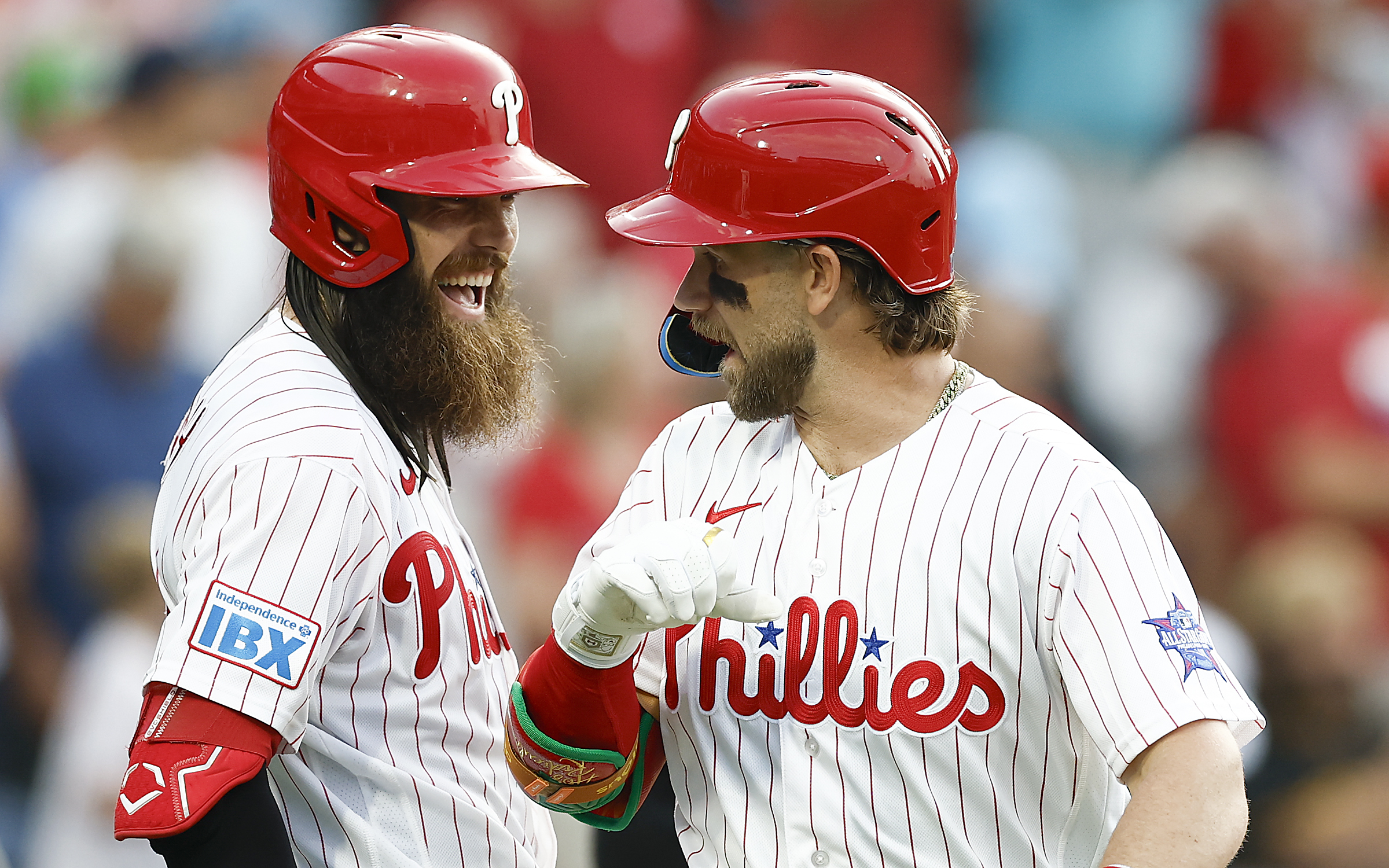
    Bryce Harper (right) celebrates his third inning two-run homer with teammate Brandon Marsh against the Pittsburgh Pirates on Monday.
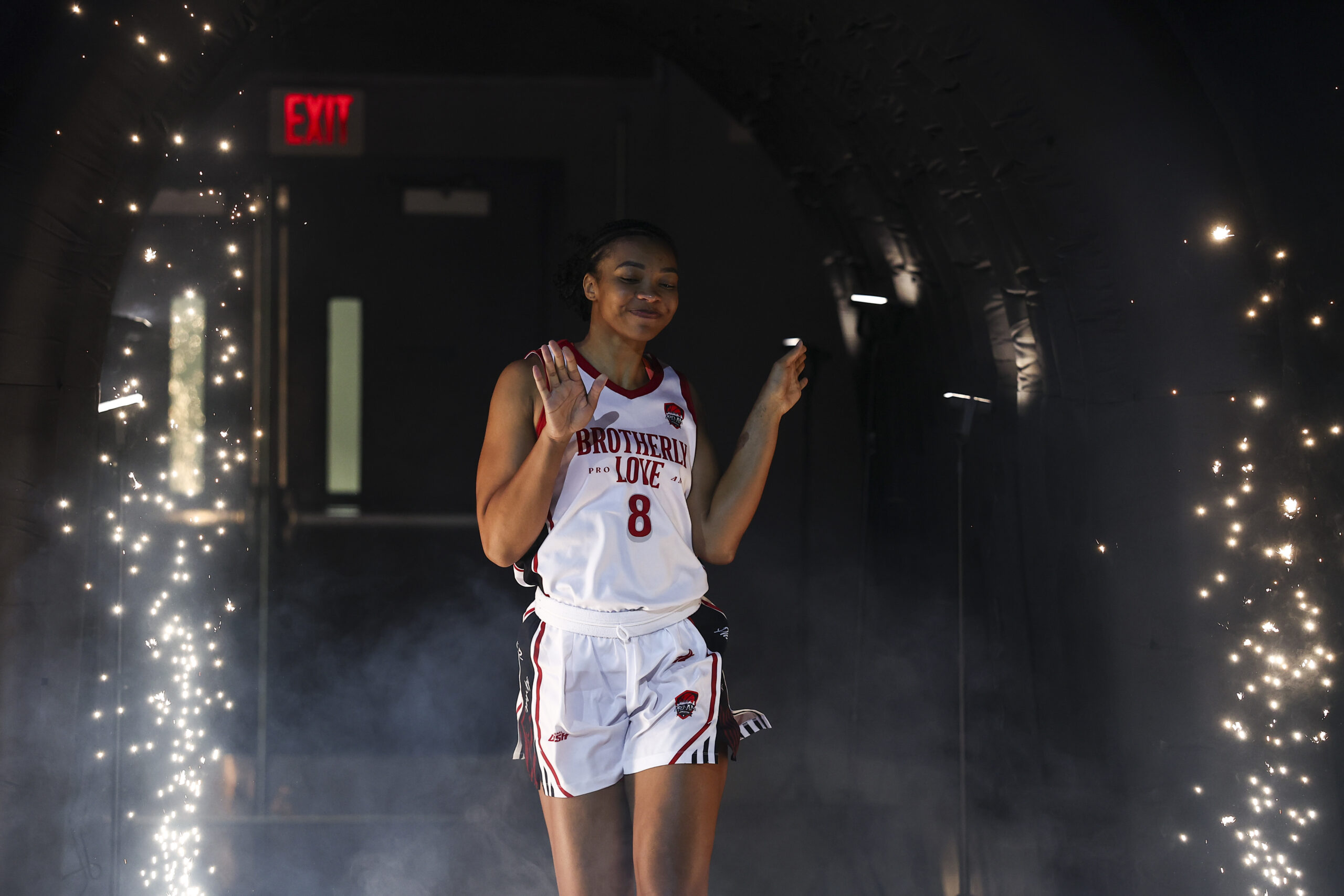
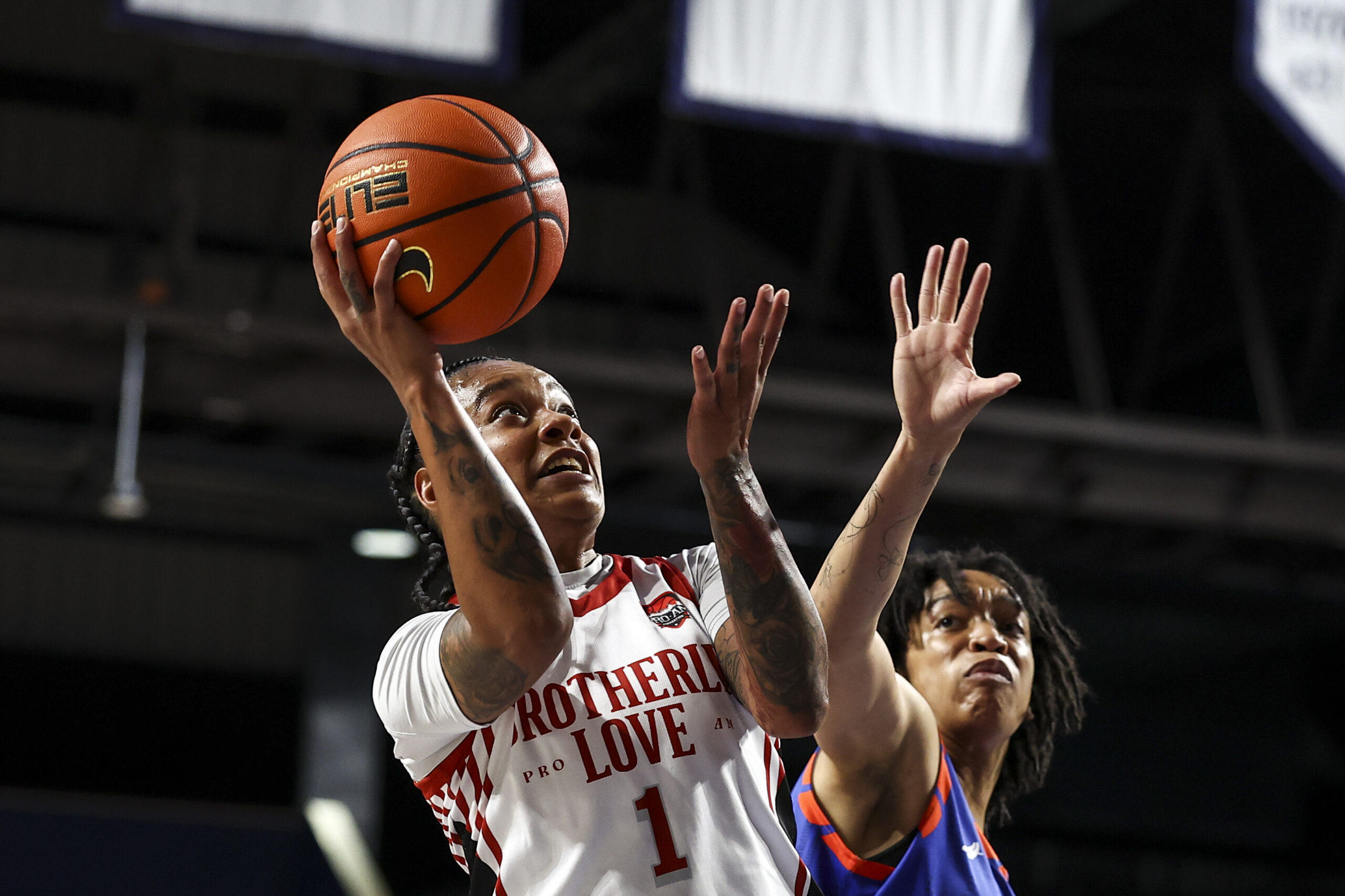
    Brotherly Love player Imani McGee takes the court during the Invitational Clash women’s championship at at Drexel on Monday.
    Brotherly Love’s Britt Hrynko (left) is defended by Rucker Park’ Roxkel Washington during the Invitational Clash women’s championship on Monday at Drexel.
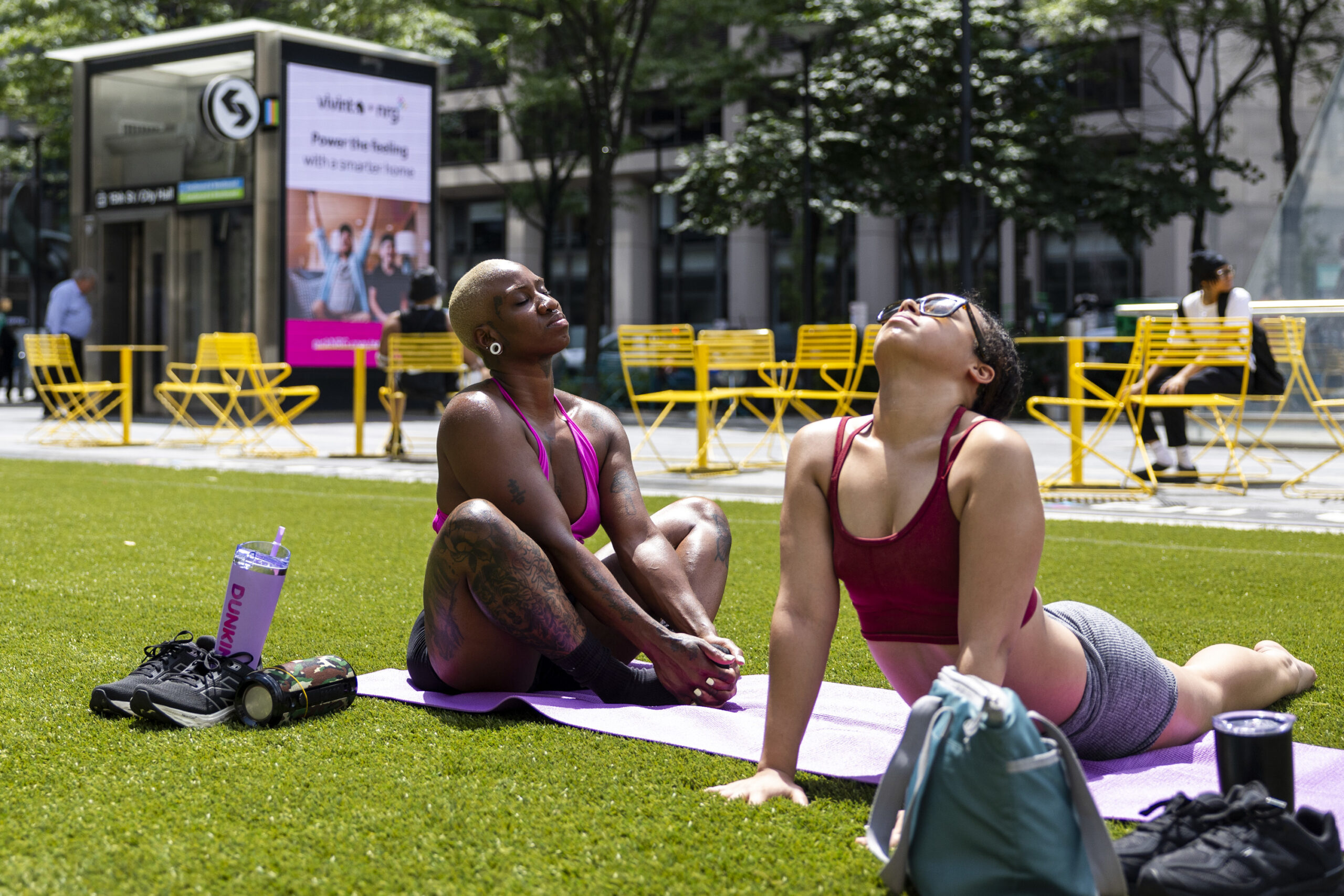
    (From left to right) Tia Garvin, 33, of North Philadelphia, and their cousin Briana Garvin, 24, of New York City, enjoy the sun while doing some yoga and stretches at Dilworth Park in on Tuesday.
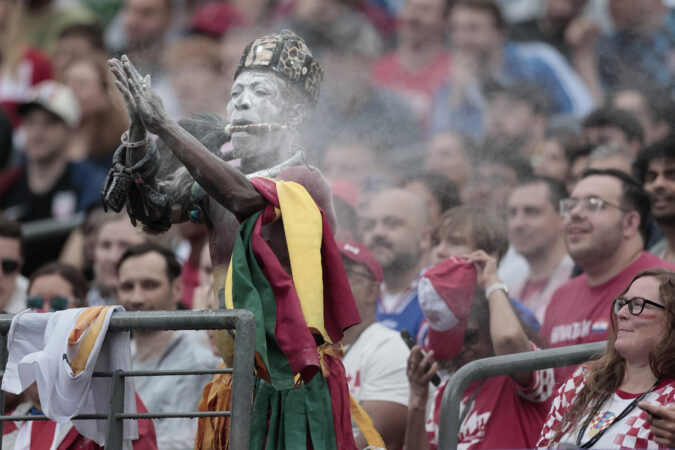
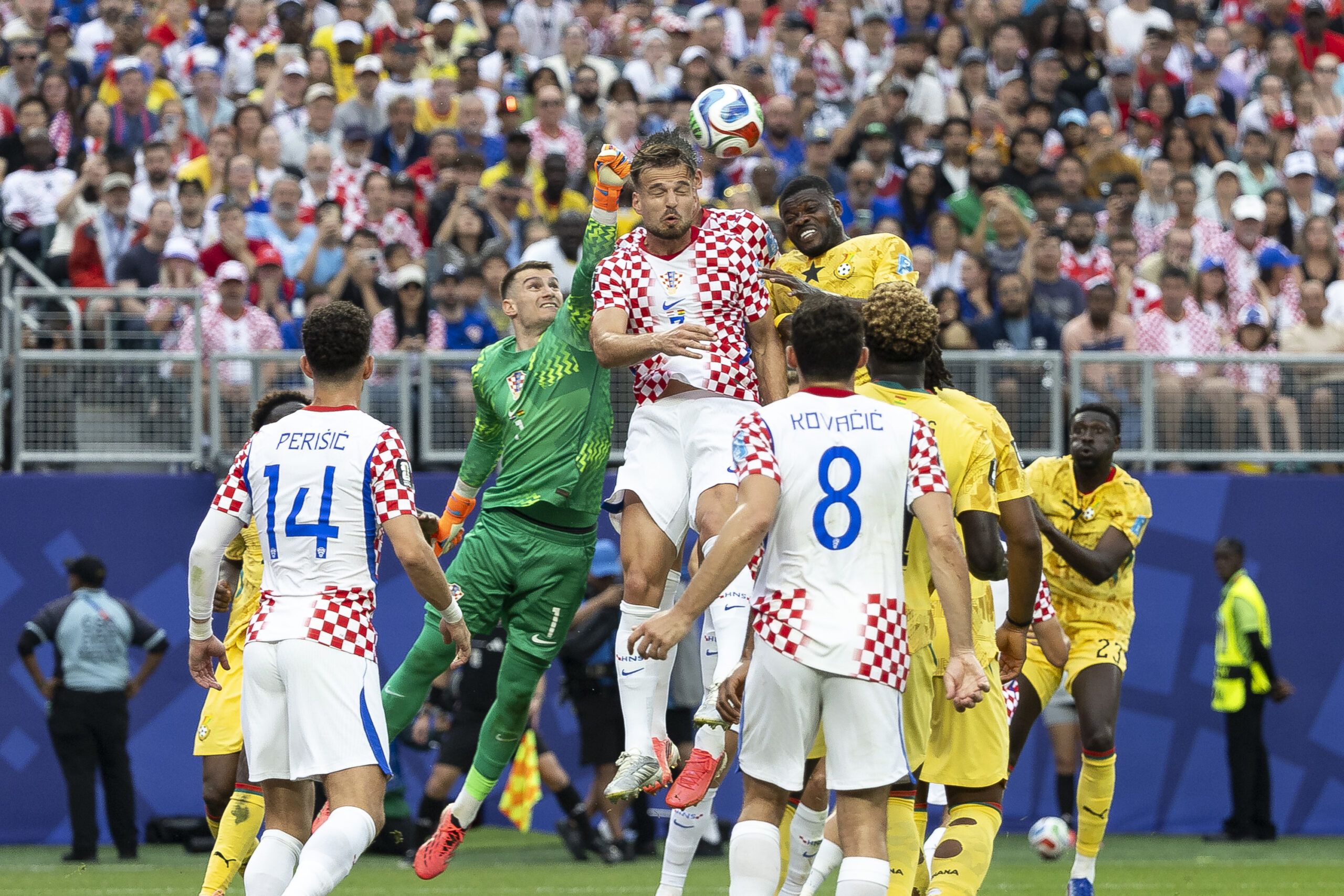
    Croatia’s Marin Pongracic (3), goes for a header to defend a corner kick by Ghana during the second half of their World Cup group stage game on Philadelphia Stadium on Saturday.
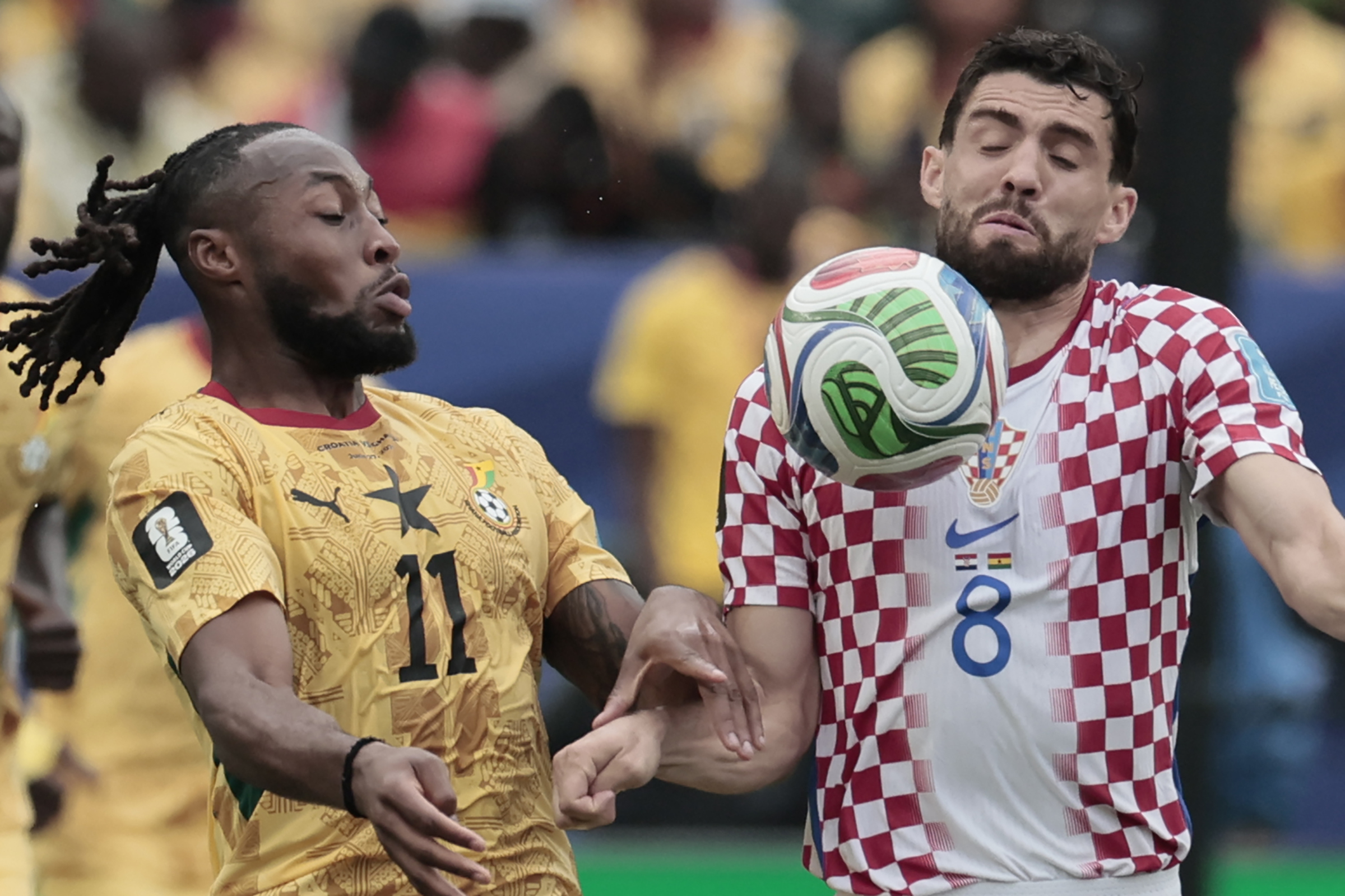
    Ghana’s Antoine Semenyo (left) and Croatia’s Mateo Kovacic battle for the ball in the first half of their match on Saturday at Philadelphia Stadium.
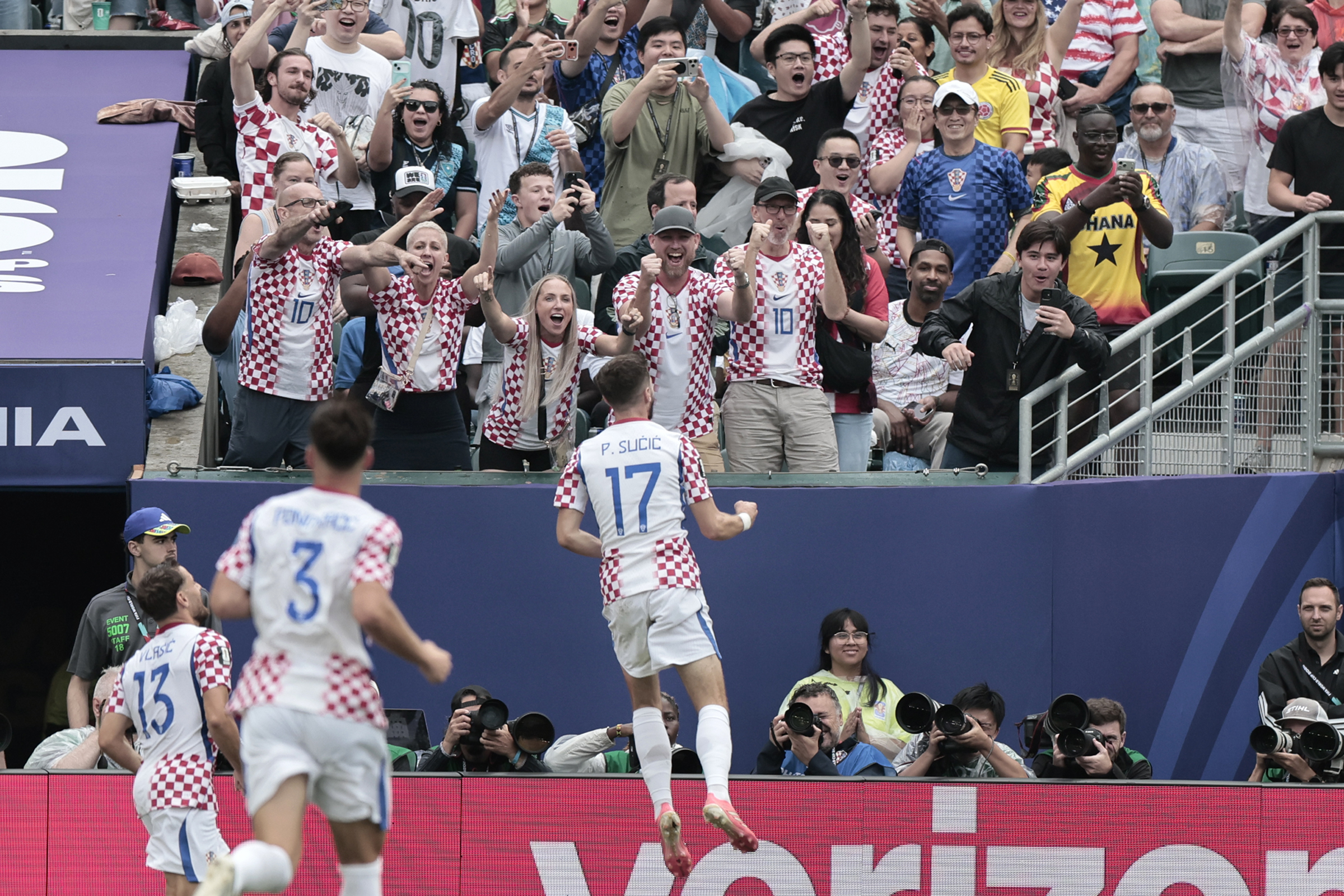
    Croatia’s Petar Sučić (center_ celebrates his first half goal in front of Croatia fans during the their Group L match against Ghana on Saturday.
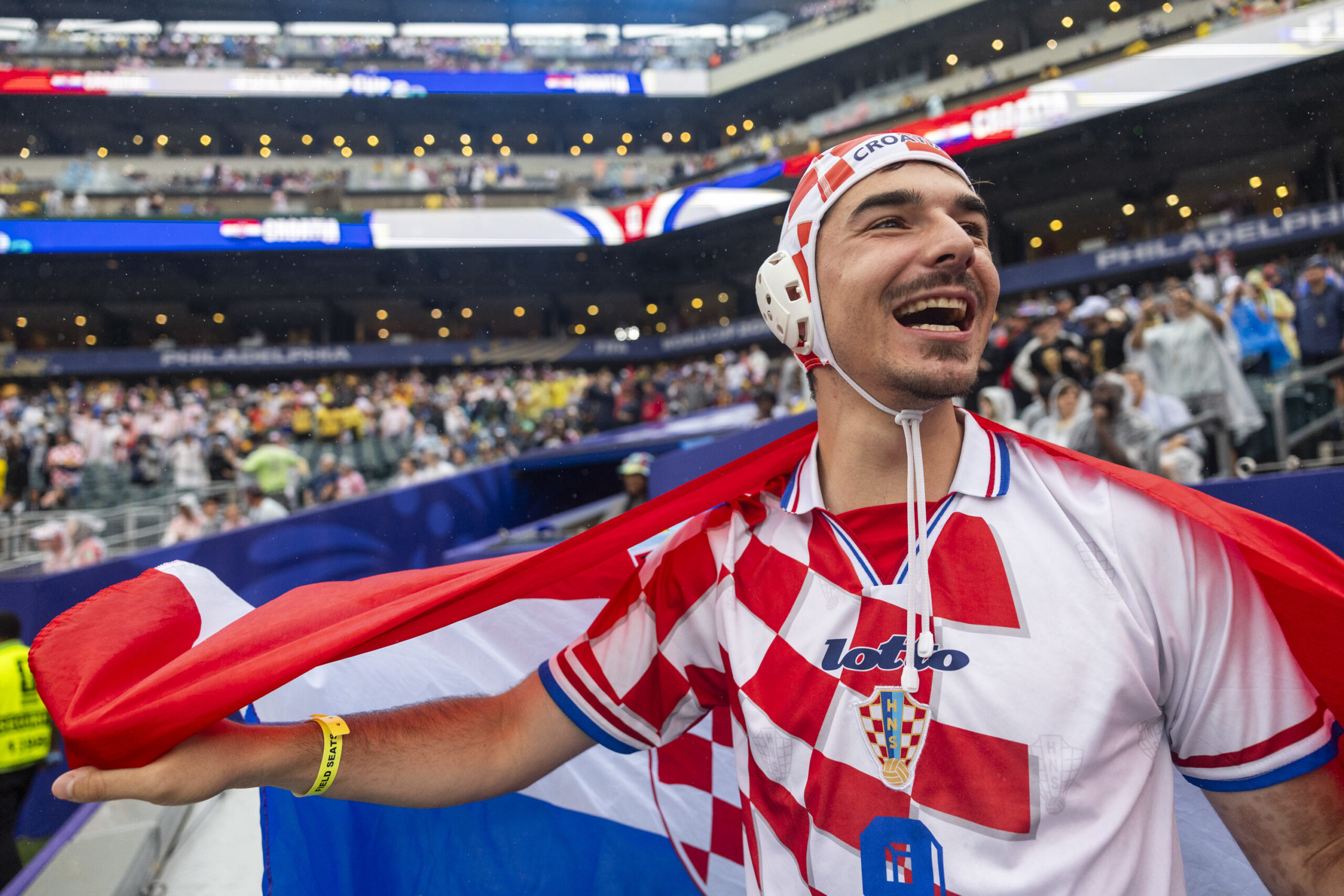
    Carter Pike, 23, of Greenville, S.C., cheers for Croatia before their match against Ghana in Philadelphia on Saturday.
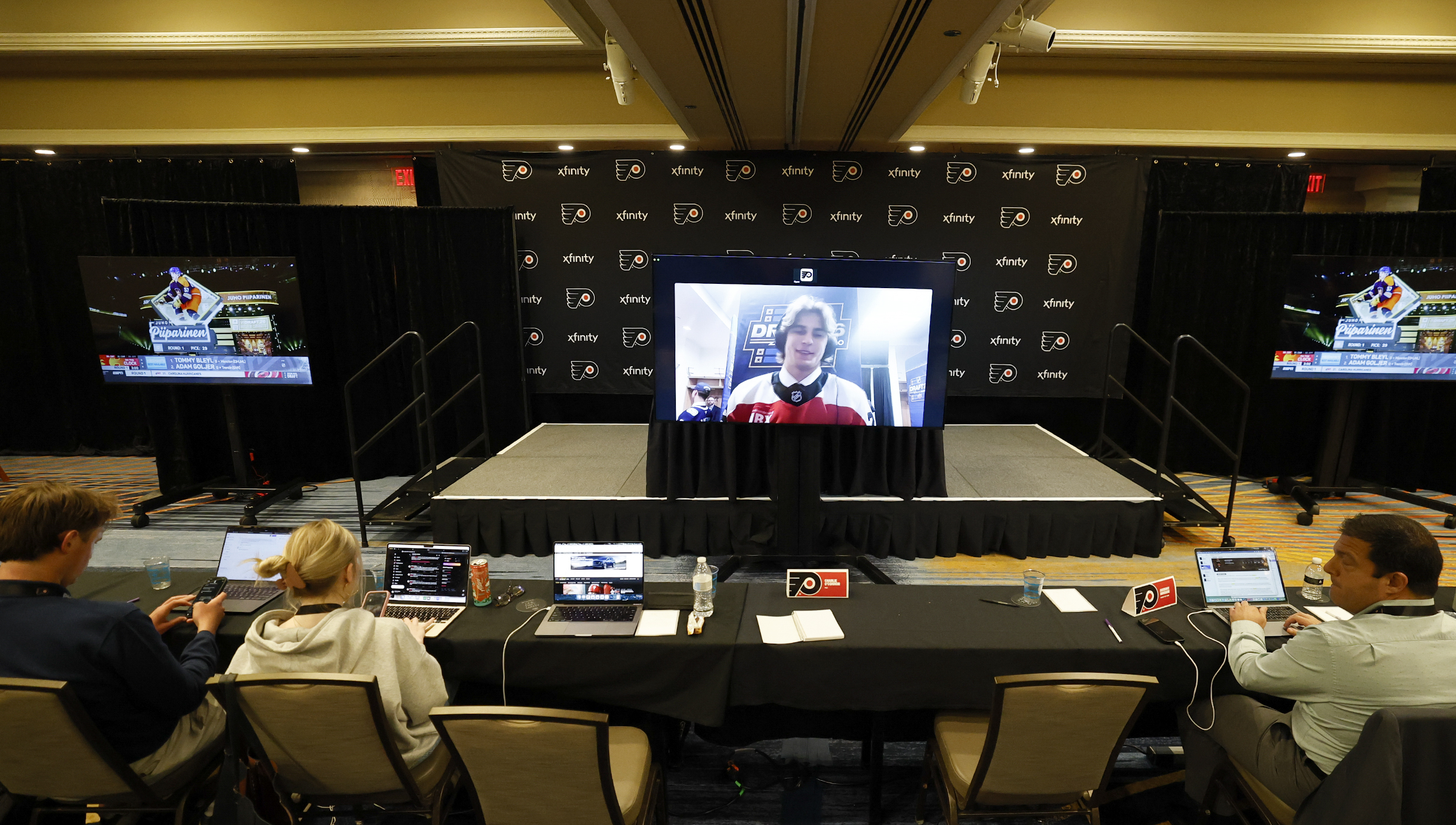
    Flyers first-round pick pick Maksim Sokolovskii meets with the media at the Flyers’ 2026 NHL draft party at the Hard Rock Hotel & Casino in Atlantic City last week.
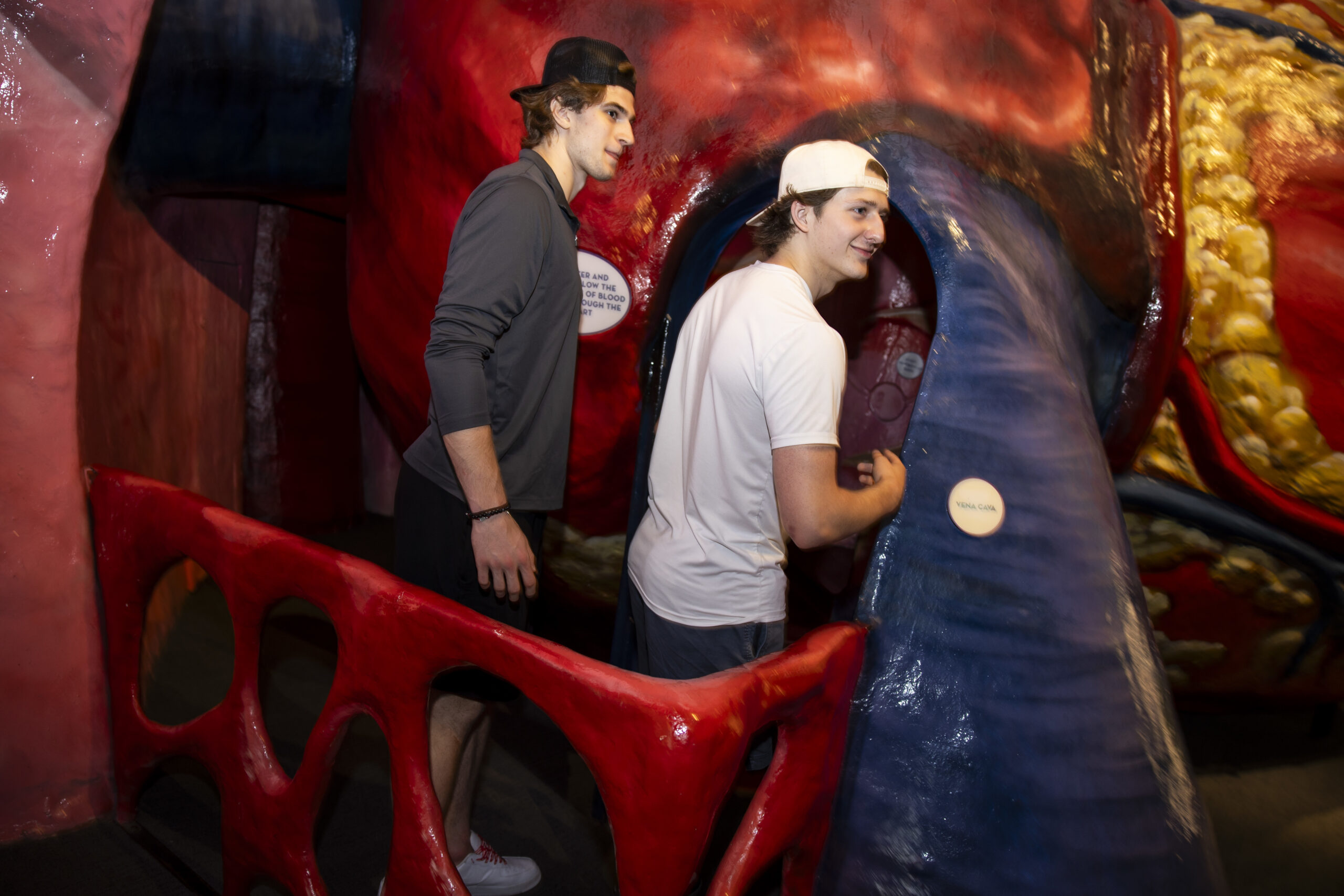
    Flyers prospects Maksim Sokolovskii (left) and Brek Liske walk through the giant heart during the Flyers development camp signing event at the Franklin Institute on Wednesday.
    The fireworks looked out of this world following the Pirates-Phillies MLB game on Wednesday at Citizens Bank Park.
  • Watching the World Cup ‘got him out of bed in the morning.’ Now, this 9-year-old is going to a game.

    Watching the World Cup ‘got him out of bed in the morning.’ Now, this 9-year-old is going to a game.

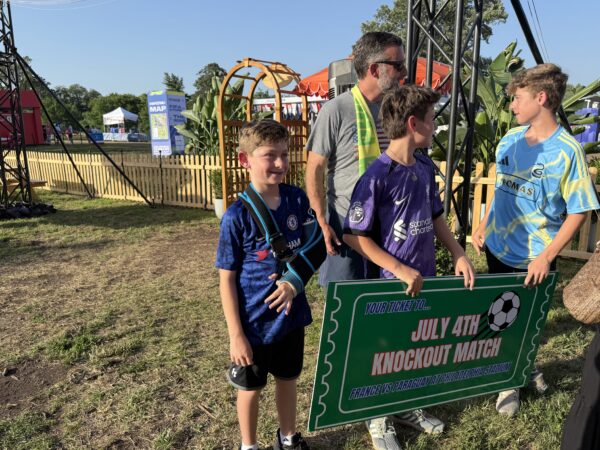
    Jaws dropped and eyes widened on Thursday evening at the FIFA Fan Fest when a 9-year-old’s broken arm secured his family tickets to Saturday’s World Cup game in South Philly.

    Ben Snyder, of Villanova, was just trying to go play with his neighbor when, the day before summer break, he fell hopping over a fence and broke his elbow. The injury required surgery and weeks in a cast. Crushed that he had to miss out on soccer camp and a summer full of playing his favorite game, his mother, Carrie Snyder, stepped in.

    “I sent a very heartfelt, random email one day after coming home from the hospital with Ben,” Carrie Snyder said. “Unbelievably, it was responded to. Ben loves soccer and FIFA, and watching the World Cup every day was the only thing that really got him out of bed in the morning. We didn’t expect any of this, so for Ben to have some light this summer is really amazing.”

    “I’m shocked. I can’t believe it,” Ben Snyder said after being surprised with tickets for Saturday’s game, in which France will face Paraguay at Philadelphia Stadium (aka Lincoln Financial Field). Kickoff is set for 5 p.m. (Fox29).

    Snyder said he’s been playing soccer for as long as he can remember. His older brothers, Will, 15, and Charlie, 13, also are soccer players. Their backyard even is outfitted with goals at each end so they can play year-round. Despite being the youngest, the Snyder boys agree that Ben is the biggest soccer fan of them all.

    “Because of the broken arm, he’s kind of been glued to the couch,” Will Snyder said. “He’s been watching all the games, and he has a board set up in the family room with a bracket and everything. It’s easy to tell he’s hooked.”

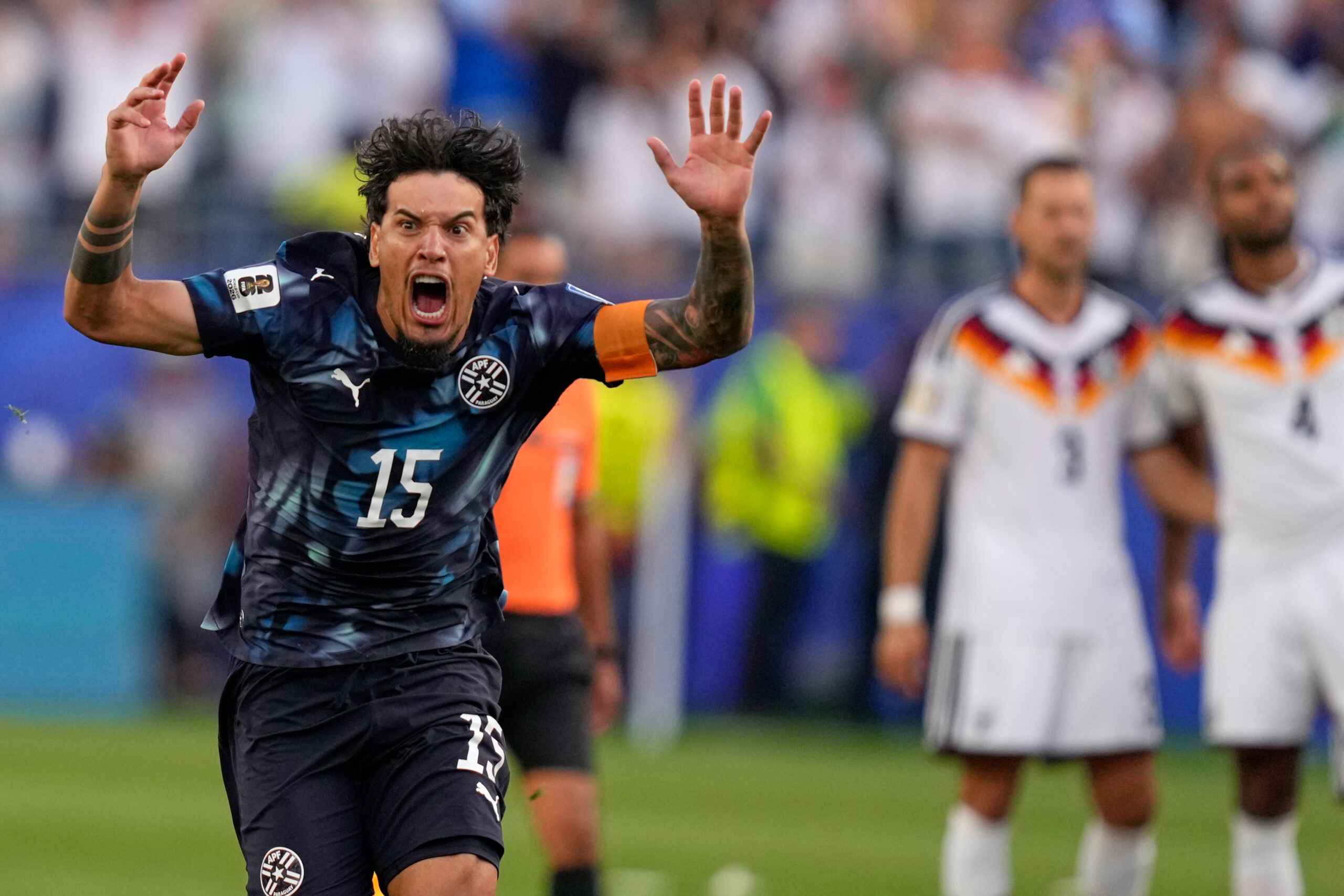
    Paraguay’s Gustavo Gomez celebrates after upsetting Germany in the World Cup’s round of 32 on June 29 in Foxborough, Mass.

    Ben Snyder’s love for the game runs deep. He’s dressed as soccer players for Halloween nearly every year and has become a World Cup enthusiast. He can name every tournament winner dating back to 1930 and correctly identified Uruguay as the inaugural champion. For this World Cup, though, he is hoping the United States pulls through.

    “My favorite player is Gio Reyna,” he said. “I think they could definitely become a dominating team. The U.S. is playing really well right now. They did good in the group stage, and I’m proud of how they’ve played so far.”

    That passion and knowledge caught the attention of the team at Philadelphia Soccer, which wanted to provide a once-in-a-lifetime experience.

    “We got this really nice note that was just asking if we could help cheer Ben up,” said Meg Kane, host city executive and CEO for Philadelphia Soccer 2026. “I don’t think they ever expected that their brother’s broken arm was going to lead to them going to the FIFA World Cup, but to see Ben’s face light up in such shock and delight is a memory for all of us and, I hope, creates a core memory for their family.”

    It will be a long road to recovery, but the family hopes Ben will get his first cast off in a couple of weeks. Until then, the Radnor Soccer Club player will be watching every game. But seeing one live, he said, is an experience he’ll never forget.

    “Never in a million years did we expect this,” Carrie Snyder said. “This is a big deal for our family. I think Ben’s in shock.”

  • Malik Tillman’s heroics helped the USMNT survive Folarin Balogun’s red card and make World Cup history

    Malik Tillman’s heroics helped the USMNT survive Folarin Balogun’s red card and make World Cup history

    SANTA CLARA, Calif. — Malik Tillman’s shoe was broken.

    He’d been stepped on by a Bosnian player, not hard enough to need to leave the game but enough to need a replacement cleat from the bench.

    The new one didn’t have any magic dust, but it didn’t need it. Tillman practices free kicks a lot, so he was ready when the moment came.

    His team was a goal up, a man down, and fighting with every ounce it had to secure its first men’s World Cup knockout win in 24 years. In the 82nd minute, the chance to regain momentum finally arrived.

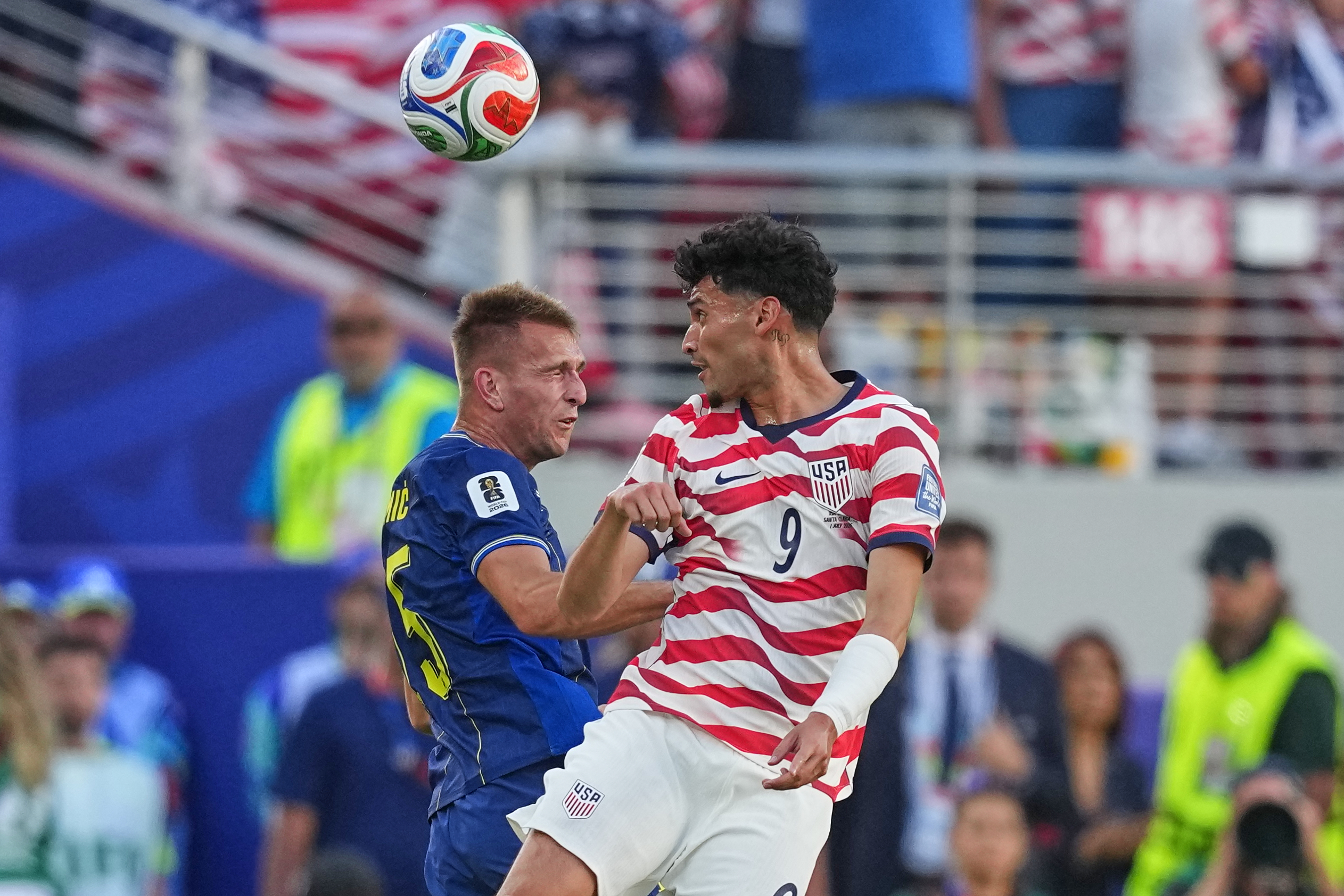
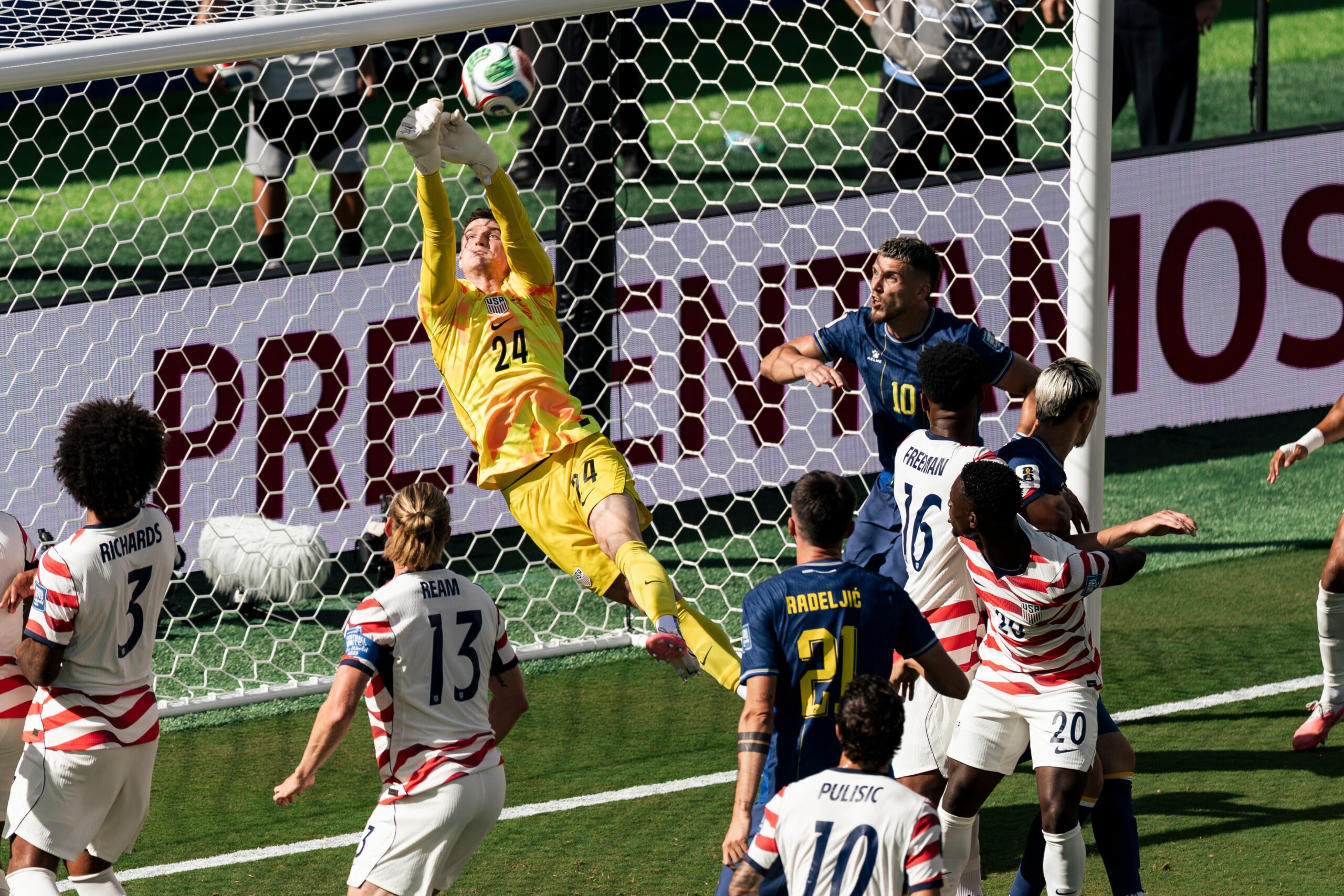
    Bosnia’s Stjepan Radeljić held back Sergiño Dest, earning the U.S a free kick just outside the 18-yard box. Tillman, with a bloodied sock underneath that new shoe, stepped up to score the goal that clinched the 2-0 win.

    “I’ve been dreaming about this game. I’ve been dreaming about maybe taking a free kick and scoring a free kick,” he said. “I practiced this in training, and today I think I showed what I can do.”

    Soccer now has its own version of Curt Schilling’s bloody sock saga in the American sports history books — though Tillman is much more soft-spoken than the former pitcher who played for the Red Sox, Phillies, and more.

    As Tillman ran toward the end line to celebrate, his teammates joined him in a joyous mass, fusing its energy with a crowd that had dug in just as much down the stretch. That energy came through loud and clear all night, in hopes of seeing a new chapter in a story that began when the Bay Area hosted the U.S. men’s soccer team’s first World Cup knockout game of its modern era in 1994.

    “I’m a different type of person on the pitch,” Tillman said. “Of course, maybe you don’t really see my emotions, but if you score a goal like this, you guys saw my emotions. It’s a great feeling, and, of course, a very proud moment for me.”

    It’s easy to say that the Americans don’t face the kind of pressure as the world’s traditional powers like Brazil, Argentina, England, and Germany. Even next-door neighbor Mexico deals with more, thanks to a rabid fan base that spans both sides of the Rio Grande.

    But this time, the weight on the U.S. was massive. A squad of players long hyped as a golden generation had to win this game, or else they’d be tarred as failures in the big moment.

    The stakes rose even higher when cohosts Canada and Mexico won their round of 32 contests first. Imagine the reaction in the soccer world had the U.S. failed to match them.

    There still will be plenty at stake when the Americans play Belgium in the round of 16 on Monday in Seattle. This team still hasn’t beaten a really good opponent in this World Cup, or in general for a while. Nor has anyone forgotten that the ninth-ranked Red Devils thumped the U.S., 5-2, in March in Atlanta, even if that was a friendly with different squads.

    The U.S. also still has a poor all-time record against European teams in World Cups. Wednesday’s win was just the fourth win in 26 such games, against 15 losses and seven ties. Raising the win total to five now would make an all-time impact.

    About the red card

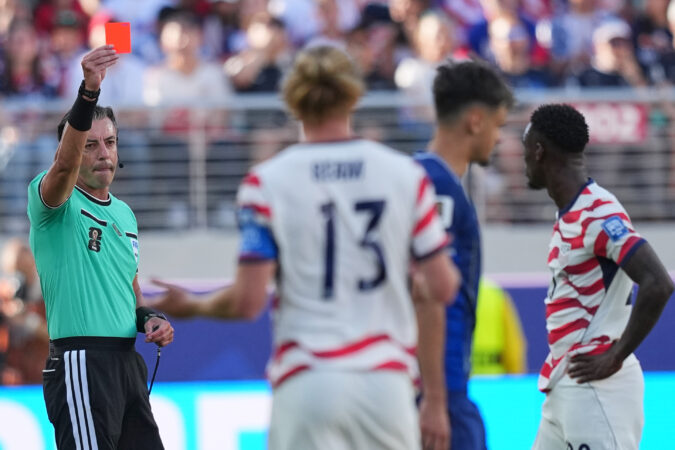
    The call certainly was controversial, and by the letter of the law, referee Raphael Claus might have relied too much on slow-motion replay footage instead of watching at real-time speed.

    But the decision was not totally wrong. First and foremost, any time a replay shows a player dragging his studs down an opponent’s calf and landing on the foot almost certainly will be a red.

    An obvious counter to that is that Lionel Messi wasn’t sent off in Argentina’s group game against Algeria for landing his studs in an opponent’s calf even more directly.

    This is life in the sport, and every player knows it. Had Balogun been hit in a similar way, even though the initial collision was 50/50, U.S. fans surely would have brayed for the opponent’s dismissal.

    Also, if Balogun had been given a yellow card right away, the odds might have decreased that a video review would upgrade the call to a red.

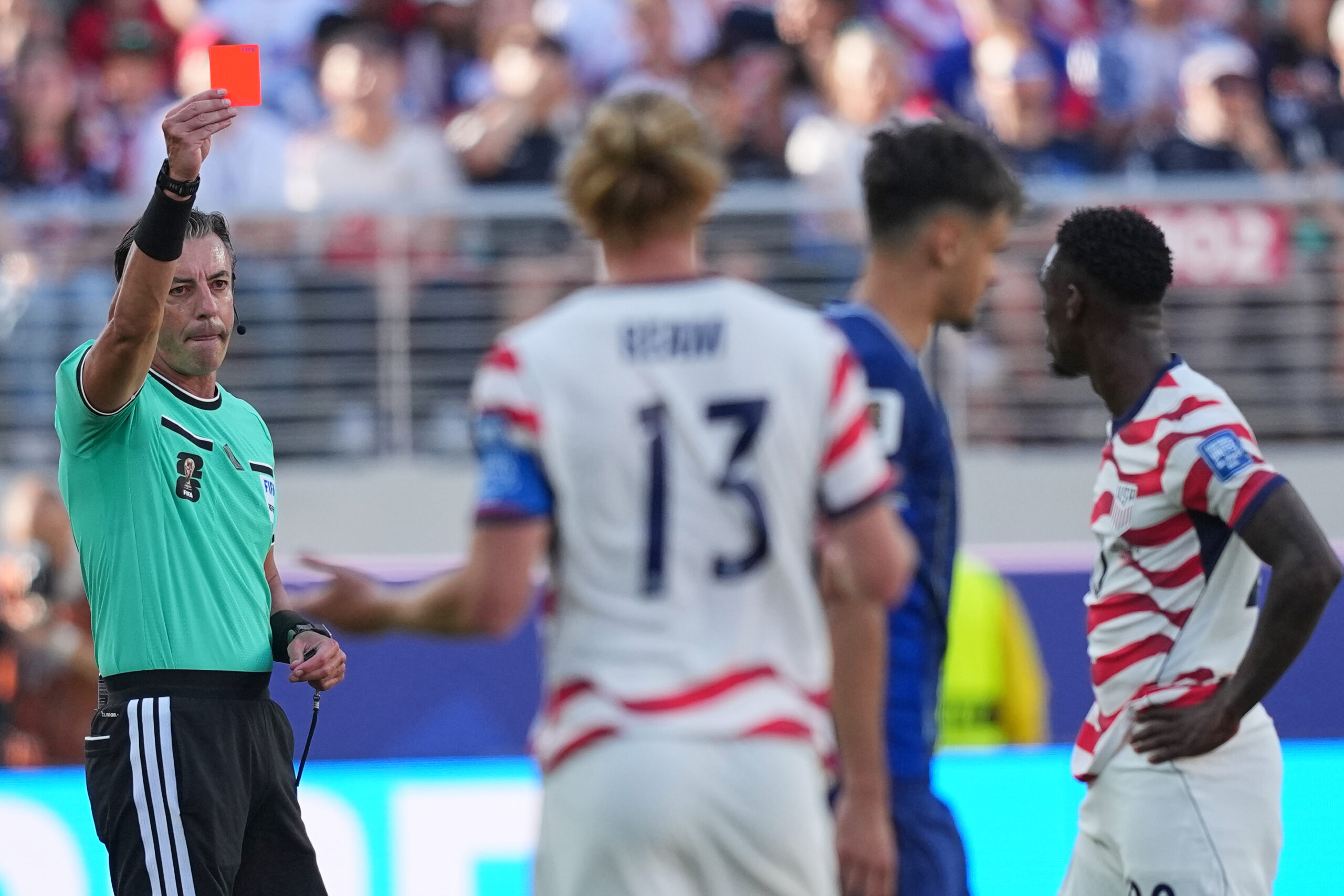
    Referee Raphael Claus (left) showing the red card to Folarin Balogun.

    Because there was no card initially, when Claus went to the monitor, all he could do was give a red or let it go. The rules mandate that a video review of a call with no card can’t lead to a yellow. FIFA’s rules also mean U.S. Soccer can’t appeal the decision, though it almost certainly would have lost.

    “Typical FIFA,” U.S. veteran Tyler Adams said of the rule book. But he didn’t totally argue with the call.

    “You’re asking the wrong person, with how I tackle,” he said. “I think it’s a yellow card. I think when you slow everything down, it’s always going to look worse. I don’t want to say too much.”

    It definitely will sting the U.S. to face Belgium’s stars without the striker who has more than justified the hype around his talent. Ricardo Pepi presumably will start, with Haji Wright coming off the bench.

    Ricardo Pepi (right) subbed on in the 87th minute to help close out the game.

    Pepi didn’t stop to talk with the media after Wednesday’s game, but Wright did. The last U.S. striker to score in a World Cup before Balogun’s three this summer declared himself “always ready and always prepared to give my best for the team.”

    There also was lots of support for Balogun from his teammates.

    “He’s done so much for us, and now we’ve got his back,” Christian Pulisic said, and Chris Richards said nearly the same words.

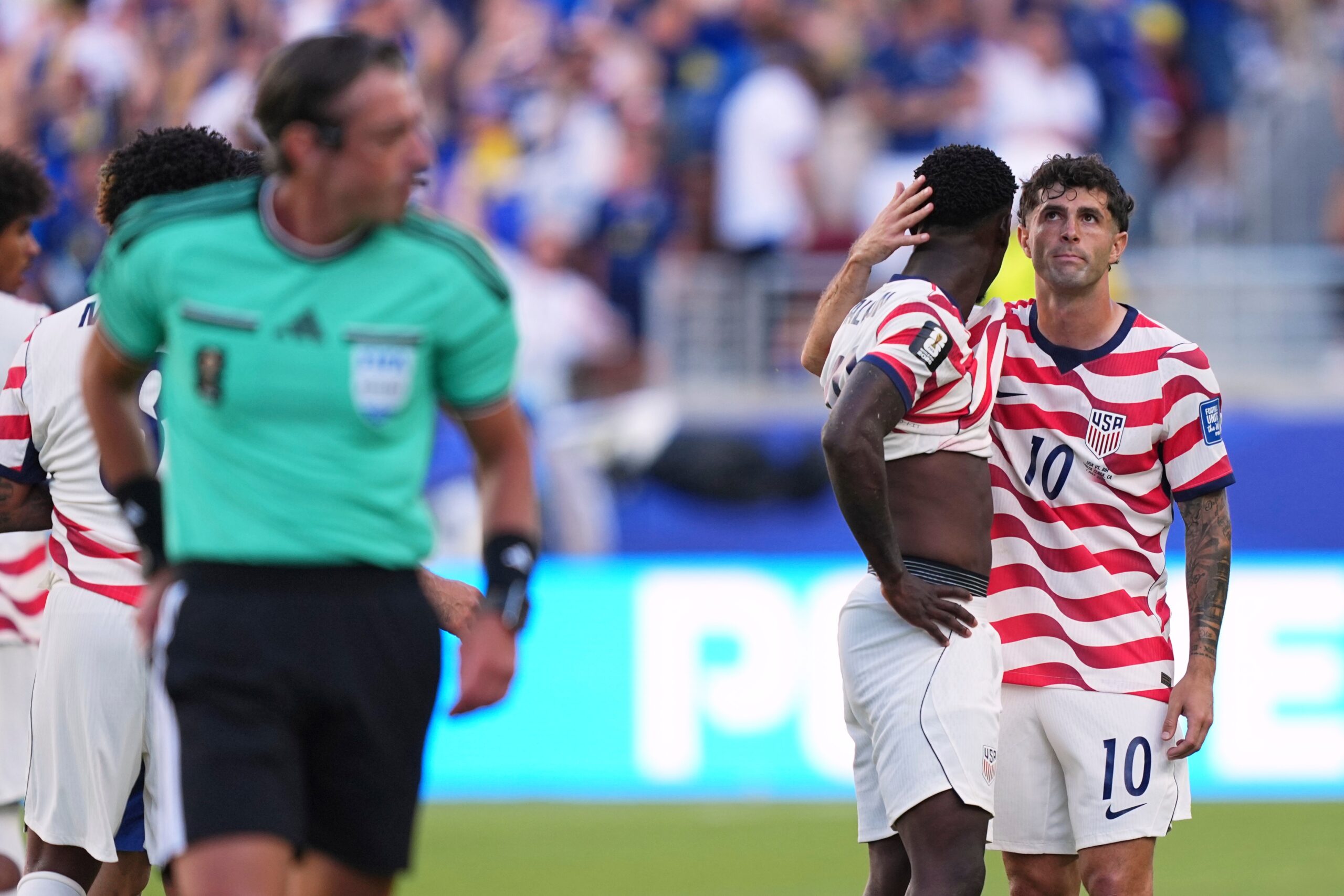
    Christian Pulisic (right) consoles Folarin Balogun after the striker’s ejection.

    Freese’s satisfaction

    Let’s close this piece on a positive note.

    Matt Freese grew up in Wayne idolizing Tim Howard, the U.S. Hall of Famer who cemented his legend with 16 saves in the 2014 World Cup’s 2-1 loss to Belgium. Freese didn’t have to be that busy against Bosnia, but his three stops and command of his box still were plenty to confirm his status as the No. 1 in net.

    Now he has a historic reward: being the goalkeeper of record for the first World Cup knockout win in so long.

    “It means, really, more than I can say,” Freese said. “You dream of putting your name up there with the guys that you watched growing up. And there’s a lot more to do, but it’s an honor and a privilege to be in goal for this team.”

    Matt Freese (center) making one of his big stops in Wednesday’s game.
  • Philly’s final World Cup game is going to be hot. Here’s how fans can beat the heat.

    Philly’s final World Cup game is going to be hot. Here’s how fans can beat the heat.

    Philadelphia’s final World Cup game on July 4 will feature plenty of red, white, and blue both inside and outside the stadium when tournament favorite France returns to the city for a round-of-16 knockout round against Paraguay on Saturday (5 p.m., Fox29).

    But the fans will be enduring another day of a brutal heat wave when temperatures are forecast to top out near 100, with steamy, shirt-soaking humidity.

    In addition, potentially strong storms are possible around game time.

    With another anticipated sold-out crowd packing Philadelphia Stadium, FIFA says it is proactively taking steps to help fans beat the heat, planning to place cooling tents with water available to fans “within the stadium footprint at the Stadium Fan Experience,” located just inside the main gates.

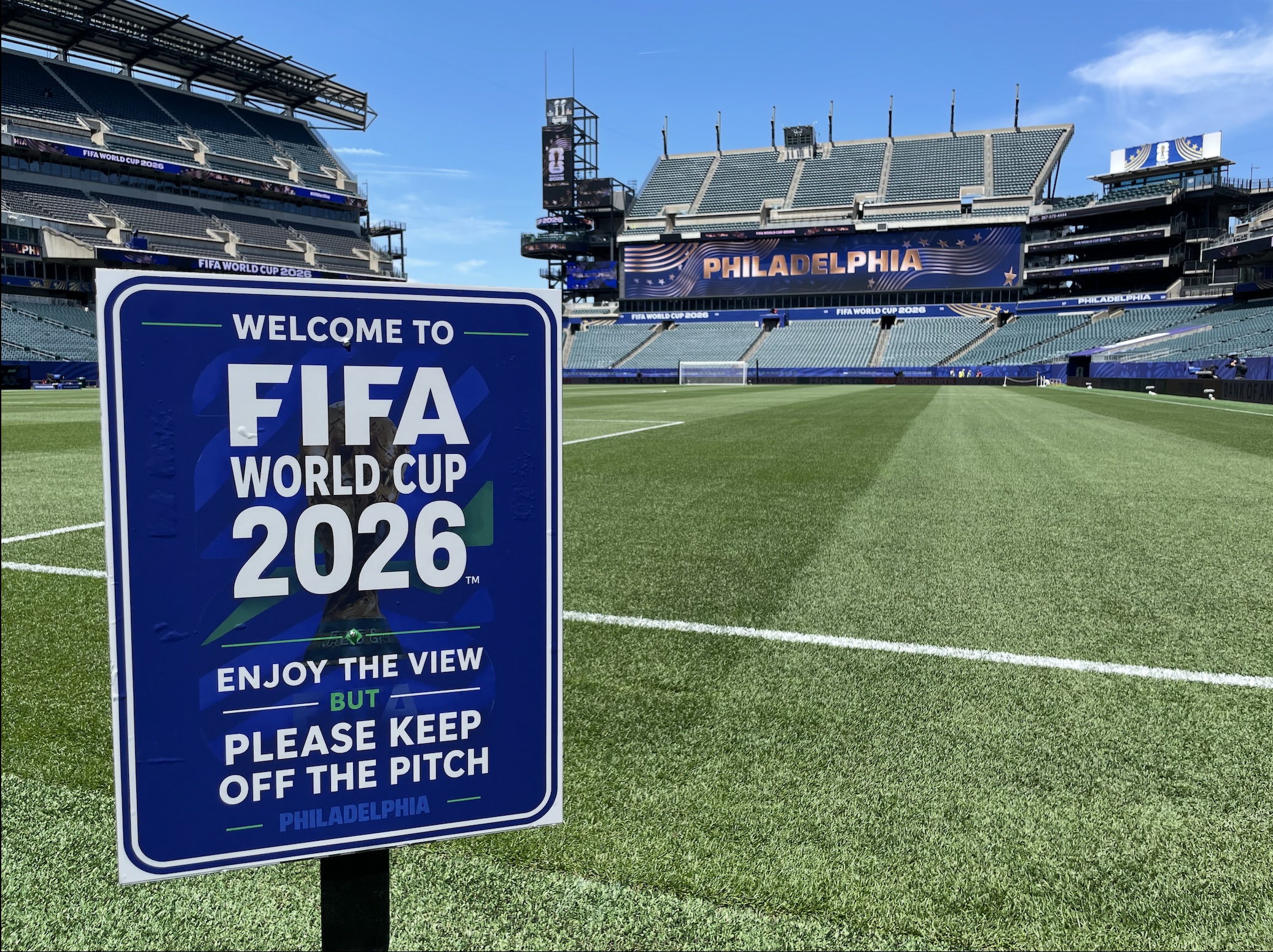
    Lincoln Financial Field, known as “Philadelphia Stadium,” is set to host its final game in this World Cup, a Round of 16 game between France and Paraguay on Saturday.

    Additionally, FIFA reminds all fans that they may bring one 20-ounce soft-plastic water bottle into the stadium upon arrival. For those who recall, the resized bottle came only after FIFA last month reduced the size from 1 liter to 20 ounces, following an initial pullback from allowing fans to bring in water altogether. After much pushback, soccer’s governing body relented and allowed the reduced size of an unopened bottle upon arrival as the guideline for all 16 venues.

    “FIFA is committed to protecting the health and safety of all players, referees, fans, volunteers and staff through a tiered heat mitigation model,” a FIFA spokesperson told The Inquirer via statement. “Through close collaboration with the City of Philadelphia, medical experts and emergency authorities, FIFA remains committed to delivering a safe, resilient and memorable tournament experience for everyone involved.”

    Fans attending matches have found ways to beat the heat through metallic cups, keeping drinks colder for longer, offered at the stadium with the purchase of a beverage.

    Where to find water inside Philadelphia Stadium

    If you’re looking to refill your water bottle once inside or just don’t want to wait in long lines at concessions for one, here’s a listing of where all of the water fountains are located in the concourses of each level.

    • 100 Level: Sections 103, 118, and 122
    • 200 Level: Sections 204 and 222
    • Club Level: Sections C3, C19, C24, and C38
    Four of the five matches in Philadelphia have been announced sellouts with Saturday’s final Philly game expected to be the same amid high temperatures.

    What time can fans enter the stadium?

    Fans can enter the stadium and seek shade in the concourses as early as 2 p.m. when gates will officially open, according to a FIFA spokesperson. Teams will emerge for warm-ups one hour before kickoff, and the pregame ceremony will begin 30 minutes before kickoff. For fans looking to head down early via SEPTA’s Broad Street Line, there will be select express trains to the stadium, with SEPTA planning to run additional trains on game day. Fare will be $2.90 as customary, with the return ride after the game free for all fans for up to two hours after the match.

    What’s happening at the FIFA Fan Festival?

    FIFA’s Fan Festival, organized by Philadelphia Soccer 2026, will be just one part of a host of activities planned on July 4 along the Parkway, including the scheduling of a massive concert currently under a bit of controversy.

    However, passing all of that, the last stop on Philly’s PHLASH bus that goes along the Parkway will stop at the Fan Festival, which is scheduled to open its gates at noon on Saturday, showing the first round of 16 match of the day between Canada and Morocco (1 p.m., Fox29).

    Event officials say soccer fans gathering to watch Philly’s final game at the FIFA Fan Festival at Lemon Hill will have several ways to beat the heat.

    Nothing is expected to change from what fans can bring onto the festival grounds from the items clearly marked on a longstanding list that was promoted during the Fan Festival’s Know Before You Go campaign released in early June.

    Bottles are allowed on Fan Festival grounds and don’t have to be of the disposable variety, as canisters up to 32 ounces are allowed — but they must be plastic. Additionally, FIFA Fan Festival allows fans to bring their own personal misting fans as well, but the water container can’t exceed 1.5 liters, and handheld fans cannot be battery-operated.

    Melissa Ferdinand, spokesperson for Philadelphia Soccer 2026, told The Inquirer that times are already being adjusted for Thursday and Friday to mitigate fans entering at the hottest part of the day, with temperatures expected to reach triple digits. On Saturday specifically, Ferdinand reiterated what’s on-site and what fans can bring to stay cool and enjoy the match.

    “FIFA Fan Festival Philadelphia has a variety of ways to help attendees beat the heat and enjoy the event safely,” Ferdinand said. “Cooling tents, misting tents, free water refill stations, shaded areas and multiple medical stations are available for anyone feeling the effects of the heat. Additionally, attendees are encouraged to bring a refillable water container with them.”