Category: Soccer/Union

  • This World Cup was nearly 20 years in the making for U.S. Soccer. The history is worth knowing.

    This World Cup was nearly 20 years in the making for U.S. Soccer. The history is worth knowing.

    IRVINE, Calif. — For Philadelphians new to seeing a World Cup in person, it might feel like the road to this point began when FIFA picked the city to host games in 2022.

    For others, it might feel like the first steps were taken when the U.S.-Canada-Mexico joint hosting bid won the formal vote in 2018, or when the bid was filed the year before.

    In fact, the process began much longer ago than that, in 2007. That’s when U.S. Soccer Federation officials started seriously thinking about bringing the men’s World Cup back to the United States for the first time since 1994.

    Nineteen years is a long time in American sports, and especially American soccer, where so much changes from year to year, not just decade to decade. So as the 2026 spectacle unfolds, it’s worth taking a moment to step back and turn to the history books.

    There aren’t too many Americans who’ve been on the entire ride. In fact, there’s barely anyone at U.S. Soccer who has been, in part because the presidency has changed hands twice since 2007.

    One who has and who knows Philadelphia well is Sunil Gulati. The longtime economics professor at Columbia University led U.S. Soccer from 2006-18 and has also served on the FIFA Council and the former FIFA Executive Committee.
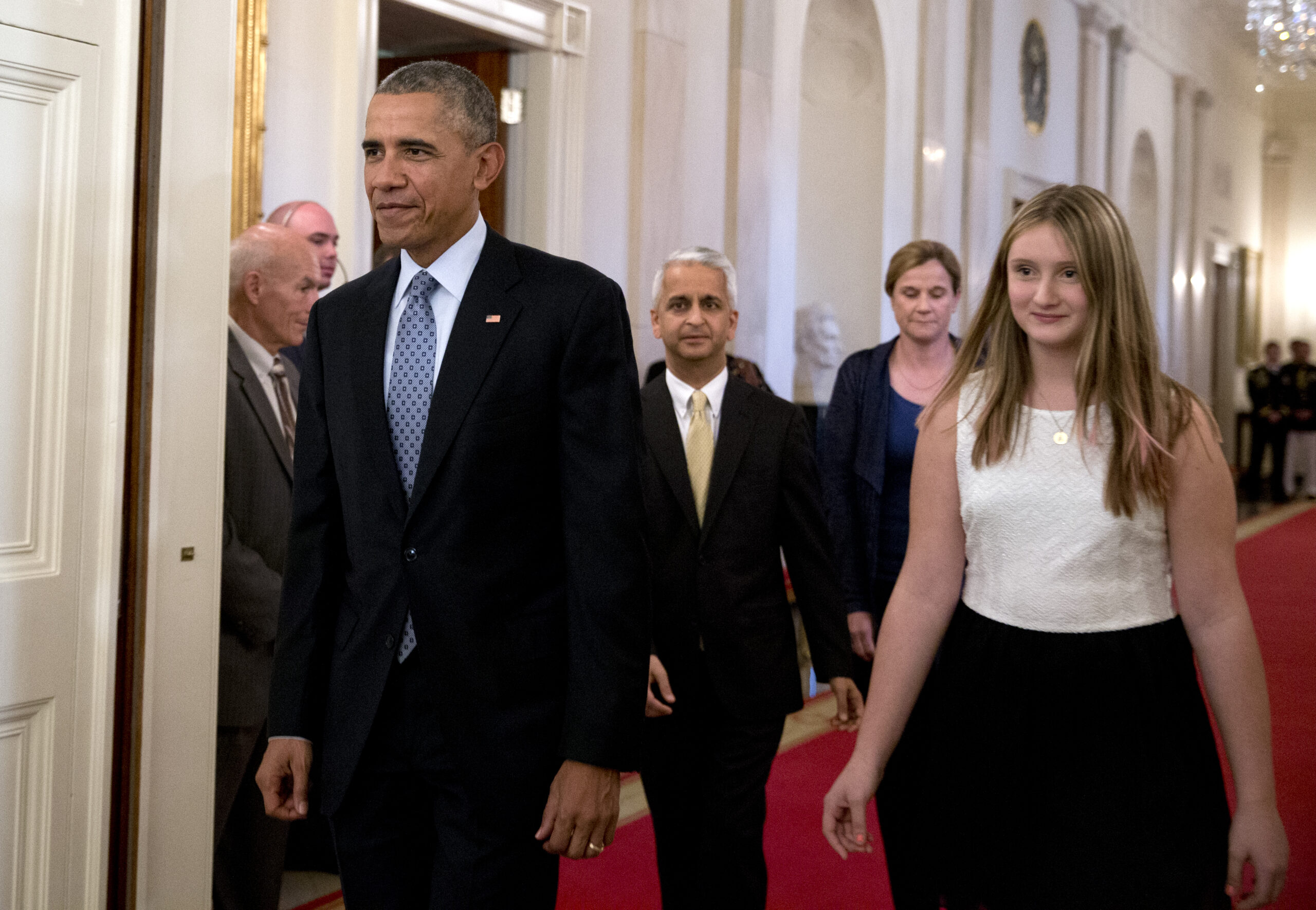
    Sunil Gulati (center) walking behind Barack Obama in 2015 at a White House ceremony to honor the U.S. women’s soccer team’s World Cup win.

    Few people have seen more of soccer’s growth in this country up close, not just in his years as president but in a variety of roles across Major League Soccer, FIFA, and recently as the chair of European soccer confederation UEFA’s Club Financial Control Body.

    Gulati has a lot of stories to tell, and not all of them are allowed to see the light of day. But he was happy to share some with The Inquirer as he enjoys this tournament just like the rest of us.

    ‘The day after’

    When U.S. Soccer took those first steps in 2007, Gulati had been president for less than a year, and it was only 13 years since the 1994 tournament — not too long in World Cup terms. But some flickers of the afterglow were still there, and he knew how long it would take to bring the fire back.

    “The ’94 World Cup had been highly successful, and hosting an event like the World Cup generates a lot of positive benefits — and they’re not pure economic benefits, including this [2026] World Cup,” he said. “It was never about the financial returns to the federation, or federations, in this particular World Cup, and there are three of them.”

    In his view, “it was always about trying to increase the demand for the game, [and] accelerate the growth of the game in the United States. It’s [wondering] what does the sport look like the day after?”

    That acceleration included building the foundations of a soccer infrastructure in this country. Many future power brokers had launchpad moments in 1994: future U.S. Soccer CEO Dan Flynn, promoter and media personality Charlie Stillitano, broadcaster Derek Rae, and future women’s World Cup, Olympics, and NWSL executive Marla Messing.

    Above all, that World Cup produced Major League Soccer, as FIFA required the U.S. to launch a top-level league as a condition of hosting.

    “All the people that worked in senior positions or in entry-level positions that became part of the landscape in the sport … those people became important players in the growth of the game in different ways,” Gulati said. “And obviously, then if you talk about MLS, the development of the league leads to huge changes in infrastructure, the stadiums in particular, training facilities.”
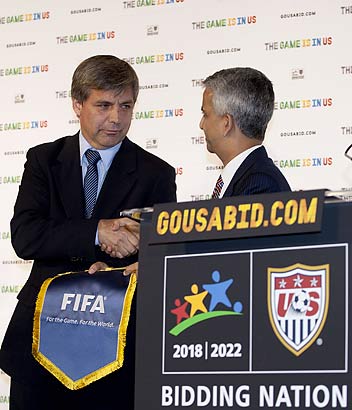
    Harold Mayne-Nicholls (left), the head of the FIFA Inspection Delegation, exchanges a FIFA banner with then U.S. Soccer president Sunil Gulati at the conclusion of FIFA’s bid inspection for the 2018 and 2022 World Cups.

    Gulati believed another World Cup could do even more. So the long road began, with U.S. Soccer going in on 2022 when it became clear 2018 was going to Europe.

    For some time, it seemed like effort would pay off. But in December of 2010, a day came that will live in soccer’s infamy.

    So many people around the sport remember where they were when then-FIFA president Sepp Blatter pulled Qatar’s name out of the envelope instead of the United States’. It hurt as much as any loss on the field, perhaps even more to some people.

    But Gulati was ready for the gut punch because he sensed it might be coming.
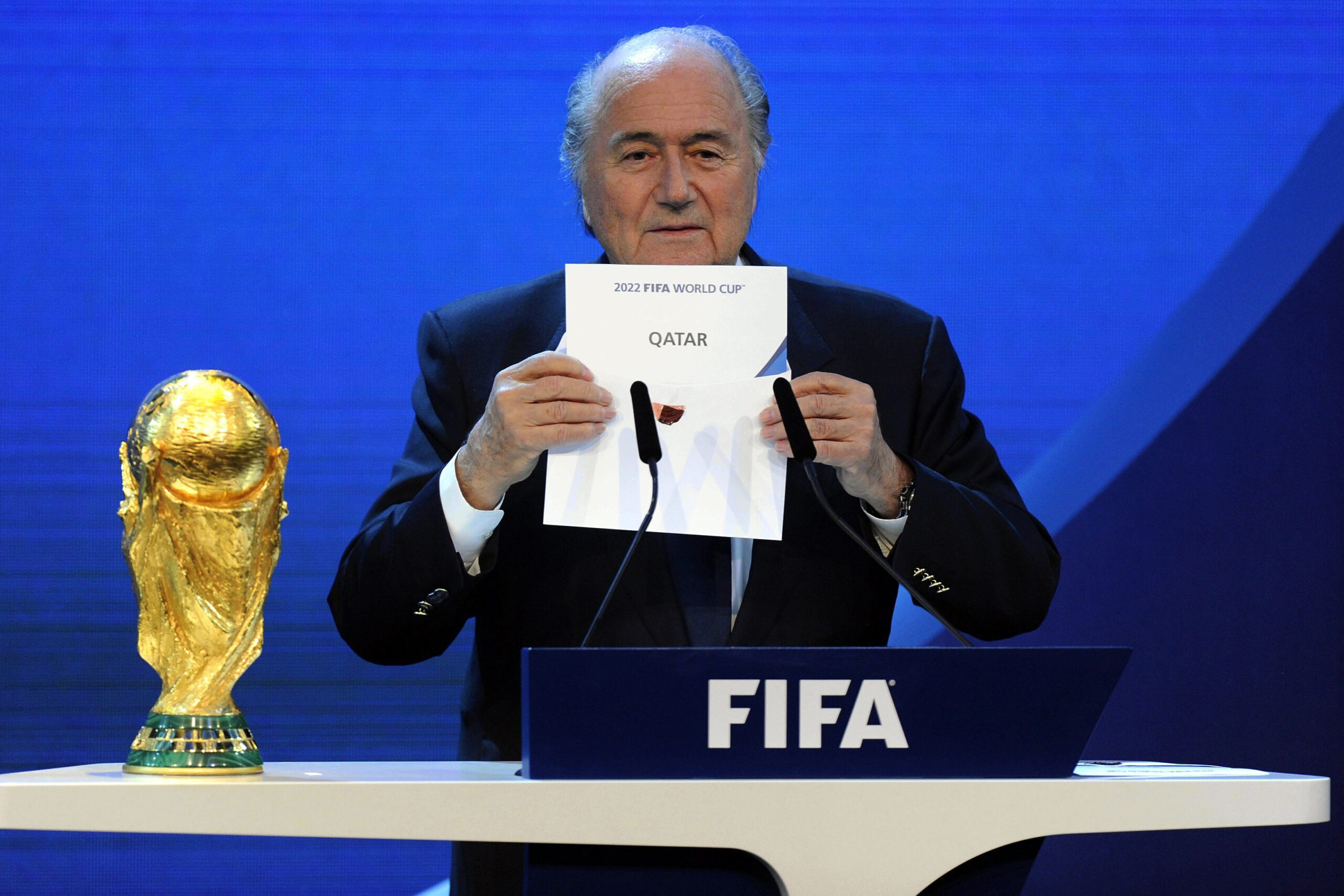
    Perhaps the most infamous day in FIFA’s modern history: when then-president Sepp Blatter announced on Dec. 2, 2010, that Qatar would host the 2022 men’s World Cup.

    “I had a better inkling, I think, than members of my team that it was going to go the wrong way for us,” he said. “Because we had a pretty accurate vote count, and that vote count relied on three European votes. And I had a pretty good idea that we weren’t going to get those — the votes that the weeks earlier, I was quite confident that we were going to get.”

    Had those three votes on FIFA’s executive committee gone the U.S.’ way in the final round of voting, it would have been an 11-11 tie, and Blatter would have broken it in America’s favor.

    “It didn’t shock me, but I think it probably shocked some other members of the team who maybe weren’t quite as close to the vote count,” Gulati said. “And it was obviously a huge disappointment, but not a shock.”

    Going bigger for 2026

    As burned as Gulati was, he was also steeled.

    “Right after the decision, I wasn’t sure if I ever wanted to go near this process again, or if I wanted to start right away,” he said, and he referred to an even stronger version of that line he gave to France’s Le Monde newspaper earlier this month.

    “On the one hand, I wanted to immediately jump into our next bid,” that version went, “and on the other, I told myself that I never again wanted to have anything to do with that kind of thing, or with those people.”
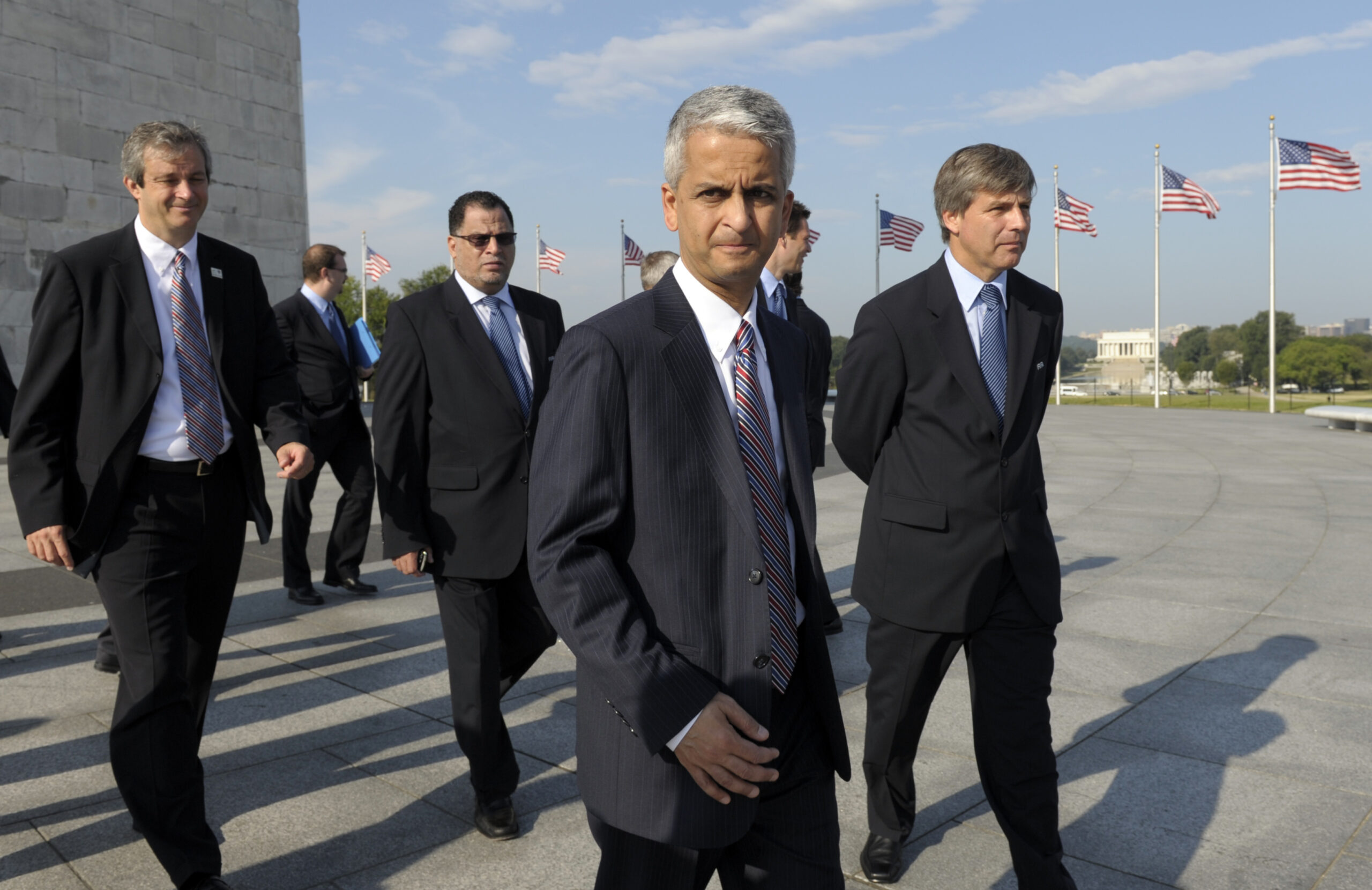
    Sunil Gulati (center) with various international soccer officials at the Washington Monument in D.C. in 2019.

    As allegations that Qatar bribed FIFA officials to win the bid piled up, it would be a few years before the winner of Gulati’s internal battle emerged. When it did, the soccer landscape had changed in an even more epic way.

    On May 27, 2015, the U.S. Department of Justice raided the Baur au Lac hotel in Zurich, Switzerland, and arrested a slew of international soccer officials. A few hours later in Brooklyn, N.Y., the department formally announced the charges and the people charged.

    That day would lead to Blatter’s resignation and a pile of other impacts, including reforms to the World Cup bidding process.

    Since Gulati was on the FIFA Executive Committee at that point, he had a role in those reforms. He acknowledged to The Inquirer that he wanted “to try to influence what the rules of the competition, in terms of the bidding process, would be. And those changed, which then allowed us to be more comfortable bidding again.”

    By the end of that year, the wheels were in motion, and in 2016, Gulati started pushing for a multicountry plan. It started with just the U.S. and Mexico, as Gulati worked with the then-chairman of the powerful TV network Televisa, Emilio Azcárraga Jean. Then Canada joined the fold.

    “There were some cultural reasons, frankly, that I wanted to do it with Mexico, about Hispanic relations, Mexico-U.S. relations, and so forth,” Gulati said. “And then we’re having a parallel set of discussions with Victor Montagliani, who was the president of the Canadian federation, and it eventually came to the three of us doing it together.”
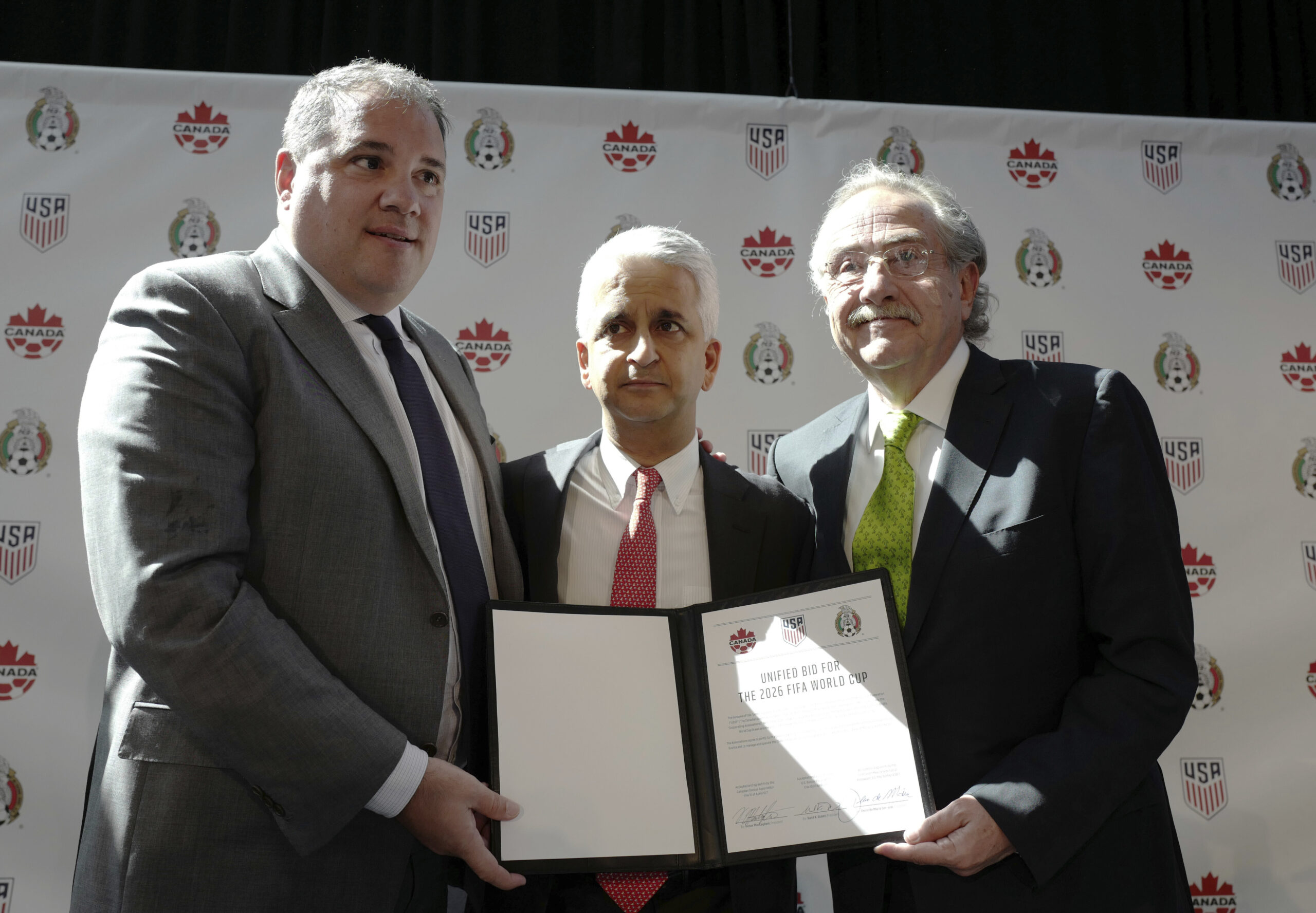
    From left, Victor Montagliani Sunil Gulati, and then-Mexican soccer federation president Decio de Maria presenting their joint bid to host the 2026 men’s World Cup.

    Gulati knew a multicountry bid would look better to FIFA, but it would take convincing U.S. Soccer’s board first.

    “I preferred having a 90% chance of winning 75% of the World Cup games than a 75% chance of hosting it all,” he said.

    He also preferred the new FIFA president. Gulati played a key role in getting Gianni Infantino elected. During the election vote at the 2016 FIFA Congress, Fox’s TV broadcast repeatedly showed him working the hall.

    How this World Cup is working

    There wasn’t time to ask whether Infantino’s tenure has gone differently than Gulati expected. But a recent New York Magazine investigation into Infantino had a quote from journalist and academic Leander Schaerlaeckens that struck a chord.

    “U.S. Soccer is very much responsible for his rise,” Schaerlaeckens said of Infantino. “Did they anticipate what he would turn into? I suspect not.”

    There are lots of things to point at with the ills of FIFA’s management of this World Cup, from the exorbitant ticket prices to the lack of hard pushback against the Trump administration’s visa restrictions. Much of that goes directly to Infantino, due to his vast power in FIFA’s decision-making and his purported close friendship with Trump.

    Another aspect doesn’t attract big headlines but has had a huge impact behind the scenes. This is the first men’s World Cup where FIFA hasn’t had a national-level local organizing committee, run by domestic staff in the host countries, that handles marketing, venue deals, political relationships, and so on.

    Instead, FIFA has tried to do almost everything itself. And as even casual soccer fans have seen by now, it has not gone well — especially just north of here in New Jersey.

    Gulati didn’t want to go too far down that road in public, but he opened the door enough to sense what was beyond it.

    “Some of the key figures in this World Cup are people that work for FIFA, which is fine, but it’s different, certainly,” he said.

    Asked if FIFA was told that they weren’t going to be able to unilaterally rule over North American governments, he said: “They understood that. And that’s obviously posed a bunch of challenges … Not just state, local, federal, but three countries in this case.”
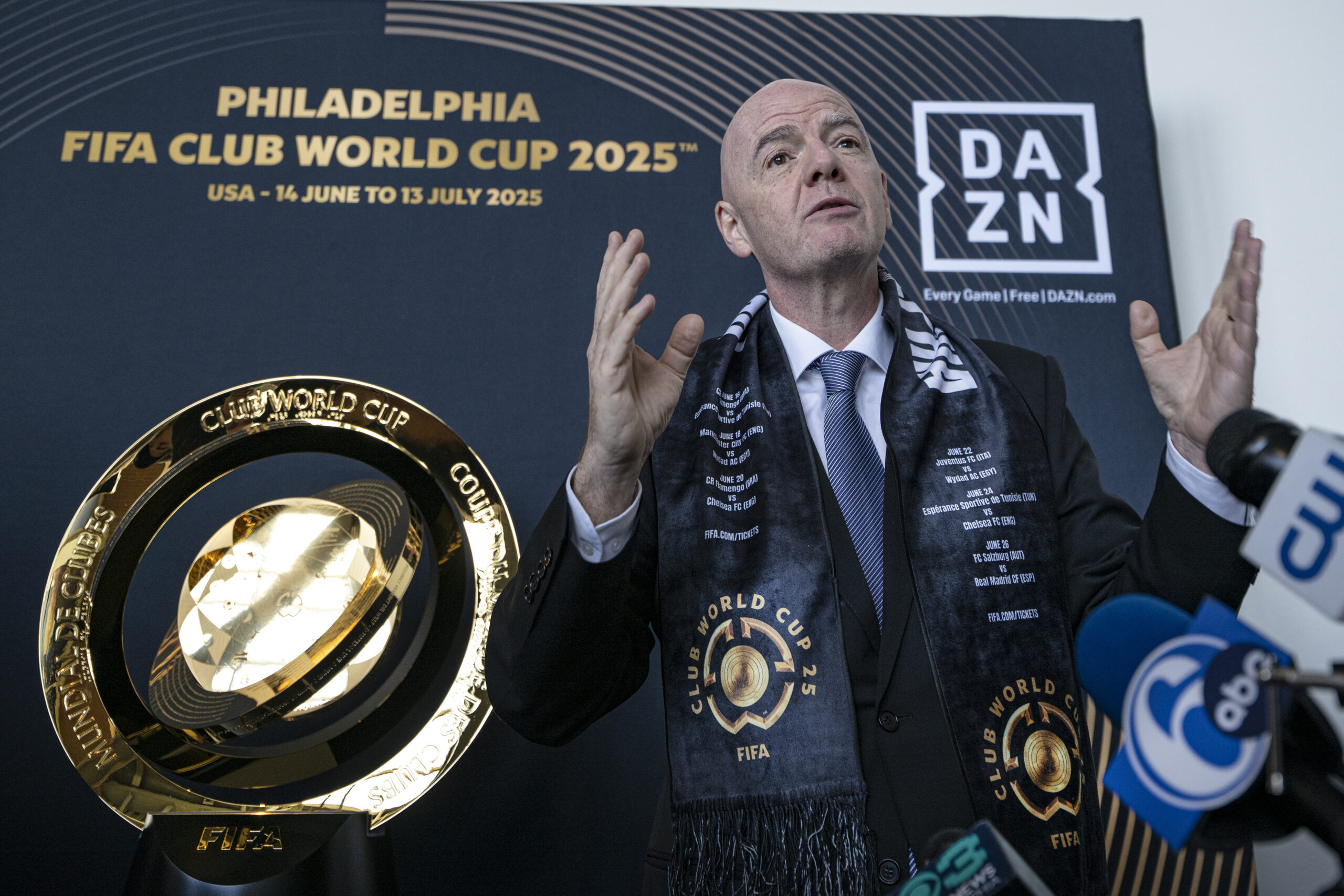
    FIFA president Gianni Infantino (left) on a visit to Philadelphia last year to promote the Club World Cup.

    And asked in particular about dealing with state and local governments that don’t exist in other countries, Gulati said: “That’s obviously come up, and I get it. But look, there’s always some issues that come up in these things, whether it’s immigration or taxes, or who’s going to pay for what, or exclusivity, all those things — those are kind of par for the course in World Cups.”

    A moment later, he added: “Maybe it’s a little bit easier given the obvious differences in governance that exist in other countries.”

    In the end, Gulati is an optimist about this World Cup’s long-term potential, including for Philadelphia specifically. He knows the city well, and knows the spotlight it’s in this summer.

    “I think what it can do is bring greater attention to the sport and greater attention to the city if it becomes an important attraction, and games go well, and people feel at home, and it’s welcoming, and so on,” he said. “Philadelphia, it’s a great sports city, it’s got great venues. And hopefully, some of the teams that are playing there — and the fans more importantly — come, and they talk about it, and there’s more people that want to visit in the future.”
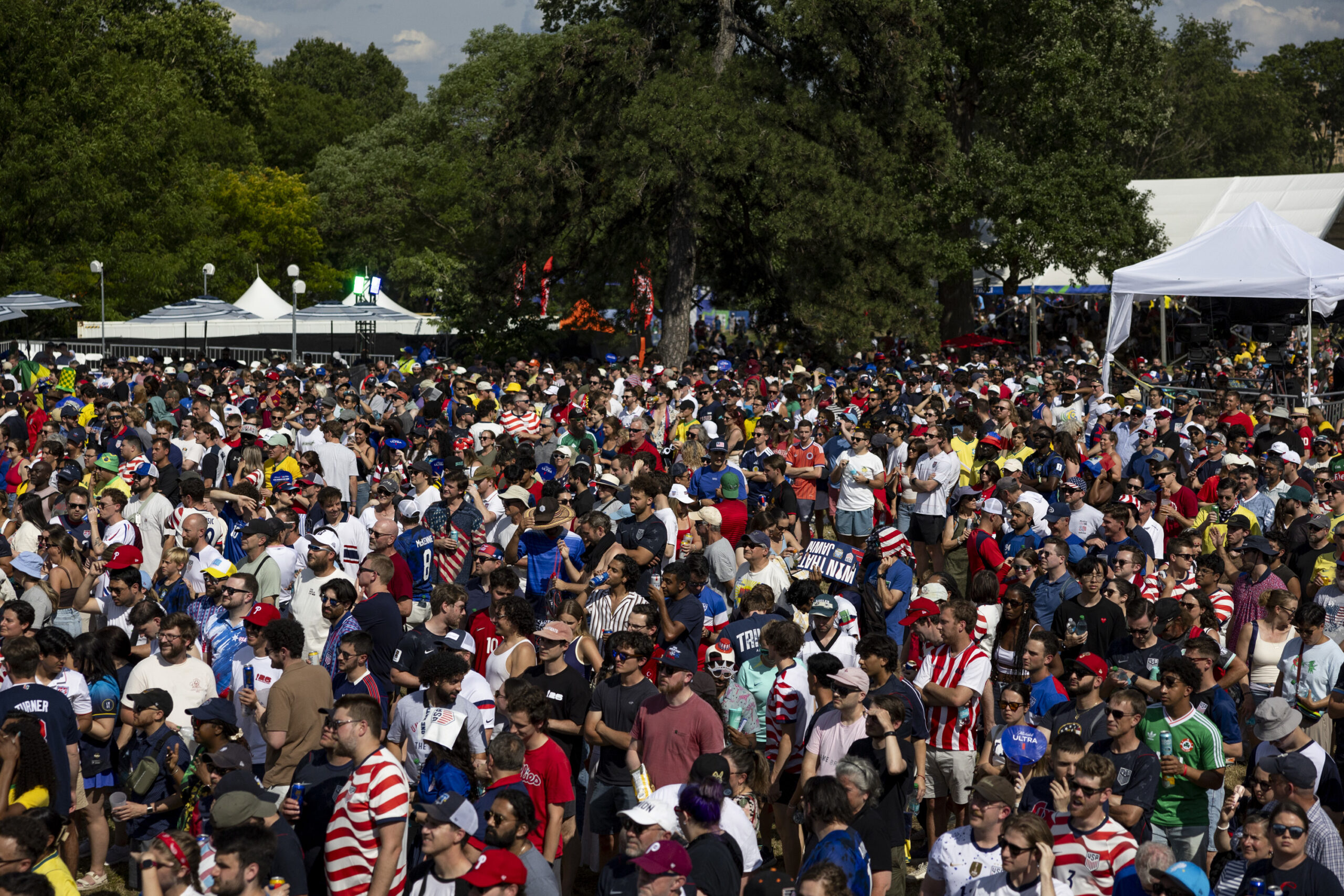
  • Pennsylvania’s tourism office believes Philly could exceed visitor and economic impact goals at the World Cup

    Pennsylvania’s tourism office believes Philly could exceed visitor and economic impact goals at the World Cup

    Philadelphia has a long-standing reputation as an underdog city, but when it comes to hosting the FIFA World Cup, Anne Ryan, Pennsylvania’s Deputy Secretary of Tourism, sees Philadelphia as a front-runner.

    Ryan visited the FIFA Fan Festival as it hosted “PA Day” on Saturday, which included visits from a Ben Franklin impersonator, Philadelphia Union mascot Phang and Hersh the Hershey Bar.

    “I’m a Philadelphian,” Ryan said. “I do love that underdog mentality, but are we underdogs anymore? We’re ranking [at the] top as one of the best host cities in the country, because of our Fan Fest and our experiences.”

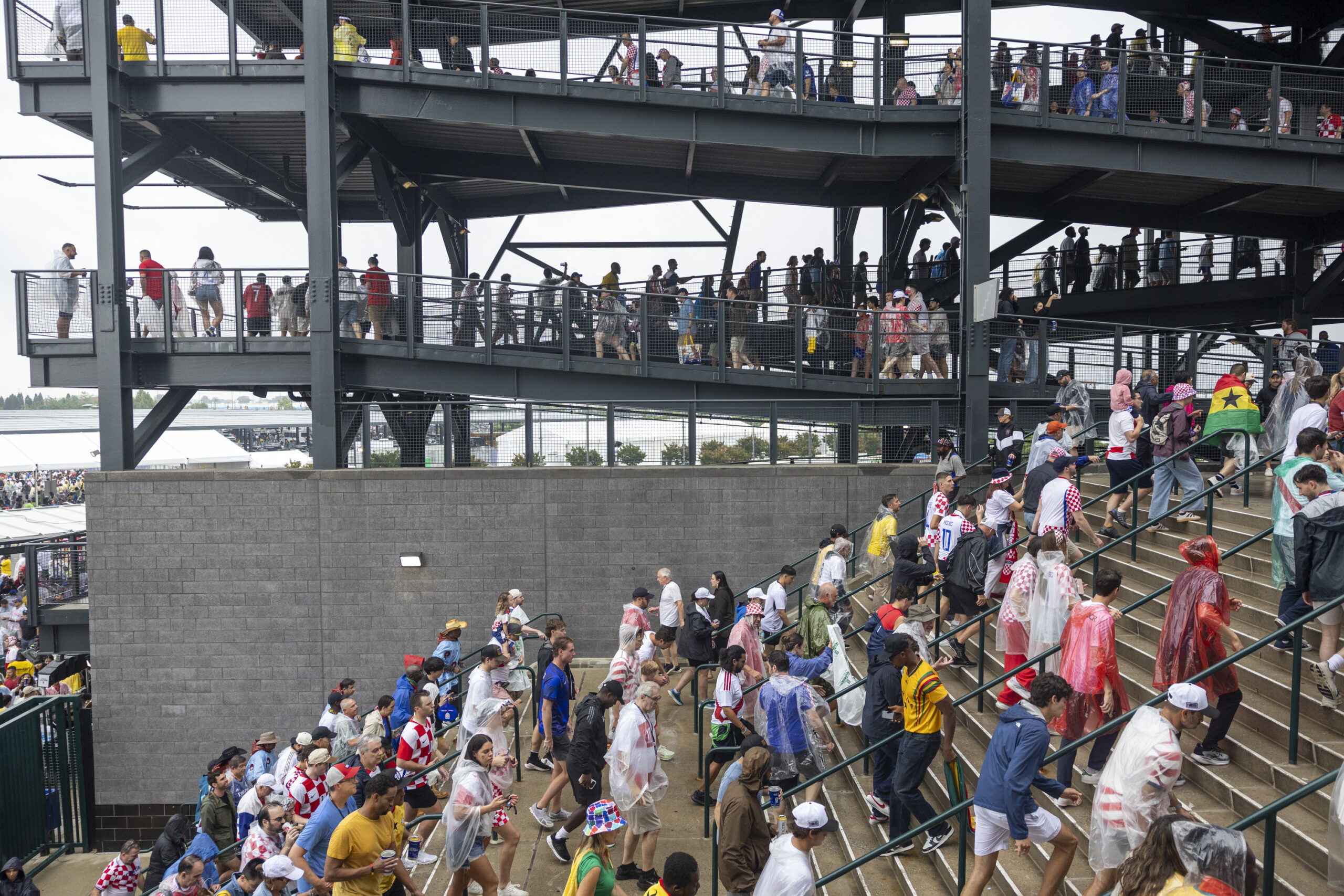
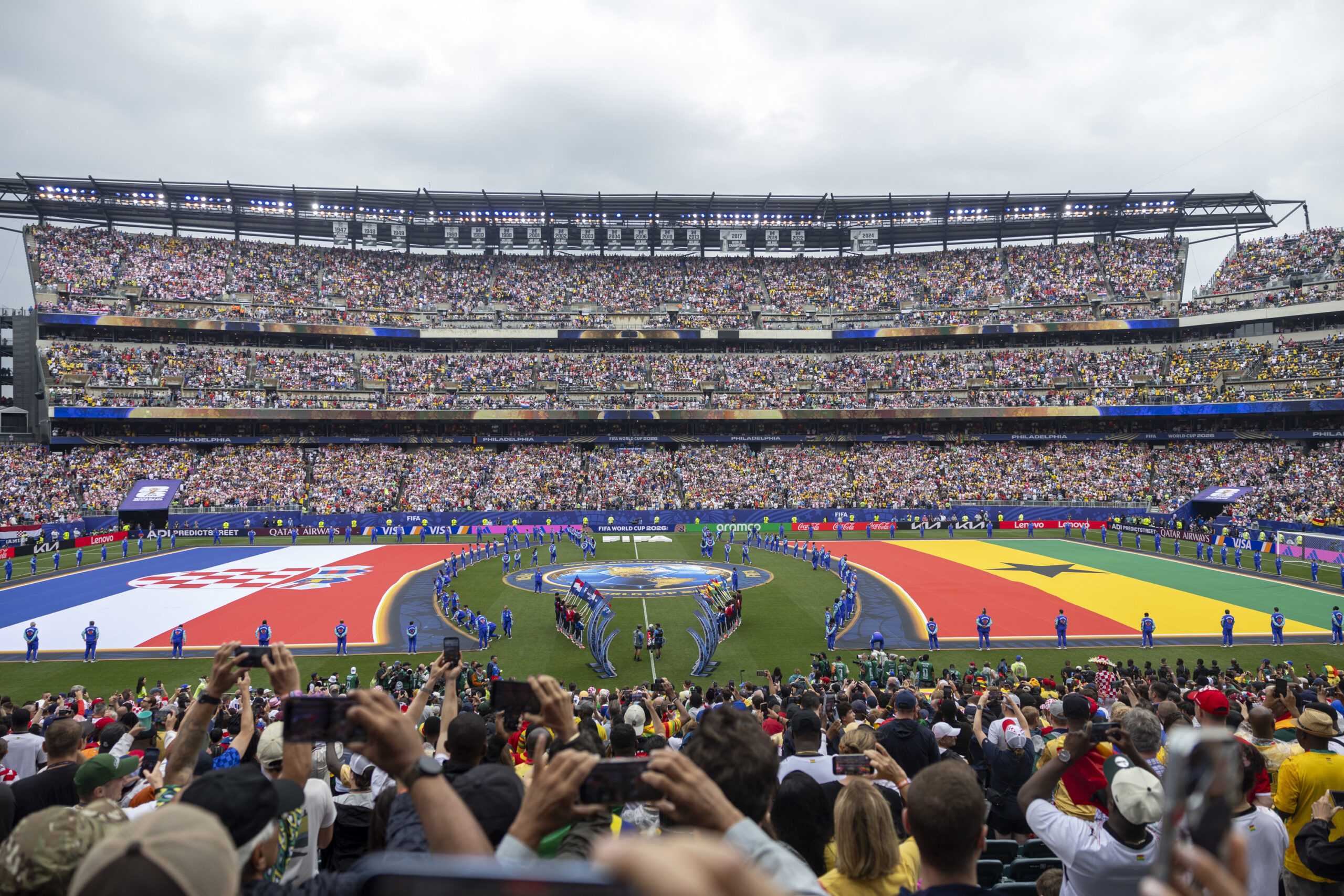
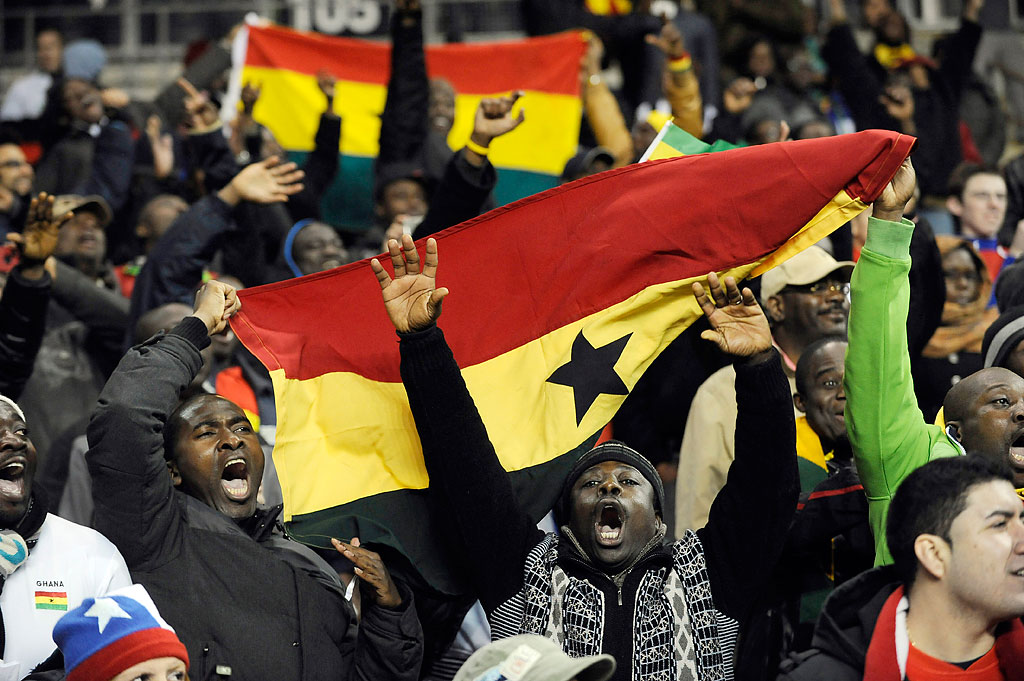
    Despite cloudy and rainy conditions, crowds of fans entered the festival grounds again on Saturday for Croatia-Ghana, Philadelphia Stadium’s fifth and final group stage match.

    Croatians and Ghanaian supporters were well-represented in the crowd, and both went home happy, despite a 2-1 win for Croatia. Ghana, who advanced to the knockout round as one of the eight best third-place teams, had already secured a round of 32 spot entering Saturday’s match, and Croatia was able to get off the third-place cut line by surpassing Ghana for second.

    English fans at the festival went home happy, too, as England finished atop Group L with a 2-0 win over Panama.

    While the state office of tourism has not formally measured the economic impact driven by Philadelphia hosting the World Cup, Ryan said the success of the free Fan Festival in Lemon Hill — which has hosted 250,000 fans since opening on June 11 — is a good indicator of how many fans have visited Philadelphia during the tournament.

    “The fact that we’ve already had 250,000 attendees here, it’s just insane,” Ryan said at the festival on Saturday. “Some of our original projections were 15,000 [visitors] a day. And then, to have close to 54,000 just last Friday alone, has been fantastic.”

    Leading up to the tournament, hotel operators were concerned that the World Cup might not bring in the number of international tourists anticipated due to high ticket prices and concerns over entering the U.S. under the Trump administration’s immigration policies.

    Ryan said her office could see through flight data and bookings of Airbnbs and other rental properties that plenty of international fans were traveling to Philadelphia for the tournament.

    According to Ryan, visitors on flights from France to Philadelphia International Airport are up 59%, year over year. Passengers from the Netherlands to PHL airport are up 48%, and up 25% from the United Kingdom.

    The tourism office also considered the economic profile of the nations Philadelphia was hosting, and how people from those nations like to travel. The World Bank Group classifies three of the nations Philadelphia hosted in the group stage — Haiti, Ivory Coast and Ghana — as “lower middle income” nations as it relates to gross domestic product per capita.

    If fans from those nations successfully navigate partial or full travel restrictions to follow their team, they’re more likely to pick a high-capacity rental than a traditional hotel.

    Over 250,000 people have already come through Philly’s FIFA Fan Festival during the World Cup.

    “There was so much projection pertaining to the World Cup, like, ‘Is this going to be a flop, because all of our hotels aren’t sold out?,’” Ryan said. “But you have to look at the teams we’re hosting and how they travel. Ghana, Haiti, Curaçao, Brazil, Ecuador — they’re not staying in a boutique hotel in Center City. Our three bedroom-plus Airbnb bookings are up 53%, year over year, for June and July.”

    Ryan said overall, in the five-county region surrounding Philadelphia, Airbnb bookings are up 48%.

    Data from Amtrak and SEPTA serve as another indicator of visitors coming into the city. Amtrak reported that 500,000 passengers have traveled or are booked to travel through 30th Street Station between June 11 and July 11, and 26,000 passengers boarded SEPTA’s Broad Street Line after Brazil’s 3-0 defeat of Haiti on June 19.

    Ryan said the city’s transit system and its initiative to give free rides back from Philadelphia Stadium’s after matches received positive feedback, especially from international visitors unnerved by high transportation costs in other host cities.

    “They came, and they’re riding,” Ryan said. “They’re taking SEPTA. And we’ve actually heard good feedback. We did some man-on-the-street interviews with visitors. People [are] really complimenting SEPTA and our buses, and the transit here.”

    And despite high ticket costs, another sell-out crowd watched Croatia-Ghana at Philadelphia Stadium (aka Lincoln Financial Field). The World Cup broke its attendance record after Thursday’s slate of matches, with 3,605,357 fans attending matches across the continent entering Friday. After Saturday’s match, 341,620 fans have attended five World Cup matches at the Linc.

    While it will take time for the city’s official accounting to come out on hosting the tournament, Ryan suggested the stats and indicators in key areas show the city is positioned to meet, and potentially exceed, its pre-tournament estimation of 500,000 visitors generating $770 million worth of economic impact.

    The Ghana-Croatia game on Saturday had a sellout crowd of 68,324 people.

    “I’m a betting girl, and I’m going to say for the World Cup, we’re probably going to net out close to 800,000 [visitors],” Ryan said. “And the $770 million in economic impact, I wouldn’t be surprised if that’s closer to $900 million, based off of that increase.”

    More visitors are likely on the way to Philadelphia because of how the tournament’s group stage shook out. If Germany beats Paraguay on Monday, and France beats Sweden on Tuesday in the round of 32, it would set up a match between the Germans and the French, two star-studded European powers, on July 4 in a round of 16 match at Philadelphia Stadium.

    “We’re still waiting to hear who we’re hosting on July 4,” Ryan said. “Let’s see what our hotels and Airbnbs look like after Tuesday.”

  • The World Cup knockout bracket is set. Here’s what to know.

    The World Cup knockout bracket is set. Here’s what to know.

    After 72 games over 17 days in the group stage, the first 48-team World Cup has officially reduced to the 32 that will contest the knockout rounds.

    If that doesn’t feel like much of a reduction, you aren’t alone. The old adage that the World Cup is really two tournaments in one, the group stage and the knockouts, feels more true than ever this summer.

    But now the drama kicks up another gear, as it’s win or go home for every team left standing. Here’s what to know about the 32 games remaining before the July 19 final in North Jersey.

    All games are televised on Fox29 in English and Telemundo 62 in Spanish, except for two in the round of 32 on FS1: Belgium vs. Senegal on July 1 and Switzerland vs. Algeria on July 2. All times listed are local to Philadelphia.

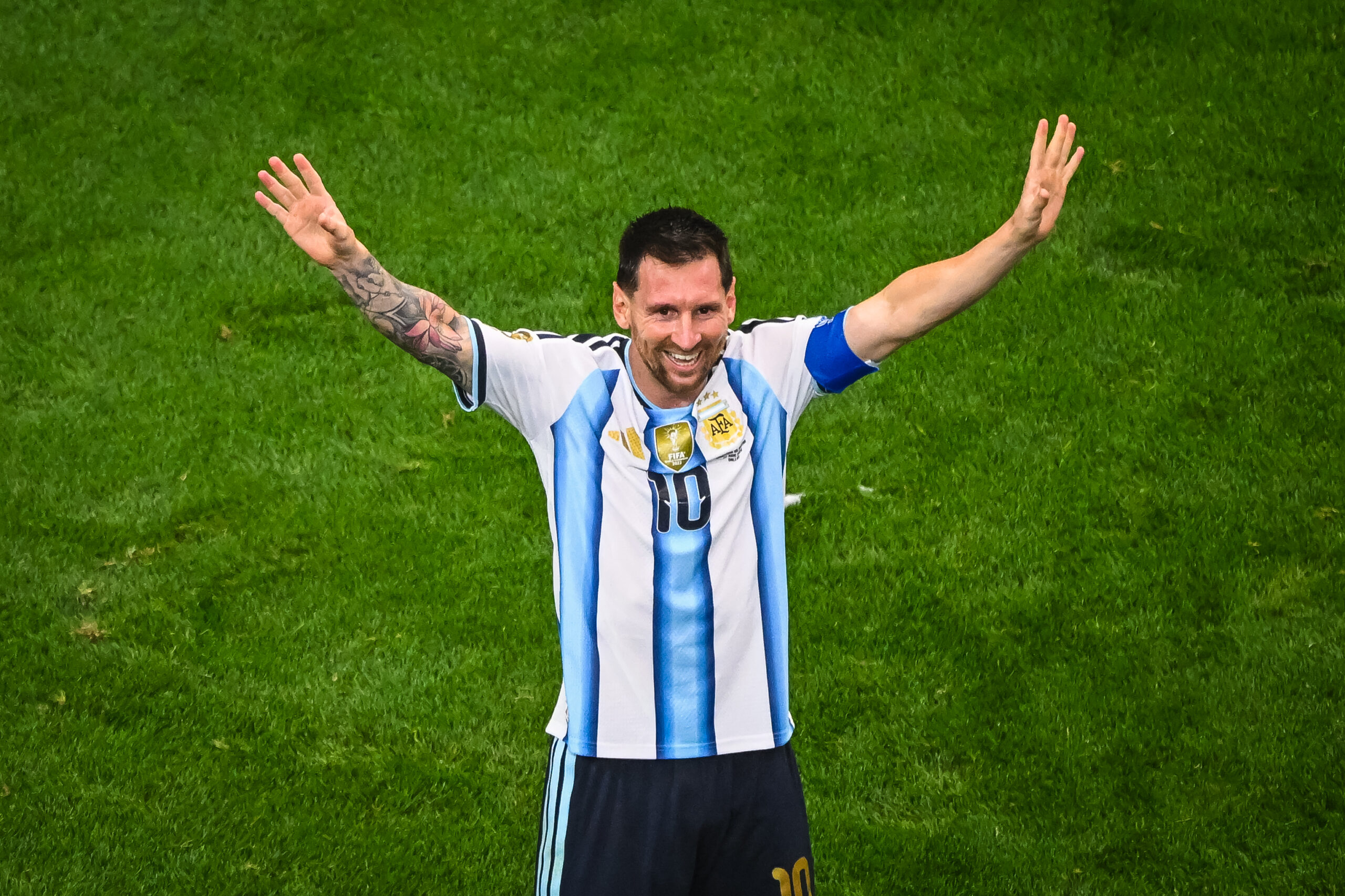
    Lionel Messi hopes to help Argentina become the first back-to-back men’s World Cup champion since Brazil in 1958 and 1962.

    Round of 32 schedule

    The number and letter next to each country denotes where it placed in its group during group stage games.

    Sunday

    3 p.m.: 2A. South Africa vs. 2B. Canada in Inglewood, Calif.

    Monday

    1 p.m.: 1C. Brazil vs. 2F. Japan in Houston

    4:30 p.m.: 1E. Germany vs. 3D. Paraguay in Foxborough, Mass.

    9 p.m.: 1F. Netherlands vs. 2C. Morocco in Monterrey, Mexico

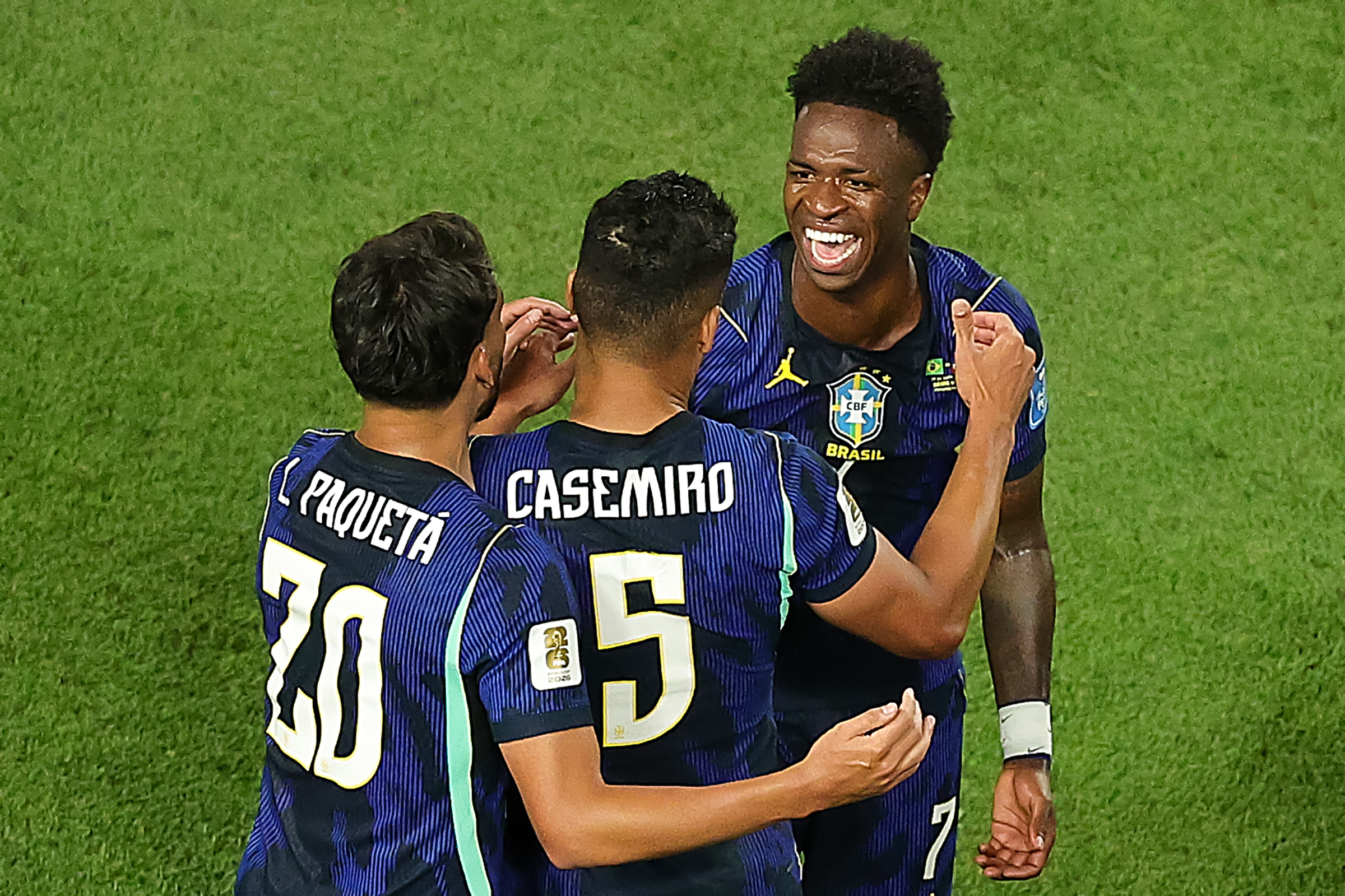
    Brazil forward Vinícius Júnior (right) will hope to continue his good form when the five-time champions begin their knockout round run in Houston.

    Tuesday

    1 p.m.: 2E. Ivory Coast vs. 2I. Norway in Arlington, Texas

    5 p.m.: 1I. France vs. 3F. Sweden in East Rutherford, N.J.

    9 p.m.: 1A. Mexico vs. 3E. Ecuador in Mexico City

    Wednesday

    Noon: 1L. England vs. 3K. Democratic Republic of the Congo in Atlanta

    4 p.m.: 1G. Belgium vs. A3. Senegal in Seattle

    8 p.m.: 1D. United States vs. 3B. Bosnia & Herzegovina in Santa Clara, Calif.

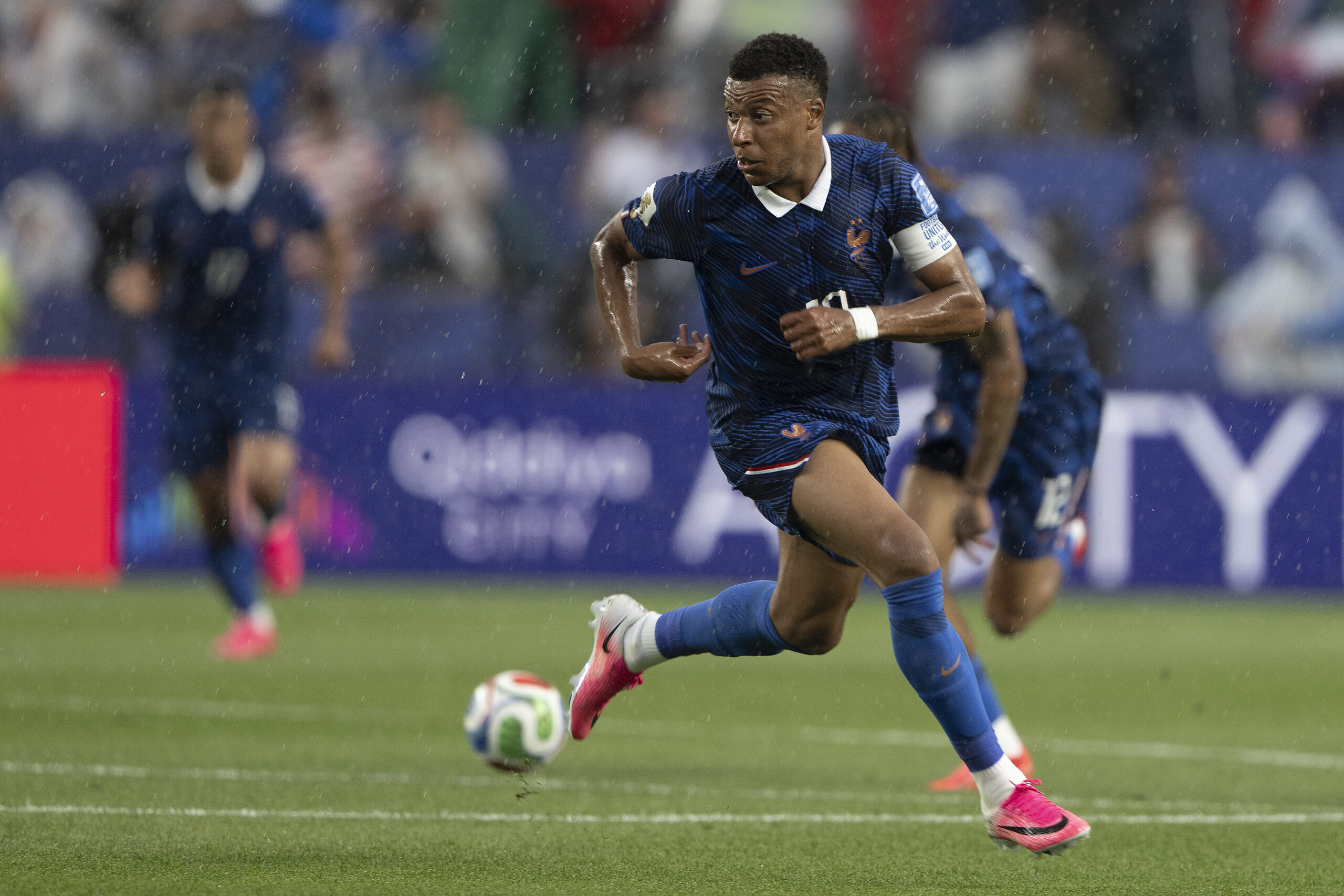
    Kylian Mbappé leads France’s team full of superstars that hopes to reach the nation’s third straight men’s World Cup final.

    Thursday

    3 p.m.: 1H. Spain vs. 2J. Austria in Inglewood, Calif.

    7 p.m.: 2K. Portugal vs. 2L. Croatia in Toronto

    11 p.m.: 1B. Switzerland vs. 3J. Algeria in Vancouver, B.C.

    Friday

    2 p.m.: 2D. Australia vs. 2G. Egypt in Arlington, Texas

    6 p.m.: 1J. Argentina vs. 2H. Cape Verde in Miami Gardens, Fla.

    9:30 p.m.: 1K. Colombia vs. 3L. Ghana in Kansas City, Mo.

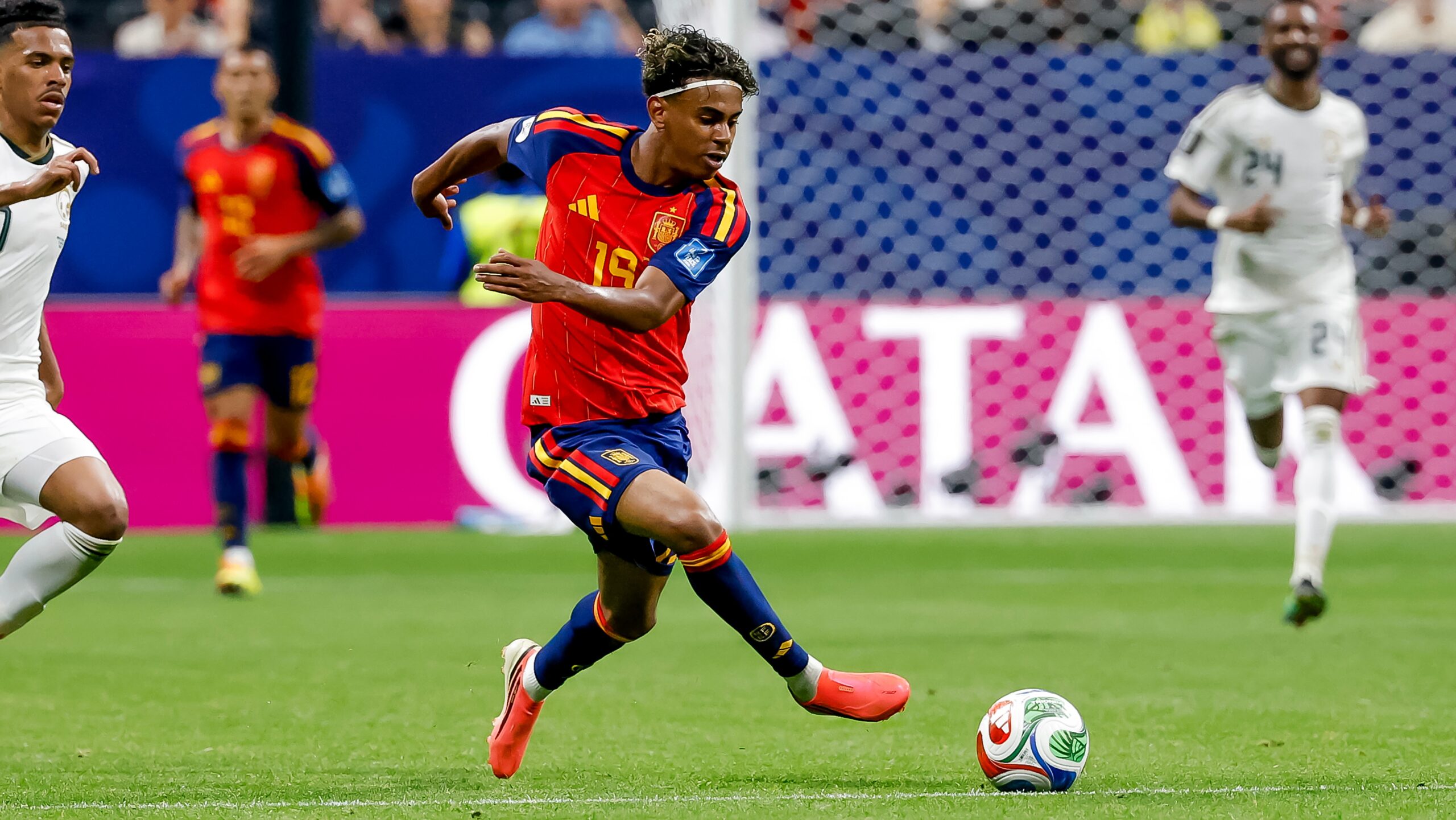
    Spain’s 18-year-old Lamine Yamal is the hottest young player in international soccer.

    Round of 16

    July 4

    1 p.m.: South Africa or Canada vs. Netherlands or Morocco in Houston

    5 p.m.: Germany or Paraguay vs. France or Sweden in Philadelphia

    July 5

    4 p.m.: Brazil or Japan vs. Ivory Coast or Norway in East Rutherford, N.J.

    8 p.m.: Mexico or Ecuador vs. England or D.R. Congo in Mexico City

    The July 4th quarterfinal will be the last of Philadelphia’s six games in this World Cup.

    July 6

    3 p.m.: Portugal or Croatia vs. Spain or Austria in Arlington, Texas

    8 p.m.: United States or Bosnia & Herzegovina vs. Belgium or Senegal in Seattle

    July 7

    Noon: Argentina or Cape Verde vs. Australia or Egypt in Atlanta

    4 p.m.: Switzerland or Algeria vs. Colombia or Ghana in Vancouver, B.C.

    If the U.S. can make the round of 16, it will hope for another big home-field advantage in Seattle.

    Quarterfinals

    July 9

    4 p.m.: Germany, Paraguay, France, or Sweden vs. South Africa, Canada, Netherlands, or Morocco in Foxborough, Mass. (winner goes to semifinal 1)

    July 10

    3 p.m.: Portugal, Croatia, Spain, or Austria vs. United States, Bosnia & Herzegovina, Belgium, or Senegal in Inglewood, Calif. (winner goes to semifinal 1)

    July 11

    5 p.m.: Brazil, Japan, Ivory Coast, or Norway vs. Mexico, Ecuador, England, or D.R. Congo in Miami Gardens, Fla. (winner goes to semifinal 2)

    9 p.m.: Argentina, Cape Verde, Australia, or Egypt vs. Switzerland, Algeria, Colombia, or Ghana in Atlanta (winner goes to semifinal 2)

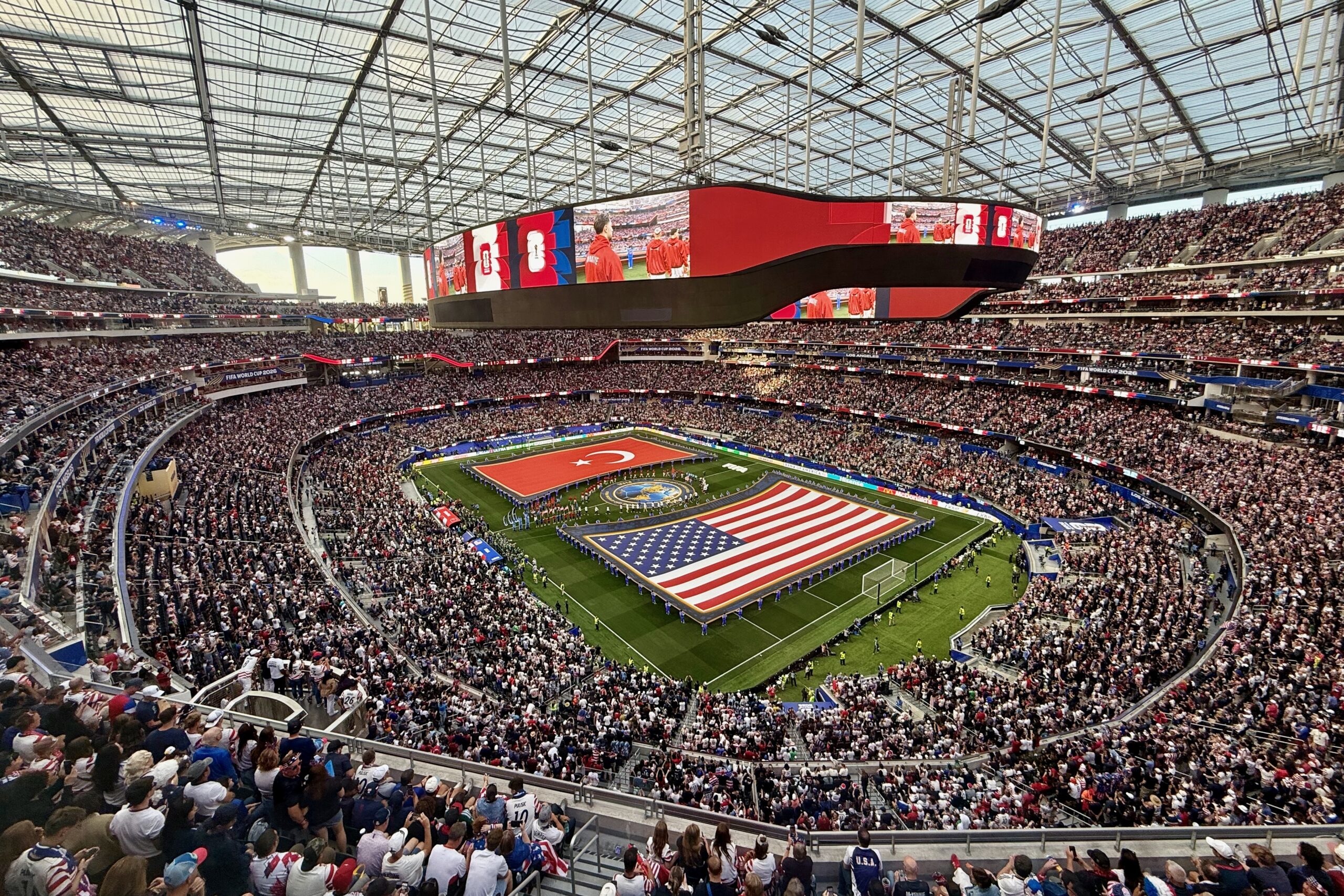
    The U.S. men’s soccer team played two of its three group stage games in Inglewood, Calif., at the venue normally known as SoFi Stadium.

    Semifinals and beyond

    July 14

    3 p.m.: Semifinal 1 in Arlington, Texas

    July 15

    3 p.m.: Semifinal 2 in Atlanta

    July 18

    5 p.m.: Third-place game in Miami Gardens, Fla.

    July 19

    3 p.m.: Final in East Rutherford, N.J.

    The Meadowlands will host a World Cup final for the first time, after the 1994 men’s and 1999 and 2003 women’s finals were played in the Los Angeles area.
  • With five World Cup games down, and a massive one to go in Philly, did Croatia just snap the Rocky curse?

    With five World Cup games down, and a massive one to go in Philly, did Croatia just snap the Rocky curse?

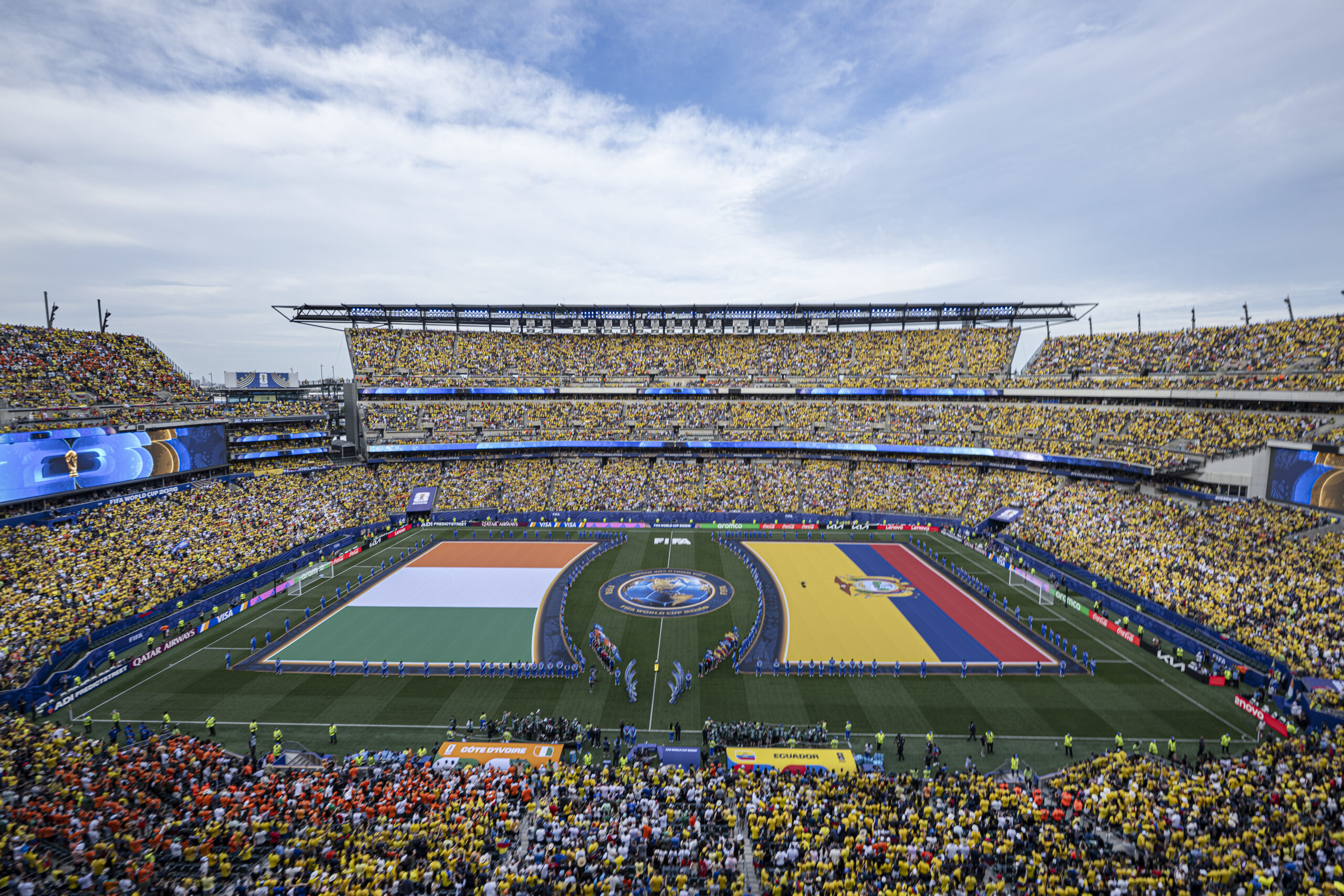
    When it comes to the World Cup, Philly has been treated to Brazil’s magic, the powerhouse that is France, and the sheer might of Ecuador.

    Additionally, coming through has been one of the World Cup’s best stories in Curaçao, and the impressive skill of a young and eager Ivory Coast team, not once, but twice.

    Philly’s bundle of group stage matches ended Saturday night as Croatia battled to a 2-1 win against Ghana that saw them leapfrog the Black Stars to finish second in Group L, culminating a thrilling two and a half weeks of soccer.

    Now, Philadelphia Stadium gets a week’s respite before the final game the city will house, one that could shape up to be the biggest soccer match in the history of the Lincoln Financial Field; which is saying a great deal considering the building opened with a massive match between European giants Barcelona and Manchester United in 2003, and has hosted other memorable club and national team games in the years since.

    When Philly plays host to the round of 16 match on July 4, it will host the winners of two matches between Germany and Paraguay, who face off in the round of 32 on Monday (4:30 p.m., Fox29), and the winner of France and Sweden who play In the round of 32 on Tuesday (5 p.m., Fox29).

    Both Germany and France, who won Group E and Group I, respectively, are the presumed favorites, which would make for a massive showdown in a push for the quarterfinal rounds beginning July 9-11.

    “I won’t be here for it, but that would be a fantastic game if it were to work out that way, especially to have the chance to have France back here one more time,” said Susan Richman, 43, who grew up in Philly, but now lives in Chicago and has stayed with her “soccer-crazy” relatives all week. Saturday’s game was the second inside the stadium for Richman, who works in finance and was in the house for last Monday’s rain-delayed match between France and Iraq.

    After storms caused a delay that lasted over two hours, it was France that put that match to bed, behind two goals from Kylian Mbappé and cherry on top from Ousmane Dembele for a 3-0 win.

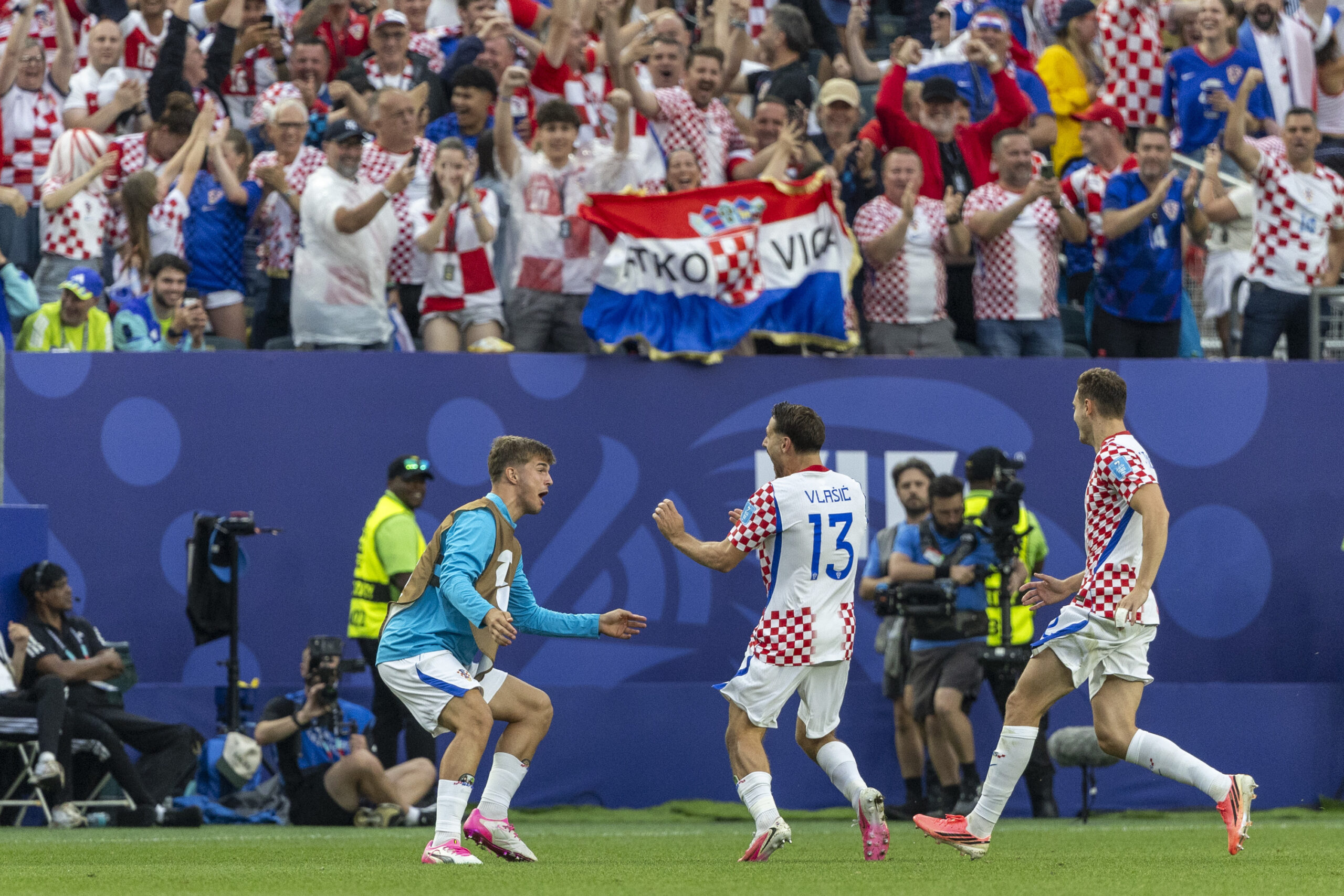
    Nikola Vlasic (13), celebrates after scoring Croatia’s second goal against Ghana during the second half on Saturday at Philadelphia Stadium.

    “It’s been an expensive summer,” laughed Richman, who was there on Saturday with her sister and their family. “I think all in all we’ve spent close to $15,000 [on tickets]? But for us to say that we’ve attended the World Cup in America is something that personally, I’ll always remember.”

    Ticket prices on FIFA’s official marketplace have yet to go on sale, but on secondary markets like StubHub, cheap seats as of Saturday night began at $1,986. There’s been a bit of trepidation with secondary markets tickets as fans have purchased only to find out at the gate that their tickets won’t scan.

    Did Croatian fans debunk the Rocky curse?

    The red and white of Croatia’s colors spilled throughout Center City on Friday night as the biggest demonstration saw fans take over a large stretch of the Parkway, singing, dancing and even setting off a few smoke bombs.

    However, following Croatia’s win, a supporters group called Mi Hrvati (We Croats), alongside the support of Arena Casino, held a secret gathering on the steps of the Art Museum and claimed to have placed a jersey on the statue of Rocky at the top of the steps on Friday evening in advance of the game.

    A bold strategy, considering that it’s been widely reported that fans placing their team’s jersey onto Rocky historically hasn’t worked out in their team’s favor. Ecuador fans found that out before Philly’s opening match on June 14. The word was so widespread that in the match that followed, Brazilian fans brought their own partition and security detail to deter anyone who attempted to do the same before its match against Haiti.

    However, Mi Hrvati claims its decision test the theory came “in secret” as they “did not want to create the story before the match,” a release supplied to The Inquirer claimed, adding, “We believed in Croatia and waited for the result. After the victory, we can say that the Rocky Curse has been broken. This is a fan story to remember.”

    Croatia will face Portugal in its round of 32 match on July 2 in Toronto.

    Another announced sellout crowd of 68,324 packed Philadelphia Stadium for Saturday’s Group L finale between Croatia and Ghana.

    Croatia-Ghana brings the crowd

    Saturday’s match boasted another sellout crowd of 68,324 at Philadelphia Stadium, the fourth announced sellout by FIFA in the five matches that have come through Philly. The game, a very pro-Croatian crowd, still had a sizable contingent of Ghana fans.

    It was yet another match that would ensure FIFA sets a new all-time attendance record for the World Cup, a feat it announced Friday it had already surpassed by the time Thursday’s match in Philly between the Ivory Coast and Curaçao took place.

    Saturday’s match result dropped Ghana into a third-place slot and it will face Group K winner Columbia on July 3 in the round of 32 in Kansas City.

    That notion was an interesting potential matchup for Ghana fan Quinton Ayton, who attended Saturday’s match. Ayton, who sat in Ghana’s raucous supporters section between sections 110-111, said that he’s ecstatic that his team was headed into the knockout phase.

    “Hey man, we’re here and win or lose it’s just great that this team is doing what they’re doing,” said Ayton, who lives in the Elmwood Park section of the city, said. “To get the opportunity to see my country play so close to home was a dream. An expensive dream, but a dream.”

    When asked how much he spent on his tickets, Ayton said, laughing: “I can’t give a price, my wife will kill me, just know it was worth it to see them play in Philadelphia.”

  • Ghana’s return to the region is its first since becoming a part of Philly soccer lore nearly 15 years ago

    Ghana’s return to the region is its first since becoming a part of Philly soccer lore nearly 15 years ago

    When Ghana closes out its final group stage match of the World Cup in Philadelphia against Croatia on Saturday (5 p.m., FS1) it’ll mark the West African nation’s first return to the region since it became a piece of Philly soccer lore 14 years prior on a rainy night in Chester.

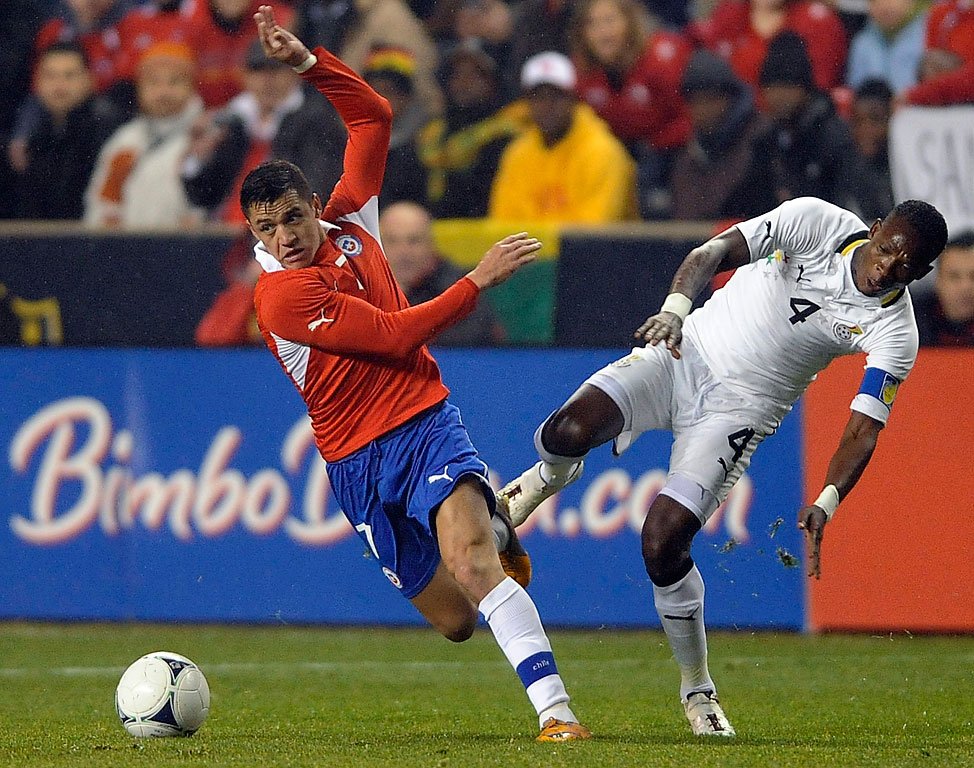
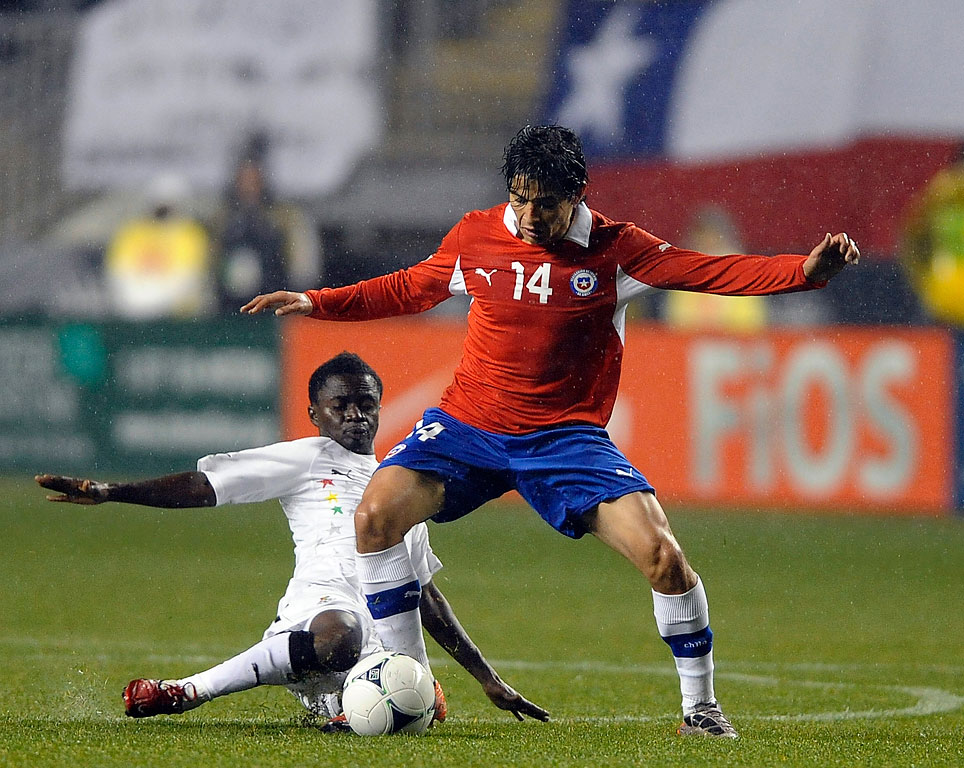
    Fresh off a run to the semifinals in the African Cup of Nations in 2012, Ghana booked a trip to America to take on Chile in an exhibition match at Subaru Park, which at the time was known as PPL Park. The match, scheduled in February, already had a chill to it, but it was amplified by a driving rain that didn’t let up the entire game.

    The first half saw Ghana head into the locker rooms at halftime up, 1-0, after a goal by young midfielder Richard Mpong gave the tiny but loud Ghanaian support plenty to cheer about.

    Former Chile and European club star Alexis Sanchez collides with Ghana’s John Pantsil during a 2012 friendly at Subaru Park (then names PPL Park) in Chester.

    Typically, a soccer halftime lasts 10-15 minutes. But this time during a pouring rain, fans were treated to a mini-concert by a Ghanaian hip-hop group and virtual games on the stadium’s video board.

    But then 20 minutes passed, then 30. Fans were made to believe that it was due to the rain that the match was delayed. But what transpired in Ghana’s locker room had nothing to do with Mother Nature.

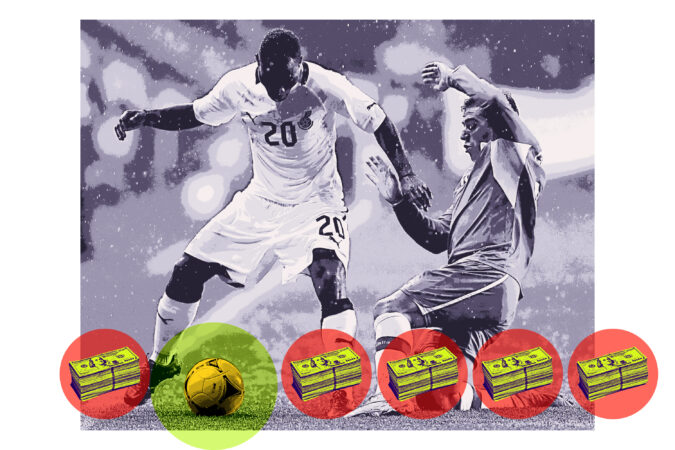
    It had everything to do with the match promoter failing to make it rain an alleged $125,000 to Ghana’s team. A sum that doesn’t seem like much when you consider that if the amount went only to the 18 Ghanaian players who made the trip, it was less than $6,950 per player.

    However, according to the official (and a few unsubstantiated reports), the team was adamant that if the game’s promoter didn’t pay the full amount of their appearance, the team had planned not to return to finish the match.

    A high-ranking stadium official who chose to remain anonymous confirmed to the Inquirer that there was a definite “tense situation” going on in the locker rooms, and while they were in the arena that night it was unclear that the issue involved an unpaid Ghana team until much later.

    Chile’s Matias Fernandez (center) and Ghana’s Richard Mpong, seen battling for the ball here, were the two goal scorers on the night for their respective clubs.

    Coincidentally, according to a 2012 report from Modern Ghana, the match was moved to PPL Park because the promoter failed to secure a venue in New Jersey, due to the “high costs” of the venue.

    “There was definitely some type of dispute, and it definitely was some type of issue with the promoter,” the official recalled. “The second half didn’t get underway for some time, and I don’t think fans knew what was going on, but it was heated in the locker room for sure.”
    The official, who has firsthand insight into the proceedings of how these matches are typically set up, explained that there are promoters who arrange these international matches and will arrange a sort of half-now, half-later deal with smaller-level international clubs, using the proceeds from the match to close out the deal.

    Plenty of pro-Ghana fans stayed through a driving rain that swept across a chilly February night in Chester in 2012 when Ghana played Chile in a friendly.

    “Look, I don’t know the ins and outs of this particular night, and it was so long ago, but I do recall it being a very sketchy scenario,” he said. “A lot of times, they’ll look to use the arena, promote the two nations but then ask for like 1,000 consignment tickets, thinking that if they can hand out a handful of free tickets, they’ll recoup out of the arrangement what people might spend in the stadium.”

    They added that there are a handful of promoters who handle friendlies today in the same manner. It doesn’t affect the venue, who offers a going rate to rent the facility and its amenities for the match, and once that’s paid, the rest falls on the promoter to turn a profit as they see fit.

    “But yeah, there was some type of financial dispute where I think the Ghanaian Federation, the [team’s] manager or somebody felt like they weren’t compensated enough in advance of the game and to them, that was like the last straw,” he said. “It was like, ‘Okay, screw it. We’re not coming out.’”

    Eventually, after a halftime delay that lasted over an hour, Ghana did emerge and play the second half. It would end up finishing the match with a 1-1 draw after a goal by Chilean Matias Fernandez would even the score off of a penalty kick in the 75th minute.

    On Saturday, Ghana will return with a 26-man roster featuring none of the players or manager who were on that roster in 2012. The game is in a much bigger arena and the stakes are higher as a win will secure Ghana a chance to move to the knockout rounds out of Group L and depending on how scorelines from other games shake out, could even see the nation win the group.

    Ghana has yet to lose a match in this World Cup, defeating Panama in its opener, 1-0, followed by a thrilling scoreless draw against group favorites, England on Tuesday.

  • The USMNT’s sour World Cup group stage ending should be motivation for the bigger games to come

    The USMNT’s sour World Cup group stage ending should be motivation for the bigger games to come

    INGLEWOOD, Calif. — It’s a good thing that the U.S. men’s soccer team’s 3-2 loss to Turkey on Thursday didn’t matter for the standings. Because in many other circumstances, it would have been infuriating, not just annoying.

    Had the game finished tied, there would have been very few complaints. Everyone knew coming in that the lineup would have a lot of rotation. An unbeaten run through the group stage would have kept up the good vibes, even with that changed squad giving up two goals.

    Instead, giving up a last-kick-of-the-game goal meant the questions that followed were far less positive.

    “Having that moment in the last moment where they score, it’s tough,” said Medford’s Brenden Aaronson, whose first World Cup start included four tackles, three defensive recoveries, three shots, 21-of-22 passing, and a first-touch misfire toward an open net in the 62nd minute that overshadowed much of the rest of his night.

    “We wanted to walk away with no losses in the group stage, but we’ve got to take it, as it was still a fantastic group stage,” Aaronson said. “We had so many really good performances, and even before the group stage, in the friendlies. We’re at a top level. I’m not worried whatsoever, and we’re going to move on to the next one and be ready to go for Bosnia” in the round of 32.

    Other players were more positive, in particular Sebastian Berhalter. He had an assist and a terrific goal in the game, and tried to set a tone by stepping to the microphone first.

    Asked if the final score affects the team’s momentum, he said bluntly, “No, it doesn’t. … I think we gave everything we had, and we’ll be ready for the knockouts.”

    Manager Mauricio Pochettino was flat-out defiant, saying “no one congratulated us for finishing first in a very difficult group.”

    He repeatedly chided the media, saying at one point: “Your questions are a little bit weird, but I am so happy, and the players are happy, because I think we perform, we compete, and we are first. … Maybe I am confused, but the mood, the vibes [are] like we go home tonight and Turkey stays.”

    Tyler Adams, who watched from the bench to avoid getting another yellow card, was asked if it’s better to flush the moment as Berhalter wanted or keep it as motivation heading into the knockout rounds.

    “It’s not going to be perfect,” he said. “No tournament is perfect. You live and you learn. I think a lot of the guys will take lessons from that game. A lot of good performances otherwise.”

    A moment later, goalkeeper Matt Turner was asked the same question. His inclusion in the starting lineup was perhaps the most controversial of the nine changes Pochettino made from the Australia game.

    Matt Turner (left) watches Turkey’s players celebrate the game-winning goal.

    “When it’s 2-2 at the end there, that probably would have been the more fair result given the chances both sides had, but this is football, and we know how cruel the game can be,” he said. “We let our guard down, and we got punished for it. We were all in positions to make a play, and none of us could make the decisive play.”

    Alejandro Zendejas, who finally got to make his World Cup debut, had a similar opinion.

    “It’s always the worst, especially on the last play of the game, when that happens — when I think we had the game controlled, pretty dominated in my opinion,” he said. “But yeah, it’s a time to take the night or the day to reflect on the game, and then turn the page right away to focus on the next round for sure.”
    In the big picture, the result didn’t matter — a rare luxury for a U.S. team that for decades has scrapped for every point it has gained at men’s World Cups. But it still did in a way, because a last-second goal like that has to matter.

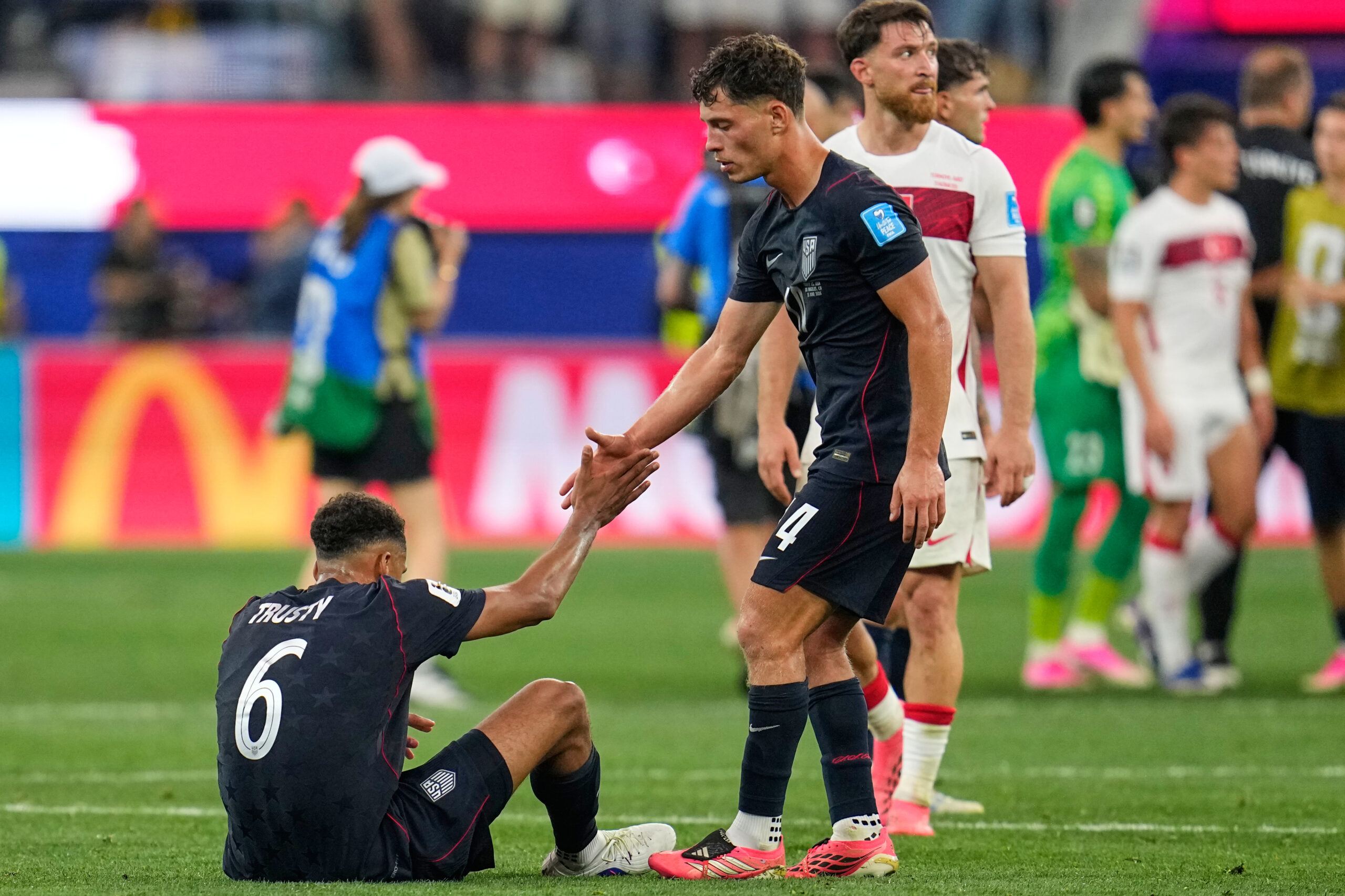
    Sebastian Berhalter (right) helping Auston Trusty (6) to his feet after the final whistle.

    And when the Americans, who won Group D, next take the field, on July 1 against Bosnia & Herzegovina in Santa Clara, Calif. (8 p.m., Fox29, Telemundo), the result will be all that matters. Bosnia & Herzegovina finished third in Group B.

    “You can always take these things as fuel,” Aaronson said. Many U.S. fans will hope the team does so.

    Auston Trusty’s moment of history

    Whatever ends up happening to the U.S. in the knockout rounds, one moment will stay in the history books for a long time. Media native Auston Trusty became the first men’s player born and raised in the Philadelphia region to score a World Cup goal when he slammed in Berhalter’s corner kick service in the third minute.

    “I’m a center back usually, playing in a left back spot [in this game],” Trusty said. “I can advance up, I can show different parts of my game going forward. I live and breathe for corners, and then had the opportunity and took advantage of it.”

    The only other male player to have lived in the area and scored a World Cup goal was Bart McGhee. He immigrated from Scotland to Philadelphia as a child and scored the program’s first-ever World Cup goal in the inaugural tournament in 1930.

    “It means everything,” Trusty said. “I absolutely didn’t know that stat. … I think it’s an honor to score a goal and even participate in this competition, let alone score a goal. So yeah, just a dream come true.”
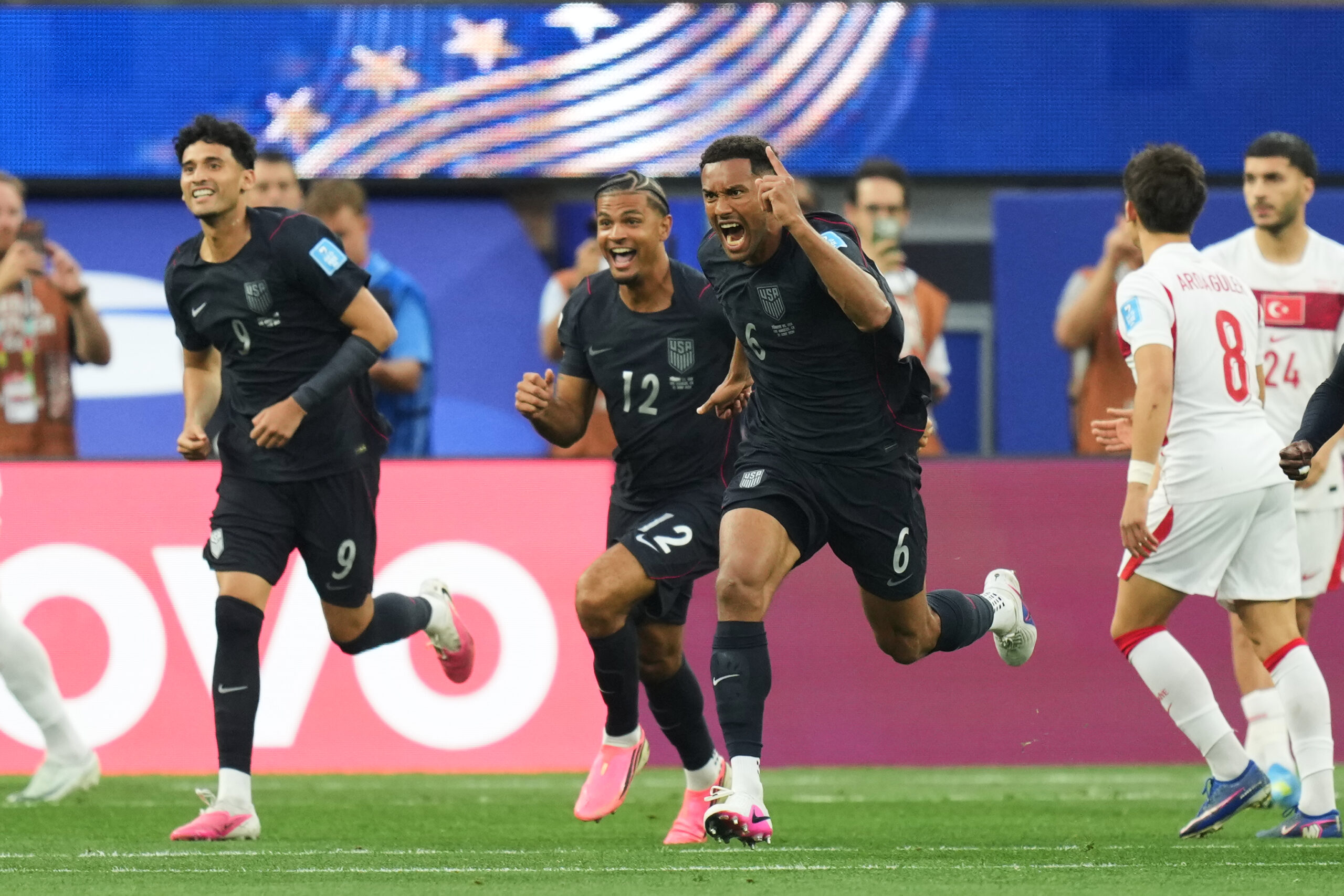
    His celebration was as vibrant as the shot, as he screamed and raised a finger while sprinting away toward the U.S. bench. And back home, a big crowd at Philadelphia’s fan fest on Lemon Hill roared just as loudly.

    Coincidentally, Trusty said, the celebration was similar to how he celebrated his first goal for the Union in 2018.

    “I don’t know why I did that,” he quipped. “I didn’t plan for that, but pretty cool. It’s kind of full circle.”
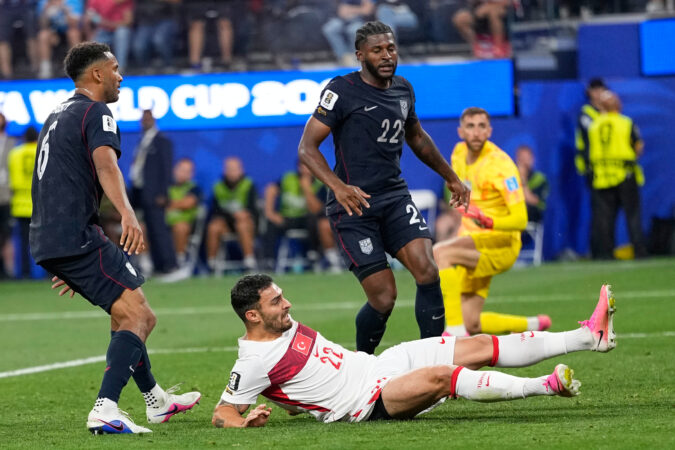
    Trusty’s night ended on a sour note when he got stepped on by Turkey’s Oğuz Aydın, rolled an ankle, and managed to suffer a hamstring cramp as he hit the ground. He went back in the game (in part because the U.S. was out of substitutions), then slipped amid the chaos of the last goal.

    By the time he emerged to the media, he had that ankle wrapped, but otherwise, he didn’t seem any worse for wear.

  • Philadelphia Stadium plays its part as FIFA sets World Cup attendance record

    Philadelphia Stadium plays its part as FIFA sets World Cup attendance record

    With the group stage still going strong, FIFA has already set an all-time World Cup attendance record, and Philadelphia has been a major part of that.

    Following Thursday’s slate of group stage games, FIFA announced that 3,605,357 fans had attended matches in this year’s expanded tournament of 48 nations vying for the top prize in the July 19 final.

    The mark passed FIFA’s previous mark of 3,587,538 fans set in 1994, the last time the World Cup came to the United States.

    Philly’s place in all of it hasn’t gone unnoticed as the mark was set during the city’s fourth match on Thursday between the Ivory Coast and Curaçao, which had an announced attendance of 68,324. Across the four matches, Lincoln Financial Field, renamed Philadelphia Stadium for the World Cup, has welcomed 273,296 fans — approximately 7.6% of the total.

    “This was incredible, the whole experience is a memory,” said Mustafa Al-Hasani, a fan from Iowa who attended Monday’s rain-delayed Group I match between France and Iraq. Despite the rain, Al-Hasani lauded both the stadium and the city’s hospitality. “Philly’s great, I’ve been here before, but this is an experience I don’t think I’ll ever forget.”
    FIFA’s attendance record being surpassed was an inevitability, given that this tournament field expanded from 32. FIFA’s increase in the number of nations means more matches and venues. For this World Cup, 104 games are being played in 16 stadiums across the United States, Canada, and Mexico over the monthlong event.

    However, with it being just 14 days into the tournament, this also sets the standard going forward for FIFA reaching an attendance record.

    Patrick Murray, of West Chester, Pa., is with his niece Maggie McDermont, 15, and her sister Cecilia, 12 has contributed to Philly having 273,296 fans attend the four matches that have been played in Philadelphia since Thursday.

    According to FIFA, stadium capacities have been at an all-time high; here in Philadelphia, attendance at all four matches has been an announced 68,324, which is capacity at the Linc.

    That’s a remarkable number when you consider that, with FIFA enacting a dynamic pricing model for the first time in a World Cup, ticket prices have never been higher, including some seats listed in the thousands of dollars in the lower-level seating of stadiums.

    Philadelphia has just two more matches. Croatia and Ghana play in Group L on Saturday (5 p.m., FS1), and then on July 4 the city will host a Round of 16 game, between the winners of two games in the Round of 32.

  • The Big Picture: Rain can’t dampen Philly’s World Cup vibes, and more of the week’s best sports photos

    The Big Picture: Rain can’t dampen Philly’s World Cup vibes, and more of the week’s best sports photos

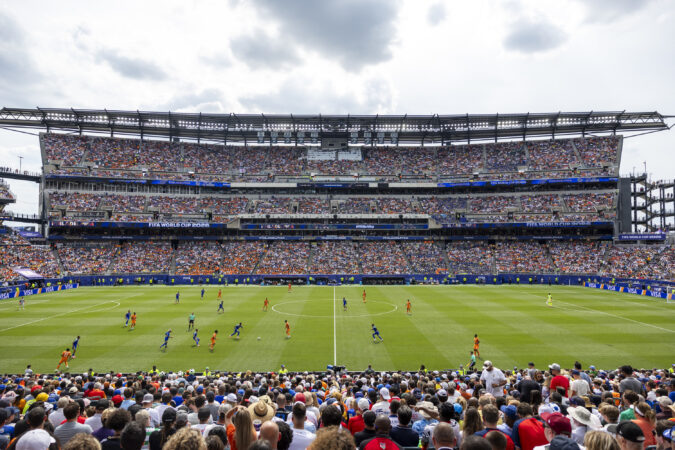
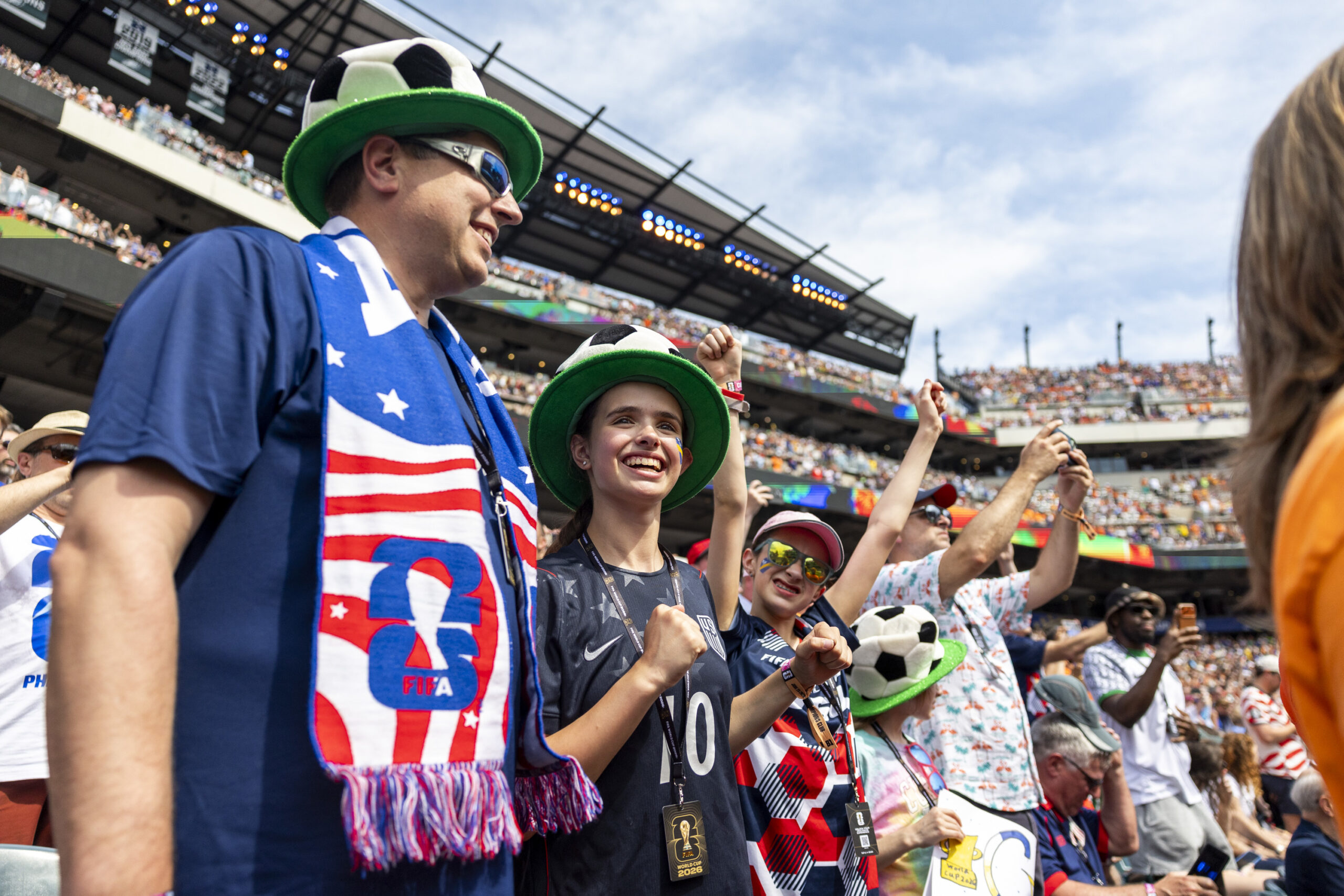
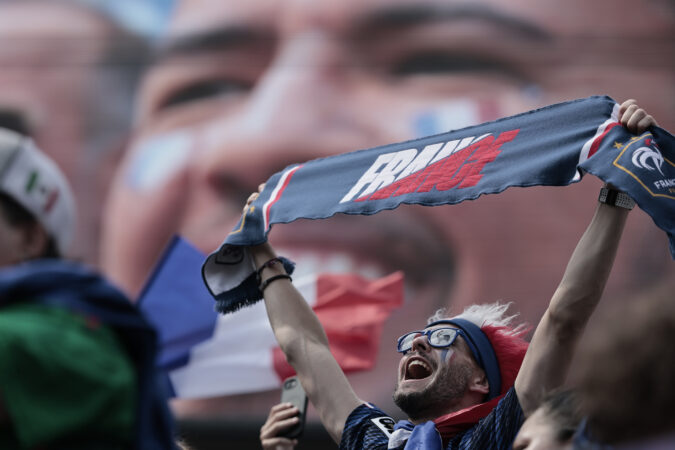
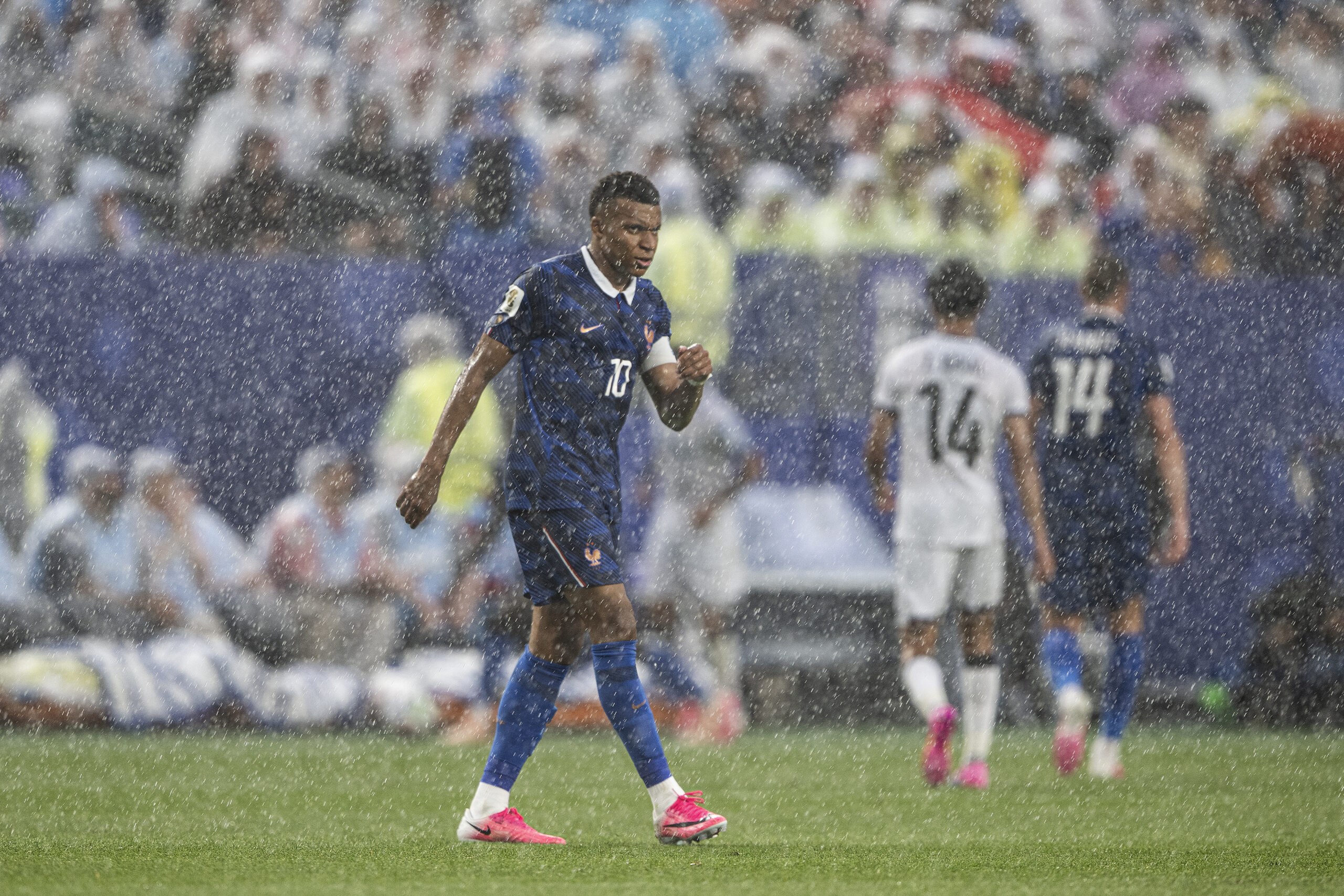
    Each Friday, Inquirer photo editors pick the best sports images from the last seven days. This week, the World Cup craziness continues — but at least there were no more run-ins with the Rocky curse. On Monday, a powerful thunderstorm temporarily halted the fun in South Philly during the France-Iraq match, but fans — and even a French radio crew — weathered the storm and finished the game.

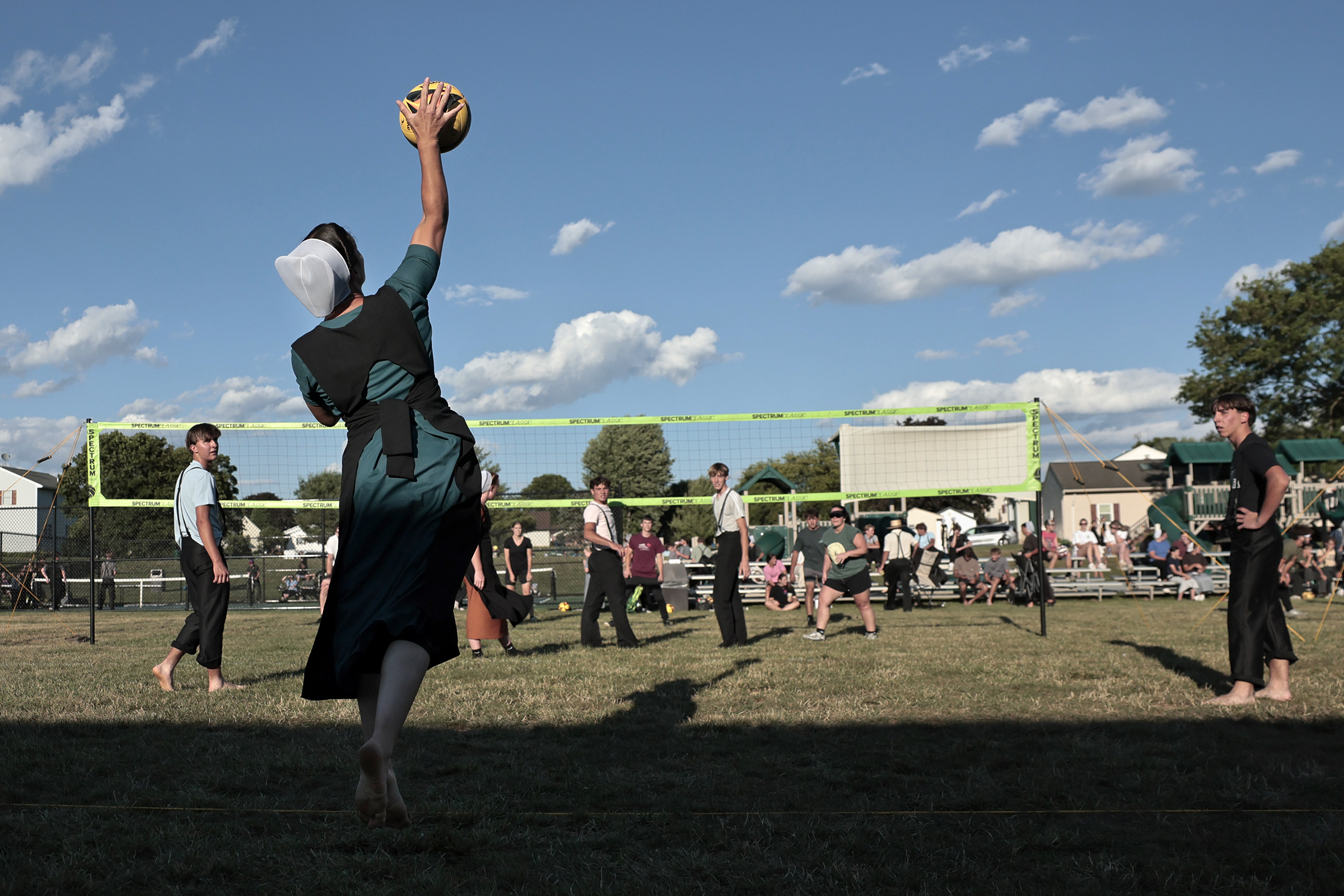
    Across the street, the Phillies hosted the Mets before heading down to Washington for a couple of their craziest games of the season. And out in Amish country, we learned that volleyball is taken very seriously. Here’s a look back at some of our favorite photos from the week:

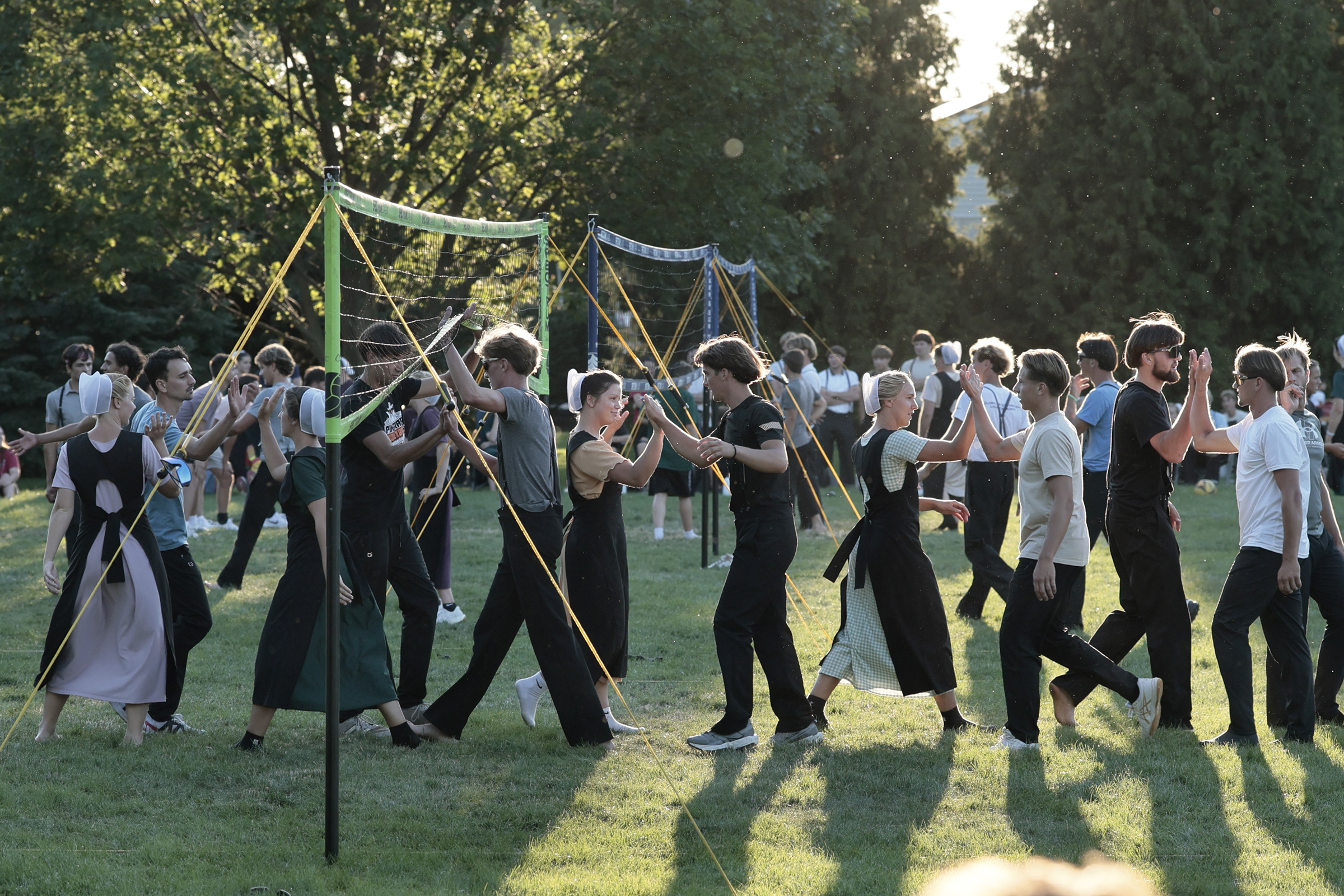
    An Amish woman serves the ball during a volleyball match at the Heritage Days Co-ed 6’s Volleyball Tournament at Intercourse Community Park in Gordonville, Pa.
    Teams high five and shake hands after a volleyball match during day one of the Heritage Days Co-ed 6’s Volleyball Tournament at Intercourse Community Park.
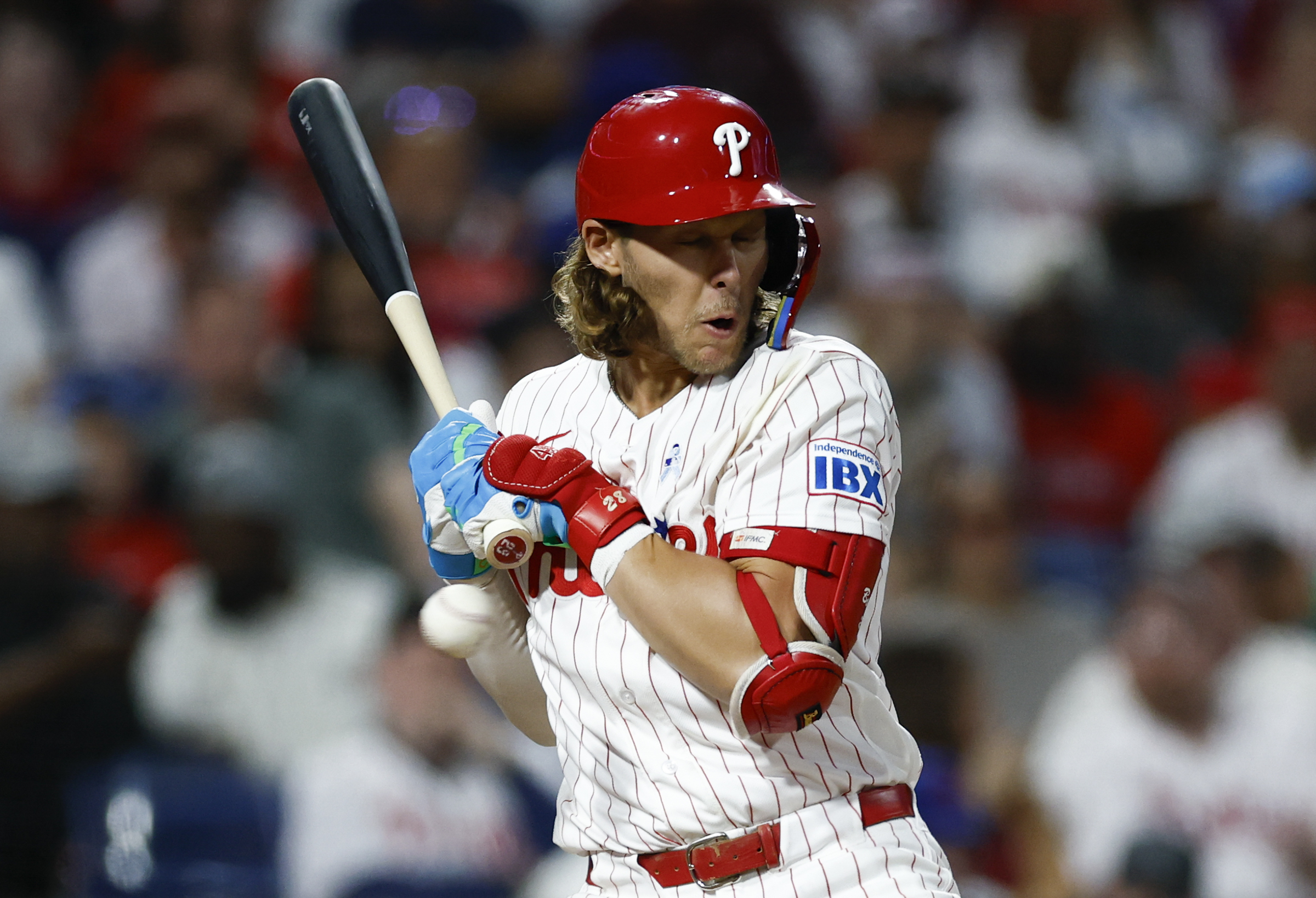
    Phillies third baseman Alec Bohm backs off from a inside pitch from Mets reliever Austin Warren in the fifth inning of Sunday’s 6-2 win.
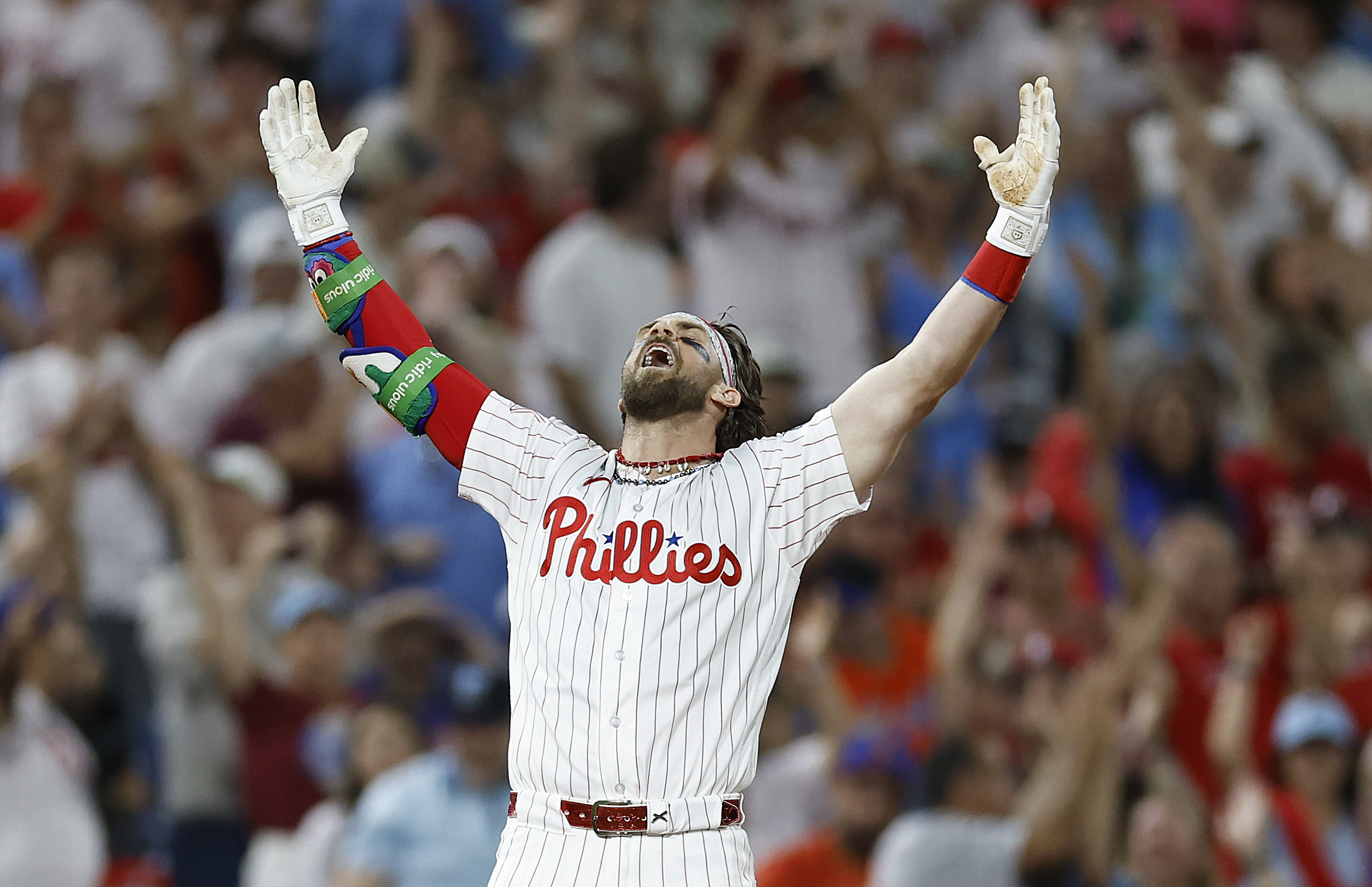
    Bryce Harper celebrates his triple against the Mets Saturday that clinched the first cycle of his career.
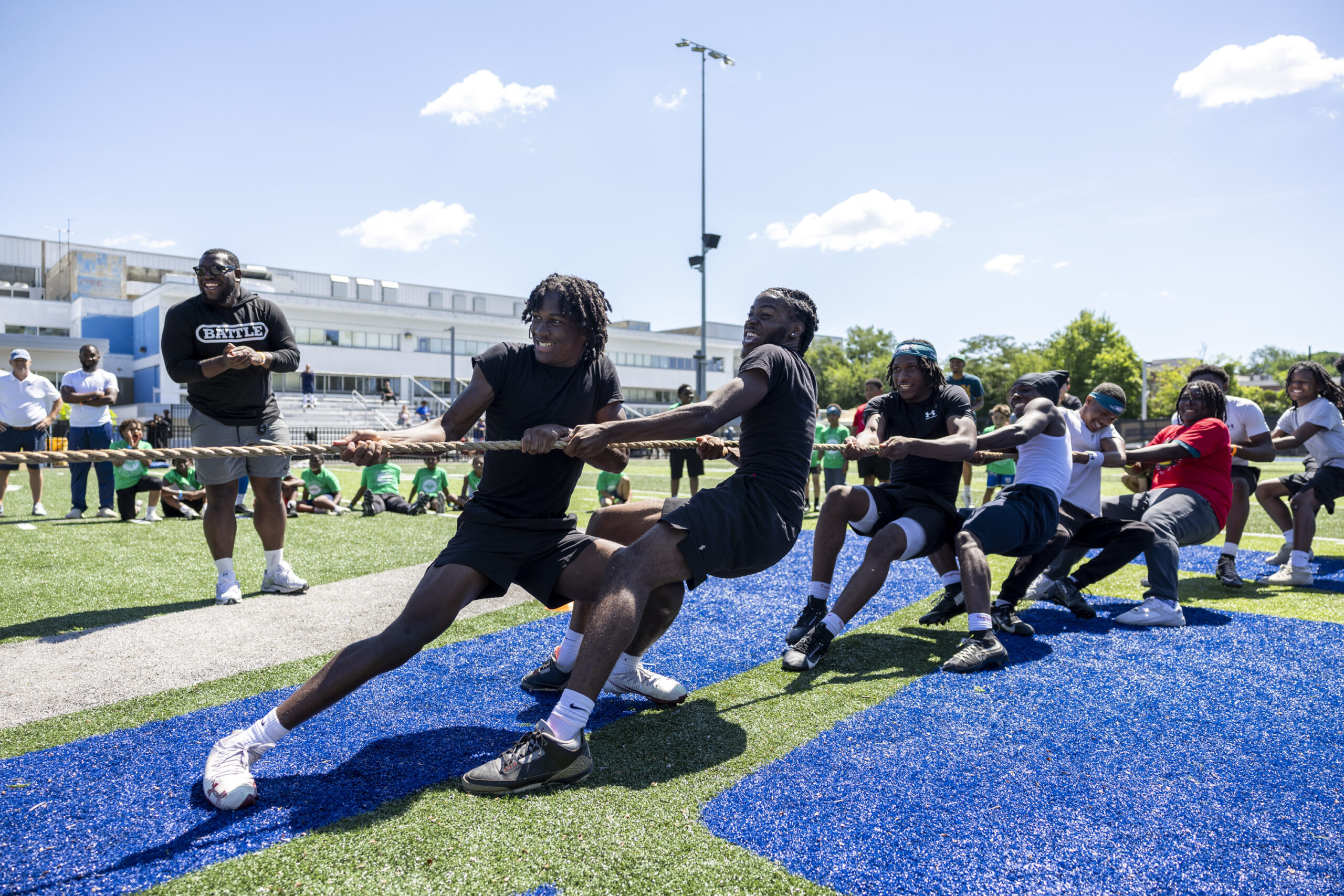
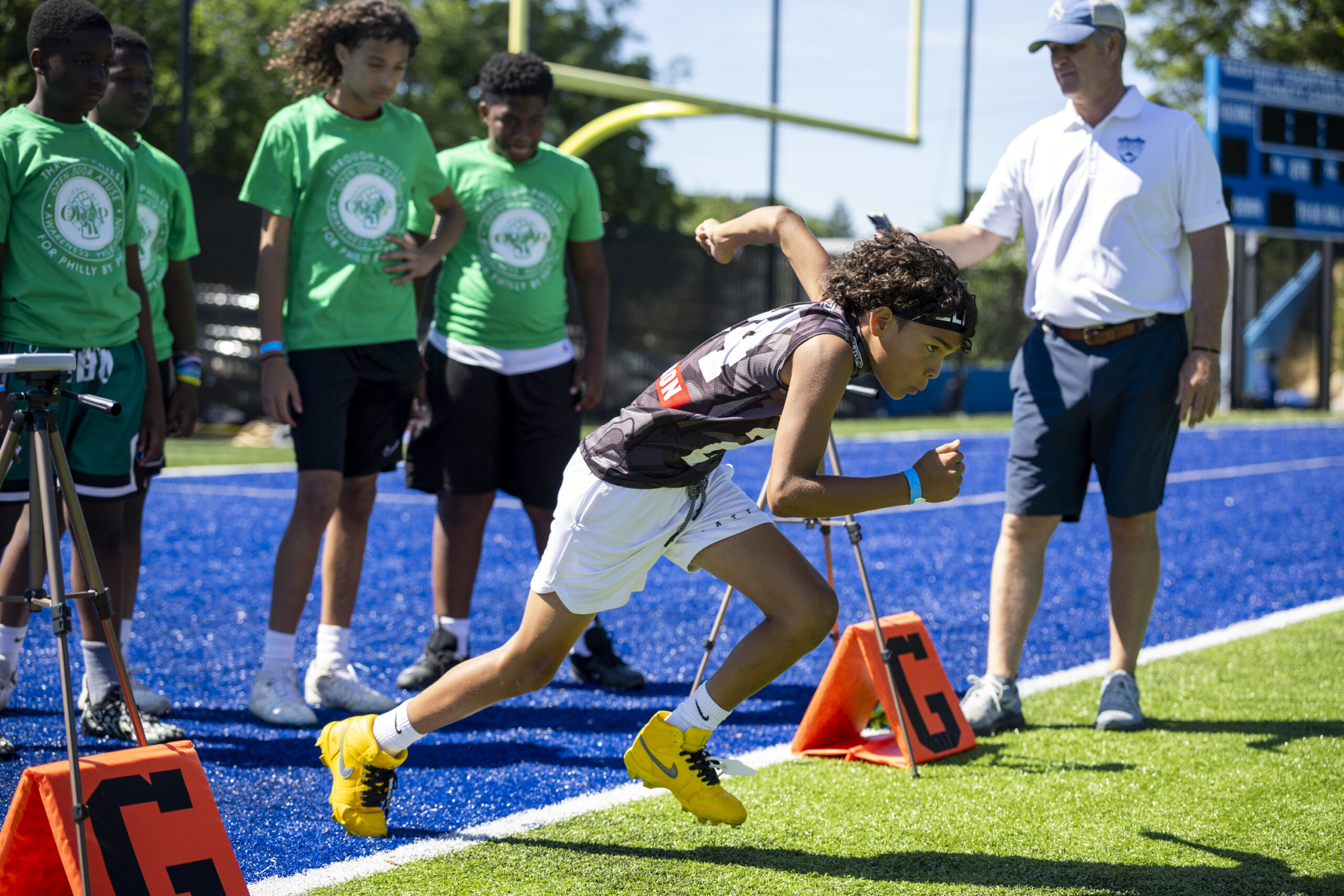
    Kaamil Nelson (left), a strong safety and wide receiver at Pennwood High School, and Semaj Pridgen (second from left), a wide receiver and defensive back at Vaux Big Picture High School take part in a friendly tug of war. The two 17-year-old Philly natives were on hand for the Open Door Abuse and Prevention youth football clinic at Mastery Charter on Saturday.
    Kamden Cintron, 11, ran the 40-yard dash in 6.3 seconds at the clinic, which featured an appearance from Eagles first-round pick Makai Lemon.
    On the USS New Jersey, Pisey Tan (top), 46, of South Philadelphia, a sergeant in US Army, has James Mevoglioni, 26, of North Jersey in an arm lock during their Jiu Jitsu match at an event on Saturday for the We Defy Foundation in Camden.
    France star Kylian Mbappé walks off the field during a weather delay at the end of the first half of his team’s win over Iraq Monday. The delay lasted over two hours.
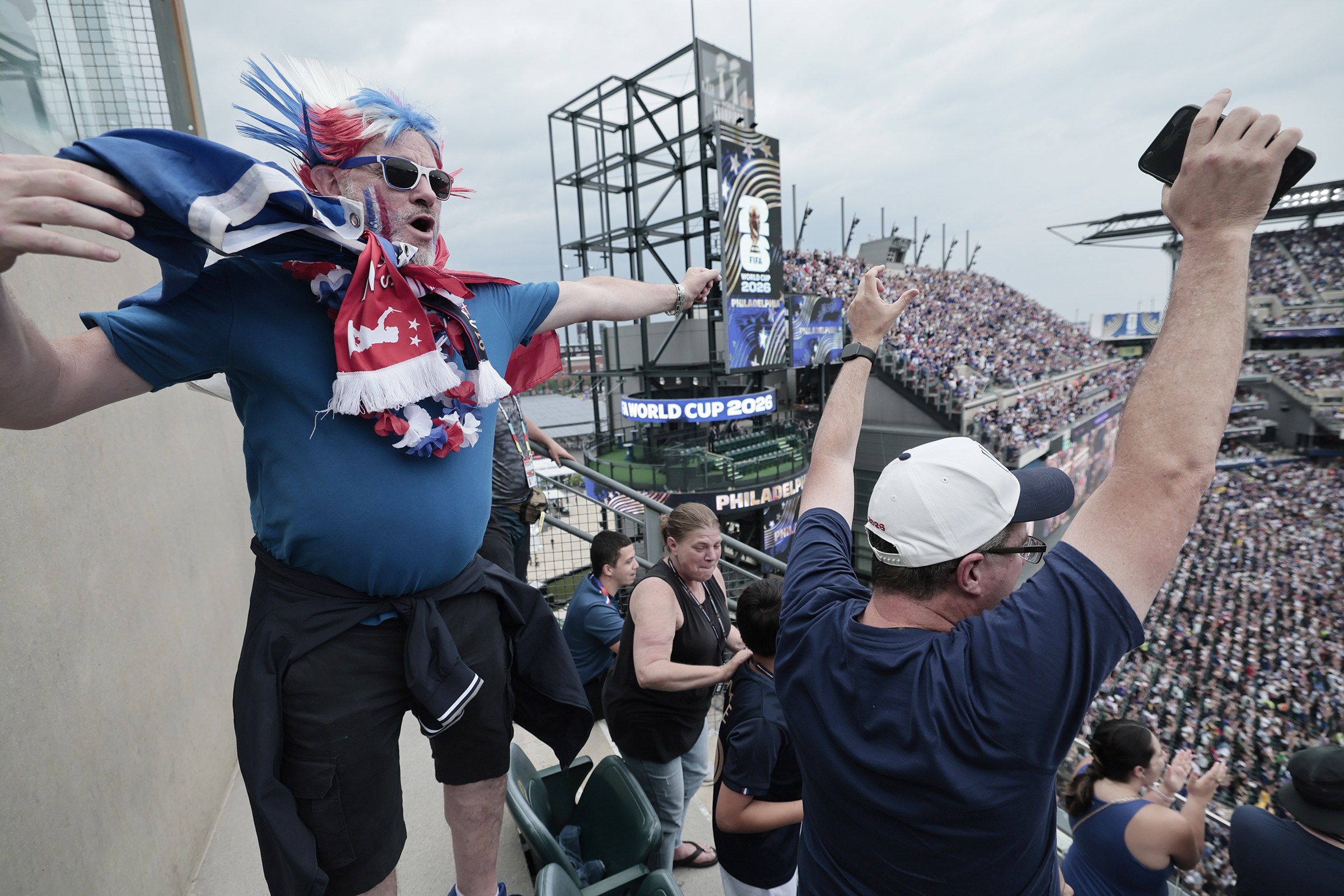
    Prior to the rain arriving, France took a 1-0 lead over Iraq, causing Jimmy Coilliot of Lille, France, to dance in celebration.
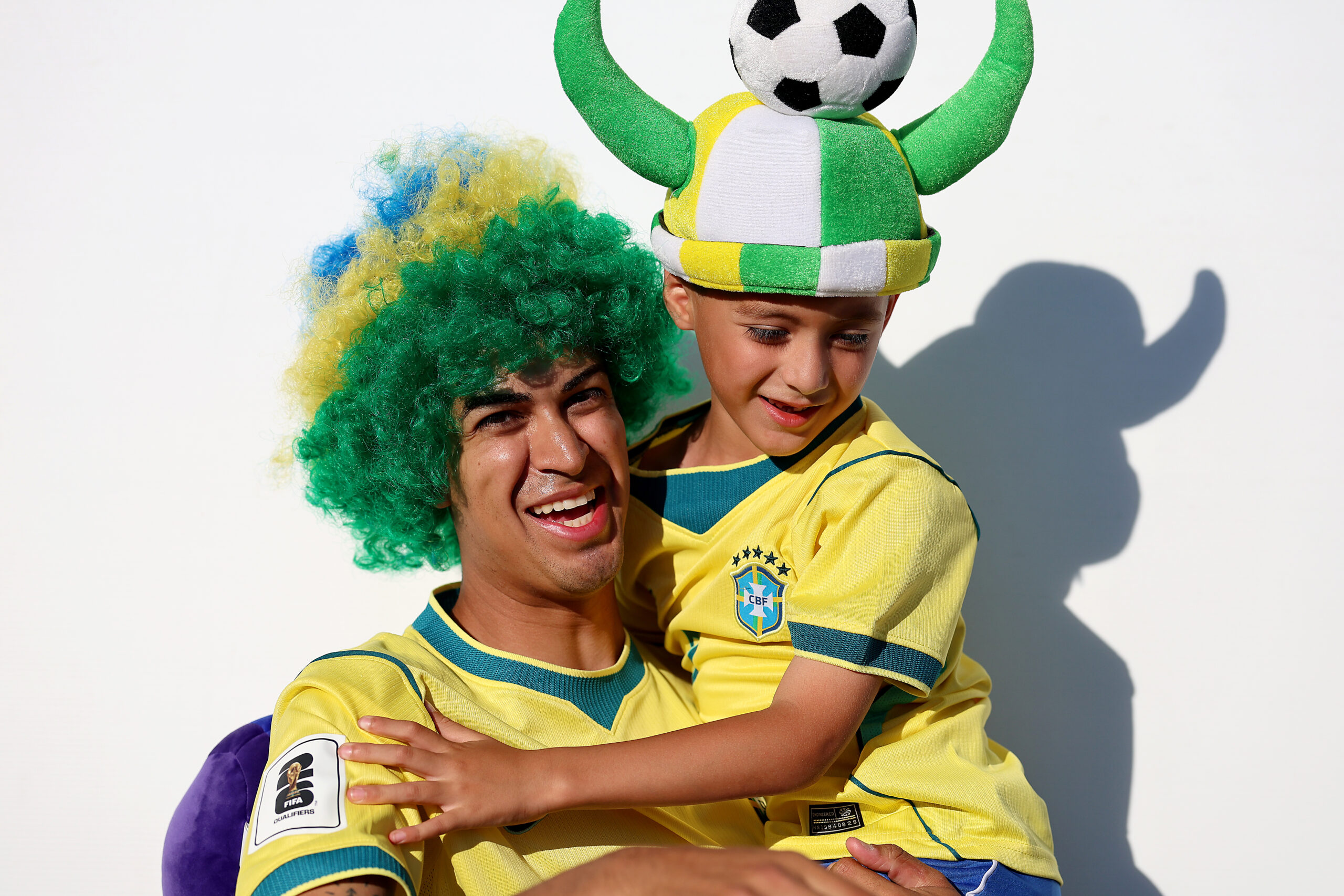
    Brazil fans Miguel Sosa and his son, Enzo, of Nebraska, were in Philly for the team’s win over Haiti on Friday night.
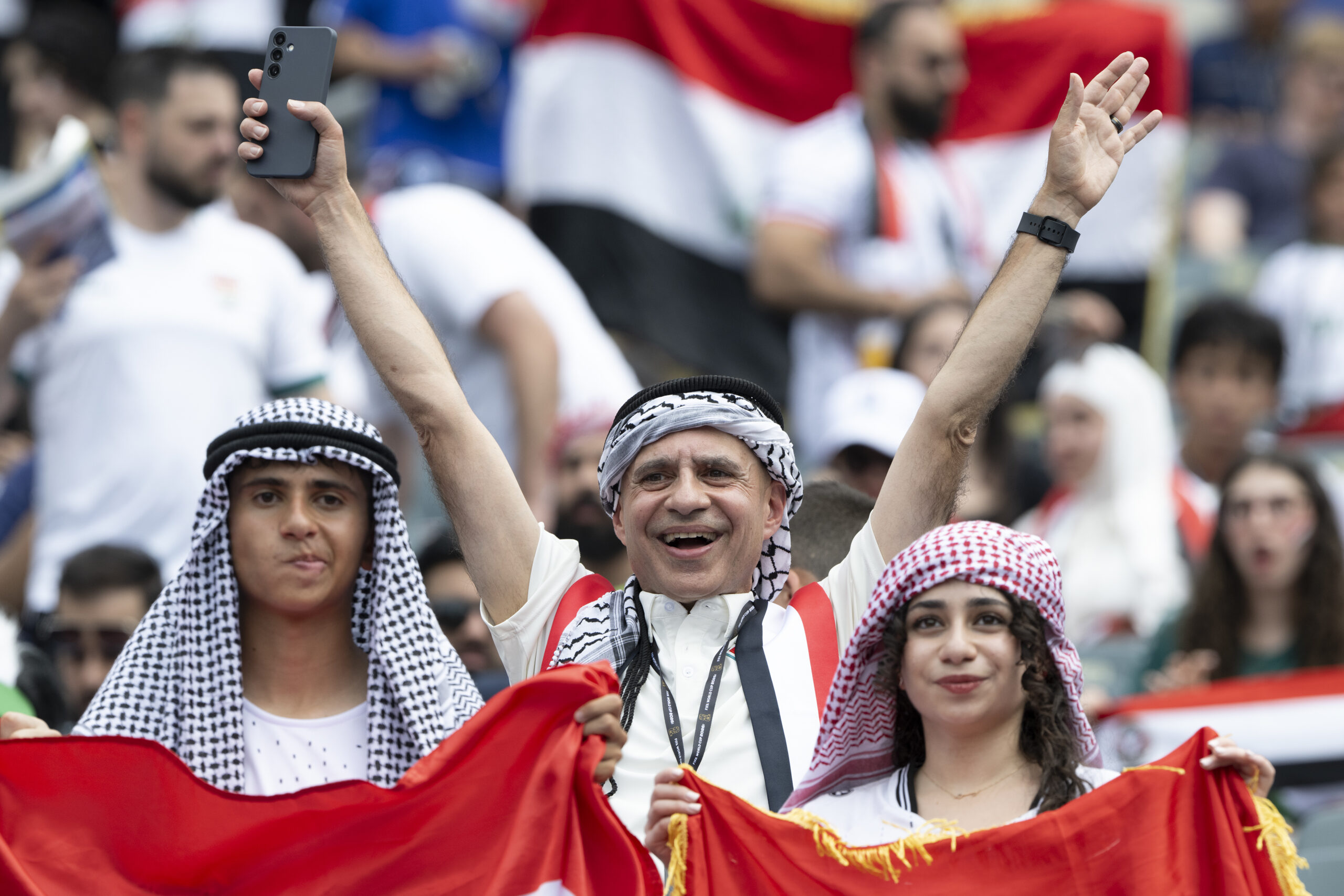
    Fans cheer for Iraq from the stands before their team’s game against France.
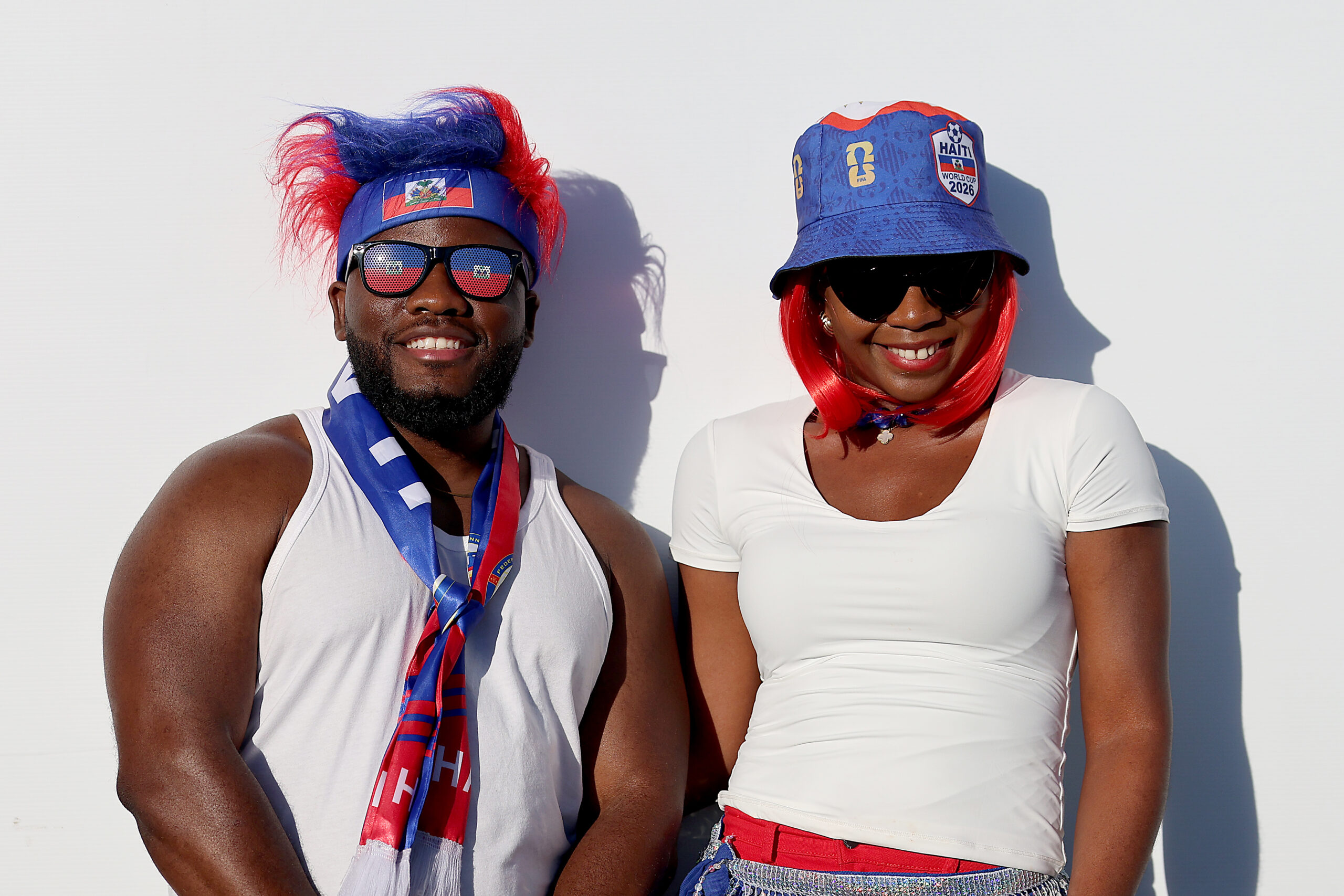
    Haiti fans Roby and Mama Cristin, of New York, attended Friday’s game against Brazil in South Philly.
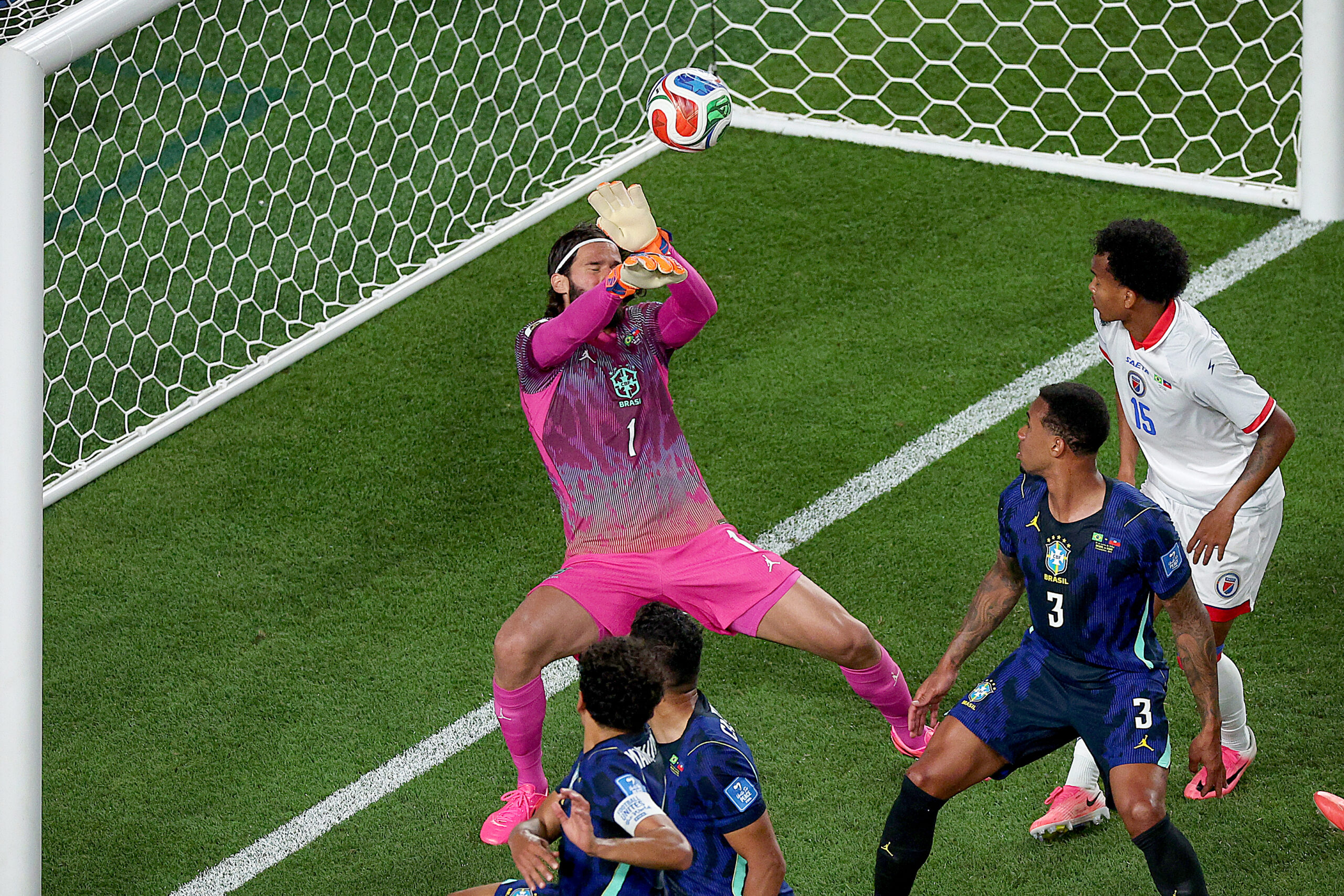
    Brazilian goalkeeper Alisson Becker makes a save in the second half as Brazil beats Haiti, 3-0.
  • Yan Diomande is the story for the Ivory Coast in this World Cup. His tale, however, is just beginning.

    Yan Diomande is the story for the Ivory Coast in this World Cup. His tale, however, is just beginning.

    After the congratulatory hugs, picture posing and victory lap, Yan Diomande pointed to the sky.

    It was unclear whether the Ivory Coast forward was thinking of his departed sister or just his country’s unprecedented accomplishment in the World Cup as he exited the field at Philadelphia Stadium following a 2-0 win over Curaçao on Thursday.

    But surely it was a moment of emotion for the 19-year-old wunderkind.

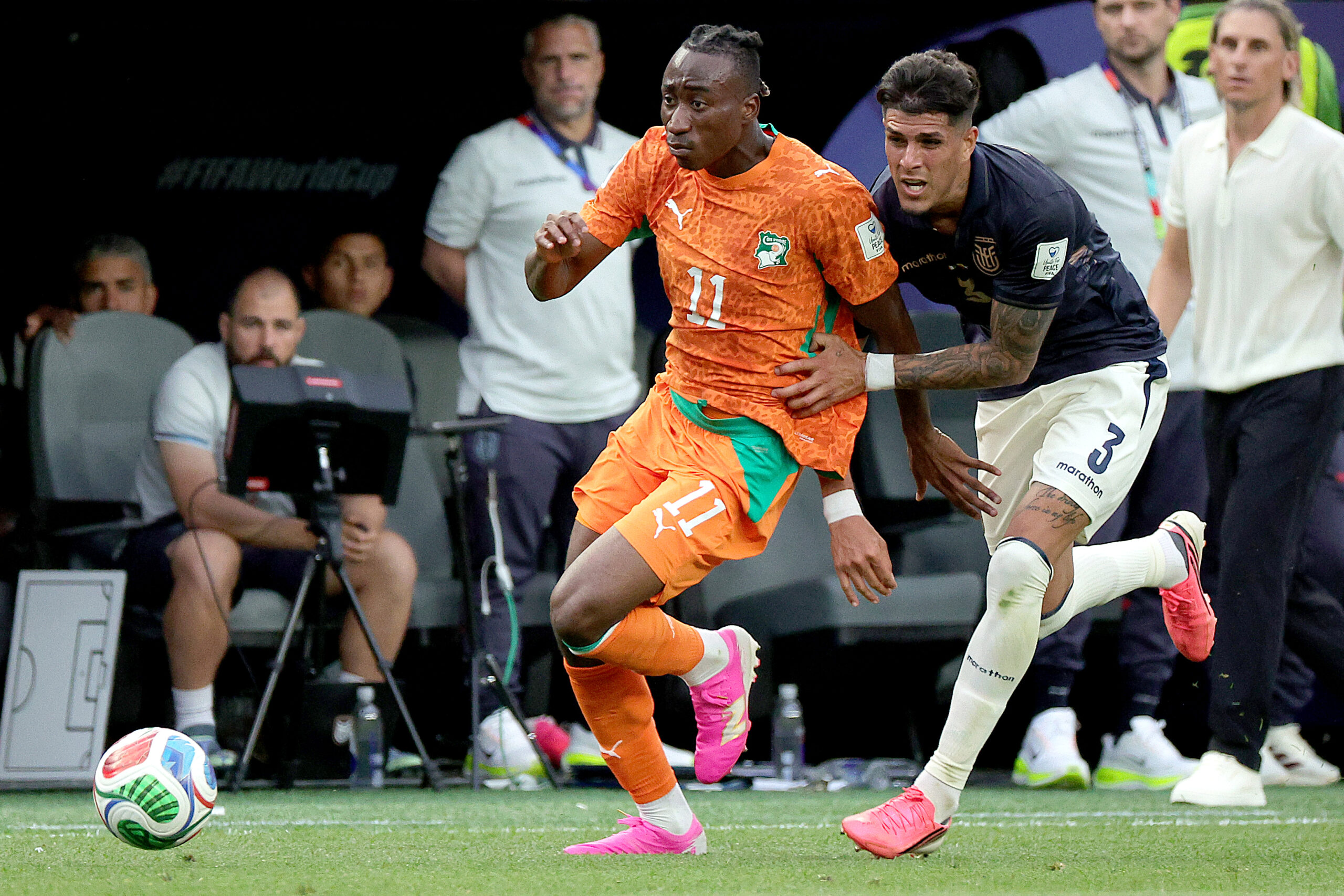
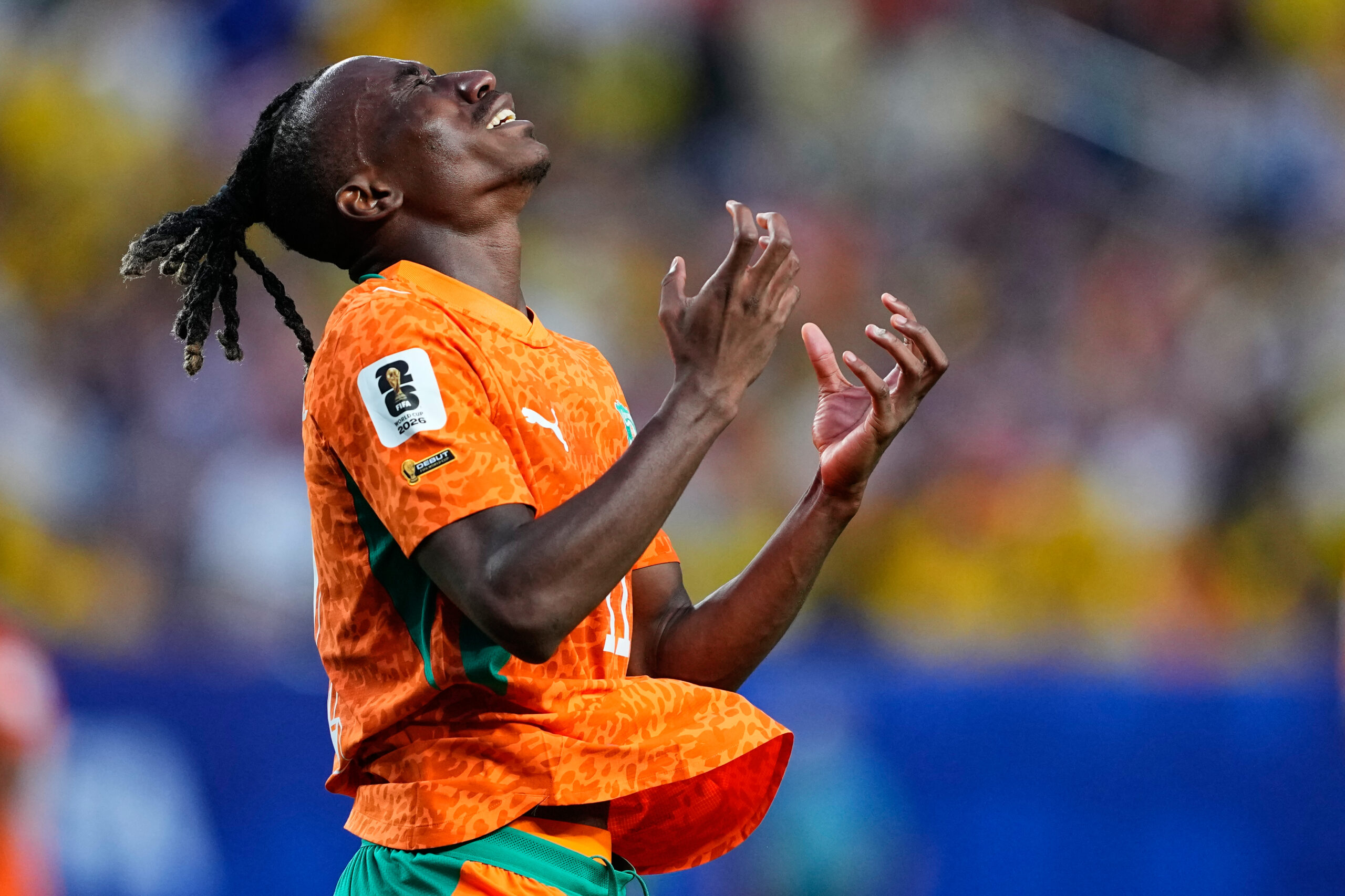
    Diomande’s arrival in the international consciousness of soccer took another step after the Ivory Coast advanced to the knockout stage of the tournament for the first time, ever. He might not have been Player of the Match — that honor was reserved for teammate Nicolas Pépé, who scored both goals — but Diomande assisted on the first and produced other chances.

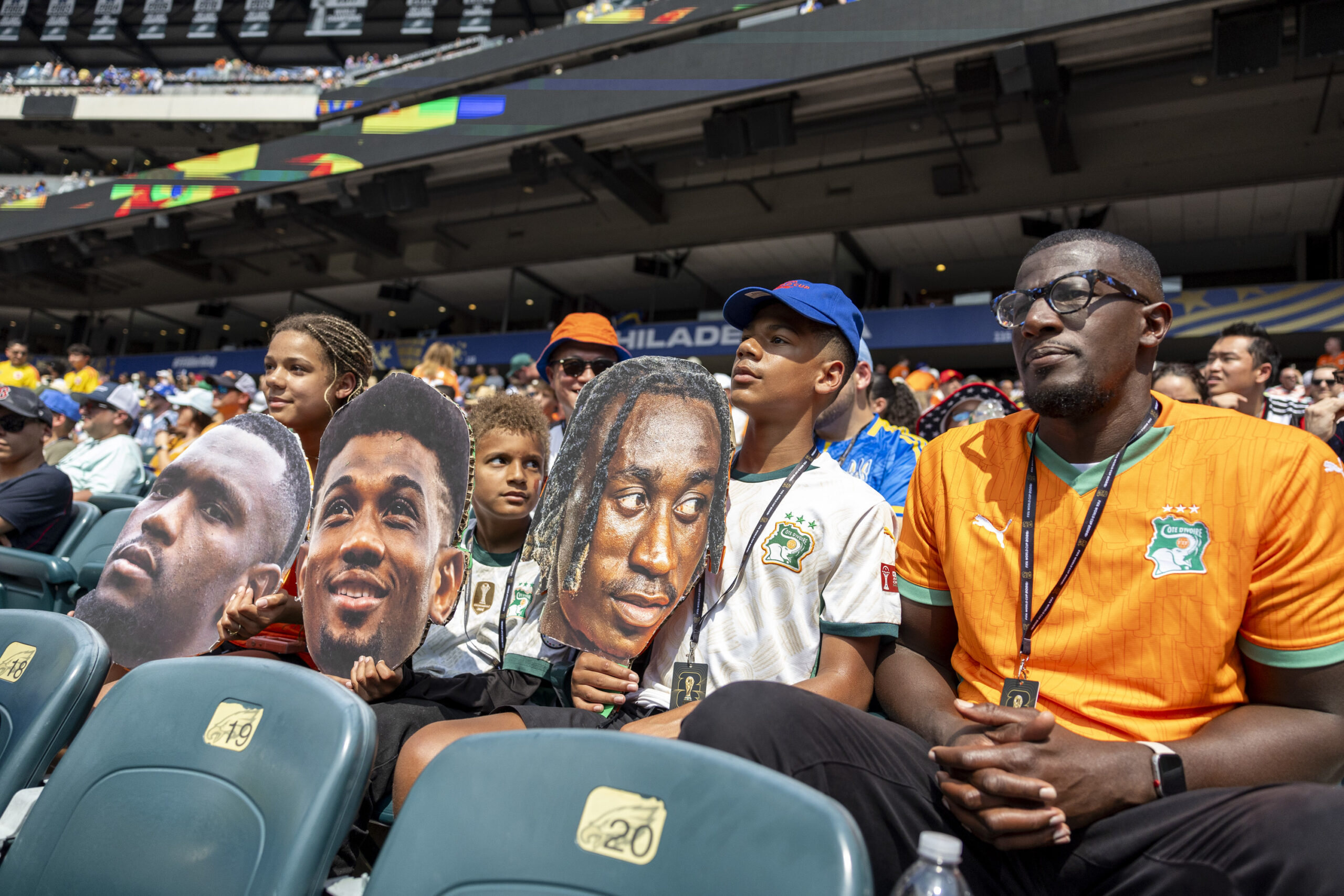
    The cutout of Yan Diomande (far right), is on display as (right to left) Yed Anikpo, of Ivory Coast, is with his family Jude, 13, Zeke, 9, and Eden, 14 at Thursday’s Ivory Coast-Curaçao match.

    He will get at least one more opportunity to represent his homeland when Ivory Coast faces Norway in the round of 32 on Tuesday in Dallas. Philly, though, will be remembered as where Diomande first launched his star in America, especially for casuals who haven’t followed his meteoric rise over the last two years.

    Most hardcore fans have been aware of the former United States high school athlete for some time. He was Rookie of the Season in the German Bundesliga playing for RB Leipzig, where he scored 12 goals and had nine assists last season.

    And he’s been one of the most sought-after signings this offseason with powerhouse European clubs like Liverpool, Paris Saint-Germain, and Bayern Munich reportedly in pursuit. Diomande might not be a household name here, but the New York-based Roc Nation is his agency.

    Rapper Jay-Z, Roc Nation’s founder, attended Ivory Coast’s first fixture of group play at Philadelphia Stadium, normally known as Lincoln Financial Field, in support of his client. Diomande dominated that game — a 1-0 victory over Ecuador on June 14 — from both wings.

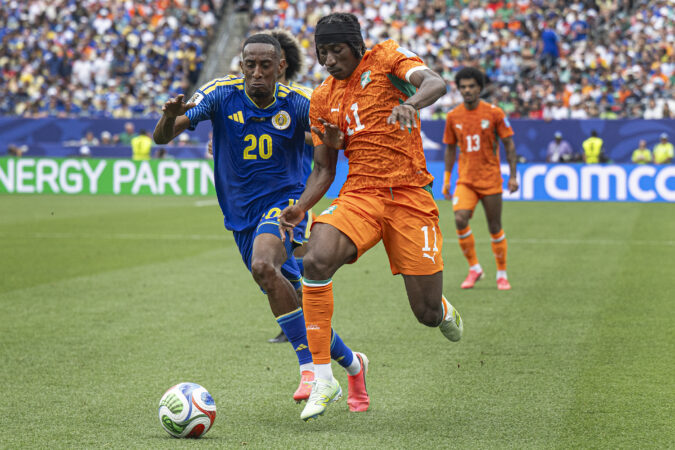
    On Thursday, five days after Ivory Coast suffered a late, gut-punching 2-1 loss to Germany, the forward played exclusively on the left flank. Diomande needed only minutes to make his presence felt. Gifted a Curaçao turnover, he penetrated along the end line and found Pepe in front for a one-touch goal in the 7th minute.

    Diomande continued to be problematic when he dribbled at defenders. His combination of speed, agility, and power forced Curaçao to send multiple defenders his way. And yet, he still created the most chances (3) by the half.

    Pépé’s second goal came in the 64th minute when he received a pass just inside the box and ripped a left-footer past keeper Eloy Room. Three minutes later, Diomande was subbed off, likely to preserve him for next week.

    Yan Diomande (left) has put on a show in his pair of appearances with the Ivory Coast in Philadelphia.

    Diomande has been playing with a heavy heart. A year ago, his 15-year-old sister, Roxane, died back home after her drink was spiked. Diomande penned an emotional open letter to his sister in The Players’ Tribune upon his return to the U.S. for the World Cup.

    “I don’t feel anything. It’s like I’m not even human,” he wrote. “Since you died, I’m just blank.”

    Diomande has, if anything, been the opposite on the pitch. In fact, that’s exactly how Ivory Coast native Lucas Droh described him before the match as he and his older brother, Pacome, tailgated in the lot outside Xfinity Mobile Arena.

    “He’s expressive,” Lucas, 32, said. “He plays happy and with an imagination.”

    The Drohs, along with cousin Kevin Gnako, traveled from Charleston, S.C., to watch Diomande and Les Éléphants play on Thursday. They are from Abidjan, the largest city in the West African nation, and emigrated to the United States 15 years ago after their mother married.

    Diomande is also from Abidjan. He wrote about his impoverished childhood and how he wore plastic sandals to play because his family couldn’t afford cleats. When he was finally given proper footwear, he wore them to bed, although he said that he still dons the sandals when he’s home.

    “He’s from the streets,” Lucas said. “He grew up poor, so he’s hungry.”

    At 15, Diomande relocated to the U.S. and ended up at DME Sports Academy in Florida. He had a short stint in the United Premier Soccer League and drew attention from MLS clubs, but Europe beckoned.

    English Premier League teams like Chelsea, Bournemouth, and Crystal Palace, along with clubs in other countries, tried Diomande out. But it was Leganes in Spain that signed him in 2024. Just before he made his debut against Real Madrid, the former squad of his hero, Cristiano Ronaldo, he found out Roxane had died.

    “I never got any answers. I don’t know if I want to know why,” Diomande wrote in the letter to his sister. “Maybe it was jealousy. Maybe it’s just something that happens in our country. Maybe I could have protected you. I don’t know.”

    Diomande said that he doesn’t care about playing for money, and that he wants to use his success “to show the whole world” what Roxane saw in him, and that every time he scores, “I’ll make sure everybody knows your name.”

    He has yet to score here, but goals are forthcoming, just like fame and fortune. While Liverpool reportedly balked at Leipzig’s initial price tag, Diomande could ultimately fetch close to €100 million.

    In the meantime, he’s focused on the World Cup. Ivory Coast failed to qualify in 2022 and 2018, but it’s trying to recapture the glow of the early-to-mid 2000s when Didier Drogba, Yaya and Kolo Touré wore the orange in three appearances. As talented as those lineups were, they never got out of the group stage.

    The Droh brothers and Gnako touted this version of Les Éléphants, which had knocked off France, 2-1, in a tune-up friendly earlier this month.

    In the backdrop of an impressive performance in this World Cup from the Ivory Coast’s Yan Diomande is the heartbreak at the passing of his younger sister, Roxane.

    “We didn’t lose a friendly coming in,” Pacome said. “The Elephant is going to do some stomping.”

    Ivory Coast will likely have to ride Diomande if they are to advance. Pépé (Villareal), forward Ange-Yoan Bonny (Inter Milan), and midfielder Ibrahim Sangare (Nottingham Forest) are formidable and among many on the roster who play for European clubs.

    But Diomande has been dubbed the second coming for his country.

    “That’s the next Drogba. Everybody wants him now,” Pacome Droh said. “But he’ll always be ours.”

  • A last-second goal costs the USMNT a 3-2 loss to Turkey in its World Cup group finale

    A last-second goal costs the USMNT a 3-2 loss to Turkey in its World Cup group finale

    INGLEWOOD, Calif. — With first place already secured, the U.S. men’s soccer team finished out its World Cup group stage slate with a 3-2 loss to Turkey on Thursday.

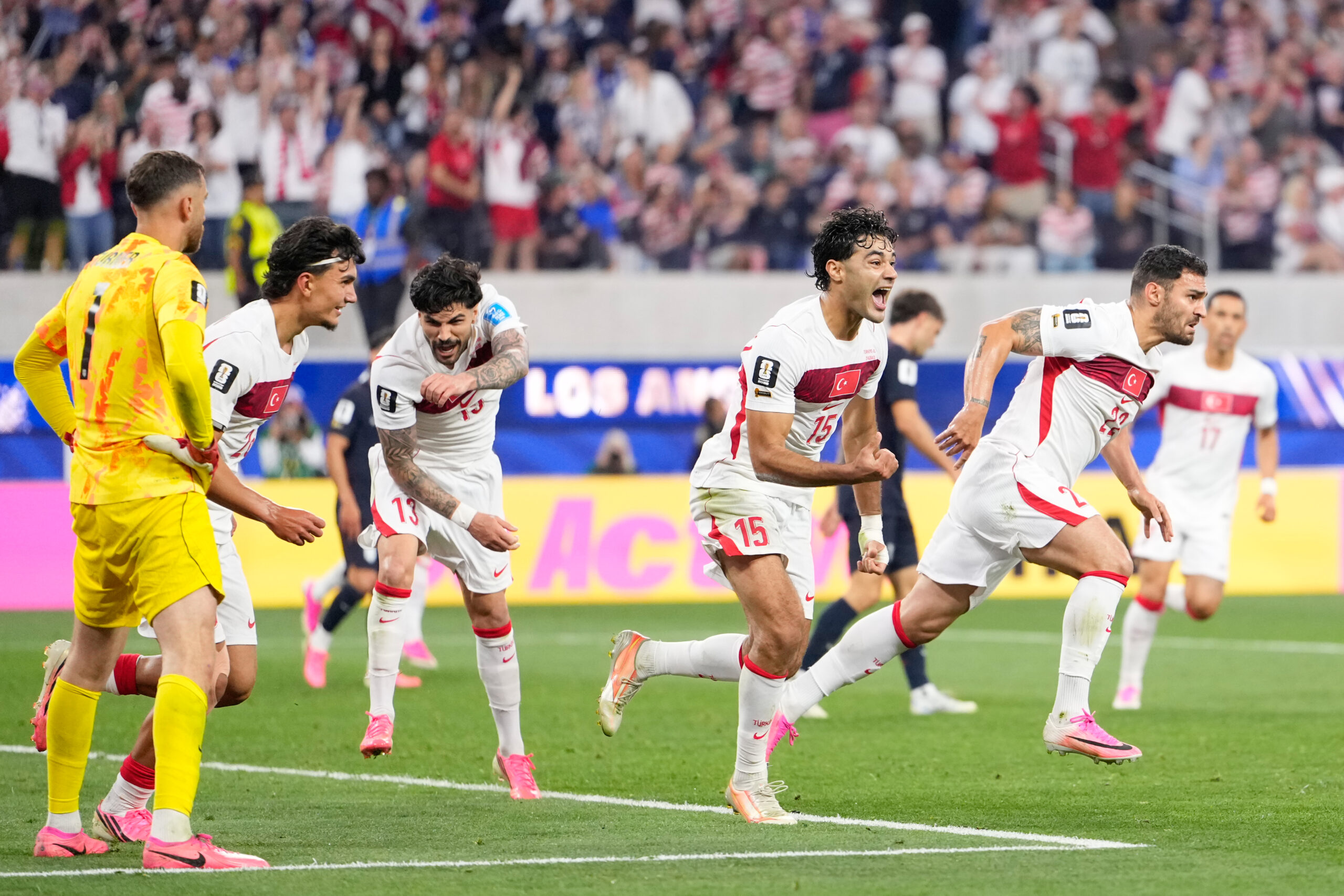
    Kaan Ayhan scored the winner with the last kick of the game in the 98th minute, denying the Americans an unbeaten group run after wins in the first two games.

    That took the air out of what had been a raucous crowd of 70,492 that watched Media’s Auston Trusty score the second-fastest U.S. goal in men’s World Cup history, and Sebastian Berhalter tie the score early in the second half after Turkey led 2-1 at halftime.

    Still, with the group already wrapped up, the U.S. is set to face Bosnia & Herzegovina in the round of 32 on July 1 in Santa Clara, Calif. (8 p.m., Fox29, Telemundo 62). That matchup was confirmed earlier Thursday by other results across the final round of the group stage.

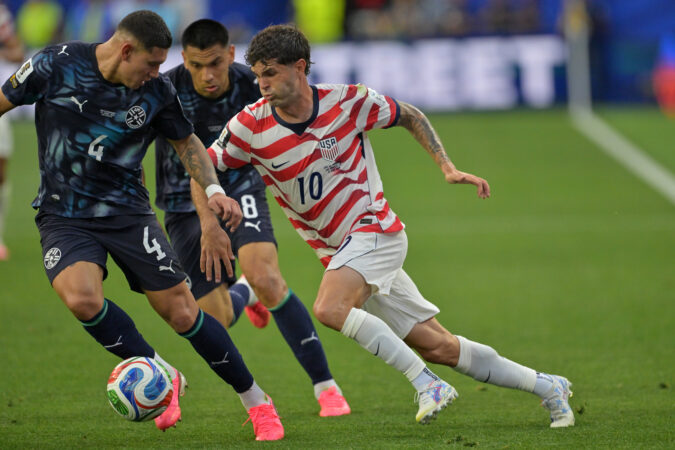
    Against Turkey, U.S. manager Mauricio Pochettino started the night by making even more lineup rotations than he’d hinted at. There were nine changes from the last starting group against Australia, and 10 from the opening game against Paraguay. Weston McKennie goes down as the only player to start all three games, and Ricardo Pepi as the only other player to start two.

    Trusty got things going by smashing in a Sebastian Berhalter corner kick that fell right at his feet. The Media native and Union product ran away screaming as he celebrated his first national team goal, and the first U.S. goal at a men’s World Cup scored by a player born in the Philadelphia region.

    Media’s Auston Trusty (6) celebrates scoring his side’s first goal against Turkey during Thursday’s Group D finale for the United States.

    The only other American goal scorer to have resided in the area was Scotland-to-Philadelphia immigrant Bart McGhee in 1930, the first tournament in history.

    It was also the second-fastest scored by a U.S. player at a men’s World Cup, topping John O’Brien’s fourth-minute tally against Portugal in 2002. (Clint Dempsey’s strike in 30 seconds against Ghana in 2014 will be a lot harder to beat.)

    Alas, the lead only lasted seven minutes. It started with Arda Güler of Spanish superpower Real Madrid taking a pretty pass from Oğuz Aydın, then beating Mark McKenzie twice off the dribble as he ran forward. The first move cleared a path for Barış Alper Yılmaz, and the second came when Yılmaz returned the ball to Güler for an easy finish past Matt Turner.

    McKenzie nearly made up for it in the 29th when the U.S. got another corner kick and he cashed in a rebound. But he was offside when Pepi’s initial shot was saved by Uğurcan Çakır, so it didn’t count.

    Orkun Kökçü put Turkey ahead in the 31st by capping off the kind of move Turkey was supposed to make throughout this tournament: fast, skilled passing leading to a precise finish. Güler was in the middle of the buildup along with Turkey’s other superstar, Kenan Yıldız of Italy’s Juventus.

    Now, at last, the team that had taken 62 shots over its first two games without scoring — the most of any team in the tournament, and the highest total without a goal since stats started in 1966 — was finally finding the net. And of course it had to come in this game, not just for the U.S.’ sake but for the sake of a team already eliminated from advancing.

    The U.S. flew out of the gates again to start the second half, and this time Berhalter finished a goal instead of starting it. McKenzie launched a throw-in, Turkey’s Abdülkerim Bardakcı knocked it down in the box, the ball deflected out to Berhalter, and he lashed in a first-time hit from the 18-yard line.

    Christian Pulisic was the first substitute to enter, replacing Tim Weah in the 58th. It wasn’t a surprise that he played, but it was a bit surprising that he came in so early.

    Four minutes later, Brenden Aaronson caught a piece of a loose ball off Çakır’s save of a Pulisic shot, but his first-touch attempt rolled far off target.

    A trio of subs entered in the 77th: Sergiño Dest, Alex Freeman, and Alejandro Zendejas for Aaronson, Gio Reyna, and Joe Scally. That set up the U.S. with three centerbacks for the rest of the night, plus Trusty continuing his start on the left flank.

    Malik Tillman was the last substitute to enter, replacing McKennie in the 86th.

    Unfortunately, the night ended on a bad note for Trusty. He was clipped by Aydın and went down in a heap. But at least he could walk off under his own power, and he returned to the game after a short spell on the sideline.