Category: Soccer/Union

  • They were owned by Peter Frampton and hung with The Rolling Stones, but the Fury couldn’t make soccer happen in Philly

    They were owned by Peter Frampton and hung with The Rolling Stones, but the Fury couldn’t make soccer happen in Philly

    The word spread through the Veterans Stadium locker room: The Rolling Stones were at the bar across the street, and the Fury were invited.

    The Philadelphia Fury played on artificial turf that goalkeeper Bob Rigby said “might as well have been black rocks on Iwo Jima.” The crowds, Rich Reice said, often were so sparse that he could point to the people he knew in the stands. The players didn’t make much, the team lasted only three seasons, and the losses piled up.

    The team’s publicist, Thom Meredith, said a few years ago on a podcast that the Fury — a North American Soccer League franchise that debuted in 1978 — were “a poster child for what not to do.”

    But the players still had someone waiting for them at the back entrance of the Holiday Inn, opening the door and ushering them to where the Stones were hanging while a mob of fans were kept in the hotel lobby.

    The Fury was owned by rock stars — Peter Frampton, Paul Simon, and Rick Wakeman of Yes had stakes — and rock executives like Stones manager Peter Rudge and music agent Frank Barsalona. They entered when the NASL was riding the momentum of Pelé, who had retired a season earlier.

    But that wave faded, and the Fury struggled to grab Philly’s attention before moving to Montreal in 1980, leaving Philadelphia without a first-division men’s soccer team until the Union arrived in 2010.

    “The Fury is a story in and of itself,” Rigby said. “Oh my God. Really. There’s aspects of it that are mind-boggling. It’s a fascinating tale.”
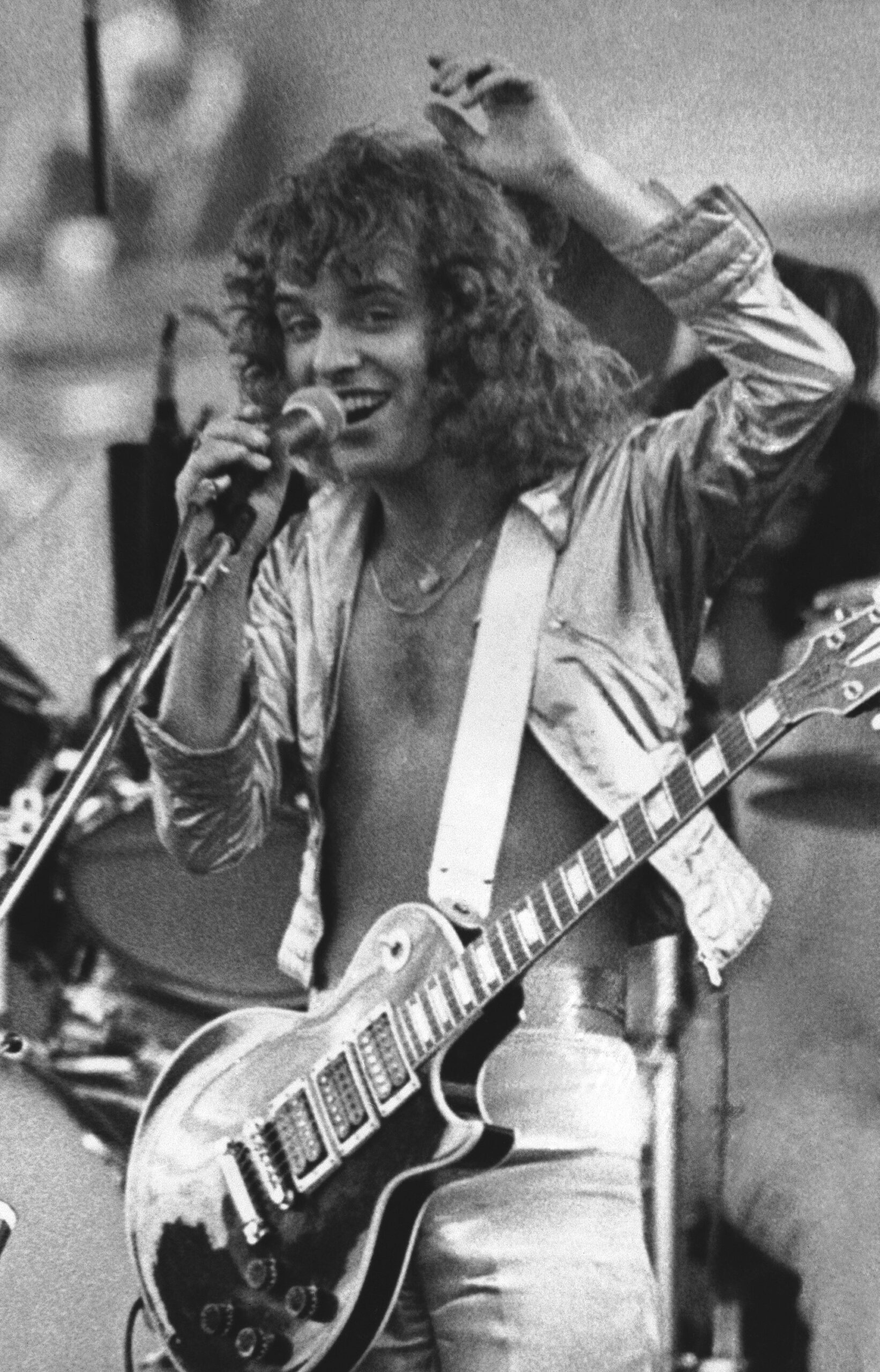
    Peter Frampton, one of the owners of the Fury, performs during a concert at JFK Stadium in 1977.

    The sport has been met this summer in Philadelphia with fanfare as the city hosts its sixth World Cup match on Saturday at Lincoln Financial Field. But the game still was a curiosity to most of the region in the 1970s. Philly had soccer hot spots — places like Kensington, Frankford, and Roxborough, along with ethnic clubs in Bucks County — surrounded by soccer deserts.

    The Fury players grew up in those soccer neighborhoods, and that was enough to get them a drink with the Rolling Stones.

    “They were just as excited to talk to you as you were excited to talk to them,” said former Fury player Bill Straub. “You were a professional soccer player, and they were wide-eyed. What’s it like to play professional soccer? It was nothing to us. It was just what we did.

    “These rock stars all grew up wanting to be professional soccer players in the Premier League. And we were here, we wanted to be rock stars.”
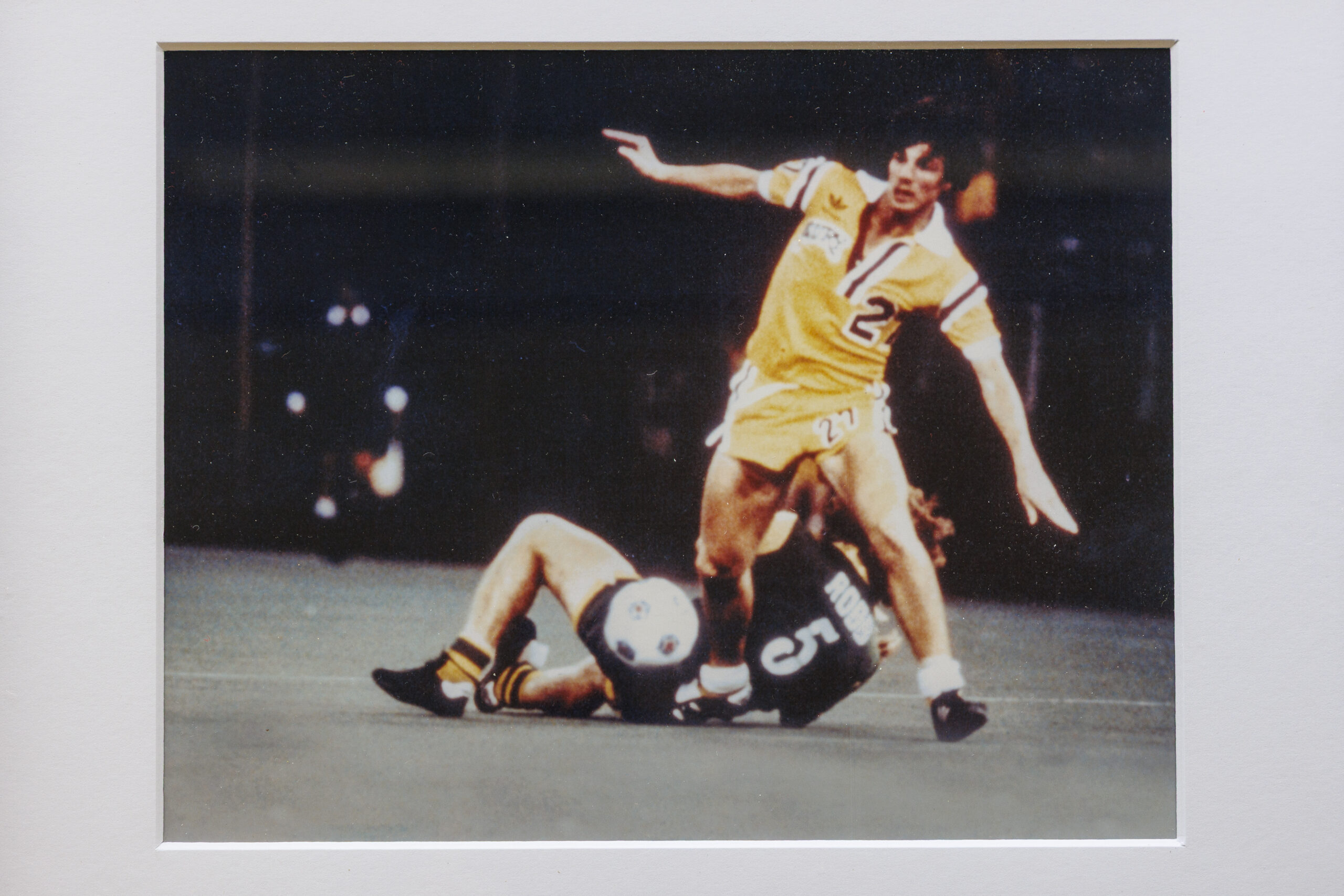
    Kevin Murphy when he played for Philadelphia Fury. He now owns Varsity Pizza and Subs in Lawrenceville, N.J.

    A mini-circus

    Philadelphia had an NASL team for four seasons, but the Atoms flamed out shortly after winning an unlikely title in 1973 as an expansion team. The local owners sold the team in 1975 to a Mexico-based group that stocked the roster for a season with Mexican players. Interest dipped lower, and the team folded with $90,000 in unpaid bills.

    The NASL returned to Philly a year later when the league added six expansion franchises. The Fury signed Irish midfielder Johnny Giles, 1966 World Cup champ Alan Ball, and former Chelsea forward Peter Osgood.

    “They have books written about him,” former Fury player Brooks Cryder said. “The Wizard of Os, they used to call him. But it was a little soon for soccer in the United States.”
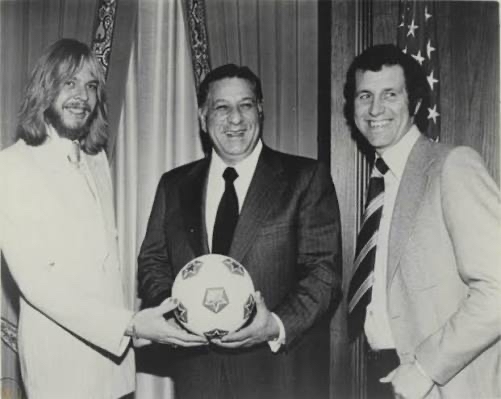
    Rick Wakeman of Yes with Philadelphia mayor Frank Rizzo and Fury player Peter Osgood.

    The real attractions were the stars in the crowd. An Amtrak train brought a cast of A-listers from New York for the season opener at the Vet. Gilda Radner, James Taylor, and Peter Wolf of the J. Geils Band joined owners Frampton, Simon, and Wakeman in a super box.

    “It wasn’t the Cosmos with Pelé,” Straub said. “That was a real circus. But this was a mini-circus here in Philly because you never knew who was going to show up.”

    The Fury drew 18,191 to their opener, but the crowds soon dwindled. The Fury averaged 8,075 fans in 1978 and had the league’s lowest attendance in the 1979 (5,624) and 1980 (4,465) seasons. They had cheerleaders, held free clinics at schools, and even tried to spice up their uniforms. Nothing worked. Veterans Stadium felt cavernous.

    “It was tough because it seemed like everyone was far away from the actual field,” Dave MacWilliams said. “It was a different environment, for sure. I wanted it to succeed and do well, but it was tough.”

    The team’s uniforms were designed by fashion designer Sal Cesarani after Ralph Lauren outfitted the Cosmos. Barsalona told The New York Times in 1978 that the Fury wanted their uniforms to have “a touch of show business and a lot of sex appeal.”

    They were inspired by the wife of owner Larry Levine, who Barsalona said struggled to follow the play at a soccer game but enjoyed seeing “guys running around in what looked like their underwear.” Cesarini had simple instructions: the tighter, the better.

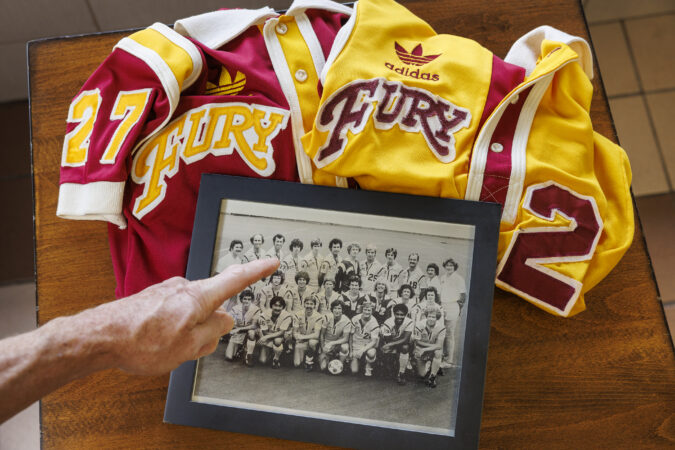
    The burgundy and gold jerseys, which were made by Adidas, had a three-button collar and capped sleeves. The shorts were two inches shorter than the usual soccer shorts. It was as close to underwear as Cesarini could get.

    “Looking back, they do show a lot of leg,” Reice said.
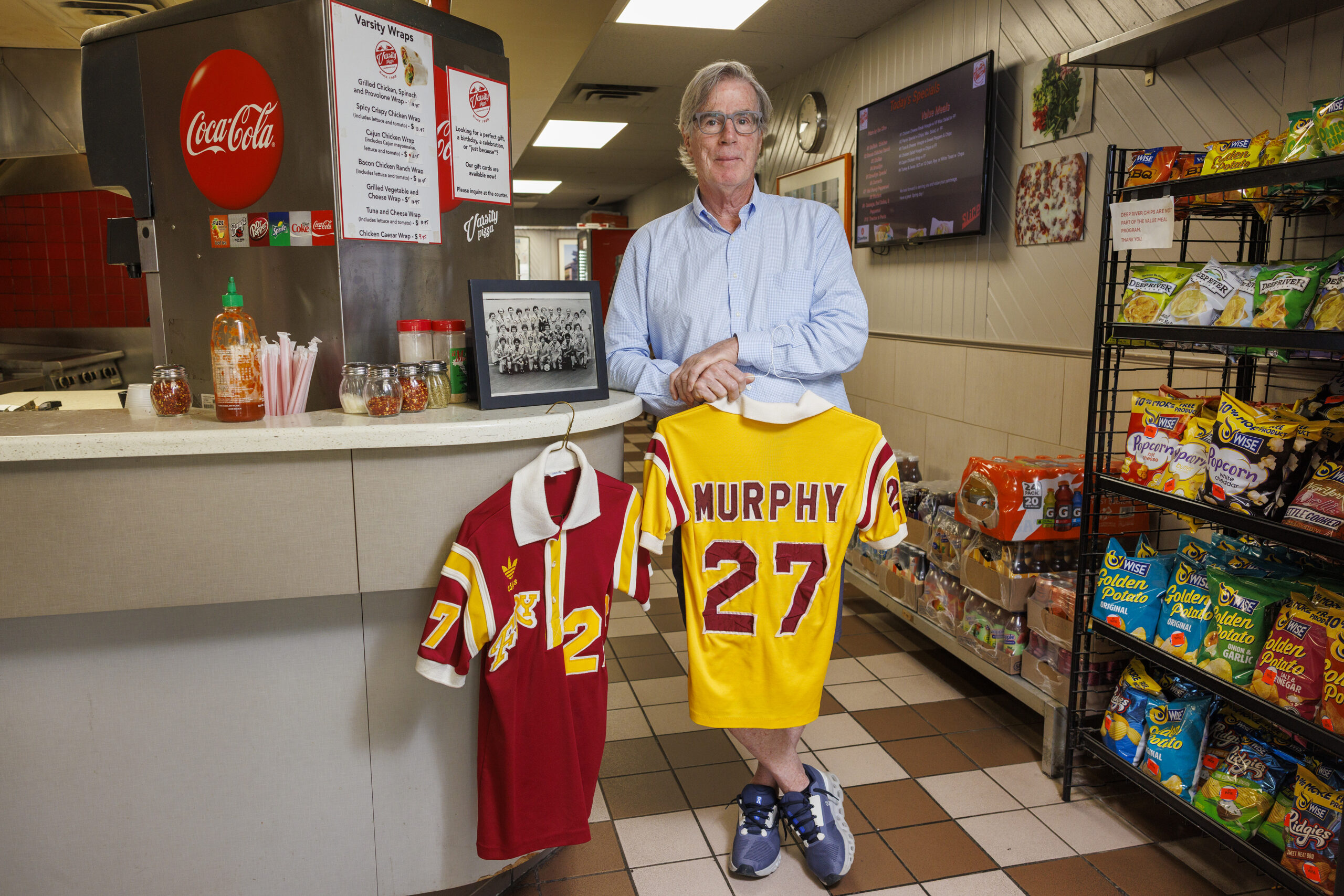
    Kevin Murphy, shown at Varsity Pizza and Subs in Lawrenceville, N.J., displays his Fury jerseys from the 1970s.

    The stars

    Kevin Murphy was a senior at Pennington Prep near Trenton when a group of Fury decision-makers visited his home to meet his parents and ask if he was willing to turn pro. The new franchise planned to use its draft pick on Murphy as the NASL introduced a rule allowing teams to draft high schoolers.

    Murphy was in, as Walt Chyzowych — “Philadelphia soccer royalty,” Murphy said — told him earlier that year that he had the skills to be a pro. A few months later, he sat in a suite at the Vet with Frampton to sign his contract.

    “It was Frampton’s birthday,” Murphy said. “I thought, ‘Well, I probably made a good decision.’ That was pretty amazing.”

    Pelé retired in 1977, but the NASL still was filled with some of the game’s biggest names. The Cosmos had Giorgio Chinaglia, Carlos Alberto, and Franz Beckenbauer. The Los Angeles Aztecs had George Best. Johan Cruyff played for the Washington Diplomats, Gerd Müller was with the Fort Lauderdale Strikers, and the Tampa Bay Rowdies had Oscar Fabiani and Rodney Marsh.
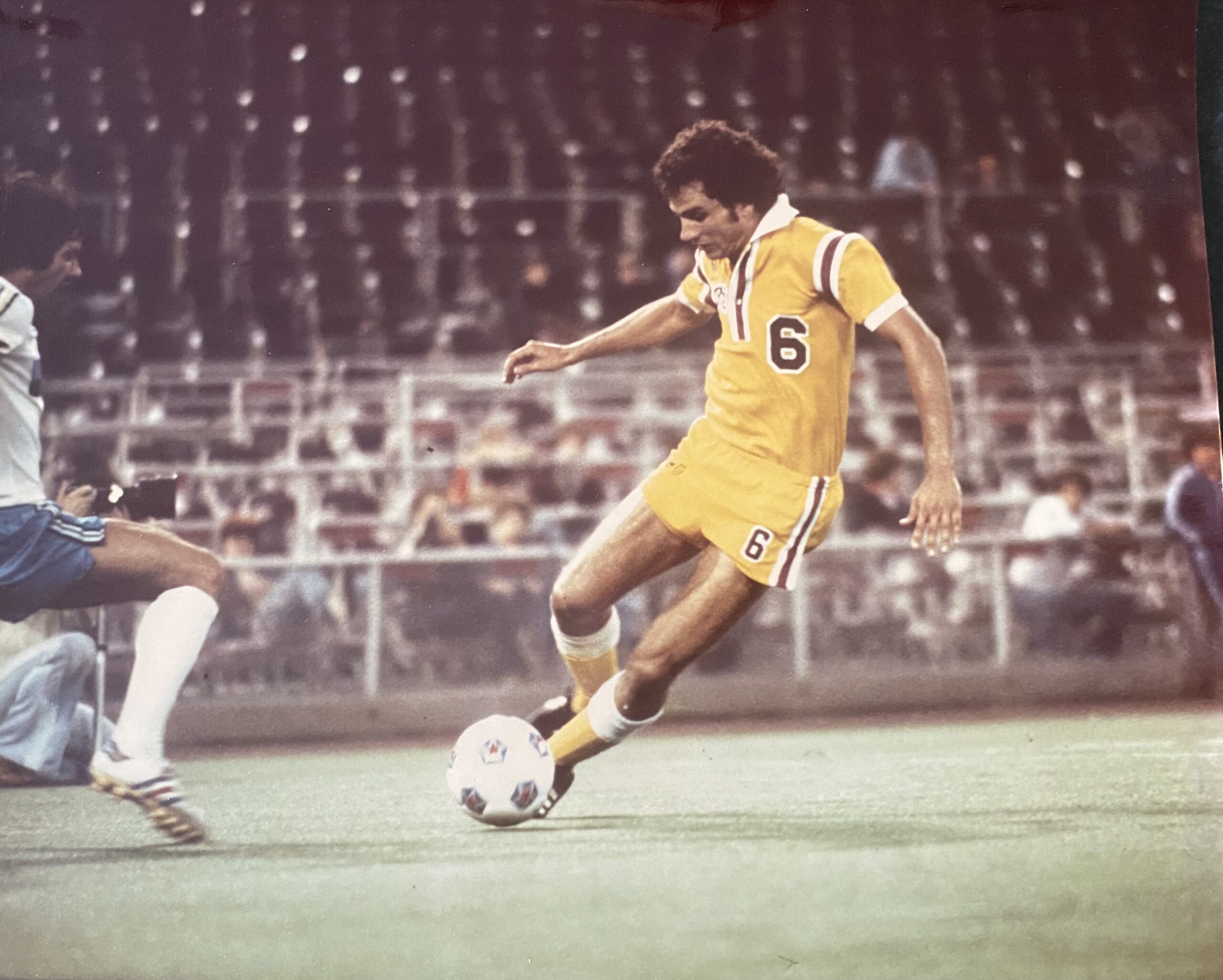
    Bill Straub playing for the Fury at Veterans Stadium.

    The foreign Fury players had great careers overseas but were past their primes and did not draw in Philly. They filled their roster with a cast of locals. Straub went to Germantown Academy, MacWilliams played on a cinder field in Kensington, and Bobby Smith was from Trenton. Rigby grew up in Ridley and was on the cover of Sports Illustrated. Cryder learned to play at a YMCA in Roxborough, and Pat Fidelia went to Rancocas Valley Regional High School.

    “It was exciting because as American players we had a chance to play in a professional league,” Fidelia said. “But you knew sooner or later that it wasn’t going to last because we weren’t getting paid much at all. It was like we were amateur players in a professional league. My first contract was $20,000. They gave you a car and an apartment to share with two other players.”

    The Fury could not match the star power of the other NASL squads, but they did have actual rock stars. The players could score tickets to any concert they wanted. They were backstage at JFK Stadium, in boxes at the Spectrum, and saw the Stones at a tiny theater in North Jersey.

    “We would drive back and we’d say, ‘This is unbelievable. How are we in these places?’” said Straub, who was working at his family’s jewelry store while playing for the Fury.

    The Fury played a charity game at Franklin Field with Wakeman and other members of Yes. Frampton, whose industry-shifting live album Frampton Comes Alive! was released in 1976, regularly popped into the locker room after games. And Murphy found himself backstage at Madison Square Garden standing with Dan Aykroyd before riding an elevator with Meat Loaf, Debbie Harry, and the Wailers.

    “That was pretty good,” Murphy said. “It was more than pretty good. It was awesome.”
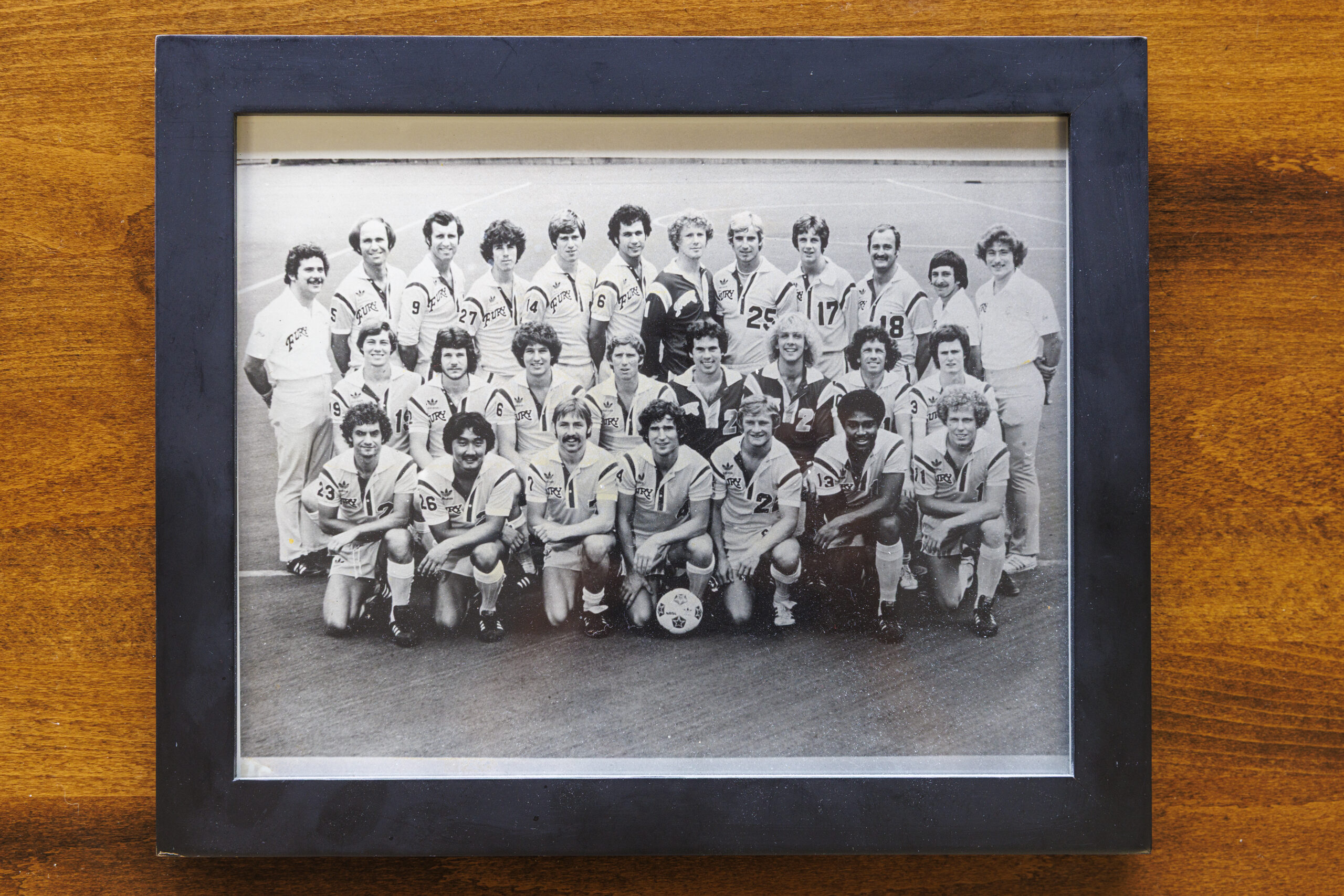
    Kevin Murphy’s photograph of the Fury.

    ‘No sun. No sun.’

    The Fury fired their first manager midway through the season, finished the year with a player-manager, and hired Marko Valok in 1979. The former Yugoslavian national team coach didn’t speak much English.

    “I used a line from him for years on the kids I coached,” said Reice, who coached soccer at Neshaminy High School for 17 seasons. “If I took a bad shot at goal, he would say, ‘Reach, why you make present to goalie?’ He would be thinking in Yugoslavian and then it would come out in English.”

    Rigby, the goalie for the Atoms’ title squad, returned to Philly during the 1979 season after being traded from the Aztecs. He was told by the Fury to join the team in Houston, but they said Rigby would be on the bench. That was good by Rigby, since he had not practiced in a week while his trade was finalized and spent his final night in L.A. at a going-away party with his Aztecs teammates at Best’s bar in Hermosa Beach.

    And then Valok approached him in the locker room and asked through an interpreter if he was ready to go.

    “I have no clothes and no intent to play,” Rigby said. “I’m literally not playing. I’m just coming in. Honest to God. I played a half. I’m thinking, ‘If this is the onus of coming back to Philadelphia, I probably made the biggest mistake of my life.’ But what was I supposed to say, ‘I’m not going to play’ in front of a new team?

    “Then I’m sitting during the pregame meal, and Marko Valak stands in front of the team with a chalkboard for 45 minutes just drawing arrows all over the place. Speaks no English. I’m going, ‘I just left five guys who played in the World Cup final and the most tightly run team,’ and I’m like, ‘What is this?’”
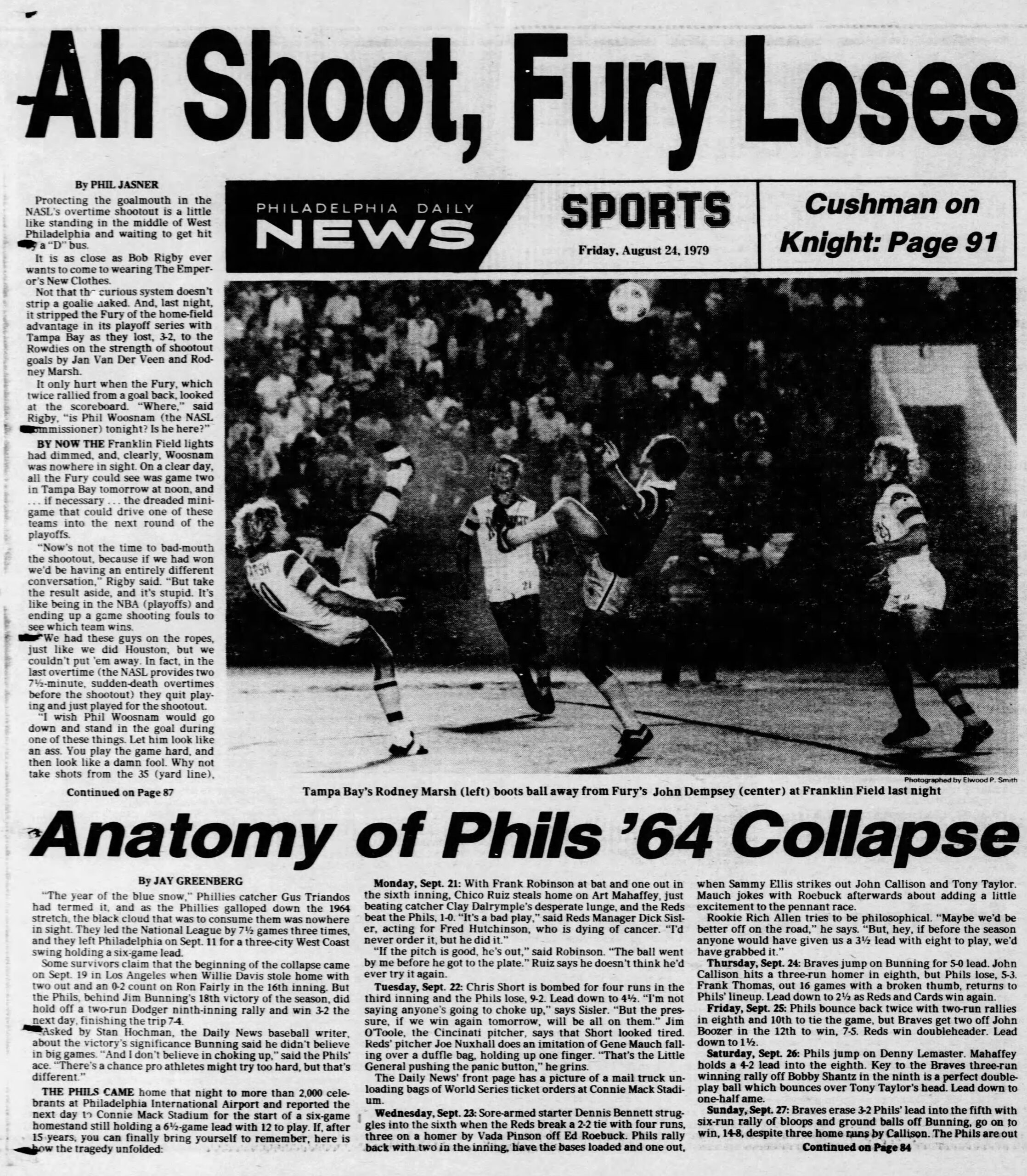
    The Fury’s 1979 playoff game at Franklin Field against the Tampa Bay Rowdies headlined the back page of the next day’s Daily News.

    Frank Worthington, a Fury forward from England, left the team that season when Valok had the team practice at the public fields in FDR Park instead of the Vet or JFK Stadium. He flew to Memphis, visited Graceland, and returned to the Fury after a few days.

    The Fury advanced that season to the playoffs despite having a losing record and played the Houston Hurricane at the Astrodome. The team practiced at the stadium and then returned to their hotel. Valok told his players to stay inside — “No sun, no sun,” he said — and rest for the game.

    “I look out the window when we get back, and Frank is laying out, reflecting himself with a sun blanket,” Reice said. “All of the energy is being zapped out of his body. Frank was a free spirit, to say the least.”

    The Fury still had enough energy to win that game before falling in the next round to Tampa Bay. The franchise lasted one more season before soccer left Philadelphia again.

    A cast of rock stars tried to make soccer happen in Philadelphia, but it proved to be too tall a task. Nearly 50 years later, the game has found its place in Philly. The Linc has been a happening this summer. If only the Holiday Inn — which was razed in 2019 — was still here to see it.
  • Spoiler alert: New technology brings TV sports moments to viewers in record time, and before others see it first

    Spoiler alert: New technology brings TV sports moments to viewers in record time, and before others see it first

    Joe Krell still remembers getting a call from his brother celebrating after Brandon Graham sealed an Eagles victory with a strip-sack of Tom Brady in Super Bowl LII.

    Krell, the vice president of engineering at Comcast, had not seen the play when his brother called. His feed of the game was delayed, and the surprise of the play was spoiled.

    Now, Krell is leading the team of software engineers that helps some fans watch games with as little delay as possible.

    This summer, the company’s Realtime 4K technology is delivering live action from matches at the FIFA World Cup to Xfinity customers’ TVs roughly 17 seconds after it takes place on the pitch. The broadcast is 20 seconds faster than a standard high-definition stream and two seconds faster than an over-the-air signal, according to Vito Forlenza, Comcast’s vice president of sports entertainment.

    “It’s about how we limit that amount of buffering and get those video segments to the device as fast as possible,” Krell said Wednesday from the Comcast Technology Center.

    The technology debuted ahead of Super Bowl LX in January, and Krell’s team has continued to develop it (alongside other sports initiatives) in an effort to create a spoiler-free viewing experience.

    “Now I don’t have to worry about turning my phone over, or turning it off,” Forlenza said. “Nobody’s going to spoil it on me. I could actually be on social media if I wanted to be and not have the experience ruined. I could have all my notifications on; I could be in all my chats with my friends and family [and] not have the experience ruined. Maybe I’ll ruin it for them.”

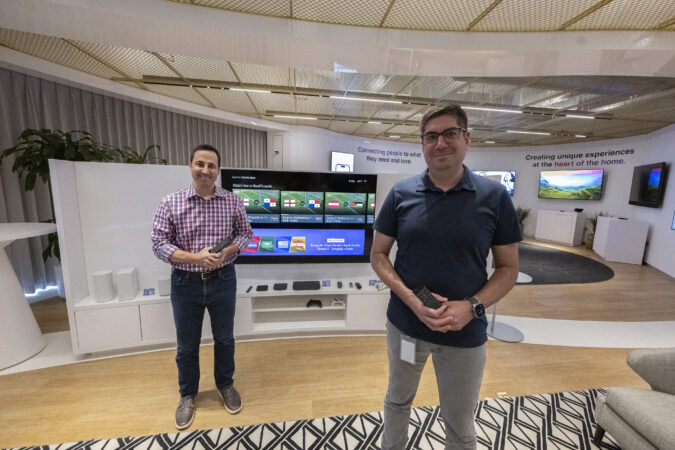
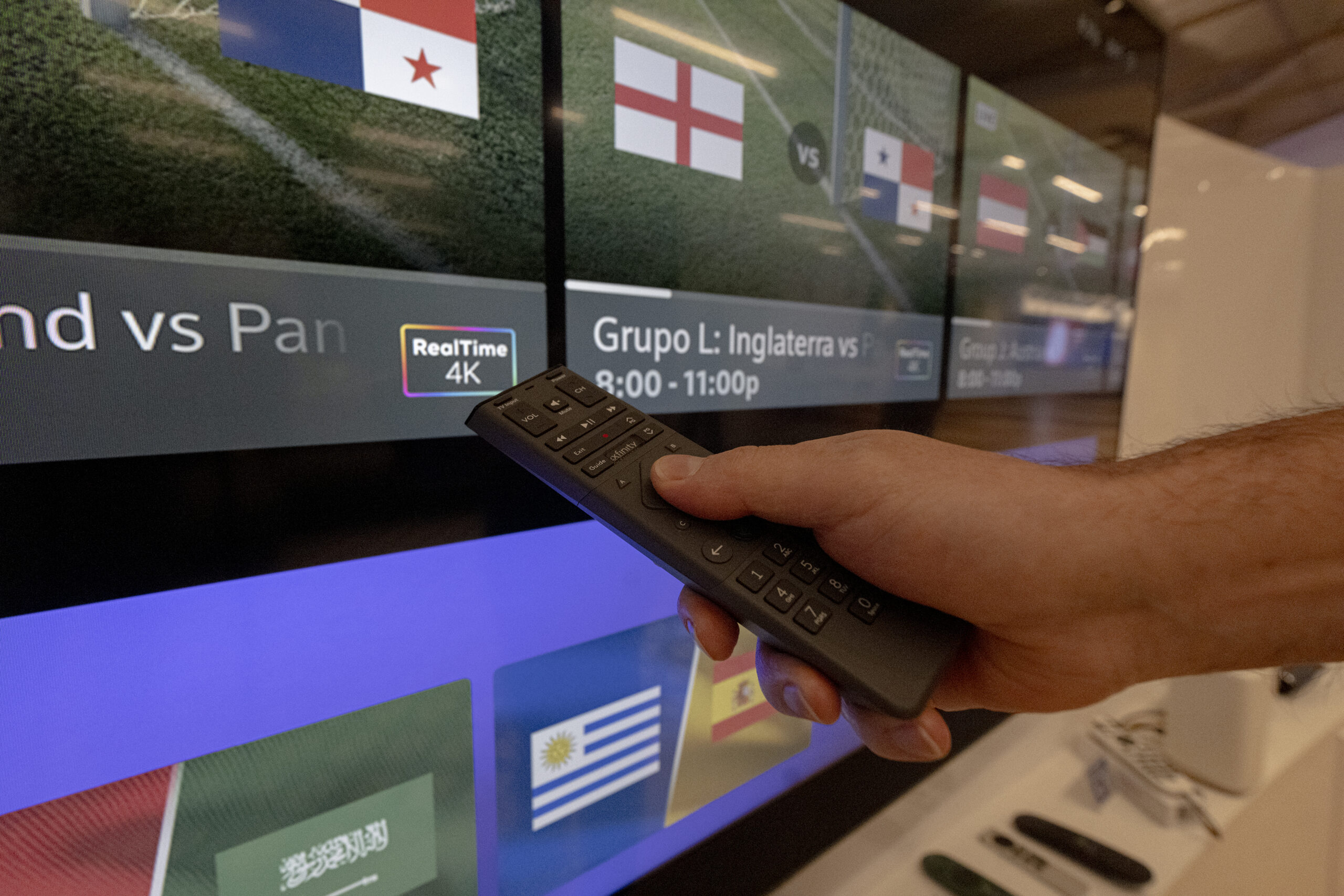
    A demonstration of the RealTime 4K technology on Wednesday on a TV at Comcast Labs.

    New for the World Cup is a feature called “Smart Boost” that allows Xfinity internet customers to automatically prioritize their TV on their server when watching a Realtime 4K broadcast of a World Cup match.

    Forlenza said the company got good feedback from customers who used the technology to watch the Super Bowl and the Winter Olympics in February.

    During the group stage of the World Cup, the customizable multiview function, which was developed by software engineers in Philadelphia, allowed Xfinity customers to take in multiple matches at once. When it launched in 2024, the multiview platform was not customizable, but Krell’s team, after feedback from customers, has engineered it to allow viewers to watch any combination of games across traditional broadcast options and streaming.

    “You get something out there, you learn from it, build into it,” Krell said.

    Instead of having preset combinations for multiview options, the technology assembles the combination of channels a viewer wants to watch as they request them, allowing Xfinity to offer the service with more channels on a larger scale.

    The National Association of Broadcasters recognized Xfinity’s multiview as one of its products of the year for 2026 in April, and in June it won a Stream TV award in the category of innovation in content delivery and distribution.

  • USMNT fight past Bosnia and Herzegovina for its first World Cup knockout win in 24 years

    USMNT fight past Bosnia and Herzegovina for its first World Cup knockout win in 24 years

    SANTA CLARA, Calif. — The U.S. men’s soccer team finally ended its 24-year wait to win a World Cup knockout game, though it came at a cost.

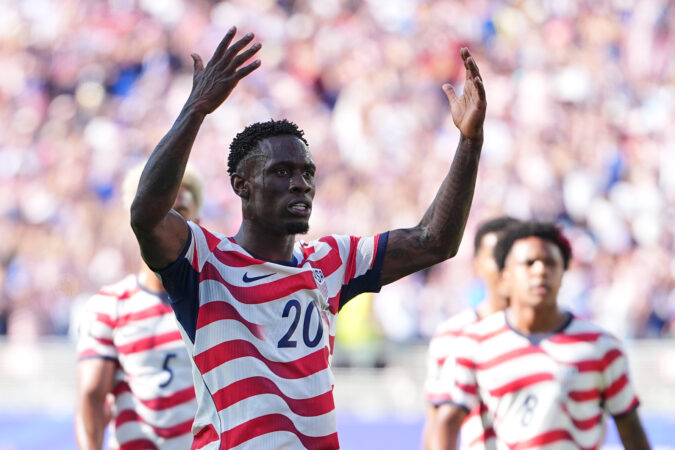
    Wednesday’s 2-0 win over Bosnia and Herzegovina featured goals by Folarin Balogun and Malik Tillman, but also a red card to Balogun that means he’ll miss the round of 16 matchup against Belgium in Seattle on Monday (8 p.m., Fox29, Telemundo 62).

    When the 11th minute passed, the U.S. had gone the longest it had in any game of this World Cup without scoring a goal. That was a low bar to clear in the big picture, but there also definitely were nerves on both sides of the field. Matt Freese had to make two big stops early, but it took until the 18th minute for the Americans to really test Bosnian goalkeeper Nikola Vasilj.

    Balogun was the first player to find the back of the net, in the 31st minute, and not long after he’d gone down inside Bosnia’s 18-yard box, though without enough contact to earn a penalty kick. He was then frustrated a second time by the offside flag, and that call was also correct.

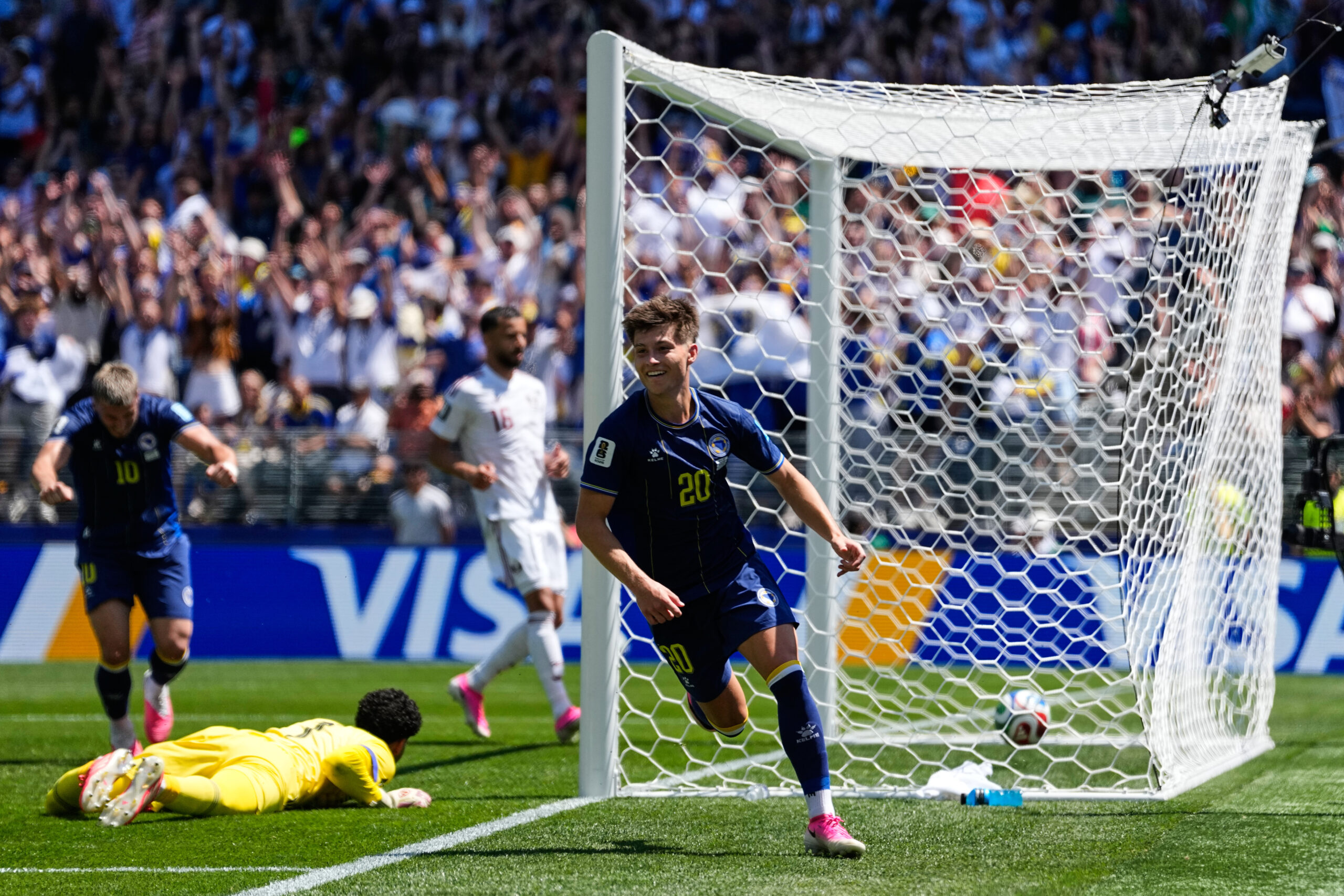
    The breakthrough finally came in the 45th minute. Tim Ream intercepted a Vasilj clearance and knocked the ball forward to Tyler Adams, who made a backheel flick into space. The ball rolled to Tillman, who turned and played the ball forward toward Balogun. He had some work to do, but a misplay by Bosnian centerback Tarik Muharemović gave the striker room to collect the ball and slot it home.

    As the crowd of 68,827 roared, Balogun celebrated with LeBron James’ “Silencer” dance move. The basketball star — quite a soccer fan himself — returned the compliment on social media right away.

    Balogun then came inches from doubling the lead in first-half stoppage time, at the end of a lovely teamwide sequence. Alas, his close-range flick hit the crossbar and flew out of bounds.

    The U.S. held a 5-1 advantage in shots halftime, a sign of how they’d come into the game but also how many nerves there were.

    The game’s first substitutions came in the 51st minute, in a triple-move from Bosnia manager Sergej Barbarez, one of which was star striker Edin Džeko, after pulling up lame. The other moves were tactical, including the much-anticipated arrival of winger Esmir Bajraktarević — a 21-year-old winger who grew up in Wisconsin to parents who fled the Bosnian war of the 1990s.

    Balogun’s ejection came in the 64th, after the video review officials watched him rake the studs of his right cleat down the back of Muharemović’s right calf in a tussle. It looked like a 50/50 challenge at first, but the replays clearly showed a cardinal sin for a soccer player — even if he didn’t intend it. By the time Raphael Claus left the monitor, it wasn’t too surprising that he pulled the red card out.

    The ejection meant Balogun would miss not just the rest of this game, but will miss the U.S.’s round-of-16 showdown with the Belgians.

    Now, it was about playing defense, and every U.S. player did his part. Even Tillman, usually much more of an attacking player, got stuck into a loose ball in the 77th.

    Soon after that, the U.S. broke free on a counterattack and Christian Pulisic forced the ball in, but he was clearly offside when Tillman passed to him.

    The biggest break finally came in the 82nd. Stjepan Radeljić held back Sergiño Dest, Claus booked the Bosnian defender, and the U.S. had a free kick on the edge of the 18. Tillman spun it right past Bosnia’s defense and into the net, unleashing a huge celebration from U.S. players and fans alike.

    U.S. manager Mauricio Pochettino finally made his first substitutions in the 88th minute, sending in Ricardo Pepi and Sebastian Berhalter for Pulisic and Dest. In stoppage time, Gio Reyna replaced Weston McKennie.

    There were still plenty of nerves from there, including 10 minutes of stoppage time. But the Americans held on, with the crowd cheering every save, block, and sequence of passes — and exhaling as two Bosnian shots in the final moments went inches wide of Freese’s net.

    Then, at the final whistle, there was the biggest unleashing of all. Thirty-two years after the U.S. men played the first World Cup knockout game of their modern era in the Bay Area, they finally delivered the sight that everyone here had waited so long for.

    This generation of American players finally has its biggest World Cup win.

  • It’s World Cup knockout time for the U.S. against Bosnia. Our writers weigh in on who wins and why.

    It’s World Cup knockout time for the U.S. against Bosnia. Our writers weigh in on who wins and why.

    Going solely off paper, the U.S. men’s national team has the talent to defeat Bosnia and Herzegovina and advance to the FIFA World Cup’s Round of 16. Oddsmakers all over have the United States winning and have even built parlays around the notion.

    When the U.S., No. 15 in FIFA world rankings, plays No. 61 Bosnia in San Francisco on Wednesday (8 p.m., Fox29), it will be the U.S. seeking its first win in the knockout stages since 2002. During the last World Cup in Qatar in 2022, the USMNT lost 3-1 to Netherlands in the round of 16.

    This is Bosnia’s first knockout-round appearance and just the second time qualifying for the tournament since its debut at the 2014 edition in Brazil.

    This feels ripe for the taking. But again, this World Cup might go down as one of the most shocking in recent memory with teams in the knockout stage in their first-ever World Cup (see Cape Verde) and some even needed a playoff game to even make the tournament (see Democratic Republic of Congo). To equate this to casual American fans, this is March Madness, this is Florida Gulf Coast’s Sweet 16 run circa 2013, or tiny Fairleigh Dickinson knocking off No. 1 Purdue in 2023.

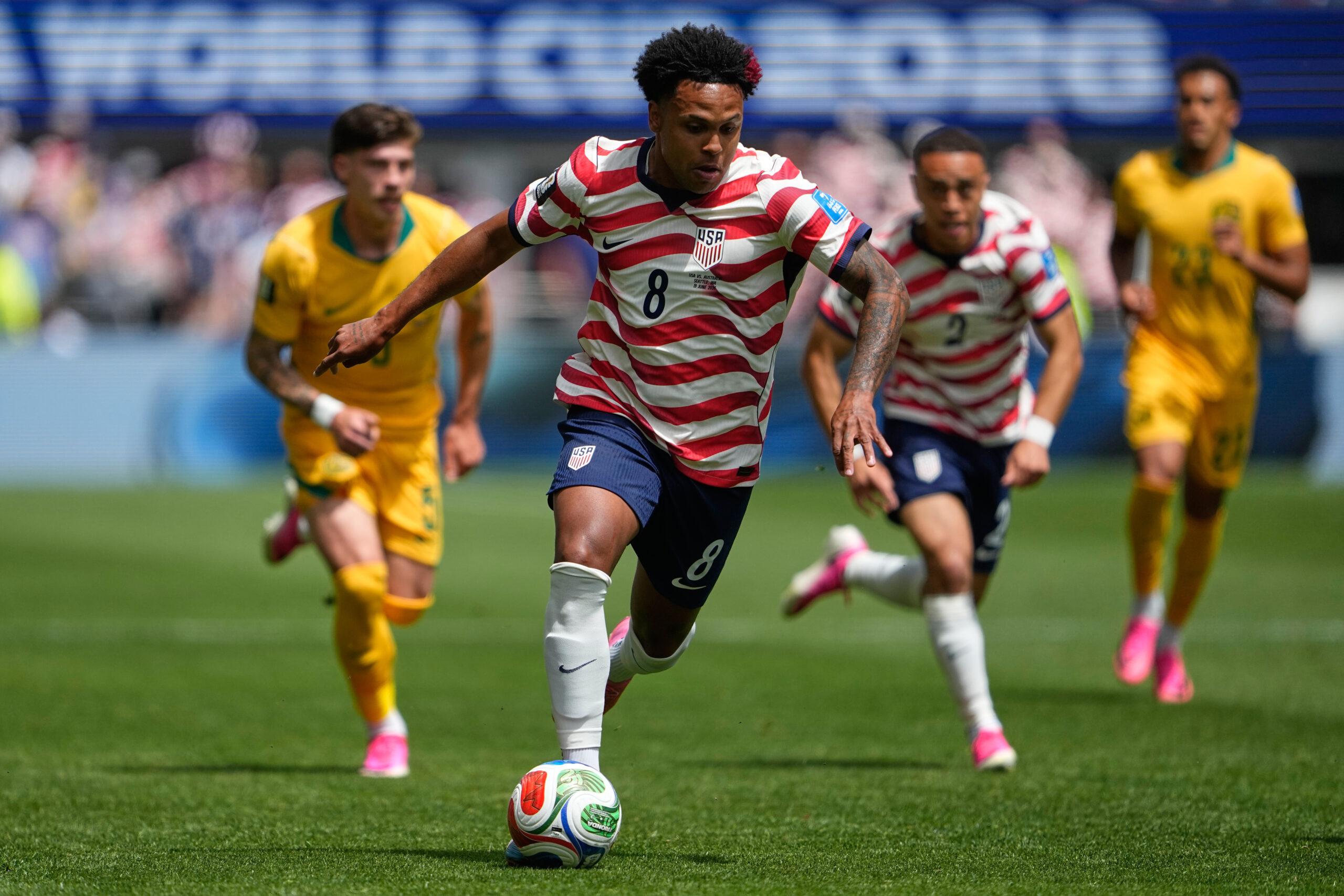
    Weston McKennie (8) has been one of the U.S. men’s national team’s toughest players in this World Cup.

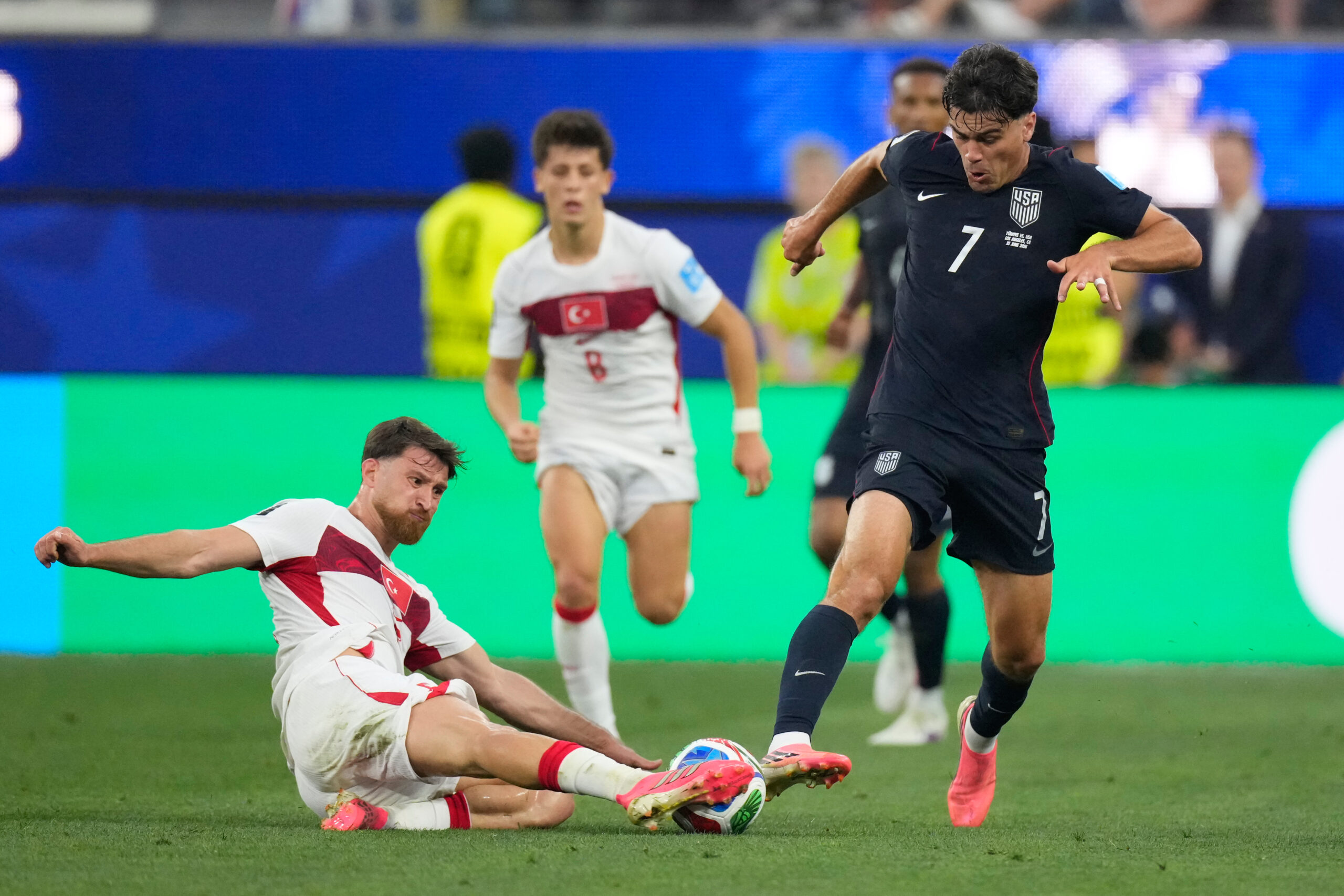
    It’s been a must-watch because the underdogs are bringing it. What does that mean for the United States, a team that showed dominance through the group stage but is coming off an eye-opening loss to Turkey entering the knockout phase?

    Did that loss recenter these players, and they’re ready to show what they learned against a Bosnia team happy to still be in the fight? Or will there be a World Cup-ending theater late on Wednesday night?

    Our team of writers take a look at the matchup and the tournament at large to offer where they think this one will end up.

    Jonathan Tannenwald

    I know it will shock all of you that I’m a cynic by nature, not just profession. The stakes for the U.S. losing this game are almost higher than for winning it, because everything the program has done for the last eight years — not just since 2022 — goes up in smoke if they go out now.

    Meanwhile, Bosnia is on house money, and I can only imagine how many emotions will be in Esmir Bajraktarević’s mind as he plays against the nation he used to represent. But in the end, the U.S. has the better talent and should have another electric home crowd behind it in the Bay Area.

    That’s good for one goal, and a first-choice starting lineup (even if the bench isn’t full) is worth another.

    Prediction: United States 2, Bosnia and Herzegovina 0

    Bosnia’s Esmir Bajraktarević (left) was in the U.S. youth system before committing to playing for Bosnia in the World Cup.

    Kerith Gabriel

    How this plays out for me is largely determined by the lineup U.S. manager Mauricio Pochettino puts out against a really big, physical Bosnia team that bullied its way to four points against Canada and Qatar after shaking off a 4-1 beat down to Switzerland in its second game of Group B.

    There are guys who need to be on the field for the U.S. in the biggest moments. Chris Richards is one of them. Tyler Adams is another, and obviously, a healthy Christian Pulisic and locked-in Matt Freese make the difference.

    Plus, moving to the next round on U.S. soil, on the West Coast, where the Americans have already found success, feels natural. Frankly, they should want it more. So if we’re talking about what’s at stake for the U.S. vs. what Bosnia stands to gain, it’s tough to see how this American contingent doesn’t take that into account, play the best 11 of the 26, and move on. But I’ll hedge that it won’t come easy.

    Prediction: United States 1, Bosnia and Herzegovina 1 (U.S. wins 5-4 on penalty kicks)

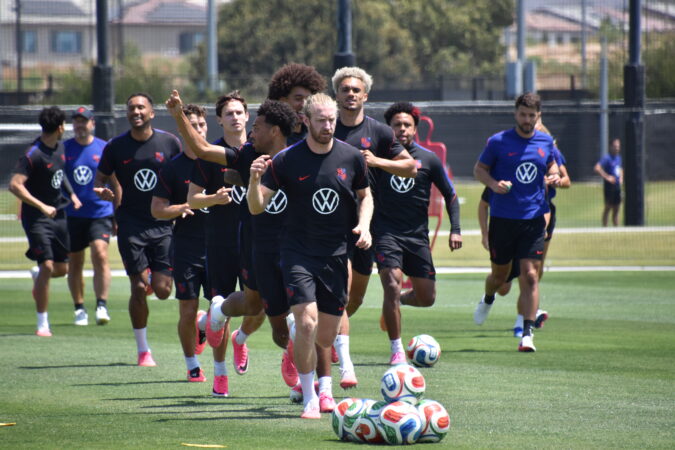
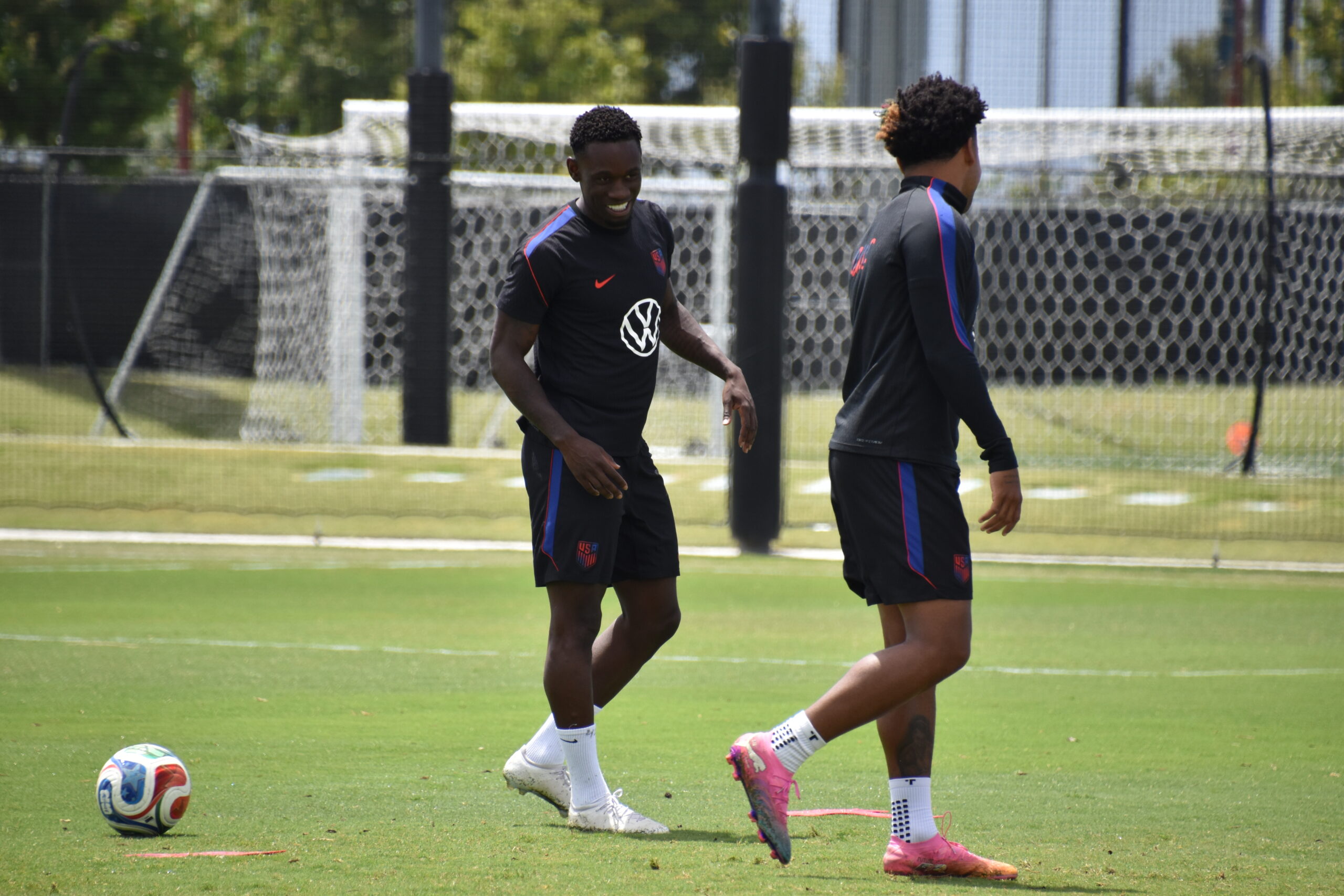
    Folarin Balogun (left) is all smiles during the U.S. national team’s practice at Great Park in Irvine, California, this week.

    Owen Hewitt

    Key American players like Adams, Folarin Balogun, and Tim Ream watched from the bench as the U.S. conceded a 98th-minute winner to Turkey in the USMNT’s group stage finale.

    But since the Americans had already secured the group and a place in the knockout rounds, the worst the loss could do was produce a temporary sting. Now, a loss could end it all. The U.S. will need to follow up a strong group stage performance with its second-ever win in a knockout game at the World Cup.

    A win in the expanded knockouts wouldn’t quite have the magnitude of the “dos a cero” round of 16 win over Mexico in 2002, but knockouts are knockouts.

    The U.S. has played confidently at this World Cup, something it will need to continue to snap a 10-game losing streak against European sides. The Bosnians will be a tough test, but a well-rested American team should overcome its recent form against Europe.

    Prediction: United States 2, Bosnia and Herzegovina 0

  • France and Paraguay will meet on July 4 in Philadelphia’s last World Cup game

    France and Paraguay will meet on July 4 in Philadelphia’s last World Cup game

    From the moment the World Cup draw was announced in December, Philadelphia and the soccer world started dreaming of a potential France-Germany showdown on July 4.

    Alas, that dream did not come true, thanks to Germany’s upset loss to Paraguay on Monday. But the other half of the equation has delivered, as the city already saw in the group stage. France will return to town as the favorite to win it all, with its superstar attacking core firing on all cylinders.

    After scoring 10 goals in the group stage, the most of any of the 48 teams in the tournament, Les Bleus laid a 3-0 hammering down on Sweden in the Meadowlands on Tuesday. Kylian Mbappé scored twice to match Lionel Messi’s six goals in the tournament to date, and Bradley Barcola struck his second goal of the summer.

    Ousmane Dembélé, the reigning world player of the year with the Ballon D’Or award, has four goals, and Desiré Doué has one. The fifth superweapon, winger Michael Olise, has a team-leading five assists — and came inches from a spectacular first World Cup goal on Tuesday when a bicycle kick attempt hit the post.

    Paraguay will arrive in town after overcoming its 4-1 loss to the United States in its group stage opener. La Albirroja beat Turkey, 1-0, held Australia to a scoreless tie, then toppled Germany in a penalty kick shootout after a 1-1 tie.

    This was the team that looked much more like the one that rode a stingy defense to its first World Cup berth in 16 years, finishing sixth in South America’s 10-team round robin with the second-lowest goals allowed total (10).

    Paraguay’s roster has many familiar faces to fans of MLS. Miguel Almirón (Atlanta United), Andrés Cubas (Vancouver Whitecaps), and Braian Ojeda (Orlando) play in the league now, and three others used to: Matías Galarza (Atlanta), Diego Gómez (Inter Miami), and Alejandro “Kaku” Romero Gamarra (New York Red Bulls).

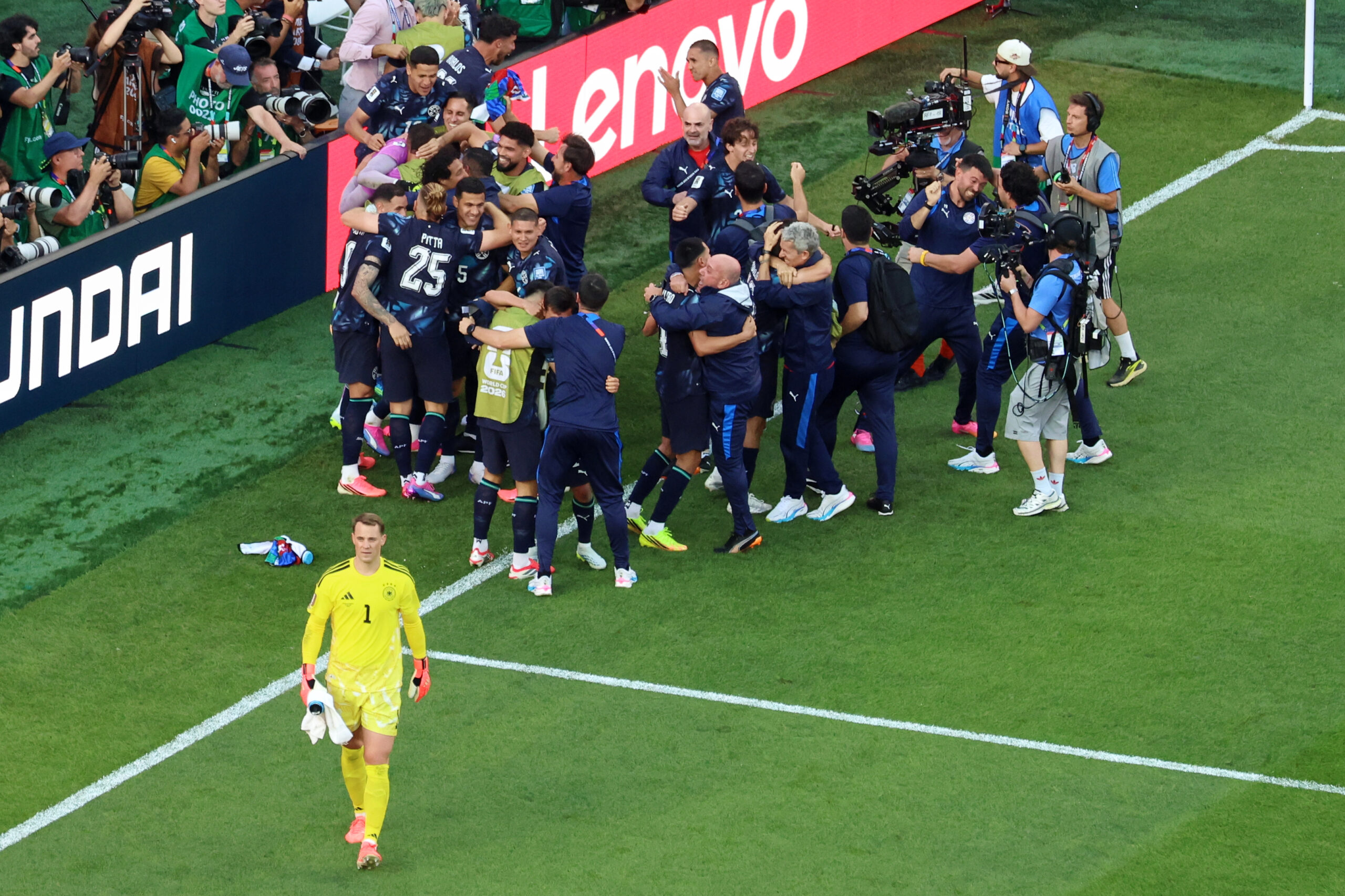
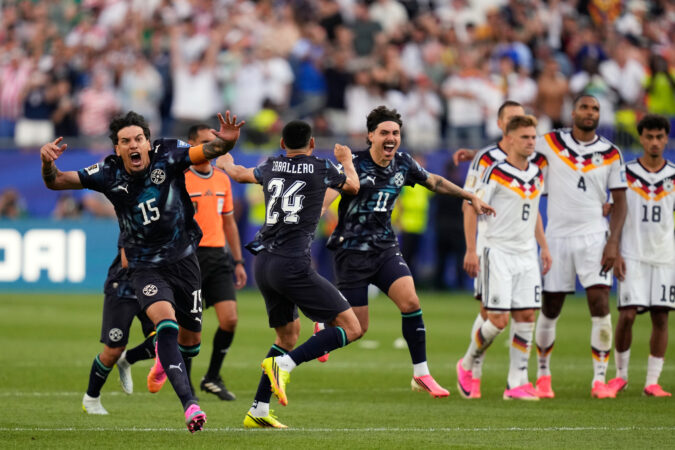
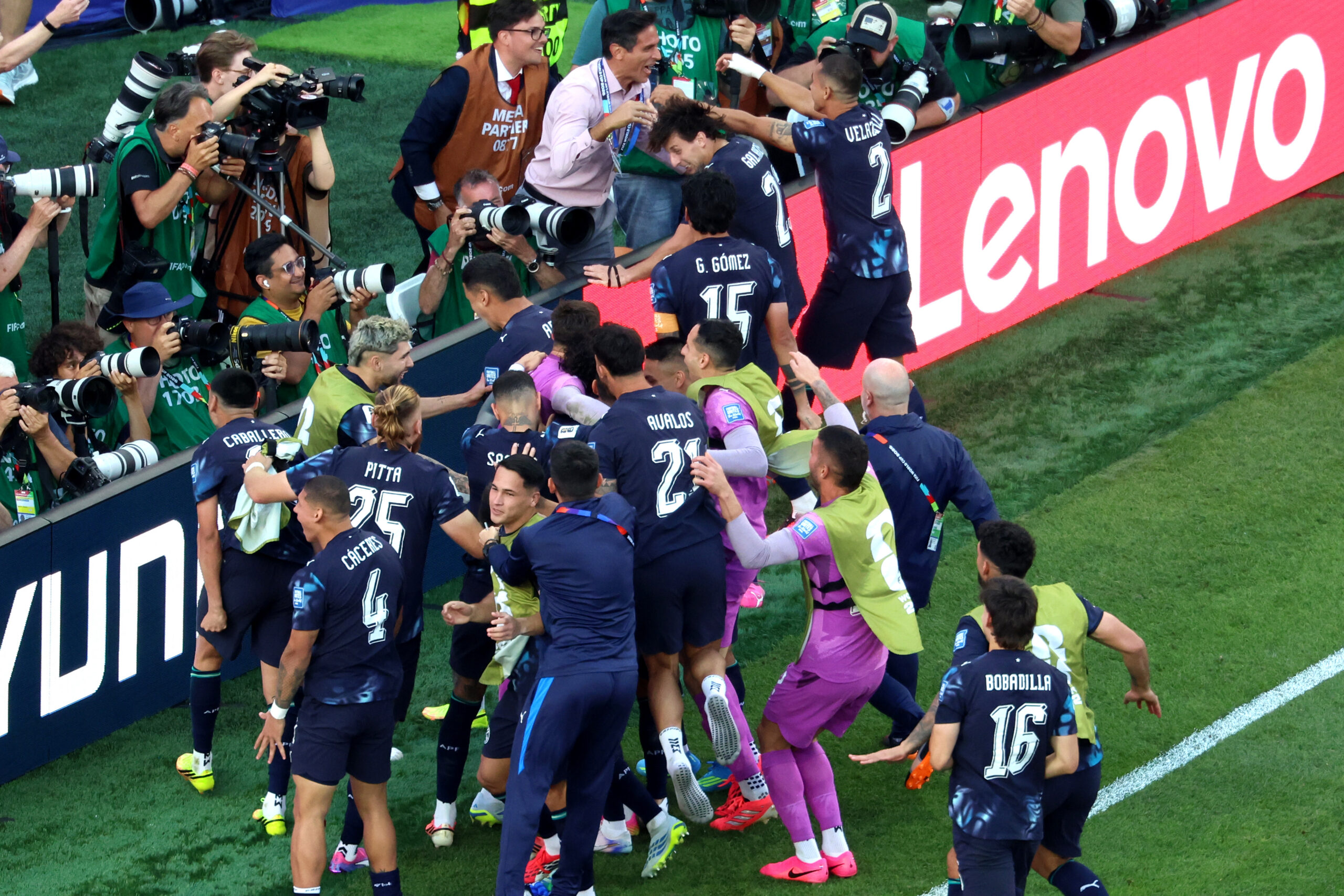
    Paraguay’s celebrations after upsetting Germany in a penalty kick shootout on Monday.

    It’s easy to say the matchup is offense vs. defense, but France is also plenty stingy. It has allowed just two goals in four games so far, one each to Senegal and Norway. That’s what manager Didier Deschamps has always demanded in his 14-year tenure, just as he did as a player: the midfield anchor and captain of France’s 1998 World Cup and 2000 Euros champions.

    Sometimes, over the years, it has felt like that approach has stifled France’s constellation of stars. But the results have ultimately come: Euros runner-up in 2016, World Cup champion in 2018, UEFA Nations League champion in 2021, and runner-up to Lionel Messi’s Argentina in 2022’s all-time classic final.

    This time, this team is all in for Deschamps’ final tournament on the bench. Even Mbappé, often criticized for not playing enough defense at his club, Real Madrid, is doing his part.

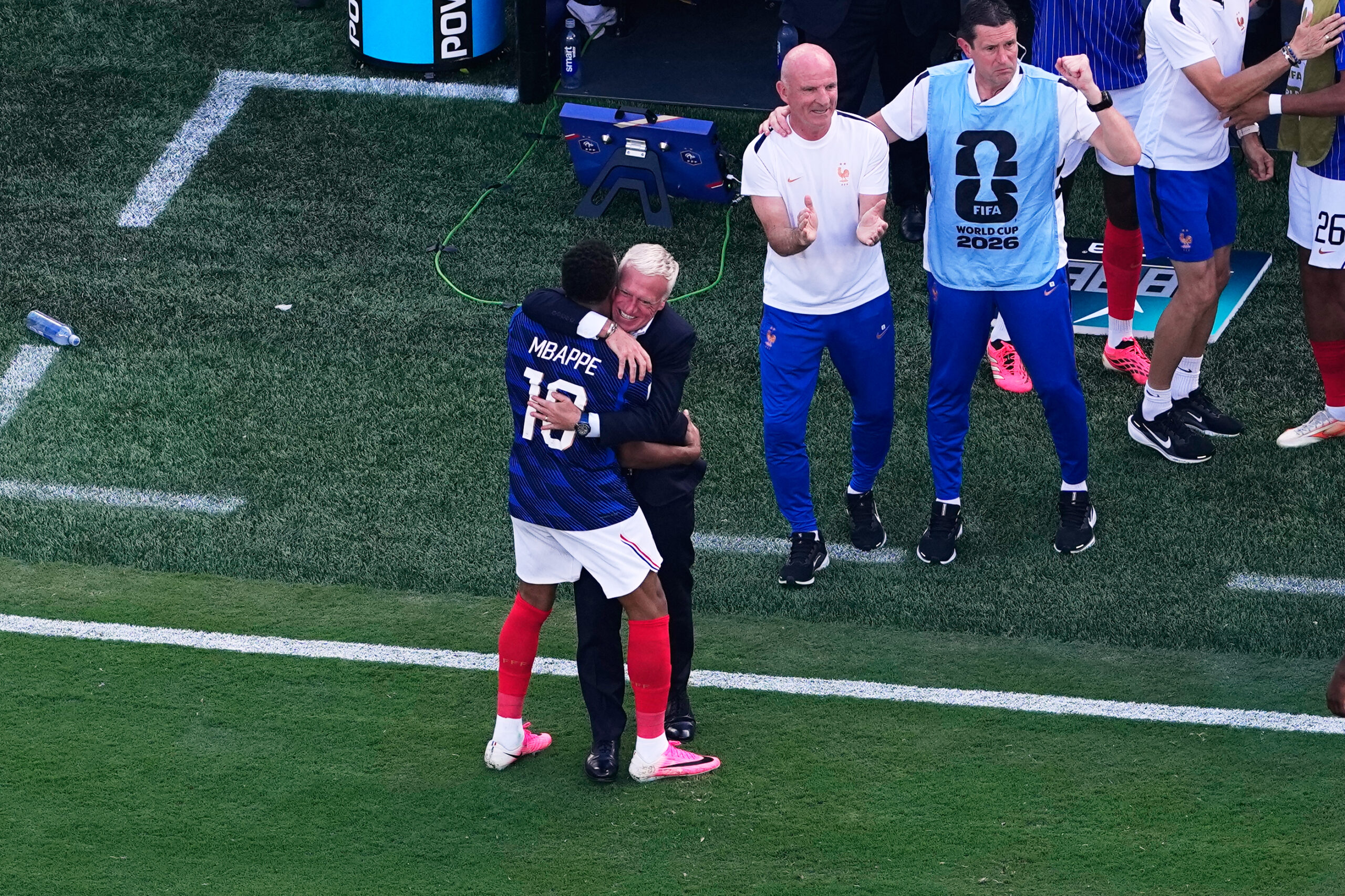
    They’re also in for Deschamps himself, as his mother died recently. He left the tournament for a few days to attend to that and returned in time for Tuesday’s contest. When Mbappé opened the scoring, he ran over to give his manager a big hug.

    Deschamps looked just as thrilled, no matter how much of Mbappé’s sweat landed on his suit on a hot day.

    Kylian Mbappé (left) embracing Didier Deschamps after scoring France’s opening goal against Sweden.

    Now France is aiming to become just the third team in men’s World Cup history to make three straight finals. Brazil did it in 1994, ‘98, and ‘02, winning the first and third (and losing the second to France); and Germany did it in 1982, ‘86, and ‘90, winning the last of them.

    The world is watching and waiting to see how far this team goes. Philadelphia already had a front-row seat once, the 3-0 win over Iraq where Mbappé scored a spectacular strike and Dembélé scored his first major-tournament goal after many years of trying. Now the city gets a second turn.

    France’s first visit also made headlines for the thunderstorms that delayed the start of the second half by two hours. Saturday’s game could land in Mother Nature’s crosshairs again, with the heat dome expected to crack that day and send the sky exploding. It’s just a question of what time, and whether it happens early enough to pass by kickoff.

    With that big caveat, the countdown is on. Clashes between European and South American teams have defined World Cups for generations, and this one will add another chapter to the history.

  • The Bay Area’s famed rallying cry rings true with the USMNT in town for the World Cup: Just win, baby

    The Bay Area’s famed rallying cry rings true with the USMNT in town for the World Cup: Just win, baby

    SAN JOSE, Calif. — No one needed the reminder at this point, but it came anyway.

    While the U.S. men’s soccer team’s charter flight from Orange County to the Bay Area was in the air, a lightning bolt struck the World Cup when Paraguay toppled Germany.

    Germany undoubtedly wasn’t good enough, and not for the first time in this tournament. There must have been kegs worth of angst in the air at Brauhaus Schmitz on South Street, Philadelphia’s most famous fussball destination, among fans who’d dreamed of seeing the four-time champions come to town on July 4.

    But to lose to the same Paraguay squad that the U.S. ran off the field in their tournament opener? That was a shock and the latest of many lessons in this World Cup.

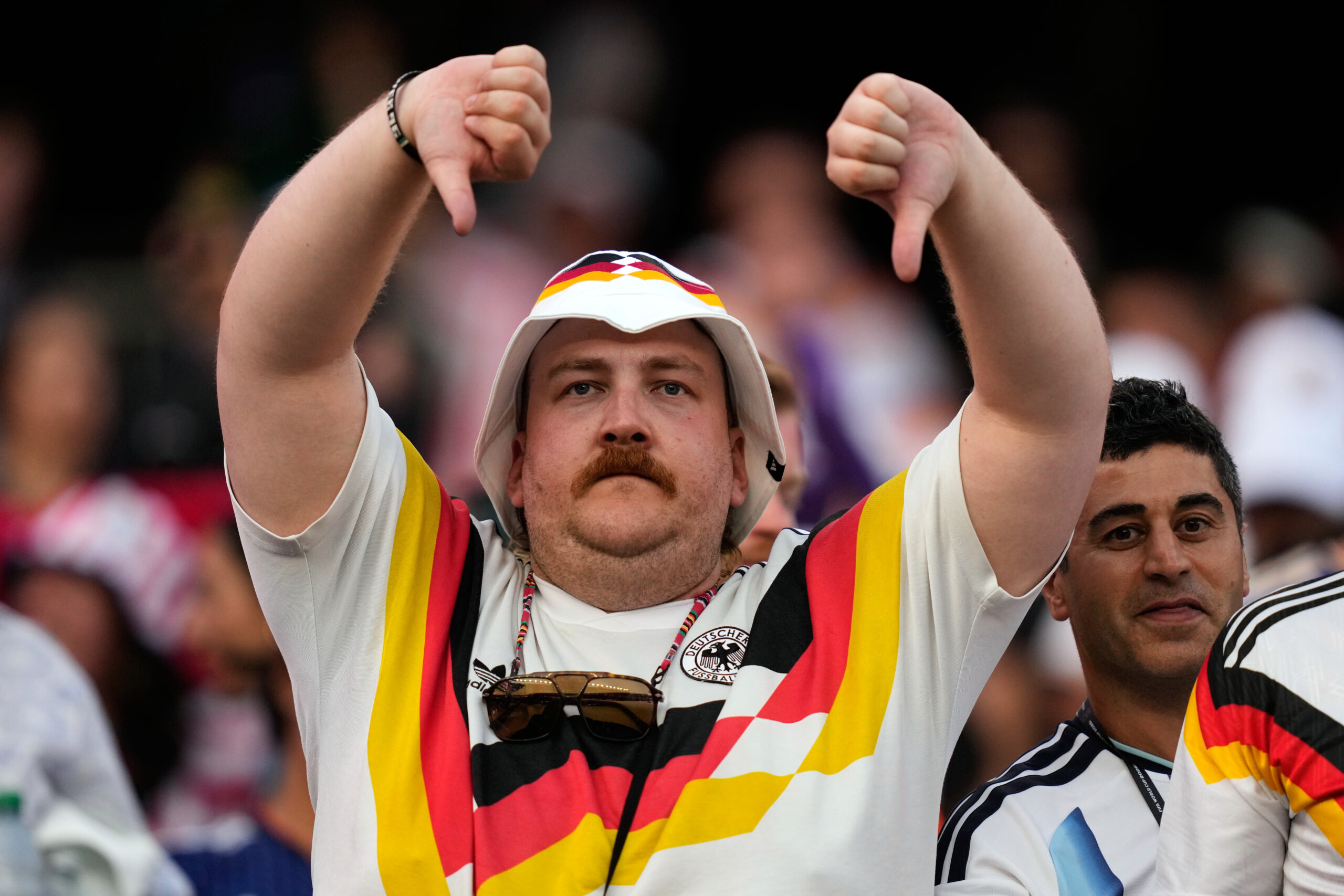
    A Germany fan at Monday’s game offers his opinion of the four-time World Cup champions’ upset loss to Paraguay.

    Yes, anyone can get a result against anyone else these days. Which means the 64th-ranked Bosnia and Herzegovina team the U.S. faces on Wednesday night has more than a chance against the cohosts, who return to the site of an infamous loss in the 2016 Copa América and a triumph in the Gold Cup final a year later.

    There’s no taking any World Cup game for granted these days, especially when it’s a knockout contest. Nor can you take a moment off, as all three of Monday’s games proved. Before Paraguay-Germany, Japan gave up a 95th-minute winner to Brazil. Afterward, the Netherlands played a lot of ugly soccer, gave up a 90th-minute equalizer to Morocco, then lost on penalties.

    “Hopefully we can get it done in regular time — the extra 30 minutes plus pens can get a little bit dangerous,” U.S. centerback Chris Richards said. “We saw the upset yesterday, so us going into this game, [it’s] making sure that we take care of business and go on.”

    The point really should have been hammered home in the American camp by the last-kick-of-the-game loss to Turkey in the group stage finale. But if it was your youth soccer team, Little League baseball team, or CYO basketball team, wouldn’t you make one last nudge before the big game?

    Chris Richards (center) on the ball during a drill at Tuesday’s practice.

    “It’s a World Cup. You’re never going to get the so-called favorite winning every single time,” said playmaker Christian Pulisic, who called himself “definitely ready” to start after coming off the bench against Turkey.

    “This is soccer. This is the way things go: you can defend all game and win in a penalty kick shootout, and that’s the beauty of the game,” he continued. “So we have to be ready for whatever’s to come tomorrow. We don’t think it’s going to be easy by any means, so we have to put on a really high-level performance.”

    If it feels like this point has been overstated this week, it’s because it ranks so much higher than everything else there is to say.

    Sure, there’s a tactical analysis to write about how Richards will fare against 40-year-old Bosnian striker Edin Džeko, a veteran of big clubs including England’s Manchester City, Italy’s AS Roma and Inter Milan, and Germany’s Wolfsburg and Schalke. Or how young right winger Esmir Bajraktarević will fare against U.S. defender Antonee Robinson.

    Esmir Bajraktarević celebrates one of Bosnia’s goals against Qatar in their group stage finale last Wednesday.

    There’s certainly much to say about Bajraktarević, and for good reason. The 21-year-old grew up in Appleton, Wis., and his parents were refugees from the Bosnian war of the 1990s.

    He spent a season in the Chicago Fire’s youth academy (2019-20), then moved to the New England Revolution, where he turned pro and spent three seasons before a move to Dutch club PSV Eindhoven — and is now teammates with U.S. veterans Ricardo Pepi and Sergiño Dest and formerly Malik Tillman.

    Along the way, Bajraktarević played for U.S. youth national teams at the under-19 and under-23 levels, and earned one cap for the senior U.S. squad in a January 2024 friendly. But because that wasn’t in an official competition, he could change nationality.

    When Bosnia called a few months later, he made the switch, and debuted in the fall. A year and a half later, he scored the shootout penalty kick that qualified the Dragons for this World Cup with a playoff upset of Italy.

    But if the U.S. team has its way, that story will become just a sidebar when the opening whistle blows. At that point, the motto will become one that’s well-known at the other end of San Francisco Bay from here, in Oakland: Just win, baby.

    Even Tillman, who was born in Germany and has grown into understanding American sports, gets the point.

    “Yeah, it’s true,” he said, when asked his opinion. “In the end, the win is the most important. And I think after, of course, you can analyze the game, but if you go to the next round, this is the most important.”

    I asked Mauricio Pochettino what he thinks of the "Just win, baby" slogan – and whether his saying "it's the final of the World Cup tomorrow" means more focus on winning at all costs, and less on tactics.

    Pochettino gave a long answer. Here it is in video form:

    youtu.be/iGVv_P8__jM?…

    [image or embed]

    — Jonathan Tannenwald (@jtannenwald.bsky.social) June 30, 2026 at 6:56 PM

  • Paraguay upsets Germany on penalty kicks to book a ticket to Philadelphia’s July 4 game

    Paraguay upsets Germany on penalty kicks to book a ticket to Philadelphia’s July 4 game

    FOXBOROUGH, Mass. — Jose Canale scored on the first sudden death penalty kick, Orlando Gill made two key saves in the shootout, and Paraguay beat Germany 4-3 on penalties Monday to earn the biggest upset of the 2026 World Cup so far.

    The round of 32 match ended 1-1 after extra time. Paraguay took the lead when Julio Enciso scored on a header late in the first half, but Kai Havertz equalized in the 52nd minute for four-time champion Germany.

    “We had to analyze every player, every detail. Thanks to that I was able to only miss two penalties,” Gill said afterward. “This is for all the people of Paraguay.”

    Paraguay, ranked 34th by FIFA, is the deepest betting long shot to win a World Cup match and did it against 12th-ranked Germany.

    The Paraguayans will next face the winner of Tuesday’s match between France and Sweden in the round of 16 on Saturday in Philadelphia. A win in that match would land them back in Foxborough for a quarterfinal match on July 9.

    “I think we deserved one more game and to be honest considering everything that was said, everything we went through,” Canale said. ”What I wan to highlight from our team is how united we are. … Today was a game we really needed to show our true colors.”

    Germany had won six of seven penalty shootouts in major tournaments, including six straight since losing to Czechoslovakia in the 1976 European Championship final.

    In the only previous World Cup match between the teams, Germany beat Paraguay 1-0 in the round of 16 at the 2002 tournament. Nearly a quarter-century later, Paraguay has its revenge.

    Paraguay’s players celebrating at the end of the shootout.

    Paraguay had appeared in five previous knockout games but failed to score in each. It advanced only once in those previous occasions, winning on penalty kicks against Japan in the round of 16 at the 2010 tournament in South Africa. It fell that year to eventual champion Spain in the quarterfinals.

    Monday was Germany’s first knockout game since the 2014 final in Brazil when the Germans beat Argentina 1-0 to capture their fourth World Cup title. The Germans were eliminated from the group stage at the last two World Cup tournaments.

    “We had very big plans for this World Cup. It’s very difficult to disappoint again,” Havertz said. “It was difficult to create chances and keep the pace.”

    Paraguay broke the early stalemate in the 42nd minute Monday with some perfect ball movement to set up Enciso.

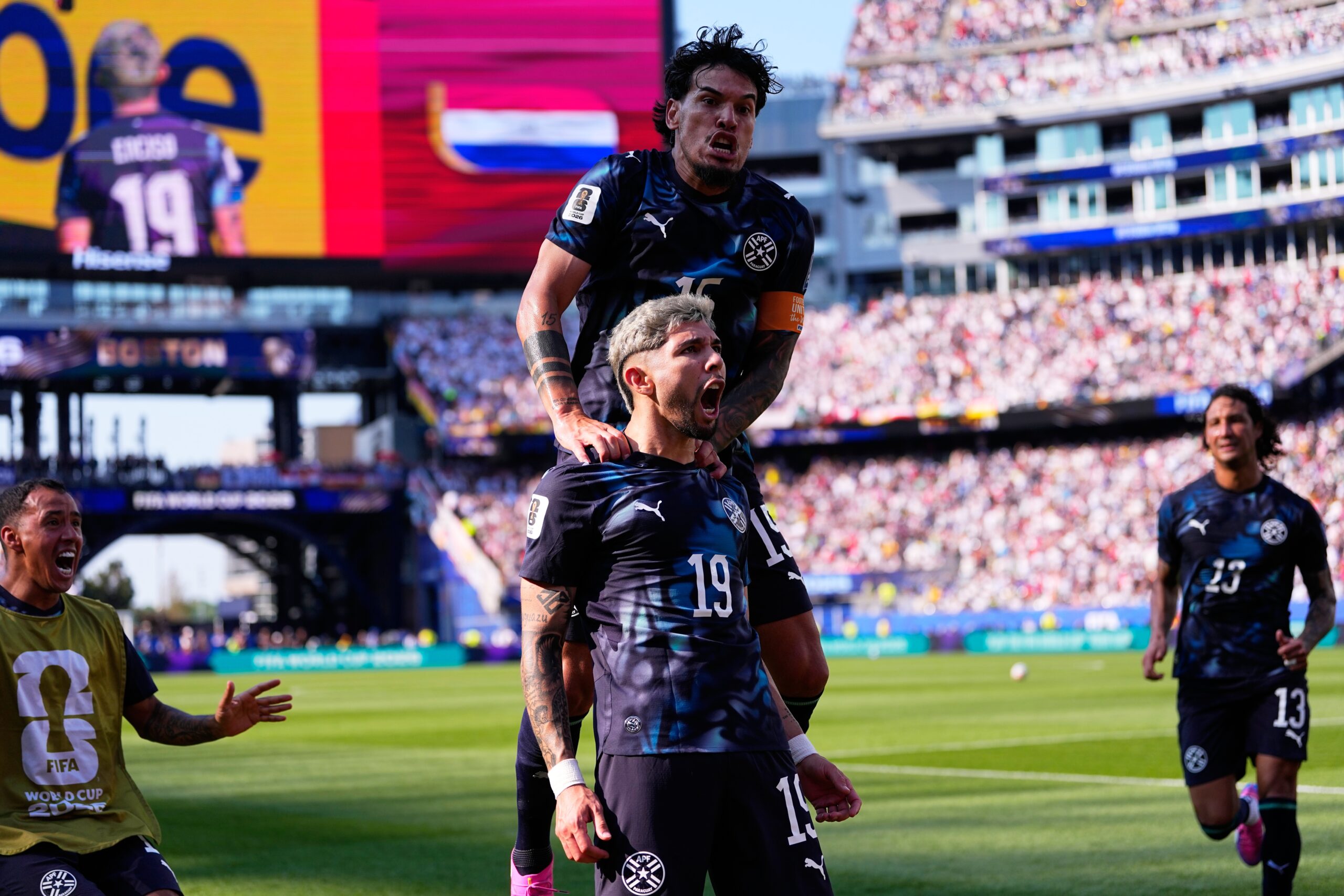
    Paraguay’s Julio Enciso (19) celebrates his goal with teammates.

    Miguel Almiron split Germany’s Aleksandar Pavlovic and Nathaniel Brown with a left-footed pass to Matias Galarza. Galarza sent a cross to Enciso, who was unmarked by Germany’s defenders and easily headed it past goalkeeper Manuel Neuer.

    In the second half, Havertz took a cross from Florian Wirtz, which he got just enough head on to redirect it past Gill.

    And then in extra time, Germany appeared to take a 2-1 lead in the 102nd minute when Jonathan Tah headed in a corner kick by Nathaniel Brown that was just above the reach of Gill. But a video review ruled that Waldemar Anton has pushed Gill to the ground before the shot and the goal was disallowed.

    Germany, whose 10 goals in the group stage was tied for the most of any team, struggled to find a way through Paraguay’s 4-5-1 setup. The Germans had 78% of the possession in the first half.

    As expected, Paraguay was without defender Omar Alderete, who left with an injury in the second half of the team’s 0-0 draw against Australia. Canale started in his place.

  • The legacy of this generation of USMNT players rests on this World Cup’s knockout rounds

    The legacy of this generation of USMNT players rests on this World Cup’s knockout rounds

    IRVINE, Calif. — The assertion on these pages of the importance of this World Cup’s first knockout round for the U.S. men’s soccer team drew a noteworthy response from a history-minded reader.

    “Just because they changed how to make it from 32 to 16 doesn’t automatically make doing it more meaningful,” it said. “Not to be too ‘Bluesky reply guy’ but portraying it otherwise empowers FIFA’s money grab imo. On Wednesday the USMNT will try to do something they’ve done 5 of the last 8 men’s World Cups.”

    Those are fair points, especially the one about FIFA grabbing money. The U.S. men have indeed been among the last 16 teams standing at five of the eight World Cups they played in from 1990-2022: ‘94, 2002, 2010, ‘14, and ‘22.

    So the point that was made here is worth clarifying. It’s not just about being able to claim a title of being one of the best 32, 16, or any fewer national teams based on World Cup finish. It’s about the mentality of knockout soccer on the sport’s biggest stage, and how different it is from anything else.

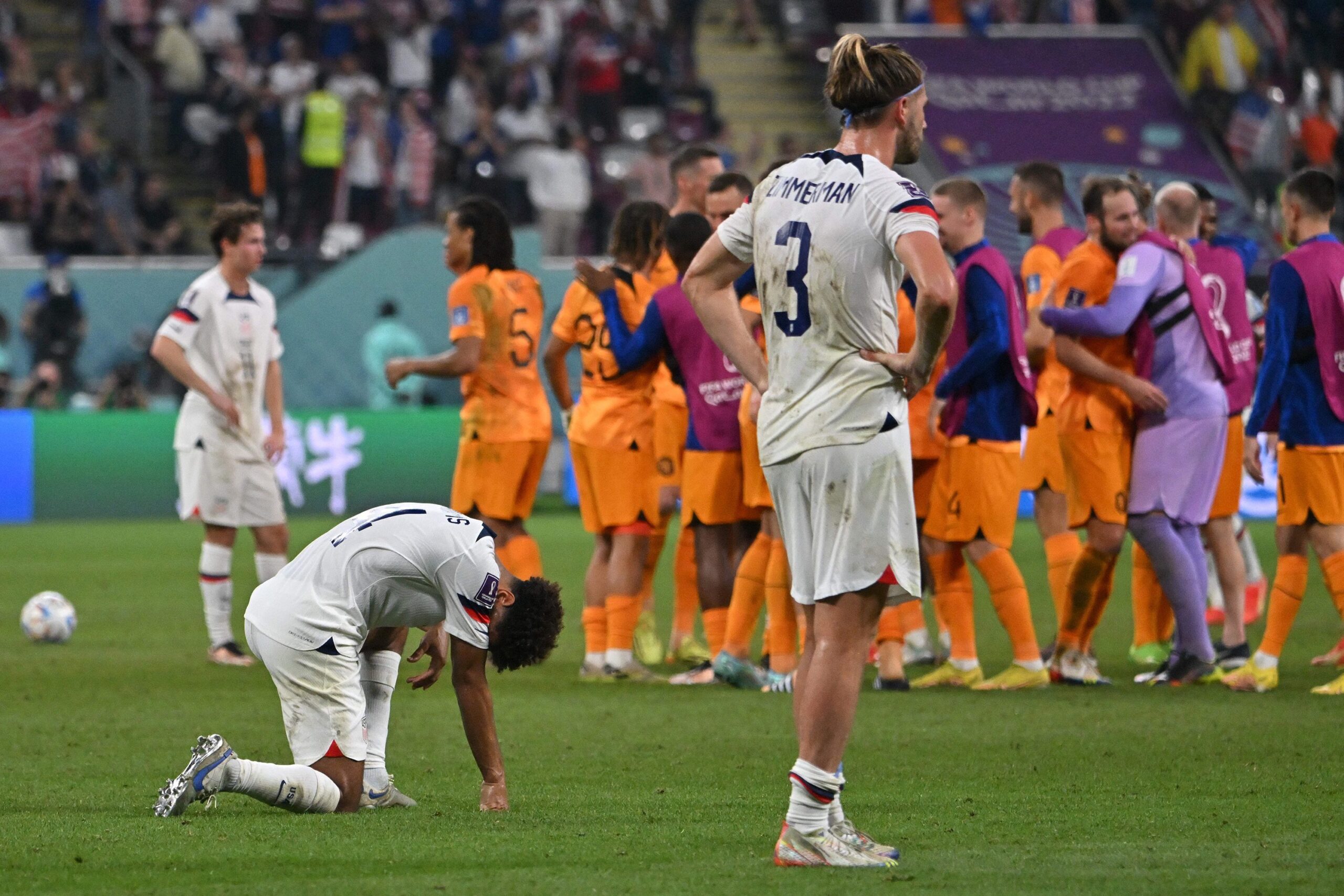
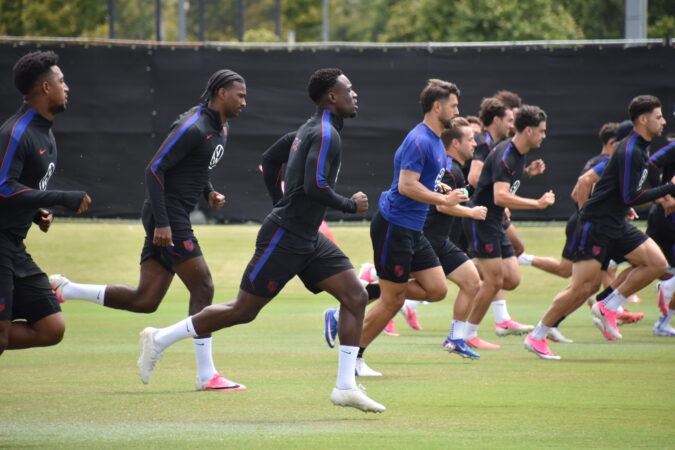
    Tyler Adams (left) and Walker Zimmerman on the field at the end of the U.S.’ loss to the Netherlands that knocked them out of the 2022 World Cup in the round of 16. This year’s tournament is the first with a round of 32.

    It’s also about whether U.S. players of this era can prove themselves in the way they’ve long told us they can. Lose the round of 32 contest to Bosnia & Herzegovina on Wednesday (8 p.m., Fox29, Telemundo 62), and all the promises go up in smoke.

    That pressure might not be the same as the kind the superstars of Brazil, Argentina, England, and so on face every day. But it’s still a significant burden, and a particular kind for a team with DNA built on fighting for respect.

    “I think everyone knows in the back of our minds what this could do for this country,” attacking midfielder Gio Reyna said before Monday’s practice, the last before the U.S. team headed north to the Bay Area for Wednesday’s game in Santa Clara.

    “Not that we’ve really spoke about it or thought about it much — we’re pretty much just focused on each game in front of us at this moment, as it is win or go home,” he continued. But they don’t have to.

    Gio Reyna (right) in action during the U.S.-Turkey group stage finale.

    “We feel the country rallying around us,” he said. “We see the momentum it’s bringing to the sport in this country just through the group stage. But we also understand that if we make a nice run in the tournament, what it could really do for the sport.”

    Reyna and centerback Tim Ream were the two players who spoke Monday. Both were part of the 2022 team that took the U.S. back to the men’s World Cup after failing to qualify for 2018. Now Ream is this team’s captain, and its oldest player.

    “Would it be weird if I told you I don’t really feel too much pressure at this minute?” he said. “I just think there’s so much pressure that we put on ourselves.”

    He acknowledged in his next breath that “it feels very different this time around than 2022, I will say that,” though “not because of the round of 32 or because that was a round of 16.”

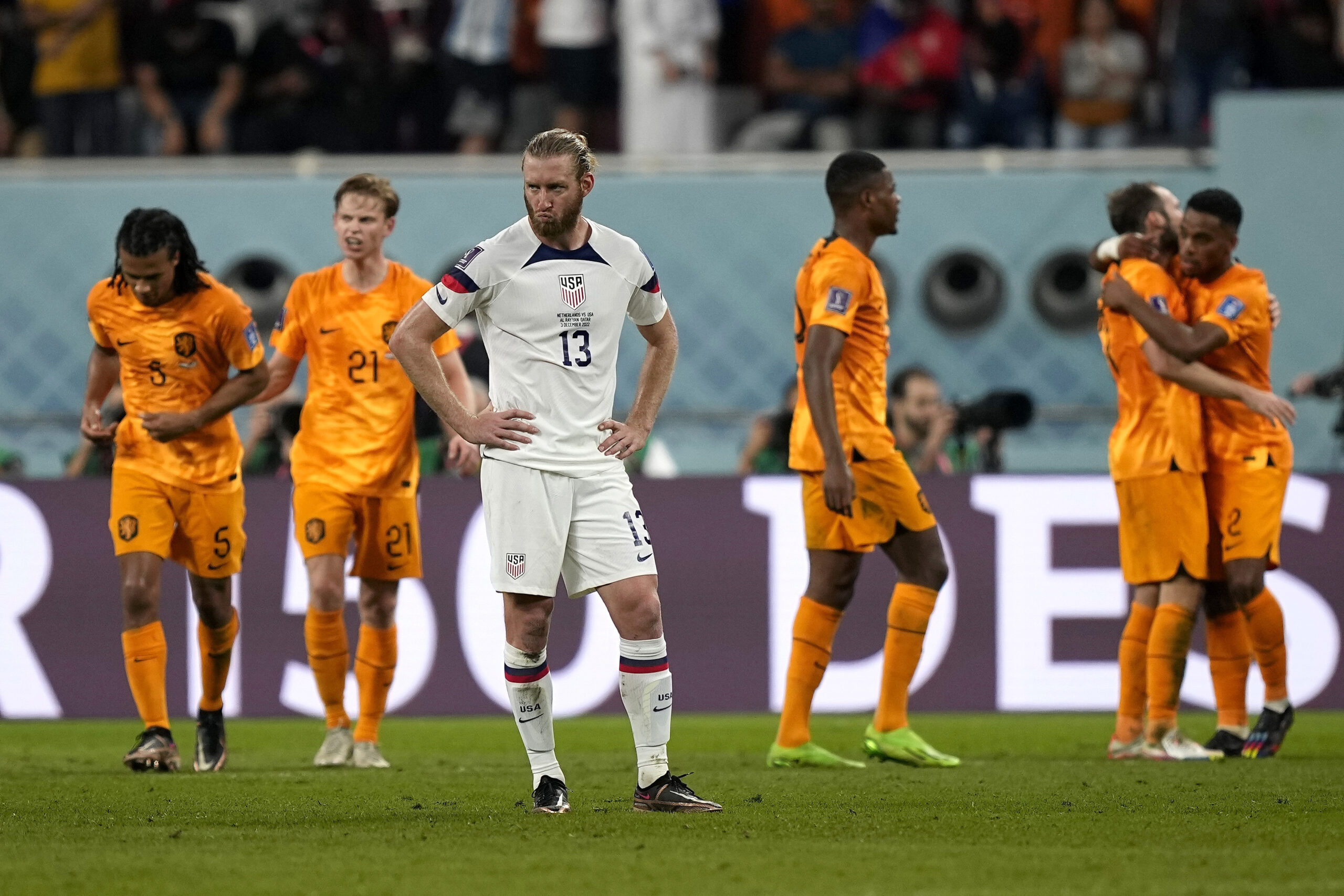
    Tim Ream (center) on the field after the Netherlands scored its third goal against the U.S. in 2002.

    Instead it’s because of what is already in the players’ minds.

    “I think we put so much expectation on ourselves as players — and I said this at the beginning of the tournament — but I think we felt more pressure for that first game against Paraguay than anything,” Ream said. “And that’s coming from ourselves, not from anything on the outside.”

    The burden might weigh a little extra on Reyna, too, and not just because of the scandal that engulfed him and his family four years ago. Even if everything back then had been clean-cut, he’d still be the son of U.S. legend Claudio Reyna, who played for the U.S. at the 1998, 2002, and 2006 World Cups — but not in 1994 because of a hamstring injury.

    “I always like to say it’s just another game of football, but at the end of the day, I think everybody knows what this game is,” Gio said. “World Cups only come around every four years, and especially on home soil, this opportunity will really never come back.”

  • After a century of false starts, soccer has taken off in the U.S.

    After a century of false starts, soccer has taken off in the U.S.

    The 2026 FIFA World Cup — which includes six games in Philadelphia — has taken the U.S. by storm. The excitement generated by the tournament reflects how, in contemporary American society, soccer has become a feature of everyday life.

    Parents drive their kids to and from soccer practices and fork out large sums of money for travel games. At the professional level, Major League Soccer (MLS) and the National Women’s Soccer League (NWSL) are thriving. The U.S. women’s national team has won a record five Olympic gold medals and four World Cup titles. Even European soccer has taken off with American fans: this year, the English Premier League (EPL) season opener between Chelsea and Manchester City drew close to 2 million viewers in the U.S.

    The meteoric rise of soccer in the U.S., however, is a recent phenomenon. While Americans have played the game for centuries, it struggled to take off in the U.S. A number of factors drove soccer’s struggle to catch on, including ideas about masculinity and Americanness, a lack of infrastructure and the failure to build robust college soccer programs. Yet, in the 21st century, immigration, demographic shifts, technological changes and the rapid growth of youth soccer have transformed the landscape. Soccer has moved from a fringe and unpopular sport to become one of the most popular sports in America — even ahead of baseball according to one poll.

    In 1869, Rutgers beat Princeton 6-4 in the first American collegiate soccer game. By the early 20th century, teams like Fall River Football Club had become established enough to play against European teams including the Glasgow Rangers and Sparta Prague.

    Bethlehem Steel, based in Bethlehem Pa., was one of the most dominant teams in the early 20th century. It built what was widely regarded as the first soccer specific stadium in the U.S. and went on to win a record five U.S. Open Cups.

    Although the game seemed to be taking root — especially after the formation of the American Soccer League (ASL) in 1921 — it was predominately an amateur sport, even as professional soccer took off in Europe.

    The ASL hit rough shoals in its earliest days: only three of the initial clubs returned for a second season. Financial struggles were quite common in the league, and crowds were sparse.

    In the early 20th century, the near absence of soccer on American college campuses entrenched its status as a fringe sport. Other sports like baseball and basketball were taking off on campuses at the time, a signal of what sports young people were interested in playing. The problem was compounded by the lack of a national administrative structure, which ensured that almost no organized soccer took place beyond high school.

    Soccer also suffered from the lack of physical infrastructure. While sports like baseball and basketball developed at the professional level in the U.S. — including the construction of stadiums and arenas — soccer was forced to rely on baseball stadiums for games. For instance, Grand Avenue Baseball Ground in St. Louis, hosted four U.S Open Cups between 1929 and 1948 while also serving several Major League Baseball teams. Soccer in 20th century America simply wasn’t a robust enough business to justify the construction of multimillion-dollar stadiums.

    These challenges and tribulations plaguing soccer had a significant impact on sport’s growth in the U.S.

    At the college level, the game remained on the periphery of the American sports landscape. In 1939, only eight universities and colleges had men’s soccer teams and there were no interregional matches or postseason tournaments. It would take another 20 years before the National Collegiate Athletic Association sponsored a postseason soccer championship.

    Meanwhile, American football remained dominant on college campuses. Commenting in a New York Times article on soccer, an official from an unnamed American university argued that it was a good sport and must be played “in addition to football but should not supplant the latter game.”

    Soccer was stuck in neutral, even after two rival professional leagues, the National Professional Soccer League and the United Soccer Association, merged to form the North American Soccer League (NASL) in 1968.

    In 1975, the arrival of Edson Arantes do Nascimento — better known as Pelé — was supposed to change everything. Following sustained lobbying from New York Cosmos General Manager Clive Toye and intervention by U.S. Secretary of State Henry Kissinger, the superstar agreed to bring his talents to the U.S.

    Hopes, however, for a soccer revolution never truly materialized. While Pelé drew huge crowds to his games, his proclamation that soccer had “finally arrived in the United States” proved to be only hype. A decade after his heralded arrival, the NASL actually collapsed due to ballooning costs — leaving the U.S. without any serious professional league for several years.

    Made By History sponsors. FOR USE ON MADE BY HISTORY STORIES ONLY.

    No one was quite sure precisely why the most popular global sport couldn’t break through in the U.S. Some observers wondered if the problem was that the sport simply wasn’t American.

    The game ran afoul of American ideas of masculinity, which were primarily associated with aggression and capacity for violence, both of which were celebrated aspects of football. Dick Young, the former sports columnist for the New York Daily News once described soccer as “a game for commie pansies.”

    While sports like baseball and basketball weren’t as violent as football, they had the built in infrastructure — stadiums, robust college programs, big money television deals — and cultural cachet from a century of being in the top tier of American sports. Soccer lacked these advantages, and its inability to overcome the deep seated stigmas about the game kept the sport on the margins of the American sports landscape throughout the late 20th century.

    In the 21st century however, everything has shifted. The structural barriers holding soccer back began to erode, starting with youth leagues. Youth soccer grew in prominence, including the development of travel leagues. This growth, in turn, produced a pipeline of talent for professional soccer teams. Highly skilled American players like Christian Pulisic and Weston McKennie have become global superstars.

    Major League Soccer, which launched in 1993 as part of the U.S. bid for the 1994 World Cup, was initially treated as a retirement league for star players with declining skills. Yet, the emergence of this homegrown talent pipeline created a pool of exciting young players for MLS teams.

    Immigration has also bolstered soccer, both in terms of generating interest in the MLS and in expanding the talent pool. Reforms to immigration policy in 1965 created opportunities and demographic shifts that peaked in the early 2000s. Scholar Maurico Espinoza-Quesada argues that the majority of immigrants coming to the U.S. in the 21st century were primarily from “soccer-crazed countries in Latin America, Europe and Africa.”

    Tapiwa Gumunyu, a Zimbabwean immigrant living in Ohio, has attended several Columbus Crew matches with his family. Such matches have become social events for the relatively small Zimbabwean community living between Ohio and Kentucky. Similar trends can also be observed among Latin American communities that have brought their global soccer zeal to different cities across the US.

    MLS clubs have recognized the potential business opportunities offered by immigrant communities. The Seattle Sounders, for one, have tried to grow their fanbase by broadcasting their games in Spanish. Ric Jensen, a scholar of sport fandom and management, argues that MLS clubs regularly recruit “well-known Hispanic players to maximize sponsorship dollars” and expand their fanbase among Hispanics.

    Looking at the U.S. men’s national team, it’s also hard to ignore the impact that immigrants and their descendants have had on the growth of soccer in America. The U.S. has benefited immensely from players who would otherwise play for different countries altogether. Folarin Balogun could have played for England and Nigeria. Haji Wright was eligible to play for Ghana but like Balogun, chose to play for the U.S.

    The popularity of the game among immigrant communities has undoubtedly played a major role in elevating the MLS and injecting a generation of talented players and passionate fans into the local game.

    The popularity of soccer in the U.S. has also extended to foreign leagues — and technology has played a role in this shift. The internet and social media have created an interconnected world that allows fans to engage in rivalries and subcultures across previously unprecedented distances. There is now a generation of Americans who passionately identify as die hard “Culers” (Barcelona fans) or “Gooners” (Arsenal fans) despite never having set foot in Spain or England.

    One recent poll even suggested that soccer had surpassed baseball to become the third most popular sport in the U.S. Given how quickly soccer has grown, it seems possible that after decades of false starts, the sport may finally soon come to rival football and basketball atop the American sports landscape.

    Abraham Seda is an assistant professor of history at Lafayette College. He is currently writing a book on boxing and colonialism in Rhodesia.

    Made by History takes readers beyond the headlines with articles written and edited by professional historians. Opinions expressed do not necessarily reflect the views of The Inquirer.

  • The USMNT has one World Cup knockout win ever. Right now is the best chance to change that.

    The USMNT has one World Cup knockout win ever. Right now is the best chance to change that.

    IRVINE, Calif. — Right now is a good time to remember that the U.S. men’s soccer team has won just one World Cup knockout game in its history.

    In fact, every day for the rest of this tournament is a good time to remember that, especially leading up to Wednesday’s round of 32 contest with Bosnia & Herzegovina (8 p.m., Fox29, Telemundo 62).

    This is the moment that the players have dreamed of, whether since growing up or since leaving Qatar four years ago. This is the moment Mauricio Pochettino was hired for, with U.S. Soccer bringing in hedge fund billionaires to help fund the famed manager’s salary.

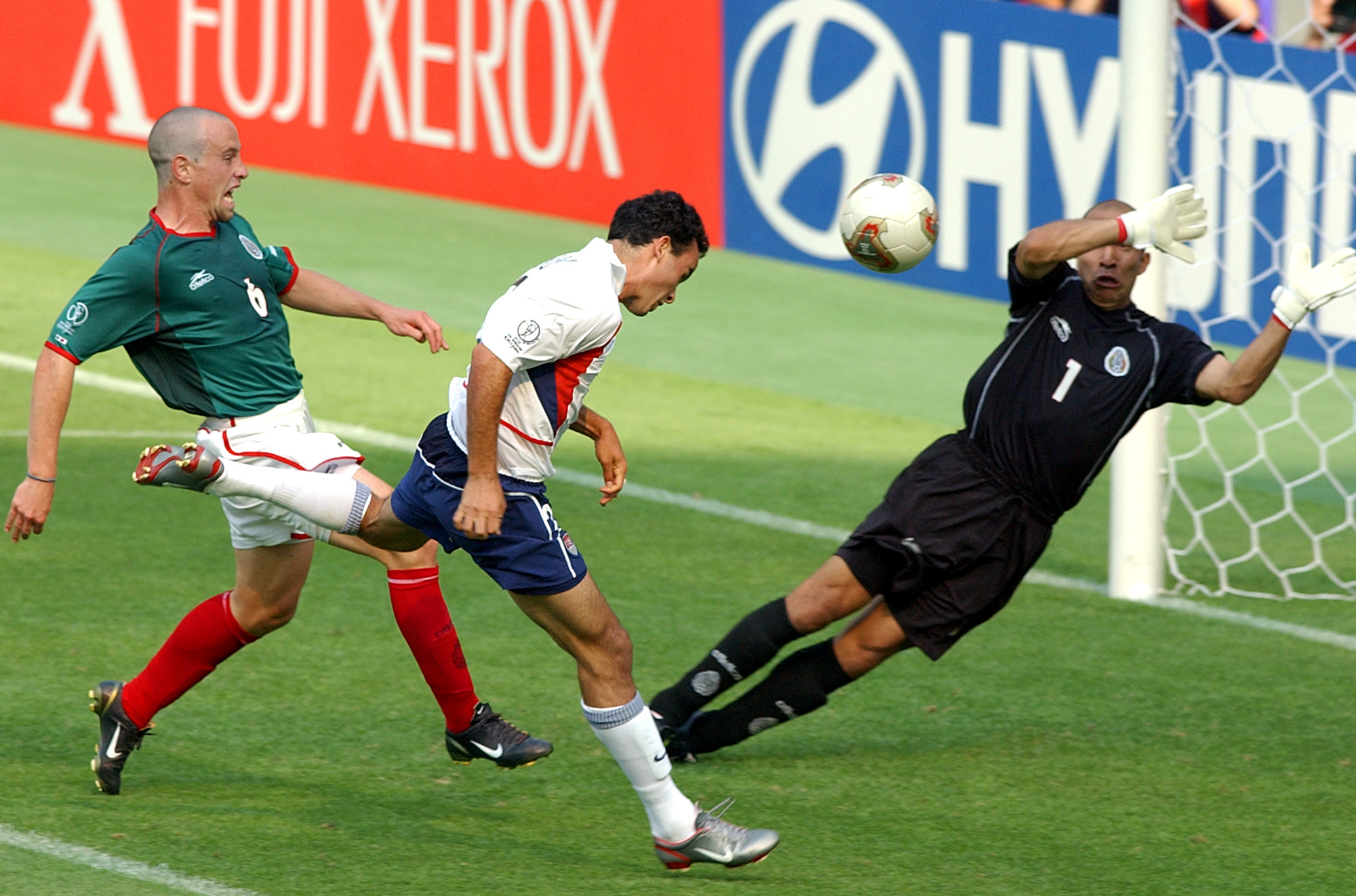
    And this is the moment when history echoes. The U.S. men have played eight World Cup knockout games all-time, from their first in 1930 (a 6-1 loss to Argentina) to their latest in 2022 (a 3-1 loss to the Netherlands). Their lone victory came in 2002, 2-0 over Mexico.

    Landon Donovan (center) heads in one of the U.S.’ goals in its win over Mexico in the 2002 World Cup round of 16.

    Beyond that? 7-1 to Italy in 1934, 1-0 to Brazil in 1994 (more on that in a moment), 1-0 to Germany in the 2002 quarterfinals, 2-1 in extra time to Ghana in 2010, and 2-1 in extra time to Belgium in 2014.

    If reading that opens some old wounds, apologies. But it’s necessary to explain why one of the most tense moments of any World Cup, the start of the knockout rounds, is especially tense for this program. There is no sterner test of a national team’s quality than whether it can win the do-or-die contests that live longest in the memory.

    The last time the U.S. men played a World Cup knockout game on home soil was 1994 at the old Stanford Stadium — just down the road from the 49ers’ NFL palace in Santa Clara where Wednesday’s game will take place.

    It was a stroke of coincidence, if not quite fortune, that the Americans landed in a July 4 matchup with Brazil after finishing third in their group. Finishing second would have sent them to Washington to play Spain, and finishing first would have had them at the Rose Bowl (where they already were) to play Argentina.

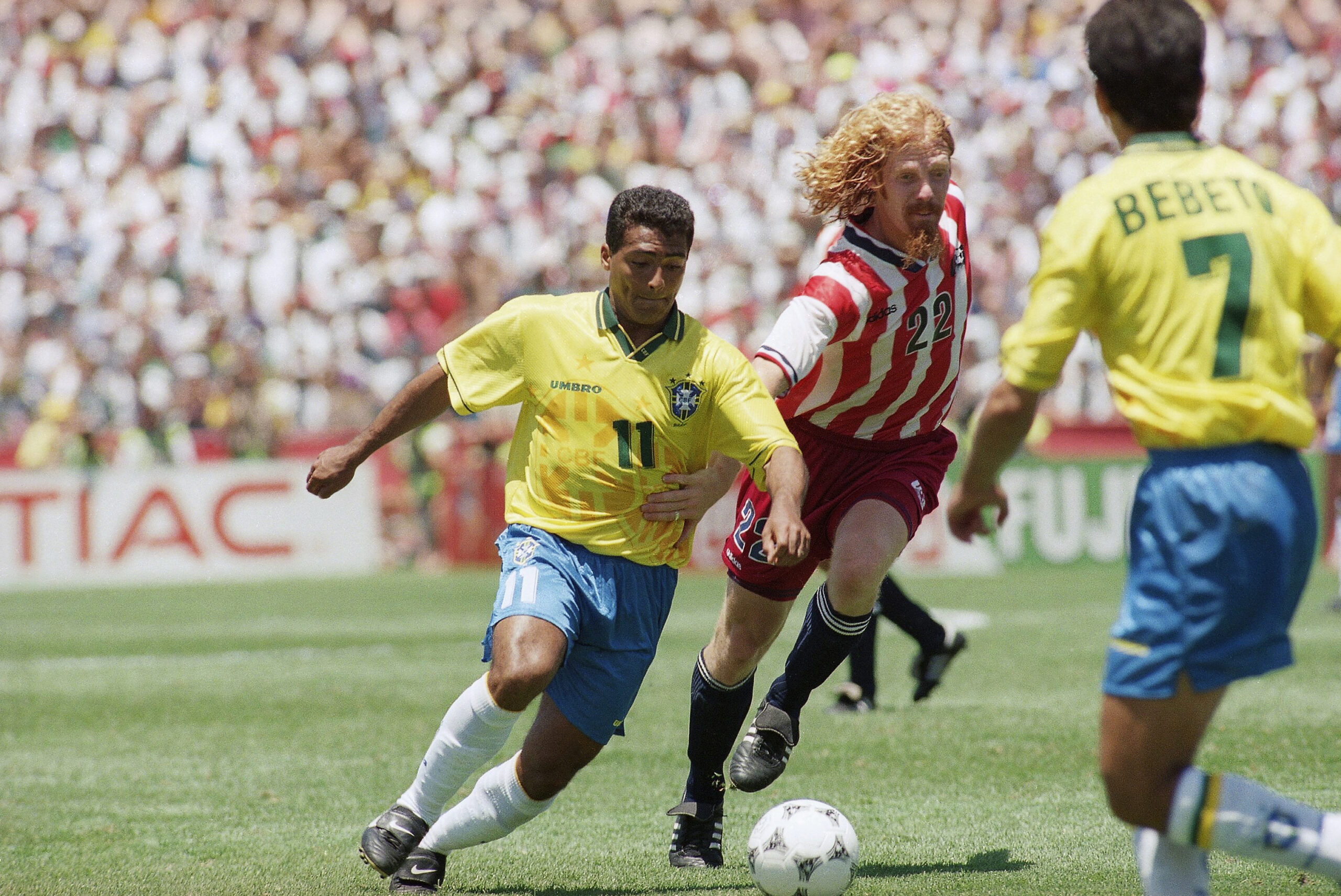
    Brazilian superstar Romário (left) dribbling past Alexi Lalas in the 1994 U.S.-Brazil World Cup game.

    Challenging the team that would go on to win the title was always going to be a mountain of a task. But the U.S. battled gamely, losing 1-0 to a Seleçao squad that saw defender Leonardo sent off in the first half for a nasty elbow to American star Tab Ramos.

    This time, the U.S. is favored, and not just by the bookies. Bosnia & Herzegovina is No. 64 in FIFA’s global rankings, well below the U.S.’ No. 17.

    The Dragons are also the lowest of the five third-place teams across the field that the U.S. could have faced, depending on which eight groups’ third-place finishers advanced. The opponent could have been from Group E, F, I, or J in other circumstances, and those teams turned out to be No. 23 Ecuador, No. 38 Sweden, No. 15 Senegal, and No. 28 Algeria.

    On top of that, Bosnia is the second-lowest-ranked team of all eight. Only No. 73 Ghana is lower. (The others not named yet are No. 28 Paraguay and No. 46 Democratic Republic of the Congo.)

    Bosnia & Herzegovina’s Esmir Bajraktarević was born in Appleton, Wisconsin, to parents who emigrated to the United States after escaping the Bosnian war of the 1990s.

    Still, an American sports fan watching soccer in the summer needs only to think of any given March to know it’s never so easy.

    The players know this, even someone like Balogun who has spent almost his entire life in Europe.

    “I can feel the difference in the atmosphere,” he said. “So for me, there’s a change in my mindset and mentality as well. Not that I wasn’t taking it seriously before, but you can go to another gear. Because you want it more, and I don’t want the journey to end.”

    Another point he made about himself might feel especially resonant to a U.S. fan base that has seen Balogun prove his worth as the striker the program long craved.

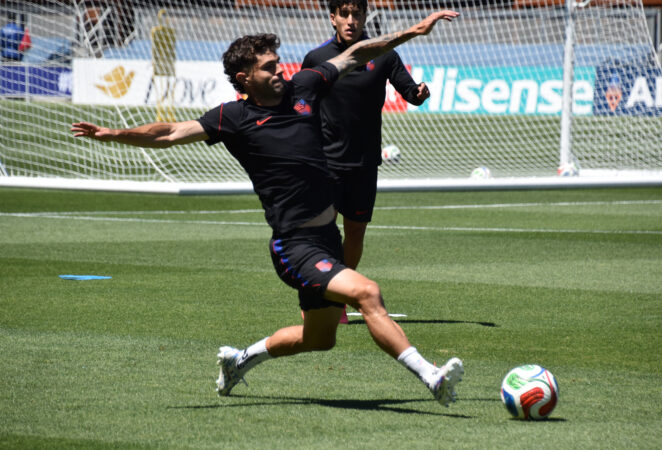
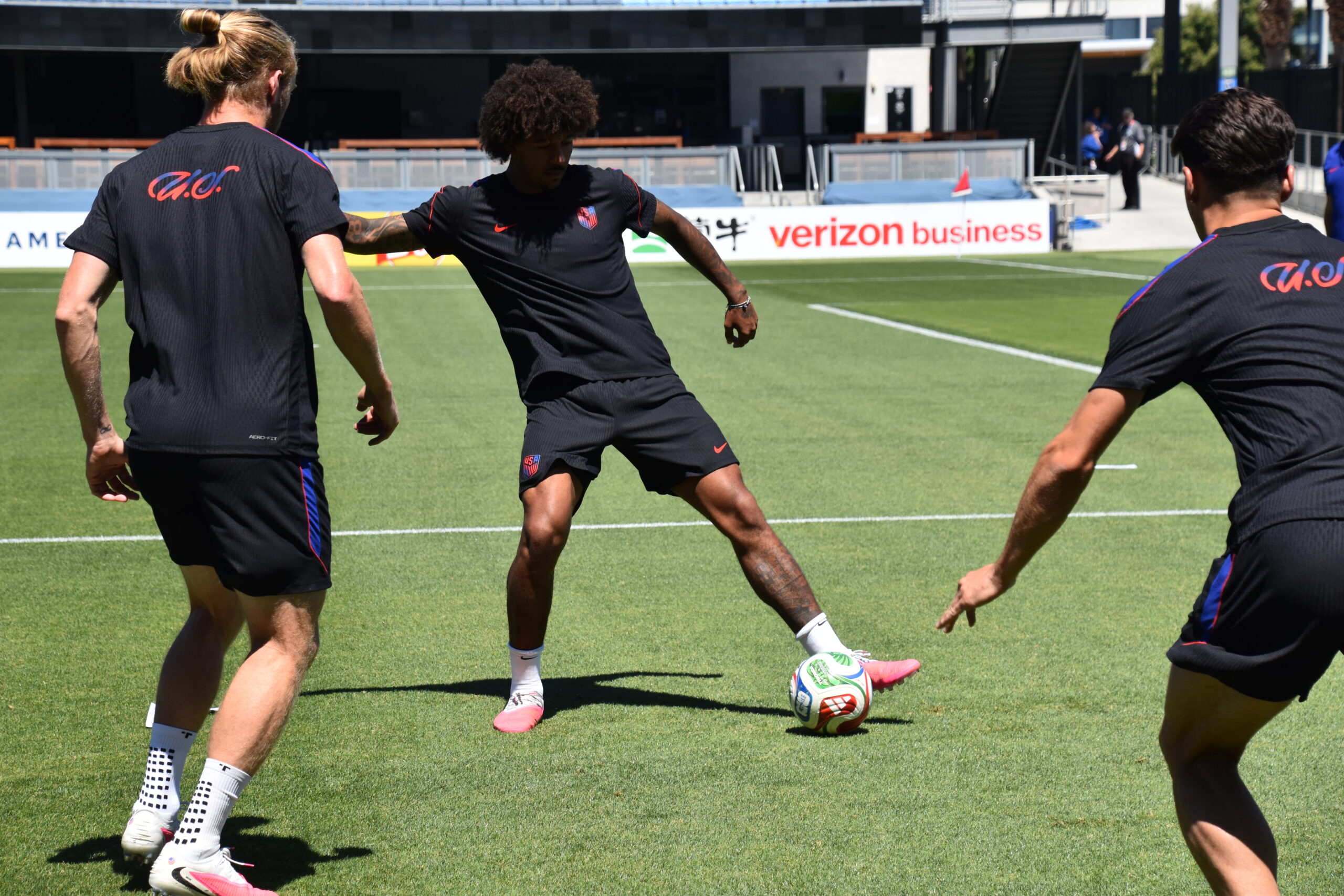
    Folarin Balogun (left) during a United States men’s national soccer team practice at Great Park in Irvine, California on Sunday.

    “This the business end,” he said, “and this is the stage where, in my opinion, the big players step forward and the big players carry the pressure and make things happen.”

    The growing strength of the U.S. player pool is a project that has taken decades to fulfill, and could still take many more years to deliver a true World Cup contender. But a tournament on home soil is an opportunity unlike any other to make a statement, whether to the soccer world or to the non-soccer American public.

    So while it may feel cliché to say this is one of the biggest moments in U.S. men’s program history, it’s also true.

    “From my personal experience, the best way to break history is not to think about what hasn’t been done,” Balogun said. “It’s just to think about what you need to do and just to think about what needs to be done in order to progress. And as I said, that’s just to win on Wednesday.”