Category: Soccer/Union

  • MLS strikes a deal with prediction market Polymarket, says it’s about protecting the integrity of games

    MLS strikes a deal with prediction market Polymarket, says it’s about protecting the integrity of games

    Major League Soccer announced Monday that it has started a partnership deal with Polymarket, a prediction market platform that’s similar to sports betting but not quite the same.

    Prediction markets work by having users choose from two possible outcomes for an event, and they are given a percentage likelihood of each. That plus how much money people put down translates into how much money they make if their pick is correct.

    Polymarket is one of a few such platforms, with Kalshi the other big one. The concept has been controversial for many reasons, the biggest being that although prediction markets resemble sports betting, they’re regulated separately from traditional sports betting firms.

    The reason behind that is the platforms’ claim that they offer “financial contracts” instead of bets. Those contracts are overseen by the federal government’s Commodity Futures Trading Commission, while sports betting is regulated by each state.

    As a result, prediction markets are legal nationwide, although a judge in Massachusetts this month issued an injunction stopping Kalshi from taking sports bets in the state.
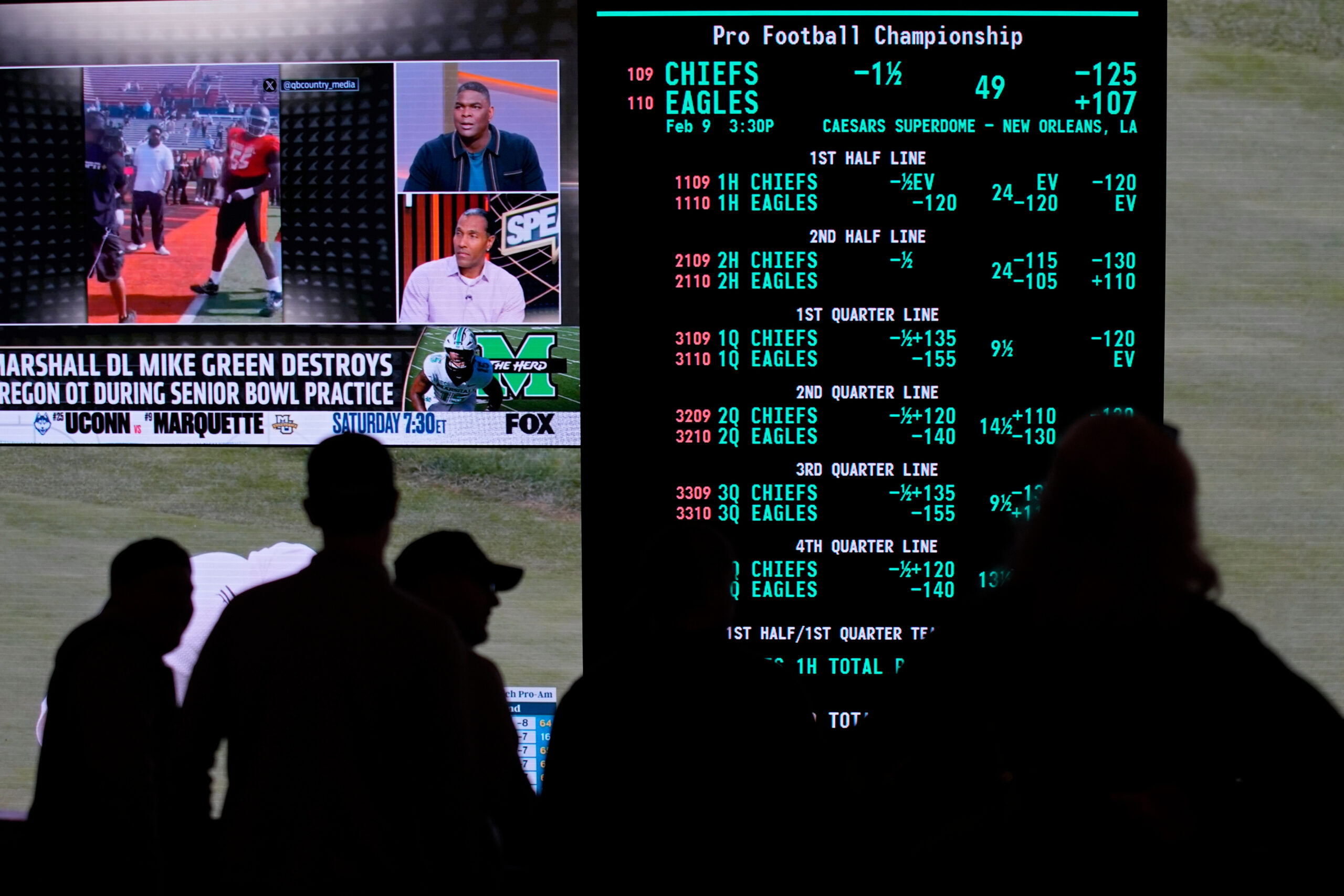
    Sports betting as some fans might be more used to seeing, at a casino in Las Vegas last fall.

    In the announcement, which also covers the Leagues Cup that MLS runs with Mexico’s Liga MX, MLS deputy commissioner Gary Stevenson said: “Partnering with Polymarket allows us to integrate prediction markets as a new fan engagement format and position MLS as an early leader among global soccer properties.”

    The announcement’s text also said the deal “includes safeguards designed to protect the integrity of MLS and Leagues Cup matches, including independent monitoring of trading activities and collaboration on MLS and Leagues Cup markets offered.”

    Another MLS executive, senior vice president of emerging ventures Chris Schlosser, told The Inquirer that the deal is just as much about preserving the integrity of games.

    “All of the major prediction markets have markets on MLS — they all offer trading on the league,” he said. “And so we felt like we really needed to lean in on the integrity side and create a framework for protection.”
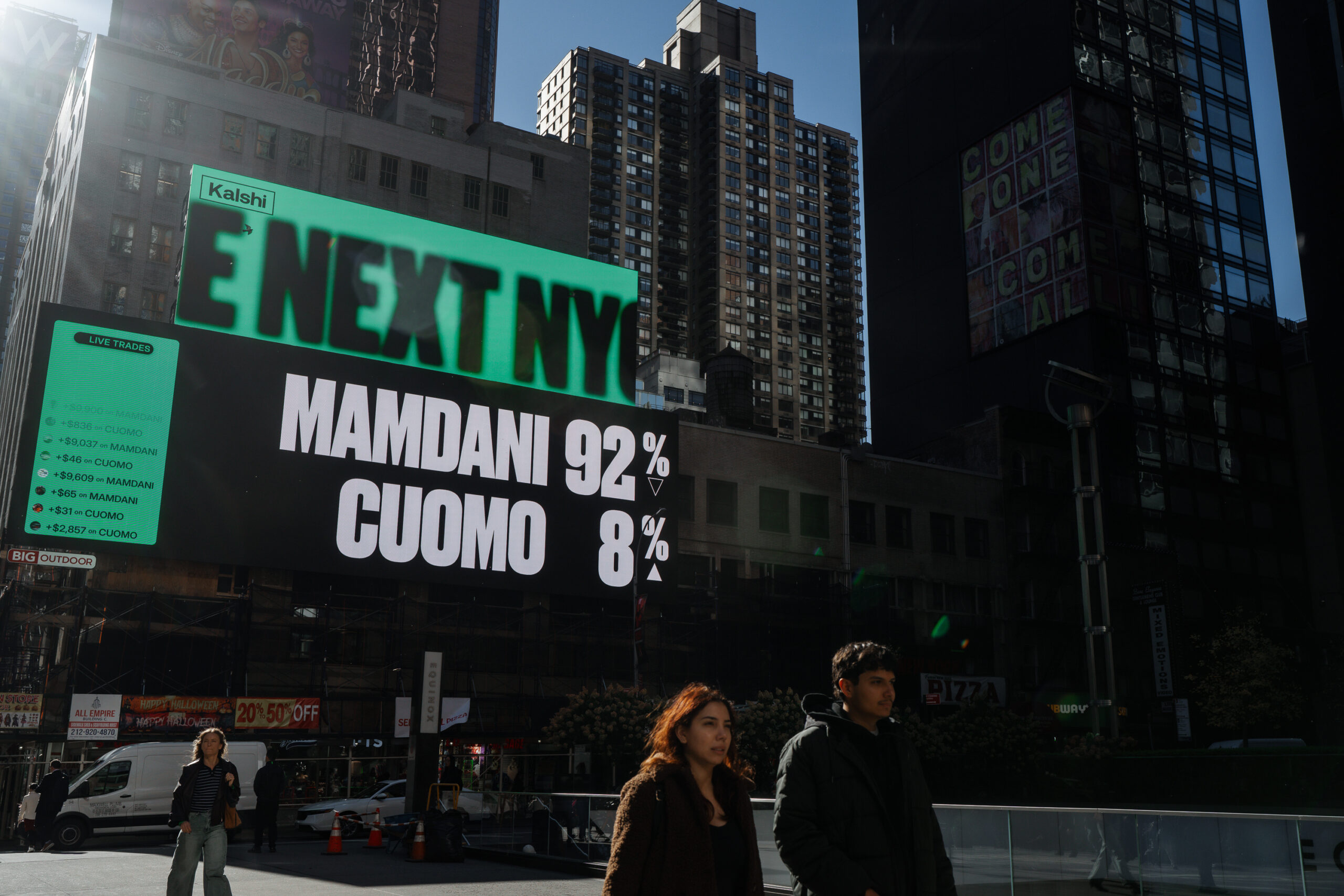
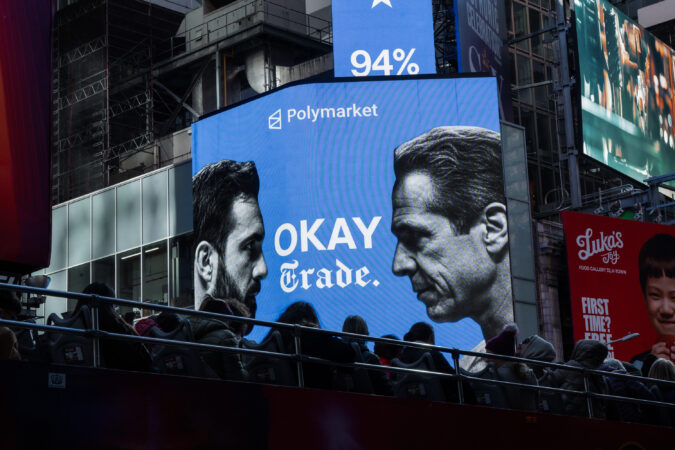
    A big billboard in New York that Kalshi bought to show off its prediction for last year’s mayoral race in the city.

    The ‘best shot’ at ‘ensuring integrity’

    Schlosser said MLS and Polymarket will create an “authorized prediction market” status similar to the “authorized gaming operator” status that various sports betting firms have from MLS and other sports leagues.

    “The goal,” he added, “is to get those with any any prediction market that has a CFTC license.”

    Doing so will “codify a whole number of integrity principles for us,” he said. “Things like approval over markets, things like working with a league on restricted individuals, league staff, club staff, players, referees, owners to make sure that they’re not trading on the sport of soccer.”

    “Markets” in this case refers to the offers that prediction markets give the public.

    Schlosser notably did not mention players at first. Asked if players have been banned from using prediction markets until now, he said: “Until we updated the guidelines and rules, no, and we needed to make sure that the prediction markets would actually work with us to prohibit that trading.”

    FIFA, world soccer’s governing body, has a code of ethics that bans players, officials, and agents from “either directly or indirectly, betting, gambling, lotteries or similar events or transactions related to football matches or competitions.”

    Schlosser said that a third-party entity will be employed to “monitor all trading volume on league markets and report any strange occurrences,” and that entity will be involved in any needed investigations.

    “It’s a multipronged approach, and we think it gives us the best shot at ensuring the integrity of the competition,” he said.

    Controversy over prop bets

    There is particular concern among outsiders about the proliferation of prop bets, just as there is in sports around the world. American sports fans need only look at the recent federal charges against college athletes accused of betting on basketball games here and in China, with some players from Philadelphia schools allegedly involved.

    Prop bets in soccer could come on whether a player will draw a yellow or red card, or miss a penalty kick, or take a certain number of shots — or something as small as committing a foul in a certain minute. A recent report by sports investigation website PlayTheGame.org cataloged how unlicensed companies around the world are using FIFA’s in-house streaming platform, FIFA+, to offer in-play bets on games shown there from lower-level leagues worldwide.

    FIFA’s headquarters in Zurich, Switzerland.

    FIFA also recently struck a deal with global sports data provider Stats Perform “to distribute official betting data and livestreams” to gamblers worldwide.

    MLS has had some small scandals over the years with players breaking the league’s rules on traditional sports betting. Prediction markets open up another area of risk, especially since they’re legal nationwide. (Polymarket is not legal in Canada, which has three MLS teams.)

    “The prop bets that really can concern us are the bets that are easily single-player controlled,” Schlosser said, listing the ones mentioned above and a few more. “Those are the kinds of things that concern us, and actually that concerns us in all gaming.”

    Traditional sports betting is currently legal in some form in 40 states and the District of Columbia. In 2023, MLS started writing to 41 states and territories asking for a ban on prop bets for players getting yellow or red cards. Thirty-three states agreed and banned the bets, and eight states did not.

    A list of the states in each column was not available when this article was published.
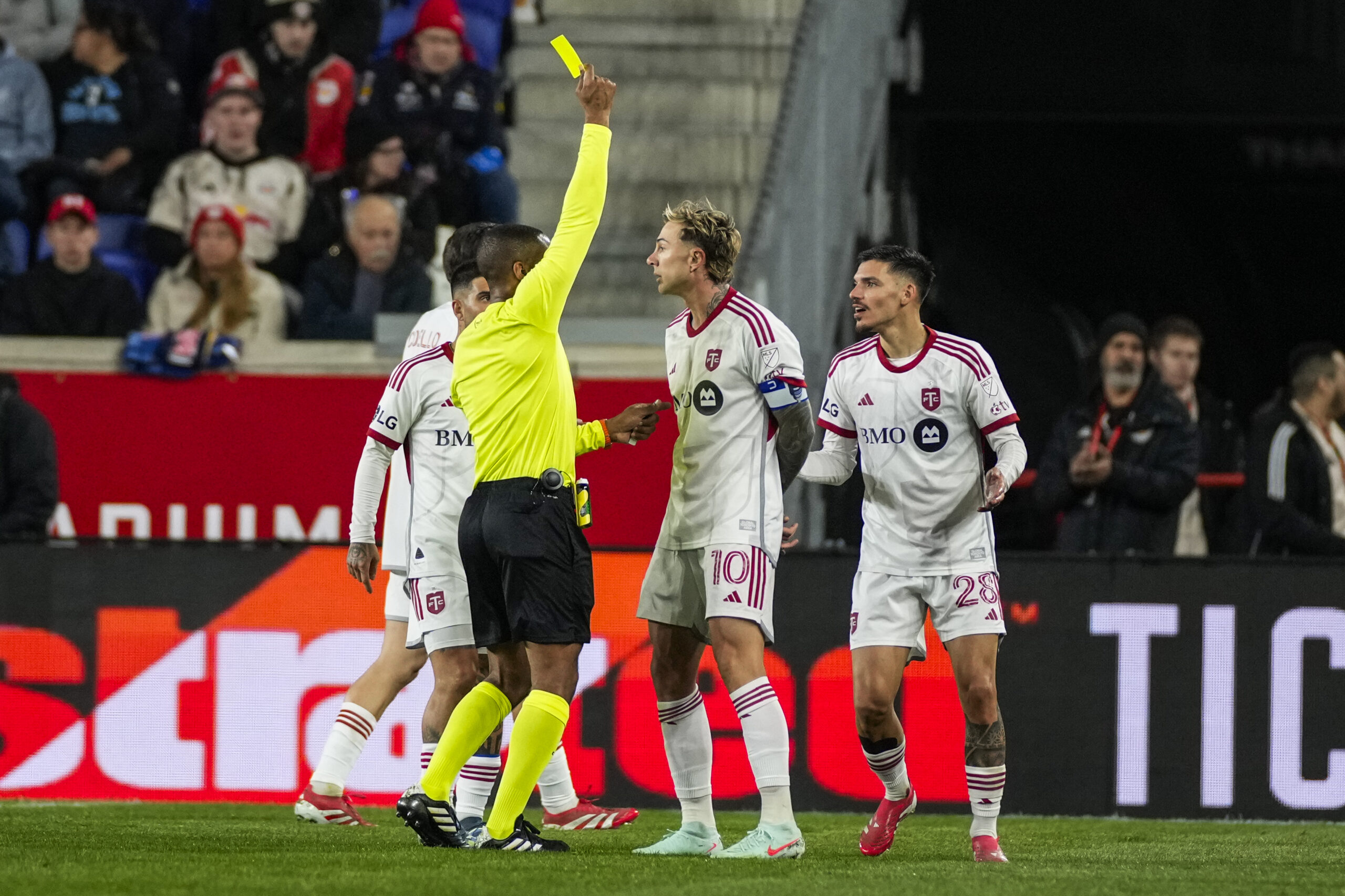
    A referee gives a yellow card to a player in an MLS game last year.

    “Even in sports betting, we’re not always successful in getting the framework that we want,” Schlosser said. “At least in these prediction market agreements, we have, I’d say, a broader right of consultation and approval over the markets that are going to be listed on MLS. And we feel that’s a strong protection to eliminate the markets that may be problematic.”

    Becoming more popular, and controversial

    The popularity of prediction markets has skyrocketed in recent times. The Financial Times reported last month that from early 2024 through November 2025, the total value of wagers on the platform rose from $100 million per month to over $13 billion.

    But that rise has come with many controversies. The first is claims that there aren’t enough regulations to stop insider trading, a matter that has arisen in the platforms offering bets on political events — which is controversial enough on its own.

    The industry has deep ties to cryptocurrencies. Polymarket accepts deposits through the Polygon blockchain along with traditional U.S. dollars and credit cards.
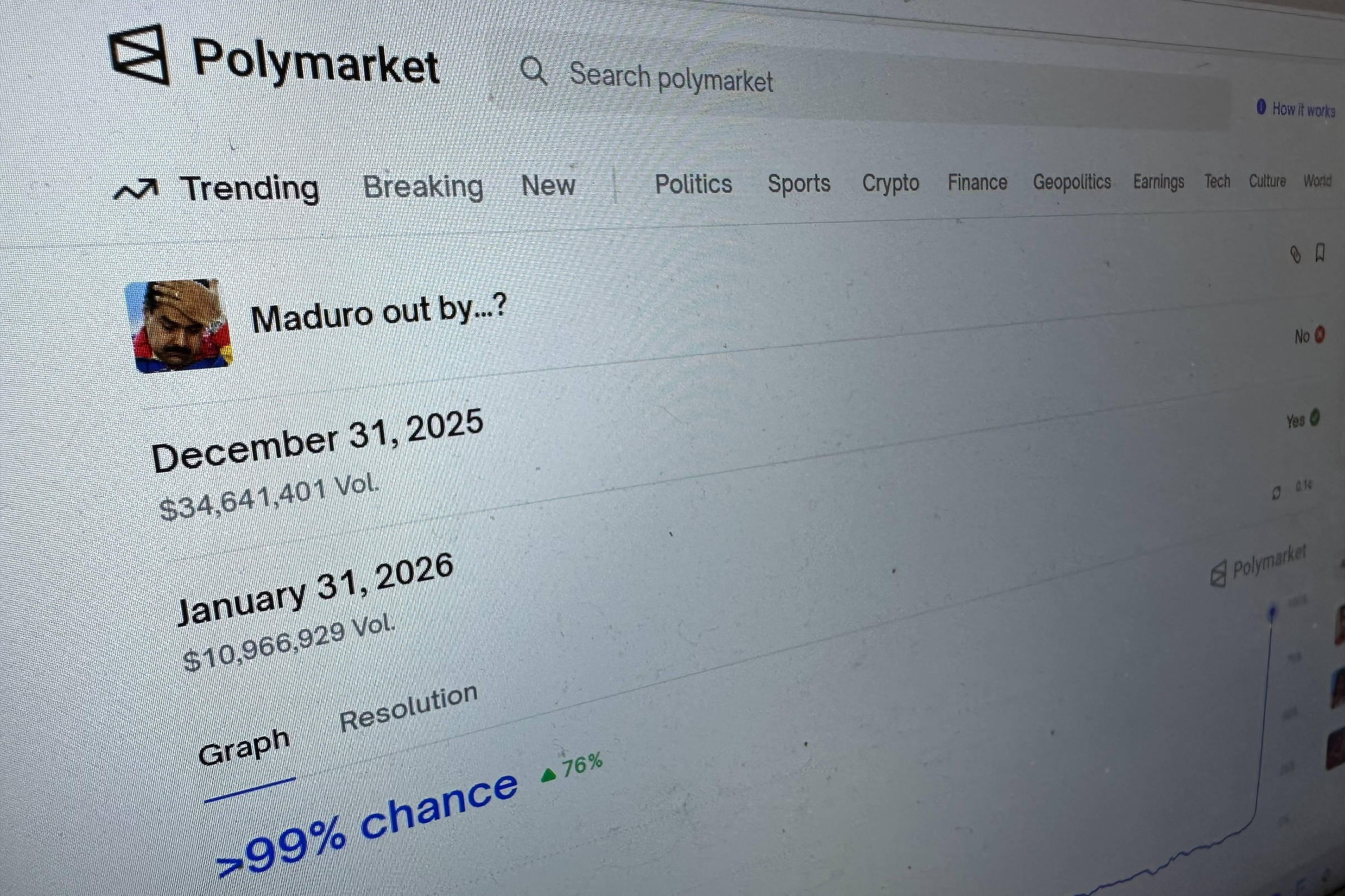
    Polymarket and other prediction markets take bets on a wide range of subjects, including politics.

    During Joe Biden’s administration, the CFTC accused Polymarket of running an illegal exchange, leading to a settlement in which the company agreed to wind down its U.S. operations. But after Donald Trump returned to the White House, the CFTC backed off a probe into the company and it returned to operation.

    Polymarket also now has one of President Trump’s sons, Donald Trump Jr., on its advisory board.

    Is there a risk of reputational damage to MLS, whether over the expansion of direct ties to betting or Polymarket’s ties to the Trumps? Monday’s announcement did not seem popular with fans on social media, many of whom sent their reactions to this reporter’s post of the news.

    “I can’t speak to any of that, but what I can say is we felt like we had a duty to act in the space to protect the integrity of our competitions,” Schlosser said. “These guys have markets on MLS, they have active trading, and it’s growing quickly. In that world, we can’t just stick our head in the sand.”

    With that in mind, he continued, the league decided that “this is the best way we saw to ensure that we could actively protect the integrity of the league. That really is the foundation of everything we’ve done in this space.”
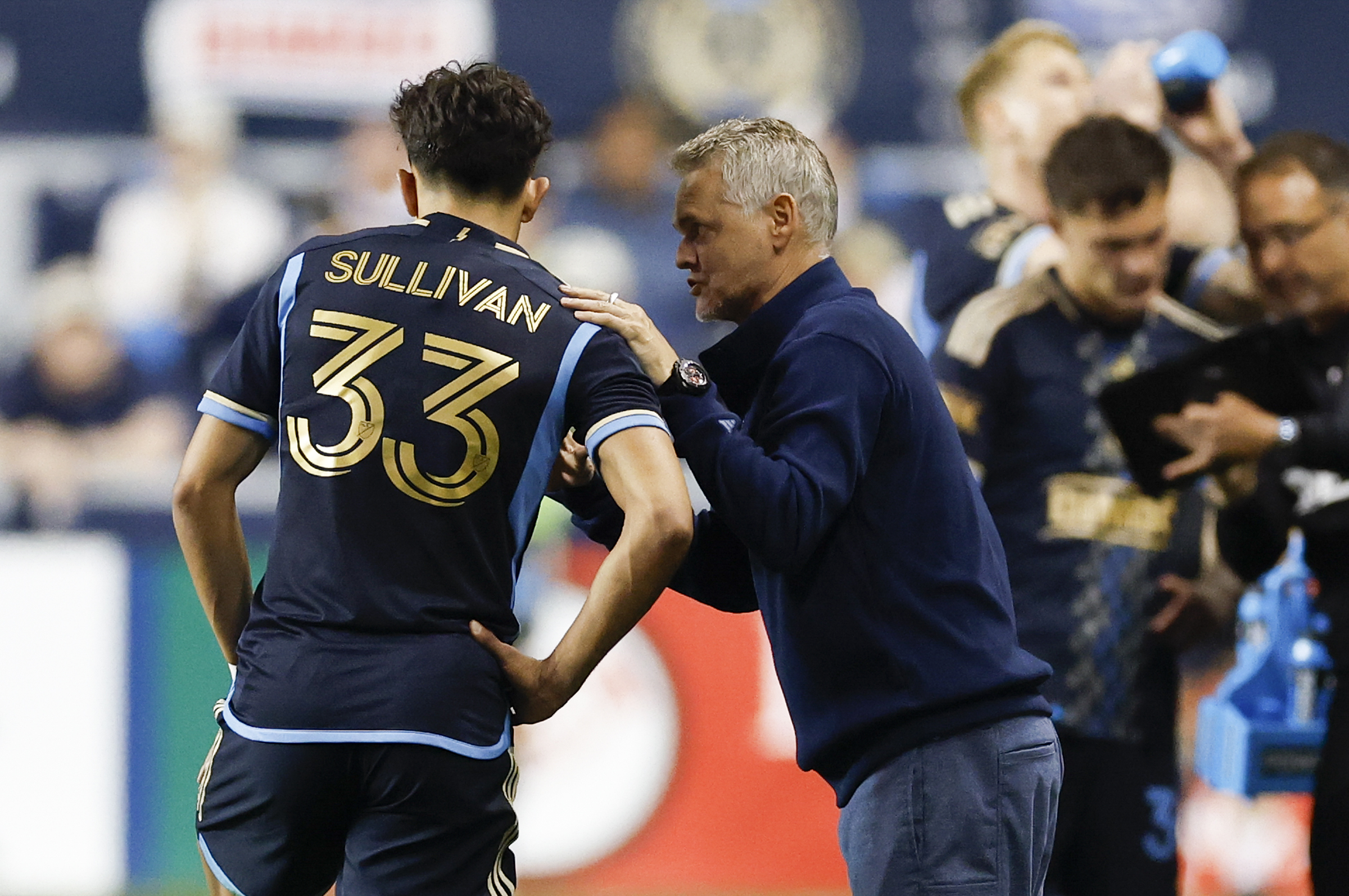
  • Quinn Sullivan ‘would love to be the face’ of the Union. When he returns from a torn ACL, he just might be.

    Quinn Sullivan ‘would love to be the face’ of the Union. When he returns from a torn ACL, he just might be.

    We’ll never know how far the Union would have gone in last year’s playoffs had Quinn Sullivan not been sidelined with a torn ACL.

    But for as far as he still has to go until he’s back on the field, Sullivan has let any such feelings go from his mind.

    “I definitely felt like if I was healthy, I could have contributed, and maybe the game’s a little different,” he said. “But it wasn’t that way, and you know, it’s how the cookie crumbles. It’s all right.”

    That doesn’t mean he has moved on from everything along the way. Some of the moments were ones he’ll cherish for a long time: being named the fans’ player of the year, joining his teammates to lift the Supporters’ Shield, and banging the pregame drum before the Union’s first-round rout of Chicago.

    The roars from the crowd during the last two of those could have powered Subaru Park for a few weeks afterward.

    Quinn Sullivan, out there even with his injury, lifts the Supporters’ Shield to a big ovation:

    [image or embed]

    — Jonathan Tannenwald (@jtannenwald.bsky.social) October 4, 2025 at 9:52 PM

    “It was an amazing experience to really feel part of it,” Sullivan said. “My teammates have been truly great [since then]. Checking in, just asking me stuff, how I’m doing, how are things going in the offseason, were you here the whole time.”

    Yes he was, rehabbing under the watchful eye of the Union’s head of health and innovation, Brad Papson.

    “So it’s nice to have the guys back,” Sullivan said. “My banter was at an all-time high because I had a lot of time to prepare some stuff.”

    Respect from the national team, too

    Another memorable moment came when the U.S. men’s national team visited in November. Sullivan got to meet with the squad when it trained at the Union’s facilities leading up to the game vs. Paraguay, then after the Americans won he went downstairs to join them again.

    As he arrived at the walkway to the locker room, he was greeted by U.S. manager Mauricio Pochettino, who had given Sullivan his first senior caps with the Gold Cup team in the summer. Pochettino put an arm around Sullivan’s shoulder as they passed the media nearby.

    Quinn Sullivan met Mauricio Pochettino at the mixed zone to walk (gingerly) toward the #USMNT locker room, which is the Union locker room.

    Nathan Harriel and Alejandro Bedoya followed a few steps later.

    [image or embed]

    — Jonathan Tannenwald (@jtannenwald.bsky.social) November 15, 2025 at 7:56 PM

    “Seeing ‘Poch’ was great,” Sullivan said, also praising top assistant Jesús Pérez for catching him on the way. “The whole staff was super-loving and caring and asked a lot of questions, and the support staff and the athletic training department over there has reached out a couple times to see how recovery has been going. So that definitely makes me feel part of it, which is nice.”
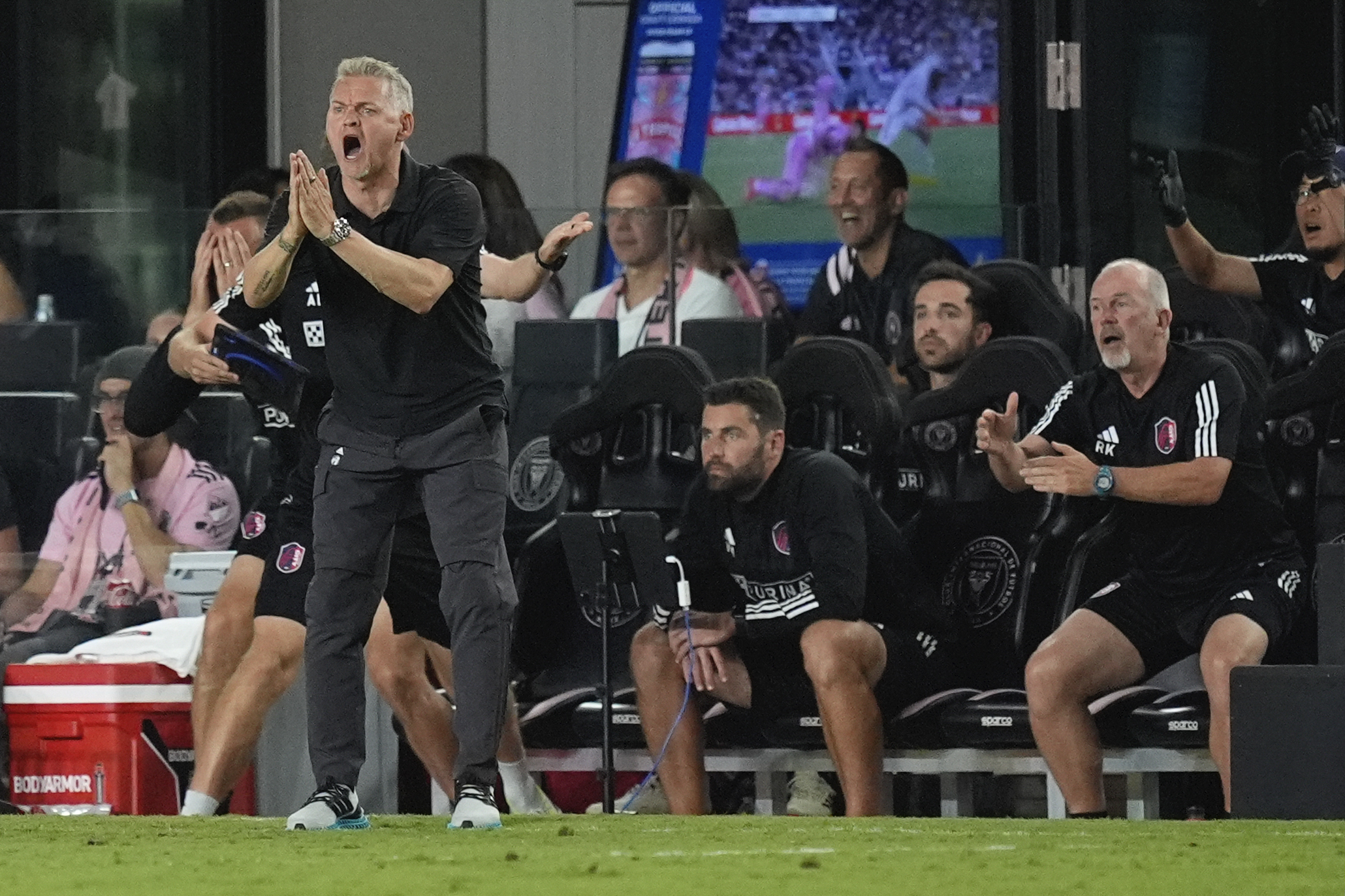
    Sullivan is one of 70 players Pochettino has called up in his tenure, and no offense is meant by the assumption that he’s not a contender to crack Pochettino’s World Cup roster.

    One could say it’s a fact.

    But Pochettino and Pérez showed their character by reaching out to him, and the moment stuck with many people who saw it.

    “It makes you feel a part of it,” Sullivan said. “I definitely felt that when I was in the Gold Cup camp. I obviously didn’t get a ton of minutes — we talked post-camp that I would love to have played more — and yet here I am injured and they still are caring and supporting. So I really appreciate it, and it goes a long way.”

    He has passed the time in a number of ways: from social media content to making his own matcha to helping his girlfriend launch Stavélo, a soccer-themed fashion brand.

    Now he is at the point in his rehab where he can start looking forward to returning to action, even though it will still be a while before he plays in a game.

    Growing into a locker room leader

    It says much about Sullivan and the Union’s emphasis on youth that this season will be his sixth since the 21-year-old attacking midfielder turned pro at the start of 2021. He and 24-year-old Nathan Harriel, who made his first-team debut the same year, are now old heads in the locker room.

    “Being injured allows me to play a bigger role in that leadership, because I’m not actively fighting for a spot or trying to prove something,” Sullivan said. “I’m trying to prove something to myself and get back, obviously, but in terms of on the pitch.”

    Not only does he embrace it, but he’d take on more of it if offered.

    “I’m able to take that role of, whatever people need, they can come to me, ask questions,” he said. “Talking to the new guys, and trying to help them get acclimated to everything. So, yeah, I’m definitely trying to take a bigger leadership role — it’s also a different one. It’s definitely a learning process, but I think I’m getting a pretty good hang of it.”

    Quinn Sullivan talking with Union manager Bradley Carnell during a game in April.

    It’s possible, perhaps even likely, that Sullivan won’t play in another game for the Union until after the World Cup break ends in July, a point he was first to make.

    “I’m ahead of schedule already, but I’m still saying nine months [after surgery in early October] is what we’re shooting for,” he said. “When you get in that last month, you’re basically shooting with strength numbers from what I’ve talked to with Brad. … ACL is by no means a linear recovery. I’m cautiously optimistic with how recovery has gone thus far.”

    When the time finally comes, it’s also possible that he won’t just be greeted with another roar. He could well become one of the faces of the Union, even more than he already is in advertisements around town with his more-heralded brother Cavan.

    “I feel the support from the fans obviously, with winning player of the year last year — that was really nice,” Quinn said. “And to know that I have that support, and that roar when Kevin [Casey, Subaru Park’s public address announcer] says my name over the loudspeaker for the starting lineup. So, yeah, that would be amazing.”

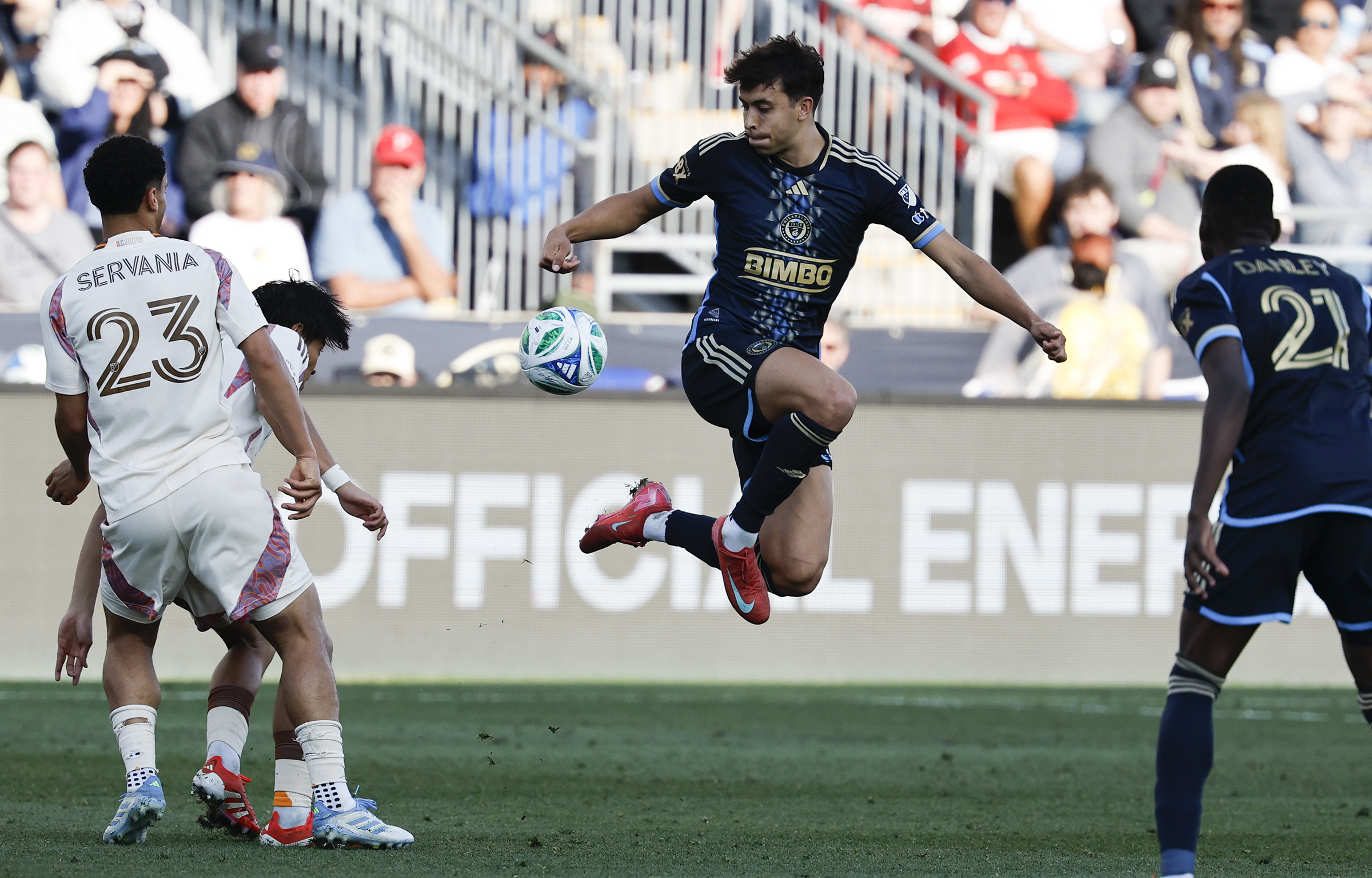
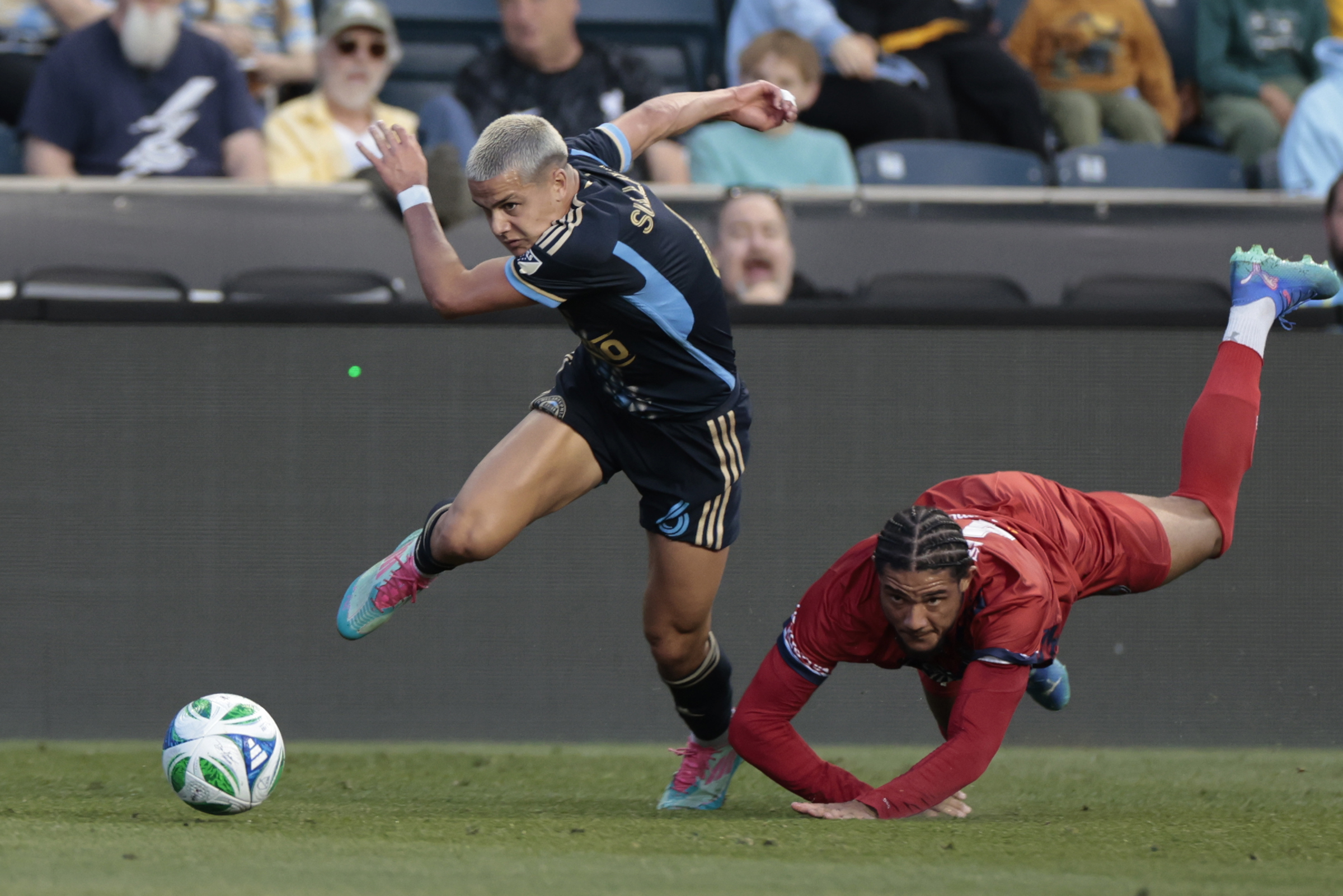
    Quinn Sullivan going airborne to corral a ball during a game in April.

    It is, again, not meant to diminish Quinn’s feats or potential to say he is not on the fast track to Europe like Cavan is. If he really excels late this year and next, there could certainly be offers from abroad for him.

    But if they are a little slower to come, and if that means the Bridesburg native stays in his hometown for a little while longer, he won’t mind standing in the spotlight.

    “I’d love to be the face of this team,” he said. “I mean, I grew up supporting this team. I love this team, I love this city, I feel like I embody what Philadelphia means. I would love if that was the case.”

  • The NWSL still wants an expansion team in Philadelphia, if a buyer comes along

    The NWSL still wants an expansion team in Philadelphia, if a buyer comes along

    If you’re only a casual soccer follower, you might wonder why Trinity Rodman’s contract saga drew so much attention.

    The local answer starts with the U.S. women’s soccer team’s longtime popularity here, even though none of its senior players are from the area anymore.

    That was proven again when the Americans came to town in October. There were quite a few Rodman jerseys in the stands, even though she wasn’t on the squad. She has genuine, cut-through star power, the first American women’s soccer player to reach that peak since the era of Alex Morgan, Megan Rapinoe, and Carli Lloyd.

    In the year and a half leading to the 2027 World Cup, we’ll find out if any of Rodman’s current compatriots will meet her up there. Sophia Wilson will certainly be a candidate when she returns from maternity leave. Catarina Macario’s bright star will grow even brighter if she comes back to the NWSL this summer, as has been rumored lately. Lily Yohannes is meeting the hype as a young phenom.

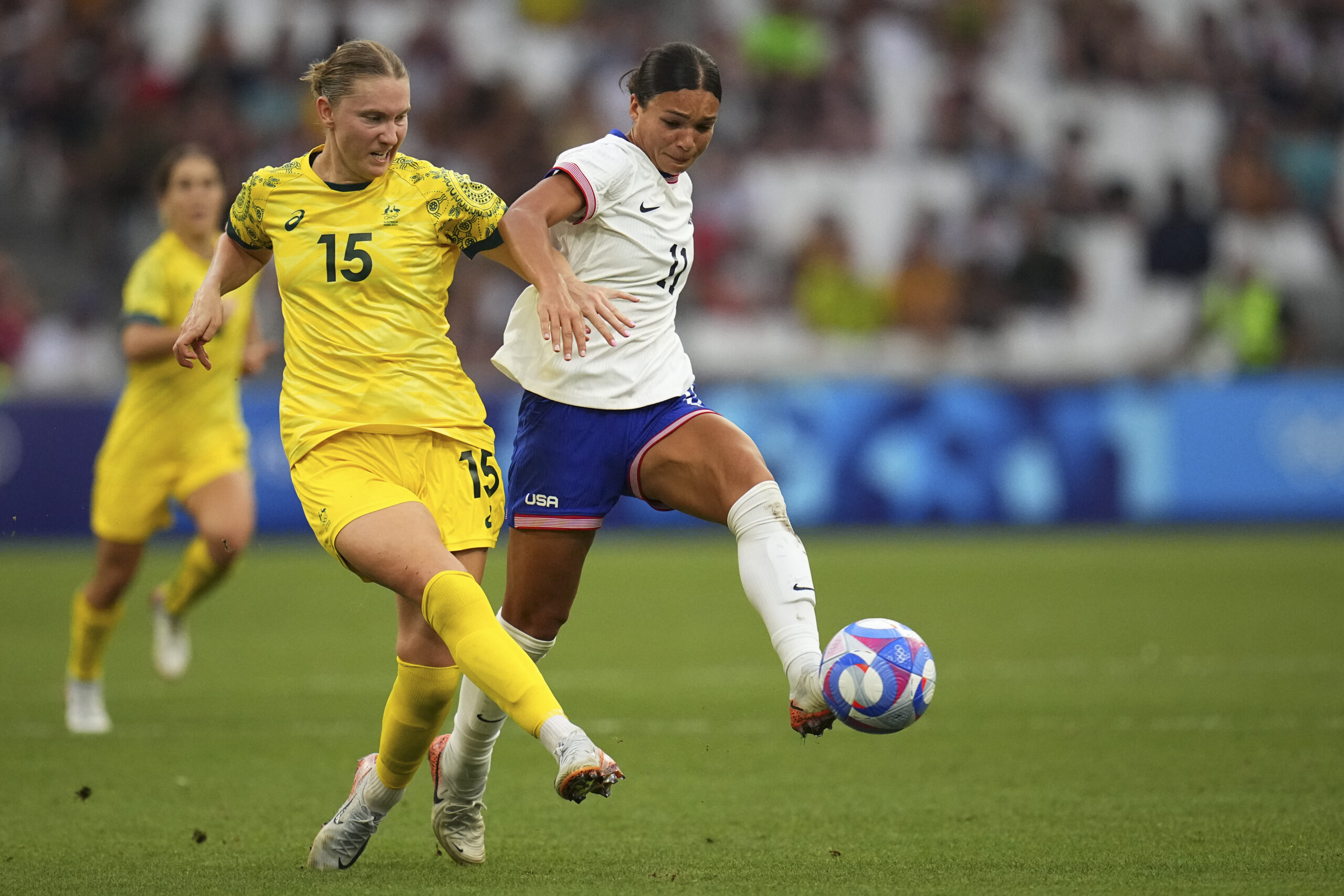
    Sophia Wilson (right) was out of action last year as she welcomed her first child.

    But there’s another piece too, one which could have a big impact locally.

    The NWSL would like to have a Philadelphia team if an ownership group steps forward.

    “We love Philadelphia,” commissioner Jessica Berman told The Inquirer on Friday. “We think Philadelphia will be a great NWSL market one day, and certainly among the cities that would be in contention.”
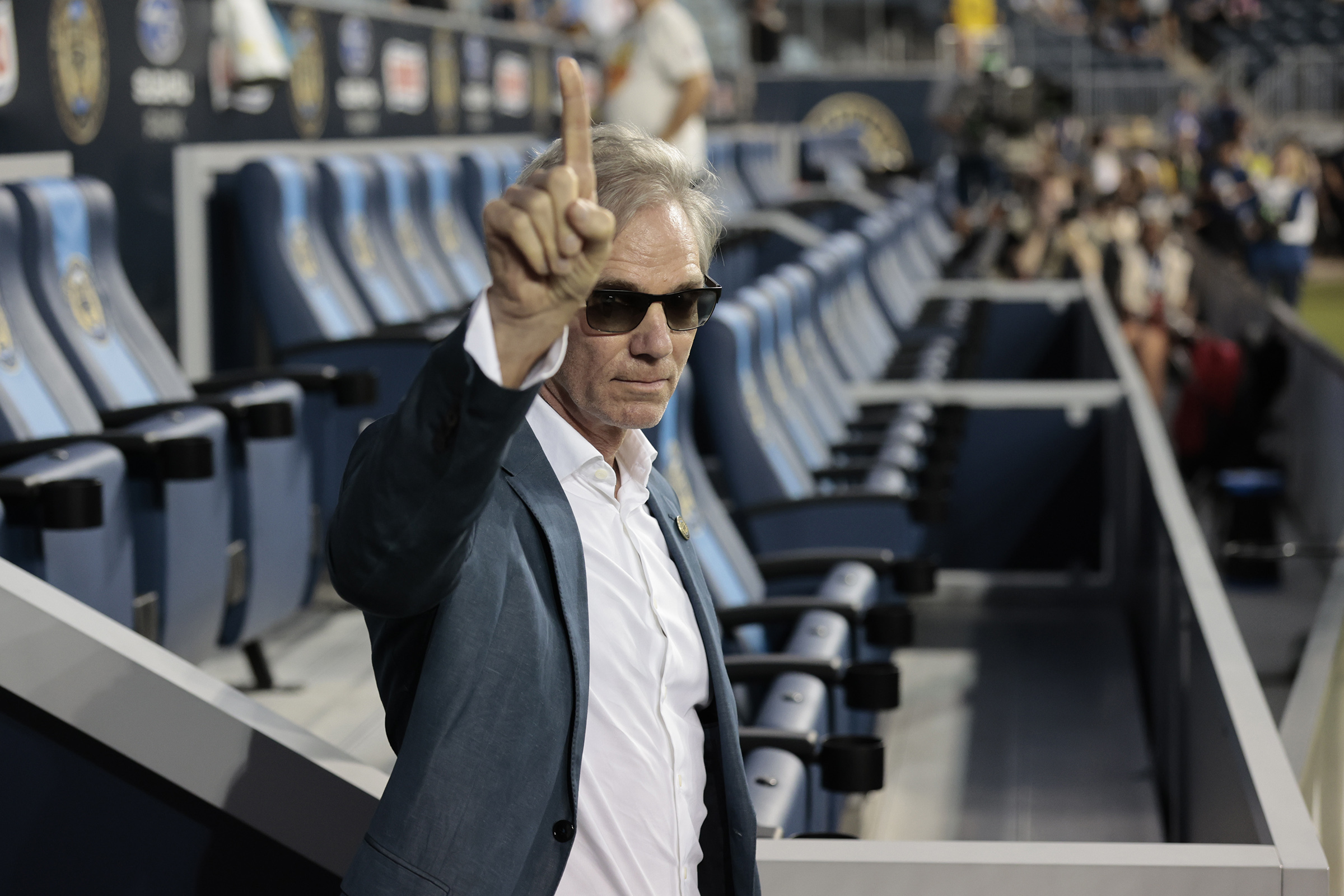
    The subject no doubt gave Berman a few minutes of respite from a grilling about the league’s controversial High Impact Player rule. That fracas won’t die down any time soon, not least because the NWSL Players Association has taken the league to arbitration over it.

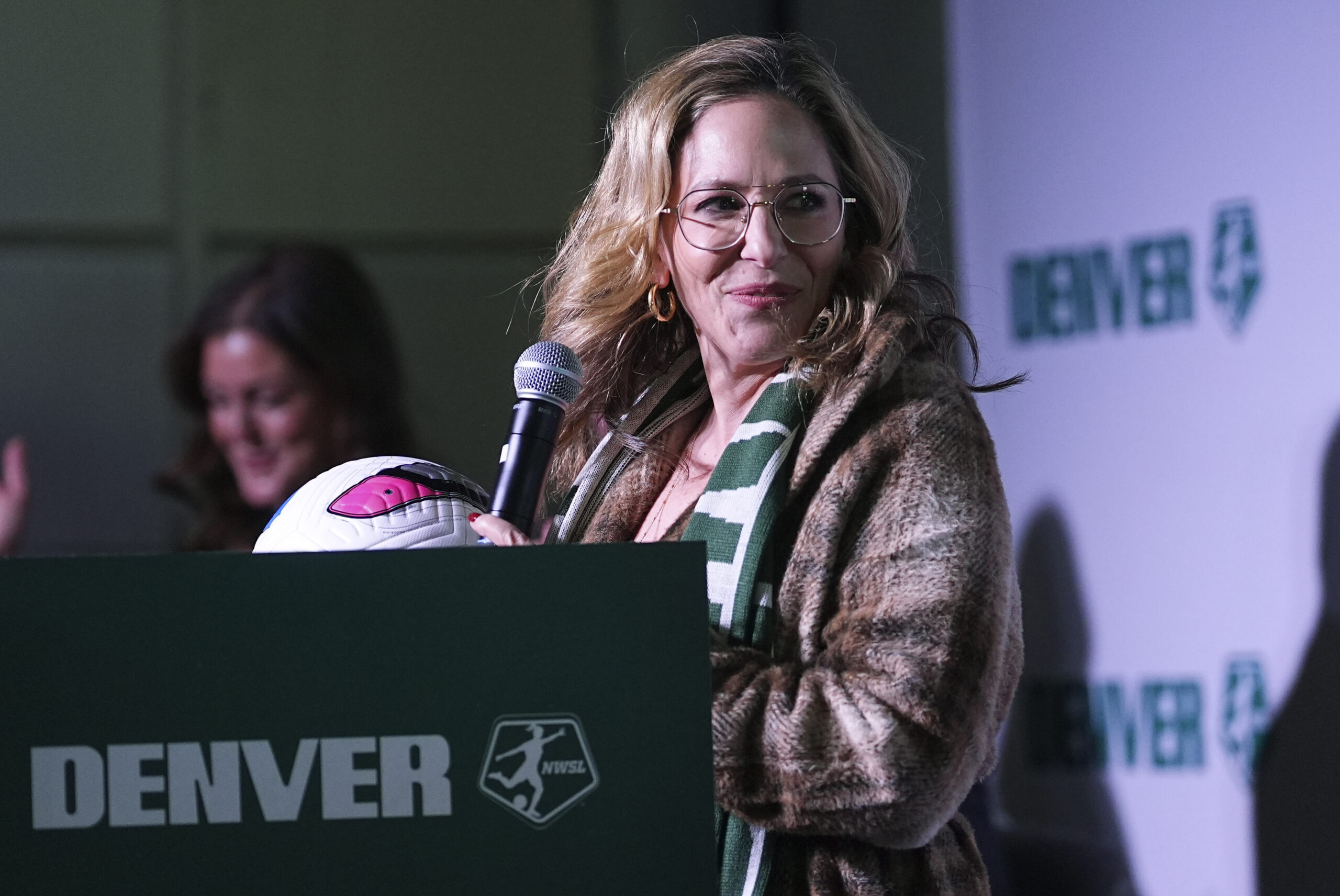
    But at some point down the line, there will be other subjects to discuss, and expansion is always on the list. The league is adding teams in Denver and Boston this year, and will add Atlanta in 2028.

    NWSL commissioner Jessica Berman.

    When Atlanta’s team kicks off, Philadelphia will be the only city that had teams in the two prior leagues, the Women’s United Soccer Association (2001-03) and Women’s Professional Soccer (2010-11), but lacks an NWSL team.

    Meanwhile, the WNBA will launch an expansion team here in 2030, and the Unrivaled basketball circuit has sold out Xfinity Mobile Arena for a doubleheader this Friday. That puts more proof on the table that Philadelphia fans have an interest in women’s sports.

    A group of investors has been working on a local NWSL expansion bid, but has not yet been willing to talk publicly about it.

    That leaves Berman waiting along with everyone else.

    “We do not have any news to break, or current timeline, or plan of when that might happen,” she said. “But I know I’ve shared with you before: we love that city, we know and believe a women’s soccer team in the NWSL would be successful there. And we look forward to the day when the circumstances are right.”
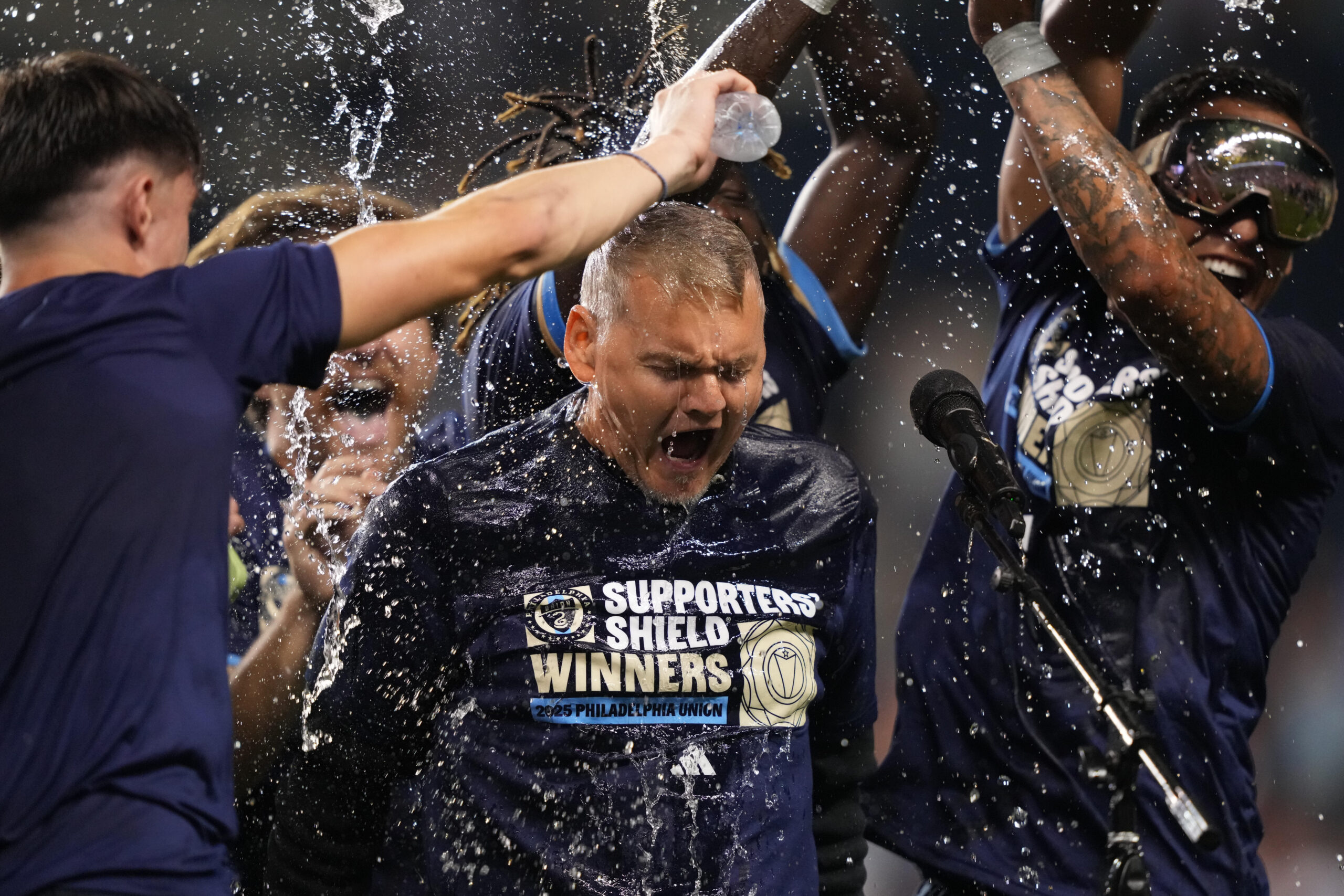
  • Amid controversy, the NWSL stands firm on the High Impact Player rule

    Amid controversy, the NWSL stands firm on the High Impact Player rule

    Though Trinity Rodman’s contract saga has at last been resolved with her re-signing, the controversy over the NWSL’s High Impact Player rule likely won’t die down soon.

    It remains the subject of a grievance by the NWSL Players Association, which claims the rule should have been collectively bargained; and it remains unpopular with many fans, for a variety of reasons.

    The league’s commissioner, Jessica Berman, does not mind being the main target of that ire.

    “I very much stand behind the decision and the process,” she told The Inquirer in an interview on Friday. “We intentionally negotiated for the right to do exactly what we did, which is to develop a specific rule for a specific classification of players which there is a reduced salary cap charge, so long as we consult in good faith with the Players’ Association. And I want to reinforce that’s exactly what we did in this context.”

    The NWSLPA disagreed.

    NWSL Players Association Statement on League’s Unilateral Implementation of the High Impact Player Rule:

    [image or embed]

    — NWSL Players Association (@nwslplayers.bsky.social) December 23, 2025 at 1:43 PM

    “At no point in time in CBA negotiations or any time prior to the end of 2025 did [the] NWSL articulate a plan to impose a separate pot of funds with a new cap and eligibility criteria that were unrelated to roster classifications by any name,” NWSLPA executive director Meghann Burke told The Inquirer via email. “We disagree with NWSL’s representation that it consulted with the NWSLPA.”

    Burke claimed that the first “written communication” she got on the proposal came on Dec. 11, and the union registered its objections after multiple board meetings in the ensuing days. The league announced the rule on Dec. 23, and said it will take effect on July 1.

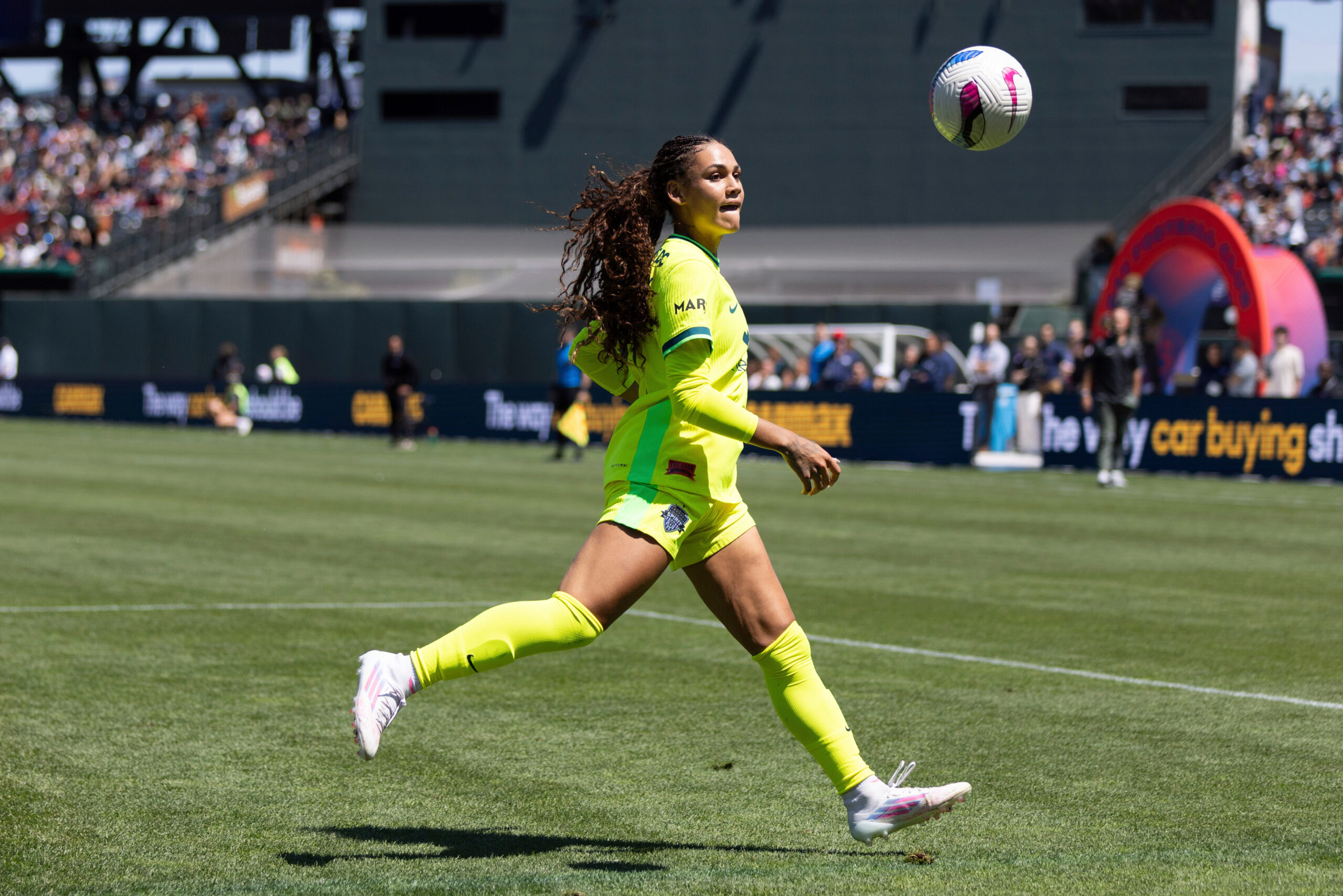
    Washington Spirit superstar Trinity Rodman’s threat to leave the NWSL in free agency sparked the league to adopt the High Impact Player rule.

    Berman acknowledged the grievance in saying that “as in all labor relations in professional sports and otherwise, the union and the league can disagree,” and the league will follow the established procedures for resolving disputes.

    “We are very confident in our position,” she said. “We have been contemplating different iterations of a potential rule or policy like this for a long time, and for that reason, we negotiated into the CBA the specific right to move forward with this if and when we believed it was appropriate.”

    How the HIP rule works

    If there’s enough money going around to give each of the 15 clubs $1 million from the HIP pot, why not just raise the salary cap by the same amount?

    “At some point, the board and NWSL are going to have to realize that increasing the cap — while retaining it — is in their own best interests,” said Burke, whose union has been loudly calling to raise the cap. “Until then, we stand ready to enforce the terms that were negotiated.”

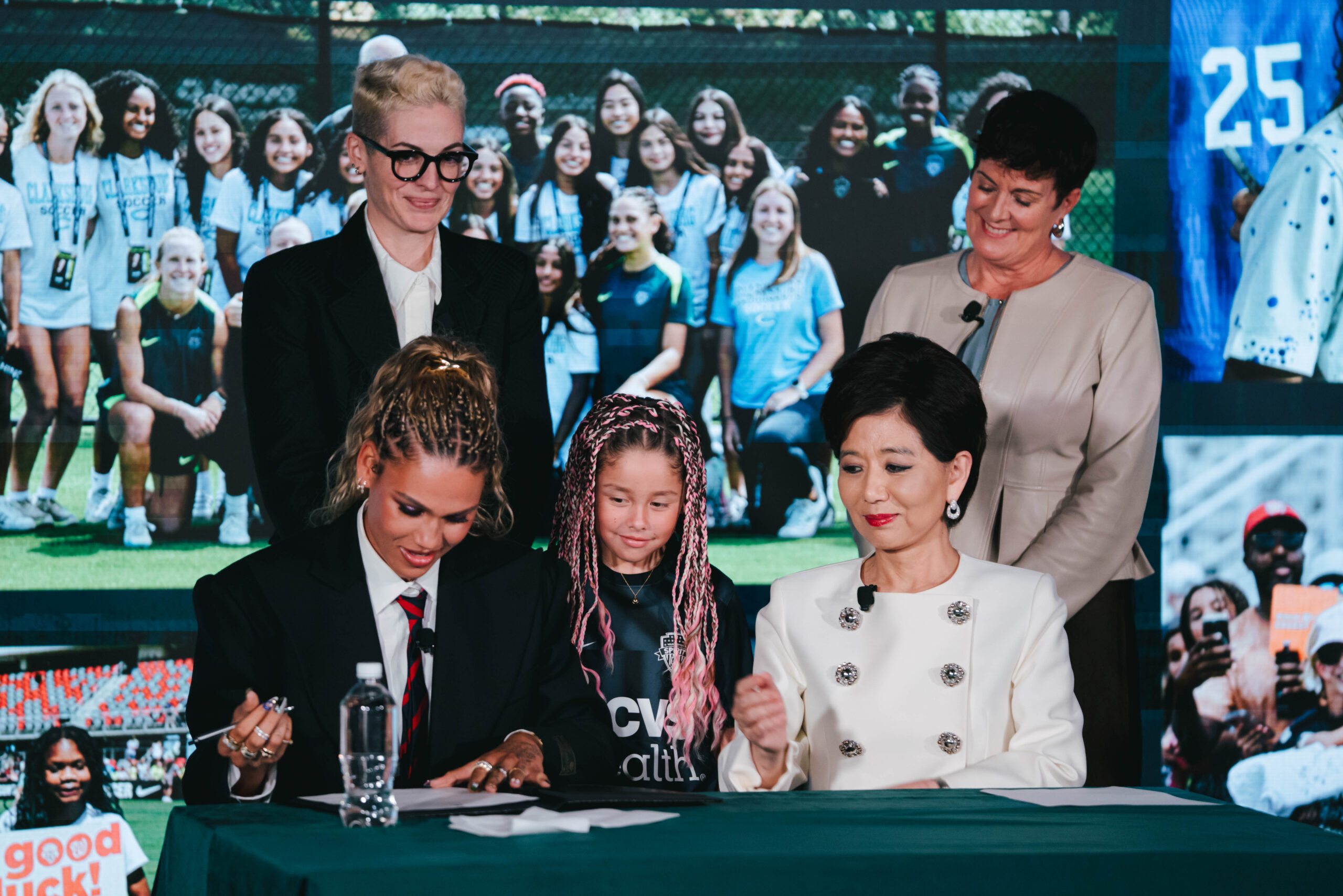
    Trinity Rodman (bottom left) signing her new contract on Thursday.

    Berman started the league’s case by bringing vice president of player affairs, Stephanie Lee on the call to give more context.

    Lee, who previously worked in the front offices of Gotham FC, the Utah Royals, and the Seattle Reign, noted that a player who gets HIP money must have a salary cap charge of at least 12% of the teamwide base cap, which for this year is $3.5 million.

    Teams also can’t get cap relief from the rule unless they hit the cap in the first place. Up to that point, the player’s salary is charged to the regular payroll.

    “As they roster build throughout the year and through [transfer] windows and different transactions, there’s flexibility there to how they designate players and take advantage of that HIP [money],” Lee said. “It’s not something that they have to decide at the beginning of executing a player’s contract.”

    A league spokesperson added that teams can retroactively apply the money to a player when they hit the cap by signing other players, so they can go over the cap to keep everyone they want to.

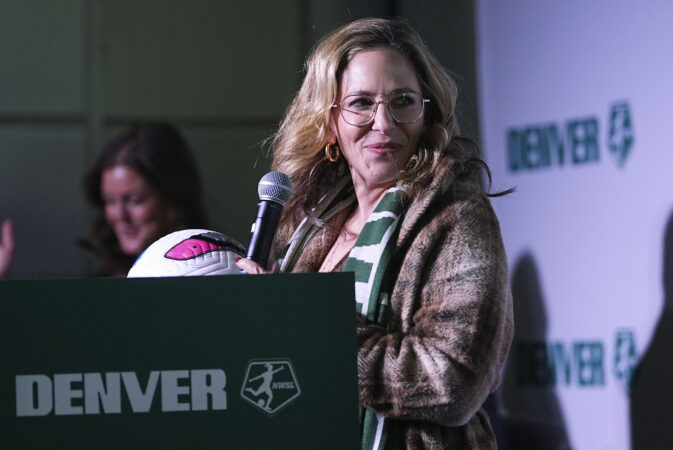
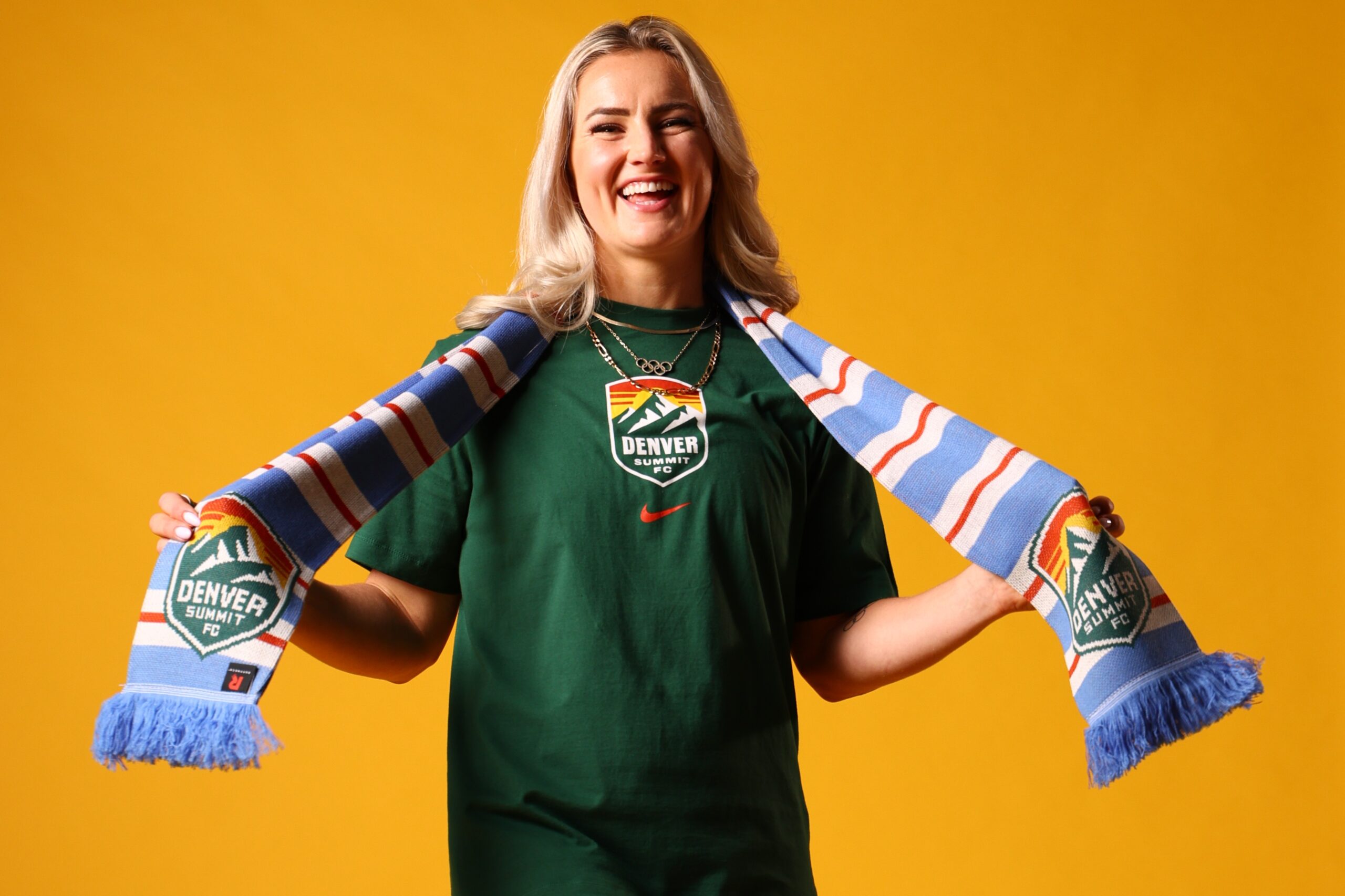
    U.S. women’s national team captain Lindsey Heaps is expected to be paid through the HIP rule when she joins her hometown Denver Summit in the summer.

    Why limit who can get the money?

    Then there are the criteria the league laid down to limit which players are “high impact,” from media and marketing rankings to U.S. national team playing time. This also is widely unpopular.

    But there’s also a question at a higher level: Why have criteria in the first place? Why not let teams spend the money on whoever they want, as MLS now does with its Designated Player rule, and let teams potentially make mistakes?

    “It is the league’s, and in this case our — my — responsibility to be responsible stewards of capital in service of growing the business,” she said. “In this circumstance where we have unlocked the ability for our clubs to spend an incremental $115 million [combined through 2030], it is our job to make sure that it is going to have a relationship to growing our revenue. That growth in revenue will also feed the revenue-sharing mechanism that was negotiated into our most recent CBA, which means that we are incentively aligned with our players to grow this business.”

    U.S. veteran Crystal Dunn (right) is one of the most notable players who is not eligible for HIP money.

    Burke strongly disagreed.

    “Nothing in the CBA,” she wrote, “permits [the] NWSL to create an additional pot of funds (with an entirely new and separate cap) which only some players are eligible for based on ill-conceived criteria unilaterally determined by NWSL, including and especially when those criteria violate the non-discrimination clause in our CBA.”

    Does Berman see a day when the league would loosen the reins?

    “In the most general sense, we will always analyze the health of our business and the health of the game in the NWSL,” Berman said. “If we believe that there are business reasons for us to modify our rules, we will.”

    Jaedyn Shaw (left) is another notable American who isn’t currently eligible for HIP status.

    She stood firm again in saying “we feel like we’ve enabled our clubs to invest significantly.” And as she chose her words, she made it clear that the league will push those clubs to invest in specific ways.

    “This particular mechanism, that was very prescriptive in what it was developed to address, is important in that it is supposed to help us to target top players,” she said. “Which, as you’ve heard me say many times, is in service of us being the best league in the world. In order for us to be the best league in the world, we need to compete for the best players, and we want this policy to guide the behavior of our clubs so that they can compete financially to attract and retain top players.”

    ‘The most strategic mechanism’

    It’s no secret that there’s a fair amount of variance in how much money NWSL teams have in the bank. Nor is it a secret that Washington Spirit owner Michele Kang sits at the higher end of the scale. She had long been ready to spend big on Rodman, and Rodman’s agent has said the three-year deal is worth over $2 million per season.

    But when Kang first put a contract proposal on the table, Berman vetoed it for violating the league’s salary rules. A source with knowledge of the offer told The Inquirer that the Spirit would not have been able to pay Rodman and also meet the league requirement of a 20-player roster, even if all the others were on the league’s minimum salary.

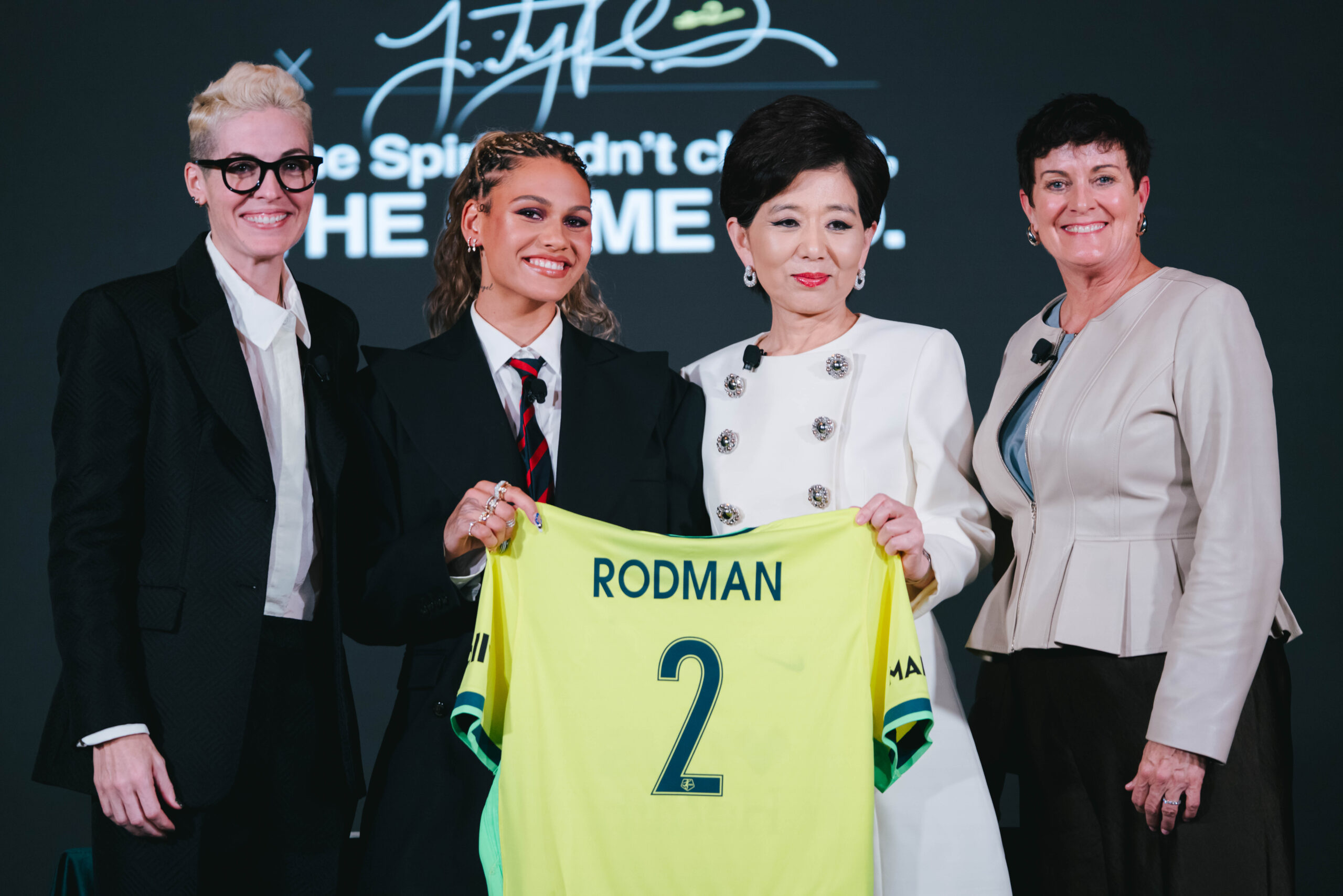
    Michele Kang (second from right) with, from right to left, Trinity Rodman, Spirit president of soccer operations Haley Carter, and CEO Kim Stone.

    That has led some outsiders to wonder how much resistance there was elsewhere in the league to raising the cap and whether the HIP rule might have been an easier sell. A two-thirds majority of team owners is required to pass a vote.

    “It is in our best judgment that the HIP rule is the most strategic mechanism for us to advance the business,” Berman said.

    Burke took particular objection to this.

    “A rule that has been adopted with such a singular focus on generating revenue is not even about soccer, building a competitive roster to win NWSL games, or meeting a team’s performance needs,” she said, “which are obvious functions of a team when they are constructing a roster.”

    Catarina Macario might be the next U.S. star to get HIP money, as there’s speculation she might come to the NWSL in the summer.

    Another milestone in all this is expected to arrive when the current European season ends in the summer. There’s been much speculation that U.S. national team star Catarina Macario could come home from England’s Chelsea, and Spanish superpower Barcelona reportedly has nine players on expiring contracts — including stars who’ve fueled the club’s three Champions League titles in the last six years.

    Will the NWSL be willing to hit the gas pedal to bring them over?

    “We developed this rule very intentionally to put our clubs in a position to compete financially with top clubs around the world for top players, and we believe it will put us in a position to do that effectively,” Berman said. “Without naming specific clubs or naming specific players, it is our expectation that when we look back on this, we will have a list of players that we’ve been able to attract and retain by virtue of enacting this rule.”

  • Japhet Sery Larsen got an assist from Mikael Uhre as he decided to join the Union

    Japhet Sery Larsen got an assist from Mikael Uhre as he decided to join the Union

    There have been enough Danish players in MLS recently that when the Union reached out to Japhet Sery Larsen, he didn’t have to look far for advice.

    “I have a good friend who plays in San Diego, [Anders] Dreyer, who has spoken really warmly about the league,” Larsen said in a news conference this week from the Union’s preseason camp in Marbella, Spain. “I have a former teammate as well in Cincinnati, Evander, who really enjoys his time here.”

    Those are very good connections to have. Dreyer was the league’s Newcomer of the Year last year, delivering 23 goals and 18 assists in 41 games; Evander is a two-time All-Star and Best XI honoree.

    But Larsen had an even better expert to call, too.

    “I talked to Mikael Uhre a bit because he knows the Union very well, which was really helpful for me,” he said.

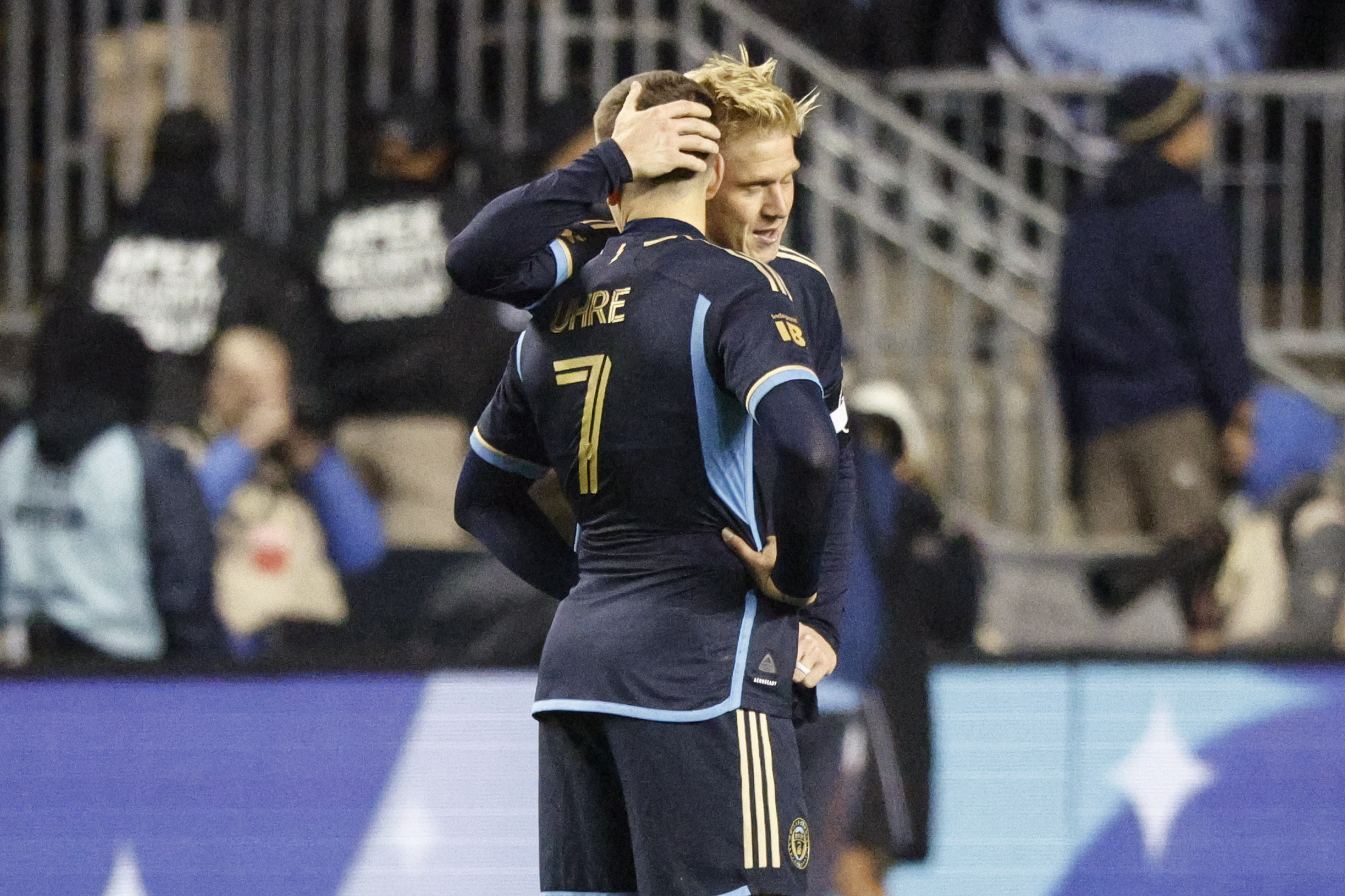
    Mikael Uhre’s last goal for the Union was the one that clinched the Supporters’ Shield.

    If Larsen saw all the little boxes with the journalists’ heads on Zoom, he’d have watched a mass springing to attention.

    It wasn’t surprising that Larsen and Uhre know each other, because players cross paths in all kinds of ways in soccer. But it would sure be something to learn Uhre’s opinion of a club that didn’t always treat him well in his last two years in Chester.

    “He was really happy about his time here,” Larsen said. “He had some great moments here, I think.”

    Yes, he did, and he was barely given a chance to say goodbye — or to receive thanks from the portion of fans who liked him. That makes it even nicer of Uhre to say good things about the Union and living in Philadelphia.

    The Union moved on from Mikael Uhre (left), Jakob Glesnes (right), and other veterans after last year.

    “I had some good talks with the sporting directors and the coaches about what it’s like being in the club, but the hard part is finding out what life is around the training ground and stuff like that,” Larsen said. “So Mikael was really helpful there. Obviously, we talked about [life] in the club as well, but he had only good things to good things to say about the club — he really enjoyed the playing style and the philosophy of the Union.”

    It will be up to other players, especially Ezekiel Alladoh, to replace Uhre’s goals and defense-stretching runs. Larsen’s job is to replace another Union stalwart, Jakob Glesnes.

    On paper, he has the resumé. Larsen spent the last three years at Norwegian club Brann, won a Norwegian Cup, and played in Champions League qualifiers and the Europa League.

    Before that, he spent a year at Bodø/Glimt, a team with a big reputation as a continental Cinderella.

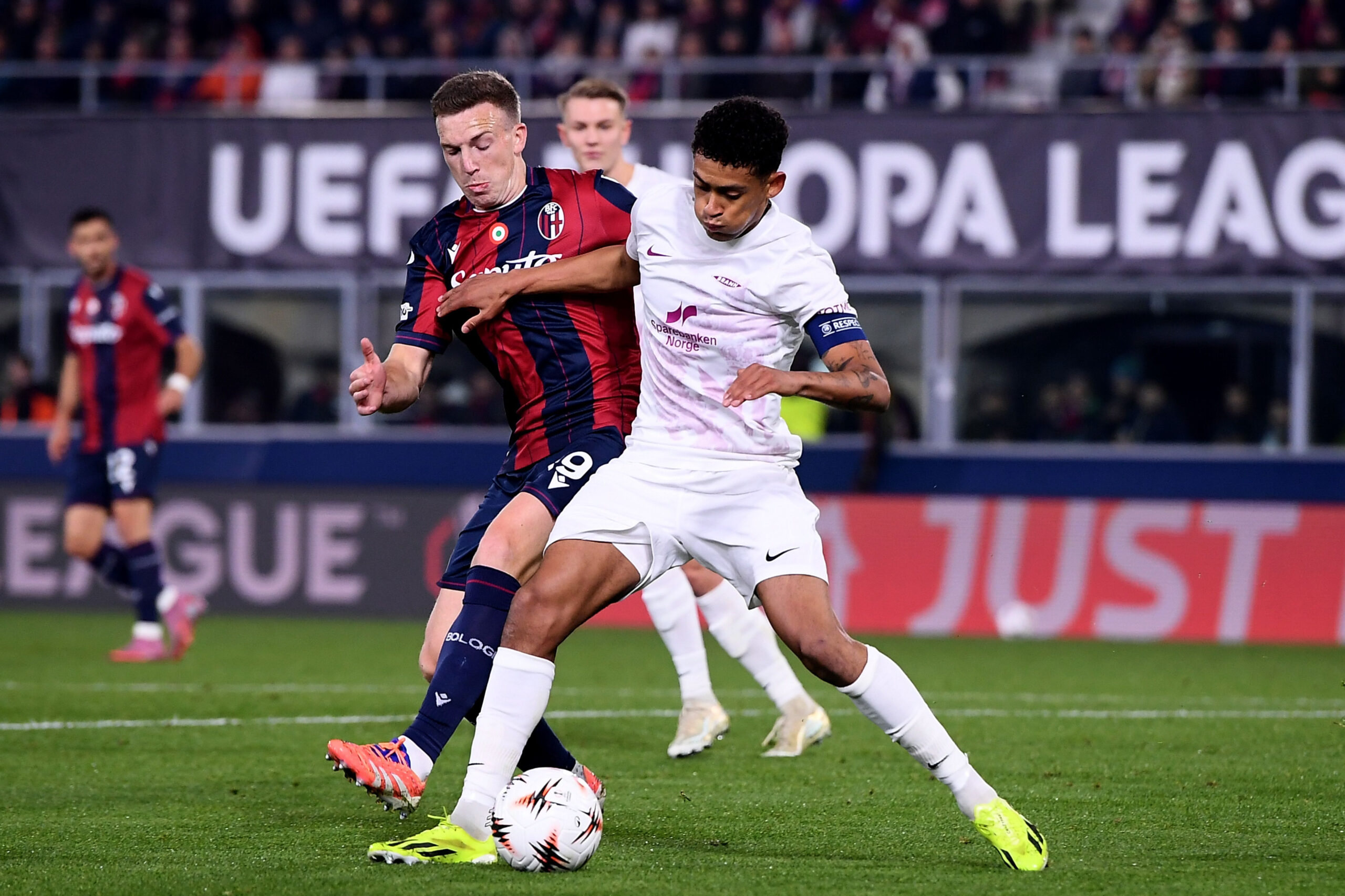
    Japhet Sery Larsen (right) wearing the captain’s armband for Brann in a Europa League game in November.

    His age matters, too. The Union like to sign younger players whom they can develop and sell later. Larsen is 25, heading toward a player’s peak age period. And the club’s scouts noticed that he wore the captain’s armband at times for Brann, a sign of good intangibles.

    “It had a big impact on my decision before joining here,” Larsen said. “I know some more experienced players have left the club now during this winter, so there’s an open spot for taking responsibility and leadership. And I think we have that within the group, but obviously I want to contribute to that as well and help as better as best as possible.”

    He arrived in Chester well-briefed on the Union’s high-speed playing style and was excited to play in it.

    “I think the coaching staff have a really clear idea of how they want to do things, which I believe suits me quite well,” he said. “[That] had a big impact for me in my decision, which made it easier, but they really talked about their way of thinking in football and their principles.”

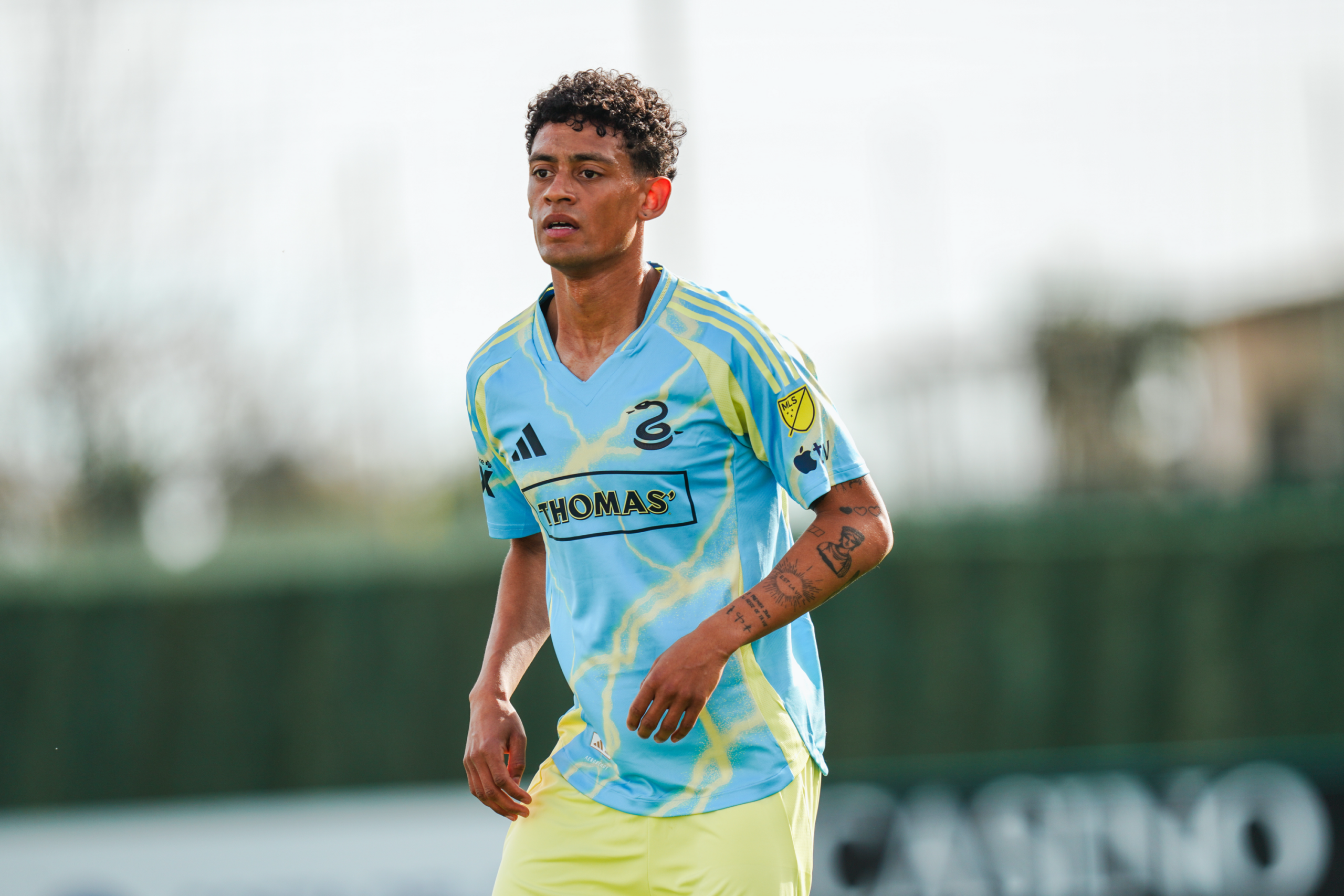
    Japhet Sery Larsen in action during the Union’s preseason opener Tuesday.

    Larsen got his first run in a game on Tuesday, and played the first half of the Union’s 1-1 tie with Czech club Sigma Olomouc. Paired with Olwethu Makhanya on the back line — to form what is expected to be this year’s starting centerback duo — he seemed to fit in well enough.

    “I thought it was quite obvious the way the coaches want us to play,” Larsen said. “I think we could see the principles coming to life in the game. A lot of the guys are thinking forward the whole time, trying to really express ourselves.”

    On Friday, he played the first period of a 2-1 loss to Danish club Nordsjælland that had three 45-minute frames, this time next to young prospect Finn Sundstrom.

    Larsen hadn’t been with the Union for long before heading to Spain, and he spent part of the opening week in Chester working off to the side. So he had to jump quickly into the deep end, “a new way of speaking football” as he put it.

    “It has been fun and challenging at the same time,” he said. “I’m learning new things every day, but I’m trying to embrace it all, and the coaching staff and the teammates are really helpful in that process.”

  • Trinity Rodman signs a new three-year deal with the Washington Spirit, a big win for the NWSL

    Trinity Rodman signs a new three-year deal with the Washington Spirit, a big win for the NWSL

    Forward Trinity Rodman has agreed to a three-year contract to remain with the Washington Spirit, ending months of speculation about the Olympic gold medalist’s future in the National Women’s Soccer League.

    “I think I’ve always had a vision and an idea of what I wanted my legacy to be,” Rodman said at an event announcing her new deal on Thursday in Los Angeles. “And for me, we’re doing that and I’m so grateful for that.”

    The speculation over Rodman’s future with the Spirit spurred criticism of the NWSL salary cap and whether it hampered the league from attracting and maintaining top players.

    The 23-year-old Rodman became a free agent at the end of last season after five years with the Spirit. One of the biggest stars in the NWSL, keeping her in the league was considered vitally important as other U.S. national team stars, including Naomi Girma and Alyssa Thompson, opted to play in Europe.

    Rodman, who won a gold medal with the United States at the Paris Olympics, had been drawing interest from European teams that don’t have a salary cap.

    “I can’t think of the Washington Spirit without her,” Spirit owner Michele Kang said. “And I hope she can’t think about her career without the Washington Spirit. So this is really monumental and it was really important, not only for the Spirit, especially for our fans who expect to see her. They come to Audi Field and that’s where Rowdy Audi clearly came out.”

    Rodman said she always wanted to stay with the Spirit

    “Making my decision, the one question I was asked was: ‘Do you feel like you’re finished with the Spirit? Can you say that and feel confident leaving?’” she said. “I didn’t even need half a second, and I was like, ’No, I’m not. I don’t feel ready to make a different decision. That’s just, again, getting drafted here and developing and maturing and learning – and failing – at the Spirit, in D.C., it’s become so much of my legacy and my story. But on top of that, I still feel like there’s so much more I have to give and so much more that I want to do.”

    The Spirit and Rodman had previously struck a multi-year deal that both parties maintained was in compliance with the salary cap, but it was rejected by the league because it went against the spirit of the rules.

    The National Women’s Soccer League Players Association filed a grievance claiming that the NWSL’s rejection of the contract violated Rodman’s free agency rights and violated the collective bargaining agreement.

    To address the salary cap issue, the NWSL in late December adopted a “High Impact Player” mechanism that allowed teams to spend up to $1 million over the cap to sign players that meet certain criteria. Those included metrics like national team minutes, inclusion among the 30 candidates for the Ballon d’Or or player rankings by outlets like the Guardian or ESPN.

    The NWSLPA filed a grievance over the rule, claiming it violated the collective bargaining agreement and federal labor law because player compensation must be negotiated. The NWSLPA maintains the league had no authority to “unilaterally create a new pay structure.”

    Spirit President of Soccer Operations Haley Carter said the High Impact Player rule figured into the contract Rodman ultimately agreed to. Carter also said the grievances would not alter Rodman’s deal.

    The financial terms of Rodman’s contract were not disclosed, but the Spirit called it “one of the most significant deals in NWSL history.”

    The NWSL’s salary cap is $3.5 million for each team for the 2026 season, although it will increase each year until it hits $5.1 million in 2030.

    Rodman is currently with the national team in their annual January training camp in Carson, California. The team plays a match there against Paraguay on Saturday and then plays Chile on Tuesday in Santa Barbara.

    Rodman has 47 appearances and 11 goals with the national team, more than any other player on the latest roster. She played in one U.S. match last year, a 2-0 victory over Brazil in April, because of injuries.

  • Bradley Carnell likes what he’s seen from Union newcomers Ezekiel Alladoh and Japhet Sery Larsen

    Bradley Carnell likes what he’s seen from Union newcomers Ezekiel Alladoh and Japhet Sery Larsen

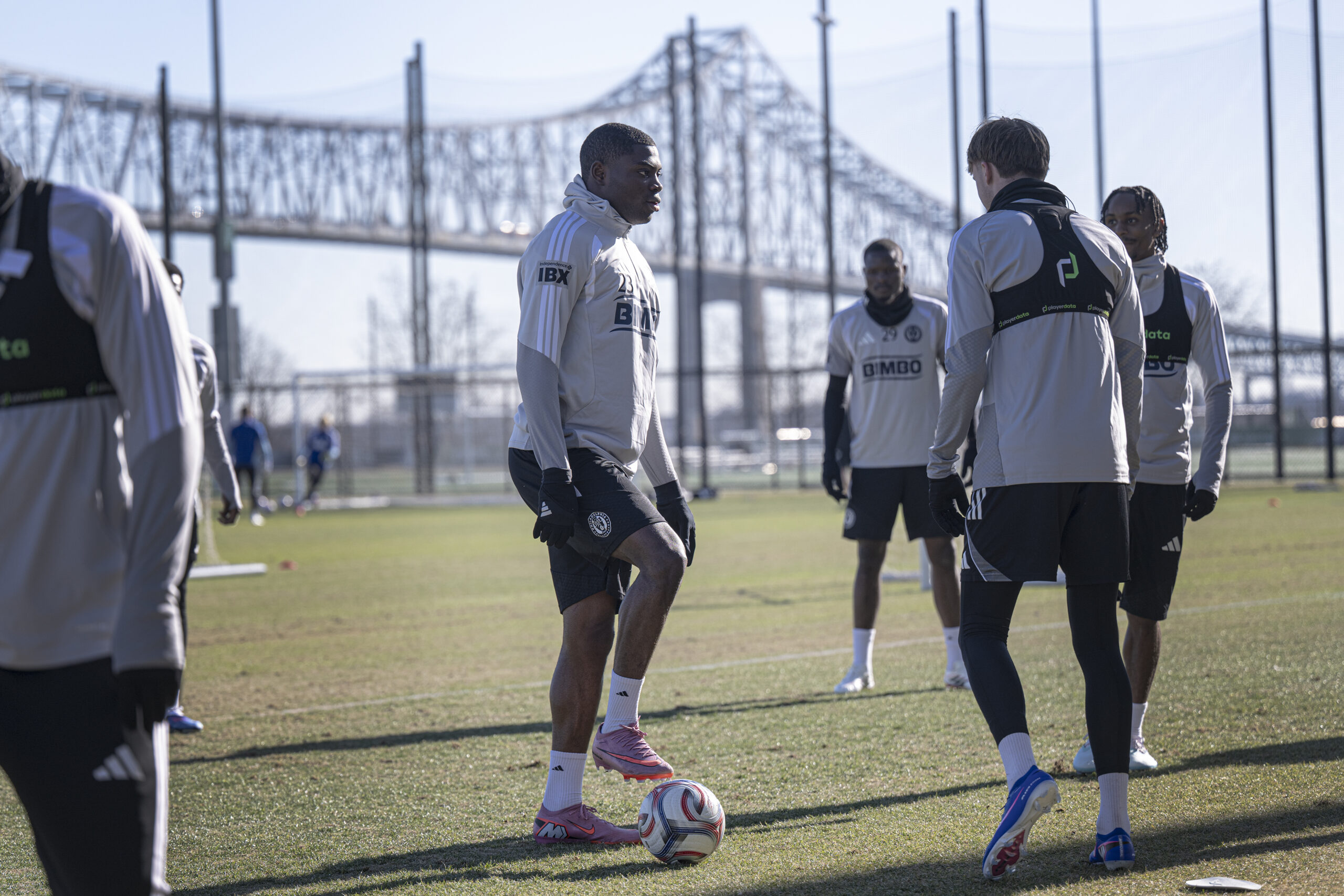
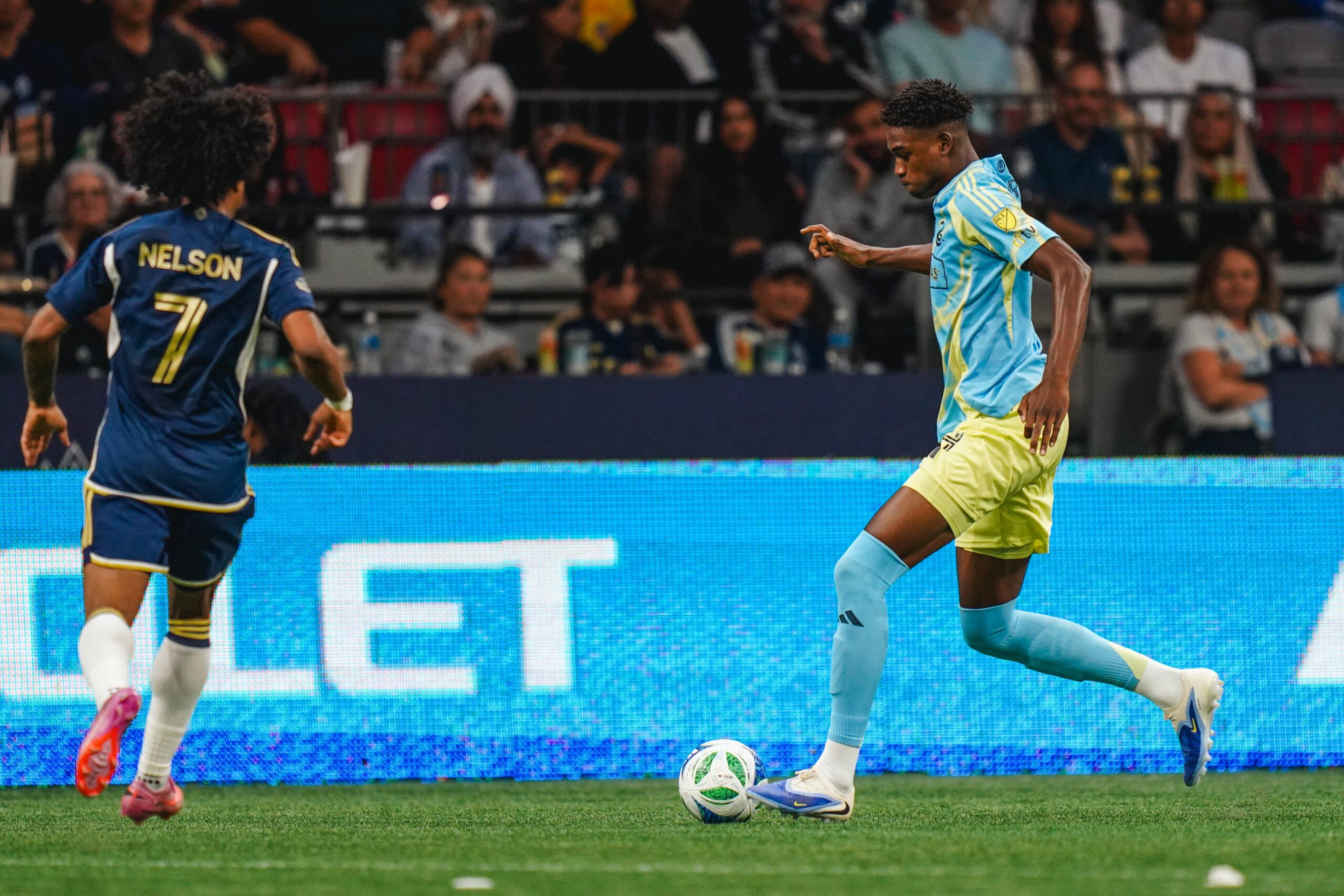
    Union manager Bradley Carnell did not hesitate to send new signings Ezekiel Alladoh and Japhet Sery Larsen into the fray of game action.

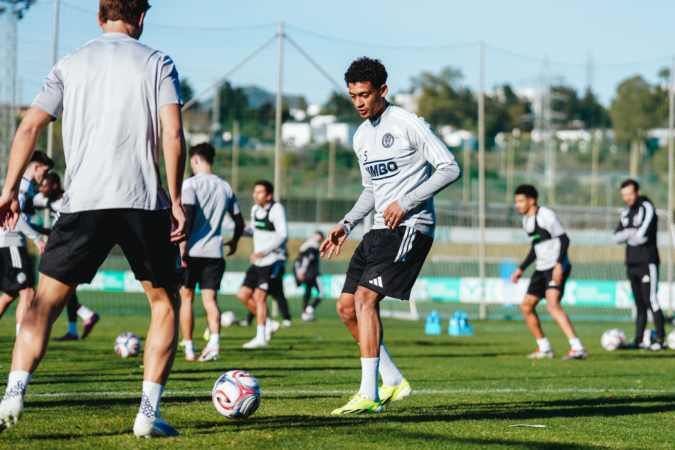
    Just two days after the team arrived in Marbella, Spain, for its preseason camp there — which started just a week after the players reported to Chester — the duo played the first half Tuesday in a 1-1 tie with Czech club SK Sigma Olomouc.

    Alladoh hadn’t seen live action since the end of the Swedish league season in November, timing that allowed the Union to move to sign him in December.

    Larsen’s last game was Dec. 11 in the UEFA Europa League, and when he arrived in Chester, he spent a few days training on his own.

    Ezekiel Alladoh (center) has quickly gotten to know his new Union teammates.

    Game reps for a centerback are especially important for building chemistry within the defense. So it mattered that Larsen paired with Olwethu Makhanya to form the Union’s expected centerback duo. They were challenged not just by the opposition but by Carnell’s decision to start reserve team prospect Giovanny Sequera at right back and midfielder Ben Bender at left back.

    Neither Alladoh nor Larsen looked out of place, which is fine at this point. The Union’s next scrimmage is Friday in Marbella against Danish club Nordsjælland at 8 a.m. Philadelphia time. (Nordsjælland will stream the game behind the paywall on its website; there’s no word yet if there will be a free option.)

    “I think both of them have integrated seamlessly in all sides of the game with us,” Carnell said in a news conference on Thursday. “I think we got to see Ezekiel’s qualities in the game the other day, and potential threats. I think you could see that he’s a real weapon in behind, and just his speed and power and holdup play.”

    Carnell praised Larsen, a native of Denmark who, at 25, is the Union’s oldest centerback, for having “come in here and had such a calmness about him, and a real professional working manner about him, and hit the ground running. … I think he’s already establishing some form of foundational leadership capabilities here as well.”

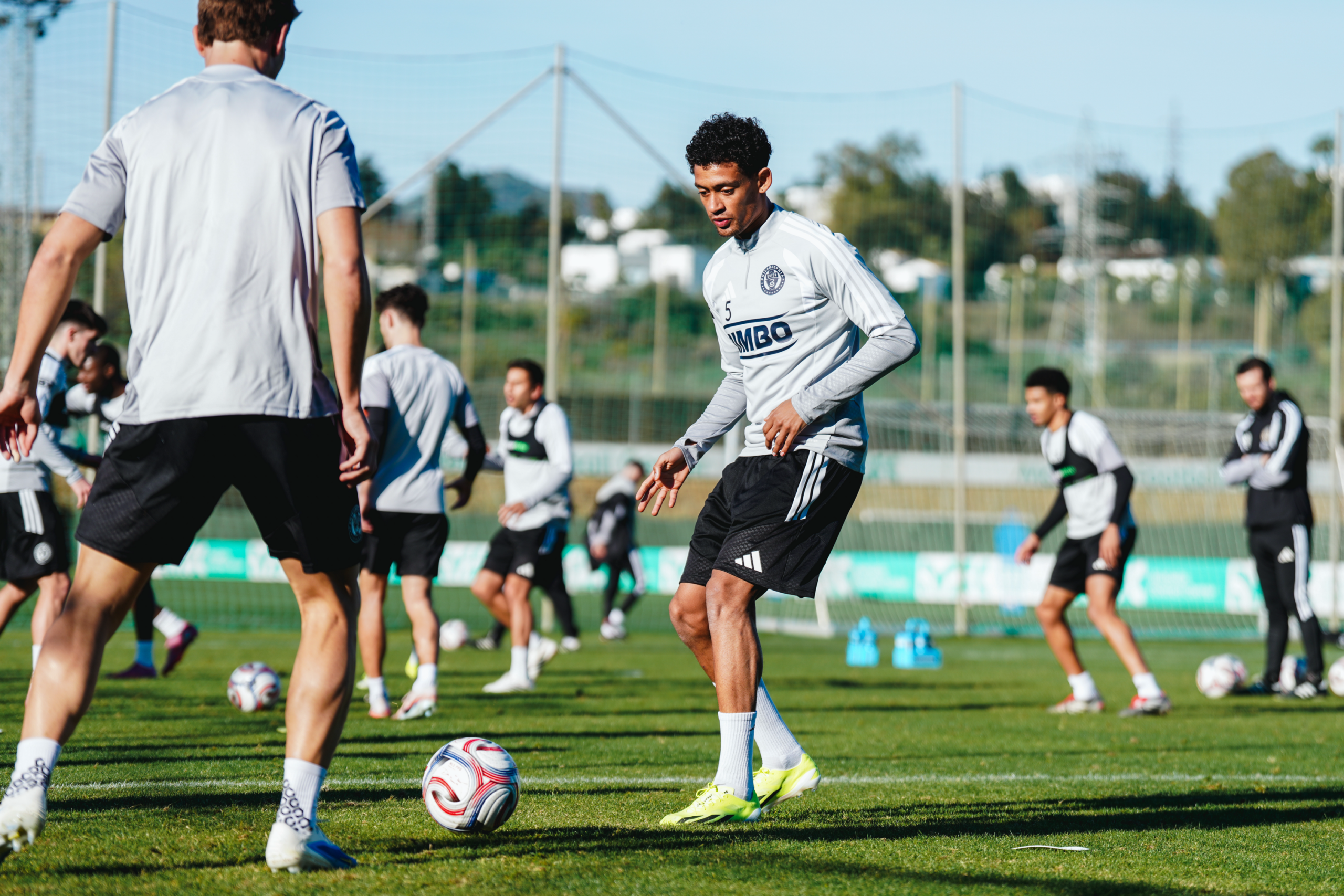
    Japhet Sery Larsen (center) on the ball in a practice in Spain this week.

    Two transactions

    The Union promoted reserve team striker Stas Korzeniowski to the first team this week, a reward for the former Penn striker’s good work with Union II last year and with the first team in preseason this year.

    Korzeniowski scored the Union’s goal Tuesday with a well-taken finish, though his promotion was in the works before then.

    “Stas has certain qualities and a skill set that we really like,” Carnell said. “And, for sure, it’s far from polished right now, but that’s the journey that he started to take now with us and having him in these environments and just around the team and playing in our way.”

    The Union also loaned 18-year-old centerback Neil Pierre to Lyngby of Denmark’s second division, a club in which the Union have had an investment stake for a year and a half. A move like this is a big part of why the Union did the deal, but this marks the first of a transaction of this kind on the books.

    Pierre is a marquee prospect, better than the reserves’ level in MLS Next Pro but not ready physically for the top flight. Lyngby is currently atop Denmark’s second division, pushing for promotion after being relegated a season ago.

    “Closing the gap between Next Pro, MLS, and then there’s a mid-station there with Lyngby,” Carnell said. “Also going out of your comfort zone is a big one. … Very important for Neil to go and get those experiences, and I think he’ll grow as a person and as a player as well.”

    It’s also notable that the loan is just through June, instead of the full year. With MLS stopping for the World Cup after Memorial Day, it really means Pierre won’t be available until the season resumes in mid-July. But perhaps he’ll get a chance in the Leagues Cup in late summer.

    Neil Pierre (right) has played just once for the Union’s first team so far.

    Another prospect’s next chance

    Malik Jakupovic, the 16-year-old striker who’s getting a lot of hype, was named Thursday to the United States squad for Concacaf’s under-17 World Cup qualifiers next month.

    There’s a long history of major Union prospects showing their skills at the under-17 level. The next under-17 World Cup, which now is an annual event, will be played in Qatar in November.

    “We’ve seen a couple of good glimpses in training here in preseason that he comes to life and you think, ‘Wow, this is amazing,’” Carnell said of Jakupovic. “And then you just get to remember, ‘Oh right, he’s just joined us for three, four days already in camp.’”

    The Union’s coaching staff is well-aware of the hype and is trying to not add too much more.

    Malik Jakupovic at a practice last week.

    “We don’t want to put any sort of crazy amounts of pressure on him,” Carnell said. “We want him to have fun, we want him to develop, we want him to learn and grow.”

    Goalkeeper Matthew White also made the 21-player roster, and midfielder Willyam Ferreira was picked as an alternate.

    News from MLS HQ

    MLS announced its roster rules for the year on Thursday, and they included two significant changes.

    A year after finally allowing teams to sell players within the league for cash instead of allocation money (basically extra cap space), the league axed its cap of two sales per team per season.

    The Union’s sale of Tai Baribo (right) to D.C. United for more than $4 million in December wouldn’t have been allowed in MLS a few years ago.

    That certainly will benefit the Union, who’ve taken full advantage in selling Jack McGlynn, Dániel Gazdag, and Tai Baribo for big sums. But it also will be welcome leaguewide because it’s a better measure of players’ market values than allocation money’s limits.

    MLS also adjusted its transfer windows, the times of year when teams can buy players. The winter window will run from Jan. 26 to March 26, and the summer window will run from July 13 to Sept. 2. The latter has been shifted later in the year, bringing it in line with windows used by other big leagues worldwide.

  • Cavan Sullivan looks ahead to what should be his biggest year yet with the Union

    Cavan Sullivan looks ahead to what should be his biggest year yet with the Union

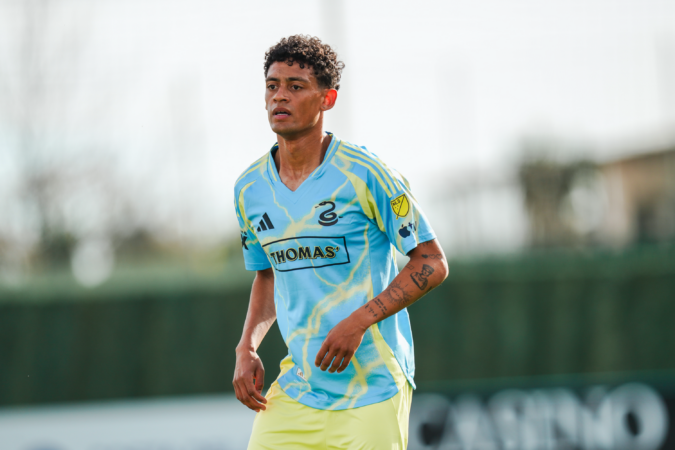
    There are times when it seems, even as young as he is, that Cavan Sullivan has been prepared for the spotlight all his life.

    But there still are times, even if they’re fleeting, when he’s clearly a 16-year-old trying to make his way in the world as a professional athlete.

    One came last week, a few days before the Union left for their preseason training stint in Spain. Sullivan was asked what it’s been like growing into that spotlight, and he had a lot to say.

    “The spotlight can be great, but at the same time, especially now, it’s really not something I’m caring about,” he said. “Like, literally all I want to do is play games and play the sport I love. Media is great, but I just want to show what I can do and be the player I know I can be, and [I’m] not really focused on the media or spotlight right now.”

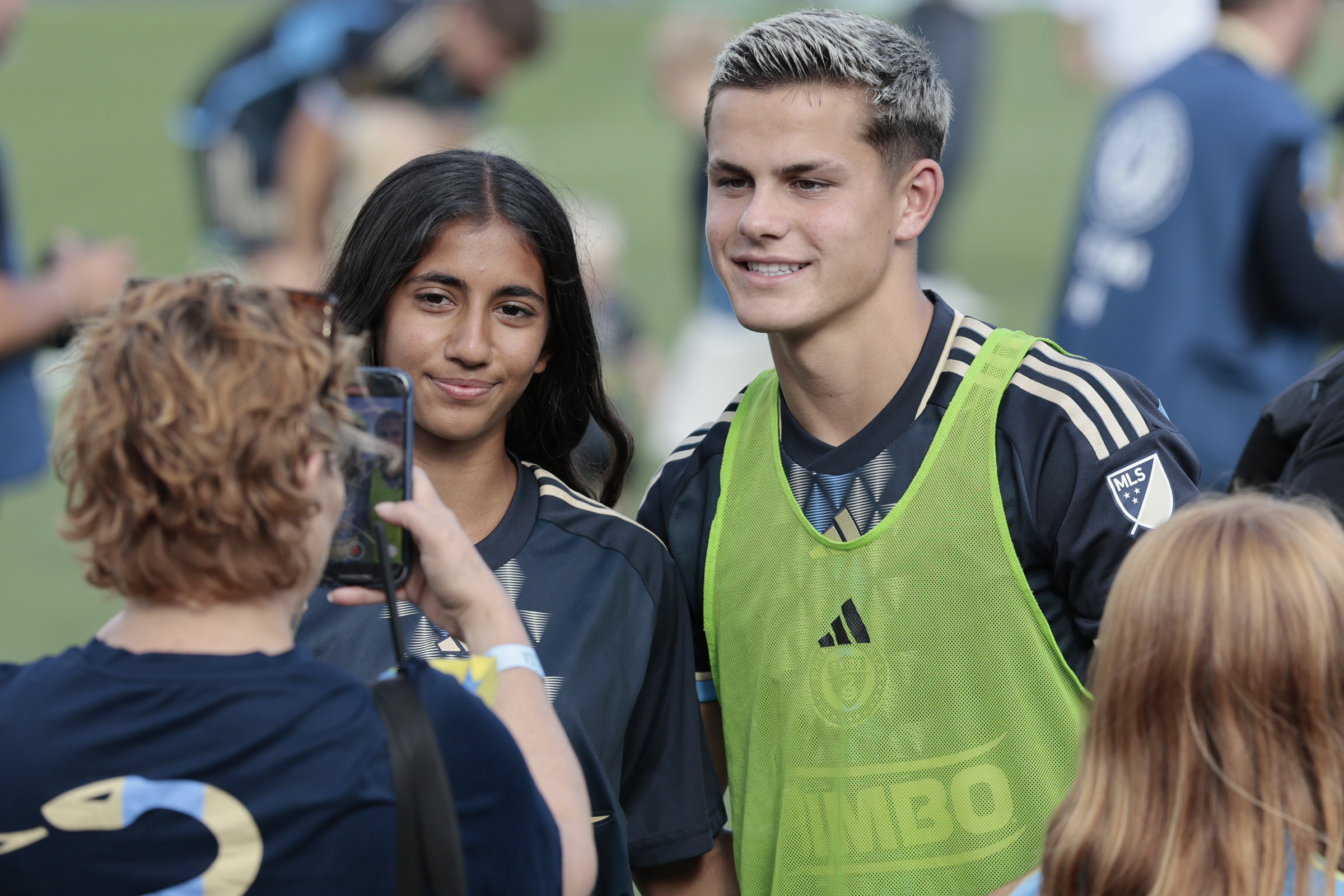
    Cavan Sullivan posing for a photo with a fan at a Union game in September.

    But with his next breath, he acknowledged how much he gains from it. Sullivan’s fame has earned him endorsement deals with fashion brand Aéropostale and sportswear giant Adidas, the latter linking him to a collection of stars, including Lionel Messi and Trinity Rodman.

    As he continues to grow on the field toward a preset move at the end of 2027 to English Premier League power Manchester City, his stature off the field likely will keep growing, too.

    “You also have to acknowledge that I’ve prayed for moments like these, and I’ve been dreaming about the spotlight,” he said. “It’s weird how it contradicts at certain moments in your life. But as a kid, I’ve dreamed of having jerseys on kids’ backs and being [in] cool interviews and meeting my heroes, and it’s awesome.”

    Sullivan should be ready for regular first-team playing time this year. Though his listed height and weight are 5-foot-7 and 150 pounds, both unofficial counts are higher now. He continues to grow in size and physique and looks ready to play against grown men.

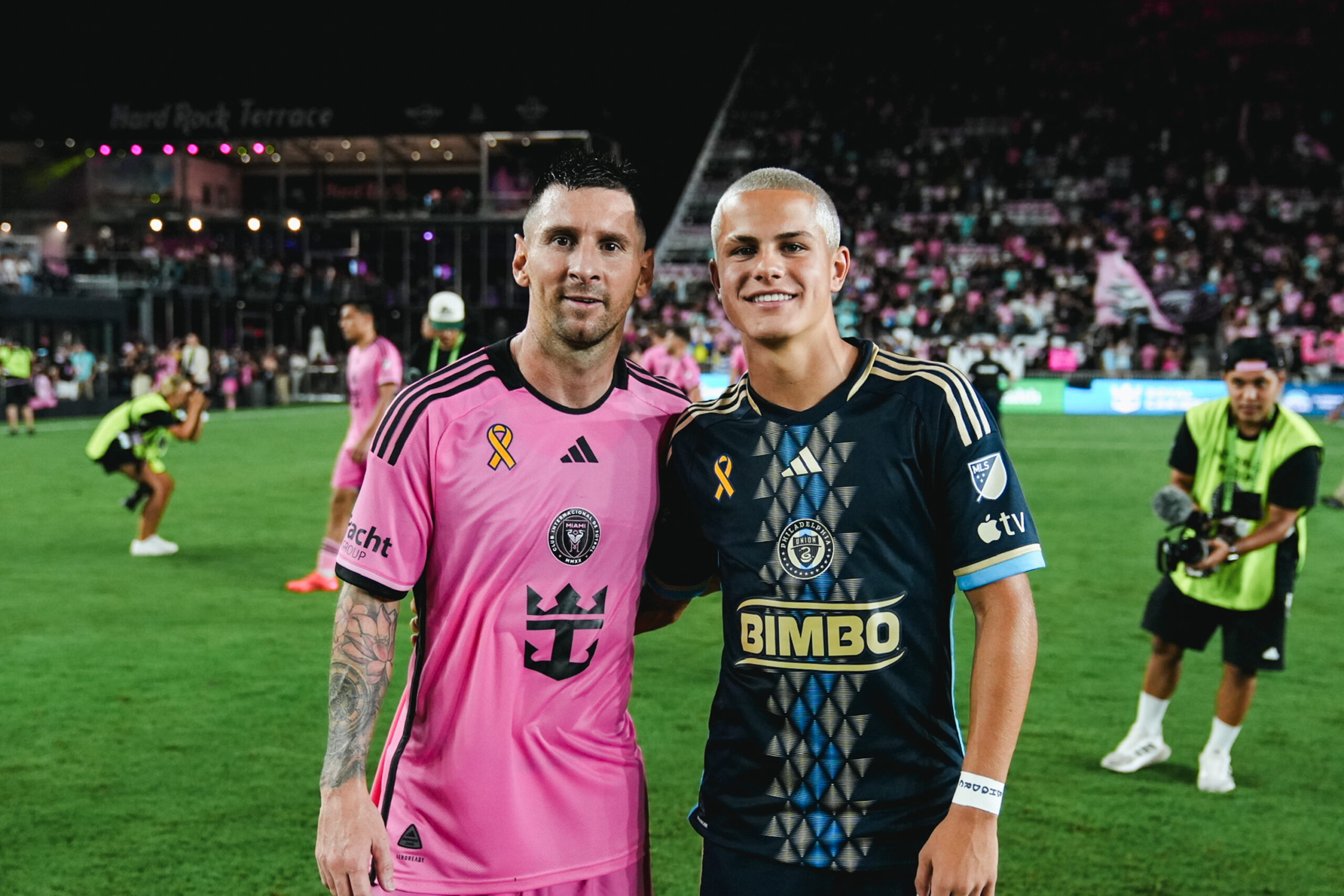
    Cavan Sullivan (right) with Lionel Messi in 2024.

    That last clause bears emphasizing. As much hype as Sullivan has gotten already, there’s a big difference in any human body from age 14, as he was when he turned pro, to 16.

    Last year, Sullivan played 440 minutes over 16 games for the Union’s first team, though 210 of the minutes were in two U.S. Open Cup games against lower-division teams. He also played 973 minutes over 14 games for the Union’s reserve squad.

    In 2024, he played nine minutes over three games for the first team and 1,421 minutes over 22 games for the reserves, with two of the reserve appearances coming before he turned pro in May.

    His place in the new Union squad

    The Union’s roster overhaul this winter also remains on everyone’s mind. As a new team starts to come together, one thing that quickly has become clear is its youth. New striker Ezekiel Alladoh is 20, centerback Finn Sundstrom is 19, and rumored centerback target Geiner Martínez is 23.

    New Union striker Ezekiel Alladoh is 20 and is the club’s latest record signing.

    Japhet Sery Larsen, the top new centerback signing, is a relative veteran at 25. He’ll likely start next to Olwethu Makhanya, who was excellent last season at 21. (He turns 22 in April.) And as usual, the preseason squad includes some academy products.

    “It’s awesome to see the youth come in and try and earn their stripes and do their thing and showcase what they have,” Sullivan said. “But, obviously, you’re going to miss the older guys that were here when I originally started out with the team. … It’s definitely sad to see, but that’s part of the game. You’ve got to learn new teammates, learn their ins and outs, and how they play.”

    If there was another hint of lament, it came when he added: “People move, and people come in.” It also was a statement of fact.

    “Obviously, we’re affected by them, and we miss them, but we’re going to try our best to keep the same locker room experience as it was last year,” Sullivan said. “Because that was the best locker room I’ve been a part of. It obviously helps when you’re a winning team, no doubt about it, but I think Philly as a club and as a city will keep that same passion and energy throughout the whole year.”

    Cavan Sullivan (left) on the ball during the Union’s U.S. Open Cup game against Indy Eleven in May. It was his first start for the Union’s first team.

    With just under a month until the season begins, the Union need a new starting-caliber left back and are shopping for one. Beyond that, what’s the right number of signings before the team’s young prospects lose their shots at playing time?

    This always is a major question for the club, and it feels especially important now.

    Another attacking midfielder could help until Quinn Sullivan returns from his torn ACL but could take minutes from Cavan afterward — and before, too. Another starting-caliber striker certainly would be useful, but Sal Olivas showed in his limited first-team run last year that he deserves another shot.

    Eddy Davis and Malik Jakupovic also are moving up the pipeline, and Jakupovic is getting a lot of buzz. The 16-year-old from suburban Detroit currently is with the first team and could earn a first-team contract, even if he spends most of this year with the reserves.

    “He’s athletic, a goal scorer, can use his feet well,” Sullivan said. “I’m excited to see what this year has in store for him. He’s obviously a friend of mine, and someone I worked with a lot with the second team when I was playing games. He’s come into a lot of second-team games and made instant impacts.”

    Indeed he did, scoring eight goals in 19 games. Though many of them were at the tail end of blowouts, that didn’t stop fans and scouts from paying attention. Jakupovic stood 6-3 and 168 pounds when he turned pro on a reserve team deal last May, and, as with Sullivan, the numbers have risen healthily since then.

    “Hopefully he can start some games with the second team this year,” Sullivan said. “You never know what could happen in this game — first-team minutes could be available for him as well. I’m excited to work with him even more.”

    ‘Stuff to prove’

    There’s no question that Sullivan exudes confidence. He’s fearless taking on defenders and knows he’ll get kicked, even though he doesn’t always take it well.

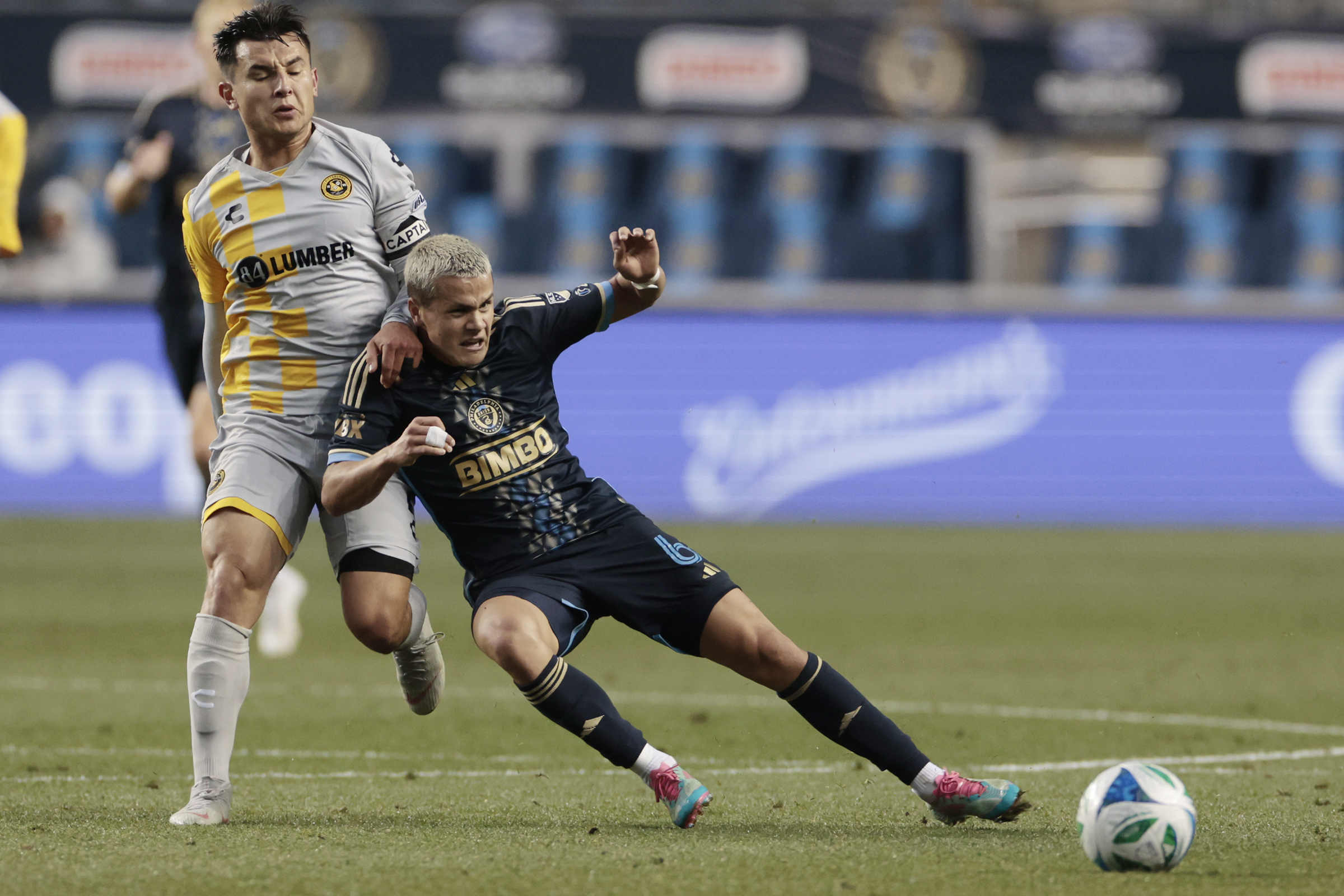
    Cavan Sullivan (right) takes a challenge from the Pittsburgh Riverhounds’ Daniel Griffin in May.

    In the Union’s preseason opener on Tuesday against Czech club SK Sigma Olomouc, Sullivan played the second half of a 1-1 draw. At one point, he was pushed over as he charged down the right flank. The defender had a word in Sullivan’s face, and Sullivan jawed right back at him before the referee reminded them that it was a scrimmage.

    That moment also illustrated why it’s so important that Sullivan turned pro with the Union instead of getting thrown into the deep end in Europe. Along with having coaches here who care about his development, he gets to live at home with a family that keeps him grounded.

    You feel that when he says things like, “At the end of the day, it’s about what I can do on the field and not the behind-the-camera side of things.”

    And again when he talks about the upcoming season.

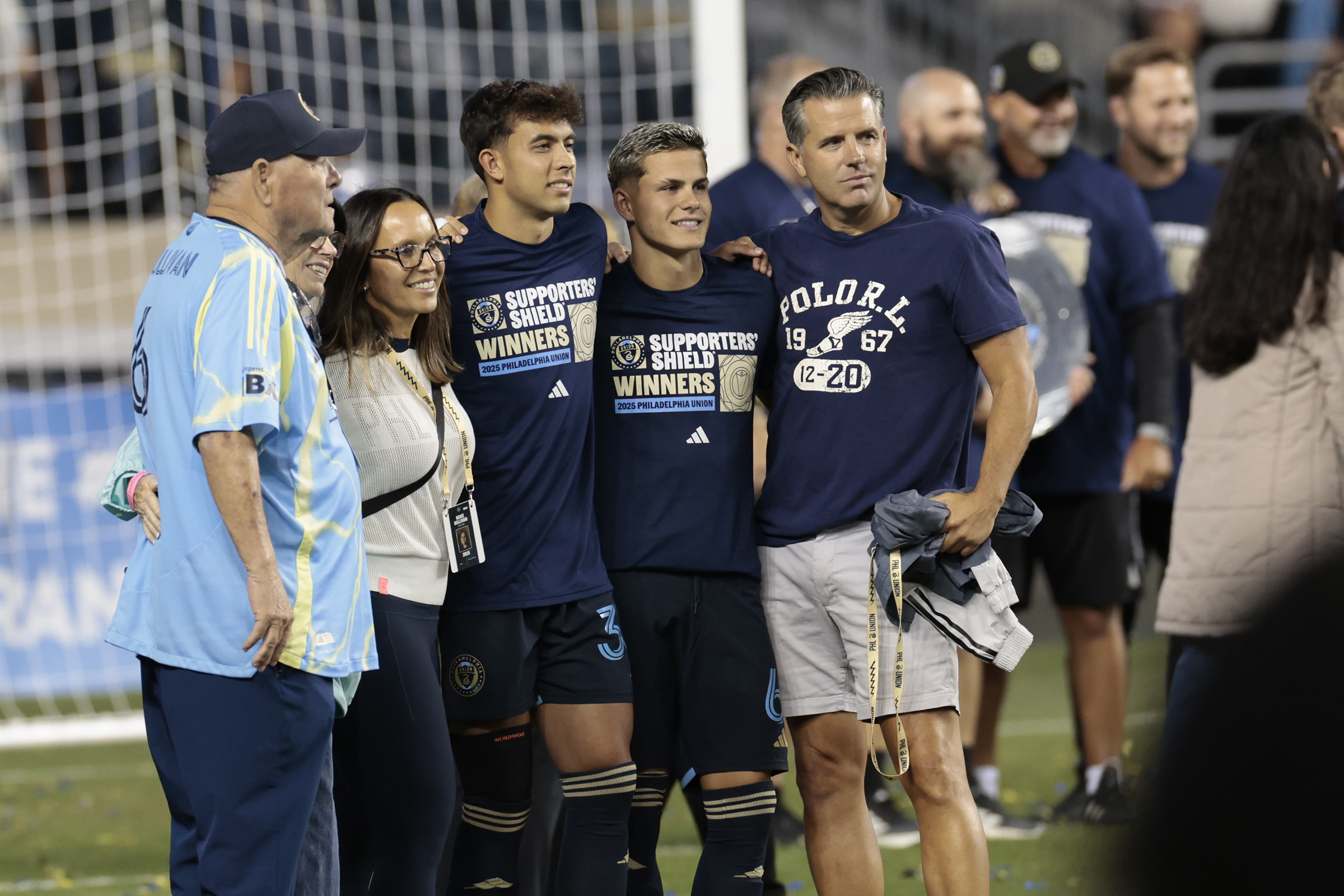
    Cavan Sullivan (second from right) with family including father Brendan (right), brother Quinn (next to Cavan), and mother Heike (next to Quinn) after the Union clinched the Supporters’ Shield in October.

    “It’s a big year for me,” Sullivan said. “It’s exciting, but I’m not going to get ahead of myself. I know there’s still work to do and stuff to prove. So I’m not going to get too excited — just stay grounded, just be humble, and continue to work really hard.”

    Union manager Bradley Carnell sees that. Not for nothing did he call Sullivan’s mindset “one of his biggest strengths.” But Carnell also knows the influence he has over Sullivan’s playing time.

    “That Cavan has the outlook on doing all these great things, that’s a target,” he said. “And in his mind, that’s now a cycle of work, a body of work that has to go into each and every single training session, scrimmage, recovery session, and on forth. So, yeah, we hope that will be great. What a story that would be.”

    Carnell continued: “It’s our job now to push Cavan in the best way possible, to make sure that we hold each other accountable to the development of Cavan and every other player in the roster.”

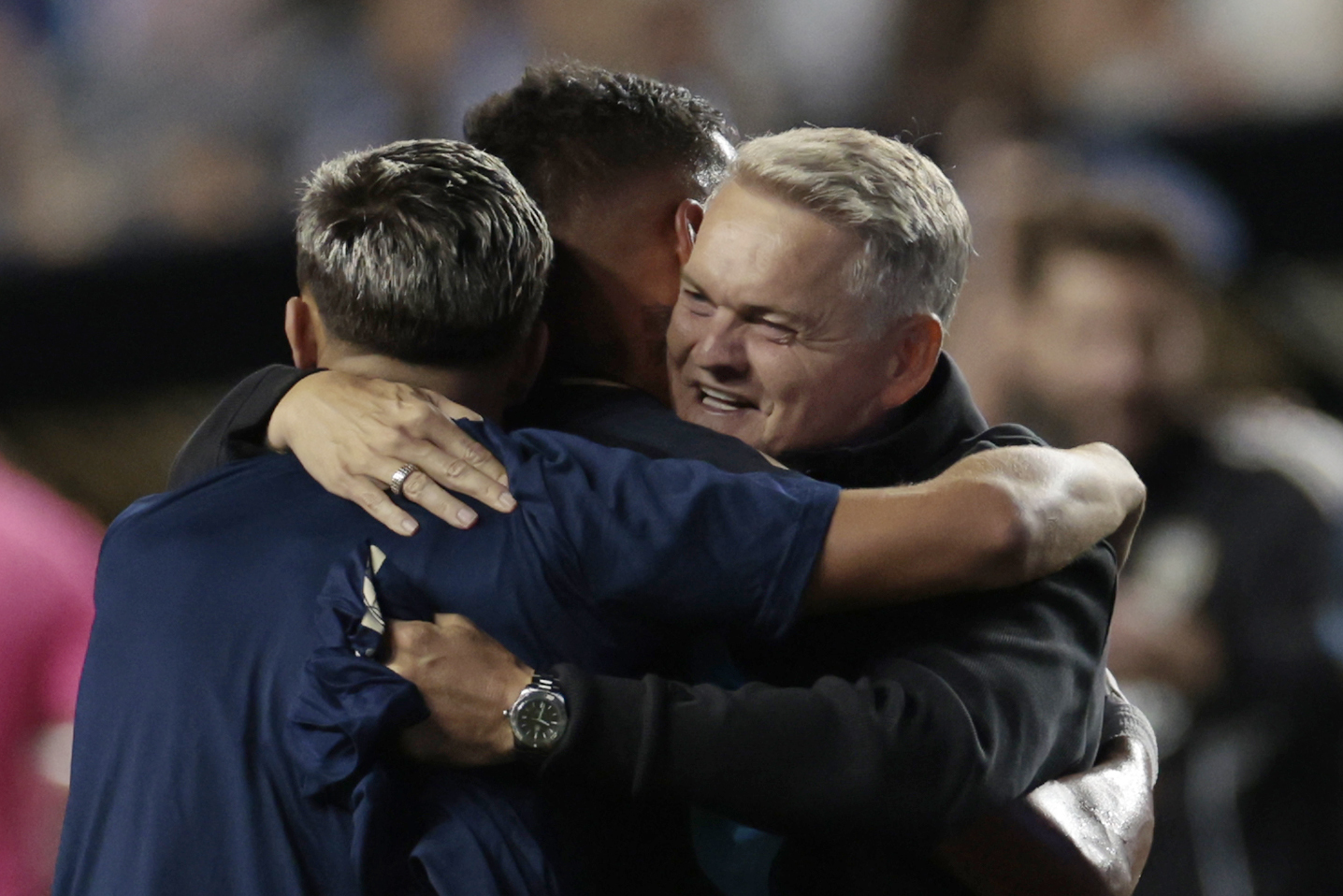
    Bradley Carnell (right) embracing Cavan Sullivan (left) and Jesús Bueno after the Union won the Supporters’ Shield.

    Sullivan said the team’s goal for this year “remains the same: We’re going for the MLS Cup no matter what.”

    His personal goals, he said, also are “similar” to the last two years.

    But then he stepped right back into that spotlight and knew it.

    “I’m going to work my [butt] off,” he said, “trying to earn my spot, [and] be a consistent player on a team basis.”

  • Bradley Carnell orchestrated the Union’s success in 2025. His second season in charge matters more.

    Bradley Carnell orchestrated the Union’s success in 2025. His second season in charge matters more.

    Nestled under all the success of last season for the Union is that their manager, Bradley Carnell, proved yet again that he’s one of Major League Soccer’s bona fide tacticians.

    In his first season at the helm, he came within one point of the club’s record, a statistic that originally took more than a decade to amass. He guided the Union to their second Supporters’ Shield, which is given to the club with MLS’s best regular-season record.

    With 30 teams vying for the shield, that’s no small thing.

    While aspirations of their second MLS Cup final appearance were dashed in the Eastern Conference quarterfinals, success was already apparent, and Carnell, 48, was orchestrator, the proof in the form of the 2025 MLS Coach of the Year award.

    However, in the afterglow of a banner year for the Union, Carnell knows the limelight, particularly for him, is fleeting. He’ll never admit it, but his vision board, whether real or imaginary, surely includes the notion that success this season would right a lot of wrongs along his coaching path.

    He knows it. It’s why in a conversation with Union sideline reporter Sage Hurley, he said: “I take personal accolades and forget about them very quickly. In our business, it’s very fluid, very daily, and we focus on the present.”

    Bottom line: Judge this manager not by what he has done, but by what he does in 2026.

    Here’s why:

    Been here before

    It’s important to remind folks that what Carnell accomplished with the Union last season wasn’t new for him over his nine seasons in MLS. Replicating it or even eclipsing it in Year 2 would be.

    Why? Because he’s well aware of just how quickly a sophomore slump can turn into a crash-and-burn.

    In his previous stint as a manager, Carnell’s St. Louis City SC became the first expansion team to win its conference in its inaugural season. St. Louis topped the Western Conference with a 17-12-5 record and reached the 2023 MLS playoffs.

    Like the Union this year, St. Louis crashed out of the playoffs early. It was swept in a best-of-three first-round series against Sporting Kansas City after entering the tournament with the fourth-highest point total (56) that season.

    Copy and paste.

    As coach of expansion team St. Louis City SC, Carnell led the team to the best regular-season record in MLS’s Western Conference.

    Carnell didn’t even finish the following season. He was replaced in July following a dismal start in which St. Louis was at the bottom of the Western Conference standings with just three wins.

    But in his final regular-season news conference of 2025, while answering questions about who will orchestrate player moves with sporting director Ernst Tanner on leave amid an investigation into his alleged misconduct, Carnell was asked what he learned from the season to ensure he doesn’t find himself in the same boat.

    He seemed like he couldn’t wait for someone to bring it up.

    “This has been an amazing journey for me as a coach,” Carnell said. “I’ve grown up, and I’ve learned a lot more through the players and the engagement and just the people here at the front office. [I’ve learned that] when there’s support, alignment, [and] collaboration, a lot can be achieved. I think we’ve shown that over the course of the year that we are all pulling in the same direction.”

    One final question

    A big takeaway, Carnell said, too, is just how easily he assimilated into the culture of the club, its fans, and the city. Philly feels like home for the South Africa native, as he noted that the team and front office have made it easy for him and others who felt like outsiders to want to be here.

    “I think about [former Union defender] Kai Wagner, who has been here multiple years now. You would assume he’s from Philadelphia,” Carnell said. “There’s a certain edge and a drive and a determination and a quality about this group. That speaks volumes for the development of the club and the development of people, staff, and players.”

    It’s safe to say the pressure Carnell will feel entering Year 2 will eclipse his second year with St. Louis. The Union made massive changes in the offseason, as proven players (like Wagner) were brokered for top dollar and replaced by some complete unknowns.

    Bradley Carnell (right) was all smiles last season, celebrating the Union’s Supporters’ Shield title with midfielder Danley Jean Jaques.

    Also, Carnell wasn’t operating St. Louis City during a FIFA World Cup year in a city that will host six matches. Soccer eyes will be on MLS — and just how good the local MLS club is. Especially one that was the league’s best under his guidance a year before.

    Another thing he won’t admit: There is newfound pressure for the Union to come out strong — not just to further erase the pain of coming up short last season, but also because events like a World Cup tend to bring transformative change within an organization.

    The club won’t admit it, but there are questions in the background that perhaps only top Union management and ownership can answer. But no one expects those questions to arise until the afterglow of the World Cup.

    Union majority owner Jay Sugarman has figured out how to remain one of the league’s best clubs on a shoestring budget. Carnell is a big reason.

    There also are other reasons. The obvious is that, entering a seven-week World Cup break beginning in May, sitting near the top of the Eastern Conference standings bodes well once MLS play resumes.

    And while he’ll naturally mask that last factor by suggesting that the focus is “on the collective,” a familiar phrase from his first season in Philly, nothing would make people forget his sophomore slump in St. Louis more than not replicating something similar in 2026 with the Union.

    “Around 11 months ago, we stepped in here in a world of our own,” Carnell said. “I hope 11 months later, through the team’s performance and collective effort, some of those questions have been answered.”

    Some have, sure. But on a personal level for this manager, heading into 2026, just one more needs closure.

    Players showered manager Bradley Carnell with a lot more than just praise after the team’s massive 2025 season.
  • U.S. Soccer aims to build buzz for this summer’s World Cup, but many fans care about ticket prices

    U.S. Soccer aims to build buzz for this summer’s World Cup, but many fans care about ticket prices

    The exact details aren’t all set yet, but the picture is starting to come together in U.S. Soccer’s buildup to this summer’s FIFA World Cup.

    Four of the big pieces are well-known: the games the men’s national team will play before the tournament kicks off. They’ll face Belgium and Portugal at Atlanta’s Mercedes-Benz Stadium on March 28 and 31, respectively, with the game against the Portuguese sold out at the 71,000-seat venue.

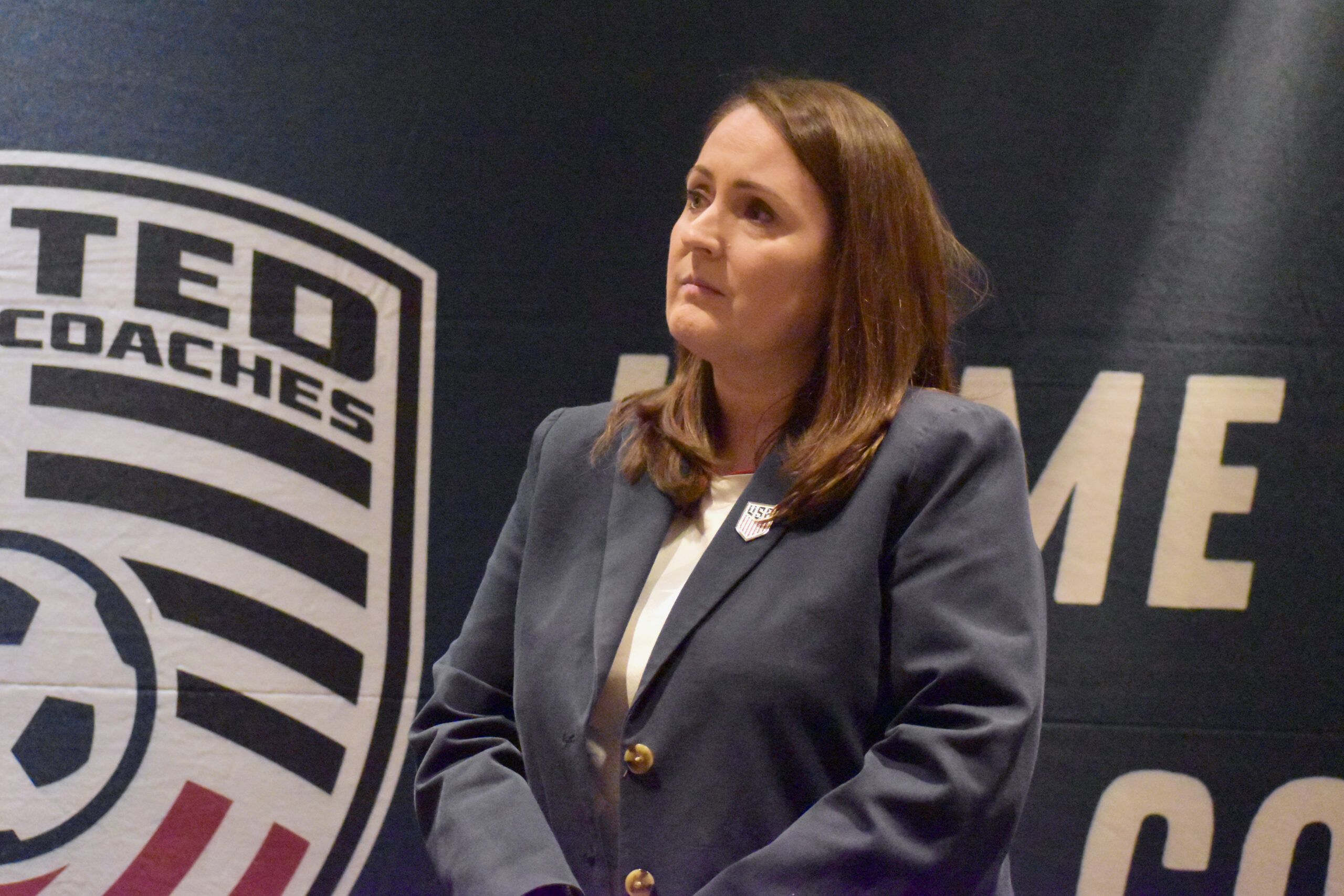
    The World Cup team will be announced at an event in New York in late May. U.S. Soccer Federation chief marketing officer Catherine Newman revealed the news during a speech Friday at the United Soccer Coaches Convention, and said the event will be open to the public in some form.

    She did not specify the exact date or venue, so it’s unclear just how many fans will be able to attend.

    U.S. Soccer Federation chief marketing officer Catherine Newman.

    The team’s training camp will start right after that at the new national training center in suburban Atlanta. U.S. manager Mauricio Pochettino has already said he’ll set the roster before camp starts, not wanting to leave any choices until the last minute.

    There will be two tournament warm-up games: First, Senegal on May 31 in Charlotte, followed by a match against Germany on June 6 in Chicago. After that, the team will head to southern California to get ready for its World Cup opener against Paraguay on June 12 in Inglewood, Calif.

    Another milestone along the way will be the unveiling of the team’s World Cup jerseys in mid-March. Some renderings have already made the rounds on social media, of a red-and-white horizontal striped primary kit and a navy alternate kit with a star pattern.

    “You’ve seen the leaks, I’m sure — I’m not going to stand up here and pretend that you haven’t,” Newman said. “And [I] will not confirm or deny if they’re true either. But what I can say is that the kits are absolutely fantastic, they look brilliant, and importantly, the players helped us to design them.”

    Perhaps the details of how that happened will become known upon the official announcement.

    Newman tried to make the case that “what we are trying to do with a lot of things at U.S. Soccer is to make sure that if you can’t attend a match, that you can attend things with U.S. Soccer … Just come in and be a fan, that’s all we ask.”

    A focus on ticket prices

    But those words will be met with skepticism from some fans, for one big reason: ticket prices.

    People who’ve paid attention know that U.S. Soccer has no influence on World Cup ticket prices. In fact, the 2026 host nations’ bid book proposed prices far lower than what FIFA decided on.

    But there have been complaints for years about the prices of tickets for U.S. Soccer’s own games, whether in big NFL stadiums or smaller MLS venues.

    So it will be noticed that as of Friday, tickets for the Belgium game were available for $44 through the governing body’s official sales page, run by Ticketmaster. Unfortunately, the news was less positive for the other games: $73 and up for Senegal, $122 and up for Germany, and $193 and up for what’s left for Portugal.

    That doesn’t seem to fit with Newman’s claim that “we are not an expensive option in the U.S.,” even as she referred to $40 tickets and a free “block party” at last year’s U.S. women’s team game at SoFi Stadium. That’s the venue where the U.S. men will play two of its three World Cup group games.

    “We try very hard to think about that as part of our pricing, and to make it as affordable as we can,” Newman said. “And if we think about those four matches, there will be fan activations for all fans that our commercial partners are helping us [with], and there will be no cost to the fans. It is very important to us that fans can participate and can be part of it.”

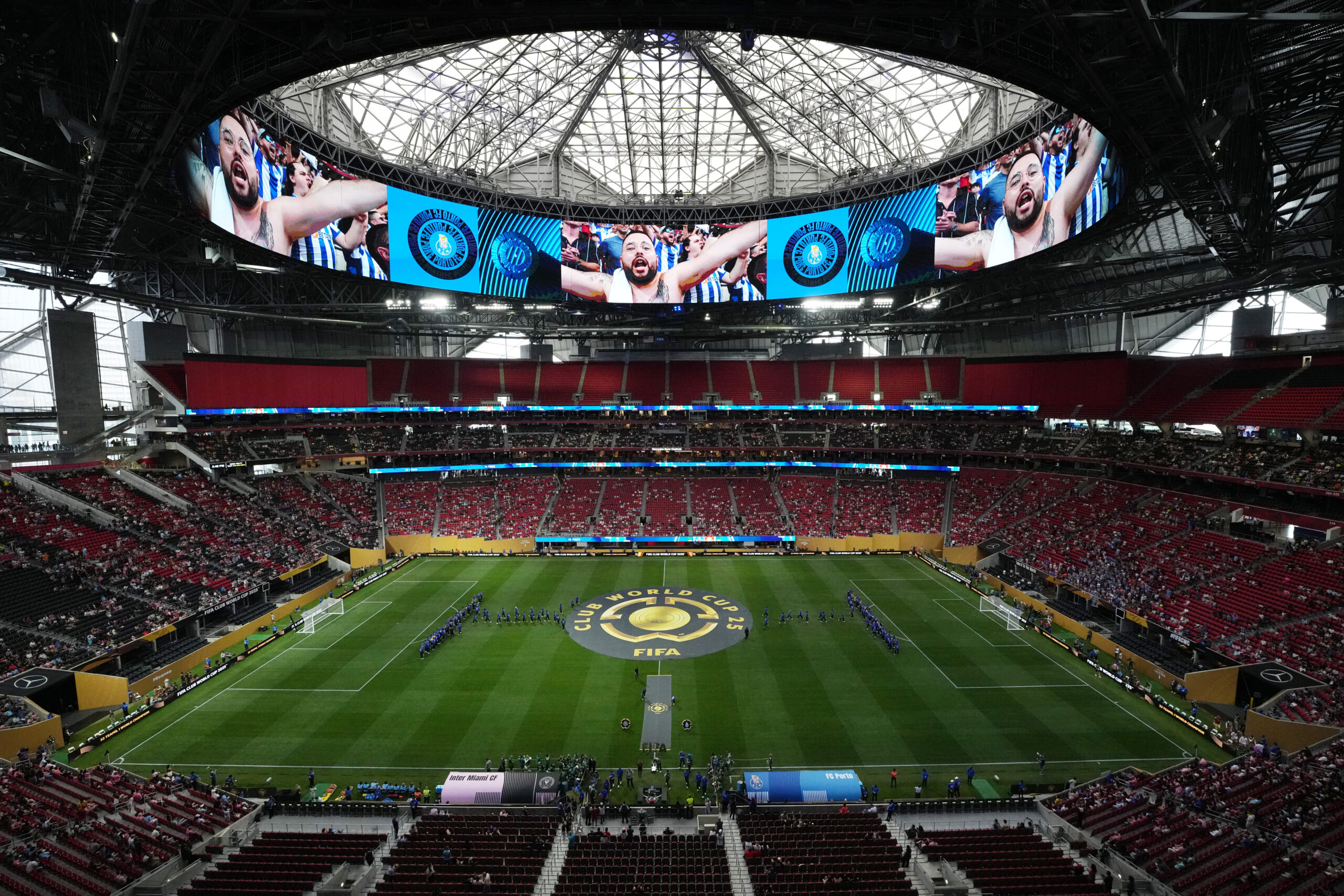
    Atlanta’s Mercedes-Benz Stadium will host the U.S. men’s soccer team’s March games against Belgium and Portugal.

    She pivoted from there to more community-oriented events like watch parties, noting that U.S. Soccer is working with the American Outlaws supporters’ group to promote events across the country.

    “Soccer isn’t about just being in the stadium,” Newman said. “It’s about how you watch at home, and how you have those other parts. And that is where it’s incumbent on all of us as part of the soccer community to make sure that people feel part of that.”

    As true as that point is on its own, the words might not satisfy fans who want to take their family to a game, and look at ticket prices before anything else.