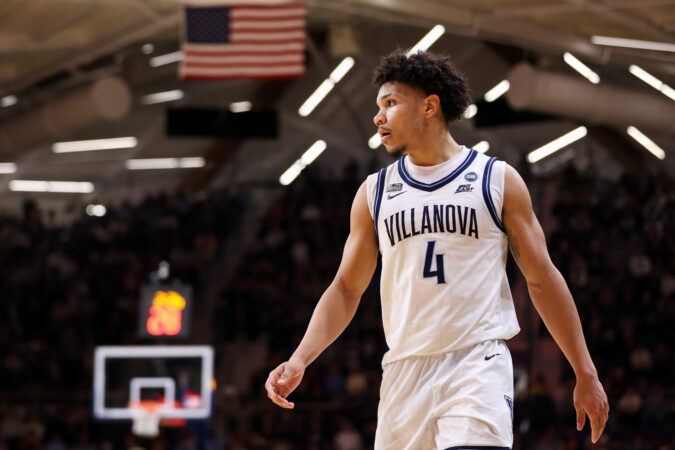
In the rotunda of the Finneran Pavilion late Tuesday night, the longest tenured Villanova player paused to crane his head toward the ceiling, toward the national championship, Final Four, and Big East championship banners that hang there in V formation, like a flock of birds in flight. On this Wildcats team, he’s the one whose name is called last in the pregame introductions.
He’s the one everyone knows a little better than everyone else on the roster. For a program once accustomed to having its stars stay for three years, four years, sometimes even five, it has to be jarring that Tyler Perkins, a junior who transferred from Penn in 2024, is the closest thing to a keeper of that flame.
“I take pride in it,” he said. “Last year, I was able to learn a lot about this place from guys like Eric Dixon, Jordan Longino, guys who have been here for three years, five years. I was able to pick their brains. Just walking these halls, looking at these banners, it makes you hungry. You want to bring it back to this place.”
The whole idea of a player recognizing and appreciating a particular program’s history and culture seems quaint in this era of college basketball. It certainly doesn’t have the pull and power that it once did.
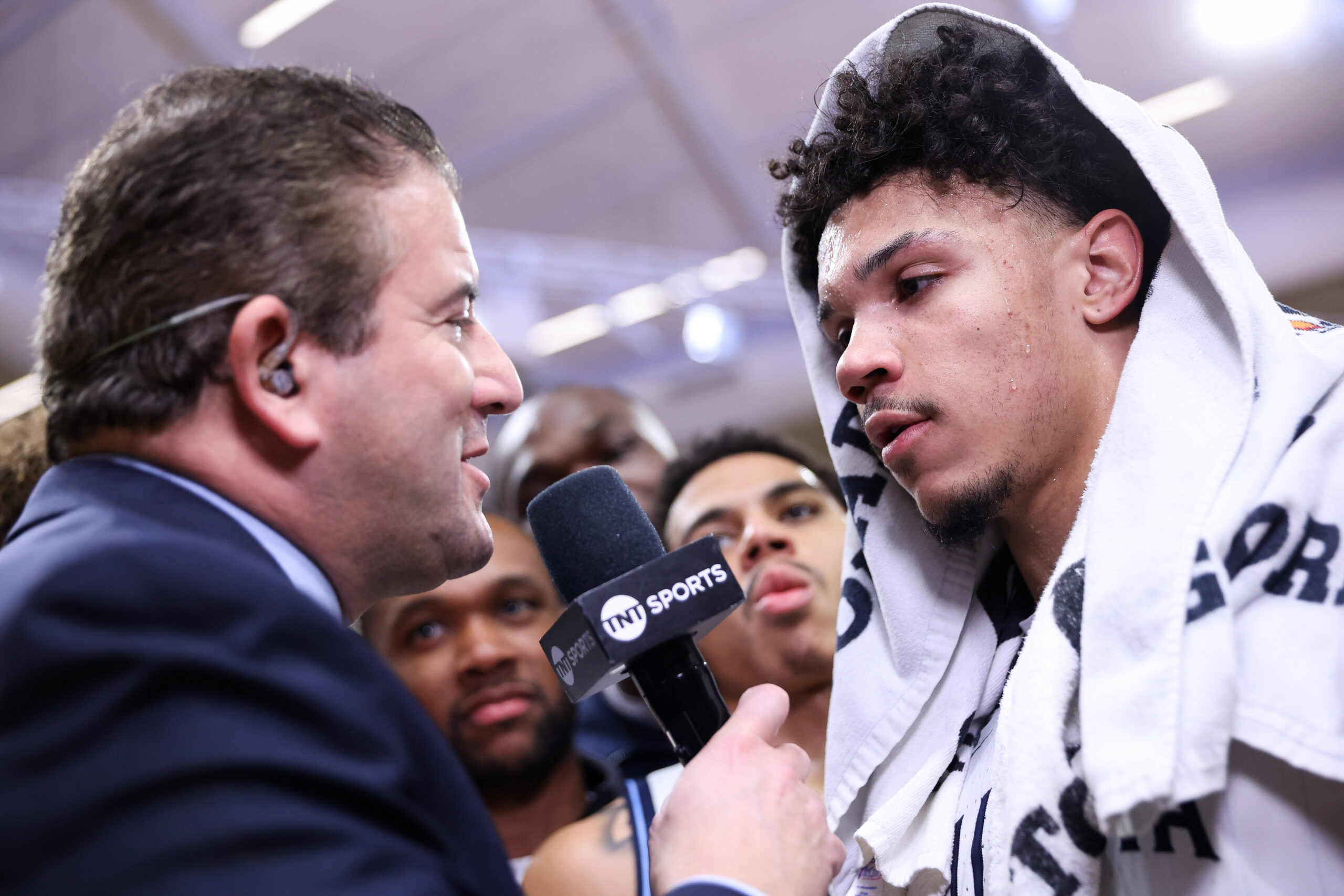
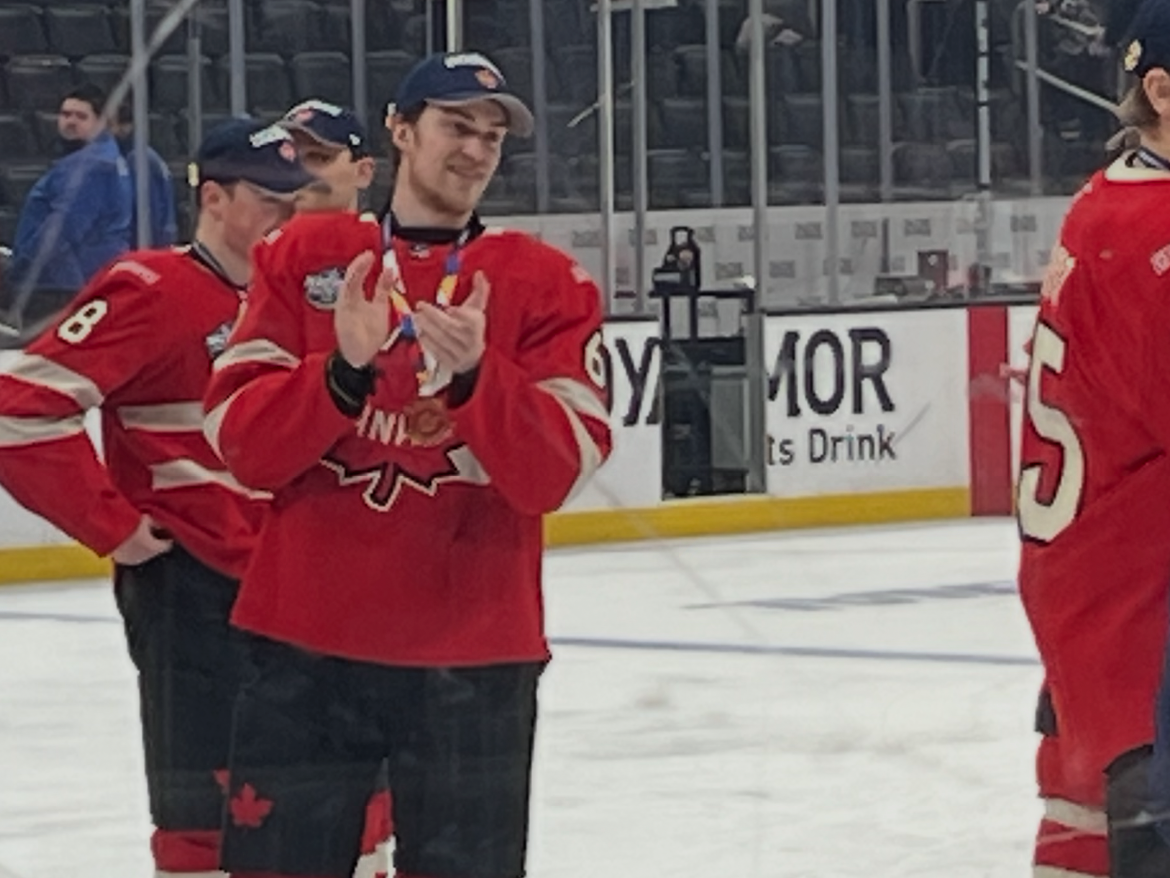
Tyler Perkins (right) is interviewed by Andy Katz after Villanova’s 77-74 win against Marquette at the Finneran Pavilion on Tuesday.
Now, paying players is an above-board course of action, athletes pass through the transfer portal like it’s an open doorway, and the story that played out at the Pavilion on Tuesday, in Villanova’s 77-74 victory over Marquette, showed just how much everything has changed.
Perkins pretty much saved the Wildcats, now 19-5 and on track for their first NCAA Tournament appearance in four years, from losing a Big East game to a lesser opponent. He scored a team-high 22 points, hit three late three-pointers to help ’Nova quickly wipe out a nine-point deficit, grabbed six offensive rebounds, and blocked a three-point attempt by the Golden Eagles’ Adrien Stevens on the game’s final possession.
It was the kind of performance that a savvy upperclassman — Josh Hart, Mikal Bridges, Collin Gillespie, Dixon — once would have delivered for Villanova … except in this case, the savvy upperclassman is a kid who has been on campus less than two years, and he was having a lousy defensive game until he snuffed Stevens’ shot at the end.
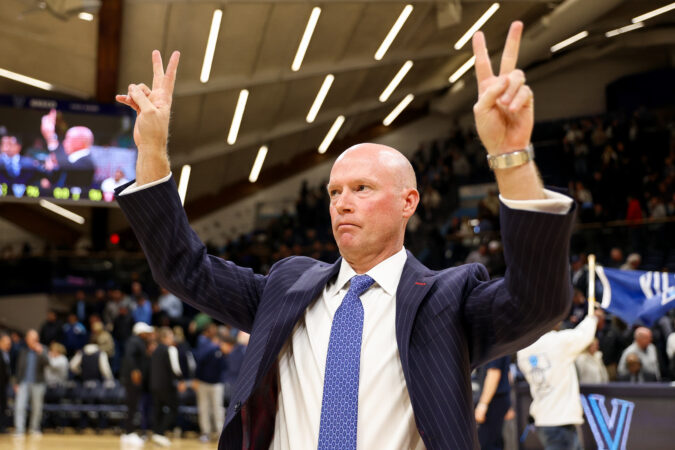
“Once he figures out he can affect the game without shooting or having to shoot, that’s when he’s going to take a monster step,” Wildcats coach Kevin Willard said. “And he’s starting to get there. He is.”
Willard is so certain that Perkins will become a great player that, after the Wildcats’ win over Seton Hall last week, he didn’t back away from comparing him to Hart — a first-team All-American and a national champion at ’Nova, a nine-year NBA vet and an invaluable piece of a New York Knicks team that could reach the Finals.
During Tuesday’s postgame media availability, Willard playfully chided Perkins for his mostly poor defense against Marquette, then pointed out that Hart’s all-around game is what made him such a headache when Willard, while at Seton Hall, was coaching against him.
“I tell the story all the time,” Willard said. “One of the last times we played against him, I called timeout, and I cursed out my team. I was like, ‘Can somebody please stop Josh Hart?’ And he hadn’t taken a shot. He hadn’t taken a shot, and they’re all looking at me like, ‘Well, he’s not shooting.’ He’s got three steals. He’s got four offensive rebounds. He’s got five assists. And he didn’t take a shot. That’s why he’s in the NBA.
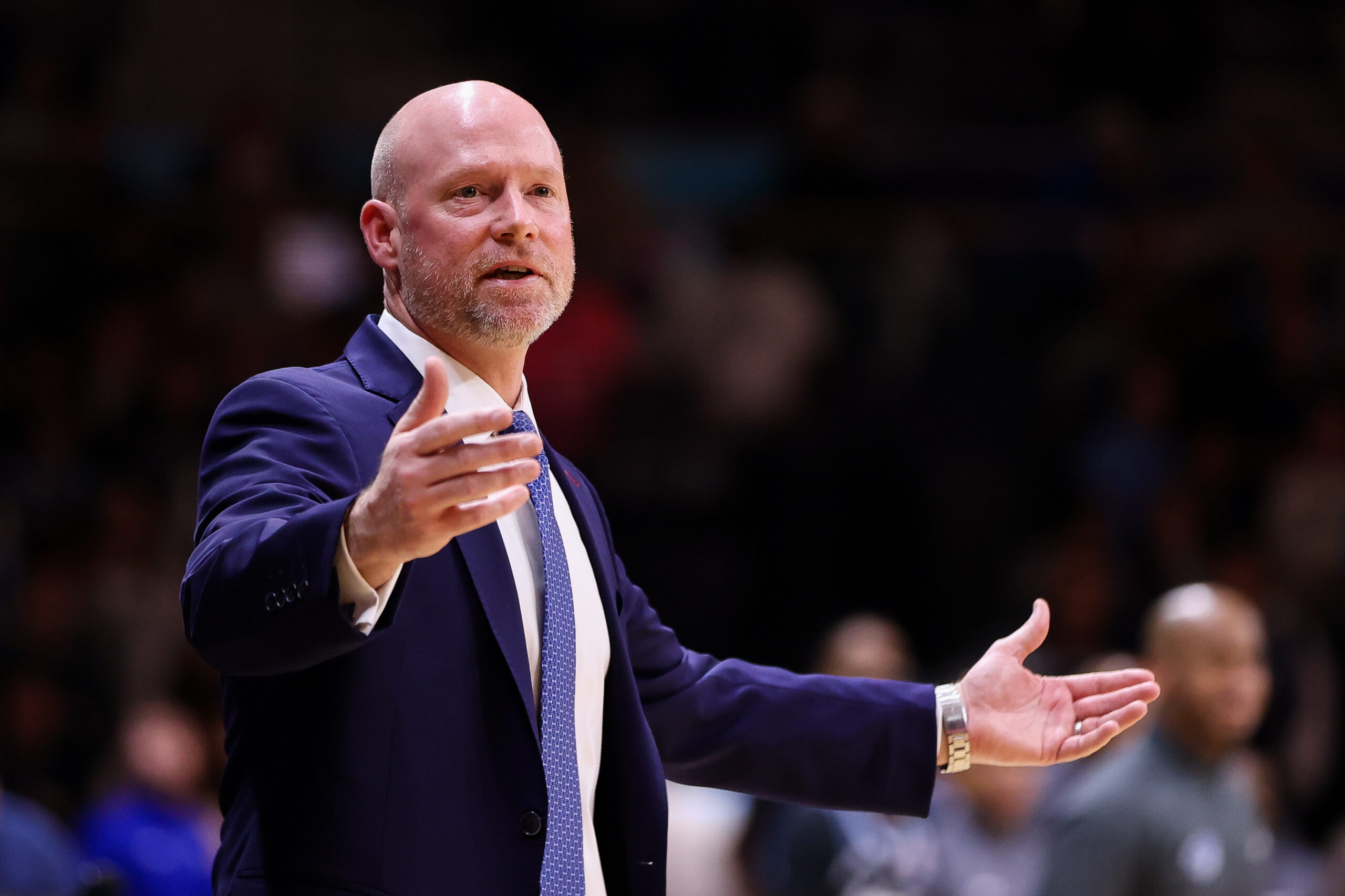
Villanova coach Kevin Willard believes Tyler Perkins shares many of the same qualities as former Wildcats guard Josh Hart.
“He” — he tipped his head to the right, toward Perkins — “can do that. He just has to figure it out at times, ‘I don’t need to shoot the ball to be out here and be effective.’ Because he does so many other things.”
Perkins has met Hart just once — last September, when Hart and Jalen Brunson returned to campus to record an episode of their podcast, The Roommates Show. Their on-paper profiles are practically identical. Both are from the Washington area.
They are about the same height (6-foot-4) and roughly the same weight (210-215 pounds). The biggest difference, at the moment anyway, might be that the conditions that allowed Hart to develop over his four seasons at Villanova, from 2013 to 2017, are harder to replicate. These days, it takes a welcoming atmosphere; a rewarding athletic, academic, and social experience … and, of course, a big, fat check.
"It's February basketball. You're going to have to grind and find ways to win. Watching Marquette's last five games, Shaka's done a great job with that group, especially on the defensive end. But we found a way, that's all that matters." -Coach Willard
Make no mistake: The money is and will be the major motivator for keeping a promising basketball player on any campus. A program that wants to keep a star into his senior season is going to have to pony up accordingly. But those first two factors still matter some, at least some of the time, and apparently to Perkins.
“I don’t really care about all the extra stuff that’s going on in college basketball right now,” he said. “I find joy in playing the game, and I felt like this place was the most comfortable place for me to play.”
Imagine the comfort he’ll feel a year from now, two years from now, three, if he can stand inside the Pavilion, look up at that ceiling, and see a banner he helped to hang.
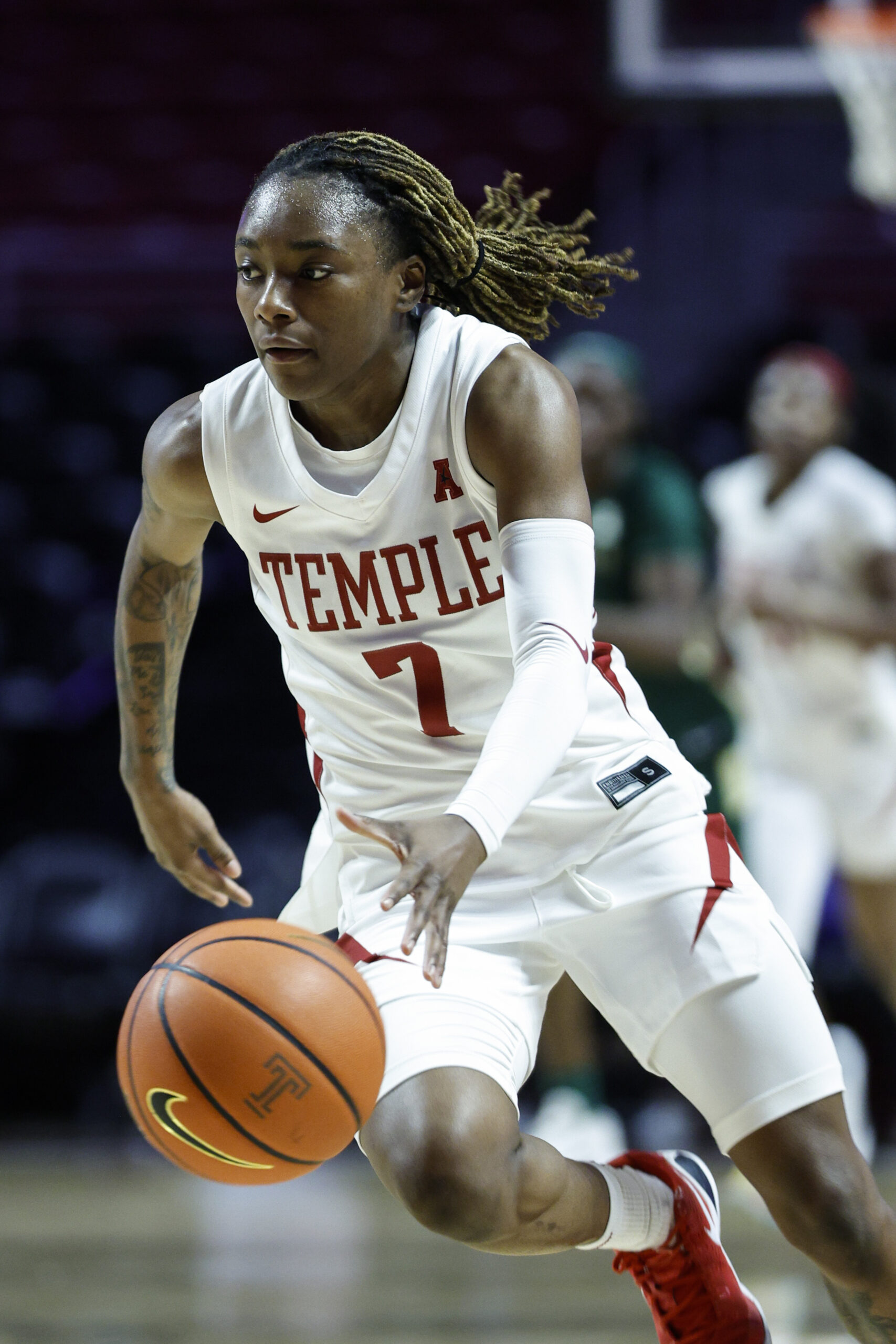
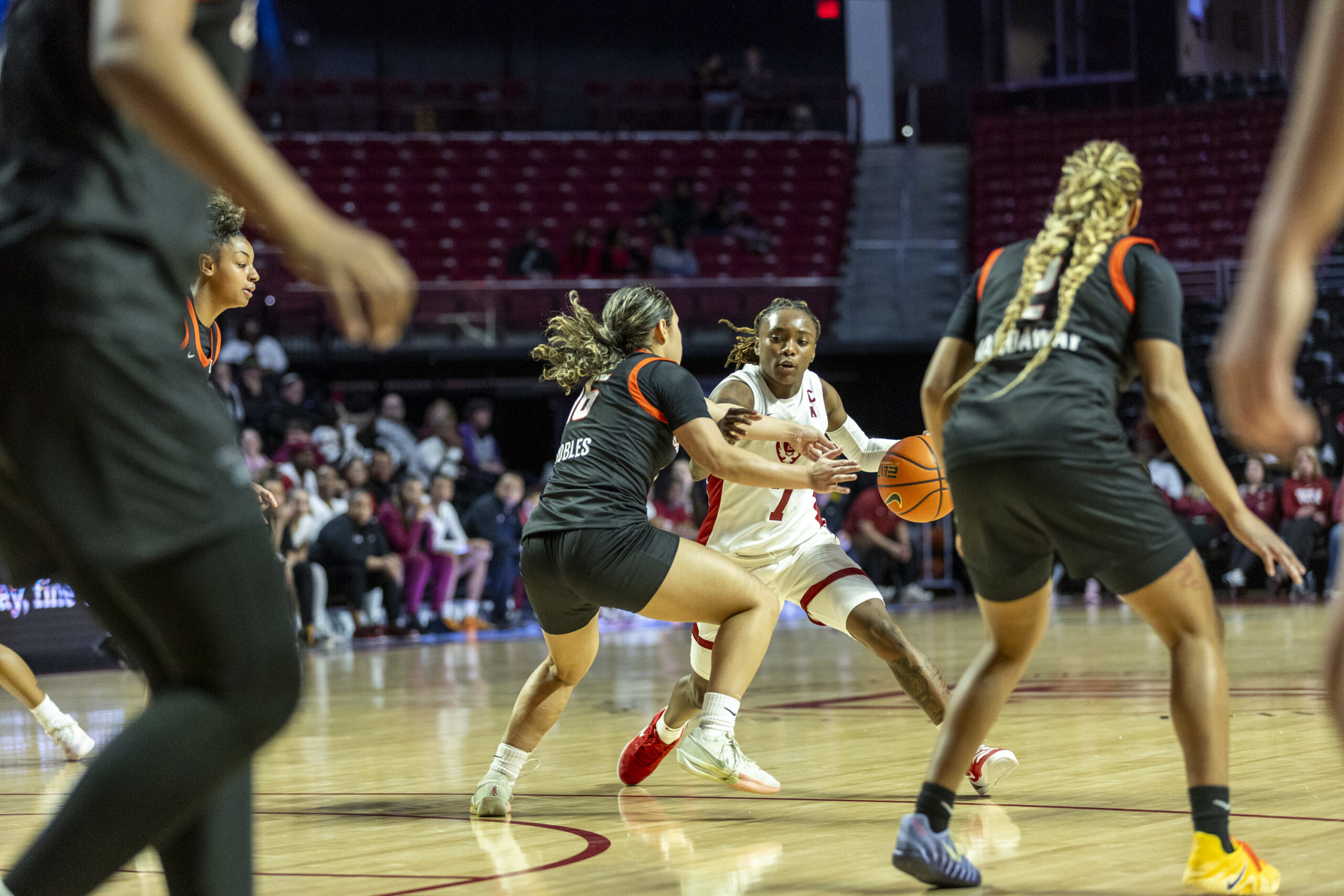
Temple guard Kaylah Turner describes her play as “KT ball,” which she says is scoring at all three levels and being a pest on defense.
However, the 5-foot-6 junior is constantly looking to improve, whether it’s becoming a better passer or grabbing more rebounds. Her drive has helped her blossom into one of the best players in the American Conference.
The Alabama A&M transfer and reigning American sixth player of the year leads the conference in scoring with 17.2 points per game. It’s been a difficult stretch for the Owls in conference play, and Turner has led Temple (10-13, 4-7) to three wins in its last seven games. She scored 12 points in Tuesday’s 52-43 loss against University of Texas San at Antonio.
“We just have to focus on the next game,” Turner said. “We can’t really draw on all the losses.”
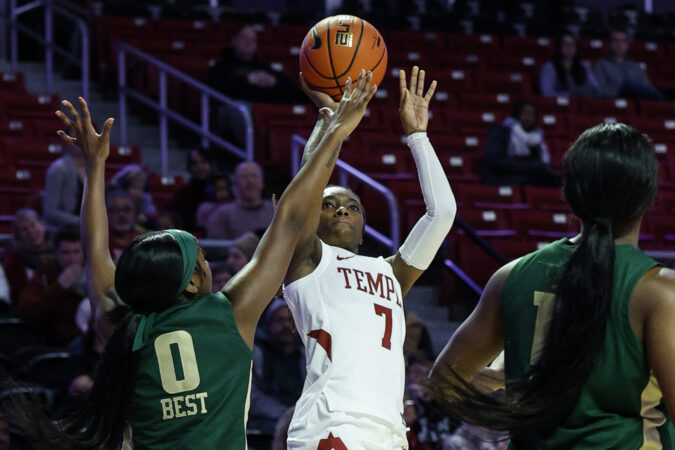
Temple guard Kaylah Turner is averaging 17.2 points per game.
Turner had high expectations this season. She was named to the American’s preseason all-conference first team after a strong first season with the Owls, in which she averaged 9.9 points on 38.5% shooting off the bench. With the graduation of guards Tiarra East and Tarriyonna Gary, Turner moved into the starting lineup this season.
“First-team preseason was cool, but I think I should have been preseason player of the year,” Turner said. “So that’s on my mind, and that’s what’s motivated me every day to get better because I didn’t get my original goal, so I still have another couple of goals in mind. I’m just never satisfied.”
Moving into the starting lineup paired Turner with point guard Tristen Taylor, who led the American in assist-to-turnover ratio last season. Turner’s scoring prowess and Taylor’s facilitating has forged a formidable backcourt.
“We play very well together,” Taylor said. “I feel like we’re actually the best backcourt duo in the conference, and I’ll say that. But Kaylah comes in here and works hard every day. She is a great teammate, not just to me, but to everybody. She always brings energy, and I just feel like that flows onto the court when she goes out and plays.”
That energy has helped Turner lead the conference in scoring and shoot 41.6% on three-pointers, which is second in the conference..
However, when Temple lost four of its first five American contests, Turner was one of the players who couldn’t find her groove.
Turner shot below 40% in four of those five games. Before Temple’s game against South Florida on Jan. 20, the team held a meeting to go over everyone’s role on the floor. The Owls beat the Bulls, 86-83, and are 3-3 since the meeting. Turner has been one of the biggest beneficiaries of the refreshed role clarity.
Temple’s Kaylah Turner has surpassed 1,000 career points this season.
She had a 27-point outburst in Temple’s 67-65 overtime win over Tulane on Jan. 31 and came up with a steal and assisted forward Jaleesa Molina’s game-winning layup in the final seconds.
“We were just super locked in on that play,” Turner said. “I got the steal, but all my teammates were all talking at that time. So that’s why we got that steal and Jaleesa was able to get the bucket.”
Turner also eclipsed 1,000 career points after knocking down a three-pointer in the second quarter in the win over the Green Wave.
“It definitely means a lot,” Turner said. “I was definitely happy when I got it. Just seeing my success that I had at Alabama A&M, and then having the same thing here is just incredible, seeing my hard work pay off in that aspect.”
Despite having the best season of her career, Turner sees plenty of room for improvement. With Temple ninth in the 13-team American with seven games to play, Turner is looking to give the Owls momentum heading into the conference tournament.
“Looking at these games that we won recently, it was with the defense and 50/50 balls, intensity, urgency, all that type of stuff,” Turner said. “So we can make sure we really emphasize the little things. We can sit here and look at scout and run our plays, but what wins games is everything that’s not on the scout. Energy, talking, getting on the floor, that type of stuff. Just being consistent with our spicy defense, like Coach [Diane Richardson] always talks about.”
As the clock ticks toward the World Cup, the buzz continues to grow around 19-year-old U.S. national team centerback prospect Noahkai Banks.
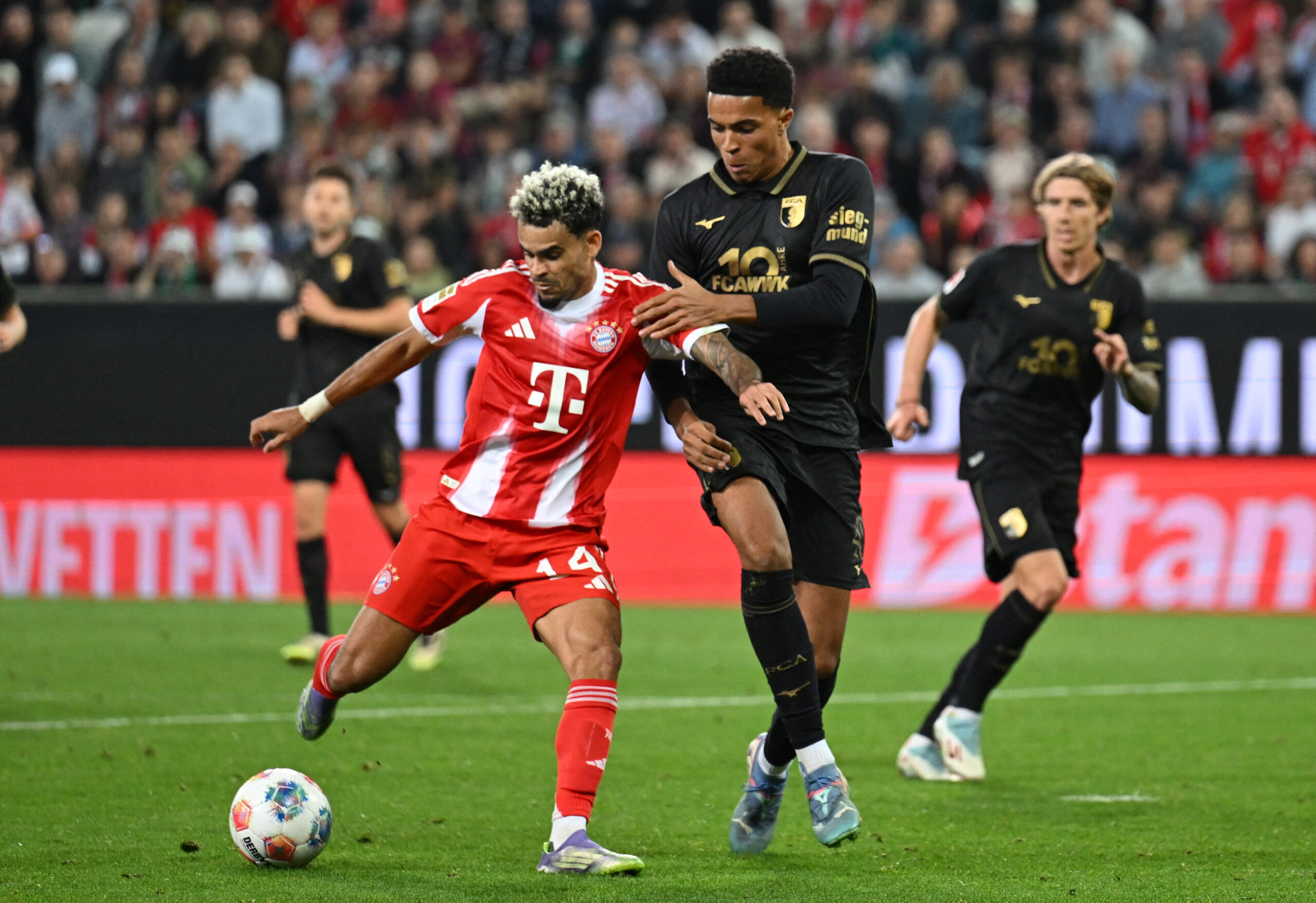
Though there’s no guarantee yet that he’ll make the tournament squad, the attention is warranted. He has played in 16 of the last 17 games for his club, FC Augsburg of Germany’s Bundesliga, and often has looked good on the field.
That puts Banks squarely on the list of names you’d want to know before the World Cup — and certainly before the U.S. team’s last auditions in March.
He knows it, as he said when he spoke with The Inquirer earlier in the season. This week brought another opportunity to get to know him, as the Bundesliga hosted a roundtable with Banks for U.S. media.
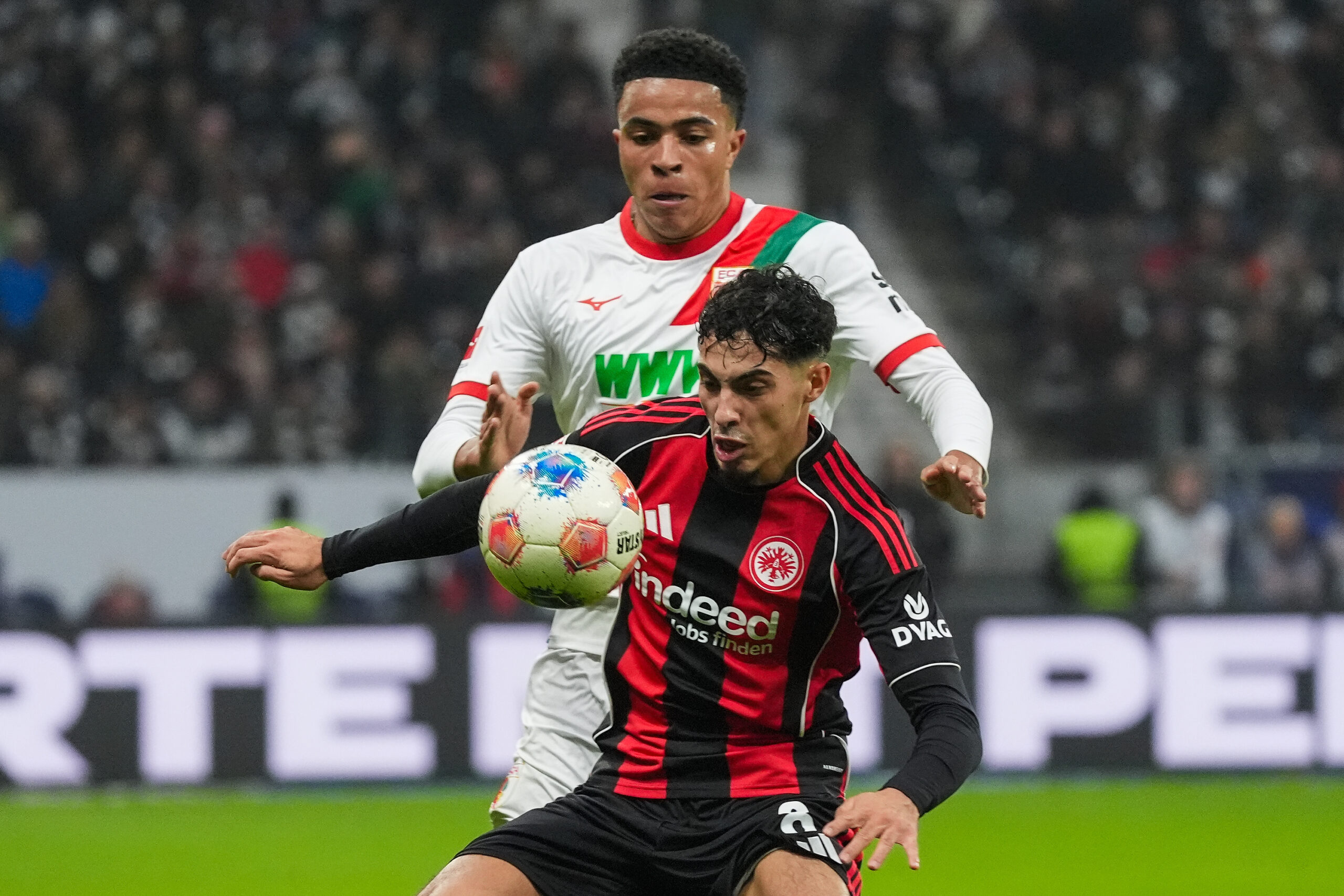
Noahkai Banks (rear) in action against Eintracht Frankfurt in a German Bundesliga game in December.
There was much to talk about, starting with his reflections on his one U.S. team camp so far last fall.
“I was pretty nervous when I got into camp because I was 18 years old at the moment,” said Banks, who turned 19 on Dec. 1. “So I thought maybe the older guys will think, ‘Who’s that,’ or ‘What is he doing here?’”
“For example, Tim Ream, the first day in training, he helped me a lot, because he plays in my position,” Banks said of the fellow centerback and frequent U.S. captain. “He has coached me a lot and helped me to get into the training and into the new tactics — because, obviously, it was a big jump. But also, the older guys also had dinner and they said, ‘Come sit at our table.’”
Little things like that are a great sign of the strong spirit in the American program.
“Players like [Christian] Pulisic, [Tim] Weah, they helped me a lot,” Banks said, naming two of the Americans’ biggest stars. Of others, he said, “How they welcomed me, how they made my life easy, was very cool, to be honest.”
It was no surprise that he praised manager Mauricio Pochettino, but how he did so was news.
“He has been a centerback back in the day [as a player], he knows the position very well, and he’s helped me with small details like positioning and stuff like this,” Banks said. “Just the small things, which make a difference at the highest level. He gave me some tips, and I hope I can do what he told me in the future.”
‘Happy with the U.S.’ and ‘grounded’ at home
National team staff has remained in touch with Banks since then, further raising the odds of a March call-up. But because he hasn’t formally committed to the senior U.S. team yet, the Hawaii native still can switch allegiance to Germany, where he has lived since age 10.
Noahkai Banks in action against German power Bayern Munich earlier this season.
“I’ve been in touch with Germany before, to be honest,” Banks said, but he “was always very happy with the U.S. You can’t tell what happens in the future, but at the moment, there’s not a thought of switching, or something like this, because I’m happy with the U.S.”
That happiness dates back to playing for various U.S. youth teams, including at the 2023 under-17 World Cup.
“One of the best experiences in my life,” he said. “And then also at [the] U-19 and U-20 level, I was always just very happy to get into camp to see my friends again, because we were a big class of friends. It was not like I [would] go to the national team and play football, it was like I meet my friends and play football with them.”
Banks does not lack for confidence, but he carries it well.
“To be honest, I was always very confident — I think I have that from my mom,” he said. “So I always believed in myself, and I always believed I can play in the Bundesliga. But I think, also, confidence grows and builds itself up with time and with games.”
Those games have earned the trust of Augsburg’s coaching staff, a feat made harder by two managerial changes since last summer. The club has been fighting all season to avoid relegation. It’s currently 13thin the 18-team league, but just three standings points into safety.
“It has been a great year so far, because I didn’t expect to play that much, to be absolutely honest with you,” Banks said. “But yeah, the coaches have given me a lot of trust, a lot of minutes. So [over] time, as I said before, I got more confident with the team, with my teammates, with the players, with the tactics.”
Family matters a lot to him, too. He is close with his mother, Nadine, whose own athletic genes earned her a shot at college basketball before repeated tears to her ACL derailed it. She moved Banks to Germany after separating from his father, settling in a Bavarian mountain town just over an hour from Augsburg.
“I think it’s easy to stay grounded because I have a great family behind me,” the son said. “And also the club doesn’t allow [otherwise] because my teammates are all very grounded and very humble. It’s like a big family here.”
Then he added a flourish that far-away Philadelphia would appreciate: “Also, my mom would kick my [butt] if I’m not grounded anymore, so there’s no chance of that.”
Nor is there a chance of Banks looking too far ahead — as in, to the World Cup — before Augsburg’s season is settled.
“As I said a lot of times before, I think it’s not the right moment to think about the World Cup for me, because we have a lot of games left here,” he said. “So, really, just focus. A lot of players say it, but I really mean it: I really just focus on the games we have here. And, yeah, then let’s see what happens in summer.”
Villanova and Notre Dame are finalizing an agreement to open the 2026-27 men’s and women’s basketball seasons with a doubleheader in Rome, sources told The Inquirer.
A contract has not been signed, and some logistics are still being worked out, but the schools are working toward that point, sources said. According to CBS, the schools received a special waiver to play the games on Sunday, Nov. 1, despite the college basketball season officially starting a day later.
The games will be played at the Palazzetto dello Sport, which seats 3,500 people for basketball, according to CBS.
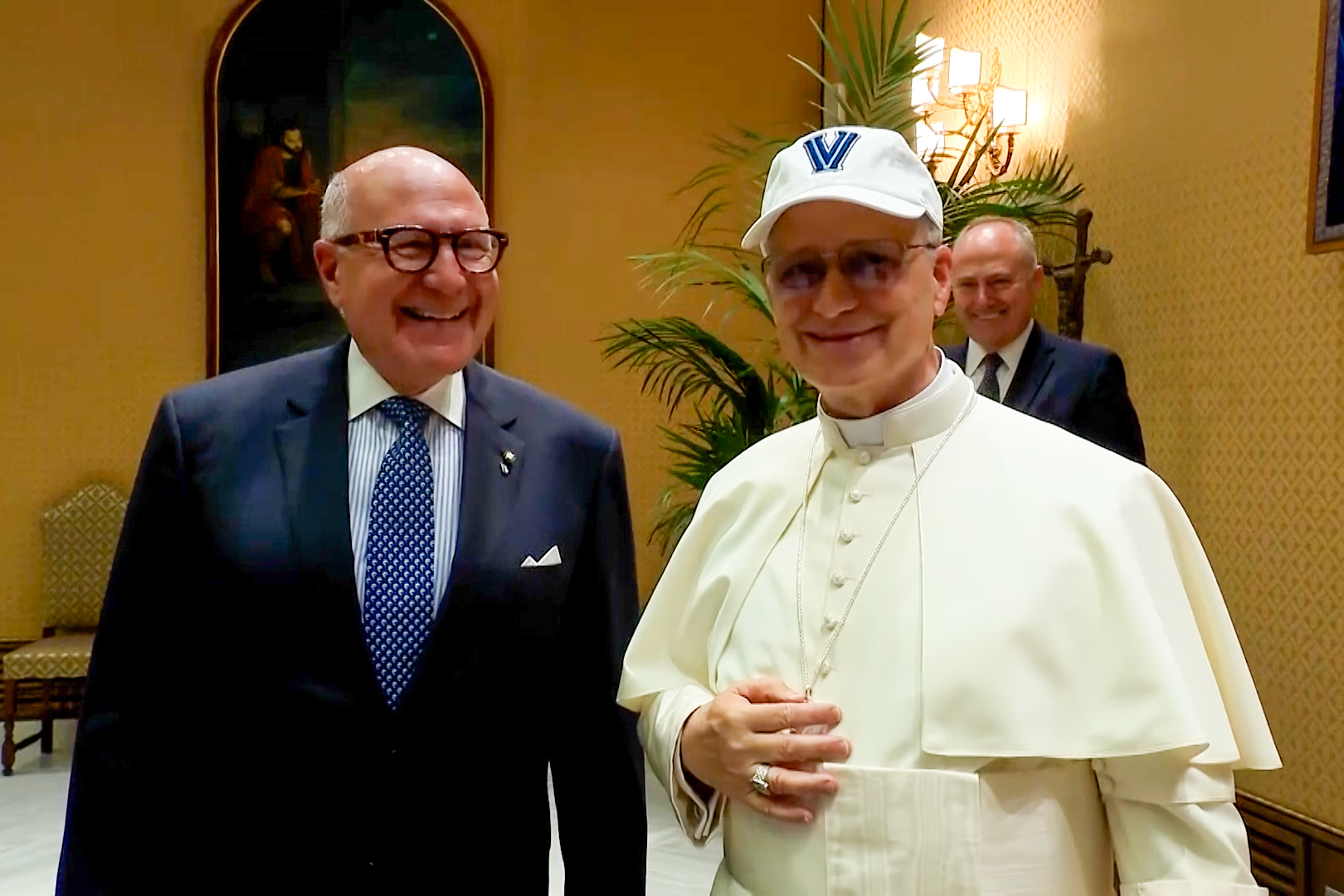
This video screen grab shows Pope Leo XIV wearing a Villanova hat gifted to him during a meeting with an Italian heritage group.
The contests are likely to give Villanova an audience with arguably the school’s most famous graduate. Pope Leo XIV is a 1977 Villanova alumnus formerly known as Robert Prevost. Notre Dame, meanwhile, is the largest Catholic university by endowment.
The game gives Villanova’s men’s team another power-conference opponent on its nonconference schedule. The Wildcats will host Michigan and Wisconsin and also play at Pittsburgh during their nonconference slate next season.
Andrew Kuhn dropped the final score of Ancillae-Assumpta Academy’s seventh- and eighth-grade basketball game into the family group chat last month. He wanted to make sure his 16-year-old son Cole knew that 13-year-old Gavin played well.
The older son responded with an update of his own: a video of him throwing a 101.7-mph fastball.
“New Year’s resolution,” Cole Kuhn texted the family.
Kuhn went to St. Joseph’s Prep on a partial music scholarship — he has played the double bass since the fourth grade — and failed to make the JV baseball team as a freshman. Now he was showing his family that he could throw a fastball harder than most major leaguers.
The teenager from Elkins Park is one of the nation’s top high school pitchers with a scholarship to Duke University and is already being scouted for the 2027 Major League Baseball draft. He’s pitched in just a few varsity high-school games but a triple-digit fastball is enough for scouts to dream on.
And it all happened so rapidly; about as fast as the pitches the 6-foot-6 teenager fires from his right hand.
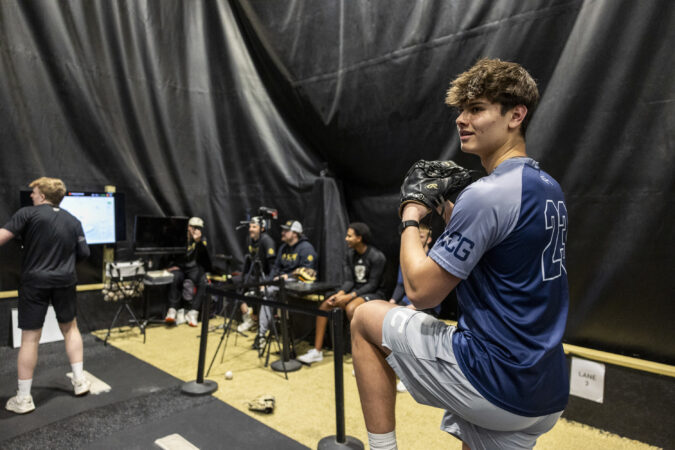
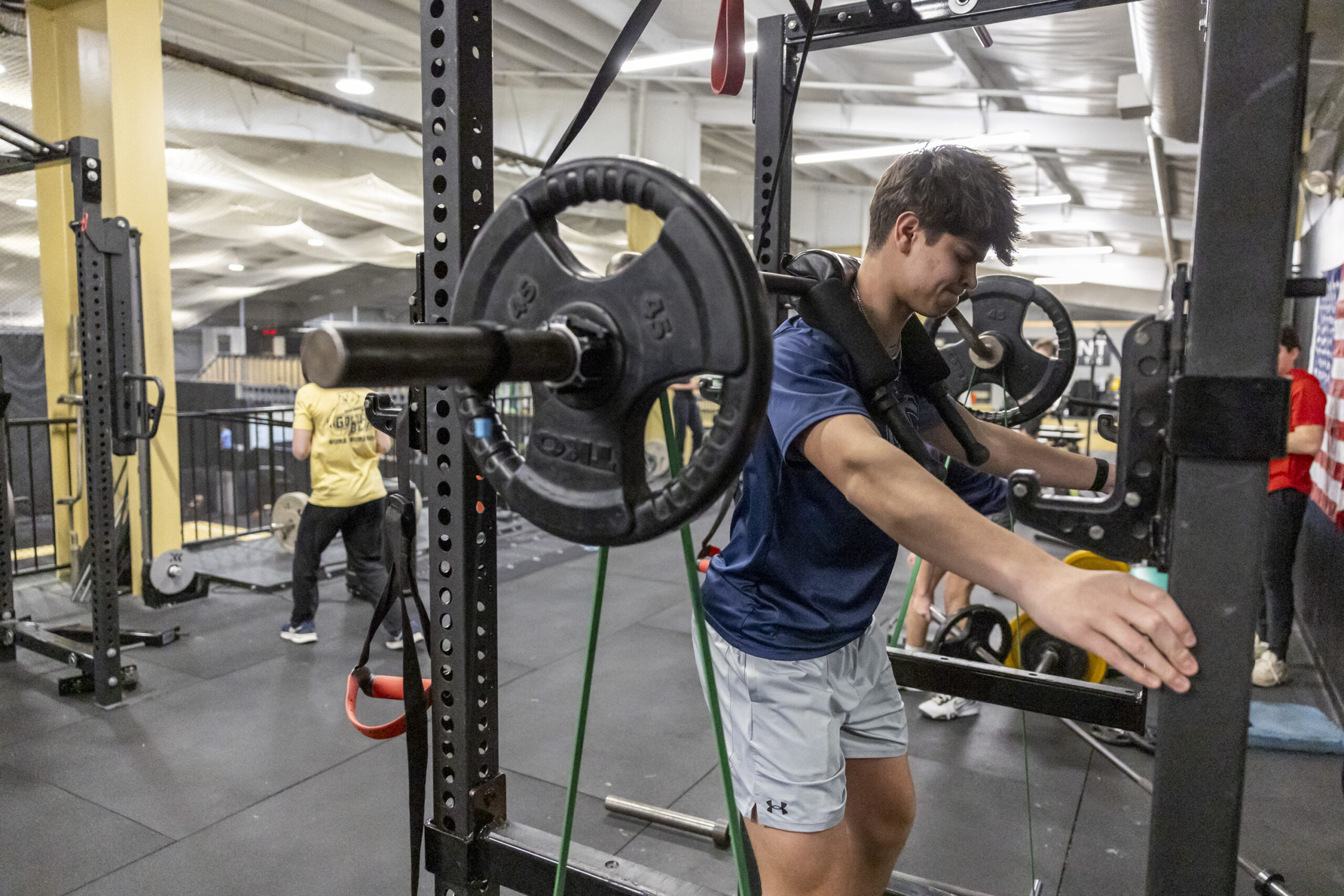
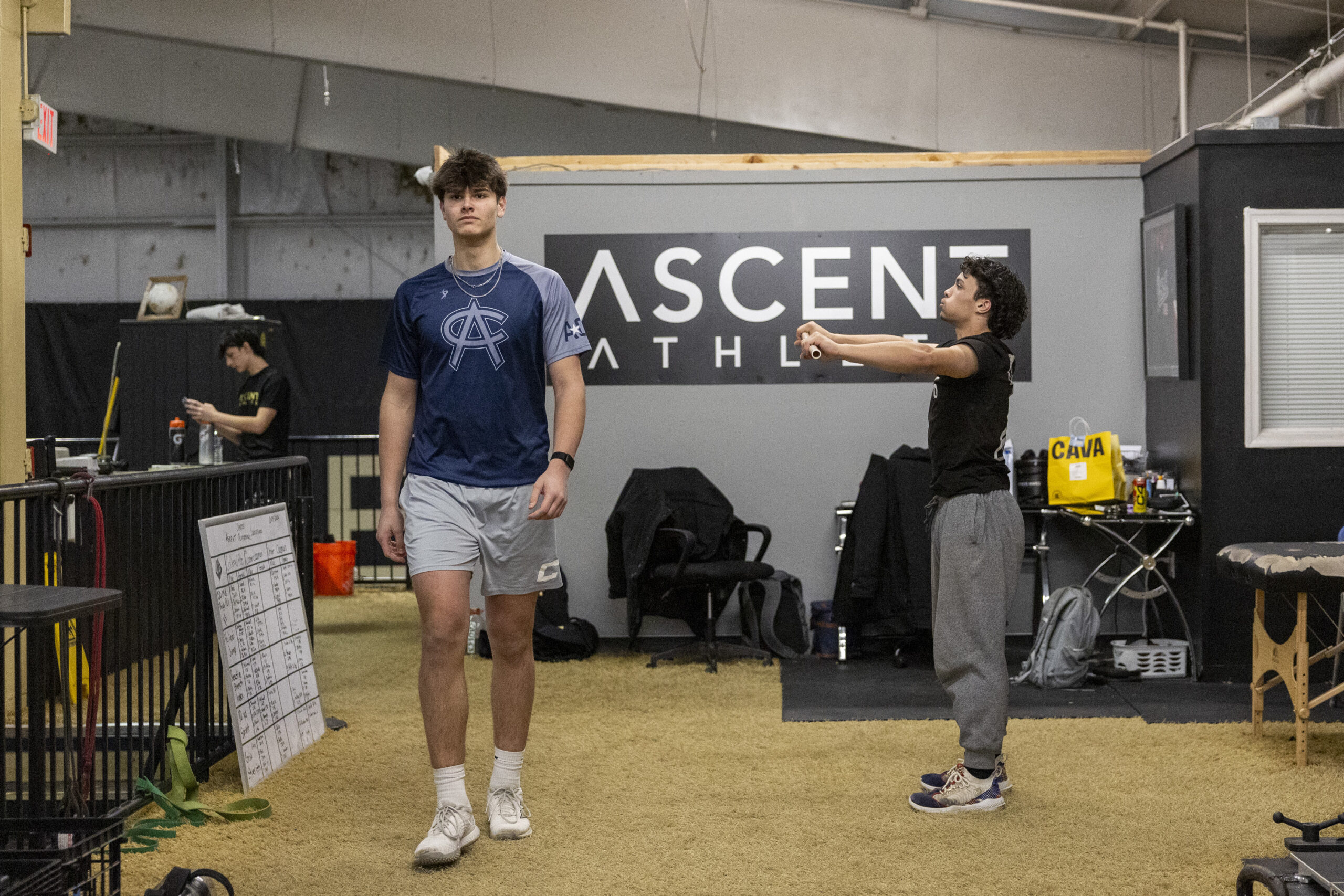
Kuhn was throwing 90 mph in January 2025 when he enrolled at Ascent Athlete, a training center in Garnet Valley that looks like a baseball laboratory. High-tech cameras measure Kuhn’s movements on the mound, a team of coaches studies his mechanics, and he learns in real time how many RPMs his fastball registers. Big league players work out in the morning before high schoolers filter in in the afternoon.
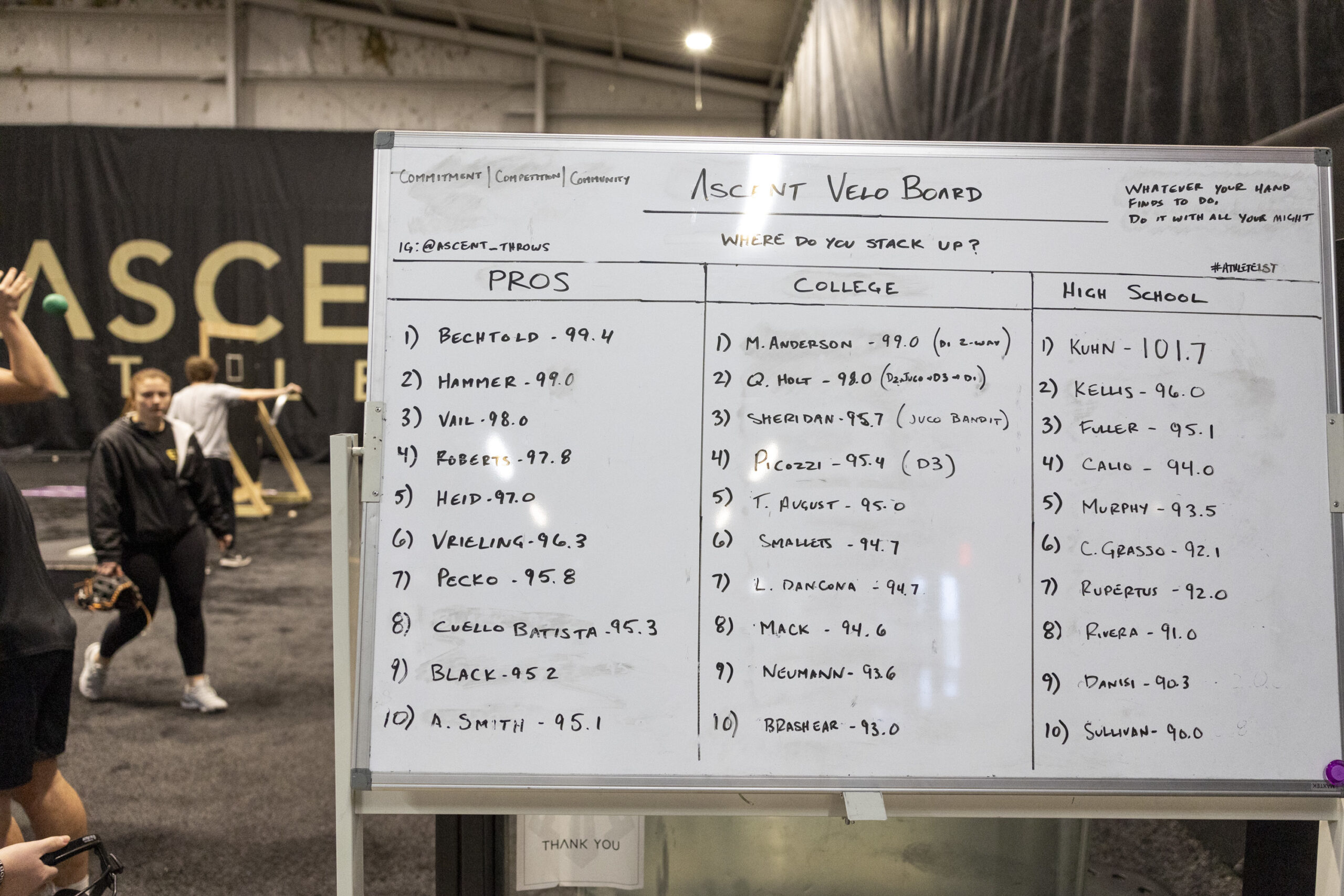
A fitness center upstairs is focused on plyometrics and a computer connected to the batting cages allows a hitter to see how his swings would fare in a big-league park. A dry-erase board near the entrance lists the fastest pitches thrown at Ascent divided into three categories: pro, college, and high school.
“Where do you stack up?” the board says.
A whiteboard shows the top pitching speeds at Ascent Athlete in Garnet Valley, with Cole Kuhn on top at 101.7.
Kuhn, first in the high school column by more than 5 mph, has the fastest pitch.
The facility is open six days a week and Kuhn is there nearly every day, often finding someone on Sundays to unlock the door when the lab is closed. His 101.7-mph fastball did not happen by accident.
“Without question, that place is the single biggest driving force behind his major jumps over the last eight months,” said Kuhn’s mother, Tonya Lawrence. “They’re comprehensive, they’re involved, and they know what they’re doing.”
Scott Lawler, the general manager of Ascent, called Kuhn “a unicorn.” Lawler, who played at Bishop Kenrick High in the 1990s, has never seen a high school arm like this. There is no denying the promise of Kuhn’s right arm, but he is also just a kid who does not yet have a driver’s license.
Andrew Kuhn picked his son up from a friend’s house after Cole threw that 101.7-mph fastball and shook his hand. Two years earlier, Kuhn was nervous to tell his father that he wanted to play winter baseball instead of freshman basketball at the Prep. His parents played college hoops and he thought he’d disappoint them if he didn’t play.
This was not their journey, Andrew told him. This was Cole’s. The son has led the way ever since as he charted his path to that fastball. Dad was proud.
“I said good job,” Andrewsaid. “Then that was about it. Then it’s get home, walk the dogs, have dinner. You’re not all that. You still have chores. Who knows? This whole thing might fall apart at some point. You have to be prepared. You’re not just a baseball player.”
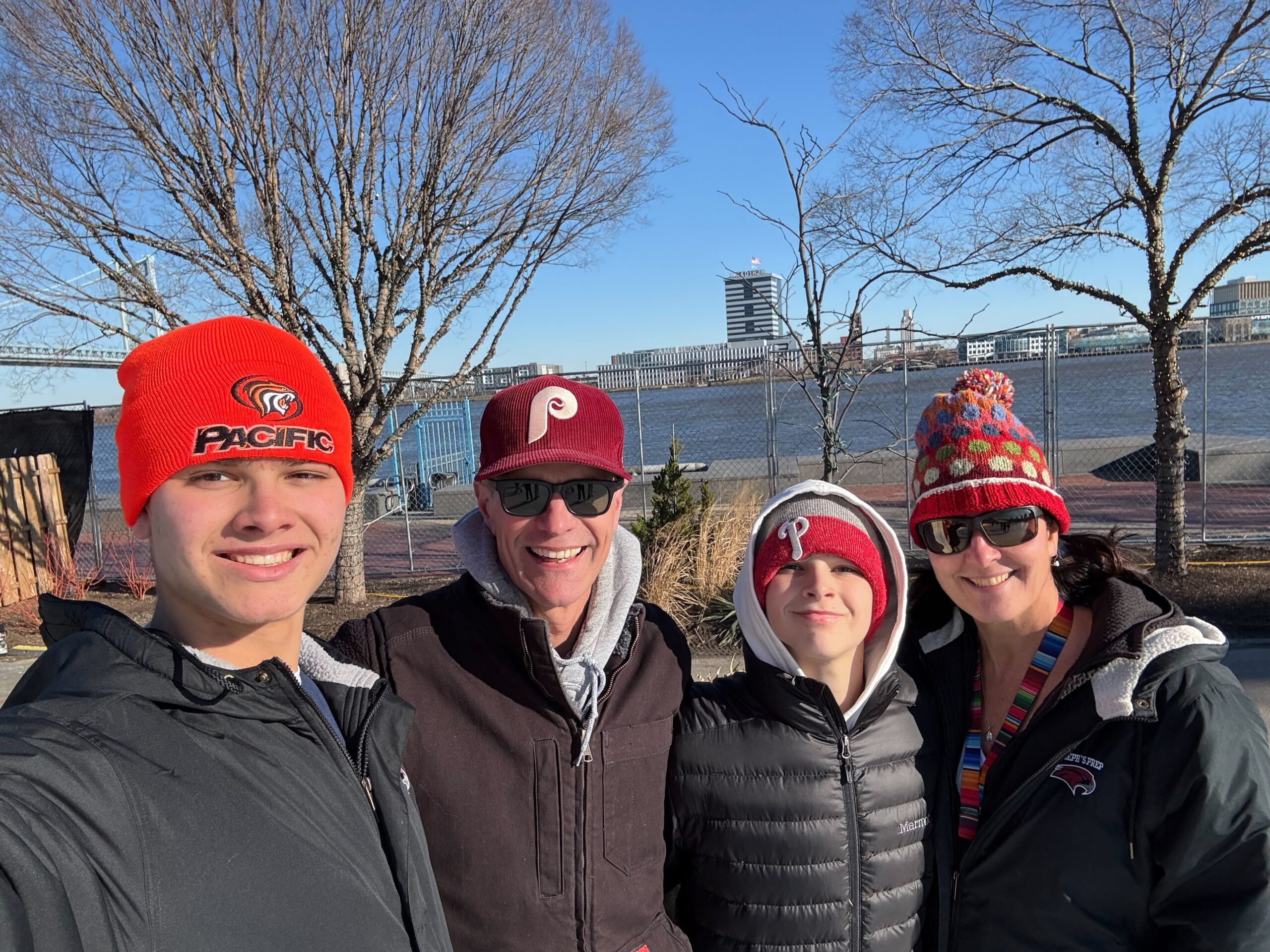
From left: Cole Kuhn with his father, Andrew, brother, Gavin, and mother, Tonya Lawrence.
Ballet to baseball
The letter in Cole Kuhn’s folder as a second grader at Myers Elementary School advertised a ballet class for boys in Jenkintown.
“He was always the kind of kid who if you said, ‘Do you want to try this?’ He would say, ‘Sure,’” Tonya said.
So they signed their son up for ballet at the Metropolitan Ballet Academy where the teachers were strict and timeliness was prudent.
“Six years later, it was clear that he benefited from it,” Tonya said. “Discipline, core strength, grace under pressure. This studio was serious. It was the real deal and we didn’t know that. It just came home in the afternoon packet.”
Kuhn started playing the piano in kindergarten, picked up the double bass in elementary school, and took six years of ballet. He played baseball in the spring, swam in the summer at a public pool, played soccer in the fall and basketball in the winter.
“We tried to get our kids to do everything and then decide what sticks,” Tonya said. “We believe that variety is good for the brain and the body and the mind.”
Andrew and Tonya never intended to build a baseball prodigy. But perhaps keeping him well-rounded — from ballet to baseball — helped Kuhn blossom into the pitcher he is now. He was 15 years old when his fastball reached 90 mph and Tonya said that moment was like an “epiphany” for her son. He now believed he could do this. Kuhn told his parents he wanted to focus solely on baseball.
“It’s not like we’ve been pushing him or somehow training him to hit 90 mph. It wasn’t even on our radar. It just happened,” Andrew said. “In the big picture, it’s really about exercise, friendship, and competition. Then, who knows? Hopefully it’s intriguing enough and interesting enough that kids want to stick with it. We want our kids to be well-rounded and respectful and to try their best.”
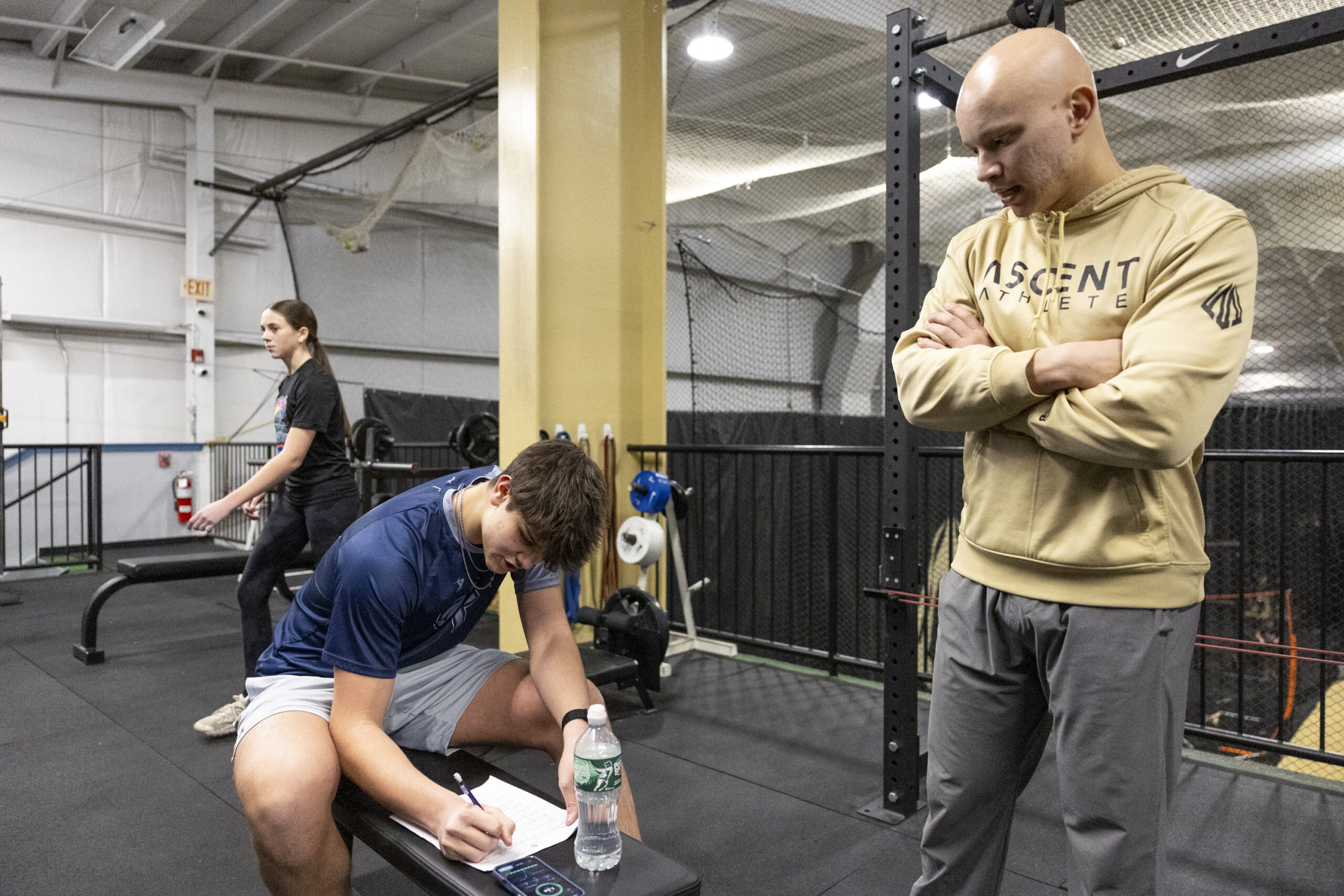
Cole Kuhn trains at Ascent Athlete.
Charting his path
Kuhn told his father last year that he wanted to train at Ascent after meeting Lawler at an event. Many of Kuhn’s Prep teammates were already there and the pitcher thought it was where he needed to be.
Lawler played minor-league ball and coached in college. Jeff Randazzo, Ascent’s owner, was a star at Cardinal O’Hara and is now an agent for major league ballplayers. They have a glistening facility and the connections a player needs to reach the next level.
“This whole world ties together between how you train, who you play for, and who you play in front of,” Lawler said.
Andrew said OK but told his son that he would have to inform his coach in Ambler that he was leaving.
“Ambler did so much for him so you can’t just send a text that you’re leaving,” Andrew said.
So Andrew stood with his son after the team’s final practice and listened to Cole break the news. Andrew played basketball at Franklin & Marshall and Tonya played hoops and lacrosse at Yale before playing basketball professionally overseas. They want their son to make his own decisions, which means working up the courage to explain to someone why you’re leaving.
“That was taking responsibility for the choices you’re making,” Andrew said. “He did it face-to-face. It was hard and emotional for him to leave, but he knew in his own mind that that was the path for him. Cole told him, ‘My dream is to get to MLB and I think the best path for me to get there is to switch to Ascent.’ I was like, ‘Oh, Cole. You sure you want to say all that to this?’”
Kuhn was paired at Ascent with David Keller, the facility’s director of pitching development. Keller pitched at Lock Haven University, where he delved into the data-driven methods that have overtaken baseball since the early 2000s. He put Kuhn on a throwing program and told him that his work upstairs in the weight room was just as important.
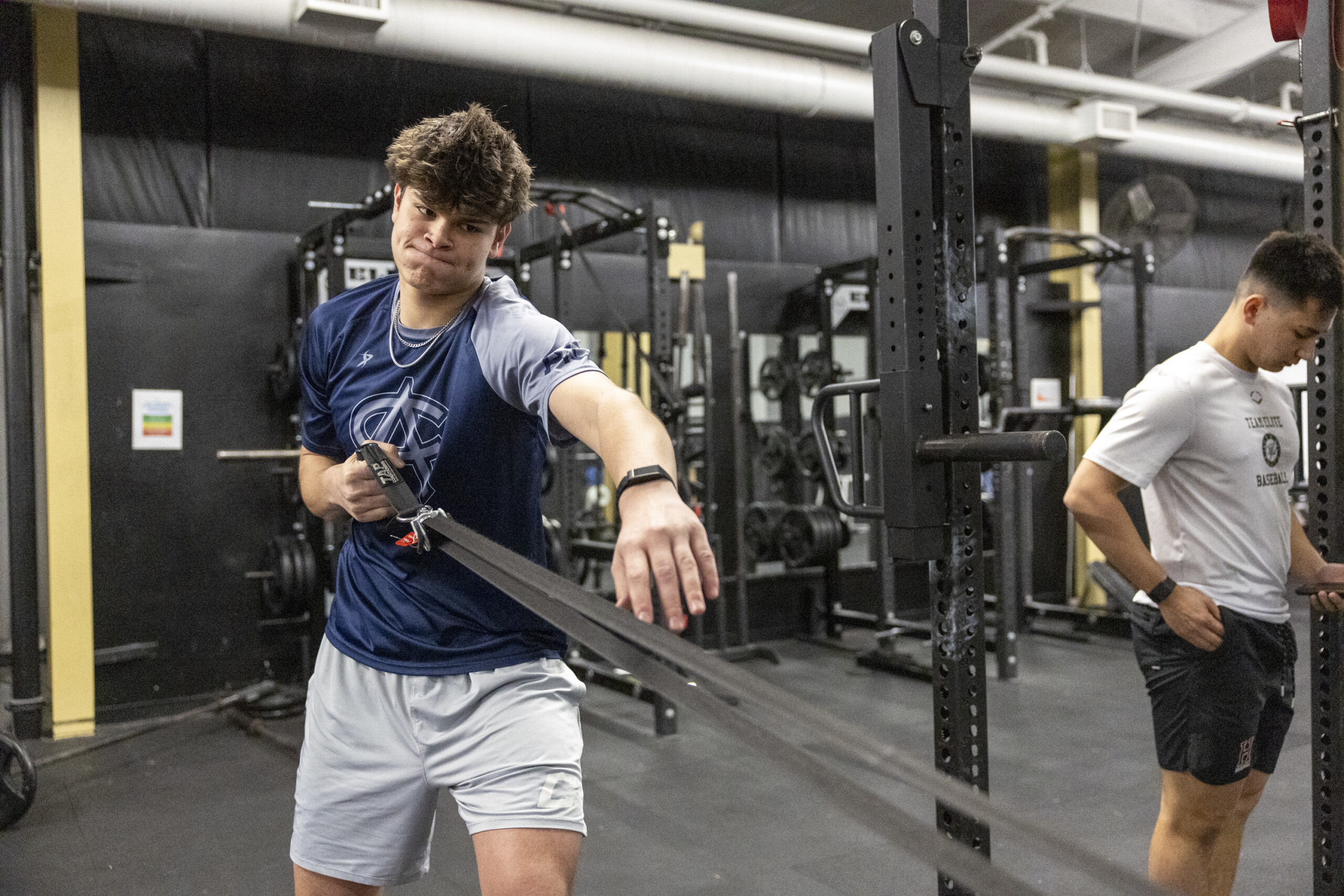
Cole Kuhn works with Francisco Taveras, the assistant director of Sports Performance at Ascent Athlete.
Kuhn gets a ride after school to Ascent from Prep senior Mihretu Rupertus — “I tell him, ‘You treat that dude to anything he wants at Wawa,’” Tonya said — and is given a checklist of exercises to do. He gained 35 pounds from working at Ascent, filling out his towering frame.
Kuhn’s fastball took off as he hit 95 mph last July at an event in Georgia. He pitched six innings, showing he could do more than just light up radar guns. The college coaches watching took notice. The pitcher who studied ballet was suddenly a can’t-miss prospect.
“That was for me when I said, ‘This kid is going to be really, really good,’” Lawler said.
Facing adversity
Kuhn’s phone buzzed exactly at midnight last summer when college coaches were first allowed to contact him. First was Miami. Then Texas Tech. More than 30 schools called that day. A few months earlier, Kuhn was hoping to play college ball at a small school with strong academics. Now the big programs were chasing him. It was a whirlwind.
He flew the next weekend with Tonya to California for the Area Code Games, a premier showcase event for the nation’s top players. It was Kuhn’s chance to show how special his arm was.
“He couldn’t get out of the first inning,” said Andrew, who watched from home on a livestream.
Kuhn, pitching in perhaps the biggest event of his career, struggled. The same coaches who contacted him days earlier were now backing off. Tonya told him afterward to forget about them.
“My line of work may be particularly suited to what was happening, but I am his mom,” said Tonya, who is a child psychiatrist. “It’s hard to watch, but it’s so much part of the game and part of life. I appreciate that that’s what happened. Maybe not at that moment, because seeing your kid struggle is hard. But I knew he was going to be fine. If people see an outing and say they’re no longer going to be behind the kid, then I don’t want my kid playing for that program. That was easy for me. In a weird way, I’m glad it happened. Not only for mental toughness but to kind of weed out people.”
Kuhn returned home, took a few days off, and then returned to Ascent. He kept working. There are going to be some bad days, his father reminded him.
“I always tell him that I’m happy for him when things go well,” Andrew said. “But really I’m only proud of the work that he does on a weekly basis. And because he’s such a grinder, it’s going to work out. And if it doesn’t at some point? Yeah, you can pivot. He has battled through tough things along the way.”
Cole Kuhn’s father, Andrew, says he’s “proud of the work that [Kuhn] does on a weekly basis. And because he’s such a grinder, it’s going to work out.”
Staying healthy
They didn’t measure launch angles or even know how hard an opposing pitcher was throwing when Lawler was playing at Kenrick.
“It was ‘I hit the ball hard. Everyone is swinging and missing against this guy who looks like he’s throwing hard,’” Lawler said. “But we didn’t know how hard it was or how far it went.”
The new ways of instruction are great, Lawler said, as the real-time information provides instant feedback and allows for coaches and players to make corrections in the moment. He can study the movement on Kuhn’s fastball and tell the catcher where to keep his glove. But there’s also a need to manage the information that players see.
“We have to train the kids to not obsess over it,” Lawler said.
Kuhn said he likes to know how many RPMs his fastball has so he knows if he’s generating enough spin on his pitches. But he doesn’t chase the numbers. On the day he threw 101.7, Kuhn was actually working on developing a cutter. The triple-digit fastball just happened. On the mound, he said, he’s focused on the batter and not the data.
Major league evaluators — including Phillies general manager Preston Mattingly — came to Ascent last month to watch Kuhn pitch. Kuhn said it was exciting but the attention didn’t faze him. He’s committed to Duke, but things could change before he’s eligible to be drafted in July 2027. He’ll likely have a choice to make: Go to college or turn pro. First, he has to stay healthy.
“I don’t want him to feel like he has this golden arm and that’s the only thing that matters,” Andrew said. “But it is concerning. The whole thing about how many Tommy John surgeries there are and using the technology input to throw faster and faster, it’s a little worrisome. But it’s just, ‘Slow down.’”
Randazzo said it was no surprise that Kuhn hit triple digits as he has the frame (6-6 and 230 pounds) and arm speed to do so. But it was a slight surprise that it all came together nearly two years before he could get drafted. Now what?
“It’s very common these days with Tommy John surgery and injury in general,” Randazzo said. “You do have to find that balance with still being a normal 16-year-old kid. You want to tread lightly with it, but you also don’t want to put him into a bubble. You just have to be methodical about it with arm care and rest. It’s not a carnival game that this kid is throwing hard. It’s real. There’s no crystal ball with it.”
Cole Kuhn has committed to Duke, but things could change before he’s eligible to be drafted in July 2027.
Kuhn’s fastball has spiked at Ascent, but he said the facility does not simply try to build velocity. The pitcher said it’s instead a result of everything else. He has a nutritionist, follows a workout regimen, and is already built like a major leaguer. The facility limits how often he can throw, knowing that overextending him as a teenager could hurt him in the future.
“You can never 100% prevent injury or setbacks,” Keller said. “But it is important that every day, everything we do contributes to his long-term health. We track all his volume, his intensity, his velocity, and how many times he throws. We want him to get to where he wants to be as safely as possible while also challenging him.”
Big-league dreams
A few days after Kuhn hit 101.7 mph, he marveled to his father how his fastball was nearly as fast as pitches thrown by Phillies closer Jhoan Duran.
“Yeah, it’s cool,” Andrew said. “But it’s not just a carnival trick. You have to make sure you’re doing everything to stay healthy.”
Three years ago, Kuhn failed to make the JV baseball team. And now he’s able to compare himself to big leaguers. It all happened so fast. He’ll pitch this spring for St. Joe’s Prep and spend the summer playing with Ascent’s travel team. He’ll have the chance to prove he can harness his triple-digit fastball. The attention, Kuhn said, has been fun.
“This is like the best part of my life, honestly,” Kuhn said. “It’s only up from here. I’m really excited.”
In just a few years, he could be pitching in the majors. Maybe they’ll even turn the lights off like they do for Duran when Kuhn comes to the mound with a triple-digit fastball. It’s easy to imagine it all when you’re throwing 101.7 mph. First, he has to get his driver’s license. And that will be something he can text the family group chat about.
“He has a lot of supporting characters helping him get to where he’s hoping to go,” Tonya said. “For many boys in the world, it’s MLB, the NBA, or the NFL. I can’t even believe that this might happen. I’m still in awe. I continue to just be incredibly proud of the kinds of things that he’s doing and setting goals and reaching them left and right.”
We made it, folks. After 12 years, 4,371 days, a global pandemic-enforced false start, and a little late drama about whether the rink in Milan would actually be ready in time, best-on-best men’s Olympic hockey is officially back.
The puck drops Wednesday at Santagiulia Arena with Slovakia playing Rasmus Ristolainen and Finland (10:40 a.m., USA and Peacock), and host Italy facing off with Sweden (3:10 p.m., USA and Peacock) to begin the highly anticipated Milan Cortina Olympic tournament. On Thursday, the other eight nations are in action, including the United States and Canada.
With NHL players back in the Olympics, there are storylines aplenty as the tournament commences. Here are four things we are watching for in Milan.
Flyin’ high
The Flyers weren’t exactly flying high entering the Olympics, having lost 12 of 15 games, but they will still be well represented in Milan.
Defenseman Travis Sanheim will play for gold medal favorite Canada, while Dan Vladař (Czechia), Ristolainen (Finland), and Rodrigo Ābols (Latvia) were named to the rosters for their respective nations. Unfortunately for Ābols, who represented Latvia at the Beijing Games in 2022, he won’t be able to play in Milan after suffering a severe ankle injury in mid-January. Flyers coach Rick Tocchet will also be busy in the homeland of his parents, as he will serve as a jack-of-all-trades assistant on Jon Cooper’s Canada staff.
Flyers defenseman Travis Sanheim (left) will play for Canada at the Olympics.
The Flyers connections don’t end there, as some old friends will be participating, some more well-remembered than others. Radko Gudas and Lukáš Sedlák will play alongside Vladař with Czechia, while ex-coach John Tortorella, who was fired in March, will be an assistant with the Americans under Mike Sullivan.
Last but not least, Pierre-Édouard Bellemare (yes, you read that correctly) will be captaining France. Now 40, Bellemare, who made his NHL debut at 29 and played three seasons with the Flyers (2014-17), will be the oldest men’s player at the tournament as France makes its return to hockey after a 24-year wait. France’s most decorated NHL player, Bellemare, told NHL.com the “Olympics are the highlight of a lifetime … by far.”
Simply the best
While Macklin Celebrini, 19, will be making his Olympic debut, and Sidney Crosby, 38, has famously done this before given his Vancouver heroics in 2010, there are so many players in their mid- to late 20s who will be participating in their first Olympics because of the NHL’s lack of recent participation.
That includes stars like Connor McDavid, Nathan MacKinnon, Leon Draisaitl, Auston Matthews, Quinn Hughes, Cale Makar, Mikko Rantanen, David Pastrňák, Jack Eichel, and so many others. Wow.
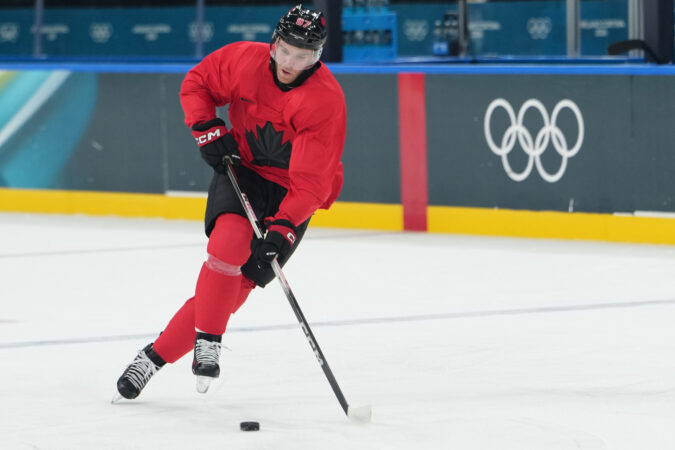
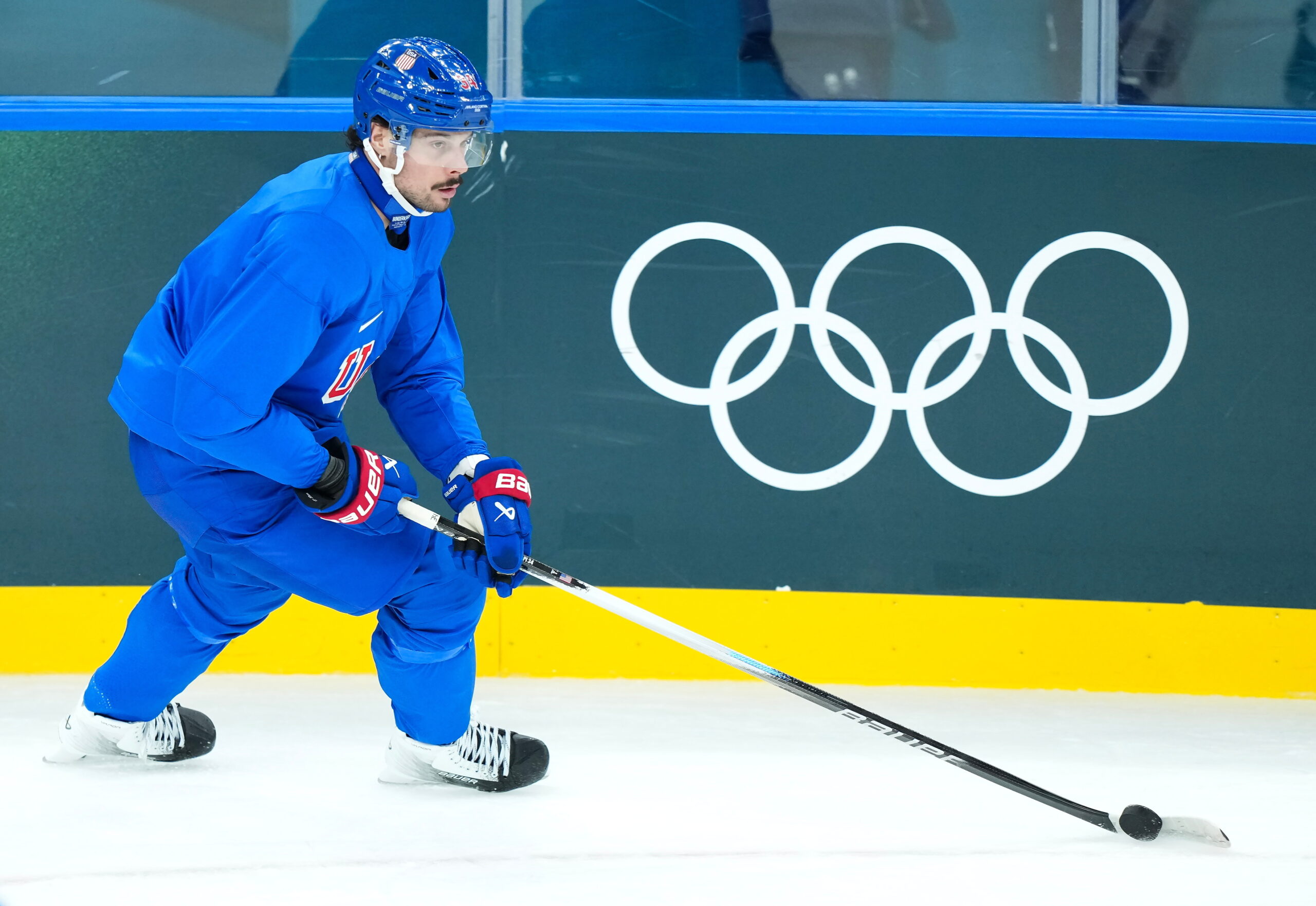
United States forward Auston Matthews takes part in practice Sunday in Milan.
Seeing a mostly full best-on-best tournament for the first time since the 2016 World Cup should provide some exhilarating hockey and drama, especially given how much the players have pushed for this over the past decade. The overall speed and skill the players possess has grown by leaps and bounds since the league last participated in 2014, and that should only enhance one of the top events of any Olympic Games, even with Russia and its star-studded roster led by Nikita Kucherov, Kirill Kaprizov, and Alex Ovechkin notably absent due to the country’s involvement in the war in Ukraine.
Heated rivalry
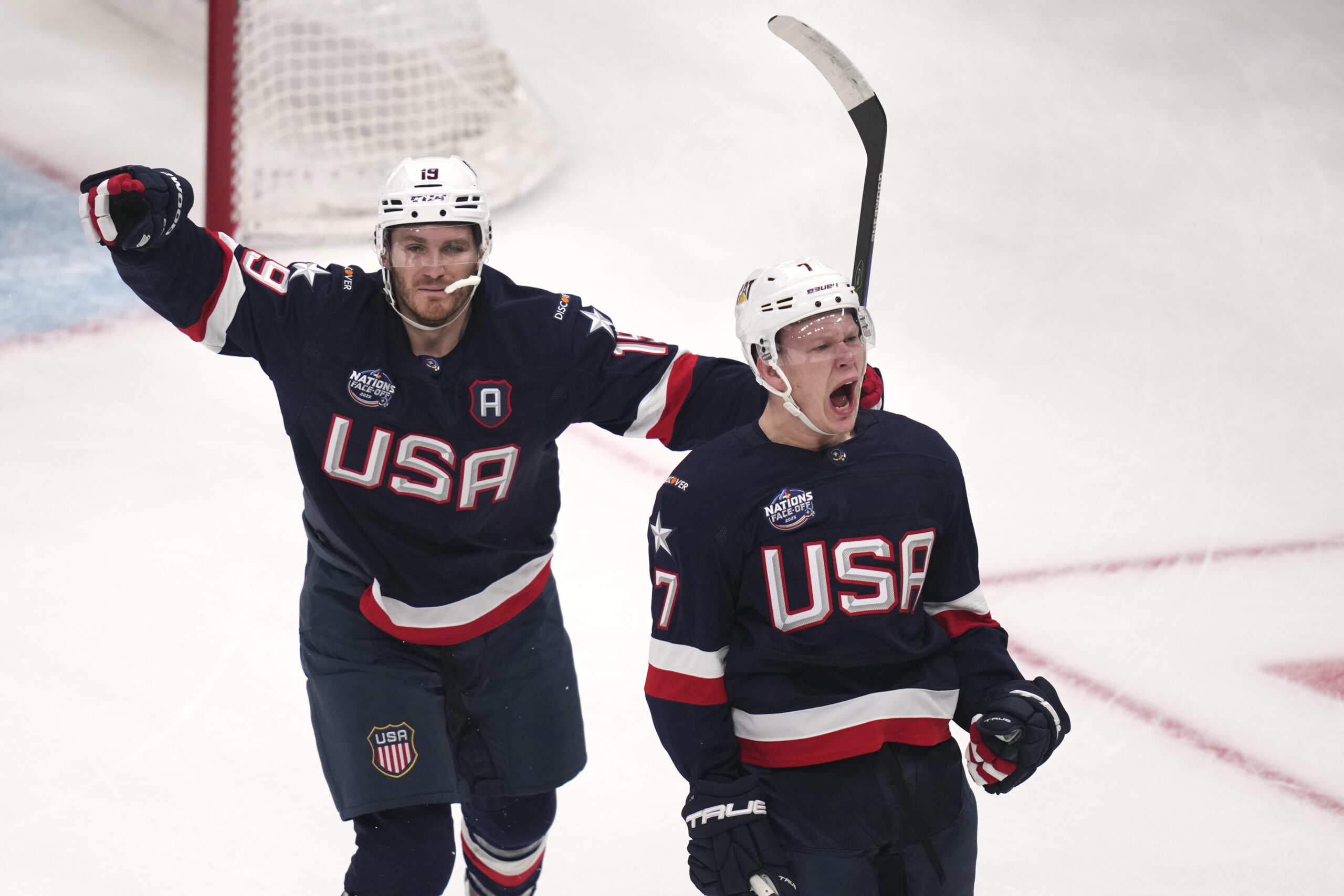
Last year’s 4 Nations Face-Off was designed to serve as a tasty hors d’oeuvre to the Olympics’ main course, and it left the dinner guests more than satisfied.
The NHL probably felt the tournament could be a modest success and help conjure up interest in the sport a year out from the Olympics. It exploded into something well beyond Gary Bettman’s wildest dreams, thanks in large part to three spirited bouts in nine seconds to begin a preliminary game between Team USA and Canada.
Fight Night at the Bell Centre, however premeditated it was on the U.S. side, and bolstered by the already tense political backdrop between the countries, went viral and put hockey in front of a whole world of eyes that it doesn’t usually reach. Canada would enact revenge in the final in overtime five days later, but a rivalry was renewed and the bad blood was boiled.
That rivalry, and the battle for hockey supremacy, will resume over the next few weeks in Milan as the United States and Canada seem to be on a collision course for the gold medal game. They have always been geographical rivals but never truly equals on the ice. Team USA has closed the gap on its northern neighbor, though, even to the point where a U.S. win could signal a changing of the guard to some. For the last 10 years, everyone has wanted to see the U.S. vs. Canada for all the marbles on the biggest stage. After last year’s two thrilling matchups in the 4 Nations, here’s hoping they get their wish.
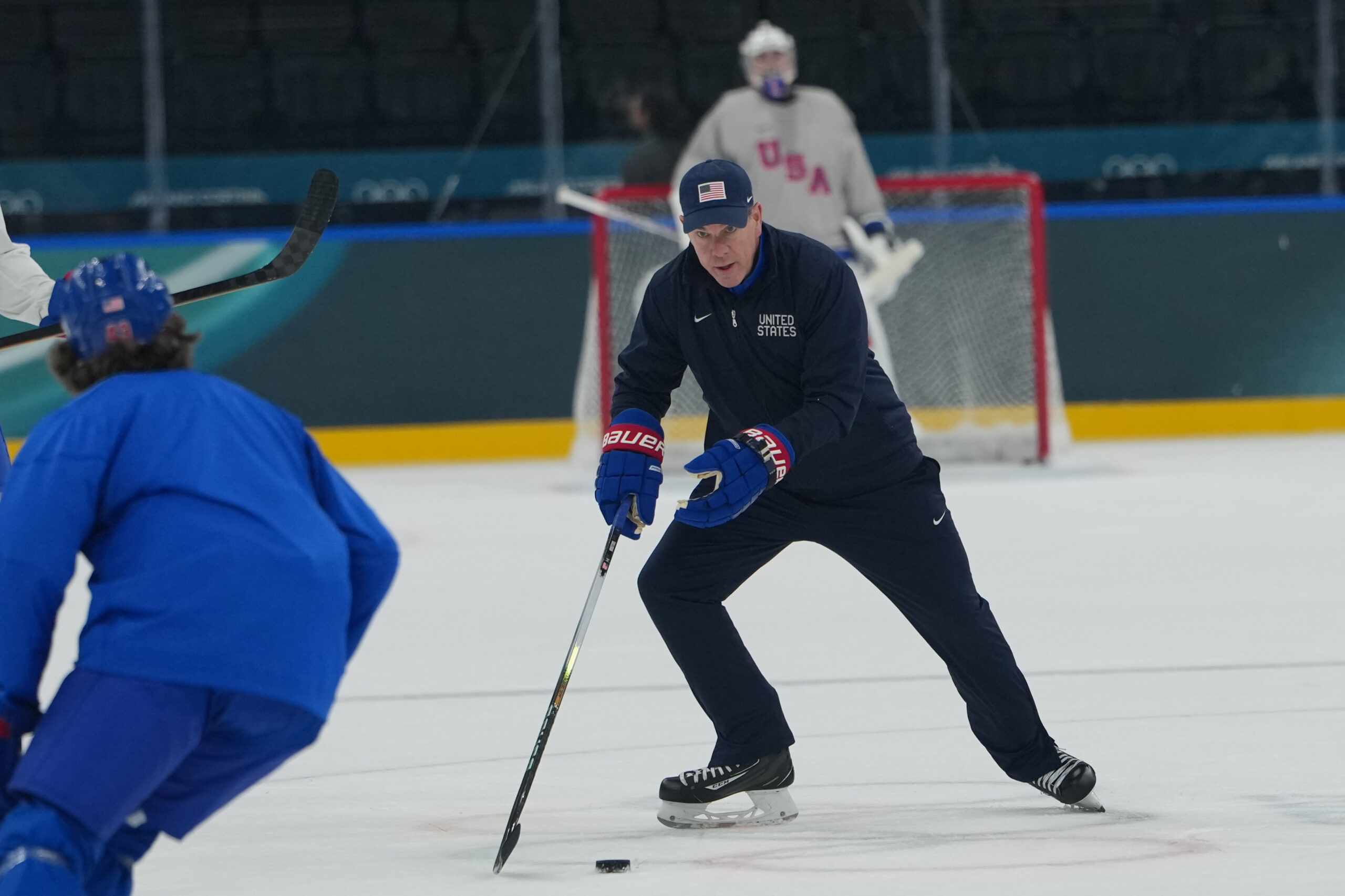
United States coach Mike Sullivan skates with the puck during his team’s workout Sunday in Milan.
The American dream
Winners of two of the last three World Juniors and last year’s senior World Championship, and a few Jordan Binnington highway robberies away from 4 Nations glory, USA Hockey is sending its best-ever team to an Olympics and the message is clear: gold or bust.
On the surface, that goal might seem lofty for a U.S. team that hasn’t won gold since 1980’s Miracle at Lake Placid and that hasn’t won gold in the previous five tournaments when NHL players participated. But the Americans have been coming on for some time now and have long wanted a chance to prove they are not only Canada’s equals but have surpassed them at their own game.
After a close call at the 4 Nations, the Tkachuk brothers are back to wreak havoc as they look to unseat Canada as international hockey’s top dog.
Last year’s 4 Nations Face-Off did nothing to quell those ambitions, as the U.S. beat — and beat up — Canada on Canadian soil in the preliminary round before going toe-to-toe with the star-studded Canadiens in a nail-biter of a final. That one ended with a McDavid overtime winner that was probably a bit harsh given the quality of the Americans’ chances and Binnington’s heroics in goal. Add that Team USA’s best defenseman, Quinn Hughes, was unavailable for the tournament, and that one half of the Bash Bros., Matthew Tkachuk, was severely hobbled and mostly relegated to a cheerleader from the bench, and the U.S. has reasons to be confident. Add Canada’s uncertainty in goal and the case for the U.S. gets even stronger.
Canada is still a slight betting favorite thanks to names like McDavid, MacKinnon, Makar, and Crosby, but many think this could go either way, and with the Russians not involved and Finland and Sweden decimated by injuries in the lead-up to the tournament, this seems like the likeliest final.
Can the U.S. team get over the line this time against its archrival and claim hockey’s heavyweight title belt? If it does, there won’t be an underdog movie that begins with an “M” this time around.
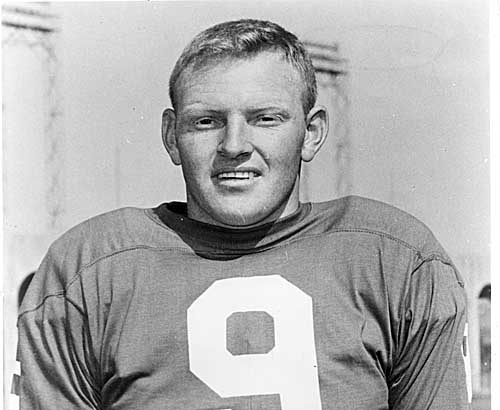
Sonny Jurgensen was an Eagle and a Redskin but never a saint.
It’s been about a week since the hedonistic Hall of Famer died at 91 and nearly 62 years since he departed Philadelphia for Washington in a trade that left the city’s bartenders as downcast as its football fans.
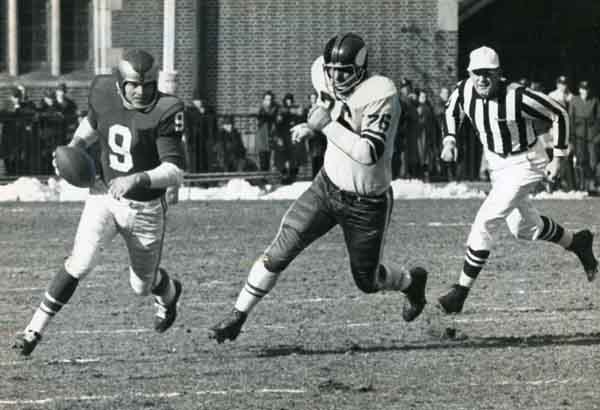
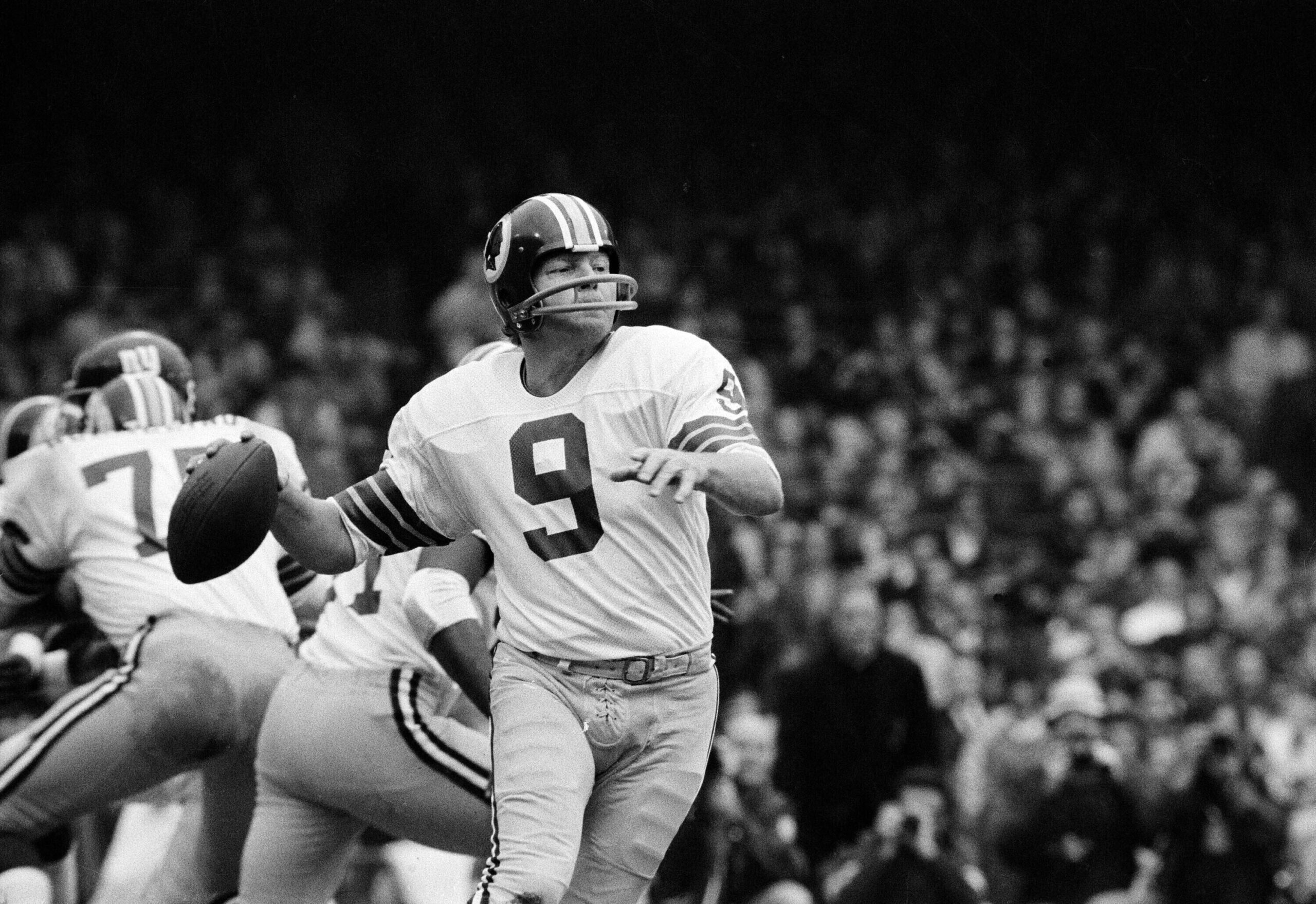
Thinking of Jurgensen now, I still conjure images of that flimsy helmet he wore with its single-bar face mask. I see him squirming in the pocket, quickly surveying the downfield action, then flicking those effortless passes to Tommy McDonald or Pete Retzlaff.
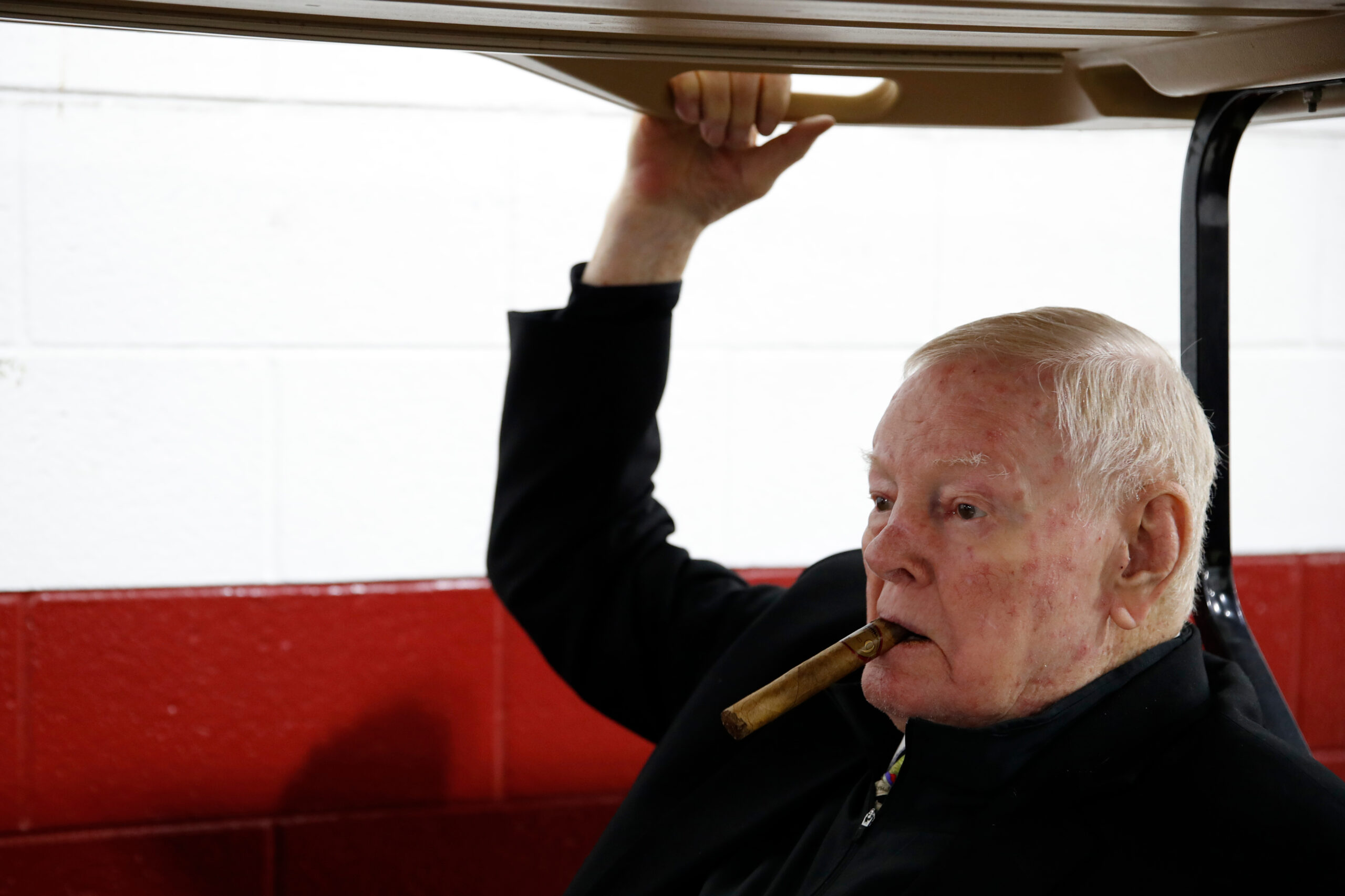
But I also still see, maybe more than in any other athlete from that era, his personal foibles. There was the booze, the pot belly, the mischievous smile, the postgame cigars that jutted from his mouth like middle fingers to those who disapproved.
Sonny Jurgensen was one of the NFL’s great characters of his era and went go on to achieve exalted status in Washington.
Jurgensen was one of the first Philly athletes whose lifestyle was as well-known as his talents. Throughout his seven seasons as an Eagle, the last three as a starter, Philadelphia was rife with whispered stories about the redhead’s off-field encounters. It hardly was a secret that he loved liquor, ladies, and last calls.
Like many of his early-1960s Eagles teammates, the native North Carolinian lived during the season at the Walnut Park Plaza hotel at 63rd and Walnut, just a short stagger from one of the team’s favorite bars, Donoghue’s. Jurgensen regularly showed up there as well as Center City spots like the Latimer Club and Jimmy’s Milan.
Another of his favorite haunts was Martini’s, an Italian restaurant and bar in Berwyn where he befriended the owner, Louie DiMartini. DiMartini’s son, Bill, remembered all the nights that his dad and “Uncle Sonny” showed up at their house.
“One night, my siblings and I were in bed when we were awakened by loud singing,” DiMartini said. “Sonny and my dad had just made up a song called ‘Pine Tree.’ The song had no other lyrics but ‘pine tree,’ and they went on singing it for hours.
“Another time, the Eagles couldn’t find Sonny; he hadn’t shown up for practice. We woke up to get ready for school, and as my older brothers went downstairs they found Sonny sleeping on the couch. My father told us, ‘You didn’t see anything.’”
I was a 12-year-old sports nut when I learned of Jurgensen’s off-field proclivities. For me, pardon the expression, it was a sobering experience, perhaps the first time I realized sports heroes weren’t gods.
Sonny Jurgensen led the Eagles to a 10-4 mark and was an All-Pro in 1961. After two more seasons he was traded to Washington.
If my memory is accurate, it happened on a morning in January 1962. The night before, my father, the sports editor of two Philadelphia neighborhood weeklies, had attended his first Philadelphia Sports Writers Association banquet.
I couldn’t wait to hear about it. So at 7:30 the next morning, when he got home from his full-time job as a Bulletin proofreader, I was waiting at the door. As I peppered him with questions, he handed me the event’s program. On its front page were the autographs he’d gathered from sports celebrities he’d encountered there — Gene Mauch, Sonny Liston, Mickey Mantle.
Clearly a little starstruck himself, he eagerly described Mantle’s Oklahoma drawl, Liston’s enormous hands, Mauch’s steely eyes.
Then I saw another signature, this one from Jurgensen, the spirited quarterback who’d just emerged as an NFL star after throwing a league-best 32 touchdown passes during the Eagles’ 10-4 season in 1961.
I awaited my father’s impressions. A virtual teetotaler, his tone shifted when he said, clearly disapproving, “I’ve never seen anyone drink so much.”
That was a jolt. Could a star quarterback be a drunk? That didn’t compute. It was, after all, the pre-Ball Four world of the early 1960s when most of us knew nothing about things like Mantle’s carousing or Liston’s mob connections. Sports writers of the era, many of whom partied just as hard as Jurgensen, shielded the athletes they covered.
My young mind’s palette worked in black and white only. There were no shades of nuance. Heroes had no flaws. Or so I believed. Was Jurgensen a drunk or a hero? He couldn’t be both. Was he the pure-passing machine who’d just thrown for an NFL-high 3,723 yards? Or was he no different from those lost souls my grandmother pointed out in warning whenever we rode the 47 trolley past Vine Street’s Skid Row.
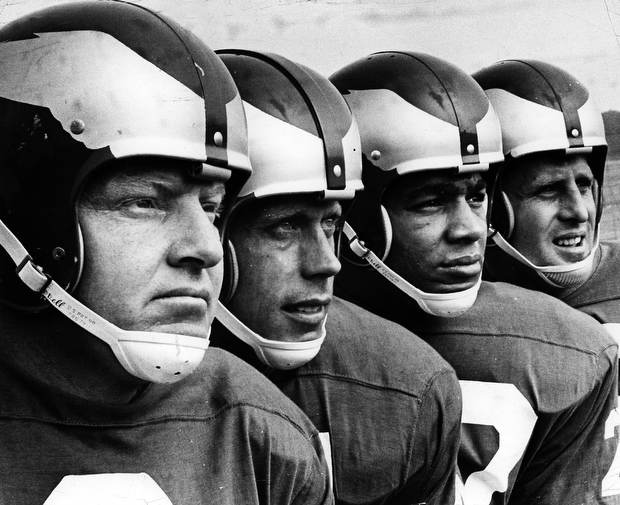
Eagles players (from left) Sonny Jurgensen, Pete Retzlaff, Timmy Brown, and Tommy McDonald during the 1963 season.
I still wasn’t sure when in April 1964, 12 days after he dealt McDonald, Jurgensen’s partner on and off the field, coach/general manager Joe Kuharich shocked Eagles fans by trading the colorful QB to Washington. I wondered if it had something to do with the then 29-year-old’s lifestyle. And I wasn’t alone. Daily News columnist Jack McKinney gave voice to what many thought was behind the incongruous trade.
“Another theory is that Jurgensen’s off-field antics, something less than that of a Boy Scout leader, may have been a factor.”
That trade, which brought pedestrian QB Norm Snead here, was a bad omen. It launched one of the longest and darkest stretches in Eagles history. They wouldn’t reach the postseason again until 1978. In those 14 intervening seasons, the team amassed a combined record of 68-122-6.
With Jurgensen, meanwhile, Washington made five playoff appearances in that span, and in his first six seasons there, he was named first- or second-team All-Pro four times.
No matter the Washington coach, Jurgensen flourished. For three seasons, he clashed with prudish Otto Graham — “He likes candy bars and milkshakes,” Jurgensen said, “and I like women and scotch” — but twice led the league in passing yards. He got along famously with Graham’s successor, Vince Lombardi. Never prone to hyperbole, Lombardi once admitted that Jurgensen “may be the best the league has ever seen.”
And he was still pretty formidable after hours, too. He became a regular at such late-night D.C.-area establishments as the Dancing Club and Maxie’s. At least twice, he was charged with driving while intoxicated.
Sonny Jurgensen spent 11 seasons as a player in Washington and was named to the Pro Football Hall of Fame in 1983.
Jurgensen ended his 18-year career in 1974 with the highest QB rating (82.62) of anyone in the pre-1978 era. Sometime in the 1980s he reportedly stopped drinking and for four decades was Washington’s drawling, plain-spoken radio analyst.
By then the NFL had changed. Its stars now endure round-the-clock scrutiny.
I’m not sure how Jurgensen would have dealt with social media, paparazzi, tabloid headlines. Would it have impacted his play? Would the DWIs have sent him to rehab? Would the whispers have become shouts?
In the end, I really don’t care.
I lost that sportswriters banquet program years ago. I lost a lot of that youthful righteousness, too. So from now on, in those corners of my mind where it’s always a sunlit Sunday at Franklin Field, I’ll remember Jurgensen simply as a gifted man with a child’s name who lofted all those beautiful spirals.
When your social media algorithm starts feeding you videos of Snoop Dogg, and Jason and Kylie Kelce learning how to curl, it must be time for the Winter Olympics.
Ahead of the Milan Olympic Games, similar to the Kelces and Snoop Dogg, I had the opportunity to get some hands-on training. Here’s a look about the training that goes into the sport, my own experience on the ice, and some local places to play.
Curling can look effortless on television, but looks can be deceiving.
Daniel Laufer, 19, a freshman at Thomas Jefferson University from Richboro, Bucks County, who has been curling for 12 years, had the opportunity to compete on this year’s Olympics ice at the Cortina Olympic Stadium in Italy during last year’s World Junior Curling Championships as a member of Team USA.
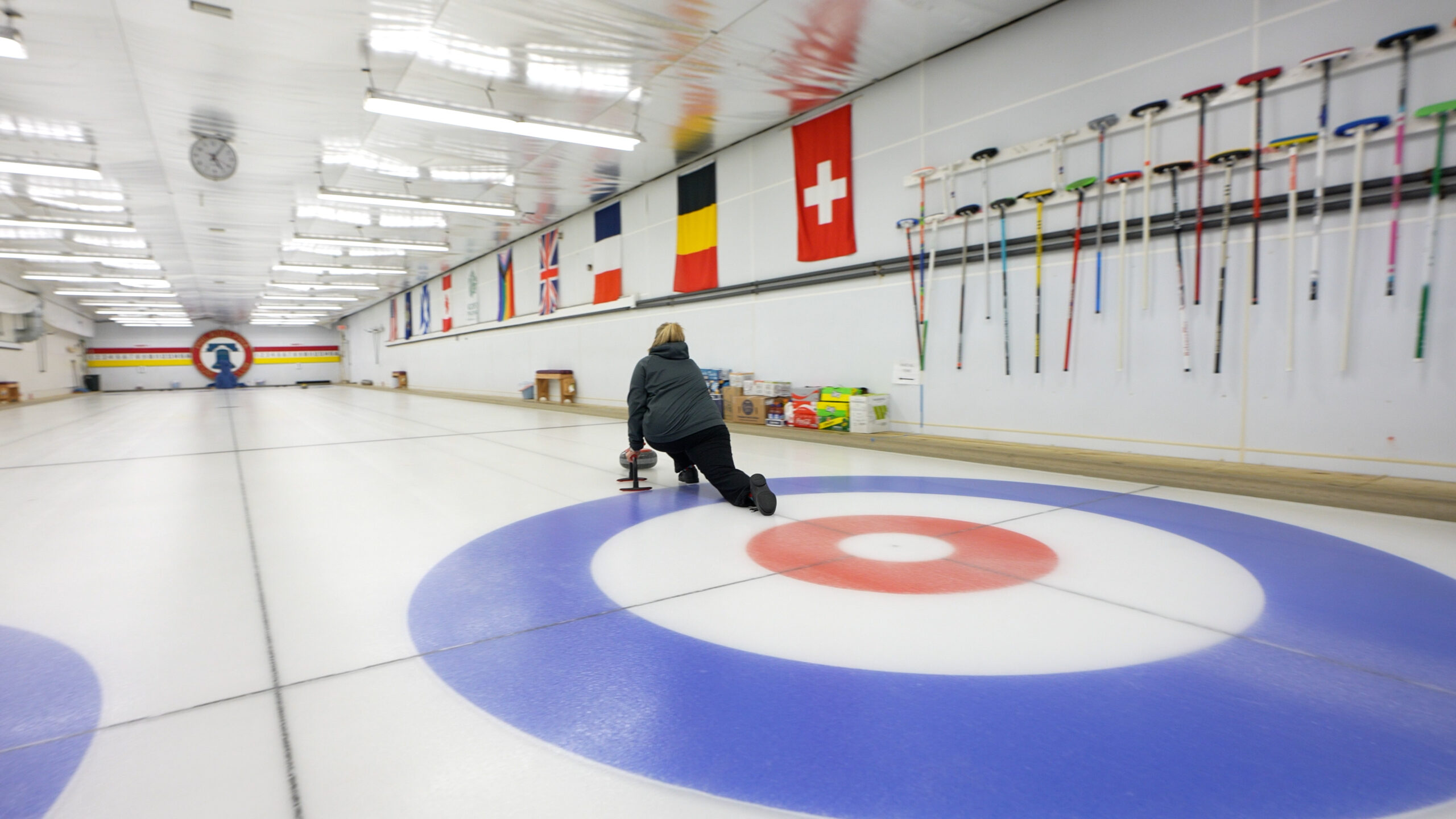
The ice at the Olympic curling center in Milan, like the ice seen here at the Philadelphia Curling Club in Paoli, is pebbled, which is different than the smooth ice you’d find at a Flyers game.
“That was a really great experience,” Laufer said. “[The ice] was really good. Obviously, not as good as it is for the Olympics. They were still figuring out the facilities and figuring out the rocks. We had a really good experience with that venue.”
This year, Laufer again will be competing in the World Junior Curling Championships, just outside Copenhagen, Denmark, from Feb. 24 through March 3. Ahead of the event, he’s been training, working on his strength and cardio.
“I usually try to lift four to five times a week and do a significant amount of cardio,” Laufer said. “When I was training specifically for Worlds last season, I had like three months where I was practicing five days a week. Practices are like two hours long. I probably throw 50 to 60 rocks every practice.
“That’s what a higher level training regiment looks like. But, it looks different for everybody.”
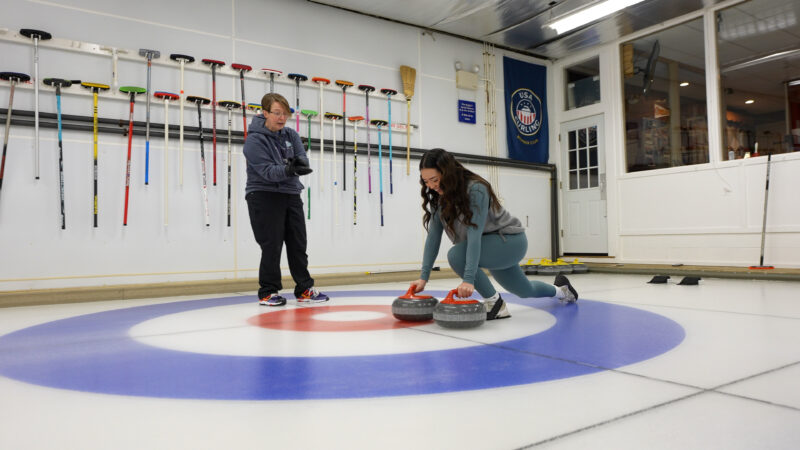
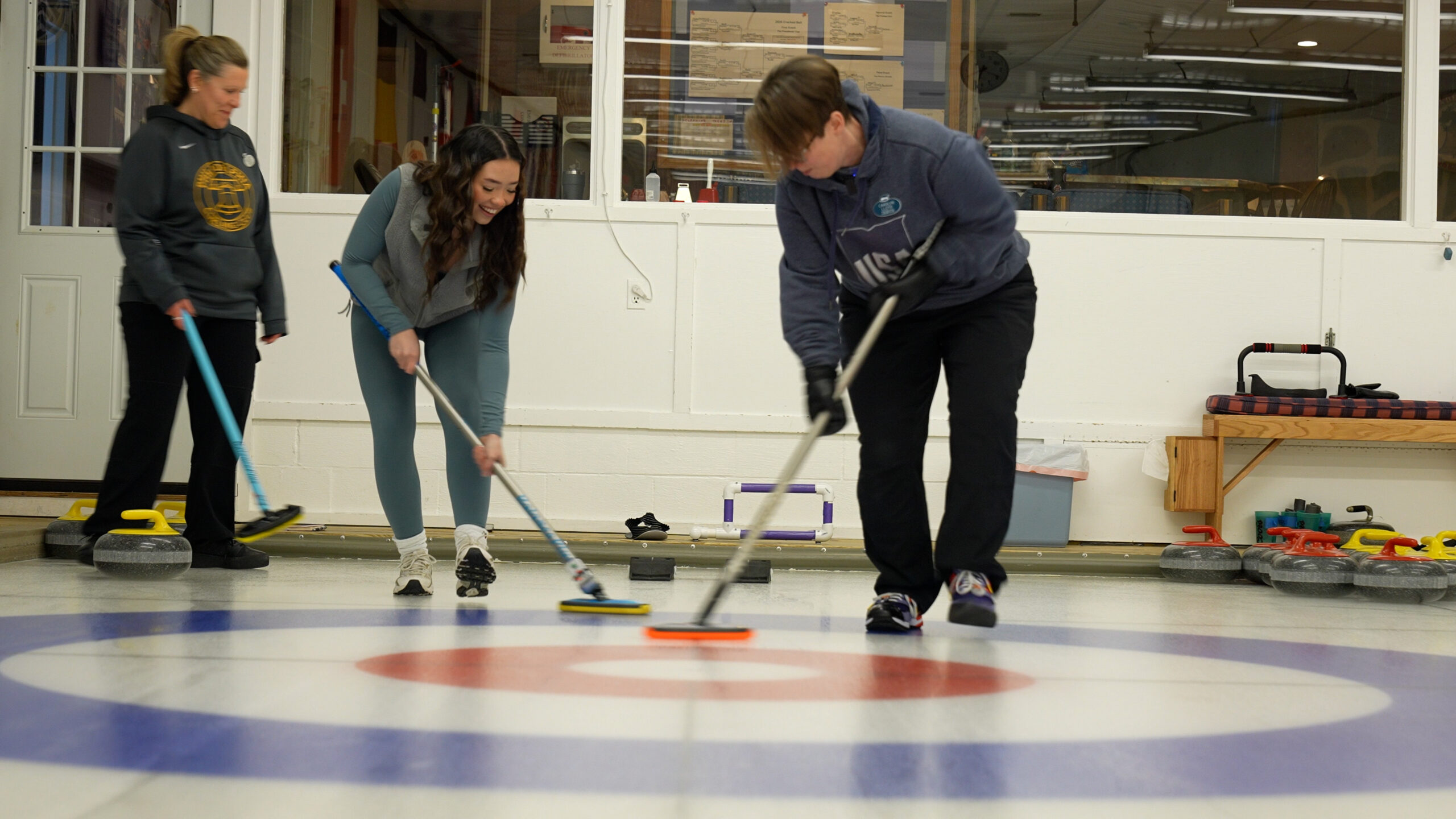
Inquirer reporter Ariel Simpson (center) gets instructions on how to sweep from Carolyn Lloyd (right) at the Philadelphia Curling Club in Paoli.
How hard is curling?
Not everyone trains like Laufer, especially amateurs. So how difficult is curling for the average person? I recently had the opportunity to get a hands-on experience at the Philadelphia Curling Club in Paoli with Carolyn Lloyd, a member for 20 years.
“I love exposing people to something that’s so special,” said Lloyd, who lives in Collegeville. “People don’t realize just how special it is. It’s different from a lot of sports, certainly in its culture. This sport captures my whole heart.”
Before this I had never stepped foot on ice — other than the sheet that covered my driveway for two recent weeks. So, I knew this was going to be a bit of a challenge, but Lloyd was more than up to the task of teaching me.
When it came to delivering the stone, I watched a number of YouTube videos ahead of time. So, of course, I felt like a pro walking in — I didn’t even need special shoes, just some attachments. But once I actually stepped onto the ice, with a gripper covering one shoe and a slider covering the other, I felt like a baby deer trying to walk for the first time.
Walking on the ice was hard enough. Now, imagine having to get into a squat position and push off the hack — a rubber block embedded into the ice — with one leg and balance on the other while holding a deep lunge and bracing your core.
Then you have to aim, release, and spin a 42-pound granite stone. Easy? Trust me, it’s not like they make it look on TV.
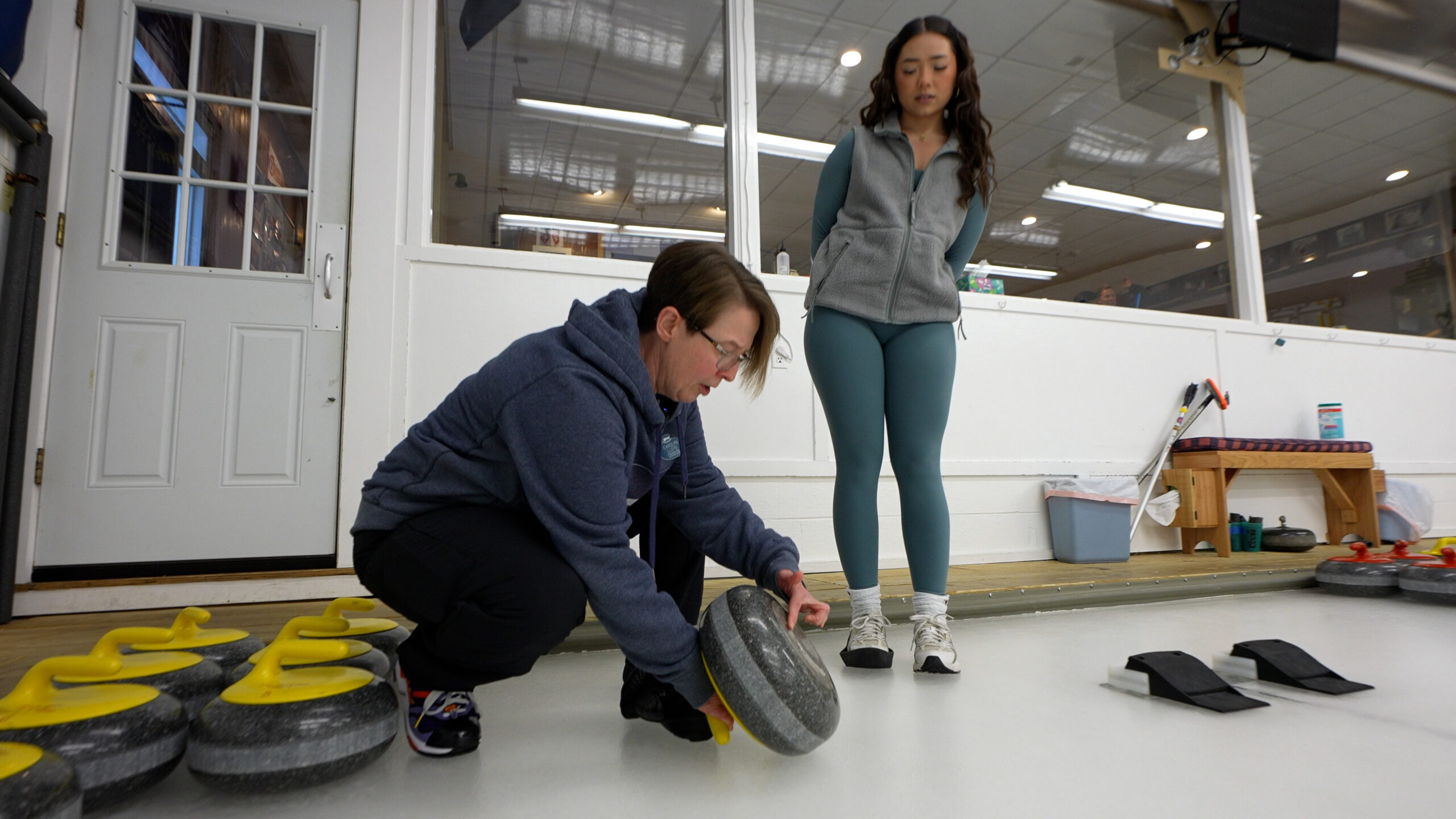
Carolyn Lloyd (left) explains Inquirer reporter Ariel Simpson the parts of a curling stone at the Philadelphia Curling Club in Paoli.
It took me a few tries before I was even mentally prepared to push off with enough strength to move myself a few feet. But, once you get over the fear of falling onto the ice, you start to actually enjoy yourself and can focus on the next step — getting the stone to the house — which I did, eventually.
And all of this was only learning how to deliver the stone. Sweeping was a whole other issue. By the time I was ready to try sweeping, I had much more confidence walking on the ice, so that’s a plus. But now I had to run on it.
Afterward, I felt like I had done a full body workout. The amount of core, lower-body, and arm strength needed for curling is substantial and was certainly a surprise.
The one part of the sport I didn’t get a chance to take part in was the social aspect. It’s a game that’s big on camaraderie, including the post-round tradition of “broomstacking,” when the winning team buys the losing team a drink. But, hey, I was on the clock.
Where can I try curling in the Philly area?
If you want to give curling — and its rules and traditions — a try, there are a couple of local clubs where you can learn.
The Philadelphia Curling Club was started in 1957 but didn’t move to its current location until 1965. Since then they have grown, gaining over 200 members.
“This building was built for curling,” Lloyd said. “We bought the land. We built the club. And to this day, what you see here is a lot of the club members’ efforts. Most of the work that we do is not things that other people come in and do for us.”
The club offers a junior program on the weekends where kids can start as early as 5 years old.
“It’s something that anyone can pick up,” Lloyd said. “The game has adaptations for people who have different types of ability needs. You can learn very quickly, and then you can refine that skill for the rest of your life.”
A member of the Philadelphia Curling Club in Paoli delivers a stone during warmups last week.
There’s also the Bucks County Curling Club, located on York Road in Warminster, that was formed in 2010. The four-sheet club also has over 200 members and plays year-round.
Although it’s usually once every four years when the world tunes in to watch curling on TV, there is plenty of curling content that Laufer wants fans to know about.
“We have a ton of events,” he said. “There’s the Grand Slam of Curling events, which are our biggest tour events. There’s the World Championships, the European Championships. There’s a lot of events to watch, a lot of events that U.S. teams play in.”
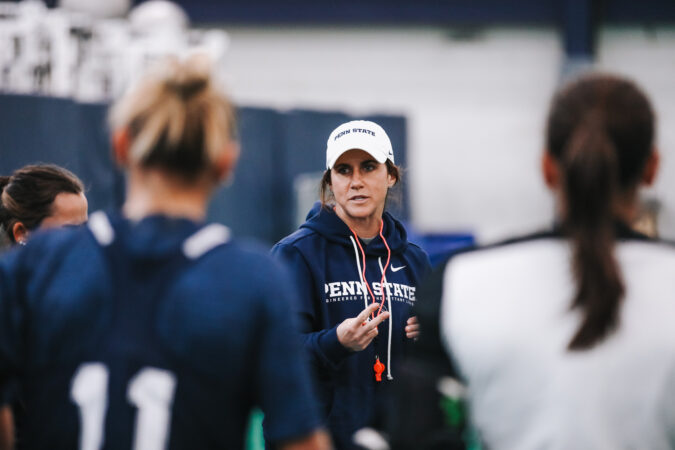
Hannah Prince hasn’t always been a standout Division I coach, nor has she always led with the conviction she does now as the Penn State field hockey coach. But she’s long been around the sport — starting nearly 30 years ago in Gorham, Maine.
When Prince was 6 years old, she made a declaration: She would make her high school’s varsity field hockey team. She did just that, which sparked a successful four-year career at Massachusetts.
The Minutewomen went 56-33 and won three Atlantic 10 titles during Prince’s four-year career as a starting defenseman. Following the team’s NCAA Tournament quarterfinal run in 2013, Prince, a senior at the time, earned National Field Hockey Coaches Association first-team all-region and A-10 first-team all-conference honors.
Prince continued playing after college and was captain of the U.S. women’s indoor team for six years, leading the team to gold at the 2017 Pan American Cup.
Prince’s captaincy meant holding others accountable. It meant leading by example and never asking teammates to do something she wouldn’t do herself.
“I like motivating people. I like building relationships with them that are strong, so they know I care,” Prince said. “I chose to work for some really great people who believed in me and allowed me to have a hand in certain technical and tactical areas.”
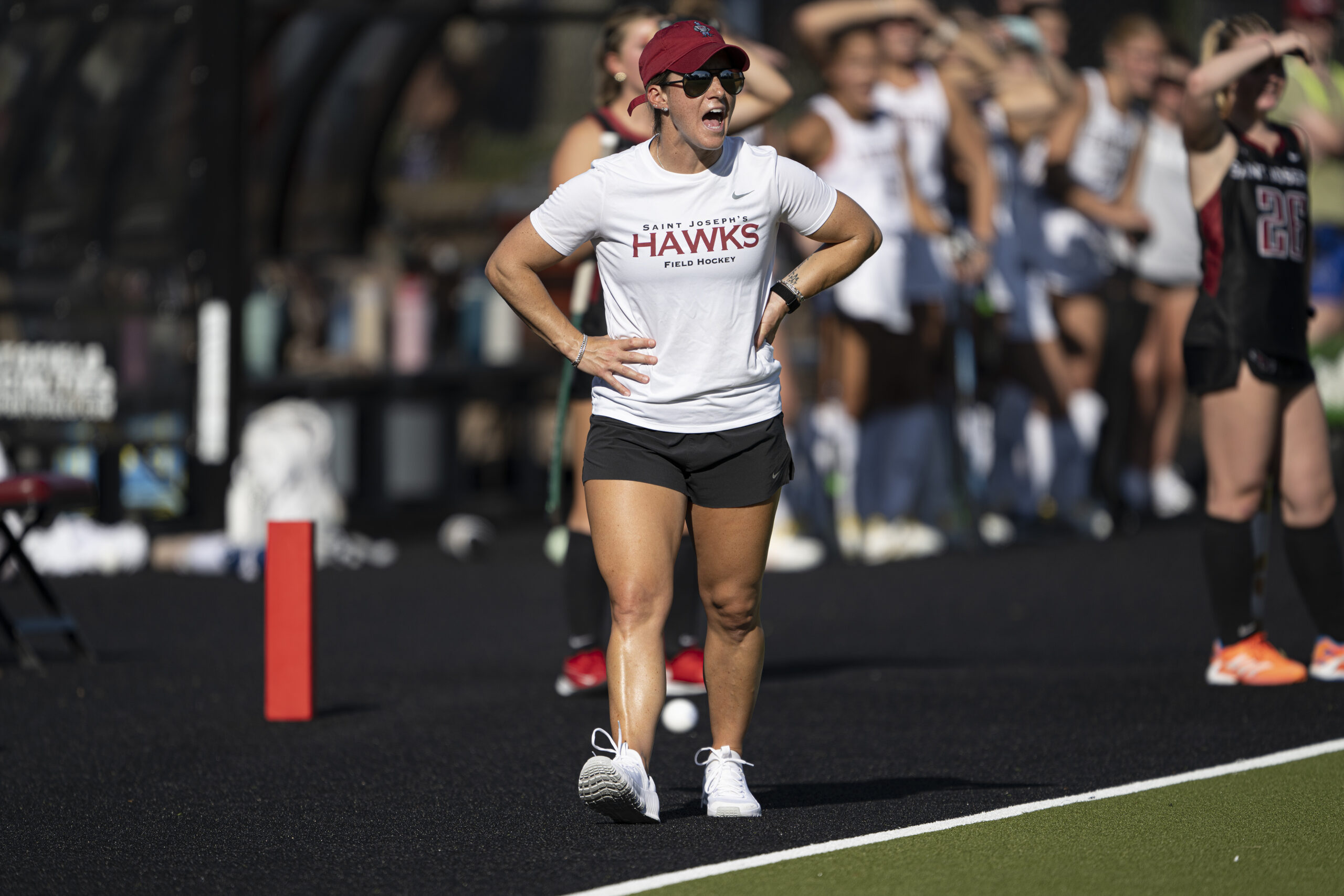
Hannah Prince comes to Penn State after a historic run at St. Joe’s.
Success has followed Prince at every stop of her coaching journey, which started in 2015 when New Hampshire made the America East title game in her first of two seasons as an assistant coach.
Prince later joined St. Joseph’s as an assistant during the program’s first run to the NCAA Tournament in 2017. She then helped Louisville to the Final Four in the spring of 2021 before returning to Hawk Hill in 2022, this time as head coach.
One of the “great people” she worked for was Justine Sowry, her coach at UMass, who has spent the last 14 seasons as Louisville’s coach. Prince credited Sowry for introducing her to coaching and for teaching her the patience required to build a championship-level program.
Sowry lauded her former player for different reasons, ones that extend beyond the field.
“[Prince] is an extrovert. She’s got that energy. She bounces around, and so many people are drawn to her,” Sowry said. “She just shows so much initiative. She took a lot of the weight off my plate just by being who she is … I don’t think I would have been able to get through [the 2020 COVID-19 season] if Hannah weren’t on my staff. She was an absolute godsend for so many more reasons other than just coaching hockey.”
After a final ride under Sowry’s tutelage, Prince accepted the head coaching gig at St. Joe’s, where she went 64-14 in four seasons. The Hawks made four NCAA Tournament appearances and won two Atlantic 10 regular-season titles and four A-10 tournament titles.
In 2023, Prince navigated the Hawks to their first-ever NCAA Tournament win. The next season, Prince guided them to the most wins in program history (20) and the NCAA title game, which marked the first time in school history that any St. Joe’s team had competed for a national championship.
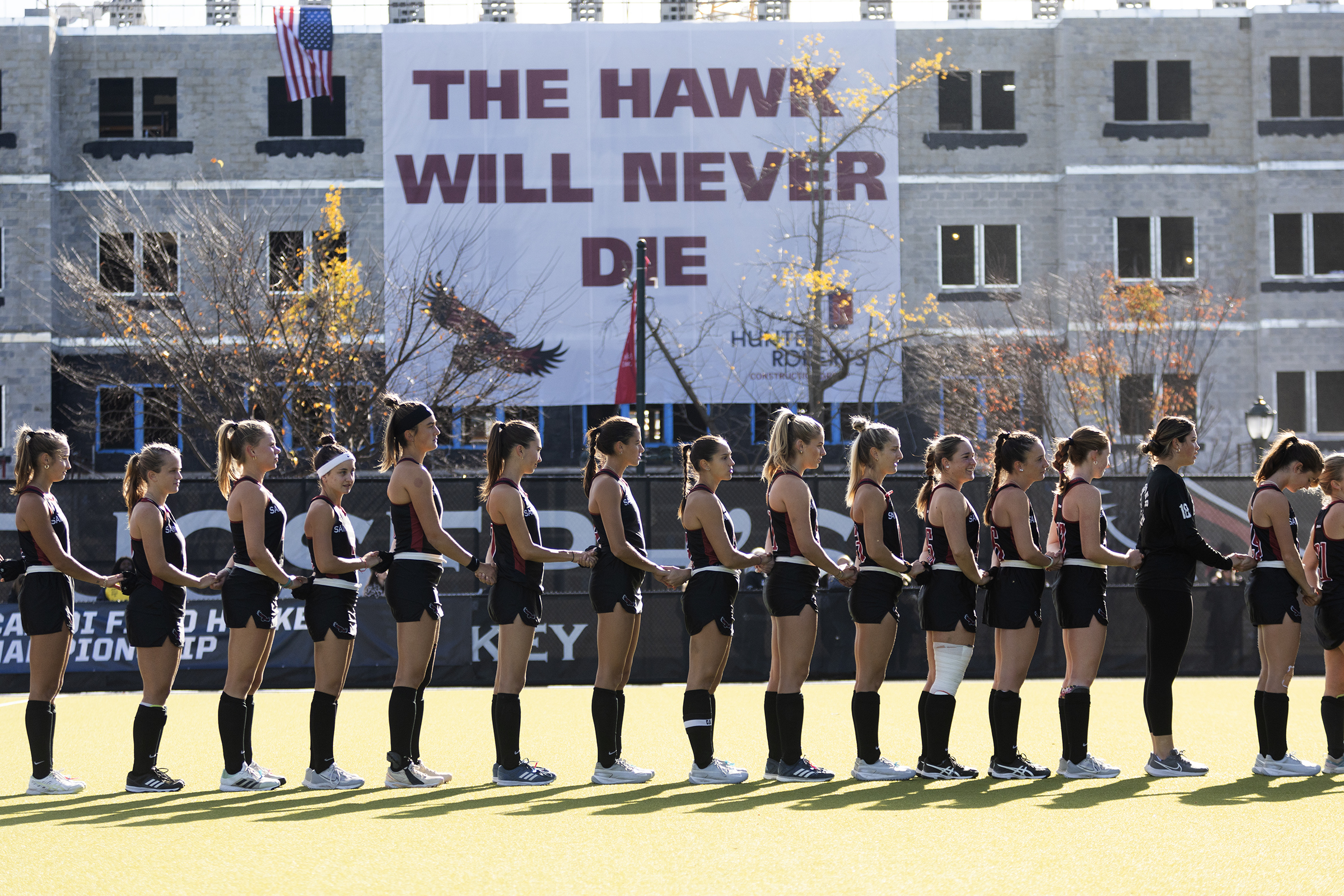
Hannah Prince led the 2024 St. Joseph’s field hockey team to the NCAA title game, a first for any program in Hawks history.
She praised the Philadelphia area’s support during the Hawks’ title pursuit. She also lauded the resolve of her team, which embraced a “why not us” mentality as the tournament’s underdogs.
Prince built the Hawks into a field hockey contender and galvanized area support for her team on its surge toward a championship — a showcase of her program-building prowess.
“[Prince] is passionate, she’s driven, she’s a competitor, and she’s a proven winner,” Sowry said. “She can run a program. She’s got the X’s and O’s covered. And even areas that she might feel deficient in, she has the confidence to bring in coaches that can complement her or make her better.”
Now, she’s ready for her next opportunity: Bringing a once-great Penn State program back into contention.
Under former coach Charlene Morett-Curtiss, the Nittany Lions went 524-219-9 and made eight NCAA Tournament appearances. But in the three seasons since her 2023 retirement, Penn State won just 24 of its 51 games and missed the NCAA Tournament each season.
Prince wants to win national championships in Happy Valley. And that starts with creating a culture of accountability and pride.
“I want [Penn State] to be described as a bunch of empowered, strong, and fearless women who are playing together for a collective reason, because they want to play for each other,” Prince said. “They want to play for those who came before them. They want to play for that legacy.”
There were no Christmas or birthday presents from Shelly and Kent Sanheim this year for their kids and grandkids. They combined everything into one big present for each family member.
But those tickets to Italy weren’t for a typical family vacation. Instead, the tickets for three of their kids and their families were bought early in the hope that their brother, Travis Sanheim, had done enough to book his own trip to the 2026 Milan Cortina Olympics and represent Canada.
The cancellation option, added just in case, was not needed.
Around 8 a.m. Mountain Time on the morning of New Year’s Eve, the Flyers defenseman called his parents to give them the news that they needed to work on their Italian. The phone rang as they were making their way through airport security, going from Vancouver, British Columbia, to Calgary, Alberta, as they followed the Flyers on their Western Canada trip.
“I guess maybe three, four years ago, he never thought he would have a shot at this, and now he’s going to, hopefully, bring back a gold, right?” Kent said. “So I don’t know what else to say. I guess, it’s just, I don’t know, it’s hard. It brings tears to my eyes.”
There was a lot of emotion as Kent and Shelly spoke to The Inquirer a few hours later on the concourse at the Scotiabank Saddledome, the rink where Travis starred for the Hitmen of the Western Hockey League during his junior career. The emotions filled the rink, as it was a family affair with everyone, including his twin brother, Taylor, his teammate in the WHL, there to watch Travis play for the Flyers and celebrate his big moment.
This is what the Sanheims are all about: family.
Twin brothers Travis and Taylor Sanheim during their days together with the Calgary Hitmen. This season, apart from Travis with the Philadelphia Flyers, Taylor has played with the Esterhazy Flyers (Sask East Hockey League) pic.twitter.com/tswGkvNw4j
Driving through the prairies of Canada, the chartreuse of the canola fields can be mesmerizing as the sun hits the bright yellow that stretches across seemingly endless miles. Across that open land, not far from the 100th meridian and tucked into the town of Elkhorn, Manitoba, is one of those fields with some wheat intermixed. In this town of about 500 people, with no street light and one K-12 school, is where Travis Sanheim learned all about responsibility, work ethic, and dedication.
“Being out on a farm, you get firsthand … how much work my family puts in and being able to help out, at a young age, I remember skipping school for harvest, jumping in the combine, and helping mom and dad out with harvest … and just how excited I was to be able to help and be a part of it,” the 29-year-old defenseman said recently.
Born and raised a 3½-hour drive west of Winnipeg, Travis grew up wanting to be like Kent and would help him out on the farm as much as he could. He would help plant crops in the spring and harvest them in the fall and complete daily chores throughout the year. If he didn’t help, there would be no time for hockey. And for Travis, it was all about the hockey.
“Just a die-hard, loved the game — always has,” Shelly said of a young Travis. “Always excited to go to the rink and wanted to go to the rink.
“It’s funny, I see on Twitter or whatever about Trav being the last one off the ice and working on things, and I’m like, ‘This is this kid his entire life.’”
Elkhorn is where Travis fell in love with hockey. He always wanted to play, and he and Taylor even would try to scrape off the dugout, a storage reservoir on the farm, to go one-on-one. And while Kent would stay on the farm to work, they’d pile into the car and Shelly would drive them to the local community rink.
“As long as they didn’t look in the waiting room, they didn’t think they ever had to go home because I’d be knocking on the glass and pointing to my watch, and they just would never look up,” she said with a laugh.
“And then they got to stay longer at the rink. He would always be the last one on the ice, if possible. We dragged him off.”
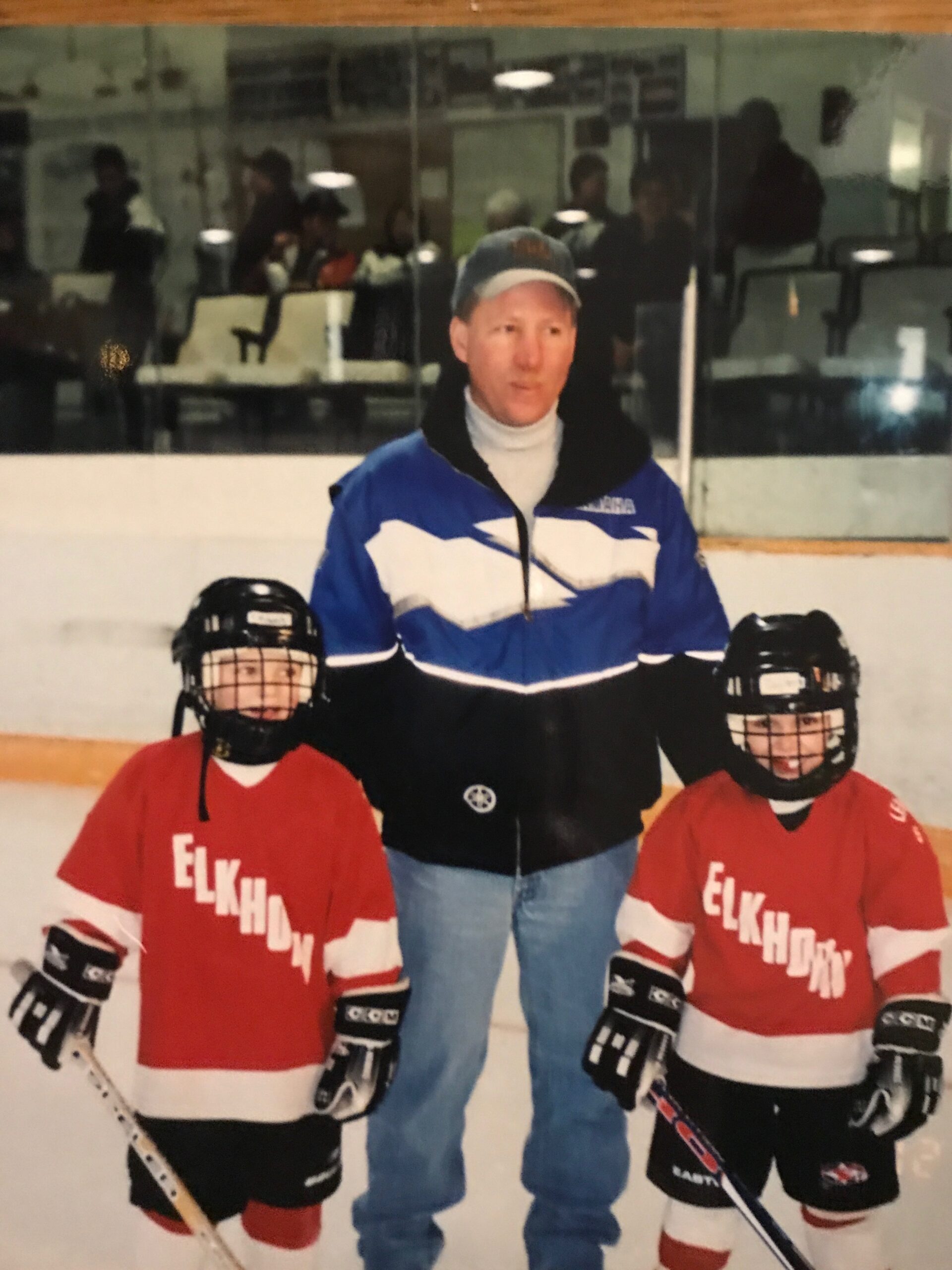
Kent Sanheim with his twin sons, Travis and Taylor, when they played youth hockey in Manitoba.
Wheat Kings and hockey things
At some point growing up, Travis got a key to the rink, which often was open, anyway, in the town that sits near Manitoba’s border with Saskatchewan. While the temperatures could dip well into the teens in the winter months, he’d call his buddies to get games of shinny going with him and his brother.
“We did everything together,” Travis said of Taylor. “A lot of battles in the basement, playing hockey against each other. That’s kind of where my competitiveness, I would say, came from. … Was really lucky to have the opportunities that I did growing up, that I was able to skate as much as I was, and had the guys that pushed me, and obviously, my brother was a huge reason as to why.”
The duo also would hit a frozen pond on Boxing Day before watching Canada compete at World Juniors — a fitting tradition for a family that has a sign in the living room asking people not to disturb them because they’re watching hockey. And Travis remembers sitting in front of the television as Sidney Crosby crushed the hearts of Americans everywhere with his golden goal against the U.S. at the 2010 Vancouver Olympics.
As a 13-year-old, he just wanted to make the NHL; he never expected to now be lining up alongside the all-time great seeking a gold medal.
“Super excited,” he said. “Obviously, a dream come true. Getting to represent your country and playing in the Olympics and being an Olympian means a lot, and something that I never really thought was possible, but now that it’s here, and then I get the chance to do it, just really excited.”
Sanheim has donned the maple leaf several times before, including at the 2013 World Under-17 Hockey Challenge and the 2014 U18 World Championship, snagging a bronze medal at the latter; the 2016 World Juniors; and the 2022 and 2025 World Championships, winning silver four years ago.
Travis Sanheim celebrates after Canada’s victory in the 4 Nations Face-Off last February.
And he surprised many across Canada last year when he was named to the team for the 4 Nations Face-Off tournament, which the Canadians won. Now he’s going for Olympic gold.
“You never know, there’s so many good players in Canada. They could take a second team and probably still medal with the second team,” Shelly said. “So, you know, just the fact that he was in the mix was a thrill for us, and then to have the dream come true here just — I think I’m still shell-shocked over it. It’s hard to believe.”
‘Across the icy world’
Tampa Bay Lightning and Team Canada coach Jon Cooper isn’t one to show his hand. However, the way he spoke of Sanheim in November in the bowels of the Lightning’s Benchmark International Arena — with a Cheshire Cat-like grin on his face — there was no denying that the defenseman was on his short list.
“You see these players, you compete against these players, but you don’t really know till you have them,” Cooper said. “And I’ve always, I’ve really liked his game. I’m a big fan of big [defensemen] that take up a lot of space and can skate, and he can do all those things. But his ability to jump into plays, he’s got an offensive mind to him.”
After nearly being traded in 2023, Travis Sanheim has developed into a bona fide top-pair defenseman.
Sanheim has come a long way from being a little nervous and wide-eyed at Hockey Canada’s first practice in Brossard, Quebec, ahead of the 4 Nations Face-Off last February. And while he didn’t start the tournament in the lineup, by the end — half because of injury and half because of his performance with the versatility to play right and left defense — he was not just skating in the championship game, but Cooper had him out there for the first shift of overtime.
“He was good. … Travis got thrown in when one of the guys, when [Shea Theodore] got hurt, probably,” said Vegas Golden Knights coach Bruce Cassidy, an assistant on Cooper’s staff.
“Real good player, steady player, liked his pace, transported pucks, got involved. … I think both [he and Thomas Harley] ended up playing a little bit on the right side, and there was no hesitancy to get up the ice and join the rush. And I think that’s the type of team Coop wanted to build, so he fit right in.”
There will be comfort now for Sanheim, having skated on the same team as some of the game’s biggest names like Crosby, Connor McDavid, Cale Makar, and Nathan MacKinnon. And he’ll surely be comfortable because he’ll be able to look up whenever he wants to see his family in the stands in Milan, Italy.
And he’ll surely be thinking about how far he’s come from his days on a farm in Elkhorn, Manitoba, a place Shelly says “gives him some time for clearing his head and stuff.” He hasn’t been able to spend too much time there with all his hockey adventures, but it circles back to the biggest question heading into the Games, which for Sanheim will begin Thursday against Flyers teammate Dan Vladař and Czechia (10:40 a.m., USA and Peacock).