Category: Sports

Sports news, scores, and analysis

  • Philly’s Don Bitterlich scored the first points in Seahawks history. But he made his name playing the accordion.

    Philly’s Don Bitterlich scored the first points in Seahawks history. But he made his name playing the accordion.

    Don Bitterlich’s Chevy Caprice was loaded with everything he needed for his gig that night at an Italian restaurant in Northeast Philly: an accordion, a speaker, and a pair of black slacks.

    He learned to play the accordion as a 7-year-old in Olney after his parents took him to a music shop on Fifth Street and he struggled to blow into a trumpet. His father pointed to the accordion, and Bitterlich played it everywhere from his living room on Sixth Street to Vitale’s on Saturday nights.

    The owner of Vitale’s — a small restaurant with a bar near Bustleton and Cottman Avenues — paid Bitterlich $175 every Saturday. It was a lot of money for a college student in the 1970s. First, he had to finish football practice.

    Bitterlich went to Temple on a soccer scholarship before football coach Wayne Hardin plucked him to be the placekicker. He never even watched a football game, but soccer coach Walter Bahr — the father of two NFL kickers — told Hardin that Bitterlich’s powerful left leg was fit for field goals.

    Bitterlich went to football camp in the summer of 1973, while also playing soccer for Bahr and trying to keep up with his accordion. He had yet to officially make the football team that August, so there was no use in canceling his 10 p.m. Saturday gig at Vitale’s. Bitterlich was due to play there in 90 minutes, but the Owls had yet to include their kicker in practice. He was hoping to leave practice by 8:45 p.m., and it was almost time.

    “I’m watching the clock,” Bitterlich said.
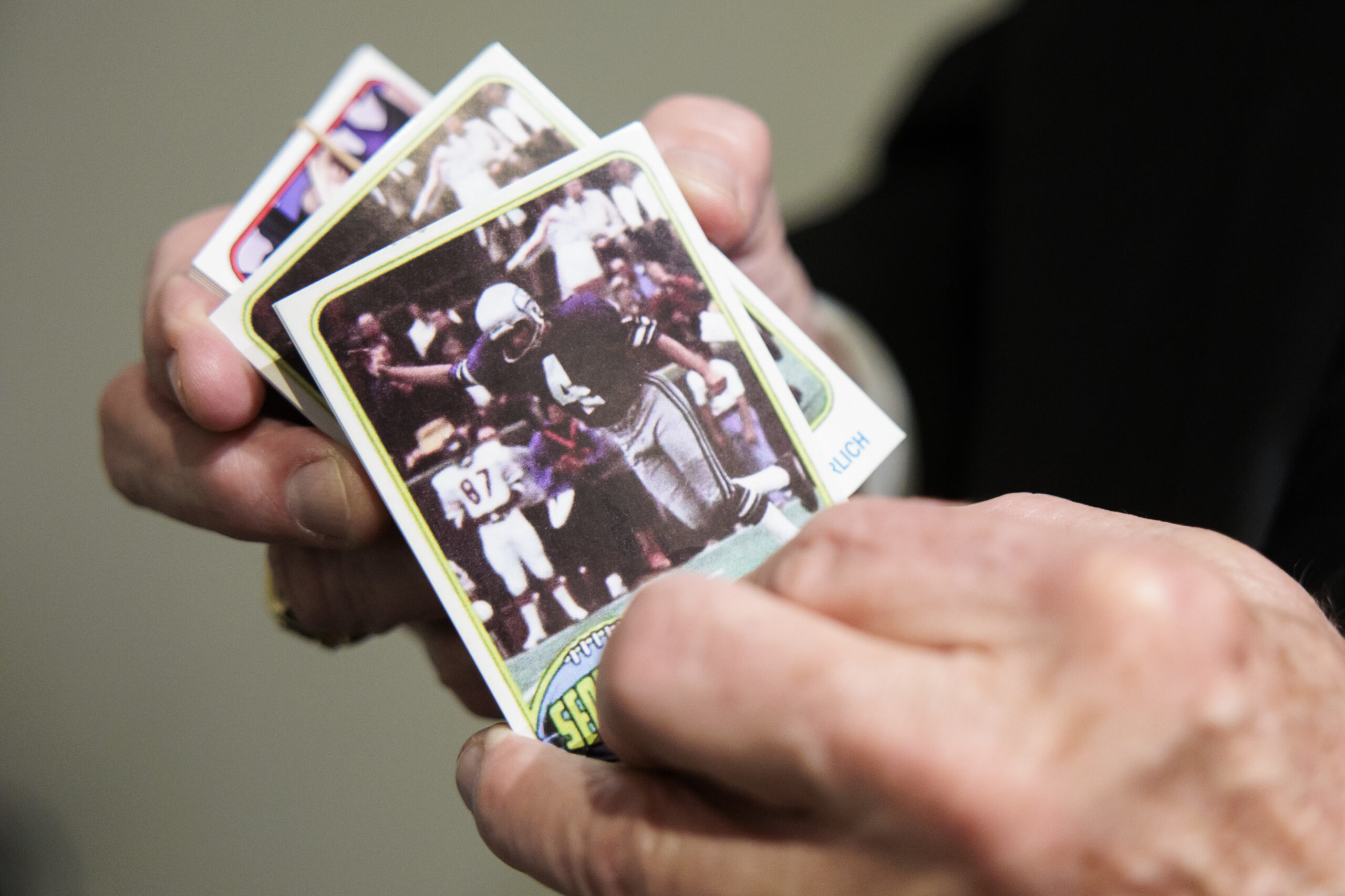
    Don Bitterlich holds his Seahawks football card. He scored the first points in Seahawks history as a kicker.

    He asked an assistant coach if the team was going to kick, and the coach shrugged him off. A half-hour later, he asked again. He had to go, Bitterlich said.

    “He said, ‘Go where?’” Bitterlich said.

    Bitterlich set records at Temple, played in an all-star game in Japan, was in his dorm when he was selected in the 1976 NFL draft, and scored the first-ever points for the Seattle Seahawks, who play Sunday in Super Bowl LX against the New England Patriots.

    He made it to the NFL despite knowing little about football until he became Temple’s kicker. It was a whirlwind, he said.

    He really made his name with the accordion, the instrument he’s still playing more than 50 years after he had to rush to a gig from football practice.

    He has long been a regular at German festivals, restaurants, banquets, and even marathons. A German club in the Northeast called Bitterlich “the hardest working accordion player in the world.” He played a gig on Sunday night in South Philly and another on Monday morning near Lancaster.

    Bitterlich, 72, who worked as a civil engineer until retiring last year, said he played more than 100 gigs in 2025. Football stopped years ago, but the show rolls on.

    “These days,” he says, “most people around hear me playing the accordion, and they don’t know that I kicked in the NFL.”

    Becoming a kicker

    Bitterlich was home in Warminster — his family moved from Olney just before his freshman year at William Tennent High — when Bahr called. The Temple soccer coach had been a star on the U.S. team that upset England in the 1950 World Cup and was one of the best players to come out of Philadelphia.

    “He had this raspy voice,” Bitterlich said. “He smoked cigars during practice and basically chewed and ate half of it as well. He always called me ‘Bitterlich’ but called me ‘Donald’ if I screwed up.”
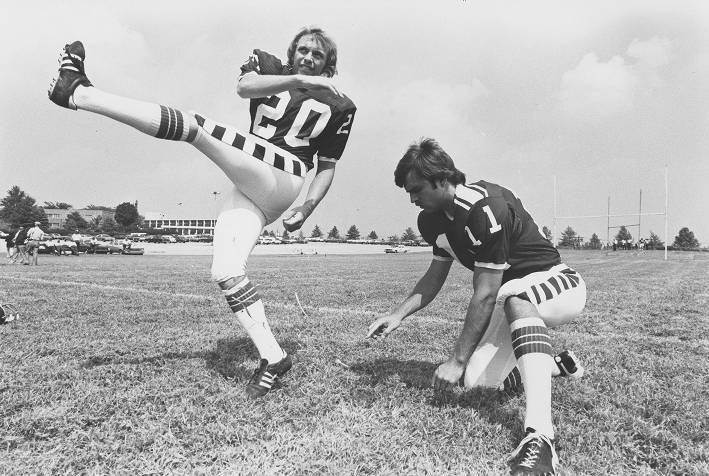
    Don Bitterlich (20) at Temple, likely during the 1975 season.

    So Bitterlich figured he was in trouble when his coach called him “Donald” on the phone.

    Bahr asked Bitterlich whether he knew who Hardin was. Yes, he said. Bahr said he had just talked to the football coach and told him Bitterlich could kick. The coach had watched Bitterlich since he played soccer for Vereinigung Erzgebirge, a German club his grandfather founded off County Line Road. He told Bitterlich he could do it.

    “So I said, ‘No soccer?,’” said Bitterlich, who was also the mascot at basketball games in the winter. “‘No, you’re my starting left midfielder.’ I was thinking, ‘How is this going to work?’”

    Bahr told Bitterlich to call the football office, get a bag of balls, and start kicking. He kicked every day at the German club and tried to figure it out. He was soon splitting his day between football camp in Valley Forge and soccer camp at the old Temple Stadium on Cheltenham Avenue in West Oak Lane. Each sport practiced twice a day and Bitterlich found a way to make them all.

    He played a soccer game that season in Pittsburgh, flew home with the team, and then took a taxi from the airport to Temple Stadium to kick for the football team. He was studying civil engineering and balancing two sports plus his accordion.

    It eventually became too much. Hardin told Bahr that he would give the kicker a full scholarship to play football. That was it.

    “With the football scholarship, I got room and board,” Bitterlich said. “So I was living on campus after commuting from Warminster. It was insane. I was so worn out.”

    Making history

    Bitterlich kicked a game winner in October 1973 against Cincinnati as time expired, made three kicks at Temple longer than 50 yards, and was the nation’s top kicker in 1975. The soccer player made a quick transition.

    “Coach Hardin always said, ‘If I yell ‘field goal,’ I expect three points on the board,’” said Bitterlich, who was inducted into the Temple Hall of Fame in 2007. “He expected that. The point of that was that he trusted you. That was his way of saying, ‘I’m not asking you to do anything that I don’t think you can do.’”
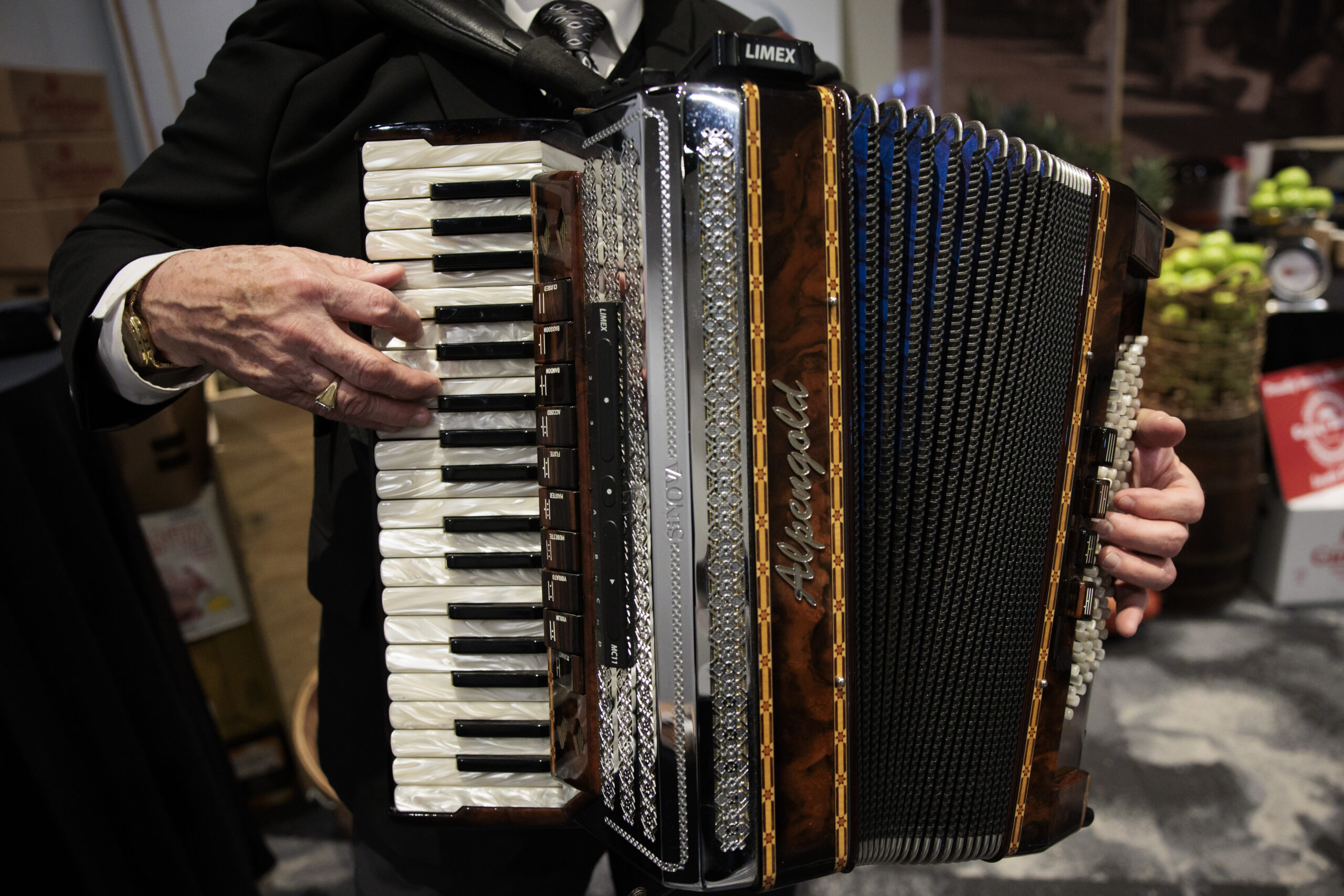
    Don Bitterlich performs with his accordian on Sunday during The Tasties at Live! Casino.

    The coach helped Bitterlich understand the mental side of kicking, challenging him in practice to focus on the flagpole beyond the uprights. Try to hit the flag, he said.

    “That had a huge mental impact on me,” Bitterlich said. “You have that image, and then when you do your steps back and you’re set, that’s all you can see. It made all the difference in the world for me. Once you have that image, you zone out any of the noise. You’re just focused on that image.”

    It helped him focus in September 1976 when the Seahawks opened their inaugural season at home against the St. Louis Cardinals. They drafted Bitterlich five months earlier in the third round. The Kingdome’s concrete roof made the stadium deafening, but Bitterlich felt like he was back in North Philly practicing at Geasey Field as he focused the way Hardin taught him to.

    He hit a 27-yard field goal in the first quarter, registering the first points in franchise history. The Seahawks had quarterback Jim Zorn and wide receiver Steve Largent, but it was the soccer player who scored first.

    Bitterlich’s NFL career didn’t last long, as the Seahawks cut him later that month after he missed three field goals in a game. He tried out for the Buffalo Bills, but a blizzard hindered his chances. He signed with the Eagles in the summer of 1977, missed a field goal in a preseason game, and was cut.

    He landed a job as a civil engineer in Lafayette Hill. He received a call on his first day from Eagles coach Dick Vermeil, who said the San Diego Chargers wanted to try him out. Bitterlich flew to California the next day but turned down a three-year NFL contract that would pay him only slightly more than his new job back home.

    “Plus, the real reason I turned down their offer was that they couldn’t hold for a left-footed kicker,” Bitterlich said. “Their holder just couldn’t get the ball down. I didn’t want to sign that contract. ‘What’s going to happen in two days when that guy can’t get the ball down?’”

    A week later, the San Francisco 49ers called. He flew back to California, tried out against another kicker, and was told he won the job. But the 49ers decided to sign Ray Wersching, who had been cut the previous season by the Chargers. Bitterlich turned down the chance to replace Wersching in San Diego, and now Wersching was swooping in for the job Bitterlich wanted in San Francisco.

    “I went back home and said, ‘That’s enough,’” said Bitterlich, who played three NFL games. “It started to get disappointing.”
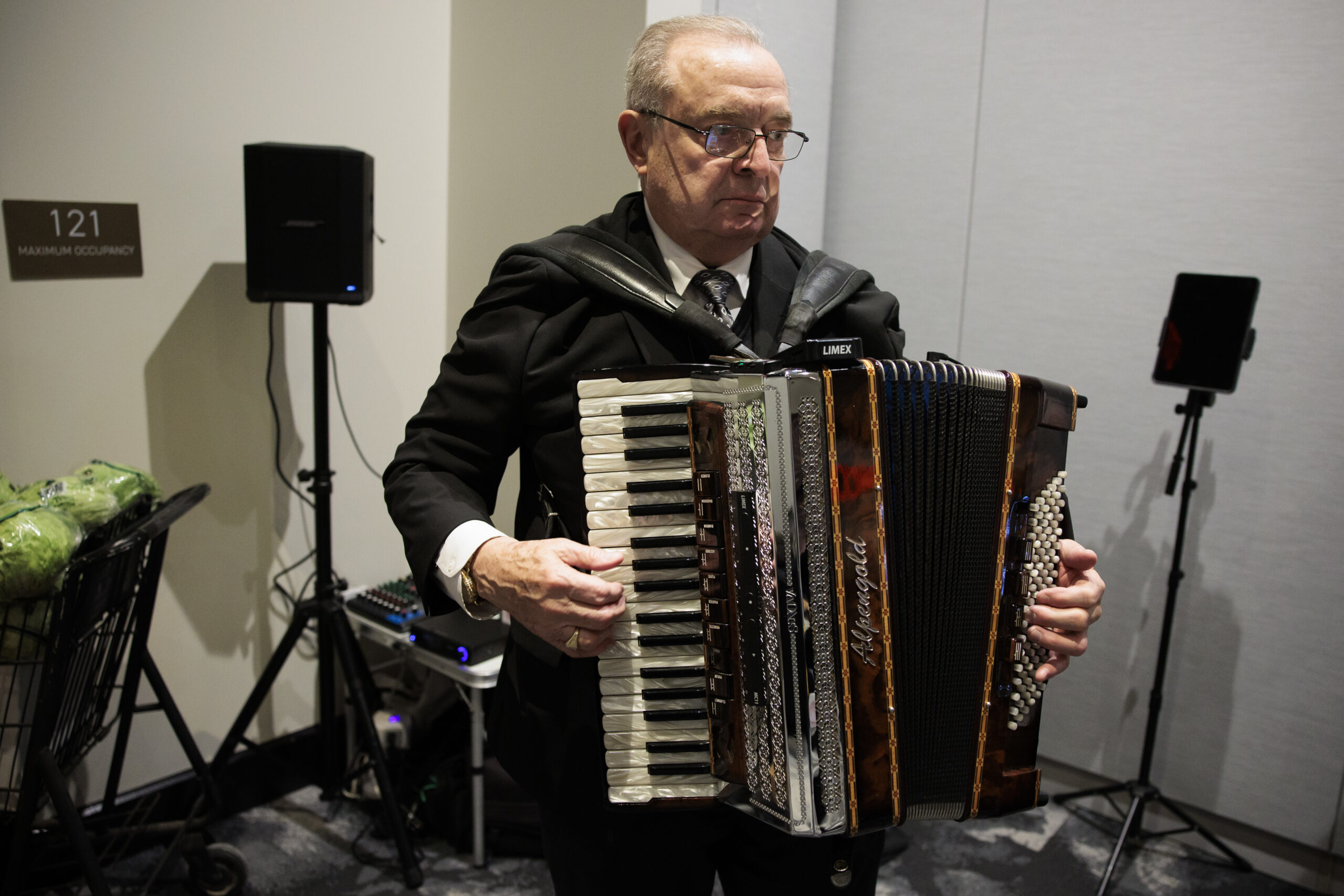
    “I love to play,” Bitterlich says of his accordion. “I usually don’t take breaks. Most bands will play 40 minutes on, 20 minutes off. I just play through.”

    Still playing

    His NFL journey was hard to imagine that day at practice as he watched the clock at Temple Stadium and thought about how long it would take to drive to Vitale’s. Bitterlich told the assistant coach that it was almost time to play his accordion. That, the coach said, was something he would have to talk to Hardin about. Fine, Bitterlich said.

    “I didn’t know if I was going to make the team or not, and I knew I was going to play soccer,” Bitterlich said. “So I just went over and told Coach.”

    Hardin heard his kicker say he had to leave football practice to play the accordion and laughed.

    “He said, ‘Yeah, I heard something about that,’” Bitterlich said.

    The coach stopped practice and let Bitterlich get in the mix. He nailed six field goals and the other kicker shanked a few. The job felt like his. He hit a 47-yarder and looked over at Hardin.

    “He’s like, ‘Yeah, yeah. Go ahead. Go,’” Bitterlich said.

    Bitterlich was soon in his Chevy Caprice, heading down Cottman Avenue on his way to Vitale’s. He wasn’t late to his accordion gig that night. His football career would end a few years later, but the music has yet to stop.

    “I enjoy it,” Bitterlich said. “I love to play. I usually don’t take breaks. Most bands will play 40 minutes on, 20 minutes off. I just play through. I really don’t take a break. I love it.”
  • Villanova recruited Devin Askew in high school. Six years and five schools later, he’s fueling the Wildcats.

    Villanova recruited Devin Askew in high school. Six years and five schools later, he’s fueling the Wildcats.

    Devin Askew was covered in sweat when he sat down in a room inside the practice facility at Villanova on Monday, fresh off an on-court workout with development coach JayVaughn Pinkston that followed a weightlifting session.

    Askew, Villanova’s sixth man, is on a tear as of late, averaging 15.8 points during a six-game stretch in which the 23-year-old guard has made 17 of 29 three-pointers. Sessions with Pinkston, a former Villanova player, have helped. Pinkston’s role is exactly that, to do the little things to get the most out of every player. But with Askew, Pinkston’s presence also is a reminder of the past and the winding journey Askew has traveled to put himself in the running for Big East Sixth Man of the Year.

    There are few connections remaining to the Villanova program of old, and Pinkston, who played for the Wildcats from 2011 to 2015, is one of them. Which gives him the right to playfully rib Askew about 2019, when, as a top recruit in the class of 2020 from California, he chose Kentucky over Villanova (and others).

    “He’ll always tell me I should have been here five years ago,” Askew said. “I should’ve always been a Villanova Wildcat.”

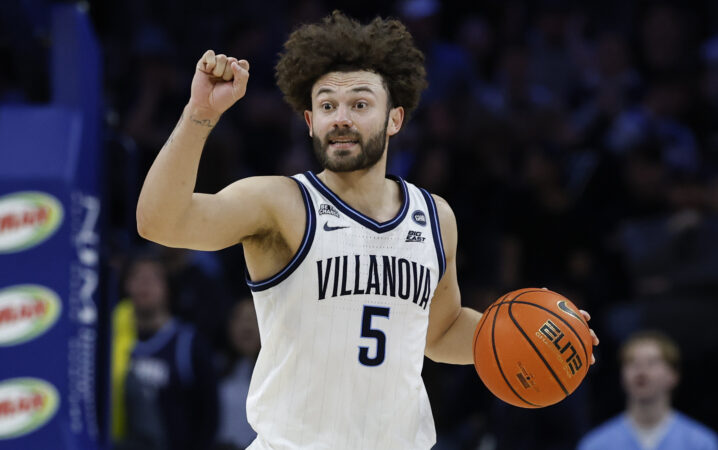
    Devin Askew is making a strong case for Big East sixth man of the year.

    He is here now almost by accident. His college journey has traveled more than 8,000 miles from Mater Dei High School in California to Lexington, Ky., to Austin, Texas, to Berkeley, Calif., to Long Beach, Calif., and, finally, to the Main Line. Five schools in six years. Which made him just another sign of the times when Kevin Willard plucked him out of the transfer portal to give his roster a much-needed experienced ballhandler and shooter.

    He was, to the outside world, another mercenary college basketball player passing through a random place on a map and collecting a paycheck to bridge his way to wherever professional hoops takes him.

    But for Askew, his time at Villanova has been a “full-circle” experience. Like in most people, his past explains the present, and it’s fitting the journey ends here, where his future is being determined during a critical turning-point season for him and Villanova.

    ‘It’s why we brought him here’

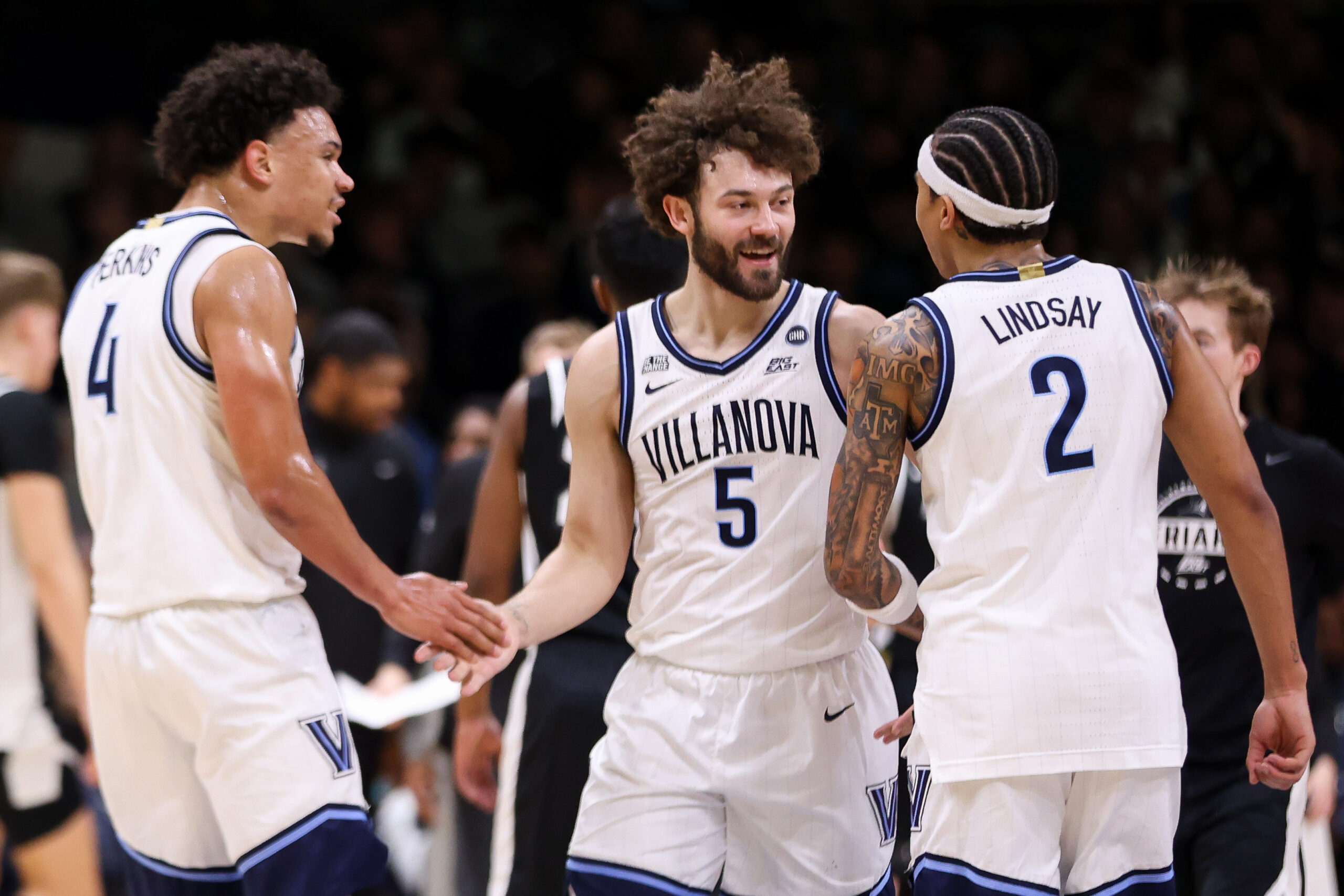
    This recent stretch is what Willard imagined when Villanova recruited Askew this time around. It’s a young Villanova roster, especially at guard. Freshman Acaden Lewis and sophomore Bryce Lindsay have had breakout seasons with the Wildcats, but Askew lately has been a steady presence, and his experience has allowed him to compete on both ends during the physical demands of a Big East schedule.

    Before the last six games, Askew reached double figures just three times in 15 contests. It took a little bit longer for it all to come together because he suffered a knee injury during the lead-up to the season. His injury history followed him. A sports hernia injury ended his junior season at California after 13 games, and a foot injury ended his following season, the 2023-24 campaign, after just six.

    That injury gave him a redshirt season, but also extra perspective to get through his first few months at Villanova, when he missed nearly two months of practice and was not 100% when the season started.

    “I’m tough, and I’m not going to quit,” Askew said when asked what he has learned about himself along his college journey.

    Were past versions of him not as tough?

    “The true test of knowing that is to go through something,” he said. “I’m willing to go through it and deal with anything that comes to me because I love the game, I love the sport of basketball. I don’t want to stop playing.”

    Villanova has needed Askew to be a stabilizing force at times, and it also has needed him to take over games offensively, like against St. John’s and Connecticut, two of the more experienced teams in the conference.

    “I don’t view it as they need me to take over,” Askew said. “There are so many things going on within a game, taking over a game could be a defensive stop.”

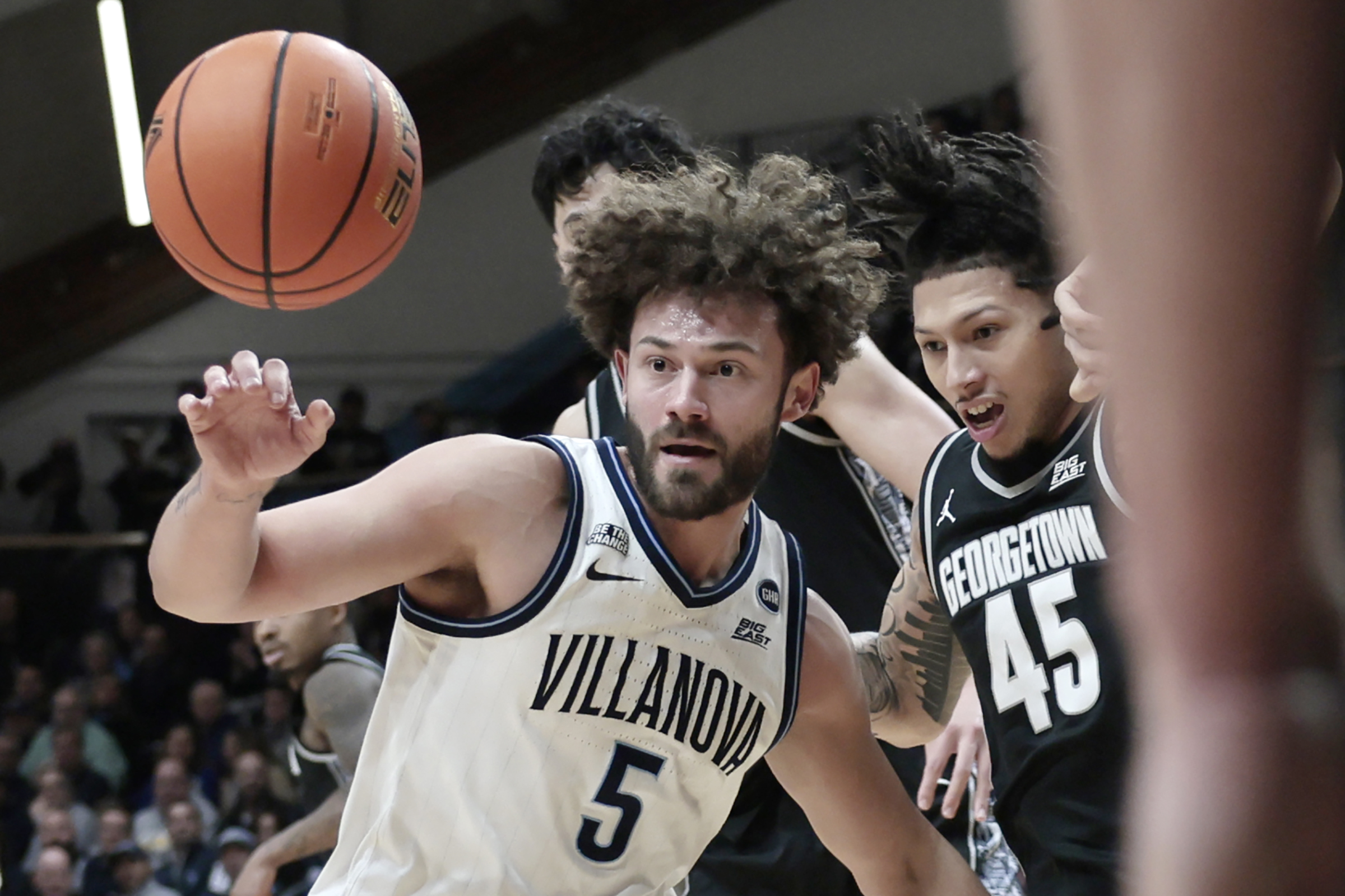
    Devin Askew scored a team-high 20 points off the bench against Providence on Friday.

    Willard credited a recent run of strong practices after Askew made five three-pointers and scored 20 points in Friday’s win over Providence. The coach has talked recently about how critical it is to have Askew’s experience. He’s a big reason the Wildcats are 16-5 overall and 7-3 in the Big East as they head into Wednesday night’s home game vs. Seton Hall.

    “It’s why we brought him here,” Willard said. “This is the type of player he is. When you go into the portal, you really have to evaluate and watch film and see what he has. When he was on his visit, I think the best part about it was I just loved his maturity. He’s a terrific, terrific person.

    “He’s getting rewarded for being a hard worker and a terrific person.”

    A piece from all the places

    There is a part of every stop that make up the player and person Askew is.

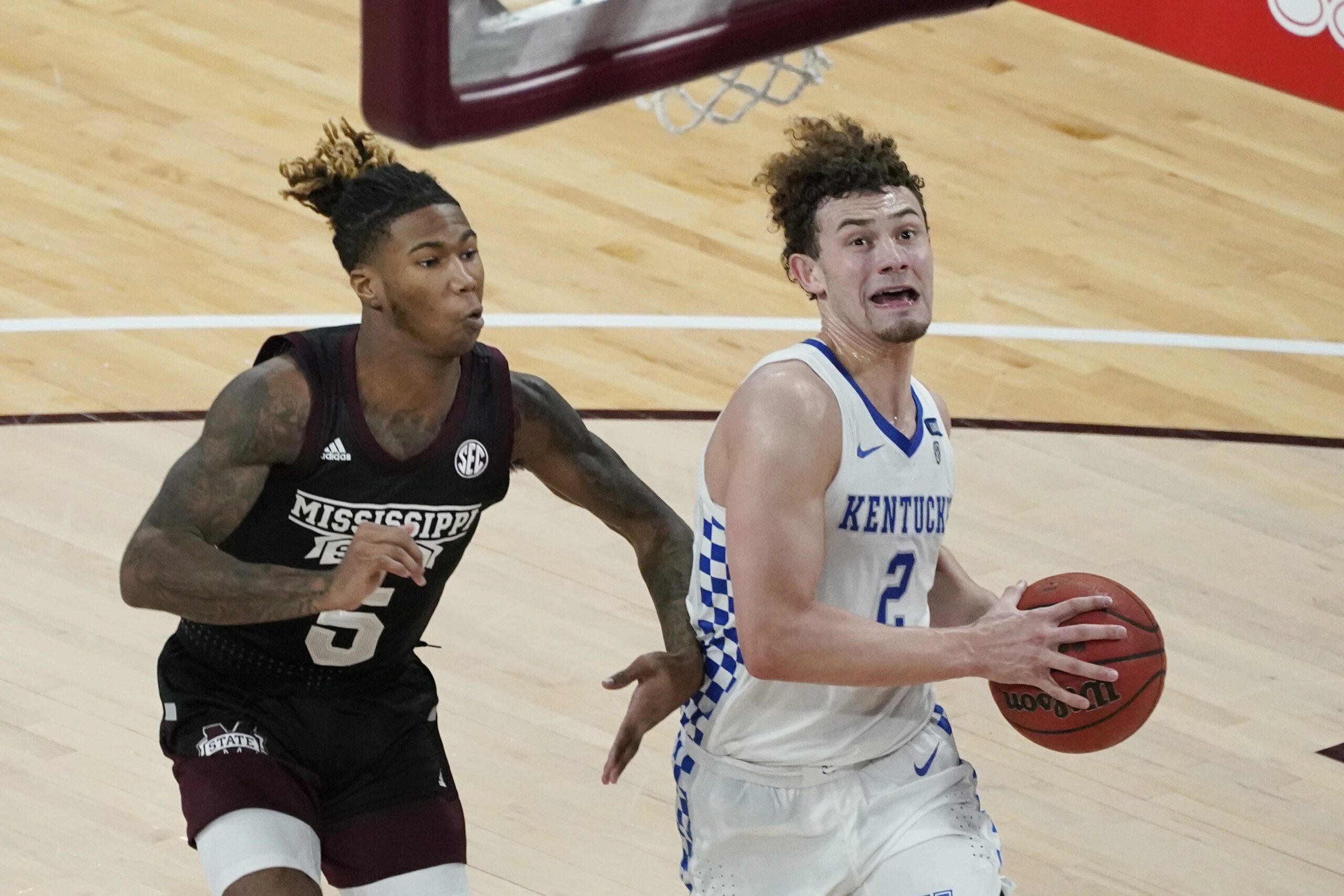
    He chose Kentucky as a 17-year-old top-40 prospect because who wouldn’t want to play for John Calipari and follow in the footsteps of top guards like Shai Gilgeous-Alexander and Tyrese Maxey?

    What did he learn from each stop? Askew went through them one by one.

    Devin Askew said his time at Kentucky “taught me patience and to be even-keeled.”

    At Kentucky, he learned how to go from being the guy on a high school team to being one really good player on a team of other really good players. It wasn’t an easy learning experience. “It actually taught me patience and to be even-keeled,” he said. “There’s going to be ups and downs, and you can’t get too high or too low. I was just an emotional kid.” He had high expectations for himself and didn’t meet them. He started losing his love of basketball.

    Enter Texas, which may be the most important stop of the five. “That brought back all that love for me,” Askew said. “No, you still love this game. Chris Beard and that coaching staff saved my career.” Askew averaged 14.9 minutes off the bench and was a role player on a team that reached the NCAA Tournament. He fell back in love with basketball, but he wanted a place where he could start, so he went back home to California.

    At Cal, it was time to “go show it,” Askew said. “I was ready. And the seasons just got cut short to injuries both years, and that’s where we kept learning and kept growing. … This is the life we chose.”

    Cal allowed him to be closer to his family. He has leaned heavily on his two brothers and his parents over the years. Cal also gave him his undergraduate degree in interdisciplinary studies. But entering the 2024-25 season, he was an oft-injured journeyman with two seasons of eligibility left — one redshirt year, one COVID year — looking to prove he could still play. To the portal, and to Long Beach State, he went.

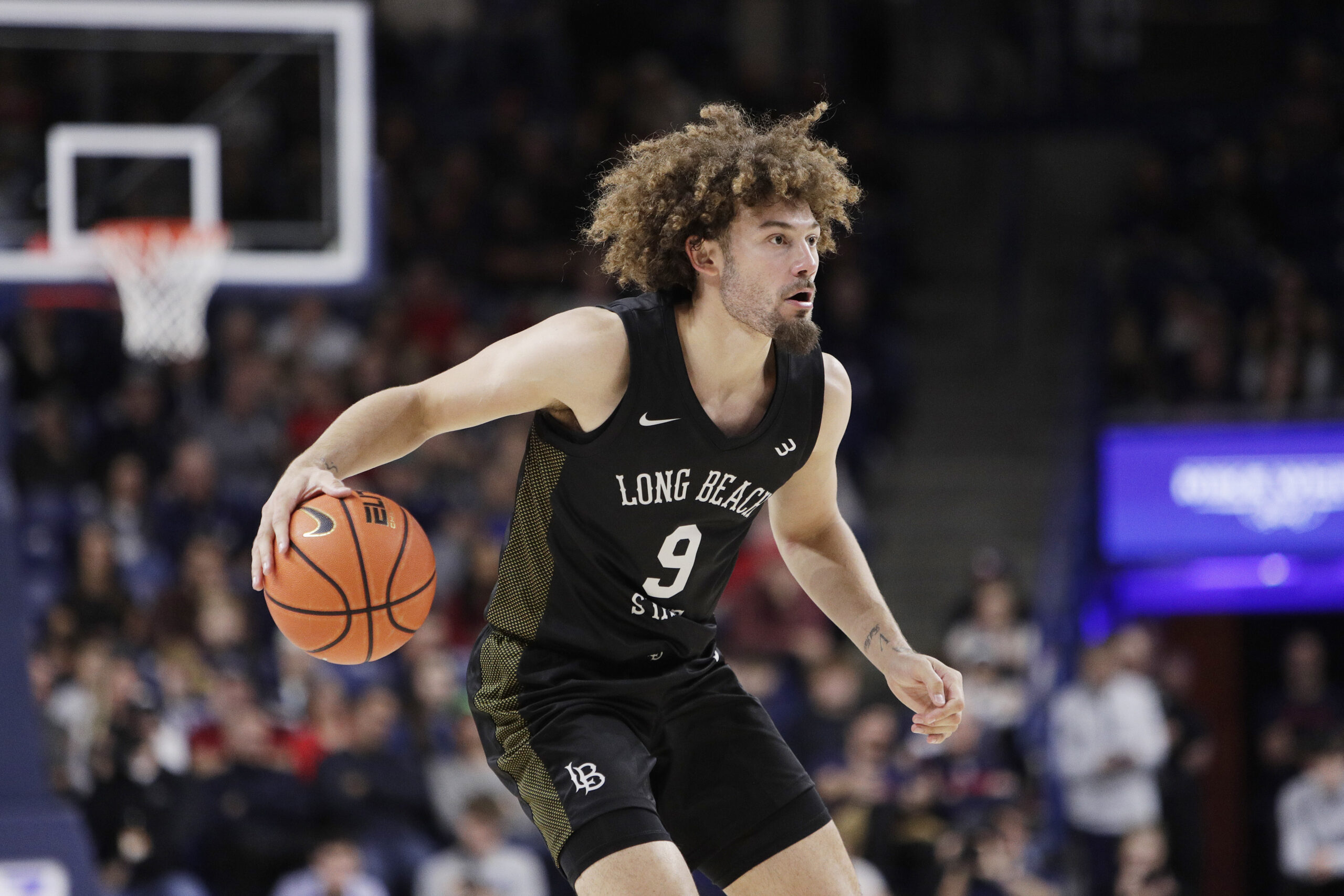
    “Go do it,” Askew said of Long Beach. “It wasn’t go show everyone, because I wasn’t into showing everyone. But it was prove to yourself again.” He scored 18.9 points per game and shot 37.6% from three-point range on a team that won seven games and ended the season by losing its last 15.

    At Long Beach State, Devin Askew averaged 18.9 points.

    “Not a lot of people believed in me and believed I could play still,” Askew said. “They gave me the platform to show what I could still do.”

    He found a believer in Willard, who needed another guard in late April to fill out his roster. Villanova, Askew said, is the place to put all of those experiences together.

    There are a lot of reasons to gripe about the state of college basketball, and a player going to five schools in six years is one of them. Askew is, in a sense, a one-year rental who helped Willard get Villanova back on track in his first season.

    Off the court, Askew is taking classes toward a master’s certificate in Villanova’s public administration program, a year after earning a certificate in communications at Long Beach. On the court, Askew is helping Villanova get back to the NCAA Tournament.

    When the topic of the tournament came up, Askew shook his arms and said he got chills.

    “That would mean everything to me,” he said. “I kind of get emotional thinking about it. As a kid you always want to play in the tournament. You go to college and want to play college basketball to make the tournament.”

    A continuation of his current form will go a long way toward making that possible, and helping him raise his own profile. The NBA probably isn’t in his future, but there is a country or league out there for a lot of players like him.

    “I don’t know what this year will do for me,” Askew said. “And I don’t like to hope, because what will happen will happen. I’m just thankful wherever this game takes me, thankful and grateful.”

    Sometimes it takes you to the place where maybe you were always supposed to be.

  • Six burning questions facing the Sixers at the NBA trade deadline

    Six burning questions facing the Sixers at the NBA trade deadline

    What if the 76ers don’t make a trade before Thursday’s 3 p.m. deadline?

    Staying pat could signal they’re comfortable with their current roster. It may also be a sign that they don’t have any extra pressure from Paul George’s suspension, and that they believe their current roster is good enough to contend in the Eastern Conference.

    Here are six questions for the sixth-place Sixers (29-21) heading into the deadline:

    Will they prioritize staying under the luxury tax threshold or upgrading the roster?

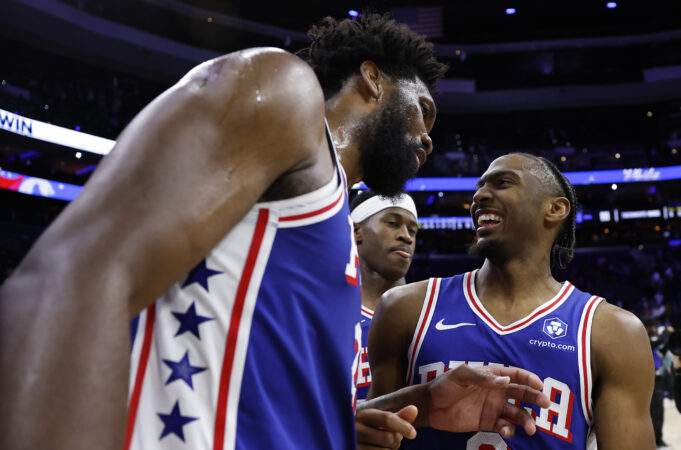
    On Thursday, Joel Embiid expressed his desire to avoid the Sixers’ annual salary dump at the trade deadline to avoid paying the luxury tax.

    “So hopefully we keep the same team,” Embiid said. “I love all of the guys that are here. I think we’ve got a shot.

    “I don’t know what [the front office is] going to do. But I hope that we get a chance to go out there and compete because we’ve got a good group of guys in this locker room, and the vibes are great.”

    The team is just $1.2 million over the luxury tax threshold, thanks to a $5.8 million tax variance credit because of George’s unpaid suspension, during which he will lose $11.7 million.

    Before George’s suspension, the Sixers were $7 million over the tax threshold and were expected to trade away at least one expiring contract. While the Sixers are still expected to make some type of move, they can keep all three of the players — Quentin Grimes ($8.7 million salary), Kelly Oubre Jr. ($8.3 million), and Andre Drummond ($5 million) — who had expiring contracts that could have helped them duck the tax.

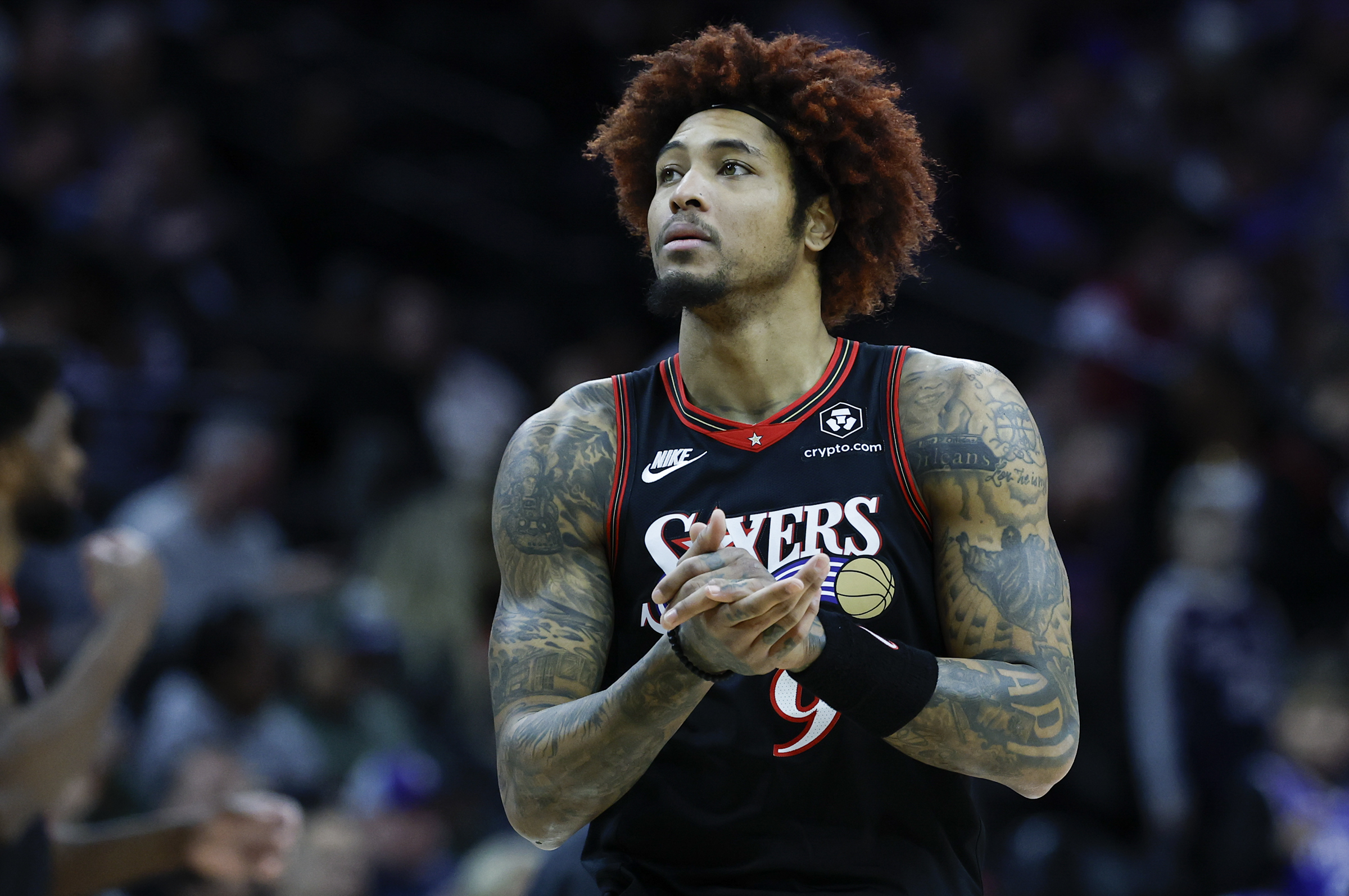
    Sixers guard Kelly Oubre Jr., has stepped up in Paul George’s absence as the nine-time All-Star serves a 25-game suspension.

    Do the Sixers have reliable players on the roster who can step up during George’s absence?

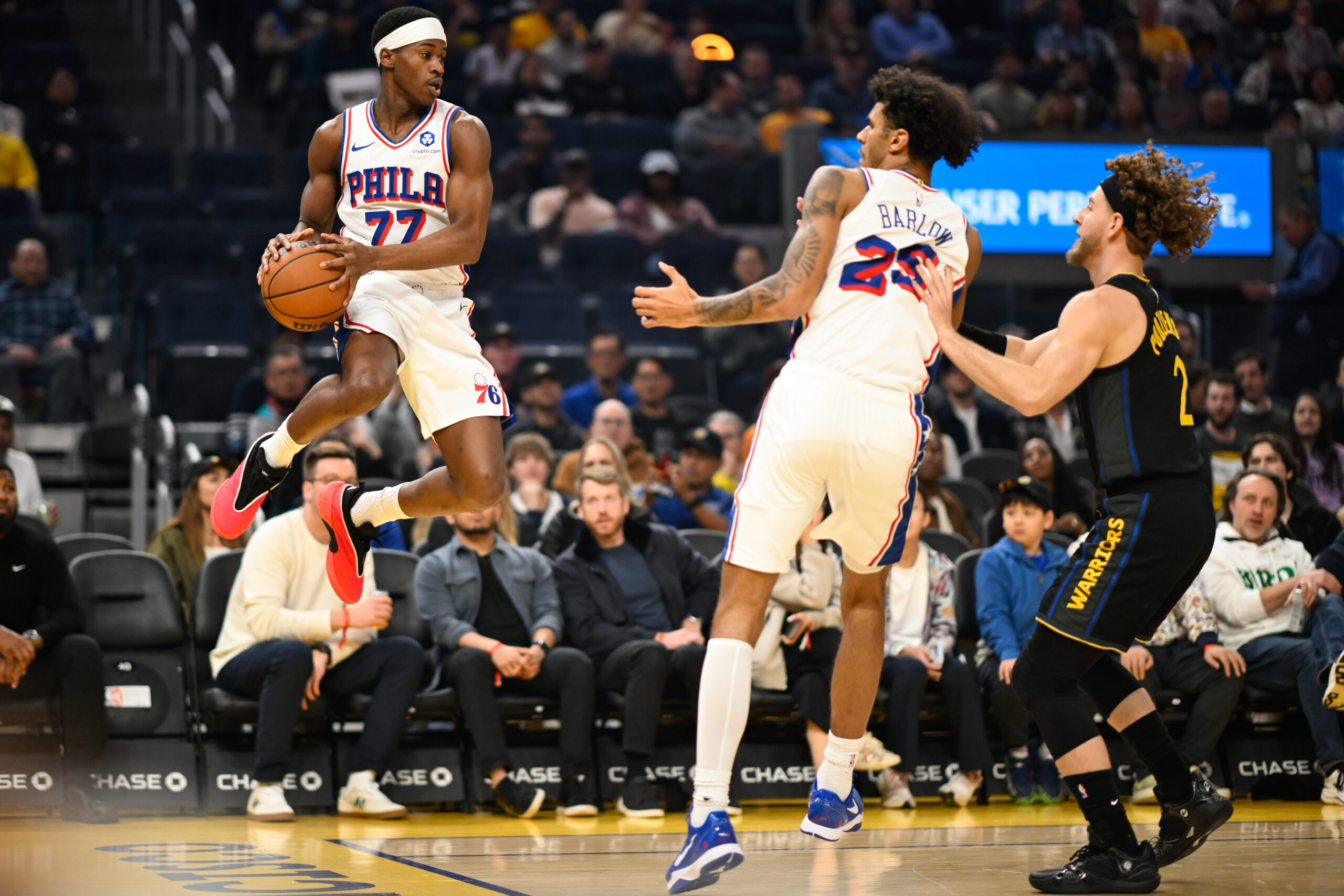
    Oubre, VJ Edgecombe, and Dominick Barlow have all shown they can handle larger roles until George returns on March 25 for the final 10 games of the season.

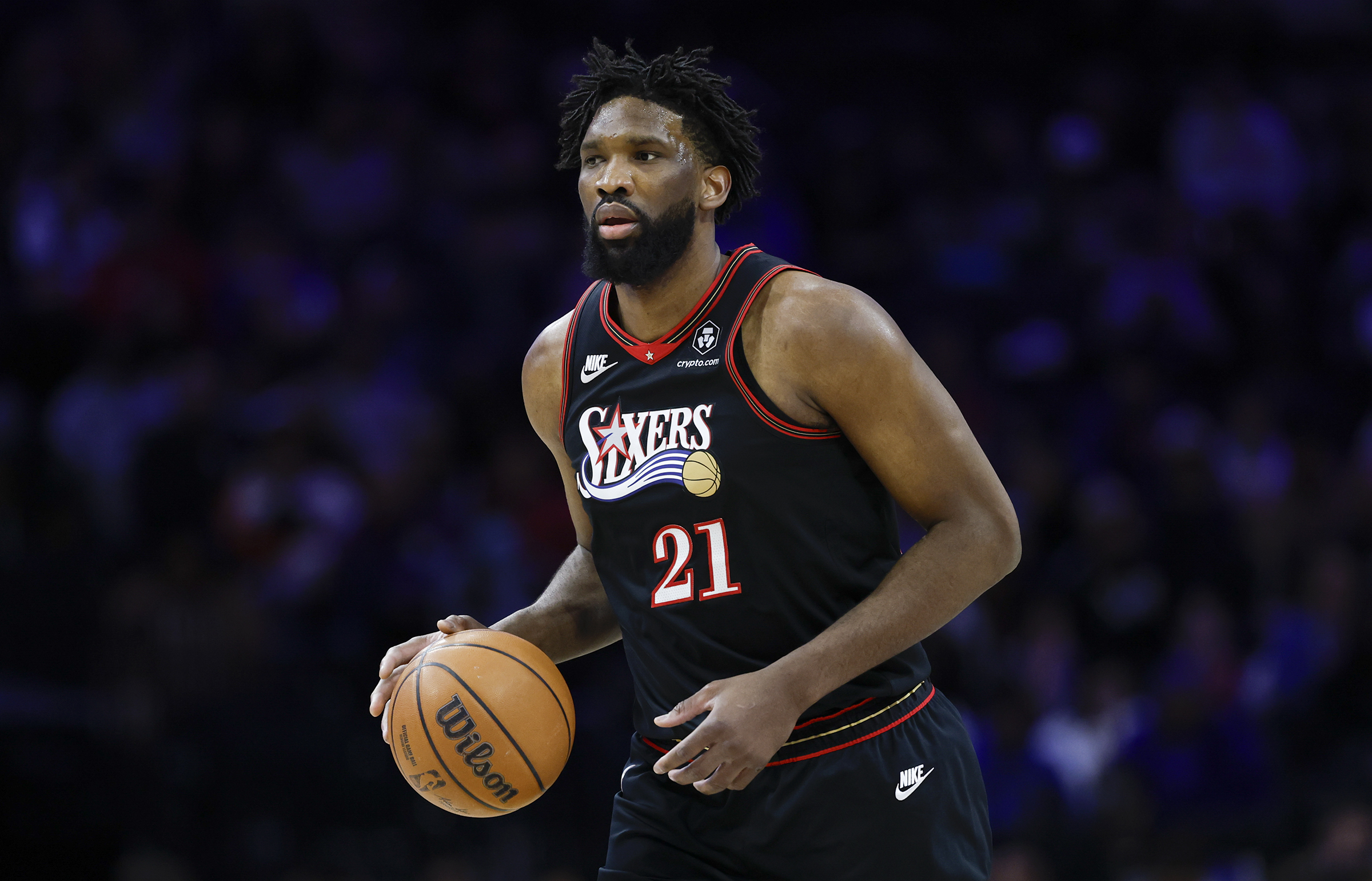
    Edgecombe, a rookie shooting guard, has been the Robin to Tyrese Maxey’s Batman when Embiid and George have missed games or were limited by minutes restrictions. In addition to scoring 34 points in the season opener, the 20-year-old has two game-winning baskets this season.

    Meanwhile, Oubre played well in Saturday’s 124-114 victory over the New Orleans Pelicans, the first game that George missed due to the suspension. The 6-foot-8 swingman scored 19 points on 7-for-13 shooting to go with 10 rebounds and four assists.

    “That’s big time,” Maxey said of Oubre’s 10 rebounds. “We’re going to need it, especially filling in for that role. And I have trust in him, because Kelly’s a guy who is not scared of the moment.”

    Dominick Barlow became first Sixer with at least 25 points and 10 offensive rebounds since Hall of Famer Charles Barkley did so in November 1990.

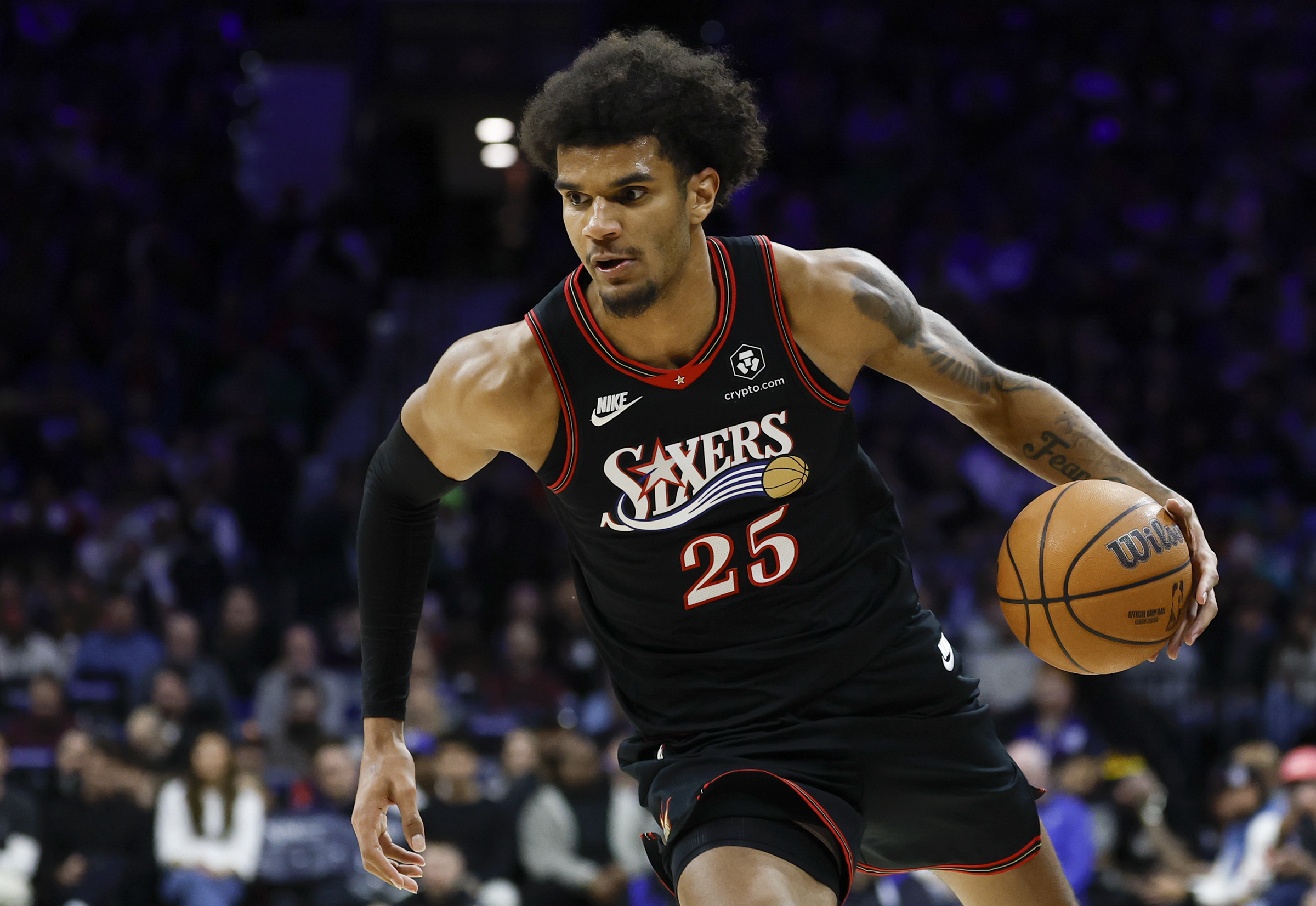
    Barlow followed up with his own big-time moment in Monday’s 128-113 road victory over the Los Angeles Clippers. The power forward, who is starting in place of George, finished with a career-high 26 points to go with 16 rebounds, including a career-high 10 offensive boards, to post his second double-double of the season. He also finished with two steals and a block.

    The 6-9, 215-pounder became the first Sixer with at least 25 points and 10 offensive rebounds since Hall of Famer Charles Barkley did so in November 1990. So the Sixers have players more than capable of filling in for George, a nine-time All-Star.

    Do the Sixers have the available trade assets required to get a significant upgrade in talent at the trade deadline?

    Aside from Maxey and Edgecombe, the Sixers don’t have the assets needed to acquire the type of player who could drastically improve the team via a trade. And the Sixers aren’t going to trade either player.

    Embiid is once again playing at an elite level, averaging 29.3 points over the last 15 games heading into Tuesday’s contest against the Warriors. However, he has an extensive injury history and a three-year, $193 million contract extension that kicks in next season. While he looks great at the moment, there is a lot of uncertainty concerning how he’ll hold up in the future.

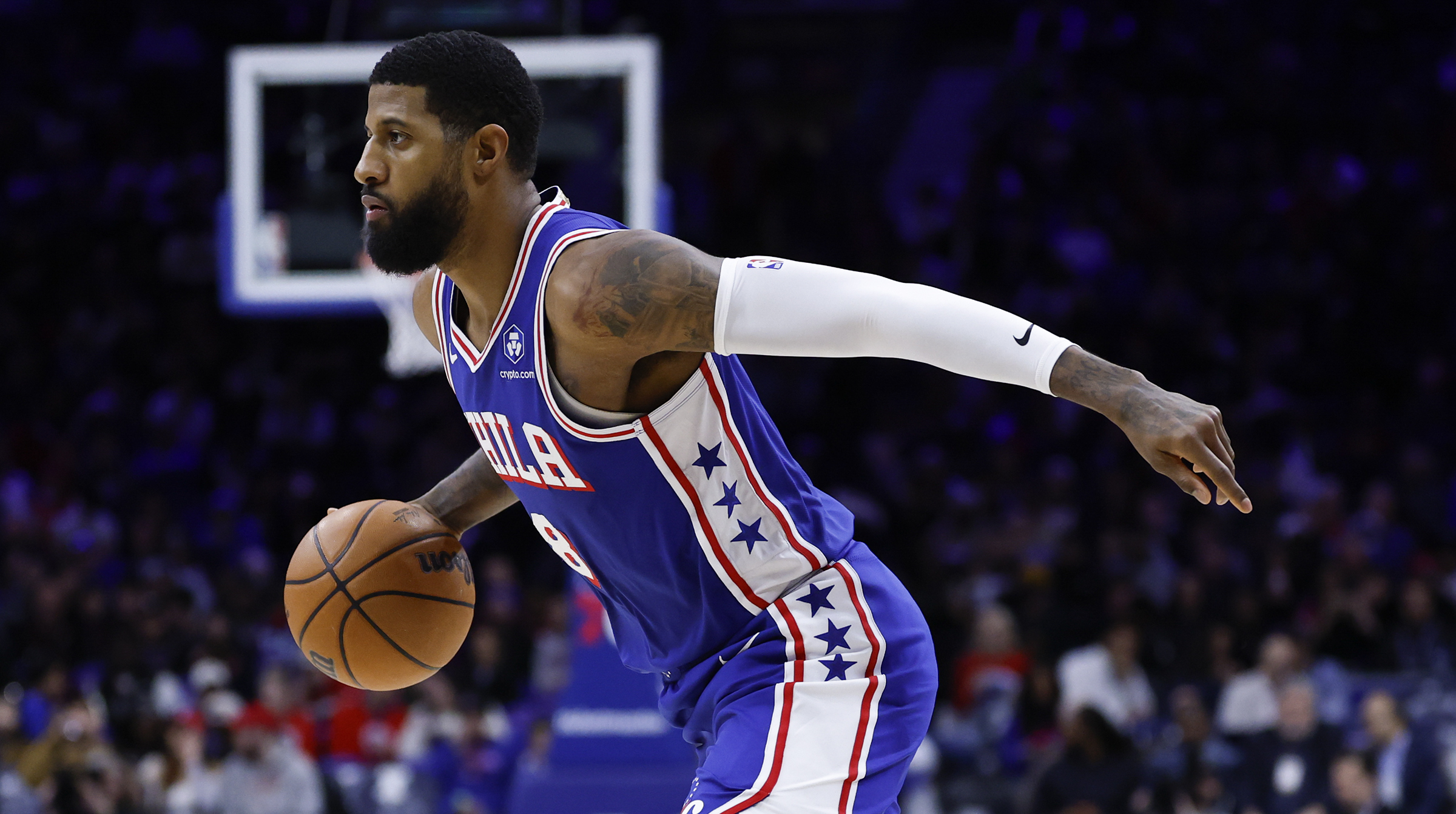
    Sixers forward Paul George has been suspended 25 games for violating the league’s anti-drug policy.

    Meanwhile, George has a tough contract to move after signing a four-year, $211.5 million deal in July 2024. At this stage of his career, he’s recognized as a fourth option on a championship team. Yet George is being paid as a top-two player. As a result, it’s hard to justify taking on his salary at this time.

    And since the Sixers aren’t going to trade Maxey or Edgecombe, they shouldn’t forfeit their future by surrendering draft picks to facilitate a trade. They’ll need those picks to acquire young talent and continue building around Maxey and Edgecombe after Embiid and George leave Philly.

    What’s the possibility of the team moving salary to convert two-way players Dominick Barlow and Jabari Walker to standard deals?

    That could happen. Both players have been vital to the team’s success this season. Unless they sign Charles Bassey to a second 10-day contract on Thursday, the Sixers will have a standard roster spot available that day.

    After the fifth game of George’s suspension, he will be moved from the active roster to the suspended list. The Sixers will be able to sign an additional player once he’s on that list.

    The fifth game is Saturday’s road game against the Phoenix Suns. But the Sixers could also create an additional roster spot by trading a minimum-salary player to a team with available salary-cap space in exchange for draft assets.

    Sixers forward Jabari Walker has outplayed the two-way deal he signed before the season.

    How will the Sixers manage the backup center position?

    Sources have said the Sixers are open to trading Drummond, even though he’s their best rebounder. If that happens, they’ll have to look for a backup center to grab rebounds and block shots.

    Bassey, or a similar player, could be an option. The team initially selected the 6-foot-11 center out of Western Kentucky with the 53rd pick in the 2021 draft. He appeared in 23 NBA games as a rookie, averaging 3.0 points on 63.8% shooting along with 2.7 rebounds, 0.7 blocks, and 7.3 minutes.

    However, Bassey was waived on Oct. 13, 2022.

    He has averaged 4.3 points and 4.3 rebounds across 115 NBA games with the Sixers, San Antonio Spurs, and Memphis Grizzlies.

    Sixers center Joel Embiid has returned to form this season, averaging 26.1 points, 7.4 rebounds and 3.8 assists.

    Can this team compete for a title as currently constructed?

    A lot of that will depend on Embiid’s health. With him playing at a high level, the Sixers were a dangerous team. When he plays well, they could beat anyone in the league.

    But how will the Sixers compete against the Boston Celtics, who are adding standout center Nikola Vucevic and a second-round pick from the Chicago Bulls in exchange for Anfernee Simons and a second-rounder? Will seeing the Celtics and other East teams try to improve through trades force the Sixers to make a move? Time will tell.

  • Born in The Inquirer’s newsroom, the AP women’s basketball poll ‘has stood the test of time’

    Born in The Inquirer’s newsroom, the AP women’s basketball poll ‘has stood the test of time’

    Paging through the bulky Sunday Inquirer on Nov. 28, 1976, readers encountered a sports section that might have been compiled in Mount Athos, the tiny Greek republic that’s been off-limits to women for centuries.

    It was stuffed with man’s-world staples — stories, stats, and standings on the NFL, NHL, pro and college basketball. There were columns on hunting, golf, boys’ high school sports; features on boxing, men’s cross-country, minor league hockey; an entire page devoted to horse racing.

    The ads were no less macho-flavored, promoting car batteries, rifles, tires. A prominent one hyped January’s U.S. Pro Indoor Tennis Championship at the Spectrum with its lineup of “50 of the world’s top male pros.”

    About the only indications that women participated in sports were an account of a West Chester State field hockey game and, buried on the gray scoreboard page, a truncated leaders’ list from that weekend’s LPGA tournament.

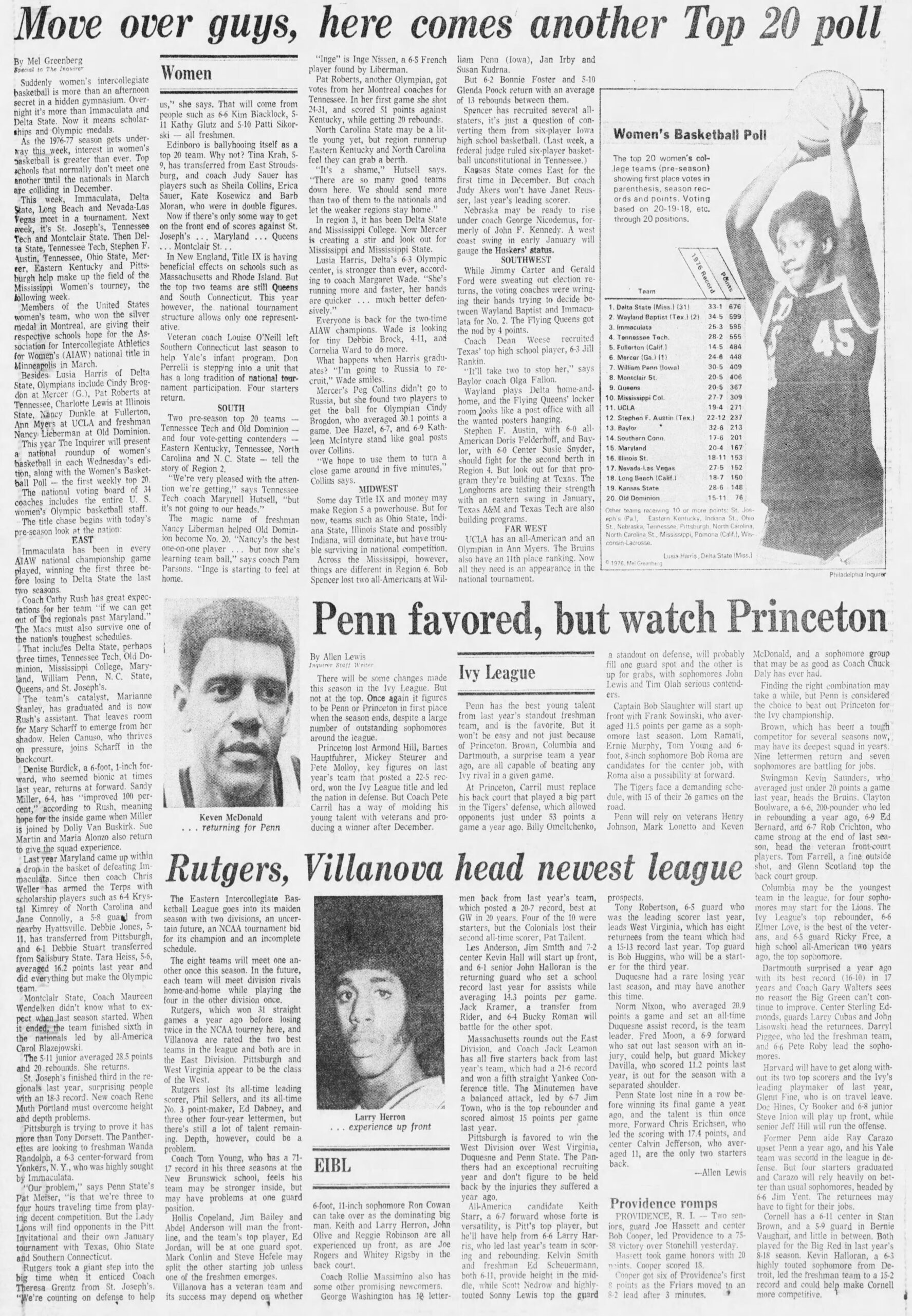
    But for those who reached Page 16, a strange interloper awaited. Sandwiched between two men’s basketball previews, as if editors thought it incapable of standing alone, was one of the earliest and most consequential harbingers of a bubbling sports revolution — the first women’s college basketball poll.

    Conceived by then-Inquirer sports editor Jay Searcy and obsessively nurtured by a Temple-educated newspaper clerk named Mel Greenberg, its headline read like a polite plea for recognition: “Move over guys, here comes another Top 20 poll.”

    A clipping from the Nov. 28, 1976, edition of The Inquirer that features the first installation of what became the AP women’s basketball poll.

    It came. And it stayed. Week after week, year after year, Greenberg’s poll accumulated popularity and heft, becoming a building block in the growth of women’s basketball. A sport that had been widely ignored and loosely governed by the Association for Intercollegiate Women’s Athletics now had validation, a common sense of purpose, and unity.

    “That poll gave coaches and others around the country an opportunity to know what was going on everywhere with women’s college basketball,” said Marianne Stanley, a star on Immaculata’s 1970s championship teams and later a successful college and WNBA coach. “Prior to that, there was only word-of-mouth. Newspapers didn’t cover it, and no one was tracking what was happening nationally.”

    Revisiting that debut poll in this, its 50th anniversary year, is eye-opening. Its top 10 might today be mistaken for a ranking of Division III field hockey teams — Delta State, Wayland Baptist, Immaculata, Tennessee Tech, Fullerton, Mercer, William Penn, Montclair State, Queens, and Mississippi College.

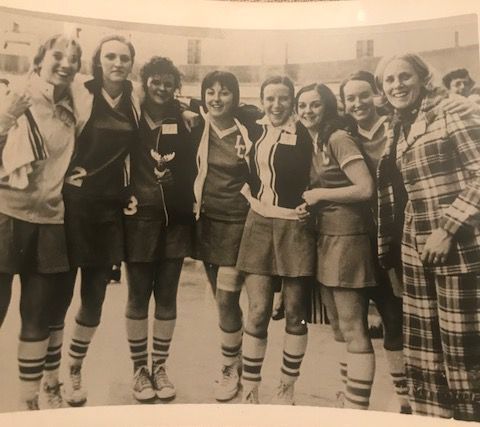
    Theresa Grentz (second from left) and Marianne Stanley (fourth from right) with Immaculata teammates and coach Cathy Rush at right. Immaculata was one of women’s college basketball’s first powers.

    The large state schools that dominate in 2026 mostly were absent.

    But not for long.

    Motivated by the mandates of 1972’s Title IX and by a desire to see themselves in the new rankings, many started to invest in the sport.

    By 1981, when the NCAA replaced the AIAW as the game’s overseer, there were 234 women’s Division I programs. That jumped to 284 in 1991, 317 in 2001. Last season there were 325 D-I programs, and more than 1,000 when Division II and III are included.

    “The fact that so many schools where women’s basketball was nonexistent or an afterthought went all in is a credit to Mel and his poll,” said Jim Foster, the retired women’s coach at St. Joseph’s, Ohio State, and elsewhere.

    Deirdre Kane, the retired West Chester University coach, said that “until Mel’s poll, the NCAA wasn’t even acknowledging our existence. That poll made people realize, some of them for the first time, that women’s collegiate basketball was being played.”

    Greenberg built a national network of coaches and administrators, contacting them weekly for information and input. As newspapers beyond Philadelphia added his poll, its significance deepened.

    “We were all fighting for recognition, but none of us were getting much,” said Geno Auriemma, the Norristown-raised, spectacularly successful coach at Connecticut. “Mel came along, and he was one of the few who gave us a little. His poll helped us all grow the game.”

    It grew so widely that in 1996 the NBA launched a women’s pro league, stocked with the stars of the college game. The WNBA now has a national TV contract, recognizable superstars, and a lineup of big-city franchises that in 2030 will include Philadelphia.

    “When Philadelphia gets that team,” Foster said, “they ought to call it the Philadelphia Mels.”

    Philadelphia roots

    It took 28 years after the inception of the Associated Press’ men’s college basketball poll for the women to get one. In 1976, Searcy, who before arriving at The Inquirer had covered women’s sports for the New York Times, decided the time had come. His motivation likely sprang from developments in that Bicentennial year.

    Women’s basketball made its Olympic debut that summer in Montreal. A few months earlier, Immaculata had appeared in its fifth straight AIAW national title game. The Mighty Macs, who in 1971 played in the first nationally televised women’s game, had won the first three and were runners-up the next two years.

    Searcy reached out to Greenberg, an editorial clerk who by then was the de facto Immaculata beat writer.

    “Jay called me into his office and said, ‘What do you think of the idea of a women’s basketball poll?’” Greenberg said. “And I said, ‘I think you’re nuts.’”

    As Greenberg prepared for the poll’s November launch, Searcy promoted it. He revealed his plan to Temple students during a campus visit. In that audience was Foster, then a physical education major who also coached Bishop McDevitt High School’s girls.

    “It was really exciting news for anyone interested in the sport,” Foster said. “He told us he was going to start a women’s basketball poll that would be just like the men’s.”

    Still, many scoffed. Women’s basketball, after all, existed deep in the shadows. Most newspapers and TV stations ignored it. With few exceptions, games were played before tiny crowds, often in substandard gyms. Rules weren’t standardized, qualified coaches and referees were in short supply, and, until the AIAW’s 1971 founding, there was no universally accepted end-of-season tournament.

    “The only people who followed women’s basketball then were the people involved in the game,” Kane said.

    But if there was a hotbed, it probably was the Philadelphia area. Numerous elementary schools, high schools, and colleges here had teams. West Chester State, with its strong physical education program, gained prominence in the 1960s under coach Carol Eckman, now known as “the mother of women’s college basketball.” And it was a West Chester grad, Cathy Rush, who turned Immaculata into the nation’s best team in the early 1970s.

    “There was always a huge basketball presence in Philadelphia,” Stanley said. “But it wasn’t until Immaculata that many people noticed the women. Then, the AIAW was formed, and that was big. Now, here comes the poll, and suddenly we’ve got a way to track and pay attention to what was happening not just here but across the country.”

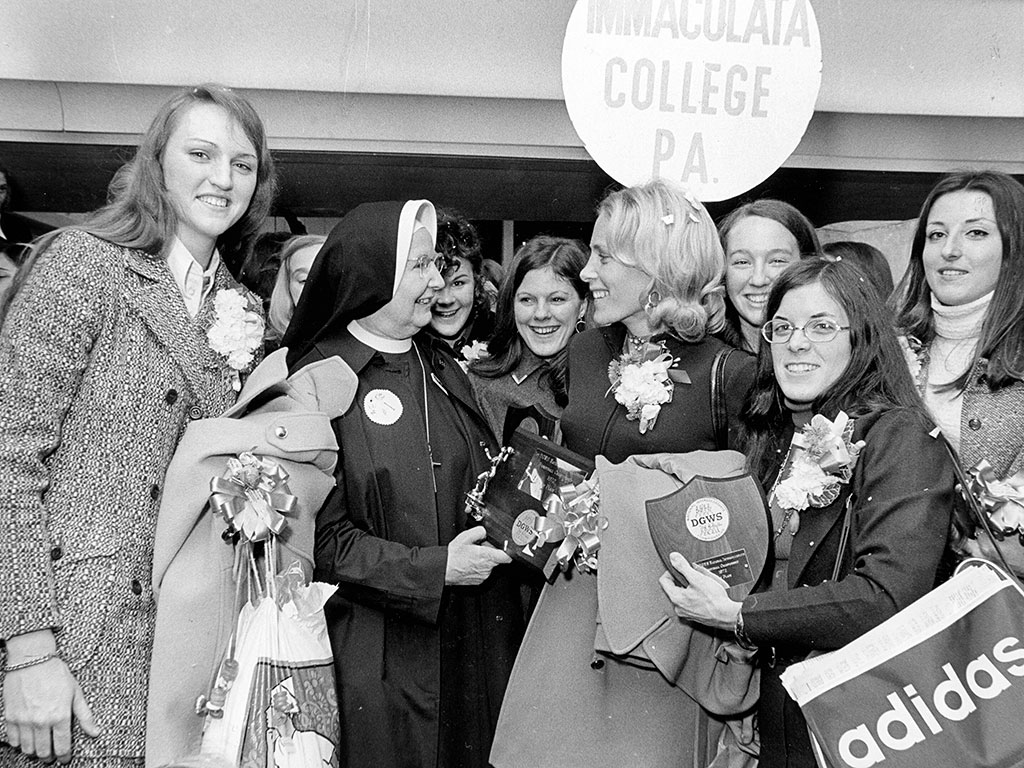
    Members of the Immaculata College basketball team gather around their coach as they return after winning the first women’s collegiate national championship in 1972. From left in the foreground are Theresa Shank, college president Sister Mary of Lourdes, coach Cathy Rush, and Janet Ruch.

    Despite Greenberg’s occasional stories on the Mighty Macs, few readers knew much of the women’s basketball world beyond. And few sports editors and writers besides Searcy and Greenberg saw its potential.

    “I loved women’s basketball,” said Dick Weiss, a veteran sportswriter who then was covering men’s college basketball for the Philadelphia Daily News, “but most of us never saw it becoming a regular beat. All our energy went into the Sixers with Julius Erving and the Big 5, which still had NCAA teams filled with local talent.”

    Launching the poll proved problematic. If women’s programs were second-class on most campuses, so were their support staffs. Gathering schedules and stats was nearly impossible. When Greenberg reached out to the AIAW for help, the organization balked.

    “They told me women’s sports shouldn’t get involved in things like newspaper polls because that would lead to the evils of men’s athletics,” he said.

    So he built a Rolodex of contacts, then he and some basketball contacts painstakingly collected information over the phones.

    “Mel based the poll operation in our sports department,” said Gene Foreman, then The Inquirer’s managing editor. “His volunteer helpers were several tall women.”

    Coaches telephoned in their votes on Sunday nights. One, N.C. State’s Kay Yow, provided an early indication of the poll’s impact.

    On Jan. 2, 1977, Immaculata visited N.C. State, which typically played before small gatherings. But the new rankings promised a compelling matchup. The Wolfpack were ranked No. 15; Immaculata, which triumphed, 95-90, was No. 2.

    “I remember Yow calling and talking about how excited she was,” Greenberg said. “It was snowing before the game, but there was a long line of fans outside the arena waiting for tickets.”

    In 1978, the Associated Press began distributing the poll, giving most news outlets access. Then, in 1994, Greenberg ceded its compilation to the AP, and media members replaced coaches as the voters.

    The poll was a cornerstone of the game, and in 2000, another Sunday Inquirer spotlighted women’s basketball’s maturity.

    Philadelphia was hosting that year’s Final Four. Its lineup of Connecticut, Tennessee, Rutgers, and Penn State revealed the game’s progression from the days when little Immaculata could win three straight titles. Its two sessions attracted nearly 40,000 fans. Millions more watched on ESPN.

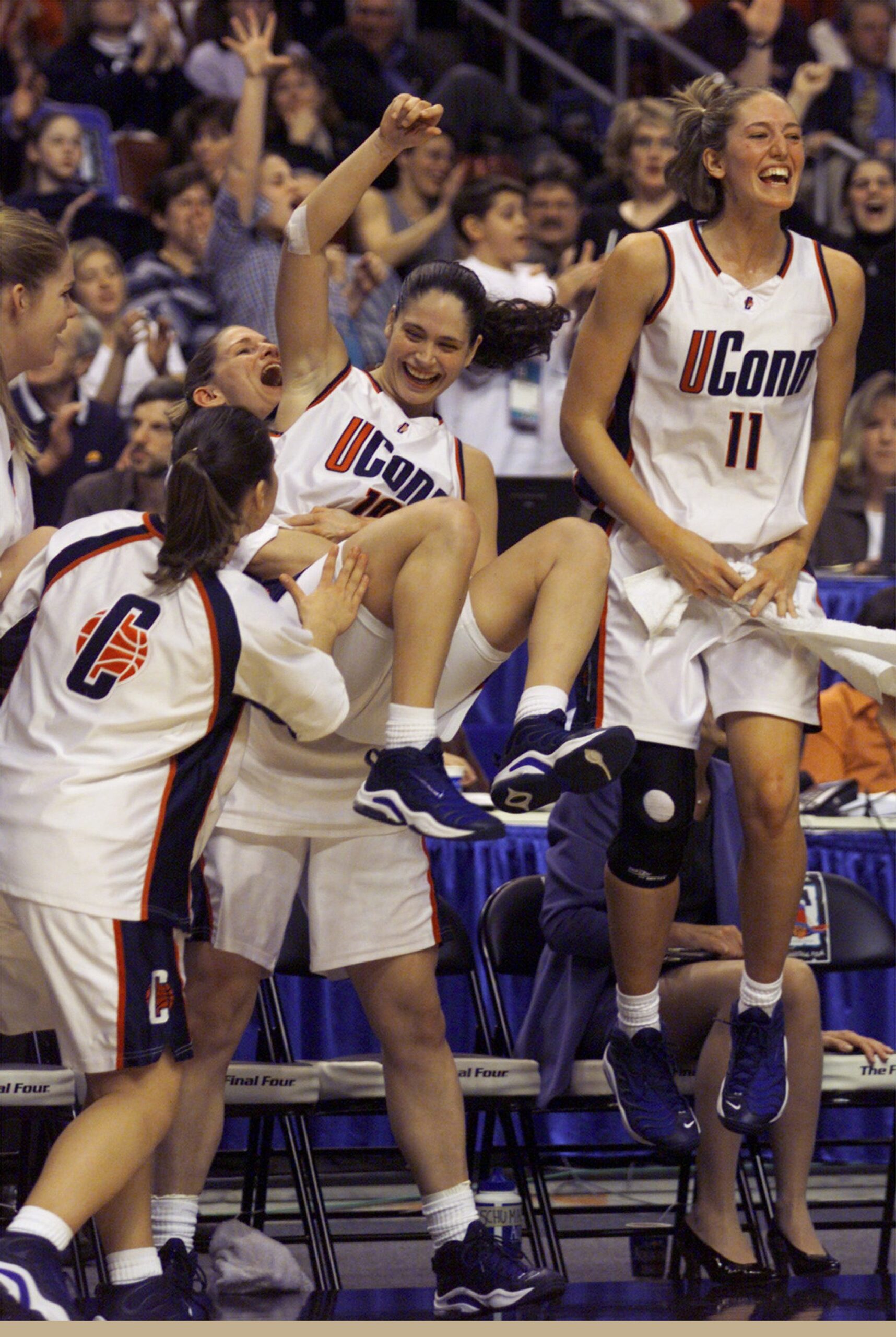
    Stacy Hansmeyer, Sue Bird, and the UConn bench celebrate after Swin Cash makes a breakaway layup late in the second half of UConn’s Final Four game against Penn State on March 31, 2000, at what then was called the First Union Center.

    The April 2 Inquirer ballyhooed that night’s title game on Page 1. Inside was an entire section previewing the event from every angle. There were profiles of coaches, players, even the referees. There were analyses, features, columns, statistics, photos and predictions.

    And the poll?

    Well, the championship game itself proved just how plugged in it was. Connecticut, the No. 1 team in the regular season’s final rankings, defeated No. 2 Tennessee.

    Greenberg retired from The Inquirer in 2010 but still compiles a widely read blog. Organizations, including the Naismith Basketball Hall of Fame, have recognized him and his poll’s contributions.

    “Mel was a gift to the women’s game,” Stanley said. “He was so passionate, and so dedicated and so single-minded. Who knows how long it otherwise would have taken for anything of substance to occur? Not many news outlets gave a crap about it, but Mel and The Inquirer decided to do something about women’s basketball. And that poll has stood the test of time.”

  • Sixers takeaways: Winning without Joel Embiid, best stretch since 2024, and more from victory over Warriors

    Sixers takeaways: Winning without Joel Embiid, best stretch since 2024, and more from victory over Warriors

    Andre Drummond has to sustain quick starts in games.

    The 76ers, however, bucked the recent trend of losing on nights when Joel Embiid is not playing.

    And in the process, they’re in the midst of their best stretch since concluding the 2023-24 season with nine consecutive victories.

    Those things stood out in Tuesday’s 113-94 victory over the Golden State Warriors at the Chase Center in San Francisco.

    The Sixers (29-21) are a half-game behind the fourth-place Toronto Raptors and Cleveland Cavaliers in the Eastern Conference standings.

    Drummond must sustain his shooting

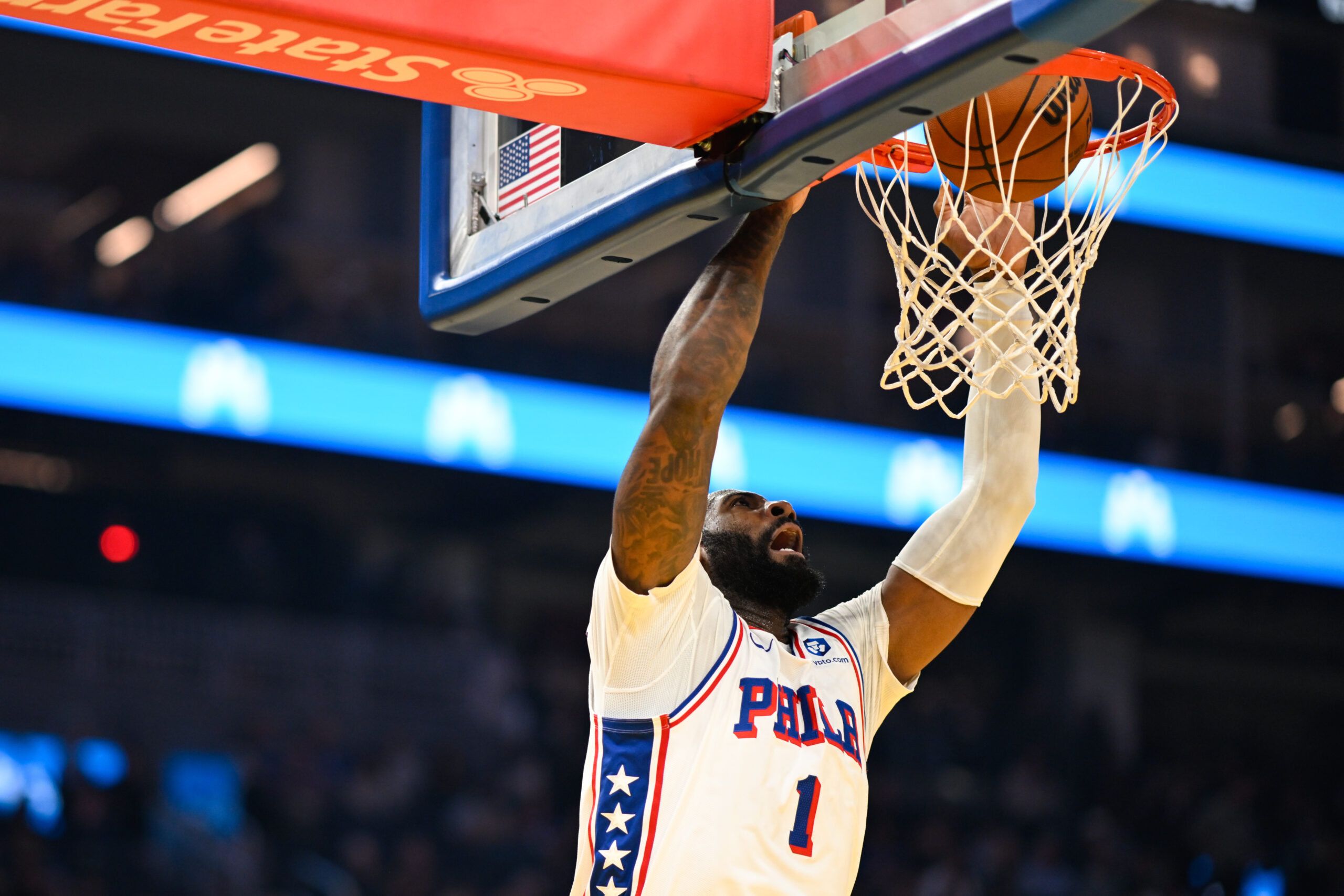
    Drummond got his 18th start of the season due to Embiid not being cleared to play on back-to-back nights. Drummond finished with a game-high 11 rebounds to go with 12 points for his 12th double-double of the season.

    On paper, his stat line looked good. He made 5 of 11 shots, including 1 of 2 on three-pointers, to go with one assist, one steal, and one block.

    But he’ll have to be a more consistent shooter to gain the coaching staff’s trust as a reliable reserve when Embiid plays.

    Sixers reserve center Adem Bona scored 11 points in 16 minutes off the bench Tuesday night.

    Drummond was unable to build off his solid shooting start to the game.

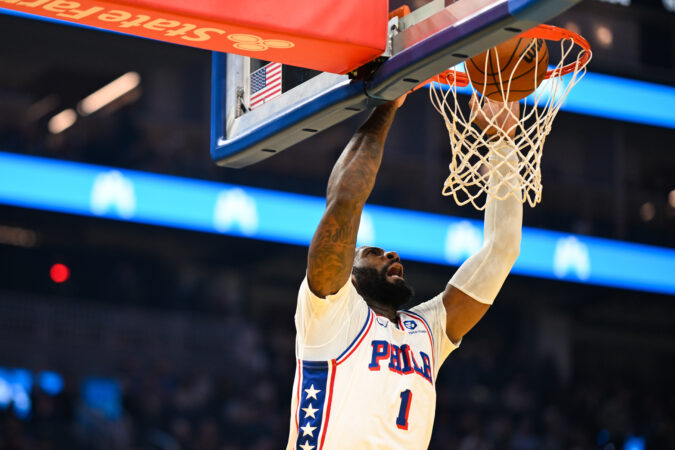
    He had four points on 2-for-2 shooting and five rebounds in the first five minutes. He scored those baskets on a put-back dunk and a tip-in. However, Drummond missed his next six attempts.

    He missed a reverse layup and had a driving dunk blocked before being subbed out for Adem Bona with 2 minutes, 15 seconds remaining in the first quarter. He followed that up by missing a 23-foot three-pointer and a put-back layup in the second quarter.

    His rough shooting night continued in the third quarter, when he missed an eight-foot turnaround jumper and an alley-oop.

    Drummond snapped out of his shooting skid, scoring on two layups in the fourth quarter. The majority of his misses came on shots around the basket.

    Drummond’s offensive shortcomings could be one reason sources say the Sixers are open to trading him, even though he is their leading rebounder.

    While he struggled from the field, Bona had 11 points on 5-for-6 shooting.

    All-Star point guard Tyrese Maxey (14 points on 3-for-9 shooting), Dominick Barlow (10 points, 3-for-10), and Kelly Oubre Jr. (15 points, 4-for-12) all struggled from the field.

    But VJ Edgecombe paced them with 25 points, seven rebounds, and seven assists, and the Sixers got quality contributions from their bench.

    They also benefited from the undermanned Warriors (27-24), who were without Stephen Curry, committing 20 turnovers.

    Needed win without Embiid

    Before Tuesday, the Sixers had lost four straight games when Embiid didn’t play. Teams were blitzing Maxey, and role players weren’t stepping up. They didn’t have that problem against the Warriors.

    Trendon Watford had 16 points, eight rebounds, and two blocks in a reserve role. The Sixers had eight scorers in double digits.

    This victory serves as a major confidence boost for a team dealing with Paul George’s 25-game suspension.

    Sixers guard VJ Edgecombe (left) had a game-high 25 points against the Warriors.

    Extending overall winning streak

    The Sixers have the league’s second-best active winning streak at five games. The Charlotte Hornets and New York Knicks are tied for the best with seven consecutive victories.

    They opened the season with four consecutive victories before winning three straight games from Dec. 30 to Jan. 3.

    But this time, the Sixers appear to be coming into form, getting major contributions from several players.

  • VJ Edgecombe scores 25 as Sixers beat Warriors 113-94 for fifth straight win

    VJ Edgecombe scores 25 as Sixers beat Warriors 113-94 for fifth straight win

    SAN FRANCISCO — Rookie VJ Edgecombe had 25 points, seven rebounds and seven assists, Andre Drummond added 12 points and 12 rebounds, and the 76ers won their fifth straight game, 113-94 on Tuesday night over the Golden State Warriors, who were missing Stephen Curry because of a painful right knee.

    Trendon Watford had 16 points and eight rebounds off the bench while Adem Bona made all five of his first-half field goals in nine minutes to help the Sixers to a 58-57 lead at the break. Bona finished with 11 points.

    Philadelphia’s second bus arrived only about 75 minutes before tipoff because of Bay Area traffic, but coach Nick Nurse was unconcerned about his team having a prolonged warmup since it was the second game of a back-to-back. The Sixers beat the Clippers 128-113 on Monday.

    Curry exited early from Golden State’s 131-124 loss to Detroit on Friday because of the troublesome knee. Forward Jonathan Kuminga, whose future with the franchise remains uncertain, sat out his fifth straight game with a bone bruise in his left knee.

    Gui Santos and Pat Spencer scored 13 points apiece and Moses Moody added 12 for the Warriors, who lost a third straight game at home.

    Sixers center Andre Drummond finished with 12 points and 12 rebounds against Golden State on Tuesday night.

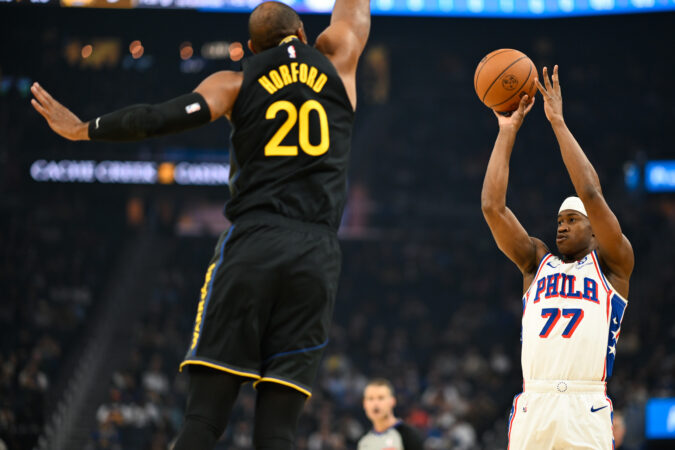
    With Golden State trailing 16-9 early, Draymond Green and Al Horford hit consecutive three-pointers midway through the first quarter on which they both assisted for the other. Golden State hit eight three-pointers in the opening period and shot 12-for-19 overall from deep. Horford had 10 points playing through foul trouble.

    The Sixers their five-game West Coast swing at the Los Angeles Lakers on Thursday night (10 p.m., NBCSP).

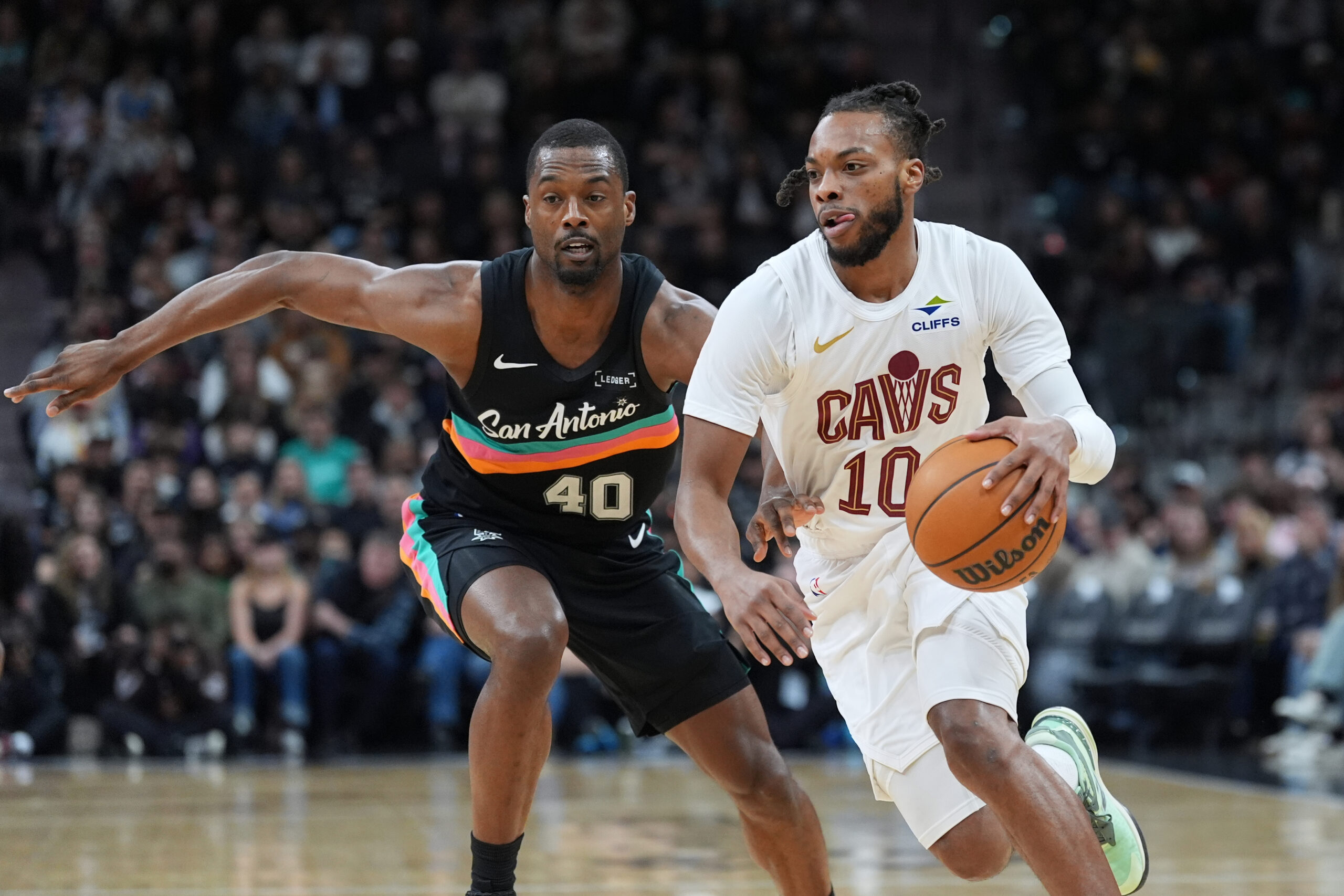
  • James Harden traded to Cavaliers in deal that sends Darius Garland sent to Clippers, source says

    James Harden traded to Cavaliers in deal that sends Darius Garland sent to Clippers, source says

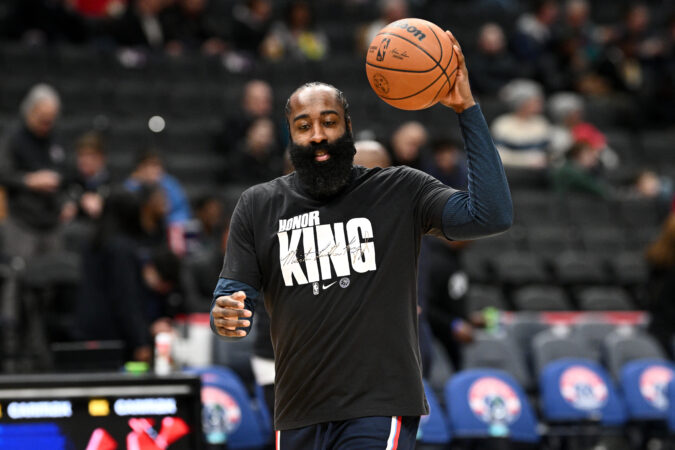
    James Harden is headed to the Cleveland Cavaliers, with the Los Angeles Clippers agreeing to send the 11-time All-Star back to the Eastern Conference during his highest-scoring season in six years, a person with knowledge of the agreement said Tuesday night.

    ESPN was first to report the deal was finalized.

    The Cavaliers are giving up point guard Darius Garland and a second-round pick, said the person, who spoke to the Associated Press on condition of anonymity because the trade has not yet been approved by the NBA.

    That approval could come by Wednesday, when the Cavaliers and Clippers face off in Inglewood, California.

    Harden is averaging 25.4 points this season, his most since averaging 34.3 points in 2019-20. He’s been a huge part of the Clippers’ resurgence back into playoff — or, at least, play-in — contention after a dismal 6-21 start.

    “He means a lot to our team and we’ve seen it the last three years,” Clippers coach Tyronn Lue said Monday night when stories began breaking indicating such a move was close. “Who wouldn’t want to have James Harden?”

    Cleveland will become Harden’s sixth team. He played for Oklahoma City, then Houston, then Brooklyn, then Philadelphia and, since 2023, the Clippers.

    Darius Garland (right) was drafted by Cleveland in 2019.

    For the Cavaliers, it seems to be a move for right now — pairing the 36-year-old Harden with another star guard in Donovan Mitchell. For the Clippers, it seems to be a move with an eye on the future — the 26-year-old Garland is a two-time All-Star, averaging 18 points and 6.9 assists this season for Cleveland.

    Harden opted out of the final year of his contract last summer with the Clippers to sign a new deal that would have been worth $81.5 million for this season and the 2026-27 campaign. Next year is at his option, which basically meant he was on a one-year contract anyway.

    He got that deal after averaging 22.8 points, 5.8 rebounds and 8.7 assists and returning to the All-NBA team for the first time since 2019-20.

  • Jamie Drysdale’s third period goal helps Flyers beat Capitals and snaps four-game losing streak

    Jamie Drysdale’s third period goal helps Flyers beat Capitals and snaps four-game losing streak

    The Flyers were desperate to pick up momentum heading into the Olympic break, especially against the Washington Capitals, a Metro Division opponent that they’re chasing in the standings.

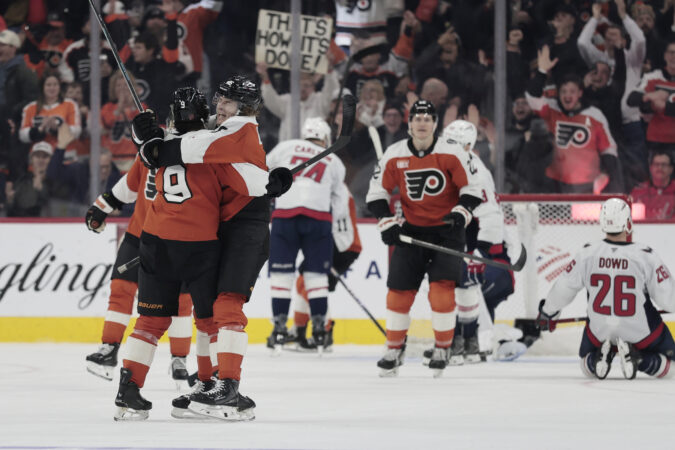
    The Flyers got out to a strong start, building a 2-0 lead in the first period before conceding two Capitals goals to tie the game. But the Flyers finally snapped their four-game losing streak with the 4-2 win thanks to Jamie Drysdale and an empty netter from Rasmus Ristolainen to earn two points and keep their playoff hopes alive.

    Owen Tippett opened the scoring, tucking one past Washington rookie goalie Clay Stevenson, who was starting his second game in as many days. Travis Sanheim and Matvei Michkov, who general manager Danny Briere came out to publicly defend after warmups, picked up the assists.

    Carl Grundstrom, back in the lineup after missing the last two games, scored a goal in his return. His shot from the circle bounced off the skate of Capitals defenseman Jakob Chychrun to make it 2-0.

    But the game changed during the Flyers’ second attempt on the power play. The Flyers are among the league’s worst on the power play, converting on just 15.9% of their opportunities heading into Tuesday’s game.

    Their woes continued in the second period, after Washington’s Aliaksei Protas scored on a shorthanded rush to pull the Caps within 2-1. Things went from bad to worse when Anthony Beauvillier picked up a Dan Vladař rebound and buried it to tie the game at 2-2.

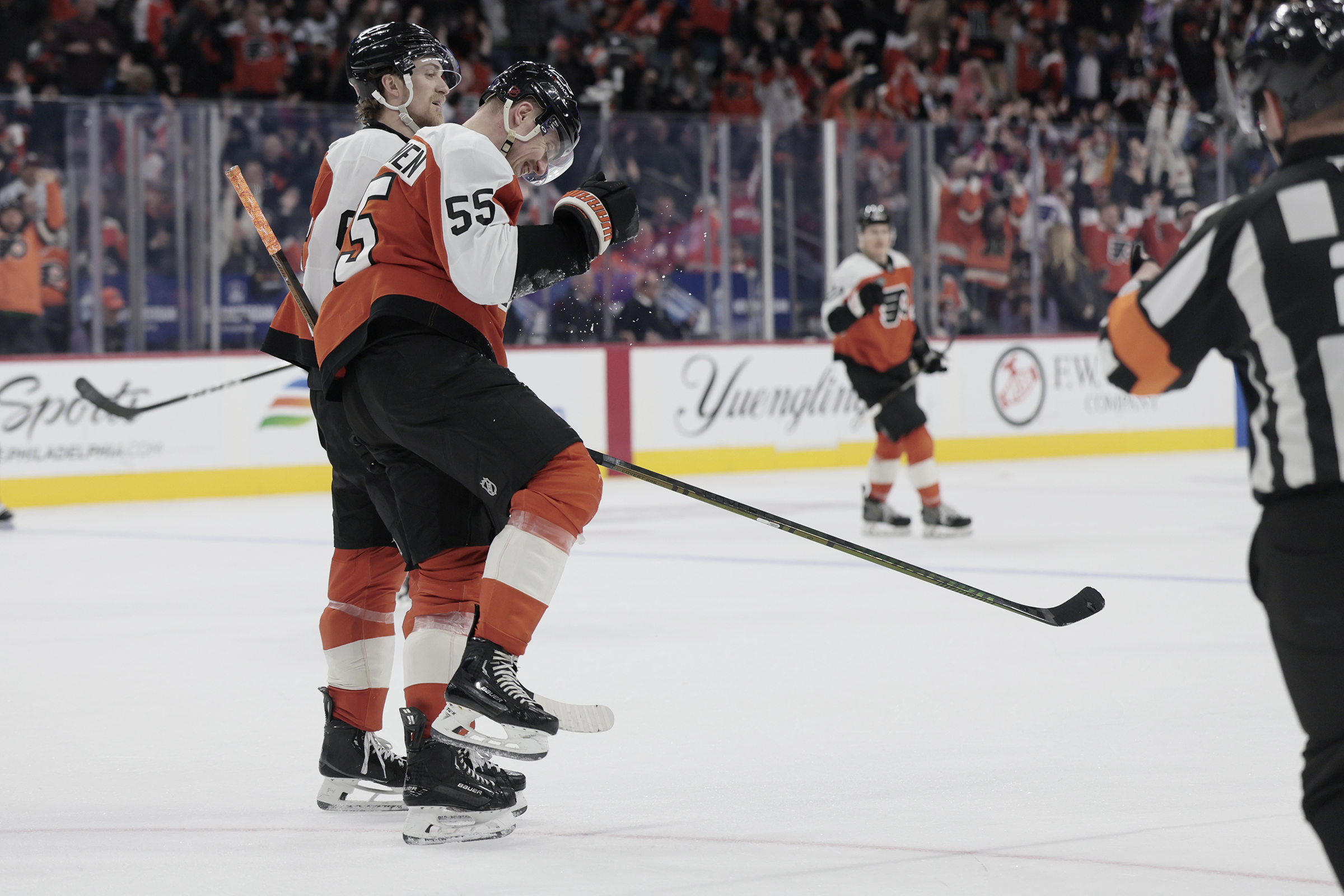
    Flyers’ Rasmus Ristolainen (center) celebrates after scoring an empty net goal in the third period on Tuesday.

    The Flyers got a third chance at a power play late in the third period, and this time, it was clinical. Drysdale buried a shot from the point 30 seconds into the man-advantage to give the Flyers the 3-2 lead, which was ultimately the game-winner. Ristolainen sealed the win for the Flyers with an empty-net goal, his first of the season.

    Breakaways

    Garnet Hathaway was a healthy scratch … Travis Konecny played in his 700th NHL game. He ranks 13th among Flyers players all-time in games played for the franchise … A source tells the Inquirer that Ty Murchison is out for the year after undergoing surgery for an upper-body injury, and Alex Bump is expected to return for Lehigh Valley on Feb. 14.

    Up Next

    The Flyers will play their final game before the Olympic break against the Ottawa Senators (7 p.m. ET, NBCSP) on Thursday.

  • Flyers GM Danny Brière addresses Rick Tocchet’s recent comments on Matvei Michkov: ‘They have a good relationship.’

    Flyers GM Danny Brière addresses Rick Tocchet’s recent comments on Matvei Michkov: ‘They have a good relationship.’

    Flyers general manager Danny Brière stood in the Gene Hart press box at Xfinity Mobile Arena on Tuesday and stated that he “wanted to address a little bit of the noise that is going around.”

    Although he first spoke on the team’s recent “rocky patch,” the main objective was to — obviously — discuss the recent discourse swirling around his coach, Rick Tocchet, and one of the franchise’s rising stars, Matvei Michkov.

    “We’ve never hidden anywhere. We’ve been up front with our fans. We have nothing to hide. So I don’t have a problem with that,” he said of the comments recently and the information divulged publicly.

    “We’ve been up-front. That’s why I’m talking here. We have nothing to hide.”

    Here’s everything Brière said:

    On Matvei Michkov’s future with the Flyers

    Are Michkov’s days in Philly numbered? The short — and long — answers are no. After posting 26 goals and 63 points in 80 games as a rookie, Michkov has struggled to find that form. Entering Tuesday against the Washington Capitals, he had 13 goals and 28 points in 53 games, putting him on pace for 20 goals and 43 points.

    “One thing I can tell you, first of all, is: Matvei Michkov is not going anywhere. Let’s make that clear. OK,” the GM said. “Matvei is going to be here for a long time. He’s going to be a good player here for the Flyers, and what he’s going through right now is all part of the learning process. So that’s out of the way. He’s not going anywhere. He’ll be here. He’ll be a good player.”

    On reports Michkov wasn’t in shape for camp

    In mid-October, the Spittin’ Chiclets podcast reported that sources told them Michkov was “out of shape” and when asked the same day, Tocchet revealed that the Russian winger suffered an ankle injury this offseason — which the coach said he “didn’t even know about” — which impacted the winger’s training and put him ”a little bit behind the eight ball.“

    “One thing I know about Matvei is how driven he is. He wants to be the best player he can be,” Brière said Tuesday. “He admitted himself that he wasn’t in the best physical condition coming in. It’s going to be tough to catch up now. He’s in better shape than he was when he arrived this season.

    “Unfortunately, everybody is in better shape than they were in training camp. So it’s really tough for him to catch up with the amount of games that we have, the amount of travel that we have; it’s just tough for him to catch up in season. He’s going to do that in the offseason. It was a good lesson for him, and just going to make him a better hockey player coming next year.”

    Matvei Michkov has endured a sophomore slump, as he has just 13 goals and 28 points in 54 games.

    Michkov said in early December he would spend the time during the upcoming Olympic break training to get ready for the rest of the season. “If you’re going to have good physical form, everything else will come along,” he said through a team translator.

    But as Brière said, it is a short window.

    The winger also said at the time he would start training in Voorhees at the Flyers Training Center over the summer.

    “We hope so,” Brière said when asked specifically about that. “Yeah, he said that, and we hope that’s true. Again, being around Matvei the last few years, I know how driven he is, so I have no worry about the future. I think this is just a little hiccup.”

    On Michkov and Tocchet’s relationship

    There’s been some conjecture that Tocchet is not happy with Michkov. It was the same when John Tortorella was here as the team’s head coach. As he did last season, Brière tried to temper that on Tuesday.

    “I said it a couple of years ago, when Matvei arrived earlier than expected, we knew there would be some bumps along the way, and that’s kind of what is happening,” Brière said. “The other thing I can tell you, and I talk to Rick Tocchet on a daily basis, he wants Matvei to succeed. He wants to develop him to be the best player he can be, and along the way, there are tough lessons that come with that. That’s like raising a child.

    “There’s tough lessons that he’s learning. It doesn’t matter if he’s playing 12, 14, 16, or even if he was playing 52 minutes a night; he’s learning along the way. It’s part of the process, and it’s going to make him a better player along the way.

    “And Rick Tocchet wants that. He wants to be here for the long haul to lead this team. Him and Matvei, they have a good relationship. Sometimes they’re fiery. Sometimes when you’re not winning, things are done and said, but they always come back to the table. And they want the best for this team, and Rick wants the best for Matvei.

    Flyers head coach Rick Tocchet and winger Matvei Michkov have not seen eye-to-eye on everything this season.

    At the Flyers Charities Carnival on Sunday, Tocchet was a guest on the PHLY podcast and was asked about Michkov’s minutes.

    “Matvei did not come into camp in shape. It’s hard to play your way into shape. I have not told him, or any of our players, to [not] take a guy one-on-one, come out of the corner with the puck, make a play through the rush. Right now, he’s having a tough time in these situations,” Tocchet said.

    “So, you could say other players try. Maybe they don’t have [the same] skill set, but we’re trying to get [Michkov] to that level, how to develop him. [That is] practice, making sure you are on time for treatments and stuff like that. There is so much that goes into [your development], the way you eat.”

    Some would say these comments, especially about missed treatments, should have been kept in-house. Brière said the comments were not directed at Michkov, per se, saying it was about all the youngsters on the team learning how to be a pro from treatments, massages, workouts, and proper nutrition.

    “He showed up, he wasn’t in the best physical condition. That’s true. And Matvei was the first one to admit it. But Rick knows how important he is to the future of this organization. He wants to make it work,” the GM said Tuesday.

    “The coaching staff has probably spent more time with him, trying to help him out. So there’s no problem with the relationship there. … I don’t see any issues between the two of them. They are both very critical of themselves, and they both have that inner drive. I played with Rick Tocchet, I see how Matvei is. They’re both very driven individuals, and they want the best for the team and for the Flyers.”

    On Keith Jones’ comments at the Flyers’ carnival

    Flyers president Keith Jones went on the PHLY podcast, too, and said: “It’s important we keep reminding them [the coaching staff] to play our young players and involve them in the process of getting better, I mean that’s the only way they do get better.”

    It was an interesting comment considering Michkov is the second-youngest player on the team and is averaging 14 minutes, 32 seconds a night, the ninth-most among Flyers forwards.

    “Those are always discussions that we always have within the staff. We always talk about that. And that’s part of the rebuild, right?” Brière said. “Everybody’s aware that we’re trying to build a team that’s going to be good and contend for Stanley Cups down the road, not just to make one appearance in the playoffs and then miss out the following year.

    “We’re trying to create a team here that’s going to be good for years to come, so that’s kind of the direction that it was meant for.”

  • Celtics adding Nikola Vučević in trade with Bulls, source says

    Celtics adding Nikola Vučević in trade with Bulls, source says

    The Boston Celtics are adding some frontcourt depth for the playoff run, agreeing Tuesday to acquire Nikola Vučević from the Chicago Bulls for guard Anfernee Simons, a person with knowledge of the pending trade said.

    There is a package of second-round draft capital also involved in the trade, said the person, who spoke to the Associated Press on condition of anonymity because the deal is still pending the required league approval.

    The 35-year-old Vučević is joining his fourth team after stints with the 76ers, Orlando and the Bulls. He has averaged 16.9 points and 9.0 rebounds this season, roughly matching his career marks of 17.2 points and 10.4 rebounds per game.

    Simons was with the Celtics for just this season, after coming to Boston in the trade last summer that sent Jrue Holiday to Portland. He averaged 14.2 points this season for the Celtics, who entered Tuesday tied with New York for second in the Eastern Conference despite being without Jayson Tatum all season while he recovers from a torn Achilles tendon.

    The move will also lessen Boston’s tax bill considerably, from about $39 million to roughly $17 million. There are other financial flexibilities that the Celtics pick up as part of the deal as well, which could be turned into other moves.

    Both players are set to be free agents this summer.