Category: Sports Columnists

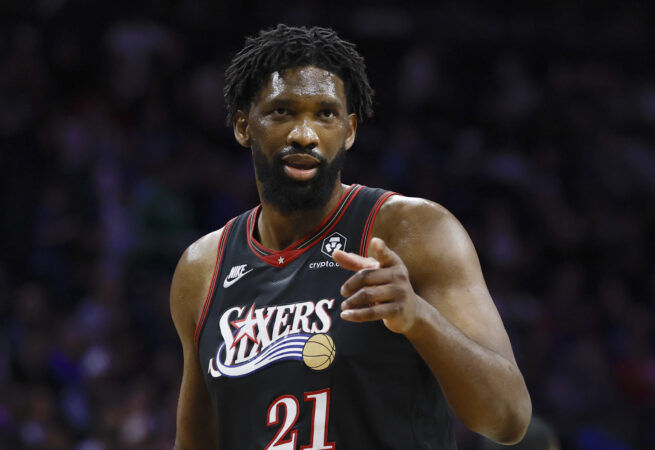
  • Joel Embiid’s return from a mysterious knee problem finally matured him. He’s playing like an All-Star, snubbed or not.

    Joel Embiid’s return from a mysterious knee problem finally matured him. He’s playing like an All-Star, snubbed or not.

    For the first time in a 12-year career that has been as sporadic as it has been incandescent, Joel Embiid is performing to the level of his potential.

    If that sounds demeaning for a player who won the NBA MVP award in 2023, then you didn’t appreciate his unprecedented potential then and you don’t appreciate his diminished potential now.

    Embiid had a chance to be the best big man in NBA history. However, a lack of professionalism rooted in indifference to discipline both on and off the court, combined with a cascade of injuries rooted in bad conditioning and bad luck, always limited his performance. He has missed almost half of the Sixers’ games in his career. This time last year, a lingering knee injury brought him to the brink of irrelevance.

    Now, though, he seems to be the best possible version of himself. His new self. And he’s only getting better.

    “I continue to see improvement,” Sixers president Daryl Morey said last week. “He feels like he’s improving still.”

    How?

    He listened to his doctors. He lost weight. He adjusted his game and is more deferential. He became a better teammate. He might not be going to the All-Star Game this weekend, but he’s playing at an All-Star level.

    Sixers coach Nick Nurse will not play Joel Embiid on the second night of a back-to-back.

    Embiid said last week he doesn’t care about what would be an eighth All-Star appearance: “I don’t need validation from anybody. I’m just excited to be playing every night.”

    Everything is a bonus.

    “Coming into this year, I thought it was going to be more of a tryout year,” he said.

    He’s played in only 31 games, which is probably why he was not elected as an All-Star by the fans, media, and players, who vote on the starters; nor by the coaches, who vote on the reserves.

    After all, Embiid missed 14 of the 76ers’ first 22 games as he grew accustomed to a new body and a new mindset and committed more fully to his rehab regimen.

    That commitment has borne fruit. Embiid has played in 23 of the last 30 games, averaging 29.4 points and 8.2 rebounds in 33.8 minutes in that span. The Sixers were 14-9 in those games entering Monday. They held the No. 6 seed in the Eastern Conference, which is vulnerable due to the absence of stars in Boston and Indiana.

    Given the intermittent nature of a playoff schedule, there’s no reason to think that Embiid couldn’t be similarly productive throughout a postseason run. He doesn’t play in back-to-back games, and he probably never will again, but there are no back-to-backs in the postseason. He did not play Monday in Portland due to right knee soreness, another enduring issue, but missing just seven of 30 games on 31-year-old knees that have undergone a total of four procedures has been a best-case scenario.

    “We thought that Joel could still get to this level and play to this level,” Morey said. “I think there was a lot of very reasonable skepticism. But all I ever had was talking to our medical staff and doctors, and there was a lot of confidence that he could get to this place if he put in the time.”

    That was a big “if.”

    “He has,” Morey said.

    Clearly.
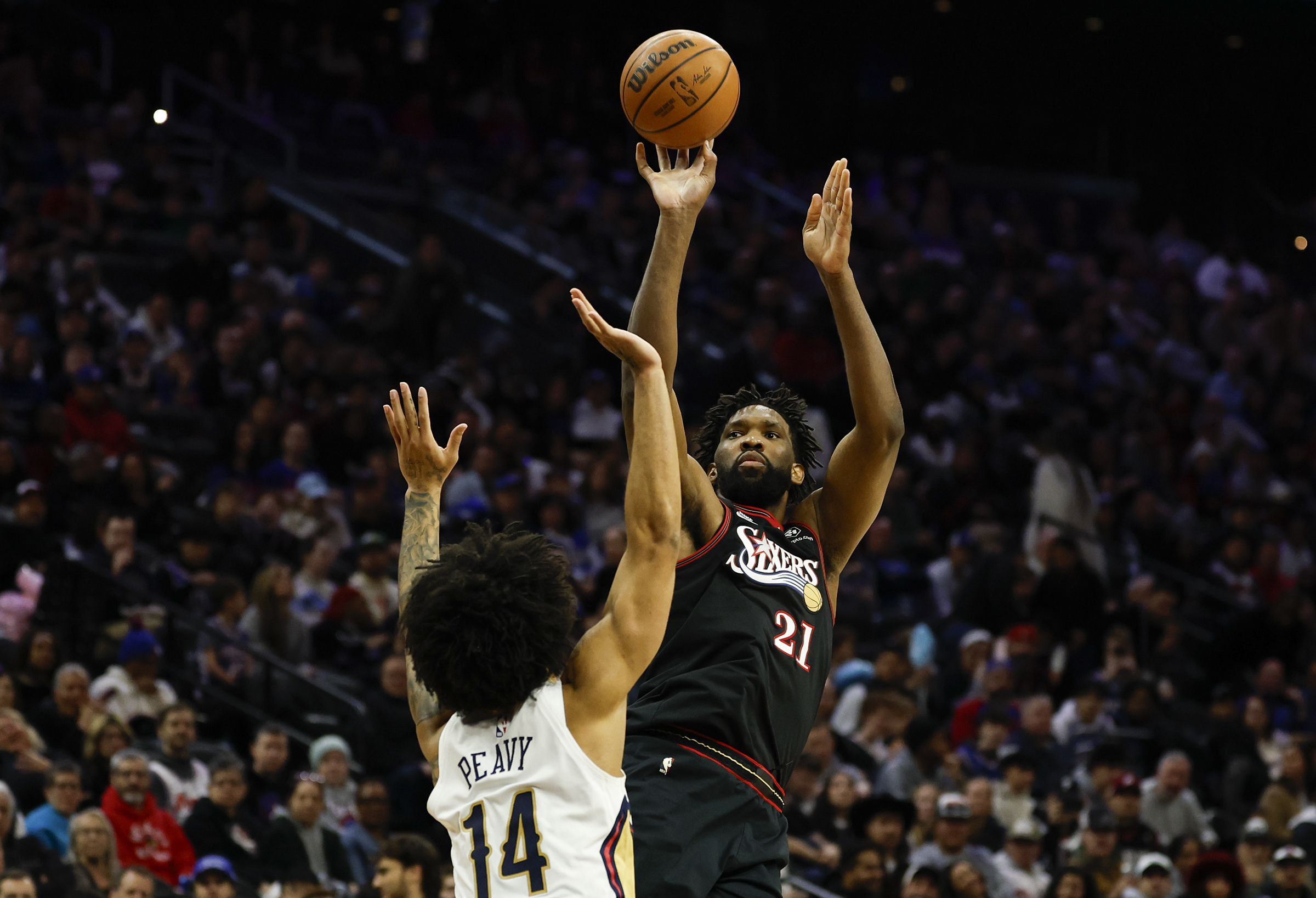
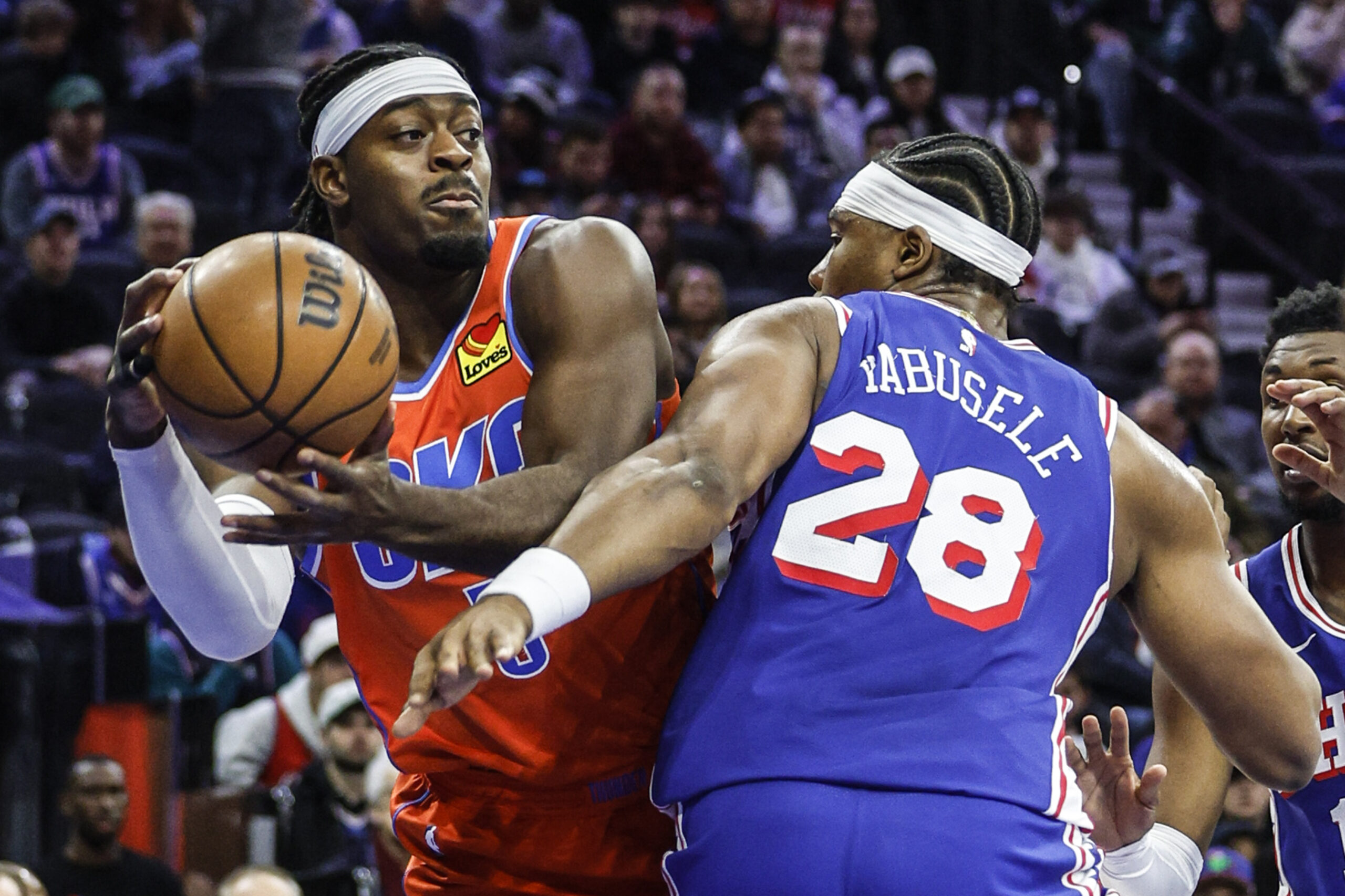
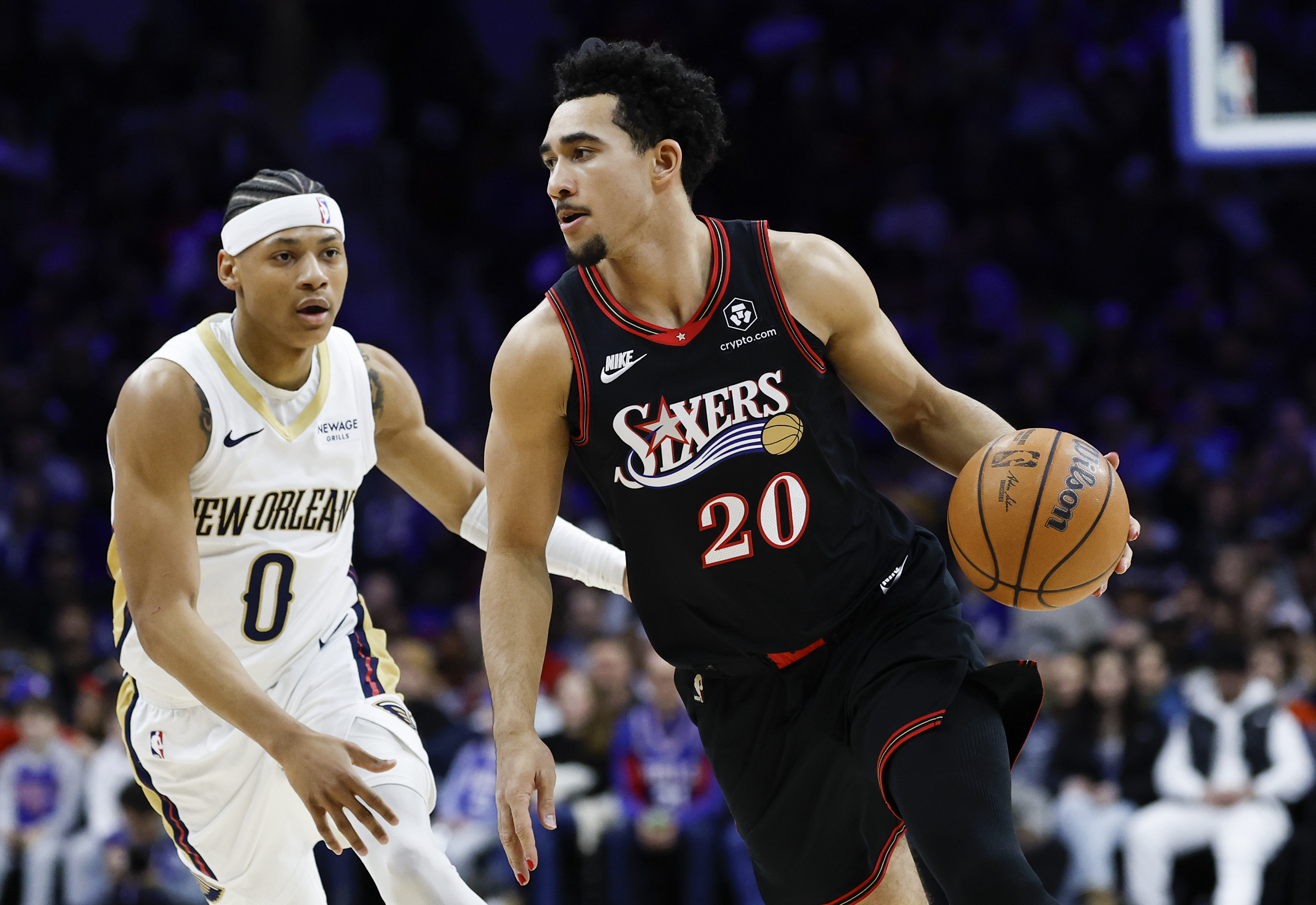
    Sixers center Joel Embiid shoots over New Orleans Pelicans guard Micah Peavy on Jan. 31.

    What, exactly, happened?

    Following the timeline of Embiid’s injuries is as convoluted as reading a map to Blackbeard’s treasure.

    Embiid underwent meniscus surgery in February 2024. He returned in April for the Sixers’ failed playoff run, then foolishly participated in the Paris Olympics with Team USA (he’s a naturalized citizen).

    He showed up for training camp on Sept. 30 both out of shape and far behind on his rehab, and missed the first three weeks of the season. He was hopeless when he returned. The Sixers insisted the knee was fit for play and there was no further injury, but Embiid could not endure the pain and swelling. Doctors said the process of recovery involved strengthening the muscles that surround the knee; weight loss, to reduce the stress on the joint; and overall body strength to better distribute the load. He just got worse.

    Embiid played in just 19 games last season, and, after the 16th one, suggested to a television reporter that he needed another surgery. To that end, Embiid eventually visited Dr. Jonathan Glashow, a Manhattan-based orthopedic surgeon and NBA specialist. Glashow performed an arthroscopic procedure on April 9.

    This, of course, undermined the medical advice Embiid received from at least six other doctors.

    So what, exactly, did Glashow do? Nobody will say. The Sixers, who since 2013 have been cursed by injuries like no other NBA team, are relatively transparent regarding significant medical procedures, at least eventually. Not this time.

    Glashow last month posted on social media, but only to offer thanks to a grateful Sixers community and to offer vague praise of Embiid’s “dedication and hard work.”

    The surgeon did not, however, reply for comment for this story.

    So, the question remains: What did Glashow do? Did he discover an injury other doctors missed?

    About a year ago I wrote a column interviewing orthopedic surgeons who detailed options open to Embiid, many of which might have cost Embiid this season. When presented with the options, the Sixers acknowledged that the list was complete.

    League sources indicate that Glashow did not perform any of the more radical procedures. According to the sources’ knowledge, Embiid underwent the most minor possible procedure on the list: putting the arthroscope into the knee, making sure there was nothing new causing irritation, and getting out.

    After the visit to Glashow, sources say, everything improved. Maybe the big guy got scared straight. Embiid got better rest, he ate smarter, he was even more focused in his rehab sessions. He lost weight. His pain tolerance increased.

    Maybe it just took more time than expected. Everybody heals at a different rate. Everybody’s commitment to rehabilitation is different. Doctors can project typical timelines, but returning to play seldom follows a straight line. There are setbacks. There are plateaus. The body has to develop compensatory strength and stability for strength and stability that has been lost forever.

    At any rate, less than a calendar year later, Embiid is back — at least, he’s more “back” than anyone expected.

    Can it last?
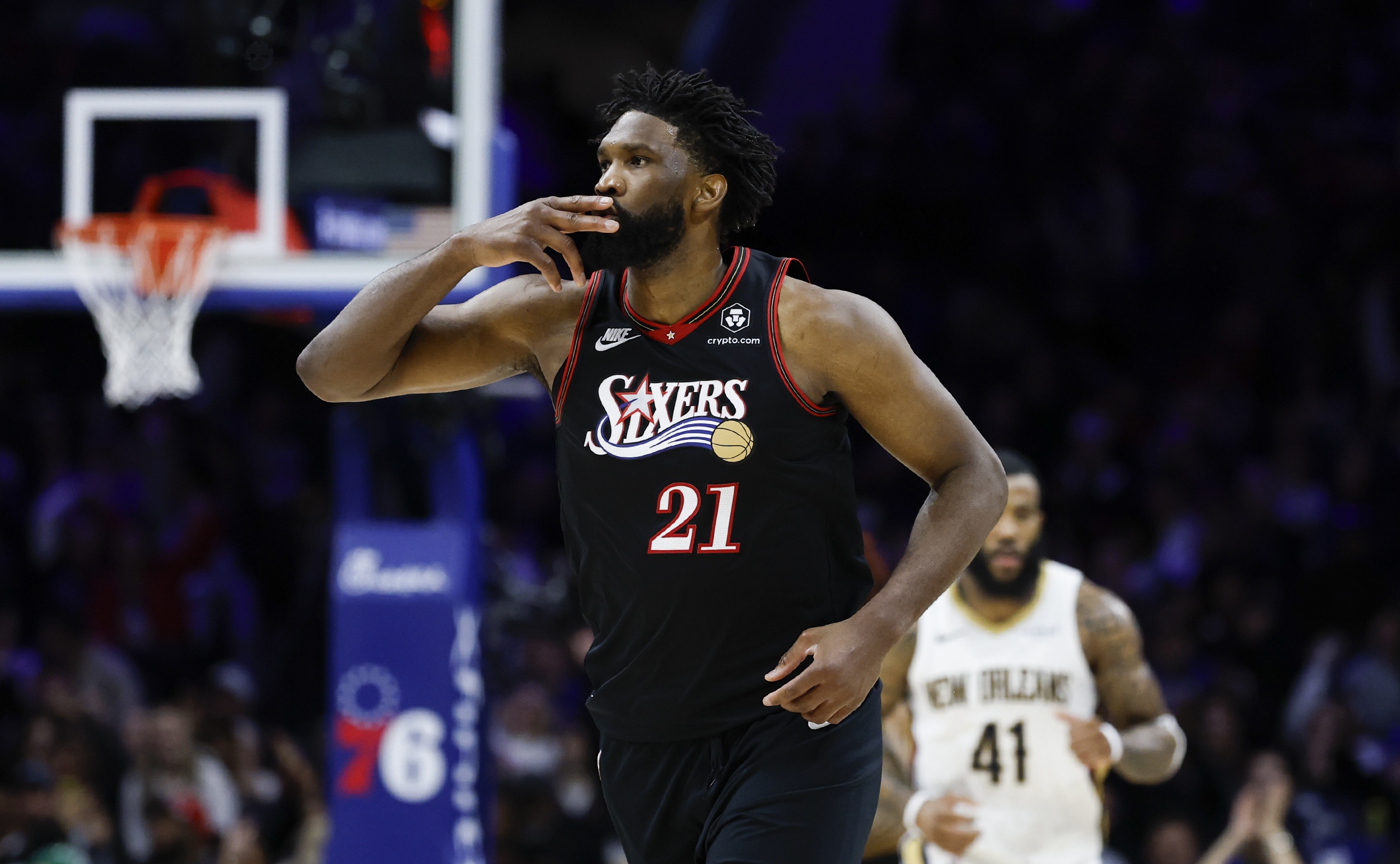
    Joel Embiid’s $188 million contract extension will kick in next season.

    Sustainability

    The Sixers will have 28 games left after the Knicks visit Wednesday and the All-Star break begins, with six back-to-backs. Can Embiid play in, say, 22 games? After this season, the Sixers owe Embiid $188 million over the next three years. How much will he be able to give them when he’s 34?

    “We do think it’s sustainable,” Morey said.

    He’s in good hands. Embiid singled out Simon Rice, the team’s vice president of athlete care, as the main reason for his comeback. But it’s not as if the Sixers hired Rice and then Embiid got better. Rice has been with the Sixers since 2020.

    No: This is less about the doctors than it is about the patient. Since last spring, Embiid simply has been more professional. More mature.

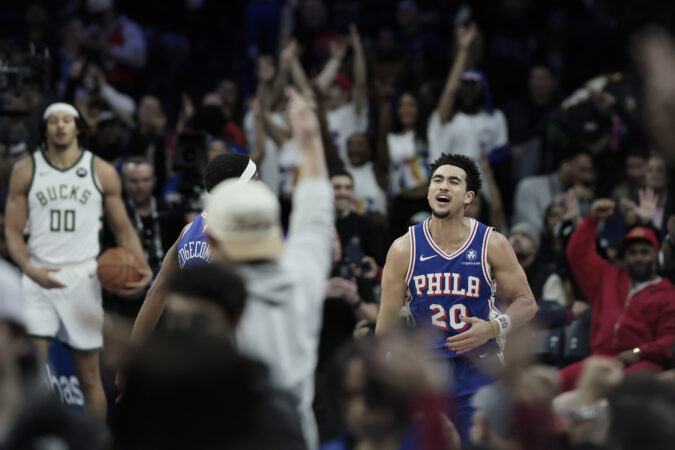
    Sixers sources say that, after Tyrese Maxey called him out last year for chronic tardiness, Embiid has not been as late as often for the team bus or the team plane. He is more present in the locker room during the team’s downtime. He has been more engaging with young players like rookie VJ Edgecombe, with new players like Dominick Barlow, and with fringe players like Quentin Grimes.

    Maybe Maxey’s emergence as the team’s MVP and spokesperson relieved from Embiid the pressure of a role for which he was never equipped.

    “He’s like the fun-loving uncle now,” said one Sixers insider.

    That’s something.

    He’s not MVP-level Embiid, and he never again will be. His defensive movement will never return to the all-defensive levels of his youth, but his positioning is good, and he occasionally blocks a shot. He’s even started dunking again. Gently.

    “I think, from now on, every single day … keep stacking them up, it’s only going to get better. With the hope that, whether it’s by the playoffs or next year, I’m really, really back to being myself. I’m on my way there,” Embiid told the Inquirer during the team’s West Coast trip.

    That’s a pipe dream, of course. But Embiid is so gifted that this new version certainly should be an annual All-Star contender.

    It’s always been hard to quantify Embiid’s intangible value. You can say he’s ninth in “DARKO” or seventh in “PER” or whatever composite metric you like, but the eye test will tell you that Embiid once again is among the NBA’s best players, night in and night out.

    That’s the truest test of an All-Star.
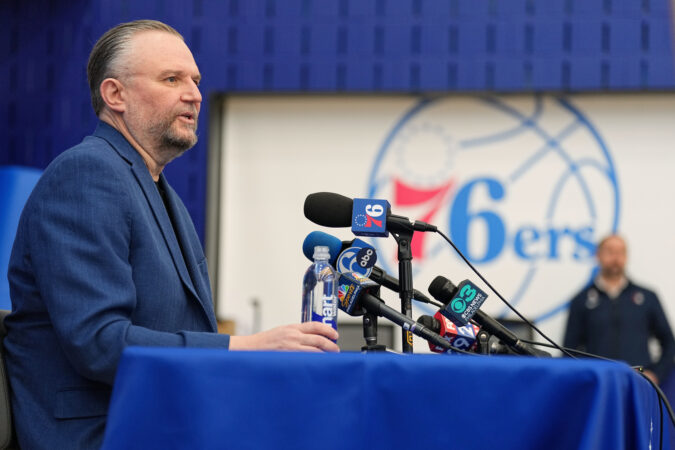
  • What might Daryl Morey and the Sixers have in mind for this offseason?

    What might Daryl Morey and the Sixers have in mind for this offseason?

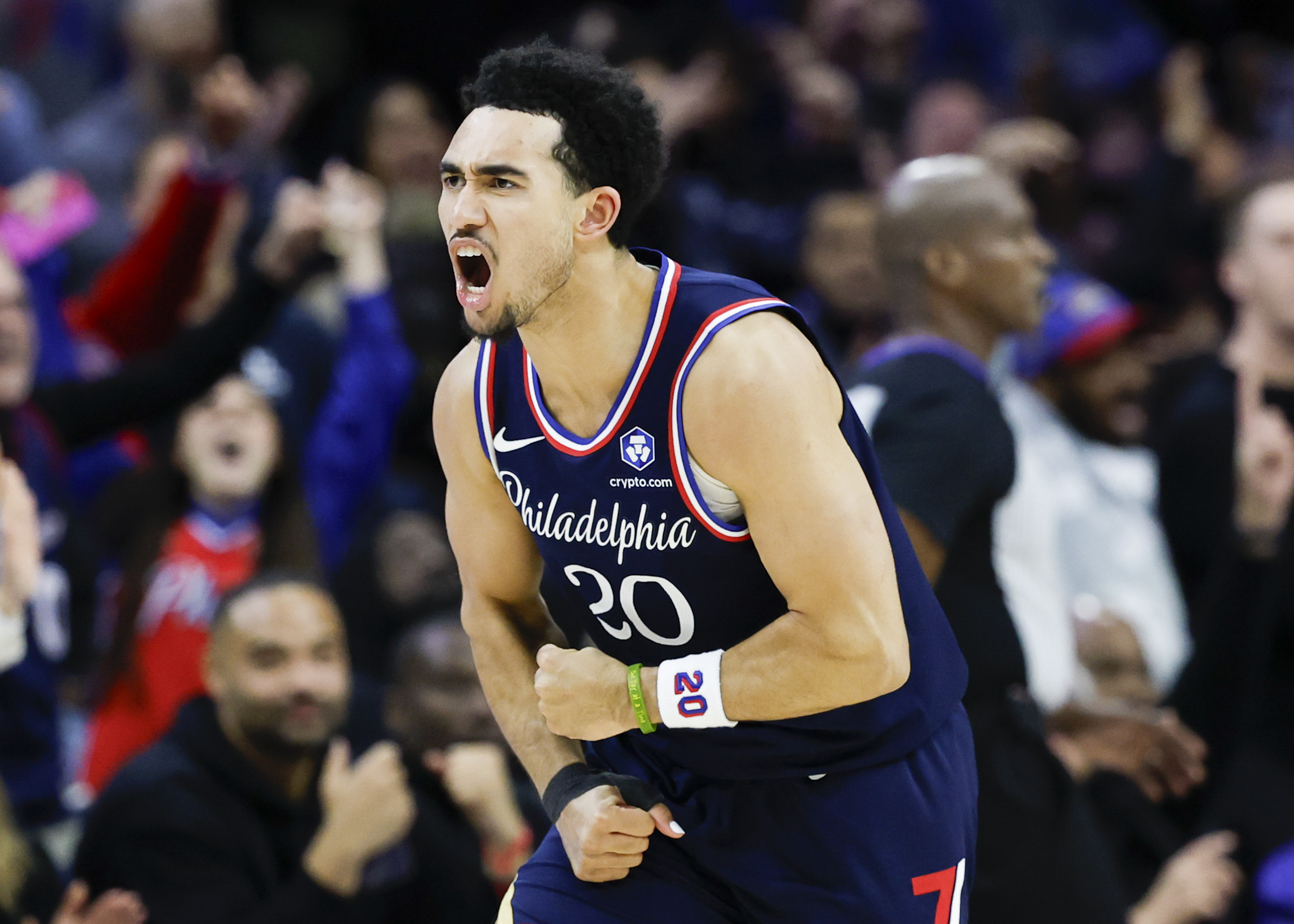
    It was a little jarring to see the reaction that Jared McCain got the other night when he checked into a game against the Rockets for his first minutes as a member of the Thunder. The home crowd sure didn’t sound like one that thought the Sixers had sold high on McCain, as Daryl Morey contended the previous day when defending his decision to trade the second-year guard to Oklahoma City for a (presumably) late first-round pick in June’s draft. While the wisdom of NBA crowds probably shouldn’t dictate personnel strategy, the ovation awarded McCain by his new fan base at least served to validate the prevailing sentiment back here in Philadelphia. Given that the defending NBA champs are plenty excited to add McCain to a roster that already had an overabundance of talent, it’s tough to accuse Sixers fans of overreacting if they feel let down by the move.

    Time will be the ultimate judge. Morey admitted as much on Friday as he laid out the rationale for the Sixers’ somewhat surprising decision to trade McCain without receiving any sort of established NBA talent in return. The veteran executive said that he made the McCain move with the thought that the draft capital it returned would eventually facilitate the addition of such talent, but that nothing sensible presented itself before Thursday’s 3 p.m. trade deadline.

    “We thought that the draft picks we got would help us more in the future — and could’ve helped us this deadline,” Morey said. “The picks we got were offered to many teams and nothing materialized for a player that we thought could move the needle with those picks now. But we feel like going forward, those picks will help us build the team in the future in a good way.”

    What might that look like?

    It’s a sensible question to consider even now.

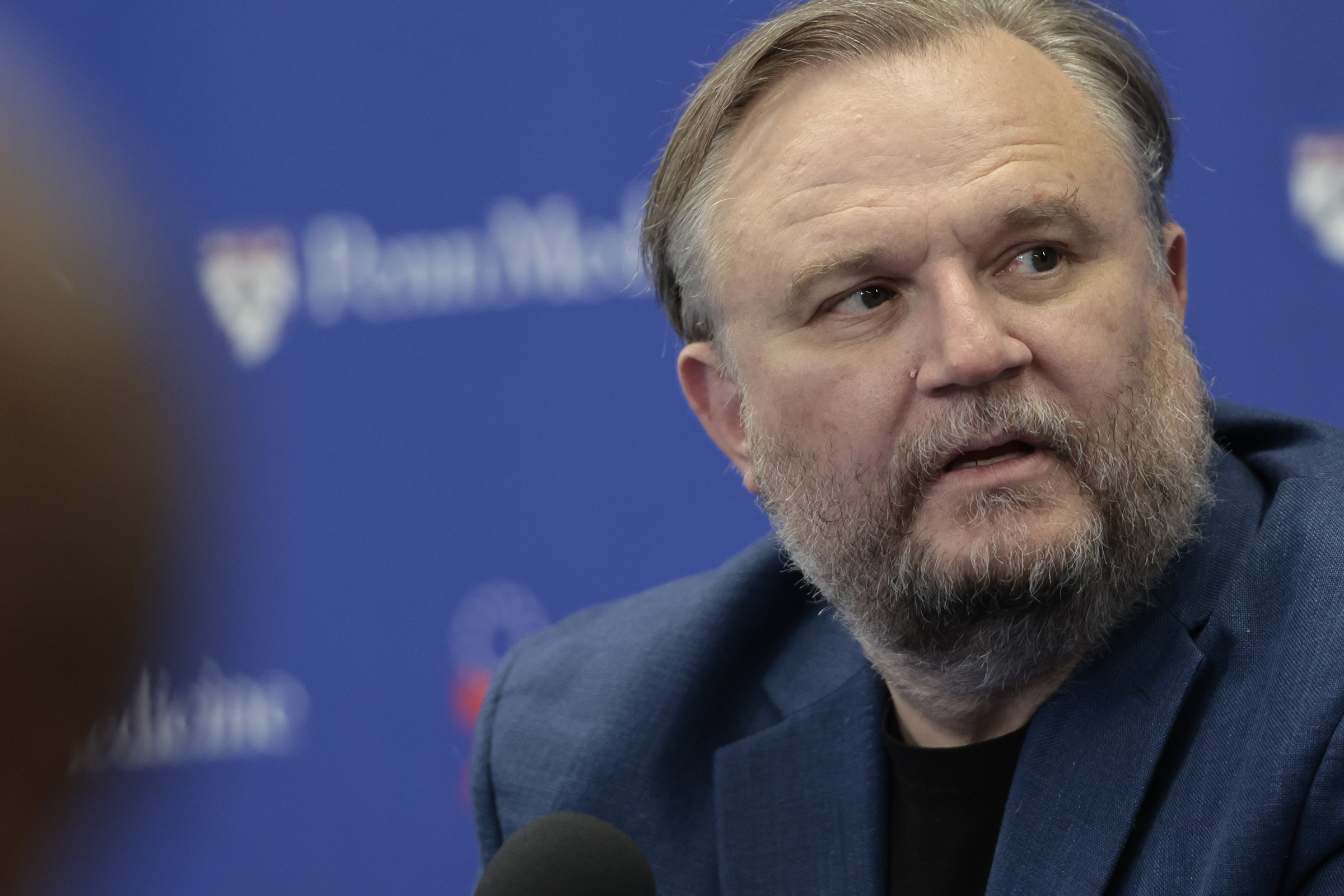
    Sixers president Daryl Morey intimated that he could use the draft picks from the Jared McCain trade in a deal for a veteran down the line.

    The Sixers still have plenty they can accomplish this season. Whatever they do with the McCain draft capital won’t help them in those endeavors. At 30-22, they are 3½ games behind the second-place Knicks and Celtics, part of a group of six or seven teams jockeying for playoff position in an Eastern Conference that lacks a bona fide powerhouse. Yet their third-best player is a rookie, and their second-best player is only now looking something like the player who single-handedly made them a contender for so many years.

    Even in a conference where Jayson Tatum and Tyrese Haliburton are out for the season and the first-place Pistons have the sixth-best championship odds, it’s difficult to picture a Big Three of Tyrese Maxey, Joel Embiid, and VJ Edgecombe winning a title in 2025-26. Especially with Paul George in the early stages of a 25-game suspension for violating the league’s anti-drug policy. Which makes next year a viable consideration.

    On Friday, Morey sounded a lot like the guy who entered the 2022 offseason planning on trading away the club’s first-round pick for a win-now player. That year, the Sixers ended up trading the No. 23 pick for De’Anthony Melton (technically, they drafted David Roddy and then shipped him to the Grizzlies). Likewise with the McCain trade. Morey didn’t make it in order to position the Sixers to draft a player in June.

    “That wasn’t the main focus,” he said. “I think it’s a nice focus, because we do think this draft is a good draft, but we’re not necessarily using the pick in this draft. It could be used for moves around the draft. The three seconds that we got with it, we think those could be used to move up in this draft. Obviously, myself and our front office have done a lot of deals over the years, and this just gives us more tools to make the moves that we think will help our future more than we saw with Jared, who we gave up. But that’s not a comment on Jared.”

    A few things are worth pointing out. The Melton deal is a relevant example of the sort of player the Sixers could potentially acquire in a one-for-one deal. Then 24 years old, Melton was a nice player, but hardly a needle-mover. He was coming off a season in which he averaged almost 23 minutes per game in a playoff rotation, shooting .374 from three-point range and contributing lots of the little things. He ended up averaging nearly 28 minutes and 10.1 points for the Sixers in 2022-23, then missed the second half of 2023-24 with a back injury. Then Melton moved on, signing a free-agent contract with the Warriors.

    So, it’s worth noting that Melton spent only two years with the Sixers, which is the same amount of time McCain had left before the team would have needed to make a decision on a contract extension.

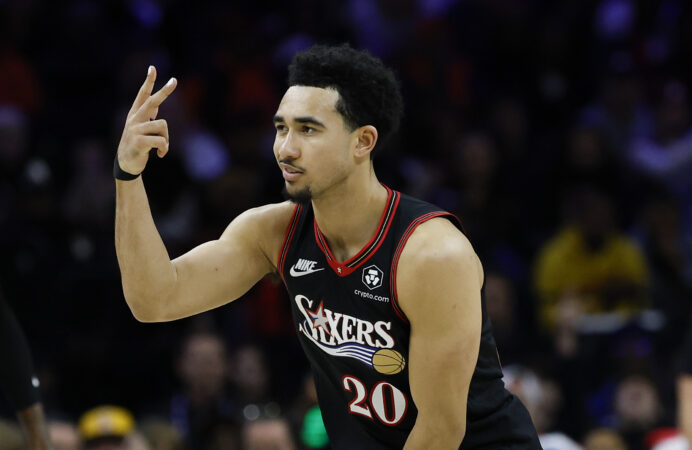
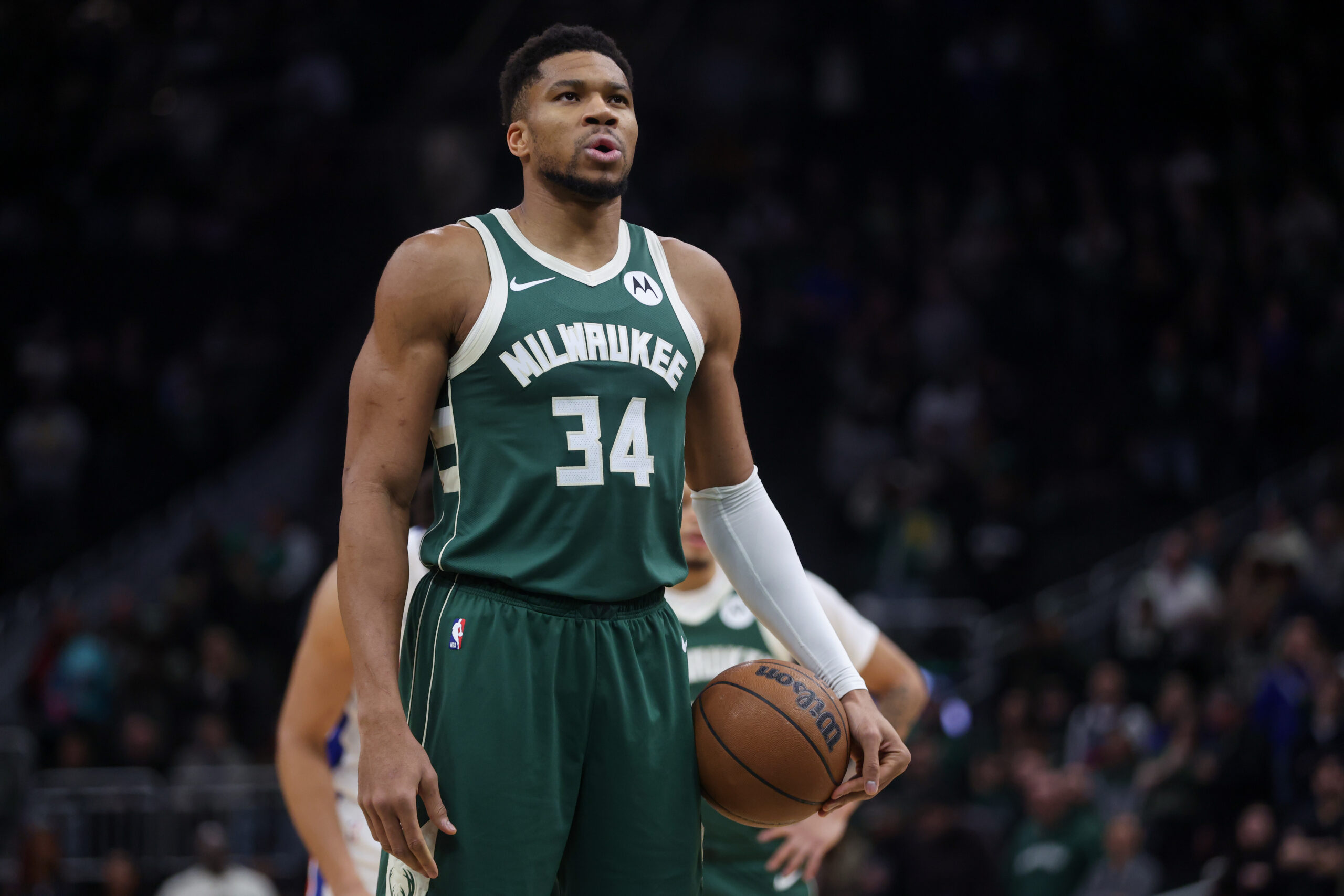
    That said, the Sixers have more draft capital to play with this time around. They are also heading into an offseason when teams could be looking to accrue draft capital in order to facilitate an offer for Bucks superstar Giannis Antetokounmpo, which could shake loose some opportunities for the Sixers (assuming Antetokounmpo himself isn’t a target).

    Perhaps Thunder standout Luguentz Dort will be a good fit for the Sixers in the offseason.

    It isn’t hard to dream up deals that would lend some new and Sixers-affirming perspective to the decision to trade McCain. One scenario in particular involves the team that just acquired the young guard. The Thunder are fast approaching a point where they could need to make some tough decisions with regard to their roster. One player in particular who would fit nicely with the Sixers — or with any contender — is 26-year-old wing Luguentz Dort, who has an $18.2 million team option next season, his last before free agency. If the Thunder don’t think they can accommodate a market-rate contract for Dort, it would make a lot of sense for them to explore moving him this summer. A defensive dynamo and good shooter, Dort would surely attract plenty of interest on the trade market.

    Should the potential for such a move present itself, the Sixers will be in a better position to make a competitive offer. The McCain draft capital could also help them shed the last two years of George’s contract should they have the opportunity to sign or acquire a player using the cap space they would free up by parting ways with George’s salary. Those are just a couple of for-instances.

    Again, time will tell. McCain played 14 minutes for the Thunder the other night. He didn’t add much to the stat sheet: five points, a couple of turnovers, 1-for-3 from three-point range. But he did finish with a plus-12 in a game the Thunder lost by six. The Sixers hope they will end up parlaying the McCain trade into a player who can contribute to a championship team. The Thunder hope that’s what McCain is.

  • No wonder Flyers fans are irrational about Matvei Michkov. Have you looked at this team’s draft history?

    No wonder Flyers fans are irrational about Matvei Michkov. Have you looked at this team’s draft history?

    Because of the Winter Olympics, the Flyers won’t play again for another two-and-a-half weeks, not that anyone is all that broken up about their impending absence. They’ve been a lousy hang for a while, losing 12 of their last 15 games, falling out of the playoff picture, and drawing attention primarily for the six degrees of debate around Matvei Michkov’s playing time.

    The Michkov issue has been fascinating and revealing. Everyone acknowledges that, after his often-impressive rookie season, he came into training camp out of shape. That reality has precipitated a months-long discussion about how he has played, when he has played, how much he has played, and whether coach Rick Tocchet might be mishandling him and sabotaging Michkov’s career before the kid has a chance to become the star the Flyers and their fans hope he will be.

    Tocchet, general manager Danny Brière, and team president Keith Jones have made it clear that they are taking, or trying to take, the long view about Michkov’s development. They have also made it clear that they consider it valuable to put him through a kind of rite of passage, to compel him to learn and practice good habits on and off the ice.

    One can make a case that such an approach is too old school, won’t be effective, and risks angering and alienating Michkov. That’s possible, I suppose, but it’s just as reasonable to think the Flyers’ methods are correct and will work.

    There are plenty of 76ers fans and former members of the franchise, for example, who wish their team had treated Joel Embiid and other since-departed players with a firmer hand earlier in their careers.

    It’s safe to say, though, that within at least a portion of the Flyers’ fan base, a measure of paranoia has arisen when it comes to Michkov and the organization’s handling of him.

    Earlier this season, anodyne comments about him, by team captain Sean Couturier, were taken out of context and treated as a major controversy. Tocchet then offered a frank assessment of Michkov’s conditioning and performance during a recent interview with PHLY Sports. And while it wasn’t the smartest media-relations strategy for the head coach to criticize such an important player so brusquely, the reaction to Tocchet’s comments suggested that people were afraid Michkov would be so offended that he would catch the first flight to Little Diomede and hike the Bering Strait back to Putinland.

    That fear is irrational, of course, and it’s easy to chalk it up to the longtime overzealousness of the Benevolent Order of the Orange and Black. But in this case, it’s understandable that those fans who have stuck with the Flyers over the last 15½ years — that’s how long it has been since that 2010 run to the Stanley Cup Final — would be a little on edge about Michkov. Even more than a little.

    All anyone has to do is look at the Flyers’ draft history over the last quarter century to understand why their fans want Michkov treated like a prince and shielded from any emotional boo-boos. Because that history is … ugh.

    • Let’s start with 2001. The Flyers’ first-round pick that year, defenseman Jeff Woywitka, played 278 NHL games in his career, none with the Flyers. Their third-round pick, Patrick Sharp, turned out to be a terrific player … after they traded him to the Chicago Blackhawks.
    • With the fourth-overall pick in 2002, the Flyers took defenseman Joni Pitkänen. Eh. Their subsequent six picks in that draft played a combined total of one game in the NHL.
    • The 2003 draft was a red-letter one: Jeff Carter and Mike Richards in the first round. After those two, the Flyers took nine other players. Alexandre Picard, a third-round defenseman, turned out to be the best of the bunch.
    • If, in 2004, the Flyers were actually trying to tank the draft, no one could tell. They picked 11 players who appeared in a total of 23 NHL games.
    • Over the ‘05 and ‘06 drafts, they selected 16 players, two of whom had lengthy NHL careers: Claude Giroux and … Steve Downie.
    • For three straight drafts, 2008 through 2010, the Flyers picked 17 players. Just nine made it to the NHL and two others played only one game. The player who played the most games for them was Zac Rinaldo.
    • The Flyers took Couturier with the No. 8 overall pick in 2011. Excellent. They found Nick Cousins in the third round. OK. None of their other four picks that year played for them.
    Left wing Oskar Lindblom was drafted by the Flyers in 2014.
    • From 2012 to 2014, the Flyers drafted Travis Sanheim, Scott Laughton, Shayne Gostisbehere, Anthony Stolarz, Oskar Lindblom, and Robert Hägg. They did not draft anyone who could reasonably be called a star.
    • When the Flyers took Ivan Provorov and Travis Konecny in the first round, 2015 looked like a draft they could take pride in. But Provorov’s gone, and goalies Felix Sandström and Ivan Fedotov couldn’t cut it.
    • Two words about the 2016 draft: German Rubtsov. Two more words: Carter Hart.
    • With the No. 2 pick in the 2017 draft, the Flyers selected Nolan Patrick. There are no words for how that decision turned out. But hey, Noah Cates!
    • The Flyers’ crown jewels from the 2018 draft were Joel Farabee and Sam Ersson.
    • In 2019 and 2020, the Flyers got Cam York (cool), Tyson Foerster (promising but injured), Bobby Brink (we’ll see), and Emil Andrae (don’t you need more from a second-rounder by now?).
    • So far, the Flyers’ best pick in the 2021 draft has been Aleksei Kolosov. Which tells you all you need to know about the Flyers’ 2021 draft.
    • We’re up to 2022. The Cutter Gauthier draft. Best to move on quickly and quietly …
    • The Jones-Brière regime has overseen the 2023-25 drafts, and yes, it’s early yet to judge the results, and yes, the Flyers were bold in ’23 in taking Michkov. But it’s worth noting that, of the 26 players the Flyers picked over those three years, just three have suited up for them so far: Michkov, Denver Barkey, and Jett Luchanko.

    It’s not just that the Flyers have had opportunities to mine the draft for elite talent and failed. It’s that they haven’t even stumbled into a late-round pick or two who ended up becoming cornerstones.

    A team that does not draft well cannot win. The Flyers have been proving that maxim true for a long time. No wonder their fans are so protective of the one player who represents even a glimmer of possible greatness.

  • Daryl Morey’s message to Joel Embiid and Sixers fans: Trust the Process

    Daryl Morey’s message to Joel Embiid and Sixers fans: Trust the Process

    Last week, with the trade deadline looming, Joel Embiid made a public plea to the 76ers’ front office. He begged them to ignore the luxury tax for once, and to get him the help he needs for what has turned into an unlikely impending playoff run.

    “In the past we’ve been, I guess, ducking the tax,” Embiid said last week. “So, hopefully, we think about improving. Because I think we have a chance.”

    Embiid made this plea knowing that Tyrese Maxey, VJ Edgecombe, and Embiid himself cannot sustain their high level of play if they have to maintain such a high number of minutes.

    Embiid’s plea coincided with the 25-game drug suspension of fellow veteran and max-salary player Paul George, who, like Embiid, was rounding into form after more than a year of debilitating injury issues. George will not be eligible to return until only 10 games remain in the season.

    Embiid’s wishes made sense.

    Embiid’s wishes were not granted.

    In fact, not only did the Sixers fail to make a significant move to improve the roster, they actually got worse: They traded last year‘s first-round pick, sharpshooter Jared McCain, for future draft picks.

    So, despite asking, and asking nicely, Embiid got no help.

    Daryl Morey’s message to Embiid:

    Trust the process.

    “I think we all wanted to add to the team, and, you know, we took his comments to heart,” the Sixers’ president said Friday.

    And?

    “We were trying to add to the team,” Morey said, “and we didn’t find a deal that made sense — one that we thought could move the needle on our ability to win this year.”

    So: Still processing.

    McCain trade

    Maxey is the team’s most important player, so he was never a trade consideration, but Morey acknowledged that both Edgecombe and Embiid were essentially untouchable, too.

    McCain was not untouchable. His departure provided salary-cap relief. Further, though, Morey painted McCain as a long-term project who might not develop faster than whomever the Sixers draft in June with the first-round pick the Sixers got in the trade.

    That seemed harsh. True, but harsh.

    Sixers guard Jared McCain was shipped after only playing one full season in Philly.

    As a rookie, McCain averaged 15.3 points in 23 games mostly as a bench player last season, which was cut short by injury. More injury issues limited his participation this season, and he was averaging just 6.6 points. Morey traded him Wednesday to Oklahoma City for the Thunder’s first-round pick in June, as well as three future second-round picks.

    McCain simply was not in the Sixers’ immediate plans, and Morey insisted that they would not have gotten a better return on McCain in the offseason.

    Morey also said the Sixers hoped to immediately flip some of the draft picks they received in the McCain deal and improve the team thus.

    There were no upgrades out there.

    The emergence of Dominic Barlow, who is starting in place of George, and the continued strong bench play of guard Quentin Grimes convinced him that there were no players available for a sensible asking price that would appreciably improve the Sixers.

    Certainly, there were no players that would have warranted the Sixers exceeding the luxury tax, though Sixers ownership had given him permission to spend whatever he needed to spend.

    “If we had found an [addition] and we were going to end up higher [than the tax], we would have ended up above it. We’ve done it several times,” Morey said. “We didn’t see something that did.”

    So: Still processing.

    The Process

    The catastrophic, scorched-earth strategy of rebuilding the Sixers, begun in 2013, eventually became known as “The Process.” Trusting in it became the mantra of both the franchise and a cult of devoted, long-suffering fans for whom no sacrifice was too outrageous.

    Embiid then hijacked the phrase as his nickname in 2016, after he’d missed his first two NBA seasons due to injury. Personalizing the phrase was an ostentatious act, but, considering the nature of his turbulent career, Embiid has come to embody it.

    Now, 13 years and five decision-makers later — Sam Hinkie, Bryan Colangelo, Brett Brown, Elton Brand, and Morey — the Sixers must ask their best player, the last vestige of The Process, to spend one of his twilight seasons hoping the current chapter of The Process has a happy ending.

    “This team, we think, can make a deep playoff run and is one of the top few teams in the East,” Morey said.

    He’s right.

    The Process has a window. It’s a small window, like that triangular side window on old cars, but it’s a window nevertheless.

    The Least of the East

    As of Friday night the Sixers stood sixth in a sagging Eastern Conference. Injury has diminished both the Celtics, who won the NBA title two years ago, and the Pacers, conference champs last season. The Pistons are in first place, 4½ games ahead of the flawed Knicks and Celtics, but nobody really believes in them. The Sixers are just one game behind the Raptors, who have five players averaging double figures, and 1½ games behind the Cavaliers, who, despite having won seven of their last eight games, were so desperate that they traded for — wait for it — 36-year-old James Harden.

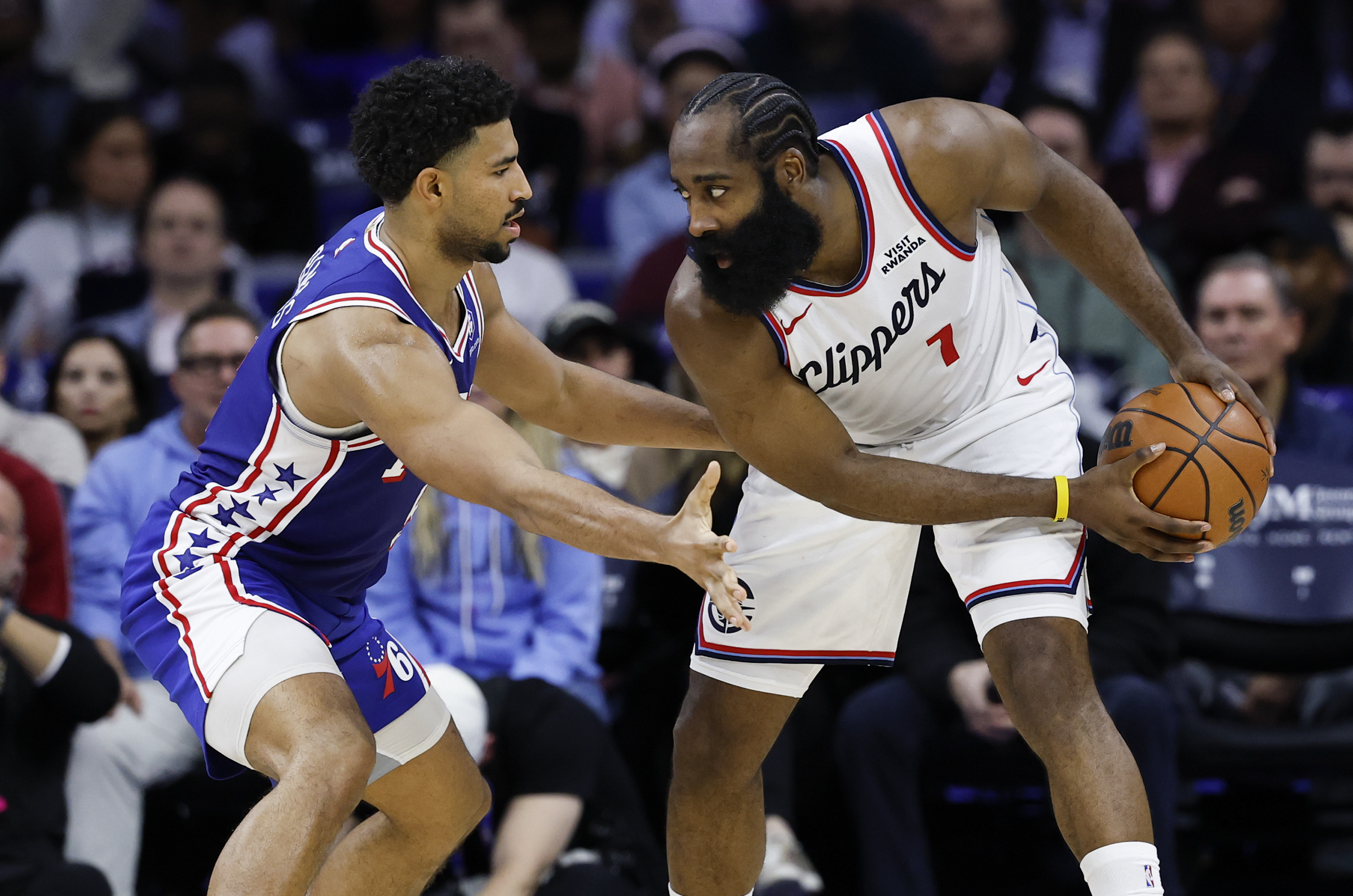
    James Harden, formerly of the Sixers, was traded to the Cleveland Cavaliers.

    As predicted when Celtics star Jayson Tatum and Pacers star Tyrese Haliburton suffered severe injuries in the 2025 playoffs, the East is weak and vulnerable. These are adjectives that often have been used to describe the 76ers during The Process.

    Now, though, the Sixers have won five of their last six games. They’ve ridden Maxey’s MVP campaign, Edgecombe’s Rookie of the Year campaign, and what would be Embiid’s Comeback Player of the Year campaign if the NBA had such an award.

    Can they keep it up? We won’t know for months whether the conference is so bad that even the Sixers can win it.

    So, until then: Still processing.

    You gotta believe

    “I believe in myself, so I’m always going to believe I have a chance, as long as I’m healthy,” Embiid told reporters Thursday night, after McCain had arrived in Oklahoma and no new player had joined the Sixers on the road in Los Angeles. “I believe that we can beat anybody. We hold down the fort until [George] comes back. He’s really needed. He’s irreplaceable.”

    He’s not in demand, though. League sources indicated that no team was interested in trading for George. No surprise there. At 35, not only is George suspended, but he is also owed almost $110 million over the next two seasons, and he has an injury history as bad as Embiid’s.

    That’s OK with the Sixers. George, when not taking banned substances, is probably still very good. Morey adores George, especially as a defensive difference-maker.

    “We really like what Paul gives us,” Morey said.

    Well, he won’t give them anything for the next 21 games. Which, for the moment, is exactly what the Sixers will get from the 2026 trade deadline.

    Process that.

  • The Sixers trading Jared McCain will either be a head-scratcher or an embarrassment

    The Sixers trading Jared McCain will either be a head-scratcher or an embarrassment

    A week ago, Joel Embiid decided to spend a little bit of the organizational capital he reaccrued in recent months. In response to a question about the Sixers’ approach to the upcoming NBA trade deadline, Embiid pointedly expressed his hope that the team would be looking to add talent rather than cut costs.

    “Obviously, we’ve been ducking the tax past couple of years, so hopefully, we’ll keep the same team,” Embiid said. “I love all the guys that are here. I think we got a shot.

    I don’t know what they’re going to do, but I hope we get a chance to just go out and compete because we’ve got a good group of guys in this locker room. The vibes are great. Like I said, in the past we’ve been, I guess, ducking the tax, so hopefully, we think about improving because I think we have a chance.”

    Embiid was surprisingly — some might say ungraciously — candid in noting the Sixers’ recent prioritization of shedding salary at the trade deadline to avoid paying the NBA’s luxury tax (and, thereby, to receive a share of the pooled taxpayer dollars). But he also was prescient, and unfortunately so.

    Sixers president Daryl Morey is scheduled to meet with the media on Friday, so we’ll have to wait to hear the official defense of the team’s decision to trade 2024 first-round pick Jared McCain to the Oklahoma City Thunder for what most likely will be a low-value first-rounder (plus the obligatory smattering of second-round picks). We don’t have to wait to judge the optics of the thing.

    The optics are poor, and that will remain true even if the thing ends up making more sense than we can immediately glean. The Sixers didn’t trade McCain for a player who is more likely to help them contend for a championship, be it this year or beyond. They didn’t trade him for a pick that they then flipped for a player who can help them capitalize on their momentum this season. Everywhere else, teams got better, and many of them did so in ways beyond this season. The Minnesota Timberwolves can re-sign Ayo Dosunmu. The Indiana Pacers can pair Ivica Zubac with Tyrese Haliburton next season. The Sixers can hope a late first-round pick is worth something in June.

    Jared McCain (right) only played in 60 games with the Sixers after being selected in the first round of the 2024 draft.

    A good way to judge the optics of a move is to attempt to write an executive summary of it in as favorable a way as possible. That’s an extraordinarily difficult task in this case. The Sixers just traded away a guy who they drafted at No. 16 barely a year and a half ago and who probably would be drafted higher in a redo. In exchange, they received a pick that currently projects as the No. 23 pick in the 2026 draft, two picks later than where the Sixers grabbed Tyrese Maxey almost six years ago. It is a range of the draft that rarely yields starters, let alone stars. It is a range where the odds say you are more likely to draft a player who never cracks a first-division rotation than one who becomes a meaningful starter.

    Just look at the track record. Of the 42 players drafted with the last seven picks of the first round since 2020, only 17 have started more than 17 NBA games. Just eyeballing it, you’d be hard-pressed to identify 10 of those 42 who’ve turned out to be better than the median potential outcome of even this year’s version of McCain. Jaden McDaniels and Desmond Bane are stars. They are followed by Payton Pritchard, Immanuel Quickley, Quentin Grimes, and Santi Aldama. Beyond that: Peyton Watson and Cam Thomas, and then Bones Hyland, Day’Ron Sharpe, Nikola Jović, and Kyshawn George. You get the picture.

    Risk vs. certainty is the name of the game. The Sixers traded McCain for a first-round pick that will be uncertain, even on draft day. Let alone five months before. Whatever negative certainty they felt about McCain’s mid-to-long-term trajectory, it can’t possibly be greater than the negative uncertainty of a draft-day replacement. Which is why, optically speaking, the move looks like one that was inordinately influenced by the cost-cutting benefits.

    The Sixers surely will point to optionality as a variable. On draft day, they will have another opportunity to flip the McCain first-rounder for an established NBA player or include the pick in a package. If that influenced the move, then the bet they are making is that the pick will be more in a draft-day trade than McCain would have been himself. There’s a decent chance that is true, given how far McCain has fallen on the depth chart and how little opportunity he could have to reestablish value.

    It just rings a little bit hollow to anybody who has bought into the commendable shift we’ve seen from the Sixers in their roster-building strategy over the last year. And it rings especially hollow when you consider that the team that traded for McCain is one of the best and brightest roster-builders in the modern NBA. As somebody said the other day, when Sam Presti wants one of your guys, it’s a good reason to think a few more thoughts about whether you should want to get rid of him.

    Barely a year and a half has passed since the Sixers made McCain the No. 16 pick in the 2024 draft. In that year and a half, we’ve seen McCain:

    • Play 23 games in which he looked like one of the top five players in the class, forcing his way into the starting lineup and then averaging 19.1 points while shooting 39.7% from three-point range in the 16 games before he suffered a season-ending knee injury.
    • Play 25 games where he looked like a player working his way back from a broken thumb that he suffered while working his way back from knee surgery.
    • Play 11 games in a 15-game stretch in which he logged just 132 minutes.

    In the Sixers’ defense, they’ve seen much more of McCain than the television cameras capture. Nobody can have a more informed opinion on where he projects within the context of their roster. But it wasn’t long ago that McCain looked like a player who could eventually transcend questions of fit. His ceiling never was close to VJ Edgecombe’s, and his probable reality was always short of Maxey’s. Again, though. The Thunder have a lot of guards. They are built on a two-way mentality. It makes you wonder.

    What it comes down to is that the Sixers better be right in their evaluation of McCain. Whatever the marching orders from ownership regarding the luxury tax, there is a level of player even Scrooge McDuck wouldn’t deem an appropriate cost-savings measure. McCain isn’t that player now. The Sixers could be accurate in their judgment of the odds that he ever becomes one. The question is whether they are accurate in their judgment of their risk of being wrong.

  • Patriots owner Robert Kraft’s snub shows again that Hall of Fame voters don’t like cheaters

    Patriots owner Robert Kraft’s snub shows again that Hall of Fame voters don’t like cheaters

    When Patriots owner Robert Kraft sent his team to his 11th Super Bowl, a record for any owner, in search of a seventh title, which would be a record for any franchise, he expected the team to have to deal with uncomfortable questions.

    Last week, ESPN reported that Bill Belichick, who won all six of New England’s titles, did not receive the minimum number of votes by a committee required to secure induction into the Pro Football Hall of Fame in this cycle.

    Now, Kraft and the Patriots will spend the week answering questions about why Kraft didn’t make it, either. ESPN reported Tuesday that Kraft failed to receive at least 40 of 50 votes required for induction. The 2026 inductees will be officially announced Thursday.

    Several explanations and theories circulated following last week’s news. There were assertions that some voters sought revenge for Belichick’s constant bullying. There were assertions that the new, convoluted voting system is flawed.

    But the reality seems clearer than ever:

    The voters don’t like cheaters.

    The Patriots were found guilty of cheating twice during their run. Spygate and Deflategate cost them millions of dollars and several draft picks.

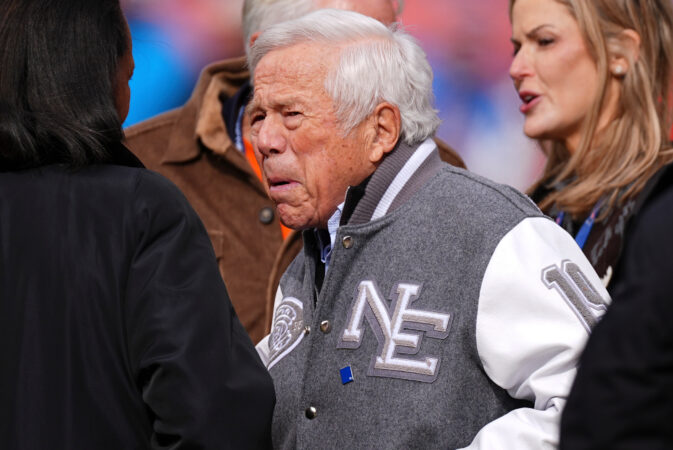
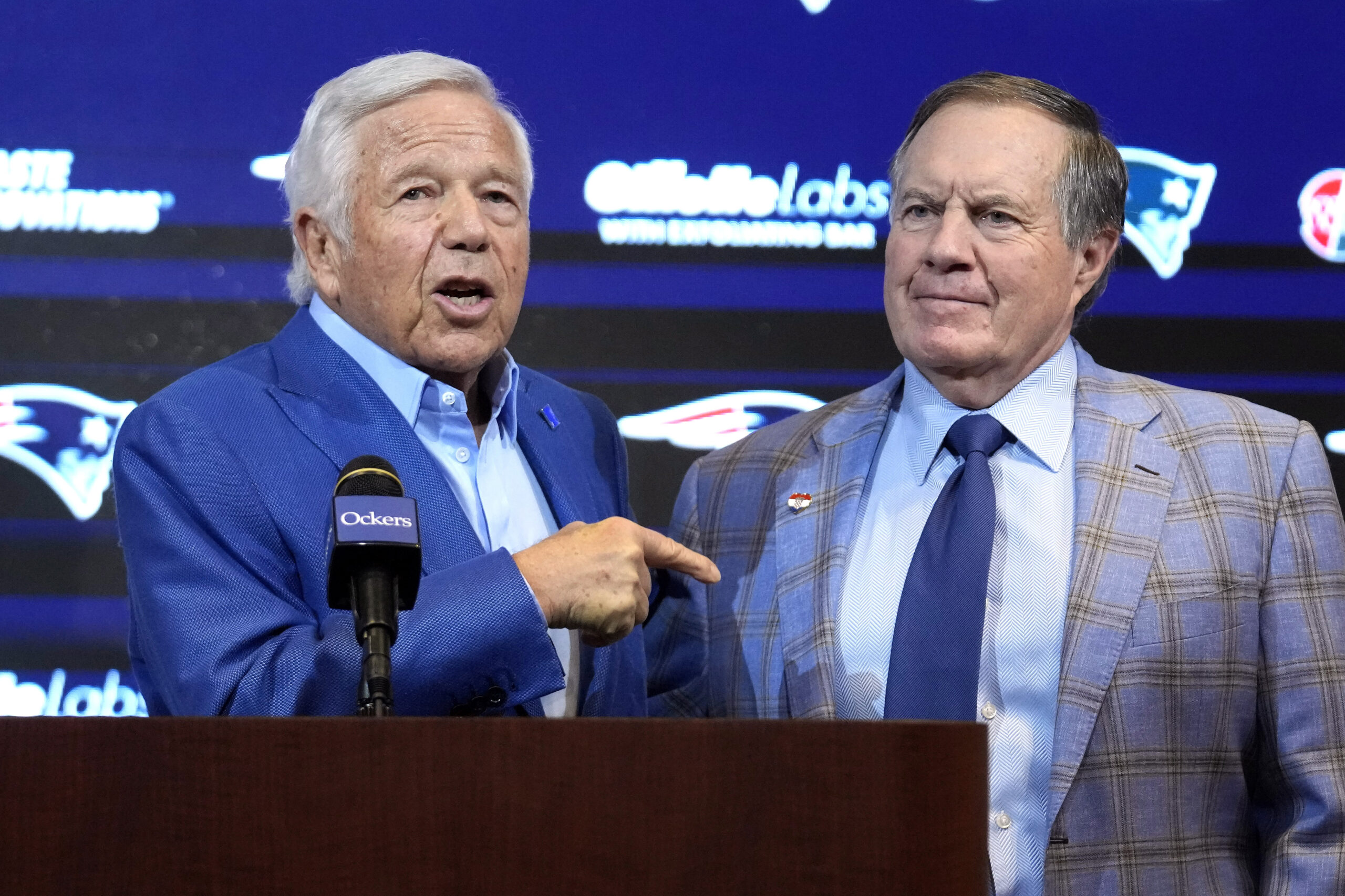
    New England Patriots owner Robert Kraft (left) with coach Bill Belichick on Jan. 11, 2024, the day of Belichick’s exit.

    Notably, the span of cheating included not only Super Bowl XXXIX, when they beat the Eagles, but also all but two of their Super Bowl appearances: their loss in Super Bowl LII to the Eagles and their win the next year over the Rams.

    Clearly, voters believe that cheating devalues winning.

    They also might consider Kraft’s 2019 involvement in a massage-parlor sting a disqualifying element (see below).

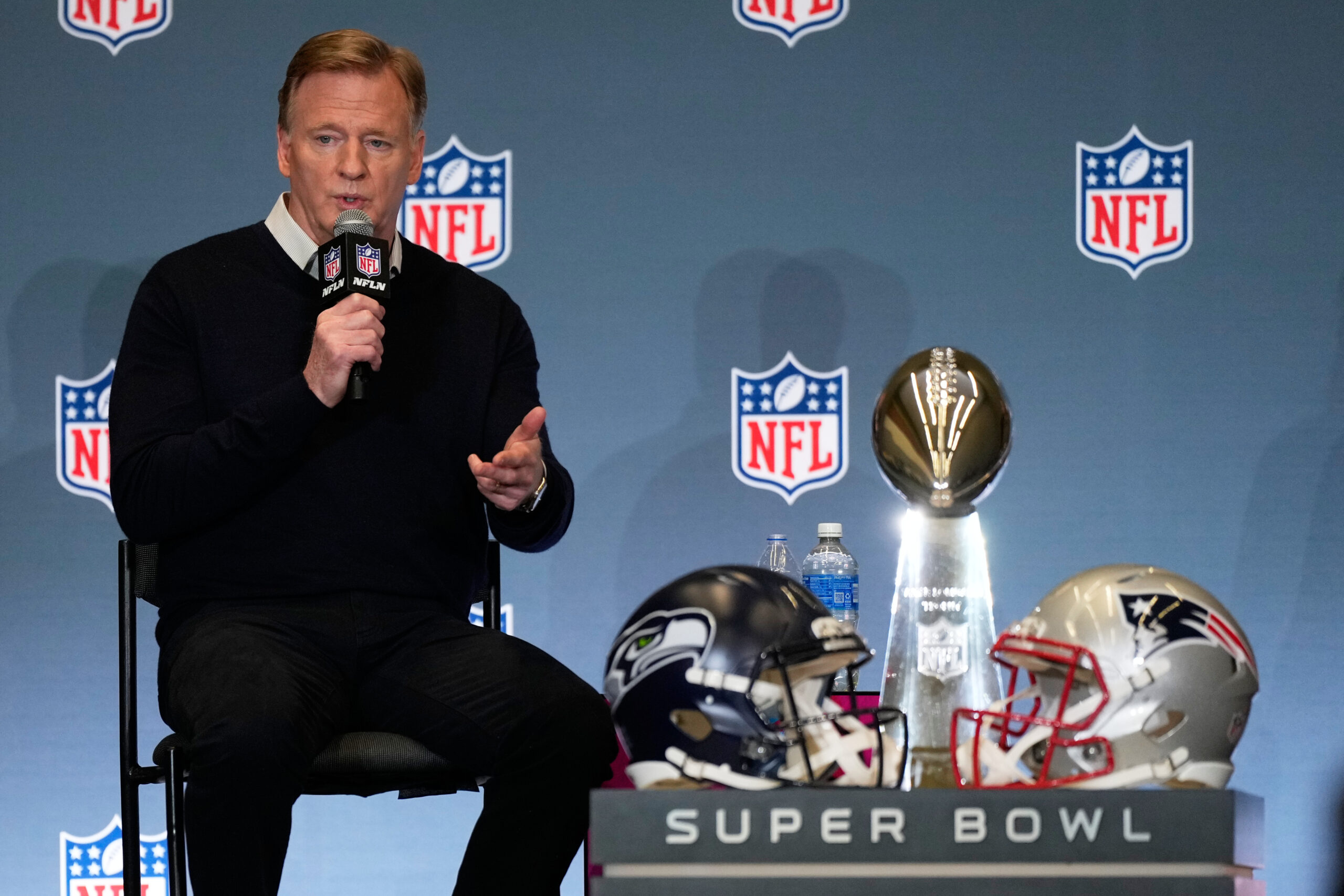
    NFL commissioner Roger Goodell said Monday, before the news broke, “They are spectacular. They have contributed so much to this game, and I believe they will be Hall of Famers.”

    It sounds like Goodell knew that Kraft hadn’t made it, either.

    It also sounds like Goodell knows, as hard as it is to imagine, that their tainted records might keep them out forever.

    NFL’s Epstein hypocrisy

    The NFL is supposed to hold team executives to a higher standard of conduct than it holds players. Don’t expect Deshaun Watson and Justin Tucker to believe that.

    Goodell on Monday indicated that the league will not immediately launch an investigation into Giants co-owner Steve Tisch, and probably never will. Tisch appears repeatedly in the latest released batch of files concerning the activities of convicted pedophile Jeffrey Epstein, who died in jail awaiting trial in 2019.

    There are hundreds of emails between Tisch and Epstein, some of which indicate that Epstein was supplying Tisch with female companionship. This correspondence took place after Epstein had served jail time for soliciting a prostitute and procuring a child for prostitution, the latter conviction requiring him to register as a sex offender in both Florida and New York.

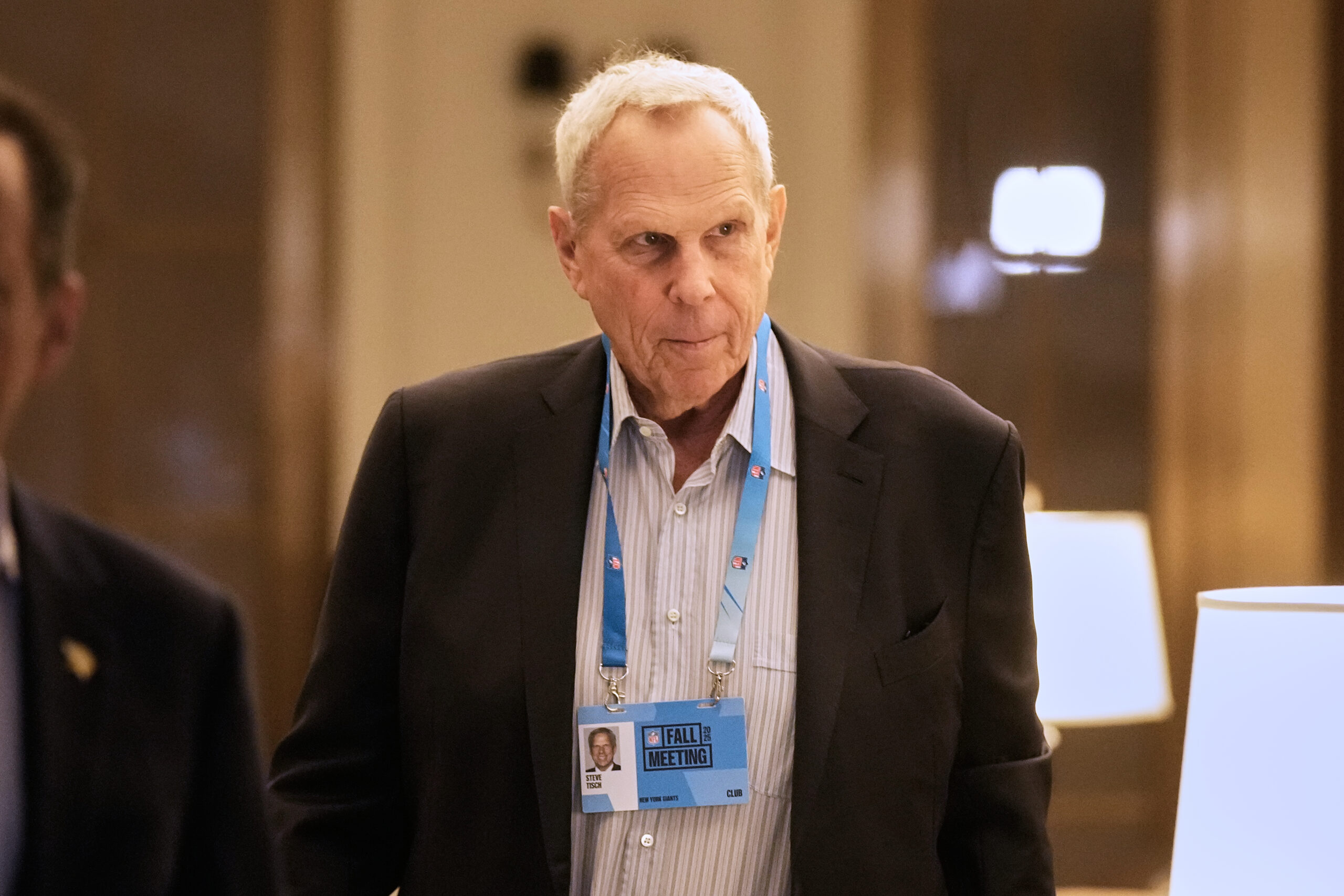
    New York Giants co-owner Steve Tisch’s name appears repeatedly in the latest released batch of files regarding Jeffrey Epstein.

    The nature of the companionship and the ages of those companions Epstein supplied to Tisch remain unknown. Tisch insists that all of the women Epstein supplied him were adults and that he never visited the notorious Epstein island.

    Even Tisch’s apparently legal and possibly acceptable interaction with a man who has become synonymous with sex trafficking and pedophilia sounds like something the NFL should probably investigate, right? The Personal Conduct Policy exists to keep The Shield clean.

    No, said Goodell.

    “We will look at all the facts,” he said. “We’ll look at the context of those, and try to understand that. We’ll look at how that falls under the policy. I think we’ll take one step at a time. Let’s get the facts first.”

    Well, that’s what an investigation does.

    With so many more prominent personalities mentioned in the files, including President Donald Trump, it is likely that the government will have neither the bandwidth nor the incentive (Trump routinely diminishes the files) to pursue a relatively small fish like Tisch.

    Translation: Unless other entities uncover more facts about Tisch’s relationship with Epstein and what services he provided him with, the NFL will turn a blind eye.

    Commissioner Roger Goodell during his state of the NFL news conference on Monday.

    Which is the opposite of what it does with its players.

    I don’t think there’s any question that if, say, Jameis Winston was found to have exchanged similar emails with Sean “Diddy” Combs, who went to prison for sex-related offenses, the NFL would investigate the matter posthaste (sorry for the stray, Jameis).

    But it seems like Goodell will handle this matter the way he handled the Robert Kraft scandal.

    The Patriots’ owner was caught in a sex trafficking and prostitution sting in 2019. Video allegedly showed Kraft paying for sexual acts on consecutive days that year in Florida. The misdemeanor charges were dropped, but Kraft admitted at least a measure of guilt when he apologized for having “hurt and disappointed” fans and family members.

    Unlike Kraft, neither Watson nor Tucker was ever charged with a crime for his alleged sexual misconduct with private massage professionals, but both were suspended without pay.

    Goodell chose to not punish Kraft back then. He seems just as reluctant to hold Tisch accountable today.

    Notably, NFL owners like Kraft and Tisch are the ones who pay Goodell’s $64 million salary.

  • Jeff Stoutland exits as Vic Fangio pondered retirement: Eagles drama never ends

    Jeff Stoutland exits as Vic Fangio pondered retirement: Eagles drama never ends

    At this time a year ago, as he celebrated his second Super Bowl title as the Eagles’ offensive line coach, Jeff Stoutland was being hailed as the greatest assistant coach in franchise history. His only real competition: Vic Fangio, whose arrival as coordinator the previous offseason saw the team turn its defense from its greatest weakness to its greatest strength.

    Now, a year later, one considered going and the other now is gone.

    Stoutland announced Wednesday evening on his Twitter/X feed that he had decided “My time coaching with the Eagles has come to an end.”

    Meanwhile, after weeks of rumors and reports, there was still no definitive news regarding Fangio and his annual contemplation of retirement.

    The Eagles and Fangio finally indicated that he will return as the DC. They did so a little more than an hour after this column published Wednesday evening, painting them as a team in disarray.

    Granted, we haven’t yet reached Super Bowl Sunday, but teams that win a Super Bowl within a calendar year and then return to the playoffs usually remain more stable than the Eagles have been the past few weeks.

    It certainly seems like a team in disarray.

    The departure of Stoutland was a seismic development. Since arriving with Chip Kelly in 2013 from the college ranks, Stoutland has become a cult figure in NFL circles and a demigod in football-crazed Philadelphia. His demanding coaching style, dubbed “Stoutland University” by Jordan Mailata, a giant converted rugby player who was his most prized pupil, turned Mailata, Jason Kelce, and Lane Johnson into Hall of Fame candidates and helped several other linemen perform beyond expectation.

    However, the offensive line in 2025 struggled. There was a cascade of injuries, but as the season collapsed, whispers regarding Stoutland’s effectiveness began to circulate.

    He’d also been passed over. Stoutland was not considered a viable candidate to replace offensive coordinator Kellen Moore last year when Moore became the head coach in New Orleans, nor was he considered a viable candidate to replace recently demoted OC Kevin Patullo.

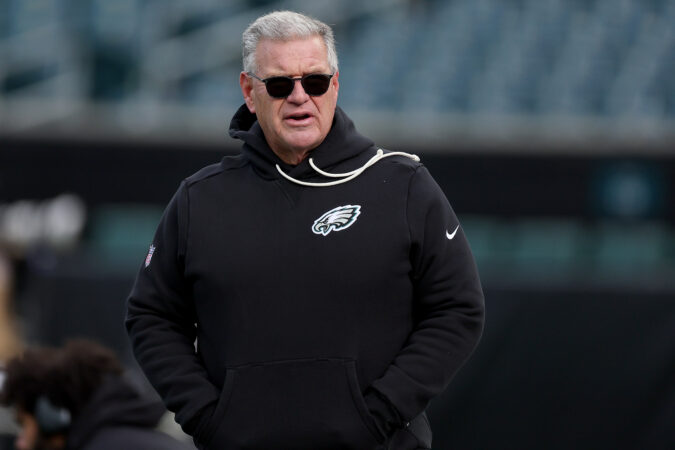
    Eagles defensive coordinator Vic Fangio will return next season, ending talks of retirement.

    During the season, Stoutland, who had been serving as running game coordinator, was stripped of those responsibilities by head coach Nick Sirianni.

    After the Eagles hired Sean Mannion as OC last week, all offensive assistants were put on notice that Mannion might alter the staff. Quarterbacks coach Scot Loeffler was expected to be the first casualty.

    Instead, Stout was out.

    Stoutland is 63, and is contemplating both retirement and remaining with the Eagles in an advisory position, although, given his strong personality and his 13-year tenure, his shadow likely would be too much of a distraction. His status will remain in limbo for the time being.

    For weeks, the same was true of Fangio

    I heard 2½ weeks ago that Fangio, 67, was contemplating retirement, and that it might hinge on a reunion with offensive coordinator candidate Mike McDaniel, under whom Fangio worked as defensive coordinator in Miami in 2023. I couldn’t get it confirmed in the Eagles building, so I didn’t write it, and then PhillyVoice.com broke the story over the weekend.

    The most intriguing parts of that story concerned the news that not only was Fangio so close to retirement that the Eagles alerted possible candidates, but also that one of those possible candidates was former Eagles defensive coordinator Jonathan Gannon, who was generally despised by Eagles fans when he left for the Cardinals’ head coaching job.

    At any rate, my league sources said Fangio decided to not retire last week, which was one reason Gannon went ahead and took the DC job in Green Bay. Then, on Monday, The Inquirer reported that Fangio was still dithering … but the next day, @PHLY_sports reported that Fangio was expected to stay. Which was true. By Wednesday night, anyway.

    As prime candidates to replace Fangio keep getting hired by other teams, Fangio was holding the Eagles hostage.

    Just one more chapter in the story of a very strange workplace.

    The team, with its high-maintenance players, its impulsive head coach, and its eclectic collection of front-office characters, often gets frustrated by the way it is covered.

    This is the sort of behavior that casts the organization as dysfunctional.

    Vic Fangio’s Eagles defense has been dominant for two seasons.

    Sirianni taunts fans, including his own. Diva wide receiver A.J. Brown complains about the offense for three seasons, reads books on the sideline, calls the offense a “[bleep] show” online, and has to be reprimanded by owner Jeffrey Lurie. Defensive tackle Jalen Carter spits on Dak Prescott before the first snap of the season and somehow gets himself ejected and suspended from the same game.

    Fangio likes to golf and fish and watch the Phillies, but as a defensive coordinator, he gets to do that just one month per year.

    There were plenty of reasons besides age that Fangio might’ve wanted to step away.

    First, while the Eagles win, the NovaCare Complex isn’t exactly an easy place to be. Howie Roseman operates with more autonomy than most other GMs, who are more beholden to their coaching staff, especially their coordinators. Additionally, the best defenders will soon be receiving lucrative extensions, which could change the dynamic in the building. It might be a lot more pleasant coaching young, hungry talent like Jordan Davis, Quinyon Mitchell, Nolan Smith, and Cooper DeJean than coaching those same guys minus the financial incentive.

    Fangio has won a title. He has made millions. Maybe, as he ages, he doesn’t want to babysit a well-paid, overweight, under-motivated Jalen Carter.

    The way things go at the NovaCare facility, I can’t say that I‘d blame him.

  • Trading Jared McCain is a big risk, unless something bigger is in play

    Trading Jared McCain is a big risk, unless something bigger is in play

    Curious.

    Suggestive.

    Dangerous.

    Most of all, unfortunate.

    Those are the only sorts of words you can use right now when evaluating the Sixers’ decision to trade Jared McCain to the Thunder on Wednesday afternoon in exchange for a 2026 first-round pick and some ancillary draft capital.

    To judge the move in more definitive terms would be irresponsible given the amount of time that still remains between now and Thursday’s NBA trade deadline. The final verdict depends on what happens next. If nothing happens next, then, yeah, the Sixers’ decision to jettison their promising 2024 first-round pick will rank somewhere on a spectrum between “underwhelming” and “foolish.” If their primary motivation was to duck below the luxury tax yet again, it will be a level beyond foolish. It will be criminal.

    That being said, there are a lot of other ifs in play, many of them more plausible than Daryl Morey viewing a legitimate asset as a cost-savings vehicle. The NBA’s in-season hot stove is sizzling right now. The Mavericks traded All-Star center Anthony Davis to the Wizards, thereby finalizing their aggregate return for Luka Doncic at a grand total of three first-round picks, each of which is more likely to be closer to No. 30 than to No. 1. Trade rumors continue to circulate around Bucks superstar Giannis Antetokounmpo, with suitors like the Timberwolves and Heat jockeying to present Milwaukee with an offer that will convince it to strike a deal now rather than wait for the offseason. There are a lot of dominoes left to fall, and the Sixers could easily end up toppling one — or being one.

    The Bucks’ Giannis Antetokounmpo remains the big prize at the NBA trade deadline.

    As of Wednesday night, there were no indications that the Sixers were gearing up to make a legitimate run at acquiring Giannis, who was previously reported to be intrigued by the possibility of teaming up with Tyrese Maxey and the Sixers. Such a move would almost certainly require the Sixers to part with rookie star V.J. Edgecombe. That’s a move they almost certainly will not do.

    But the Sixers could easily end up involved on the periphery of the Giannis talks. If Minnesota is determined/desperate to add Giannis, then it would presumably need to be desperate/determined to acquire the first-round picks that the Bucks would require (the Timberwolves don’t have much in the way of draft capital to trade). Minnesota’s determination/desperation creates some intriguing possibilities for a third team that does have first-round picks it can trade. The dream scenario would be someone like young sweet-shooting big man Naz Reid becoming available. A more realistic opportunity could come in the form of former Villanova-turned-Knicks-turned-Timberwolves grinder Donte DiVincenzo.

    I’m throwing those names out there mostly as for-instances. The world remains Morey’s oyster until the clock strikes 3 p.m. EST on Thursday.

    What we can say right now is that trading McCain is a risk. We’re barely a year removed from the 21-year-old guard looking like one of the best players in his draft class. His star has dimmed quite a bit since a season-ending knee injury put the kibosh on his rookie season after 23 games. But remember what we saw in those 23 games: 15.3 points, a .383 three-point percentage, promising toughness and defense. It’s hard to believe that those things were mirages, especially when you consider the track record that the Thunder have in identifying undervalued young talent. If Sam Presti wants to trade for your player, it’s a good reason not to trade him.

    Adding a young guard like the Bulls’ Ayo Dosunmu would help the Jared McCain trade make sense.

    The Sixers surely know this. That’s a good enough reason to give them until the trade deadline before deciding how we feel. The reality on the ground has changed a lot since McCain burst onto the scene early last year. The fit with Edgecombe isn’t an ideal one. McCain is averaging just 16.8 minutes this season. But he was hardly in danger of becoming a sunk cost. The hope here is that the draft capital the Sixers acquired from the Thunder will help them add a player who brings more certainty to go with his youth. The Bulls’ Ayo Dosunmu is just one example of a player who would make all the sense in the world to swap in for McCain.

    Until then, we wait.

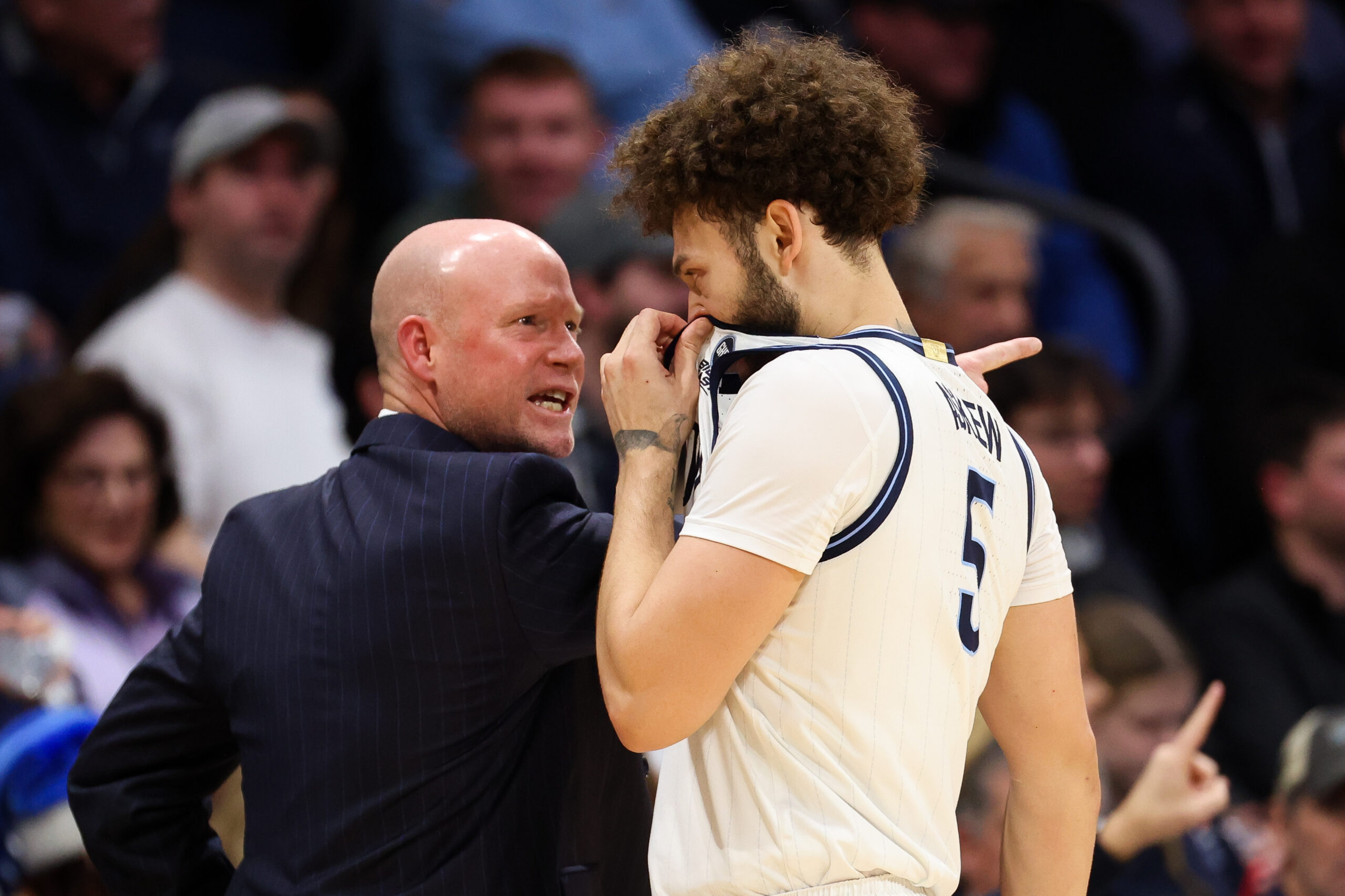
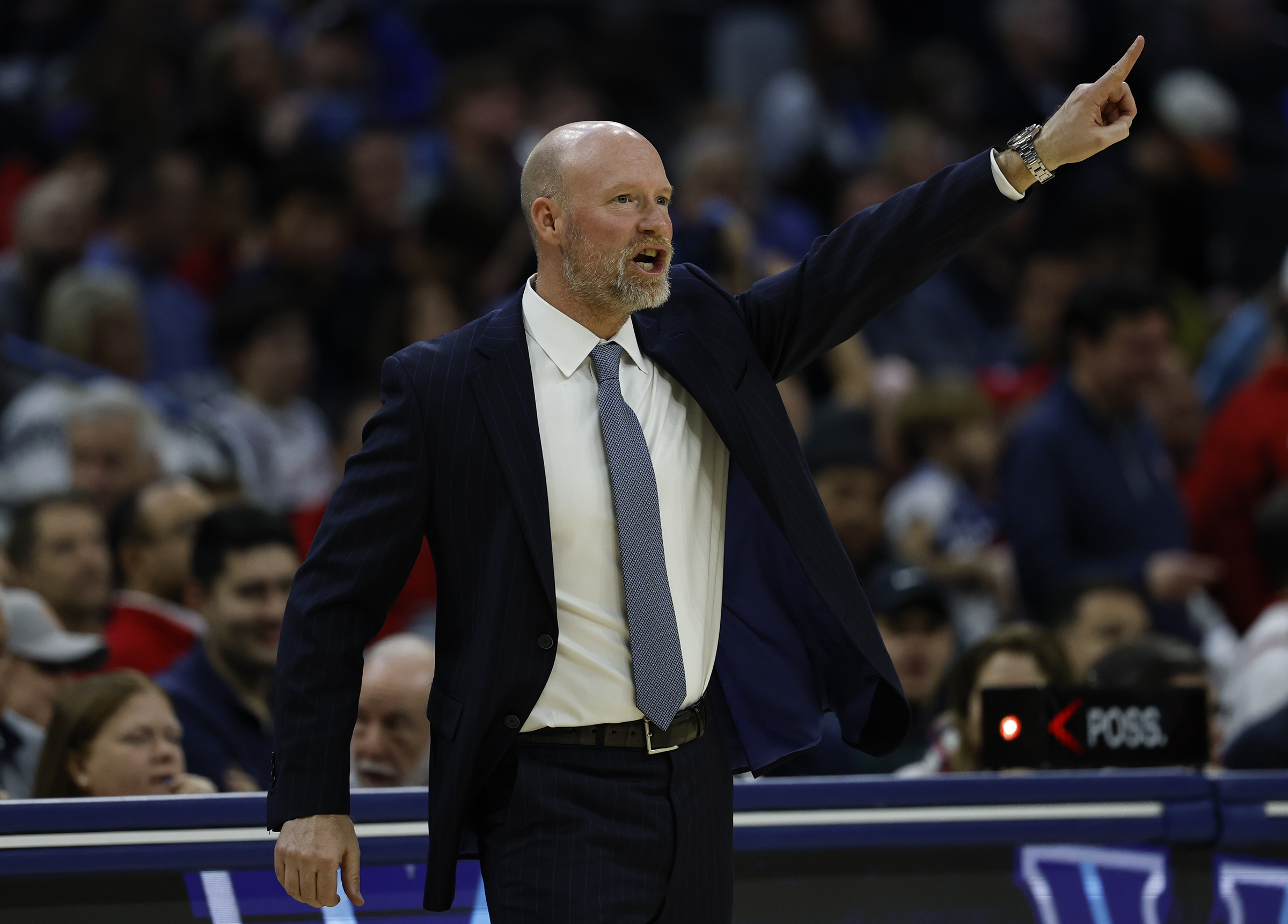
  • Kevin Willard wants to push Villanova into the future — without casting Jay Wright into the past

    Kevin Willard wants to push Villanova into the future — without casting Jay Wright into the past

    Over his 12 years coaching at Seton Hall and against Jay Wright, Kevin Willard figured that he knew Villanova as well as any outsider could, especially one who would eventually become the university’s men’s basketball coach. His next-door neighbors in Westfield, N.J., were ’Nova alumni, as were three of his golfing buddies at Plainfield Country Club, and there were all those Big East battles between his teams and Wright’s at the Finneran Pavilion, at the Prudential Center in Newark, and at Madison Square Garden in March.

    Then he went to Maryland. Maryland wasn’t the northeast. It wasn’t Jersey. It wasn’t Philly. It wasn’t even the Main Line. It was the Big Ten. The Big Ten has big-time football, and more importantly, it has football money and a football mindset, even for its basketball programs. The Big Ten also has 18 member schools, so Willard stopped watching Big East basketball altogether. He had 17 conference opponents to study, after all. Then he returned to the Big East this season, replacing Kyle Neptune at Villanova.

    He doesn’t feel comfortable there yet, he said. Too much to do. Too much change so quickly. Too much of a whirlwind.

    “The comfort won’t happen until Year 3,” he said. “When I came, I definitely had rose-colored glasses. I had a perception of what this was, not remembering it had been three years since Jay had left.”

    The Wildcats are 17-5 following their 72-60 victory Wednesday night over Willard’s former team, Seton Hall. And Villanova’s strong season so far might allow its donors and alumni to regard the last three years as just a blip — a small stint in purgatory before Willard got the program back to where those who support it presumed it should and would always be. During an hourlong interview in his office late Tuesday afternoon, though, Willard made it clear where he comes down on Villanova’s future … and its recent past.

    No matter Wright’s intentions, his tenure and presence loomed over Neptune as an ever-present reminder of his 21 years as head coach and nerve center, of two national championships and four Final Fours and the status as the top program in the country. Neptune, who had a single season at Fordham as a head coach and had spent 12 years at Villanova on Wright’s staff, couldn’t escape that shadow or the comparisons, and he couldn’t win enough to buy himself more time. Willard doesn’t want to fall into the same trap, and he thinks he knows how to avoid it, believing his three years at Maryland and in the Big Ten, that experience elsewhere, will be vital to understanding how Villanova has to evolve.

    “It’s so important,” he said. “My 12 years at Seton Hall, I did it my way. You get very isolated, and Jay was here for so long, and they were winning. But it was Jay. And I know this because I went against him. It was Jay. It was Jay’s way. It was the way it was. They didn’t need to change anything. They didn’t need to worry about anything because they had Jay. Once Jay left, you need to go, ‘All right, what’s everyone else doing? Where has everyone else made gains where maybe this place didn’t because they had Jay?’”

    Kevin Willard doesn’t want to erase all of the Wildcats’ basketball history, rather use it as a valuable resource.

    For Willard, the caution and smaller-time approach that worked under Wright — that worked because of Wright, and because Villanova was operating in a pre-NIL/transfer portal/pay-for-play world — won’t fly anymore. It would be foolish for Willard to try. He’s a Villanova outsider still, rougher around the edges than Wright, than the man who was the most polished coach in the country, and the circumstances in this wild, wild west era of college hoops are different and more challenging.

    The luxury of redshirting players such as Mikal Bridges and Donte DiVincenzo, for instance, allowing them to get acclimated and mature, won’t necessarily be available to Willard. The way to make up for Wright’s departure isn’t to operate as if his successors will be able to replicate his methods or even his culture. It’s to pay the cost of acquiring big-time players and tout their skills as part of social-media branding campaigns and recognize that this isn’t anything like amateur basketball anymore.

    “It’s like growing up in a small town and going to their amusement park, and then you go to Disney World,” Willard said. “You can’t say, ‘We just need to make the roller coaster better.’ Everything’s got to get better, bigger — fairy dust everywhere. It’s not even a money thing or a structural thing. It’s more about a mentality. Jay was monstrous. Jay was Villanova basketball. But we don’t have Jay anymore. …

    “Everyone else is being Disney World. We can’t be the small, little amusement park. We’re not the small, little amusement park, but the mentality a little bit is. ‘We can do it like this because we’ve always done it that way.’”

    Willard insisted he doesn’t intend to erase all of the Wildcats’ basketball history, that he can’t ignore or disregard what Villanova is as a university or how Rollie Massimino, Steve Lappas, Wright, and Neptune did their jobs and why. “If you just go against 60 years of tradition,” he said, “you’re going to get [expletive] blown out of the water.” So he views Wright’s presence as an asset, his knowledge and success as valuable resources.

    Kevin Willard said he won’t feel comfortable coaching on the Main Line until year three.

    “If I was in my third year of coaching, I wouldn’t feel the same way,” he said. “I’m 20 years a head coach. I’m not cocky, but I feel pretty confident that I know what I’m doing at this point. I love the fact [that] I have Jay around. It’s only going to help. If I was younger and was coming here after three years at Seton Hall, I would be like, ‘What the [hell]? Why is he at the game? This is [expletive] crazy.’ But I love that he comes to practice. I love that he’s at games. I love that I can text him or call him or go out to dinner with him because he built this. He knows this place better than anybody.”

    He likely always will. It’s a standard, though, that Kevin Willard doesn’t have to exceed or even meet yet. It’s still just Year 1 for him. Check back in Year 3. He doesn’t have to know Villanova as well as Jay Wright did. He just has to do his part in this new time of college basketball. He just has to know it well enough.

  • Follow the money to find the secret to the 2026 Phillies roster

    Follow the money to find the secret to the 2026 Phillies roster

    When it comes to the 2026 Phillies, the three most meaningful words in the human language ring true once again.

    Follow the money.

    Read the menu from right to left. There, you will find the players who will make the Phillies the team they need to be. Or, you will find the players who will deserve the blame if the Phillies prove not to be that team.

    Zack Wheeler is making $42 million, which is the same amount the Mets will pay newcomer Bo Bichette. Kyle Schwarber is making $30 million, the same amount the Cubs will pay newcomer Alex Bregman. Aaron Nola is making $24.5 million, which is about $2.5 million less than the Blue Jays gave Dylan Cease and right in line with what the Padres gave Michael King. Bryce Harper and Trea Turner are combining to make about $52.5 million, which is about $5 million less than the Dodgers have agreed to pay Kyle Tucker over the next four years.

    Ok, that last one is absurd. But the Phillies are one of 29 teams who can’t compare to the Dodgers.

    Anywhere east of Tinseltown, there is no room for excuses. The Phillies are on track to arrive at opening day with a payroll that is $21 million higher than the Braves, $52 million higher than the Cubs, $63 million higher than the Padres, and a whopping $157 million higher than the Brewers. They are a near lock to finish the season with one of the top five payrolls in the game. No, they aren’t the Dodgers ($387 million) or Mets ($363 million). But neither are the Yankees these days ($304 million).

    The criticism must feel good to John Middleton, in a strange way. Two decades ago, he was part of an ownership consortium that oversaw one of MLB’s most underfunded rosters relative to market size/potential. His power play into a majority stake was motivated in large part by his desire to operate like a true economic powerhouse. The fan base has been thrilled to adjust its expectations upward. The way folks are questioning Middleton’s billionaire bona fides, you’d think he spent the offseason picking up shifts in the gig economy. It’s worth stating for the record that the Phillies have signed $227 million worth of new guaranteed contracts at an average annual value of $66 million, or nearly 25% of their payroll.

    John Middleton’s Phillies will have one of the most expensive payrolls in the game.

    I’m not licking any boots here. I understand that the criticism levied toward the Phillies is as much a function of makeup as money. The majority of the Phillies’ outlays this offseason have gone to incumbents, with Schwarber re-signing for five years and $150 million and J.T. Realmuto for three years and $45 million. The same was true last offseason, and the season before, when Nola and Wheeler both signed nine-figure deals. After two straight postseason one-and-dones, the impression is of a poker player doubling down while drawing dead.

    One of the difficult parts of being a personnel executive is that a fan base is rarely careful what it wishes for. Middleton’s partiality to the familiar makes plenty of sense when you consider the Phillies’ recent history. The last time they bowed to the wishes of those chanting, “Blow it up,” the result was a lost decade. Creative destruction is a fine idea. But it had better be creative.

    The Schwarber and Realmuto contracts are perfect examples. Would the Phillies have really been better off if they’d given Schwarber’s money to Bregman or Bichette? You can certainly make the argument. If the Phillies had non-tendered Alec Bohm and let Schwarber walk, they could have signed Bregman to play third base and then given Eugenio Suarez the one-year, $15 million deal he signed with the Reds to play designated hitter. Maybe then they don’t feel the need to pay $10 million for Adolis Garcia’s right-handed power bat and instead sign Luis Arraez (one-year, $12 million) or Ryan O’Hearn (two years, $29 million) and convince Harper to return to the outfield. Or maybe they sign Josh Naylor to play first base and let Realmuto walk.

    So, yeah, there were options. Bregman, Suarez, and Naylor will earn about $65 million in AAV in 2026. Schwarber, Realmuto, Bohm, and Garcia will earn about $65 million in AAV in 2026.

    Would the Phillies have been better off?

    Maybe. But, man, there’s a whole lot of risk baked into maybe. Enough risk that it’s worth stepping back and asking what they’d be trying to accomplish. Neither combination is going to stack up to the Dodgers on its own. Just so happens the first combination has helped the Phillies improve their win total in each of the last four years while also winning 96 games and a division title in 2025. Neither combination will mean much if Harper takes another step backward, or if Wheeler doesn’t return from his blood clot as the same pitcher he was, or if Nola is the same pitcher he was last season, or if Turner is still something less than a guy who deserved $300-plus million.

    The story of this offseason was the money the Phillies spent in previous offseasons. The incumbents are the ones who need to do the heavy lifting. That’s how it should be when the incumbents’ wallets are as heavy as the Phillies’. There is plenty of potential upside in the form of Justin Crawford, Andrew Painter, Aidan Miller, Gabriel Rincones Jr., even Otto Kemp. The floor will be set by the known commodities. This year more than ever, Harper and Co. need to make themselves known.