Category: Associated Press

  • Venezuelans take search for the missing into their own hands as earthquake death toll climbs

    Venezuelans take search for the missing into their own hands as earthquake death toll climbs

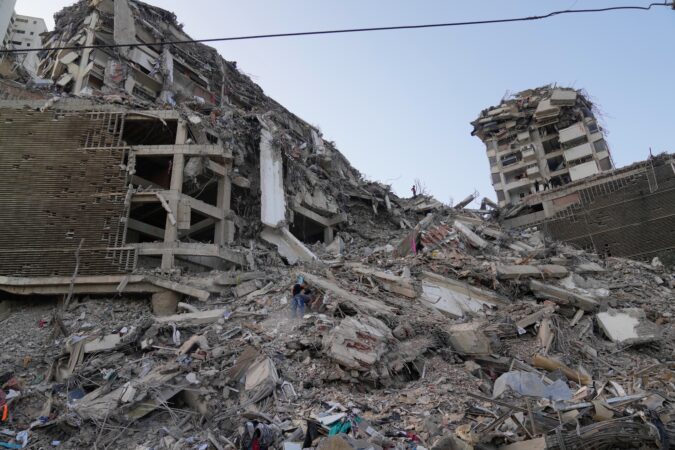
    LA GUAIRA, Venezuela — Venezuelans took the search for missing loved ones into their own hands Friday in the aftermath of back-to-back earthquakes, citing the scarcity of government rescuers, as the human toll of the disaster climbed to at least 920 dead and more than 51,000 missing.

    Citizens digging through the rubble of their homes said they have seen few state rescue teams in the areas hit hardest by the devastating 7.2 and 7.5 magnitude quakes that struck late Wednesday, despite authorities projecting an image of a robust government response.

    The lack of help compounded families’ desperation as the pressure to find buried survivors increased with each passing hour. The South American nation on Friday marked nearly two days since the disaster. Aid agencies consider the first 48 to 72 hours to be a crucial time frame to retrieve people alive, though that period can be extended if they have access to food and water.

    Meanwhile, a broad international aid effort accelerated, with dozens of rescue teams from around the globe arriving in Venezuela or due to arrive there soon.

    “Each person saved is a miracle,” said Jorge Rodríguez, the president of the country’s National Assembly. “We are not going to hide absolutely anything about the magnitude of this tragedy.”

    Anxious families wait to see if their relatives survived

    Families across northern Venezuela searched in the ruins of buildings for relatives and whatever remained of their lives.

    Nazareth Jimenez sobbed into the shoulder of a loved one as she watched neighbors try to cut through slabs of concrete with hammers and power tools in a building reduced to a mountain of debris. “My god, how are we going to get them out of there?” she murmured.

    She was in the northern state of La Guaira, just north of the capital of Caracas, where some of the worst destruction unfolded. Jimenez was wracked with anxiety as she waited to see if her siblings, nephews, nieces, and friends would emerge from the debris alive.

    “We’re making a call for help to governments of countries across the world,” she said, pleading for machines that would be capable of moving collapsed structures. “There are still people alive in there.”

    Government forces distributed food and water to survivors in La Guaira as acting President Delcy Rodríguez said her government was “working tirelessly” to mount a full response. She welcomed the arrival of rescuers and humanitarian aid from all over the world. She said La Guaira had been militarized and that more help was on the way, even as residents said it was just a fraction of the aid they needed.

    The disaster poses a huge challenge for Rodríguez, the former vice president who took office in January after the capture and removal of then-President Nicolás Maduro by the United States. Venezuela has been facing economic disarray for more than a decade, and many people reject the legitimacy of the political movement Rodríguez represents.

    The number of dead was expected to climb, and civilians reported tens of thousands of people missing on independent digital databases. The number of missing likely includes those who have been incommunicado due to the lack of cell phone signals in disaster zones. Some reports may be duplicates created when multiple loved ones are searching for the same person.

    The number of injured climbed to more than 3,300 as of midday Friday, and authorities said they had rescued 243 people.

    Quakes leave millions of people reeling

    The International Organization for Migration said that up to 6.76 million people in Venezuela could be affected by the quakes, some 2 million of them in Caracas alone. Loyce Pace, the International Red Cross’ regional director for the Americas, said “people are still terrified to reenter what were their homes.”

    Desperation started to sink in Friday as many families still had not found their missing loved ones, had minimal equipment for rescue efforts, and continued to sleep on the street.

    In Catia La Mar, a community adjacent to the country’s main airport, throngs of people began to loot basic goods like toilet paper and food from stores. Others swarmed a civilian pickup truck that was giving out loaves of bread and water. A soldier intervened to allow the vehicle to leave. People turned the parking lot of a pharmacy into a makeshift shelter by setting up tarps, hammocks, and tents.

    Omar Reyes walked through the remains of what was once his home, calling out the names of his wife and children. He received no response.

    Around 20 family members have died. Two of his four children are buried in the debris.

    “I’ve been left alone in this life,” he said quietly.

    International aid is on the way

    Venezuela authorities said Friday that 861 international volunteers from Mexico, the U.S., El Salvador, Switzerland, Colombia, and beyond were working in Venezuela. Many more from other countries were expected in the coming hours and days. The U.N. said 1,000 emergency responders in 25 search-and-rescue teams from across the globe were on their way.

    On the country’s main highway, caravans of state forces, emergency personnel, dump trucks, and heavy machinery moved in the direction of the tragedy. A civilian pickup truck carrying thin mattresses had its windows marked with “Help from Trujillo.”

    Some survivors emerge from the dust and debris

    Media reports have shared notable moments of hope, including a young man brought out on a stretcher in the San Bernardino district of Caracas to the applause of onlookers as his tearful mother said, “Leandro, I love you.”

    Venezuelan TV broadcast video of a girl covered in dust and wrapped in a sweatshirt as she emerged from rubble with the help of rescuers. Caracas metropolitan rescue team head José Luis Núñez said she was found in a 10-story building in La Guaira that collapsed and flattened “like a pancake.”

    “We want to highlight this girl’s strength, determination, and will to live,” Núñez said.

    The U.S. Geological Survey said both earthquakes were centered near Moron on the Caribbean coast, about 105 miles west of Caracas. The one-two punch of the quakes, combined with the shallow seismic movements, amplified the destruction, said Marcos Ferreira, a geophysicist and researcher at the Geological Survey of Brazil.

  • Israel and Lebanon sign framework agreement with U.S. in ‘first step’ toward peace, Rubio says

    Israel and Lebanon sign framework agreement with U.S. in ‘first step’ toward peace, Rubio says

    WASHINGTON — Secretary of State Marco Rubio joined ambassadors from Israel and Lebanon to the U.S. Friday to announce a framework agreement that was described as a first step toward peace following months of conflict between Israel and the Lebanese militant group Hezbollah.

    The officials did not share details on the agreement, which does not include Hezbollah and prompted one of the group’s officials in Lebanon to warn of civil war. Israeli Prime Minister Benjamin Netanyahu later said that the framework would allow Lebanese forces to eventually take control of territory from Israel’s military.

    The agreement was signed in front of Rubio in Washington by Yechiel Leiter, the Israeli ambassador to the United States, and Nada Hamadeh, the Lebanese ambassador to the United States.

    Hamadeh said the framework “is a first step on the road to restoring Lebanese sovereignty and territorial integrity, securing a permanent and final cessation of hostilities, enabling our people to go back to their land and allowing all Lebanese to live in peace, security, and prosperity.”

    Leiter said the final destination of the framework is peace between the two countries.

    “Real peace, where both countries will live in security, where Israel’s and Lebanon’s sovereignty will be respected, honored, and protected,” Leiter said. “In this performance-based trilateral framework agreement, Iran is out. Hezbollah is out. And the road to peace between Israel and Lebanon is in.”

    The latest conflict began when Hezbollah fired rockets into Israel days after Israel and the U.S. launched their war on Iran on Feb. 28. Israel invaded Lebanon and has expanded its control.

    The talks between Israel and Lebanon were separate from the interim deal that was signed last week by the leaders of the U.S. and Iran to end the fighting in the Islamic Republic. That agreement set a 60-day period for negotiations on key issues, including the future of Tehran’s nuclear program amid concerns that Iran wants to use it for military purposes, a claim the country denies.

    The Lebanese government had been wary of having Iran negotiate on its behalf, and Lebanon launched its own direct negotiations with Israel after the outbreak of the latest Israel-Hezbollah war. Hezbollah was not part of the talks, which resulted in several ceasefire agreements that were never implemented on the ground. Iran, meanwhile, insisted that its own agreement with the U.S. explicitly include a ceasefire in Lebanon. The first halt in fighting in Lebanon since March coincided with the beginning of U.S.-Iran talks in Switzerland.

    Hassan Fadlallah, a member of Hezbollah’s parliamentary bloc, reiterated the group’s stance on Beirut-based pan-Arab Al-Mayadeen TV that it rejects Lebanon’s direct negotiations with Israel and that it will not give up its weapons.

    Fadlallah said Lebanese authorities “will not be able to enforce the agreement signed in Washington unless they go, with American support, to civil war.” He also called the agreement in Washington “an attempt to derail the Islamabad process,” referring to the U.S.-Iran negotiations.

    In a statement, Lebanese President Joseph Aoun thanked the Trump administration and the Lebanese negotiating team and said Friday’s agreement will be a “first step” toward allowing the Lebanese displaced by the war “to return to their fully liberated land and to their homes” and to live “with their heads held high, under the sovereignty of a Lebanese state that has no partner in its sovereignty over its land and people.”

    He did not share details of the pact.

    More than 4,000 people in Lebanon have been killed in Israeli strikes since March. At least 37 Israeli soldiers have been killed in Lebanon or northern Israel during the fighting.

    A lull earlier this week in firing between Israeli and Hezbollah forces began to show cracks after Israel said it targeted Hezbollah militants in several strikes across southern Lebanon.

    Lebanese officials have said that securing a withdrawal of Israeli forces from southern Lebanon is a top priority for them in the negotiations, while Israeli officials have prioritized the disarmament of the Iran-backed Hezbollah.

    Aoun had told a visiting British parliamentary delegation on Wednesday that a proposal for “pilot zones” where the Lebanese army is supposed to take exclusive control of the territory as Israeli troops will withdraw was “under discussion pending approval from the Israeli side.” He reiterated that the Israel-Lebanon negotiations in Washington are separate from what emerged from the Iran-U.S. talks in Switzerland.

    An Israeli official who spoke on the condition of anonymity because they were not authorized to speak to the media said Israel’s direct negotiations with Lebanon include discussions about the redeployment of Israeli forces after southern Lebanon is cleared of Hezbollah infrastructure and Hezbollah has disarmed.

    Hezbollah is unlikely to agree to any plan that would include its disarmament throughout the country. The group has maintained that it is only required by previous agreements and U.N. resolutions to disarm in the area south of the Litani River, near Lebanon’s border with Israel.

    Netanyahu, the Israeli leader, said in a video on Friday that the framework is a “great achievement” for Israel.

    “The most important thing, first and foremost, is that Israel will remain in the security zone in southern Lebanon,” he said. “This is a major achievement, and we will maintain it as long as Hezbollah has not been disarmed and as long as it continues to pose a threat to the State of Israel.”

    Netanyahu also said that Israel is allowing the Lebanese army to begin preparing to take control of territory.

    “We are establishing two pilot zones, both based on the recommendation of the IDF,” he said. “The first is entirely outside the security zone and south of the Litani River. The second is north of the Litani.”

  • Trump threatens 100% tax on European imports if countries impose tax on digital services

    Trump threatens 100% tax on European imports if countries impose tax on digital services

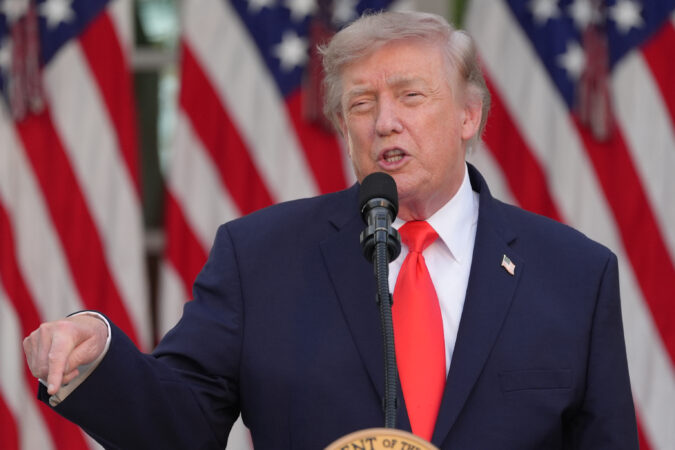
    WASHINGTON — President Donald Trump on Friday threatened a 100% tax on imports from any country that imposes a tax on digital services from United States companies.

    In a post on social media, Trump took aim at European countries that he said are discussing “imminent” implementation of taxes on American companies. The U.S. president has repeatedly sought to use tariffs as way to deter such taxes, but many countries are looking for revenues as their economies increasingly operate in digital realms that are dominated by American companies.

    “Please let this statement serve to represent that any Country that imposes such a Tax will immediately be met with a 100% TARIFF on any and all Goods sent to the United States of America,” Trump wrote.

    He added that the new tax would supersede any previously negotiated trade deals. Trump said the penalty would apply to any country that moves forward with such a tax, but he singled out European nations in his post.

    The move could lead to a larger showdown that could increase prices and hinder economic growth, possibly setting off a larger trade war if the 27-member European Union was compelled to retaliate.

    “Unilateral measures targeting such legitimate policies are unjustified. If pursued, the EU will respond swiftly and decisively to defend its rights and regulatory autonomy,” said Olof Gill, a spokesperson for the European Commission on Friday.

    He defended taxation on technology companies as “non-discriminatory” and applied equally to “all large companies, regardless of their origin.”

    Trump has repeatedly pushed against foreign efforts to tax or regulate American tech giants. Last year, he threatened new tariffs on any country that moved to do so. A post from last August said that digital taxes and regulation “are all designed to harm, or discriminate against, American Technology.”

    The threat comes ahead of Trump’s July 4 deadline for the European Union and the United States to start implementing a tariff deal that caps tariffs on most EU exports at 15%.

    The European Union in May finalized a trade deal with the United States that caps most tariffs on EU exports at 15%. The deal followed months of debate within the EU after European Commission chief Ursula von der Leyen tentatively struck the deal last year while visiting Trump’s golf course in Scotland.

    Digital taxes were not part of the agreement and have remained a sticking point between the U.S. and the European bloc.

    The U.S. government has previously conducted tariff investigations into digital services taxes under Section 301 of the Trade Act of 1974. But it was unclear how Trump would carry out his threat and whether he would apply the tariffs broadly or initially target certain nations.

    Britain, which is no longer part of the EU, has since 2020 levied a 2% digital services tax on revenues earned by search engines, social media sites, and online marketplaces that “derive value” from U.K. users.

    The British government said in a policy document at the time that corporate tax rules for digital businesses had “led to a misalignment between the place where profits are taxed and the place where value is created.”

    The U.K. tax includes thresholds, so mainly large international companies will pay it. The tax was designed to “ensure the large multinational businesses in-scope make a fair contribution to supporting vital public services,” the document said.

  • U.S. strikes Iran in response to attack on ship Trump says violated ceasefire

    U.S. strikes Iran in response to attack on ship Trump says violated ceasefire

    WASHINGTON — The U.S. struck Iran on Friday to respond to a drone attack a day earlier on a cargo ship in the Strait of Hormuz, a provocation that U.S. President Donald Trump said violated the ceasefire.

    U.S. Central Command said the military struck missile and drone locations and coastal radar sites in Iran.

    The strikes came shortly after Trump told reporters, “You’ll find out” whether the U.S. would response to the drone attack.

    “I don’t like the fact that they took a shot yesterday, actually four of them,” Trump said at the White House shortly before the U.S. struck back. When asked why there would be strikes when Trump has insisted talks with Tehran are going well, Trump said of Iran: “They’re a little bit different.”

    He then abruptly cut off questions and reporters were ushered out of his office.

    The British military said on Thursday that a container ship was hit by a projectile off the coast of Oman, coming hours after Iran threatened vessels to stop using the route. The United Kingdom Maritime Trade Operations center said no injuries were reported.

    The development came during a fragile time for the U.S. and Iran as they work to negotiate a permanent end to the war. Iran has increasingly challenged the region and the U.S. over its control of the Strait of Hormuz, even with the current interim deal it reached with the U.S. last week.

    The attack on the cargo ship happened while a United Nations maritime agency was beginning an operation to move stranded ships out of the strait this week, using an alternative route, hugging the shores of Oman rather than sailing through the central part of the strait.

    The International Maritime Organization halted the evacuations after the attack and said on Friday they won’t resume until there are guarantees that the other ships won’t be attacked.

    About 115 ships were able to move out of the strait in recent days, leaving about 500 still in the area, said Arsenio Dominguez, the agency’s secretary-general.

    The opening of the alternative passage through the strait was expected to relieve pressure on the world economy and remove Iran’s main source of leverage in ongoing peace talks with the U.S.

    The U.S. and Iran are still negotiating terms of the deal, including issues such as getting ships through the key strait and addressing the future of Iran’s stockpile of highly enriched uranium. Under the interim deal, the two sides have 60 days to work out the details.

    Shipping analysts said the drone strike cast a shadow over what had been a growing stream of trapped vessels finally leaving the Gulf and an increasing flow of tankers carrying crude oil.

    “A week of widening commercial confidence in the Strait of Hormuz has hit its first significant test,” said marine data company Windward on X. It said that while the strait remains operationally open with 43 transits recorded after the incident, “the pace of normalization has slowed.”

    On Wednesday before Thursday’s drone strike, 78 vessels transited the strait, the highest number since the war began, although below the prewar averages of 130 or more per day.

    At least two tankers reversed course while attempting to transit the strait on the U.N.-backed route near Oman after Iran insisted vessels use only the Teheran-approved routes, according to marine data and analytic firm Lloyd’s List Intelligence.

    More than two dozen ships were still transiting the strait’s southern route after the attack, Lloyd’s said Friday.

  • MLB proposes limiting most free agent contracts to 5 years and 15% of a team’s salary cap

    MLB proposes limiting most free agent contracts to 5 years and 15% of a team’s salary cap

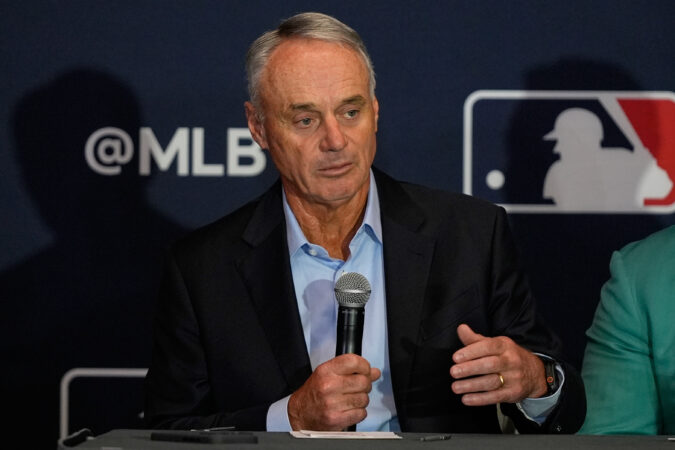
    Major League Baseball proposed limiting most free agent contracts to five years and 15% of a team’s salary cap and to eliminate deferred compensation, fleshing out details of a plan likely to spark a confrontation with the players’ association.

    MLB’s plan would eliminate deals such as Juan Soto’s $765 million, 15-year contract with the New York Mets. The league said just seven players this year exceed the proposed maximum and 98% of free agent contracts would not have been impacted.

    “There’s no question that we’re very far apart,” union head Bruce Meyer said during an online news conference.

    During a bargaining session Thursday at the union’s office, MLB said it would accept the union’s proposal granting free agency a year early for players who have reached age 30 if the union accepted the league’s salary cap system. MLB also proposed boosting the minimum salary from $780,000 to $1 million for those with two years of big league service.

    MLB also proposed increasing the pre-arbitration bonus pool from $50 million to $65 million next year and $75 million by 2032, the sixth season of MLB’s proposed seven-year deal.

    Meyer said “the debate got a little more vigorous today.”

    “The league has done us a favor because their proposals are in fact so obviously and extremely bad for players at all levels that it’s actually been a benefit for our unity,” Meyer said. “Anybody who’s banking on Major League Baseball players cracking, it’s never happened. It’s not going to happen. That’s why we’re the only ones who don’t have a salary cap.”

    MLB also said it would agree to eliminate the qualifying offer for free agents that since its inception in 2012 has restricted the market for some players.

    Bargaining started May 13 for a contract to replace the five-year deal that expires Dec. 1, and owners proposed a salary cap for the first time since the union fought off the system during a 7½-month strike in 1994-95. MLB is expected to impose a lockout in December, halting free agent signings and trades.

    After the prior agreement expired in December 2021, intensive bargaining did not start until late February as the threat approached of losing regular-season games — along with revenue and salary. The sides reached an agreement on March 10, the 99th day of the lockout, preserving the 162-game schedule.

    In the league’s cornerstone proposal, made last month, team spending would be capped next year at $245.3 million, using figures for luxury tax payrolls that include $20.1 million for benefits and the pre-arbitration bonus pool. It also would establish a payroll floor of $171.2 million, forcing several teams to spend more. The two-time World Series champion Los Angeles Dodgers, baseball’s biggest spenders, had a $415.2 million payroll on opening day this year — around $170 million over the proposed cap.

    “The biggest issue baseball fans want solved to strengthen the game is fixing the payroll disparity that leaves too many fans without hope of their team competing for a World Series title,” MLB spokesman Glen Caplin said in a statement. “Every other major U.S. sport has tackled this problem, and every year more small market teams in those leagues have a chance to win. The salary cap and floor proposal levels the playing field.”

    Meyer took issue with that.

    “It’s appalling that the stewards of the game, the people whose job it is to grow the game primarily and promote the game have for whatever period of time now in the last couple of years been saying nothing but the game’s broken,” he said.

    As part of the plan, MLB would establish a “cornerstone player” similar to the NBA’s Bird rule, which would allow a team to re-sign a player at 16% of the cap. A free agent switching clubs would be limited to a $36.8 million salary next year and a re-signing player to $39.2 million.

    Salaries for free agents in additional seasons of a multiyear contract would be limited to 5% increases, as would salaries for younger players in multiyear deals that cover potential free-agent seasons.

    Contracts would be capped by service time: at $500 million and 12 years for those yet to make major league debuts, $461 million and 11 seasons for those with 0-1 years of service, $421 million and 10 years for 1-2, $382 million and nine seasons for 2-3, $343 million and eight years for 3-4, $304 million and seven years for 4-5, and $265 million and six years for free-agent eligible players.

    Agent Scott Boras claimed the then-record $252 million, 10-year contract he negotiated for Alex Rodriguez in December 2000 would not have been allowed.

    “It’s like offering a few pieces of furniture if you agree to live in a house with a 4-foot ceiling,” he said, “an attempt to move player contract values back to the 1990s.”

    Banning deferred compensation would eliminate a business practice used most prominently by the Dodgers, who owe just under $1.1 billion to 10 players from 2028-47. In addition, MLB would restrict bonus provisions in player contracts and mandate a standard award bonus package.

    MLB said it would accept the union’s proposal to drop free-agent eligibility to five seasons of service from six for those turning 30 by the Nov. 1 of the offseason. MLB said 354 players on big league rosters as of Thursday would reach free agency a year earlier. MLB would start the change in the 2027-28 offseason.

    As part of the minimum salary proposal, MLB said players with less than two years of service would have a $900,000 minimum and if earning a full year of service would get an additional $100,000 from the pre-arbitration bonus pool. Minor league minimums for players with major league contracts would increase from $63,600 to $73,400 for initial big league deals and $127,100 to $146,700 for additional contracts.

    The union proposed to jointly lobby with MLB for the prohibition on prop bets; to allow player endorsement and sponsorship of legal betting entities, including sportsbooks and prediction markets; to have players under MLB betting investigations to be placed on administrative leave, similar to the domestic violence policy; and to allow players near the end of suspensions for betting to have unpaid 15-day minor league assignments, similar to the drug policy.

    In addition, players asked for increases for in-season meal and tip allowances; housing benefits for players with major league contracts who are assigned to the minors; and increased moving expenses, including for assignments from one minor league affiliate to another.

    Meyer expects at least one more bargaining session before the All-Star break.

  • Mets fire manager Carlos Mendoza, replacing him with Andy Green right before Phillies series

    Mets fire manager Carlos Mendoza, replacing him with Andy Green right before Phillies series

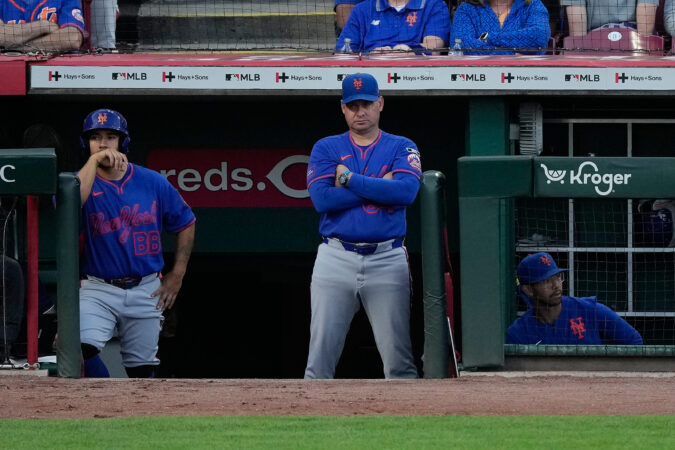
    NEW YORK — Carlos Mendoza was fired as manager of the underperforming New York Mets on Friday and replaced by Andy Green.

    New York is 34-47 following a six-game losing streak, 15 games behind NL East-leading Atlanta and 9½ games back of the NL’s last wild-card berth.

    The Phillies open a three-games series against the Mets at Citi Field on Friday night.

    Mets owner Steve Cohen had high expectations for a team without a World Series title since 1986. New York opened the season with baseball’s highest payroll at $358 million and was projected to pay an additional $124 million in luxury tax.

    “Our commitment to bringing our fans a championship-caliber team has not changed,” Cohen said in a statement. ”There is no sugarcoating it: This season has been a disappointment and our fans deserve better than what we’ve delivered.”

    A former Yankees assistant coach, Mendoza replaced Buck Showalter after the 2023 season and led the Mets to a 206-199 record. While New York advanced to the NL Championship Series in 2024, the Mets failed to reach the playoffs last year and are among the sport’s biggest disappointments this season.

    “Carlos has led the organization with passion and grace and is beloved by everyone who works with him on a daily basis,” president of baseball operations David Stearns said in a statement. “Carlos’ impact on our players, staff, and culture over the last three seasons has been transformative. Unfortunately, we know we are falling short and change is necessary to move forward.”

    Green, a former major league infielder, joined the Mets in 2023 as senior vice president of baseball development. He managed San Diego to a 274-366 record from 2016-19.

  • Florida’s ‘Alligator Alcatraz’ immigration detention center has closed, governor says

    Florida’s ‘Alligator Alcatraz’ immigration detention center has closed, governor says

    The Florida Everglades immigration detention center known as “Alligator Alcatraz” has served its purpose, Gov. Ron DeSantis said Thursday, closing the makeshift facility heralded by the Trump administration and denounced as inhumane by civil rights groups.

    DeSantis said the center, which opened in July 2025, was always meant to be only temporary until more permanent detention centers could be secured and federal officials now have that capacity.

    “We stepped up because there was a gap, but my hope is that they’ll be able to handle that,” the Republican governor said at a news conference at the facility.

    Officials announced a temporary closure of the facility earlier in June and sent all of the detainees to other facilities, saying hurricane season made it unsafe to keep them in the Everglades.

    Immigration advocates said the center’s tents were never safe or humane for holding people. Detainees at the facility have talked about their difficulty accessing lawyers and described poor physical conditions, including worms in the food, toilets that didn’t flush, floors flooded with fecal waste, and mosquitoes and other insects everywhere.

    They described large white tents with rows of and rows of bunk beds surrounded by chain-link cages. The air-conditioning could shut off abruptly in the sweltering Florida heat. Detainees could go days without showering or getting prescription medicine.

    Advocates for immigrants said the closure of “Alligator Alcatraz” does nothing to stop the harm to people who spend months in custody as their families suffer. The Florida Immigrant Coalition said the only winners were corporations and contractors who profited millions of dollars as Republicans pushed an immigration emergency that does not exist.

    The detention center of tents and trailers was built by DeSantis’ administration in a matter of days. The governor and President Donald Trump said the center was critical to Republican efforts to return people in the country illegally back to their home countries.

    “There is no question this mission has made the state of Florida safer,” said DeSantis, noting that 21,000 people were deported through the facility.

    Even with the closure of the facility, Florida continues to play a key role with other detention centers and an increased role in helping with immigration enforcement, White House border czar Tom Homan said at Thursday’s news conference.

    “Gov. DeSantis did a good job, and he’s going to continue doing what he’s doing to help us make this country safe again,” Homan said. “This isn’t the end of relationship. This is a continuation.”

    Lawyers for the immigrants at the facility said their clients suddenly started leaving for other facilities in South Florida, California, Arizona, Louisiana, and Texas earlier this month, disappearing for about a week before their attorneys and families were told where they were sent.

    DeSantis said the Everglades airstrip the facility was built around will continue to be used.

    Environmental groups sued over the detention center, saying Florida officials never got the proper permits or did required reviews on its impact.

    The state and federal governments built the site with no oversight and closed it with no input, but they will still be held responsible even with the site is closed, said Paul J. Schwiep, an attorney for Friends of the Everglades and the Center for Biological Diversity.

    “The administration believes it can quietly walk away and leave its mess for others to clean up. The law will not allow them to escape accountability. We will ask the courts to ensure that the environmental damage is fully addressed,” Schwiep said in a statement Thursday.

  • Harvey Weinstein’s New York rape charge dropped after accuser says she can’t endure a fourth trial

    Harvey Weinstein’s New York rape charge dropped after accuser says she can’t endure a fourth trial

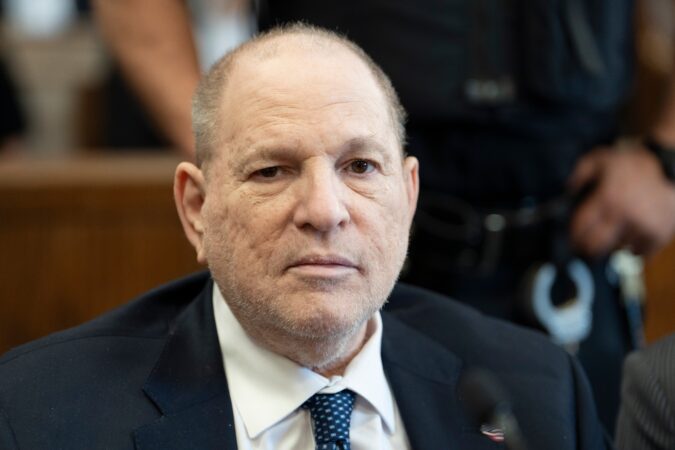
    NEW YORK — Harvey Weinstein won’t face a fourth trial on a New York rape charge. Prosecutors dropped the #MeToo-era case on Thursday after his accuser said she could not bear to testify again.

    The movie mogul still stands convicted of another sexual felony in New York and others in California, and he remains behind bars. But the New York rape charge had remained unresolved after an overturned conviction followed by two hung juries.

    Jessica Mann, a hairstylist and actor, spent days on the witness stand at all three trials, telling jurors that Weinstein raped her in a Manhattan hotel in 2013 and being questioned extensively about the complex relationship she had with him before and afterward. The Oscar-winning producer denied the charge and said everything that happened between him and Mann was consensual.

    In a letter that prosecutor Nicole Blumberg quoted in court Thursday, Mann said she could “no longer endure going through this,” adding that the 8-year-old case has “put me through more harm than good.”

    Blumberg told the court that prosecutors believe Mann and hail her “bravery, strength, courage and inspiration” to other survivors, but given her feelings about proceeding, “dismissal is appropriate.” With that, Judge Curtis Farber formally dismissed the case.

    Weinstein left court with a neutral expression, returning to jail to await a September sentencing on a New York sexual assault conviction involving a different woman. Prosecutors are seeking a 20-year prison term.

    Once Weinstein finishes whatever punishment he gets in New York, he’s due to serve 16 years in California, where he was convicted of raping a third woman, who’s an Italian actor. He is appealing both convictions.

    Weinstein’s lawyers said he was relieved by the dismissal of the case surrounding Mann’s allegation.

    “These charges should never have been brought to begin with,” lawyer Jacob Kaplan said outside court. “He is innocent.”

    Mann has testified that she had a consensual, on-and-off relationship with Weinstein, who was married at the time.

    But she told jurors she repeatedly tried to leave and said no to any sexual activity as he cornered her in a hotel room on March 18, 2013. They had planned to meet in the lobby for breakfast, but he had spontaneously taken a room.

    She said he persevered, demanding that she undress and grabbing her arms, until she was afraid to keep protesting.

    The latest trial, this spring, took a visible toll on Mann, 40. During five days of testimony, she was questioned for the first time about a diarylike, soul-baring note she wrote two days after the alleged rape, which the note did not mention. At one point during her testimony, Mann said she was struggling to focus, prompting court to wrap up early for the day.

    In her letter to the court Thursday, she said she had suffered a concussion shortly before her testimony, had headaches and other symptoms on the stand and ultimately “disassociated.” It was a humiliating addition to an already crushing experience, she wrote.

    “I have been fragmented, silenced, defamed and traumatized. I’ve paid the price of my reputation,” Mann wrote. Slamming the court, the media and Weinstein, she said her experience showed that “pursuing justice is better left a pipe dream.”

    Weinstein was one of the movie industry’s most powerful figures, a producer of such tastemakers and hits as Shakespeare in Love, Pulp Fiction, and Chocolat.

    Then a series of sexual misconduct allegations against him became public in 2017, fueling the #MeToo campaign for accountability and eventually leading to criminal charges in New York and Los Angeles.

    He denied all of them and was acquitted of some, even as he was convicted of others.

    During a series of trials, Weinstein was convicted in 2020 of raping Mann. Then an appeals court overturned that verdict for reasons unrelated to her testimony. Jury deliberations broke down at a 2025 retrial, and jurors deadlocked again at this year’s retrial.

    The rape charge in this case was a low-level felony punishable by up to four years in prison — less time than Weinstein, 74, already has served.

    Weinstein didn’t testify at any of the trials, though he complained during and after the 2025 New York retrial that it was unfair; the judge disagreed.

    His lawyers have maintained that all his accusers had completely consensual sexual liaisons with a movie studio boss who could help them go places in show business. Weinstein himself has said he “acted wrongly, but I never assaulted anyone.”

    The Associated Press does not identify people who say they have been sexually assaulted, unless they choose to be named, as Mann has done.

  • David Clayton-Thomas, powerhouse lead singer of Blood, Sweat & Tears, has died at 84

    David Clayton-Thomas, powerhouse lead singer of Blood, Sweat & Tears, has died at 84

    NEW YORK — David Clayton-Thomas, the lead singer of Blood, Sweat & Tears, whose husky, high-strung tenor on “Spinning Wheel,” “And When I Die,” and other hits helped make the so-called “brass rock” band among the most popular acts of the late 1960s, has died at age 84.

    Spokesperson Eric Alper said that Mr. Clayton-Thomas died “peacefully” Wednesday at St. Michael’s Hospital in Toronto. Alper did not cite a specific cause.

    Mr. Clayton-Thomas was a onetime street fighter and petty thief from Canada who briefly became a rock superstar, the front man of a nine-member group that sold millions of records and won two Grammys for Blood, Sweat & Tears, which beat out the Beatles’ Abbey Road for best album of 1969. Calling out amid a jazzy parade of horns, keyboards, and percussion, Mr. Clayton-Thomas’ urgent shout was a signature voice of the era, preaching love on the Motown cover “You’ve Made Me So Very Happy,” a lasting legacy on Laura Nyro’s “And When I Die,” and a cool head on his own “Spinning Wheel.” Meanwhile, Blood, Sweat & Tears helped inspire a wave of horn-led bands, among them Chicago, the Electric Flag, and Ten Wheel Drive.

    “A lot of the guys [in Blood, Sweat & Tears] would play a Broadway show matinee, then go up to Harlem and play Latin music or R&B and funk at night, or come down to the Village and play pure jazz the next night,” Mr. Clayton-Thomas told bestclassicbands.com in 2023. “I was just a blues player: give me three chords and I’ve got a song.”

    At its peak, Blood, Sweat & Tears’ appeal was so broad it helped lead to the band’s downfall.

    Hip enough to perform at the 1969 Woodstock festival, where they were among the highest paid acts, they also were known enough to the establishment to tour Eastern Europe the following year on behalf of the State Department. When Mr. Clayton-Thomas and other band members denounced the Communist regimes on the other side of the Cold War, Rolling Stone’s David Felton wrote that “the State Department got its money worth.” Yippies would turn up at a 1970 Blood, Sweat & Tears show at Madison Square Garden, carrying obscene banners outside and dumping manure by the front gate.

    The band had practical reasons for going along with the government: Mr. Clayton-Thomas, who had allegedly wielded a gun at his girlfriend, had been denied a green card and faced deportation. But after topping the charts in 1970 with the album Blood, Sweat & Tears 3, their appeal soon faded. A burned out Mr. Clayton-Thomas left the group in 1972, and neither he nor the remaining musicians ever regained their old stature. Blood, Sweat & Tears would continue recording over the next few years, and even briefly reunited with Mr. Clayton-Thomas, who went on to release more than a dozen solo albums and tour on his own for decades.

    Mr. Clayton-Thomas was inducted into the Canadian Music Hall of Fame in 1996. “Spinning Wheel,” covered by everyone from James Brown to TV star Barbara Eden, was voted into the Canadian Songwriters Hall of Fame a decade later.

    Mr. Clayton-Thomas is survived by his daughters, Ashleigh Clayton-Thomas and Christine Graham.

    Up from the streets

    Born David Henry Thomsett in Surrey, England, and raised near Toronto and Ottawa, he was the son of a Canadian World War II veteran and of a pianist-entertainer who helped inspire her son’s interest in music. Thomsett was lucky to have the chance. He fought violently with his father, was living in the streets by his mid-teens and by age 20 was serving time in a reformatory for vagrancy, assault and other crimes.

    An old guitar, left behind by a fellow inmate, changed his life. He taught himself to play and began spending extensive time in the early 1960s around Toronto’s Yonge Street music “strip,” where peers included the American rockabilly star Ronnie Hawkins, a mentor to Robbie Robertson and other future members of the Band and a guide for Thomsett early in his career.

    Anxious to reinvent himself, he changed his last name to Clayton-Thomas while leading his own groups. In the mid-60s, he released such albums as Sings Like It Is and had a hit single with the anti-war rocker “Brainwashed.” He would also befriend a rising star, Joni Mitchell, whose childlike “Circle Game” helped inspire “Spinning Wheel,” and the venerable John Lee Hooker, who would indirectly contribute to Mr. Clayton-Thomas’ breakthrough in the U.S.

    America beckons

    Hooker had encouraged Mr. Clayton-Thomas to move to New York, where the American bluesman had an engagement at the Cafe Au Go Go in Greenwich Village. When Hooker unexpectedly departed for a tour of Europe, club owner Howard Solomon needed a replacement and recruited Mr. Clayton-Thomas.

    “So I played him a couple songs on the guitar,” Mr. Clayton-Thomas told bestclassicbands.com. “He said, ‘Do you have a band?’ I said, ‘Sure,’ and went out into Greenwich Village looking for anybody carrying a guitar case or even looking like a musician, and we put together a little band and we opened there that night. We ended up staying there for several months.”

    Around the same time, session man-producer Al Kooper was looking to a form jazz-rock group and was joined by such musicians as guitarist Steve Katz, drummer Bobby Colomby, and horn players Randy Brecker and Jerry Weiss. They called themselves Blood, Sweat & Tears, releasing the debut album Child Is Father to the Man early in 1968. Although praised by Rolling Stone publisher Jann Wenner as “a fine, exemplary group,” members were torn between those allied with Kooper and those who thought his vocals too weak to attract a substantial audience.

    By the end of the year, Kooper and others had departed, and the band was seeking a new singer. After Judy Collins saw Mr. Clayton-Thomas perform, she recommended him to Colomby.

    “I got home and just a couple of days later, Bobby Colomby called me up and said, ‘Hey, Kooper’s gone. We got four guys left out of the nine. And we still got a record contract with Columbia. Do you want to come down and try out for the band?”’ Mr. Clayton-Thomas told bestclassicbands.com. ”I said, ‘You’re damn right.’ I knew [bassist] Jim Fielder real well and I knew they were superb musicians. So I was on the next plane. We had a rehearsal that afternoon, an audition, and it was instant magic. We just knew right off the bat.”

  • Rural area in Northern California jolted by its biggest quake since 1940

    Rural area in Northern California jolted by its biggest quake since 1940

    SAN FRANCISCO — A rural area of Northern California experienced its strongest earthquake since 1940 on Wednesday morning, causing some injuries but no immediate reports of major damage, officials said.

    The epicenter of the quake, with a preliminary magnitude of 5.6, was about 7 miles northwest of the agricultural town of Willits, according to the U.S. Geological Survey. It was widely felt, including in the coastal city of Fort Bragg. The initial quake was centered inland about 50 miles east of Fort Bragg at 8:10 a.m. Pacific Time, and the USGS said it was about 5 miles deep.

    The area in Mendocino County dotted with small, agricultural towns is 140 miles northeast of San Francisco.

    Heather Rose, a Mendocino County spokesperson, said that hospitals had reported some injuries but that she had no details on their nature or extent. She said officials plan to meet later Wednesday when more information could be released.

    Power outages are affecting more than 6,000 residents of six towns near the epicenter, the Mendocino County Executive Office said in a statement. The office encouraged people to stay off the highways and roads to allow work crews to inspect for damage and make repairs.

    Brie Leon and her colleagues had just opened Club Calpella Restaurant when the building started shaking, rattling plates and liquor bottles.

    “I had just turned the open sign on and went back into the kitchen, and that’s when it happened,” she said. “It almost felt like something hit the building.”

    The restaurant is in Calpella, Calif., a town about 10 miles south of the epicenter and in a region of Mendocino County that has been struck by smaller quakes this year.

    This was the biggest earthquake in nearly nine decades in the region, which is not on a major fault, said Lucy Jones, a veteran California seismologist.

    “The area is not without earthquakes, but they’re usually smaller than this,” Jones said. She added that aftershocks are likely, but they’ll “probably stay on the low side.”

    Three other quakes under a 2.7 magnitude struck near the epicenter within an hour.

    Leon said the quake knocked frames off the walls and bottles off the shelves in the restaurant and the stockroom next door. She and other servers were cleaning up not long after to welcome customers for breakfast.

    “It wasn’t a big, big quake, but things went everywhere,” she said.

    Alan Harris and his family were at home in Kelseyville, about 40 miles southeast of the epicenter, when he received an earthquake alert on his cell phone. Soon after, the house began shaking.

    “I yelled downstairs immediately to my wife and daughter to make sure they were hanging on,” Harris said. “It was scary. You could hear things crashing, mostly on the third floor of the house.”

    A security camera inside Harris’ home shook vigorously as the quake struck. A few loud, crashing sounds can be heard on the video footage before Harris calls out: “Is everyone OK?”

    It lasted only about 30 seconds. Framed photos fell off the walls and a computer monitor was knocked over, Harris said. Nothing appeared badly damaged, he added, noting he found no structural damage to the house.

    Nearly 657,000 earthquake early warning alerts were sent by the MyShake App throughout Northern California, the California Governor’s Office of Emergency Services said. Cal OES had not received any reports of damage or injuries, but it was coordinating with authorities to evaluate impacts, the office said in a statement.

    Hundreds of thousands more people received alerts through other public safety alert systems, but those numbers have not been finalized, said Robert de Groot, a scientist with the ShakeAlert operations team.

    “The alert deliveries for this are going to be well over a million,” Groot said.