Category: Associated Press

  • Trump-endorsed de la Espriella declared winner of Colombia’s presidential runoff election

    Trump-endorsed de la Espriella declared winner of Colombia’s presidential runoff election

    BOGOTA, Colombia — Conservative outsider Abelardo de la Espriella, a millionaire political neophyte, will be Colombia’s next president after electoral authorities on Wednesday declared him the winner of Sunday’s runoff election.

    The businessman and lawyer, whose ventures include a clothing line, wine and rum brands, and a restaurant, earned President Donald Trump’s endorsement despite never having run for office. He defeated progressive lawmaker Iván Cepeda by 1 percentage point, or more than 251,000 votes.

    The result effectively was an indictment of outgoing President Gustavo Petro’s government, whose policies Cepeda had promised to continue, including a largely failed effort to establish dialogue with multiple armed groups.

    Electoral authorities published all but a fraction of the vote count hours after polls closed Sunday. Petro and Cepeda did not accept those results, with the latter saying he would wait for a recount to do so. Authorities finished the recount before declaring de la Espriella’s victory.

    De la Espriella’s victory adds Colombia to a growing list of countries that have turned to political outsiders in search for solutions to complex social, security, and economic challenges.

    The self-proclaimed representative of “the never-before-seen” promised voters fearful of renewed internal conflict to take a heavy-handed approach to combating violent crime with strategies borrowed from Salvadoran President Nayib Bukele’s playbook, including building mega-prisons. Those tactics have lowered homicide rates in the Central American country but have fueled accusations of human rights abuses.

    Earlier Wednesday, Cepeda conceded Colombia’s presidential election to de la Espriella and accepted a Senate seat reserved for the runner-up in the presidential election.

    “We assume with serenity, responsibility, and absolute resolve — and let there be no doubt about it — the role that circumstances demand of us,” Cepeda said in an address to the nation. “We will exercise a democratic, vigilant and constructive opposition.”

    De la Espriella, 47, will begin a 4-year term Aug. 7.

    In a statement on Wednesday, de la Espriella’s campaign said de la Espriella’s “purpose is to work for national unity, with the people and for the people.” The campaign also stated his government will be committed to guaranteeing “the right to political opposition and peaceful protest, within the framework of the Constitution, the law, and respect for democratic institutions.”

    A day earlier, de la Espriella announced he is putting together his cabinet. He also said he plans to add Colombia to the Trump-dubbed “Shield of the Americas,” a coalition of countries purportedly aimed at cracking down on criminal groups in Latin America.

    More than 26 million people voted in the polarizing runoff, setting a historic record. Of those, over 426,000 people chose a third, no-name option on the ballot that allows voters to express dislike of both candidates. About 29,000 people cast blank ballots.

  • White House seeks $87.6B from Congress for Iran war costs, U.S. farmers, and Ebola response

    White House seeks $87.6B from Congress for Iran war costs, U.S. farmers, and Ebola response

    WASHINGTON — The White House has formally requested $87.6 billion mostly to replenish the Pentagon after the U.S. war against Iran, submitting the request to Congress at a politically difficult time as Republican and Democratic lawmakers have objected to any further military action.

    The Office of Management and Budget sent the supplemental spending request on Wednesday. It arrived just hours after President Donald Trump assailed Republican senators during a private lunch — engaging in a shouting match with one — over their votes to approve a war powers resolution that would halt further hostilities.

    The request is mostly for expenses incurred by the Defense Department as part of Operation Epic Fury, the U.S.-led attack on Iran. But it also includes a range of other items, including aid to American farmers, help for the Ebola crisis in Africa, and other needs closer to home, including restoration projects in Washington, D.C.

    “I urge the Congress to take action on these important and urgent requests as soon as possible,” said OMB Director Russ Vought in a letter to House Speaker Mike Johnson.

    It’s unclear how quickly the House and Senate could act on the White House’s request, or if Congress takes up the matter at all. The funding faces a difficult path because many lawmakers could view any votes as a reflection of test of their support for the war effort.

    Yet the White House was clear to include provisions to interest lawmakers from various regions, including $1 billion to assist “the final design and construction of a modernized Penn Station in New York City,” which would be of interest to the Senate Democratic Leader Chuck Schumer and House Democratic Leader Hakeem Jeffries, both of New York.

    The administration said it is requesting $67 billion for the Department of Defense for what it said were urgent needs related to the war against Iran, including “funding for military personnel and readiness expenses, operational costs to rebuild stocks.”

    It also wants $11.1 billion toward economic assistance for American farmers, $1.4 billion for the Ebola virus outbreak in Central Africa and requests $500 million to support ongoing efforts “to complete restoration and construction projects in and around Washington, D.C.”

    The package also includes a collection of policy proposals that the administration strongly supports, and which are certain to raise interest among lawmakers.

    Among them, the package proposes revisions to federal regulations of hemp products that have long been in dispute, changes to the year-round sales of renewable fuels and lifting of restrictions around federal investment support in Venezuela.

    Washington Sen. Patty Murray, the lead Democrat on the Senate Appropriations Committee, said the request is not merely to pay for “the president’s disastrous war, but an attempt to secure tens of billions of additional dollars for unrelated Pentagon priorities that should rightly be considered through the annual appropriations process.”

    Murray added: “I will closely review this request in its entirety and ensure we take care of our service members, but I will not rubber-stamp tens of billions more for this disastrous war of choice.”

    Rep. Tom Cole (R., Okla.), the chairman of the House Appropriations Committee, and Rep. Ken Calvert (R., Calif.), who chairs the panel’s subcommittee on Defense, said in a joint statement, “President Trump’s request reflects the reality that our defense strength must be maintained, not merely demonstrated.”

    The biggest share of defense funding, $21 billion, will go to weapons munitions, with another $17.3 billion for operational costs and $12.1 billion for other classified programs. Funds are also requested to cover fuel costs, drone manufacturing, and cybersecurity.

    The money for farmers would provide $10 billion in economic assistance to row and specialty crop farmers and $1.1 billion specifically to Florida agriculture producers who suffered losses from this past year’s winter storms.

  • Ex-chief of staff to former NYC Mayor Eric Adams charged with taking bribes

    Ex-chief of staff to former NYC Mayor Eric Adams charged with taking bribes

    NEW YORK — A former chief of staff to ex-New York Mayor Eric Adams was arrested Wednesday in a federal bribery case about a lucrative migrant shelter contract, the latest sign that prosecutors continue to scrutinize Adams’ inner circle months after the scandal-bruised Democrat left office.

    The charges against Frank Carone are the latest in a string of corruption allegations leveled at the former mayor — who was himself indicted on bribery and other charges that were later dismissed — and key aides. Separately, federal authorities searched the homes of current and former New York Police Department leaders Wednesday in connection with a different bribery investigation.

    Adams was not accused of wrongdoing in Carone’s indictment. It alleges the ex-chief of staff exploited his position to get more than $100,000 in payoffs for steering a migrant shelter contract to a hotel that social service officials had deemed unsuitable.

    “Frank Carone was entrusted to run our city government and instead put his own wealth and status above duty,” Assistant U.S. Attorney Sarah Winik told a court.

    Carone and his brother, Anthony Carone; hotel owner Yan Po Zhu, and hotel employee Crystal Chen pleaded not guilty to various charges. The brothers sat across from each other at a defense table, where Anthony Carone rubbed his face and Frank Carone appeared to read along during the proceedings.

    Frank Carone’s lawyer, Arthur Aidala, said outside court that the case was based on “assumption after assumption after assumption.”

    “There is not one fact that indicates Frank Carone did anything specific to influence anything in our government,” Aidala said. The other defendants and their attorneys declined to comment.

    Frank Carone and the Sabrina Carpenter church video

    Carone, a former Brooklyn Democratic Party lawyer and longtime political power broker, is widely credited as one of the architects of Adams’ political rise. He also drew attention for his financial dealings with a Roman Catholic priest who let pop star Sabrina Carpenter film scenes for a provocative music video in a church.

    Federal investigators later subpoenaed the church. “They found nothing,” Aidala said Wednesday, contending that the government first targeted Carone, then looked for a case.

    Carone played a key role in Adams’ 2021 mayoral campaign, was chief of staff in 2022, then left and formed a political consulting firm.

    He “dedicated decades of his life to public service, the legal profession and helping countless individuals, businesses, and charitable organizations throughout New York,” Adams spokesperson Todd Shapiro said in a statement.

    Indictment focuses on how the hotel became a shelter

    Starting in 2022, the city scrambled to expand its shelter capacity amid an influx of migrants. Zhu’s hotel got $6.8 million to shelter some of the new arrivals, though the city’s Social Services Department had repeatedly rejected the facility, which was small and in a Queens neighborhood where residents objected to more shelters, according to prosecutors.

    Prosecutors said in court papers that Frank Carone accepted around $120,000 in bribes from Zhu and Chen to intercede on the hotel’s behalf. The money was passed through Anthony Carone’s law firm, according to the indictment.

    In a September 2022 text message, Zhu asked Frank Carone for help getting the hotel an immediate one-year contract, according to the indictment. It said Carone replied by asking for the address, and Zhu gave it, adding: “Thank you my big guy.”

    In December 2023, Zhu texted Carone: “I asked my partners to pay you for a year,” according to the document. Carone, who is also charged with obstruction of justice, deleted the message after learning he was under investigation, prosecutors said.

    Zhu “is anxious to establish his innocence,” lawyer Stephen Scaring said before the arraignments. All four defendants later were released on bond, ranging from $100,000 for Chen to $8 million for Zhu.

    Police officials’ homes searched in unrelated probe

    Separately Wednesday, the FBI and the NYPD executed search warrants at the homes of NYPD Chief of Manhattan South James McCarthy and former Deputy Commissioner Tarik Sheppard, and federal agents also searched former Chief of Department Jeffrey Maddrey’s home, according to a law enforcement official briefed on the searches. The official, who was not authorized to discuss the investigation and spoke on condition of anonymity, said the searches were part of a bribery investigation that grew out of an inquiry into Maddrey.

    There was no immediate response to an inquiry to Maddrey’s attorney. Attorney information for Sheppard and McCarthy was not immediately available.

    There is no public indication of any arrests as part of those searches.

    They were not related to Frank Carone’s arrest, according to another person familiar with the matter who also was not authorized to publicly discuss details of the case and spoke on condition of anonymity.

    Once the NYPD’s highest-ranking uniformed officer, Maddrey resigned in 2024 over allegations that he demanded sex from a subordinate in exchange for opportunities to earn extra pay. Maddrey denied the claims of a quid pro quo.

    Adams was indicted in 2024 on charges of accepting illegal campaign contributions from Turkish officials and others in exchange for political favors. The case was tossed by federal Justice Department leaders who said it was distracting Adams from assisting in Republican President Donald Trump’s immigration crackdown. Adams has denied wrongdoing.

    After skipping last year’s Democratic primary, Adams mounted but eventually abandoned an independent campaign for a second term.

  • Federal judge bars Trump from implementing proof of citizenship requirement to vote

    Federal judge bars Trump from implementing proof of citizenship requirement to vote

    A federal judge on Wednesday permanently barred President Donald Trump’s administration from implementing most of his first executive order on elections, part of which sought to require people to show documentary proof of citizenship when they register to vote.

    The ruling by U.S. District Court Judge Denise Casper in Boston effectively converts a preliminary injunction she issued a year ago, in which she temporarily blocked many of Trump’s efforts to overhaul elections, into a permanent ban.

    Casper rejected the Republican administration’s argument that the lawsuit to block the changes brought by Democratic state attorneys general was premature because the rules had yet to be put in place. Instead, she agreed that the Constitution gives states and Congress the authority to regulate elections, and that Trump’s requirements violated the separation of powers.

    The Constitution “does not grant the President any specific powers over elections,” wrote Casper.

    Among other proposed changes, Trump’s order would have required people to provide documentary proof of citizenship when registering to vote, prevented mail ballots from being counted if they arrive after Election Day, even if they were postmarked by then, and punished states that failed to comply by withholding certain federal money.

    In a statement, New York Attorney General Letitia James said she was grateful the court had blocked Trump’s “unconstitutional attempt to seize control of our elections” and would continue to defend voting rights in this year’s midterm elections.

    “Generations of Americans fought tirelessly for the right to vote, and we honor their legacy by protecting that right against anyone who tries to undermine it,” said James, a Democrat.

    California Attorney General Rob Bonta, whose state was the lead plaintiff in the case, said the ruling reaffirmed the constitutional principle that it s up to the states and Congress to set election rules.

    “While we are proud of this result, we are clear-eyed that President Trump’s attacks on voting rights and our elections show no signs of slowing down,” Bonta, a Democrat, said in a statement. “So let me be clear: we will keep fighting back every step of the way.”

    Requests for comment sent to the White House and the U.S. Department of Justice were not immediately returned.

    The ruling was the latest in a series against the elections executive order Trump signed just months after taking office for his second term. The Republican president has since signed another executive order on elections that seeks to create a national voter list and limit mail balloting. That directive also faces multiple legal challenges.

    Last fall, a federal judge in Washington, D.C., overseeing a separate challenge to the first election executive order by civil rights and Democratic Party-aligned groups blocked the government from taking steps to include the proof-of-citizenship requirement on the federal voter registration form. That judge later barred Trump’s defense secretary from requiring documentary proof of citizenship when military personnel register to vote or request ballots.

    In an apparent nod to the difficulty of implementing a proof-of-citizen requirement by executive order, Trump is pushing legislation in the Republican-controlled Congress to create such a mandate. The SAVE America Act has passed the House but has stalled in the Senate, leading Trump to advocate for eliminating the filibuster that is blocking the legislation.

    On Wednesday, he abruptly canceled the expected signing of a bipartisan housing bill, saying he would not sign legislation until Congress passes his proof of citizenship requirement for voting.

    The president and many of his Republican allies have been promoting the narrative that voting by noncitizens is a major problem, when in fact it’s quite rare. The federal voter registration form already requires people to attest that they are U.S. citizens. Violating that is punishable as a felony that can lead to prison or deportation.

    In another major voting case, the U.S. Supreme Court is due to issue an opinion soon on whether mail ballots must arrive by Election Day. That could immediately change the rules in 14 states that allow grace periods ranging from days to weeks if the ballots are postmarked by Election Day.

    Casper, who was nominated by Democratic President Barack Obama, is the chief judge for the U.S. District Court for the District of Massachusetts.

  • Ukraine’s latest long-range strikes on Russia hit a major natural gas plant and satellite centers

    Ukraine’s latest long-range strikes on Russia hit a major natural gas plant and satellite centers

    KYIV, Ukraine — Ukrainian forces struck a major natural gas processing plant and two key satellite communications centers in their latest nighttime attacks on Russia, Ukraine’s General Staff said Wednesday.

    The operation was part of Ukraine’s aerial campaign targeting energy facilities and military industries that has intensified as Kyiv builds bigger and better long-range weapons to ward off Russia’s full-scale invasion, now in its fifth year.

    In response, Moscow has ordered the redeployment of some air defense systems from Russian regions to the capital and to Crimea’s Kerch Bridge, a crucial link for supplying Russian troops, Ukrainian President Volodymyr Zelensky said. The bridge connects the Crimean Peninsula with the Russian mainland.

    “It is important that as many Russians as possible come to understand that it is the Russian leadership’s rejection of diplomacy that is prolonging the war,” Zelensky said on X.

    Zelensky has accepted an unconditional ceasefire demanded by President Donald Trump but Russian President Vladimir Putin has refused.

    Ukraine says the stricken gas plant was among the world’s largest

    The overnight attack hit the Orenburg Gas Processing Plant, which is part of a complex that also houses the only helium plant in Russia, the General Staff said in a statement on the Telegram messaging app. The attack set the complex on fire, it said.

    Orenburg, in the southern Urals near Russia’s border with Kazakhstan, is more than 750 miles behind the front line in eastern and southern Ukraine.

    The plant is one of the largest gas complexes in the world, according to the General Staff. It produces helium, used in liquid-fuel rocket engines and guidance systems, and ethane, a key component in producing solid rocket fuel and gunpowder, it added.

    Overnight attacks also hit two satellite communication centers used by the Russian military, according to the General Staff.

    One was the Dubna Space Communications Center near Moscow, which it described as Russia’s largest ground-based satellite communications complex, and the other was in the Vladimir region east of the capital.

    It was not possible to independently verify the General Staff’s report, and Russian officials made no immediate comment.

    The General Staff’s statement did not say whether the military used drones or missiles in the assault, but drones have recently been used to strike Moscow and St. Petersburg.

    Ukraine keeps hammering Crimea

    Ukraine has recently focused its drone and missile attacks on Crimea, aiming to cut off the vital Russian-held peninsula, and overnight drone strikes knocked out power in Sevastopol, Mikhail Razvozhayev, the city’s Moscow-installed governor, said Wednesday.

    Crimea, which was illegally annexed by Russia in 2014, sits in a strategic location on the Black Sea. It has naval bases and also provides an important supply line to Moscow’s forces inside Ukraine.

    Ukraine recently destroyed more than 60,000 tons of Russian ammunition when it hit a Baltic Fleet arsenal near St. Petersburg, Zelensky said.

    Ukraine is trying to disrupt military supply lines in Crimea and strike the peninsula’s power grid at the height of the summer tourist season. Kyiv hopes the campaign will embarrass Putin and increase public pressure on him to end the war, according to Western analysts.

    Ukraine’s Security Service said Wednesday it struck two military airfields and destroyed missile systems in Crimea.

    Attacks kill at least 6 people

    Two staff members of Norwegian People’s Aid were killed during a Russian attack in Ukraine, the demining organization said Wednesday, although local officials said only one person was killed.

    Four other workers with the organization were injured, two of them critically, according to the head of the southern Kherson region’s military administration, Oleksandr Prokudin.

    Russian forces shot down 323 Ukrainian drones overnight, Russia’s Defense Ministry said.

    Two people were killed and two others wounded overnight in a Ukrainian drone strike on Russia’s Nizhny Novgorod region, east of Moscow, regional Gov. Gleb Nikitin said. Also, a Ukrainian drone strike killed one person overnight in Russia’s Belgorod border region bordering Ukraine, local officials said.

    Ukraine’s air force, meanwhile, said Russia launched 101 long-range attack drones overnight.

    Russian drones attacked the city of Balakliia in northeastern Ukraine, killing a 56-year-old woman, according to Oleh Syniehubov, head of the Kharkiv regional military administration. Also, a 57-year-old streetcar driver man died as a result of a Russian guided aerial bomb that hit the outskirts of Sumy, said Oleh Hryhorov, head of the regional military administration.

    In addition, the death toll rose to four from Tuesday’s ballistic missile strike using cluster munitions on Kryvyi Rih, Zelensky’s hometown, after a 62-year-old woman died from her injuries, said Oleksandr Vilkul, the head of the city administration, said.

    Both Moscow and Kyiv have deployed the controversial munitions during the war.

  • Camp Mystic in Texas files for bankruptcy after catastrophic floods killed 28 people

    Camp Mystic in Texas files for bankruptcy after catastrophic floods killed 28 people

    DALLAS — Camp Mystic filed for Chapter 11 bankruptcy reorganization on Wednesday, nearly a year after catastrophic floods killed 25 campers and two teenage counselors at the Christian camp for girls along the Guadalupe River in Texas.

    Camp Mystic has been under increasing pressure since the July 4 disaster. Owners had planned to reopen the Texas Hill Country camp this summer for its 100th anniversary but reversed course in April amid outrage from victims’ families and lawmakers. Victims’ families filed lawsuits accusing the camp of failing to protect the girls as the powerful floodwaters approached.

    Camp Mystic’s owner, Richard Eastland, also died in the flood.

    The camp listed its debt at more than $10 million, according to the filing made in federal bankruptcy court in Houston. An attorney for Camp Mystic has not responded to an email and a phone message seeking comment.

    “Bankruptcy will not stop all responsible parties from being held accountable,” Paul Yetter, a lawyer who represents multiple families of campers and counselors who died at Camp Mystic, said in a statement. “These innocent girls deserve justice.”

    For decades, Camp Mystic was a summer staple and an institution for generations of families, who dropped off their girls at the sleepaway camp to ride horses, canoe, fish and attend Bible studies. Other summer camps in Kerr County, west of Austin, did not take on such devastating flooding and in some cases have reopened.

    All told, the destructive flooding killed at least 136 people along a several-mile stretch of the river, raising questions about how things went so terribly wrong.

    In the aftermath of the tragedy, the Eastland family spent months determined to reopen the camp this summer, pointing to enhanced safety measures that included flood warning river monitors and putting two-way radios enabled with national weather alerts in every cabin.

    By the spring, Camp Mystic’s attorney said it was ready to reopen for business for nearly 900 campers.

    But assurances of safety did not convince victims’ families and some Texas lawmakers. State regulators found nearly two dozen deficiencies in the emergency operations plan submitted by the owners, including in proposals for flood warning evacuations and safety training.

    The decision not to reopen followed weeks of testimony in court hearings and legislative investigations that laid bare the camp’s lack of detailed planning for a flood emergency and its reliance on poorly trained staff.

    Families of the victims packed the hearings, some wearing “Heaven’s 27” pins with photographs of their daughters. They listened to the details of missed flood warning signs, the descriptions of the flood and the decision to leave the girls in their cabins until it was too late. Testimony included video of the raging floodwaters as a girl repeatedly screamed “help!” somewhere in the distance.

    Before halting the reopening plans, Camp Mystic invited journalists and lawmakers to review safety improvements at the camp and promised that no camp activities would take place in the low-lying area that was devastated by the flood. The Eastland family also stressed that hundreds of families wanted to return.

  • U.S. says chemical maker Chemours to pay $450M to settle ‘forever chemicals’ case

    U.S. says chemical maker Chemours to pay $450M to settle ‘forever chemicals’ case

    WASHINGTON — The Trump administration on Wednesday reached a multistate settlement with chemical giant Chemours Co. over yearslong, illegal discharges of synthetic “forever chemicals” used to make products resistant to water, grease, and stains. The settlement is the first by the federal government to resolve enforcement claims against a manufacturer of harmful chemicals known as PFAS.

    Under the agreement, filed in federal court in West Virginia, Chemours will pay a civil penalty of $22.5 million for alleged violations and spend $90 million over 15 years to mitigate PFAS discharges in three states: West Virginia, North Carolina, and New Jersey.

    Wilmington-based Chemours, a spin-off of chemical maker DuPont, also agreed to install PFAS pollution controls for surface water discharges and air emissions at a West Virginia facility at an estimated cost of $60 million, supply clean drinking water to communities near its West Virginia and New Jersey sites at an estimated cost of $280 million, and implement controls to reduce releases of PFAS and other toxic chemicals from its facility in North Carolina.

    Combined, the penalties and relief programs are estimated to cost about $450 million, the Justice Department said.

    The settlement allows Chemours to continue manufacturing PFAS for commercial and military applications while preventing future contamination and protecting communities from existing pollution, said Adam Gustafson, principal deputy assistant attorney general for the Environment and Natural Resources Division.

    Justice Dept. says settlement protects public health

    “The Trump administration recognizes the important role of Chemours for its commercial and military obligations,” Gustafson said in an interview. “The settlement protects public health while preserving that important balance.”

    The settlement against a major PFAS manufacturer “delivers on the Trump administration’s promise to make polluters pay and stop PFAS contamination at the source,” said Jeffrey Hall, assistant EPA administrator for enforcement and compliance assurance.

    The agreement will greatly reduce PFAS contamination of water, land, and air and even begin to mitigate past harm, Hall said. “This settlement brings Chemours into compliance with the law and holds it fully accountable,” he said.

    In a statement Wednesday, Chemours said it has already begun planning and implementing operational improvements at its facilities and will take steps to mitigate future emissions and enhance existing programs.

    “This settlement provides Chemours with greater clarity on future compliance requirements and actions to support long-term responsible manufacturing,” spokesperson Jess Loizeaux said.

    The settlement comes as the Trump administration is expected to propose softening Biden-era limits on “forever chemicals” in drinking water, while delaying but keeping tough standards for two common types of the substance.

    The proposal will start the formal process of rolling back parts of the first-ever limits on PFAS in drinking water finalized during former President Joe Biden’s administration. Officials at the time found they increased the risk of cardiovascular disease, certain cancers, and babies being born with low birth weight.

    The agency is committed to addressing per- and polyfluoroalkyl substances (PFAS) in drinking water while following the law and ensuring that regulatory compliance is achievable for drinking water systems, EPA Administrator Lee Zeldin said.

    Chemours discharged PFAS into rivers in three states

    The settlement determined that facilities Chemours operates in the three states have discharged PFAS into the Ohio River, Cape Fear River, and Delaware River in violation of permits required by the Clean Water Act and state laws. Chemours also violated legal requirements under the federal Toxic Substances Control Act at all three facilities.

    As a result of the alleged violations, people living near the facilities were exposed to illegal PFAS, officials said. PFAS are widely used and found around the world, with scientific studies showing that exposure to some PFAS in the environment may be linked to harmful health effects in humans and animals.

    The violations continued for over a decade, the Justice Department said. The facilities were previously owned for many decades by DuPont. The settlement announced Wednesday does not resolve DuPont’s liability for past PFAS violations, officials said.

    A federal judge last year ordered Chemours to stop discharging unlawful levels of cancer-causing chemicals into the Ohio River from the company’s Washington Works plant in West Virginia. The pollutants endanger the environment, aquatic life, and human health, U.S. District Judge Joseph Goodwin wrote in the August 2025 order.

    The West Virginia Rivers Coalition had asked Goodwin to require the company to immediately comply with its permit limits after violating them for more than five years.

    DuPont, Chemours, and another company, Corteva, agreed to pay New Jersey up to $2 billion last year to settle environmental claims stemming from PFAS. The federal settlement does not affect the state case.

    N.C. AG blasts settlement

    North Carolina Attorney General Jeff Jackson called the settlement “an insult to the people of eastern North Carolina.”

    His state is “ground zero for GenX contamination, but this deal does practically nothing to clean up our water,” said Jackson, a Democrat. GenX is a trade name for a synthetic chemical developed by Chemours as an alternative to PFAS but which has raised significant health and environmental concerns in its own right.

    “Chemours made this mess, and Chemours should clean it up,” Jackson said in a statement.

    The federal consent decree calls for 14 specific treatment systems to reduce PFAS in wastewater, stormwater, and groundwater from the West Virginia plant. Chemours will test drinking water near the West Virginia and New Jersey sites and provide treated or alternative clean water.

    Editor’s note: This article has been updated to include statements from Chemours and the North Carolina attorney general.

  • Lebanese on the edge of Israel’s occupation live with fear and rising tensions

    Lebanese on the edge of Israel’s occupation live with fear and rising tensions

    JDEIDAT MARJAYOUN, Lebanon — Looking out from a friend’s balcony, Milia el-Cheikh struggled to find her own home in the ruins of her now-deserted village, its entrances strung with barbed wire.

    Her village of Dibbine is one of several Shiite-majority communities across southern Lebanon destroyed by Israeli forces battling the Iran-backed Shiite Hezbollah. Israel has occupied vast areas and fighting has raged through declared ceasefires. The latest truce — part of the interim peace deal between the United States and Iran — has largely held.

    El-Cheikh, one of the few Christians from Dibbine, found shelter in another village but regularly visits Jdeidat Marjayoun, a mostly Christian village next to her hometown, to have coffee with a friend from church. Before the war, it was a comforting ritual. Now it takes place against a backdrop of loss and fear.

    “I don’t know anything about my house,” she said. “Nothing is more agonizing than not being able to get to your home.”

    Jdeidat Marjayoun is one of a string of towns and villages visited by the Associated Press on the blurry edge of the Israeli-occupied zone of southern Lebanon. The military has pushed out the mostly Shiite population, believing they harbor Hezbollah, and many towns have been demolished.

    Residents of neighboring Christian, Sunni and Druze communities have been allowed to stay, but the conflict has transformed their lives. Their homes have been struck, road closures have isolated them from the rest of Lebanon, and nighttime raids by Israeli troops have terrified residents.

    Israeli warnings against hosting Hezbollah fighters have effectively barred them from taking in displaced Shiites, driving a wedge between longtime neighbors and stoking political and sectarian tensions.

    Lebanon is a linchpin for the Iran deal

    The latest conflict began when Hezbollah fired rockets into Israel days after Israel and the U.S. launched their war on Iran on Feb. 28. Israel invaded Lebanon and has expanded its zone of control up to seven miles deep in places.

    As troops advanced, Israel warned people to leave large areas of southern Lebanon, and in April published a list of 53 towns and villages — mostly Shiite — where residents are barred from returning. On Thursday, it added eight more predominantly Shiite villages.

    Israel says its troops will remain in southern Lebanon for self-defense. It says Hezbollah was deeply entrenched and has released videos purporting to show tunnels and other military infrastructure in residential areas.

    Iran says any wider truce must include Lebanon and that Israel must withdraw, while Hezbollah says it will resist occupation. Lebanon’s government has also called on Israel to withdraw.

    They live in the Israeli military’s shadow

    Mixed villages and towns on the edge of the security zone, spread over hills and valleys among orchards and olive groves, stand within sight of their devastated neighbors. Residents have vowed to stay.

    The Shiite town of Khiam — now an empty white swath of flattened buildings controlled by Israel — can be seen from the Christian village of Qlayaa.

    Qlayaa’s residents are effectively barred from reaching their olive groves in the valley between. “Now another season is lost,” said Hanna Daher, Qlayaa’s mayor.

    A priest in Qlayaa was killed by shelling as he inspected an earlier strike, and a father and his two children were killed in a drone strike while driving to Qlayaa. Israel says it only targets militants.

    In Jdeidat Marjayoun, a house was bombed on suspicion that militants were using it. Rockets — believed to be from Hezbollah — damaged a church’s dome. In other places, solar panels, power transmitters and water stations have been hit.

    El-Cheikh fled Dibbine with her neighbors in early March after Israel warned people to leave. In late May, following weeks of fighting, Israeli forces raided Dibbine before withdrawing in early June.

    As the fighting raged, el-Cheikh’s friend, Lolitta Costantine, huddled with her husband in their home in Jdeidat Marjayoun, and at one point stayed with neighbors. Cracks caused by explosions run down the walls of her home. Windows were shattered and doors knocked loose. She keeps shrapnel as a reminder of the ordeal.

    “We didn’t know where the danger was coming from,” Costantine said.

    Tensions rise as the displaced are turned away

    Shiites seeking shelter from the fighting have been turned away by those who fear Israeli strikes or eviction, aggravating tensions that have been mostly dormant since Lebanon’s 1975-1990 civil war.

    When a Qlayaa resident hosted a friend from a Shiite village in his orchard, his house was bombed, said Daher, the mayor. Other residents have asked Shiites seeking refuge to leave.

    “We told them, we don’t want problems for you or for us,” Daher said.

    Israel has warned Jdeidat Marjayoun’s municipality not to allow in people displaced from neighboring villages, saying it could put the town at risk or force it to be evacuated, the municipality said on social media.

    “We were forced to ask some to leave the town,” said the parish priest, Father Philip Habib Okla. “It caused many disagreements and tension,” he added. “We are counting on faith to remain united.”

    The Israeli military said it has warned people in parts of southern Lebanon not to allow Hezbollah to use their villages. It said Hezbollah operates in civilian areas, endangering residents.

    During Israel’s 1982-2000 occupation of southern Lebanon, the area was a bastion of the South Lebanon Army, a mostly Christian militia working with the Israeli military. When Israel withdrew, some of them fled to Israel while others faced trial in Lebanon, where they were widely seen as collaborators.

    Some residents worry they will be unfairly painted with that brush for staying in their homes. Few are willing to speak of the tensions openly, fearing retaliation by Israel or Hezbollah.

    At a church visited by AP, a man shouted in exasperation that everyone had become suspicious of each other, even among Christians. He blamed Hezbollah for dragging Lebanon into the war, saying it had made a serious mistake.

    ‘It is like the West Bank here’

    Late one night in March, Israeli forces surrounded a building in the mostly Sunni village of Halta. They burst in and arrested Chadi Abdel-Al, who screamed “my heart” as he was being beaten and dragged into a van, according to his mother, Ayesha al-Qaderi, who lives in the same building.

    In the commotion, a 15-year-old relative, Mohammad Abdel-Al, ran through the dark in his pajamas toward the house, his grandfather, Hatem, said. The Israeli soldiers shot him dead. A neighbor, who was out on his balcony, was wounded.

    The Israeli military said it had detained the commander of a local militant group and that its forces had opened fire at two individuals who it said had approached in a suspicious manner.

    In a separate incident, Israeli troops detained three farmers from Halta during a raid on a nearby village.

    They are among at least eight people detained by Israeli troops since March, according to Lebanese media. The Israeli military says they were suspected of involvement in militant activities and plots against its troops.

    “We still don’t know why they kidnapped them. Maybe to instill fear in the village and to send a message that they see everyone,” said Issa Abdel-Al, the community’s leader.

    “It has become like the West Bank here,” he added, referring to the occupied Palestinian territory.

    Al-Qaderi, who has heard nothing about her son since he was spirited away, said: “I just want to know his fate.”

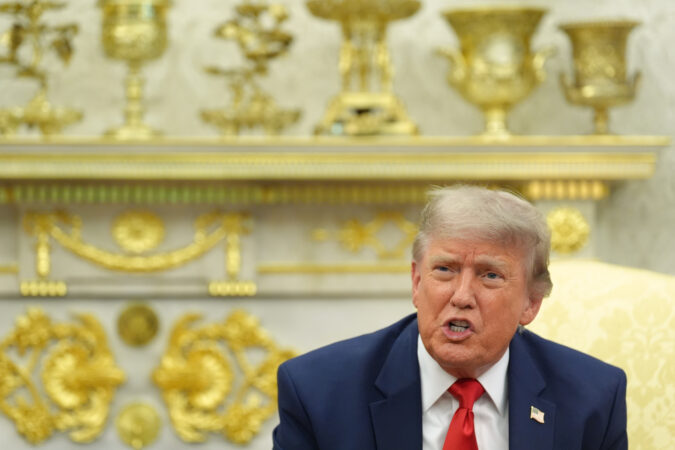
  • Senate for first time approves a war powers resolution in a rebuke to Trump over Iran conflict

    Senate for first time approves a war powers resolution in a rebuke to Trump over Iran conflict

    WASHINGTON — The Senate for the first time approved a war powers resolution Tuesday seeking to block U.S. military action against Iran, as lawmakers warily watch President Donald Trump’s efforts to resolve a conflict that the administration launched on its own and now needs Congress to fund.

    It was the 10th time the Senate has tried to stop the war, and the outcome, on a vote of 50-48, was a stunning turnaround from past efforts. While the resolution is largely symbolic, and does not carry the full force of law, it reflects the growing concerns from a number of Republican lawmakers in both the House and Senate over both the war and the deal Trump struck with Iran to end it. The House approved the resolution earlier this month.

    Trump responded angrily Tuesday night on his Truth Social platform, calling the vote “poorly timed and meaningless” and saying it “provided aid and comfort” to Iran.

    Senate Democratic Leader Chuck Schumer of New York said, “Time after time, the vast majority of Senate Republicans sided with Trump and his war instead of the American people.”

    Schumer said Americans have paid the price for “Trump’s historic blunder in Iran. It’ll go down in the history books as one of the worst foreign policy forays America has ever made.”

    In the past, as many as four GOP senators have voted for the war powers resolutions, and they did so Tuesday — Republicans Lisa Murkowski of Alaska, Susan Collins of Maine, Rand Paul of Kentucky and Bill Cassidy of Louisiana. One Democrat, Sen. John Fetterman of Pennsylvania, voted against.

    Trump bashed the four Republicans as losers, saying, “These senators have made my job more difficult.”

    On this vote, the absence of two Republicans, including Sen. Mitch McConnell of Kentucky, who was admitted to the hospital recently for an undisclosed matter, left the GOP without a full majority to halt the effort. Sen. Dave McCormick, R-Pa., also missed the vote.

    The vote comes as the Pentagon is seeking $80 billion from Congress mostly for the Iran war as it backfills munitions and stockpiles.

    Trump to meet senators as Republicans balk at Iran deal

    Trump himself is headed to the Capitol on Wednesday to meet with GOP senators after Vice President JD Vance was overseas working to negotiate with Iran to end its nuclear ambitions — which had been among the stated rationales for the war.

    The president is not pleased with the Republicans who have been critical of the deal he struck with Iran, according to one GOP senator granted anonymity to discuss the private dynamics.

    The terms of the Iran deal are spelled out in a memorandum of understanding that Trump signed last week, starting a 60-day clock for the sides to reach a broader agreement over ending Iran’s nuclear program.

    But Republicans have particularly objected to the $300 billion fund to help Iran rebuild, which is far greater than the $1.7 billion then-President Barack Obama refunded the country under his administration’s 2015 Iran deal.

    “I believe President Trump is getting very poor advice on Iran,” Sen. Ted Cruz, R-Texas, said last week on his podcast after the deal was made public.

    Democrats have repeatedly forced Iran votes

    Over and again, Democrats have been forcing votes on the Iran war, almost since the U.S. and Israel launched missile strikes on Iran on Feb. 28.

    Nearly each week they’re in session, the Senate Democrats have put forward war powers resolutions, but they have failed to amass the majority needed for passage in the narrowly split chamber, where Trump’s Republican Party holds the majority. Trump would almost certainly veto any measure that passed.

    The House pushed its own version to passage earlier this month, with four Republicans joining all Democrats in approving the war powers resolution, over the objections of House Speaker Mike Johnson and the GOP leadership.

    While the House- and Senate-passed resolution does not go to the president for his signature, passage stands as a powerful, if symbolic, statement from Congress and a rebuke of the administration’s military actions.

    Sen. Tim Kaine, the Democrat from Virginia who has led his party’s efforts, said the pause in warfighting, as Trump’s team works to shore up a fragile ceasefire, provides the perfect time for Congress to step back and assess “what should the next chapter be.”

    Hegseth seeks $80 billion from Congress for the Iran war

    Defense Secretary Pete Hegseth is on Capitol Hill this week, seeking roughly $80 billion in supplemental funding to shore up defense supplies in the aftermath of the Iran war, which is drawing scrutiny when many Americans are reeling from high gas prices and costs of living.

    The Pentagon early on had estimated the war cost $11.3 billion during its first week, and senators said experts put the overall price tag of Operation Epic Fury higher, at some $100 billion.

    The Defense Department’s funding request is part of a broader beef-up of military money the White House wants as part of its budget request this year.

    House Democratic Leader Hakeem Jeffries said Tuesday, “We should not spend another dime of taxpayer dollars on Operation Epic Failure.”

    The Trump administration is seeking $1.5 trillion in defense funding this year — a nearly 50% increase — including $350 billion that it wants in a so-called budget reconciliation package. Johnson and GOP leaders are working to pass that package on their own, over the objections of Democrats, much the way they approved Trump’s big tax cuts bill last year.

    The 2025 tax cuts package also included a sizable increase for the military.

  • NCAA panel approves new eligibility rules giving Division I athletes five years to play five seasons

    NCAA panel approves new eligibility rules giving Division I athletes five years to play five seasons

    Eager to lessen the chaos of the transfer portal era and court fights with players trying to extend their careers, the NCAA approved a new eligibility model for Division I athletes on Tuesday that will allow five seasons of competition over a five-year period that begins with their full-time enrollment or the academic year following their 19th birthday, whichever occurs first.

    The Division I Cabinet unanimously approved the change from the longstanding tenet of college sports that gave athletes five years to complete four seasons of competition with their eligibility clock starting at the time of enrollment, regardless of age.

    The move will all but eliminate waivers or redshirt years for extended eligibility except for religious missions, maternity leave or active-duty military service. No longer will extensions be considered for athletes who are injured.

    “While previous NCAA rules have served college sports well for a long time, we heard also loud and clear from NCAA members and student-athletes that eligibility rules should be easier to understand,” NCAA President Charlie Baker said.

    The NCAA believes the age-based model will make rules easier to administer and help make roster management more predictable for coaches.

    “I think this new rule is one of the most sensible things the NCAA has ever done, and it will absolutely eliminate the type of eligibility litigation that’s predominated lately,” said attorney Tom Mars, who represented Ole Miss quarterback Trinidad Chambliss in his successful quest for an additional year of eligibility in a case that went to the Mississippi Supreme Court.

    Mars added, “Let me put it in bottom-line language: There’s no way somebody could file an eligibility case based on a medical waiver now with the new rule. Can’t be done. You can file it, I guess, but it will be immediately dismissed.”

    The rules, which will become official when the Cabinet adjourns its meetings on Wednesday, are set to take effect this fall. Division I includes more than 350 schools, some 200,000 athletes and, with football and basketball leading the way, is by far the most lucrative of the three in the NCAA.

    The five-in-five language also is included in Senate legislation intended to address numerous concerns across college sports and comes after a wave of lawsuits from athletes seeking to extend their college careers and ability to earn money through revenue sharing and name, image and likeness deals. Still to be seen is whether the new rules will withstand legal scrutiny alongside the existing challenges.

    Heisman Trophy runner-up and Vanderbilt quarterback Diego Pavia remains the lead plaintiff in a lawsuit challenging an NCAA rule counting seasons spent at junior colleges against players’ Division I eligibility time. That case is slated for trial in February.

    “I wouldn’t say that the rule change itself will slow lawsuits down,” said Sam Ehrlich, a Boise State assistant professor of legal studies in business and management who tracks litigation against the NCAA.

    Ehrlich said athletes very well could continue to petition courts for extended eligibility based on antitrust arguments, but appellate courts recently have delivered wins for the NCAA by overturning preliminary injunctions in several cases.

    The new eligibility model will affect all athletes who enroll in 2027-28. Currently enrolled athletes with eligibility after the 2025-26 academic year, and those who are incoming freshmen this fall, can apply the age-based model or continue under previous eligibility rules. It would be advantageous this year for some incoming freshman hockey players to use the traditional model if they are coming from the junior ranks and are 20, as is common in the sport.

    For schools with current athletes who may be eligible for hardship waivers or extensions of eligibility under current rules, the D-I Cabinet indicated the deadline to submit requests to the NCAA is July 31. After that date, waivers would no longer be available.

    Ryan Downton, the attorney for Pavia in his case against the NCAA that won him a sixth year of eligibility last season, said he was happy to see athletes allowed five seasons of competition. But he said it was likely that high school class of 2022 athletes who are now cut off from further competition will go to court.

    “These athletes are still within their five-year eligibility window and spent their entire college careers competing against fifth- and sixth-year players due to the COVID waiver,” Downton wrote in an email to The Associated Press. “We hope the courts will correct the unfairness of the NCAA’s ruling and allow class of 2022 players to play their fifth season in 2026-27.”

    Ramogi Huma, executive director of the National College Players Association, wrote in a text to the AP that he had not seen the final language that was adopted but that the rule’s “general structure that has been discussed is within reason.”

    “But it’s important for athletes to have an opportunity to seek hardship waivers,” he wrote.