Category: Associated Press

  • Trump threatens Canada with 50% tariff on aircraft sold in U.S., expanding trade war

    Trump threatens Canada with 50% tariff on aircraft sold in U.S., expanding trade war

    WASHINGTON — President Donald Trump on Thursday threatened Canada with a 50% tariff on any aircraft sold in the U.S., the latest salvo in his trade war with America’s northern neighbor as his feud with Prime Minister Mark Carney expands.

    Trump’s threat posted on social media came after he threatened over the weekend to impose a 100% tariff on goods imported from Canada if it went forward with a planned trade deal with China. But Trump’s threat did not come with any details about when he would impose the import taxes, as Canada had already struck a deal.

    In Trump’s latest threat, the Republican president said he was retaliating against Canada for refusing to certify jets from Savannah, Ga.-based Gulfstream Aerospace.

    Trump said the U.S., in return, would decertify all Canadian aircraft, including planes from its largest aircraft maker, Bombardier. “If, for any reason, this situation is not immediately corrected, I am going to charge Canada a 50% Tariff on any and all Aircraft sold into the United States of America,” Trump said in his post.

    Spokespeople for Bombardier and Canada’s transport minister didn’t immediately respond to messages seeking comment Thursday evening.

    The U.S. Commerce Department previously put duties on a Bombardier commercial passenger jet in 2017 during the first Trump administration, charging that the Canadian company is selling the planes in America below cost. The U.S. said then that the Montreal-based Bombardier used unfair government subsidies to sell jets at artificially low prices.

    The U.S. International Trade Commission in Washington later ruled that Bombardier did not injure U.S. industry.

    Bombardier has since concentrated on the business and private jet market in recent years. If Trump cuts off the U.S. market it would be a major blow to the Quebec company.

    Treasury Secretary Scott Bessent warned Carney on Wednesday that his recent public comments against U.S. trade policy could backfire going into the formal review of the U.S.-Mexico-Canada Agreement, the trade deal that protects Canada from the heaviest impacts of Trump’s tariffs.

    Carney rejected Bessent’s contention that he had aggressively walked back his comments at the World Economic Forum during a phone call with Trump on Monday.

    Carney said he told Trump that he meant what he said in his speech at Davos, and told him Canada plans to diversify away from the United States with a dozen new trade deals.

    In Davos at the World Economic Forum last week, Carney condemned economic coercion by great powers on smaller countries without mentioning Trump’s name. The prime minister received widespread praise and attention for his remarks, upstaging Trump at the gathering.

  • Venezuelan lawmakers vote to ease state grip on oil, abandoning self-proclaimed socialist tenet

    Venezuelan lawmakers vote to ease state grip on oil, abandoning self-proclaimed socialist tenet

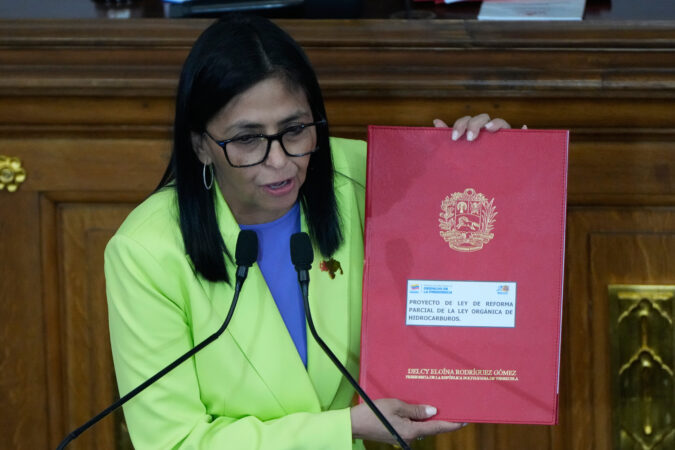
    CARACAS, Venezuela — Venezuela’s acting President Delcy Rodríguez on Thursday signed a law that will open the nation’s oil sector to privatization, reversing a tenet of the self-proclaimed socialist movement that has ruled the country for more than two decades.

    Lawmakers in the country’s National Assembly approved the overhaul of the energy industry law earlier in the day, less than a month after the brazen seizure of then-President Nicolás Maduro in a U.S. military attack in Venezuela’s capital.

    As the bill was being passed, the U.S. Treasury Department officially began to ease sanctions on Venezuelan oil that once crippled the industry, and expanded the ability of U.S. energy companies to operate in the South American nation, the first step in plans outlined by Secretary of State Marco Rubio the day before. The license authorization by the Treasury Department strictly prohibits entities from China, Russia, Iran, North Korea, or Cuba from the transactions.

    The moves by both governments on Thursday are paving the way for yet another radical geopolitical and economic shift in Venezuela.

    “We’re talking about the future. We are talking about the country that we are going to give to our children,” Rodríguez said.

    Rodríguez proposed the changes in the days after President Donald Trump said his administration would take control of Venezuela’s oil exports and revitalize the ailing industry by luring foreign investment.

    Private companies to control oil production

    The legislation promises to give private companies control over the production and sale of oil and allow for independent arbitration of disputes.

    Rodríguez’s government expects the changes to serve as assurances for major U.S. oil companies that have so far hesitated about returning to the volatile country. Some of those companies lost investments when the ruling party enacted the existing law two decades ago to favor Venezuela’s state-run oil company, Petróleos de Venezuela SA, or PDVSA.

    The revised law would modify extraction taxes, setting a royalty cap rate of 30% and allowing the executive branch to set percentages for every project based on capital investment needs, competitiveness and other factors.

    It also removes the mandate for disputes to be settled only in Venezuelan courts, which are controlled by the ruling party. Foreign investors have long viewed the involvement of independent courts as crucial to guard against future expropriation.

    Will change Venezuela’s economy

    Ruling-party lawmaker Orlando Camacho, head of the assembly’s oil committee, said the reform “will change the country’s economy.”

    Meanwhile, opposition lawmaker Antonio Ecarri urged the assembly to add transparency and accountability provisions to the law, including the creation of a website to make funding and other information public. He noted that the current lack of oversight has led to systemic corruption and argued that these provisions can also be considered judicial guarantees.

    Those guarantees are among the key changes foreign investors are looking for as they weigh entering the Venezuelan market.

    “Let the light shine on in the oil industry,” Ecarri said.

    Some oil workers support overhaul

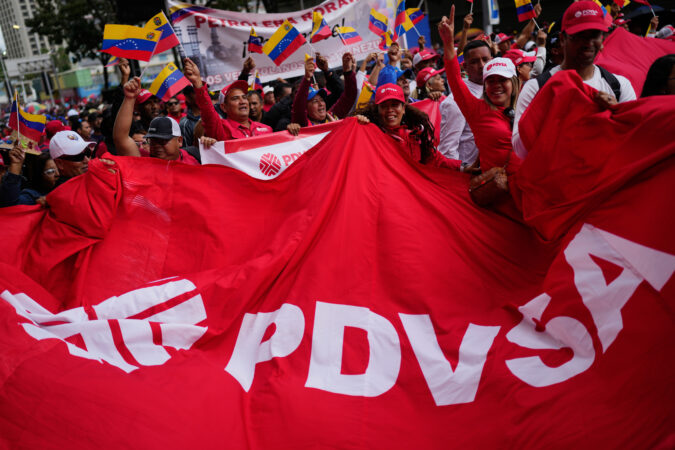
    Oil workers dressed in red jumpsuits and hard hats celebrated the bill’s approval, waving a Venezuelan flag inside the legislative palace and then joining lawmakers in a demonstration with ruling-party supporters.

    The law was last altered two decades ago as Maduro’s mentor and predecessor, the late Hugo Chávez, made heavy state control over the oil industry a pillar of his socialist-inspired revolution.

    In the early years of his tenure, a massive windfall in petrodollars thanks to record-high global oil prices turned PDVSA into the main source of government revenue and the backbone of Venezuela’s economy.

    Chávez’s 2006 changes to the hydrocarbons law required PDVSA to be the principal stakeholder in all major oil projects.

    In tearing up the contracts that foreign companies signed in the 1990s, Chávez nationalized huge assets belonging to American and other Western firms that refused to comply, including ExxonMobil and ConocoPhillips. They are still waiting to receive billions of dollars in arbitration awards.

    From those heady days of lavish state spending, PDVSA’s fortunes turned — along with the country’s — as oil prices dropped and government mismanagement eroded profits and hurt production, first under Chávez, then Maduro.

    The nation home to the world’s biggest proven crude reserves underwent a dire economic crisis that drove over 7 million Venezuelans to flee since 2014. Sanctions imposed by successive U.S. administrations further crippled the oil industry.

  • A man impersonating an FBI agent tried to get Luigi Mangione out of jail, authorities say

    A man impersonating an FBI agent tried to get Luigi Mangione out of jail, authorities say

    NEW YORK — A man claiming to be an FBI agent showed up to a federal jail in New York City on Wednesday night and told officers he had a court order to release Luigi Mangione, authorities said.

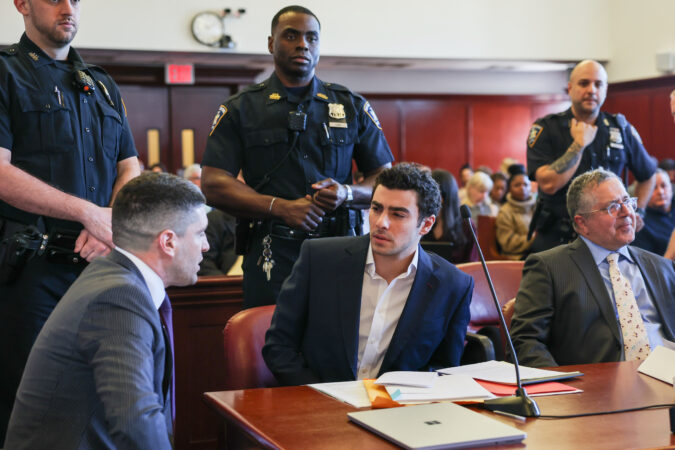
    Mark Anderson, 36, a Minnesota native who has a history of drug and other arrests and disclosed last year in court papers that he suffers from mental illness, was arrested and charged with impersonating a federal officer in a foiled bid to free Mangione from the Metropolitan Detention Center. Mangione is being held at the notorious Brooklyn lockup while awaiting state and federal murder trials in the killing of UnitedHealthcare CEO Brian Thompson.

    A criminal complaint against Anderson did not identify the person he attempted to free. A law enforcement official familiar with the matter confirmed it was Mangione. The official was not authorized to speak publicly and did so on condition of anonymity.

    Anderson was ordered held without bail after an initial appearance Thursday in Brooklyn federal court. He was not required to enter a plea. A day after getting stopped at the entrance, he is now locked up in the same jail as Mangione, according to federal prison records. An online court docket did not include information on a lawyer who could speak on Anderson’s behalf. A message was also left for a spokesperson for Mangione’s legal team.

    In a lawsuit last year alleging injuries from a fall at a city homeless shelter, Anderson said he has “multiple disabilities” and has been ruled by the Social Security Administration to be “fully disabled because of mental illness.” He said he had no money and said he received state and federal assistance.

    According to public records, Anderson has had numerous drug and alcohol-related arrests and convictions over the last two decades in his native Minnesota and in Wisconsin, where he has also lived.

    Papers ‘signed by a judge’ and a pizza cutter

    According to the criminal complaint, Anderson approached the jail intake area around 6:50 p.m. Wednesday and told uniformed jail officers that he was an FBI agent in possession of paperwork “signed by a judge” authorizing the release of a specific person in custody at the jail.

    When the officers asked for his federal credentials, Anderson showed them a Minnesota driver’s license, threw documents at them and claimed to have weapons, the criminal complaint said. The documents appeared related to filing claims against the Justice Department, according to an FBI agent who viewed them and prepared the complaint. Officers searched Anderson’s bag and found a barbecue fork and a circular steel blade, the complaint said. In a photo included in the complaint, the blade appeared to be a small pizza cutter wheel.

    Anderson’s driver’s license listed an address in Mankato, Minn., about 65 miles southwest of Minneapolis. He moved to New York for a job opportunity and started working at a Bronx pizzeria when that fell through, the law enforcement official said. Court records indicate he had been living in the city at least since 2023, including at motels, a shelter and a Bronx apartment.

    Acting as his own lawyer, he has filed handwritten lawsuits against the Pentagon, Chinese and Russian ambassadors and a Minnesota police department, all of which have been thrown out. Another lawsuit, alleging a Bronx pizzeria forced him to work 70 hours a week with no overtime, is still pending.

    Mangione due in court Friday

    The alleged attempt to free Mangione added a bizarre wrinkle to a critical stretch in his legal cases.

    Hours before Anderson’s arrest, the Manhattan district attorney’s office sent a letter urging the judge in Mangione’s state case, Gregory Carro, to set a July 1 trial date.

    On Friday, Mangione will be in court for a conference in his federal case. The judge in that case, Margaret Garnett, is expected to rule soon whether prosecutors can seek the death penalty and whether they can use certain evidence against him.

    Last week, Garnett scheduled jury selection in the federal case for Sept. 8, with the rest of the trial happening in October or January, depending on whether she allows prosecutors to seek the death penalty.

    Mangione has pleaded not guilty in both cases. The state charges carry the possibility of life in prison.

    A cause célèbre for people upset with the health insurance industry, Mangione has attracted legions of supporters, some of whom have regularly turned up at his court appearances donning green clothing — the color worn by the Mario Bros. video game character Luigi — as a symbol of solidarity. Some have brought signs and shirts with slogans such as “Free Luigi” and “No Death For Luigi Mangione.”

    Thompson, 50, was killed on Dec. 4, 2024, as he walked to a midtown Manhattan hotel for UnitedHealth Group’s annual investor conference. Surveillance video showed a masked gunman shooting him from behind. Police say “delay,” “deny,” and “depose” were written on the ammunition, mimicking a phrase used to describe how insurers avoid paying claims.

    Mangione, 27, a Penn graduate from a wealthy Maryland family, was arrested five days later at a McDonald’s in Altoona, Pa., about 230 miles west of Manhattan.

    After several days of court proceedings in Pennsylvania, Mangione was whisked to New York and sent to the Metropolitan Detention Center.

    The jail is also home to former Venezuelan President Nicolás Maduro and his wife, Cilia Flores. Former inmates include hip-hop mogul Sean “Diddy” Combs and cryptocurrency fraudster Sam Bankman-Fried.

  • Man who rammed a car into NYC Jewish site had recently connected with Chabad community, police say

    Man who rammed a car into NYC Jewish site had recently connected with Chabad community, police say

    NEW YORK — A man who drove his car into the Chabad Lubavitch world headquarters in New York City had recently been trying to connect with the Hasidic Jewish community and was recorded on video enthusiastically dancing with congregants during a recent visit to the site, police said.

    Investigators were still trying to piece together what prompted the man, Dan Sohail, 36, to ram his car repeatedly into a set of doors at the revered Hasidic Jewish center in Brooklyn on Wednesday night, but police charged him Thursday with attempted assault as a hate crime, based on the fact that the building was a Jewish institution.

    “Earlier this month, Sohail attended a social gathering at this very same location,” New York Police Department Chief of Detectives Joseph Kenny said at a news conference, noting there was video circulating online of that gathering.

    The video appears to show Sohail dancing with Orthodox men inside the headquarters.

    “We believe that he was in Brooklyn last night to continue this attempt to connect with the Lubavitch Jewish community,” Kenny said.

    Sohail told police that he lost control of his car because he was wearing “clunky boots,” Kenny said, though Kenny added that Sohail had removed several blockades and cleared snow away from a sidewalk before driving into the building.

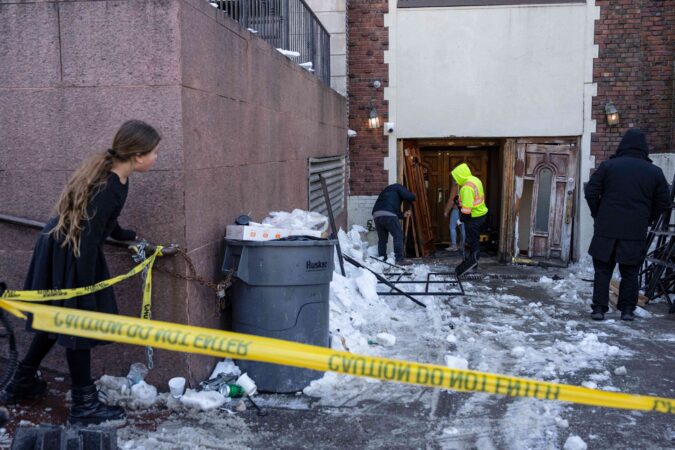
    The complex at 770 Eastern Parkway includes a synagogue and offices, and was packed with worshippers at the time, but no one was injured. Some of the building’s doors were damaged. No weapons were discovered in Sohail’s car.

    Sohail’s father told the New York Daily News Thursday that his son had been considering converting to Judaism and that he had struggled with “mental problems.” The Forward, a media outlet centered on Jewish issues, interviewed a rabbi in New Jersey who said Sohail attended a Purim service at Chabad last year and visited two other times, looking for spiritual guidance.

    “I was able to talk to him for a few minutes and see that he’s not exactly stable,” Rabbi Levi Azimov told the Forward. Another rabbi at a Jewish school in Carteret, N.J., where Sohail lived, told the Forward he had dropped by for afternoon prayers on Tuesday but began yelling about feeling let down by Chabad after the service.

    The crash occurred on the 75th anniversary of Rabbi Menachem Mendel Schneerson becoming the leader of the Lubavitch movement and prompted immediate concern in the city. Mayor Zohran Mamdani and the city’s police commissioner, Jessica Tisch, rushed to the scene to brief the media, with officials announcing increased security around houses of worship across the city.

    “This is deeply alarming, especially given the deep meaning and the history of the institution to so many in New York and around the world,” Mamdani said. “And on today of all days.”

    The Chabad Lubavitch headquarters and synagogue in Brooklyn draws thousands of visitors each year. There is a near constant police presence around the complex.

  • Democrats, White House strike spending deal that would avert government shutdown

    Democrats, White House strike spending deal that would avert government shutdown

    WASHINGTON — Democrats and the White House struck a deal to avert a partial government shutdown and temporarily fund the Department of Homeland Security as they consider new restrictions for President Donald Trump’s surge of immigration enforcement. But passage was delayed late Thursday as leaders scrambled to win enough support for the agreement before the midnight Friday deadline.

    As the country reels from the deaths of two protesters at the hands of federal agents in Minneapolis, the White House agreed to separate homeland security funding from a larger spending bill and fund the department for two weeks while they debate Democratic demands for curbs on the U.S. Immigration and Customs Enforcement agency.

    “Republicans and Democrats have come together to get the vast majority of the government funded until September” while extending current funding for Homeland Security, Trump said in a social media post Thursday evening. He encouraged members of both parties to cast a “much needed Bipartisan ‘YES’ vote.”

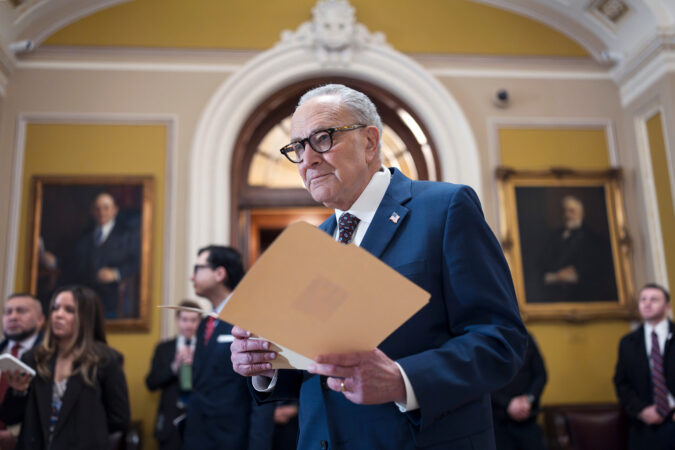
    Still, all senators weren’t yet on board. Leaving the Capitol just before midnight Thursday after hours of negotiations, Senate Majority Leader John Thune said there were “snags on both sides” as he and Democratic leader Chuck Schumer tried to rally support.

    “Hopefully people will be of the spirit to try and get this done tomorrow,” Thune said.

    Sen. Lindsey Graham, R-S.C., said late Thursday that he was one of the senators objecting. He said Immigration and Customs Enforcement agents were being treated unfairly. He has also opposed House language that would repeal a new law that gives senators the ability to sue the government for millions of dollars if their personal or office data is accessed without their knowledge.

    Democrats had requested the two-week extension and say they are prepared to block the wide-ranging spending bill if their demands aren’t met, denying Republicans the votes they need to pass it and potentially triggering a shutdown.

    Rare bipartisan talks

    The rare bipartisan talks between Trump and his frequent adversary, Senate Democratic leader Chuck Schumer, came after the fatal shooting of 37-year-old Alex Pretti in Minnesota over the weekend and calls by senators in both parties for a full investigation. Schumer called it “a moment of truth.”

    “The American people support law enforcement. They support border security. They do not support ICE terrorizing our streets and killing American citizens,” Schumer said.

    The standoff has threatened to plunge the country into another shutdown, just two months after Democrats blocked a spending bill over expiring federal health care subsidies. That dispute closed the government for 43 days as Republicans refused to negotiate.

    That shutdown ended when a small group of moderate Democrats broke away to strike a deal with Republicans, but Democrats are more unified this time after the fatal shootings of Pretti and Renee Good by federal agents.

    Democrats lay out demands

    Democrats have laid out several demands, asking the White House to “end roving patrols” in cities and coordinate with local law enforcement on immigration arrests, including requiring tighter rules for warrants.

    They also want an enforceable code of conduct so agents are held accountable when they violate rules. Schumer said agents should be required to have “masks off, body cameras on” and carry proper identification, as is common practice in most law enforcement agencies.

    The Democratic caucus is united in those “common sense reforms,” and the burden is on Republicans to accept them, Schumer said.

    “Boil it all down, what we are talking about is that these lawless ICE agents should be following the same rules that your local police department does,” said Democratic Sen. Tina Smith of Minnesota. “There has to be accountability.”

    Earlier on Thursday, Tom Homan, the president’s border czar, stated during a press conference in Minneapolis that federal immigration officials are developing a plan to reduce the number of agents in Minnesota, but this would depend on cooperation from state authorities.

    Still far apart on policy

    Negotiations down the road on a final agreement on the Homeland Security bill are likely to be difficult.

    Democrats want Trump’s aggressive immigration crackdown to end. “If the Trump administration resists reforms, we shut down the agency,” said Connecticut Sen. Richard Blumenthal.

    “We need to take a stand,” he said.

    But Republicans are unlikely to agree to all of the Democrats’ demands.

    North Carolina Sen. Thom Tillis said he is opposed to requiring immigration enforcement officers to show their faces, even as he blamed Homeland Security Secretary Kristi Noem for decisions that he said are “tarnishing” the agency’s reputation.

    “You know, there’s a lot of vicious people out there, and they’ll take a picture of your face, and the next thing you know, your children or your wife or your husband are being threatened at home,” Tillis said.

    South Carolina Sen. Graham said some of the Democratic proposals “make sense,” such as better training and body cameras. Still, he said he was putting his Senate colleagues “on notice” that if Democrats try to make changes to the funding bill, he would insist on new language preventing local governments from resisting the Trump administration’s immigration policies.

    “I think the best legislative solution for our country would be to adopt some of these reforms to ICE and Border Patrol,” Graham posted on X. But he said that the bill should also end so-called “sanctuary city” policies.

    Uncertainty in the House

    Across the Capitol, Speaker Mike Johnson, R-La., told The Associated Press on Thursday that he had been “vehemently opposed” to breaking up the funding package, but “if it is broken up, we will have to move it as quickly as possible. We can’t have the government shut down.”

    On Thursday evening, at a premiere of a movie about first lady Melania Trump at the Kennedy Center, Johnson said he might have some “tough decisions” to make about when to bring the House back to Washington to approve the bills separated by the Senate, if they pass.

    “We’ll see what they do,” Johnson said.

    House Republicans have said they do not want any changes to the bill they passed last week. In a letter to Trump on Tuesday, the conservative House Freedom Caucus wrote that its members stand with the Republican president and ICE.

    “The package will not come back through the House without funding for the Department of Homeland Security,” they wrote.

  • The FBI raid in Georgia highlights Trump’s obsession with the 2020 election and hints at possible future actions

    The FBI raid in Georgia highlights Trump’s obsession with the 2020 election and hints at possible future actions

    DENVER — Donald Trump lost his bid for reelection in 2020. But for more than five years, he’s been trying to convince Americans the opposite is true by falsely saying the election was marred by widespread fraud.

    Now that he’s president again, Trump is pushing the federal government to back up those bogus claims.

    On Wednesday, the FBI served a search warrant at the election headquarters of Fulton County, Ga., which includes most of Atlanta, seeking ballots from the 2020 election. That follows Trump’s comments earlier this month when he suggested during a speech at the World Economic Forum in Davos, Switzerland, that charges related to the election were imminent.

    “The man has obsessions, as do a fair number of people, but he’s the only one who has the full power of the United States behind him,” said Rick Hasen, a UCLA law professor.

    Hasen and many others noted that Trump’s use of the FBI to pursue his obsession with the 2020 election is part of a pattern of the president transforming the federal government into his personal tool of vengeance.

    Sen. Jon Ossoff, a Georgia Democrat, compared the search to the Minnesota immigration crackdown that has killed two U.S. citizen protesters, launched by Trump as his latest blow against the state’s governor, who ran against him as Vice President Kamala Harris’ running mate in 2024.

    “From Minnesota to Georgia, on display to the whole world, is a President spiraling out of control, wielding federal law enforcement as an unaccountable instrument of personal power and revenge,” Ossoff said in a statement.

    It also comes as election officials across the country are starting to rev up for the 2026 midterms, where Trump is struggling to help his party maintain its control of Congress. Noting that, in 2020, Trump contemplated using the military to seize voting machines after his loss, some worry he’s laying the groundwork for a similar maneuver in the fall.

    “Georgia’s a blueprint,” said Kristin Nabers of the left-leaning group All Voting Is Local. “If they can get away with taking election materials here, what’s to stop them from taking election materials or machines from some other state after they lose?”

    Georgia has been at the heart of Trump’s 2020 obsession. He infamously called Republican Secretary of State Brad Raffensperger on Jan. 2, 2021, asking that Raffensperger “find” 11,780 more votes for Trump so he could be declared the winner of the state. Raffensperger refused, noting that repeated reviews confirmed Democrat Joe Biden had narrowly won Georgia.

    Those were part of a series of reviews in battleground states, often led by Republicans, that affirmed Biden’s win, including in Michigan, Wisconsin and Nevada. Trump also lost dozens of court cases challenging the election results and his own attorney general at the time said there was no evidence of widespread fraud.

    His allies who repeated his lies have been successfully sued for defamation. That includes former New York Mayor Rudolph Giuliani, who settled with two Georgia election workers after a court ruled he owed them $148 million for defaming them after the 2020 election.

    Voting machine companies also have brought defamation cases against some conservative-leaning news sites that aired unsubstantiated claims about their equipment being linked to fraud in 2020. Fox News settled one such case by agreeing to pay $787 million after the judge ruled it was “CRYSTAL clear” that none of the allegations were true.

    Trump’s campaign to move Georgia into his column also sparked an ill-fated attempt to prosecute him and some of his allies by Fulton County District Attorney Fani Willis, a Democrat. The case collapsed after Willis was removed over conflict-of-interest concerns, and Trump has since sought damages from the office.

    On his first day in office, Trump rewarded some of those who helped him try to overturn the 2020 election results by pardoning, commuting or vowing to dismiss the cases of about 1,500 people charged in the Jan. 6, 2021, attack on the U.S. Capitol. He later signed an executive order trying to set new rules for state election systems and voting procedures, although that has been repeatedly blocked by judges who have ruled that the Constitution gives states, and in some instances Congress, control of elections rather than the president.

    As part of his campaign of retribution, Trump also has spoken about wanting to criminally charge lawmakers who sat on the House committee investigating the Jan. 6 attack, suggesting protective pardons of them from Biden are legally invalid. He’s targeted a former cybersecurity appointee who assured the public in 2020 that the election was secure.

    During a year of presidential duties, from dealing with wars in Gaza and Ukraine to shepherding sweeping tax and spending legislation through Congress, Trump has reliably found time to turn the subject to 2020. He has falsely called the election rigged, said Democrats cheated and even installed a White House plaque claiming Biden took office after “the most corrupt election ever.”

    David Becker, a former Department of Justice voting rights attorney and executive director of The Center for Election Innovation & Research, said he was skeptical the FBI search in Georgia would lead to any successful prosecutions. Trump has demanded charges against several enemies such as former FBI Director James Comey and New York’s Democratic Attorney General, Letitia James, that have stalled in court.

    “So much this administration has done is to make claims in social media rather than go to court,” Becker said. “I suspect this is more about poisoning the well for 2026.”

  • Justice Department charges man who squirted vinegar on Rep. Ilhan Omar

    Justice Department charges man who squirted vinegar on Rep. Ilhan Omar

    MINNEAPOLIS — The Justice Department has charged a man who squirted apple cider vinegar on Democratic U.S. Rep. Ilhan Omar at an event in Minneapolis, according to court papers made public Thursday.

    The man arrested for Tuesday’s attack, Anthony Kazmierczak, faces a charge of forcibly assaulting, opposing, impeding and intimidating Omar, according to a complaint filed in federal court.

    Authorities determined that the substance was water and apple cider vinegar, according to an affidavit. After Kazmierczak sprayed Omar with the liquid, he appeared to say, “She’s not resigning. You’re splitting Minnesotans apart,” the affidavit says. Authorities also say that Kazmierczak told a close associate several years ago that “somebody should kill” Omar, court documents say.

    Kazmierczak appeared briefly in federal court Thursday afternoon. His attorney, Jean Brandl, told the judge her client was unmedicated at the time of the incident and has not had access to the medications he needs to treat Parkinson’s disease and other serious conditions he suffers from.

    U.S. Magistrate Judge Dulce Foster ordered that Kazmierczak remain in custody and told officials he needs to see a nurse when he is transferred to the Sherburne County Jail.

    Kazmierczak also faces state charges in Hennepin County for terroristic threats and fifth-degree assault, Hennepin County Attorney Mary Moriarty announced Thursday.

    “This was a disturbing assault on Rep. Omar, who is frequently the target of vilifying language by fellow elected officials and members of the public,” Moriarty said. “The trust of our community in the federal government keeping politics out of public safety has been eroded by their actions. A state-level conviction is not subject to a presidential pardon now or in the future.”

    The attack came during a perilous political moment in Minneapolis, where two people have been fatally shot by federal agents during the White House’s aggressive immigration crackdown.

    Kazmierczak has a criminal history and has made online posts supportive of President Donald Trump, a Republican.

    Omar, a refugee from Somalia, has long been a fixture of Trump’s anti-immigrant rhetoric. After she was elected seven years ago, Trump said she should “go back” to her country. He recently described her as “garbage” and said she should be investigated. During a speech in Iowa earlier this week, shortly before Omar was attacked, he said immigrants need to be proud of the United States — “not like Ilhan Omar.”

    Omar blamed Trump on Wednesday for threats to her safety.

    “Every time the president of the United States has chosen to use hateful rhetoric to talk about me and the community that I represent, my death threats skyrocket,” Omar told reporters.

    Trump accused Omar of staging the attack, telling ABC News, “She probably had herself sprayed, knowing her.”

    Kazmierczak was convicted of felony auto theft in 1989, has been arrested multiple times for driving under the influence and has had numerous traffic citations, Minnesota court records show. There are also indications he has had significant financial problems, including two bankruptcy filings.

    In social media posts, Kazmierczak criticized former President Joe Biden and referred to Democrats as “angry and liars.” Trump “wants the US is stronger and more prosperous,” he wrote. “Stop other countries from stealing from us.”

    In another post, Kazmierczak asked, “When will descendants of slaves pay restitution to Union soldiers’ families for freeing them/dying for them, and not sending them back to Africa?”

    Threats against members of Congress have increased in recent years, peaking in 2021 following the Jan. 6 attack on the U.S. Capitol by a mob of Trump supporters before dipping slightly, only to climb again, according to the most recent figures from the U.S. Capitol Police.

    Officials said they investigated nearly 15,000 “concerning statements, behaviors, and communications directed against Members of Congress, their families, staff, and the Capitol Complex” in 2025.

  • Trump says he’s instructed U.S. officials to reopen Venezuelan airspace for commercial travel

    Trump says he’s instructed U.S. officials to reopen Venezuelan airspace for commercial travel

    WASHINGTON — President Donald Trump said Thursday he has informed Venezuela’s acting president, Delcy Rodríguez, that he will open up all commercial airspace over the Venezuela and Americans will soon be able to visit.

    Trump said he instructed his transportation secretary, Sean Duffy, and U.S. military leaders to take steps to open the airspace for travel by the end of the day.

    “American citizens will be very shortly able to go to Venezuela, and they’ll be safe there,” the Republican president said.

    Venezuela’s government did not immediately comment.

    While the State Department continued to warning Americans against traveling to Venezuela, at least one U.S. airline announced its intention to soon resume direct flights between the countries.

    American Airlines was the last U.S. airline flying to Venezuela when it suspended flights in 2019 that it operated between Miami and the capital, Caracas, as well as the oil hub city of Maracaibo. The airline said Thursday it would share additional details about the return to service in the coming months as it works with federal authorities on security assessments and necessary permissions.

    “We have a more than 30-year history connecting Venezolanos to the U.S., and we are ready to renew that incredible relationship,” Nat Pieper, American’s chief commercial officer, said in a statement. “By restarting service to Venezuela, American will offer customers the opportunity to reunite with families and create new business and commerce with the United States.”

    Before Venezuela came undone in the mid-2010s, it was not uncommon for Venezuelans to take weekend leisure trips to Miami. U.S. airlines stopped flying to Venezuela before the Department of Homeland Security in 2019 ordered an indefinite suspension, arguing that conditions in Venezuela threatened the “safety and security of passengers, aircraft, and crew.”

    Earlier this week, Trump’s administration notified Congress that it was taking the first steps to possibly reopen the shuttered U.S. Embassy in Caracas as it explores restoring relations with the country after the U.S. military raid that ousted then-President Nicolás Maduro. In a notice to lawmakers dated Monday and obtained by The Associated Press, the State Department said it was sending in a regular and growing contingent of temporary staffers to conduct “select” diplomatic functions.

    “We are writing to notify the committee of the Department of State’s intent to implement a phased approach to potentially resume Embassy Caracas operations,” the department said in separate but identical letters to 10 House and Senate committees.

    Diplomatic relations between the two countries collapsed in 2019.

    Even as Trump suggested Americans will be safe in Venezuela, his State Department kept in place its highest-level travel advisory: “Do not travel,” a warning of a high risk of wrongful detention, torture, kidnapping and more.

    The department did not immediately respond to a message inquiring whether it would be changing that warning.

    In November, as Trump was ramping up pressure on Maduro, the American president said the airspace “above and surrounding” Venezuela should be considered as “closed in its entirety.”

    The Federal Aviation Administration, which has jurisdiction generally over the United States and its territories, told pilots to be cautious flying around Venezuela because of heightened military activity.

    After that FAA warning, international airlines began canceling flights to Venezuela.

    The FAA issued a similar 60-day warning in January, urging U.S. aircraft operators to “exercise caution” when flying over the eastern Pacific Ocean near Mexico, Central America, and parts of South America. The warning was issued after Maduro’s capture but came as the U.S. has threatened to continue military strikes on alleged drug trafficking boats in the area.

    The FAA on Thursday said it was lifting four Notices to Airmen (NOTAMs) for the region that it said were “issued as precautionary measures and are no longer necessary.”

    “Safety remains our top priority,” the FAA said in a statement, “And we look forward to facilitating the return of regular travel between the U.S. and Venezuela.”

  • A shadow network in Minneapolis defies ICE and protects immigrants

    A shadow network in Minneapolis defies ICE and protects immigrants

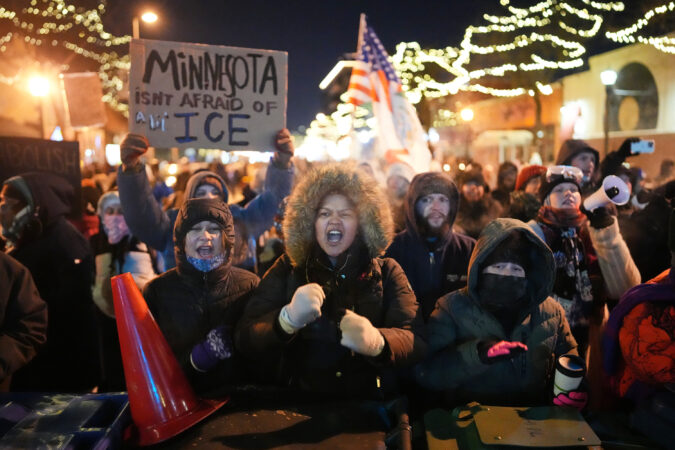
    MINNEAPOLIS — If there’s been a soundtrack to life in Minneapolis in recent weeks, it’s the shrieking whistles and honking horns of thousands of people following immigration agents across the city.

    They are the ever-moving shadow of the Trump administration’s Operation Metro Surge.

    They are teachers, scientists and stay-at-home parents. They own small businesses and wait tables. Their network is sprawling, often anonymous and with few overall objectives beyond helping immigrants, warning of approaching agents or filming videos to show the world what is happening.

    And it’s clear they will continue despite the White House striking a more conciliatory tone after the weekend killing of Alex Pretti, including the transfer of Gregory Bovino, the senior Border Patrol official who was the public face of the immigration crackdown.

    “I think that everyone slept a little better knowing that Bovino had been kicked out of Minneapolis,” said Andrew Fahlstrom, who helps run Defend the 612, a hub for volunteer networks. “But I don’t think the threat that we’re under will change because they change out the local puppets.”

    The surge begins

    What started with scattered arrests in December ramped up dramatically in early January, when a top ICE official announced the “largest immigration operation ever.”

    Masked, heavily armed agents traveling in convoys of unmarked SUVs became commonplace in some neighborhoods. By this week, more than 3,400 people had been arrested, according to Immigration and Customs Enforcement. At least 2,000 ICE officers and 1,000 Border Patrol officers were on the ground.

    Administration officials insist they are focusing on criminals in the U.S. illegally, but the reality in the streets has been far more aggressive. Agents have stopped people, seemingly randomly, to demand citizenship papers, including off-duty Latino and Black police officers and city workers, area officials say.

    They smashed through the front door of a Liberian man and detained him without a proper warrant, even though he’d been checking in regularly with immigration officials. They have detained children along with their parents and used tear gas outside a high school in an altercation with protesters after detaining someone.

    To be sure, federal agents are barely a presence in many areas, and most people have never smelled a whiff of tear gas. But the crackdown rippled quickly through immigrant-heavy neighborhoods. Patients are avoiding life-saving medical care, doctors said. Thousands of immigrant children are staying home. Immigrant businesses shut down, cut their hours or kept their doors locked to everyone but regular customers.

    Pushback comes quickly

    Activist groups rapidly organized across deeply liberal Minneapolis-St. Paul and some suburbs. Small armies of volunteers began making food deliveries to immigrants afraid to leave their homes. They drove people to work and stood watch outside schools.

    They also created interlocking webs of dozens, perhaps hundreds, of rapid response networks — sophisticated systems involving thousands of volunteers who track immigration agents, communicating with encrypted apps like Signal.

    Tracking often means little more than quietly reporting the movement of convoys to dispatchers and recording the license plates of possible federal vehicles.

    But it’s not always quiet. Protester caravans regularly form behind immigration convoys, creating mobile protests of anger and warning that weave through city streets.

    When agents stop to arrest or question someone, the networks signal the location, summoning more people who sound warnings with whistles and honking, film what’s happening and call out legal advice to people being detained.

    Trump’s border czar, Tom Homan, warned Thursday that activists will continue to “be held accountable.”

    “Justice is coming,” he told reporters.

    Many protesters come expecting trouble

    Sometimes it all can feel performative, whether it’s Bovino in body armor tossing a smoke grenade, or young activists who rarely take off their helmets and gas masks, even when law enforcement is nowhere to be seen.

    But crowds often lead to real confrontations, with protesters screaming at immigration agents. Agents respond only sometimes, but when they do it’s often with punches, pepper spray, tear gas and arrests.

    Those confrontations worry some in the activist world.

    Take the recent afternoon in south Minneapolis, where dozens of protesters, some in gas masks, clashed with immigration agents in south Minneapolis. Protesters screamed at agents, threw snowballs and tried to block their vehicles. Agents responded by shoving protesters who got too close, firing pepper balls and finally throwing tear gas grenades and driving away. Demonstrators without masks wretched in the streets as volunteers handed out bottles of water to flush their eyes.

    By then, even many of the people in the protest weren’t sure what started it, including the city council member who soon arrived.

    Minneapolis has a long tradition of progressivism, and Jason Chavez is a proud part of that.

    He bristled when asked about the confrontation.

    “I didn’t see anybody ‘confronting,’” said Chavez. “I saw people alerting neighbors that ICE was in their neighborhood. And that’s what neighbors should continue to do.”

    Tracking immigration in an immigrant neighborhood

    To understand this world, talk to a woman known in the rapid response networks only by her nickname, Sunshine. She asked that her real name not be used, fearing retaliation.

    A friendly woman who works in health care, she has spent hundreds of hours in her slightly beat-up Subaru patrolling an immigrant St. Paul enclave of taquerias and Asian grocery stores, watching for signs of federal agents. She can spot an idling SUV from the tiniest hint of exhaust, an out-of-state license plate from a block away, and quickly distinguish an undercover St. Paul police car from an unmarked immigration vehicle.

    On the messaging apps, she’s simply Sunshine. She knows the real names of few other people, even after working with some for weeks on end.

    She hates what is happening, and feels deeply for people living in fear. She worries the Trump administration wants to push the nation into civil war, and believes she has no choice except to patrol — “commuting” it’s often called, half-jokingly — every day.

    “Sometimes people just want to pick up their kid and walk their dog and go to work. And I get that. I get that desire,” she said while driving through the neighborhood last week. “I just don’t know if that’s the world we live in anymore.”

    She runs constant equations in her head: Should she report an immigration vehicle to the network’s dispatcher, or honk her horn as a warning? Would honking unnecessarily scare residents who are already afraid? Are agents leading her around? Are federal vehicles moving to launch a raid, or are they distracting observers while other agents make arrests elsewhere?

    She is careful and avoids confrontation. She also finds hope in the community that has been created, and how offers to volunteer exploded after the Jan. 7 killing of Renee Good by an ICE agent. And she understands the anger of the people who face off against agents.

    “My strategy, my approach, my risk calculation is different than other peoples’. And at the same time, the vitriol, the frustration, I get it,” she said. “And sometimes it feels good to see someone unleash that.”

    Not everyone agrees. Nationally, some activist groups avoid protest strategies that could lead to clashes.

    “Loud does not equal effective,” a group in a heavily immigrant Maryland county said in a recent social media post, explaining why their volunteers don’t use whistles.

    The Montgomery County Immigrant Rights Collective notes that it isn’t suggesting how other groups should operate, and that “local conditions should guide your local tactics.” But it warns its own members that whistling can “escalate already volatile ICE agents who don’t respect our rights” and “increase the likelihood of aggression toward bystanders or the detained person.”

    “This is not an action movie,” the post says. “You are not in a one-on-one fight with ICE.”
  • Trump says he asked Putin not to target Kyiv for 1 week during brutal cold spell

    Trump says he asked Putin not to target Kyiv for 1 week during brutal cold spell

    KYIV, Ukraine — President Donald Trump said Thursday that President Vladimir Putin has agreed not to target the Ukrainian capital and other towns for one week as the region experiences frigid temperatures. There was no immediate confirmation from the Kremlin that Putin has agreed to such a pause.

    Russia has been pounding Ukraine’s critical infrastructure, hoping to wear down public resistance to the war while leaving many around the country having to endure the dead of winter without heat.

    “I personally asked President Putin not to fire on Kyiv and the cities and towns for a week during this … extraordinary cold,” Trump said during a Cabinet meeting at the White House, adding that Putin has “agreed to that.”

    Kremlin spokesman Dmitry Peskov was asked earlier Thursday whether a mutual halt on strikes on energy facilities was being discussed between Russia and Ukraine, and he refused to comment on the issue.

    Ukrainian President Volodymyr Zelensky late Wednesday had warned that Moscow was planning another large-scale barrage despite plans for further U.S.-brokered peace talks at the weekend.

    Trump said he was pleased that Putin has agreed to the pause. Kyiv, which has grappled with severe power shortages this winter, is forecast to enter a brutally cold stretch starting Friday that is expected to last into next week. Temperatures in some areas will drop to minus-22 Fahrenheit, the State Emergency Service warned.

    “A lot of people said, ‘Don’t waste the call. You’re not going to get that.’” the president said of his request of Putin. “And he did it. And we’re very happy that they did it.”

    Zelensky, for his part, thanked Trump for his effort and welcomed the “possibility” of a pause in Russian military action on Kyiv and beyond. “Power supply is a foundation of life,” Zelensky said in his social media post.

    Trump did not say when the call with Putin took place or when the ceasefire would go into effect. The White House did not immediately respond to a query seeking clarity about the scope and timing of the limited pause in the nearly four-year war.

    Russia has sought to deny Ukrainian civilians heat and running water over the course of the war, which began with Russia’s full-scale invasion on Feb. 24, 2022. Ukrainian officials describe the strategy as “weaponizing winter.”

    Last year was the deadliest for civilians in Ukraine since 2022 as Russia intensified its aerial barrages behind the front line, according to the U.N. Human Rights Monitoring Mission in the country.

    The war killed 2,514 civilians and injured 12,142 in Ukraine — 31% higher than in 2024, it said.

    A Russian drone attack killed three people in Ukraine’s southern Zaporizhzhia region overnight and caused a major blaze in an apartment building, officials said Thursday.

    Firefighters also worked through the night to put out fires in the central Dnipropetrovsk region, where two people were injured, officials said.

    Zelensky said Ukrainian intelligence reports indicate Russia is assembling forces for a major aerial attack. Previous large attacks, sometimes involving more than 800 drones as well as cruise and ballistic missiles, have targeted the Ukrainian power grid.

    The ongoing attacks discredit the peace talks, Zelensky said. “Every single Russian strike does,” he said late Wednesday.

    Russia’s daily bombardment of civilian areas behind the roughly 600-mile front line has continued despite international condemnation and attempts to end the fighting.

    Ukraine is working with SpaceX to address the reported use of its Starlink satellite service by Russian attack drones, Ukrainian Defense Minister Mykhailo Fedorov said Thursday on the Telegram messaging app.

    He said his team contacted the American aerospace company run by Elon Musk and “proposed ways to resolve the issue.” Starlink is a global internet network that relies on around 10,000 satellites orbiting Earth.

    Fedorov thanked Musk and SpaceX President Gwynne Shotwell for their “swift response and the start of work on resolving the situation.”

    Musk and SpaceX have sought to steer a delicate course in the war.

    Shotwell said a year after the invasion that SpaceX was happy to provide Ukrainians with connectivity “and help them in their fight for freedom.” At the same time, the company sought to restrict Ukraine’s use of Starlink for military purposes, she said.

    Negotiations between the two sides are poised to resume on Sunday amid doubts about Moscow’s commitment to a settlement.

    The European Union’s top diplomat accused Russia of not taking the talks seriously, calling Thursday in Brussels for more pressure to be exerted on Moscow to press it into making concessions.

    “We see them increasing their attacks on Ukraine because they can’t make moves on the battlefield. So, they are attacking civilians,” Kaja Kallas said of Russia at a meeting of EU foreign ministers.

    She stressed that Europe, which sees its own future security at stake in Ukraine, must be fully involved in talks to end the war. The push for a settlement has been led over the past year by the Trump administration, and European leaders fear their concerns may not be taken into account.

    Steve Witkoff, Trump’s special envoy, said Thursday “a lot of progress” was made in recent three-way talks and expressed optimism that more headway can be made when the parties meet again in the coming days.

    “I think the people of Ukraine are now hopeful and expecting that we are going to deliver a peace deal sometime soon,” Witkoff added.

    The number of soldiers killed, injured or missing on both sides during the war could reach 2 million by spring, with Russia suffering the largest number of troop deaths for any major power in any conflict since World War II, according to an international think tank report published Tuesday.