Category: Associated Press

  • With Cuban ally Maduro ousted, Trump warns Havana to make a ‘deal’ before it’s too late

    With Cuban ally Maduro ousted, Trump warns Havana to make a ‘deal’ before it’s too late

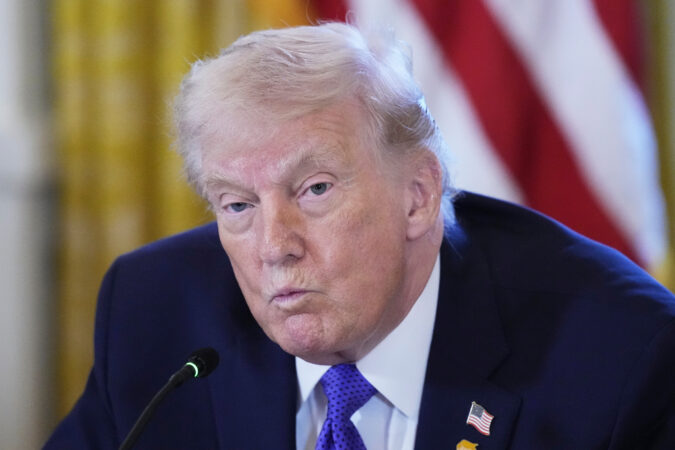
    WEST PALM BEACH, Fla. — President Donald Trump on Sunday fired off another warning to the government of Cuba as the close ally of Venezuela braces for potential widespread unrest after Nicolás Maduro was deposed as Venezuela’s leader.

    Cuba, a major beneficiary of Venezuelan oil, has now been cut off from those shipments as U.S. forces continue to seize tankers in an effort to control the production, refining, and global distribution of the country’s oil products.

    Trump said on social media that Cuba long lived off Venezuelan oil and money and had offered security in return, “BUT NOT ANYMORE!”

    “THERE WILL BE NO MORE OIL OR MONEY GOING TO CUBA — ZERO!” Trump said in the post as he spent the weekend at his home in southern Florida. “I strongly suggest they make a deal, BEFORE IT IS TOO LATE.” He did not explain what kind of deal.

    Hours later, Cuba’s president, Miguel Díaz-Canel, responded on X by saying “those who turn everything into a business, even human lives, have no moral authority to point the finger at Cuba in any way, absolutely in any way.”

    The Cuban government said 32 of its military personnel were killed during the American operation last weekend that captured Maduro. The personnel from Cuba’s two main security agencies were in Caracas, the Venezuelan capital, as part of an agreement between Cuba and Venezuela.

    “Venezuela doesn’t need protection anymore from the thugs and extortionists who held them hostage for so many years,” Trump said Sunday. “Venezuela now has the United States of America, the most powerful military in the World (by far!), to protect them, and protect them we will.”

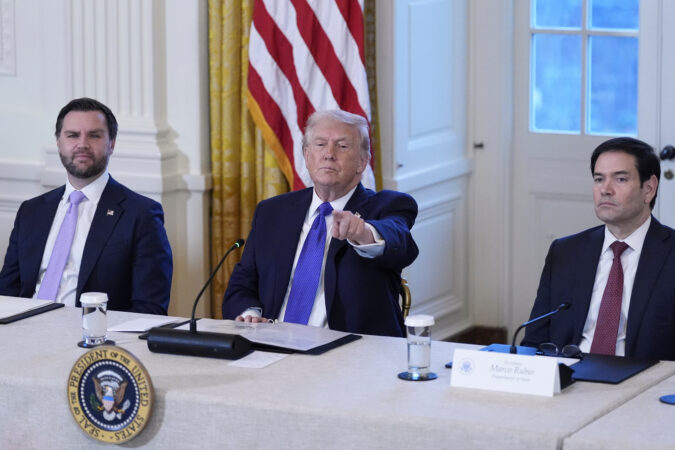
    Trump also responded to another account’s social media post predicting that his secretary of state, Marco Rubio, will be president of Cuba: “Sounds good to me!” Trump said.

    Trump and top administration officials have taken an increasingly aggressive tone toward Cuba, which had been kept economically afloat by Venezuela. Long before Maduro’s capture, severe blackouts were sidelining life in Cuba, where people endured long lines at gas stations and supermarkets amid the island’s worst economic crisis in decades.

    “Those who hysterically accuse our nation today do so out of rage at this people’s sovereign decision to choose their political model,” Díaz-Canel said in his post. He added that “those who blame the Revolution for the severe economic shortages we suffer should be ashamed to keep quiet” and he railed against the “draconian measures” imposed by the U.S. on Cuba.

    The island’s communist government has said U.S. sanctions cost the country more than $7.5 billion between March 2024 and February 2025.

    Trump has said previously that the Cuban economy, battered by years of an American embargo, would slide further with the ouster of Maduro.

    “It’s going down,” Trump said of Cuba. “It’s going down for the count.”

  • Grateful Dead founding member Bob Weir has died at 78

    Grateful Dead founding member Bob Weir has died at 78

    LOS ANGELES — Bob Weir, the guitarist and singer who as an essential member of the Grateful Dead helped found the sound of the San Francisco counterculture of the 1960s and kept it alive through decades of endless tours and marathon jams, has died. He was 78.

    Mr. Weir’s death was announced Saturday in a statement on his Instagram page.

    “It is with profound sadness that we share the passing of Bobby Weir,” a statement on his Instagram posted Saturday said. “He transitioned peacefully, surrounded by loved ones, after courageously beating cancer as only Bobby could. Unfortunately, he succumbed to underlying lung issues.”

    The statement did not say where or when Mr. Weir died, but he lived in the San Francisco Bay Area for most of his life.

    Mr. Weir joined the Grateful Dead — originally the Warlocks — in 1965 in San Francisco at just 17 years old. He would spend the next 30 years playing on endless tours with the Grateful Dead alongside fellow singer and guitarist Jerry Garcia, who died in 1995.

    Mr. Weir wrote or co-wrote and sang lead vocals on Dead classics including “Sugar Magnolia,” “One More Saturday Night,” and “Mexicali Blues.”

    After Garcia’s death, he would be the Dead’s most recognizable face. In the decades since, he kept playing with other projects that kept alive the band’s music and legendary fan base, including Dead & Company.

    The Dead were beloved in Philadelphia. “Only sports teams have played the Spectrum more than the Grateful Dead,” Inquirer music critic Dan DeLuca wrote when the band played its last concert at the now-demolished arena on May 2, 2009. DeLuca wrote that the Dead had sold out the arena more than 50 times.

    “For over sixty years, Bobby took to the road,” the Instagram statement said. “A guitarist, vocalist, storyteller, and founding member of the Grateful Dead. Bobby will forever be a guiding force whose unique artistry reshaped American music.”

    Mr. Weir’s death leaves drummer Bill Kreutzmann as the only surviving original member. Founding bassist Phil Lesh died in 2024. The band’s other drummer, Mickey Hart, practically an original member since joining in 1967, is also alive at 82. The fifth founding member, Ron “Pigpen” McKernan, died in 1973.

    Dead and Company played a series of concerts for the Grateful Dead’s 60th anniversary in July at Golden Gate Park in San Francisco, drawing some 60,000 fans a day for three days.

    Born in San Francisco and raised in nearby Atherton, Mr. Weir was the Dead’s youngest member and looked like a fresh-faced high schooler in its early years. He was generally less shaggy than the rest of the band, but he had a long beard like Garcia’s in later years.

    The band would survive long past the hippie moment of its birth, with its ultra-devoted fans known as Deadheads often following them on the road in a virtually nonstop tour that persisted despite decades of music and culture shifting around them.

    “Longevity was never a major concern of ours,” Mr. Weir said when the Dead got the Grammys’ MusiCares Person of the Year honor last year. “Spreading joy through the music was all we ever really had in mind, and we got plenty of that done.”

    Ubiquitous bumper stickers and T-shirts showed the band’s skull logo, the dancing, colored bears that served as their other symbol, and signature phrases like “ain’t no time to hate” and “not all who wander are lost.”

    The Dead won few actual Grammys during their career — they were always a little too esoteric — getting only a lifetime achievement award in 2007 and the best music film award in 2018.

    Just as rare were hit pop singles. “Touch of Grey,” the 1987 song that brought a big surge in the aging band’s popularity, was their only Billboard Top 10 hit.

    But in 2024, they set a record for all artists with their 59th album in Billboard’s Top 40. Forty-one of those came since 2012, thanks to the popularity of the series of archival albums compiled by David Lemieux.

    Their music — called acid rock at its inception — would pull in blues, jazz, country, folk, and psychedelia in long improvisational jams at their concerts.

    “I venture to say they are the great American band,” TV personality and devoted Deadhead Andy Cohen said as host of the MusiCares event. “What a wonder they are.”

  • Matt Ryan was named president of football for the Falcons. His first task: find a new coach and GM

    Matt Ryan was named president of football for the Falcons. His first task: find a new coach and GM

    On Saturday, the Atlanta Falcons named former longtime quarterback Matt Ryan to the newly created role of president of football.

    Ryan, the Exton native and Penn Charter graduate, is now tasked with leading the search for the Falcons’ new coach and general manager. Each new hire will report directly to Ryan, who will leave his role as NFL analyst with CBS.

    Falcons owner Arthur Blank on Thursday confirmed the team’s interest in Ryan. The team interviewed candidates for only two days before hiring Ryan.

    “Arthur gave me the chance of a lifetime almost twenty years ago, and he’s done it again today,” Ryan said in a statement released by the team. “While I appreciate the time I had with the Colts and with CBS, I’ve always been a Falcon. It feels great to be home.”

    Ryan was the Falcons’ starting quarterback from 2008-21 and was named the 2016 NFL MVP after leading the team to the Super Bowl. He holds most of the team’s major passing records, including yards, touchdown passes and completions, and he retired following one season with the Indianapolis Colts.

    The Falcons have scheduled a news conference with Ryan on Tuesday.

    Blank said Thursday he believed Ryan was qualified for the job despite his lack of front-office experience because of his high football IQ. Blank said in a statement Saturday that Ryan’s “leadership, attention to detail, knowledge of the game and unrelenting drive to win made him the most successful player in our franchise’s history.”

    Added Blank: “I am confident those same qualities will be a tremendous benefit to our organization as he steps into this new role. From his playing days to his time as an analyst at CBS, Matt has always been a student of the game, and he brings an astute understanding of today’s NFL, as well as unique knowledge of our organization and this market. I have full confidence and trust in Matt as we strive to deliver a championship-caliber team for Atlanta and Falcons fans everywhere.”

    The Falcons fired coach Raheem Morris and general manager Terry Fontenot last weekend, hours after the completion of an 8-9 season. It was the team’s eighth consecutive losing season. It will be Ryan’s challenge to help direct the team to its first playoff appearance since 2017.

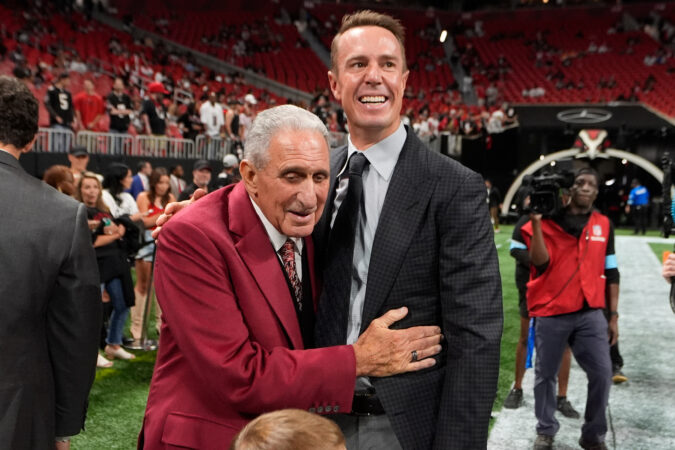
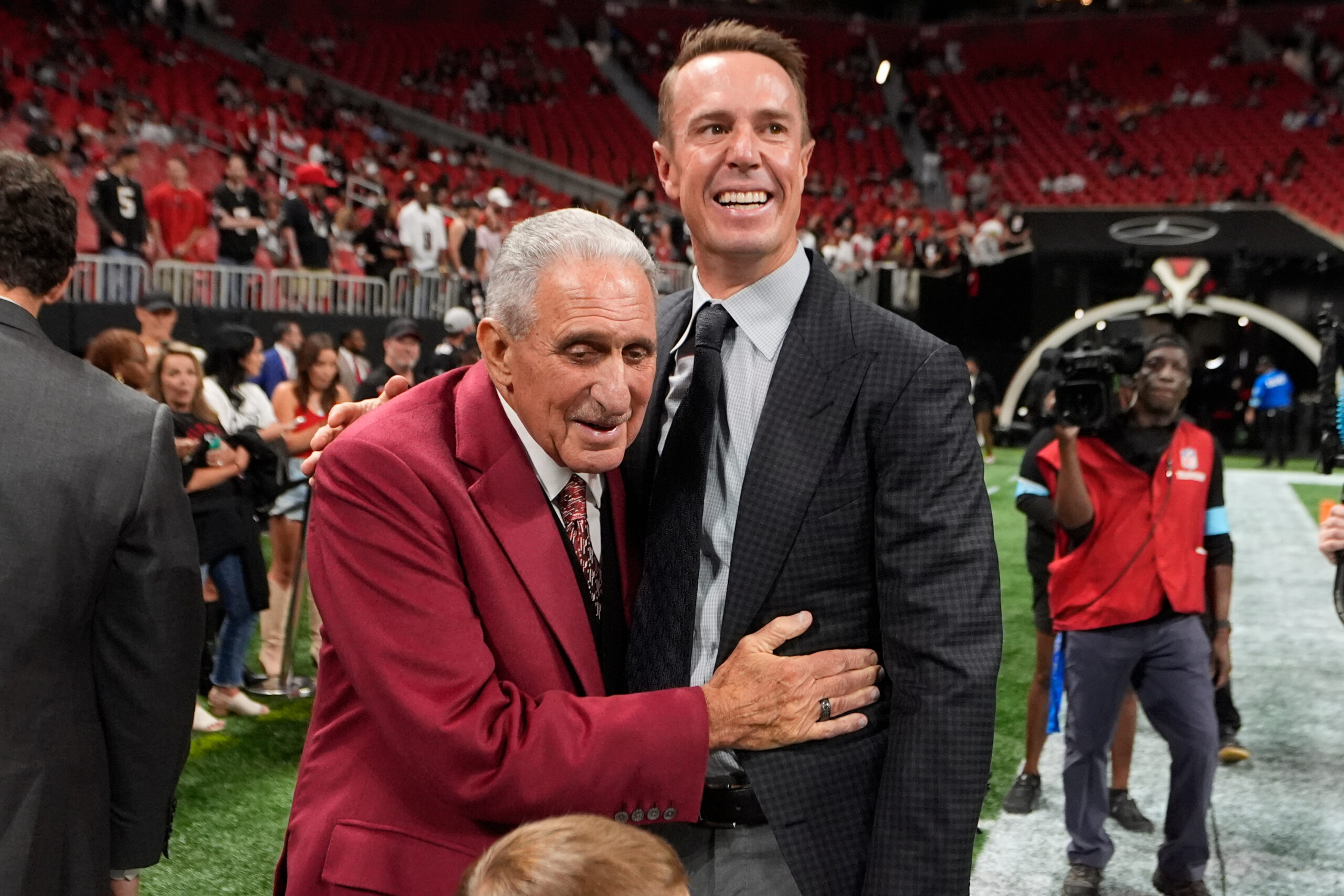
    Falcons owner Arthur Blank, left, has appointed former quarterback and Exton native Matt Ryan as the team’s president of football on Saturday.

    Ryan acknowledges there will be an adjustment in his new job.

    “My history with this team speaks for itself, and I’m really grateful for it, and the great relationship I’ve been lucky to have with Arthur and his family,” Ryan said. “I also recognize this side of football is not where I’ve come up. I’ve played, I’ve commented, but I haven’t directly operated. I think I’m humble enough to recognize there will be some baptism by fire, but I’m ready for that.

    “I know I’ve got great resources and partners throughout this organization and I’m fortunate to have mentors across the league. That said, I do understand the weight of a role like this — I’ve lived it. I have confidence in the perspective my years as a player and a team leader give me. This is not a new table; it’s just a new seat.”

  • 6 people killed in Mississippi rampage, including 7-year-old girl. Suspect charged with murder

    6 people killed in Mississippi rampage, including 7-year-old girl. Suspect charged with murder

    WEST POINT, Miss. — A 24-year-old Mississippi man killed six people — his father, brother, uncle, 7-year-old cousin, a church pastor, and the pastor’s brother — at three locations during a Friday night rampage in a rural area, authorities said.

    Daricka M. Moore was arrested at a police roadblock in Cedarbluff just before midnight after dozens of local, state, and federal officers flooded the northeast Mississippi area.

    Moore was being held without bail Saturday at the Clay County jail in West Point on murder charges and ahead of an expected initial appearance Monday before a judge.

    Clay County District Attorney Scott Colom, who said he expects to pursue the death penalty, told the Associated Press that Moore would likely be appointed a public defender at that time.

    If charges are upgraded to capital murder before then, Moore will be ineligible for bail under state law.

    Clay County Sheriff Eddie Scott said at a Saturday news conference that evidence and witnesses indicate that Moore was the only shooter and no other injuries have been reported.

    Investigators were continuing to interview Moore but do not currently know what may have motivated him, he added.

    “A situation like this, you’ve got a family member attacking their own family,” Scott said. “Whatever the reason is, we’re hoping that we’ll find out.”

    The shootings unfolded in an area of fields, woods, and mostly modest homes about 125 miles northeast of Jackson.

    Investigators believe Moore first killed his father, 67-year-old Glenn Moore; his brother, 33-year-old Quinton Moore; and his uncle, 55-year-old Willie Ed Guines, at the family’s mobile home on a dirt road in western Clay County.

    The sheriff said Moore then stole his brother’s truck and drove a few miles to a cousin’s house, where he forced his way in and attempted to commit sexual battery. Scott said Moore than put a gun to the head of a 7-year-old girl, whom he declined to identify, and fatally shot her.

    “I don’t know what kind of motive you could have to kill a 7-year-old,” he said.

    Scott said that according to witnesses, Moore then placed a gun against a younger child’s head, but she was not shot. It was not clear whether he did not pull the trigger or the gun misfired.

    “That’s how violent it was,” Scott said.

    The mother and a third child were also present, the sheriff said.

    Moore then allegedly drove to a small white frame church, the Apostolic Church of the Lord Jesus. There, Scott said, he broke into a residence, killed the pastor and his brother, and stole one of their vehicles.

    Scott said the last two victims, the Rev. Barry Bradley and Samuel Bradley, lived most of the time in nearby Columbus but spent weekends on church grounds. Some Moore family members attend the church, Scott said.

    Moore was caught at a roadblock at 11:24 p.m. near where the second shooting occurred, Scott said, 4½ hours after the first call came in. Colom said Moore had a rifle and a handgun. Scott said officers are investigating where Moore obtained the guns.

    The state medical examiner is performing autopsies on the victims.

    Scott said Moore’s surviving relatives are overwhelmed with grief.

    “It was really hard to have conversations other than prayers with everybody out there,” he said, adding, “this has really shaken our community.”

    Colom, a Democrat who is seeking his party’s nomination this year to run against Republican U.S. Sen. Cindy Hyde Smith, said he is confident that his office has the resources to prosecute Moore and pursuing the death penalty is the right thing to do.

    “Six people, one night, several different scenes, it’s about as bad as it gets,” Colom said.

  • U.S. launches new retaliatory strikes against ISIS in Syria after deadly ambush

    U.S. launches new retaliatory strikes against ISIS in Syria after deadly ambush

    WASHINGTON — The U.S. has launched another round of retaliatory strikes against the Islamic State in Syria following last month’s ambush that killed two U.S. soldiers and one American civilian interpreter in the country.

    The large-scale strikes, conducted by the U.S. alongside partner forces, occurred around 12:30 p.m. ET, according to U.S. Central Command. The strikes hit multiple Islamic State targets across Syria.

    Saturday’s strikes are part of a broader operation that is part of President Donald Trump’s response to the deadly ISIS attack that killed Sgt. Edgar Brian Torres-Tovar, Sgt. William Nathaniel Howard, and Ayad Mansoor Sakat, the civilian interpreter, in Palmyra last month.

    “Our message remains strong: if you harm our warfighters, we will find you and kill you anywhere in the world, no matter how hard you try to evade justice,” U.S. Central Command said in a statement Saturday.

    A day earlier, Syrian officials said their security forces had arrested the military leader of IS operations in the Levant.

    The U.S. military said Saturday’s strikes were carried out alongside partner forces without specifying which forces had taken part.

    The Trump administration is calling the response to the Palmyra attacks Operation Hawkeye Strike. Both Torres-Tovar and Howard were members of the Iowa National Guard.

    It launched Dec. 19 with another large-scale strike that hit 70 targets across central Syria that had IS infrastructure and weapons.

    The Kurdish-led Syrian Democratic Forces has for years been the U.S.’s main partner in the fight against IS in Syria, but since the ouster of former Syrian President Bashar Assad in December 2024, Washington has increasingly been coordinating with the central government in Damascus.

    Syria recently joined the global coalition against IS.

  • Trump signs executive order meant to protect the money from Venezuelan oil

    Trump signs executive order meant to protect the money from Venezuelan oil

    WEST PALM BEACH, Fla. — President Donald Trump’s new executive order on Venezuelan oil revenue is meant to ensure that the money remains protected from being used in judicial proceedings.

    The executive order, made public on Saturday, says that if the funds were to be seized for such use, it could “undermine critical U.S. efforts to ensure economic and political stability in Venezuela.”

    The order comes amid caution from top oil company executives that the tumult and instability in Venezuela could make the country less attractive for private investment and rebuilding.

    “If we look at the commercial constructs and frameworks in place today in Venezuela, today it’s uninvestable,” said Darren Woods, CEO of ExxonMobil, the largest U.S. oil company, during a meeting convened by Trump with oil executives on Friday.

    During the session, Trump tried to assuage the concerns of the oil companies and said the executives would be dealing directly with the U.S., rather than the Venezuelan government.

    Venezuela has a history of state asset seizures, ongoing U.S. sanctions, and decades of political uncertainty.

    Getting U.S. oil companies to invest in Venezuela and help rebuild the country’s infrastructure is a top priority of the Trump administration after the dramatic capture of now-deposed leader Nicolás Maduro.

    The White House is framing the effort to “run” Venezuela in economic terms, and Trump has seized tankers carrying Venezuelan oil, has said the U.S. is taking over the sales of 30 million to 50 million barrels of previously sanctioned Venezuelan crude, and plans to control sales worldwide indefinitely.

    “I love the Venezuelan people, and am already making Venezuela rich and safe again,” Trump, who is currently in southern Florida, wrote on his social media site on Saturday. “Congratulations and thank you to all of those people who are making this possible!!!”

    The order says the oil revenue is property of Venezuela that is being held by the United States for “governmental and diplomatic purposes” and not subject to private claims.

    Its legal underpinnings are the National Emergencies Act and the International Emergency Economic Powers Act. Trump, in the order, says the possibility that the oil revenues could be caught up in judicial proceedings constitutes an “unusual and extraordinary threat” to the U.S.

  • Rioter convicted for carrying Pelosi’s podium seeks Florida county office

    Rioter convicted for carrying Pelosi’s podium seeks Florida county office

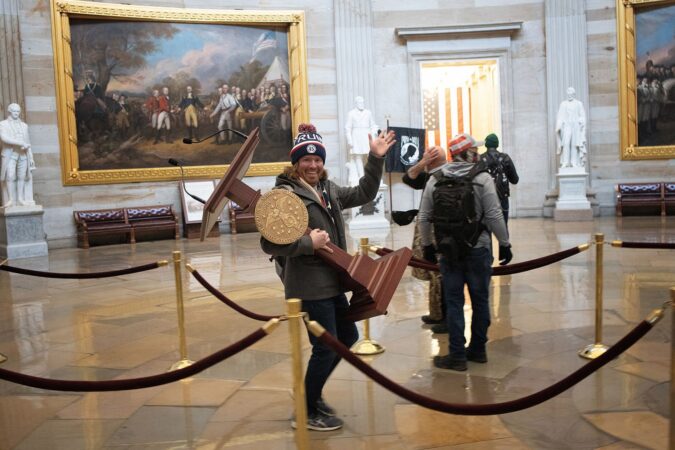
    BRADENTON, Fla. — A Florida man who grabbed then-House Speaker Nancy Pelosi’s podium and posed for photographs with it during the U.S. Capitol riot is running for county office.

    Adam Johnson filed to run as a Republican for an at-large seat on the Manatee County Commission on Tuesday. That was the fifth anniversary of the Jan. 6 riot, where he was photographed smiling and waving as he carried Pelosi’s podium after the pro-Trump mob’s attack on Jan. 6, 2021.

    Johnson told WWSB-TV that it was “not a coincidence” that he filed for office on Jan. 6, saying “it’s definitely good for getting the buzz out there.” His campaign logo is an outline of the viral photograph of him carrying the podium.

    He’s far from the first person implicated in the Jan. 6 riot to run for office. At least three ran unsuccessfully for Congress in 2024 as Republicans. And there are signs that the Republican Party is welcoming back more people who were convicted of Jan. 6 offenses after Trump pardoned them.

    Jake Lang, who was charged with assaulting an officer, civil disorder, and other crimes before he was pardoned, recently announced he is running for Secretary of State Marco Rubio’s vacant U.S. Senate seat in Florida.

    Johnson placed the podium in the center of the Capitol Rotunda, posed for pictures and pretended to make a speech, prosecutors said. He pleaded guilty in 2021 of entering and remaining in a restricted building or ground, a misdemeanor that he equated to “jaywalking” in the interview.

    “I think I exercised my First Amendment right to speak and protest,” Johnson said.

    After driving home, Johnson bragged that he “broke the internet” and was “finally famous,” prosecutors said.

    Johnson served 75 days in prison followed by one year of supervised release. The judge also ordered Johnson to pay a $5,000 fine and perform 200 hours of community service.

    Johnson told U.S. District Judge Reggie Walton at sentencing that posing with Pelosi’s podium was a “very stupid idea,” but now says he only regrets his action because of the prison sentence.

    “I walked into a building, I took a picture with a piece of furniture, and I left,” he now says.

    Four other Republicans have filed to run so far in the Aug. 18 primary in what’s a deeply Republican county. The incumbent isn’t seeking reelection.

    In March 2025, Johnson filed a lawsuit against Manatee County and six of its commissioners, objecting to the county’s decision not to seek attorney’s fees from someone who sued the county and dropped the lawsuit. The county has called Johnson’s claims “ completely meritless and unsupported by law.”

    Johnson said he objects to high property taxes and overdevelopment in the county south of Tampa, claiming current county leaders are wasteful.

    “I will be more heavily scrutinized than any other candidate who is running in this race,” Johnson said. ”This is a positive and a good takeaway for every single citizen, because for once in our life, we will know our local politicians who are doing things.”

  • Supporters press for a D.C. memorial to Thomas Paine, whose writings helped fuel the Revolutionary War

    Supporters press for a D.C. memorial to Thomas Paine, whose writings helped fuel the Revolutionary War

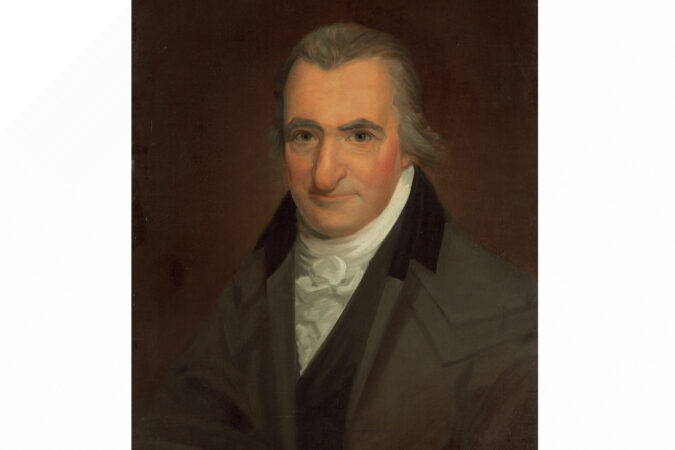
    NEW YORK — Some 250 years after Common Sense helped inspire the 13 colonies to declare independence, Thomas Paine might receive a long-anticipated tribute from his adopted country.

    A Paine memorial in Washington, D.C., authorized by a 2022 law, awaits approval from the U.S. Department of Interior. It would be the first landmark in the nation’s capital to be dedicated to one of the American Revolution’s most stirring, popular, and quotable advocates — who also was one of the most intensely debated men of his time.

    “He was a critical and singular voice,” said U.S. Rep. Jamie Raskin (D., Md.), a sponsor of the bill that backed the memorial. He said Paine has long been “underrecognized and overlooked.”

    Saturday marked the 250th anniversary of the publication of Paine’s Common Sense, among the first major milestones of a yearlong commemoration of the country’s founding and the signing of the Declaration of Independence in 1776.

    Paine supporters have waited decades for a memorial in the District of Columbia, and success is still not ensured: Federal memorials are initiated by Congress but usually built through private donations. In 1992, President George H.W. Bush signed bipartisan legislation for such a memorial, but the project was delayed, failed to attract adequate funding, and was essentially forgotten by the mid-2000s.

    The fate of the current legislation depends not just on financial support, but on President Donald Trump’s interior secretary, Doug Burgum.

    In September 2024, the memorial was recommended by the National Capital Memorial Advisory Commission for placement on the National Mall. Burgum needs to endorse the plan, which would be sent back to Congress for final enactment. If approved, the memorial would have a 2030 deadline for completion.

    A spokesperson for the department declined to comment when asked about the timing for a decision.

    “We are staying optimistic because we feel that Thomas Paine is such an important figure in the founding of the United States of America,” said Margaret Downey, president of the Thomas Paine Memorial Association, which has a mission to establish a memorial in Washington.

    A contentious legacy

    Scholars note that well into the 20th century, federal honors for Paine would have been nearly impossible. While Paine first made his name through Common Sense, the latter part of his life was defined by another pamphlet, The Age of Reason.

    Published in installments starting in 1794, it was a fierce attack against organized religion. Paine believed in God and a divinely created universe but accepted no single faith. He scorned what he described as the Bible’s “paltry stories” and said Christianity was “too absurd for belief, too impossible to convince, and too inconsistent for practice.”

    By the time of his death, in New York in 1809, he was estranged from friends and many of the surviving founders; only a handful of mourners attended his funeral. He has since been championed by everyone from labor leaders and communists to Thomas Edison, but presidents before Franklin Roosevelt in the 1930s rarely quoted him. Theodore Roosevelt referred to him as a “filthy little atheist.”

    There are Paine landmarks around the country, including a monument and museum in New Rochelle, N.Y., and a statue in Morristown, N.J. But other communities have resisted. In 1955, Mayor Walter H. Reynolds of Providence, R.I., rejected a proposed Paine statue, saying “he was and remains so controversial a character.”

    Harvey J. Kaye, author of Thomas Paine and the Promise of America, cites the election of Ronald Reagan as president in 1980 as a surprising turning point. Reagan’s victory was widely seen as a triumph for the modern conservative movement, but Reagan alarmed some Republicans and pleased Paine admirers during his acceptance speech at the Republican National Convention when he quoted Paine’s famous call to action: “We have it in our power to begin the world over again.”

    Reagan helped make Paine palatable to both parties, Kaye said. When Congress approved a memorial in 1992, supporters ranged from a liberal giant, Democratic Sen. Ted Kennedy of Massachusetts, to a right-wing hero, Republican Sen. Jesse Helms of North Carolina.

    “Reagan opened the door,” Kaye said.

    An immigrant who stoked the fire of revolution

    Paine’s story is very much American. He was a self-educated immigrant from Britain who departed for the colonies with little money but with hopes for a better life.

    He was born Thomas Pain in Thetford in 1737, some 90 miles outside of London. (He added the “e” to his last name after arriving in America.) Paine was on the move for much of his early life. He spent just a few years in school before leaving at age 13 to work as an apprentice for his father, a corset maker. He would change jobs often, from teaching at a private academy to working as a government excise officer to running a tobacco shop.

    By the time he sailed to the New World in 1774, he was struggling with debt, had been married twice and had failed or made himself unwelcome in virtually every profession he entered. But Paine also had absorbed enough of London’s intellectual life to form radical ideas about government and religion and to meet Benjamin Franklin, who provided him a letter of introduction that helped him find work in Philadelphia as a contributor to the Pennsylvania Magazine.

    The Revolutionary War began in April 1775 and pamphlets helped frame the arguments, much as social media posts do today. The Philadelphia-based statesman and physician Benjamin Rush was impressed enough with Paine to suggest that he put forth his own thoughts. Paine had wanted to call his pamphlet Plain Truth, but agreed to Rush’s idea: Common Sense.

    Paine’s brief tract was credited to “an Englishman” and released on Jan. 10, 1776. Later expanded to 47 pages, it was a popular sensation. Historians differ over how many copies were sold, but Common Sense was widely shared, talked about, and read aloud.

    Paine’s urgent, accessible prose was credited for helping to shift public opinion from simply opposing British aggression to calling for a full break. His vision was radical, even compared to some of his fellow revolutionaries. In taking on the British and King George III, he did not just attack the actions of an individual king, but the very idea of hereditary rule and monarchy. He denounced both as “evil” and “exceedingly ridiculous.”

    “Of more worth is one honest man to society and in the sight of God, than all the crowned ruffians that ever lived,” he stated.

    A message that continues to resonate

    Historian Eric Foner would write that Paine’s appeal lasted through “his impatience with the past, his critical stance toward existing institutions, his belief that men can shape their own destiny.” But Common Sense was despised by British loyalists and challenged by some American leaders.

    John Adams would refer to Paine as a “star of disaster,” while Franklin worried about his “rude way of writing.” Meanwhile, George Washington valued Common Sense for its “sound doctrine” and ”unanswerable reasoning,” and Thomas Jefferson, soon to be the principal author of the Declaration of Independence, befriended Paine and later invited him to the White House when he was president.

    Paine’s message continues to be invoked by those on both sides of the political divide.

    In his 2025 year-end report on the federal judiciary, Supreme Court Chief Justice John Roberts began by citing the anniversary of Common Sense and praising Paine for “shunning legalese” as he articulated that “government’s purpose is to serve the people.” Last year, passages from Common Sense appeared often during the nationwide “No Kings” rallies against Trump’s policies.

    One demonstrator’s sign in Boston said, “No King! No Tyranny! It’s Common Sense.”
  • Iran’s exiled crown prince rises as a figure in protests, decades after leaving his homeland

    Iran’s exiled crown prince rises as a figure in protests, decades after leaving his homeland

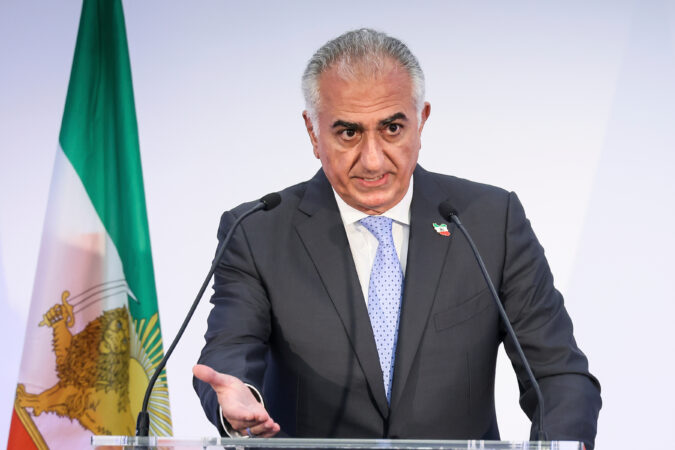
    DUBAI, United Arab Emirates — He has been in exile for nearly 50 years. His father, Iran’s shah, was so widely hated that millions took to the streets in 1979, forcing him from power. Nevertheless, Iran’s Crown Prince Reza Pahlavi is trying to position himself as a player in his country’s future.

    Pahlavi successfully spurred protesters onto the streets Thursday night in a massive escalation of the protests sweeping Iran. Initially sparked by the Islamic Republic’s ailing economy, the demonstrations have become a serious challenge to its theocracy, battered by years of nationwide protests and a 12-day war in June launched by Israel that saw the U.S. bomb nuclear enrichment sites.

    What is unknown is how much real support the 65-year-old Pahlavi, who is in exile in the U.S., has in his homeland. Do protesters want a return of the Peacock Throne, as his father’s reign was known? Or are the protesters just looking for anything that is not Iran’s Shiite theocracy?

    Pahlavi issued calls, rebroadcast by Farsi-language satellite news channels and websites abroad, for Iranians to return to the streets Friday night, which they did. He has called for further demonstrations this weekend.

    “Over the past decade, Iran’s protest movement and dissident community have been increasingly nationalist in tone and tenor,” said Behnam Ben Taleblu, an Iran expert with the Washington-based Foundation for Defense of Democracies, which faces sanctions from Tehran.

    “The more the Islamic Republic has failed, the more it has emboldened its antithesis,” Taleblu said. ”The success of the crown prince and his team has been in drawing a sharp contrast between the normalcy of what was and the promise of what could be, versus the nightmare and present predicament that is the reality for so many Iranians.”

    Pahlavi’s profile rose again during U.S. President Donald Trump’s first term. Still, Trump and other world leaders have been hesitant to embrace him, given the many cautionary tales in the Middle East and elsewhere of Western governments putting their faith in exiles long estranged from their homelands.

    Iranian state media, which for years mocked Pahlavi as being out of touch and corrupt, blamed “monarchist terrorist elements” for the demonstrations Thursday night during which vehicles were burned and police kiosks attacked.

    Born into luxury

    Born Oct. 31, 1960, Pahlavi lived in a gilded world of luxury as the crown prince to Shah Mohammad Reza Pahlavi.

    Mohammed Reza had inherited the throne from his own father, an army officer who seized power with support from the British. Mohammed Reza’s rule was cemented by a 1953 CIA-backed coup, and he cooperated closely with the Americans, who sold the autocratic ruler billions of dollars worth of weapons and spied on the Soviet Union from Iran.

    The young Pahlavi was schooled at the eponymous Reza Pahlavi School, set up within the walls of Niavaran Palace in northern Tehran. A biographer of his father noted the crown prince once played rock music in the palace during a New Year’s Eve visit to Tehran by then-U.S. President Jimmy Carter.

    But the fall of the Peacock Throne loomed.

    While successfully riding rising oil prices in the 1970s, deep economic inequality set in during the shah’s rule and his feared SAVAK intelligence agency became notorious for the torture of dissidents.

    Millions across the country participated in protests against the shah, uniting secular leftists, labor unions, professionals, students, and Muslim clergy. As the crisis reached a fever pitch, the shah was doomed by his inability to act and poor decisions while secretly fighting terminal cancer.

    In 1978, Crown Prince Reza left his homeland for flight school at a U.S. air base in Texas. A year later, his father fled Iran during the onset of what became known as the Islamic Revolution. Shiite clerics squeezed out other anti-shah factions, establishing a new theocratic government that executed thousands after the revolution and to this day remains one of the world’s top executioners.

    After his father’s death, a royal court in exile announced that Reza Pahlavi assumed the role of the shah on Oct. 31, 1980, his 20th birthday.

    “I can understand and sympathize with your sufferings and your inner torment,” Pahlavi said, addressing Iranians in a speech at the time. “I shed the tears which you must hide. Yet there is, I am sure, light beyond the darkness. Deep in your hearts, you may be confident that this nightmare, like others in our history, will pass.”

    Years in exile

    But what followed has been nearly five decades in exile.

    Pahlavi attempted to gain influence abroad. In 1986, the Washington Post reported that the CIA supplied the prince’s allies “a miniaturized television transmitter for an 11-minute clandestine broadcast” to Iran by Pahlavi that pirated the signal of two stations in the Islamic Republic.

    “I will return and together we will pave the way for the nation’s happiness and prosperity through freedom,” Pahlavi reportedly said in the broadcast.

    That did not happen. Pahlavi largely lived abroad in the United States in Los Angeles and Washington, D.C., while his mother, the Shahbanu Farah Pahlavi, lived in Paris.

    Circles of diehard Iranian monarchists in exile have long touted dreams of the Pahlavi dynasty returning to power. But Pahlavi has been hampered in gaining wider appeal by a number of factors: bitter memories of his father’s rule; the perception that he and his family are out of touch with their homeland; and repression inside Iran that aims to silence any opposition sentiment.

    At the same time, younger generations in Iran born decades after the shah’s rule ended have grown up under a different experience: social restrictions and brutal suppression by the Islamic Republic and economic turmoil under international sanctions, corruption, and mismanagement.

    Pahlavi has sought to have a voice through social media videos, and Farsi-language news channels such as Iran International have highlighted his calls for protests. The channel also aired QR codes that led to information for security force members within Iran who want to cooperate with him.

    Mahmood Enayat, the general manager of Iran International’s owner Volant Media, said the channel ran Pahlavi’s ad and others “on a pro bono basis” as “part of our mission to support Iran’s civil society.”

    In interviews in recent years, Pahlavi has raised the idea of a constitutional monarchy, perhaps with an elected rather than a hereditary ruler. But he has also said it is up to Iranians to choose.

    “This regime is simply irreformable because the nature of it, its DNA, is such that it cannot,” Pahlavi told the Associated Press in 2017. “People have given up with the idea of reform and they think there has to be fundamental change. Now, how this change can occur is the big question.”

    He has also faced criticism for his support of and from Israel, particularly after the June war. Pahlavi traveled to Israel in 2023 and met Prime Minister Benjamin Netanyahu, a longtime hawk on Iran whose criticism of the 2015 Iran nuclear deal fueled Trump’s decision to withdraw America from the accord. Netanyahu also oversaw the 12-day war with Iran.

    “My focus right now is on liberating Iran, and I will find any means that I can, without compromising the national interests and independence, with anyone who is willing to give us a hand, whether it is the U.S. or the Saudis or the Israelis or whomever it is,” Pahlavi said in 2017.

  • Congress is debating possible consequences for ICE and Noem after Renee Good’s killing

    Congress is debating possible consequences for ICE and Noem after Renee Good’s killing

    WASHINGTON — The killing of a Minnesota woman by an Immigration and Customs Enforcement officer is reverberating across Capitol Hill where Democrats, and certain Republicans, are vowing an assertive response as President Donald Trump’s aggressive deportation operations spark protests nationwide.

    Lawmakers are demanding a range of actions, from a full investigation into Renee Good’s shooting death and policy changes over law enforcement raids to the defunding of ICE operations and the impeachment of Homeland Security Secretary Kristi Noem, in what is fast becoming an inflection point.

    “The situation that took place in Minnesota is a complete and total disgrace,” House Democratic leader Hakeem Jeffries of New York said as details emerged. “And in the next few days, we will be having conversations about a strong and forceful and appropriate response by House Democrats.”

    Yet there is almost no consensus among the political parties in the aftermath of the death of Good, who was behind the wheel of an SUV after dropping off her 6-year-old at school when she was shot and killed by an ICE officer.

    The killing immediately drew dueling narratives. Trump and Noem said the ICE officer acted in self-defense, while Democratic officials said the Trump administration was lying, and they urged the public to see the viral videos of the shooting for themselves.

    Vice President JD Vance blamed Good, calling it “a tragedy of her own making,” and said the ICE officer may have been “sensitive” from having been injured during an unrelated altercation last year.

    But Good’s killing, at least the fifth known death since the administration launched its mass deportation campaign, could change the political dynamic.

    “The videos I’ve seen from Minneapolis yesterday are deeply disturbing,” said Sen. Lisa Murkowski (R., Alaska) in a statement.

    “As we mourn this loss of life, we need a thorough and objective investigation into how and why this happened,” she said. As part of the investigation, she said she is calling for policy changes, saying the situation “was devastating, and cannot happen again.”

    Homeland Security funding is up for debate

    The push in Congress for more oversight and accountability of the administration’s immigration operations comes as lawmakers are in the midst of the annual appropriations process to fund agencies, including the Department of Homeland Security, to prevent another federal government shutdown when money expires at the end of January.

    As anti-ICE demonstrations erupt in cities in the aftermath of Good’s death, Democrats have pledged to use any available legislative lever to apply pressure on the administration to change the conduct of ICE officers.

    “We’ve been warning about this for an entire year,” said Rep. Maxwell Frost (D., Fla.).

    The ICE officer “needs to be held accountable,” Frost said, “but not just them, but ICE as a whole, the president and this entire administration.”

    Congressional Democrats saw Good’s killing as a sign of the need for aggressive action to restrain the administration’s tactics.

    Several Democrats joined calls to impeach Noem, who has been under fire from both parties for her lack of transparency at the department, though that step is highly unlikely with Republicans in control of Congress.

    Other Democrats want to restrict the funding for her department, whose budget was vastly increased as part of Republicans’ sweeping tax and spending bill passed last summer.

    Connecticut Sen. Chris Murphy, the top Democrat on the subcommittee that handles Homeland Security funding, plans to introduce legislation to rein in the agency with constraints on federal agents’ authority, including a requirement that the Border Patrol stick to the border and that DHS enforcement officers be unmasked.

    “More Democrats are saying today the thing that a number of us have been saying since April and May: Kristi Noem is dangerous. She should not be in office, and she should be impeached,” said Democratic Rep. Delia Ramirez, who represents parts of Chicago where ICE launched an enhanced immigration enforcement action last year that resulted in two deaths.

    Immigration debates have long divided Congress and the parties. Democrats splinter between more liberal and stricter attitudes toward newcomers to the United States. Republicans have embraced Trump’s hard-line approach to portray Democrats as radicals.

    The Republican administration had launched the enforcement operation in Minnesota in response to an investigation of the nonprofit Feeding Our Future. Prosecutors said the organization was at the center of the country’s largest COVID-19-related fraud scams, when defendants exploited a state-run, federally funded program intended to provide food for children.

    Heading into the November midterm election, which Democrats believe will hinge on issues such as affordability and healthcare, national outcry over ICE’s conduct has pressured lawmakers to speak out.

    “I’m not completely against deportations, but the way they’re handling it is a real disgrace,” said Rep. Vicente Gonzalez (D., Texas), who represents a district along the U.S.-Mexico border

    “Right now, you’re seeing humans treated like animals,” he said.

    Other ICE shootings have rattled lawmakers

    In September, a federal immigration enforcement agent in Chicago fatally shot Silverio Villegas Gonzalez during a brief altercation after Gonzalez had dropped off his children at school.

    In October, a Customs and Border Protection agent also in Chicago shot Marimar Martinez, a teacher and U.S. citizen, five times during a dispute with officers. The charges against Martinez brought by the administration were dismissed by a federal judge.

    To Rep. Chuy Garcia (D., Ill.), Good’s death “brought back heart-wrenching memories of those two shootings in my district.”

    “It looks like the fact that a US citizen, who is a white woman, may be opening the eyes of the American public, certainly of members of Congress, that what’s going on is out of control,” he said, “that this isn’t about apprehending or pursuing the most dangerous immigrants.”

    Republicans expressed some concern at the shooting but stood by the administration’s policy, defended the officer’s actions, and largely blamed Good for the standoff.

    “Nobody wants to see people get shot,” said Rep. Rich McCormick (R., Ga.).

    “Let’s do the right thing and just be reasonable. And the reasonable thing is not to obstruct ICE officers and then accelerate while they’re standing in front of your car,” he said. “She made a mistake. I’m sure she didn’t mean for that to happen, nor did he mean for that to happen.”