Category: Business Wires

  • Malaysia and Indonesia become the first countries to block Musk’s Grok over sexualized AI images

    Malaysia and Indonesia become the first countries to block Musk’s Grok over sexualized AI images

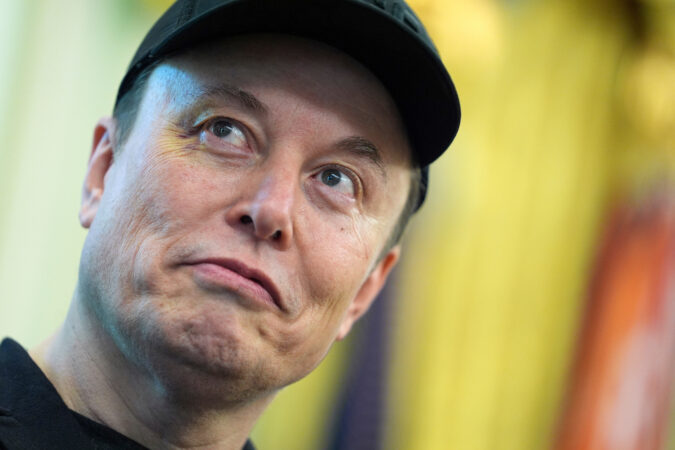
    KUALA LUMPUR, Malaysia — Malaysia and Indonesia have become the first countries to block Grok, the artificial intelligence chatbot developed by Elon Musk’s company xAI, as concerns grow among global authorities that it is being misused to generate sexually explicit and nonconsensual images.

    There is growing scrutiny of generative AI tools that can produce realistic images, sound, and text, and concern that existing safeguards are failing to prevent their abuse. The Grok chatbot, accessed through Musk’s social media platform X, has been criticized for generating manipulated images, including depictions of women in bikinis or sexually explicit poses, as well as images involving children.

    “The government sees nonconsensual sexual deepfakes as a serious violation of human rights, dignity and the safety of citizens in the digital space,” Indonesian Communication and Digital Affairs Minister Meutya Hafid said in a statement.

    Scrutiny of Grok is growing, including in the European Union, India, France, and the United Kingdom, which said Monday it was moving to criminalize “nudification apps.” Britain’s media regulator also launched an investigation into whether Grok broke the law by allowing users to share sexualized images of children.

    Last week, Grok limited image generation and editing to paying users following a global backlash over sexualized deepfakes of people, but critics say it didn’t fully address the problem.

    An emailed request for comment by the Associated Press to xAI resulted in an automated reply from the media support address which stated, “Legacy Media Lies.” This was the same message received from a different address when asked for comment regarding the global backlash.

    Asian action aimed at Grok

    Regulators in the two Southeast Asian nations said existing controls weren’t preventing the creation and spread of fake pornographic content, particularly involving women and minors. Indonesia’s government temporarily blocked access to Grok on Saturday, followed by Malaysia on Sunday.

    Initial findings showed Grok lacks effective safeguards to stop users from creating and distributing pornographic content based on real photos of Indonesian residents, Alexander Sabar, director-general of digital space supervision, said in a statement. He said such practices risk violating privacy and image rights when photos are manipulated or shared without consent.

    The Malaysian Communications and Multimedia Commission noted “repeated misuse” of the tool to generate obscene, sexually explicit, and nonconsensual manipulated images, including content involving women and minors.

    The regulator said notices were issued this month to X Corp. and xAI demanding stronger safeguards.

    “The restriction is imposed as a preventive and proportionate measure while legal and regulatory processes are ongoing,” it said, adding that access will remain blocked until effective safeguards are put in place.

    Investigation launched in U.K.

    Launched in 2023, Grok is free to use on X. An image generator feature, Grok Imagine, was added last year and included a so-called spicy mode that can generate adult content.

    The U.K.’s media regulator said it launched an investigation into whether Grok violated its duty to protect people from illegal content. The regulator, Ofcom, said Grok-generated images of children being sexualized or people being undressed may amount to pornography or child sexual abuse material.

    Technology Secretary Liz Kendall called the AI-generated images “weapons of abuse” and said the center-left Labour government would target the source of the problem by making it a crime for companies to supply tools to create nude images without consent.

    Kendall said X could face a possible Ofcom fine of up to 10% of its qualifying global revenue depending on the investigation’s outcome and a possible court order blocking access to the site.

    “They can choose to act sooner to ensure this abhorrent and illegal material cannot be shared on their platform,” Kendall said in Parliament.

    Musk over the weekend called the British government “fascist” and said it is trying stifle free speech.
  • Thousands of nurses go on strike at several major New York City hospitals

    Thousands of nurses go on strike at several major New York City hospitals

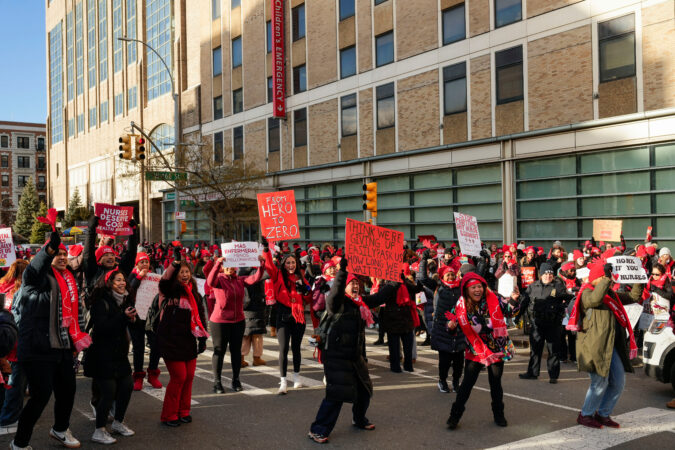
    NEW YORK — Thousands of nurses in three hospital systems in New York City went on strike Monday after negotiations through the weekend failed to yield breakthroughs in their contract disputes.

    “Nurses on strike! … Fair contract now!” they shouted on a picket line outside NewYork-Presbyterian Hospital’s campus in Upper Manhattan. Others picketed at hospitals in the Mount Sinai and Montefiore systems, where a 2023 nursing strike fed off pandemic-era frustrations and led to a deal to boost staffing and pay.

    “And now, it’s how they’re treating us: They don’t want to give us a fair contract, and they don’t want to give us safe staffing, and now they’re trying to roll back on our benefits,” emergency department nurse Tristan Castillo said as she picketed Monday outside Mount Sinai West.

    About 15,000 nurses are involved in the strike, according to their union, the New York State Nurses Association. The hospitals remained open, hiring droves of temporary nurses to try to fill the labor gap.

    The strike involves private, nonprofit hospitals, not city-run ones. But the strike, which the union casts as lifesaving essential workers fighting hospital executives who make millions of dollars a year, could be a significant early test of Mayor Zohran Mamdani’s new administration.

    The democratic socialist campaigned on a pro-worker platform and struck a similar note while visiting nurses on the NewYork-Presbyterian picket line Monday.

    “These executives are not having difficulty making ends meet,” said Mamdani, who extolled nurses’ work and said they were seeking “dignity, respect, and the fair pay and treatment that they deserve. They should settle for nothing less.”

    Some other Democratic city and state politicians also visited striking nurses, while Gov. Kathy Hochul sent state health officials to the hospitals to keep watch over patient care. She called in a statement for the sides to negotiate a deal that “recognizes the essential work nurses do.”

    The strike, which comes during a severe flu season, could potentially force the hospitals to transfer patients, cancel procedures, or divert ambulances. It could also put a strain on city hospitals not involved in the contract dispute, as patients avoid the medical centers hit by the strike.

    The nurses’ demands vary by hospital, but the major issues include staffing levels and workplace safety. The union says hospitals have given nurses unmanageable workloads.

    Nurses also want better security measures in the workplace, citing incidents such as an episode last week when a man with a sharp object barricaded himself in a Brooklyn hospital room and was then killed by police.

    The union also wants limitations on hospitals’ use of artificial intelligence.

    The hospitals say that they’ve been working to improve staffing levels but say that the union’s demands overall are too costly.

    After the nurses gave notice Jan. 2 of the looming strike, the hospitals hired temporary nurses, vowed to “do whatever is necessary to minimize disruptions,” and said they were prepared to deliver care no matter how long the strike lasts. Mount Sinai said in a statement Monday it had lined up 1,400 temporary nurses.

    Mount Sinai said the union was making “extreme economic demands.” Montefiore spokesperson Joe Solmonese said the union was pressing “$3.6 billion in reckless demands,” including exorbitant raises. The union hasn’t publicly disclosed its salary proposal.

    NewYork-Presbyterian accused the union of staging a strike to “create disruption.”

    “We’re ready to keep negotiating a fair and reasonable contract that reflects our respect for our nurses and the critical role they play, and also recognizes the challenging realities of today’s healthcare environment,” the hospital said.

    Each medical center is negotiating with the union independently. Several other private hospitals in and near New York City reached deals in recent days to avert a possible strike.

    The three-day strike in 2023 resulted in a deal raising pay 19% over three years at Mount Sinai and Montefiore. The pact also included staffing improvements, though the union and hospitals now disagree about how much progress has been made, or whether the hospitals are retreating from staffing guarantees.

    The sides also dispute whether the hospitals are trying to reduce health benefits. Mount Sinai, for instance, says its proposals would cut costs without changing coverage.

  • The Trevor Project receives $45M from MacKenzie Scott after difficult years and federal funding cuts

    The Trevor Project receives $45M from MacKenzie Scott after difficult years and federal funding cuts

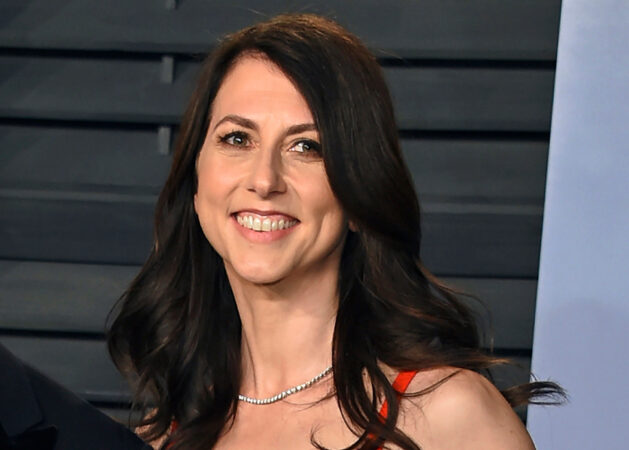
    The Trevor Project, known for its hotline for LGBTQ+ youth, received $45 million from billionaire and author MacKenzie Scott at the end of 2025, the organization said Monday.

    The gift is the largest in the organization’s history but also a major boon following years of management turmoil, layoffs, and the loss of significant federal funding over the summer.

    “I literally could not believe it and it took some time. I actually gasped,” said Jaymes Black, CEO of the Trevor Project, when they were notified of Scott’s gift.

    Scott, whose fortune largely comes from her ex-husband, Amazon founder Jeff Bezos, gave more than $7 billion to nonprofits in 2025, but this gift to the Trevor Project was not included among the donations she disclosed on her website in December. Scott previously gave the Trevor Project $6 million in 2020.

    In July, the Trump administration stopped providing specific support for gay, trans, and gender nonconforming young people who called the 988 National Suicide & Crisis Lifeline. The Trevor Project was one of the organizations staffing that option and lost $25 million in funding, the nonprofit said.

    The Trevor Project continues to run an independent hotline for LGBTQ+ young people that Black said reaches about 250,000 young people annually, but they served another 250,000 callers through the 988 Press 3 option, which was tailored for LGBTQ+ young people.

    The U.S. Department of Health and Human Services’ Substance Abuse and Mental Health Services Administration (SAMHSA) reported more than 1.5 million contacts were routed through the service between September 2022 and July 2025.

    The Trevor Project has gone through years of internal turmoil after exploding in size from an organization with an annual budget around $4 million in 2016 to over $83 million in 2023, according to its public tax returns. The nonprofit’s board removed its CEO in 2022 and has gone through a series of layoffs, including one in July. Black said the project’s 2026 budget was $47 million.

    “We are a smaller organization than we were before,” Black said. “And we will continue to be really intentional and really mindful around growth and what growth really means for the organization.”

    After it lost the 988 funding, the Trevor Project launched an emergency fundraiser that brought in $20 million to date, Black said, which they also hope Scott saw as proof that the organization was determined to stick around and make it through this period.

    “MacKenzie Scott’s folks were clear, like this gift was made for long-term impact,” Black said, adding that they would take their time deciding how to use the funds.

    Thad Calabrese, a professor at New York University who researches nonprofit financial management, said it’s not at all uncommon for nonprofits that grow very quickly to run into financial problems. But he also said the cuts and general instability in especially federal funding for nonprofits has upended many organizations’ business models.

    “Academic research has often viewed public funding as very stable, as a signal to donors that you’ve arrived as an organization, but the reality is you are now also open to changing political fortunes,” he said.

    He said research is also unclear about whether diversifying an organization’s revenue streams is always a better financial strategy.

    “You’re less dependent upon a few funders, but on the other hand, if you have a lot of different revenue streams, do you have the management capacity for that?” Calabrese asked, speaking generally and not commenting specifically on the Trevor Project.

    Scott has distinguished herself among the biggest individual donors by giving large, unrestricted gifts to nonprofits, often with a focus on equity or social justice. With the exception of an open call in 2023, she does not ask for project proposals nor accept applications.

    Despite the size of her gifts, which now often exceed the recipient organization’s annual budget, research from the Center for Effective Philanthropy has found that concerns about nonprofits misusing Scott’s funds or growing unsustainably have largely not been born out. That may be because Scott’s team, the members of which are largely unknown, conducts extensive research on organizations before making grants.

    In an essay announcing her 2025 gifts, Scott said, “The potential of peaceful, non-transactional contribution has long been underestimated, often on the basis that it is not financially self-sustaining, or that some of its benefits are hard to track. But what if these imagined liabilities are actually assets? … What if the fact that some of our organizations are vulnerable can itself be a powerful engine for our generosity?”

    Black called Scott’s second gift “a powerful validation” of the Trevor Project’s mission and impact, saying, “We’re calling this our turnaround story.”

  • Federal Reserve Chair Powell says DOJ has subpoenaed central bank, threatens criminal indictment

    Federal Reserve Chair Powell says DOJ has subpoenaed central bank, threatens criminal indictment

    WASHINGTON — Federal Reserve Chair Jerome Powell said Sunday the Department of Justice has served the central bank with subpoenas and threatened it with a criminal indictment over his testimony this summer about the Fed’s building renovations.

    The move represents an unprecedented escalation in President Donald Trump’s battle with the Fed, an independent agency he has repeatedly attacked for not cutting its key interest rate as sharply as he prefers. The renewed fight will likely rattle financial markets Monday and could over time escalate borrowing costs for mortgages and other loans.

    The subpoenas relate to Powell’s testimony before the Senate Banking Committee in June, the Fed chair said, regarding the Fed’s $2.5 billion renovation of two office buildings, a project that Trump has criticized as excessive.

    Powell on Sunday cast off what has up to this point been a restrained approach to Trump’s criticisms and personal insults, which he has mostly ignored. Instead, Powell issued a video statement in which he bluntly characterized the threat of criminal charges as simple “pretexts” to undermine the Fed’s independence when it comes to setting interest rates.

    “The threat of criminal charges is a consequence of the Federal Reserve setting interest rates based on our best assessment of what will serve the public, rather than following the preferences of the President,” Powell said. “This is about whether the Fed will be able to continue to set interest rates based on evidence and economic conditions — or whether instead monetary policy will be directed by political pressure or intimidation.”

    It’s a sharp departure from the Fed’s understated response to Trump this year. The central bank has attempted to placate the administration by dialing back some policies, such as efforts to consider the impact of climate change on the banking system, that the administration clearly opposed.

    The renewed attacks on the Fed’s independence, and Powell’s full-throated defense, reignite what had appeared to be a dormant battle between Trump and the chair he appointed in 2017. The subpoenas will renew fears that the Fed’s independence from day-to-day politics will be compromised, which could undermine global investors’ confidence in U.S. Treasury securities.

    “We expect the dollar, bonds and stocks to all fall in Monday trading in a sell-America trade similar to that in April last year at the peak of the tariff shock and earlier threat to Powell’s position as Fed chair,” Krishna Guha, an analyst at Evercore ISI, an investment bank, wrote in a note to clients.

    “We are stunned by this deeply disturbing development which came out of the blue after a period in which tensions between Trump and the Fed seemed to be contained,” Guha added.

    In a brief interview with NBC News Sunday, Trump insisted he didn’t know about the investigation into Powell. When asked if the investigation is intended to pressure Powell on rates, Trump said, “No. I wouldn’t even think of doing it that way.”

    Powell’s term as chair ends in May, and Trump administration officials have signaled that he could name a potential replacement this month. Trump has also sought to fire Fed governor Lisa Cook, an unprecedented step, though she has sued to keep her job and courts have ruled she can remain in her seat while the case plays out. The Supreme Court will hear arguments in that case Jan. 21.

    At the Senate Banking Committee hearing in June, Chairman Tim Scott, a Republican from South Carolina, said the Fed’s building renovation included “rooftop terraces, custom elevators that open into VIP dining rooms, white marble finishes, and even a private art collection.”

    Powell disputed those details in his testimony, saying “there’s no new marble. … there are no special elevators” and added that some of the controversial items are “not in the current plan.” In July, Russell Vought, director of the Office of Management and Budget, said in a letter to Powell that his testimony about changes to the building plans “raises serious questions about the project’s compliance” with previous plans approved by a planning commission.

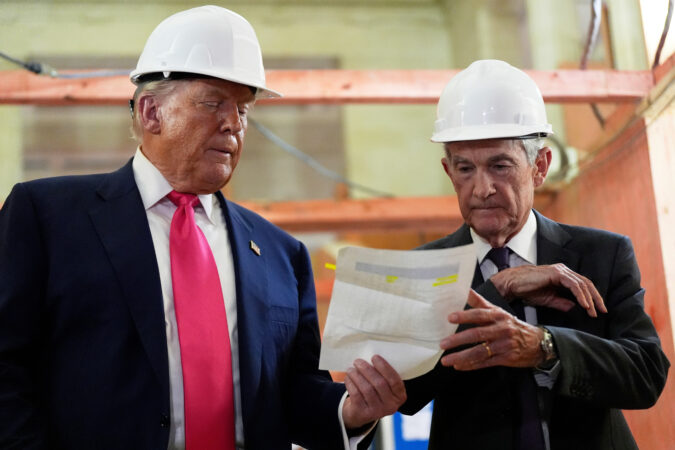
    Still, later that month, Trump visited the building site and, while standing next to Powell, overstated the cost of the renovation. Later that day, Trump, speaking to reporters, downplayed any concerns with the renovation. He said, “they have to get it done” and added, “Look, there’s always Monday morning quarterbacks. I don’t want to be that. I want to help them get it finished.”

    When asked if it was a firing offense, Trump said, “I don’t want to put that in this category.”

    The Justice Department in a statement Sunday said it can’t comment on any particular case, but added that Attorney General Pam Bondi “has instructed her US Attorneys to prioritize investigating any abuse of tax payer dollars.”

    Timothy Lauer, a spokesperson for U.S. Attorney Jeanine Pirro’s office, said they don’t comment on ongoing investigations.

    With the subpoenas, Powell becomes the latest perceived adversary of the president to face a criminal investigation by the Trump administration’s Justice Department. Trump himself has urged prosecutions of his political opponents, obliterating institutional guardrails for a Justice Department that for generations has taken care to make investigative and prosecutorial decisions independent of the White House.

    The potential indictment has already drawn concern from one Republican senator, who said he’ll oppose any future nominee to the central bank, including any replacement for Powell, until “this legal matter is fully resolved.”

    “If there were any remaining doubt whether advisers within the Trump administration are actively pushing to end the independence of the Federal Reserve, there should now be none,” said North Carolina Sen. Thom Tillis, who sits on the Banking Committee, which oversees Fed nominations. “It is now the independence and credibility of the Department of Justice that are in question.”

  • Death toll from protests in Iran hits at least 544, activists say, as Trump says Iran wants to talk

    Death toll from protests in Iran hits at least 544, activists say, as Trump says Iran wants to talk

    DUBAI, United Arab Emirates — President Donald Trump said Sunday that Iran proposed negotiations after his threat to strike the Islamic Republic over its bloody crackdown targeting demonstrators there, a move coming as activists said the death toll in protests rose to at least 544.

    Trump and his national security team have been weighing a range of potential responses against Iran including cyberattacks and direct strikes by the U.S. or Israel, according to two people familiar with internal White House discussions who were not authorized to comment publicly and spoke on condition of anonymity.

    “The military is looking at it, and we’re looking at some very strong options,” Trump told reporters on Air Force One on Sunday night. Asked about Iran’s threats of retaliation, he said: “If they do that, we will hit them at levels that they’ve never been hit before.”

    Trump said that his administration was in talks to set up a meeting with Tehran, but cautioned that he may have to act first as reports of the death toll in Iran mount and the government continues to arrest protesters.

    “I think they’re tired of being beat up by the United States,” Trump said. “Iran wants to negotiate.”

    He added: “The meeting is being set up, but we may have to act because of what’s happening before the meeting. But a meeting is being set up. Iran called, they want to negotiate.”

    There was no immediate acknowledgment from Iran of the offering for a meeting. The massive ongoing U.S. military deployment to the Caribbean is a factor that the Pentagon and Trump’s national security planners must consider. Tehran also warned that the U.S. military and Israel would be “legitimate targets” if America uses force to protect demonstrators. Trump meanwhile said the Islamic Republic reached out and proposed negotiations.

    More than 10,600 people also have been detained over the two weeks of protests, said the U.S.-based Human Rights Activists News Agency, which has been accurate in previous unrest in recent years and gave the death toll. It relies on supporters in Iran cross-checking information. It said 496 of the dead were protesters and 48 were with security forces.

    With the internet down in Iran and phone lines cut off, gauging the demonstrations from abroad has grown more difficult. The Associated Press has been unable to independently assess the toll. Iran’s government has not offered overall casualty figures.

    Those abroad fear the information blackout is emboldening hard-liners within Iran’s security services to launch a bloody crackdown. Protesters flooded the streets in the country’s capital and its second-largest city on Saturday night into Sunday morning. Online videos purported to show more demonstrations Sunday night into Monday, with a Tehran official acknowledging them in state media.

    Defiance in parliament

    The threat to strike the U.S. military and Israel came during a parliamentary speech by Mohammad Baagher Qalibaf, the hard-liner speaker of the body who has run for the presidency in the past.

    He directly threatened Israel, calling it “the occupied territory.”

    “In the event of an attack on Iran, both the occupied territory and all American military centers, bases and ships in the region will be our legitimate targets,” Qalibaf said. “We do not consider ourselves limited to reacting after the action and will act based on any objective signs of a threat.”

    Lawmakers rushed the dais in parliament, shouting: “Death to America!”

    It remains unclear how serious Iran is about launching a strike, particularly after its air defenses were destroyed during the 12-day war in June with Israel. Any decision to go to war would rest with Iran’s 86-year-old Supreme Leader Ayatollah Ali Khamenei.

    The U.S. military has said in the Mideast it is “postured with forces that span the full range of combat capability to defend our forces, our partners and allies and U.S. interests.” Iran targeted U.S. forces at Al Udeid Air Base in Qatar in June, while the U.S. Navy’s Mideast-based 5th Fleet is stationed in the island kingdom of Bahrain.

    Israel, meanwhile, is “watching closely” the situation between the U.S. and Iran, said an Israeli official, who spoke on condition of anonymity due to not being authorized to speak to journalists. Israeli Prime Minister Benjamin Netanyahu spoke with U.S. Secretary of State Marco Rubio overnight on topics including Iran, the official added.

    “The people of Israel, the entire world, are in awe of the tremendous heroism of the citizens of Iran,” said Netanyahu, a longtime Iran hawk.

    At the Vatican, Pope Leo XIV mentioned Iran as a place “where ongoing tensions continue to claim many lives,” adding that “I hope and pray that dialogue and peace may be patiently nurtured in pursuit of the common good of the whole of society.”

    Demonstrations were held in some international capitals in support of the protesters. A spokesperson said United Nations Secretary-General António Guterres was “shocked” by reports of violence against protesters resulting in “scores of deaths” and called on Iranian authorities to use maximum restraint and restore communications.

    Protests in Tehran and Mashhad

    Online videos sent out of Iran, likely using Starlink satellite transmitters, purportedly showed demonstrators gathering in northern Tehran’s Punak neighborhood. There, it appeared authorities shut off streets, with protesters waving their lit mobile phones. Others banged metal while fireworks went off.

    In Mashhad, Iran’s second-largest city some 450 miles northeast of Tehran, footage purported to show protesters confronting security forces. Protests also appeared to happen in Kerman, 500 miles southeast of Tehran.

    Iranian state television on Sunday morning had correspondents appear on the streets in several cities to show calm areas, with a date stamp shown on screen. Tehran and Mashhad were not included.

    The demonstrations began Dec. 28 over the collapse of the Iranian rial currency, which trades at over 1.4 million to $1, as the country’s economy is squeezed by international sanctions in part levied over its nuclear program. The protests intensified and grew into calls directly challenging Iran’s theocracy.

  • A $400,000 payout after Maduro’s capture is putting prediction markets in the spotlight

    A $400,000 payout after Maduro’s capture is putting prediction markets in the spotlight

    Prediction markets let people wager on anything from a basketball game to the outcome of a presidential election — and recently, the downfall of former Venezuelan President Nicolás Maduro.

    The latter is drawing renewed scrutiny into this murky world of speculative, 24/7 transactions. In early January, an anonymous trader pocketed more than $400,000 after betting that Maduro would soon be out of office.

    The bulk of the trader’s bids on the platform Polymarket were made mere hours before President Donald Trump announced the surprise nighttime raid that led to Maduro’s capture, fueling online suspicions of potential insider trading because of the timing of the wagers and the trader’s narrow activity on the platform. Others argued that the risk of getting caught was too big, and that previous speculation about Maduro’s future could have led to such transactions.

    Polymarket did not respond to requests for comment.

    The commercial use of prediction markets has skyrocketed in recent years, opening the door for people to wager their money on the likelihood of a growing list of future events. But despite some eye-catching windfalls, traders still lose money everyday. And in terms of government oversight in the U.S., the trades are categorized differently than traditional forms of gambling — raising questions about transparency and risk.

    Here’s what we know:

    How prediction markets work

    The scope of topics involved in prediction markets can range immensely — from escalation in geopolitical conflicts, to pop culture moments, and even the fate of conspiracy theories. Recently, there’s been a surge of wagers on elections and sports games. But some users have also bet millions on things like a rumored — and ultimately unrealized — “secret finale” for Netflix’s Stranger Things, whether the U.S. government will confirm the existence of extraterrestrial life, and how much billionaire Elon Musk might post on social media this month.

    In industry-speak, what someone buys or sells in a prediction market is called an “event contract.” They’re typically advertised as “yes” or “no” wagers. And the price of one fluctuates between $0 and $1, reflecting what traders are collectively willing to pay based on a 0% to 100% chance of whether they think an event will occur.

    The more likely traders think an event will occur, the more expensive that contract will become. And as those odds change over time, users can cash out early to make incremental profits, or try to avoid higher losses on what they’ve already invested.

    Proponents of prediction markets argue putting money on the line leads to better forecasts. Experts like Koleman Strumpf, an economics professor at Wake Forest University, think there’s value in monitoring these platforms for potential news — pointing to prediction markets’ past success with some election outcomes, including the 2024 presidential race.

    Still, it’s never a “crystal ball,” he noted, and prediction markets can be wrong, too.

    Who is behind all of the trading is also pretty murky. While the companies running the platforms collect personal information of their users in order to verify identities and payments, most people can trade under anonymous pseudonyms online — making it difficult for the public to know who is profiting off many event contracts. In theory, people investing their money may be closely following certain events, but others could just be randomly guessing.

    Critics stress that the ease and speed of joining these 24/7 wagers leads to financial losses everyday, particularly harming users who may already struggle with gambling. The space also broadens possibilities for potential insider trading.

    The major players

    Polymarket is one of the largest prediction markets in the world, where its users can fund event contracts through cryptocurrency, debit or credit cards, and bank transfers.

    Restrictions vary by country, but in the U.S., the reach of these markets has expanded rapidly over recent years, coinciding with shifting policies out of Washington. Former President Joe Biden was aggressive in cracking down on prediction markets and, following a 2022 settlement with the Commodity Futures Trading Commission, Polymarket was barred from operating in the country.

    That changed under Trump late last year, when Polymarket announced it would be returning to the U.S. after receiving clearance from the commission. American-based users can now join a platform “waitlist.”

    Meanwhile, Polymarket’s top competitor, Kalshi, has been a federally-regulated exchange since 2020. The platform offers similar ways to buy and sell event contracts as Polymarket — and it currently allows event contracts on elections and sports nationwide. Kalshi won court approval just weeks before the 2024 election to let Americans put money on upcoming political races and began to host sports trading about a year ago.

    The space is now crowded with other big names. Sports betting giants DraftKings and FanDuel both launched prediction platforms last month. Online broker Robinhood is widening its own offerings. Trump’s social media site Truth Social has also promised to offer an in-platform prediction market through a partnership with Crypto.com — and one of the president’s sons, Donald Trump Jr., holds advisory roles at both Polymarket and Kalshi.

    “The train has left the station on these event contracts, they’re not going away,” said Melinda Roth, a visiting associate professor at Washington and Lee University’s School of Law.

    Loose regulation

    Because they’re positioned as selling event contracts, prediction markets are regulated by the CFTC. That means they can avoid state-level restrictions or bans in place for traditional gambling and sports betting today.

    “It’s a huge loophole,” said Karl Lockhart, an assistant professor of law at DePaul University who has studied this space. “You just have to comply with one set of regulations, rather than (rules from) each state around the country.”

    Sports betting is taking center stage. There are a handful of big states — like California and Texas, for example — where sports betting is still illegal, but people can now wager on games, athlete trades, and more through event contracts.

    A growing number of states and tribes are suing to stop this. And lawyers expect litigation to eventually reach the U.S. Supreme Court, as added regulations from the Trump administration seem unlikely.

    Federal law bars event contracts related to gaming as well as war, terrorism, and assassinations, Roth said, which could put some prediction market trades on shaky ground, at least in the U.S. But users might still find ways to buy certain contracts while traveling abroad or connecting to different VPNs.

    Whether the CFTC will take any of that on has yet to be seen. But the agency, which did not respond to request for comment, has already taken steps away from enforcement.

    Despite overseeing trillions of dollars for the overall U.S. derivatives market, the CFTC is also much smaller than the Securities and Exchange Commission. And at the same time event contracts are growing rapidly on prediction market platforms, there have been additional cuts to the CFTC’s workforce and a wave of leadership departures under Trump’s second term. Only one of five commissioner slots operating the agency is currently filled.

    Still, other lawmakers calling for a stronger crackdown on potential insider trading in prediction markets — particularly following suspicion around last week’s Maduro trade on Polymarket. On Friday, Democratic Rep. Ritchie Torres introduced a bill aimed at curbing government employees’ involvement in politically-related event contracts.

    The bill has already gotten support from Kalshi CEO Tarek Mansour — who on LinkedIn maintained that insider trading has always been banned on his company’s platform but that more needs to be done to crack down on unregulated prediction markets.

  • Trump signs executive order meant to protect the money from Venezuelan oil

    Trump signs executive order meant to protect the money from Venezuelan oil

    WEST PALM BEACH, Fla. — President Donald Trump’s new executive order on Venezuelan oil revenue is meant to ensure that the money remains protected from being used in judicial proceedings.

    The executive order, made public on Saturday, says that if the funds were to be seized for such use, it could “undermine critical U.S. efforts to ensure economic and political stability in Venezuela.”

    The order comes amid caution from top oil company executives that the tumult and instability in Venezuela could make the country less attractive for private investment and rebuilding.

    “If we look at the commercial constructs and frameworks in place today in Venezuela, today it’s uninvestable,” said Darren Woods, CEO of ExxonMobil, the largest U.S. oil company, during a meeting convened by Trump with oil executives on Friday.

    During the session, Trump tried to assuage the concerns of the oil companies and said the executives would be dealing directly with the U.S., rather than the Venezuelan government.

    Venezuela has a history of state asset seizures, ongoing U.S. sanctions, and decades of political uncertainty.

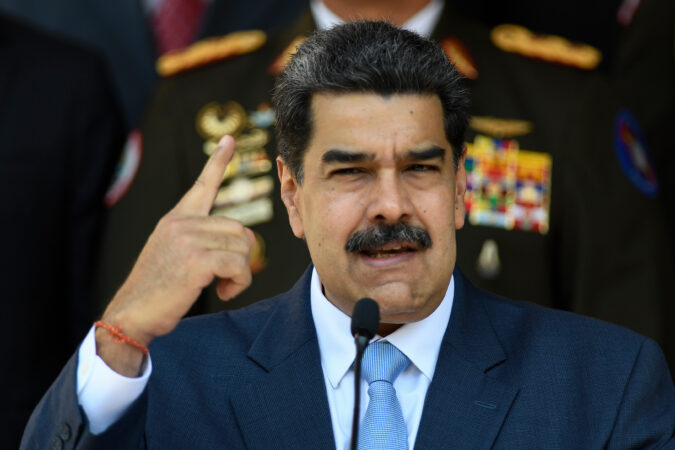
    Getting U.S. oil companies to invest in Venezuela and help rebuild the country’s infrastructure is a top priority of the Trump administration after the dramatic capture of now-deposed leader Nicolás Maduro.

    The White House is framing the effort to “run” Venezuela in economic terms, and Trump has seized tankers carrying Venezuelan oil, has said the U.S. is taking over the sales of 30 million to 50 million barrels of previously sanctioned Venezuelan crude, and plans to control sales worldwide indefinitely.

    “I love the Venezuelan people, and am already making Venezuela rich and safe again,” Trump, who is currently in southern Florida, wrote on his social media site on Saturday. “Congratulations and thank you to all of those people who are making this possible!!!”

    The order says the oil revenue is property of Venezuela that is being held by the United States for “governmental and diplomatic purposes” and not subject to private claims.

    Its legal underpinnings are the National Emergencies Act and the International Emergency Economic Powers Act. Trump, in the order, says the possibility that the oil revenues could be caught up in judicial proceedings constitutes an “unusual and extraordinary threat” to the U.S.

  • How the U.S. could take over Greenland and the potential challenges

    How the U.S. could take over Greenland and the potential challenges

    U.S. President Donald Trump wants to own Greenland. He has repeatedly said the United States must take control of the strategically located and mineral-rich island, which is a semiautonomous region that’s part of NATO ally Denmark.

    Officials from Denmark, Greenland, and the United States met Thursday in Washington and will meet again this week to discuss a renewed push by the White House, which is considering a range of options, including using military force, to acquire the island.

    Trump said Friday he is going to do “something on Greenland, whether they like it or not.”

    If it’s not done “the easy way, we’re going to do it the hard way,” he said without elaborating what that could entail. In an interview Thursday, he told the New York Times that he wants to own Greenland because “ownership gives you things and elements that you can’t get from just signing a document.”

    Greenland’s party leaders have rejected Trump’s repeated calls for the U.S. to take control of the island, saying that Greenland’s future must be decided by its people.

    “We don’t want to be Americans, we don’t want to be Danes, we want to be Greenlanders,” Greenland Prime Minister Jens-Frederik Nielsen and four party leaders said in a statement Friday night.

    “As Greenlandic party leaders, we would like to emphasize once again our wish that the United States’ contempt for our country ends,” the statement said.

    Danish Prime Minister Mette Frederiksen has warned that an American takeover of Greenland would mark the end of NATO.

    While Greenland is the largest island in the world, it has a population of around 57,000 and doesn’t have its own military. Defense is provided by Denmark, whose military is dwarfed by that of the U.S.

    It’s unclear how the remaining NATO members would respond if the U.S. decided to forcibly take control of the island or if they would come to Denmark’s aid.

    This is a look at some of the ways the U.S. could take control of Greenland and the potential challenges.

    Military action could alter global relations

    Trump and his officials have indicated they want to control Greenland to enhance American security and explore business and mining deals. But Imran Bayoumi, an associate director at the Atlantic Council’s Scowcroft Center for Strategy and Security, said the sudden focus on Greenland is also the result of decades of neglect by several U.S. presidents towards Washington’s position in the Arctic.

    The current fixation is partly down to “the realization we need to increase our presence in the Arctic, and we don’t yet have the right strategy or vision to do so,” he said.

    If the U.S. took control of Greenland by force, it would plunge NATO into a crisis, possibly an existential one.

    “If the United States chooses to attack another NATO country militarily, then everything stops,” Frederiksen has said.

    Trump said he needs control of the island to guarantee American security, citing the threat from Russian and Chinese ships in the region, but “it’s not true” said Lin Mortensgaard, an expert on the international politics of the Arctic at the Danish Institute for International Studies, or DIIS.

    While there are probably Russian submarines — as there are across the Arctic region — there are no surface vessels, Mortensgaard said. China has research vessels in the Central Arctic Ocean, and while the Chinese and Russian militaries have done joint military exercises in the Arctic, they have taken place closer to Alaska, she said.

    Bayoumi, of the Atlantic Council, said he doubted Trump would take control of Greenland by force because it’s unpopular with both Democratic and Republican lawmakers, and would likely “fundamentally alter” U.S. relationships with allies worldwide.

    The U.S. already has access to Greenland under a 1951 defense agreement, and Denmark and Greenland would be “quite happy” to accommodate a beefed-up American military presence, Mortensgaard said.

    For that reason, “blowing up the NATO alliance” for something Trump has already, doesn’t make sense, said Ulrik Pram Gad, an expert on Greenland at DIIS.

    Bilateral agreements may assist effort

    U.S. Secretary of State Marco Rubio told a select group of U.S. lawmakers this week that it was the Republican administration’s intention to eventually purchase Greenland, as opposed to using military force. Danish and Greenlandic officials have previously said the island isn’t for sale.

    It’s not clear how much buying the island could cost, or if the U.S. would be buying it from Denmark or Greenland.

    Washington also could boost its military presence in Greenland “through cooperation and diplomacy,” without taking it over, Bayoumi said.

    One option could be for the U.S. to get a veto over security decisions made by the Greenlandic government, as it has in islands in the Pacific Ocean, Gad said.

    Palau, Micronesia, and the Marshall Islands have a Compact of Free Association, or COFA, with the U.S.

    That would give Washington the right to operate military bases and make decisions about the islands’ security in exchange for U.S. security guarantees and around $7 billion of yearly economic assistance, according to the Congressional Research Service.

    It’s not clear how much that would improve upon Washington’s current security strategy. The U.S. already operates the remote Pituffik Space Base in northwestern Greenland, and can bring in as many troops as it wants under existing agreements.

    Influence operations expected to fail

    Greenlandic politician Aaja Chemnitz told the Associated Press that Greenlanders want more rights, including independence, but don’t want to become part of the U.S.

    Gad suggested influence operations to persuade Greenlanders to join the U.S. would likely fail. He said that is because the community on the island is small and the language is “inaccessible.”

    Danish Foreign Minister Lars Løkke Rasmussen summoned the top U.S. official in Denmark in August to complain that “foreign actors” were seeking to influence the country’s future. Danish media reported that at least three people with connections to Trump carried out covert influence operations in Greenland.

    Even if the U.S. managed to take control of Greenland, it would likely come with a large bill, Gad said. That’s because Greenlanders currently have Danish citizenship and access to the Danish welfare system, including free healthcare and schooling.

    To match that, “Trump would have to build a welfare state for Greenlanders that he doesn’t want for his own citizens,” Gad said.

    Disagreement unlikely to be resolved

    Since 1945, the American military presence in Greenland has decreased from thousands of soldiers over 17 bases and installations to 200 troops at the remote Pituffik Space Base in the northwest of the island, Rasmussen said last year. The base supports missile warning, missile defense, and space surveillance operations for the U.S. and NATO.

    U.S. Vice President JD Vance told Fox News on Thursday that Denmark has neglected its missile defense obligations in Greenland, but Mortensgaard said that it makes “little sense to criticize Denmark,” because the main reason the U.S. operates the Pituffik base in the north of the island is to provide early detection of missiles.

    The best outcome for Denmark would be to update the defense agreement, which allows the U.S. to have a military presence on the island, and have Trump sign it with a “gold-plated signature,” Gad said.

    But he suggested that’s unlikely because Greenland is “handy” to the U.S president.

    When Trump wants to change the news agenda — including distracting from domestic political problems — “he can just say the word ‘Greenland’ and this starts all over again,” Gad said.

  • Protests in Iran near 2-week mark as authorities intensify crackdown on demonstrators

    Protests in Iran near 2-week mark as authorities intensify crackdown on demonstrators

    DUBAI, United Arab Emirates — Protests sweeping across Iran neared the two-week mark Saturday, with the country’s government acknowledging the ongoing demonstrations despite an intensifying crackdown and as the Islamic Republic remains cut off from the rest of the world.

    With the internet down in Iran and phone lines cut off, gauging the demonstrations from abroad has grown more difficult. But the death toll in the protests has grown to at least 72 people killed and over 2,300 others detained, according to the U.S.-based Human Rights Activists News Agency. Iranian state TV is reporting on security force casualties while portraying control over the nation.

    Supreme Leader Ayatollah Ali Khamenei has signaled a coming clampdown, despite U.S. warnings. Tehran escalated its threats Saturday, with Iran’s attorney general, Mohammad Movahedi Azad, warning that anyone taking part in protests will be considered an “enemy of God,” a death-penalty charge. The statement carried by Iranian state television said even those who “helped rioters” would face the charge.

    “Prosecutors must carefully and without delay, by issuing indictments, prepare the grounds for the trial and decisive confrontation with those who, by betraying the nation and creating insecurity, seek foreign domination over the country,” the statement read. “Proceedings must be conducted without leniency, compassion or indulgence.”

    U.S. Secretary of State Marco Rubio offered support for the protesters.

    “The United States supports the brave people of Iran,” Rubio wrote Saturday on the social platform X. The State Department separately warned: “Do not play games with President Trump. When he says he’ll do something, he means it.”

    State TV split-screen highlights challenge

    Saturday marks the start of the work week in Iran, but many schools and universities reportedly held online classes, Iranian state TV reported. Internal Iranian government websites are believed to be functioning.

    State TV repeatedly played a driving, martial orchestral arrangement from the Epic of Khorramshahr by Iranian composer Majid Entezami, while showing pro-government demonstrations. The song, aired repeatedly during the 12-day war launched by Israel, honors Iran’s 1982 liberation of the city of Khorramshahr during the Iran-Iraq war. It has been used in videos of protesting women cutting away their hair to protest the 2022 death of Mahsa Amini as well.

    It also repeatedly aired video of purported protesters shooting at security forces with firearms.

    “Field reports indicate that peace prevailed in most cities of the country at night,” a state TV anchor reported Saturday morning. “After a number of armed terrorists attacked public places and set fire to people’s private property last night, there was no news of any gathering or chaos in Tehran and most provinces last night.”

    That was directly contradicted by an online video verified by the Associated Press that showed demonstrations in northern Tehran’s Saadat Abad area, with what appeared to be thousands on the street.

    “Death to Khamenei!” a man chanted.

    The semiofficial Fars news agency, believed to be close to Iran’s paramilitary Revolutionary Guard and one of the few media outlets able to publish to the outside world, released surveillance camera footage that it said came from demonstrations in Isfahan. In it, a protester appeared to fire a long gun, while others set fires and threw gasoline bombs at what appeared to be a government compound.

    The Young Journalists’ Club, associated with state TV, reported that protesters killed three members of the Guard’s all-volunteer Basij force in the city of Gachsaran. It also reported a security official was stabbed to death in Hamadan province, a police officer killed in the port city of Bandar Abbas, and another in Gilan, as well as one person slain in Mashhad.

    The semiofficial Tasnim news agency, also close to the Guard, claimed authorities detained nearly 200 people belonging to what it described as “operational terrorist teams.” It alleged those arrested had weapons including firearms, grenades, and gasoline bombs.

    State television also aired footage of a funeral service attended by hundreds in Qom, a Shiite seminary city just south of Tehran.

    More weekend demonstrations planned

    Iran’s theocracy cut off the nation from the internet and international telephone calls on Thursday, though it allowed some state-owned and semiofficial media to publish. Qatar’s state-funded Al Jazeera news network reported live from Iran, but they appeared to be the only major foreign outlet able to work.

    Iran’s exiled Crown Prince Reza Pahlavi, who called for protests Thursday and Friday, asked in his latest message for demonstrators to take to the streets Saturday and Sunday. He urged protesters to carry Iran’s old lion-and-sun flag and other national symbols used during the time of the shah to “claim public spaces as your own.”

    Pahlavi’s support of and from Israel has drawn criticism in the past — particularly after the 12-day war. Demonstrators have shouted in support of the shah in some protests, but it isn’t clear whether that’s support for Pahlavi himself or a desire to return to a time before the 1979 Islamic Revolution.

    Online video purported to show protests ongoing Saturday night as well.

    The demonstrations began Dec. 28 over the collapse of the Iranian rial currency, which trades at over 1.4 million to $1, as the country’s economy is squeezed by international sanctions in part levied over its nuclear program. The protests intensified and grew into calls directly challenging Iran’s theocracy.

    Airlines have canceled some flights into Iran over the demonstrations. Austrian Airlines said Saturday it had decided to suspend its flights to Iran “as a precautionary measure” through Monday. Turkish Airlines earlier announced the cancellation of 17 flights to three cities in Iran.

    Meanwhile, concern is growing that the internet shutdown will allow Iran’s security forces to go on a bloody crackdown, as they have in other rounds of demonstrations. Ali Rahmani, the son of Nobel Peace Prize laureate Narges Mohammadi, who is imprisoned in Iran, noted that security forces killed hundreds in a 2019 protest “so we can only fear the worst.”

    “They are fighting, and losing their lives, against a dictatorial regime,” Rahmani said.

  • Trump pushes a 1-year, 10% cap on credit card interest rates and banks balk

    Trump pushes a 1-year, 10% cap on credit card interest rates and banks balk

    NEW YORK — Reviving a campaign pledge, President Donald Trump wants a one-year, 10% cap on credit card interest rates, a move that could save Americans tens of billions of dollars but drew immediate opposition from an industry that has been in his corner.

    Trump was not clear in his social media post Friday night whether a cap might take effect through executive action or legislation, though one Republican senator said he had spoken with the president and would work on a bill with his “full support.” Trump said he hoped it would be in place by Jan. 20, one year after he took office.

    Strong opposition is certain from Wall Street and the credit card companies, which donated heavily to his 2024 campaign and to support his second-term agenda.

    “We will no longer let the American Public be ripped off by Credit Card Companies that are charging Interest Rates of 20 to 30%,” Trump wrote on his Truth Social platform.

    Researchers who studied Trump’s campaign pledge after it was first announced found that Americans would save roughly $100 billion in interest a year if credit card rates were capped at 10%. The same researchers found that while the credit card industry would take a major hit, it would still be profitable, although credit card rewards and other perks might be scaled back.

    Americans are paying, on average, between 19.65% and 21.5% in interest on credit cards according to the Federal Reserve and other industry tracking sources. That has come down in the past year as the central bank lowered benchmark rates, but is near the highs since federal regulators started tracking credit card rates in the mid-1990s.

    The Republican administration has proved particularly friendly until now to the credit card industry.

    Capital One got little resistance from the White House when it finalized its purchase and merger with Discover Financial in early 2025, a deal that created the nation’s largest credit card company. The Consumer Financial Protection Bureau, which is largely tasked with going after credit card companies for alleged wrongdoing, has been largely nonfunctional since Trump took office.

    In a joint statement, the banking industry was opposed to Trump’s proposal.

    “If enacted, this cap would only drive consumers toward less regulated, more costly alternatives,” the American Bankers Association and allied groups said.

    The White House did not respond to questions about how the president seeks to cap the rate or whether he has spoken with credit card companies about the idea.

    Sen. Roger Marshall (R., Kan.), who said he talked with Trump on Friday night, said the effort is meant to “lower costs for American families and to rein in greedy credit card companies who have been ripping off hardworking Americans for too long.”

    Legislation in both the House and the Senate would do what Trump is seeking.

    Sens. Bernie Sanders (I., Vt.) and Josh Hawley (R., Mo.) released a plan in February that would immediately cap interest rates at 10% for five years, hoping to use Trump’s campaign promise to build momentum for their measure.

    Hours before Trump’s post, Sanders said that the president, rather than working to cap interest rates, had taken steps to deregulate big banks that allowed them to charge much higher credit card fees.

    Reps. Alexandria Ocasio-Cortez (D., N.Y.) and Anna Paulina Luna (R., Fla.) have proposed similar legislation. Ocasio-Cortez is a frequent political target of Trump, while Luna is a close ally of the president.