Category: Business Wires

  • Trump meets with oil executives at the White House on Friday, seeking investments in Venezuela

    Trump meets with oil executives at the White House on Friday, seeking investments in Venezuela

    WASHINGTON — President Donald Trump met with oil executives at the White House on Friday in hopes of securing $100 billion in investments to revive Venezuela’s ability to fully tap into its expansive reserves of petroleum — a plan that rides on their comfort in making commitments in a country plagued by instability, inflation and uncertainty.

    Since the U.S. military raid to capture former Venezuelan leader Nicolás Maduro on Saturday, Trump has quickly pivoted to portraying the move as a newfound economic opportunity for the U.S., seizing tankers carrying Venezuelan oil, saying the U.S. is taking over the sales of 30 million to 50 million barrels of previously sanctioned Venezuelan oil and will be controlling sales worldwide indefinitely.

    On Friday, U.S. forces seized their fifth tanker over the past month that has been linked to Venezuelan oil. The action reflected the determination of the U.S. to fully control the exporting, refining and production of Venezuelan petroleum, a sign of the Trump administration’s plans for ongoing involvement in the sector as it seeks commitments from private companies.

    It’s all part of a broader push by Trump to keep gasoline prices low. At a time when many Americans are concerned about affordability, the incursion in Venezuela melds Trump’s assertive use of presidential powers with an optical spectacle meant to convince Americans that he can bring down energy prices.

    “At least 100 Billion Dollars will be invested by BIG OIL, all of whom I will be meeting with today at The White House,” Trump said Friday in a pre-dawn social media post.

    Trump met with executives from 17 oil companies, according to the White House. Among the companies attending are Chevron, which still operates in Venezuela, and ExxonMobil and ConocoPhillips, which both had oil projects in the country that were lost as part of a 2007 nationalization of private businesses under Maduro’s predecessor, Hugo Chávez.

    The president is meeting with a wide swath of domestic and international companies with interests ranging from construction to the commodity markets. Other companies slated to be at the meeting include Halliburton, Valero, Marathon, Shell, Singapore-based Trafigura, Italy-based Eni, and Spain-based Repsol.

    Large U.S. oil companies have so far largely refrained from affirming investments in Venezuela as contracts and guarantees need to be in place. Trump has suggested on social media that America would help to backstop any investments.

    Venezuela’s oil production has slumped below one million barrels a day. Part of Trump’s challenge to turn that around will be to convince oil companies that his administration has a stable relationship with Venezuela’s interim President Delcy Rodríguez, as well as protections for companies entering the market.

    Secretary of State Marco Rubio, Energy Secretary Chris Wright and Interior Secretary Doug Burgum are slated to attend the oil executives meeting, according to the White House.

    Meanwhile, the United States and Venezuelan governments said Friday they were exploring the possibility of restoring diplomatic relations between the two countries, and that a delegation from the Trump administration arrived to the South American nation on Friday.

    The small team of U.S. diplomats and diplomatic security officials traveled to Venezuela to make a preliminary assessment about the potential re-opening of the U.S. Embassy in Caracas, the State Department said in a statement.

    Trump also announced on Friday he’d meet with President Gustavo Petro in early February, but called on the Colombian leader to make quick progress on stemming flow of cocaine into the U.S.

    Trump, following the ouster of Maduro, had made vague threats to take similar action against Petro. Trump abruptly changed his tone Wednesday about his Colombian counterpart after a friendly phone call in which he invited Petro to visit the White House.

  • Iran supreme leader signals upcoming crackdown on protesters ‘ruining their own streets’ for Trump

    Iran supreme leader signals upcoming crackdown on protesters ‘ruining their own streets’ for Trump

    DUBAI, United Arab Emirates — Iran signaled Friday that security forces would crack down on protesters, directly challenging U.S. President Donald Trump’s pledge to support those peacefully demonstrating as the death toll rose to at least 62.

    Supreme Leader Ayatollah Ali Khamenei dismissed Trump as having hands “stained with the blood of Iranians” as supporters shouted “Death to America!” in footage aired by Iranian state television. State media later repeatedly referred to demonstrators as “terrorists,” setting the stage for a violent crackdown like those that followed other nationwide protests in recent years.

    Protesters are “ruining their own streets … in order to please the president of the United States,” the 86-year-old Khamenei said to a crowd at his compound in Tehran. “Because he said that he would come to their aid. He should pay attention to the state of his own country instead.”

    Iran’s judiciary chief Gholamhossein Mohseni-Ejei separately vowed that punishment for protesters “will be decisive, maximum, and without any legal leniency.”

    There was no immediate response from Washington, though Trump has repeated his pledge to strike Iran if protesters are killed, a threat that’s taken on greater significance after the U.S. military raid that seized Venezuela’s Nicolás Maduro.

    Internet cut off

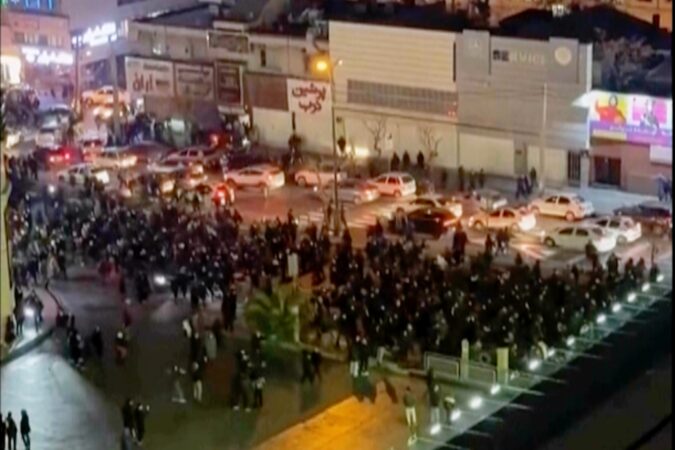
    Despite Iran’s theocracy cutting off the nation from the internet and international telephone calls, short online videos shared by activists purported to show protesters chanting against Iran’s government around bonfires as debris littered the streets in the capital, Tehran, and other areas into Friday morning.

    Iranian state media alleged “terrorist agents” of the U.S. and Israel set fires and sparked violence. It also said there were “casualties,” without elaborating.

    The full scope of the demonstrations couldn’t be immediately determined due to the communications blackout, though it represented yet another escalation in protests that began over Iran’s ailing economy and that has morphed into the most significant challenge to the government in several years. The protests have intensified steadily since beginning Dec. 28.

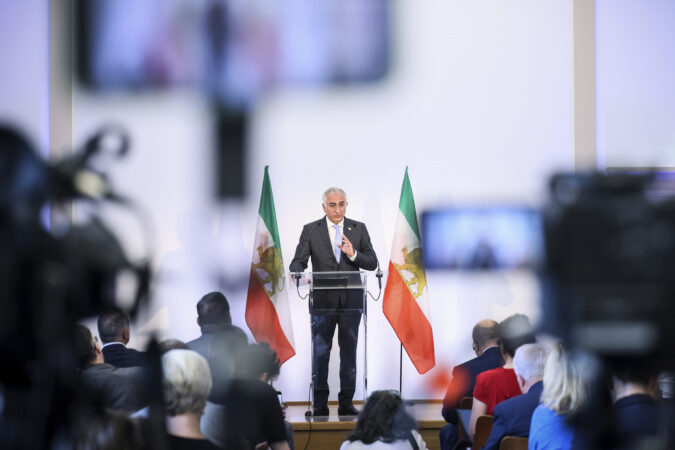
    The protests also represented the first test of whether the Iranian public could be swayed by Crown Prince Reza Pahlavi, whose fatally ill father fled Iran just before the country’s 1979 Islamic Revolution. Pahlavi, who called for the protests Thursday night, similarly has called for demonstrations at 8 p.m. Friday.

    Demonstrations have included cries in support of the shah, something that could bring a death sentence in the past but now underlines the anger fueling the protests that began over Iran’s ailing economy.

    So far, violence around the demonstrations has killed at least 62 people while more than 2,300 others have been detained, said the U.S.-based Human Rights Activists News Agency.

    “What turned the tide of the protests was former Crown Prince Reza Pahlavi’s calls for Iranians to take to the streets at 8 p.m. on Thursday and Friday,” said Holly Dagres, a senior fellow at the Washington Institute for Near East Policy. “Per social media posts, it became clear that Iranians had delivered and were taking the call seriously to protest in order to oust the Islamic Republic.”

    “This is exactly why the internet was shut down: to prevent the world from seeing the protests. Unfortunately, it also likely provided cover for security forces to kill protesters.”

    Thursday night protests preceded internet shutdown

    When the clock struck 8 p.m. Thursday, neighborhoods across Tehran erupted in chanting, witnesses said. The chants included “Death to the dictator!” and “Death to the Islamic Republic!” Others praised the shah, shouting: “This is the last battle! Pahlavi will return!” Thousands could be seen on the streets before all communication to Iran cut out.

    On Friday, Pahlavi called on Trump to help the protesters, saying Khamenei “wants to use this blackout to murder these young heroes.”

    “You have proven and I know you are a man of peace and a man of your word,” he said in a statement. “Please be prepared to intervene to help the people of Iran.”

    The White House did not immediately respond to a request for comment on Pahlavi’s appeal to Trump.

    Pahlavi had said he would offer further plans depending on the response to his call. His support of and from Israel has drawn criticism in the past — particularly after the 12-day war Israel waged on Iran in June. Demonstrators have shouted in support of the shah in some demonstrations, but it isn’t clear whether that’s support for Pahlavi himself or a desire to return to a time before the 1979 Islamic Revolution.

    The internet cut also appears to have taken Iran’s state-run and semiofficial news agencies offline. The state TV acknowledgment at 8 a.m. Friday represented the first official word about the demonstrations.

    State TV claimed the protests were violent and caused casualties, but did not offer nationwide figures. It said the protests saw “people’s private cars, motorcycles, public places such as the metro, fire trucks, and buses set on fire.” State TV later reported that violence overnight killed six people in Hamedan, some 175 miles southwest of Tehran, and two security force members in Qom, 75 miles south of the capital.

    The European Union and Germany condemned the violence targeting demonstrators as new protests were reported in Zahedan in Iran’s restive southwestern Sistan and Baluchestan province.

    Trump renews threat over protester deaths

    Iran has faced rounds of nationwide protests in recent years. As sanctions tightened and Iran struggled after the 12-day war, its rial currency collapsed in December, reaching 1.4 million to $1. Protests began soon after, with demonstrators chanting against Iran’s theocracy.

    It remains unclear why Iranian officials have yet to crack down harder on the demonstrators. Trump warned last week that if Tehran “violently kills peaceful protesters,” America “will come to their rescue.”

    In an interview with talk show host Hugh Hewitt aired Thursday, Trump reiterated his pledge.

    Iran has “been told very strongly, even more strongly than I’m speaking to you right now, that if they do that, they’re going to have to pay hell,” Trump said.

    He demurred when asked if he’d meet with Pahlavi.

    “I’m not sure that it would be appropriate at this point to do that as president,” Trump said. “I think that we should let everybody go out there, and we see who emerges.”

    Speaking in an interview with Sean Hannity aired Thursday night on Fox News, Trump went as far as to suggest Khamenei may want to leave Iran.

    “He’s looking to go someplace,” Trump said. “It’s getting very bad.”

  • Internet and phones cut in Iran as protesters heed exiled prince’s call for mass demonstration

    Internet and phones cut in Iran as protesters heed exiled prince’s call for mass demonstration

    DUBAI, United Arab Emirates — People in Iran’s capital shouted from their homes and raIran’s government cut off the country from the internet and international telephone calls Thursday night as a nighttime demonstration called by the country’s exiled crown prince drew a mass of protesters to shout from their windows and storm the streets.

    The protest represented the first test of whether the Iranian public could be swayed by Crown Prince Reza Pahlavi, whose fatally ill father fled Iran just before the country’s 1979 Islamic Revolution. Demonstrations have included cries in support of the shah, something that could bring a death sentence in the past but now underlines the anger fueling the protests that began over Iran’s ailing economy.

    The demonstrations that have popped up in cities and rural towns across Iran continued Thursday. More markets and bazaars shut down in support of the protesters. So far, violence around the demonstrations has killed at least 42 people while more than 2,270 others have been detained, said the U.S.-based Human Rights Activists News Agency.

    The growth of the protests increases the pressure on Iran’s civilian government and its Supreme Leader Ayatollah Ali Khamenei. CloudFlare, an internet firm, and the advocacy group NetBlocks reported the internet outage, both attributing it to Iranian government interference. Attempts to dial landlines and mobile phones from Dubai to Iran could not be connected. Such outages have in the past been followed by intense government crackdowns.

    Meanwhile, the protests themselves have remained broadly leaderless. It remains unclear how Pahlavi’s call will affect the demonstrations moving forward.

    “The lack of a viable alternative has undermined past protests in Iran,” wrote Nate Swanson of the Washington-based Atlantic Council, who studies Iran.

    “There may be a thousand Iranian dissident activists who, given a chance, could emerge as respected statesmen, as labor leader Lech Wałęsa did in Poland at the end of the Cold War. But so far, the Iranian security apparatus has arrested, persecuted and exiled all of the country’s potential transformational leaders.”

    Thursday’s demonstration rallies at home and in street

    Pahlavi had called for demonstrations at 8 p.m. local (1630 GMT) on Thursday and Friday. When the clock struck, neighborhoods across Tehran erupted in chanting, witnesses said. The chants included “Death to the dictator!” and “Death to the Islamic Republic!” Others praised the shah, shouting: “This is the last battle! Pahlavi will return!” Thousands could be seen on the streets before all communication to Iran cut out.

    “Iranians demanded their freedom tonight. In response, the regime in Iran has cut all lines of communication,” Pahlavi said. “It has shut down the Internet. It has cut landlines. It may even attempt to jam satellite signals.”

    He went on to call for European leaders to join U.S. President Donald Trump in promising to “hold the regime to account.”

    “I call on them to use all technical, financial, and diplomatic resources available to restore communication to the Iranian people so that their voice and their will can be heard and seen,” he added. ”Do not let the voices of my courageous compatriots be silenced.”

    Pahlavi had said he would offer further plans depending on the response to his call. His support of and from Israel has drawn criticism in the past — particularly after the 12-day war Israel waged on Iran in June. Demonstrators have shouted in support of the shah in some demonstrations, but it isn’t clear whether that’s support for Pahlavi himself or a desire to return to a time before the 1979 Islamic Revolution.

    Iranian officials appeared to be taking the planned protests seriously. The hard-line Kayhan newspaper published a video online claiming security forces would use drones to identify those taking part.

    Iranian officials have not acknowledged the scale of the overall protests, which raged across many locations Thursday even before the 8 p.m. demonstration. However, there has been reporting regarding security officials being hurt or killed.

    The judiciary’s Mizan news agency report a police colonel suffered fatal stab wounds in a town outside of Tehran, while the semiofficial Fars news agency said gunmen killed two security force members and wounded 30 others in a shooting in the city of Lordegan in Chaharmahal and Bakhtiari province.

    A deputy governor in Iran’s Khorasan Razavi province told Iranian state television that an attack at a police station killed five people Wednesday night in Chenaran, some 700 kilometers (430 miles) northeast of Tehran. Late Thursday, the Revolutionary Guard said two members of its forces were killed in Kermanshah.

    Iran weighs Trump threat

    Iran has faced rounds of nationwide protests in recent years. As sanctions tightened and Iran struggled after the 12-day war, its rial currency collapsed in December, reaching 1.4 million to $1. Protests began soon after, with demonstrators chanting against Iran’s theocracy.

    It remains unclear why Iranian officials have yet to crack down harder on the demonstrators. Trump warned last week that if Tehran “violently kills peaceful protesters,” America “will come to their rescue.”

    Speaking to talk show host Hugh Hewitt, Trump reiterated his pledge.

    Iran has “been told very strongly, even more strongly than I’m speaking to you right now, that if they do that, they’re going to have to pay hell,” Trump said.

    Trump demurred when asked if he’d meet with Pahlavi.

    “I’m not sure that it would be appropriate at this point to do that as president,” Trump said. “I think that we should let everybody go out there, and we see who emerges.”

    Meanwhile, Nobel Peace Prize laureate Narges Mohammadi remains imprisoned by authorities after her arrest in December.

    “Since Dec. 28, 2025, the people of Iran have taken to the streets, just as they did in 2009, 2019,” her son Ali Rahmani said. “Each time, the same demands came up: an end to the Islamic Republic, an end to this patriarchal, dictatorial and religious regime, the end of the clerics, the end of the mullahs’ regime.”

  • Hochul and Mamdani unveil free childcare plan in New York City

    Hochul and Mamdani unveil free childcare plan in New York City

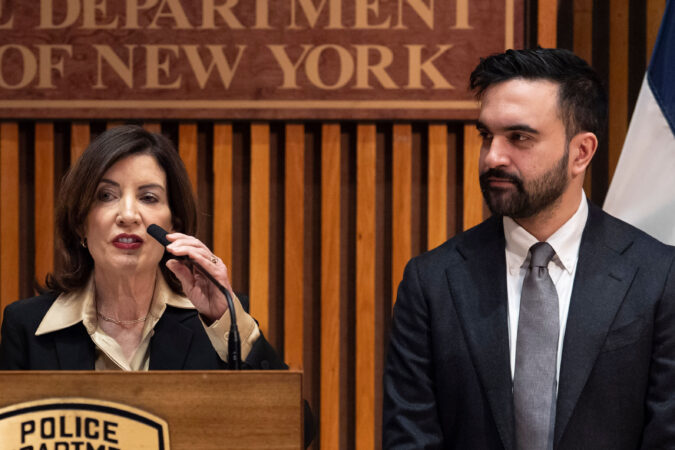
    NEW YORK — New York City parents would have access to free childcare for their 2-year-olds under a plan unveiled Thursday by Gov. Kathy Hochul and Mayor Zohran Mamdani, the first step for the mayor in delivering on a signature campaign promise.

    The two Democrats announced the proposal at a celebratory event in Brooklyn a week after Mamdani was sworn in — marking an early political victory for Mamdani, who has faced questions over whether he will have the state support needed to enact his ambitious affordability-focused agenda.

    “To those who think that the promises of a campaign cannot survive once confronted with the realities of government, today is your answer,” he said.

    Hochul, a moderate who is up for reelection this year, has been aligned with the city’s new progressive mayor on his free childcare plan, though questions remain on precisely how the program will take shape and what it might cost over the long term.

    The proposed program will begin slowly, focusing first on “high-need areas” selected by the city, then expanding gradually over years until it becomes available across the city. The mayor expects it to cover around 2,000 children this fall, though he said it was not yet clear where the first seats would open up.

    The governor said she is committing to funding the first two years of the city’s free childcare program for 2-year-olds, describing it as an expansion of the city’s existing pre-K and 3-K programs.

    She said the initial round of funding would come from the state’s existing revenues, rather than having to raise taxes, a step the governor has opposed. Still, Hochul said it was difficult to forecast costs in future years when the program would be more widely available.

    Additionally, Hochul rolled out a sweeping, longer-term proposal to expand access to universal pre-K statewide, with the goal of having the program available throughout New York by the start of the 2028-2029 school year.

    The governor said she anticipates investing $1.7 billion in the near term for the programs she announced Thursday, bringing her proposed childcare and pre-K spending to $4.5 billion for the coming fiscal year.

    She will include the plans in her annual state of the state address next week and in her executive budget proposal, which will be subject to debate and negotiations with the state’s legislative leaders over the next few months.

    While Hochul has supported the mayor’s childcare plan, she hasn’t publicly backed his entire agenda. After the event, as Hochul and Mamdani spoke to reporters about the proposal, the governor sidestepped a question about Mamdani’s proposal to eliminate fares for city buses, saying “Well, we’re focused on this today.”

    Rebecca Bailin, executive director for the advocacy group New Yorkers United for childcare, called the announcement a “historic moment,” adding: “By bringing together the Governor and Mayor around a shared commitment to childcare, tens of thousands of families could finally get the relief they desperately need.”

  • As a shooting unfolded at Brown, students turned to anonymous app for answers before official alerts

    As a shooting unfolded at Brown, students turned to anonymous app for answers before official alerts

    PROVIDENCE, R.I. — When a gunman began firing inside an academic building on the Brown University campus, students didn’t wait for official alerts warning of trouble. They got information almost instantly, in bits and bursts — through phones vibrating in pockets, messages from strangers, rumors that felt urgent because they might keep someone alive.

    On Dec. 13 as the attack at the Ivy League institution played out during finals week, students took to Sidechat, an anonymous, campus-specific message board used widely at U.S. colleges, for fast-flowing information in real time.

    An Associated Press analysis of nearly 8,000 posts from the 36 hours after the shooting shows how social media has become central to how students navigate campus emergencies.

    Fifteen minutes before the university’s first alert of an active shooter, students were already documenting the chaos. Their posts — raw, fragmented, and sometimes panicked — formed a digital time capsule of how a college campus experienced a mass shooting.

    As students sheltered in place, they posted while hiding under library tables, crouching in classrooms and hallways. Some comments even came from wounded students, like one posting a selfie from a hospital bed with the simple caption: #finalsweek.

    Others asked urgent questions: Was there a lockdown? Where was the shooter? Was it safe to move?

    It would be days before authorities identified the suspect and found him dead in New Hampshire of a self-inflicted gunshot wound, later linking him to the killing of a Massachusetts Institute of Technology professor.

    Here’s a look at how the shooting unfolded.

    Stream of collective consciousness

    Described by Harvard Magazine as “the College’s stream of collective consciousness,” Sidechat allows anyone with a verified university email to post to a campus feed. On most days, the Brown feed is filled with complaints about dining hall food, jokes about professors, and stress about exams — fleeting posts running the gamut of student life.

    On the Saturday afternoon just before the shooting, a student posted about how they wished they could “play Minecraft for 60 hours straight.” Then, the posts abruptly shifted.

    Crowds began pouring out of Brown’s Barus and Holley building, and someone posted at 4:06 p.m.: “Why are people running away from B&H?”

    Others quickly followed. “EVERYONE TAKE COVER,” one wrote. “STAY AWAY FROM THAYER STREET NEAR MACMILLAN 2 PEOPLE JUST GOT SHOT IM BEING DEAD SERIOUS,” another user wrote at 4:10 p.m.

    Dozens of frantic messages followed as students tried to fill the information gap themselves.

    “so r we on lockdown or what,” one student asked.

    By the time the university alert was sent at 4:21 p.m., the shooter was no longer on campus — a fact Brown officials did not yet know.

    “Where would we be without Sidechat?” one student wrote.

    A university spokesperson said Brown’s alert reached 20,000 people minutes after the school’s public safety officials were notified shots had been fired. Officials deliberately didn’t use sirens to avoid sending people rushing to seek shelter into harm’s way, said the spokesperson, Brian E. Clark, who added Brown commissioned two external reviews of the response with the aim of enhancing public safety and security.

    Long hours of hiding

    Long after the sun had set, students sheltered in dark dorm rooms and study halls. Blinds were closed. Doors were barricaded with dressers, beds, and mini fridges.

    “Door is locked windows are locked I’ve balanced a metal pipe thing on the handle so if anyone even tries the handle from the outside it’ll make a loud noise,” one student wrote.

    Students reacted to every sound — footsteps in hallways, distant sirens, helicopters overhead. When alerts came, the vibrations and ringtones were jarring. Some feared that names of the dead would be released — and that they would recognize someone they knew.

    Law enforcement moved through campus buildings, clearing them floor by floor.

    A student who fled Barus and Holley asked whether anyone could text his parents to let them know he had made it out safely. Others said they had left phones behind in classrooms when they fled, unable to reach frantic loved ones. Ironically, those closest to the shooting often had the least information.

    Many American students expressed emotions hovering between numbness and heartbreak.

    “Just got a text from a friend I haven’t spoken to in nearly three years,” one student wrote. “Our last messages? Me checking in on her after the shooting at Michigan State.” Multiple students replied, saying they’d had similar experiences.

    International students posted about parents unable to sleep on the other side of the world.

    “I just want a hug from my mom,” one student wrote.

    Anxiety sets in

    As the hours dragged on, students struggled with basic needs. Some described urinating in trash cans or empty laundry detergent bottles because they were too afraid to leave their rooms. Others spoke of drinking to cope.

    “I was on the street when it happened & suddenly I felt so scared,” one student wrote. “I ran and didn’t calm down for a while. I feel numb, tired, & about to throw up.”

    Another wrote: “I’m locked inside! Haven’t eaten anything today! I’m so scared i don’t even know if I get out of this alive or dead.”

    Some students posted into the early morning, more than 10 hours into the lockdown, saying they couldn’t sleep. Sidechat also documented acts of kindness, including a student going door to door with macaroni and cheese cups in a dark dorm.

    Information, and its limits

    Students repeatedly asked the same questions — news? sources? — and challenged one another to verify what they saw before reposting it.

    “Frankly I’d rather hear misinformation than people not report stuff they’ve heard,” one student wrote.

    Others pushed back, sharing a Google Doc that would grow to 28 pages where students could find the most updated, verified information. Some posted police scanner transcriptions or warned against relying on artificial intelligence summaries of the developing situation. Professors — who rarely post on the app — joined the feed, urging caution and offering reassurance.

    “If you’re talking about the active situation please add a source!!!” one student wrote.

    But “reliable information,” students noted, often arrived with a delay.

    Within about 30 minutes of the shooting, posts incorrectly claimed the shooter had been caught. Reports of more gunshots — later proven false — continued into the night and the next day, fueling fear and frustration. Asked one student, what are police doing “RIGHT NOW”?

    Replies came quickly.

    “They are trying their best,” one person responded. “Be grateful,” another added. “They are putting their lives in danger at this moment for us to be safe.”

    A campus changed

    Students awoke Sunday to a campus they no longer recognized. It had snowed overnight — the first snowfall of the academic year.

    In post after post, students called the sight unsettling. What was usually a celebration felt instead like confirmation something had irrevocably shifted.

    “It truly hurt seeing the flakes fall this morning, beautiful and tragic,” one student wrote.

    Even as the lockdown lifted, many said they were unsure what to do — where they could go, whether dining halls were open, whether it was safe to move.

    “What do I do rn?” one student posted. “I’m losing my mind.”

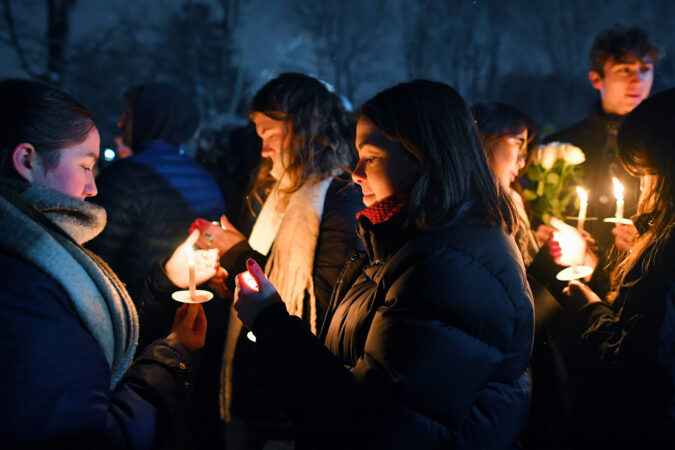
    Students walked through fresh snow in a daze, heading to blood donation centers. Others noticed flowers being placed at the campus gates and outside Barus and Holley.

    Many mourned not only the two students killed, but the innocence they felt had been stripped from their campus.

    “Will never see the first snow of the season and not think about those two,” one student wrote.

    With the lockdown ended, students returned to their dorms as Sidechat continued to fill with grief and reflection. Many said Brown no longer felt the same.

    “Snow will always be bloody for me,” one person posted.
  • At CES, auto and tech companies transform cars into proactive companions

    At CES, auto and tech companies transform cars into proactive companions

    LAS VEGAS — In a vision of the near future shared at CES, a girl slides into the back seat of her parents’ car and the cabin instantly comes alive. The vehicle recognizes her, knows it’s her birthday, and cues up her favorite song without a word spoken.

    “Think of the car as having a soul and being an extension of your family,” Sri Subramanian, Nvidia’s global head of generative AI for automotive, said Tuesday.

    Subramanian’s example, shared with a CES audience on the show’s opening day in Las Vegas, illustrates the growing sophistication of AI-powered in-cabin systems and the expanding scope of personal data that smart vehicles may collect, retain, and use to shape the driving experience.

    Across the show floor, the car emerged less as a machine and more as a companion as automakers and tech companies showcased vehicles that can adapt to drivers and passengers in real time — from tracking heart rates and emotions to alerting if a baby or young child is accidentally left in the car.

    Bosch debuted its new AI vehicle extension that aims to turn the cabin into a “proactive companion.” Nvidia, the poster child of the AI boom, announced Alpamayo, its new vehicle AI initiative designed to help autonomous cars think through complex driving decisions. CEO Jensen Huang called it a “ChatGPT moment for physical AI.”

    But experts say the push toward a more personalized driving experience is intensifying questions about how much driver data is being collected.

    “The magic of AI should not just mean all privacy and security protections are off,” said Justin Brookman, director of marketplace policy at Consumer Reports.

    Unlike smartphones or online platforms, cars have only recently become major repositories of personal data, Brookman said. As a result, the industry is still trying to establish the “rules of the road” for what automakers and tech companies are allowed to do with driver data.

    That uncertainty is compounded by the uniquely personal nature of cars, Brookman said. Many people see their vehicles as an extension of themselves — or even their homes — which he said can make the presence of cameras, microphones, and other monitoring tools feel especially invasive.

    “Sometimes privacy issues are difficult for folks to internalize,” he said. “People generally feel they wish they had more privacy but also don’t necessarily know what they can do to address it.”

    At the same time, Brookman said, many of these technologies offer real safety benefits for drivers and can be good for the consumer.

    On the CES show floor, some of those conveniences were on display at automotive supplier Gentex’s booth, where attendees sat in a mock six-seater van in front of large screens demonstrating how closely the company’s AI-equipped sensors and cameras could monitor a driver and passengers.

    “Are they sleepy? Are they drowsy? Are they not seated properly? Are they eating, talking on phones? Are they angry? You name it, we can figure out how to detect that in the cabin,” said Brian Brackenbury, director of product line management at Gentex.

    Brackenbury said it’s ultimately up to the car manufacturers to decide how the vehicle reacts to the data that’s collected, which he said is stored in the car and deleted after the video frames, for example, have been processed.

    “One of the mantras we have at Gentex is we’re not going to do it just because we can, just because the technology allows it,” Brackenbury said, adding that “data privacy is really important.”

  • Trump immigration policies and a lower fertility rate slow US growth projection, budget office says

    Trump immigration policies and a lower fertility rate slow US growth projection, budget office says

    WASHINGTON — The U.S. population is projected to grow by 15 million in 30 years, a smaller estimate than in previous years, due to President Donald Trump’s hard-line immigration policies and an expected lower fertility rate, the Congressional Budget Office said Wednesday.

    The nonpartisan budget office projected that the U.S. population will grow from 349 million people this year to 364 million people in 30 years, a 2.2% smaller gain than it had predicted in 2025. In September, the office issued a revised demographics report that showed Trump’s plans for mass deportations and other strict immigration measures would result in roughly 320,000 people removed from the United States over the next 10 years.

    The country’s total population is projected to stop growing in 2056 and remain roughly the same size as in the previous year, the CBO said. But without immigration, the population would begin to shrink in 2030 as deaths start to exceed births, making immigrants an increasingly important source of population growth, according to the report.

    Even if the limits on immigration and increased deportations end with the Trump administration in three years, “it’s still a demographic shock,” said William Frey, a demographer at the centrist Brookings Institution.

    Social Security and Medicare, which are already buckling under an aging population, will be under increasing pressure with even fewer than expected people in the labor force paying taxes. By the end of the decade, all of the nation’s baby boomers, born between 1946 and 1964, will be over age 65.

    With fewer immigrants in the labor force and projections for U.S. fertility rates showing a long-term decline below replacement levels, “that reduces the number of kids who are going to be born in that four-year period” of the second Trump administration, Frey said.

    The latest numbers come as Trump has pushed for the largest mass deportation campaign in history. The CBO’s numbers account for the success of those efforts in the first year of his second term in office.

    The administration has used a variety of methods to remove people from the country, including through a visa ban on applications for immigrants from some countries and deploying Immigration and Customs Enforcement agents in U.S. cities to track down immigrants who are in the country illegally.

    Trump’s tax and spending law, passed by Congress and signed in July, included roughly $150 billion to ramp up his deportation agenda over the next four years. This includes money for extending the U.S.-Mexico border wall, building detention centers and adding thousands of law enforcement staff.

    When it comes to estimating the nation’s population and future growth, immigration is always the wild card because it varies much more year to year than the number of births and deaths. Immigration has fueled U.S. population growth this decade because of an aging population and fertility lower than the replacement rate. For a generation to replace itself in the absence of immigration, the fertility rate needs to be 2.1 births per woman. But it was expected to be 1.58 in 2026 and is projected to drop to 1.53 in 2036 where it will remain over the next two decades.

    The U.S. Census Bureau said that immigration increased by 2.8 million people in 2024 over the previous year.

    Since Trump returned to office in January 2025, though, demographers and economists have struggled to decipher the impact of his policies on immigrant growth in the United States.

    The bureau’s population estimates for last year have not been released yet, but the Current Population Survey estimated that the number of adult immigrants fell by 1.8 million people from January to November 2025. But those numbers have come under scrutiny, with some experts claiming they may reflect a decline in participation by immigrants in the survey rather than a dramatic drop in immigrant numbers.

    Last September, the CBO reduced its immigration estimate for 2025 by 1.6 million people, and it said Wednesday that the U.S. added 410,000 immigrants last year. Immigration is projected to gradually increase through 2030, and then grow more slowly through 2036 because of fewer international students and temporary workers, before jumping up to an average of 1.2 million people a year from 2037 to 2056, the CBO said.

    “These immigrants bring both themselves and the potential for children in the near term,” Kenneth Johnson, a senior demographer at the University of New Hampshire, said in an email. “They contribute both to the labor force through their arrival but also to the potential future growth of the US population through their potential to have children in the near term.”

  • U.S. seeks to assert its control over Venezuelan oil with tanker seizures and sales worldwide

    U.S. seeks to assert its control over Venezuelan oil with tanker seizures and sales worldwide

    WASHINGTON — President Donald Trump’s administration on Wednesday sought to assert its control over Venezuelan oil, seizing a pair of sanctioned tankers transporting petroleum and announcing plans to relax some sanctions so the U.S. can oversee the sale of Venezuela’s petroleum worldwide.

    Trump’s administration intends to control the distribution of Venezuela’s oil products globally following its ouster of President Nicolás Maduro in a surprise nighttime raid. Besides the United States enforcing an existing oil embargo, the Energy Department says the “only oil transported in and out of Venezuela” will be through approved channels consistent with U.S. law and national security interests.

    That level of control over the world’s largest proven reserves of crude oil could give the Trump administration a broader hold on oil supplies globally in ways that could enable it to influence prices. Both moves reflect the Republican administration’s determination to make good on its effort to control the next steps in Venezuela through its vast oil resources after Trump pledged the U.S. will “run” the country.

    Vice President JD Vance said in an interview the U.S. can “control” Venezuela’s “purse strings” by dictating where its oil can be sold.

    “We control the energy resources, and we tell the regime, you’re allowed to sell the oil so long as you serve America’s national interest,” Vance said in an interview to air on Fox News Channel’s “Jesse Watters Primetime.”

    The vice president added, “And that’s how we exert incredible pressure on that country without wasting a single American life.”

    Secretary of State Marco Rubio suggested that the oil taken from the sanctioned vessels seized in the North Atlantic and the Caribbean Sea would be sold as part of the deal announced by Trump on Tuesday under which Venezuela would provide up to 50 million barrels of oil to the U.S.

    Venezuela’s interim authorities “want that oil that was seized to be part of this deal,” Rubio told reporters after briefing lawmakers Wednesday about the Maduro operation. “They understand that the only way they can move oil and generate revenue and not have economic collapse is if they cooperate and work with the United States.”

    Seizing 2 more vessels

    U.S. European Command said on social media that the merchant vessel Bella 1 was seized in the North Atlantic for “violations of U.S. sanctions.” The U.S. had been pursuing the tanker since last month after it tried to evade a blockade on sanctioned oil vessels around Venezuela.

    Homeland Security Secretary Kristi Noem revealed U.S. forces also took control of the M Sophia in the Caribbean Sea. Noem said on social media that both ships were “either last docked in Venezuela or en route to it.”

    The two ships join at least two others that were taken by U.S. forces last month — the Skipper and the Centuries.

    The Bella 1 had been cruising across the Atlantic nearing the Caribbean on Dec. 15 when it abruptly turned and headed north, toward Europe. The change in direction came days after the first U.S. tanker seizure of a ship on Dec. 10 after it had left Venezuela carrying oil.

    When the U.S. Coast Guard tried to board the Bella 1, it fled. U.S. European Command said a Coast Guard vessel had tracked the ship “pursuant to a warrant issued by a U.S. federal court.”

    As the U.S. pursued it, the Bella 1 was renamed Marinera and flagged to Russia, shipping databases show. A U.S. official, who spoke on the condition of anonymity to discuss sensitive military operations, said the ship’s crew had painted a Russian flag on the side of the hull.

    The Russian Foreign Ministry said it had information about Russian nationals among the Marinera’s crew and, in a statement carried by Russia’s state news agencies Tass and RIA Novosti, demanded that “the American side ensure humane and dignified treatment of them, strictly respect their rights and interests, and not hinder their speedy return to their homeland.”

    Separately, a senior Russian lawmaker, Andrei Klishas, decried the U.S. action as “blatant piracy.”

    The Justice Department is investigating crew members of the Bella 1 vessel for failing to obey Coast Guard orders and “criminal charges will be pursued against all culpable actors,” Attorney General Pam Bondi said.

    “The Department of Justice is monitoring several other vessels for similar enforcement action — anyone on any vessel who fails to obey instructions of the Coast Guard or other federal officials will be investigated and prosecuted to the fullest extent of the law,” Bondi said on X.

    The ship had been sanctioned by the U.S. in 2024 on allegations of smuggling cargo for a company linked to Lebanese militant group Hezbollah, which is backed by Iran.

    Easing some sanctions to sell Venezuela’s oil

    The Trump administration, meanwhile, is “selectively” removing sanctions to enable the shipping and sale of Venezuelan oil to markets worldwide, according to an outline of the policies published Wednesday by the Energy Department.

    The sales are slated to begin immediately with 30 million to 50 million barrels of oil. The U.S. government said the sales “will continue indefinitely,” with the proceeds settling in U.S.-controlled accounts at “globally recognized banks.” The money would be disbursed to the U.S. and Venezuelan populations at the “discretion” of Trump’s government.

    Venezuelan state-owned oil company PDVSA said it is in negotiations with the U.S. government for the sale of crude oil.

    “This process is developed under schemes similar to those in force with international companies, such as Chevron, and is based on a strictly commercial transaction, with criteria of legality, transparency and benefit for both parties,” the company said in the statement.

    The U.S. plans to authorize the importation of oil field equipment, parts and services to increase Venezuela’s oil production, which has been roughly 1 million barrels a day.

    The Trump administration has indicated it also will invest in the electricity grid to increase production and the quality of life for people in Venezuela, whose economy has been unraveling amid changes to foreign aid and cuts to state subsidies, making necessities, including food, unaffordable to millions.

    Meanwhile, Trump abruptly changed his tone about Colombian President Gustavo Petro. Trump said Wednesday that they had exchanged a friendly phone call and he had invited the leader of the South American country to the White House. Trump had said earlier this week that “Colombia is very sick too” and accused Petro of “making cocaine and selling it to the United States.”

    Ships said to be part of a shadow fleet

    Noem said both seized ships were part of a shadow fleet of rusting oil tankers that smuggle oil for countries facing sanctions, such as Venezuela, Russia and Iran.

    After the seizure of the now-named Marinera, which open-source maritime tracking sites showed was between Scotland and Iceland earlier Wednesday, the U.K. defense ministry said Britain’s military provided support, including surveillance aircraft.

    “This ship, with a nefarious history, is part of a Russian-Iranian axis of sanctions evasion which is fueling terrorism, conflict, and misery from the Middle East to Ukraine,” U.K. Defense Secretary John Healey said.

    The capture of the M Sophia, on the U.S. sanctions list for moving illicit cargos of oil from Russia, in the Caribbean was much less prolonged.

    The ship had been “running dark,” not having transmitted location data since July. Tankers involved in smuggling often turn off their transponders or broadcast inaccurate data to hide their locations.

    Samir Madani, co-founder of TankerTrackers.com, said his organization used satellite imagery and surface-level photos to document that at least 16 tankers had left the Venezuelan coast since Saturday, after the U.S. captured Maduro.

    The M Sophia was among them, Madani said, citing a recent photo showing it in the waters near Jose Terminal, Venezuela’s main oil export hub.

    Windward, a maritime intelligence firm that tracks such vessels, said in a briefing to reporters the M Sophia loaded at the terminal on Dec. 26 and was carrying about 1.8 million barrels of crude oil — a cargo that would be worth about $108 million at current price of about $60 a barrel.

  • Warner Bros rejects Paramount takeover again and tells shareholders to stick with Netflix bid

    Warner Bros rejects Paramount takeover again and tells shareholders to stick with Netflix bid

    NEW YORK — Warner Bros. again rejected a takeover bid from Paramount and told shareholders Wednesday to stick with a rival offer from Netflix.

    Warner’s leadership has repeatedly rebuffed Skydance-owned Paramount’s overtures — and urged shareholders just weeks ago to back the sale of its streaming and studio business to Netflix for $72 billion. Paramount, meanwhile, has made efforts to sweeten its $77.9 billion hostile offer for the entire company.

    Warner Bros. Discovery said Wednesday that its board determined Paramount’s offer is not in the best interests of the company or its shareholders. It again recommended shareholders support the Netflix deal.

    “Paramount’s offer continues to provide insufficient value, including terms such as an extraordinary amount of debt financing that create risks to close and lack of protections for our shareholders if a transaction is not completed,” Warner Bros. Discovery Chair Samuel Di Piazza Jr. said in a statement. In contrast, he added, the company’s agreement with Netflix “will offer superior value at greater levels of certainty.”

    Paramount did not immediately respond to a request for comment. The company’s hostile bid is still on the table. Warner shareholders currently have until Jan. 21 to “tender” their shares.

    Late last month, Paramount announced an “irrevocable personal guarantee” from Oracle founder Larry Ellison — who is the father of Paramount CEO David Ellison — to back $40.4 billion in equity financing for the company’s offer. Paramount also increased its promised payout to shareholders to $5.8 billion if the deal is blocked by regulators, matching Netflix’s breakup fee.

    In its Wednesday letter to shareholders, Warner expressed concerns about a potential deal with Paramount. Warner said it essentially considers the offer a leveraged buyout, which includes a lot of debt, and also pointed to operating restrictions that it said were imposed by Paramount’s offer and could “hamper WBD’s ability to perform” throughout a transaction.

    The battle for Warner and the value of each offer grows complicated because Netflix and Paramount want different things. Netflix’s proposed acquisition includes only Warner’s studio and streaming business, including its legacy TV and movie production arms and platforms like HBO Max. But Paramount wants the entire company — which, beyond studio and streaming, includes networks like CNN and Discovery.

    If Netflix is successful, Warner’s news and cable operations would be spun off into their own company, under a previously-announced separation.

    A merger with either company could take over a year to close — and will attract tremendous antitrust scrutiny along the way. Due to its size and potential impact, it will almost certainly trigger a review by the U.S. Justice Department, which could sue to block the transaction or request changes. Other countries and regulators overseas may also challenge the merger. And politics are expected to come into play under President Donald Trump, who has made unprecedented suggestions about his personal involvement on whether a deal will go through.

    Trade groups across the entertainment industry have continued to sound the alarm about both deals.

    In a statement addressed to a Congressional antitrust subcommittee on Wednesday, Cinema United — which represents more than 60,000 movie screens worldwide — reiterated it was “deeply concerned” that Netflix’s acquisition could harm both moviegoers and people who work in theaters, pointing to the streaming giant’s past reliance on its online platform. The group said its concerns were “no less serious” for Paramount’s bid — warning of consequences of further consolidation overall, which it said could result in job losses and less diversity in filmmaking.

  • Fewer than a dozen homes have been rebuilt a year after being burned down in LA-area wildfires

    Fewer than a dozen homes have been rebuilt a year after being burned down in LA-area wildfires

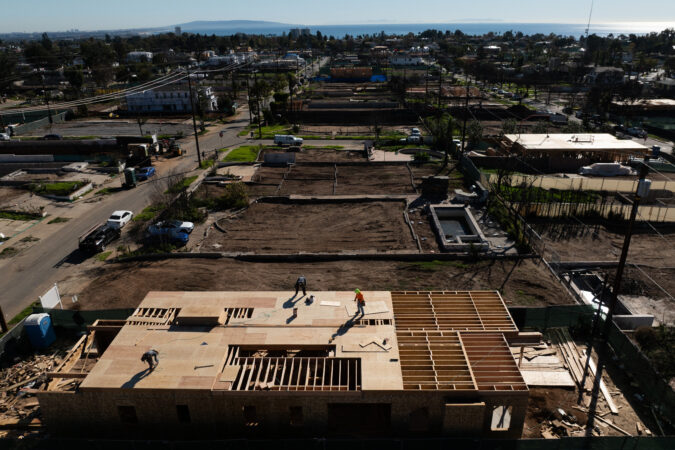
    LOS ANGELES — On the first anniversary of the most destructive wildfires in the LA area, the scant home construction projects stand out among the still mostly flattened landscapes.

    Fewer than a dozen homes have been rebuilt in Los Angeles County since the Jan. 7, 2025, Palisades and Eaton fires erupted, killing 31 people and destroying about 13,000 homes and other residential properties. The fires burned for more than three weeks and clean-up efforts took about seven months.

    For those who had insurance, it’s often not enough to cover the costs of construction. Relief organizations are stepping in to help, but progress is slow.

    Among the exceptions is Ted Koerner, whose Altadena home was reduced to ash and two chimneys. With his insurance payout tied up, the 67-year-old liquidated about 80% of his retirement holdings, secured contractors quickly, and moved decisively through the rebuilding process.

    Shortly before Thanksgiving, Koerner was among the first to finish a rebuild in the aftermath of the fires, which were fueled by drought and hurricane-force winds.

    But most do not have options like Koerner.

    The streets of the coastal community of Pacific Palisades and Altadena, a community in the foothills of the San Gabriel Mountains, remain lined with dirt lots. In the seaside city of Malibu, foundations and concrete piles rising out of the sand are all that’s left of beachfront homes that once butted against crashing ocean waves.

    Neighborhoods are pitch black at night, with few streetlamps replaced. Even many homes that survived are not inhabited as families struggle to clear them of the fire’s toxic contaminants.

    Koerner was driven in part by fear that his beloved golden retriever, Daisy Mae, now 13 years old, might not live long enough to move into a new home, given the many months it can take to build even under the best circumstances.

    He also did not have to wait for his insurance payout to start construction.

    “That’s the only way we were going to get it done before all of a sudden my dog starts having labored breathing or something else happens,” Koerner said.

    Once construction began, his home was completed in just over four months.

    Daisy Mae is back lying in her favorite spot in the yard under a 175-year-old Heritage Oak. Koerner said he enjoys his morning coffee while watching her and it brings tears to his eyes.

    “We made it,” he said.

    Many fear they can’t afford to rebuild

    About 900 homes are under construction, potentially on pace to be completed later this year.

    Still, many homeowners are stuck as they figure out whether they can pay for the rebuilding process.

    Scores of residents have left their communities for good. More than 600 properties where a single-family home was destroyed in the wildfires have been sold, according to real estate data tracker Cotality.

    “We’re seeing huge gaps between the money insurance is paying out, to the extent we have insurance, and what it will actually cost to rebuild and/or remediate our homes,” said Joy Chen, executive director of the Eaton Fire Survivors Network, a group of 10,000 fire survivors mostly from Altadena.

    By December, less than 20% of people who experienced total home loss had closed out their insurance claims, according to a survey by the Department of Angels, a nonprofit that formed after the disaster to advocate for recovery efforts.

    About one-third of insured respondents had policies with State Farm, the state’s largest private insurer, or the California FAIR plan, the insurer of last resort. They reported high rates of dissatisfaction with both, citing burdensome requirements, lowball estimates, and dealing with multiple adjusters.

    In November, Los Angeles County opened a civil investigation into State Farm’s practices and potential violations of the state’s Unfair Competition law. Chen said the group has seen a flurry of substantial payouts since then.

    State Farm spokesperson Tom Hartman said in an email to the Associated Press on Wednesday that the company has addressed more than 13,500 claims and issued more than $5 billion in payments. He called the investigation a “distraction” and said the company is committed to helping.

    Without answers from insurance, households can’t commit to rebuilding projects that can easily exceed $1 million.

    “They’re worried about getting started and running out of money,” Chen said.

    An uncertain future

    Jessica Rogers discovered only after the Palisades fire destroyed her home that her coverage had been canceled.

    The mother of two’s fallback was a low-interest loan from the Small Business Administration, but the application process was grueling. After losing her job because of the fire and then having her identity stolen, her approval for $550,000 came through last month.

    She is still weighing how she’ll cover the remaining costs and says she wonders: “Do I empty out my 401(k) and start counting every penny in a penny jar around the apartment?”

    Rogers — now executive director of the Pacific Palisades Long Term Recovery Group — estimates there are hundreds like her in Pacific Palisades who are “stuck dealing with FEMA and SBA and figuring out if we could piecemeal something together to build our homes.”

    Also struggling to return home are the community’s renters, condo owners, and mobile homeowners. Meanwhile, many are also dealing with their trauma.

    “It’s not what people talk about, but it is incredibly apparent and very real,” said Rogers, who still finds herself crying at unexpected moments.

    A slow start

    That so few homes have been rebuilt a year after the wildfires echoes the recovery pattern of a December 2021 blaze that erupted south of Boulder, Colo., destroying more than 1,000 homes.

    “At the one-year mark, many lots had been cleared of debris and many residents had applied for building permits, said Andrew Rumbach, co-lead of the Climate and Communities Program at Urban Institute. “Around the 18-month mark is when you start to see really significant progress in terms of going from handfuls to hundreds” of homes rebuilt.

    Time will bring the scope of problems into focus.

    “You’re going to start to see some real inequality start to emerge where certain neighborhoods, certain types of people, certain types of properties are just lagging way far behind, and that becomes the really important question in the second year of a recovery: Who’s doing well and who is really struggling and why?” Rumbach said.

    That’s a key concern in Altadena, which for decades drew aspiring Black homeowners who otherwise faced redlining and other forms of racial discrimination when they sought to buy a home in other LA-area communities. In 2024, 81% of Black households in Altadena owned their homes, nearly twice the national Black homeownership rate.

    But recent research by UCLA’s Latino Policy & Politics Institute found that, as of August, 7 in 10 Altadena homeowners whose property was severely damaged in last year’s wildfire had not begun taking steps to rebuild or sell their home. Among these, Black homeowners were 73% more likely than others to have taken no action.

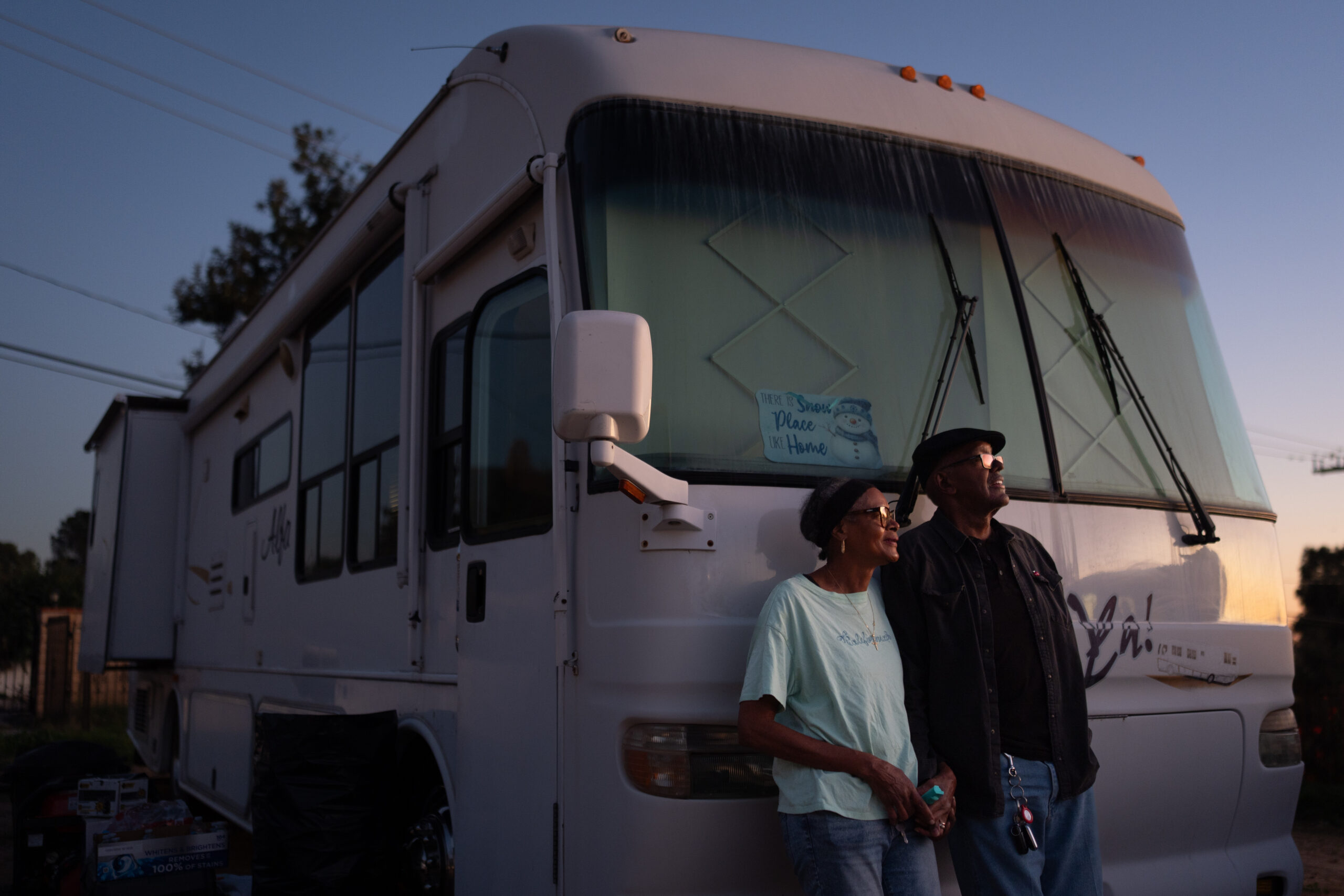
    Al and Charlotte Bailey, who lost their home in the Eaton Fire, have been living in an RV parked on the property where their house once stood in Altadena, Calif.

    Determined to rebuild

    Al and Charlotte Bailey have been living in an RV parked on the empty lot where their home once stood.

    The Baileys are paying for their rebuild with funds from their insurance payout and a loan. They’re also hoping to receive money from Southern California Edison. Several lawsuits claim its equipmentsparked the wildfire in Altadena.

    “We had been here for 41 years and raised our family here, and in one night it was all gone,” said Al Bailey, 77. “We decided that, whatever it’s going to cost, this is our community.”