Category: Business Wires

  • NYC Mayor Zohran Mamdani defends tenant official facing backlash for ‘white supremacy’ posts

    NYC Mayor Zohran Mamdani defends tenant official facing backlash for ‘white supremacy’ posts

    NEW YORK — New York City Mayor Zohran Mamdani is standing behind a newly appointed housing official as she faces backlash for years-old social media posts, including messages that called for the seizure of private property and linked homeownership to white supremacy.

    Cea Weaver, a longtime tenant activist, was tapped by the Democrat last week to serve as executive director of the Mayor’s Office to Protect Tenants. The mayor has vowed to expand and empower the office to take “unprecedented” steps against negligent landlords.

    But in a sign of the high-level scrutiny on Mamdani’s administration, Weaver’s since-deleted posts have sparked condemnations from officials in the U.S. Department of Justice and the editorial board of The Washington Post.

    The posts, which were circulated on social media in recent days by critics of Mamdani, included calls to treat private property as a “collective good” and to “impoverish the *white* middle class.” A tweet sent in 2017 described homeownership as “a weapon of white supremacy masquerading as ‘wealth building public policy.’”

    Eric Adams, the city’s former mayor and a fellow Democrat, said the remarks showed “extreme privilege and total detachment from reality.”

    Asked about the controversy on Wednesday, Mamdani did not address the substance of Weaver’s posts but defended her record of “standing up for tenants across the city and state.”

    Weaver said in an interview with a local TV station that some of the messages were “regretful” and “not something I would say today.”

    “I want to make sure that everybody has a safe and affordable place to live, whether they rent or own, and that is something I’m laser-focused on in this new role,” she added.

    The discussion comes after Mamdani last month accepted the resignation of another official, Catherine Almonte Da Costa, after the Anti-Defamation League shared social media posts she made over a decade ago that featured antisemitic tropes.

    While Mamdani had said he was unaware of Da Costa’s messages, Weaver’s past social media posts were known to the administration, according to a mayoral spokesperson, Dora Pekec.

    Weaver previously led the Housing Justice for All coalition, which was widely credited with helping to convince state lawmakers to pass a sweeping package of tenant protections in 2019.

    As leader of the city’s tenant protection office, she would play a key role in achieving one of Mamdani’s most polarizing campaign pledges: identifying negligent landlords and forcing them to negotiate the sale of their properties to the city if they are unable to pay fines for violations.

    The “public stewardship” proposal has drawn consternation from landlord groups and skepticism from others in city government.

    But the early days of his administration have brought signs that the new mayor is not backing off on the idea.

    In a press conference immediately following his inauguration last week, Mamdani said the city would take “precedent-setting” action against the owner of a Brooklyn apartment building that owed the city money and was currently in bankruptcy proceedings.

    He then announced Weaver’s appointment, drawing loud cheers from the members of a tenants union gathered in the building’s lobby.

    “It is going to be challenging,” Weaver acknowledged. “New York is home to some of the most valuable real estate in the world. Everything about New York politics is about that fact.”

  • Iran army chief threatens preemptive attack over ‘rhetoric’ targeting country after Trump’s comments

    Iran army chief threatens preemptive attack over ‘rhetoric’ targeting country after Trump’s comments

    DUBAI, United Arab Emirates — Iran’s army chief threatened preemptive military action Wednesday over the “rhetoric” targeting the Islamic Republic, likely referring to President Donald Trump’s warning that if Tehran “violently kills peaceful protesters,” the United States “will come to their rescue.”

    The comments by Maj. Gen. Amir Hatami come as Iran tries to respond to what it sees as a dual threat posed by Israel and the United States, as well as the protests sparked by its economic woes that have grown into a direct challenge to its theocracy.

    Seeking to halt the anger, Iran’s government began Wednesday paying the equivalent of $7 a month to subsidize rising costs for dinner table essentials like rice, meat and pastas. Shopkeepers warn prices for items as basic as cooking oil likely will triple under pressure from the collapse of Iran’s rial currency and the end of a preferential subsidized dollar-rial exchange rate for importers and manufacturers — likely fueling further popular anger.

    “More than a week of protests in Iran reflects not only worsening economic conditions, but longstanding anger at government repression and regime policies that have led to Iran’s global isolation,” the New York-based Soufan Center think tank said.

    Army chief’s threat

    Hatami spoke to military academy students. He took over as commander in chief of Iran’s army, known by the Farsi word “Artesh,” after Israel killed a number of the country’s top military commanders in June’s 12-day war. He is the first regular military officer in decades to hold a position long controlled by Iran’s paramilitary Revolutionary Guard.

    “The Islamic Republic considers the intensification of such rhetoric against the Iranian nation as a threat and will not leave its continuation without a response,” Hatami said, according to the state-run IRNA news agency.

    He added, “I can say with confidence that today the readiness of Iran’s armed forces is far greater than before the war. If the enemy commits an error, it will face a more decisive response, and we will cut off the hand of any aggressor.”

    Iranian officials, including Supreme Leader Ayatollah Ali Khamenei, have been responding to Trump’s comments, which took on more significance after the U.S. military raid that seized Venezuelan President Nicolás Maduro, a longtime ally of Tehran, over the weekend. But there’s been no immediate public sign of Iran preparing for an attack in the region.

    New subsidy payment begins

    Iranian state television reported on the start of a new subsidy of the equivalent of $7, put into the bank accounts of heads of households across the country. More than 71 million people will receive the benefit, which is 10 million Iranian rials, it reported. The rial now trades at more than 1.4 million to $1 and continues to depreciate.

    The subsidy is more than double than the 4.5 million rial people previously received. But already, Iranian media report sharp rises in the cost of basic goods, including cooking oil, poultry and cheese, placing additional strain on households already burdened by international sanctions targeting the country and inflation.

    Iran’s vice president in charge of executive affairs, Mohammad Jafar Ghaempanah, told reporters on Wednesday that the country was in a “full-fledged economic war.” He called for “economic surgery” to eliminate rentier policies and corruption within the country.

    More protests

    Iran has faced rounds of nationwide protests in recent years. As sanctions tightened and Iran struggled after the June war with Israel, its rial currency sharply fell in December. Protests began soon after on Dec. 28. They reached their 11th day on Wednesday and didn’t appear to be stopping.

    Social media videos purported to show new cities like Bojnourd, Kerman, Rasht, Shiraz, and Tabriz, as well some smaller towns, joining the demonstrations on Wednesday.

    The U.S.-based Human Rights Activists News Agency offered the latest death toll of 36 for the demonstrations. It said 30 protesters, four children and two members of Iran’s security forces have been killed. Demonstrations have reached over 310 locations in 28 of Iran’s 31 provinces. More than 2,100 people have been arrested, it said.

    The group, which relies on an activist network inside of Iran for its reporting, has been accurate in past unrest.

  • Musk’s AI chatbot faces global backlash over sexualized images of women and children

    Musk’s AI chatbot faces global backlash over sexualized images of women and children

    LONDON — Elon Musk’s AI chatbot Grok is facing a backlash from governments around the world after a recent surge in sexualized images of women and children generated without consent by the artificial intelligence-powered tool.

    On Tuesday, Britain’s top technology official demanded that Musk’s social media platform X take urgent action while a Polish lawmaker cited it as a reason to enact digital safety laws.

    The European Union’s executive arm has denounced Grok while officials and regulators in France, India, Malaysia, and Brazil have condemned the platform and called for investigations.

    Rising alarm from disparate nations points to the nightmarish potential of nudification apps that use artificial intelligence to generate sexually explicit deepfake images.

    Here’s a closer look:

    Image generation

    The problem emerged after the launch last year of Grok Imagine, an AI image generator that allows users to create videos and pictures by typing in text prompts. It includes a so-called “spicy mode” that can generate adult content.

    It snowballed late last month when Grok, which is hosted on X, apparently began granting a large number of user requests to modify images posted by others. As of Tuesday, Grok users could still generate images of women using requests such as, “put her in a transparent bikini.”

    The problem is amplified both because Musk pitches his chatbot as an edgier alternative to rivals with more safeguards, and because Grok’s images are publicly visible, and can therefore be easily spread.

    Nonprofit group AI Forensics said in a report that it analyzed 20,000 images generated by Grok between Dec. 25 and Jan. 1 and found that 2% depicted a person who appeared to be 18 or younger, including 30 of young or very young women or girls, in bikinis or transparent clothes.

    Musk response

    Musk’s artificial intelligence company, xAI, responded to a request for comment with the automated response, “Legacy Media Lies.”

    However, X did not deny that the troublesome content generated through Grok exists. Yet it still claimed in a post on its Safety account, that it takes action against illegal content, including child sexual abuse material, “by removing it, permanently suspending accounts, and working with local governments and law enforcement as necessary.”

    The platform also repeated a comment from Musk, who said, “Anyone using Grok to make illegal content will suffer the same consequences as if they upload illegal content.”

    A growing list of countries are demanding that Musk does more to rein in explicit or abusive content.

    Britain

    X must “urgently” deal with the problem, Technology Secretary Liz Kendall said Tuesday, adding that she supported additional scrutiny from the U.K.’s communications regulator, Ofcom.

    Kendall said the content is “absolutely appalling, and unacceptable in decent society.”

    “We cannot and will not allow the proliferation of these demeaning and degrading images, which are disproportionately aimed at women and girls.”

    Ofcom said Monday it has made “urgent contact” with X.

    “We are aware of serious concerns raised about a feature on Grok on X that produces undressed images of people and sexualised images of children,” the watchdog said.

    The watchdog said it contacted both X and xAI to understand what steps it has taken to comply with British regulations.

    Under the U.K.’s Online Safety Act, social media platforms must prevent and remove child sexual abuse material when they become aware of it.

    Poland

    A Polish lawmaker used Grok on Tuesday as a reason for national digital safety legislation that would beef up protections for minors and make it easier for authorities to remove content.

    In an online video, Wlodzimierz Czarzasty, speaker of the parliament, said he wanted to make himself a target of Grok to highlight the problem, as well as appeal to Poland’s president for support of the legislation.

    “Grok lately is stripping people. It is undressing women, men, and children. We feel bad about it. I would, honestly, almost want this Grok to also undress me,” he said.

    European Union

    The bloc’s executive arm is “well aware” that Grok is being used to for “explicit sexual content with some output generated with childlike images,” European Commission spokesman Thomas Regnier said

    “This is not spicy. This is illegal. This is appalling. This is disgusting. This is how we see it, and this has no place in Europe. This is not the first time that Grok is generating such output,” he told reporters Monday.

    After Grok spread Holocaust-denial content last year, according to Regnier, the Commission sought more information from Musk’s social media platform X. The response from X is currently being analyzed, he said.

    France

    The Paris prosecutor’s office said it’s widening an ongoing investigation of X to include sexually explicit deepfakes after officials receiving complaints from lawmakers.

    Three government ministers alerted prosecutors to “manifestly illegal content” generated by Grok and posted on X, according to a government statement last week.

    The government also flagged problems with the country’s communications regulator over possible breaches of the EU’s Digital Services Act.

    “The internet is neither a lawless zone nor a zone of impunity: sexual offenses committed online constitute criminal offenses in their own right and fall fully under the law, just as those committed offline,” the government said.

    India

    The Indian government on Friday issued an ultimatum to X, demanding that it take down all “unlawful content” and take action against offending users. The country’s Ministry of Electronics and Information Technology also ordered the company to review Grok’s “technical and governance framework” and file a report on actions taken.

    The ministry accused Grok of “gross misuse” of AI and serious failures of its safeguards and enforcement by allowing the generation and sharing of ”obscene images or videos of women in derogatory or vulgar manner in order to indecently denigrate them.”

    The ministry warned failure to comply by the 72-hour deadline would expose the company to bigger legal problems, but the deadline passed with no public update from India.

    Malaysia

    The Malaysian communications watchdog said Saturday it was investigating X users who violated laws prohibiting spreading “grossly offensive, obscene, or indecent content.”

    The Malaysian Communications and Multimedia Commission said it’s also investigating online harms on X, and would summon a company representative.

    The watchdog said it took note of public complaints about X’s AI tools being used to digitally manipulate “images of women and minors to produce indecent, grossly offensive, or otherwise harmful content.”

    Brazil

    Lawmaker Erika Hilton said she reported Grok and X to the Brazilian federal public prosecutor’s office and the country’s data protection watchdog.

    In a social media post, she accused both of generating, then publishing sexualized images of women and children without consent.

    She said X’s AI functions should be disabled until an investigation has been carried out.

    Hilton, one of Brazil’s first transgender lawmakers, decried how users could get Grok to digitally alter any published photo, including “swapping the clothes of women and girls for bikinis or making them suggestive and erotic.”

    “The right to one’s image is individual; it cannot be transferred through the ‘terms of use’ of a social network, and the mass distribution of child pornography by an artificial intelligence integrated into a social network crosses all boundaries,” she said.

  • FAA picks 2 firms to replace 612 outdated radar systems that air traffic controllers rely on

    FAA picks 2 firms to replace 612 outdated radar systems that air traffic controllers rely on

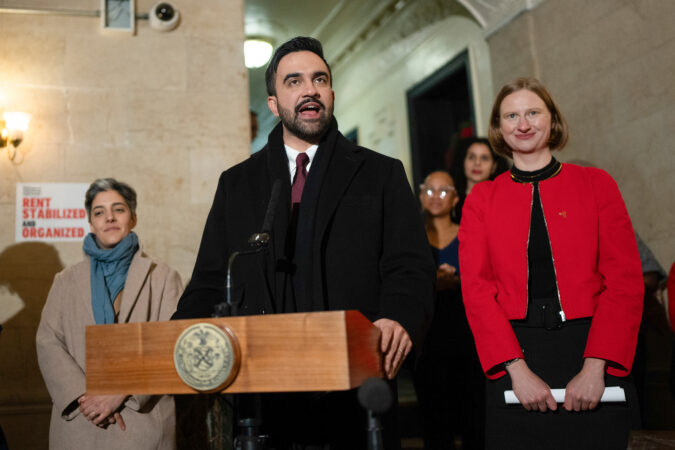
    The federal government has picked two companies to replace 612 radar systems nationwide that date back to the 1980s as part of a multibillion-dollar overhaul of the nation’s air traffic control system.

    Transportation Secretary Sean Duffy and the Federal Aviation Administration said Monday that contractors RTX and Spanish firm Indra will replace the radar systems by the summer of 2028. The administration set an ambitious goal of completing the overhaul by the end of 2028 near the conclusion of President Donald Trump’s current term in office.

    “Our radar network is outdated and long overdue for replacement. Many of the units have exceeded their intended service life, making them increasingly expensive to maintain and difficult to support,” FAA Administrator Bryan Bedford said.

    The FAA has been spending most of its $3 billion equipment budget just maintaining the fragile old system that still relies on floppy discs in places. Some of the equipment is old and isn’t manufactured anymore, so the FAA sometimes has to search for spare parts on eBay.

    Technical failures twice knocked out the radar for air traffic controllers managing planes around Newark Liberty International Airport last spring, and those problems led to thousands of cancellations and delays at the major hub airport.

    Redundancy in the system helps keep flights safe, but there have been a number of occasions when both the primary and backup systems failed, as happened in the Philadelphia facility directing planes into and out of the Newark airport.

    The FAA didn’t immediately provide an estimate of the cost of the new radar systems that will replace 14 different existing radar systems in use across the country and will simplify maintenance and repairs.

    The FAA has already committed more than $6 billion of the $12.5 billion that Congress approved to pay for the overhaul, but Duffy has said that another $20 billion will be needed to complete the project. The agency has already replaced more than one-third of the outdated copper wires the system was relying on with modern connections like fiber optic lines, and it hired a national security contractor named Peraton to oversee the work.

  • Tesla loses title of world’s biggest electric vehicle maker as sales fall for second year in a row

    Tesla loses title of world’s biggest electric vehicle maker as sales fall for second year in a row

    NEW YORK — Tesla lost its crown as the world’s best-selling electric vehicle maker on Friday as a customer revolt over Elon Musk’s right-wing politics, expiring U.S. tax breaks for buyers, and stiff overseas competition pushed sales down for a second year in a row.

    Tesla said that it delivered 1.64 million vehicles in 2025, down 9% from a year earlier.

    Chinese rival BYD, which sold 2.26 million vehicles last year, is now the biggest EV maker.

    It’s a stunning reversal for a car company whose rise once seemed unstoppable as it overtook traditional automakers with far more resources and helped make Musk the world’s richest man.

    For the fourth quarter, sales totaled 418,227, falling short of even the much reduced 440,000 target that analysts recently polled by FactSet had expected. Sales were hit hard by the expiration of a $7,500 tax credit for electric vehicle purchases that was phased out by the Trump administration at the end of September.

    Tesla stock closed down nearly 3% on Friday.

    Even with multiple issues buffeting the company, investors are betting that Tesla CEO Musk can deliver on his ambitions to make Tesla a leader in robotaxi services and get consumers to embrace humanoid robots that can perform basic tasks in homes and offices. Reflecting that optimism, the stock finished 2025 with a gain of approximately 11%.

    The latest quarter was the first with sales of stripped-down versions of the Model Y and Model 3 that Musk unveiled in early October as part of an effort to revive sales. The new Model Y costs just under $40,000 while customers can buy the cheaper Model 3 for under $37,000. Those versions are expected to help Tesla compete with Chinese models in Europe and Asia.

    For fourth-quarter earnings coming out in late January, analysts are expecting the company to post a 3% drop in sales and a nearly 40% drop in earnings per share, according to FactSet. Analysts expect the downward trend in sales and profits to eventually reverse itself as 2026 rolls along.

    Investors have largely shrugged off the falling numbers, choosing to focus on Musk’s pivot to different parts of business. He has been saying the future of the company lies with its driverless robotaxis service, its energy storage business, and building robots for the home and factory — and much less with car sales.

    Tesla started rolling out its robotaxi service in Austin earlier this year, first with safety monitors in the cars to take over in case of trouble, then testing without them. The company hopes to roll out the service in several cities this year.

    To do that successfully, it needs to take on rival Waymo, which has been operating autonomous taxis for years and has far more customers. It also will also have to contend with regulatory challenges. The company is under several federal safety investigations and other probes. In California, Tesla is at risk of temporarily losing its license to sell cars in the state after a judge there ruled it had misled customers about their safety.

    “Regulatory is going to be a big issue,” said Wedbush Securities analyst Dan Ives, a well-known bull on the stock. “We’re dealing with people’s lives.”

    Still, Ives said he expects Tesla’s autonomous offerings will soon overcome any setbacks.

    Musk has said he hopes software updates to his cars will enable hundreds of thousands of Tesla vehicles to operate autonomously with zero human intervention by the end of this year. The company is also planning to begin production of its AI-powered Cybercab with no steering wheel or pedals in 2026.

    To keep Musk focused on the company, Tesla’s directors awarded Musk a potentially enormous new pay package that shareholders backed at the annual meeting in November.

    Musk scored another huge windfall two weeks ago when the Delaware Supreme Court reversed a decision that deprived him of a $55 billion pay package that Tesla doled out in 2018.

    Musk could become the world’s first trillionaire later this year when he sells shares of his rocket company SpaceX to the public for the first time in what analysts expect would be a blockbuster initial public offering.

  • Idaho company recalls nearly 3,000 pounds of ground beef for E. coli risk

    Idaho company recalls nearly 3,000 pounds of ground beef for E. coli risk

    An Idaho-based company is recalling nearly 3,000 pounds of raw ground beef that may have been contaminated with E. coli bacteria.

    The recall involves 16-ounce vacuum-sealed packages labeled “Forward Farms Grass-Fed Ground Beef.” Affected packages were produced Dec. 16 and have a label telling customers to use or freeze the meat by Jan. 13. The affected beef also bears the establishment number “EST 2083” on the side of its packaging.

    The meat was produced by Heyburn, Idaho-based Mountain West Food Group and was shipped to distributors in Pennsylvania, California, Colorado, Idaho, Montana, and Washington.

    The U.S. Department of Agriculture’s Food Safety and Inspection Service, which announced the recall Saturday, didn’t say which retailers may have sold the meat. The USDA and Mountain West Food Group didn’t respond to messages left Tuesday by the Associated Press.

    The USDA said there have been no confirmed reports of illness due to consumption of the meat. The issue was discovered in a sample of beef during routine testing.

    The USDA said the type of E. coli found can cause illness within 28 days of exposure. Most infected people develop diarrhea, which is often bloody, and vomiting. Infection is usually diagnosed with a stool sample.

    The USDA said customers who have purchased the affected products should either throw them away or return them to the place they were bought. The agency also advises all customers to consume ground beef only if it has been cooked to a temperature of 160 degrees Fahrenheit.

  • Judge blocks White House’s attempt to defund the CFPB, ensuring employees get paid

    Judge blocks White House’s attempt to defund the CFPB, ensuring employees get paid

    NEW YORK — The White House cannot lapse in its funding of the Consumer Financial Protection Bureau, a federal district court judge ruled on Tuesday, only days before funds at the bureau would have likely run out and the consumer finance agency would have no money to pay its employees.

    Judge Amy Berman ruled that the CFPB should continue to get its funds from the Federal Reserve, despite the Fed operating at a loss, and that the White House’s new legal argument about how the CFPB gets its funds is not valid.

    At the heart of this case is whether Russell Vought, President Donald Trump’s budget director and the acting director of the CFPB, can effectively shut down the agency and lay off all of the bureau’s employees. The CFPB has largely been inoperable since Trump has sworn into office nearly a year ago. Its employees are mostly forbidden from doing any work, and most of the bureau’s operations this year have been to unwind the work it did under President Joe Biden and even under Trump’s first term.

    Vought himself has made comments where he has made it clear that his intention is to effectively shut down the CFPB. The White House earlier this year issued a “reduction in force” for the CFPB, which would have furloughed or laid off much of the bureau.

    The National Treasury Employees Union, which represents the workers at the CFPB, has been mostly successful in court to stop the mass layoffs and furloughs. The union sued Vought earlier this year and won a preliminary injunction stopping the layoffs while the union’s case continues through the legal process.

    In recent weeks, the White House has used a new line of argument to potentially get around the court’s injunction. The argument is that the Federal Reserve has no “combined earnings” at the moment to fund the CFPB’s operations. The CFPB gets its funding from the Fed through expected quarterly payments.

    The Federal Reserve has been operating at a paper loss since 2022 as a result of the central bank trying to combat inflation, the first time in the Fed’s entire history it has been operating at a loss. The Fed holds bonds on its balance sheet from a period of low interest rates during the COVID-19 pandemic, but currently has to pay out higher interest rates to banks who hold their deposits at the central bank. The Fed has been recording a “deferred asset” on its balance sheet, which it expects will be paid down in the next few years as the low-interest bonds mature.

    Because of this loss on paper, the White House has argued there are no “combined earnings” for the CFPB to draw on. The CFPB has operated since 2011, including under Trump’s first term, drawing on the Fed’s operating budget.

    White House lawyers sent a notice to the court in early November in which they argued, using the “combined earnings” argument, that the CFPB would run out of appropriations in early 2026 and does not expect to get any additional appropriations from Congress.

    This combined earnings legal argument is not entirely new. It has floated in conservative legal circles going back to when the Federal Reserve started operating at a loss. The Office of Legal Counsel, which acts as the government’s legal advisers, adopted this legal theory in a memo on November 7. However, this idea has never been tested in court.

    In her opinion, Berman said the OLC and Vought were using this legal theory to get around the court’s injunction instead of allowing the case to be decided on merits. A trial on whether the CFPB employees’ union can sue Vought over the layoffs is scheduled for February.

    “It appears that defendants’ new understanding of ‘combined earnings’ is an unsupported and transparent attempt to starve the CPFB of funding and yet another attempt to achieve the very end the Court’s injunction was put in place to prevent,” Berman wrote in an opinion.

    “We’re very pleased that the court made clear what should have been obvious: Vought can’t justify abandoning the agency’s obligations or violating a court order by manufacturing a lack of funding,” said Jennifer Bennett of Gupta Wessler LLP, who is representing the CFPB employees in the case.

    A White House spokesperson did not immediately respond to a request for comment on Berman’s opinion.

  • Myanmar holds first election since military seized power but critics say the vote is a sham

    Myanmar holds first election since military seized power but critics say the vote is a sham

    YANGON, Myanmar — Voters went to the polls Sunday for the initial phase of Myanmar’s first general election in five years, held under the supervision of its military government while a civil war rages throughout much of the country.

    Final results won’t be known until after two more rounds of voting are completed later in January. It’s widely expected that Senior Gen. Min Aung Hlaing, who has governed Myanmar since an army takeover in 2021, will then assume the presidency.

    The military government has presented the vote as a return to democracy, but its bid for legitimacy is marred by the absence of formerly popular opposition parties and reports that soldiers used threats to force voters’ participation.

    Military-backed party favored

    While more than 4,800 candidates from 57 parties are competing for seats in national and regional legislatures, only six are competing nationwide with the possibility to gain political clout in parliament. The military-backed Union Solidarity and Development Party is by far the strongest contender.

    Voting is taking place in three phases, with Sunday’s first round held in 102 of Myanmar’s 330 townships. Subsequent phases will take place on Jan. 11 and Jan. 25, but 65 townships won’t participate in the election because of ongoing armed conflicts.

    Final results are expected to be announced by February. It wasn’t clear if or when the authorities would release aggregate figures of Sunday’s voting, although counts were publicly announced at local polling stations.

    Critics of the current system say that the election is designed to add a facade of legitimacy to the status quo. Military rule began when soldiers ousted the elected government of Aung San Suu Kyi in February 2021. It blocked her National League for Democracy party from serving a second term despite winning a landslide victory in the 2020 election.

    They argue that the results will lack legitimacy because of the exclusion of major parties and government repression.

    “Theater of the absurd”

    The expected victory of the military-backed Union Solidarity and Development Party makes the nominal transition to civilian rule a chimera, say opponents of military rule and independent analysts.

    “An election organized by a junta that continues to bomb civilians, jail political leaders, and criminalize all forms of dissent is not an election — it is a theater of the absurd performed at gunpoint,” Tom Andrews, the U.N.-appointed human rights expert for Myanmar, posted on X.

    However, the election may provide an excuse for neighbors like China, India, and Thailand to say that the vote represents progress toward stability. Western nations have maintained sanctions against Myanmar’s ruling generals because of the military’s anti-democratic actions and the brutal war against opponents.

    According to a count carried out at one polling station in Yangon after the polls closed, only 524 of 1,431 registered voters — just under 37% — cast their ballots.

    Of those, 311 voted for the pro-military Union Solidarity and Development Party, suggesting that opposition calls for a voter boycott may have been heeded.

    Khin Marlar, 51, who cast her ballot in Yangon’s Kyauktada township, said that she felt that she should vote, because she hoped that peace would follow afterward. She explained that she had fled her village in the town of Thaungta in the central Mandalay region because of the fighting.

    “I am voting with the feeling that I will go back to my village when it is peaceful,” she told the Associated Press.

    Voter intimidation reports

    A resident of southern Mon state, who asked to be identified only by her first name, Khin, for fear of arrest by the military, told the AP that she felt compelled to go to a polling station because of pressure from local authorities.

    “I have to go and vote even though I don’t want to, because soldiers showed up with guns to our village to pressure us yesterday,” Khin said, echoing reports from independent media and rights groups.

    Suu Kyi, Myanmar’s 80-year-old former leader, who received the Nobel Peace Prize in 1991, and her party aren’t participating in the polls. She is serving a 27-year prison term on charges widely viewed as spurious and politically motivated. Her party, the National League for Democracy, was dissolved in 2023 after refusing to register under new military rules.

    Other parties also refused to register or declined to run under conditions they deem unfair, and opposition groups have called for a voter boycott.

    Amael Vier, an analyst for the Asian Network for Free Elections, noted a lack of genuine choice, pointing out that 73% of voters in 2020 cast ballots for parties that no longer exist.

    Violence and repression

    According to the Assistance Association for Political Prisoners, more than 22,000 people are currently detained for political offenses, and more than 7,600 civilians have been killed by security forces since 2021.

    Armed resistance arose after the army used lethal force to crush nonviolent protests against its 2021 takeover. The ensuing civil war has left more than 3.6 million people displaced, according to the U.N.

    A new Election Protection Law imposes harsh penalties and restrictions for virtually all public criticism of the polls.

    There were no reports of major interference with the polls, though opposition organizations and armed resistance groups had vowed to disrupt the electoral process.

    Both the military and its opponents believe power is likely to remain with Min Aung Hlaing, who led the 2021 seizure of power.

    “I am the commander in chief. I am a civil servant. I cannot say that I want to serve as a president. I am not the leader of a political party,” he told journalists after casting his vote. “There is a process for electing a president from parliament only when it is convened. I think it is appropriate to speak about it only then.”

  • New York subway ends its MetroCard era and switches fully to tap-and-go fares

    New York subway ends its MetroCard era and switches fully to tap-and-go fares

    NEW YORK — When the MetroCard replaced the New York City subway token in 1994, the swipeable plastic card infused much-needed modernity into one of the world’s oldest and largest transit systems.

    Now, more than three decades later, the gold-hued fare card and its notoriously finicky magnetic strip are following the token into retirement.

    The last day to buy or refill a MetroCard is Dec. 31, 2025, as the transit system fully transitions to OMNY, a contactless payment system that allows riders to tap their credit card, phone, or other smart device to pay fares, much like they do for other everyday purchases.

    Transit officials say more than 90% of subway and bus trips are now paid using the tap-and-go system, introduced in 2019.

    Major cities around the world, including London and Singapore, have long used similar contactless systems. In the U.S., San Francisco launched a pay-go system earlier this year, joining Chicago and others.

    MetroCards upended how New Yorkers commute

    The humble MetroCard may have outlasted its useful life, but in its day it was revolutionary, says Jodi Shapiro, curator at the New York Transit Museum in Brooklyn, which opened an exhibit earlier this month reflecting on the MetroCard’s legacy.

    Before MetroCards, bus and subway riders relied on tokens, the brass-colored coins introduced in 1953 that were purchased from station booths. When the subway opened in 1904, paper tickets cost just a nickel, or about $1.82 in today’s dollars.

    “There was a resistance to change from tokens to something else because tokens work,” Shapiro said on a recent visit to the museum, housed underground in a decommissioned subway station. “MetroCards introduced a whole other level of thinking for New Yorkers.”

    The Metropolitan Transportation Authority launched public campaigns to teach commuters how to swipe the originally blue-colored cards correctly, hoping to avoid the dreaded error message or lost fares. Officials even briefly toyed with the idea of an quirky mascot, the Cardvaark, before coming to their senses.

    The cards quickly became collectors items as the transit system rolled out special commemorative editions marking major events, such as the “Subway Series” between baseball’s New York Mets and the New York Yankees in the 2000 World Series. At the time, a fare cost $1.50.

    Artists from David Bowie and Olivia Rodrigo to seminal New York hip hop acts, such as Wu-Tang Clan, the Notorious B.I.G., and LL Cool J, have also graced the plastic card over the years, as have iconic New York TV shows like Seinfeld and Law & Order.

    “For me, the most special cards are cards which present New York City to the world,” said Lev Radin, a collector in the Bronx. “Not only photos of landmarks, skylines, but also about people who live and make New York special.”

    Perfecting the correct angle and velocity of the MetroCard swipe also became something of a point of pride separating real New Yorkers from those just visiting.

    During her failed 2016 presidential campaign, Hillary Clinton, a former U.S. Senator from New York, took an excruciating five swipes at a Bronx turnstile. In fairness, her chief Democratic opponent at the time, U.S. Sen. Bernie Sanders of Vermont, a native Brooklynite, didn’t even appear to realize tokens had been discontinued.

    Cost savings and lingering concerns

    Unlike the MetroCard rollout, OMNY has required little adjustment.

    Riders reluctant to use a credit card or smart device can purchase an OMNY card they can reload, similar to a MetroCard. Existing MetroCards will also continue to work into 2026, allowing riders to use remaining balances.

    MTA spokespersons declined to comment, pointing instead to their many public statements as the deadline approaches.

    The agency has said the changeover saves at least $20 million annually in MetroCard-related costs.

    The new system also allows unlimited free rides within a seven-day period because the fare is capped after 12 rides. It’ll max out at $35 a week once the fare rises to $3 in January.

    Still, new changes come with tradeoffs, with some critics raising concerns about data collection and surveillance.

    Near Times Square on a recent morning, Ronald Minor was among the dwindling group of “straphangers” still swiping MetroCards.

    The 70-year-old Manhattan resident said he’s sad to see them go. He has an OMNY card but found the vending machines to reload it more cumbersome.

    “It’s hard for the elders,” Minor said as he caught a train to Brooklyn. “Don’t push us aside and make it like we don’t count. You push these machines away, you push us away.”

    John Sacchetti, another MetroCard user at the Port Authority stop, said he likes being able to see his balance as he swipes through a turnstile so he knows how much he’s been spending on rides.

    “It’s just like everything else, just something to get used to,” he said as he headed uptown. ”Once I get used to it, I think it’ll be OK.”

  • Trump overturned decades of US trade policy in 2025. See the impact of his tariffs, in four charts.

    Trump overturned decades of US trade policy in 2025. See the impact of his tariffs, in four charts.

    Since returning to the White House in January, President Donald Trump has overturned decades of U.S. trade policy — building a wall of tariffs around what used to be a wide open economy.

    His double-digit taxes on imports from almost every country have disrupted global commerce and strained the budgets of consumers and businesses worldwide. They have also raised tens of billions of dollars for the U.S. Treasury.

    Trump has argued that his steep new import taxes are necessary to bring back wealth that was “stolen” from the U.S. He says they will narrow America’s decades-old trade deficit and bring manufacturing back to the country. But upending the global supply chain has proven costly for households facing rising prices. The taxes are paid by importers who typically attempt to pass along the higher costs to their customers. That includes businesses and ultimately, U.S. households.

    And the erratic way the president rolled out his tariffs — announcing them, then suspending or altering them before conjuring up new ones — made 2025 one of the most turbulent economic years in recent memory.

    Here’s a look at the impact of Trump’s tariffs over the last year, in four charts.

    Effective U.S. tariff rate

    A key number for the overall impact of tariffs on U.S. consumers and businesses is the “effective” tariff rate — which, unlike headline figures imposed by Trump for specific trade actions, provides an average based on the actual imports coming into the country.

    In 2025, per data from the Yale Budget Lab, the effective U.S. tariff rate peaked in April. But it’s still far higher than the average seen at the start of the year. Before finalizing shifts in consumption, November’s effective tariff rate was nearly 17% — seven times greater than January’s average and the highest seen since 1935.

    Tariff revenue vs America’s trade deficit

    Among selling points to justify his tariffs, Trump has repeatedly said they would reduce America’s longstanding trade deficit and bring revenue into the Treasury.

    Trump’s higher tariffs are certainly raising money. They’ve raked in more than $236 billion this year through November — much more than in years past. But they still account for just a fraction of the federal government’s total revenue. And they haven’t raised nearly enough to justify the president’s claim that tariff revenue could replace federal income taxes — or allow for windfall dividend checks for Americans.

    The U.S. trade deficit, meanwhile, has fallen significantly since the start of the year. The trade gap peaked to a monthly record of $136.4 billion in March, as consumers and businesses hurried to import foreign products before Trump could impose his tariffs on them. The trade gap narrowed to $52.8 billion in September, the latest month for which data is available. But the year-to-date deficit was still running 17% ahead of January-September 2024.

    Import shifts with America’s biggest trading partners

    Trump’s 2025 tariffs hit nearly every country in the world — including America’s biggest trading partners. But his policies have had the biggest impact on U.S. trade with China, once the biggest source of American imports and now No. 3 behind Canada and Mexico. U.S. tariffs on Chinese imports now come to 47.5%, according to calculations by Chad Bown of the Peterson Institute for International Economics.

    The value of goods coming into the U.S. from China fell nearly 25% during the first three-quarters of the year. Imports from Canada also dropped. But the value of products from Mexico, Vietnam, and Taiwan grew year-to-date.

    Market swings

    For investors, the most volatile moments on the stock market this year arrived amid some of the most volatile moments for Trump’s tariffs.

    The S&P 500, an index for the biggest public companies in the U.S., saw its biggest daily and weekly swings in April — and largest monthly losses and gains in March and June, respectively.