Category: Business Wires

  • First of 30 oil lease sales planned for Gulf of Mexico draws $279 million

    First of 30 oil lease sales planned for Gulf of Mexico draws $279 million

    WASHINGTON — Oil companies offered $279 million for drilling rights in the Gulf of Mexico on Wednesday in the first of 30 sales planned for the region under Republican efforts to ramp up U.S. fossil fuel production.

    The sale came after President Donald Trump’s administration recently announced plans to allow new drilling off Florida and California for the first time in decades. That’s drawn pushback including from Republicans worried about impacts to tourism.

    Wednesday’s sale was mandated by the sweeping tax-and-spending bill approved by Republicans over the summer. Under that legislation, companies will pay a 12.5% royalty on oil produced from the leases. That’s the lowest royalty level for deep-water drilling since 2007.

    Thirty companies submitted bids, including industry giants Chevron, Shell and BP, federal officials said. The total amount of high bids was down by more than $100 million from the previous lease sale in the Gulf of Mexico, under former Democratic President Joe Biden, in December 2023.

    “This sale reflects a significant step in the federal government’s efforts to restore U.S. energy dominance and advance responsible offshore energy development,” said Laura Robbins, acting director of the Gulf region for the Bureau of Ocean Energy Management, which is part of the Interior Department.

    The administration’s promotion of fossil fuels contrasts sharply with its hostility to renewable energy, particularly offshore wind. A judge on Monday struck down an executive order from Trump blocking wind energy projects, saying it violated U.S. law.

    Environmentalists said the fossil fuel sales would put wildlife in the Gulf at an higher risk of dying in oil spills. Spills occur regularly in the region and have included the 2010 Deepwater Horizon tragedy that killed 11 workers in an oil rig explosion and unleashed a massive spill.

    “The Gulf is already overwhelmed with thousands of oil rigs and pipelines, and oil companies are doing a terrible job of cleaning up after themselves,” said Rachel Matthews with the Center for Biological Diversity.

    Erik Milito with the National Ocean Industries Association, an industry group, said the takeaway from Wednesday’s sale was that the Gulf “is open.”

    While results of individual lease sales may fluctuate, Milito added, “the real success is the resumption of a regular leasing cadence.”

    “Knowing that (another lease sale) is coming in March 2026 allows companies to plan, study, and refine their bids, rather than being forced to respond to the uncertainty of a politically-driven multiyear pause,” he said.

    At least two lease sales annually are mandated through 2039 and one in 2040.

    The sales support an executive order by Trump that directs federal agencies to accelerate offshore oil and gas development, Interior Secretary Doug Burgum said in a statement. He said it would unlock investment, strengthen U.S. energy security and create jobs.

    But Earthjustice attorney George Torgun said the Trump administration conducted the sale without analyzing how it would expose the entire Gulf region to oil spills, how communities could be harmed by pollution and how it could devastate vulnerable marine life such as the endangered Rice’s whale, which numbers only in the dozens and lives in the Gulf of Mexico.

    The environmental group has asked a federal judge to ensure that the lease sale and future oil sales better protect Gulf communities.

    Only a small portion of parcels offered for sale typically receive bids, in areas where companies want to expand their existing drilling activities or where they foresee future development potential. It can be years before drilling occurs.

    The drilling leases sold in December 2023 and during another sale in March 2023 are held up by litigation, according to Robbins. A federal court ruled this spring that Interior officials did not adequately account for impacts to planet-warming greenhouse gas emissions and the Rice’s whale.

  • Trump’s crackdown on immigration is taking a toll on childcare workers

    Trump’s crackdown on immigration is taking a toll on childcare workers

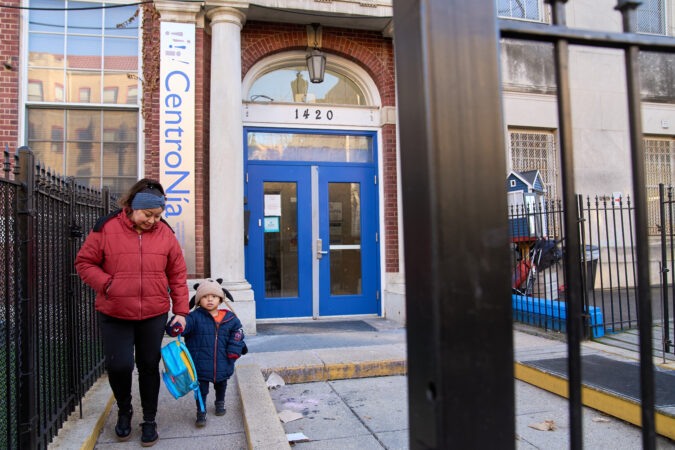
    WASHINGTON — Not long after President Donald Trump took office in January, staff at CentroNía bilingual preschool began rehearsing what to do if Immigration and Customs Enforcement officials came to the door. As ICE became a regular presence in their historically Latino neighborhood this summer, teachers stopped taking children to nearby parks, libraries, and playgrounds that had once been considered an extension of the classroom.

    And in October, the school scrapped its beloved Hispanic Heritage Month parade, when immigrant parents typically dressed their children in costumes and soccer jerseys from their home countries. ICE had begun stopping staff members, all of whom have legal status, and school officials worried about drawing more unwelcome attention.

    All of this transpired before ICE officials arrested a teacher inside a Spanish immersion preschool in Chicago in October. The event left immigrants who work in childcare, along with the families who rely on them, feeling frightened and vulnerable.

    Trump’s push for the largest mass deportation in history has had an outsized impact on the childcare field, which is heavily reliant on immigrants and already strained by a worker shortage. Immigrant childcare workers and preschool teachers, the majority of whom are working and living in the U.S. legally, say they are wracked by anxiety over possible encounters with ICE officials. Some have left the field, and others have been forced out by changes to immigration policy.

    At CentroNía, CEO Myrna Peralta said all staff must have legal status and work authorization. But ICE’s presence and the fear it generates have changed how the school operates.

    “That really dominates all of our decision making,” Peralta said.

    Instead of taking children on walks through the neighborhood, staff members push children on strollers around the hallways. And staff converted a classroom into a miniature library when the school scrapped a partnership with a local library.

    The childcare industry depends on immigrants

    Schools and childcare centers were once off limits to ICE officials, in part to keep children out of harm’s way. But those rules were scrapped not long after Trump’s inauguration. Instead, ICE officials are urged to exercise “common sense.”

    Tricia McLaughlin, spokesperson for the Department of Homeland Security, defended ICE officials’ decision to enter the Chicago preschool. She said the teacher, who had a work permit and was later released, was a passenger in a car that was being pursued by ICE officials. She got out of the car and ran into the preschool, McLaughlin said, emphasizing the teacher was “arrested in the vestibule, not in the school.” The man who had been driving went inside the preschool, where officials arrested him.

    About one-fifth of America’s childcare workers were born outside the United States and one-fifth are Latino. The proportion of immigrants in some places, particularly large cities, is much higher: In the District of Columbia, California, and New York, around 40% of the childcare workforce is foreign-born, according to UC Berkeley’s Center for the Study of Child Care Employment.

    Immigrants in the field tend to be better educated than those born in the United States. Those from Latin America help satisfy the growing demand for Spanish-language preschools, such as CentroNía, where some parents enroll their kids to give them a head start learning another language.

    The American Immigration Council estimated in 2021 that more than three-quarters of immigrants working in early care and education were living and working in the U.S. legally. Preschools like CentroNía conduct rigorous background checks, including verifying employees have work authorization.

    There is evidence the toll on the workforce is mounting. Since January, the number of immigrants working in childcare has dropped by 39,000, according to a report published Wednesday by New America, a left-leaning think tank. This, in turn, made it more challenging for U.S.-born mothers of children under 6 to work. The researchers estimate there are 79,000 fewer of them in the workforce because of the increase in ICE arrests.

    Beyond the deportation efforts, the Trump administration in recent months has stripped legal status from hundreds of thousands of immigrants. Many of them had fled violence, poverty or natural disasters in their homes and received Temporary Protected Status, which allowed them to live and work legally in the U.S. But Trump ended those programs, forcing many out of their jobs — and the country. Just last month, 300,000 immigrants from Venezuela lost their protected status.

    CentroNía lost two employees when they lost their TPS, Peralta said, and a Nicaraguan immigrant working as a teacher left on his own. Tierra Encantada, which runs Spanish immersion preschools in several states, had a dozen teachers leave when they lost their TPS.

    Fear is affecting even those in the U.S. legally

    At CentroNía, one staff member was detained by ICE while walking down the street and held for several hours, all the while unable to contact colleagues to let them know where she was. She was released that evening, said the school’s site director, Joangelee Hernández-Figueroa.

    Another staff member, teacher Edelmira Kitchen, said she was pulled over by ICE on her way to work in September. Officials demanded she get out of her car so they could question her. Kitchen, a U.S. citizen who immigrated from the Dominican Republic as a child, said she refused and they eventually let her go.

    “I felt violated of my rights,” Kitchen said.

    Hernández-Figueroa said ICE’s heightened presence during the federal intervention in the city, has taken a toll on employees’ mental health. Some have gone to the hospital with panic attacks in the middle of the school day.

    When the city sent mental health consultants to the school earlier this year as part of a partnership with the Department of Behavioral Health, school leadership had them work with teachers rather than students, worried their anguish would spill over to the classroom.

    “If the teachers aren’t good,” Hernández-Figueroa said, “the kids won’t be good either.”

    It’s not just adults who are feeling more anxious. At a Guidepost Montessori School in Portland, Ore., teachers observed preschoolers change in the weeks after an ICE arrest near the school in July. After pulling over a father who was driving his child to the school, officials encountered him in the school parking lot and tried to arrest him. In the ensuing commotion, the school went into lockdown: Children were pulled off the playground, and teachers played loud music and had children sing along to drown out the yelling.

    Amy Lomanto, who heads the school, said teachers noticed more outbursts among students, and more students retreating to what the school calls “the regulation station,” an area in the main office with fidget toys kids can use to calm themselves.

    She said what unfolded at her school underscored that even wealthy communities, like the one the school serves, are not immune from exposure to these kinds of events.

    “With the current situation, more and more of us are likely to experience this kind of trauma,” she said. “That level of fear now is permeating a lot more throughout our society.”

  • Paramount goes hostile in bid for Warner Bros., challenging a $72 billion bid by Netflix

    Paramount goes hostile in bid for Warner Bros., challenging a $72 billion bid by Netflix

    NEW YORK — Paramount has gone hostile bid for Warner Bros. Discovery, challenging Netflix which reached a $72 billion takeover deal with the company just days ago.

    Paramount said Monday that it is going straight to Warner Bros. shareholders with a $30 per share cash bid for the entirety of the company including its Global Networks business, asking them to reject the deal with Netflix.

    That is the same bid that Warner Brothers rejected in favor of the offer from Netflix in a merger that would alter the U.S. entertainment landscape.

    Paramount criticized the Netflix offer, saying it “exposes WBD shareholders to a protracted multi-jurisdictional regulatory clearance process with an uncertain outcome along with a complex and volatile mix of equity and cash.”

    Paramount said it had submitted six proposals to Warner Bros. Discovery over a 12 week period.

    “We believe our offer will create a stronger Hollywood. It is in the best interests of the creative community, consumers and the movie theater industry,” Paramount Chairman and CEO David Ellison said in a statement. ”We believe they will benefit from the enhanced competition, higher content spend and theatrical release output, and a greater number of movies in theaters as a result of our proposed transaction,”

    On Friday Netflix struck a deal to buy Warner Bros. Discovery, the Hollywood giant behind “Harry Potter” and HBO Max. The cash and stock deal is valued at $27.75 per Warner share, giving it a total enterprise value of $82.7 billion, including debt. The transaction is expected to close in the next 12 to 18 months, after Warner completes its previously announced separation of its cable operations. Not included in the deal are networks such as CNN and Discovery.

    But President Donald Trump said Sunday that the deal struck by Netflix to buy Warner Bros. Discovery “could be a problem” because of the size of the combined market share.

    The Republican president said he will be involved in the decision about whether the federal government should approve the $72 billion deal.

    Paramount’s tender offer is set to expire on Jan. 8, 2026, unless it’s extended.

    Shares of Warner Bros. and Paramount jumped between 5% and 6% at the opening bell Monday. Shares of Netflix edged lower.

  • Hearing in Luigi Mangione’s state murder case sheds new light on his arrest

    Hearing in Luigi Mangione’s state murder case sheds new light on his arrest

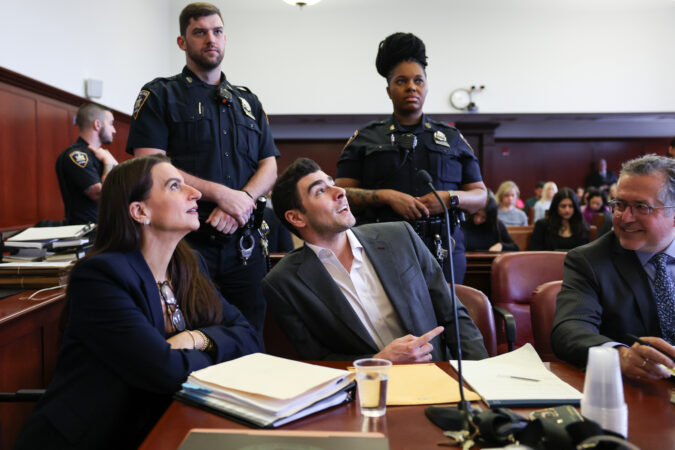
    NEW YORK — Minutes after police approached Luigi Mangione in a Pennsylvania McDonald’s, he told an officer he didn’t want to talk, according to video and testimony at a court hearing Thursday for the man charged with killing UnitedHealthcare CEO Brian Thompson.

    Although some video and accounts of police interactions with Mangione emerged earlier in this week’s hearing, Thursday’s proceedings shed new light on the lead-up to and aftermath of his Dec. 9, 2024, arrest in Altoona, Pa.

    Mangione, 27, appeared to follow the proceedings intently, at times leaning over the defense table to scrutinize papers or take notes. He briefly looked down as Altoona Police Officer Tyler Frye was asked about a strip-search of Mangione after his arrest. Under the department’s policy, that search wasn’t recorded.

    It happened after police were told that someone at the McDonald’s resembled the much-publicized suspect in Thompson’s killing. But Frye and Officer Joseph Detwiler initially approached Mangione with a low-key tone, saying only that someone had said he looked “suspicious.” Asked for his ID, he gave a phony New Jersey driver’s license with a fake name, according to prosecutors.

    Moments later, after frisking Mangione, Detwiler stepped away to communicate with dispatchers about the license, leaving the rookie Frye by Mangione’s table.

    “So what’s going on? What brings you up here from New Jersey?” Frye asked, according to his body-camera video.

    Mangione answered in a low voice. Asked what the suspect had said, Frye testified Thursday: “It was something along the lines of: He didn’t want to talk to me at that time.”

    Mangione later added that “he was just trying to use the Wi-Fi,” according to Frye.

    During the roughly 20 minutes before Mangione was told he had the right to remain silent, he answered other questions asked by the officers, and also posed a few of his own.

    “Can I ask why there’s so many cops here?” he asked shortly before being informed he was being arrested on a forgery charge related to his false ID. By that point, roughly a dozen officers had converged on the restaurant, and Mangione had been told he was being investigated and had been handcuffed.

    Mangione has pleaded not guilty to state and federal murder charges. Before any trials get scheduled, his lawyers are trying to preclude the eventual jurors from hearing about his alleged statements to law officers and items — including a gun and a notebook — they allegedly seized from his backpack.

    The evidence is key to prosecutors’ case. They have said the 9 mm handgun matches the firearm used in the killing, that writings in the notebook laid out Mangione’s disdain for health insurers and ideas about killing a CEO at an investor conference, and that he gave police the same fake name that the alleged gunman used at a New York hostel days before the shooting.

    Thursday’s proceedings came on the anniversary of the killing, which UnitedHealthcare marked by lowering the flags at its headquarters in Minnetonka, Minnesota, and encouraging employees to engage in volunteering.

    Thompson, 50, was shot from behind as he walked to an investor conference. He became UnitedHealthcare’s CEO in 2021 and had worked within parent UnitedHealth Group Inc. for 20 years.

    The hearing, which started Monday and could extend to next week, applies only to the state case. But it is giving the public an extensive preview of some testimony, video, 911 audio and other records relevant to both cases.

    After encountering Mangione, Detwiler and Frye tried to play it cool and buy time by intimating that they were simply responding to a loitering complaint and chatting about his sandwich. Still, they patted Mangione down and pushed his backpack away from him. About 15 minutes in, officers warned him that he was being investigated and would be arrested if he repeated what they had determined was a fake name.

    After he gave his real one, he was read his rights, handcuffed, frisked again and ultimately arrested on a forgery charge related to his fake ID.

    Mangione’s lawyers argue that his statements shouldn’t be allowed as trial evidence because officers started questioning him before reading his rights. They say the contents of his backpack should be excluded because police didn’t get a warrant before searching it.

    Manhattan prosecutors haven’t yet detailed their arguments for allowing the disputed evidence. Federal prosecutors have maintained that the backpack search was justified to ensure there was nothing dangerous inside, and that Mangione’s statements to officers were voluntary and made before he was under arrest.

    Many criminal cases see disputes over evidence and the complicated legal standards governing police searches and interactions with potential suspects.

  • Trump praises Congo and Rwanda as they sign U.S.-mediated peace deal

    Trump praises Congo and Rwanda as they sign U.S.-mediated peace deal

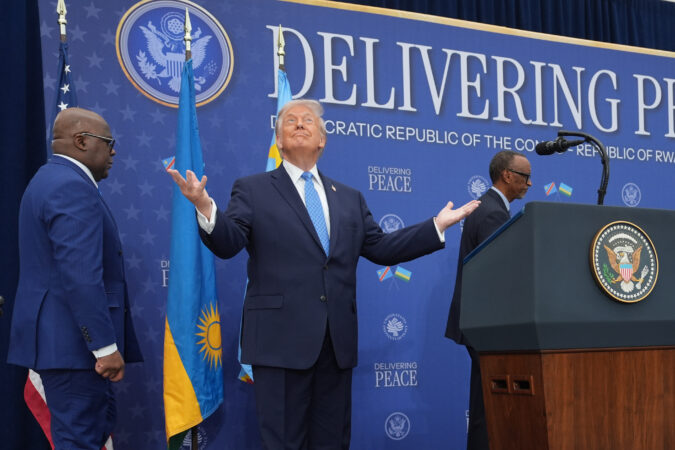
    WASHINGTON — President Donald Trump praised the leaders of the Democratic Republic of Congo and Rwanda for their courage as they signed onto a deal on Thursday aimed at ending the conflict in eastern Congo and opening the region’s critical mineral reserves to the U.S. government and American companies.

    The moment offered Trump — who has repeatedly and with a measure of exaggeration boasted of brokering peace in some of the world’s most entrenched conflicts — another chance to tout himself as a dealmaker extraordinaire on the global stage and make the case that he’s deserving of the Nobel Peace Prize. The U.S. leader hasn’t been shy about his desire to receive the honor.

    “It’s a great day for Africa, a great day for the world,” Trump said shortly before the leaders signed the pact. He added, “Today, we’re succeeding where so many others have failed.”

    Trump welcomed Presidents Felix Tshisekedi of Congo and Paul Kagame of Rwanda, as well as several officials from other African nations who traveled to Washington to witness the signing, in the same week he contemptuously derided the war-torn country of Somalia and said he did he did not want immigrants from the East African nation in the U.S.

    Lauded by the White House as a “historic” agreement brokered by Trump, the pact between Tshisekedi and Kagame follows monthslong peace efforts by the U.S. and partners, including the African Union and Qatar, and finalizes an earlier deal signed in June.

    But the Trump-brokered peace is precarious.

    The Central African nation of Congo has been battered by decadeslong fighting with more than 100 armed groups, the most potent being the Rwanda-backed M23 rebels. The conflict escalated this year, with M23 seizing the region’s main cities of Goma and Bukavu in an unprecedented advance, worsening a humanitarian crisis that was already one of the world’s largest, with millions of people displaced.

    ‘We are still at war’

    Fighting, meanwhile, continued this week in the conflict-battered region with pockets of clashes reported between the rebels and Congolese soldiers, together with their allied forces. Trump, a Republican, has often said that his mediation has ended the conflict, which some people in Congo say isn’t true.

    Still, Kagame and Tshisekedi offered a hopeful tone as they signed onto to the agreement.

    “No one was asking President Trump to take up this task. Our region is far from the headlines,” Kagame said. “But when the president saw the opportunity to contribute to peace, he immediately took it.”

    “I do believe this day is the beginning of a new path, a demanding path, yes. Indeed, quite difficult,” Tshisekedi said. ”But this is a path where peace will not just be a wish, an aspiration, but a turning point.”

    Indeed, analysts say Thursday’s deal also isn’t expected to quickly result in peace. A separate peace deal has been signed between Congo and the M23.

    “We are still at war,” said Amani Chibalonza Edith, a 32-year-old resident of Goma, eastern Congo’s key city seized by rebels early this year. “There can be no peace as long as the front lines remain active.”

    Rare earth minerals

    Thursday’s pact will also build on a Regional Economic Integration Framework previously agreed upon that officials have said will define the terms of economic partnerships involving the three countries.

    Trump also announced the United States was signing bilateral agreements with the Congo and Rwanda that will unlock new opportunities for the United States to access critical minerals–deals that will benefit all three nations’ economies.

    “And we’ll be involved with sending some of our biggest and greatest U.S. companies over to the two countries,” Trump said. He added, “Everybody’s going to make a lot of money.”

    The region, rich in critical minerals, has been of interest to Trump as Washington looks for ways to circumvent China to acquire rare earths, essential to manufacturing fighter jets, cell phones and more. China accounts for nearly 70% of the world’s rare earth mining and controls roughly 90% of global rare earths processing.

    Trump hosted the leaders on Thursday morning for one-on-one meetings at the White House as well as a three-way conversation before the signing ceremony at the Institute of Peace in Washington, which the State Department announced on Wednesday has been rebranded “the Donald J. Trump Institute of Peace.”

    Later Thursday, the U.S. Chamber of Commerce will host an event that will bring together American business leaders and the Congolese and Rwandan delegations to discuss potential investment opportunities in critical minerals, energy and tourism.

    Ongoing clashes

    In eastern Congo, meanwhile, residents reported pockets of clashes and rebel advances in various localities. Both the M23 and Congolese forces have accused each other of violating the terms of the ceasefire agreed earlier this year. Fighting has also continued in the central plateaus across South Kivu province.

    The hardship in the aftermath of the conflict has worsened following U.S. funding cuts that were crucial for aid support in the conflict.

    In rebel-held Goma, which was a regional hub for security and humanitarian efforts before this year’s escalation of fighting, the international airport is closed. Government services such as bank operations have yet to resume and residents have reported a surge in crimes and in the prices of goods.

    “We are waiting to see what will happen because so far, both sides continue to clash and attack each other,” said Moise Bauma, a 27-year-old student in rebel-held Bukavu city.

    Both Congo and Rwanda, meanwhile, have touted American involvement as a key step towards peace in the region.

    “We need that attention from the administration to continue to get to where we need to get to,” Makolo said. “We are under no illusion that this is going to be easy. This is not the end but it’s a good step.”

    Conflict’s cause

    The conflict can be traced to the aftermath of the 1994 genocide in Rwanda, where Hutu militias killed between 500,000 and 1 million ethnic Tutsi, as well as moderate Hutus and Twa, Indigenous people. When Tutsi-led forces fought back, nearly 2 million Hutus crossed into Congo, fearing reprisals.

    Rwandan authorities have accused the Hutus who fled of participating in the genocide and alleged that elements of the Congolese army protected them. They have argued that the militias formed by a small fraction of the Hutus are a threat to Rwanda’s Tutsi population.

    Congo’s government has said there can’t be permanent peace if Rwanda doesn’t withdraw its support troops and other support for the M23 in the region. Rwanda, on the other hand, has conditioned a permanent ceasefire on Congo dissolving a local militia that it said is made up of the Hutus and is fighting with the Congolese military.

    U.N. experts have said that between 3,000 and 4,000 Rwandan government forces are deployed in eastern Congo, operating alongside the M23. Rwanda denies such support, but says any action taken in the conflict is to protect its territory.

  • Putin says there are points he can’t agree to in the U.S. proposal to end Russia’s war in Ukraine

    Putin says there are points he can’t agree to in the U.S. proposal to end Russia’s war in Ukraine

    Russian President Vladimir Putin says some proposals in a U.S. plan to end the war in Ukraine are unacceptable to the Kremlin, indicating in comments published Thursday that any deal is still some ways off.

    President Donald Trump has set in motion the most intense diplomatic push to stop the fighting since Russia launched the full-scale invasion of its neighbor nearly four years ago. But the effort has once again run into demands that are hard to reconcile, especially over whether Ukraine must give up land to Russia and how it can be kept safe from any future aggression by Moscow.

    Trump’s special envoy, Steve Witkoff, and son-in-law Jared Kushner, are set to meet with Ukraine’s lead negotiator, Rustem Umerov, later Thursday in Miami for further talks, according to a senior Trump administration official who wasn’t authorized to comment publicly and spoke on condition of anonymity.

    Putin said his five-hour talks Tuesday in the Kremlin with Witkoff and Kushner were “necessary” and “useful,” but also “difficult work,” and some proposals were unacceptable.

    Putin spoke to the India Today TV channel before he landed Thursday in New Delhi for a state visit. Ahead of the broadcast of the full interview, Russian state news agencies Tass and RIA Novosti quoted some of his remarks in it.

    Tass quoted Putin as saying that in Tuesday’s talks, the sides “had to go through each point” of the U.S. peace proposal, “which is why it took so long.”

    “This was a necessary conversation, a very concrete one,” he said, with provisions that Moscow was ready to discuss, while others “we can’t agree to.”

    Trump said Wednesday that Witkoff and Kushner came away from their marathon session confident that he wants to find an end to the war. “Their impression was very strongly that he’d like to make a deal,” he added.

    Putin refused to elaborate on what Russia could accept or reject, and none of the other officials involved offered details of the talks.

    “I think it is premature. Because it could simply disrupt the working regime” of the peace effort, Tass quoted Putin as saying.

    European leaders, left on the sidelines by Washington as U.S. officials engage directly with Moscow and Kyiv, have accused Putin of feigning interest in Trump’s peace drive.

    French President Emmanuel Macron met in Beijing with China’s leader Xi Jinping, seeking to involve him in pressuring Russia toward a ceasefire. Xi, whose country has provided strong diplomatic support for Putin, did not say respond to France’s call, but said that “China supports all efforts that work towards peace.”

    Russian barrages of civilian areas of Ukraine continued overnight into Thursday. A missile struck Kryvyi Rih on Wednesday night, wounding six people, including a 3-year-old girl, according to city administration head Oleksandr Vilkul.

    The attack on Ukrainian President Volodymyr Zelensky’s hometown damaged more than 40 residential buildings, a school and domestic gas pipes, Vilkul said.

    A 6-year-old girl died in the southern city of Kherson after Russian artillery shelling wounded her the previous day, regional military administration chief Oleksandr Prokudin wrote on Telegram.

    The Kherson Thermal Power Plant, which provides heat for over 40,000 residents, shut down Thursday after Russia pounded it with drones and artillery for several days, he said.

    Authorities planned emergency meetings to find alternate sources of heating, he said. Until then, tents were erected across the city where residents could warm up and charge electronic devices.

    Russia also struck Odesa with drones, wounding six people, while civilian and energy infrastructure was damaged, said Oleh Kiper, head of the regional military administration.

    Overall, Russia fired two ballistic missiles and 138 drones at Ukraine overnight, officials said.

    Meanwhile, in the Russia-occupied part of the Kherson region, two men were killed by a Ukrainian drone strike on their vehicle Thursday, Moscow-installed regional leader Vladimir Saldo said. A 68-year-old woman was also wounded in the attack, he said.

  • Trump proposal would weaken vehicle mileage rules that limit air pollution

    Trump proposal would weaken vehicle mileage rules that limit air pollution

    WASHINGTON — President Donald Trump on Wednesday announced a proposal to weaken vehicle mileage rules for the auto industry, loosening regulatory pressure on automakers to control pollution from gasoline-powered cars and trucks.

    The plan, if finalized next year, would significantly reduce fuel economy requirements, which set rules on how far new vehicles need to travel on a gallon of gasoline, through the 2031 model year. The rules will increase Americans’ access to the full range of gasoline vehicles they need and can afford, officials said. The administration projects that the new standards would set the industry fleetwide average for light-duty vehicles at roughly 34.5 miles per gallon in the 2031 model year.

    The move is the latest action by the Trump administration to reverse Biden-era policies that encouraged cleaner-running cars and trucks, including electric vehicles. Burning gasoline for vehicles is a major contributor to planet-warming greenhouse gas emissions.

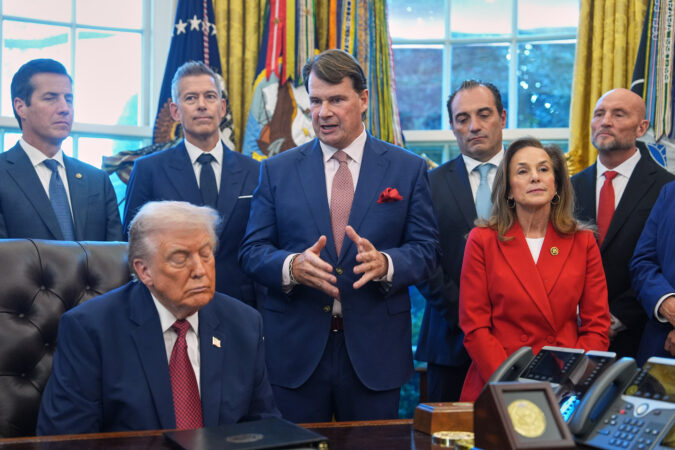
    “From Day One I’ve been taking action to make buying a car more affordable.” Trump said at a White House event that included top executives from the three largest U.S. automakers.

    The rule reverses a Biden-era policy that “forced automakers to build cars using expensive technologies that drove up costs, drove up prices, and made the car much worse,” Trump said.

    Rule change will save money, Trump says

    The action is expected to save consumers about $1,000 off the price of a new car, Trump said. New cars sold for an average of $49,766 on average in October, according to Kelley Blue Book.

    Automakers applauded the planned changes. They had complained that the Biden-era rules were difficult to meet.

    Ford CEO Jim Farley said the planned rollback was “a win for customers and common sense.”

    “As America’s largest auto producer, we appreciate President Trump’s leadership in aligning fuel economy standards with market realities. We can make real progress on carbon emissions and energy efficiency while still giving customers choice and affordability,” Farley said.

    Stellantis CEO Antonio Filosa said the automaker appreciates the administration’s actions to “realign” the standards “with real world market conditions.”

    Since taking office in January, Trump has relaxed auto tailpipe emissions rules, repealed fines for automakers that do not meet federal mileage standards, and terminated consumer credits of up to $7,500 for EV purchases.

    Environmentalists decried the rollback in mileage standards.

    “In one stroke Trump is worsening three of our nation’s most vexing problems: the thirst for oil, high gas pump costs, and global warming,” said Dan Becker, director of the Safe Climate Transport Campaign for the Center for Biological Diversity.

    “Gutting the [gas-mileage] program will make cars burn more gas and American families burn more cash,’’ said Katherine García, director of the Sierra Club’s Clean Transportation for All program.

    Polluting cars to stay on road

    “This rollback would move the auto industry backwards, keeping polluting cars on our roads for years to come and threatening the health of millions of Americans, particularly children and the elderly,” she said.

    Trump has repeatedly pledged to end what he falsely calls an EV “mandate,” referring incorrectly to Democratic President Joe Biden’s target that half of all new vehicle sales be electric by 2030. EVs accounted for about 8% of new vehicle sales in the United States in 2024, according to Cox Automotive.

    No federal policy has required auto companies to sell EVs, although California and other states have imposed rules requiring that all new passenger vehicles sold in the state be zero-emission by 2035. Trump and congressional Republicans blocked the California law earlier this year.

    Transportation Secretary Sean Duffy urged his agency to reverse existing fuel economy requirements, known as Corporate Average Fuel Economy, soon after taking office. In June, he said that standards set under Biden were illegal because they included use of electric vehicles in their calculation. EVs do not run on gasoline. After the June rule revision, the traffic safety agency was empowered to update the requirements.

    Under Biden, automakers were required to average about 50 miles (81 kilometers) per gallon of gas for passenger cars by 2031, compared with about 39 miles (63 kilometers) per gallon today. The Biden administration also increased fuel-economy requirements by 2% each year for light-duty vehicles in every model year from 2027 to 2031, and 2% per year for SUVs and other light trucks from 2029 to 2031. At the same time, it called for stringent tailpipe rules meant to encourage EV adoption.

    The 2024 standards would have saved 14 billion gallons of gasoline from being burned by 2050, according to the National Highway Traffic Safety Administration’s 2024 calculations. Abandoning them means that in 2035, cars could produce 22,111 more tons of carbon dioxide per year than under the Biden-era rules. It also means an extra 90 tons a year of deadly soot particles and more than 4,870 tons a year of smog components nitrogen oxide and volatile organic carbons going into the air in coming years.

    Mileage rules have been implemented since the 1970s energy crisis, and over time, automakers have gradually increased their vehicles’ average efficiency.

  • Shredded cheese sold in dozens of states recalled due to potential for metal fragment contamination

    Shredded cheese sold in dozens of states recalled due to potential for metal fragment contamination

    There is a recall for more than 260,000 cases of shredded cheese sold in 31 states and Puerto Rico because of the potential for metal fragment contamination, according to the U.S. Food and Drug Administration.

    The FDA said that the various shredded cheeses were recalled by Great Lakes Cheese Co. The cheese products are sold under private store-brand labels at several retailers, including Target, Walmart and Aldi.

    The recall includes various cheeses such as mozzarella, Italian style, pizza style, mozzarella and provolone and mozzarella and parmesan.

    The recall has a Class II classification, because the product “may cause temporary or medically reversible adverse health consequences or where the probability of serious adverse health consequences is remote,” according to the FDA’s website.

    An FDA says ingesting metal fragments may cause injuries such as dental damage, laceration of the mouth or throat, or laceration or perforation of the intestine.

  • Americans gave $4B on Giving Tuesday 2025 as donations and volunteering gain big over last year

    Americans gave $4B on Giving Tuesday 2025 as donations and volunteering gain big over last year

    Americans gave $4 billion to nonprofits on Giving Tuesday in 2025, an increase from the $3.6 billion they gave in 2024, according to estimates from the nonprofit Giving Tuesday.

    More people also volunteered their time on the Tuesday after Thanksgiving this year, which fell on Dec. 2 and has become a major fundraising day for nonprofits. This year, 11.1 million people in the U.S. volunteered, up from, 9.2 million last year.

    Giving Tuesday started in 2012 as a hashtag and a project of the 92nd St Y in New York and has since become an independent nonprofit. The organization estimates how much was given and how many people volunteer using data from a wide variety of sources, including giving platforms, payment processors and software applications that nonprofits use.

    Woodrow Rosenbaum, the chief data officer for Giving Tuesday, said both the number of people giving and the overall donation amount may have increased this year as people seek a sense of belonging and connection.

    “Generosity is a really powerful way to get that,” Rosenbaum said in an interview with The Associated Press. ”But I think mostly it’s just that when people see need, they want to do something about it and Giving Tuesday is an opportunity to do that in a moment of celebration as opposed to crisis.”

    Overall donations increased 8.1% from last year when adjusted for inflation. Giving Tuesday has also seen the average donation increase in size over time and Rosenbaum said people may be seeking additional ways to give as well.

    “Volunteering is a way that you can add to your impact without it costing you money,” he said.

    Not everyone who volunteers their time does so through a nonprofit. They may volunteer with mutual aid groups or by helping out family members or neighbors, he said.

    Giving Tuesday does not include donations from corporations or foundations in their estimate, Rosenbaum said, as they are focused on the everyday generosity of individuals. That means they did not include the gift from billionaires Michael and Susan Dell of $6.25 billion to encourage families to claim new investment accounts created by the Trump administration.

    President Donald Trump hosted the Dells at the White House Tuesday, calling their commitment “one of the most generous acts in the history of our country.” The Dells will offer $250 to 25 million children 10 years old and younger to invest in accounts that the U.S. Department of Treasury will create next year. The ” Trump accounts ” were part of the administration’s tax and spending legislation passed in the summer.

    A significant portion of charitable giving to nonprofits happens at the end of the calendar year and Giving Tuesday is an informal kick off to what nonprofits think of as the giving season. A combination of economic and political uncertainty has meant it is hard to predict how generous donors will be this year. Rosenbaum said that the generosity demonstrated on GivingTuesday is an extremely encouraging bellwether for how the rest of the giving season will go.

    “What we really hope is that nonprofits and community groups see this as an opportunity that we are in a moment of abundance and that people are ready and willing to help,” Rosenbaum said.

  • Bessent says Federal Reserve Board could ‘veto’ future regional presidents

    Bessent says Federal Reserve Board could ‘veto’ future regional presidents

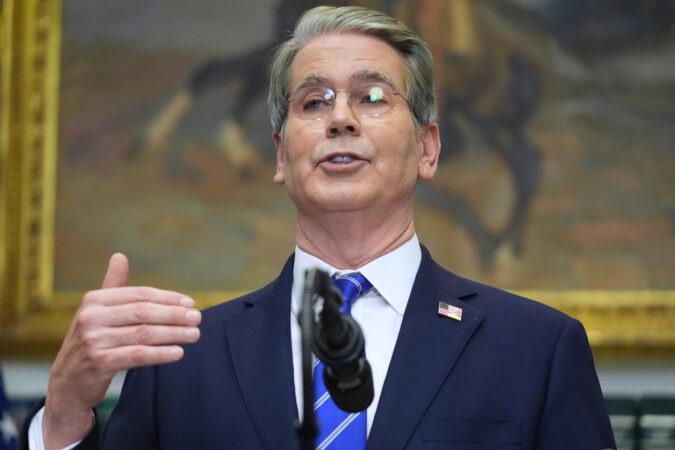
    WASHINGTON — Treasury Secretary Scott Bessent said Wednesday he would push a new requirement that the Federal Reserve’s regional bank presidents live in their districts for at least three years before taking office, a move that could give the White House more power over the independent agency.

    In comments at the New York Times’ DealBook Summit, Bessent criticized several presidents of the Fed’s regional banks, saying that they were not from the districts that they now represent, “a disconnect from the original framing” of the Fed.

    Bessent said that three of the 12 regional presidents have ties to New York: Two previously worked at the New York Federal Reserve, while a third worked at a New York investment bank.

    “So, do they represent their district?” he asked. “I am going to start advocating, going forward, not retroactively, that regional Fed presidents must have lived in their district for at least three years.”

    Bessent added that he wasn’t sure if Congress would need to weigh in on such a change. Under current law, the Fed’s Washington, D.C.-based board can block the appointment of regional Fed presidents.

    “I believe that you would just say, unless someone’s lived in the district for three years, we’re going to veto them,” Bessent said.

    Bessent has stepped up his criticism of the Fed’s 12 regional bank presidents in recent weeks after several of them made clear in a series of speeches that they opposed cutting the Fed’s key rate at its next meeting in December. President Donald Trump has sharply criticized the Fed for not lowering its short-term interest rate more quickly. When the Fed reduces its rate it can over time lower borrowing costs for mortgages, auto loans, and credit cards.

    The prospect of the administration “vetoing” regional bank presidents would represent another effort by the White House to exert more control over the Fed, an institution that has traditionally been independent from day-to-day politics.

    The Federal Reserve seeks to keep prices in check and support hiring by setting a short-term interest rate that influences borrowing costs across the economy. It has a complicated structure that includes a seven-member board of governors based in Washington as well as 12 regional banks that cover specific districts across the United States.

    The seven governors and the president of the New York Fed vote on every interest-rate decision, while four of the remaining 11 presidents vote on a rotating basis. But all the presidents participate in meetings of the Fed’s interest-rate setting committee.

    The regional Fed presidents are appointed by boards made up of local and business community leaders.

    Three of the seven members of the Fed’s board were appointed by Trump, and the president is seeking to fire Governor Lisa Cook, which would give him a fourth seat and a majority. Yet Cook has sued to keep her job, and the Supreme Court has ruled she can stay in her seat as the court battle plays out.

    Trump is also weighing a pick to replace Chair Jerome Powell when he finishes his term in May. Trump said over the weekend that “I know who I am going to pick,” but at a Cabinet meeting Tuesday said he wouldn’t announce his choice until early next year. Kevin Hassett, a top economic adviser to Trump, is widely considered Trump’s most likely choice.

    The three regional presidents cited by Bessent are all relatively recent appointees. Lorie Logan was named president of the Dallas Fed in August 2022, after holding a senior position at the New York Fed as the manager of the Fed’s multitrillion dollar portfolio of mostly government securities. Alberto Musalem became president of the St. Louis Fed in April 2024, and from 2014-2017 was an executive vice president at the New York Fed.

    Beth Hammack was appointed president of the Cleveland Fed in August 2024, after an extended career at Goldman Sachs.

    Musalem is the only one of the three that currently votes on policy and he supported the Fed’s rate cuts in September and October. But last month he suggested that with inflation elevated, the Fed likely wouldn’t be able to cut much more.

    Logan has said she would have voted against October’s rate cut if she had a vote, while Hammack has said that the Fed’s key rate should remain high to combat inflation. Both Hammack and Logan will vote on rate decisions next year.

    Bessent argued last month in an interview on CNBC that the reason for the regional Fed banks was to bring the perspective of their districts to the Fed’s interest rate decisions and “break the New York hold” on the setting of interest rates.

    __

    Associated Press Writer Fatima Hussein contributed to this report.