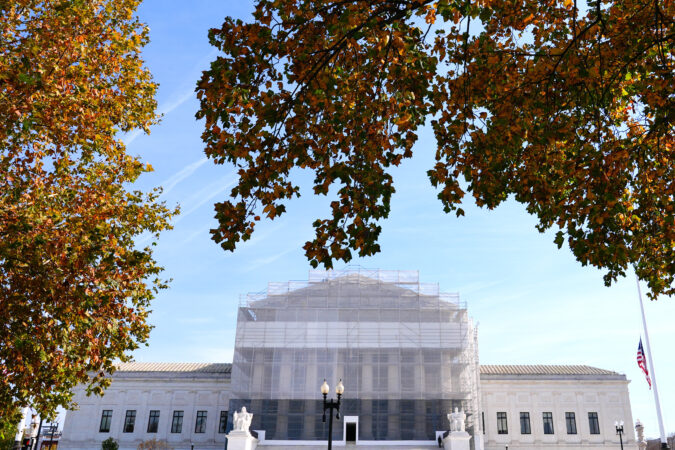
Indiana House members are expected to press forward Monday with redrawing the state’s congressional districts in Republicans’ favor, increasing pressure on their defiant counterparts in the GOP-led Senate to meet President Donald Trump’s demands.
Republicans who control the House have said there’s no doubt that redistricting will pass that chamber. But the fate of any proposal remains uncertain in the Senate. Republicans control that chamber, but caucus members have resisted pressure to redistrict for months.
Senate leadership recently backed off its previous intentions not to meet at all, agreeing to convene next Monday. However, it’s still unclear whether enough senators will support a new map.
Republicans hold seven of Indiana’s nine U.S. House seats. Trump and other Republicans want to make the map 9-0 in the GOP’s favor, seeking to give the party two extra seats in the 2026 elections that will determine control of the U.S. House. Democrats only need to flip a handful of seats to overcome the Republicans’ current margin.
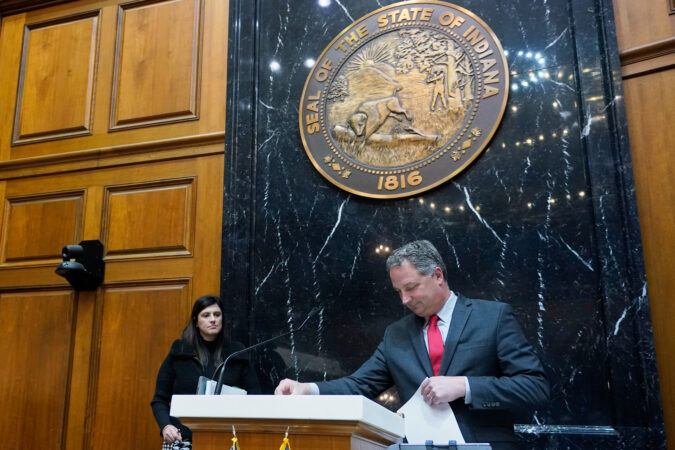
Indiana House Republicans published a draft of a map Monday morning still featuring nine congressional districts, but with new boundaries designed to oust the state’s two Democratic U.S. House members.
The city of Indianapolis would be split among four congressional districts, a major change to the current map where the city makes up the entirety of the 7th District, which reliably backs Democrats.
“It’s clear these orders are coming from Washington, and they clearly don’t know the first thing about our community,” longtime U.S. Rep. André Carson, a Democrat who represents Indianapolis, said in a statement.
Indiana’s other current Democratic district is in the state’s northwest corner near Chicago. The new map would instead group a large portion of Republican counties in northern Indiana with the cities of East Chicago and Gary to make a new 1st Congressional District.
The state House will meet Monday afternoon to begin the legislative process to advance the new map.
Indiana lawmakers have been under mounting pressure from the White House to redistrict, as Republicans in Texas, Missouri, Ohio, and North Carolina have done. To offset the GOP gains, Democrats in California and Virginia have moved to do the same.
But some Indiana Republicans have been far more resistant. Republicans in the state Senate rebelled against Republican Gov. Mike Braun in November and said they would not attend a special session he ordered on redistricting.
The chamber’s top Republican, President Pro Tem Rodric Bray, at the time said the Senate did not have the votes. A spokesperson for Bray’s office did not respond Friday when asked if that is still the case.
Meanwhile, Trump attacked Indiana senators on social media, particularly Bray. He swore to endorse primary opponents of defecting senators. A spree of threats and swatting attempts were subsequently made against lawmakers who either said they do not support redistricting or have not taken a stance. At least one lawmaker in favor of redistricting and Braun were also threatened.
Last week, the House announced plans to convene in Indianapolis on Monday.
“All legislative business will be considered beginning next week, including redrawing the state’s congressional map,” House Speaker Todd Huston said in a statement last week.
The Indiana Senate, where several lawmakers objected to leadership’s refusal to hold a vote, then said members would reconvene Dec. 8.
“The issue of redrawing Indiana’s congressional maps mid-cycle has received a lot of attention and is causing strife here in our state,” Bray said in a statement Tuesday. He said the Senate will finally decide the matter this month.
Mid-cycle redistricting so far has resulted in nine more congressional seats that Republicans believe they can win and six more congressional seats that Democrats think they can win, putting the GOP up by three. However, redistricting is being litigated in several states, and there’s no guarantee that the parties will win the seats they’ve redrawn.
NEW YORK — Luigi Mangione appeared in court Monday seeking to bar evidence from his state trial over the killing of UnitedHealthcare CEO Brian Thompson, including the gun that authorities say matches the one used in the brazen New York City attack.
Among the evidence Mangione’s lawyers want to prevent the Manhattan District Attorney’s Office from presenting to jurors are a 9 mm handgun that prosecutors say matches the one used in the Dec. 4, 2024, killing and a handwritten notebook in which they say Mangione described his intent to “wack” a health insurance executive.
After getting state terrorism charges thrown out in September, the defense lawyers are zeroing in on what they say was unconstitutional conduct that tainted his arrest and threatens his right to a fair trial.
They contend that the gun and other items should be excluded because police lacked a warrant to search the backpack in which they were found. They also want to suppress some of Mangione’s statements to police, such as allegedly giving a false name, because officers started asking questions before telling him he had a right to remain silent.
Eliminating the gun and notebook would be critical wins for Mangione’s defense and a major setback for prosecutors, depriving them a possible murder weapon and evidence they say points to motive. Prosecutors have quoted extensively from Mangione’s diary in court filings, including his praise for Unabomber Ted Kaczynski.
In it, prosecutors say, Mangione mused about rebelling against “the deadly, greed fueled health insurance cartel” and said killing an industry executive “conveys a greedy bastard that had it coming.”
Court officials say the hearings could last more than a week, meaning they would extend through Thursday’s anniversary of the attack.
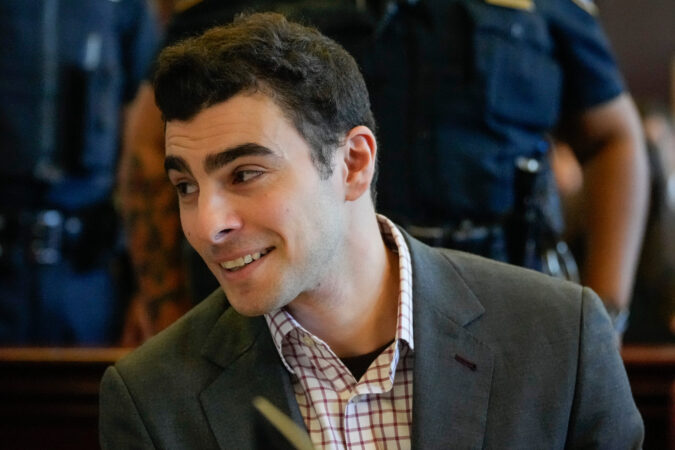
Mangione was allowed to wear normal clothing to the hearings instead of a jail uniform. He entered the courtroom Monday in a gray suit and a button-down shirt with a checkered or tattersall pattern. Court officers removed his handcuffs to allow him to take notes.
The prosecution’s first witness, Sgt. Chris McLaughlin of the New York City Police Department’s public affairs office, testified about efforts to disseminate surveillance images of the suspect to the news media and on social media in the hours and days after the shooting.
To illustrate the breadth of news coverage during the five-day search for the shooter, prosecutors played a surveillance video of the shooting that aired on Fox News Digital, footage from the network of police divers searching a pond in Central Park and clips from the network that included images of the suspected shooter that were distributed by police.
Mangione looked up at a courtroom monitor as video of the shooting played, but he didn’t appear to have any reaction.
A few dozen Mangione supporters watched the hearing from the back of the courtroom. One wore a green T-shirt that said: “Without a warrant, it’s not a search, it’s a violation.” Another woman held a doll of the Luigi video game character and had a smaller figurine of him clipped to her purse.
Mangione, 27, has pleaded not guilty to state and federal murder charges. The state charges carry the possibility of life in prison, while federal prosecutors are seeking the death penalty. Neither trial has been scheduled yet.
Mangione’s lawyers want to bar evidence from both cases, but this week’s hearings pertain only to the state case. The next hearing in the federal case is scheduled for Jan. 9.
Defense lawyer Marc Agnifilo told a judge in an unrelated matter last week that Manhattan prosecutors could call more than two dozen witnesses.
Thompson was killed as he walked to a Manhattan hotel for his company’s annual investor conference. Surveillance video showed a masked gunman shooting him from behind. Police say “delay,” “deny,” and “depose” were written on the ammunition, mimicking a phrase used to describe how insurers avoid paying claims.
Mangione, the Ivy League-educated scion of a wealthy Maryland family, was arrested five days later at a McDonald’s in Altoona, Pa., about 230 miles west of Manhattan.
Prosecutors in the state case have not responded to the defense’s written arguments.
An officer searching a backpack found with Mangione was heard on a body camera recording saying she was checking to make sure there “wasn’t a bomb” in the bag. His lawyers argue that was an excuse “designed to cover up an illegal warrantless search of the backpack.”
Federal prosecutors, fighting similar claims in their case, have said in court filings that police were justified in searching the backpack to make sure there were no dangerous items. His statements to officers, federal prosecutors said, were made voluntarily and before he was taken into police custody.
PHILADELPHIA — The Trump administration’s maneuvers to keep the president’s former lawyer Alina Habba in place as New Jersey’s top federal prosecutor were illegal and she is disqualified, a federal appeals court said Monday.
A panel of judges from the 3rd U.S. Circuit Court of Appeals sitting in Philadelphia sided with a lower court judge’s ruling after hearing oral arguments at which Habba herself was present on Oct. 20.
The ruling comes amid the push by President Donald Trump’s Republican administration to keep Habba as the acting U.S. attorney for New Jersey, a powerful post charged with enforcing federal criminal and civil law. It also comes after the judges questioned the government’s moves to keep Habba in place after her interim appointment expired and without her getting Senate confirmation.
Habba said after that hearing in a statement posted to X that she was fighting on behalf of other candidates to be federal prosecutors who have been denied a chance for a Senate hearing.
Messages were left Monday seeking comment from the U.S. attorney’s office in New Jersey, Habba’s personal staffer and the Justice Department.
Habba is hardly the only Trump administration prosecutor whose appointment has been challenged by defense lawyers.
Last week, a federal judge dismissed criminal cases against former FBI Director James Comey and New York Attorney General Letitia James after concluding that the hastily installed prosecutor who filed the charges, Lindsey Halligan, was unlawfully appointed to the position of interim U.S. attorney for the Eastern District of Virginia. The Justice Department has said it intends to appeal the rulings.
The judges on the panel were two appointed by Republican President George W. Bush, D. Brooks Smith and D. Michael Fisher as well as one named by Demcoratic President Barack Obama: Luis Felipe Restrepo.
A lower court judge said in August Habba’s appointment was done with a “novel series of legal and personnel moves” and that she was not lawfully serving as U.S attorney for New Jersey.
That order said her actions since July could be invalidated, but he stayed the order pending appeal.
The government argued Habba is validly serving in the role under a federal statute allowing the first assistant attorney, a post she was appointed to by the Trump administration.
A similar dynamic is playing out in Nevada, where a federal judge disqualified the Trump administration’s pick to be U.S. attorney there.
The Habba case comes after several people charged with federal crimes in New Jersey challenged the legality of Habba’s tenure. They sought to block the charges, arguing she didn’t have the authority to prosecute their cases after her 120-day term as interim U.S. attorney expired.
Habba was Trump’s attorney in criminal and civil proceedings before he was elected to a second term. She served as a White House adviser briefly before Trump named her as a federal prosecutor in March.
Shortly after her appointment, she said in an interview with a right-wing influence that she hoped to help “turn New Jersey red,” a rare overt political expression from a prosecutor.
She then brought a trespassing charge, eventually dropped, against Democratic Newark Mayor Ras Baraka stemming from his visit to a federal immigration detention center.
Habba later charged Democratic U.S. Rep. LaMonica McIver with assault stemming from the same incident, a rare federal criminal case against a sitting member of Congress other than for corruption. McIver denied the charges and pleaded not guilty. The case is pending.
Questions about whether Habba would continue in the job arose in July when her temporary appointment was ending and it became clear New Jersey’s two Democratic U.S. senators, Cory Booker and Andy Kim, would not back her appointment.
Earlier this year as her appointment was expiring, federal judges in New Jersey exercised their power under the law to replace Habba with a career prosecutor who had served as her second-in-command.
Bondi then fired the prosecutor installed by the judges and renamed Habba as acting U.S. attorney. The Justice Department said the judges acted prematurely and said Trump had the authority to appoint his preferred candidate to enforce federal laws in the state.
Brann’s ruling said the president’s appointments are still subject to the time limits and power-sharing rules laid out in federal law.
WASHINGTON — President Donald Trump said he’ll release the results of his MRI test that he received in October.
“If you want to have it released, I’ll release it,” the Republican president said Sunday during an exchange with reporters as he traveled back to Washington from Florida.
He said the results of the MRI were “perfect.”
The White House has declined to detail why Trump had an MRI during his physical in October or on what part of his body.
The press secretary, Karoline Leavitt, has said that the president received “advanced imaging” at Walter Reed National Military Medical Center “as part of his routine physical examination” and that the results showed Trump remains in “exceptional physical health.”
Trump added Sunday that he has “no idea” on what part of his body he got the MRI.
“It was just an MRI,” he said. “What part of the body? It wasn’t the brain because I took a cognitive test and I aced it.”
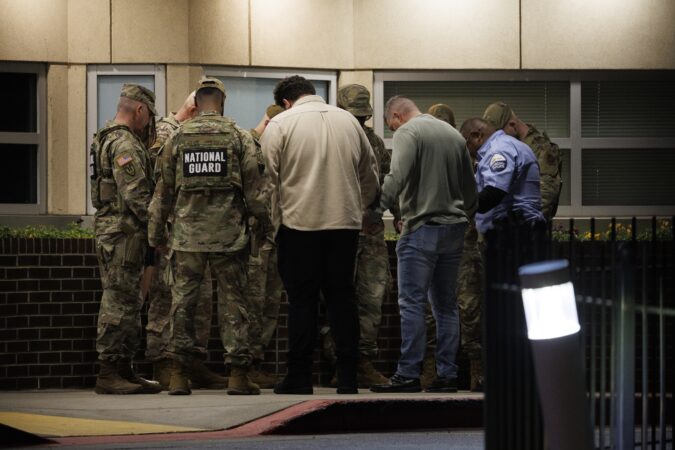
WEST PALM BEACH, Fla. — President Donald Trump said that one of the two West Virginia National Guard members shot by an Afghan national near the White House had died, calling the shooter who had worked with the CIA in his native country a “savage monster.”
As part of his Thanksgiving call to U.S. troops, Trump said that he had just learned that Specialist Sarah Beckstrom, 20, had died, while Staff Sgt. Andrew Wolfe, 24, was “fighting for his life.”
“She’s just passed away,” Trump said. “She’s no longer with us. She’s looking down at us right now. Her parents are with her.”
The president called Beckstrom an “incredible person, outstanding in every single way.”
Trump used the announcement to say the shooting was a “terrorist attack” as he criticized the Biden administration for enabling Afghans who worked with U.S. forces during the Afghanistan War to enter the United States. The president has deployed National Guard members in part to assist in his administration’s mass deportation efforts.
Trump suggested that the shooter was mentally unstable after the war and departure from Afghanistan.
“He went cuckoo. I mean, he went nuts,” the president said. “It happens too often with these people.”
Staff Sgt. Andrew Wolfe and Specialist Sarah Beckstrom.
The shooter worked with U.S. forces in Afghanistan
The suspect charged with the shooting is Rahmanullah Lakanwal, 29. The suspect had worked in a special CIA-backed Afghan Army unit before emigrating from Afghanistan, according to two sources who spoke to the Associated Press on condition of anonymity due to the sensitivity of the situation, and #AfghanEvac, a group that helps resettle Afghans who assisted the U.S. during the two-decade war.
Jeanine Pirro, the U.S. attorney for the District of Columbia, declined to provide a motive for Wednesday afternoon’s brazen act of violence which occurred just blocks from the White House. The presence of troops in the nation’s capital and other cities around the country has become a political flashpoint.
The Veterans of Foreign Wars post in Webster Springs, where Beckstrom is from, will hold three prayer vigils Thursday, Friday, and Saturday evenings, according to a Facebook post from the Webster County Veterans Auxiliary.
Pirro said that the suspect, Lakanwal, launched an “ambush-style” attack with a .357 Smith & Wesson revolver. The suspect currently faces charges of assault with intent to kill while armed and possession of a firearm during a crime of violence. Pirro said that “it’s too soon to say” what the suspect’s motives were.
The charges could be upgraded, Pirro said, adding: “We are praying that they survive and that the highest charge will not have to be murder in the first degree. But make no mistake, if they do not, that will certainly be the charge.”
The rare shooting of National Guard members on American soil, on the eve of Thanksgiving, comes amid court fights and a broader public policy debate about the Trump administration’s use of the military to combat what officials cast as an out-of-control crime problem.
Trump issued an emergency order in August that federalized the local police force and sent in National Guard troops. The order expired a month later. But the troops have remained in the city, where nearly 2,200 troops currently are assigned, according to the government’s latest update.
The guard members have patrolled neighborhoods, train stations and other locations, participated in highway checkpoints and been assigned to pick up trash and guard sports events. The Trump administration quickly ordered 500 more National Guard members to Washington following Wednesday’s shooting.
The suspect who was in custody also was shot and had wounds that were not believed to be life-threatening, according to a law enforcement official who was not authorized to discuss the matter publicly and spoke to AP on condition of anonymity.
Shooting raises questions about legacy of Afghanistan War
A resident of the eastern Afghan province of Khost who identified himself as Lakanwal’s cousin said Lakanwal was originally from the province and that he and his brother had worked in a special Afghan Army unit known as Zero Units in the southern province of Kandahar. A former official from the unit, who spoke on condition of anonymity because of the sensitivity of the situation, said Lakanwal was a team leader and his brother was a platoon leader.
The cousin spoke to the Associated Press on condition of anonymity for fear of reprisals. He said Lakanwal had started out working as a security guard for the unit in 2012, and was later promoted to become a team leader and a GPS specialist.
Kandahar is in the Taliban heartland of the country. It saw fierce fighting between the Taliban and NATO forces after the U.S.-led invasion in 2001 following the al-Qaeda attacks on Sept. 11. The CIA relied on Afghan staff for translation, administrative and front-line fighting with their own paramilitary officers in the war.
Zero Units were paramilitary units manned by Afghans but backed by the CIA and also served in front-line fighting with CIA paramilitary officers. Activists had attributed abuses to the units. They played a key role in the chaotic U.S. withdrawal from the country, providing security around Kabul International Airport as the Americans and withdrew from the country.
CIA Director John Ratcliffe said in a statement that Lakanwal’s relationship with the U.S. government “ended shortly following the chaotic evacuation” of U.S. service members from Afghanistan.
Lakanwal, 29, entered the U.S. in 2021 through Operation Allies Welcome, a Biden administration program that evacuated and resettled tens of thousands of Afghans after the U.S. withdrawal from the country, officials said. Lakanwal applied for asylum during the Biden administration, but his asylum was approved under the Trump administration, #AfghanEvac said in a statement.
The initiative brought roughly 76,000 people to the U.S., many of whom had worked alongside U.S. troops and diplomats as interpreters and translators. It has since faced intense scrutiny from Trump and others over allegations of gaps in the vetting process, even as advocates say there was extensive vetting and the program offered a lifeline to people at risk of Taliban reprisals.
The Philadelphia region played a crucial role in supporting the largest resettlement effort since the end of the Vietnam War, as the United States evacuated thousands of allies from Afghanistan as Kabul fell to the Taliban.
Philadelphia International Airport served as the nation’s main arrival point for more than 25,000 evacuees, about 1,500 of whom needed immediate medical attention for everything from diabetes to gunshot wounds. The flights to Philadelphia came from first-stop, emergency evacuation centers in Germany, Bahrain, Qatar, Spain, the United Arab Emirates, and elsewhere.
Most arrivals to Philadelphia were bused from the airport to temporary living quarters at Joint Base McGuire-Dix-Lakehurst in South Jersey. Others went to seven other military installations being used as “safe havens,” from where they were resettled in communities across the country.
At one point more than 11,000 Afghans were living in a tent city, christened “Liberty Village,” on the South Jersey base. The Trump administration recently designated the base as one of two military sites where it intends to hold immigration detainees.
Ultimately at least 600 evacuees were resettled in the Philadelphia area, many of them living in the Northeast, which already had a significant Afghan population.
Almost everyone who came to Philadelphia and to this country served the United States in a military, diplomatic, or development capacity, or was the family member of someone who did. Others worked in media, women’s organizations, or humanitarian groups that faced Taliban retaliation.
Lakanwal has been living in Bellingham, Wash., about 79 miles north of Seattle, with his wife and five children, said his former landlord, Kristina Widman.
The director of U.S. Citizenship and Immigration Services, Joseph Edlow, said in a social media post Thursday that Trump directed him to review the green cards of people from countries “of concern.”
Edlow didn’t name the countries. But in June, the administration banned travel to the U.S. by citizens of 12 countries and restricted access from seven others, citing national security concerns. Green card holders and Afghans who worked for the U.S. government or its allies in Afghanistan were listed as exempt.
Attack being investigated as terrorist act
FBI Director Kash Patel said the shooting is being investigated as an act of terrorism. Agents have served a series of search warrants, with Patel calling it a “coast-to-coast investigation.”
Washington Mayor Muriel Bowser, a Democrat, has previously questioned the effectiveness of using the National Guard to enforce city laws. Last week, a federal judge ordered an end to the deployment there, but the judge also paused her order for 21 days to allow the administration to remove the troops or appeal.
On Thursday, Bowser interpreted the shooting as a direct assault on America itself, rather than specifically on Trump’s policies.
“Somebody drove across the country and came to Washington, D.C., to attack America,” Bowser said. “That person will be prosecuted to the full extent of the law.”
Staff writer Jeff Gammage contributed to this article.
MIFFLINBURG, Pa. — Christmas went on the auction block last week in Pennsylvania farm country, and there was no shortage of bidders.
About 50,000 Christmas trees and enough wreaths, crafts, and other seasonal items to fill an airplane hangar were bought and sold by lots and on consignment at the annual two-day event put on at Buffalo Valley Produce Auction in Mifflinburg.
Buyers from across the Northeast and Mid-Atlantic were there to supply garden stores, corner lots, and other retail outlets for the coming rush of customers eager to bring home a tree — most commonly a Fraser fir — or to deck the halls with miles of greenery.
Bundled-up buyers were out in chilly temperatures to hear auctioneers hawk boxes of ornaments, bunches of winterberry, cotton branches, icicle lights, grave blankets, red bows, and tree stands. It was nearly everything you would need for Christmas except the food and the presents.
A worker transports holiday decorations at Buffalo Valley Produce Auction in Mifflinburg, Pa.
Americans’ Christmas tree buying habits have been evolving for many years. These days homes are less likely than in years past to have a tree at all, and those that do have trees are more likely to opt for an artificial tree over the natural type, said Marsha Gray with the Howell, Michigan-based Real Christmas Tree Board, a national trade group of Christmas tree farmers.
Cory Stephens was back for a second year at the auction after his customers raved about the holiday decor he purchased there last year for A.A. Co. Farm, Lawn & Garden, his store a three-hour drive away in Pasadena, Md. He spent nearly $5,000.
“It’s incredible, it’s changed our whole world,” Stephens said. “If you know what you’re looking for, it’s very hard to beat the quality.”
Ryan Marshall spent about $8,000 on various decorations for resale at Ward’s Berry Farm in Sharon, Mass. Among his purchases were three skids of wreaths at $29 per wreath — and he expected to double his money.
“The quality’s good, and it’s a place that you can pick it out yourself,” he said.
Gray said her group’s research shows the main reason people pick a real tree over an artificial tree “is the scent. They want the fresh scent of a real Christmas tree in their home.” Having children in the house also tends to correlate with picking a farm-grown tree, she said.
An August survey by the Real Christmas Tree Board found that 84% of growers did not expect wholesale prices to increase this season.
Buffalo Valley auction manager Neil Courtney said farm-grown tree prices seem to have stabilized, and he sees hope that the trend toward artificial trees can be reversed.
“Long story short — we’ll be back on top of the game shortly,” Courtney said. “The live tree puts the real Christmas in your house.”
A survey by a trade group, the National Christmas Tree Association, found that more than 21 million farm-grown Christmas trees were sold in 2023, with median price of $75. About a quarter of them were purchased at a “choose-and-cut” farm, one in five from a chain store, and most of the rest from nurseries, retail lots, nonprofit sales, and online.
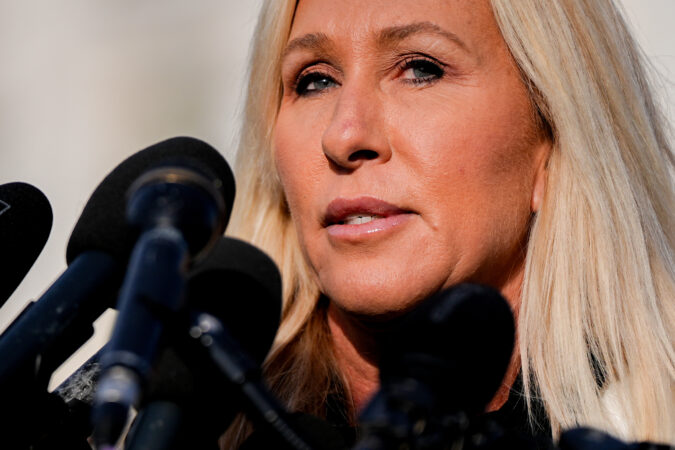
WASHINGTON — Rep. Marjorie Taylor Greene of Georgia, a loyal supporter-turned-critic of President Donald Trump who faced his political retribution if she sought reelection, said Friday she is resigning from Congress in January.
Greene, in a more than 10-minute video posted online, explained her decision and said she didn’t want her congressional district “to have to endure a hurtful and hateful primary against me by the president we all fought for,” she said.
Greene’s resignation followed a public fallout with Trump in recent months, as the congresswoman criticized him for his stance on files related to Jeffrey Epstein, along with foreign policy and health care.
Trump branded her a “traitor” and “wacky” and said he would endorse a challenger against her when she ran for reelection next year.
She said her last day would be Jan. 5, 2026.
The White House did not immediately respond to a message seeking comment Friday night.
Greene was one of the most vocal and visible supporters of Trump’s Make America Great Again politics, and she embraced some of his unapologetic political style.
Her break with him was a notable fissure in his grip over conservatives, particularly his most ardent base. But her decision to step down in the face of his opposition put her on the same track as many of the more moderate establishment Republicans before her who went crosswise with Trump.
The congresswoman, who recorded the video announcing her resignation while sitting in her living room wearing a cross necklace and with a Christmas tree and a peace lily plant behind her, said, “My life is filled with happiness, and my true convictions remain unchanged, because my self-worth is not defined by a man, but instead by God.”
A crack in the MAGA movement
Greene had been closely tied to the Republican president since she launched her political career five years ago.
In her video Friday, she underscored her longtime loyalty to Trump except on a few issues, and said it was “unfair and wrong” that he attacked her for disagreeing.
“Loyalty should be a two-way street and we should be able to vote our conscience and represent our district’s interest, because our job title is literally ‘representative,’” she said.
Greene swept to office at the forefront of Trump’s MAGA movement and quickly became a lightning rod on Capitol Hill for her often beyond-mainstream views. In her video Friday, Greene said she had “always been despised in Washington, D.C., and just never fit in.”
As she embraced the QAnon conspiracy theory and appeared with white supremacists, Greene was initially opposed by party leaders but welcomed by Trump. He called her “a real WINNER!”
Yet over time she proved a deft legislator, having aligned herself with then-GOP leader Kevin McCarthy, who would go on to become House speaker. She was a trusted voice on the right flank, until McCarthy was ousted in 2023.
While there has been an onslaught of lawmakers from both parties heading for the exits ahead of next fall’s midterm elections, as the House struggles through an often chaotic session, Greene’s announced retirement will ripple throughout the ranks — and raise questions about her next moves.
Greene was first elected to the House in 2020. She initially planned to run in a competitive district in northern Atlanta’s suburbs, but relocated to the much more conservative 14th District in Georgia’s northwest corner.
The opening in her district means Republican Gov. Brian Kemp will have to set a special election date within 10 days of Greene’s resignation. Such a special election would fill out the remainder of Greene’s term through January 2027. Those elections could take place before the party primaries in May for the next two-year term.
Conspiracy-minded
Even before her election, Greene showed a penchant for harsh rhetoric and conspiracy theories, suggesting a 2017 mass shooting in Las Vegas was a coordinated attack to spur support for new gun restrictions. In 2018, she endorsed the idea that the U.S. government perpetrated the attacks on Sept. 11, 2001, and mused that a “so-called” plane had hit the Pentagon.
Greene argued in 2019 that Reps. Ilhan Omar, D-Minn., and Rashida Tlaib, D-Mich., both Muslim women, weren’t “official” members of Congress because they used Qurans rather than Bibles in their swearing-in ceremonies.
She was once a sympathizer with QAnon, an online network that believes a global cabal of Satan-worshipping cannibals, including U.S. government leaders, operates a child sex trafficking ring. She eventually distanced herself, saying she got “sucked into some of the things I had seen on the internet.”
During the pandemic, she drew backlash and apologized for comparing the wearing of safety masks to the horrors of the Holocaust.
She also drew ridicule and condemnation after a conspiracy she speculated about on Facebook in 2018, in which she suggested a California wildfire may have been caused by “lasers or blue beams of light” controlled by a left-wing cabal tied to a prominent Jewish family.
When Trump was out of power between his first and second terms, Greene was often a surrogate for his views and brash style in Washington.
While then-President Joe Biden delivered his State of the Union address in 2022, Greene stood up and began chanting “Build the wall,” referring to the U.S.-Mexico border wall that Trump began in his first term.
Last year, when Biden gave his last State of the Union address, Greene again drew attention as she confronted him over border security and the killing of a nursing student from Georgia, Laken Riley, by an immigrant in the country illegally.
Greene, wearing a red MAGA hat and a T-shirt about Riley, handed the president a button that said “Say Her Name.” The congresswoman then shouted that at the president midway through his speech.
Frustration with the GOP
But this year, her first serving with Trump in the White House, cracks began to appear slowly in her steadfast support — before it broke wide open.
Greene’s discontent dates back at least to May, when she announced she wouldn’t run for the Senate against Democratic incumbent Jon Ossoff, while attacking GOP donors and consultants who feared she couldn’t win.
Greene’s restlessness only intensified in July, when she announced she wouldn’t run for Georgia governor, either.
She was also frustrated with the Republican leadership on Capitol Hill, which worked in lockstep with the president.
Greene said in her video that “the legislature has been mostly sidelined” since Republicans took unified control of Washington in January and her bills “just sit collecting dust.”
“That’s how it is for most members of Congress’ bills,” she said. “The speaker never brings them to the floor for a vote.”
Messages left with House Speaker Mike Johnson’s office were not immediately returned.
Republicans will likely lose the midterms elections next year, Greene said, and then she’d “be expected to defend the president against impeachment after he hatefully dumped tens of millions of dollars against me and tried to destroy me.”
“It’s all so absurd and completely unserious,” she said. “I refuse to be a battered wife hoping it all goes away and gets better.”
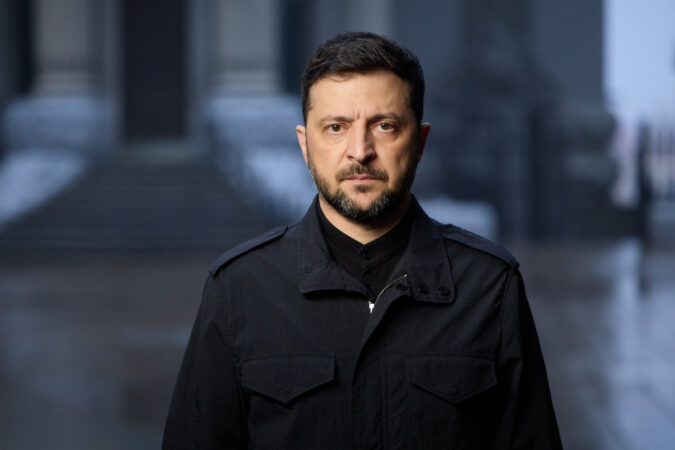
KYIV, Ukraine — Ukrainian President Volodymyr Zelensky told his country in an address Friday that it could face a pivotal choice between standing up for its sovereign rights and preserving the American support it needs, as leaders discuss a U.S. peace proposal seen as favoring Russia.
Russian President Vladimir Putin, meanwhile, cautiously welcomed the U.S. plan to end Moscow’s nearly four-year war in Ukraine, which contains many of the Kremlin’s longstanding demands while offering limited security guarantees to Ukraine. Putin said it “could form the basis of a final peace settlement,” while accusing Ukraine of opposing the plan and being unrealistic.
The plan foresees Ukraine handing over territory to Russia — something Kyiv has repeatedly ruled out — while reducing the size of its army and blocking its coveted path to NATO membership.
Zelensky, in his address hours earlier, did not reject the plan outright, but insisted on fair treatment while pledging to “work calmly” with Washington and other partners in what he called “truly one of the most difficult moments in our history.” He said he spoke for almost an hour Friday with U.S. Vice President JD Vance and Army Secretary Dan Driscoll about the peace proposal.
“Currently, the pressure on Ukraine is one of the hardest,” Zelensky said in the recorded speech. “Ukraine may now face a very difficult choice, either losing its dignity or the risk of losing a key partner.”
Speaking at a meeting of Russia’s National Security Council, Putin called the plan “a new version” and “a modernized plan” of what was discussed with the U.S. ahead of his Alaska summit with President Donald Trump in August, and said Moscow has received it. “I believe that it, too, could form the basis for a final peace settlement,” he said.
But he said the “text has not been discussed with us in any substantive way, and I can guess why,” adding that Washington has so far been unable to gain Ukraine’s consent. “Ukraine is against it. Apparently, Ukraine and its European allies are still under illusions and dream of inflicting a strategic defeat on Russia on the battlefield,” Putin said.
Trump says he wants Ukraine to respond within a week
Trump said Zelensky is going to have to come to terms with the U.S. proposal, and if he doesn’t, “they should just keep fighting, I guess.”
Asked by reporters about Zelensky saying his country faces a difficult choice, Trump alluded to their tense meeting in February that led to a brief rupture in the U.S.-Ukraine relationship: “You remember right in the Oval Office not so long ago? I said you don’t have the cards.”
Trump in a radio interview earlier Friday said he wants an answer from Zelensky on his 28-point plan by Thursday, but said an extension is possible to finalize terms.
“I’ve had a lot of deadlines, but if things are working well, you tend to extend the deadlines,” Trump said in an interview on “The Brian Kilmeade Show” on Fox News Radio. “But Thursday is it — we think an appropriate time.”
While Zelensky has offered to negotiate with the U.S. and Russia, he signaled Ukraine has to confront the possibility of losing American support if it makes a stand.
He urged Ukrainians to “stop fighting” each other, in a possible reference to a major corruption scandal that has brought fierce criticism of the government, and said peace talks next week “will be very difficult.”
Europe says it will keep supporting Ukraine
Zelensky spoke earlier by phone with the leaders of Germany, France and the United Kingdom, who assured him of their continued support, as European officials scrambled to respond to the U.S. proposals that apparently caught them unawares.
Wary of antagonizing Trump, the European and Ukrainian leaders cautiously worded their responses and pointedly commended American peace efforts.
German Chancellor Friedrich Merz, French President Emmanuel Macron and British Prime Minister Keir Starmer assured Zelensky of “their unchanged and full support on the way to a lasting and just peace” in Ukraine, Merz’s office said.
The four leaders welcomed U.S. efforts to end the war. “In particular, they welcomed the commitment to the sovereignty of Ukraine and the readiness to grant Ukraine solid security guarantees,” the statement added.
The line of contact must be the departure point for an agreement, they said, and “the Ukrainian armed forces must remain in a position to defend the sovereignty of Ukraine effectively.”
Starmer said the right of Ukraine to “determine its future under its sovereignty is a fundamental principle.”
Existential threat to Europe
European countries see their own futures at stake in Ukraine’s fight against the Russian invasion and have insisted on being consulted in peace efforts.
“Russia’s war against Ukraine is an existential threat to Europe. We all want this war to end. But how it ends matters,” EU foreign policy chief Kaja Kallas said in Brussels. “Russia has no legal right whatsoever to any concessions from the country it invaded. Ultimately, the terms of any agreement are for Ukraine to decide.”
Trump in his radio interview pushed back against the notion that the settlement, which offers plentiful concessions to Russia, would embolden Putin to carry out further malign action on his European neighbors.
“He’s not thinking of more war,” Trump said of Putin. ”He’s thinking punishment. Say what you want. I mean, this was supposed to be a one-day war that has been four years now.”
A European government official said the U.S. plans weren’t officially presented to Ukraine’s European backers.
Many of the proposals are “quite concerning,” the official said, adding that a bad deal for Ukraine would also be a threat to broader European security.
The official was not authorized to discuss the plan publicly and spoke to The Associated Press on condition of anonymity.
European Council President Antonio Costa, in Johannesburg, said of the U.S. proposals, “The European Union has not been communicated any plans in (an) official manner.”
Proposal meets with skepticism in the U.S. Senate
“This so-called ‘peace plan’ has real problems, and I am highly skeptical it will achieve peace,” said Sen. Roger Wicker, the Republican chair of the Senate Armed Services Committee. “Ukraine should not be forced to give up its lands to one of the world’s most flagrant war criminals in Vladimir Putin.”
Wicker added that Ukraine should be allowed to determine the size of its military and Putin should not be rewarded with assurances from the U.S.
Democratic Sen. Chris Coons, who serves on the Senate Foreign Relations Committee, said there’s “general concern and alarm that this is a Russian wish list proposal.”
Ukraine examines the proposals
Ukrainian officials said they were weighing the U.S. proposals, and Zelensky said he expected to talk to Trump about it in coming days.
A U.S. team began drawing up the plan soon after U.S. special envoy Steve Witkoff held talks with Rustem Umerov, a top adviser to Zelensky, according to a senior Trump administration official who was not authorized to comment publicly and spoke on the condition of anonymity.
The official added that Umerov agreed to most of the plan, after making several modifications, and then presented it to Zelensky.
However, Umerov on Friday denied that version of events. He said he only organized meetings and prepared the talks.
He said technical talks between the U.S. and Ukraine were continuing in Kyiv.
“We are thoughtfully processing the partners’ proposals within the framework of Ukraine’s unchanging principles — sovereignty, people’s security, and a just peace,” he said.
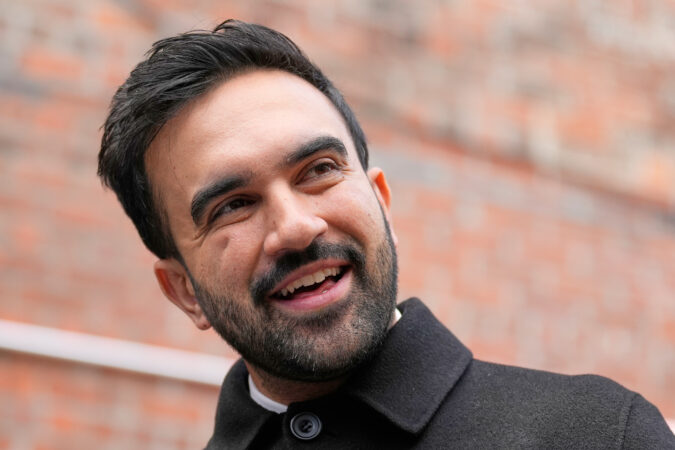
WASHINGTON — President Donald Trump on Friday met the man who had proudly proclaimed himself “Donald Trump’s worst nightmare,” but he seemed to find the opposite.
The Republican president and New York City’s Mayor-elect Zohran Mamdani were warm and friendly, speaking repeatedly of their shared goals to help Trump’s hometown rather than their combustible differences.
Trump, who had in the past called Mamdani a “100% Communist Lunatic” and a “total nut job,” spoke openly of how impressed he was with the man who had called his administration “authoritarian.”
“I think he is going to surprise some conservative people, actually,” Trump said of the democratic socialist as Mamdani stood next to him in the Oval Office.
The meeting offered political opportunities for both men. For Mamdani, a sit-down offered the state lawmaker — who until recently was relatively unknown — the chance to go head-to-head with the most powerful person in the world.
For Trump, it was a high-profile chance to talk about affordability at a time when he’s under increasing political pressure to show he’s addressing voter concerns about the cost of living.
Until now, the men have been political foils who galvanized their supporters by taking on each other, and it’s unclear how those backers will react to their genial get-together and complimentary words.
“We’re going to be helping him, to make everybody’s dream come true, having a strong and very safe New York,” the president said.
“What I really appreciate about the president is that the meeting that we had focused not on places of disagreement, which there are many, and also focused on the shared purpose that we have in serving New Yorkers,” Mamdani said.
Mamdani and Trump said they discussed housing affordability and the cost of groceries and utilities, as Mamdani successfully used frustration over inflation to get elected, just as the president did in the 2024 election.
“Some of his ideas are really the same ideas that I have,” the president said of Mamdani about inflationary issues.
The president brushed aside Mamdani’s criticisms of him over his administration’s deportation raids and claims that Trump was behaving like a despot. Instead, Trump said the responsibility of holding an executive position in the government causes a person to change, saying that had been the case for him.
He seemed at times even protective of Mamdani, jumping in on his behalf at several points. For example, when reporters asked Mamdani to clarify his past statements indicating that he thought the president was acting like a fascist, Trump said, “I’ve been called much worse than a despot.”
When a reporter asked if Mamdani stood by his comments that Trump is a fascist, Trump interjected before the mayor-elect could fully answer the question.
“That’s OK. You can just say yes. OK?” Trump said. “It’s easier. It’s easier than explaining it. I don’t mind.”
Trump stepped in again when a reporter asked Mamdani why he flew to Washington instead of taking transportation that used less fossil fuels.
Mamdani, who takes office in January, said he sought the meeting with Trump to talk about ways to make New York City more affordable. Trump has said he may want to help him out — although he has also falsely labeled Mamdani as a “communist” and threatened to yank federal funds from the city.
But Trump on Friday didn’t sling that at the mayor. He acknowledged that he had said he had been prepared to cut off funding or make it harder for New York City to access federal resources if the two had failed to “get along,” only to pull back from those threats during the meeting.
“We don’t want that to happen,” Trump said. ”I don’t think that’s going to happen.”
Afterward, Mamdani’s former campaign manager and incoming chief of staff Elle Bisgaard-Church told NY1 that the pair clearly disagreed on some issues but were able to find common ground on things like reducing crime.
“We discussed that we share a mutual goal of having a safe city where everyone can move around in comfort and ease,” she said, before later adding, “We know that there have been labels thrown all around that are just simply not fair and we kept it, again, at where we could find agreement on making the city affordable.”
Trump loomed large over the mayoral race this year, and on the eve of the election, he endorsed independent candidate and former Democratic Gov. Andrew Cuomo, predicting the city has “ZERO chance of success, or even survival” if Mamdani won. He also questioned the citizenship of Mamdani, who was born in Uganda and became a naturalized American citizen after graduating from college, and said he’d have him arrested if he followed through on threats not to cooperate with immigration agents in the city.
Mamdani beat back a challenge from Cuomo, painting him as a “puppet” for the president, and promised to be “a mayor who can stand up to Donald Trump and actually deliver.” He declared during one primary debate, “I am Donald Trump’s worst nightmare, as a progressive Muslim immigrant who actually fights for the things that I believe in.”
The president, who has long used political opponents to fire up his backers, predicted Mamdani “will prove to be one of the best things to ever happen to our great Republican Party.” As Mamdani upended the Democratic establishment by defeating Cuomo and his far-left progressive policies provoked infighting, Trump repeatedly has cast Mamdani as the face of Democratic Party.
Some had expected fireworks in the Oval Office meeting
The president has had some dramatic public Oval Office faceoffs this year, including an infamously heated exchange with Ukrainian President Volodymyr Zelenskyy in March. In May, Trump dimmed the lights while meeting with South African President Cyril Ramaphosa and played a four-minute video making widely rejected claims that South Africa is violently persecuting the country’s white Afrikaner minority farmers.
A senior Trump administration official who spoke on condition of anonymity to describe internal discussions said Trump had not put a lot of thought into planning the meeting with the incoming mayor — but said Trump’s threats to block federal dollars from flowing to New York remained on the table.
Mamdani said Thursday that he was not concerned about the president potentially trying to use the meeting to publicly embarrass him and said he saw it as a chance to make his case, even while acknowledging “many disagreements with the president.”
Instead, both men avoided a public confrontation in a remarkably calm and cordial series of comments in front of news reporters.
Mamdani, who lives in Queens — where Trump was raised — has shown a cutthroat streak just as Trump has as a candidate. During his campaign, he appeared to borrow from Trump’s playbook when he noted during a televised debate with Cuomo that one of the women who had accused the former governor of sexual harassment was in the audience. Cuomo has denied wrongdoing.
But the tensions were subdued Friday as Trump seemed sympathetic to Mamdani’s policies to want to build more housing.
“People would be shocked, but I want to see the same thing,” the president said.
WASHINGTON — The Supreme Court is meeting in private Friday with a key issue on its agenda — President Donald Trump’s birthright citizenship order declaring that children born to parents who are in the United States illegally or temporarily are not American citizens.
The justices could say as soon as Monday whether they will hear Trump’s appeal of lower court rulings that have uniformly struck down the citizenship restrictions. They have not taken effect anywhere in the United States.
If the court steps in now, the case would be argued in the spring, with a definitive ruling expected by early summer.
The birthright citizenship order, which Trump signed on the first day of his second term in the White House, is part of his administration’s broad immigration crackdown. Other actions include immigration enforcement surges in several cities and the first peacetime invocation of the 18th century Alien Enemies Act.
The administration is facing multiple court challenges, and the high court has sent mixed signals in emergency orders it has issued. The justices effectively stopped the use of the Alien Enemies Act to rapidly deport alleged Venezuelan gang members without court hearings, while they allowed the resumption of sweeping immigration stops in the Los Angeles area after a lower court blocked the practice of stopping people solely based on their race, language, job or location.
The justices also are weighing the administration’s emergency appeal to be allowed to deploy National Guard troops in the Chicago area for immigration enforcement actions. A lower court has indefinitely prevented the deployment.
Birthright citizenship is the first Trump immigration-related policy to reach the court for a final ruling. Trump’s order would upend more than 125 years of understanding that the Constitution’s 14th Amendment confers citizenship on everyone born on American soil, with narrow exceptions for the children of foreign diplomats and those born to a foreign occupying force.
In a series of decisions, lower courts have struck down the executive order as unconstitutional, or likely so, even after a Supreme Court ruling in late June that limited judges’ use of nationwide injunctions.
While the Supreme Court curbed the use of nationwide injunctions, it did not rule out other court orders that could have nationwide effects, including in class-action lawsuits and those brought by states. The justices did not decide at that time whether the underlying citizenship order is constitutional.
But every lower court that has looked at the issue has concluded that Trump’s order violates or most likely violates the 14th Amendment, which was intended to ensure that Black people, including former slaves, had citizenship.
The U.S. Court of Appeals for the 9th Circuit in San Francisco ruled in July that a group of states that sued over the order needed a nationwide injunction to prevent the problems that would be caused by birthright citizenship being in effect in some states and not others.
Also in July, a federal judge in New Hampshire blocked the citizenship order in a class-action lawsuit including all children who would be affected.
The American Civil Liberties Union, leading the legal team in the New Hampshire case, urged the court to reject the appeal because the administration’s “arguments are so flimsy,” ACLU lawyer Cody Wofsy said. ”But if the court decides to hear the case, we’re more than ready to take Trump on and win.”
Birthright citizenship automatically makes anyone born in the United States an American citizen, including children born to mothers who are in the country illegally, under long-standing rules. The right was enshrined soon after the Civil War in the first sentence of the 14th Amendment.
The administration has asserted that children of noncitizens are not “subject to the jurisdiction” of the United States and therefore not entitled to citizenship.
“The lower court’s decisions invalidated a policy of prime importance to the president and his administration in a manner that undermines our border security,” Solicitor General D. John Sauer wrote in urging the high court’s review. “Those decisions confer, without lawful justification, the privilege of American citizenship on hundreds of thousands of unqualified people.”