Category: Nation World News Wires

  • U.K. leader’s chief of staff quits over appointment of Mandelson as ambassador despite Epstein ties

    U.K. leader’s chief of staff quits over appointment of Mandelson as ambassador despite Epstein ties

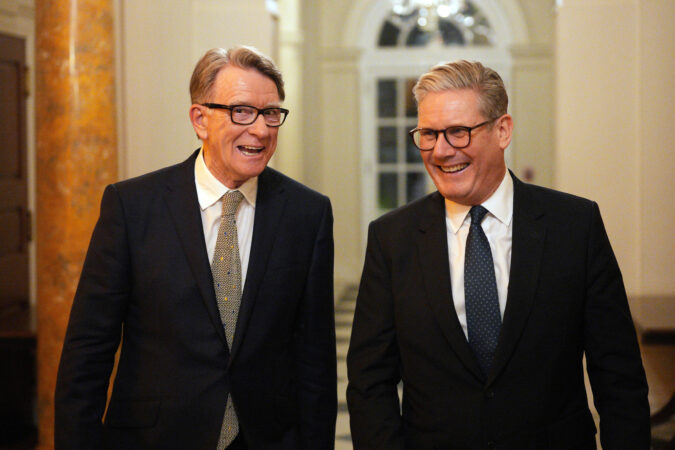
    LONDON — British Prime Minister Keir Starmer ‘s chief of staff resigned Sunday over the furor surrounding the appointment of Peter Mandelson as the U.K. ambassador to the U.S. despite his ties to Jeffrey Epstein.

    Morgan McSweeney said he took responsibility for advising Starmer to appoint Mandelson, 72, to Britain’s most important diplomatic post in 2024.

    “The decision to appoint Peter Mandelson was wrong. He has damaged our party, our country and trust in politics itself,” McSweeney said in a statement. “When asked, I advised the Prime Minister to make that appointment and I take full responsibility for that advice.”

    Starmer is facing a political storm and questions about his judgment after newly published documents, part of a huge trove of Epstein files made public in the United States, suggested that Mandelson sent market-sensitive information to the convicted sex offender when he was the U.K. government’s business secretary during the 2008 financial crisis.

    Starmer’s government has promised to release its own emails and other documentation related to Mandelson’s appointment, which it says will show that Mandelson misled officials.

    The prime minister apologized this week for “having believed Mandelson’s lies.”

    He acknowledged that when Mandelson was chosen for the top diplomat job in 2024, the vetting process had revealed that Mandelson’s friendship with Epstein continued after the latter’s 2008 conviction. But Starmer maintained that “none of us knew the depth of the darkness” of that relationship at the time.

    A number of lawmakers said Starmer is ultimately responsible for the scandal.

    “Keir Starmer has to take responsibility for his own terrible decisions,” said Kemi Badenoch, leader of the opposition Conservative Party.

    Mandelson, a former Cabinet minister, ambassador, and elder statesman of the governing Labour Party, has not been arrested or charged.

    Metropolitan Police officers searched Mandelson’s London home and another property linked to him on Friday. Police said the investigation is complex and will require “a significant amount of further evidence gathering and analysis.”

    The U.K. police investigation centers on potential misconduct in public office, and Mandelson is not accused of any sexual offenses.

    Starmer had fired Mandelson in September from his ambassadorial job over earlier revelations about his Epstein ties. But critics say the emails recently published by the U.S. Justice Department have brought serious concerns about Starmer’s judgment to the fore. They argue that he should have known better than to appoint Mandelson in the first place.

    The new revelations include documents suggesting Mandelson shared sensitive government information with Epstein after the 2008 global financial crisis. They also include records of payments totaling $75,000 in 2003 and 2004 from Epstein to accounts linked to Mandelson or his husband, Reinaldo Avila da Silva.

    Aside from his association with Epstein, Mandelson previously had to resign twice from senior government posts because of scandals over money or ethics.

    Starmer had faced growing pressure over the past week to fire McSweeney, who is regarded as a key adviser in Downing Street and seen as a close ally of Mandelson.

    Starmer on Sunday credited McSweeney as a central figure in running Labour’s recent election campaign and the party’s 2004 landslide victory. His statement did not mention the Mandelson scandal.

  • FBI concluded Jeffrey Epstein wasn’t running a sex trafficking ring for powerful men, files show

    FBI concluded Jeffrey Epstein wasn’t running a sex trafficking ring for powerful men, files show

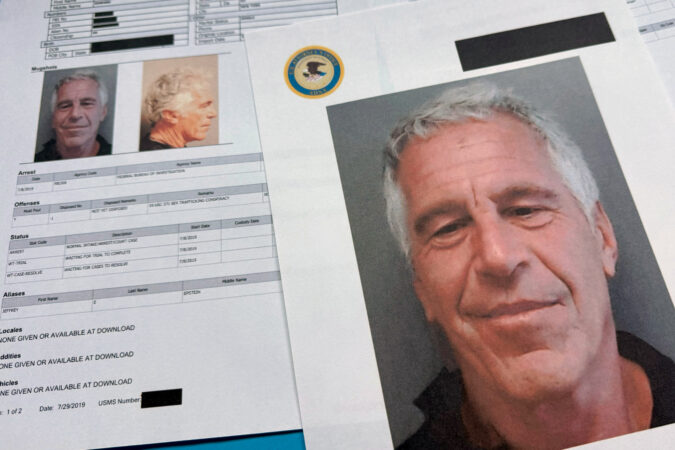
    NEW YORK — The FBI pored over Jeffrey Epstein’s bank records and emails. It searched his homes. It spent years interviewing his victims and examining his connections to some of the world’s most influential people.

    But while investigators collected ample proof that Epstein sexually abused underage girls, they found scant evidence the well-connected financier led a sex trafficking ring serving powerful men, an Associated Press review of internal Justice Department records shows.

    Videos and photos seized from Epstein’s homes in New York, Florida, and the Virgin Islands didn’t depict victims being abused or implicate anyone else in his crimes, a prosecutor wrote in one 2025 memo.

    An examination of Epstein’s financial records, including payments he made to entities linked to influential figures in academia, finance, and global diplomacy, found no connection to criminal activity, said another internal memo in 2019.

    While one Epstein victim made highly public claims that he “lent her” to his rich friends, agents couldn’t confirm that and found no other victims telling a similar story, the records said.

    Summarizing the investigation in an email last July, agents said “four or five” Epstein accusers claimed other men or women had sexually abused them. But, the agents said, there “was not enough evidence to federally charge these individuals, so the cases were referred to local law enforcement.”

    The AP and other media organizations are still reviewing millions of pages of documents, many of them previously confidential, that the Justice Department released under the Epstein Files Transparency Act and it is possible those records contain evidence overlooked by investigators.

    But the documents, which include police reports, FBI interview notes, and prosecutor emails, provide the clearest picture to date of the investigation — and why U.S. authorities ultimately decided to close it without additional charges.

    Dozens of victims come forward

    The Epstein investigation began in 2005, when the parents of a 14-year-old girl reported she had been molested at the millionaire’s home in Palm Beach, Fla.

    Police would identify at least 35 girls with similar stories: Epstein was paying high school-age students $200 or $300 to give him sexualized massages.

    After the FBI joined the probe, federal prosecutors drafted indictments to charge Epstein and some personal assistants who had arranged the girls’ visits and payments. But instead, then-Miami U.S. attorney Alexander Acosta struck a deal letting Epstein plead guilty to state charges of soliciting prostitution from an underage girl. Sentenced to 18 months in jail, Epstein was free by mid-2009.

    In 2018, a series of Miami Herald stories about the plea deal prompted New York federal prosecutors to take a fresh look at the accusations.

    Epstein was arrested in July 2019. One month later, he killed himself in his jail cell.

    A year later, prosecutors charged Epstein’s longtime confidant, Ghislaine Maxwell, saying she’d recruited several of his victims and sometimes joined the sexual abuse. Convicted in 2021, Maxwell is serving a 20-year prison term.

    Prosecutors fail to find evidence backing most sensational claims

    Prosecution memos, case summaries, and other documents made public in the department’s latest release of Epstein-related records show that FBI agents and federal prosecutors diligently pursued potential coconspirators. Even seemingly outlandish and incomprehensible claims, called in to tip lines, were examined.

    Some allegations couldn’t be verified, investigators wrote.

    In 2011 and again in 2019, investigators interviewed Virginia Roberts Giuffre, who in lawsuits and news interviews had accused Epstein of arranging for her to have sexual encounters with numerous men, including Britain’s former Prince Andrew.

    Investigators said they confirmed that Giuffre had been sexually abused by Epstein. But other parts of her story were problematic.

    Two other Epstein victims who Giuffre had claimed were also “lent out” to powerful men told investigators they had no such experience, prosecutors wrote in a 2019 internal memo.

    “No other victim has described being expressly directed by either Maxwell or Epstein to engage in sexual activity with other men,” the memo said.

    Giuffre acknowledged writing a partly fictionalized memoir of her time with Epstein containing descriptions of things that didn’t take place. She had also offered shifting accounts in interviews with investigators, they wrote, and had “engaged in a continuous stream of public interviews about her allegations, many of which have included sensationalized if not demonstrably inaccurate characterizations of her experiences.” Those inaccuracies included false accounts of her interactions with the FBI, they said.

    Still, U.S. prosecutors attempted to arrange an interview with Andrew, now known as Andrew Mountbatten-Windsor. He refused to make himself available. Giuffre settled a lawsuit with Mountbatten-Windsor in which she had accused him of sexual misconduct.

    In a memoir published after she killed herself last year, Giuffre wrote that prosecutors told her they didn’t include her in the case against Maxwell because they didn’t want her allegations to distract the jury. She insisted her accounts of being trafficked to elite men were true.

    Prosecutors say photos, videos don’t implicate others

    Investigators seized a multitude of videos and photos from Epstein’s electronic devices and homes in New York, Florida, and the U.S. Virgin Islands. They found CDs, hard copy photographs, and at least one videotape containing nude images of females, some of whom seemed as if they might be minors. One device contained 15 to 20 images depicting commercial child sex abuse material — pictures investigators said Epstein obtained on the internet.

    No videos or photos showed Epstein victims being sexually abused, none showed any males with any of the nude females, and none contained evidence implicating anyone other than Epstein and Maxwell, then-Assistant U.S. Attorney Maurene Comey wrote in an email for FBI officials last year.

    Had they existed, the government “would have pursued any leads they generated,” Comey wrote. “We did not, however, locate any such videos.”

    Investigators who scoured Epstein’s bank records found payments to more than 25 women who appeared to be models — but no evidence that he was engaged in prostituting women to other men, prosecutors wrote.

    Epstein’s close associates go uncharged

    In 2019, prosecutors weighed the possibility of charging one of Epstein’s longtime assistants but decided against it.

    Prosecutors concluded that while the assistant was involved in helping Epstein pay girls for sex and may have been aware that some were underage, she herself was a victim of his sexual abuse and manipulation.

    Investigators examined Epstein’s relationship with the French modeling agent Jean-Luc Brunel, who once was involved in an agency with Epstein in the U.S., and who was accused in a separate case of sexually assaulting women in Europe. Brunel killed himself in jail while awaiting trial on a rape charge in France.

    Prosecutors also weighed whether to charge one of Epstein’s girlfriends who had participated in sexual acts with some of his victims. Investigators interviewed the girlfriend, who was 18 to 20 years old at the time, “but it was determined there was not enough evidence,” according to a summary given to FBI Director Kash Patel last July.

    Days before Epstein’s July 2019 arrest, the FBI strategized about sending agents to serve grand jury subpoenas on people close to Epstein, including his pilots and longtime business client, retail mogul Les Wexner.

    Wexner’s lawyers told investigators that neither he nor his wife had knowledge of Epstein’s sexual misconduct. Epstein had managed Wexner’s finances, but the couple’s lawyers said they cut him off in 2007 after learning he’d stolen from them.

    “There is limited evidence regarding his involvement,” an FBI agent wrote of Wexner in an Aug. 16, 2019, email.

    In a statement to the AP, a legal representative for Wexner said prosecutors had informed him that he was “neither a coconspirator nor target in any respect,” and that Wexner had cooperated with investigators.

    Prosecutors also examined accounts from women who said they’d given massages at Epstein’s home to guests who’d tried to make the encounters sexual. One woman accused private equity investor Leon Black of initiating sexual contact during a massage in 2011 or 2012, causing her to flee the room.

    The Manhattan district attorney’s office subsequently investigated, but no charges were filed.

    Black’s lawyer, Susan Estrich, said he had paid Epstein for estate planning and tax advice. She said in a statement that Black didn’t engage in misconduct and had no awareness of Epstein’s criminal activities. Lawsuits by two women who accused Black of sexual misconduct were dismissed or withdrawn. One is pending.

    No client list

    Attorney General Pam Bondi told Fox News in February 2025 that Epstein’s never-before-seen “client list” was “sitting on my desk right now.” A few months later, she claimed the FBI was reviewing “tens of thousands of videos” of Epstein “with children or child porn.”

    But FBI agents wrote superiors saying the client list didn’t exist.

    On Dec. 30, 2024, about three weeks before President Joe Biden left office, then-FBI Deputy Director Paul Abbate reached out through subordinates to ask “whether our investigation to date indicates the ‘client list,’ often referred to in the media, does or does not exist,” according to an email summarizing his query.

    A day later, an FBI official replied that the case agent had confirmed no client list existed.

    On Feb. 19, 2025, two days before Bondi’s Fox News appearance, an FBI supervisory special agent wrote: “While media coverage of the Jeffrey Epstein case references a ’client list,’ investigators did not locate such a list during the course of the investigation.”
  • Washington Post publisher Will Lewis says he’s stepping down, days after big layoffs at the paper

    Washington Post publisher Will Lewis says he’s stepping down, days after big layoffs at the paper

    Washington Post publisher Will Lewis said Saturday that he’s stepping down, ending a troubled tenure three days after the newspaper said that it was laying off one-third of its staff.

    Lewis announced his departure in a two-paragraph email to the newspaper’s staff, saying that after two years of transformation, “now is the right time for me to step aside.” The Post’s chief financial officer, Jeff D’Onofrio, was appointed temporary publisher.

    Neither Lewis nor the newspaper’s billionaire owner, Jeff Bezos, participated in the meeting with staff members announcing the layoffs on Wednesday. While anticipated, the cutbacks were deeper than expected, resulting in the shutdown of the Post’s renowned sports section, the elimination of its photography staff, and sharp reductions in personnel responsible for coverage of metropolitan Washington and overseas.

    They came on top of widespread talent defections in recent years at the newspaper, which lost tens of thousands of subscribers following Bezos’ order late in the 2024 presidential campaign pulling back from a planned endorsement of Kamala Harris, and a subsequent reorienting of its opinion section in a more conservative direction.

    Martin Baron, the Post’s first editor under Bezos, condemned his former boss last week for attempting to curry favor with President Donald Trump and called what has happened at the newspaper “a case study in near-instant, self-inflicted brand destruction.”

    The British-born Lewis was a former top executive at the Wall Street Journal before taking over at the Post in January 2024. His tenure has been rocky from the start, marked by layoffs and a failed reorganization plan that led to the departure of former top editor Sally Buzbee.

    His initial choice to take over for Buzbee, Robert Winnett, withdrew from the job after ethical questions were raised about both he and Lewis’ actions while working in England. They include paying for information that produced major stories, actions that would be considered unethical in American journalism. The current executive editor, Matt Murray, took over shortly thereafter.

    Lewis didn’t endear himself to Washington Post journalists with blunt talk about their work, at one point saying in a staff meeting that they needed to make changes because not enough people were reading their work.

    This week’s layoffs have led to some calls for Bezos to either increase his investment in the Post or sell it to someone who will take a more active role. Lewis, in his note, praised Bezos: “The institution could not have had a better owner,” he said.

    “During my tenure, difficult decisions have been taken in order to ensure the sustainable future of The Post so it can for many years ahead publish high-quality nonpartisan news to millions of customers each day,” Lewis said.

    The Washington Post Guild, the union representing staff members, called Lewis’ exit long overdue.

    “His legacy will be the attempted destruction of a great American journalism institution,” the Guild said in a statement. “But it’s not too late to save The Post. Jeff Bezos must immediately rescind these layoffs or sell the paper to someone willing to invest in its future.”

    Bezos did not mention Lewis in a statement saying D’Onofrio and his team are positioned to lead the Post into “an exciting and thriving next chapter.”

    “The Post has an essential journalistic mission and an extraordinary opportunity,” Bezos said. “Each and every day our readers give us a roadmap to success. The data tells us what is valuable and where to focus.”

    D’Onofrio, who joined the paper last June after jobs at the digital ad management company Raptive, Google, Zagat, and Major League Baseball, said in a note to staff that “we are ending a hard week of change with more change.

    “This is a challenging time across all media organizations, and The Post is unfortunately no exception,” he wrote. “I’ve had the privilege of helping chart the course of disrupters and cultural stalwarts alike. All faced economic headwinds in changing industry landscapes, and we rose to meet those moments. I have no doubt we will do just that, together.”

  • ‘We will pay,’ Savannah Guthrie says in desperate video plea to potential kidnappers of her mother

    ‘We will pay,’ Savannah Guthrie says in desperate video plea to potential kidnappers of her mother

    TUCSON, Ariz. — Savannah Guthrie told the potential kidnappers of her mother, Nancy Guthrie, on Saturday that the family is prepared to pay for her safe return.

    “We received your message, and we understand. We beg you now to return our mother to us so that we can celebrate with her,” Guthrie said in the video, flanked by her siblings. “This is the only way we will have peace. This is very valuable to us, and we will pay.”

    It was not immediately clear if Guthrie was referring to a new message from someone who might have kidnapped Nancy Guthrie. The Associated Press reached out to the Pima County Sheriff’s department seeking additional details.

    The frantic search for the 84-year-old Nancy Guthrie has entered a seventh day. Authorities have not identified any suspects or ruled anyone out, Sheriff Chris Nanos said this week.

    Authorities think she was taken against her will from her home just outside Tucson over the weekend. DNA tests showed blood on Guthrie’s front porch was a match to her, Nanos said.

  • Appeals court affirms Trump policy of jailing immigrants without bond

    Appeals court affirms Trump policy of jailing immigrants without bond

    President Donald Trump’s administration can continue to detain immigrants without bond, marking a major legal victory for the federal immigration agenda and countering a slew of recent lower court decisions across the country that argued the practice is illegal.

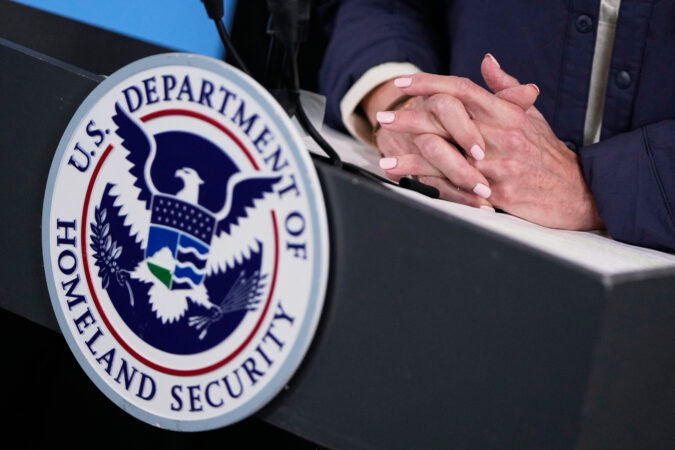
    A panel of judges on the 5th Circuit Court of Appeals ruled on Friday evening that the Department of Homeland Security’s decision to deny bond hearings to immigrants arrested across the country is consistent with the constitution and federal immigration law.

    Specifically, circuit judge Edith H. Jones wrote in the 2-1 majority opinion that the government correctly interpreted the Immigration and Nationality Act by asserting that “unadmitted aliens apprehended anywhere in the United States are ineligible for release on bond, regardless of how long they have resided inside the United States.”

    Under past administrations, most noncitizens with no criminal record who were arrested away from the border had an opportunity to request a bond hearing while their cases wound through immigration court. Historically, bond was often granted to those without criminal convictions who were not flight risks, and mandatory detention was limited to recent border crossers.

    “That prior Administrations decided to use less than their full enforcement authority under” the law “does not mean they lacked the authority to do more,” Jones wrote.

    The plaintiffs in the two separate cases filed last year against the Trump administration were Mexican nationals who had both lived in the United States for over 10 years and weren’t flight risks, their attorneys argued. Neither man had a criminal record, and both were jailed for months last year before a lower Texas court granted them bond in October.

    The Trump White House reversed that policy in favor of mandatory detention in July, reversing almost 30 years of precedent under both Democratic and Republican administrations.

    Friday’s ruling also bucks a November district court decision in California, which granted detained immigrants with no criminal history the opportunity to request a bond hearing and had implications for noncitizens held in detention nationwide.

    Circuit Judge Dana M. Douglas wrote the lone dissent in Friday’s decision.

    The elected congress members who passed the Immigration and Nationality Act “would be surprised to learn it had also required the detention without bond of two million people,” Douglas wrote, adding that many of the people detained are “the spouses, mothers, fathers, and grandparents of American citizens.”

    She went on to argue that the federal government was overriding the lawmaking process with DHS’ new immigration detention policy that denies detained immigrants bond.

    “Because I would reject the government’s invitation to rubber stamp its proposed legislation by executive fiat, I dissent,” Douglas wrote.

    Douglas’ opinion echoed widespread tensions between the Trump administration and federal judges around the country, who have increasingly accused the administration of flouting court orders.

    U.S. Attorney General Pam Bondi celebrated the decision as “a significant blow against activist judges who have been undermining our efforts to make America safe again at every turn.”

    “We will continue vindicating President Trump’s law and order agenda in courtrooms across the country,” Bondi wrote on the social media platform X.

  • Gaza’s Rafah border crossing has reopened but few people get through

    Gaza’s Rafah border crossing has reopened but few people get through

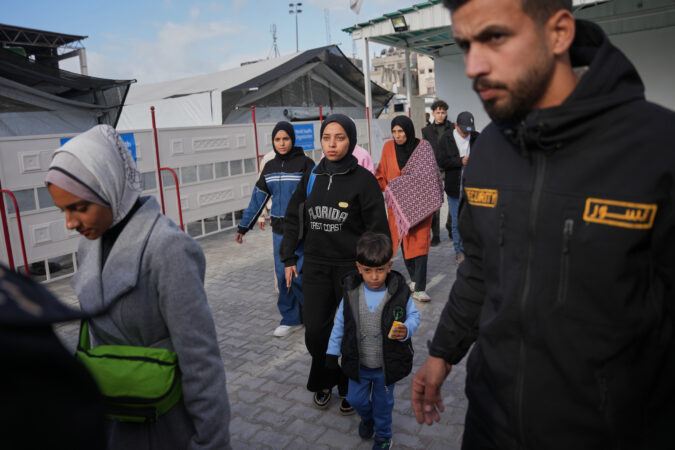
    KHAN YOUNIS, Gaza Strip — When the Rafah border crossing between Gaza and Egypt finally reopened this week, Palestinian officials heralded it as a “window of hope” after two years of war as a fragile ceasefire deal moves forward.

    But that hope has been sidetracked by disagreements over who should be allowed through, hourslong delays, and Palestinian travelers’ reports of being handcuffed and interrogated by Israeli soldiers.

    Far fewer people than expected have crossed in both directions. Restrictions negotiated by Israeli, Egyptian, Palestinian, and international officials meant that only 50 people would be allowed to return to Gaza each day and 50 medical patients — along with two companions for each — would be allowed to leave.

    But over the first four days of operations, just 36 Palestinians requiring medical care were allowed to leave for Egypt, plus 62 companions, according to United Nations data. Palestinian officials say nearly 20,000 people in Gaza are seeking to leave for medical care that they say is not available in the war-shattered territory.

    Amid confusion around the reopening, the Rafah crossing was closed Friday and Saturday.

    Hours of questioning

    The Rafah crossing is a lifeline for Gaza, providing the only link to the outside world not controlled by Israel. Israel seized it in May 2024, though traffic through the crossing was heavily restricted even before that.

    Several women who managed to return to Gaza after its reopening recounted to the Associated Press harsh treatment by Israeli authorities and an Israeli-backed Palestinian armed group, Abu Shabab. A European Union mission and Palestinian officials run the border crossing, and Israel has its screening facility some distance away.

    Rana al-Louh, anxious to return two years after fleeing to Egypt with her wounded sister, said Israeli screeners asked multiple times why she wanted to go back to Gaza during questioning that lasted more than six hours. She said she was blindfolded and handcuffed, an allegation made by others.

    “I told them I returned to Palestine because my husband and kids are there,” al-Louh said. Interrogators told her Gaza belonged to Israel and that “the war would return, that Hamas won’t give up its weapons. I told him I didn’t care, I wanted to return.”

    Asked about such reports, Israel’s military replied that “no incidents of inappropriate conduct, mistreatment, apprehensions or confiscation of property by the Israeli security establishment are known.”

    The Shin Bet intelligence agency and COGAT, the Israeli military body that handles Palestinian civilian affairs and coordinates the crossings, did not respond to questions about the allegations.

    The long questioning Wednesday delayed the return to Gaza of al-Louh and others until nearly 2 a.m. Thursday.

    Later that day, U.N. human rights officials noted a “consistent pattern of ill-treatment, abuse and humiliation by Israeli military forces.”

    “After two years of utter devastation, being able to return to their families and what remains of their homes in safety and dignity is the bare minimum,” Ajith Sunghay, the agency’s human rights chief for the occupied Palestinian territories, said in a statement.

    Numbers below targets

    Officials who negotiated the Rafah reopening were clear that the early days of operation would be a pilot. If successful, the number of people crossing could increase.

    Challenges quickly emerged. On the first day, Monday, Israeli officials said 71 patients and companions were approved to leave Gaza, with 46 Palestinians approved to enter. Inside Gaza, however, organizers with the World Health Organization were able to arrange transportation for only 12 people that day, so other patients stayed behind, according to a person briefed on the operations who spoke on condition of anonymity because they were not authorized to speak to the media.

    Israeli officials insisted that no Palestinians would be allowed to enter Gaza until all the departures were complete. Then they said that since only 12 people had left Gaza, only 12 could enter, leaving the rest to wait on the Egyptian side of the border overnight, according to the person briefed on the operations.

    Crossings picked up on the second day, when 40 people were allowed to leave Gaza and 40 to enter. But delays mounted as many returning travelers had more luggage than set out in the agreement reached by negotiators and items that were forbidden, including cigarettes and water and other liquids like perfume. Each traveler is allowed to carry one mobile phone and a small amount of money if they submit a declaration 24 hours ahead of travel.

    Each time a Palestinian was admitted to Egypt, Israeli authorities allowed one more into Gaza, drawing out the process.

    The problems continued Wednesday and Thursday, with the numbers allowed to cross declining. The bus carrying Wednesday’s returnees from the crossing did not reach its drop-off location in Gaza until 1:40 a.m. Thursday.

    Still, some Palestinians said they were grateful to have made the journey.

    As Siham Omran’s return to Gaza stretched into early Thursday, she steadied herself with thoughts of her children and husband, whom she had not seen for 20 months. She said she was exhausted, and stunned by Gaza’s devastation.

    “This is a journey of suffering. Being away from home is difficult,” she said. “Thank God we have returned to our country, our homes, and our homeland.”

    Now she shares a tent with 15 family members, using her blouse for a pillow.

  • Judge orders Trump administration to restore funding for rail tunnel between New York, New Jersey

    Judge orders Trump administration to restore funding for rail tunnel between New York, New Jersey

    NEW YORK — A federal judge ordered the Trump administration to restore funding to a new rail tunnel between New York and New Jersey on Friday, ruling just as construction was set to shut down on the massive infrastructure project.

    The decision came months after the administration announced it was halting $16 billion in support for the project, citing the then-government shutdown and what a top federal budget official said were concerns about unconstitutional spending around diversity, equity, and inclusion principles.

    U.S. District Judge Jeannette A. Vargas in Manhattan approved a request by New York and New Jersey for a temporary restraining order barring the administration from withholding the funds while the states seek a preliminary injunction that would keep the money flowing while their lawsuit plays out in court.

    “The Court is also persuaded that Plaintiffs would suffer irreparable harm in the absence of an injunction,” the judge wrote. “Plaintiffs have adequately shown that the public interest would be harmed by a delay in a critical infrastructure project.”

    The White House and U.S. Department of Transportation did not immediately respond to emails seeking comment Friday night.

    New York Attorney General Letitia James called the ruling “a critical victory for workers and commuters in New York and New Jersey.”

    “I am grateful the court acted quickly to block this senseless funding freeze, which threatened to derail a project our entire region depends on,” James said in a statement. “The Hudson Tunnel Project is one of the most important infrastructure projects in the nation, and we will keep fighting to ensure construction can continue without unnecessary federal interference.”

    The panel overseeing the project, the Gateway Development Commission, had said work would stop late Friday afternoon because of the federal funding freeze, resulting in the immediate loss of about 1,000 jobs as well as thousands of additional jobs in the future.

    It was not immediately clear when work would resume. In a nighttime statement, the commission said: “As soon as funds are released, we will work quickly to restart site operations and get our workers back on the job.”

    The new tunnel is meant to ease strain on an existing tunnel that is more than 110 years old that connects New York and New Jersey for Amtrak and commuter trains, where delays can lead to backups up and down the East Coast.

    New York and New Jersey sued over the funding pause this week, as did the Gateway Development Commission, moving to restore the Trump administration’s support.

    The suspension was seen as a way for the Trump administration to put pressure on Democratic Senate Minority Leader Chuck Schumer of New York, whom the White House was blaming for a government shutdown last year. The shutdown was resolved a few weeks later.

    Speaking to the media on Air Force One, Trump was asked about reports that he would unfreeze funding for the tunnel project if Schumer would agree to a plan to rename Penn Station in New York and Dulles International Airport in Virginia after Trump.

    “Chuck Schumer suggested that to me, about changing the name of Penn Station to Trump Station. Dulles Airport is really separate,” Trump responded.

    Schumer responded on social media: “Absolute lie. He knows it. Everyone knows it. Only one man can restart the project and he can restart it with the snap of his fingers.”

    At a hearing in the states’ lawsuit earlier in Manhattan, Shankar Duraiswamy, of the New Jersey attorney general’s office, told the judge that the states need “urgent relief” because of the harm and costs that will occur if the project is stopped.

    “There is literally a massive hole in the earth in North Bergen,” he said, referring to the New Jersey city and claiming that abandoning the sites, even temporarily, “would pose a substantial safety and public health threat.”

    Duraiswamy said the problem with shutting down now is that even a short stoppage would cause longer delays because workers will be laid off and go to other jobs and it’ll be hard to quickly remobilize if funding becomes available. And, he added, “any long-term suspension of funding could torpedo the project.”

    Tara Schwartz, an assistant U.S. attorney arguing for the government, disagreed with the “parade of horribles” described by attorneys for the states.

    She noted that the states had not even made clear how long the sites could be maintained by the Gateway Development Commission. So the judge asked Duraiswamy, and he said they could maintain the sites for a few weeks and possibly a few months, but that the states would continue to suffer irreparable harm because trains would continue to run late because they rely on an outdated tunnel.

  • Epstein revelations have toppled top figures in Europe while U.S. fallout is more muted

    Epstein revelations have toppled top figures in Europe while U.S. fallout is more muted

    LONDON — A prince, an ambassador, senior diplomats, top politicians. All brought down by the Jeffrey Epstein files. And all in Europe, rather than the United States.

    The huge trove of Epstein documents released by the U.S. Department of Justice has sent shock waves through Europe’s political, economic, and social elites — dominating headlines, ending careers, and spurring political and criminal investigations.

    Former U.K. Ambassador to Washington Peter Mandelson was fired and could go to prison. British Prime Minister Keir Starmer faces a leadership crisis over the Mandelson appointment. Senior figures have fallen in Norway, Sweden, and Slovakia. And, even before the latest batch of files, Andrew Mountbatten-Windsor, brother of King Charles III, lost his honors, princely title, and taxpayer-funded mansion.

    Apart from the former Prince Andrew, none of them faces claims of sexual wrongdoing. They have been toppled for maintaining friendly relationships with Epstein after he became a convicted sex offender.

    “Epstein collected powerful people the way others collect frequent flyer points,” said Mark Stephens, a specialist in international and human rights law at Howard Kennedy in London. “But the receipts are now in public, and some might wish they’d traveled less.”

    The documents were published after a public frenzy over Epstein became a crisis for President Donald Trump’s administration and led to a rare bipartisan effort to force the government to open its investigative files. But in the U.S., the long-sought publication has not brought the same public reckoning with Epstein’s associates — at least so far.

    Rob Ford, a professor of political science at the University of Manchester, said that in Britain, “if you’re in those files, it’s immediately a big story.”

    “It suggests to me we have a more functional media, we have a more functional accountability structure, that there is still a degree of shame in politics, in terms of people will say: ‘This is just not acceptable, this is just not done,’” he said.

    British repercussions

    U.K. figures felled by their ties to Epstein include the former Prince Andrew — who paid millions to settle a lawsuit with one of Epstein’s victims and is facing pressure to testify in the U.S. — and his ex-wife Sarah Ferguson, whose charity shut down this week.

    Like others now ensnared, veteran politician Mandelson long downplayed his relationship with Epstein, despite calling him “my best pal” in 2003. The new files reveal contact continued for years after the financier’s 2008 prison term for sexual offenses involving a minor. In a July 2009 message, Mandelson appeared to refer to Epstein’s release from prison as “liberation day.”

    Starmer fired Mandelson in September over earlier revelations about his Epstein ties. Now British police are investigating whether Mandelson committed misconduct in public office by passing on sensitive government information to Epstein.

    Starmer has apologized to Epstein’s victims and pledged to release public documents that will show Mandelson lied when he was being vetted for the ambassador’s job. That may not be enough to stop furious lawmakers trying to eject the prime minister from office over his failure of judgment.

    American associates

    Experts caution that Britain shouldn’t be too quick to pat itself on the back over its rapid reckoning with Mandelson. The U.S. has a better record than the U.K. when it comes to declassifying and publishing information.

    But Alex Thomas, executive director of the Institute for Government think tank, said, “There is something about parliamentary democracy,” with its need for a prime minister to retain the confidence of Parliament to stay in office, “that I think does help drive accountability.”

    A few high-profile Americans have faced repercussions over their friendly ties with Epstein. Most prominent is former U.S. Treasury Secretary Larry Summers, who went on leave from academic positions at Harvard University late last year.

    Brad Karp quit last week as chairperson of top U.S. law firm Paul Weiss after revelations in the latest batch of documents, and the National Football League said it would investigate Epstein’s relationship with New York Giants co-owner Steve Tisch, who exchanged sometimes crude emails with Epstein about potential dates with adult women.

    Other U.S. Epstein associates have not yet faced severe sanction, including former Trump strategist Steve Bannon, who exchanged hundreds of texts with Epstein; Commerce Secretary Howard Lutnick, who accepted an invitation to visit Epstein’s private island; and tech billionaire Elon Musk, who discussed visiting the island in emails, but says he never made the trip.

    Former President Bill Clinton has been compelled by Republicans to testify before Congress about his friendship with Epstein. Trump, too, has repeatedly faced questions about his ties to Epstein. Neither he nor Clinton has ever been accused of wrongdoing by Epstein’s victims.

    European investigations

    The Epstein files reveal the global network of royals, political leaders, billionaires, bankers, and academics that the wealthy financier built around him.

    Across Europe, officials have had to resign or face censure after the Epstein files revealed relationships that were more extensive than previously disclosed.

    Joanna Rubinstein, a Swedish U.N. official, quit after the revelation of a 2012 visit to Epstein’s Caribbean island. Miroslav Lajcak, national security adviser to Slovakia’s prime minister, quit over his communications with Epstein, which included the pair discussing “gorgeous” girls.

    Latvia, Lithuania, and Poland have set up wide-ranging official investigations into the documents. Poland’s Prime Minister Donald Tusk said a team would scour the files for potential Polish victims, and any links between Epstein and Russian secret services.

    Epstein took an interest in European politics, in one email exchange with billionaire Peter Thiel calling Britain’s 2016 vote to leave the European Union “just the beginning” and part of a return to “tribalism.”

    Grégoire Roos, director of the Europe program at the think tank Chatham House, said the files uncover Epstein’s “far-reaching” network of contacts in Europe, “and the level of access among not just those who were already in power, but those who were getting there.

    “It will be interesting to see whether in the correspondence he had an influence in policymaking,” Roos said.

    Norwegian revelations

    Few countries have been as roiled by the Epstein revelations as Norway, a Scandinavian nation with a population of less than 6 million.

    The country’s economic crimes unit has opened a corruption investigation into former Prime Minister Thorbjørn Jagland — who also once headed the committee that hands out the Nobel Peace Prize — over his ties with Epstein. His lawyer said Jagland would cooperate with the probe.

    Also ensnared are high-profile Norwegian diplomat couple Terje Rød-Larsen and Mona Juul, key players in the 1990s Israeli-Palestinian peace efforts. Juul has been suspended as Norway’s ambassador to Jordan after revelations including the fact that Epstein left the couple’s children $10 million in a will drawn up shortly before his death by suicide in a New York prison in 2019.

    Norwegians’ respect for their royal family has been dented by new details about Epstein’s friendship with Crown Princess Mette-Marit, who is married to the heir to the throne, Prince Haakon. The files include jokey exchanges and emails planning visits to Epstein properties, teeth-whitening appointments, and shopping trips.

    The princess apologized Friday “to all of you whom I have disappointed.”

    The disclosures came as her son from a previous relationship, Marius Borg Høiby, stands trial in Oslo on rape charges, which he denies.

  • Iran and U.S. hold indirect talks in Oman. America’s military leader in the Mideast joins the talks

    Iran and U.S. hold indirect talks in Oman. America’s military leader in the Mideast joins the talks

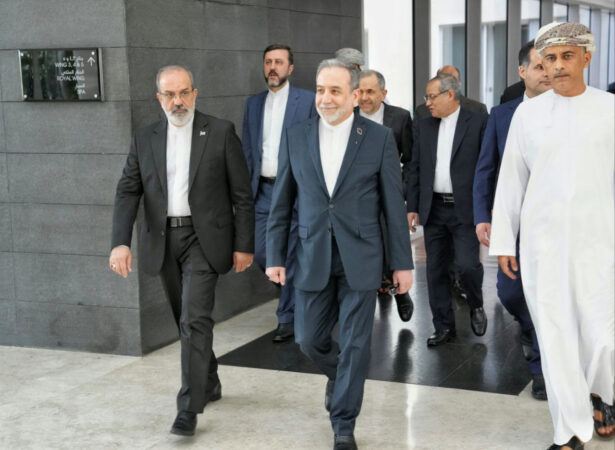
    MUSCAT, Oman — Iran and the United States held indirect talks in Oman on Friday, negotiations that appeared to return to the starting point on how to approach discussions over Tehran’s nuclear program. But for the first time, America brought its top military commander in the Middle East to the table.

    The presence of U.S. Navy Adm. Brad Cooper, the head of the American military’s Central Command, in his dress uniform at the talks in Muscat, the Omani capital, served as a reminder that the aircraft carrier USS Abraham Lincoln and other warships were now off the coast of Iran in the Arabian Sea.

    President Donald Trump said the United States had “very good” talks on Iran and said more were planned for early next week. But he kept up the pressure, warning that if the country didn’t make a deal over its nuclear program, “the consequences are very steep.”

    Trump has repeatedly threatened to use force to compel Iran to reach a deal on the program after earlier sending the carrier to the region over Tehran’s bloody crackdown on nationwide protests that killed thousands and saw tens of thousands of others detained in the Islamic Republic.

    Gulf Arab nations fear an attack could spark a regional war that would drag them in as well.

    That threat is real — U.S. forces shot down an Iranian drone near the Lincoln and Iran attempted to stop a U.S.-flagged ship in the Strait of Hormuz just days before Friday’s talks in this sultanate on the eastern edge of the Arabian Peninsula.

    “We did note that nuclear talks and the resolution of the main issues must take place in a calm atmosphere, without tension and without threats,” Iranian Foreign Minister Abbas Araghchi later told journalists.

    “The prerequisite for any dialogue is refraining from threats and pressure,” he added. “We stated this point explicitly today as well, and we expect it to be observed so that the possibility of continuing the talks exists.”

    The U.S., represented by U.S. Mideast special envoy Steve Witkoff and Jared Kushner, Trump’s son-in-law, did not immediately comment on the talks. Araghchi said diplomats would return to their capitals, signaling this round of negotiations was over.

    On Friday evening, in a display of force, the U.S. military published photos on X of the Lincoln carrier group sailing in the Arabian Sea with aircraft flying overhead, with the message “Peace through Strength!” The The carrier and accompanying warships arrived in the Middle East at the end of January as Trump threatened attacks on Iran over the killing of protesters.

    Iran’s top diplomat offers a positive note

    Araghchi offered cautious optimism as he spoke in a live interview from Muscat on Iranian state television. He described Friday’s talks as taking place over multiple rounds and said that they were focused primarily on finding a framework for further negotiations.

    “We will hold consultations with our capitals regarding the next steps, and the results will be conveyed to Oman’s foreign minister,” Araghchi said.

    “The mistrust that has developed is a serious challenge facing the negotiations,” Araghchi said. “We must first address this issue, and then enter into the next level of negotiations.”

    Omani Foreign Minister Badr al-Busaidi, who oversaw multiple rounds of negotiations before Israel launched its 12-day war on Iran in June, called the talks “useful to clarify both the Iranian and American thinking and identify areas for possible progress.”

    Still, Oman described the talks as a means to find “the requisite foundations for the resumption of both diplomatic and technical negotiations” rather than a step toward reaching a nuclear deal or easing tensions.

    The talks had initially been expected to take place in Turkey in a format that would have included regional countries as well, and would have included topics like Tehran’s ballistic missile program — something Iran apparently rejected in favor of focusing only on its nuclear program.

    Before the June war, Iran had been enriching uranium up to 60% purity, a short, technical step away from weapons-grade levels. The U.N. nuclear watchdog — International Atomic Energy Agency — had said Iran was the only country in the world to enrich to that level that wasn’t armed with the bomb.

    Iran has been refusing requests by the IAEA to inspect the sites bombed in the June war, raising the concerns of nonproliferation experts. Even before that, Iran has restricted IAEA inspections since Trump’s decision in 2018 to unilaterally withdraw America from Iran’s 2015 nuclear deal with world powers.

    Omani palace hosts talks

    Friday’s talks saw in-person meetings at a palace near Muscat’s international airport, used by Oman in earlier talks Iran-U.S. talks in 2025. Associated Press journalists saw Iranian officials first at the palace and later returning to their hotel before the Americans came separately.

    It remains unclear just what terms Iran is willing to negotiate at the talks. Tehran has maintained that these talks will only be on its nuclear program. However, the Al Jazeera satellite news network reported that diplomats from Egypt, Turkey, and Qatar offered Iran a proposal in which Tehran would halt enrichment for three years, send its highly enriched uranium out of the country and pledge “not initiate the use of ballistic missiles.”

    Russia had signaled it would take the uranium, but Iran has said ending the program or shipping out the uranium were nonstarters.

    U.S. Secretary of State Marco Rubio said on Wednesday that the talks needed to include all those issues.

    “I’m not sure you can reach a deal with these guys, but we’re going to try to find out,” he said.

    The U.S. slaps new sanctions on Iran’s energy sector

    Shortly after Friday’s talks, the Treasury and the U.S. State Department announced a new round of sanctions on Iran targeting its energy sector, imposing penalties, including freezes on assets in U.S. jurisdictions, on 14 oil tankers in a so-called “shadow fleet” that the U.S. says are used to try to evade sanctions, as well as on 15 trading firms and two business executives.

    “Time and time again, the Iranian government has prioritized its destabilizing behavior over the safety and security of its own citizens, as demonstrated by the regime’s mass murder of peaceful protestors,” the State Department said. “The United States will continue to act against the network of shippers and traders involved in the transport and acquisition of Iranian crude oil, petroleum products, and petrochemical products, which constitutes the regime’s primary source of income.”

    In the past month, the U.S. has sanctioned Iran’s interior minister,the secretary of the Supreme Council for National Security, and several other leaders involved in Iran’s deadly crackdown against last month’s protests.

  • Trump’s racist post about Obamas is deleted after backlash despite White House earlier defending it

    Trump’s racist post about Obamas is deleted after backlash despite White House earlier defending it

    WASHINGTON — President Donald Trump’s racist social media post featuring former President Barack Obama and his wife, Michelle Obama, as primates in a jungle was deleted after a backlash from both Republicans and Democrats who criticized the video as offensive.

    Trump said later Friday that he won’t apologize for the post. “I didn’t make a mistake,” he said.

    The Republican president’s Thursday night post was deleted Friday and blamed on a staffer after widespread backlash, from civil rights leaders to veteran Republican senators, for its treatment of the nation’s first Black president and first lady. The deletion, a rare admission of a misstep by the White House, came hours after press secretary Karoline Leavitt dismissed “fake outrage” over the post. After calls for its removal for being racist — including by Republicans — the White House said a staffer had posted the video erroneously and it had been taken down.

    The post was part of a flurry of social media activity on Trump’s Truth Social account that amplified his false claims that the 2020 election was stolen from him, despite courts around the country and a Trump attorney general from his first term finding no evidence of fraud that could have affected the outcome.

    Trump has a record of intensely personal criticism of the Obamas and of using incendiary, sometimes racist, rhetoric — from feeding the lie that Obama was not a native-born U.S. citizen to crude generalizations about majority Black countries.

    The post came in the first week of Black History Month and days after a Trump proclamation that cited “the contributions of black Americans to our national greatness and their enduring commitment to the American principles of liberty, justice, and equality.”

    An Obama spokeswoman said the former president, a Democrat, had no response.

    ‘An internet meme’

    Nearly all of the 62-second clip, which was among dozens of Truth Social posts from Trump overnight, appears to be from a conservative video alleging deliberate tampering with voting machines in battleground states as the 2020 presidential votes were tallied. At the 60-second mark is a quick scene of two primates, with the Obamas’ smiling faces imposed on them.

    Those frames were taken from a separate video, previously circulated by an influential conservative meme maker. It shows Trump as “King of the Jungle” and depicts a range of Democratic leaders as animals, including Joe Biden, who is white, as a jungle primate eating a banana.

    “This is from an internet meme video depicting President Trump as the King of the Jungle and Democrats as characters from The Lion King,” Leavitt said by text.

    Disney’s 1994 feature film that Leavitt referenced is set on the savannah, not in the jungle, and it does not include great apes.

    “Please stop the fake outrage and report on something today that actually matters to the American public,” Leavitt added.

    By noon, the post had been taken down with responsibility placed on a Trump subordinate.

    The White House explanation raised additional questions about the control of Trump’s social media account, which has also been used to levy import taxes, threaten military action, make domestic policy announcements, and intimidate political rivals. The president often signs his name or initials after policy announcements.

    The White House did not immediately respond to questions about its process for vetting posts and how it guarantees that the public knows when Trump himself is posting.

    Mark Burns, a pastor and a prominent Trump supporter who is Black, said Friday afternoon on X that he had spoken “directly” with Trump about the post. He recommended to Trump that he fire the staffer who posted the video and publicly condemn what happened.

    “He knows this is wrong, offensive, and unacceptable,” Burns posted.

    Condemnation across the political spectrum

    Trump and the official White House social media accounts frequently repost memes and artificial intelligence-generated videos. As Leavitt did Friday, Trump aides typically dismiss critiques and cast the images as humorous.

    Yet while it was still up, Trump’s post drew condemnation from across the political and ideological spectrum — and demands for an apology that had not come by the early afternoon.

    The Rev. Bernice King, daughter of the assassinated civil rights icon the Rev. Dr. Martin Luther King Jr., resurfaced her father’s words: “Yes. I’m Black. I’m proud of it. I’m Black and beautiful.” She praised Black Americans as “diverse, innovative, industrious, inventive” and added, “We are beloved of God as postal workers and professors, as a former first lady and president. We are not apes.”

    The U.S. Senate’s lone Black Republican, Tim Scott of South Carolina, called on Trump to take down the post. “Praying it was fake because it’s the most racist thing I’ve seen out of this White House,” Scott, who chairs Senate Republicans’ midterm campaign arm, said on social media.

    Another Republican, Sen. Roger Wicker of Mississippi, is white but represents the state with the largest percentage of Black residents. Wicker called the post “totally unacceptable” and said the president should apologize.

    Some Republicans who face tough reelections this November voiced concerns, as well, feeding an unusual cascade of intraparty criticism for a president who often has enjoyed a stranglehold over fellow Republicans who stayed silent over some of Trump’s previous controversial statements or fear a public spat with the president or losing his endorsement in a future campaign.

    NAACP President Derrick Johnson pointed to Trump’s wider political concerns, asserting that Trump is trying anything to distract from economic conditions and attention on the Jeffrey Epstein case files.

    “Donald Trump’s video is blatantly racist, disgusting, and utterly despicable,” Johnson said in a statement. “You know who isn’t in the Epstein files? Barack Obama,” he continued. “You know who actually improved the economy as president? Barack Obama.”

    A long history of racism

    There is a long history in the U.S. of powerful white figures associating Black people with animals, including apes, in demonstrably false and racist ways. The practice dates back to 18th-century cultural racism and pseudo-scientific theories in which white people drew connections between Africans and monkeys to justify the enslavement of Black people in Europe and North America, and later to dehumanize freed Black people as an uncivilized threat to white people.

    Thomas Jefferson, author of the Declaration of Independence, wrote in his famous text “Notes on the State of Virginia” that Black women were the preferred sexual partners of orangutans. President Dwight Eisenhower, discussing the desegregation of public schools in the 1950s, once argued that white parents were concerned about their daughters being in classrooms with “big Black bucks.” Obama, as a candidate and president, was featured as a monkey or other primate on T-shirts and other merchandise.

    In his 2024 campaign, Trump said immigrants were “poisoning the blood of our country,” language similar to what Adolf Hitler said to dehumanize Jews in Nazi Germany.

    During his first White House term, Trump referred to a swath of developing nations that are majority Black as “shithole countries.” He initially denied using the slur but admitted in December 2025 that he did say it.

    When Obama was in the White House, Trump advanced the false claims that the 44th president, who was born in Hawaii, was born in Kenya and was constitutionally ineligible to serve. Trump, in interviews that helped endear him to many conservative voters, repeatedly demanded that Obama produce birth records and prove he was a “natural-born citizen” as required to become president.

    Obama eventually released his Hawaii records. Trump finally acknowledged during his 2016 campaign, after having won the Republican nomination, that Obama was born in Hawaii. But he immediately said, falsely, that his Democratic rival Hillary Clinton started those birtherism attacks on Obama.