Category: Nation World News Wires

  • The former Prince Andrew moves to King Charles III’s private estate after Epstein document uproar

    The former Prince Andrew moves to King Charles III’s private estate after Epstein document uproar

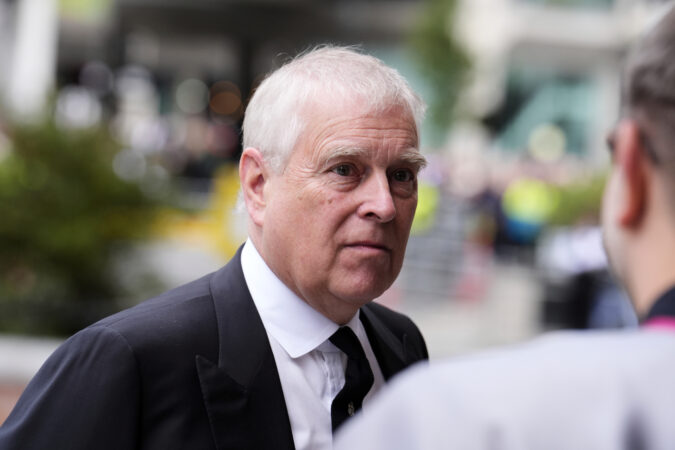
    LONDON — The former Prince Andrew has moved out of his longtime home on crown-owned land near Windsor Castle earlier than expected after the latest release of documents from the U.S. investigation of Jeffrey Epstein revived questions about his friendship with the convicted sex offender.

    The 65-year-old brother of King Charles III, now known as Andrew Mountbatten-Windsor, left the Royal Lodge in Windsor on Monday and is now living on the king’s Sandringham estate in eastern England, Britain’s Press Association reported. British media reported that Mountbatten-Windsor will live temporarily at Wood Farm Cottage while his permanent home on the estate undergoes repairs.

    Mountbatten-Windsor’s move to Sandringham was announced in October when Charles stripped him of his royal titles amid continuing revelations about his links to Epstein. But the former prince was expected to remain at Royal Lodge, where he has lived for more than 20 years, until the spring.

    The expedited departure came as Thames Valley Police announced they were investigating allegations that Epstein flew a second woman to Britain to have sex with Mountbatten-Windsor. A lawyer for the alleged victim told the BBC that the encounter took place in 2010 at Royal Lodge.

    The allegations are separate from those made by Virginia Giuffre, who claimed she had been trafficked to Britain to have sex with Andrew in 2001, when she was just 17. Giuffre died by suicide last year.

    Mountbatten-Windsor has repeatedly denied any wrongdoing in his relationship with Epstein. He hasn’t responded publicly to the new trafficking allegation.

    Mountbatten-Windsor features a number of times in the 3 million pages of documents the U.S. Department of Justice released on Friday.

    In an email dated March 23, 2011, the lawyer for an exotic dancer said Epstein and Mountbatten-Windsor asked her to take part in a threesome at the sex offenders’ Florida home.

    The woman’s legal representatives accused the pair of having “prevailed upon her to engage in various sex acts” during the alleged encounter in early 2006 after initially hiring her to dance for them. The woman was only paid $2,000, not the $10,000 she was promised, her lawyer said.

    The lawyer offered to settle the matter confidentially for $250,000.

    “My client has not pursued her claims against your client until this time because she is not proud of the circumstances of that night,” the lawyer wrote. “She was working as an exotic dancer, but she was treated like a prostitute.”

    In other correspondence between Epstein and someone believed to be Mountbatten-Windsor shows Epstein offering to arrange a date between the man and a 26-year-old Russian woman. The man, who signs off simply as “A,” later suggests that he and Epstein have dinner in London, either at a restaurant or Buckingham Palace.

    The documents do not show wrongdoing by many of those named. The appearance of famous people in the files often reflect Epstein’s extremely wide reach.

    The former prince’s residence at Royal Lodge has long been a point of contention between the king and his brother.

    After Charles became king in 2022, he tried to force his brother to move into a smaller house on the Windsor Castle estate. Mountbatten-Windsor refused, citing a lease on the property that ran through 2078.

    But the pressure for him to leave became irresistible in October as lawmakers and the public raised questions about the favorable terms of Mountbatten-Windsor’s lease on the 30-room house and surrounding estate, which is managed by the Crown Estate.

    The Crown Estate controls properties throughout the country that are technically owned by the monarchy but are managed for the benefit of British taxpayers.

    By contrast, the Sandringham Estate in Norfolk is the personal property of the king.

    Art museum official bails

    Art museum curator and director David A. Ross has left his post at the School of Visual Arts in New York after the latest release of documents about Epstein revealed his friendship with him.

    Ross, who was chair of the MFA art practice program, resigned Tuesday, the school said in a statement, adding that it was “aware of correspondence” between him and Epstein. Ross’ online page at the school was offline Wednesday.

    The resignation was first reported by ARTnews.

    In emails dating from 2009, Ross banters with, reaches out to meet and consoles Epstein, calling him “incredible” and “I’m still proud to call you a friend.”

    In one exchange in 2009, Epstein suggests an exhibition called “Statutory” that would feature “girls and boys ages 14-25 ”where they look nothing like their true ages.” Replied Ross: “You are incredible” and noted that Brooke Shields posed nude at age 10.

    Also that year, Ross wrote to console Epstein after the financier had been deposed. “Damn, this was not what you needed or deserved,” Ross wrote. “I know how tough you are, and in fact, it probably bothers me as your friend more than it does you.”
  • Government lawyer yanked from immigration detail in Minnesota after telling judge ‘this job sucks’

    Government lawyer yanked from immigration detail in Minnesota after telling judge ‘this job sucks’

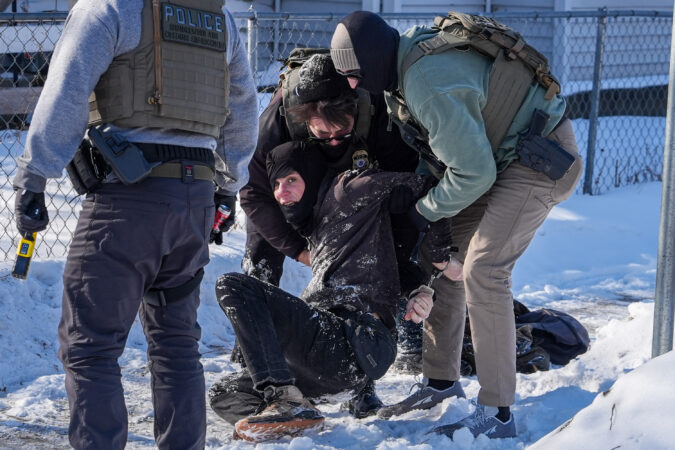
    WASHINGTON — A government lawyer who told a judge that her job “sucks” during a court hearing stemming from the Trump administration’s immigration enforcement surge in Minnesota has been removed from her Justice Department post, according to a person familiar with the matter.

    Julie Le had been working for the Justice Department on a detail, but the U.S. attorney in Minnesota ended her assignment after her comments in court on Tuesday, the person said. The person spoke on the condition of anonymity to discuss a personnel matter. She had been working for U.S. Immigration and Customs Enforcement before the temporary assignment.

    At a hearing Tuesday in St. Paul, Minn., for several immigration cases, Le told U.S. District Judge Jerry Blackwell that she wishes he could hold her in contempt of court “so that I can have a full 24 hours of sleep.”

    “What do you want me to do? The system sucks. This job sucks. And I am trying every breath that I have so that I can get you what you need,” Le said, according to a transcript.

    Le’s extraordinary remarks reflect the intense strain that has been placed on the federal court system since President Donald Trump returned to the White House a year ago with a promise to carry out mass deportations. ICE officials have said the surge in Minnesota has become its largest-ever immigration operation since ramping up in early January.

    Several prosecutors have left the U.S. Attorney’s office in Minnesota amid frustration with the immigration enforcement surge and the Justice Department’s response to fatal shootings of two civilians by federal agents. Le was assigned at least 88 cases in less than a month, according to online court records.

    Blackwell told Le that the volume of cases isn’t an excuse for disregarding court orders. He expressed concern that people arrested in immigration enforcement operations are routinely jailed for days after judges have ordered their release from custody.

    “And I hear the concerns about all the energy that this is causing the DOJ to expend, but, with respect, some of it is of your own making by not complying with orders,” the judge told Le.

    Le said she was working for the Department of Homeland Security as an ICE attorney in immigration court before she “stupidly” volunteered to work the detail in Minnesota. Le told the judge that she wasn’t properly trained for the assignment. She said she wanted to resign from the job but couldn’t get a replacement.

    “Fixing a system, a broken system, I don’t have a magic button to do it. I don’t have the power or the voice to do it,” she said.

    Homeland Security Assistant Secretary Tricia McLaughlin said Le was a probationary attorney.

    “This conduct is unprofessional and unbecoming of an ICE attorney in abandoning her obligation to act with commitment, dedication, and zeal to the interests of the United States Government,” McLaughlin said in a statement.

    Le and the U.S. Attorney’s office in Minnesota didn’t immediately respond to emails seeking comment.

    Kira Kelley, an attorney who represented two petitioners at the hearing, said the flood of immigration petitions is necessary because “so many people being detained without any semblance of a lawful basis.”

    “And there’s no indication here that any new systems or bolded e-mails or any instructions to ICE are going to fix any of this,” she added.

  • Judge appears skeptical of Trump’s latest bid to nix his hush money conviction

    Judge appears skeptical of Trump’s latest bid to nix his hush money conviction

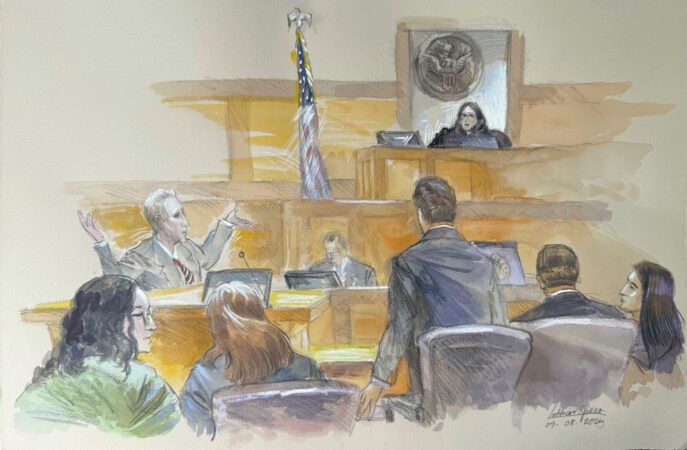
    NEW YORK — A federal judge appeared poised to again reject President Donald Trump’s bid to erase his hush money conviction, slamming his lawyers Wednesday for legal maneuvers he said amounted to taking “two bites at the apple.”

    Directed by an appeals court to take a fresh look at the matter, Judge Alvin K. Hellerstein was at turns inquisitive and incredulous in nearly three hours of arguments in Manhattan federal court. Sparring with Trump lawyer Jeffrey Wall throughout, he suggested the whole exercise was moot because the president’s legal team had waited too long after the historic verdict to seek federal court relief.

    The 2nd U.S. Circuit Court of Appeals in November ordered Judge Hellerstein to reconsider his earlier decision to keep the New York case in state court instead of moving it to federal court, where Trump can seek to have it thrown out on presidential immunity grounds.

    A three-judge panel ruled Hellerstein erred in his September 2025 ruling by failing to consider “important issues relevant” to Trump’s request to move the case to federal court. But they expressed no view on how he should rule.

    Trump, a Republican, did not attend Wednesday’s arguments.

    Hellerstein heard from Wall and Steven Wu, a lawyer from the Manhattan district attorney’s office, which prosecuted the case and wants it to remain in state court.

    Hellerstein thanked both men for their “very provocative arguments” and said he would issue a ruling at a later date.

    Trump was convicted in state court

    Trump was convicted in May 2024 of 34 felony counts of falsifying business records to conceal a hush money payment to adult film actor Stormy Daniels, whose allegations of an affair with Trump threatened to upend his 2016 presidential campaign. He was sentenced to an unconditional discharge, leaving his conviction intact but sparing him any punishment.

    Trump denies Daniels’ claim and said he did nothing wrong. He has asked a state appellate court to overturn the conviction.

    Hellerstein interrupted Wall almost as soon as Wednesday’s arguments began, injecting his thoughts and questions and telling the lawyer “I think I have to quarrel with you a bit” about the sequence of events that followed Trump’s conviction in May 2024.

    The judge took issue with the Trump legal team’s decision making after the verdict and a subsequent U.S. Supreme Court ruling that presidents and former presidents cannot be prosecuted for official acts.

    Instead of immediately seeking to move the case to federal court, Trump’s lawyers first asked the trial judge, Juan Merchan, to throw out the verdict on immunity grounds.

    Wall argued that Trump’s lawyers were in a time crunch after the Supreme Court’s July 1, 2024, ruling because Trump’s sentencing was scheduled for just 10 days later. Had Trump’s lawyers sought to bring the case to federal court at that point, the district attorney’s office, which prosecuted the case, may have criticized that as premature, Wall said.

    Trump’s lawyers did not ask Hellerstein to intervene until nearly two months later. The judge on Wednesday called that a “strategic decision” and suggested that by going to the state court first, Trump’s lawyers cost him the right to pursue remedies in federal court.

    “No, your honor,” Wall said. “It is what any sensible litigant would do” in that situation.

    “Not so,” Hellerstein replied.

    “That is a decision on your part,” the judge added. “You didn’t have to do that. You could have come right to the federal court. Just by filing a notice of removal, there would be no sentencing.”

    Trump’s lawyers “made a choice,” Hellerstein said, ”and you sought two bites at the apple.”

    Normally, such a request must be made within 30 days of an arraignment, but a federal appeals court in Washington, D.C. has ruled that exceptions can be made if “good cause” is shown.

    Wu concurred that Wall’s argument “confirms this was a strategic choice by the defendants.”

    He also said Trump’s lawyers knew they could have simultaneously submitted arguments or a letter to Merchan and still sought to transfer the case to federal court. Past rulings have made clear that “you cannot go to state court and when you’re unhappy, then go to federal court,” Wu said.

    Previous requests to move the case were denied

    Hellerstein, who was nominated by Democratic President Bill Clinton, has twice denied Trump’s requests to move the case. The first was after Trump’s March 2023 indictment; the second was the post-verdict ruling at issue at Wednesday’s hearing.

    In that ruling, Hellerstein said Trump’s lawyers had failed to meet the high burden of proof for changing jurisdiction and that Trump’s conviction for falsifying business records involved his personal life, not official actions that the Supreme Court ruled are immune from prosecution.

    The 2nd Circuit panel said Hellerstein’s ruling, which echoed his pre-trial denial, “did not consider whether certain evidence admitted during the state court trial relates to immunized official acts or, if so, whether evidentiary immunity transformed” the hush money case into one that relates to official acts.

    The three judges said Hellerstein should closely review evidence Trump claims relate to official acts.

    If Hellerstein finds the prosecution relied on evidence of official acts, the judges said, he should weigh whether Trump can argue those actions were taken as part of his White House duties, whether Trump “diligently sought” to have the case moved to federal court and whether the case can even be moved to federal court now that Trump has been convicted and sentenced in state court.

  • Legal fight escalates over Georgia voting records as Trump says he wants to ‘take over’ elections

    Legal fight escalates over Georgia voting records as Trump says he wants to ‘take over’ elections

    ATLANTA — Officials in Georgia’s Fulton County said Wednesday they have asked a federal court to order the FBI to return ballots and other documents from the 2020 election that it seized last week, escalating a voting battle as President Donald Trump says he wants to “take over” elections from Democratic-run areas with the November midterms on the horizon.

    The FBI had searched a warehouse near Atlanta where those records were stored, a move taken after Trump’s persistent demands for retribution over claims, without evidence, that fraud cost him victory in Georgia. Trump’s election comment came in an interview Monday with a conservative podcaster and the Republican president reaffirmed his position in Oval Office remarks the next day, citing fraud allegations that numerous audits, investigations and courts have debunked.

    Officials in heavily Democratic Fulton County referenced those statements in announcing their legal action at a time of increasing anxiety over Trump’s plans for the fall elections that will determine control of Congress.

    “This case is not only about Fulton County,” said the county chairman, Robb Pitts. “This is about elections across Georgia and across the nation.”

    In a sign of that broader concern, Sen. Mark Warner (D., Va.) said this week that he once doubted Trump would intervene in the midterms but now “the notional idea that he will ask his loyalists to do something inappropriate, beyond the Constitution, scares the heck out of me.”

    The White House has scoffed at such fears, noting that Trump did not intervene in the 2025 off-year elections despite some Democratic predictions he would. But the president’s party usually loses ground in midterm elections and Trump has already tried to tilt the fall races in his direction.

    Democratic state election officials have reacted to Trump’s statements, the seizure of the Georgia election materials and his aggressive deployment of federal officers into Democratic-leaning cities by planning for a wide range of possible scenarios this fall. That includes how they would respond if Immigration and Customs Enforcement officers were stationed outside polling places.

    They also have raised concerns about U.S. Department of Justice lawsuits, mostly targeting Democratic states, seeking detailed voter data that includes dates of birth and partial Social Security numbers. Secretaries of state have raised concerns that the administration is building a database it can use to potentially disenfranchise voters in future elections.

    Trump and his allies have long fixated on Fulton County, Georgia’s most populous, since he narrowly lost the state to Democrat Joe Biden in 2020. In the weeks after that election, Trump called Georgia’s secretary of state, Republican Brad Raffensperger, urged him to help “find” the 11,780 ballots that would enable Trump to be declared the Georgia winner of the state and raised the prospect of a “criminal offense” if the official failed to comply.

    Raffensperger did not change the vote tally, and Biden won Georgia’s 16 electoral votes. Days later, rioters swarmed the U.S. Capitol on Jan. 6, 2021, and tried to prevent the official certification of Biden’s victory. When Trump returned to the presidency in January 2025, he pardoned more than 1,000 charged in that siege.

    “The president himself and his allies, they refuse to accept the fact that they lost,” Pitts said. “And even if he had won Georgia, he would still have lost the presidency.”

    Pitts defended the county’s election practices and said Fulton has conducted 17 elections since 2020 without any issues.

    A warrant cover sheet provided to the county includes a list of items that the agents were seeking related to the 2020 general election: all ballots, tabulator tapes from the scanners that tally the votes, electronic ballot images created when the ballots were counted and then recounted, and all voter rolls.

    The FBI drove away with hundreds of boxes of ballots and other documents. County officials say they were not told why the federal government wanted the documents.

    The county is also asking the court to unseal the sworn statement from a law enforcement agent that was presented to the judge who approved the search warrant.

    The Justice Department declined to comment on the county’s motion.

    “What they’re doing with the ballots that they have now, we don’t know, but if they’re counted fairly and honestly, the results will be the same,” Pitts said.

    Tulsi Gabbard, Trump’s director of national intelligence, was at the Fulton search last week, and Democrats in Congress have questioned the propriety of her presence because the search was a law enforcement, not intelligence, action.

    In a letter to top Democrats on the House and Senate Intelligence committees Monday, Gabbard said Trump asked her to be there “under my broad statutory authority to coordinate, integrate, and analyze intelligence related to election security.”

    White House spokeswoman Karoline Leavitt said Tuesday that the president’s “take over” remarks, which included a vague reference to “15 places” that should be targeted, were a reference to the SAVE Act, legislation that would tighten proof of citizenship requirements. Republicans want to bring it up for a vote in Congress.

    But in his remarks that day, Trump did not cite the proposal. Instead, he claimed that Democratic-controlled places such as Atlanta, which falls mainly in Fulton County, have “horrible corruption on elections. And the federal government should not allow that.”

    The Constitution vests states with the ability to administer elections. Congress can add rules for federal races. One of Trump’s earliest second-term actions was an executive order that tried to rewrite voting rules nationwide. Judges have largely blocked it because it violates the Constitution.

    Trump contended that states were “agents of the federal government to count the votes. If they can’t count the votes legally and honestly, then somebody else should take over.”

    Sen. Thom Tillis (R., N.C.) said Wednesday said he supported the SAVE Act but not Trump’s desire for a federal takeover. “Nationalizing elections and picking 15 states seems a little off strategy,” Tillis told reporters.

  • U.S. wants to create a critical minerals trading bloc with its allies to counter China

    U.S. wants to create a critical minerals trading bloc with its allies to counter China

    WASHINGTON — The Trump administration announced Wednesday that it wants to create a critical minerals trading bloc with its allies and partners, using tariffs to maintain minimum prices and defend against China’s stranglehold on the key elements needed for everything from fighter jets to smartphones.

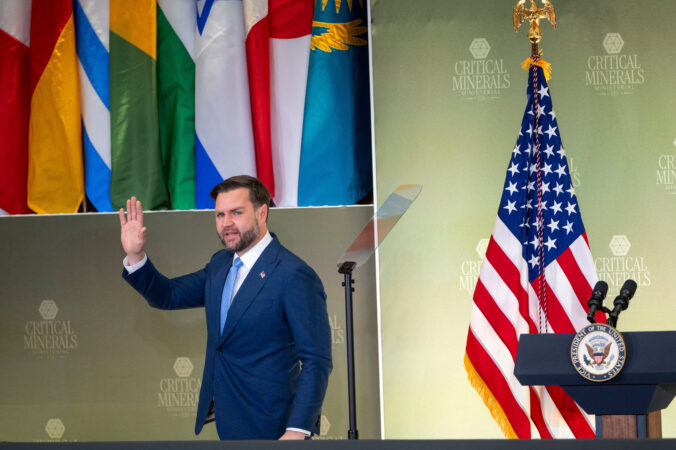
    Vice President JD Vance said the U.S.-China trade war over the past year exposed how dependent most countries are on the critical minerals that Beijing largely dominates, so collective action is needed now to give the West self-reliance.

    “We want members to form a trading bloc among allies and partners, one that guarantees American access to American industrial might while also expanding production across the entire zone,” Vance said at the opening of a meeting that Secretary of State Marco Rubio hosted with officials from several dozen European, Asian, and African nations.

    The Republican administration is making bold moves to shore up supplies of critical minerals needed for electric vehicles, missiles and other high-tech products after China choked off their flow in response to President Donald Trump’s sweeping tariffs last year. While the two global powers reached a truce to pull back on the high import taxes and stepped-up rare earth restrictions, China’s limits remain tighter than they were before Trump took office.

    The critical minerals meeting comes at a time of significant tensions between Washington and major allies over President Donald Trump’s territorial ambitions, including Greenland, and his moves to exert control over Venezuela and other nations. His bellicose and insulting rhetoric directed at U.S. partners has led to frustration and anger.

    The conference, however, is an indication that the United States is seeking to build relationships when it comes to issues it deems key national security priorities.

    While major allies like France and the United Kingdom attended the meeting in Washington, Greenland and Denmark, the NATO ally with oversight of the mineral-rich Arctic island, did not.

    A new approach to countering China on critical minerals

    Vance said some countries have signed on to the trading bloc, which is designed to ensure stable prices and will provide members access to financing and the critical minerals. Administration officials said the plan will help the West move beyond complaining about the problem of access to critical minerals to actually solving it.

    “Everyone here has a role to play, and that’s why we’re so grateful for you coming and being a part of this gathering that I hope will lead to not just more gatherings, but action,” Rubio said.

    Vance said that for too long, China has used the tactic of unloading materials at cheap prices to undermine potential competitors, then ratcheting up prices later after keeping new mines from being built in other countries.

    Prices within the preferential trade zone will remain consistent over time, the vice president said.

    “Our goal within that zone is to create diverse centers of production, stable investment conditions and supply chains that are immune to the kind of external disruptions that we’ve already talked about,” he said.

    To make the new trading group work, it will be important to have ways to keep countries from buying cheap Chinese materials on the side and to encourage companies from getting the critical minerals they need from China, said Ian Lange, an economics professor who focuses on rare earths at the Colorado School of Mines.

    “Let’s just say it’s standard economics or standard behavior. If I can cheat and get away with it, I will,” he said.

    At least for defense contractors, Lange said the Pentagon can enforce where those companies get their critical minerals, but it may be harder with electric vehicle makers and other manufacturers.

    U.S. turns to a strategic stockpile and investments

    Trump this week also announced Project Vault, a plan for a strategic U.S. stockpile of rare earth elements to be funded with a $10 billion loan from the U.S. Export-Import Bank and nearly $1.67 billion in private capital.

    In addition, the government recently made its fourth direct investment in an American critical minerals producer, extending $1.6 billion to USA Rare Earth in exchange for stock and a repayment deal. The Pentagon has shelled out nearly $5 billion over the past year to spur mining.

    The administration has prioritized the moves because China controls 70% of the world’s rare earths mining and 90% of the processing. Trump and Chinese President Xi Jinping spoke by phone Wednesday, including about trade. A social media post from Trump did not specifically mention critical minerals.

    Heidi Crebo-Rediker, a senior fellow in the Center for Geoeconomic Studies at the Council on Foreign Relations, said the meeting was “the most ambitious multilateral gathering of the Trump administration.”

    “The rocks are where the rocks are, so when it comes to securing supply chains for both defense and commercial industries, we need trusted partners,” she said.

    Japan’s minister of state for foreign affairs, Iwao Horii, said Tokyo was fully on board with the U.S. initiative and would work with as many countries as possible to ensure its success.

    “Critical minerals and (their) stable supply is indispensable to the sustainable development of the global economy,” he said.

    How the strategic reserve would work

    The Export-Import Bank’s board this week approved the largest loan in its history to help finance the setup of the U.S. Strategic Critical Minerals Reserve, which is tasked with ensuring access to critical minerals and related products for manufacturers.

    The bank’s president and chairman, John Jovanovic, told CNBC that manufacturers, which benefit the most from the reserve, are making a long-term financial commitment, while the government loan spurs private investments.

    David Abraham, a rare earths expert who has followed the industry for decades and is author of “The Elements of Power,” said that while the Trump administration has focused on reinvigorating critical minerals production, it also is important to encourage development of manufacturing that will use those minerals.

    He noted that Trump’s decisions to cut incentives for electric vehicles and wind turbines have undercut demand for these elements in America.

  • Man who tried to shoot Trump at a Florida golf course gets life in prison

    Man who tried to shoot Trump at a Florida golf course gets life in prison

    FORT PIERCE, Fla. — A man convicted of trying to assassinate President Donald Trump on a Florida golf course in 2024 was sentenced Wednesday to life in prison after a federal prosecutor said his crime was unacceptable “in this country or anywhere.”

    U.S. District Judge Aileen Cannon pronounced Ryan Routh’s fate in the same Fort Pierce courtroom that erupted into chaos in September when he tried to stab himself shortly after jurors found him guilty on all counts.

    “American democracy does not work when individuals take it into their own hands to eliminate candidates. That’s what this individual tried to do” Assistant U.S. Attorney John Shipley told the judge.

    Routh’s new defense attorney, Martin L. Roth, argued that “at the moment of truth, he chose not to pull the trigger.”

    The judge pushed back, noting Routh’s history of arrests, to which Roth said, “He’s a complex person I’ll give the court that, but he has a very good core.”

    Routh then read from a rambling, 20-page statement. Cannon broke in and said none of what he was saying was relevant, and gave him five more minutes to talk.

    “I did everything I could and lived a good life,” Routh said, before the judge cut him off.

    “Your plot to kill was deliberate and evil,” she said. “You are not a peaceful man. You are not a good man.”

    She then issued his sentence: Life without parole, plus 7 years on a gun charge. His sentences for his other three crimes will run concurrently.

    Routh’s sentencing had initially been scheduled for December, but Cannon agreed to move the date back after Routh decided to use an attorney during the sentencing phase instead of representing himself as he did for most of the trial.

    Routh was convicted of trying to assassinate a major presidential candidate, using a firearm in furtherance of a crime, assaulting a federal officer, possessing a firearm as a felon and using a gun with a defaced serial number. “Routh remains unrepentant for his crimes, never apologized for the lives he put at risk, and his life demonstrates near-total disregard for law,” the prosecutors’ sentencing memo said.

    His defense attorney had asked for 20 years plus the mandatory seven for the gun conviction.

    “The defendant is two weeks short of being sixty years old,” Roth wrote in a filing. “A just punishment would provide a sentence long enough to impose sufficient but not excessive punishment, and to allow defendant to experience freedom again as opposed to dying in prison.”

    Prosecutors said Routh spent weeks plotting to kill Trump before aiming a rifle through shrubbery as the Republican presidential candidate played golf on Sept. 15, 2024, at his West Palm Beach country club.

    At Routh’s trial, a Secret Service agent helping protect Trump on the golf course testified that he spotted Routh before Trump came into view. Routh aimed his rifle at the agent, who opened fire, causing Routh to drop his weapon and run away without firing a shot.

    In the motion requesting an attorney, Routh offered to trade his life in a prisoner swap with people unjustly held in other countries, and said an offer still stood for Trump to “take out his frustrations on my face.”

    “Just a quarter of an inch further back and we all would not have to deal with all of this mess forwards, but I always fail at everything (par for the course),” Routh wrote.

    In her decision granting Routh an attorney, Cannon chastised the “disrespectful charade” of Routh’s motion, saying it made a mockery of the proceedings. But the judge, nominated by Trump in 2020, said she wanted to err on the side of legal representation.

    Cannon signed off last summer on Routh’s request to represent himself at trial. The U.S. Supreme Court has held that criminal defendants have the right to represent themselves in court proceedings, as long as they can show a judge they are competent to waive their right to be defended by an attorney.

    Routh’s former federal public defenders served as standby counsel and were present during the trial.

    Routh had multiple previous felony convictions including possession of stolen goods, and a large online footprint demonstrating his disdain for Trump. In a self-published book, he encouraged Iran to assassinate him, and at one point wrote that as a Trump voter, he must take part of the blame for electing him.

  • Trump’s border czar announces 700 immigration officers to immediately leave Minnesota

    Trump’s border czar announces 700 immigration officers to immediately leave Minnesota

    The Trump administration is reducing the number of immigration officers in Minnesota but will continue its enforcement operation that has sparked weeks of tensions and deadly confrontations, border czar Tom Homan said Wednesday.

    About 700 federal officers — roughly a quarter of the total deployed to Minnesota — will be withdrawn immediately after state and local officials agreed over the past week to cooperate by turning over arrested immigrants, Homan said.

    But he did not provide a timeline for when the administration might end the operation that has become a flashpoint in the debate over President Donald Trump’s mass deportation efforts since the fatal shootings of U.S. citizens Renee Good and Alex Pretti in Minneapolis.

    About 2,000 officers will remain in the state after this week’s drawdown, Homan said. That’s roughly the same number sent to Minnesota in early January when the surge ramped up, kicking off what the Department of Homeland Security called its ” largest immigration enforcement operation ever.”

    Since then, masked, heavily armed officers have been met by resistance from residents who are upset with their aggressive tactics.

    A widespread pullout, Homan said, will occur only after protesters stop interfering with federal agents carrying out arrests and setting up roadblocks to impede the operations.

    Gov. Tim Walz and Minneapolis Mayor Jacob Frey, both Democrats who have heavily criticized the surge, said pulling back 700 officers was a good first step but that the entire operation should end quickly.

    “We need a faster and larger drawdown of forces, state-led investigations into the killings of Alex Pretti and Renee Good, and an end to this campaign of retribution,” Walz posted on social media.

    Vice President JD Vance said the officers being sent home were mainly in Minneapolis to protect those carrying out arrests. “We’re not drawing down the immigration enforcement,” Vance said in an interview on The Megyn Kelly Show.

    Trump administration has pushed for cooperation in Minnesota

    Trump’s border czar took over the Minnesota operation in late January after the second fatal shooting by federal officers and amid growing political backlash and questions about how the operation was being run.

    Homan said right away that federal officials could reduce the number of agents in Minnesota, but only with the cooperation of state and local officials. He pushed for jails to alert Immigration and Customs Enforcement about inmates who could be deported, saying transferring those inmates to ICE is safer because it means fewer officers have to be out looking for people in the country illegally.

    Homan said during a news conference Wednesday that there has been an “increase in unprecedented collaboration” resulting in the need for fewer public safety officers in Minnesota and a safer environment, allowing for the withdrawal of the 700 officers.

    He didn’t say which jurisdictions have been cooperating with DHS

    The Trump administration has long complained that places known as sanctuary jurisdictions — a term applied to local governments that limit law enforcement cooperation with the department — hinder the arrest of criminal immigrants.

    Minnesota officials say its state prisons and nearly all of the county sheriffs already cooperate with immigration authorities.

    But the two county jails that serve Minneapolis and St. Paul and take in the most inmates had not previously met ICE’s standard of full cooperation, although they both hand over inmates to federal authorities if an arrest warrant has been signed by a judge.

    The Hennepin County Sheriff’s Office, which serves Minneapolis and several suburbs, said its policies have not changed. The Ramsey County Sheriff’s Office in neighboring St. Paul did not immediately respond to a request for comment.

    Border czar calls Minnesota operation a success

    Homan said he thinks the ICE operation in Minnesota has been a success, checking off a list of people wanted for violent crimes who were taken off the streets.

    “I think it’s very effective as far as public safety goes,” he said Wednesday. “Was it a perfect operation? No.”

    He also made clear that pulling a chunk of federal officers out of Minnesota isn’t a sign that the administration is backing down. “We are not surrendering the president’s mission on a mass deportation operation,” Homan said.

    “You’re not going to stop ICE. You’re not going to stop Border Patrol,” Homan said of the ongoing protests. “The only thing you’re doing is irritating your community”

    Schools ask court to block immigration operations

    Two Minnesota school districts and a teachers union filed a lawsuit Wednesday to block federal authorities from conducting immigration enforcement at or around schools.

    The lawsuit says actions by DHS and its ICE officers have disrupted classes, endangered students and driven families away from schools.

    It also argues that Operation Metro Surge has marked a shift in policy that removed long-standing limits on enforcement activity in “sensitive locations,” including schools.

    Homeland Security officials have not responded to a request for comment.

  • Trump and Xi discuss Iran in wide-ranging call as U.S. presses China and others to break from Tehran

    Trump and Xi discuss Iran in wide-ranging call as U.S. presses China and others to break from Tehran

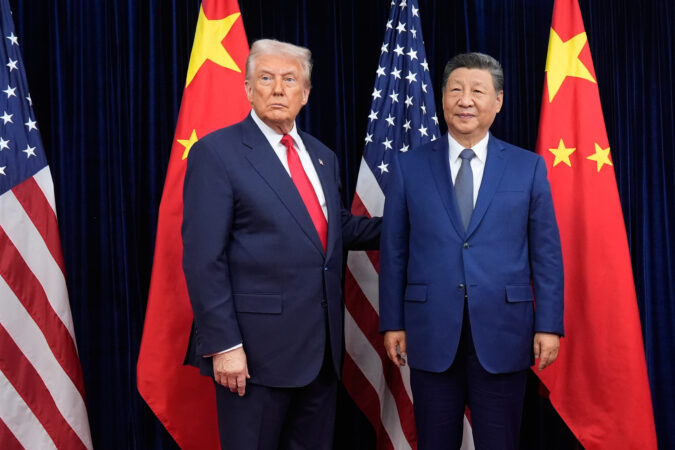
    WASHINGTON — President Donald Trump said Wednesday that he and Chinese President Xi Jinping discussed the situation in Iran in a wide-ranging call that comes as the U.S. administration pushes Beijing and others to isolate Tehran.

    Trump said the two leaders also discussed a broad range of other critical issues in the U.S.-China relationship, including trade and Taiwan and his plans to visit Beijing in April.

    “The relationship with China, and my personal relationship with President Xi, is an extremely good one, and we both realize how important it is to keep it that way,” Trump said in a social media posting about the call.

    The Chinese government, in a readout of the call, said the two leaders discussed major summits that both nations will host in the coming year and opportunities for the two leaders to meet. The Chinese statement, however, made no mention of Trump’s expected April visit to Beijing.

    China also made clear that it has no intention of stepping away from it’s long-term plans of reunification with Taiwan, a self-governing, democratic island operating independently from mainland China, though Beijing claims it as its own territory.

    “Taiwan will never be allowed to separate from China,” the Chinese government statement said.

    Trump and Xi discussed Iran as tensions remain high between Washington and Tehran after the Middle East country’s bloody crackdown on nationwide protests last month.

    Trump is now also pressing Iran to make concessions over its nuclear program, which his Republican administration says was already set back by the U.S. bombing of three Iranian nuclear sites during the 12-day war Israel launched against Iran in June.

    The White House says that special envoy Steve Witkoff is slated to take part in talks with Iranian officials later this week.

    Trump announced last month that the U.S. would impose a 25% tax on imports to the United States from countries that do business with Iran.

    Years of sanctions aimed at stopping Iran’s nuclear program have left the country isolated. But Tehran still did nearly $125 billion in international trade in 2024, including $32 billion with China, $28 billion with the United Arab Emirates and $17 billion with Turkey, the World Trade Organization says.

    Separately, Xi also spoke on Wednesday with Russian President Vladimir Putin.

    Xi’s engagement with Trump and Putin comes as the last remaining nuclear arms pact, known as the New START treaty, between Russia and the United States is set to expire Thursday, removing any caps on the two largest atomic arsenals for the first time in more than a half-century.

    Trump has indicated he would like to keep limits on nuclear weapons but wants to involve China in a potential new treaty.

    “I actually feel strongly that if we’re going to do it, I think China should be a member of the extension,” Trump told The New York Times last month. “China should be a part of the agreement.”

    The call with Xi also coincided with a ministerial meeting that the Trump administration convened in Washington with several dozen European, Asian and African nations to discuss how to rebuild global supply chains of critical minerals without Beijing.

    Critical minerals are needed for everything from jet engines to smartphones. China dominates the market for those ingredients crucial to high-tech products.

    “What is before all of us is an opportunity at self-reliance that we never have to rely on anybody else except for each other, for the critical minerals necessary to sustain our industries and to sustain growth,” Vice President JD Vance said at the gathering.

    Xi has recently held a series of meetings with Western leaders who have sought to boost ties with China amid growing concerns about Trump’s tariff policies and calls for the U.S. to take over Greenland, a Danish territory.

    The disruption to global trade under Trump has made expanding trade and investment more imperative for many U.S. economic partners. Vietnam and the European Union upgraded ties to a comprehensive strategic partnership last month, two days after the EU and India announced a free-trade agreement.

  • Brothers of Renee Good, woman killed by immigration officer, call for action in Congress

    Brothers of Renee Good, woman killed by immigration officer, call for action in Congress

    WASHINGTON — The brothers of Renee Good, one of two U.S. citizens killed by federal immigration officers in Minneapolis, called on Congress to do something about the violence on American streets as a result of immigration operations, warning Tuesday that the scenes playing out are “changing many lives, including ours, forever.”

    Good, a 37-year-old mother of three, was shot and killed Jan. 7. Her death and that of another protester, Alex Pretti, just weeks later have sparked outrage across the country and calls to rein in immigration enforcement.

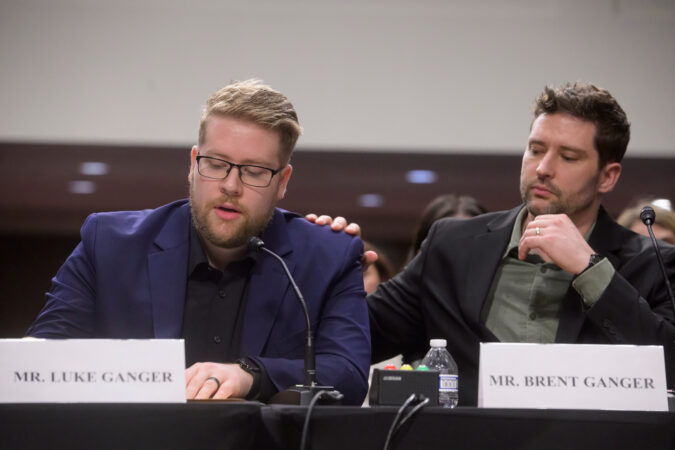
    Brothers Luke and Brett Ganger spoke during a hearing held Tuesday by congressional Democrats to highlight use-of-force incidents by officers from the Department of Homeland Security as they arrest and deport immigrants. The mood was somber as the brothers spoke, often comforting each other as they talked and listened to others speaking.

    Luke Ganger, speaking of the “deep distress” the family felt at losing their sister in “such a violent and unnecessary way,” didn’t specify what they wanted from Congress but painted his sister’s death as a turning point that should inspire change in operations such as those going on in Minneapolis.

    “The completely surreal scenes taking place on the streets of Minneapolis are beyond explanation. This is not just a bad day, or a rough week, or isolated incidents,” he said. “These encounters with federal agents are changing the community and changing many lives, including ours, forever.”

    The forum was put on by Sen. Richard Blumenthal (D., Conn.) and Rep. Robert Garcia (D., Calif.) to spotlight use-of-force complaints against Homeland Security officers tasked with carrying out President Donald Trump’s mass deportation agenda.

    Trump administration officials said Good tried to run over an officer with her vehicle. State and local officials in Minneapolis, as well as protesters, have rejected that characterization.

    The two brothers didn’t delve into the details of their sister’s death or what the administration has said about her. Instead, they spoke about her life.

    Luke Ganger said the most important thing the brothers could do was to explain to those listening “what a beautiful American we have lost. A sister. A daughter. A mother. A partner and a friend.”

    Brett Ganger shared some of the eulogy he had written for his sister’s funeral service. He compared her to dandelions that grow and bring beauty in unexpected places.

    “She believed tomorrow could be better than today. She believed that kindness mattered. And she lived that belief,” he said.

    The panel also heard from three other U.S. citizens who detailed their treatment by Homeland Security officers.

  • Defense seeks to block videos of Charlie Kirk’s killing in murder case, claims bias

    Defense seeks to block videos of Charlie Kirk’s killing in murder case, claims bias

    PROVO, Utah — Graphic videos showing the killing of conservative activist Charlie Kirk while he spoke to a crowd on a Utah college campus quickly went viral, drawing millions of views.

    Now, attorneys for the man charged in Kirk’s killing want a state judge to block such videos from being shown during a hearing scheduled for Tuesday. Defense attorneys also want to oust TV and still cameras from the courtroom, arguing that “highly biased” news outlets risk tainting the case.

    Prosecutors, attorneys for news organizations, and Kirk’s widow urged state District Judge Tony Graf to keep the proceedings open.

    “In the absence of transparency, speculation, misinformation, and conspiracy theories are likely to proliferate, eroding public confidence in the judicial process,” Erika Kirk’s attorney wrote in a Monday court filing. “Such an outcome serves neither the interests of justice nor those of Ms. Kirk.”

    But legal experts say the defense team’s worries are real: Media coverage in high-profile cases such as Tyler Robinson’s can have a direct “biasing effect” on potential jurors, said Cornell Law School Professor Valerie Hans.

    “There were videos about the killing, and pictures and analysis (and) the entire saga of how this particular defendant came to turn himself in,” said Hans, a leading expert on the jury system. “When jurors come to a trial with this kind of background information from the media, it shapes how they see the evidence that is presented in the courtroom.”

    Prosecutors intend to seek the death penalty for Robinson, 22, who is charged with aggravated murder in the Sept. 10 shooting of Kirk on the Utah Valley University campus in Orem. An estimated 3,000 people attended the outdoor rally to hear Kirk, a co-founder of Turning Point USA, who helped mobilize young people to vote for President Donald Trump.

    To secure a death sentence in Utah, prosecutors must demonstrate aggravating circumstances, such as that the crime was especially heinous or atrocious. That’s where the graphic videos could come into play.

    Watching those videos might make people think, “’Yeah, this was especially heinous, atrocious or cruel,’” Hans said.

    Further complicating efforts to ensure a fair trial is the political rhetoric swirling around Kirk, stemming from the role his organization played in Trump’s 2024 election. Even before Robinson’s arrest, people had jumped to conclusions about who the shooter could be and what kind of politics he espoused, said University of Utah law professor Teneille Brown.

    “People are just projecting a lot of their own sense of what they think was going on, and that really creates concerns about whether they can be open to hearing the actual evidence that’s presented,” she said.

    Robinson’s attorneys have ramped up claims of bias as the case has advanced, even accusing news outlets of using lip readers to deduce what the defendant is whispering to his attorneys during court hearings.

    Fueling those concerns was a television camera operator who zoomed in on Robinson’s face as he talked to his attorneys during a Jan. 16 hearing. That violated courtroom orders, prompting the judge to stop filming of Robinson for the remainder of the hearing.

    “Rather than being a beacon for truth and openness, the News Media have simply become a financial investor in this case,” defense attorneys wrote in a request for the court to seal some of their accusations of media bias. Unsealing those records, they added, “will simply generate even more views of the offending coverage, and more revenue for the News Media.”

    Prosecutors acknowledged the intense public interest surrounding the case but said that does not permit the court to compromise on openness. They said the need for transparency transcends Robinson’s case.

    “This case arose, and will remain, in the public eye. That reality favors greater transparency of case proceedings, not less,” Utah County prosecutors wrote in a court filing.

    Defense attorneys are seeking to disqualify local prosecutors because the daughter of a deputy county attorney involved in the case attended the rally where Kirk was shot. The defense alleges that the relationship represents a conflict of interest.

    In response, prosecutors said in a court filing that they could present videos at Tuesday’s hearing to demonstrate that the daughter was not a necessary witness since numerous other people recorded the shooting.

    Among the videos, prosecutors wrote, is one that shows the bullet hitting Kirk, blood coming from his neck and Kirk falling from his chair.