Category: Nation World News Wires

  • Brothers of Renee Good, woman killed by immigration officer, call for action in Congress

    Brothers of Renee Good, woman killed by immigration officer, call for action in Congress

    WASHINGTON — The brothers of Renee Good, one of two U.S. citizens killed by federal immigration officers in Minneapolis, called on Congress to do something about the violence on American streets as a result of immigration operations, warning Tuesday that the scenes playing out are “changing many lives, including ours, forever.”

    Good, a 37-year-old mother of three, was shot and killed Jan. 7. Her death and that of another protester, Alex Pretti, just weeks later have sparked outrage across the country and calls to rein in immigration enforcement.

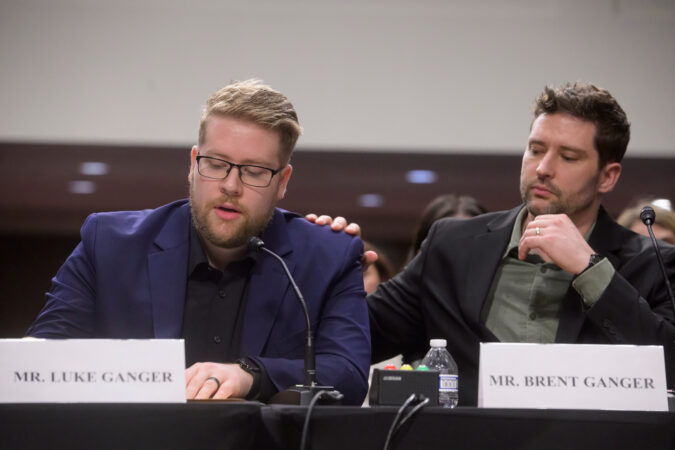
    Brothers Luke and Brett Ganger spoke during a hearing held Tuesday by congressional Democrats to highlight use-of-force incidents by officers from the Department of Homeland Security as they arrest and deport immigrants. The mood was somber as the brothers spoke, often comforting each other as they talked and listened to others speaking.

    Luke Ganger, speaking of the “deep distress” the family felt at losing their sister in “such a violent and unnecessary way,” didn’t specify what they wanted from Congress but painted his sister’s death as a turning point that should inspire change in operations such as those going on in Minneapolis.

    “The completely surreal scenes taking place on the streets of Minneapolis are beyond explanation. This is not just a bad day, or a rough week, or isolated incidents,” he said. “These encounters with federal agents are changing the community and changing many lives, including ours, forever.”

    The forum was put on by Sen. Richard Blumenthal (D., Conn.) and Rep. Robert Garcia (D., Calif.) to spotlight use-of-force complaints against Homeland Security officers tasked with carrying out President Donald Trump’s mass deportation agenda.

    Trump administration officials said Good tried to run over an officer with her vehicle. State and local officials in Minneapolis, as well as protesters, have rejected that characterization.

    The two brothers didn’t delve into the details of their sister’s death or what the administration has said about her. Instead, they spoke about her life.

    Luke Ganger said the most important thing the brothers could do was to explain to those listening “what a beautiful American we have lost. A sister. A daughter. A mother. A partner and a friend.”

    Brett Ganger shared some of the eulogy he had written for his sister’s funeral service. He compared her to dandelions that grow and bring beauty in unexpected places.

    “She believed tomorrow could be better than today. She believed that kindness mattered. And she lived that belief,” he said.

    The panel also heard from three other U.S. citizens who detailed their treatment by Homeland Security officers.

  • Defense seeks to block videos of Charlie Kirk’s killing in murder case, claims bias

    Defense seeks to block videos of Charlie Kirk’s killing in murder case, claims bias

    PROVO, Utah — Graphic videos showing the killing of conservative activist Charlie Kirk while he spoke to a crowd on a Utah college campus quickly went viral, drawing millions of views.

    Now, attorneys for the man charged in Kirk’s killing want a state judge to block such videos from being shown during a hearing scheduled for Tuesday. Defense attorneys also want to oust TV and still cameras from the courtroom, arguing that “highly biased” news outlets risk tainting the case.

    Prosecutors, attorneys for news organizations, and Kirk’s widow urged state District Judge Tony Graf to keep the proceedings open.

    “In the absence of transparency, speculation, misinformation, and conspiracy theories are likely to proliferate, eroding public confidence in the judicial process,” Erika Kirk’s attorney wrote in a Monday court filing. “Such an outcome serves neither the interests of justice nor those of Ms. Kirk.”

    But legal experts say the defense team’s worries are real: Media coverage in high-profile cases such as Tyler Robinson’s can have a direct “biasing effect” on potential jurors, said Cornell Law School Professor Valerie Hans.

    “There were videos about the killing, and pictures and analysis (and) the entire saga of how this particular defendant came to turn himself in,” said Hans, a leading expert on the jury system. “When jurors come to a trial with this kind of background information from the media, it shapes how they see the evidence that is presented in the courtroom.”

    Prosecutors intend to seek the death penalty for Robinson, 22, who is charged with aggravated murder in the Sept. 10 shooting of Kirk on the Utah Valley University campus in Orem. An estimated 3,000 people attended the outdoor rally to hear Kirk, a co-founder of Turning Point USA, who helped mobilize young people to vote for President Donald Trump.

    To secure a death sentence in Utah, prosecutors must demonstrate aggravating circumstances, such as that the crime was especially heinous or atrocious. That’s where the graphic videos could come into play.

    Watching those videos might make people think, “’Yeah, this was especially heinous, atrocious or cruel,’” Hans said.

    Further complicating efforts to ensure a fair trial is the political rhetoric swirling around Kirk, stemming from the role his organization played in Trump’s 2024 election. Even before Robinson’s arrest, people had jumped to conclusions about who the shooter could be and what kind of politics he espoused, said University of Utah law professor Teneille Brown.

    “People are just projecting a lot of their own sense of what they think was going on, and that really creates concerns about whether they can be open to hearing the actual evidence that’s presented,” she said.

    Robinson’s attorneys have ramped up claims of bias as the case has advanced, even accusing news outlets of using lip readers to deduce what the defendant is whispering to his attorneys during court hearings.

    Fueling those concerns was a television camera operator who zoomed in on Robinson’s face as he talked to his attorneys during a Jan. 16 hearing. That violated courtroom orders, prompting the judge to stop filming of Robinson for the remainder of the hearing.

    “Rather than being a beacon for truth and openness, the News Media have simply become a financial investor in this case,” defense attorneys wrote in a request for the court to seal some of their accusations of media bias. Unsealing those records, they added, “will simply generate even more views of the offending coverage, and more revenue for the News Media.”

    Prosecutors acknowledged the intense public interest surrounding the case but said that does not permit the court to compromise on openness. They said the need for transparency transcends Robinson’s case.

    “This case arose, and will remain, in the public eye. That reality favors greater transparency of case proceedings, not less,” Utah County prosecutors wrote in a court filing.

    Defense attorneys are seeking to disqualify local prosecutors because the daughter of a deputy county attorney involved in the case attended the rally where Kirk was shot. The defense alleges that the relationship represents a conflict of interest.

    In response, prosecutors said in a court filing that they could present videos at Tuesday’s hearing to demonstrate that the daughter was not a necessary witness since numerous other people recorded the shooting.

    Among the videos, prosecutors wrote, is one that shows the bullet hitting Kirk, blood coming from his neck and Kirk falling from his chair.

  • Trump demands $1 billion from Harvard as a prolonged standoff appears to deepen

    Trump demands $1 billion from Harvard as a prolonged standoff appears to deepen

    WASHINGTON — President Donald Trump is demanding a $1 billion payment from Harvard University to end his prolonged standoff with the Ivy League campus, doubling the amount he sought previously as both sides appear to move further from reaching a deal.

    The president raised the stakes on social media Monday night, saying Harvard has been “behaving very badly.” He said the university must pay the government directly as part of any deal — something Harvard has opposed — and that his administration wants “nothing further to do” with Harvard in the future.

    Trump’s comments on Truth Social came in response to a New York Times report saying the president had dropped his demand for a financial payment, lowering the bar for a deal. Trump denied he was backing down.

    Harvard officials did not immediately comment.

    Trump’s outburst appears to leave both sides firmly entrenched in a conflict that Trump previously said was nearing an end.

    Last June, Trump said a deal was just days away and that Harvard had acted “extremely appropriately” during negotiations. He later said an agreement was being finalized that would require Harvard to put $500 million toward the creation of a “series of trade schools” rather than a payment to the government.

    That deal appears to have fallen apart entirely. In his social media post, Trump said the trade school proposal had been turned down because it was “convoluted” and “wholly inadequate.”

    Harvard has long been Trump’s top target in his administration’s campaign to bring the nation’s most prestigious universities to heel. His officials have cut billions of dollars in Harvard’s federal research funding and attempted to block it from enrolling foreign students after the campus rebuffed a series of government demands last April.

    The White House has said it’s punishing Harvard for tolerating anti-Jewish bias on campus.

    In a pair of lawsuits, Harvard said it’s being unfairly penalized for refusing to adopt the administration’s views. A federal judge agreed in December, reversing the funding cuts and calling the antisemitism argument a “smokescreen.”

    Trump’s latest escalation comes as other parts of his higher education campaign are teetering.

    Last fall, the White House invited nine universities to join a “compact” that offered funding priority in exchange for adopting Trump’s agenda. None of the schools accepted. In January, the administration abandoned its legal defense of an Education Department document threatening to cut schools’ funding over diversity, equity, and inclusion policies.

    When he took office for his second term, Trump made it a priority to go after elite universities that he said had been overrun by liberal thinking and anti-Jewish bias. His officials have frozen huge sums of research funding, which colleges have come to rely on for scientific and medical research.

    Several universities have reached agreements with the White House to restore funding. Some deals have included direct payments to the government, including $200 million from Columbia University. Brown University agreed to pay $50 million toward state workforce development groups.

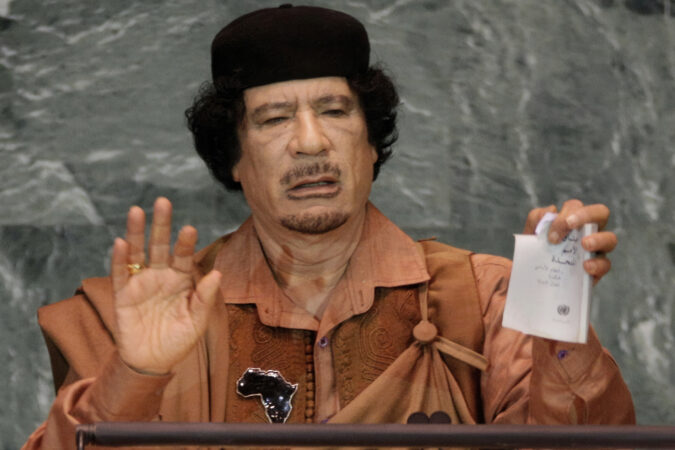
  • Seif al-Islam Gadhafi, son of Libya’s late dictator, killed in north Africa country, officials say

    Seif al-Islam Gadhafi, son of Libya’s late dictator, killed in north Africa country, officials say

    CAIRO — Seif al-Islam Gadhafi, the son and one-time heir apparent of Libya’s late dictator Moammar Gadhafi, was killed in the northern African country, Libyan officials said Tuesday.

    The 53-year-old was killed in the town of Zintan, 85 miles southwest of the capital, Tripoli, according to two Libyan security officials in western Libya. The officials spoke on condition of anonymity because they were not authorized to brief the media.

    Khaled al-Zaidi, a lawyer for Seif al-Islam, confirmed his death on Facebook, without providing details.

    Abdullah Othman Abdurrahim, who represented Gadhafi in the U.N.-brokered political dialogue which aimed to resolve Libya’s long-running conflict, also announced his death on Facebook.

    Abdurrahim, who leads his political team, didn’t provide further details, but Libyan news outlet Fawasel Media cited him as saying that armed men killed Seif al-Islam in his home. The outlet reported that prosecutors were investigating the killing.

    Seif al-Islam’s political team later released a statement, saying that “four masked men” stormed his house and killed him in a “cowardly and treacherous assassination.” The statement said that he clashed with the assailants, who closed the CCTV cameras at the house “in a desperate attempt to conceal traces of their heinous crimes.”

    Born in June 1972 in Tripoli, Seif al-Islam was the second-born son of the longtime dictator. He studied for a Ph.D. at the London School of Economics and was seen as the reformist face of the Gadhafi regime.

    Moammar Gadhafi was toppled in a NATO-backed popular uprising in 2011 after more than 40 years in power. He was killed in October 2011 amid the ensuing fighting that would turn into a civil war. The country has since plunged into chaos and divided between rival armed groups and militias.

    Seif al-Islam was captured by fighters in Zintan late in 2011 while attempting to flee to neighboring Niger. The fighters released him in June 2017 after one of Libya’s rival governments granted him amnesty. He had since lived in Zintan.

    A Libyan court convicted him of inciting violence and murdering protesters and sentenced him to death in absentia in 2015. He was also wanted by the International Criminal Court on charges of crimes against humanity related to the 2011 uprising.

    In November 2021, Seif al-Islam announced his candidacy in the country’s presidential election in a controversial move that was met with outcry from anti-Gadhafi political forces in western and eastern Libya.

    The country’s High National Elections Committee disqualified him, but the election wasn’t held over disputes between rival administrations and armed groups that have ruled Libya since the bloody ouster of Moammar Gadhafi.

  • Jill Biden’s first husband charged with killing wife in domestic dispute at their Delaware home

    Jill Biden’s first husband charged with killing wife in domestic dispute at their Delaware home

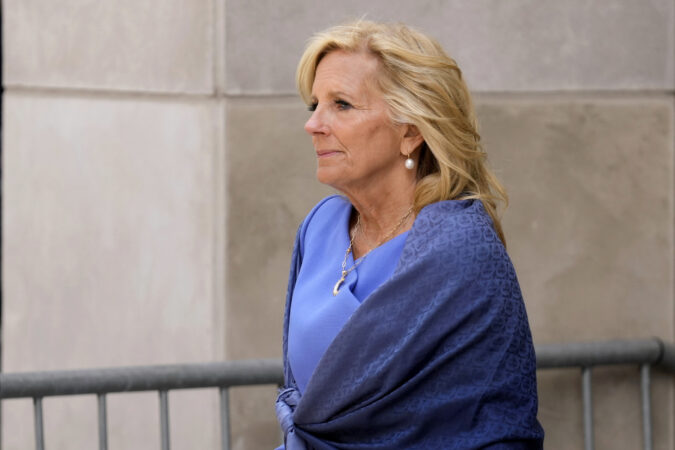
    WILMINGTON — The first husband of former first lady Jill Biden has been charged with killing his wife at their Delaware home in late December, authorities announced in a news release Tuesday.

    William Stevenson, 77, of Wilmington was married to Jill Biden from 1970 to 1975.

    Caroline Harrison, the Delaware Attorney General’s spokesperson, confirmed in a phone call that Stevenson is the former husband of Jill Biden.

    Jill Biden declined to comment, according to an e-mailed response from a spokesperson at the former president and first lady’s office.

    Stevenson remains in jail after failing to post $500,000 bail after his arrest Monday on first-degree murder charges. He is charged with killing Linda Stevenson, 64, on Dec. 28.

    Police were called to the home for a reported domestic dispute after 11 p.m. and found a woman unresponsive in the living room, according to a prior news release. Life-saving measures were unsuccessful.

    She ran a bookkeeping business and was described as a family-oriented mother and grandmother and a Philadelphia Eagles fan, according to her obituary, which does not mention her husband.

    Stevenson was charged in a grand jury indictment after a weekslong investigation by detectives in the Delaware Department of Justice.

    It was not immediately clear if Stevenson has a lawyer. He founded a popular music venue in Newark called the Stone Balloon in the early 1970s.

    Jill Biden married U.S. Sen. Joe Biden in 1977. He served as U.S. president from January 2021 to January 2025.

  • Immigration agents draw guns, arrest activists following them in Minneapolis

    Immigration agents draw guns, arrest activists following them in Minneapolis

    MINNEAPOLIS — Immigration officers with guns drawn arrested some activists who were trailing their vehicles on Tuesday in Minneapolis, a sign that tensions have not eased since the departure last week of a high-profile commander.

    At least one person who had an anti-ICE message on clothing was handcuffed while face-down on the ground. An Associated Press photographer witnessed the arrests.

    Meanwhile, Tuesday was the deadline for the Minnesota governor, state attorney general and the mayors of Minneapolis and St. Paul to produce documents to a federal grand jury in response to a Justice Department request for records of any effort to stifle the Trump administration’s immigration crackdown. Officials have denounced it as a bullying tactic.

    Federal agents in the Twin Cities lately have been conducting more targeted immigration arrests at homes and neighborhoods, rather than staging in parking lots. The convoys have been harder to find and less aggressive. Alerts in activist group chats have been more about sightings than immigration-related detainments.

    Several cars followed officers through south Minneapolis after there were reports of them knocking at homes. Officers stopped their vehicles and ordered activists to come out of a car at gunpoint. Agents told reporters at the scene to stay back and threatened to use pepper spray.

    There was no immediate response to a request for comment from the Department of Homeland Security and Immigration and Customs Enforcement.

    A federal judge last month put limits on how officers treat motorists who are following them but not obstructing their operations. Safely following agents “at an appropriate distance does not, by itself, create reasonable suspicion to justify a vehicle stop,” the judge said. An appeals court, however, set the order aside.

    Border Patrol commander Greg Bovino, who was leading an immigration crackdown in Minneapolis and other big U.S. cities, left town last week, shortly after the fatal shooting of Alex Pretti, the second local killing of a U.S. citizen in January.

    Trump administration border czar Tom Homan was dispatched to Minnesota instead. He warned that protesters could face consequences if they interfere with officers.

    Grand jury seeks communications, records

    Minneapolis Mayor Jacob Frey’s office said it was complying with a grand jury subpoena requesting documents about the city’s response to Operation Metro Surge, but it released no other details.

    “We have done nothing wrong and have nothing to hide, but when the federal government weaponizes the criminal justice system against political opponents, it’s important to stand up and fight back,” spokesperson Ally Peters said.

    Other state and local offices run by Democrats were given similar requests. People familiar with the matter have told the AP that the subpoenas are related to an investigation into whether Minnesota officials obstructed enforcement through public statements.

    No bond for man in Omar incident

    Elsewhere, a man charged with squirting apple cider vinegar on Democratic U.S. Rep. Ilhan Omar will remain in jail. U.S. Magistrate Judge David Schultz granted a federal prosecutor’s request to deny bond to Anthony Kazmierczak.

    “We simply cannot have protesters and people — whatever side of the aisle they’re on — running up to representatives who are conducting official business, and holding town halls, and assaulting them,” Assistant U.S. Attorney Benjamin Bejar said Tuesday.

    Defense attorney John Fossum said the vinegar posed a low risk to Omar. He said Kazmierczak’s health problems weren’t being properly addressed in jail and that his release would be appropriate.

  • Russia bombards Ukraine with drones and missiles a day before planned peace talks

    Russia bombards Ukraine with drones and missiles a day before planned peace talks

    KYIV, Ukraine — Russia carried out a major overnight attack on Ukraine in what President Volodymyr Zelensky said Tuesday was a broken commitment to halt striking energy infrastructure as the countries prepared for more talks on ending Moscow’s 4-year-old full-scale invasion.

    The bombardment included hundreds of drones and a record 32 ballistic missiles, wounding at least 10 people. It specifically took aim at the power grid, Zelensky said, as part of what Ukraine says is Moscow’s ongoing campaign to deny civilians light, heating and running water during the coldest winter in years.

    “Taking advantage of the coldest days of winter to terrorize people is more important to Russia than diplomacy,” Zelensky said. Temperatures in Kyiv fell to minus minus 4 Fahrenheit during the night and stood at minus minus 3 F on Tuesday.

    NATO Secretary-General Mark Rutte visited Kyiv in a show of support. He said that the overnight strikes raise doubts about Moscow’s intentions on the eve of talks, calling them “a really bad signal.”

    He added that it was clear that the attacks only strengthen Ukrainians’ resolve.

    Officials have described recent talks between Moscow and Kyiv delegations as constructive. But after a year of efforts, the Trump administration is still searching for a breakthrough on key issues such as who keeps the Ukrainian land that Russia’s army has occupied, and a comprehensive settlement appears distant. The talks in Abu Dhabi, United Arab Emirates, are scheduled for Wednesday and Thursday.

    Zelensky said Ukraine is ready to discuss how to end the fighting. “But no one is going to surrender,” he said.

    Dispute over power grid attacks

    A Kremlin official said last week that Russia had agreed to halt strikes on Kyiv for a week until Feb. 1 because of the frigid temperatures, following a personal request from U.S. President Donald Trump to Russian President Vladimir Putin. However, the bitter cold is continuing and so are Russia’s aerial attacks.

    Zelensky, however, accused Russia of breaking its commitment to hold off its attacks on Ukraine’s energy assets, claiming the weeklong pause was due to come into force last Friday.

    “We believe this Russian strike clearly violates what the American side discussed, and there must be consequences,” he said.

    The bombardment of at least five regions of Ukraine comprised 450 long-range drones and 70 missiles, Ukrainian officials said.

    Russian officials provided no immediate response to Zelenskyy’s comments.

    Ukraine says Russia has tried to wear down Ukrainians’ appetite for the fight by creating hardship for the civilian population living in dark, freezing homes.

    It has tried to wreck Ukraine’s electricity network, targeting substations, transformers, turbines and generators at power plants. Ukraine’s largest private power company, DTEK, said that the overnight attack hit its thermal power plants in the ninth major assault since October.

    NATO show of support

    Rutte addressed the Ukrainian parliament during his visit and said that countries in the military alliance “are ready to provide support quickly and consistently” as peace efforts drag on.

    Since last summer, NATO members have provided 75% of all missiles, and 90% of those used for Ukraine’s air defense, under a financial arrangement whereby alliance countries buy American weapons to give to Ukraine, he said.

    European countries, fearing Moscow’s ambitions, see their own future security as being on the line in Ukraine.

    “Be assured that NATO stands with Ukraine and is ready to do so for years to come,” Rutte said. “Your security is our security. Your peace is our peace. And it must be lasting.”

    Kyiv apartment blocks left without power

    In Kyiv, officials said that five people were wounded in the strikes that damaged and set fire to residential buildings, a kindergarten and a gas station in various parts of the capital, according to the State Emergency Service.

    By early morning, 1,170 apartment buildings in the capital were without heating, Kyiv Mayor Vitali Klitschko said. That set back desperate repair operations that had restored heat to all but 80 apartment buildings before the attack, he said.

    Russia also struck Ukraine’s northeastern Kharkiv region, where injuries were reported, and the southern Odesa region.

    The attack also damaged the Hall of Fame at the National Museum of the History of Ukraine in the Second World War, in Kyiv, Ukrainian Culture Minister Tetiana Berezhna said.

    “It is symbolic and cynical at the same time: The aggressor state strikes a place of memory about the fight against aggression in the 20th century, repeating crimes in the 21st,” Berezhna said.

  • Chuck Negron, lead singer on ‘Joy to the World’ and other Three Dog Night hits, has died at 83

    Chuck Negron, lead singer on ‘Joy to the World’ and other Three Dog Night hits, has died at 83

    NEW YORK — Chuck Negron, a founding member of the soul-rock sensations Three Dog Night who sang lead on such hits as “One” and “Just an Old Fashioned Love Song and hollered the immortal opening line “Jeremiah was a bullfrog!” on the chart-topping “Joy to the World,” died Monday. He was 83.

    He died of complications from heart failure and chronic obstructive pulmonary disease at his home in the Studio City neighborhood of Los Angeles, according to publicist Zach Farnum.

    Mr. Negron and fellow vocalists Cory Wells and Danny Hutton were Los Angeles-based performers who began working together in the mid-1960s, originally called themselves Redwood and settled on Three Dog Night, Australian slang for frigid outback weather. Between 1969 and 1974, they were among the world’s most successful acts, with 18 top 20 singles and 12 albums certified gold for selling at least 500,000 copies.

    The group contributed little of its own material, but proved uniquely adept at interpreting others, reworking songs by such rising stars of the time as Randy Newman (“Mama Told Me Not to Come”), Paul Williams (“Just an Old-Fashioned Love Song”), and Laura Nyro (“Eli’s Coming”). No matter the originator, the sound was unmistakably Three Dog Night: The trio of stars worked themselves into a raved-up, free-for-all passion, as if each singer were attempting to vault in front of the others. “The Kings of Oversing,” the Village Voice would call them.

    Three Dog Night was so popular, and so in demand, it released four albums within 18 months. In December 1972, the band hosted and performed on the inaugural edition of Dick Clark’s New Year’s Rockin’ Eve.

    “We were really on a roll and very prolific,” Mr. Negron told smashinginterviews.com in 2013. “We were in the zone so to speak and really putting it out there. Back then, I don’t think it hurt us. It started hurting a little after that when there was just too much product. We were going to towns too many times a year. I remember getting off a plane in Dallas and thinking, ‘Wait a second. Weren’t we just here?’ Just thinking, ‘Oh, God, how are we going to sell out?’”

    Well, hello Jeremiah

    Mr. Negron himself stood out for his drooping mustache, in contrast to his clean-shaven peers, and for his multioctave tenor. He helped transform “One,” a Harry Nilsson ballad, from a breakup song to a cry of helpless solitude. And he helped convince Wells and Hutton not to pass on what became their most famous song.

    “Joy to the World,” written by Hoyt Axton, shared the title and little else with the 18th century English hymn. Axton’s novelty anthem was a secular blessing — “Joy to the fishes in the deep blue sea, joy to you and me” — with carefree asides about women, rainbow-riding, and the friendship of a wine-guzzling bullfrog named Jeremiah. According to Mr. Negron, the other singers had twice turned down “Joy to the World” in his absence before Axton played him a demo.

    “When he started, I liked it immediately. I thought we could have some fun with it,” Mr. Negron told forbes.com in 2022. “We had some free time later, so we started jamming ‘Joy’ for fun. We didn’t have to be so cool all of the time, right? That opening line had to be screamed. Did that guy just say, ‘Jeremiah was a bullfrog’? I got up the scale to D, which is pretty high, and just screamed it out. When the band heard that, they went, ‘Holy crap, that’s great.‘”

    No one seemed to care what “Jeremiah was a bullfrog!” was supposed to mean; it became a catchphrase of the era. “Joy to the World” outsold all other songs in 1971, received two Grammy nominations and lived on through oldies radio stations and movie soundtracks, notably for The Big Chill and Forrest Gump. The song caught on so fast, and for so long, that Three Dog Night performed it at back-to-back Grammy ceremonies.

    Their other hits included “Black and White,” “Celebrate,” “Shambala,” and “Easy to Be Hard.” But by the mid-1970s, the band was burned out, feuding and self-destructing. They broke up in 1976, attempted the occasional reunion and settled in as an oldies act, with Hutton the only remaining original singer. Wells died in 2015, while Mr. Negron had dropped out for good in the mid-1980s, when his drug problems led to his being fired.

    Mr. Negron would call his memoir, published in 1998 and reissued 20 years later, Three Dog Nightmare. Chapter titles included “Making Millions and Stoned All the Time” and “Threw Up My Guts and Loved It.”

    After decades of estrangement between him and Hutton, the two men reconciled last year.

    Mr. Negron was married four times, most recently to his manager, Ami Albea Negron, and he is survived by five children His previous wives include Julie Densmore, former wife of drummer John Densmore of the Doors.

    Surviving a rock star’s life

    Born Charles Negron II in 1942, he was a New York City native who was still a toddler when his parents broke up: For a time, Negron lived in a foster home because his mother couldn’t afford to raise him and his twin sister, Nancy. He initially dreamed of playing basketball, but his life changed in adolescence when his best friend convinced him to try singing. He won a school talent show, and was soon singing professionally, at the Apollo and other venues around New York.

    After graduating from Hancock, a junior college in Santa Maria, Calif., Mr. Negron performed in clubs in Los Angeles and met Wells and Hutton, whose friends included Brian Wilson of the Beach Boys. They nearly signed with the Beach Boys’ Brothers Records before Wilson’s band mates, worried that their leader was using up his talents elsewhere, intervened. Mr. Negron, Wells and Hutton ended up at ABC-Dunhill, and recruited a backing band, including Floyd Sneed on drums, Joe Schermie on bass and Jimmy Greenspoon on keyboards.

    In his post-Three Dog Night years, Mr. Negron released several solo albums, including Joy to the World and Long Road Back, a companion to his memoir, and otherwise dedicated himself to helping others struggling with substance abuse. Before cleaning up in the 1990s — Sept. 17, 1991 — he had been so addicted to heroin and other drugs that he nearly died numerous times, lost his family and all of his money and descended from a luxurious villa in Hollywood Hills to sleeping on a mattress in a vacant lot.

    “That’s what drugs do. I don’t care if it gives you a hit song. What does it matter?” he told smashinginterviews.com. “The point is not if it helps you create, the point is it kills you! Are you willing to die because you wanted to try drugs to try a new experience? That’s the question. I’m in a town here where there are many who ain’t the same and never will be.”

  • Clintons finalize agreement to testify in House Epstein probe, bowing to threat of contempt vote

    Clintons finalize agreement to testify in House Epstein probe, bowing to threat of contempt vote

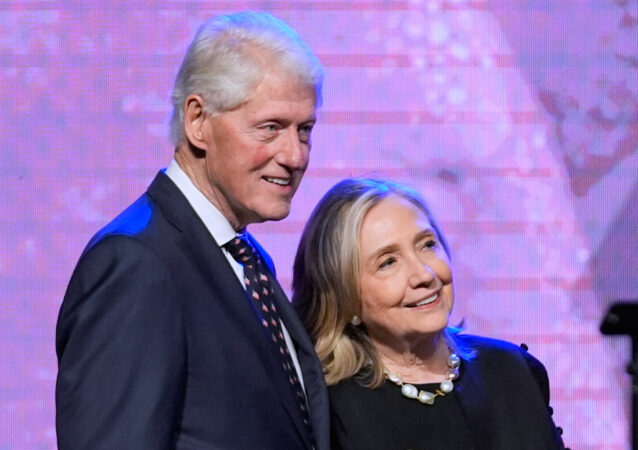
    WASHINGTON — Former President Bill Clinton and former Secretary of State Hillary Clinton finalized an agreement with House Republicans Tuesday to testify in a House investigation into Jeffrey Epstein this month, bowing to the threat of a contempt of Congress vote against them.

    Hillary Clinton will testify before the House Oversight Committee on Feb. 26 and Bill Clinton will appear on Feb. 27. It will mark the first time that lawmakers have compelled a former president to testify.

    The arrangement comes after months of negotiating between the two sides as Republicans sought to make the Clintons a focal point in a House committee’s investigation into Epstein, a convicted sex offender who killed himself in a New York jail cell in 2019.

    The Clintons resisted the subpoenas, but House Republicans — with support from a few Democrats — had advanced criminal contempt of Congress charges to a potential vote this week. It threatened the Clintons with the potential for substantial fines and even prison time if they had been convicted.

    Even as the Clintons bowed to that pressure, the negotiating between GOP lawmakers and attorneys for the Clintons was marked by distrust as they wrangled over the details of the deposition. The belligerence is likely to only grow as Republicans relish the opportunity to grill longtime political foes under oath.

    Clinton, like a number of other high-powered men, had a well-documented relationship with Epstein in the late 1990s and early 2000s. He has not been accused of wrongdoing in his interactions with the late financier.

    The Clintons have remained highly critical of Comer’s decision, saying he was bringing politics into the investigation while failing to hold the Trump administration accountable for delays in producing the Department of Justice’s case files on Epstein.

    Still, the prospect of a vote raised the potential for Congress to use one of its most severe punishments against a former president for the first time. Historically, Congress has given deference to former presidents. None has ever been forced to testify before lawmakers, although a few have voluntarily done so.

  • U.S. shoots down Iranian drone that approached aircraft carrier, military says

    U.S. shoots down Iranian drone that approached aircraft carrier, military says

    WASHINGTON — A U.S. Navy fighter jet shot down an Iranian drone that was approaching the aircraft carrier USS Abraham Lincoln in the Arabian Sea, U.S. Central Command said Tuesday, threatening to ramp up tensions as the Trump administration warns of possible military action to get Iran to the negotiating table.

    The drone “aggressively approached” the aircraft carrier with “unclear intent” and kept flying toward it “despite de-escalatory measures taken by U.S. forces operating in international waters,” Central Command spokesman Capt. Tim Hawkins said in a statement.

    The shootdown occurred within hours of Iranian forces harassing a U.S.-flagged and U.S.-crewed merchant vessel that was sailing in the Strait of Hormuz, the American military said.

    The developments could further escalate the heightened tensions between the longtime adversaries as President Donald Trump has threatened to use military action first over Iran’s bloody crackdown on nationwide protests and then to try to get the country to make a deal over its nuclear program. Trump’s Republican administration has built up military forces in the region, sending the aircraft carrier, guided-missile destroyers, air defense assets and more to supplement its presence.

    The Shahed-139 drone was shot down by an F-35C fighter jet from the Lincoln, which was sailing about 500 miles from Iran’s southern coast, Hawkins said. No American troops were harmed, and no U.S. equipment was damaged, the military’s statement noted.

    Talks between special envoy Steve Witkoff and Iranian officials are still planned, White House press secretary Karoline Leavitt told reporters.

    “President Trump is always wanting to pursue diplomacy first, but obviously it takes two to tango,” Leavitt said. She added, “As always, though, of course, the president has a range of options on the table with respect to Iran.”

    Hours before the drone was shot down, Iranian Foreign Minister Abbas Araghchi posted on Telegram that he had spoken with his counterparts in Kuwait, Qatar, Turkey and Oman regarding regional developments and the importance of protecting “regional stability and security.”

    U.S. says Iran also harassed a merchant vessel

    Hours after the shootdown, Iran’s Islamic Revolutionary Guard Corps forces harassed the merchant vessel Stena Imperative, the military said. Two boats and an Iranian Mohajer drone approached the ship “at high speeds and threatened to board and seize the tanker,” Hawkins’ statement said.

    The destroyer USS McFaul responded and escorted the Stena Imperative “with defensive air support from the U.S. Air Force,” the statement said, adding that the merchant vessel was now sailing safely.

    Tensions began to rise again between the U.S. and Iran as the Islamic Republic spent weeks quelling protests that began in late December against growing economic instability before broadening into a challenge to the country’s ruling theocracy.

    Trump had promised in early January to “rescue” Iranians from their government’s protest crackdown before starting to pressure Tehran again to make a deal over its nuclear program. That is even as the Republican president insists Iranian nuclear sites were “obliterated” in U.S. strikes in June.

    “We have talks going on with Iran. We’ll see how it all works out,” Trump told reporters Monday. Asked what his threshold was for military action against Iran, he declined to elaborate.

    “I’d like to see a deal negotiated,” Trump said. “Right now, we’re talking to them, we’re talking to Iran, and if we could work something out, that’d be great. And if we can’t, probably bad things would happen.”

    Iran’s president said Tuesday that he instructed the country’s foreign minister to “pursue fair and equitable negotiations” with the U.S., marking one of the first clear signs from Tehran that it wants to try to negotiate with Washington despite a breakdown of talks last summer.

    Turkey had been working behind the scenes to make the talks happen there later this week as U.S. Mideast envoy Steve Witkoff is traveling in the region. A Turkish official later said the location of talks was uncertain but that Turkey was ready to support the process.

    U.S. military builds up presence in the region

    Meanwhile, the U.S. military has been moving a growing number of assets into the region over the past several weeks, including the Lincoln and several destroyers, which arrived last week.

    The carrier strike group, which brought roughly 5,700 additional service members, joined three destroyers and three littoral combat ships that were already in the region.

    Analysts of flight-tracking data also have noticed dozens of U.S. military cargo planes heading to the region.

    The activity is similar to last year when the U.S. moved in air defense hardware, like a Patriot missile system, in anticipation of an Iranian counterattack following the U.S. bombing three key nuclear sites. Iran launched more than a dozen missiles at Al Udeid Air Base in Qatar days after the strikes.

    The U.S. has several bases in the Middle East, including Al Udeid, which hosts thousands of American troops and is the forward headquarters for U.S. Central Command.