Category: Nation World News Wires

  • Former South Korean president receives life sentence for imposing martial law in 2024

    Former South Korean president receives life sentence for imposing martial law in 2024

    SEOUL, South Korea — Former South Korean President Yoon Suk Yeol was found guilty of leading an insurrection on Thursday and sentenced to life in prison for his brief imposition of martial law in 2024, a ruling that marks a dramatic culmination of the country’s biggest political crisis in decades.

    The conservative leader was ousted from office after he declared martial law and sent troops to surround the National Assembly on Dec. 3, 2024, in a baffling attempt to overcome a legislature controlled by his liberal opponents.

    Judge Jee Kui-youn of the Seoul Central District Court said he found Yoon, 65, guilty of rebellion for mobilizing military and police forces in an illegal attempt to seize the Assembly, arrest political opponents and establish unchecked power for an indefinite period.

    Martial law crisis recalled dictatorial past

    Yoon’s martial law imposition, the first of its kind in more than four decades, recalled South Korea’s past military-backed governments when authorities occasionally proclaimed emergency decrees that allowed them to station soldiers, tanks, and armored vehicles on streets or in public places such as schools to prevent anti-government demonstrations.

    As lawmakers rushed to the National Assembly, Yoon’s martial law command issued a proclamation declaring sweeping powers, including suspending political activities, controlling the media and publications, and allowing arrests without warrants.

    The decree lasted about six hours before being lifted after a quorum of lawmakers managed to break through a military blockade and unanimously voted to lift the measure.

    Yoon was suspended from office on Dec. 14, 2024, after being impeached by lawmakers and was formally removed by the Constitutional Court in April 2025. He has been under arrest since last July while facing multiple criminal trials, with the rebellion charge carrying the most severe punishment.

    Yoon’s lawyers reject conviction

    An expressionless Yoon gazed straight ahead as the judge delivered the sentence in the same courtroom where former military rulers and presidents have been convicted of treason, corruption and other crimes over the decades.

    Yoon Kap-keun, one of the former president’s lawyers, accused the judge of issuing a “predetermined verdict” based solely on prosecutors’ arguments and said the “rule of law” had collapsed. He said he would discuss whether to appeal with his client and the rest of the legal team.

    Former President Yoon claimed in court that the martial law decree was only meant to raise public awareness of how the liberals were paralyzing state affairs, and that he was prepared to respect lawmakers if they voted against the measure.

    Prosecutors said it was clear Yoon was attempting to disable the legislature and prevent lawmakers from lifting the measure through voting, actions that exceeded his constitutional authority even under martial law.

    The court also convicted and sentenced five former military and police officials involved in enforcing Yoon’s martial law decree. They included ex-Defense Minister Kim Yong Hyun, who received a 30-year jail term for his central role in planning the measure, mobilizing the military and instructing military counterintelligence officials to arrest 14 key politicians, including National Assembly speaker Woo Won-shik and current liberal President Lee Jae Myung.

    In announcing Yoon and Kim’s verdicts, Jee said the decision to send troops to the National Assembly was key to his determination that the imposition of martial law amounted to rebellion.

    “This court finds that the purpose of [Yoon’s] actions was to send troops to the National Assembly, block the Assembly building and arrest key figures, including the National Assembly speaker and the leaders of both the ruling and opposition parties, in order to prevent lawmakers from gathering to deliberate or vote,” Jee said. “It’s sufficiently established that he intended to obstruct or paralyze the Assembly’s activities so that it would be unable to properly perform its functions for a considerable period of time.”

    Protesters rally outside court

    As Yoon arrived in court, hundreds of police officers watched closely as Yoon supporters rallied outside a judicial complex, their cries rising as the prison bus transporting him drove past. Yoon’s critics gathered nearby, demanding the death penalty.

    There were no immediate reports of major clashes following the verdict.

    A special prosecutor had demanded the death penalty for Yoon Suk Yeol, saying his actions posed a threat to the country’s democracy and deserved the most serious punishment available, but most analysts had expected a life sentence since the poorly planned power grab did not result in casualties.

    South Korea has not executed a death-row inmate since 1997, in what is widely seen as a de facto moratorium on capital punishment amid calls for its abolition.

    Jung Chung-rae, leader of the liberal Democratic Party, which led the push to impeach and remove Yoon, expressed regret that the court stopped short of the death penalty, saying the ruling reflected a “lack of a sense of justice.”

    Song Eon-seok, floor leader of the conservative People Power Party, to which Yoon once belonged, issued a public apology, saying the party feels a “deep sense of responsibility” for the disruption to the nation.

    The office of current President Lee Jae Myung did not immediately comment on the ruling.

    Other officials sentenced for enforcing martial law

    Last month, Yoon was sentenced to five years in prison for resisting arrest, fabricating the martial law proclamation, and sidestepping a legally mandated full cabinet meeting before declaring the measure.

    The Seoul Central Court had previously convicted two other members of Yoon’s Cabinet in connection with the martial law debacle. That includes Prime Minister Han Duck-soo, who received a 23-year prison sentence for attempting to legitimize the decree by forcing it through a Cabinet Council meeting, falsifying records and lying under oath. Han has appealed the verdict.

    Yoon is the first former South Korean president to receive a life sentence since former military dictator Chun Doo-hwan, who was sentenced to death in 1996 for his 1979 coup, a bloody 1980 crackdown on pro-democracy protesters in Gwangju that left more than 200 people dead or missing, and corruption.

    The Supreme Court later reduced his sentence to life imprisonment, and he was released in late 1997 under a special presidential pardon. He died in 2021.

  • Some of the California avalanche victims had roots in Lake Tahoe

    Some of the California avalanche victims had roots in Lake Tahoe

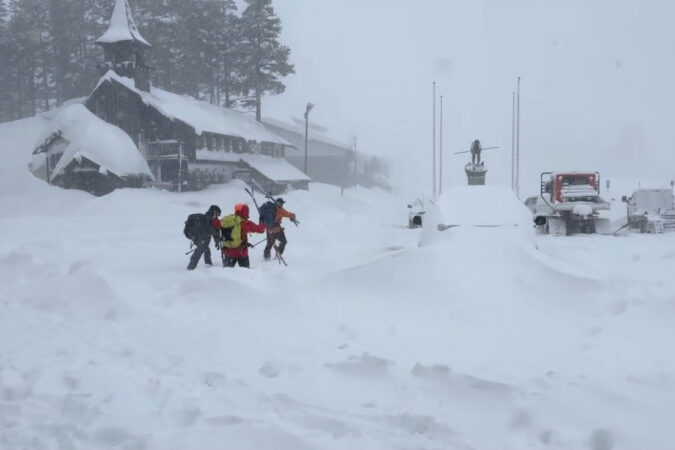
    TRUCKEE, Calif. — After days of increasingly brutal conditions in California’s Sierra Nevada, a group of 15 backcountry skiers set out for home. But as they left remote huts at thousands of feet of elevation and trekked back toward the trailhead, they were slammed by a treacherous avalanche that left eight dead and one missing.

    With avalanche warnings in effect through early Thursday, officials were still waiting for the powerful storm to clear so they could recover the bodies of the victims of Tuesday’s avalanche, the nation’s deadliest in nearly half a century. Officials have not yet released the names.

    The ski group involved has deep ties to the alpine recreation community in Lake Tahoe, including the elite Sugar Bowl Academy, which issued a statement late Wednesday mourning the loss of victims with “strong connections to Sugar Bowl, Donner Summit and the backcountry community.”

    It did not say how the skiers, said to range in age from 30 to 55, were connected to the school, which offers alpine and backcountry ski instruction and academics for young athletes.

    “We are an incredibly close and connected community,” Sugar Bowl Academy executive director Stephen McMahon said in the statement. “This tragedy has affected each and every one of us.”

    Four in the group employed by Blackbird Mountain Guides, which offers mountaineering and backcountry ski trips as well as safety courses across the West and internationally. One of them was among the six survivors.

    The three-day tour, which began Sunday, was for intermediate to expert skiers, according to the company’s website.

    The tour company said in a statement Wednesday night that it has launched an investigation and paused field operations at least through the weekend while it prioritizes supporting the victims’ families.

    The guides who led the group were trained or certified in backcountry skiing, and were instructors with the American Institute for Avalanche Research and Education.

    While in the field, they “are in communication with senior guides at our base, to discuss conditions and routing based upon conditions,” founder Zeb Blais said in the statement.

    “We don’t have all the answers yet, and it may be some time before we do,” the company said. “In the meantime, please keep those impacted in your hearts.”

    Mayor Max Perrey of Marin County’s Mill Valley, a small city about 14 miles (22 kilometers) north of San Francisco, confirmed that some in the group were women from his city. He was not able to provide additional details but told The Associated Press via email that more information would be released later.

    One of the victims was married to a member of a backcountry search and rescue team in the area, said Placer County Sheriff Wayne Woo.

    The Sierra Avalanche Center issued an avalanche watch Sunday morning, and that was elevated to a warning by 5 a.m. Tuesday, indicating that avalanches were expected. It is not clear whether the guides knew about the change before they began their return trek.

    Authorities described a harrowing scene as the survivors scoured the snow for the missing and waited six hours for help to arrive in blizzard conditions. They found three of the bodies, Nevada County Sheriff Shannan Moon said.

    The skiers all had beacons that can send signals to rescuers, and at least one guide was able to send text messages. But it was not clear whether they were wearing avalanche bags, which are inflatable devices that can keep skiers near the surface, sheriff’s Capt. Russell “Rusty” Greene said.

    One of those rescued remained hospitalized Wednesday, Moon said.

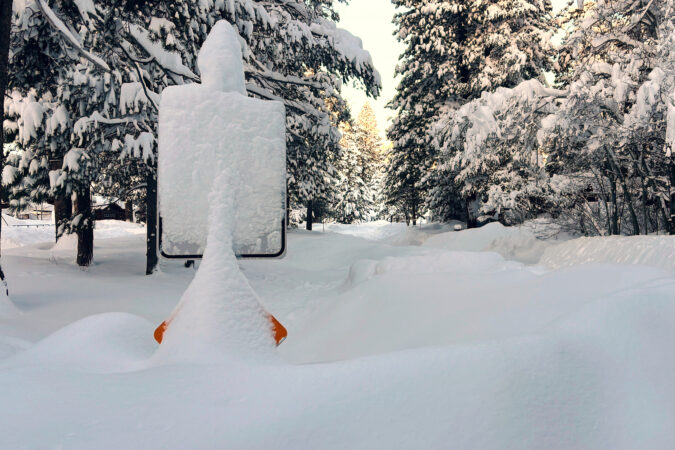
    Three to 6 feet (91 centimeters to 1.8 meters) of snow has fallen in the area since Sunday. The area was also hit by subfreezing temperatures and gale force winds.

    The avalanche is the deadliest in the U.S. since 1981, when 11 climbers were killed on Mount Rainier in Washington state, and the second deadly avalanche near Castle Peak this year, after a snowmobiler was buried January. Each winter the slides kill 25 to 30 in the country, according to the National Avalanche Center.

    The area near Donner Summit, where the ski trip took place, is one of the snowiest places in the Western Hemisphere and until just a few years ago was closed to the public. The summit is named for the infamous Donner Party, a group of pioneers who resorted to cannibalism after getting trapped there in the winter of 1846-1847.

  • U.S. trade deficit slipped lower in 2025, but gap for goods hits a record despite Trump tariffs

    U.S. trade deficit slipped lower in 2025, but gap for goods hits a record despite Trump tariffs

    WASHINGTON — The U.S. trade deficit slipped modestly in 2025, a year in which President Donald Trump upended global commerce by slapping double digit tariffs on imports from most countries. But the gap in the trade of goods such as machinery and aircraft — the main focus of Trump’s protectionist policies — hit a record last year despite sweeping import taxes.

    Overall, the gap between the goods and services the U.S. sells other countries and what it buys from them narrowed to just over $901 billion, from $904 billion in 2024, but it was still the third-highest on record, the Commerce Department reported Thursday.

    Exports rose 6% last year, and imports rose nearly 5%.

    And the U.S. deficit in the trade of goods widened 2% to a record $1.24 trillion last year as American companies boosted imports of computer chips and other tech goods from Taiwan to support massive investments in artificial intelligence.

    Amid continuing tensions with Bejing, the deficit in the goods trade with China plunged nearly 32% to $202 billion in 2025 on a sharp drop in both exports to and imports from the world’s second-biggest economy. But trade was diverted away from China. The goods gap with Taiwan doubled to $147 billion and shot up 44%, to $178 billion, with Vietnam.

    Economist Chad Bown, senior fellow at the Peterson Institute for International Economics, said the widening gaps with Taiwan and Vietnam might put a “bull’s-eye’’ on them this year if Trump focuses more on the lopsided trade numbers and less on the U.S. rivalry with China.

    In 2025, U.S. goods imports from Mexico outpaced exports by nearly $197 billion, up from a 2024 gap of $172 billion. But the goods deficit with Canada shrank by 26% to $46 billion. The United States this year is negotiating a renewal of a pact Trump reached with those two countries in his first term.

    The U.S. ran a bigger surplus in the trade of services such as banking and tourism last year — $339 billion, up from $312 billion in 2024.

    The trade gap surged from January-March as U.S. companies tried to import foreign goods ahead of Trump’s taxes, then narrowed most of the rest of the year.

    Trump’s tariffs are a tax paid by U.S. importers and often passed along to their customers as higher prices. But they haven’t had as much impact on inflation as economists originally expected. Trump argues that the tariffs will protect U.S. industries, bringing manufacturing back to America and raise money for the U.S. Treasury.

  • Norman C. Francis, civil rights champion and recipient of Presidential Medal of Freedom, dies at 94

    Norman C. Francis, civil rights champion and recipient of Presidential Medal of Freedom, dies at 94

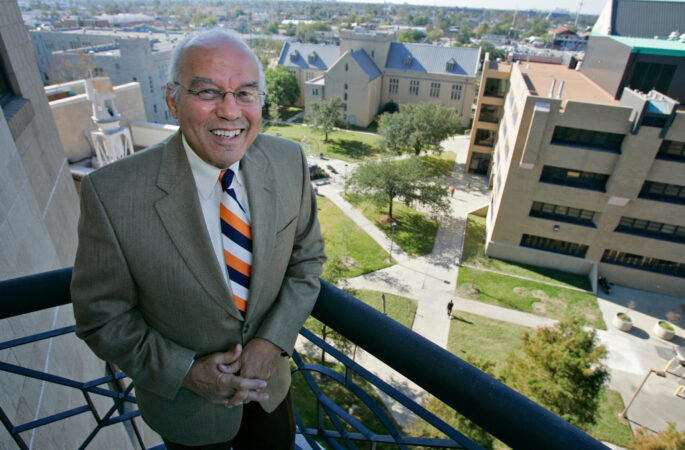
    Norman C. Francis, a civil rights pioneer and champion of education who played a pivotal role in helping rebuild New Orleans after Hurricane Katrina, died Wednesday. He was 94.

    Community members, activists, and leaders across Louisiana celebrated the life and accomplishments of Mr. Francis.

    “The nation is better and richer for his having lived among us,” said Reynold Verret, the president of Xavier University, which confirmed Mr. Francis’ death Wednesday in a statement.

    Mr. Francis took a high-profile role in the state’s response to Katrina, heading the Louisiana Recovery Authority, which was tasked with overseeing the multibillion-dollar rebuilding effort.

    Former New Orleans Mayor Mitch Landrieu said that after Katrina, Mr. Francis “stood in the breach.” Landrieu, who served as lieutenant governor when Katrina decimated New Orleans in 2005, said he often turned to Mr. Francis for advice and counsel — including in “his toughest moments.”

    “The most defining part of his character is that he treats every human being with dignity and respect,” Landrieu posted on X on Wednesday.

    Mr. Francis was well-known for his role as president of Xavier University in New Orleans, the nation’s only predominantly Black Catholic university. Mr. Francis held the position for 47 years beginning in 1968.

    During his tenure, enrollment more than doubled, the endowment mushroomed and the campus expanded. The small school gained a national reputation for preparing Black undergraduates for medical professions and for producing graduates in fields such as biology, chemistry, physics, and pharmacy.

    In the aftermath of Hurricane Katrina, when parts of the school’s campus were submerged under 8 feet of water, Mr. Francis vowed that the college would return.

    Multiple civil rights groups, including the American Civil Liberties Union, honored Mr. Francis as one of the nation’s top college presidents. In 2006, then-President George W. Bush awarded Mr. Francis with the Presidential Medal of Freedom.

    “Dr. Francis was more than an administrator. He was an institution builder, a civil rights champion, and a man of quiet generosity,” Louisiana U.S. Rep. Troy Carter posted on social media. “He believed education was the pathway to justice. He believed lifting one student could lift an entire family.”

    Mr. Francis, the son of a barber, grew up in Lafayette, Louisiana. He received his bachelor’s degree from Xavier in 1952. He became the first Black student at Loyola University’s law school — integrating the school and earning his law degree in 1955.

    He went on to spend two years in the Army, then joined the U.S. Attorney General’s office to help integrate federal agencies.

    Even then, he still couldn’t use the front door to enter many New Orleans hotels, restaurants, or department stores because of his race.

    “Some people say to me, ‘My God! How did you take that?’” Mr. Francis said during a 2008 interview with the Associated Press. “Well, you took that because you had to believe that one day, the words that your parents said to you ‘You’re good enough to be president of the United States’ yes, we held onto that.”

    In 1957, he joined Xavier in the role of Dean of Men, beginning his decades-long career at the university.

    Mr. Francis’ wife, Blanche, died in 2015. The couple had six children and multiple grandchildren.

  • Billionaire Les Wexner says he was ‘duped’ by adviser Jeffrey Epstein, ‘a world-class con man’

    Billionaire Les Wexner says he was ‘duped’ by adviser Jeffrey Epstein, ‘a world-class con man’

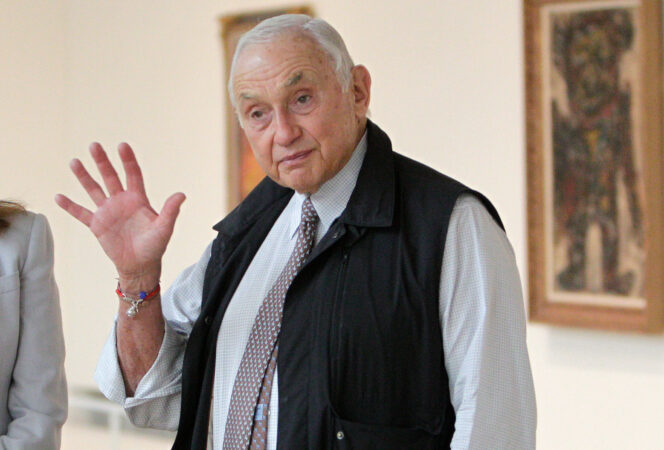
    NEW ALBANY, Ohio — The billionaire behind the retail empire that once blanketed shopping malls with names such as Victoria’s Secret and Abercrombie & Fitch told members of Congress on Wednesday that he was “duped by a world-class con man” — close financial adviser Jeffrey Epstein. Les Wexner also denied knowing about the late sex offender’s crimes or participating in Epstein’s abuse of girls and young women.

    “I was naive, foolish, and gullible to put any trust in Jeffrey Epstein. He was a con man. And while I was conned, I have done nothing wrong and have nothing to hide,” the 88-year-old retired founder of L Brands said in a statement to the House Oversight and Reform Committee released before his interview.

    The panel’s Democrats had subpoenaed him after the latest Justice Department release of Epstein-related documents revealed new details about Wexner’s relationship with the well-connected financier. Ranking member Rep. James Comer, a Kentucky Republican, said that Wexner “answered every question asked of him” during the six-hour proceeding and that a video and transcript would be released soon.

    Wexner described himself to the lawmakers as a philanthropist, community builder and grandfather who always strove “to live my life in an ethical manner in line with my moral compass,” according to the statement. He said he was eager “to set the record straight” about his ties with Epstein. Their relation ended bitterly in 2007, after the Wexners discovered he’d been stealing from them.

    As one of Epstein’s most prominent former friends, Wexner has spent years answering for their decades-long association and he sought to use the proceeding to dispel what he called “outrageous untrue statements and hurtful rumor, innuendo, and speculation” that have shadowed him.

    Rep. Robert Garcia, a California Democrat who sat in on Wednesday’s interview, expressed skepticism in comments to reporters gathered near the proceeding.

    “There is no single person that was more involved in providing Jeffrey Epstein with the financial support to commit his crimes than Les Wexner,” he said.

    In response to allegations by the prominent late Epstein victim Virginia Giuffre, who claimed in court documents that Wexner was among men Epstein trafficked her to, Wexner testified to utter devotion to his wife of 33 years, Abigail. He said he’d never once been unfaithful “in any way, shape, or form. Never. Any suggestion to the contrary is absolutely and entirely false.”

    Wexner’s name appears more than 1,000 times in the Epstein files, which does not imply guilt and Wexner has never been charged with any crimes. His spokesperson said the number of mentions is not unexpected given their long-running ties.

    ‘A most loyal friend’

    Epstein first met Leslie Wexner through a business associate around 1986.

    It was an opportune time for Wexner’s finances. The Ohio business owner had grown a single Limited store in Columbus into a suite of 1980s mall staples: The Limited, Limited Express, Lane Bryant and Victoria’s Secret. Bath & Body Works, Abercrombie & Fitch, Lerner, White Barn Candle Co., and Henri Bendel would follow.

    Wexner told lawmakers that it was several years before he turned over management of his vast fortune to Epstein, after the “master manipulator” connived to gain his trust. He gave Epstein power of attorney in 1991, allowing Epstein to make investments and do business deals and to purchase property and help Wexner as he developed New Albany from a small rural city to a thriving upscale Columbus suburb.

    Epstein had “excellent judgment and unusually high standards,” Wexner told Vanity Fair in a 2003 interview, and he was “always a most loyal friend.”

    On Wednesday, the billionaire said he didn’t circulate in Epstein’s social circle, but often heard accounts of his encounters with other wealthy people.

    Epstein “carefully used his acquaintance with important individuals to curate an aura of legitimacy,” Wexner said. He said he visited Epstein’s infamous island only once, stopping for a few hours one morning with his wife and young children while they were cruising on their boat.

    “It is interesting that Mr Wexner has already begun to clarify in his mind that somehow he and Mr. Epstein weren’t even friends,” Garcia told reporters. “We should be very clear that the two were very close, per reporting. They spent a lot of time together.”

    Epstein recalls ‘gang stuff’

    In one of the newly released documents, Epstein sent rough notes to himself about Wexner saying: “never ever, did anything without informing les” and “I would never give him up.” Another document, an apparent draft letter to Wexner, said the two “had ‘gang stuff’ for over 15 years” and were mutually indebted to each other — as Wexner helped make Epstein rich and Epstein helped make Wexner richer.

    Wexner spokesperson Tom Davies said Wexner never received the letter, characterizing it as fitting “a pattern of untrue, outlandish, and delusional statements made by Epstein in desperate attempts to perpetuate his lies and justify his misconduct.”

    Wexner told the congressional representatives that Epstein “lived a double life,” presenting himself to his wealthy clients as a financial guru with steady girlfriends while “most carefully and fully” hiding his misdeeds with underage girls. “He knew that I never would have tolerated his horrible behavior. Not any of it,” he said.

    Exploiting a sexy brand

    Some accusers said Epstein touted his ties to Wexner and claimed that he could help get them jobs modeling for the Victoria’s Secret catalog.

    One woman, an aspiring actor and model, told the FBI that Epstein said he was best friends with the longtime Victoria’s Secret owner and that she’d have to learn to be comfortable in her underwear and not be a prude, according to recently released grand jury testimony. Another woman said she reported Epstein to police in 1997 after he groped her during what she thought was a modeling interview for the Victoria’s Secret catalog. After Epstein’s 2019 arrest, Wexner’s lawyers told investigators that the business owner had heard a rumor that Epstein might be holding himself out as connected to Victoria’s Secret, prosecutors wrote in a recently disclosed memorandum summarizing the probe. When Wexner asked Epstein about it, Epstein denied doing so, the lawyers said, according to the memo.

    Wexner did not address the specific issue in his statement Wednesday, but repeatedly lamented being deceived by Epstein — “an abuser, a crook, and a liar.” L Brands sold off Victoria’s Secret in 2020, in one of Wexner’s final acts as chair.

    A relationship unravels

    Wexner did not publicly reveal until after Epstein’s arrest on federal sex trafficking charges in July 2019 that he had severed their relationship. In a Wexner Foundation letter that August, he said that happened in 2007. But the Justice Department’s newly released records show the two were in touch after that.

    Wexner emailed Epstein on June 26, 2008, after a plea deal was announced that would require him to serve 18 months in a Florida jail on a state charge of soliciting prostitution from a minor in order to avoid federal prosecution. He wound up serving 13 months.

    “Abigail told me the result … all I can say is I feel sorry. You violated your own number 1 rule … always be careful,” Wexner wrote. Epstein replied: “no excuse.”

    Davies said the 2007 date Wexner cited in 2019 applied to firing Epstein as financial adviser, revoking his power of attorney, and removing his name from Wexner’s bank accounts.

    Wexner also said in the 2019 letter that Epstein had misappropriated “vast sums” of his and his family’s fortune while overseeing his finances. An investigative memo from the latest document release says that Wexner’s attorneys told investigators in 2008 that Epstein had repaid him $100 million. Wexner said in Wednesday’s statement that Epstein returned “a substantial amount” of the undisclosed total.

    Garcia said that congressional investigators have identified more than $1 billion that was “either transferred, provided in stocks or given directly” by Wexner to Epstein — though Wexner “appears to be unaware” of much of it.

    Continuing fallout for Wexner

    On Wednesday, Wexner testified that he had never seen Epstein with any young girls and acknowledged the “unfathomable” pain he inflicted, even as discoveries in the Epstein files have placed new pressure on him.

    One survivor, Maria Farmer, said a redacted FBI report contained in the document release vindicated her longstanding claim that she filed one of the earliest complaints against Epstein while she was under his employ in 1996 working on an art project at the Wexners’ estate.

    Meanwhile, survivors of a sweeping sexual abuse scandal at the Ohio State University are citing Wexner’s association with Epstein to try to get his name removed from a campus football complex and university nurses also want his name scrubbed from the Wexner Medical Center.

  • Mark Zuckerberg quizzed on kids’ Instagram use in social media trial

    Mark Zuckerberg quizzed on kids’ Instagram use in social media trial

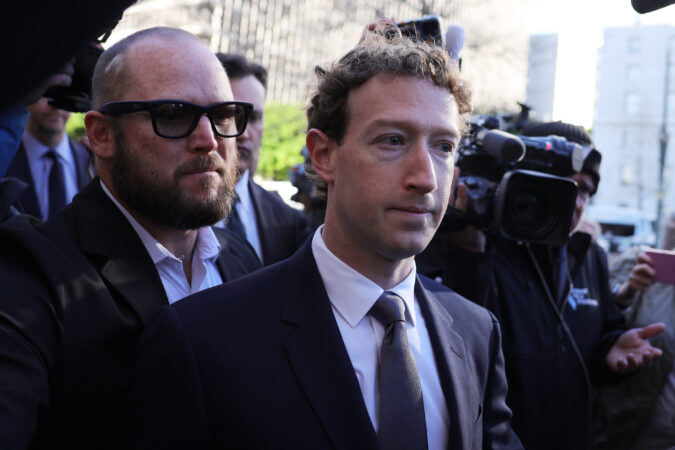
    LOS ANGELES — Mark Zuckerberg and opposing lawyers dueled in a Los Angeles courtroom on Wednesday, where the Meta CEO answered questions about young people’s use of Instagram, his congressional testimony and internal advice he’s received about being “authentic” and not “robotic.”

    Zuckerberg’s testimony is part of an unprecedented social media trial that questions whether Meta’s platforms deliberately addict and harm children.

    As of early afternoon, Zuckerberg has not directly answered the central question of the case: whether Instagram is addictive. The plaintiff’s attorney, Mark Lanier, asked if people tend to use something more if it’s addictive.

    “I’m not sure what to say to that,” Zuckerberg said. “I don’t think that applies here.”

    Attorneys representing the plaintiff, a now 20-year-old woman identified by the initials KGM, claim her early use of social media addicted her to the technology and exacerbated depression and suicidal thoughts. Meta Platforms and Google’s YouTube are the two remaining defendants in the case, which TikTok and Snap have settled.

    Beginning his questioning, Lanier laid out three options of what people can do regarding vulnerable people: help them, ignore them, or “prey upon them and use them for our own ends.” Zuckerberg said he agrees the last option is not what a reasonable company should do, saying, “I think a reasonable company should try to help the people that use its services.”

    When he was asked about his compensation, Zuckerberg said he has pledged to give “almost all” of his money to charity, focusing on scientific research. Lanier asked him how much money he has pledged to victims impacted by social media, to which Zuckerberg replied, “I disagree with the characterization of your question.”

    Lanier questioned the Meta CEO extensively about a comment he made during a past congressional hearing, where he said Instagram employees are not given goals to increase amount of time people spent on the platform.

    Lanier presented internal documents that seemed to contradict that statement. Zuckerberg replied that they previously had goals associated with time, but said he and the company made the conscious decision to move away from those goals, focusing instead on utility. He said he believes in the “basic assumption” that “if something is valuable, people will use it more because it’s useful to them.”

    Lanier also asked Zuckerberg about what he characterized as extensive media training, including for testimonies like the one he was giving in court. Lanier pointed to an internal document about feedback on Zuckerberg’s tone of voice on his own social media, imploring him to come off as “authentic, direct, human, insightful and real,” and instructing him to “not try hard, fake, robotic, corporate or cheesy” in his communication.

    Zuckerberg pushed back against the idea that he’s been coached on how to respond to questions or present himself, saying those offering the advice were “just giving feedback.”

    Regarding his media appearances and public speaking, Zuckerberg said, “I think I’m actually well known to be sort of bad at this.”

    The Meta CEO has long been mocked online for appearing robotic and, when he was younger, nervous when speaking publicly. In 2010, during an interview with renowned tech journalists Kara Swisher and Walt Mossberg, he was sweating so profusely that Swisher asked him if he wanted to “take off the hoodie” that was his uniform at the time.

    Lanier spent a considerable stretch of his limited time with Zuckerberg asking about the company’s age verification policies.

    “I don’t see why this is so complicated,” Zuckerberg said after a lengthy back-and-forth, reiterating that the company’s policy restricts users under the age of 13 and that they work to detect users who have lied about their ages to bypass restrictions.

    Zuckerberg mostly stuck to his talking points, referencing his goal of building a platform that is valuable to users and, on multiple occasions, saying he disagreed with Lanier’s “characterization” of his questions or of Zuckerberg’s own comments.

    Zuckerberg has testified in other trials and answered questions from Congress about youth safety on Meta’s platforms. During his 2024 congressional testimony, he apologized to families whose lives had been upended by tragedies they believed were caused by social media. But while he told parents he was “sorry for everything you have all been through,” he stopped short of taking direct responsibility for it. This trial marks the first time Zuckerberg stands before a jury. Once again, bereaved parents are sitting in the courtroom audience.

    The case, along with two others, has been selected as a bellwether trial, meaning its outcome could impact how thousands of similar lawsuits against social media companies are likely to play out.

    A Meta spokesperson said the company strongly disagrees with the allegations in the lawsuit and said they are “confident the evidence will show our longstanding commitment to supporting young people.”

    One of Meta’s attorneys, Paul Schmidt, said in his opening statement that the company is not disputing that KGM experienced mental health struggles, but rather disputing that Instagram played a substantial factor in those struggles. He pointed to medical records that showed a turbulent home life, and both he and an attorney representing YouTube argue she turned to their platforms as a coping mechanism or a means of escaping her mental health struggles.

    Zuckerberg’s testimony comes a week after that of Adam Mosseri, the head of Meta’s Instagram, who said in the courtroom that he disagrees with the idea that people can be clinically addicted to social media platforms. Mosseri maintained that Instagram works hard to protect young people using the service, and said it’s “not good for the company, over the long run, to make decisions that profit for us but are poor for people’s well-being.”

    Much of Mosseri’s questioning from the plaintiff’s lawyer centered on cosmetic filters on Instagram that changed people’s appearance — a topic that Lanier is sure to revisit with Zuckerberg. He is also expected to face questions about Instagram’s algorithm, the infinite nature of Meta’s feeds and other features the plaintiffs argue are designed to get users hooked.

    Meta is also facing a separate trial in New Mexico that began last week.

  • 8 backcountry skiers found dead and 1 still missing after California avalanche

    8 backcountry skiers found dead and 1 still missing after California avalanche

    NEVADA CITY, Calif. — Crews found the bodies of eight backcountry skiers near California’s Lake Tahoe and were searching for one more after they were caught in an avalanche, the nation’s deadliest in nearly half a century, authorities said Wednesday.

    Authorities said the skiers had little time to react.

    “Someone saw the avalanche, yelled avalanche, and it overtook them rather quickly,” said Capt. Russell “Rusty” Greene, of the Nevada County sheriff’s office.

    Six from the guided tour were rescued six hours after the avalanche hit Tuesday morning during a three-day trek in Northern California’s Sierra Nevada, as a monster winter storm pummeled the West Coast.

    Nevada County Sheriff Shannan Moon said investigators would look into the decision to proceed with the trip despite the forecast for relentless weather.

    Authorities have told the families the mission has moved from rescuing people to recovering bodies, Moon said during a news conference.

    The victims, including three guides, were found fairly close together, Greene said. The dead and missing include seven women and two men, ranging in ages from 30 to 55. The crews have not yet been able to remove the victims from the mountain because of the extreme conditions, the sheriff said.

    Three to six feet of snow has fallen since Sunday, when the group started its trip. The area was also hit by subfreezing temperatures and gale force winds. The Sierra Avalanche Center said the threat of more avalanches remained Wednesday and left the snowpack unstable and unpredictable in an area known for its steep, craggy cliffs.

    Rescuers were guided by beacons and a cell phone in dangerous conditions

    Rescuers reached the survivors just before sunset on Tuesday.

    The skiers all had beacons that can send signals to rescuers and at least one of the guides was able to send texts, but it wasn’t clear if they were wearing avalanche bags, which are inflatable devices that can keep skiers near the surface, Greene said.

    While they waited to be rescued, the survivors used equipment to shelter themselves and fend off temperatures dipping below freezing. The survivors located three others who had died during the wait, Moon said.

    Rescuers used a snowcat to get within 2 miles of the survivors, then skied in carefully so they didn’t set off another avalanche, the sheriff said.

    One of those rescued remains in a hospital Wednesday, Moon said.

    The area near Donner Summit is one of the snowiest places in the Western Hemisphere and until just a few years ago was closed to the public. It sees an average of nearly 35 feet of snow a year, according to the Truckee Donner Land Trust, which owns a cluster of huts where the group was staying near Frog Lake.

    The avalanche is the deadliest in the U.S. since 1981, when 11 climbers were killed on Mount Rainier, Wash. Each winter, 25 to 30 people die in avalanches in the U.S., according to the National Avalanche Center.

    It was the second deadly avalanche near California’s Castle Peak this year, after a snowmobiler was buried by one in January.

    Skiers were heading for the trailhead when the avalanche struck

    Greene said authorities were notified about the avalanche by Blackbird Mountain Guides, which was leading the expedition, and the skiers’ emergency beacons. The sheriff’s office said Tuesday night that 15 backcountry skiers had been on the trip, not 16 as initially believed.

    One skier had pulled out at the last minute, Moon said.

    Authorities were waiting to release the victims’ names to give the families time. “They’re still reeling,” Moon said. “I could not imagine what they’re going through.”

    The skiers were on the last day of the backcountry trip and had spent two nights in the huts, said Steve Reynaud, an avalanche forecaster with the Sierra Avalanche Center. He said the area requires navigating rugged mountainous terrain. All food and supplies need to be carried to the huts.

    Reaching the huts in winter takes several hours and requires backcountry skills, avalanche training and safety equipment, the land trust says on its website.

    The area near Donner Summit was closed for nearly a century before it was reopened by the land trust and its partners in 2020. Donner Summit is named for the infamous Donner Party, a group of pioneers who resorted to cannibalism after getting trapped there in the winter of 1846-1847.

    Blackbird Mountain Guides said in a statement that the group, including four guides, was returning to the trailhead when the avalanche occurred.

    When asked what went through her mind as her staff and volunteers responded to the scene, Moon said she was hoping they would be able to make it there safely. Once they did, she said she was “immediately thinking of the folks that didn’t make it, and knowing our mission now is to get them home.”

  • Late-night host Stephen Colbert isn’t backing down from public dispute with CBS bosses

    Late-night host Stephen Colbert isn’t backing down from public dispute with CBS bosses

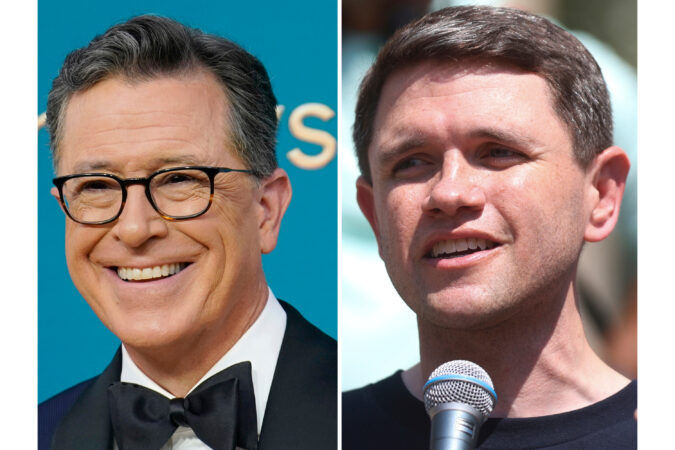
    Stephen Colbert isn’t backing down in an extraordinary public dispute with his bosses at CBS over what he can air on his late-night talk show.

    On The Late Show Tuesday, Colbert said he was surprised by a statement from CBS denying that its lawyers told him he couldn’t show an interview with Democratic Texas Senate candidate James Talarico — which the host said had happened the night before.

    He then took a copy of the network statement, wrapped it in a dog poop bag, and tossed it away.

    Colbert had instead shown his Talarico interview on YouTube, but told viewers why he couldn’t show it on CBS. The network was concerned about FCC Chairman Brendan Carr trying to enforce a rule that required broadcasters to give “equal time” to opposing candidates when an interview was broadcast with one of them.

    “We looked and we can’t find one example of this rule being enforced for any talk show interview, not only for my entire late-night career, but for anyone’s late-night career going back to the 1960s,” Colbert said.

    Although Carr said in January he was thinking about getting rid of the exemption for late-night talk shows, he hadn’t done it yet. “But CBS generously did it for him,” Colbert said.

    Not only had CBS been aware Monday night that Colbert was going to talk about this issue publicly, its lawyers had even approved it in his script, he said. That’s why he was surprised by the statement, which said that Colbert had been provided “legal guidance” that broadcasting the interview could trigger the equal time rule.

    “I don’t know what this is about,” Colbert said. “For the record, I’m not even mad. I really don’t want an adversarial relationship with the network. I’ve never had one.”

    He said he was “just so surprised that this giant global corporation would not stand up to these bullies.” CBS is owned by Paramount Global.

    Colbert is a short-timer now at CBS. The network announced last summer that Colbert’s show, where President Donald Trump is a frequent target of biting jokes, would end in May. The network said it was for economic reasons but others — including Colbert — have expressed skepticism that Trump’s repeated criticism of the show had nothing to do with it.

    This week’s dispute with Colbert also recalls last fall, when ABC took late-night host Jimmy Kimmel off the air for a remark made about the killing of conservative activist founder Charlie Kirk, only to reinstate him following a backlash by viewers.

    As of Wednesday morning, Colbert’s YouTube interview with Talarico had been viewed more than five million times, or roughly double what the comic’s CBS program draws each night. The Texas Democrat also reported that he had raised $2.5 million in campaign donations in the 24 hours after the interview.

  • Police in Nancy Guthrie investigation say glove DNA didn’t match anything in national database

    Police in Nancy Guthrie investigation say glove DNA didn’t match anything in national database

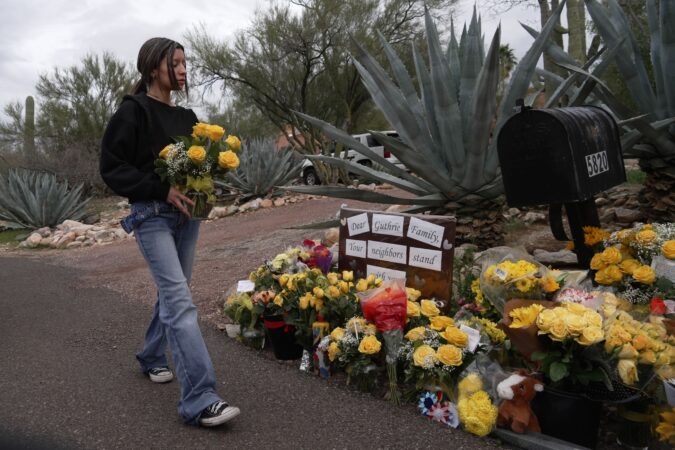
    DNA from gloves found a few miles from the Arizona home of Nancy Guthrie did not match any entries in a national database, authorities said Tuesday, the 17th day of her disappearance.

    “There were no DNA hits in CODIS,” the Pima County Sheriff’s Department said, referring to the national Combined DNA Index System.

    “At this point, there have been no confirmed CODIS matches in this investigation,” the department said, suggesting that other DNA samples had been put through the system.

    CODIS is a storehouse of DNA taken from crime suspects or people with convictions. Any hits could identify possible suspects in Guthrie’s disappearance.

    The sheriff’s department said it’s looking to feed DNA evidence into other “genetic genealogy” databases. It did not elaborate.

    Investigators, meanwhile, were seen inspecting exterior cameras at a neighbor’s house Tuesday. Vehicles were also arriving and departing from Guthrie’s Tucson-area home while a thick line of news media watched from the street.

    The 84-year-old mother of NBC Today co-anchor Savannah Guthrie was reported missing from her home on Feb. 1 after spending the previous night with family, police said. Her blood was detected on the porch.

    A porch camera recorded video of a man with a backpack who was wearing a ski mask, long pants, a jacket and gloves. The FBI said the suspect is about 5 feet, 9 inches tall with a medium build.

    Gloves were found about 2 miles from Guthrie’s home. The FBI has said that the gloves appeared to match those worn by the man in the video.

    “There is additional DNA evidence that was found at the residence, and that is also being analyzed,” the sheriff’s department said.

    In addition, the department said it’s working with experts to try to locate Guthrie by detecting her heart pacemaker.

    Parsons Corp. said its BlueFly device, which weighs less than a pound and has a range of up to 218 yards, can detect signals from wearable electronics and medical devices. The company said the technology has been used from the air and on the ground in Arizona. It declined further comment about the search.

    The sheriff’s department released numbers to show how the public is reacting to Guthrie’s disappearance and the appeal for any information. There were 28,000 phone calls from Feb. 1-16, a 54% increase over the same period a year ago. Not all calls were tips.

    Savannah Guthrie posted an Instagram video Sunday in which she issued an appeal to anyone with information about what happened to her mother.

    “It is never too late to do the right thing,” she said. “And we are here. And we believe in the essential goodness of every human being, that it’s never too late.”

  • What climate change means for Greenland’s traditional Inuit lifestyle and the world

    What climate change means for Greenland’s traditional Inuit lifestyle and the world

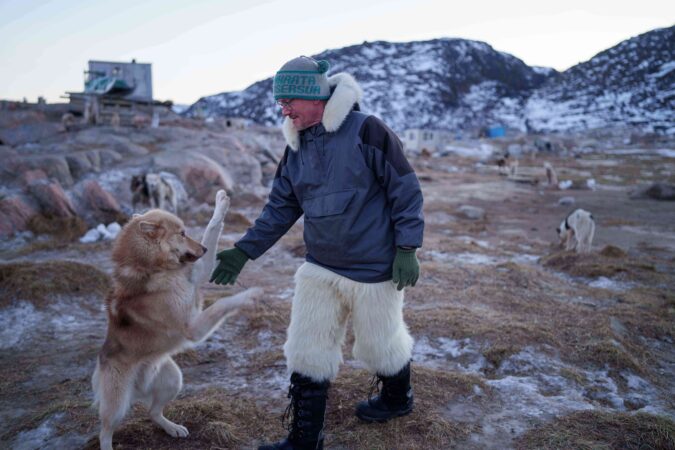
    ILULISSAT, Greenland — When he was growing up in a village in northern Greenland, Jørgen Kristensen’s closest friends were his stepfather’s sled dogs. Most of his classmates were dark-haired Inuit; he was different. When he was bullied at school for his fair hair — an inheritance from the mainland Danish father he never knew — the dogs came to him.

    He first went out to fish on the ice with them alone when he was 9 years old. They nurtured the beginning of a lifelong love affair and Kristensen’s career as a five-time Greenlandic dog sled champion.

    “I was just a small child. But many years later, I started thinking about why I love dogs so much,” Kristensen, 62, told the Associated Press.

    “The dogs were a great support,” he said. “They lifted me up when I was sad.”

    For more than 1,000 years, dogs have pulled sleds across the Arctic for Inuit seal hunters and fishermen. But this winter, in the town of Ilulissat, around 186 miles north of the Arctic Circle, that’s not possible.

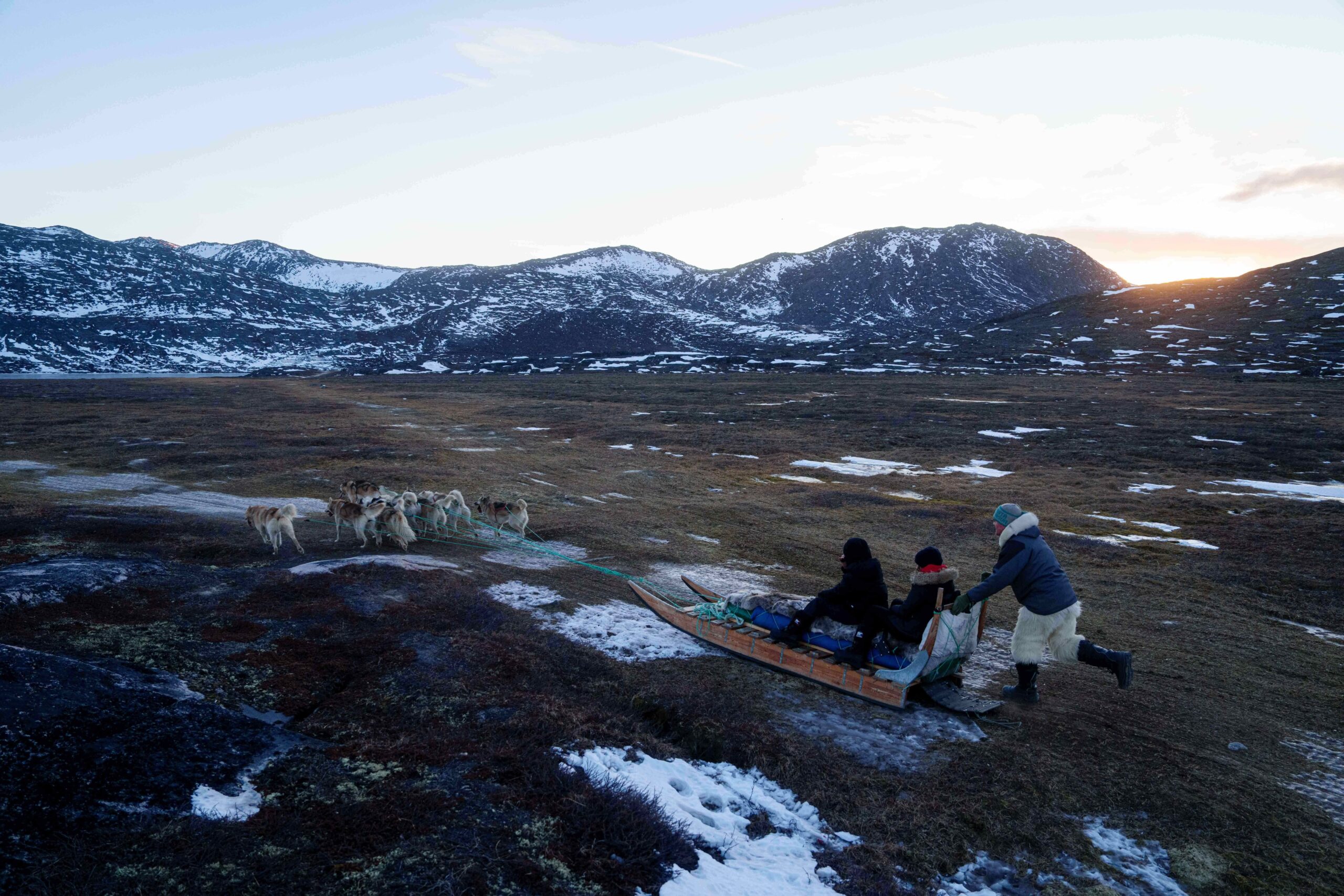
    Instead of gliding over snow and ice, Kristensen’s sled bounces over earth and rock. Gesturing to the hills, he said it’s the first time he can remember when there has been no snow — or ice in the bay — in January.

    The rising temperatures in Ilulissat are causing the permafrost to melt, buildings to sink, and pipes to crack but they also have consequences that ripple across the rest of the world.

    The nearby Sermeq Kujalleq glacier is one of the fastest-moving and most active on the planet, sending more icebergs into the sea than any other glacier outside Antarctica, according to the United Nations cultural organization UNESCO. As the climate has warmed, the glacier has retreated and carved off chunks of ice faster than ever before — significantly contributing to sea levels that are rising from Europe to the Pacific Islands, according to NASA.

    Jørgen Kristensen rides with his sled dogs in Ilulissat, Greenland, on Jan. 27.

    The melting ice could reveal untapped deposits of critical minerals. Many Greenlanders believe that’s why President Donald Trump turned their island into a geopolitical hot spot with his demands to own it and previous suggestions that the U.S. could take it by force.

    In the 1980s, winter temperatures in Ilulissat regularly hovered around -13 Fahrenheit in winter, Kristensen said.

    But nowadays, he said, there are many days when the temperature is above freezing — sometimes it can be as warm as 50 degrees.

    Kristensen said he now has to collect snow for the dogs to drink during a journey because there isn’t any along the route.

    Although Greenlanders have always adapted — and could make dog sleds with wheels in future — the loss of the ice is affecting them deeply, said Kristensen, who now runs his own company showing tourists his Arctic homeland.

    “If we lose the dog sledding, we have large parts of our culture that we’re losing. That scares me,” he told AP, pressing his lips together and becoming tearful.

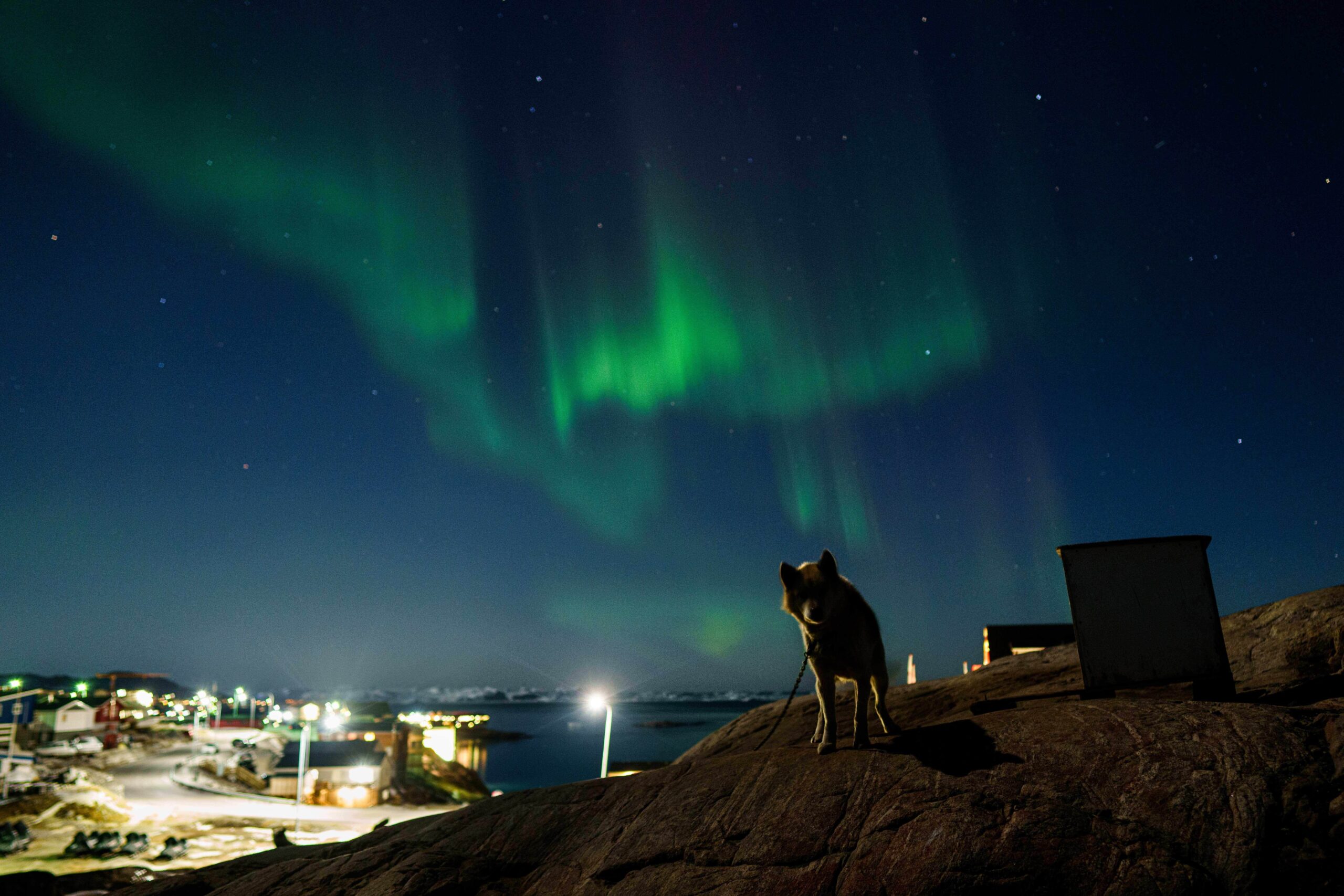
    A sled dog stands as the northern lights shine over Ilulissat, Greenland, on Jan. 28.

    The sea ice is disappearing

    In winter, hunters should be able to take their dogs far out on the sea ice, Kristensen told AP. The ice sheets act like “big bridges,” connecting Greenlanders to hunting grounds but also to other Inuit communities across the Arctic in Canada, the United States, and Russia.

    “When the sea ice used to come, we felt completely open along the entire coast and we could decide where to go,” Kristensen said.

    This January, there was no ice at all.

    Driving a dog sled on ice is like being “completely without boundaries — like on the world’s longest and widest highway,” he said. Not having that is “a very great loss.”

    Several years ago, Greenland’s government had to provide financial support to many families in the far north of the island after the sea ice did not freeze hard enough for hunting, said Sara Olsvig, chair of the Inuit Circumpolar Council, which represents Inuit people from across Arctic nations.

    The warming weather also makes life more dangerous for fishermen who have swapped their dog sleds for boats, because there is more rain instead of snow, said Morgan Angaju Josefsen Røjkjær, Kristensen’s business partner.

    When snow falls and is compressed, air is trapped between the flakes, giving the ice its brilliant white color. But when rain freezes, the ice that forms contains little air and looks more like glass.

    A fisherman can see the white ice and try to avoid it, but the ice formed from rain takes on the color of the sea — and that’s dangerous because “it can sink you or throw you off your boat,” said Røjkjær.

    Climate change, Olsvig said, “is affecting us deeply,” and is amplified in the Arctic, which is “warming three to four times faster than the global average.”

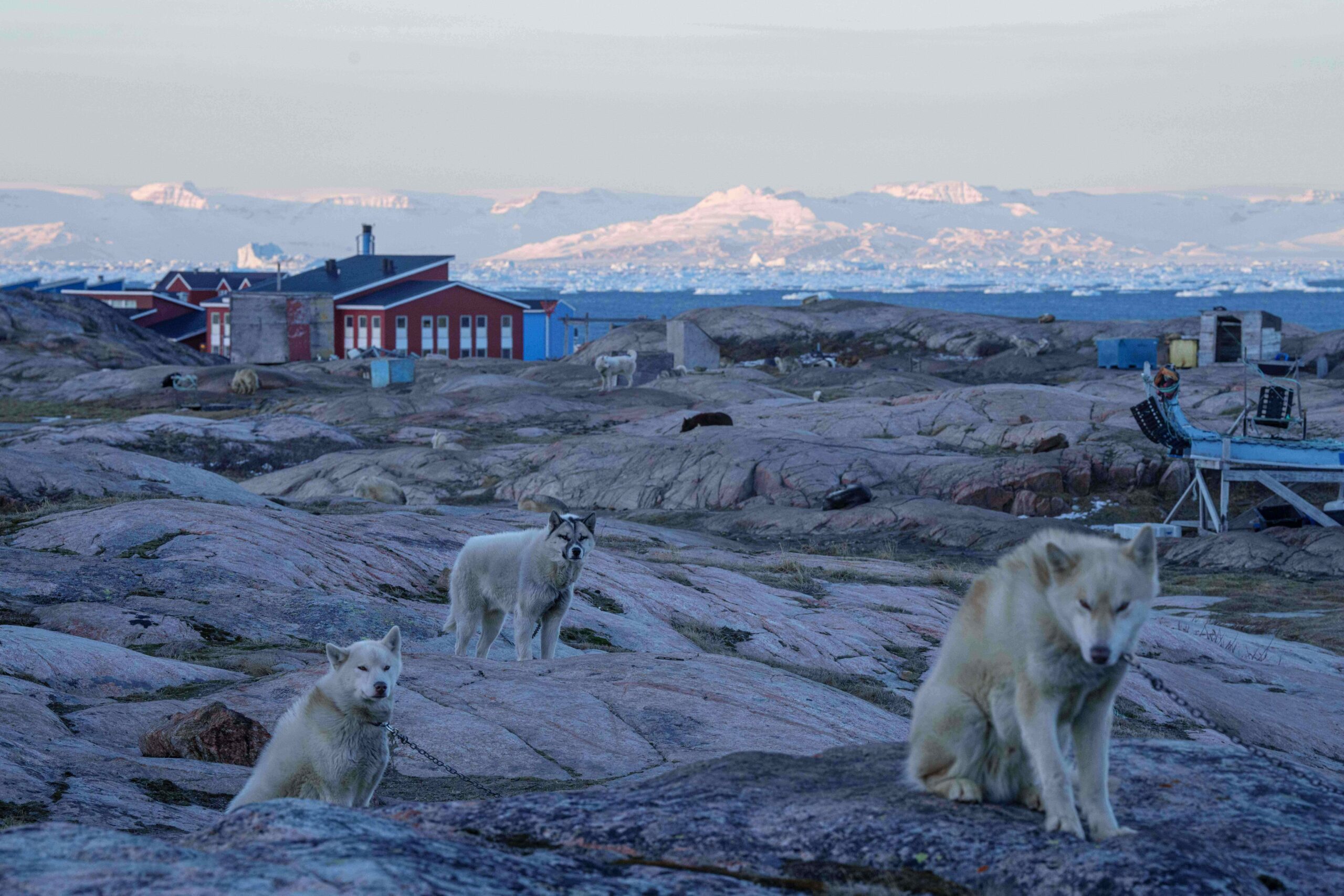
    Greenlandic sled dogs stand in Ilulissat, Greenland, on Jan. 27.

    The glaciers are melting

    Over the course of his lifetime, the Sermeq Kujalleq glacier has retreated by about 25 miles, said Karl Sandgreen, 46, the head of Ilulissat’s Icefjord Center, which is dedicated to documenting the glacier and its icebergs.

    Looking out of the window at hills which would normally be covered with snow, Sandgreen described mountain rock revealed by melting ice and a previously ice-covered valley inside the fjord where “there’s nothing now.”

    Pollution is also speeding up the ice melt, Sandgreen said, describing how Sermeq Kujalleq is melting from the top down, unlike glaciers in Antarctica which largely melt from the bottom up as sea temperatures rise.

    This is exacerbated by two things: black carbon, or soot spewed from ship engines, and debris from volcanic eruptions. They blanket the snow and ice with dark material and reduce reflection of sunlight, instead absorbing more heat and speeding up melting. Black carbon has increased in recent decades with more ship traffic in the Arctic, and nearby Iceland has periodic volcanic eruptions.

    Many Greenlanders told AP they believe the melting ice is the reason Trump — a leader who has called climate change “the greatest con job ever” — wants to own the island.

    “His agenda is to get the minerals,” Sandgreen said.

    Since Trump returned to office, fewer climate scientists from the U.S. have visited Ilulissat, Sandgreen said. The U.S president needs to “listen to the scientists,” who are documenting the impact of global warming, he said.

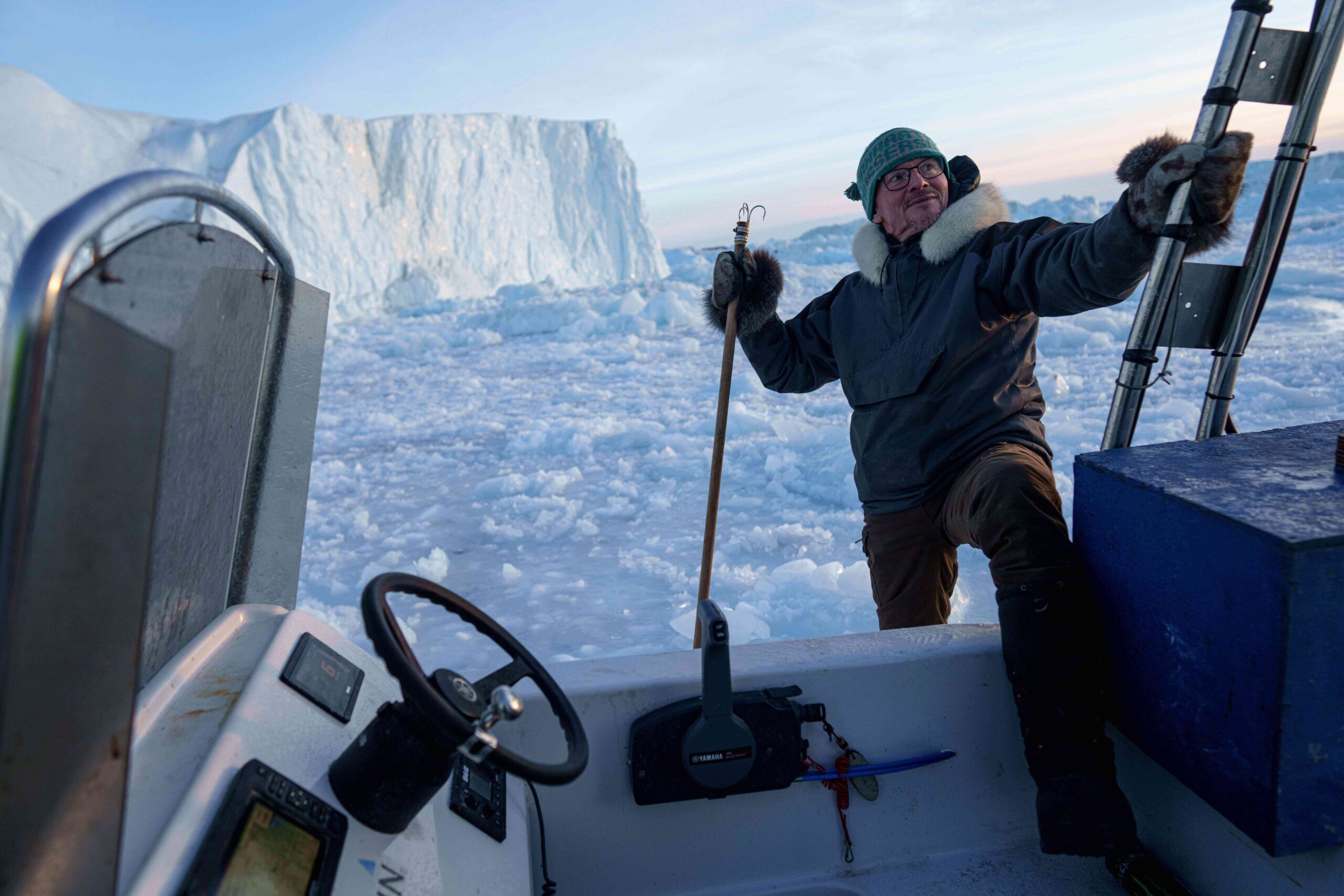
    Jørgen Kristensen gets on a boat by an iceberg at Disko Bay near Ilulissat, Greenland, on Jan. 29.

    Teaching children about climate change

    Kristensen said he tries to explain the consequences of global warming to the tourists who he takes out on dog sled rides or on visits to the icebergs. He said he tells them how Greenland’s glaciers are as important as the Amazon rainforest in Brazil.

    International summits, such as the United Nations climate talks in November in the Amazon gateway city of Belem, play a role, but it’s just as important to “teach children all over the world” about the importance of ice and oceans, alongside subjects like math, Kristensen said

    “If we don’t start with the children, we can’t really do anything to help nature. We can only destroy it,” Kristensen said.