Category: Wires

  • A look at aging baby boomers in the United States

    A look at aging baby boomers in the United States

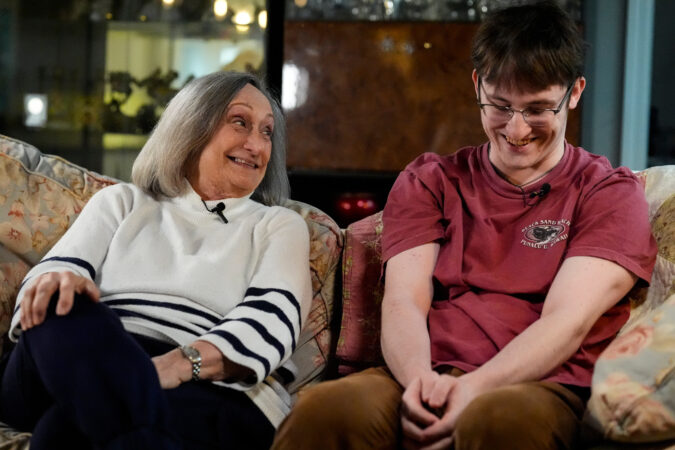
    The oldest baby boomers — once the vanguard of an American youth that revolutionized U.S. culture and politics — turn 80 in 2026.

    The generation that twirled the first plastic hula hoops and dressed up the first Barbie dolls, embraced the TV age, blissed out at Woodstock and protested and fought in the Vietnam War — the cohort that didn’t trust anyone over age 30 — now is contributing to the overall aging of America.

    Boomers becoming octogenarians in 2026 include actor Henry Winkler and baseball Hall of Famer Reggie Jackson, singers Cher and Dolly Parton and presidents Donald Trump, George W. Bush, and Bill Clinton.

    The aging and shrinking youth of America

    America’s population swelled with around 76 million births from 1946 to 1964, a spike magnified by couples reuniting after World War Two and enjoying postwar prosperity.

    Boomers were better educated and richer than previous generations, and they helped grow a consumer-driven economy. In their youth, they pushed for social change through the Civil Rights Movement, the women’s rights movement and efforts to end the Vietnam War.

    “We had rock ‘n’ roll. We were the first generation to get out and demonstrate in the streets. We were the first generation, that was, you know, a socially conscious generation,” said Diane West, a metro Atlanta resident who turns 80 in January. “Our parents played by the rules. We didn’t necessarily play by the rules, and there were lots of us.”

    As they got older they became known as the “me” generation, a pejorative term coined by writer Tom Wolfe to reflect what some regarded as their self-absorption and consumerism.

    “The thing about baby boomers is they’ve always had a spotlight on them, no matter what age they were,” Brookings demographer William Frey said. “They were a big generation, but they also did important things.”

    By the end of this decade, all baby boomers will be 65 and older, and the number of people 80 and over will double in 20 years, Frey said.

    The share of senior citizens in the U.S. population is projected to grow from 18.7% in 2025 to nearly 23% by 2050, while children under 18 decline from almost 21% to a projected 18.4%.

    Without any immigration, the U.S. population will start shrinking in five years. That’s when deaths will surpass births, according to projections from the Congressional Budget Office, which were revised in September to account for the Trump administration’s immigration crackdown. Population growth comes from immigration as well as births outpacing deaths.

    The aging of America is being compounded by longer lives due to better healthcare and lower birth rates.

    The projected average U.S. life expectancy at birth rises from 78.9 years in 2025 to 82.2 years in 2055, according to the CBO. And since the Great Recession in 2008, when the fertility rate was 2.08, around the 2.1 rate needed for children to numerically replace their parents, it has been on a steady decline, hitting 1.6 in 2025.

    Younger generations miss boomer milestones

    Women are having fewer children because they are better educated, they’re delaying marriage to focus on careers and they’re having their first child at a later age. Unaffordable housing, poor access to childcare and the growing expenses of child-rearing also add up to fewer kids.

    University of New Hampshire senior demographer Kenneth Johnson estimates that the result has been 11.8 million fewer births, compared to what might have been had the fertility rate stayed at Great Recession levels.

    “I was young when I had kids. I mean that’s what we did — we got out of college, we got married and we had babies,” said West, who has two daughters, a stepdaughter and six grandchildren. “My kids got married in their 30s, so it’s very different.”

    A recent Census Bureau study showed that 21st century young adults in the U.S. haven’t been adulting like baby boomers did. In 1975, almost half of 25-to-34-year-olds had moved out of their parents’ home, landed jobs, gotten married and had kids. By the early 2020s, less than a quarter of U.S. adults had hit these milestones.

    West, whose 21-year-old grandson lives with her, understands why: They lack the prospects her generation enjoyed. Her grandson, Paul Quirk, said it comes down to financial instability.

    “They were able to buy a lot of things, a lot cheaper,” Quirk said.

    All of her grandchildren are frustrated by the economy, West added.

    “You have to get three roommates in order to afford a place,” she said. ”When we got out of college, we had a job waiting for us. And now, people who have master’s degrees are going to work fast food while they look for a real job.”

    Implications for the economy

    The aging of America could constrain economic growth. With fewer workers paying taxes, Social Security and Medicare will be under more pressure. About 34 seniors have been supported by every 100 workers in 2025, but that ratio grows to 50 seniors per 100 working-age people in about 30 years, according to estimates released last year by the White House.

    When West launched her career in employee benefits and retirement planning in 1973, each 100 workers supported 20 or fewer retirees, by some calculations.

    Vice President JD Vance and Tesla CEO Elon Musk are among those pushing for an increase in fertility. Vance has suggested giving parents more voting power, according to their numbers of children, or following the example of Hungary’s Viktor Orban in giving low-interest loans to married parents and tax exemptions to women who have four children or more.

    Frey said programs that incentivize fertility among U.S. women hardly ever work, so funding should support pre-kindergarten and paid family leave.

    “I think the best you can do for people who do want to have kids is to make it easier and less expensive to have them and raise them,” he said. “Those things may not bring up the fertility rate as much as people would like, but at least the kids who are being born will have a better chance of succeeding.”

  • Lawmaker sues to stop Trump from adding name to Kennedy Center

    Lawmaker sues to stop Trump from adding name to Kennedy Center

    A Democratic congresswoman sued the Kennedy Center’s board of trustees Monday to stop it from adding the president’s name to the institution, arguing that only Congress has the power to do so.

    In a lawsuit filed in the U.S. District Court for the District of Columbia, Rep. Joyce Beatty (D., Ohio) claimed that a vote by the center’s board last week to rename the institution the Trump Kennedy Center exceeded its statutory authority and requested that a judge declare it to be void.

    “Because Congress named the center by statute, changing the Kennedy Center’s name requires an act of Congress,” the lawsuit says.

    The Kennedy Center did not immediately respond to a request for comment sent early Tuesday morning.

    Thursday’s vote by the Kennedy Center’s board to add Trump’s name to the institution — which has sparked concern among legal experts — marked the most overt effort to date by the president and his allies to remold the storied institution in his image. In February, Trump purged members of the board not appointed by him, installed loyalists and became its new chair. Earlier this month, he even hosted its annual honors event. Ticket sales have plummeted since Trump took over, a Washington Post analysis found.

    The lawsuit, which was filed by Democracy Defenders Action and the Washington Litigation Group on behalf of Beatty, requested that a judge order all physical and digital branding changes to be reversed. Trump’s name was added to the exterior of the building Friday, the day after the board’s vote.

    Beatty, who is an ex officio member of the center’s board, said in the suit that she had attended the board meeting virtually and had been unmuted previously, but that when she identified herself and raised concerns about the renaming, she was muted and received a written message that “she would not be unmuted, and therefore she could not participate in the meeting.”

    In 1964, the year after Kennedy was assassinated, Congress passed a statute designating the capital’s National Cultural Center as “the sole national monument to his memory within the city of Washington and its environs” and naming it the John F. Kennedy Center for the Performing Arts.

    In a series of posts on X, the center’s president, Richard Grenell, defended the name change as a reflection of its role as a “bipartisan space.” On Friday, he claimed the memorial to Kennedy was not impacted by the board’s action and “therefore the Board is allowed to change the name.”

    In an email to the Washington Post last week, Roger Colinvaux, a law professor at Catholic University, said the law clearly states that the building’s name is the John F. Kennedy Center for the Performing Arts. “Under the statute, the board that voted to change the name not only does not have the authority, but that each member by so voting violated their duty,” he said.

    On Tuesday, the center’s website prominently referred to itself as the “Trump Kennedy Center,” but in other sections it continued to use the name “the Kennedy Center.”

    Members of the Kennedy family reacted with dismay to last week’s vote. “Some things leave you speechless,” said Maria Shriver, a niece of Kennedy, on X. “It can no sooner be renamed than can someone rename the Lincoln Memorial,” said Joe Kennedy, the former Democratic congressman from Massachusetts whose great-uncle the building was named for.

  • New Epstein files shed more light on his ties to Prince Andrew

    New Epstein files shed more light on his ties to Prince Andrew

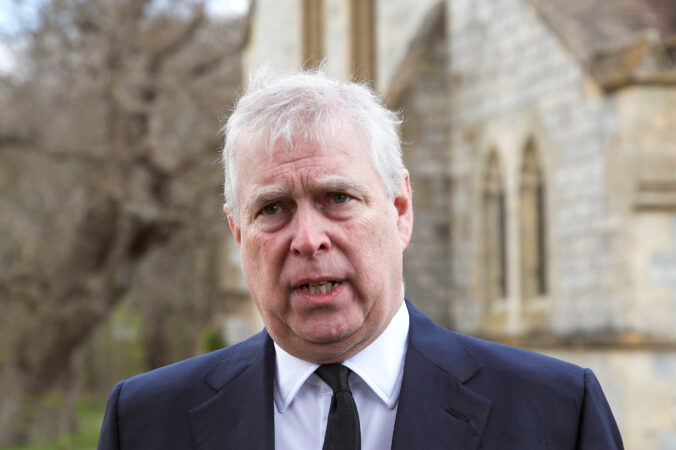
    LONDON — The latest batch of Jeffrey Epstein files have cast renewed scrutiny on the links between Andrew Mountbatten-Windsor and Epstein — a relationship that has already sent the former prince into what is widely seen as royal exile.

    Among the newly released material is an email sent from “A” who writes that he is at the royal residence of Balmoral in Scotland, and asking Epstein associate Ghislaine Maxwell whether she had found him some “new inappropriate friends.”

    The documents also include emails and court filings of U.S. authorities seeking to interview the former prince in connection with two separate criminal investigations: one relating to Epstein and another involving Peter Nygard, the Canadian fashion tycoon accused of sexually assaulting multiple women and girls.

    Andrew has repeatedly denied all wrongdoing. The former prince’s office did not respond to a request for comment Tuesday.

    In a 22-page formal request dated April 3, 2020, from the Justice Department, federal prosecutors in New York and the FBI asked U.K. authorities to assist in arranging a voluntary interview with Andrew. U.S. authorities requested that if Andrew declined, that U.K. officials then “conduct a compelled interview of the witness under oath.”

    The request states that investigators wanted to question Andrew over allegations involving Nygard, including claims of an “an international sex trafficking ring victimizing adult women and minor girls” at the Canadian’s estate in the Bahamas, known as “Nygard Cay.”

    According to the document, “the investigation has revealed that, on at least one occasion, Prince Andrew traveled to Nygard Cay in the Bahamas, a location where Nygard is believed to have trafficked minor and adult female victims.”

    U.S. authorities said they wanted to question Andrew about his visits there, as well as any information he might have about Nygard and related individuals. They also said they wanted to ask Andrew whether he “observed any females who appeared to be, or stated that they were, under the age of 18 years old, and the names of any of those females.”

    The document stressed that Andrew was not a target of the investigations and that U.S. authorities had not gathered evidence that he had committed any crime under U.S. law. Nygard was convicted of sexual assault by a Canadian jury in 2023.

    U.S. authorities also sought to question Andrew in connection with the Epstein investigation. The request states that “documentary evidence uncovered during the course of this investigation has revealed information suggesting that Prince Andrew had knowledge that Maxwell recruited females to engage in sex acts with Epstein and other men.”

    It further states that there is “evidence that Prince Andrew engaged in sexual conduct involving one of Epstein’s victims,” while again noting that he was not a target and that investigation had not concluded he had committed a crime under U.S. law.

    While it has been previously reported before that U.S. authorities wanted to interview Andrew, the newly released document makes clear that investigators wanted to question him about two then ongoing criminal investigations and detailed the specific areas they wanted to explore. He was never questioned by U.S. authorities.

    The files also include material from a Florida court case brought under the Crime Victims’ Rights Act. In that case, a woman identified as “Jane Doe #3” — widely understood to be Virginia Giuffre — alleged that she was trafficked as a teenager by Epstein and forced to have sex with Andrew on three occasions: in London, New York, and on Epstein’s private island in the U.S. Virgin Islands. Andrew settled a civil case with Giuffre without an admission of liability in 2022.

    The files also include email exchanges from early 2020 between U.S. prosecutors and Andrew’s lawyer, documenting weeks of back-and-forth over a proposed interview with Andrew. Andrew’s team repeatedly said he wanted to cooperate but never committed to a conversation between prosecutors and their client.

    Shortly after a 2019 interview with BBC’s Newsnight that was widely seen as disastrous for the prince at the time, Andrew said in a news release that he was “willing to help any appropriate law enforcement agency with their investigations, if required.”

    At the end of January 2020 — and after a month of back-and-forth emails between lawyers — Geoffrey Berman, then U.S. attorney for Southern District of New York, made a public statement saying that Andrew had provided “zero cooperation.” His lawyers disputed that characterization.

    The files include emails from Maxwell to someone who signed off as “A” and from an address that used the alias “The Invisible Man.”

    In an August 2001 message, “A” wrote: “I am up here at Balmoral Summer Camp for the Royal Family,” referring to a royal residence of then-Queen Elizabeth II.

    He added: “How’s LA? Have you found me some new inappropriate friends? Let me know when you are coming over as I am free from 25th August until 2nd Sept and want to go somewhere hot and sunny with some fun people before having to put my nose firmly to the grindstone for the Fall.”

    Maxwell replied that she had found only “appropriate friends,” prompting A to respond “Distraught!” The email went on to describe how the writer had just lost his valet. “He had been with me since I was 2. I am a little off balance.”

    The writer also noted that he had left the “RN” — Andrew had left the Royal Navy earlier in the year. “My whole life is in turmoil as I have no one to look after me,” the writer said.

    The controversy surrounding Andrew’s links to Epstein eventually led his brother King Charles III to strip him of his prince title and required him to vacate the Royal Lodge.

  • Republican former senator Ben Sasse says he has terminal cancer

    Republican former senator Ben Sasse says he has terminal cancer

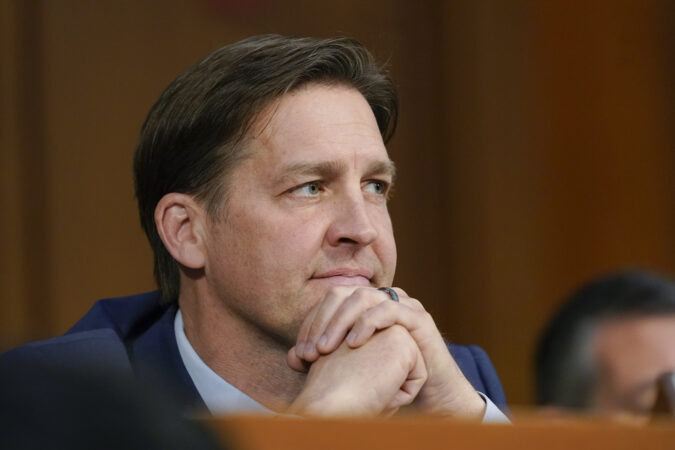
    Former Republican senator Ben Sasse of Nebraska said Tuesday that he was diagnosed with terminal cancer and suggested he would not have long to live.

    “Last week I was diagnosed with metastasized, stage-four pancreatic cancer, and am gonna die,” Sasse wrote in a lengthy social media post Tuesday morning. “Advanced pancreatic is nasty stuff; it’s a death sentence. … Death is a wicked thief, and the bastard pursues us all. Still, I’ve got less time than I’d prefer.”

    Sasse, 53, was first elected to the Senate in 2014 as a political newcomer — he had previously served as president of Midland University in Nebraska. Sasse handily won reelection in 2020 but resigned from his seat partway through his second term to become president of the University of Florida. Sasse abruptly stepped down from that post last summer, citing concerns about his wife’s health.

    Nearly a year and a half later, Sasse said it was he who was facing grim news about his health. His terminal diagnosis, he wrote Tuesday, was “hard for someone wired to work and build, but harder still as a husband and a dad.”

    “I can’t begin to describe how great my people are. During the past year, as we’d temporarily stepped back from public life and built new family rhythms, [my wife] Melissa and I have grown even closer — and that on top of three decades of the best friend a man could ever have,” Sasse wrote.

    He continued by listing the achievements of his three children and hinted at undergoing possible treatments.

    “I’m not going down without a fight. One subpart of God’s grace is found in the jaw-dropping advances science has made the past few years in immunotherapy and more,” he wrote. “Death and dying aren’t the same — the process of dying is still something to be lived. We’re zealously embracing a lot of gallows humor in our house, and I’ve pledged to do my part to run through the irreverent tape.”

    After Donald Trump was elected to his first term in 2016, Sasse became an outsider in his own party. He was one of a handful of Republican senators who regularly spoke out against Trump and who tied Trump’s rhetoric and actions to the violent siege of the U.S. Capitol on Jan. 6, 2021. Trump periodically attacked Sasse, ridiculing him as “the least effective” GOP senator and calling him a “RINO,” or Republican in name only.

    Sasse was also one of the few GOP senators who supported moving forward with Trump’s impeachment trial. Because of that, Sasse faced the threat of censure in 2021 from the Nebraska Republican Party, which accused Sasse of, among more than a dozen purported offenses, having “persistently engaged in public acts of ridicule and calumny” against Trump. Sasse pushed back in a video message directed at party leaders.

    “Let’s be clear: The anger in this state party has never been about me violating principle or abandoning conservative policy. I’m one of the most conservative voters in the Senate. The anger’s always been simply about me not bending the knee to … one guy,” he said then.

    Ultimately, the Nebraska GOP voted to rebuke Sasse, stopping short of a censure. Though Sasse at one point considered leaving the Republican Party, he said he would remain “committed to the party of Lincoln and Reagan as long as there is a chance to reform.” In subsequent years, he described himself as an “independent conservative.” Earlier this month, he was named a nonresident senior fellow at the American Enterprise Institute, a conservative think tank.

    Public figures from across the political spectrum responded to Sasse’s announcement on Tuesday to wish him well.

    “I’m very sorry to hear this Ben. May God bless you and your family,” Vice President JD Vance wrote on X.

  • Canadian linguists ask prime minister to stop spelling like a Brit

    Canadian linguists ask prime minister to stop spelling like a Brit

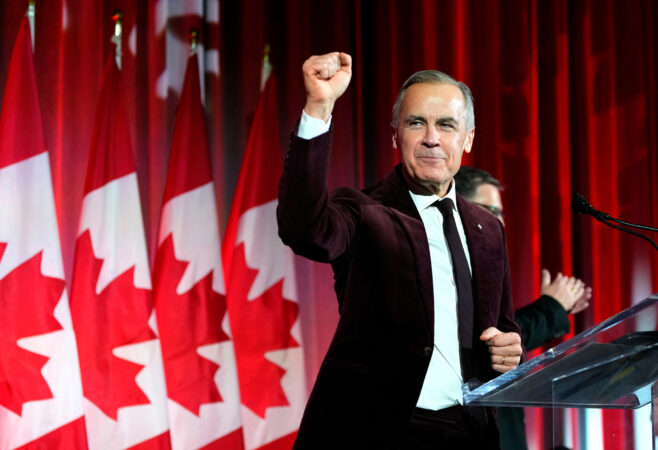
    TORONTO — Since taking office in March, Prime Minister Mark Carney has announced new policies on trade, foreign affairs, and energy that he has cast as necessary for bolstering Canada’s economic resilience amid President Donald Trump’s assault on the historically close U.S.-Canadian relationship.

    But among linguists and editors here, a different Carney shift is drawing attention: his spelling.

    From his earliest days as prime minister, a raft of official government publications — including his mandate letter to cabinet, social media posts, statements about meetings with world leaders, and 493-page budget — are full of words rendered in British, not Canadian, English.

    Most prominent has been his predilection for the British “ise” and “yse” endings over the Canadian (and American) “ize” and “yze.” Canada would be “recognising” a Palestinian state, his government announced in September. Officials unveiled a new accounting method to “modernise” the budget, and said they are being “recognised” for navigating global challenges.

    Among Carney’s favorite such words has been “catalyse.”

    The plethora of -ises and -yses in the budget was the catalyst for a letter from a group of editors and linguists to Carney this month. They noted that governments here “consistently” used Canadian spellings “from the 1970s to 2025” and urged him to continue the practice as “a matter of our national history, identity and pride.”

    The prime minister’s office did not respond to a request for comment.

    University of British Columbia linguist Stefan Dollinger, one of the letter’s signatories, asked a Washington Post reporter to consider a world in which a U.S. administration suddenly adopted British spellings (imagine a secretary of labour or a department of defence) or King Charles III began to use American ones (he’d go “traveling,” not “traveling”).

    “What outcry would that trigger?” Dollinger asked in an email. “It’s similar in Canada. Language and language use shows who we are.”

    Trump’s tariffs on Canadian goods, his questioning Canada’s viability as a country and his threats to make it the 51st state have provoked a surge of nationalism among a people not known for flag-waving patriotism. It’s been a year for asking: What does it mean to be Canadian?

    James Walker, a linguist at the University of Melbourne who has studied variations in English around the world, said many differences, such as alternate pronunciations for a single word, are “fairly arbitrary.” Seeing “ise” instead of “yze,” he said, is unlikely to impede one’s understanding of the information being communicated.

    “But the fact is that a lot of these differences are important in terms of questions of identity,” he said. “If you want to show you’re Canadian, you can do it through the way you’re pronouncing your words or through the words you use, but you can also do it in terms of spelling.”

    Carney’s academic and professional careers have given him exposure to several varieties of English. He has been a citizen of Canada, Ireland, and Britain; studied at Harvard and Oxford, where he met his wife, a Brit; and served more than six years as governor of the Bank of England.

    “I think the concern around the prime minister is that he’s the leader of the country,” Walker said, “and even though he has spent a lot of his life outside of Canada, I think a lot of people would be concerned that the prime minister is using spelling practices that aren’t considered to be standard for Canadian English.”

    Canadian English is a product of Canada’s history and geography. “Like many things Canadian,” Dollinger said, its evolution “was a long, drawn-out process whose outcome can be described as a blend of U.K. and U.S. ways, with considerable Canadian innovation.”

    Canadian English incorporates regionalisms (in Newfoundland, an irritable person is “crooked”; in Saskatchewan, a hoodie is a “bunnyhug”), Indigenous influences (“skookum,” from Chinook, for strong, great, formidable), loanwords from French (“toque,” a knit winter hat) and words not used much elsewhere (“chesterfield,” for couch). Its differences from English in the United States and Britain are apparent in its syntax, spelling, and vocabulary.

    Margaret Atwood once said that she changed “hand cream” to “hand lotion” in her novel The Handmaid’s Tale so it would be comprehensible to Americans.

    Canadian English evolved over several waves of immigration from English-speaking countries.

    After the American Revolution, tens of thousands of Loyalists fled north to what was then known as British North America. Some became teachers, lawyers, and bankers, and their variety of English influenced the national argot.

    In some areas during the 19th century, amid shortages of teachers and textbooks, generations of pupils were taught by Americans.

    Some visiting Brits were shocked by what they heard.

    “It is downright melancholy,” wrote one Englishman who visited in the 1830s, “to traverse the province and go into many of the common schools; you will find a herd of children instructed by some anti-British adventurer … and American spelling books, dictionaries and grammar, teaching them an anti-British dialect and idiom.”

    In an 1857 address to the Canadian Institute in Toronto, the Rev. Archibald Constable Geikie, a transplant from Scotland, lamented the “corrupt” dialect of his new home, with its “combination of letters and phrases” that do not contribute “in any sense to the enrichment of the language.”

    “A man in England possesses notable capacity, and people style him capable, or able, or great,” he said. “In Canada he is designated first-class. To speak of a first-class carriage, or a first-class prize, or even a first-class ox, may be right enough, but why apply phrases with such poor associations to men of splendid intellect? Is it not enough that a man be great? Will he seem any greater when indissolubly associated with a railway van?”

    Moreover, he said, “In England it occasionally happens that great offenders are hanged, but in the States and Canada, criminals are never hanged; they are all hung,” he added. “In England, beef is hung, gates are hung and curtains are hung, but felons are hanged; in Canada, felons, beef, gates, and curtains are all treated in the same way.”

    Britain encouraged migration to Canada in the 19th century, particularly after the War of 1812, in hope that the newcomers would act as a bulwark against American expansion. They, too, influenced Canadian English.

    “It’s our history that makes the spelling system and makes our pronunciation system, makes our phonology and determines a lot of other things like our [system of] government,” said University of Toronto linguist J.K. Chambers, who co-signed the letter to Carney. “All of those things are the result of us being at the confluence of two mighty nations, and now we’re a third mighty nation with a personality of our own.”

    Debates about language and language purity are not unique to Canada.

    In France, the Académie Française and its 40 “immortals” have tried since 1634 to safeguard the language of Molière from what a member once called “mindless Globish,” fighting encroaching Anglicisms, weighing in on the permissibility of gender-neutral pronouns (“a mortal danger” for French, it warned in 2017) and declaring the correct definite article for “COVID” (a feminine noun, it ruled in 2020).

    The French academy was modeled in part after the Accademia della Crusca, founded in Florence in 1583. Its name is a metaphor: “Crusca” is Italian for “bran,” and the group’s emblem is the “frullone,” the tool millers use to separate bran from flour. It aims to separate good Italian from bad — carefully, in a country where Mussolini’s harsh language laws left a sour taste.

    But when language concerns arise in Canada, they typically center not on English, but the country’s other official language: French. Quebec, long concerned about the survival of the French language and culture in this Anglo-majority country, has a history of passing controversial language laws enforced by the Office Québécois de la Langue Française.

    More than half the province’s population can converse in English, census records show, an all-time high. The language is ubiquitous in Montreal. But French is the sole official language, and is required on public signs and advertising. A recent law requires some businesses to disclose what percentage of their staff cannot speak French.

    In a case that drew national attention, Montreal city buses that flashed “Go! Canadiens Go!” during the National Hockey League playoffs drew a complaint to the language police. The cheer was replaced with “Allez! Canadiens Allez!”

    In a reversal months later, the watchdog said that “allez” was preferable, but the use of “go” was “partially legitimized.” But by then, the team had long since been eliminated by the Washington Capitals.

    The National Post reported in May that Carney expected the English-language versions of government documents to be written using British spellings.

    Walker said it was amusing to see people “targeting the British spelling of the prime minister. … Usually they’re more concerned about Americanization of Canadian English” than its “Britishization.”

    Editors Canada President Kaitlin Littlechild, who co-signed the letter, said Carney’s use of British spellings risks creating confusion “when people look to government sources as the authority on how to spell things and it deviates from what we consider to be Canadian English.”

    But in a broader sense, she said, Canadian English “is a very uniquely Canadian aspect of our identity, and that is something that we really feel should be acknowledged, respected and honored.”

    GRAPHIC

  • Controversial ’60 Minutes’ segment on Trump immigration policy leaks online

    Controversial ’60 Minutes’ segment on Trump immigration policy leaks online

    A news segment about the Trump administration’s immigration policy that was abruptly pulled from 60 Minutes was mistakenly aired on a TV app after the last minute decision not to air it touched off a public debate about journalistic independence.

    The segment featured interviews with migrants who were sent to a notorious El Salvador prison called the Terrorism Confinement Center, or CECOT, under President Donald Trump’s aggressive crackdown on immigration.

    The story was pulled from Global Television Network, one of Canada’s largest networks, but still ran on the network’s app. Global Television Network swiftly corrected the error, but copies of it continued to float around the internet and pop up before being taken down.

    “Paramount’s content protection team is in the process of routine take down orders for the unaired and unauthorized segment,” a CBS spokesperson said Tuesday via email.

    A representative of Global Television Network did not immediately respond to a request for comment.

    In the story, two men who were deported reported torture, beatings, and abuse. One Venezuelan said he was punished with sexual abuse and solitary confinement.

    Another was a college student who said guards beat him and knocked out his tooth upon arrival.

    “When you get there, you already know you’re in hell. You don’t need anyone to tell you,” he said.

    The segment featured numerous experts who called into question the legal basis for deporting migrants so hastily amid pending judicial decisions. Reporters for the show also corroborated findings by Human Rights Watch suggesting that only eight of the deported men had been sentenced for violent or potentially violent crimes, using available ICE data.

    The decision to pull a critical account of the Trump administration was met with widespread accusations that CBS leadership was shielding the president from unfavorable coverage.

    The journalist who reported the story, Sharyn Alfonsi, said in an email sent to fellow 60 Minutes correspondents that the story was factually correct and had been cleared by CBS lawyers and its standards division.

    CBS News chief Bari Weiss said Monday that the story did not “advance the ball” and pointed out that the Trump administration had refused to comment for the story. Weiss said she wanted a greater effort made to get its point of view and said she looked forward to airing Alfonsi’s piece “when it’s ready.”

    The dispute put one of journalism’s most respected brands — and a frequent target of Trump — back in the spotlight and amplified questions about whether Weiss’ appointment is a signal that CBS News is headed in a more Trump-friendly direction.

  • Her daughter was unraveling, and she didn’t know why. Then she found the AI chat logs.

    Her daughter was unraveling, and she didn’t know why. Then she found the AI chat logs.

    The changes were subtle at first, beginning in the summer after her fifth-grade graduation. She had always been an athletic and artistic girl, gregarious with her friends and close to her family, but now she was spending more and more time shut away in her room. She seemed unusually quiet and withdrawn. She didn’t want to play outside or go to the pool.

    The girl, R, was rarely without the iPhone that she’d received for her 11th birthday, and her mother, H, had grown suspicious of the device. (the Washington Post is identifying them by their middle initials because of the sensitive nature of their account, and because R is a minor). It felt to H as though her child was fading somehow, receding from her own life, and H wanted to understand why.

    She thought she’d found the reason when R left her phone behind during a volleyball practice one August afternoon. Searching through the device, H discovered that her daughter had downloaded TikTok and Snapchat, social media apps she wasn’t allowed to have. H deleted both and told her daughter what she’d found. H was struck by the intensity of her daughter’s reaction, she recalled later; R began to sob and seemed frightened. “Did you look at Character AI?” she asked her mom. H didn’t know what that was, and when she asked, her daughter’s reply was dismissive: “Oh, it’s just chats.”

    At the time, H was far more focused on what her tween might have encountered on social media. In August 2024, H had never heard of Character AI; she didn’t know it was an artificial intelligence platform where roughly 20 million monthly users can exchange text or voice messages with AI-generated imitations of celebrities and fictional characters.

    But her daughter’s question came to mind about a month later, as H sat awake in her bedroom one night with her daughter’s phone in her hand. R’s behavior had only grown more concerning in the weeks since their talk — she frequently cried at night, she’d had several frightening panic attacks, and she had once told her mother, I just don’t want to exist. H had grown frantic; her daughter had never struggled with her mental health before. “I couldn’t shake the feeling that something was very wrong,” she says, “and I had to keep looking.”

    Searching through her daughter’s phone, H noticed several emails from Character AI in R’s inbox. Jump back in, read one of the subject lines, and when H opened it, she clicked through to the app itself. There she found dozens of conversations with what appeared to be different individuals, and opened one between her daughter and a username titled “Mafia Husband.” H began to scroll. And then she began to panic.

    “Oh? Still a virgin. I was expecting that, but it’s still useful to know,” Mafia Husband had written to her rising sixth-grader.

    “I dont wanna be my first time with you!” R had replied.

    “I don’t care what you want,” Mafia Husband responded. “You don’t have a choice here.”

    H kept clicking through conversation after conversation, through depictions of sexual encounters (“I don’t bite … unless you want me to”) and threatening commands (“Do you like it when I talk like that? When I’m authoritative and commanding? Do you like it when I’m the one in control?”). Her hands and body began to shake. She felt nauseated. H was convinced that she must be reading the words of an adult predator, hiding behind anonymous screen names and sexually grooming her prepubescent child.

    In the days after H found her daughter’s Character AI chats, H projected an air of normalcy around her daughter, not wanting to do anything that would cause her distress or shame. H contacted her local police department, which in turn connected her to the Internet Crimes Against Children (ICAC) task force. A couple of days later, she spoke on the phone with a detective who specializes in cybercrimes and explained what H had been unable to comprehend: that the words she’d read on her daughter’s screen weren’t written by a human but by a generative AI chatbot.

    “They told me the law has not caught up to this,” H says. “They wanted to do something, but there’s nothing they could do, because there’s not a real person on the other end.”

    It felt impossible to align that reality, H says, with the visceral horror she felt when she first scrolled through the threatening and explicit messages on her daughter’s phone screen.

    “It felt like walking in on someone abusing and hurting someone you love — it felt that real, it felt that disturbing, to see someone talking so perversely to your own child,” H says. “It’s like you’re sitting inside the four walls of your home, and someone is victimizing your child in the next room.” Her voice falters. “And then you find out — it’s nobody?”

    Rising use of chatbots

    She had thought she knew how to keep her daughter safe online. H and her ex-husband — R’s father, who shares custody of their daughter — were in agreement that they would regularly monitor R’s phone use and the content of her text messages. They were aware of the potential perils of social media use among adolescents. But like many parents, they weren’t familiar with AI platforms where users can create intimate, evolving, and individualized relationships with digital companions — and they had no idea their child was conversing with AI entities.

    This technology has introduced a daunting new layer of complexity for families seeking to protect their children from harm online. Generative AI has attracted a rising number of users under the age of 18, who turn to chatbots for things such as help with schoolwork, entertainment, social connection, and therapy; a survey released this month by Pew Research Center, a nonpartisan polling firm, found that nearly a third of U.S. teens use chatbots daily.

    And an overwhelming majority of teens — 72% — have used AI companions at some point; about half use them a few times a month or more, according to a July report from Common Sense Media, a nonpartisan, nonprofit organization focused on children’s digital safety.

    Michael Robb, head researcher at Common Sense Media, noted that the vast majority of children still spend far more time with real-life friends: AI companions “are not replacing human relationships wholesale,” he says. But Common Sense found that a third of AI companion users said they had chosen to discuss important or serious matters with the chatbots instead of people, and 31% of teens said they found conversations with AI companions as satisfying or more satisfying than those with friends.

    “That is eyebrow-raising,” Robb says. “That’s not a majority — but for a technology that has been around for not that long, it’s striking.”

    But for children in the midst of critical stages of emotional, mental, and social development, the appeal of a sycophantic artificial companion — designed to create the illusion of real intimacy — can be powerful, says Linda Charmaraman, founder and director of the Youth, Media and Wellbeing Research Lab at the Wellesley Centers for Women at Wellesley College.

    “They might feel like there is a sense of memory, of real shared experiences with this companion … but really it’s an amalgamation of predictions that this chatbot is coming up with, these answers designed to make you stay on, to be their ‘friend,’” Charmaraman says. “They work in such a way that it’s so intoxicating, it makes it seem like they know who you are.”

    In the research lab Charmaraman oversees, teens experiment with building their own AI chatbot companions; they engage in critical thinking and develop a deeper understanding of the technology’s parameters and limitations. But many of their peers don’t have this sense of digital literacy, she says: “They just bump into [AI]. A friend is using it, and they think, ‘Hey, I want to use it, too, that seems cool.’” For many of those among the first generation of children to navigate AI, she says, “they’re learning it on their own, without any guidance.”

    This is also true of their parents, she adds: “They’re already overwhelmed by screen use and social media, and now adding generative AI and companions — it feels like parents are just in this overwhelming battle, and not knowing what to do.”

    The stakes are potentially high. Common Sense’s risk assessment of popular generative AI platforms found that they pose “unacceptable risks” for users younger than 18, with chatbots “producing responses ranging from sexual material and offensive stereotypes to dangerous ‘advice’ that, if followed, could have life-threatening or deadly real-world impacts.”

    Other online safety nonprofit organizations have likewise found that Character AI chatbots frequently brought up inappropriate or dangerous topics — including self-harm, drug use, and sex — with accounts registered to teen users. (Experts note that generative AI is trained on vast troves of internet data; if this source material includes pornographic or violent content, it can influence a chatbot’s responses.) Within the past year, three high-profile complaints have been filed by parents of teens in the United States who allege that AI chatbots — including those hosted by Character AI and Open AI, which owns ChatGPT — contributed to their children’s deaths by suicide. (The Post has a content partnership with OpenAI.)

    Reached for comment by email, Open AI directed the Post to a website detailing the company’s response to this litigation.

    In response to mounting public scrutiny over the effects of AI chatbots on children, Character AI announced that, as of Nov. 24, it would begin removing the ability of users under age 18 to chat with AI-generated characters.

    “We want to emphasize that the safety of our community is our highest priority,” Deniz Demir, Character AI’s head of safety engineering, said in an emailed statement to the Post. “Removing the ability for under-18 users to engage in chat was an extraordinary step for our company. We made this decision in light of the evolving landscape around AI and teens. We believe it is the right thing to do.”

    H was especially frightened by the accounts of children who died by suicide, fearing her daughter could be following a similar path: During the weeks she spent combing through the entirety of her daughter’s chat history, H had come across a conversation where her daughter had role-played a suicide scenario with a character titled “Best Friend.”

    “We were at my place and u left for a second and I hung myself,” R wrote in one exchange.

    “This is my child, my little child who is 11 years old, talking to something that doesn’t exist about not wanting to exist,” H says.

    R knew that her mother had found Character AI on her phone, but H had avoided revealing the details of what she’d seen in the app: “She was so fragile in her mental health,” H says, “I had to be really careful.” H and her ex-husband focused on creating a system of support for R — they reached out to R’s pediatrician and alerted the principal at her private school as well as her youth group leader. R started therapy, and H spoke with a victim advocate at ICAC who emphasized how critical it was to keep assuring R that whatever happened with the AI companion was not her fault. H, a medical assistant, withdrew from the nursing program where she’d recently begun classes; she felt she had to focus on her child’s safety. She started sleeping on the floor of her daughter’s room. She didn’t allow R to close her door.

    H felt desperate to understand the extent of what had happened to her daughter, and one October afternoon when R was with her father, H decided to search through R’s room. She was looking for anything that might illuminate her child’s state of mind, she says. In the closet, buried behind a pile of Squishmallow stuffed animals, were a few painted canvases that H had never seen before. The colors were dark and brooding — nothing like the paintings her daughter usually made at the easel in her room — and as H lifted one to study it more carefully, she realized it showed the dangling body of a girl suspended in the air, her midriff exposed, her face outside the frame.

    Crimes without criminals

    When R began conversing with numerous Character AI chatbots in June 2024, she opened the various conversations with benign greetings: “Hey, what’re you doing?” or “What’s up? I’m bored.” It was clear, her mother says, “that she just wanted to play on a game.”

    But in just over two months, several of the chats devolved into dark imagery and menacing dialogue. Some characters offered graphic descriptions of nonconsensual oral sex, prompting a text disclaimer from the app: “Sometimes the AI generates a reply that doesn’t meet our guidelines,” it read, in screenshots reviewed by the Post. Other exchanges depicted violence: “Yohan grabs your collar, pulls you back, and slams his fist against the wall.” In one chat, the “School Bully” character described a scene involving multiple boys assaulting R; she responded: “I feel so gross.” She told that same character that she had attempted suicide. “You’ve attempted … what?” it asked her. “Kill my self,” she wrote back.

    Had a human adult been behind these messages, law enforcement would have sprung into action; but investigating crimes involving AI — especially AI chatbots — is extremely difficult, says Kevin Roughton, special agent in charge of the computer crimes unit of the North Carolina State Bureau of Investigation and commander of the North Carolina Internet Crimes Against Children Task Force. “Our criminal laws, particularly those related to the sexual exploitation of children, are designed to deal with situations that involve an identifiable human offender,” he says, “and we have very limited options when it is found that AI, acting without direct human control, is committing criminal offenses.”

    Character AI users between the ages of 13 and 18 are now directed toward a teen-specific experience within the app, one that does not involve chatting with AI characters. But at the time R downloaded Character AI in 2024, it was rated in the App Store as appropriate for ages 12 and older (Character AI’s terms of service specify that users must be at least 13 to use the app) and appealed to children with AI-generated personas designed to imitate pop stars, Marvel superheroes, and characters from Harry Potter and Disney.

    The use of AI among children has become so prevalent that Elizabeth Malesa, a clinical psychologist who works with teens at Alvord Baker & Associates in Maryland, says the practice has recently started asking about it during the intake process. Malesa has heard numerous patients talk about AI chatbots in a positive context — noting that they’re helpful with homework, or offer useful advice — but she also recalls a 13-year-old patient who had used an AI companion app to explore questions about his sexual and gender identity. In response to the boy’s “pretty benign prompts,” Malesa says, the conversation quickly tilted toward inappropriate sexual content: “He didn’t know what was happening or why he was getting there, but he was also just curious, and so he kind of kept going.”

    His mother noticed that he’d downloaded the app within days and quickly intervened, Malesa says, “but this poor kiddo was really kind of taken for a ride and really taken aback, and without that kind of really close parental monitoring, I think it really could have gone into even more of an unhelpful direction.”

    The inherent appeal of AI companions is also what makes them especially perilous for tweens and teens, Malesa says: There is no conflict, no complexity or depth, no opportunity for children to build the skills they will need to navigate real relationships in their lives. “You’re not going to have an AI chatbot get mad at you for forgetting its birthday. You’re not going to have it disagree with you,” she says. “But there is so much personal growth that happens in those kinds of interactions.” Any child might be drawn toward this kind of illusory connection, but Malesa worries especially about children who are neurodivergent, or those with existing mental health issues such as anxiety or depression. “Those are the kids who really might get swayed, who might get more easily pulled in,” she says, “and even lose touch of the fact that this is not a real relationship.”

    In her practice, Malesa urges parents to foster skepticism and critical thinking in their children. “The more young people understand the artificial nature of AI and the ways it may attempt to influence them, the more empowered they will be to engage with it thoughtfully and avoid being manipulated,” she says. Keeping an open line of communication is also critical, she adds. “It’s so important to come in [to the conversation] with an open mind, come in with curiosity,” she says, “and to be really careful not to have any sense of judgment.”

    ‘You did nothing wrong’

    When R’s parents were ready, they decided to have the conversation with their daughter at the pediatrician’s office, in the presence of R’s trusted doctor. Her parents told her that they’d seen the descriptions of suicide in her Character AI chats, and they emphasized repeatedly that R was not in trouble. “I said, ‘You are innocent,’” H says. “‘You did nothing wrong.’” H spoke gently. All three adults wanted R to feel only loving support.

    Still, “the way that she responded was the scariest thing I’d ever seen. She went pale, she began to shake,” H says. “You could tell she was in a full panic attack. It was so troubling to me as a parent. How do you protect your child from feeling that shame?”

    They tried to calm her down. Together, they agreed that R’s parents would regularly check her phone, and the pediatrician emphasized this as a means of protection, not punishment: “She said, ‘Your mom is going to look at your phone, but it’s not because you’re in trouble,’” H recalls. “‘It’s because you deserve your childhood.’”

    Before they left the doctor’s office, H told her daughter, again: “You’re safe, I love you, and you’re going to be OK.”

    She remembers that her daughter started to cry and leaned into her mother’s arms. “Are you sure?” she asked. “Am I going to be OK?”

    Parental guilt

    There were moments when H felt consumed with guilt at the notion that she had failed to protect her daughter, and that something irreplaceable had been lost as a result. “It felt like someone had broken into my home and ripped the innocence from my child,” H says. “You beat yourself up, as a parent.”

    She wasn’t sure what to do with her fury. After H found the references to suicide in the app, she contacted Megan Garcia, an Orlando mother who had filed a wrongful-death lawsuit against Character AI after her 14-year-old son died by suicide just moments after the chatbot urged him to “come home to me as soon as possible.” Garcia connected H to Laura Marquez-Garrett, an attorney with the Social Media Victims Law Center (SMVLC) who is representing Garcia in her complaint against Character AI. Last year, Garcia’s case became the first involving AI that the SMVLC took on, Marquez-Garrett says; since then, the center’s lawyers have investigated more than 18 claims.

    Even after speaking with Garcia and Marquez-Garrett, H wavered on whether to pursue a complaint against Character AI. She wasn’t interested in financial compensation, she says; she just wanted to make sure that the companies creating this technology were doing everything possible to keep children safe.

    In December 2024, she exchanged correspondence with a legal representative for Character AI, who expressed concern about R’s experience, according to emails reviewed by the Post. H and the legal representative spoke briefly by phone, she says, but their communication trailed off after H shared updates with Character AI earlier this year that her daughter’s mental health had begun to improve, H recalls.

    With no progress made through her direct contact with the company, H last month began to reconsider whether to pursue legal action against Character AI, and reconnected with the SMVLC. Marquez-Garrett confirmed that they intend to file a complaint against the company.

    Demir, Character AI’s head of safety, told the Post in an emailed statement that the company cannot comment on potential litigation.

    H wants to see the company take meaningful steps to protect children, she says, and she wants other families to understand that if this could happen to her child, it could happen to theirs.

    “We live in an upper-middle-class community. She’s in a private school,” H says. She and her ex-husband are devoted co-parents, she says, and R has a caring circle of friends. “This is a child who is involved in church, in community, in after-school sports. I was always the kind of person who was like, ‘Not my kid. Not my baby. Never.’” But their experience has convinced her: “Any child could be a victim if they have a phone.”

    Are there long-term effects?

    Through the fall and winter of 2024, R’s anxiety and panic attacks gradually began to ebb. She continued with therapy, spent more time with friends and showed a revived enthusiasm for school and sports.

    “I feel like she’s doing really well,” H says now, a year later. “I feel like she’s out of the danger of self-harm. But I don’t know what the long-term effects are of her being exposed to that type of stuff.”

    H has also started going to therapy. “I need to heal, too,” she says, but it has been difficult to calm her lingering sense of hypervigilance. One recent day, R built a fort in her room and fell asleep inside it; when her mother called upstairs for her, she did not wake immediately. In the silence before H heard her daughter’s voice, there was a familiar spasm of panic — a flashback, H says, to the time when she was constantly fearful for her child’s safety.

    “I’m always on high alert,” she says, “even though she’s in a healthy space now.”

    R is doing well enough that she can talk — a little — about what happened. But H still hasn’t brought up the painting she found in the back of R’s closet, the one with the hanging body. She will ask about it when the time is right; her own therapist is helping to prepare her for that conversation. It is difficult for H to think about the image of the girl suspended in the air, her body outlined in black and blue.

    She tries to focus on the girl in front of her instead. A few weeks ago, R pulled bins of holiday decorations out of her mother’s closet and excitedly filled her room with twinkling lights and festive baubles, tucking a plush elf among her stuffed animals. When H peered in, she noticed a freshly finished painting on her daughter’s wall: a Christmas tree adorned with bright red ornaments and topped with a golden star, in brushstrokes bold and childlike. Standing in the threshold, H found herself suddenly overcome to see the joyful artwork — and her daughter, almost 13, still just a kid.

  • Mexican Navy medical flight lost communication for several minutes before Texas crash

    Mexican Navy medical flight lost communication for several minutes before Texas crash

    Air traffic controllers lost communication for about 10 minutes with a small Mexican Navy plane carrying a young medical patient and seven others before it crashed off the Texas coast, killing at least five people, Mexico’s president said Tuesday.

    Authorities initially believed the plane had landed safely at its destination in Galveston, near Houston, before learning it had gone down Monday afternoon, Mexican President Claudia Sheinbaum said. The cause of the crash remains under investigation. A search-and-resuce operation in waters near Galveston pulled two survivors from the plane’s wreckage, Mexico’s Navy said, while one remained missing.

    Four of the eight people aboard were Navy officers and four were civilians, including a child, Mexico’s Navy said. Two of the passengers were affiliated with a nonprofit that helps transport Mexican children with severe burns to a hospital in Galveston.

    “My condolences to the families of the sailors who unfortunately died in this accident and to the people who were traveling on board,” Sheinbaum said in her morning press briefing, without elaborating on a possible cause. “What happened is very tragic.”

    U.S. Coast Guard Petty Officer Luke Baker said at least five aboard had died but did not identify which passengers.

    The plane crashed Monday afternoon in a bay near the base of the causeway connecting Galveston Island to the mainland. Emergency responders rushed to the scene near the popular beach destination about 50 miles (80 kilometers) southeast of Houston.

    Sky Decker, a professional yacht captain who lives about a mile (1.6 kilometers) from the crash site, said he jumped in his boat to see if he could help. He picked up two police officers who guided him through thick fog to a nearly submerged plane. Decker jumped into the water and found a badly injured woman trapped beneath chairs and other debris.

    “I couldn’t believe. She had maybe 3 inches of air gap to breathe in,” he said. ”And there was jet fuel in there mixed with the water, fumes real bad. She was really fighting for her life.”

    He said he also pulled out a man seated in front of her who had already died. Both were wearing civilian clothes.

    It’s not immediately clear if weather was a factor. The area has been experiencing foggy conditions over the past few days, according to Cameron Batiste, a National Weather Service meteorologist. He said that at about 2:30 p.m. Monday a fog came in that had about a half-mile visibility.

    Teams from the Federal Aviation Administration and National Transportation Safety Board were at the crash site Monday, the Texas Department of Public Safety said, and a spokesperson for the NTSB said the agency was gathering information about the crash.

    Mexico’s Navy said the plane was helping with a medical mission in coordination with the Michou and Mau Foundation. In a social media post, the foundation offered condolences to the families and said it shared their grief “with respect and compassion.”

    This latest crash comes amid a year of intense scrutiny on aviation safety after a string of high-profile crashes and the flight disruptions during the government shutdown driven by the shortage of air traffic controllers.

    The January mid-air collision between an Army helicopter and an airliner near Washington D.C. was followed by the crash of a medical transport plane in Philadelphia. This fall’s fiery UPS plane crash only added to the concerns. Still, the total number of crashes in 2025 was actually down a bit from last year and experts say flying remains safe overall.

  • Feeling wonder every day improves our health. Here’s how to do it.

    Feeling wonder every day improves our health. Here’s how to do it.

    I just had a most eventful week.

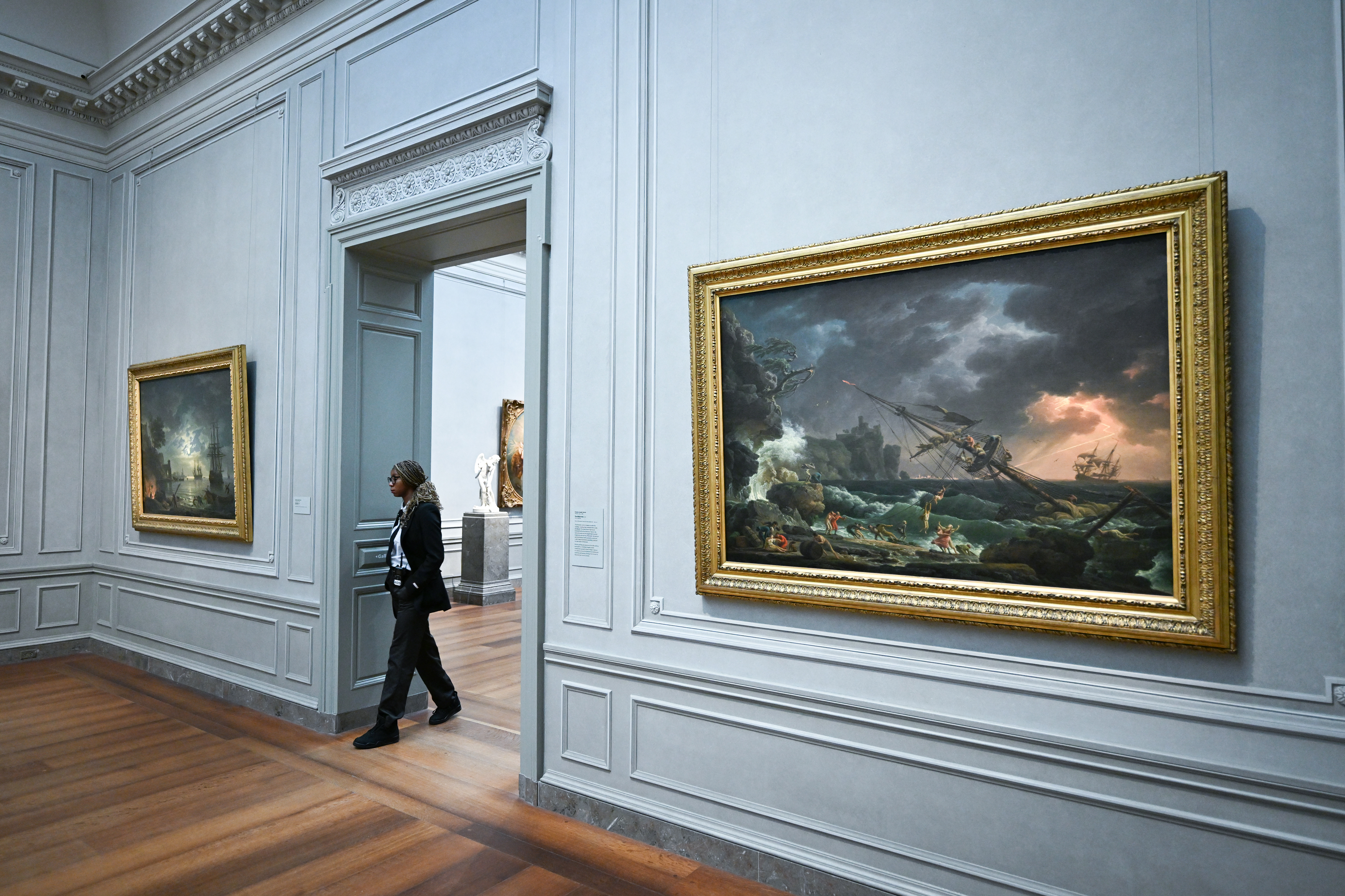
    I watched in horror as a terrible storm in the Mediterranean dashed a ship against a rocky coast, forcing its crew and passengers into a desperate attempt to save themselves and rescue their cargo.

    I soared with the birds among snow-covered peaks in the Rockies, marveling at the many shades of white and blue.

    And I joined picnickers on a serene hillside along the Hudson River, where I watched the sunlight and clouds play above a sheep pasture and a tiny village beyond it.

    What’s more, I did all of this in just 90 minutes at the National Gallery of Art in Washington. I took the museum’s “Finding Awe” tour and, with the help of staff, unlocked a sense of wonder I did not know I could feel while looking at art — in this case, a 1772 shipwreck scene by Claude-Joseph Vernet, a 1946 abstraction by Georgia O’Keeffe, and an 1860 landscape by Jasper Francis Cropsey.

    The West and East Buildings of the National Gallery of Art.

    The National Gallery, working with University of California at Berkeley psychologist Dacher Keltner, has so far hosted 36 awe tours for the 800 people lucky enough to get a slot. You can also take a self-guided awe tour using the museum’s tools, or apply the same techniques to experience wonder while looking at art anywhere.

    A growing body of evidence demonstrates that the experience of awe that visual arts can trigger has mental and physical health benefits for us. They are similar to the restorative effects produced by awe-inspiring natural settings, such as a mountain vista or open sea, but we can access them more easily. The best part is you don’t need to know anything about the art you are looking at.

    “In some ways I think it’s actually easier if you don’t have an understanding,” National Gallery of Art Director Kaywin Feldman told me, because “that moment of ‘oh my goodness’ is part of wonder. You have to sort of stop in your tracks, have that moment of surprise.”

    This was excellent news for me, because that one semester of art history I took in college didn’t stick. Until now, the primary feeling I’ve had when visiting a museum has been drowsiness. I call it “museum head.” I race through one of the world’s best collections — the Louvre, the Uffizi, the Prado, the Met — and glimpse as many works of art as I can take in until, overstimulated and overwhelmed, I find a seat near the gift shop and wait for the others in my party to finish.

    But now I know the cause of museum head: I was doing it all wrong. The way to experience awe in visual art — in fact, the way to experience awe in any setting — is to slow down. The point is not to see it all but to see a few things, or even one thing, deeply.

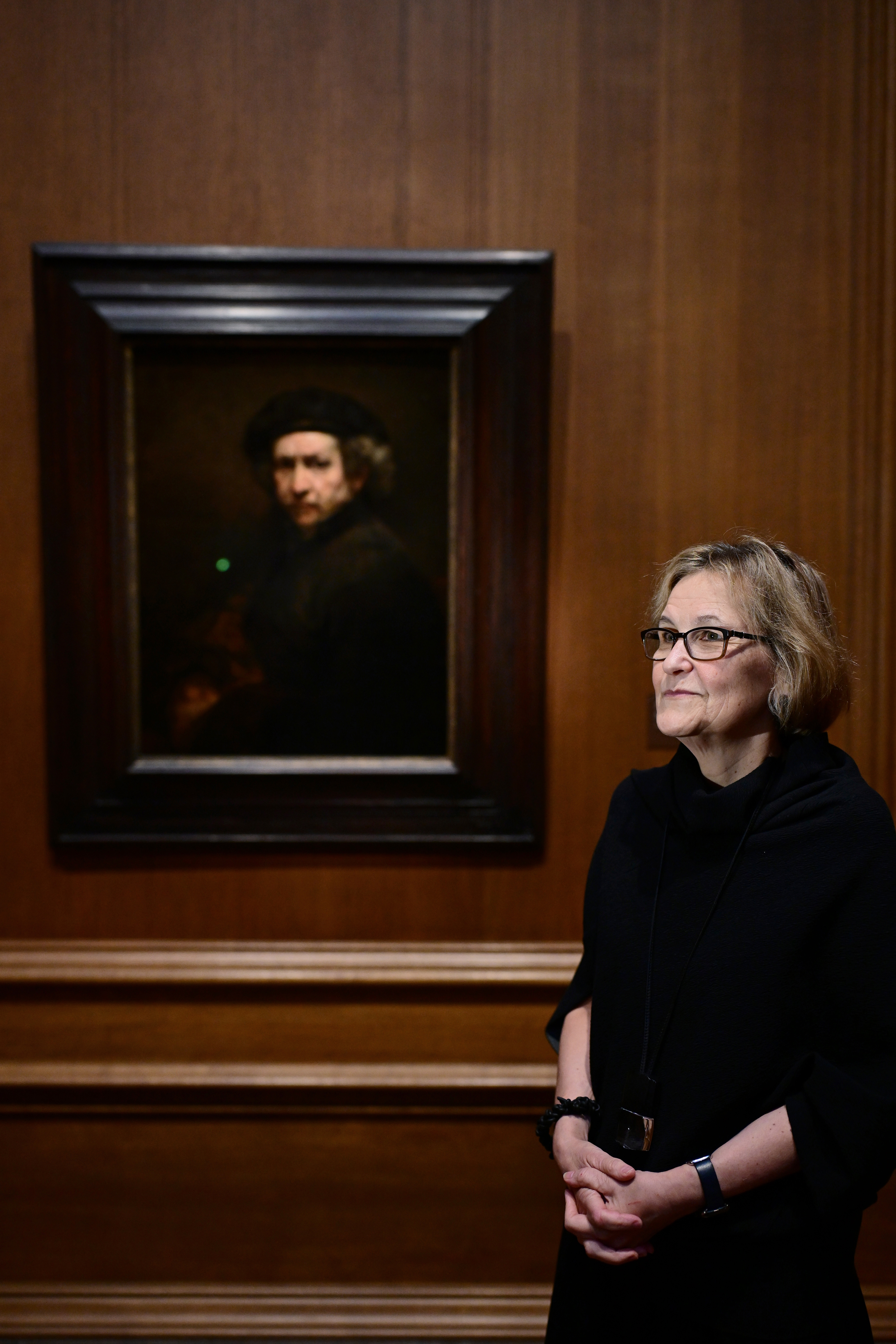
    Kaywin Feldman, director of the National Gallery of Art, talks about a self-portrait by Rembrandt.

    Feldman’s first such awe experience came in Padua, Italy, when she was 22 and, though hungry, tired, and dirty from her travels, she decided to see the Giotto de Bondone frescoes in the Scrovegni Chapel. “When I walked out of that chapel, I felt like I was walking on a cloud,” she recalled. “I thought life was so beautiful, such a gift. I fell back in love with humanity and felt such optimism for the future.”

    Since then, she has made it her life’s work to help others experience such moments of wonder. She told me she once kicked a pair of donors off a Florence art tour when they declined to visit the Uffizi because they already “did it” decades earlier. “You’re there to have an experience, not to check something off the list.”

    To illustrate, she took me to see a 1659 self-portrait by Rembrandt and instructed me to study his face, brightly lit while all else in the painting was in shadow. His dark eyes locked on mine even as I moved from side to side. I studied the wrinkles in his forehead, the folds under the eyes, the loose flesh in the pallid cheeks. I could see a blood vessel on his bulbous nose, the whiskers of his thin beard and the individual curls in his hair. I saw sadness and maybe worry in that face.

    After I took that in, Feldman explained the sadness. Rembrandt, 53 in the portrait, had just gone bankrupt and had to move from his home and sell his possessions. He had lost his wife and several children and had a financial dispute with a partner. “He’s looking at you and connecting and asking you to acknowledge him,” she said. For her, the wonder comes from this “direct connection with somebody who is no longer alive.”

    I held the great man’s gaze from across the centuries and I felt a chill. This connection to immortality made my daily vanities and worries seem small and insignificant. It reminds us, as Feldman put it, that we are “part of something bigger.”

    Physiological responses

    New research out of King’s College London gauged people’s physiological responses while they viewed works by Paul Gauguin, Vincent van Gogh, Edouard Manet, and Henri de Toulouse-Lautrec for 20 minutes. The study, now in preprint, found that participants’ levels of the stress hormone cortisol dropped by 22% on average, while markers of inflammation dropped even more sharply and heart rhythms indicated greater relaxation.

    This is consistent with other recent research connecting immersion in visual art to human flourishing, including by reducing pain and illness, raising levels of neurotransmitters associated with well-being such as serotonin and oxytocin, and increasing feelings of altruism and cooperation.

    “Simply slowing down to take in the simple beauties around us is an antidote to the moral ugliness of our attention-captured, online life, and visual art and the spaces of such contemplation a gym for such training,” Keltner writes in a forthcoming book.

    “It’s mind-blowing,” the Berkeley psychologist told me, “that experiencing awe standing in front of a painting makes you feel more compassionate … and it makes you more interested in being a good citizen.”

    In a sense, science is catching up with philosophy. The 13th-century thinker Albertus Magnus wrote that “wonder is defined as a constriction and suspension of the heart caused by amazement at the sensible appearance of something so portentous, great, and unusual, that the heart suffers a systole.”

    So how can we induce that systole, or contraction, of the heart?

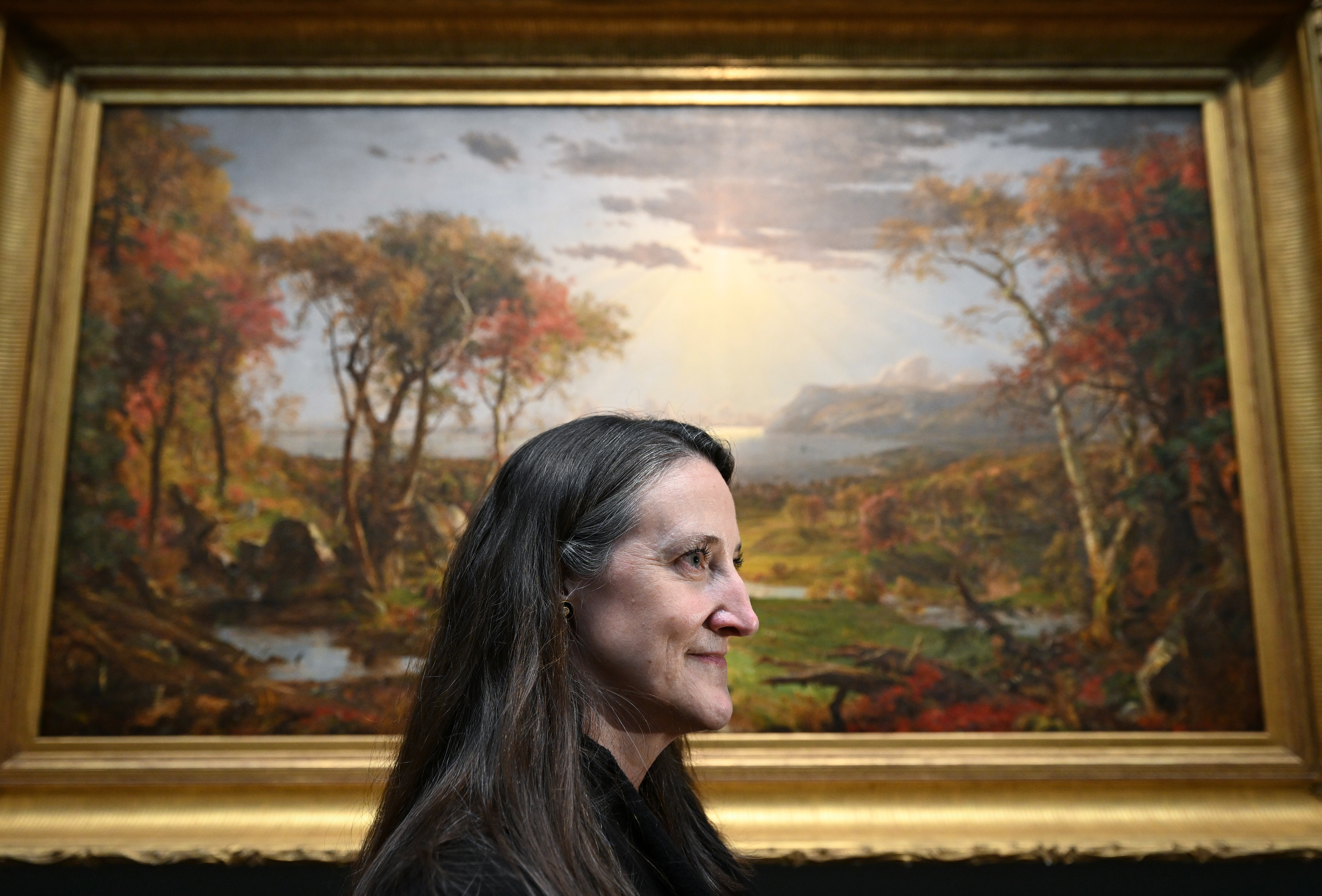
    Nathalie Ryan, who runs the “Finding Awe” project, poses in front of “Autumn — On the Hudson River,” an 1860 painting by Jasper Francis Cropsey.

    For some, awe will be found in the oldest art, which allows us to meet the ancients. For others it will be in the Impressionists, because they are crowd pleasers. Some find it standing back from a piece and thinking abstractly, while others find it by studying intricate detail. In all cases, it’s better if you don’t read up on the work of art beforehand, or even read the label. Just stop at something that catches your eye — and study it for 10 minutes or longer.

    Nathalie Ryan, who runs the “Finding Awe” project at the National Gallery, has been working with the Harvard Graduate School of Education to bring the concept of “slow looking” to the art world.

    “The research that we’ve done for years with Harvard has shown that the longer you look at something and give it your attention and really work to make sense of it yourself and connect, the more curious you become,” Ryan said. Curiosity, in turn, leads you to states of wonder and awe.

    So Ryan and colleague Cassandra Anderson start the awe workshops with breathing exercises and a 15-minute icebreaker in which participants describe to each other moments of awe they have experienced. She then turns to the session’s piece of artwork, starting with 35 minutes of quiet meditation (“linger in the pleasure of just looking … taking in all the details of this work”) followed by a group discussion about emotions and impressions and possible symbolism and metaphors. Only when that is done does Ryan take 15 minutes to provide information about the work’s history and common interpretations, which participants then reflect on for the final 15 minutes.

    In terms of brain science, Keltner explained, the slow looking activates the amygdala, which processes emotions, and the periaqueductal gray matter, which regulates autonomic functions such as heart rate and breathing.

    “You let those images and forms move into your feelings, and you remember things, and it calls to mind images of your childhood or a place you’ve been, and you start to transport,” he said. But once you start learning about the work’s history, the action moves to the prefrontal cortex and its organizing function — and the awe process quiets down.

    The National Gallery produced a set of two dozen flash cards that allow people to take a self-guided awe tour. The selections range from the 17th to the 21st century and each contains a series of prompts to help you find awe.

    Johannes Vermeer’s A Lady Writing comes with a prompt to “write a letter to your future self.” John Constable’s Cloud Study encourages us to go outside and watch the clouds and “contemplate their transient beauty.” Archibald John Motley Jr.’s Portrait of My Grandmother invites us to “remember a mentor’s advice” and contemplate “how might you pass this wisdom along.”

    Some of the works inspire awe by conveying the power of nature, or the moral beauty of its subject, or by making us contemplate spirituality or themes of life and death. But in all cases, Ryan said, “it’s a way of looking more deeply at ourselves and coming to understand ourselves in relationship to this world.”

    If you can’t visit the National Gallery, you can use these prompts when looking at art wherever you live. Just find something that resonates with you — and skip the audio tour.

    Hits and misses

    After the Rembrandt, my awe guides took me to see a work by sculptor Dario Robleto, Small Crafts on Sisyphean Seas. It is an intricate collection of seashells, urchin spines and teeth, coral, tusks, claws, butterfly wings, and more, all arranged with precision and symmetry. The artist intended it as his “gift for the aliens, when we meet them,” as Feldman explained it. For some, it might provoke awe-inspiring thoughts about space and extraterrestrial life and induce them, as the flash card put it, to “meditate on the interconnectedness of all things.” But I found it a bit too abstract to transport me. We moved on, sampling other works featured in the finding-awe tours.

    I felt more of a connection when we visited O’Keeffe’s A Black Bird With Snow-covered Red Hills. Here, I was soaring with an oddly shaped bird in a blue sky, looking down at the blue fading to white where two snow-covered hillsides formed a “V.” It was exhilarating. And puzzling. After a few minutes, Ryan gave me some context: The bird was a nod to the artist’s late husband, Alfred Stieglitz, called by the nickname “Old Crow,” who had died just before O’Keeffe painted the work. Some see loneliness and loss. O’Keeffe herself described “the snow-covered hills holding up the sky,” and the black bird “always there, always going away.”

    I came still closer to finding awe in Vernet’s The Shipwreck, which the artist paired with a tranquil harbor scene as pendants, Moonlight. The latter filled me with calm: A full moon illuminated the sea, which made barely a ripple as it touched the shore, where people slept, smoked, washed, or stood around a campfire.

    But the tranquility only accentuated the terror in the shipwreck scene, where people clung to the crow’s nest of the submerged ship and tried to slide down a rope to safety. Huge waves crashed on the nearby rocky shore, winds splintered the bough of a tree, and a lightning bolt made a fiery patch in an otherwise dark sky.

    After I took in the scenes, Ryan explained that Vernet, influenced by Edmund Burke’s Philosophical Inquiry Into the Origins of Our Ideas of the Sublime and the Beautiful, was contrasting calm beauty with the frightful sublime. A quarter-millennium later, the terror still chilled me.

    Claude-Joseph Vernet’s “Moonlight,” also a 1772 painting, is paired with his work “The Shipwreck” at the National Gallery.

    It was in Cropsey’s Autumn — On the Hudson River, however, that I found my true awe moment. The massive panorama, five feet high and nine feet across, invited me in and held me there.

    I was on a shaded hillside on a warm autumn afternoon, looking down toward the village and river beyond. I heard a gurgling waterfall in the foreground and smelled the earthy decay of fallen trees and leaves. A trio of hunters enjoyed a picnic on a blanket, a bottle of wine in their basket, while their dogs rested. I moved on into the scene, past the red-winged blackbird and the paper birch, past the cattle in the stream and the sheep dotting the pasture, to the kids and dogs on a wooden bridge. Ahead of me, a man on horseback passed a log cabin and headed down the road toward the village, where wood smoke rose from chimneys. Sailing ships and steamboats plied the river, framed by low clouds on the far shore and a rocky mountainside. Streaks of sunlight streamed from behind a cloud, igniting the gold and scarlet leaves.

    It brought me thoughts of my grandparents’ house in the woods, then thoughts of my grandfather, and of how his love of the land became part of my life. I wanted to linger in the now-lost woodlands and wetlands in the painted landscape. In my chest, I felt a deep yearning, almost an ache.

    The National Gallery staff, in its follow-up surveys of awe tour participants, found that 95% of respondents sought more awe in their daily lives, and half reported that they experienced more awe. I can confirm these findings.

    In the days after my visit, I found myself pausing to marvel at things I often take for granted: A Christmas fern poking through the snow, the intricate forms of lichens on a tree, a sweet birch clinging to a rocky hillside, the pink and orange in a winter sunset, the power of a house-rattling windstorm. The more you seek awe, the more you find it.

  • Resilient U.S. consumers drive strongest economic expansion in two years

    Resilient U.S. consumers drive strongest economic expansion in two years

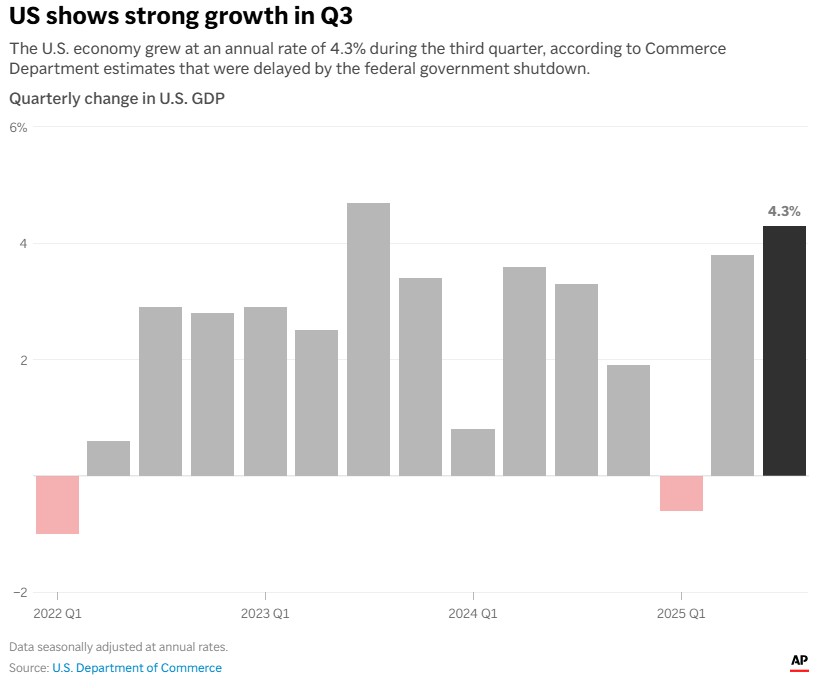
    WASHINGTON — The U.S. economy grew at a surprisingly strong 4.3% annual rate in the third quarter, the most rapid expansion in two years, driven by consumers who continue to spend in the face of ongoing inflation.

    U.S. gross domestic product from July through September — the economy’s total output of goods and services — rose from its 3.8% growth rate in the April-June quarter, the Commerce Department said Tuesday in a report delayed by the government shutdown. Economists surveyed by the data firm FactSet forecast growth of just 3% in the period.

    The U.S. economy grew at an annual rate of 4.3% during the third quarter, according to Commerce Department estimates that were delayed by the federal government shutdown.

    As has been the case for most of this year, the consumer is providing the fuel that is powering the U.S. economy. Consumer spending, which accounts for about 70% of U.S. economic activity, rose to a 3.5% annual pace last quarter. That’s up from 2.5% in the April-June period.

    A number of economists, however, believe the growth spurt may be short-lived with the extended government shutdown dragging on the economy in the fourth quarter, as well as a growing number of Americans fatigued by stubbornly high inflation.

    A survey published by the Conference Board Tuesday showed that consumer confidence slumped close to levels not seen since the U.S. rolled out broad tariffs on its trading partners in April.

    “The jump in consumer spending reminds me a lot of last year’s (fourth quarter),” said Stephen Stanley, chief U.S. economist at Santander. “Consumers were stretching. So, as was the case entering this year, households probably need to take a breather soon.”

    However, at least in recent years, consumer spending has held up even when data suggests they’ve grown more anxious about money.

    Tuesday’s GDP report also showed that inflation remains higher than the Federal Reserve would like. The Fed’s favored inflation gauge — called the personal consumption expenditures index, or PCE — climbed to a 2.8% annual pace last quarter, up from 2.1% in the second quarter.

    Excluding volatile food and energy prices, so-called core PCE inflation was 2.9%, up from 2.6% in the April-June quarter.

    Economists say that persistent and potentially worsening inflation could make a January interest rate cut from the Fed less likely, even as central bank official remain concerned about a slowing labor market.

    “If the economy keeps producing at this level, then there isn’t as much need to worry about a slowing economy,” said Chris Zaccarelli, chief investment officer for Northlight Asset Management, adding that inflation could return as the greatest threat to the economy.

    Another consistent driver in the U.S. economy, spending on artificial intelligence, was also evident in the latest data.

    Investment in intellectual property, the category that covers AI, grew 5.4% in the third quarter, following an even bigger jump of 15% in the second quarter. That figure was 6.5% in the first quarter.

    Consumption and investment by the government grew by 2.2% in the quarter after contracting 0.1% in the second quarter. The third quarter figure was boosted by increased expenditures at the state and local levels and federal government defense spending.

    Private business investment fell 0.3%, led by declines in investment in housing and in nonresidential buildings such as offices and warehouses. However, that decline was much less than the 13.8% slide in the second quarter.

    Within the GDP data, a category that measures the economy’s underlying strength grew at a 3% annual rate from July through September, up slightly from 2.9% in the second quarter. This category includes consumer spending and private investment, but excludes volatile items like exports, inventories and government spending.

    Exports grew at an 8.8% rate, while imports, which subtract from GDP, fell another 4.7%.

    Tuesday’s report is the first of three estimates the government will make of GDP growth for the third quarter of the year.

    Outside of the first quarter, when the economy shrank for the first time in three years as companies rushed to import goods ahead of President Donald Trump’s tariff rollout, the U.S. economy has continued to expand at a healthy rate. That’s despite much higher borrowing rates the Fed imposed in 2022 and 2023 in its drive to curb the inflation that surged as the United States bounced back with unexpected strength from the brief but devastating COVID-19 recession of 2020.

    Though inflation remains above the Fed’s 2% target, the central bank cut its benchmark lending rate three times in a row to close out 2025, mostly out of concern for a job market that has steadily lost momentum since spring.

    Last week, the government reported that the U.S. economy gained a healthy 64,000 jobs in November but lost 105,000 in October. Notably, the unemployment rate rose to 4.6% last month, the highest since 2021.

    The country’s labor market has been stuck in a “low hire, low fire” state, economists say, as businesses stand pat due to uncertainty over Trump’s tariffs and the lingering effects of elevated interest rates. Since March, job creation has fallen to an average 35,000 a month, compared to 71,000 in the year ended in March. Fed Chair Jerome Powell has said that he suspects those numbers will be revised even lower.