Category: Wires

  • Trump administration suspends seizing wages and tax refunds for defaulted student loans

    Trump administration suspends seizing wages and tax refunds for defaulted student loans

    With Americans reeling from high consumer prices, the federal government will suspend tax refund seizures and wage garnishments for people in default on their student loans, the Education Department said Friday.

    The action dials back the Trump administration’s recent decision to resume involuntary collections after a nearly six-year suspension because of the pandemic.

    The suspensions take effect immediately, with no defined end date. The move offers relief to the millions of Americans in default but means the government is losing out on billions of dollars.

    The Education Department said Friday that the temporary suspension will help the agency implement student loan repayment reforms to give borrowers more options to repay their loans and give defaulted borrowers more time to rehabilitate their loans. The tax bill that President Donald Trump signed into law last year calls for the creation of new repayment plans, while phasing out a few existing ones starting July 1.

    “The Department determined that involuntary collection efforts such as Administrative Wage Garnishment and the Treasury Offset Program will function more efficiently and fairly after the Trump Administration implements significant improvements to our broken student loan system,” Under Secretary of Education Nicholas Kent said in a statement Friday.

    About 5.3 million people have not made a payment on their federal student loans for nearly a year — defaults that place them at risk of having a portion of their paycheck, Social Security, or disability income garnished or their tax refund withheld by the federal government. Many were in default before the federal government stopped collecting defaulted loans six years ago. Another 4.3 million borrowers are severely delinquent and nearing default, according to an analysis by the Congressional Research Service.

    In December, the Education Department told the Washington Post that starting the week of Jan. 7, it would notify about 1,000 defaulted borrowers of plans to withhold a portion of their wages. After that, notices were supposed to be sent to a larger number of borrowers each month. The department would not confirm Friday whether those notices ever went out.

    Under garnishment regulations, the Education Department can withhold up to 15% of a borrower’s disposable, or after-tax, income. The garnishment continues until the defaulted loans are paid off in full or the borrower takes action to get out of default.

    “Borrowers were in an absolute panic about the government garnishing wages during an affordability crisis,” said Persis Yu, deputy executive director at the advocacy group Protect Borrowers. “Garnishing wages right at this moment was always a terrible idea.”

    Protect Borrowers and the National Consumer Law Center have also been warning struggling borrowers to check if they are in student loan default before they file their taxes. The groups released a public service announcement Tuesday that encouraged people to call the Treasury Department to find out if they are on the list to lose some or all of their refund. Refunds of federal Child Tax Credits and Earned Income Tax Credits can be critical lifelines for impoverished families, the advocates said.

    Defaults have historically been concentrated among borrowers with low loan balances who never completed their degree, leaving them less likely to find work that could pay off the debt.

    While it was widely anticipated that the government would one day resume seizing the money, the collections would run counter to Trump’s promise to make life more affordable for Americans — a message he is heralding ahead of the midterm elections.

    But Republicans have historically denounced student loan relief as an affront to taxpayers, who they say shouldn’t be on the hook for the debt of college students. Pausing involuntary collection is far from the debt forgiveness the Biden administration pushed, but it does give borrowers a reprieve at the expense of taxpayers.

    The White House’s decision to suspend involuntary collection undercuts the administration’s messaging around student loan repayment. The Education Department previously said the portfolio is headed toward a “fiscal cliff” if the Trump administration doesn’t restart involuntary collections.

    When the Education Department announced the resumption of involuntary collection in April, Education Secretary Linda McMahon said her agency, with the help of the Treasury Department, would “shepherd the student loan program responsibly and according to the law, which means helping borrowers return to repayment — both for the sake of their own financial health and our nation’s economic outlook.”

    But at an event in Rhode Island this week, McMahon signaled that the administration was changing plans. Asked if she had any concerns about making borrowers’ financial situation worse by garnishing their wages, the secretary said there was a pause on taking any action, even though no official announcement had been made.

    Even with a suspension in place, interest will continue to accrue on defaulted loans and borrowers will still contend with the negative credit reporting. The Education Department is encouraging defaulted borrowers to explore resolutions, noting that it reports student loan defaults to credit reporting agencies.

  • An app’s blunt life check adds another layer to the loneliness crisis in China

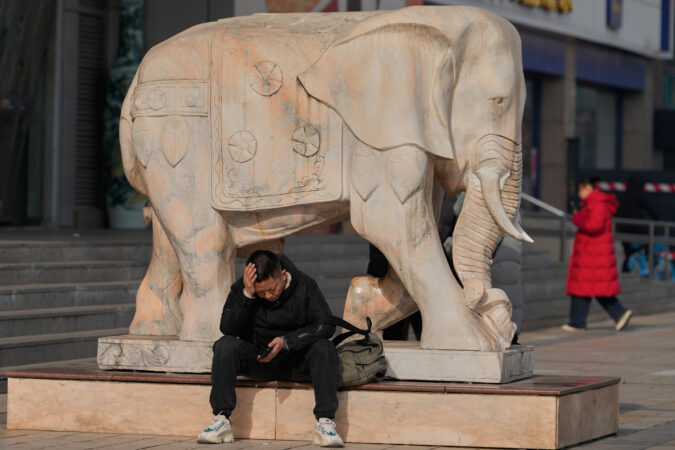
    An app’s blunt life check adds another layer to the loneliness crisis in China

    BEIJING — In China, the names of things are often either ornately poetic or jarringly direct. A new, wildly popular app among young Chinese people is definitively the latter.

    It’s called, simply, Are You Dead?

    In a vast country whose young people are increasingly on the move, the new, one-button app — which has taken the country by digital storm this month — is essentially exactly what it says it is. People who live alone in far-off cities and may be at risk — or just perceived as such by friends or relatives — can push an outsized green circle on their phone screens and send proof of life over the network to a friend or loved one. The cost: 8 yuan (about $1.10).

    It’s simple and straightforward — essentially a 21st-century Chinese digital version of those American pendants with an alert button on them for senior citizens that gave birth to the famed TV commercial: “I’ve fallen, and I can’t get up!”

    Developed by three young people in their 20s, Are You Dead? became the most downloaded paid app on the Apple App Store in China earlier this month, according to local media reports. It is also becoming a top download in places as diverse as Singapore and the Netherlands, Britain and India, and the United States — in line with the developers’ attitude that loneliness and safety aren’t just Chinese issues.

    “Every country has young people who move to big cities to chase their dreams,” Ian Lü, 29, one of the app’s developers, said Thursday.

    Lü, who worked and lived alone in the southern city of Shenzhen for five years, experienced such loneliness himself. He said the need for a frictionless check-in is especially strong among introverts. “It’s unrealistic,” he said, “to message people every day just to tell them you’re still alive.”

    A reflection of life in modern China

    Against the backdrop of modern and increasingly frenetic Chinese life, the market for the app is understandable.

    Traditionally, Chinese families have tended to live together or at least in close proximity across generations — something embedded deep in the nation’s culture until recent years. That has changed in the last few decades with urbanization and rapid economic growth that have sent many Chinese to join what is effectively a diaspora within their own nation — and taken hundreds of millions far from parents, grandparents, aunts, and uncles.

    Today, the country has more than 100 million households with only one person, according to an annual report from the National Bureau of Statistics of China in 2024.

    Consider Chen Xingyu, 32, who has lived on her own for years in Kunming, the capital of southern China’s Yunnan province. “It is new and funny. The name Are You Dead? is very interesting,” Chen said.

    Chen, a “lying flat” practitioner who has rejected the grueling, fast-paced career of many in her age group, would try the app but worries about data security. “Assuming many who want to try are women users, if information of such detail about users gets leaked, that’d be terrible,” she said.

    Yuan Sangsang, a Shanghai designer, has been living on her own for a decade. She’s not hoping the app will save her life — only help her relatives in the event that she does, in fact, expire alone.

    “I just don’t want to die with no dignity, like the body gets rotten and smelly before it is found,” said Yuan, 38. “That would be unfair for the ones who have to deal with it.”

    Is the app tapping into a particular angst?

    While such an app might at first seem best suited to elderly people — regardless of their smartphone literacy — all reports indicate that Are You Dead? is being snapped up by younger people as the wry equivalent of a social media check-in.

    “Some netizens say that the ‘Are you dead?’ greeting feels like a carefree joke between close friends — both heartfelt and gives a sense of unguarded ease,” the business website Yicai, the Chinese Business Network, said in a commentary. “It likely explains why so many young people unanimously like this app.”

    The commentary, by writer He Tao, went further in analyzing the cultural landscape. He wrote that the app’s immediate success “serves as a darkly humorous social metaphor, reminding us to pay attention to the living conditions and inner world of contemporary young people. Those who downloaded it clearly need more than just a functional security measure; they crave a signal of being seen and understood.”

    That name, though

    Death is a taboo subject in Chinese culture, and the word itself is shunned to the point where many buildings in China have no fourth floor because the word for four and the word for death sound the same — si. Lü acknowledged that the app’s name sparked public pressure.

    “Death is an issue every one of us has to face,” he said. “Only when you truly understand death do you start thinking about how long you can exist in this world, and how you want to realize the value of your life.”

    Early Friday, the app had disappeared from Apple’s App Store in China, at least for the time being. The developers wouldn’t say why, only that the incident “occurred suddenly.”

    A few days ago, though, the developers said on their official account on China’s Weibo social platform that they’d be pivoting to a new name. Their choice: the more cryptic Demumu, which they said they hoped could “serve more solo dwellers globally.”

    Then, a twist: Late Wednesday, the app team posted on its Weibo account that workshopping the name Demumu didn’t turn out “as well as expected.” The app team is offering a reward for whoever offers a new name that would be picked over the weekend. Lü said more than 10,000 people have weighed in.

    The reward for the new moniker: $96 — or, in China, 666 yuan.

  • Trump’s promised manufacturing boom is a bust so far

    Trump’s promised manufacturing boom is a bust so far

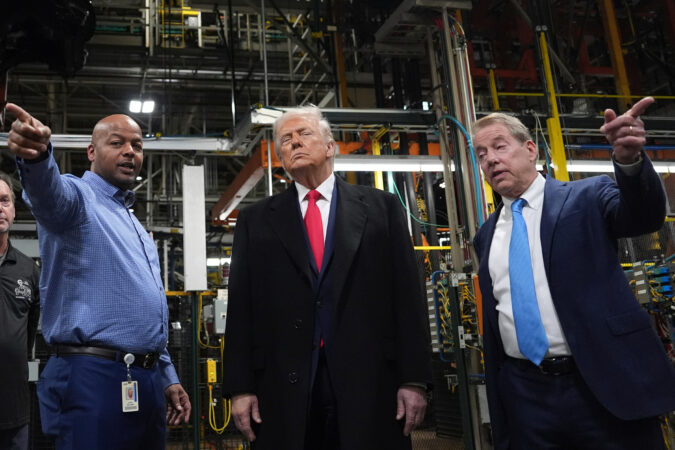
    Introducing the highest U.S. tariffs since the Great Depression, President Donald Trump made a clear promise in the spring: “Jobs and factories will come roaring back into our country.”

    They haven’t.

    Manufacturing employment has declined every month since what Trump dubbed “Liberation Day” in April, saying his widespread tariffs would begin to rebalance global trade in favor of American workers. U.S. factories employ 12.7 million people today, 72,000 fewer than when Trump made his Rose Garden announcement.

    The trade measures that the president said would spur manufacturing have instead hampered it, according to most mainstream economists. That’s because roughly half of U.S. imports are “intermediate” goods that American companies use to make finished products, like aluminum that is shaped into soup cans or circuit boards that are inserted into computers.

    So while tariffs have protected American manufacturers like steel mills from foreign competition, they have raised costs for many others. Auto and auto parts employment, for example, has dipped by about 20,000 jobs since April.

    “2025 should have been a good year for manufacturing employment, and that didn’t happen. I think you really have to indict tariffs for that,” said economist Michael Hicks, director of the Center for Business and Economic Research at Ball State in Muncie, Ind.

    Small- and midsize businesses have found Trump’s on-again, off-again tariffs especially vexing. Fifty-seven percent of midsize manufacturers and 40% of small producers said they had no certainty about their input costs in a November survey by the Federal Reserve Bank of Richmond. Only 23% of large manufacturers shared that complaint.

    Smaller companies also were more than twice as likely to respond to tariffs by delaying investments in new plants and equipment, the survey found. One reason could be that taxes on imports raise the price of goods used in production much more than they do with typical consumer items, according to a study by the San Francisco Fed.

    Industries producing more technologically complex goods such as aircraft and semiconductors also are paying an outsize price, according to Gary Winslett, director of the international politics and economics program at Middlebury College. Makers of semiconductors, for example, shed more than 13,000 jobs since April.

    “They’re the ones who need the imported inputs. Really advanced manufacturing is actually what’s getting hit the hardest,” he said.

    Trump’s tariffs, however, are not the industrial sector’s only headache. Factory payrolls began their post-pandemic decline in early 2023, almost two years before Trump returned to the White House.

    High interest rates and a shift in consumer spending patterns are hurting the nation’s manufacturers, economists said. Business loans are more than twice as expensive as they were four years ago, with banks charging their most creditworthy borrowers interest rates of 6.75%. That discourages businesses from expanding operations and hiring additional workers.

    After bingeing during the height of the pandemic on durable goods, consumers have gradually redirected their spending to in-person services. Money that once went to makers of furniture, televisions, and exercise machines now goes instead to restaurants and entertainment venues.

    In Indiana, the spending switch can be glimpsed in the fortunes of the recreational vehicle industry, a local mainstay. RV shipments soared to a record 600,400 in 2021 as consumers trapped at home by the pandemic hit the road. But by 2024, the work-from-home era was over, and sales fell by nearly half. Thor Industries, the largest RV manufacturer, laid off several hundred workers last year, as demand flagged.

    Once Trump returned to the White House, manufacturers responded by over-ordering imports to beat the anticipated tariffs. That’s left many producers with more inventory than they need, suggesting cuts lie ahead, according to Hicks.

    “The manufacturing job losses that we see now are really just the beginning of what will be a pretty grim couple of quarters as manufacturing adjusts to a new lower level of demand,” he said.

    Modest numbers of manufacturing jobs have been trimmed throughout the economy. In December, Westlake Corp., a Houston-based producer of industrial chemicals, said it would idle four production lines at facilities in Louisiana and Mississippi, putting 295 employees out of work. Speaking on an investor call, company executives blamed excess global capacity and weak demand for the move.

    While the jobs that Trump promised have not materialized, factory output rose in 2025, reaching its highest mark in almost three years, according to Federal Reserve data, and administration officials said it is only a matter of time before the full benefits of the president’s plan are felt.

    Trump’s tariffs and jawboning encourage CEOs to invest in new U.S. plants. Provisions in the president’s signature fiscal legislation permitting companies to quickly write off the full expense of new investments in equipment and research and development expenses will spur modern manufacturing, they said.

    “It also encourages the build-out of high-precision manufacturing here at home, which will lead to high-paying construction and factory jobs,” Treasury Secretary Scott Bessent said in a speech this month.

    Companies are spending more than three times as much on constructing new factories as they did when Trump was first inaugurated, though less than during the Biden-era peak. The White House last fall hailed recent investment announcements by companies such as Stellantis and Whirlpool. Last month, T. RAD North America, a subsidiary of a Japanese manufacturer, announced plans for a new auto parts plant in Clarksville, Tenn., which would employ 928 workers.

    Nick Iacovella, a spokesperson for the Coalition for a Prosperous America, which backs Trump’s manufacturing policies, said the roughly 1% shrinkage in factory employment last year was less significant than the uptick in business investment.

    “We saw a significant increase in capital expenditures, which is the earliest signal that reindustrialization is taking hold. Those investments take time to permit, build ,and staff before they show up in employment data,” he said.

    The president’s hopes of increasing manufacturing employment defy decades of experience in the United States and other advanced economies. American factory jobs peaked at 19.5 million in the summer of 1979 and have been sliding ever since, largely because of the introduction of machinery that can do the job of several workers.

    As two presidents sought to revive domestic production over the past decade, manufacturing employment rode a roller coaster. Factory jobs increased by 421,000 during Trump’s first term before sinking by more than 1 million during the pandemic. President Joe Biden used government subsidies to encourage hiring, especially for green energy projects, and manufacturing payrolls rose more than 100,000 above Trump’s highest mark.

    But those gains evaporated by the end of 2024.

    On Tuesday, the president addressed the Detroit Economic Club, touting “the strongest and fastest economic turnaround in our country’s history.” He boasted about growth, productivity, investment, incomes, inflation and the stock market.

    “The Trump economic boom is officially begun,” the president said.

    All that’s missing now are the jobs.

  • These LinkedIn tweaks could get you noticed faster after a layoff

    These LinkedIn tweaks could get you noticed faster after a layoff

    If you’re one of the more than 1 million people who were laid off this past year, you’ve probably been busy tackling your checklist to land your next job.

    You need to spruce up that resumé, start your online job hunt, and connect with old colleagues and professional contacts. But there’s also one more thing you should do right now, experts say. If you’re on the professional social network LinkedIn, a few strategic moves could boost your visibility to hiring managers and recruiters.

    “It’s much harder to break into the labor market right now,” said Elise Gould, senior economist at Economic Policy Institute. “Employers just aren’t hiring at the rate that they did last year or the previous years.”

    From Amazon to Meta, Walmart, and Starbucks, recent data show that layoffs accelerated in October, bringing the total to 1.1 million, a level not seen since 2020. While the job market may be particularly challenging for some, especially those in industries that are cutting back or young people entering the workforce, the rate of job openings has stayed relatively stable — meaning there’s still opportunity for job seekers, Gould said.

    Here are a few things you can do on LinkedIn to increase your chances of landing your next gig.

    List your new consulting firm

    Some people worry about showing that their employment has ended at one employer without being able to add a new job. So add a new job, said Michelle Volberg, founder of an executive search firm and CEO of Twill, a talent recommendation platform.

    “The job market is so competitive right now, you really have to stand out and you want to do it in thoughtful ways,” she said. “Create value.”

    Start by opening a limited liability company, which usually involves filling out some paperwork and paying a fee. Start building a portfolio of projects and clients, which at first might be your friends and family who let you do a few things free, Volberg said. Then make a list of 25 employers you want to work for and offer your free consulting services. You can say something like, “I’m interested in your company’s mission, and I have some ideas I’d like to share with you free that could help you with” a specific named client. The idea is to give them a preview in the outreach without giving away your ideas. Save those for a Zoom or in-person meeting, Volberg said.

    Be clear about boundaries around your work, including the scope of the project and time expectations. Put them in writing. Use the time to create value and establish a relationship with the employer, but don’t offer free work beyond 30 days, Volberg said. Once you’ve done three or four projects, start charging. You can research market rates through ChatGPT and other AI services and gut check them with connections or professionals in industry social networking groups, including those on Slack, Volberg said.

    In the end, you may have a foot in the door at a new employer or a new path to working for yourself.

    Don’t lie about the break

    Update your LinkedIn as soon as you can to signal you no longer work at your employer. If you’re not interested in consulting, you can update your LinkedIn profile to include a career break.

    The feature is under “Experience” on your profile and allows you to include details and skills that could be useful to employers during your unemployment.

    “Make sure you’re including what you’re doing in that time that could be seen as transferrable skills,” said Catherine Fisher, career expert at LinkedIn.

    You could include a community project you led or a marketing campaign you did for your child’s school fundraiser, or maybe you built something with AI that helped a volunteer organization improve their processes. “AI literacy is a top skill, so is communication, leadership, and collaboration,” Fisher said about what employers seek. “Ways you can show you possess those skills are important.”

    Show off your expertise

    Face it: You have skills and knowledge. It’s time to share that with your professional network to help get you some visibility, Volberg said.

    Regularly publish thoughtful or educational posts relevant to people in your industry, like other people’s posts, and leave smart comments.

    “It’s highly underrated,” said Volberg. “You can really stand out by posting as a thought leader.”

    Recruiters and hiring managers are always looking, Volberg said. Even if they don’t know you’re available to hire, if they like you, they’re more likely to message you. Posting and publicly engaging with others about industry topics just helps you increase your reach.

    Signal that you’re looking

    Let people know you’re looking. There are several ways to do this, depending on your comfort level.

    One way to do this is to click the “open to” button below your name in your profile and hit “finding a new job.” You can set preferences like job titles and locations as well as choose whether only recruiters can see it or all LinkedIn members. If you choose all LinkedIn members, a green frame will appear around your profile photo that says “#OpenToWork.”

    The banner is the best way to remind everyone in your network that you’re searching and LinkedIn’s data shows people are more likely to get noticed that way, Fisher said. But some hiring managers may see this as the worker being not in demand, Volberg cautioned.

    Another way to signal you’re open is to post about your layoff on the network. Tell your story, explain your expertise, and let people know what you’re looking for.

    Engage with employers

    Search for employers you’d like to work for, follow their pages, and connect with people who work for them in your direct or extended networks.

    LinkedIn recently released AI-powered people and job searches, which allows users to ask for what they’re looking for using natural language. You might type something like “product managers that work at Apple,” and LinkedIn can surface relevant people. Similarly, you can say, “I’m looking for a full-time sales role in financial services” to find jobs that might fit.

    Follow your dream employers’ pages so you can get updates from them and so recruiters can get a sense that you’re interested, Fisher said. Message people who are first or second connections. They may also be able to make introductions.

    “A secret I always share is that everyone loves to talk about themselves, so just say, ‘I want to learn about you,’” Volberg said. “Find ways to bring value to them.”

    Being laid off in a competitive job market can be taxing. But think of it like a really tough breakup, with LinkedIn helping you “glow up,” Volberg said.

    “You can be on your couch with ice cream for a couple of days, but then get up,” she said.

  • Evan Mobley hits game-winner to lift the Cavaliers to a two-game sweep of the Sixers, 117-115

    Evan Mobley hits game-winner to lift the Cavaliers to a two-game sweep of the Sixers, 117-115

    Jaylon Tyson scored a career-high 39 points, Evan Mobley’s dunk with 4.8 seconds left was the winner and the short-handed Cleveland Cavaliers completed a two-game sweep of the 76ers in Philadelphia with a 117-115 victory on Friday night.

    Donovan Mitchell added 13 points, 12 assists, and nine rebounds for Cleveland, which rallied from an 11-point deficit in the fourth quarter. The Cavaliers defeated the Sixers 133-107 on Wednesday.

    Joel Embiid scored 33 points and Tyrese Maxey had 22 points, nine assists and five steals for the 76ers.

    Cleveland was without Darius Garland (right big toe soreness) and Sam Merrill (right hand sprain), who were both injured on Wednesday. Coach Kenny Atkinson said both will be reevaluated when the team returns to Cleveland this weekend.

    The Sixers looked in control when Paul George hit a jumper with 8 minutes, 47 seconds remaining for an 11-point lead. But the Cavaliers used a 13-2 run, capped by De’Andre Hunter’s three-pointer with 5:53 left to tie it at 102. Philadelphia moved ahead by seven points after turnovers by the Cavs on three straight possessions, but Cleveland hung around.

    Sixers’ Dominick Barlow (left) and Paul George (right) defend Cleveland’s Donovan Mitchell during the first quarter of Friday’s game.

    Hunter’s layup with just over a minute left put the Cavs up a point. After Mobley made one of two free throws with 22.7 seconds remaining, Maxey tied it at 115 on a runner with 8.1 seconds left. After a timeout, Tyson set up Mobley near the basket for an easy dunk to put Cleveland in front by two. Maxey’s shot from just beyond half court that could have won the game went long.

    Dominick Barlow was back in the lineup for Philadelphia after leaving Wednesday’s game early due to a back contusion. He was questionable entering the contest and finished with two points.

    The Sixers will host the Indiana Pacers (10-32) on Monday (7 p.m., NBCSP).

  • Judge rules feds in Minneapolis immigration operation can’t detain or tear gas peaceful protesters

    Judge rules feds in Minneapolis immigration operation can’t detain or tear gas peaceful protesters

    MINNEAPOLIS — Federal officers in the Minneapolis-area participating in its largest recent U.S. immigration enforcement operation can’t detain or tear gas peaceful protesters, a U.S. judge in Minnesota ruled Friday.

    U.S. District Judge Kate Menendez ruled in a case filed in December on behalf of six Minnesota activists.

    Thousands of people have been observing the activities of Immigration and Customs Enforcement and Border Patrol officers enforcing the Trump administration’s immigration crackdown in the Minneapolis-St. Paul area since early December.

  • Justice Department investigating whether Minnesota’s Walz and Frey impeded immigration enforcement

    Justice Department investigating whether Minnesota’s Walz and Frey impeded immigration enforcement

    WASHINGTON — The Justice Department is investigating whether Minnesota Gov. Tim Walz and Minneapolis Mayor Jacob Frey have impeded federal immigration enforcement through public statements they have made, according to two people familiar with the matter.

    The investigation focused on potential violation of a conspiracy statute, the people said.

    The people spoke to the Associated Press on condition of anonymity because they were not authorized to discuss a pending investigation by name.

    CBS News first reported the investigation.

    In response to reports of the investigation, Walz said in a statement: “Two days ago it was Elissa Slotkin. Last week it was Jerome Powell. Before that, Mark Kelly. Weaponizing the justice system and threatening political opponents is a dangerous, authoritarian tactic.”

    Walz’s office said it has not received any notice of an investigation.

    Minneapolis Mayor Jacob Frey’s office did not immediately respond to an email and voicemail requesting comment.

    The investigation comes during a weekslong immigration crackdown in Minneapolis and St. Paul that the Department of Homeland Security has called its largest enforcement operation, resulting in more than 2,500 arrests.

    The operation has become more confrontational since the fatal shooting of Renee Good on Jan. 7. State and local officials have repeatedly told protesters to remain peaceful.

  • Justice Department says members of Congress can’t intervene in release of Epstein files

    Justice Department says members of Congress can’t intervene in release of Epstein files

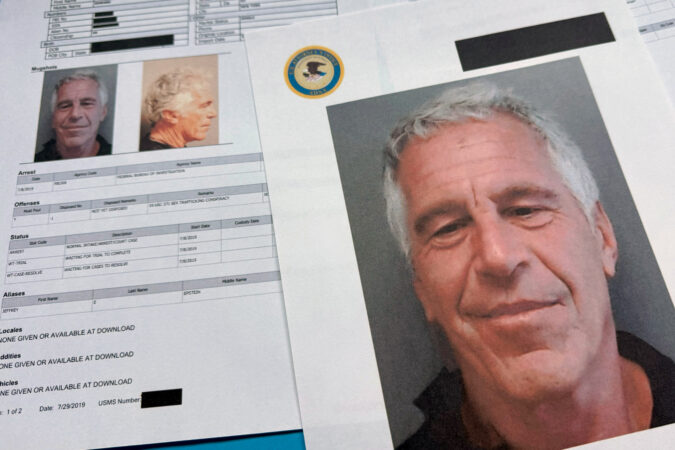
    NEW YORK — Manhattan’s top federal prosecutor said Friday that a judge lacks the authority to appoint a neutral expert to oversee the public release of documents in the sex trafficking probe of financier Jeffrey Epstein and British socialite Ghislaine Maxwell.

    Judge Paul A. Engelmayer was told in a letter signed by U.S. Attorney Jay Clayton that he must reject a request made earlier this week by the congressional cosponsors of the Epstein Files Transparency Act to appoint a neutral expert.

    U.S. Rep. Ro Khanna, a California Democrat, and Rep. Thomas Massie, a Kentucky Republican, say they have “urgent and grave concerns” about the slow release of only a small number of millions of documents that began last month.

    In a filing to the judge they said they believed “criminal violations have taken place” in the release process.

    Clayton, though, said Khanna and Massie do not have standing with the court that would allow them to seek the “extraordinary” relief of the appointment of a special master and independent monitor.

    Engelmayer “lacks the authority” to grant such a request, he said, particularly because the congressional representatives who made the request are not parties to the criminal case that led to Maxwell’s December 2021 sex trafficking conviction and subsequent 20-year prison sentence for recruiting girls and women for Epstein to abuse and aiding the abuse.

    Epstein died in a federal jail in New York City in August 2019 as he awaited trial on sex trafficking charges. The death was ruled a suicide.

    The Justice Department expects to update the court “again shortly” regarding its progress in turning over documents from the Epstein and Maxwell investigative files, Clayton said in the letter.

    The Justice Department has said the files’ release was slowed by redactions required to protect the identities of abuse victims.

    In their letter, Khanna and Massie wrote that the Department of Justice’s release of only 12,000 documents out of more than 2 million documents being reviewed was a “flagrant violation” of the law’s release requirements and had caused “serious trauma to survivors.”

    “Put simply, the DOJ cannot be trusted with making mandatory disclosures under the Act,” the representatives said as they asked for the appointment of an independent monitor to ensure all documents and electronically stored information are immediately made public.

    They also recommended that a court-appointed monitor be given authority to prepare reports about the true nature and extent of the document production and whether improper redactions or conduct have taken place.

  • National Guard troops to stay on Washington, D.C., streets through 2026

    National Guard troops to stay on Washington, D.C., streets through 2026

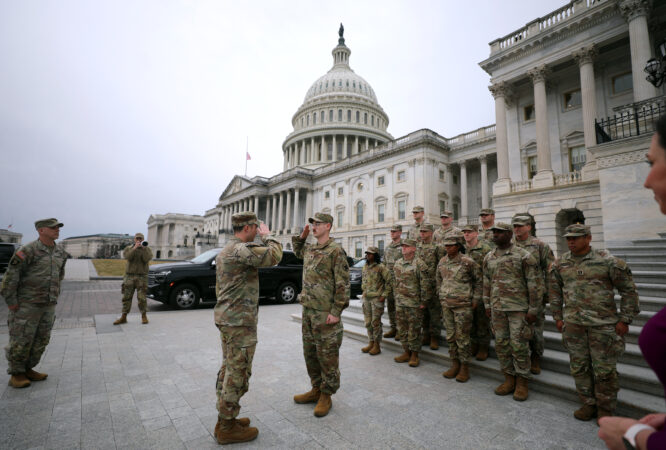
    WASHINGTON — National Guard troops will be on the streets of Washington, D.C., until the end of the year, according to a memo reviewed by the Associated Press.

    The memo, signed by Army Secretary Dan Driscoll and dated Wednesday, said “the conditions of the mission” warranted an extension past the end of next month to continue supporting President Donald Trump’s “ongoing efforts to restore law and order.”

    Meanwhile, Trump said this month that for now he was dropping his push to deploy National Guard troops in Chicago, Los Angeles, and Portland, Ore., which had provoked legal challenges. He also backed off a bit Friday from his threat a day earlier to invoke the Insurrection Act to deploy troops to quell protests in Minnesota.

    In Washington, troops have been charged with patrolling the streets and picking up trash. Trump has asserted repeatedly that crime has vanished in the city.

    Two National Guard troops from West Virginia that were part of the mission in D.C. were shot the day before Thanksgiving. Specialist Sarah Beckstrom, 20, died from her injuries.

    The National Guard has about 2,400 troops in Washington, with about 700 from D.C. and the rest from 11 states with Republican governors, including Indiana, South Carolina, Alabama, and Oklahoma.

  • Family of man shot by ICE in Minneapolis disputes key aspects of DHS account

    Family of man shot by ICE in Minneapolis disputes key aspects of DHS account

    The family of a man shot in the leg by an ICE officer in Minneapolis on Wednesday has disputed key elements of the Department of Homeland Security’s version of the incident, saying the shooting happened at the door of the man’s house as he let his housemate inside, rather than out in the street during a scuffle.

    The Department of Homeland Security has said an ICE officer shot Julio Cesar Sosa-Celis as he was assaulting the officer “with a shovel or broom stick.” The agency said the incident began when the officer attempted to stop Sosa-Celis in his car, and that Sosa-Celis tried to flee and then got into an altercation with the officer outside, joined by two housemates.

    But Sosa-Celis’ mother, citing an account from her son, said DHS had actually been pursuing one of his housemates, who Sosa-Celis let into their house just before the shooting. Alicia Celis said her son made no mention of anyone running from the house to attack ICE officers.

    A Facebook Live video reviewed by the Washington Post includes people at the house telling 911 dispatchers that the shooting happened as the men closed the door at the residence. Another video includes Sosa-Celis mentioning some sort of scuffle before any gunshots were fired, but he does not specify whether that struggle happened at the door or in the street.

    Celis, who lives in Venezuela, told the Post that her son called her from the hospital after he was taken into custody by ICE. He told her he had received a panicked call Wednesday evening from Alfredo Alejandro Ajorna, who is one of his housemates and a fellow DoorDash driver, Celis said. Ajorna said he was being pursued by ICE and that he needed Sosa-Celis to let him in the front door of the house, where they and their partners and children and others live.

    Sosa-Celis opened the door to let Ajorna inside, Celis said her son told her. Ajorna ran indoors. As Sosa-Celis went to close the door an ICE officer shot him in the leg, his mother said. The men retreated into the house, and people inside called emergency dispatchers, Celis said.

    A short time later, ICE officers broke down the front door and went inside the building, Celis said. They arrested Ajorna, Sosa-Celis, and Gabriel Alejandro Hernandez-Ledezma, who Celis said was not involved in the incident and was in the basement of the house, where he lives. All three men are undocumented immigrants from Venezuela, according to DHS; Sosa-Celis’ family said his temporary protected status to live legally in the United States lapsed last year. DHS had not announced charges against the men as of Friday afternoon.

    In its account of Wednesday night’s shooting, DHS alleged that Sosa-Celis fled in his car during an attempted traffic stop, crashed into a parked car, and then ran away. An officer chased him and attempted to arrest him, the agency said, adding that Sosa-Celis resisted and began to “violently assault the officer.” DHS alleged that Sosa-Celis and the officer were struggling when Ajorna and Hernandez-Ledezma came out of a nearby residence and hit the officer with a snow shovel and broom handle.

    DHS also said Sosa-Celis freed himself of the struggle and hit the officer “with a shovel or broom stick,” at which point the officer fired his gun. The agency called the shot “defensive” and said the officer feared for his life. DHS said the men ran into the residence and ICE officers then arrested them.

    When asked to provide additional evidence or body-camera footage of the alleged attack and to address the claims presented by Sosa-Celis’s family, DHS referred the Post to remarks Homeland Security Secretary Kristi L. Noem made Thursday morning.

    “I would say that our agent is beat up,” Noem told reporters. “He’s bruised, he’s injured, he’s getting treatment. And we’re thankful that he made it out alive.”

    The agency also did not respond to questions Thursday evening about the medical conditions of the officer and Sosa-Celis.

    The shooting of Sosa-Celis — and the angry and sometimes violent protests from residents that followed later — came one week after an ICE officer shot and killed Renée Good as she and other residents monitored and protested ICE activity on a residential street.

    The federal government over the past week has increased the number of officers in the city to 3,000, a massive deployment, with vows to send more personnel to quell what one administration official called an “insurrection.” Residents have objected to agents detaining people and said they feel like their city is under attack.

    Some of the family’s account of Wednesday night’s shooting appeared to align with what was said in a Facebook Live video from inside the home that evening. A chaotic scene appears to unfold as children cry and multiple people speak over each other. The people in the livestream report to 911 dispatchers that one of their family members was shot in the leg as they closed the door of the residence, with ICE officers outside. The Post confirmed the video was filmed from the same address on Minneapolis’s north side.

    Sosa-Celis also joined a different Facebook Live video broadcast the same night by a person who Sosa-Celis’ relatives described as a friend of his. That livestream shows Sosa-Celis describing the incident from what appears to be a hospital bed. Speaking Spanish and using a phrase that can be interpreted several ways, he indicates there was some kind of interaction with ICE personnel before the shooting, though it’s unclear whether he’s describing it happening outside the building or as he moved to close the door on the ICE officer.

    Sosa-Celis also joined that livestream from his home in the moments after the shooting. He can be heard telling the host of the video that he needs assistance. “We need help, friend. We have ICE here,” said Sosa-Celis, providing his address to viewers. “They shot us, they shot us. They shot us, and hit me in the leg.”

    When asked by the host if ICE had been following him, Sosa-Celis, who has his camera pointed toward a window outside, replies that ICE had been following Ajorna.

    Neighbors who live behind the house where the shooting happened also confirmed some elements of the family’s version.

    Brieella Johnson, 35, said she was home preparing dinner for her children at about 6:30 p.m. — her husband had just left with one of their sons for Bible study — when she heard two men arguing outside the house on North 24th Avenue, which she can see from her back deck.

    “We heard two men arguing, then we heard a screech of the vehicle trying to go, and then we heard two to three gunshots,” Johnson said, holding her baby and surrounded by her six older children in her living room on Thursday morning.

    She said she saw uniformed ICE officers with guns drawn “swarm” the house. She heard some of the officers shout, “Come out now!” and “Come out now, or we’re going to shoot!” and other things in Spanish.

    Johnson said she saw ICE officers shoot at one of the windows of the house, then, “They threw one smoke bomb, then yelled ‘Fire’ … Then afterwards we could see smoke in the second floor window.” One of the building’s front windows appeared to have been shattered, she said.

    Johnson heard the DHS account of the shooting and said, “It doesn’t make sense. It doesn’t add up.” She questioned why the ICE officer ended up grappling with and chasing someone he was trying to detain, why he didn’t call for backup sooner, and why he fired in a residential area so close to families with children.

    “Even if you’re going after someone you know is illegal, have back up,” she said.

    Tommy Ross, 72, stood outside his rental house around the block from the shooting location and said he heard three shots late Wednesday and saw the gray Ford sedan mired in the snow and uniformed ICE officers “all around it.”

    Ross, who has lived in the neighborhood for 40 years, said he recognized the car: He had met the owner, a young man with a Spanish accent, after he struck Ross’ Nissan sedan about a month ago, and they exchanged insurance information. He said he did not recall the man’s name.

    Ross and his family heard a car wreck about 7 p.m. “ICE was chasing them people. They ran into the house. There was a fight inside the house,” said Tommy Ross Jr., 40, who was visiting his father at the time of the shooting.

    He said he heard a woman shout: “Get out of my house!,” then heard ICE officers shout, “Freeze!” and “Get on the floor!”

    Following ICE officers’ detention of the three men Wednesday night, tensions flared as neighbors and protesters arrived at the scene. Some protesters heckled, filmed with cellphones, and threw fireworks and a water bottle at officers. Officers fired tear gas and flash bangs at the crowd. Conservative influencer Nick Sortor posted video footage on social media that showed protesters attacking empty ICE vehicles. On Thursday, a damaged ICE laptop and a torn FBI property receipt could be seen on the street.

    “They were combative all night,” the younger Ross said. “They were shooting tear gas, it was all in the air, you couldn’t stand outside without coughing.” The activity was still going on when he headed to bed at 2:30 a.m., he said. “I went to sleep to ‘boom, boom, boom.’ Sounded like a war zone.”

    Local and state officials have called on ICE to leave Minnesota, while the Trump administration has condemned residents who are tracking, protesting, and trying to disrupt ICE activity.

    On Thursday morning, President Donald Trump threatened to invoke the Insurrection Act in Minnesota, raising the possibility of taking the highly unusual step of sending U.S. troops into a domestic city. Minnesota Gov. Tim Walz and Minneapolis Mayor Jacob Frey, both Democrats, urged the federal government not to escalate the tension.

    “They’re trying to make a riot out of it,” the elder Ross said of Trump administration officials, choking up as he spoke. “Governor Walz is doing a good thing, trying to keep them together.”

    Trump on Friday addressed his comments on the Insurrection Act, telling reporters outside the White House: “If I needed it, I’d use it. I don’t think I need it right now.”

    Johnson, the neighbor, said she does not support Trump invoking the Insurrection Act. “I don’t think they need U.S. troops or the National Guard. They need a safe and secure plan,” she said of ICE officers. “If the federal government is going to continue to use ICE, they need to treat these people like humans … You can’t just go in guns blazing. You disrupt communities. You make people scared.”

    But her husband Bryant Johnson, 35, who runs a painting business, blamed local and state officials for not preventing or doing more to address welfare fraud claims that intensified Trump’s attention on Minnesota. Like Trump, he blamed the fraud on Minneapolis’s large Somali community, because many of the dozens of people implicated in the scandal are Somali American. Most Somalis in the Twin Cities, a population of more than 83,000, are U.S. citizens.

    “I feel like a lot of this was brought on by our mayor and our government officials that were very well aware of the fraud,” Bryant Johnson said. “And if they didn’t let that kind of stuff continue and go on, we might not have this much of a presence of ICE.”

    “When you come here from another country to defraud our country of hundreds of millions of dollars,” he added, “you’ve got to go.”

    His wife shook her head. “There has to be a different way of getting them out,” she said. “There’s plenty of Americans that committed fraud. They go to jails, they don’t get killed.”

    Sosa-Celis’ father-in-law, who lives in Saint Paul and spoke on the condition of anonymity because he is undocumented, described Sosa-Celis as a hardworking man who provides for his family in the United States and Venezuela.

    Sosa-Celis’ mother said Thursday evening that she had not heard from her son since Wednesday night and does not know where he is or the status of his injury.

    “I haven’t been able to sleep,” she said. “He never has a ‘no’ for me … He says, ‘Here, Mom. Take as much as you want.’”