Category: Wires

  • Trump faces narrowing options on Venezuela action

    Trump faces narrowing options on Venezuela action

    The day after President Donald Trump declared he had ended 94% of all seaborne drug trafficking to the United States and reduced illegal migrant border crossings to “zero,” he announced an entirely new rationale for his escalating campaign against Venezuelan President Nicolás Maduro.

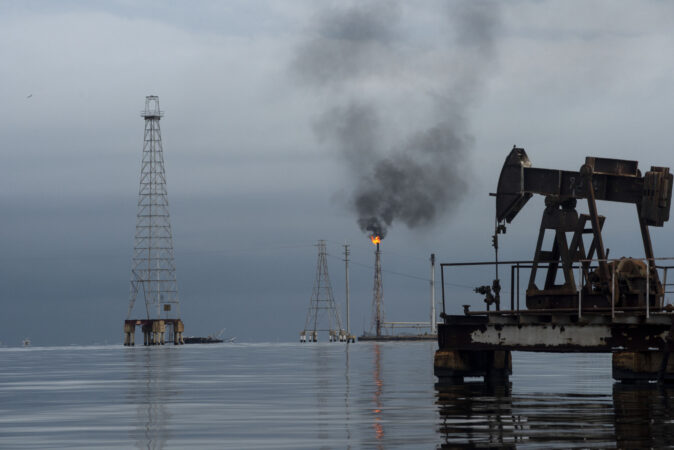
    Venezuela had stolen “Oil, Land and other Assets” from the United States to finance those criminal activities, Trump said Tuesday in a social media post, an apparent reference to decades-old expropriations and the breaking of contracts with U.S. oil companies when Caracas began nationalizing the industry.

    Unless what he alleged was U.S. property was returned “IMMEDIATELY,” Trump said, the military juggernaut he has assembled in the Caribbean to blow up alleged traffickers and seize tankers transporting Venezuelan oil “will only get bigger, and the shock to them will be like nothing they have ever seen before.”

    As Trump continues the boat strikes — now numbering 28, with at least 104 killed — and with the declaration of a “blockade” of all sanctioned vessels transporting Venezuelan oil, he has all but abandoned the public pretense that his goal is simply stopping migrants and drugs, rather than Maduro’s removal.

    His “days are numbered,” Trump told Politico in an interview published Dec. 9. Asked Thursday whether he was leaving open the possibility of war with Venezuela, Trump told NBC: “I don’t rule it out, no.”

    Maduro is the “indicted head of a cartel, now designated as a foreign terrorist organization,” said a person familiar with administration thinking, one of several individuals and former U.S. officials who spoke on the condition of anonymity to talk about internal deliberations. The administration named Maduro, already facing a 2020 U.S. indictment for drug trafficking, as the head of the designated Cartel de los Soles, a network of senior Venezuelan political and security officials it says is involved in human and drug trafficking to finance terrorist attacks in the United States.

    “At the end of the day, that person is either going to stand trial or be given a chance to negotiate exile … in a third country,” the person said of the Venezuelan leader.

    But with Maduro still sitting tight, Trump’s options seem to be narrowing rapidly.

    In an emailed response to questions, White House deputy spokesperson Anna Kelly said, “Nothing is ‘narrowing.’” Trump, she said, “has already taken decisive action to stop the illegal migrant invasion, deport violent criminals, and defend our homeland against evil narcoterrorists — which is saving countless lives across the country. President Trump retains all options to keep Americans safe.”

    Airstrikes on land, which U.S. officials have said would probably target isolated encampments associated with cocaine trafficking or selected military assets and installations, are “going to start” happening, Trump said last week.

    If that doesn’t work in persuading Maduro to flee, regional experts and former officials say, there are only two U.S. choices left — withdrawal or regime change by force.

    The prospect of invasion and a military ground operation with the possibility of American deaths, however, may be unpalatable to a president who has vowed “no more wars” and has thus far limited overseas military involvement to standoff strikes by air and sea.

    “It’s conceivable to me that in a month, two months, the president … declares victory on grounds that maritime drug trafficking is way down,” Elliot Abrams, Trump’s first-term special envoy on Venezuela, said Tuesday on the School of War podcast. But “if Maduro survives and Trump walks away, it’s a defeat.”

    While some in Congress have sharply opposed ongoing U.S. military action in the Caribbean and eastern Pacific without legislative approval, let alone a ground invasion of Venezuela, others have called on Trump to move more decisively.

    “You cannot allow this man to remain standing after this show of force,” Sen. Lindsey Graham (R., S.C.) said of Trump’s Caribbean deployment of 15,000 troops and dozens of warships and aircraft. Graham, a retired Air Force legal officer, spoke after a closed briefing Tuesday for Senators by Defense Secretary Pete Hegseth and Secretary of State Marco Rubio on a controversial Sept. 2 airstrike that killed 11 people aboard an alleged trafficking boat — including two who initially survived and were hit again while flailing amid the wreckage.

    “Is the goal to take him out?” Graham asked about Maduro, saying he hadn’t received answers from the administration. “If it’s not the goal … I think it’s a mistake.”

    But as lawmakers continue to argue and the administration ups the ante, “the most interesting question is why is [Trump] doing all this at all,” Abrams said in an interview with the Washington Post.

    Trump’s fixation on Venezuela melds a number of his own domestic political aims and the priorities of senior officials around him. The administration’s new National Security Strategy, which shifts U.S. focus to the Western Hemisphere, promises to reward countries that comply with “America First” policies and punish those that do not.

    For Rubio — the son of Cuban immigrants who fled the island several years before the 1959 takeover by Fidel Castro and who made his political career in the anti-Castro cauldron of South Florida — the collapse of Cuba’s communist government has long been a prime goal.

    Cuba’s economy has been propped up by Venezuela under Maduro and his predecessor, Hugo Chávez, through a steady supply of oil despite heavy U.S. sanctions. In addition to economic ties and ideological affinity, Maduro’s personal safety is said to be provided by elite Cuban security forces. Many think that the end of Venezuelan aid would be a death knell for the government in Havana.

    “Rubio is the driving force behind the military buildup in Venezuela policy in the last several months, but he has not convinced the president yet to use military force,” said a second former official. Others, however, say it is Trump who wants to escalate.

    For White House Deputy Chief of Staff Stephen Miller, the architect of Trump’s draconian anti-immigrant policy, the hundreds of thousands of Venezuelans who fled to the United States, during Trump’s first term and the Biden administration, provide an easy target. Miller has echoed Trump’s charges that most of the Venezuelans in the U.S. were sent by Maduro from prisons and mental institutions to terrorize and kill Americans.

    Those sentiments contrast with Trump’s first term, when the flow of what eventually would be millions of fleeing Venezuelans spread across the hemisphere was viewed more sympathetically. Then-Secretary of State Mike Pompeo, who traveled to the Venezuela-Colombia border to greet them in the spring of 2019, said they were escaping what he called the political and economic “horror” of Maduro’s corrupt and failing socialist economy and demanded they be allowed to leave.

    At the time, Trump also said that “all options” were on the table to oust Maduro, charging that in addition to abusing his own people, he had stolen the 2018 election that gave him a second term in office and had formed U.S.-threatening alliances with Russia, China, and Iran. Trump stepped up sanctions, sent U.S. warships to the Caribbean — although fewer than the current armada — and recognized legislative assembly leader Juan Guaidó as Venezuela’s legitimate president.

    With Guaidó as his guest, Trump told Congress during his 2020 State of the Union address that Maduro was “a socialist dictator” and a “tyrant who brutalizes his people.” The amount of deadly fentanyl entering the country, primarily from China and Mexico, had begun to soar even before Trump took office, reaching its peak as the COVID pandemic waned and beginning an ongoing decline, along with overdose deaths, in 2024, according to U.S. government figures.

    During first-term debates in the Trump White House over what to do about Maduro, some advocated the use of military force to oust him, according to subsequent books by then-Defense Secretary Mark T. Esper, who opposed it, and national security adviser John Bolton, who supported it.

    With his time in office winding down and Gen. Mark A. Milley, then chairman of the Joint Chiefs of Staff, and CIA Director Gina Haspel also advising against the use of force, according to Esper and others, Trump backed off.

    The number of arriving Venezuelans, many crossing the border illegally, increased sharply under the Biden administration. Many were allowed to stay legally under a temporary protected status that recognized the economic and political hardships Trump himself had said were the reason for their flight.

    Maduro, who reneged on agreements with the Biden administration to allow a fair election in 2024, was inaugurated for his third term in January, only 10 days before Trump was sworn in again. By then, Guaidó had long since faded from memory. A new opposition figure, María Corina Machado, came to the fore and — though barred by Maduro from running against him — led her party to a landslide win that was widely acknowledged to have been stolen.

    Trump lost little time moving on his campaign promise to expel migrants and end opioid deaths, touting crime statistics he wildly inflated and blamed on Biden. In one of his first second-term acts, he ordered the end of protected status for Venezuelans and other migrants, and began widespread deportations. Trump charged that Maduro controlled a Venezuelan gang, Tren de Aragua, and had sent it to the United States to wreak criminal havoc, allegations that were not supported by U.S. intelligence assessments.

    Tren de Aragua and Cartel de los Soles are among roughly two dozen foreign organizations that the administration has designated, under a February Trump executive order, as “narcoterrorists.”

    By summer, despite some early attempts at negotiations with Maduro that included an offer to expand U.S. oil operations in Venezuela, Trump had opted for a military path. Though Venezuela is not a source of fentanyl and is a trafficker but not a producer of cocaine, according to U.S. law enforcement, pressure against Maduro was seen as a visible reminder to drug-producing countries such as Mexico and Colombia of the consequences of noncooperation.

    Miller, current and former U.S. officials said, had first proposed striking Mexican cartels and traffickers as a way to stop drugs and migrants. But as the administration surged thousands of U.S. troops to the southern border and increased intelligence cooperation, Mexico began to curb cartel action. Miller and his team were left looking for another target.

    The administration sent warships to the Caribbean, and on Sept. 2, Special Operations forces struck an alleged drug-smuggling boat carrying 11 men with missiles. It had come from Venezuela, Trump said without providing evidence, and was carrying “bags” of fentanyl and cocaine for Tren de Aragua. The United States, he told Congress that month, was in an “armed conflict” with terrorists.

    On Dec. 10, U.S. forces in the Caribbean seized an oil tanker, the Skipper, that had just filled up in Venezuela and was headed to Asia. The ship, already under U.S. sanctions for carrying illegal Iranian oil, was to be hauled to a Texas port. Asked by reporters what would happen to the oil, Trump said, “Well, we keep it, I guess.”

    On Saturday, the Department of Homeland Security said a second vessel carrying Venezuelan oil in the Caribbean had been “seized” in a joint operation by the Coast Guard and Defense Department. That ship, the Centuries, was not under U.S. sanctions and it was unclear whether it had merely been boarded by U.S. forces or taken under their control.

  • Israel’s cabinet approves 19 new Jewish settlements in the occupied West Bank

    Israel’s cabinet approves 19 new Jewish settlements in the occupied West Bank

    TEL AVIV, Israel — Israel’s cabinet has approved a proposal for 19 new Jewish settlements in the occupied West Bank, the far-right finance minister said Sunday, as the government pushes ahead with a construction binge in the territory that further threatens the possibility of a Palestinian state.

    That brings the total number of new settlements over the past few years to 69, a new record, according to Finance Minister Bezalel Smotrich, who has pushed a settlement expansion agenda in the West Bank. The latest ones include two that were previously evacuated during a 2005 disengagement plan.

    The approval increases the number of settlements in the West Bank by nearly 50% during the current far-right government’s tenure. In 2022, there were 141 settlements across the West Bank. After the latest approval, there are 210, according to Peace Now, an anti-settlement watchdog group.

    Settlements are widely considered illegal under international law. Smotrich’s office said the cabinet approval came on Dec. 11 and that the development had been classified until now.

    Settlements are latest blow to Palestinian state

    The approval comes as the U.S. pushes Israel and Hamas to move ahead with the second phase of the Gaza ceasefire, which took effect Oct. 10. The U.S.-brokered plan calls for a possible “pathway” to a Palestinian state, something the settlements are aimed at preventing.

    The cabinet decision included a retroactive legalization of some previously established settlement outposts or neighborhoods of existing settlements, and the creation of settlements on land where Palestinians were evacuated, the Finance Ministry said. Settlements can range in size from a single dwelling to a collection of high-rises.

    The ministry said two of the settlements legalized in the latest approval are Kadim and Ganim, which were two of the four West Bank settlements dismantled in 2005, as part of Israel’s withdrawal from the Gaza Strip. There have been multiple attempts to resettle them after Israel’s government in March 2023 repealed a 2005 act that evacuated the four outposts and barred Israelis from reentering the areas.

    Israel captured the West Bank, east Jerusalem, and Gaza — areas claimed by the Palestinians for a future state — in the 1967 war. It has settled over 500,000 Jews in the West Bank, in addition to over 200,000 in contested east Jerusalem.

    Israel’s government is dominated by far-right proponents of the settler movement, including Smotrich and cabinet minister Itamar Ben-Gvir, who oversees the nation’s police force.

    Settler expansion has been compounded by a surge of attacks against Palestinians in the West Bank in recent months.

    During October’s olive harvest, settlers across the territory launched an average of eight attacks daily, the most since the United Nations humanitarian office began collecting data in 2006. The attacks continued in November, with the U.N. recording at least 136 more by Nov. 24.

    Settlers burned cars, desecrated mosques, ransacked industrial plants, and destroyed cropland. Israeli authorities have done little beyond issuing occasional condemnations of the violence.

    2 Palestinians killed in West Bank clashes, ministry says

    The Palestinian Health Ministry in Ramallah said two Palestinians, including a 16-year-old, were killed in clashes with Israel’s military on Saturday night in the northern part of the West Bank.

    Israel’s military said a militant was shot and killed after he threw a block at troops in Qabatiya, and another militant was killed after he hurled explosives at troops operating in the town of Silat al-Harithiya.

    The Palestinian Health Ministry identified the Palestinian killed in Qabatiya as 16-year-old Rayan Abu Muallah. Palestinian media aired brief security footage of the incident, where the youth appears to emerge from an alley and is shot by troops as he approaches them without throwing anything. Israel’s military said the incident is under review.

    The Health Ministry identified the second man as Ahmad Ziyoud, 22.

    Israel’s military has scaled up military operations in the West Bank since the Oct. 7, 2023, Hamas-led attack that triggered the war in Gaza.

    Cardinal celebrates Christmas Mass in Gaza City

    The top Catholic leader in the Holy Land visited Gaza’s only Catholic church and celebrated a pre-Christmas Mass on Sunday that included the baptism of a baby. Dozens of Palestinians gathered in the Holy Family Parish.

    Cardinal Pierbattista Pizzaballa is on his fourth visit to Gaza since the war began, and said the Christian community aims to be a “stable, solid reference point in this sea of destruction” as rebuilding slowly begins.

    “It is different this time,” Pizzaballa said. “I saw the new desire for a new life.”

    The Holy Family compound was hit by fragments from an Israeli shell in July, killing three people in what Israel called an accident and expressed regret over. The parish has served as a refuge for Christians and Muslims, sheltering hundreds of displaced people.

    There was a mix of gratitude and grief as people at the church marked Christmas away from home. “They welcomed us with great love and respect,” said Nazih Lam’e Habashi, 78, who stays there with his family. “This is the third holiday we are marking since the war.”

    “God willing, life will improve,” added 67-year-old Najla Saba.

  • Top Trump official defends partial release of Epstein files as Democrats cry foul

    Top Trump official defends partial release of Epstein files as Democrats cry foul

    WEST PALM BEACH, Fla. — Deputy Attorney General Todd Blanche on Sunday defended the Justice Department’s decision to release just a fraction of the Jeffrey Epstein files by the congressionally mandated deadline as necessary to protect survivors of sexual abuse by the disgraced financier.

    Blanche pledged that the Trump administration eventually would meet its obligation required by law. But he stressed that the department was obligated to act with caution as it goes about making public thousands of documents that can include sensitive information.

    Friday’s partial release of the Epstein files has led to a new crush of criticism from Democrats who have accused the Republican administration of trying to hide information.

    Blanche called that pushback disingenuous as President Donald Trump’s administration continues to struggle with calls for greater transparency, including from members of his political base, about the government’s investigations into Epstein, who once counted Trump as well as several political leaders and business titans among his peers.

    “The reason why we are still reviewing documents and still continuing our process is simply that to protect victims,” Blanche told NBC’s Meet the Press. “So the same individuals that are out there complaining about the lack of documents that were produced on Friday are the same individuals who apparently don’t want us to protect victims.”

    Blanche’s comments were the most extensive by the administration since the file dump, which included photographs, interview transcripts, call logs, court records, and other documents. But some of the most consequential records expected about Epstein were nowhere to be found, such as FBI interviews with survivors and internal Justice Department memos examining charging decisions. Those records could help explain how investigators viewed the case and why Epstein was allowed in 2008 to plead guilty to a relatively minor state-level prostitution charge.

    Trump, who was friends with Epstein for years before the two had a falling out, tried for months to keep the records sealed. Though Trump has not been accused of wrongdoing in connection with Epstein, he has argued there is nothing to see in the files and that the public should focus on other issues.

    Federal prosecutors in New York brought sex trafficking charges against Epstein in 2019, but he killed himself in jail after his arrest.

    Democrats see a cover-up, not an effort to protect victims

    But Democratic lawmakers on Sunday hammered Trump and the Justice Department for a partial release.

    Rep. Jamie Raskin (D., Md.) argued that the Justice Department is obstructing the implementation of the law mandating the release of the documents not because it wants to protect the Epstein victims.

    “It’s all about covering up things that, for whatever reason, Donald Trump doesn’t want to go public, either about himself, other members of his family, friends, Jeffrey Epstein, or just the social, business, cultural network that he was involved in for at least a decade, if not longer,” he said on CNN’s State of the Union.

    Blanche also defended the department’s decision to remove several files related to the case from its public webpage, including a photograph showing Trump, less than a day after they were posted.

    The missing files, which were available Friday but no longer accessible by Saturday, included images of paintings depicting nude women, and one showed a series of photographs along a credenza and in drawers. In that image, inside a drawer among other photos, was a photograph of Trump alongside Epstein, Melania Trump, and Epstein’s longtime associate, Ghislaine Maxwell.

    Blanche said the documents were removed because they also showed victims of Epstein. Blanche said that the Trump photo and the other documents will be reposted once redactions are made to protect survivors.

    “It has nothing to do with President Trump,” Blanche said. “There are dozens of photos of President Trump already released to the public seeing him with Mr. Epstein.”

    The thousands of Epstein-related records posted publicly offer the most detailed look yet at nearly two decades worth of government scrutiny of Epstein’s sexual abuse of young women and underage girls. Yet Friday’s release, replete with redactions, has not dulled the clamor for information given how many records had yet to be released and because some of the materials had already been made public.

    Blanche says DOJ has just learned of more potential victims

    Blanche said that the department continues to review the trove of documents and has learned the names of additional potential victims in recent days.

    The deputy attorney general also defended the decision by the federal Bureau of Prisons, which Blanche oversees, to transfer Maxwell to a less restrictive, minimum-security federal prison earlier this year soon after he interviewed her about Epstein. Blanche said that the transfer was made because of concerns about her safety.

    Maxwell, Epstein’s onetime girlfriend, is serving a 20-year federal prison sentence for her 2021 conviction for sex trafficking crimes.

    “She was suffering numerous and numerous threats against her life,” Blanche said. “So the BOP is not only responsible for putting people in jail and making sure they stay in jail, but also for their safety.”

    Meanwhile, Reps. Ro Khanna (D., Calif.) and Thomas Massie (R., Ky.) have indicated they could draft articles of impeachment against Attorney General Pam Bondi for what they see as the gross failure of the department to comply with the Epstein Files Transparency Act.

    “It’s not about the timeline, it’s about the selective concealment,” Khanna said on CBS’ Face the Nation, adding that the redactions in the released files are excessive. He said he believes there will be “bipartisan support in holding her accountable, and a committee of Congress should determine whether these redactions are justified or not.”

    House Democratic leader Hakeem Jeffries of New York said on ABC’s This Week that there needs “to be a full and complete explanation and then a full and complete investigation as to why the document production has fallen short of what the law clearly required,” but he stopped short of backing impeachment.

    Blanche dismissed the impeachment talk.

    “Bring it on,” Blanche said. “We are doing everything we’re supposed to be doing to comply with this statute.”

  • Trump’s return brought stiff headwinds for clean energy. So why are advocates optimistic in 2026?

    Trump’s return brought stiff headwinds for clean energy. So why are advocates optimistic in 2026?

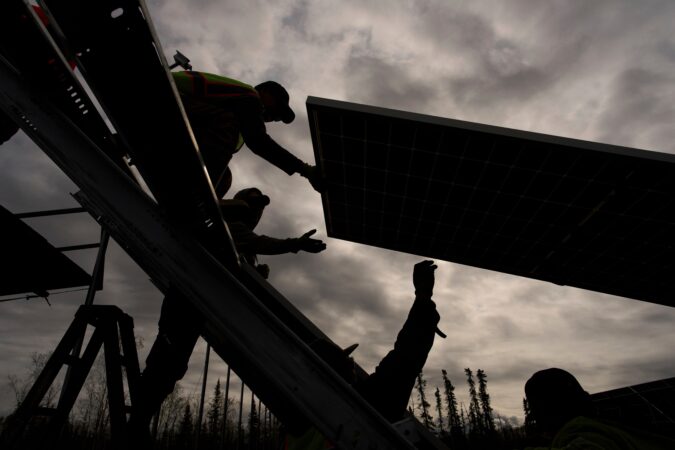
    There were some highs amid a lot of lows in a roller coaster year for clean energy as President Donald Trump worked to boost polluting fuels while blocking wind and solar, according to dozens of energy developers, experts, and politicians.

    Surveyed by the Associated Press, many described 2025 as turbulent and challenging for clean energy, though there was progress as projects connected to the electric grid. They said clean energy must continue to grow to meet skyrocketing demand for electricity to power data centers and to lower Americans’ utility bills.

    Solar builder and operator Jorge Vargas said it has been “a very tough year for clean energy” as Trump often made headlines criticizing renewable energy and Republicans muscled a tax and spending cut bill through Congress in July that dramatically rolled back tax breaks for clean energy.

    “There was a cooldown effect this year,” said Vargas, cofounder and CEO of Aspen Power. “Having said that, we are a resilient industry.”

    Plug Power president Jose Luis Crespo said the developments — both policy recalibration and technological progress — will shape clean energy’s trajectory for years to come.

    Energy policy whiplash in 2025

    Much of clean energy’s fate in 2025 was driven by booster Joe Biden’s exit from the White House.

    The year began with ample federal subsidies for clean energy technologies, a growing number of U.S.-based companies making parts and materials for projects, and a lot of demand from states and corporations, said Tom Harper, partner at global consultant Baringa.

    It ends with subsidies stripped back, a weakened supply chain, higher costs from tariffs, and some customers questioning their commitment to clean energy, Harper said. He described the year as “paradigm shifting.”

    Trump called wind and solar power “the scam of the century” and vowed not to approve new projects. The federal government canceled grants for hundreds of projects.

    The Republicans’ tax bill reversed or steeply curtailed clean energy programs established through the Democrats’ flagship climate and healthcare bill in 2022. Wayne Winegarden, at the Pacific Research Institute think tank, said the time has come for alternative energy to demonstrate viability without subsidies. ( Fossil fuels also receive subsidies.)

    Many energy executives said this was the most consequential policy shift. The bill reshaped the economics of clean energy projects, drove a rush to start construction before incentives expire, and forced developers to reassess their strategies for acquiring parts and materials, Lennart Hinrichs said. He leads the expansion of TWAICE in the Americas, providing analytics software for battery energy storage systems.

    Companies can’t make billion-dollar investments with so much policy uncertainty, said American Clean Power Association CEO Jason Grumet.

    Consequently, greenhouse gas emissions will fall at a much lower rate than previously projected in the U.S., said Brian Murray, director of the Nicholas Institute for Energy, Environment, and Sustainability at Duke University.

    Still, solar and battery storage are booming

    Solar and storage accounted for 85% of the new power added to the grid in the first nine months of the Trump administration, according to Wood Mackenzie research.

    That’s because the economics remain strong, demand is high, and the technologies can be deployed quickly, said Mike Hall, CEO of Anza Renewables.

    Solar energy company Sol Systems said it had a record year as it brought its largest utility-scale project online and grew its business. The energy storage systems company CMBlu Energy said storage clearly stands out as a winner this year too, moving from optional to essential.

    “Trump’s effort to manipulate government regulation to harm clean energy just isn’t enough to offset the natural advantages that clean energy has,” Democratic U.S. Sen. Sheldon Whitehouse said. “The direction is still all good.”

    The Solar Energy Industries Association said that no matter the policies in Washington, solar and storage will grow as the backbone of the nation’s energy future.

    Nuclear, geothermal had a good year, too

    Democrats and Republicans have supported investing to keep nuclear reactors online, restart previously closed reactors, and deploy new, advanced reactor designs. Nuclear power is a carbon-free source of electricity, though not typically labeled as green energy like other renewables.

    “Who had ‘restart Three Mile Island’ on their 2025 Bingo card?” questioned Baringa partner David Shepheard. The Pennsylvania plant was the site of the nation’s worst commercial nuclear power accident, in 1979. The Energy Department is loaning $1 billion to help finance a restart.

    Everyone loves nuclear, said Darrin Kayser, executive vice president at Edelman. It helps that the technology for small, modular reactors is starting to come to fruition, Kayser added.

    Benton Arnett, a senior director at the Nuclear Energy Institute, said that as the need for clean, reliable power intensifies, “we will look back on the actions being taken now as laying the foundation.”

    The Trump administration also supports geothermal energy, and the tax bill largely preserved geothermal tax credits. The Geothermal Rising association said technologies continue to mature and produce, making 2025 a breakthrough year.

    Offshore wind had a terrible year

    Momentum for offshore wind in the United States came to a grinding halt just as the industry was starting to gain traction, said Joey Lange, a senior managing director at Trio, a global sustainability and energy advisory company.

    The Trump administration stopped construction on major offshore wind farms, revoked wind energy permits and paused permitting, canceled plans to use large areas of federal waters for new offshore wind development, and stopped federal funding for offshore wind projects.

    That has decimated the projects, developers, and tech innovators, and no one in wind is raising or spending capital, said Eric Fischgrund, founder and CEO at FischTank PR. Still, Fischgrund said he remains optimistic because the world is transitioning to cleaner energy.

    More clean energy needed in 2026

    An energy strategy with a diverse mix of sources is the only way forward as demand grows from data centers and other sources, and as people demand affordable, reliable electricity, said former Democratic Sen. Mary Landrieu. Landrieu, now with Natural Allies for a Clean Energy Future, said promoting or punishing specific energy technologies on ideological grounds is unsustainable.

    Experts expect solar and battery storage to continue growing in 2026 to add a lot of power to the grid quickly and cheaply. The market will continue to ensure that most new electricity is renewable, said Amanda Levin, policy analysis director at the Natural Resources Defense Council.

    Hillary Bright, executive director of Turn Forward, thinks offshore wind will still play an important role too. It is both ready and needed to help address the demand for electricity in the new year, which will become increasingly clear “to all audiences,” she said. Turn Forward advocates for offshore wind.

    That skyrocketing demand “is shaking up the political calculus that drove the administration’s early policy decisions around renewables,” she said.

    BlueWave CEO Sean Finnerty thinks that states, feeling the pressure to deliver affordable, reliable electricity, will increasingly drive clean energy momentum in 2026 by streamlining permitting and the process of connecting to the grid, and by reducing costs for things like permits and fees.

    Ed Gunn, Lunar Energy’s vice president for revenue, said the industry has weathered tough years before.

    “The fundamentals are unchanged,” Gunn said, ”there is massive value in clean energy.”

  • U.S. tariffs take a bite out of Germany’s iconic nutcracker industry

    U.S. tariffs take a bite out of Germany’s iconic nutcracker industry

    MARIENBERG, Germany — In a workshop tucked into the rolling hills of eastern Germany’s Ore Mountains, rows of wooden soldiers stood at attention. Their red coats gleamed and their square-jawed mouths — designed to crack nuts but mostly decorative — formed the trademark stiff grin of Steinbach Nutcrackers.

    For decades, these handmade figures have sailed across the Atlantic and into American homes, filling mantels and collectors’ shelves and appearing in countless Christmas card photos. Alongside gingerbread houses and fir trees with all the trimmings, they are one of the most recognizable German exports of the holiday season.

    This year, however, tariffs imposed by President Donald Trump have given the stern-faced ornaments a new reason to grimace: About 95% of sales by the family-founded manufacturer, Steinbach Volkskunst, come from the United States, and the company’s most reliable market has become its biggest bureaucratic headache.

    Under a deal between Trump and the European Union reached earlier this year, most exports to the U.S. are subject to a 15% tariff. Separately, the Trump administration also ended the “de minimis” exemption — a rule that had allowed small parcels under $800 to enter duty-free.

    The move was aimed at curbing low-cost imports from Chinese e-commerce giants such as Temu and Shein. But for niche businesses that rely on direct-to-consumer shipments, like Steinbach, that change hit even harder than 15% tariff.

    “The biggest concern wasn’t price — it was instability,” CEO Rico Paul said, standing in front of a glass cabinet filled with colorful nutcrackers. “Policies changed depending on political mood. For us, planning ahead is essential. One day, the rules were one way, the next day they changed.”

    For six months after Trump’s inauguration, confusion reigned. Initially, the president threatened tariffs of 30% or more on most goods, prompting the E.U. to ready plans for retaliation. The deal on 15% tariffs, reached in late July, ended that uncertainty.

    But in late August, Trump issued an executive order ending the de minimis exemption, meaning a slew of new paperwork and bureaucracy.

    Costs rose and delays mounted as Customs and Border Protection grappled to keep up with the surge in new parcels requiring clearance. With the holiday season approaching, Steinbach faced the possibility of its nutcrackers getting stuck in customs warehouses.

    More than half of Steinbach’s business comes from online orders shipped directly to American doorsteps, and customers soon felt the increase. Prices are up roughly 25% compared to last year, because of the tariffs and customs costs, as well as rising wages.

    “In the United States, our name is extremely well known,” Paul said. “We’re practically synonymous with the word nutcracker.” The outsize U.S. demand for Steinbach products, he added, “was always an advantage — until the tariff dispute.”

    American affection for Steinbach’s products seems undiminished by the price increases. “We were worried Americans wouldn’t pay more,” Paul said, pulling up a fresh order from Monticello, Fla., on his phone. “But the loyalty is incredible. They’re still buying, even if it’s more expensive.”

    That loyalty stretches back to the 1950s, when U.S. service members stationed in postwar Germany discovered the nutcrackers and brought them home as souvenirs. They quickly became a cultural shorthand for an authentic European Christmas.

    The nutcracker legacy itself is older. In Saxony’s Ore Mountain region, miners began carving these wooden figures in the 1600s, meant to bring protection and keep evil spirits at bay during the darkest months of winter.

    French author Alexandre Dumas’ adaptation of E.T.A. Hoffmann’s 1816 story “The Nutcracker and the Mouse King” later inspired Tchaikovsky’s 1892 ballet The Nutcracker. The ballet, initially a flop in Russia, became an American holiday institution in the mid-20th century — catapulting the nutcracker to global fame as a Christmas icon.

    On a late November morning at the Steinbach factory, about 40 artisans carved, sanded, and painted wooden limbs, while sewing machines upstairs stitched miniature outfits. Outside, snow settled on fir branches as workers packaged the finished products for their long journey.

    One detail is new: a bright yellow sticker on every box, addressed to the person who will decide if the toy enters the United States smoothly: “Dear U.S. Customs Officer,” it says, “Thank you for keeping the trade flowing.”

    It may be wishful thinking. In October, U.S. news outlets reported that thousands of packages had stalled in customs hubs under the new rules. Some carriers reportedly disposed of abandoned shipments.

    “Because of changes to U.S. import regulations, we are seeing many packages that are unable to clear customs due to missing or incomplete information,” UPS, the shipping company, said in a statement. “Our goal is to speed every package to its destination, while complying with federal customs regulations.”

    In late November, UPS said that its brokerage team was clearing more than 90% of packages on the first day — but not without complications.

    Still, Steinbach nutcrackers continue to sell well, particularly those with pop culture and political themes.

    Last year, Steinbach introduced a pair of nutcrackers dubbed “Republican” and “Democrat,” bearing more than a passing resemblance to Trump and Kamala Harris. The Republican model sold out before Election Day.

    Prices for the smallest nutcrackers start at about $150, while the largest and most intricate figures cost more than $700. Alongside traditional soldiers and Santas, Steinbach has embraced the American appetite for nutcrackers in all forms, including Star Wars stormtroopers, Wizard of Oz characters, and even Pope Leo XIV.

    But the tariffs and customs delays have prompted Steinbach to seek a work-around. “We are building a warehouse in Pennsylvania and hiring staff,” Paul said.

    The nutcrackers will still be made in Germany — local craftsmanship remains a central selling point — but preshipping and storing finished goods in the United States stands to insulate the business from further regulatory whiplash. The tariffs and additional costs of maintaining and staffing the warehouse will be passed on to customers, but the move should eliminate paperwork and delays for shipments to individual buyers.

    Steinbach is not alone. Across Germany, exporters large and small are recalculating.

    “The escalation of U.S. import duties — now effectively averaging 15% on key industrial goods — has hit Germany particularly hard,” said Andreas Baur, foreign trade expert at the Munich-based Institute for Economic Research. “If you take January to September and compare it to the previous year, we have a decline [in exports] of about 8%, and for cars around 14%.”

    But beyond automakers, chemical giants, and heavy industrial goods, the regulatory shift has quietly reshaped the fate of artisans whose exports trade more in memories than volume.

    On the outskirts of Dresden, a 90-minute drive northeast of the nutcracker workshop, the sweet smell of raisins and butter filled Bäckerei Gnauck in the district of Ottendorf-Okrilla.

    Bäckerei Gnauck is one of about 100 bakeries permitted to bake true Dresdner Christstollen — a dense fruitcake that is tightly regulated by the Dresden Stollen Protection Association.

    Here too, the lifting of the de minimis rule has left fifth-generation baker Marlon Gnauck kneading frustration into this year’s cake loaves.

    Stollen, another German Christmas tradition that has gone global, has deep roots in and around Dresden, where it first appeared in the 14th century as a simple, butter-free loaf made under strict Advent fasting rules.

    That changed in 1491, when Pope Innocent VIII issued the “Butter Letter,” allowing bakers to enrich the dough. Spices, candied fruit, and almonds followed and, by the 18th century, Dresden bakers were presenting enormous loaves to royalty, securing the bread’s vaunted holiday status.

    Today, mass-produced versions fill German supermarkets, but only a small group of certified bakeries may call their loaves Dresdner Stollen. Dotted with raisins, and carefully folded together before being baked and doused in confectioners sugar, Stollen is supposed to represent the image of a swaddled baby Jesus.

    Every holiday season since 1999, Gnauck, a fifth-generation baker in his family, has shipped some of his stollen to Americans — half as corporate gifts, he estimates, and a quarter to families with German ancestry.

    He has enjoyed hearing from happy customers, even those who make him wince with their “American innovations” such as toasting stollen or spreading it with peanut butter.

    “Just a good slice of stollen, with a cup of coffee — that’s it, ” he said. “That’s how it should be enjoyed.”

    But now a single two-kilogram shipment, with postage and duties, costs more than $170, he said as he attached the required documents to parcels bound for Dorchester, Mass.; Raleigh, N.C.; and Houston.

    “You’re looking at paying between $60 and $70 in import charges for a two-kilo stollen,” Gnauck said. “The product costs 50 euros [about $59]. Shipping is almost another 50. And then roughly $70 of customs and administrative fees.”

    Only about 2% of Gnauck’s sales are to the United States, but the time required for paperwork and the additional costs for longtime customers have tainted the festive cheer. Gnauck’s verdict: “The Grinch lives in the White House,” he said. “Because what he’s actually doing is completely ruining the gifts.”

    In October, after the first seasonal orders were shipped across the Atlantic, Gnauck temporarily stopped shipping to the U.S. after customers complained about unpredictable costs.

    “We called the next 50 customers who had placed an order,” he said. “A quarter of them canceled. Another quarter of them reduced their order to a 1 kg, and the rest said they’d pay no matter what.”

    Sending stollen to America was never economically logical, he said. “It was emotional. A gesture. And now that gesture is expensive.”

    Some Dresden bakeries have stopped exporting to the United States altogether. But like Paul, the Steinbach CEO, Gnauck isn’t ready to quit. Both men said they simply want one thing from Trump: predictability.

    Paul said a limited-edition nutcracker resembling Trump at the Resolute Desk — with a price tag of $399 — has nearly sold out. “The president is sitting at his desk and is signing a declaration, granting the Steinbach company duty-free status for all eternity,” he quipped.

    For now, that remains fantasy: a wooden wish for stability in a season built on nostalgia — and customs logistics.

  • White House threatens Smithsonian funds in sweeping content review

    White House threatens Smithsonian funds in sweeping content review

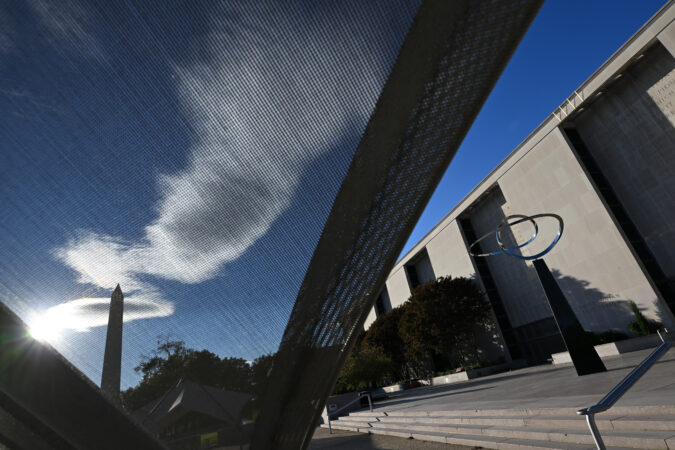
    The Trump administration escalated pressure on the Smithsonian last week, threatening to withhold federal funds if it does not submit extensive documentation for a sweeping content review. President Donald Trump earlier this year set out to purge what he called “improper ideology” from the nation’s most prestigious museum system, efforts that are expected to intensify as his administration tries to shape the country’s 250th anniversary celebrations next year.

    In a staff email obtained by the Washington Post, sent Friday evening after the funding threat, Smithsonian Secretary Lonnie G. Bunch III said the Smithsonian had sent information to the White House in September and intended to submit more that day. He asserted that “all content, programming, and curatorial decisions are made by the Smithsonian.”

    The previous day, Domestic Policy Council director Vince Haley and White House budget director Russell Vought wrote to Bunch that the Smithsonian’s initial submissions “fell far short of what was requested.” Among the solicited documents are current exhibition descriptions, comprehensive America 250 programming files, draft plans for upcoming shows, and internal guidelines used in exhibition development. The White House gave the Smithsonian until Jan. 13 to meet the request.

    “Funds apportioned for the Smithsonian Institution are only available for use in a manner consistent with Executive Order 14253 ‘Restoring Truth and Sanity to American History,’ and the fulfillment of the requests set forth in our Aug. 12, 2025 letter,” Haley and Vought wrote. The letter specifically referenced the Museum of American History, the Museum of Natural History, the Air and Space Museum, the Museum of African American History and Culture, the Museum of the American Indian, the Smithsonian American Art Museum, the Museum of African Art, and the National Portrait Gallery.

    It was not immediately clear how much money the White House might try to withhold, from which parts of the Smithsonian, or on what authority. The institution is about 62% federally funded by a combination of congressional appropriation, federal grants, and contracts.

    An earlier letter, in August, called for an aggressive review of eight museums to ensure they align with the president’s directive to “celebrate American exceptionalism” and asked the Smithsonian to submit all requested materials within 75 days and “begin implementing content corrections” within 120.

    Amid scrutiny from Trump, the institution had already planned its own content review, with the Smithsonian’s Board of Regents instructing Bunch in June “to ensure unbiased content” across the institution and report back on “any needed personnel changes.”

    The Smithsonian declined to comment on the latest development. In Friday’s email, Bunch told staff that the institution had provided the White House with information in September about their public exhibitions and displays, policies, and procedures, and had planned to send more documents related to their mission, organization, and public exhibitions and displays.

    But, Bunch added, “some aspects of the White House request are not readily available and will require a significant amount of time, labor, and coordination from various departments across the Smithsonian” and as they collect documents, they would “continue to evaluate the scope of our response.”

    He stressed that the Smithsonian is “committed to transparency” and has for nearly 180 years “served our country as an independent and nonpartisan institution.”

    In September, Bunch wrote in a letter to staff that the institution had assembled a small, internal team to advise on what it can provide to the White House and said it was undergoing “our own review of content to ensure our programming is factual and nonpartisan.”

    The heightened demands arrive at the end of a tumultuous year for the Smithsonian — the self-described “world’s largest museum, education, and research complex” — which normally operates independently. Historians have broadly criticized Trump for attempting to sanitize the country’s past by demanding that cultural institutions espouse “American exceptionalism” and focus less on slavery, among other historical sins.

    In June, the director of the Smithsonian’s National Portrait Gallery, Kim Sajet, resigned after Trump attempted to fire her, and months later, artist Amy Sherald pulled her solo show from the same museum, after a disagreement with the institution over how a portrait of a transgender woman as the Statue of Liberty would be displayed.

    The Trump administration amplified its rhetoric over the summer, with the president posting on social media that the nation’s museums are “essentially, the last remaining segment of ‘WOKE’” and that the Smithsonian is too focused on “how bad Slavery was.” The White House later released a list of exhibits and materials at the Smithsonian of which it disapproves, specifically targeting works and content mentioning race, slavery, transgender identity, and immigration.

    A unique public-private partnership that is a “trust instrumentality” created by Congress, the Smithsonian puts its public funds toward conserving national collections, basic research, public education, and administrative and support services to maintain large museum and research complexes. Its private funds are used to endow positions, build new facilities, and open new exhibitions, among other uses, according to the Smithsonian website.

    “We wish to be assured that none of the leadership of the Smithsonian museums is confused about the fact that the United States has been among the greatest forces for good in the history of the world” leading up to the nation’s 250th anniversary, Haley and Vought wrote in Thursday’s letter. “The American people will have no patience” for any museum that is “uncomfortable conveying a positive view of American history.”

    The Organization of American Historians wrote in an August statement that Trump’s content review “will undoubtedly be in service of authoritarian control over the national narrative, collective memory, and national collections.”

    James Millward, a history professor at Georgetown who studies Chinese history and is one of the founders and leaders of Citizen Historians for the Smithsonian — a volunteer effort to document everything on display at the institution — said that he suspects the request for digital files means “they’re looking for trigger words.” The Post reported in February that National Science Foundation staff members were combing through research projects looking for words such as “diversity” and “gender.”

    “We’ve seen, of course, this across websites, across agencies, across the United States, and they want to apply that kind of sledgehammer, chauvinistic, brute force, and frankly, bigoted approach to the Smithsonian as well,” Millward told the Post.

    The rhetoric from the Trump administration on how to discuss the past is “very similar to Chinese Communist Party propaganda,” he said. “Only positive stories, only positive energy, no negative energy allowed when you’re talking about history.”

  • U.S. anniversary coins won’t feature any Black Americans or notable women

    U.S. anniversary coins won’t feature any Black Americans or notable women

    Over three years, the U.S. Citizens Coinage Advisory Committee sifted through hundreds of ideas for commemorative coins to celebrate the 250th anniversary of America’s founding.

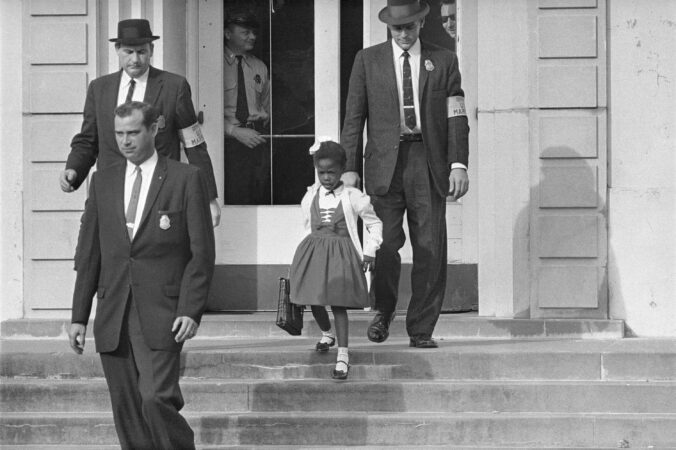
    The group settled on five options, including quarters honoring abolitionist Frederick Douglass; Ruby Bridges, a 6-year-old girl who helped integrate public schools in New Orleans; and the women’s suffrage movement.

    “The question was do we focus only on what happened in 1776 and the years around that or do we also talk about everything that has happened since then,” said Lawrence Brown, a retired New York City doctor who served on the committee from 2019 to 2024.

    “To me, the latter is just as important if not more important because it gives us answers to the questions of how did we maintain that Constitution? How did we maintain our independence?”

    In a preview of the Trump administration’s approach to celebrating the country’s 250th birthday, Treasury Department officials announced this month that the agency would ignore the committee’s recommendation and produce quarters that are far less diverse and more traditional. Instead of addressing the country’s racial history, the five coins will feature images of former presidents George Washington, Thomas Jefferson, James Madison, and Abraham Lincoln, as well as a Pilgrim couple.

    The Biden administration was focused on diversity, equity and inclusion, and critical race theory, U.S. Treasurer Brandon Beach told Fox News, but the “Trump administration is dedicated to fostering prosperity and patriotism.”

    “The designs on these historic coins depict the story of America’s journey toward a ‘more perfect union,’ and celebrate America’s defining ideals of liberty,” Kristie McNally, acting director of the U.S. Mint, said in a statement.

    The administration is also considering a commemorative dollar with President Donald Trump’s face on one side and his raised fist with the words “FIGHT FIGHT FIGHT” on the other, a reference to the widely circulated image of the president following an assassination attempt in 2024. Democratic senators have decried the idea as “un-American” and introduced legislation to prohibit “the likeness of a living or sitting president” from appearing on American currency.

    The nation’s semiquincentennial offers Trump a rare, high-profile opportunity to shape how Americans understand the country’s history. In addition to the coins, the Post Office is expected to announce commemorative stamps, and the National Endowment for the Humanities is offering up to $200,000 to fund new statues of historical figures.

    The new coin designs reflect the Trump Administration’s focus on exalting the country’s pre-civil rights history and depicting idealized images of American life. It is part of an effort to rewrite the past with an exclusionary view of American history, some historians said.

    The White House is working with PragerU, a nonprofit that produces educational videos and is known for taking a conservative view of American history, to organize educational initiatives and “freedom trucks,” mobile museums that will be driven across the country during semiquincentennial celebrations.

    In September, the administration announced the opening of the Founders Museum in Washington, which has been criticized by historians for its use of AI-generated material and its exclusion of nonwhite voices from the nation’s past. The administration is encouraging educators to re-create the exhibit at their schools with printable versions of the portraits and labels.

    “The goal is to instill a sense of patriotism in young Americans,” said Allen Estrin, co-founder of PragerU. “If we don’t have an appreciation of our past, it’s going to be very difficult to imagine a bright future.”

    Andrew Rudalevige, a professor of government at Bowdoin College, said that it is not unusual for presidents to put their stamp on historical events and tie them to their agendas. But by working so closely with ideological groups and focusing on issues like DEI, Trump is risking infusing partisan politics into the semiquincentennial and turning off half the country, he said.

    “I’d be very happy for more people to read the founding documents and seriously engage with the arguments that founders were making,” Rudalevige said. “But I think unfortunately it’s likely that the celebration is going to be pushed into the same culture wars and the same polarization that seems to affect so much of the country right now when it ought to be a time when we could rise above that.”

    Dean Kotlowski, a historian who served on the Citizens Coinage Advisory Committee from 2018 to 2023, said the new coins are part of the administration’s efforts to derail a campaign to diversify the faces on America’s money. “The whole idea was to get away from this kind of presidential history but these coins are very, very traditional,” Kotlowski said.

    The committee, which was established by Congress in 2003, began working on coins to celebrate the country’s 250th birthday after Trump signed the Circulating Collectible Coin Redesign Act during the waning days of his first term. The law called for the creation of five quarters, including at least one featuring a woman.

    The 11-member committee worked with the National Archives, National Park Service, and historians to develop themes and designs for the coins. They conducted online polls and solicited public comment. The process culminated in a two-day public hearing in October 2024 before the panel submitted its final recommendations to then-Treasury Secretary Janet L. Yellen.

    Among the designs recommended for the quarter featuring Bridge is an image immortalized in Norman Rockwell’s 1964 painting of her being escorted to school by U.S. marshals with the words “We Shall Overcome.” The committee chose a portrait of Frederick Douglass that, it said, “conveys his strength as a symbol of the abolition movement.” A third coin celebrating the women’s suffrage movement included a protester carrying a “Votes for Women” flag.

    The remaining two quarters would feature images of the Declaration of Independence and the U.S. Constitution.

    “The process, as it was supposed to happen, is very well-informed, very public, and taken very seriously,” said Dennis Tucker, who took part in the deliberations during his tenure on the committee from 2016 to 2024. “It’s not clear what went into this decision.”

    Trump has been on a campaign to restore what he calls “patriotic education” to the country’s national parks, monuments, and museums. Signs and exhibits related to slavery have been removed from multiple national parks with Trump arguing that they overemphasize the negative aspects of American history. The administration cut funding to small archives and museums across the country but later restored grants to those aligned with Trump’s vision for the celebration of the 250th anniversary.

    During his first term, his administration halted efforts to put Harriet Tubman on the $20 bill, with Trump criticizing the Obama-era decision as “pure political correctness.”

    David Ekbladh, a professor of history at Tufts University, said Trump’s focus on advancing a traditional version of history has intensified since his first term. “During his first administration, Trump pardoned Susan B. Anthony,” Ekbladh said. In 1872, nearly 50 years before women gained the right to vote, Anthony was arrested for wrongfully and willfully voting.

    “But now, even the suffragists are seen as outside the pale of what they want as part of our remembered past.”

  • At least 16 files have disappeared from the DOJ webpage for documents related to Jeffrey Epstein

    At least 16 files have disappeared from the DOJ webpage for documents related to Jeffrey Epstein

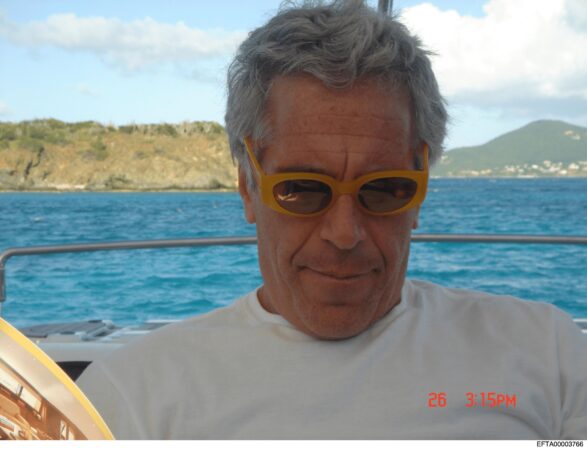
    NEW YORK — At least 16 files disappeared from the Justice Department’s public webpage for documents related to Jeffrey Epstein — including a photograph showing President Donald Trump — less than a day after they were posted, with no explanation from the government and no notice to the public.

    The missing files, which were available Friday and no longer accessible by Saturday, included images of paintings depicting nude women, and one showing a series of photographs along a credenza and in drawers. In that image, inside a drawer among other photos, was a photograph of Trump, alongside Epstein, Melania Trump, and Epstein’s longtime associate Ghislaine Maxwell.

    The Justice Department did not say why the files were removed or whether their disappearance was intentional. A spokesperson for the department did not immediately respond to a request for comment.

    Online, the unexplained missing files fueled speculation about what was taken down and why the public was not notified, compounding long-standing intrigue about Epstein and the powerful figures who surrounded him. Democrats on the House Oversight Committee pointed to the missing image featuring a Trump photo in a post on X, writing: “What else is being covered up? We need transparency for the American public.”

    The episode deepened concerns that had already emerged from the Justice Department’s much-anticipated document release. The tens of thousands of pages made public offered little new insight into Epstein’s crimes or the prosecutorial decisions that allowed him to avoid serious federal charges for years, while omitting some of the most closely watched materials, including FBI interviews with victims and internal Justice Department memos on charging decisions.

    Scant new insight in initial disclosures

    Some of the most consequential records expected about Epstein are nowhere to be found in the Justice Department’s initial disclosures, which span tens of thousands of pages.

    Missing are FBI interviews with survivors and internal Justice Department memos examining charging decisions — records that could have helped explain how investigators viewed the case and why Epstein was allowed in 2008 to plead guilty to a relatively minor state-level prostitution charge.

    The gaps go further.

    The records, required to be released under a recent law passed by Congress, hardly reference several powerful figures long associated with Epstein, including Britain’s former Prince Andrew, renewing questions about who was scrutinized, who was not, and how much the disclosures truly advance public accountability

    Among the fresh nuggets: insight into the Justice Department’s decision to abandon an investigation into Epstein in the 2000s, which enabled him to plead guilty to that state-level charge, and a previously unseen 1996 complaint accusing Epstein of stealing photographs of children.

    The releases so far have been heavy on images of Epstein’s homes in New York City and the U.S. Virgin Islands, with some photos of celebrities and politicians.

    There was a series of never-before-seen photos of former President Bill Clinton but fleetingly few of Trump. Both have been associated with Epstein, but both have since disowned those friendships. Neither has been accused of any wrongdoing in connection with Epstein and there was no indication the photos played a role in the criminal cases brought against him.

    Despite a Friday deadline set by Congress to make everything public, the Justice Department said it plans to release records on a rolling basis. It blamed the delay on the time-consuming process of obscuring survivors’ names and other identifying information. The department has not given any notice of when more records might arrive.

    That approach angered some Epstein accusers and members of Congress who fought to pass the law that forced the department to act. Instead of marking the end of a yearslong battle for transparency, the document release Friday was merely the beginning of an indefinite wait for a complete picture of Epstein’s crimes and the steps taken to investigate them.

    “I feel like again the DOJ, the justice system is failing us,” said Marina Lacerda, who alleges Epstein started sexually abusing her at his New York City mansion when she was 14.

    Many records were redacted or lacked context

    Federal prosecutors in New York brought sex trafficking charges against Epstein in 2019, but he killed himself in jail after his arrest.

    The documents just made public were a sliver of potentially millions of pages of records in the department’s possession. In one example, Deputy Attorney General Todd Blanche said Manhattan federal prosecutors had more than 3.6 million records from sex trafficking investigations into Epstein and Maxwell, though many duplicated material already turned over by the FBI.

    Many of the records released so far had been made public in court filings, congressional releases, or freedom of information requests, though, for the first time, they were all in one place and available for the public to search for free.

    Records that were new were often lacking necessary context or heavily blacked out. A 119-page document marked “Grand Jury-NY,” likely from one of the federal sex trafficking investigations that led to the charges against Epstein in 2019 or Maxwell in 2021, was entirely blacked out.

    Trump’s Republican allies seized on the Clinton images, including photos of the Democrat with singers Michael Jackson and Diana Ross. There were also photos of Epstein with actors Chris Tucker and Kevin Spacey, and even Epstein with TV newscaster Walter Cronkite. But none of the photos had captions and no explanation was given for why any of them were together.

    The meatiest records released so far showed that federal prosecutors had what appeared to be a strong case against Epstein in 2007 yet never charged him.

    Transcripts of grand jury proceedings, released publicly for the first time, included testimony from FBI agents who described interviews they had with several girls and young women who described being paid to perform sex acts for Epstein. The youngest was 14 and in ninth grade.

    One had told investigators about being sexually assaulted by Epstein when she initially resisted his advances during a massage.

    Another, then 21, testified before the grand jury about how Epstein had hired her when she was 16 to perform a sexual massage and how she had gone on to recruit other girls to do the same.

    “For every girl that I brought to the table he would give me $200,” she said. They were mostly people she knew from high school, she said. “I also told them that if they are under age, just lie about it and tell him that you are 18.”

    The documents also contain a transcript of an interview Justice Department lawyers did more than a decade later with the U.S. attorney who oversaw the case, Alexander Acosta, about his ultimate decision not to bring federal charges.

    Acosta, who was labor secretary during Trump’s first term, cited concerns about whether a jury would believe Epstein’s accusers.

    He also said the Justice Department might have been more reluctant to make a federal prosecution out of a case that straddled the legal border between sex trafficking and soliciting prostitution, something more commonly handled by state prosecutors.

    “I’m not saying it was the right view,” Acosta added. He also said that the public today would likely view the survivors differently.

    “There’s been a lot of changes in victim shaming,” Acosta said.

  • U.S. forces stop second merchant vessel off the coast of Venezuela, American officials say

    U.S. forces stop second merchant vessel off the coast of Venezuela, American officials say

    WASHINGTON — U.S. forces on Saturday stopped a vessel off the coast of Venezuela for the second time in less than two weeks as President Donald Trump continues to ramp up pressure on Venezuelan President Nicolás Maduro.

    The move, which was confirmed by two U.S. officials familiar with matter, comes days after Trump announced a “blockade” of all sanctioned oil tankers coming in and out of the South American country and follows the Dec. 10 seizure by American forces of an oil tanker off Venezuela’s coast.

    Homeland Security Secretary Kristi Noem confirmed that the U.S. Coast Guard with help from the Defense Department stopped the oil tanker that was last docked in Venezuela. She also posted on social media an unclassified video of a U.S helicopter landing personnel on a vessel called Centuries.

    A crude oil tanker flying under the flag of Panama operates under the name and was recently spotted near the Venezuelan coast, according to MarineTraffic, a project that tracks the movement of vessels around the globe using publicly available data. It was not immediately clear if the vessel was under U.S. sanctions.

    “The United States will continue to pursue the illicit movement of sanctioned oil that is used to fund narco terrorism in the region,” Noem wrote on X. “We will find you, and we will stop you.”

    The action was described as a “consented boarding,” with the tanker stopping voluntarily and allowing U.S. forces to board it, one official said.

    The Pentagon and White House officials did not immediately respond to requests for comment.

    Trump earlier this month announced that the Coast Guard had seized an oil tanker in the Caribbean Sea and vowed that the U.S. would carry out a blockade of Venezuela. It all comes as Trump has ratcheted up his rhetoric toward Maduro and warned that the longtime Venezuelan leader’s days in power are numbered.

    Trump this week demanded that Venezuela return assets that it seized from U.S. oil companies years ago, justifying anew his announcement of a “blockade” against oil tankers traveling to or from the South American country that face American sanctions.

    Trump cited the lost U.S. investments in Venezuela when asked about his newest tactic in a pressure campaign against Maduro, suggesting the Republican administration’s moves are at least somewhat motivated by disputes over oil investments, along with accusations of drug trafficking. Some sanctioned tankers already are diverting away from Venezuela.

    “We’re not going to be letting anybody going through who shouldn’t be going through,” Trump told reporters. “You remember they took all of our energy rights. They took all of our oil not that long ago. And we want it back. They took it — they illegally took it.”

    U.S. oil companies dominated Venezuela’s petroleum industry until the country’s leaders moved to nationalize the sector, first in the 1970s and again in the 21st century under Maduro and his predecessor, Hugo Chávez. Compensation offered by Venezuela was deemed insufficient, and in 2014 an international arbitration panel ordered the country’s socialist government to pay $1.6 billion to ExxonMobil.

    The targeting of tankers comes as Trump has ordered the Defense Department to carry out a series of attacks on vessels in the Caribbean and eastern Pacific Ocean that his administration alleges are smuggling fentanyl and other illegal drugs into the United States and beyond.

    At least 104 people have been killed in 28 known strikes since early September.

    The strikes have faced scrutiny from U.S. lawmakers and human rights activists, who say the administration has offered scant evidence that its targets are indeed drug smugglers and that the fatal strikes amount to extrajudicial killings.

    The Coast Guard, sometimes with help from the Navy, had typically interdicted boats suspected of smuggling drugs in the Caribbean Sea, searched for illicit cargo, and arrested the people aboard for prosecution.

    The administration has justified the strikes as necessary, asserting it is in “armed conflict” with drug cartels aimed at halting the flow of narcotics into the United States. Maduro faces federal charges of narcoterrorism in the U.S.

    The U.S. in recent months has sent a fleet of warships to the region, the largest buildup of forces in generations, and Trump has stated repeatedly that land attacks are coming soon.

    Maduro has insisted the real purpose of the U.S. military operations is to force him from power.

    White House chief of staff Susie Wiles said in an interview with Vanity Fair published this week that Trump “wants to keep on blowing boats up until Maduro cries uncle.”

  • Jordan says its air force joined U.S. strikes on Islamic State in Syria

    Jordan says its air force joined U.S. strikes on Islamic State in Syria

    DAMASCUS, Syria — Jordan confirmed Saturday that its air force took part in strikes launched by the United States on Islamic State group targets in Syria in retaliation for the killing of three U.S. citizens earlier this month.

    The U.S. launched military strikes Friday on multiple sites in Syria to “eliminate” Islamic State group fighters and weapons in retaliation for an attack by a Syrian gunman that killed two U.S. troops and an American civilian interpreter almost a week earlier.

    The Jordanian military said in a statement that its air force “participated in precise airstrikes … targeting several ISIS positions in southern Syria,” using a different abbreviation for the Islamic State group. Jordan is one of 90 countries making up the global coalition against IS, which Syria recently joined.

    The U.S. military did not say how many had been killed in Friday’s strikes. The Syrian Observatory for Human Rights, a U.K.-based war monitor, reported that at least five people were killed, including the leader and members of an IS cell.

    The Jordanian statement said the operation aimed “to prevent extremist groups from exploiting these areas as launching pads to threaten the security of Syria’s neighbors and the wider region, especially after ISIS regrouped and rebuilt its capabilities in southern Syria.”

    U.S. Central Command, which oversees the region, said in a statement that its forces “struck more than 70 targets at multiple locations across central Syria with fighter jets, attack helicopters, and artillery,” with the Jordanian air force supporting with fighter aircraft.

    It said that since the Dec. 13 attack in Syria, “U.S. and partner forces conducted 10 operations in Syria and Iraq resulting in the deaths or detention of 23 terrorist operatives,” adding that the U.S. and partners have conducted more than 80 counterterrorism operations in Syria in the past six months.

    President Donald Trump had pledged “very serious retaliation” after the shooting in the Syrian desert, for which he blamed IS. Those killed were among hundreds of U.S. troops deployed in eastern Syria as part of a coalition fighting the militant group. On Friday Trump reiterated his backing for Syrian interim President Ahmad al-Sharaa, who Trump said was “fully in support” of the U.S. strikes against IS.

    IS has not taken responsibility for the attack on the U.S. service members, but the group has claimed two attacks on Syrian security forces since, one of which killed four Syrian soldiers in Idlib province. The group in its statements described al-Sharaa’s government and army as “apostates.” While al-Sharaa once led a group affiliated with al-Qaida, he has had a long-running enmity with IS.

    As well as killing three U.S. citizens, the shooting near Palmyra also wounded three other U.S. troops as well as members of Syria’s security forces, and the gunman was killed.

    The assailant had joined Syria’s internal security forces as a base security guard two months ago and recently was reassigned while he was under investigation on suspicions that he might be affiliated with IS, Syrian officials have said.

    The man stormed a meeting between U.S. and Syrian security officials who were having lunch together and opened fire after clashing with Syrian guards.