Category: Wires

  • What’s in Epstein files so far? Celebrities, Clinton, few Trump mentions.

    What’s in Epstein files so far? Celebrities, Clinton, few Trump mentions.

    The Justice Department released a slice of its massive files on the convicted sexual offender Jeffrey Epstein on Friday, a much-anticipated disclosure that revealed new details about the government’s investigation into Epstein’s sex crimes and opulent life.

    The more than 100,000 pages released included few documents related to President Donald Trump, although mentions of the president were expected among files that Congress had required the government to release by Friday. DOJ said it will continue to release documents in coming weeks, angering critics who have demanded a speedier process and fewer deletions of photos, videos, court records, and more.

    The government has continued to release new files since the initial dump Friday afternoon. Overnight, the Justice Department posted records, including grand jury testimony and an interview with Alex Acosta, who as U.S. Attorney in Miami oversaw the lenient plea deal Epstein received in 2008.

    U.S. Deputy Attorney General Todd Blanche said the department is working “tirelessly” to provide documents while protecting victims’ identities.

    “We are looking at every single piece of paper that we are going to produce, making sure that every victim, their name, their identity, their story, to the extent it needs to be protected, is completely protected,” Blanche told Fox News.

    Here are four takeaways from what has been released so far:

    Trump is not mentioned in many records

    A major question looming over the Epstein case has been whether Trump had any awareness of Epstein’s crimes. The president has said he did not know about criminal behavior, and his spokesperson has said he kicked Epstein out of his Mar-a-Lago Club for being “a creep.”

    Friday’s disclosures don’t mention the president often.

    Trump’s name appears in victim interviews where investigators and attorneys bring up his friendship with Epstein, but no victim in the files accuses Trump of wrongdoing. Much of the material released has been previously disclosed, including a 2010 deposition in which Epstein declined to answer a question, citing his Fifth Amendment rights, when asked about socializing with Trump in the presence of underage girls.

    Friday’s materials include several photos and other documents that mention Trump. There is a photo of a check signed with his name, which appears similar to a check in a previously released book for Epstein’s birthday. Trump’s The Art of the Comeback is on Epstein’s bookshelf in another picture. A flight log shows Trump traveling with Epstein and his son Eric.

    Former President Bill Clinton is depicted in several photos, including one where he is swimming with Epstein’s accomplice Ghislaine Maxwell and another woman.

    Clinton’s spokesperson Angel Ureña suggested that the White House had engineered the release of the photos to shield Trump.

    “They can release as many grainy 20-plus-year-old photos as they want, but this isn’t about Bill Clinton,” he said. “Never has, never will be.”

    Epstein had many celebrities in his orbit

    Over the years, Epstein’s associations with major figures in business, politics, and Hollywood have been a big part of the narrative about him.

    Friday’s release includes photos showing Epstein and Maxwell posing with celebrities, including a sunglass-wearing Michael Jackson, who died in 2009.

    These records didn’t implicate the celebrities in any wrongdoing. They vividly illustrate Epstein’s social access to high-profile figures. Many of Epstein’s star-studded associations were previously known.

    Last week, the Democrats on the House Oversight Committee released a batch of photos from a separate group of documents provided by Epstein’s estate. Those included photos of Microsoft co-founder Bill Gates, filmmaker Woody Allen, and conservative media figure Stephen K. Bannon.

    Epstein pleaded guilty in 2008 in Florida to state charges of soliciting prostitution from a minor. In 2019, he was arrested by federal authorities and charged with sex trafficking. He died in federal custody that year, before his case could go to trial. His death was ruled a suicide. Blanche said Friday in a letter to Congress that the Justice Department had compiled the names of 1,200 people who were either victims of Epstein or relatives of victims.

    Many documents are redacted or not new

    Many documents are entirely covered with black or have rows of information blocked out.

    There are also pages and pages of scans of CDs, blank file covers, and other records without much information about what they contain. Many of the redactions clearly cover personal information from victims’ statements, investigative records, and Epstein’s personal documents.

    Under the law, the administration is authorized to redact information to protect victims, withhold any images of child abuse, and block the release of documents that are classified or would jeopardize current federal law enforcement efforts.

    The redactions have been widely criticized by Democrats and those seeking more disclosures.

    Sen. Charles E. Schumer (D., N.Y.) said in a statement that “this set of heavily redacted documents released by the Department of Justice today is just a fraction of the whole body of evidence.”

    Reps. Ro Khanna (D., Calif.) and Thomas Massie (R., Ky.), who led the effort in Congress to demand the document release, demanded full disclosure of the records.

    “Attorney General Pam Bondi is withholding specific documents that the law required her to release by today,” Massie said.

    There is more to come

    Blanche told Fox that he expects “several hundred thousand more” records to be released by the government “in the next couple of weeks.”

    The Justice Department has not shared what records are still remaining and when they will be released.

    Khanna told NPR that he found the release unsatisfactory and expects the agency to release the draft indictment in Epstein’s first case, more witness interviews, and other records.

    “Overall, I’ve been pretty disappointed with the release,” he said.

  • U.S. plans to stop recommending most childhood vaccines, defer to doctors

    U.S. plans to stop recommending most childhood vaccines, defer to doctors

    The Trump administration plans to shift the federal government away from directly recommending most vaccines for children and suggest they receive fewer shots to more closely align with Denmark’s immunization model, according to two people familiar with the matter.

    Federal health officials are weighing vaccine guidance that would encourage parents to talk to a doctor to make decisions for most shots, according to the people, who spoke on the condition of anonymity to describe internal deliberations. This approach would mark a fundamental shift in the U.S. healthcare system, which generally relies on federal health agencies to guide how patients are protected against disease.

    It was not immediately clear which shots would no longer be recommended. The plans are still in flux, the people said, but broadly align with President Donald Trump’s directive earlier this month to consider recommending fewer shots, referring to the United States as an “outlier” among developed countries. He said any changes to the country’s vaccine schedule should continue to preserve access to currently available shots.

    Health Secretary Robert F. Kennedy Jr. has been critical of the childhood vaccine schedule for years and has called for additional scrutiny, even though he told senators during his confirmation hearings that he supports the schedule.

    Andrew Nixon, a spokesperson for the Department of Health and Human Services, said of the planned revisions to vaccine recommendations: “Unless you hear it from HHS directly, this is pure speculation.” The potential shift to more closely align with Denmark’s schedule was first reported by CNN.

    The current U.S. schedule calls for vaccinations to protect against 18 infectious diseases, including COVID-19, according to a Food and Drug Administration presentation in December, compared with calls for vaccinations to protect against 10 infectious diseases in Denmark. Denmark does not recommend vaccinating children for influenza, respiratory syncytial virus (RSV), and chickenpox, among other common pathogens.

    Public health experts say comparisons to Denmark are misleading, noting the countries differ sharply in population, health systems, and disease burden. They argue that what works in Denmark’s small universal healthcare system does not easily translate to the far larger and more diverse U.S. population with uneven access to quality care.

    “You don’t just superimpose policies from other countries without context onto the United States,” said Demetre Daskalakis, who oversaw the Centers for Disease Control and Prevention’s center for respiratory diseases and immunization before he resigned from the agency in August. “This is not gold standard science.”

    A Danish health official questioned why the U.S. would follow his country’s lead.

    “Personally, I do not think this makes sense scientifically,” Anders Hviid, an official in Denmark’s Statens Serum Institute, which prevents and controls infectious diseases as part of the country’s ministry of health, wrote in an email early Saturday. “Public health is not one size fits all. It’s population specific and dynamic. Denmark and the U.S. are two very different countries.”

    Unlike Denmark, the U.S. is planning a more limited approach for recommending vaccines to children known as shared clinical decision-making, which has not been reported. This means people should consult a doctor, pharmacist, or other medical professional before getting a shot, and insurers would still be required to pay for them. It’s not clear how broad the shift would be and when it would happen.

    This type of recommendation is usually made when there is real uncertainty about the benefits and risks, said David Higgins, an assistant professor of pediatrics at the University of Colorado Anschutz Medical Campus. By applying it broadly to many vaccines that are now routinely recommended, it creates the false impression that experts are divided on the best way to protect health, he said.

    “I have never been more concerned about the future of vaccines and children’s health than I am now,” Higgins said.

    In practice, vaccination is often already done in consultation with doctors, who explain the risks and benefits to patients. But critics of the shared clinical decision-making approach say it takes the government out of the business of providing powerful endorsements and can confuse doctors.

    A 2016 survey found that most pediatricians and family doctors did not know private insurers are required to cover vaccines recommended under this model.

    Under Kennedy, the CDC has already shifted recommendations for some vaccines to this talk-to-a-doctor approach, including for COVID and the hepatitis B vaccine for children. In the case of adults seeking COVID vaccines, the shift has had little practical impact at major pharmacy chains such as CVS where the shots are still routinely administered without prescriptions.

    Kennedy, the founder of a prominent anti-vaccine group, has previously decried the “exploding vaccine schedule” and blamed it for the rise of chronic disease, autism, and food allergies in the United States. Medical experts have said more vaccines are available now to combat more diseases, arguing the link has no basis in evidence.

    In a Truth Social post this month, Trump wrote that “many parents and scientists have been questioning the efficacy of this ‘schedule,’ as have I!”

    The plan to redo the U.S. schedule “kicked into high gear” immediately after Trump’s directive, one person familiar with the plan said. Two experts who were consulted — Martin Kulldorff, recently named a chief science officer at HHS, and Tracy Beth Hoeg, a top official at the Food and Drug Administration — have expressed concern about the number of vaccinations in the U.S. schedule.

    Hoeg gave a presentation two weeks ago comparing the U.S. with Denmark during a meeting of the CDC’s federal vaccine advisory committee. One of her slides, titled “Danish Vaccination Schedule Benefits,” said the country makes more time for overall health at doctors’ appointments and decreases the “medicalization of childhood.”

    The Denmark schedule does not include seasonal respiratory vaccines, such as RSV, the leading cause of infant hospitalizations in the U.S., or influenza for children. During last year’s flu season, the CDC reported 288 deaths associated with pediatric influenza, the highest number since the 2009-2010 H1N1 swine flu pandemic.

    Denmark also does not recommend vaccinating against hepatitis B for all infants, as well as hepatitis A and rotavirus for any infants and children.

    Higgins, the Colorado pediatrician, said many clinics and pediatricians will simply say they don’t recommend the Denmark schedule, which will worsen parental confusion. School vaccination requirements are set by state laws, and most require some of the vaccines that aren’t on the Denmark schedule, Higgins said.

    Denmark has universal prenatal care and strong social services. Tom Frieden, a former CDC director, recently wrote that virtually every pregnant woman in Denmark receives consistent medical attention and testing for serious diseases that can be passed to their babies throughout their pregnancy, including hepatitis B.

    About 1 in 4 pregnant patients in the U.S. deliver babies without adequate prenatal care, according to a report by the March of Dimes.

    “We do not believe in the one-size-fits-all approach nor the approach of choose one random alternate national schedule and adopt it,” said James Campbell, vice chair of the American Academy of Pediatrics’ infectious-diseases committee.

    Del Bigtree, Kennedy’s former communications director during his presidential run and the leader of an anti-vaccine group, said he’d support shifting to a Denmark model for vaccination, adding that the “medical freedom” movement has always touted that country.

    “Our belief is there are just too many vaccines,” Bigtree said. “It’s very exciting, but it still won’t solve my major issue that vaccines aren’t mandated.”

  • Sony buys a majority stake in the ‘Peanuts’ comic for $457 million from Canada’s WildBrain

    Sony buys a majority stake in the ‘Peanuts’ comic for $457 million from Canada’s WildBrain

    Happiness is taking control of a beloved comic strip.

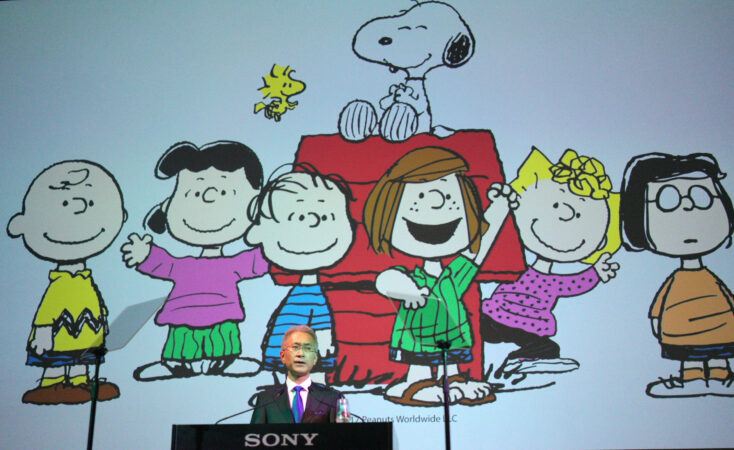
    Sony is buying a 41% stake in the Charles M. Schulz comic Peanuts and its characters including Snoopy and Charlie Brown from Canada’s WildBrain in a $457 million deal, the two companies said Friday.

    The deal adds to Sony’s existing 39% stake, bringing its shareholding to 80%, according to a joint statement. The Schulz family will continue to own the remaining 20%.

    “With this additional ownership stake, we are thrilled to be able to further elevate the value of the Peanuts brand by drawing on the Sony Groupʼs extensive global network and collective expertise,” Sony Music Entertainment President Shunsuke Muramatsu said.

    Peanuts made its debut Oct. 2, 1950, in seven newspapers. The travails of the “little round-headed kid” Charlie Brown and pals including Linus, Lucy, Peppermint Patty, and his pet beagle Snoopy eventually expanded to more than 2,600 newspapers, reaching millions of readers in 75 countries.

    The strip offers enduring images of kites stuck in trees, Charlie Brown trying to kick a football, tart-tongued Lucy handing out advice for a nickel, and Snoopy taking the occasional flight of fancy to the skies. Phrases such as “security blanket,” “good grief” and “happiness is a warm puppy” are a part of the global vernacular. Schulz died in 2000.

    Sony acquired its first stake in Peanuts Holdings LLC in 2018 from Toronto-based WildBrain Ltd. In Friday’s transaction, Sony’s music and movie arms signed a “definitive agreement” with WildBrain to buy its remaining stake for $630 million Canadian dollars ($457 million).

    Rights to the Peanuts brand and management of its business are handled by a wholly-owned subsidiary of Peanuts Holdings.

    WildBrain also owns other kids’ entertainment franchises including Strawberry Shortcake and Teletubbies.

  • Court restores Elon Musk’s disputed $56 billion Tesla payday

    Court restores Elon Musk’s disputed $56 billion Tesla payday

    The Delaware Supreme Court ruled to restore Elon Musk’s disputed $56 billion pay package on Friday, reversing another court’s decision that it had been awarded through an unfair process.

    The decision comes after a nearly two-year battle over the fate of the then-unprecedented pay deal, following the Delaware Court of Chancery’s ruling that it had been improperly awarded. The earlier ruling said that the process had been unduly influenced by Musk and that members of the board were not independent. In response, Musk reincorporated some of his companies out of Delaware, including moving Tesla to Texas.

    Musk said he had been “vindicated” by Friday’s ruling, adding in a later X post: “I try not to start fights, but I do finish them.”

    The restoration of the pay package bolsters Musk’s position in Tesla, a publicly traded company in which he holds a massive, double-digit percentage stake that drives much of his more than $600 billion fortune.

    Earlier this year Tesla shareholders voted to grant Musk an even larger, $1 trillion pay package — contingent on Musk hitting business milestones — that aims to tie him to the company for the next decade.

    At the time of the ruling, the 2018 pay deal was unprecedented in scale. The Delaware judge who struck it down had written that it was “the largest potential compensation opportunity ever observed in public markets … 250 times larger than” the median earnings of someone in Musk’s position. It was also “33 times larger than the plan’s closest comparison … Musk’s prior compensation plan.”

    The Delaware Supreme Court’s ruling Friday was succinct.

    “We reverse the Court of Chancery’s rescission remedy and award $1 in nominal damages.”

    The ruling said the Chancery court had erred in its remedy because reversing the package would leave “Musk uncompensated for his time and efforts over a period of six years.” Musk does not draw a traditional salary for his work at Tesla but instead is compensated through periodic pay packages consisting of stock awards.

  • A new round of confusing economic data is muddying the picture

    A new round of confusing economic data is muddying the picture

    A barrage of post-shutdown data this week has left economists with more questions than answers about the state of the U.S. economy.

    Unemployment rose to a four-year high in November, inflation improved more than expected, and retail sales appeared surprisingly resilient in October — though economists say all of that is likely to be bogged down by low response rates, disruptions in data collection and other shutdown-related complications.

    The result: More confusion about an economy that’s already confounded policymakers, politicians, and business owners for much of the year.

    “We knew we’d have to take this data with a grain of salt; I just didn’t know we’d have to make it this salty,” said Diane Swonk, chief economist at KPMG. “This week’s data really adds more confusion than clarity.”

    Employment data on Tuesday showed a decline of 41,000 jobs in October and November, while the unemployment rate inched up to 4.6%, offering a sobering picture of an already slowing labor market. Two days later, the Consumer Price Index came with more optimistic economic news: Inflation, it said, had cooled from 3% in September to 2.7% in November. But economists largely shrugged off both reports, saying they were unlikely to be reliable snapshots because the 43-day government shutdown had upended the way federal agencies gather data.

    The Labor Department’s monthly household survey, used to calculate the unemployment rate, was scrapped altogether for October. The data for November was far less reliable than usual, with a survey response rate of 64%, the lowest on record. (Two years ago, by comparison, 70% of households responded.) As a result, some said they weren’t putting much stock into the 4.6% unemployment rate. It’ll take a few more months of data, they said, to get a better read on the job market.

    “Yes, the unemployment rate rose, but I didn’t pay too much attention to it, to be honest,” said Kathy Bostjancic, chief economist at Nationwide. “The survey process was completely disrupted by the shutdown.”

    That was also the case for Thursday’s Consumer Price Index. Economists widely dismissed the figures, saying it was probably skewed lower by delays in data collection. Government officials didn’t begin tabulating prices until Nov. 14, when many items had already been marked down for Black Friday sales and other holiday promotions. More significantly, a third of the inflation index looks lower than it otherwise would because the government’s data appears to show no increase at all in rent and homeowners’ housing costs for October.

    “This inflation data was flawed, at best — and I think it would be inappropriate to be making policy or investment decisions based off the November report,” said Joe Brusuelas, chief economist at RSM US. “We have definitely entered a season of noise in economic data that isn’t likely to clear until early spring.”

    A third government report this week, a delayed retail sales reading, showed that spending picked up at grocery stores, furniture shops, and online retailers in October but declined at restaurants, gas stations, and hardware stores. Economists, though, cautioned against reading too much into the findings, calling them “unusually noisy” because of the shutdown.

    Even data unaffected by the government closure did little to shed light on exactly what’s happening. A consumer sentiment reading from the University of Michigan on Friday showed Americans’ views on the economy inched up slightly in December but are down significantly from last year, with 63% saying they expect worsening unemployment in the coming year.

    Although the U.S. economy generally seems to be on stable footing, economists are concerned that weakness in the job market, worsening inflation, or a pullback in consumer spending could easily tip the scale toward recession.

    President Donald Trump has also recently shifted his focus back to the economy, kicking off an “affordability tour” and addressing the nation in a prime time address this week, saying he is “bringing those high prices down and bringing them down very fast.” He was expected to speak about the economy again Friday evening in North Carolina.

    The next snapshot of the economy comes Tuesday, with a Gross Domestic Product report that is expected to show another three months of brisk growth between August and October.

    The lack of clarity is a particular challenge for the Federal Reserve, which is looking to the job market and inflation for clues on whether it should continue lowering interest rates early next year. Fed Chair Jerome H. Powell last week cautioned that upcoming economic reports should be viewed with a “skeptical eye” because they “may be distorted by very technical factors.”

    “We’re going to get data, but we’re going to have to look at it carefully and with a somewhat skeptical eye,” he said at a news conference this month.

  • In tribute to late wife, husband rebuilds her snowman village at Kansas mall

    In tribute to late wife, husband rebuilds her snowman village at Kansas mall

    The hundreds of snowman figurines on display at a Kansas mall might look alike, but each was important to Kathy Allen Duncan.

    Some are skiing, others are caroling in front of houses or lounging in the snow made from cotton. A handful are using the bathroom.

    For five decades, Kathy created detailed snowman displays in her home with the roughly 1,000 figurines she collected. But the tradition was in peril when Kathy, 73, died in September of complications from diabetes.

    Kathy created a snowman display each year in her home over five decades.

    Her husband, R.E. “Tuck” Duncan, looked back at photos of Kathy’s displays before her funeral. He recalled thinking, “We need to build one more, one last one.” He wanted to share it not just with his family, but also with all of Topeka, Kan.

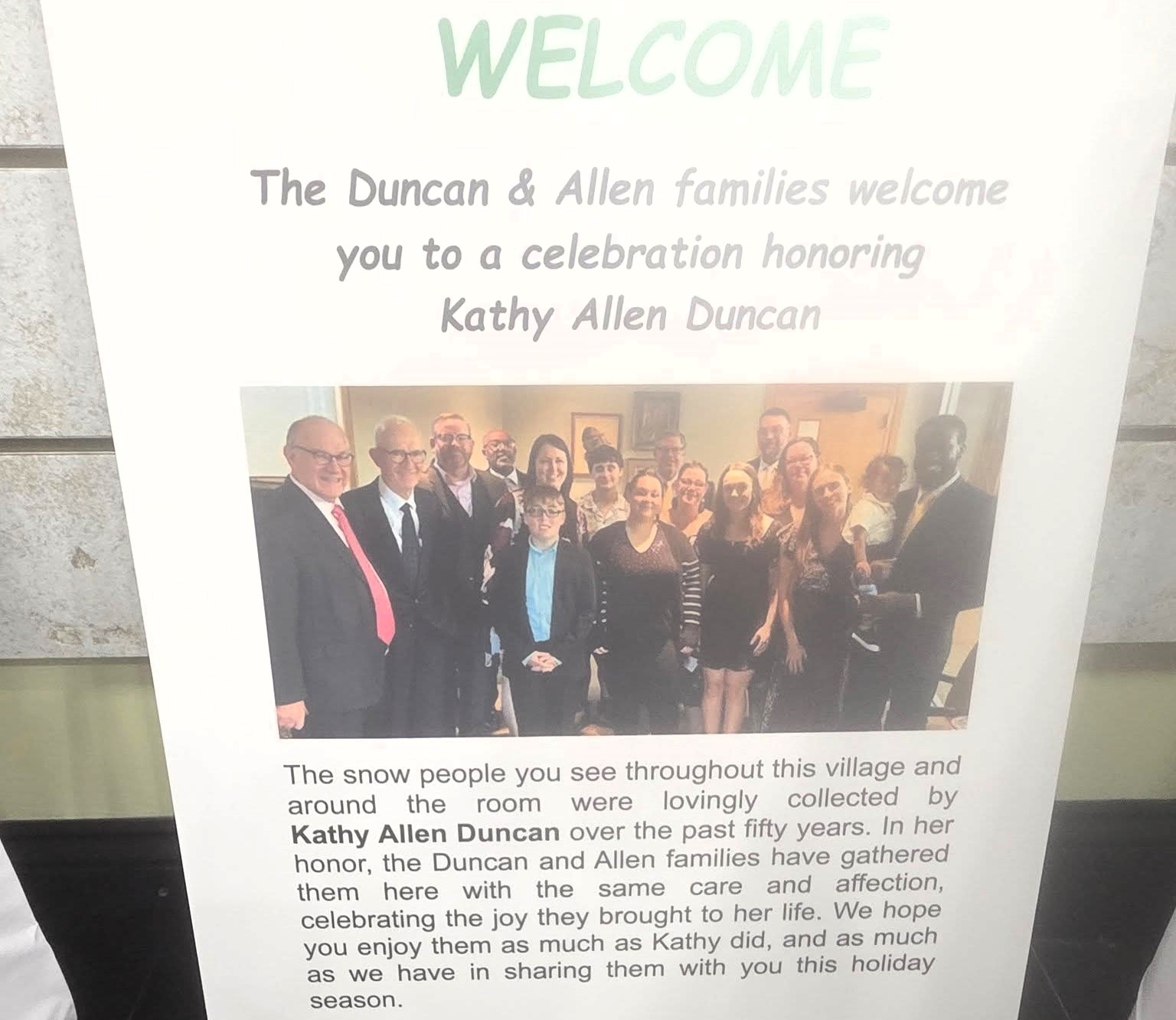
    Tuck, 74, rented a vacant store at a local shopping mall where he and other family members created an exhibit showing hundreds of Kathy’s snowmen — which she called “snowpeople” — enjoying the winter. There’s a banner that reads: “KATHY ALLEN DUNCAN’S SNOWPEOPLE VILLAGE.” Another poster shows Kathy’s obituary.

    Kathy’s family said their goal was to spread joy — something they said Kathy did daily — to as many people as possible. They exceeded their expectations.

    Thousands of people have visited the free exhibit, Tuck told the Washington Post. More than 1 million people have seen photos of it on social media, where one user wrote:

    “Guys I’m sobbing a local woman passed away in September and her husband/family rented a whole store at the mall to show off her Christmas decorations nothing is for sale it’s literally just so everyone can see it and it’s so beautiful I love.”

    Kathy took decorating seriously as a way to express love for the people she cared for, said Joro Martin, who was raised by Kathy and Tuck after he said he left a troubled household.

    “Mom was a safe space for so many people, and what is created there is a safe space to share,” Martin said about the mall exhibit.

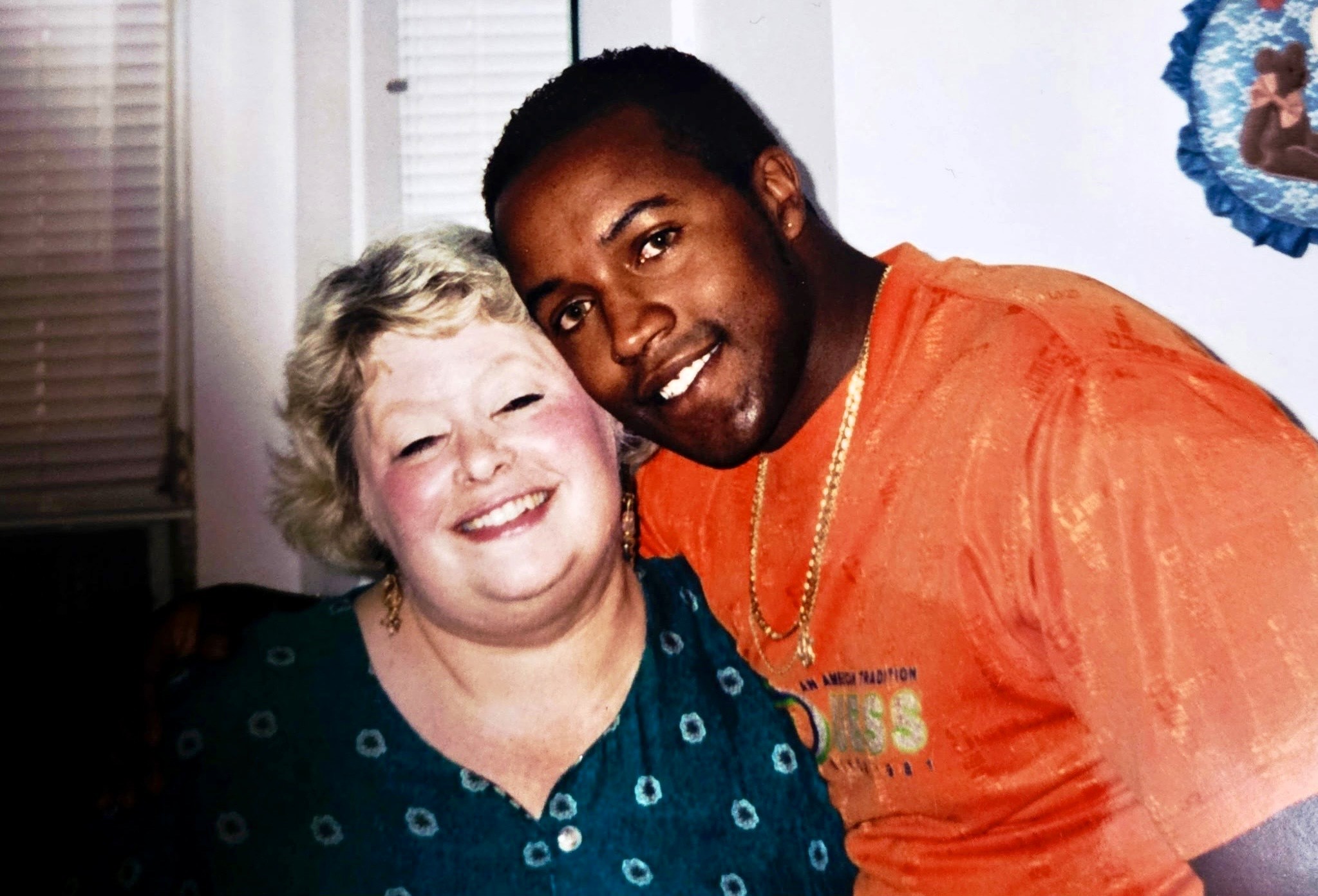
    Kathy and Joro Martin, whom she helped raise, in the early 1990s.

    Kathy built her first snowman display on a card table in a one-bedroom apartment in December 1974, shortly after she and Tuck got married. There were only a handful of figurines — she had picked up the hobby of collecting them from her grandmother — and she hoped they would bring smiles to visitors.

    Kathy collected more snowman figurines over the years from antique booths, craft shows, flea markets, and Hallmark stores.

    Kathy’s snowman figurines displayed at the mall.

    There’s a wax candle shaped like a snowman — one of Kathy’s oldest figurines — which has faded paint. There’s one with glasses that Kathy joked was the snowman version of Tuck, an attorney, so the figurine always stood outside a law office in her displays.

    Some are dressed as firefighters, nurses, police officers, chefs, and musicians. Others wear crimson-and-blue clothes to match the colors of her alma mater, the University of Kansas.

    They are built from a wide range of materials, including yarn, plastic, ceramic, cotton, and wood.

    Tessa Olorunfemi, Kathy’s granddaughter, with her 2008 snowman display.

    Kathy started building the display each year after Thanksgiving and finished around Christmas Eve, when the family ate dinner off snowman-themed tableware. She started the display by covering the table with cotton and sprinkling artificial snow on top, then she placed shelves in the back to resemble mountains.

    The displays moved from the roughly 34-by-34-inch card table to a 3-by-6-foot table to two adjoining 3-by-6-foot tables.

    Kathy changed the setting each year. She created rural towns with recreational vehicles, cities with clustered buildings, and ice skating rinks with bridges. One year — even though Kathy pointed out that snowmen can’t survive warm weather — she let their youngest son, Ryan Duncan, build a beach.

    Kathy’s snowman display in 2021.

    Outside the holidays, Kathy and Tuck initially rented a storage unit for the figurines. For the past two decades, snowmen filled half of their garage. But that didn’t mean the snowman decorations were absent in the condo: Kathy had a four-foot-tall metal snowman in the atrium that waved year-round.

    “I can’t remember a Christmas, a holiday — shoot, I can’t remember a July — without something with snowmans in it,” Ryan said.

    About a month after Kathy died, Tuck rented the second-floor space in Topeka’s West Ridge Mall near a Petland and a Spencer’s store. Tuck hired movers to transport 60 plastic boxes of snowman figurines there.

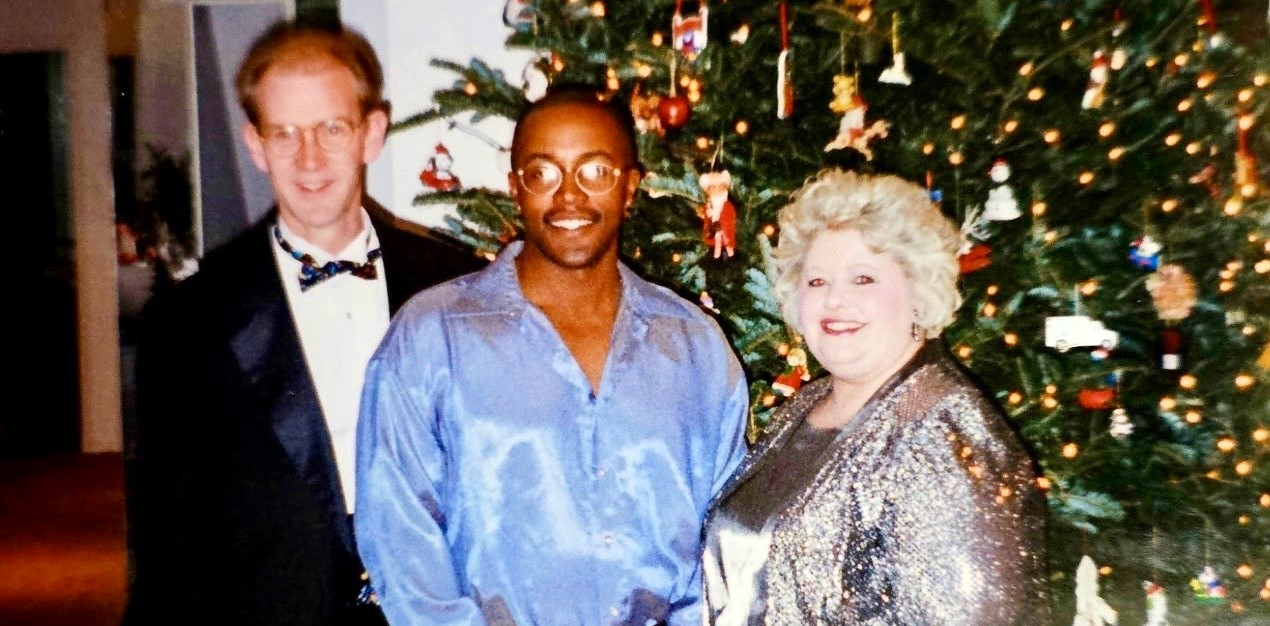
    From left, R.E. “Tuck” Duncan, Martin, and Kathy.

    Tuck and his family placed plywood, a foam board, buffalo cotton, and white and blue sparkles atop a 8-by-16-foot table.

    At the front of the display, they set up a water tower with a snowman head serving as the tank. There’s a lake made of foil. Houses and trees are scattered throughout. Some small pieces of cotton even represent snowman poop.

    The family finished the display and opened the room Nov. 25. Local news WIBW-TV covered the story.

    A Christmas tree with snowman-themed ornaments in the room at the mall in Kathy’s honor.

    There’s a Christmas tree by the front window that holds about 50 snowman ornaments and eight tables on the edges of the room displaying more figurines and snowman-themed items like calendars and quilts.

    “The snow people you see throughout this village and around the room were lovingly collected by Kathy Allen Duncan over the past fifty years,” a poster in the room reads. “In her honor, the Duncan and Allen families have gathered them here with the same care and affection, celebrating the joy they brought to her life.”

    The project cost about $15,000, Tuck said, “and it’s worth every penny.” Many people are learning about his wife, who he said fed peanuts and corn to wild squirrels and who, even in her final days, was still asking about the well-being of others.

    Kathy’s family members wrote a note to welcome visitors to the exhibit.

    A family member opens the mall room every morning and closes it at night. While the exhibit evokes memories that make Tuck emotional — like remembering his 5-foot tall wife trying to grab boxes of snowman figurines from the top of the garage — Tuck said talking about Kathy with visitors has been cathartic.

    More of Kathy’s snowman figurines at the mall.

    He has an ornament on his Christmas tree that says, “Those we love don’t go away, they walk beside us everyday.”

    The display will close on Christmas Eve. Afterward, family members — including the couple’s oldest son Spencer, the mayor-elect of Topeka — will take the snowmen back to their homes. Then, the whole family plans to build their own small snowman displays in Kathy’s memory.

  • A ‘recession’ is arriving for people who want jobs in technology

    A ‘recession’ is arriving for people who want jobs in technology

    Newly released jobs market data paints a murky picture ahead for the tech industry, which continues to slash workers.

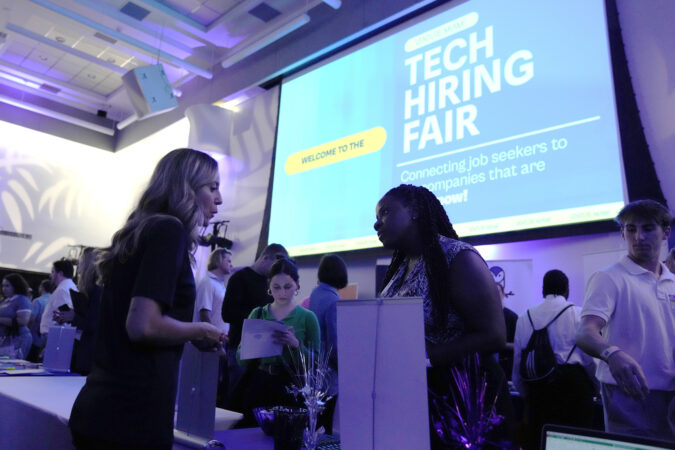
    The unemployment rate for tech jobs has been steadily rising since May, ticking up to 4% in November, according to an analysis by CompTIA, a company that offers IT training and certifications. Between October and November, the number of technology workers across different industries fell 134,000, while the number of people working in the tech industry declined by more than 6,800. Tech job postings were also down by more than 31,800, the report found, citing data from the Bureau of Labor Statistics and California-based market intelligence firm Lightcast.

    “The data is pretty definitive that the tech industry is struggling,” said Mark Zandi, Moody’s chief economist. “There’s a jobs recession in the industry, and it feels like that’s going to continue given the slide in postings.”

    Over the last year, the tech industry has been reshaping itself amid economic uncertainty, reorganization around artificial intelligence, and a push to become more cost-efficient. Big Tech companies including Amazon, Meta, and Microsoft cut thousands of workers while raking in soaring revenue and making big investments in AI. Economists said the new data signals headwinds ahead even as some tech companies continue to hire, especially for AI roles.

    “For the longest time, tech was the tailwind to jobs and the broader job market,” Zandi said, adding that it’s been a source of high-paying jobs. “That tailwind has now turned into a headwind, and that headwind feels like it may just blow harder going forward.”

    The U.S. economic outlook has continued to be uncertain, with the Federal Reserve cutting interest rates earlier this month for the third time this year, citing a softening labor market. The unemployment rate in the tech industry still sits below the national rate, which in November hit 4.6%, the highest since 2021. However, that gap has been narrowing, with tech unemployment rising faster in recent months than is the case nationally.

    In the tech industry, jobs for software, cybersecurity, and web development consultants have been among the roles to get axed, according to CompTIA. This is likely because companies are spending less on tech projects, and there’s been a pullback in government contracts and the ability to sell services overseas, said Tim Herbert, chief research officer at CompTIA.

    Herbert said companies struggling from a slowing economy might put tech consulting on hold, which could serve as an insight into companies in other industries. “In some cases, it can be a bellwether on how other types of companies are performing when they stop hiring tech consulting services.”

    Employers are largely in “wait and see” mode when it comes to hiring given the current uncertainties surrounding the economy and impact of AI, so they’re likely to delay backfilling, Herbert said citing CompTIA’s surveys of chief information officers. But Justin Wolfers, professor of public policy and economics at the University of Michigan, said uncertainty is likely to continue in the foreseeable future.

    “I’m feeling substantially more pessimistic,” Wolfers said, recalling that Federal Reserve Chair Jerome H. Powell recently suggested that federal job numbers may be overstated. “That’s pretty grim.”

    Technology companies have announced more than 141,000 job cuts so far this year, representing a 17% increase from the same period last year, according to outplacement firm Challenger, Gray & Christmas. At the same time Big Tech companies like Google, Microsoft, Meta, and Amazon have announced plans to invest up to $375 billion in AI infrastructure this year.

    Though job postings declined in November, companies continued to hire, with high demand for workers in engineering and tech support. And AI is quickly becoming a requirement, with 41% of all active job postings representing AI roles or requiring AI skills, according to CompTIA’s analysis.

    “If you have AI skills, there seems to be jobs,” Zandi said about the employment market. “But if you don’t, I think it’s going to feel like you’ve been hit by a dump truck.”

    Herbert cautioned that it will be important to watch how the job numbers change over the next several months, as one month’s data may not provide a full picture.

    AI will likely have a different impact depending on the sectors and jobs, Wolfers said. Coders and translators, for example, may feel the squeeze much sooner than other professions, he noted.

  • Maxey, Edgecombe help the 76ers hand the Knicks their second home loss of the season

    Maxey, Edgecombe help the 76ers hand the Knicks their second home loss of the season

    NEW YORK — Tyrese Maxey scored 30 points, VJ Edgecombe had 23 and the 76ers became just the second visiting team to win at Madison Square Garden this season, beating the New York Knicks 116-107 on Friday night.

    Andre Drummond, starting with Joel Embiid out because of an illness and right knee injury management, had 19 points and 13 rebounds. The center was 3 for 4 from 3-point range.

    The 76ers snapped the Knicks’ six-game winning streak by outscoring them 28-20 in the fourth quarter, when Maxey scored 11 points and Jalen Brunson missed all five of his shots and was scoreless.

    Brunson finished with 22 points, nine assists and six rebounds, but shot 7 for 22 a night after making the go-ahead 3-pointer with 4.4 seconds left in a victory at Indiana. Karl-Anthony Towns also scored 22 points and grabbed 11 rebounds.

    In their first home game since winning the NBA Cup on Tuesday, the Knicks fell to 13-2 at home. They had been off to their best start at MSG since 1992-93.

    They celebrated the Cup title before the game, though they have chosen not to hang a banner to commemorate it, as previous champions the Lakers and Bucks did.

    The Knicks wasted Mitchell Robinson’s best game of the season. The center had season highs of 21 points and 16 rebounds and was a stunning 7 for 8 at the free-throw line after he came into the game 6 for 27 (22.2%) for the season.

    Mikal Bridges also scored 21 points.

    Maxey and Edgecombe combined for 18 points in the fourth quarter after the 76ers led by one going into the period. The Knicks were 1 for 8 on 3s in the quarter.

  • U.S. military launches strikes in Syria against Islamic State fighters after American deaths

    U.S. military launches strikes in Syria against Islamic State fighters after American deaths

    WASHINGTON — The Trump administration launched military strikes Friday in Syria to “eliminate” Islamic State group fighters and weapons sites in retaliation for an ambush attack that killed two U.S. troops and an American interpreter almost a week ago.

    A U.S. official described it as “a large-scale” strike that hit 70 targets in areas across central Syria that had IS infrastructure and weapons. Another U.S. official, who also spoke on condition of anonymity to discuss sensitive operations, said more strikes should be expected.

    The attack was conducted using F-15 Eagle jets, A-10 Thunderbolt ground attack aircraft, and AH-64 Apache helicopters, the officials said. F-16 fighter jets from Jordan and HIMARS rocket artillery also were used, one official said.

    “This is not the beginning of a war — it is a declaration of vengeance. The United States of America, under President Trump’s leadership, will never hesitate and never relent to defend our people,” Defense Secretary Pete Hegseth said on social media.

    President Donald Trump had pledged “very serious retaliation” after the shooting in the Syrian desert, for which he blamed IS. The troops were among hundreds of U.S. troops deployed in eastern Syria as part of a coalition fighting the terrorist group.

    Trump in a social media post said the strikes were targeting IS “strongholds.” He reiterated his support for Syrian President Ahmad Al-Sharaa, who he said was “fully in support” of the U.S. effort to target the militant group.

    Trump also offered an all-caps threat, warning the group against attacking U.S. personnel again.

    “All terrorists who are evil enough to attack Americans are hereby warned — YOU WILL BE HIT HARDER THAN YOU HAVE EVER BEEN HIT BEFORE IF YOU, IN ANY WAY, ATTACK OR THREATEN THE U.S.A.,” the president added.

    The attack was a major test for the warming ties between the United States and Syria since the ouster of autocratic leader Bashar Assad a year ago. Trump has stressed that Syria was fighting alongside U.S. troops and said al-Sharaa was “extremely angry and disturbed by this attack,” which came as the U.S. military is expanding its cooperation with Syrian security forces.

    Syria’s foreign ministry in a statement on X following the launch of U.S. strikes said that last week’s attack “underscores the urgent necessity of strengthening international cooperation to combat terrorism in all its forms” and that Syria is committed “to fighting ISIS and ensuring that it has no safe havens on Syrian territory and will continue to intensify military operations against it wherever it poses a threat.”

    IS has not claimed responsibility for the attack on the U.S. service members, but the group has claimed responsibility for two attacks on Syrian security forces since, one of which killed four Syrian soldiers in Idlib province. The group in its statements described al-Sharaa’s government and army as “apostates.” While al-Sharaa once led a group affiliated with al-Qaida, he has had a long-running enmity with IS.

    Syrian state television reported that the U.S. strikes hit targets in rural areas of Deir ez-Zor and Raqqa provinces and in the Jabal al-Amour area near Palmyra. It said they targeted “weapons storage sites and headquarters used by ISIS as launching points for its operations in the region.”

    Trump this week met privately with the families of the slain Americans at Dover Air Force Base in Delaware before he joined top military officials and other dignitaries on the tarmac for the dignified transfer, a solemn and largely silent ritual honoring U.S. service members killed in action.

    The guardsmen killed in Syria last Saturday were Sgt. Edgar Brian Torres-Tovar, 25, of Des Moines, and Sgt. William Nathaniel Howard, 29, of Marshalltown, according to the U.S. Army. Ayad Mansoor Sakat, of Macomb, Mich., a U.S. civilian working as an interpreter, was also killed.

    The shooting nearly a week ago near the historic city of Palmyra also wounded three other U.S. troops as well as members of Syria’s security forces, and the gunman was killed. The assailant had joined Syria’s internal security forces as a base security guard two months ago and recently was reassigned because of suspicions that he might be affiliated with IS, Interior Ministry spokesperson Nour al-Din al-Baba has said.

    The man stormed a meeting between U.S. and Syrian security officials who were having lunch together and opened fire after clashing with Syrian guards.

    When asked for further information, the Pentagon referred AP to Hegseth’s social media post.

  • Rep. Elise Stefanik says she’s suspending her campaign for New York governor, won’t seek reelection

    Rep. Elise Stefanik says she’s suspending her campaign for New York governor, won’t seek reelection

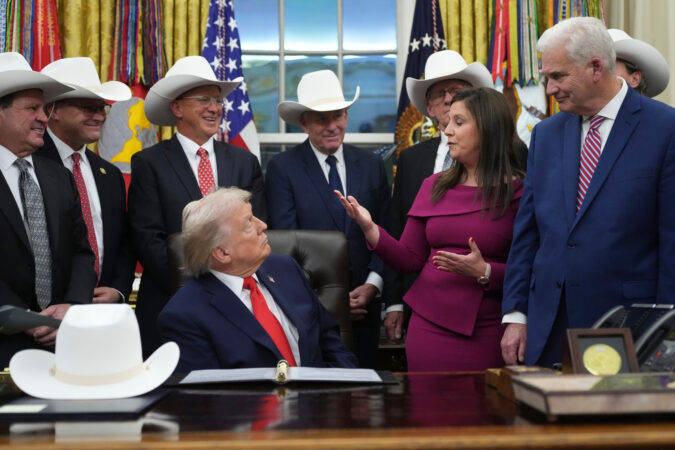
    ALBANY, N.Y. — Rep. Elise Stefanik announced Friday that she is suspending her campaign for New York governor and will not seek reelection to Congress, bowing out of the race in a surprise statement that said “it is not an effective use of our time” to stay in what was expected to be a bruising Republican primary.

    Stefanik, a Republican ally of President Donald Trump, said in a post on X that she was confident of her chances in the primary against Bruce Blakeman, a Republican county official in New York City’s suburbs. But she said she wanted to spend more time with her young son and family.

    “I have thought deeply about this and I know that as a mother, I will feel profound regret if I don’t further focus on my young son’s safety, growth, and happiness — particularly at his tender age,” she said.

    Stefanik has been an intense critic of incumbent Democratic Gov. Kathy Hochul, who is also seeking reelection but faces a primary challenge from her own lieutenant governor, Antonio Delgado.

    The announcement marks an abrupt end, at least for now, for a once-promising career for Stefanik. She was the youngest woman ever elected to Congress when she won her first campaign in 2014 at just 30 years old, representing a new generation of Republicans making inroads in Washington. She ultimately rose to her party’s leadership in the House when she became the chair of the House Republican Conference in 2021.

    First viewed as a moderate when she came to Washington, Stefanik became far more conservative as Trump began to dominate the party. Once someone who refused to say Trump’s name, she became one of his top defenders during his first impeachment inquiry. She would go on to vote against certifying the 2020 election results, even after a violent mob stormed the Capitol on Jan. 6.

    Stefanik was expected to have a bitter Republican primary against Blakeman, who also counts himself as an ally of Trump. The president had so far seemed keen on avoiding picking a side in the race, telling reporters recently: “He’s great, and she’s great. They’re both great people.”

    Stefanik’s decision follows a clash with Speaker Mike Johnson, whom she accused of lying before embarking on a series of media interviews criticizing him. In one with The Wall Street Journal, she called Johnson a “political novice” and said he wouldn’t be reelected speaker if the vote were held today.

    The tumultuous early December episode appeared to cool when Johnson said he and Stefanik had a “great talk.”

    “I called her and I said, ‘Why wouldn’t you just come to me, you know?’” Johnson said. “So we had some intense fellowship about that.”

    Still, Stefanik, the chairwoman of the House Republican leadership, has not fully walked back her criticisms. A Dec. 2 social media post remains online in which, after a provision she championed was omitted from a defense authorization bill, Stefanik accused Johnson of falsely claiming he was unaware of it, calling it “more lies from the Speaker.”

    State Republican Chairman Ed Cox said the party respected Stefanik’s decision and thanked her for her efforts.

    “Bruce Blakeman has my endorsement and I urge our State Committee and party leaders to join me,” Cox said in a prepared statement. “Bruce is a fighter who has proven he knows how to win in difficult political terrain.”