Category: Wires

  • Trump’s handpicked board votes to rename Washington performing arts center the Trump Kennedy Center

    Trump’s handpicked board votes to rename Washington performing arts center the Trump Kennedy Center

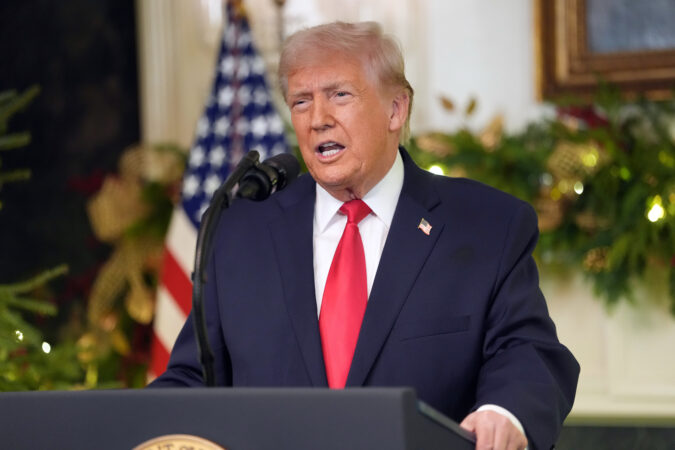
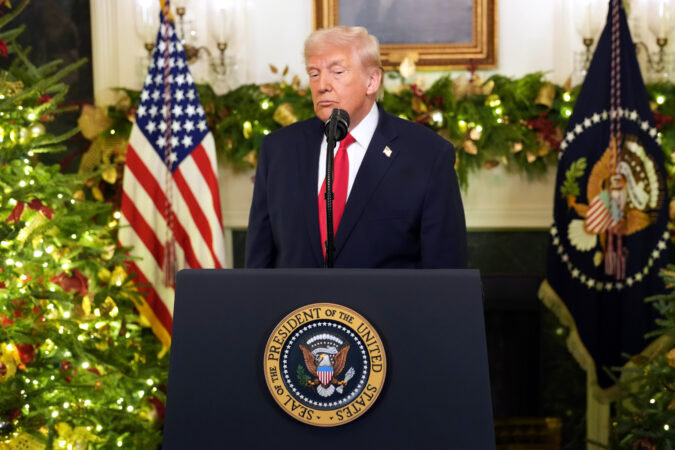
    WASHINGTON — President Donald Trump’s handpicked board voted Thursday to rename Washington’s leading performing arts center as the Trump Kennedy Center, the White House said, in a move that made Democrats fume, saying the board had overstepped its legal authority.

    Congress named the center after President John F. Kennedy in 1964, after his assassination. Donald A. Ritchie, who served as Senate historian from 2009-2015, said that because Congress had first named the center it would be up to Congress to “amend the law.”

    Ritchie said that while Trump and others can “informally” refer to the center by a different name, they couldn’t do it in a way “that would [legally] stick.”

    But the board did not wait for that debate to play out, immediately changing the branding on its website to reflect the new name.

    House Democratic leader Hakeem Jeffries told reporters that legislative action was needed, “and we’re going to make that clear.” The New York Democrat is an ex officio member of the board because of his position in Congress.

    Trump has teased the name change for some time

    “The Kennedy Center Board of Trustees voted unanimously today to name the institution The Donald J. Trump and The John F. Kennedy Memorial Center for the Performing Arts,” said Roma Daravi, the institution’s vice president for public relations.

    She said the vote recognized that Trump saved the center from “financial ruin and physical destruction,” a pair of claims denied by the venue’s ousted leadership.

    “The new Trump Kennedy Center reflects the unequivocal bipartisan support for America’s cultural center for generations to come,” Daravi said.

    Press secretary Karoline Leavitt announced the vote on social media, attributing it to the “unbelievable work President Trump has done over the last year in saving the building. Not only from the standpoint of its reconstruction, but also financially, and its reputation.”

    Trump, a Republican who’s chairman of the board, said at the White House that he was “surprised” and “honored” by the vote.

    “The board is a very distinguished board, most distinguished people in the country and I was surprised by it and I was honored by it,” he said.

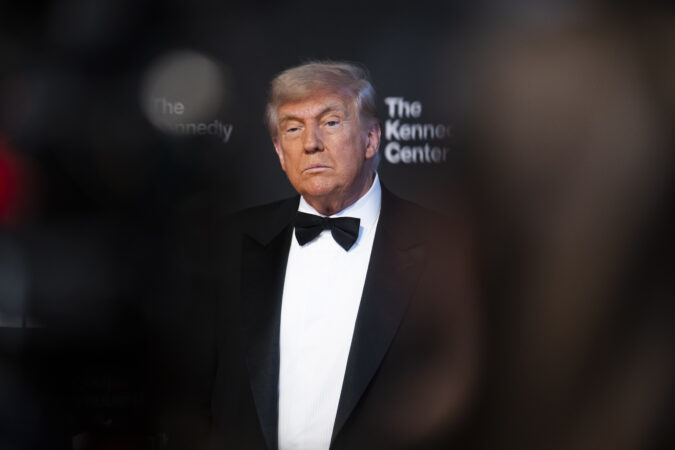
    Trump had already been referring to the center as the “Trump Kennedy Center.” Asked Dec. 7 as he walked the red carpet for the Kennedy Center Honors program whether he would rename the venue after himself, Trump said such a decision would be up to the board.

    Earlier this month, Trump talked about a “big event” happening at the “Trump Kennedy Center” before saying, “excuse me, at the Kennedy Center,” as his audience laughed. He was referring to the FIFA World Cup soccer draw for 2026, in which he participated.

    A name change won’t sit well with some Kennedy family members.

    Maria Shriver, a niece of John F. Kennedy, referred to the legislation introduced in Congress to rebrand the Kennedy Center as the Donald J. Trump Center for the Performing Arts as “insane” in a social media post in July.

    “It makes my blood boil. It’s so ridiculous, so petty, so small minded,” she wrote. “Truly, what is this about? It’s always about something. ‘Let’s get rid of the Rose Garden. Let’s rename the Kennedy Center.’ What’s next?”

    Trump earlier this year turned the Kennedy-era Rose Garden at the White House into a patio by removing the lawn and laying down paving stones.

    Another Kennedy family member, Robert F. Kennedy Jr., serves in Trump’s cabinet as secretary of the Department of Health and Human Services.

    Trump showed scant interest in the Kennedy Center during his first term as president, but since returning to office in January he has replaced board members appointed by Democratic presidents with some of his most ardent supporters, who then elected him as board chairman.

    He also has criticized the center’s programming and its physical appearance and has vowed to overhaul both.

    Trump secured more than $250 million from the Republican-controlled Congress for renovations of the building.

    He attended opening night of the musical Les Misérables, and last week he served as host of the Kennedy Center Honors program after not attending the show during his first term as president. The awards program is scheduled to be broadcast by CBS and Paramount+ on Dec. 23.

    Sales of subscription packages are said to have declined since Trump’s takeover of the center, and several touring productions, including Hamilton, have canceled planned runs there. Rows upon rows of empty seats have been seen in the Concert Hall during performances by the National Symphony Orchestra.

    Some performers, including actor Issa Rae and musician Rhiannon Giddens, have scrapped scheduled appearances, and Kennedy Center consultants including musician Ben Folds and singer Renée Fleming have resigned.
  • House Democrats release more photos from Epstein’s estate

    House Democrats release more photos from Epstein’s estate

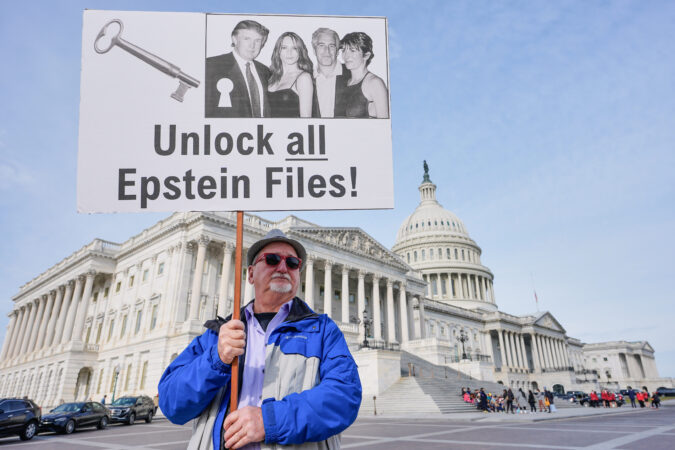
    WASHINGTON — House Democrats released several dozen more photos Thursday from the estate of the convicted sex offender Jeffrey Epstein, showing his associations with the rich and famous, as the Department of Justice faces a deadline to release many of its case files on the late financier by the end of the week.

    The photos released Thursday were among more than 95,000 that the House Oversight Committee has received after issuing a subpoena for the photos that Epstein had in his possession before he died in a New York jail cell in 2019. Congress has also passed, and President Donald Trump has signed, a law requiring the Justice Department to release its case files on Epstein, and his longtime girlfriend and confidant Ghislaine Maxwell, by Friday. Anticipation about what those files will show is running high after they have been the subject of conspiracy theories and speculation about his friendships with Trump, former President Bill Clinton, the former Prince Andrew, and others.

    House Democrats have already released dozens of photos from Epstein’s estate showing Trump, Clinton and Andrew, who lost his royal title and privileges this year amid scrutiny of his relationship with the wealthy financier. The photos released Thursday showed Epstein cooking with Sultan Ahmed bin Sulayem, an Emirati businessman. The photos also include the billionaire Bill Gates and images of a 2011 dinner of notable people and wealthy philanthropists hosted by a nonprofit group. The committee made no accusations of wrongdoing by the men in the photos.

    There were also images of passports, visas and identification cards from Russia, the Czech Republic, Ukraine, South Africa, and Lithuania with personally identifying information redacted, as well as photos of Epstein with women or girls whose faces were blacked out. The committee has said it is redacting information from the photos that may lead to the identity of victims being revealed.

    Rep. Robert Garcia, the top Democrat on the oversight panel, said in a statement that the “new images raise more questions about what exactly the Department of Justice has in its possession. We must end this White House cover-up, and the DOJ must release the Epstein files now.”

  • Police are investigating link between Brown shooting and killing of MIT professor, AP sources say

    Police are investigating link between Brown shooting and killing of MIT professor, AP sources say

    PROVIDENCE, R.I. — Authorities said Thursday that they’re looking into a connection between last weekend’s mass shooting at Brown University and one two days later near Boston that killed a professor at another elite school, the Massachusetts Institute of Technology.

    That is according to three people familiar with the matter who were not authorized to discuss an ongoing investigation and spoke on condition of anonymity. Two of the people said investigators had identified a person of interest in the shootings and were actively seeking that individual.

    The attacker at Brown on Saturday killed two students and wounded nine others in a classroom in the school’s engineering building before getting away.

    About 50 miles north, MIT professor Nuno F.G. Loureiro was gunned down in his home Monday night in the Boston suburb of Brookline. The 47-year-old physicist and fusion scientist died at a hospital the next day.

    The FBI previously said it knew of no links between the cases.

    This undated photo provided by the Massachusetts Institute of Technology in December 2025 shows Nuno Loureiro.

    How is the Brown investigation going?

    It’s been nearly a week since the shooting at Brown. There have been other high-profile attacks in which it took days or longer to make an arrest or find those responsible, including in the brazen New York City sidewalk killing of UnitedHealthcare’s CEO last year, which took five days.

    But frustration is mounting in Providence that the person behind the attack managed to get away and that a clear image of their face has yet to emerge.

    “There’s no discouragement among people who understand that not every case can be solved quickly,” the state attorney general, Peter Neronha, said at a news conference Wednesday.

    Authorities have scoured the area for evidence and pleaded with the public to check any phone or security footage they might have from the week before the attack, believing the shooter might have cased the scene ahead of time.

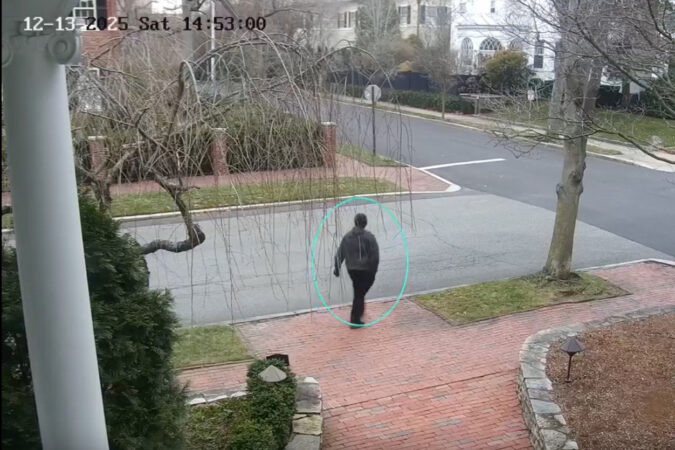
    Investigators have released several videos from the hours and minutes before and after the shooting that show a person who, according to police, matches witnesses’ description of the shooter. In the clips, the person is standing, walking and even running along streets just off campus, but always with a mask on or their head turned.

    Although Brown officials say there are 1,200 cameras on campus, the attack happened in an older part of the engineering building that has few, if any, cameras. And investigators believe the shooter entered and left through a door that faces a residential street bordering campus, which might explain why the cameras Brown does have didn’t capture footage of the person.

    Providence Mayor Brett Smiley said Wednesday that the city is doing “everything possible” to keep residents safe. However, he acknowledged that it is “a scary time in the city” and that families likely were having tough conversations about whether to stay in town over the holidays.

    “We are doing everything we can to reassure folks, to provide comfort, and that is the best answer I can give to that difficult question,” Smiley said when asked if the city was safe.

    What can be learned from past investigations?

    Although it’s not unheard of for someone to disappear after carrying out such a high-profile shooting, it is rare.

    In such targeted and highly public attacks, the shooters typically kill themselves or are killed or arrested by police, said Katherine Schweit, a retired FBI agent and expert on mass shootings. When they do get away, searches can take time.

    “The best they can do is what they do now, which is continue to press together all of the facts they have as fast as they can,” she said. “And, really, the best hope for solutions is going to come from the public.”

    In the 2013 Boston Marathon bombing, it took investigators four days to catch up to the two brothers who carried it out. In a 2023 case, Army reservist Robert Card was found dead of an apparent suicide two days after he killed 18 people and wounded 13 others in Lewiston, Maine.

    The man accused of killing conservative political figure Charlie Kirk in September turned himself in about a day and a half after the attack on Utah Valley University’s campus. And Luigi Mangione, who has pleaded not guilty to murder charges in the killing of UnitedHealthcare CEO Brian Thompson in Manhattan last year, was arrested five days later at a McDonald’s in Altoona, Pa.

    Felipe Rodriguez, a retired New York police detective sergeant and adjunct professor at the John Jay College of Criminal Justice, said it’s clear that shooters are learning from others who were caught.

    “Most of the time an active shooter is going to go in, and he’s going to try to commit what we call maximum carnage, maximum damage,” Rodriguez said. “And at this point, they’re actually trying to get away. And they’re actually evading police with an effective methodology, which I haven’t seen before.”

    Investigators have described the person they are seeking as about 5 feet, 8 inches tall and stocky. The attacker’s motives remain a mystery, but authorities said Wednesday that none of the evidence suggests a specific person was being targeted.

    MIT mourns the loss of an esteemed professor

    Loureiro, who was married, joined MIT in 2016 and was named last year to lead the school’s Plasma Science and Fusion Center, where he worked to advance clean energy technology and other research. The center, one of MITl’s largest labs, had more than 250 people working across seven buildings when he took the helm. He was a professor of physics and nuclear science and engineering.

    He grew up in Viseu, in central Portugal, and studied in Lisbon before earning a doctorate in London, according to MIT. He was a researcher at an institute for nuclear fusion in Lisbon before joining MIT, the university said.

    “He shone a bright light as a mentor, friend, teacher, colleague and leader, and was universally admired for his articulate, compassionate manner,” Dennis Whyte, an engineering professor who previously led MIT’s Plasma Science and Fusion Center, told a campus publication.

    Loureiro had said he hoped his work would shape the future.

    “It’s not hyperbole to say MIT is where you go to find solutions to humanity’s biggest problems,” Loureiro said when he was named to lead the plasma science lab last year. “Fusion energy will change the course of human history.”

  • U.S. announces massive package of arms sales to Taiwan valued at more than $10 billion, angering China

    U.S. announces massive package of arms sales to Taiwan valued at more than $10 billion, angering China

    WASHINGTON — President Donald Trump’s administration has announced a massive package of arms sales to Taiwan valued at more than $10 billion that includes medium-range missiles, howitzers, and drones, drawing an angry response from China.

    The State Department announced the sales late Wednesday during a nationally televised address by the Republican president, who made scant mention of foreign policy issues and did not speak about China or Taiwan. U.S.-Chinese tensions have ebbed and flowed during Trump’s second term, largely over trade and tariffs but also over China’s increasing aggressiveness toward Taiwan, which Beijing has said must reunify with the mainland.

    If approved by Congress, it would be the largest-ever U.S. weapons package to Taiwan, exceeding the total amount of $8.4 billion in U.S. arms sales to Taiwan during President Joe Biden’s Democratic administration.

    The eight arms sales agreements announced Wednesday cover 82 high-mobility artillery rocket systems, or HIMARS, and 420 Army Tactical Missile Systems, or ATACMS — similar to what the U.S. had been providing Ukraine during the Biden administration to defend itself from Russia — worth more than $4 billion. They also include 60 self-propelled howitzer systems and related equipment worth more than $4 billion and drones valued at more than $1 billion.

    Other sales in the package include military software valued at more than $1 billion, Javelin and TOW missiles worth more than $700 million, helicopter spare parts worth $96 million, and refurbishment kits for Harpoon missiles worth $91 million.

    The eight sales agreements amount to $11.15 billion, according to Taiwan’s Defense Ministry.

    The State Department said the sales serve “U.S. national, economic, and security interests by supporting the recipient’s continuing efforts to modernize its armed forces and to maintain a credible defensive capability.”

    “The proposed sale(s) will help improve the security of the recipient and assist in maintaining political stability, military balance, and economic progress in the region,” the statements said.

    China’s Foreign Ministry attacked the move, saying it would violate diplomatic agreements between China and the U.S.; gravely harm China’s sovereignty, security and territorial integrity; and undermine regional stability.

    “The ‘Taiwan independence’ forces on the island seek independence through force and resist reunification through force, squandering the hard-earned money of the people to purchase weapons at the cost of turning Taiwan into a powder keg,” said Foreign Ministry spokesperson Guo Jiakun.

    “This cannot save the doomed fate of ‘Taiwan independence’ but will only accelerate the push of the Taiwan Strait toward a dangerous situation of military confrontation and war. The U.S. support for ‘Taiwan Independence’ through arms will only end up backfiring. Using Taiwan to contain China will not succeed,” he added.

    Under federal law, the U.S. is obligated to assist Taiwan with its self-defense, a point that has become increasingly contentious with China, which has vowed to take Taiwan by force, if necessary.

    Taiwan’s Defense Ministry in a statement Thursday expressed gratitude to the U.S. over the arms sale, which it said would help Taiwan maintain “sufficient self-defense capabilities” and bring strong deterrent capabilities. Taiwan’s bolstering of its defense “is the foundation for maintaining regional peace and stability,” the ministry said.

    Taiwan’s Foreign Minister Lin Chia-lung similarly thanked the U.S. for its “long-term support for regional security and Taiwan’s self-defense capabilities,” which he said are key for deterring a conflict in the Taiwan Strait, the body of water separating Taiwan from China’s mainland.

    The arms sale comes as Taiwan’s government has pledged to raise defense spending to 3.3% of the island’s gross domestic product next year and to reach 5% by 2030. The boost came after Trump and the Pentagon requested that Taiwan spend as much as 10% of its GDP on its defense, a percentage well above what the U.S. or any of its major allies spend on defense. The demand has faced pushback from Taiwan’s opposition KMT party and some of its population.

    Taiwanese President Lai Ching-te last month announced a special $40 billion budget for arms purchases, including to build an air defense system with high-level detection and interception capabilities called Taiwan Dome. The budget will be allocated over eight years, from 2026 to 2033.

    The U.S. boost in military assistance to Taiwan was previewed in legislation adopted by Congress that Trump is expected to sign shortly.

    Last week, the Chinese embassy in Washington denounced the legislation, known as the National Defense Authorization Act, saying it unfairly targeted China as an aggressor. The U.S. Senate passed the bill Wednesday.

  • Democrats will not release the autopsy of their 2024 loss

    Democrats will not release the autopsy of their 2024 loss

    The Democratic National Committee will not publicly release its autopsy of the 2024 presidential campaign, party officials said, a reversal intended to avoid a contentious reckoning over the party’s failure.

    Operatives involved in drafting the autopsy worried that revisiting Kamala Harris’ loss to Donald Trump would reignite the fiery internal debates that consumed the party in the wake of the 2024 loss at a time when Democrats are eager to celebrate a string of wins in 2025 and focus on the 2026 midterms, the officials said.

    But by declining to make the report public, the party is also keeping the lessons learned from its 2024 failures limited to a small group of insiders and dodging a public accounting that many Democrats believe is necessary to avoid repeating past mistakes.

    There remain sharp internal debates, for example, over the party’s stance on transgender rights, its handling of generational change, and whether Harris’ selection as President Joe Biden’s replacement on the ticket was properly conducted.

    “We completed a comprehensive review of what happened in 2024 and are already putting our learnings into motion,” Ken Martin, chair of the Democratic National Committee, said in a statement that did not directly address the committee’s decision to shield the report. “In our conversations with stakeholders from across the Democratic ecosystem, we are aligned on what’s important, and that’s learning from the past and winning the future. Here’s our North Star: does this help us win? If the answer is no, it’s a distraction from the core mission.”

    Democratic officials briefed on the report’s contents said the autopsy chastises the party for failing to adequately listen to voters in 2024. The report describes a feeble response to concerns about public safety and immigration in particular, allowing Republicans to dominate the issues, according to the officials, who spoke on the condition of anonymity to discuss the private findings. That amplified the Democrats’ credibility problem on the election’s central issue: the economy.

    Another key takeaway, officials said, was that the party took young voters for granted, neglecting a group that normally supports its candidates in overwhelming numbers. As a result, they swung toward Trump, with the president winning a majority of first-time voters and increasing his share of youth voters by double digits. The report faults a party wedded to traditional media that often bypasses these voters. It calls for greater engagement with nontraditional media, something that vexed the Harris campaign.

    The report, generated based on hundreds of interviews with Democrats in all 50 states, also highlights missteps in how Democrats contact voters, the officials said, noting that while the party reached more voters than ever last year, the outreach was ineffective, led to poor-quality conversations with swing voters, and came too late in pivotal states. The changes suggested by the party, the officials said, include measuring the success of an outreach program by the impact of the conversations, not the number of attempted calls, while also investing in more long-term party building so voter contact does not begin weeks before Election Day.

    Democratic officials have struggled to craft and discuss the report for much of the year amid internal debates over the party’s direction and leadership.

    They were in the final stages of preparing it in October and began briefing top operatives and donors on its contents. But the expected public release was delayed until after off-year elections in November, with the party hoping to keep the focus on races they eventually swept in New York, New Jersey, and Virginia.

    Those preliminary briefings did not include any reflection on the handling of Biden’s late withdrawal from the race, his perceived infirmity and the lack of a competitive process used to select Harris as his replacement, which many Democrats have said was central to their party’s defeat. Members of the Democratic committee, including Martin, argued that little could be learned from those reflections, given that it is unlikely the party will face a similar situation again. Still, the lack of any reflection on Biden or Harris led some party insiders to criticize the report as intentionally avoiding what many saw as the most decisive issue in the 2024 loss.

    The delays in releasing the report have spurred internal Democratic grumbling, and the committee’s decision to keep it private was already stirring up Democratic anger.

    “A handful of wins is not the same as the rehabilitation of the Democratic brand, which is required to build real governing majorities and a national coalition,” said Alyssa Cass, a Democratic operative in New York. ”Achieving that requires real soul-searching and new ideas, and it would be nice for candidates and campaigns to know they had a partner in that hard work, instead of an institutional structure buried in the sand.”

    Other Democrats echoed Cass, casting the decision as the Democratic National Committee looking to obscure its own failings in 2024.

    But some Democratic operatives, especially those close to the committee, praised the decision as prudent. “Democrats don’t need to engage in a hand-wringing exercise about last year’s elections when we’re winning this year’s elections,” said Xochitl Hinojosa, a former top spokesperson for the DNC.

    How the party handles learning from the 2024 loss could prove critical for years to come. Democratic officials and campaign operatives from winning campaigns this year have already said they used lessons from the 2024 campaign to strengthen their operations. And some of the party’s most high-profile members, including Harris, have begun to break from the policies that defined the Biden administration.

    In a speech Friday night at the Democratic National Committee meeting in Los Angeles, Harris argued that both Democrats and Republicans have failed to address Americans’ deep financial anxieties and lack of confidence in government.

    “Both parties have failed to hold the public’s trust. Government is viewed as fundamentally unable to meet the needs of its people,” Harris said in an implicit condemnation of the Biden administration, which she served in for four years as his vice president and defended throughout her unsuccessful presidential campaign.

    Trump “is not the only source of our problems,” Harris said, arguing that the rise of his political movement is “a symptom of a failed system that is the result of years of outsourcing and offshoring, financial deregulation, growing income inequality, a broken campaign finance system and endless partisan gridlock.”

  • Trump will use military housing money for $1,776 Pentagon bonuses

    Trump will use military housing money for $1,776 Pentagon bonuses

    The Trump administration will repurpose $2.6 billion in military housing assistance to pay $1,776 “warrior dividend” bonuses to service members, according to a senior administration official.

    In a prime-time address Wednesday night, President Donald Trump announced the Christmastime bonuses “in honor of our nation’s founding in 1776.”

    “Nobody deserves it more than our military. And I say congratulations to everybody,” Trump said.

    The president said the money for the bonuses came from revenue from import taxes he’s imposed on trading partners worldwide. That was incorrect, however, and Trump does not have the authority to spend the money from tariffs without authorization from Congress.

    But lawmakers this summer did approve $2.9 billion to supplement the military’s basic allowance for housing as part of Trump and the GOP’s mammoth tax and immigration law, the One Big Beautiful Bill.

    Defense Secretary Pete Hegseth ordered the Pentagon to spend most of that money as a one-time payout on the bonuses, said the senior administration official, who spoke on the condition of anonymity because they were not authorized to speak publicly on the matter.

    The use of the housing funds to pay the bonuses was reported earlier by Defense One.

    Roughly 1.45 million service members, including 174,000 reservists, will receive the bonuses, which Hegseth said in a video Thursday would be tax-free.

    “This warrior dividend serves as yet another example of how the War Department is working to improve the quality of life for our military personnel and their families,” Hegseth said.

    Trump renamed the Department of Defense as the Department of War in September, designating that as the department’s “secondary title” and authorizing its use. It’s unclear whether Trump has the authority to permanently rename cabinet departments without congressional approval.

    “I can think of no better Americans to receive this check right before Christmas, whether it’s for pay, housing, faith, support, all elements of what we’re doing are to rebuild our military,” Hegseth said.

    The defense secretary called the payment “a direct investment in the brave men and women who carry on the legacy of our armed forces every single day,” and said military members in pay grades E-1 to O-6 would be eligible. The top pay grade eligible includes the ranks of colonel in the Air Force, Army, Marines and Space Force, and captain in the Navy and Coast Guard.

    Speaking in the Oval Office on Thursday, Trump said his staff originally presented him with a plan for $1,775 bonuses.

    “And I said, ‘Wow, I think we can afford one more dollar,’” Trump said.

    In Congress, reaction to the bonuses was mixed, largely along party lines. Sen. Roger Wicker (Mississippi), the Republican chairman of the Armed Services Committee, said in an interview that the payments were “quite appropriate.”

    He added in a statement that the bonuses would “put real money in the pockets of our service members and their families, helping provide greater stability and improved housing options as they manage the unique demands of military life.”

    Sen. Jack Reed (Rhode Island), the top Democrat on the panel, said he was concerned that pulling the money for the bonuses from the housing assistance program would prevent the Defense Department from improving housing for service members and conducting overdue maintenance.

    “There has been a real fundamental need for housing improvements and maintenance,” Reed said. “I think they could find a better source for the funds.”

    Sen. Chris Coons (Delaware), the top Democrat on the Senate Appropriations Defense Subcommittee, was more blunt — both about the purpose of the checks and Trump’s authority to issue them.

    “Read the Constitution! You can’t just sprinkle the country with checks just because you came up with it late at night,” Coons said.

    The National Defense Authorization Act, which Trump is set to sign into law Thursday evening, approves pay increases for troops, and the annual appropriations bill — which Congress has yet to pass — funds it, he said.

    “That’s how we do this, not game-show checks. Not last minute whimsy by a president,” Coons said. “This is a classic campaign stunt that does not serve our warfighters, our Constitution, or our republic well.”

    The Trump administration has a track record of aggressively shifting resources around the Pentagon to goose service members’ compensation.

    During the government shutdown, the administration twice moved money from other parts of the Pentagon budget to keep paying troops. Doing so without the approval of lawmakers — who normally have a say over large changes in federal spending — was controversial in Congress, where aides from both parties acknowledged that the move was probably illegal.

  • Brian Walshe is sentenced to life in prison for the murder of his wife, whose body was never found

    Brian Walshe is sentenced to life in prison for the murder of his wife, whose body was never found

    BOSTON — A Boston-area man was sentenced Thursday to life in prison for the grisly murder of his wife, who disappeared nearly three years ago and whose body has never been found.

    Brian Walshe, 50, was convicted Monday of first-degree murder in the killing of Ana Walshe, 39. The sentence carries no possibility of parole.

    He pleaded guilty in November to misleading police and illegally disposing of a body after admitting he had dismembered her body and disposed of it in a dumpster. He said he did so only after panicking when he found she had died in bed.

    Judge Diane Freniere called Walshe’s crimes “barbaric and incomprehensible” and she chastised him for “deceitful and manipulative behavior.”

    Walshe showed no emotion as the sentence was read.

    Children ‘without their mother’s hand to hold’

    Before the sentencing, Ana Walshe’s sister Aleksandra Dimitrijevic told the court how the death has devastated her family, especially because they have no body to bury.

    “I struggle with the grief that comes without warning, hoping every morning that this is just a terrible dream,” she said. “The most painful part of this loss is knowing her children must now grow up without their mother’s hand to hold. They now face a lifetime of milestones, big and small, where her absence will be deeply and painfully felt.”

    The Walshe’s were married for about six years, and their three children are in state custody.

    No chance to properly grieve

    Walshe was also sentenced to 19 to 25 years for witness intimidation and two to three years for improper disposal of a body. Those sentences are to run consecutive to his life sentence, the judge ruled.

    Walshe’s lawyer, Kelli Porges, described the consecutive sentencing — which prosecutors requested due to the severity of the crimes — as “excessive.” Freniere disagreed.

    “You had no regard for the lifelong mental harm that your criminal acts inflicted on your then two, four and six year old sons, not only in taking their mother, but also, as is specific to this charge, and never being able to properly grieve that loss, to say goodbye to their mom,” Freniere said to Walsh during sentencing.

    Assistant District Attorney Gregory Connor defended the sentence.

    “When I looked behind me after the closing arguments, I realized that was the closest day that those people had come to a wake, because they never got together to mourn her. And that happened three years later,” Connor said.

    “We recognize it’s harsh,” he said of the sentencing recommendation, ”but we think it’s appropriate based on the facts.”

    Online searches reveal dismemberment and disposal plan

    Ana Walshe, a real estate agent who immigrated from Serbia, was last seen early Jan. 1, 2023, after a New Year’s Eve dinner at the couple’s home.

    When initially questioned by investigators, Walshe said his wife had been called to Washington, D.C., for a work emergency. But witnesses testified there was no evidence she took a ride service to the airport or boarded a flight. Walshe didn’t contact her employer until Jan. 4.

    During the trial, prosecutors leaned heavily on digital evidence found on devices connected to Walshe, including online searches for “dismemberment and best ways to dispose of a body,” “how long before a body starts to smell,” and “hacksaw best tool to dismember.”

    Investigators also found searches on a laptop that included “how long for someone missing to inherit,” “how long missing to be dead,” and “can you throw away body parts,” prosecutors told the jury.

    Surveillance video also showed a man resembling Walshe throwing what appeared to be heavy trash bags into a dumpster not far from the couple’s home. A subsequent search of a trash processing facility near his mother’s home uncovered bags containing a hatchet, hammer, shears, hacksaw, towels, and a protective Tyvek suit, cleaning agents, a Prada purse, boots like the ones Ana Walshe was last seen wearing and a COVID-19 vaccination card with her name.

    Prosecutors told the jury that the Massachusetts State Crime Laboratory examined some of the items and found Ana and Brian Walshe’s DNA on the Tyvek suit and Ana Walshe’s DNA on the hatchet, hacksaw and other items.

    A failing marriage and a life insurance policy

    Prosecutors floated several possible motives for the killing.

    An insurance executive testified that Brian Walshe was the sole beneficiary of Ana Walshe’s $1 million life insurance policy, suggesting a financial motive. But prosecutors also portrayed a marriage that was falling apart; Brian Walshe was confined at their home in the affluent coastal community of Cohasset, about 15 miles southeast of Boston, awaiting sentencing on an art fraud case. Ana Walshe meanwhile commuted from their home to Washington, D.C., where she worked.

    The year before she died, his wife had started an affair, details of which were shared in court by her boyfriend William Fastow. Brian Walshe’s attorney denied that his client knew about the affair.

    In his opening, Walshe’s attorney, Larry Tipton, argued it was not a murder case but what he called a “sudden unexplained death.” He said the couple loved each other and were planning for the future.

    But Walshe’s defense never called a witness and Brian Walshe declined to testify.

    During the trial, prosecutors did an excellent job of introducing circumstantial evidence and providing the breadcrumbs that led the jury down the path toward finding premeditation, said Daniel Medwed, a law professor at Northeastern University.

    “Here, the evidence about dismemberment and improper disposal of a body was overwhelming, so I suspect the defense goal was to concede that through the guilty pleas, and make the case all about the murder and the absence of direct evidence about intent and cause of death,” Medwed said.

  • Trump administration moves to cut off transgender care for children

    Trump administration moves to cut off transgender care for children

    WASHINGTON — The U.S. Department of Health and Human Services on Thursday unveiled a series of regulatory actions designed to effectively ban gender-affirming care for minors, building on broader Trump administration restrictions on transgender Americans.

    The sweeping proposals — the most significant moves this administration has taken so far to restrict the use of puberty blockers, hormone therapy, and surgical interventions for transgender children — include cutting off federal Medicaid and Medicare funding from hospitals that provide gender-affirming care to children and prohibiting federal Medicaid dollars from being used to fund such procedures.

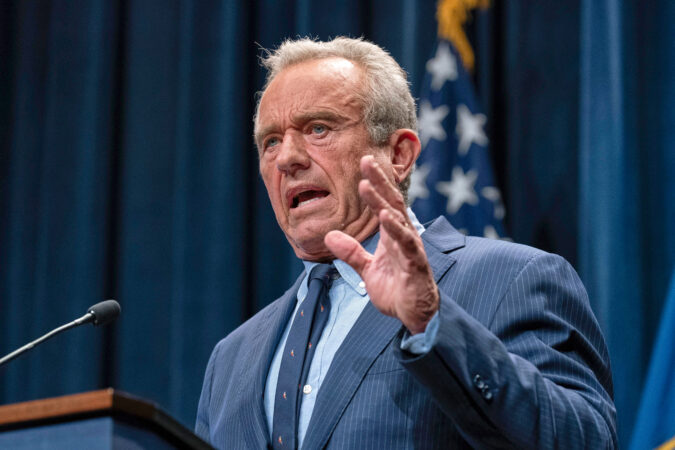
    “This is not medicine, it is malpractice,” Health Secretary Robert F. Kennedy Jr. said of gender-affirming procedures on children in a news conference on Thursday. “Sex-rejecting procedures rob children of their futures.”

    Kennedy also announced Thursday that the HHS Office of Civil Rights will propose a rule excluding gender dysphoria from the definition of a disability.

    In a related move, the Food and Drug Administration issued warning letters to a dozen companies that market chest-binding vests and other equipment used by people with gender dysphoria. Manufacturers include GenderBender LLC of Carson, Calif., and TomboyX of Seattle. The FDA letters state that chest binders can only be legally marketed for FDA-approved medical uses, such as recovery after mastectomy surgery.

    Proposed rules would threaten youth gender-affirming care in states where it remains legal

    Medicaid programs in slightly less than half of states currently cover gender-affirming care. At least 27 states have adopted laws restricting or banning the care. The Supreme Court’s recent decision upholding Tennessee’s ban means most other state laws are likely to remain in place.

    Thursday’s announcements would imperil access in nearly two dozen states where drug treatments and surgical procedures remain legal and funded by Medicaid, which includes federal and state dollars.

    The proposals announced by Kennedy and his deputies are not final or legally binding. The federal government must go through a lengthy rulemaking process, including periods of public comment and document rewrites, before the restrictions becoming permanent. They are also likely to face legal challenges.

    But the proposed rules will likely further intimidate healthcare providers from offering gender-affirming care to children and many hospitals have already ceased such care in anticipation of federal action.

    Children’s Hospital of Philadelphia recently went to court to prevent the Trump administration from obtaining the private medical records of youth who sought gender-affirming care.

    Nearly all U.S. hospitals participate in the Medicare and Medicaid programs, the federal government’s largest health plans that cover seniors, the disabled and low-income Americans. Losing access to those payments would imperil most U.S. hospitals and medical providers.

    The same funding restrictions would apply to a smaller health program when it comes to care for people under the age of 19, the State Children’s Health Insurance Program, according to a federal notice posted Thursday morning.

    Moves contradict advice from medical organizations and transgender advocates

    Mehmet Oz, the administrator of the Centers for Medicare and Medicaid Services, on Thursday called transgender treatments “a Band-Aid on a much deeper pathology,” and suggested children with gender dysphoria are “confused, lost, and need help.”

    Polling shows many Americans agree with the administration’s view of the issue. An Associated Press-NORC Center for Public Affairs Research survey conducted earlier this year found that about half of U.S. adults approved of how Trump was handling transgender issues.

    Chloe Cole, a conservative activist known for speaking about her gender-transition reversal, spoke at the news conference to express appreciation. She said cries for help from her and others in her situation, “have finally been heard.”

    But the approach contradicts the recommendations of most major U.S. medical organizations, including the American Medical Association, which has urged states not to restrict care for gender dysphoria.

    Advocates for transgender children strongly refuted the administration’s claims about gender-affirming care and said Thursday’s moves would put lives at risk.

    “In an effort to strongarm hospitals into participating in the administration’s anti-LGBTQ agenda, the Trump Administration is forcing health care systems to choose between providing lifesaving care for LGBTQ+ young people and accepting crucial federal funding,” Jamila Perritt, a Washington-based OB/GYN and president and CEO of Physicians for Reproductive Health, said in a statement. “This is a lose-lose situation where lives are inevitably on the line. “

    Rodrigo Heng-Lehtinen, senior vice president at The Trevor Project, a nonprofit suicide prevention organization for LBGTQ+ youth, called the changes a “one-size-fits-all mandate from the federal government” on a decision that should be between a doctor and patient.

    “The multitude of efforts we are seeing from federal legislators to strip transgender and nonbinary youth of the health care they need is deeply troubling,” he said.

    Actions build on a larger effort to restrict transgender rights

    The announcements build on a wave of actions President Donald Trump, his administration and Republicans in Congress have taken to target the rights of transgender people nationwide.

    On his first day in office, Trump signed an executive order that declared the federal government would recognize only two immutable sexes: male and female. He also has signed orders aimed at cutting off federal support for gender transitions for people under age 19 and barring transgender athletes from participating in girls’ and women’s sports.

    On Wednesday, a bill that would open transgender health care providers to prison time if they treat people under the age of 18 passed the U.S. House and heads to the Senate. Another bill under consideration in the House on Thursday aims to ban Medicaid coverage for gender-affirming care for children.

    Young people who persistently identify as a gender that differs from their sex assigned at birth are first evaluated by a team of professionals. Some may try a social transition, involving changing a hairstyle or pronouns. Some may later also receive hormone-blocking drugs that delay puberty, followed by testosterone or estrogen to bring about the desired physical changes in patients. Surgery is rare for minors.

  • To replace New York’s archbishop, Chicago-born pope looks to home turf

    To replace New York’s archbishop, Chicago-born pope looks to home turf

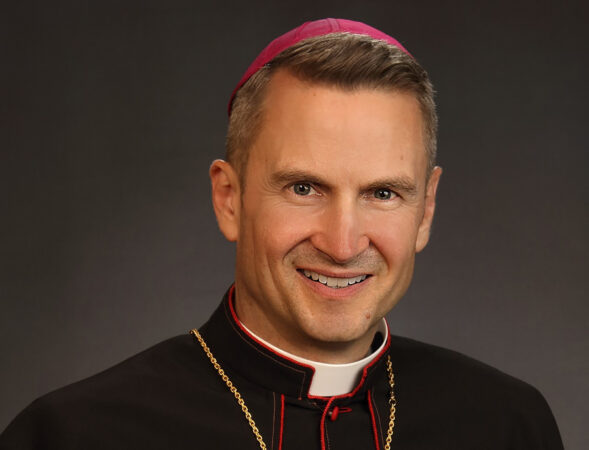
    ROME — In his highest-profile move to direct the U.S. church since becoming pope, Leo XIV accepted the resignation of Cardinal Timothy Dolan, the prominent archbishop of New York, replacing him with a 58-year-old Illinois native who “played in the same parks, went swimming in the same pools [and] liked the same pizza places” as the Chicago-born pope.

    Ronald A. Hicks, currently bishop of the Diocese of Joliet, southwest of Chicago, is viewed as cut from the same theological cloth — as well as nearly the same streets — as the new pontiff. He will take over one of the most visible archdioceses in the Catholic world at a time when it is grappling with the serious financial fallout of the clerical abuse scandals.

    The product and protégé of influential figures in the Chicago church, including Cardinal Blase Cupich, Hicks is widely seen as a mild-mannered moderate, observers say, who rarely delves into the world of divisive politics. That is likely to mark a tonal shift from Dolan, a charismatic conservative who delivered blessings at both of President Donald Trump’s inaugurations and compared slain activist Charlie Kirk to a saint, and whom the U.S. leader has described as a “great friend.”

    “I believe the message from Leo is that he wants an archbishop of New York who can be less identified with one political party, with one platform, with one trench in this situation of polarization,” said Massimo Faggioli, a professor in ecclesiology at Trinity College Dublin.

    “Hicks is not a woke liberal for sure, but I believe he is very different from Dolan, whose instincts were to very openly justify and excuse President Trump,” Faggioli said. “I don’t think that’s going to continue, honestly. This is a sign of change.”

    At St. Patrick’s Cathedral in Manhattan on Thursday, Dolan introduced Hicks to the media as an “early Christmas gift.” Hicks thanked him and Leo and reassured New Yorkers that while he was a Chicago Cubs and deep-dish fan, he loved their pizza and would root for their teams.

    He said he understood that these were “complex and challenging days.”

    “I feel the hope that so many who came to our shores … came through this very harbor here in New York, including my own family” carried, he said. “I am committed to working … to make real the promise of the golden door by acting in mutual respect and working to uphold human dignity.”

    Switching to Spanish, Hicks, who, like Leo, spent years serving the church in Latin America, expressed deep love of the “Latino culture” and “Hispanic people.”

    In a telephone interview with the Washington Post, Cupich compared Hicks in some respects to a fellow Chicagoan: the pope.

    Both men, he said, emphasize “listening.”

    Hicks would not hesitate to “speak out” when warranted, but “he’s not going to come at things in terms of an ideology,” he added.

    “So he’s an individual who’s going to look at what the facts are and, and focus on how people’s lives can hear the truth of the Gospel. And walk with people in a very patient way.”

    “I think he’s a balanced individual who knows and accepts the tradition of the church, but also is one who realizes, as Pope Francis put it, that realities are greater than ideas,” Cupich said of Hicks.

    The decision — announced Thursday by the Vatican but widely rumored for days — places Hicks atop the Archdiocese of New York, second in size only to Los Angeles’ in the United States, at an age that is one year younger than Dolan when Pope Benedict XVI named him to the job in 2009.

    In the Catholic Church, bishops and cardinals are expected to offer resignations upon turning 75 — an age Dolan reached in February. Acceptance is at the prerogative of the pope, and cardinals can and do serve longer. Leo has said he would like to make retirement at 75 the norm for the Catholic hierarchy, but he has also spelled out room for exceptions for some cardinals, who, he has said, could serve for up to an additional two years.

    “We must all cultivate the inner attitude that Pope Francis has defined as ‘learning to say goodbye,’ a valuable attitude when preparing to leave one’s position,” Leo said in an address last month.

    The appointment elevates an apprentice of Cupich — one of Leo’s staunchest allies and a cleric who has been criticized by some conservatives for showing leniency to politicians who support abortion rights and welcoming LGBTQ+ Catholics.

    Both Leo and Hicks were Chicago Catholics influenced by one of the most important figures in the 20th-century American church — Joseph Bernardin, a former cardinal and archbishop of Chicago. Bernardin, who ordained Hicks, defended the changes of Vatican II in the 1960s and promoted the “consistent ethic of life” that sought to link views against abortion to opposition to the death penalty and nuclear weapons.

    Some ultraconservative Catholics noted that Leo had appeared to seize an opportunity to replace Dolan, rather than permit him — as frequently happens — to serve beyond age 75. Some noted that Leo this week also elevated Bishop Ramón Bejarano, who has publicly apologized to LGBTQ+ Catholics for the “pain” caused to them by the church, to head the Diocese of Monterey, California.

    In recent weeks, Leo — who has repeatedly said he does not want to exacerbate political divisions — has grown bolder about criticizing the policies of the Trump administration, describing its migrant crackdown as “inhuman” and taking aim at U.S. attacks against alleged drug boats off the Venezuelan coast.

    Perhaps the highest-profile American Catholic cleric, Dolan is a media-savvy traditionalist who, ahead of the 2024 election, praised Trump — who is not Catholic — for taking “his Christian faith seriously.”

    During a September appearance on Fox & Friends, Dolan called Kirk “a modern-day Saint Paul.”

    “He was a missionary, he’s an evangelist, he’s a hero,” Dolan said. “He’s one, I think, that knew what Jesus meant when he said, ‘The truth will set you free.’”

    As frequently happens with Catholic clerics, however, Dolan was not always easy to label — and was criticized by some archconservatives for permitting celebrations for LGBTQ+ Catholics in his archdiocese.

    Some saw Hicks’s selection by Leo as one of balance. He is seen, for instance, as less “liberal” than, say, Cardinal Robert McElroy, who was named archbishop of Washington in January by Francis.

    “I think that Hicks will be less vocal on political issues than Dolan and McElroy,” said the Rev. Thomas Reese, a senior analyst at the Religious News Service. “I think, especially at the beginning, he will focus on the pastoral. For example, on immigration, he simply endorsed and repeated what the [U.S. bishops conference] had said.”

    Hicks mixes pastoral outreach with a more traditional focus on the Holy Eucharist and the role of Christ at Mass. His appointment comes after U.S. bishops named a noted conservative — Oklahoma City Archbishop Paul Coakley — to head their conference last month.

    “Here we see the road map of Leo — which is to overcome polarization,” Marco Politi, a longtime Rome-based Vatican watcher, said of Hicks’ appointment.

    Born in Harvey, Ill., Hicks was ordained to the priesthood in Chicago in 1994. Like Leo, he served the church for years in Latin America, in Hicks’ case, as director of an orphanage in El Salvador. Cupich appointed him vicar general of the Archdiocese of Chicago in 2015 and an auxiliary bishop in 2018. Pope Francis elevated him in 2020 to serve as bishop of Joliet.

    Asked about Leo by Chicago station WGNTV after the pope’s May selection to replace Francis, Hicks said: “I recognize a lot of similarities between him and me. So we grew up literally in the same radius, in the same neighborhood together. We played in the same parks, went swimming in the same pools, liked the same pizza places to go to. I mean, it’s that real.”

    That doesn’t mean they see eye-to-eye on everything.

    Leo “is and always will be a [White] Sox fan,” Hicks said. “And, I grew up a Cub fan. I’m a Cubs fan because my father is a die-hard Cubs fan. He wanted us to know we were loved, but that we’d stay Catholic and Cubs fans. In my family, there was not getting around either of those things.”

  • Senators freeze Coast Guard admiral’s promotion over swastika, noose policy

    Senators freeze Coast Guard admiral’s promotion over swastika, noose policy

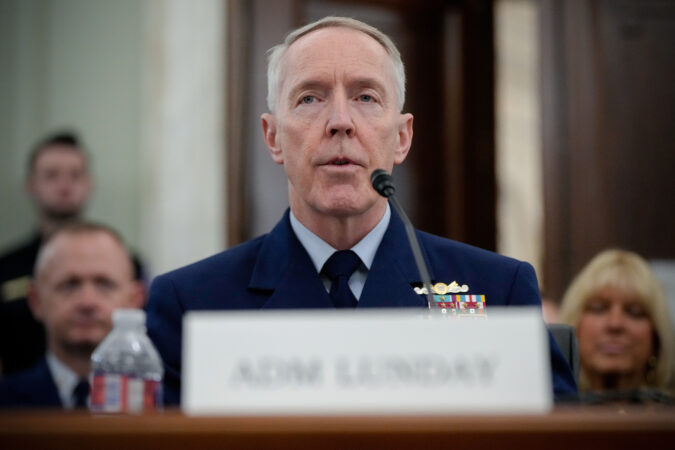
    At least two U.S. senators have put holds on the nomination of Adm. Kevin Lunday to lead the U.S. Coast Guard, citing concerns with a new workplace harassment policy that downgrades the definition of swastikas and nooses from hate symbols to “potentially divisive.”

    The move upends Lunday’s confirmation, which the Senate was due to vote on this week, and raises new questions about the decision to implement the policy revisions after Lunday in November had forcefully denounced such symbols and declared a wholesale prohibition on them.

    The holds on Lunday’s promotion were exercised by Sens. Tammy Duckworth (D., Ill.) and Jacky Rosen (D., Nev.). They follow a series of Washington Post reports detailing plans to include the incendiary language within the Coast Guard’s new workplace harassment manual — and the policy’s quiet implementation this week despite the admiral’s explicit directive last month. The manual is posted online and specifies that the document’s previous version “is cancelled.”

    In a statement, Duckworth expressed incredulity at the situation and questioned why Lunday would not update the policy manual “to delete the absurd characterization that clearly states a noose and swastika are merely potentially divisive symbols.” She said that the admiral had affirmed “directly to me” that both “are symbols of hate.”

    “This shouldn’t be difficult,” Duckworth said.

    Rosen, in a social media post announcing her decision to place a hold on Lunday’s nomination, said it appears he “may have backtracked in his commitment to me to combat antisemitism and hate crimes and protect all members of the Coast Guard.” She said her hold will remain in place “until the Coast Guard provides answers.”

    It was not immediately clear why Lunday, who was named the Coast Guard’s acting commandant after the Trump administration ousted his predecessor, did not incorporate his November order into the manual before it took effect Monday, or to what extent the Department of Homeland Security leadership, which has authority over the service, was involved in the revision process.

    Two people familiar with policy manual’s overhaul, speaking on the condition of anonymity for fear of reprisal, sought to distance Coast Guard leadership from the controversy. “The policy rewrite was bad staff work,” one person, a Coast Guard employee, said. “But the Coast Guard’s hands were tied in how we were able to address the mistake.”

    A spokesperson for Lunday did not respond to a request for comment, and the Coast Guard did not address whether Lunday, as acting commandant, had the authority to change the workplace harassment manual or if he required approval from Homeland Security Secretary Kristi L. Noem.

    A spokeswoman for DHS, Tricia McLaughlin, said that by placing a hold on Lunday’s nomination, Duckworth and Rosen were attempting to “extort” the Coast Guard to score “cheap political points.”

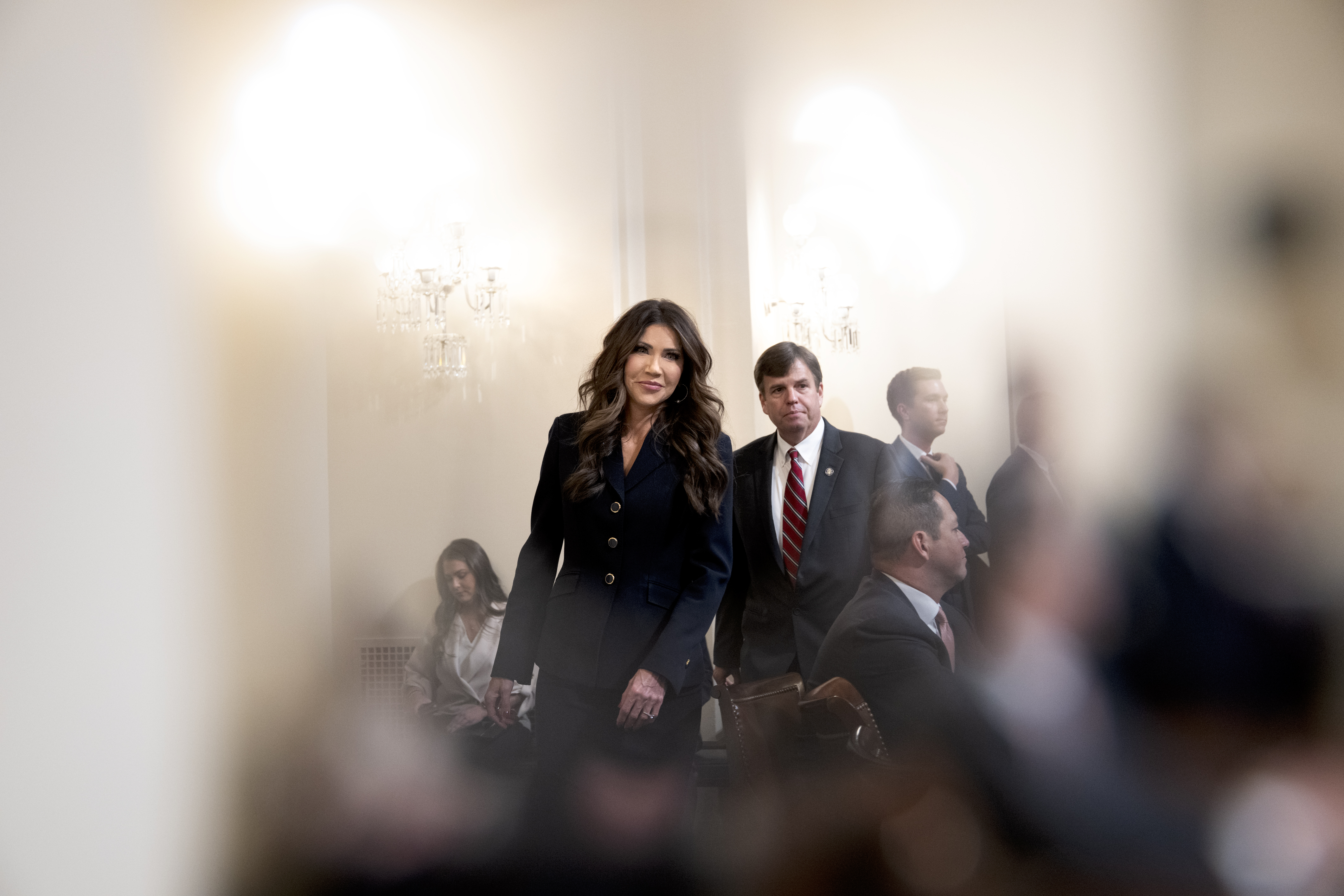
    Homeland Security Secretary Kristi L. Noem on Capitol Hill earlier this month.

    “At a time when the threat of antisemitic violence is as widespread as it is right now, using this to politicize one of President Trump’s military nominations is simply disgusting,” McLaughlin said.

    The issue has drawn concern from some Republicans, too. Sen. Dan Sullivan (R., Alaska) “has been clear with acting commandant Adm. Lunday since the story broke that the Coast Guard must clarify, in the strongest terms possible, that the Coast Guard does not tolerate symbols of hate, like swastikas and nooses,” his office said in a statement Wednesday.

    Sen. James Lankford (R., Okla.) also registered disapproval. In a statement, his office said the senator was “provided assurances” the policy had been corrected. “There is no reason,” it says, “why there should be conflicting policies in place.”

    Unless the holds are lifted, Lunday’s nomination will be sent back to the White House at the end of December, forcing President Donald Trump to renominate him or choose someone else for the job, according to a Senate Republican aide.

    The Coast Guard’s hazing and harassment policy was an early focus of Lunday’s after the Trump administration, upon entering office in January, fired his predecessor, Adm. Linda Fagan — the first woman to lead a branch of the U.S. military. In announcing Fagan’s removal, officials cited among other things her “excessive focus” on diversity initiatives.

    Within days Lunday ordered the suspension of the policy manual that, among its other guidance, said explicitly that the swastika was among a “list of symbols whose display, presentation, creation, or depiction would constitute a potential hate incident.” Nooses and the Confederate flag also matched that description under the previous policy. Lunday was later nominated by Trump to lead the service as its commandant.

    The policy manual changes reflect an administration-wide campaign to purge the federal of government of its focus on diversity, equity and inclusion (DEI). At the Pentagon, for instance, Defense Secretary Pete Hegseth has fired multiple minority or female military officers in his ongoing effort to eliminate DEI initiatives. He has said, without offering evidence, that the prior administration’s focus on DEI harmed military recruiting.

    At the same time, antisemitism is on the rise globally. At least 15 people were killed over the weekend at a Hanukkah celebration in Australia.

    The Coast Guard’s new workplace harassment manual, beyond softening the definition of swastikas and nooses, also allows for supervisors to review how such symbols are used or displayed in the workplace instead of immediately prohibiting them.

    After the Post in November revealed the Coast Guard’s plan to adopt the new language, Lunday reacted swiftly — stating in a memo to all Coast Guard personnel that his directive barring swastikas and nooses would supersede any other policy language.

    Vincent W. Patton, who served as master chief petty officer of the Coast Guard — the highest enlisted position — from 1998 to 2002, on Wednesday cited Lunday’s memo in offering a defense of the admiral and the policy revision. The new manual’s wording gives the Coast Guard more latitude to make judgment calls case by case, he said, adding that Lunday’s letter to all personnel was “very, very clear that hate symbols are prohibited.”

    The process and penalties remain the same — regardless of whether the word is “hate” or “potentially divisive,” Patton said in an interview.

    Asked if he meant that there could be situations in which someone with a noose or a swastika flag or tattoo was not in violation of the harassment policy, he said “that’s possible.”

    “I mean if it was a swastika, they should be out within a second,” Patton said, “but Confederate flags? There should be an open dialogue to determine or define if this person has the potential and willingness to do something hateful.”