Category: Wires

  • Higher costs push holiday shoppers toward socks, coffee, and diapers

    Higher costs push holiday shoppers toward socks, coffee, and diapers

    Shirley Spillane’s holiday shopping list is decidedly no-frills this year: cutting boards, coffee, and socks.

    The Los Angeles-based school counselor used to spend big for Christmas. But this year, with stubbornly high prices, rent, and utilities, as well as a 6-month-old baby, she’s paring back. Spillane is buying a car duster for her husband and jam for her aunt — all within her $200 budget, made up almost entirely of gifts she can pick up grocery shopping at Sam’s Club.

    “This season looks different than usual,” the 26-year-old said. “With the economy the way it is and a new baby, we’re keeping it small.”

    Across the country, Americans are putting a practical spin on holiday shopping. Another year of stubborn inflation and new tariffs that have lifted the prices of appliances, shoes, and toys has led many families to think twice about what they’re buying, and why. Early holiday spending data shows people are scooping up more necessities like appliances, clothing, and furniture than they did last year.

    On Cyber Monday alone, online sales of refrigerators and freezers rose 1,700% from average levels in October, according to data from Adobe Analytics. Other run-of-the-mill products in high demand included vacuum cleaners (up 1,300%), small kitchen appliances (up 1,250%), cookware (up 950%), power tools (up 900%), and jackets (up 850%).

    “These are items that are, in many instances, absolutely essential,” said Vivek Pandya, director of Adobe Digital Insights. “Consumers are cognizant of the broad environment and they’re being very strategic about purchases, whether it’s for themselves or gift-giving.”

    While inflation has risen modestly this year, five years of price increases have led to deepening dissatisfaction with how much things cost. That sentiment helped cement political wins last month for Democrats in Virginia, New York, and New Jersey and spurred President Trump to kick off an “affordability tour” touting what his administration has done for the economy. “Our prices are coming down tremendously from the highest prices in the history of our country,” he said at a Pennsylvania casino last week.

    But in interviews with nearly a dozen shoppers around the country, the Washington Post found that almost all of them said they had become more strategic about their holiday shopping this year. They were looking for discounts and comparing prices. Many were buying fewer gifts, and for fewer people.

    Some parents, like Meghan Orr in Austin, said they’d begun wrapping everyday items like diapers and baby shampoo to fill the space under their Christmas trees. “At this point we’re just being silly, but it’s fun to unwrap things.”

    When it came to their own wish lists, several said they wanted to do away with gifting conventions and ask family for help paying the bills — though very few thought the approach would work.

    Alecia Bencze, director of career services for a law school in Akron, Ohio, has had a good year financially. Still, she’s spending about half of the $1,000 she usually does on Christmas gifts, and is sticking to items she knows will come in handy: golf balls for her father, a barbecue set for her brother, and shoes for her sister-in-law. Her own wish list includes a skillet and measuring cups.

    “I’m not feeling the pinch as much as other people are, but this is the least I’ve ever spent on Christmas,” Bencze, 35, said. “I just went through and got one thing from each person’s list.”

    Early holiday shopping data shows a discernible shift in spending patterns, with lower- and middle-income Americans pulling back, and the wealthy trading down from luxury stores to lower-priced retailers. Although Black Friday sales were unexpectedly strong, those gains were largely concentrated at discounters, dollar stores, off-price department stores, and online marketplaces such as Amazon and eBay, according to Consumer Edge, which tracks transactions from more than 100 million credit and debit cards. The firm’s data showed that purchases between Black Friday and Cyber Monday tumbled 10% at high-end department stores, while luxury clothing brands saw a 5% decline from the same period last year, as even the most well-off looked for deals.

    At Twiggy, a small business that sells tote bags and other gifts in Oahu, Hawaii, more customers are veering toward everyday items like kitchen towels, reusable snack bags, and sticky notes this holiday season, owner Jessica Leong-Thomas said.

    “It started during the government shutdown, when people became hesitant to buy frivolously,” she said. “Since then I’ve seen a real shift. People come in and say, ‘I want to buy something that will be useful.’” (Leong-Thomas understands the impulse: “Personally, what I want for Christmas is for someone to buy me toilet paper and dish soap,” she said.)

    When they do shop, data shows Americans are increasingly turning to off-price retailers such as TJ Maxx, and warehouse discounters such as Costco and Sam’s Club, for discounts on basic items, according to Mary Brett Whitfield, senior vice president for shopper insights at the data analytics firm Kantar. Overall, she said, Americans appear to be spending more than they did last year, but on fewer items.

    “You look at what’s happening with prices, tariffs, and other inflationary pressures, and it definitely seems like people have a more practical mindset,” she said. “I see it with my own adult children: One of them asked for socks.”

    In all, holiday sales are expected to grow about 4% this year, slightly less than last year’s 4.3% increase and a notable slowdown from 13% growth in 2021, according to the National Retail Federation.

    When JoEllen Barnes’s refrigerator broke down in mid-November, she and her family made do until they could scoop up a discounted replacement on Black Friday. With food and utility costs up this year, the mother of two says it’s been tougher to cover everyday costs. Instead of splurging on a Nintendo Switch for her sons like she did last year, she’s been scouring neighborhood Facebook groups for lightly used toys.

    “I usually ask my husband for jewelry but that doesn’t feel appropriate now, given the extra cost of things,” said Barnes, a 43-year-old educator in Charlotte. Instead of their usual wish lists, they’re sticking to the utilitarian this year. She got him a discounted iPad on Black Friday; he’s already bought her gift too, though she doesn’t know what it is.

    “Part of me is like, ‘Please don’t let it be an appliance or pots,’” Barnes said. “Although, well, it would be nice to get new pots.”

  • Trump administration launches bold air-taxi push

    Trump administration launches bold air-taxi push

    The Trump administration is seeking to boost U.S. companies as they compete for dominance in the burgeoning air-taxi sector — with an eye toward showcasing the technology at the 2028 Olympics in Los Angeles.

    Through executive orders — as well as a new effort to gather data that could help fast-track adoption of these aircraft — the administration has embraced it as part of its transportation agenda.

    In September, Transportation Secretary Sean P. Duffy announced the launch of a pilot program aimed at exploring ways to integrate these technologies — including air taxis, more formally known as electric vertical takeoff-and-landing aircraft — as well as hybrid-electric and battery-powered planes into the nation’s aviation system.

    For decades, the dream of flying above traffic-clogged roadways has been just that — a dream. But companies such as Archer Aviation, Joby Aviation, and BETA Technologies are pitching their battery-powered aircraft, which take off and land vertically, as a way to revolutionize the way people travel. Meanwhile, Wisk, a Boeing subsidiary, and Reliable Robotics are working on versions that can operate without a pilot — an innovation that could improve the economics of air service and cargo delivery to smaller and more isolated communities.

    BETA Technologies raised more than $1 billion when it went public on the New York Stock Exchange last month, and investors have poured millions into the sector. However, questions remain about whether it will live up to the hype. A plan for air taxis to transport spectators during the 2024 Paris Olympics fizzled, while other high-profile ventures have faltered. Lilium, a German eVTOL company, received an infusion of cash after filing for bankruptcy last year, but was still unable to continue operations, filing for bankruptcy again earlier this year.

    Experts say one key to financial success is making the leap from a novelty for the rich to a transportation option for the masses. Skeptics say the technology is still too unproven to merit government support.

    “We’re talking about spending taxpayer money on something that’s not here yet,” said Rep. Scott Perry (R., Pa.) at a House hearing last week. “The private sector is free to chase this enterprise. As I see it, it can’t beat the physics of a 1960 helicopter.”

    Pilot program hopes

    The public may soon see how these new types of aircraft could change how people and goods move.

    Dec. 19 is the deadline for submissions to the administration’s Electric Vertical Takeoff and Landing Integration Pilot Program (eIPP). Modeled after a similar initiative for drone operations launched during President Donald Trump’s first term, it seeks to explore how quieter, cleaner, battery-powered aircraft that take off and land like helicopters can transform aviation. At least five applicants will be chosen.

    “This program represents the launch of a new era of American aviation,” said Greg Bowles, chief policy officer at Joby Aviation, which has been working for more than a decade to bring its aircraft to market. He predicted it will “introduce Joby aircraft into the skies over major U.S. cities” starting next year.

    Sapan Shah, senior director of portfolio management for Advanced Mobility at Honeywell Aerospace, said he expects significant interest from state and local governments across the country that are eager to explore how these new types of planes can benefit their residents. The data collected from the program will offer participants an early look at how these aircraft operate in real-world conditions, and what changes will be needed to incorporate them into existing transportation systems, he said.

    Major players in the industry, including BETA Technologies and Joby Aviation, have already said they plan to apply for the pilot program. In September, Archer Aviation said it hoped to participate in the program alongside United Airlines, an early investor in the company. The selections are expected to be made in March, with operations anticipated within 90 days. The pilot programs are expected to run for three years; Joby and Archer also aim to have a fleet of air taxis flying Olympic spectators around Los Angeles in 2028.

    The state of Michigan also plans to apply, said Bryan Budds, aeronautics director for the Michigan Department of Transportation. As part of a partnership with BETA Technologies, it has installed a network of chargers for electric aircraft at four airports. While much of the focus around air taxis is on how they can move people in dense urban areas, Budds said one potential use in Michigan is moving pharmaceuticals and medical goods to the state’s rural areas.

    There’s also been movement in Congress, which included several provisions aimed at bolstering air taxis in last year’s Federal Aviation Administration reauthorization bill. The industry received another major boost that year when the FAA released standards for air-taxi pilot training and certification.

    To supporters, a main case for investing in these technologies is to ensure the U.S. continues its dominance more broadly of the global aviation industry. China, for example, has already certified an air taxi capable of carrying passengers.

    At the House hearing last week, lawmakers emphasized the importance of ensuring that lead.

    “Either we choose to embrace and unleash American innovation, or we carry on with the status quo and watch as other nations surpass us in new and emerging technology,” said Rep. Troy E. Nehls (R., Texas).

    Even in the early stages, experts say, such programs can yield valuable information.

    With a demonstration program, “we’re getting technology out into the actual markets,” said Laurie Garrow, a civil engineering professor at Georgia Institute of Technology who has followed developments in advanced air mobility.

    These real-world projects will help communities and the FAA understand how these aircraft operate in the existing air traffic system and where the pain points might be, and the data gathered will help policymakers as they attempt to scale up to larger operations, she added.

    Savanthi Syth, an aviation analyst with Raymond James, said giving manufacturers and communities an early opportunity to “try out” the technology in controlled environments means that by the time the aircraft are fully certified, they won’t be starting at square one — they’ll already have information allowing them to move into the next phase of operations.

    Said Syth: “This is a better way than ‘Oh, you have a certified aircraft but now you have to get community buy-in.’”

  • Witness describes terror inside Brown University classroom after gunman entered

    Witness describes terror inside Brown University classroom after gunman entered

    Joseph Oduro had just wrapped up a study session for the final exam in an introductory economics course at Brown University when he heard screaming outside the room and several loud bangs.

    Five seconds later, a door opened at the top of the auditorium-style classroom in the Barus and Holley engineering and physics building. A man dressed in black burst in, yelling something unintelligible. He was carrying “the longest gun I’ve ever seen in my life,” Oduro said in an interview Sunday.

    Oduro, a senior from New Jersey, is a teaching assistant in the principles of economics course, one of the most popular classes on campus. On Saturday afternoon, he was reviewing the course material with 60-odd students ahead of Tuesday’s exam.

    Oduro, 21, locked eyes with the shooter. A single thought went through his mind: Get down.

    He crouched behind the podium where only moments earlier he had been offering students words of encouragement ahead of their final exam. He heard shots, dozens of them, and screams. Students began running down the aisles to get away. Some escaped through the side doors at the bottom of the classroom while others huddled with Oduro, all trying to stay as quiet as possible.

    One of them was a first-year student from Massachusetts who had been shot twice in the leg. Oduro gave her his hand and told her to squeeze it. “I told her to put all the pain on me,” Oduro said. “I just kept telling her, ‘You’re going to be okay.’”

    The attack at the Ivy League school left two students dead and nine others wounded, officials said. Early Sunday, a person of interest was taken into custody, according to Providence Mayor Brett Smiley (D).

    Oduro doesn’t know how long it took for police to arrive. There were other victims in the classroom and Oduro got his first real look at the scene as he was escorted out by police. He didn’t want to describe what he saw.

    Oduro stayed with his wounded first-year student in the back of a police car all the way to the hospital. He wanted to make sure she would be all right. It sounded corny, he knew, but he truly loved the students in the class, where he has been a teaching assistant since his sophomore year.

    It hurt, he said, “to see them all in a state of panic and desperate pain.”

    After hours at the hospital and questioning by the police, Oduro went to stay at a friend’s place who lives off campus. His voice was quiet and full of exhaustion. He had no idea what would come next.

    On Sunday morning, Brown said that all remaining exams and classes for the semester were canceled.

  • Egypt reveals restored colossal statues of pharaoh in Luxor

    Egypt reveals restored colossal statues of pharaoh in Luxor

    LUXOR, Egypt — Egypt on Sunday revealed the revamp of two colossal statues of a prominent pharaoh in the southern city of Luxor, the latest in the government’s archaeological events that aim at drawing more tourists to the country.

    The giant alabaster statues, known as the Colossi of Memnon, were reassembled in a renovation project that lasted about two decades. They represent Amenhotep III, who ruled ancient Egypt about 3,400 years ago.

    “Today we are celebrating, actually, the finishing and the erecting of these two colossal statues,” Mohamed Ismail, secretary-general of the Supreme Council of Antiquities, told the Associated Press ahead of the ceremony.

    Attempts to revive a prestigious temple

    Ismail said the colossi are of great significance to Luxor, a city known for its ancient temples and other antiquities. They’re also an attempt to “revive how this funerary temple of king Amenhotep III looked like a long time ago,” Ismail said.

    Amenhotep III, one of the most prominent pharaohs, ruled during the 500 years of the New Kingdom, which was the most prosperous time for ancient Egypt. The pharaoh, whose mummy is showcased at a Cairo museum, ruled between 1390–1353 BC, a peaceful period known for its prosperity and great construction, including his mortuary temple, where the Colossi of Memnon are located, and another temple, Soleb, in Nubia.

    The colossi were toppled by a strong earthquake in about 1200 BC that also destroyed Amenhotep III’s funerary temple, said Mohamed Ismail, secretary-general of the Supreme Council of Antiquities.

    They were fragmented and partly quarried away, with their pedestals dispersed. Some of their blocks were reused in the Karnak temple, but archaeologists brought them back to rebuild the colossi, according to the Antiquities Ministry.

    In the late 1990s, an Egyptian German mission, chaired by German Egyptologist Hourig Sourouzian, began working in the temple area, including the assembly and renovation of the colossi.

    “This project has in mind … to save the last remains of a once-prestigious temple,” she said.

    A pharaoh facing the rising sun

    The statues show Amenhotep III seated with hands resting on his thighs, with their faces looking eastward toward the Nile and the rising sun. They wear the nemes headdress surmounted by double crowns and the pleated royal kilt, which symbolizes the pharaoh’s divine rule.

    Two other small statues on the pharaoh’s feet depict his wife, Tiye.

    The colossi — 48 feet and 45 feet respectively — preside over the entrance of the king’s temple on the western bank of the Nile. The 86-acre complex is believed to be the largest and richest temple in Egypt and is usually compared to the temple of Karnak, also in Luxor.

    The colossi were hewn in Egyptian alabaster from the quarries of Hatnub, in Middle Egypt. They were fixed on large pedestals with inscriptions showing the name of the temple, as well as the quarry.

    Unlike other monumental sculptures of ancient Egypt, the colossi were partly compiled with pieces sculpted separately, which were fixed into each statue’s main monolithic alabaster core, the ministry said.

    Eye on tourism

    Sunday’s unveiling in Luxor came just six weeks after the inauguration of the long-delayed Grand Egyptian Museum, the centerpiece of the government’s bid to boost the country’s tourism industry and bring cash into the troubled economy. The mega project is located near the famed Giza Pyramids and the Sphinx.

    The tourism sector, which depends heavily on Egypt’s rich pharaonic artifacts, has suffered during years of political turmoil and violence following the 2011 uprising. In recent years, the sector has started to recover after the coronavirus pandemic and amid Russia’s war on Ukraine — both countries are major sources of tourists visiting Egypt.

    “This site is going to be a point of interest for years to come,” said Tourism and Antiquities Minister Sherif Fathy, who attended the unveiling ceremony. “There are always new things happening in Luxor.”

    A record number of about 15.7 million tourists visited Egypt in 2024, contributing about 8% of the country’s GDP, according to official figures.

    Fathy, the minister,has said about 18 million tourists are expected to visit the country this year, with authorities hoping for 30 million visitors annually by 2032.

  • Police have person of interest in custody over Brown University shooting that killed 2, wounded 9

    Police have person of interest in custody over Brown University shooting that killed 2, wounded 9

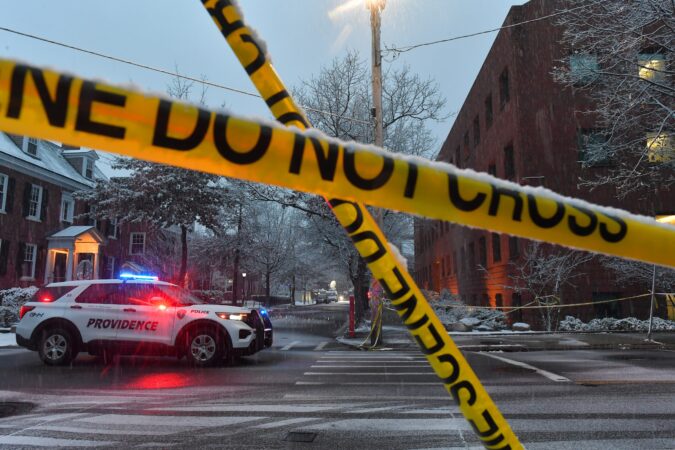
    PROVIDENCE, R.I. — A person of interest was in custody Sunday after a shooting during final exams at Brown University that killed two students and wounded nine others, though key questions remained unanswered more than 24 hours after the attack.

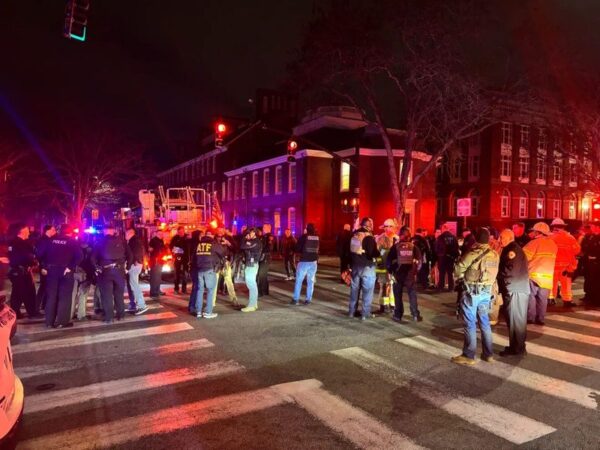
    The attack Saturday afternoon set off hours of chaos across the Ivy League campus and surrounding Providence neighborhoods as hundreds of officers searched for the shooter and urged students and staff to shelter in place. The lockdown, which stretched into the night, was lifted early Sunday, but authorities had not yet released information about a potential motive.

    The person of interest is a 24-year-old man from Wisconsin, according to two people familiar with the matter. The people were not authorized to publicly discuss details of the investigation and spoke to the Associated Press on condition of anonymity.

    Col. Oscar Perez, the Providence police chief, said Sunday afternoon that no one has been charged yet. Perez, who also said no one else was being sought, declined to say whether the detained person had any connection to Brown.

    The person was taken into custody at a Hampton Inn hotel in Coventry, R.I., about 20 miles from Providence, where police officers and FBI agents remained Sunday, blocking off a hallway with crime scene tape as they searched the area.

    The shooting occurred during one of the busiest moments of the academic calendar, as final exams were underway. Brown canceled all remaining classes, exams, papers, and projects for the semester and told students they were free to leave campus, underscoring the scale of the disruption and the gravity of the attack.

    College President Christina Paxson teared up while describing her conversations with students both on campus and in the hospital.

    “They are amazing and they’re supporting each other,” she said at an afternoon news conference. “There’s just a lot of gratitude.”

    The gunman opened fire inside a classroom in the engineering building, firing more than 40 rounds from a 9 mm handgun, a law enforcement official told the Associated Press. Two handguns were recovered when the person of interest was taken into custody and authorities also found two loaded 30-round magazines, the official said. The official was not authorized to discuss the investigation publicly and spoke to AP on the condition of anonymity.

    One student of the nine wounded students had been released from the hospital, said Paxson. Seven others were in critical but stable condition, and one was in critical condition.

    Some businesses remain closed in shocked city

    Providence leaders said residents would notice a heavier police presence, and many area businesses announced Sunday that they would remain closed. A scheduled 5K run was postponed until next weekend.

    Mayor Brett Smiley invited residents to gather Sunday evening in a city park where an event had been scheduled to light a Christmas tree and Hanukkah menorah.

    “For those who know at least a bit of the Hanukkah story, it is quite clear that if we can come together as a community to shine a little bit of light tonight, there’s nothing better that we can be doing,” he told reporters.

    Smiley said he visited some of the wounded students and was inspired by their courage, hope, and gratitude. One told him that active shooting drills done in high school proved helpful.

    “The resilience that these survivors showed and shared with me, is frankly pretty overwhelming,” he said. “We’re all saddened, scared, tired, but what they’ve been through is something different entirely.”

    Exams were underway during shooting

    Investigators were not immediately sure how the shooter got inside the first-floor classroom at the Barus & Holley building, a seven-story complex that houses the School of Engineering and physics department. The building includes more than 100 laboratories and dozens of classrooms and offices, according to the university’s website.

    Engineering design exams were underway. Outer doors of the building were unlocked but rooms being used for final exams required badge access, Smiley said.

    Emma Ferraro, a chemical engineering student, was in the lobby working on a final project when she heard loud pops coming from the east side. Once she realized they were gunshots, she darted for the door and ran to a nearby building where she waited for hours.

    Surveillance video released by police showed a suspect, dressed in black, walking from the scene.

    Former “Survivor” contestant just left the building

    Eva Erickson, a doctoral candidate who was the runner-up earlier this year on the CBS reality competition show Survivor, said she left her lab in the engineering building 15 minutes before shots rang out.

    The engineering and thermal science student shared candid moments on Survivor as the show’s first openly autistic contestant. She was locked down in the campus gym following the shooting and shared on social media that the only other member of her lab who was present was safely evacuated.

    Brown senior biochemistry student Alex Bruce was working on a final research project in his dorm across the street from the building when he heard sirens outside.

    “I’m just in here shaking,” he said, watching through the window as armed officers surrounded his dorm.

    Students hid under desks

    Students in a nearby lab turned off the lights and hid under desks after receiving an alert, said Chiangheng Chien, a doctoral student in engineering who was about a block from where the shooting occurred.

    Mari Camara, 20, a junior from New York City, was coming out of the library and rushed inside a taqueria to seek shelter. She spent more than three hours there, texting friends while police searched the campus.

    “Everyone is the same as me, shocked and terrified that something like this happened,” she said.

    Brown, the seventh-oldest higher education institution in the U.S., is one of the nation’s most prestigious colleges, with roughly 7,300 undergraduates and more than 3,000 graduate students.

    Crystal McCollaum, of Chicopee, Mass., was staying at the hotel where the person of interest was taken into custody. She was with her daughter to attend a cheerleading competition in Providence, but after hearing about the shooting, she thought they would be safer staying outside the city.

    “It was just weird and scary,” she said.

  • The holiday shopping season comes with tons of extra emissions. Here’s how to do it sustainably

    The holiday shopping season comes with tons of extra emissions. Here’s how to do it sustainably

    We’re in the thick of the holiday shopping season, and U.S. residents are expected to shatter the spending record again this year. The National Retail Federation forecasts that 2025 will be the first time we collectively spend more than $1 trillion on year-end gifts.

    A lot of materials, energy, packaging, and gasoline have gone into making and moving those gifts. All of those processes release planet-warming gases into the atmosphere.

    But a lot of that environmental impact is avoidable. Making, baking, thrifting, and avoiding traditional wrapping paper are all more planet-friendly ways to give. We’ve got tips on how to do them all.

    Homemade doesn’t have to be difficult

    Sure, if you’ve got the skill to turn a wooden bowl or needlepoint a Christmas stocking, those gifts are guaranteed to be unique and meaningful. But not all of us have the knowledge or time.

    Sandra Goldmark, associate dean of Columbia Climate School’s Office of Engagement and Impact, said one of her favorite options is an act of service for a loved one. One year, for example, her husband organized all her passwords for her.

    “It was not something easy to wrap and put under the tree, but believe me, it was meaningful and really helped me more than any additional object cluttering up my home could have,” she said.

    Another winner: food. If, say, you have a long list of recipients, buy ingredients in bulk and pack them in Mason jars. Cookie mix, soup mix, sourdough starter, and spice mixes are all easily sealed and transported that way. Add some ribbon and a sprig of cedar, and it’s festive. Homemade baked goods and snacks are other options.

    “It’s inexpensive, but it takes care and time and attention,” said sustainable-living educator Sarah Robertson-Barnes.

    Give experiences instead of buying more stuff

    The advice here starts out simple: Buy less stuff. The best way to give gifts more sustainably is to buy fewer new things, said Goldmark.

    Stockings can be a common spot for toys that break quickly before going straight to the landfill. Instead, you can fill stockings with things that your friends or family need anyway, like toothbrushes or body wash, or traditional treats like fruit and chocolates.

    Giving someone an experience is another popular option. That might mean a pair of concert tickets, a spa day, a gift card to a favorite local restaurant, a local news subscription, or a membership to a local garden or zoo that the recipient can use over and over. Research has indicated that experiences strengthen relationships better than material gifts do.

    “There is so much that you could do by just saying, ‘I would prefer if you just made me a nice meal or took me out for some sort of adventure,’” said Atar Herziger, environmental psychologist and assistant professor at Technion — Israel Institute of Technology.

    Experiences also come with less packaging. Herziger cautions, though, that travel can have a high impact especially if it involves planes. So she recommends local options such as a nearby hike or a staycation.

    And if you’re unsure what experience your loved one would prefer? Herziger said don’t overcomplicate it — just ask.

    Go vintage

    Secondhand gifts are easier on the planet because they involve less manufacturing, packaging, and shipping. Robertson-Barnes looks to Facebook Marketplace or her local Buy Nothing group to find items that she would have otherwise bought new.

    “I bet somebody has the thing that you’re looking for and they would love to get rid of it,” she said.

    Still, for some recipients, secondhand gifts are taboo.

    “We do have a weird cultural thing where new is better and used is gross,” said Robertson-Barnes, who suggested reframing used gifts as “vintage.”

    Similarly, Herziger said secondhand options might be received better when they’re items that can’t be bought new, such as a family heirloom or a collectible that isn’t produced anymore.

    Goldmark looks to thrift stores for smaller toys or mugs. Record stores, used book stores, furniture stores, and antique shops are other options. And of course big names like eBay and Goodwill can have rare and unique finds, too.

    If buying secondhand simply won’t work for a recipient, Goldmark said to focus on items that are high-quality, long-lasting, repairable, and really needed. That ensures that it’s worth investing in and reduces the chance that it gets returned. Look to buy locally, rather than ordering online, to reduce how far it travels.

    The wrapping matters, too

    Millions of pounds of wrapping paper end up in the landfill every year. Much of it is blended with plastic to make it shiny or sparkly, so it can’t be recycled.

    Not sure whether your wrapping paper is recyclable? Check your local recycler’s website for guidelines, or try a simple test by crumpling it into a ball. If it holds its shape, it’s more likely recyclable. Also, if it rips as easily as printer paper or gets soggy like a saturated brown grocery bag, those are good signs it’s recyclable, too.

    Robertson-Barnes said if you already have wrapping paper on hand, you should use it rather than waste it. But once it’s gone, she recommends reusable wrapping cloths such as furoshiki, a traditional Japanese fabric for presenting gifts.

    Some experts also recommend gift bags as long as they’re reused — and not tossed.

    Another cheaper and more planet-friendly alternative to wrapping paper is newspaper or brown paper bags. Tie them off with reusable ribbon, a couple pinecones or a candy cane, and suddenly it’s festive.

    Plus, brown paper is a blank canvas with endless opportunities for customization. “If you’ve got kids, then their drawings are wonderful packaging materials. They make the best wrapping paper,” Herziger said.

  • How baby boomers got so rich, and why their kids are unlikely to catch up

    How baby boomers got so rich, and why their kids are unlikely to catch up

    Baby boomers hold more than $85 trillion in assets, making them the richest generation by far. New research explores the extraordinary rise in their good fortunes — one that experts say successive generations will be hard-pressed to replicate.

    The reasons come down to timing and time: Americans 75 and older bought homes and invested in stocks well before such assets exploded in value, according to Edward Wolff, an economics professor at New York University. In a working paper for the National Bureau of Economic Research, he examined the four decades between 1983 and 2022 when those older boomers’ saw their wealth climb and their younger peers recorded relative declines.

    “It’s astonishing how their relative wealth has taken off in the last 30 plus years,” Wolff said. “They started out as among the poorest groups in terms of wealth back in 1983.”

    The wealth of baby boomers — especially those in retirement — is a reflection of the uniquely favorable economic conditions that occurred during their working lives, Wolff and other economists said. So much so that it would be difficult for younger generations to emulate, especially as they are more likely to be weighed down by debt or childcare costs.

    Housing costs also factor into the widening divide between baby boomers (born from 1946 to 1964), and everyone else, experts say. Generation X (1965 to 1980), millennials (1981 to 1996), and their successors increasingly dedicate a bigger portion of their budgets to mortgage or rent.

    Without considering the historical backdrop that let many boomers buy homes and invest in stock before decades of asset appreciation, people might overstate the extent to which the generation’s wealth reflects their superior financial decision-making, said Olivia Mitchell, professor of business economics and public policy at the University of Pennsylvania’s Wharton School.

    What happened?

    Good economic conditions

    Baby boomers “entered the labor force during decades of strong economic growth, rising productivity, and relatively high real wages,” Mitchell said. They were in their prime earning and saving years during long bull markets, namely in the 1980s and ’90s, she said, as well as the economic recovery that followed the Great Recession. They faced lower tuition and healthcare costs, and benefited from favorable tax policies, including lower capital gains tax rates, she said.

    By contrast, younger generations endured the Great Recession — which ran from late 2007 to mid-2009 — early in their careers and more volatile capital markets afterward, she said.

    And “particularly for middle-income workers, real wage gains since the 2000s have been modest, compared to the robust wage growth that boomers benefited from mid-career,” Mitchell said.

    By age 30, the average millennial had about twice as much debt as their baby boomer counterpart, said Jeremy Ney, a professor at Columbia University’s business school.

    Post-World War II, “you had this tremendous boom that many got to ride for a very long period of time,” Ney said. “And when you compare that to the bursting of the dot-com bubble, when you compare that to the 2008 housing crisis, when you compare that to the declines of COVID, it made it much more difficult for people to invest, accumulate wealth.”

    The rise of 401(k)s and stock holdings

    Some older boomers benefited from having access to defined-benefit pension plans, many of which were phased out in the private sector in the 1980s as tax-advantaged 401(k)s became commonplace. The rise of such employer-sponsored retirement plans also drove up baby boomers’ stock holdings.

    Today, about half of baby boomers’ wealth is tied up in cash, bonds, stocks, or mutual funds held directly or through retirement accounts, or other financial holdings, Mitchell said, citing 2023 survey data from the Federal Reserve. Though the generation makes up about one-fifth of the population, they hold more than half of corporate equities and mutual fund shares.

    Baby boomers have accumulated $85.4 trillion in wealth through the second quarter, according to Federal Reserve data. That’s nearly twice as much as Gen X and four times more than millennials.

    Younger generations are more likely to have debt, leaving less to save or invest, Ney said, citing student loans and childcare costs that nearly doubled between the mid-1980s and 2011, according to the U.S. Census Bureau.

    “In 1940 there was a 90% chance that you were going to earn more than your parents. To somebody born today, it is just a coin flip,” Ney said.

    Millennials and Generation Z (those born between 1997 and 2012) also tend to be more risk-averse when it comes to investing in the stock market, compared with members of the Silent Generation (1928 to 1945), boomers, and Gen X that lived through better economies, Ney said.

    “Gen Z does not buy the dip,” he said. “They are too nervous to engage in the stock market” when prices are low.

    The big story: Housing

    Perhaps the biggest share of baby boomers’ wealth comes from their home.

    Many were better positioned to buy or refinance their homes during stretches with particularly low interest rates, including after the Great Recession and during the COVID-19 pandemic, said Annamaria Lusardi, academic director of Stanford University’s Initiative for Financial Decision-Making.

    The nation’s median home price was $410,800 in the second quarter, compared with the $327,100 recorded just before the pandemic started in 2020, Federal Reserve data show. Medians are significantly higher in the Northeast ($796,700) and the West ($531,100).

    By comparison, the median home price in the first quarter of 1976 — when the oldest boomers were 30 — was $42,800, Fed data show. That would be $242,400 adjusted for inflation.

    While higher home valuations have bolstered the net worth of existing owners, Lusardi said, they’re outpacing the earnings of younger adults. Nor are they helped by current mortgage rates, which have hovered above 6% on a 30-year loan since September 2022.

    About one-third of baby boomers’ wealth today is equity in their primary residence, Mitchell said, citing the 2023 survey. Boomers overall bought homes at younger ages than later cohorts and when prices were significantly lower, allowing them to benefit from decades of home appreciation.

    The typical age of first-time home buyers recently hit an all-time high of 40 years, up from late 20s in the 1980s, according to a 2025 National Association of Realtors survey.

    “Even when you look at that same age, you tend to see much lower rates of homeownership, and therefore much lower rates of wealth accumulation,” Ney said.

    Michael Walden, a professor emeritus of economics at North Carolina State University, said some of the divergence might be due to preference — such as younger adults preferring to rent rather than assume responsibility for home repairs, or to wait for a perfect home rather than settling for a starter home they might hold onto for a few years until they had enough equity to move up.

    “Their attitude about buying housing is very different than what my parents ingrained in me which was” to ‘just get your foot in the door’ with a starter house, Walden said. “It’s probably not going to be adequate, but a few years later, you’ll be able to sell it for more and just work your way up.”

  • Mayor says at least 2 dead in shooting at Brown University in Rhode Island

    Mayor says at least 2 dead in shooting at Brown University in Rhode Island

    PROVIDENCE, R.I. — A shooter dressed in black killed at least two people and wounded eight others at Brown University on Saturday during final exams on the Ivy League campus, authorities said, as police searched for the suspect.

    Officers were hunting through campus buildings and sifting through trash cans more than three hours after the shooting erupted.

    The suspect was a male in dark clothing who was last seen leaving the building where the shootings occurred, said Timothy O’Hara, deputy chief of police.

    Mayor Brett Smiley said a shelter-in-place order was in effect for the area and encouraged people living near the campus to stay inside and not to return home until it is lifted.

    “We have all available resources” to find the suspect, Smiley said.

    The eight wounded people were in critical but stable condition, the mayor said. He declined to say whether the victims were students.

    University officials initially told students and staff that a suspect was in custody, before later saying that was not the case and that police were still searching for a suspect or suspects, according to alerts issued through Brown’s emergency notification system.

    The mayor said a person preliminarily thought to be involved was detained but was later determined to have no involvement.

    “We’re still getting information about what’s going on, but we’re just telling people to lock their doors and to stay vigilant,” said Providence Councilmember John Goncalves, whose ward includes the Brown campus. “As a Brown alum, someone who loves the Brown community and represents this area, I’m heartbroken. My heart goes out to all the family members and the folks who’ve been impacted.”

    The shooting occurred near the Barus & Holley building, a seven-story complex that houses the university’s School of Engineering and physics department. According to the university’s website, the building includes more than 100 laboratories and dozens of classrooms and offices.

    Engineering design exams were underway in the building when the shooting occurred.

    Brown senior biochemistry student Alex Bruce was working on a final research project in his dorm directly across the street from the building when he heard sirens outside and received a text about an active shooter shortly after 4 p.m.

    “I’m just in here shaking,” he said, watching through the window as a half-dozen armed officers in tactical gear surrounded his dorm. He said he feared for a friend who he thought was inside the engineering building at the time.

    Students in a nearby lab hid under desks and turned off the lights after receiving an alert about the shooting, said Chiangheng Chien, a doctoral student in engineering who was about a block away from the scene.

    Students were urged to shelter in place as police responded to the scene, and people were told to avoid the area. A police officer warned media to take cover in vehicles because the area was still an active scene.

    President Donald Trump told reporters that he had been briefed on the shooting and “all we can do right now is pray for the victims.”

    “It’s a shame,” he said in brief remarks at the White House.

    Officials cautioned that information remained preliminary as investigators worked to determine what had occurred.

    Police were actively investigating and still gathering information from the scene, said Kristy DosReis, the chief public information officer for the city of Providence. The FBI said it was assisting in the response.

    Brown is a private institution with roughly 7,300 undergraduate students and more than 3,000 graduate students.

  • Some Native Americans draw shocked response over contract to design immigration detention centers

    Some Native Americans draw shocked response over contract to design immigration detention centers

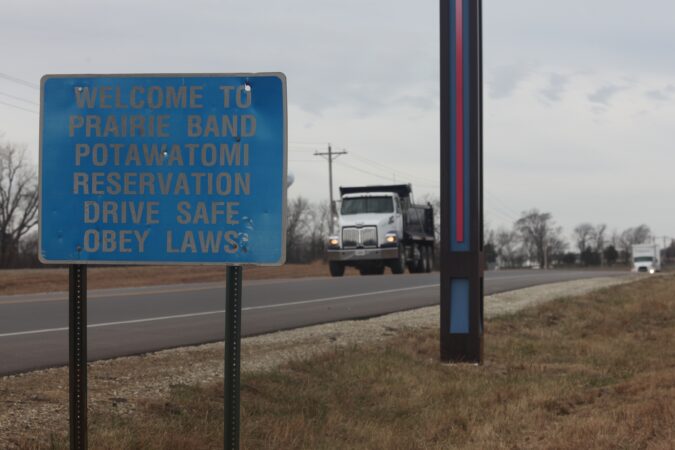
    MAYETTA, Kan. — The Prairie Band Potawatomi Nation, whose ancestors were uprooted by the U.S. from the Great Lakes region in the 1830s, are facing outrage from fellow Native Americans over plans to profit from another forced removal: President Donald Trump’s mass deportation campaign.

    A newly established tribal business entity quietly signed a nearly $30 million federal contract in October to come up with an early design for immigrant detention centers across the U.S. Amid the backlash, the tribe says it’s trying to get out of it.

    Tribal leaders and the U.S. Department of Homeland Security haven’t responded to detailed questions about why the firm was selected for such a big contract without having to compete for the work as federal contracting normally requires. A former naval officer — who markets himself as the “go-to” adviser for tribes and affiliated companies seeking to land federal contracts — established the affiliate, KPB Services LLC, in April.

    The criticism has been so intense that the 4,500-member tribe said it fired the economic development leaders who brokered the deal.

    “We are known across the nation now as traitors and treasonous to another race of people,” said Ray Rice, a 74-year-old who said he and other tribal members were blindsided. “We are brown and they’re brown.”

    ICE deals with tribes generate scrutiny

    Tribal Chairperson Joseph “Zeke” Rupnick promised “full transparency” about what he described as an “evolving situation.” In a video message to tribal members Friday, he said the tribe is talking with legal counsel about ways to end the contract.

    He alluded to the time when federal agents forcibly removed hundreds of Prairie Band Potawatomi families from their homes and ultimately corralled them on a reservation just north of Topeka.

    “We know our Indian reservations were the government’s first attempts at detention centers,” Rupnick said in the video message. “We were placed here because we were prisoners of war. So we must ask ourselves why we would ever participate in something that mirrors the harm and the trauma once done to our people.”

    The U.S. Supreme Court cleared the way in September for federal agents to conduct sweeping immigration raids and use apparent ethnicity as a relevant factor for a stop. With some Native Americans being swept up and detained in recent raids, U.S. Immigration and Customs Enforcement’s overtures to tribes and even longstanding deals are generating extra scrutiny.

    An LLC owned by the Poarch Band of Creek Indians in Alabama also has a multimillion-dollar contract with ICE to provide financial and administrative services. Meanwhile, some shareholders of an Alaska Native corporation say their values don’t align with the corporation’s federal contracting division, Akima, to provide security at several ICE detention facilities.

    “I’m shocked that there is any tribal nation that’s willing to assist the U.S. government in that,” said Brittany McKane, a 29-year-old Muscogee Nation citizen who attends the tribe’s college in Oklahoma.

    Some tribal nations have advised their citizens to carry tribal IDs.

    Last month, actor Elaine Miles (Northern Exposure) said she was stopped by ICE agents who alleged her ID from the Confederated Tribes of the Umatilla Indian Reservation in Oregon was fake.

    Economic pressure increases as federal funding decreases

    The economic arms of tribes, which can be run by non-Natives, are under increasing pressure to generate revenue because of decreased federal funding, high inflation, and competition from online gambling, said Gabe Galanda, an Indigenous rights attorney based in Seattle.

    But the economic opportunities presented to tribes don’t always align with their values, said Galanda, a member of the Round Valley Indian Tribes in northern California.

    The Prairie Band Potawatomi has a range of businesses that provide healthcare management staffing, general contracting, and even interior design.

    The tribal offshoot hired by ICE — KPB Services LLC — was established in Holton, Kan., and is not listed on the tribe’s website. It previously qualified along with dozens of other companies to provide logistical support to the U.S. Navy although, to date, it hasn’t performed any work for the federal government.

    The ICE contract initially was awarded in October for $19 million for unspecified “due diligence and concept designs” for processing centers and detention centers throughout the U.S., according to a one-sentence description of the work on the federal government’s real time contracting database. It was modified a month later to increase the payout ceiling to $29.9 million. Sole-source contracts above $30 million require additional justification under federal contracting rules.

    The contract raises a number of questions and seems to go against the Trump administration’s stated goal of cleaning up waste, fraud, and abuse, said attorney Joshua Schnell, who specializes in federal contracting law.

    “The public’s trust in the federal procurement system depends on transparency and competition,” said Schnell. “Although there is a role within this system for multimillion dollar sole-source contracts, these contracts are an exception to statutory competition requirements, and taxpayers are entitled to know how the government is spending their money.”

    Backlash swift as news about ICE contract spread

    It’s unclear what the Tribal Council knew about the contract. A spokesperson for the Tribal Council did not respond to repeated requests from the AP for details, including who was terminated.

    What is known is that KPB was registered by Ernest C. Woodward Jr., a retired U.S. naval officer with degrees in engineering and business who is a member of the Miami Tribe of Oklahoma, according to a website for his one-time consulting firm, Burton Woodward Partners LLC.

    The website described Woodward as a serial entrepreneur and tribal adviser on mergers and acquisitions, accessing capital, and landing federal contracts. The consulting firm was registered to an office park in Sarasota, Fla., in 2017 but was delisted two years later after it failed to file an annual report.

    The Prairie Band Potawatomi Nation in a 2017 news release said Woodward’s firm advised it on its acquisition of another government contractor, Mill Creek LLC, which specializes in outfitting federal buildings and the military with office furniture and medical equipment.

    Woodward also is listed as the chief operating officer of the Florida branch of Prairie Band Construction Inc., which was registered in September.

    Attempts to locate Woodward were unsuccessful. The phone number listed on Burton Woodward Partners was disconnected, and he did not respond to an email sent to another consulting firm he’s affiliated with, Virginia-based Chinkapin Partners LLC.

    Carole Cadue-Blackwood, who has Prairie Band Potawatomi ancestry and is an enrolled member of the Kickapoo Tribe in Kansas, hopes the contract dies. She has been part of the fight against an ICE detention center opening in Leavenworth, Kan., and works for a social service agency for Native Americans.

    “I’m in just utter disbelief that this has happened,” she said.

  • National Guardsman shot in D.C. making ‘extraordinary progress,’ doctor says

    National Guardsman shot in D.C. making ‘extraordinary progress,’ doctor says

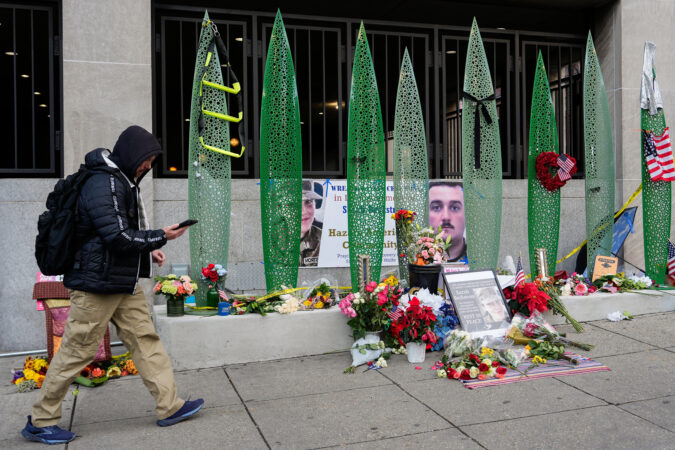
    The National Guard member who was ambushed while patrolling near the White House on Thanksgiving eve is now breathing on his own and can stand with assistance, his neurosurgeon said Friday.

    Staff Sgt. Andrew Wolfe, 24, was hospitalized Nov. 26 after a gunman opened fire on him and his colleague, Spc. Sarah Beckstrom, 20, who died of her injuries the following day. The attack left Wolfe with a “critical” gunshot wound to his head, and he was airlifted to MedStar Washington Hospital Center, Jeffrey Mai said in a statement.

    Mai credited quick-acting first responders and the actions of trauma and neurosurgery teams for saving Wolfe’s life by controlling the serviceman’s bleeding and pressure on his brain. Mai called Wolfe’s recent recovery developments “important milestones that reflect his strength and determination.”

    “Staff Sgt. Wolfe has made extraordinary progress,” the doctor said. “Based on these improvements, he is now ready to transition from acute care to inpatient rehabilitation as the next step in his recovery journey.”

    Wolfe’s family, including his father, Jason, and mother, Melody, have chosen not to disclose the location of his rehabilitation, Mai added.

    Wolfe, who joined the West Virginia National Guard in 2019, and Beckstrom were among more than 2,000 Guard members deployed to D.C. after President Donald Trump’s announcement of a “crime emergency” in the city in August. Following the attack, Trump ordered an additional 500 troops to the District.

    The suspect in the attack, Rahmanullah Lakanwal, an Afghan national who served in the CIA’s “Zero Units” that seized or killed suspected terrorists, has been charged with first-degree murder.

    Prosecutors have not given a motive for the shooting. Charging documents say Lakanwal, who settled in Washington state after the 2021 U.S. withdrawal from Afghanistan, drove across the country to carry out the attack and allegedly shouted “Allahu akbar!” as he shot Beckstrom and Wolfe in their heads with a .357-caliber revolver outside the Farragut West Metro station. The phrase is Arabic for “God is great.” A Washington Post investigation found that Lakanwal slipped deeper into isolation as he struggled to adapt with his wife and five children in the United States.

    Lakanwal, who was also shot during the attack, pleaded not guilty through an attorney at the hearing Dec. 2. He spoke through an interpreter to give brief responses and appeared remotely by video from a hospital bed.

    There had been earlier signs that Wolfe’s recovery was trending positively. On Dec. 5, West Virginia Gov. Patrick Morrisey (R) shared publicly that Wolfe’s “parents report that his head wound is slowly healing and that he’s beginning to ‘look more like himself.’”

    Jordan Butler, a local pastor and friend of the Wolfe family, coled a vigil last week at the high school Wolfe attended in Inwood, a tight-knit West Virginia community where vigil attendees prayed and lit candles for Wolfe.

    “It’s amazing watching what’s happening,” Butler told the Post on Wednesday. “It’s almost miraculous.”

    On Friday, Wolfe’s parents said in a statement released by MedStar that they hope their son will be able to return to work in the West Virginia National Guard “and his new mission of being a light into this world.”

    “Please continue to lift Andy up in prayer as he begins a long and tough rehabilitation,” Jason and Melody Wolfe said. “We know he will continue to improve at a rapid pace.”