Category: Wires

  • Trump officials prepare executive order on housing affordability

    Trump officials prepare executive order on housing affordability

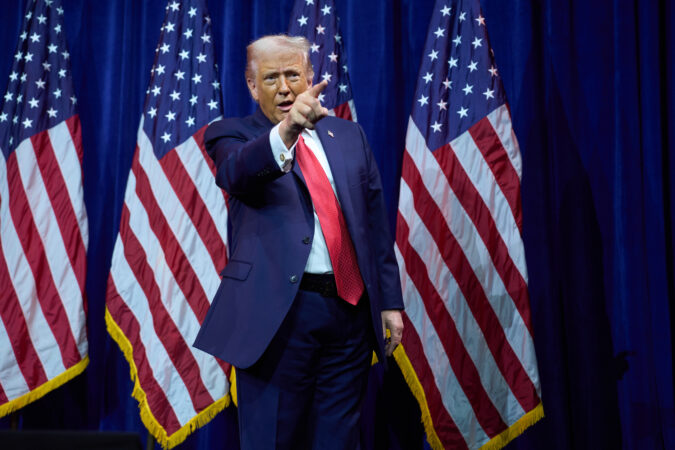
    The Trump administration is preparing an executive order focused on housing — with special attention to first-time buyers — as the White House attempts to address voter concerns about affordability.

    An order could include policies that President Donald Trump has already floated, like a 50-year mortgage or a ban on institutional investors buying single-family homes, according to five people close to the deliberations, who spoke on the condition of anonymity to discuss private conversations. Other proposals are newer, like helping home buyers withdraw from their 529 or 401(k) savings accounts to make down payments without incurring tax penalties.

    Exact timing or language is not final, and plans have been in flux over the past few weeks, the people said. But it’s clear the White House increasingly sees housing policy as central to its broader affordability agenda. More details are expected when Trump speaks at the World Economic Forum in Davos, Switzerland, later this month, according to the president’s social media posts and housing officials.

    Bill Pulte, head of the Federal Housing Finance Agency and a close Trump confidant, told the Washington Post on Thursday that an executive action was coming and would later need to be “codified by Congress.”

    “We’ve got 30 to 50 different ideas that are in front of the president,” Pulte said. “He’ll be releasing a handful of them in Davos.”

    Officials have been planning an executive order aimed at housing for months. But timing stalled as different factions within the administration clashed over an approach. Two of the people close to the talks said internal divisions sometimes boiled down to how much the federal government should tell states and cities what to do. Other disagreements centered on what role Congress should play.

    White House spokesperson Davis Ingle said in a statement that Trump had pledged to slash red tape, cut interest rates, and tackle unfair business practices that make it harder for Americans to buy homes.

    “As the President indicated over Truth Social, he will be unveiling more details about his housing proposal in Davos — any discussion from unnamed sources until then is baseless speculation,” Ingle said.

    For much of last year, the administration’s policy agenda has involved blaming undocumented immigrants for housing shortages and clawing back fair housing regulations. Officials also want to take mortgage giants Fannie Mae and Freddie Mac public after years of government control — a tremendously complicated endeavor that could lead to a massive stock offering but, if not done carefully, roil the mortgage market.

    Yet fresh momentum appeared to pick up this week after a meeting of top housing and White House officials on Tuesday. Trump announced the ban on institutional investors on Truth Social on Wednesday, saying he would call on Congress to seal the deal, and drawing favorable reaction from GOP lawmakers. On Thursday, he said Fannie and Freddie would use some $200 billion in cash to buy mortgage bonds — which he said would drive mortgage rates and monthly payments down.

    Administration officials are also looking at ways to implement so-called “portable mortgages,” where homeowners can take their old mortgages with them when they move to a new house, the people close to the discussions said. They are considering “assumable mortgages,” where home buyers take over the sellers’ mortgage. Both of those ideas could help offset the rise in mortgage rates over the past several years, and they could also entice homeowners with low rates to sell without fear of taking on a higher mortgage, opening up more supply in the process. Officials are discussing expanding Opportunity Zones — an economic tool for investing in distressed areas — and other deregulatory policies as a means of boosting homeownership, as well.

    Pulte also teed up more actions related to home builders this week, saying on X that they “need to start building out their lot supply, including optioned land which is ‘ready to go.’”

    Builders have been in talks with the administration for the past year on ways to cut environmental regulations, energy codes, and permitting restrictions, including those that make it harder to turn land from raw to developable lots and pile on costs, said Jim Tobin, president and chief executive of the National Association of Home Builders.

    “If there is an executive order, I don’t expect it to be narrow,” Tobin said. “I expect it to be broad.”

    But Trump’s announcements have come with few details or clarity on Congress’s role. Some proposals could also work against affordability goals; many mainstream economists say a 50-year mortgage would likely increase overall costs for borrowers, because they’ll pay far more in interest over five decades than they would with the conventional 30-year loan.

    Inside the administration, officials see a two-pronged approach to addressing home prices, according to a GOP pollster close to the White House, speaking on the condition of anonymity to discuss private conversations. One path is to increase housing supply through construction; another is decreasing the number of buyers by disincentivizing investors and making it easier to sell homes without paying capital gains taxes. Under current law, most married couples can exempt the first $500,000 in capital gains on the sale of their primary residence from taxes.

    White House officials have reviewed polling that shows voters aged 18 to 24 see affordability through a housing lens, said the GOP pollster. That age group helped deliver the presidency to Trump in 2024, which makes the White House especially sensitive to its political standing with them. The pollster said administration officials are focused on first-time home buyers, which often are adults 40 or younger.

    “This voting cohort who is deeply concerned about this and worried about housing prices delivered, in a lot of ways, the election to President Trump in 2024,” the pollster said. “Affordability means housing in every bit of data we’ve seen.”

    The pollster expects the final plan to pave the way for Trump to take Fannie Mae and Freddie Mac public. He also said he expects the administration to “play around” with the step-up in cost basis, a U.S. tax rule that adjusts the value of inherited assets to their market price at the time of death, which can reduce capital gains taxes for heirs. That would include taxes on homes.

    David Dworkin, president and chief executive officer of the National Housing Conference, said making it easier for younger buyers to withdraw from their 401(k)s penalty-free “will have a bigger impact than any down payment program ever proposed.” At the same time, the way to make homes more affordable is to build more of them.

    “Everything the president does to help us build more units is going to have an impact,” Dworkin said. “Some of these ideas are going to be more impactful than others. Some may have unintended consequences we want to be careful about. But it’s too easy to say, ‘Oh this is risky, let’s not do anything.’ We’ve got to make progress here.”

    Fannie and Freddie’s new bond purchases could be part of the strategy around taking them public, because the move would add value to their balance sheets and help the companies make more money. But the broader effect on affordability could be more muted. Mortgage rates typically track Treasury yields, which fall in times of economic uncertainty. In a Thursday analyst note, Gennadiy Goldberg, head of U.S. Rates Strategy at TD Securities, said that based on the projections for Treasury yields, the 30-year mortgage rates could drift down toward 5.25% by the end of the year, compared to 6.16% this week.

    But if Fannie and Freddie’s vast securities purchases happen quickly, mortgage rates could tick down a bit more, to 5% by year-end, Goldberg wrote.

    Democrats this week criticized the Trump administration for promoting policies those on the left have tried before, like banning institutional investors from the single-family market. But housing is one of the only policy areas with bipartisan support lately. A popular bill from Sens. Tim Scott (R., S.C.) and Elizabeth Warren (D., Mass.) would increase housing supply and pare back regulations that slow new construction. Its progress slowed late last year after House Republicans pressed to keep it out of the annual defense policy bill. But a similar bill is moving forward in the House, and there’s hope a breakthrough will come eventually.

    “My focus is on advancing meaningful solutions that expand housing supply and lower costs — including building on our unanimously passed ROAD to Housing Act — because that’s how we make the American Dream more attainable,” Scott, who chairs the Senate Banking Committee, said in a statement.


  • Iran supreme leader signals upcoming crackdown on protesters ‘ruining their own streets’ for Trump

    Iran supreme leader signals upcoming crackdown on protesters ‘ruining their own streets’ for Trump

    DUBAI, United Arab Emirates — Iran signaled Friday that security forces would crack down on protesters, directly challenging U.S. President Donald Trump’s pledge to support those peacefully demonstrating as the death toll rose to at least 62.

    Supreme Leader Ayatollah Ali Khamenei dismissed Trump as having hands “stained with the blood of Iranians” as supporters shouted “Death to America!” in footage aired by Iranian state television. State media later repeatedly referred to demonstrators as “terrorists,” setting the stage for a violent crackdown like those that followed other nationwide protests in recent years.

    Protesters are “ruining their own streets … in order to please the president of the United States,” the 86-year-old Khamenei said to a crowd at his compound in Tehran. “Because he said that he would come to their aid. He should pay attention to the state of his own country instead.”

    Iran’s judiciary chief Gholamhossein Mohseni-Ejei separately vowed that punishment for protesters “will be decisive, maximum, and without any legal leniency.”

    There was no immediate response from Washington, though Trump has repeated his pledge to strike Iran if protesters are killed, a threat that’s taken on greater significance after the U.S. military raid that seized Venezuela’s Nicolás Maduro.

    Internet cut off

    Despite Iran’s theocracy cutting off the nation from the internet and international telephone calls, short online videos shared by activists purported to show protesters chanting against Iran’s government around bonfires as debris littered the streets in the capital, Tehran, and other areas into Friday morning.

    Iranian state media alleged “terrorist agents” of the U.S. and Israel set fires and sparked violence. It also said there were “casualties,” without elaborating.

    The full scope of the demonstrations couldn’t be immediately determined due to the communications blackout, though it represented yet another escalation in protests that began over Iran’s ailing economy and that has morphed into the most significant challenge to the government in several years. The protests have intensified steadily since beginning Dec. 28.

    The protests also represented the first test of whether the Iranian public could be swayed by Crown Prince Reza Pahlavi, whose fatally ill father fled Iran just before the country’s 1979 Islamic Revolution. Pahlavi, who called for the protests Thursday night, similarly has called for demonstrations at 8 p.m. Friday.

    Demonstrations have included cries in support of the shah, something that could bring a death sentence in the past but now underlines the anger fueling the protests that began over Iran’s ailing economy.

    So far, violence around the demonstrations has killed at least 62 people while more than 2,300 others have been detained, said the U.S.-based Human Rights Activists News Agency.

    “What turned the tide of the protests was former Crown Prince Reza Pahlavi’s calls for Iranians to take to the streets at 8 p.m. on Thursday and Friday,” said Holly Dagres, a senior fellow at the Washington Institute for Near East Policy. “Per social media posts, it became clear that Iranians had delivered and were taking the call seriously to protest in order to oust the Islamic Republic.”

    “This is exactly why the internet was shut down: to prevent the world from seeing the protests. Unfortunately, it also likely provided cover for security forces to kill protesters.”

    Thursday night protests preceded internet shutdown

    When the clock struck 8 p.m. Thursday, neighborhoods across Tehran erupted in chanting, witnesses said. The chants included “Death to the dictator!” and “Death to the Islamic Republic!” Others praised the shah, shouting: “This is the last battle! Pahlavi will return!” Thousands could be seen on the streets before all communication to Iran cut out.

    On Friday, Pahlavi called on Trump to help the protesters, saying Khamenei “wants to use this blackout to murder these young heroes.”

    “You have proven and I know you are a man of peace and a man of your word,” he said in a statement. “Please be prepared to intervene to help the people of Iran.”

    The White House did not immediately respond to a request for comment on Pahlavi’s appeal to Trump.

    Pahlavi had said he would offer further plans depending on the response to his call. His support of and from Israel has drawn criticism in the past — particularly after the 12-day war Israel waged on Iran in June. Demonstrators have shouted in support of the shah in some demonstrations, but it isn’t clear whether that’s support for Pahlavi himself or a desire to return to a time before the 1979 Islamic Revolution.

    The internet cut also appears to have taken Iran’s state-run and semiofficial news agencies offline. The state TV acknowledgment at 8 a.m. Friday represented the first official word about the demonstrations.

    State TV claimed the protests were violent and caused casualties, but did not offer nationwide figures. It said the protests saw “people’s private cars, motorcycles, public places such as the metro, fire trucks, and buses set on fire.” State TV later reported that violence overnight killed six people in Hamedan, some 175 miles southwest of Tehran, and two security force members in Qom, 75 miles south of the capital.

    The European Union and Germany condemned the violence targeting demonstrators as new protests were reported in Zahedan in Iran’s restive southwestern Sistan and Baluchestan province.

    Trump renews threat over protester deaths

    Iran has faced rounds of nationwide protests in recent years. As sanctions tightened and Iran struggled after the 12-day war, its rial currency collapsed in December, reaching 1.4 million to $1. Protests began soon after, with demonstrators chanting against Iran’s theocracy.

    It remains unclear why Iranian officials have yet to crack down harder on the demonstrators. Trump warned last week that if Tehran “violently kills peaceful protesters,” America “will come to their rescue.”

    In an interview with talk show host Hugh Hewitt aired Thursday, Trump reiterated his pledge.

    Iran has “been told very strongly, even more strongly than I’m speaking to you right now, that if they do that, they’re going to have to pay hell,” Trump said.

    He demurred when asked if he’d meet with Pahlavi.

    “I’m not sure that it would be appropriate at this point to do that as president,” Trump said. “I think that we should let everybody go out there, and we see who emerges.”

    Speaking in an interview with Sean Hannity aired Thursday night on Fox News, Trump went as far as to suggest Khamenei may want to leave Iran.

    “He’s looking to go someplace,” Trump said. “It’s getting very bad.”

  • Federal officers are leaving Louisiana immigration crackdown for Minneapolis, documents show

    Federal officers are leaving Louisiana immigration crackdown for Minneapolis, documents show

    NEW ORLEANS — Federal immigration officers are pulling out of a Louisiana crackdown and heading to Minneapolis in an abrupt pivot from an operation that drew protests around New Orleans and aimed to make thousands of arrests, according to documents obtained by The Associated Press.

    The shift appeared to signal a wind-down of the Louisiana deployment that was dubbed “Catahoula Crunch” and began in December with the arrival of more than 200 officers. The operation had been expected to last into February and swiftly raised fears in immigrant communities.

    The Trump administration has been surging thousands of federal officers to Minnesota under a sweeping new crackdown tied in part to allegations of fraud involving Somali residents. More than 2,000 officers are taking part in what the Department of Homeland Security has called the biggest immigration enforcement operation ever.

    The officers in Minneapolis have been met with demonstrations and anger after an ICE officer fatally shot a woman on Wednesday.

    Documents obtained by the AP indicated that federal officers stationed in Louisiana were continuing to depart for Minneapolis late this week.

    “For the safety of our law enforcement, we do not disclose operational details while they are underway,” DHS said Friday in response to questions about whether the Louisiana deployment was ending in order to send officers to Minnesota.

    In December, DHS deployed more than 200 federal officers to New Orleans to carry out a monthslong sweep in and around the city under Border Patrol Cmdr. Gregory Bovino, who was also the face of aggressive operations in Chicago, Los Angeles, and Charlotte, North Carolina. Bovino has been seen in Minneapolis this past week.

    “Catahoula Crunch” began with a target of 5,000 arrests, the AP first reported. The operation had resulted in about 370 arrests as of Dec. 18, according to DHS.

    The operation heavily targeted the Hispanic enclave of Kenner just outside New Orleans, leading immigrant-run businesses to close down to protect customers and out of a fear of harassment.

    Documents previously reviewed by AP showed the majority of people arrested in the Louisiana crackdown’s first days lacked criminal records and that authorities tracked online criticism and protests against the deployment.

    Republican Louisiana Gov. Jeff Landry welcomed the crackdown. But New Orleans’ Democratic leaders called the 5,000-arrest target unrealistic and criticized videos that showed agents arresting or trying to detain residents, including a clip of a U.S. citizen being chased down the street by masked men near her house.

    New Orleans’ Democratic leaders have been more welcoming of a National Guard deployment that President Donald Trump authorized after Landry asked for help fighting crime. The troops arrived just before the New Year’s Day anniversary of a truck attack on Bourbon Street that killed 14 people.

  • Protests erupt over federal immigration enforcement operations after shootings in Minneapolis and Portland

    Protests erupt over federal immigration enforcement operations after shootings in Minneapolis and Portland

    MINNEAPOLIS — As anger and outrage spilled out onto Minneapolis’ streets over the fatal shooting of a woman by an Immigration and Customs Enforcement officer, a new shooting by federal officers in Oregon left two people wounded, sparked additional protests and elicited more scrutiny of enforcement operations across the U.S.

    Hundreds of people protesting the shooting of Renee Good marched in freezing rain Thursday night down one of Minneapolis’ major thoroughfares, chanting “ICE out now” and holding signs saying, “killer ice off our streets.” Protesters earlier vented their outrage outside a federal facility that is serving as a hub for the administration’s latest immigration crackdown on a major city.

    Early Friday, city crews removed makeshift barricades made from debris including garbage cans and Christmas trees that blocked streets in the area of Wednesday’s shooting to keep streets open, but Minneapolis officials said they would not remove the memorial the community created there. An estimated 15 tons (13.6 metric tonnes) of debris including metal and tires were removed, officials said.

    The shooting in Portland, Oregon, took place outside a hospital Thursday afternoon. A man and woman were shot inside a vehicle, and their conditions were not immediately known. The FBI and the Oregon Department of Justice were investigating.

    Portland Mayor Keith Wilson and the city council called on ICE to end all operations in the city until a full investigation is completed. Hundreds protested Thursday night at the ICE building. Early Friday, Portland police reported that a handful of arrests were made after officers asked protesters to move to the sidewalk, as traffic remained open in the area.

    Just as it did following Wednesday’s shooting in Minneapolis shooting, the Department of Homeland Security defended the actions of the officers in Portland, saying it occurred after a Venezuelan man with alleged gang ties and who was involved in a recent shooting tried to “weaponize” his vehicle to hit the officers. It was not yet clear if witness video corroborates that account.

    Homeland Security Secretary Kristi Noem, President Donald Trump and others in his administration have repeatedly characterized the Minneapolis shooting as an act of self-defense and cast Good as a villain, suggesting she used her vehicle as a weapon to attack the officer who shot her.

    Vice President JD Vance said the shooting was justified and Good, a 37-year-old mother of three, was a “victim of left-wing ideology.”

    “I can believe that her death is a tragedy while also recognizing that it is a tragedy of her own making,” Vance said, noting that the officer who killed her was injured while making an arrest last June.

    But state and local officials and protesters rejected that characterization, with Minneapolis Mayor Jacob Frey saying video recordings show the self-defense argument is “garbage.”

    An immigration crackdown quickly turns deadly

    The Minneapolis shooting happened on the second day of the Trump administration’s immigration crackdown on the Twin Cities of Minneapolis and St. Paul, which Homeland Security said is the biggest immigration enforcement operation ever. More than 2,000 officers are taking part and Noem said they have made more than 1,500 arrests.

    It provoked an immediate response in the city where police killed George Floyd in 2020, with hundreds of people turning up to the scene to vent their outrage at the ICE officers and the school district canceling classes for the rest of the week as a precaution.

    Good’s death — at least the fifth tied to immigration sweeps since Trump took office — has resonated far beyond Minneapolis, as protests took place or were expected this week in many large U.S. cities.

    Who will investigate?

    The Minnesota agency that investigates officer-involved shootings said Thursday that it was informed that the FBI and U.S. Justice Department would not work with the it, effectively ending any role for the state to determine if crimes were committed. Noem said the state has no jurisdiction.

    “Without complete access to the evidence, witnesses and information collected, we cannot meet the investigative standards that Minnesota law and the public demands,” said Drew Evans, head of the Minnesota Bureau of Criminal Apprehension.

    Minnesota Gov. Tim Walz demanded that the state be allowed to take part, repeatedly emphasizing that it would be “very difficult for Minnesotans” to accept that an investigation excluding the state could be fair.

    Deadly encounter seen from multiple angles

    Several bystanders captured video of Good’s killing, which happened in a neighborhood south of downtown.

    The recordings show an officer approaching an SUV stopped across the middle of the road, demanding the driver open the door and grabbing the handle. The Honda Pilot begins to pull forward and a different ICE officer standing in front of it pulls his weapon and immediately fires at least two shots at close range, jumping back as the vehicle moves toward him.

    It is not clear from the videos if the vehicle makes contact with the officer, and there is no indication of whether the woman had interactions with agents earlier. After the shooting, the SUV speeds into two cars parked on a curb before crashing to a stop.

    Officer identified in records

    The federal agent who fatally shot Good is an Iraq War veteran who has served for nearly two decades in the Border Patrol and ICE, according to records obtained by AP.

    Noem has not publicly named him, but a Homeland Security spokesperson said her description of his injuries last summer refers to an incident in Bloomington, Minnesota, in which court documents identify him as Jonathan Ross.

    Ross got his arm stuck in the window of a vehicle whose driver was fleeing arrest on an immigration violation. Ross was dragged and fired his Taser. A jury found the driver guilty of assaulting a federal officer with a dangerous weapon.

    Attempts to reach Ross, 43, at phone numbers and email addresses associated with him were not successful.

  • Is red wine better for you than white? The answer may surprise you.

    Is red wine better for you than white? The answer may surprise you.

    The question: Is red wine healthier than white wine?

    The science: Many people think red wine is better for you than white wine or other types of alcohol.

    The notion was partly born from studies — some of which have been disputed — that suggested that certain compounds found in red wine could improve cardiovascular health.

    Now the evidence suggests that any type of alcohol — including red wine — is unlikely to make you any healthier than drinking no alcohol at all.

    “There’s no isolated health benefit of red wine over white wine over any other beverage containing alcohol,” said George Koob, the director of the National Institute on Alcohol Abuse and Alcoholism. And, he added, “There’s no physical health benefits of which we can attribute to alcohol.”

    While it’s long been known that heavy alcohol consumption can cause serious health problems, the potential benefits and risks of moderate drinking — defined as up to two drinks per day for men and one for women — have been murkier. In the past, some research suggested that people who drank small amounts of alcohol in general might have a health advantage compared with those who didn’t drink at all.

    But as research has evolved over the years, we now know that even modest drinking is linked to a higher risk of developing certain cancers such as breast, colorectal, and esophageal cancers, as well as brain changes and dementia, heart problems, and sleep problems.

    Dietary guidance has also changed. Current guidelines from the U.S. Department of Agriculture state that “emerging evidence suggests that even drinking within the recommended limits may increase the overall risk of death from various causes.” The American Heart Association recommends limiting or abstaining from alcohol, even though the association published a scientific review in 2025 that concluded that light drinking poses no risk for coronary artery disease, stroke, sudden death, and possibly heart failure, and may even reduce the risk of developing such conditions — though not all experts agreed with that conclusion.

    The argument in favor of red wine used to focus on certain compounds.

    Red wine contains more polyphenols — plant compounds with antioxidant and anti-inflammatory properties — because the grape juice is fermented with the grape skins, where these compounds are concentrated. (White wine grapes are pressed, and the skins removed, before the fermentation process.)

    These polyphenols include procyanidins, flavonoids, and resveratrol, which is often mentioned in cancer research. Another type, anthocyanins, helps give red wine its rich color and has been studied for potential cardiovascular benefits.

    Most of the health benefits associated with these polyphenols have been observed in studies at much higher doses than what you would get from a couple glasses of wine, so there’s no real advantage, experts said.

    “The concentrations are sufficiently low that you would have to drink more than moderate amounts to truly get that much more benefit from the polyphenols in red wine,” which could lead to health issues, said Eric Rimm, a professor of epidemiology and nutrition at the Harvard T.H. Chan School of Public Health, who has studied the health effects of alcohol.

    Instead, you could add stronger sources of anthocyanins into your diet, including darker berries such as blueberries, apples, onions, black or green tea, and dark chocolate, Rimm said.

    As for other risks and benefits, some people may avoid red wine because it can stain teeth and cause headaches and even allergy-like symptoms. While red wine headaches are not fully understood, some people may be especially sensitive to the tannins in the grapes, histamines, or sulfites produced through fermentation, or the additional sulfites added to preserve wine. Some research suggests quercetin, an antioxidant found in grapes, may be responsible.

    In one study, people who had a wine intolerance were more likely to report allergy-like symptoms such as nasal congestion, itching, flushed skin, and stomach upset more often after drinking red wine than white wine.

    What else you should know

    While drinking alcohol probably won’t lead to any positive health effects, you may be able to reduce potential negative effects by how you drink it.

    First, speak with your healthcare provider about whether drinking alcohol is safe for you. People who are pregnant, have certain medical conditions, take medications that interact with alcohol, or have or are recovering from an alcohol-use disorder should not drink, according to USDA. Also, teetotalers, people who don’t already drink, should not start drinking for any health reasons, health officials said.

    Assuming you’re of legal drinking age — 21 years or older in the United States — here are some tips from experts:

    • Eat first. Food, particularly foods with some protein, fats, and carbohydrates, slows the absorption of alcohol into the bloodstream, reducing potential ill effects.
    • Understand drink sizes. A standard alcoholic drink has 0.6 ounces of pure alcohol. That’s equal to 5 ounces of wine with 12% alcohol, 12 ounces of beer with 5% alcohol, or a shot — 1.5 ounces — of an 80-proof liquor. When buying alcohol at a store, check the alcohol content. “Beer used to be 4 or 5% alcohol. There are a lot of beers now that are 8 to 10%. So you may want to drink a little bit less if you have a higher alcohol-containing beer or a higher alcohol-containing spirit,” Rimm said.
    • Keep in mind that men and women may process alcohol differently. Women generally don’t produce as much of an alcohol-metabolizing enzyme called alcohol dehydrogenase, which means they break down alcohol more slowly and are at a higher risk of alcohol-related health problems.
    • Drink in moderation, which is defined as up to two drinks per day for men and one for women. Also, space out drinks throughout the week — meaning don’t drink all 7 or 14 drinks in one weekend.

    The bottom line

    While red wine has more polyphenols, which are associated with cardiovascular benefits, than white wine, they aren’t in a high enough concentration to provide a health advantage. In addition, red wine may be more likely than white wine to cause headaches and allergy-like symptoms in people who are susceptible.

  • How student loans and financial aid are changing in 2026

    How student loans and financial aid are changing in 2026

    The landscape for financial aid is about to change.

    In 2026, the federal government will curb access to billions of dollars in student loans, reconfigure how borrowers repay their debt, and provide new grant money for short-term career training programs.

    All of these changes are slated to take effect in July and are the result of the One Big Beautiful Bill signed into law in summer. The financial aid provisions in the law, which extend tax cuts from President Donald Trump’s first term, will affect how families pay for higher education. Since November, the Education Department has been negotiating the terms of the policies with a panel of experts, as required by Congress. Terms for the new rules will be finalized early this year, with few anticipated changes.

    While some higher-education experts say the changes will deliver commonsense reforms, others worry they could discourage college enrollment and persistence. Either way, students entering college in fall 2026 will encounter a very different federal financial aid system.

    Here’s what you need to know.

    Student loan limits

    In one of the largest revisions to federal student loan policy in decades, the Education Department will impose new caps on the amount of money graduate students and parents can borrow from the government.

    The Grad Plus program, which lets students borrow up to the full cost of attendance to pay for graduate degrees, will sunset on July 1 for new borrowers. At the same time, people pursuing a master’s degree will have their borrowing capped at $20,500 a year and $100,000 over a lifetime. Those working toward a professional degree — say, an aspiring doctor or lawyer — will be capped at $50,000 a year and $200,000 in total from the federal government.

    In all, students will now face a lifetime maximum borrowing limit of $257,500 for undergraduate and graduate school federal loans combined. If those amounts are not enough to cover costs, students will have to pay the rest themselves or turn to private lenders.

    The distinction between graduate and professional degree programs has been a lightning rod for controversy. Nurses and others have railed against the Education Department’s proposal to exclude their fields from the higher loan limits. They worry the agency’s move to restrict the professional degree classification to 11 fields will discourage people from enrolling in other advanced degree programs.

    The proposal must still be published for public comment before it can be finalized, which allows its detractors to fight for a broader classification.

    Researchers say a substantial number of students pursuing master’s degrees will be affected by the new limits. An analysis by the Federal Reserve Bank of Philadelphia found that one-third of graduate students with federal loans have borrowed more than the new limits will allow. Research from the Postsecondary Education & Economics Research at American University found that students in professional programs are more likely to borrow in excess of the new limit.

    Beth Akers, a senior fellow at the conservative American Enterprise Institute, said she suspects that many people will be caught off guard by the new constraints on graduate borrowing, and she said colleges are not doing enough to prepare.

    “There could be a private-sector solution that covers the gap,” Akers said. “But I suspect that the coordination that’s necessary for that to happen by next fall will probably not happen.”

    There have been a lot of conversations among schools about offering institutional loans to help graduate students in need, said Scott Z. Goldschmidt, a partner at the law firm Thompson Coburn who works with higher-education clients. He said colleges are also exploring private loan alternatives and trying to identify scholarship opportunities.

    Limits on parents

    While the tax bill left undergraduate loan limits intact, it will affect how much parents can borrow to support students working toward an associate’s or bachelor’s degree.

    Parents and caregivers could previously take out as much as their child needed to attend college through the Parent Plus program, which is designed as a supplement when other types of student aid have been exhausted. Starting July 1, the program will set new limits of $20,000 a year, or a total of $65,000 per student.

    Because relatively few families use Parent Plus loans, researchers at the think tank Urban Institute estimate that the new limits will affect just 2% of students. Still, among families who rely on the loans, nearly a third will be affected by the annual cap, and 17% will run up against the $65,000-per-child total cap.

    “It will have a significant impact on a small number of people, and it will be people who we’re particularly concerned about, like disadvantaged populations who tend to use those resources the most,” Akers said.

    She hopes that colleges will provide more financial aid to lower the cost for students.

    Current borrowers are exempt from both of the new caps for three years.

    Fewer repayment plans

    The federal student loan repayment system is notoriously complex, with a multitude of options and terms that can be difficult to navigate. Instead of having seven repayment plans, new borrowers will have just two options after July 1: one standard plan and one new income-driven repayment (IDR) plan, called the Repayment Assistance Plan.

    The new standard plan will stretch monthly payments out from 10 to 25 years. The larger the debt, the longer the repayment term. Someone with an outstanding principal of less than $25,000 will repay the debt for no more than 10 years, while a borrower with more than $100,000 in federal loans will be in repayment for up to 25 years.

    Payments on the new income-driven plan will be based on a borrower’s total adjusted gross income, ranging from 1% to 10% depending on earnings. The plan cancels the remaining balance after 30 years of payments, instead of the current 20 or 25 years.

    Borrowers have to make a minimum monthly payment of $10. Those who make timely monthly payments will have their unpaid interest waived to prevent negative amortization, which happens when payments are not enough to cover the principal and interest. The plan also provides a monthly subsidy of up to $50 to ensure borrowers pay down their principal balance by at least that amount.

    An analysis from American University suggests that the principal subsidy could result in faster loan forgiveness for low-income, low-balance borrowers. Still, researchers said they worry that higher payments and a longer time before forgiveness for many low-income borrowers is likely to increase the rate of loan defaults.

    People who are currently repaying their loans can remain in any of the three existing plans that are not tied to income. Current borrowers on an income-driven plan can stay put until July 1, 2028, at which time they can switch to RAP or the original Income Based option. That income-based plan will give Parent Plus borrowers, who are barred from the new IDR plan, a repayment option tied to their earnings.

    There are some complications in consolidating the repayment plans. Congress gave borrowers enrolled in the Saving on a Valuable Education plan three years to exit, but a proposed settlement could speed up the timeline. The Education Department struck a deal in December with seven states to resolve a lawsuit challenging the legality of the Biden-era repayment plan. The agency stressed that enrollees would have a limited time to find another option to repay their debt, but it has not provided an explicit timeline.

    “Given what we’ve seen with folks not being able to enroll in plans and being stuck in a backlog … I’m really concerned there’s going to be even more chaos and confusion,” said Michele Zampini, associate vice president of federal policy and advocacy at the Institute for College Access & Success.

    Other student advocates worry about whether the Education Department will have revamped the repayment system to reflect all of the changes in time for the graduating class of 2026.

    People entering repayment for the first time will need an updated loan simulator, for instance, to select the best repayment plan, said Melanie Storey, president and chief executive of the National Association of Student Financial Aid Administrators. Although newly minted graduates have a six-month grace period before repayment kicks in, she said colleges need to start communicating to students about their options long before then.

    “We need information and we need clarity,” Storey said. “My members are the people on the ground who have to answer questions for students, and I’m concerned that given the schedule, we won’t have answers until well into the spring.”

    Pell Grant eligibility

    There are some significant changes ahead for the Pell Grant, the largest federal grant program for low- and middle-income college students. Chief among them is the expansion of the program to include students enrolling in career training programs that range from eight to 15 weeks in duration. Those programs, which are mainly offered at community and technical colleges, must provide at least 600 hours of instruction.

    In December, the Education Department reached a consensus with negotiators on the framework of the policy, dubbed Workforce Pell. The proposal must still be published and finalized, but higher-education experts expect few, if any, changes. It calls for governors to work with state advisory boards to determine program eligibility, with a focus on courses that are in high-demand fields such as nursing aides or emergency medical technicians.

    Other new policies could change the number of students eligible for Pell Grants. This summer, the Education Department will exclude assets from family farms, small businesses, and family-owned commercial fisheries from the calculation of the Student Aid Index, or SAI — a figure used to determine a student’s ability to pay for college and the amount of aid they receive.

    And some people may no longer be able to get a Pell Grant. The Education Department will begin including foreign income in the calculation of a student’s Pell eligibility, which could reduce eligibility. Furthermore, anyone who receives enough scholarship dollars to cover their full cost of attendance will no longer be eligible to receive Pell.

    Students will also be ineligible if their families have lots of assets but appear to have little income in the calculation of SAI. A student previously could qualify for Pell despite their family having a lot of assets if their parents generated business losses that lowered their adjusted gross income. Starting July 1, an SAI that is equal to or exceeds twice the amount of the maximum Pell award will be disqualifying.

  • Trump’s tax stimulus set to keep U.S. economy on track in 2026

    Trump’s tax stimulus set to keep U.S. economy on track in 2026

    After a year of rolling policy shocks, the U.S. economy is set to get a lift from President Donald Trump’s tax-cuts package to keep the expansion on track in 2026.

    American taxpayers will get bigger refunds in the first half of this year as a result of Trump’s signature bill, economists say, with estimates for the aggregate boost ranging from $30 billion to $100 billion. Incentives for companies to invest in plants and equipment are also likely to bolster growth while lower borrowing costs, and steadier trade policy should help too.

    Still, forecasters see grounds for caution. Any burst of consumer spending from Trump’s fiscal stimulus is expected to fade as the year goes on, while tariffs will continue to weigh on small businesses especially. Unemployment is on the rise, as are concerns about affordability and inequality. The AI boom may not deliver the kind of broad-based growth its advocates promise, and the U.S. attack on Venezuela shows the potential for geopolitical instability.

    Adding it all up, economists surveyed by Bloomberg in mid-December expected growth of 2% in 2026 — the same as their forecast for 2025. That would likely be enough to extend America’s streak of outperforming its developed-world peers, though it’s a modest pace by past U.S. standards.

    “2026 is shaping up to be a decent year — not a boom, not a bust, just solid trend growth,” said Olu Sonola, head of U.S. economic research at Fitch Ratings.

    Federal Reserve officials were slightly more optimistic than Wall Street at their meeting last month, penciling in an increase of 2.3% in gross domestic product this year. The central bank’s economic staff cited fiscal policy, easier financial conditions, and a dissipation of the tariff impact as growth drivers through 2028, minutes of the meeting released recently show.

    The world’s largest economy weathered the shocks of 2025 better than most pundits predicted. After an initial slump driven by tariff front-running, growth bounced right back — and unexpectedly accelerated to 4.3% in the third quarter, according to numbers eventually published on Dec. 23 after a long delay due to the government shutdown.

    “President Trump’s economic agenda unleashed historic job, wage, and economic growth in his first term,” White House spokesperson Kush Desai said in a statement. “The Trump administration is implementing this same agenda of rapid deregulation, working-class tax cuts, full equipment expensing, and energy abundance — accelerating GDP growth and trillions in investment commitments are proof that the best is yet to come in President Trump’s second term.”

    ‘Helps us invest’

    Trump’s legislation extended income-tax reductions and added new exemptions for tips and overtime pay. Refunds will average $300 to $1,000 more than in a typical year, according to the Tax Foundation. In aggregate, economists at Goldman Sachs Group Inc. anticipate an extra $100 billion for consumers in the first half, while Citigroup Inc. put the figure at $30 billion to $50 billion.

    A longer-lasting impact will likely come from business incentives, some economists say.

    Gregory Daco, chief economist at EY-Parthenon, expects the fiscal package to lift GDP by 0.3% this year. He says some elements of the bill, like cuts in Medicaid and food-aid programs, will be a drag on growth — but reckons they’ll be outweighed by others including higher defense and border-enforcement spending, and measures to help businesses deduct the cost of investments.

    Among those anticipating a boost is Gat Caperton, who runs furniture-maker Gat Creek in West Virginia.

    “It helps us invest in our business,” Caperton said. “There’s really good high-end technology equipment that’s very competitive and very productive for us. And we will spend aggressively to buy that type of material.”

    ‘Faster gear’

    Investments like these and the Fed’s easing of monetary policy will cushion a slowing job market, according to Kathy Bostjancic, chief economist at Nationwide Mutual Insurance Co. The unemployment rate rose to 4.6% in November, the highest in more than four years, and economists predict it will average 4.5% this year.

    “Labor demand should shift into a faster gear by mid-year as businesses increase investment in response to lower interest rates and tax incentives,” Bostjancic said.

    Fed policymakers including Chair Jerome Powell have said inflation linked to higher tariffs will likely be a one-off and eventually fade. Still, the cost of living was a major issue in November’s off-year elections, where Trump’s Republicans suffered losses. Companies remain concerned about tariffs and are projecting price increases of more than 3% in 2026, according to one recent survey.

    Jonathan Echeverry’s coffee business in Montclair, N.J., had to pay out an additional $150,000 in tariffs on beans, packaging, and other imports — just as his customers are becoming choosier in their spending.

    “People are opting to buy beans to brew at home rather than to buy beverages,” said Echeverry, who co-owns Paper Plane Coffee Co. “I doubt this year will be better.”

    Most forecasters anticipate a quieter year on the trade policy front compared with the chaos of 2025 — but there’s plenty of uncertainty still. The Supreme Court is expected to rule soon on the legitimacy of some of Trump’s import taxes. The president has floated the prospect of $2,000 tariff rebate checks, which would offer another boost to growth — and further pressure on the U.S. budget deficit.

    AI spillovers

    Another unknown is artificial intelligence. The rush to build and equip data centers helped lift business investment in 2025, and the AI-led equity boom amplified the purchasing power of wealthier Americans, but there’s also concern that the technology will replace human workers.

    There’s a disconnect between multibillion-dollar announcements of new data centers and the amount of hiring they generate, according to Michael Feroli, chief U.S. economist at JPMorgan Chase & Co.

    “It’s not creating as many jobs as the big nominal numbers might imply and that’s in contrast to past capex booms,” he said. “Labor demand continues to look soft, and that leaves us worried about downside risks.”

  • ICE shooting reinforces Minnesota’s grim role as Trump’s target

    ICE shooting reinforces Minnesota’s grim role as Trump’s target

    MINNEAPOLIS — Federal officers have encountered opposition in nearly all of the cities targeted by President Donald Trump’s immigration enforcement campaign. But it was in Minnesota — a state in daily conflict with the Trump administration this year — that a 37-year-old woman was shot and killed by an immigration officer.

    Trump has focused on several blue states in the divide-and-conquer campaign that has characterized his second term, and now he has turned to Minnesota, where the killing of George Floyd and the protests it sparked stained his first presidency.

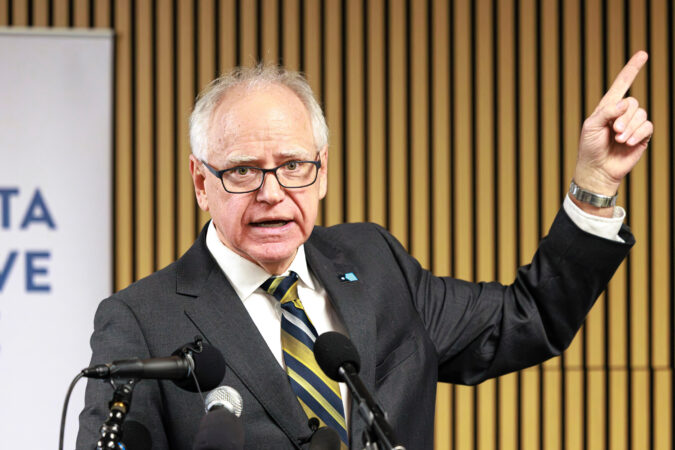
    Trump last month called the state’s Somali population “garbage” in the wake of a massive federal investigation into COVID-19 and medical aid fraud tied to organizations serving Somali immigrants, among others. The fraud cases led Minnesota’s Democratic governor, Tim Walz — former Vice President Kamala Harris’ 2024 running mate — to announce this week he will not run for reelection.

    In June, a Democratic state lawmaker and her husband were assassinated by a Trump supporter, although conservatives insist the gunman was actually a leftist working at Walz’s behest. On Sunday, the victims’ family begged Trump to take down a social media post echoing those conspiracy theories.

    Memories of the chaos that followed the killing of George Floyd

    Amid that mounting tension, the Trump administration announced Tuesday that it was sending more than 2,000 federal officers to the Twin Cities of Minneapolis and St. Paul in what it claimed would be the biggest immigration enforcement operation in history.

    The Immigration and Customs Enforcement officer who killed Renee Good during a protest Wednesday against the immigration raids opened fire just blocks from where, in 2020, a Minneapolis police officer killed George Floyd. The parallels were painful and frightening for many in the area, including Stephanie Abel, a 56-year-old Minneapolis nurse, who is keeping her gas tank full and cash handy in memory of the chaos that followed that slaying.

    “I thought the federal government would realize that now is not the time to be toying with people,” Abel said. “What are they going to try to do to get Minneapolis to ignite?”

    Floyd’s death sparked the biggest protests of Trump’s first term. The president, who is still publicly bitter about the unrest, contends it should have been met with a stronger show of force.

    That’s the approach Trump has adopted in his second term, trying to cow blue states by surging military and immigration agents into their cities and insisting that anyone who doesn’t comply with federal demands will face severe consequences.

    Immigration operations that started last summer in liberal strongholds such as Chicago,Los Angeles and Portland also generated large protests. Good is at least the fifth person killed during ICE enforcement efforts.

    On Thursday, Vice President JD Vance said Good’s death was “a tragedy of her own making,” blamed “leftist ideology” and said the media had encouraged protests against Trump’s immigration crackdown. Vance spoke at the White House to announce a new assistant attorney general position to prosecute the abuse of government assistance programs that will focus on Minnesota.

    Federal investigators have Somalis in their sights

    The Twin Cities operation is intertwined with a conservative effort to make Minnesota the poster child for government fraud. Though prosecutions for the fraudulent use of hundreds of millions of dollars of federal COVID-19 and health aid by social service groups began in the Biden administration, Trump and conservatives have seized on the scandal in recent weeks.

    In November, Trump called Minnesota “a hub of fraudulent money laundering activity” after a report by a conservative news site, City Journal, claimed federal money was fraudulently flowing to the militant group al-Shabab. There has been little, if any, evidence, proving such a link. Nevertheless, the president said he would end Temporary Protected Status for Somalis in Minnesota.

    The allegations got a new charge late last month when conservative influencer Nick Shirley posted an unconfirmed video claiming that day care centers in Minneapolis run by Somalis had fraudulently collected over $100 million in government aid.

    Jamal Osman, a Somali immigrant and Minneapolis city councilman who lives just a few blocks from the location of the ICE shooting, said he and other prominent Somalis in the area have been swamped with angry calls and messages since Trump made his statements. The vitriol, he said, mainly comes from out of state.

    “We have whole groups of people who’ve never been to Minnesota,” Osman said in an interview. “Minnesota is probably one of the nicest places to live. It’s a beautiful area with very nice people and we blended in, it’s all very nice. We don’t really see bad things happening here normally.”

    The Trump administration on Tuesday said is withholding funding for programs that support needy families with children, including day care funding, in five Democratic-led states over concerns about fraud. Joining Minnesota on the list were California, Colorado, Illinois and New York.

    ‘Leave our state alone’

    Minnesota’s place on a list of targeted blue states is not unexpected.

    Under Walz, Minnesota has become something of a beacon for liberals as an example of a state that expanded the public safety net even as the nation swung to the right. Since Trump’s first election, the state has seen large increases in education spending, free school breakfasts and lunches, and improved protection of abortion rights.

    Trump lost Minnesota by only 4 percentage points in 2024, making it significantly less liberal than California and New York. Still, it has been reliably Democratic throughout the Trump years, a rarity in the swingy upper Midwest.

    The state’s political tilt reflects the size of the Twin Cities metro area and its robust population of college-educated liberals, which overwhelm the state’s more conservative rural reaches.

    It’s the sort of cleavage that has defined national politics during Trump’s years in office.

    “Minnesota is a microcosm of a lot of the tensions we have in our society,” said David Schultz, a political scientist at Hamline University in St. Paul. “We’re a country that’s hugely polarized, Democrats-Republicans, urban-rural.”

    On Thursday, Minnesota was an ominous indicator of the damage those divisions can inflict. Minneapolis schools remained closed after immigration agents clashed with high school students at one campus on Wednesday. The state’s National Guard remained on standby at Walz’s directive.

    Walz begged Trump to ease up, saying Minnesota’s residents are “exhausted” by the president’s “relentless assault on Minnesota.”

    “So please, just give us a break,” Walz said during a news conference Thursday. “And if it’s me, you’re already getting what you want, but leave my people alone. Leave our state alone.”

  • Somalia denies U.S. allegation that it destroyed food aid warehouse

    Somalia denies U.S. allegation that it destroyed food aid warehouse

    MOGADISHU, Somalia — Somalia’s government on Thursday denied an allegation by the U.S. government that authorities in Mogadishu destroyed an American-funded warehouse belonging to the World Food Program and seized food aid earmarked for impoverished civilians.

    The U.S. State Department said Wednesday that it has suspended all assistance from Washington to Somalia’s federal government over the allegations, saying the Trump administration has “a zero-tolerance policy for waste, theft and diversion of life-saving assistance.”

    A senior U.S. State Department official said authorities at the Mogadishu port demolished the warehouse of the World Food Program, a Rome-based U.N. agency, at the direction of President Hassan Sheikh Mohamud “with no prior notification or coordination with international donor countries, including the United States.” The official spoke on condition of anonymity to discuss private reporting from American diplomats in the region.

    Somalia’s foreign ministry said that the food in question wasn’t destroyed and that “the commodities referenced in recent reports remain under the custody and control of the World Food Program, including assistance provided by the United States.”

    The foreign ministry said expansion and repurposing works at the Mogadishu port are underway as part of broader developments, but ongoing activities there have not affected the custody and distribution of humanitarian assistance.

    Somalia “remains fully committed to humanitarian principles, transparency, and accountability, and values its partnership with the United States and all international donors,” it said. It gave no other details.

    The WFP told The Associated Press in a statement that its warehouse in Mogadishu port had been demolished by port authorities. The organization said the warehouse contained 75 metric tones of specialized foods intended for the treatment of malnourished pregnant and breastfeeding women and girls and young children.

    In a later update, the WFP said it had “retrieved 75 metric tons of nutritional commodities” without explaining further details on how the material was retried.

    The U.S. State Department said: “We’re glad to hear reports that certain commodities have been recovered and continue our investigation into diversion and misuse of assistance in Somalia. We’ve urged the Federal Government of Somalia to promptly follow through on their commitment to provide an account of the incident.”

    Located in the Horn of Africa, Somalia is one of the world’s poorest nations and has been beset by chronic strife and insecurity exacerbated by multiple natural disasters, including severe droughts, for decades.

    The U.S. provided $770 million in assistance for projects in Somalia during the last year of Democratic President Joe Biden’s administration, but only a fraction of that went directly to the government.

    The U.S. suspension comes as the Trump administration has ratcheted up criticism of Somali refugees and migrants in the United States, including over fraud allegations involving child care centers in Minnesota. It has slapped significant restrictions on Somalis wanting to come to the U.S. and made it difficult for those already in the United States to stay.

    It wasn’t immediately clear how much assistance would be affected by the suspension because the Trump administration has slashed foreign aid expenditures, dismantled the U.S. Agency for International Development and not released new country-by-country data.

    South Sudan, another African country facing conflict and food shortage, is also heavily affected by U.S. aid restrictions. On Thursday, the U.S. suspended foreign assistance to a county in South Sudan’s Jonglei state, and similar assistance to Western Bahr el-Ghazal state was under review, the U.S. Embassy in South Sudan said in a statement.

    That statement charged that South Sudanese officials “take advantage of the United States instead of working in partnership with us to help the South Sudanese people.”

    The U.S. measures “follow continued abuse, exploitation, and theft directed against U.S. foreign assistance by South Sudanese officials at national, state, and county levels,” it said.

    There was no immediate comment from South Sudan’s government.

  • Senate pushes back on Trump’s military threats against Venezuela with war powers vote

    Senate pushes back on Trump’s military threats against Venezuela with war powers vote

    WASHINGTON — The Senate advanced a resolution Thursday that would limit President Donald Trump’s ability to conduct further attacks against Venezuela, sounding a note of disapproval for his expanding ambitions in the Western Hemisphere.

    Democrats and five Republicans voted to advance the war powers resolution on a 52-47 vote and ensure a vote next week on final passage. It has virtually no chance of becoming law because Trump would have to sign it if it were to pass the Republican-controlled House. Still, it was a significant gesture that showed unease among some Republicans after the U.S. military seized Venezuelan leader Nicolás Maduro in a surprise nighttime raid over the weekend.

    Trump’s administration is now seeking to control Venezuela’s oil resources and its government, but the war powers resolution would require congressional approval for any further attacks on the South American country.

    “To me, this is all about going forward,” said Missouri Sen. Josh Hawley, one of the five Republican votes. “If the president should determine, ‘You know what? I need to put troops on the ground of Venezuela,’ I think that would require Congress to weigh in.”

    The other Republicans who backed the resolution were Sens. Rand Paul of Kentucky, Lisa Murkowski of Alaska, Susan Collins of Maine and Todd Young of Indiana.

    Trump reacted to their votes by saying on social media that they “should never be elected to office again” and that the vote “greatly hampers American Self Defense and National Security.”

    Democrats had failed to pass several such resolutions in the months that Trump escalated his campaign against Venezuela. But lawmakers argued now that Trump has captured Maduro and set his sights to other conquests such as Greenland, the vote presents Congress with an opportunity.

    “This wasn’t just a procedural vote. It’s a clear rejection of the idea that one person can unilaterally send American sons and daughters into harm’s way without Congress, without debate,” said Senate Democratic leader Chuck Schumer of New York.

    Lawmakers’ response to the Venezuela operation

    Republican leaders have said they had no advance notification of the raid early morning Saturday to seize Maduro and his wife, Cilia Flores, but mostly expressed satisfaction this week as top administration officials provided classified briefings on the operation.

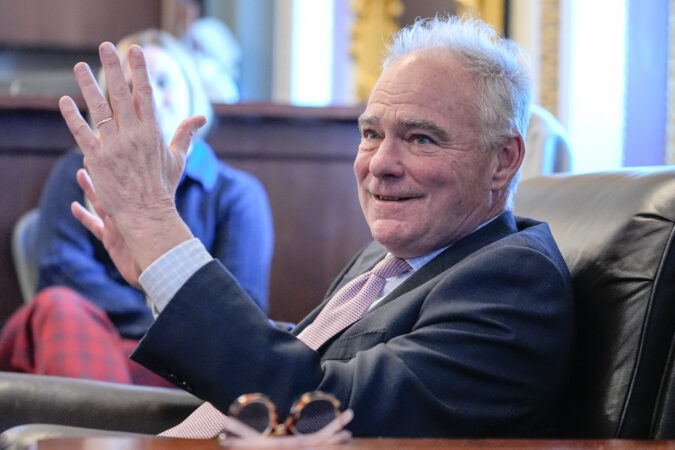
    Sen. Tim Kaine, D-Va., who forced the vote on the resolution, said he believes many Republicans were caught off guard by the outcome. He said that Trump’s recent comments to The New York Times suggesting U.S. oversight in Venezuela could last for years — combined with details revealed in the classified briefings — prompted some lawmakers to conclude that “this is too big to let a president do it without Congress.”

    The administration has used an evolving set of legal justifications for the monthslong campaign in Central and South America, from destroying alleged drug boats under authorizations for the global fight against terrorism to seizing Maduro in what was ostensibly a law enforcement operation to put him on trial in the United States.

    Republican leaders have backed Trump.

    “I think the president has demonstrated at least already a very strong commitment to peace through strength, especially in this hemisphere,” said Senate Majority Leader John Thune, R-S.D. “I think Venezuela got that message loudly and clearly.”

    A vote on a similar resolution in November narrowly failed to gain the majority needed. Paul and Murkowski were the only Republicans voting in favor then.

    Young in a statement said he supported the operation to capture Maduro, but was concerned by Trump’s statements that his administration now “runs” Venezuela.

    “It is unclear if that means that an American military presence will be required to stabilize the country,” Young said, adding that he believed most of his constituents were not prepared to send U.S. troops to that mission.

    House Democrats were introducing a similar resolution Thursday.

    The rarely enforced War Powers Act

    Trump criticized the Senate vote as “impeding the President’s Authority as Commander in Chief” under the Constitution.

    Presidents of both parties have long argued the War Powers Act infringes on their authority. Passed in 1973 in the aftermath of the Vietnam War — and over the veto of Republican President Richard Nixon — it has never succeeded in directly forcing a president to halt military action.

    Congress declares war while the president serves as commander in chief, according to the Constitution. But lawmakers have not formally declared war since World War II, granting presidents broad latitude to act unilaterally. The law requires presidents to notify Congress within 48 hours of deploying forces and to end military action within 60 to 90 days absent authorization — limits that presidents of both parties have routinely stretched.

    Democrats argue those limits are being pushed further than ever. Some Republicans have gone further still, contending congressional approval is unnecessary altogether.

    Republican Sen. Lindsey Graham of South Carolina, a close Trump ally who traveled with the president aboard Air Force One on Sunday, said he would be comfortable with Trump taking over other countries without congressional approval, including Greenland.

    “The commander in chief is the commander in chief. They can use military force,” Graham said.

    Greenland may further test the limits

    Graham’s comments come as the administration weighs not only its next steps in Venezuela, but also Greenland. The White House has said the “military is always an option” when it comes to a potential American takeover of the world’s largest island.

    Republicans have cited Greenland’s strategic value, but most have balked at the idea of using the military to take the country. Some favor a potential deal to purchase the country, while others have acknowledged that is an unlikely option when Denmark and Greenland have rejected Trump’s overtures.

    Democrats want to get out in front of any military action and are already preparing to respond. Arizona Sen. Ruben Gallego said he expected soon to introduce a resolution “to block Trump from invading Greenland.”

    Greenland belongs to a NATO ally, Denmark, which has prompted a much different response from Republican senators than the situation in Venezuela.

    On Thursday, Sen. Roger Wicker, chairman of the Senate Armed Services Committee, met with the Danish ambassador to the United States, Jesper Møller Sørensen. Also in the meeting were the top Democrat on the Senate Foreign Relations Committee, New Hampshire Sen. Jeanne Shaheen, and the head of Greenland’s representation to the U.S. and Canada, Jacob Isbosethsen.

    “There’s no willingness on their part to negotiate for the purchase or the change in title to their land which they’ve had for so long,” Wicker, R-Miss., said afterward. “That’s their prerogative and their right.”

    Wicker added that he hoped an agreement could be reached that would strengthen the U.S. relationship with Denmark.

    “Greenland is not for sale,” Isbosethsen told reporters.