Category: Wires

  • Netflix gets Phillies’ Field of Dreams game as part of new MLB media deal

    Netflix gets Phillies’ Field of Dreams game as part of new MLB media deal

    ESPN and Major League Baseball appeared headed for an ugly separation after the network opted out of its rights deal in February.

    Nine months later, it appears to be the best thing to happen to both parties.

    ESPN has a reworked deal that includes out-of-market streaming rights while NBC and Netflix will televise games as part of a new three-year media rights agreement announced Wednesday by MLB.

    Commissioner Rob Manfred also was able to maximize rights for the Home Run Derby and wild-card series.

    NBC/Peacock will become the new home of Sunday Night Baseball and the wild-card round while Netflix will have the Home Run Derby and two additional games.

    Netflix will have MLB at Field of Dreams in Dyersville, Iowa, on Aug. 13 when the Phillies face the Minnesota Twins. It will be the first time the game has been played in Dyersville since 2022.

    Netflix also has the first game of the season on March 25 when the New York Yankees visit the San Francisco Giants. It also has the Home Run Derby and will stream an MLB special event game each year.

    The three deals will average nearly $800 million per year. ESPN will still pay $550 million while the NBC deal is worth $200 million and Netflix $50 million.

    How ESPN benefits

    ESPN, which has carried baseball since 1990, loses postseason games and the Home Run Derby but gains something more valuable for its bottom line by becoming the rights holder for MLB.TV, which will be available on the ESPN app.

    ESPN also gets the in-market streaming rights for the six teams whose games are produced by MLB — San Diego, Colorado, Arizona, Cleveland, Minnesota, and Seattle.

    Even though ESPN no longer has Sunday Night Baseball, it will have 30 games, primarily on weeknights and in the summer months.

    Baseball is the second league that has its out-of-market digital package available in the U.S. on ESPN’s platform. The NHL moved its package to ESPN in 2021.

    Welcome back, NBC

    NBC, which celebrates its 100th anniversary next year, has a long history with baseball, albeit not much recently. The network carried games from 1939 through 1989. It was part of the short-lived Baseball Network with ABC in 1994 and ’95 and then aired playoff games from 1996 through 2000.

    Its first game will be on March 26 when the defending two-time champion Los Angeles Dodgers host the Arizona Diamondbacks.

    The 25 Sunday night games will air mostly on NBC with the rest on the new NBC Sports Network. All will stream on Peacock.

    The first Sunday Night Baseball game on NBC will be April 12 with the next one in May after the NBA playoffs.

    The addition of baseball games gives NBC a year-around night of sports on Sundays. It has had NFL games on Sunday night since 2006 and will debut an NBA Sunday night slate in February.

    NBC will also have a prime-time game on Labor Day night.

    The Sunday early-afternoon games also return to Peacock, which had them in 2022 and ’23. The early-afternoon games will lead into a studio whip-around show before the Sunday night game.

    NBC/Peacock will also do the Major League Futures game during All-Star week and coverage of the first round of the MLB amateur draft.

    Don’t forget the others

    The negotiations around the other deals were complicated due to the fact that MLB was also trying not to slight two of its other rights holders. MLB receives an average of $729 million from Fox and $470 million from Turner Sports per year under deals that expire after the 2028 season.

    Fox’s Saturday nights have been mainly sports the past couple of years with a mix of baseball, college football, college basketball, and motorsports.

    Apple TV has had Friday Night Baseball since 2022.

    The deals also set up Manfred for future negotiations. He would like to see MLB take a more national approach to its rights instead of a large percentage of its games being on regional sports networks.

  • Roblox steps up age checks and groups younger users into age-based chats

    Roblox steps up age checks and groups younger users into age-based chats

    Roblox is stepping up its age-verification system for users who want to chat with other players and implementing age-based chats so kids, teens, and adults will only be able to communicate with people around their own age.

    The moves come as the popular gaming platform continues to face criticism and lawsuits over child safety and a growing number of states and countries are implementing age-verification laws.

    The company had previously announced the age-estimation tool, which is provided by a company called Persona, in July. It requires players to take a video selfie that will be used to estimate their age. Roblox says the videos are deleted after the age check is processed. Users are not required to submit a face scan to use the platform, only if they want to chat with other users.

    Roblox doesn’t allow kids under 13 to chat with other users outside of games unless they have explicit parental permission — and unlike different platforms, it does not encrypt private chat conversations, so it can monitor and moderate them.

    While some experts have expressed caution about the reliability of facial age-estimation tools, Matt Kaufman, chief safety officer at Roblox, said that between the ages of about 5 to 25, the system can accurately estimate a person’s age within one or two years.

    “But of course, there’s always people who may be well outside of a traditional bell curve. And in those cases, if you disagree with the estimate that comes back, then you can provide an ID or use parental consent in order to correct that,” he said.

    After users go through the age checks, they will be assigned to age groups ranging from under 9, 9 to 12, 13 to 15, 16 to 17, 18 to 20, and over 21. Users will then be able to chat with their age group or similar age groups, depending on their age and the type of chat.

    Roblox said it will start enforcing age checks in Australia, New Zealand, and the Netherlands in the first week of December and the rest of the world in early January.

    A growing number of tech companies are implementing verification systems to comply with regulations or ward off criticism that they are not protecting children. This includes Google, which recently started testing a new age-verification system for YouTube that relies on AI to differentiate between adults and minors based on their watch histories. Instagram is testing an AI system to determine if kids are lying about their ages.

    “While we welcome the new age ID measures as a step forward, it remains to be seen how effective it will be and whether Roblox will stay the course on a voluntary measure once public scrutiny fades,” said Shelby Knox, director of online safety campaigns at the advocacy group ParentsTogether. “We have to remember this comes from a platform that has historically been slow to address systemic predatory behavior despite being marketed to and used by very young children.”

  • Trump dismisses U.S. intelligence that Saudi prince was likely aware of 2018 killing of journalist Jamal Khashoggi

    Trump dismisses U.S. intelligence that Saudi prince was likely aware of 2018 killing of journalist Jamal Khashoggi

    WASHINGTON — President Donald Trump on Tuesday dismissed U.S. intelligence findings that Crown Prince Mohammed bin Salman likely had some culpability in the 2018 killing of Washington Post journalist Jamal Khashoggi as Trump warmly welcomed the de facto ruler of Saudi Arabia on his first White House visit in seven years.

    The U.S.-Saudi relationship had, for a time, been sent into a tailspin by the operation targeting Khashoggi, a fierce critic of the kingdom.

    But seven years later, the dark clouds over the relationship have been cleared away. And Trump is tightening his embrace of the 40-year-old crown prince, who he said is an indispensable player in shaping the Middle East in the decades to come.

    Trump in his defense of the crown prince derided Khashoggi as “extremely controversial” and said “a lot of people didn’t like that gentleman.” Prince Mohammed denies involvement in the killing of Khashoggi, who was a Saudi citizen and Virginia resident.

    “Whether you like him or didn’t like him, things happen,” Trump said when asked about the killing by a reporter during an Oval Office appearance with Prince Mohammed. “But (Prince Mohammed) knew nothing about it. And we can leave it at that. You don’t have to embarrass our guest by asking a question like that.”

    But U.S. intelligence officials determined that the Saudi crown prince likely approved the killing by Saudi agents of U.S.-based journalist inside the Saudi consulate in Istanbul, according to U.S. findings declassified in 2021 at the start of the Biden administration. Trump officials, during his first administration, refused to release the report.

    Prince Mohammed said Saudi Arabia “did all the right steps” to investigate Khashoggi’s death.

    “It’s painful and it’s a huge mistake,” he said.

    Trump, who said the two leaders have become “good friends,” even commended the Saudi leader for strides made by the kingdom on human rights without providing any specific detail.

    New investment from Saudis

    The crown prince for his part announced Saudi Arabia was increasing its planned investments in the U.S. to $1 trillion, up from $600 billion that the Saudis announced they would pour into the United States when Trump visited the kingdom in May.

    Echoing rhetoric that Trump likes to use, the crown prince called the U.S. the “hottest country on the planet” for foreign investment.

    “What you’re creating is not about an opportunity today. It’s also about long-term opportunity,” Prince Mohammed said.

    Trump’s family has a strong personal interest in the kingdom. In September, London real estate developer Dar Global announced that it plans to launch Trump Plaza in the Red Sea city of Jeddah.

    It’s Dar Global’s second collaboration with the Trump Organization, the collection of companies controlled by the U.S. president’s children, in Saudi Arabia.

    Trump pushed back on suggestions that there could be a conflict of interest in his family’s dealings with the Saudis.

    “I have nothing to do with the family business,” Trump said.

    Trump’s comments about Khashoggi’s killing and defense of his family’s business in Saudi Arabia were blasted by human rights and government oversight activists.

    Human rights groups say Saudi authorities continue to harshly repress dissent, including by arresting human rights defenders, journalists and political dissidents for criticism against the kingdom. They also note a surge in executions in Saudi Arabia that they connect to an effort to suppress internal dissent.

    “President Trump has Jamal Khashoggi’s blood on his hands,” said Raed Jarrar, advocacy director for DAWN, a U.S.-based group advocating for democracy and human rights in the Arab world that was founded by Khashoggi.

    Rolling out the red carpet

    Trump warmly received Prince Mohammed when he arrived at the White House Tuesday morning for a pomp-filled arrival ceremony that included a military flyover and a thundering greeting from the U.S. Marine band.

    Technically, it wasn’t a state visit, because the crown prince is not the head of state. But Prince Mohammed has taken charge of the day-to-day governing for his father, King Salman, 89, who has endured health problems in recent years.

    Later, Trump and first lady Melania Trump welcomed the crown prince for a black-tie dinner in the White House East Room. The boldface names who attended included Nvidia CEO Jensen Huang, tech entrepreneur Elon Musk and soccer star Cristiano Ronaldo.

    Trump at the dinner announced he was designating Saudi Arabia as a major non-NATO ally. The designation, while largely symbolic, provides foreign partners with certain benefits in the areas of defense, trade and security cooperation.

    The president also announced that the two leaders had signed a new defense agreement, but the White House did not immediately release details of the pact. Ahead of the visit, the Saudis had signaled they were looking for formal assurances from Trump defining the scope of the U.S. military protection for the kingdom.

    “A stronger and more capable alliance will advance the interests of both countries,” Trump said. “And it will serve the highest interest of peace.”

    Fighter jets and business deals

    On the eve of Prince Mohammed’s arrival, Trump announced he had agreed to sell the Saudis F-35 fighter jets despite some concerns within the administration that the sale could lead to China gaining access to the U.S. technology behind the advanced weapon system. The White House announced the two leaders formalized the F-35 agreement Tuesday as well as a deal for the Saudis to purchase nearly 300 tanks from the U.S.

    They also signed agreements signifying closer cooperation on capital markets and critical minerals markets, as well as efforts against money laundering and terrorist financing.

    Trump’s announcement on the fighter jets was surprising because some in the Republican administration have been wary about upsetting Israel’s qualitative military edge over its neighbors, especially at a time when Trump is depending on Israeli support for the success of his Gaza peace plan.

    Abraham Accord talks

    The visit comes at a moment when Trump is trying to nudge the Saudis toward normalizing relations with Israel.

    The president in his first term had helped forge commercial and diplomatic ties between Israel and Bahrain, Morocco and the United Arab Emirates through an effort dubbed the Abraham Accords.

    Trump sees expansion of the accords as essential to his broader efforts to build stability in the Middle East after the two-year Israel-Hamas war in Gaza. Getting Saudi Arabia — the largest Arab economy and the birthplace of Islam — to sign on would spur a domino effect, he argues.

    But the Saudis have maintained that a path toward Palestinian statehood must first be established before normalizing relations with Israel can be considered. The Israelis remain steadfastly opposed to the creation of a Palestinian state.

    “We want to be part of the Abraham Accords, but we want also to be sure that we secure a clear path of a two-state solution,” Prince Mohammed said.

  • Congress acts swiftly to force release of Epstein files, and Trump agrees to sign bill

    Congress acts swiftly to force release of Epstein files, and Trump agrees to sign bill

    WASHINGTON — Both the House and Senate acted decisively Tuesday to pass a bill to force the Justice Department to publicly release its files on the convicted sex offender Jeffrey Epstein, a remarkable display of approval for an effort that had struggled for months to overcome opposition from President Donald Trump and Republican leadership.

    When a small, bipartisan group of House lawmakers introduced a petition in July to maneuver around Speaker Mike Johnson’s control of the House floor, it appeared a longshot effort — especially as Trump urged his supporters to dismiss the matter as a “hoax.”

    But both Trump and Johnson failed to prevent the vote. The president in recent days bowed to political reality, saying he would sign the bill. And just hours after the House vote, senators agreed to approve it unanimously, skipping a formal roll call.

    The decisive, bipartisan work in Congress Tuesday further showed the pressure mounting on lawmakers and the Trump administration to meet long-held demands that the Justice Department release its case files on Epstein, a well-connected financier who killed himself in a Manhattan jail while awaiting trial in 2019 on charges he sexually abused and trafficked underage girls.

    For survivors of Epstein’s abuse, passage of the bill was a watershed moment in a years-long quest for accountability.

    “These women have fought the most horrific fight that no woman should have to fight. And they did it by banding together and never giving up,” said Rep. Marjorie Taylor Greene as she stood with some of the abuse survivors outside the Capitol Tuesday morning.

    “That’s what we did by fighting so hard against the most powerful people in the world, even the president of the United States, in order to make this vote happen today,” added Greene, a Georgia Republican.

    In the end, only one lawmaker in Congress opposed the bill. Rep. Clay Higgins, a Louisiana Republican who is a fervent supporter of Trump, was the only “nay” vote in the House’s 427-1 tally. He said he worried the legislation could lead to the release of information on innocent people mentioned in the federal investigation.

    The bill forces the release within 30 days of all files and communications related to Epstein, as well as any information about the investigation into his death in federal prison. It would allow the Justice Department to redact information about Epstein’s victims or continuing federal investigations, but not information due to “embarrassment, reputational harm, or political sensitivity.”

    Even before the bill’s passage Tuesday, thousands of pages of emails and other documents from Epstein’s estate have been released from an investigation by the House Oversight Committee.

    Those documents show Epstein’s connections to global leaders, Wall Street powerbrokers, influential political figures and Trump himself. In the United Kingdom, King Charles III stripped his disgraced brother Prince Andrew of his remaining titles and evicted him from his royal residence after pressure to act over his relationship with Epstein.

    Trump’s reversal on the Epstein files

    Trump has said he cut ties with Epstein years ago, but tried for months to move past the demands for disclosure.

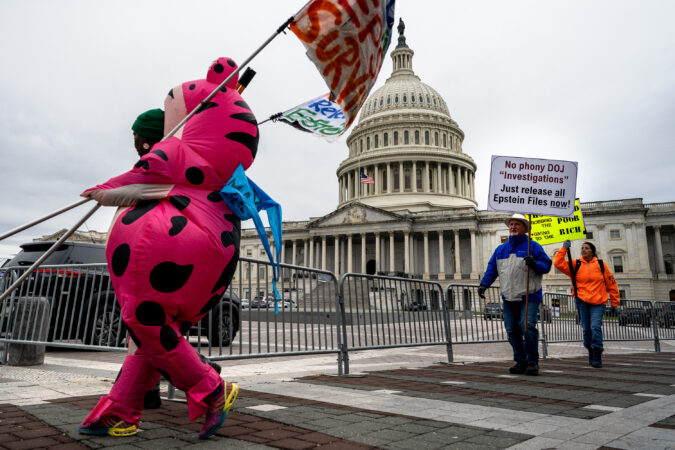
    Still, many in the Republican base continued to demand the release of the files. Adding to that pressure, survivors of Epstein’s abuse rallied outside the Capitol Tuesday morning. Bundled in jackets against the November chill and holding photos of themselves as teenagers, they recounted their stories of abuse.

    “We are exhausted from surviving the trauma and then surviving the politics that swirl around it,” said one of the survivors.

    Another, Jena-Lisa Jones, said she had voted for Trump and had a message for the president: “I beg you Donald Trump, please stop making this political.”

    The group of women also met with Johnson and rallied outside the Capitol in September, but have had to wait months for the vote.

    That’s because Johnson kept the House closed for legislative business for nearly two months and refused to swear-in Democratic Rep. Adelita Grijalva of Arizona during the government shutdown. After winning a special election on Sept. 23, Grijalva had pledged to provide the crucial 218th vote to the petition for the Epstein files bill. But only after she was sworn into office last week could she sign her name to the discharge petition to give it majority support in the 435-member House.

    It quickly became obvious the bill would pass, and both Johnson and Trump began to fold. Trump on Sunday said Republicans should vote for the bill.

    Yet Greene told reporters that Trump’s decision to fight the bill had betrayed his Make America Great Again political movement.

    “Watching this turn into a fight has ripped MAGA apart,” she said.

    How Johnson handled the bill

    Rather than waiting until next week for the discharge position to officially take effect, Johnson held the vote under a procedure that requires a two-thirds majority.

    But Johnson also spent a morning news conference listing off problems that he sees with the legislation. He argued that the bill could have unintended consequences by disclosing parts of federal investigations that are usually kept private, including information on victims.

    “This is a raw and obvious political exercise,” Johnson said.

    Still, he voted for the bill. “None of us want to go on record and in any way be accused of not being for maximum transparency,” he explained.

    Meanwhile, the bipartisan pair who sponsored the bill, Reps. Thomas Massie, R-Ky., and Ro Khanna, D-Calif., warned senators against doing anything that would “muck it up,” saying they would face the same public uproar that forced both Trump and Johnson to back down.

    “We’ve needlessly dragged this out for four months,” Massie said, adding that those raising problems with the bill “are afraid that people will be embarrassed. Well, that’s the whole point here.”

    Senate acts quickly

    Even as the bill cleared his chamber, Johnson pressed for the Senate to amend it to protect the information of “victims and whistleblowers.” But Senate Majority Leader John Thune quickly shut down that notion.

    As senators gathered in the chamber Tuesday evening for the first votes of the week, it became clear no one would object to passing the bill as written.

    Just before Senate Democratic leader Chuck Schumer called to pass the bill by unanimous consent, Oklahoma Sen. Markwayne Mullin, a Republican who is close to Trump, walked in the chamber and gave Schumer a thumbs-up. He then walked over to Schumer and shook his hand.

    “This is about giving the American people the transparency they’ve been crying for,” said Schumer, D-N.Y. “This is about holding accountable all the people in Jeffrey Epstein’s circle who raped, groom, targeted and enabled the abuse of hundreds of girls for years and years.”

  • Court blocks Texas from using Trump and GOP-favored House maps for 2026 midterms

    Court blocks Texas from using Trump and GOP-favored House maps for 2026 midterms

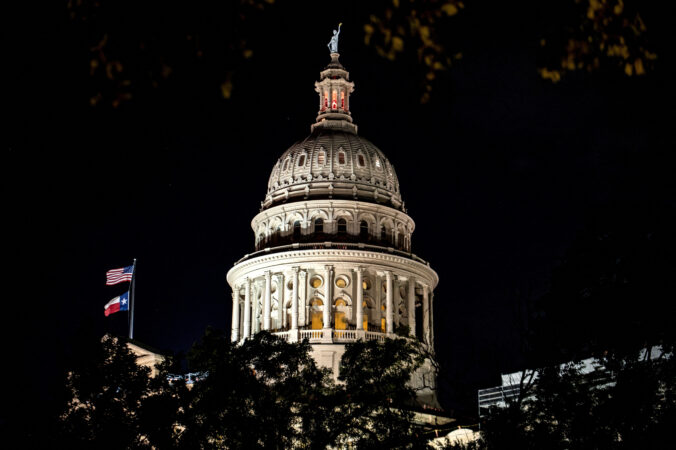
    A federal court has blocked Texas from using its new congressional map for the 2026 midterm elections, directing the state to revert to its previous districts.

    The majority opinion said the coalition of voting and civil rights groups who sued was likely to prove at trial that Texas officials had “racially gerrymandered” a new map that “unconstitutionally sorts voters on the basis of race,” depriving the plaintiffs of “their right to participate in a free and fair election.”

    The judges were under a tight deadline to make a ruling since the candidate filing period for the 2026 midterm elections began on Nov. 8 and ends on Dec. 8.

    Republican Gov. Greg Abbott, a key proponent of the electoral changes, said he would appeal the ruling to the U.S. Supreme Court.

    “Any claim that these maps are discriminatory is absurd and unsupported by the testimony offered during ten days of hearings,” Abbott said. “This ruling is clearly erroneous and undermines the authority the U.S. Constitution assigns to the Texas Legislature by imposing a different map by judicial edict.”

    The decision marks a significant setback for the state and Republicans, which began with a contentious battle in its state legislature last summer, led to a vote to revise state maps for voting districts, and ultimately spurred other states to buck tradition and pursue mid-decade redistricting.

    Two judges, in a three-judge District Court panel, ruled on Nov. 18 that the injunction was necessary because “the racial minorities the Plaintiff Groups represent will be forced to be represented in Congress based on likely unconstitutional racial classifications for at least two years.”

    The majority opinion, written by U.S. District Judge Jeffrey V. Brown, a Donald Trump appointee, who sits in Galveston, Texas, was joined by Senior U.S. District Judge David C. Guaderrama, a Barack Obama appointee, in El Paso.

    U.S. Circuit Judge Jerry E. Smith, who was appointed to the bench by President Ronald Reagan, is expected to file a dissenting opinion.

    A Republican majority in the Texas legislature in August 2025 passed the new state congressional map after a weeks-long standoff with state Democrats. Their new law, at the urging of President Donald Trump, heavily advantaged the GOP in 2026 elections. If used, it could have potentially flipped as many as five Democratic-held seats to Republican control − a significant edge as the party maintains a slim majority in Congress.

    In his statement, Abbott said the Texas legislature passed the new maps to “better reflect Texans’ conservative voting preferences – and for no other reason.”

    The court ruling and any decision by the U.S. Supreme Court could push back the filing deadlines for the Texas primaries for 2026. The midterm general election includes the seat of U.S. Sen. John Cornyn, D-Texas, all the Texas House of Representatives and Senate seats, and the governor, lieutenant governor and attorney general.

    Republicans said redistricting targeted Democrats

    The ruling came more than a month after 10 days of testimony and arguments over the legality of the new redistricting map at the federal courthouse in El Paso. The key testimony during the hearing came from Adam Kincaid, executive director of the National Republican Redistricting Trust, who created the maps.Kincaid testified that he looked at no racial data when building the map, solely relying on targeting districts that historically voted for Democrats.

    He said he combined Democrat-leaning districts into one district. He took Republican portions of those districts to create their own districts. The outcome gave Democrats one less representative, adding more representation for Republican voters.

    Kincaid and Republican leaders said the redistricting was done “race blind.” He testified he targeted Democrats, not minorities, which is allowed under the U.S. Constitution.

    Voting rights groups say redistricting targets minorities

    Democratic leaders and voting rights representatives argued during the hearing that the only districts targeted and impacted were Hispanic and Black majority districts. Hispanic and Black voters historically vote for Democrats.

    In Texas, voters are not required to register by political party. They are free to vote in the primary of their choosing.

    The redistricting map suppresses the voice of Texas minorities, including Hispanics, who make up the largest minority population in the state, Democratic state leaders testified in the trial.“They are not built to give Hispanics or African Americans a candidate of their choice,” Rep. Joe Moody, D-El Paso, testified about the new maps.

    Democrats and voting rights advocates questioned why Trump focused on four districts and why they were the only districts that were dramatically altered. They said Republicans had already created the map before discussions were held in the Texas Legislature and the public had an opportunity to comment on it.

    “That’s not Texas,” testified Rep. Ramon Romero, D-Fort Worth. “That’s not how we do things here.”

    The redistricting vote that sparked a chain reaction

    The Texas legislators’ efforts earlier this year sparked a national redistricting war across several states, as Democratic and Republican governors responded with their own efforts to redraw maps. Democratic California Gov. Gavin Newsom recently landed a victory in a voter-approved measure to implement new districts likely to add more Democratic representatives.

    But that matter is also entangled in a court challenge, after the administration on Nov. 13 joined the California Republican Party to accuse the state of violating the Constitution by gerrymandering using race as a factor to favor Hispanic voters in the new map.

  • Court settlement calls for NPR to get $36 million in government funds to operate U.S. public radio system

    Court settlement calls for NPR to get $36 million in government funds to operate U.S. public radio system

    WASHINGTON — National Public Radio will receive approximately $36 million in grant money to operate the nation’s public radio interconnection system under the terms of a court settlement with the federal government’s steward of funding for public broadcasting stations.

    The settlement, announced late Monday, partially resolves a legal dispute in which NPR accused the Corporation for Public Broadcasting of bowing to pressure from President Donald Trump to cut off its funding.

    On March 25, Trump said at a news conference that he would “love to” defund NPR and PBS because he believes they are biased in favor of Democrats.

    NPR accused the CPB of violating its First Amendment free speech rights when it moved to cut off its access to grant money appropriated by Congress. NPR also claims Trump, a Republican, wants to punish it for the content of its journalism.

    On April 2, the CPB’s board initially approved a three-year, roughly $36 million extension of a grant for NPR to operate the “interconnection” satellite system for public radio. NPR has been operating and managing the Public Radio Satellite System since 1985.

    But corporation officials reversed course and announced that the federal funds would go to a entity called Public Media Infrastructure. NPR claimed the CPB was under mounting pressure from the Trump administration when the agency redirected the money to PMI, a media coalition that didn’t exist and wasn’t statutorily authorized to receive the funds.

    CPB attorneys denied that the agency retaliated against NPR to appease Trump. They had argued that NPR’s claims are factually and legally meritless.

    On May 1, Trump issued an executive order that called for federal agencies to stop funding for NPR and PBS. The settlement doesn’t end a lawsuit in which NPR seeks to block any implementation or enforcement of Trump’s executive order. U.S. District Judge Randolph Moss is scheduled to preside over another hearing for the case on Dec. 4.

    The settlement says NPR and CPB agree that the executive order is unconstitutional and that CPB won’t enforce it unless a court orders it to do so.

    NPR, meanwhile, agreed to drop its request for a court order blocking CPB from disbursing funds to PMI under a separate grant agreement.

    Katherine Maher, NPR’s president and CEO, said the settlement is “a victory for editorial independence and a step toward upholding the First Amendment rights of NPR and the public media system.”

    Patricia Harrison, the corporation’s CEO, said CPB is pleased that the litigation is over “and that our investment in the future through PMI marks an exciting new era for public media.”

    On Aug. 1, CPB announced it would take steps toward closing itself down after being defunded by Congress.

  • The Trump administration will announce the dismantling of multiple parts of the Education Department

    The Trump administration will announce the dismantling of multiple parts of the Education Department

    The Education Department plans to announce Tuesday that it will move multiple parts of the agency to other federal departments, an unprecedented and unilateral effort to dismantle an agency created by Congress to ensure all Americans have equal access to educational opportunity and better coordinate federal programs.

    The move was described by three people informed of the plan ahead of the announcement. Two of these people said six offices within the department would be shifted elsewhere; the third person said it was at least two.

    President Donald Trump signed an executive order in March seeking to close the department and asked Education Secretary Linda McMahon to work with Congress to do so. The agency, which was created in 1979, has long been derided by conservatives as unnecessary and ineffective. But Congress has not acted on or seriously considered Trump’s request.

    McMahon has acknowledged that only Congress can eliminate the department but vowed to do everything in her power to dismantle it from within.

    Asked for comment, an Education Department spokeswoman suggested some information provided to The Post about the plan was inaccurate, but did not offer specifics.

    Supporters of the department say that the agency is effective in coordinating multiple aspects of education in one place and keeping priorities important to students, parents and schools high on the federal agenda.

    Offices that could be moved out of the agency include the Office for Civil Rights, which investigates allegations of discrimination on the basis of race, sex and disability; the Office of Special Education and Rehabilitative Services, which administers the $15 billion Individuals with Disabilities Act program; and the Indian Education program; the Office of Elementary and Secondary Education, which administers K-12 grant programs; and the Office of Postsecondary Education.

    Federal law directs that these programs be housed in the Education Department. The Trump administration is employing a work-around, the people briefed on the matter said, whereby other government agencies would run the Education programs under a contract with the Education Department. The people spoke on the condition of anonymity because they were not authorized to discuss the changes.

    The Trump administration laid the groundwork for this change earlier this year when it signed an agreement to move career, technical and adult education grants out of the Education Department to the Labor Department. Under the arrangement, Education retains oversight and leadership while managing the programs alongside Labor, a way of sidestepping the federal statute.

    “We believe that other department functions would benefit from similar collaborations,” McMahon wrote in an op-ed essay published Monday in USA Today.

    More broadly, McMahon has argued that the recently ended government shutdown showed how unnecessary her agency is.

    “Students kept going to class. Teachers continued to get paid. There were no disruptions in sports seasons or bus routes,” she wrote. “The shutdown proved an argument that conservatives have been making for 45 years: The U.S. Department of Education is mostly a pass-through for funds that are best managed by the states.”

  • Medicare costs will eat a big chunk of older Americans’ Social Security cost-of-living increase next year

    Medicare costs will eat a big chunk of older Americans’ Social Security cost-of-living increase next year

    It’s official. Medicare costs will eat up much of older Americans’ Social Security cost-of-living increase next year.

    The standard monthly premium for Medicare Part B, which covers outpatient care, doctors’ services, durable medical equipment and preventive service, will be $202.90 in 2026, the Centers for Medicare and Medicaid Services said on Nov. 14. That’s up $17.90, or nearly 9.7%, from $185.00 in 2025.

    It’s smaller than the $21.50 increase the Medicare Trustees had forecast earlier but still the second largest dollar jump in program history behind 2022’s $21.60 gain and almost 3.5 times the 2.8% Social Security raise for next year. That means seniors will probably see a drop, again, in their standard of living, experts said.

    Seniors were the only ones who saw an increase in poverty in 2024. All other age groups saw a decrease or stayed the same.

    “The public is likely to perceive this Part B increase as taking a significant chunk of or even most of their COLA,” said Mary Johnson, independent Social Security and Medicare policy analyst. “In other words, another continuation in relentless cost increases battering consumer finances.”

    Monthly Social Security checks will rise $56, on average, starting in January because of the 2.8% COLA, the Social Security Administration said. After the $17.90 increase in Medicare Part B, the average monthly COLA increase is cut to $38.10.

    Hold-harmless provision

    Such a large increase in Medicare Part B will likely trigger the hold-harmless provision for Social Security recipients with a Social Security benefit of $640 or less, Johnson said.

    The Medicare hold-harmless provision prevents the Part B premium increase from being larger than the Social Security COLA. If a premium increase is higher than the COLA, the rule prevents the beneficiary from paying the full increase. The portion of the increase those beneficiaries don’t pay is spread out among others who aren’t protected by the rule.

    For those people with a Social Security benefit of $640 or less, the 2.8% COLA next year would mean just less than an $18 per month increase in their Social Security checks. Without the hold-harmless rule, the Part B premium increase would swallow the entire COLA.

    In 2022, only about 1.5% of Medicare beneficiaries had their Part B premiums limited by the hold-harmless provision, government data showed. Part B rose $21.60 to $170.10 in 2022 while the average monthly COLA increase boosted Social Security checks by $92.

    In 2017, when Medicare premiums jumped 10%, or $12.20, to $134.00 and far outpaced the 0.3%, or $5 average, monthly COLA increase, 70% of Medicare Part B enrollees paid a lower-than-standard Part B premium due to the hold-harmless provision.

    Hold-harmless rule isn’t panacea for all costs

    The hold-harmless provision can protect seniors from Part B premium surges, but other costs may bite, Johnson said.

    “If individuals have other automatic deductions such as for Medicare Advantage or Part D premiums, increases in those premiums could reduce Social Security benefits,” Johnson said. The optional Part D covers prescription drugs.

    Some Part D plans are increasing premiums by as much as $50 in 2026, the maximum allowed under a Part D Premium Stabilization Demonstration Program, according to the nonprofit, nonpartisan research organization KFF.

    “To complicate things, there are fewer stand-alone Part D plans to choose from,” Johnson said. The total number of prescription drug plans has dropped by half since 2024, KFF said.

    Is everyone eligible for hold harmless?

    Those who aren’t eligible for the hold-harmless provision include:

    • New Medicare enrollees
    • People who aren’t receiving Social Security benefits
    • High-income earners

    What about deductibles?

    In addition to higher premiums, higher annual deductibles next year will make health insurance even more expensive for Medicare enrollees.

    The annual deductible for all Medicare Part B beneficiaries before insurance covers costs will be $283 in 2026, up $26 from $257 in 2025, CMS said.

    Could it have been worse?

    The Part B premium could have been higher, CMS said.

    “If the Trump Administration had not taken action to address unprecedented spending on skin substitutes, the Part B premium increase would have been about $11 more a month,” CMS said. “However, due to changes finalized in the 2026 Physician Fee Schedule Final Rule, spending on skin substitutes is expected to drop by 90% without affecting patient care.”

    Skin substitutes are materials like biologic, synthetic or biosynthetic products that mimic human skin and are used to cover and treat chronic wounds, such as diabetic foot ulcers. The Trump administration reclassified these bandages so they aren’t billed separately. CMS estimates the change would reduce Medicare spending on these products by nearly 90% in calendar year 2026.

    Medicare Trustees also estimated earlier this year the standard monthly Part B premium would rise $21.50 to $206.50 in 2026 from $185 in 2025. That would have been more than the $17.90 increase to $202.90 in 2026.

  • Cloudflare outage impacts X, ChatGPT, Spotify, and other websites

    Cloudflare, an internet infrastructure platform, is experiencing an outage that appears to be affecting websites across the internet, including the social media platform X.

    The company said in a status update before 7 a.m. EST on Nov. 18 that it was aware of “an issue which potentially impacts multiple customers,” and was investigating the problem.

    In a statement to USA TODAY around 8:30 a.m. EST, Cloudflare said it “saw a spike in unusual traffic” to one of its services around 6:20 a.m. EST.

    “That caused some traffic passing through Cloudflare’s network to experience errors. We do not yet know the cause of the spike in unusual traffic. We are all hands on deck to make sure all traffic is served without errors. After that, we will turn our attention to investigating the cause of the unusual spike in traffic,” the statement said.

    Many X users reported having problems loading the social media app.

    According to Downdetector, an outage-tracking website, thousands of users of several popular websites were reporting issues or outages as of 8 a.m. EST, including X, Spotify, OpenAI, League of Legends and more.

    By 8:30 a.m. EST, though, Downdetector also appeared to be having connectivity issues tied to the Cloudflare outage.

    Is Cloudflare down?

    Cloudflare said it is experiencing issues with its global network, causing outages at many websites that rely on the platform.

    Shortly after 8 a.m. EST, Cloudflare said it had identified the issue and made changes to recover its Cloudflare Access and WARP system, which both help protect companies’ traffic and devices.

    “We are continuing to work towards restoring other services,” Cloudflare said.

    More updates will be available on its status website.

    Cloudflare is a platform which many websites use to improve their performance and functionality.

    Which websites are down from Cloudflare outage?

    According to Downdetector, the following websites were reporting increased outages as of 9 a.m. EST:

    • X, formerly Twitter
    • Spotify
    • OpenAI
    • League of Legends
    • Grindr
    • Google Store
    • Archive of Our Own
    • Uber
    • Quizlet
    • Canva
    • Claude AI
    • Character AI
    • Indeed
    • Truth Social
    • Dayforce
    • ChatGPT
    • Letterboxd
    • Square
    • Rover
    • Zoom
    • Canvas
    • Ikea

    Downdetector also appeared to be impacted by the outage, as did news outlet Axios. Both websites loaded a banner that said, “Please unblock challenges.cloudflare.com to proceed.”

  • At 89, she’s a top nutrition expert. Here’s what she eats in a day.

    At 89, she’s a top nutrition expert. Here’s what she eats in a day.

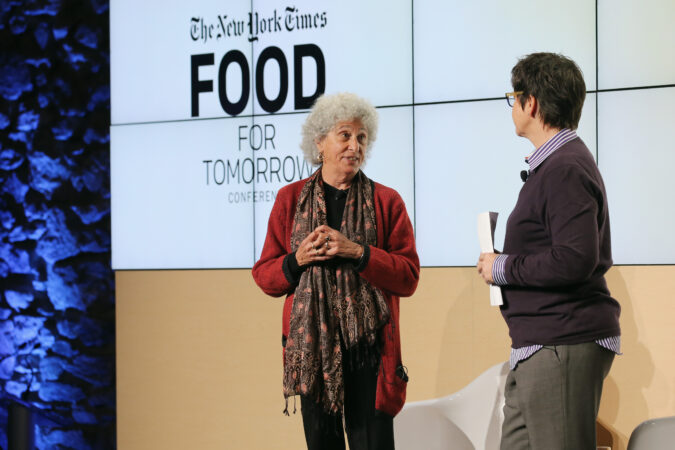
    For more than three decades, Marion Nestle has been telling people what to eat.

    In the late 1980s, she edited the first Surgeon General’s Report on Nutrition and Health, then went on to cowrite the federal government’s Dietary Guidelines for Americans and cofound New York University’s influential food studies program.

    Nestle, now an emerita professor at NYU, says her time in government opened her eyes to the multi-billion-dollar food industry’s enormous influence over Congress. By the early 2000s, she became a critic of the food industry and an advocate for major food reforms, which she made the case for in best-selling books.

    In 2002, Nestle published Food Politics, an exposé that argued that the food industry is at the root of many of the country’s nutritional problems. The industry rakes in ever-growing profits by churning out highly processed foods laden with additives, Nestle wrote, and then aggressively markets those foods to children and adults while lobbying against regulations and trying to co-opt nutrition experts.

    Over the years, Nestle’s blunt nutrition advice, sharp criticism of food companies, and frequent media appearances made her one of the most recognizable names in nutrition. In 2006, she published one of her most popular books, What to Eat, which showed consumers how to navigate supermarkets and improve their health by deciphering food labels.

    At age 89, Nestle, who lives in New York City and Ithaca, is still going strong. In November, she published her latest book: What to Eat Now: The Indispensable Guide to Good Food, How to Find It, and Why It Matters.

    We wanted to know how Nestle’s knowledge of nutrition and the food industry affects her daily food decisions. So we caught up with her to find out what she eats in a typical day, which foods she loves and avoids, which “junk foods” she can’t resist, and whether she takes supplements or has advice on how to navigate grocery stores. This interview has been edited for length and clarity.

    Q: What’s your general approach to food?

    A: I follow Michael Pollan’s famous mantra: Eat food, not too much, mostly plants. And I define food as being unprocessed or as minimally processed as possible. Not ultra-processed. I really think that takes care of it. That doesn’t mean I’m perfect. I’m an omnivore. I eat everything. I just don’t eat very much in part because metabolism drops with age, and I don’t have much metabolism left.

    I eat pretty healthy, but I don’t obsess about it. If I have a bad day of eating, I don’t worry about it. By this time, it’s pretty clear I’m not going to die prematurely. Obviously, what I’m eating is working for me because I’m 89 and I’m still here.

    Q: What do you eat for breakfast?

    A: I start with coffee between 8 and 9 a.m. I’ll have a couple cups of weak coffee with milk, no sugar. And then I’m at work. That’s when I do my writing. I don’t get hungry until about 10:30 or 11 a.m. That’s when I’ll usually have oatmeal or unsweetened Post Shredded Wheat cereal. It basically has one ingredient: wheat. I like the texture of Shredded Wheat and the way that it tastes. I add a little brown sugar, not much. I use a lot less sugar than what’s in presweetened cereals. And then I’ll add blueberries or whatever fruit is in season. That combination to me is really appealing.

    I’ve never believed any of the research on breakfast being the most important meal of the day. Most of that was sponsored by cereal companies.

    Q: What about lunch?

    A: My lunches are totally irregular. Sometimes I’ll have a salad for lunch. Or if I’m having lunch with someone then I’ll eat whatever is in the restaurant. If I’m at home in New York City, I’ll harvest whatever is growing on my terrace. The peaches, cherries, raspberries, and blueberries that I was growing are long gone. But I’ve still got some lettuce and tomatoes, so I’m going to go out and pick those. I might cut up some cheese or have it with peanuts. And I might have some bread with that.

    Q: What about dinner?

    A: It depends. I just don’t eat that much. But I do really like salads. I can have salads twice a day. If I’m at home, I might have an egg. I might have crackers and cheese with that. I kind of like making meals based on what I have available. So, it depends on what I bought, what’s in the house, or what’s on the terrace. That’s my favorite way of cooking. We have a garden in Ithaca, there’s a garden on my terrace, and there’s a farmers market not very far from here.

    I also go to a lot of neighborhood restaurants. I’m going to Mark Bittman’s restaurant this week — the kitchen that he started in the East Village where people pay according to their income. I’ll eat whatever they’re serving. One restaurant that I like a lot is il Buco Alimentari & Vineria. I love going there. They have a particular salad that I adore. It’s always so crisp, and they have wonderful pasta dishes.

    Q: What are some foods that you love?

    A: Fortunately, I like a lot of very simple foods. I like vegetables. I like eggs. I like cheese. I do eat some ultra-processed foods. But not a lot of them. I don’t like ultra-processed foods that have a long list of ingredients. Most of those don’t taste good to me. I do really like vegetables. I like the crunch, the flavors, and the colors. That makes it easy to eat healthy.

    But I recognize that I’m privileged. I weigh basically what I weighed when I was in high school. I don’t have a weight problem. And I have an enormous amount of sympathy for people who do. I consider myself extremely fortunate. Is it genetics? I have no idea. My father died of a heart attack at the age of 47. He was an obese three-pack-a-day smoker. It’s hard to know where genetics fits into this.

    Q: Do you have any favorite treats or desserts?

    A: Ice cream. When I’m at home in New York City, I try to find ginger ice cream, which I like very much. It’s hard to find. But when I find it, I buy it. And then my partner and I make homemade vanilla ice cream in Ithaca. It’s only three or four ingredients. It’s ruined other ice creams for me because a lot of commercial ice creams have all these emulsifiers in them that keep the ice cream sticking together. Real ice cream completely falls apart if it’s left at room temperature and not eaten right away. It separates and liquefies. But I like that. I think it tastes better and has a better texture than the commercial ice creams that have emulsifiers. I like ice cream without the emulsifiers.

    Q: What about snacks?

    A: I like corn chips. Not too salty. Some corn chips are ultra-processed, although most are not. The ones I like are Wegmans. They only have a few ingredients — just corn, oil, and salt basically. I also like candy, particularly See’s Candies. The one See’s candy store in New York is just a couple blocks away from me. I normally get the peanut brittle. Sometimes the lollipops. I can have these things in the house and not feel like I have to eat all of them all at once. Not everyone can do that.

    Q: Can you tell us about your new book?

    A: It’s called What to Eat Now. It’s the updated edition of What to Eat, which was published 20 years ago. It’s a completely rewritten book. I thought it was going to be a six-month project, and it ended up taking me four years because so much has changed in grocery stores. There’s been a huge turnover in products. For example, “functional waters” that contain vitamins, minerals, cannabis, supplements, and other things have replaced Coca-Cola and plain water. Plant milks are new. The only plant milk that existed 20 years ago was soy milk. Now there are tons of others. Plant-based meats did not exist 20 years ago — at least not in the way that they do now.

    Q: What is one takeaway from the book?

    A: It’s not a book about personal diets. It’s a book about how to think about food issues. I think what to eat now boils down to eat food, not too much, mostly plants.

    Q: Do you take any supplements?

    A: I don’t take supplements because I eat a healthy diet. I don’t think I need them. But two out of three Americans take supplements. They make people feel better — and it’s hard to argue with that. Life is tough. If all it takes is a supplement to make you feel better, then I’m not going to argue with that. I used to be much more upset about supplements. But now it’s clear to me that they make people feel better. Whether that’s because they’re doing something or because they’re a placebo, it’s hard to know.

    But I don’t trust what’s in them. There’s so much evidence that what the label says isn’t what’s actually in them. Many studies have found that a remarkable percentage of supplements do not actually contain what’s listed on their labels. I don’t want to put something in my body if I don’t know what’s in it. And there are things in supplements that are not supposed to be there — that’s what so many studies have found. It’s not true of all supplements. But it’s very hard to know which ones are OK and which ones are not. So I don’t take any of them.

    Q: Do you have any advice for our readers?

    A: Eating healthfully in today’s society is very difficult because you’re fighting an entire food industry on your own— and that industry is trying to sell you the most profitable, least healthy foods available. But one thing you can do is read food labels. There’s a lot of information on them. If you’re looking at a packaged food and you can’t recognize the ingredients, or if you can’t purchase the ingredients at a supermarket, then it’s ultra-processed. There are certain ingredients that are indicators of ultra-processed foods. That would be color additives, flavor additives, and emulsifiers such as mono and diglycerides, polysorbates and carrageenan, and texturizers such as agar. I always read food labels. If something has a lot of artificial additives and ingredients that I don’t recognize, then I’m not going to eat it.