Category: Wires

  • The very worst sports decisions of 2025

    The very worst sports decisions of 2025

    The past year in sports was full of choices that worked out swimmingly, such as Anthony Joshua taking a fight on relatively short notice. The fight, of course, was against Jake Paul, it earned Joshua a massive payday, and he finished it with a knockout of someone a lot of people wanted to see get knocked out.

    Other choices didn’t work out quite so well, and a few were unfortunate enough to make this roundup of 2025’s thoroughly regrettable sports decisions. It’s a non-comprehensive list (and by all means, make some additions in the comments), but it should be enough to have us all looking to ring in a less misguided new year.

    The Mavericks trade Luka Doncic for … not much

    Never mind that, in the wake of the Luka Doncic trade, the Dallas Mavericks wound up with Cooper Flagg. They don’t get credit for seeing a piece of outrageous good fortune fall into their collective lap.

    On the other hand, the Mavericks deserved all the criticism they received — a Texas—size mass that didn’t subside for months — and not just because they dealt a massively popular, 25-year-old superstar who already had led them to the NBA Finals. The return for Doncic and a couple of ancillary pieces to make the trade work included an aging and injury-prone Anthony Davis, Max Christie, a first-round draft pick and … actually, that was it.

    The worst part? Well, that’s a tough question, given that the trade came as an out-of-nowhere jolt of shocking news, left the franchise bereft of a long-term centerpiece (again, the subsequent, utterly fluky landing of Flagg doesn’t count) and allowed the Los Angeles Lakers to retain some assets that the Mavericks should have demanded as part of the package. Maybe the most galling aspect was that Nico Harrison, the Mavericks’ general manager, didn’t shop Doncic around the league, a process that almost certainly would have yielded more substantial offers. Instead, Lakers GM Rob Pelinka appeared to use his long-standing friendship with Harrison to pull off a clandestine swindle. Plus, did it have to be the Lakers? You know, the franchise that has lorded over the Western Conference for huge chunks of the past 45 years and whose fans have come to expect the regular arrival of elite players as their birthright?

    None of that sat at all well with Mavericks fans, and ultimately their fury and the team’s lack of success after the trade cost Harrison his job. He’s no longer around, but the frustration of the Doncic trade figures to linger in Dallas for years to come.

    Orion Kerkering throws home

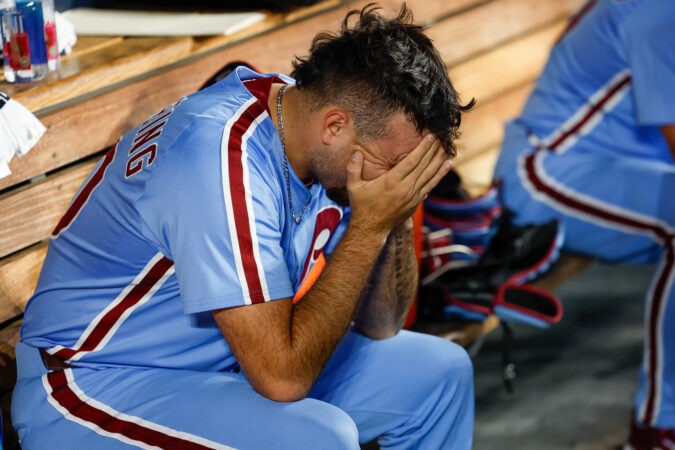
    It might be unfair to say he panicked, but Orion Kerkering was hardly the picture of composure when a ball was hit back to the Philadelphia Phillies’ 24-year-old pitcher in the bottom of the 11th inning of Game 4 of the National League Division Series. Kerkering had trouble fielding the ball, but after he did eventually pick it up, he appeared to have time to turn and throw to first base. Given that there were two outs, a successful throw to the first baseman would have ended the inning, kept the score tied and kept the Phillies alive in their series against the Los Angeles Dodgers.

    Certainly, that was what Phillies catcher J.T. Realmuto wanted. As Kerkering picked up the ball, Realmuto was pointing toward first base. Alas, the pitcher opted to throw home — the bases were loaded, so an inning-ending out also could have been made at the plate — but he had only a split second to beat the runner, and Kerkering’s rushed effort sailed wide of Realmuto. The runner was safe at home, the Dodgers spilled out of their dugout with joy, and the Phillies were forced to contemplate a brutal end to their season. Kerkering defended his decision, saying he thought he could get the ball to home plate faster than if he turned and threw to first, but he acknowledged, “It was just a horses— throw.”

    The Clippers bring back Chris Paul

    When the Los Angeles Clippers signed Chris Paul in July to a one-year contract, it seemed like a solid move, potentially even a heartwarming one — after all, Paul is a franchise icon, and he was poised to help his team return to the playoffs in what could be his final NBA season. Instead, the relationship between Paul — never one to refrain from offering strong opinions on team-related matters — and the Clippers’ coaching staff reportedly curdled almost immediately. Then, barely a quarter of the way through this season, the 40-year-old point guard was banished altogether.

    Paul remains under contract, though, meaning that after getting the heave-ho, he is still essentially getting paid handsomely by the Clippers not to work. Wait, why does that sound familiar? Oh, right — their season began under a cloud of suspicion that they may have circumvented NBA salary cap rules by arranging for Kawhi Leonard to receive a lucrative, no-show job from a team sponsor. At least Leonard is performing his job for the Clippers by putting up good numbers, but he already has missed a chunk of the season with his latest injury and, more ominously, has proved unable to help the Clippers avoid an early-season free fall that has them near the bottom of the Western Conference.

    A guy gets caught stealing a hat from a kid

    Here’s the thing: If you’re going to swipe a cap clearly meant for a kid, don’t do it where loads of cameras are present. Wait, sorry, here’s the thing: Don’t do it at all. Alas, Polish businessman Piotr Szczerek found it as easy in the moment as stealing candy from a baby, only to discover that his misdeed went viral.

    Caught red-handed at the U.S. Open (tennis version), Szczerek subsequently issued an apology, but not before online sleuths found his business and subjected it to damagingly poor reviews. Even in his apology, Szczerek claimed it was “never my intent to steal away a prized memento from the young fan,” leading to another round of criticism.

    Picking upsets in your NCAA bracket

    Everyone knows that if you actually want to win your NCAA tournament pool, you can’t go chalk. While you may not be able to predict which upsets will occur, you know they’re coming, so your best bet is to pick a few and hope you get some hits.

    Unless, that is, you were filling out a bracket for the 2025 NCAA men’s basketball tournament, which turned out to be a chalk show. The top 16 seeds won their first-round games, the only No. 12 seeds to get to the second round promptly lost, the only double-digit seed in the Sweet 16 was a John Calipari-coached SEC squad (No. 10 Arkansas, which promptly lost), and the Final Four was composed solely of No. 1 seeds. At least, at that point, Duke haters got to see the Blue Devils get upset by Houston, but even that unexpected result deprived hoops fans of seeing Flagg in the national title game.

    Tom Brady clones his dog

    In thanking a biosciences company for giving him and his family “a second chance with a clone of our beloved dog,” Tom Brady raised a question of what kind of “second chance” he thought he was getting. Obviously, the first go-round went so well that he decided to have the dog duplicated, so it wasn’t a question of making amends. At the same time, the personality that so endeared the original pooch to the Bradys wouldn’t necessarily be replicated in the clone.

    What Brady could count on, if he cared to get some feedback, was disapproval from animal rights activists and others who happen to be well aware that tons of terrific pups are just waiting at shelters for a loving human to come along. That act of compassion could be accomplished for a fraction of the price of cloning — and without the possibility that several attempts might be discarded before an acceptable look-alike was produced.

    Chauncey Billups plays in shady poker games

    Chauncey Billups, the Portland Trail Blazers coach who was placed on unpaid leave one game into the season after being arrested on money laundering conspiracy and wire fraud conspiracy charges, pleaded not guilty. Perhaps he did nothing wrong and is guilty only of poor judgment — but, hoo boy, did he display some poor judgment in getting involved in an allegedly Mafia-backed scheme to use his celebrity to attract other poker players to illegal games so they could be defrauded with techniques such as rigged card-shuffling machines. In addition, Billups was accused by federal authorities of passing along information about the Trail Blazers’ plans to tank a March game by benching players, which allegedly resulted in big-money bets being placed on the contest.

    If Billups plays his cards right (ahem) with the not-guilty plea and avoids what could be decades in prison, he still might be banned for life by the NBA, particularly if there is compelling evidence that he did indeed share Portland’s tanking plans. At a minimum, he probably can kiss his coaching career goodbye, and his recent Hall of Fame induction could be in jeopardy.

    A marathoner tries to help her maid

    After Ruth Chepngetich eventually provided an explanation for how she came to have a banned substance in her system, the Athletics Integrity Unit described her tale as “hardly credible.” Even if you take her explanation at face value, though, it doesn’t exactly do her any favors.

    Chepngetich, who smashed the women’s marathon world record in October 2024 only to test positive for hydrochlorothiazide (HCTZ) several months later, was said to have told investigators that she fell ill with similar symptoms to those experienced shortly before by her housemaid. According to the AIU, an agency established by track and field’s international governing body to ensure athletes adhere to anti-doping protocols, the 31-year-old Kenyan asked what medication her maid had taken and then promptly ingested it herself. Chepngetich even provided a photo of the medication, which clearly stated “Hydrochlorothiazide” on its packaging, and she was said to have claimed she didn’t know it was on the prohibited list.

    The AIU noted that Chepngetich had multiple opportunities to give her account of events before she provided the explanation and that it still didn’t account for the trace amounts of HCTZ found in a test she took before the episode in question. She accepted a three-year suspension, although her record has been allowed to stand, at least for the time being.

    Bill Belichick agrees to go on camera

    Infamously taciturn during his two-decade run as the New England Patriots’ coach, Bill Belichick invariably gave the impression that he would much rather be left alone to work on game plans in a darkened film room. After taking the North Carolina job, though, he was much more willing to go on camera. By doing so, the 73-year-old Belichick also happened to shine more of a spotlight on his girlfriend, 24-year-old Jordon Hudson. That may have been the plan all along (for at least one of them), but it didn’t always go the way they would have liked.

    Most notably, Hudson’s commandeering of a “CBS Sunday Morning” interview of Belichick in April raised widespread questions about how much of a managerial role she seemed to have taken. When the season started, she became a very visible presence on the Tar Heels’ sidelines, and cameras also caught Belichick conferring with her there shortly before games kicked off. In October, video emerged from an aborted docuseries on Belichick by NFL Films that showed Hudson displaying a high degree of involvement and, at times, casting aspersions on the work of production team members.

    As for the on-field product Belichick produced, he probably wishes that wasn’t filmed, either. In his first season at UNC, he oversaw a 4-8 season that began with an embarrassing blowout loss and included four other defeats by at least 16 points.

    Mississippi fans hope for Lane Kiffin to stay

    Sure, Lane Kiffin’s bolting for LSU just after guiding the Rebels to their best regular season since 1962 made for a messy ending in Oxford, but what did Mississippi fans expect? Kiffin departed almost all of his coaching gigs with a trail of ill will in his wake, and the LSU job has been a generally more coveted position for decades.

    Nonetheless, a lot of Mississippi fans apparently expected Kiffin to stay, and many of them didn’t appreciate getting jilted. Maybe now that he’s with the Tigers, some of those fans will learn that a leopard can’t change his spots.

    FIFA creates a peace prize for Trump

    Maybe, just maybe, if President Donald Trump hadn’t been openly pining for a Nobel Peace Prize, and if FIFA head Gianni Infantino hadn’t been acting so openly obsequious toward Trump, the fact that FIFA’s newly created peace prize just happened to go to Trump wouldn’t seem like such a blatant case of currying favor. Of course, soccer’s international governing body could reasonably have some major concerns about the smooth staging of its 2026 World Cup — much of which will be in the United States, which hasn’t exactly rolled out the welcome mat for foreign visitors this year — that FIFA wants very much to allay.

    We’ll see how it goes next year with the world’s most-watched tournament, just as we’ll see who gets picked by FIFA as the next recipient of what it promises will be an annual honor. Presumably, the pool of candidates will be composed solely of world figures Infantino reckons will actually want to accept an award of such dubious origin.

    FIFA asks Wayne Gretzky to pronounce names of countries

    At the same World Cup draw this month where Infantino handed Trump his hardware, Wayne Gretzky was asked to help read names of countries as they were slotted into pods for group play. While it wasn’t ideal that he pronounced Curaçao as “Cuh-rocco” and North Macedonia as “Mack-a-donia,” in fairness, those probably aren’t places he hears dropped into conversation very often.

    But Jordan? Or as Gretzky put it, “Jor-DAN”? Again, that’s a country not likely to be bandied about frequently in Gretzky’s presence, but you would think he has heard more than enough comparisons to Michael Jordan to just go with that as the default pronunciation.

    NASCAR thinking it could win a court battle against Michael Jordan

    Speaking of Jordan, his latest showdown was in a federal courtroom, not on an NBA court, but the outcome would have been familiar to any number of Jordan’s opponents in hoops: NASCAR was put on the proverbial poster. Jordan and his 23XI racing team, along with co-plaintiff Front Row Motorsports, came away with a settlement of their antitrust lawsuit that pretty much gave them what they wanted. In turn, that amounted to a huge win for all the other Cup Series teams, who also will benefit from the reported settlement terms of permanent charters, greater revenue sharing and more say in how the overall business operates.

    The Charlotte-based judge who presided over the nine-day trial, which began approximately 14 months after Jordan and his partners filed suit, said he wished the settlement could have been reached “a few months ago.” Some NASCAR officials probably felt the same way, given some of the damaging details that emerged during discovery. They reportedly included text messages from NASCAR Commissioner Steve Phelps to a colleague that called team owner Richard Childress a “stupid redneck” who should be “taken out back and flogged.”

    It remains to be seen whether Phelps is able to keep his job, but there is little doubt that the organization he works for got dunked on by His Airness.

    The choice of Keegan Bradley for Ryder Cup captain

    Normally, active PGA Tour players are not chosen for the Ryder Cup captaincy. Keegan Bradley was not only very much still on the tour but, in fact, played so well this year that he might have been a captain’s pick — had he not been the captain himself. Technically, Bradley could have selected himself, but he chose to focus solely on his duties as captain.

    The result of the Ryder Cup — a 15-13 win for Europe on American soil — made it fair to wonder whether it would have been better to pick a captain who could have used the whole PGA Tour season to focus on the event instead of finding time between tournaments to give it thought. Bradley was criticized for his pairings — particularly the duo of Harris English and Collin Morikawa, whose possible partnership ranked dead last out of 132 optimal pairings in a widely cited statistical model — as well as his course setup and other tactics.

    It seems safe to assume that, come 2027, the Ryder Cup captaincy will revert to an accomplished player who has aged out of the PGA Tour. Hmmm … Tiger Woods, anyone?

    Mark Sanchez picks a fight over parking

    Allegedly, anyway. At Mark Sanchez’s trial, which was moved to March, he might be able to present a convincing case that he was the victim in an October incident that left him in a hospital with stab wounds. The bizarre episode resulted in a felony charge being brought against the former quarterback, who can now also be called a former Fox Sports analyst after the network parted ways with him.

    In Indianapolis for an upcoming Colts game, Sanchez was said by prosecutors to have been in a state of public intoxication when he approached a 69-year-old man and allegedly took issue with where the latter had parked his truck. The man was described as an employee of a cooking oil recycling company who had brought his truck to a hotel loading dock to perform his job duties before ending up in a physical confrontation, during which the man allegedly produced a knife to defend himself from further attack.

    Authorities cited surveillance video from a hotel in bringing charges, which indicates Sanchez’s legal team will have some work to do. If he can’t adequately explain his side of things, Sanchez could get prison time.

  • Drew Brees, Larry Fitzgerald lead Pro Football Hall of Fame modern era finalists

    Drew Brees, Larry Fitzgerald lead Pro Football Hall of Fame modern era finalists

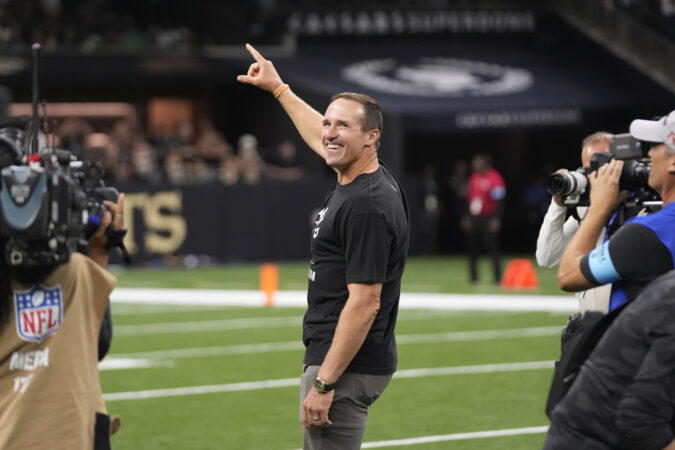
    Quarterback Drew Brees and wide receiver Larry Fitzgerald headlined a group of four modern era finalists in their first year of eligibility for the Pro Football Hall of Fame.

    Tight end Jason Witten and running back Frank Gore were the two other first-year eligible players who were also announced Tuesday among the 15 finalists.

    Willie Anderson, Torry Holt, Luke Kuechly and Adam Vinatieri were guaranteed spots after advancing to the final seven in voting for the 2025 class. There are six other returning finalists with Eli Manning, Reggie Wayne, Jahri Evans, Marshall Yanda, Terrell Suggs and Darren Woodson all making it back to this stage.

    Defensive tackle Kevin Williams made it to the finalist stage for the first time in his sixth year of eligibility.

    The 50-person selection committee will vote on the 15 finalists next month with the results announced Feb. 5 at “NFL Honors.” Between three and five of the finalists will be inducted in the second year of this current format.

    In addition to the modern era finalists, the selection committee will also consider seniors candidates Ken Anderson, Roger Craig and L.C. Greenwood, coaching candidate Bill Belichick and contributor Robert Kraft. Between one and three of those finalists will make it into the Hall.

    Only four people got in last year for the smallest class in 20 years.

    Brees and Fitzgerald are the top new candidates this year.

    Brees is second all time to Tom Brady with 80,358 yards passing and 571 touchdown passes. He spent the first five seasons of his career with the San Diego Chargers before signing as a free agent with the Saints in 2006, where his career took off as he helped lift a city still recovering from Hurricane Katrina.

    Brees delivered to New Orleans its first Super Bowl title following the 2009 season, when he won MVP of the game after beating Peyton Manning and the Indianapolis Colts. Brees made the Pro Bowl 13 times in his career, won AP Offensive Player of the Year in 2008 and 2011, was an All-Pro in 2006 and was a second-team All-Pro four times.

    Fitzgerald spent his entire career with the Arizona Cardinals after being drafted third overall in 2004. His 1,432 catches and 17,492 yards receiving in 17 seasons rank second all time to Jerry Rice.

    Fitzgerald topped 1,000 yards receiving nine times — tied for the fourth most ever — and helped the Cardinals reach their only Super Bowl following the 2008 season. Fitzgerald set single-season records that postseason with 546 yards receiving and seven TD catches, including a go-ahead 64-yard score with 2:37 to play in the Super Bowl before Pittsburgh rallied for a 27-23 win over Arizona.

    Witten was one of the most prolific tight ends with his 1,228 catches and 13,046 yards ranking second best all time. Witten was a two-time All-Pro for Dallas and was a second-team All-Pro two other times.

    Gore ranks third all time with 16,000 yards rushing with nine 1,000-yard seasons and five Pro Bowl honors.

    Kuechly’s career was brief but impactful. The first-round pick by Carolina in 2012 was an All-Pro five times, with seven Pro Bowl nods and a Defensive Rookie of the Year award.

    Over his eight-year career, Kuechly led all linebackers in the NFL in tackles (1,090), takeaways (26), interceptions (18) and passes defensed (66).

    Vinatieri was one of the most clutch kickers in NFL history, making the game-winning field goals in the first two Super Bowl victories during New England’s dynasty.

    He helped launch the run with one of the game’s greatest kicks — a 45-yarder in the snow to force overtime in the “Tuck Rule” game against the Raiders in the 2001 divisional round. He made the game-winning kick in OT to win that game and then hit a 48-yarder on the final play of a 20-17 win in the Super Bowl against the Rams.

    Vinatieri is the NFL’s career leader in points (2,673) and made field goals (599) over a 24-year career with New England and Indianapolis. He also leads all players with 56 field goals and 238 points in the postseason.

    Holt was a key part of the Rams’ “Greatest Show on Turf,” helping the team win the Super Bowl in his rookie season in 1999 and getting back there two years later. Holt led the NFL in yards receiving in 2000 and in catches and yards in 2003 when he made his only All-Pro team.

    Holt finished his career with 920 catches for 13,382 yards and 74 TDs.

    Anderson was considered one of the top right tackles in his era after being a first-round pick by Cincinnati in 1996. He spent nearly his entire career with the Bengals and made three straight All-Pro teams from 2004-06.

    Among the candidates who didn’t advance from the 26 semifinalists were quarterback Philip Rivers, who was taken off the ballot when he came out of retirement, and offensive lineman Steve Wisniewski, who was in his final year of eligibility as a modern era candidate.

    Two finalists from last year also didn’t advance with running back Fred Taylor and receiver Steve Smith Sr. falling short.

  • Israel says it will halt operations of several humanitarian organizations in Gaza starting in 2026

    Israel says it will halt operations of several humanitarian organizations in Gaza starting in 2026

    JERUSALEM — Israel said Tuesday it will suspend over two dozen humanitarian organizations, including Doctors Without Borders, for failing to meet its new rules to vet international organizations working in Gaza.

    The Ministry of Diaspora Affairs said the nongovernmental organizations that will be banned on Jan. 1 did not meet new requirements for sharing staff, funding, and operations information. It accused Doctors Without Borders, one of the largest health organizations operating in Gaza, of failing to clarify the roles of some staff that Israel accused of cooperation with Hamas and other insurgent groups.

    International organizations have said Israel’s rules are arbitrary and could endanger staff. The ministry said around 25 organizations, or 15% of the NGOs working in Gaza, did not have their permits renewed.

    Doctors Without Borders, also known by its French acronym MSF, did not immediately respond to a request for comment. Israel previously accused its staff of involvement in military activities in Gaza in 2024. At the time, the group said it was “deeply concerned by these allegations” and “taking them very seriously.” The group said it would never knowingly employ people engaged in military activity.

    Israel and international organizations have been at odds over the amount of aid going into Gaza. Israel claims it is upholding the aid commitments laid out in the latest ceasefire in the two-year war, which took effect Oct. 10, but humanitarian organizations dispute Israel’s numbers and say more aid is desperately needed in the devastated Palestinian territory of more than 2 million people.

  • Here’s what Dry January does to your body

    Here’s what Dry January does to your body

    The booze-free month known as Dry January has surged in popularity, from just 4,000 participants when it launched in 2013 to millions of (at least short-term) teetotalers today. If you are considering giving up alcohol this January, you’ll be happy to hear that new research suggests it may bring you health benefits, including better mood and sleep, as well as lower blood sugar and blood pressure.

    A review of 16 studies on Dry January recently published in the journal Alcohol and Alcoholism found that even a short pause in alcohol use is linked to improvements in physical and psychological health.

    Dry January participants reported better mood, improved sleep, and weight loss, and had healthier blood pressure, blood sugar, and liver function. And several of the studies found participants experienced some benefits from simply reducing their drinking, also known as “Damp January,” rather than abstaining entirely.

    Health effects of giving up alcohol

    The tradition of abstaining from alcohol in January began in 2013 as a challenge by a charity, Alcohol Change UK, to reduce “alcohol harm.” In 2025, 21% of U.S. adults said they planned to participate in Dry January, a YouGov poll found.

    Fewer people in the United States are drinking in general. About 54% of U.S. adults say they drink alcohol, according to a 2025 Gallup poll, the lowest that number has been since Gallup started tracking drinking behavior in 1939.

    Alcohol use has been increasingly linked to health problems. In January, the U.S. surgeon general published an advisory report warning that alcohol can cause seven types of cancer, including breast and colorectal cancers.

    And a 2025 study in the journal BMJ Evidence-Based Medicine suggested that no amount of alcohol is safe in terms of dementia risk.

    “Alcohol affects far more aspects of our physical health beyond the commonly cited liver damage,” said Megan Strowger, a postdoctoral research associate at the University at Buffalo and lead author of the new review. (Strowger conducted this research during a postdoctoral fellowship at Brown University’s Center for Alcohol and Addiction Studies.) Strowger and her colleagues were surprised by the wide-ranging health effects of just a month without alcohol, including changes in blood pressure, insulin resistance, blood glucose, liver function, and even cancer-related growth factors.

    Even those who didn’t abstain for the full month reported health benefits such as better mental well-being a month later. They also had “decreased drinking frequency, reduced drunkenness, and lower alcohol consumption” six months later, two studies cited in the review found.

    “Given that there weren’t huge reductions in drinking … I thought it was impressive that they found some of those physical health benefits around lowered blood pressure and liver abnormalities,” said Daniel Blalock, a medical associate professor in the department of psychiatry and behavioral sciences at Duke University School of Medicine, who was not involved in the review.

    How to reduce your alcohol consumption

    Strowger sees Dry January as a helpful opportunity. “What really makes Dry January successful is its massive reach and unique, non-stigmatizing approach; it focuses on the positive, accessible health outcomes of taking a break, rather than dwelling on participants’ prior drinking habits or issues of addiction,” she said.

    Here are some ways you can limit your alcohol consumption:

    • Try Damp January: If you’re not quite ready to give up alcohol entirely this January (or for Dry July or Sober October), you might consider Damp January, “where the goal is to reduce consumption rather than attempt full abstinence, making the shift feel more manageable,” Strowger said.

    “It helps prevent what we call the ‘abstinence violation effect,’ where if you fall off the wagon, you say, ‘Forget it, I might as well just get really drunk since I haven’t met my goal of complete abstinence,’” said Blalock, also a clinical research psychologist at Durham Veterans Affairs Medical Center.

    • Track your progress: Write down when you drink and how it makes you feel in a notebook, said George F. Koob, director of the National Institute on Alcohol Abuse and Alcoholism, or the Notes app on your phone. There are also digital tools such as the Try Dry app that make tracking your alcohol use simple, Strowger said.
    • Create an environment to drink less: Try creating a social environment that supports your goal to drink less, Blalock said. For example, if you join a running club for a Saturday morning run, you might be less inclined to drink the night before so you can wake up feeling fresh.

    And while you certainly don’t have to join a running club, exercise is one of Koob’s go-to recommendations for drinking less. It can help you cope with stress, rather than relying on alcohol to take the edge off. “Taking a walk clears your brain, and you come back and you don’t need that drink in order to relax,” he said.

    The researchers noted there’s also little harm in trying Dry January if you’re at all sober-curious — it may even be easier than trying to cut back on drinking at other times of the year.

    Saying you’re participating in Dry January often reduces some of the stigma associated with wanting to drink less alcohol, because so many people do it and can relate to the desire to start the year off a little bit healthier, Blalock said.

    “Dry January really helps you evaluate your relationship with alcohol,” Koob said. It may prompt you to pay more attention to how much and when you’re drinking, and how you feel the next day. “If you feel better when you’re not drinking, you should listen to your body, because it’s telling you something,” he said.

  • Nvidia, Lenovo, and Samsung to test consumer appetite for AI at CES

    Nvidia, Lenovo, and Samsung to test consumer appetite for AI at CES

    At CES, the annual consumer technology conference happening in Las Vegas next week, the biggest names in tech, including Nvidia Corp., Advanced Micro Devices Inc., Samsung Electronics Co. and Lenovo Group Ltd., will make the case for artificial intelligence. Their target audience those few days: investors, corporate clients, and — perhaps just as importantly — ordinary shoppers who have yet to be fully sold on the idea of AI-infused gadgets.

    CES, which runs from Jan. 6-9, is where many tech companies unveil their wares for the year. That includes a mix of products that are imminently available for purchase, and concept devices that may or may not go to market — and could be half-baked if they do. While Nvidia CEO Jensen Huang is likely to be the most charismatic showman in Vegas hyping AI’s underlying technologies, he’ll be surrounded by a slew of players that are testing consumers’ appetite for gadgets where AI isn’t just a nice-to-have feature, but the main selling point.

    The show floor this year will be particularly populated with AI-powered hardware, including the sort of smart glasses popularized by Meta Platforms Inc. and that Snap Inc. and Apple Inc. are planning to launch by the end of 2026. While Meta and Snap will both have a presence at CES, the bulk of the news in this space is likely to come from smaller brands, such as Xreal Inc., Vuzix Corp., Halliday Global Ltd., Rokid, and Even Realities.

    Meta isn’t expected to unveil new hardware at this time, having recently debuted its first smart glasses with a built-in screen. It is possible, however, that the social media giant is ready to show off some new or improved software features. It’s a similar story for Snap, which isn’t likely to choose this venue to announce pricing and availability for its forthcoming “Specs” glasses. The Specs will be on display for attendees who haven’t had a chance to see them in person, which has so far mostly included select media outlets.

    In addition to eyewear, such as glasses and goggles, some of these gadgets will take the form of a ring or something else entirely — underscoring that start-ups and Big Tech alike remain bullish on AI-first hardware that lets people tap into intelligent assistants without necessarily taking out their smartphone. Previous offerings, including the Humane AI Pin and the Rabbit R1, were commercial failures after being panned by tech reviewers.

    Robots everywhere

    Many companies will also be testing consumers’ readiness to accept AI-powered humanoid robots. There will be so many players, in fact, that the Consumer Technology Association, or CTA, which organizes CES, has set aside an entire hall of the convention space for robotics. While some of these robots are intended for the home, many of the models on display will be designed for enterprise uses such as manufacturing, logistics, and food service. Firms such as Artly Coffee and VenHub Global will show off technology for AI-powered robotic cafes and convenience stores.

    Companion robots will be a common sight as well, including products such as the Jennie robot dog from Tombot Inc., a California-based start-up focused on developing products for aging adults and people living with dementia.

    If 2026 is similar to previous shows, there’s likely to be a sizable gap between what many of these human-inspired bots are capable of in controlled demos vs. what their makers promise they’ll eventually be able to do.

    Still, there are signs of progress. Many humanoid makers this year are shifting from single-task demonstrations to more complex, multistep tricks, such as both sorting and folding laundry. Larger players, including LG, are expected to tease their own humanoid concepts, but the companies will need to convince attendees that these machines are commercially viable amid ongoing challenges around battery life, mobility, cost, and safety.

    Everything else

    Above all other categories, televisions have traditionally been the centerpiece of CES, with Samsung, LG, and ascendant Chinese competitors TCL and Hisense showing off their brightest, biggest sets for the new year. Sony Group Corp., once a cornerstone of the convention show floor, has moved its TV product announcements to spring in recent years and pared back its booth as a result.

    In 2026, with high-end TVs now delivering more than enough brightness and resolution for most consumers, manufacturers are likely to focus on wider color reproduction and other improvements that result in a more vivid, lifelike picture. Aesthetically pleasing models like Samsung’s The Frame line have inspired a wave of clones from other TV makers, a trend that’s likely to continue in Vegas.

    CES typically isn’t a venue for major smartphone news, but Motorola could be an exception this year. Its parent company, Lenovo, is headlining one of the show’s evening keynotes for the first time, and Motorola mailed a teaser package to media that strongly hints at a book-style foldable. Such a device would be its first of that form factor after years of releasing Razr-branded folding handsets.

    Meanwhile, wearables will continue to evolve beyond basic fitness tracking, blurring the lines with medical-grade devices. The show will feature products such as a smart night guard that not only protects against teeth grinding but also claims to monitor sleep apnea events, heart rate, respiration, and sleep cycles. Wearables in general are expected to offer a greater focus on women’s health, continuous glucose monitoring, advanced cardiovascular tracking, longevity, and chronic-condition management.

  • Trump says he might sue Fed Chair Jerome Powell for ‘gross incompetence’

    Trump says he might sue Fed Chair Jerome Powell for ‘gross incompetence’

    President Donald Trump on Monday said he might sue Federal Reserve Chair Jerome H. Powell for what the president called “gross incompetence,” injecting new tension into the already strained relationship between the White House and the independent central bank.

    Speaking at a news conference beside Israeli Prime Minister Benjamin Netanyahu at Mar-a-Lago in Florida, Trump said, “The guy is just incompetent.” Trump first brought up the Fed’s multibillion-dollar renovation project, which at times has become a stand-in for Trump’s ongoing attacks on the Fed system.

    “It’s gross incompetence against Powell,” Trump said, adding: “We’re going to probably bring a lawsuit against him.”

    Trump threatened a “major lawsuit” against Powell over the summer, but he never followed through. It wasn’t clear what specific claims Trump was referring to Monday, or how or when a suit could be brought. The White House did not respond to a request for more information.

    The Fed declined to comment.

    The Fed’s renovation project isn’t the only way Trump has put pressure on the bank. White House officials and their allies routinely call for lower interest rates, even though monetary policy is supposed to be siloed off from politics. Trump has threatened to oust Powell and has tried to fire Federal Reserve governor Lisa Cook, setting up an ongoing legal battle over a president’s ability to remove central bankers.

    Trump administration officials have alleged Powell either lied to Congress about the renovation or grossly mismanaged the project. Over the summer, when Trump’s criticism was most acute, the price tag for the project had swelled to nearly $2.5 billion, up from an estimate of $1.9 billion before the pandemic. The health crisis and ensuing economic upheaval caused materials such as steel and cement to go up in price, the Fed has said.

    Trump toured the renovations over the summer. But the visit proved surprisingly cordial, with Trump saying he wouldn’t fire Powell and wanted the project to continue. At one point, Powell held his ground and fact-checked Trump’s comments that the renovation had cost more than $3 billion.

  • Homeland Security says fraud investigation is underway in Minneapolis

    Homeland Security says fraud investigation is underway in Minneapolis

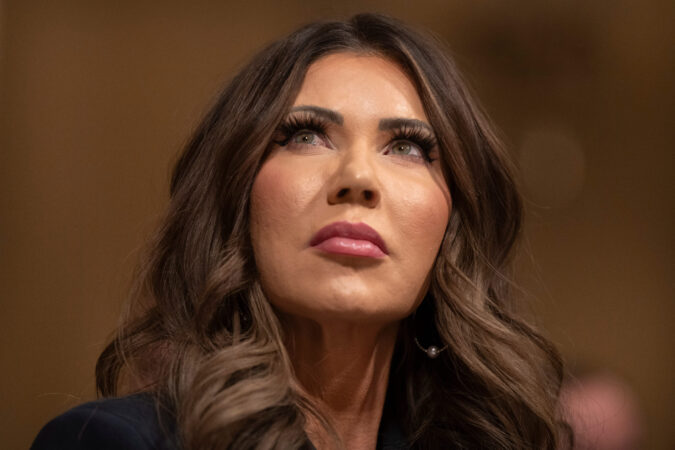
    MINNEAPOLIS — Federal Homeland Security officials were conducting a fraud investigation on Monday in Minneapolis, Department of Homeland Security Secretary Kristi Noem said.

    The action comes after years of investigation that began with the $300 million scheme at the nonprofit Feeding Our Future, for which 57 defendants in Minnesota have been convicted. Prosecutors said the organization was at the center of the country’s largest COVID-19-related fraud scam, when defendants exploited a state-run, federally funded program intended to provide food for children.

    A federal prosecutor alleged earlier in December that half or more of the roughly $18 billion in federal funds that supported 14 programs in Minnesota since 2018 may have been stolen.

    Minnesota Gov. Tim Walz said then that fraud will not be tolerated and that his administration “will continue to work with federal partners to ensure fraud is stopped and fraudsters are caught.”

    Noem on Monday posted a video on the social platform X showing DHS officers going into an unidentified business and questioning the person working behind the counter. Noem said that officers were “conducting a massive investigation on childcare and other rampant fraud.”

    “The American people deserve answers on how their taxpayer money is being used and ARRESTS when abuse is found,” U.S. Immigration and Custom Enforcement posted.

    The action comes a day after FBI Director Kash Patel said on X that the agency had “surged personnel and investigative resources to Minnesota to dismantle large-scale fraud schemes exploiting federal programs.”

    Patel said that previous fraud arrests in Minnesota were “just the tip of a very large iceberg.”

    President Donald Trump has criticized Walz’s administration over the fraud cases to date.

    In recent weeks, tensions have been high between state and federal enforcement in the area as the Trump administration’s immigration crackdown focused on the Somali community in the Minneapolis-St. Paul area, which is the largest in the country.

    Among those running schemes to get funds for child nutrition, housing services, and autism programs, 82 of the 92 defendants are Somali Americans, according to the U.S. Attorney’s Office for Minnesota.

    Walz spokesperson Claire Lancaster said that the governor has worked for years to “crack down on fraud” and was seeking more authority from the Legislature to take aggressive action. Walz has supported criminal prosecutions and taken a number of other steps, including strengthening oversight and hiring an outside firm to audit payments to high-risk programs, Lancaster said.

  • Trump administration rolls out rural health funding, with strings attached

    Trump administration rolls out rural health funding, with strings attached

    States will share $10 billion for rural healthcare next year in a program that aims to offset the Trump administration’s massive budget cuts to rural hospitals, federal officials announced Monday.

    But while every state applied for money from the Rural Health Transformation Program, it won’t be distributed equally. And critics worry that the funding might be pulled back if a state’s policies don’t match up with the administration’s.

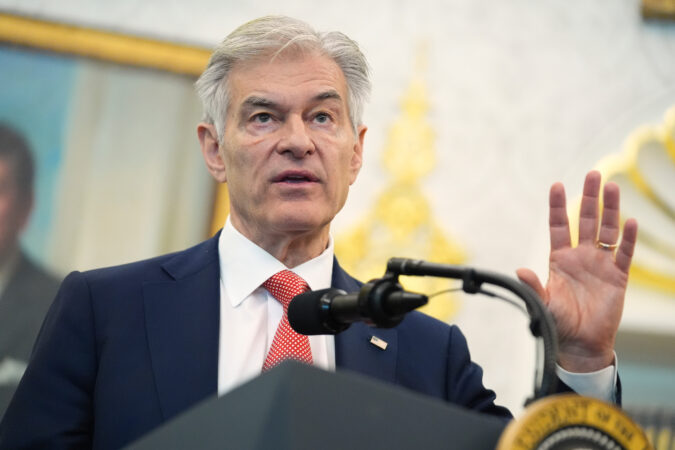
    Officials said the average award for 2026 is $200 million, and the fund puts a total of $50 billion into rural health programs over five years. States propose how to spend their awards, and the Centers for Medicare and Medicaid Services assigns project officers to support each state, said agency administrator Mehmet Oz.

    “This fund was crafted as part of the One Big Beautiful Bill, signed only six months ago now into law, in order to push states to be creative,” Oz said in a call with reporters Monday.

    Under the program, half of the money is equally distributed to each state. The other half is allocated based on a formula developed by CMS that considered rural population size, the financial health of a state’s medical facilities, and health outcomes for a state’s population.

    The formula also ties $12 billion of the five-year funding to whether states are implementing health policies prioritized by the Trump administration’s Make America Healthy Again initiative. Examples include requiring nutrition education for healthcare providers, having schools participate in the Presidential Fitness Test, or banning the use of SNAP benefits for so-called junk foods, Oz said.

    Several Republican-led states — including Arkansas, Iowa, Louisiana, Nebraska, Oklahoma, and Texas — have already adopted rules banning the purchase of foods like candy and soda with SNAP benefits.

    The money that the states get will be recalculated annually, Oz said, allowing the administration to claw back funds if, for example, state leaders don’t pass promised policies. Oz said the clawbacks are not punishments, but leverage governors can use to push policies by pointing to the potential loss of millions.

    “I’ve already heard governors express that sentiment that this is not a threat, that this is actually an empowering element of the One Big Beautiful Bill,” he said.

    Carrie Cochran-McClain, chief policy officer with the National Rural Health Association, said she’s heard from a number of Democratic-led states that refused to include such restrictions on SNAP benefits even though it could hurt their chance to get more money from the fund.

    “It’s not where their state leadership is,” she said.

    Experts say fund is inadequate in face of other cuts

    Oz and other federal officials have touted the program as a 50% increase in Medicaid investments in rural healthcare. Rep. Don Bacon, a Republican from Nebraska who has been critical of many of the administration’s policies but voted for the budget bill that slashed Medicaid, pointed to the fund when recently questioned about how the cuts would hurt rural hospitals.

    “That’s why we added a $50 billion rural hospital fund, to help any hospital that’s struggling,” Bacon said. “This money is meant to keep hospitals afloat.”

    But experts say it won’t nearly offset the losses that struggling rural hospitals will face from the federal spending law’s $1.2 trillion cut from the federal budget over the next decade, primarily from Medicaid. Millions of people are also expected to lose Medicaid benefits.

    Estimates suggest rural hospitals could lose around $137 billion over the next decade because of the budget measure. As many as 300 rural hospitals were at risk for closure because of the GOP’s spending package, according to an analysis by the Cecil G. Sheps Center for Health Services Research at the University of North Carolina at Chapel Hill.

    “When you put that up against the $50 billion for the Rural Health Transformation Fund, you know — that math does not add up,” Cochran-McClain said.

    She also said there’s no guarantee that the funding will go to rural hospitals in need. For example, she noted, one state’s application included a proposal for healthier, locally sourced school lunch options in rural areas.

    And even though innovation is a goal of the program, Cochran-McClain said it’s tough for rural hospitals to innovate when they were struggling to break even before Congress’ Medicaid cuts.

    “We talk to rural providers every day that say, ‘I would really love to do x, y, z, but I’m concerned about, you know, meeting payroll at the end of the month,’” she said. “So when you’re in that kind of crisis mode, it is, I would argue, almost impossible to do true innovation.”

  • During Netanyahu visit, Trump warns Iran of further U.S. strikes if it reconstitutes nuclear program

    During Netanyahu visit, Trump warns Iran of further U.S. strikes if it reconstitutes nuclear program

    PALM BEACH, Fla. — President Donald Trump warned Iran on Monday that the U.S. could carry out further military strikes if the country attempts to reconstitute its nuclear program as he held wide-ranging talks with Israeli Prime Minister Benjamin Netanyahu at his home in Florida.

    Trump had previously insisted that Tehran’s nuclear capabilities were “completely and fully obliterated” by U.S. strikes on key nuclear enrichment sites in June. But with Netanyahu by his side, Trump raised the possibility that suspected activity could be taking place outside those sites. Israeli officials, meanwhile, have been quoted in local media expressing concern about Iran rebuilding its supply of long-range missiles capable of striking Israel.

    “Now I hear that Iran is trying to build up again,” Trump told reporters gathered at his Mar-a-Lago estate. “And if they are, we’re going to have to knock them down. We’ll knock them down. We’ll knock the hell out of them. But hopefully that’s not happening.”

    Trump’s warning to Iran comes as his administration has committed significant resources to targeting drug trafficking in South America and the president looks to create fresh momentum for the U.S.-brokered Israel-Hamas ceasefire. The Gaza deal is in danger of stalling before reaching its complicated second phase that would involve naming an international governing body and rebuilding the devastated Palestinian territory.

    At a news conference with Netanyahu after their meeting, Trump suggested that he could order another U.S. strike.

    “If it’s confirmed, they know the consequences, and the consequences will be very powerful, maybe more powerful than the last time,” Trump said.

    Iran has insisted that it is no longer enriching uranium at any site in the country, trying to signal to the West that it remains open to potential negotiations over its atomic program. The two leaders discussed the possibility of taking new military action against Tehran just months after June’s 12-day war.

    The Iranian mission to the United Nations did not immediately respond to a request for comment on Trump’s warning.

    Gaza ceasefire progress has slowed

    Trump, with Netanyahu by his side, said he wants to get to the second phase of the Gaza deal “as quickly as we can.”

    “But there has to be a disarming of Hamas,” Trump added.

    The ceasefire between Israel and Hamas that Trump championed has mostly held, but progress has slowed recently. Both sides accuse each other of violations, and divisions have emerged among the U.S., Israel, and Arab countries about the path forward.

    The truce’s first phase began in October, days after the two-year anniversary of the initial Hamas-led attack on Israel that killed about 1,200 people. All but one of the 251 hostages taken then have been released, alive or dead.

    The Israeli leader, who also met separately with Secretary of State Marco Rubio and Defense Secretary Pete Hegseth, has signaled he is in no rush to move forward with the next phase as long as the remains of Ran Gvili are still in Gaza.

    Gvili’s parents met with Netanyahu as well as Rubio, U.S. envoy Steve Witkoff, and the president’s son-in-law, Jared Kushner, in Florida on Monday.

    “They’re waiting for their son to come home,” Trump said of the family of the young police officer known affectionately as “Rani.”

    Next phase is complex

    The path to implementing Trump’s peace plan is certainly complicated.

    If successful, the second phase would see the rebuilding of a demilitarized Gaza under international supervision by a group chaired by Trump and known as the Board of Peace. The Palestinians would form a “technocratic, apolitical” committee to run daily affairs in Gaza, under Board of Peace supervision.

    It further calls for normalized relations between Israel and the Arab world and a possible pathway to Palestinian independence. Then there are thorny logistical and humanitarian questions, including rebuilding war-ravaged Gaza, disarming Hamas, and creating a security apparatus called the International Stabilization Force.

    Much remains unsettled

    Two main challenges have complicated moving to the second phase, according to an official who was briefed on those meetings. Israeli officials have been taking a lot of time to vet and approve members of the Palestinian technocratic committee from a list given to them by the mediators, and Israel continues its military strikes.

    Trump’s plan also calls for the stabilization force, proposed as a multinational body, to maintain security. But it, too, has yet to be formed. Whether details will be forthcoming after Monday’s meeting is unclear.

    A Western diplomat said there is a “huge gulf” between the U.S.-Israeli understanding of the force’s mandate and that of other major countries in the region, as well as European governments.

    All spoke on the condition of anonymity to provide details that haven’t been made public.

    The U.S. and Israel want the force to have a “commanding role” in security duties, including disarming Hamas and other militant groups. But countries being courted to contribute troops fear that mandate will make it an “occupation force,” the diplomat said.

    Hamas has said it is ready to discuss “freezing or storing” its arsenal of weapons but insists it has a right to armed resistance as long as Israel occupies Palestinian territory. One U.S. official said a potential plan might be to offer cash incentives in exchange for weapons, echoing a “buyback” program Witkoff has previously floated.

    Trump makes case once again for Netanyahu pardon

    The two leaders, who have a long and close relationship, heaped praise on each other. Trump also tweaked the Israeli leader, who at moments during the war has raised Trump’s ire, for being “very difficult on occasion.”

    Netanyahu said Trump during the lunch was formally told that his country’s education ministry will award him the Israel Prize, breaking the long-held convention of bestowing the honor on an Israeli citizen or resident.

    “President Trump has broken so many conventions to the surprise of people,” Netanyahu said. He added, “So we decided to break a convention, too, or create a new one.”

    Trump also renewed his call on Israeli President Isaac Herzog to grant Netanyahu, who is in the midst of a corruption trial, a pardon.

    Netanyahu is the only sitting prime minister in Israeli history to stand trial, after being charged with fraud, breach of trust, and accepting bribes in three separate cases accusing him of exchanging favors with wealthy political supporters.

    Trump has previously written to Herzog to urge a pardon and advocated for one during his October speech before the Knesset. He said Monday that Herzog has told him “it’s on its way” without offering further details.

    “He’s a wartime prime minister who’s a hero. How do you not give a pardon?” Trump said.

    Herzog’s office said in a statement that the Israeli president and Trump have not spoken since the pardon request was submitted, but that Herzog has spoken with a Trump representative about the U.S. president’s letter advocating for Netanyahu’s pardon.

    “During that conversation, an explanation was provided regarding the stage of the process in which the request currently stands, and that any decision on the matter will be made in accordance with the established procedures,” the Israeli president’s office said.

  • Zohran Mamdani has bold promises. Can he make them come true as New York City mayor?

    Zohran Mamdani has bold promises. Can he make them come true as New York City mayor?

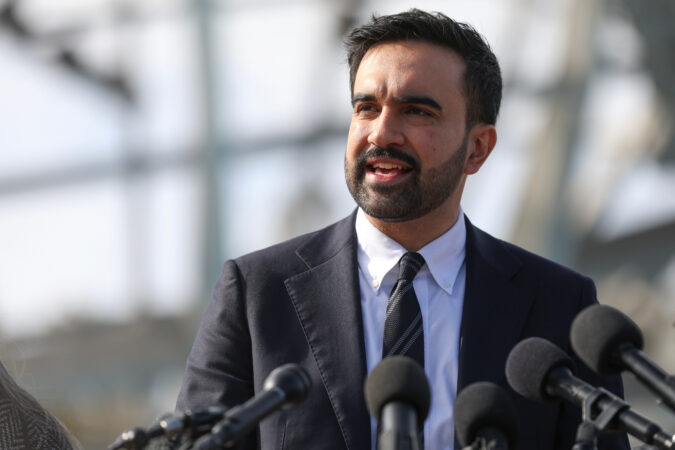
    Zohran Mamdani has promised to transform New York City government when he becomes mayor. Can he do it?

    Mamdani, a 34-year-old democratic socialist, already faces intense scrutiny, even before taking office in one of the country’s most scrutinized political jobs. Republicans have cast him as a liberal boogeyman. Some of his fellow Democrats have deemed him too far left. Progressives are closely watching for any signs of him shifting toward the center.

    On Jan. 1, he will assume control of America’s biggest city under that harsh spotlight, with the country watching to see if he can pull off the big promises that vaulted him to office and handle the everyday duties of the job. All while skeptics call out his every stumble.

    For Mamdani, starting off strong is key, said George Arzt, a veteran Democratic political consultant in New York who worked for former Mayor Ed Koch.

    “He’s got to use the first 100 days of the administration to show people he can govern,” he said. “You’ve got to set a mindset for people that’s like, ‘Hey, this guy’s serious.’”

    That push should begin with Mamdani’s first speech as mayor, where Arzt said it will be important for the city’s new leader to establish a clear blueprint of his agenda and tell New Yorkers what he plans to do and how he plans to do it.

    Mamdani will be sworn in around midnight during a private ceremony at a historic, out-of-use City Hall subway station. Then in the afternoon, he will be sworn in a second time on the steps of City Hall, while his supporters are expected to crowd surrounding streets for an accompanying block party.

    From there, Arzt said, Mamdani will have to count on the seasoned hands he’s hired to help him handle the concrete responsibilities of the job, while he and his team also pursue his ambitious affordability agenda.

    Managing expectations as a movement candidate

    Mamdani campaigned on a big idea: shifting the power of government toward helping working class New Yorkers, rather than the wealthy.

    His platform — which includes free childcare, free city bus service, and a rent freeze for people living in rent stabilized apartments — excited voters in one of America’s most expensive cities and made him a leading face of a Democratic Party searching for bright, new leaders during President Donald Trump’s second term.

    But Mamdani may find himself contending with the relentless responsibilities of running New York City. That includes making sure the trash is getting picked up, potholes are filled, and snow plows go out on time. When there’s a subway delay or flooding, or a high-profile crime or a police officer parked in a bicycle lane, it’s not unusual for the city’s mayor to catch some heat.

    “He had a movement candidacy and that immediately raises expectations locally and nationally,” said Basil Smikle, a Democratic political strategist and Columbia University professor, who added that it might be good for Mamdani to “Just focus on managing expectations and get a couple of good wins under your belt early on.”

    “There’s a lot to keep you busy here,” he said.

    A large part of Mamdani’s job will also be to sell his politics to the New Yorkers who remain skeptical of him, with Smikle saying “the biggest hurdle” is getting people comfortable with his policies and explaining how what he’s pushing could help the city.

    “It’s difficult to have this all happen on day one,” he said, “or even day 30 or even day 100.”

    Challenges and opportunities

    Mamdani’s universal freechild care proposal — perhaps one of his more expensive plans — is also one that has attracted some of the strongest support from New York Gov. Kathy Hochul, a moderate from Buffalo who endorsed the mayor-elect.

    Hochul is eager to work with Mamdani on the policy and both leaders consider the program a top priority, although it’s not yet clear how exactly the plan could come to fruition. The governor, who is up for reelection next year, has repeatedly said she does not want to raise income taxes — something Mamdani supports for wealthy New Yorkers — but she has appeared open to raising corporate taxes.

    “I think he has allies and supporters for his agenda, but the question is how far will the governor go,” said state Senate Deputy Leader Michael Gianaris, a Mamdani ally.

    “There’s an acknowledgment that the voters have spoken, and there’s very clear policies that were associated with his successful campaign,” he said, “so to not make progress on them would be us thumbing our noses at the voters.”

    Mamdani’s pledge to freeze the rent for roughly 1 million rent-stabilized apartments in the city would not require state cooperation.

    But that proposal — perhaps the best known of his campaign — is already facing headwinds, after the city’s departing mayor, Eric Adams, made a series of appointments in recent weeks to a local board that determines annual rent increases for the city’s rent stabilized units.

    The move could potentially complicate the mayor-elect’s ability to follow through on the plan, at least in his first year, although Mamdani has said he remains confident in his ability to enact the freeze.

    Other challenges await

    His relationship with some of the city’s Jewish community remains in tatters over his criticisms of Israel’s government and support for Palestinian human rights.

    The Anti-Defamation League, a prominent Jewish advocacy organization, plans to track Mamdani’s policies and hires as it pledged to “protect Jewish residents across the five boroughs during a period of unprecedented antisemitism in New York City.”

    Earlier this month, a Mamdani appointee resigned over social media posts she made more than a decade ago that featured antisemitic tropes, after the Anti-Defamation League shared the posts online.

    The group has since put out additional findings on others who are serving in committees that Mamdani set up as he transitions into his mayoral role. In response, Mamdani said the ADL often “ignores the distinction” between antisemitism and criticism of the Israeli government.

    The mayor-elect’s past calls to defund the city’s police department continue to be a vulnerability. His decision to retain Jessica Tisch, the city’s current police commissioner, has eased some concerns about a radical shake-up at the top of the nation’s largest police force.

    And then there’s Trump.

    Tensions between Trump and Mamdani have appeared to cool — for now — after months of rancor led into a surprisingly friendly Oval Office meeting. Future clashes may emerge given the sharp political differences between them, particularly on immigration enforcement, along with anything else that could set off the mercurial president.