Category: Wires

  • Is anything real anymore? In 2025, even sports fans started to doubt.

    Is anything real anymore? In 2025, even sports fans started to doubt.

    It may be difficult to remember now — here at the end of 2025, with major sports so entwined with gambling as to make you wonder whether our games still exist to crown champions or merely as fodder for young, twitchy-fingered sportsbook customers — but not so long ago, sports leagues spoke of the gambling industry as if it were the devil itself.

    “It’s evil,” Bud Selig, then MLB’s commissioner, said in November 2012 of the dangers of gambling. “It creates doubt, and it destroys your sport.”

    “Gambling,” NFL Commissioner Roger Goodell said that same week when asked about threats to pro football’s integrity, “would be number one on my list.”

    Both statements were made under oath, in depositions pertaining to a lawsuit filed by America’s major sports leagues against the state of New Jersey over its plans to legalize sports gambling. Eventually, that case would wind up before the Supreme Court, which in 2018 handed down a landmark decision, Murphy v. NCAA, that effectively legalized sports betting nationwide.

    Faced with that new reality, those same American sports leagues didn’t merely shake hands with an industry they once regarded as the enemy; they leaped into bed with it — and in the process fundamentally altered the way sports are packaged, marketed, and consumed.

    Stadiums plastered with ads for sportsbooks. Broadcasts filled with gambling commercials and commentary on betting lines and odds. An ever-growing menu of live, in-game microbetting opportunities — effectively giving fans a casino in their pocket. In 2024 alone, Americans legally wagered a record $148 billion on sports, more than 95% of it online, and they will almost certainly surpass that figure in 2025.

    But 2025 may also be remembered as the year a reckoning began over the unholy marriage of sports and legalized gambling. Betting scandals rocked the NCAA, the NBA, and MLB. At the same time, the modern phenomenon of athletes being harassed and threatened online by angry bettors grew into something resembling an epidemic. In both cases, the driving force appeared to be the ubiquity and ease of prop bets — those focusing on a specific player’s events or performance as opposed to the outcome of a game.

    Largely as a result, the integrity of games — perhaps the most precious commodity in sports and the one that once united the leagues’ commissioners against gambling — is increasingly being called into question, a trend some are calling an existential threat to the long-term viability of sports.

    “It doesn’t matter if, as I believe, 99.99% of the competition is untainted by gambling,” longtime sports commentator Bob Costas said. “All you need are a few examples for people to make the leap of logic to ‘I can’t trust any of it.’ You have to literally put [the doubts] aside. You have to compartmentalize all of this stuff to have the same relationship you once had to what you’re watching.”

    This month, a Washington Post-University of Maryland poll of 1,032 American adults found plummeting support for sports gambling nationwide, compared with a similar poll conducted in 2022, and widespread concern about the possibility of fixed or rigged outcomes. Some of the largest drops in support for legalized gambling came from frequent sports consumers and those who bet on sports — the ones who know best the havoc it has wrought.

    Overall, 66% of respondents, including 72% of those who have gambled in the past five years, expressed concern that games could be fixed or rigged. If you think those numbers sound high, try this experiment: The next time you’re watching a big game, search for “rigged” along with one of the teams’ names on social media, and prepare to be amazed by the constant stream of users dropping that term as they decry each misplay or blown call.

    “The integrity of American sports is plummeting in terms of public perception,” Sen. Richard Blumenthal (D., Conn.) said in a telephone interview. Blumenthal co-sponsored a bill, the SAFE Bet Act, that, while focusing largely on the public health issues surrounding gambling, also would restrict some in-game prop bets. “Americans are becoming cynical and disgusted after all these repeated scandals involving big money corrupting sports.”

    ‘People have been too greedy’

    Americans long ago made peace with the post-reality media environment in which we are living. TikTok’s algorithm pumps fake videos into users’ feeds. Spotify is full of AI-generated pop songs interspersed with real ones. The federal government routinely disseminates altered videos. We can even accept feature-length documentaries “enhanced” with so-called “synthetic materials.” The financial success and relative lack of outrage suggest we have stopped trying to discern between real and fake. We have stopped caring.

    But sports are required to be different. Reality, above all else, is what they are selling. It is the last remaining entertainment enterprise that demands to be viewed live. Remove the authenticity of the competition and the credibility of the outcomes, and the whole thing collapses.

    Only in high-level sports — and only in the name of authenticity — would leagues ban specific drugs and even over-the-counter supplements because they might give one side an unfair advantage, or spend five minutes in the replay booth examining a play from seven different angles because it is imperative above all else to get the call right.

    “No matter how unfair life may be in other arenas,” Costas said, “people turn to sports and expect them to be completely fair.”

    The about-face on gambling is staggering. MLB once banned Mickey Mantle and Willie Mays for taking jobs as casino greeters. Now it tacitly accepts David Ortiz serving as a pitchman for DraftKings, offering new customers the chance to “win Big Papi’s money.”

    The major American sports leagues would never acknowledge that aligning themselves with the gambling industry equated to an abandonment of the mission of integrity or even a compromise.

    “Our highest priority has been protecting the integrity of the game” read a memo reportedly sent by the NFL to its 32 teams in the aftermath of this year’s NBA and MLB scandals.

    “Obviously, our number one priority,” MLB Commissioner Rob Manfred told reporters during this fall’s World Series, “is to protect the integrity of the game.”

    One bedrock axiom of the sports industry’s partnership with sportsbooks is the notion that it is far easier to catch cheaters under the regulated system of legalized sports betting than it was when everything was underground. The scandals making headlines, the industry says, only prove the system of regulation and monitoring is working.

    But experts in the field of sports integrity and gambling say the monitoring entities tasked with flagging suspicious activity can be commercially conflicted because they are the same entities providing the data feeds fueling global betting — a case of “the fox guarding the henhouse,” according to Nick Raudenski, a former criminal investigator for the Department of Homeland Security who now runs a sports integrity consultancy firm. “Integrity and independence,” he said, “have to be championed as fundamental sporting objectives, not a form of detrimental risk to be buried far from view.”

    “The people who should be guarding [sports leagues’] credibility are involved in multibillion-dollar deals with the very product that is bringing [the threat]. People have been too greedy, too fast on the legalization of sports gambling,” said Declan Hill, a professor at the University of New Haven and author of “The Fix: Soccer and Organized Crime.” “It desperately needs [enhanced] regulation. It desperately needs sports leagues to take a long step back.”

    ‘So easily lost and so hard to regain’

    With the benefit of hindsight, the current predicament may have been the inevitable result of rushing to deliver a known addictive product, via an addictive personal device, into the hands of a cohort — young, male sports fans — that is predisposed to risky behavior. Imagine if, at the end of Prohibition, the alcohol industry had the data to know which customers were most susceptible to getting hooked on booze and the technology to put it within reach of those customers anytime, anywhere.

    “This is the dance with the devil that the leagues are doing and have done,” Hill said. “It seemed really attractive at first … but now comes the payment. Now comes the cost.”

    Hill believes one problem is that we have not come to terms with the problem of gambling addiction among the athletes themselves — who, after all, largely come from the same demographic as the consumers targeted by the industry. One study found athletes were four times as likely as the general public to become addicted to gambling.

    Jontay Porter, the former NBA center who received a lifetime ban last year in part for feigning injuries to manipulate certain “under” bets on his performance — incidents that were caught in large part because of integrity monitors that flagged suspiciously large wagers on an obscure player — was addicted to gambling and deep in debt at the time of his transgressions, according to his lawyer.

    “Everything that makes an athlete great makes them susceptible to gambling addiction,” Hill said. “They never give up. They isolate themselves and obsess on overcoming great odds, on doing things people wouldn’t believe were possible. That’s great if you’re an athlete. But it makes you a lousy gambler.”

    The problem of “spot-fixing” — manipulating individual prop bets — has proved to be particularly insidious. Throwing a game or tilting a point spread requires scores of machinations, but prop bets can be swung in an almost undetectable manner by a single athlete: Just one missed free throw, one dropped pass or one double fault can make someone a fortune.

    These prop bets, as well as multi-bet parlays in which bettors stack props and get a much larger payoff if they all hit, have become the sportsbooks’ biggest moneymakers — which is another way of saying they are unlikely to be legislated out of existence despite recent efforts such as state bans of college athlete props and MLB convincing sportsbook partners to cap pitch-level props at $200 each.

    It remains to be seen whether 2025 — for all its upheaval, scandal. and shifting public sentiment — represents a turning point in the relationship between sports and gambling. If anything, the sports gambling industry is still growing, still reaching new customers — one study found gambling ads and logos were shown to viewers at a rate of one every 13 seconds during some broadcasts — and still exploring new products. One of the latest: the NHL’s recent partnerships with Kalshi and Polymarket, predictions markets that allow users to bet on yes-or-no outcomes ranging from sporting events to elections to who will win the latest season of “Survivor.” This fast-growing industry operates outside the licensing and regulatory systems that govern sportsbooks.

    But new and bigger industry models undoubtedly will bring new and bigger opportunities for corruption.

    “You ain’t seen nothing yet,” Hill said. “There is a wave of stuff to come.”

    If that’s the case, it’s fair to wonder how close we are to a breaking point. Already, recent polling, such as the Post-UMD one, suggests the accumulation of scandals has led many sports fans to question the legitimacy of what they are watching. Once the possibility of spot-fixing nestles in your mind, it can be hard to shake. Suddenly, every time a pitcher unleashes a fastball to the backstop, it’s only natural to wonder whether it was an honest mistake — or a dishonest one.

    Such questions, Blumenthal said ruefully of his own sports viewing, are “always in the back of my mind. There’s always something there if a pass is dropped or a pitch is missed. Trust and credibility are so easily lost and so hard to regain.”


  • I’m a couples therapist. Here’s how to have a better relationship.| Expert Opinion

    I’m a couples therapist. Here’s how to have a better relationship.| Expert Opinion

    Relationship advice is everywhere — much of it simplistic, contradictory, or disconnected from how partners actually function. After more than four decades as a couples therapist, I’ve found that lasting improvement rarely comes from grand gestures or clever techniques. It comes from a small set of habits that change how partners talk, listen, and take responsibility when things get hard.

    Here are some of the best ways to communicate with your partner — based on my own experience and the scientific research — to help you improve your relationship over time:

    Start with a positive comment.

    Conversations tend to end the way they begin. Starting with something positive about the other person increases the likelihood of a constructive outcome and signals that your goal is to improve the relationship — not to shame or criticize.

    Pick the right time to talk.

    Just because you’ve worked up the nerve to raise an issue doesn’t mean now is the best moment. Let your partner know you would like to work on something together and ask if this is a good time. If they say no, ask when that would be — within the next week. Unless there’s a genuine crisis, don’t accept indefinite postponement.

    Calibrate the intensity of your complaint.

    Rating your concern on a scale from 1 to 10 can help your partner hear you. A “1” says, “This isn’t a big deal, but I’d like us to address it.” A “10” communicates, “If this doesn’t change, I’m not sure I can stay in the relationship.” Giving your partner some context may help reduce their fear and ultimately defensiveness. It can also alert them that they may need to pay much closer attention than they have been in the past.

    Talk about their behavior, not character.

    Instead of saying, “You’re lazy, selfish, mean,” talk about how their behavior affects you. Say: “When you say you’ll be home by 7 and don’t show up till 8:30, and you don’t call to let me know, I feel hurt, resentful, taken for granted,” instead of, “You’re so self-centered and cruel that you didn’t even have the decency to let me know you’d be late!” The former is more effective because it centers the behavior on your reaction and not the other’s character traits.

    Be direct about what you want or need.

    If your partner asks what you would like for a birthday or holiday, don’t turn it into a test of their love. If you want roses instead of tulips, or a tool chest instead of a massage, say so. When they follow through, treat it as evidence of care — not a failure of their paying attention.

    Become more assertive and set limits around hurtful behavior.

    Healthy relationships require the ability to stand up for yourself without becoming aggressive. If assertiveness doesn’t come naturally, therapy, skills training, or targeted reading can help.

    Learn to take timeouts when emotions run high.

    Once conversations become flooded with emotion, productive communication shuts down. Taking a short break — with a clear agreement to return to the issue — can prevent arguments from becoming destructive. Whoever calls the timeout has to reinitiate the conversation within 24 hours. Use the timeout to calm down and figure out what the other person was trying to communicate, not to consider how you’ll prove them wrong when you reengage.

    Practice active listening.

    Feeling understood often matters more than being agreed with. Take turns talking about your perspective for no more than two minutes each. When you’re speaking, be careful in your language, and when it’s their turn, don’t interrupt or talk over them. When you’re listening, try to focus on understanding your partner, not defending yourself. Take a minute to repeat back what you heard to make sure you understood them correctly before giving your perspective.

    Don’t avoid conflict so completely that resentment builds.

    Keeping the peace by staying silent may feel safer in the moment, but over time it creates emotional distance and bitterness. Separations and divorces occur more commonly as a result of deaths by a thousand cuts rather than a huge, one-time blow-up.

    Don’t expect one person to meet all of your needs.

    Strong relationships are supported by friendships, interests, and sources of meaning outside the partnership. Overreliance on a romantic partner for all of your emotional or social needs creates pressure no one can sustain.

    Talk to your partner the way you did when you were dating.

    Many couples stop investing the time, attention, and affection that once came naturally. Courtesy, curiosity, and warmth shouldn’t disappear with familiarity.

    Catch your partner doing something right.

    People are far more motivated by appreciation than criticism. Rather than comment on when they mess up, compliment them when they get it right. Marital researcher John Gottman discovered that in successful couple relationships, there are five positive interactions for every negative one.

    Take more responsibility for the dynamics you help create.

    Conflict persists through feedback loops. Before insisting that you’re not being heard, consider how well you’re listening. Ask yourself how you may unintentionally bring out the worst in your partner. Responsibility isn’t self-blame — it’s seeing how you react in ways that increase the distance rather than the closeness.

    Don’t wait for your partner to change before you show up differently.

    Many people put their own maturity on hold, waiting for the other to become more communicative, less defensive, or more self-aware. But how you show up should reflect your values, not your partner’s limitations. Even if they struggle to communicate well, you don’t have to mirror their avoidance, silence, or reactivity.

    Don’t wait too long to get help.

    Many relationships that feel hopeless can improve with the right couples therapist. Waiting until resentment hardens makes repair harder.

    Most relationships don’t fail for lack of love; they fail from small, repeated moments of misunderstanding, defensiveness, and a failure to appreciate what the other is doing right. Paying attention to how you handle those moments — especially when things are hard — is often the difference between growing apart and finding your way back to each other.

    You can’t force your partner to grow, but you can decide how you speak, listen and take responsibility. Those choices shape not only the relationship’s future, but your own happiness and resilience.

    Joshua Coleman, PhD, is a clinical psychologist in the Bay Area, keynote speaker, author, and senior fellow with the Council on Contemporary Families. His newest book is “Rules of Estrangement: Why Adult Children Cut Ties and How to Heal the Conflict.” His Substack is Family Troubles.

  • Idaho company recalls nearly 3,000 pounds of ground beef for E. coli risk

    Idaho company recalls nearly 3,000 pounds of ground beef for E. coli risk

    An Idaho-based company is recalling nearly 3,000 pounds of raw ground beef that may have been contaminated with E. coli bacteria.

    The recall involves 16-ounce vacuum-sealed packages labeled “Forward Farms Grass-Fed Ground Beef.” Affected packages were produced Dec. 16 and have a label telling customers to use or freeze the meat by Jan. 13. The affected beef also bears the establishment number “EST 2083” on the side of its packaging.

    The meat was produced by Heyburn, Idaho-based Mountain West Food Group and was shipped to distributors in Pennsylvania, California, Colorado, Idaho, Montana, and Washington.

    The U.S. Department of Agriculture’s Food Safety and Inspection Service, which announced the recall Saturday, didn’t say which retailers may have sold the meat. The USDA and Mountain West Food Group didn’t respond to messages left Tuesday by the Associated Press.

    The USDA said there have been no confirmed reports of illness due to consumption of the meat. The issue was discovered in a sample of beef during routine testing.

    The USDA said the type of E. coli found can cause illness within 28 days of exposure. Most infected people develop diarrhea, which is often bloody, and vomiting. Infection is usually diagnosed with a stool sample.

    The USDA said customers who have purchased the affected products should either throw them away or return them to the place they were bought. The agency also advises all customers to consume ground beef only if it has been cooked to a temperature of 160 degrees Fahrenheit.

  • VJ Edgecombe hits game-winning three pointer in overtime to give Sixers a 139-136 win over Grizzlies

    VJ Edgecombe hits game-winning three pointer in overtime to give Sixers a 139-136 win over Grizzlies

    MEMPHIS — VJ Edgecombe scored 25 points, including a three-pointer with 1.7 seconds left in overtime to give the 76ers a 139-136 victory over the Memphis Grizzlies in a tight game Tuesday night.

    Tyrese Maxey and Joel Embiid led the Sixers with 34 points each, but it was Edgecombe, who suffered through foul trouble early, that carried Philadelphia through the fourth quarter, scoring 13 points in the period. His 25-footer clinched the win for Philadelphia, which snapped a three-game losing streak. Edgecombe was the third overall pick in the NBA draft in June out of Baylor.

    Ja Morant led Memphis with 40 points, including 18 in the fourth to bring Memphis back into the game. Cedric Coward finished with 28 points and 16 rebounds, career-highs in both as the Grizzlies lost their second in a row. Coward’s three-pointer to tie the game as time expired bounced off the front of the rim.

    Sixers guard Tyrese Maxey (right) finished with 34 points against Memphis on Tuesday night.

    Santi Aldama and Jaren Jackson Jr. had 15 points each, and Jackson grabbed 12 rebounds.

    Philadelphia took a 103-100 lead into the fourth, and Edgecombe gave the Sixers a 124-118 lead near the four minute mark with a pair of three-pointers and a drive to the basket. But Morant and the Grizzlies fought back to tie the game at 128 with just under one minute left.

    That sent the game to overtime.

    Both teams shot better than 50% in the first half, resulting in a high-scoring affair. But Memphis was stymied by 11 turnovers, which offset the Grizzlies connecting on 9 of 17 three-pointers.

    The game was tied at 72 at halftime. Maxey scored 24 points, while Embiid added 19 in the first half.

    Coward led Memphis with 17 points and nine rebounds.

    The Sixers continue a five-game road trip, playing the Mavericks on New Year’s Day in Dallas (8:30 p.m., NBCSP).

  • Why Trump’s EEOC wants to talk to white men about discrimination

    Why Trump’s EEOC wants to talk to white men about discrimination

    In mid-December, the nation’s leading workplace civil rights enforcer took to social media to pose a question: “Are you a white male who has experienced discrimination at work based on your race or sex?”

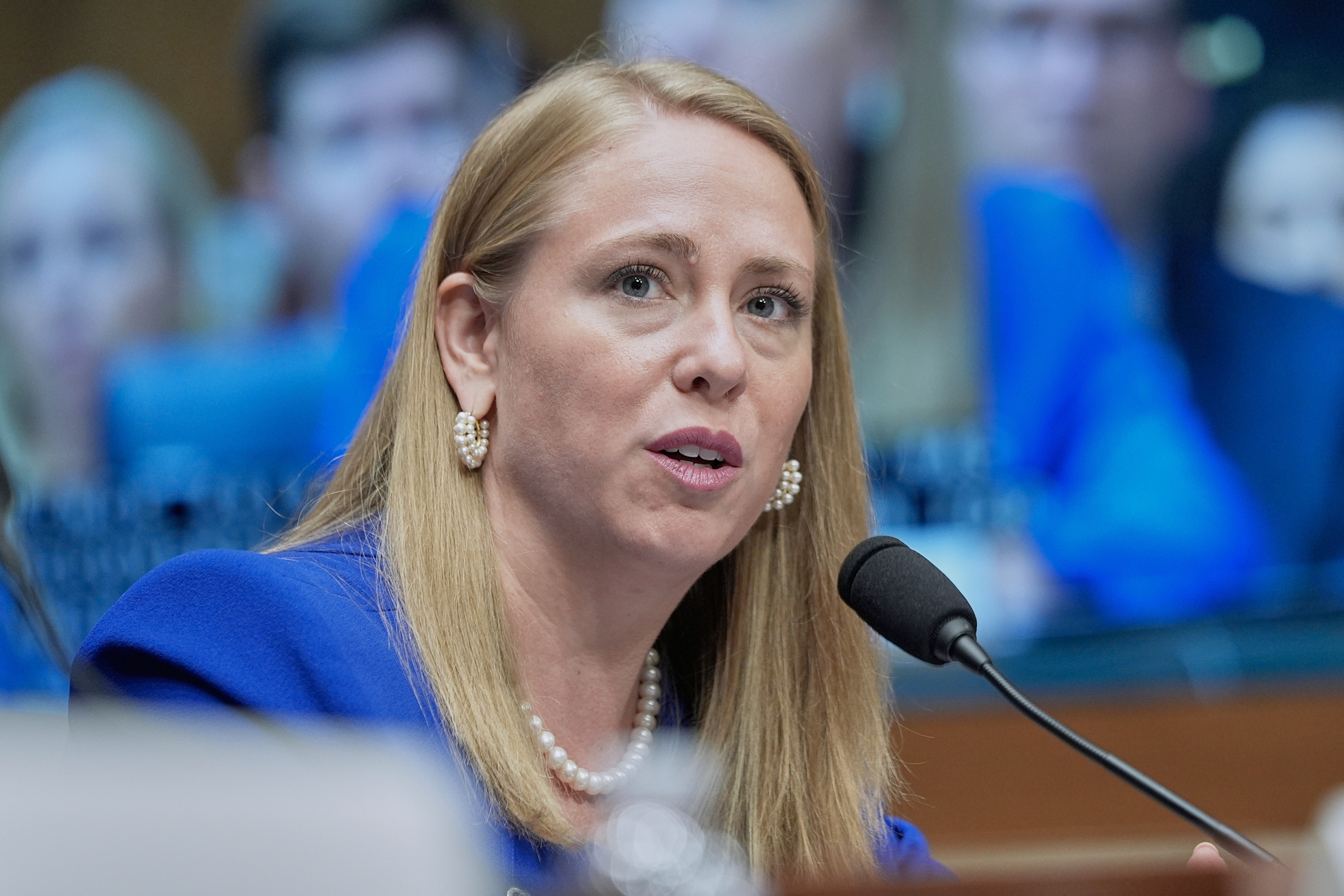
    Andrea Lucas, chair of the Equal Employment Opportunity Commission, appeared in the video, urging those who have to contact the agency “as soon as possible.”

    “You may have a claim to recover money under federal civil rights laws,” she says in the video, which has amassed nearly 6 million views on X.

    It was an unusual move, because the EEOC does not typically solicit complaints. But it underscores the sea change at an agency central to President Donald Trump’s civil rights agenda — one that began with executive orders gutting the last vestiges of affirmative action, and buttressed by his purge of the EEOC board and a newly installed Republican majority.

    Now “fully empowered,” the agency will focus on stamping out “illegal discrimination” stemming from diversity, equity, and inclusion (DEI) programs and “anti-American bias,” Lucas said recently in written responses to questions from the Washington Post. Enforcement, including a heightened emphasis on pregnancy and religious bias, will stress “individual rights over group rights,” she said, and eschew identity politics.

    The EEOC’s new priorities come during a year of regulatory uncertainty — it lacked a quorum most of the year, limiting its functions — fueling confusion and uncertainty for employers, workplace experts say. And civil rights advocates contend this pivot detracts from its mission.

    “Chair Lucas has chosen to elevate an asserted concern that lacks empirical support as a significant and widespread problem,” a group called EEO Leaders said in a statement Dec. 23, “diverting scarce enforcement resources from well documented and pervasive forms of workplace discrimination that harm millions of workers in America today.” The group comprises former EEOC and Department of Labor officials.

    Andrea Lucas, testifying at a June hearing on Capitol Hill, was designated chair of the Equal Employment Opportunity Commission in November, after a 10-month stint as acting chair.

    Lucas said her X post reflects the agency’s effort to “correct underreporting” of forms of discrimination that were neglected by the past administration, adding that “for too long, many employees thought they weren’t the ‘right’ kind of plaintiff, that our civil rights laws only protected certain groups, rather than all Americans.”

    A restrained year

    Founded in 1964 at the height of the Civil Rights Movement, the EEOC is charged with enforcing federal laws that make it illegal to discriminate against a worker or job applicant on the basis of race, sex, religion, age, disability, and other factors. Most employers with at least 15 employees are bound by EEOC regulations, which apply to such workplace practices as hiring, firing, promotions, and wages. The agency has recouped billions in monetary rewards for victims of workplace bias and harassment during the last decade.

    Days into his second term — in a break from precedent — Trump dismissed two Democratic members of the independent commission. As a result, it lost the quorum needed to pursue certain cases and overhaul guidance. That changed in October with the appointment of Commissioner Brittany Panuccio, who with Lucas gave the panel a 2-1 GOP majority and a quorum. Commissioner Kalpana Kotagal, a Democrat, rounds out the commission.

    In past administrations, the EEOC typically filed 200 to 300 merit lawsuits — those in which the agency determined discrimination exists — a year, said Christopher DeGroff, an employment attorney with the firm Seyfarth Shaw. The 93 merit suits the agency filed in fiscal 2025 marked one of its lowest tallies in three decades, he noted in an analysis of its activity.

    Still, the agency’s new priorities were evident in the cases that reached a public resolution or culminated in a lawsuit, DeGroff said. Merit suits alleging discrimination based on race or national origin — historically one of the EEOC’s busiest enforcement areas — hit a decade low in 2025, his research noted. And two of the three cases filed revolved around anti-American bias.

    Meanwhile, 37 of the 93 merit lawsuits the EEOC brought pertained to sex or pregnancy discrimination. Of those, 10 were filed under the Pregnancy Discrimination Act and/or the newly enacted Pregnant Workers’ Fairness Act, and included lawsuits against Delta Air Lines and meat processor Smithfield alleging they denied accommodations to pregnant employees.

    Religious bias lawsuits were another focus in 2025, with the agency filing 11 merit suits asserting religious discrimination or failure to accommodate religious beliefs. One case was against Apple, over allegations it failed to accommodate a Jewish employee’s request not to work on the weekend due to his faith.

    Apple declined to discuss the case but “strongly denied” the claims in a statement to the Post.

    Disparate impact

    One of the EEOC’s biggest pivots under Trump is to abandon cases filed under disparate impact, a legal theory holding that seemingly neutral policies — such as height or lifting requirements — can have discriminatory outcomes. It stems from the U.S. Supreme Court’s landmark 1971 decision in Griggs v. Duke Power, where attorneys used statistical evidence to show how standardized tests prevented Black employees from advancing at a North Carolina energy company.

    Disparate impact is central to civil rights litigation and a key lens though which the EEOC has tackled systemic discrimination, said Jenny Yang, who served as EEOC chair during the Obama administration and worked to expand the agency’s tool kit for addressing systemic discrimination.

    In 2020 for example, Walmart settled a nationwide discrimination lawsuit brought by the EEOC over a “physical ability test” it used for grocery workers that “disproportionately excludes female applicants.” Walmart agreed to stop using the test and to pay $20 million into a settlement fund for women who were denied grocery order-filler positions because of the testing.

    Disparate impact “advances the core principle that removing unjustified barriers to opportunity helps all Americans thrive,” Yang said.

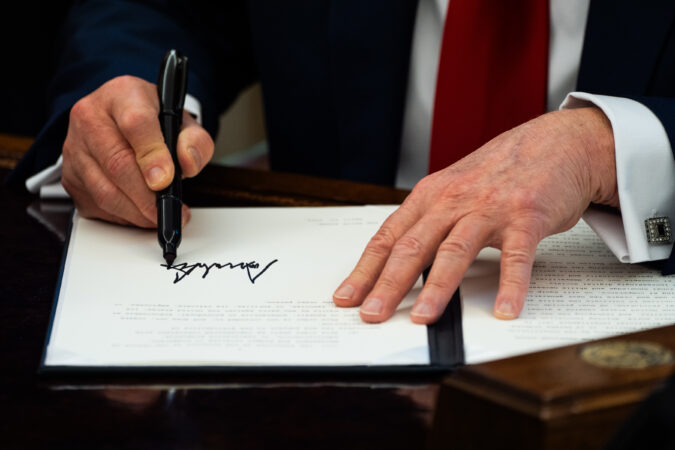
    In April, Trump signed an executive order barring use of disparate impact by agencies, calling it a “pernicious movement” that ignores “individual strengths, effort or achievement.” Dan Lennington, deputy counsel at the Wisconsin Institute for Law and Liberty, a conservative think tank specializing in workplace issues, said the debate reflects the broader ideological divide on how to best protect workers’ civil rights.

    “The minute you start saying all Black people this, all Hispanic people this, all women this, you’re just stereotyping,” he added. “The only thing that matters is the individual in front of you.”

    Yang said it’s been “challenging” to see the Trump administration make such changes to an agency that historically ” really valued its bipartisanship and its independence to interpret antidiscrimination laws.” By moving away from disparate impact and targeting corporate diversity efforts, Yang said, the EEOC has been “weaponized to intimidate employers, to retreat from efforts designed to promote equal opportunity, and to really abandon its historic mission to protect some of our most vulnerable workers.”

    ‘Illegal’ DEI

    Shawna Bray, general counsel at the Center for Equal Opportunity, a conservative think tank, said that Lucas’ EEOC is correcting for past administrations that “used the tools in the toolbox to push things up to, and even over, the line because of their goals,” especially with DEI and other social issues.

    DEI refers to practices companies use to ensure equal opportunity in their ranks, from recruiting and mentorship programs to antibias training and employee resource groups. Many companies began reconsidering such policies after the Supreme Court’s 2023 decision rejecting the use of affirmative action in college admissions.

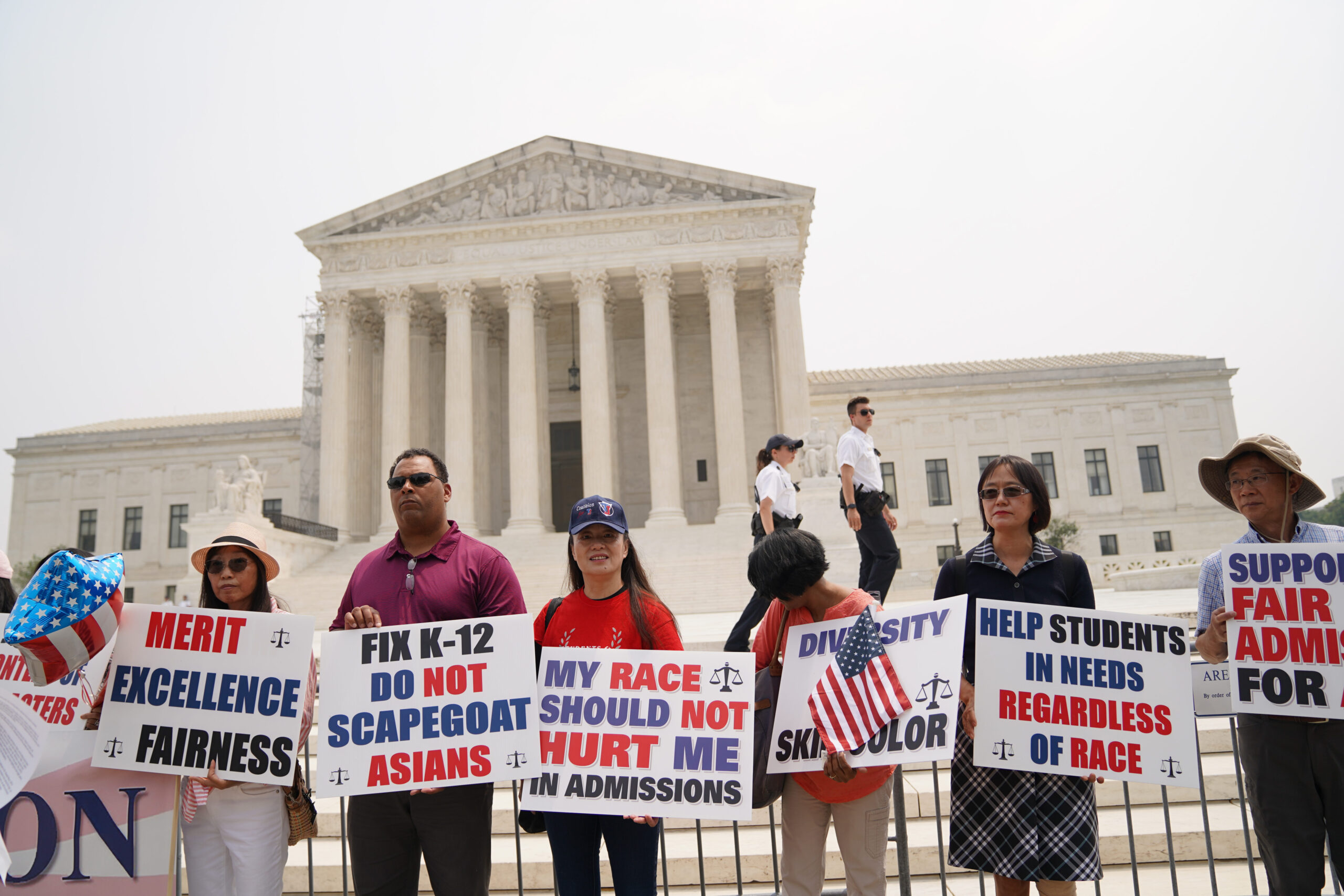
    After the Supreme Court struck down the use of racial considerations in college admissions in June 2023, many companies reassessed their diversity, equity and inclusion (DEI) programs.

    The ruling sparked a wave of activist lawsuits aiming to replicate the order in the employment sphere. Much of corporate America has since opened identity-based programs, such as fellowships and employee resource groups, to people of all backgrounds, ended efforts like antibias training, and rebranded DEI programs with a focus on “belonging.”

    Lucas and others in the Trump administration often refer to “illegal DEI,” but Bray said that she finds the term “a little frustrating” given that such programs only break the law if they show identity-based preference. She also thinks the phrasing has created confusion.

    The EEOC should “have in mind an even application of our civil rights,” regardless of factors such as race, gender, and religious background, Bray said. “The desire to put a thumb on the scale was never consistent with that.”

    While the agency has yet to file a lawsuit over a workplace DEI program under Lucas, DeGroff expects to see such “cases hit the docket” in 2026.

    Valerie Wilson, director of EPI’s Program on Race, Ethnicity, and the Economy, said that priorities like dismantling DEI have “turned the mission of the EEOC on its head, in a way that weaponizes it against the people that it was intended to protect, given the long history of racial discrimination and exploitation” in the United States.

    Lucas contends the EEOC is making up for past administrations that “went hunting for activist matters while closing [their] eyes to overt widespread discrimination occurring against groups it disfavored.” Earlier this year, it issued guidance encouraging workers to challenge DEI policies by their employers.

    Among possible targets are 20 law firms from which the EEOC said it has requested information about their DEI and hiring practices going back nearly a decade.

    Jason Solomon, director of the National Institute for Workers’ Rights, a think tank focusing on private workplace law, wonders whether there is much more for the EEOC to target, given that companies have largely gotten rid of identity-based programs.

    “They may look at the changed landscape and say, ‘We can declare victory because we’ve gotten employers to change a lot of what they’ve done,’” Solomon said.

    Backing away

    Race-discrimination complaints are historically among the most common lodged with the EEOC — 29,000 a year on average since 1997, according to a report from EPI — but 2025 marked “the lowest number of race/national origin-based filings by the EEOC in at least a decade,” Seyfarth’s report states.

    Two of the lawsuits it pursued alleged bias against U.S.-born workers in favor of foreign ones, DeGroff said. One case involved a hotel and resort in Guam, LeoPalace Guam Corp., which agreed to pay $1.4 million to resolve claims that it favored Japanese workers over those from other countries, including the U.S.

    The EEOC also has dismissed cases filed on behalf of transgender workers and stopped processing new gender-identity complaints to comply with Trump’s executive order that prohibits agencies from using federal funds to support gender-identity issues. It also removed “X” as a gender marker option on its discrimination charge intake form, making it harder for workers whose gender identity does not match their sex at birth to file complaints.

    Over the summer, the agency resumed processing some transgender discrimination cases, although the complaints will be subject to a heightened level of review.

  • European and Canadian leaders discuss U.S.-led peace efforts in Russia-Ukraine war

    European and Canadian leaders discuss U.S.-led peace efforts in Russia-Ukraine war

    KYIV, Ukraine — Leaders from Europe and Canada held talks Tuesday on U.S.-led peace efforts to end the nearly four-year war between Russia and Ukraine, as Moscow and Kyiv sparred over Russian claims, denied by Ukraine, of a mass drone attack on a lakeside residence used by President Vladimir Putin.

    The virtual meeting included European leaders as well as Canadian Prime Minister Mark Carney, heads of European institutions, and NATO Secretary-General Mark Rutte, according to Polish Prime Minister Donald Tusk.

    “Peace is on the horizon,” Tusk told a Polish cabinet meeting. But he added: “It is still far from a 100% certainty.”

    It was the first meeting of European leaders since President Donald Trump hosted Ukrainian President Volodymyr Zelensky at his Florida resort on Sunday. Trump insisted that Ukraine and Russia are “closer than ever before” to a peace settlement, although he acknowledged that outstanding obstacles could still prevent a deal.

    Zelensky on Tuesday announced plans for forthcoming meetings with officials from about 30 countries, dubbed the Coalition of the Willing, that support Kyiv’s effort to end the war with Russia on acceptable terms.

    National security advisers from those countries aim to meet in Ukraine on Jan. 3, followed by a meeting of the countries’ leaders on Jan. 6 in France, he said on social media. He thanked Trump administration officials for their readiness to participate but provided no further details.

    “We are moving the peace process forward,” German Chancellor Friedrich Merz, who attended Tuesday’s talks, said in a post on X. ”Transparency and honesty are now required from everyone — including Russia.”

    His pointed reference to Russia came after Russian and Ukrainian officials exchanged bitter accusations over Moscow’s allegations that Ukraine attempted to attack the Russian leader’s residence in northwestern Russia with 91 long-range drones almost immediately after Trump’s Sunday talks with Zelensky.

    The claims and counterclaims threatened to derail peace efforts. “I don’t like it. It’s not good,” Trump said Monday after Putin told him by phone about the alleged attack.

    Ukrainian Foreign Minister Andrii Sybiha noted Tuesday that Russia “still hasn’t provided any plausible evidence” to support its allegations.

    Moscow won’t do so because “no such attack happened,” he wrote on X.

    “Russia has a long record of false claims,” he added, referencing the Kremlin’s denials that it intended to attack Ukraine ahead of its Feb. 24, 2022, all-out invasion of its neighbor.

    Zelensky, speaking Monday, also branded the allegation as “another lie” from Moscow designed to sabotage peace efforts.

    Kremlin spokesperson Dmitry Peskov countered Tuesday that the alleged Ukrainian attack is “aimed at thwarting President Trump’s efforts to promote a peaceful resolution” to the war.

    Russia and Ukraine have throughout the war exchanged accusations about attacks that cannot be independently verified because of the fighting.

    Peskov did not say whether Moscow would present physical evidence of the attack, such as drone wreckage, saying that such a step would be a matter for Russia’s military. “I don’t think there needs to be any evidence here,” he said.

    The rural Novgorod region is home to one of the Russian presidency’s official residences, Dolgie Borody, close to the town of Valdai, about 250 miles northwest of Moscow. The area has been used to host a vacation retreat for high-ranking government officials since the Soviet era.

    The Institute for the Study of War, a Washington think tank, said that since Trump launched a diplomatic push at the start of the year to end the war, “the Kremlin has sought to delay and prolong peace negotiations in order to continue its war undisturbed, prevent the U.S. from imposing measures intended to pressure Russia into meaningful negotiations, and even to extract concessions about bilateral U.S.-Russian relations.”

  • China flexes blockade capabilities near Taiwan on second day of military drills

    China flexes blockade capabilities near Taiwan on second day of military drills

    TAIPEI, Taiwan — China’s People’s Liberation Army staged a second day of large-scale military drills around Taiwan on Tuesday, unleashing a live-fire show of force as part of what it called “Justice Mission 2025” to demonstrate its ability to deter any external support for the island it claims as part of its sovereign territory.

    Taiwanese officials said some of China’s live rounds landed closer to the island than before.

    The maneuvers increased tension around the Taiwan Strait as 2025 drew to a close, but the impact extended beyond military pressure into everyday life. Taiwan’s Civil Aviation Administration was notified that seven temporary “dangerous zones” had been set up around the strait. The schedules of Taiwan’s four international airports on Tuesday afternoon showed over 150 international and domestic flights had revised times, delays, or cancellations.

    Xinhua, China’s official news agency, posted a commentary late Monday saying the drills sent an unequivocal message: that Beijing is always ready to prevent anything that tries to split Taiwan from China. Each escalation, it said, would be met with stronger countermeasures.

    “By currying favor with the United States through obsequious loyalty gestures and promoting arms purchases, the DPP is binding the entire island of Taiwan to its catastrophic secessionist chariot, disregarding public opinion,” it wrote, referring to Taiwan’s ruling Democratic Progressive Party.

    The PLA’s Eastern Theater Command sent destroyers, frigates, fighters, and bombers to the waters to the north and south of the island to test its ability in sea-air coordination and blockading. Its ground forces carried out long-range, live-fire drills in the waters to the island’s north. They also organized live-fire training alongside a simulated long-range joint strike with air, navy, and missile units in the waters to Taiwan’s south, achieving what command spokesperson Li Xi called “desired effects.”

    Hsieh Jih-sheng, deputy chief of the general staff for intelligence at the Taiwanese Defense Ministry, said some of the 27 rockets detected in the waters near Taiwan fell within its 24-nautical-mile line. “The landing points of rounds definitely were closer to Taiwan compared to the past,” he said. “This is a message it deliberately wants to convey.”

    Aircraft, vessels, and a Chinese balloon detected

    Taiwan President Lai Ching-te said Tuesday his territory would act responsibly by neither escalating conflict nor provoking disputes. He condemned the drills.

    Taiwan’s Defense Ministry said it had detected 130 aircraft, including fighters and bombers; 14 military ships; and eight other official ships around the island between 6 a.m. Monday and 6 a.m. Tuesday. Its forces kept monitoring and deployed aircraft, navy ships, and coastal missile systems in response. Ninety of the Chinese aircraft crossed the median line of the strait. A Chinese military balloon was also spotted, it said.

    The ministry later said it detected 71 aircraft, 13 military ships, and 15 coastal guard and official vessels as of 3 p.m. Tuesday, in addition to four other warships in the western Pacific. A total of 941 flights were affected by the drills, it said.

    “The military power is not necessarily the strongest, but the scale of the drills has become larger each time compared to the last,” Hsieh said. He accused Chinese forces of trying to influence public morale and undermine trust in the Taiwanese military and government.

    China has vowed to seize the island, by force if necessary. Beijing sends warplanes and navy vessels toward the island on a near-daily basis.

    Chinese Defense Ministry spokesperson Zhang Xiaogang said the drills served as a stern warning to “Taiwan independence” separatist forces and external forces, without naming any countries.

    He criticized Lai’s administration for what it called pandering to external forces and pursuing independence, saying that was the root cause of disrupting the status quo in the strait and escalating tensions.

    Last week, Beijing imposed sanctions against 20 defense-related U.S. companies and 10 executives, following a Washington announcement of large-scale arms sales to Taiwan valued at more than $10 billion.

    Under U.S. law, Washington is obligated to assist Taipei with its defense, a point that has become increasingly contentious with China over the years.

    Beijing slams Japan

    On Monday, President Donald Trump said that while he had not been informed of the military exercise in advance, neither was he particularly worried about it. He touted his “great relationship” with Chinese President Xi Jinping and suggested he did not think Xi was going to attack Taiwan.

    The Taiwan issue also heightened China-Japan tensions. Beijing has expressed anger at a statement by Japan’s prime minister, Sanae Takaichi, saying its military could get involved if China takes action against the democratically ruled island. There remains widespread overall suspicion in China about Japan that goes back generations to when imperial Japan brutally took over parts of China in the years before World War II.

    Chinese Foreign Minister Wang Yi slammed both Japan and Taiwan’s “pro-independence forces.”

    “Japan, which launched the war of aggression against China, not only fails to deeply reflect on the numerous crimes it committed, but its current leaders also openly challenge China’s territorial sovereignty, the historical conclusions of World War II, and the postwar international order,” he said Tuesday during an event in Beijing. China, Wang added, “must be highly vigilant against the resurgence of Japanese militarism.”

    China and Taiwan have been governed separately since 1949, when the Communist Party rose to power in Beijing following a civil war. Defeated Nationalist Party forces fled to Taiwan, which later transitioned from martial law to multiparty democracy.

    Stoking the tensions, China’s Eastern Theater Command posted a series of online images and videos carrying provocative language throughout the exercises. It posted a video of live rounds being fired from ships and a ground-based launcher on Tuesday.

    Chen Wen-chin, chairman of the Keelung District Fishermen’s Association in Taiwan, said the group started radio broadcasting every hour starting Monday to inform anglers about where China’s exercises took place, urging them to avoid danger.

    “The Chinese military exercises have prevented fishermen from fishing, which is their livelihood,” Chen said. “The inability to fish has had a significant impact on them and caused economic losses.”

  • Trump administration says it’s freezing childcare funds to Minnesota after series of fraud schemes

    Trump administration says it’s freezing childcare funds to Minnesota after series of fraud schemes

    President Donald Trump’s administration announced on Tuesday that it is freezing childcare funds to Minnesota after a series of fraud schemes in recent years.

    Deputy Secretary of Health and Human Services Jim O’Neill said on the social platform X that the step was in response to “blatant fraud that appears to be rampant in Minnesota and across the country.”

    Minnesota Gov. Tim Walz pushed back in a post on X, saying that fraudsters are a serious issue that the state has spent years cracking down on but that this move is part of “Trump’s long game.”

    “He’s politicizing the issue to defund programs that help Minnesotans,” Walz said.

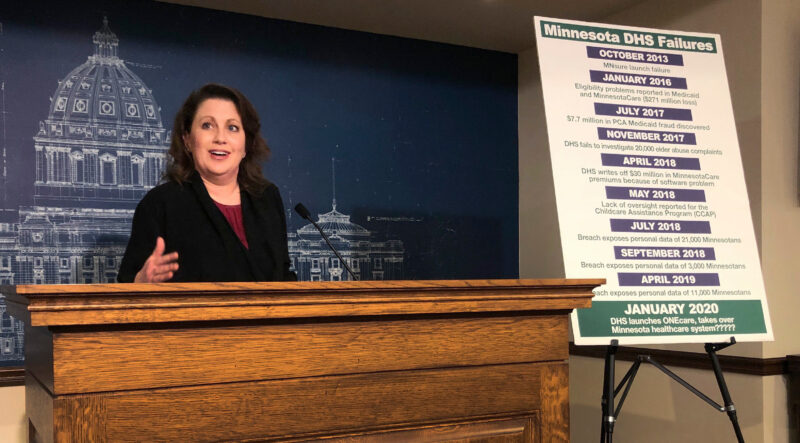
    O’Neil called out a right-wing influencer who had posted a video Friday claiming he found that daycare centers operated by Somali residents in Minneapolis had committed up to $100 million in fraud. O’Neill said he has demanded that Walz submit an audit of these centers that includes attendance records, licenses, complaints, investigations, and inspections.

    “We have turned off the money spigot and we are finding the fraud,” O’Neill said.

    The announcement came one day after U.S. Department of Homeland Security officials were in Minneapolis conducting a fraud investigation by going to unidentified businesses and questioning workers.

    There have been years of fraud investigations that began with the $300 million scheme at the nonprofit Feeding Our Future, for which 57 defendants in Minnesota have been convicted. Prosecutors said the organization was at the center of the country’s largest COVID-19-related fraud scam, when defendants exploited a state-run, federally funded program intended to provide food for children.

    A federal prosecutor alleged earlier in December that half or more of the roughly $18 billion in federal funds that supported 14 programs in Minnesota since 2018 might have been stolen. Most of the defendants are Somali Americans, they said.

    O’Neill, who is serving as acting director of the Centers for Disease Control and Prevention, also said in the social media post Tuesday that payments across the U.S. through the Administration for Children and Families, an agency within the U.S. Health and Human Services Department, will now require “justification and a receipt or photo evidence” before money is sent. Officials have also launched a fraud-reporting hotline and email address, he said.

    Walz, the 2024 Democratic vice presidential nominee, has said fraud will not be tolerated and his administration “will continue to work with federal partners to ensure fraud is stopped and fraudsters are caught.”

    Walz has said an audit due by late January should give a better picture of the extent of the fraud. He said his administration is taking aggressive action to prevent additional fraud. He has long defended how his administration responded.

    Minnesota’s most prominent Somali American, Democratic U.S. Rep. Ilhan Omar, has urged people not to blame an entire community for the actions of a relative few.

  • Saudi Arabia bombs Yemen port city over weapons shipment from UAE for separatists

    Saudi Arabia bombs Yemen port city over weapons shipment from UAE for separatists

    DUBAI, United Arab Emirates — Saudi Arabia bombed Yemen’s port city of Mukalla on Tuesday after a weapons shipment from the United Arab Emirates arrived for separatist forces in the war-torn country, and warned that it viewed Emirati actions as “extremely dangerous.”

    The bombing followed tensions over the advance of Emirates-backed separatist forces known as the Southern Transitional Council. The council and its allies issued a statement supporting the Emeratis’ presence, even as others allied with Saudi Arabia demanded that Emirati forces withdraw from Yemen in 24 hours’ time.

    The Emirates called for “restraint and wisdom” and disputed Riyadh’s allegations. But shortly after that, it said it would withdraw its remaining troops in Yemen. It remained unclear whether the separatists it backs will give up the territory they recently took.

    The confrontation threatened to open a new front in Yemen’s decade-long war, with forces allied against the Iranian-backed Houthi rebels possibly turning their sights on each other in the Arab world’s poorest nation.

    It also further strained ties between Saudi Arabia and the Emirates, neighbors on the Arabian Peninsula that increasingly have competed over economic issues and regional politics, particularly in the Red Sea area. Tuesday’s airstrikes and ultimatum appeared to be their most serious confrontation in decades.

    “I expect a calibrated escalation from both sides. The UAE-backed Southern Transitional Council is likely to respond by consolidating control,” said Mohammed al-Basha, a Yemen expert and founder of the Basha Report, a risk advisory firm.

    “At the same time, the flow of weapons from the UAE to the STC is set to be curtailed following the port attack, particularly as Saudi Arabia controls the airspace.”

    Airstrike hits Mukalla

    A military statement carried by the state-run Saudi Press Agency announced the strikes on Mukalla, which it said came after ships arrived there from Fujairah in the Emirates.

    “The ships’ crew had disabled tracking devices aboard the vessels, and unloaded a large amount of weapons and combat vehicles in support of the Southern Transitional Council’s forces,” the statement said.

    “Considering that the aforementioned weapons constitute an imminent threat, and an escalation that threatens peace and stability, the Coalition Air Force has conducted this morning a limited airstrike that targeted weapons and military vehicles offloaded from the two vessels in Mukalla,” it added.

    It was not clear if there were any casualties.

    The Emirati Foreign Ministry hours later denied it shipped weapons but acknowledged it sent the vehicles “for use by the UAE forces operating in Yemen.” It also claimed Saudi Arabia knew about the shipment ahead of time.

    The ministry called for “the highest levels of coordination, restraint and wisdom, taking into account the existing security challenges and threats.”

    The Emirati Defense Ministry later said it would withdraw its remaining troops from Yemen over “recent developments and their potential repercussions on the safety and effectiveness of counterterrorism operations.” It gave no timeline for the withdrawal. The Emirates had broadly withdrawn its forces from Yemen years earlier.

    Yemen’s anti-Houthi forces not aligned with the separatists declared a state of emergency Tuesday and ended their cooperation with the Emirates. They issued a 72-hour ban on border crossings in territory they hold, as well as entries to airports and seaports, except those allowed by Saudi Arabia. It remained unclear whether that coalition, governed under the umbrella of Yemen’s Presidential Leadership Council, would remain intact.

    The Southern Transitional Council’s AIC satellite news channel aired footage of the strike’s aftermath but avoided showing damage to the armored vehicles.

    “This unjustified escalation against ports and civilian infrastructure will only strengthen popular demands for decisive action and the declaration of a South Arabian state,” the channel said.

    The attack likely targeted a ship identified as the Greenland, a vessel flagged out of St. Kitts. Tracking data analyzed by the Associated Press showed the vessel had been in Fujairah on Dec. 22 and arrived in Mukalla on Sunday. The second vessel could not be immediately identified.

    Jens Laerke, a spokesperson for the U.N. humanitarian office, urged combatants to protect civilians and civilian infrastructure, like the port, saying any disruption to its operations “risks affecting the already dire humanitarian situation and humanitarian supply chains.”

    Strike comes as separatists advance

    Mukalla is in Yemen’s Hadramout governorate, which the council seized in recent days. The port city is about 300 miles northeast of Aden, which has been the seat of power for anti-Houthi forces after the rebels seized the capital, Sanaa, in 2014.

    Yemen, on the southern edge of the Arabian Peninsula off East Africa, borders the Red Sea and the Gulf of Aden. The war there has killed more than 150,000 people, including fighters and civilians, and created one of the world’s worst humanitarian disasters.

    The Houthis, meanwhile, have launched attacks on hundreds of ships in the Red Sea corridor over the Israel-Hamas war in the Gaza Strip, disrupting regional shipping. The U.S., which earlier praised Saudi-Emirati efforts to end the crisis over the separatists, has launched airstrikes against the rebels under both Presidents Joe Biden and Donald Trump.

    Tuesday’s strike in Mukalla came after Saudi Arabia targeted the council in airstrikes Friday that analysts described as a warning for the separatists to halt their advance and leave the governorates of Hadramout and Mahra.

    The council had pushed out forces there affiliated with the Saudi-backed National Shield Forces, another group in the anti-Houthi coalition.

    Those aligned with the council have increasingly flown the flag of South Yemen, which was a separate country from 1967 to 1990. Demonstrators have been rallying to support political forces calling for South Yemen to secede again.

    A statement Tuesday from Saudi Arabia’s Foreign Ministry directly linked the council’s advance to the Emiratis for the first time.

    “The kingdom notes that the steps taken by the sisterly United Arab Emirates are extremely dangerous,” it said.

    Allies of the council later issued a statement in which they showed no sign of backing down.

  • SNAP bans on soda, candy, and other foods take effect in five states Jan. 1

    SNAP bans on soda, candy, and other foods take effect in five states Jan. 1

    Starting Thursday, Americans in five states who get government help paying for groceries will see new restrictions on soda, candy, and other foods they can buy with those benefits.

    Indiana, Iowa, Nebraska, Utah, and West Virginia are the first of at least 18 states to enact waivers prohibiting the purchase of certain foods through the Supplemental Nutrition Assistance Program, or SNAP.

    It’s part of a push by Health Secretary Robert F. Kennedy Jr. and Agriculture Secretary Brooke Rollins to urge states to strip foods regarded as unhealthy from the $100 billion federal program — long known as food stamps — that serves 42 million Americans.

    “We cannot continue a system that forces taxpayers to fund programs that make people sick and then pay a second time to treat the illnesses those very programs help create,” Kennedy said in a statement in December.

    The efforts are aimed at reducing chronic diseases such as obesity and diabetes associated with sweetened drinks and other treats, a key goal of Kennedy’s Make America Healthy Again effort.

    But retail industry and health policy experts said state SNAP programs, already under pressure from steep budget cuts, are unprepared for the complex changes, with no complete lists of the foods affected and technical point-of-sale challenges that vary by state and store. And research remains mixed about whether restricting SNAP purchases improves diet quality and health.

    The National Retail Federation, a trade association, predicted longer checkout lines and more customer complaints as SNAP recipients learn which foods are affected by the new waivers.

    “It’s a disaster waiting to happen of people trying to buy food and being rejected,” said Kate Bauer, a nutrition science expert at the University of Michigan.

    A report by the National Grocers Association and other industry trade groups estimated that implementing SNAP restrictions would cost U.S. retailers $1.6 billion initially and $759 million each year going forward.

    “Punishing SNAP recipients means we all get to pay more at the grocery store,” said Gina Plata-Nino, SNAP director for the anti-hunger advocacy group Food Research and Action Center.

    The waivers are a departure from decades of federal policy first enacted in 1964 and later authorized by the Food and Nutrition Act of 2008, which said SNAP benefits can be used for “any food or food product intended for human consumption” except alcohol and ready-to-eat hot foods. The law also says SNAP cannot pay for tobacco.

    In the past, lawmakers have proposed stopping SNAP from paying for expensive meats like steak or so-called junk foods, such as chips and ice cream.

    But previous waiver requests were denied based on U.S. Department of Agriculture research concluding that restrictions would be costly and complicated to implement, and that they might not change recipients’ buying habits or reduce health problems such as obesity.

    Under the second Trump administration, however, states have been encouraged and even incentivized to seek waivers — and they responded.

    “This isn’t the usual top-down, one-size-fits-all public health agenda,” Indiana Gov. Mike Braun said when he announced his state’s request last spring. “We’re focused on root causes, transparent information, and real results.”

    The five state waivers that take effect Jan. 1 affect about 1.4 million people. Utah and West Virginia will ban the use of SNAP to buy soda and soft drinks, while Nebraska will prohibit soda and energy drinks. Indiana will target soft drinks and candy. In Iowa, which has the most restrictive rules to date, the SNAP limits affect taxable foods, including soda and candy, but also certain prepared foods.

    “The items list does not provide enough specific information to prepare a SNAP participant to go to the grocery store,” Plata-Nino wrote in a blog post. “Many additional items — including certain prepared foods — will also be disallowed, even though they are not clearly identified in the notice to households.”

    Marc Craig, 47, of Des Moines, said he has been living in his car since October. He said the new waivers will make it more difficult to determine how to use the $298 in SNAP benefits he receives each month, while also increasing the stigma he feels at the cash register.

    “They treat people that get food stamps like we’re not people,” Craig said.

    SNAP waivers enacted now and in the coming months will run for two years, with the option to extend them for an additional three, according to the USDA. Each state is required to assess the impact of the changes.

    Health experts worry that the waivers ignore larger factors affecting the health of SNAP recipients, said Anand Parekh, chief policy officer at the University of Michigan School of Public Health.

    “This doesn’t solve the two fundamental problems, which is healthy food in this country is not affordable and unhealthy food is cheap and ubiquitous,” he said.