Category: Wires

  • This is your teen’s brain on phones and social media, according to science

    This is your teen’s brain on phones and social media, according to science

    University of Pennsylvania researcher Ran Barzilay is a father of three. His first two children received cellphones before they turned 12. But this summer, as early results from his own study on screens and teen health rolled in, he changed course. His youngest? Not getting one anytime soon.

    Barzilay’s analysis of more than 10,500 children across 21 U.S. sites found that those who received phones at age 12, compared with age 13, had a more than 60% higher risk of poor sleep and a more than 40% higher risk of obesity.

    “This is not something you can ignore for sure,” said Barzilay, a professor of psychiatry and a child-adolescent psychiatrist at the Children’s Hospital of Philadelphia.

    For years, the debate over teens and screens has been defined by uncertainty. Parents, teachers, doctors, and policymakers have argued over whether phones and social media were truly harming young people, but the evidence has often been thin, anecdotal, or contradictory.

    That picture shifted dramatically in the second half of 2025.

    A wave of large-scale studies is quantifying how early smartphone access and heavy screen use can harm adolescent minds — and the findings are aligning in a way earlier research rarely did.

    The numbers suggest screens are taking a broader, deeper toll on teens than many expected. Across multiple studies, high levels of screen use are linked to measurable declines in cognitive performance — slower processing speed, reduced attention, and weaker memory. Rates of depression and anxiety climb steadily with heavier social media engagement. Sleep quality deteriorates as screens encroach later into the night, and researchers are finding troubling associations between screen habits and rising adolescent weight gain.

    The debate is shifting from one about whether screens have an impact — to one about how far-reaching that impact might be and what society is willing to do about it.

    Australia this month became the first country in the world to ban social media for children younger than 16; the companies running TikTok, YouTube, Instagram, and Facebook were ordered to block access starting Dec. 10. Malaysian officials said a similar ban is starting next year, and the move is being watched by other countries that are considering adopting their own measures.

    In the United States, several states have passed laws restricting children’s access to social media. Rahm Emanuel, the former Chicago mayor who said he may seek the 2028 Democratic presidential nomination, has said he considers social media use among children a public health crisis and called for the country to follow Australia’s lead.

    Degrees of risk

    Since Steve Jobs marched onto a stage in San Francisco in his trademark black turtleneck and unveiled the first iPhone in 2007, arguments over what smartphones are doing to us — especially to children — have relied heavily on anecdotes. Teachers blame slipping grades on TikTok distractions; parents worry about video game binges; clinicians point to online bullying and rising rates of adolescent self-harm. Yet for all the cultural heat around screens, the science has been slower to coalesce.

    Part of the difficulty is methodological. Researchers can’t evaluate phones the way they might test a drug, in a controlled trial with clear exposures and outcomes. Most studies of teens and screens are observational, sifting through large data sets to detect associations between digital habits and health. These studies can’t prove causation. But they can, over time, illuminate patterns strong enough to be hard to ignore.

    For years, even these efforts were limited by data: small samples, short follow-ups, uneven measures of screen behavior. That began to change over the past few years with the release of data from the Adolescent Brain and Cognitive Development study, a National Institutes of Health initiative tracking almost 12,000 children born between 2005 and 2009. As the ABCD cohort ages, researchers are gaining an unprecedented longitudinal window into how today’s teens are developing — and how technology might be shaping them.

    One striking paper, published in June in JAMA and using that data set, distinguished between sheer screen time and what it called addictive use. The difference proved consequential. Total hours online did not predict suicide risk. But compulsive patterns — distress when separated from a device, difficulty cutting back — did. Teens whose addictive use increased over time had two to three times the risk of suicidal ideation and behaviors compared with those whose use remained low.

    Their work also found differences in the type of online activity and risk. Children who had high and increased use of video games had more internalized mental health challenges such as anxiety and depression, while those with high and increasing social media use tended to have more externalizing behaviors such as rule-breaking and aggression.

    Yunyu Xiao, a professor of population health sciences at Weill Cornell Medicine, said the results suggest that there are groups more susceptible to suicidal ideation and behaviors related to online platforms and that more work needs to be done to figure out what makes one child more vulnerable than another.

    “If kids come into a clinic at age 10, we want to be able to know who is at risk,” Xiao said.

    Cognition, memory, learning, and focus

    This December brought a wave of new analyses from the ABCD data, each probing a different facet of adolescent health.

    A research letter in JAMA examined social media use and cognitive performance in children ages 9 to 13. The authors identified three trajectories — little to no use, low but increasing use, and high and increasing use. Children in the latter two groups showed slightly poorer performance across a range of cognitive tasks, including oral reading recognition, picture-sequence memory, and vocabulary tests. The differences were modest, but consistent. The authors noted that social media might displace activities more directly tied to learning — an idea echoed in earlier work.

    Lead author Jason Nagata, an professor of pediatrics in the division of adolescent and young adult medicine at the University of California at San Francisco, said that while the differences accounted for only a few points on some tests, they can be thought of as similar to teen’s grade going from an A to a B.

    “What was surprising to me was even the low users — those with an hour of social media a day — had worse cognitive performance over time than those with no social media,” Nagata said.

    Another study, posted as a prepublication in Pediatrics, examined attention and found that social media use — unlike gaming or watching shows — was linked to increased symptoms of inattention.

    “Social media provides constant distractions,” said Torkel Klingberg, a co-author of the study and a cognitive neuroscience professor at Sweden’s Karolinska Institutet. “If it’s not the messages themselves, it’s the thought of whether you have a new one.”

    Klingberg noted that the findings align with the idea that cognitive abilities are malleable. “It depends on whether you’re training them or not,” he said. “If you’re constantly distracted, your ability to focus may gradually become impaired.”

    A fourth analysis, led by Barzilay and published online Dec. 1 in the journal Pediatrics, explored whether the age at which U.S. children receive their first smartphones influences later well-being. Its conclusions resonate with a large international study published in July in the Journal of Human Development and Capabilities, which found that receiving a smartphone before age 13 “is associated with poorer mind health outcomes in young adulthood, particularly among women, including suicidal thoughts, detachment from reality, poorer emotional regulation, and diminished self-worth.”

    Barzilay stresses that he and his co-authors “are not against technology.” It offers many benefits, he said, but parents should take the decision of when to give a child a smartphone seriously.

    Managing teen screen habits

    Morgan Cobuzzi first encountered the movement to delay children’s access to smartphones the way many parents do now: on Instagram. Cobuzzi, 40, a former English teacher in Leesburg, Va., and a mother of three, was already uneasy as her oldest daughter approached age 10, with middle school only a year away. She worried less about the device itself than about what came with it — the anxiety teenage girls absorb from social media feeds built on impossible standards.

    About half of her daughter’s fifth-grade classmates have phones, Cobuzzi estimates, and almost all have access to iPads, a dynamic that can leave screen-free children feeling socially excluded. Still, she has watched a quiet counterculture emerge. On snow days and other school-free afternoons, children have been rotating between houses, playing outside and baking cookies — passing the time offline.

    In October, Cobuzzi launched a local chapter of the Balance Project, a national group focused on helping families find a healthier relationship between digital life and the real world. About 40 families have contacted her since. What once might have seemed fringe, Cobuzzi said, is increasingly common — especially among millennials like herself unsettled by how different their children’s childhoods look from their own.

    “Ten years ago we didn’t realize the negative effects of smartphones. Now we do,” she said.

    Jennifer Katzenstein, a pediatric neuropsychologist at the Johns Hopkins University School of Medicine, said the most effective way for parents to manage teens’ screen use is not through bans, but through example. Children closely mirror their parents’ habits, she noted, particularly around nighttime phone use and sleep. Research suggests that gradual reductions — cutting daily screen time by even an hour — are more effective, and more sustainable, than going cold turkey, leading to better long-term well-being and quality of life.

    “The research suggests that just decreasing our device use by one hour per day has better long-term impact, and decreasing overall device use results in higher quality of life than trying to go cold turkey,” Katzenstein said.

    Megan Moreno, co-medical-director of the Center of Excellence on Social Media and Youth Mental Health at the American Academy of Pediatrics, said smartphone use is not a one-size-fits-all approach when it comes to outlining guidelines and rules for preteens and teens.

    “A huge piece of this is having early and ongoing communication, because one of the things that we hear from teens is that adults in their lives are often very reactive to their phone use.”

    In the wake of the recent studies, Barzilay said, friends and relatives around the world have been asking him for guidance. His two older children, now 18 and 14, received phones before they turned 12. But he recently explained to his 9-year-old why he will not be getting one yet.

    “This is to keep you healthy,” Barzilay recalled telling his son. “You have your whole life to use smartphones and technology. We want to introduce them in a responsible way that supports your well-being.”

    He emphasized that parents shouldn’t feel guilty about giving their children phones.

    “It’s very important to me that this isn’t about blaming parents,” he said. “Kids got smartphones at very young ages in the past because we didn’t know. Now we know.”

  • Winter storm brings blizzard conditions and dangerous wind chills

    Winter storm brings blizzard conditions and dangerous wind chills

    A potent winter storm threatened blizzard-like conditions, treacherous travel and power outages in parts of the Upper Midwest as other areas of the country braced Monday for plunging temperatures, strong winds and a mix of snow, ice, and rain.

    The snow and strengthening winds began spreading Sunday across the northern Plains, where the National Weather Service warned of whiteout conditions and possible blizzard conditions that could make travel impossible in some areas. Snowfall totals were expected to exceed a foot (30 centimeters) across parts of the upper Great Lakes and as much as double that along the south shore of Lake Superior.

    “Part of the storm system is getting heavy snow, other parts of the storm along the cold front are getting higher winds and much colder temperatures as the front passes,” said Bob Oravec, a lead forecaster at the National Weather Service office in College Park, Maryland. “They’re all related to each other — different parts of the country will be receiving different effects from this storm.”

    About 350,000 customers were in the dark Monday morning, with about a third of those outages in Michigan, according to Poweroutage.us. There were more than 1,600 flight delays and more than 450 cancellations at U.S. airports on Monday, according to the flight tracking site FlightAware.

    Blizzard conditions continued in some parts of northern Iowa on Monday morning, especially in open rural areas, according to the weather service’s office in Des Moines. Blowing snow was expected to continue through the morning.

    The National Weather Service warned of 1 to 3 feet (about 30 to 91 centimeters) of lake-effect snow from Monday through Thursday and high winds, with gusts up to 75 mph (121 kph), in western New York on Monday. Similar conditions were expected along Lake Erie in Michigan and Ohio.

    New York Gov. Kathy Hochul said in a social media post that travel in the Buffalo area could become dangerous beginning at 11 a.m. Monday because of potential whiteout conditions and urged people to avoid driving.

    The very strong cold front meant parts of the central U.S. woke up Monday to temperatures up to 50 degrees F colder than a day earlier, according to the weather service’s Weather Prediction Center. The cold front was accompanied by strong gusty winds.

    The weather service warned of “dangerous wind chills” as low as minus 30 degrees Fahrenheit (minus 34.4 degrees Celsius) in North Dakota and into Minnesota from Sunday night into Monday.

    In the South, meteorologists warned severe thunderstorms are likely to signal the arrival of a sharp cold front — bringing a sudden drop in temperatures and strong north winds that will abruptly end days of record warmth throughout that region.

    The high temperature in Atlanta was around 72 F (22 C) on Sunday, continuing a warming trend after climbing to 78 F (about 26 C) to shatter the city’s record high temperature for Christmas Eve, the National Weather Service said. Numerous other record high temperatures were seen across the South and Midwest on the days after Christmas.

    But the incoming cold front was expected to drop rain on much of the South late Sunday night into Monday, and a big drop in temperatures Tuesday. Forecasters said the low temperature in Atlanta to 25 F (minus 3.9 C) by early Tuesday morning. The colder temperatures in the South are expected to persist through New Year’s Day.

    In Dallas, Sunday temperatures in the lower 80s (upper 20s C) could drop down to the mid 40s (single digits Celsius). In Little Rock, high temperatures of around 70 (21 C) on Sunday could drop down to highs in the mid-30s on Monday.

    “We’re definitely going back towards a more winter pattern,” Oravec said.

    The storm is expected to intensify as it moves east, drawing energy from a sharp clash between frigid air plunging south from Canada and unusually warm air that has lingered across the southern United States, according to the National Weather Service.

  • U.S. offers Ukraine 15-year security guarantee as part of peace plan, Zelenskyy says

    U.S. offers Ukraine 15-year security guarantee as part of peace plan, Zelenskyy says

    KYIV, Ukraine — The United States is offering Ukraine security guarantees for a period of 15 years as part of a proposed peace plan, Ukrainian President Volodymyr Zelenskyy said Monday, though he said he would prefer an American commitment of up to 50 years to deter Russia from further attempts to seize its neighbor’s land by force.

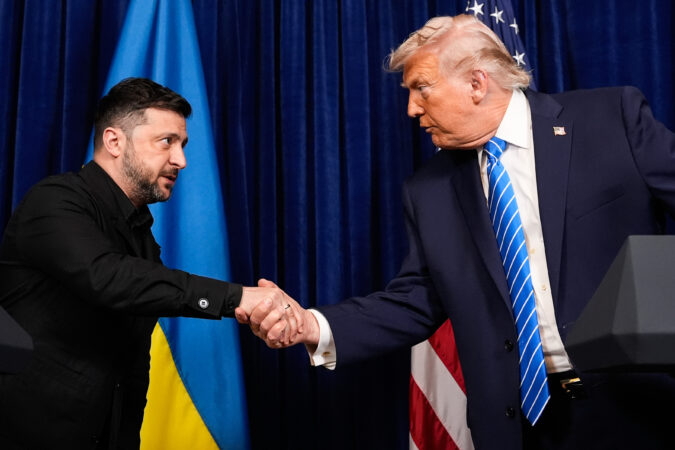
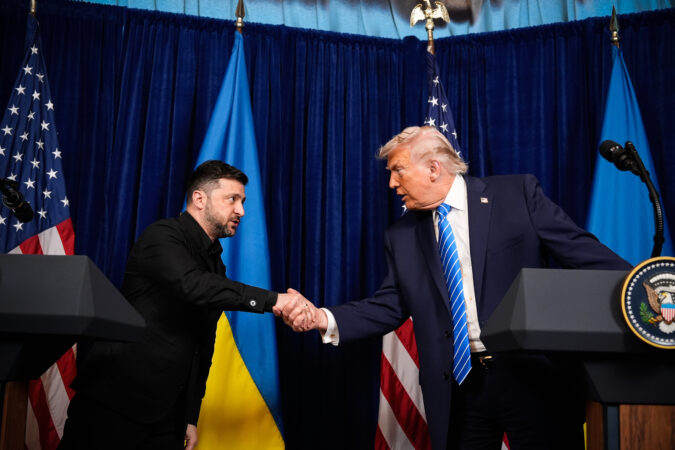
    U.S. President Donald Trump hosted Zelenskyy at his Florida resort on Sunday and insisted that Ukraine and Russia are “closer than ever before” to a peace settlement.

    Negotiators are still searching for a breakthrough on key issues, however, including whose forces withdraw from where in Ukraine and the fate of Ukraine’s Russian-occupied Zaporizhzhia nuclear power plant, one of the 10 biggest in the world. Trump noted that the monthslong U.S.-led negotiations could still collapse.

    “Without security guarantees, realistically, this war will not end,” Zelenskyy told reporters in voice messages responding to questions sent via a WhatsApp chat.

    Ukraine has been fighting Russia since 2014, when it illegally annexed Crimea and Moscow-backed separatists took up arms in the Donbas, a vital industrial region in eastern Ukraine.

    Details of the security guarantees have not become public but Zelenskyy said Monday that they include how a peace deal would be monitored as well as the “presence” of partners. He didn’t elaborate, but Russia has said it won’t accept the deployment in Ukraine of troops from NATO countries.

    As indications suggest negotiations could come to a head in January, before the fourth anniversary of Russia’s full-blown invasion of Ukraine on Feb. 24, 2022, Russian President Vladimir Putin on Monday claimed that Russian troops are advancing in the eastern Donetsk region of Ukraine and are also pressing their offensive in the southern Zaporizhzhia region.

    Putin has sought to portray himself as negotiating from a position of strength as Ukrainian forces strain to keep back the bigger Russian army.

    He also emphasized at a meeting with senior military officers the need to create military buffer zones along the Russian border.

    “This is a very important task as it ensures the security of Russia’s border regions,” he said.

    Kremlin spokesman Dmitry Peskov said Monday that Putin and Trump were expected to speak in the near future but there was no indication the Russian leader would speak to Zelenskyy.

    French President Emmanuel Macron said Kyiv’s allies will meet in Paris in early January to “finalize each country’s concrete contributions” to the security guarantees.

    Trump said he would consider extending U.S. security guarantees for Ukraine beyond 15 years, according to Zelenskyy. The guarantees would be approved by the U.S. Congress as well as by parliaments in other countries involved in overseeing any settlement, he said.

    Zelenskyy said he wants the 20-point peace plan under discussion to be approved by Ukrainians in a national referendum.

    However, holding a ballot requires a ceasefire of at least 60 days, and Moscow has shown no willingness for a truce without a full settlement.

  • Trump says Ukraine and Russia are ‘closer than ever’ to peace after talks with Zelensky

    Trump says Ukraine and Russia are ‘closer than ever’ to peace after talks with Zelensky

    PALM BEACH, Fla. — President Donald Trump on Sunday insisted Ukraine and Russia are “closer than ever before” to a peace deal as he hosted Ukrainian President Volodymyr Zelensky at his Florida resort, but he acknowledged that negotiations could still break down and leave the war dragging on for years.

    The president’s statements came after the two leaders met for a discussion that took place after what Trump described as an “excellent” 2½-hour phone conversation with Russian President Vladimir Putin, whose invasion of Ukraine launched the war four years ago. Trump insisted he believed Putin still wants peace, even as Russia launched another round of attacks on Ukraine while Zelensky flew to the United States for the latest round of negotiations.

    “Russia wants to see Ukraine succeed,” Trump said during a late afternoon news conference following a meeting with Zelensky, whom he repeatedly praised as “brave.”

    Trump and Zelensky both acknowledged thorny issues remain, including whether Russia can keep Ukrainian territory it controls. After their discussion they called a wide group of European leaders, including Ursula von der Leyen, president of the European Commission, and the leaders of Finland, France, Germany, Great Britain, and Poland.

    Zelensky thanked Trump for his work. “Ukraine is ready for peace,” he said.

    Trump and Putin will speak again

    Trump said he’d follow the meeting with another call to Putin. Earlier Sunday, Putin’s foreign affairs adviser Yuri Ushakov said the Trump-Putin call was initiated by the U.S. side, lasted over an hour, and was “friendly, benevolent and businesslike.” Ushakov said Trump and Putin agreed to speak again “promptly” after Trump’s meeting with Zelensky.

    But Ushakov added that a “bold, responsible, political decision is needed from Kyiv” on the fiercely contested Donbas region in eastern Ukraine and other matters in dispute for there to be a “complete cessation” of hostilities.

    In overnight developments, three guided aerial bombs launched by Russia struck private homes in the eastern city of Sloviansk, according to the head of the local military administration, Vadym Lakh. Three people were injured and one man died, Lakh said in a post on the Telegram messenger app.

    The strike came the day after Russia attacked Ukraine’s capital with ballistic missiles and drones on Saturday, killing at least one person and wounding 27, Ukrainian authorities said. Explosions boomed across Kyiv as the attack began in the early morning and continued for hours.

    Trump said, however, that he still believes Putin is “very serious” about ending the war.

    “I believe Ukraine has made some very strong attacks also,” Trump told reporters as Zelensky stood by his side. “And I don’t say that negatively. I think, you probably have to. I don’t say that negatively. But I think, he hasn’t told me that, but there have been some explosions in various parts of Russia. It looks to me, like, I don’t know. I don’t think it came from the Congo.”

    Trump noted that it was possible that the negotiations will fall apart. “In a few weeks, we will know one way or the other, I think. … But it could also go poorly.”

    The face-to-face sit-down between Trump and Zelensky underscored the apparent progress made by Trump’s top negotiators in recent weeks as the sides traded draft peace plans and continued to shape a proposal to end the fighting. Zelensky told reporters Friday that the 20-point draft proposal negotiators have discussed is “about 90% ready” — echoing a figure, and the optimism, that U.S. officials conveyed when Trump’s chief negotiators met with Zelensky in Berlin earlier this month.

    During the recent talks, the U.S. agreed to offer certain security guarantees to Ukraine similar to those offered to other members of NATO. The proposal came as Zelensky said he was prepared to drop his country’s bid to join the security alliance if Ukraine received NATO-like protection that would be designed to safeguard it against future Russian attacks.

    “Intensive” weeks ahead

    Zelensky also spoke on Christmas Day with U.S. special envoy Steve Witkoff and Jared Kushner, Trump’s son-in-law. The Ukrainian leader said they discussed “certain substantive details” and cautioned “there is still work to be done on sensitive issues” and “the weeks ahead may also be intensive.”

    The U.S. president has been working to end the war in Ukraine for much of his first year back in office, showing irritation with both Zelensky and Putin while publicly acknowledging the difficulty of ending the conflict. Long gone are the days when, as a candidate in 2024, he boasted that he could resolve the fighting in a day.

    After hosting Zelensky at the White House in October, Trump demanded that both Russia and Ukraine halt fighting and “stop at the battle line,” implying that Moscow should be able to keep the territory it has seized from Ukraine.

    Zelensky said last week that he would be willing to withdraw troops from Ukraine’s eastern industrial heartland as part of a plan to end the war, if Russia also pulls back and the area becomes a demilitarized zone monitored by international forces.

    Putin wants Russian gains kept, and more

    Putin has publicly said he wants all the areas in four key regions that have been captured by his forces, as well as the Crimean Peninsula, illegally annexed in 2014, to be recognized as Russian territory. He also has insisted that Ukraine withdraw from some areas in eastern Ukraine that Moscow’s forces haven’t captured. Kyiv has publicly rejected all those demands.

    The Kremlin also wants Ukraine to abandon its bid to join NATO. It warned that it wouldn’t accept the deployment of any troops from members of the military alliance and would view them as a “legitimate target.”

    Putin also has said Ukraine must limit the size of its army and give official status to the Russian language, demands he has made from the outset of the conflict.

    Ushakov told the business daily Kommersant this month that Russian police and national guard would stay in parts of Donetsk — one of the two major areas, along with Luhansk, that make up the Donbas region — even if they become a demilitarized zone under a prospective peace plan.

    Ushakov cautioned that trying to reach a compromise could take a long time. He said U.S. proposals that took into account Russian demands had been “worsened” by alterations proposed by Ukraine and its European allies.

    Trump has been somewhat receptive to Putin’s demands, making the case that the Russian president can be persuaded to end the war if Kyiv agrees to cede Ukrainian land in the Donbas region and if Western powers offer economic incentives to bring Russia back into the global economy.

  • Sixers lose third straight game in 129-104 loss to the Oklahoma City Thunder

    Sixers lose third straight game in 129-104 loss to the Oklahoma City Thunder

    OKLAHOMA CITY — Chet Holmgren had 29 points and nine rebounds, and the Oklahoma City Thunder pulled away in the second half for a 129-104 victory over the 76ers on Sunday, ending a two-game skid.

    Holmgren made 12 of 17 shots, including 2 of 4 from three-point range for Oklahoma City (27-5), which was coming off consecutive losses to the San Antonio Spurs.

    The Thunder shot 50 for 87 (57%).

    Shai Gilgeous-Alexander had 27 points, five assists and two steals, and Jalen Williams added 14 points and six assists for the NBA-leading Thunder.

    Gilgeous-Alexander made 10 of 13 field goals and shot 7 for 9 from the line before sitting out the fourth quarter. He scored at least 20 points for the 103rd consecutive game.

    Sixers guard Tyrese Maxey (left) led the team in scoring with 28 points against the Thunder.

    Tyrese Maxey scored 28 points, Quentin Grimes had 13 and former Oklahoma City star Paul George added 12 for the Sixers (16-14), which played without injured starter Joel Embiid (ankle). Philadelphia committed 23 turnovers leading to 31 Oklahoma City points.

    George received a warm welcome from the Oklahoma City crowd. His 2019 trade to the Clippers helped shape the NBA champion Thunder, who received Gilgeous-Alexander and later Williams in the deal.

    The Thunder made their first nine field goals, but Maxey helped the Sixers keep it close with 23 first-half points. His three-pointer with 1 minute, 42 seconds left in the second quarter gave Philadelphia a 61-59 lead. But Gilgeous-Alexander’s 13-footer with 36.2 seconds left gave Oklahoma City a 64-62 lead at the break.

    Oklahoma City took control in the third quarter, outscoring Philadelphia 38-24 for a 102-86 lead heading into the fourth. Gilgeous-Alexander scored 11 points in the third before taking a seat.

    The Sixers continue their roadtrip with the Memphis Grizzlies up next on Tuesday night (8 p.m., NBC10, Peacock).

  • Myanmar holds first election since military seized power but critics say the vote is a sham

    Myanmar holds first election since military seized power but critics say the vote is a sham

    YANGON, Myanmar — Voters went to the polls Sunday for the initial phase of Myanmar’s first general election in five years, held under the supervision of its military government while a civil war rages throughout much of the country.

    Final results won’t be known until after two more rounds of voting are completed later in January. It’s widely expected that Senior Gen. Min Aung Hlaing, who has governed Myanmar since an army takeover in 2021, will then assume the presidency.

    The military government has presented the vote as a return to democracy, but its bid for legitimacy is marred by the absence of formerly popular opposition parties and reports that soldiers used threats to force voters’ participation.

    Military-backed party favored

    While more than 4,800 candidates from 57 parties are competing for seats in national and regional legislatures, only six are competing nationwide with the possibility to gain political clout in parliament. The military-backed Union Solidarity and Development Party is by far the strongest contender.

    Voting is taking place in three phases, with Sunday’s first round held in 102 of Myanmar’s 330 townships. Subsequent phases will take place on Jan. 11 and Jan. 25, but 65 townships won’t participate in the election because of ongoing armed conflicts.

    Final results are expected to be announced by February. It wasn’t clear if or when the authorities would release aggregate figures of Sunday’s voting, although counts were publicly announced at local polling stations.

    Critics of the current system say that the election is designed to add a facade of legitimacy to the status quo. Military rule began when soldiers ousted the elected government of Aung San Suu Kyi in February 2021. It blocked her National League for Democracy party from serving a second term despite winning a landslide victory in the 2020 election.

    They argue that the results will lack legitimacy because of the exclusion of major parties and government repression.

    “Theater of the absurd”

    The expected victory of the military-backed Union Solidarity and Development Party makes the nominal transition to civilian rule a chimera, say opponents of military rule and independent analysts.

    “An election organized by a junta that continues to bomb civilians, jail political leaders, and criminalize all forms of dissent is not an election — it is a theater of the absurd performed at gunpoint,” Tom Andrews, the U.N.-appointed human rights expert for Myanmar, posted on X.

    However, the election may provide an excuse for neighbors like China, India, and Thailand to say that the vote represents progress toward stability. Western nations have maintained sanctions against Myanmar’s ruling generals because of the military’s anti-democratic actions and the brutal war against opponents.

    According to a count carried out at one polling station in Yangon after the polls closed, only 524 of 1,431 registered voters — just under 37% — cast their ballots.

    Of those, 311 voted for the pro-military Union Solidarity and Development Party, suggesting that opposition calls for a voter boycott may have been heeded.

    Khin Marlar, 51, who cast her ballot in Yangon’s Kyauktada township, said that she felt that she should vote, because she hoped that peace would follow afterward. She explained that she had fled her village in the town of Thaungta in the central Mandalay region because of the fighting.

    “I am voting with the feeling that I will go back to my village when it is peaceful,” she told the Associated Press.

    Voter intimidation reports

    A resident of southern Mon state, who asked to be identified only by her first name, Khin, for fear of arrest by the military, told the AP that she felt compelled to go to a polling station because of pressure from local authorities.

    “I have to go and vote even though I don’t want to, because soldiers showed up with guns to our village to pressure us yesterday,” Khin said, echoing reports from independent media and rights groups.

    Suu Kyi, Myanmar’s 80-year-old former leader, who received the Nobel Peace Prize in 1991, and her party aren’t participating in the polls. She is serving a 27-year prison term on charges widely viewed as spurious and politically motivated. Her party, the National League for Democracy, was dissolved in 2023 after refusing to register under new military rules.

    Other parties also refused to register or declined to run under conditions they deem unfair, and opposition groups have called for a voter boycott.

    Amael Vier, an analyst for the Asian Network for Free Elections, noted a lack of genuine choice, pointing out that 73% of voters in 2020 cast ballots for parties that no longer exist.

    Violence and repression

    According to the Assistance Association for Political Prisoners, more than 22,000 people are currently detained for political offenses, and more than 7,600 civilians have been killed by security forces since 2021.

    Armed resistance arose after the army used lethal force to crush nonviolent protests against its 2021 takeover. The ensuing civil war has left more than 3.6 million people displaced, according to the U.N.

    A new Election Protection Law imposes harsh penalties and restrictions for virtually all public criticism of the polls.

    There were no reports of major interference with the polls, though opposition organizations and armed resistance groups had vowed to disrupt the electoral process.

    Both the military and its opponents believe power is likely to remain with Min Aung Hlaing, who led the 2021 seizure of power.

    “I am the commander in chief. I am a civil servant. I cannot say that I want to serve as a president. I am not the leader of a political party,” he told journalists after casting his vote. “There is a process for electing a president from parliament only when it is convened. I think it is appropriate to speak about it only then.”

  • Seahawks close in on NFC’s top seed with 27-10 win over Panthers

    Seahawks close in on NFC’s top seed with 27-10 win over Panthers

    CHARLOTTE, N.C. — Zach Charbonnet ran for 110 yards and two touchdowns as the Seattle Seahawks turned two third-quarter Carolina turnovers into TDs to beat the Panthers, 27-10, Sunday and close in on the No. 1 seed in the NFC playoffs.

    Sam Darnold threw an interception in the end zone but finished 18 of 27 for 147 yards with a touchdown for the Seahawks, who can wrap up the NFC West title and the top seed if the San Francisco 49ers and Los Angeles Rams both lose or tie.

    Jaxon Smith-Njigba added nine catches for 72 yards as Seattle (13-3) won its sixth straight.

    The Panthers (8-8) had a chance to win the NFC South because the Tampa Bay Buccaneers lost, 20-17, at Miami on Sunday. Now the Panthers will likely need to win at Tampa Bay next weekend to win their first division title since 2015 and snap a seven-year playoff drought. Carolina could still claim the division with a loss to the Bucs if the Atlanta Falcons (6-9) win their final two games.

    Bryce Young was limited to 54 yards on 14-of-24 passing and threw an interception for the inconsistent Panthers, who followed up a win with a loss for the fifth straight time. Young ran for 30 yards and accounted for Carolina’s only touchdown with a 10-yard scamper.

    Carolina was limited to 139 yards of offense.

    After an ugly first half that ended in a 3-3 tie, the Seahawks took control in the third quarter thanks to their defense.

    DeMarcus Lawrence recovered a fumble by Chuba Hubbard deep in Carolina territory and Charbonnet cashed in with a 2-yard touchdown run. On the ensuing possession, Young’s pass to a Tetairoa McMillan was intercepted by Julian Love, leading to Darnold’s 17-yard touchdown pass to tight end AJ Barner.

    The Panthers, who were held to 72 yards in the first three quarters, responded with a 13-play, 69-yard drive. Young scored on a 10-yard run to cut Seattle’s lead to 17-10.

    The Panthers’ defense appeared ready to get off the field on Seattle’s next possession, but two-time Pro Bowl cornerback Jaycee Horn was flagged for grabbing Smith-Njigba’s facemask on a third-down reception on third-and-21, more than 15 yards behind the first-down marker.

    That gave Seattle a first down and the Seahawks cashed in with Jason Myers’ 30-yard field goal to make it a two-possession game with eight minutes remaining.

    Seattle sacked Young twice on the ensuing possession to get the ball back, and Charbonnet sealed it with his second TD run.

  • China expands nuclear warhead manufacturing capacity, research finds

    China expands nuclear warhead manufacturing capacity, research finds

    China is rapidly overhauling a network of secret facilities used to manufacture warhead components as it expands its nuclear stockpile faster than any other country, according to an analysis of satellite imagery.

    These changes are taking place as Beijing intensifies efforts to be able to retaliate more quickly against an attack, according to expert assessments of official publications — dramatically raising the stakes of any nuclear standoff.

    “The levels of changes that we’re seeing since around 2019 to today are probably more extensive than anything we’ve ever seen,” said Renny Babiarz, who led analysis of half a dozen key sites for a project by the Vienna-based Open Nuclear Network (ONN) and the London-based Verification Research, Training, and Information Centre (VERTIC).

    China’s rapid expansion of weapons-production facilities continues, even as a Pentagon report last week shows nuclear warhead production has slowed since 2024, with totals in the low 600s, though it’s on track to surpass 1,000 by decade’s end.

    President Donald Trump recently said, when discussing plans to restart U.S. nuclear weapons testing, that China could catch up with U.S. nuclear capabilities within five years.

    Analysts say it’s unlikely that China could match the estimated 3,700 warheads in the U.S. arsenal in the foreseeable future. But the dramatic changes Beijing has made to almost every part of its nuclear weapons program suggest the People’s Liberation Army is preparing for an all-out arms race, they said, even as it claims it does not want one.

    The ONN/VERTIC satellite imagery and expert analysis, shared exclusively with the Washington Post, show that Beijing has sharply accelerated activity at key sites involved in producing nuclear warheads — a burst of expansion since 2021 that could supercharge China’s nuclear ambitions.

    The construction includes major upgrades at facilities thought to design and manufacture plutonium pits — the cores of nuclear warheads — as well as plants that produce the high explosives used to trigger nuclear reactions.

    Chinese military textbooks, internal publications, and articles by military-affiliated scholars further suggest that nuclear brigades are being placed at higher alert levels and might be shifting toward a launch-on-warning posture, meaning that China would be prepared to retaliate as soon as a missile attack were detected. This is a significant departure from Beijing’s strategy of prioritizing its ability to retaliate after an attack, analysts said.

    Together, these changes show how Beijing is developing more versatile munitions and tactics that give it options to threaten the U.S. and its allies, even if it cannot match the size of the U.S. nuclear warhead stockpile.

    Infrastructure surge

    China’s fast-growing arsenal remains one of the world’s most opaque: Detailed glimpses into how Beijing is positioning itself as a leading nuclear power are rare.

    Attention has largely focused on hundreds of missile-silo fields carved into its remote northern deserts since 2021. But satellite imagery of less-scrutinized facilities linked to warhead production indicates that China made significant upgrades across its nuclear weapons supply chain as it built the silos.

    Analysts track these sites by matching reports, including declassified government documents and academic papers, with places that have specific structures — such as blast chambers and specialized chemical storage sites — and comparing them to similar facilities elsewhere in the world. They also review military vehicle movement patterns at the Chinese sites.

    Nuclear warheads thought to be under construction in China contain a core of fissile material — typically weapons-grade plutonium — manufactured into a spherical shape known as a pit and surrounded by conventional high explosives. When detonated, these explosives compress the fissile core and trigger a chain reaction that releases enormous energy in a nuclear explosion.

    Production of pits and high‑explosive components is likely separated across multiple facilities, which have expanded in parallel with testing sites and missile silo fields since around 2020.

    In a mountainous area of China’s Sichuan province near the city of Pingtong, a facility to be used for the production of fissile material pits has undergone vast changes in the past five years, according to Babiarz’s analysis. New security fencing has more than doubled the site’s secured footprint, alongside building upgrades and construction across at least 10 locations, including near the core facility where the pits are thought to be produced, the images show.

    Pingtong is the only publicly identified plant linked to China’s plutonium pit production.

    In research published in the U.S. Air Force-affiliated Journal of Indo-Pacific Affairs, one analyst describes the site as similar to the Pantex plant in Texas, which assembles and maintains U.S. nuclear warheads — but China’s site has additional plutonium pit production capabilities.

    A separate facility in the supply chain — which analysts and previous U.S. government assessments say is probably the primary site for producing the high‑explosive components used to trigger nuclear pits — has also undergone rapid changes. Located in a remote area of Zitong County in Sichuan province, the site has expanded significantly since 2019, according to Babiarz’s analysis of satellite imagery.

    There are sweeping changes across the multisite complex. In one area alone, Babiarz identified an extensive security wall under construction since about 2021, a possible new storage area, and large, newly cleared tracts for additional facilities, probably beginning in 2023. The construction is concentrated near sites that appear to be built for testing explosions, including dome-shaped high-explosive test chambers and a shock-tube test site — a roughly 2,000-foot-long tube used to simulate blasts and assess vulnerabilities in new nuclear warhead designs.

    At Zitong, Babiarz’s team identified a 430,000-square-foot facility, completed last year, that they assess could be used to assemble, handle, and prepare warhead components, possibly for transport to other locations in China for storage and assembly.

    “Based on all the changes that we’re seeing that show a huge investment in these locations, that altogether indicates an improved capability to produce nuclear warheads for the nuclear program,” Babiarz said. While the increased production capacity at the facilities could equate to more warheads, he said it could also mean Beijing is upgrading and modernizing existing warheads.

    China’s main nuclear test site, Lop Nur in far western Xinjiang, has also expanded in recent years, with new underground tunnels and large shafts that might be preparations for renewed nuclear testing.

    Beijing conducted only 46 tests from 1964 to 1996 — the year it signed, but never ratified, the Comprehensive Nuclear-Test-Ban Treaty — far fewer than the 1,000 carried out by the U.S. and Russia.

    China’s initial tests likely resulted in a far greater ability to build a variety of warheads — including smaller and lighter bombs — than was previously recognized, according to a new book by Hui Zhang, a senior research associate at the Project on Managing the Atom at Harvard University, based on little-known accounts from Chinese nuclear scientists.

    Faster retaliation

    At the same time as these production facilities were upgraded, Beijing has gradually signaled its ambitions to field a far more diverse nuclear force at higher alertness levels, giving it more tools to pressure the U.S. in an escalating standoff.

    The Pentagon report last week said Beijing has made significant strides in developing rapid counterstrike capabilities similar to the U.S. Launch on Warning (LOW) system, which can detect ballistic missiles thousands of miles away and launch a counterstrike before they detonate. It also said China has probably loaded more than 100 solid-propellant ICBMs into silos to support the system and refined the ability to launch multiple missiles simultaneously after late-2024 tests.

    Chinese military publications covering the period of the buildup through last year, recently unearthed by Western analysts, suggest that China is readying its nuclear brigades to retaliate as soon as an incoming attack is detected.

    China has already built out infrastructure and command structures to support a launch-on-warning posture, although some of its capabilities remain rudimentary, according to analysis of China’s evolving early warning architecture published by the Pentagon’s Defense Threat Reduction Agency last month.

    “This is one of the most significant and overlooked aspects of ongoing shifts in China’s nuclear forces,” said David Logan, an assistant professor at Tufts University and one of the authors of the analysis. “What states do with their weapons and how they posture them often matters much more than … how many they field.”

    The PLA Rocket Force has “adjusted its nuclear warhead storage and handling practices and training to support regular high alert status” and has now standardized “combat readiness duty” for brigades, according to articles in Rocket Force News, an internal publication, seen by Logan and Phillip Saunders, an expert on the Chinese military at National Defense University.

    It is unclear what this duty involves but it might mean that China has more warheads attached to missiles in peacetime, instead of its traditional practice of keeping most warheads in storage. This change would be “a big deal because it’s a big change from how China operated similar forces in the past,” Logan said. “It’s also much riskier.”

    Beijing now has a sufficient number of early warning satellites and radars to detect incoming missiles, analysts said. It has a command structure designed to quickly disseminate orders — by fiber-optic cables, microwaves, radios, and satellites — to ensure that nuclear-armed intercontinental ballistic missiles can be launched within minutes.

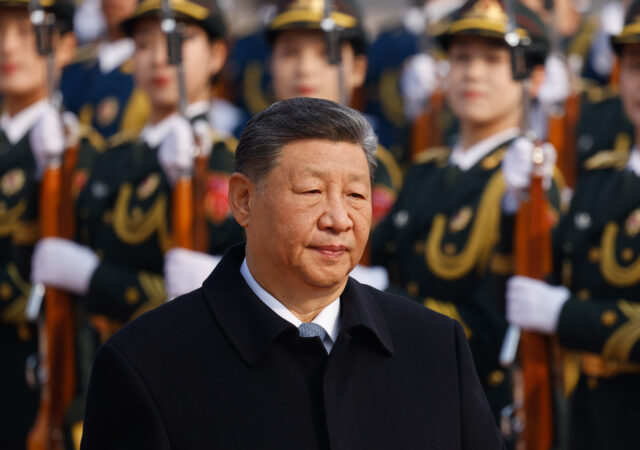
    These changes come as Chinese leader Xi Jinping has overseen a massive purge of top generals, including from the Rocket Force, in an attempt to ensure political loyalty and accelerate military modernization, including of the nuclear forces.

    Recent Chinese military textbooks have described launch-on-warning systems as essential for national security in peacetime and war and for nuclear and conventional conflicts.

    These publications often praise the U.S.’s advanced early warning systems as having strengthened American deterrence and argue that China needs similar capabilities to ensure Washington takes its nuclear forces seriously.

    “Strategic early warning is among decisive factors reflecting a nation’s military strength,” said a textbook published by China’s National University of Defense Technology last year. The text also warned that the systems must be exceptionally accurate to avoid an accidental launch.

    Another textbook, published in 2023, described advanced early warning systems as allowing a country to use “strategic offensive weapons to gain the initiative in combat” and added that a “powerful, responsive, and globally covered strategic early warning system can create a strong deterrent effect on the opposing side.”

    But that ability to deter adversaries comes with additional risks. Throughout the Cold War, technical glitches and human errors in American and Soviet early warning systems created multiple false alarms that nearly ended in disaster.

    “For China to abandon its traditional policy of delayed retaliation and move toward rapid response could significantly increase the risk of misunderstanding, overreaction and even incidental nuclear war,” said Tong Zhao, an expert on China’s nuclear weapons program at the Carnegie Endowment of International Peace, a Washington think tank.

  • Thai and Cambodian top diplomats meet in China to solidify ceasefire

    Thai and Cambodian top diplomats meet in China to solidify ceasefire

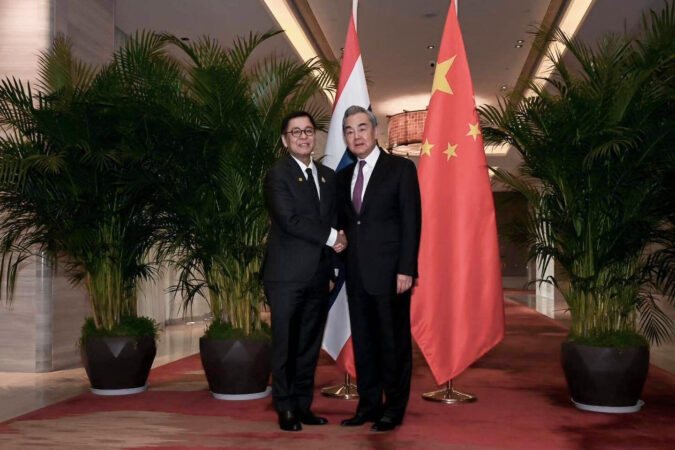
    BEIJING — Top diplomats from Thailand and Cambodia kicked off two days of talks in China on Sunday as Beijing seeks to strengthen its role in mediating the two countries’ border dispute, a day after they signed a new ceasefire.

    The ceasefire agreement calls for a halt to weeks of fighting along their contested border that has killed more than 100 people and displaced over half a million in both countries.

    Thai Foreign Minister Sihasak Phuangketkeow and Cambodian Foreign Minister Prak Sokhonn were set to meet in China’s southwestern Yunnan province for talks mediated by their Chinese counterpart, Wang Yi.

    China has sought to position itself as a mediator in the crisis, along with the United States and Malaysia.

    U.S. President Donald Trump, who threatened to withhold trade privileges unless Thailand and Cambodia agreed to a July ceasefire, suggested Sunday that the fighting between Thailand and Cambodia “will stop momentarily” and boasted that the U.S. “has become the REAL United Nations.”

    In a post on his social media site from his Mar-a-Lago estate in Florida, where he’s been spending the winter holidays, Trump wrote that both sides “will go back to living in PEACE” and referenced his past comments about helping to broker a ceasefire that largely hasn’t held.

    “I want to congratulate both great leaders on their brilliance in coming to this rapid and very fair conclusion. It was FAST & DECISIVE, as all of these situations should be!” Trump wrote.

    The talks in China aim to ensure a sustained ceasefire and promote lasting peace between the countries, according to a statement by Sihasak’s office.

    Wang was scheduled to join both bilateral meetings with each of the diplomats and a trilateral talk on Monday.

    China has welcomed the ceasefire announcement, which freezes the front lines and allows for displaced civilians to return to their homes near the border.

    “China stands ready to continue to provide (the) platform and create conditions for Cambodia and Thailand to have fuller and more detailed communication,” a Chinese Foreign Ministry statement read.

    The ceasefire agreement comes with a 72-hour observation period, at the end of which Thailand agreed to repatriate 18 Cambodian soldiers it has held as prisoners since earlier fighting in July. Their release has been a major demand of the Cambodian side.

    Prak Sokhonn, in a statement after his meeting with Wang, expressed deep appreciation for China’s “vital role” in supporting the ceasefire.

    China also announced 20 million yuan ($2.8 million) of emergency humanitarian aid for Cambodia to assist the displaced.

    The first batch of Chinese aid, including food, tents, and blankets, arrived in Cambodia on Sunday, Wang Wenbin, Chinese ambassador to Cambodia, wrote on Facebook.

    Sihasak said Sunday he hoped the meetings would convey to China that it should both support a sustainable ceasefire and send a signal to Cambodia against reviving the conflict or attempting to create further ones.

    “Thailand does not see China merely as a mediator in our conflict with Cambodia but wants China to play a constructive role in ensuring a sustainable ceasefire by sending such signals to Cambodia as well,” he said.

  • The moon and sun figure big in the new year’s lineup of cosmic wonders

    The moon and sun figure big in the new year’s lineup of cosmic wonders

    CAPE CANAVERAL, Fla. — The moon and sun share top billing in 2026.

    Kicking off the year’s cosmic wonders is the moon, drawing the first astronauts to visit in more than 50 years as well as a caravan of robotic lunar landers including Jeff Bezos’ new supersized Blue Moon. A supermoon looms on Jan. 3 and an astronomical blue moon is on the books for May.

    The sun will also generate buzz with a ring-of-fire eclipse at the bottom of the world in February and a total solar eclipse at the top of the world in August. Expect more auroras in unexpected places, though perhaps not as frequently as in the past couple years.

    And that comet that strayed into our turf from another star? While still visible with powerful backyard telescopes, the recently discovered comet known as 3I/Atlas is fading by the day after swinging past Earth in December. Jupiter is next on its dance card in March. Once the icy outsider departs our solar system a decade from now, it will be back where it belongs in interstellar space.

    It’s our third known interstellar visitor. Scientists anticipate more.

    “I can’t believe it’s taken this long to find three,” said NASA’s Paul Chodas, who’s been on the lookout since the 1980s. And with ever better technology, “the chance of catching another interstellar visitor will increase.”

    Here’s a rundown on what the universe has in store for us in 2026:

    Next stop, moon

    NASA’s upcoming moonshot commander Reid Wiseman said there’s a good chance he and his crew will be the first to lay eyeballs on large swaths of the lunar far side that were missed by the Apollo astronauts a half-century ago. Their observations could be a boon for geologists, he noted, and other experts picking future landing sites.

    Launching early in the year, the three Americans and one Canadian will zip past the moon, do a U-turn behind it, then hustle straight back to Earth to close out their 10-day mission. No stopping for a moonwalk — the boot prints will be left by the next crew in NASA’s Artemis lunar exploration program.

    More robotic moon landings are on the books by China as well as U.S. companies. Early in the year, Amazon founder Bezos is looking for his Blue Origin rocket company to launch a prototype of the lunar lander it’s designing for NASA’s astronauts. This Blue Moon demo will stand 26 feet, taller than the craft that delivered Apollo’s 12 moonwalkers to the lunar surface. The Blue Moon version for crew will be almost double that height.

    Back for another stab at the moon, Astrobotic Technology and Intuitive Machines are also targeting 2026 landings with scientific gear. The only private entity to nail a lunar landing, Firefly Aerospace, will aim for the moon’s far side in 2026.

    China is targeting the south polar region in the new year, sending a rover as well as a so-called hopper to jump into permanently shadowed craters in search of ice.

    Eclipses

    The cosmos pulls out all the stops with a total solar eclipse on Aug. 12 that will begin in the Arctic and cross over Greenland, Iceland, and Spain. Totality will last two minutes and 18 seconds as the moon moves directly between Earth and the sun to blot out the latter. By contrast, the total solar eclipse in 2027 will offer a whopping 6½ minutes of totality and pass over more countries.

    For 2026, the warm-up act will be a ring-of-fire eclipse in the Antarctic on Feb. 17, with only a few research stations in prime viewing position. South Africa and southernmost Chile and Argentina will have partial viewing. A total lunar eclipse will follow two weeks after February’s ring of fire, with a partial lunar eclipse closing out the action at the end of August.

    Parading planets

    Six of the solar system’s eight planets will prance across the sky in a must-see lineup around Feb. 28. A nearly full moon is even getting into the act, appearing alongside Jupiter. Uranus and Neptune will require binoculars or telescopes. But Mercury, Venus, Jupiter, and Saturn should be visible with the naked eye shortly after sunset, weather permitting, though Mercury and Venus will be low on the horizon.

    Mars will be the lone no-show. The good news is that the red planet will join a six-planet parade in August, with Venus the holdout.

    Supermoons

    Three supermoons will lighten up the night skies in 2026, the stunning result when a full moon inches closer to Earth than usual as it orbits in a not-quite-perfect circle. Appearing bigger and brighter, supermoons are a perennial crowd pleaser requiring no equipment, only your eyes.

    The year’s first supermoon in January coincides with a meteor shower, but the moonlight likely will obscure the dimmer fireballs. The second supermoon of 2026 won’t occur until Nov. 24, with the third — the year’s final and closest supermoon — occurring the night of Dec. 23 into Dec. 24. This Christmas Eve supermoon will pass within 221,668 miles of Earth.

    Northern and southern lights

    The sun is expected to churn out more eruptions in 2026 that could lead to geomagnetic storms here on Earth, giving rise to stunning aurora. Solar action should start to ease, however, with the 11-year solar cycle finally on the downslide.

    Space weather forecasters like Rob Steenburgh at the National Oceanic and Atmospheric Administration can’t wait to tap into all the solar wind measurements coming soon from an observatory launched in the fall.

    “2026 will be an exciting year for space weather enthusiasts,” he said in an email, with this new spacecraft and others helping scientists “better understand our nearest star and forecast its impacts.”