Category: Wires

  • At 89, she’s a top nutrition expert. Here’s what she eats in a day.

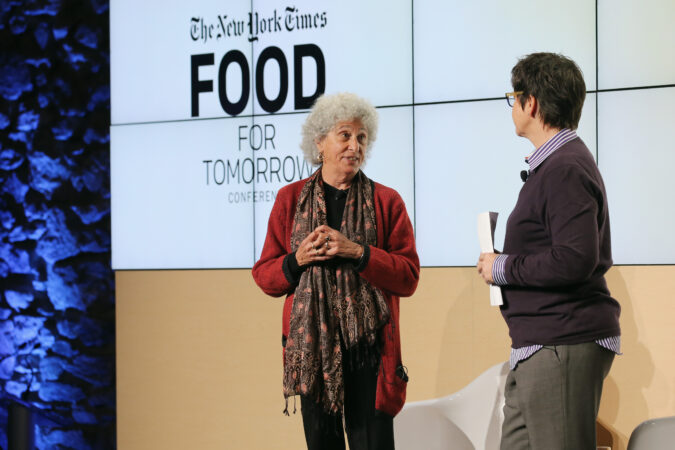
    At 89, she’s a top nutrition expert. Here’s what she eats in a day.

    For more than three decades, Marion Nestle has been telling people what to eat.

    In the late 1980s, she edited the first Surgeon General’s Report on Nutrition and Health, then went on to cowrite the federal government’s Dietary Guidelines for Americans and cofound New York University’s influential food studies program.

    Nestle, now an emerita professor at NYU, says her time in government opened her eyes to the multi-billion-dollar food industry’s enormous influence over Congress. By the early 2000s, she became a critic of the food industry and an advocate for major food reforms, which she made the case for in best-selling books.

    In 2002, Nestle published Food Politics, an exposé that argued that the food industry is at the root of many of the country’s nutritional problems. The industry rakes in ever-growing profits by churning out highly processed foods laden with additives, Nestle wrote, and then aggressively markets those foods to children and adults while lobbying against regulations and trying to co-opt nutrition experts.

    Over the years, Nestle’s blunt nutrition advice, sharp criticism of food companies, and frequent media appearances made her one of the most recognizable names in nutrition. In 2006, she published one of her most popular books, What to Eat, which showed consumers how to navigate supermarkets and improve their health by deciphering food labels.

    At age 89, Nestle, who lives in New York City and Ithaca, is still going strong. In November, she published her latest book: What to Eat Now: The Indispensable Guide to Good Food, How to Find It, and Why It Matters.

    We wanted to know how Nestle’s knowledge of nutrition and the food industry affects her daily food decisions. So we caught up with her to find out what she eats in a typical day, which foods she loves and avoids, which “junk foods” she can’t resist, and whether she takes supplements or has advice on how to navigate grocery stores. This interview has been edited for length and clarity.

    Q: What’s your general approach to food?

    A: I follow Michael Pollan’s famous mantra: Eat food, not too much, mostly plants. And I define food as being unprocessed or as minimally processed as possible. Not ultra-processed. I really think that takes care of it. That doesn’t mean I’m perfect. I’m an omnivore. I eat everything. I just don’t eat very much in part because metabolism drops with age, and I don’t have much metabolism left.

    I eat pretty healthy, but I don’t obsess about it. If I have a bad day of eating, I don’t worry about it. By this time, it’s pretty clear I’m not going to die prematurely. Obviously, what I’m eating is working for me because I’m 89 and I’m still here.

    Q: What do you eat for breakfast?

    A: I start with coffee between 8 and 9 a.m. I’ll have a couple cups of weak coffee with milk, no sugar. And then I’m at work. That’s when I do my writing. I don’t get hungry until about 10:30 or 11 a.m. That’s when I’ll usually have oatmeal or unsweetened Post Shredded Wheat cereal. It basically has one ingredient: wheat. I like the texture of Shredded Wheat and the way that it tastes. I add a little brown sugar, not much. I use a lot less sugar than what’s in presweetened cereals. And then I’ll add blueberries or whatever fruit is in season. That combination to me is really appealing.

    I’ve never believed any of the research on breakfast being the most important meal of the day. Most of that was sponsored by cereal companies.

    Q: What about lunch?

    A: My lunches are totally irregular. Sometimes I’ll have a salad for lunch. Or if I’m having lunch with someone then I’ll eat whatever is in the restaurant. If I’m at home in New York City, I’ll harvest whatever is growing on my terrace. The peaches, cherries, raspberries, and blueberries that I was growing are long gone. But I’ve still got some lettuce and tomatoes, so I’m going to go out and pick those. I might cut up some cheese or have it with peanuts. And I might have some bread with that.

    Q: What about dinner?

    A: It depends. I just don’t eat that much. But I do really like salads. I can have salads twice a day. If I’m at home, I might have an egg. I might have crackers and cheese with that. I kind of like making meals based on what I have available. So, it depends on what I bought, what’s in the house, or what’s on the terrace. That’s my favorite way of cooking. We have a garden in Ithaca, there’s a garden on my terrace, and there’s a farmers market not very far from here.

    I also go to a lot of neighborhood restaurants. I’m going to Mark Bittman’s restaurant this week — the kitchen that he started in the East Village where people pay according to their income. I’ll eat whatever they’re serving. One restaurant that I like a lot is il Buco Alimentari & Vineria. I love going there. They have a particular salad that I adore. It’s always so crisp, and they have wonderful pasta dishes.

    Q: What are some foods that you love?

    A: Fortunately, I like a lot of very simple foods. I like vegetables. I like eggs. I like cheese. I do eat some ultra-processed foods. But not a lot of them. I don’t like ultra-processed foods that have a long list of ingredients. Most of those don’t taste good to me. I do really like vegetables. I like the crunch, the flavors, and the colors. That makes it easy to eat healthy.

    But I recognize that I’m privileged. I weigh basically what I weighed when I was in high school. I don’t have a weight problem. And I have an enormous amount of sympathy for people who do. I consider myself extremely fortunate. Is it genetics? I have no idea. My father died of a heart attack at the age of 47. He was an obese three-pack-a-day smoker. It’s hard to know where genetics fits into this.

    Q: Do you have any favorite treats or desserts?

    A: Ice cream. When I’m at home in New York City, I try to find ginger ice cream, which I like very much. It’s hard to find. But when I find it, I buy it. And then my partner and I make homemade vanilla ice cream in Ithaca. It’s only three or four ingredients. It’s ruined other ice creams for me because a lot of commercial ice creams have all these emulsifiers in them that keep the ice cream sticking together. Real ice cream completely falls apart if it’s left at room temperature and not eaten right away. It separates and liquefies. But I like that. I think it tastes better and has a better texture than the commercial ice creams that have emulsifiers. I like ice cream without the emulsifiers.

    Q: What about snacks?

    A: I like corn chips. Not too salty. Some corn chips are ultra-processed, although most are not. The ones I like are Wegmans. They only have a few ingredients — just corn, oil, and salt basically. I also like candy, particularly See’s Candies. The one See’s candy store in New York is just a couple blocks away from me. I normally get the peanut brittle. Sometimes the lollipops. I can have these things in the house and not feel like I have to eat all of them all at once. Not everyone can do that.

    Q: Can you tell us about your new book?

    A: It’s called What to Eat Now. It’s the updated edition of What to Eat, which was published 20 years ago. It’s a completely rewritten book. I thought it was going to be a six-month project, and it ended up taking me four years because so much has changed in grocery stores. There’s been a huge turnover in products. For example, “functional waters” that contain vitamins, minerals, cannabis, supplements, and other things have replaced Coca-Cola and plain water. Plant milks are new. The only plant milk that existed 20 years ago was soy milk. Now there are tons of others. Plant-based meats did not exist 20 years ago — at least not in the way that they do now.

    Q: What is one takeaway from the book?

    A: It’s not a book about personal diets. It’s a book about how to think about food issues. I think what to eat now boils down to eat food, not too much, mostly plants.

    Q: Do you take any supplements?

    A: I don’t take supplements because I eat a healthy diet. I don’t think I need them. But two out of three Americans take supplements. They make people feel better — and it’s hard to argue with that. Life is tough. If all it takes is a supplement to make you feel better, then I’m not going to argue with that. I used to be much more upset about supplements. But now it’s clear to me that they make people feel better. Whether that’s because they’re doing something or because they’re a placebo, it’s hard to know.

    But I don’t trust what’s in them. There’s so much evidence that what the label says isn’t what’s actually in them. Many studies have found that a remarkable percentage of supplements do not actually contain what’s listed on their labels. I don’t want to put something in my body if I don’t know what’s in it. And there are things in supplements that are not supposed to be there — that’s what so many studies have found. It’s not true of all supplements. But it’s very hard to know which ones are OK and which ones are not. So I don’t take any of them.

    Q: Do you have any advice for our readers?

    A: Eating healthfully in today’s society is very difficult because you’re fighting an entire food industry on your own— and that industry is trying to sell you the most profitable, least healthy foods available. But one thing you can do is read food labels. There’s a lot of information on them. If you’re looking at a packaged food and you can’t recognize the ingredients, or if you can’t purchase the ingredients at a supermarket, then it’s ultra-processed. There are certain ingredients that are indicators of ultra-processed foods. That would be color additives, flavor additives, and emulsifiers such as mono and diglycerides, polysorbates and carrageenan, and texturizers such as agar. I always read food labels. If something has a lot of artificial additives and ingredients that I don’t recognize, then I’m not going to eat it.


  • New analysis shows more U.S. consumers are falling behind on their utility bills

    New analysis shows more U.S. consumers are falling behind on their utility bills

    WASHINGTON — More people are falling behind on paying their bills to keep on the lights and heat their homes, according to a new analysis of consumer data — a warning sign for the U.S. economy and another political headache for President Donald Trump.

    Past-due balances to utility companies jumped 9.7% annually to $789 between the April-June periods of 2024 and 2025, said the Century Foundation, a liberal think tank, and the advocacy group Protect Borrowers. The increase has overlapped with a 12% jump in monthly energy bills during the same period.

    Consumers usually prioritize their utility bills along with their mortgages and auto debt, said Julie Margetta Morgan, the foundation’s president. The increase in both energy costs and delinquencies may suggest that consumers are falling behind on other bills, too.

    “There’s a lot of information out there about rising utility costs, but here we can actually look at what that impact has been on families in terms of how they’re falling behind,” Margetta Morgan said.

    Troubles paying electricity and natural gas bills reflect something of an economic quandary for Trump, who is promoting the build-out of the artificial intelligence industry as a key part of an economic boom he has promised for America. But AI data centers are known for their massive use of electricity, and threaten to further increase utility bills for everyday Americans.

    These troubles also come as Trump faces political pressure from voters fed up with the high cost of living. The president spoke about the economy and affordability issues Monday at an event hosted by the McDonald’s fast food company.

    “We have it almost at the sweet spot and prices are coming down on different things,” Trump said at the event, adding that inflation has been “normalized” at a “low level.”

    Ever since Republicans saw their fortunes sag in off-year elections this month and affordability was identified as the top issue, Trump has been trying to convince the public that prices are falling. Fast-rising electricity bills could be an issue in some congressional battlegrounds in next year’s midterm elections.

    Trump has put a particular emphasis on prices at the pump. Gasoline accounts for about 3% of the Consumer Price Index, slightly less than the share belonging to electricity and natural gas bills — meaning that possible savings on gasoline could be more than offset by higher utility bills.

    The president maintains that any troubling data on inflation is false and that Democrats are simply trying to hurt his administration’s reputation.

    “In fact, costs under the TRUMP ADMINISTRATION are tumbling down, helped greatly by gasoline and ENERGY,” Trump posted on social media Friday. ”Affordability is a lie when used by the Dems,”

    Nearly 6 million households have utility debt “so severe” that it will soon be reported to collection agencies, according to the foundation’s analysis, drawn from the University of California Consumer Credit Panel.

    During Trump’s first six months in office, there was a 3.8% increase in households with severely overdue utility bills.

    “Voters are frustrated and families are hurting because these tech giants are cutting backroom deals with politicians, and it’s causing their power bills to go up,” said Mike Pierce, executive director of Protect Borrowers. “If the Trump administration doesn’t want to do its job and protect families and make life more affordable, I guess that’s its choice.”

    Both Margetta Morgan and Pierce previously worked at the Consumer Financial Protection Bureau, a government agency formed in part to track trends in household borrowing to prevent potential abuses. The Trump administration has essentially shut down the bureau.

    The administration has so far said it has no responsibility for any increases in electricity prices, since those are often regulated by state utility boards. The White House maintains that utility costs are higher in Democratic states that rely on renewable forms of energy.

    “Electricity prices are a state problem,” Treasury Secretary Scott Bessent told ABC News this month. “There are things that the federal government can control. Local electricity prices are not one of them.”

    The new analysis of utility bills by the groups counters that the Trump administration is contributing to higher utility costs “by impeding renewable energy generation” including solar and wind power.

    While that analysis is a warning sign, other economic analyses on consumers suggest their finances are stable despite some emerging pressures.

    The New York Federal Reserve has said delinquency rates of 90 days or more for mortgages, auto loans, and student debt have each increased over the past 12 months, though it said mortgage delinquencies are “relatively low.” An analysis of debit and credit card spending by the Bank of America Institute showed that consumers’ “overall financial health looks sound.”

  • Ford taps Amazon to let shoppers buy its used cars online

    Ford taps Amazon to let shoppers buy its used cars online

    Ford Motor Co. has struck a deal with Amazon.com Inc. to sell certified used cars through its e-commerce website, becoming the second major automaker to reach customers through the massive online retailer.

    Ford joins Hyundai Motor Co. on the Amazon Autos portal, which allows car buyers to browse, finance, and purchase a used car by clicking on the familiar “add to cart” icon. Hyundai began selling new cars through the platform late last year, but Ford is only offering its “Blue Advantage” certified used cars on the site, the second-largest U.S. automaker said Monday in a statement.

    Car buyers will take delivery of their vehicles through Ford dealers participating in the program. So far, Ford dealers in Los Angeles, Seattle, and Dallas have signed up, but Ford plans to roll out the program nationally in the coming months. The automaker said about 200 of its 2,800 dealers nationwide have expressed interest in selling on Amazon.

    Ford’s move comes as consumers are looking for simpler and faster ways to buy cars and are increasingly patronizing online car sellers such as Carvana Co. and CarMax Inc.

    It also comes at a time when average new car prices have topped a record $50,000 and more mainstream buyers are turning to used car lots to find something they can afford. The average price of a three-year-old used car was $31,067 in the third quarter, the highest in three years, according to automotive researcher Edmunds.com.

    Some auto manufacturers have attempted to emulate Tesla Inc.’s online sales model that bypasses traditional dealers, but Ford is working with its independent retailers to sell on Amazon.

    “Everyone has an Amazon account,” Wendy Lane, senior manager of Ford’s Blue Advantage unit, said in an interview. “Knowing that it is a trusted source for consumers and having our vehicles listed there, we’re really excited to see how it works and how well consumers adopt it.”

    Ford’s goal is to drive traffic to its dealers used-car lots so that car buyers stay in “Ford’s ecosystem” for service and future purchases, Lane said.

    The company will take what it learns from selling certified used cars on Amazon to see if it eventually wants to add new cars to the online retailer’s automotive storefront.

    The used vehicles will be sold at a set price, with no haggling. They will have received multipoint inspections, and Ford will offer limited warranties of up to one year or 12,000 miles. The Amazon search tool enables buyers to see a vehicle’s service history and condition reports.

    “By working with exceptional Ford dealers who share our commitment to customer service, we’re creating a car buying experience that combines trusted vehicle certification with the convenience Amazon is known for,” Fan Jin, global leader of Amazon Autos, said in a statement.

  • Tyrese Maxey and the Sixers rally for 110-108 win over the Los Angeles Clippers

    Tyrese Maxey and the Sixers rally for 110-108 win over the Los Angeles Clippers

    Tyrese Maxey scored 39 points, Paul George had nine points and seven rebounds in his season debut, and the 76ers rallied for a 110-108 victory over the short-handed Los Angeles Clippers on Monday night.

    Quentin Grimes added 19 points and Andre Drummond had 14 points and 18 rebounds while filling in for Joel Embiid.

    James Harden scored 28 points for the Clippers, who have lost eight of nine. Harden became the 11th player to eclipse 28,000 career points with a first-quarter layup.

    Derrick Jones Jr. sat out after injuring his knee in Sunday’s 121-118 loss at Boston. The Clippers also were without Kawhi Leonard (ankle/foot sprain) for the seventh straight game.

    Embiid (right knee injury management) sat out for the third straight game and eighth of 13 this season.

    Los Angeles controlled the first 3½ quarters and led 91-81 with 8 minutes, 44 seconds left on Ivica Zubac’s 10-footer. But the Sixers used a 14-3 run over the next 2:49, capped by Maxey’s layup, to go in front 95-94. It was close from that point.

    Drummond made two free throws to put the 76ers ahead 110-106 with 1:08 left. Kobe Sanders made a pair of free throws with 13.8 seconds left to pull the Clippers within two before officials whistled Kris Dunn for a foul on Maxey. But that was overturned to a steal by Dunn after a challenge by the Clippers, giving L.A. a chance to tie or win.

    Harden misfired on two three-point attempts in the final seconds.

    In addition to Embiid, the Sixers were missing Kelly Oubre Jr. (left knee sprain) and Adem Bona (right ankle sprain).

    George sat out the first 12 games while recovering from offseason left knee surgery. The nine-time All-Star played 21 minutes.

    Up next

    The Sixers will host the Toronto Raptors at Xfinity Mobile Arena on Wednesday (7 p.m., NBCSP).

  • FEMA acting chief David Richardson departs after 6 months on the job

    FEMA acting chief David Richardson departs after 6 months on the job

    SAN DIEGO — The acting chief of the Federal Emergency Management Agency left his job Monday after just six months, according to the Department of Homeland Security, the latest disruption in a year of mass staff departures, program cuts and policy upheaval at the agency charged with managing federal disaster response.

    David Richardson, who in his brief term remained largely out of public sight, is leaving the post after he faced a wave of criticism for his handling of the deadly Texas floods earlier this year. He replaced previous acting head Cameron Hamilton in May.

    DHS did not comment on the details of Richardson’s departure, but a FEMA employee familiar with the matter told The Associated Press that Richardson resigned. The employee spoke on condition of anonymity because they weren’t authorized to discuss the changes with the media.

    “The Federal Emergency Management Agency and the Department of Homeland Security extend their sincere appreciation to the Senior Official Performing the Duties of the Administrator, David Richardson, for his dedicated service and wish him continued success in his return to the private sector,” a DHS spokesperson told The Associated Press.

    The Washington Post first reported the news about Richardson’s resignation.

    A former Marine Corps officer who served in Iraq and Afghanistan and also led the DHS Countering Weapons of Mass Destruction office, Richardson had no previous emergency management experience when he assumed the role of “senior official performing the duties of administrator” in May.

    After replacing Hamilton, who was fired one day after telling a House appropriations committee that he did not think FEMA should be eliminated, Richardson vowed to help fulfill President Donald Trump’s goal to push more disaster recovery responsibilities to the states and told FEMA employees he would ” run right over ” anyone who tried to obstruct that mission.

    But Richardson’s leadership was questioned by members of Congress and FEMA employees, particularly after remaining largely out of sight after the deadly Texas floods last July that killed at least 136 people.

    When asked by a House committee in July why he did not arrive on the ground until one week after the disaster, Richardson said he stayed in Washington, D.C., to “kick down the doors of bureaucracy,” but also said he was camping with his sons for the July 4 weekend when the floods first hit and initially helped manage the response from inside his truck.

    Homeland Security Secretary Kristi Noem has also kept a tight grip on FEMA programs and spending, requiring that she personally approve any agency expenditure over $100,000. Richardson had denied reports that the approval policy slowed down FEMA’s response in Texas.

    FEMA Chief of Staff and former cybersecurity official Karen Evans will assume the role on Dec. 1, according to DHS. The FEMA administrator is required by law to have emergency management experience, but the Trump administration has circumvented those requirements up to now by appointing temporary leaders.

    The agency has undergone major upheaval since Trump returned to office in January promising to vastly overhaul if not eliminate the agency. About 18% of the agency’s permanent full-time employees had departed as of June, including 24 senior-level staffers, according to the Government Accountability Office.

    The Trump administration also has slashed mitigation funding, placed requirements on preparedness grants that compel recipients to comply with Trump’s immigration agenda, and denied several states’ requests for major disaster declaration requests.

    DHS did not respond to questions about whether Richardson will still lead the Countering Weapons of Mass Destruction Office.

    Trump appointed a 12-member review council led by Noem and Defense Secretary Pete Hegseth to deliver recommendations on how to reform FEMA and push more responsibility to the states for disaster preparedness, response and recovery. The council is expected to deliver its recommendations in December.

  • Judge scolds Justice Department for ‘profound investigative missteps’ in James Comey case

    Judge scolds Justice Department for ‘profound investigative missteps’ in James Comey case

    WASHINGTON — The Justice Department engaged in a “disturbing pattern of profound investigative missteps” in the process of securing an indictment against former FBI Director James Comey, a federal judge ruled Monday in directing prosecutors to provide defense lawyers with all grand jury materials from the case.

    Those problems, wrote Magistrate Judge William Fitzpatrick, include “fundamental misstatements of the law” by a prosecutor to the grand jury that indicted Comey in September, the use of potentially privileged communications during the investigation and unexplained irregularities in the transcript of the grand jury proceedings.

    “The Court recognizes that the relief sought by the defense is rarely granted,” Fitzpatrick wrote “However, the record points to a disturbing pattern of profound investigative missteps, missteps that led an FBI agent and a prosecutor to potentially undermine the integrity of the grand jury proceeding.”

    The 24-page opinion is the most blistering assessment yet by a judge of the Justice Department’s actions leading up to the Comey indictment. It underscores how procedural missteps and prosecutorial inexperience have combined to imperil the prosecution pushed by President Donald Trump for reasons separate and apart from the substance of the disputed allegations against Comey.

    The Comey case and a separate prosecution of New York Attorney General Letitia James have hastened concerns that the Justice Department is being weaponized in pursuit of Trump’s political opponents. Both defendants have filed multiple motions to dismiss the cases against them before trial, arguing that the prosecutions are improperly vindictive and that the prosecutor who filed the charges, Lindsey Halligan, was illegally appointed.

    A different judge is set to decide by Thanksgiving on the challenges by Comey and James to Halligan’s appointment.

    Though grand jury proceedings are presumptively secret, Comey’s lawyers had sought records from the process out of concern that irregularities may have tainted the case. The sole prosecutor who defense lawyers say presented the case to the grand jury was Halligan, a former White House aide with no prior prosecutorial experience who was appointed just days before the indictment to the job of interim U.S. attorney for the Eastern District of Virginia.

    In his order Monday, Fitzpatrick said that after reviewing the grand jury transcript himself, he had come away deeply concerned about the integrity of the case.

    “Here, the procedural and substantive irregularities that occurred before the grand jury, and the manner in which evidence presented to the grand jury was collected and used, may rise to the level of government misconduct resulting in prejudice to Mr. Comey,” Fitzpatrick said.

    The Justice Department responded to the ruling by asking that it be put on hold to give prosecutors time to file objections. The government said it believed Fitzpatrick “may have misinterpreted” some facts in issuing his ruling.

    Fitzpatrick listed, among nearly a dozen irregularities in his ruling, two different comments that a prosecutor — presumably, Halligan — made to the grand jury that he said represented “fundamental misstatements of the law.”

    The actual statements are blacked out, but Fitzpatrick said the prosecutor seems to have ignored the fact that a grand jury may not draw a negative inference about a person who exercises his right not to testify in front of it. He said she also appeared to suggest to grand jurors that they did not need to rely only on what was presented to them and could instead before assured that there was additional evidence that would be presented at trial.

    The judge also drew attention to the jumbled manner in which the indictment was obtained and indicated that a transcript and recording of the proceedings do not provide a full account of what occurred. Halligan initially sought a three-count indictment of Comey, but after the grand jury rejected one of the three proposed counts and found probable cause to indict on the other two counts, a second two-count indictment was prepared and signed.

    But Fitzpatrick said it was not clear to him in reviewing the record that the indictment that Halligan presented in court at the conclusion of the process had been presented to the grand jury for their deliberation.

    “Either way, this unusual series of events, still not fully explained by the prosecutor’s declaration, calls into question the presumption of regularity generally associated with grand jury proceedings, and provides another genuine issue the defense may raise to challenge the manner in which the government obtained the indictment,” he wrote.

    The two-count indictment charges Comey with lying to Congress in September 2020 when he suggested under questioning that he had not authorized FBI leaks of information to the news media. His lawyers say the question he was responding to was vague and confusing but the answer he gave to the Senate Judiciary Committee was true.

    The line of questioning from Sen. Ted Cruz appeared to focus on whether Comey had authorized his former deputy director, Andrew McCabe, to speak with the news media. But since the indictment, prosecutors have made clear that their indictment centers on allegations that Comey permitted a separate person — a close friend and Columbia University law professor, Dan Richman — to serve as an anonymous source in interactions with reporters.

    The FBI executed search warrants in 2019 and 2020 to access messages between Richman and Comey as part of a media leaks investigation that did not result in charges. But Fitzpatrick said he was concerned that communications between the men that might have been protected by attorney-client privilege — Richman was at one point functioning as a lawyer for Comey — were exposed to the grand jury without Comey having had an opportunity to object.

  • For a vegetarian borshch with oomph, bust out the tangy sauerkraut

    For a vegetarian borshch with oomph, bust out the tangy sauerkraut

    One of the most nourishing things about food is the human connection it forges. Food brings us together at the table and beyond, linking us to family history and the larger community.

    The new cookbook Russ & Daughters: 100 Years of Appetizing by Niki Russ Federman and Josh Russ Tupper, written with Joshua David Stein, reflects the deep, multilayered way food unites us and tells our story.

    The authors’ great-grandfather opened his appetizing store in New York City in 1914, and they are the fourth generation to carry on his legacy. The current location of the store, on the Lower East Side of Manhattan, is the last remaining appetizing store in an area that once had dozens like it. These shops, born of Eastern European tradition and often run by Ashkenazi Jews, specialized in ready-to-eat kosher or kosher-style specialties that could fill out a meat-free spread, such as smoked and cured fish, pickles, salads, soups, and more. (They are not to be confused with delis, as the family behind Russ & Daughters notes on its site.)

    I feel a communal bond with these foods, too — my grandfather grew up in that neighborhood, and these dishes were central to the culinary culture he passed down to us.

    The book, which is packed with both traditional recipes and the authors’ more modern takes on the classics, is also full of personal stories and rich historical accounts of the “nearly lost world of appetizing itself,” they write.

    This hot borshch recipe reflects the soup’s history and tradition, with a new-to-me twist. It delivers the key elements you’d expect from a hot red borshch — beets, cabbage, carrot, and onion simmered in an herb-rich broth, fragrant with dill and topped with a cool dollop of sour cream.

    But in this version, the sweetness of the beets is balanced with tangy sauerkraut, which adds a delightfully funky flavor and toothsome texture to the bowl. A squeeze of lemon juice brightens the vegetarian soup further, for a comforting, crimson bowl of goodness that brings plenty of vitamins, minerals, and fiber to the table, along with the essential nutrients of connection and history.

    Vegetarian borshch with sauerkraut

    Tangy sauerkraut, a squeeze of lemon, and a cool dollop of sour cream balance the sweetness of the beets in this hot vegetarian borshch. Packed with hearty root vegetables and cabbage, and flavored with fresh dill, it tastes like ultimate comfort food. The soup’s depth of flavor comes from the sauerkraut and a few hours of simmering, making it a terrific weekend project and make-ahead dish for busy weeknights.

    6 servings

    Active time: 50 minutes. Total time: 4 hours.

    Storage note: Refrigerate for up to 4 days.

    Ingredients

    2 to 3 large red beets (1 pound total), trimmed and scrubbed

    2 tablespoons olive oil

    1 medium yellow onion (8 ounces), diced

    1/4 teaspoon plus 1/8 teaspoon salt, divided, plus more as needed

    1 medium carrot, peeled and diced

    1 small white turnip (8 ounces), diced

    1/4 large head green cabbage, thinly sliced (about 4 cups)

    8 cups low-sodium vegetable broth, divided

    1 1/2 cups sauerkraut, drained (brine reserved)

    5 sprigs fresh thyme, tied with butcher’s twine

    1 tablespoon fresh lemon juice (from 1/2 lemon)

    Freshly ground black pepper

    1/3 cup coarsely chopped fresh dill

    1/2 cup sour cream

    Directions

    Position a rack in the middle of the oven and preheat to 400 degrees. Wrap each beet individually in foil and set on a small sheet pan. Roast for 1 hour 10 minutes to 1 1/2 hours, or until the beets become fork-tender. (The roasting time will depend on the size of the beets.) Let cool for 15 minutes, then remove and discard the skins and dice the beets.

    In a large (5-quart) pot over medium-high heat, heat the oil until shimmering. Add the onion and 1/8 teaspoon of the salt, and cook, stirring occasionally, until softened and starting to brown, 5 to 7 minutes. Add the carrot and turnip, and cook, stirring occasionally, until slightly softened and the turnip is starting to brown, 5 to 7 minutes more. (Reduce the heat to medium, if the vegetables are browning too quickly.) Stir in the cabbage and the remaining 1/4 teaspoon of salt, and cook, stirring frequently, until it softens 3 to 5 minutes. Add 7 cups of the broth, the sauerkraut, and thyme, and bring to a boil.

    Meanwhile, in a blender, combine 1/2 cup of the diced beets and the remaining 1 cup of broth, and puree until smooth. Add the puree to the pot and bring the borshch to a boil. Reduce the heat to the lowest setting and very gently simmer, uncovered, until the liquid has reduced a little (by about 1 cup), the vegetables are tender and the flavors meld, about 2 hours. Discard the thyme sprigs, add the remaining diced beets, and remove from the heat.

    Stir in the lemon juice, then season to taste with pepper, some of the reserved sauerkraut juice and, if desired, more salt. Ladle the borshch into bowls, garnish each with a scant 1 tablespoon of the dill and a generous 1 tablespoon of the sour cream, and serve.

    Substitutions: Yellow onion >> white onion. Instead of roasting beets >> use 1 pound precooked beets (not canned). Fresh thyme >> 1 teaspoon dried thyme.

    Nutritional information per serving (1 2/3 cups borshch, plus generous 1 tablespoon sour cream) | 177 Calories: 25g Carbohydrates, 9mg Cholesterol, 8g Fat, 8g Fiber, 4g Protein, 2g Saturated Fat, 767mg Sodium, 11g Sugar

    This analysis is an estimate based on available ingredients and this preparation. It should not substitute for a dietitian’s or nutritionist’s advice.

    Adapted from “Russ & Daughters: 100 Years of Appetizing” by Niki Russ Federman and Josh Russ Tupper with Joshua David Stein (Flatiron Books, 2025).

  • Vikings’ Carson Wentz to IR with shoulder injury that requires season-ending surgery, source says

    Vikings’ Carson Wentz to IR with shoulder injury that requires season-ending surgery, source says

    MINNEAPOLIS — The Minnesota Vikings placed quarterback Carson Wentz on injured reserve on Monday after he gutted out a shoulder injury during the last 2½ games of his five-game fill-in for J.J. McCarthy.

    The former Eagles quarterback will have season-ending surgery on his left, nonthrowing shoulder, according to a person with knowledge of the plans who spoke to The Associated Press on condition of anonymity because the Vikings had not yet announced those details.

    McCarthy, who suffered a high sprain of his right ankle during the second game of the season, was already on track to return to action this week when the struggling Vikings (3-4) play at division rival Detroit.

    Wentz, who signed with the team he grew up rooting for in neighboring North Dakota the week before the regular season began, went from veteran backup to starter after McCarthy went down. The Vikings went 2-3 with Wentz, including a 37-10 blowout by the Los Angeles Chargers on Thursday. He was first hurt in the first half on Oct. 5 in London against the Cleveland Browns.

    Wentz was under heavy pressure that night, with starting tackles Christian Darrisaw and Brian O’Neill and original starting center Ryan Kelly all sidelined by injury, and he took several hard hits that had him wincing. Vikings coach Kevin O’Connell said he was told by the medical staff that Wentz wasn’t risking further damage by staying in the game, so he decided not to expose undrafted rookie backup Max Brosmer to the pass rush behind a patchwork offensive line and kept Wentz in until the final drive.

    The Eagles beat the Wentz-led Vikings 28-22 on Oct. 19. He completed 26 of 42 passes for 313 yards and two interceptions against his former team.

    Wentz, who was the second pick in the 2016 NFL draft by the Eagles, extended his league record by making Minnesota the sixth team he has made at least one start for over the last six seasons.

    The Vikings used the open roster spot to claim former Green Bay Packers tight end Ben Sims off waivers. Tight end Josh Oliver was forced out of the last game with a foot injury.

  • FIFA opens second phase of World Cup ticket sales

    FIFA opens second phase of World Cup ticket sales

    FIFA began the process of selling another 1 million tickets for next year’s World Cup on Monday, with the opening of a new ticket draw marking the start of the tournament’s second phase of sales.

    The World Cup will take place this summer in 16 cities across the U.S., Canada, and Mexico, including in Philadelphia, where six matches will be played at Lincoln Financial Field.

    This draw, which runs through 11 a.m. Friday, includes a domestic exclusivity time slot for residents of the three host countries. Fans from those countries, whose entries are selected out of this draw, will have the opportunity to buy single-match tickets for games taking place inside their home nation.

    The phase is open to all fans, regardless of which country they live.

    “We already have seen massive interest from around the world for this tournament, and especially from within the host countries as Canada, Mexico and the United States prepare to host the biggest FIFA World Cup yet,” said Heimo Schirgi, the tournament’s chief operating officer. “This second phase, with its host country domestic exclusivity time slot, will allow us to say ‘thank you’ to these local fans, while ensuring global opportunity as well.”

    Those fans from the U.S, Canada and Mexico who enter the draw before it closes Friday have a chance to receive, through what FIFA says is a randomized process, a time slot during which they can buy tickets starting on Nov. 12. Those slots will be issued through Nov. 15. Fans who win those chances will receive word at least 48 hours before their time slot opens.

    Residents of the three host countries — the U.S., Canada and Mexico, in that order — purchased more tickets than those from any other nation in the initial phase of ticketing. England, Germany, Brazil, Spain, Colombia, Argentina and France, in that order, rounded out the top 10.

    Once the domestic exclusivity time slot ends, more fans will be eligible to obtain a purchasing slot starting on Nov. 17. Additional tickets will be made available in subsequent phases, FIFA said.

    FIFA announced earlier this month that more than 1 million tickets have already been sold for next year’s World Cup, with people from 212 countries and territories having already purchased. So far, 28 of the 48 spots for teams in the field have been filled.

    The start of ticket sales doesn’t take away from how there are unique questions for consumers heading into the tournament, particularly about how they’ll get visas, if necessary, to visit the U.S. as the country cracks down on immigration. An international friendly match between defending World Cup champion Argentina — featuring Lionel Messi — and Puerto Rico was moved from Chicago to Fort Lauderdale, Fla., because of lagging ticket sales that some believe were in response to the immigration crackdown.

    Based on the listed stadium attendance figures, there are roughly 7.1 million seats to fill for the 104 matches for the tournament around 16 North American venues. It is unknown how many of those seats will be available for sale to the public.

    Ticket data has shown that the lowest-priced seats — set at $60 — were available for at least 40 matches. Almost all seats for the vast majority of matches were set at a much higher price. The opening match for the U.S., to be played at Inglewood, Calif., had prices ranging from $560 to $2,735 when sales opened. On the resale site, at least one ticket for that opening U.S. match on June 12 was listed for more than $60,000 earlier this month.

    Fans with the option to purchase could choose seats in one of four categories; Category 1 is what FIFA officials call the best seats, Category 4 is somewhere around the tops of stadiums. Ticket costs are expected to fluctuate as soccer’s biggest event utilizes dynamic pricing for the first time.

  • Trump administration posts notice that no federal food aid will go out Nov. 1

    Trump administration posts notice that no federal food aid will go out Nov. 1

    The U.S. Department of Agriculture has posted a notice on its website saying federal food aid will not go out Nov. 1, raising the stakes for families nationwide as the government shutdown drags on.

    The new notice comes after the Trump administration said it would not tap roughly $5 billion in contingency funds to keep benefits through the Supplemental Nutrition Assistance Program, commonly referred to as SNAP, flowing into November. That program helps about 1 in 8 Americans buy groceries.

    “Bottom line, the well has run dry,” the USDA notice says. “At this time, there will be no benefits issued November 01. We are approaching an inflection point for Senate Democrats.”

    The shutdown, which began Oct. 1, is now the second-longest on record. While the Republican administration took steps leading up to the shutdown to ensure SNAP benefits were paid this month, the cutoff would expand the impact of the impasse to a wider swath of Americans — and some of those most in need — unless a political resolution is found in just a few days.

    The administration blames Democrats, who say they will not agree to reopen the government until Republicans negotiate with them on extending expiring subsidies under the Affordable Care Act. Republicans say Democrats must first agree to reopen the government before negotiation.

    Democratic lawmakers have written to Agriculture Secretary Brooke Rollins requesting to use contingency funds to cover the bulk of next month’s benefits.

    But a USDA memo that surfaced Friday says “contingency funds are not legally available to cover regular benefits.” The document says the money is reserved for such things such as helping people in disaster areas.

    It cited a storm named Melissa, which has strengthened into a major hurricane, as an example of why it’s important to have the money available to mobilize quickly in the event of a disaster.

    The prospect of families not receiving food aid has deeply concerned states run by both parties.

    Some states have pledged to keep SNAP benefits flowing even if the federal program halts payments, but there are questions about whether U.S. government directives may allow that to happen. The USDA memo also says states would not be reimbursed for temporarily picking up the cost.

    Other states are telling SNAP recipients to be ready for the benefits to stop. Arkansas and Oklahoma, for example, are advising recipients to identify food pantries and other groups that help with food.

    Sen. Chris Murphy, D-Conn., accused Republicans and Trump of not agreeing to negotiate.

    “The reality is, if they sat down to try to negotiate, we could probably come up with something pretty quickly,” Murphy said Sunday on CNN’s “State of the Union.” “We could open up the government on Tuesday or Wednesday, and there wouldn’t be any crisis in the food stamp program.”