Category: Wires

  • Trump dismisses Iran’s rejection of nuclear inspections

    Trump dismisses Iran’s rejection of nuclear inspections

    President Donald Trump accused Tehran of making “false statements” on Tuesday, after an Iranian official said his government had not agreed to allow international inspectors access to their country’s damaged nuclear facilities, despite U.S. claims.

    Trump claimed that Iran had already agreed to the inspections for an indefinite period of time and suggested it was one of many points of progress in recent days. “If they did not agree to this, there would be no further negotiations!” Trump posted on Truth Social.

    The clashing accounts suggested that there may still be considerable distance between the parties on the current terms of the negotiations. And it may be one of many still in dispute: Iranian officials also pushed back on other reported details regarding deliberations over Tehran’s ballistic missile program and how its government could use billions of dollars in unfrozen funds it expects to receive as a result of the peace talks.

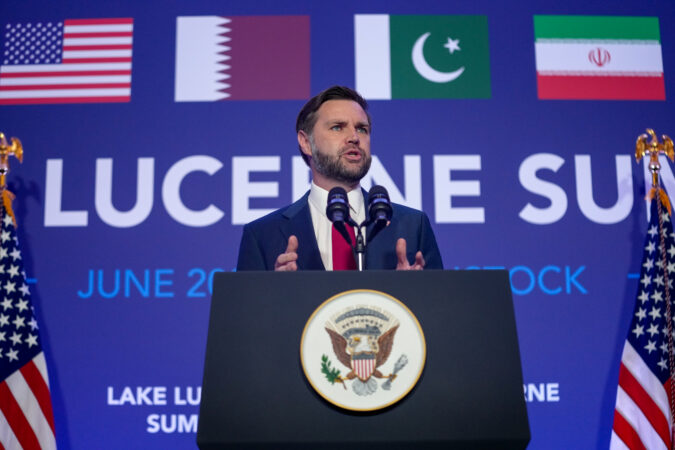
    The dispute over inspections was sparked Monday, when Vice President JD Vance said Iran had agreed to grant the International Atomic Energy Agency access to its nuclear sites, telling reporters in Switzerland that it was a “major milestone for the American people, and the first step in permanently denuclearizing or permanently ending a nuclear weapons program in Iran.”

    Iran, however, rejected the claim the following day, with Foreign Ministry spokesperson Esmaeil Baqaei saying there was no plan for IAEA inspections of its nuclear facilities damaged by the war and that officials had not met with the director general of the nuclear watchdog.

    “There is simply no established procedure for this matter,” Baqaei said in comments reported by state media, adding that Iran would “adhere to the standard procedures, which are already well-defined and transparent.”

    U.S. officials, including Vance, have repeatedly said that Iran is being misleading in its account of the ongoing talks. Secretary of State Marco Rubio told reporters Tuesday that Iranian statements were driven by “domestic politics.”

    “We know what they agreed to do, and now they’ll either do it or they won’t,” Rubio said as he arrived in Abu Dhabi, United Arab Emirates, to see Arab Gulf allies. “If they do, the process moves forward, and if they don’t, the president will have some decisions to make.”

    Iran had been subject to regular inspections under the Nuclear Nonproliferation Treaty and agreed to more intensive monitoring under the Obama nuclear deal that Trump has frequently condemned. After Trump terminated that agreement in 2018, Iran blocked IAEA access to some sites, while some inspections continued.

    Since June 2025, Iran has prohibited the inspectors from visiting sites bombed by the U.S. and Israel.

    Ali Bahreini, Iran’s ambassador to the United Nations, told reporters in Geneva on Tuesday that discussion of Iranian nuclear activities is set for the next stage of talks. The ceasefire memorandum that Trump signed at the Palace of Versailles on June 17 gave the U.S. and Iran 60 days to resolve their hardest disputes, including over the fate of Iran’s uranium stockpile and the Strait of Hormuz.

    In a news conference Monday at the Bürgenstock resort in Switzerland, Vance said conversations with inspectors from the IAEA could happen as soon as that day.

    Baqaei’s contradictory comments Tuesday highlighted the difficulty of turning the fragile ceasefire into a more comprehensive peace agreement.

    Baqaei also said Iran would be free to use unfrozen assets or revenue from oil sales as it sees fit, after Vance said that such funds, if unfrozen, would be subject to oversight and could benefit American farmers. “The important point is that Iran’s previously blocked assets are now available and can be used freely by Iran in accordance with its own priorities,” Baqaei said, according to Iranian state media.

    The spokesperson also pushed back on reports that Pakistan’s prime minister, Shehbaz Sharif, had said that talks would involve discussion of Iran’s ballistic missile program. Baqaei said that the program was “not part of the negotiations” with the U.S., state media reported.

    Iranian President Masoud Pezeshkian traveled to Pakistan on Tuesday to meet with officials there who have been mediating the negotiations with the U.S. “The effectiveness of the talks depends on full commitment to the agreed obligations and their precise implementation,” he said in a post on X, in an apparent acknowledgment of the broad-brush nature of the 14-point memorandum of understanding.

    “Statements outside the agreed text do not help advance the negotiations,” he added.

    The ceasefire called for an end to Israeli attacks in Lebanon, which resumed over the weekend, again testing the fragile deal. Israeli Prime Minister Benjamin Netanyahu’s government has criticized the deal and is not formally a party to the agreement. The Washington Post previously reported that U.S. intelligence warned the Trump administration that Netanyahu would probably work to undermine it by continuing the attacks. On Sunday, Trump accused Iran-backed Hezbollah militants of “causing trouble” in Lebanon.

    Overnight, Netanyahu, Defense Minister Israel Katz, and Israel Defense Forces Chief of the General Staff Eyal Zamir issued a joint statement saying the IDF would “continue to act with determination in order to neutralize threats” and maintain what it calls a “security zone” in southern Lebanon.

    The Israeli and Lebanese governments are currently holding direct negotiations brokered by the U.S. in Washington. A State Department official, speaking on the condition of anonymity to brief the media, said Monday that the shared goal for all parties was the ending the “cycle of violence for good.”

    Though the Trump administration had initially rejected calls to formally include Lebanon in talks with Iran, Lebanese President Joseph Aoun said that he had held a call with Vance and Rubio on Tuesday in which they had agreed to set up a joint U.S.-Lebanese-Iranian cell to help “solidify” the ceasefire in Lebanon.

    Rubio told reporters in Abu Dhabi that while the Lebanon talks were separate from the Iranian talks, Tehran played a critical role in that conflict due to “their support and sponsorship of Hezbollah.”

  • Appeals court allows Trump to resume expedited deportations nationwide

    Appeals court allows Trump to resume expedited deportations nationwide

    WASHINGTON — A federal appeals court on Tuesday allowed the Trump administration to resume using a fast-track deportation process throughout the country that is typically reserved for people apprehended shortly after crossing the southern border.

    The decision revived a pillar of President Donald Trump’s mass deportation plans, after a lower court ruled last August that attempts to use the procedure to potentially remove millions of people without immigration hearings most likely violated their due process rights and risked wrongful detentions.

    In a 2-1 vote, a three-judge panel of the U.S. Court of Appeals for the District of Columbia found that it did not violate immigrants’ rights to use the policy to the maximum extent allowed by law. Judge Justin R. Walker, a Trump appointee, wrote the majority opinion, joined by Judge Neomi Rao, also a Trump appointee. Judge Robert L. Wilkins, an Obama appointee, wrote in a dissent that he would have let the lower court’s ruling stand.

    Writing for the majority, Walker wrote that Congress had delegated to the executive branch decisions about which migrants to designate for expedited deportations.

    “For many years, while some were designated, others were not,” he wrote. “But that changed in January 2025 when the executive expanded expedited removal to the maximum extent allowed by Congress,” he wrote.

    He added that the Homeland Security Department was not legally required to tell those arrested that they could avoid expedited removal if they could prove they had been in the country continuously for at least two years.

    “It is not a requirement that the government explain how the individual might prevail,” the opinion said.

    Immediately upon taking office in January, Trump empowered Immigration and Customs Enforcement to use the process, known as expedited removal, against an expanded population of immigrants lacking legal status.

    Expedited removal had been used narrowly for migrants lacking legal status who are detained near the southern border. It allows officials to deport people who have been in the country for less than two years without hearings in immigration courts.

    Trump’s expanded policy encouraged agents to detain and designate for rapid removal migrants questioned even deep in the country’s interior if they could not produce proof on the spot that they had been in the country beyond that two-year threshold.

    But judges have been deeply skeptical of the policy, noting that throwing out immigrants’ rights to challenge their removal in court could lead to abuse when carried out at scale.

    During a hearing last December, the three-judge appeals court panel focused on how immigration agents had used the policy in 2025 before it was blocked by a lower court. Judges pressed Drew Ensign, a lawyer for the government, for specifics.

    The three judges questioned why the government had waited until October 2025 to share with the court a policy memo circulated at ICE last February, which explained how and when expedited removal should be used.

    The guidance instructed agents that if someone apprehended by immigration agents professed to have been in the country longer than two years, they should be given “a brief but reasonable opportunity” to provide documentation to avoid being placed in expedited removal. Walker wrote in the opinion Tuesday that as long as migrants are provided that “reasonable opportunity,” the requirements of the law had been fulfilled.

    In his dissent, Wilkins wrote that the Department of Homeland Security had not disputed that in using the policy, it had deported a number of individuals who had been in the country longer than two years.

    “A procedure that can result in persons being deported pursuant to the expedited removal statute without even being asked how long they have been in the country might satisfy due process for persons encountered at the border, but it is woefully inadequate for persons encountered in the interior of the country,” he wrote.

    In a statement, James Percival, the general counsel of the Department of Homeland Security, celebrated the ruling. He wrote that the department had long “arbitrarily limited expedited removal,” though the law allows it to be used more broadly.

    He said the appeals court had “vindicated” the Trump administration’s practices.

    Anand Balakrishnan, a lawyer representing Make the Road New York, a nonprofit immigrant advocacy group that brought the lawsuit, argued during the hearing last year that such groups had been in the dark about how the procedure had been used. He said that the decision to give migrants lacking legal status an opportunity to state their case and avoid being placed into fast-track deportation was being made by individual agents with little oversight.

    “I don’t have any clue how this process is supposed to work in practice, particularly when the only check on it is that individual officer who is supposedly, in their discretion, providing them with time,” he said.

    Balakrishnan said the aggressive expansion of the policy effectively left everyone without full legal status vulnerable to being placed on a fast track for deportation, including those who had lived in the country for decades and had deep ties to their communities or to U.S. citizens.

    But Balakrishnan had faced skeptical questioning from Rao and Walker. At one point, Walker appeared to dismiss the case as an attempt to stall the deportation process nationally, rather than maintain what had for decades been a more circumscribed use of the expedited removal process.

    Walker observed that all of the people challenging the policy were in the country illegally.

    “So whether they get expedited removal or nonexpedited removal, the proper result is removal, right?” he said.

    “I don’t know whether the proper result is removal,” Balakrishnan said. “I mean, the proper result would be procedures to access the relief that Congress has afforded them.”

    This article originally appeared in the New York Times.

  • Vendors told to start dismantling Alligator Alcatraz detention center

    Vendors told to start dismantling Alligator Alcatraz detention center

    Crews began dismantling a state-run immigration detention center in the Florida Everglades on Monday, signaling its closure even as state and federal officials continued to say little about the shutdown of a year-old facility that they once praised on a near-daily basis.

    State officials informed vendors in a call Monday morning that they could begin “demobilizing,” or taking down, the tents, fences, trailers, and other structures at the detention center, known as Alligator Alcatraz, according to three people familiar with the call. Vendors are supposed to make significant progress on the work by Wednesday, two of the people said.

    The directive came days after the Department of Homeland Security said that all detainees had been transferred out of the remote center, which opened a little less than a year ago to much fanfare from President Donald Trump and Gov. Ron DeSantis, his fellow Republican.

    “As we enter into hurricane season, ICE and the state of Florida have moved illegal aliens from the soft sided facility,” the department said in a statement last Tuesday, referring to the detention center. “For the safety of the illegal alien detainees, we transferred them to other facilities.”

    Last year, however, thousands of detainees spent the bulk of hurricane season at the center, which became the nation’s first state-run facility to hold federal immigration detainees. The tropical storm season runs from June 1 through Nov. 30.

    Immigration lawyers and activists took last week’s statement from DHS as the latest evidence that the facility would soon close.

    On Friday, Kevin Guthrie, Florida’s emergency management chief, whose agency operates the center, insisted that it remained open. “At this point in time, we have not been told to stand down, so we are still in a posture to receive detainees,” he told reporters, according to the Miami Herald.

    The Florida Division of Emergency Management did not respond to requests for comment Monday. Monday morning’s call between state officials and the detention center’s vendors was first reported by CBS Miami.

    The New York Times first reported last month that federal and state officials were considering closing the facility, which has cost Florida hundreds of millions of dollars to operate, by June.

    When asked about a closure since then, DeSantis has said that the Homeland Security Department is reassessing its detention needs now that Markwayne Mullin is in place as the agency’s new secretary. The agency plans to sell or give away most of the 11 warehouses it bought to detain immigrants, the Times reported last week.

    On Monday, DeSantis’ office referred questions about the center to the emergency management division. James Uthmeier, the Florida attorney general who was instrumental in opening the center, said Monday that he could not confirm if it was closing, though he knew that the number of detainees had been dropping.

    “Alligator Alcatraz actually stayed open longer than it was intentionally planned,” he said at a news conference in Tampa. “It was never expected to be a long-term thing.”

    To many who have closely followed the center over the past year, the inconsistent messaging about whether it is closing — and, if so, for what reason — has left the impression that Alligator Alcatraz, with its hefty price tag and ongoing reports of troubling conditions, has become too much of a political liability.

    “It’s been an expensive failure,” said Jeff Brandes, a Republican and former state senator who now runs the Florida Policy Project, a nonprofit, nonpartisan research organization. “Nobody would say this was a success.”

    The facility has cost state officials more than $1 million per day to operate, including for trucking in water and trucking out wastewater. The federal government had committed to pay the state more than $600 million to defray costs, but it has provided only a fraction of that amount so far.

    This year, Florida lawmakers imposed new rules on the emergency fund that the state has been using to cover the center’s operating costs. Those rules take effect July 1, the start of Florida’s new budget year.

    State officials hastily erected the detention center on a training airport about halfway between Miami and Naples, hailing it as the showcase of Florida’s cooperation with Trump’s immigration crackdown. They also erected an “Alligator Alcatraz” sign on a road leading to the facility, ignoring criticism that the moniker — and jokes they made about any escapees being intercepted by alligators — was cruel.

    Detainees, their relatives, and their lawyers have regularly denounced what they have described as unsanitary and inhumane conditions at the center, allegations that state officials deny. Environmental advocacy groups filed a lawsuit against the state and the federal government, arguing that the facility was illegally constructed in sensitive wetlands.

    Last week, after Homeland Security officials said that detainees had been moved out, a lawyer for the environmental groups vowed to continue the lawsuit over what he called the “secret Gulag in the Everglades.”

    “They hope that they can slink away in the middle of the night without explaining to anyone what they did, why they did it, or how they proposed to clean up the mess that they’ve made,” the lawyer, Paul J. Schwiep, said at a virtual news conference Wednesday. “And we don’t intend to let them get away with it.”

    This article originally appeared in the New York Times.

  • Trump supporter’s company pledges $1 million to fix White House lawn after UFC event

    Trump supporter’s company pledges $1 million to fix White House lawn after UFC event

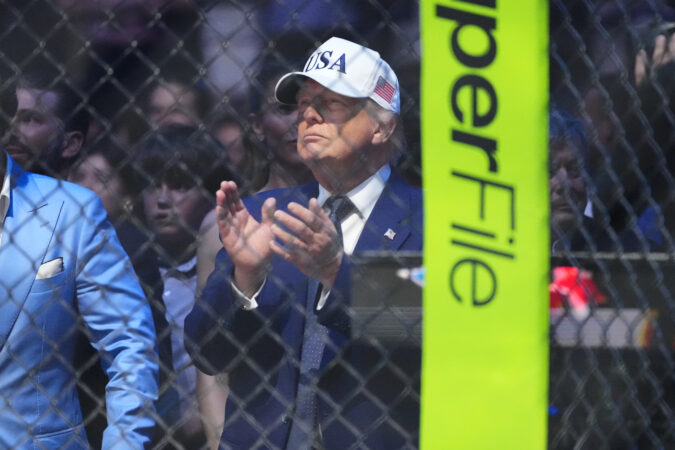
    A private company run by a supporter of President Donald Trump has pledged to restore the grass on the South Lawn of the White House after it was destroyed by the Ultimate Fighting Championship event held there earlier this month.

    The White House announced last week that ScottsMiracle-Gro, an Ohio-based company, will commit $1 million to restore the South Lawn after the UFC event held on Trump’s 80th birthday left it heavily damaged. The company said it is donating “a combination of monetary and product support,” including re-sodding the South Lawn and then creating a “custom turf grass blend” with which to reseed it.

    It is unclear whether the commitment includes restoring the grass on the White House Ellipse, which was similarly damaged after the event. Aerial photos taken over the weekend by Reuters showed a large, circular expanse of dirt where the verdant Ellipse had been.

    The National Park Service, which typically handles White House lawn maintenance, directed inquiries Monday to the White House. Representatives for the White House said that ScottsMiracle-Gro had offered a private donation to the National Park Service to go toward lawn care, and that no taxpayer dollars would be used.

    But Citizens for Responsibility and Ethics in Washington, or CREW, a nonprofit government watchdog, said the arrangement raises ethics questions, particularly following the recent failed repairs at the Lincoln Memorial Reflecting Pool, which were done under a no-bid contract awarded to a Trump ally.

    “Major corporations generally don’t do things out of the goodness of their heart. It’s generally — they do things for the government because they want something from the government,” CREW vice president Jordan Libowitz told the Washington Post.

    Libowitz noted that ScottsMiracle-Gro markets and distributes the herbicide Roundup, whose active ingredient, glyphosate, has been the subject of lawsuits alleging that it causes cancer. In February, Trump signed an executive order calling glyphosate “crucial to the national security and defense” of the country, a move that angered part of his base. The Supreme Court is currently considering whether to block lawsuits that allege Roundup causes cancer.

    ScottsMiracle-Gro CEO James Hagedorn is a longtime Trump supporter who has advised the president on a different kind of grass: He lobbied for marijuana to be reclassified from a Schedule I drug — the most strictly regulated — to a Schedule III drug, and praised Trump when he signed an executive order late last year doing so.

    Tom Matthews, a ScottsMiracle-Gro spokesperson, said the company only markets the consumer brand of Roundup, which does not contain glyphosate, and pushed back on suggestions that there was a conflict of interest.

    “The special blend we’ve created for the White House is for the White House lawn regardless of who’s president,” he said, adding that it would also not be available to consumers. “We’re not commercializing it. We don’t have commercial business with the federal government and we don’t plan to.”

    Libowitz said it is not unusual for American presidents to boost American businesses, though usually they are not singled out in the way Trump has before — by including Palantir’s stock ticker, for example, in a social media post that touted the defense company.

    Last week, the official White House social media accounts announced ScottsMiracle-Gro’s donation in a post that seemed “just a little off” and like an ad, Libowitz added, particularly since the company was one of the sponsors of the UFC event.

    “It’s not just like ‘I support American businesses.’ It’s ‘I want you to put money behind the businesses supporting me,’ ” Libowitz said of Trump’s posts promoting private companies.

    “It seems to be this whole [UFC] event was an opportunity for different corporations to advertise in front of the president,” he added.

    Organizers of the UFC event had anticipated the grass would be destroyed when planning the event. Last year, UFC CEO Dana White told the Sports Business Journal that they were allocating $700,000 to replace the grass “because we’re going to f— up the South Lawn.”

    White and the UFC did not immediately return requests for comment Monday about whether the UFC would still be paying for any portion of the repairs to the South Lawn or to the Ellipse.

    As America approaches its 250th birthday, the grassless Ellipse and South Lawn — paired with the algae-filled Reflecting Pool and demolished East Wing of the White House — have drawn partisan criticism.

    “In the 250th year anniversary of USA the @WhiteHouse and surroundings looks so terrible … is so sad to see …” José Andrés, a chef and vocal Trump critic, wrote on X.

    According to ScottsMiracle-Gro, Trump personally selected a blend of tall fescues and Kentucky bluegrasses to restore the South Lawn.

    “The president knows a lot about grass. I think his history and past with golf courses,“ Nate Baxter, ScottsMiracle-Gro chief operating officer, told Fox Business.

    Grass experts said it would be more cost effective to reseed the lawn, rather than to lay down new sod and then reseed, but it would have taken several weeks for grass seed to germinate and establish itself.

    Matthews, the ScottsMiracle-Gro spokesperson, said the best time to grow grass from seed is the spring and fall because of the cooler nighttime temperatures.

    “To replenish the lawn in a quicker fashion, the sodding is the solution for it. … Then the overseeding will help thicken it and strengthen it and create stronger roots systems,” he said.

    The White House did not address questions about why they opted to resod and whether the new sod would be laid in time for July 4.

    “To replace it with sod, you’re talking a pretty significant financial expenditure or impact,” said Steve Mercogliana, director of operations at the Philadelphia-based Four Seasons Total Landscaping.

    Mercogliana, whose business went viral after it inexplicably hosted a 2020 news conference for Rudy Giuliani and other members of Trump’s legal team, said organizers could have also spared large swaths of grass by building a small platform to keep people off the lawn. He said he watched a little bit of the UFC fight “here and there,” but couldn’t help doing so through a landscapers’ lens.

    “I was curious. I looked at it and I thought, ‘Oh man, I wonder what that ground’s going to look like when all these people leave the premise? What’s the impact of that?’ And here we are,” he said.

  • Top auto regulator opens special probe after a Tesla slams into a Texas home, killing a woman

    Top auto regulator opens special probe after a Tesla slams into a Texas home, killing a woman

    NEW YORK — The top U.S. auto regulator opened an investigation Monday after a Tesla using an automated driving feature slammed into a Texas home at high speed and killed a 76-year-old woman standing inside.

    The National Highway Traffic Safety Administration said it’s opening a special investigation into the Tesla Model 3 crash on Friday near Houston, a significant probe because the car was using technology that Elon Musk considers key to the company’s future.

    The Tesla CEO is rolling out robotaxis using automated software in several U.S. cities this year and plans to invite Tesla owners to put their cars into the fleet using the same system across the country.

    The driver told the Harris County Sheriff’s Office that he was using the technology, according to a police report on the crash, but it’s not clear what role, if any, it played in the incident.

    Tesla did not respond to a request for comment but the head of the company’s artificial intelligence efforts suggested on social media later Monday that the self-driving feature was not to blame.

    “In this case, the driver manually overrode self-driving by pressing the accelerator all the way to 100% of the accel pedal in this residential area,” wrote Ashok Elluswamy on X, the platform that is now part of Musk’s rocket company, SpaceX. “They reached a speed of 73 mph during the crash, and had the accelerator pressed even after the crash.”

    The police report noted that the driver was not drunk and is cooperating. It identified the woman killed as Martha Avila.

    Video obtained by KHOU-TV shows the car traveling at top speed over the front lawn of a brick home in Katy, then ramming into a front room. The next shot shows the car encased in the home amid piles of crumbling plaster, split beams, and bits of furniture.

    The auto safety regulator, known as NHTSA, has launched several investigations into Tesla, including one late last year into 58 incidents in which Teslas reportedly violated traffic safety laws while using self-driving technology, leading to more than a dozen crashes and fires and nearly two dozen injuries.

    A few months earlier, the NHTSA opened an investigation into why Tesla apparently had not been reporting crashes promptly as required.

    As for special crash investigations, the NHTSA has opened 46 involving Teslas using self-driving or driver-assistance technology over the past decade, according to the agency’s records. In more than a dozen of those crashes, at least one person — a driver, passenger, or pedestrian — was killed.

    Tesla stock fell sharply early last year as car sales plunged amid a boycott of Musk after he waded into politics, leading President Donald Trump’s budget-cutting Department of Government Efficiency initiative and embracing European extremist candidates.

    Musk has since shifted the Tesla story to one less about car sales and more about AI and robotaxis, and done so successfully. The stock is up 16% in the past year. It closed down 5.8% Tuesday.

  • Supreme Court sides with Trump administration on immigration case dealing with green card holders

    Supreme Court sides with Trump administration on immigration case dealing with green card holders

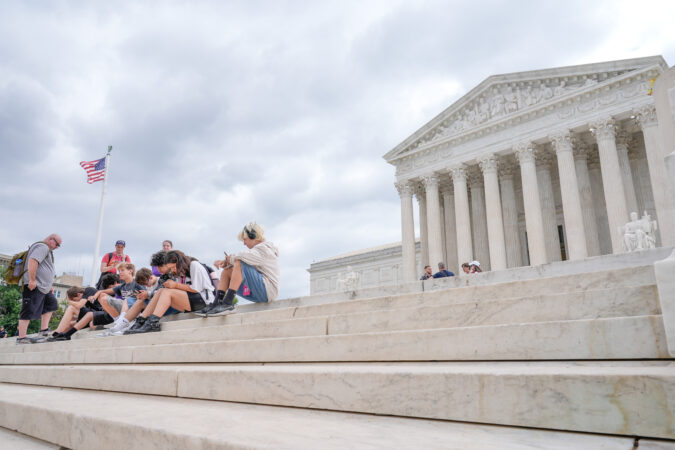
    WASHINGTON — The Supreme Court sided with the Trump administration Tuesday in an immigration case dealing with the government’s power over green card holders accused of crimes.

    The 6-3 decision centers around an immigration officer’s 2012 decision to put lawful permanent resident Muk Choi Lau on immigration parole when he returned from a short trip to China because he had been accused of a counterfeiting crime.

    Lau argued that the officer overstepped their authority, and the decision wrongly allowed the Department of Homeland Security under then-President Barack Obama to swiftly begin deportation proceedings after he pleaded guilty to selling counterfeit clothes in New Jersey.

    The high court disagreed. “Border officers did not have the burden to establish by clear and convincing evidence that Lau had committed a crime involving moral turpitude,” Justice Clarence Thomas wrote in the opinion.

    Justice Ketanji Brown Jackson disagreed, writing that the decision to put Lau on immigration parole effectively sentenced him to “immigration limbo” before he’d been convicted of any crime, she wrote.

    “I worry that the Court has now handed the Government a massive blank check,” she wrote in a dissent joined by her two liberal colleagues.

    The liberal group Alliance for Justice echoed that concern, saying it could provide an expanded path for revoking green cards.

    But Advancing American Freedom, a group founded by former Vice President Mike Pence, applauded the decision, calling it an important case to allow the removal of people who “abuse the privilege of being granted lawful permanent resident status.”

    The decision comes as the high court considers a series of immigration-related issues against the backdrop of President Donald Trump’s sweeping immigration crackdown, though this case started before Trump took office.

    His administration argued that suspicion of a crime is enough to put a lawful permanent resident, also known as a green-card holder, on immigration parole. Federal attorneys urged the court to take an expansive view of executive authority over immigration.

    The court is also considering cases over Trump’s push to end birthright citizenship, potentially revive a restrictive asylum policy, and end temporary legal protections for migrants fleeing war and natural disasters in their homelands.

  • Ukraine says it hit a railway bridge to Crimea, seeking to isolate the Russian-held peninsula

    Ukraine says it hit a railway bridge to Crimea, seeking to isolate the Russian-held peninsula

    KYIV, Ukraine — Ukraine said Tuesday its forces struck a railway bridge, a power plant, and other key infrastructure targets in Crimea as Kyiv’s military seeks to isolate the vital Russian-held peninsula in the latest stage of the 4-year-old war.

    The drone attacks added to the woes on the Black Sea peninsula, where Russian authorities have had to suspend gasoline sales to civilians as Ukraine has intensified its recent campaign to disrupt supply lines and the electrical grid at the height of the summer tourist season.

    The peninsula was seized by force and illegally annexed by Moscow in 2014. Ukraine’s increasing use of long-range strikes has highlighted its ability to inflict painful damage on Russia and put added pressure on the Kremlin while Moscow’s advances recently have ground to a near halt, Western analysts and officials say.

    Ukrainian Defense Minister Mykhailo Fedorov said last week that his forces are “isolating Crimea with drones.”

    “It looks like in the nearest time, Crimea will become an island. This could lead to some very unexpected consequences for Russians,” Fedorov said on a blogger’s YouTube channel.

    Russian President Vladimir Putin said Moscow had been warned that Ukraine aimed to disrupt energy supplies and Russia’s tourism industry. He didn’t say who gave the warning.

    Ukrainian drones “coming in a huge stream” seek to “destabilize” Russian society, Putin said.

    Russia’s ​Deputy Prime Minister ​Alexander Novak told Putin on Tuesday that officials were considering suspending diesel fuel exports to protect the country’s motorists, adding to ongoing bans on the export of jet fuel and gasoline, according to the Tass news agency. Novak also said scheduled maintenance at refineries had been postponed.

    Ukraine also has hit targets near to the Kremlin in Moscow and in St. Petersburg, Russia’s second-largest city, this month.

    Parts of Crimea are without power

    Ukraine’s Defense Ministry said drones struck an oil storage depot at the Kerch thermal power plant in eastern Crimea, an electrical substation in the west, and a liquefied natural gas distribution station in Simferopol, the peninsula’s second-biggest city.

    In addition, Ukraine’s Special Operations Forces said their units, working with what it said was the resistance movement in Crimea, destroyed a rail bridge over the North Crimean Canal near the village of Rozdolne.

    The military described the span as a key logistics route used to supply Russian forces in southern Ukraine and said drones began hitting the structure late Sunday to Monday, collapsing part of it. A second strike early Tuesday targeted railway repair equipment deployed at the bridge and its remaining sections, it said on Telegram.

    It was not possible to independently verify the Ukrainian claims, and Russian officials made no immediate comment.

    Parts of Crimea were without power Tuesday, the area’s energy supplier said. But it attributed the outages to “technical malfunctions” in local electrical grids and said it expected power to be restored within 24 hours.

    The diamond-shaped peninsula is important because of its naval bases and beaches, as well as its strategic location in the Black Sea. Russia has spent centuries fighting for it.

    Russian-appointed officials in Crimea have appeared reluctant to discuss attacks on the peninsula, but new security measures suggest deepening tension.

    Its Ministry of Sport on Tuesday canceled all sporting events, competitions, and training sessions for children through Sept. 1. It described the measures as “aimed solely at ensuring the safety of our children, athletes, and anyone who is involved with sport.”

    On Monday, Gov. Sergei Aksyonov said that for security reasons, all summer camps in the region had stopped accepting children and new bookings until Sept. 1.

    Successes against Russia boost Ukrainian morale

    On the front line in eastern Ukraine, where Russia’s war of attrition has made slow and costly advances since Moscow’s full-scale invasion in February 2022, Ukraine has deployed cutting-edge drone technology to keep the enemy pinned down.

    Meanwhile, its medium-range drones have also disrupted Russia’s supply lines to the front, and its long-range strikes have increasingly damaged Russian oil facilities that provide vital revenue for the Kremlin’s war effort.

    The Ukrainian Defense Ministry said Monday its forces have hit more than 800,000 enemy targets with drones since the beginning of the year and that 95% of drones used by the armed forces are domestically produced.

    The successes have boosted Ukrainian confidence, and President Volodymyr Zelensky says sustained foreign support is locked in to help stop Russia.

    Officials have shown renewed vigor in talking about the war.

    Ukraine’s U.N. Ambassador Andrii Melnyk said Monday that Kyiv remained ready for direct talks with Russia to achieve a “just and lasting peace” based on the U.N. Charter, but warned that Ukraine’s willingness to compromise was not open-ended.

    Melnyk said at a U.N. Security Council meeting that a ceasefire along the current front line already represented a major concession and urged Russia to withdraw from occupied Ukrainian territory.

    He also said recent Ukrainian strikes had altered the dynamics of the war, adding: “This is just the beginning.”

    Russia’s top diplomat says Moscow will defend Belarus

    Meanwhile, the Kremlin is ready to “ensure the security” of its neighbor and ally Belarus, Russian Foreign Minister Sergey Lavrov said Tuesday, days after Zelensky demanded that Belarus remove relay equipment on its territory that Kyiv said aided Russian drone attacks.

    The relay stations are used for signal transmissions to Russian drones attacking Ukraine, according to Zelensky.

    Lavrov told the Russian news agency Interfax that Kyiv was trying to drag Belarus into the conflict. Moscow, in fact, had used Belarus territory to launch its invasion of Ukraine.

  • 40 people drown in France amid scorching temperatures

    40 people drown in France amid scorching temperatures

    At least 40 people have drowned in France over the last five days as the country endured a scorching heat wave, Sébastien Lecornu, the country’s prime minister, said at an emergency cabinet meeting Tuesday.

    Most of the drowning victims were young, many of them teenagers, and swimming in unsupervised areas. Lecornu called the drownings a “tragic scourge.”

    Marina Ferrari, a minister whose responsibilities include young people, said in an interview on French radio Tuesday that the drownings were mostly in bodies of water such as lakes or canals.

    “During heat waves like this,” she said, “it’s no small matter to go swimming in areas that aren’t supervised.”

    France is in the middle of an intense heat wave over much of Europe that began in the middle of last week. Forecasters have said that Paris could hit 104 degrees Fahrenheit this week, not far from its record. Parts of central France could see highs of around 109 degrees F.

    More than half of the country is under a red alert for heat wave conditions, the most severe. France’s weather agency, Météo-France, said it expected “exceptionally high temperatures, both day and night.” The temperatures have the potential to have a “strong health impact.”

    “All the records, locally or nationally, are being broken every day or night when it comes to temperatures,” Lecornu said.

    From Monday to Tuesday, France recorded its hottest night since measurements began in 1947, Météo-France said. An average of readings from 30 stations across France reached almost 71 degrees F, according to preliminary figures.

    The current heat wave in Europe is the result of a heat dome, a strong area of high pressure that allows heat to build over a region.

    According to Météo-France these stubborn, high-pressure systems can block or divert passing weather fronts, leading to conditions with few clouds and little rainfall.

    For France, this is the second heat wave in about a month, after record-breaking temperatures in May.

    The high temperatures have also caused other fatalities over the last few days. BFMTV, a French news station, reported the deaths of two children, ages 2 and 4, who were left inside a car on Monday.

    In Paris on Tuesday, dozens of people sought relief from the heat, swimming in the canal Saint-Martin to avoid their hot apartments.

    Martina Russo, 28, said she was not very worried about the risk of drowning. She said she was more worried about the quality of water. “It would be nice to have someone say, ‘We’ve tested it, and there are no health risks,’” she said.

    This article originally appeared in the New York Times.

  • Iran makes moves to assert control over the Strait of Hormuz

    Iran makes moves to assert control over the Strait of Hormuz

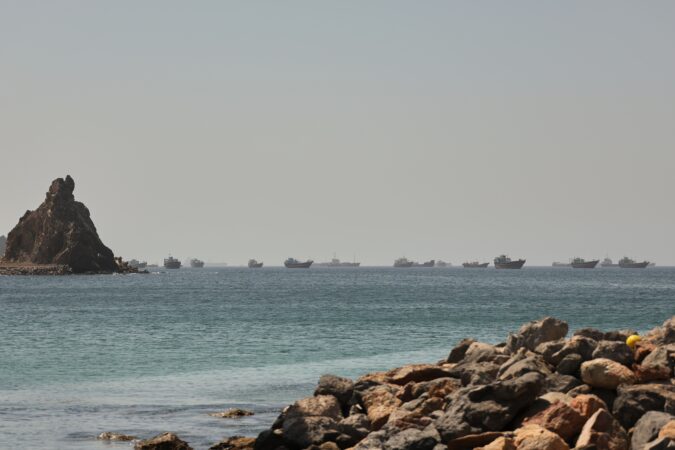
    Iran is taking steps to cement its control over the Strait of Hormuz and to generate revenue from the waterway through new entities and procedures, experts say. The moves come even as negotiations with the United States and Iran’s neighbors over managing the vital waterway are taking place.

    The head of Iran’s primary insurance regulator, Mousa Rezaei, said Sunday that a new insurance company had been established that was dedicated solely to the Strait of Hormuz, Iranian state media reported. And late last week, the Persian Gulf Strait Authority, which was created by Iran in May, demanded that vessels register and sign up for a new mandatory Iranian insurance policy — free of charge for now.

    Shipping experts see these steps as an attempt to assert Iranian control over the whole waterway, which it shares with Oman. They appear to be a prelude to Iran’s demanding payments from vessels that once transited without fees or need of its assent, the experts say.

    The Iranian requirements could set a dangerous precedent for global shipping, experts say, and they are already making a confusing situation in the strait much more so.

    “We are in uncharted territory,” said Richard Meade, editor-in-chief of Lloyd’s List, a shipping news service, in an interview Monday.

    The Persian Gulf Strait Authority did not respond to a request for comment.

    The insurance demands emerged after the United States and Iran signed a memorandum of understanding to end the war and to reopen the Strait of Hormuz last week. That agreement left discussion of difficult issues — including management of the strait — to further talks. And Oman, Iran, and other Gulf nations “will figure out a proper security framework for the straits in the future,” Vice President JD Vance said last week.

    But the Iranian demands try to legitimize the authority of the new entity as those broader negotiations are underway, said Salvatore Mercogliano, a maritime historian and former merchant marine who hosts the YouTube show What’s Going On With Shipping?

    The free insurance period passes after 60 days, which is the length of the initial ceasefire agreement between Iran and Washington and the period that the initial deal guarantees free passage. After that, Iran could then demand vessels pay for insurance through its new dedicated strait insurance company, Mercogliano said, collecting payment for risks that did not exist until Iran began attacking ships.

    The new insurance Iran is offering protects against things like risk of attack and the detention of mariners, issues that experts say Iran created after the United States and Israel attacked the country in February and it retaliated by striking commercial vessels.

    Iran weaponized the waterway by making it too dangerous for businesses, experts say.

    Mercogliano said in an interview that the new administrative procedures took this Iranian weaponization a step further. He compared the insurance requirement to the mafia’s demanding protection money or someone trying to sell flood insurance “while they control the gates above the dam.”

    The new Iranian insurance also raises legal questions. Under international law, a toll for mere passage through the strait would be illegal, though charging fees for services — tugging or waste disposal, for example — could be legal.

    Since March, Iran has floated the notion that it will charge ships in the strait, characterizing the payments as services without specifying what it would offer and raising international alarm. Last month, it was in talks with Oman about the proposition.

    But simply calling something a “service” is not enough to transform an illegal toll into a legitimate request for payment for services, maritime lawyers say.

    The Persian Gulf Strait Authority’s insurance demand “effectively sidesteps” the agreement between the United States and Iran and paves the way for Iran to demand fees in the future, Meade said.

    “This is effectively a toll by another name,” he said.

    A spokesperson for the International Maritime Organization told the New York Times that the insurance requirement published by the authority “has not been officially submitted to IMO and is not part of any official process or record.”

    The spokesperson said the right of ships to transit through the passage “cannot be suspended or hampered by coastal states” and that there was “no established basis in international law” that allowed mandatory tolls or fees. She did not, however, rule out “cooperation mechanisms to assist in managing a strait” between states.

    The new insurance requirement also raises practical questions for shippers and vessels. By having to pay to mitigate risks from Iran, businesses could find themselves in trouble with the United States.

    The Treasury Department imposed sanctions on the Persian Gulf Strait Authority in late May. The United States called the entity a new attempt by Iran “to monetize its campaign of state-sponsored terror by extorting vessels,” and Treasury officials warned against paying the authority, saying that those who did do so could be subject to sanctions.

    Iran is also under a number of different sanctions from the United States, Britain, the European Union, and the United Nations. While lifting the sanctions has been discussed as part of a broader deal related to Iran’s fulfilling commitments to end its nuclear program, at this stage, registering for Iranian war-risk insurance is itself a potential risk.

    In light of the confusion about navigating the strait, shippers are in “purgatory,” stuck between a past that cannot be revived and a future that remains unclear, Meade said.

    This article originally appeared in the New York Times.

  • 8 convicted in Texas immigration center shooting and protest are sentenced to decades in prison

    8 convicted in Texas immigration center shooting and protest are sentenced to decades in prison

    FORT WORTH, Texas — Eight protesters accused by the Justice Department of having ties to antifa were sentenced Tuesday to decades in federal prison over a shooting outside a Texas immigration detention center that wounded a police officer and that prosecutors called an act of terrorism.

    One of the defendants, a former U.S. Marine Corps reservist convicted of opening fire during the July 4 demonstration outside the Prairieland Detention Center near Dallas, was sentenced to 100 years in prison, the maximum punishment.

    The lengthy sentences were condemned by family members and supporters in a news conference outside the federal courthouse in Fort Worth. Hope Song, whose son Benjamin Song received the heftiest sentence, disputed prosecutors’ claims that her son shot the officer and said he didn’t intend to hurt anyone.

    U.S. District Judge Reed O’Connor, one of two judges overseeing the proceedings, said what happened wasn’t a protest but “an assault on democracy.”

    “The need to deter this type of conduct is high,” O’Connor said.

    The seven other protesters received prison terms ranging from 30 to 70 years.

    Prosecutors said the eight are members of antifa, a decentralized anti-fascist organization and a target of the Trump administration. Antifa is not a single organization but rather an umbrella term for far-left militant groups that confront or resist neo-Nazis and white supremacists at demonstrations.

    President Donald Trump last fall signed an executive order designating antifa a domestic terrorist organization, even though there is no domestic equivalent to the State Department’s list of foreign terror organizations.

    The defendants deny any affiliation with antifa and maintain they attended the demonstration in support of detained immigrants.

    Prosecutor Frank Gatto urged the judge to impose stiff penalties.

    “People with that kind of extremist beliefs need extra time in prison,” Gatto said. “They believe violence is justified.”

    Phillip Hayes, Song’s attorney, said outside the courthouse that he takes issue with the idea that the protesters are extremists.

    “This is a bunch of kids and young adults who really have a really big heart and really wanted their voice to be heard,” Hayes said. “It was never intended that anybody get hurt. It was never intended that any shots would be fired.”

    Prosecutors said in court that Song had yelled “get to the rifles” and opened fire, striking a police officer who had just pulled up to the center.

    Hayes argued that Song’s shots were “suppressive fire” and that a ricochet bullet hit the officer after he arrived on the scene and “aggressively” pulled out his firearm. He said his client will appeal the 100-year sentence.

    “Song, aside from this day, has had an impeccable life. A former Marine. A good student,” Hayes said. “He had a lot of good qualities that were just ignored. The judge went ahead and gave as much as he could.”

    Other defendants and their family members pleaded for leniency in court.

    Autumn Hill said the gathering “seemed more like a party to me than anything else” and that she and others who participated ”didn’t expect or want any violence or destruction of property to occur.”

    Amber Lowrey told the judge that her sister, Savanna Batten, is a compassionate person with dreams of opening a bakery. She said Batten’s activism started with animal rights and evolved into anti-war and human rights advocacy.

    “She’s the best person I know,” Lowrey said.

    Hill and Batten both received 50-year sentences.

    Other defendants previously pleaded guilty to providing material support to terrorists rather than take their case to trial.

    Critics warn the case could have wide-reaching impact on protests given that organizations operating within the U.S. are supposed to be protected by First Amendment free-speech rights.

    Last week, federal prosecutors charged 15 people with impeding the Trump administration’s immigration crackdown in Minnesota. They claimed the demonstrators were members of antifa who conspired against the federal government to block arrests and deportations by setting up blockades around government buildings and throwing chunks of ice at federal vehicles, among other actions.