Category: Wires

  • Kash Patel’s push against Democratic lawmaker raises concerns within FBI

    Kash Patel’s push against Democratic lawmaker raises concerns within FBI

    FBI Director Kash Patel is pressing to release a decade-old investigative file involving Rep. Eric Swalwell (D., Calif.) and a suspected Chinese intelligence operative, recently dispatching agents in the bureau’s San Francisco office to quickly redact the files before they are released publicly despite no evidence of wrongdoing by Swalwell, according to three people familiar with the effort.

    The potential release is part of the Trump administration’s aggressive push to investigate Swalwell, a vocal critic of President Donald Trump and a leading Democratic candidate for California governor, according to the people familiar with the effort. It is highly unusual for the FBI to release case files tied to a probe that did not result in criminal charges.

    As FBI director, Patel has focused on trying to bring a criminal case against the outspoken Democrat, reassigning multiple agents in San Francisco to work on the matter, the current and former officials said. FBI leaders have even discussed sending agents to China to talk to the suspected intelligence operative, believing she could have damaging information about Swalwell, according to two of the people familiar with the investigation. The people familiar with the matter spoke on the condition of anonymity to discuss an investigation that has not been made public.

    The Chinese woman at issue is Christine Fang, also known as Fang Fang, who reportedly courted Swalwell and other California politicians in the United States from 2011 to 2015. She helped with fundraising for Swalwell’s 2014 reelection campaign and even helped place an intern in his congressional office. When federal agents conveyed their concerns about Fang to Swalwell around 2015, he reportedly cut off ties with her and said he helped investigators.

    Swalwell was not accused of any wrongdoing when the FBI investigated his relationship with Fang a decade ago. In 2023, the Republican-led House Ethics Committee closed a two-year investigation into the congressman, deciding to “take no further action.”

    Despite that, FBI leaders have recently suggested in internal discussions that the government could try to arrange for Fang to get a U.S. visa in exchange for speaking with FBI agents about the Democrat, according to the three people with knowledge of Patel’s efforts. It would be highly unorthodox to grant a visa to a person suspected of being an intelligence agent for a foreign superpower.

    An FBI spokesperson disputed any notion of improper motives. “The contentions in this story are incorrect,” the spokesperson said. “This FBI, being the most transparent in history, prepares documents for numerous different reasons, including for release to different agencies and departments to further review investigations that may have been opened under previous administrations.”

    The push to publicly release the investigative files, the people interviewed said, suggests that the FBI has struggled to so far build a criminal case against Swalwell. Even if there is no incriminating evidence in the files, an extensive case file could contain revealing and personal details about Swalwell and his campaign operations.

    The lengths that Patel’s circle is going to in the bid to pursue a political foe of the president has raised alarms within the bureau, where some officials fear that releasing the files — even with redactions — could compromise law enforcement sources and investigatory methods, making it harder for the FBI to gain trust with potential witnesses.

    They also said they feared the repercussions of sending agents to the territory of an adversarial nation to dig up information on a sitting congressman. Such an interview, legal experts said, would be impossible without Chinese interference, and Fang would be considered an unreliable witness.

    “Most troubling about this is that we are now literally at war. We also face threats against the homeland,” Swalwell said in a statement to the Washington Post. “Kash Patel should be spending every moment trying to keep us safe, not scoring political points. A lot of people have bent the knee to this administration. But I will not, and neither will the people of California.”
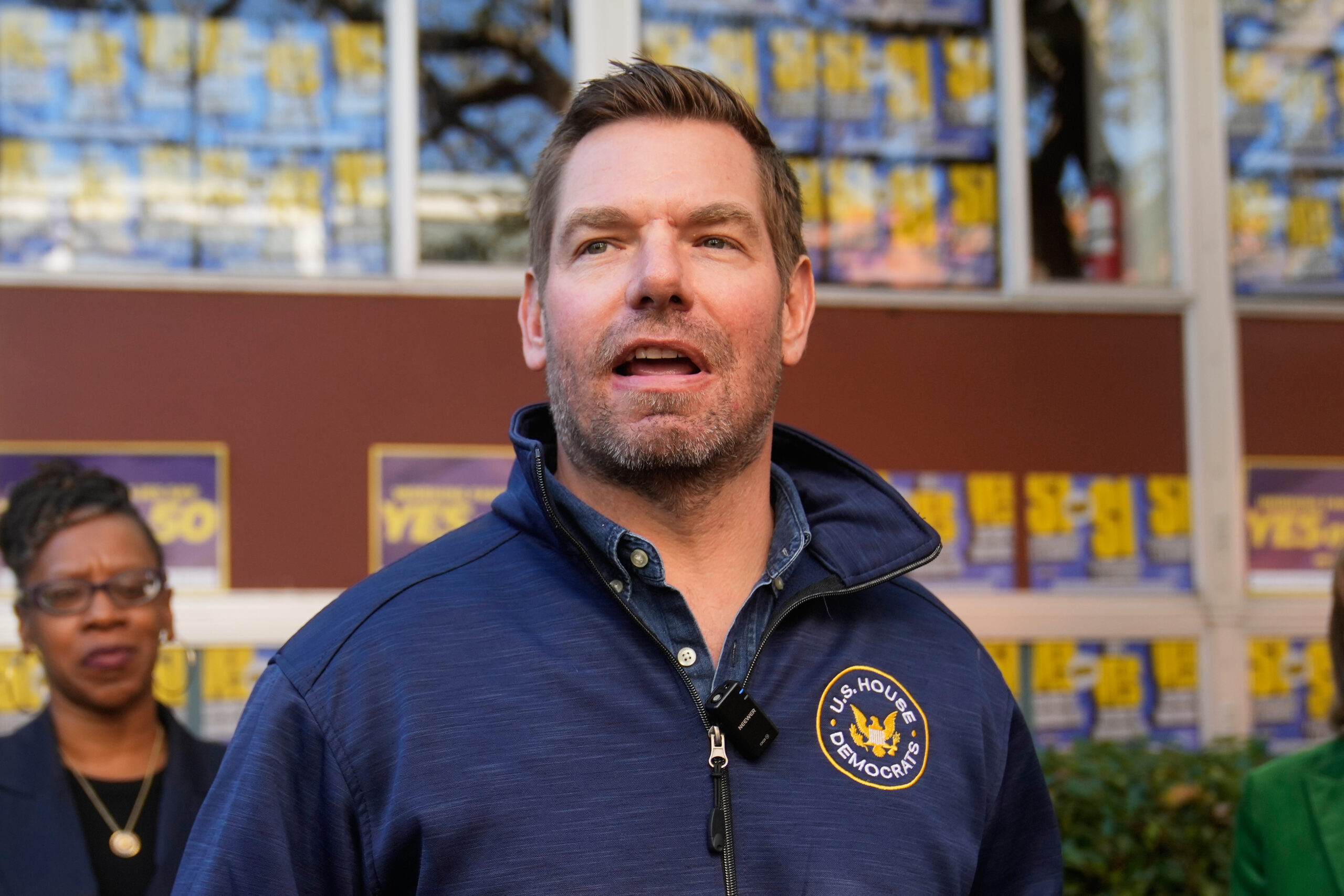
    Rep. Eric Swalwell (D., Calif.) speaks to reporters after a campaign event on Nov. 3, 2025, in San Francisco.

    Swalwell, who unsuccessfully sought the Democratic presidential nomination in 2020, has been an unusually aggressive and colorful critic of the president, frequently criticizing the president in media interviews and on the dais as a member of the House Judiciary Committee. Swalwell also was a House “manager” — essentially, a prosecutor — in Trump’s 2021 impeachment for his role in the Jan. 6, 2021, attack on the U.S. Capitol.

    Swalwell’s district in Northern California includes a large Chinese American population. Republicans and media personalities frequently criticize Swalwell for his ties to Fang and the Chinese community, suggesting that he is improperly working with them.

    But FBI agents typically need a specific investigative reason to reopen a closed investigation. The people familiar with the probe said it is unclear how or why the FBI reopened its examination of Swalwell.

    Internal Justice Department policy has long said that law enforcement should refrain from taking any public investigatory steps against a political candidate in the 60 days before an election, to prevent even the appearance of the department using its power to sway the vote.

    The Justice Department is not legally bound to follow this rule, however, and it is unclear whether it would do so in Swalwell’s case. The California gubernatorial primary is June 2.

    In California’s primaries, the top two vote-getters, regardless of party affiliation, move on to the November general election. Two Republicans currently lead the governor’s race in recent polls, despite the state’s liberal leanings, as a large number of Democrats — led by Swalwell — split the vote. Democratic leaders hope their voters ultimately coalesce around one or two candidates, but the outcome remains uncertain.

    The investigatory files are likely to include numerous interviews with Swalwell, his aides, friends and others about the congressman’s interactions with Fang, details about his campaign and more.

    Under a long-standing legal principle, agencies do not release potentially damaging material about people against whom they were unable to build a case strong enough to take to court.

    The department recently released the investigatory files in the case of sex trafficker Jeffrey Epstein, who had been indicted on federal sex trafficking charges but had not yet faced trial before killing himself. But in that case, the department’s hand was forced by political pressure and ultimately an act of Congress.

    Republicans and Democrats criticized the Justice Department’s handling of the Epstein release, saying the rollout was disorganized with few effective systems in place to ensure that appropriate redactions were made.

    Since Trump took office, his administration has mounted an aggressive campaign to use federal law enforcement agencies to pursue his political adversaries.

    The Justice Department filed criminal cases against former FBI Director James B. Comey and New York Attorney General Letitia James, for example. A judge threw out both indictments in November, ruling that Lindsey Halligan, the prosecutor overseeing both cases, had been unlawfully appointed.

    Federal Housing Finance Agency Director Bill Pulte — a staunch Trump ally — referred Swalwell to the Justice Department for criminal prosecution over mortgage fraud allegations, but the department never indicted Swalwell. Swalwell sued Pulte, saying he unlawfully looked used his position to look through private mortgage fraud documents, but he ultimately dropped the lawsuit.

    The department is also investigating Federal Reserve Chair Jerome H. Powell over the cost of the Fed’s recent building renovations. A federal prosecutor acknowledged in a closed-door hearing this month that the department did not have evidence of wrongdoing, the Post has reported.

    Even against this backdrop, a proposal to release extensive files, send agents to China to interview a suspected intelligence operative and offer her a U.S. visa in exchange for revelations about a U.S. congressman would be extraordinary.

    Patel, who before becoming FBI director was a conservative firebrand who attacked the “deep state” and vowed to “come after” Trump’s adversaries, has long been a critic of Swalwell. In his 2023 book Government Gangsters, Patel published a list of 60 names in an appendix that has been widely viewed by Patel’s critics as a sort of enemies list. It includes Trump foes, Democrats, and FBI agents who were involved in investigations into the president.

    Swalwell was among those named by Patel, who has said that his critics are mischaracterizing the appendix by calling it an enemies list.

    At a congressional hearing last year, Swalwell asked Patel if he would recuse himself from any investigation of people on the list, and Patel said no.

  • Thousands strike at one of the largest meatpacking plants in the U.S.

    Thousands strike at one of the largest meatpacking plants in the U.S.

    GREELEY, Colo. — About 3,800 workers for the world’s largest meatpacking company began striking Monday in Colorado, and if they don’t get a new contract soon, already costly beef could become even more expensive for U.S. consumers.

    As the sun rose, hundreds of strikers picketed outside the Swift Beef Co. plant in Greeley, owned by JBS USA and one of the largest slaughterhouses in the nation. Walking back and forth in the morning cold, bundled in blankets, some yelled “huelga!” — Spanish for strike. Others carried signs saying “please don’t patronize JBS.”

    The first walkout at a U.S. beef slaughterhouse in four decades follows accusations from union officials that the company retaliated against workers and committed other unfair labor practices. The union also said the company offered less than 2% more a year in wages, which is less than inflation in Colorado.

    A spokesperson at JBS USA denied any labor law violations and said its offer is fair. Each side blamed the other for an impasse before the contract ended Sunday night.

    “They don’t really value their workers and we’re the ones that help them get all their profit,” said Leticia Avalos, a 34-year-old union steward and Greeley native who has been working at the plant since 2020. She depends on the job to support her family including a 6-month-old baby, but said she’ll make sacrifices to get the company to listen.

    Union says workers pay to protect themselves

    The union says its workers perform some of the most difficult and dangerous jobs in the country, and deserve higher wages and better healthcare. It said JBS in many cases has charged workers $1,100 or more to offset the company’s expenses for personal protective equipment needed to ensure worker safety.

    Smoke rose from parts of the plant Monday but it was unclear if it was fully operating. JBS spokesperson Nikki Richardson said “many team members” reported to work, but did not provide a precise number.

    “Our team members want stability, they want to support their families, and they deserved the opportunity to vote on the company’s historic offer — an opportunity the union leadership has denied them,” Richardson wrote in an email.

    She said any employee who didn’t strike would have work and be paid. The company also has said it would move production as needed to other JBS facilities.

    A federal probe into soaring beef prices

    The strike comes at a 75-year low in U.S. cattle numbers, with a Jan. 1 inventory of 86.2 million animals — down 1% from the prior year. The decline has been driven in part by drought and low prices offered to ranchers. Meanwhile, beef prices have soared to record levels.

    President Donald Trump’s tariffs on Brazil, a major beef exporter, have also curbed imports. Pressed to act on “affordability” issues after Republican losses last November, Trump accused foreign-owned companies of driving up U.S. beef prices and asked the Department of Justice to investigate.

    The average price for 100% ground chuck beef more than doubled over the past two decades from $2.55 to $6.07 per pound, according to the Bureau of Labor Statistics. The increase has added to economic anxiety in the U.S. The Trump administration has promoted a trade deal with Argentina in efforts to lower prices for food, including beef.

    The Greeley plant has about 6% of the total U.S. beef slaughterhouse capacity, said Abby Greiman, a livestock market adviser for industry consultant Ever.Ag.

    Most ranchers can still get cattle to market because the national herd is smaller, and that could give JBS some leverage in negotiations, since other slaughterhouses can absorb the Greeley plant’s work, Greiman said.

    Feedlots hold clues to consumer costs

    Yet an extended strike at Greeley could disrupt the industry, particularly in Colorado and neighboring states, said Jennifer Martin at Colorado State University’s animal sciences department.

    “The feedlots, the people who have the cattle right now — the longer they sit kind of in a holding pattern, the more expensive they become to feed,” said Martin. “For consumers, it means that prices will likely go up.”

    The strike follows the January closure of a meatpacking plant in Lexington, Neb., which was expected to ripple through the local economy and community. Tyson Foods cited the smaller herd and millions of dollars in expected losses this year.

    JBS, the world’s largest meatpacker, has a market capitalization of $17 billion on the New York Stock Exchange after being approved for trading last May, despite environmental opposition and a federal probe that led to its guilty plea in October to bribing Brazilian officials for the financing it used for its U.S. expansion.

    JBS is a top local employer

    At the Greeley plant, the company tried to intimidate workers to quit the union in one-on-one meetings, union general counsel Matt Shechter said.

    Despite the pressure, 99% of workers voted to authorize the strike, said Kim Cordova, president of the United Food and Commercial Union Local 7.

    It’s the first strike at a U.S. slaughterhouse since workers walked out at a Hormel plant in Minnesota in 1985, according to Cordova and Martin. That strike lasted more than a year and included violent confrontations between police and protesters, according to the Minnesota Historical Society.

    JBS is the top employer in Greeley, a city 50 miles northeast of Denver with a population of about 114,000 people.

    “It’s a huge impact in the community for us to be striking,” said union steward Avalos. “I know a lot of us are worried, and hope that nothing goes even more south.”

  • A bipartisan group of 13 attorneys general sues OneMain over hidden loan add-ons

    A bipartisan group of 13 attorneys general sues OneMain over hidden loan add-ons

    NEW YORK — A bipartisan group of 13 attorneys general sued the financial company OneMain Financial on Monday, alleging the company placed unwanted additional products and other hidden costs on its loans that led to higher costs for its borrowers.

    The lawsuit, filed in New York on Monday, says OneMain employees steered borrowers into purchasing credit insurance and other loan-related products while making deceptive claims about whether the products were required and how they could be canceled. The attorneys general say the conduct affected tens of thousands of borrowers and violated state consumer protection laws.

    The products include credit insurance, which claims to pay the loan if a consumer dies or becomes unemployed, as well as products like home and auto memberships that are similar to AAA. These companies are, in turn, owned by OneMain through a related company.

    These products increase the cost of the loan. The lawsuit alleges that OneMain does not check whether the consumer may already have a home or auto membership service through AAA as well.

    “OneMain targets people who are already struggling financially, saddling them with hidden fees and misleading loans to trap them in even more debt,” New York State Attorney General Letitia James said in a statement.

    OneMain said the practices involved with the lawsuit were already reviewed with the Consumer Financial Protection Bureau in 2023. In that settlement, OneMain agreed to repay $10 million to consumers and pay $10 million in fines and penalties for allegedly selling add-on products to consumers.

    “The states’ allegations are simply untrue — their case is wrong on the facts and wrong on the law and attempts to re-litigate issues that were already reviewed by the Consumer Financial Protection Bureau and fully resolved. We will litigate this case vigorously and look forward to proving the truth in court.”

    OneMain, based in Evansville, Ind., is one of the largest U.S. non-bank installment lenders. It primarily offers loans to those with subprime credit scores, meaning much of its customers are already financially struggling when they come to OneMain.

    Along with New York, the other attorneys general joining the lawsuit include the states of Colorado, Nevada, Maryland, North Dakota, Oklahoma, Washington, Wisconsin, New Jersey, South Dakota, and New Hampshire, as well as the Commonwealths of Virginia and Pennsylvania.

  • Federal judge blocks RFK Jr.’s vaccine policy overhaul for now

    Federal judge blocks RFK Jr.’s vaccine policy overhaul for now

    A federal judge on Monday blocked the Trump administration from implementing sweeping changes to the nation’s childhood immunization schedule, mostly siding with major medical organizations that argue Health Secretary Robert F. Kennedy Jr. unlawfully altered vaccine policy and improperly reconstituted a federal vaccine advisory panel.

    Under Kennedy, the federal government has cut the number of shots routinely recommended to children, including for flu, hepatitis A, rotavirus, and meningococcal disease. Kennedy also dismissed all 17 members of the vaccine advisory panel to the Centers for Disease Control and Prevention last year, installing new members, several of whom have criticized vaccines, especially COVID-19 mRNA shots.

    Several groups, including the American Academy of Pediatrics, the American College of Physicians, and the Infectious Diseases Society of America, sued.

    In his opinion, Judge Brian E. Murphy slammed the administration’s approach to revamping government recommendations for how and when children should be immunized. He said the government has undermined its history of recognizing “the importance and value” of involving independent experts in setting our national public health agenda and relying on “a method scientific in nature” to make such decisions.

    The U.S. District Court judge from Massachusetts wrote that the government bypassed the CDC’s vaccine advisory panel — which is how vaccine recommendations have been made for decades — to change the immunization schedule. He called it a “technical, procedural failure” and a “strong indication of something more fundamentally problematic: an abandonment of the technical knowledge and expertise embodied by that committee.”

    The pause on the administration’s actions are temporary as the dispute is expected to wind through multiple rounds of appeals, raising the prospect of a drawn-out court battle over who ultimately calls the shots on the scientific standards shaping federal vaccine recommendations.

    Andrew Nixon, a spokesperson for the Department of Health and Human Services, said the department “looks forward to this judge’s decision being overturned just like his other attempts to keep the Trump administration from governing.”

    As health secretary, Kennedy — the founder of a prominent anti-vaccine group — has made clear that he wants to overhaul the nation’s immunization system and argued the prior ACIP was plagued with conflicts of interest.

    In early December, President Donald Trump ordered federal health officials to review the childhood immunization schedule, including recommending fewer vaccines to align with other developed countries. The judge wrote that HHS cannot circumvent the long-standing practice of getting advice from the federal panel without offering an explanation “simply because they are following the President’s orders.”

    He also wrote that the government removed every member of the panel and replaced them without undertaking the “rigorous screening” traditionally used to select members.

    The judge also paused all votes taken by Kennedy’s handpicked advisers. Some recent votes include moving from broadly recommending everyone 6 months and older get a coronavirus shot to instead advising Americans to first consult a clinician. The panel also voted to drop a recommendation that all newborns receive a vaccine for hepatitis B.

    In court filings, the medical groups contend that Kennedy’s reconstitution of the vaccine panel was improper and that subsequent votes on vaccine recommendations — including changes affecting COVID-19 and other routine childhood immunizations — were, therefore, invalid. They argued that the administration bypassed established procedure and violated the Administrative Procedure Act, which governs how federal agencies make policy.

    Government attorneys have defended the secretary’s authority to remove and appoint advisory committee members, arguing that federal law grants HHS broad discretion over such panels. They also contend that policy disagreements over vaccine recommendations do not amount to legal violations.

    On Substack, Robert Malone, the committee’s vice chair and a prominent critic of coronavirus vaccines, called the opinion a “judicial overreach.” He wrote that there is a compelling “case for bringing intellectual diversity and fresh expertise” to the panel and for aligning vaccine recommendations with the practices of other nations.

    “In the meantime, the administration should continue its work,” he wrote.

  • Customs and Border Protection official says new process for tariff refunds could be ready in 45 days

    Customs and Border Protection official says new process for tariff refunds could be ready in 45 days

    NEW YORK — Government officials are getting closer to ironing out a refund process for the hundreds of thousands of companies that paid tariffs now deemed illegal.

    In a filing with the Court of International Trade on Friday, Brandon Lord, executive director of U.S. Customs and Border Protection’s trade policy and programs directorate, said the CBP is working on a new system that will simplify the process. He said it should be ready in 45 days and require “minimal submission from importers.”

    The filing comes after a judge on Wednesday ordered the government to start paying back all importers the illegal tariffs they paid — with interest. Judge Richard Eaton of the U.S. Court of International Trade wrote that “all importers of record’’ were “entitled to benefit” from the Supreme Court ruling that struck down sweeping double-digit import taxes President Donald Trump imposed last year under the 1977 International Emergency Economic Powers Act (IEEPA).

    Eaton would have to approve the process before it proceeds.

    In the filing, Lord said that as of March 4, over 330,000 importers have made a total of over 53 million entries with CBP and paid about $166 billion in tariffs that now have to be refunded.

    Lord estimated that under the current system, refunds would take more than 4.4 million man hours to complete, and it isn’t feasible to divert all employees to the refund process full time, because “CBP’s other functions and responsibilities would be severely disrupted and the agency would not be able to continue to adequately perform its mission, including its revenue protection mandate and its vital national security functions.”

    But he said the agency is confident they can develop and implement a new process that will streamline and consolidate refunds and interest payments. The system should be ready in 45 days, he said.

    “This new process will require minimal submission from importers,” he wrote. “It will also minimize errors by ensuring accurate IEEPA refund calculations through system validations and allowing for a review period for CBP to resolve any discrepancies with the importer and to confirm no other outstanding enforcement issues or no revenue is owed.”

    Lord also noted that as of Feb. 6 the CBP only issues refunds electronically, but most importers haven’t completed signing up for the electronic system. Of the 330,566 importers who paid tariffs, only 21,423 have completed the setup process to receive their refunds electronically.

    “Until importers complete the process to receive refunds electronically, the refunds will be rejected,” he said.

  • Maxx Crosby heading to Ravens, who send two first-round draft picks to Raiders, AP sources say

    Maxx Crosby heading to Ravens, who send two first-round draft picks to Raiders, AP sources say

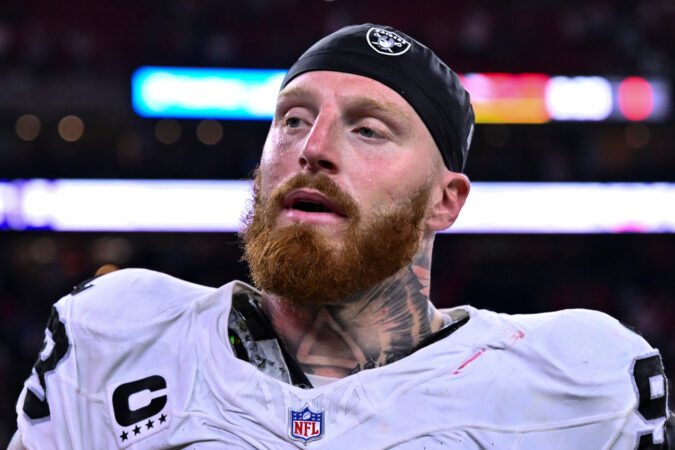
    Five-time Pro Bowl edge rusher Maxx Crosby is heading to the Baltimore Ravens, two people with knowledge of the trade told The Associated Press on Friday night.

    Both people spoke on condition of anonymity because the deal can’t be announced until the NFL’s new year starts next week.

    The Las Vegas Raiders will receive two first-round picks from the Ravens, including the No. 14 overall pick in next month’s NFL draft, one of the people said.

    The 28-year-old Crosby had 10 sacks last season and has reached double digits four times in his seven seasons.

  • Former Democratic presidents remember the late Rev. Jesse Jackson during final public tribute

    Former Democratic presidents remember the late Rev. Jesse Jackson during final public tribute

    CHICAGO — From former presidents to an NBA Hall of Famer to prominent church pastors, stories of the Rev. Jesse Jackson Sr.’s influence on politics, corporate boardrooms, and picket lines loomed large Friday at a celebration honoring the late civil rights leader.

    Thousands of people gathered at a church on Chicago’s South Side to pay a final public tribute to Jackson.

    The celebration — with appearances by Grammy-winning gospel singers and Jennifer Hudson — felt at times like a church service and others like a political rally. Many, from former President Bill Clinton to the Rev. Al Sharpton, a civil rights leader and founder of the National Action Network, likened Jackson’s death to a call to action, from speaking out against justice to voting in the midterms.

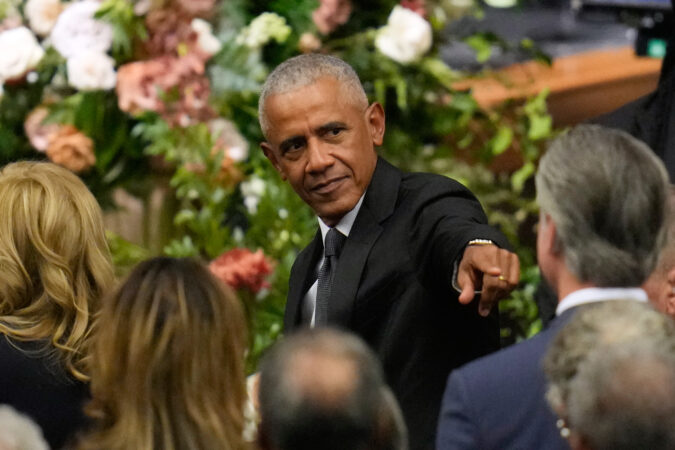
    Former President Barack Obama said Jackson’s presidential runs in the 1980s set the stage for other Black leaders, including his own successful 2009 presidency and re-election.

    “The message he sent to a 22-year-old child of a single mother with a funny name, an outsider, was that maybe there wasn’t any place or any room where we didn’t belong,” Obama said. “He paved the road for so many others to follow.”

    Obama, joined by Clinton and former Democratic president Joe Biden at a celebration of life for Jackson, received the loudest round of applause as the three entered the chamber.

    “We are living in a time when it can be hard to hope,” Obama said. “Each day we wake up to some new assault to our democratic institutions. Another setback to the idea of the rule of law, an offense to common decency. Every day you wake up to things you just didn’t think were possible.”

    “Each day we are told by folks in high office to fear each other,” said Obama, referring to the current Republican leadership in Washington.

    Clinton said Jackson made him a better president, while former Democratic Vice President Kamala Harris talked about Jackson’s inspiring 1980s presidential runs and showed off campaign memorabilia she had kept from them. Former President Joe Biden also spoke during the service.

    President Donald Trump, who praised Jackson on social media after he died and also shared photos of the two of them together, did not attend.

    Thousands attend Jackson memorial service

    The event honors the protégé of the Rev. Dr. Martin Luther King Jr. and two-time presidential candidate and follows memorial services that drew large crowds in Chicago and South Carolina, where Jackson was born. Friday’s celebration — at an influential Black church with a 10,000-seat arena — was expected to be the largest.

    Crowds of attendees waited in long lines outside the church as television screens played excerpts of some of Jackson’s most famous speeches. Inside, vendors sold pins with his 1984 presidential slogan and hoodies with his “I Am Somebody” mantra.

    Along with a slew of Illinois elected leaders, notable attendees included actor and producer Tyler Perry, California Gov. Gavin Newsom, and political activist and theologian Cornel West. Detroit Pistons great and Chicago native Isiah Thomas was one of the speakers.

    Marketing professional Chelsia Bryan said Friday that she decided to attend the memorial service because it was “a chance to be part of something historic.”

    “As a Black woman, knowing that someone pretty much gave their life, dedicated their life to make sure I can do the things that I can do now, he’s worth honoring,” Bryan said.

    Jackson Jr.: Everyone welcome

    Jackson died last month at age 84 after battling a rare neurological disorder that affected his mobility and ability to speak. Family members say he continued coming into the office until last year and communicated through hand signals. His final public appearances included the 2024 Democratic National Convention in Chicago.

    “Every single person in here has a Jesse Jackson story,” his eldest son, Jesse Jackson Jr., said Friday. “The time he shook your hand, the time he prayed for you, the time he held you up, the time he prayed the funeral for somebody you know … and he prayed you to a new course of existence.”

    Sitting in the crowd was 90-year-old Mary Lovett. She said Jackson’s advocacy inspired her many times, from when she moved from Mississippi to Chicago in the 1960s, taught elementary school and became a mom. She twice voted for Jackson during both of his presidential runs and appreciated how he always spoke up for underrepresented people. “He’s gone, but I hope his legacy lives,” she said. “I hope we can remember what he tried to teach us.”

    Jackson’s service was to the poor, underrepresented

    Jackson’s pursuits were countless, taking him to all corners of the globe: Advocating for the poor and underrepresented on issues including voting rights, healthcare, job opportunities, and education. He scored diplomatic victories with world leaders, and through Rainbow PUSH Coalition, he channeled cries for Black pride and self-determination into corporate boardrooms, pressuring executives to make America a more open and equitable society.

    Another son, Yusef Jackson, who runs the Rainbow PUSH Coalition, recalled how his father carried a well-worn Bible but also showed his faith by showing up to picket lines.

    “He lived a revolutionary Christian faith rooted in justice, nonviolence and the moral righteousness,” Yusef Jackson said Friday. “He was deeply involved in the political struggles of his time, but his gift was that he could rise above them. It’s not about the left wing or the right wing. It takes two wings to fly. For him, the goal was always the moral center.”

    Jackson’s services in Chicago and South Carolina drew civic leaders, school groups, and everyday people who said they were touched by Jackson’s work, from scholarship programs to advocating for inmates. Several states flew flags at half-staff in his honor.

    Services in Washington, D.C., were tabled after a request to allow Jackson to lie in honor in the United States Capitol rotunda was denied by House Speaker Mike Johnson, who said the space is typically reserved for select officials, including former presidents. Details on a future event have not been made public.

  • Trump administration’s embattled FDA vaccine chief is leaving for the second time

    Trump administration’s embattled FDA vaccine chief is leaving for the second time

    WASHINGTON — The Food and Drug Administration’s embattled vaccine chief, Vinay Prasad, is once again leaving the agency — the second time in less than a year that he’s departed after controversial decisions involving the review of vaccinations and specialty drugs for rare diseases.

    FDA Commissioner Marty Makary announced the news to FDA staff in an email late Friday, saying Prasad would depart at the end of April. Makary said Prasad would return to his academic job at the University of California, San Francisco.

    In July, Prasad was briefly forced from his job after running afoul of biotech executives, patient groups, and conservative allies of President Donald Trump. He was reinstated less than two weeks later with the backing of Health Secretary Robert F. Kennedy Jr. and Makary.

    Prasad’s latest ouster follows a string of high-profile controversies involving the FDA’s review of vaccines, gene therapies, and biotech drugs in which companies have criticized the agency for reversing itself, in some cases calling for new trials of products previously greenlighted by regulators.

    In the last month, Prasad has come under fire from pharmaceutical executives, investors, members of Congress, and other critics for multiple decisions at the agency.

    First, Prasad initially refused to allow the FDA to review a highly anticipated flu vaccine from drugmaker Moderna made with mRNA technology. The rejection of the application, highly unusual for the FDA, prompted Moderna to go public with Prasad’s decision and vow to formally challenge it.

    A week after the rejection became public, the FDA reversed course and said it would accept the shot for review after all, pending an additional study from Moderna.

    Then, in the past week, the FDA engaged in a highly unusual public fight with a small drug company developing an experimental treatment for Huntington’s disease, a fatal condition that affects about 40,000 people in the U.S.

    The company, UniQure, said Monday that the FDA was demanding a new trial of its gene therapy that would involve performing a sham surgery on some of the patients in the trial. The company’s gene therapy is injected directly into the brain during a surgical procedure.

    Company executives said the request for a sham-controlled trial contradicted previous FDA guidance and raised ethical concerns for patients.

    On Thursday, the FDA held a highly unusual news conference with reporters to criticize the company’s therapy and defend the agency’s request for an additional study.

    A senior FDA official, who requested anonymity to speak with reporters, called the company’s original study “stone cold negative.”

    “We have a failed product here,” he added.

    The FDA typically communicates in carefully vetted written statements when speaking about scientific disagreements, especially those involving experimental drugs that are still under the agency’s review.

    Prasad’s time as the FDA’s top vaccine and biotech regulator has been marked by a series of similar disputes with the companies the agency regulates.

    More than a half-dozen drugmakers studying therapies for rare or hard-to-treat diseases have received rejection letters or requests to run additional studies, adding years and potentially many millions of dollars to their development plans.

    A longtime academic and critic of the FDA’s standards for drug reviews, Prasad’s approach to regulation since arriving at the FDA last May has confounded many FDA observers and critics.

    On repeated occasions, Prasad joined Makary in announcing steps to make FDA drug reviews faster and easier for companies. But he also has imposed new warnings and study requirements for some biotech drugs and vaccines, particularly COVID shots that have long been a target for Kennedy, a longtime anti-vaccine activist before joining the Trump administration.

  • Democrats join legal challenge to Trump’s planned 250-foot arch

    Democrats join legal challenge to Trump’s planned 250-foot arch

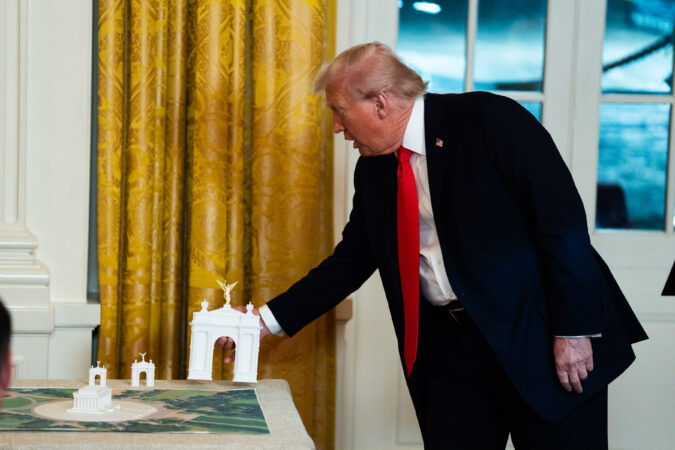
    Congressional Democrats have joined a legal challenge to President Donald Trump’s planned 250-foot triumphal arch, arguing in U.S. District Court that the project must receive congressional approval before moving forward.

    The top Democrats on committees overseeing federal lands and natural resources filed an amicus brief Friday, citing the Commemorative Works Act, a 40-year-old federal law that governs the design and placement of memorials in Washington. Under the law, certain parts of the city — including Memorial Circle, a traffic roundabout near Arlington National Cemetery, which Trump is eyeing for his planned arch — are considered protected land, and monuments built there would require congressional authorization. The circle sits narrowly inside the boundaries of Washington.

    “Washington D.C. is not the President’s backyard to renovate, relandscape, and build in as he sees fit,” Sens. Martin Heinrich of New Mexico, Angus King of Maine, and Jeff Merkley of Oregon and Reps. Jared Huffman of California, Yassamin Ansari of Arizona, and Maxine Dexter of Oregon wrote in their brief. King is an independent who caucuses with the Democrats.

    King also requested a review from the Congressional Research Service, the nonpartisan think tank that serves lawmakers, which independently concluded that an arch built in Memorial Circle would require congressional authorization. King’s office shared the review with the Washington Post.

    “This is a straightforward issue of who’s in charge,” King said in an interview Friday. “The law is clear that any structure in this zone — of which Memorial Circle is certainly part — has to have the express approval of Congress.”

    Huffman said the president’s plans raise “moral and political” questions, including whether the arch is a “vanity project” rather than a necessary monument.

    “This is not Pyongyang,” Huffman said, invoking the capital of North Korea. “Most Americans want to be able to appreciate the view of Arlington Cemetery without a massive eyesore.”

    The White House criticized Democrats’ legal challenge, saying that the party is “opposed to anything that celebrates the greatness of our Country” and mocking them as “America Last losers.”

    “The Triumphal Arch in Memorial Circle is going to be one of the most iconic landmarks not only in Washington, D.C., but throughout the world,” spokesman Davis Ingle said in a statement. “It will enhance the visitor experience at Arlington National Cemetery for veterans, the families of the fallen, and all Americans alike, serving as a visual reminder of the noble sacrifices borne by so many American heroes throughout our 250 year history so we can enjoy our freedoms today.”

    The White House did not respond to questions about whether officials would seek congressional approval of their planned arch.

    Military veterans and a historic preservationist sued the Trump administration last month, arguing that Trump’s planned arch would obstruct key views when visiting Arlington National Cemetery and interfere with the intent of nearby monuments. Public Citizen, a government watchdog organization, is seeking to halt the project until the administration secures approval from Congress and federal review panels.

    The White House has yet to formally propose its arch or seek those approvals, but Trump has repeatedly said that construction will soon begin. He has also tied the arch to the nation’s 250th anniversary, with Freedom 250 — a Trump-aligned group helping plan commemorative activities this year — helping guide the project’s development.

    “We’re doing one that will be more magnificent and larger than the Arc de Triomphe in Paris,” the president said in an interview last month with NBC News, invoking the famous 164-foot-tall arch in France. Trump said that his planned arch would be “about” 250 feet high.

  • Justice Department targets Cuban officials, aims for indictments

    Justice Department targets Cuban officials, aims for indictments

    The Justice Department has formed a working group to examine possible federal charges against officials or entities within Cuba’s government, according to an official familiar with the group.

    The formation of the group could be a significant step in the Trump administration’s public push to topple the regime in Cuba.

    Officials from government agencies including the Treasury Department will be part of the recently formed group. Treasury’s involvement could mean the Trump administration is considering further sanctions against Cuba, already the subject of intense U.S. economic sanctions.

    The working group is exploring potential crimes related to immigration, economics, and more. Another person familiar with the working group said federal prosecutors in Florida are also working with local partners in the state to bring potential charges against Cuban officials.

    The effort to bring charges against Cuban officials coincides with President Donald Trump saying that his administration is eyeing Cuba as the next country whose government might be overthrown, following the capture of Venezuela’s Nicolás Maduro in early January and the killing of Iran’s supreme leader last Saturday.

    “We want to finish this one first,” Trump said Thursday, referring to the current attack on Iran. It “will be just a question of time” before Cuba’s government falls, and “you and a lot of unbelievable people are going to be going back to Cuba, hopefully not to stay,” he told a White House audience that included a large number of Republicans from South Florida, many of Cuban descent.

    “I just want to wait a couple of weeks,” he added. On Friday, in an interview with CNN, he repeated that Cuba “is going to fall very soon.”

    The U.S. Attorney’s Office in the Southern District of Florida — which includes Miami, the center of the Cuban exile community — will be overseeing the prosecution group, according to the official familiar with the matter, who, like others in this article, spoke on the condition of anonymity to discuss an internal plan that has not yet been made public.

    Jason Reding Quiñones, who heads the office, is also overseeing a probe aimed at former officials of the Joe Biden and Barack Obama administrations whom Trump accuses of bringing politically motivated investigations against him.

    “Federal prosecutors from across the country work every day to pursue justice, which includes efforts to combat transnational crime,” a Justice Department spokesperson said in a statement.

    The Cuba prosecution effort could, in part, follow the model the administration used to remove Maduro from power. The Justice Department indicted Maduro in 2020, although the leader was not extradited at the time. In January, the administration launched an attack on Venezuela, capturing Maduro and bringing him to New York to face charges.

    Several former prosecutors from the Miami U.S. attorney’s office told the Washington Post that they were not surprised that the office would be leading an effort specifically focused on Cuba-related prosecutions. The Miami office has a long history of handling high-profile cases involving wrongdoing tied to the Cuban regime.

    The U.S. has, for example, long charged that GAESA, a military business conglomerate that controls vast portions of the Cuban economy, including tourism, foreign imports, and currency flows, is a center of state corruption.

    In 2024, the office secured the conviction of Victor Manuel Rocha, a former U.S. diplomat who admitted to gathering intelligence for Cuba for more than four decades while holding sensitive roles in the U.S. State Department and National Security Council.

    Attorneys in the office also led a significant prosecution in the early 2000s against five Cuban intelligence officers who were arrested in the United States and accused of seeking to infiltrate anti-Castro Cuban American groups. The group, known as the Cuban Five, was convicted at trial. President Barack Obama released several of its members in a 2014 prisoner exchange as part of his administration’s efforts to establish more normalized relations with Cuba.

    Last month, several Republican members of Florida’s congressional delegation urged Attorney General Pam Bondi to reopen an investigation into a 1996 incident, in which Cuban forces shot down two unarmed civilian planes operated by a Miami-based Cuban exile group called Brothers to the Rescue. Four people were killed.

    The group was scouring nearby waters for refugees seeking to escape to the U.S. at the time.

    The U.S. lawmakers, in a Feb. 13 letter, alleged that Raúl Castro, Cuba’s former president and brother of Fidel Castro, ordered the attack while serving as the head of the nation’s military.

    They pushed Trump administration officials to indict him and cited audio recordings of Raúl Castro discussing the incident that they said could help build a case.

    “We believe unequivocally that Raul Castro is responsible for this heinous crime,” read the letter signed by Reps. Mario Diaz-Balart, María Elvira Salazar, Carlos A. Gimenez, and Nicole Malliotakis. “It is time for him to be brought to justice.”

    Last week, the Supreme Court heard arguments on the efforts of two U.S. companies seeking compensation for assets seized by Cuba 65 years ago. Success in those efforts could open the door to a large number of additional lawsuits.

    Officials from South Florida have also urged the Justice Department to take action against the Cuban regime over a recent incident in which Cuban soldiers opened fire on a speedboat registered in Florida as it approached the island. The gunfire killed four of the boat’s armed passengers, including a U.S. citizen, and wounded another six.

    Cuban officials charged the survivors this week, alleging that they and those killed were Cubans living in the United States intent on infiltrating the island to commit acts of terrorism.

    The U.S. attorney for the Southern District of Florida, Reding Quiñones, expressed skepticism about that conclusion in a statement shortly after the shooting, saying: “The facts remain unclear and conflicting.”

    He vowed a thorough investigation.

    “We will follow the facts wherever they lead and pursue answers through every legal and diplomatic channel available,” he said. “We owe that to the victims, their families, and to the rule of law. More to come as we learn more.”