Category: Wires

  • What is ‘Jeffing’? This walk-run technique can help you get in shape.

    What is ‘Jeffing’? This walk-run technique can help you get in shape.

    If you’ve ever watched a race, you may have seen some runners whiz by, others resolutely jog forward — and a sizable group slow down to a walking pace, sometimes just a few minutes after passing the start line.

    No, they don’t need your cheers to “just keep going!” Rather, it’s likely those walk breaks are calculated. It’s all part of a time-honored technique known as “Jeffing,” and runners have been using it for decades in training runs and in major races like the New York City Marathon.

    While this method is pretty well known among runners, it’s not only for those looking for personal records. Rather, it can be a great way for people to add a little oomph to their walking workouts and gain even more health-promoting benefits. Here’s everything you need to know.

    What is ‘Jeffing’?

    Simply put, Jeffing is a technique that intersperses walk breaks with running bouts to help ward off fatigue and boost endurance. This type of cardio, or aerobic, workout goes by many different names in the running community — run-walk, run-walk-run, the Galloway method, and, of course, Jeffing.

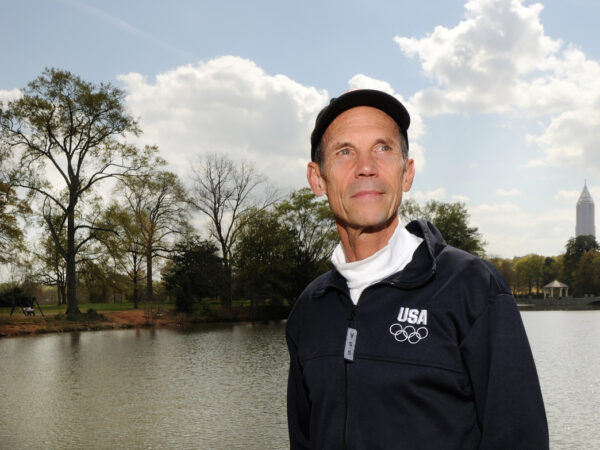
    The last two are nods to Olympian Jeff Galloway, who began using this method in 1973 while instructing a beginner running class at a university. (Galloway himself has no particular preference for which term is used. “I’m honored to be a verb,” he said.)

    Galloway ran weekly with the 22 students in the program, who naturally divided into three pace groups based on their abilities. “Whenever anybody started huffing and puffing in any group, I would have everybody walk.” Galloway said.

    All of the participants stuck with the program for the entire 10 weeks, and all were able to complete their final goal: finishing either a 5K or 10K race. The walk breaks, Galloway believed, played a vital role in that.

    In this earliest iteration of Jeffing, there was no set timing on when to start walking and for how long to do so. But after further refining, it soon became clear to Galloway that the important part is to slot in walking breaks before you feel gassed.

    “Because you’re taking those walk breaks from the beginning, before you’re tired, before you need them, it feels great,” said Chris Twiggs, the chief training officer of Galloway Training. “It really does feel like you’re cheating because you’re pushing the fatigue toward the end.” When Twiggs used the method for the first time at the 1995 Walt Disney World Marathon, he ended up with about a 15-minute personal record.

    The 30-30 method — a 30-second run and 30-second walk — is one of the most popular ways to approach Jeffing, said Galloway. However, if a 30-second run is too challenging, you can scale it back: Twiggs often has walkers start with a 10-second run, 50-second walk, and then adjust from there.

    “There’s an almost unlimited way to go about it,” said Kate Baird, a certified running coach and exercise physiologist at the Hospital for Special Surgery. That’s part of what makes it so beginner-friendly.

    What are the benefits of the run-walk method?

    First and foremost, run-walk is a type of aerobic workout that helps improve heart health, said Neel Chokshi, the medical director of the Sports Cardiology and Fitness Program at Penn Medicine. Consider it “interval training-lite,” he said. “The benefits of run-walk mirror general interval training in terms of the gains that people can get.” Specifically, alternating between high- and low-intensity efforts allows you to push hard when it’s time.

    Over time, your heart will adapt to those repeated exposures to higher intensities, Chokshi said. Adaptations include being able to pump more blood with each heartbeat, a reduction in resting heart rate, and increased blood flow through the arteries.

    Interval training also improves your VO2 max, or how efficiently your body uses oxygen during exercise. This results in better endurance and is also linked to longevity, said Chokshi.

    Another great thing about Jeffing is that you can get all of these heart-health benefits while reducing the amount of high-impact stress you’re putting on your muscles, tendons, and ligaments. When Galloway first tried this method in the university’s beginner running course, a huge takeaway was that not one participant got injured during the program. That’s big, since beginner runners are at higher risk — they get injured at more than twice the rate as more experienced ones, according to a 2019 study out of the Netherlands.

    Finally, you can’t ignore the mental benefits. If you want to scale up your cardio workouts but are daunted by the idea of running nonstop, Jeffing is a great way to overcome that mental hurdle, said Chokshi. Knowing you will have walk breaks coming can help you build the confidence that you can complete your workout — and finish it strong, said Twiggs.

    Here’s how to try the run-walk method yourself

    While there’s no set way to use the method, there are a few things you should keep in mind to make the most of it.

    1. Get the right shoes

    Because running brings a higher impact than walking, proper gear becomes even more important, said Twiggs. You might need more cushioning than a walking shoe, or some kind of motion control if your foot rolls inward or outward with each stride, he said. A running specialty store can help you pick out a pair that works for your anatomy and biomechanics.

    2. Start small

    While folks use run-walk in multihour marathons and training runs, these workouts don’t need to be nearly as long — and they shouldn’t be if you’re a beginner. Anywhere from 10 to 30 minutes is a great starting place, said Baird. Once you’re more comfortable with it, you can shoot for 30 to 45 minutes, Twiggs said.

    3. Warm up your body

    Getting your blood flowing before a workout can loosen up your muscles and gradually increase your heart rate, Chokshi said. You want to do a general, full-body warmup, since running includes pretty much every muscle in your body, including those in your lower body, upper body, and core. Moves like hamstring sweeps, lunges with thoracic rotation, and cat-cows are solid choices.

    4. Choose your intervals

    The 30-second run, 30-second walk tends to be the most popular utilization of the program, but “there’s no perfect run-walk ratio that everyone should be aspiring to,” said Twiggs. If you feel like you can’t catch your breath when running for 30 seconds, you can shorten that segment. If you feel strong, you can bump it up to 40 seconds, 60 seconds, or even a few minutes and see how your body reacts.

    5. Slow down

    Your run effort shouldn’t be a heart-pumping sprint — you want to keep it more moderate so you have the energy to do it all over again during your next interval. “A really good gauge is if you can carry on a conversation,” Twiggs said.

    6. Make time for recovery

    Even if you feel great after a workout, you shouldn’t do it every day. “Take one to two days between those workouts when it’s new,” Baird said. If you feel sore or tight in one particular spot, that might be your cue to give that area some extra attention during your warmup or next strength-training workout.

    7. Don’t consider it a means to an end

    The more you run-walk, the more you may want to play with your intervals, gradually increasing your run efforts as you gain more endurance. But it’s important to remember that you don’t have to use this method to reach a continuous running goal if that’s not what you want, said Galloway. You can stick with run-walk and still reap the benefits of running.
  • NYC police arrest man after officers were pelted during a snowball fight

    NYC police arrest man after officers were pelted during a snowball fight

    NEW YORK — A social media content creator was arrested Thursday after New York City police said he was one of a number of people who pelted officers with snow and ice during a massive snowball fight in Washington Square Park this week.

    Gusmane Coulibaly, 27, was charged with obstructing governmental administration, a misdemeanor, and harassment, a non-criminal violation.

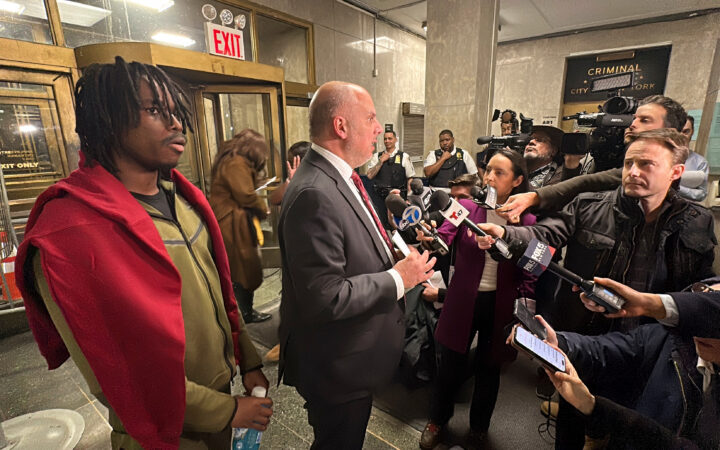
    He appeared in handcuffs and wearing an olive-green sweat suit during his arraignment Thursday evening in Manhattan criminal court. He wasn’t asked to enter a plea, and was released, pending his next court date on April 9.

    Coulibaly didn’t speak during the brief hearing, which was attended by at least a dozen uniformed police officers and police union officials.

    But George Vomvolakis, his attorney, told the judge that the “circumstances surrounding his arrest have been politicized.” He suggested Coulibaly was caught in the middle of a rift between the police department and City Hall.

    “I don’t want to minimize what happened to the officers, but I think the police department is using this because of their dislike or disdain for the mayor,” Vomvolakis said. “I think they’re taking it out on Mr. Coulibaly. They want to pick a fight with the mayor.”

    Mayor Zohran Mamdani, a Democrat, played down the fracas earlier this week as a “snowball fight that got out of hand” and suggested he did not think criminal charges were warranted.

    Monday’s snowball fight, which appeared to be organized by social media content producers, caused a chaotic scene as a large crowd amassed at the popular park to wing snowballs at each other during a winter storm.

    Prosecutors said in court that officers arrived at the park after a 911 call about a disorderly group, including people climbing on a roof.

    Video from the incident shows a large group of people following police officers, showering them with snowballs and jeering, as they retreat to their vehicles outside the park. Videos also showed officers shoving at least two people to the ground while getting hit from all directions by snowballs.

    “The notion that this was a playful snowball fight obviously is not true,” Patrick Hendry, a police union president, told reporters after the proceeding. “This was an attack on the uniform that these police officers wear so proudly every day. They came after these police officers, pelting them with ice, rocks.”

    Hendry said he was disappointed prosecutors didn’t charge Coulibaly with assaulting an officer — the felony offense police originally proposed.

    “It sends a horrible message to these police officers right here that the mayor is not going to have our backs,” he said, standing alongside other officers. “You’re putting a target on these police officers’ backs.”

    Vomvolakis maintained there was no evidence that rocks or ice were packed into the snowballs.

    “What I saw in the video didn’t look like an attack,” Vomvolakis said. ”Did it go a little past, you know, jokes and fun? Was it possibly a little disrespectful to the police? Yes.”

    Assistant District Attorney Victoria Notaro said video showed Coulibaly throwing a snowball that struck Officer Nicholas Johnson in the face, but prosecutors did not find evidence showing that the officer’s injuries were caused “directly by this defendant’s conduct.”

    The officer sustained injuries including redness, tenderness, and pain to his eye, head and neck, Notaro said.

    “We will continue to investigate,” she added.

    Vomvolakis said Coulibaly is a content creator who makes “elaborate videos” including a recent one in which he approached a stranger in a Bronx subway, acted as if he knew him and said he was owed money.

    That interaction got Coulibaly arrested for attempted robbery — a charge that Vomvolakis said he was confident would be dismissed.

    Coulibaly has hundreds of thousands of followers across Instagram, TikTok, YouTube, Snapchat, and other social media platforms, where he posts under the moniker Diaper Man.

    The city’s police department has released images of three other people it is seeking in connection with the snowball fight. Police Commissioner Jessica Tisch has called the treatment of officers at the fight “disgraceful” and “criminal.”

  • Tyrese Maxey breaks Sixers’ record for three-pointers in strong win over the Miami Heat

    Tyrese Maxey breaks Sixers’ record for three-pointers in strong win over the Miami Heat

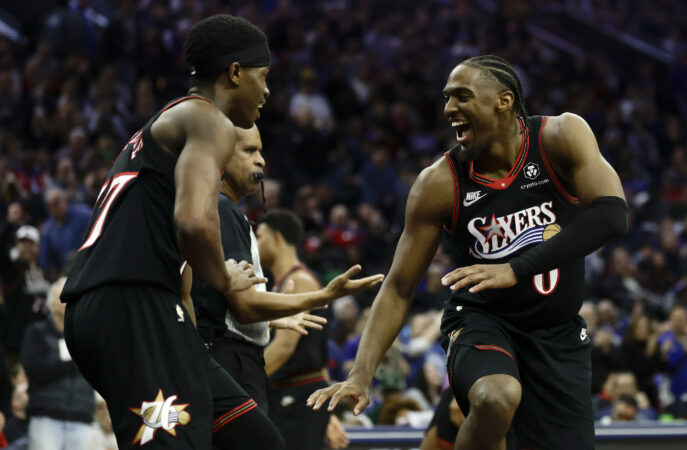
    Tyrese Maxey broke Allen Iverson’s 76ers franchise record for 3-pointers, finishing with five 3s and a team-high 28 points Thursday night in the Sixers’ 124-117 victory over the Miami Heat.

    Maxey also had 11 assists and helped steady the Sixers after they blew a 16-point halftime lead. Joel Embiid had 26 points and 11 rebounds, and Kelly Oubre scored 21 points for the Sixers, who have now won three straight after dropping their previous four.

    Bam Adebayo had 29 points and 14 rebounds, and Tyler Herro scored 25 points for the Heat, who have lost two straight.

    Maxey entered the game with 882 made three-pointers, three behind Iverson, and broke the record with 1 minute, 38 seconds left in the first quarter. He made all of his five three-point attempts — a career high for a period — and scored 20 points in the first quarter alone. He finished 5 of 12 beyond the arc.

    The 25-year-old Maxey now has 887 three-pointers midway through his sixth season; Iverson played his first 10 seasons and parts of two more for the Sixers to accomplish his feat.

    Miami took its first lead of the game on a 3 by Herro with 2:44 left, but the Heat didn’t score again. Maxey hit two free throws and then found Kelly Oubre for a 3 to put the Sixers back ahead 121-117. Embiid extended the lead on a 3 with 29.2 seconds remaining.

    The Sixers led 73-57 at halftime. Miami rallied to tie it late in the third quarter, and the margin was within single digits the rest of the way.

    Next up: the Sixers are on a road trip to take on rivals Boston on Sunday night (7 p.m., NBCSP).

  • Vance: ‘No chance’ U.S. will be in drawn-out war in Middle East

    Vance: ‘No chance’ U.S. will be in drawn-out war in Middle East

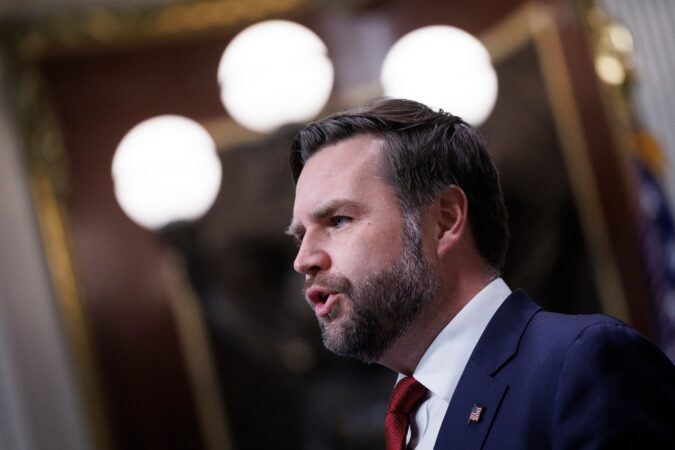
    ABOARD AIR FORCE TWO — Vice President JD Vance said Thursday that while military strikes against Iran remain under consideration by President Donald Trump, there is “no chance” that such strikes would result in the United States becoming involved in a yearslong, drawn-out war.

    Speaking with the Washington Post on Thursday, Vance said he does not know what Trump will decide to do about Iran, describing possibilities that include military strikes “to ensure Iran isn’t going to get a nuclear weapon,” or solving “the problem diplomatically.”

    But if Trump proceeds with another round of strikes on Iran — which some U.S. officials have suggested could be more comprehensive than the bombing of nuclear sites in June — Vance said confidently that it would not turn into the kind of conflict the vice president has harshly criticized.

    “The idea that we’re going to be in a Middle Eastern war for years with no end in sight — there is no chance that will happen,” he told the Post in an interview as he returned to Washington from an event in Wisconsin, effectively pushing back against predictions by some foreign policy experts that there would be no easy out if America got involved in a bigger conflict with Iran.

    Vance noted that last year’s operation in Iran and the January capture of Venezuelan President Nicolás Maduro were “very clearly defined.”

    Vance, a 41-year-old Marine veteran who served in the Iraq War, once said from the Senate floor that he had been “lied to” about the reasons for the United States’ involvement there. He said Thursday that he still sees himself as a “skeptic of foreign military interventions,” a description he believes continues to apply to Trump.

    “I think we all prefer the diplomatic option,” Vance said. “But it really depends on what the Iranians do and what they say.”

    Talks between the United States and Iran continued Thursday in Geneva amid a large-scale buildup of U.S. forces around Iran, though no resolution was reached, and mediators said the negotiations would continue next week.

    Trump has openly acknowledged that he is interested in bringing about regime change to topple Iran’s supreme leader, Ayatollah Ali Khamenei, telling reporters this month that it “would be the best thing that could happen.” The current presence of U.S. military forces in the region is among the largest in more than two decades, since before the Iraq War began in 2003.

    Asked whether, in his days as a commentator and senator offering criticisms of the Iraq War, he could have foreseen being attached to a presidency interested in bringing about a foreign regime change, the vice president chuckled.

    “Well, I mean, look. Life has all kinds of crazy twists and turns,” Vance said. “But I think Donald Trump is an ‘America First’ president, and he pursues policies that work for the American people.

    “I do think we have to avoid repeating the mistakes of the past. I also think that we have to avoid overlearning the lessons of the past. Just because one president screwed up a military conflict doesn’t mean we can never engage in military conflict again. We’ve got to be careful about it, but I think the president is being careful.”

    Prominent commentators within the conservative movement have spent months publicly quarreling over U.S. involvement in the Middle East, including debating what America’s attitude should be toward Israel.

    A growing number of conservatives — particularly young people — have soured on continued military support for the U.S. ally. Traditional conservatives have excoriated some of those voices, meanwhile, fueling a debate on the right about not only foreign policy but antisemitism as well.

    Vance has advocated for Israel-skeptical voices to be heard in the intraparty debate — a conversation that has upset Republican dogma of recent decades — while maintaining that he sees the nation as a strategic ally.

    The divide was apparent last week when former Fox News host Tucker Carlson, who now has his own podcast and frequently criticizes fellow conservatives’ deference to Israel, interviewed Mike Huckabee, the U.S. ambassador to Israel.

    Carlson, who has been a close ally of Vance, and Huckabee, a high-profile U.S. diplomat, have each found themselves in hot water for statements made during the filmed discussion. Huckabee said it would “be fine” if Israel took over other Middle Eastern countries whose land is referenced in Scripture, and Carlson suggested genetic testing to determine the true descendants of Abraham.

    Vance, an active peruser of X, said he had not yet watched the entire interview but had “seen a couple of clips here and there.” Despite calls from some pro-Israel conservative activists and even two Republican members of Congress for the White House to condemn Carlson, who visited the White House on Monday, Vance described the interview as a positive development.

    “I guess my takeaway is it’s a really good conversation that’s going to be necessary for the right, not just for the next couple years but for long into the future,” he said.

    What he has always liked about the political right — “even the people that I find annoying on our side” — is that “there is a real exchange of ideas,” Vance said.

    “And if you think of the Trump coalition in 2024 — and the way that I put it is, you had Joe Rogan, Mark Levin, Sean Hannity, Tucker Carlson, and JD Vance and a coalition of people … but to do that, you have to be willing to tolerate debate and disagreement,” he said. “And I just think that it’s a good thing.”

  • Crowds of Chicago mourners pay respects to Jesse Jackson at start of cross-country memorial services

    Crowds of Chicago mourners pay respects to Jesse Jackson at start of cross-country memorial services

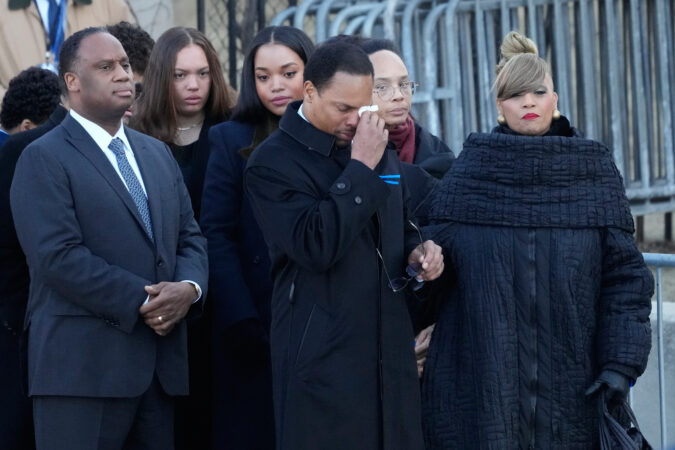
    CHICAGO — A line of mourners streamed through a Chicago auditorium Thursday to pay final respects to the Rev. Jesse Jackson Sr. as cross-country memorial services began in the city the late civil rights leader called home.

    The protégé of the Rev. Martin Luther King Jr. and two-time presidential candidate will lie in repose for two days at the headquarters of the Rainbow PUSH Coalition before events in Washington, D.C., and South Carolina, where he was born.

    Family members wiped away tears as the casket was brought into the stately brick building. Flowers lined the sidewalks where people waiting to enter watched a large screen playing video excerpts of Jackson’s notable speeches. Some raised their fists in solidarity.

    Inside, Jackson’s children, Chicago Mayor Brandon Johnson, and the Rev. Al Sharpton were among those who stood by the open casket to shake hands and hug those coming to view the body of Jackson, dressed in a suit and blue shirt and tie.

    “The challenge for us is that we’ve got to make sure that all he lived for was not in vain,” Sharpton told reporters. “Dr. King’s dream and Jesse Jackson’s mission now falls on our shoulders. We’ve got to stand up and keep it going.”

    Jackson died last week at age 84 after battling a rare neurological disorder that affected his mobility and ability to speak in his later years.

    Remembrances have already poured in from around the globe, and several U.S. states, including Minnesota, Iowa, and North Carolina, are flying flags at half-staff in his honor.

    But perhaps nowhere has his death been felt as strongly as in the nation’s third-largest city, where Jackson lived for decades and raised his six children, including a son who is a congressman.

    Bouquets have been left outside the family’s Tudor-style home on the city’s South Side for days. Public schools have offered condolences, and city trains have used digital screens to display Jackson’s portrait and his well-known mantra, “I am Somebody!”

    His causes, both in the United States and abroad, were countless: Advocating for the poor and underrepresented on issues including voting rights, job opportunities, education, and healthcare. He scored diplomatic victories with world leaders, and through his Rainbow PUSH Coalition, he channeled cries for Black pride and self-determination into corporate boardrooms, pressuring executives to make America a more open and equitable society.

    “We honor him, and his hard-earned legacy as a freedom fighter, philosopher, and faithful shepherd of his family and community here in Chicago,” the mayor said in a statement.

    Next week, Jackson will lie in honor at the South Carolina Statehouse, followed by public services. According to Rainbow PUSH’s agenda, Gov. Henry McMaster is expected to deliver remarks; however, the governor’s office said Thursday that his participation wasn’t yet confirmed. Jackson spent his childhood and started his activism in South Carolina.

    Details on services in Washington have not yet been made public. However, he will not lie in honor at the United States Capitol rotunda after a request for the commemoration was denied by the House Speaker Mike Johnson’s office.

    The two weeks of events will wrap up next week with a large celebration of life gathering at a Chicago megachurch and finally, homegoing services at the headquarters of the Rainbow PUSH Coalition.

    Family members said the services will be open to all.

    “Our family is overwhelmed and overjoyed by the amazing amount of support being offered by common, ordinary people who our father’s life has come into contact with,” his eldest son, Jesse Jackson Jr., said before the services began. “This is a unique opportunity to lay down some of the political rhetoric and to lay down some of the division that deeply divides our country and to reflect upon a man who brought people together.”

    The services included prayers from some of the city’s most well-known religious leaders, including Chicago Cardinal Blase Cupich. Mourners of all ages — from toddlers in strollers to elderly people in wheelchairs — came to pay respects.

    Video clips of his appearances at news conferences, the campaign trail and even Sesame Street also played inside the auditorium.

    Claudette Redic, a retiree who lives in Chicago, said her family has respected Jackson, from backing his presidential ambitions to her son getting a scholarship from a program Jackson championed.

    “We have generations of support,” she said. “I’m hoping we continue.”

  • Cuba says 4 killed in speedboat shooting were attempting to infiltrate the country

    Cuba says 4 killed in speedboat shooting were attempting to infiltrate the country

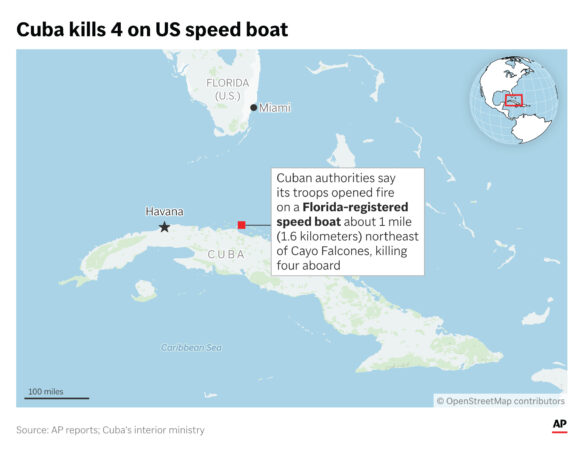
    HAVANA — Cuba’s government said late Wednesday that the 10 passengers on a boat that opened fire on its soldiers were armed Cubans living in the U.S. who were trying to infiltrate the island and unleash terrorism.

    The announcement came hours after Cuba said its soldiers killed four people and wounded six others aboard a Florida-registered speedboat that had entered Cuban waters and opened fire on the soldiers first, injuring one Cuban officer.

    Cuba’s government said the majority of the 10 people on the boat “have a known history of criminal and violent activity.”

    Secretary of State Marco Rubio had told reporters earlier that he was made aware of the incident and that the U.S. is now gathering its own information to determine if the victims were American citizens or permanent residents.

    “We have various different elements of the U.S. government that are trying to identify elements of the story that may not be provided to us now,” Rubio said while at the airport in Basseterre, St. Kitts, where he was attending a regional summit with Caribbean leaders.

    The Cuban government identified two of the boat passengers as Amijail Sánchez González and Leordan Enrique Cruz Gómez, who are wanted by Cuban authorities “based on their involvement in the promotion, planning, organization, financing, support or commission of actions carried out in the national territory or in other countries, in connection with acts of terrorism.”

    The government said it also had arrested Duniel Hernández Santos, adding that he was “sent from the United States to guarantee the reception of the armed infiltration, who at this time has confessed to his actions.”

    The Associated Press was not immediately able to independently verify that information.

    Cuba’s government said it obtained the details about the passengers aboard the boat from the suspects detained following the shootout.

    It identified seven of the 10 passengers, including Conrado Galindo Sariol, José Manuel Rodríguez Castelló, Cristian Ernesto Acosta Guevara, and Roberto Álvarez Ávila.

    On Thursday, Cuba’s deputy foreign minister, Carlos Fernández de Cossío, said the Cuban government erroneously identified Roberto Azcorra Consuegra as one of the boat passengers late Wednesday. He said Azcorra was not aboard the boat.

    Cuba’s government said that one of the four killed was Michel Ortega Casanova.

    “The investigation process continues until the facts are fully clarified,” the ministry said in a statement.

    Misael Ortega Casanova, brother of Michel Ortega Casanova, told the Associated Press late Wednesday that he was mourning his brother’s death but lamented that he fell into what he called an “obsessive and diabolical” quest for Cuba’s freedom.

    “Only us Cubans who have lived over there understand,” Misael Ortega Casanova said, referring to the “great suffering” that he and other Cubans on the island have faced.

    He noted that his brother, who was a truck driver and an American citizen who lived for more than 20 years in the U.S., leaves behind his wife, his mother, two sisters — one of whom lives in Cuba — and a daughter who is pregnant.

    “No one knew,” Misael said of his brother’s plans. “My mother is devastated.”

    He added: “They became so obsessed that they didn’t think about the consequences nor their own lives.”

    Misael said that he did not recognize any of the names that the Cuban government released.

    He said that while he doesn’t believe in heroes — “because that is ignorance” — he hopes that his brother’s death might be a worthwhile sacrifice: “Maybe it will justify that some day Cuba will be free.”

    A ‘highly unusual’ shootout

    President Donald Trump’s top diplomat refused to speculate on what happened, saying that it could be a “wide range of things,” and that the U.S. will not solely rely on what the Cuban authorities have provided thus far.

    “Suffice it to say, it is highly unusual to see shootouts in open sea like that. It’s not something that happens every day. It’s something, frankly, that hasn’t happened with Cuba in a very long time,” Rubio said.

    He said both the U.S. Department of Homeland Security and the U.S. Coast Guard are investigating the incident and stressed that he wants to verify the facts.

    “The majority of the facts being publicly reported are those by the information provided by the Cubans. We will verify that independently as we gather more information, and we’ll be prepared to respond accordingly,” Rubio said. “We’re going to have our own information on this. We’re going to figure out exactly what happened.”

    He said it was not a U.S. government operation and that he wasn’t “going to speculate about whose boat it was, what they were doing, why they were there, what actually happened.”

    One of the men identified by the Cuban government, Conrado Galindo Sariol, was interviewed in June 2025 by Martí Noticias, a U.S.-based news site that has long called for a change of government in Cuba.

    Galindo, whom the host called “a legend” and a former political prisoner, was quoted as saying that he wants to support the struggles that Cubans face, especially in the eastern part of the island “to achieve the freedom that is needed.”

    He said that the protests in Cuba at that time were “not a spark that’s going to be extinguished.”

    “The regime’s leaders are crisscrossing Cuba, trying to mitigate what’s coming very soon because … they know they’re out of power, that they can’t do anything about it, and they’re looking for ways to prevent the protests from growing in other parts of the country,” Galindo was quoted as saying.

    Fear over increased tensions

    Rubio said he found out about the shooting before the Cuban government posted on social media, noting that the U.S. has “constant contact” with the country “at the Coast Guard level.”

    Earlier, Cuba’s Interior Ministry issued a statement that provided few details about the shooting, but noted that the boat was roughly 1 mile northeast of Cayo Falcones, off Cuba’s north coast.

    The government provided the boat’s registration number, but the Associated Press was unable to readily verify details of the boat because boat registrations are not public in the state of Florida.

    It wasn’t immediately known what the boat and its occupants were doing in Cuban waters. In the statement, the ministry said Cuba’s government was “safeguarding its sovereignty and ensuring stability in the region.”

    The U.S. Attorney’s Office for the Southern District of Florida said it would pursue answers “through every legal and diplomatic channel available,” adding that “facts remain unclear and conflicting.”

    Vice President JD Vance said late Wednesday afternoon that Rubio had briefed him on the incident. He added that the White House was monitoring the situation.

    “Hopefully it’s not as bad as we fear it could be,” Vance said.

    The shooting threatens to increase tensions between the U.S. and Cuba. Following the ouster of Venezuelan President Nicolás Maduro, Trump and top administration officials have taken an increasingly aggressive stance toward Cuba, which had been largely kept economically afloat by Venezuela’s oil.

    The energy crisis Cuba has been grappling with in recent years entered new extremes last month when Trump signed an executive order that would impose a tariff on any country that sells or provides oil to Cuba. The move put pressure on Mexico, which Cuba became largely dependent on for petroleum after Trump halted oil shipments from Venezuela.

    Meanwhile, James Uthmeier, Florida’s attorney general, said he has ordered prosecutors to work with federal, state and law enforcement partners to start an investigation.

    “The Cuban government cannot be trusted, and we will do everything in our power to hold these communists accountable,” he wrote on X.

  • Anthropic CEO says AI company ‘cannot in good conscience accede’ to Pentagon’s demands

    Anthropic CEO says AI company ‘cannot in good conscience accede’ to Pentagon’s demands

    WASHINGTON — Anthropic CEO Dario Amodei said Thursday the artificial intelligence company “cannot in good conscience accede” to the Pentagon’s demands to allow wider use of its technology.

    The maker of the AI chatbot Claude said in a statement that it’s not walking away from negotiations, but that new contract language received from the Defense Department “made virtually no progress on preventing Claude’s use for mass surveillance of Americans or in fully autonomous weapons.”

    The Pentagon’s top spokesman has reiterated that the military wants to use Anthropic’s artificial intelligence technology in legal ways and will not let the company dictate any limits ahead of a Friday deadline to agree to its demands.

    Sean Parnell said Thursday on social media that the Pentagon “has no interest in using AI to conduct mass surveillance of Americans (which is illegal) nor do we want to use AI to develop autonomous weapons that operate without human involvement.”

    Anthropic’s policies prevent its models, such as its chatbot Claude, from being used for those purposes. It’s the last of its peers — the Pentagon also has contracts with Google, OpenAI, and Elon Musk’s xAI — to not supply its technology to a new U.S. military internal network.

    Parnell said the Pentagon wants to “use Anthropic’s model for all lawful purposes” but didn’t offer details on what that entailed. He said opening up use of the technology would prevent the company from “jeopardizing critical military operations.”

    “We will not let ANY company dictate the terms regarding how we make operational decisions,” he said.

    During a meeting on Tuesday between Defense Secretary Pete Hegseth and Amodei, military officials warned that they could cancel Anthropic’s contract, designate the company as a supply chain risk, or invoke a Cold War-era law called the Defense Production Act to give the military more sweeping authority to use its products, even if the company doesn’t approve.

    Amodei said Thursday that “those latter two threats are inherently contradictory: one labels us a security risk; the other labels Claude as essential to national security.”

    Parnell left out the threatened use of the Defense Production Act in the Thursday post on X and said Anthropic has “until 5:01 PM ET on Friday to decide.”

    “Otherwise, we will terminate our partnership with Anthropic and deem them a supply chain risk,” he wrote.

    The talks that escalated this week began months ago. Amodei said that given “the substantial value that Anthropic’s technology provides to our armed forces, we hope they reconsider.” But if they don’t, he said Anthropic “will work to enable a smooth transition to another provider.”

    Sen. Thom Tillis, a North Carolina Republican who is not seeking reelection, said Thursday that the Pentagon has been handling the matter unprofessionally while Anthropic is “trying to do their best to help us from ourselves.”

    “Why in the hell are we having this discussion in public?” Tillis told reporters. “This is not the way you deal with a strategic vendor that has contracts.”

    He added, “When a company is resisting a market opportunity for fear of negative consequences, you should listen to them and then behind closed doors figure out what they’re really trying to solve.”

    Sen. Mark Warner of Virginia, the ranking Democrat on the Senate Intelligence Committee, said he was “deeply disturbed” by reports that the Pentagon is “working to bully a leading U.S. company.”

    “Unfortunately, this is further indication that the Department of Defense seeks to completely ignore AI governance,” Warner said in a statement. It ”further underscores the need for Congress to enact strong, binding AI governance mechanisms for national security contexts.”

    As Pentagon officials say they always will follow the law with their use of AI models, Hegseth told Fox News last February, weeks after becoming defense secretary, that “ultimately, we want lawyers who give sound constitutional advice and don’t exist to attempt to be roadblocks to anything.”

  • Judge rejects request to block Trump White House from building its $400 million ballroom project

    Judge rejects request to block Trump White House from building its $400 million ballroom project

    WASHINGTON — A federal judge on Thursday rejected a preservationist group’s request to block the Trump administration from continuing construction of a $400 million ballroom where it demolished the East Wing of the White House.

    U.S. District Judge Richard Leon ruled that the National Trust for Historic Preservation was unlikely to succeed on the merits of its bid to temporarily halt President Donald Trump’s project. He said the privately funded group based its challenge on a “ragtag group of theories” under the Administrative Procedure Act and the Constitution, and would have a better chance of success if it amended the lawsuit.

    “Unfortunately, because both sides initially focused on the President’s constitutional authority to destruct and construct the East Wing of the White House, Plaintiff didn’t bring the necessary cause of action to test the statutory authority the President claims is the basis to do this construction project without the blessing of Congress and with private funds,” the judge wrote.

    The preservationists sought an order pausing the ballroom project until it undergoes multiple independent reviews and wins approval from Congress.

    Trump used his social media account to hail the ruling as “Great news for America.” The Republican president said the project was ahead of schedule and under budget and “will stand long into the future as a symbol to the Greatness of America.”

    Carol Quillen, president and CEO of the National Trust for Historic Preservation said the group was “disappointed” that no injunction was issued but “pleased that Judge Leon ruled that the National Trust has standing to bring this lawsuit, as we have asserted from the start.”

    “We are also pleased that he encouraged us to amend our complaint — specifically, to assert that the president has acted beyond his statutory authority — and we plan to do so promptly,” Quillen said in a statement. “The judge indicated he will rule expeditiously once we do so, and we will await his decision.”

    The White House announced the ballroom project over the summer. By late October, the Republican president had demolished the East Wing to make way for a ballroom that he said will fit 999 people. The White House said private donations, including from Trump himself, would pay for the planned construction of a 90,000-square-foot ballroom.

    Trump proceeded with the project before seeking input from a pair of federal review panels, the National Capital Planning Commission and the Commission of Fine Arts. Trump has stocked both commission with allies.

    The arts panel approved the project at a meeting last week. The planning commission is set to discuss it further at a March 5 meeting.

    During a preliminary hearing in December, Leon warned the administration to refrain from making decisions on underground work, such as the routing of plumbing and gas lines, that would dictate the scope of future ballroom construction above ground.

    The group challenging the project argued that Trump could be emboldened to go further — and possibly demolish the White House’s West Wing or Executive Mansion — if the court did not intervene.

    “The losers will be (the) American public, who will be left with a massive ballroom that not only overwhelms what is perhaps the nation’s most historically important building, but will have been built in violation of an astonishingly wide range of laws,” plaintiffs’ attorneys wrote.

    The administration said in a court filing that above-ground construction on the ballroom would not begin until April. In the meantime, government lawyers argued, the preservationist group’s challenge was premature because the building plans were not final.

    The administration also argued that other presidents did not need congressional approval for previous White House renovation projects, large and small.

    “Many of those projects were highly controversial in their time yet have since become accepted — even beloved — parts of the White House,” government lawyers wrote.

    Leon, who was nominated to the bench by Republican President George W. Bush, said the White House office behind the project is not an agency covered under the jurisdiction of the Administrative Procedure Act. The judge also said the preservationists, who argued that the ballroom usurped the authority of Congress, did not have the basis to invoke the power of the courts.

    As a result, “I cannot reach the merits of the National Trust’s novel and weighty statutory arguments” at this time, Leon said.

  • Warner Bros. deems Paramount’s takeover bid superior to Netflix deal

    Warner Bros. deems Paramount’s takeover bid superior to Netflix deal

    NEW YORK — Warner Bros. Discovery has determined that Paramount’s latest takeover offer is superior to the streaming and studio agreement it struck with Netflix, marking a stark shift in momentum in the fight for the storied Hollywood giant.

    Warner Bros. Discovery, the owner of HBO Max, DC Studios, and such popular titles as Harry Potter, had backed Netflix’s proposal for months. But after Skydance-owned Paramount upped its rival bid for the entire company to $31 per share, in addition to other revisions, Warner’s board on Thursday said that the offer “constitutes a ‘company superior proposal.’”

    Netflix declined to raise its offer for Warner Bros., saying the deal was “no longer financially attractive.” Netflix had raised its bid to $27.75 per share.

    Warner Bros. on Thursday maintained that Netflix’s bid remained on the table. The board said it had “not withdrawn or modified” its previous recommendation in favor of that transaction.

    Paramount CEO David Ellison applauded the news — noting in a statement that the company was “pleased WBD’s Board has unanimously affirmed the superior value of our offer.”

    A buyout of all or parts of Warner’s business would vastly reshape Hollywood and the wider media landscape. And the takeover fight was complicated because Netflix and Paramount wanted different things. Unlike the streaming giant, Paramount wants all of Warner’s operations, including networks like CNN and Discovery.

    That would put CNN under the same roof as Paramount’s CBS — which has seen significant editorial shifts, notably with the installation of Free Press founder Bari Weiss at CBS News, under the recent Skydance ownership deal. And if Paramount’s acqusition of Warner proceeds, many expect the reach of those changes to only grow.

    A Paramount-Warner combo would also combine two of Hollywood’s five legacy studios that remain today, in addition to their theatrical channels. Beyond , Warner movies like Superman, Barbie, and One Battle After Another — as well as hit TV series like The White Lotus and Succession — would join Paramount’s content library.

    Today, Paramount’s lineup of titles include Top Gun, Titantic, and The Godfather. And beyond CBS, it owns networks like MTV and Nickelodeon, as well as the Paramount+ streaming service.

    Executives at Paramount — and Netflix, in its separate bid for Warner — have argued that merging will be good for consumers and the wider industry. But lawmakers and entertainment trade groups have sounded the alarm about the prospect of either deal — warning that a buyout of all or parts of Warner’s business would only further consolidate power in an industry already run by just a few major players.

    Critics say that could result in job losses, less diversity in filmmaking, and potentially more headaches for consumers who are facing rising costs of streaming subscriptions as is.

    Combined, that raises tremendous antitrust concerns — and a Warner sale could come down to who gets the regulatory green light. The U.S. Department of Justice has already initiated reviews, and other countries are expected to do so, too.

    The companies have spent the last couple of months in a heated, public back and forth over whose deal has a better regulatory path — and offers more value for Warner shareholders.

    Beyond increasing its proposed purchase price for Warner, the company also agreed to a regulatory termination fee of $7 billion. And Paramount pledged to move up a previously-promised “ticking fee.”

    The company initially said it would pay 25 cents per share for every quarter the deal drags on past the end of the year. Now it has agreed to pay that amount if the deal doesn’t go through by the end of September, Warner said.

    But Paramount is taking on billions of dollars in debt to finance its offer. And David Ellison’s father, Oracle founder Larry Ellison, is heavily backing the bid for his son’s company. Foreign soverign wealth funds have also provided equity for the offer, drawing scrunity.

    The Ellisons also have a close relationship with President Donald Trump — bringing more politics into question. Trump previously made unprecedented suggestions about his involvement in seeing a deal through, before walking back those statements and maintaining that regulatory approval will be up to the Justice Department.

    The push to acquire Warner also arrives just months after Skydance closed its own buyout of Paramount — in a contentious merger approved just weeks after the company agreed to pay the president $16 million to settle a lawsuit over editing at CBS’ 60 Minutes program.

    Still, Trump has continued to publicly lash out at Paramount and 60 Minutes since.

  • U.S., Iran wrap round of talks as Trump weighs diplomacy against strikes

    U.S., Iran wrap round of talks as Trump weighs diplomacy against strikes

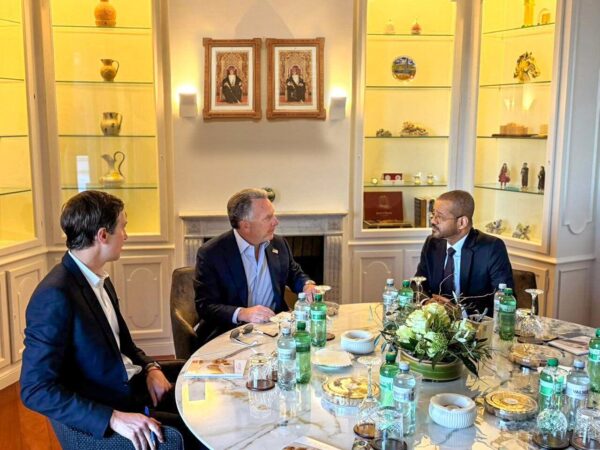
    U.S. and Iranian officials completed a round of nuclear negotiations Thursday in Geneva in the shadow of a large-scale U.S. military buildup around Iran. The sides made “significant progress” and agreed to meet next week to discuss technical details in Vienna, said Oman’s foreign minister, the mediator of the talks.

    The apparent plan to continue negotiations, after three rounds in recent weeks, could indicate that President Donald Trump remains open to diplomacy, at least for now. A senior Iranian official, speaking on the condition of anonymity to share details from the closed-door talks, said that the meetings were “serious,” but that the negotiations “still have miles to go” to resolve differences. The Trump administration has yet to weigh in on how the talks went or what is next and did not respond to a request for comment.

    To avert conflict, negotiators will have to find an off-ramp that Iran might accept while also giving the Trump administration the chance to claim a win.

    In statements reported midway through talks by Iran’s state-backed media, Iranian Foreign Ministry spokesman Esmaeil Baqaei expressed hope that by the afternoon, following a pause for each side to consult with capitals, they would focus on what Iran considers the two main issues — restraints on its nuclear program and the lifting of U.S. sanctions.

    The talks may have been “the most serious round of negotiations with the Trump administration ever,” said Ali Vaez, an Iran expert with the International Crisis Group, a Brussels-based think tank. He said he had spoken with the negotiating teams on both sides Thursday.

    “They are the most decisive, because everybody understands what’s at stake and what the price of failure would be,” and if continued over days, “… I think one could be hopeful that maybe they could reach an understanding,” Vaez said.

    The U.S. military has shifted scores of aircraft to bases in Europe and the Middle East since a round of talks ended last week without a breakthrough, amid an intermittent drumbeat of threats from Trump that began in response to Tehran’s violent crackdown on protesters last month. The U.S. military presence, assembled under a president who campaigned on stopping wars and criticized the era of U.S. military intervention in the Middle East, is among the largest in the region in more than two decades, since the U.S. invasion of Iraq in 2003.

    Governments in the region and some of Washington’s closest allies have expressed concerns over what could result. At the same time, U.S. military officials have warned that any direct conflict with Iran would be lengthy and could dangerously deplete already-low U.S. weapons stocks.

    White House envoy Steve Witkoff and Trump’s son-in-law Jared Kushner arrived early Thursday in Geneva, where they were also scheduled to meet with representatives from Ukraine and Russia in hopes of reviving apparently stalled negotiations over an end to that war.

    Iran has said that its focus is on statements by Trump that it can never have a nuclear weapon and must take verifiable steps to that end, in exchange for the rollback of sanctions that have hobbled its economy.

    U.S. officials, including Secretary of State Marco Rubio, have voiced a range of demands — many of them backed by Israel — including an end to Iran’s support for armed groups in the region and curtailment of its ballistic missile program.

    Rubio, Witkoff, and others on the U.S. side have pushed for Iran, which international inspectors say has amassed hundreds of pounds of near-weapons-grade, highly enriched uranium, to surrender that material and accept a ban on future enrichment.

    Iranian negotiators have insisted on their right to enrichment under the Nuclear Non-Proliferation Treaty. “There is no doubt that the United States is interested in addressing nonnuclear issues as well,” Vaez said. “I think the [U.S.] president believes that if he is to sell a deal it also has to address missiles and Iran’s regional activities.”

    “But it is also clear that on those issues a substantive solution might not necessarily be available,” he said. Vaez suggested that a deal on nonnuclear issues might be struck that is “more symbolic than substantive. But it would definitely not amount to the kind of capitulation that the U.S. was hoping it would be able to achieve with heightened pressure on Iran.”

    Iranian Foreign Minister Abbas Araghchi, who headed the Iranian delegation, delivered via his Omani counterpart, Badr al-Busaidi, a new proposal that included “token” nuclear enrichment for medical purposes and other research, according to two people familiar with the proposal, who spoke on the condition of anonymity about closed-door diplomacy.

    The Iranian offer includes a pause on most enrichment for three to five years, during which time Iran would be allowed to maintain 1.5% enrichment for medical purposes at a Tehran research reactor, said one of the people with knowledge of the offer, speaking on the condition of anonymity to share sensitive details. After the pause, a “normal” level of enrichment would be handled by a regional consortium.

    But Iran might be open to locking, under supervision of international inspectors, the sites of vast underground centrifuges and storage sites for enriched uranium that Trump has said were “obliterated” by U.S. and Israeli bombing last summer, the person with knowledge of the offer said.

    The senior Iranian official said after the talks that dismantling Iran’s nuclear sites remained a red line for Tehran and that Iran would not agree to ship enriched uranium out of the country.

    Rafael Mariano Grossi — the director general of the International Atomic Energy Agency that has inspected Iran’s program on the ground since the 2015 nuclear deal signed under the Obama administration, from which Trump withdrew during his first term — also attended the Thursday’s talks.

    Iran has amassed an amount of highly enriched uranium beyond levels needed for most nonmilitary use, although it has said repeatedly it has no intention of producing a nuclear weapon. Grossi said this month there is no evidence of an active plan to build a bomb.

    In the annual State of the Union address, Trump said on Tuesday that he preferred a diplomatic solution, while adding he would “never allow” Iran to have a nuclear weapon: “Can’t let that happen.”

    Ali Shamkhani, an adviser to Iran’s supreme leader, said Thursday that an agreement was “within reach” if the talks stick to Iran’s pledge not to build a nuclear weapon. He said Iran’s foreign minister has “sufficient support and authority” to come to a deal in the negotiations.

    “There is no doubt that the United States is interested in addressing non-nuclear issues as well,” Vaez said. With significant Republican congressional opposition to any deal at all, “I think the [U.S.] president believes that if he is to sell a deal it also has to address missiles and Iran’s regional activities.

    “But it is also clear that on those issues a substantive solution might not necessarily be available,” he said.