Category: Wires

  • The IRS broke the law by disclosing confidential information to ICE 42,695 times, judge says

    The IRS broke the law by disclosing confidential information to ICE 42,695 times, judge says

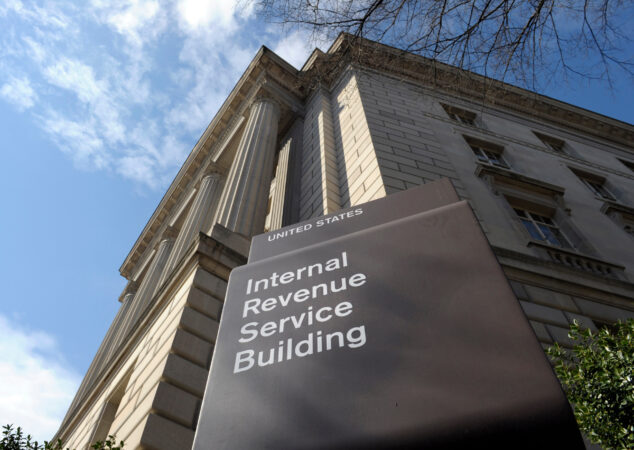
    WASHINGTON — A federal judge ruled on Thursday that the IRS broke the law by disclosing confidential taxpayer information “approximately 42,695 times” to Immigration and Customs Enforcement.

    U.S. District Judge Colleen Kollar-Kotelly found that the IRS had erroneously shared taxpayer data of thousands of people with the Department of Homeland Security as part of the agencies’ controversial agreement to share information on immigrants for the purpose of identifying and deporting people illegally in the United States.

    Her finding was based off a declaration filed earlier this month by Dottie Romo, IRS’ chief risk and control officer, which revealed that the IRS had provided DHS with information on 47,000 of the 1.28 million people that ICE requested — and that, in most of those cases, gave ICE additional address information in violation of privacy rules created to protect taxpayer data.

    Kollar-Kotelly, an appointee of Bill Clinton in 1997, said in her Thursday decision that the agency violated IRS Code 6103, one of the strictest confidentiality laws in federal statute, “approximately 42,695 times by disclosing last known taxpayer addresses to ICE.”

    She called the Romo declaration “a significant development in this case.”

    “The IRS not only failed to ensure that ICE’s request for confidential taxpayer address information met the statutory requirements, but this failure led the IRS to disclose confidential taxpayer addresses to ICE in situations where ICE’s request for that information was patently deficient,” she wrote.

    The government is appealing the case, but the Thursday ruling is significant because Romo’s declaration supports the decision on appeal.

    Nina Olson, founder of the Center for Taxpayer Rights, which has sued the government over the disclosure, says “this confirms what we’ve been saying all along: that the IRS has an unlawful policy that violates the Internal Revenue Code’s protections by releasing these addresses in a way that violates the law’s requirements.”

    Representatives from the IRS and Treasury Department did not respond to Associated Press requests for comment.

    A data-sharing agreement signed last April by Treasury Secretary Scott Bessent and Homeland Security Secretary Kristi Noem allows ICE to submit names and addresses of immigrants inside the U.S. illegally to the IRS for cross-verification against tax records. The deal led the then-acting commissioner of the IRS to resign.

    There are several ongoing cases that challenge the IRS-DHS agreement.

    Earlier this week, a three-judge panel for the U.S. Court of Appeals for the D.C. Circuit declined to issue a preliminary injunction for the immigrants’ rights group, Centro de Trabajadores Unidos, and other nonprofits that are suing the federal government to stop implementation of the agreement.

    In declining the preliminary injunction request, Judge Harry T. Edwards wrote that the nonprofit groups “are unlikely to succeed on the merits of their claim,” since the information the agencies are sharing isn’t covered by the IRS privacy statute.

    Still, two separate court orders have blocked the agencies from massive transfers of taxpayer information and blocked ICE from acting upon any IRS data in its possession. Those preliminary injunctions are still in place.

  • Journalists slain at record level in 2025, majority by Israel, watchdog says

    Journalists slain at record level in 2025, majority by Israel, watchdog says

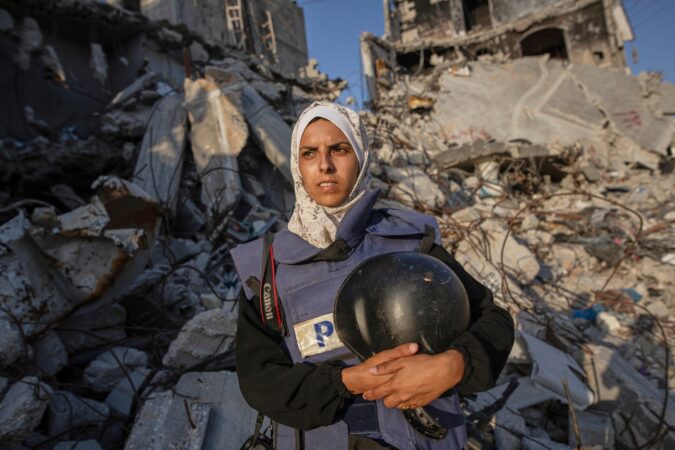
    Last year was the deadliest on record for journalists. For the third year in a row, Israel killed more journalists and media workers than any other country amid the war in Gaza, according to a report released Wednesday by the Committee to Protect Journalists.

    The report found an increase in the use of drones to kill journalists, with 39 documented cases: 28 by Israel’s military in Gaza, five by the paramilitary Rapid Support Forces in Sudan, and four by Russia in Ukraine. The CPJ documented just two drone killings in 2023.

    Of the 129 journalists killed around the world in 2025, the Israeli military was responsible for 86, about two-thirds of the deaths, the CPJ found. The death toll is the highest since the New York-based press freedom group started tracking the killing of journalists in 1992.

    The Israel Defense Forces “strongly rejects the claims” presented in the report, the IDF said in a statement to the Washington Post on Wednesday.

    “The IDF does not intentionally harm journalists or their family members, and on the contrary, operates solely against military targets, in accordance with international law, and employs all possible measures to mitigate harm to civilians, including journalists,” the statement said. “Any claim of intentional harm to civilians — including family members of journalists due to their professional activity, is completely false.”

    The second-highest number of killings occurred in Sudan, where nine journalists were killed. Mexico was third with six deaths, followed by Russia with four and the Philippines with three. The Russia tally includes Ukrainian journalists killed by Russian forces in Ukraine.

    The Israel-Gaza war is the deadliest conflict on record for journalists, according to the CPJ, with 252 killed as of early January. The CPJ determined that 249 of them were killed by Israel, 209 of whom were Palestinians in Gaza. Hamas killed two Israeli journalists in its Oct. 7, 2023, cross-border attack on Israel.

    Israel’s offensive in Gaza has killed more than 70,000, the majority of them women and children, according to the Gaza Health Ministry, following the Hamas attack on Israel that killed about 1,200 people Oct. 7, 2023. In the wake of a fragile Israel-Hamas ceasefire brokered by President Donald Trump in October, Israeli strikes in Gaza have continued.

    “Attacks on the media are a leading indicator of attacks on other freedoms, and much more needs to be done to prevent these killings and punish the perpetrators,” CPJ chief executive Jodie Ginsberg said in a statement. “We are all at risk when journalists are killed for reporting the news.”

    After an Israeli strike on Nasser hospital in Gaza in August killed journalists Mariam Dagga, Hussam al-Masri, Mohammed Salama, Moaz Abu Taha, and Ahmed Abu Aziz — who were all working with prominent news outlets — and prompted calls for accountability from rights groups, the IDF said in a statement that it “regrets any harm to uninvolved individuals and does not target journalists as such.”

    Israeli Prime Minister Benjamin Netanyahu said that the attack was a “tragic mishap.”

    Israel’s strikes on Gaza meant Palestinian journalists were covering the same bombardments they were trying to survive. In 2023, 77 journalists were killed in the Israel-Gaza war, 72 of whom were Palestinians killed in Israeli strikes. In 2024, Israel killed 82 journalists in Gaza and three in Lebanon, per the CPJ.

    Last year, 52 of the 86 journalists killed by Israel were Palestinians in Gaza. The 2025 tally also includes journalists killed by Israel in Iran and Yemen. Meanwhile, one Palestinian journalist was killed by a Palestinian armed group in Gaza in October, by the CPJ’s count.

    There have been no credible investigations by Israel of these killings since the Israel-Gaza war began with the Hamas attack on Oct. 7, 2023, said Sara Qudah, the CPJ’s Middle East and North Africa regional director.

    Israel said it opened an inquiry into the strikes on Nasser hospital. It also said it was reviewing a 2023 Israeli attack in Lebanon that killed a Reuters journalist and injured other reporters, including an American, but U.S. lawmakers said in December that Israel has not held the perpetrators accountable.

    “Impunity is becoming a pattern and a norm,” Qudah told the Post. “Israel is able to target and kill journalists with full impunity, with no investigation and no accountability.”

    Israel has levied claims, without providing substantial evidence, that some of the journalists it killed were legitimate targets due to accusations that they were working with Hamas, which their outlets have denied. Some journalists were killed in the course of their lives in a war zone, with no sign of targeting. The press freedom group said Israel was undertaking the most “deliberate effort to kill and silence journalists that CPJ has ever documented.”

    Qudah said she hoped the International Criminal Court would investigate the killings. “Those who killed these journalists and those who ordered the killings of these journalists should be held accountable and prosecuted,” she said.

    The CPJ includes the killing of a journalist in the index if evidence such as interviews with witnesses or verified footage shows they were killed in the line of work — either accidentally in a conflict zone or on a dangerous assignment, or deliberately because of their reporting. The press freedom group determined that 47 of the journalists killed last year were deliberately killed for their work. Under international humanitarian law, journalists are considered civilians and should not be targeted.

    The index includes reporters who gather the news and media workers such as interpreters, drivers, and fixers.

    The killing of journalists in Mexico and the Philippines underscores systemic safety risks facing reporters in both countries, according to the CPJ: At least one journalist has been killed in Mexico every year for the past decade.

    But more than 75% of all journalists slain in 2025 were killed in conflict settings, including Gaza, along with Sudan and Ukraine.

    Killings have continued into 2026. In January, the Israeli military struck and killed three journalists, including a CBS News contributor, as they traveled in their car south of Gaza City, rescue officials and local reporters told the Post last month.

    The IDF said in a statement that its troops had identified “several suspects who operated a drone affiliated with Hamas in the central Gaza Strip, in a manner that posed a threat to their safety.” The statement did not clarify how the IDF drew the connection to Hamas, or whether it had identified the targets as journalists.

  • Trump, seeking executive power over elections, is urged to declare emergency

    Trump, seeking executive power over elections, is urged to declare emergency

    Pro-Trump activists who say they are in coordination with the White House are circulating a 17-page draft executive order that claims China interfered in the 2020 election as a basis to declare a national emergency that would unlock extraordinary presidential power over voting.

    President Donald Trump has repeatedly previewed a plan to mandate voter ID and ban mail ballots in November’s midterm elections, and the activists expect their draft will figure into Trump’s promised executive order on the issue. The White House declined to elaborate on Trump’s plans.

    “Under the Constitution, it’s the legislatures and states that really control how a state conducts its elections, and the president doesn’t have any power to do that,” said Peter Ticktin, a Florida lawyer who is advocating for the draft executive order. Ticktin attended the New York Military Academy with Trump and was part of his legal team that filed an unsuccessful 2022 lawsuit accusing Democrats of conspiring to damage him with allegations that his 2016 campaign colluded with Russia.

    “But here we have a situation where the president is aware that there are foreign interests that are interfering in our election processes,” Ticktin went on. “That causes a national emergency where the president has to be able to deal with it.”

    The emergency would empower the president to ban mail ballots and voting machines as the vectors of foreign interference, Ticktin argued.

    The idea of claiming emergency executive powers based on allegations of foreign interference attaches new significance to the administration’s actions to reinvestigate the 2020 election. Trump has never accepted defeat, while never finding evidence of widespread fraud. Director of National Intelligence Tulsi Gabbard is leading a review of election security that officials said focuses on foreign influence.

    A 2021 intelligence review concluded that China considered efforts to influence the election but did not go through with them.

    Ticktin said he’s had “certain coordination” with White House officials but declined to specify, citing safety concerns. But his input has successfully led to a presidential action before. Ticktin represents Tina Peters, a former Colorado county clerk imprisoned on state charges arising from breaking into voting equipment, whom Trump said he pardoned in December. (The presidential pardon did not free Peters from her nine-year prison term because the president has no power over state crimes.)

    A White House official said the staff is regularly in communication with a variety of outside advocates who want to share their policy ideas with the president, but any speculation about his actions or announcements is just speculation.

    “I have searched the depths of Legal Arguments not yet articulated or vetted on this subject, and will be presenting an irrefutable one in the very near future,” Trump said on social media Feb. 13. “I will be presenting them shortly, in the form of an Executive Order,” he added the same day.

    Trump is pressuring Republicans to pass legislation to require proof of citizenship for voter registration and ID to cast ballots. The measure, called the Save America Act, passed the House but faces obstacles in the Senate, where Republican leaders have rejected Trump’s demand to change the chamber’s rules to move the legislation forward.

    “President Trump is committed to ensuring that Americans have full confidence in the administration of elections, and that includes totally accurate and up-to-date voter rolls free of errors and unlawfully registered non-citizen voters,” White House spokeswoman Abigail Jackson said. “The President has urged Congress to pass the SAVE Act and other legislative proposals that would establish a uniform standard of photo ID for voting, prohibit no-excuse mail-in voting, and end the practice of ballot harvesting.”

    Trump has said that if the bill fails, he will act unilaterally to impose the changes for the midterms. What that executive order could look like and the draft circulating among activists have not been previously reported.

    An early version of the proposed draft, obtained by the Washington Post, cites a 2018 executive order that declared an emergency to impose sanctions on foreign entities targeting election infrastructure. President Joe Biden repeatedly extended that emergency, and in 2024, the Treasury Department used the order to place Iranian and Russian entities under sanctions.

    “There is now clear and compelling evidence from court cases and forensic analysis that these threats have not been mitigated but instead have intensified,” reads the proposed draft, dated April 2025. “This constitutes an unusual and extraordinary threat to the national security and foreign policy of the United States.”

    Last June, Senate Judiciary Committee Chairman Chuck Grassley (R., Iowa) released FBI records showing an initial tip alleging a Chinese effort to produce fraudulent driver’s licenses for mail ballots. Suspicions of Chinese ballots spurred the hunt for bamboo fibers in Arizona ballots during a Republican-led audit in 2021, which reaffirmed Joe Biden’s victory in the state.

    Gabbard recently was present when the FBI searched a warehouse in Fulton County, Georgia, to seize ballots from the 2020 election there. The affidavit submitted to obtain the search warrant, however, did not allege foreign interference. Her office also examined voting machines used in Puerto Rico looking for cybersecurity vulnerabilities, in coordination with the FBI and the Departments of Justice and Homeland Security, according to a spokesperson for the Office of the Director of National Intelligence. That inquiry was first reported by Reuters.

    “The stage is largely being set by the revelations coming out of foreign powers being involved in influencing the 2020 election,” said Jerome Corsi, who circulated the draft executive order in July. Corsi helped spread the “birtherism” smear against Barack Obama and a conspiracy theory involving slain Democratic staffer Seth Rich, for which he later apologized. Special counsel Robert S. Mueller III investigated Corsi as a possible link between WikiLeaks and Roger Stone during the 2016 campaign, which Corsi denied.

    “If there was a provable foreign intrusion, that would be a national security emergency and the order could be issued under his powers as commander in chief,” Corsi added.

    Sen. Mark R. Warner of Virginia, the top Democrat on the Senate Intelligence Committee, said there is no national emergency.

    “We’ve been raising the alarm for weeks about President Trump’s attacks on our elections and now we’re seeing reports that outline how they may be planning to do it,” Warner said in a statement in response to this article. “This is a plot to interfere with the will of voters and undermine both the rule of law and public confidence in our elections.”

    The measures listed in the 2025 draft of the proposed executive order include requiring hand-marked and hand-counted paper ballots, requiring voters to register anew for the 2026 midterms with proof of citizenship, and restricting mail ballots to limited circumstances. The draft also proposes authorizing the Justice Department, U.S. Citizen and Immigration Services, the Social Security Administration, and the Postal Service to have a role in identifying ineligible voters.

    The draft cites emergency authority from laws including the National Emergencies Act of 1976, the Federal Information Security Modernization Act of 2014 and the Defense Production Act of 1950.

    Article I, Section 4 of the Constitution assigns power to regulate elections to state legislatures and Congress, with no role for the president. A presidential emergency on elections has never been tested in court.

    Trump also signed an executive order last March to require proof of citizenship on voter registration forms and withhold funding from states accepting mail ballots after Election Day. Courts in five cases blocked parts of the order, with three of them pending appeal and another awaiting a ruling, according to a litigation tracker compiled by the legal website Just Security.

    “The conduct of our elections is not for any president to decide. And it must never be manipulated to serve a political agenda,” the League of Women Voters, which brought one of the lawsuits against the 2025 order, said in a statement. “We will challenge any executive action that suppresses voters, undermines free and fair elections, or violates the constitutional framework that protects our democracy.”

    A Washington Post-ABC News-Ipsos poll this month found 54% of American adults, and 55% of independents, oppose Trump’s stated desire for the federal government to take over election administration and vote-counting in certain states. Twenty-three percent of adults said they supported it, and the same proportion said they had no opinion.

  • Ukraine says Russia launched a major aerial attack before Kyiv’s talks with U.S.

    Ukraine says Russia launched a major aerial attack before Kyiv’s talks with U.S.

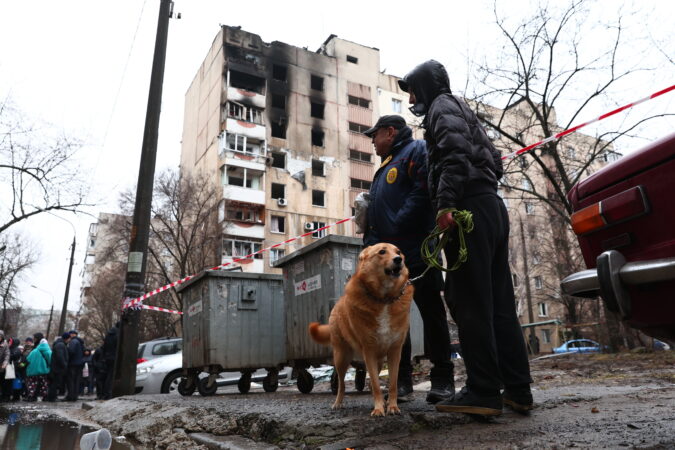
    KYIV, Ukraine — A heavy Russian drone bombardment of Ukraine’s southern city of Odesa killed at least three people and wounded 23, including two children and a pregnant woman, officials said Tuesday, as Ukrainian President Volodymyr Zelensky called for speedier U.S. efforts to end Russia’s almost 4-year-old invasion of his country.

    The Odesa attack involved more than 50 drones, some of them models recently upgraded by Russia to improve their range and strike power, according to Ukrainian authorities.

    The drones targeted the power grid, which Russia has repeatedly bombarded during the coldest winter in years, and also hit five apartment blocks, officials said. Emergency crews retrieved the bodies of two men, aged 90 and 52, and a woman from the rubble, authorities said.

    “The rescue operation will continue until the fate of all people who may be under the rubble is clarified,” Zelensky said on the Telegram messaging app, adding that an informal Protestant place of worship was also damaged.

    “Each such Russian strike undermines diplomacy, which is still ongoing, and hits, in particular, the efforts of partners who are helping to end this war,” he said.

    In Ukraine’s northeast Kharkiv region, a passenger train carrying over 200 people was hit by three drones later Tuesday, in what the head of the regional administration Oleh Syniehubov labeled “terrorism.” Four people were killed and another four reported missing.

    A diplomatic push by the Trump administration to end the war has made progress, according to officials, but has delivered no breakthrough on the key issue of what happens to Russian-occupied Ukrainian land and other territory that Moscow is demanding.

    Analysts says that Russian President Vladimir Putin is in no rush to find a settlement, despite his army’s difficulties on the roughly 600-mile front line. He believes that time is on his side, that Western support for Kyiv will fade and that Ukraine’s resistance will eventually break under pressure, according to analysts.

    To replenish its forces and keep up the pressure on Kyiv, Moscow is offering cash bonuses, freeing convicts from prison and luring foreigners to its army.

    An Associated Press investigation found that unwitting Bangladeshi workers were enticed to Russia under the false promise of civilian work before being thrown into combat in Ukraine.

    Zelensky said late Monday the next round of talks with the United States and Russia is penciled in for Feb. 1. but that “it would be good if this meeting could be accelerated.”

    He also urged that, in the meantime, additional sanctions be imposed on Russia to compel the Kremlin to make compromises.

    Russia fired 165 drones at Ukraine overnight, with 24 of them that got through air defenses hitting targets in seven regions, according to Ukraine’s air force.

    In recent weeks, the relentless barrages have damaged some of Ukraine’s protected world heritage sites in Odesa, the western city of Lviv and the capital, Kyiv, UNESCO said Tuesday.

    They have also knocked out power to hundreds of thousands of civilians. More than 900 apartment blocks remained without heating Tuesday in several districts of Kyiv, Zelensky said. Kyiv, a city of about 3 million people, is dominated by tower blocks, many from the Soviet era.

    Russia has been improving its drone technology and tactics, striking Ukraine with increasing success.

    The Ukrainian Defense Ministry’s main intelligence directorate said earlier this month that Russia had deployed the new jet-powered “Geran-5” strike drone against Ukraine for the first time. The Geran is a Russian variant of the Iranian-designed Shahed.

    According to the directorate, the drone can carry a 200-pound warhead and has a range of nearly 600 miles.

    In response, Ukraine has significantly expanded production of interceptor drones, as well as developing its own long-range drones.

    The Russian Defense Ministry said Tuesday that its air defenses shot down 19 Ukrainian drones overnight over several Russian regions.

  • Penguin Press founder Ann Godoff, a powerhouse editor of bestsellers and prizewinners, dies at 76

    Penguin Press founder Ann Godoff, a powerhouse editor of bestsellers and prizewinners, dies at 76

    NEW YORK — Ann Godoff, a leading book publisher for more than 30 years with an eye for timely and timeless works from Alexander Hamilton and Midnight in the Garden of Good and Evil to current bestsellers by Gisèle Pelicot and California Gov. Gavin Newsom, has died. She was 76.

    Ms. Godoff died of cancer Tuesday in Albany, N.Y., according to a statement from Penguin Press, which she had founded in 2003.

    “Ann’s impact on American book culture over the past four decades is incalculable,” Penguin Press publisher Scott Moyers said in a statement. “An editor of immense range in fiction, nonfiction, and poetry, Ann shepherded into print innumerable New York Times bestsellers, multiple winners of every major award, and works that have appeared on all manner of best books lists — of the year, the decade, and the century.”

    A onetime NYU film student who studied under then-faculty member Martin Scorsese, sold cars and assisted on Dr. Joyce Brothers’ television show, Ms. Godoff was a late bloomer who didn’t begin her publishing career until her early 30s and soon revealed uncommon gifts for spotting and cultivating talent. As a rising editor at Random House in the 1990s, she published such debut phenomena as John Berendt’s Midnight in the Garden of Good and Evil and Caleb Carr’s The Alienist.

    She also worked with Salman Rushdie, E.L. Doctorow, and Arundhati Roy and had lasting relationships with Michael Pollan and Ron Chernow, whose books with Ms. Godoff have included a Pulitzer Prize-winning biography of George Washington and the Hamilton biography that was the basis for the prizewinning stage musical.

    “Ann supervised me with a rather light touch and never got lost in the details,” Chernow wrote in an email to the Associated Press.

    “She was no less gifted in fashioning a design for the book — everything from the cover art to the paper stock — with a look fully consistent with my portrait of the character,” he added. “Everything was of a piece and that was carried straight through to the marketing and publicity. I always felt myself in the most capable hands.”

    Ms. Godoff was eventually promoted to president and editor-in-chief of Random House, and her stature was so high that when she was forced out in 2003 amid corporate restructuring, her departure set off debates — evergreen in the industry — over the feared decline of literary publishing.

    But Penguin soon signed her up to lead the new Penguin Press imprint. Chernow, Pollan, and other authors moved there with her, and she continued to publish bestsellers and critical favorites, including such Pulitzer Prize winners as Steve Coll’s Ghost Wars and John Lewis Gaddis’ George F. Kennan.

    When Random House and Penguin merged into Penguin Random House in 2013, Ms. Godoff was under the same roof as her old company. Right up to the time of her death, she was shaping the public conversation. Pelicot’s A Hymn to Life recounts her horrifying marriage and how she came to be a leading voice against sexual violence, while Newsom’s Young Man in a Hurry is widely seen as a building block for a 2028 presidential run.

    Ms. Godoff was born in 1949 in New York City, grew up in New York and California, and graduated from Bennington College. She started out at Simon & Schuster in the early 1980s as an assistant to Alice Mayhew, the renowned editor of Bob Woodward and Doris Kearns Goodwin among others. After serving as editor-in-chief at Atlantic Monthly Press, Ms. Godoff joined Random House in 1991.

    Her marriage to Malcolm Drummond ended in divorce in 2012 after a long separation. The same year, Godoff married her partner, the writer-photographer Annik LaFarge. Besides LaFarge, her survivors include her brother, Peter Godoff.

    Ms. Godoff was never the outsized personality of such Random House predecessors as Bennett Cerf and Harold Evans. She was regarded by many as serious, hard-working and committed, known for saying “The book will abide.” But she was competitive, and she didn’t mind making news. She paid a reported $8 million for Cold Mountain author Charles Frazier’s next novel, a sum many found excessive at the time, and a comparable amount for a memoir by former Federal Reverse Chairman Alan Greenspan.

    Bestselling author Roger Lowenstein, whose seven books have all been published by Ms. Godoff, wrote in an email to the AP that she was an exacting but precise editor. He remembered a “blistering memo” from her while shaping the manuscript for Ways and Means: Lincoln and His Cabinet and the Financing of the Civil War, a prizewinning history published in 2022. His final draft was 90 pages shorter and he couldn’t think of a “single word” that he regretted being cut.

    “She generally reserved her praise, at least in my case, until the end of the process, often in letters that arrived unexpected in the mail,” he wrote. “Nothing was ever sweeter, because one worked so hard to get there, and because you knew that she meant it.”

  • Voice of America is covering Iran’s protests, but not its best-known dissident

    Voice of America is covering Iran’s protests, but not its best-known dissident

    When Sahar Tahvili, a professor at a Swedish university, sat for an interview with Voice of America’s Persian service on Jan. 9, she discussed the security concerns for Iranian viewers using Starlink satellites to circumvent the government’s internet blackouts.

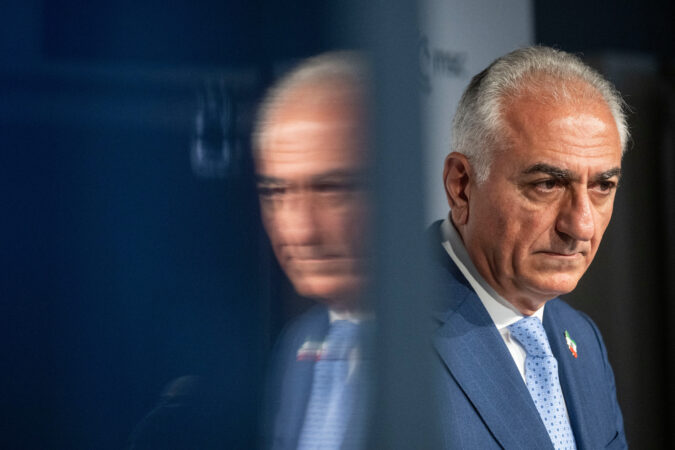
    But it was a greeting at the start of the interview that crossed a line with the company’s top brass. She thanked the network for having her before invoking the name of Reza Pahlavi, the son of Iran’s deposed shah: “Let me first pass my greetings to our compatriots in Iran, a nation that, by standing on the right side of history and by responding in the millions to Crown Prince Reza Pahlavi’s call, is shaping historic days for the freedom of our country.”

    Later that day, Tahvili received a phone call from the VOA producer who arranged her interview, complaining that she had violated Voice of America’s new policy barring mentions of Pahlavi’s name — which she said she didn’t know about.

    “He called me in a very angry way and said, ‘Why did you mention his name?’” Tahvili, adjunct associate professor of AI industrial systems at Sweden’s Mälardalen University, said in an interview. “No one is allowed to mention Pahlavi’s name.” Because she had mentioned him, Tahvili said she was told her interview, which aired live, would not be reposted to social media and she would no longer be welcome on the network.

    Critics including Tahvili allege that since the mass protests broke out in the final days of last year, the U.S. government has systematically censored the best-known Iranian opposition figure by banning his name from its broadcasts. They also claim that, in the process, U.S. Agency for Global Media Deputy CEO Kari Lake and the new head of the Persian service, Ali Javanmardi, have exerted control over a government broadcaster that’s long been editorially independent of the U.S. government.

    In a January interview with Reuters, President Donald Trump questioned whether Pahlavi has enough support to take over in Iran, but said “that would be fine with me” if he wins over the majority of Iranians. “He seems very nice, but I don’t know how he’d play within his own country,” Trump said.

    In the same interview, he remained noncommittal about efforts to pressure regime change in Iran either, saying, “Whether or not it falls or not, it’s going to be an interesting period of time.”

    The push to excise Pahlavi’s name was first reported by the Hill.

    Lake and Javanmardi, a former VOA contractor recently brought in to run the Persian service, have defended their new rules, saying that they are simply clamping down on an effort by VOA employees eager to see one opposition group prevail over another at a time when Iran’s regime under Ayatollah Ali Khamenei is on shaky ground. They say it applies to all opposition leaders, not just Pahlavi.

    “We are not in the business of selecting Iran’s political leadership,” Lake said in a statement. “That decision belongs solely to Iran’s 93 million citizens, who have a right to self-determination. Right now, the story should be about them, not the numerous opposition groups outside Iran. Elevating external opposition figures over voices inside the country risks externalizing the conflict in ways that would only benefit the cruel regime and undermine protesters on the ground.”

    In a separate statement, Lake called Javanmardi “a respected and fearless journalist” with deep experience reporting on Iran and the region. “His commitment is to journalistic responsibility, truth, and ensuring coverage that aligns with American policy interests and centers the voices of the Iranian people in support of their right to freedom and self-determination.”

    The spokesperson did not make Javanmardi available for an interview.

    Javanmardi has voiced opinions, however, about Pahlavi on-air, saying in a recent VOA appearance, “The United States government is not going to replace a dictator inside Iran with another totalitarian one who has threatened all his opponents even before coming to power with death and elimination.” In recent months he has also described other media as engaging in “propaganda engineering” and “artificial magnification” of issues in Iran.

    Javanmardi has also called out Iranians for not participating in the recent protests. “We should all participate in identifying the mercenaries who did not join the people and are involved in suppressing the people,” he said in one broadcast. “Let’s participate so that they do not have immunity, both inside and outside Iran.”

    Under Lake, Voice of America has undergone massive staff cuts. The broadcaster, first set up in 1942 to counter Nazi propaganda abroad, suspended most of its programming after Trump issued an executive order in March. Then, Lake cut hundreds of contractors and placed hundreds of full-time staffers on paid administration leave. A federal judge blocked Lake from firing the employees and instructed the agency to uphold its statutory obligations for broadcasting. As a result, Lake brought back broadcasting in a few languages mandated by law, including Farsi.

    In January, Congress rejected requests from Lake and the White House to zero out the agency’s budget, approving a $653 million budget. Lake said she was “disappointed” at the move.

    VOA’s Persian service, once among its largest divisions, has maintained a skeleton crew since this summer, when Lake briefly ordered staff back and called for some broadcasts amid escalating military tensions between Iran and Israel. Many of those recalled staffers were put back on administrative leave when the conflict simmered.

    But when popular uprising broke out in late December, Lake once again ramped up its staffing, bringing back a few dozen employees and contractors.

    She also tapped Javanmardi, who years earlier worked as a VOA correspondent based in Irbil, Iraq, to lead the charge. He quickly became a divisive figure among staffers and viewers because of his close control over broadcasts. So far, more than 58,000 people signed a Change.org petition to have him removed, saying, “Ali Javanmardi’s biased approach silences the Iranian struggle and betrays the trust of those who depend on honest journalism.”

    In an email, a U.S. Agency for Global Media spokesman defended the new policy regarding opposition figures. “Mr. Reza Pahlavi himself, as well as the leaders of other political groups, have been invited to speak on the Voice of America,” he said.

    Despite the invitation, Pahlavi has not appeared on the network. Pahlavi did not respond to a request for comment.

    Several VOA staffers working on the broadcasts, who spoke on the condition of anonymity out of fear of retaliation, said that Javanmardi appeared to target Pahlavi. The staffers said he personally approves all guests before they appear on air and has instructed staff not to book anyone who sympathizes or promotes Pahlavi.

    “He completely censors his name, his activity and everything,” one staffer said, noting that Javanmardi has refused to play audio of protesters in Iran shouting Pahlavi’s name. “All the people chanting in Iran — nothing. He censors everything.”

    Holly Dagres, a senior fellow at the Washington Institute who writes a Substack newsletter called “The Iranist,” said that many Iranians have indeed chanted Pahlavi’s name during the protests. “While this may seem surprising to outside observers, nostalgia for the pre-1979 era has grown in recent years,” she said. “Many Iranians — particularly Gen Zers who weren’t alive during that period — perceive life before the revolution as a better time.”

    She added that omitting this detail “erases a key element of the uprising — including the motivations of some of the protesters who have risked, and in some cases lost, their lives in the name of freedom.”

    Another staffer said that no pro-Pahlavi content can appear on the network. “If anything ever has been published or broadcast, it’s because we missed it,” the staffer said.

    Another employee said that the approach has hampered reporting, such as when Sen. Lindsey Graham (R., S.C.) met with Pahlavi and Javanmardi instructed the staff not to cover it.

    However, one VOA staffer defended the policy, saying that without it, the service and the United States could be labeled having interfered in Iran’s internal affairs.

    And Arash Azizi, a lecturer at Yale University who writes about Iran for different publications, also said he is “at least partially favorable” to VOA’s approach because Pahlavi leads “one political faction” of the opposition.

    “No country in the world should recognize Mr. Pahlavi as the leader of the Iranian opposition because he has absolutely no legitimacy for that position,” Azizi said. “I think it’s good for VOA to have effectively pulled the brake and say, look, you’re nobody’s leader. You can’t just appoint yourself the leader and then expect us to treat you as one.”

    Navid Mohebbi, a former political prisoner in Iran now advising the National Union for Democracy in Iran (NUFDI), which supports Pahlavi, said in a statement that VOA is effectively the “only major Persian-language diaspora outlet” that has avoided covering Pahlavi’s calls for demonstrations in Iran and protesters shouting pro-Pahlavi slogans.

    “This level of censorship is striking, particularly when even Iranian regime media and outlets hostile to the United States acknowledged the existence of these slogans,” he said.

    For Tahvili, who grew up watching VOA in Iran, the experience of being banned from the network was painful.

    “For us, for my generation, we grew up with the Voice of America,” she said. “It was the only channel, the only Persian-language news source that we had at that time. Freedom of speech. Professional journalism. It really hurts to see how it changed from that to this.”
  • FedEx joins other U.S. companies in seeking a refund after Trump tariffs are ruled illegal

    FedEx joins other U.S. companies in seeking a refund after Trump tariffs are ruled illegal

    FedEx is suing the U.S. government, the latest company to request a refund on what it paid for tariffs set by President Donald Trump last year after the Supreme Court ruled that the tariffs are illegal.

    More than 1,000 companies have filed suit in the U.S. Court of International Trade in efforts to recoup costs from the illegal tariffs, including large U.S. corporations such as Costco and Revlon. Most of the lawsuits were already in process ahead of the Supreme Court decision Friday.

    FedEx said in a filing with the U.S. Court of International Trade that they have “suffered injury” from having to pay the tariffs and that the relief they’re seeking from the court would redress those injuries.

    Tim Meyer, a law professor at Duke University, said each case is likely to have to be tried individually.

    “We’re going to have to wait and see how the government decides to handle the refund claims,” he said. “And then if the government chooses not to set up a process for the refunds, ultimately the Court of International Trade is going to have to adjudicate over a thousand cases.”

    The National Retail Federation said in a statement on Friday that the Supreme Court’s ruling provided certainty for U.S. businesses and manufacturers.

    “We urge the lower court to ensure a seamless process to refund the tariffs to U.S. importers,” it said. “The refunds will serve as an economic boost and allow companies to reinvest in their operations, their employees and their customers.”

    The Supreme Court struck down Trump’s far-reaching global tariffs on Friday. Trump said he was “absolutely ashamed” of some justices who ruled 6-3 against him, calling them “disloyal to our Constitution” and “lapdogs.” At one point he even raised the specter of foreign influence without citing any evidence.

    The court’s ruling found tariffs that Trump imposed under an emergency powers law were unconstitutional, including the sweeping “reciprocal” tariffs he levied on nearly every other country.

    The Treasury had collected more than $133 billion from the import taxes the president has imposed under the emergency powers law as of December, federal data shows. The impact over the next decade has been estimated at some $3 trillion. A study by the Federal Reserve Bank of New York found U.S. businesses and consumers are paying nearly 90% of the tariffs that Trump has imposed.

    Trump has vowed to collect tariffs through other means. He reached for a stopgap option immediately after his defeat Friday at the Supreme Court: Section 122 of the Trade Act of 1974 allows the president to impose tariffs of up to 15% for up to 150 days. But any extension beyond 150 days must be approved by a Congress likely to balk at passing a tax increase as November’s midterm elections loom.

  • Justice Department says it’s reviewing whether any Epstein-related records were mistakenly withheld

    Justice Department says it’s reviewing whether any Epstein-related records were mistakenly withheld

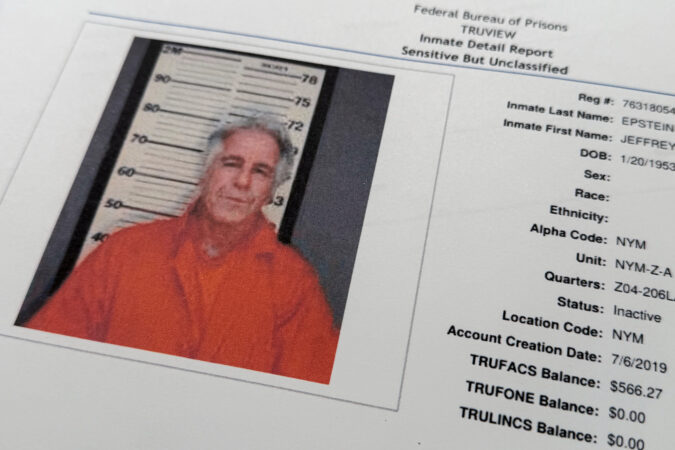
    WASHINGTON — The Justice Department said Wednesday that it was looking into whether it improperly withheld documents from the Jeffrey Epstein files after several news organizations reported that some records involving uncorroborated accusations made by a woman against President Donald Trump were not among those released to the public.

    The announcement followed news reports saying that a massive tranche of records released by the Justice Department did not include several summaries of interviews that the FBI conducted with an unidentified woman who came forward after Epstein’s 2019 arrest and claimed to have been sexually assaulted by both Trump and Epstein when she was a minor in the 1980s.

    “Several individuals and news outlets have recently flagged files related to documents produced to Ghislaine Maxwell in discovery of her criminal case that they claim appear to be missing,” the Justice Department said in a post on X. “As with all documents that have been flagged by the public, the Department is currently reviewing files within that category of the production.” Maxwell, Epstein’s longtime confidant, is serving a 20-year prison sentence on a sex trafficking conviction.

    It said that if any document is found to have been improperly withheld and is responsive to the federally enacted law mandating the files’ release, “the Department will of course publish it, consistent with the law.”

    At issue is a series of interviews said to have been conducted in 2019 with a woman who made an allegation against Trump, who has consistently denied any wrongdoing in connection with Epstein. News reports from recent days say the accuser was interviewed four times but a summary of only one of those interviews was included in the publicly released files.

    The missing records were earlier reported by the journalist Roger Sollenberger on Substack and NPR, and have since been documented by other news organizations, including the New York Times, MS Now, and CNN.

    Rep. Robert Garcia, the top Democrat on the House Oversight Committee, said in a statement that his panel would investigate the withheld records. He said he had reviewed unredacted evidence logs and “can confirm that the DOJ appears to have illegally withheld FBI interviews” with the accuser.

    The Justice Department last month said it was releasing more than 3 million pages of records related to Epstein, who took his own life in a New York jail cell in 2019 while awaiting trial on sex trafficking charges. The department said at the time that, though it was attempting to be transparent, it was also entitled to withhold records that exposed potential abuse victims, were duplicates or protected by legal privileges, or related to an ongoing criminal investigation.

    “Some of the documents contain untrue and sensationalist claims against President Trump that were submitted to the FBI right before the 2020 election. To be clear, the claims are unfounded and false, and if they have a shred of credibility, they certainly would have been weaponized against President Trump already,” the department said in a statement last month as it released the records.

    The redaction process was quickly revealed to have been flawed, with the department withdrawing some materials identified by victims or their lawyers, along with a “substantial number” of documents identified independently by the government.

    Lawyers for Epstein accusers told a New York judge last month that the lives of nearly 100 victims had been “turned upside down” by sloppy redactions in the government’s latest release of records. The exposed materials include nude photos showing the faces of potential victims as well as names, email addresses, and other identifying information that was either unredacted or not fully obscured.

    Other uncorroborated claims against Trump and other public figures were included in the publicly available files. The department did not say in its social media post Wednesday why records related to this specific accusation might have been withheld.

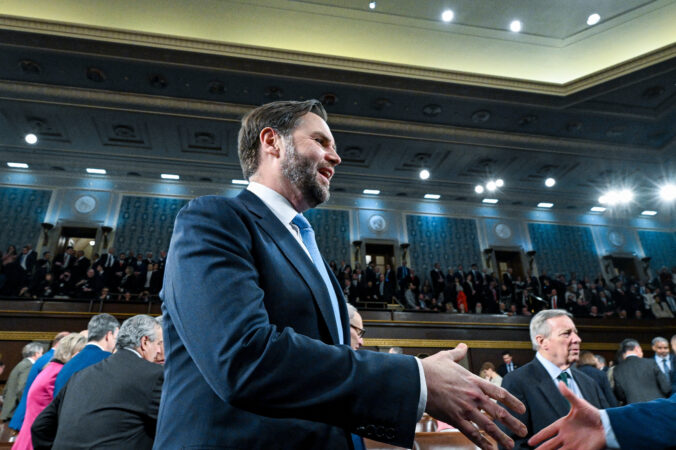
  • Vance says administration is pausing some Medicaid funding to Minnesota because of fraud concerns

    Vance says administration is pausing some Medicaid funding to Minnesota because of fraud concerns

    WASHINGTON — Vice President JD Vance announced Wednesday that the Trump administration would “temporarily halt” some Medicaid funding to the state of Minnesota over fraud concerns, as part of what he described as an aggressive crackdown on misuse of public funds.

    Vance, who made the announcement with Mehmet Oz, the administrator for the Centers for Medicare and Medicaid Services, said the administration was taking the action “in order to ensure that the state of Minnesota takes its obligations seriously to be good stewards of the American people’s tax money.”

    Oz, who referred to people committing fraud as “self-serving scoundrels,” said the federal government would hold off on paying $259.5 million to Minnesota in funding for Medicaid, the healthcare safety net for low-income Americans.

    “This is not a problem with the people of Minnesota, it’s a problem with the leadership of Minnesota and other states who do not take Medicaid preservation seriously,” Oz said.

    Wednesday’s move is part of a larger Trump administration effort to spotlight fraud around the country. That effort comes after allegations of fraud involving daycare centers run by Somali residents in Minneapolis prompted a massive immigration crackdown in the Midwestern city, resulting in widespread protests. President Donald Trump, in his State of the Union address on Tuesday, announced Vance would spearhead a national “war on fraud.”

    Trump also recently nominated Colin McDonald to serve as the first assistant attorney general in charge of a Justice Department division dedicated to rooting out fraud.

    Oz said the administration was simultaneously notifying Minnesota’s Democratic Gov. Tim Walz as he was making the announcement publicly. Messages sent to spokespeople for Walz, former Vice President Kamala Harris’ 2024 running mate, were not immediately returned.

    “We will give them the money, but we’re going to hold it and only release it after they propose and act on a comprehensive corrective action plan to solve the problem,” Oz said.

    He said Walz would have 60 days to respond and advised healthcare providers and Medicaid beneficiaries who were concerned to contact Walz’s office.

    A spokesperson for Minnesota Attorney General Keith Ellison, whose office investigates Medicaid fraud, referred questions to the state Department of Human Services, which administers Medicaid in the state, A department spokesperson said the agency was preparing a statement.

    Earlier Wednesday, Ellison held a news conference to promote legislation that would give his office more staff and new legal tools to combat Medicaid fraud.

    Oz said the Centers for Medicare and Medicaid Services were also taking action to crack down on fraud in Medicare, the healthcare system relied upon by millions of older adults.

    He said CMS for six months would block any new Medicare enrollments for suppliers of durable medical equipment, prosthetics, orthotics or other supplies used to treat chronic conditions or assist in injury recovery.

    The Office of the Inspector General for the U.S. Department of Health and Human Services found last year that Medicare improperly paid suppliers nearly $23 million for durable medical equipment from 2018 through 2024. But it found that most of that was before January 2020, when changes to the system were implemented.

    Oz also announced a new crowdsourcing effort he said would help “crush fraud” by soliciting Americans’ tips and suggestions.

    “All of us are smarter than any one of us,” he said.

    In a news release accompanying the announcement, CMS said the funding being paused in Minnesota included some $244 million in unsupported or potentially fraudulent Medicaid claims and about $15 million in claims involving “individuals lacking a satisfactory immigration status.”

    Immigrants who are not living in the U.S. legally, as well as some lawfully present immigrants, are not allowed to enroll in the Medicaid program that provides nearly-free coverage for health services.

    CMS said in the release that if Minnesota fails to satisfy its requirements, it may defer up to $1 billion in federal funds to the state over the next year.

    A CMS spokesperson didn’t immediately respond to an inquiry about what the agency will require from Minnesota in order to restart the deferred funding.

    The administration has threatened to cut off funding for various programs for some Democratic-run states over fraud concerns over the last few months.

    One judge blocked those actions and required that payments flowing to Minnesota and four other states — California, Colorado, Illinois and New York — for a variety of social service programs. The government had said that there was “reason to believe” that those states were granting benefits to people in the country illegally. It did not initially explain where that information came from, but a government lawyer told the judge it was largely in reaction to news reports about possible fraud.

    Another judge said she would not let it cut off funding for administrative costs for 22 states that have refused to hand over information about applicants and recipients of food aid through the Supplemental Nutritional Assistance Program.

    The latest action was prompted in part by a series of fraud cases, including a nonprofit called Feeding Our Future accused of stealing pandemic aid meant for school meals. Prosecutors have put the losses from that case at $300 million.

    Since then, Trump has targeted the Somali diaspora in Minnesota with immigration enforcement actions and has made a series of disparaging comments about the community. During his State of the Union address on Tuesday, Trump said “pirates” have “ransacked Minnesota.”

    Federal agencies have also been enlisted to assist in targeting fraud in Minnesota.

    Last December, the U.S. Treasury Department issued an order requiring money wire services that people use to send money to Somalia to submit additional verification to the Treasury.

    The Center for Medicare and Medicaid Services told Minnesota in January that it intended to freeze parts of payments for some Medicaid programs that were deemed high-risk. The state said that those cuts would add up to more than $2 billion annually if they lasted and made an administrative appeal.

  • Penguins place Sidney Crosby on injured reserve after he got hurt at the Olympics

    Penguins place Sidney Crosby on injured reserve after he got hurt at the Olympics

    PITTSBURGH — The Pittsburgh Penguins will have to start their playoff push without Sidney Crosby.

    The club placed its longtime captain on injured reserve Wednesday. The move comes after Crosby suffered a lower-body injury during the Olympic hockey tournament at the Milan Cortina Games.

    The 38-year-old three-time Stanley Cup winner went down in the second period of Canada’s quarterfinal win over Czechia. The Canadians held out hope Crosby would be able to return, but he sat out a semifinal win over Finland and a loss to the United States in the gold medal game.

    Crosby, who is expected to miss at least four weeks, does not regret his decision to play in Milan.

    “It’s the Olympics and it’s an amazing experience just as an athlete, not just as a hockey player,” he said, later adding, “Obviously injuries are part of the game.”

    Crosby did not have an issue with the hit he absorbed from Czechia defenseman Radko Gudas.

    “He was trying to be physical and play hard as any defenseman would and it just went the wrong way as far as on my end of it,” he said.

    Crosby credited the medical staff in Italy with helping him have a shot at playing in the gold medal game. He believes he came “a lot closer” than he thought he would to suiting up for Team Canada in the final.

    Asked if he considered playing in a limited capacity, such as being relegated to strictly the power play, Crosby shook his head.

    “If you can’t go out there and do a job and be relied upon … then you can’t force it and that’s really what it came down to,” he said.

    The injury comes with the surprising Penguins in second place in the Metropolitan Division. Pittsburgh is looking to return to the postseason for the first time since 2022.

    Crosby has been his usually productive self this season. He leads the Penguins in goals (27), assists (32) and points (59) and is on pace to extend his NHL record of averaging at least a point a game to 21 years and counting.

    “Obviously, I want to be back out there as soon as possible,” he said. “Just have to figure out what that looks like and how that’s going to be and be at my best when I come back.”

    Pittsburgh opens the post-Olympic break at home against New Jersey on Thursday. The matchup with the Devils is the first of 13 games in a 24-day stretch for the Penguins.

    “All year we’ve had injuries [and] guys have stepped up,” he said. “To get to where we’re at at this point, it’s because of our team play.”