Category: Wires

  • Hegseth warns Anthropic to let the military use the company’s AI tech as it sees fit, AP source says

    Hegseth warns Anthropic to let the military use the company’s AI tech as it sees fit, AP source says

    WASHINGTON — Defense Secretary Pete Hegseth gave Anthropic’s CEO a Friday deadline to open the company’s artificial intelligence technology for unrestricted military use or risk losing its government contract, according to a person familiar with their meeting Tuesday.

    Anthropic makes the chatbot Claude and is the last of its peers to not supply its technology to a new U.S. military internal network. CEO Dario Amodei repeatedly has made clear his ethical concerns about unchecked government use of AI, including the dangers of fully autonomous armed drones and of AI-assisted mass surveillance that could track dissent.

    Defense officials warned they could designate Anthropic a supply chain risk or use the Defense Production Act to essentially give the military more authority to use its products even if it doesn’t approve of how they are used, according to the person familiar with the meeting and a senior Pentagon official, who both were not authorized to comment publicly and spoke on condition of anonymity.

    The development, which was reported earlier by Axios, underscores the debate over AI’s role in national security and concerns about how the technology could be used in high-stakes situations involving lethal force, sensitive information, or government surveillance. It also comes as Hegseth has vowed to root out what he calls a “woke culture” in the armed forces.

    “A powerful AI looking across billions of conversations from millions of people could gauge public sentiment, detect pockets of disloyalty forming, and stamp them out before they grow,” Amodei wrote in an essay last month.

    The person familiar called the tone of the meeting cordial but said Amodei didn’t budge on two areas he has established as lines Anthropic won’t cross — fully autonomous military targeting operations and domestic surveillance of U.S. citizens.

    The Pentagon objects to Anthropic’s ethical restrictions because military operations need tools that don’t come with built-in limitations, the senior Pentagon official said. The official argued that the Pentagon has only issued lawful orders and stressed that using Anthropic’s tools legally would be the military’s responsibility.

    Anthropic will no longer be the only AI company approved for classified military networks

    The Pentagon announced last summer that it was awarding defense contracts to four AI companies — Anthropic, Google, OpenAI, and Elon Musk’s xAI. Each contract is worth up to $200 million.

    Anthropic was the first AI company to get approved for classified military networks, where it works with partners like Palantir. Musk’s xAI company, which operates the Grok chatbot, says Grok also is ready to be used in classified settings, according to the senior Pentagon official.

    The official noted that the other AI companies were “close” to that milestone. SpaceX, Musk’s space flight company that recently merged with xAI, didn’t immediately return a request for comment Tuesday.

    Hegseth said in a January speech at SpaceX in South Texas that he was shrugging off any AI models “that won’t allow you to fight wars.”

    Hegseth said his vision for military AI systems means that they operate “without ideological constraints that limit lawful military applications,” before adding that the Pentagon’s “AI will not be woke.”

    The defense secretary said that Grok would join the secure but unclassified Pentagon AI network, called GenAI.mil. The announcement came days after Grok — which is embedded into X, the social media network owned by Musk — drew global scrutiny for generating highly sexualized deepfake images of people without their consent.

    OpenAI announced in early February that it, too, would join GenAI.mil, enabling service members to use a custom version of ChatGPT for unclassified tasks.

    Anthropic calls itself more safety-minded

    Anthropic said in a statement after Tuesday’s meeting that it “continued good-faith conversations about our usage policy to ensure Anthropic can continue to support the government’s national security mission in line with what our models can reliably and responsibly do.”

    Anthropic has long pitched itself as the more responsible and safety-minded of the leading AI companies, ever since its founders quit OpenAI to form the startup in 2021.

    The uncertainty with the Pentagon is putting those intentions to the test, according to Owen Daniels, associate director of analysis and fellow at Georgetown University’s Center for Security and Emerging Technology.

    “Anthropic’s peers, including Meta, Google, and xAI, have been willing to comply with the department’s policy on using models for all lawful applications,” Daniels said. “So the company’s bargaining power here is limited, and it risks losing influence in the department’s push to adopt AI.”

    In the AI craze that followed the release of ChatGPT, Anthropic closely aligned with President Joe Biden’s Democratic administration in volunteering to subject its AI systems to third-party scrutiny to guard against national security risks.

    Amodei, the CEO, has warned of AI’s potentially catastrophic dangers while rejecting the label that he’s an AI “doomer.” He argued in the January essay that “we are considerably closer to real danger in 2026 than we were in 2023″ but that those risks should be managed in a “realistic, pragmatic manner.”

    Anthropic has been at odds with the Trump administration

    This would not be the first time Anthropic’s advocacy for stricter AI safeguards has put it at odds with President Donald Trump’s administration. Anthropic needled chipmaker Nvidia publicly, criticizing Trump’s proposals to loosen export controls to enable some AI computer chips to be sold in China. The AI company, however, remains a close partner with Nvidia.

    Trump’s Republican administration and Anthropic also have been on opposite sides of a lobbying push to regulate AI in U.S. states.

    Trump’s top AI adviser, David Sacks, accused Anthropic in October of “running a sophisticated regulatory capture strategy based on fear-mongering.”

    Sacks was responding on X to Anthropic cofounder Jack Clark, writing about his attempt to balance technological optimism with “appropriate fear” about the steady march toward more capable AI systems.

    Anthropic hired a number of ex-Biden officials soon after Trump’s return to the White House, but it’s also tried to signal a bipartisan approach. The company recently added Chris Liddell, a former White House official from Trump’s first term, to its board of directors.

    The Pentagon’s “breakneck” adoption of AI shows the need for greater AI oversight or regulation by Congress, particularly if AI is being used to surveil Americans, said Amos Toh, senior counsel at the Brennan Center’s Liberty and National Security Program at New York University.

    “The law is not keeping up with how quickly the technology is evolving,” Toh wrote in a post on Bluesky. “But that doesn’t mean DoD has a blank check.”


  • As invasion enters fifth year, the children of Ukraine learn to fight back

    As invasion enters fifth year, the children of Ukraine learn to fight back

    BUCHA, Ukraine — From her wooden schoolroom seat, Katya, 15, carefully eyes the assault rifles laid across the desks up front.

    Her mind flashes to the Russian checkpoint four years ago.

    She is crammed in the back of a neighbor’s car clutching her aunt’s cat as fear rises to her throat. Russian soldiers are pressed up against the car window, seething with anger, fingers on the triggers of their black guns.

    The teacher’s voice snaps her back to the present.

    “God willing, none of you will ever need the knowledge you gain here, not even once. But if, God forbid, it happens that you do need it — that you cross paths with these situations — it’s better that you know what needs to be done at any given moment,” he says. “Understood?”

    Katya nods. She looks again at the training guns. She isn’t scared anymore. Scared is for 11-year-old Katya in the back seat of that car. Scared is for the little girl trembling in the basement, whose mother covered her with her body while Russian war planes circled overhead.

    If Russian troops ever return to Bucha, Katya doesn’t want to be scared. She intends to be ready.

    The teacher asks for volunteers to try loading a rifle. Katya’s hand shoots up.

    As Russia’s full-scale invasion entered its fifth year Tuesday, Ukrainians were yearning for peace but also readying a new generation of defenders — a somber recognition that the Kremlin is still bombing civilians every night and pushing maximalist demands at the negotiating table. The war could go on for years, and even if a ceasefire is achieved, the Russian threat will live next door.

    Katya and her classmates have come of age during wartime.

    Denys Kovalenko shows how to apply bandages on Varvara Koval, 15.

    In 2022, as tweens, they survived Russian occupation, made harrowing escapes from the front lines, and returned to find the bloodstained suburb of Bucha forever changed by the Russian massacre that unfolded on its streets in the first weeks of the war.

    Now 15 and 16, they are still too young to enlist to fight but old enough to understand they soon may be called upon to join their parents and older siblings in protecting their country from a nuclear-armed neighbor intent on denying them an independent future.

    While the United States escalates pressure on Kyiv to agree to a negotiated settlement, Ukraine is insisting on ironclad security guarantees — while preparing society to defend itself long term. That includes intensifying efforts to train its children on wartime readiness.

    In classrooms across Ukraine, more than 385,000 teenagers are enrolled in a revamped, mandatory course on handling weapons, battlefield tactics, emergency medicine, mine safety, radio communication, and how to respond to attacks on energy infrastructure.

    The course, called Protecting Ukraine, replaced a decades-old program that taught high-schoolers some basic weapons awareness but was largely a relic of the Soviet era that also involved dry lectures on military hierarchy and learning to march.

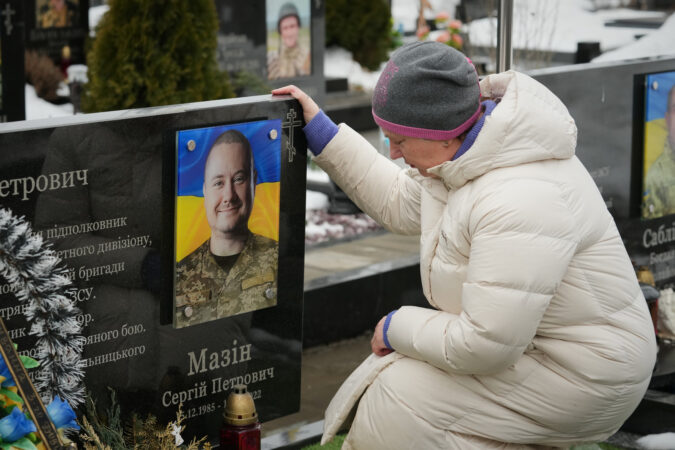
    That curriculum was developed long before school hallways were adorned with photos of students and teachers killed by Russia, before air alerts sent children scrambling into basements, before sandbags lined school windows to protect them from blasts or classes were held in subways.

    Ukraine’s Education Ministry invested $2.3 million in training teachers on the Protecting Ukraine program last year. “Our task was to form a defense mentality,” Education Minister Oksen Lisovyi said. “The need appeared, first of all of course, because of the military confrontation, terrorist threats and because Russia systematically terrorizes the civilian population.”

    Students learn “how to protect one’s self, how to protect those who are close to you, how the Ukrainian army works, which role you could find for yourself if you’d choose to take that path,” Lisovyi said. “But first of all, of course, it’s about the preparation of the civilian population.”

    Marina Kyziminska, 16, works with an assault rifle during class.

    Rifles, tourniquets, and CPR

    Most students in Katya’s classroom were in or near Bucha when Russian forces rampaged the Kyiv region in 2022, executing civilians before retreating from their failed campaign to seize the capital.

    When the instructor tells the students just how quickly a green, or safe, zone can turn red, they know exactly what he means.

    Katya shivered in a basement, replaying the happiest moments of her life as explosions shook her neighborhood.

    Zhenya walked miles along the railway tracks to reach Ukrainian-controlled territory as Russian warplanes circled overhead.

    A shell struck the eighth floor of Kyrylo’s apartment building but didn’t explode.

    Vasylisa remembers fleeing her hometown in the eastern Donetsk region as a toddler, only to resettle outside Kyiv and watch the sky turn red as streets burned in 2022.

    The instructor runs through the basics of trauma medicine: different kinds of tourniquets, how to put pressure on a major wound. He describes types of land mines, explains why radios are still used in an age of phones. He asks for volunteers for a CPR lesson. Katya and Vasylisa step to the front of the room. They giggle as Vasylisa lies down and Katya tips her chin back, opens her mouth, checking for obstruction.

    Zhenya Grebelna (left) Varvara, Katya and Ria Shapirko learn how to use a tourniquet.

    The students tie tourniquets to one another’s arms and practice twisting until they’re so tight they hurt. They remind each other to write down the time. They know that a tourniquet left on too long can lead to amputation.

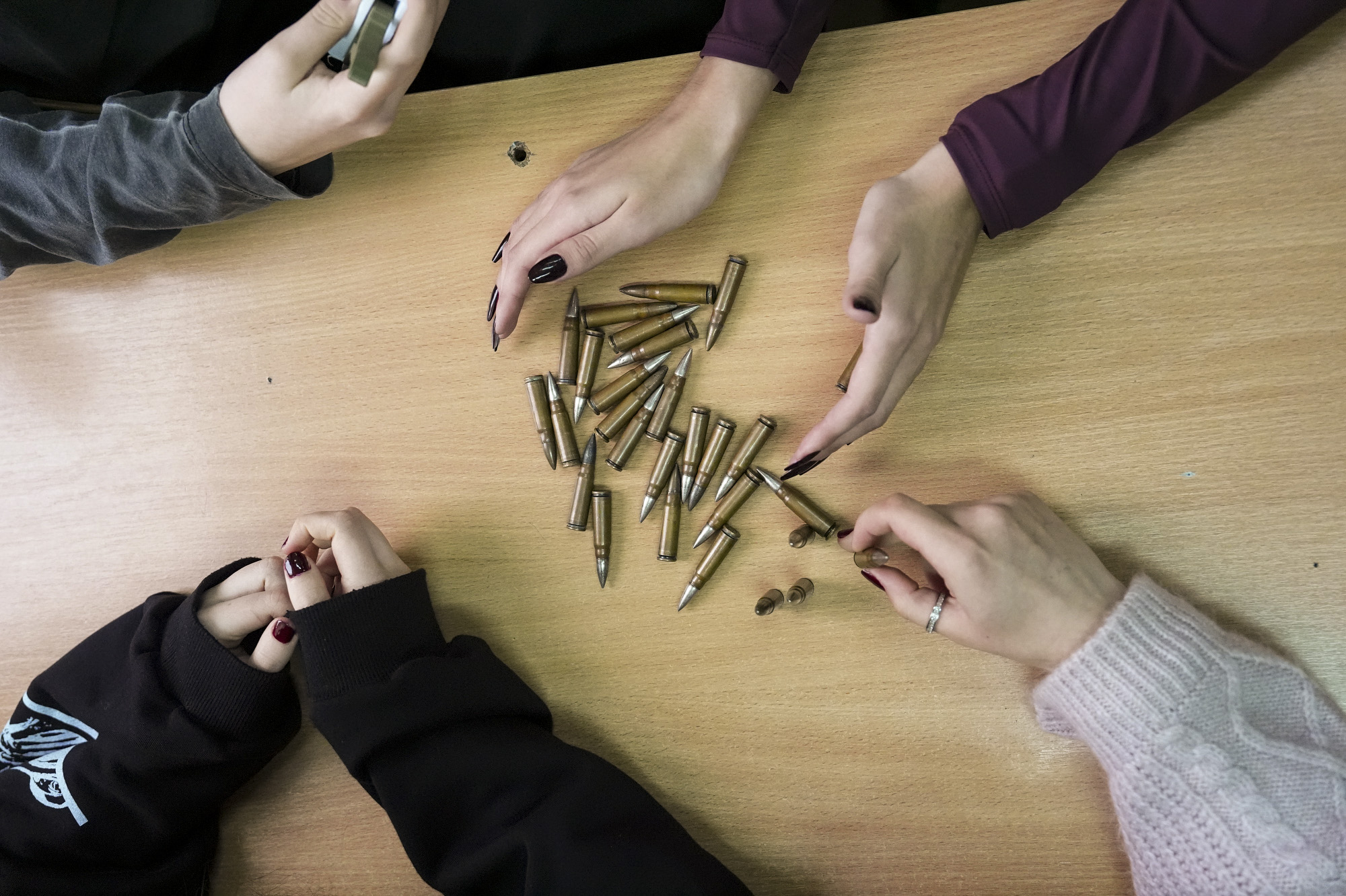
    When they go to load rifles, Katya is confident. She shows the other girls how it’s done while a group of boys plays with their phones in the back. Other students race to see who can load bullets into a magazine fastest.

    “I’m going to be dreaming about this already,” Katya says. Her friend Ria chimes in: “Like this, Katya: You wake up and we’re assembling a rifle on your bed!” The girls laugh. Their friend Varvara Koval takes a turn. Katya corrects her approach, takes the magazine and attaches it herself.

    Bullets used in the weapons training.

    The girls know that in schools in Russia, children their age are learning the same techniques. They know those kids are being taught that Ukraine is the aggressor, that Russia is liberating their territory by destroying it. They know that boys just a few years older than their classmates are being fitted for uniforms, crossing the border, killing Ukrainians and dying on Ukrainian land.

    “While they are being taught how to properly plant mines, we are being taught how not to step on them,” Katya says of how she pictures Russian students. In a better world, she acknowledged, it would not be normal to load an assault rifle at school or tie a tourniquet on your friend’s arm.

    “If no one were attacking our territory, or if Russia followed all the rules and conventions of conducting war, maybe we wouldn’t be learning this,” she adds. “But since they are striking civilian children just like us, we have to know all of this.”

    Vasylisa shows younger sister Stasia how to apply a tourniquet at home.

    Lost childhood

    Katya grew up in this school. Her mom is a teacher here. She knows Bucha like the back of her hand. Vasylisa was never supposed to be here. Born in the eastern Donetsk region, she always dreamed of graduating from the same school as her father. War pushed her family out in 2014. They moved again and again, eventually settling in Irpin, just outside Kyiv.

    On Feb. 23, 2022, as Russian forces massed on Ukraine’s borders, Vasylisa’s dad told her and her younger sister, Stasia, to prepare for the worst. Stasia, who was 9, burst out laughing.

    The next morning, Russia invaded. Little information trickled in through their unstable internet connection, and what did was terrible: executions. Whole families shot as they tried to flee. Just across the field from them, they could hear a Ukrainian machine gun picking off Russian troops.

    Bohdana Kolesnikova, right, with daughters Vasylisa and Stasia at home.

    In early March, they fled, packing their dog, guinea pig and several neighbors into their car. The girls thought they were taking a so-called “green corridor” — a safe path toward Kyiv. Their parents knew no such route existed. The trip was a dangerous leap of faith.

    Everything seemed to be on fire. They passed the mayor of Irpin hanging out of a car, a rifle in his hands. They eventually made it west, where their dad was quickly drafted to the military. The girls and their mom were stunned.

    Back then, Vasylisa thought of the military almost as an extracurricular activity — something to do after school or work. “And now he was taken away, and there was a war,” she said. “I was afraid that … well, I was afraid for Dad. I was crying, talking to him, and he was trying to calm me down, but that only made me cry more.”

    Eventually, the family settled into a new rhythm. They returned to the Kyiv region and moved to Bucha, where their dad is now based. Not everything Vasylisa is learning about war in school is new. Her dad taught her and Stasia some field medicine and asked them to always carry tourniquets when they go out. Last summer, they attended a camp where they practiced shooting.

    Stasia, at 12, can already assemble and disassemble an AK M-479 in less than a minute.

    “I get really upset when I realize that my teenage years are just slipping away like this and passing,” Vasylisa said through tears. “I’m now looking at my sister, who is 12 — the age I was then. And when I realize that she already feels kind of grown up, it makes me sad that I lost some years.”

    Their dad has seen Russia’s war come to his family home twice. His daughters, he said, might still be children. But in an emergency, they should be ready to act as adults.

    Vasylisa and Stasia with their dad.

    Sounds of war

    At school, the military lesson ends in the early afternoon. The class disperses, and the students zip up their backpacks, push past the younger kids through the hallways. Vasylisa goes to an English class. The other girls gather on the steps outside.

    The first stop after school is the grocery store for cookies, candies, and tea. Varvara’s mom isn’t home from work yet, but she agreed the girls can hang out at their apartment so long as Varvara runs upstairs first to clean.

    They kick their shoes off at the door and rush for the kitchen. They boil water. They crowd around the table. They hear an air raid siren and ignore it. They move to Varvara’s room, sit on her bed and floor. They don’t talk about guns or drones or soldiers or war. They talk about boys and girls and crushes and relationships.

    The girls in Varvara’s room.

    They laugh at Varvara’s cat, Masha. Eventually, Ria picks up Varvara’s blue acoustic guitar and starts to strum. The girls quiet down. She begins to sing. They all join in.

    When the song ends, they cheer and rush to hug her.

    The air alert has stopped. For this moment, safe in Varvara’s room, they are just teenagers. They are young and happy and free. They could almost be anywhere.

    But later that night, the sirens blare again. Russian missiles and drones soar overhead and crash into apartments and houses and a hospital and energy infrastructure. Four people are killed. Several children are wounded. Varvara moves from her bed to sleep on a bean bag in the hall. The girls all hope to survive another night, and meet in school again tomorrow.

  • I’m an oncologist. Here’s what the science says about cancer and supplements. | Expert Opinion

    I’m an oncologist. Here’s what the science says about cancer and supplements. | Expert Opinion

    I specialize in treating people who are immunocompromised from leukemia or other cancers affecting the cells of the bone marrow. Recently, I was reviewing the medications one of my patients was taking when she showed me a photo of a pill bottle with a label indicating that the contents included antioxidants.

    “It’s to help boost my immune system,” she explained. “I want to make sure it’s safe to take with my other medicines.”

    It is estimated that 64 to 81% of people with a cancer diagnosis use dietary supplements. Almost half take them without telling their healthcare providers — so I was grateful my patient asked me about hers. Among people without cancer, approximately 50% report taking supplements, many of which purport to help prevent cancer.

    But do they? Here’s what we know about cancer and supplements.

    Are dietary supplements safe? And how well do they work?

    Unlike prescription medications and over-the-counter drugs, dietary supplements are not well regulated by the FDA. Supplement manufacturers who introduce new ingredients do have to submit a premarket safety notification that the supplement “will reasonably be expected to be safe” when used as the product label suggests. However, the FDA can only take action against a supplement manufacturer if safety concerns are raised after it has been marketed. There is no requirement, though, for efficacy — so unless a dietary supplement is tested in a clinical trial, we really don’t know if it works.

    The FDA does not approve the label on a dietary supplement either, but if a claim is made about how the supplement affects the structure or function of the human body (such as “calcium builds stronger bones”), the manufacturer must notify the FDA and include a disclaimer that the FDA has not evaluated that claim.

    Supplement manufacturers also need to comply with good manufacturing practices (known as GMP, these are strict requirements that ensure food, drugs, and cosmetics are made according to safe, quality standards), and the FDA can inspect manufacturing facilities. Despite this, products with deceptive claims and false labels can end up on shelves. For example, in 2015 the New York State Attorney General’s office found that four out of five herbal supplements sold at four national retailers did not contain any of the herbs mentioned on their labels. The products were often made from little more than cheap fillers like powdered rice, asparagus, and houseplants. It ordered them to halt sales of those supplements thereafter.

    Can dietary supplements help prevent cancer?

    As a general statement, when dietary supplements have been studied rigorously in clinical trials, they have not been shown to prevent cancer.

    For example, epidemiological and laboratory studies conducted decades ago initially suggested that taking antioxidants such as beta-carotene could help stave off cancer. Yet, randomized trials enrolling thousands of people, in which approximately half the subjects received dietary supplementation and half received placebo, failed to show that beta-carotene prevents skin cancer recurrence in people with a previous skin cancer, or has any effect on overall cancer rates.

    Other research has also failed to show that beta-carotene or other antioxidants, such as vitamin C or vitamin E, prevent colorectal adenomas (polyps that can lead to cancer); that those supplements, selenium, or vitamin A prevent gastrointestinal cancers; or that beta-carotene or vitamin A prevent lung cancer.

    Dietary supplements were not helpful in analyses that separated men from women, either. In one study of over 8,000 women, vitamin C and E did not lower overall cancer rates, and in a study of over 36,000 women enrolled in the Women’s Health Initiative, vitamin D or calcium supplementation had no effect on rates of colorectal cancer or on overall cancer rates. Similarly, vitamin E and selenium did not prevent the development of prostate cancer in a study that included over 35,000 healthy men, nor in a study of men with precancerous findings in the prostate.

    Can dietary supplements increase cancer risk?

    Most dietary supplements are not harmful. Some, however, should be taken with caution, especially in certain populations of people.

    In a follow-up analysis of the 35,000 healthy men treated with selenium and/or vitamin E — the study designed to prevent cancer — men taking vitamin E actually had a 17% higher risk of developing prostate cancer than men taking a placebo. Similarly, beta-carotene, which did not do a great job in preventing cancer, was found in one analysis to increase the risk of lung cancer and stomach cancer, particularly among smokers.

    Another study, which assigned people to receive folate supplementation or placebo to prevent colon polyps, found that folate was not effective. However, the men who received folate were over 2.5 times as likely to develop prostate cancer compared to those receiving placebo.

    Without question, anyone at risk for developing these types of cancers should avoid taking these dietary supplements. But what about people, like my patient, who already have cancer?

    In one study of over 1,100 women with breast cancer who were receiving chemotherapy, those who took antioxidant dietary supplements before and during treatment had a higher risk of cancer recurrence — though taking a multivitamin had no effect. One possible explanation is that antioxidants may counter some of the cancer-fighting effects of chemotherapy. Dietary supplements can also alter how the body processes chemotherapy, which can theoretically reduce the medication’s efficacy or worsen its side effects.

    There’s a lot we still don’t know about the potential benefits or risks of taking dietary supplements, which are not regulated by the FDA. At the very least, tell your doctor about any nonprescription vitamins or supplements you’re taking, so they can make sure they aren’t harming you or interfering with the treatments they do prescribe you.

    Mikkael A. Sekeres, MD, MS, is the chief of the division of hematology and professor of medicine at the Sylvester Comprehensive Cancer Center, University of Miami. He is author of the books “When Blood Breaks Down: Life Lessons from Leukemia” and “Drugs and the FDA: Safety, Efficacy, and the Public’s Trust.”

  • Zelensky says Putin has ‘not broken’ Ukrainians as he marks 4 years since Russia’s all-out invasion

    Zelensky says Putin has ‘not broken’ Ukrainians as he marks 4 years since Russia’s all-out invasion

    KYIV, Ukraine — Ukrainian President Volodymyr Zelensky declared Tuesday that Russia has not “broken Ukrainians” nor triumphed in its war, four years after an invasion that has severely tested the resolve of Kyiv and its allies and fueled European fears about the scale of Moscow’s ambitions.

    In a show of support, more than a dozen senior European officials headed to the Ukrainian capital to mark the grim anniversary of the conflict, which has killed tens of thousands of people, upended life for millions of Ukrainians, and created instability far beyond its borders.

    Zelensky said his country has withstood the onslaught by Russia’s bigger and better equipped army, which over the past year of fighting captured just 0.79% of Ukraine’s territory, according to the Institute for the Study of War, a Washington-based think tank. Russia now holds nearly 20% of Ukraine.

    “Looking back at the beginning of the invasion and reflecting on today, we have every right to say: We have defended our independence, we have not lost our statehood,” Zelensky said on social media, adding that Russian President Vladimir Putin has “not achieved his goals.”

    “He has not broken Ukrainians; he has not won this war,” Zelensky said.

    Despite the show of defiance, Ukraine has struggled to hold off Russia’s onslaught, and the war has brought widespread hardship for Ukrainian civilians. Russia’s aerial attacks have devastated families and denied civilians power and running water.

    Putin made no mention of the anniversary nor did he say how the war was going when he spoke at a meeting in Moscow of top officials of the Federal Security Service, or FSB, on Tuesday.

    However, he told them that the threat of Ukrainian attacks on Russian soil has grown. Ukraine has increasingly deployed long-range drones that it has developed to strike oil refineries, fuel depots and military logistics hubs more than 600 miles inside Russia.

    U.N. calls for an immediate ceasefire

    As the war of attrition enters its fifth year, a U.S.-led diplomatic push to end the largest conflict on the continent since World War II appears no closer to a peace deal.

    Negotiations are stuck on what happens to the Donbas, eastern Ukraine’s industrial heartland that Russian forces mostly occupy but have failed to seize completely, and the terms of a postwar security arrangement that Kyiv is demanding to deter any future Russian invasion.

    The U.N. General Assembly called Tuesday for an immediate ceasefire and a comprehensive peace in Ukraine, rejecting a U.S. attempt to eliminate language stressing the country’s sovereignty and territorial integrity.

    Washington supports an immediate ceasefire, U.S. Deputy Ambassador Tammy Bruce said before the vote, but opposed language stressing Ukraine’s territorial unity because it would “distract” from the peace talks.

    The 193-member General Assembly approved the original wording 107-12, with the United States among the 51 countries abstaining.

    Zelensky urges Trump to visit

    At a makeshift memorial in Kyiv’s central square, where thousands of small flags and portraits show photos of fallen soldiers, Zelensky said he would like President Donald Trump to visit and witness for himself Ukrainian suffering.

    “Only then can one truly understand what this war is really about,” Zelensky said. When later asked how four years of war had changed him, Zelensky said, “I don’t have time for friends or friendships.”

    Trump, who once vowed to end the war in a day, has repeatedly changed his tone toward Putin and Zelensky over the past year: sometimes criticizing the Ukrainian leader’s negotiating position while reaching out to the Russian leader and at others lashing out at Putin for heavy barrages and appearing more sympathetic to the Ukrainian predicament.

    Kremlin spokesperson Dmitry Peskov said that the invasion would continue in pursuit of Moscow’s goals. They include a demand that Ukraine renounce its bid to join NATO, sharply cut its army, and cede vast swaths of territory.

    Zelensky said he expected a fresh round of U.S.-brokered talks with Russia within the next 10 days.

    A ‘nightmare’ for Ukrainians

    The number of soldiers killed, injured or missing on both sides could reach 2 million by spring, with Russia sustaining the largest number of troop deaths for any major power in any conflict since World War II, a report last month from the Center for Strategic and International Studies estimated.

    European leaders see their countries’ own security at stake in Ukraine amid concerns that Putin may target them next.

    German Chancellor Friedrich Merz wrote on X that “for four years, every day and every night has been a nightmare for the Ukrainians — and not just for them, but for us all. Because war is back in Europe.”

    “We will only end it by being strong together, because the fate of Ukraine is our fate,” he added.

    Putin’s dangerous gamble

    Putin believes that time is on the side of his bigger army, Western officials and analysts say — and that Western support will trail off and that Ukraine’s military resistance will eventually crumble. Already Trump has ended new military aid to Ukraine — though other NATO countries now buy American weapons and give them to Kyiv.

    But French President Emmanuel Macron described the war as “a triple failure for Russia: military, economic, and strategic.” The war “has strengthened NATO — the very expansion Russia sought to prevent — galvanized Europeans it hoped to weaken, and laid bare the fragility of an imperialism from another age,” Macron said on X.

    The European Union has also sent financial aid, but has sometimes met with reluctance from members Hungary and Slovakia.

    While NATO countries have come to Ukraine’s aid, Russia has been helped by North Korea, which has sent thousands of troops and artillery shells; Iran, which has provided drone technology; and China, which the United States and analysts say has provided machine tools and chips.

    A defining conflict

    Among the European officials visiting Kyiv on Tuesday were President of the European Commission Ursula von der Leyen and Finnish President Alexander Stubb, as well as seven prime ministers and four foreign ministers.

    Zelensky later said von der Leyen assured him that Ukraine would receive the first tranche of a 90 billion euro loan by the spring despite Hungary’s attempts to block it.

    The only American listed among the official guests in Kyiv ceremonies was Lt. Gen. Curtis Buzzard, a U.S. officer who represents NATO in Ukraine.

    British Armed Forces Minister Al Carns said Russia’s war on Ukraine was “the most defining conflict” in decades, bringing a “revolution in military affairs,” especially through the rapid development of drone technology. Drones now cause the vast majority of battlefield casualties, he said.

    Both sides face challenges in finding enough troops and are increasingly turning to uncrewed aerial drones that can attack far from the front lines, the London-based International Institute for Strategic Studies said in its annual report on the global military situation.

    “Given both sides’ reliance on external support for materiel, decisions taken in foreign capitals will play an important role in shaping the war’s trajectory,” the think tank added.

    The United Kingdom on Tuesday announced a new package of military and humanitarian support for Ukraine, including sending teams of British military medics to instruct their Ukrainian counterparts.

    The cost of rebuilding war-battered Ukraine would amount to almost $588 billion over the next decade, according to World Bank, the European Commission, the United Nations, and the Ukrainian government. That is nearly three times the estimated nominal GDP of Ukraine for last year, they said in a report Monday.

  • Texas Rep. Gonzales resists calls to resign over allegations of an affair with an ex-staffer

    Texas Rep. Gonzales resists calls to resign over allegations of an affair with an ex-staffer

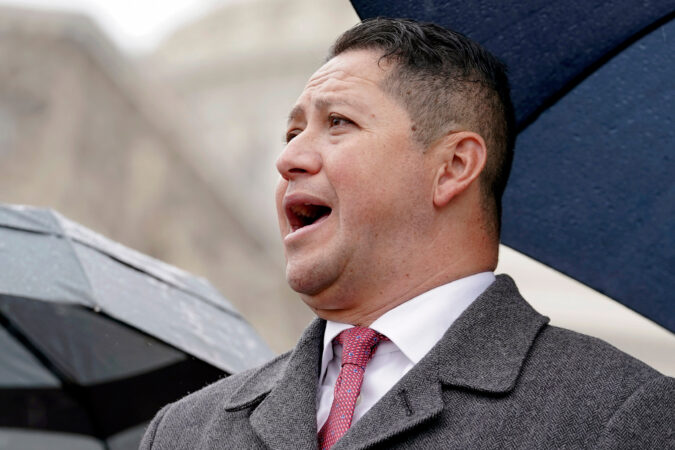
    HOUSTON — U.S. Rep. Tony Gonzales of Texas resisted growing calls Tuesday from fellow congressional Republicans to resign over a report of an alleged affair with a former staffer who later died after she set herself on fire.

    Rep. Thomas Massie of Kentucky joined Reps. Lauren Boebert of Colorado, Anna Paulina Luna of Florida, and Nancy Mace of South Carolina in demanding that Gonzales step down immediately. Gonzales is in a tough race in Texas’ Republican primary on March 3, facing a challenger he narrowly defeated in a 2024 GOP runoff.

    He told reporters he will not resign. A resignation would leave Republicans with a 217-214 majority until March, when the first of three special elections to fill vacancies is set in Georgia.

    “There will be opportunities for all of the details and facts to come out,” he said. “What you’ve seen is not all the facts.”

    House Speaker Mike Johnson said he would talk to Gonzales on Tuesday.

    Johnson said Monday that the accusations against Gonzales “must be taken seriously,” but he added, “in every case like this, you have to allow the investigation to play out and all the facts to come out.”

    “If the accusation of something is going to be the litmus for someone being able to continue to serve in the House, a lot of people would have to resign or be removed or expelled from Congress,” Johnson said.

    Meanwhile, Mace announced that she has introduced a resolution to force the House Ethics Commission to publicly release its reports and records of allegations of sexual harassment against members of Congress.

    Gonzales said in a social media post last week that he was being blackmailed and then suggested in another post Sunday that he is the target of “coordinated political attacks.”

    His main primary opponent is Brandon Herrera, a gun manufacturer and gun rights influencer who calls himself “the AK Guy” on YouTube, where his channel has nearly 4.2 million subscribers. Gonzales defeated Herrera by fewer than 400 votes in their 2024 runoff.

    President Donald Trump had endorsed Gonzales for reelection in December.

    The San Antonio Express-News reported last week that it had obtained text messages in which the former staffer, Regina Ann Santos-Aviles, wrote to a colleague that she had an affair with the lawmaker.

    The Associated Press has not independently obtained copies of the messages. An attorney for Adrian Aviles, Santos-Aviles’ husband, has said the husband found out about the affair before his wife’s death.

    Regina Ann Santos-Aviles, 35, died in September 2025. The Bexar County Medical Examiner’s Office later ruled her death was a suicide by self-immolation.

    “Where are the other men in the GOP?” Massie asked Tuesday in a post on X in calling for Gonzales to resign, adding that Trump should revoke his endorsement.

    Gonzales, whose district stretches from San Antonio to El Paso and runs along the U.S.-Mexico border, has six children with his wife.

    His allegation of blackmail is based on an email from the attorney for the staffer’s husband, Robert Barrera, discussing a possible lawsuit against the lawmaker and a potential settlement with a nondisclosure agreement. The email says that the maximum recoverable amount is $300,000.

    Barrera has said he was not trying to blackmail Gonzales and called the accusation an attempt by the congressman to look like a political victim.

  • Louvre museum’s director resigns in wake of jewels heist in Paris

    Louvre museum’s director resigns in wake of jewels heist in Paris

    PARIS — The Louvre museum’s director resigned Tuesday after months of pressure following the October theft of the French crown jewels, as the world’s most visited museum faced widening scrutiny over security failures, labor unrest, and a suspected ticket fraud scheme.

    Laurence des Cars quit after a punishing year for the former royal palace — the high-profile jewels heist from the Apollo Gallery, a mid-February burst pipe near the Mona Lisa, water leaks damaging priceless books, staff walkouts and a wildcat strike over overcrowding, and understaffing.

    The landmark has faced a widening narrative of an institution spiraling out of control.

    And that pressure deepened in recent weeks when French authorities revealed a suspected decadelong ticket fraud operation linked to the museum that investigators say may have cost the Louvre 10 million euros ($11.8 million).

    President Emmanuel Macron accepted des Cars’ resignation as “an act of responsibility” at a moment when the Louvre needs “calm” and new momentum for security upgrades, modernization, and other major projects, according to a statement from his office.

    Macron wants to give des Cars a new mission during France’s presidency of the Group of Seven leading industrialized nations, focused on cooperation among major museums, the statement said.

    For many in France’s cultural world, the resignation answers months of head-scratching over why no top official had fallen after the heist: a daylight robbery that many in the country saw as the most humiliating breach of French heritage security in living memory.

    It also came as lawmakers and cultural officials widened scrutiny of the museum’s leadership and security practices in the months since the breach.

    Brazen theft

    Thieves took less than eight minutes in October to steal crown jewels valued at 88 million euros ($102 million) from the Louvre, in a weekend operation that stunned visitors, exposed glaring vulnerabilities and left one of France’s most symbolically charged collections in criminal hands.

    Several suspects were later arrested, but the stolen pieces remain missing.

    Des Cars, one of the most prominent museum directors in Europe, had offered to resign on the day of the robbery, but it was initially refused by the culture minister.

    In remarks after the theft, she described the moment as a “tragic, brutal, violent reality” for the Louvre and said that, as the person in charge, it had felt right to offer her resignation.

    Lightning rod

    In an interview published on Tuesday by daily newspaper Le Figaro, des Cars said that she had tried to steer the Louvre through the fallout from the heist, but had concluded that she could no longer carry out the museum’s transformation in the current institutional climate.

    Staying on, she said, would have meant managing the status quo when the museum still needs deep reform.

    “I was there to take the lightning” as museum director, she said.

    Des Cars also said that the October break-in exposed problems that she had been warning about since taking office, including aging infrastructure, obsolete technical systems, and severe congestion.

    She had led the Louvre since 2021, taking over one of the museum world’s most prestigious jobs as the institution emerged from the coronavirus pandemic and mass tourism returned.

    Multifaceted crisis

    In June, a wildcat strike by front-of-house staff and security workers forced the Louvre to halt operations, stranding thousands of visitors outside the glass pyramid and underscoring the depth of anger among employees over overcrowding, understaffing, and what unions called untenable working conditions.

    Workers said that the pressure of daily visitor flows — particularly around the Mona Lisa — had become unmanageable and that promised reforms were arriving too slowly. There were growing complaints that the infrastructure and staffing of the crumbling medieval structure haven’t kept pace with the crowds pouring through its galleries.

    The resignation came at an especially punishing moment, less than two weeks after French authorities revealed the separate ticket fraud scheme.

    That case widened scrutiny beyond the jewels robbery and toward the museum’s day-to-day controls.

    Fraud scheme

    Prosecutors say tour guides are suspected of — up to 20 times a day — reusing the same tickets to bring in different visitor groups, at times allegedly with the help of Louvre employees, in a system investigators believe operated for a decade.

    In a rare interview just days ago with the Associated Press after the fraud case was made public, the Louvre’s No. 2, general administrator Kim Pham, said that fraud at an institution the size of the Louvre was “statistically inevitable.”

    He argued that the museum’s sheer scale — millions of visitors, multiple checkpoints, and a sprawling historic complex — makes it uniquely exposed.

    But he also acknowledged shortcomings, and said that the museum had tightened validation checks and increased controls.

    New Renaissance

    The succession of crises has put new political weight on a project Macron has heavily championed: the Louvre’s sweeping overhaul plan, branded the “Louvre New Renaissance.”

    Unveiled by Macron in January 2025, the renovation, which could take up to a decades, aims to modernize a museum widely seen as overstretched and physically worn down by mass tourism.

    The plan includes a new entrance near the Seine River to ease pressure on I.M. Pei’s pyramid, new underground spaces and a dedicated room for the Mona Lisa with timed access — all intended to improve crowd flow and reduce the daily crush that has become a symbol of the Louvre’s success and its dysfunction.

    The project is expected to cost roughly 700 million-800 million euros ($826 million-$944 million), with funding from ticket revenue, state support, donations, and Louvre Abu Dhabi-related income.

    The scale and cost of that plan now loom over the search for des Cars’ successor.

    Macron has framed the overhaul as a national priority, comparing its ambition to other landmark French restoration efforts and casting it as part of a broader defense of French cultural prestige.

  • Trump administration sues New Jersey over restrictions on immigration arrests

    Trump administration sues New Jersey over restrictions on immigration arrests

    TRENTON — The Trump administration is suing New Jersey over a state order that prohibits federal immigration agents from making arrests in nonpublic areas of state property, such as correctional facilities and courthouses.

    The Justice Department lawsuit, filed Monday in federal court in Trenton, challenges Gov. Mikie Sherrill‘s Feb. 11 executive order, which also bars the use of state property as a staging or processing area for immigration enforcement.

    Sherrill, a Democrat who took office Jan. 20, “insists on harboring criminal offenders from federal law enforcement,” the lawsuit said, accusing her of attempting to obstruct federal law enforcement and thwart President Donald Trump’s immigration crackdown.

    Sherrill’s executive order “poses an intolerable obstacle” to immigration enforcement and “directly regulates and discriminates” against the federal government, said the lawsuit, which misspelled her name as “Sherill.”

    Asked about the lawsuit Tuesday, Sherrill said: “What I think the federal government needs to be focused on right now, instead of attacking states like New Jersey working to keep people safe, is actually training their ICE agents.”

    The state’s acting attorney general, Jennifer Davenport, said the Trump administration was “wasting its resources on a pointless legal challenge.” New Jersey will fight the lawsuit and “continue to ensure the safety of our state’s immigrant communities,” she said.

    The lawsuit is the latest in the Trump administration’s fight against state and local level restrictions on immigration enforcement.

    Last year, the Justice Department sued Minnesota and Colorado, as well as cities including New York, Chicago, Los Angeles, and Denver over so-called sanctuary laws, which are aimed at prohibiting police from cooperating with immigration agents.

    Last May, the Trump administration sued four New Jersey cities — Newark, Jersey City, Paterson, and Hoboken — over such policies. That case is pending.

  • New York City police investigating after officers were hit with snowballs during a snowball fight

    New York City police investigating after officers were hit with snowballs during a snowball fight

    NEW YORK — New York City police are investigating after officers were pelted with snowballs while responding to a massive snowball fight at Washington Square Park in Manhattan as a winter storm blanketed the Northeast.

    A video of the fracas shows two uniformed officers pacing a walkway in the park Monday as snowballs fly at them from all directions, hitting the officers and covering them in snow.

    The officers, growing visibly frustrated, shoved at least two people to the ground as snowballs continued to whizz by. At one point, a person runs up behind an officer and mushes some snow onto his head. One of the officers can be seen rubbing his eye toward the end of the video.

    In a statement Tuesday, the New York Police Department said multiple uniformed officers were struck in the face with snowballs and were “removed by EMS in stable condition” to a nearby hospital, but did not disclose additional information on their injuries. No arrests have been made.

    Jessica Tisch, the city’s police commissioner, called the behavior “disgraceful” and “criminal” and said the department is investigating.

    Several political figures in the city were quick to denounce the dustup, with many of New York Mayor Zohran Mamdani’s critics seizing on the incident as evidence that respect for law enforcement has declined under the new mayor, who faced attacks during his campaign over criticisms he made of the department in 2020. Mamdani has walked back those past remarks.

    Mamdani, in a post on X on Tuesday, wrote: “Officers, like all city workers, have been out in a historic blizzard, keeping New Yorkers safe and cars moving. Treat them with respect. If anyone’s catching a snowball, it’s me.”

    At a news conference later in the day, Mamdani was asked whether he thought anyone should be criminally charged over the snowballs and appeared to downplay the situation.

    “From the videos that I’ve seen, it looks like a snowball fight,” he said.

    The head of the city’s largest police union called Mamdani’s response a “complete failure of leadership.”

    “This was not just a ‘snowball fight.’ This was an assault,” Police Benevolent Association president Patrick Hendry said in a statement, adding: “By ignoring their injuries and dismissing the incident, the mayor has sent a disgraceful message to every police officer who serves this city.”

  • Supreme Court rules the Postal Service can’t be sued, even when mail is intentionally not delivered

    Supreme Court rules the Postal Service can’t be sued, even when mail is intentionally not delivered

    WASHINGTON — A divided Supreme Court on Tuesday ruled that Americans can’t sue the U.S. Postal Service, even when employees deliberately refuse to deliver mail.

    By a 5-4 vote, the justices ruled against a Texas landlord, Lebene Konan, who alleges her mail was intentionally withheld for two years. Konan, who is Black, claims racial prejudice played a role in postal employees’ actions.

    Justice Clarence Thomas, writing for a majority of five conservative justices, said the federal law that generally shields the Postal Service from lawsuits over missing, lost, and undelivered mail includes “the intentional nondelivery of mail.”

    In dissent, Justice Sonia Sotomayor wrote that while the protection against lawsuits is broad, it does not extend to situations when the decision not to deliver mail “was driven by malicious reasons.” Justice Neil Gorsuch joined his three liberal colleagues in dissent.

    President Donald Trump’s Republican administration had warned that a ruling for Konan would have led to a flood of similar lawsuits against the cash-strapped Postal Service.

    Konan, who’s also a real estate agent and an insurance agent, claims two employees at a post office in Euless, Texas, part of the Dallas-Fort Worth metroplex, deliberately didn’t deliver mail belonging to her and her tenants because, she alleges, they didn’t like that she is Black and owns multiple properties.

    According to court documents, the dispute began when Konan discovered the mailbox key for one of her rental properties had been changed without her knowledge, preventing her from collecting and distributing tenants’ mail from the box. When she contacted the local post office, she was told she wouldn’t receive a new key or regular delivery until she proved she owned the property. She did so, the documents say, but the mail problems continued, despite the USPS inspector general instructing the mail to be delivered.

    Konan alleges the employees marked some of the mail as undeliverable or return to sender. Konan and her tenants failed to receive important mail such as bills, medications, and car titles, according to the lawsuit. Konan also claims she lost rental income because some tenants moved out due to the situation.

    After filing dozens of complaints with postal officials, Konan finally filed a lawsuit under the 1946 Federal Tort Claims Act, which allows some lawsuits against the government. The case focused on the reach of the special postal exemption to the law.

  • Raiders GM tamps down trade talk around Maxx Crosby, says he expects star edge rusher to stay with team

    Raiders GM tamps down trade talk around Maxx Crosby, says he expects star edge rusher to stay with team

    INDIANAPOLIS — The Las Vegas Raiders are planning to keep star edge rusher Maxx Crosby despite the trade talk around the five-time Pro Bowl pick, general manager John Spytek said Tuesday.

    “Maxx is an elite player. I’ve been very upfront from the start since I got here, that we’re in the business of having really good players on the team, and we need a lot more of them,” Spytek said at the NFL scouting combine in Indianapolis.

    Crosby has been rehabilitating from left knee surgery he underwent three days after the regular season ended, as speculation about his status has persisted following an NFL-worst 3-14 record for the Raiders and the firing of coach Pete Carroll after just one year on the job.

    Crosby said earlier this month he doesn’t want out and that the unsubstantiated reports suggesting he does make him laugh. His future with the club that drafted him in the fourth round out of Eastern Michigan in 2019 became a subject when he was placed on injured reserve with two games left against his wish, preferring to play out the season. Crosby, who has 69½ sacks in seven years, had a career-high 28 tackles for loss in 2025.