Category: Wires

  • Flamingo fans fight to unseat the mockingbird as Florida’s state bird

    Flamingo fans fight to unseat the mockingbird as Florida’s state bird

    Jim Mooney has launched a high-wattage campaign to elevate the flamingo to Florida’s state bird.

    The Republican has handed out flamingo lapel pins and 11-by-16 prints of flamingo artwork to his 119 colleagues in the state legislature. He sported a suit with a pink shirt, a pink pocket square, and a tie festooned with flamingos to testify on behalf of his legislation.

    But the gangly pink bird must unseat the mockingbird, which has been Florida’s official bird for 99 years, to gain the distinction Mooney says it deeply deserves.

    To accomplish this, the lawmaker is hoping to reach a political compromise with supporters of the sprightly and charming Florida scrub jay, who have torpedoed his legislation in the past. The scrub jay would be honored as the state’s songbird under Mooney’s bill, while the flamingo would become the state bird.

    “It’s unbelievable how this has taken on a life of its own,” said Mooney, a retired high school sports coach and former mayor of Islamorada. “I’m seeing flamingos everywhere I go. Across the state, everywhere I turn around, it’s a flamingo here and a flamingo there. People are sending me texts and letters about it. Everybody is on board for the flamingo.”

    He quickly added, “And the scrub jay.”

    Florida struck a similar deal in 2022 when strawberry growers lobbied the state to honor the strawberry shortcake. Many in the state especially in Mooney’s Florida Keys district — were outraged at the prospect that the key lime pie, the official state pie, could be pushed aside. Instead, state lawmakers just created a new category — state dessert — and awarded it to the strawberry shortcake.

    “There’s room for both, just like there’s room for both the flamingo and the scrub jay,” Mooney said.

    At stake are mostly bragging rights, though supporters also hope to secure more money for the study and conservation of flamingos. The American flamingo is already protected by the U.S. Migratory Bird Treaty Act, but conservationists say it should also be considered a threatened species, offering it even more protection after it was nearly wiped out in Florida in the past century by plume hunters and, later, habitat loss.

    Audubon Florida Executive Director Julie Wraithmell refuses to choose a favorite among the flamingo, mockingbird, and scrub jay — “we don’t choose between our kids” — but hopes the bird competition will lead to them all receiving more recognition.

    “If you’re Team Flamingo, you should put your influence and your support where your loyalty lies and really support Everglades restoration,” Wraithmell said. “If you’re Team Scrub Jay, you need to be paying attention to if the state is appropriating enough funding for upland land management for our parks and preserves.”

    Supporters have been campaigning for flamingos, one of the state’s most celebrated symbols, for years. But a debate among scientists about whether the wading bird, which on average can stand five feet tall, is native to the Sunshine State has hampered those efforts. Skeptics noted that few were seen in the wild, or outside a zoo, for more than 100 years.

    But Mooney, who has sponsored pro-flamingo legislation for four years, said a new University of Central Florida study may finally settle the dispute. Flamingos are native to the state and “genetically fit for restoration,” according to the study released in December. Audubon Florida also found that more than 101 flamingos landed in the state during Hurricane Idalia in 2023 and didn’t leave.

    The exact number of flamingos in Florida is unknown — the state doesn’t keep track — but residents regularly report sightings, including Mooney, who likes to show everyone he encounters a video of nearly three dozen flamingos serenely feeding in the Florida Bay in early January. A scientist spotted a flamboyance of 125 flamingos in the Everglades in July.

    The proposal, being debated during the current legislative session, isn’t as weighty as some of the other topics Florida lawmakers are expected to tackle, including the cost of property insurance, Mooney said, but is still important.

    “We seldom have bills that make you feel good,” he said. “This bill does, and it also has some real intrinsic value. It shows that our restoration projects are bearing fruit, and that flamingos are here to stay.”

    He was thrilled when Florida Gov. Ron DeSantis gave the birds a shout-out during his State of the State address Jan. 13. “Even the flamingos have returned,” DeSantis said while touting the state’s Everglades restoration work.

    Efforts to elevate the flamingo have overtaken a decades-long pro-scrub jay campaign. The friendly blue-and-white bird has fans among Florida schoolchildren, who have formed clubs and written lawmakers in support of the scrub jay being named state bird. It also has a devoted following among environmentalists who often argue against overdevelopment that would disturb their habitats.

    In 1999, Marion Hammer, the first female president of the National Rifle Association and considered among the most formidable lobbyists in Tallahassee, helped derail scrub jay supporters. They are “evil little birds that rob the nests of other birds and eat their eggs and kill their babies,” she said.

    A northern mockingbird keeps a keen eye out for intruders in 2015 n Houston. After nearly a century on its lofty perch, the northern mockingbird may be singing its last melodies as the state bird of Florida.

    Hammer was on Team Mockingbird and in an op-ed in 2016 noted that they are good parents and also remarkable songbirds, while the scrub jay “can’t even sing — it can only squawk.”

    The scrub jay lets out a soft trill during courtship but is often lumped in with songbirds, like blue jays, that it is related to. Flamingos, meanwhile, make squawky sounds.

    The mockingbird should remain the state bird, just as it has been since 1927, Hammer argued. (It’s also the state bird in Arkansas, Mississippi, Tennessee, and Texas.)

    Hammer couldn’t be reached for comment on the latest bird competition, but the scrub jay also has adversaries among Florida developers. It is at the center of a federal lawsuit filed in 2024 over homeowner rights in southwest Florida, where Charlotte County officials charge a fee to build in the bird’s habitat.

    “The scrub jay has just been commandeered to really violate property rights across Florida, and I just cannot allow it to be elevated to this level,” state Rep. Monique Miller, a Central Florida Republican, said during a committee meeting in December. “I wish these were decoupled because I want to make the flamingo your bird so badly.”

    Jackson Oberlink, a third-generation Floridian, has testified on behalf of the flamingo for the past three years, only to see his hopes dashed. He’s not nearly as optimistic as Mooney that it will succeed this time.

    “Every year, there seems to be a few more flamingo props in a committee room, and it seems like there’s a bit more enthusiasm. And then every year, it kind of peters out,” said Oberlink, the former legislative director for Florida for All, a liberal lobbying group.

    But he’s not ready to give up.

    Oberlink said he became enchanted with the gangly pink birds when he encountered Pinky, a flamingo that was blown into the St. Marks National Wildlife Refuge in north Florida by Hurricane Michael in 2018.

    “I have a tattoo of Pinky and the St. Marks Lighthouse. So it definitely left a mark on me, and I’ll always be rooting for the flamingo in Florida.”


  • They’ve outsourced the worst parts of their jobs to tech. How you can do it, too.

    They’ve outsourced the worst parts of their jobs to tech. How you can do it, too.

    Artificial intelligence is supposed to make your work easier. But figuring out how to use it effectively can be a challenge.

    Over the past several years, AI models have continued to evolve, with plenty of tools for specific tasks such as note-taking, coding, and writing. Many workers spent last year experimenting with AI, applying various tools to see what actually worked. And as employers increasingly emphasize AI in their business, they’re also expecting workers to know how to use it.

    “I think 2025 was just a taste of what’s to come. Folks were figuring out how to deploy AI for productivity,” said Wade Foster, CEO of workflow automation platform Zapier.

    The number of people using AI for work is growing, according to a recent poll by Gallup. The percentage of U.S. employees who used AI for their jobs at least a few times a year hit 45% in the third quarter of last year, up five percentage points from the previous quarter. The top use cases for AI, according to the poll, was to consolidate information, generate ideas, and learn new things.

    The Washington Post spoke to workers to learn how they’re getting the best use out of AI. Here are five of their best tips. A caveat: AI may not be suitable for all workers, so be sure to follow your company’s policy.

    Automate your inbox

    Managing your email is a pain. And while email providers offer tools to help, AI can do even more, Foster said.

    Create an AI agent or use an AI app that can sort, organize, and prioritize your inbox based on simple commands. Think of it as creating a complex set of rules that automate which folders emails go to, how they’re labeled, and whether they’re marked as urgent. Instead of creating a rigid list of keywords or contacts, use natural language to identify topics or issues you need to track.

    AI can also automatically draft responses to specific types of emails you regularly get. For example, AI can draft a response directing people to the career website anytime someone asks about job openings, Foster said.

    “You can get pretty darn close to an automated inbox,” he said.

    To automate, you’ll need tools by services like Zapier, which offers limited free versions and premium options, or SaneBox and Superhuman, both of which have tiered pay options.

    Create a personal assistant

    AI can be particularly useful in getting you up to speed, prioritizing tasks, and tracking progress, several workers said.

    Helen Lee Kupp, cofounder and CEO of virtual community and nonprofit Women Defining AI, said she built an “AI chief of staff” at the beginning of the year to prioritize tasks. She speaks to Claude voice mode in the mornings, which then structures her day. To build it, she asked the bot to create an AI assistant and provided a list of parameters and attached work documents. She then edited the instructions and pasted it into a Claude Project, generating a customized bot she can reuse.

    “It’s really nice in the morning to be able to dump whatever’s on my brain and have a first draft of here’s how we think of priorities,” she said.

    Another option: Build a daily briefing agent that sends an email with a to-do list and important updates from your email and calendar, Foster said. To do this, make a custom GPT (you’ll need ChatGPT Plus, which costs $20 a month) by clicking “explore GPTs” on the sidebar and then “create.” To automate your briefing, connect ChatGPT to your email and calendar, but beware of security and privacy risks. Prompt it to email you every morning with specific details around the information you want, Foster said. You can also create a daily to-do app. You may need additional tools or a hosting service to do this, but ChatGPT can provide instructions.

    To avoid giving ChatGPT access to your accounts, manually upload your calendar, task list, or select communications and prompt it to prioritize from there.

    Build what you need

    To solve specific problems, several workers said they built custom apps and tools using chatbots and simple commands to generate code, a concept known as vibe coding. Michael Frank, co-founder and CEO of agentic AI risk platform Radiant Intel, said he’s used Claude Code and app builders like Google Antigravity to build an app that aggregates local news for him. But people can build apps to help them learn a new skill or provide feedback on their work to improve, he said. Think about your mistakes or time-intensive tasks and build something for that, he said.

    “These are not going to radically transform anyone’s life, but can it make you 5, 10, or 15% more productive? Absolutely,” he said.

    Lee Kupp said she’s used AI platform Gumloop, which has a limited free option and doesn’t require coding knowledge, to build an AI agent that monitors a Slack channel for website feedback and logs problems into a tracker. For Alexander K. Moore, assistant professor of marketing at the University of Illinois at Chicago, Replit and Claude Code helped him quickly build customized webpages to more efficiently conduct surveys.

    You can also build a customized dashboard on Claude to track sales, customer satisfaction, the performance of a product or feature, or other key metrics, said Jhalak Rawat, chief operating officer at manufacturing AI start-up Soff. Tell it to provide action items to improve them. Use the dashboard to help get your next promotion, she added.

    “It’s a good way to show the work you do,” she said. And “it takes one prompt, which takes 10 minutes to write.”

    Warm your cold intro

    Before pitching a new client or connecting with a new colleague or other professional contacts, use AI to find commonalities to break the ice, Rawat said.

    She uses Comet, Perplexity’s AI browser, to find commonalities between her and another person based on their LinkedIn profiles and information available on Google. She once was able to connect to the CEO of a company she wanted to target because Comet told her that he was a pizza lover who once led a pizza company — a detail buried in a podcast. That tasty tidbit provided a way to warm her cold intro. This can also help when people are trying to meet new contacts for a career switch.

    Enhance your meeting notes

    Meeting notes and transcriptions from video meeting providers usually fall by the wayside, several workers said. But they’re more likely to refer to their notes if they actually take them.

    So they use Granola, an AI-powered notepad that enriches meeting notes without an AI bot showing up as a participant (there’s an option to notify others it’s in use). It transcribes the meeting and follows the structure of your notes, adding detail and action items. You can even write notes before the meeting or ask questions about a meeting or explore trends within your meetings. Foster said he’s used it to identify topics for social media posts within his conversations. Granola can also coach people, he said.

    “People take it as face value,” he said. “With AI, it has a neutrality to it.”

    One bonus tip: Make your AI chatbots less sycophantic, which Moore says results in straightforward feedback. In ChatGPT, go to personalization options by clicking your name in the lower left corner of the screen. In the “custom instructions” and “more about you” sections, emphasize accuracy, clear reasoning, and explanation over flattery, praise, and agreeing with you. Tell it to push back and be blunt. Moore offers a sample prompt on his Substack post, “Tell me the truth! or How to get your AI to stop telling you what you want to hear.”

    The toughest part about learning how to effectively use AI at work is starting, workers said. But once you get going, it gets easier.

    “Don’t overthink it,” Lee Kupp said. “Pick one [large language model] and get started.”

  • These prophets of economic doom are worried about another collapse

    These prophets of economic doom are worried about another collapse

    Dean Baker has earned a reputation for predicting economic catastrophe, and he tries to follow his own advice.

    After the economist warned of a stock bubble in the late 1990s, he rebalanced his investments to reduce exposure to the market. Several years later, he became concerned that soaring home values would fall to earth, so he and his wife sold their condo in Washington.

    He was right both times: The dot-com bubble burst in March 2000, and D.C.-area home prices crested in 2006 before slumping toward the depths of the Great Recession in 2009.

    Now Baker, who’s a distinguished senior fellow at the Center for Economic and Policy Research, has that foreboding feeling again.

    Investment in artificial intelligence has propelled the stock market to record highs, but he’s shifting his investments to be less exposed to what he considers to be an AI bubble edging closer to popping. “I don’t make a point of coming up with a negative forecast,” he said. “I just try to have open eyes on the economy, and sometimes I see something that other people don’t.”

    Baker is among a select group of people with track records of foreseeing major economic train wrecks. These proven prophets of doom are winning attention in online posts and media interviews, as more people begin to wonder if the AI boom is too good to be true. That’s giving economic groundhogs like Baker a chance to spread their market wisdom more widely or actively cultivate big new audiences.

    Michael Burry, whose mid-2000s bet against the housing market inspired Michael Lewis’ 2010 book, The Big Short, triggered headlines across financial news outlets in November when his hedge fund Scion Asset Management disclosed it was betting that the stock prices of AI darlings Nvidia and Palantir will fall significantly over the next few years.

    The same month, Burry, who didn’t respond to a request for an interview, started a Substack newsletter that often predicts an AI-catalyzed market implosion. It has more than 195,000 subscribers and is called Cassandra Unchained, after the princess of Greek myth cursed to foresee the future but to always be ignored.

    “OpenAI is the next Netscape, doomed and hemorrhaging cash,” Burry wrote in a post on X last month that was viewed more than 2 million times, likening the maker of ChatGPT to a casualty of the dot-com bubble. (The Washington Post has a content partnership with OpenAI.)

    Although voices of caution are having a moment, that doesn’t mean they’re winning the argument. James Chanos, the founder and managing partner of Kynikos Associates, who bet on the fall of energy giant Enron, said in an interview that market contrarians are often disregarded.

    Short-sellers like himself are often viewed “as the village idiots or Dr. Evil,” he said, either wrongheaded or trying to manipulate the market. “There’s kind of no in-between,” said Chanos, who prefers to see himself and others as “financial detectives” hunting for bad actors, fraud or froth that should be cleared away.

    A 2025 Harvard and Copenhagen Business School study of the beliefs of market experts during periods of boom and bust suggests that questioning market optimism is a good idea. “Optimism portends crashes: the most bullish forecasts predict the highest crash risk,” the authors found. In most cases, the authors said, “optimism remained unchecked until well after the crash.”

    Other economists have identified key factors that indicate a crisis could be around the corner. A 2020 study of postwar financial crashes around the world by economists at Harvard, the National Bureau of Economic Research, and the Copenhagen Business School found that “crises are substantially predictable.” When credit and asset prices grow rapidly in the same sector — conditions the researchers term a “red zone” — there was a probability of about 40% of a financial crisis starting in the next three years, they concluded.

    A tech-fueled surge in share prices over recent years has driven the total value of the stock market to far outweigh U.S. economic input, an imbalance that has come before previous downturns. But a report issued Jan. 9 by Goldman Sachs Research said many features of past bubbles are absent.

    Corporate debt is relatively low in historical terms, and most of the S&P 500’s 18% returns last year came from increased profits, not investors marking up valuations, the report said. Double-digit earnings growth is “providing the fundamental base for a continued bull market,” wrote Ben Snider, chief U.S. equity strategist. The report forecast that U.S. stocks would continue to grow in value this year.

    When Andrew Odlyzko — an emeritus professor of mathematics at the University of Minnesota who has studied economic bubbles and has a history of recognizing warning signs before a crash — started getting calls from journalists asking about a potential AI bubble in 2024, he dismissed the idea. At the time he reasoned it wouldn’t be systemically devastating if a big company like Google, Microsoft, or Meta made an expensive technological bet that flopped.

    But things have changed in the past year and a half, Odlyzko said. “Now the investments are exceeding the capacity of these platform companies to finance them out of their cash flow, and they are drawing in other sectors of the economy,” he said.

    He pointed to Meta’s recent deal to develop a $30 billion data center project in Louisiana, in which the project’s debt is held in a separate entity off Meta’s books. Such deals remind Odlyzko of the creative financing that led to the Great Recession in 2007.

    “If — or more precisely, I’m pretty confident when — things collapse, the spillover effects will be much more substantial, much more deadly,” he said.

    Today’s rush to build AI data centers also reminds Odlyzko of the 19th-century railway mania in Britain, a bubble of speculation on new railroad infrastructure. Both frenzies are creating “big infrastructure … that’s actually drawing on other parts of the economy,” he said.

    Chanos makes comparisons between today’s AI fever and the 1990s tech boom, as both bull markets have centered on big ideas: AI today and the internet’s beginnings decades ago. In the short term, many early internet businesses cratered, even though the technology worked out in the longer term.

    Artificial-intelligence technology “is real and probably will be very important, but lots and lots of companies that claim they’re a great business … are probably not going to be great businesses,” Chanos said.

    What’s different is that it’s now much easier for retail investors to jump into the stock market with the rise of stock-trading apps like Robinhood. Chanos said he’s “seeing more and more speculation in terms of retail investors who only know markets that generally go up, and if they go down, they go down for just a short period of time.”

    Baker is one of those retail investors who’s preparing for the worst, as he has before — although he hasn’t always had perfect timing. He pulled back his portfolio a couple of years before the dot-com bubble burst in March 2000 and sold his D.C. condo in 2004, about two years before home prices started falling in the region.

    Although discussion about predicting market slumps often frames the events as bad, Baker thinks an AI crash could do the U.S. some good.

    A slump could lead to a reallocation of resources in the economy, perhaps toward other sectors like manufacturing or healthcare, he said. “There’s all sorts of things you could better use those resources for if the AI really doesn’t make sense,” Baker said.

  • NBA postpones Timberwolves-Warriors game in Minneapolis; Charles Barkley calls event ‘sad’ on national broadcast

    NBA postpones Timberwolves-Warriors game in Minneapolis; Charles Barkley calls event ‘sad’ on national broadcast

    MINNEAPOLIS — The NBA game between the Minnesota Timberwolves and Golden State Warriors was postponed on Saturday afternoon following another fatal shooting by a federal officer in Minneapolis.

    The game was rescheduled for Sunday afternoon. The Timberwolves and Warriors are also scheduled to play on Monday night.

    The league announced the decision was made to “prioritize the safety and security of the Minneapolis community” after 37-year-old Alex Pretti was killed in a confrontation with officers on a street in a commercial district less than two miles from Target Center, the downtown arena where the Timberwolves play.

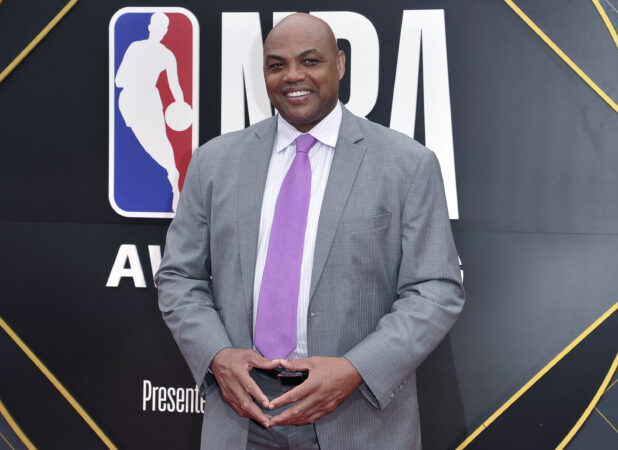
    On Saturday, Sixers legend Charles Barkley, on the panel for ESPN’s telecast of Saturday’s Sixers-Knicks thriller commented on the situation, saying: “It’s gonna end bad, it’s already ended badly twice,” in reference to Pretti and the killing of Renee Good on Jan. 7 in Minneapolis at the hands of officials from Immigration and Customs Enforcement.

    With the crowd of protesters growing around the shooting site on Saturday, the Minnesota National Guard was assisting local police to try to keep the peace.

    The Minnesota Twins were holding their annual winter fan festival at Target Field, across the street from Target Center, and ended the event an hour early for the “expedited departure” of all guests.

    Thousands of people marched through downtown on Friday with the air temperature well below zero in protest of the presence and tactics of the federal force that swelled to about 3,000 officers in the Twin Cities area this month as part of the Trump administration’s immigration crackdown.

    Two weeks ago, 37-year-old Renee Good was fatally shot in her car as she drove away from a group of officers following a confrontation. The Timberwolves held a moment of silence for Good before their game the following night.

  • The man killed by a federal officer in Minneapolis was an ICU nurse, family says

    The man killed by a federal officer in Minneapolis was an ICU nurse, family says

    MINNEAPOLIS — Family members say the man killed by a U.S. Border Patrol officer in Minneapolis on Saturday was an intensive care nurse at a Department of Veterans Affairs hospital who cared deeply about people and was upset by President Donald Trump’s immigration crackdown in his city.

    Alex Jeffrey Pretti, 37, was an avid outdoorsman who enjoyed getting in adventures with Joule, his beloved Catahoula leopard dog who also recently died. He had participated in protests following the killing of Renee Good by a U.S. Immigration and Customs officer on Jan. 7.

    “He cared about people deeply and he was very upset with what was happening in Minneapolis and throughout the United States with ICE, as millions of other people are upset,” said Michael Pretti, Alex’s father. “He thought it was terrible, you know, kidnapping children, just grabbing people off the street. He cared about those people, and he knew it was wrong, so he did participate in protests.”

    Pretti was a U.S. citizen, born in Illinois. Like Good, court records showed he had no criminal record and his family said he had never had any interactions with law enforcement beyond a handful of traffic tickets.

    In a recent conversation with their son, his parents, who live in Colorado, told him to be careful when protesting.

    “We had this discussion with him two weeks ago or so, you know, that go ahead and protest, but do not engage, do not do anything stupid, basically,” Michael Pretti said. “And he said he knows that. He knew that.”

    The Department of Homeland Security said that the man was shot after he “approached” Border Patrol officers with a 9 mm semiautomatic handgun. Officials did not specify if Pretti brandished the gun. In bystander videos of the shooting that emerged soon after, Pretti is seen with a phone in his hand but none appears to show him with a visible weapon.

    Family members said Pretti owned a handgun and had a permit to carry a concealed handgun in Minnesota. They said they had never known him to carry it.

    Alex Pretti’s family struggles for information about what happened

    The family first learned of the shooting when they were called by an Associated Press reporter. They watched the video and said the man killed appeared to be their son. They then tried reaching out to officials in Minnesota.

    “I can’t get any information from anybody,” Michael Pretti said Saturday. “The police, they said call Border Patrol, Border Patrol’s closed, the hospitals won’t answer any questions.”

    Eventually, the family called the Hennepin County Medical Examiner, who they said confirmed had a body matching the name and description of their son.

    Alex Pretti grew up in Green Bay, Wisc., where he played football and baseball and ran track for Preble High School. He was a Boy Scout and sang in the Green Bay Boy Choir.

    After graduation, he went to the University of Minnesota, graduating in 2011 with a bachelor’s degree in biology, society, and the environment, according to the family. He worked as a research scientist before returning to school to become a registered nurse.

    Pretti had protested before

    Pretti’s ex-wife, Rachel N. Canoun, said she was not surprised he would have been involved in protesting Trump’s immigration crackdown. She said she had not spoken to him since they divorced more than two years ago and she moved to another state.

    She said he was a Democratic voter and that he had participated in the wave of street protests following the killing of George Floyd by a Minneapolis police officer in 2020, not far from the couple’s neighborhood. She described him as someone who might shout at law enforcement officers at a protest, but she had never known him to be physically confrontational.

    “These kinds of things, you know, he felt the injustice to it,” Canoun said. “So it doesn’t surprise me that he would be involved.”

    Canoun said Pretti got a permit to carry a concealed firearm about three years ago and that he owned at least one semiautomatic handgun when they separated.

    “He didn’t carry it around me, because it made me uncomfortable,” she said.

    Pretti had ‘a great heart’

    Pretti lived in a four-unit condominium building about 2 miles from where he was shot. Neighbors described him as quiet and warmhearted.

    “He’s a wonderful person,” said Sue Gitar, who lived downstairs from Pretti and said he moved into the building about three years ago. “He has a great heart.”

    If there was something suspicious going on in the neighborhood, or when they worried the building might have a gas leak, he would jump in to help.

    Pretti lived alone and worked long hours as a nurse, but he was not a loner, his neighbors said, and would sometimes have friends over.

    His neighbors knew he had guns — he’d occasionally take a rifle to shoot at a gun range — but were surprised at the idea that he might carry a pistol on the streets.

    “I never thought of him as a person who carried a gun,” said Gitar.

    Pretti was passionate about the outdoors

    A competitive bicycle racer who lavished care on his new Audi, Pretti had also been deeply attached to his dog, who died about a year ago.

    His parents said their last conversation with their son was a couple of days before his death. They talked about repairs he had done to the garage door of his home. The worker was a Latino man, and they said with all that was happening in Minneapolis he gave the man a $100 tip.

    Pretti’s mother said her son cared immensely about the direction the county was headed, especially the Trump administration’s rollback of environmental regulations.

    “He hated that, you know, people were just trashing the land,” Susan Pretti said. “He was an outdoorsman. He took his dog everywhere he went. You know, he loved this country, but he hated what people were doing to it.”

  • Trump heaps praise on U.K. troops following furor over Afghanistan comments

    Trump heaps praise on U.K. troops following furor over Afghanistan comments

    LONDON — U.S. President Donald Trump heaped praise Saturday on British soldiers who fought in Afghanistan, in a post on social media that represented a partial reversal of comments he made this week that drew a cascade of criticism in the U.K., particularly from families of those killed and seriously injured in the conflict.

    In the wake of a conversation earlier with British Prime Minister Keir Starmer, Trump said on Truth Social that the “great and very brave soldiers of the United Kingdom will always be with the United States of America.”

    He described the 457 British servicemen and women who died in Afghanistan and those that were badly injured as “among the greatest of all warriors.”

    Trump added that the bond between the two countries’ militaries is “too strong to ever be broken” and that the U.K. “with tremendous heart and soul, is second to none (except for the USA).”

    Trump’s comments follow an interview with Fox Business Network on Thursday in Davos, Switzerland, when he said he wasn’t sure the other 31 nations in NATO would be there to support the United States if and when requested and that troops from those countries stayed “a little off the front lines.”

    Trump did not apologize directly for those comments, nor retract them, as Starmer had suggested in his initial response on Friday when he described the words of the president as “insulting and frankly appalling.”

    Starmer’s office in No. 10 Downing Street said the issue was raised in a conversation between the pair on Saturday, in which other topics were discussed, including the war in Ukraine and security in the Arctic region.

    “The prime minister raised the brave and heroic British and American soldiers who fought side by side in Afghanistan, many of whom never returned home,” Downing Street said in a statement. “We must never forget their sacrifice.”

    Trump’s view as expressed in the Fox Business interview stands at odds with the reality that in October 2001, nearly a month after the 9/11 attacks, the U.S. led an international coalition in Afghanistan to destroy al-Qaida, which had used the country as its base, and the group’s Taliban hosts.

    Alongside the U.S. were troops from dozens of countries, including from NATO, whose mutual-defense mandate had been triggered for the first time after the attacks on New York and Washington. More than 150,000 British troops served in Afghanistan in the years after the invasion, the largest contingent after the American one.

    The Italian and French governments also expressed their disapproval Saturday at Trump’s comments, with both describing them as “unacceptable.”

  • Iran’s Revolutionary Guard commander warns U.S. his force has its ‘finger on the trigger’

    Iran’s Revolutionary Guard commander warns U.S. his force has its ‘finger on the trigger’

    DUBAI, United Arab Emirates — The commander of Iran’s paramilitary Revolutionary Guard, which was key in putting down recent nationwide protests in a crackdown that left thousands dead, warned that his force is “more ready than ever, finger on the trigger,” as U.S. warships headed toward the Middle East.

    Nournews, a news outlet close to Iran’s Supreme National Security Council, reported on its Telegram channel that the commander, Gen. Mohammad Pakpour, warned the United States and Israel “to avoid any miscalculation.”

    “The Islamic Revolutionary Guard and dear Iran stand more ready than ever, finger on the trigger, to execute the orders and directives of the Commander-in-Chief,” Nournews quoted Pakpour as saying.

    Tension remains high between Iran and the U.S. in the wake of a bloody crackdown on protests that began on Dec. 28, triggered by the collapse of Iran’s currency, the rial, and swept the country for about two weeks.

    Meanwhile, the number of people reported by activists as having been arrested jumped to more than 40,000, as fears grow some could face the death penalty.

    Trump’s warnings

    U.S. President Donald Trump has repeatedly warned Tehran, setting two red lines for the use of military force: the killing of peaceful demonstrators and the mass execution of people arrested in the protests.

    Trump has repeatedly said Iran halted the execution of 800 people detained in the protests. He has not elaborated on the source of the claim, which Iran’s top prosecutor, Mohammad Movahedi, strongly denied Friday in comments carried by the judiciary’s Mizan news agency.

    On Thursday, Trump said aboard Air Force One that the U.S. was moving warships toward Iran “just in case” he wants to take action.

    “We have a massive fleet heading in that direction and maybe we won’t have to use it,” Trump said.

    A U.S. Navy official, who spoke on condition of anonymity to discuss military movements, said Thursday that the aircraft carrier USS Abraham Lincoln and other warships traveling with it were in the Indian Ocean.

    Trump also mentioned the multiple rounds of talks American officials had with Iran over its nuclear program before Israel launched a 12-day war against the Islamic Republic in June, which also saw U.S. warplanes bomb Iranian nuclear sites. He threatened Iran with military action that would make earlier U.S. strikes against Iranian uranium enrichment sites “look like peanuts.”

    Airline jitters

    The tension has led at least two European airlines to suspend some flights to the wider region.

    Air France canceled two return flights from Paris to Dubai over the weekend. The airline said it was “closely following developments in the Middle East in real time and continuously monitors the geopolitical situation in the territories served and overflown by its aircraft in order to ensure the highest level of flight safety and security.” It said it would resume its service to Dubai later Saturday.

    Luxair said it had postponed its Saturday flight from Luxembourg to Dubai by 24 hours “in light of ongoing tensions and insecurity affecting the region’s airspace, and in line with measures taken by several other airlines.”

    It told the AP it was closely monitoring the situation “and a decision on whether the flight will operate tomorrow will be taken based on the ongoing assessment.”

    Arrivals information at Dubai’s international airport also showed the cancellation of Saturday flights from Amsterdam by Dutch carriers KLM and Transavia. The airlines did not immediately respond to requests for comment.

    Some KLM flights to Tel Aviv in Israel were also canceled on Friday and Saturday, according to online flight trackers.

    Rising death toll and arrests

    Although there have been no further demonstrations in Iran for days, the death toll reported by activists has continued to rise as information trickles out despite the most comprehensive internet blackout in Iran’s history, which has now lasted more than two weeks.

    The U.S.-based Human Rights Activists News Agency on Saturday put the death toll at 5,200, with the number expected to increase. The group’s figures have been accurate in previous unrest and rely on a network of activists in Iran to verify deaths. That death toll exceeds that of any other round of protest or unrest there in decades, and recalls the chaos surrounding Iran’s 1979 Islamic Revolution.

    Iran’s government offered its first death toll on Wednesday, saying 3,117 people were killed. It said 2,427 were civilians and security forces, and labeled the rest as “terrorists.” In the past, Iran’s theocracy has undercounted or not reported fatalities from unrest.

    The activist agency on Saturday also increased the total number of people arrested to 40,879 — a significant jump from the more than 27,700 people in its previous update.

    There have been fears Iran could apply the death penalty to arrested protesters, as it has done in the past.

    Iranian judiciary officials have called some of those being held “mohareb” — or “enemies of God” — a charge that carries the death penalty. It had been used along with other charges to carry out mass executions in 1988 that reportedly killed at least 5,000 people.

    At a U.N. Human Rights Council special session on Iran held in Geneva Friday, Volker Türk, the U.N.’s high commissioner for human rights, expressed concern over “contradictory statements from the Iranian authorities about whether those detained in connection with the protests may be executed.”

    He said Iran “remains among the top executioner states in the world,” with at least 1,500 people reportedly executed last year — a 50% increase over 2024.

  • Trump letter banning DEI in schools is dead after legal appeal is dropped

    Trump letter banning DEI in schools is dead after legal appeal is dropped

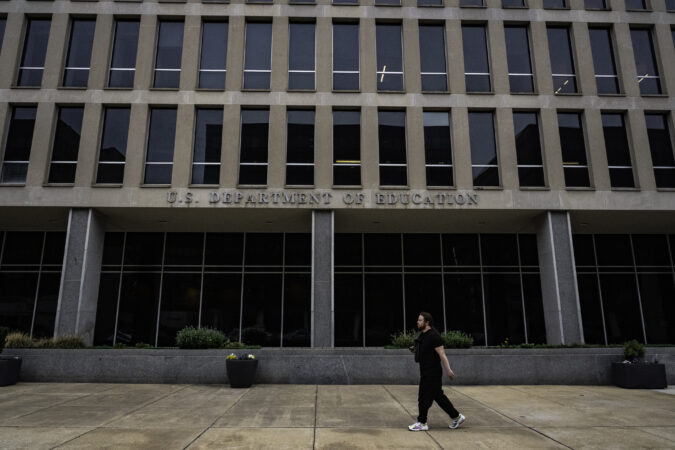
    Nearly a year ago, the Education Department sent universities and K-12 school districts scrambling with a sweeping but vague directive. The “Dear Colleague” letter said schools may be in violation of federal law if they consider race in virtually any way — hiring, discipline policy, scholarships, or programming.

    After a lawsuit and a defeat in court, however, the Trump administration says it is dropping the matter entirely.

    That means an August federal court order blocking the “Dear Colleague” letter will stand. The Trump administration had also demanded that schools certify that they are in compliance with the letter, and that demand is now dead, too.

    Still, it is unclear how significant the impact will be. The Trump administration, which made sweeping changes to education over its first year, can still work to impose its view of the law on schools through enforcement actions and other pressure. For instance, in July, the Justice Department published a memo that included many of the same ideas that were in the Education Department’s letter.

    Further, many schools have already changed their diversity, equity, and inclusion policies, wary of running afoul of the administration’s anti-DEI stance.

    In a statement, Education Department spokesperson Julie Hartman said the agency will continue to interpret Title VI of the Civil Rights Act as barring “impermissible DEI initiatives” that discriminate on the basis of race, color, or national origin.

    “Title VI has always prohibited schools from racial preferencing and stereotyping, and it continues to do so with or without the February 14th Dear Colleague Letter,” Hartman said. She said the agency’s civil rights office “will continue to vigorously enforce Title VI to protect all students and hold violators accountable.”

    The letter, issued by the department last February, laid out the agency’s interpretation of civil rights law and argued that schools at every level had embraced “pervasive and repugnant race-based preferences and other forms of racial discrimination.”

    It said that efforts to consider race in staffing, programming, and other aspects of campus life were unlawful, and that even race-neutral policies aimed at diversity could result in schools, colleges, and universities losing federal funding.

    Soon after, the American Federation of Teachers filed a lawsuit challenging the directive.

    In court, the government argued that it was simply clarifying and reaffirming that schools may not practice racial discrimination. But in August, U.S. District Judge Stephanie Gallagher in Maryland struck down both the guidance and the certification requirement, saying the department was trying to “substantially alter the legal obligations” of schools without going through proper procedures.

    “The government did not merely remind educators that discrimination is illegal: it initiated a sea change in how the Department of Education regulates educational practices and classroom conduct, causing millions of educators to reasonably fear that their lawful, and even beneficial, speech might cause them or their schools to be punished,” she wrote.

    The judge pointed to the letter’s suggestion that teaching about “systemic and structural racism” would be discriminatory. That, she wrote, is “textbook viewpoint discrimination” and contrary to law.

    The government appealed Gallagher’s ruling, and the case was proceeding until Wednesday, when the administration informed the court that it was dropping its challenge. That left the August ruling in place.

    The American Federation of Teachers and Democracy Forward, which brought the case, hailed the legal victory as a “final defeat” for the administration’s attempt to enforce what they see as an unlawful interpretation of civil rights law.

    “With the stroke of a pen, the administration tried to take a hatchet to 60 years of civil rights laws that were meant to create educational opportunity for all kids,” Randi Weingarten, president of the American Federation of Teachers, the lead plaintiff, said in a statement.

    The government’s decision to drop its appeal should put an end to the assertions in the original guidance since it was so thoroughly rejected by the court, said Michael Pillera, who worked for a decade at the Education Department’s civil rights office before becoming director of the educational opportunities project at the Lawyers’ Committee for Civil Rights Under Law.

    “The Dear Colleague letter was really their opening volley in their campaign of chaos against DEI, and what we have now is a spectacular failure,” he said. “They could not defend their positions in court. They had no argument to stand on.”

    But he conceded that it’s possible nothing will change and said the administration’s behavior “is often untethered to law.”

    Many schools may continue to comply with the anti-DEI directive in an effort to stave off attention from the administration, said Frederick Hess, director of education policy studies at the American Enterprise Institute, a conservative think tank.

    “One of the things we have seen is how reluctant institutional leaders are to get crosswise with the federal government, whether or not it’s clearly aligned with the law,” he said.

    Either way, Hess said, he was pleased that the February letter is no longer in force. That’s because he does not think those types of guidance documents should be used to make policy — something that both Democratic and Republican administrations have done in the past.

    “Dear Colleague letters have become a blunt instrument to move thousands of postsecondary institutions or 10,000-plus school districts in one direction or another, and I don’t think that’s an appropriate use of them,” he said. “I don’t think that’s good for anybody.”

  • Trump threatens Canada with 100% tariffs over its new trade deal with China

    Trump threatens Canada with 100% tariffs over its new trade deal with China

    WASHINGTON — President Donald Trump on Saturday threatened to impose a 100% tariff on goods imported from Canada if America’s northern neighbor went ahead with its China trade deal, intensifying a feud with Prime Minister Mark Carney, a rising voice in the West’s pushback to Trump’s new world order.

    Trump said in a social media post that if Carney “thinks he is going to make Canada a ‘Drop Off Port’ for China to send goods and products into the United States, he is sorely mistaken.”

    While Trump has waged a trade war over the past year, Canada this month negotiated a deal to lower tariffs on Chinese electric vehicles in return for lower import taxes on Canadian farm products.

    Trump initially had said that agreement was what Carney “should be doing and it’s a good thing for him to sign a trade deal.”

    Carney’s office did not immediately respond to a request for comment.

    Trump’s threat came amid an escalating war of words with Carney as the Republican president’s push to acquire Greenland strained the NATO alliance. Trump had commented while in Davos, Switzerland, this week that “Canada lives because of the United States.” Carney shot back that his nation can be an example that the world does not have to bend toward autocratic tendencies. “Canada doesn’t live because of the United States. Canada thrives because we are Canadian,” he said.

    Trump later revoked his invitation to Carney to join the president’s “Board of Peace” that he is forming to try to resolve global conflicts.

    Trump’s push to acquire Greenland has come after he has repeatedly needled Canada over its sovereignty and suggested it also be absorbed the United States as a 51st state. He posted an altered image on social media this week showing a map of the United States that included Canada, Venezuela, Greenland, and Cuba as part of its territory.

    In his message Saturday, Trump continued his provocations by calling Canada’s leader “Governor Carney.” Trump had used the same nickname for Carney’s predecessor, Justin Trudeau, and his first use of it toward Carney was the latest mark of their soured relationship.

    Carney has emerged as a leader of a movement for countries to find ways to link up and counter the U.S. under Trump. Speaking in Davos before Trump, Carney said, “Middle powers must act together because if you are not at the table, you are on the menu” and he warned about coercion by great powers — without mentioning Trump’s name. The prime minister received widespread praise and attention for his remarks, upstaging Trump at the World Economic Forum.

    The prime minister even spoke of a “rupture” between the U.S. under Trump and its Western allies that would never be repaired.

    Trump, in his Truth Social post Saturday, also said that “China will eat Canada alive, completely devour it, including the destruction of their businesses, social fabric, and general way of life.”

    Carney has not yet reached a deal with Trump to reduce some of the tariffs that he has imposed on key sectors of the Canadian economy. But Canada has been protected from the heaviest impact of Trump’s tariffs by the Canada-U.S.-Mexico Agreement. That trade agreement is up for a review this year.

    In the fall, the Canadian province of Ontario aired an anti-tariff ad in the U.S. that prompted Trump to end trade talks with Canada. The television ad used the words of former President Ronald Reagan to criticize U.S. tariffs. Trump pledged to increase tariffs on imports of Canadian goods by an extra 10%. He did not follow through.

    As for China, Canada had initially mirrored the United States by putting a 100% tariff on electric vehicles from Beijing and a 25% tariff on steel and aluminum. China had responded by imposing 100% import taxes on Canadian canola oil and meal and 25% on pork and seafood.

    But as Trump pursued pressure tactics, Canada’s foreign policy has been less aligned with the U.S., creating an opening for an improved relationship with China. Carney made the tariff announcement earlier this month during a visit to Beijing.

    “The China trade deal is quite limited as is the U.S. deal with China on (semiconductor) chips. The China deal may grow, however. I expect Chinese interest in funding a pipeline to northern British Columbia,” said Nelson Wiseman, professor emeritus of political science at the University of Toronto.

    Carney has said that Canada’s relationship with the U.S. is complex and deeper and that Canada and China disagree on issues such as human rights.

    Canada is the top export destination for 36 U.S. states. Nearly $3.6 billion Canadian (US $2.7 billion) worth of goods and services cross the border each day. About 60% of U.S. crude oil imports are from Canada, as are 85% of U.S. electricity imports.

    Canada is also the largest foreign supplier of steel, aluminum, and uranium to the U.S. and has 34 critical minerals and metals that the Pentagon is eager for and investing in for national security.

  • Border Patrol officer shoots, kills another person in Minneapolis. National Guard activated

    Border Patrol officer shoots, kills another person in Minneapolis. National Guard activated

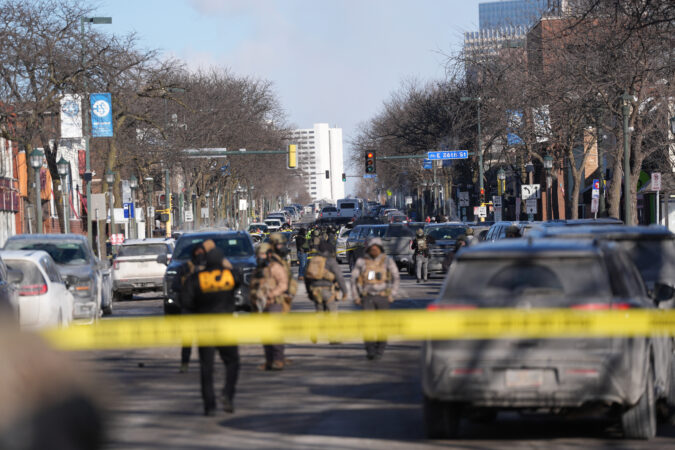
    MINNEAPOLIS — Federal immigration officers shot and killed a man Saturday in Minneapolis, drawing hundreds of protesters onto the frigidly cold streets in a city already shaken by another fatal shooting weeks earlier.

    Minneapolis Police Chief Brian O’Hara said a 37-year-old man was killed but declined to identify him. He added that information about what led up to the shooting was limited. The man was identified by his parents as Alex Pretti, an intensive care unit nurse.

    The Minnesota National Guard, which had been activated earlier by Gov. Tim Walz, was assisting local police amid growing protests.

    Department of Homeland Security spokesperson Tricia McLaughlin said in a statement that federal officers were conducting an operation as part of the Trump administration’s immigration crackdown and fired “defensive shots” after a man with a handgun approached them and “violently resisted” when officers tried to disarm him. O’Hara said police believe the man was a “lawful gun owner with a permit to carry.” The officer who shot the man is an eight-year Border Patrol veteran, federal officials said.

    President Donald Trump weighed in on social media by lashing out at Minnesota’s governor and the Minneapolis mayor.

    Trump shared images of the gun that immigration officials said was recovered and said: “What is that all about? Where are the local Police? Why weren’t they allowed to protect ICE Officers?”

    Video shows officers, man who was shot

    In a bystander video obtained by the Associated Press, protesters can be heard blowing whistles and shouting profanities at agents on Nicollet Avenue.

    The video shows an officer shoving a person who is wearing a brown jacket, skirt, and black tights and carrying a water bottle. That person reaches out for a man and the two link up, embracing. The man, wearing a brown jacket and black hat, seems to be holding his phone up toward the officer.

    The same officer shoves the man in his chest and the two, still embracing, fall back.

    The video then shifts to a different part of the street and then comes back to the two individuals unlinking from each other. The video shifts focus again and then shows three officers surrounding the man.

    Soon at least seven officers surround the man. One is on the man’s back and another who appears to have a cannister in his hand strikes a blow to the man’s chest. Several officers try to bring the man’s arms behind his back as he appears to resist. As they pull his arms, his face is briefly visible on camera. The officer with the cannister strikes the man near his head several times.

    A shot rings out, but with officers surrounding the man, it’s not clear from where the shot came. Multiple officers back off of the man after the shot. More shots are heard. Officers back away and the man lies motionless on the street.

    The police chief appealed for calm, both from the public and and from federal law enforcement.

    “Our demand today is for those federal agencies that are operating in our city to do so with the same discipline, humanity, and integrity that effective law enforcement in this country demands,” the chief said. “We urge everyone to remain peaceful.”

    Customs and Border Patrol Commander Gregory Bovino said the officer who shot the man had extensive training as a range safety officer and in using less-lethal force.

    “This is only the latest attack on law enforcement. Across the country, the men and women of DHS have been attacked, shot at,” he said.

    Walz, a Democrat, said he had no confidence in federal officials and that the state would lead the investigation into the latest fatal shooting.

    The New York Times reported that a U.S. official said that DHS would investigate the shooting by its officer, with the assistance of the FBI.

    Drew Evans, superintendent of the Minnesota Bureau of Criminal Apprehension, said during a news conference Saturday that federal officers blocked his agency from the shooting scene, and when they returned with a signed judicial warrant, they were still blocked.

    Protests continue in Minneapolis

    Protesters continued to converge at the scene of the shooting despite dangerously cold weather.

    At Saturday midday, the worst of an extreme cold wave was over, but the temperature was still -6 degrees. The Arctic blast hadn’t deterred thousands of protesters from marching in downtown Minneapolis on Friday afternoon to call for ICE to leave the Minnesota.

    The shooting happened amid widespread daily protests in the Twin Cities since the Jan. 7 shooting of 37-year-old Renee Good, who was killed when an Immigration and Customs Enforcement officer fired into her vehicle. Saturday’s shooting unfolded just over a mile away from where Good was shot.

    After the shooting, an angry crowd gathered and screamed profanities at federal officers, calling them “cowards” and telling them to go home. One officer responded mockingly as he walked away, telling them: “Boo hoo.” Agents elsewhere shoved a yelling protester into a car. Protesters dragged garbage dumpsters from alleyways to block the streets, and people who gathered chanted, “ICE out now,” referring to Immigrations and Customs Enforcement.

    “They’re killing my neighbors!” said Minneapolis resident Josh Koskie.

    Federal officers wielded batons and deployed flash bangs on the crowd.

    Walz said he had been in contact with the White House after the shooting. He urged Trump to end what the Department of Homeland Security has called its largest-ever immigration enforcement operation.

    U.S. Rep. Bennie Thompson, the top Democrat on the U.S. House Homeland Security Committee, called for Homeland Security Secretary Kristi Noem to be impeached and denounced statements from the administration about the man DHS agents killed.

    “Apparently, the Trump administration and its secret police only support the First and Second Amendments when it’s convenient to them,” Thompson said in a statement.

    Thompson called on Demorats in the U.S. Senate to vote against a funding bill for DHS that passed the lower chamber last week.“This is un-American and has to stop,” Thompson said. “The House must immediately take steps to impeach Kristi Noem.”

    Vice President JD Vance responded to the shooting in a post on X and said that when he visited Minneapolis this week, “what the ICE agents wanted more than anything was to work with local law enforcement so that situations on the ground didn’t get out of hand.”

    He accused local officials in Minnesota of ignoring requests from ICE agents to work with them.

    Notably, federal officials refused to cooperate with local officials on an investigation into the shooting death of Renee Good on Jan. 7 and blocked state investigators from the site of Saturday’s shooting.