Category: Wires

  • Death toll from protests in Iran hits at least 544, activists say, as Trump says Iran wants to talk

    Death toll from protests in Iran hits at least 544, activists say, as Trump says Iran wants to talk

    DUBAI, United Arab Emirates — President Donald Trump said Sunday that Iran proposed negotiations after his threat to strike the Islamic Republic over its bloody crackdown targeting demonstrators there, a move coming as activists said the death toll in protests rose to at least 544.

    Trump and his national security team have been weighing a range of potential responses against Iran including cyberattacks and direct strikes by the U.S. or Israel, according to two people familiar with internal White House discussions who were not authorized to comment publicly and spoke on condition of anonymity.

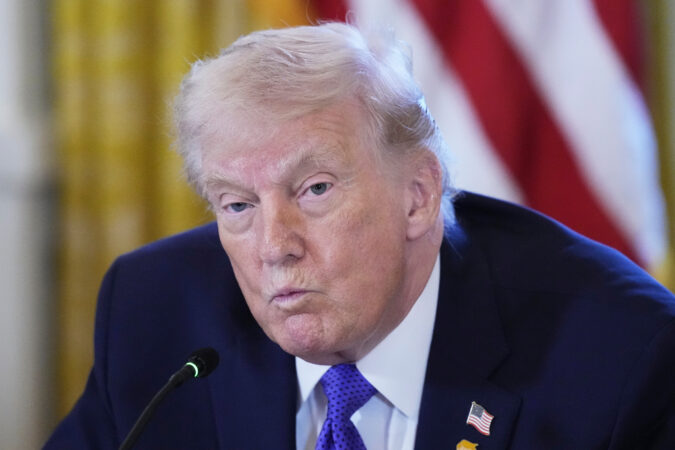
    “The military is looking at it, and we’re looking at some very strong options,” Trump told reporters on Air Force One on Sunday night. Asked about Iran’s threats of retaliation, he said: “If they do that, we will hit them at levels that they’ve never been hit before.”

    Trump said that his administration was in talks to set up a meeting with Tehran, but cautioned that he may have to act first as reports of the death toll in Iran mount and the government continues to arrest protesters.

    “I think they’re tired of being beat up by the United States,” Trump said. “Iran wants to negotiate.”

    He added: “The meeting is being set up, but we may have to act because of what’s happening before the meeting. But a meeting is being set up. Iran called, they want to negotiate.”

    There was no immediate acknowledgment from Iran of the offering for a meeting. The massive ongoing U.S. military deployment to the Caribbean is a factor that the Pentagon and Trump’s national security planners must consider. Tehran also warned that the U.S. military and Israel would be “legitimate targets” if America uses force to protect demonstrators. Trump meanwhile said the Islamic Republic reached out and proposed negotiations.

    More than 10,600 people also have been detained over the two weeks of protests, said the U.S.-based Human Rights Activists News Agency, which has been accurate in previous unrest in recent years and gave the death toll. It relies on supporters in Iran cross-checking information. It said 496 of the dead were protesters and 48 were with security forces.

    With the internet down in Iran and phone lines cut off, gauging the demonstrations from abroad has grown more difficult. The Associated Press has been unable to independently assess the toll. Iran’s government has not offered overall casualty figures.

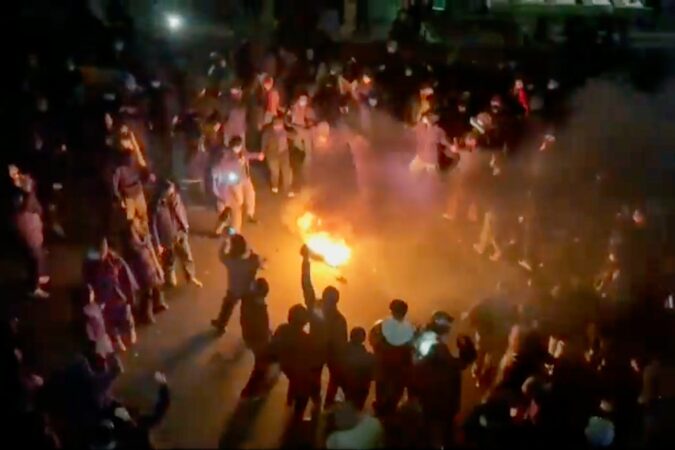
    Those abroad fear the information blackout is emboldening hard-liners within Iran’s security services to launch a bloody crackdown. Protesters flooded the streets in the country’s capital and its second-largest city on Saturday night into Sunday morning. Online videos purported to show more demonstrations Sunday night into Monday, with a Tehran official acknowledging them in state media.

    Defiance in parliament

    The threat to strike the U.S. military and Israel came during a parliamentary speech by Mohammad Baagher Qalibaf, the hard-liner speaker of the body who has run for the presidency in the past.

    He directly threatened Israel, calling it “the occupied territory.”

    “In the event of an attack on Iran, both the occupied territory and all American military centers, bases and ships in the region will be our legitimate targets,” Qalibaf said. “We do not consider ourselves limited to reacting after the action and will act based on any objective signs of a threat.”

    Lawmakers rushed the dais in parliament, shouting: “Death to America!”

    It remains unclear how serious Iran is about launching a strike, particularly after its air defenses were destroyed during the 12-day war in June with Israel. Any decision to go to war would rest with Iran’s 86-year-old Supreme Leader Ayatollah Ali Khamenei.

    The U.S. military has said in the Mideast it is “postured with forces that span the full range of combat capability to defend our forces, our partners and allies and U.S. interests.” Iran targeted U.S. forces at Al Udeid Air Base in Qatar in June, while the U.S. Navy’s Mideast-based 5th Fleet is stationed in the island kingdom of Bahrain.

    Israel, meanwhile, is “watching closely” the situation between the U.S. and Iran, said an Israeli official, who spoke on condition of anonymity due to not being authorized to speak to journalists. Israeli Prime Minister Benjamin Netanyahu spoke with U.S. Secretary of State Marco Rubio overnight on topics including Iran, the official added.

    “The people of Israel, the entire world, are in awe of the tremendous heroism of the citizens of Iran,” said Netanyahu, a longtime Iran hawk.

    At the Vatican, Pope Leo XIV mentioned Iran as a place “where ongoing tensions continue to claim many lives,” adding that “I hope and pray that dialogue and peace may be patiently nurtured in pursuit of the common good of the whole of society.”

    Demonstrations were held in some international capitals in support of the protesters. A spokesperson said United Nations Secretary-General António Guterres was “shocked” by reports of violence against protesters resulting in “scores of deaths” and called on Iranian authorities to use maximum restraint and restore communications.

    Protests in Tehran and Mashhad

    Online videos sent out of Iran, likely using Starlink satellite transmitters, purportedly showed demonstrators gathering in northern Tehran’s Punak neighborhood. There, it appeared authorities shut off streets, with protesters waving their lit mobile phones. Others banged metal while fireworks went off.

    In Mashhad, Iran’s second-largest city some 450 miles northeast of Tehran, footage purported to show protesters confronting security forces. Protests also appeared to happen in Kerman, 500 miles southeast of Tehran.

    Iranian state television on Sunday morning had correspondents appear on the streets in several cities to show calm areas, with a date stamp shown on screen. Tehran and Mashhad were not included.

    The demonstrations began Dec. 28 over the collapse of the Iranian rial currency, which trades at over 1.4 million to $1, as the country’s economy is squeezed by international sanctions in part levied over its nuclear program. The protests intensified and grew into calls directly challenging Iran’s theocracy.
  • Scottie Barnes hits tiebreaking free throw in final second of OT as Raptors beat Sixers, 116-115

    Scottie Barnes hits tiebreaking free throw in final second of OT as Raptors beat Sixers, 116-115

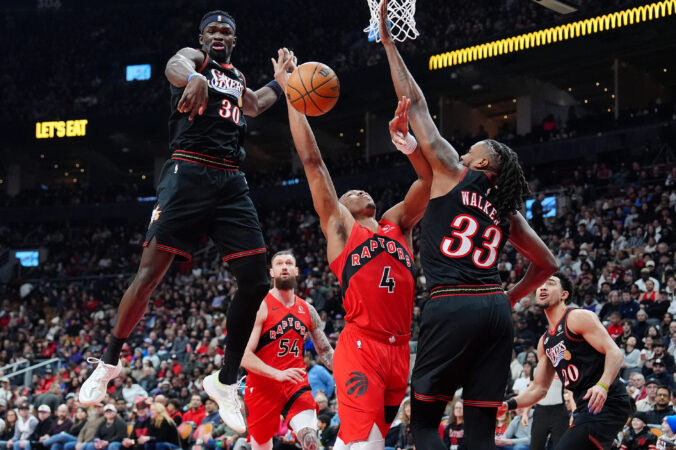
    TORONTO — Scottie Barnes hit a tiebreaking free throw with 0.8 seconds remaining in overtime and the Toronto Raptors beat the 76ers 116-115 on Sunday night in the first of back-to-back meetings between short-handed teams.

    Barnes made the first of two from the line and intentionally missed the second as Toronto won its third straight home meeting with the Sixers. He finished 10 for 12 at the line.

    Barnes scored 31 points, Jamal Shead added a career-high 22, and Immanuel Quickley had 20 as Toronto won its third straight at home. Collin Murray-Boyles had 17 points and matched his career-high with 15 rebounds.

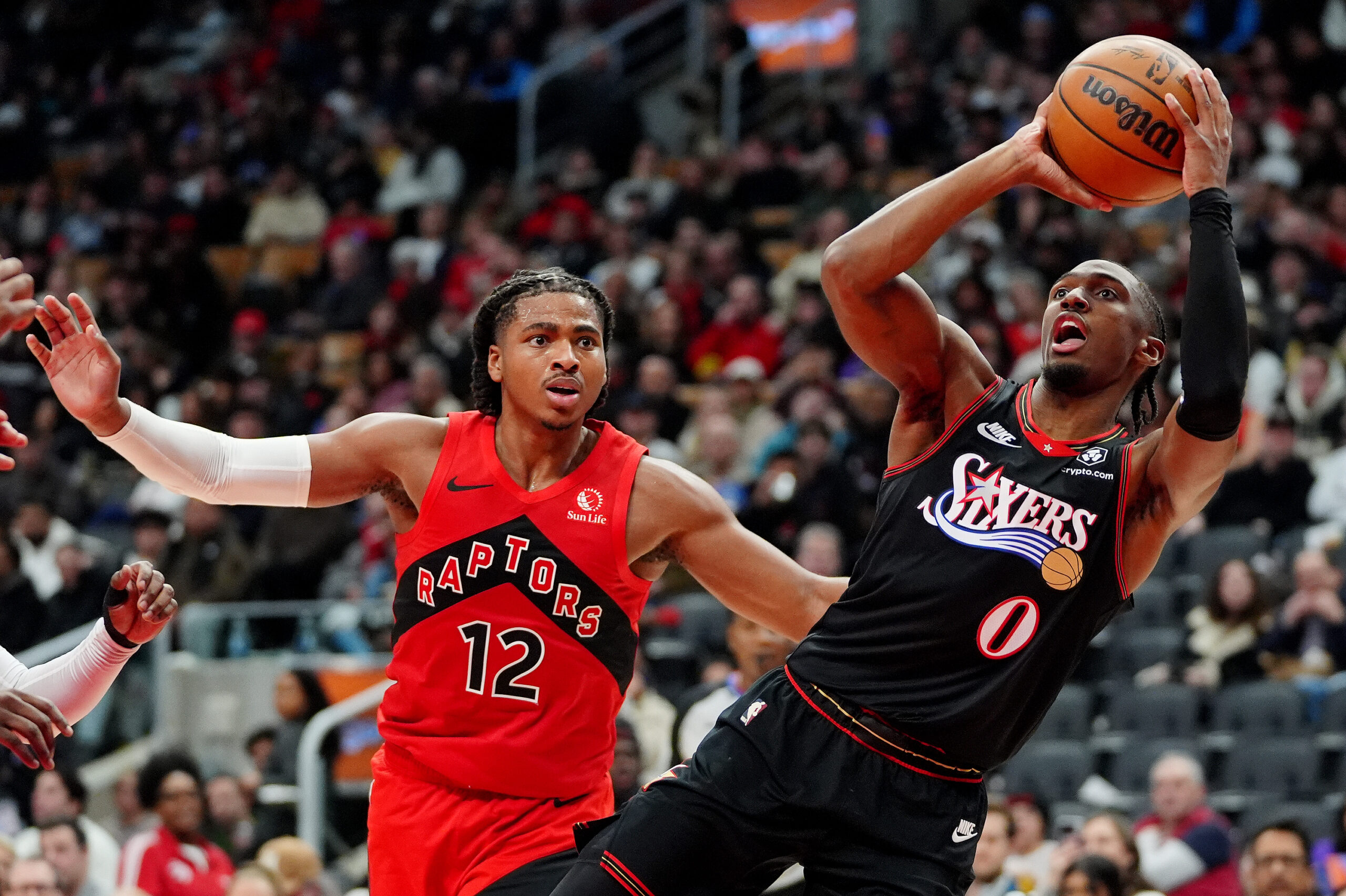
    Tyrese Maxey scored 38 points for the Sixers and VJ Edgecombe had 17. Kelly Oubre Jr., Dominick Barlow and Quentin Grimes each scored 13 points but Philadelphia lost for the second time in seven games.

    Sixers guard Tyrese Maxey (right) scored a game-high 38 points.

    Joel Embiid (left knee and left groin) and Paul George (left knee) both sat out on the first night of this back-to-back.

    Barnes returned after sitting out Friday’s loss at Boston because of a sore right knee but RJ Barrett was inactive because of a sprained left ankle. Brandon Ingram (right thumb) missed his second straight game and Jakob Poeltl (lower back) missed his 10th straight. There is no timetable for Poeltl’s return.

    Ja’Kobe Walter started for the Raptors but exited four minutes into the first quarter because of a sore right hip.

    Philadelphia had 22 turnovers, one shy of matching a season-high. The Sixers’ 11 assists were a season-low.

    Toronto finished 5 for 32 from three-point range, its worst shooting percentage from distance this season.

    Up next

    The 76ers and Raptors play in Toronto again on Monday night (7:30 p.m., NBCSP).

  • Erich von Däniken, Swiss writer who spawned alien archaeology, has died at 90

    Erich von Däniken, Swiss writer who spawned alien archaeology, has died at 90

    BERLIN — Erich von Däniken, the Swiss author whose best-selling books about the extraterrestrial origins of ancient civilizations brought him fame among paranormal enthusiasts and scorn from the scientific community, has died. He was 90.

    Von Däniken’s representatives announced on his website on Sunday that he had died the previous day in a hospital in central Switzerland.

    Von Däniken rose to prominence in 1968 with the publication of his first book Chariots of the Gods, in which he claimed that the Mayans and ancient Egyptians were visited by alien astronauts and instructed in advanced technology that allowed them to build giant pyramids.

    The book fueled a growing interest in unexplained phenomena at a time when thanks to conventional science humankind was about to take its first steps on the Moon.

    Chariots of the Gods was followed by more than two dozen similar books, spawning a literary niche in which fact and fantasy were mixed together against all historical and scientific evidence.

    Public broadcaster SRF reported that altogether almost 70 million copies of his books were sold in more than 30 languages, making him one of the most widely read Swiss authors.

    While von Däniken managed to shrug off his many critics, the former hotel waiter had a troubled relationship with money throughout his life and frequently came close to financial ruin.

    Born in 1935, the son of a clothing manufacturer in the northern Swiss town of Schaffhausen, von Däniken is said to have rebelled against his father’s strict Catholicism and the priests who instructed him at boarding school by developing his own alternatives to the biblical account of the origins of life.

    After leaving school in 1954, von Däniken worked as a waiter and barkeeper for several years, during which he was repeatedly accused of fraud and served a couple of short stints in prison.

    In 1964, he was appointed manager of a hotel in the exclusive resort town of Davos and began writing his first book. Its publication and rapid commercial success were quickly followed by accusations of tax dodging and financial impropriety, for which he again spent time behind bars.

    By the time he left prison, Chariots of the Gods was earning von Däniken a fortune and a second book, Gods from Outer Space, was ready for publication, allowing him to commit himself to his paranormal passion and travel the world in search of new mysteries to uncover.

    Throughout the 1970s von Däniken undertook countless field trips to Egypt, India, and above all Latin America, whose ancient cultures held a particular fascination for the amateur archaeologist.

    He lectured widely and set up societies devoted to promoting his theories, later pioneering the use of video and multimedia to reach out to ever-larger audiences hungry for a different account of history.

    No amount of criticism dissuaded him and his fans from believing that Earth has been visited repeatedly by beings from outer space, and will be again in the future.

    In 1991 von Däniken gained the damning accolade of being the first recipient of the “Ig Nobel” prize for literature — for raising the public awareness of science through questionable experiments or claims.

    Even when confronted with fabricated evidence in a British television documentary — supposedly ancient pots were shown to be almost new — von Däniken insisted that, minor discrepancies aside, his theories were essentially sound.

    In 1985 von Däniken wrote Neue Erinnerungen an die ZukunftNew Memories of the Future — ostensibly to address his many critics: “I have admitted (my mistakes), but not one of the foundations of my theories has yet been brought down.”

    Although his popularity was waning in the English-speaking world by the 1980s, von Däniken’s books and films influenced a wave of semi-serious archaeological documentaries and numerous popular television shows, including The X-Files, which featured two FBI agents tasked with solving paranormal mysteries.

    His last major venture, a theme park based on his books, failed after just a few years due to lack of interest. The Mystery Park still stands, its human-made pyramids and otherworldly domes rotting as tourists prefer to explore the charms of the nearby town of Interlaken and the imposing Swiss Alps that surround it.

    Erich von Däniken is survived by his wife of 65 years, Elisabeth Skaja, daughter Cornelia, and two grandchildren.

  • Iraq War critic, Venezuela mission defender: Vance’s foreign policy journey

    Iraq War critic, Venezuela mission defender: Vance’s foreign policy journey

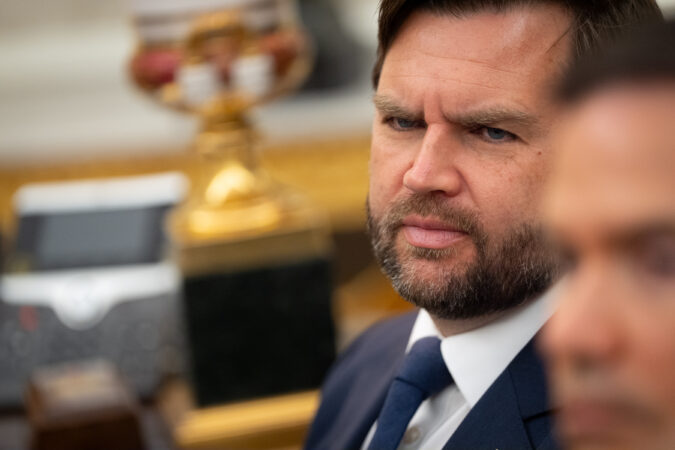
    Vice President JD Vance served in the Iraq War and came home a sharp critic of foreign military interventions, saying that too often Washington policymakers lose sight of American interests when they entangle themselves in faraway wars.

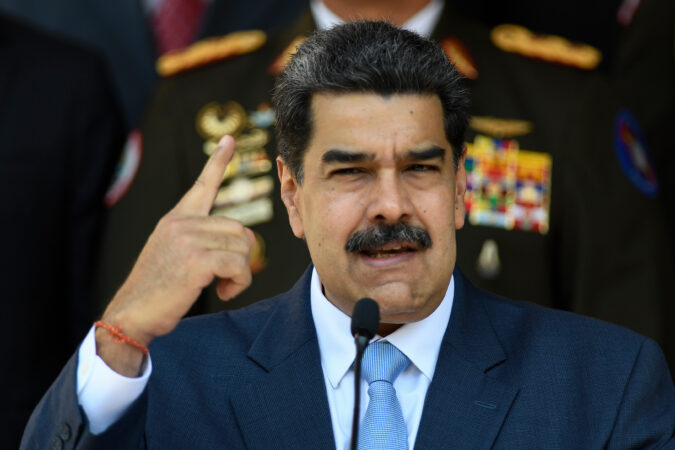
    Now he is defending President Donald Trump’s decision to conduct a daring raid this month in a country closer to home — to depose Venezuelan President Nicolás Maduro. The White House said that a more pro-U.S. government in Venezuela will stop drug and migrant flows, and open the country’s vast oil reserves to U.S. companies. But there are also major risks that armed conflict in the country could escalate, sucking in the United States and making the venture harder to defend as an “America First” endeavor.

    Vance’s defense of Maduro’s seizure appears discordant with his far more skeptical stance toward strikes on the Houthi militia in Yemen — a position revealed in a Signal group chat that was accidentally made public in March. Many prominent advocates of military restraint who have boosted Vance’s foreign policy views in the past now oppose the decision to oust Maduro.

    But as the vice president eyes his 2028 presidential prospects while also wanting to appear in lockstep with the president, Vance has claimed no contradiction at all.

    Going back to his time in the Senate, Vance has been an advocate for a robust U.S. presence in the Western Hemisphere, co-sponsoring a 2023 resolution reaffirming the Monroe Doctrine, which warns foreign powers against challenging U.S. predominance in the Americas.

    Now, he is defending the Venezuela operation as an America First decision.

    “As a Marine Corps veteran, for my entire lifetime, presidents — and let’s be honest, they were Democrats and Republicans — would send the American military to far-off places,” Vance said Friday at a Venezuela-focused White House event for oil executives. “They would get us involved in these endless quagmires. They would lose hundreds or thousands of American lives. And the American people would get nothing out of these misadventures.

    “And now you have an American president who’s empowered the American military to stop the flow of drugs into our country and to ensure that we, as opposed to our adversaries, control one of the great energy reserves that exist anywhere in the entire world. And he did it without losing a single American life in the process,” Vance said.

    Even some of Vance’s allies see the vice president struggling to thread the needle as he tries to stand by Trump while not alienating the GOP’s anti-interventionist wing.

    “If JD Vance himself were president, would Venezuela have happened? Would we have captured Maduro? To me, without a doubt, the answer is no. I cannot fathom a scenario,” said Ben Freeman, a senior fellow at the Quincy Institute, a Washington-based think tank that has hosted Vance in the past.

    Vance is “not interested in militarism,” Freeman said. “He is seeking out diplomacy-first solutions and keeping the U.S. out of foreign adventurism.”

    Vance says there is no daylight between himself, Trump, and Secretary of State Marco Rubio. But Rubio, a Cuban-American from Florida and another potential 2028 contender, has long advocated for aggressive action in Venezuela as a larger strategy to bolster U.S. ties to Latin America and weaken Cuba’s Communist leaders.

    In recent days, Vance has repeatedly felt the need to explain to his followers why the administration decided to go after Maduro.

    “I understand the anxiety over the use of military force, but are we just supposed to allow a communist to steal our stuff in our hemisphere and do nothing? Great powers don’t act like that,” Vance wrote on X on Jan. 4, a day after the president announced Maduro’s capture. Trump was at Mar-a-Lago during the raid, surrounded by his senior-most aides — but not the vice president.

    Two administration officials, who spoke on the condition of anonymity to discuss sensitive considerations, said political optics did not play a role in the decision for Vance to stay away from Mar-a-Lago.

    For safety reasons, Vance rarely joins Trump outside of Washington. Additionally, officials were worried that a vice-presidential motorcade to Mar-a-Lago the evening of the operation could have tipped off Venezuela. As a result, Vance and other White House officials determined it wasn’t necessary for him to attend the news conference, according to the officials.

    Vance and White House officials also said he played a key role in the lead-up to the operation.

    In mid-December, Vance and Rubio led a meeting of Trump’s top advisers and Cabinet officials to plan the operation, including the decision to move forward with an economic quarantine using U.S. military vessels to block sanctioned Venezuelan oil shipments, according to a person with knowledge of the meeting who spoke on the condition of anonymity to discuss sensitive details.

    At the end of the month, Vance also spoke with Qatari intermediaries about whether Maduro was willing to accept any of the United States’ exit offers, the person said. When it was clear Maduro wasn’t prepared to accept the negotiations, Vance and Rubio jointly concluded Maduro was “not a credible interlocutor” and that the U.S. couldn’t conduct business with Venezuela under his leadership, the person said.

    As the operation took place, Vance was “on the same systems as the president,” the person said, monitoring it in real time and “on a line watching the operation with the president.” A spokesperson has previously said that Vance was monitoring events from elsewhere in Palm Beach and departed Florida before Trump spoke to the media.

    Vance has not always been so enthusiastic about taking U.S. military action. He was a sharp voice of dissent in the Signal group chat about strikes on Houthi militants in Yemen threatening shipping traffic in the Red Sea. The Signal chat included Trump’s top national security officials — and the editor of the Atlantic.

    “There is a real risk that the public doesn’t understand this or why it’s necessary,” Vance wrote, noting that militants were threatening more European than American trade.

    “I am willing to support the consensus of the team and keep these concerns to myself,” he said. “I just hate bailing Europe out again.”

    Although Vance never intended for his comments to become public, his sharply independent voice — especially since another top Trump aide on the thread, deputy chief of staff Stephen Miller, said the president had already made a “clear” decision — jumped out to some.

    “The president had decided and Vance was still relitigating,” said Rebecca Lissner, who was former vice president Kamala Harris’ principal deputy national security adviser. “I thought it was really informative about how he operates as the vice president, and how different it is. The fact that instead of JD Vance being the one being like, ‘Guys, the president has decided. We’re moving out,’ he was the one questioning the decision.”

    Vice presidents are often faced with thorny questions about how to influence their administration’s policies. Without a clear portfolio, an agency to run, or a defined responsibility, the vice president has to own actions without always helping decide them.

    That became a struggle for Harris on Gaza policy during the 2024 campaign, when President Joe Biden’s decisions on Israel became unpopular with the Democratic base.

    With Trump and Vance, there may be more room for input, Lissner said.

    “Trump does like to be presented with options, and that means that there’s space for different people to advocate for different options,” she said.

    Vance has leaned into some of the administration’s domestic initiatives with gusto, as was clear last week when he came to the White House briefing room to deliver a sharp defense of the ICE agent who fatally shot a protester in Minneapolis and announce a new Justice Department initiative to uncover fraud in federal programs.

    Allies of Vance say his support for Trump’s foreign policy decisions over the last year should come as no surprise.

    “Vance is never going to break with Trump, and he authentically likes him, and he seems to authentically like Rubio,” said Curt Mills, the executive director of the American Conservative, a magazine that formed in opposition to the Iraq War. “He’s a nationalist and a realist, but he’s also the vice president and not the president, so he’s not ultimately the decision-maker.”

    Sen. Jim Banks (R., Ind.), a friend of Vance’s, said the two have talked about their time serving overseas — Banks in Afghanistan — and how it shaped their view of the U.S.’s role abroad. He too described Vance’s foreign policy as “rooted in realism,” and said that “JD believes that America has a strong role to play around the world.”

    “We served in wars that were poorly run and managed by the military leaders of the prior administrations, and we don’t want to see our country send troops to 20-year forever wars with little purpose and fail in the same way that the previous administrations did,” Banks said. “President Trump doesn’t want that either. He ran against that.”

    Advocates for Trump’s use of force over the past year said he has been careful about not getting pulled deeply into ongoing conflicts.

    The decision not to seek more dramatic change in Venezuela, and instead to work with Maduro’s deputy, Delcy Rodríguez, may be part of that pattern, analysts said — but it also may not work.

    “This isn’t about regime change. This definitely does have that harder-nosed realpolitik flavor, and I think that’s why folks like Vance or others find themselves able to at least try and defend this,” said Emma Ashford, a senior fellow at the foreign police think tank the Stimson Center, who has argued for a more restrained approach to the use of military force.

    Governmental collapse in Venezuela, a military coup, or other unrest could lead to greater migration and larger drug trafficking issues, Ashford said — the opposite of what Vance said he hopes will come.

    “If this spirals into something more, it’s going to be much harder to defend,” she said. “For folks like me, I would say that’s the reason you shouldn’t do it in the first place.”

  • Retouched images of Netanyahu’s wife, distributed by the state, ignite a fiery ethics debate

    Retouched images of Netanyahu’s wife, distributed by the state, ignite a fiery ethics debate

    JERUSALEM — The photos seemed destined for posterity in Israel’s state archives.

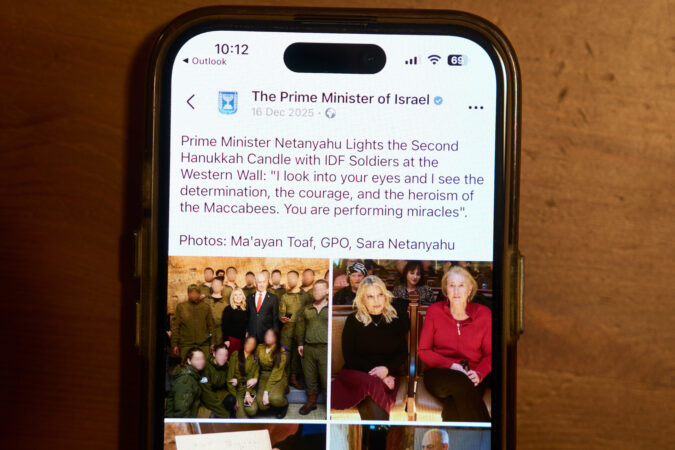
    In the snapshots, Prime Minister Benjamin Netanyahu is joined by his wife, Sara, as well as U.S. Ambassador Mike Huckabee and a group of Israeli soldiers, as they light Hannukah candles at Western Wall, the holiest site where Jews pray. The leaders exchange triumphant looks.

    But something is off.

    Sara Netanyahu’s skin is poreless, her eyes overly defined and her hair perfectly coiffed — a look officials acknowledge is the result of heavy retouching.

    Critics say the issue isn’t the use of photo-editing software, which is common on the social media accounts of celebrities and public figures. They say it’s the circulation of the images in official government announcements, which distorts reality, violates ethical codes, and risks compromising official archiving and record-keeping efforts.

    “All the pictures to this day in the archives in Israel are authentic pictures of reality as it was captured by the lenses of photographers’ cameras since the establishment of the state,” said Shabi Gatenio, the veteran political journalist who broke the story in the Seventh Eye, an Israeli site that covers local media. “These images, if entered into the database, will forever infect it with a virtual reality that never existed.”

    Since the manipulation of images was revealed, the government has taken the unprecedented step of crediting Sara Netanyahu in its releases that include manipulated images. And it’s not clear if the official archive will include images of her taken during the second half of last year, when Gatenio said the editing appears to have begun.

    Mrs. Netanyahu’s personal spokesperson did not respond to a request for comment.

    Nitzan Chen, director of the Government Press Office, told the Associated Press that images of the prime minister are never manipulated and that his office would not upload any retouched photos to the official archive.

    Personal Photoshop habit enters political realm

    Sara Netanyahu, 67, has long used photo-editing software on her images. Her social media account is filled with images in which her face appears heavily retouched.

    But the topic raised eyebrows since her Photoshop habit entered the public record.

    Gatenio said he first noticed this last July, when the couple visited President Donald Trump in Washington, D.C., and again in September, as Sara Netanyahu joined her husband on the tarmac ahead of a trip to New York for the U.N. General Assembly.

    At the time, the prime minister’s office released a video of the send-off along with a photo, credited to Avi Ohayon, an official government photographer.

    Comparing the photo to the raw video, Hany Farid, a digital forensics expert at the University of California, Berkeley, said the image had been post-processed, bearing local manipulations to smooth her skin and remove wrinkles.

    Since then, photos showing Mrs. Netanyahu meeting with Vice President JD Vance and his wife, Usha, in Washington also appear to have been retouched, Farid said.

    “There’s been some Photoshop editing to — let’s call it — ‘beautify,’ lighten, smooth the face,” Farid said.

    “Is it nefarious? No. Is it a problem? Yes. This is about something bigger than, ‘she Photoshopped her face to make herself look younger.’ This is about trust. Why should I trust any official photo coming out of that administration?”

    Chen, the head of the Government Press Office, said office lawyers are trying to determine how to handle and properly identify photos “processed by people other than GPO photographers.”

    He said the Justice Ministry is also examining the “criteria, limitations, and possibilities” of the edited images, though he stressed there is nothing illegal about touching up photos. The issue, he said, is being transparent when such changes are made.

    For now, the Prime Minister’s Office has decided to add Sara Netanyahu’s name to press releases that include retouched images. Since November, press releases showing photos of her smiling next to Trump and the family of the last hostage in Gaza in Washington, visiting a Miami synagogue, and attending a funeral for an Israeli mayor have included this label.

    At least one outlet, the Times of Israel, has said it will no longer carry official state photos that appear to have been manipulated. The Associated Press does not publish images that appear to have been retouched or digitally manipulated.

    A broader phenomenon

    Chen said the prime minister is never edited: “No Photoshop, no corrections, no color. Nothing.”

    While his face may not be retouched, the prime minister’s official Instagram account tells another story.

    The page has posted a bevy of content that appears to be AI-edited or generated, including a picture of the couple with Trump and first lady Melania Trump celebrating the new year in Washington.

    The photo raised suspicions in Israel because it shows Sara Netanyahu wearing a black dress absent from other photos of the event, where she wore a dark red frock. Appearing in the sky above the couples are brightly colored fireworks and American and Israeli flags that Farid said were “almost certainly” generated by AI.

    It is now marked with a tag on Instagram indicating that it may have been altered or generated using AI. It is not clear when the tag was added nor by whom.

    Netanyahu is not alone. Many world figures, including Trump, frequently use AI-generated image manipulation in their public output.

    Tehilla Shwartz Altshuler, who runs the Democracy in the Digital Age Program at the Israel Democracy Institute, a Jerusalem think tank, called it “part of the populist playbook” and said there was “no question” that Netanyahu was emulating how Trump uses the technology.

    Netanyahu’s official Instagram has posted video of Trump and Netanyahu in a B-2 bomber that appears entirely AI-generated. It is captioned “on our victory lap,” referencing the joint Israel-U.S. attacks on Iran last year.

    “This is exactly what Netanyahu and his surrounding circle have tried to do for many years,” she said. “Presenting himself as a superhero, his wife as a supermodel, their family as a super loyal family. Even when it wasn’t the case, even at the expense of actual political work, administrative work, and social work.”

    She said Israel has reached a critical point in official government record-keeping and communications.

    “The question of archiving the truth, archiving history, will be one of the questions of our time.”

  • Hamas says it will dissolve its Gaza government when new Palestinian body takes over

    Hamas says it will dissolve its Gaza government when new Palestinian body takes over

    CAIRO — Hamas said Sunday it will dissolve its existing government in Gaza once a Palestinian technocratic leadership committee takes over the territory, as mandated under the U.S.-brokered peace plan. But the group gave no specifics on when the change will occur.

    Hamas and the rival Palestinian Authority, the Palestinians’ internationally recognized representative, have not announced the names of the technocrats, who are not supposed to be politically affiliated, and it remains unclear if they will be cleared by Israel and the U.S.

    The “Board of Peace,” an international body led by Trump, is supposed to oversee the government and other aspects of the ceasefire that took effect on Oct. 10, including disarming Hamas and deploying an international security force. The board’s members have not been announced.

    Meanwhile, the post-ceasefire death toll continued to rise in Gaza, with Israeli gunfire killing three Palestinians, according to Palestinian hospital officials.

    The ceasefire began with a halt in fighting and the release of hostages held in Gaza in exchange for thousands of Palestinians held by Israel. The deal is still in its first phase as efforts continue to recover the remains of the final hostage left in Gaza.

    An Egyptian official, who spoke on condition of anonymity to discuss closed-door information, said Hamas was sending a delegation to talks with Egyptian, Qatari, and Turkish officials about moving to the second phase.

    Future Gaza governance in flux

    In comments posted on his Telegram channel Sunday, Hazem Kassem, a Hamas spokesperson, called for speeding up the establishment of the technocratic committee.

    The Egyptian official said Hamas will meet with other Palestinian factions this week to finalize the committee’s formation. The Hamas delegation will be chaired by top negotiator Khalil al-Hayya, the official said.

    Trump has said the Board of Peace will monitor the committee and handle the disarmament of Hamas, the deployment of an international security force, additional pullbacks of Israeli troops, and Gaza’s reconstruction. The U.S. has reported little progress on any of these fronts, though the members of the board are expected to be announced this week.

    Israeli Prime Minister Benjamin Netanyahu said Thursday that Bulgarian diplomat Nickolay Mladenov has been selected as the board’s director-general. Mladenov is a former Bulgarian defense and foreign minister who served as U.N. envoy to Iraq before being appointed as the U.N. Mideast peace envoy from 2015 to 2020. During that time, he had good working relations with Israel and frequently worked to ease Israel-Hamas tensions.

    Also Sunday, Israel’s Foreign Minister Gideon Saar met in Jerusalem with Japanese Foreign Minister Toshimitsu Motegi. Saar said Israel was committed to enforcing Trump’s plan, while Motegi expressed Japan’s willingness to play an active role in the ceasefire.

    According to Japan’s Foreign Ministry, Motegi visited the Civil-Military Coordination Center, where the ceasefire is being monitored. He was also set to meet Netanyahu and Palestinian officials in the Israeli-occupied West Bank.

    Violence in Gaza continues

    In Gaza, two men were shot dead in the southern town of Bani Suhaila, according to Nasser Hospital, which received the bodies. Earlier Sunday, a man was killed by Israeli gunfire in the Tuffah neighborhood of Gaza City, according to Al-Ahly hospital, which received the body.

    In response to questions about the Tuffah incident, Israel’s military said it had fired at and hit a “terrorist” in northern Gaza who had approached troops. In a later statement, the military said it had killed a “terrorist” in southern Gaza who approached troops.

    Israel and Hamas have accused each other of violating the ceasefire. Continued Israeli strikes in Gaza have killed more than 400 Palestinians, according to local health officials.

    The Israeli military says any actions since the ceasefire began have been in response to violations of the agreement.

    Israeli police detain top official

    Israeli police said Sunday they were questioning a top official from Netanyahu’s office over possible obstruction of an investigation into last year’s leak of classified military information to a German tabloid.

    Israeli media identified the official as Tzachi Braverman, Netanyahu’s chief of staff, who is expected to start as the next ambassador to the United Kingdom in the coming months.

    He’s the latest official to be caught up in the scandal, in which Netanyahu’s inner circle is accused of leaking confidential information to German tabloid Bild to improve public perception of the prime minister following the killing of six hostages in Gaza in 2024.

    It comes after an explosive interview by Kan News with former Netanyahu spokesperson Eli Feldstein, who described a clandestine meeting with Braverman in an underground parking lot in the middle of the night in connection with the leak. Feldstein, who has been indicted, said Braverman offered to “shut down” the probe into the leaked information.

    Opposition leader Yair Lapid immediately called for the suspension of Braverman as ambassador. “It is unacceptable that a person suspected of involvement in obstructing a serious security investigation should be the face of Israel in one of Europe’s most important countries,” Lapid wrote on X.

    In response, Saar defended Braverman’s appointment and said he would not be removed from it until formally charged or tried.

  • A $400,000 payout after Maduro’s capture is putting prediction markets in the spotlight

    A $400,000 payout after Maduro’s capture is putting prediction markets in the spotlight

    Prediction markets let people wager on anything from a basketball game to the outcome of a presidential election — and recently, the downfall of former Venezuelan President Nicolás Maduro.

    The latter is drawing renewed scrutiny into this murky world of speculative, 24/7 transactions. In early January, an anonymous trader pocketed more than $400,000 after betting that Maduro would soon be out of office.

    The bulk of the trader’s bids on the platform Polymarket were made mere hours before President Donald Trump announced the surprise nighttime raid that led to Maduro’s capture, fueling online suspicions of potential insider trading because of the timing of the wagers and the trader’s narrow activity on the platform. Others argued that the risk of getting caught was too big, and that previous speculation about Maduro’s future could have led to such transactions.

    Polymarket did not respond to requests for comment.

    The commercial use of prediction markets has skyrocketed in recent years, opening the door for people to wager their money on the likelihood of a growing list of future events. But despite some eye-catching windfalls, traders still lose money everyday. And in terms of government oversight in the U.S., the trades are categorized differently than traditional forms of gambling — raising questions about transparency and risk.

    Here’s what we know:

    How prediction markets work

    The scope of topics involved in prediction markets can range immensely — from escalation in geopolitical conflicts, to pop culture moments, and even the fate of conspiracy theories. Recently, there’s been a surge of wagers on elections and sports games. But some users have also bet millions on things like a rumored — and ultimately unrealized — “secret finale” for Netflix’s Stranger Things, whether the U.S. government will confirm the existence of extraterrestrial life, and how much billionaire Elon Musk might post on social media this month.

    In industry-speak, what someone buys or sells in a prediction market is called an “event contract.” They’re typically advertised as “yes” or “no” wagers. And the price of one fluctuates between $0 and $1, reflecting what traders are collectively willing to pay based on a 0% to 100% chance of whether they think an event will occur.

    The more likely traders think an event will occur, the more expensive that contract will become. And as those odds change over time, users can cash out early to make incremental profits, or try to avoid higher losses on what they’ve already invested.

    Proponents of prediction markets argue putting money on the line leads to better forecasts. Experts like Koleman Strumpf, an economics professor at Wake Forest University, think there’s value in monitoring these platforms for potential news — pointing to prediction markets’ past success with some election outcomes, including the 2024 presidential race.

    Still, it’s never a “crystal ball,” he noted, and prediction markets can be wrong, too.

    Who is behind all of the trading is also pretty murky. While the companies running the platforms collect personal information of their users in order to verify identities and payments, most people can trade under anonymous pseudonyms online — making it difficult for the public to know who is profiting off many event contracts. In theory, people investing their money may be closely following certain events, but others could just be randomly guessing.

    Critics stress that the ease and speed of joining these 24/7 wagers leads to financial losses everyday, particularly harming users who may already struggle with gambling. The space also broadens possibilities for potential insider trading.

    The major players

    Polymarket is one of the largest prediction markets in the world, where its users can fund event contracts through cryptocurrency, debit or credit cards, and bank transfers.

    Restrictions vary by country, but in the U.S., the reach of these markets has expanded rapidly over recent years, coinciding with shifting policies out of Washington. Former President Joe Biden was aggressive in cracking down on prediction markets and, following a 2022 settlement with the Commodity Futures Trading Commission, Polymarket was barred from operating in the country.

    That changed under Trump late last year, when Polymarket announced it would be returning to the U.S. after receiving clearance from the commission. American-based users can now join a platform “waitlist.”

    Meanwhile, Polymarket’s top competitor, Kalshi, has been a federally-regulated exchange since 2020. The platform offers similar ways to buy and sell event contracts as Polymarket — and it currently allows event contracts on elections and sports nationwide. Kalshi won court approval just weeks before the 2024 election to let Americans put money on upcoming political races and began to host sports trading about a year ago.

    The space is now crowded with other big names. Sports betting giants DraftKings and FanDuel both launched prediction platforms last month. Online broker Robinhood is widening its own offerings. Trump’s social media site Truth Social has also promised to offer an in-platform prediction market through a partnership with Crypto.com — and one of the president’s sons, Donald Trump Jr., holds advisory roles at both Polymarket and Kalshi.

    “The train has left the station on these event contracts, they’re not going away,” said Melinda Roth, a visiting associate professor at Washington and Lee University’s School of Law.

    Loose regulation

    Because they’re positioned as selling event contracts, prediction markets are regulated by the CFTC. That means they can avoid state-level restrictions or bans in place for traditional gambling and sports betting today.

    “It’s a huge loophole,” said Karl Lockhart, an assistant professor of law at DePaul University who has studied this space. “You just have to comply with one set of regulations, rather than (rules from) each state around the country.”

    Sports betting is taking center stage. There are a handful of big states — like California and Texas, for example — where sports betting is still illegal, but people can now wager on games, athlete trades, and more through event contracts.

    A growing number of states and tribes are suing to stop this. And lawyers expect litigation to eventually reach the U.S. Supreme Court, as added regulations from the Trump administration seem unlikely.

    Federal law bars event contracts related to gaming as well as war, terrorism, and assassinations, Roth said, which could put some prediction market trades on shaky ground, at least in the U.S. But users might still find ways to buy certain contracts while traveling abroad or connecting to different VPNs.

    Whether the CFTC will take any of that on has yet to be seen. But the agency, which did not respond to request for comment, has already taken steps away from enforcement.

    Despite overseeing trillions of dollars for the overall U.S. derivatives market, the CFTC is also much smaller than the Securities and Exchange Commission. And at the same time event contracts are growing rapidly on prediction market platforms, there have been additional cuts to the CFTC’s workforce and a wave of leadership departures under Trump’s second term. Only one of five commissioner slots operating the agency is currently filled.

    Still, other lawmakers calling for a stronger crackdown on potential insider trading in prediction markets — particularly following suspicion around last week’s Maduro trade on Polymarket. On Friday, Democratic Rep. Ritchie Torres introduced a bill aimed at curbing government employees’ involvement in politically-related event contracts.

    The bill has already gotten support from Kalshi CEO Tarek Mansour — who on LinkedIn maintained that insider trading has always been banned on his company’s platform but that more needs to be done to crack down on unregulated prediction markets.

  • Eyes are on Gorsuch as Supreme Court weighs rights of trans athletes

    Eyes are on Gorsuch as Supreme Court weighs rights of trans athletes

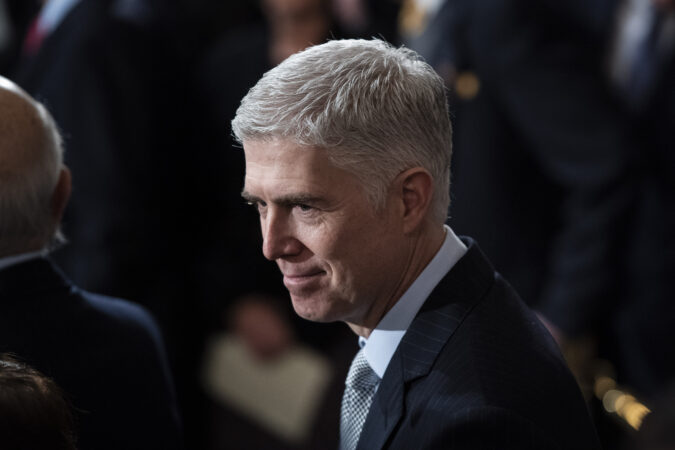
    Justice Neil M. Gorsuch surprised many in 2020 when he wrote one of the Supreme Court’s most consequential rulings expanding legal rights for gay and transgender people.

    The 6-3 decision in Bostock v. Clayton County held that the ban on sex discrimination in a core federal civil rights law, Title VII of the Civil Rights Act, covers discrimination against gay and transgender people.

    “That’s because it is impossible to discriminate against a person for being homosexual or transgender without discriminating against that individual based on sex,” Gorsuch wrote.

    Conservatives were aghast. Some said the ruling heralded the “end of the conservative legal movement.” Liberals praised Gorsuch’s opinion. Some even speculated that Gorsuch, appointed by President Donald Trump, would take on the role of former Justice Anthony M. Kennedy — the Reagan-nominated justice who was critical in landmark gay rights rulings, including establishing the right to same-sex marriage.

    With the Supreme Court set to weigh the question of transgender athletes this week, Gorsuch is again in the spotlight. Supporters of allowing transgender women and girls to play on women’s sports teams have a difficult task persuading the conservative-majority court. They see winning over Gorsuch as key and appear to have crafted their arguments with him in mind.

    Lawyers involved in the two cases before the court expect that Chief Justice John G. Roberts Jr., who joined Gorsuch’s opinion in Bostock, might side with him again. Together with the court’s three liberals, that would be enough for a narrow majority.

    “It’s difficult to imagine how Gorsuch and Roberts would come out differently on this particular issue,” said Shiwali Patel, senior director of education justice at the National Women’s Law Center, which filed an amicus brief supporting the trans athletes at the center of the cases.

    Gorsuch and Roberts, however, have more recently handed defeats to advocates for gay and transgender rights. In June, Roberts wrote the 6-3 ruling that upheld state bans on gender transition care for minors. Gorsuch and Roberts also joined a 6-3 majority that sided with Maryland parents who wanted to opt their children out of lessons featuring LGBTQ+-themed books.

    Because of that, as well as polling that suggests views on trans issues have become more conservative in recent years, some see Bostock as an outlier.

    “Gorsuch is truly a man on his own,” said Josh Blackman, a professor at the South Texas College of Law at Houston, referring to the justice’s reputation for sometimes taking unconventional positions. “On the other hand, he’s living in 2025, and it’s not 2020.”

    The court will hear arguments in the two transgender cases on Tuesday. One concerns Lindsay Hecox, a trans woman and Boise State University student, who challenged a 2020 Idaho law that bars trans women from playing on female sports teams. She says the law violated the Constitution’s equal-protection clause when it stopped her from joining the university’s cross-country team.

    The second case concerns 15-year-old Becky Pepper-Jackson, a transgender high school athlete from West Virginia. Unlike Hecox, Pepper-Jackson argues the law in her state barring trans athletes from women’s sports violates Title IX, the federal civil rights law that bans sex-based discrimination in federally funded schools. That law is worded similarly to the one Gorsuch ruled on in Bostock.

    In their court filing in Pepper-Jackson’s case, the American Civil Liberties Union and Lambda Legal quoted Gorsuch far more than any other justice. They directly quoted his Bostock opinion more than a dozen times and also cited other opinions of his, including a 2012 case dating from Gorsuch’s time as a judge on the court of appeals.

    Karen Loewy, interim deputy legal director for litigation at Lambda Legal, a prominent advocacy group for gay rights, said the approach was not about Gorsuch in particular. Citing his Bostock opinion was necessary for Pepper-Jackson’s arguments about discrimination against transgender people being sex-based discrimination.

    “It really is not a Gorsuch-specific thing,” Loewy said. “He happens to have the gems that really underscore our arguments.”

    Other observers say the strategy is clear.

    “Of course” Pepper-Jackson’s lawyers are working to persuade Gorsuch, said Steve Vladeck, a professor of law at the Georgetown University Law Center who regularly writes about the Supreme Court. “The harder question is whether that’s actually going to work.”

    Gorsuch’s rulings since Bostock raise doubts.

    His votes in the Tennessee case on gender-transition treatments and the Maryland schoolbook case indicate that it’s “unlikely Gorsuch views the trans athletes cases the way he sees Bostock,” said Blackman, who was among the conservatives who criticized Gorsuch following the Bostock ruling.

    Americans have become more supportive of restrictions for transgender people in the past few years, according to a Pew Research Center survey published in February. Fifty-six percent of Americans supported bans on providing gender transition care for minors, up 10 percentage points from 2022, the study found. And 66% favored or strongly favored laws that require trans athletes to compete on teams that match their sex assigned at birth, up eight points from 2022.

    Even before the shift in public opinion, a majority of Americans opposed allowing transgender female athletes to compete against other women at all levels of sports, according to a Washington Post-University of Maryland poll.

    “The climate of views of trans rights is different today than it was five years ago,” Blackman said.

    Title VII, which was at the center of the Bostock case, made it illegal for employers to discriminate against workers based on race, national origin, religion or sex.

    “[F]ew pieces of federal legislation rank in significance,” Gorsuch wrote in his 2020 opinion. He wrote that it was “clear” that discriminating against gay and transgender workers meant discriminating on the basis of sex.

    Lawyers for Pepper-Jackson say the same logic should apply to their case.

    “Like an employer who fires employees for being transgender, a school administrator who discriminates against students for being transgender ‘must intentionally discriminate against individual [students] in part because of sex,’” Pepper-Jackson’s lawyers wrote, quoting Gorsuch’s opinion.

    But lawyers for the state of West Virginia say sports is different from the workplace — an argument that allows them to court Gorsuch’s support without asking him to disavow his Bostock ruling.

    Sex should be irrelevant at work, but “sex is relevant in sports, often requiring sex-differentiated opportunities to ensure fairness and safety,” West Virginia’s lawyers wrote in their brief to the justices. Transgender women have inherent advantages in women’s sports, they argue, and should be banned to ensure equal opportunity for women.

    John Bursch, senior counsel with Alliance Defending Freedom, a conservative legal organization, said he’s confident Gorsuch and Roberts will be part of a majority upholding the bans in Idaho and West Virginia.

    Alliance Defending Freedom represents Madison Kenyon and Mary Kate Marshall, Idaho State University track and cross-country athletes, who are asking the Supreme Court to uphold the Idaho ban alongside the state’s governor, Brad Little.

    Bursch agreed with West Virginia’s argument. In the context of student sports, he said, “you have to take sex into consideration.”

  • With Cuban ally Maduro ousted, Trump warns Havana to make a ‘deal’ before it’s too late

    With Cuban ally Maduro ousted, Trump warns Havana to make a ‘deal’ before it’s too late

    WEST PALM BEACH, Fla. — President Donald Trump on Sunday fired off another warning to the government of Cuba as the close ally of Venezuela braces for potential widespread unrest after Nicolás Maduro was deposed as Venezuela’s leader.

    Cuba, a major beneficiary of Venezuelan oil, has now been cut off from those shipments as U.S. forces continue to seize tankers in an effort to control the production, refining, and global distribution of the country’s oil products.

    Trump said on social media that Cuba long lived off Venezuelan oil and money and had offered security in return, “BUT NOT ANYMORE!”

    “THERE WILL BE NO MORE OIL OR MONEY GOING TO CUBA — ZERO!” Trump said in the post as he spent the weekend at his home in southern Florida. “I strongly suggest they make a deal, BEFORE IT IS TOO LATE.” He did not explain what kind of deal.

    Hours later, Cuba’s president, Miguel Díaz-Canel, responded on X by saying “those who turn everything into a business, even human lives, have no moral authority to point the finger at Cuba in any way, absolutely in any way.”

    The Cuban government said 32 of its military personnel were killed during the American operation last weekend that captured Maduro. The personnel from Cuba’s two main security agencies were in Caracas, the Venezuelan capital, as part of an agreement between Cuba and Venezuela.

    “Venezuela doesn’t need protection anymore from the thugs and extortionists who held them hostage for so many years,” Trump said Sunday. “Venezuela now has the United States of America, the most powerful military in the World (by far!), to protect them, and protect them we will.”

    Trump also responded to another account’s social media post predicting that his secretary of state, Marco Rubio, will be president of Cuba: “Sounds good to me!” Trump said.

    Trump and top administration officials have taken an increasingly aggressive tone toward Cuba, which had been kept economically afloat by Venezuela. Long before Maduro’s capture, severe blackouts were sidelining life in Cuba, where people endured long lines at gas stations and supermarkets amid the island’s worst economic crisis in decades.

    “Those who hysterically accuse our nation today do so out of rage at this people’s sovereign decision to choose their political model,” Díaz-Canel said in his post. He added that “those who blame the Revolution for the severe economic shortages we suffer should be ashamed to keep quiet” and he railed against the “draconian measures” imposed by the U.S. on Cuba.

    The island’s communist government has said U.S. sanctions cost the country more than $7.5 billion between March 2024 and February 2025.

    Trump has said previously that the Cuban economy, battered by years of an American embargo, would slide further with the ouster of Maduro.

    “It’s going down,” Trump said of Cuba. “It’s going down for the count.”

  • Smithsonian removes Trump impeachment text as it swaps his portrait

    Smithsonian removes Trump impeachment text as it swaps his portrait

    The National Portrait Gallery removed a swath of text that mentioned President Donald Trump’s two impeachments and the Jan. 6, 2021, insurrection as it swapped out a prominent photo of him last week.

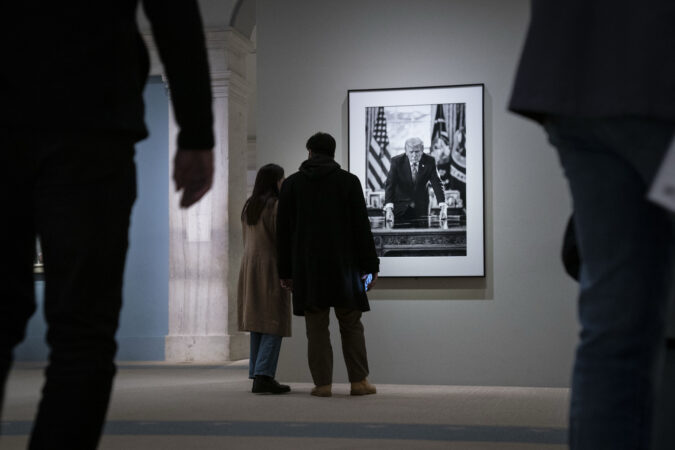
    Trump and the White House posted on social media Friday and Saturday to highlight the updated portrait in the “America’s Presidents” exhibition, which now features a framed black-and-white photo by White House photographer Daniel Torok. It shows Trump staring intensely, with his fists on the Resolute Desk — an image the president first shared on his Truth Social account last year.

    It replaced a photo by Washington Post photojournalist Matt McClain, which showed Trump with his hands folded in front of him, and was accompanied by a longer caption recounting Trump’s first term and his reelection. “Impeached twice, on charges of abuse of power and incitement of insurrection after supporters attacked the U.S. Capitol on January 6, 2021, he was acquitted by the Senate in both trials,” it read, in part.

    A Trump official specifically complained about that passage months earlier, when the president was trying to force out the portrait gallery’s director.

    The placard has been replaced with one whose caption is so short that the outline of the old sign was visible on the wall beneath it, simply noting Trump’s years in office. It now contrasts with portraits of other former presidents, including Joe Biden, Barack Obama, George W. Bush, and Bill Clinton, which all hang alongside wall text highlighting events during their time in office. Clinton’s notes his impeachment.

    National Portrait Gallery spokesperson Concetta Duncan said the museum is “exploring” less descriptive “tombstone labels” for some new exhibits and displays, and she noted that Trump’s portrait in the popular exhibition has changed before.

    Neither the Smithsonian nor the White House directly responded when asked if the Trump administration had requested the changes. The revamp comes several months after Trump bashed former portrait gallery director Kim Sajet as “highly partisan,” leading to her resignation, and after the White House threatened to withhold Smithsonian funding if the institution doesn’t cooperate with the administration’s review of museum content for “improper ideology.”

    Trump’s allies in government have recently led efforts to brand the public sphere with his preferred personal descriptors in ways large and small, adding his name to the Kennedy Center and U.S. Institute of Peace and installing plaques in the White House that laud Trump and disparage his political rivals such as former presidents Biden and Obama. Last year, the Colorado Capitol replaced a portrait of Trump after he complained about it.

    Besides noting the 2021 attack on the U.S. Capitol by Trump’s supporters and his impeachments in the House, the old placard mentioned his Supreme Court appointments, his 2020 election loss to Biden, and his efforts to lead the development of coronavirus vaccines. The text also said that the former photo portrait by McClain was supposed to remain on view until Trump’s commissioned painting was unveiled. (The previous portrait and its biographical label still appeared on the Smithsonian website as of Saturday afternoon.)

    The National Portrait Gallery portrayed the changes as unremarkable, saying that it previously rotated two photos of Trump through the collection.

    A notice posted on the gallery’s website announced the exhibition would temporarily close for updates from April 6 to May 14. It did not specify whether the other labels for former presidents would be changed during that period.

    A former Smithsonian historian, who spoke on the condition of anonymity because they were not authorized to speak for the institution, said that the National Portrait Gallery’s relatively long wall texts have stood out in comparison to shorter labels at many other art museums. “Because it’s a museum which combines art and portraiture, it has always had a biographical component to its labels to explain and contextualize the individual who’s being portrayed,” they said, adding that “you can outline the parameters of somebody’s career in a very neutral fashion.”

    “Tombstone” labels — museum jargon for bare-bones signs that list only essential information such as the artist, date of creation, and medium — are common at art museums such as the Guggenheim or MoMA, as well as other Smithsonian art museums.

    This isn’t the first time the Smithsonian has removed material mentioning congressional attempts to remove Trump from office since he launched a public campaign to remove what he calls “woke” ideology from U.S. cultural institutions. In July, the National Museum of American History briefly removed — then restored — references to his impeachments in its exhibition “The American Presidency: A Glorious Burden.”

    The institution said it had taken the text out “because the other topics in this section had not been updated since 2008.” The change was part of a content review that the Smithsonian agreed to undertake, following pressure from the White House to remove Sajet as the portrait gallery’s director.

    At the time, a White House official provided the Washington Post with a list of instances in which Sajet allegedly criticized Trump or promoted improper ideology. It specifically included the caption on his presidential portrait, for mentioning his impeachments and the Capitol attack.

    Although the Smithsonian Board of Regents affirmed that only its secretary could decide the institution’s personnel, Sajet later stepped down and has not been permanently replaced. Elliot Gruber serves as acting director.

    The changes ignited concerns about political interference at the Smithsonian and how the institution charged with preserving American history could be shaped by the Trump administration’s efforts to exert more control over its work.

    Torok became the White House photographer during Trump’s second term. One of his first official portraits drew attention for its similarity to the president’s 2023 mug shot, for his indictment on criminal charges in Atlanta.

    His photo now hanging in the National Portrait Gallery shows the president leaning over his desk in the Oval Office, fists clenched, looking directly into the camera. Trump posted the photo on Truth Social in October, writing that he was “getting ready to leave our imprint on the World.”

    Torok celebrated the Smithsonian display on social media on Friday and previously described the photo on Instagram as “Powerful!”

    The photo strikingly echoes a quieter image of John F. Kennedy. The president was captured from behind, hunched over in nearly the same position as Trump, in a 1961 photograph called “The Loneliest Job.”

    Trump has struck the same pose in other photos, including one Stephen Voss shot for Time in October.